P o r t o i o f l
2 0 2 2 A r c h i t e c h t u r a l D e s i g n 2 0 1 9 works reection by Salsabella
“Hello! This is Salsabella’s Design Portfolio. She is a Bachelor of Architecture graduate from UII Yogyakarta, with an interest in thermal comfort and sustainability architecture, interior lighting, loves sketching croquis, and lifelong learner who enjoys learning new things all the time.”
Interest
• Drawing/sketching
• Thermal knowledge
• Music Education
• 2018 - 2022
Bachelor Degree, Architecture Department of Universitas Islam Indonesia
(GPA 3,63)
Curriculum Vitae
Address Husein Hamzah Street
Pontianak, Indonesia
Languages Skill
• Bahasa : Native

• English : Advanced
• Malay : Fluent
P r o f i l e
Soft skill
• Concept development
• Visualization
• Model making
• Architectural documentation

• Physical model making
• Graphic design
• Good planner, both long and short term
• Self-taught
• Willingness to learn new things
Achievement
• 2018|Architectural Blue Ribbon Award Candidates
• 2015|2nd Place Winner Award of Drawing Competition Museum Kal-Bar
• 2012|1st Place Winner Award of of Drawing Competition Bonetoo Milk
Design Experience
• 2022|Final Architectural Design Studio|“Design of Porang Culture Building: Permaculture Building for Porang Plant in Pontianak by Emphasizing on Envelope System Design”
• 2021|Architectural Design Studio 3|Performance Based Design Architectural: “Gajah Mada Trade Center”
• 2021|Portfolio on Innovative Built Environment|“Jogja Horticulture as a Building for Food Fullment Independently: Permaculture Approach for Urban Farming in Yogayakarta”
• 2021 | Architectural Design Studio 2 | Agrotourism for Food Security: “Promoting the Solution of the Need of Foodstuff In Urban Area”
• 2020 | Portfolio on Archipreneurship | Business Proposal: “Doa Ibu Boutique Shop”
• 2020 | Architectural Design Studio 1 | Participatory Architecture Approach: “Tidayu Dance Studio”
• 2019 | Design Studio 4 | Adaptive Reuse Architecture: “Meraki of Prawirotaman”
• 2019 | BIM | Redesigning a Residential House With the Same Floor Plan: “Posto Rico”
• 2019 | Design Studio 3 | Vacation House Design Project: “Ngelmu Pring”
Software Skill
BIM:
Archicad


Rendering:
Enscape
3D Modeling:
Sketchup
Drafting:
AutoCad


Graphics:
CorelDRAW Adobe Premiere Canva


Others:
Ms. Ofce (Word, Excel, and PPT) Contact p : +6281257508802

e : arvipsalsabella@gmail.com
ig: __bllsal
Table of Content
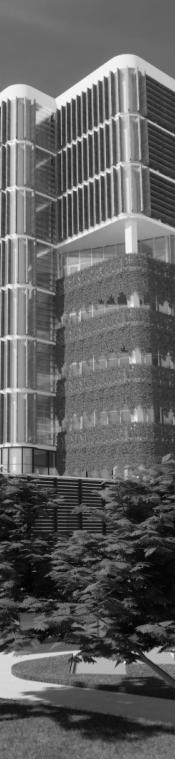
Adaptive Reuse Architecture: Meraki of Prawirotaman
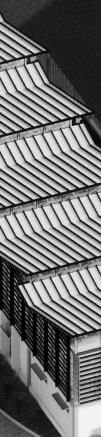
Participatory Architecture Approach: Tidayu Dance Studio


Performance Based Design Architectural: Gajah Mada Trade Center
Porang
Permaculture Building: Permaculture Building by Emphasizing on Envelope System Design
S e l e c t e d 01 02 03 04 W o r k s
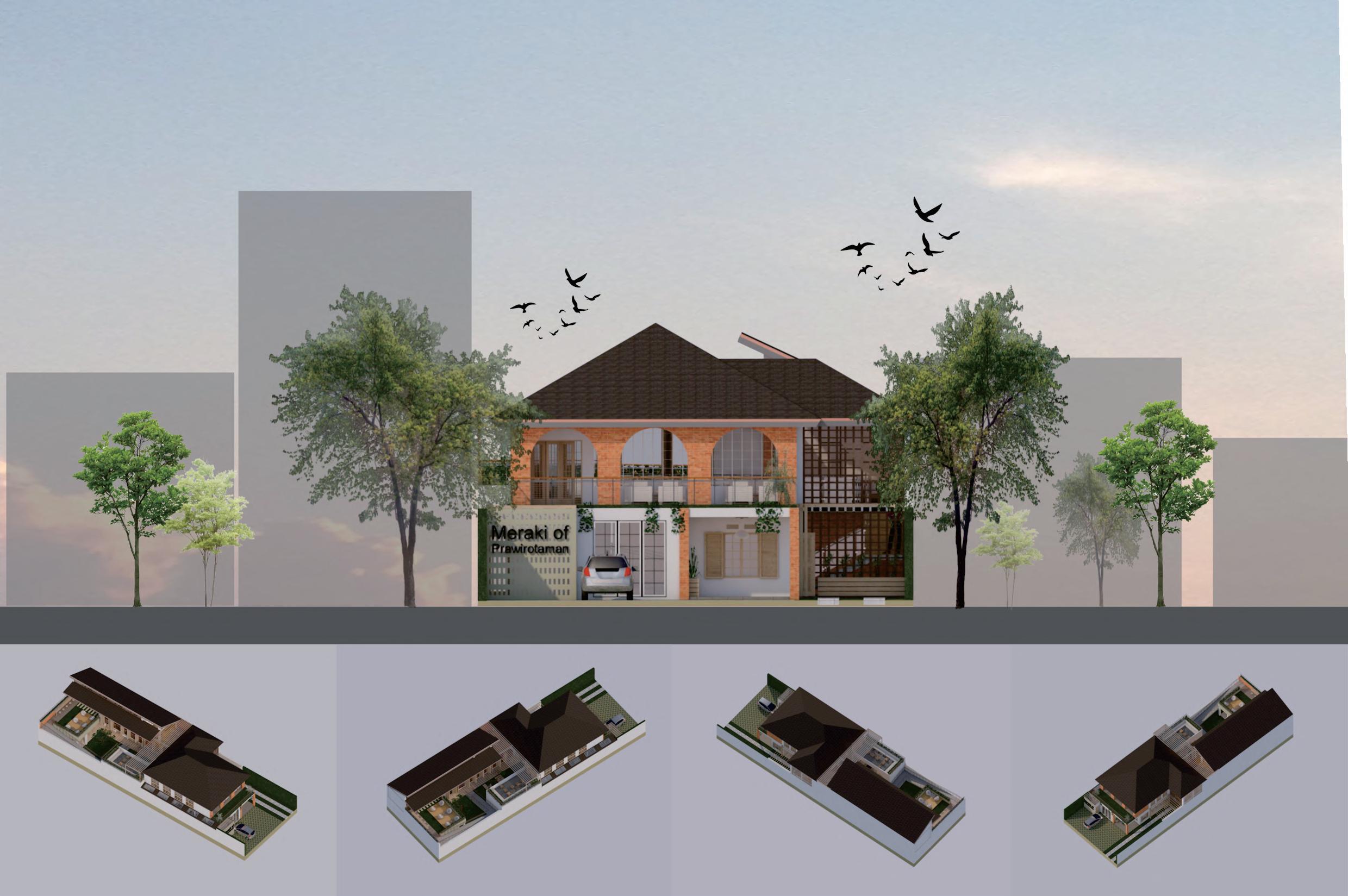
“Adaptive Reuse Architecture: Meraki of
01
Prawirotaman”
Adaptive Reuse Architecture | Academic Project | 2019
Building name
Meraki of Prawirotaman
Type
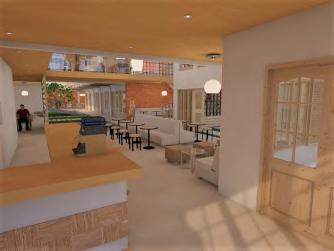
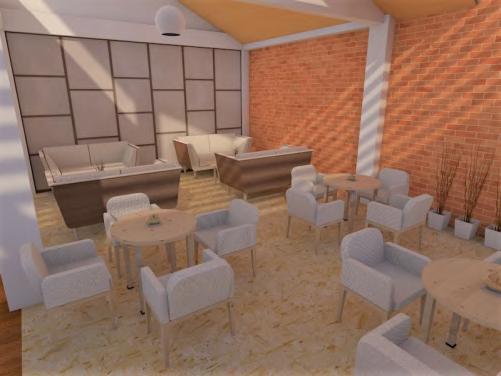
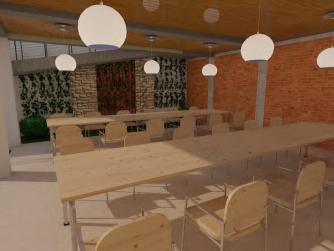
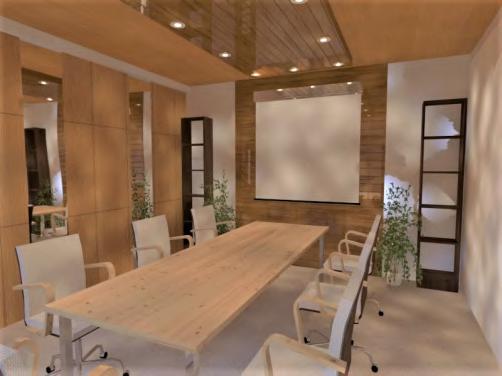
Café and co-working space
Year 2019
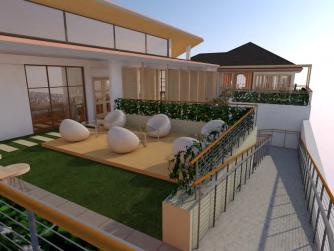
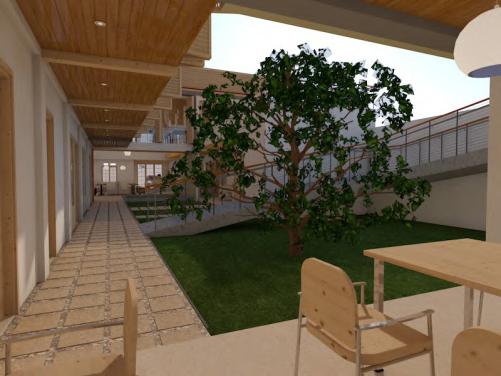
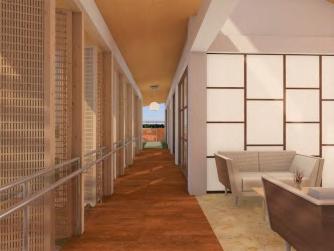
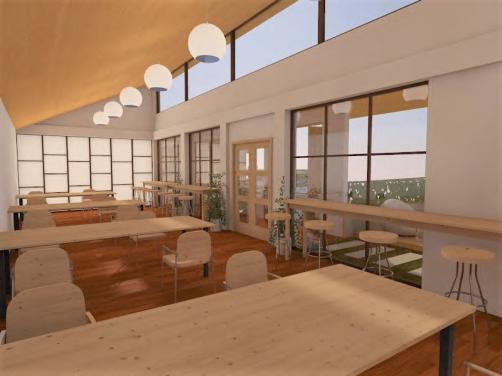
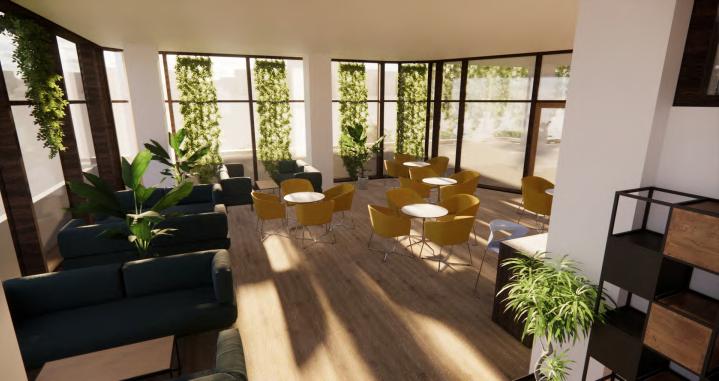
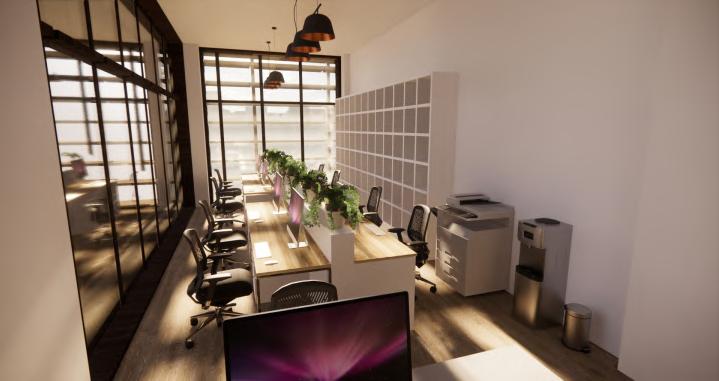
Meraki of Prawirotaman is located at Prawirotaman 3, which is that area is actually a location dominated by people's houses, and not too many commercial b u i l d i n g s W i t h t h a t considerations, the area is compatible for co-working s p a c e a n d c u l i n a r y commercial buildings. Due the area is quiet enough and not too much noise, that area is suitable for use i n w o r k a r e a s w h i c h certainly require a quiet a n d p e a c e f u l p l a c e .
Prawirotaman 3 area is also quite easy to access due its location is not too far from the protocol road, namely J l . P a r a n g t r i s t i s . B y considering the condition of existing buildings that are still feasible, the reduction or removal of existing building parts will be minimized. And conversely, to make a commercial building it will add or expand the spaces in it, so that every existing space will be utilized as much as possible for commercial facilities.
Location
KH Djawad Fakih MG III Street, Brontokusuman, Kec.
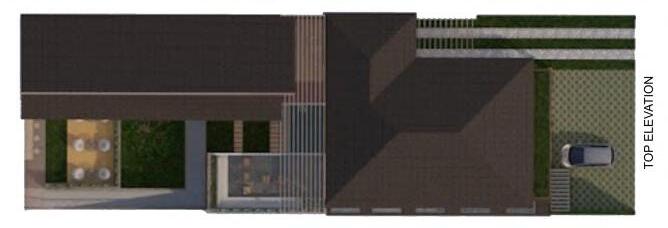
Mergangsan, Kota Yogyakarta, Daerah Istimewa Yogyakarta
55153
About
“Adaptive Reuse Architecture”
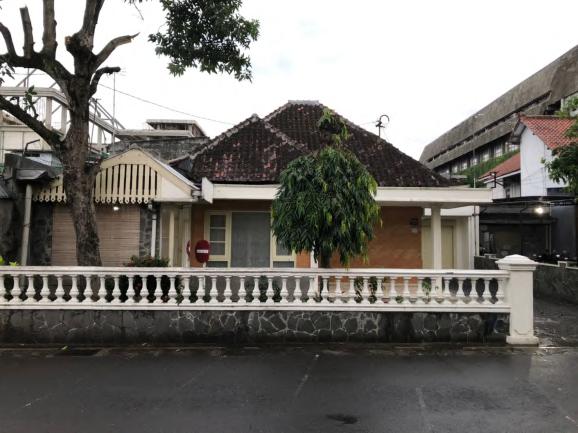
In the prawirotaman house, there are building conditions that look not really well. Such as tile oors and some cracked walls due to age. While structurally, the Prawirotaman house can still be used, but not for two oors. Therefore from the existing plan we can see which columns must be destroyed and added.
The existing oor plan is analysed, then the initial function of the room is changed according to zoning diagrams that have been made. Unsuitable and fragile interior parts of the building will be destroyed and replaced with new ones While the strongest part of the building will be maintained.
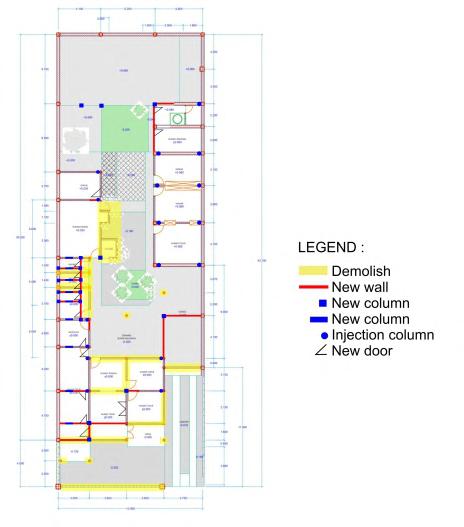
In the adaptive reuse strategy that will be used is the use of the injection c o l u m n T h e i n j e c t i o n column will be placed next to the original column. So the injection column can make the building column for two oors and make the building structure stronger.
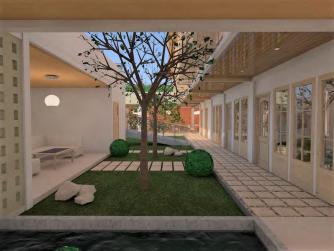
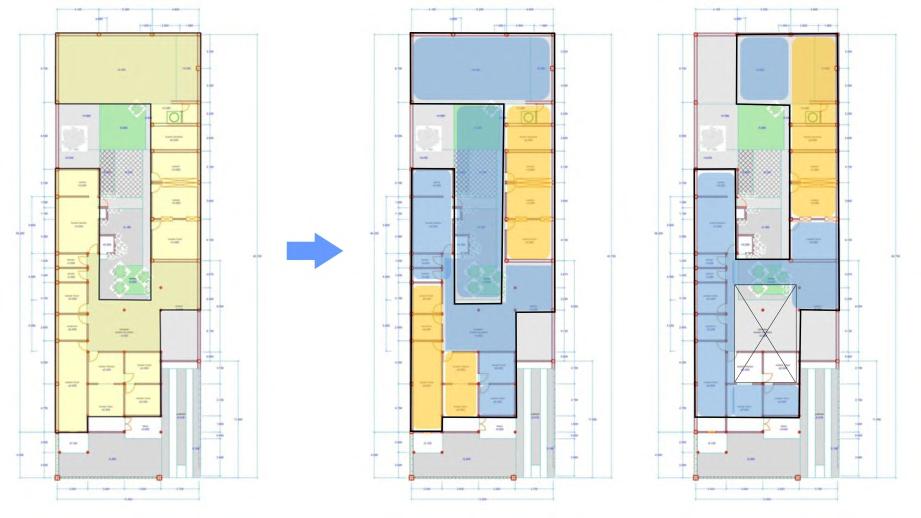
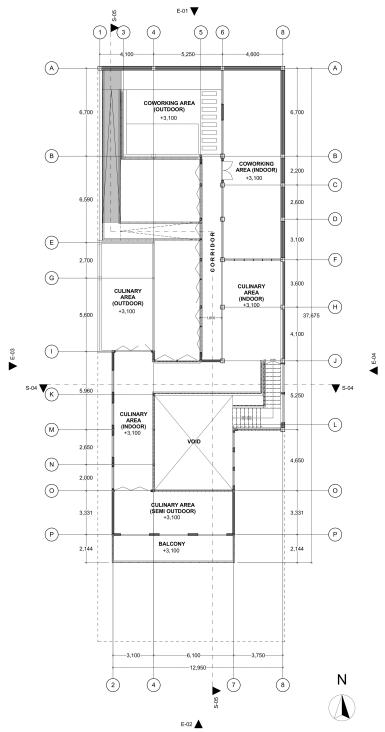
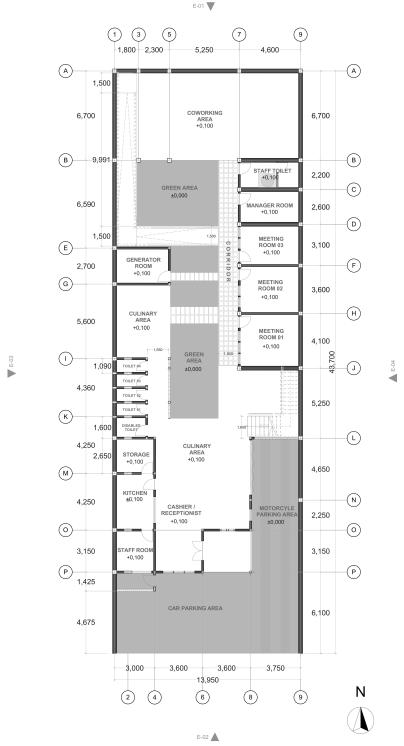
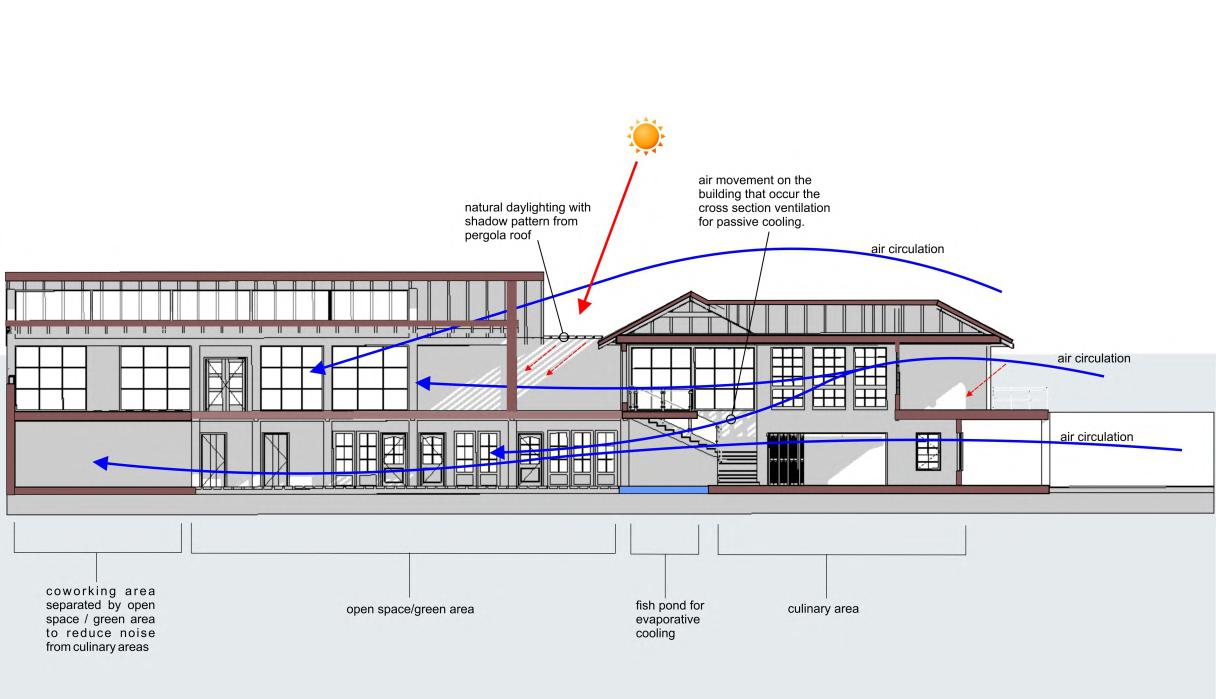
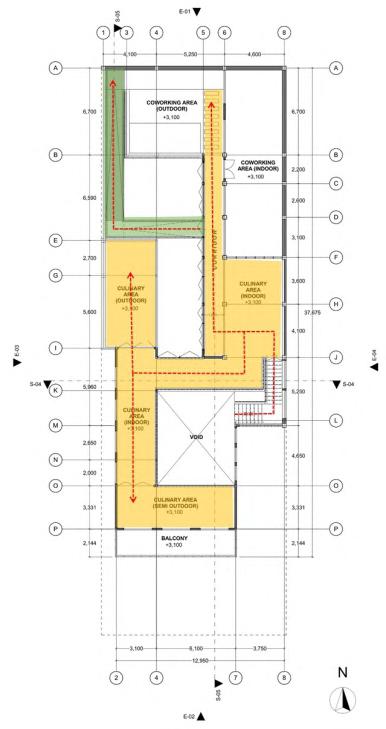
Zoning Diagrams are made based on two types, namely public space (blue) and private space (yellow). The culinary and co-working rooms must be separated. Because the culinary space will cause noise, compared to the coworking room which requires a rather quiet place. Therefore an indirect boundary will be made which will divide the co-working room and culinary space. The boundary that will be used is the open space / green area in the middle of the building. This will provide a considerable distance to reduce noise from the culinary space.
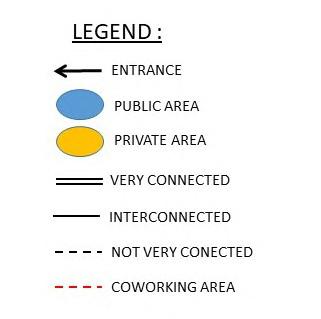
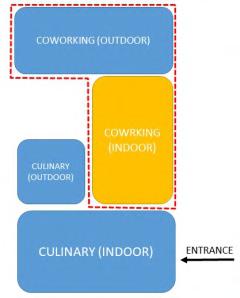
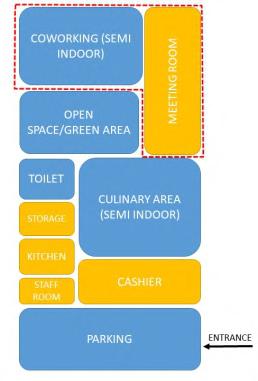
(1st FLOOR PLAN) EXISTING PLAN (1st FLOOR PLAN) (2nd FLOOR PLAN)


The yel ow area means the shape of the building plan that will be used as a commercial bu d ng p an Signicant changes were only made in the existing front area due to cons deration to increase parking space.
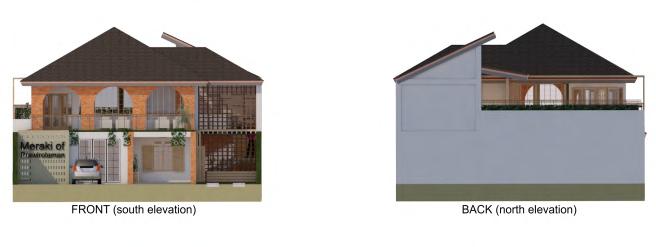
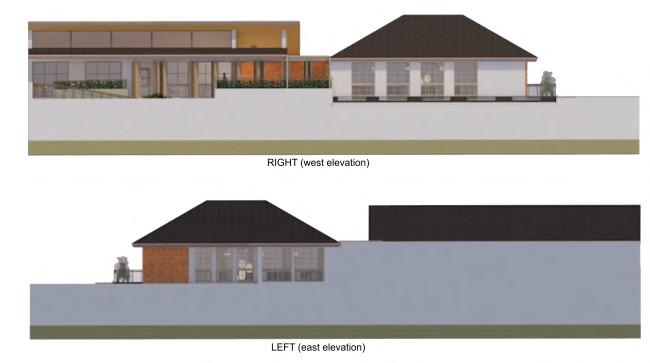
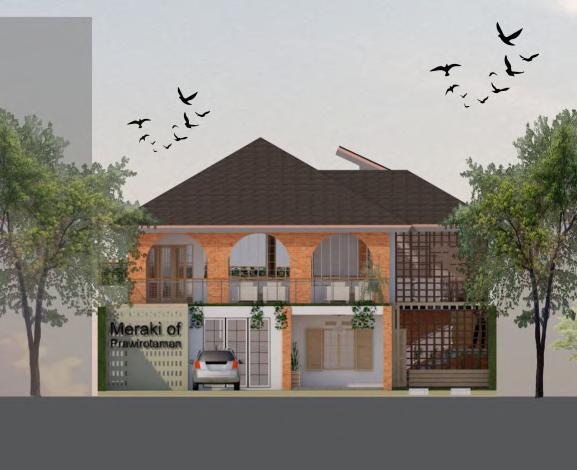 THE EXISTING FACADE
THE NEW FACADE
Distribution of Zoning Diagrams that have been applied on the existing plan, based on public space (blue) and private space (yellow). And based on the red dash identied the co-working area separated from the culinary area.
THE EXISTING FACADE
THE NEW FACADE
Distribution of Zoning Diagrams that have been applied on the existing plan, based on public space (blue) and private space (yellow). And based on the red dash identied the co-working area separated from the culinary area.
THE ADAPTIVE REUSE
PLAN
THE EXISTING PLAN WITH RECOMMENDATION NEW PLAN
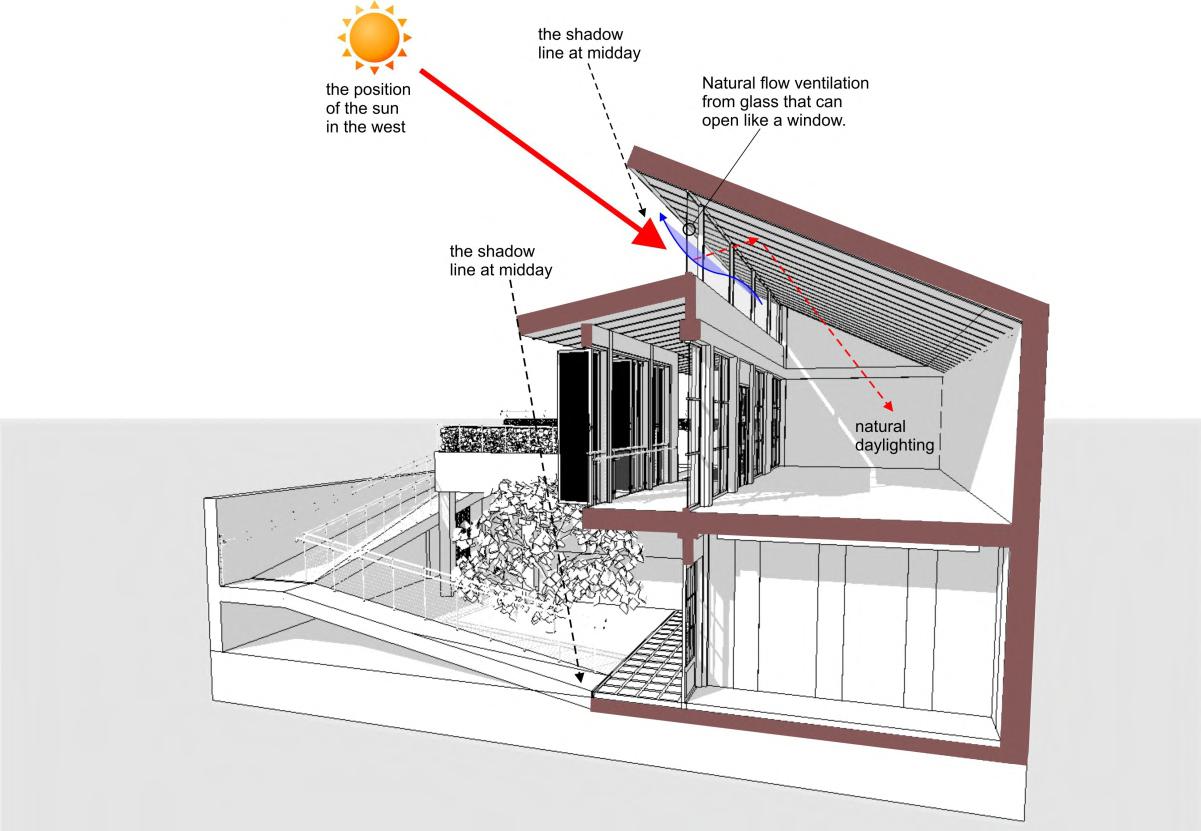
Passive Cooling Design

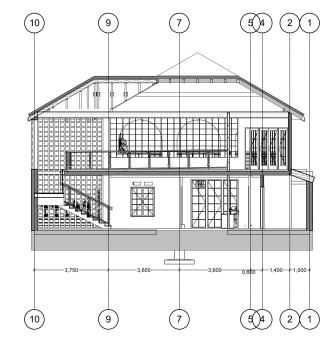
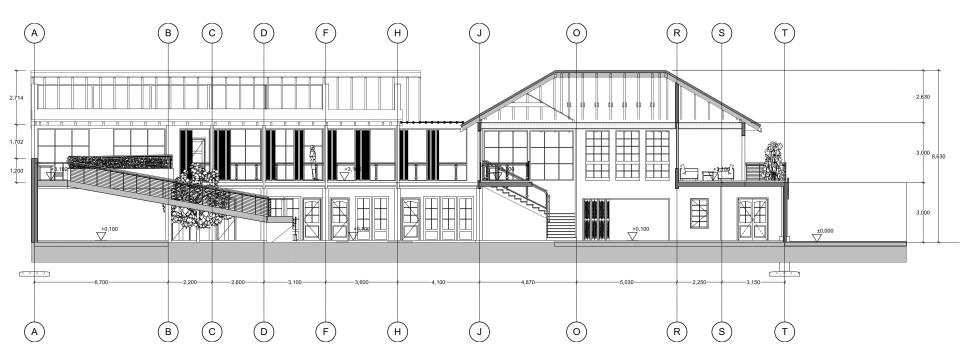
1st FLOOR PLAN 2nd FLOOR PLAN
SECTION A-A
SECTION B-B
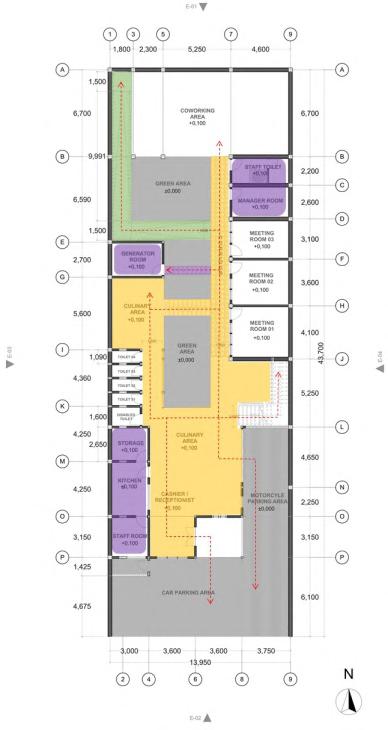
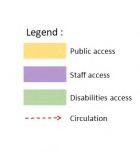
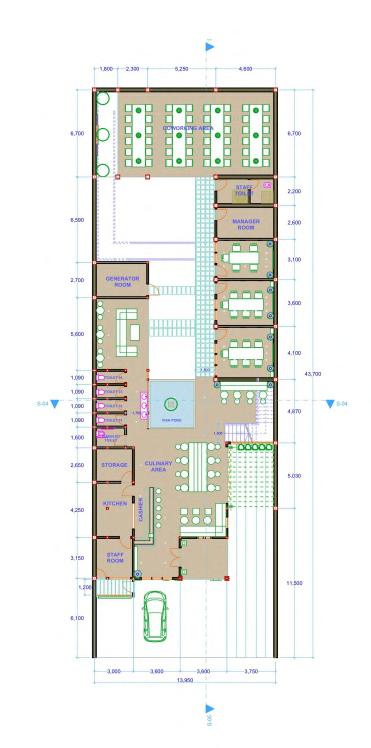
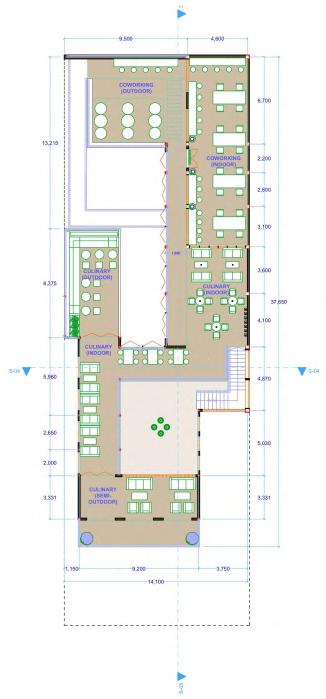

Access and Circulation Furniture Plan and Site Plan 1st FLOOR PLAN 2nd FLOOR PLAN SITE PLAN 1st FLOOR PLAN 2nd FLOOR PLAN
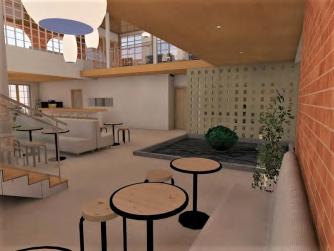
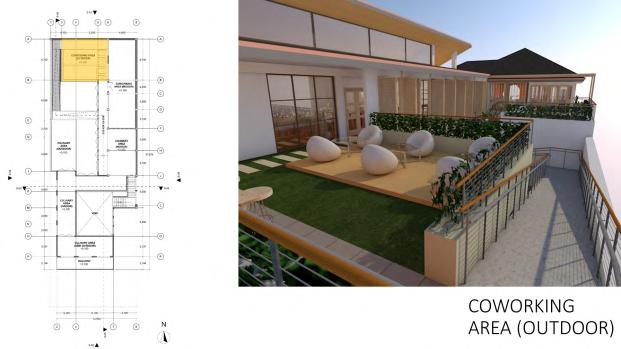
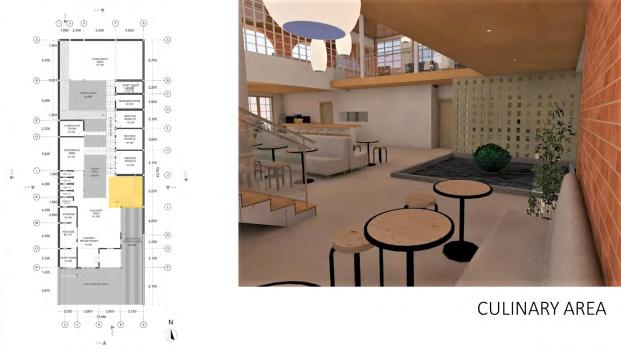
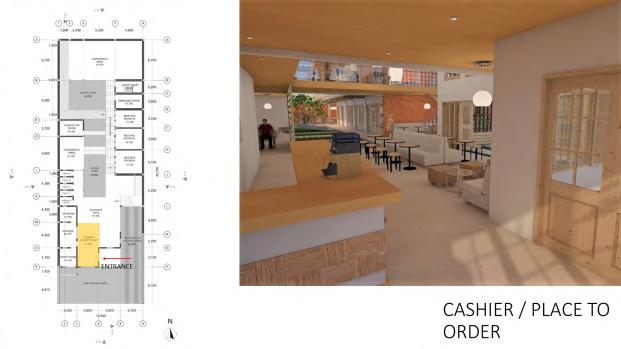
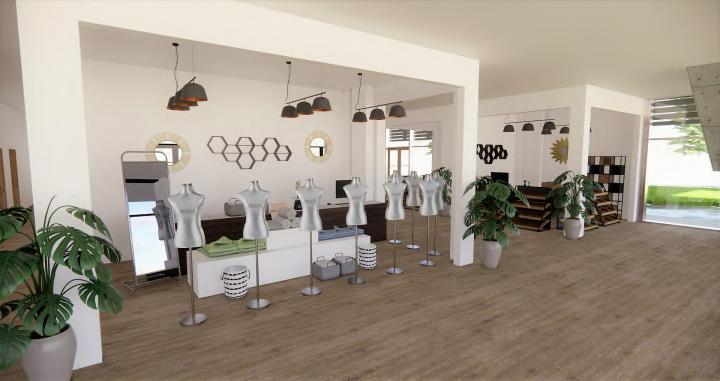
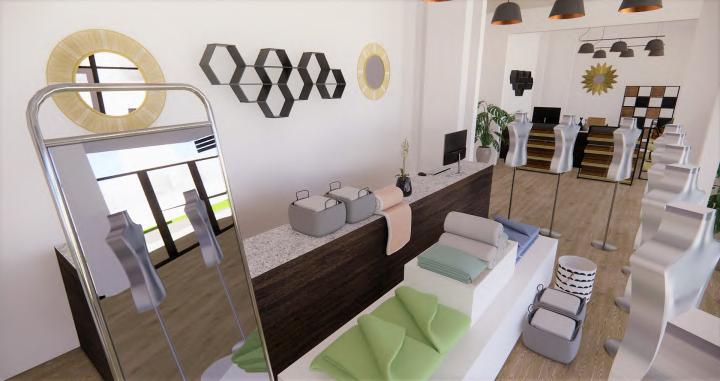
Interi or Perspe ctive
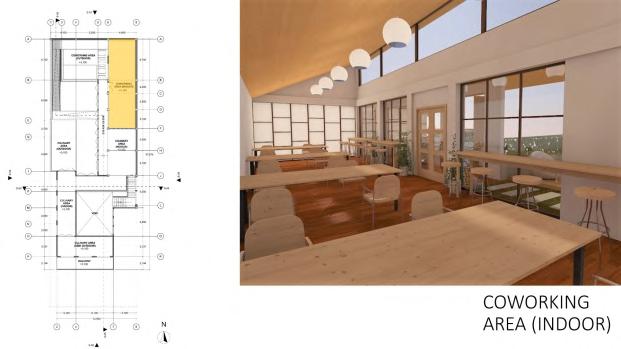
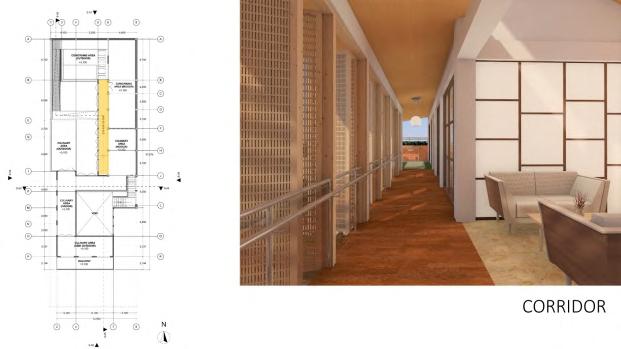
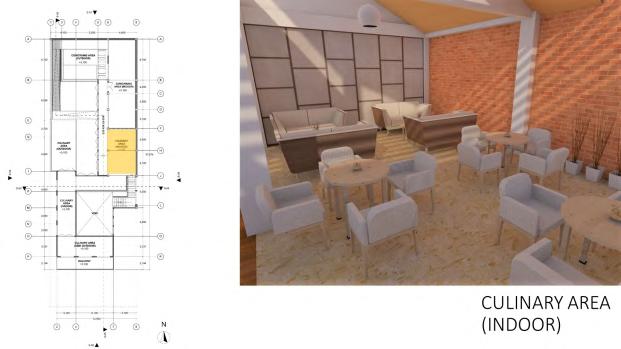
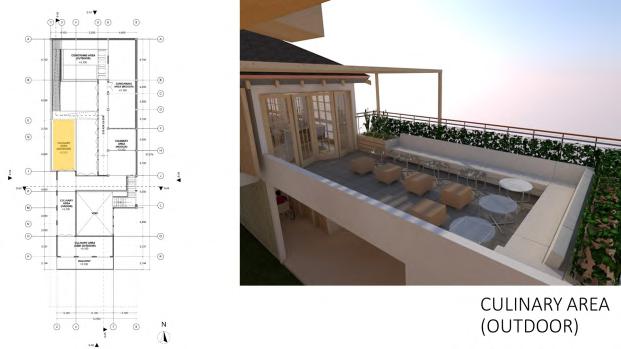
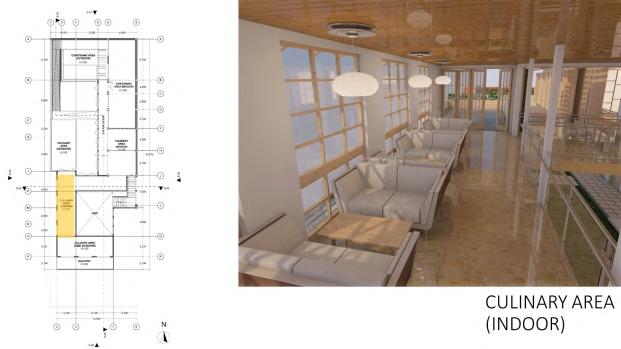
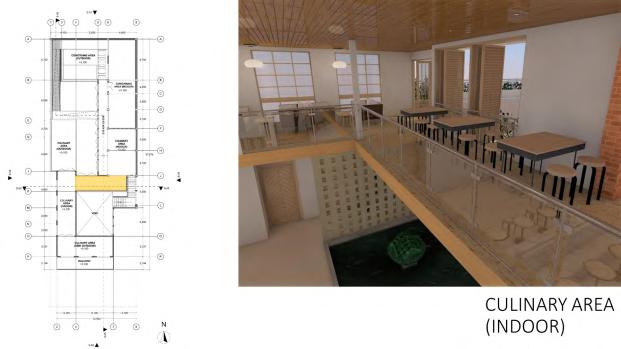
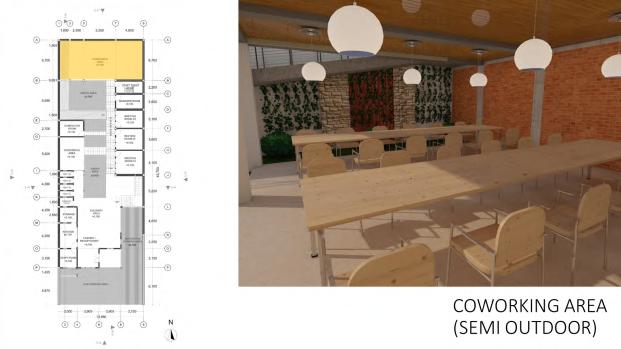
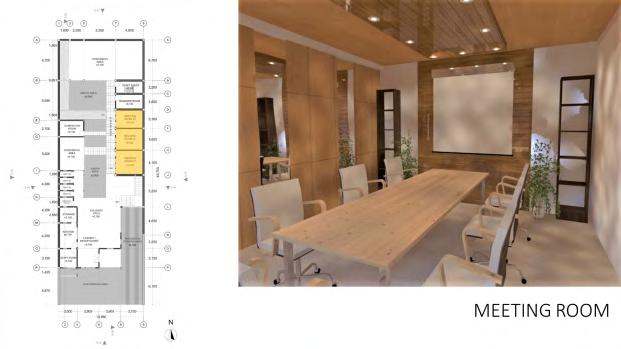

“Participatory Architecture
Approach: ” Tidayu Dance Studio
02
Participatory Architecture | Academic Project | 2020



Building name
Tidayu Dance Studio
Type Dance Studio

Year 2020
Location
Re. Martadinata Street, Kel. Sungai Jawi
Dalam, Kec. Pontianak Barat, Pontianak City, West Kalimantan
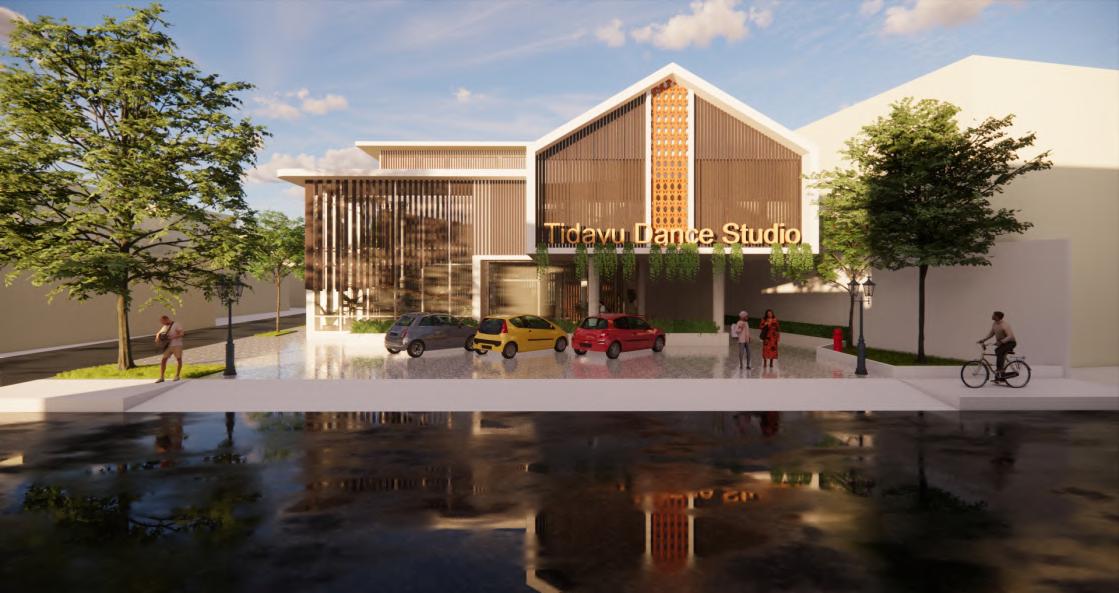
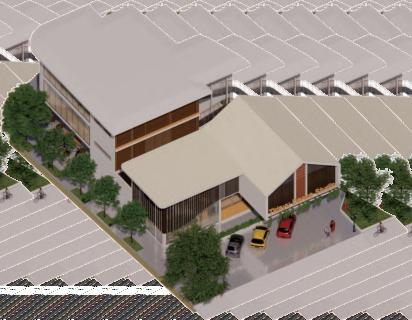
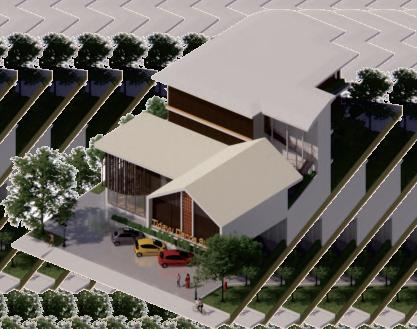
Tidayu dance studio is a place that is used to accommodate dance activities. This dance studio is open to all users of all ages who want to practice dance. But for end user themselves, the function is prioritized for junior high school students, high school students, to college students who do extracurricular activities in traditional dance. So that the end users will be more dominated by school students.
The background of making this dance studio is the lack of space to carry out extracurricular school activities in the form of dance exercises among school children (SMP-SMA) In some cases, they sometimes use places that are not supposed to be used. For example, they use the courtyard of the school mosque, school eld with doesn't have a shade, and the other places that are not suitable for to do that activity. In addition, in this pandemic era with new normal, people cannot do the activities they are engaged in because it is difcult to nd a place (dance studio) with health protocols.
Whereas traditional dance is a hereditary local cultural heritage that must be preserved, studied and introduced. Therefore, making a forum for training and expressing the art of dance is very suitable to be appointed as a response to the needs of school children who want to learn about this cultural heritage. So as to make this happen, the “participatory design” method can be applied.
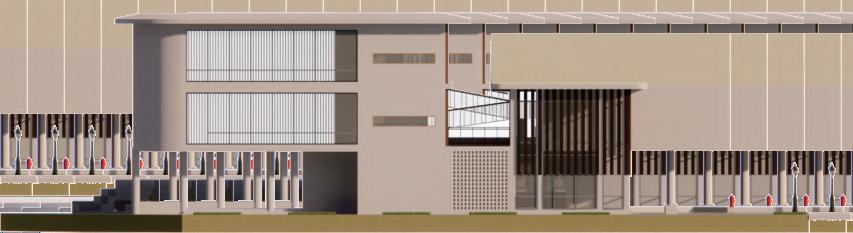
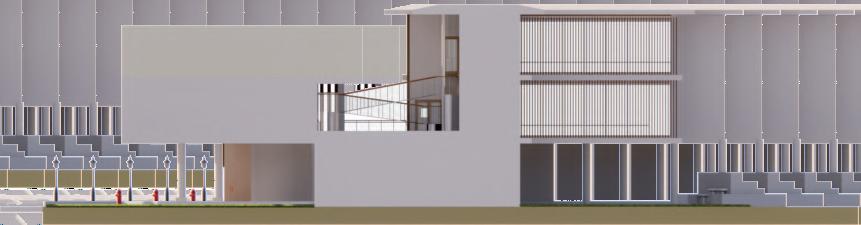
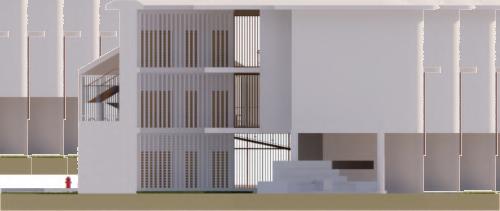
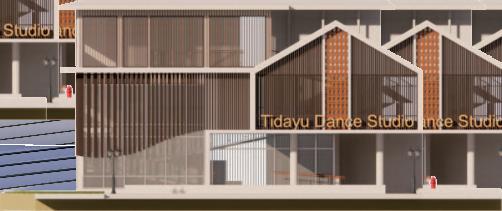
FRONT ELEVATION BACK ELEVATION LEFT ELEVATION
RIGHT ELEVATION
PARTICIPATORY DESIGN
PLACE TO PRACTICE AND EXPRESSING THE CULTURE
MULTI-CULTURAL CITY
ACCOMMODATED PLACE WITH HEALTH PROTOCOL
THE VALUES OF IDENTITY AND LOCALITY
About
“Participat ory Architectu re Approach
B e f o r e d e s i g n i n g , a n interview was conducted with the client/end users to nd out the building theme that the client likes, what activities the client does when using the facility, what the client likes and dislikes, and also the needs the client needs when using the design facility. In the case of building with this type of dance studio, the client / end users have limitations, specicities, and n o t e v e r y o n e h a s t h e knowledge and experience in dancing. So that the clients/end users as resource persons only consist of three people that have a hobby and experience of dancing.
From the results of the interviews and discussions, the classication of space
requirements and activities that will take place during the use of design facilities is obtained. Classication of a c t i v i t i e s a n d s p a c e requirements is divided into three parts. Namely the rst is m a i n a c t i v i t i e s , s e r v i c e activities, and the last is supporting activities. After obtaining the data and h a v i n g d i s c u s s i o n s w i t h clients/end users to determine the connection between rooms, bubble diagrams are made.
A f t e r t h a t , t h e r o o m p r o g r a m m i n g d a t a i s collected into tables and calculates the needs of each room based on the type of activity and the need for furniture. Then the room programming data must be validated with the relevant r e g i o n a l g o v e r n m e n t regulations to ensure that it does not violate development regulations.
Building Concept
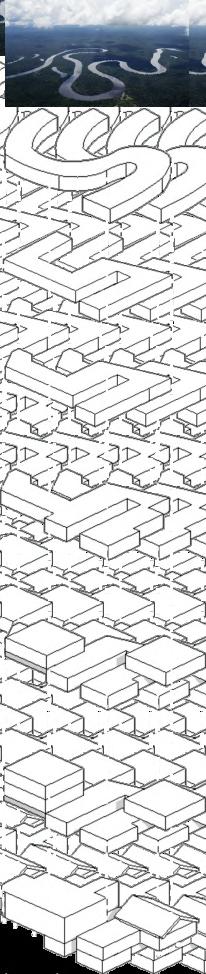
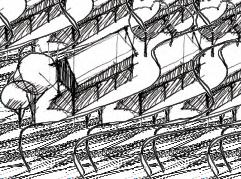
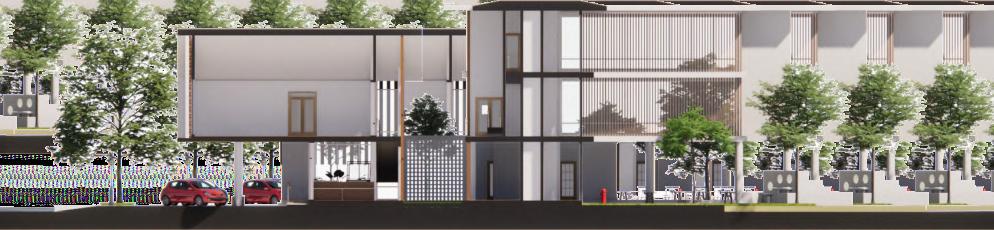
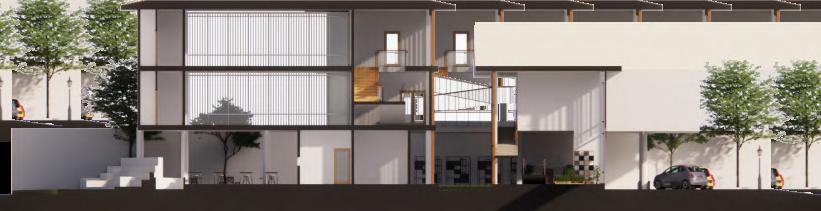
The building concept takes the form of the i d e n t i t y o f t h e Kalimantan region, where the concept is taken from the form of t h e K a p u a s r i v e r , t r a d i t i o n a l D a y a k houses, and traditional dances that unite the three largest ethnic groups in Kalimantan, n a m e l y t h e T i d a y u dance.
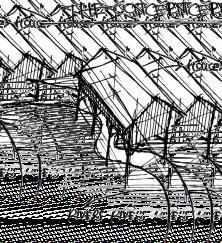
T h e s h a p e o f t h e b u i l d i n g m a s s c o m p o s i t i o n w a s inspired by the laying of the Betang houses of the Dayak tribe, a native tribe of the island of Kalimantan, where t h e s e h o u s e s a r e
placed on the banks of the Kapuas river and have a characteristic form of very tall building pillars to avoid ooding and wild animals. which later on, the shape of t h e r i v e r w a s transformed into the rst oor of the building, while the pillared form of the betang house was represented as the second and third oor of the building. So that the concept adopted for this building is a "house on the river" with the m a i n a c t i v i t y o f traditional dances.
”
owner manager end user owner = manager = end user
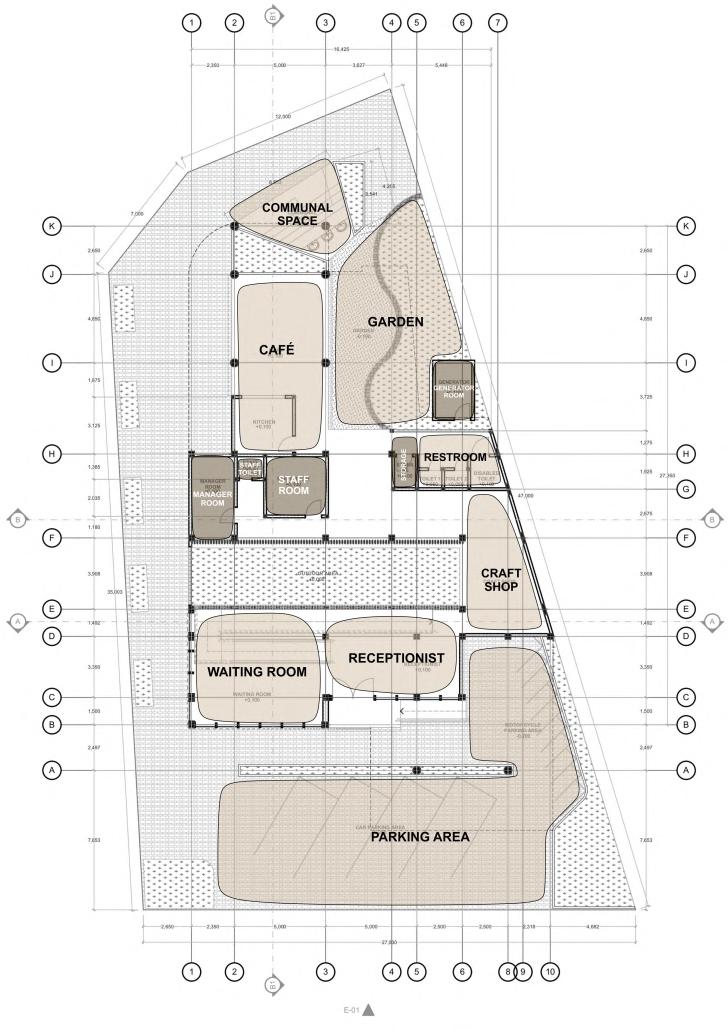
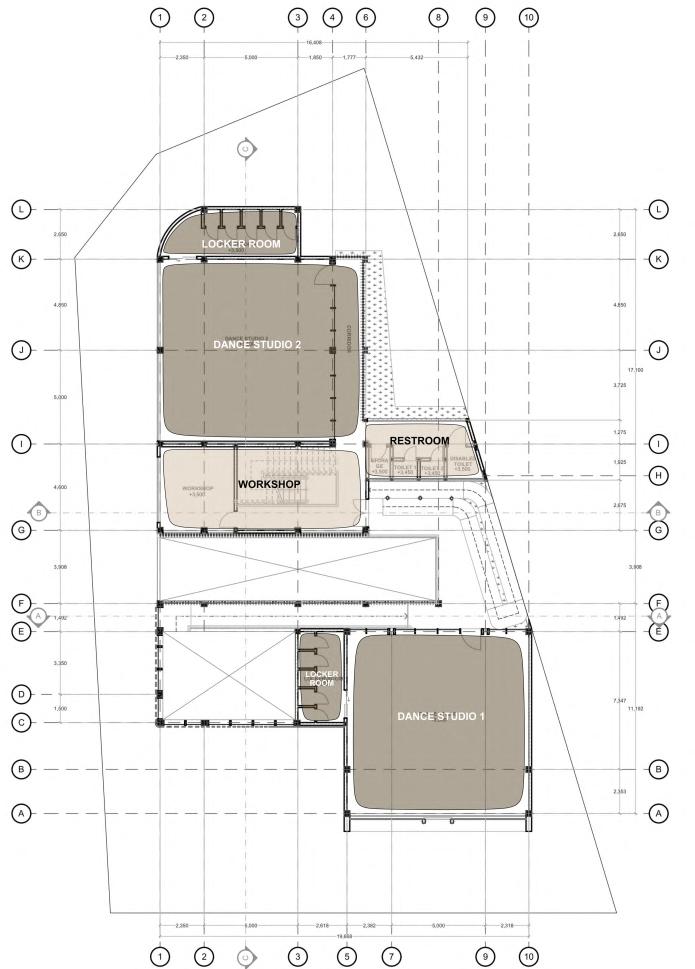
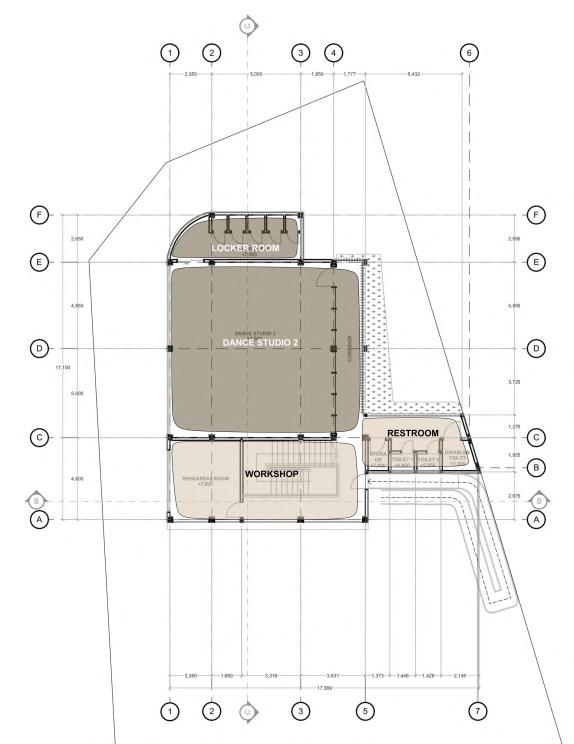
 1st FLOOR PLAN
2nd FLOOR PLAN
3rd FLOOR PLAN
1st FLOOR PLAN
2nd FLOOR PLAN
3rd FLOOR PLAN
Passive Cooling Design
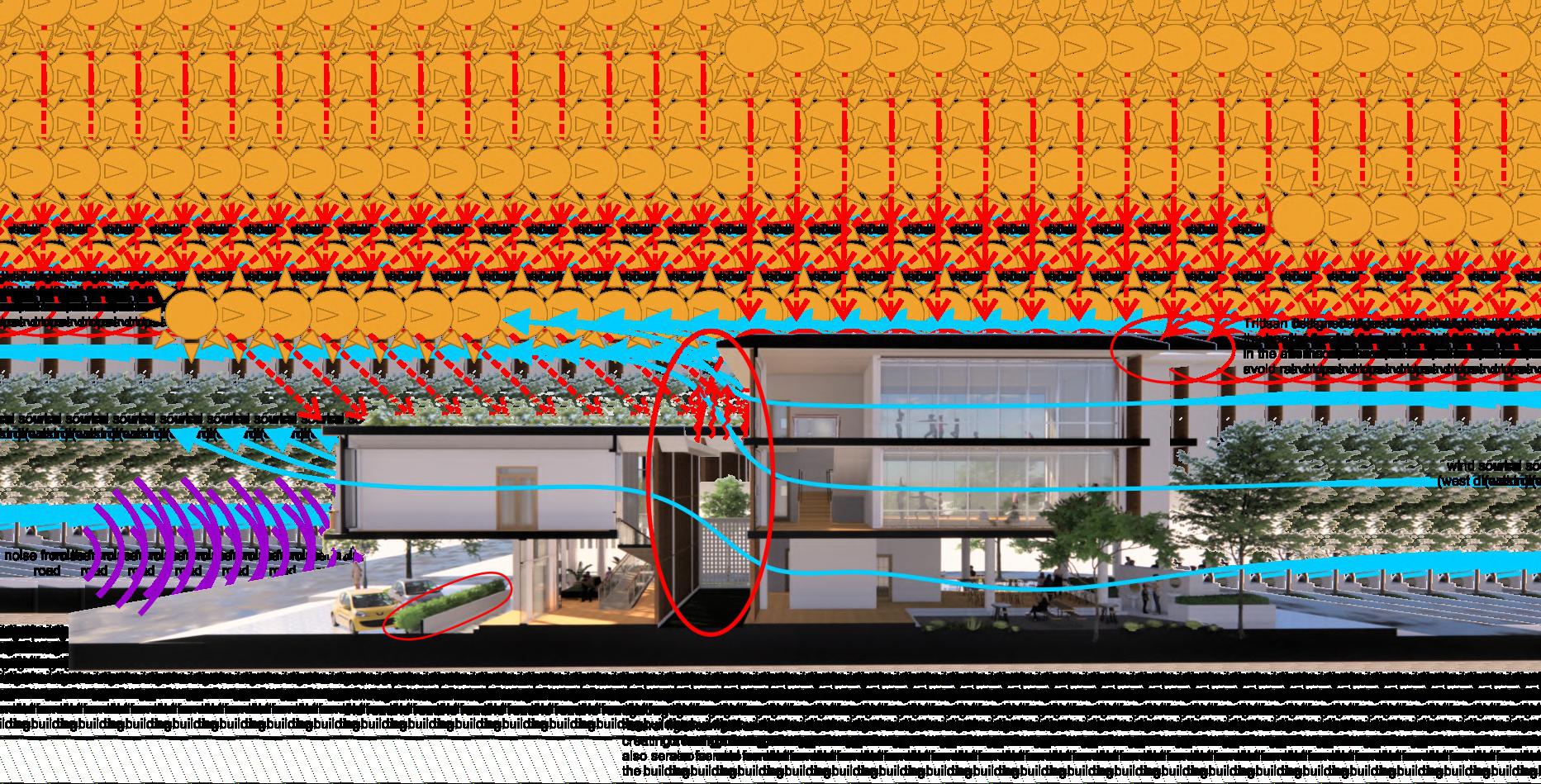
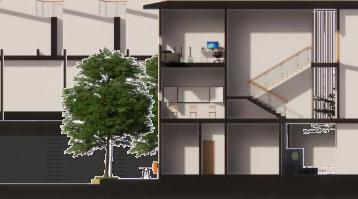
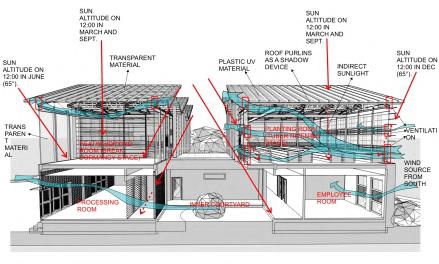
This building is designed to have a passive cooling design, which is by applying a cross section ventilation system, a wide drip shape, the gaps between the buildings that serve as cold ventilation of hot air from inside the building, the gutters are made wide to adapt to the tropical climate, and create many openings that are facing directly to the source of the wind direction which is equipped with plants.
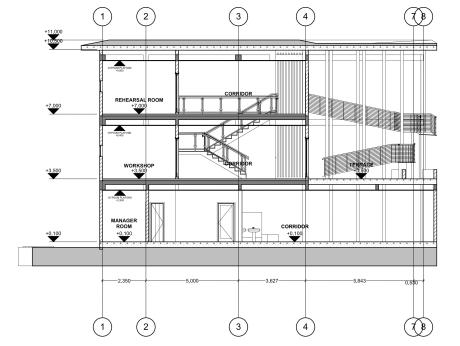
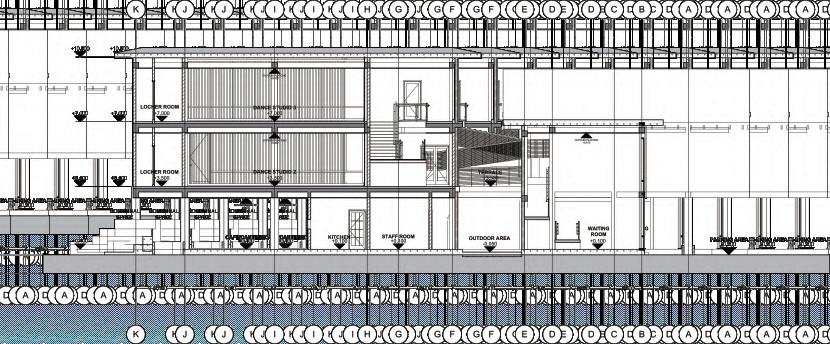
Natural lighting is also optimized for use by making many windows for the second and third oors. Because the second and third oors are prioritized for their function as a dance studio, where clients ask to make dance practice rooms that have optimum of lighting, are fresh, and open, but the privacy of clients / end users is maintained.
 SECTION A-A
SECTION B-B
SECTION C-C
SECTION A-A
SECTION B-B
SECTION C-C
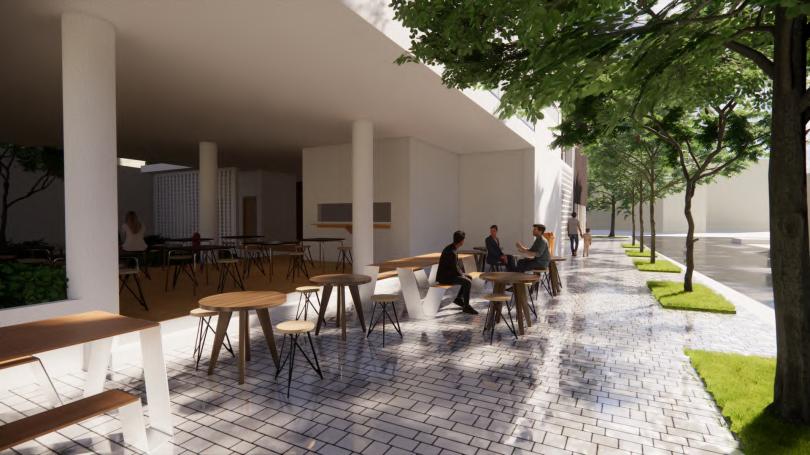
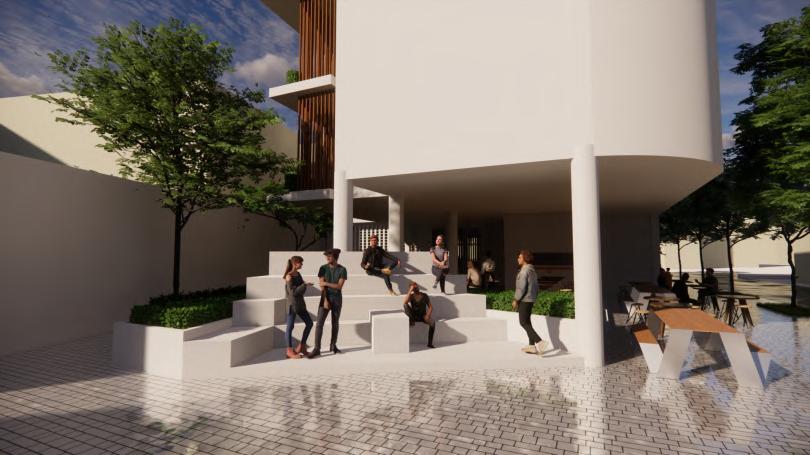
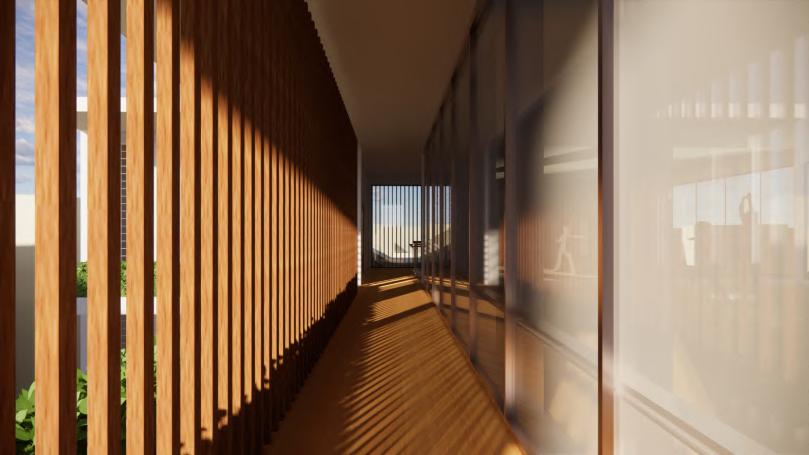
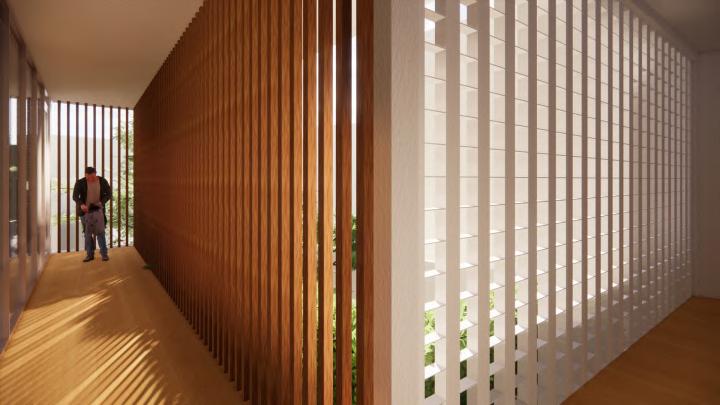
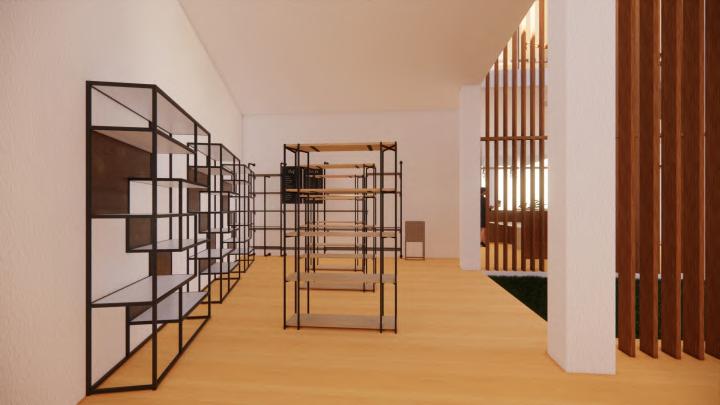
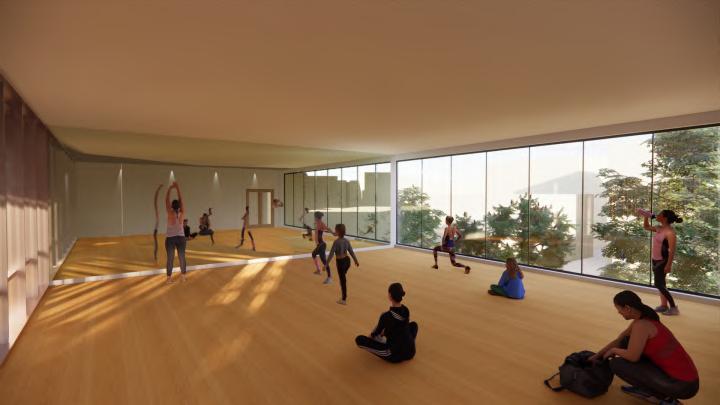
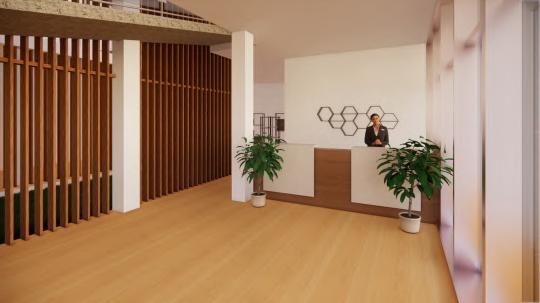
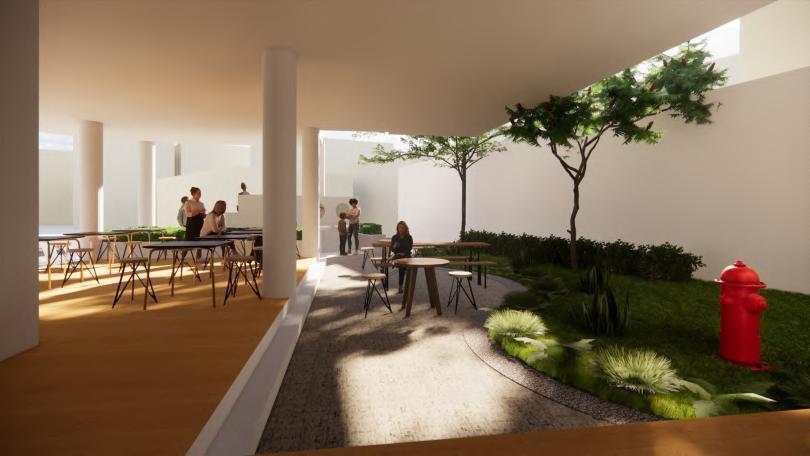
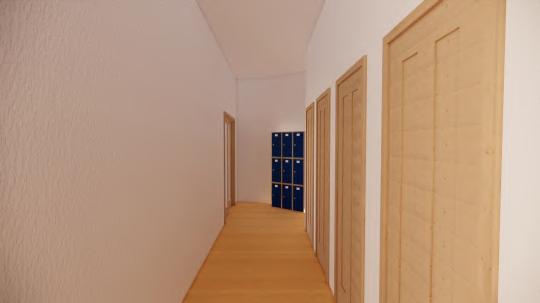
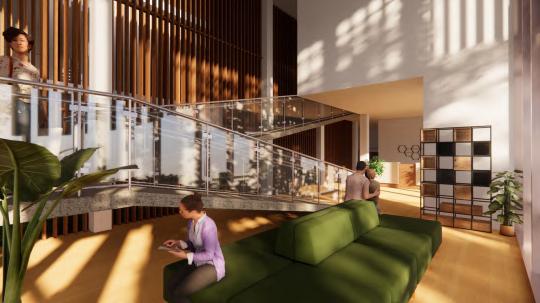
Food and Baverage
Communal Space
Craft Mini Store Corridor
Corridor
Garden Area
Dance Studio Room (2nd Floor)
Receptionist
Lockers Room and Changing Room Waiting Room
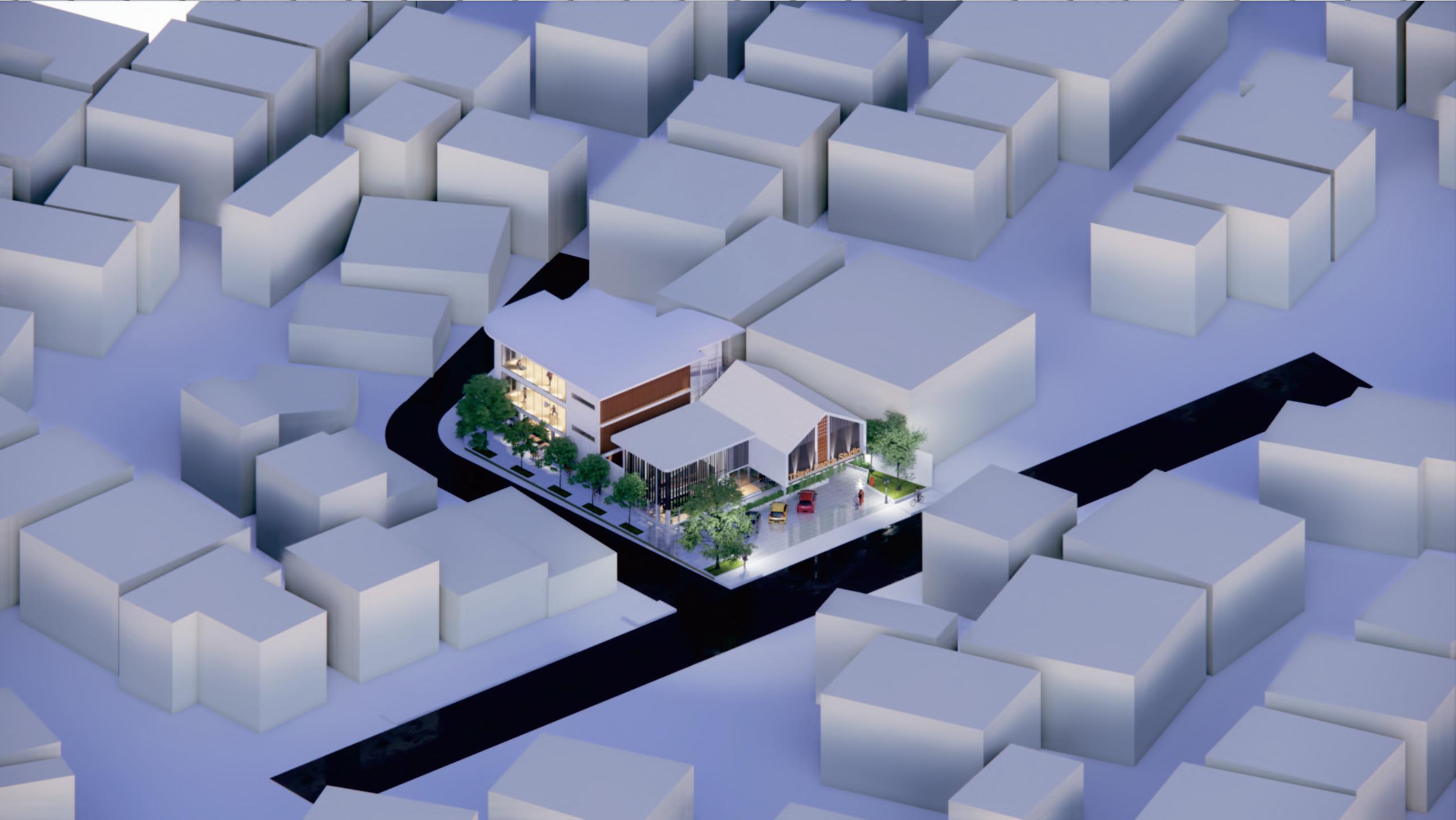
and Exterior Perspective”

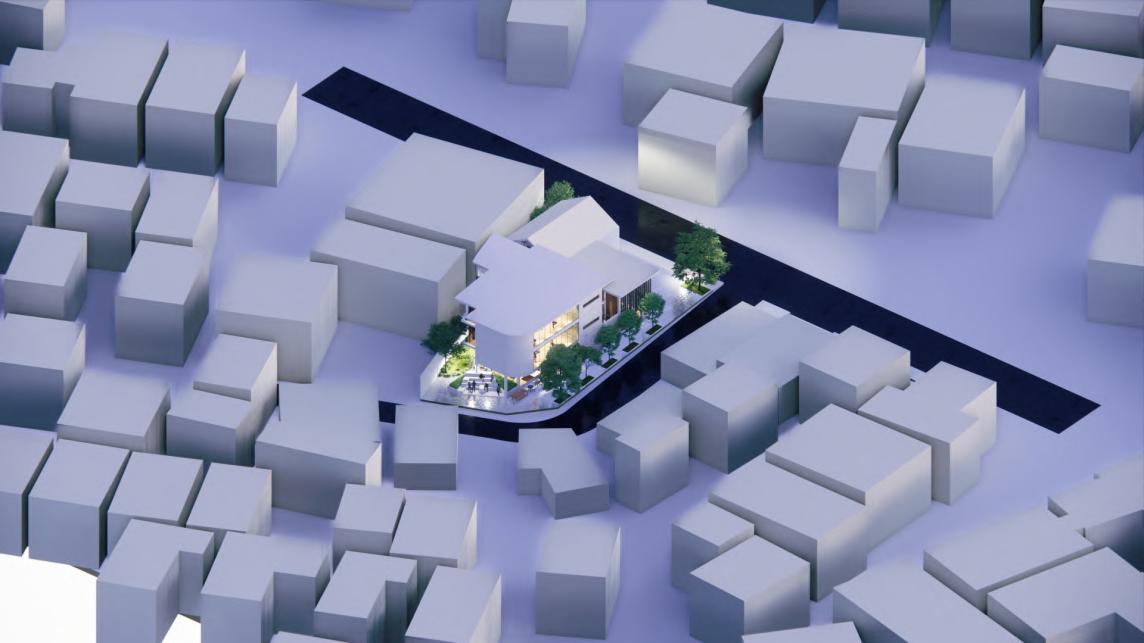
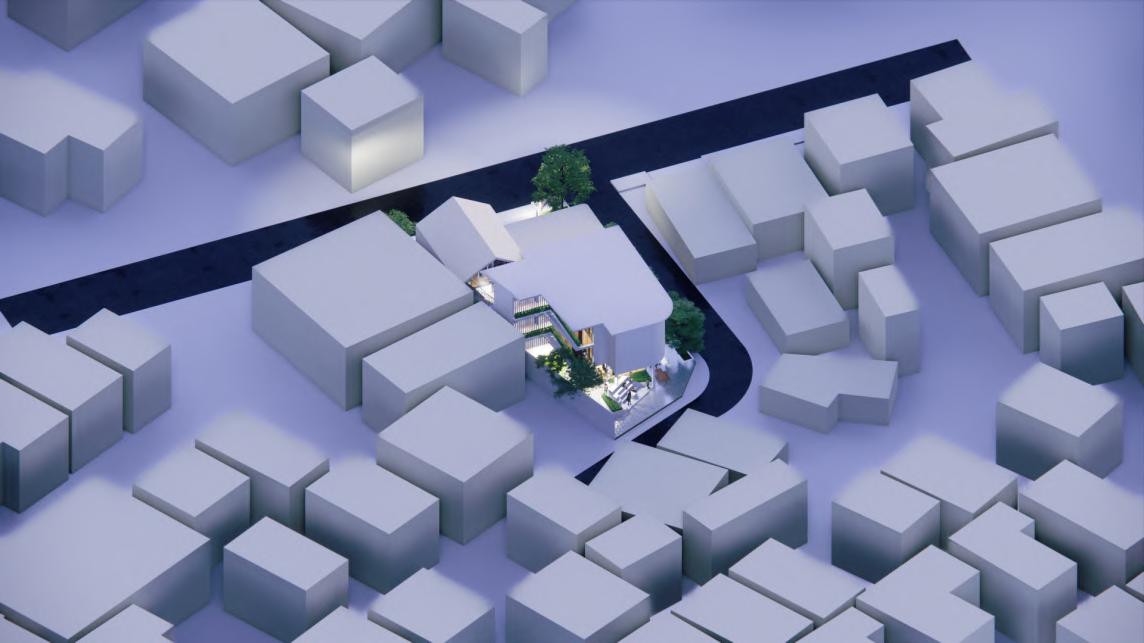
SOUTH ELEVATION
WEST ELEVATION
“Situation
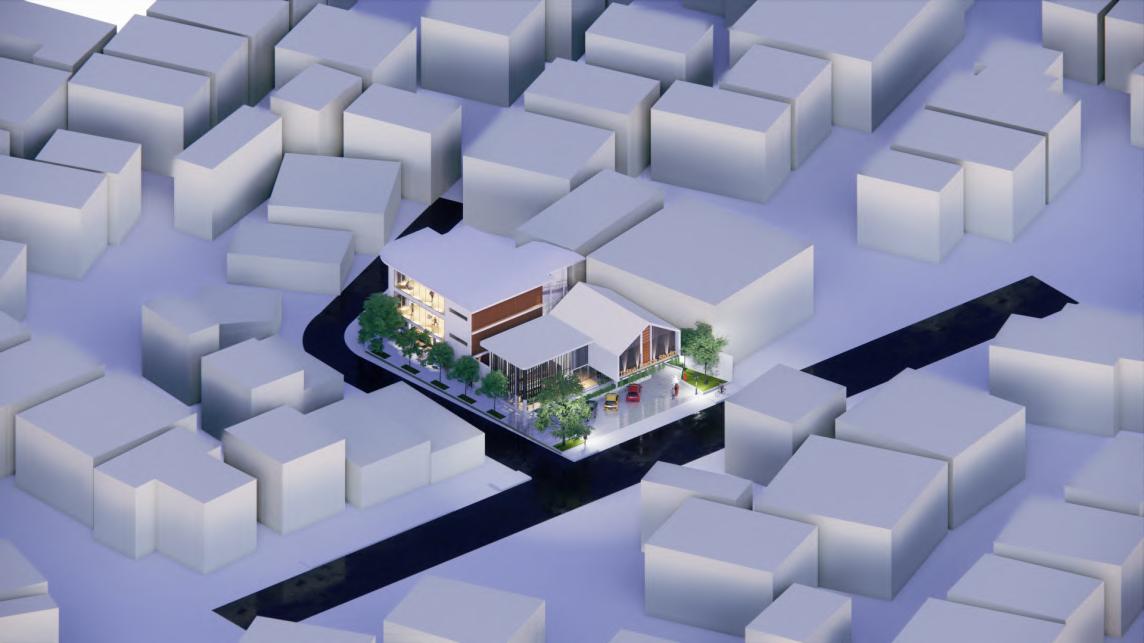
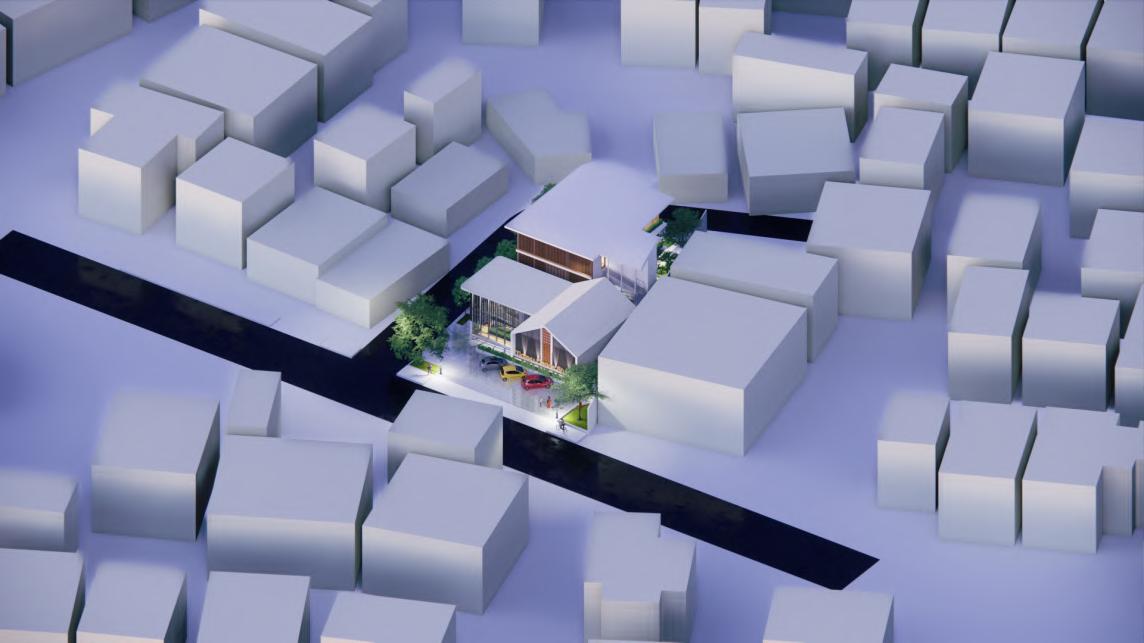
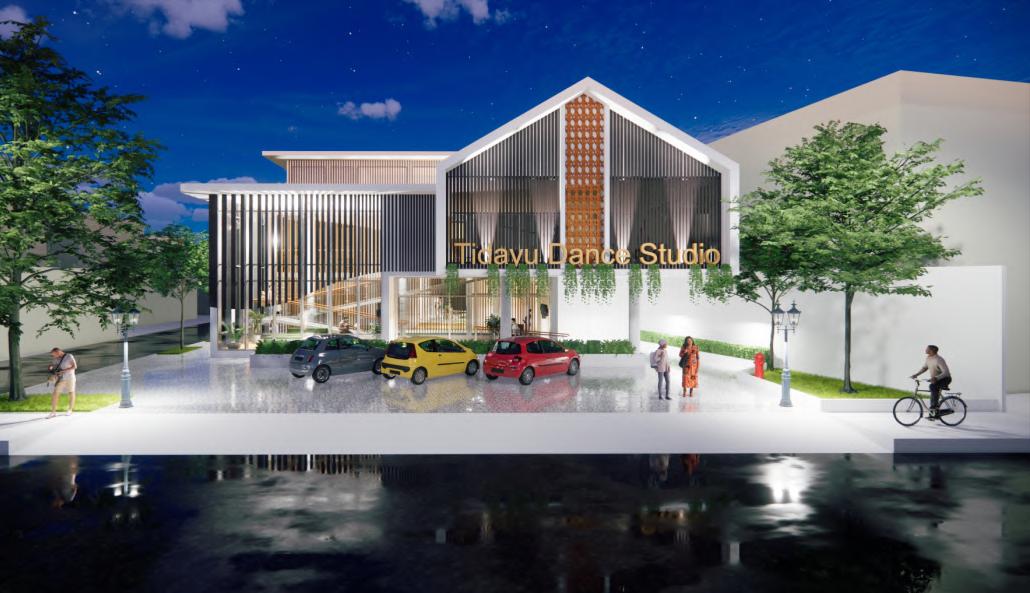
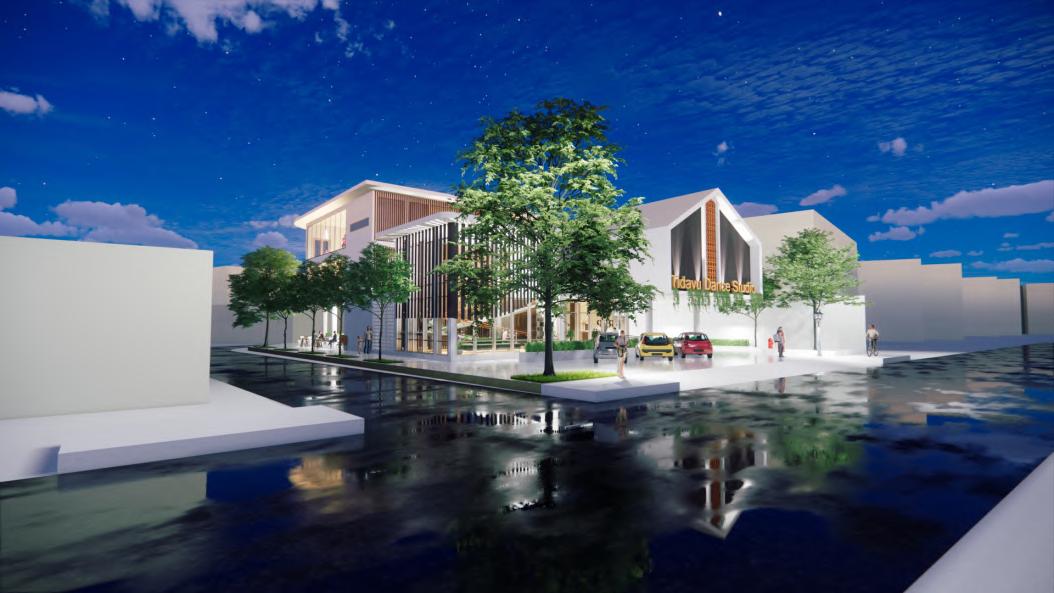 NORTH ELEVATION
EAST ELEVATION
NORTH ELEVATION
EAST ELEVATION
Access and Circulation
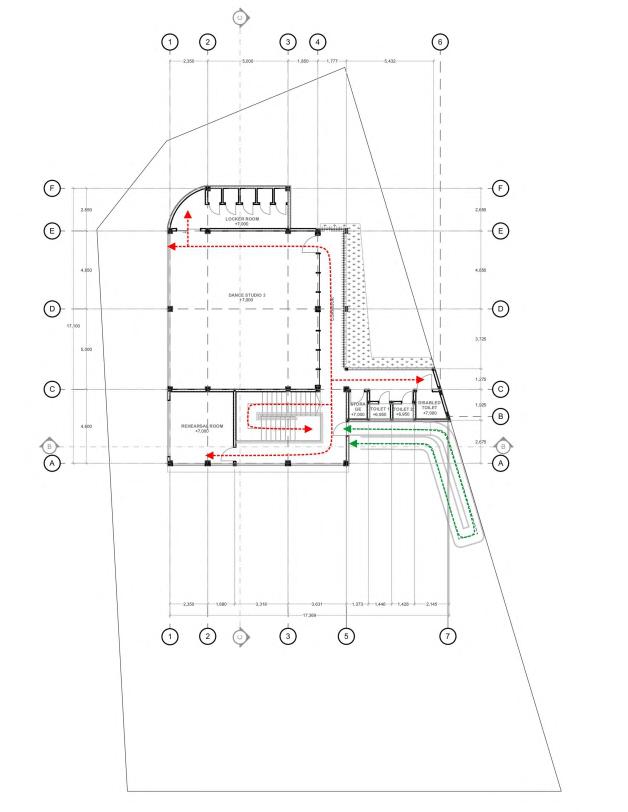
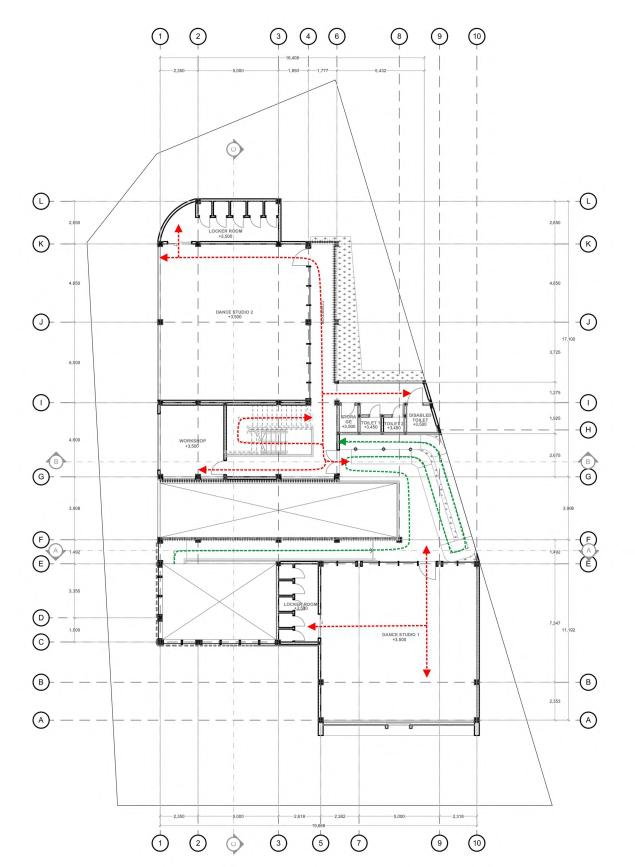
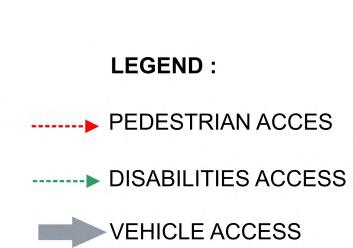
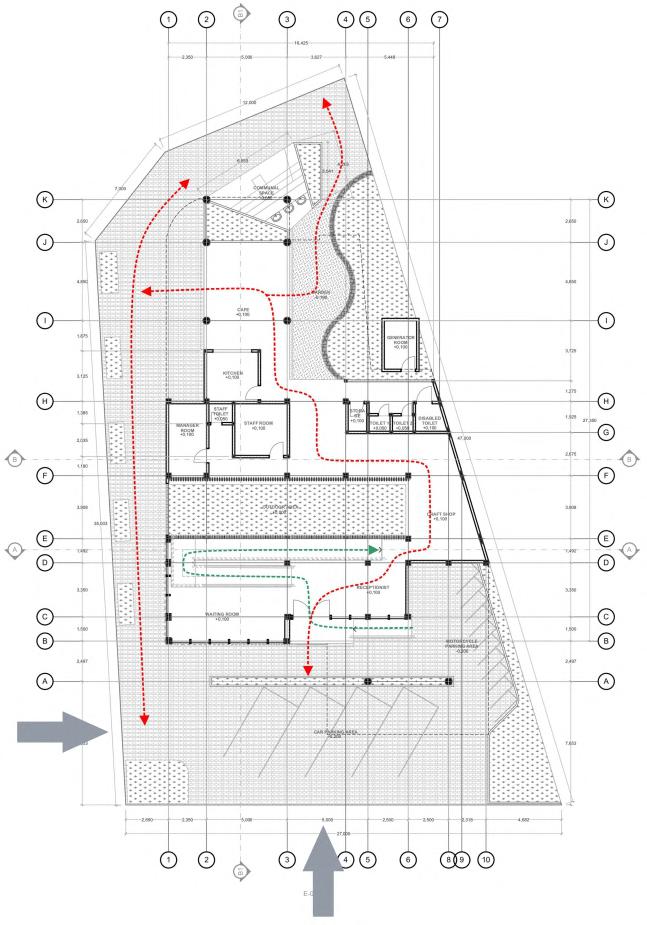 1st FLOOR PLAN
2nd FLOOR PLAN
3rd FLOOR PLAN
1st FLOOR PLAN
2nd FLOOR PLAN
3rd FLOOR PLAN
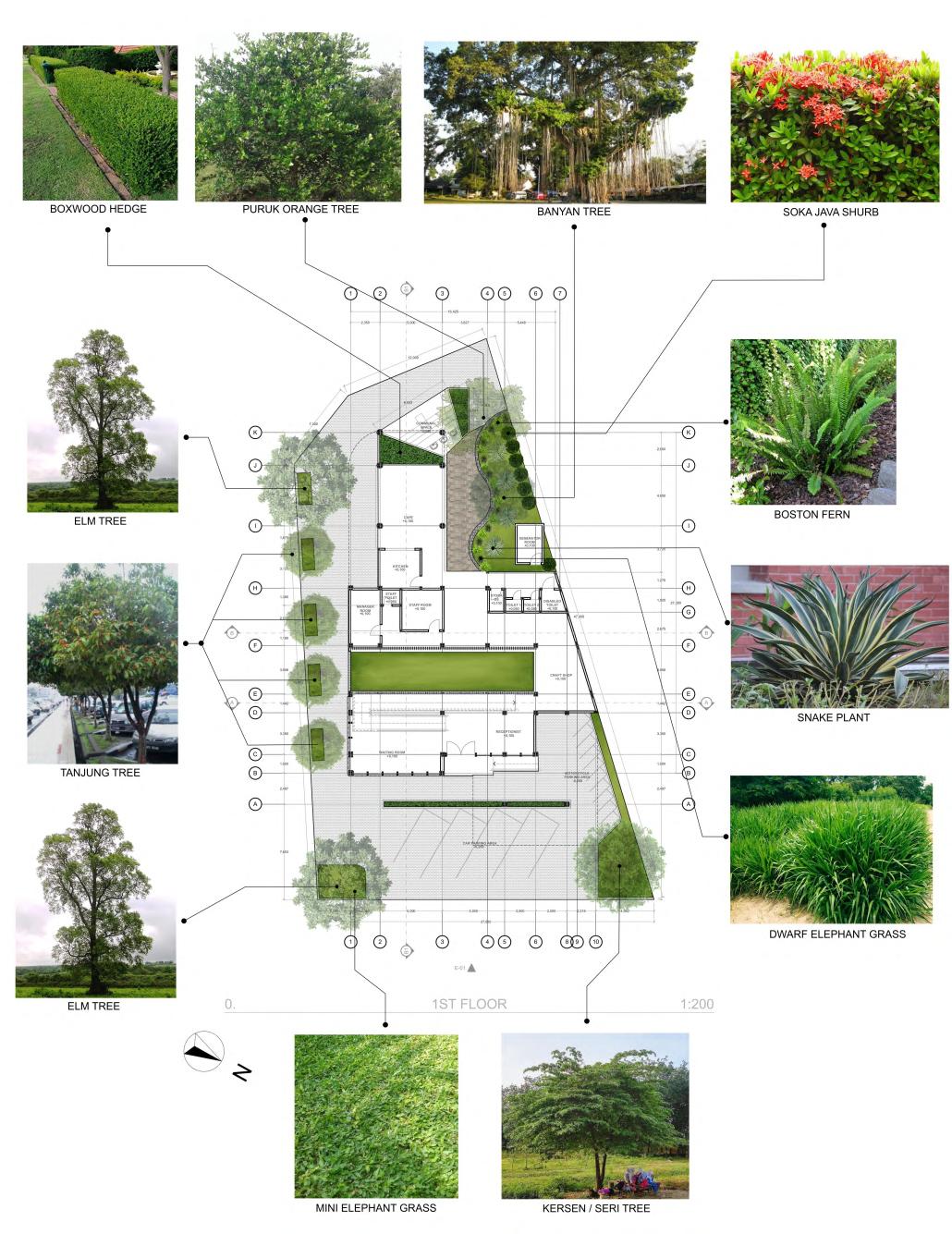
Landscape Plan and Site Plan

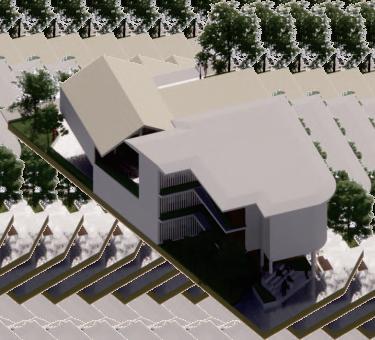
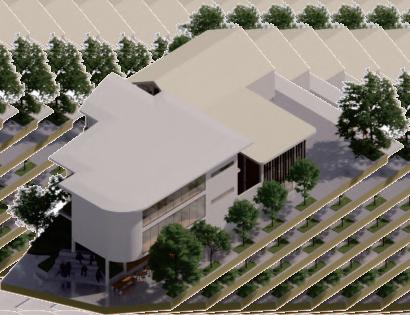
1
AXONOMETRY
4
AXONOMETRY
3
AXONOMETRY
2
AXONOMETRY
“Sustainable Building Performance Based Design:
Gajah Mada Trade Center”
03
Performance Based Design | Academic Project | 2021
Building name
Gajah Mada Trade Center
Type


Tower and Annex
Year 2021
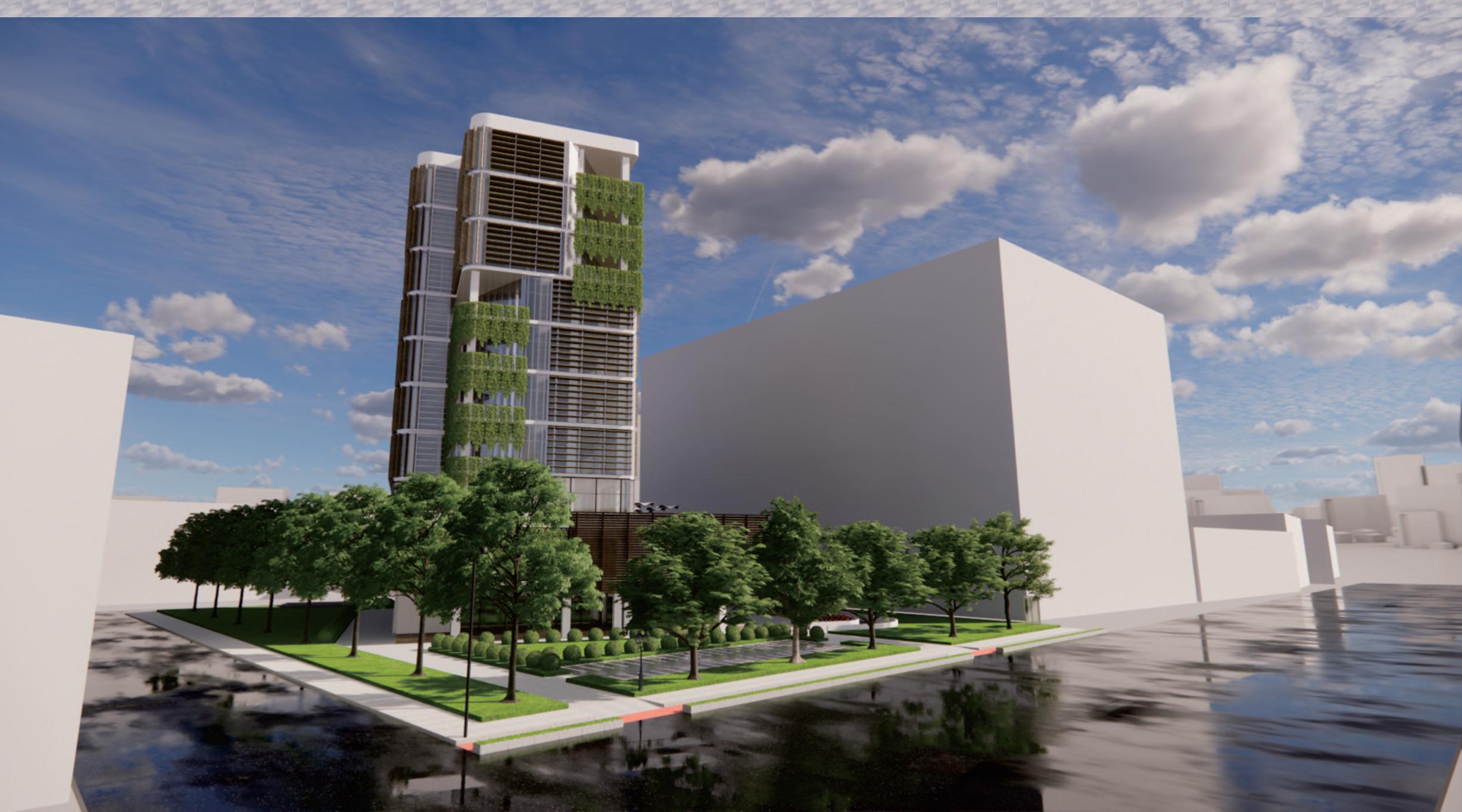
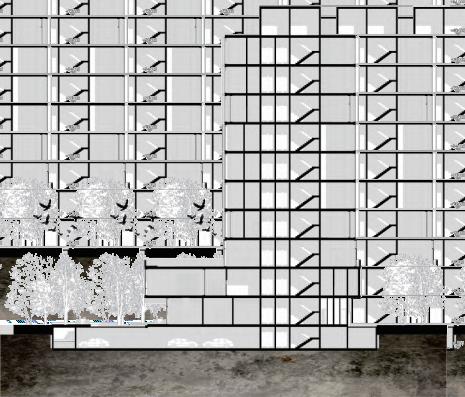
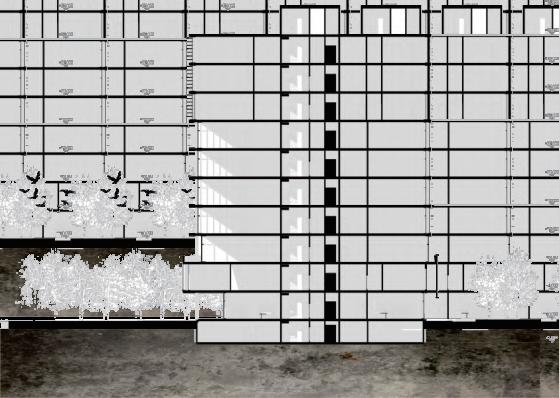
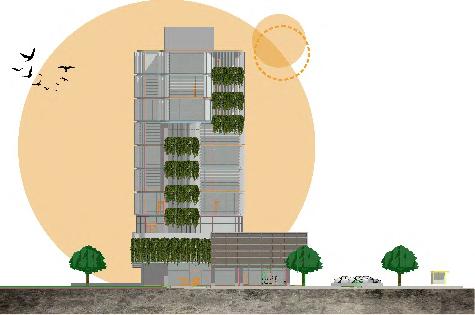
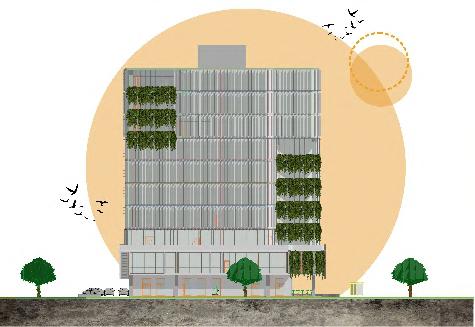
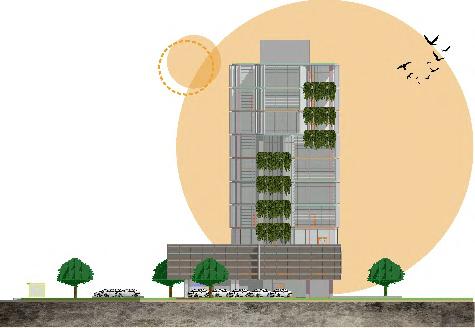
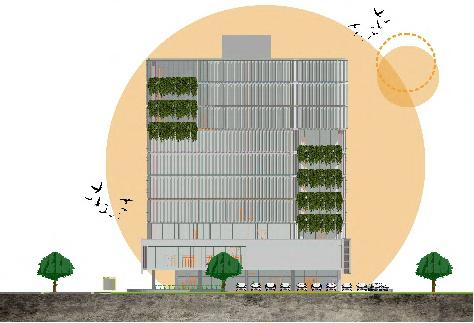
Gajah Mada Trade Centre is a place that accommodates various business activities and a trading business center that provides trade facilities and services by uniting business agents involved in trade, it is also expected to trigger economic development in its service area. From this background, various issues that exist in the community related to the need for space and place in trade, promotion, and work from ofce (WFO) activities. Then in the city of Pontianak itself, the lack of accommodation places for Pontianak small industries to showcase their various products to the public so that the public are better known, thus opening up business opportunities. In addition, another issue related to environmental issues is horizontal urban growth. The horizontal growth of the city makes the lack of green land and open public space. And make access from one place to another more distant. This makes the cost of travel and time even greater. Especially for people who want to go from suburban areas to urban canters.
Location
Gajah Mada Street, Continent of Melayu Darat, Kec. Pontianak Sel., Pontianak City, West Kalimantan
39,39% + +
49,64% 22,02% ENERGY SAVING
EAST ELEVATION WEST ELEVATION NORTH ELEVATION SOUTH ELEVATION

Therefore, the resolution of these issues can be resolved by designing the Gajah Mada Trade Centre which has three main functions in it. Namely as a rental ofce, tenant, and exhibition. WATER SAVING MATERIAL SAVING
About
“Building Performance Based Design”

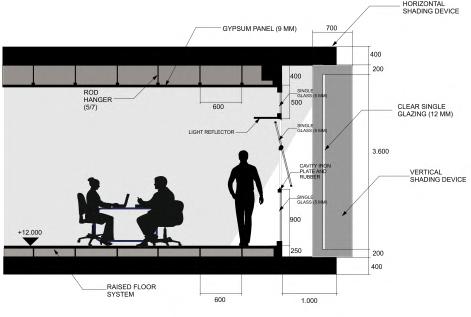
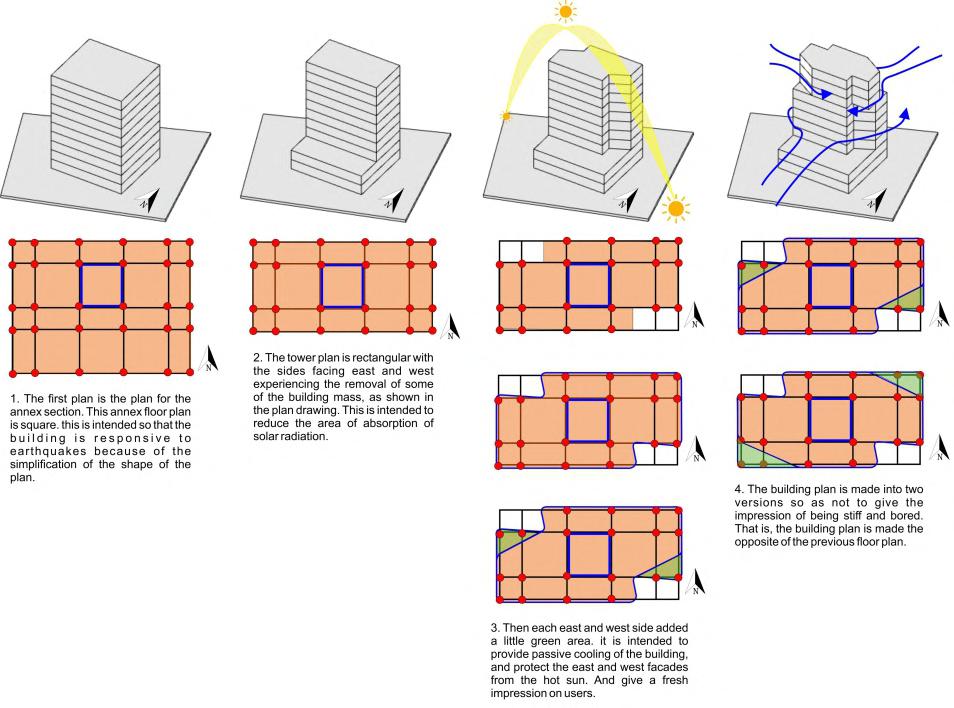
How the success of the building is measured depends on how high the building achieves the client's specied performance. Building performance in the current green architecture approach with the learning of the COVID 19 pandemic, the balance has shifted not only to focus on the environment but for humans. Design variables that were initially dominated by building for the environment such as energy efciency, water conservation and materials should also give priority to indoor health and comfort. So that the focus on the phenomena behind green architecture such as Urban Heat Island (UHI), Ozone depletion (OD), and the greenhouse effect (GH) as well as the issue of drought remains relevant for response. In achieving the success of green architecture applied to building design, software tools are used to test design performance evidence such as Daylight Velux, Resist, SunTool, GBCI Standard, etc.
Building Envelope System

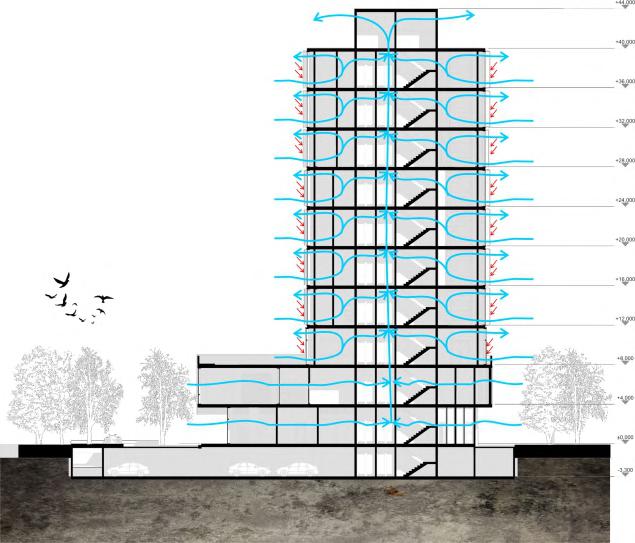
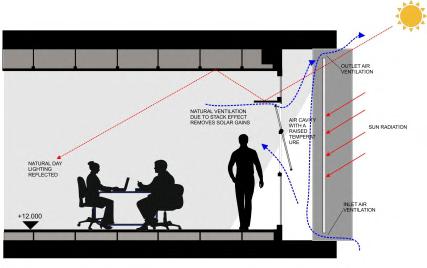
ventilation system for emphasizing indoor health and comfort
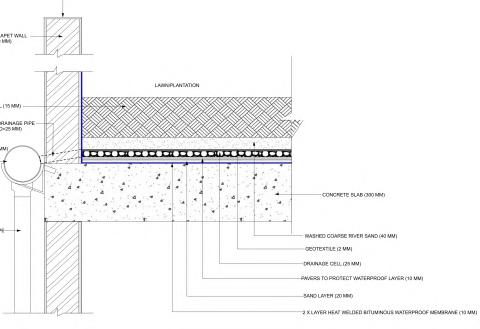
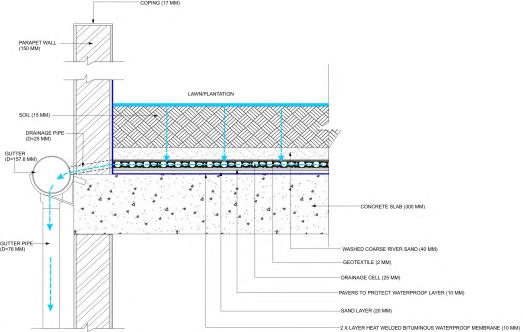
 GREEN ROOF DETAIL (2nd FLOOR)
RENTAL OFFICE FACADE DETAIL (3rd FLOOR)
GREEN ROOF DETAIL (2nd FLOOR)
RENTAL OFFICE FACADE DETAIL (3rd FLOOR)
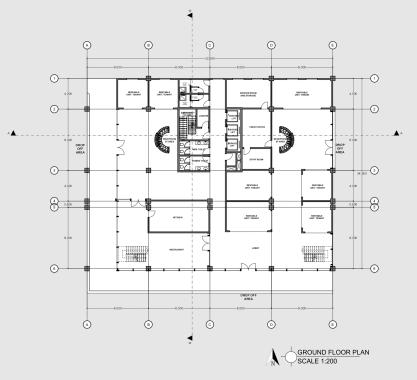
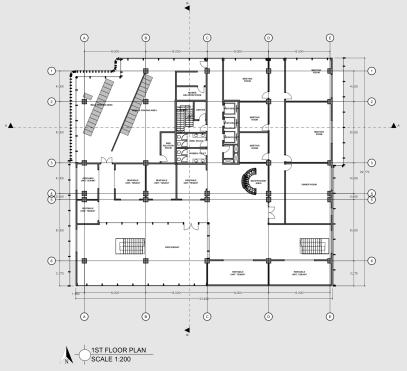
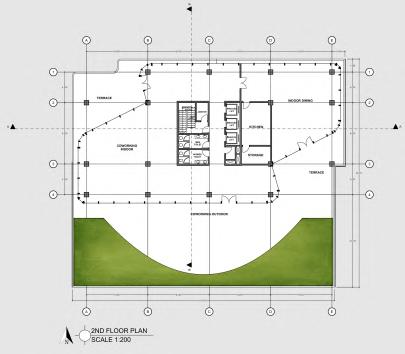
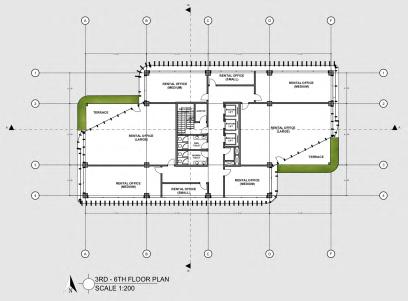
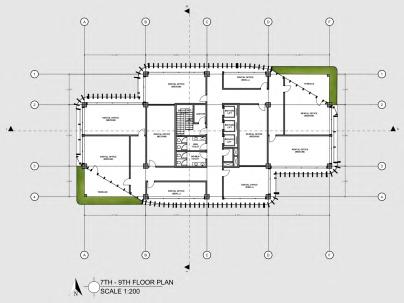
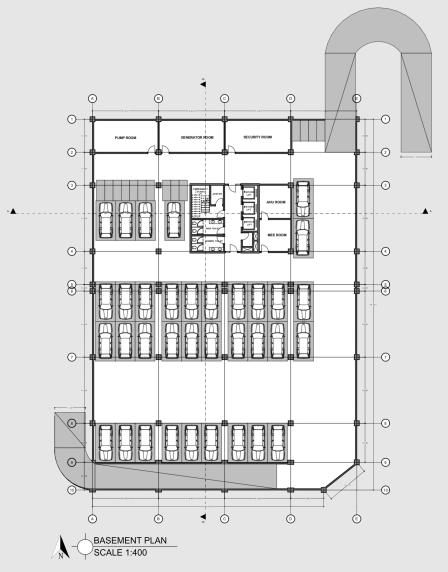
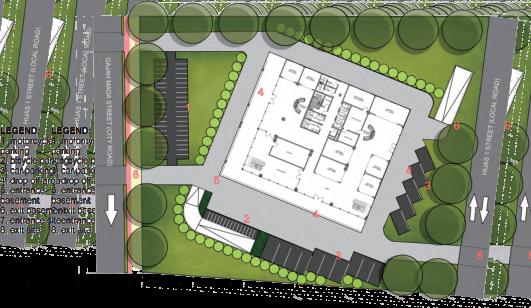

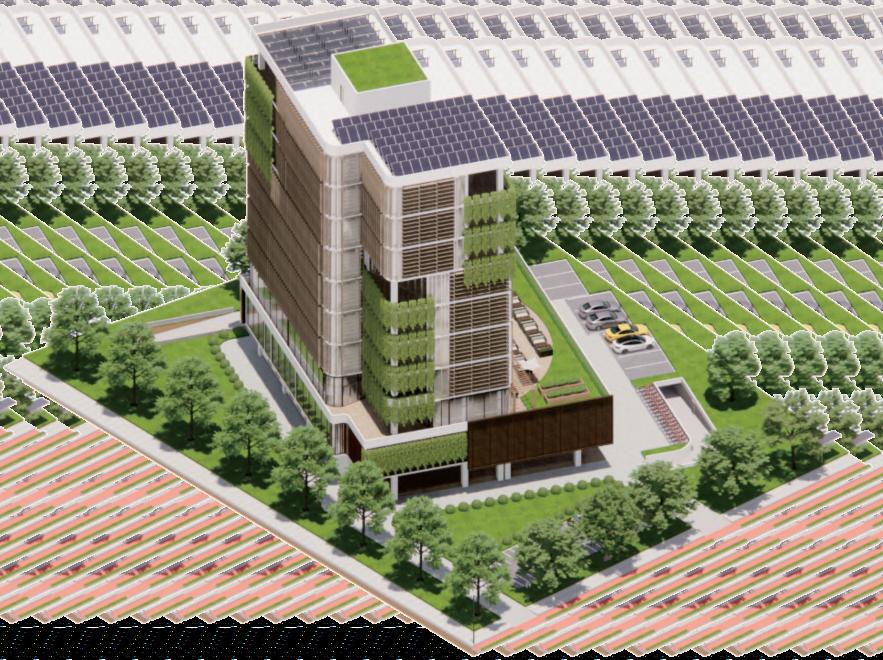
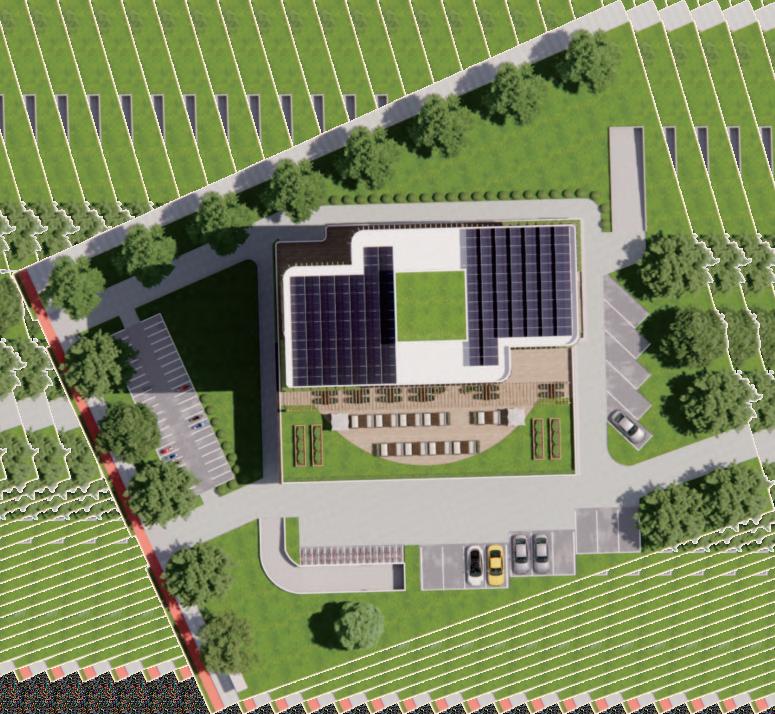


Building Floor Plan
view Top view Site plan
Axonometric
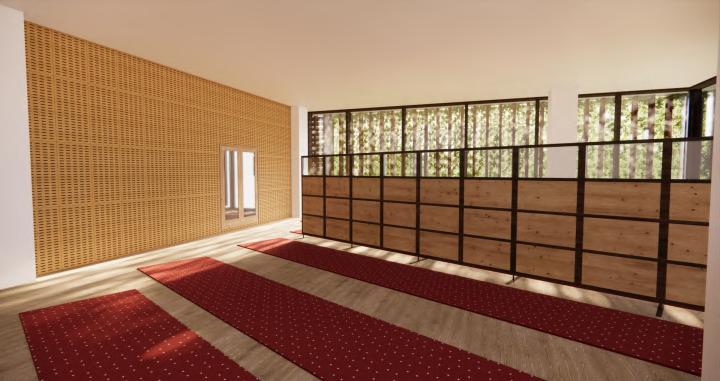
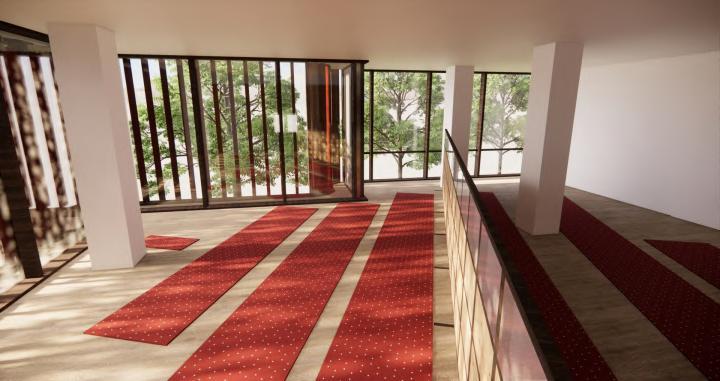
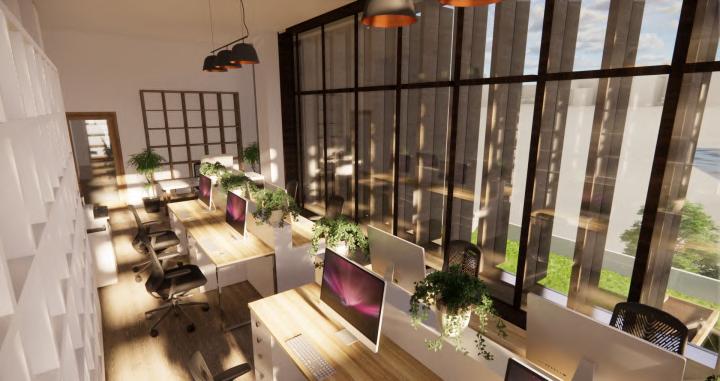
Interior Perspective
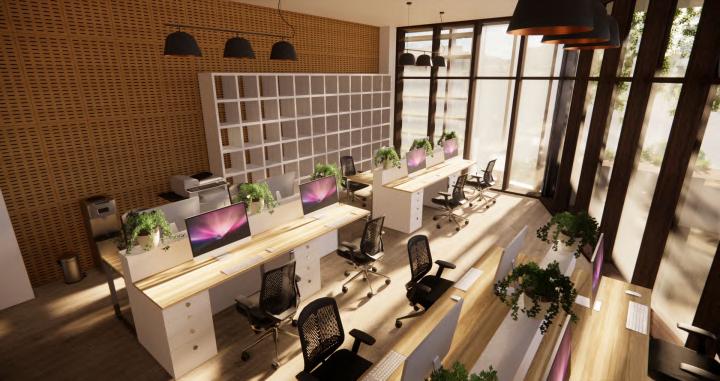
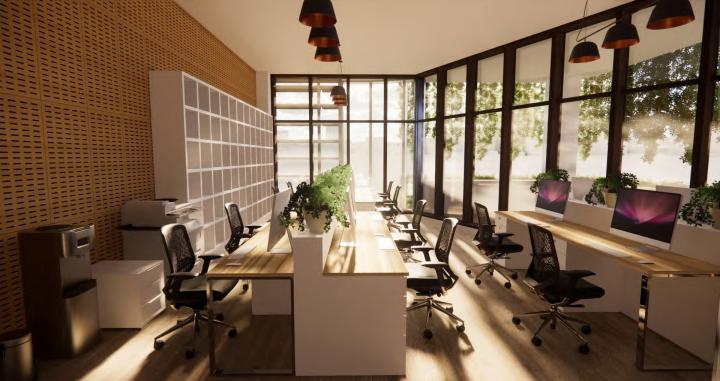
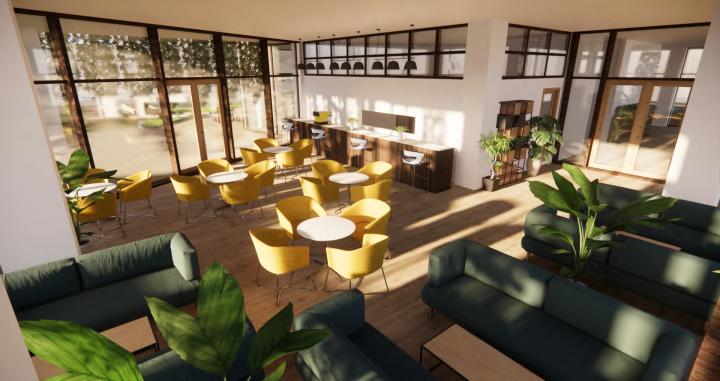
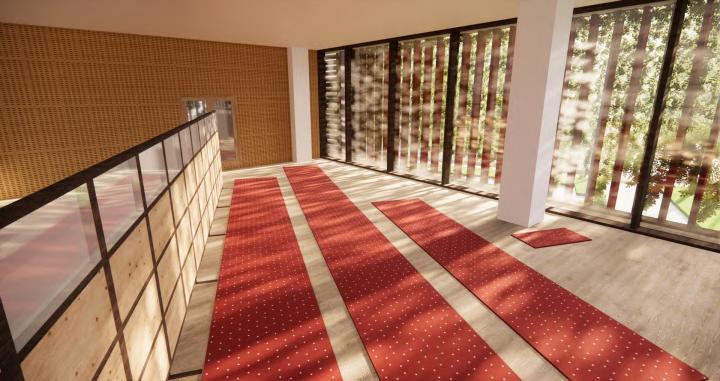
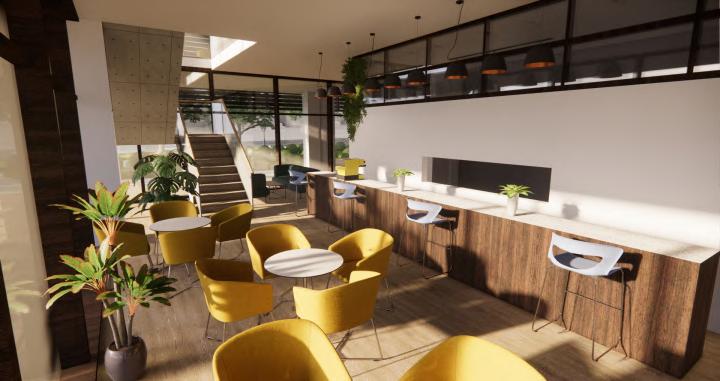
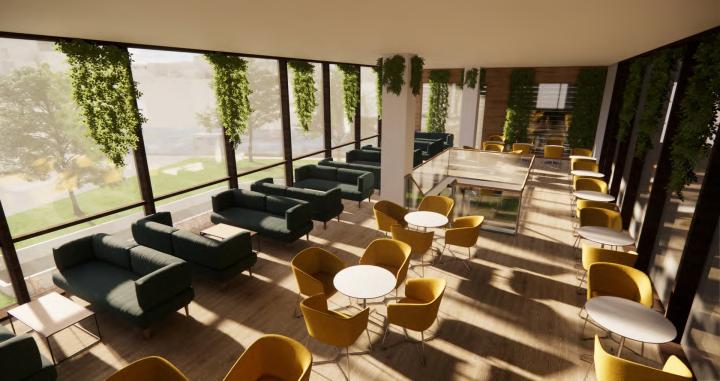 Food and beverage (1st Floor)
Food and beverage (Ground Floor)
Food and beverage (2nd Floor)
Rental Ofce (large)
Rental Ofce (large)
Rental Ofce (medium)
Mushola (Praying Room)
Mushola (Praying Room)
Mushola (Praying Room)
Food and beverage (1st Floor)
Food and beverage (Ground Floor)
Food and beverage (2nd Floor)
Rental Ofce (large)
Rental Ofce (large)
Rental Ofce (medium)
Mushola (Praying Room)
Mushola (Praying Room)
Mushola (Praying Room)
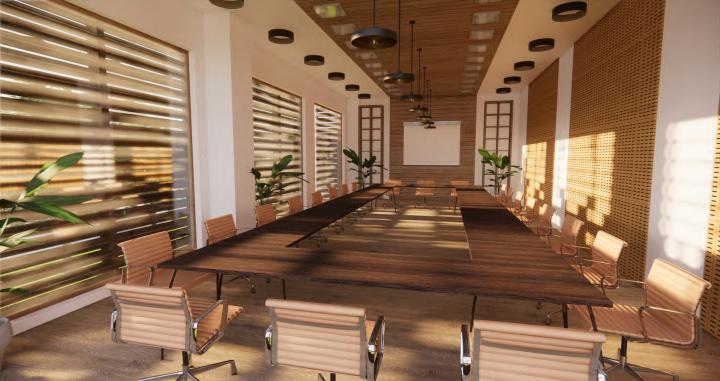
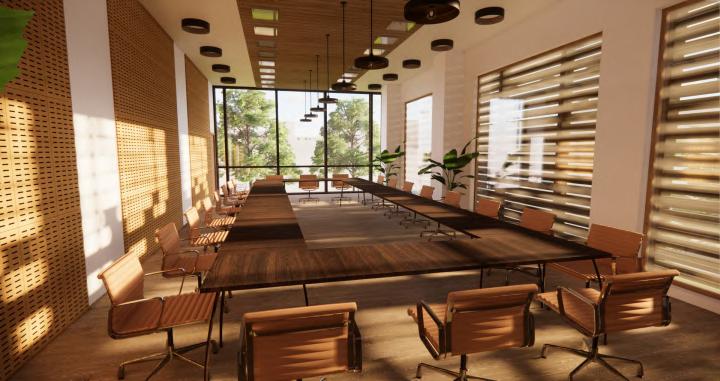
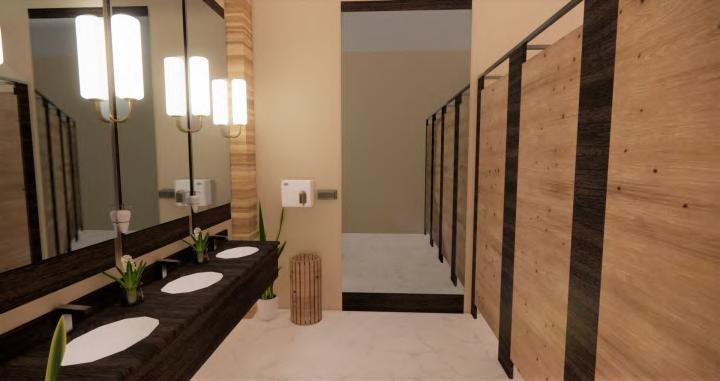
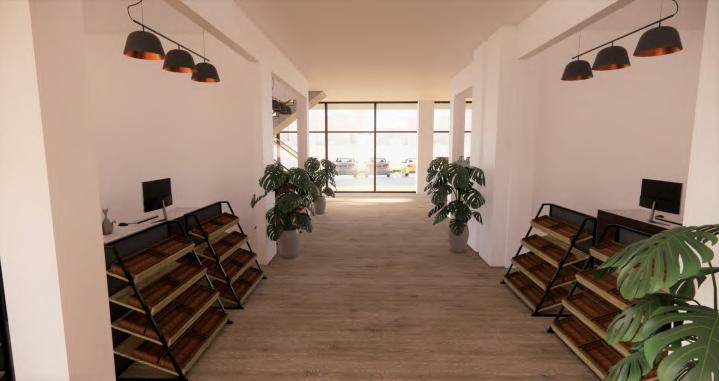
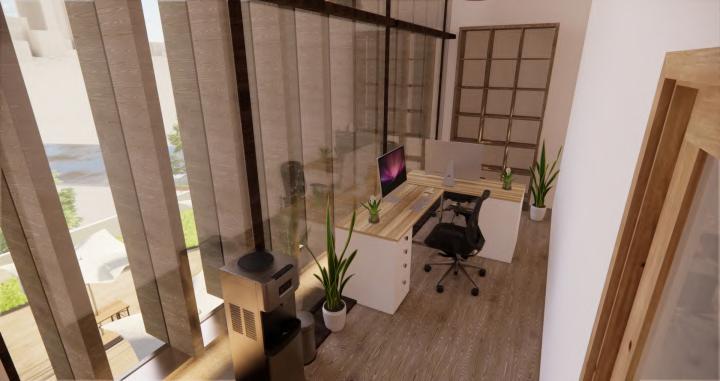 Food and beverage (2nd Floor)
Meeting Room
Meeting Room
Tenant area (Ground Floor)
Tenant area (Ground Floor)
Rental Ofce (medium)
Rental Ofce (small)
Restroom
Tenant area (Ground Floor)
Food and beverage (2nd Floor)
Meeting Room
Meeting Room
Tenant area (Ground Floor)
Tenant area (Ground Floor)
Rental Ofce (medium)
Rental Ofce (small)
Restroom
Tenant area (Ground Floor)
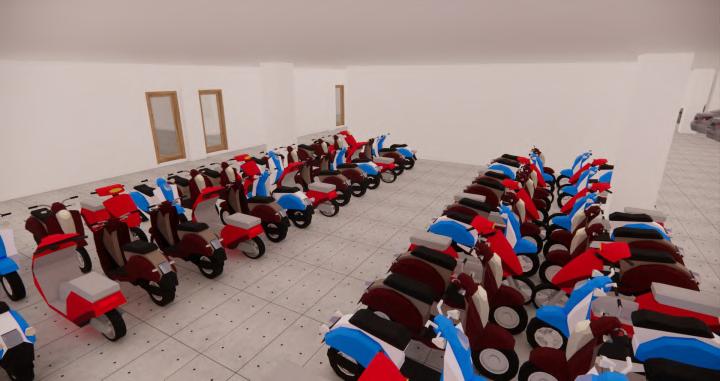
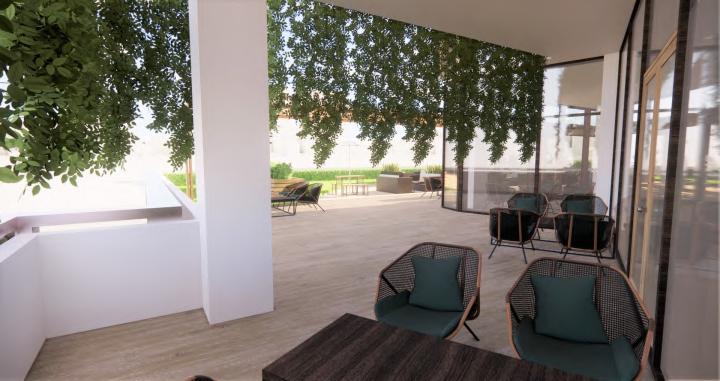
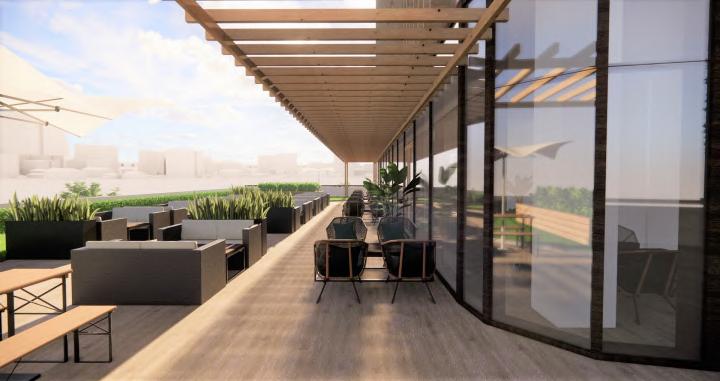
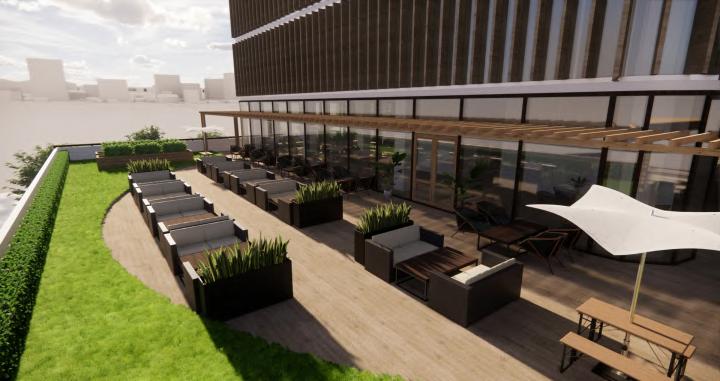
 Co-working outdoor and lounge area (2nd Floor)
Co-working outdoor and lounge area (2nd Floor)
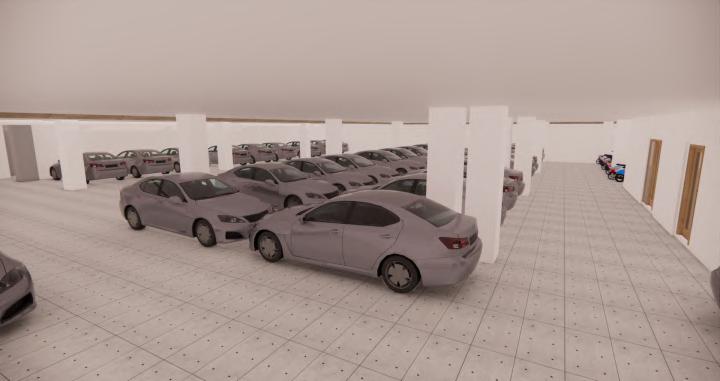
Indoor motorbike parking in the basement area
Indoor car parking in basement area
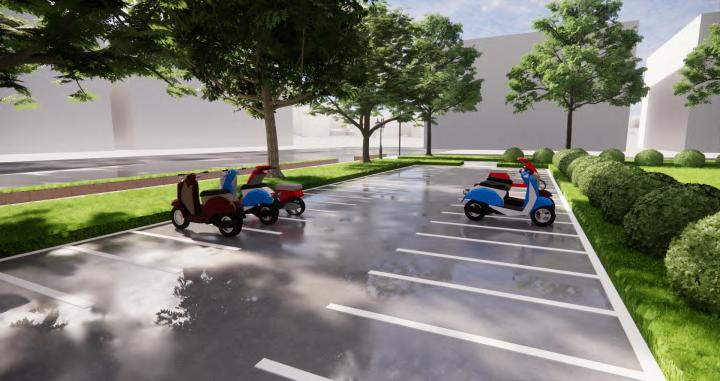
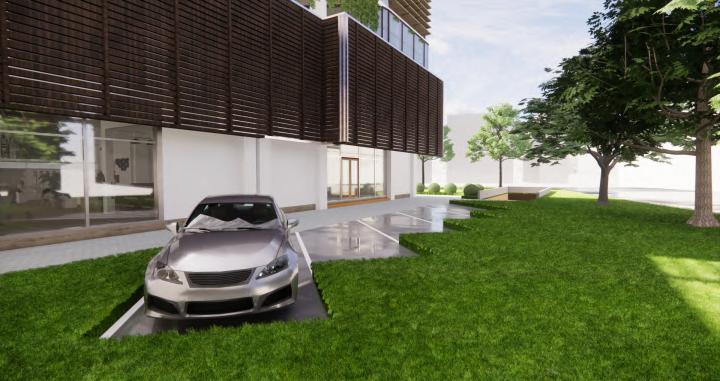
Motorcycle parking (outdoor)
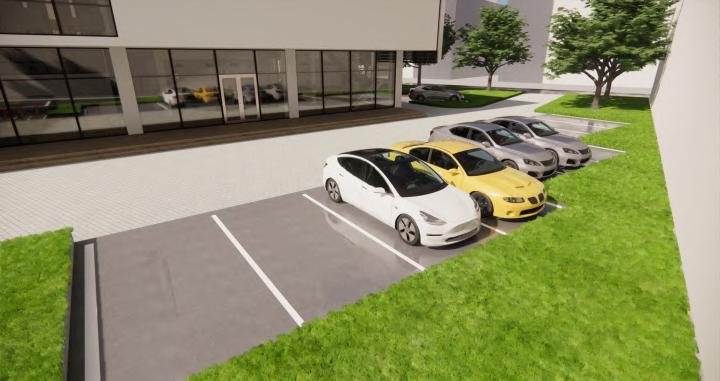
Car parking (outdoor)
Car parking (outdoor)
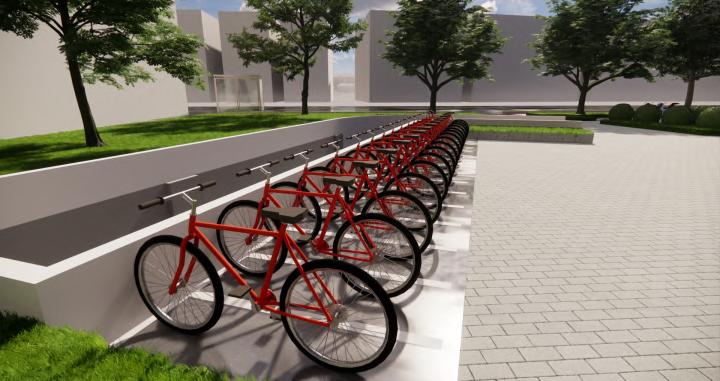
Bicycle parking
Co-working outdoor and lounge area (2nd Floor)
Co-working outdoor and lounge area (2nd Floor)
Co-working outdoor and lounge area (2nd Floor)
Indoor motorbike parking in the basement area
Indoor car parking in basement area
Motorcycle parking (outdoor)
Car parking (outdoor)
Car parking (outdoor)
Bicycle parking
Exterior Perspective & Situation
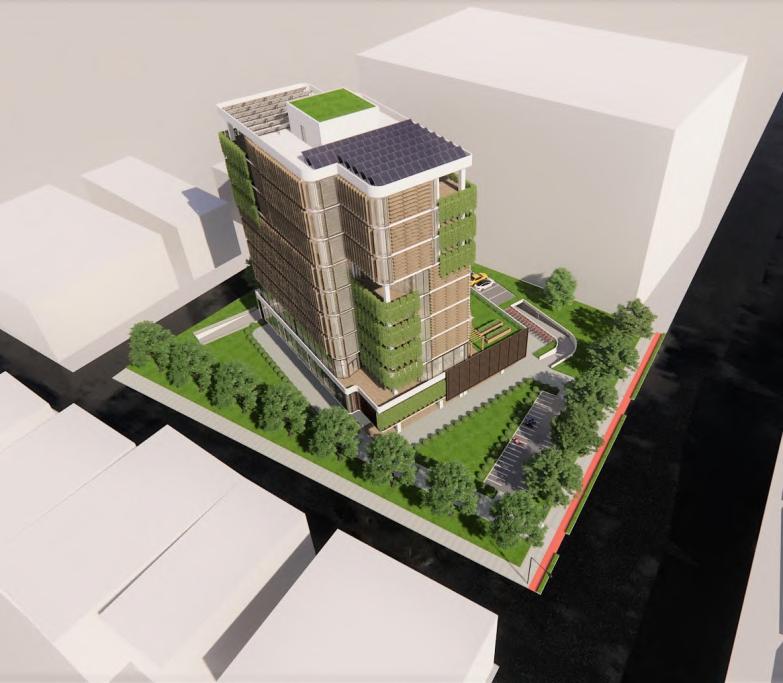
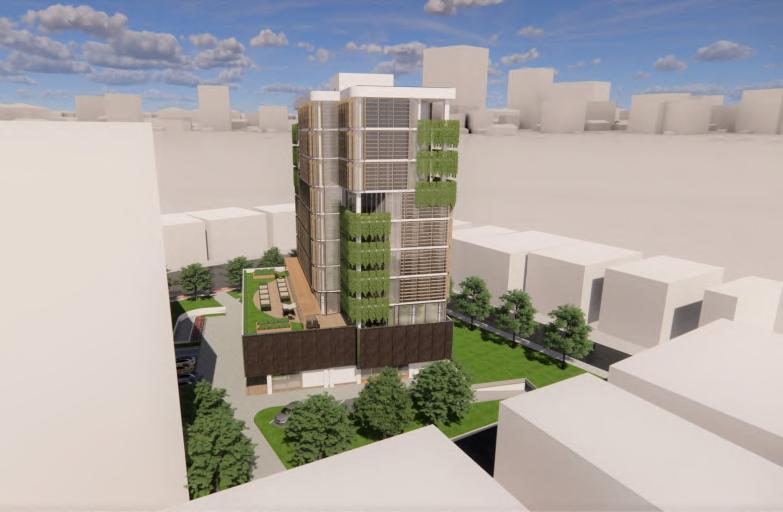
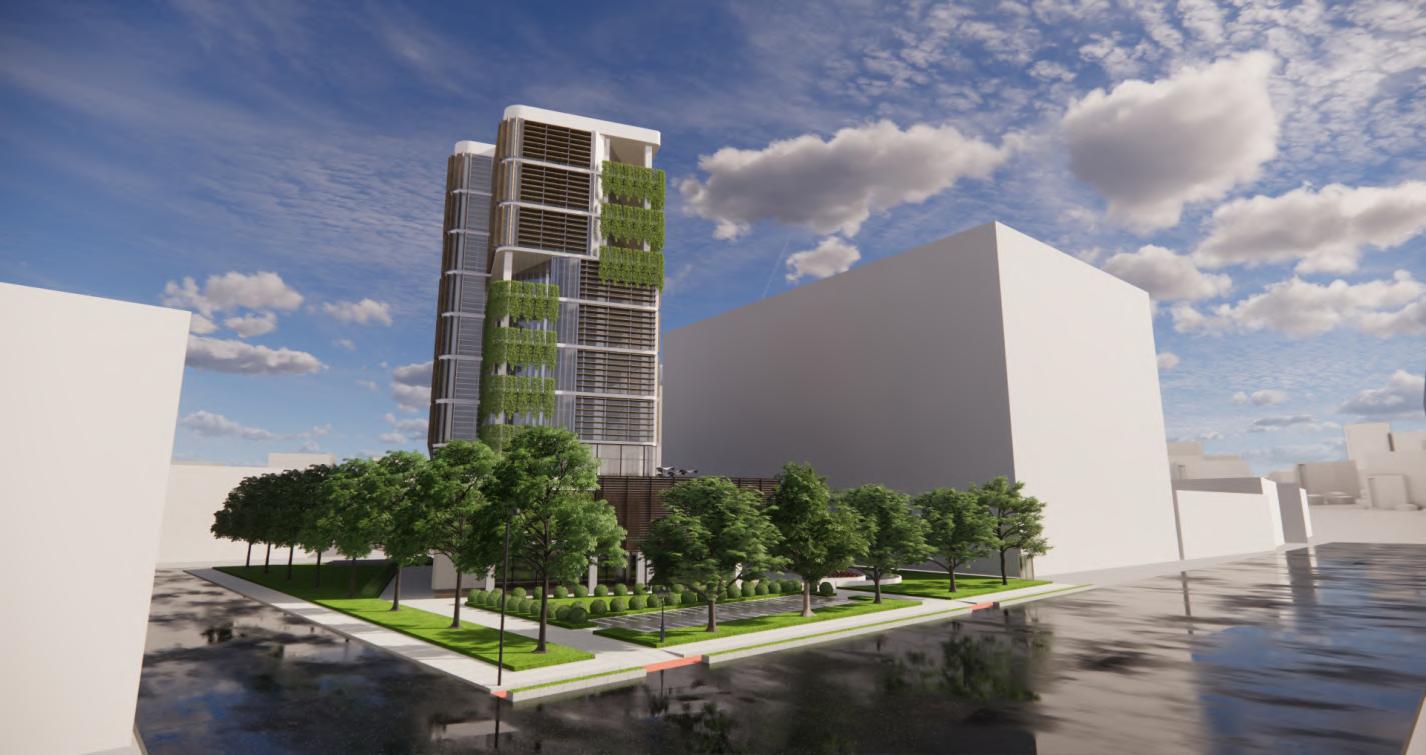
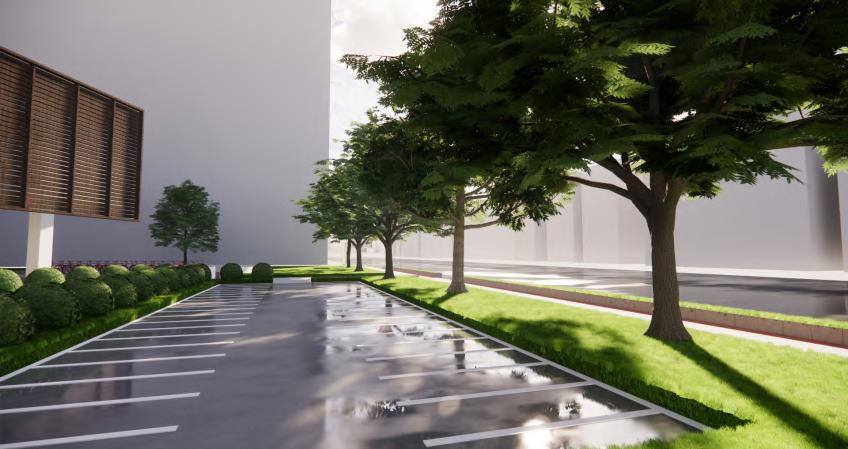
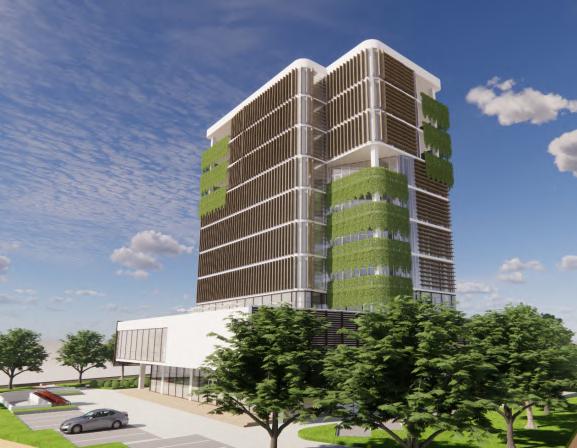
:
Porang Permaculture Building: Final Architectural Design Studio

Permaculture Building by Emphasizing on Envelope System Design”
“
04
Final Architectural Design Studio| Academic Project | 2022



Building name
Porang Permaculture Building
Type Permaculture Building

Year 2022
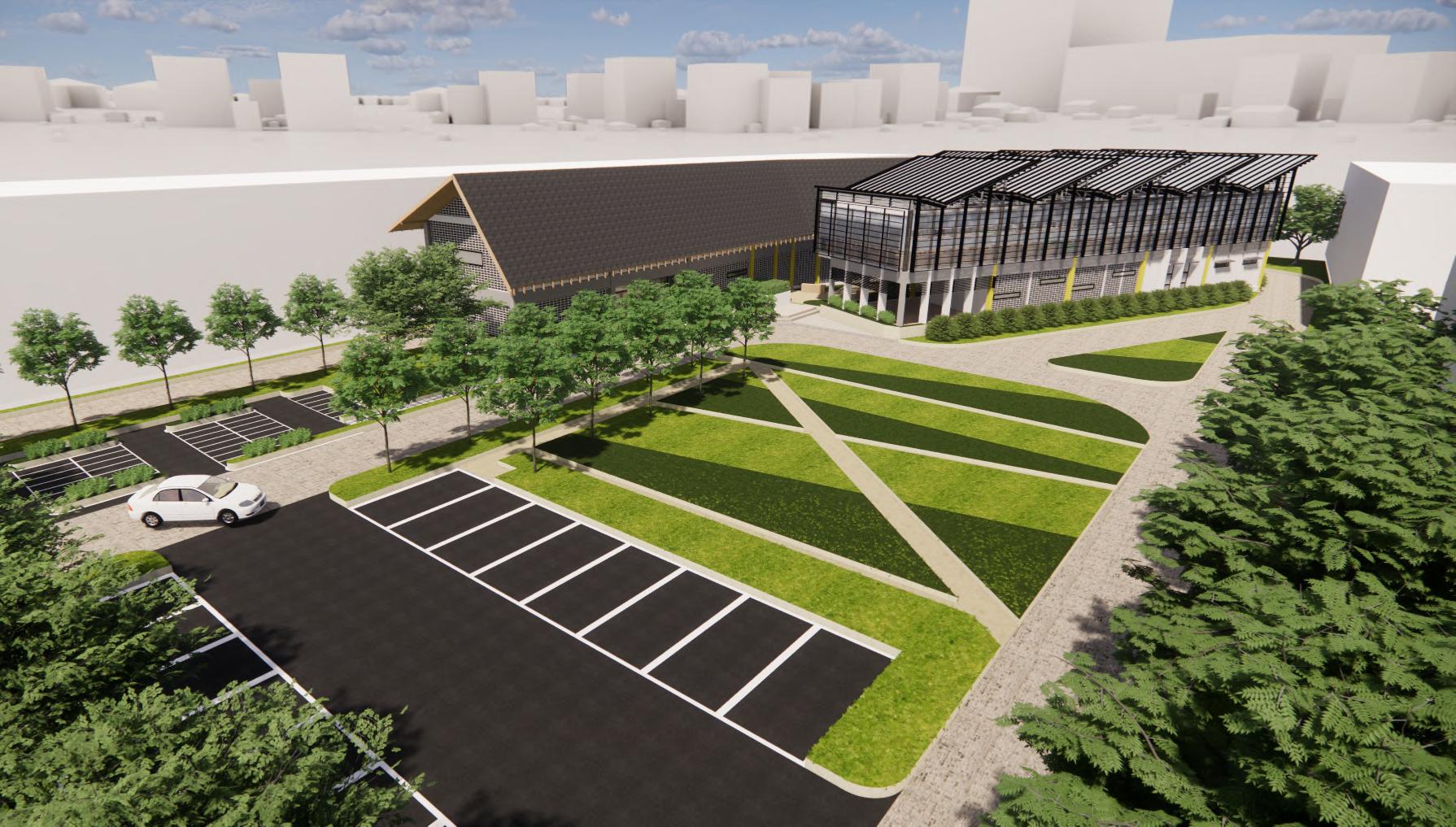
In Pontianak City, the production of Porang is still very low and rare, due to the fact that the type of soil in Pontianak is dominated by peat soil which has a high acid level. This land is not suitable for growing agricultural crops including Porang. Considering that the criteria for planting Porang plants have not been sufciently met for the Pontianak area, especially because the type of land and the climate requires a little adjustment to the conditions for growing Porang plants, special treatment is needed so that Porang plants can continue to grow. In the city of Pontianak itself, the Porang farming community already exists but is still small due to several obstacles, such as the condition of the soil whose PH level must be modied rst to make it neutral. With this project, it is hoped that the government can provide a pilot project to the people of Pontianak and the Porang farming community in West Kalimantan, so that they can provide education in improvising themselves on how to grow Porang indoors. On the other hand, the Porang plant itself is a plant that has a very high selling value when exported to neighboring countries such as Malaysia which is one of the third largest Porang export market shares which is directly adjacent to the West Kalimantan region, Pontianak.
Location
Tanjung Pura Street 142-174, Benua Melayu Laut, Kec. Pontianak Sel., Pontianak City, West Kalimantan 78243
Architectural Issues
Sunlight Intensity

Humidity

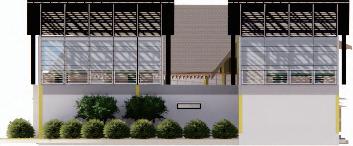
 WEST ELEVATION
EAST ELEVATION
WEST ELEVATION
EAST ELEVATION
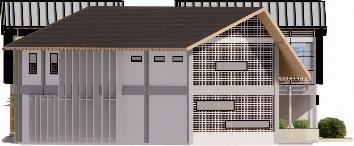
SOUTH ELEVATION NORTH ELEVATION
Tempera ture
Situation of the Site
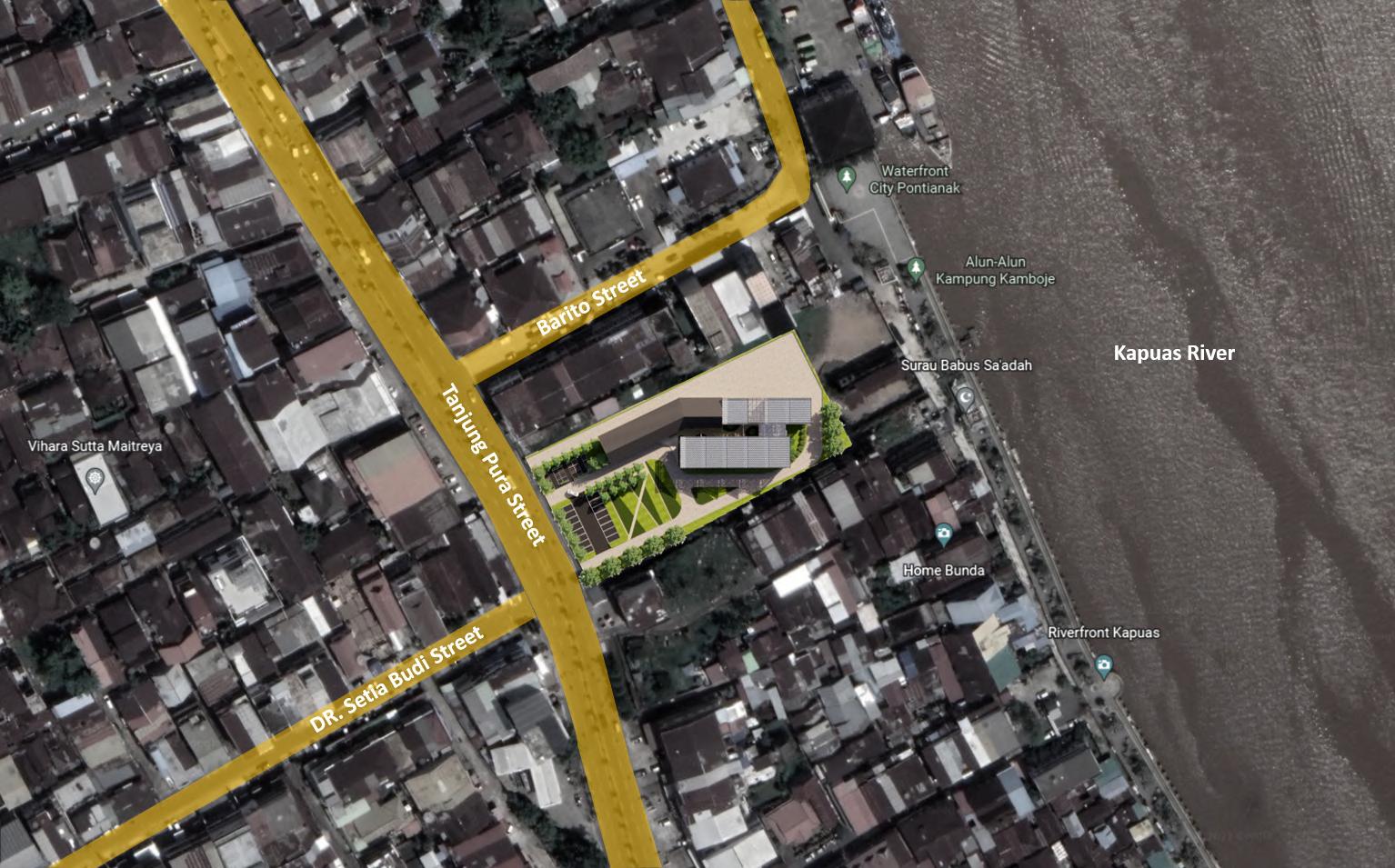
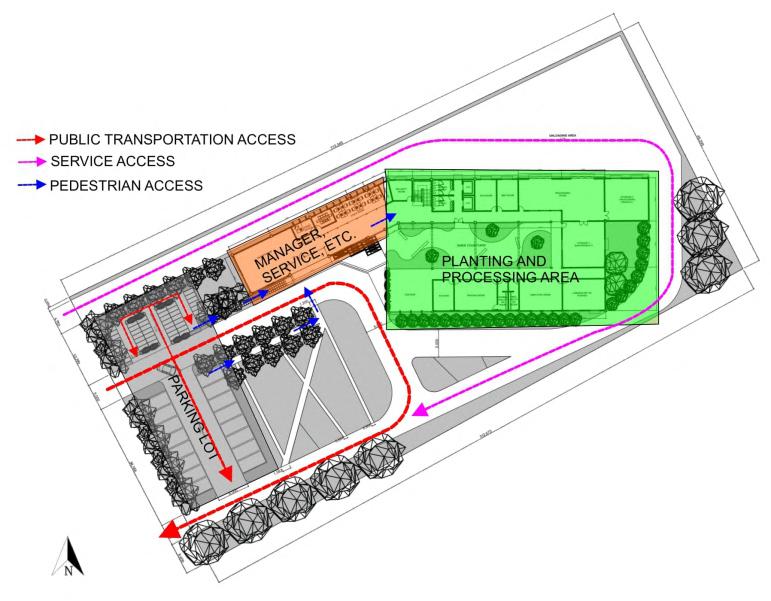
The site was selected due to its strategic location close to a s h i p p o r t , w h e r e t h e commodity export process can be carried out more quickly and efciently. This has a n i n u e n c e o n t h e environment by lowering c a r b o n f o o t p r i n t . Additionally, there is quick a c c e s s t o p u b l i c t r a n s p o r t a t i o n o n t h e southwest or front sides of the building. Additionally, this region is a warehouse and industrial district of Pontianak City, which is situated outside or outside of a residential section of a city. The location of the site is also located on the banks of the Kapuas River, this is intended as good transportation access and can be used as a source of water for this agricultural building project. The site is located on Tanjung Pura Street, which is a 2-way road with a width of ± 10 m. The intensity of vehicles on this road tends to be moderate to high.

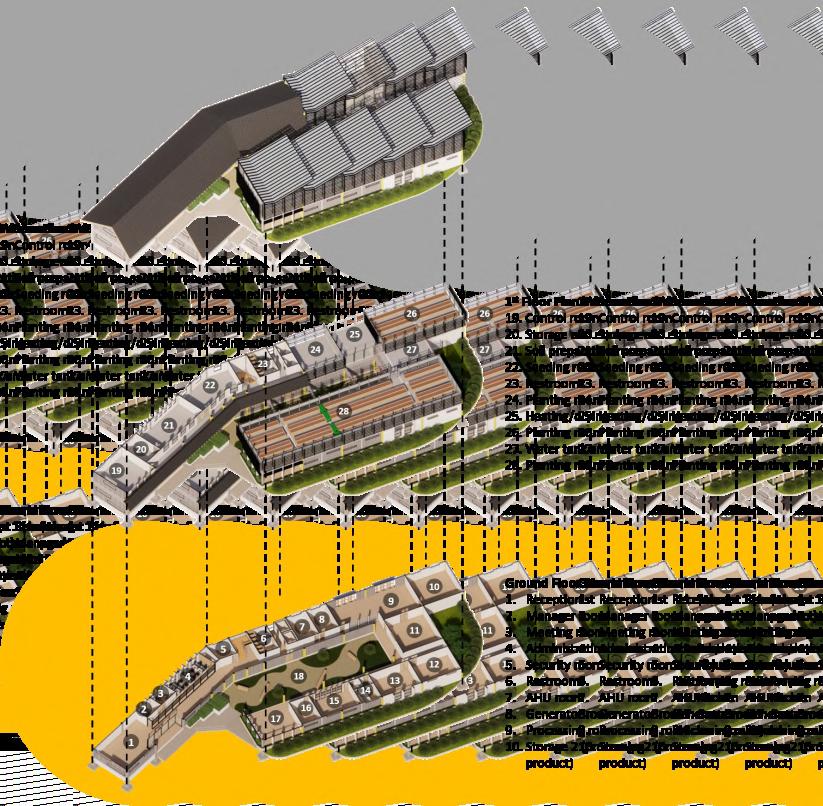
Building Floor Plan
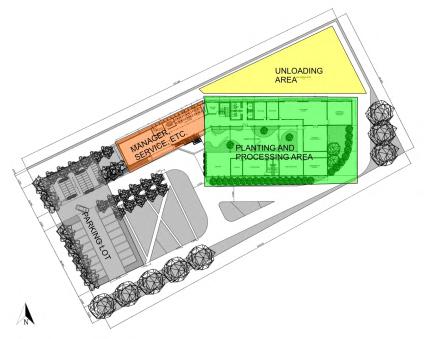
Site Plan

Building Sections
Landscape Design

Problem Solving in Temperature
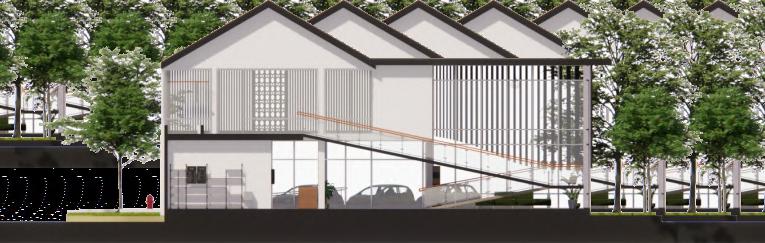
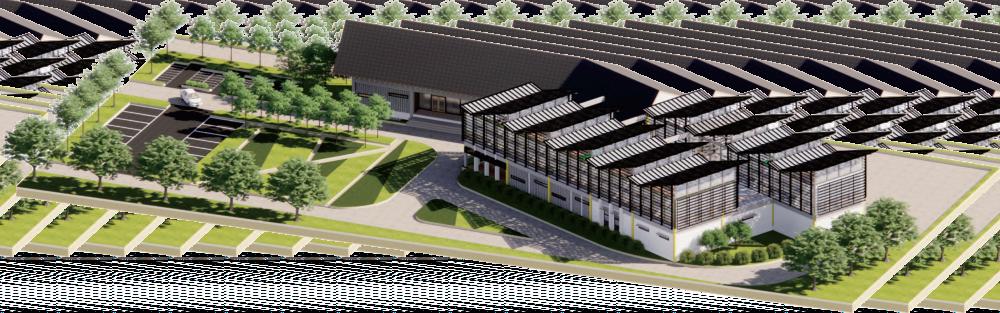
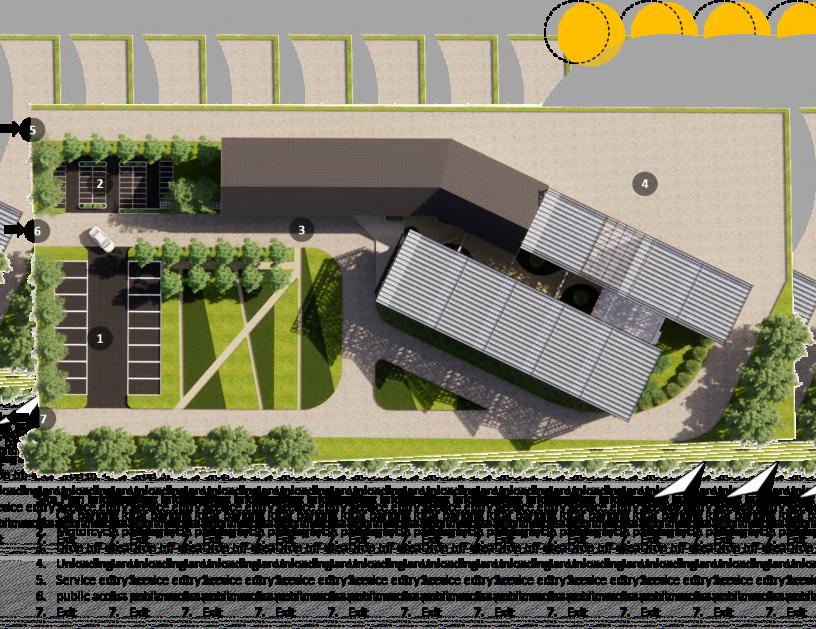
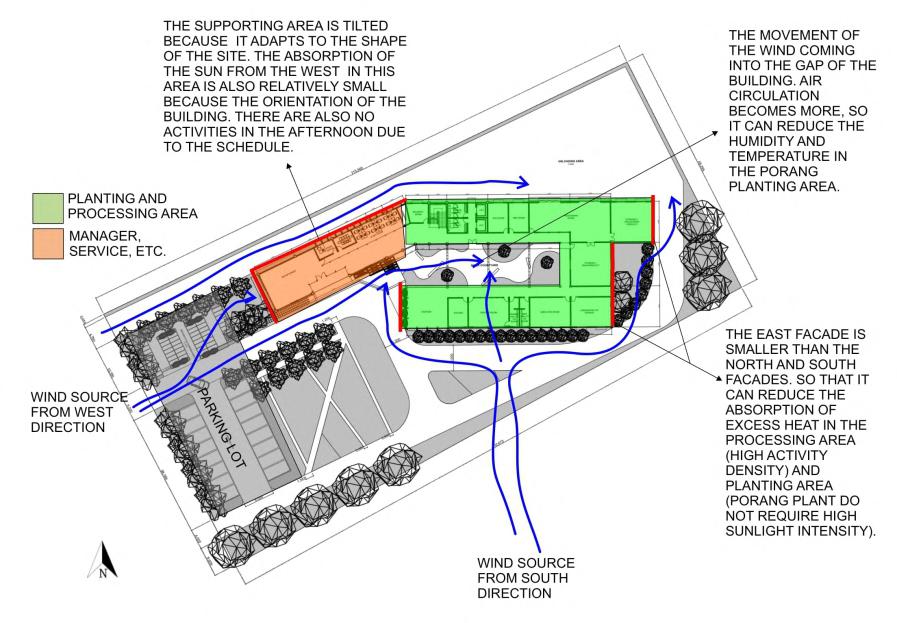
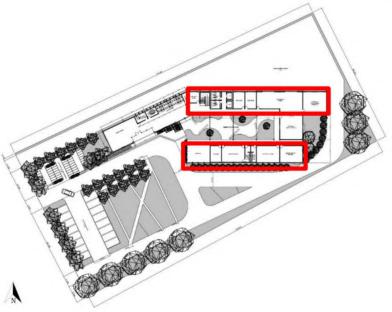
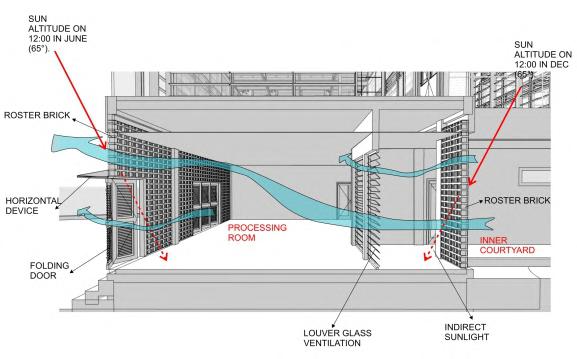
“The orientation of the building mass facing north and south, as well as a shape that extends from east to west which avoids the absorption of solar heat in the building. Building orientation like this, apart from being good for planting areas, is also benecial for the processing area considering that the area has a dense activity. So that building users do not feel too hot inside the building.”
Problem Solving in Humidity
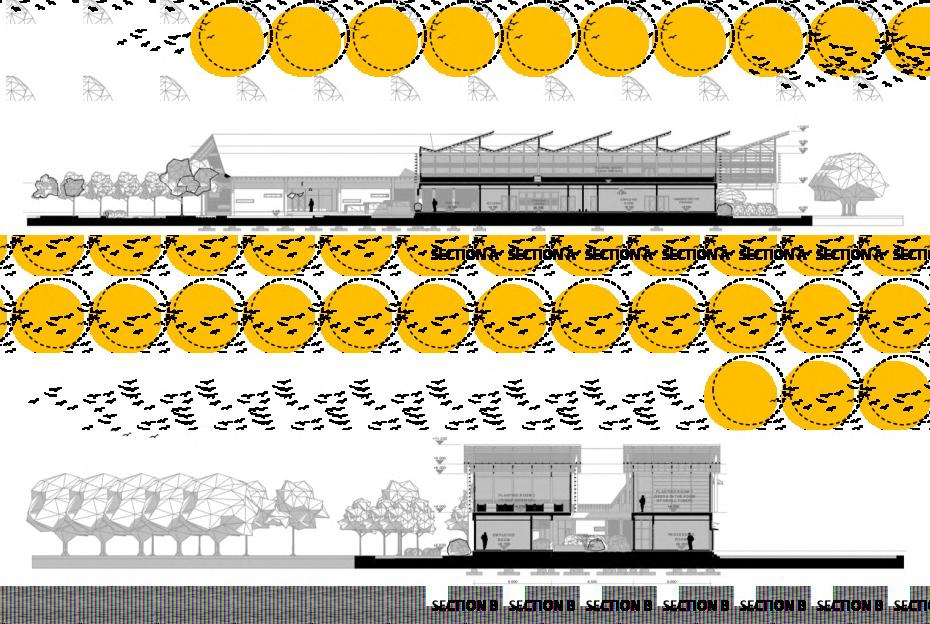
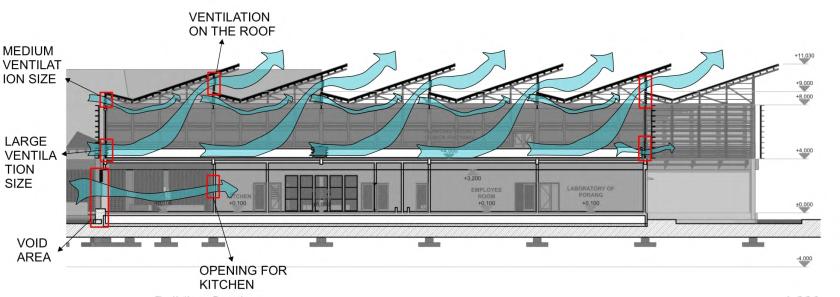
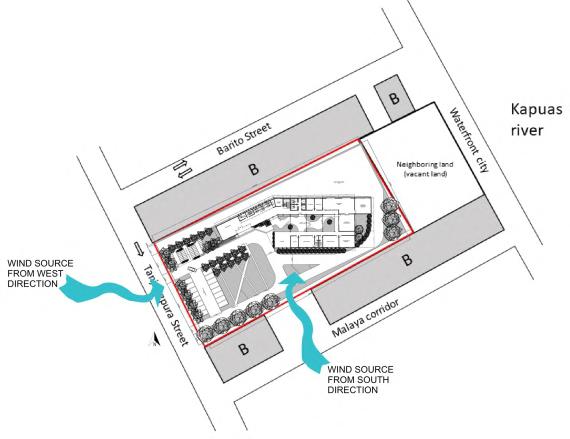
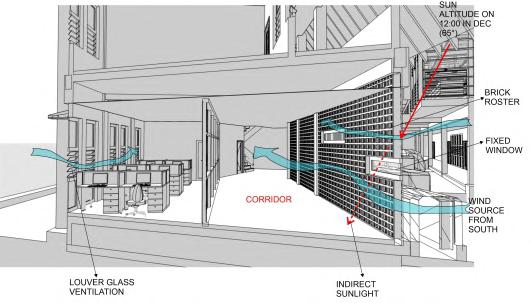
“Wind sources that come to the site are from the south and west of the site. So that in the arrangement of the site plan design, the placement of trees is done as much as possible not to block the direction of the wind and can direct the movement of the wind towards the building. The shape of the building plan is also designed to have a space such as a single banked room so that the wind can penetrate inside easily and the movement of the wind keeps changing so that humidity can be reduced.”



About
“Building Performance Technology Features: To Create Articial Climate In the Building for Porang Plant by Emphasizing on Building Envelope”
WIND SOURCE FROM WEST DIRECTION
WIND SOURCE FROM WEST DIRECTION
WIND SOURCE FROM SOUTH DIRECTION
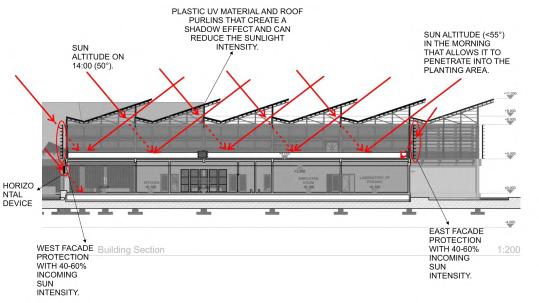
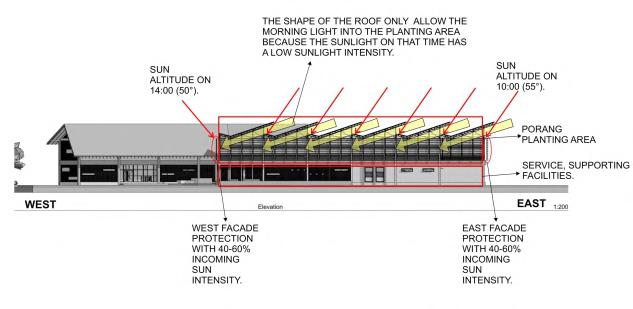
Problem Solving in Sunlight Intensity
In the rendering of the Velux simulation, as shown in the following image, it shows which areas on the 1st oor of the Porang Permaculture Building receive sunlight intensity by using the Daylight Factor (%) in the Velux Simulation. The picture shows that Planting room 1 (seeds in the form of small tuber) has an average Daylight Factor value of 40,7% of the skylight outside the building that enters the building.
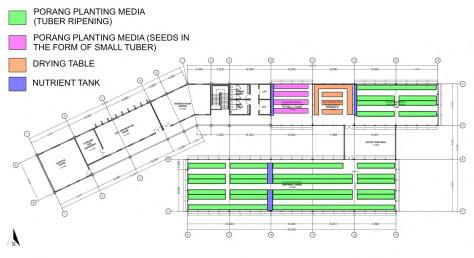
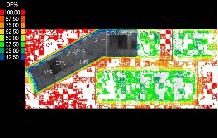
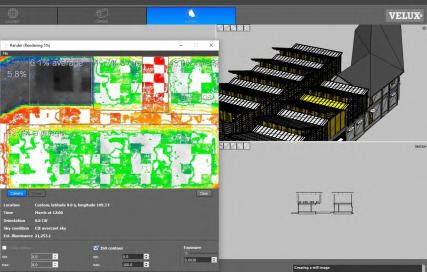
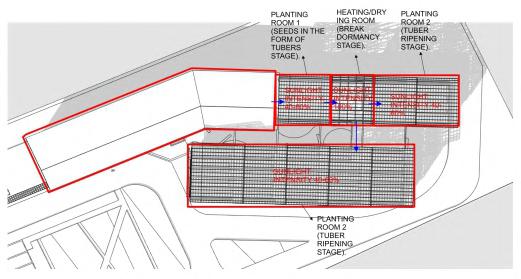
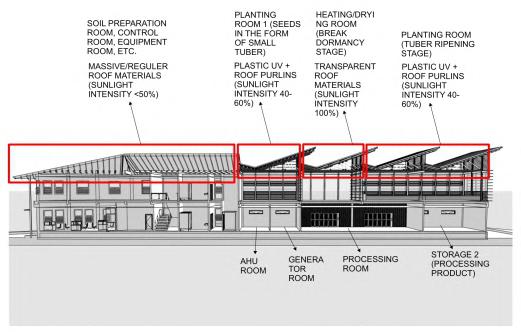
Planting room 2 (tuber ripening) has an average Daylight Factor value of 43% and 42,3%. As for the heating/drying room (break dormancy) it has a value of 80% of the incoming sky light.


Access and Circulation
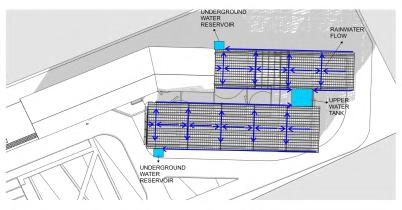
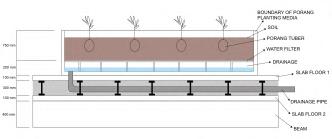
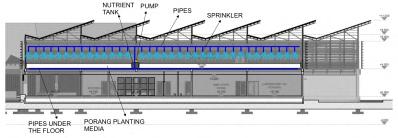
Porang Plant Nutrition System Design
 Velux Software
1st Floor Plan
Velux Software
1st Floor Plan
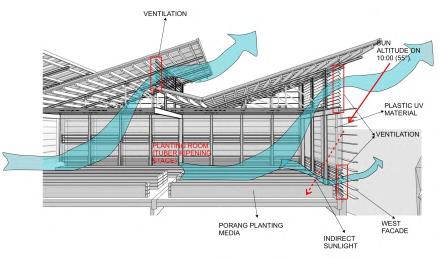
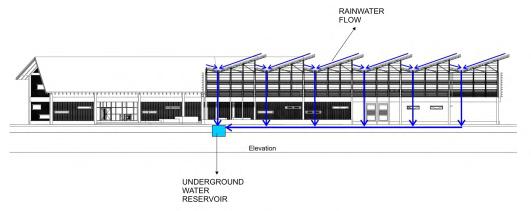
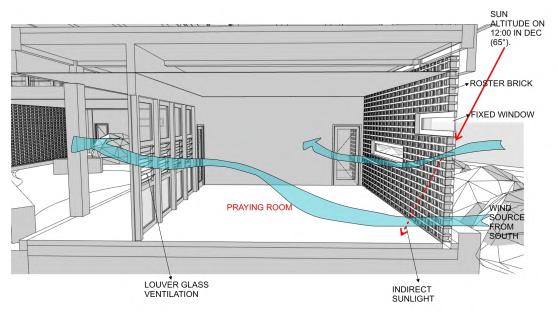
Air Circulation System In Sections Perspective
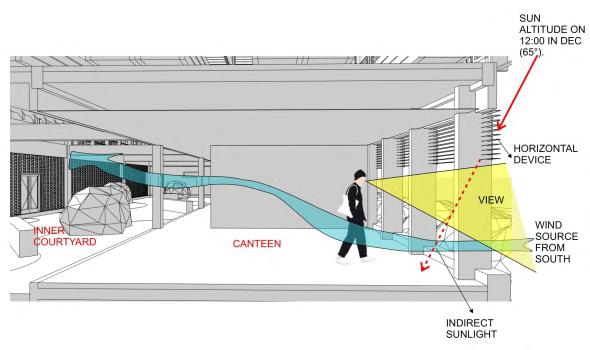
Drawing
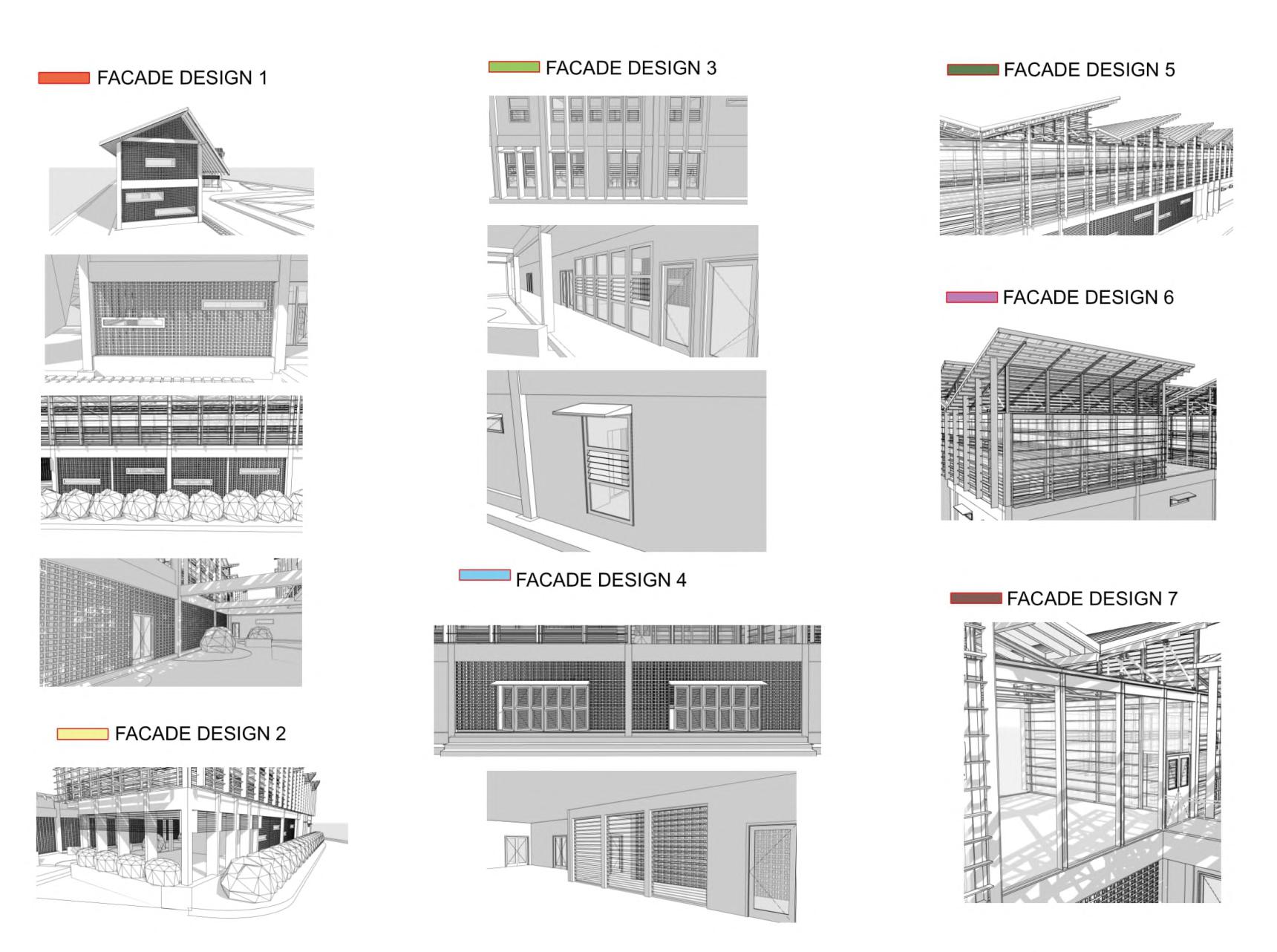
The Division of Each Building Facade Design for Each

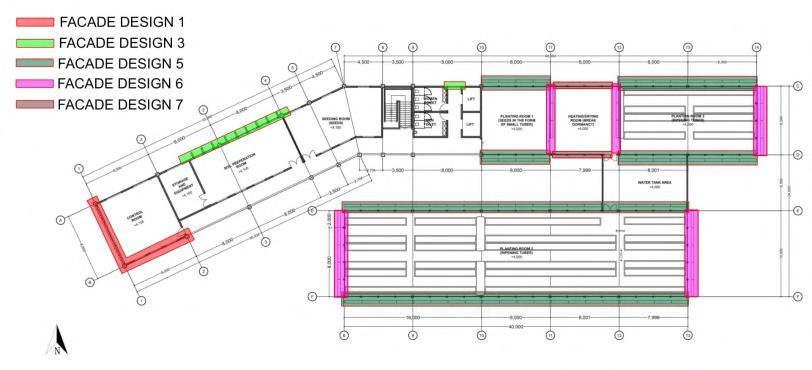

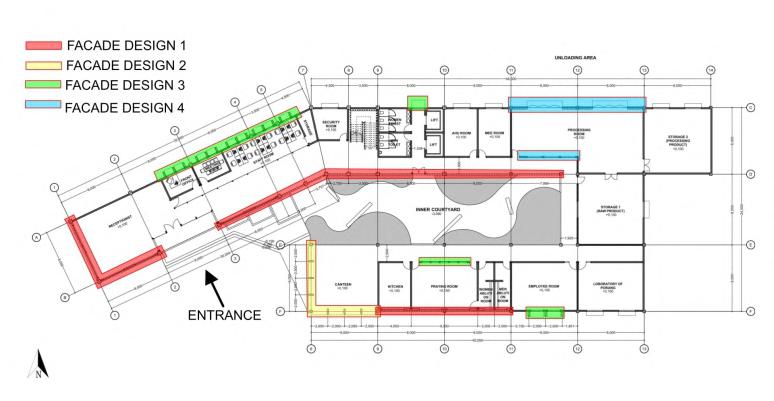
Room Function Ground Floor Plan 1st Floor Plan
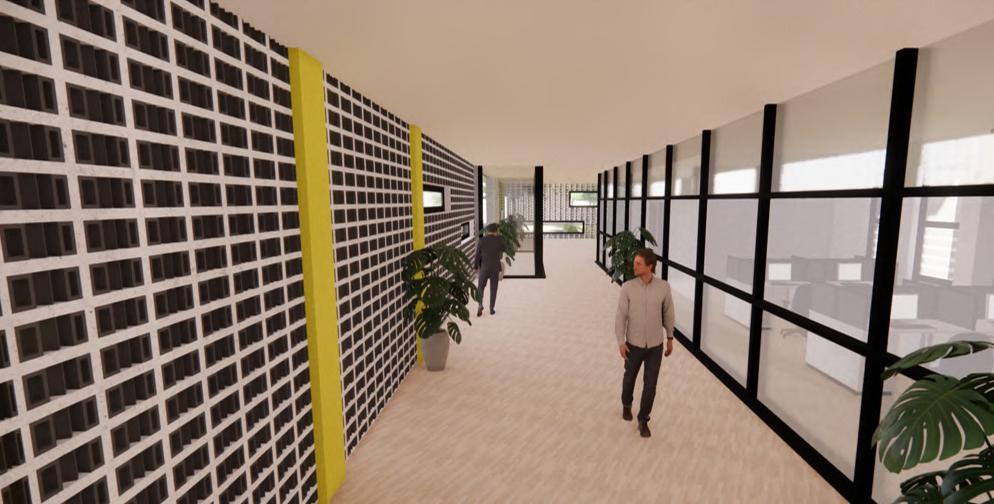
Interior Perspective
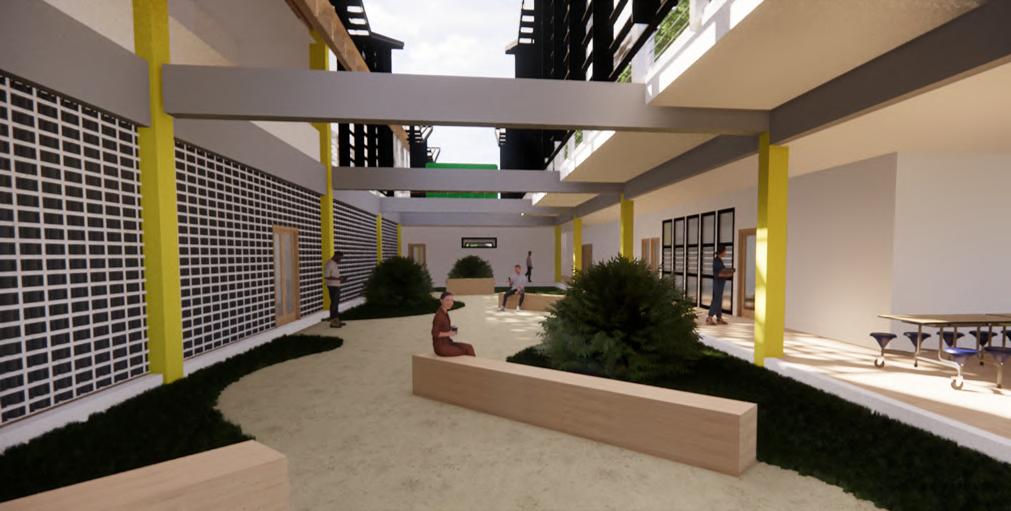
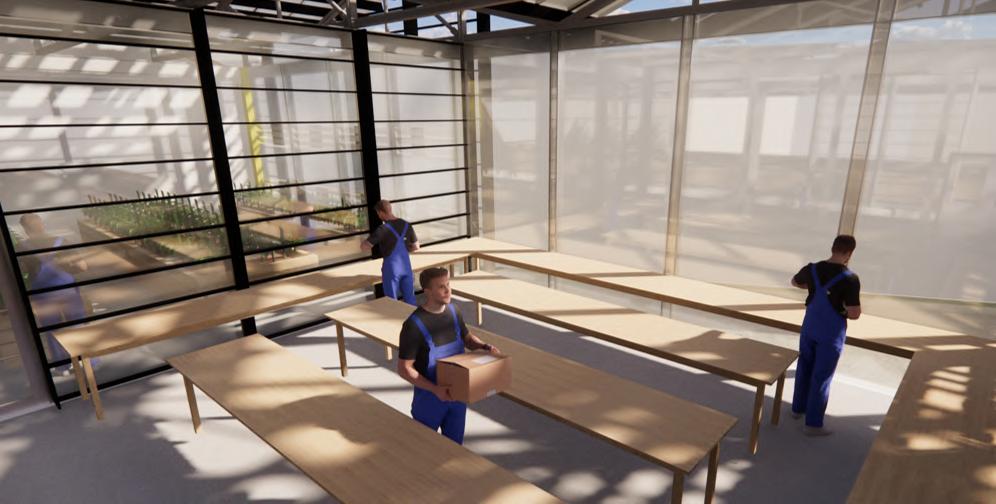
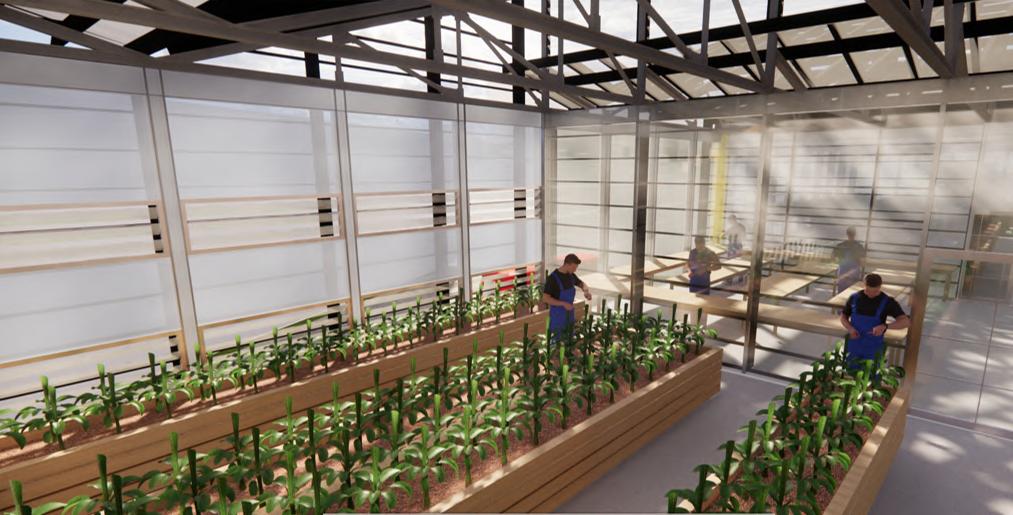 Inner Courtyard
Planting Room 1 (Seeds in the Form of Porang Tuber)
Heating/Drying Room Corridor (Ground Floor)
Inner Courtyard
Planting Room 1 (Seeds in the Form of Porang Tuber)
Heating/Drying Room Corridor (Ground Floor)
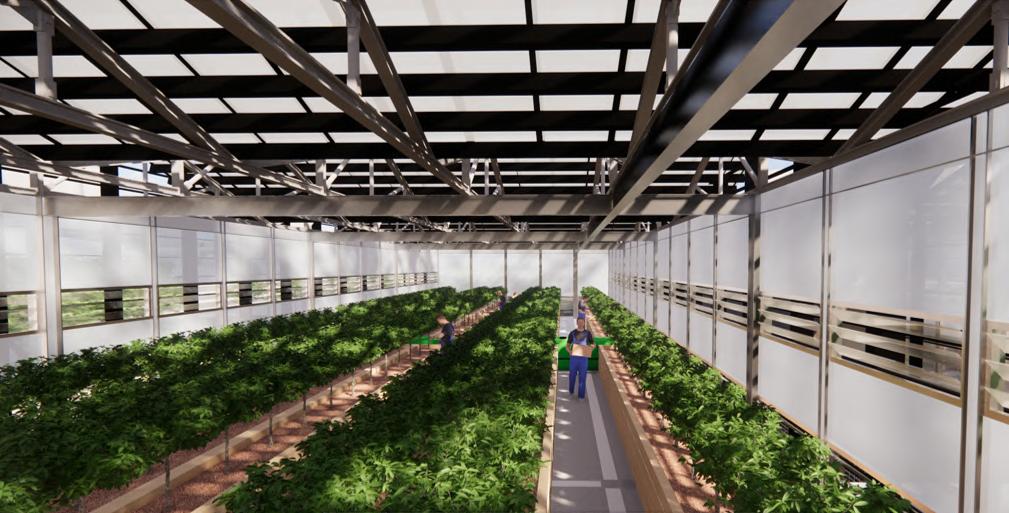
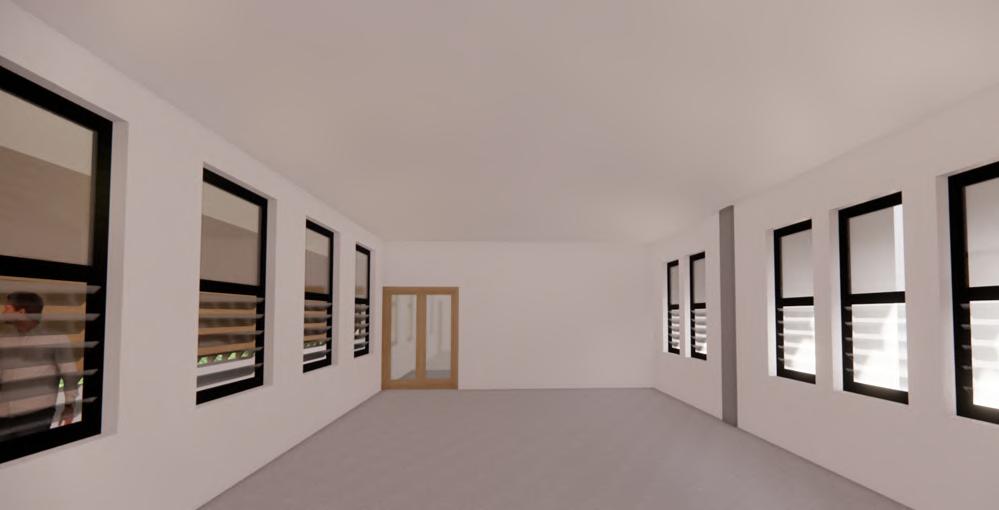
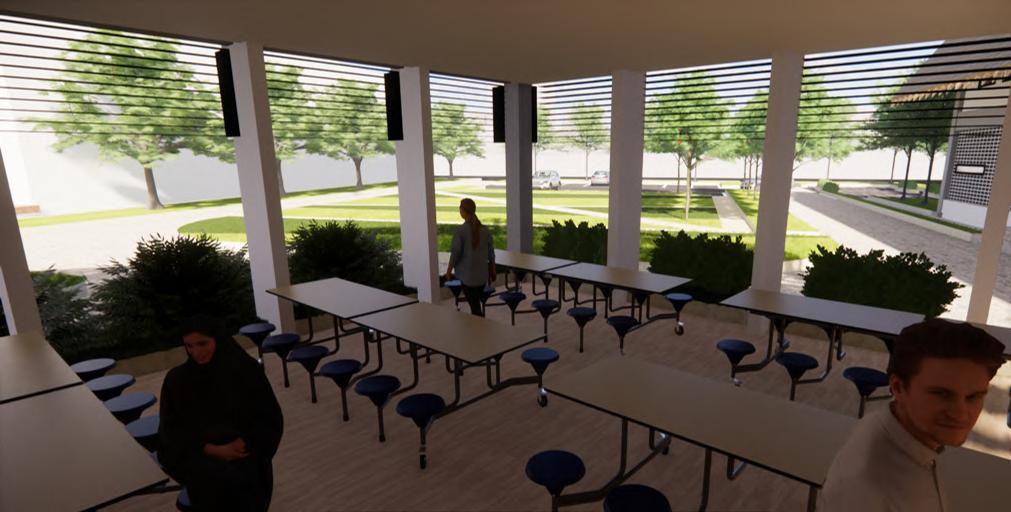
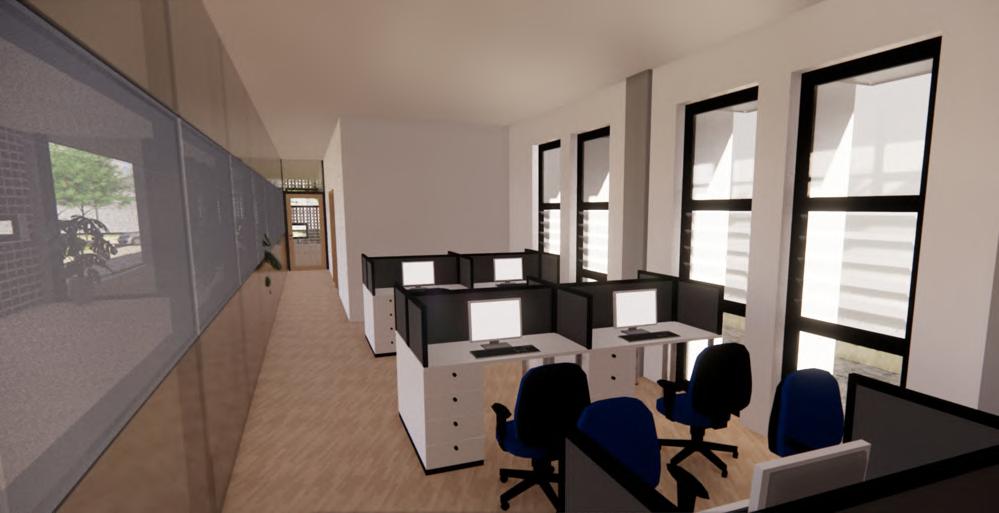 Manager and Administration Room
Planting Room 2 (Porang Tuber Ripening Stage)
Soil Preperation Room
Canteen
Manager and Administration Room
Planting Room 2 (Porang Tuber Ripening Stage)
Soil Preperation Room
Canteen