SAKSHI CHHEDA
Hello, this portfolio consists of selected works from 2018 - 2023. The projects are the product of research, observations, theories and experiments.
ACADEMICS
2018-2023 Balwant Sheth School of Merit Holder Architecture
2016-2018 Mithibai College of Science
2016 City International School
WORKSHOPS
2022 NUDES in the classroom Filippo NassettiSuperabundance Fibrous Tissue
2021 BIM and Revit Workshop BIM it, Architecture Collective, Barcelona, Spain
2019 Psychology
Bayside Media SEAL
2019 Leadership and Management Program ( Finance, Marketing, Operations)
D.O.B - 27.01.2001
Contact No. - 9167633955
Email Id - sakshihchheda@gmail.com
Address - Mumbai, India
Bayside Media SEAL
2015, Delegate - Harvard Model UN 2014 HMUN, Hyderabad
SOCIAL RESPONSIBILITY
2023 Pagna Cambodian Education Fund
Sept Volunteered in Cambodia

2021 Muskurahat Foundation
May Volunteered for Project Keytaab
2014- Samarpan
2016 Volunteered for a teaching 2 yrs Programme.
WORK EXPERIENCE
2023 Malik Architecture
Mumbai Architectural Intern
April-July
2023 Architect Hafeez Contractor
Mumbai Architectural Intern
March
2022 TA Fourth Year Studio - BSSA
Mumbai Building Construction Technology
June - October
2022 Spiti Ecosphere
Kaza Architectural Intern
April - June
COMPETITIONS
2022 Artuminate - Notion of Space
2022 Volume Zero - Tiny House
2021 Solar Decathlon India Office Building
2021 Archmello - The Brewed Bar
2018 Redesign Play - BSSA Esquisse Intra Class Competition for Architecture
EXHIBITIONS AND DOCUMENTATIONS
2022 The Brand Britain Magazine Shooting Star Studios, UK
2022 Thesis Bazaar Research Exhibit at BSSA
2019 Emergence Installation Exhibit at BSSA
SKILLS
ADVANCED SKILLS
Adobe Photoshop Adobe Illustrator
Adobe InDesign
McNeel Rhinoceros
Autodesk Autocad
iMovie
Microsoft Suite
INTERMEDIATE SKILLS
Grasshopper Autodesk Revit
Sketchup
Vray
BASIC SKILLS
3DS Max Blender
Adobe After Effects
Adobe Premiere Pro Lumion
QGIS
Twin Motion
LANGUAGES
English Hindi
Gujarati Kutchhi
Marathi
Spanish (A1) Including other skills like modelmaking, hand drafting, sketching, film making, photography, fabrication works, wood working, laser cutting, 3d printing etc.
2 3
4 5 De-Densifying Wadala Urban Design, Year 4 Professional Practice Malik Architecture Miscellaneous 2021, 2022 Drome Tiny House Competition 2022 CONTENTS SELECTED WORKS 06 40 14 22 46 32 50 54 60 62 Automated Landscapes and
Customisation Design Dissertation Year 5 The
The
Spotify
4 Emergence Installation Exhibit, Year 2 Migrant
User
Spiti Project Professional Work
Healer Design Studio, Year 4
Warehouse Design Studio, Year
Worker’s Abode Design Studio, Year 3
AUTOMATED LANDSCAPES AND USER CUSTOMISATION
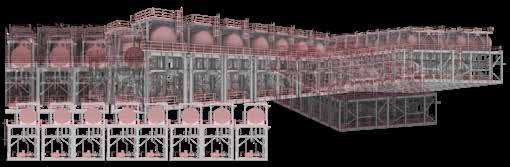
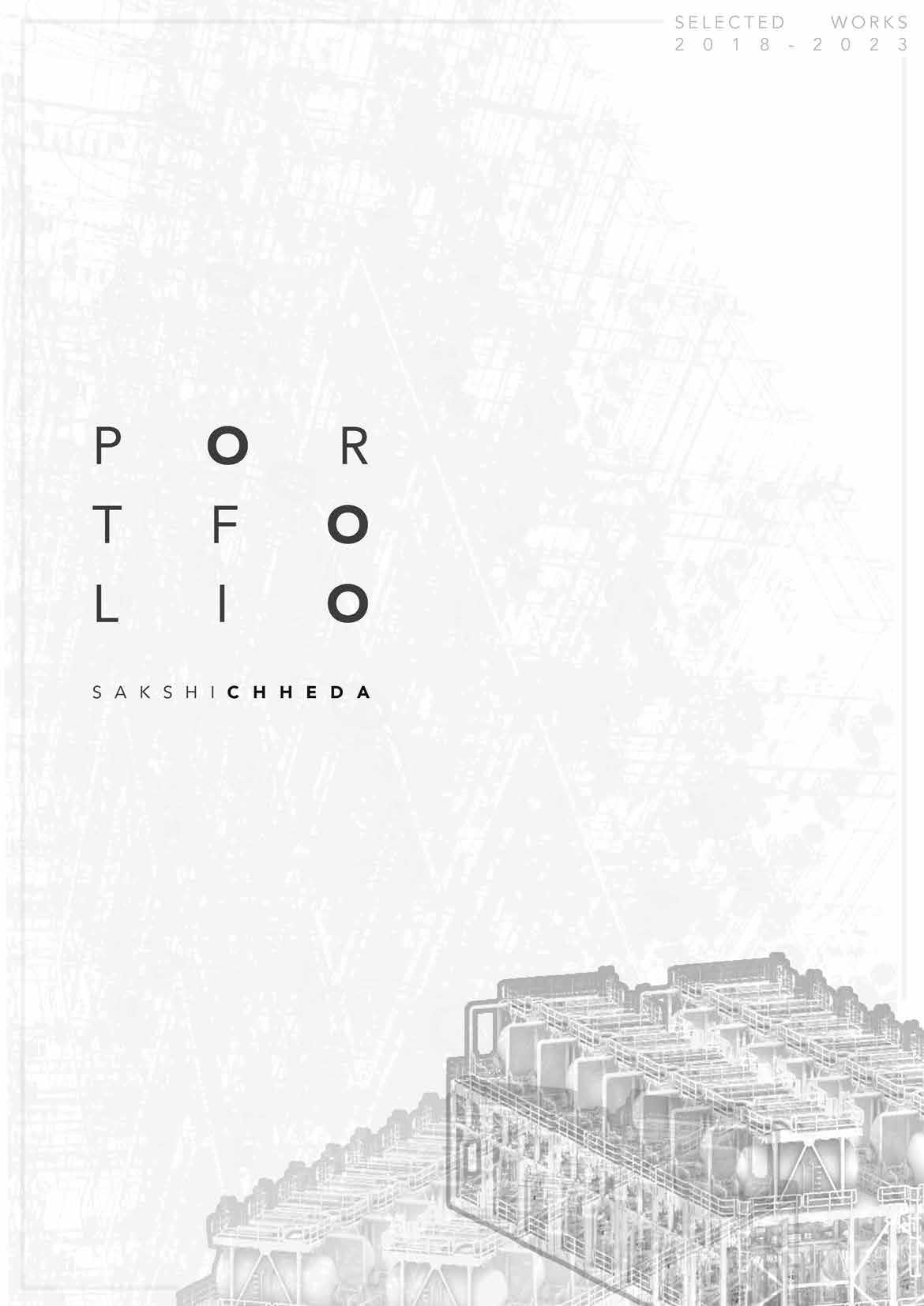
Academics - Year 5, SEM 9 Design Dissertation (Research Phase)
Anthropocene is viewed as the period during which human activity has been the dominant influence on climate and the environment. We live completely in a world surrounded by data. Data that tells us about our life and the world we are in, in an age that we could define as Digital Era. Progressive automation and emerging technologies are now faster and more present, far beyond the human capacity to keep up with them. Architecture has always been defined by the prevailing means of production.
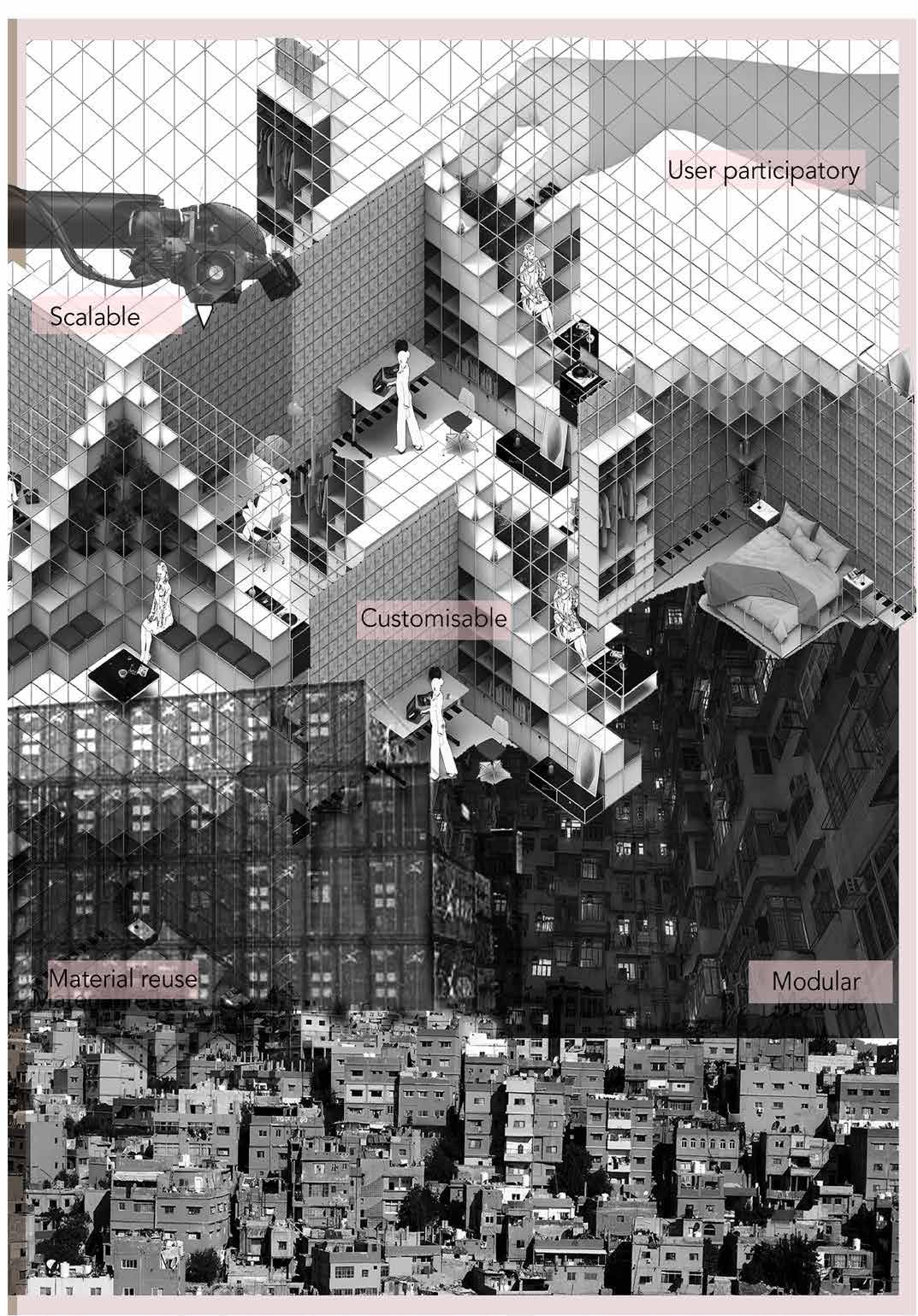
The current era and technological influence have led to two major emerging typologies of buildings - the one made by humans for machines and the one made by machines for humans. The automated machine landscapes like data centres, are the places where the internet lives, where human lives are stored in form of digital avatars, yet they are empty of any humans. This research aims to explore the dialogue between these post human landscapes and human beings in form of new emerging typologies and re-defined constructions. Some of these aspects like 3d printing, high level user customisation in choices of living, design of spaces like flexibility, scalability, modularity and participatory design have been looked into along with new trends of living, working, growing and caring in the backdrop of Technology and Artificial Intelligence.
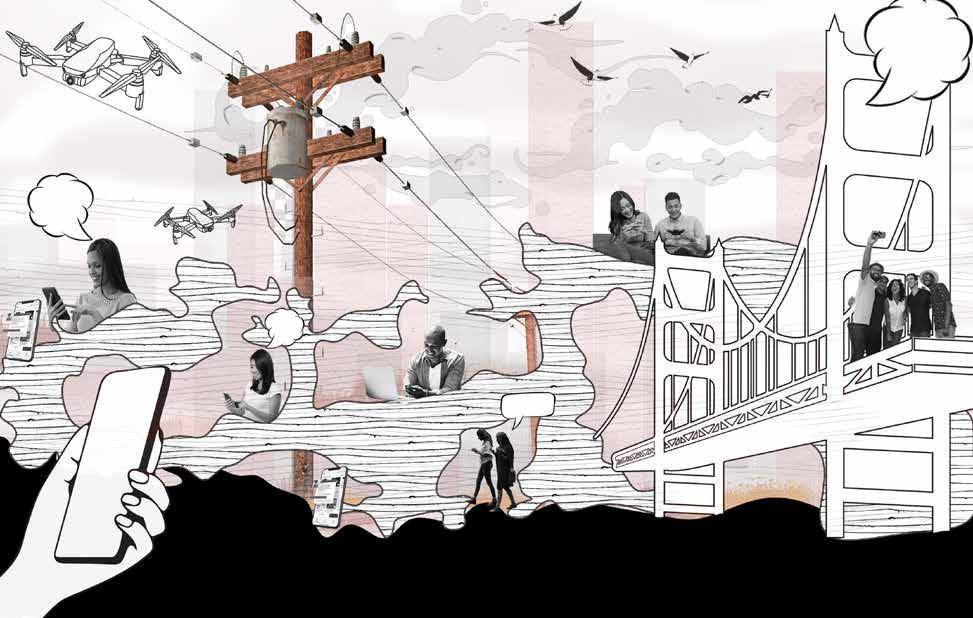
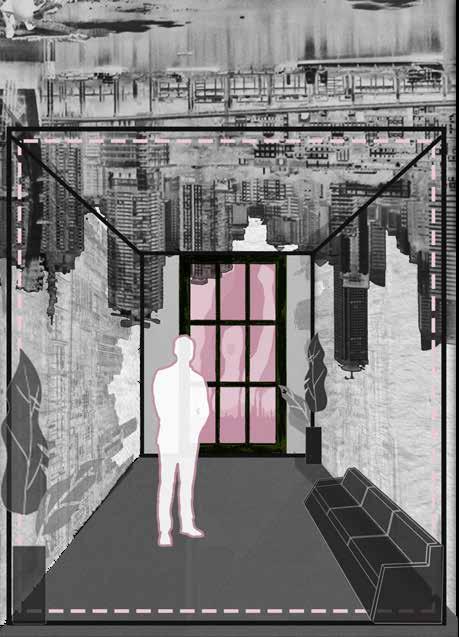
Internet and Digital connectivity has revolutioned lives of people along with onset of Globalisation. This is also the age which revolves around human perspective and spacemaking was based on human scale. It is hence very human - centric.
The human-centric system is progressively shifting into one where data and machines play a fundamental role. Today automation’s is in a comfortable environment - bubble of the factory, where humans (away) from potentially dangerous robots and where robotics grows sheltered from both vandalism and conventional expectations of how occupied areas should be programmed.
Meanwhile certain Automated Technology has mingled with human life, hence entered urban and rural conditions like Automated Speech, Vision, Retail and Automated Vehicles.
6 7
Era of Digital Connectivity, Humans connected though Post - Human landscapes of Internet. Transmission wires in background.
Human in a box, Human Centered Design.
01
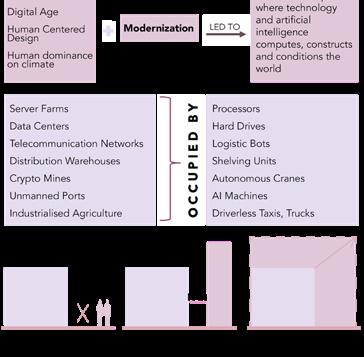
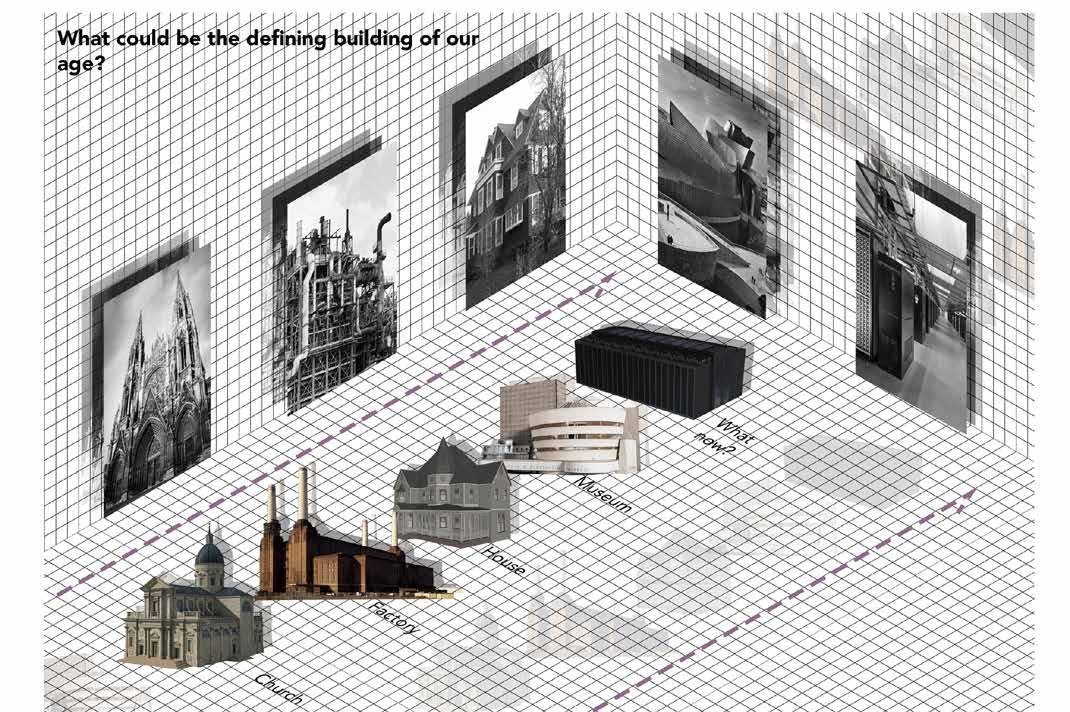
Stonemasons once carved column capitals and modern architects harnessed the prefabricated components made possible by industrialization. Now we have AI and Technology. These non-human landscapes are more than just computational infrastructures, they are becoming the defining cultural constructions of our age.
Automation and Technology led to two new emerging typologies - Buildings made by Human for the Machine and Buildings made by Machine for the Human.
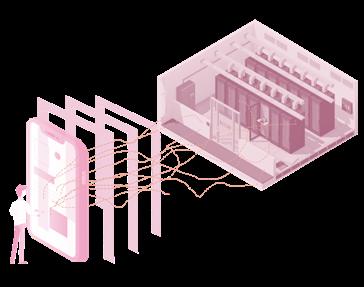
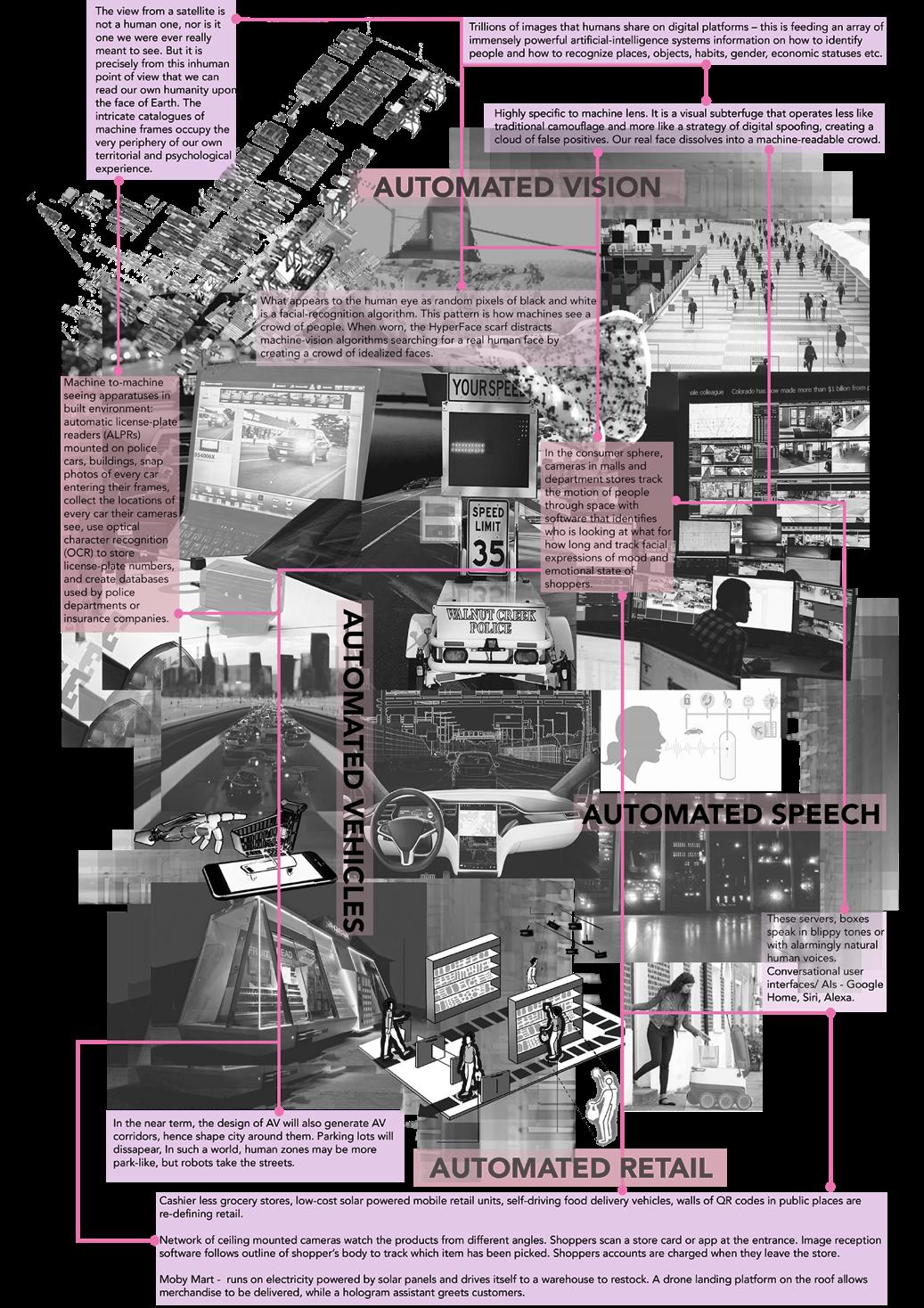
Every photo, message, user profile, research contain data collected in an ethereal container that we know as Cloud. This idea of a light, ethereal cloud materializes in form of landscapes of wires, satellites and data centers.
They are places which store and process our data. It is where the internet lives, Human excluded Infrastructure. Necessary for the modern world to function.
If we were to stroll through the screen and follow the fiber-optic tentacles across the planet we would find ourselves in unfamiliar places like this.
8 9
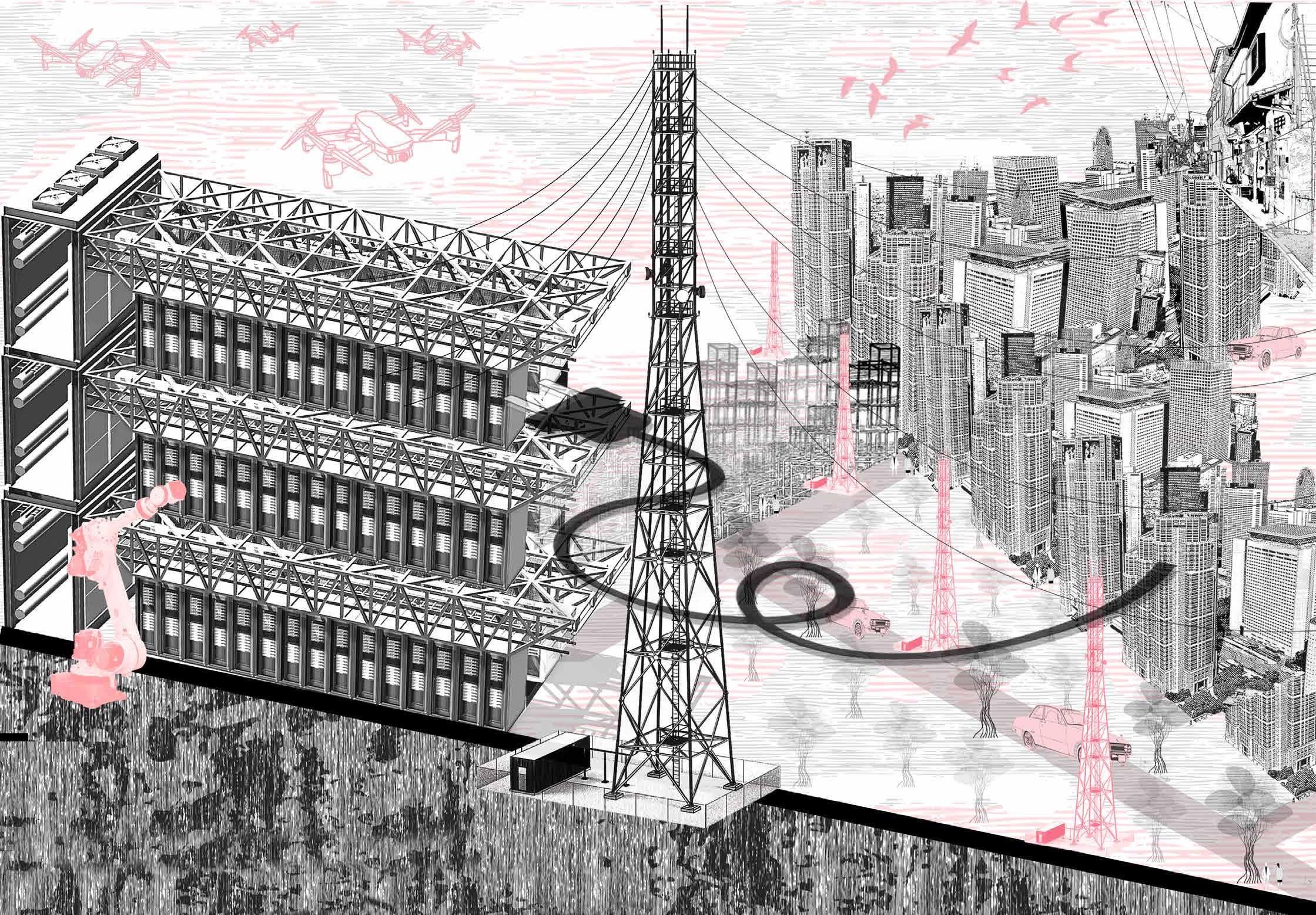
10 11 Automated Landscapes are need for the city to function.
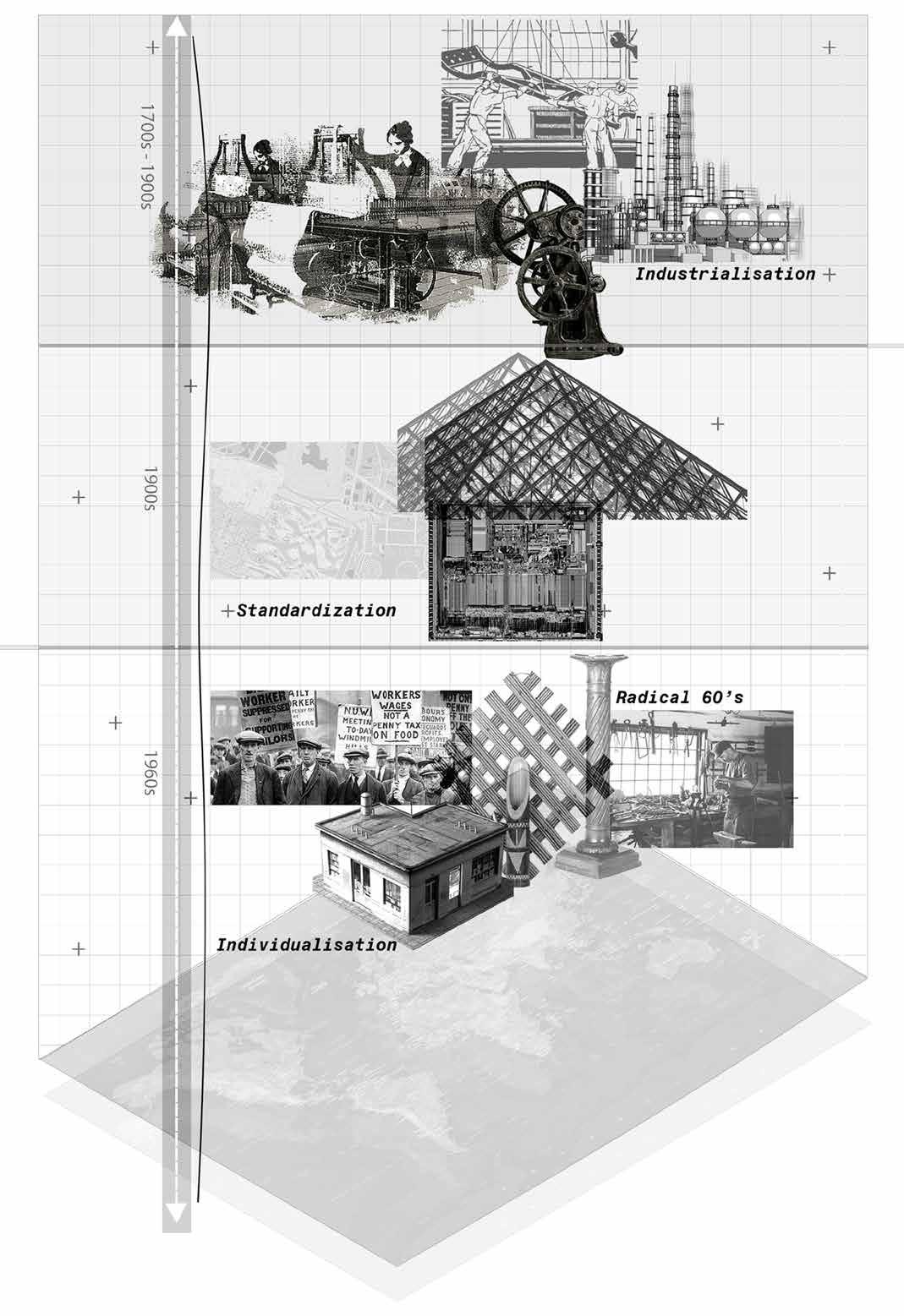
If customization of institutions were the potential outcomes of urban technology in an earlier era then today, with even smarter systems at play, the promise to rescript the city is more plausible. Industrialization and Urban Planning lead to banal urbanism where any two cities ended up looking the same. Digital infrastructure and technology provides an alternative to the industrialization and standardization of life. That is, accomplish 1960s radical and anti-establishment pledges of an independent lifestyle based on self-management and a personalized relationship between work and production, bring back old craftsmanship.
12 13
THE HEALER
Academics - Year 4, SEM 8
Programme - Hospice Space
Site - Sanjay Gandhi National Park, Mumbai
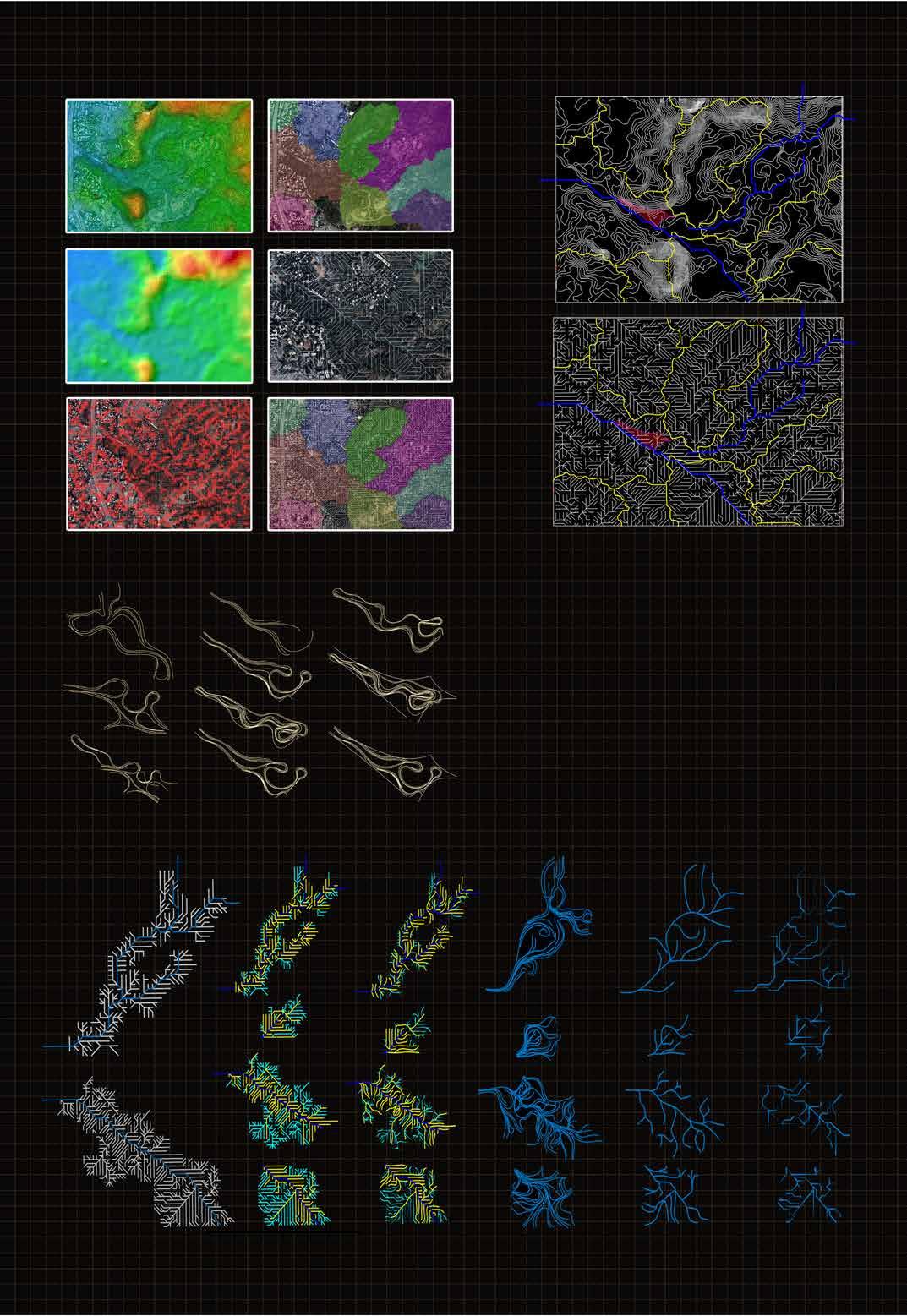
The concept of Evolution is studied by Elevation, Contour, Drainage Channels and Watershed Basin maps which are generated on QGIS Software. Mappings and Tracings infered that sudden elevation gain had shorter drainage channels, hence less scattering of channels than when present on a wider plane. Line drawings are made from these inferences.
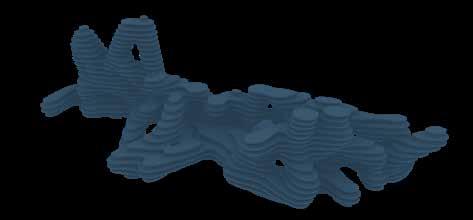
The Pandemic played an important role in helping us understand the importance of health both mental and physical. Mumbai being a hustling city, has sufficient health infrastructure but lacks an additional facility which takes care of the recovery phase or a facility which deals with mental and spiritual concerns of the body. Hence it is necessary to introduce a step between a patients jouney from hospital to back home.
An attempt is made to introduce such a facility in the core of Mumbai, in its urban forest - the Sanjay Gandhi National Park, the site fits the programme perfectly as Mumbaikars can consider this facility as a getaway amidst the hustles and monotony of a city landscape. Inspired by the lagoons, mist and calmness of the forest, a similar vibe of zen is replicated in this hospice center situated by the Dahisar river on a contoured terrain, with views of the forests and hills.
14 15
02
Contours : 20 - 40m
Elevation Map
Drainage Channels
Watershed
Drainage Channels
Drainage channels with Watershed
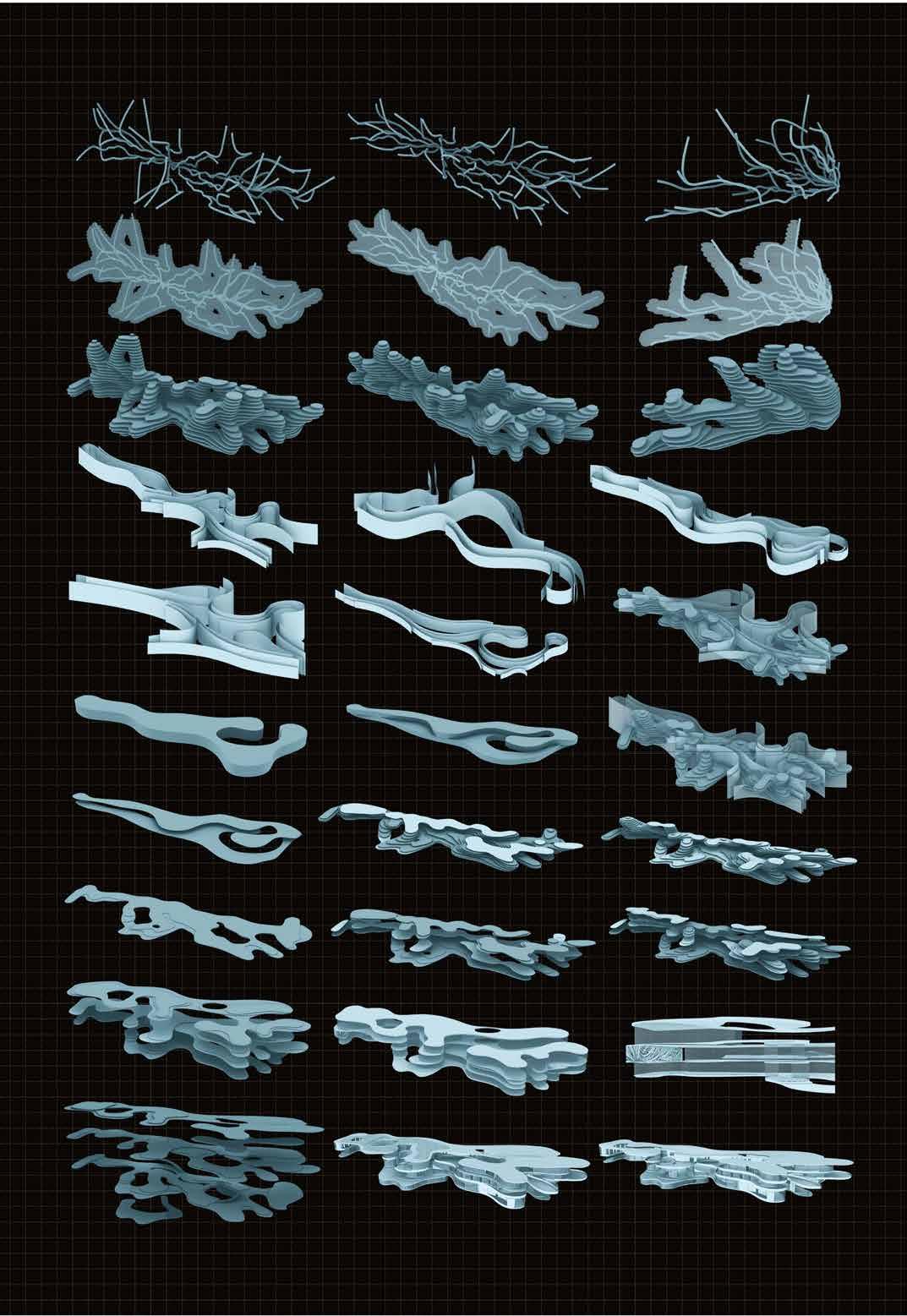
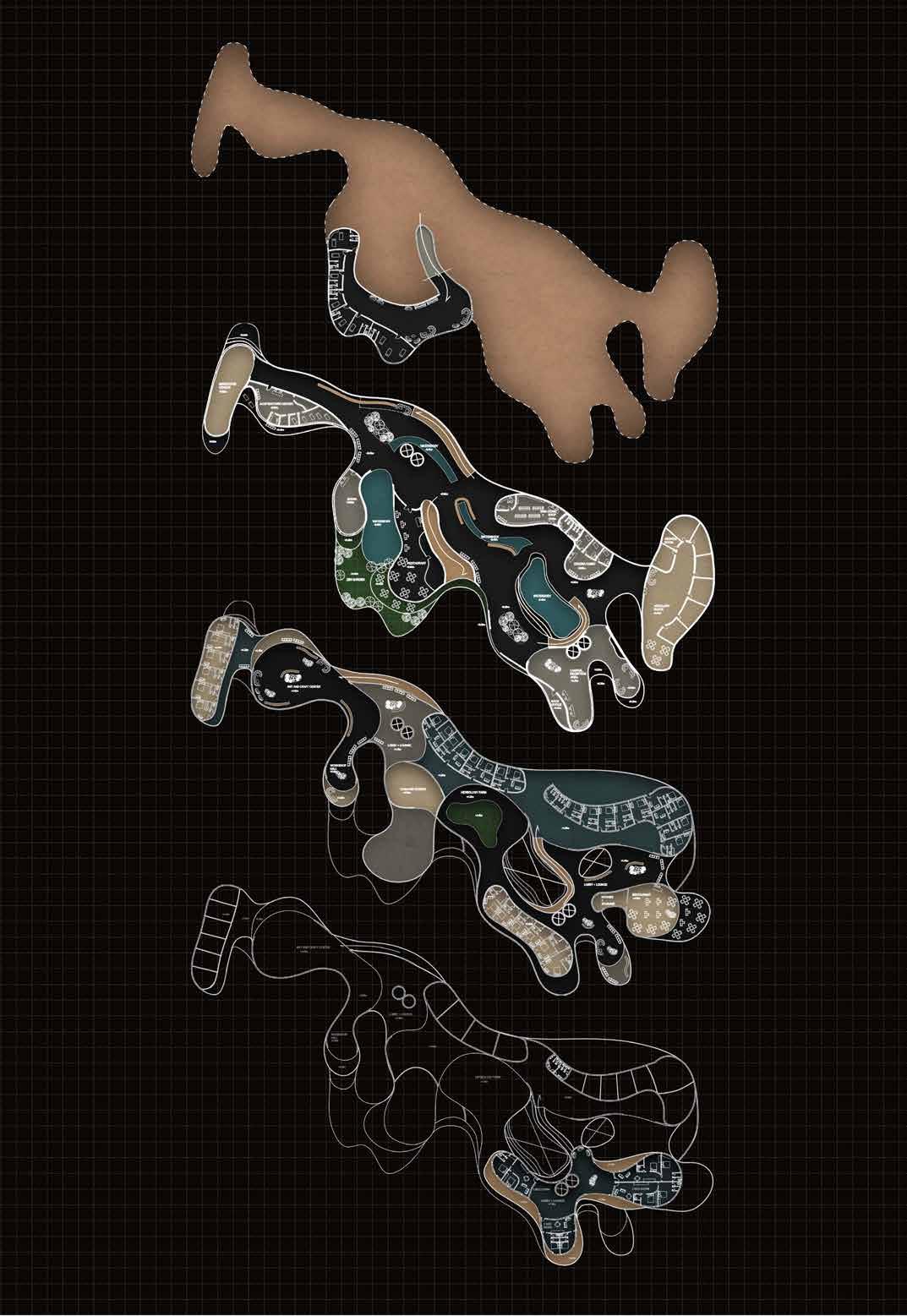
16 17 Concept Model Iterations Basement Plan Ground Floor Plan First Floor Plan Second Floor Plan
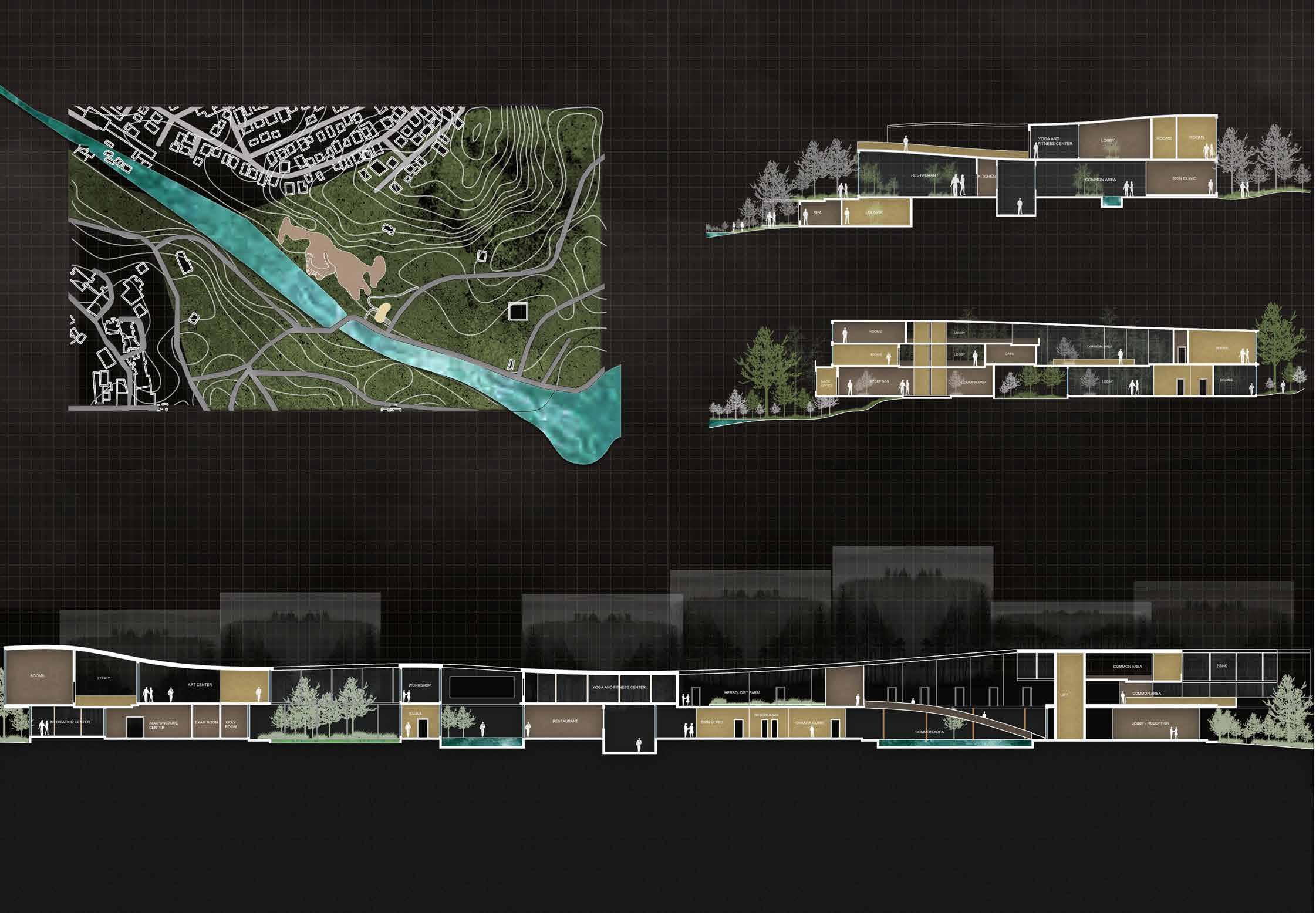

18 19 Site Plan
BB’
Section CC’ Section
Section AA’
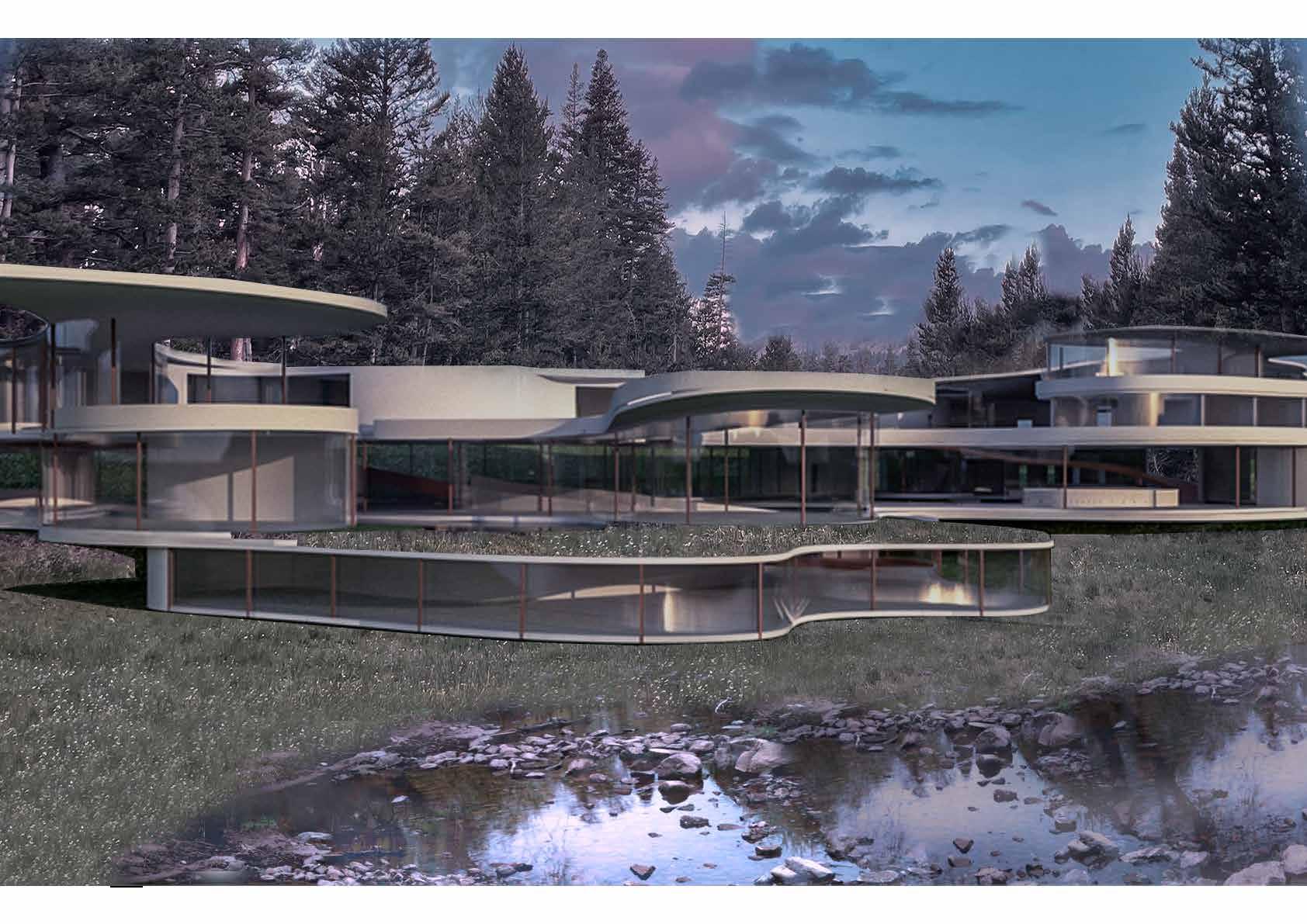
20 21
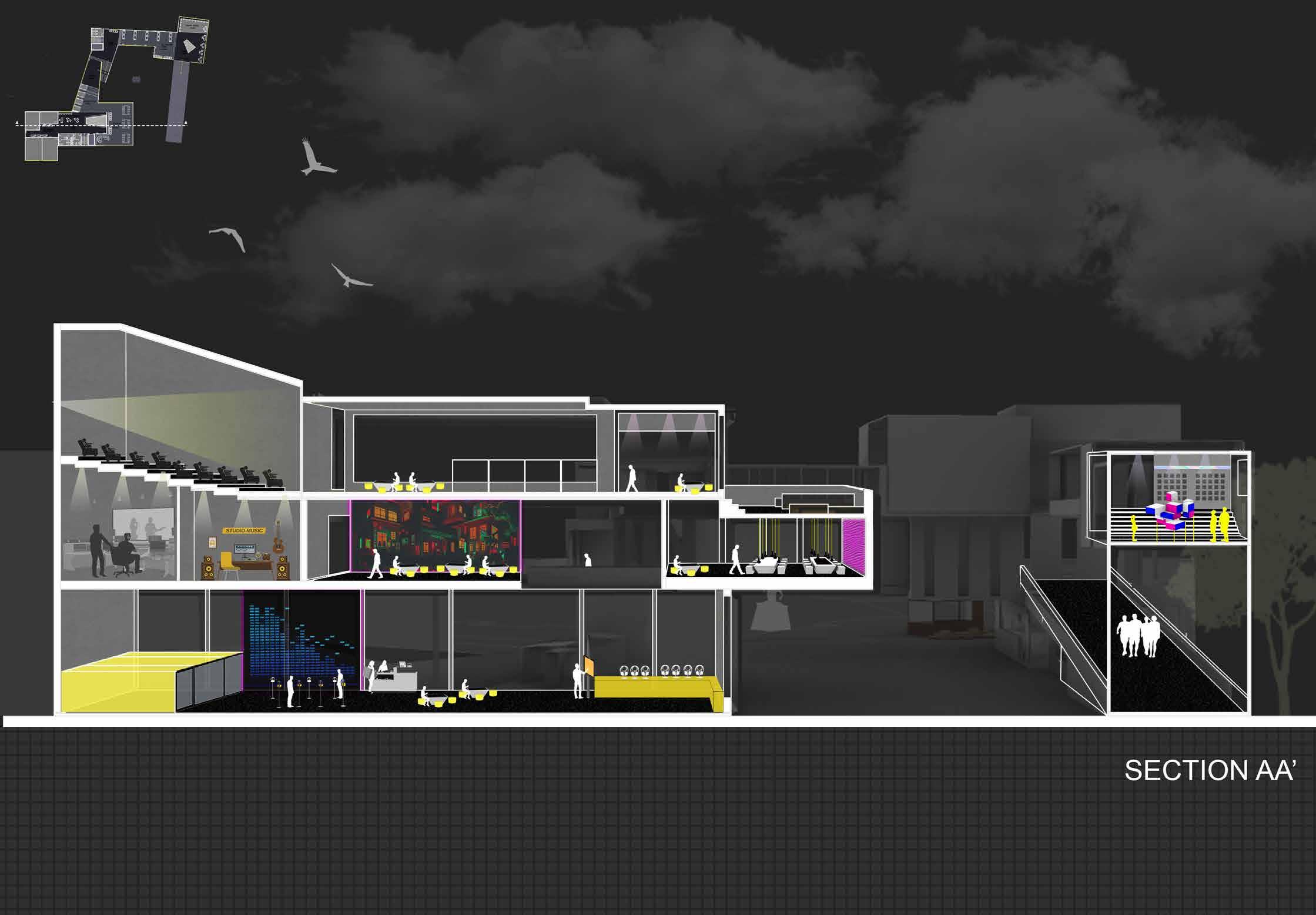
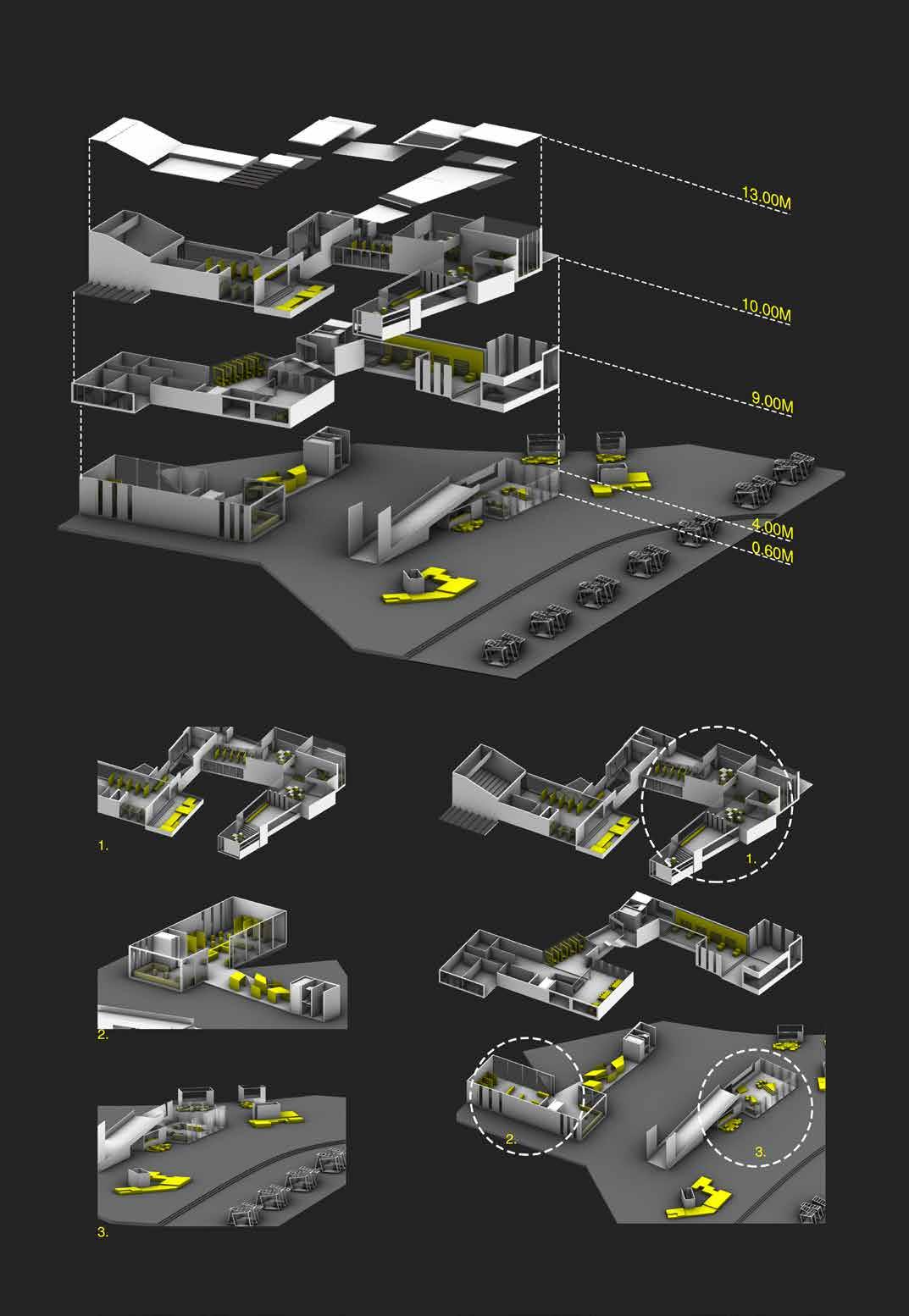
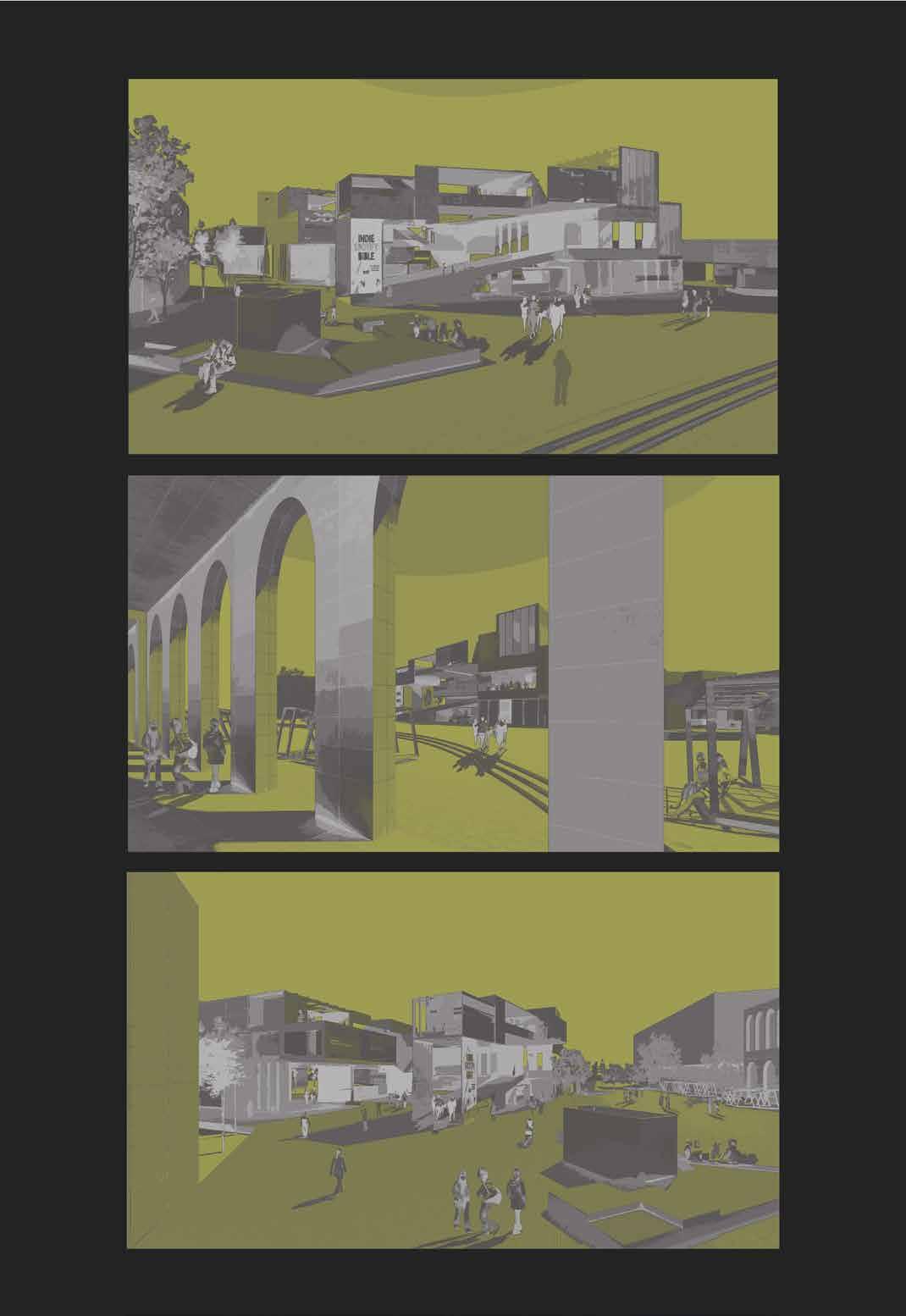
SPOTIFY WAREHOUSE
Academics - Year 4, SEM 7
Programme - Music House and Mediatheque
Site - Kalaghoda, Mumbai
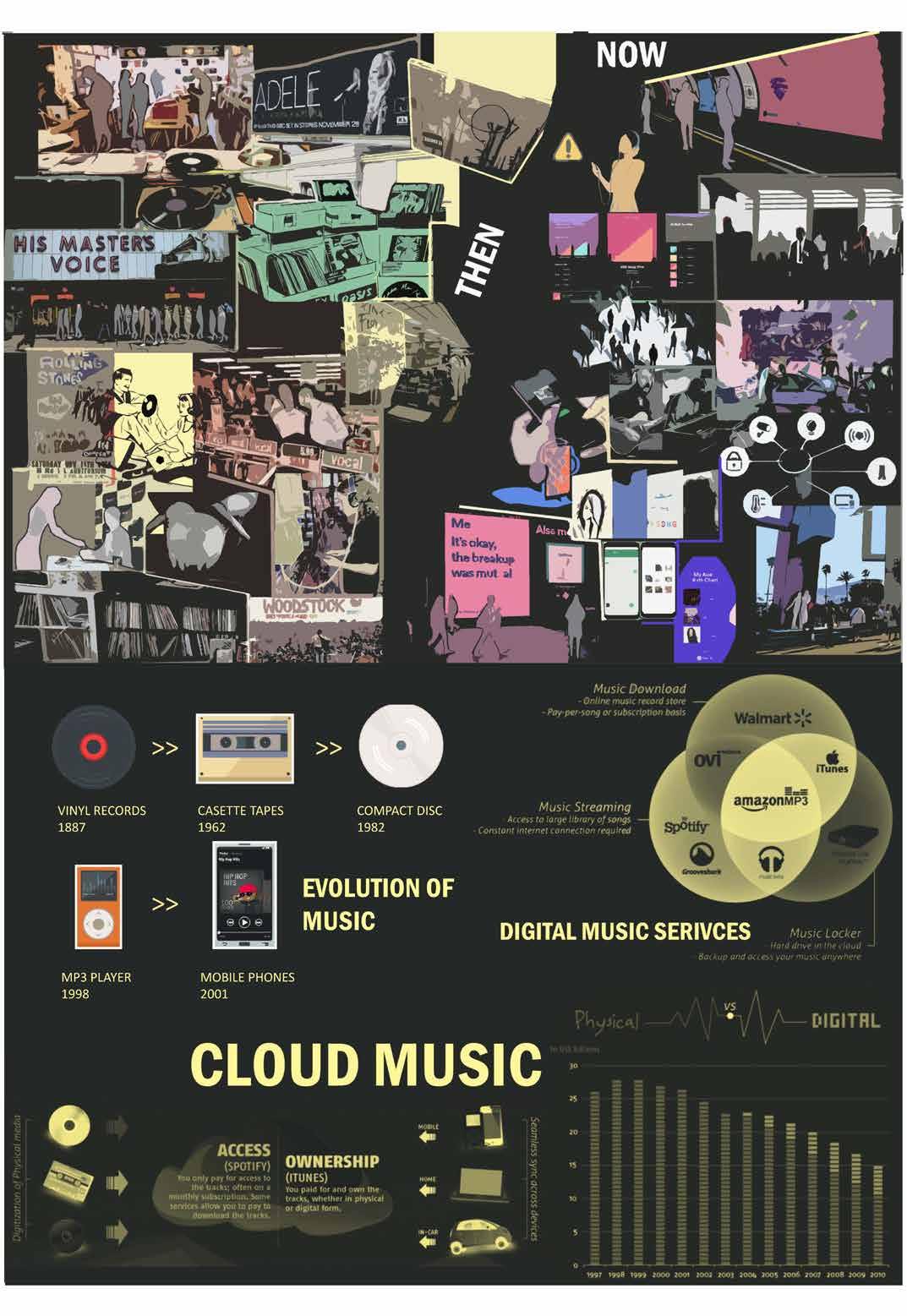
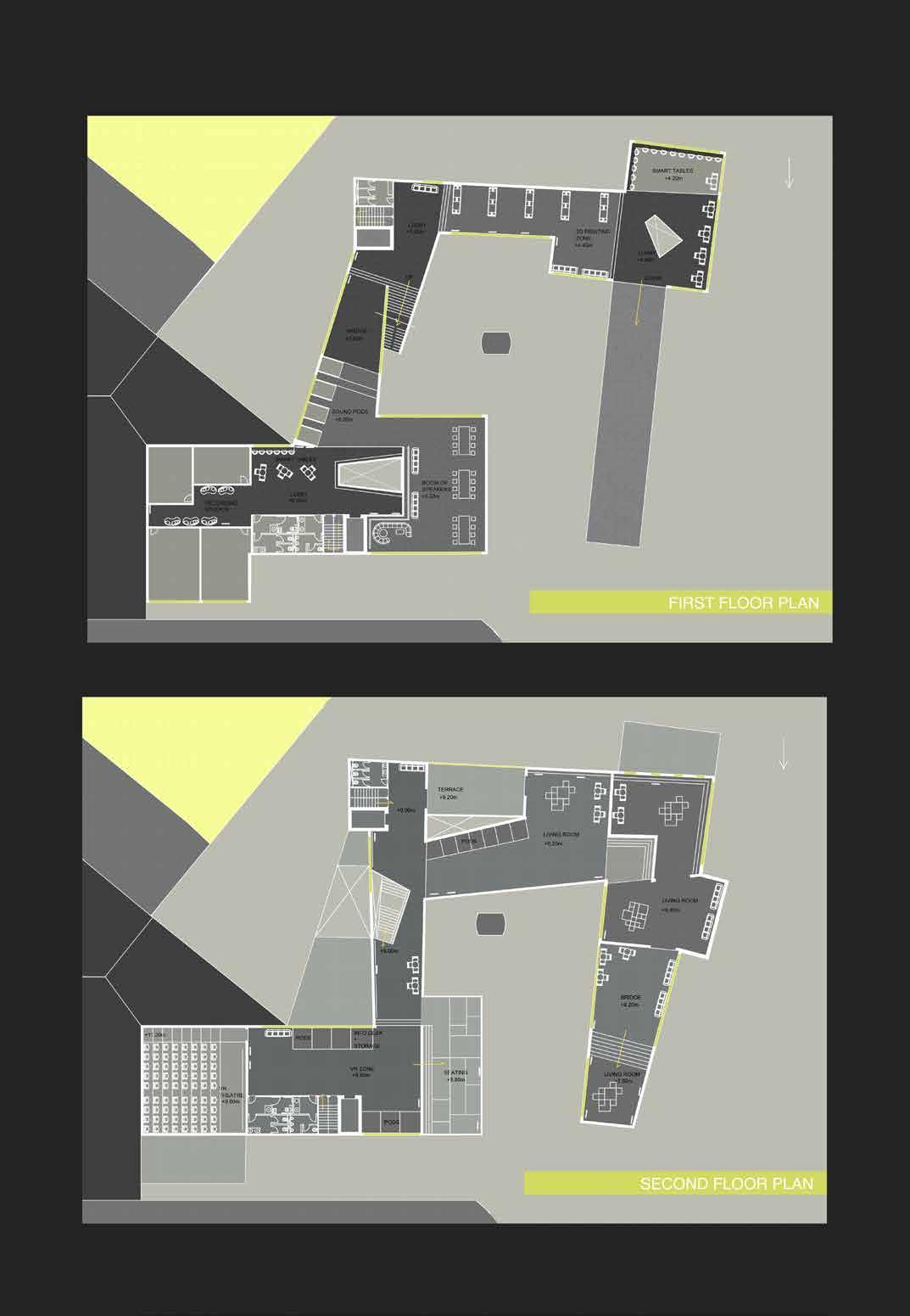
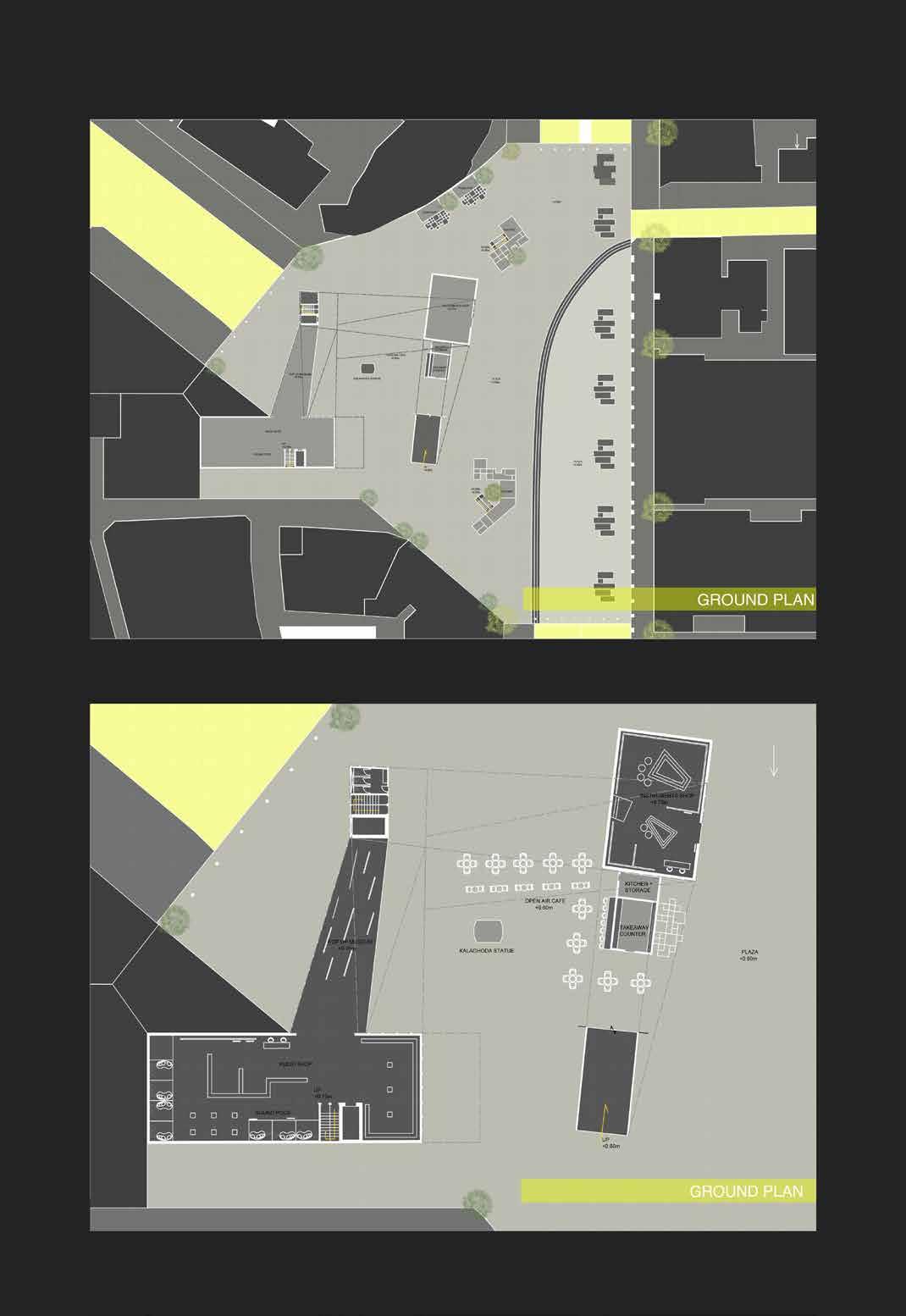
Over time, the way we percieve, listen and make music has changed. Earlier we used to have records, a certain sense of memory linked to those physical discs, right now those music holders are converted into cloud files, with everything being digital. Apps like Spotify have revolutionised the industry of music making, delivering and advertising.
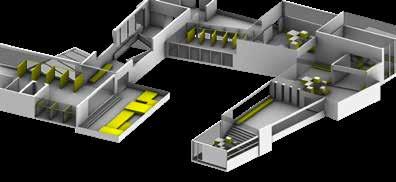
Rhythm house was one such store which sold vinyls and could not bare the wrath of revolution. Hence revamping it into a physical warehouse of Spotify, this project becomes consolidation of rethinking ways music can be percieved in today’s times. Innovative programmes like ‘The living room’ where strangers can sync music and identify common tastes are inserted, hence creating an important node in the city of Mumbai.
22 23
03
SITE - RHYTHM HOUSE
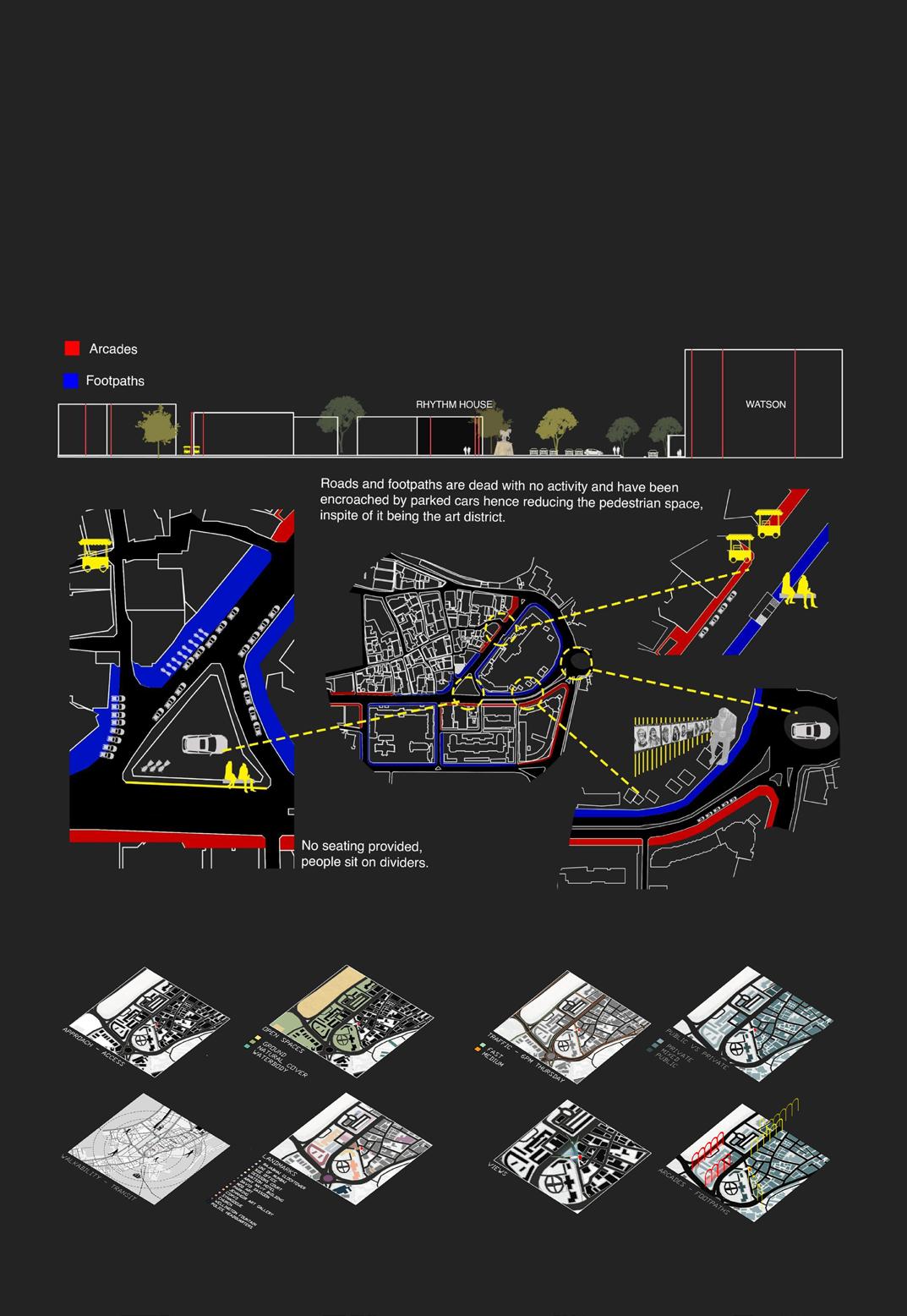
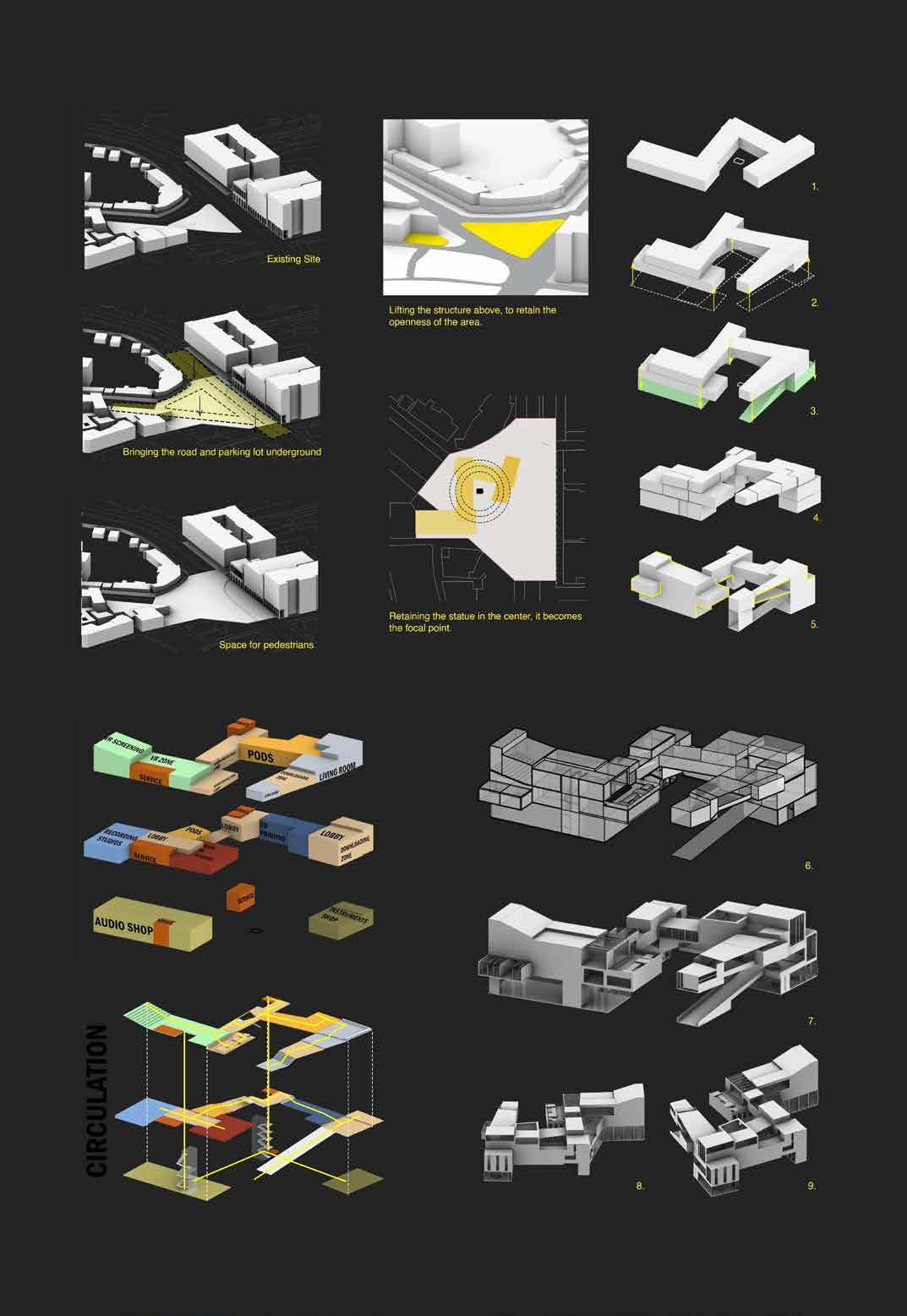
The store was founded by Suleman Nensey in 1948 and sold music equipment and vinyl records. By the latter half of the 2000s, the store was beginning to feel the heat from MP3s, downloadable music (legal and illegal), Apple’s music store, subscription-driven services and the latest threat at that time – from organized retailers.
Rhythm House was shut in 2016, after failing to revive its business and keep up sales. The current site had an open spaces dedicated to parking. An important art node of Mumbai, Kalaghoda was dead in terms of human activity.
24 25
26 27
28 29
30 31
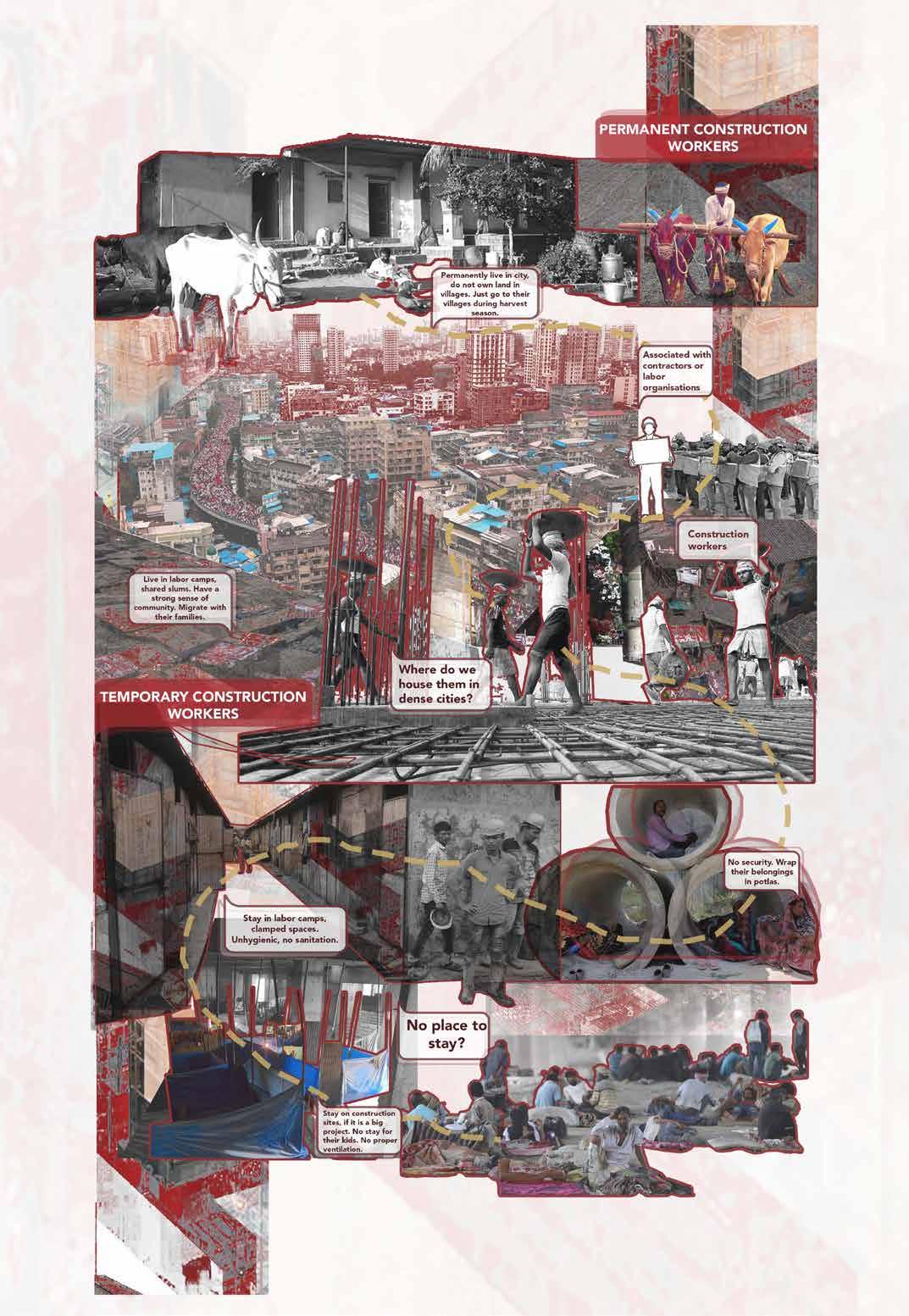
MIGRANT WORKERS’ ABODE
Academics - Year 3, SEM 5
Programme - Construction Workers Housing
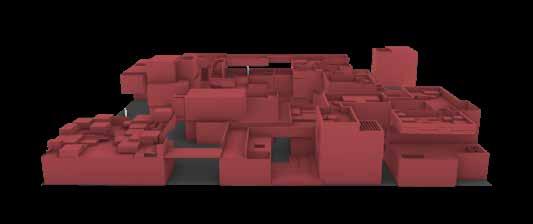
Site - Andheri, Mumbai
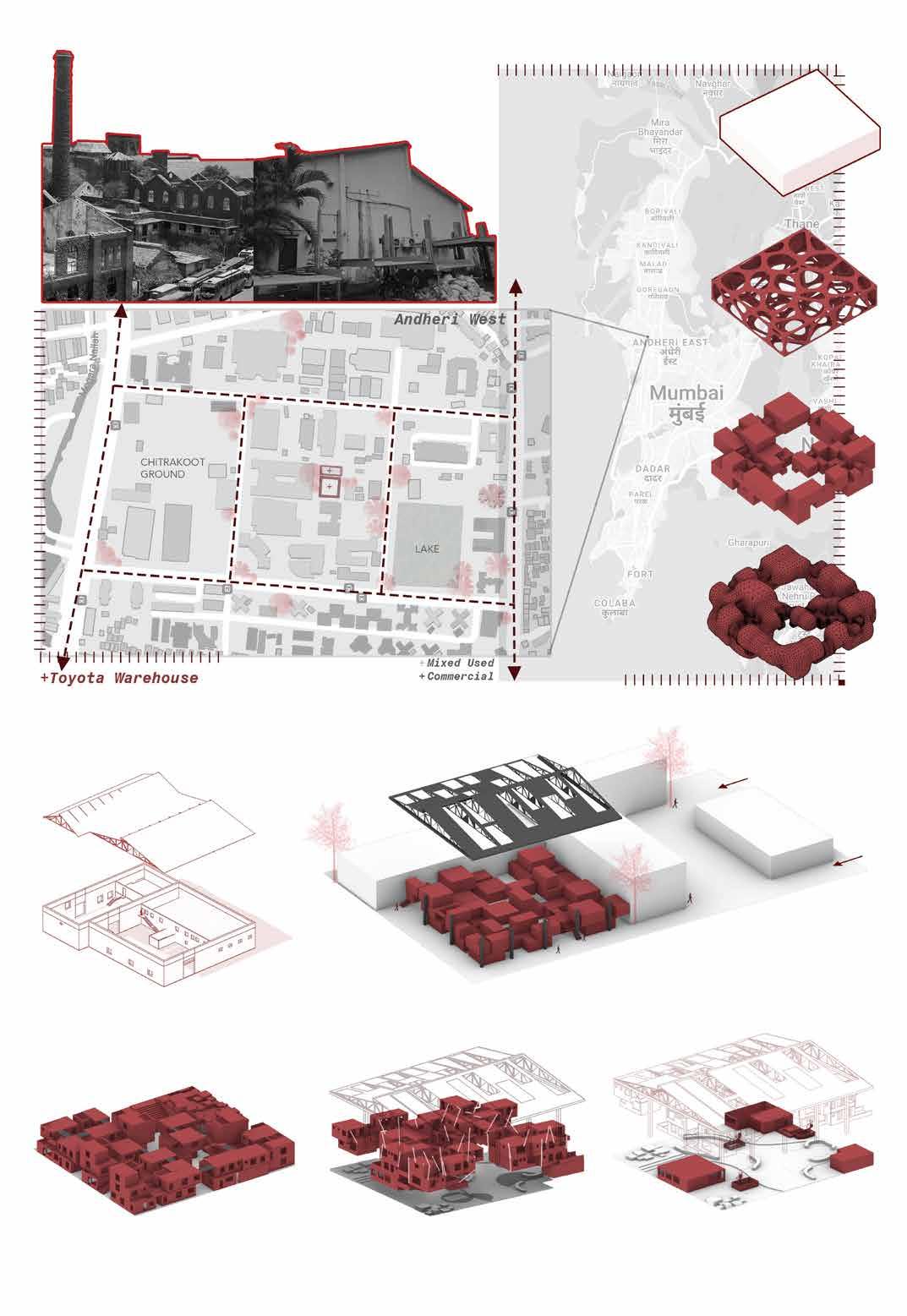
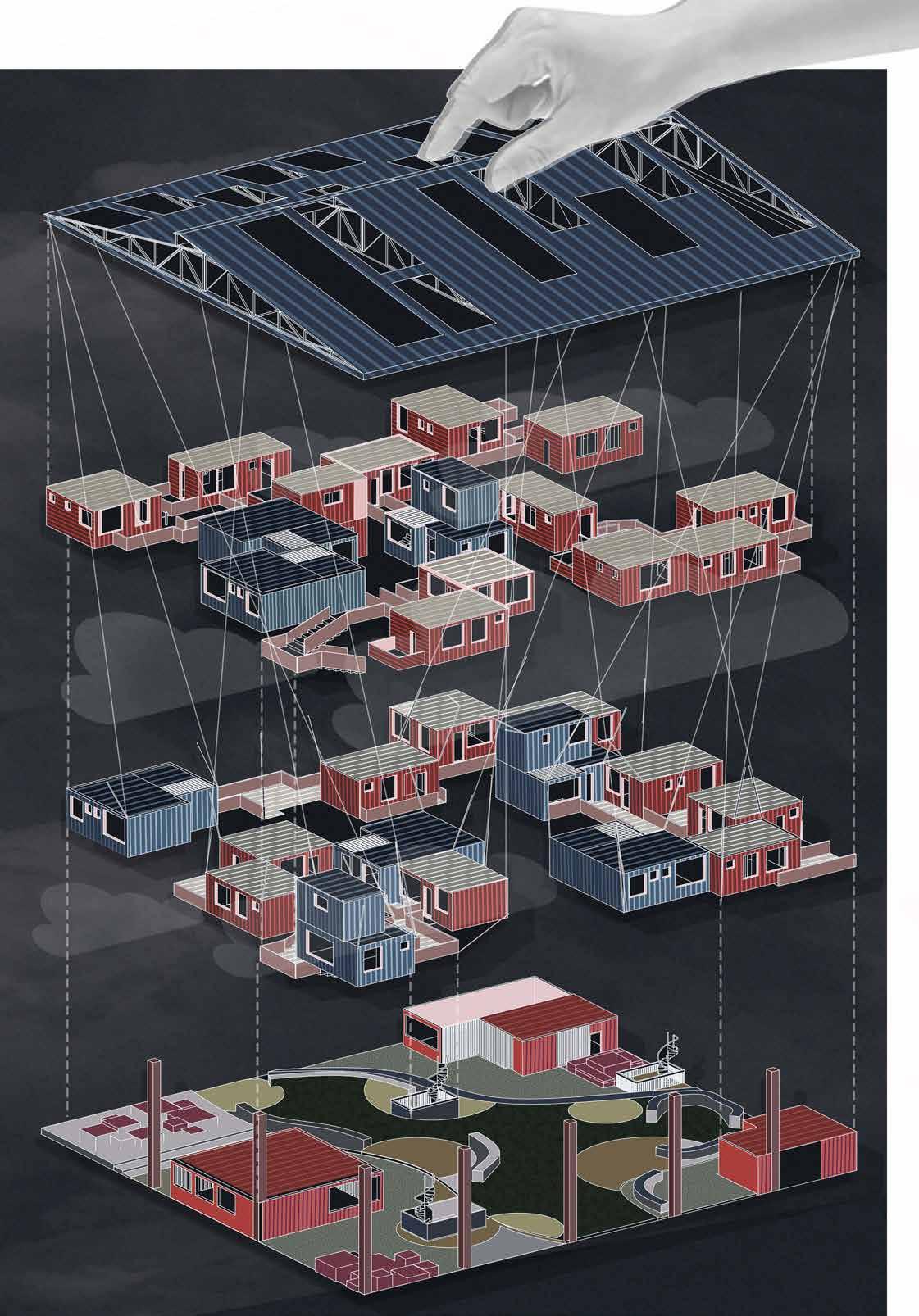
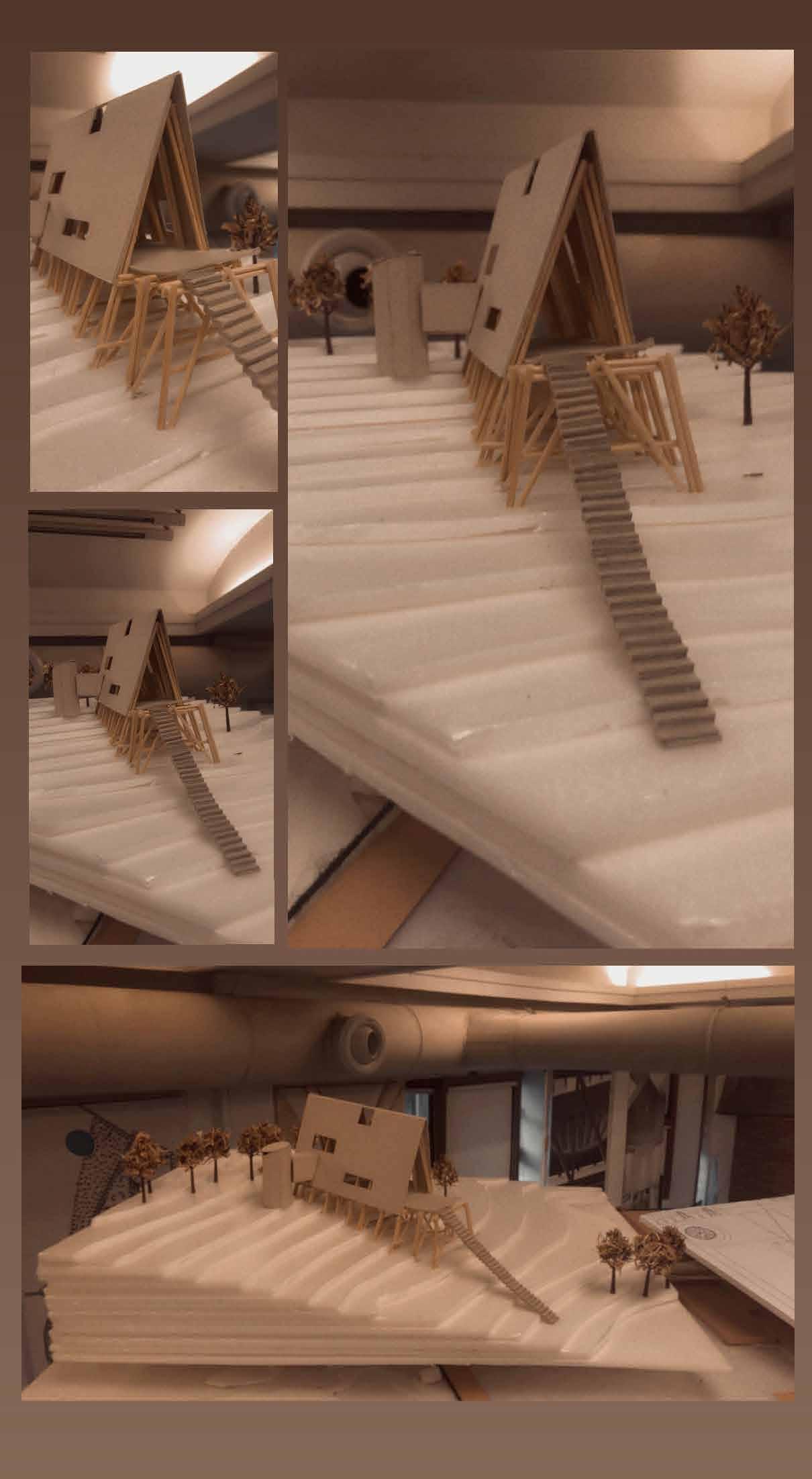
Out of the total labor in India, 4.5 Million belongs to the Informal work sector. They are the migrant workers who work on contract basis. In cities there are two kinds of workers, permanent and temporary, the latter ones trying their luck in cities, with no surity of shelter above them. The argument focuses on housing the construction workers of the Mumbai in the abandoned mills or warehouses of the city. Hence re-using the redundant space in the city which is already dense.
Research was done on the lifestyle, work and nature of shelters of these workers in construction sector and the vulnerabilites faced by them, along with Case studies of Mumbai and Ahmedabad were undertaken. A site in Andheri was selected to build temporary rent based housing for them and their families hence incorporating the needs of their kids as well.
32 33
04
34 35 Site
Existing Warehouse Area – 960 sq.m Plot area - 2594 sq.m
Block orientation according to function, light and ventilation.
Blocks suspended from the truss, ground given for landscaping and recreation.
1. Creche, 2. Reception Area and 3. Workshop Space to practise craft.
1. 2. 3.
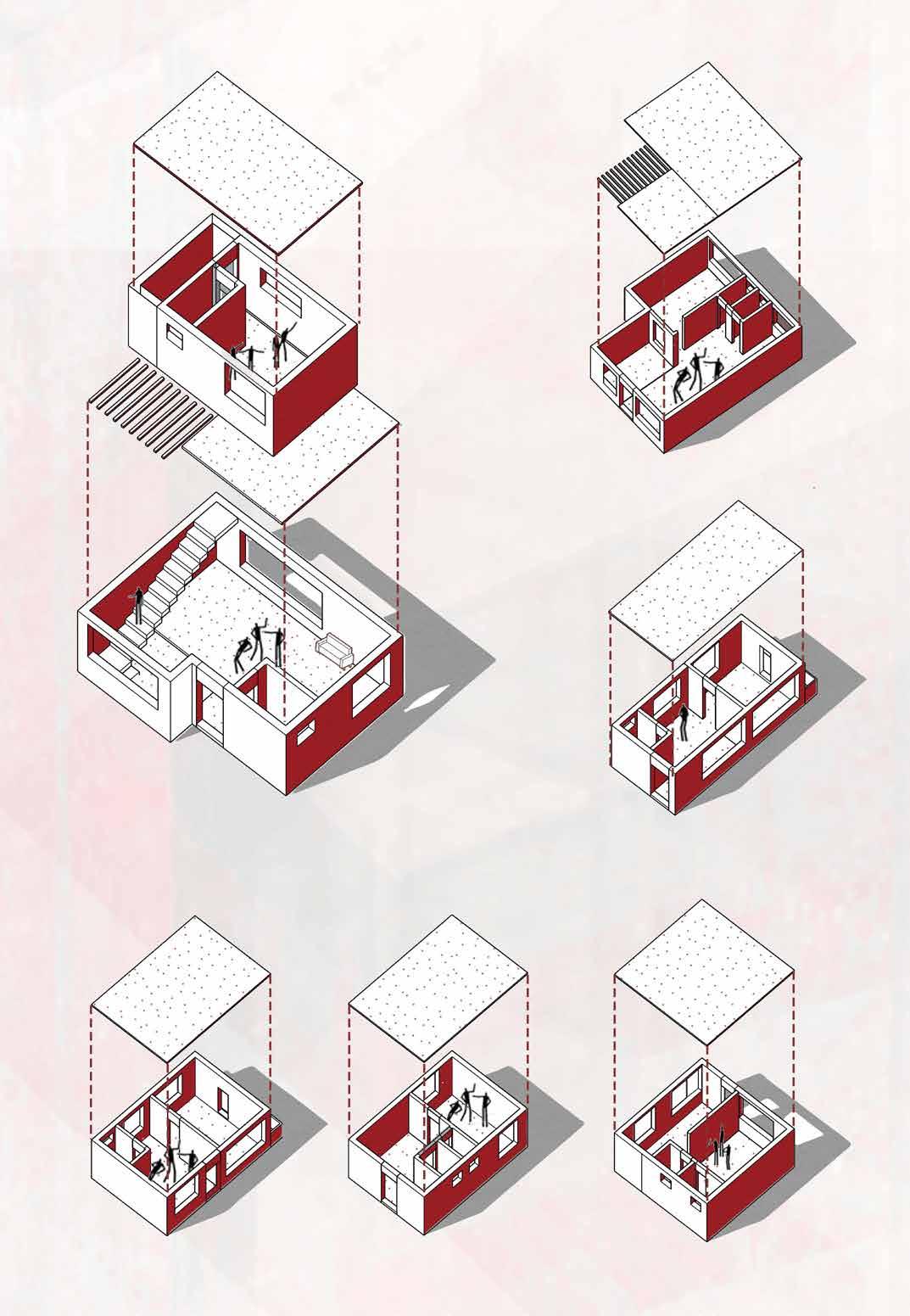
Unit for 4 people Area - 50 sq.m
Unit for 2 people Area - 30 sq.m (6m x 5m)
Unit for 2 people Area - 30 sq.m (6m x 5m)
Unit for 2 people Area - 25 sq.m (5m x 5m)
Unit for 2 people Area - 25 sq.m (8m x 3.5m)
Unit for 4 people Area - 45 sq.m (9m x 5m)
36 37
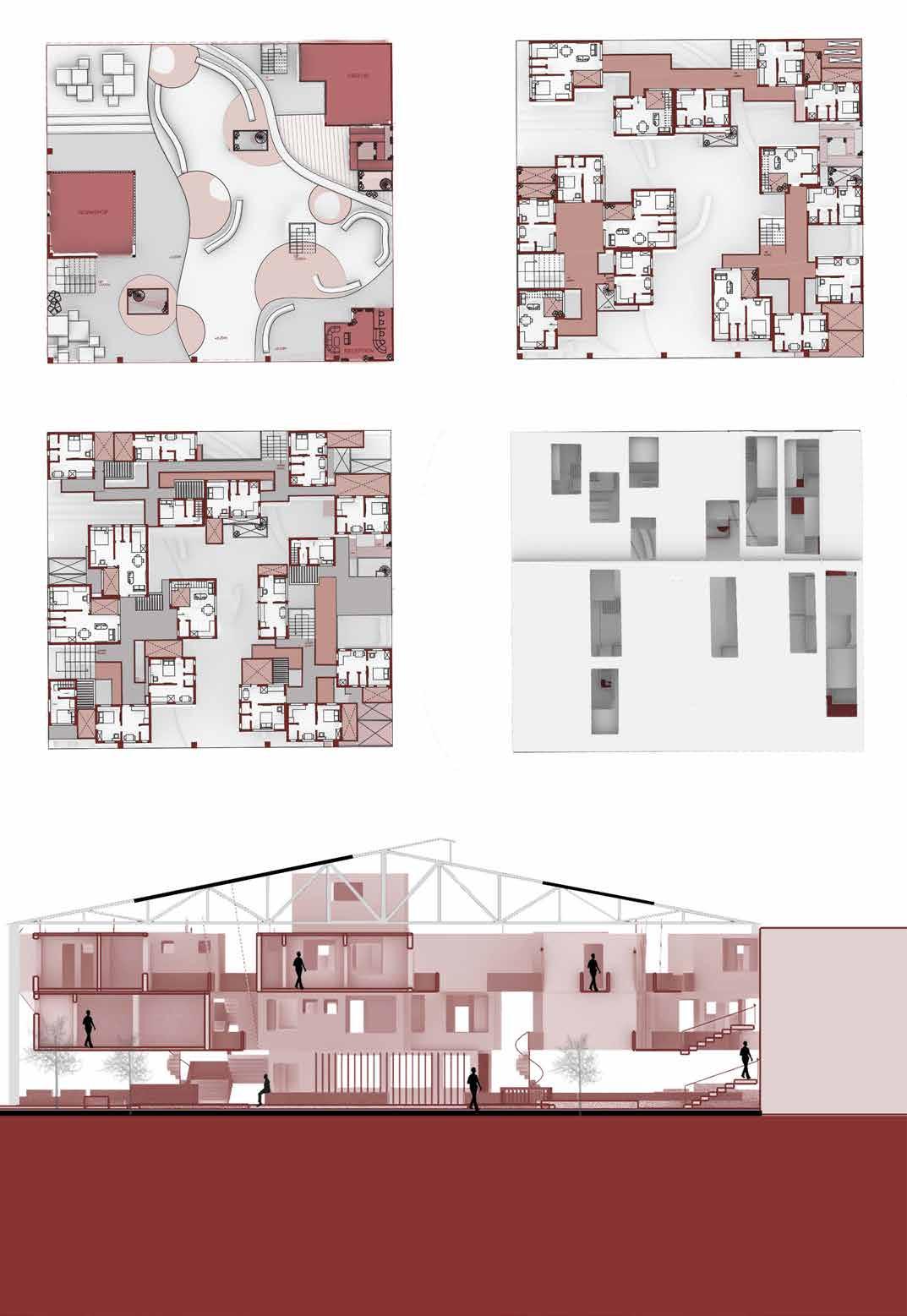
Ground Plan
Second Floor Plan
Section
First Floor Plan
Roof Plan
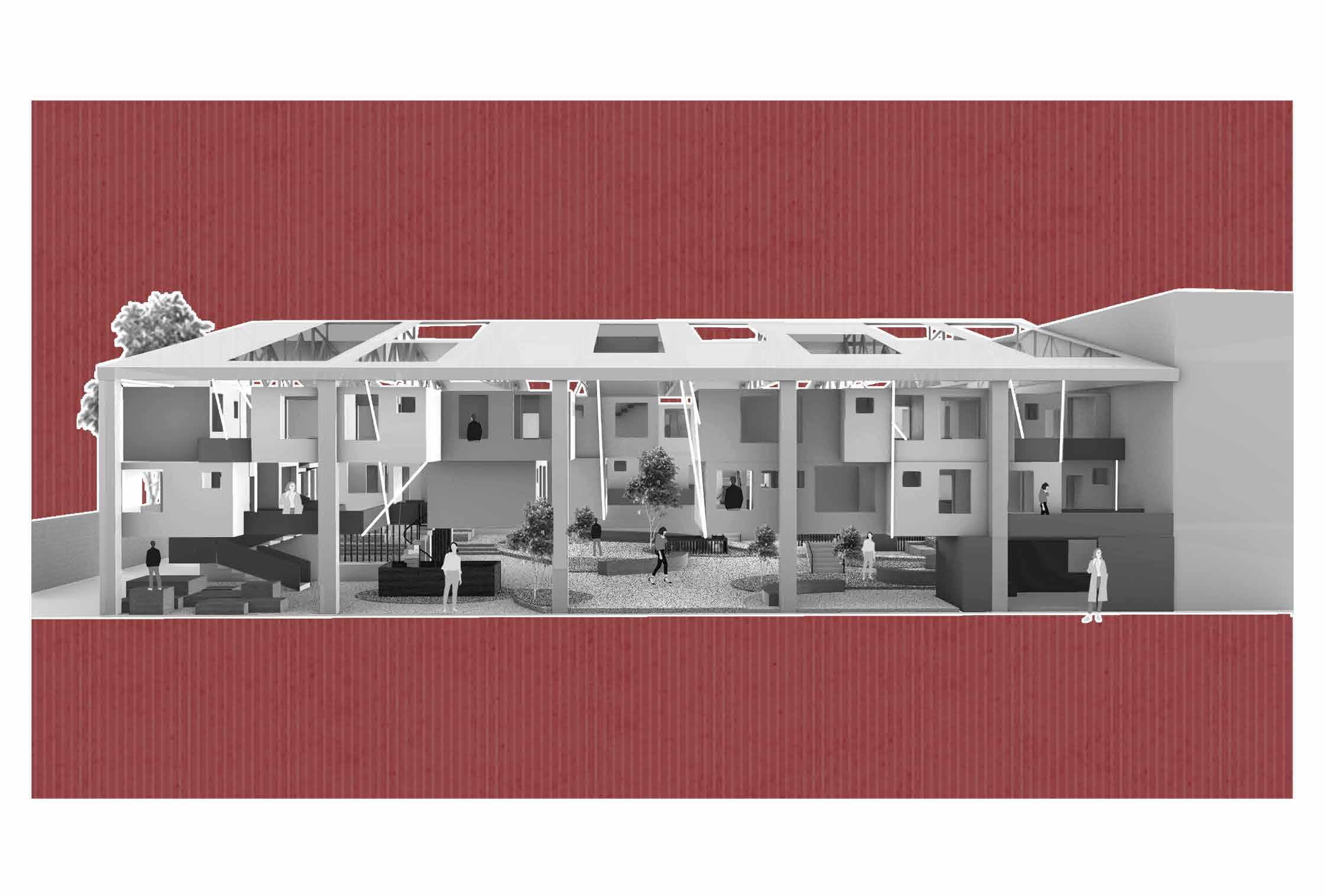
38 39 East View
THE SPITI PROJECT
Professional Work
Role - Drawings, Visualisation, Assisting in Design, Site Visit and Coordination.
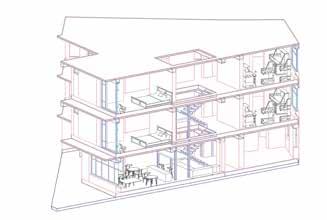
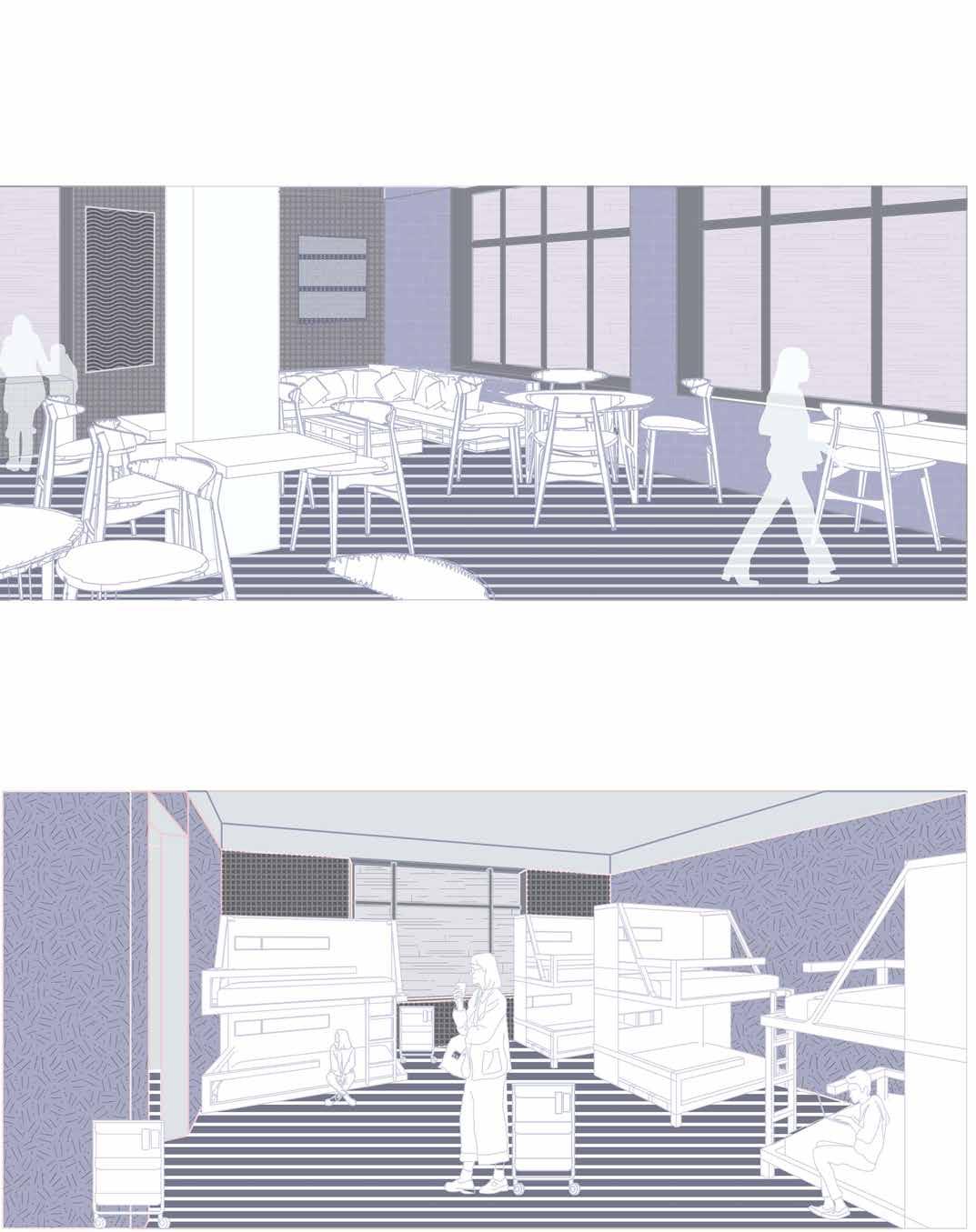
Programme - Coffee House and Dormitory
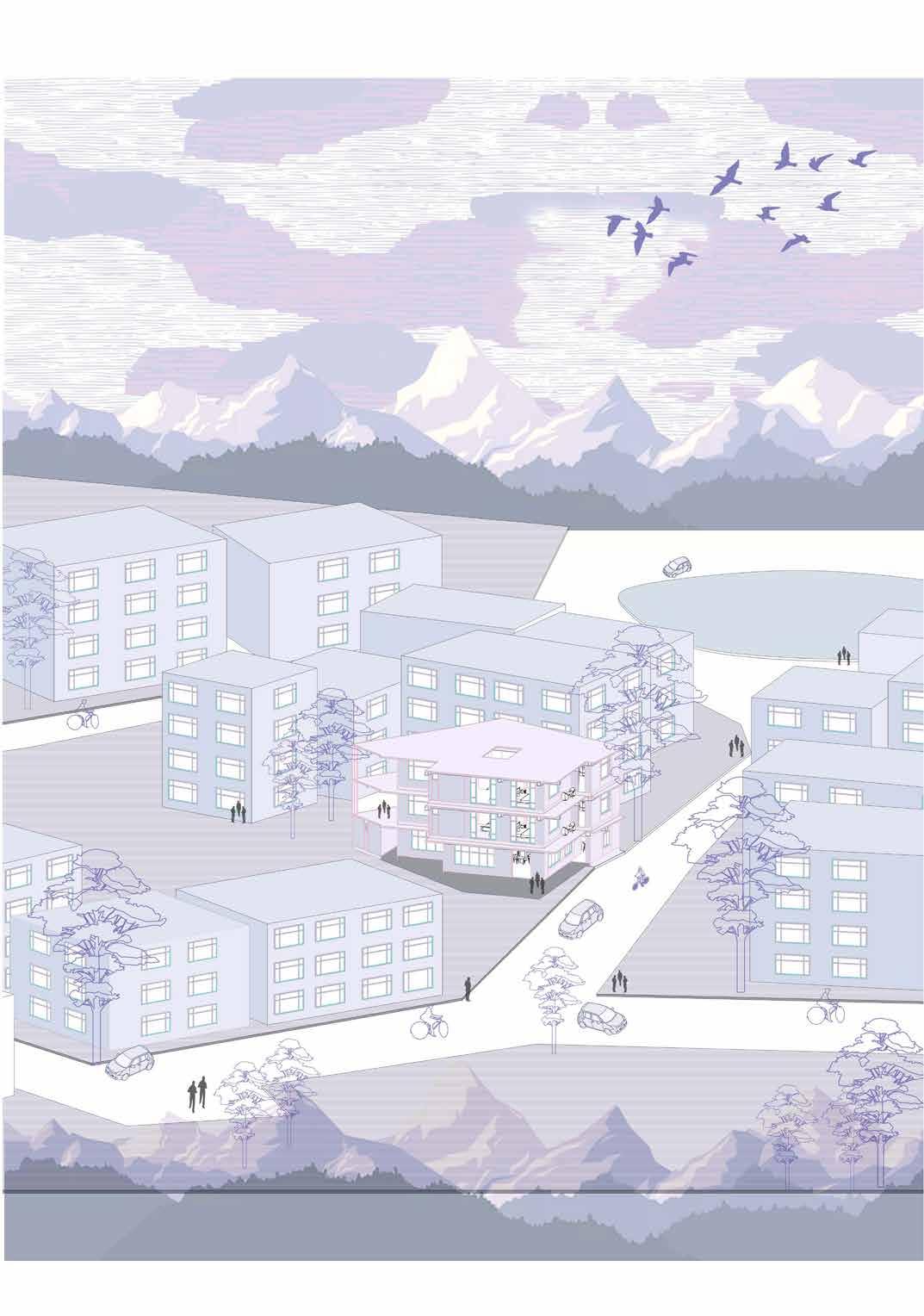
Site - Kaza, Himachal Pradesh
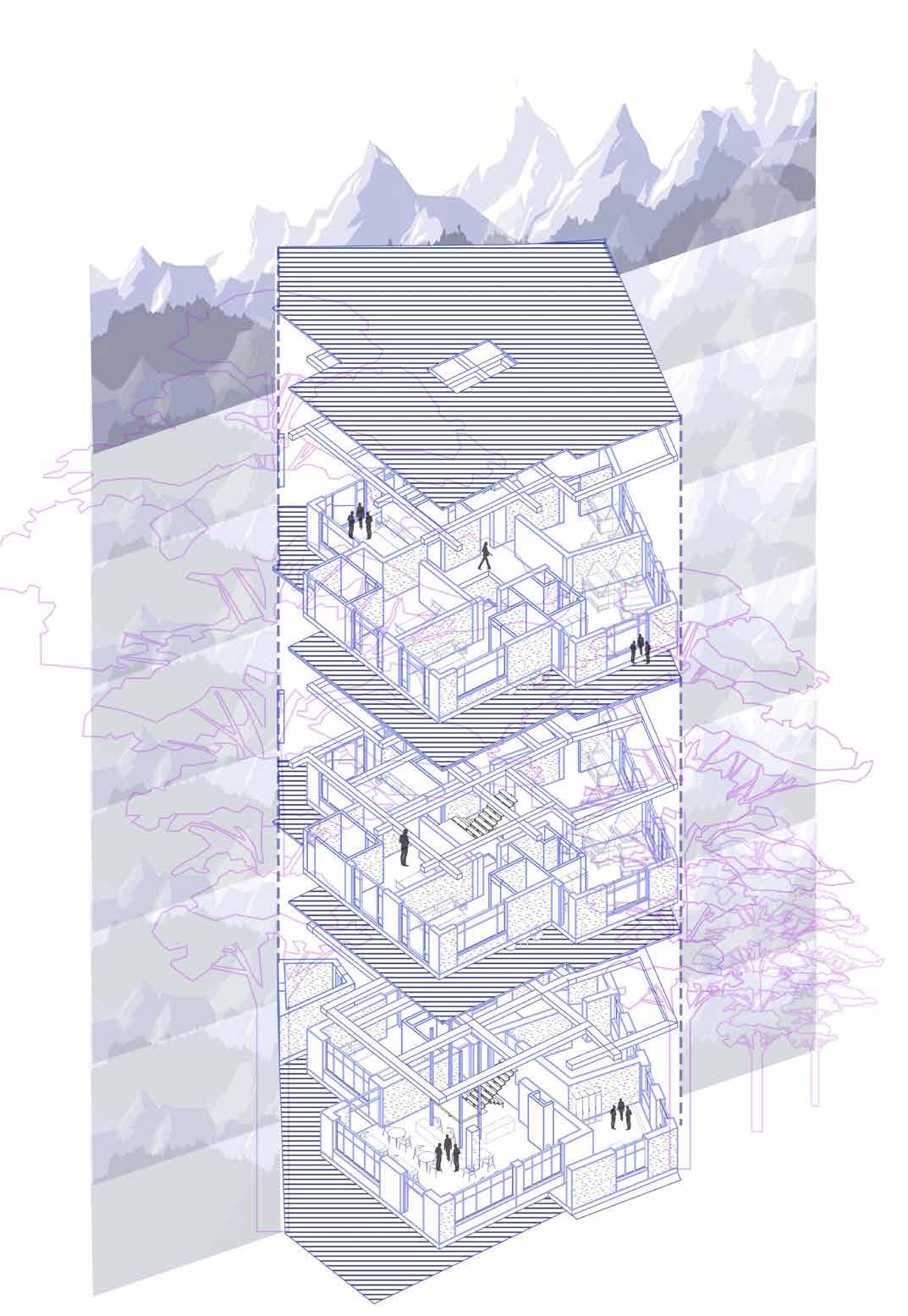
Kaza is a town in Spiti Valley, a cold desert, situated between India and Tibet. Due to its extreme climate conditions the locals just get a six months window to earn their annual income. Growing popularity in tourism and eco-tourism sector has enabled many locals to convert their homes into guest houses or cafes and dormitories hence welcoming and giving birth to backpacking culture in this geography.
The walls of the building were done in mud and bricks, allowing the place to remain warm even in winter months. The staircase was done in metal and plaster was also done in mud with walls painted in traditional Spiti Designs.
40 41
05
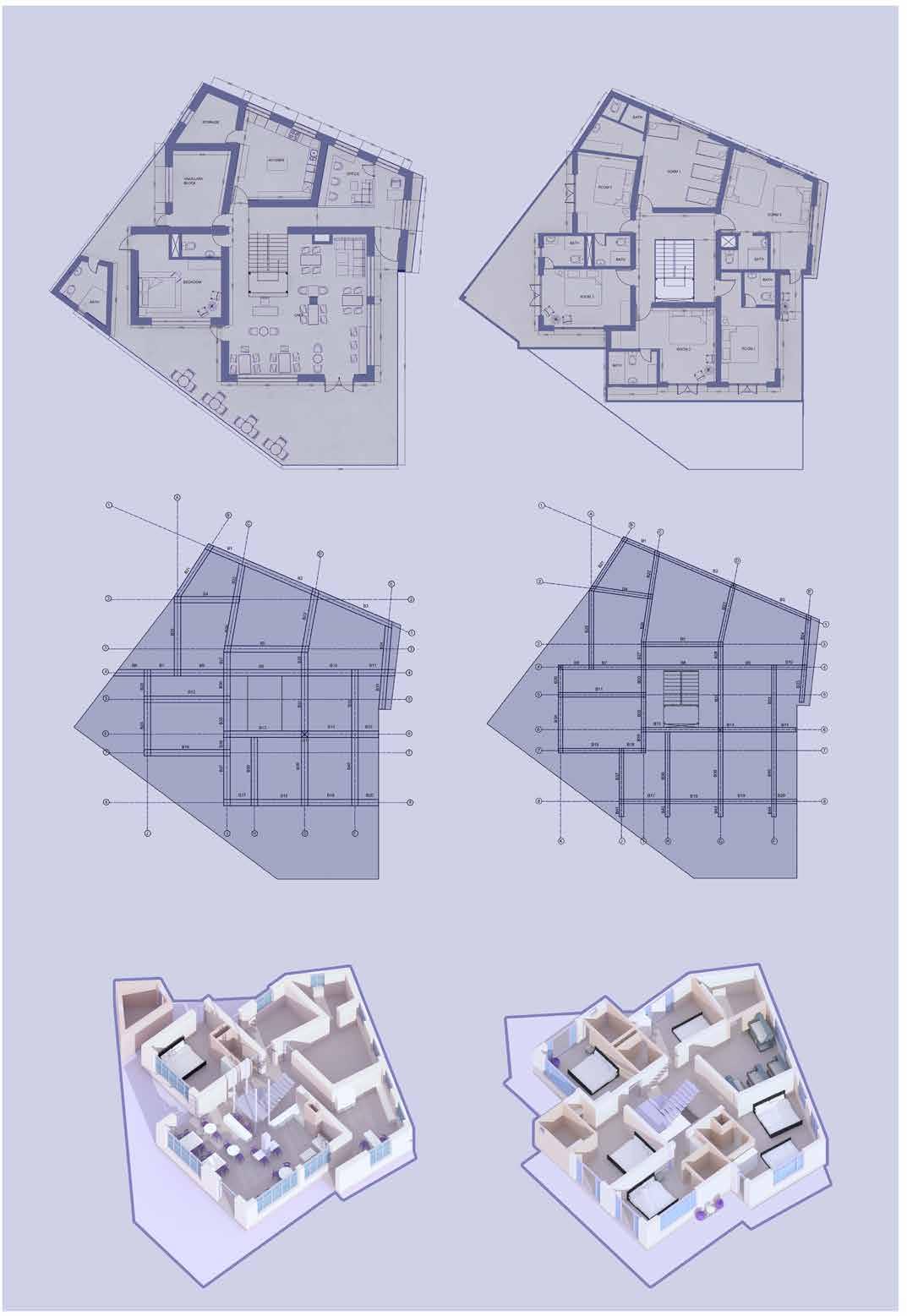
42 43 Ground Floor Plan Beam - Column Plan Beam - Column Plan First Floor Plan Cafe Cafe Bedroom Bedroom Bedroom Bedroom Bedroom Bedroom Dorm Bath Bath Bath Bath Bath Bath Bath Storage Kitchen Office
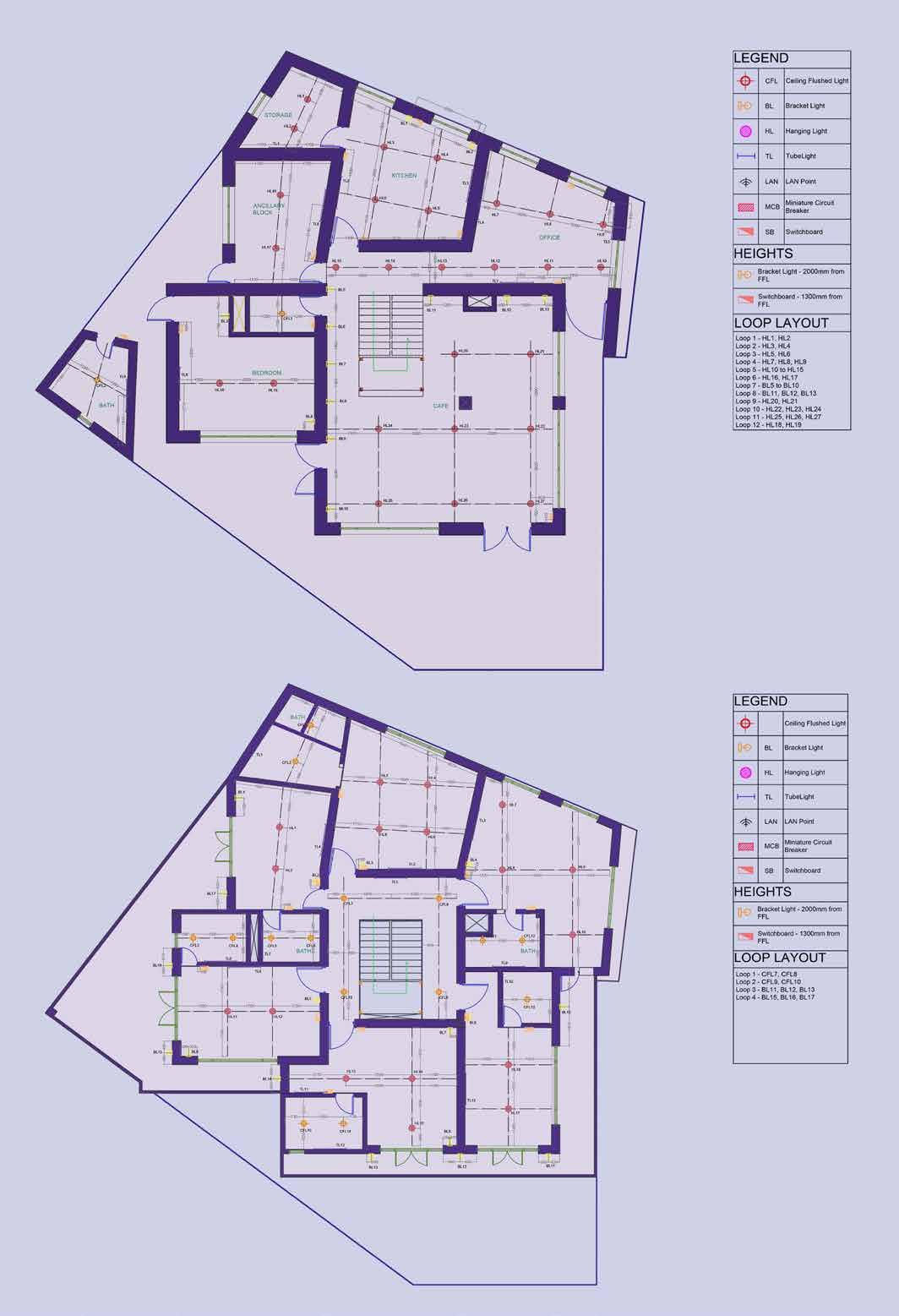
44 45 Dormitory Cafe Ground Floor Electric Plan First Floor Electric Plan Note :- First and Second floor are the same in all drawings.
EMERGENCE EXHIBITIONCACTUS INSTALLATION
Academics - Year 2, SEM 3
Role - Design, Modelling, Making, Budgeting
Programme - Walkthrough Installation
Site - BSSA, Mumbai
Group - Anoushka P, Betina V, Divya B, Sakshi C
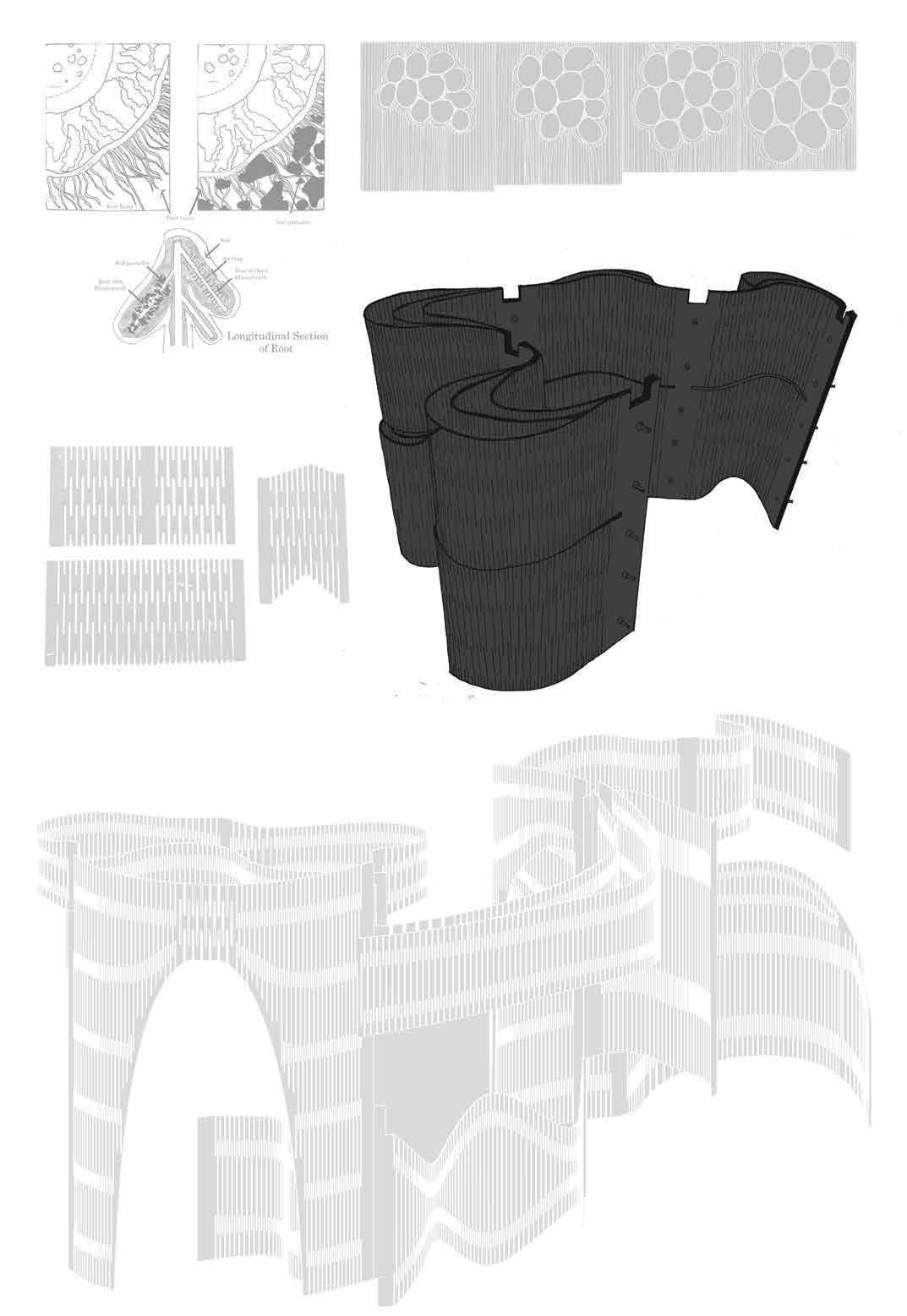
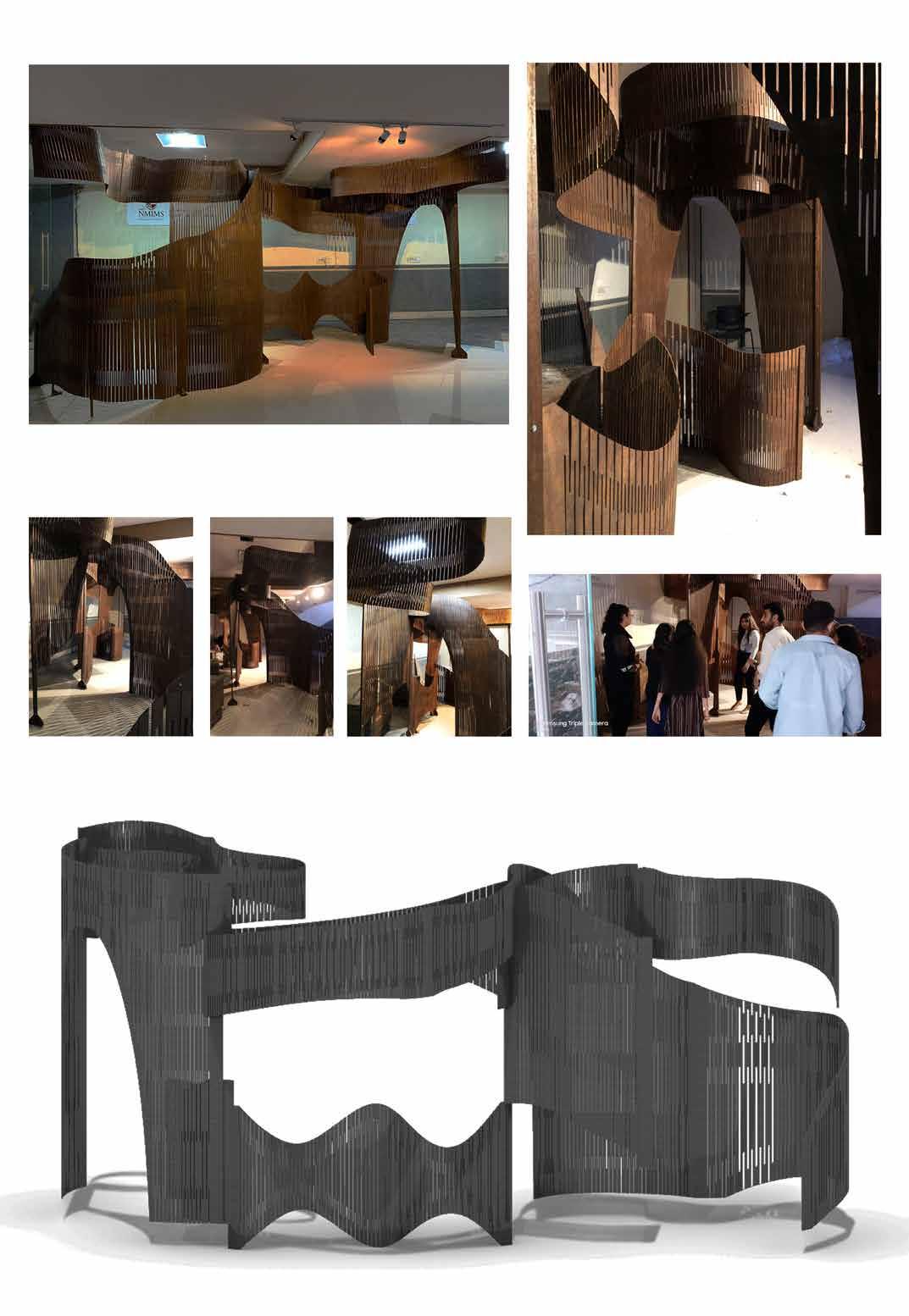
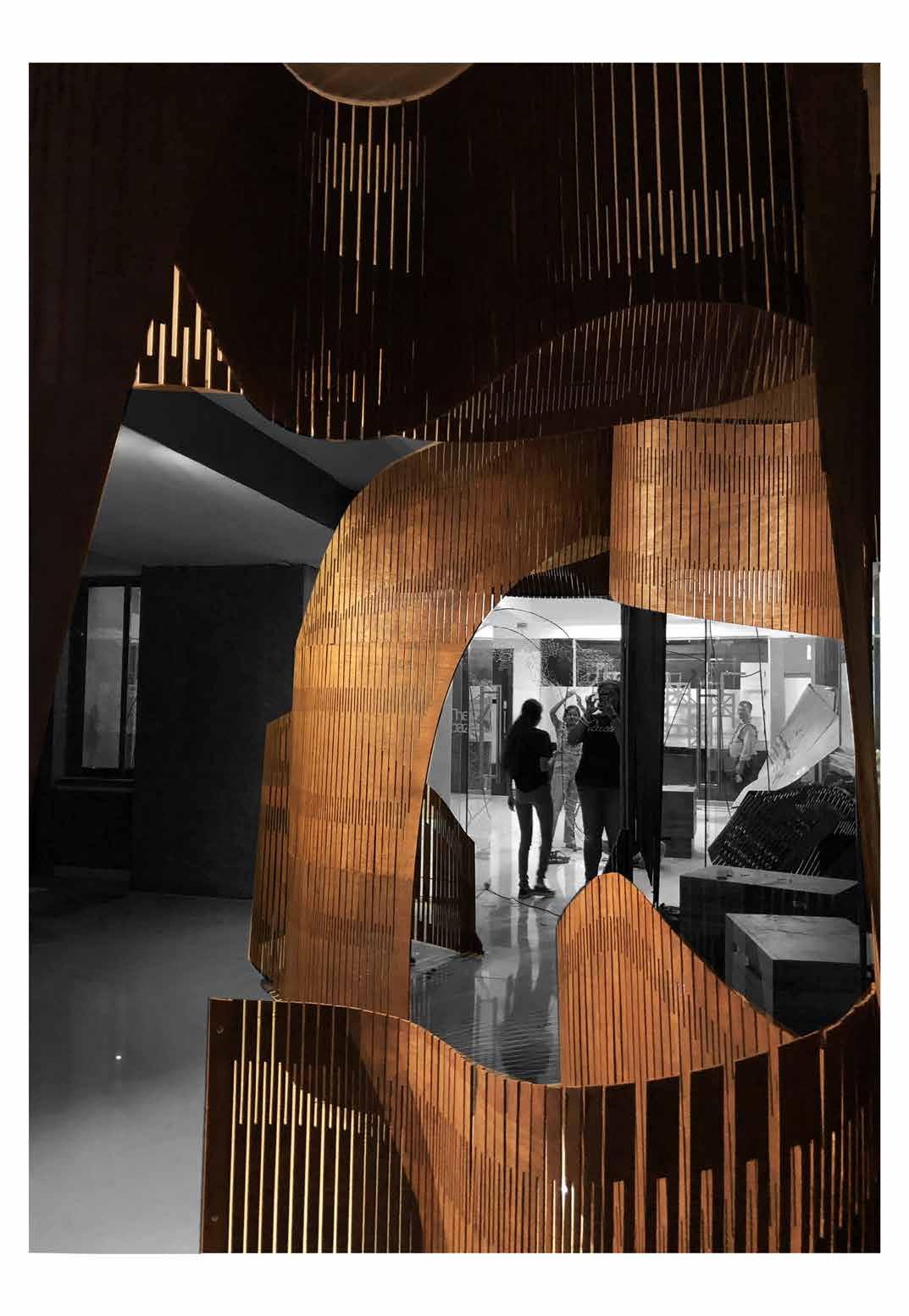
The model itself is concentrated in terms of experience given its volumetric nature. The various segments show varied turgidity levels in the cactus cells through cuts and folds. When there is water loss due to change in pressure and the shrinking of cells and skin, accordion like fold and formed. The formation of the accordion like fold is shown in the segment as well. The flow of these segments indicate the smooth transition between the various stages of turgidity. Rearrangement of cells during the process is shown in the second segment, in form of an interactive space. The project is an architectural take on natural process.
46 47
This Installation is an attempt to create a walkway that portrays the various stages of emergence that occurs in the cactus. Calculated cuts in 6 mm thick semi marine plywood are used to alter the rigid property hence achieve the curve.
07
48 49
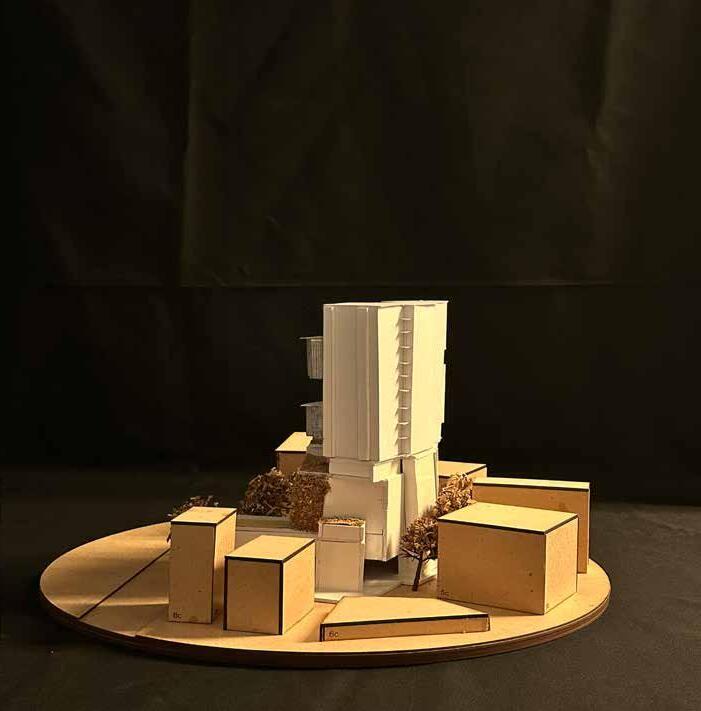
URBAN DESIGNDE- DENSIFYING WADALA
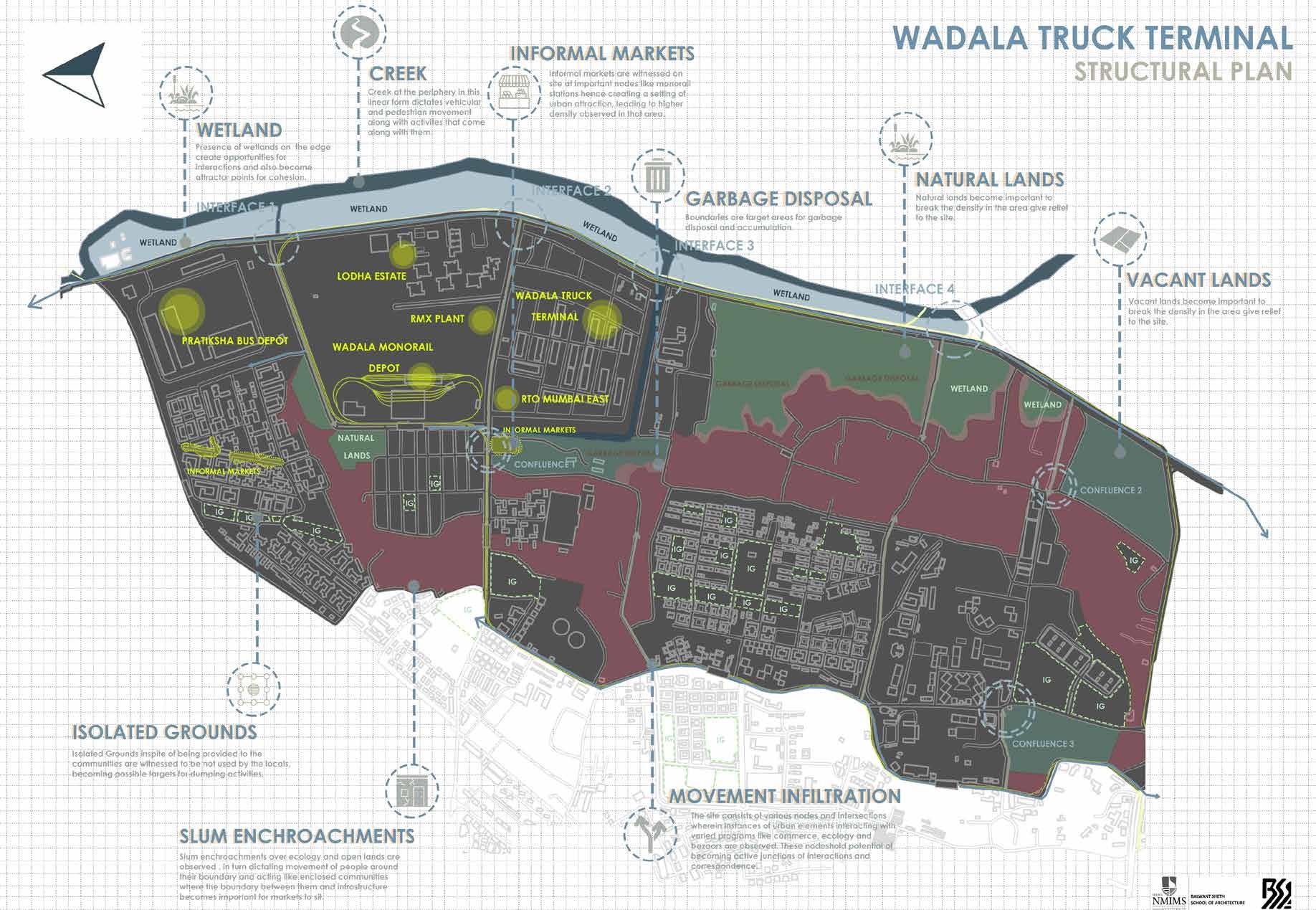
Academics - Year 4, SEM 8
Site - Wadala, Mumbai
Area - 2,30,000 sq.m
50 51 06
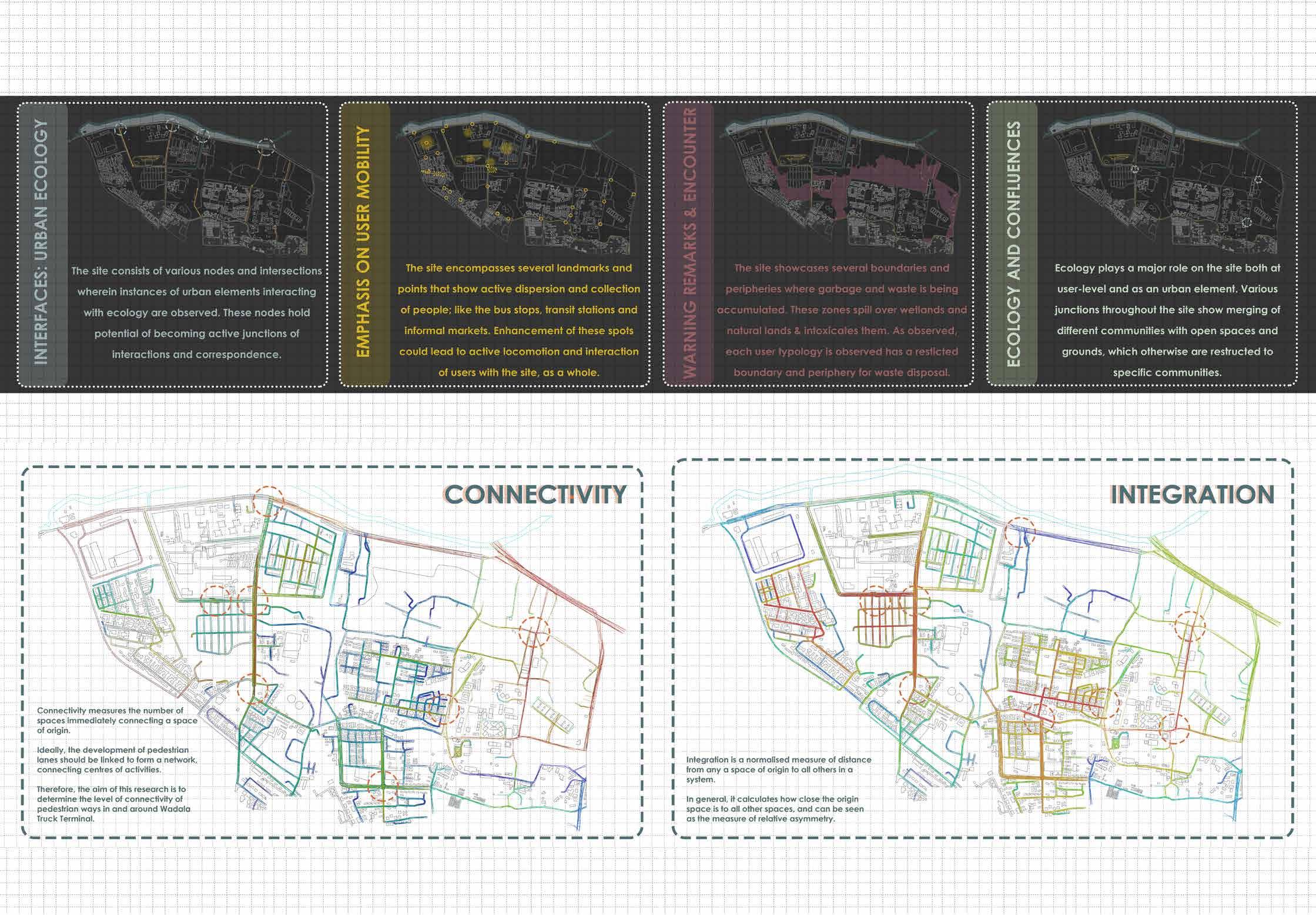
52 53
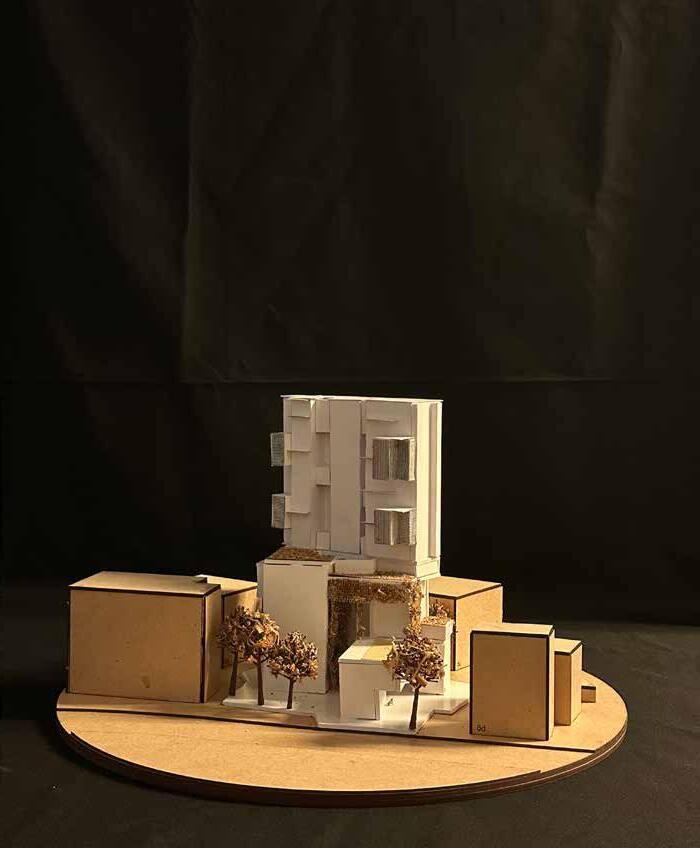
PROFESSIONAL PRACTICE
54 55
08
Malik Architecture, Mumbai





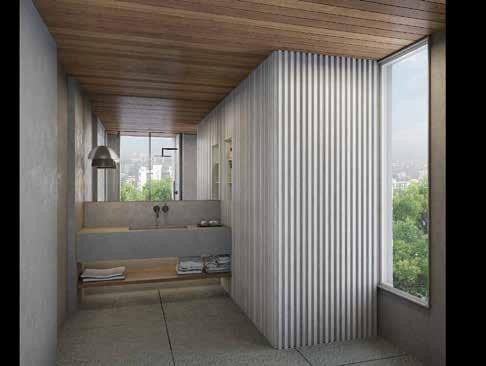

56 57 8" SUNK 8" SUNK 4'-0" 4'-2" 4TH FLOOR 5TH FLOOR niche 2'-5" 2'-5" 2'-5" 2'-5" 1'-1" 3'-4" 1'-11" 1'-11" 3'-7" 1'-5" 10 10 10 11 1 2 2'-11 1 2 2'-4" 2'-0 1 2 2'-4" 3'-0" 3'-9" Grey mirco concrete topping ceiling fixed on 18mm ply @ 7'-2" LVL Wooden ceiling with 6mm grooves fixed on 18mm ply @ 7'-2" LVL 12mm thk clear glass shelves Basin counter in Grey micro concrete topping Appd. foot light below basin counter. back splash finish in Grey micro concrete topping storage behind mirror finish in laminate with adjustable shelves. Appd. Overhead shower @7'-2" from FFL. Glass windows with wooden frame Appd. hand shower & Diverter @3'-3" from FFL. 12mm thk toughened glass partition with glass door SECTION AA' 1'-2" 2'-10" 4TH FLOOR 5TH FLOOR 6'-2" 4'-6" 3'-11" 10" 1'-4" 3'-7 1 2'7" 6" 3" 7'-7" 4'-2" 2'-31 2 Wall hung W.C @1'-4" from FFL micro concrete wall grazer light Wooden ceiling with 6mm grooves fixed on 18mm ply @ 7'-2" LVL Storage shutter finish in wooden battens 6mm grooves fixed on 18mm ply STORAGE 7'-0" 2'-0" rought kota flooring glass SB - 32 SECTION CC' 4TH FLOOR 5TH FLOOR STORAGE 8" SUNK niche 1'-5" 1'-4" 1'-3 1 1 2 1'-3 1'-3" Drawers with Grey micro concrete topping finish 6" 5'-4 2'-11" Appd. Basin mixer Wooden ceiling with 6mm grooves fixed on 18mm ply @ 7'-2" LVL Doda finished in Grey mirco concrete topping fixed on 18mm ply. 6mm. mirror fixed on 12mm. thk ply bach splash finish in Grey micro concrete topping Storage shutter finish wooden battens 6mm grooves fixed on 18mm ply 2'-102 7'-0" x 2'-0" rought kota flooring 2" high rought kota skirting 7'-6" 7" 7" shaving mirror 2'-4" 2'-4" wall grazer light SECTION BB' Storage 4TH FLOOR 5TH FLOOR 4'-0" 4'-2" 8" SUNK SHOWER W5 3'-2" 7'-0" 2'-0" rought kota flooring 3'-6 4'-10 Wooden ceiling with 6mm grooves fixed on 18mm ply @ 7'-2" LVL 1'-4" 1'-61 1'-8" 2'-0" 3'-3" 2'-1 1'-111 2 1 2 3'-3" 2'-4 2'-6" 2'-7" 2'-7" Health faucet @2' from FFL Wall hung W.C @1'-4" from FFL 12mm thk toughened glass partition with glass door Appd. hand shower Diverter @3'-3" from FFL. Appd. Overhead shower @7'-2" from FFL. GLASS DOOR SECTION DD' natural aok wooden ceiling appd. roller blinds 6" wide rough kota jamb all sides track appd. Glass Sliding window x6 mm thk groove on all sides RCC Slab RCC beam 6" 1" thk rought Kota dado 1" 1" teak wood for support 1" 1" 12mm thk internal plaster brick wall. 19mm thk indian marble OUTSIDE INSIDE 1" 6" wide rough kota jamb all sides track appd. Glass Sliding window x6 mm thk groove on all sides 1" thk rought Kota dado Shower area 1 2 " 1 2 8" SUNK 12mm thk. toughened glass fitted with appd. SS patch fittings, door with magnetic PVC seal & SS horizontal handle @3'6" from FFL Appd. rough kota floor finish 1 2 " W.C 1 2 " mirco concrete back splash Appd. basin mixer 6mm thk mirror 12mm thk ply 12mm thk ply with 6mm lipping patti ply partition with laminate finish inside built in wash basin finish in mirco concrete 12mm thk ply boxing ply partition with gypsum finish in Appd. paint 1 4 1 2 " wooden block 1 2 " 7" 1 2 " 1" 1" 41 2 " 5" 1mm thk perforated metal fixed on shutter from out side 19mm thk ply for shutter 6mm groove in plaster wall plaster 4" appd. 7'-0" 2'-0" rought Kota dado. 1mm thk inside Appd.laminate finihed on ply Storage shutter in Marble Satvari 19mm thk ply for shutter 19mm thk kota skirting 12mm thk ply finished with laminate 2 1 2 3 4 Brick Work wall plaster 4" 4 1 2 19 mm thk ply appd. paint finish 19mm thk ply natural aok wooden ceiling RCC Slab RCC beam thk rought Kota dado wall Grazer light 1" 1" teak wood for support 1" WASHROOM 2 13'-3" 3'-10" STORAGE 2'-0" 5'-5" 4'-8" 3'-1" 2'-10" 7'-5" W2 3'-5" 5'-6" 3'-7" 1'-0" 3'-11" LEGEND FL. SK W F1 FC2 S1 FC. WA4 W2 SHOWER A A' B B' D D' C C' WASHROOM 2 13'-3" 3'-10" STORAGE 2'-0" 5'-5" 4'-8" 3'-1" 2'-10" 7'-5" W2 3'-5" 5'-6" 3'-7" 1'-0" 3'-11" LEGEND FL. SK W F1 FC2 S1 FC. WA4 W2 SHOWER 1'-3" 1 1'-3" 2'-4" back splash in grey mirco concrete appd. basin faucet built in wash basin in grey mirco concrete 6mm thk mirror 1'-11" storage adjustablewithshelves 19mm thk ply shutter finish in Grey mirco concrete adjustable shelf finish in appd. laminate appd. foot light on skirting FFL 1" 12mm thk back ply with 6mm lipping patti all 4 sides Gypsum fin. in Grey mirco concrete 1'-11" 3'-6" 8" 3'-0" 1" 1 1" 1" 3 4 19 mm thk top ply in Appd. teak veneer finish 6mm lipping patti 1" finger gripe woodenb block 19mm thk ply shutters in Appd. veneer woodenb block openable shutters finish in Grey mirco concrete Skirting finish in mirco concrete fixed on 12mm thk ply Appd. foot light FFL –ELEVATION - B-B' SCALE 1:25 SCALE 1:8 DETAIL H ELEVATION A-A' SCALE - 1:25 ELEVATION C-C' SCALE - 1:25 ELEVATION - D-D' SCALE 1:25 PROPOSED INTERIOR LAYOUT PLAN SCALE - 1:30 PROPOSED FLOORING LAYOUT PLAN SCALE 1:30 SCALE 1:5 DETAIL J SCALE 1:8 DETAIL SCALE 1:8 DETAIL M SCALE 1:5 DETAIL K SCALE 1:8 DETAIL N SCALE 1:8 DETAIL G Detail K Detail J Detail Detail H Detail -N Detail -M Detail G SCALE 1:25 CUT SECTION OF WASH BASIN Detail P Detail O SCALE 1:5 DETAIL O SCALE 1:5 DETAIL P
GROUND LVL +70.8











58 59 +70.2M KID'S AND MASTER BED LVL. +75.6M MACCHAN LVL. PANEL PANEL 2 PANEL +69.3M PARENTS BEDROOM LVL +70.8M ENTRANCE LVL. +75.00M FIRST LVL. 3.60 3.60 0.15 0.15 0.50 4.05 6.00 1.00
+70.2M KID'S AND MASTER BED LVL. +75.6M MACCHAN LVL. +69.3M PARENTS BEDROOM LVL +70.8M ENTRANCE LVL. 1.20 0.60 3.60 7.20 0.30 0.60 2.80 0.75 1.20 1.20 0.45 3.00 0.60 0.80 LVL(-0.75M)+70.05M ENTRANCE FOYER (5.2M 4.2M) UP LVL+70.8M (0.0M) VL+70.8M (0.0M) 1.2 1.95 1.5
--------------------
m COVERED MONSOON ENTRY DROPOFF POINT DROPOFF 5.045 2.840 2.400 2.400 2.400 3.650 0.800 2.900 2.315 1.050 3.700 5.200 6.250 11.659 3.301 3.920 1.435 B1 C1' C1 C3 C3' C2' C4 C4' C5 C5' C7 C7' C6 C6' C8 C8' A1' A1 A2 A2' A3' A3 A4' A4 A5 A5' B1 B3 B4 B4' DECK 2.4 4.5 KID'SBEDROOM 7.5Mx4.5M 3.85mTOILET3.4m WALKIN 3.5M 3.4M COURTYARD LUGGAGE ACK CUPBOARD 4.5mDECK X2.4m ILET 3.85m 3m PARENT'S BEDROOM4.5Mx 7M OUNGE WALK IN 2.4m 3m MAIDSTOILET 1.2 1.5m CUPBOARD LUGGAGE RACK CUPBOARD DECK 4.5m 2.7m MASTER BEDROOM 4.5m 7m COURTYARD 2.4m 3m TOILET 4m 3.4 WALK3.4m CUPBOARD CUPBOARD LVL+70.05M (-0.75M) D1a D2a D1b D3a D1b 2a W1 W1 W3 FGD1a FGD1a FGD2a FGD2a W1 D2a D1a D2a GD2 W2 LVL+70.2M (-0.6M) LVL+70.2M (-0.6M) DN. LVL+70.2M (-0.6M) LVL+69.3M (-1.5M) LVL (-1.9M)+69.9M LVL+70.8M (0.0M) LVL+70.8M (0.0M) TITLE: PROJECT: GENERAL NOTES REVISIONS 1. FOR STAIRCASE AND TOILETS FOLLOW RESPECTIVE DETAILED DRAWINGS 2. FOR DOOR WINDOW SIZES AND DETAILS AND OPENING SIZES REFER TO DOOR WINDOW SCHEDULE PROVIDED 3. DO NOT SCALE THE DRAWING. ONLY WRITTEN DIMENSIONS TO BE FOLLOWED 4. ALL DIMENSIONS ARE IN MM UNLESS OTHERWISE SPECIFIED. 5. THIS DRAWING SHALL BE READ IN CONJUCTION WITH RELEVANT STRUCTURAL/PLUMBING-SANITARY/ELECTRICAL/ HVAC/SERVICES DRAWINGS. 6. FOLLOW STRUCTURAL MEMBERS DIMENSION FROM RELEVANT STRUCTURAL DRAWINGS. 7. ANY DISCREPANCY IN ARCHITECTURAL DRAWINGS OR BETWEEN ARCHITECTURAL DRAWINGS AND DRAWINGS OF OTHER CONSULTANTS MUST BE BROUGHT TO THE NOTICE OF THE ARCHITECT BEFORE SUBMISSION OF TENDER BY THE CONTRACTOR OR BEFORE EXECUTING THE WORK OR BEFORE PLACING ORDER FOR MATERIALS ETC. 8. ALL DIMENSIONS IN PLANS ARE FOR UNFINISHED SURFACES (i.e EXCLUSIVE OF PLASTER THICKNESS) 9. FOR ALL STEEL FABRICATION, ZINC AND GLAZING WORKS, THE CONTRACTOR SHALL PRODUCE DETAILED DRAWINGS FOR ARCHITECTS APPROVAL BEFORE PLACING ORDER/ EXECUTING SAME AT SITE 10. THE ±0.00 M LVL REFERS TO THE EXISTING SITE CONTOUR FROM MEAN SEA LEVEL AS PER SURVEY PLAN NO DATE REVISION DESCRIPTION LEGEND KARJAT RESIDENCE ELEVATIONS ARCHITECT DWG NO DRAWN : CHECKED : SCALE DATE SAKSHI NTS 11.06.2023 YASH/JAY APPROVAL STAMP KAISER- I-HIND, 2ND FLR, 1/6 CURRIMBHOY ROAD, BALLARD ESTATE MUMBAI 400001 TEL (91-22) 22642170 FAX (91-22) 22620345 THIS DRAWING IS COPYRIGHTED. IT IS THE PROPERTY OF AR. KAMAL.S.MALIK AND IS NOT TO BE REPRODUCED, SUPPLIED, HANDED OVER TO A THIRD PARTY OR USED FOR PURPOSES OTHER THAN FOR WHICH IT HAS BEEN INTENDED. ALL MEASUREMENTS MUST BE CHECKED AT SITE BY THE CONTRACTOR. KEY PLAN
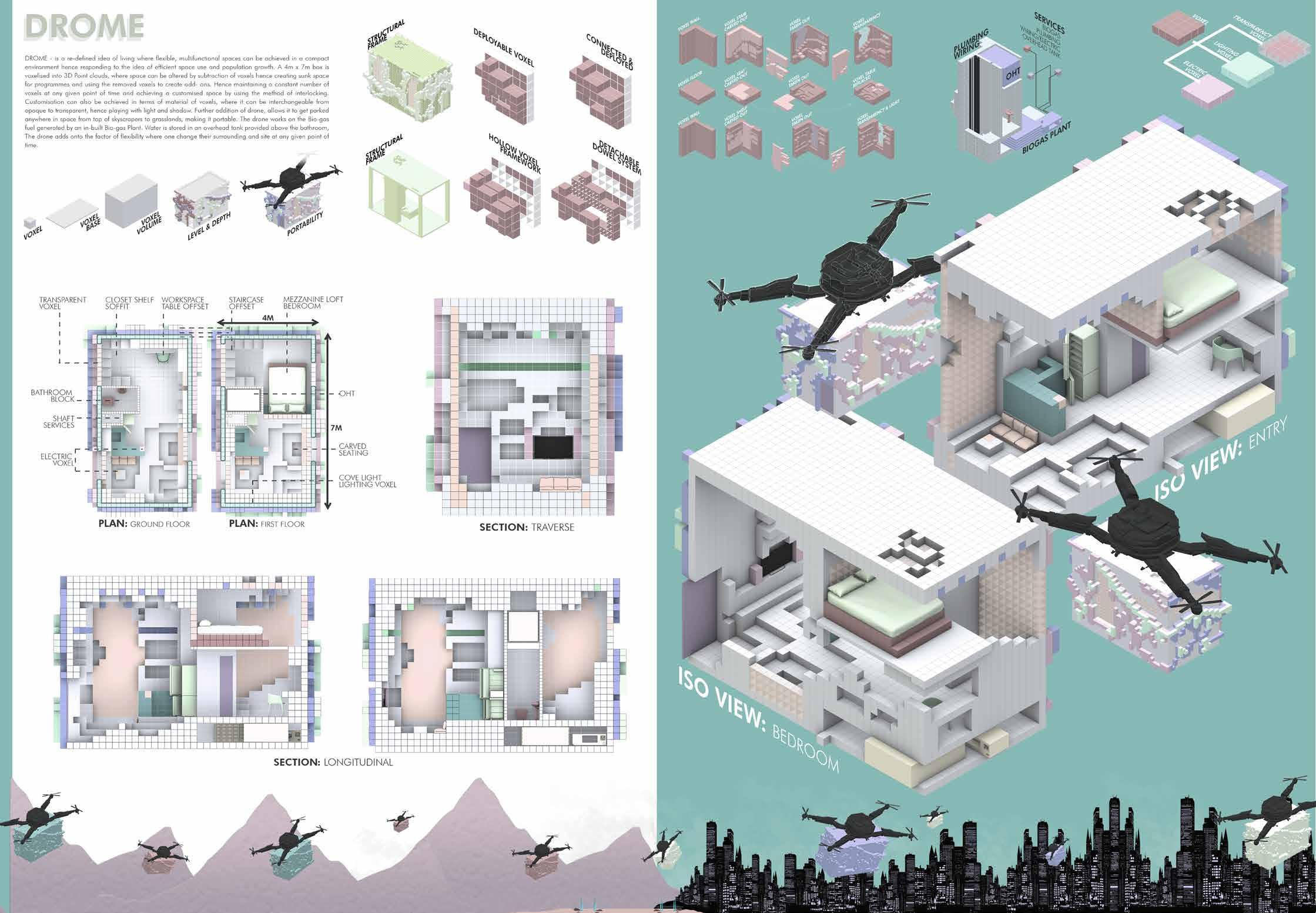
60 61 Miscellaneous : Competitions
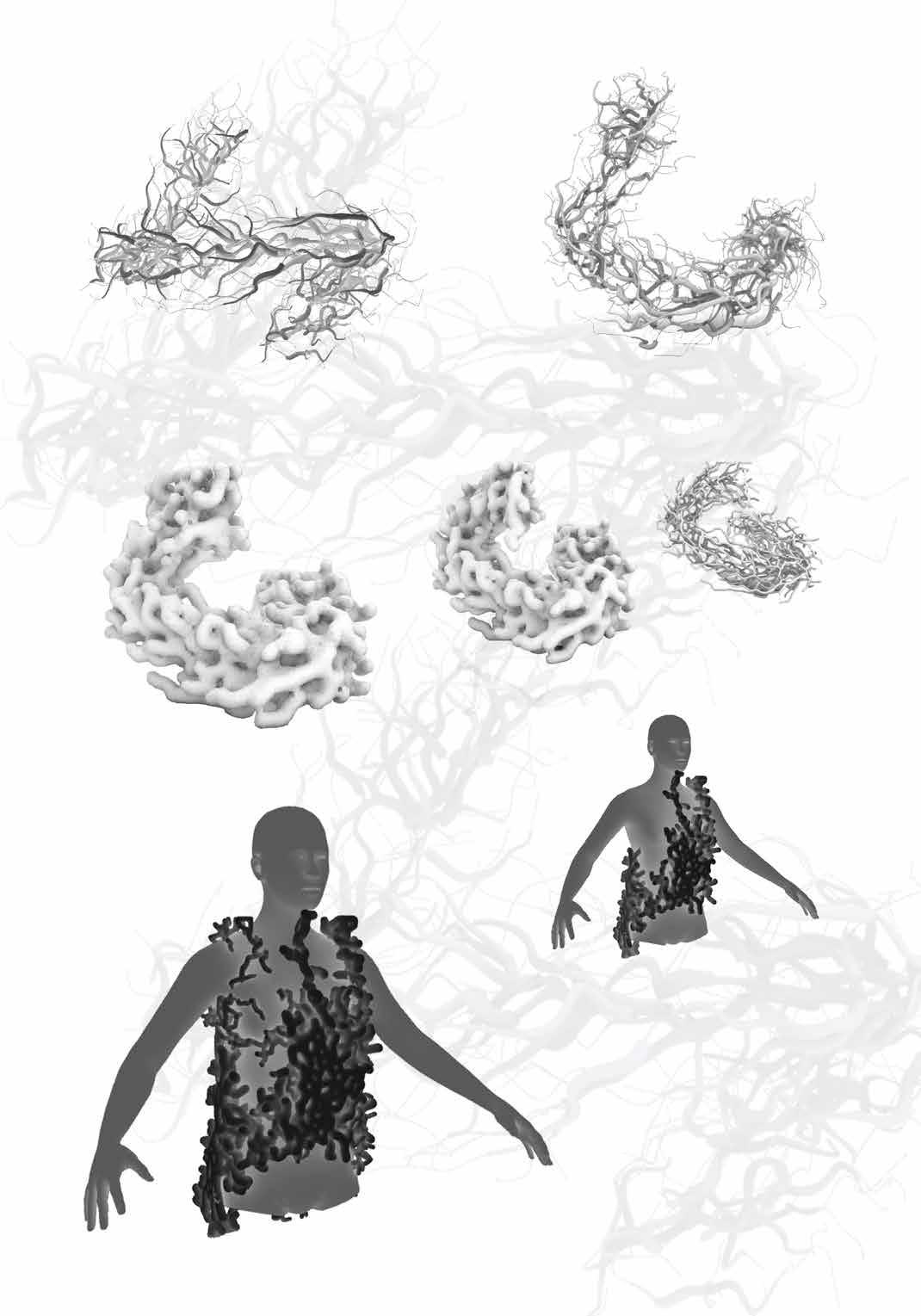
Miscellaneous : Superabundance Fibrous Tissue Webinar
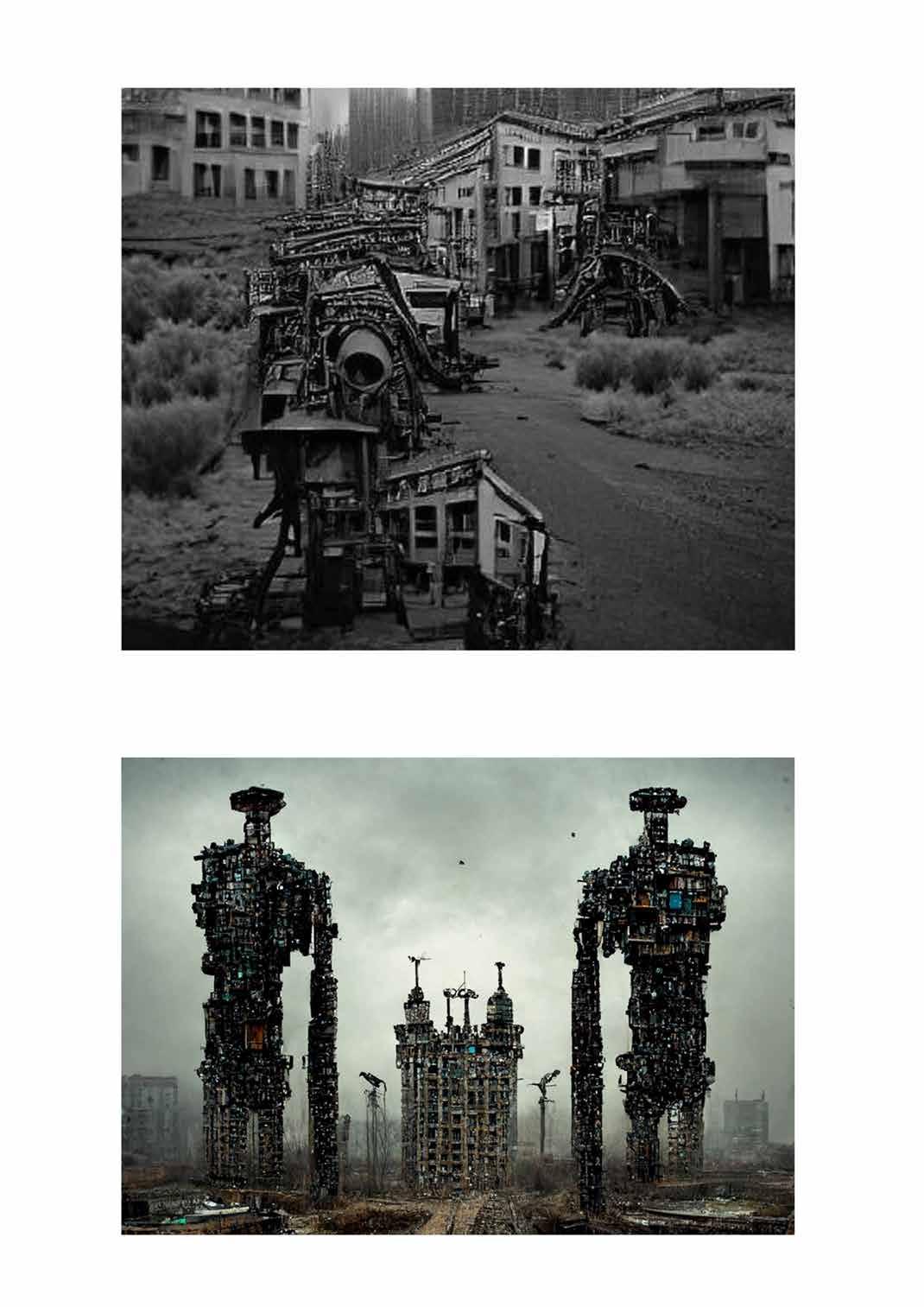
Miscellaneous : Dystopian City Kitbashed Montage
62 63
Generative Art using Grasshopper, Rhinoceros, Vray and Photoshop.
Modelling using Kitbashing on Rhinoceros, Render on VRAY and Photoshop.