

Vol. 115 2012
Vol. 115
2012
Olavian Editor: David Craig
Old Olavian Editor: John Brown
Assistant Editor: Peter Leigh
Design: William Dalton


450 Years

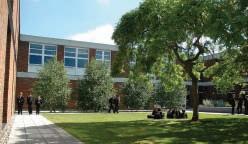
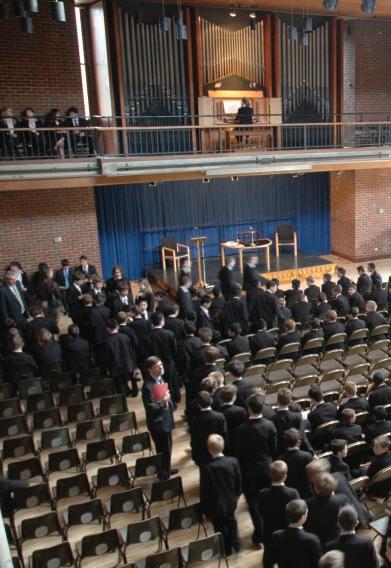 The modern school hall
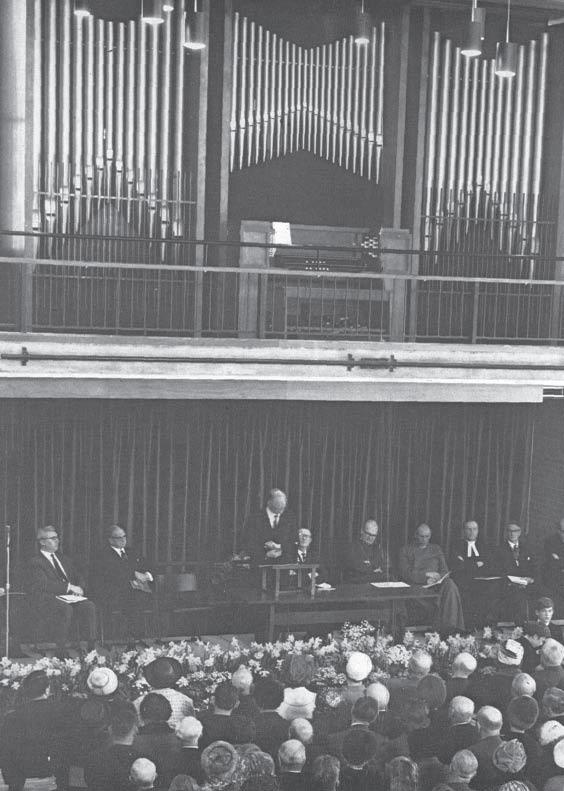
Front Cover: Opening of the Orpington school, 1968
The modern school hall
Front Cover: Opening of the Orpington school, 1968

Contents Contents Headmaster’s Introduction Editor’s Notes School Notes Staff 2012 Creative Work Prize Day Sixth Form News Leavers 2012 Clubs and Societies Maths & ICT Science English & Drama The Library Music Modern Foreign Languages Humanities Sports Art & Design Technology 450th Anniversary Supplement Old Olavian 3 4 5 6 12 19 30 39 44 49 57 63 71 79 81 87 97 111 119 127 139
From the Headmaster

The theme of my second year as Headmaster of St Olave’s Grammar School was dominated by the celebrations to commemorate 450 years as one of England’s oldest schools. Our tributes to Henry Leeke, Queen Elizabeth I and other founders included a fine performance of Shakespeare’s Macbeth, the formation of the 450 Parent Choir, a splendid Easter Anniversary Concert, the special Commemoration Service in Southwark Cathedral, and culminated with the fascinating exhibition, including Dr Carrington’s canes which stirred a few memories!
The year also concluded with the best public examination results in the school’s history at A level, AS level and GCSE, and a running total of nearly 90 Oxbridge successes over the last 3 years. It was pleasing, if not surprising, that we were ranked as the country’s No. 1 State school with mixed 6th Form at Advanced level, and the 2nd best Boys’ school at GCSE, by The Times and The Telegraph newspaper league tables.
Against a backdrop of some of the worst Public Sector funding cuts to hit education since the 1950s, we can be proud that our students have not only achieved these impressive levels of scholarship but have also engaged in international cultural activities from New York to Namibia, ancient Greece to Ecuador, as well as Chess, Fives, Music and Drama at National competitive levels.
My thanks go to our Latin Master, Mr Craig, for once again skilfully editing this magazine which, I hope, will provide you with much interesting and entertaining reading.
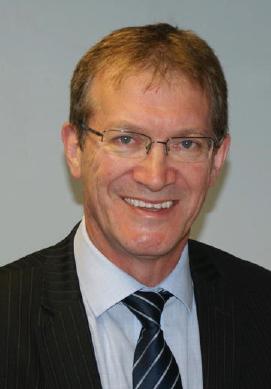
Aydın Önaç Headmaster
4 – Olavian 2012
Editorial
Iam very conscious for the need for variety and this year’s magazine will represent a shift from the norm. What however has not changed is the constant achievements of our pupils both academically, theatrically, sportingly, forensically, artistically and in numerous other activities. Of these you will be able to read in abundance but there has been a real growth in terms of cultural enrichment especially in the Faculty of Modern Languages with new trips to Spain, Germany and France. It seems that our pupils have been kept very busy in places as far removed as Costa Rica and Botswana. This is not to distract from the very significant academic achievements here at the school but to stress that the school is not merely a place of academic preparation but a provider of vitally important opportunities to enrich their experiences through scholarship and cultural diversity. My hope is that Old Olavians will enjoy reading this magazine and the current students will give some time to reflection on how blessed they are to be at a school of such stature.
David Craig Editor

About the redesign
In September 2012, I was in the unusual position of being the Assistant Student Editor both for a second year, and for the issue celebrating the year in which the school’s long history was commemorated. When a friend reminded me that we had previously discussed re-designing the Olavian, I agreed that this should go ahead (unaware of quite how much work we would be doing at A2).
Thus it will be noted that this year’s Olavian has been refreshed and re-designed, the order shuffled slightly, and generally (it is hoped) made more accessible. The photos have increased in number, the articles span a yet wider range of subjects, we have enlarged the creative work section, and it is our hope that this edition will (whether because of, or despite, the changes!) appeal to its wide audience of school pupils, parents, staff, Governors, Old Olavians and others.
Huge thanks are due to William Dalton, who has spent so many hours on the re-design of this magazine, putting

up with my endless comments, suggestions, requests for change and short deadlines, at the same time as remaining calm and amicable, and producing a brilliant design. Thanks are also due to Olly Plumstead, who very kindly took some of the photos at extremely short notice. And, finally, thanks are due to all my friends, various members of staff, and my family, who were, at some point over October, given chunks of the magazine whenever they saw me, and asked for an opinion.
Peter Leigh Assistant Editor
N.B. It may be that some people reading this will consider that the design is not as much to their taste as the previous was. The previewers, however, seemed to like it. De gustibus non est disputandum!
Olavian 2012 – 5
Admissions Olave’s 2011-12 was a complicated year for admissions and, following changes to government legislation, we had to handle admissions for September 2012 as well as bringing forward the Open Day and application round for the following year. However, all went smoothly with continued exceptionally high numbers applying for places. 904 applications were received for Year 7, resulting in an intake from 70 different Primary schools; 432 external applications to the 6th Form resulted in a total intake, including internal students, of 196. The result was the maximum number on roll ever for the school of 966.
Olympiad, 4 of our students – Antony Barker, Duncan Bell, Alistair O’Neill and Thomas Saunders - were awarded distinctions, with Duncan gaining a coveted Gold medal and an invitation to join the training camp in Budapest. In the Junior section 9 students progressed to the Olympiad round with Bilal Chughtai, Richard Moulange and Sachin Savur all gaining distinctions and Bronze medals. At Intermediate level the sheer numbers are impressive, with 92 Gold certificates in the UKMT; 39 of these progressed to the kangaroo competition and 11 on to the Olympiad round.
Scholarship
Academic Olave’s August can be a nerve-wracking time for students and parents awaiting the outcomes of public examinations, but it was smiles all round as St Olave’s excelled, even by its own very high standards, to produce the best ever results at all levels. At A level 96% of grades were at A*/B with 34% at A*; 12 students emerged with 4A*grades. These results place the school as The Telegraph and The Times’ No. 1 state school nationally with mixed 6th Form. Those in Year 12 taking AS levels achieved 87% AB grades – the best results since the examination was introduced a decade ago and up from 82% the previous year.
At GCSE there was a similar story with 87.2% of grades at A*/A and 53.3% at A*, results which ranked
St Olave’s as the 2nd best Boys’ state school nationally, with 96% of the boys also qualifying for the new English Baccalaureate. 15 students gained at least 10 A* grades, with top performer Timothy Adelani gaining 12 A* as well as an A* in A level Italian and an A in AS French. Built on the highest aspirations, all of these results represent a well-deserved outcome from the hard work of staff and students.
An impressive number of students also furthered their interests in Mathematics and Science, gaining top awards in the senior National Olympiads. In the British Biology Olympiad 16 students sat the first round, with Thomas Watson emerging with a Gold Medal and 6 others gaining Silver. In the Physics there were 3 Gold certificates, including Duncan Bell and Alexander Grainger who were invited to sit the 2nd round for the top 50 students in the UK; Duncan was subsequently invited to a training a camp at Lincoln College, Oxford, for the best 15 in the UK. In the highly challenging Mathematics
The pursuit of real scholarship in greater breadth and depth, through wider intellectual inquiry and subject societies, is an increasing focus. Societies in Classics, Politics, History and Film Club also gave opportunities for students to discover and try out new ideas, with Jack Bradfield’s film clip featuring in BBC2’s ‘Britain in a day’ and Theo Clifford’s essay being highly commended in the Royal Society’s Young Economist of the Year competition. 6 of our students, known collectively as German Jamboree, translated and selfpublished Wilhelm Busch’s Max und Moritz. Matthew Burns, Thomas Bridges, Peter Leigh, Christopher Self, Timothy Stickings and James Watson not only translated but also reworked each couplet to produce a full rhyming version in English. The chosen theme for the third issue of the History Magazine was Civil War, with articles on conflicts as long ago as AD69 and as recent as 2011. In addition, a special 450th Anniversary supplement included interviews with Mr Burston as the longest-serving member of staff, a study of the school’s artwork and biographies of famous Old Olavians. Students of all ages have contributed to the production of several issues of The Natural Sciences Society Journal with articles on Inter-galactic Space-travel, Darwin and Evolution, Vortexes, Climate Change, the Importance of insects and many others. These activities are encouraging our students to broaden their academic studies into areas of personal interest to levels well beyond the confines of examination syllabuses.
6th Form and Oxbridge
As a free Grammar School we continue to champion the idea of social mobility, supporting those from areas of high social disadvantage to aspire to the very best universities and careers. The 89 students who have
6 – Olavian 2012
SCHOOL NOTES 2012
gained Oxbridge places over the last 3 years will be joined by a further 24 this year and almost all of our leavers will be going on to Russell Group universities; we are, naturally, delighted for all of them. The table below shows our leavers’ top 10 university destinations over recent years, with Cambridge and Oxford in 1st and 2nd places respectively.
We said farewell to Captain of School – Timothy Munday and Vice Captains – Jennifer Cocke, Udit Gadkary, Charlotte Gadsby, Frank Kibble and Jonathan Morris. Following extensive voting and interviewing, I was delighted to appoint the new Senior Prefect team for 2012-13: Captains of School – Mohammad Fallaha and Grace Boyle; Vice Captains – James Atkinson, Eleanor Goodman, William Pyle and James Watson.
The 6th Form Prefects have been particularly effective this year in their roles as Ambassadors, Academic and Sports Prefects, acting as superb role models for younger students, promoting cultural activity and the House System, being good ambassadors in the community as well as helping to maintain the tone and traditions of the school.
Cultural Olave’s St
Olave’s prides itself on a broad education which is rich in culture and based on a strong set of values. For many students, their outstanding academic results come at the end of a year in which they have participated in a wide range of cultural activities, committed themselves to sports teams, musical ensembles or dramatic productions; taken responsibility as Prefects; experienced foreign exchanges, sports tours, Field Trips as far apart as Malham and Iceland, Classical studies in Greece, Political and Economic experiences in New York and Washington, and World Challenge expeditions to Botswana, Namibia or Ecuador.
For those wishing to develop or showcase their talents, there were ample opportunities, with impressive Christmas and Easter concerts, dazzling Cabaret and Show-stoppers, alongside a number of entertaining and thought-provoking dramatic productions.
Richard Decker provided the individual highlight of the musical year, winning the BBC Young Chorister of the Year 2011, in a live broadcast event hosted by Aled Jones and composer John Rutter. In a busy year that followed, Richard had the honour of singing in the Queen’s Diamond Jubilee Service at St Paul’s Cathedral. In support of the musical dimension we were pleased to welcome Old Olavian Dr Noël Tredinnick, Director of Music at All Souls, Langham Place, and Professor of Music at The Guildhall, as our guest speaker at the
annual Prizegiving. The festive season burst into life with a dazzling Christmas Concert which gave the packed audience an experience to warm the heart on a cold December evening. We are fortunate to have John Castle, Martin Bunce, Doug Blew and Nick Beston, as well as other dedicated peripatetic teachers, to inspire our students, under the leadership of Matthew Price. Four members of the St Olave’s Chamber Choir were handpicked to sing Parry’s anthem ‘I was glad’ in a special service in Westminster Abbey to commemorate the 200th Anniversary of the birth of Nathaniel Woodard, whilst Thomas Bridges, who won 1st Prize in the Woodard Composer of the Year Award, was invited to read one of the lessons. Other notable individual successes included Stefan Beckett’s invitation to perform with the LPO and William Howarth and Thomas Steer’s 1st and 2nd places in the Woodard Musician of the Year. The Jazz Band –one of our leading ‘ambassador’ groups - took to the stage at the Fairfield Halls to perform to a packed auditorium as the highlight of the Bromley Schools’ Prom 2012, before rounding off the year by entertaining a packed Great Hall at the annual St Olave’s Jazz Night.
Our links with The Queen’s Chapel of The Savoy have continued to flourish, further enhanced by the generous addition of another scholarship from the Duchy of Lancaster; the opportunity for our young choristers to sing at such a high level, in such a unique setting, is quite unique.
Drama saw 6th Formers perform ‘Our Country’s Good’, Timberlake Wertenbaker’s dark thought provoking play about the transportation of criminals to Australia. The audience clearly enjoyed Playboy of the Western World, a funny, dark comedy directed by students Fintan Calpin and Caspar Smart, whilst following his own school production, Max Kennedy’s original play ‘The Bistro’, was taken on and performed by professionals at the National Theatre. Debating continued to thrive with our Senior team participating in the Oxford Union Schools’ competition and, following his victory in the South East round of the Jack Petchey ‘Speak Out’ public speaking competition, Matthew Roberts was invited to a brilliant final at the Queen Elizabeth Hall.
European and World cultural enrichment Olave’s
If the world came to London for the 2012 Olympics, then our students certainly did the opposite, participating in a fascinating range of international cultural experiences abroad.
The 6th Form trip to the United States coincided with a heat-wave of Saharan proportions, with Washington the hottest city in world at 42C! Perhaps most intriguing
Olavian 2012 – 7
was the visit to the US Capitol Building and the chance to watch the House of Representatives in session. In stark contrast was the hustle and bustle of New York City, including Wall Street and the Federal Reserve, as well as the opportunity to go into the gold vaults and handle real gold bars!
Art students enjoyed the sights of Florence over a long weekend in November, immersing themselves in the culture of this wonderful city, as well as stopping off to view the Leaning tower at Pisa on the return journey. Florence is full of churches, galleries, statuary and Italian life, and visits to the Academia, the Uffizi, Pitti Palace, the Cathedral Duomo and Boboli Gardens allowed students to savour the full passion and creative impulse of the Renaissance.
European trips opened up new outlooks on international culture and the importance of foreign language, with students subsequently presenting the highlights of these experiences to an enthusiastic whole-school assembly. 44 boys travelled by coach to L’Etoile de la Mer, Normandy, where highlights of the week included immersing themselves in the native language in a French market, an activities day at a château, and, naturally, sampling some French cuisine of snails and patisseries. Others visited a school in San Pedro del Pinatar, Murcia, Spain, where they tried windsurfing and mud bathing (in which they were all covered in warm, smelly mud, supposedly good for the skin!) before visiting the Roman theatre of Carthago Nova in Cartagena, especially interesting for its cultural history. Exchange visits with German schools enabled our students to visit the famous castles in Mannheim and Heidelberg, as well as immersing themselves in the language within their host families.
A new 6th Form field trip to Iceland - the land of “ice and fire” - encompassed the Blue Lagoon geothermal spa, the capital city Reykjavik, a geothermal power station, volcanic crater lakes, geysers, the fissure between the Eurasian and North American plates, a volcanic beach with fascinating landforms and delightful puffins. Students of Classical Civilisation and Latin had a fabulous opportunity to visit Olympia, Mycenae, Eleutheria, Athens and Delphi. An unexpected highlight was a sighting of the largest cricket imaginable whose body plates were iridescent green and black and whose photograph has been sent to the University of Oxford Biology Faculty for identification.
As the year concluded, two of our World Challenge groups spent August in Africa. Despite initial misgivings over the meagre rations of rice and biltong (a type of dried meat), an acclimatisation phase visiting the spectacular Victoria Falls in Livingstone, Zambia, lifted spirits. Riding traditional mokoros down the river to a small island in the Okovango Delta in Botswana, brought the
groups ‘up close and personal’ with giraffes, elephants, hippos, ostriches and lions, before seeing 9 White Rhinos together at a water hole whilst exploring the Etosha National Park. At the same time as entertaining an entire Kindergarten and teaching them new games, they managed to help paint their school buildings. Camping on the windy desert of the Skeleton Coast and a long day’s trek round the Spitzkoppe Mountain provided challenges in the final trek before the groups had a chance to enjoy dune boarding or relax and unwind with a seal and dolphin cruise. The 3rd World Challenge group tackled Ecuador. After a cultural week living in a local community and digging trenches for new water pipes, they pushed themselves through a demanding trekking phase, ascending to a height of 5000m at the edge of the Cotopaxi glacier – still part of an active volcano. This was followed by a cloud forest phase, punctuated by rest and relaxation with white water rafting, horse riding and zip-wiring. Steaming in the thermal baths at Banos was rather timely as the Tungurahua volcano which provides the natural heating erupted one week later! After a long month away, students returned home from all 3 expeditions exhausted, but having savoured thoroughly amazing experiences which they will never forget.
Sport and Outdoor Pursuits Olave’s
Alongside the impressive academic achievements the number and variety of sports and extra-curricular activities was maintained despite all the pressures of time and funding. Our rugby teams toured Devon and North Wales, and a successful season culminated with the selection of 3 players – Matthew Holmes, Richard Adenyi-Jones and Joseph Theuns for the Kent County squad, victory for the U14s in the Kent County Cup, and Abigail Pottier’s selection for the South East Division. Thanks to the commitment of not only the PE staff but also a significant number of those from other departments, we continue to field around 12 rugby teams every Saturday, enabling the school to participate in the top school leagues in the South East.
Our dominance in Fives shows no sign of waning thanks, in great measure, to the input from Old Olavian Howard Wiseman. His enthusiasm and the opportunity for our students to enjoy training in the Swiss Alps encourage so many young players to take up this unique sport. Top performances throughout the season against some of the other best schools in the country saw Christopher Self became the first ever schoolboy to win the adult Midlands championship, with Antony Barker and Harry Ravi reaching the semi-finals. Cricket rounded off the sports season with a thrilling victory for the Year 9s in the final of the Bromley Cup against Langley Park.
Chess also continues to flourish. In the Kent Junior Chess
8 – Olavian 2012
Association Grand Prix Tournament, the Schools’ Prize for the day was won by St Olave’s, and, in a thrilling and exciting finale to the Southern Counties Chess Union Open U14 Tournament, Kent, including several of our players, also came out as Champions. 4 of our senior players starred in the Kent U18s with Duncan Bell and Conrad Allison taking 1st and 2nd places in the Kent Grand Prix. It was good to see Old Olavian Callum Kilpatrick become a Chess Master after taking 5th place in the Circolo Tournament in Italy.
The sheer scale of the numbers of students involved in the Duke of Edinburgh’s Award is becoming a challenge, with many staff giving up weekends and holiday time to support groups out on expeditions.
8 teams completed their Gold final expeditions in the Black Mountains, drawing praise from the assessors for their teamwork, leadership and potential for the future. The Duke of Edinburgh’s Award is held in high regard by many employers worldwide and I was pleased that the London region presented us with our own Operating Licence Certificate – a recognition of the scale and quality of the organisation of the scheme at St Olave’s.
The wider Olavian community
Our students’ successes would not be possible without the support of parents, particularly those who give their time generously to the PA through a splendid Summer Ball, Family Fun Day and Quiz Nights that have provided much-needed additional finance. Their contributions this year have funded the new Fitness Suite, the Lost property Chalet, water coolers, new furniture for the 6th Form Common Room and new Hymn books.
The Young Olavian Day saw the previous year’s leavers return for friendly matches against the current 6th Formers in a range of sports. The Old Olavians’ Annual Luncheon, held at the RAF Club, was a good time for Old Olavians from as far back as the 1940s to catch up with former colleagues. The school also continues to benefit greatly from the financial support given by the Old Olavians’ Society and I am working hard to keep them up-to-date with all that is happening at the school by including them now in the email circulation of the weekly Newsletter.
chose to donate £10K to the Kariandusi Trust to support the Woodard Foundation in the construction of a brand new school in rural Kenya, giving hope and opportunity to generations of students who, hitherto, never had the chance of education beyond the age of 12. The Amnesty Group has also been active and hosted their own “Freedom night” at the school, coinciding with Amnesty’s 50th birthday.
Staffing Olave’s
Every year brings with it some notable retirements and 2012 was no exception. John Burston arrived in April 1972 on a one term contract to teach History but ended up staying a further forty years! His career spanned Head of Economics to Deputy Head and he will be affectionately remembered as not only charismatic, but as one of the giants of the history of the School. As the longest serving member of staff, John now has the honour of a special plaque in the school Quad.
Dr Frank Green also retired after 22 years as Deputy Headmaster, having organised the first Entrance Test, assessment, calendar, timetable and curriculum development. An outstanding Physics teacher, revered by students; a totally honest, always kind man, deservedly respected as a leader for his wisdom, Frank, too, played his part in the history of this school. We wish them both rich and enjoyable retirements.
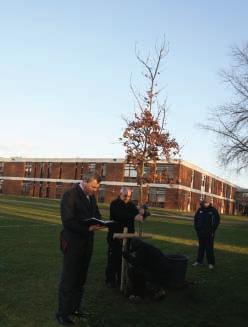
The year was also tinged with great sadness at the untimely death of Brian Phillips, the Head Groundsman, who sadly passed away. Brian had served St Olave’s for over 15 years keeping our grounds in tip-top shape. He took a real pride in his work, especially keeping the rugby pitches in first class condition for generations of boys to play on as well as tending the Headmaster’s garden. An English oak tree has been planted in the school grounds in his memory.
Academy Status
It is a source of considerable frustration that we have not yet been able to complete our conversion to Academy status. The intransigence of the Church of England at Rochester and their insistence on trying to use the conversion to increase their corporate power over the Governing Body has, quite rightly, been deemed as totally unacceptable to the governors.
Values Olave’s
StOlave’s is rightly recognised as a centre of excellence, but there is another dimension – a sense of values which we hope all of our students will acquire. In this respect, I was delighted when, following the Autumn fundraising from Festival and Cabaret, our students
Funding cuts
We have now faced two years of the worst Public Sector funding cuts for the last half century - and
Olavian 2012 – 9
there are still worse to come. Grammar schools, like St Olave’s, have been, and will be, particularly badly hit. Substantial savings have been made, especially in the Senior Leadership Team and within the Support staff. However, despite these, we have been able to:
- Preserve the number of 6th Form lessons
- Keep 6th Form class sizes to reasonable numbers
- Not increase teaching contact time
- Preserve all ‘minority’ subjects and new options, including Astronomy, Computing, Drama and Spanish
- Make a substantial number of internal promotions and support colleagues’ personal aspirations
- Maintain all World Challenge opportunities and Outdoor Pursuits
- Retain staffing for Sports’ coaching and funding for fixtures and transport
In this respect we remain indebted to The Foundation for its annual grant which supports a wide range of school activity and to the Marshall’s Educational Foundation for the grant we receive. As university fees spiral and funding cuts bite even deeper, these grants have a significant impact on the overall enrichment at St Olave’s. Many individuals, as well as groups of students, have benefitted from Marshall’s Awards, enabling them to participate in, for example: residential trips, music tuition, Woodard Master Classes, overseas exchanges, the Woodard Musician of the Year Competition, Outward Bound, restoration of artworks, leadership training, computer notebooks, Sports’ Leaders Awards, coaching, Summer Schools and sports tours, in addition to the valued grants for student leavers going on to university. On behalf of the school and the students, may I thank both organisations for their on-going support and encouragement which is so greatly appreciated.
The next few years are going to be very challenging and additional financial support, particularly from our Old Olavian community, is going to be crucial.
local St Paul’s Cray Church of England Primary School, where our students helped in the literacy drive, running a library bus and reading, with supervisors describing them as excellent, polite, helpful, professional and always willing to help.
Two new weekly meetings were established this year - a Senior Christian Union, run by a group of 6th Form students, and a Staff Prayer Meeting; these have run alongside the Chaplain’s Lower School discussion group Firm Foundations, an opportunity to explore and debate matters of faith. One of the most popular events continues to be Roast the Reverend, where students are given free rein to ask the Chaplain any questions of their choice. Some of the tougher offerings included ‘Why doesn’t God take all the bad people away?’ and ‘If Jesus was perfect, why did he get angry with religious people?’ Three students - James Byrne, Alexander Hutchinson and Gabriel Ide - were confirmed by the Rt Revd Michael Turnbull, former Bishop of Rochester. The boys also helped to lead aspects of the service such as Bible readings and prayers, while the music was led by the Chapel Choir, conducted by Eamonn Cox and Thomas Steer.
The annual Chapel weekend away at Carroty Wood Activities Centre near Tonbridge, led by Mr Maltman and the Chaplain, included activities such as low ropes, scavenger hunt, campfire and a forest wide game. Students had the opportunity to consider aspects of the Christian faith such as the Old Testament story of Jonah, and how God’s forgiveness is at the same time a comfort and a challenge to our society.
It was fitting that the recent SIAS report commended the good work of the Chaplain as an ‘established strength’ of the school.
Chaplaincy Olave’s
Iam pleased that the school’s community service programme known as the Le Chavetois Society (named after a former member of staff) has grown in size and scope, with over thirty Year 12 students taking part in a wide range of different projects from healthcare to charity fundraising. A large team were based at the
In conclusion it is an impossible task to describe everything that contributes to a year in the life of a school like this and I apologise for the many things I may have omitted. I have not mentioned, for example, the names of the 300 students to whom I was pleased to award Colours for outstanding contribution, leadership, and conduct that brings credit to the school. It was, nevertheless, a fitting tribute to 450 years of this great school that 2011/12 was, academically and culturally, one of the most successful years in the history of St Olave’s Grammar School; I am proud and humbled to be its Headmaster.
Aydin Önaç
10 – Olavian 2012
Olavian 2012 – 11
Chairman of the Governors
S. Hibberdine, Esq., B.Sc., F.R.I.C.S.
Vice-Chairman of the Governors
Mrs J. Bell, M.A., C.Eng. MIMMM.
Foundation Governors
Appointed by the Lord Bishop of Rochester:
R.P. Highmore, Esq., M.A
M.H. Lovett, Esq., F.C.I.B.
Appointed by the Rochester Diocesan Board of Education:
The Revd H.A. Atherton, M.A., M.Th., B.Sc., F.G.S., Dip.Ed.
I. Ketchin, Esq.
Appointed by the Chapter of Southwark Cathedral:
R.A.Watson, Esq., B.A., M.A., MIET, MBCS
Appointed by the Universities of Oxford and Cambridge acting jointly:
M.A. Edwards, Esq., M.A., M.Sc., A.C.A.
Appointed by the Senate of the University of London: The Revd Professor P. Galloway, OBE, JP, PhD, DLitt, FSA.
Appointed by the Dulwich Estate:
S. Hibberdine, Esq., B.Sc., F.R.I.C.S.
Appointed by the Special Trustees of Guy’s and St Thomas’ Hospitals acting jointly: Councillor N.R. Reddin, F.C.C.A.
Elected Parent Governors
Mrs J. Bell, M.A., C.Eng. MIMMM.
Elected Staff Governors
C.E. Davies, Esq., B.A., A.T.D., M.A.
Mrs K.S. Brooker
Local Authority Governor
Councillor J. Grainger.
Sponsor Governor St. Olave’s Foundation
M.F. Elvines, Esq., PhD, B.Sc.
Associate Governor St. Olave’s Grammar School
A. Stoneham, Esq.
Ex Officio
A.Önaç, Esq., B.Mus., BSc., ARCM, FRSA
Clerk to the Governors
J. Ayles, Esq., B.Sc. (Econ)., A.C.M.A.
Assistant Staff
J.L. Burston, Esq., M.A., Jesus College, Cambridge
R.N. Archer, Esq., B.Ed. (Hons), Loughborough University
A.T. Henley, Esq., B.Sc., M.Sc., C.Math, M.I.M.A., Univ. Coll. Cork & South Bank University
C.E. Davies, Esq., B.A., A.T.D., M.A., Universities of Wales, Bristol & London

D.M.G. Craig, Esq., B.A., M.Phil., Bristol University & King’s College, London
L.J. Ward, Esq., B.Sc., M.Sc., University of Sussex & City University
N. Maltman, Esq., M.A., Pembroke College, Cambridge
12 – Olavian 2012
Staffing 2011-12
A.M. Kenward, Esq., B.A.(Ed.) (Hons), University of Exeter
Mrs H.C. Cooley, B.Ed. (Hons), University of Sussex
D. Bowden, Esq., B.A., University of Lancaster
Mrs. R. Maxwell, B.A., University of Manchester
Mrs M.T. Morinan, B.A., B.Sc., M.Sc., M.R.S.C., National University of Ireland & Open University.
Ms C.E. Marwood, B.Sc., The Open University; L.R.A.M., Dip. R.A.M.
Mrs D.A. Ott, B.Sc., University of Sheffield
Miss M.F. Sullivan, B.A., Westfield College, London University
Ms. S.K. Wilcox, B.A., Goldsmiths’ College, London University
Mrs J.M.Cooke, B.Sc., University of Wales
R.M. Harvey, Esq., B.A., Royal Holloway College, London University
Mrs.P. Garton, B.Sc.,University of Kent
Mrs J. Upsdell, B.A., University of Surrey
Ms. J. Bradley, B.Sc., PhD, King’s College & Royal Free School of Medicine, London
A.Pengilley, Esq., B.A., University of Nottingham
Mrs C. Johnson, B.Sc., University of Nottingham
Mrs D.E. Lewis, B.Sc., University of Portsmouth
Mrs D.A. Storrs-Fox, B.A., University of Southampton
P.J. Charlton, Esq., B.Eng., University of Nottingham
Ms G.C. Gardiner, M.A., Newnham College, Cambridge
Mrs E.J. Kite, B.Sc., B.A., University of Birmingham & The Open University
Mrs S.J. Wallace, B.A., MPhil., PhD, University of Lancaster & Christ’s College, Cambridge
Mrs G.M. Morgan, B.A., University of Exeter
Ms. B. Onifade, B.Sc., PhD, University of Central England
Mrs J.S. Penny, B.Sc., Royal Holloway College, London University
J.A. Greenwood, Esq., B.Sc., University of Bradford
Mrs K.A. Hodges, M.Eng., St. Catherine’s College, Oxford
M.G. Price, Esq., M.A., Trinity College, Cambridge
Miss P. Vasileva, B.Sc., University of Sussex
Miss M. Delage, Master 1, Universite de Limoges
Miss V.E. Duguid, B.A., University of Sussex
L.D. Espejo, Esq., M.A., University of St. Andrews
Mrs E.A. Goodman, B.A., University of York
J.R. Pendred, Esq., B.A., University of Bristol
J.K. Eyre, Esq., B.Sc., PhD, University of Glasgow & University of Liverpool
Mrs K.A. Martin, B.Sc., University of Ulster
B.P. Larkin, Esq., M.Sc., B.A., University of Wales & University of Greenwich
Miss N.C. McCartney, MMath., Trinity College, Oxford
M.S. Cook, Esq., M.A., St. Catharine’s College, Cambridge
Miss R.E. Hawley, B.A., Middlesex University
Miss A. Wilkie, M.A., B.A., University of Warwick & Goldsmiths’ College, London
Miss Z. Abrahams, M.Ed., Homerton College, Cambridge
Miss E. Amonoo-Kuofi, B.Eng., Aston University
G. Buckley, Esq., B.Sc., University of Sheffield
D.J. Budds, Esq., M.A., St. Peter’s College, Oxford
Mrs C. Christie, B.A., M.Phil, King’s College, London & St. Edmund’s College, Cambridge
A.R. Gyford, Esq., MSci., University College, London University
Miss S.L. Heraghty, B.A., Loughborough University
P.S. Holton, Esq., M.A., B.A., University of Sheffield Hallam & University of Loughborough
Ms. C.M.Knight, M.A., Selwyn College, Cambridge
Olavian 2012 – 13
Mrs S.G. Latcham, B.A., University College, London University
T.A McCurrach, Esq., MMath., Magdalen College, Oxford
M. Patel, Esq., B.Sc., University College, London University
H.J. Waddington, Esq., M.A., MPhil. St. Catharine’s College, Cambridge
J.R. White, Esq., B.Sc., University of Bath
14 –
Olavian 2012
Departing Teaching Staff, Summer 2012
Valete
Dr. Frank Green
Dr Frank Green retired after 22 years as Deputy Headmaster. Frank joined St Olave’s in 1990, organising the first Entrance Test, assessment, calendar, timetable and curriculum development. An outstanding physics teacher, revered by students, he was integrally involved in the design of the science block. More recently he has organised Prize-givings, looked after new teachers, managed the Pastoral system and still found time for his favourite role, Health and Safety. A totally honest, always kind man, deservedly respected as a leader for his wisdom, Frank has certainly played his part in the history of this school. We wish him a rich and enjoyable retirement.
John
Burston
John arrived in April 1972 on a one term contract to teach History but ended up staying a further forty years! He was appointed Head of Economics and Careers in September 1972, setting up both departments. He subsequently became Head of Middle School and then Deputy Head with responsibility for the Pastoral work of the school, an area of activity which he was able to embed into the culture of St. Olave’s. John became a part-time Economics teacher in 2006 and now “one of the giants of the history of the School” moves forward to a well- earned and, hopefully, long retirement.
Andrew Pengilley
Andrew Pengilley was Head of Geography for 8 years and Head of the Humanities Faculty for 3 years. His enthusiasm for classroom teaching and fieldwork were unmistakable and he led the Geography department to be the only school department to perform above the school average at GCSE and A2 in all of his 8 years. He has moved to King Edward VI School, Shakespeare’s School, Stratford-upon-Avon, as Head of Geography to continue his passion for Geography and to also continue his passion for rowing as one of their rowing coaches. We wish Andy and his wife Sylvia and son Torin a very happy time in Stratford.
Dr. John Eyre
Doctor Eyre came from Dartford Grammar school with a superlative reputation as an outstanding physics teacher. He was a very quiet member of the common room but like Van de Graaf’s generator sparkled in the classroom with electrifying panache. He was equally at home running the renowned Celtic music group. His expertise brought to the school the accustomary brilliant
results in the Physics department. We wish him the very best as he now ploughs his way through the forces, pressures and reactions of teaching in the far East.
Paul Charlton
Paul Charlton taught mathematics at the school for six years having entered the common room first on the GTP scheme rising to become second in the department. The word commitment is one which we would all associate with Paul. He was capable of dedication to a whole range of activities from the hurdles of trigonometry, to the church, to rugby, World Challenge in Africa and ski trips. He was at the school a deeply liked member of the staff whose persona will be difficult to follow. An oenophile, extreme danger athlete, owner of serious photographic hardware and a bewitching sense of humour, we shall all miss him greatly as he proceeds now to Saint Paul’s. Vale, mei amice !
Matthew Cook
Matthew came to the school armed with a magnificent musical pedigree not least being an organ scholar. His devotion to all aspects of the school both in the classroom where he was an excellent wellprepared practitioner, as a pastoral Head of Year and an athletic sportsman seemed to have no coda. His lively presence in the common room was permanently noticed. He enriched the pupils’ musical knowledge, conducted orchestras, introduced assemblies, and took enormous pride in everything he did. In his first year at the school he coached the Under 12 X1 to success in the Bromley Cup and winning the coveted Kent Cup against Skinners. He was always a flamboyant, tireless worker for the school and his presence will be enormously missed. Our loss is Sevenoaks School’s gain.
Olavian 2012 – 15
Kathryn Martin
Kathryn joined the department of design and technology after completing teacher training in her home country of Ireland. With a traditional and disciplined attitude to the delivery of technology, she was a well-accepted and valuable college during her three years at Saint Olave’s. Whilst delivering excellent teaching and consistently strong results with her GCSE and A-Level groups, it is in her contributions to the wider school life where she will be missed the most. Taking on the role of head of Year 7, she was effective in supporting the transition of pupils to secondary school, and helping to reinforce the school ethos of scholarship, culture, and values with this new cohort. Pupils will remember her for her active role in the World Challenge and D of E schemes run at the school and notable successes in leading teams of young designers to two commendations in the annual Design Ventura competition. She moves to American to teach D&T and IT with our best wishes.
Nicole McCartney
My abiding memory of Nicole is her concerned interest in the pupils both academically and pastorally. She is the most kind, enduring and yet persuasive of form teachers. She is also a brilliant mathematician to be seen in the common room dealing with mathematics on the very highest level. When not storming her way through the mysteries of calculus or some such thing, she was also giving her time to the supporting of the chess team. She was a superlative colleague whose company all enjoyed and she participated fully in the extra –currricular activities offered at the school. It is no surprise therefore that when the opportunity arose Westminster had the nous to seize her with open arms. We all wish her the very best in her new appointment.
James Pendred
July 2012 saw the departure of Mr Pendred as he and his young family moved to Bath. Mr Pendred joined the department in 2008-09 as an NQT and quickly became an excellent teacher and the force behind the History Society. His trademark enthusiasm for all areas of History including Joe Chamberlain’s tariff reform and Conservative party organiser W.B. Skene will be missed as he continues his career at King Edwards School, Bath.
Brian Larkin
After three years at the school Brian left to join the staff at Townley Grammar School. He made a huge impact on the school with contributions to the IT Department and started the very successful Computer Animations & Game Development Club. He was also a very firm but fair form tutor to years eight and nine. He will be much missed.
Humphrey Waddington
Humphrey Waddington has left to join the staff at Merchant Taylors’ school in Watford. An outstanding
teacher of geography he achieved superlative results both at GCSE and at A level in the brilliant department that is geography. He is the most well-mannered gentleman, beautifully dressed and the wearer of the most bespoke of shoes .His sartorial elegance matched his acumen, flair and diligence in the classroom which both enthused and delighted his pupils. Frequently he was to be seen working the very long hours required to bring academic vigour to the students and in so doing placing geography at the highest level of scholarship. He is an athlete of national standard and his fitness and joy were permanently on display to the benefit of all who had the pleasure to meet him.
Zoe Abrahams
Zoe was Head of RE at the school albeit very briefly. She made a very positive impact in the school and was a superlative form tutor. We wish her the very best in her new teaching post.
Luke Harding
Luke was on the staff for two years proving to be an outstanding PE teacher and especially, a rugby coach. Small of stature but extremely strong and very fit, he was a role model for the students. In the course of his time here he coached the under 14 XV to success as the winners of both of the Kent Cup and the Kent Sevens. He was of the old school tolerating no nonsense; a man who did his job brilliantly and to which end he was greatly admired by colleagues, staff and parents alike. We wish him the very best at his new school in Henley.
Richard Harvey
Richard Harvey has left the Modern Languages Faculty to pursue a new project. He has contributed a very great deal to the school with numerous trips overseas and where possible has encouraged the teaching of German to the very highest level.
Catherine Knight
Catherine joined the Science Faculty albeit very briefly. In her short time at the school she made a very strong contribution. She has now left to train to become a member of the clergy.
Mitul Patel
Mitul joined the Biology Department for a year where he made a positive contribution and helped out a great deal with the Science Faculty’s links with primary schools. A very flamboyant and jovial man, he has now decided to train to become a dentist.
Catherine Christie
Catherine joined the Classics Department on a one term contract from Putney High School for Girls. She brought with her tremendous expertise especially in the teaching of the very popular Art and Architecture
16 – Olavian 2012
module. She was an outstanding classroom practitioner at key stages three and five. The department achieved a very laudable ninety percent A/B grade at A/S , a percentage which was significantly above the national average and her results in the Greek Tragedy module were exceptional given the national disappointment at the results in this area. As ever the department bucked the trend! A committed Christian, she made valuable contributions to the prayer group and to the Christian fellowship weekend. We extend our thanks.
Headmaster’s P.A. – Joan Law
The School said a sad farewell in September to Joan Law, who retired after nineteen years as the Headmaster’s P.A. In addition to her inimitable professionalism and detailed knowledge of every aspect of school life, Joan had a great sense of fun and quite a reputation for dressing up as a Christmas fairy, Hospital nurse or School Prefect for charity fund-raising. Staff and Governors wish her every happiness in her retirement; she will be greatly missed at St. Olave’s.
Kerry Evans
Kerry worked in the Finance Department with astonishing verve, tenacity and achievement. She seemed permanently to be preparing for the next wave of fiscal legislation or for her accounts to be inspected by auditors. Not surprisingly she was always ‘ victor
Brian Phillips
It was with great sadness that we had to inform staff, students and governors of the death of Brian Phillips, the Head Groundsman, who sadly passed away on Saturday 19th November following a long illness. Brian had served St. Olave’s for over 15 years keeping our grounds in tip-top shape. He took a real pride in his work, especially keeping the rugby pitches in first class condition for generations of boys to play on as well as tending the Headmaster’s garden. He will be remembered with affection and sadly missed by staff and students. A commemoration service was held to mark Brian’s contribution and length of service at the school, and an English oak tree planted in the school grounds.
Tim Jarvis
Staff, students, Old Olavians and Governors were all shocked and saddened by the tragic news of the accidental death of former student Tim Jarvis (St Olave’s 2004 –2011) at his university hall of residence. A thoughtful young man, Tim took his passions seriously, showing dedication to his Mathematics and great commitment to Judo where he led classes for younger students. Polite, friendly and self-motivated, he was popular within his year group and well-liked by all staff.
pecuniarum.’ Alongside Elaine Vago she worked with charisma, wit and panache. In between managing the complexities of school finance she managed to fit in the onerous tasks of doting grandmother, dog walker, motor cyclist and remarry. We wish her the very best in her new school, Townley Grammar. They will benefit much from her chrematistic acumen where no doubt she will plough a straight feer.
Jane May
Jane May has now retired having run the school catering with considerable flair and efficiency for some many years. A very competent and diligent woman she produced excellent fare for generations of school pupils and staff alike. We wish her the very best in her retirement.
Rob Gardner
Rob has been on the staff for some many years and in many guises. He has worked in the music faculty, and in computer support .He has sung with various choirs, he has been a cover assistant and put his knowledge to all things technical. Presently he is writing a history of the men who attended this school and died during the First World War. He has had a very varied life from working as a film projectionist in Brighton, to working for Olivetti in technical support. We wish him well in his long retirement.
In Memoriam
Olavian 2012 – 17
18 – Olavian 2012
Creative Work

This year’s creative work reaches out to many different subjects within the school, showing individual/group excellence within them. It is our hope that every reader will find something to interest them within this section containing works from English, French, German, History and Science.
Max und Moritz Translation
Undoubtedly, one of the outstanding academic achievements of the Autumn term was the German Jamboree’s translation and publication of Wilhem Busch’s Max und Moritz. This children’s story, a tale of two young miscreants who play devious pranks on their neighbours, is a darkly humorous tale, part and parcel of German‐speaking culture. Six of our students - Matthew Burns, Thomas Bridges, Peter Leigh, Chris Self, Tim Stickings and James Watson - supported by Frau Cooley and hungry for more advanced German, took on this most challenging project of not just translating an entire book, but working through each couplet, to produce a full, rhyming version in English, of the exquisite German verses. However the boys did not stop there and the idea of publishing their book was conceived. Copies were in such demand on Open Day
Fünfter Streich
Wer im Dorfe oder Stadt
Einen Onkel wohnen hat, Der sei höflich und bescheiden, Denn das mag der Onkel leiden. — — Morgens sagt man: »Guten Morgen!
Haben Sie was zu besorgen?«
Bringt ihm, was er haben muß: Zeitung, Pfeife, Fidibus. —
Oder sollt’ es wo im Rücken Drücken, beißen oder zwicken, Gleich ist man mit Freudigkeit Dienstbeflissen und bereit. — Oder sei’s nach einer Prise, Daß der Onkel heftig niese, Ruft man: »Prosit!« allsogleich, »Danke, wohl bekomm’ es euch!« — Oder kommt er spät nach Haus, Zieht man ihm die Stiefel aus, Holt Pantoffel, Schlafrock, Mütze, Daß er nicht im Kalten sitze, — Kurz, man ist darauf bedacht, Was dem Onkel Freude macht. — — Max und Moritz ihrerseits Fanden darin keinen Reiz. — — Denkt euch nur, welch’ schlechten Witz Machten sie mit Onkel Fritz!
Jeder weiß, was so ein Mai–Käfer für ein Vogel sei.
that the entire batch was bought up, and another lot had to be ordered! I have to agree absolutely with the outside reviewer who said ‘A wonderful example which will, I hope, inspire many others to enjoy the work of Wilhelm Busch and the talented St Olave’s students as much as I have!’ Congratulations to all the boys for this classic example of true scholarship, St Olave’s style.
Aydin Önaç
Below, we have reproduced the text (but unforutunately, due to print costs, not the amusing pictures) of the Fünfter Streich (Fifth Prank) from the book. If you are interested, and potentially want to buy a copy of the book, please see http://germanjamboree.webege.com. This Streich will be available on the site, complete with pictures, for you to download free.
Fifth Prank
He who in the town or village, Has an uncle living nearish, Always works hard to provide What will keep him satisfied. In the morning says, “Hello!” “Can I help you?” “There you go!” Bring him what he’ll need or like, Paper, lighter and his pipe. If there’s something on his back, A biting, poking bug attack, One leaps, both swift and eager, up, And brushes off the nasty grub. Or maybe, with a pinch of snuff, He starts to sneeze and wheeze and huff, One calls “bless you!” in half a tick, And checks at once if he is sick. Or if, at night, he comes home late, One scrambles to accommodate. Night cap, slippers, dressing gown, To keep him warm are hurried down. To put it briefly, one will try, To keep him happy, warm and dry. Max and Moritz, for their part, Found this hard to take to heart. Think yourselves, what kind of tricks, These two played on Uncle Fritz? We’re all aware what kind of brute, May Beetles are without dispute…
20 – Olavian 2012
In den Bäumen hin und her Fliegt und kriecht und krabbelt er. Max und Moritz, immer munter, Schütteln sie vom Baum herunter. In die Tüte von Papiere Sperren sie die Krabbeltiere.
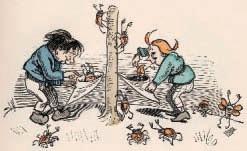
Fort damit und in die Ecke Unter Onkel Fritzens Decke!
Bald zu Bett geht Onkel Fritze
In der spitzen Zippelmütze; Seine Augen macht er zu, Hüllt sich ein und schläft in Ruh.
Doch die Käfer, kritze, kratze! Kommen schnell aus der Matratze. Schon faßt einer, der voran, Onkel Fritzens Nase an.
»Bau!« schreit er — »Was ist das hier?« Und erfaßt das Ungetier.
Und den Onkel voller Grausen Sieht man aus dem Bette sausen.
»Autsch!« — Schon wieder hat er einen Im Genicke, an den Beinen; Hin und her und rund herum Kriecht es, fliegt es mit Gebrumm.
Onkel Fritz, in dieser Not, Haut und trampelt alles tot.
»Guckste wohl! Jetzt ist’s vorbei Mit der Käferkrabbelei!
Onkel Fritz hat wieder Ruh’ Und macht seine Augen zu.
Dieses war der fünfte Streich, Doch der sechste folgt sogleich.
In trees and bushes here and there, It eats or buzzes through the air. Max and Moritz, ever scheming, Shake these horrors from their sleeping. Our awful boys in bags of paper, Put the beetles in for later.
These two, who really feel no guilt, Put beetles in their uncle’s quilt! Uncle Fritz comes up to bed, A pointed cap upon his head. He settles down and shuts his eyes, Soon in restful sleep he lies.
But the beetles, Scritter, Scratter, Soon crawl up to spoil the latter. Now the leader boldly goes, Up to Uncle Fritz’s nose…
“Ouch!” he screams, “What’s happening!?” And holds a monster dangling.
And now the Uncle, full of horror, Leaps from bed and starts to holler, “Ouch!” – more horrid bugs emerge, And on his neck and legs converge. Buzzing here and all around, Poor Uncle Fritz they fiercely hound.
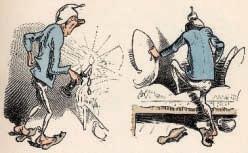
Despite this rumpus overhead, He swats and tramples each one dead.
“There you are! I’ve killed the lot!
There’s no more beetles here to swat!” Now through the house, the silence fell, He settled down and soon slept well.
This prank you’ve read was their fifth one, The sixth will shortly follow on.
Olavian 2012 – 21
Words
Matthew Roberts’ (Year 10) Speak Out! competition speech
It’s something that we all use, on a daily basis. Something with immense power, perhaps the most powerful thing that humanity has at its disposal, the power to create, but also to destroy. I’m talking about language, but more importantly words, words that we all use as mundane tools of our existence.
When I speak of words and their effect I’m sure many of you will conjure images of uncomfortably warm afternoons spent in classrooms dissecting unintelligible speeches by long dead politicians, but I tell you today those words have power, power that you can harness in everyday life. What if I told you that just through use of words you could evoke fear, anger, paranoia, anxiety but equally joy, elation and most importantly hope. Every great conflict in history has been in at least part caused by conflicting ideologies, ideologies, beliefs proliferated by language. We all have this power at our fingertips on a daily basis but so often we let it go to waste.
There’s that old Adage: sticks and stones may break my bones but words alone can’t hurt me, this I’m sure we all know is a fallacy, anyone who’s been at the sharp end of a cheap jibe or an offhand comment knows how painful words can be. But equally every great achievement in human history has been facilitated by communication; the pyramids could not have been built without words, communication between engineers and builders. So I implore you, next time you speak, remember the words you use are the same words not necessarily, in the same order, or tone or even language but nonetheless the same words that rose skyscrapers from the ground and sent man into space. Equally they’re the words that convinced thousands of German fascists to commit the worst atrocity known to man. Words have power, use them wisely.
Trapped
Pablo Rose
I arise from the bed. I look around, wondering where I am. It’s a bleak, circular room with barely a feature. How can a room have no features, the fact that it exists means it must. My mind feels knotted; I stop thinking and look around. As I look, I notice objects, features, that weren’t there before. There’s an intricate wooden table stationed idly at the centre of the room, with a lit wax candle placed at the centre of it, waning in the hallowing breeze. There’s also a bed, with stale looking sheets and a yellowing feather pillow. They seem vaguely familiar when I remember I had just been laying on them...
It’s been weeks since I observed those features, nothing happened then and nothing since. I don’t know how I
got here but it feels like the seventh ring of hell, full of sorrow and boredom and lacking compassion. So why am I here, what did I do wrong to deserve this excruciating punishment, how many must I have slaughtered to generate this wrath. But maybe I can outlast my tormentor; maybe if I am patient they will falter and decease in their attempt to destroy my consciousness.
Years! How have I lasted this long! I have awaited my release patiently but I feel as if my sanity is slipping away, oozing into the hands of my captor. Soon, nothing will be able to redeem me. Well, not my mind at least. For the worst of my torture is that I am deprived of those basic human necessities; food, water and even sleep! It’s as if I have been constrained to never need such delights. A lack of taste I can manage, but to be incapable of sleep, unable to dream, where the mind is set free to roam the vastness of reality... I fear that if presented with a meal and a warm bed I would not know what to do. This is my curse. This is my torture.
That’s it, I’m… I am done… no, I am not done! I will not give in to this inhumane deprivation. I will escape. But for the life of me, I must have been here a century and still I haven’t contemplated upon a feasible means of escape. I know I’ll think of something, and when I do, it will lead me out into the everlasting light that gleams through the window. Wait! How have I not noticed the window before! But now is not the time to question myself, now is the time to act. I must jump; it is the only way to break free from this eternal prison.
It has been a long time since I concluded upon my escape plan and yet I cannot bring myself to attempt it. I can’t even glance at the window, at what awaits me beyond. There’s no reason not to take a peek, yet I still cannot bring myself to do it. Is it fear that grips me or is there some unknown force preventing me? But I will look, and damn the consequences. I walk hesitantly to the window. I feel as if I’m gliding towards it. I’m close, I’ve reached it. My eyes are closed, as if I’m not meant to look. Just jump.
I will not succumb to the laws of this room, I may not be able to look out of the window, but never will I leap blindly into the abyss. I shall glide. I have devised a plan. I shall use the wax from the candle to mould wings and bind feathers from the pillow to them; I shall glide out of here. I will re-enter the free world with the grace of a phoenix. I shall return to the land I first saw a millennium ago. The world I have forgotten.
The time has come. I’m standing by the window. A slight breeze is tickling my face, drawing me closer and closer to the edge. I turn back to the room one last time to gaze on the confinement that had driven me to the brink of madness. There’s the bed, the table, the candle and…
22 – Olavian 2012
and something else. Something lurking in the corner of my eye, where I have never dared to look before, where I never wanted to look before. I rotate my sight just one degree to the left to see what it is. The door. It is ajar, with a slither of light shimmering through. I am not going to turn back, I have worked too hard. I close my eyes and jump.
The Chinese Civil War (1927-49)
An article by Samuel Bentley (Year 12) from the school History Society magazine
The Chinese Civil War was one of the most influential wars of the twentieth century, and had enormous effects on the development of modern China and consequently the modern world.
China had been unstable since the collapse of the Qing dynasty in 1911, and civil conflict never really stopped between 1911 and 1949, lurching from civil war to revolution and back again, with one interlude of foreign invasion – The Japanese invaded China in 1937 under the guise of creating a ‘Greater East Asian Co-prosperity Sphere’, committing terrible atrocities such as the Rape of Nanking.
In 1927, a split began between the KMT and the CCP, who were at the time allies, supported equally by Moscow, trying to stop the warlords who ruled most of China, and thus unite the country once more. The country had a nominal government based in Beijing, but this had little influence outside the city, despite being internationally recognised The split occurred over seemingly trivial reasons – the decision over where to move the capital city to. However, the real issue at stake was the KMT’s anger at the CCP being too eager to follow the orders of the Soviet Union. What followed was a purge of left leaning members of the KMT and CCP members in Shanghai, the largest city in China at the time.
This massacre split the two groups, and there were effectively three capitals in China: the KMT capital in Nanking, the CCP capital in Wuhan, and the republic’s official capital in Beijing. The KMT promptly captured Beijing and the rest of the East Coast, and was recognised internationally. The CCP retreated into the countryside, relying on the support of peasants, and gained control of several areas in Southern China.
Fighting continued until 1937, with a major escalation in 1930 as the Central Plains Wars broke out. These were part of an effort to encircle and enclose Communist forces. Five encirclement campaigns were launched, with the first four failing as the advancing KMT columns made swift progress but were overwhelmed by the size of the countryside they were trying to hold.
During the fifth encirclement attempt in 1934, the KMT troops built blockhouses every few miles to help the advance. The CCP troops took advantage of gaps in the lines of blockhouses, and escaped while the KMT forces were preoccupied fighting the forces under CCP member Zhang Guotao (who had a much larger force than Mao). The massive retreat of Communist forces lasted a year and covered 12,500 km, in what was famously known as the Long March.
Although few troops arrived in Shaanxi at the end of the Long March, the destruction of Zhang Guotao’s army made him the undisputed leader of the CCP.
The fighting continued into 1937, when the Japanese invaded. Originally, Chiang Kai-Shek refused to consider an alliance with the CCP against the Japanese –this ended after two of his generals kidnapped him. The Second United Front, as the alliance became known, was an alliance in name only. The CCP engaged in guerrilla warfare against the Japanese, and there were still clashes between the CCP and KMT.
The war proved beneficial to the CCP, whose guerrilla actions endeared them to the local populace, while the KMT were severely weakened as the Japanese assaulted the coastal regions where the KMT were strongest. However, the war would only end when the US bombed Hiroshima and Nagasaki, and part of the US peace deal demanded the Japanese in China to surrender to the KMT, not the CCP. The first peace negotiations occurred in August-October 1945, when both sides stressed the need for a peaceful settlement but could not reach a deal. Fighting continued even as the negotiations were occurring.
The fighting began again in earnest as soon as the peace negotiations ended – except this time, the Communists had the upper hand, aided by the Soviet Union (in control of Manchuria) handing the region to CCP troops. The CCP had captured a large amount of weapons and vehicles from the Japanese, and were being supplied by the Soviets. In addition, their promises of land reform (taking land from landlords and redistributing it to peasants) gained them so much local support that they had effectively limitless manpower and a strong logistical base.
The KMT had been supplied and trained by the US, and launched an all out offensive in July 1946. The CCP used a passive defence strategy, where they gave up territory to preserve their forces while simultaneously wearing down the KMT troops as much as possible. By the time of their counterattack in 1947, they had a numerical advantage, having wiped out 1.12 million KMT troops. Encircling the KMT provided them with large numbers of tanks and artillery, and by late 1948 they had captured most
Olavian 2012 – 23
of the North-East of China. Their capture of the rest of Northern China in early 1949 resulted in the deaths or capture of some 500,000 KMT troops. This effectively wiped out the backbone of the KMT.
By the 23rd of April 1949 the CCP had captured the KMT capital of Nanjing, and was forcing them to retreat south across southern China. Eventually the KMT was forced to relocate to Taiwan. At this, Mao Zedong proclaimed the founding of the People’s Republic of China. Taiwan remained under the control of the Republic of China, despite PRC attempts to invade and capture it.
The outcome of the Chinese Civil War had momentous effects on the world. The CCP controls China to this day, and has presided over it’s emergence as a world power. Although Mao’s attempts to industrialise resulted in tens of millions of deaths of starvation, later leaders presided over the rapid industrialisation of China, which is now the world’s second largest economy. Had the KMT been victorious, it is likely China would have remained a corrupt, warlord ridden third-world nation, although a democratic one. Which was more beneficial for China and the Chinese populace in the long run is highly debatable.
La Bataille de France
Tim Stickings’ (Year 12) essay in French, given the task ‘Choisissez un événement significatif pendant la période que vous avez étudiée et évaluez son importance’ :
L’histoire sociale, économique et politique de la France pendant la deuxième guerre mondiale a été déterminée en grande partie par la Bataille de France en mai-juin 1940. Le soulagement de la plupart des Français après l’Armistice le 22 juin s’explique en considérant la bataille.
L’État-Major français avait décidé avant l’attaque que la défense représentait la priorité. On a construit la ligne Maginot le long de la frontière française-allemande pour protéger la France contre les soldats hitlériens, mais il n’y avait aucune stratégie offensive. Néanmoins les Français faisaient confiance à la Ligne, donc l’arrivée de l’armée allemande était un grand choc. En reconnaissant que la seule stratégie défensive avait échoué, les Français ont accepté l’Armistice comme une solution préférable à une répétition des horreurs de la Grande Guerre.
Le souvenir de la Grande Guerre était aussi important au niveau politique. Maréchal Pétain, le héros de Verdun en 1917, espérait éviter de créer une nouvelle « génération perdue ». Les Français ont montré leur terreur en fuyant leurs maisons vers le Sud de la France - et le gouvernement les a suivis. Pétain avait besoin de rassurer la population, pour cesser le grand chaos de juin 1940, et il s’est convaincu que les Français préféreraient
la capitulation. L’Armistice représentait une triomphe politique de Pétain, qui est devenu chef de l’État. Donc, la bataille de France a terminé l’époque de la 3e République, et a inauguré le régime collaborationniste de Vichy.
En somme, le contexte de la défaite des soldats français par la supérieure armée hitlérienne a décidé le sort de la France pendant les prochaines années.
Sociobiology
An article by Asher Leeks (Year 12) from the school Natural Sciences Society journal
How the methodologies and theories of evolutionary biology inform sociology and other social science disciplines
The natural and social sciences, both applications of the scientific method, usually form distinct groupings with little clear overlap. However, ever since the emergence of modern biology with the publication of the, “Origin of Species,” in 1859, attempts at linking studies of human society with knowledge of our biological origins and of analogous societies throughout nature have been attempted. Sociobiology is the most recent and rigorous example of this, and as a discipline it bridges the divide between the social and natural sciences. Understandably politically loaded, sociobiology is nevertheless a field of biology with the potential for strong intellectual integrity and high utility as well as being both intellectually stimulating and of great interest and importance to many.
In this article I will briefly outline the basic principles of sociobiology and attempt to show how they can link to human society, illustrated throughout with examples. To begin with I will give some background to the field and to finish with I will investigate some of the criticisms of sociobiology.
History of biological thinking in the social sciences
Whilst relatively new as a discipline in its own right, forays into how the accepted mechanism of natural selection has affected the development of human society, and indeed how the same processes may affect us in the future, have been made ever since the theory’s publication in 1859. Indeed in the great book itself, Darwin wrote, “In the distant future I see open fields for far more important researches. Psychology will be based on a new foundation, that of the necessary acquirement of each mental power and capacity by gradation.” Later on we will cover how evolutionary psychology has begun to take off as a field of study in its own right, over a century after Darwin laid the path for it.
Moving into the second half of the 20th century, the fusion of sociology and biology was able to leave many
24 – Olavian 2012
of its political connotations behind. However, the ideas were still to be distorted, although this time by scientists themselves. In his 1967 book, “The Naked Ape,” Desmond Morris made one of the most famous attempts at explaining human society with evolutionary ideas, although whilst the book achieved great commercial success, it received heavy criticism from many angles. In general the book incorrectly portrayed evolutionary principles and lacked both evidence and suitably rigorous scientific explanations for its rather wild assertions. This, like its failed application in the form of Social Darwinism in the late 19th and early 20th centuries, again generated distrust & some degree of scorn for the topic. This time, however, it was far less significant, as at the same time as Desmond Morris’s work was receiving criticism, his peers were ushering in rapid advances in our understanding of many aspects of biology, on paths which would ultimately lead them to again question sociology.
Sociobiology
The 1930s and 40s saw one of the most important developments in the history of biology, with the neo-Darwinian synthesis. This was the fusion of Darwinian evolution with Mendelian genetics, incorporating the sciences of population genetics, taxonomy, palaeontology and more to create a more unified science of biology, with contradictions between disciplines resolved.
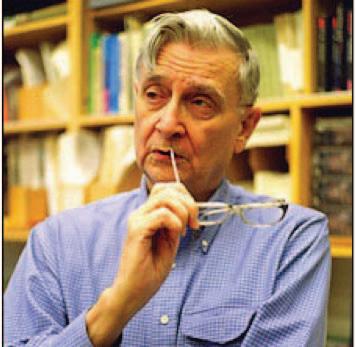
Emerging from the neo-Darwinian synthesis was sociobiology, defined in 1975 by its principal founder, entomologist E.O. Wilson, as “the extension of population biology and evolutionary theory to social organization.”
Seen as both the completion of the Darwinian revolution (which had already changed biology enormously) and the logical extension of Darwinian evolution, sociobiology is both highly influential and controversial.
Myrmecologist E.O. Wilson
One of the tasks of evolutionary biology is to examine observable features of organisms in nature and determine why they possess such features, i.e. what selective advantage they confer. Sociobiology differs somewhat in that instead of assessing physiological and anatomical traits, it examines behavioural traits. An example would be the behaviour of male lions which, when entering a new pride, eat the young lions present there. While this may seem an inexplicable behavioural feature since it confers such a disadvantage to the species as a whole, on a genetic level it makes good sense. Essentially, lions which display this behaviour will decrease the reproductive success of their competitors (other male lions) significantly, meaning that an increase in the allele/s for this behaviour will be observed relative to the frequency of the allele/s which does not result in this behaviour.
Olavian 2012 – 25
Myrmecologist E.O. Wilson
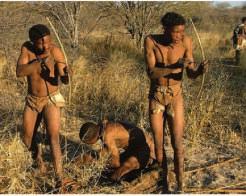
Many San Bushmen of Southern Africa still practise a hunter-gatherer lifestyle
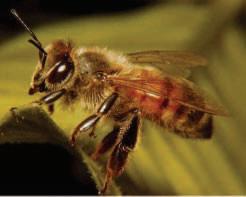
The honeybee (Apis mellifera) is a typical eusocial insect
Sociobiologists thus observe aspects of behaviour present in modern humans and relate them to a selective advantage in the context of prehistoric conditions. For instance, the human disposition towards enjoying the taste of refined sugar can be explained by the fact that fruit produces simpler forms of sugar when ripe. Thus individuals with a genetic tendency towards enjoying the taste would be more likely to eat food when ripe rather than when unripe, thus their reproductive fitness would increase as they would be less likely to become unwell.
Applications of sociobiology – altruism
Some of the most interesting applications of sociobiology, however, stem from explaining the aspects of human behaviour which apparently confer a selective disadvantage, and thus shouldn’t have come about through natural selection. First among these is altruism, the tendency of humans to act in a way that decreases their own relative reproductive fitness, for instance giving money through charitable donations. There are several explanations for altruism within evolutionary biology, but I will focus here on just a few of them.
The first and most obvious explanation for altruism is reciprocity, hypothesised by Robert Trivers. This states that altruistic behaviour develops when a temporary decrease in an individual’s reproductive fitness comes with the expectation that other organisms will act in the same way towards the organism at a later date, thus the organism’s net reproductive fitness increases. While it can be difficult to find clear examples of this in nature (as is usually the way with sociobiology), many instances of altruism in humans can be explained with this idea. Perhaps one of the most obvious examples is friendship, where an individual may feel a moral obligation to sacrifice resources or some other limited factor for a friend, with the expectation that the friend will reciprocate this activity in the future. In human terms we would conceptualise this as the idea that friendship is worth more than physical possessions (up to a limit), and Sociobiologists (and indeed evolutionary psychologists) would assert that this is an emotional tendency brought about directly through evolution.
However, many aspects of altruism appear still to be left unexplained by this idea, for instance the occasions when individuals sacrifice their life for others (thus no reciprocity can be expected on an individual scale). The reciprocity principle may still apply here if we consider that the individual can expect his close relatives to receive benefit for his/her death, for instance the families of soldiers who sacrifice themselves in battle usually receive some benefit (which may be of selective advantage if not of advantage to their wellbeing). However, a better explanation perhaps comes from the idea of kin selection, proponents of which have included J.B.S. Haldane, W.D. Hamilton and George Price.
The eusocial insect example is obviously not directly applicable to humans; however elements of it are relevant. This would offer a strong explanation as to why humans so readily sacrifice their own reproductive fitness for their relatives; however it does not immediately explain why humans act in such a way towards individuals who are only very distantly related to them. At this point we need to examine the make-up of society itself more closely and in particular observe the social constructs which influence human behaviour. It may be that the social construct of patriotism is left over from our hunter-gatherer days, when sacrificing oneself for the tribe would have obeyed the principles of kin selection due to how closely related individuals would have been. However, cultural changes occur too rapidly to allow for this and it is more likely that social constructs such as nationalism, which result in individuals sacrificing themselves for unrelated individuals, have emerged through other mechanisms. It has been suggested that evolution occurs not just on a biological level but also on the level of ideas and social constructs themselves, as the study of memetics investigates. While this science is treated with some disdain by many scientists, it may have something to offer in this situation. If we consider that it is of selective advantage to the majority of individuals in a society if, for instance, their young males are strongly motivated to fight other societies for resources, it follows that societies with mechanisms for motivating their young men to do so should prevail over ones which don’t. In this way, social constructs which motivate individuals to act directly against their own and their inclusive reproductive fitness may have come about through the same mechanisms that govern the natural world. Indeed it follows that if individual imperatives can be explained through evolution, so too must larger scale societal ones.
Applications of sociobiology – sexuality
Many aspects of human sexuality can also be usefully explained through sociobiology. One of the first instances of this came from Robert Trivers, who theorised the idea of parental investment and consequently developed the idea of parent-offspring conflict. Parental investment is the idea that having offspring decreases the reproductive fitness of the parent in other ways, for instance by decreasing its ability to care for other offspring, its survivability or its inclusive fitness (as covered earlier).
The way in which the parental investment disparity
influences human society is more profound and far-reaching than in other animals. This is essentially because human parental investment is much more significant in humans, with childhood extending for well over a decade and involving investment from many members of the community. This is thought to be because human strategies for finding food & other aspects of survival require significantly more knowledge and skill, which are passed down through society rather
26 – Olavian 2012
than instinct, which is passed down genetically.
The theories of parental investment and parent-offspring conflict may thus be able to explain many aspects of human sexuality and by extension explain the structures prevalent in human society. For instance, the reliance of pregnant females on males has led to many human societies being patriarchal, as well as perhaps the expectation that males should materially provide for females, which exists on many levels. Indeed it is interesting to note that human males who successfully reproduce with multiple females are generally looked favourably upon by society, whereas for females the same behaviour is frowned upon. In addition, long-standing marriages are generally looked favourably upon, whilst ‘cheating’ is often not, and in fact the notion that marriage favours women more than men seems to be an undertone in society. There are undoubtedly many reasons behind these perceived societal sentiments, but it nevertheless seems that the two evolutionary strategies adopted by men and women are, to some degree, approved of or disapproved of by society in accordance with their evolutionary suitability for each sex respectively.
One aspect of human sexuality which again appears to contradict reasonable evolutionary predictions is the prevalence of homosexuality within humans. It goes without saying that homosexuality hinders the reproductive fitness of the individual on an evolutionary level significantly, and similarly to altruism it is not immediately apparent why it has come about. If we are to assume a genetic basis for homosexuality, and there is a significant body of evidence to support this, then a biological explanation can be conceptualised, and there are currently two such arguments. The first is purely genetic and asserts that there is some sort of gene complex coding for homosexuality, which, in a similar way to sickle cell anaemia, is of reproductive advantage when in heterozygous and homozygous dominant form and can thus proliferate. Some evidence appears to support this in the form of female relatives of homosexual men reproducing more successfully than female relatives of heterosexual men, perhaps suggesting some advantage in terms of fertility. The other biological explanation for homosexuality stems from kin selection, which has been covered before, and asserts that homosexual individuals would have enabled their group to support its children more successfully, thus homosexual individuals’ inclusive fitness was increased. Of course, there could be a non-biological, societal explanation for the prevalence of homosexuality, although its prevalence in non-human species indicates otherwise.
Problems & controversies with socio-biology
One of the underlying concepts in order for sociobiology to be applicable is that features determining human behaviour must be heritable. Thus it follows that they
have a genetic basis and by extension it should be possible to identify individuals’ future behavioural patterns and aptitudes from a genetic analysis. This therefore supports the ‘nature’ side of the nature vs nurture argument which raged throughout the latter half of the 20th century in sociological and biological academic circles. The nature side of the argument is essentially deterministic in arguing that all, or nearly all, of an individual’s intelligence is determined by their genetic make-up and thus environmental factors play a less significant role. While the argument is not yet concluded, the general compromise reached is that both genetic and environmental factors play significant roles in the development of the individual, and each may contribute differently (e.g. genetics may provide the potential, whilst society determines the degree to which the potential is fulfilled), and this article is not long enough to delve into too much depth on this issue.
The significance of biological determinism is, as mentioned, that it places a far greater emphasis on pre-determined factors in deciding aspects of human behaviour. In turn, this has been used to justify eugenics, intelligence testing and controversial welfare policies which place high emphasis on individualism. Thus for many,accepting sociobiology means accepting contentious political ideologies with far-reaching consequences. The involvement of politics in what is ultimately a scientific issue has resulted in the facts becoming blurred and difficulty has arisen in understanding what are scientific criticisms of sociobiology and what are ethical and political criticisms. Indeed eminent scientists such as Stephen Jay Gould have pointed out that historically, theories which have experienced such negative political involvement as sociobiology have also been scientifically flawed.
Other, more clear-cut scientific criticisms of sociobiology remain, however. Amongst these is the fact that while palaeoanthropology is constantly improving, our knowledge of the evolutionary period of human development is still lacking as it is very difficult to determine what conditions were like so long ago. This
Olavian 2012 – 27
Two red deer rut for territory
can make it difficult to judge many sociobiological claims if they rely on specific conditions which may or may not have been present ~200,000 years ago.
Another issue is that sociobiological hypotheses, like many pertaining to evolution, are fundamentally difficult to test as it is very difficult to design valid experiments. This leads to problems with sociobiological methodology, as science must necessarily be falsifiable and the way that is usually done is through experimental testing of hypotheses. Indeed due to the lack of testability of sociobiological hypotheses, it may be, as Gould points out, nearly impossible to distinguish between which facets of human behaviour are spandrels, by-products of selective processes carried along as they confer no disadvantage, rather than selected-for adaptations. The complexity of the human brain compounds this issue and threatens to undermine much of sociobiology.
Conclusion
To conclude, sociobiology is undoubtedly an area of great interest to many. With a troubled past, it is a field which evokes strong sentiments from many angles and has experienced significant political interferences, which many consider to have hindered the science. Such involvement has led to prolific use of the straw man fallacy against sociobiology, in particular concerning what is necessary to the theory and what has come about as a result of the political uses of the theory covered earlier. One line of thought follows that such political applications are another extension of sociobiology necessary to attain logical consistency, and thus criticisms of these political applications are valid as criticisms of the science itself, however this line of thought relies on heavily subjective judgement of the relevance of the various political applications of sociobiology. Indeed many of the political arguments against sociobiology are based on the premise that humanity has ‘overcome’ the influence of natural selection and evolution, and thus represent an overly anthropocentric view of nature which is unscientific and stems from a lack of genuine understanding of the science.
Similarly, many of the criticisms of sociobiology are assertions that the science has ‘gone too far’ rather than being fundamental criticisms in their own right. This counterargument is obviously applicable to the political arguments against sociobiology, but also to those arguments which claim the science is invalid due to our lack of understanding of the evolutionary period of human history and that there is generally a lack of empirical evidence for sociobiological ideas. These arguments are based on the premise that there is currently not enough evidence to support sociobiology, so even if we accept them, they do not discredit the methodology of sociobiology itself, merely the evidence upon which it bases hypotheses and consequently the
specific hypotheses & theories it has produced.
However, the explanations which sociobiology offers for societal phenomena are perhaps not just useful but can even be considered a logically necessary step following the scientifically universal acceptance of Darwinian ideas. Indeed whilst potentially reductionist in their own right, sociobiological ideas nevertheless contribute to a holistic understanding of the human condition which other branches of science are unable to offer, since they elucidate not just how but why human society is the way it is.
Sources
http://darwin-online.org.uk/graphics/Darwin1881s. jpg
http://www.econ.tuwien.ac.at/hanappi/Lehre/ Classics/Wilson.pdf
http://scienceblogs.com/framing-science/Wilson.jpg
http://jeremylent.files.wordpress.com/2010/11/kungbushmen.jpg
http://www.greensmiths.com/images/honey.7.jpg
http://static.guim.co.uk/sys-images/Guardian/Pix/pic tures/2009/11/9/1257793960593/deer-rut-001.jpg
http://www.biography.com/imported/images/ Biography/Images/Profiles/G/Stephen-JayGould-9316907-1-402.jpg
http://plato.stanford.edu/entries/sociobiology/
http://webspace.ship.edu/cgboer/sociobiology.html
www.wikipedia.org
http://www.worldtransformation.com/freedomsocial-darwinism-sociobiology-and-evolutionarypsycholog/
28 – Olavian 2012
Prize Day
The Headmaster’s Speech Chairman, Mr Sims, Mr Mayor, Madam Mayoress, Ladies and Gentlemen, it is a pleasure to welcome you to this celebration of the achievements of our senior students as we look back on another excellent year.
A Headmaster was teaching his class one day. ‘In English and Maths,’ he said, ‘a double negative forms a positive. In some languages, though, like Russian, a double negative is still a negative. However, there is no language where a double positive can form a negative.’ A voice from the back piped up: ‘Yeah, right.’
In education we are constantly faced with the challenges of change, whether in society, expectations, knowledge, science or, as in my anecdote, the evolution of language through the influence of street or text talk. Whilst embracing the opportunities therein, it is good to hang on to some of our traditions and celebrating 450 years as one of England’s oldest schools enabled us to do just that. Our tributes to Henry Leeke, QE1 and other founders included a fine performance of Shakespeare’s Macbeth, the formation of the 450 Parent Choir, a splendid Easter Anniversary Concert, the special Commemoration service in Southwark Cathedral, and culminated with the exhibition (including Dr Carrington’s canes which stirred a few memories!)
I hope that tonight’s prize-winners will build on this great heritage as they embark on life with optimism and excitement for the future in a new and changing world.
Our Year 13 leavers produced the best A level results in the school’s history, and with 96% A*/B grades we were ranked No.1 state school with mixed 6th Form by the national press. 12 of our students gained 4 A* grades, and 24 will take up Oxbridge places this Autumn to read a wide range of subjects. The whole year-group, as well as staff and parents, can look back with great pride on these achievements.
Year 12 students also produced the best AS results for the last decade with 87% at A/B grade, a superb overall standard which augers well for next year.
And to complete the ‘triple’, Y11 produced a record 87% A*/A grades at GCSE, making them the 2nd best boys’ state school nationally. With 15 students gaining at least 10 A* grades, led by Timothy Adelani (who also gained A* in A level Italian and A in AS French), we have great confidence in a strong 6th Form intake this autumn.
Against a backdrop of the worst public sector funding cuts of the last half century the number and variety of sports and extra-curricular activities was maintained, enabling our students to set their academic excellence in a wider cultural context.
Our rugby teams toured Devon and N Wales, and a successful season culminated with the selection of 3 players – Matt Holmes, Richard Adenyi-Jones and Joe Theuns for the Kent County squad, victory for the U14s in the Kent County Cup, and Abigail Pottier’s selection for the SE division. In Fives, Chris Self became the first ever schoolboy to win the adult Midlands championship, with Tony Barker and Harry Ravi reaching the semifinals, before 20 young Olavians set off for training in the Swiss Alps. 4 of our chess team starred in the Kent U18s with Duncan Bell and Conrad Allison taking 1st and 2nd places in the Kent Grand Prix. It was good to see OO Callum Kilpatrick become a Chess Master after taking 5th place in Circolo tournament in Italy. Cricket rounded off the sports season with a thrilling victory for the Y9s in the final of the Bromley Cup against Langley park.
At this school, the pursuit of real scholarship in greater breadth and depth, through wider intellectual inquiry and subject societies, is an increasing focus. From the impressive number of students gaining top awards in the Maths and Science Olympiads, there were Gold medals in Biology for Tom Watson and in Maths & Physics for Duncan Bell who was subsequently invited to training camps in Budapest and at Lincoln College, Oxford, for the best 16 in the UK. Societies in Classics, Politics, History and Film Club also gave opportunities for students to discover and try out new ideas, with Jack Bradfield’s film clip featuring in BBC2’s ‘Britain in a day’ & Theo Clifford’s essay being highly commended in the Royal Soc’s Young Economist of the Year competition.
For those wishing to develop or showcase their talents, there were ample opportunities, with impressive Christmas and Easter concerts, dazzling Cabaret and Showstoppers, alongside a number of entertaining and thought-provoking drama productions. Highlights of the musical year included Stefan Beckett’s invitation to perform with the LPO, Richard Decker winning the BBC Young Musician of the Year, with the honour of singing in the Queen’s Diamond Jubilee service at St Paul’s; William Howarth and Tom Steer’s 1st and 2nd places in the Woodard Musician of the Year; and Thomas Bridges who, following his success in the
30 – Olavian 2012
Prize Day
Woodard Composer of the Year, has now won First Prize in the Eltham Choral Society’s Young Composer of the Olympic Year. Drama saw student-directed Playboy of the Western World, Max Kennedy’s play ‘The Bistro’ performed by professionals at the NT, Matthew Roberts in the final of the Jack Petchey Speak Out comp at the QEH, and mature performances from Michael Yates and Grace Boyle in Macbeth. It is easy to focus on the successes of a small number of individuals; but one cannot overlook the huge number of talented students at St O’s, as evidenced by the 300 colours I was pleased to award for outstanding contribution, leadership, and conduct that brings credit to the school.
None of our activities would flourish so effectively without the valued support and commitment from the staff, for which I thank them greatly. Indeed the time that they generously give has enabled a range of other local and international trips that so enrich the cultural experiences for our students.
8 teams completed their DoE Gold expeditions in the Black Mountains, drawing praise from the assessors for their teamwork, leadership and potential for the future. 40 Econ and Hist students learned about the World Bank and the US political system in an exciting trip to Washington and NY. Trips to Paris and Boulogne, exchanges with Heidelberg, work experience and travel in Segovia and Murcia opened up new outlooks on international culture and the importance of foreign language. A new field trip to Iceland, Classical studies in Greece and World Challenge summer expeditions to Namibia, Botswana and Ecuador saw students return with new energy and a broader outlook on life.
These and our students’ successes would not be possible without the support of parents, particularly those who give their time generously to the PA through the splendid Summer Ball, Family Fun Day, Quiz Nights etc. that have provided much-needed additional funding.
St Olave’s is rightly recognised as a centre of excellence, but there is another dimension – a sense of values which we hope they all acquire. In this respect, I was delighted when, following the Autumn fundraising, our students chose to donate £10K to the Kariandusi Trust to help the building of a new school in rural Kenya, giving hope to generations of students who, hitherto never had the chance of education beyond the age of 12.
Chairman – I believe that our prize-winners here tonight have built on tradition to embrace real educational enlightenment, but with a sense of balance. They have combined glittering academic scholarship with rich cultural involvement, underpinned by true values, to become compassionate, well-rounded individuals. As we look back on 450 years of this great school, they can
be confident that they are part of its history; they have earned their prizes in another highly successful year and deserve our warmest congratulations.
Aydin Önaç
The Head of Sixth Form’s Speech
evening ladies and gentlemen. As you have already heard it has been an excellent year for the Sixth Form with records being set both at A2 and AS Level.
This is an outstanding achievement particularly as in addition to these qualifications over one hundred students successfully completed a range of first year degree level modules as part of the Open University young applicants in schools scheme and at the beginning of March, 28 Year 13 students completed their Extended Project Qualification with presentations of their 6000 word dissertations. EPQ topics ranged from ‘Is Time Travel Possible?’ to ‘Considering whether the British political system is truly democratic.
However, as a school we believe strongly that a key factor in this academic success is our students’ involvement in the wider aspects of school life. And this year was no exception with members of the Sixth Form finding time to get involved in a huge range of activities.
Starting with sport, in rugby, the First XV enjoyed an excellent season, only losing one match after Christmas and with notable victories over Judd, Reigate and Hursterpierpoint. It was also an excellent season for the 2nds often showing the strength and team spirit to overcome more powerful teams. Three of the Senior Team played for Kent U18 and one represented the Welsh Exiles. Not to be outdone, Abigail Pottier was nominated for the Women’s London and South East Divisional Squad after a number of strong performances for her club. The Netball squad enjoyed a very good season, gaining convincing victories at the Kent U 19 tournament and beating rivals Charles Darwin and Darrick Wood during the season. In Football, the First XI and second XI enjoyed a wide range of fixtures, with the first XI progressing to the later stages of the English Schools’ Cup. The talent in the senior basketball team augurs well for the future, despite losing some key players this year, and in fives among the many highlights were the outstanding performances by members of the Sixth Form at both school and senior level. The first XI men’s hockey goes from strength to strength with fierce competition taking place against local Sixth Form colleges, a highlight this year being the win over Reigate Sixth Form College. Finally with sport, Chris Miles was successful in the Kent County Swimming Competition
Olavian 2012 – 31
Good
and less popular sports such as squash and badminton continue to be established in the school due to the help from the Sixth Form Prefects.
Aside from Sport, the Sixth Form have enjoyed many other proud achievements. In Chess, two Sixth Formers fought it out for first and second in the Kent Junior Association Grand Prix. Drama continued to go from strength to strength with a range of productions, including the Great Hall being lit up by the world of musicals in Showstoppers and an impressive production of Macbeth In Music, Tom Bridges won the Young Composer of the Year Competition, two students reached the finals of the Woodard Musician of the Year and Sixth Formers have continued to play a key role as performers in the Christmas and Easter concerts as well as through their involvement in orchestras, ensembles and choirs.
An astonishing 380 Senior Mathematicians competed in the Senior Maths Challenge and after progressing onto the Olympiad stage of the competition, four of our students gained distinctions, including a Bronze and Gold Medal. In the Science Olympiads, Tom Watson was selected to sit the second round paper in Biology after being awarded a Gold Medal, four students won certificates in Chemistry and Duncan Bell was placed in the top 16 in the country in Physics. The Duke of Edinburgh’s Award scheme saw Sixth Form students taking part in the Gold award and Senior Debators participated in the Oxford Union Schools’ Competition. The Young Enterprise Scheme once again proved to be extremely popular with one team getting even Boris Johnson, London Mayor to endorse their cufflinks
Senior students once again found themselves organising a wide range of events this year with probably the highlight for most being Festival with afternoon lessons being suspended in order that students could enjoy the various stalls run by form groups. Events ranged from firm Festival favourites ‘Just a minute’ and ‘University Challenge’ to some new ones such as ‘Beat The Goalie’ which matched student against teacher. Over £10,000 was raised for the nominated charity the Kariandusi School’s Project. The finale of that week was Cabaret held on the Friday night before the end of the Christmas term, and which showcased the extensive talent in the Sixth Form including a range of bands, singers and even a tap dancer. The generosity of our students for all charitable causes organised by the Sixth Form continues to be so pleasing.
The Sixth Form provides students with many opportunities to take on positions of leadership within the school and our local community and this year was no exception. Numerous members of Year 12 took up positions as form, duty, ambassador, sports and academic prefects. Sixth Form students visited St.Paul’s Cray
primary school to assist with their French day, Science Week and their Sport’s Day. The school was once again host for the annual Mathematics and Science Challenge Day for Year 5 pupils from our partner primary schools with activities organised and led by the Year 12 Academic prefects. Student led societies continued to flourish highlighted, not only by St Olave’s Amnesty Group, being joined by the Mayor of Bromley, when they hosted a freedom night which coincided with Amnesty’s 50th birthday but also the scholarly periodicals being created by the Natural Sciences and History Societies.
It has also been a busy year for trips. The Historians joined the Economists on the New York trip. The Art Department visited Florence, the Classicists travelled to Greece and Biologists and Geographers enjoyed field trips to Flatford Mill and Malham respectively. Sixth Form students made their way to Paris on a French visit and our German students took part in exchange with students from Heidelberg. The World Challenge Trips have also recently returned from Namibia, Botswana and Ecuador with students talking enthusiastically about their experiences of different cultures.
And finally at the end of the academic year, following the end of the A level examinations, Year 13’s took time to celebrate the end of their school careers, but hopefully not the end of their contact with the school, at the Leaver’s Ball held in the Westerham Golf Club, and the Leavers’ Dinner where students, parents and staff enjoyed food and speeches in the Great Hall.
This is truly a year of amazing achievements, with my report only really scratching the surface, and reflecting the hard work, talent and determination of our students. Students, your commitment, alongside the support of your parents and a committed and dedicated staff have gone into making this yet another outstanding year for the School and for the Sixth Form. You have set a fantastic example for the new Year 13 to follow and you have been a credit to the School and to your parents. Thank you, congratulations and very well done.
Andrew Rees
Head of Year Eleven’s Speech
Oneyear ago, the previous incumbent of the role of Head of Year 11, Mr. Davies, stood in this same place and did me a very great favour. I had the privilege of taking over the responsibility for leading a group of remarkable young men from Miss Gulliford in September of 2011 and during the course of my first year teaching and leading a year group at St. Olave’s, Mr. Davies was a consistent source of wisdom, patience and good advice, but the best advice came as he stood at this
32 – Olavian 2012
podium and praised the achievements of his year group, ending with the words “Beat that, if you can.” Now I can’t take much credit for what the young men of my year achieved, but it seems they did just that. They took last year’s outstanding GCSE performance figure of 87% A*and A grades at GCSE and improved upon it, albeit fractionally, raising that figure to 87.2%. Indeed as you know 53.3% of the grades awarded were A*s and 15 students achieved at least 10A*s. It is the best ever set of results which the school has achieved since the qualification was first introduced in 1988. So, thank you for the advice, Mr. Davies, and, to the students of my year group, thank you for acting on it so spectacularly.
Whilst the aggregated headline statistic is remarkable, it can obscure the fact that this represents the achievements of 119 individual students, and that the achievements of each of those students are aggregated across a range of 9, 10, 11, sometimes even 12 subjects and that even within each of those constituent subjects there is always a broad range of topics, of information, of assessment modes, of skills, disciplines and techniques which must be mastered, not the least of which is efficient time management. The aggregated statistics in some sense then are in danger of masking the incredibly diverse range of personal battles and personal triumphs which have been hard fought and hard won by the students of last year’s Year 11. At one stage the range of different disciplines and the coincidence of timing this year gave me the idea that I might spend my speech bludgeoning you with an extended Olympic metaphor and, very often, working in such a high performing school, whose motto may as well be citius, altius, fortius and where excellence is so consistently and broadly displayed, the temptation was huge. I felt, as an English teacher, that I ought to act to type and weave in some kind of flashy motif or rhetorical flourishes. At one stage, before the Olympic idea lumbered into view, I was going to offer a speech based on characteristic Olavian virtues inspired by our namesake and patron saint, lauding the triumphant year 11s as “Sons of Olaf”, until I decided that the phrase “Sons of Olaf” sounded like some kind of shadowy and sinister paramilitary organisation. In the end, and for once I decided, that perhaps ironically for an Olavian occasion, purple prose was inappropriate. Plain English and the results themselves are all that is required. The take home message is that this has been great year for great students.
The lion’s share of the triumph rests with the young men of the year group, but the remarkable level of support which they were offered by their form tutors Mr. Charlton, Mrs. Goodman, Ms. Wilcox, Mr Pengilley and Mr Espejo will have proved of immeasurable benefit to the students and I know that I would like to thank my former tutor team as well for their consistent care and efforts with the students and the unflinching reliability,
support and good counsel which they offered me as Head of Year. Subject teachers and the departments they represent have also provided these students with time and wisdom above and beyond the call of duty and the students’ triumphs are also theirs. Some particularly impressive results were achieved in terms of percentage A* and A in the following departments: 100% for DT for the resistant materials course, 96.6% for Maths, 96.1% for History and 95.8% for both English Language and Biology. In addition, this year was the first occasion that our students were offered the opportunity of sitting iGCSE Physics, an opportunity which led to A*s for all students concerned and the Chemistry department also led a highly impressive inaugural cohort of students to an iGCSE qualification. In the extra curricular sphere, five students from the year group (Chiha Choi, Skanda Rajasundaram, Keir Bowater, Samuel Rowe and Charles Jones) were awarded prestigious Arkwright scholarships for outstanding work in the field of Design Technology. Also in that field, Keir Bowater, Daniel Dawson, Robert Edghill, Ben Kwok and Max Legemah beat hundreds of other teams in the London area to get through to the finals of the Design Ventura competition in which they won a commendation for professionalism. In Duke of Edinburgh awards, 38 students accompanied Mr. Holland on an extremely damp expedition to the New Forest in order to progress to their Silver Award. A range of sporting achievements continues to impress, with three students from the under 16 rugby squad, Mitchel Fruin, Angus Dalgleish and Nicholas Colling winning promotion to the first XV this year. That same under 16 rugby squad, even without three of their star players, won 12 out of 16 fixtures during the year. Angus Dalgleish has also recently been promoted to the under17 Kent cricket team. There have been triumphs in a diverse range of other sports as well including Timothy Adelani’s accomplished performance in the Kent County Swimming Competition. In short our students are not only great at individual subjects and pursuits. They are great all rounders. The range of extra-curricular triumphs and the astonishingly good English Baccaleureate statistics of 96% (again, up on last year’s 93%) suggest that the school not only has a maths specialism is also a polymath specialist school. Rest assured, there will be no further attempts at wordplay and the end of my speech is rapidly approaching. Before I finish though, I wish to share with you some of the most memorable moments of the year from my perspective.
Two of my proudest occasions as Head of Year sit outside of the academic realm and were as follows: Firstly when I heard of the commendably great maturity, compassion and presence of mind with which several members of my year group behaved when they found themselves at the scene of a road traffic accident during a Duke of Edinburgh expedition. The boys concerned did not panic, they took control of an unfamiliar and potentially very
Olavian 2012 – 33
distressing situation to ensure that practical concerns were taken care of efficiently whilst offering the sort of care which one would wish for oneself if injured in a similar circumstance. The other was watching a performance in the Lent Term of The Playboy of the Western World, a magnificent production which was the independent vision of two members of the year group, Fintan Calpin and Caspar Smart, and in which several members of the year group also performed: an enterprise which characterised many of the Olavian virtues of diligence, ambition and extra-curricular breadth which the school holds dear. Both events abundantly illustrate the point that this school is not merely some kind of incandescently high wattage scholastic hothouse, it is a place in which strong social and moral values are fostered and celebrated and in which the triumph of independent cultural endeavour is not only an aspiration, but a reality and a form of communal recreation and a source of inspiration to others as well.
The best individual moment of my time as their head of year was discovering that I would have the opportunity to continue working with the vast majority of these remarkable young men until 2014. By nature a cautious man, I reflected carefully on the opportunity, before leaping on it with a sense of enthusiasm and great privilege.
I want, perhaps controversially, to end with a note of disappointment and finally, some advice to my successor as Head of Year 11, Mrs. Johnson. My greatest disappointment as Head of Year was to miss what I gather was one of the highlights of last year’s school assembly calendar, when one member of my year group, Skanda Rajasundaram, stood here and delivered what was universally acclaimed to me as an incisive, impassioned and fascinating insight into the Sri Lankan civil war, an achievement for which he will shortly be receiving a Jack Petchey award, including a sum of money which, with characteristic generosity of spirit, he has chosen to spend on additional student printing facilities. I was absent from school on the day of this assembly owing to the birth of my son, Monty, who is now a robust ten months old. The greatest compliment and salutation that I can pay to my year group is that I sincerely hope he grows up to be a young man cut from the same cloth as that of my Olavian students in last year’s Year 11. The Olavian qualities of diligence, modesty and aspiration shine brightly through you as a body of young men and it has been my privilege to be your Head of Year. Now finally some heartfelt advice to my colleague, Mrs. Johnson, the current Head of Year 11 and her own remarkable young men. It will be hard advice to follow, but it can be done. “Beat that, if you can.”
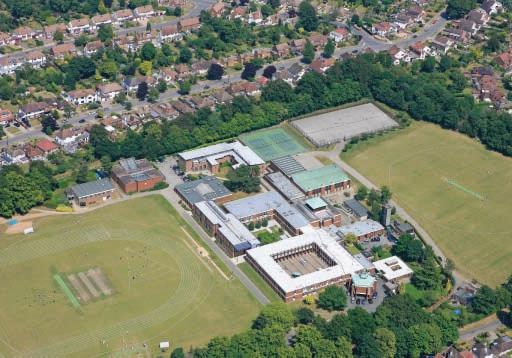 David Budds
34 – Olavian 2012
SPECiAL PRiZES
Giles Pilcher Prize for Public Service
(Awarded by The Old Olavians’ Lodge No.5758)
Timothy Munday
John Marshall’s Educational Foundation Prizes
Jennifer Cocke
Udit Gadkary
Charlotte Gadsby
Frank Kibble
Jonathan Morris
L.W. White Prize for Sporting Activities
Christopher Barnett
I.W. Kirk Prize for Sportsmanship
Ben Read Trophy
Senior Victor Ludorum
Sidney Tweedy Chess Cup
Douglas Keeble Prize for Fives
Matthew Holmes
Matthew Holmes
Oliver Taylor
Duncan Bell
Harry Ravi
Chambers Prize for Leadership
The Anthony Jarvis Shield
The Woodard Board Prize
Matthew Holmes
Isobel Eaton
Lydia Leather
Jonathan Morris
Michael Pugh Prize for Public Speaking
The Renshaw Shield for Debating
Barney Holleran
Alexander Schymyck
O.O Lodge Prize for Contribution to School Life
Robert Laidlow
Cathedral Parish Prize for Voluntary Service
Alistair ONeill
Leslie Sanders Prize for English Literature
Laurence Tennant
French Prize Louis Vaughan-Williams
A.W. Walker Prize for German Matthew Edwards
Spanish Prize
Matthew Holmes Prize for Classics
The Ashley Prize for History
Elizabeth Wood
William Dudley
Jack Sutton
Antiquarian Society Prize for a History Project
Geography Prize
Economics Prize
Kate Richards
Christopher Speller
Timothy Munday
Harry Little Prize for Mathematics
Paul Slade Prize for Physics
Duncan Bell
Alexander Grainger
Brian Ruth Memorial Prize for Physics
Gnaanachelvan Prize for Biology
Biology Project Prize
George Dyson Prize for Chemistry
Chemistry Project Prize
Thomas Saunders
Matthew Waite
Harriet Millar
Matthew Wootten
Brian Wang
Computing Prize Not awarded this year
Phyllis Packer Prize for Practical Musicianship
An Old Olavian Prize for Music
Religious Studies Prize
Art Prize
Graphics Prize
Robert Laidlow
Thomas Saunders
Molly Simpson
Aedryan Chklar
Michael Battle
Design Prize Not awarded this year
Susan Owen Medal for Drama
Elizabeth Wood
GOVERNORS’ AWARDS
Angus Dalgleish
Kent U17 Cricket
Suraj Sridhar Kent U17 Cricket
Timothy Adelani Kent Swimming
Matthew Holmes
Kent U18 Rugby
Richard Adeniyi-Jones London & South East
U18 Rugby
Abigail Pottier Kent U18 Rugby
Duncan Bell Outstanding achievement in National Mathematical Competition
William Howarth Woodard Musician of the Year
Thomas Steer
Woodard Musician of the Year runner – up
Eamonn Cox
Exceptional Contribution to School Music
PRiZES FOR ACHiEVEMENT iN PUBLiC EXAMiNATiONS
H.G.Abel Prizes for A-Level
Michaela Agapiou
Tony Barker
Duncan Bell
William Dudley
Folu Awe
Michael Battle
Payal Chheda
Roy Edward
Ahmed El-Hussein Udit Gadkary
Charlotte Gadsby
Rebekah Grant
Jed Hemsley
Matthew Holmes
Yibo Jin
Zoe Liu
Alexander Robbins
Evelina Russell
Ginny Shooter
Jack Sutton
Matthew Waite
Tom Watson
Alexander Grainger
Shubham Gupta
John Holden
Daniel Hong
Priyanka Kulkarni
Timothy Munday
Tobi Rotimi
Thomas Saunders
Christopher Speller
Eddie Vander
Brian Wang
Matthew Wootten
Olavian 2012 – 35
PRiZES FOR ACHiEVEMENT iN PUBLiC EXAMiNATiONS (continued)
For G.C.S.E.
Michaela Agapiou Alexandros Adamoulas
Timothy Adelani Gavin Benson
Lucas Bertholdi-Saad
Fintan Calpin
Charlie Bishop
Anthony Cheuk
Angus Dalgleish Arun Desouza-Edwards
Jordan Fisher
Thomas Franks-Moore
Mitchel Fruin David Giles
Max Hamilton-Jenkins
Charlie Jones
James Laing Max Legemah
Bennett Marcellus Kishan Ragutheeswaran
Skanda Rajasundaram Aleksandar Ristic-Smith
Dominic Robson Will Shanks
Caspar Smart Suraj Sridhar
James Wood
FORM PRiZES
11J Ben Cole, Timi Soyombo
11K Nikhil Patel, William Ruiz
11L Isaac Muk, William Shanks
11M Jordan Fisher, Aleksandar Ristic-Smith
11N Joe Cox, Benjamin McKechnie
10J Joe Dudley, Janushanth Sritharan
10K Matthew Allen, Teddy McAleer
10L Jack Bradfield, Peter Debenham
10M Hao Zen Ho, Matthew Roberts
10N Abhishek Patel, Gautham Reddiar
LOWER SiXTH FORM PRiZES
These are awarded by the Parents’ Association for “enthusiasm,commitment and imagination in the use of the Lower Sixth year’.
Charlotte Flowers, Daniel Powell, Yasmin Razzaque, Caroline Yuen, Jack Cordrey, Asher Leeks, Ben Fryza, Katherine Shanahan, Abraham Siregar, Matthew Burns-Watkins
GRANTS FOR OUTWARD BOUND, TRAVEL & GAP YEAR PROJECTS
The James Burdett Prize for Gap Year Travel: Lydia Leather. Gap year placement for 5 months in a Law firm in Ghana.
The War Memorial Prize: Matthew Edwards. For travel to Germany to practice linguistic skills before going to University.
Zoe Liu.
For travel to Hong Kong and Japan to experience culture and heritage before going to University.
Oliver Taylor. For Gap year travel to Australasia.
The Potto Hicks Award: Michaela Agapiou. For travel to Europe to experience the culture and to practice linguistic skills before going to University.
The Witton/Newmarch Award: Jonathan Morris.
For travel to several European cities to experience the culture and engineering marvels before commencing a Gap year placement with an Engineering Consultancy.
The Lennie Award: Robert Laidlow
For travel to Germany to experience the musical culture before going to University.
Anomitro Ash
Gap year placement in the London Audit sector with KPMG
MARSHALL’S AWARDS
Grants were made towards expenses as follows:for the Woodard Foundation Senior Prefects Course for Woodard Foundation Masterclasses for the Woodard “Musician of the Year” finals for a JACT Ancient Greek Summer School for entry to Mathematics Competitions for Fieldwork including Biology, Geography, History and Languages for Senior Art and Design Project Installations
In addition a number of students received expenses in regard to music tuition.
Awards were also made to a number of students at the start of their Higher EducationCourses last year. Marshall’s Grants were also awarded to assist in enabling students to go on field trips which families could not otherwise have funded.
36 – Olavian 2012
FULL COLOURS 2012
Senior Colours
Senior Prefect Colours for Commitment to the School:
Timothy Munday, Jennifer Cocke, Udit Gadkary, Charlotte Gadsby, Frank Kibble, Jonathan Morris
For contribution to the life of the School Community:
Isobel Eaton, Robert Laidlow, Lydia Leather, Udit Gadkary, Jonathan Morris, Jack Drabwell
BADMINTON Eamonn Cox, Vincent Lam
BASKETBALL Scott Johnson, Daniel O’Connor
CHAPEL Eamonn Cox, Thomas Steer
CHESS Duncan Bell, Udit Gadkary, John Holden, Casper Poole, James Side, Miles Thomas
CRICKET Christopher Barnett
DEBATING Barney Holleran
DRAMA Edward Barker, Eamonn Cox, William Howarth Louis Vaughan Williams, Elizabeth Wood
FIVES Anthony Barker, Davin Chandra, Edmund Phillips, Harry Ravi, Brian Wang
FOOTBALL Daniel Hickey, Declan Murphy, James Murphy, Callum Scotland
HOCKEY Shubham Gupta, Edmund Phillips
MUSIC: Edward Barker, Finnuala Butler, Eamonn Cox, Jonathan Essam, William Howarth, Robert Laidlow, Daniel Morland, Timothy Munday, Thomas Saunders, Thomas Steer, Madeleine Stein, Jack Sutton, Matthew Wootten
NETBALL Eloise Andrews, Emma Simber
RUGBY Richard Adeniyi Jones, Matthew Holmes
SQUASH Daniel Morland
TABLE TENNIS Cameron Sanders
OTHER CLUBS & SOCIETIES
Languages Clubs: Alexander Czepliewicz, Shubham Gupta, Yibo Jin
Chemistry Club: Charlotte Gadsby, Vincent Pang, Kaushik Ramesh, Alexander Robbins, Matthew Waite,
Amnesty International: Lydia Leather, Harry Ravi, Harriet Sands, Branan Sivanantha, Medics Society: Harriet Millar, Kaushik Ramesh
MUNGA: Barney Holleran
Intermediate Colours
BASKETBALL Mitchel Fruin
CHESS Justin Brown
CRICKET Angus Dalgleish, Suraj Sridhar
DESIGN VENTURA
Maximilian Legemah, Benjamin Kwok, Keir Bowater, Daniel Dawson, Robert Edghill
DRAMA Fintan Calpin, Max Miller, Fergus Macdonald
FIVES: Samuel Fergusson, Benjamin Kwok, Dominic Robson
MUSIC: Sebastian Cook, Thomas Dean, Anton Levi, Shunta Takino, Samuel Williams, Matthew Yau, Dominic Jelf, Fergus Macdonald
RUGBY: Angus Dalgleish, Nicholas Colling, Mitchel Fruin
TENNIS Shunta Takino
Junior Colours
RUGBY: William Adams, William Belsham, Ernie Chan, Tom Cordrey, Micaiah Felix, Leo Henderson, Daniel Jenkins, Douglas Mathers, James Perera, Sean Seeds, Javagar Selvarajah, Dylan Stewart, James Wagstaff-Hall, Iwan Haines, Tom Willis, Samuel Wootten,
FIVES: William Belsham, William Edmonds, Leo Henderson, Nathan Lewis, Harry Russell, Nicholas Wright,
ATHLETICS: Benjamin Stanbury,
DRAMA: Oscar Ridout,
CHESS: Xavier Chitnavis, James Wagstaff-Hall,
MUSIC: Mark Appiah, Peter Gibbs, Jonathan Lancaster, Thomas Miller, Oscar Ridout, Laurence Squires, Iwan Haines,
Olavian 2012 – 37
Vi Form News
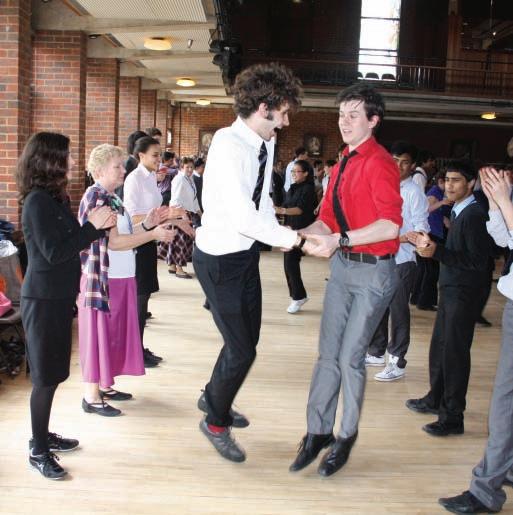
Year 12 Team Building Day
At the beginning of the term, the whole of Year 12 travelled to Blacklands Farm to take part in a variety of challenges in a variety of team-building activities. The day proved to be a fun-filled eggstravaganza [sic] culminating in the whole year turning out to watch the final test of their team’s ingenuity in creating a parachute to safely return their carefully guarded egg to terra firma from the abseil tower.
Young Olavians’ Day
On Wednesday 7th September, current students and recent leavers enjoyed a day of sporting events as part of our annual Young Olavians’ Day (now occupying its new, earlier time slot in the School’s calendar) There were many close fought matches in rugby, football, hockey, basketball and fives and final results included a 3-2 victory in the football for the 1st XI and a 19 -19 draw in the rugby for the 1st XV. Many thanks to all the Young Olavians and parents who came along to support the teams taking part.
University Interview Preparation Day
Fifty Y13students took advantage of the Interview Preparation Day held on Saturday 19th November. David Vaiani of Aspire2oxbridge ran a debating skills workshop and as wellas mock interview practice for Geographers and Historians. Dr Steffen van Bakel and Dr Maria Vigliotti of Imperial College,presented a seminar to those applying to read Mathematics and a variety of Science related degree courses. And Veterinary Scientists participated in discussion groups with our Medics on top of gaining interview practice.
Prizegiving
The annual prize day was held in the Great Hall on Thursday September 15th when the prizes were presented by Old Olavian Dr Noël Tredinnick, Director of Music at All Souls Langham Place and Professor of Music at Guildhall School of Music and Drama. As usual the Chairman of Governors, the Headmaster and the Heads of Year 11 and Sixth Form all provided a review of the year and the musical items concluded with a rousing rendition of Jerusalem conducted by Dr Tredinnick.
Festival 2011
This year’s Festival took place on Thursday 15th December and saw students enjoying an extended break and an afternoon off timetable running stalls and attending events such as ‘Boys vs Girls netball, all in the
name of raising money for charity. Highlights included students and staff taking part in ‘Just a Minute’ and ‘Beat the Goalie’. This year’s chosen charity is the Woodard Schools Foundation charity initiative to complete the building of a new Langalanga school in Kariandusi, Kenya. A firm Festival favourite is Cabaret which this year gave members of the Sixth Form the opportunity to show case their various talents and was attended by over two hundred people on Friday 9th December.
Higher Education Evening
The school’s annual Higher Education Evening was held on Thursday 15th March for all Year 12 students and parent(s). Presentations provided an overview of the whole UCAS application process, including key dates and finance, with representatives from the universities of Bristol, Queen Mary’s and Birmingham presenting important information. This was followed by an Oxbridge Evening on Thursday 29th March providing additional information specifically about applying to Oxford and Cambridge.
Extended Project Qualification
This year a record number of Year 13 students completed the Extended Project Qualification, culminating with a Presentation Evening on the Monday 5th March. The project involves writing a six thousand word dissertation on a topic chosen by the student linked often to what they are to study at university. There have been a number of interesting choices this year, including the sustainability of energy, time travel, bankers’ bonuses and an assessment of the perception of the controversial Pope, Alexander VI and his family the Borgias.
Prefect Teams
This year over a hundred and sixty applications were submitted to be part of the Sixth Form Prefect Team and since February half-term the new prefects have been in place helping with the smooth running of the school. Students have been selected to carry out a number of different roles ranging from form and academic prefects to duty and sports prefects.
Traffic Education Course
At the end of the Spring Term, all Year 12 students attended an intensive PSHE session on Traffic Education featuring accident causation analysis, hazard perception skills, attitude to driving and road traffic rules. The sessions were delivered by the Casualty Reduction and Sustainable Travel Unit from Bromley and raised awareness of Road Safety as students begin to past their driving tests.
40 – Olavian 2012
VI Form News
Scottish Dancing
On Thursday 10th May, Year 13 was collectively herded into the Great Hall to partake in a session of Scottish dancing, guided in part by some seasoned professionals. Students were shown their first dance move and were soon twirling and dancing around, making sure they knew the difference between a strathspey and a reel.
interview Skills Workshop
On Tuesday 17th July Year 12 took part in an interactive and practical conference to help prepare them for the inevitable interviews they will face in the coming month. The day gave students an insight into what universities look for in successful candidates, how to make an outstanding impression, how to handle interview questions and how to give an engaging presentation and get your message across.
Senior Prefects
Congratulations to the new Senior Prefect team for 2012 – 2013. School Captains are Mohammad Fallaha (12P) and Grace Boyle (12P) and are supported by Vice Captains James Atkinson (12Z), Eleanor Goodman (12P), William Pyle (12W) and James Watson (12W)
The role of the School Captain(s) is to be the leading role models and ambassadors for the School, playing a key part in the ‘public face’, making speeches at important formal events such as Open Day, Prizegiving, Leavers’ Dinner and Sixth Form Information Evening, welcoming and hosting visitors to the School. They respond to occasional events which require special arrangements, attendance at Year Meetings or outside ceremonies, e.g. serious illness or death of a student or member of staff. Old Olavians who reach 100 years of age are visited by the Captain of School, and there have been two in the last four years! With responsibility for managing the team of Senior Prefects, they promote a full involvement of the Sixth Form in School life, leading by example, and maintaining an ethos which is a credit both to individuals and the School.
The responsibility of the Vice-Captains of School is also to make a very significant contribution to the ethos and day-to-day running of the School. They too represent the School at formal occasions and also lead by example as role models for the whole School in their various daily activities and commitments. Their duties include supervising the Duty Prefects in charge of the break and lunch queues, organising House Competitions such as House Football, House Debating and the O-Factor, and overseeing the integration of new students, both external and internal, into the Sixth Form through the Ambassador Prefects.
To guide their work and involvement, as well as promoting opportunities for an exchange of views, the whole Senior Prefect team meets regularly with the
Headmaster, the Director of Sixth Form, and the Sixth Form Association. Their influence is wide-ranging, they take their responsibilities very seriously and their value to St Olave’s should not be underestimated.
News of Recent Vi Formers
Luke Abraham has been awarded a First Class in his university exams at Saint. John’s College Cambridge. He has been made a scholar of the college and has been awarded a Leathem (Wright) College Prize and is the joint winner of the Johnston prize for Part 1A Mathematics.
David Hewlett has attained a First Class at Emmanuel College Cambridge and has been elected into a Senior Scholarship.
Elizabeth Wilkins has gained a distinction in the first Public Examinations in Human Sciences at Saint Catherine’s College, Oxford.
Rishi Dutta has attained a First Class in the Economics Tripos, Part 11A at Fiztwilliam College Cambridge.
Zubin Siganporia has gained a First Class Degree in the Final Examinations in Mathematics at Saint Catherine’s College, Oxford.
David Long was awarded with a MEng with First Class Honours degree in Aerospace Engineering at the University of Bristol.
Olavian 2012 – 41
Joint Captains of School, 2012-13
Benjamin Dixon has been awarded with a First Class MEng Honours degree in Mechanical Engineering at the University Of Bristol.
Georgina and Elizabeth Dalgleish (2008 – 2010) have both kept themselves busy since leaving St. Olave’s two years ago. Having won places at Cambridge University, both spent a year rowing for their colleges with both winning the prestigious ‘blades’ for their performances. They then returned to the netball court where they participated in the varsity match against Oxford and, despite losing, both were awarded ‘Full Blues’, the highest sporting award that can be bestowed a university player.
Leavers’ Weekend
The Leavers’ weekend began on Friday 22nd June when Year 13 students dressed up in their dinner suits and ball gowns to attend the Grand Leavers’ Ball at Westerham Golf Club. The students thoroughly enjoyed dancing the evening away and looking forward to the long break they so thoroughly deserved. This was then followed by the Leavers’ Dinner on Saturday 23rd June where students were joined by their parents for a formal meal and speeches, given by the Headmaster, Mr Rees, Director of Sixth Form and Tim Munday (13I), Captain of School.
Mr Rees’ speech at the Leavers’ Dinner
Ladies and Gentlemen, Headmaster, parents, teachers and the class of 2012- be happy.
If I could offer Year 13 only one tip for the future, happiness would be it. It was one of the things I said that I wanted you all to be when you joined the Sixth Form and I hope that happiness has followed you through and remains with you after you leave St Olave’s.
The long term benefits of happiness have been proved by lots of research whereas the rest of the advice in my speech has no basis more reliable than my own views.
I will share this advice with you now.
Enjoy the power of being young. In 20 years you’ll look back at photos and videos of yourself, such as wearing a crown as King Duncan, Alex Ekong; racing Mr Craig at Olympia; wearing rabbit ears, Yahya; standing with your team mates on the Sydney Harbour Bridge; preparing to dive off the coast of South Africa or even when you re-enacted the Apprentice for Festival and recall in a way you can’t grasp now how much possibility lay before you.
Don’t worry about the future; or worry, and know that worrying is as effective as trying to stop Julian Bell playing his music too loud in the Common Room.
Do one thing every day that scares you. Like doing a bible reading in assembly or telling Mrs Updsell that you’ve forgotten your homework.
Sing. Whether it is by repeating some of the amazing performances we saw by both boys and girls in Cabaret, the heartfelt and tear jerking rendition of Jerusalem at the 450th Anniversary Commemoration or even during the high quality performances of the O Factor. I never thought I would be hearing Year 13 students singing the following lines from a Wham song: You put the boomboom into my heart You send my soulsky high when your lovin’ starts Jitterbug into my brain Goes abang-bang-bang ‘til my feet do the same.
Floss. Floss daily.
Try not to be jealous of other people; sometimes you’re ahead, sometimes you’re behind. The race is long, and in the end, you are only racing yourself. Surely, it is far too time consuming running a race against yourself?
Keep your old school reports, throw away your old bank statements. Except the one which says that your student loan has been paid off. Frame that one and stick it on your wall! Wow – that’s going to be a long time coming!
Some of your old school reports may include words of wisdom of your ability in Mr Craig’s subject, Classics:
On the one hand he is really a boy to whom I warm especially when he tries hard and really commits himself. At other times he becomes this boy who wants to give a running commentary on everything as though he were in the Royal Enclosure at Ascot. I imagine that Dionysus was in his cups when he heard Jack singing Black Sabbath at Epidaurus!
He will need to go into the examination armed like Achilles to slay any question on the nature of the gods, the presentation of war, the wreckage of human hope and the optimism of the Golden Age.
Never pat an animal with sneaky eyes. I should have given this advice at the beginning of Year 12 to Isobel who I recently spoke to about the state of her uniform only to be informed that the large rip in her tights and cut on her leg was due to a dog attacking her in the street. You will be pleased to know that the Isobel and the dog eventually recovered.
Don’t feel guilty if you still unsure about the course you about to start at university or what you want to do when you leave university. The most interesting people I know, did not know at 22 what they might do with their lives, and some of the most interesting 40 year olds I know still don’t.
42 – Olavian 2012
Use plenty of sunscreen. Just look at how Bridgit Bardot has changed over the years.
Be kind to your bodies, rugby and netball injuries will ache when you are older. Think about Ilyas missing out on the Scottish Country Dancing and the Softball during the last few days of the Sixth Form to remind you of that.
Maybe you’ll marry, maybe you won’t, maybe you’ll have children, maybe you won’t, maybe you’ll divorce at 40, and maybe you’ll mimicking the Rees hand dance’ as shown by the tutors and I during the Leavers’ Video’ or even tap dancing like Eamonn on your 75th Wedding anniversary. How did you persuade me to do that Chris Barnett?
Get to know your parents, talk to them about university, include them in your decisions. You can then ask them to visit you in late November when your student loan is running out and you’re in need of a good meal or some new clothes.
Be nice to your brothers and sisters; they are your best link to your past and the people most likely to stick with you in the future.
Understand that friends come and go, but for the precious few who you keep hold of. Right now most of you maybe sitting by those precious few! Work hard to bridge the gaps in geography and lifestyle because the older you get, the more these people will be a gateway to the past. When new doors open, never close the old ones.
Travel. Mr Heap keeps telling me constantly that Bermuda is very nice this time of year.
Accept certain inalienable truths, prices will rise, Wales will never win the rugby world cup, although we were so close this year, England will never again win the football world cup, you too will get old, and when you do you’ll fantasize that when you were young, prices were reasonable, England had a fantastic football team and
school children never blocked residents’ driveways when parking their cars.
Learn to play the banjo.
There are a number of people I would like to thank for all the hard work they have put in with you as a year group.
The Senior Prefect Team, especially Tim, as School Captain, for all your help running the school. I don’t know how it would be done without you. This team has been the constantly looking for improvement in everything they have been involved in. An overnight visit last year to Worksop College as part of their prefect training lead to Udit expressing concern on his evaluation form that there were not enough mirrors in the toilets to ensure his hair was neat, gelled and tidy for breakfast.
Your tutors have worked so hard all year, defending you when things have not quite gone to plan, writing references, supporting you, and passing on messages when needed.
Mrs Johnson, for her work with Oxbridge and UCAS through interviews, workshops, advice and talks.
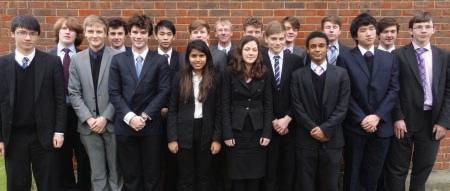
Your teachers for the extra revision sessions, answering emails, patience, lots and lots of patience, feedback on your homework, however late it was handed in and their immense hard work to ensure that you get the best teaching possible.
Lastly, Mrs Updsell, your Head of Year who has defended you constantly, worked tirelessly to ensure the smooth running of the Year group and been a supportive ear, not just to students, but to me throughout your time in the Sixth Form.
I thank all of you, but finally remember, trust me on the happiness.
Olavian 2012 – 43
24 students gained Oxbridge Offers
Richard Olufemi Adeyemi
Adeniyi-Jones
Leavers’ Destinations
University of Exeter
Sinclair Kweku Mensah Adu University of Warwick
Michaela Agapiou
University of Manchester
Philosophy and Political Economy
Mathematics, Operational Research, Statistics and Economics
Biochemistry with Industrial/Professional Experience
Mohammad Salman AghaUniversity of NottinghamEconomics
Eniola Alonge
Eloise Andrews
William Baguley
Thomas Robert Ballaster
Antony Barker
Edward Barker
Christopher Barnett
Freddie Barr-Smith
University of Durham
2013 Application
History
University of BirminghamChemistry
University of York
Philosophy, Politics and Economics
Pembroke College - CambridgeMathematics
University of York
Computer Science
University of ManchesterManagement (Marketing)
University of Nottingham
Elliot Lawrence BatesUniversity of Exeter
Michael Battle
University of Bristol
Computer Science and Management Studies
Geography (Science)
History
Alexander Matthew BearUniversity College - LondonMedicine (6 years)
Duncan Bell
Julian Bell
Jack Bint
Sean Alexander Paul Bossick
Charles Bowen
Grace Boyle
Susan Bradford
Jobie Budd
Finnuala Hallett Butler
Patrick Carter
Taylor Cavendish
Davin Harish Chandra
Ryan Charnock
St. John’s College - CambridgeMathematics
London School of EconomicsGeography with Economics
University of Exeter
Geography (Science)
University of York Politics
University of Exeter
Classics
University of NottinghamAmerican Studies and English
University of Glasgow
University College - London
University of Leeds
University of Exeter
University of Bath
English Literature
Electronic and Electrical Engineering (International Programme)
2013 Application
Graphic and Communication Design
Economics
2013 Application
Mathematics
Payal Chheda University College - LondonEconomics
Aedryan Chklar
Joseph Cobham
Jennifer Amy Cocke
Yinsu-Claire Collins
Benedict Cook
Eamonn Cox
University of Bristol
Law
University of SouthamptonEconomics
University of Bristol
University of Warwick
University of Bristol
Mathematics
Classical Civilisation
Ancient History
2013 Application
Alexander Makoto CzepliewiczLondon School of EconomicsEconomics and Economic History
Deeya D’Souza
Drew Davis
University of Sussex
2013 Application
Psychology
44 – Olavian 2012
Jack Drabwell University of Newcastle
Classics
William Dudley Brasenose College - OxfordClassics I
David Duncan University of Lancaster
English Literature, Creative Writing and Practice
Isobel Eaton University of Newcastle Architecture
Roy Edward 2013 Application
Matty Edwards University of Bristol
French and German (4 years)
Conor Egan University of LoughboroughBusiness Economics and Finance
Jennifer Kenechi EkereUniversity of BirminghamLaw
Alexander Ekong University of BirminghamFrench Studies and History (4 years)
Ahmed El-Hussein Queen’s College - CambridgeMedicine
Jonathan Essam University of Cardiff
Mechanical Engineering (Year in Industry)
Dario Ferrari Royal Holloway - LondonClassical Studies
Raphael Kumin Rothschild
Fischer University of Bristol Economics
Jennifer Flagg University of Reading Psychology
Elizabeth Alice FosterUniversity of Liverpool Mathematics
Nicholas Mark Meredith FosterUniversity of Bristol Biochemistry
Udit Gadkary London School of EconomicsEconomics
Charlotte Jean GadsbyUniversity of Bristol
Medicine - MBChB Standard entry
Alexander Grainger Wadham College - OxfordPhysics (4 years)
Rebekah Grant University of Edinburgh
Veterinary Medicine
Samuel Greenslade University of Lancaster Economics
Shubham Gupta
Rajvir Singh Guram
Robert Haythorpe University of Exeter
Daniel John Hearn University of Sheffield
2013 Application
2013 Application
Mathematics with Economics
Mechanical Engineering with a Year in Industry
Jed Hemsley University of Warwick Economics
Yvette Nicole Lifton HeslopUniversity of Durham
Geography
Daniel Hickey University of Leeds Mathematics
John Arthur Holden Downing College - CambridgeLand Economy
Barney Holleran Hertford College - OxfordPhilosophy, Politics and Economics
Matthew James HolmesUniversity of Durham Economics
Daniel Peng Xiang HongUniversity of Durham
William Andrew Howarth
Jack Howse Ravensbourne
James David Jackson University of Warwick
Economics
2013 Application
Digital Film Production
Mechanical Engineering
Yibo Jin Trinity College - CambridgeNatural Sciences
Andrew Johns Imperial College - LondonMaterials Science and Engineering
Scott Andrew JohnsonUniversity of LoughboroughInternational Relations
James Hassan John KenwardUniversity of Reading
Film & Theatre
Frank Kibble University of Exeter History
Laura Kate Krywko University College - LondonMathematics
Priyanka Kulkarni Pembroke College - CambridgePolitics, Psychology and Sociology
Robert Laidlow Emmanuel College - CambridgeMusic
Olavian 2012 – 45
Vincent Hei Man LamUniversity of Southampton
Lydia Leather
Ryan Lok Wai Lee
Mechanical Engineering/Sustainable Energy Systems
University of NottinghamLaw
University of Reading
Lap Bon Leung University of Cardiff
Callum Little
Graphic Communication
Biomedical Sciences (Standard Route)
2013 Application
Zoe Liu Clare College - CambridgeAsian and Middle Eastern Studies
Hannaire Marion MekaouarUniversity of Warwick
Olga Mikhailovski
Christopher Miles
Politics with French (4 years including year abroad)
2013 Application
University of LoughboroughChemistry
Harriet Olivia Blanche MillarUniversity of BirminghamMedicine (5 years)
Edward James MillardUniversity of Warwick
Daniel Robert MorlandUniversity of Bath
Vanessa Moro Queen Mary - London
Jonathan Philip MorrisUniversity of Sheffield
Ilyas Morrison
Frederick Morton
University of Exeter
Physics
Civil Engineering
Physics
Mechanical Engineering with a Year in Industry
2013 Application
Classics
Timothy Munday Gonville&Caius Coll. -CambridgeEconomics
Declan Murphy University of Leeds
Mechanical Engineering
James Murphy Imperial College - LondonBiochemistry with Research Abroad
Ryan Murphy
University of Exeter
Navani NavaratnarajahQueen Mary - London
Ashaki Newton
Geography (Science)
Medical Engineering
University of ManchesterModern History with Economics
Harriet Noble Ravensbourne
Animation
Joseph Dominic Patrick O’Brien London School of EconomicsLaw (Bachelor of Laws)
Daniel O’Connor
Peter Kagame Ocen
Daniel Oldham
University of NottinghamAmerican Studies and English
2013 Application
University of SouthamptonEnvironmental Sciences
Alexander Patrick OpenshawUniversity of NottinghamGeography
Vincent Chun-Yip PangUniversity of Durham
Mirej Patel
Edmund Phillips
Simon Pimm
Caspar Poole
University of Sussex
University of Newcastle
University of Bath
Combined Honours in Arts
2013 Application
Medical Neuroscience
Mechanical Engineering
Mathematics
Abigail Victoria Frances PottierRoyal Veterinary College - LondonVeterinary Medicine
Kiran Preddy
Luqman Randeree
Harry Ravi
Kate Richards
University of SouthamptonGeography
University of Newcastle
University of Exeter
University of York
Medicine (stage 1 entry)
Economics
History
Marko Ristic-Smith University College - LondonGeography
Alexander James RobbinsChrist’s College - CambridgeMedicine
Daniel Rogerson
Eliott Rooke
Oloruntobi Rotimi
University of Exeter
University of Exeter
Joseph Runicles University of Leeds
Biological Sciences
Geography
2013 Application
History and Roman Civilisation
46 – Olavian 2012
Evelina Russell University of BirminghamMedicine (5 years)
Leonora Ryle University of NottinghamMathematics and Philosophy
Cameron Sanders University of York Economics
Harriet Sands
2013 Application
Thomas Saunders Gonville&Caius Coll.- CambridgeMathematics
Jacob Savage University of Warwick Physics
Alexander Schymyck Trinity College - OxfordPhilosophy, Politics and Economics
Calum Scotland University of NottinghamModern Languages with Business
Abilasa Selladurai University of Leeds
Ginny Shooter University of Bath
Dental Surgery
Physics
James Side University of Durham Geography
Emma Jane Simber University of Durham Geography
Molly Simpson University of Bristol
Ramciyan Sivakumar
Branan Aaron Sivanantha
Sanadani Sivapalan
Philosophy
2013 Application
2013 Application
2013 Application
Adam William SmithUniversity of BirminghamAncient History
Liana Jade Smith University of Durham Classical Past
Rosannah Smith University of Durham
Natural Sciences
Christopher Speller Mansfield College - OxfordGeography
Madeleine Rebecca SteinRoyal Veterinary College - LondonVeterinary Medicine
Gabrielle Ami Harrison Stocker University of Bristol
English
Jack William Sutton Selwyn College - CambridgeHistory
Jamie Taylor University of Exeter Economics
Oliver Taylor University of NottinghamVeterinary Medicine
Loren Emily Tearle University of BirminghamBiochemistry
Laurence Tennant Gonville&Caius Coll. - CambridgeEnglish
Miles Douglas ThomasUniversity of Bath
Mathematics
Shyam Kishorchandra VadukulUniversity College - LondonEconomics
Edward Vander University of Bath
Louis Oscar Vaughan WilliamsUniversity of Leeds
Nahid Ahmed WadudUniversity of Bristol
Civil Engineering
French and Mathematics
Mechanical Engineering
Matthew Malcolm Andrew Waite Girton College - CambridgeMedicine
Oscar Wallace University of Exeter
Philosophy and Sociology
Edward Wallis University of SouthamptonArchaeology and Geography
Brian Wang Robinson College - CambridgeMedicine
Jaideep Wasu University of Bristol
Rebecca Watson University of Bristol
Management
Physics
Thomas Watson King’s College - CambridgeMedicine
Jonathan Webb University of PortsmouthBusiness Economics
Ryan Kenneth WilkinsonUniversity of Warwick
Elliot Williams-FletcherUniversity of Exeter
James Wong
Elizabeth Wood University of Bath
Philosophy
Physics with Astrophysics
2013 Application
Modern Languages and European Studies (Spanish and ab initio Italian)
Matthew Makoto WoottenSt. Catharine’s Coll. - CambridgeNatural Sciences
Kevin Wing Yip University of SouthamptonMedicine (5 year)
Olavian 2012 – 47
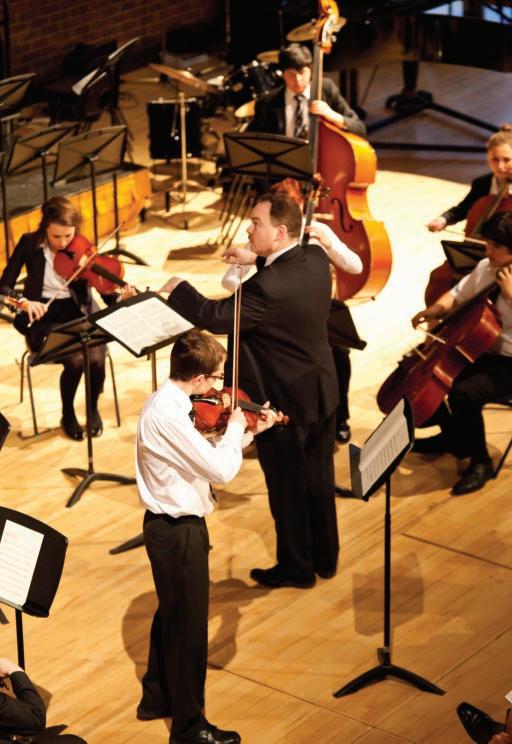
48 – Olavian 2012
Clubs & Societies
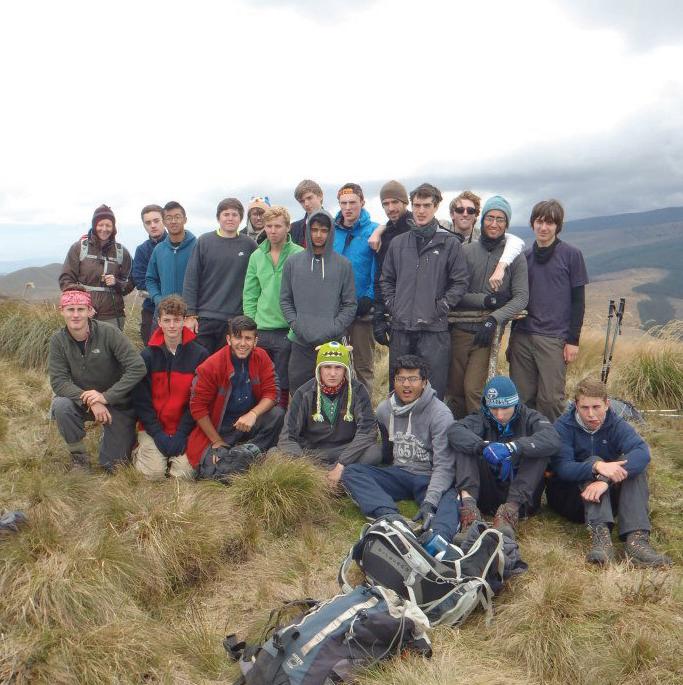
Clubs & Societies
Chemistry Club
Last year, Chemistry Club remained as popular as ever at Saint Olave’s. Great fun was had with old favourites such as the screaming jelly baby and elephant’s tooth paste experiments, whilst Olavian ingenuity shone through when the Club improvised their own gunpowder recipe. Students enjoyed making their own ‘glow-worm’ fireworks and seeing who could produce the most vigorous sodium bicarbonate volcano, as well as witnessing the usual complement of explosions. The lower school students who make up Chemistry Club displayed impressive scientific curiosity throughout the year, taking advantage of this opportunity to extend their knowledge of practical science far beyond the curriculum. The sixth form team involved in running the Club was responsible for designing and demonstrating each week’s experiment, and this provided a valuable opportunity both to apply our A level knowledge and to broaden our understanding of chemistry as a whole. We would like to thank Mrs Morinan for making these fantastic opportunities possible, and hope that the fun will continue next year.
Asher Leeks 13X
Natural Sciences Society
The Olavian Natural Sciences Society was founded by lower sixth science students at the start of last year’s autumn term, and has expanded substantially upon its modest beginnings over the course of the past year. Student-led contributions have taken the form of weekly speeches and presentations, as well as articles written for the three journals which we have published to date, examples of which are included below. Of note for both the wide range of topics covered and the depth of understanding shown, these contributions represent valuable opportunities which Olavian scientists have taken to show-case their impressive academic ability and commitment, valuable skills for life at University. The Society has also been pleased to welcome such external speakers as a representative from Mott MacDonald engineering firm and an old Olavian now studying Biological Sciences at Oxford University, and has also enjoyed a behind-the-scenes tour of the Natural History Museum’s Coleoptera department. On top of this, the Society has attended Friday night science lectures at University College London on a weekly basis, which have effectively complemented the society’s own weekly speakers, and has travelled up to Cambridge University on two occasions in order to attend lectures on topics within Biology and Chemistry. As a student-led society
throughout, the Natural Sciences Society strongly reflects the sense of enthusiasm and affinity for science which pervades Saint Olave’s, and we hope the Society will continue its growth in coming years.
Chess 2011-2012
Chess versus King’s School Canterbury
On Wednesday 18th January, the chess A team travelled to Kings School in Canterbury for the second round of the Yateley Manor chess competition. The team, made up of Captain Duncan Bell (13M), John Holden (13G), Conrad Allison(12R), Raunak Rao (10L), Owen Messere (8L) and Rohan Shiatis (7H) performed brilliantly, each one winning his board on the way to a comprehensive 6 – 0 win. The third Kent Junior Chess Association Grand Prix tournament was held at St. Olave’s on Saturday 21st January, with good representation by our own students in the U14 and U18 sections. Duncan Bell (13M) was joint winner of the U18s, with Conrad Allison (12R) coming third. The Schools’ prize for the day was won by St. Olave’s, who are heading the GP table after three tournaments.
Yateley Manor Chess Comp 03/02/12
On Friday 3rd of February six students represented St. Olave’s against Eltham College in the Yateley Manor chess competition. The match ended 3.5 – 2.5 in our favour, but the victory went to Etham due to their age advantage. A big well done to Duncan Bell, John Holden, Conrad Allison, Raunak Rao, Nigel D’Souza and Owen Messere, who will now compete in the Plate Championship.
Chess v. Wilson’s Grammar School
On the 15th March 2012, St.Olave’s Chess Team faced a strong Wilson’s Grammar School B Team in the first round of the Yateley Manor Plate Competition.
The team of Duncan Bell, Rohan Shiatis, John Holden, Conrad Allison, Raunak Rao and Owen Messere, were able to win convincingly, with an almost perfect 5.5 points out of the six matches played.
Unfortunately, subsequently, the team played Wilson’s A and lost 4-2, thus being knocked out at the quarter finals.
Russell Trophy’ Schools’ Jamboree
The St. Olave’s U18 chess team achieved a very creditable result in the Surrey ‘Russell Trophy’ Schools’ Jamboree
50 – Olavian 2012
held at Wilson’s School on Friday 16th September against twelve other teams from Surrey, Kent and Middlesex schools. There was some exciting chess played by John Holden (13G), Duncan Bell (13M) Raunak Rao (10L), Gautham Reddiar (10N), Owen Messère (8L), Conrad Allison (12R), Alex Tse (12Z) and Asher Leeks (12X).
Millfield 15th October 2011
Saint Olave’s A-team narrowly came second, behind Winchester College, and Duncan Bell and Conrad Allison won board prizes, as did Robert Lobo in the B Team. Well done to all who took part.
Southern Counties Chess Union Open U14 Tournament
There is always that special story to tell with every hard fought victory. Every county and virtually every player will talk about that elusive half point that evaded them or that they managed to grind out through sheer obstinacy, or that victory which somehow turned to defeat or that win from a completely lost position. This tournament had it all and more.
The counties entered were Kent, Essex, Surrey, Berkshire and Sussex and excitement mounted as all counties were still within a shout of winning going into the last round.
Kent was equal first with Berkshire. Surrey was just a point behind and Essex a seemingly distant fourth. Then for Kent, three early losses in the last round started the heart racing. Perhaps it was not to be our day after all. Berkshire was out in front, but Essex was churning out win after win and was soon leading the way. Surrey was quietly creeping up in the background. Kent finally rallied with three successive wins and nosed themselves in front once more.
It came down to the last five boards playing. I watched anxiously as each game practically went the distance; with Kent locked in a must win game against a talented Berkshire player.
In order to lift the trophy, we needed the following to happen in three of the remaining four games: Essex to beat Berkshire, Surrey to beat Berkshire and Sussex to at least avoid a defeat against Essex. Gradually, gradually the results started filtering through. Sussex attained the draw we needed, Essex had the win we needed, Surrey the win against Berkshire and finally Kent the win which ensured we came out as Champions; based on number of wins after a three way tie on points with Surrey and Essex.
A thrilling and exciting finale!
All players played exceptionally well and for a team which were all under 12 playing in a under 14 tournament this
was truly commendable. We were very proud to lift the trophies. Hearty congratulations go to all the players and enormous thanks to the parents. Thank you to Sussex for hosting the event and the magnificent organisation of Anil Anilkumar.
Final points were:
Kent 13.5 (12 wins), Essex and Surrey 13.5 (10 wins), Berkshire 12 and Sussex 7.5
Rohan Shiatis
Counties finals - National Youth Chess Association
St Olave’s provided half the membership of the Kent under 18 team which travelled to Telford on Saturday 24th September to compete in the National Youth Chess Association Inter - Counties finals. John Holden, Duncan Bell, Raunak Rao and Conrad Allison enjoyed some very challenging games, with Raunak winning all four of his. The championship title, taken by Warwickshire (who did not have to endure such an early start!) eluded the Kent team by the narrowest of margins - just half a point.
ECF U18 inter-Counties Final
The U18 Kent team, which included four St Olave’s students (Duncan Bell (13M), Conrad Allison (12R), Gautham Reddiar (10N) and Raunak Rao (10L) were very narrowly beaten by Hertfordshire in the English Chess Federation National Inter-counties final, held at Eton College on Saturday 30th June. Hertfordshire finished with 18.5 out of a possible maximum 24, with Kent just half a point behind. It was a very exciting day’s chess.
Kent Junior Chess Association Grand Prixes
The third Kent Junior Chess Association Grand Prix tournament was held at St Olave’s on Saturday 21st January, with good representation by our own students in the under 14 and under 18 sections.
Duncan Bell was joint winner of the U18s, with Conrad Allison coming third. The schools’ prize for the day was won by St Olave’s, who are heading the GP table after three tournaments.
Duncan Bell and Conrad Allison had a very successful day at the last Grand Prix event of the Kent Junior Chess Association on Sunday 1st July, held at Sevenoaks School, with Duncan winning the Under 18 section and Conrad coming second. They also achieved these positions in the overall Grand Prix series for 2011 - 2012 and received ‘Managers’ Awards’ for their contributions to the Kent Under 18 teams over the past season. St Olave’s won the Schools’ Trophy.
Olavian 2012 – 51
Old Olavian becomes FiDE Chess Master
The School is please to report on the recent achievement of Old Olavian, Callum Kilpatrick (2003 - 2010) During 12-18th September Callum competed in the “Circolo Scacchisto Amos Cusini Livigno” chess tournament in Italy, finishing in joint 5th place. This was a very strong International event, littered with many Grand Master’s (GM).
Callum secured his 1st GM norm (in order to become a GM he needs to secure 3 such norms and have his Chess rating at GM level 2500). This is a fantastic achievement considering Callum was not even at master level prior to the tournament. It is very rare for a player to make such a leap in playing strength. As a result of this performance he has now become a FIDE Chess Master.
We congratulate him on this fine achievement and wish him continued success.
Congratulations also go to Rohan Shiatis (7H) who played in the Open Section at the Hampshire Chess Congress winning the prize for best player. His performance was particularly notable because he was the youngest player in the entire competition, playing some of the strongest adult players.
Adult County Chess
St Olave’s boys helped the adult Kent chess team to a victory over arch rivals and neighbours Essex. They were Rohan Shiatis, Duncan Bell and Raunak Rao. It is an honour to be selected as part of the adult team and indicative of the standards that these excellent juniors are capable of playing. The victory was secured by the slim margin of 1 point – particularly amazing as Kent were out-gunned on grade across all the boards except one!
Olavian Chess player selected for England
Rohan Shiatis has been selected to play chess for England against Norway and India in the upcoming Internationals to be held at the London Chess Classic at The Olympia Conference Centre, Kensington.
The main tournament is one of the most prestigious chess tournaments in the world and the top four players in the world will be arriving shortly in the UK to participate. Rohan will be rubbing shoulders (though not playing unfortunately!) with the likes of Magnus Carlsen GM, Vishy Anand GM, Nigel Short GM and Luke McShane GM.
The matches which Rohan will be playing (as a member of the England junior team) will be part of all the off-shoot satellite activities taking place around the main event.
This is an impressive achievement and we wish him continued success.
Raunak Rao
Raunak Rao (year 10) came tenth out of 75 junior players at the second English Junior Rapidplay, held at the London Chess Classic tournament on Saturday 10th December 2011. This tournament was attended by some of the best junior chess players in the country and Raunak was also able to secure third place in the Under 16 section of the tournament. Well done!
D of E Update
A total of twenty seven awards have been presented in the Spring term which included sixteen bronze, six silver and five gold awards. On Friday 30th March thirty two Year 13 students set off for the wild country of the Brecon Moorland to complete their Gold Qualifying expedition. This involved four days of trekking as a self-sufficient team, covering around 80km and spending three nights under canvas. The teams worked extremely hard in the preparations for this expedition; congratulations on their success in this venture.
World Challenge Expedition to Botswana, Namibia and Zambia
Last August, 19 students and Mr Gyford embarked on a month-long World Challenge expedition to Botswana and Namibia. Over the course of a hugely enjoyable trip, the team developed a wide range of new skills through coping with many unfamiliar situations, as well as building a strong sense of camaraderie along the way.
The trip began in Orpington, when we convened in the Pavilion on the 31st July. After a final kit check and discussion with our World Challenge leaders, Glyn and Josh, we left for Heathrow, with an 11-hour flight ahead of us. The flight was surprisingly enjoyable, largely thanks to the hospitality of South African Airways, and when we disembarked in Johannesburg, it was the first time many of us had set foot outside Europe. With spirits running high, we then boarded our transfer flight to Windhoek airport, which was surprisingly windy, and not nearly as warm as we’d expected!
Camping in a youth hostel for the first night, we cooked on a Braai (a wide grill over an open fire), eating such Namibian specialities as oryx and kudu steak. We left early the next morning after some supply shopping, and arrived at Spitzkoppe in the early evening, cooking a disastrous potato and kidney meal in our trangia stoves – not the first time we would miss home-cooked food! The next day we spent trekking around Spitzkoppe as our acclimatisation trek, led by a local guide who showed us the famous rock art, whilst also explaining to us the differences between the click languages spoken by many the indigenous Bushmen. The scenery around
52 – Olavian 2012
Spitzkoppe was breath-taking, with wildlife to match. Our guide also showed us his village, which was a thought-provoking experience, and we spent some time buying provisions in the local shop, which doubled up as the social centre of the village. This evening’s more successful meal, based around biltong (dried beef) was preceded by a dusk walk, where we watched a spectacular Namibian sunset.
Leaving early the next morning, we made a start for the Skeleton Coast, which was to be the location of our main trek. So named due to the large number of shipwrecks to be seen off-shore, unfortunately we saw no shipwrecks on our section, but seals (alive and dead) and even whale skeletons were in abundance, whilst a penguin was also spotted. Although the sand and wind made for difficult walking conditions, it was impossible not to admire the scenery, which was desolate and uniquely beautiful. After hiking for nearly 20km on the first day, we set up camp only to find out that our support vehicle was stuck in the sand, with the on-board water container empty and no fuel left for the trangias. To compound the problem, darkness came quickly, with gale-force winds and subsequent low temperatures. With attempts to dig our vehicle out failing, we excavated a large wind-break for an open fire, cooking whatever we could without water. The next morning a relief vehicle arrived with water, and after refilling our water bottles, we set out for another 20km hike, terminating at the bizarre (and deserted) Cape Cross hotel complex. Camping wild for a second consecutive night, the next morning we drove to Swakopmund and were immensely relieved to find out that we would be staying in bedded accommodation for the next two nights.
Our day in Swakopmund was spent sand-boarding in the morning – an activity developed in Swakopmund, involving jumping on thin sheets of cardboards and careering down sand dunes. After the morning’s exhilaration, we boarded a small motor-boat for an afternoon spent cruising the Western Atlantic just off Walvis Bay. With endemic Benguela dolphins accompanying our boat, we passed enormous seal colonies and even had one jump on the boat with us, whilst the luxury of eating oysters caught in the bay the same morning was in no way lost on us.
After Swakopmund, our next destination was to be the renowned Etosha national park. On a stopover on the way we visited a local Himba village, where our guide detailed fascinating aspects of their culture and heritage. These included a ‘Himba bath,’ a technique for washing involving making use of the smoke from the leaves of a particular tree, which is vital for saving water in such a dry environment, plus the requirement for a man to own five heads of cattle before he can marry.
Etosha national park certainly impressed, with its magnitude blowing us away, despite the present-day park only covering a quarter of the original 100,000km² conservancy. The park surrounds a central salt pan 130km² long (and in some places as wide as 50km²), with many waterholes around the park making it a reserve of paramount importance. Our safari was self-driven, with our driver both spotting and identifying much of the wildlife of the park. The list of game we spotted is extensive, but highlights on the first day included elephant, martial eagle, giraffe, springbok, oryx, kudu, enormous herds of zebra and even the notoriously elusive white rhino. The next day was spent driving to a camp in a different park of the national park, and on the way we saw birdlife which included black bustard, kori bustard and secretary bird, plus a number of lions. Visiting the waterhole in the evening also proved very fruitful, with some touching views of elephants interacting with each other and another rhino sighting.
The next stage of the expedition was our project phase. This was at Hippo primary school, near Gobabis, east of Windhoek. We arrived late after a long drive south, and were immediately struck by the enthusiastic greeting of the children. Hippo school caters for children between the ages of seven and thirteen and is a selective primary school, offering full board and accommodation. Our project involved painting the walls of one of their dormitory buildings and repairing a number of chairs. We got stuck into the project quickly, and the interest the children showed in us came as quite a shock! With many of them writing letters to us, they were without exception friendly, charming and impressively gifted, with most speaking several languages. This made working in the school a rather novel experience, with many of us engaging with the students enthusiastically and learning much about Namibian culture this way. We also played a St. Olave’s vs Hippo football match, where Hippo’s approximately 10:1 numerical advantage on the pitch helped them to beat us decisively. Unfortunately, the children went home four days into our project, but we made the most of the remaining five days – although we did attempt to bring our transport forward, difficulties in communication meant that we were unable to arrange an earlier transfer into Botswana, where the next phase of the expedition started.
When our transport finally arrived, we waved goodbye to Hippo primary school before a long coach journey took us across the border into Botswana. The first place we camped was a small game lodge near Ghanzi. Several kilometres off the main road along a dirt track, the lodge was quite isolated, and consequently we saw a sizeable herd of roan antelope by the watering hole in the morning.
Our next stop was Audi Camp, just north of Maun. This
Olavian 2012 – 53
was our base for exploring the Okavango river delta, the largest inland river delta in the world and one of the most important hotspots for biodiversity in Africa. The next morning we left for the Okavango, with an off-road drive through the flooded lowlands leading to the delta. Once there we boarded mokoros, small dug-out canoes, which were poled by guides from a local village through the delta to our camp for the night. Being surrounded by such an extensive system of waterways made a stark contrast with the arid conditions we had previously experienced, whilst the abundance of bird-life on the delta was spectacular. After setting up a wild camp on one of the delta’s myriad islands, we were taken for a dusk walk by one of the highly knowledgeable local guides, seeing big game without being behind a vehicle for the first time, with hippos being the highlight of the evening. We set out again before dawn the previous day, and this time we boarded the mokoros again to be taken to another island. The dawn walk was even more successful than the walk the previous day, with sightings of hammerkop, blue wildebeest, and even spotted hyena at an excitingly close distance. Once the walk was over, we returned to camp to pack our things, boarding the mokoros a final time to return to Audi camp, although our passage was delayed by a herd of elephants crossing in front of us.
The next stop after the Okavango was a campsite in Kasane, on the border of Chobe national park, famed for having the highest game density of any national park in the world, and overlooking the mighty river Chobe. We booked a sunset cruise on the river for the next evening, which was a fantastic opportunity for wildlife spotting. Giant kingfishers, monitor lizards and crocodiles made for memorable viewing, as did the extraordinarily large herds of elephant roaming the banks. Sunset over the river was equally unforgettable.
The final stage of our expedition was a day spent in Livingstone, Zambia. The principal attraction of Livingstone is the Victoria Falls which, despite it being the height of the dry season, were spectacularly impressive and were a perfect way to round off the trip. On our final day we made many excursions into Livingstone’s lively market, which was an eye-opening and certainly very practical lesson in haggling, with the remaining group kit being traded for some paintings to bring back to school.
It was finally time to return home after a truly exceptional month. Thanks from all the team go out to Andy, Glyn and Josh, for making such an unforgettable experience possible.
Asher Lecks
World Challenge Expedition to Ecuador
2012 – Ben Cole
August 2012 saw twenty Olavians and two staff embark on a once in lifetime opportunity, trekking through and engaging in the South American country of Ecuador. The trip lasted for a month, but will stay in the memories of the challengers forever.
The journey began from the school itself, with the students, Mme Delage and Mrs Smith sleeping overnight in the pavilion for a last kit check, before being woken up at three in the morning to get the coach to Heathrow airport. The first flight to Miami took ten hours, followed by catching a three hour connection flight to Quito, the capital city of Ecuador. The team then jumped in the cabs to their first of many sites of accommodation in the city centre.
For the first four days the challengers stayed in Quito, getting to grips with the “local cuisine” (Subway) and the Spanish language. Whilst the area did not seem the most luxurious, it would become apparent that Quito was the most developed area we would be staying in, and the quality of washing facilities would soon deteriorate. On two of the days, the team had their first two acclimatisation treks, getting used to the 3000+m altitude. Everyone thankfully completed the climb, and were happy to get back to the hostel to rest.
The next stop on the journey was San Clemente, the site of the team’s project phase. For a week, the challengers had the experience of communicating and interacting with the villagers of the area, engaging in football and volleyball matches and other games. The team’s project was laying a pipeline for the community by digging a trench, replacing a broken pipe, and refilling the trench. It was a tough physical strain, but with encouragement from the locals and the energy from the sugar canes the work was done with a day to spare. This gave them the opportunity to have a rainforest tour with the host, José. While being drenched by the river, the team saw the true beauty of the forest, spotting wildlife, and being informed of the medicinal benefits of some of the plants. As the week came to the end, the team had their last waterfall shower and freshened up for the leaving meal prepared by José’s wife (a woman whose name was never mentioned). The food was incredible, even better than the cuisine dished up by the nominated team chefs, finished off with chocolate cake and “unknown-fruit” crumble. After an emotional goodbye, the team ventured back to the town of Tena for two nights in the Limon Cocha hostel.
In Tena, the challengers had their first taste of rest and relaxation by going white water rafting down an Amazon tributary. The rapids were fast and rough, and everyone was pushed to the limit, working hard to row down.
54 – Olavian 2012
Perhaps more fun than the rafting itself was jumping out of the boat and splashing other rafts, with some showing their acrobatic skills with back and front flips. Halfway along the team were treated to burritos, one of the best lunches had on expedition. Everyone slept very well that night after an exhausting day’s activities.
The team then travelled to tourist town of Baños, famed for its volcano powers baths which the challengers submerged themselves in. After very careful budgeting, there seemed to be incredible savings made somewhere along the line that allowed everyone to have two meals worth of dinner that evening – resulting in a lot of very full people going back to the hostel and having a very good night’s sleep (sleep that might not have been enjoyed so much if they knew the volcano was to erupt a week later, fortunately the team were nowhere near it at the time).
The challengers travelled to the village of El Chaupi the next day, staying in tents in the freezing cold. This was the first time that the team needed to take “Diamox” altitude sickness pills, or more commonly referred to by many as “anti-height pills” courtesy of Fitch’s mum’s friend, as they were now going to be above 3000m for over a week. After seeking refuge in the warm lodge, and a game of poker or two, the team retreated to their tents to sleep. The following two days consisted of trekking to the summit of the infamous “Mount Kundu” and another peak. The next day was the start of the ascent of Cotopaxi – the ice-capped volcano. After meeting the guides Marco and Daniel, everyone wrapped up warm to start the trek. These next four days owned the best views seen all expedition: canyons, volcanoes, cliffs, rivers, lakes, everything. A few had the experience of bathing in the glacier sourced river which was absolutely freezing, much to the delight of locals who thought those involved were clinically insane. On the fourth day of trekking, the team reached the Cotopaxi glacier, standing at a modest 5000m above sea level. For many, it was the greatest achievement of their lives, and would go some to beat; but perhaps the following day could top it, for the team were to attempt to summit the volcano Rumiñahui. This was by far the steepest ascent, and most dangerous, as falling rocks were potentially lethal. However, the team managed to get to the top, rewarded with one of the most beautiful views in the world. But the fun part was to come, for the three hour ascent was followed by a ten minute run down the volcano-side, kicking up volcanic dust along the way. This was considered by many as one of the highlights of the trip.
This was to be the end of the trekking phase and the team were rewarded by horseback riding in El Chaupi, and many also managed to get internet access to get their examination results. This evening the team also had the chance to try the local dish – Guinea Pig. Whilst the
general consensus was it was very tasty, it was a very small animal with not much meat, and so if you’re considering trying one, make sure you get plenty. The day after the team went to the market at Otavalo, trying their hand at haggling with the local people for souvenirs.
The team then started the Cloudforest Phase. After meeting the guide, Gabriel, the challengers learnt how to make chocolate, Ecuador style. After feasting upon fruit and melted chocolate, the team went to bed in their “cabañas” (small cabins) to sleep. The following day the team split into Year 12s and 13s to contest the highly competitive football match. For the first five seconds, the game was pretty level, before the year 12s started to dominate quite heavily, winning the game 11-1. Next, the teams trekked through the forest and swam under the waterfalls there. The third and final day in the Cloudforest saw the team go to a fruit farm and gorge on some 32 tropical fruits, and also have the opportunity to make some jewellery from nuts.
The next day, the team had the privilege of going to zipwire through the Cloudforest canopy. This was one of the ultimate experiences for some of the adrenaline junkies on the team. The team then went back to their accommodation, drank wonderful coffee and ate excellent chocolate, and then hit the hay. The following morning, the team went back to Quito for one final night before getting a flight home, enjoying one last meal together.
Many were sad to leave a country they had lived in for a month, a country that almost felt like a second home, but everyone wanted to get back to England to see their families and share the stories that they had to tell. It was one of the greatest adventures anyone could go on, and the twenty-two came home changed by the sights they had witnessed, and experiences they’d had.
Olavian 2012 – 55

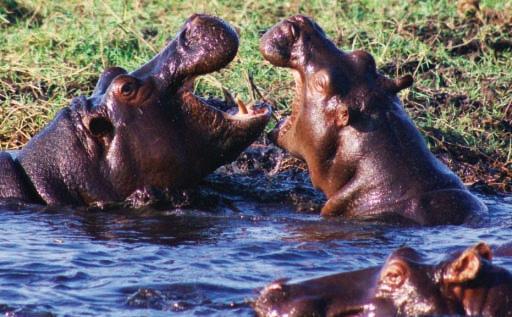
56 – Olavian 2012
Word Challenge - Namibia & Botswana
Mathematics & iCT
Specialist Status
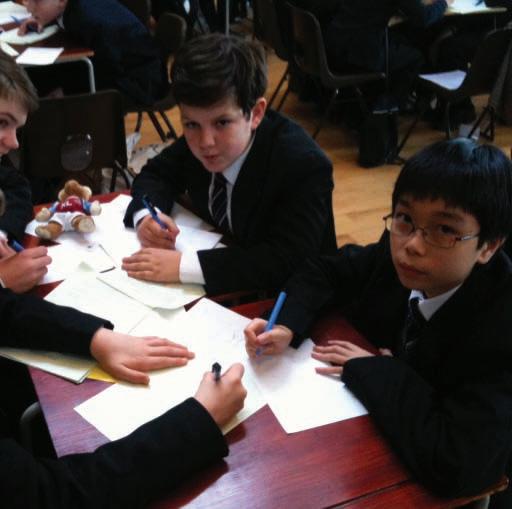
The Faculty of Mathematics, iCT & Computer Science
Thepast year has seen the Faculty continue to build upon the firm foundations of previous years’ endeavours. The traditional high levels of academic success have been augmented by the introduction of new House mathematics competitions. The propensity for Olavians to enjoy the challenge of a good mathematical problem never ceases to amaze and the skills that they develop in its solution will stand them in good stead in later life.
The Mathematics students in Year 13 achieved another outstanding set of results with over 80% of A2 Mathematics and A2 Further Mathematics entries being awarded A* or A grades. As in previous years, a healthy number of Olavian students are embarking upon mathematical degrees at a variety of universities. Among them are three students, Thomas Saunders, Tony Barker and Duncan Bell, who secured their places to study Mathematics at Cambridge, having met the demanding requirements of the STEP papers. Indeed Duncan achieved an outstanding S grade in all three STEP papers, probably a unique feat for an Olavian and a testament to the effectiveness of Mr Henley’s afterschool STEP classes.
Not to be outdone, the largest-ever cohort of Year 12 Mathematicians achieved incredibly good results with over 80% of the 165 students achieving A grade in AS Level Mathematics and almost two-thirds of well over a hundred students achieving the top grade in AS Further Mathematics. St Olave’s continues to have the highest proportion of double mathematicians of any school in the country which indicates the willingness of Olavians to take on an extra challenge when offered the opportunity.
The GCSE results were very encouraging with over three-quarters of students achieving an A* grade which, whilst not a record for the school, was in line with the year achieving their potential. A first for the department was that every student in both of the top two sets achieved an A* grade. These results bode well for future achievement.
In the lower years, alongside the regular features of the Mathematics in Motion Club, Mathematics Challenges, the Mathematics Clinics plus Mathematics Buddies, the major innovation this year has been interhouse Mathematics competitions that have been run throughout the year.
These competitions have featured problem-solving often linked to some running around between locations in the case of mathematics relays. Details of these can be found below.
Performances in national mathematics competitions have continued to be impressive with huge numbers of certificates and many qualifiers for further rounds de rigeur. In team competitions, our students continue to exhibit effective collaborative skills allied to genuine insight as to how to solve unfamiliar problems under pressure.
On the ICT front, Year 8 achieved impressive results in the ITQ course with all one hundred and fifteen students entered achieving creditable passes. The ICT AS Level results were encouraging plus the Robotics and Computer Games Development Clubs were wellsupported.
At the end of the year the Faculty bade farewell to three members of staff, namely Mr Paul Charlton, Miss Nicolle McCartney and Mr Brian Larkin. Within the Mathematics department, Mr Charlton will be remembered for his enthusiastic teaching allied to some great story-telling, whilst Miss McCartney leaves memories of a caring, effective teacher with an astute mathematical mind. Mr Larkin contributed significantly to the running of the Computer Games Development Club plus the delivery of ICT throughout Key Stages 3 and 4. We wish all three every success in their new posts.
In September the Mathematics department welcomed two experienced new members of staff: Mrs Joanna Munday who takes up the role of second in charge of the Faculty and Mr Ian Sanderson who has been Head of Mathematics at a school in Australia. We wish them well in their time at St Olave’s.
Finally, on behalf of all the Faculty and students, thanks must be expressed to Mr Michael Evans who has relinquished his role as Head of Faculty in order to focus upon his many responsibilities as Assistant Headteacher. Without his dedication, hard work and attention to detail, the Faculty would not be in the immensely strong position it finds itself at the beginning of the 2012-2013 academic year.
Neil Maltman Head of Mathematics
58 – Olavian 2012
National Competitions
Senior Maths Challenge
A record three hundred and sixty-eight senior students from Years 11, 12 and 13 sat the Senior Mathematical daunting, but the students enjoyed testing their problemwell over two hundred achieving a certificate, including twenty-six gold and seventy-eight silver certificates awarded.
British Mathematical Olympiad
mathematical competition and it is most encouraging to see that four of our students, Tony Barker (13L), Duncan (13J) gained distinctions. Outstanding amongst these were Alistair who was awarded a bronze medal and Duncan who gained a coveted gold medal. Both were invited to sit the second round, after which Duncan was invited to further International Olympiad training.
UKMT Senior Team Challenge: National Final
Having qualified at the regional final at Ravens Wood School in November, Duncan Bell (13M), Tony Barker (13L), Alistair O Neill (12Z) and James Allen (12X) competed in the UKMT S enior Team Challenge National Final in London against over sixty school teams from all over the UK, finishing an impressive sixth overall.
Intermediate Maths Challenge
11 produced another impressive performance in the Intermediate Mathematical Challenge (IMC) for the UK Mathematics Trust. Almost ninety per cent of the students received recognition with ninety-two gold, eighty-eight silver and sixty-seven bronze certificates awarded. Best-in-School went jointly to Alistair Haig progressed to the Kangaroo competition (an international mathematical contest originally developed in Australia). Twelve boys did so well that they qualified for the Olympiad competitions.
Intermediate Maths Olympiad & Kangaroo
competitions, placing them in the top 1500 nationally. Ten students achieved certificates of merit with Sean Seeds(9H), Aran Sivapalan (10L) and Anthony
O’Rourke (11J) achieving the highest score in their year. Twelve students progressed for the prestigious Olympiad competition by achieving one of the top four hundred scores nationally. Noteworthy performances included a certificate of distinction by Kush Banga (10L), a bronze medal by William Edmonds (9H) and a silver medal, placing him in the top thirty nationally, by Ian Chang (9L).
UKMT Junior Mathematics Team Challenge
On Wednesday 22nd February, a selection of the brightest mathematicians from thirty local schools arrived at St. Olave’s to compete in the regional final of the UKMT Junior Team Challenge. Final honours went to the ‘A’ Team of William Edmonds (9H), Kenneth Liu (9H), Richard Moulange (8B) and Owen Messere (8L) who pulled ahead of the crowd, including St. Olave’s ‘B’ team in second place, to win and progress to the National Final.
On Monday 18th June, the same four students represented St. Olave’s in the national final of the UK Mathematics Trust Team Challenge in London. After spending the morning investigating the subject of mathematical impossibility, they faced four rounds of fiendishly difficult tasks, designed to challenge even the most able mathematicians. Pitted against ninety-five other teams from across the UK, the team performed excellently throughout the day, finishing a creditable tenth overall.
Maths & ICT – 59
High-scoring Olympiad entrants:
Junior Mathematical Challenge
On Thursday 26th April students from Years 7 and Year 8 sat the JMC paper. Another encouraging set of results was achieved with 85% of entries gaining an award, which consisted of seventy-two gold, seventy-seven silver and forty-five bronze certificates. Adrian Santhiapillai (8H) achieved the best in school and he joined eight other Year 8 students in the Junior Mathematical Olympiad.
Junior Mathematical Olympiad
Of the nine Year 8 Olavians who qualified for the Junior Mathematical Olympiad, three performed so well that they were awarded a bronze medal placing them in the top around two hundred students’ scores nationally.
Congratulations go to Bilal Chughtai (8H), Sachin Savur (8H) and Richard Moulange (8B). This is the first time for several years that St Olave’s students have achieved three medals.
House Mathematics Competitions
During the year various house competitions took place, pitting forms against each other in mathematical endeavour.
In November teams of four students from Year 8 competed in two rounds of competition consisting of a group problem-solving activity followed by a mathematical relay. The results of the competition were as follows :
Congratulations to the winning team of Ritwick Chatterji, Richard Decker, Tomas Gallagher and Richard Moulange.
During the two activity weeks, Years 8 and 9 each had mornings of competitive mathematical activities that involved problem-solving and sudokus plus for Year 9 designing racing cars. In Year 8, 8H emerged victorious whilst in Year 9, it was 9L who took the honours, narrowly defeating 9B.
The year of competition culminated on Monday 16th July, when nearly fifty students from Years 7 to 10 contested the inaugural St Olave’s House Mathematics Competition which consisted of a problem-solving relay with students criss-crossing the quad between nine classrooms.
After forty-five minutes of frantic mental and physical activity, the winning teams for each year were as follows:
Year 7 Bingham Ali Mehmood, Henry Miller, Tanay Vankayalapati
Year 8 Leeke Owen Messere, Coby Plews, Anik Roy
Year 9 Harvard William Edmonds, Bradley Sawyer, Sean Seeds
Year 10 Cure Kush Banga, Teddy McAleer, Anthony Tang
60 – Olavian 2012
Form Round 1 Score Round 2 Score Total Score Position 8B852153001st 8C651251904th 8H1001802802nd 8L801902703rd
Year 8 JMO Medallists
Y10s take part in the inaugural House Mathematics Competition
Other Activities & Clubs
Royal institute Mathematics Masterclass
During the autumn term, on eight Saturday mornings, Finn Duggan (9B), Rishil Patel (9B), Rowan Wright (9B), Tom Wang (9B), Mithiran Ravindran (9H), Qahir Bandali (9H) and Samarth Tyagi (9C) took part in the RI Mathematical Masterclasses at Bromley High School. Topics under consideration included algorithms, probability, symmetry, algebra, trigonometry and various puzzles. All the sessions proved to be very mathematically challenging, yet rewarding.
Maths in Action
On Tuesday 15th November, a group of Year 12 Mathematicians travelled to the Institute of Education for the yearly ‘Maths in Action’ day. The lectures did not disappoint, encompassing a wide range of areas of Mathematics, with pupils discovering how Barnes Wallis’ famous bouncing bomb was recently reproduced from scratch; measuring the age of the universe; finding that infinity is not necessarily the end; and learning that something can be true and yet impossible to prove.
All in all, the group had a fantastic time, with the acknowledged highlight of the day being the exploration of additional dimensions, including a 5D Rubik’s Cube.
Maths in Motion Club
The Jaguar Cars “Maths in Motion” club has continued to be very competently run by Peter Leigh, Iain McGowan and Matthew Burns (Year 12). Students have an opportunity to use mathematical skills to design and fine-tune their racing cars in order toseek places on the podium in races around simulations of various formula 1 race tracks.
Mathematical Lecture Series

The Olavian Mathematical Society continued its programme of lectures in 2011-12, with former student James Munro, who is currently reading Mathematics at Cambridge University, returning to provide a highly entertaining talk on the subject of proof. This was followed up later in the year with a presentation from Niko Laaksonen, a PhD student from University College London, on Prime Number Theory.
Peter Leigh & James Allen (12X)
You may have solved it in 3D - now try to do so in 5D…
Maths & ICT – 61
UKMT Junior Team Challenge Regional Final hosted at St. Olave’s in the Great Hall
62 – Olavian 2012
Science Specialist Status
The Faculty of Science
Looking back over my first year as Head of the Science Faculty, I am struck by the continual search for improvement and understanding to be found in the entire Science community. Teachers have worked tirelessly to support and encourage their students while, at the same time, furthering their own subject knowledge and seeking new ways in which to bring the curriculum to life. Students have made their mark in many areas, most notably in the Friday lunchtime “buzz” of the newly launched Natural Sciences Society and the establishment of many valuable mentoring sessions between Sixth Form students and boys in years 10 and 11. A group of year 13 students planned and led the popular Chemistry Club for lower school students and the Biology club extended their indoor activities to include dissections of fish, earthworms and frogs. Year 12 biology students visited a range of institutions where they able to appreciate some of the work being done in the exciting world of the Biological Sciences, and Sixth Form students regularly attended lectures on all aspects of Science at UCL. Once again, students have been successful in a number of national competitions, including the Biology Challenge, Biology, Chemistry and Physics Olympiads and the Salters Festival of Chemistry.
The Faculty maintained its links with local primary schools this year, with Sixth Form students visiting St Paul’s Cray Primary School on several occasions.
In addition, a group of gifted and talented year 6 students attended after-school sessions in the summer term, and the traditional Year 5 Maths and Science Day involved more students than ever before and was a huge success.
Public exam results were our best ever. At A Level, in Chemistry, 92% of students achieved A* to B grades, with 91% and 98% in Physics and Biology respectively. The number of students achieving A* grades was also impressive with 43% gaining A* in Biology, 33% in Chemistry and 12% in Physics. Similarly, at GCSE, students in Biology, Physics and Chemistry achieved an average of 94% A/A* grades.
At the end of the year, we said goodbye to two members of the faculty staff who had been with us for just a short time, Mr Mitul Patel and Mrs Cathy Knight, who both move on to new challenges beyond the world of teaching. Dr Frank Green, a long-standing and much venerated member of the Physics department, retired at the end of the year and we wish him a long and very happy retirement.
64 – Olavian 2012
VI Formers teaching science at St Paul’s Cray Primary School
Caroline Marwood S___Head of Science Faculty
7H at Colchester Zoo
Year 7 Zoo Trip
As traditional, Year 7 went a trip to Colchester Zoo. Firm favourites of the day included feeding times at the Giraffe and Elephant enclosures, with most of the boys happy to give a tasty, veggie treat to Tembo, Opal and Tanya the elephants, although some found the long, curly, purple tongues of Lili and Isha, the giraffes, a little disquieting. Students also had the opportunity to see the three young cheetah cubs, Milawi, Tatu and Savannah, as well as lots of other strange but interesting animals, including the sloths and komodo dragons.
GCSE Science Live
On Friday 25th November Year 10 pupils travelled to London to hear a set of lectures from some of the country’s leading scientists. After an interesting first talk on expanding populations and diminishing resources the boys were riled up by Professor Richard Dawkins’ views on re-evolution and some heated discussions ensued over lunch. The day was completed by a talk from a leading geneticist and some explosive chemistry, courtesy of Dr Andrea Sella. The boys left with plenty to ponder and some useful exam tips.
Science and Engineering Week
St. Olave’s celebrated National Science & Engineering Week in March with the early part of the week seeing Sixth Formers lend their hands to teaching science in a local primary school. Sound, habitats and rocks were creatively delivered to a captive audience of 9 year olds. Other events included a lecture from the school’s Natural Sciences Society; the Chemistry Club running special experiments; various quizzes and challenges for the Lower School; and ended in a non-uniform day in aid of ‘Jeans for Genes’.
Science in Activities’ Week 1
During the first Activities’ week, Year 7 visited the Natural History Museum to visit the Cocoon and immerse themselves in the world of Darwin. The lifesize dinosaurs proved a huge hit as did the miniature creepy crawlies.
Year 8 pupils travelled to the Royal Observatory in Greenwich and got to see parts of the observatory that are not normally visible to the public. Meanwhile at school the Science department were on hand to provide revision sessions to Year 10 who were about to sit the GCSE examinations.
Activities' Week 2: Year 9 trip to Tilbury Power Station
During Activities’ Week 2, Year 9 travelled to Tilbury Power Station for a trip to help us explore the “ins and outs” of everyday power stations and how they generate our electricity.
The day began with a talk about the power station, including: how they use biomass as their fuel (to be environmentally friendly); health and safety measures; electrical appliances in the home; and key parts of the power station and what function they serve. We were also given high visibility jackets and helmets with ear defenders (which would prove to be very useful!). We were then taken on a guided tour of the power station, enabling us to see how Tilbury turns pellets of biomass into the fuel needed around the country. A particular highlight was being able to go into the furnace, the only power station furnace in the world that people can go in. However, with all that machinery constantly on the go there was a huge amount of noise!
After lunch, we did some work on water purification at Tilbury and Tilbury pond. We were told how they purify the water (by passing it through an assortment of
Science – 65
8B at the Royal Observatory, Greenwich
9L visit Tilbury Power Station
minerals) so that it is suitable to be vaporised within the furnace and prevent the furnace pipes from damage. At Tilbury pond we used fishing nets to catch pond-dwelling life. After sorting the creatures into groups we took the plates of them back inside and used identification sheets to see what sorts of creatures we’d found. We found plenty of minute fish, insects and even a newt!
Tilbury was a very interesting trip and helped to supplement our work on power stations in Science over the year.
Year 5 Maths and Science Day
On 20th June, St. Olave’s held its annual Maths & Science day for Year 5 pupils from neighbouring primary schools. 240 pupils descended onto the school on a bright sunny day. The Science Prefects created and acted out a murder mystery scenario setting the scene for an explosive chemistry lesson that included chromatography, flame tests and a screaming jelly baby. Out in the sunshine the pupils were put through their paces on a speed challenge which crossed over nicely into mathematics.
The pupils thoroughly enjoyed the day and the prefects were brilliant at organising and executing the events.
Salters’ Festival of Chemistry
On Wednesday 13th June, four Year 7 students, Eugene Lee (7H), Ammar Kisat (7L), John Bentas (7L), Cristiano Da Cruz (7C) and Mrs Morinan, took part in the Salters’ Festival of Chemistry at the London South Bank University. Four children from different schools participated in the festival.
We started off with a forensic experiment in which someone had been murdered and the body had been hidden behind some rocks. To solve the mystery, we had to split up into two pairs. One pair had to find out which person had the same salt on him/her self as the victim, and the other pair had to use chromatography, a technique which separates the pigments in different colours which were found on the suspects clothing.
Once we had had lunch, we came back to try out the University Challenge: a challenge set out by the university teachers. We had to mix sodium chloride, distilled water and hydrochloric acid in a beaker on top of a tile marked with an X. When you couldn’t see the X from above, the reaction was over because the solution would be cloudy. We could vary the amounts hut had to finish the reaction in 2 minutes. For this task we did not have help from teachers, so it was harder than the previous task.
When everyone had completed the second task, a former pupil of the university came and did a chemical ‘magic’ show. She showed us many different experiments; one was to prove that air actually existed. She put water in a cup and covered the top of the cup with some paper. When she turned the cup upside down, the water didn’t move. She also showed us some illusions, such as when you look at the centre point on a picture, then look at a white screen, you will see different columns replacing the ones on the picture.
After the magic show, the judges presented the prizes for the winners of the two different tasks. Our team came second in the Salter’s Challenge and received prizes for our good work. Being our first Chemistry competition, it was a memorable experience for all of us. Many thanks to Mrs. Morinan for giving us the opportunity to participate at the Salter’s Festival of Chemistry.
Cristiano Da Cruz (7C)
Year 13 Chemistry Olympiad 2012
A number of students took part in the 2012 Olympiad. They were awarded two silver and two bronze certificates which is a great achievement considering that two of those students are in Year 12. The silver certificates went to Duncan Bell (13M) and Alistair O Neill (12Z) and the bronze to Yibo Jin (13N) and Sudhir Balaji (12W).
66 – Olavian 2012
Y5s enjoy spray flame tests on Maths & Science Day
Mrs Morinan and the Y7 team at the Salters’ Festival of Chemistry
Science - A Level Biology Trips
During November, all eighty Year 12 Biology students were given the opportunity to visit a range of sites where scientists are working on important issues in Biological Sciences. Students were introduced to the work being done, engaged in activities to enhance their understanding of the issues, and met some of the scientists involved. Visits were made to the Sanger Institute, Howletts Animal Park, the Millenium Seedbank at Wakehurst Place and the research laboratories of the Royal Free Medical School.
Biology Olympiad
In February sixteen Year 13 students sat the first round of the British Biology Olympiad. One student, Tom Watson, (13K), gained a Gold medal and was invited to sit the second round paper. Six students, Yibo Jin (13N), Madeleine Stein (13K), Alex Robbins (13K), James Wong (13K), Brian Wang (13K) and Edmund Phillips (13L) were awarded Silver medals, and Bronze medals went to Jennifer Quan (13M), Oliver Taylor (13K) and Matthew Waite (13K).
Biology Conference
Fourteen Year 13 Biology students attended an A level conference in London where they were given a series of exciting lectures by scientists at the cutting edge of Biological research. Speakers included Professor Steve Jones (UCL), Professor Austin Smith FRS (University of Cambridge) and Professor Julian Ma (St George’s
Clockwise from left: Sampling the Mill Pond; Year 12 Biology field trip to Flatford Mill; Asher Leeks (12X) outside Willy Lott’s Cottage, featured in Constable’s ‘Haywain’.
Medical School), and the subjects ranged from new medicines and GM plants to genes, doping and the 2012 Olympics.
Year 12 Biology field trip: Flatford Mill
At the end of June, close to seventy year 12 biologists travelled to Flatford Mill in Suffolk for the annual weeklong biology field-trip. The trip took the form of a fieldcourse, which started with two days of teaching, both inside and outside the classroom, where we learnt many recording & statistical techniques from the resident ecologists. These skills were vital for the second half of the week, which involved each student carrying out a personal fieldwork investigation to form the basis of the A2 coursework module.
Arriving at Flatford Mill after a long coach journey, we disembarked on a hot summer’s day in the heart of Constable Country. After being greeted by the centre staff, we were handed the keys to our rooms, which were split between Valley Farm, the Mill itself and Willy Lott’s cottage. It was a novel experience for all students to be staying in such historical buildings, all of which are not only Grade I listed, but also feature in many of John Constable’s most notable paintings, such as the worldfamous ‘Haywain’.
Teaching began the night we arrived, with the first of many late-evening lessons. This enabled us quickly to get stuck into the course, with the next two days of hands-on
Science – 67
took the form of mini investigations, with supervised fieldwork and lab-based analysis being complemented by statistical testing and theoretical evaluation. By the end of the two days we had valuable experience in sampling both freshwater and terrestrial habitats, learning how to use a range of equipment and carry out a variety of
to be crucial over the next three days, as we decided on and carried out the fieldwork which would ultimately account for 20% of our A2 grade.
then conducting a full investigation into the relationship between a chosen non-living factor and a related change in one or more living organisms’ abundance, distribution skills we had developed earlier in the week, requiring a high degree of individual thought and motivation. With many original ideas, Olavians were to be seen all over the Mill & surrounding areas, taking all manner of recordings, often using equipment or techniques they had improvised themselves. Despite working tirelessly on their projects, many students also found time to engage with the never-ending steam of the curious visiting the Mill, and of course to appreciate the beauty of the English countryside.
With the trip drawing to a close, there was still time for the ever-popular traditional take-away meal, plus some last-minute collecting of results. On Friday afternoon, after what had been a highly eventful week, we returned to Orpington with fond memories and (hopefully!) successful results.
Asher Leeks, 12X
Physics Olympiad

Physics Olympiad, and congratulations must go to all the students who have taken part. Results included five Commendations, one Bronze, one Silver and three Gold certificates. Duncan of 13M and Alexander Grainger (13K) were in the top fifty students in the country and sat the next round of the Olympiad.
Duncan’s performance placed him in the top sixteen in the UK and he was invited to attend a training and selection camp held at Lincoln College, Oxford and at the University of Oxford’s was very intensive, with some extremely challenging physics, but there was time for a tour of Oxford and some competitive table tennis.
Duncan was not selected as one of the five-strong team to represent the UK in the International Physics Olympiad in Estonia, but he was subsequently invited to a special presentation ceremony, having been awarded a gold medal, at The Royal Society. Surrounded by portraits of famous scientists, the award winners received their ‘Top Gold’ certificates and listened to two presentations by practising physicists. Dr Kamal Hossain OBE, Research Director at the National Physical Laboratory, talked about metrology, the science of measurement; and Professor Peter Wells CBE FRS, of University of Cardiff School of Engineering, described the development of medical ultrasound from early low-resolution imaging, through to the state of current research. It was a very stimulating and enjoyable afternoon.
Natural Sciences Society

The following are extracts from the introductions of articles written for the Natural Sciences Society’s journals. The full articles can be found within the journals online, at tinyurl.com/scijournal1 and tinyurl. com/scijournal
The first half of the history of Science
Asher Leeks, Sam Bentley, Esme Chowdhry
In 1561, about 9 months prior to the first teaching at St Olave’s, Francis Bacon was born, a man who would change the way science works forever. His specific achievements will be dealt with towards the end of the article; for now it suffices to say that he conceptualised the modern scientific method in a way that was unique at the time, ushering in a new scientific age. This article will attempt to cover very briefly the history of science up to that point, including pre- and post-Roman science as well as advancements in both the Eastern and Western hemispheres. Ultimately we hope to illustrate the significance of Bacon’s philosophy and by extension the importance of the modern scientific method in the light of the earlier history of science.
Nanotechnology
Fadil Nohur
Many people thinking of nanotechnology associate the word with technology far in the future, and they’d be right; nanotechnology is a developing technology and its finest
68 – Olavian 2012
hour is a long way away. Unsurprisingly, nanotechnology concerns itself with structures nanometres long. To put this into context, 1 millimetre on your ruler is equivalent to 1,000,000 nanometres. Nanotechnology is manipulation of matter on a very tiny scale, a scale so tiny that the world it is concerned about is not even visible with a light microscope. In fact, the definition of nanotechnology only means the manipulation of things on this very small scale: on a molecular scale. Such a broad definition is used since nanotechnology may have the ability to affect many different fields in the future.
Sociobiology
Asher
Leeks
The natural and social sciences, both applications of the scientific method, usually form distinct groupings with little clear overlap. However, ever since the emergence of modern biology with the publication of the “Origin of Species,” in 1859, attempts at linking studies of human society with knowledge of our biological origins and of analogous societies throughout nature have been attempted. Sociobiology is the most recent and rigorous example of this, and as a discipline it bridges the divide between the social and natural sciences. Understandably politically loaded, sociobiology is nevertheless a field of biology with the potential for strong intellectual integrity and high utility as well as being both intellectually stimulating and of great interest and importance to many.
The edge of knowledge
James
Teoh
Physics has come an incredibly long way in the past century. Arguably, our knowledge about the universe has advanced more in the past 100 years than it has in all the time before the turn of the 20th century. In 1905 Einstein published his revolutionary theory of special relativity which transformed our view of space and time. With the inclusion of gravity in general relativity in 1916 and the redshift observations of Edwin Hubble, the stage was set for the Big Bang theory and we could finally begin to answer empirically the ancient question of where the universe came from and what its fate will be. Physics has also massively advanced our understanding of the atom, enabling us to harness nuclear energy. Perhaps even more important was the development of quantum mechanics in the 1920s and 30s, which was crucial in the development of the transistor. In addition, quantum physics has shown how our knowledge of the universe is inherently limited by the uncertainty principle and has enabled physicists to formulate the standard model of particles, drastically increasing our knowledge about the fundamental forces of nature.
However, with the advent of high energy physics, black holes, the big bang theory etc, there are a number
of crucial unsolved questions in physics. Whilst our current understanding of the universe is thought to be considerably more accurate than previously, it is still incomplete and inconsistent.
The discovery of the Higgs Boson
Thomas Russell
On July 4th, 2012, a seminar held at CERN, the prestigious nuclear research organisation, announced that they had gained enough data from two of their particle accelerators (ATLAS and CMS) to announce the discovery of a newly-found sub-atomic particle. The particle was described as a boson with a mass region in the range 125-126 GeV/c2 (slightly below the massrange expected for the Higgs boson), and the discovery had been made with a statistical significance of 5 σ (i.e. with a 0.00006% chance that the data was simply a statistical anomaly).
The media, of course, instantly announced the discovery of the previously elusive “God Particle”, despite no official confirmation that the new particle was in fact the Higgs boson. This lead to wide-ranging discussion with regards to the meaning of the discovery, along with various politico-economic debates, such as the expenditure involved in running such experiments as the LHC. This article is intended to help disambiguate some of the explanations surrounding this new discovery, whilst also providing a historic and scientific background surrounding the Higgs field and associated boson.
Can Humans live forever?
Fadil Nohur
For years, in reality and myth, people have longed to live forever. Whether through joining a religion and praying to various gods or turning to science for a possible solution, the reason why is simple. Many people are unafraid of death because of a belief that they will one day live again after they die, while others fear the finality of death and wish to find a way to avoid it. While many people who did actively try to stop death were ridiculed for their actions, there are a number of educated people, including doctors and scientists, who do believe that we will one day be able to find a cure for death. Can this really be done, or are we simply deluding ourselves?
Global warming and carbon sequestration
Mounif Kalawoun
We are all familiar with the major issue of global warming, which refers to the rising average temperature of Earth’s atmosphere and oceans. Temperatures started to increase significantly in the late 19th century and are projected to continue rising. Since the early 20th century, Earth’s average surface temperature has increased by
Science – 69
about 0.8 °C, with about two thirds of the increase occurring since 1980. Warming of the climate system is unambiguous, and scientists all over the world are more than 90% certain that most of it is caused by increasing concentrations of greenhouse gases produced by human activities such as deforestation and the burning of fossil fuels. Carbon dioxide is seen as the main gas that has been causing and accelerating the greenhouse effect, released by the combustion of fossil fuels. Global warming is itself a natural process, as it is widely acknowledged that we are moving out of the previous ice age, into a warmer, interglacial period. However the rapid release of greenhouse gases has led to global warming happening at a much faster rate than it should be. It should take tens of thousands of years for earth to move to the next interglacial period; however humans are speeding up the process considerably, to the extent that it may be a matter of centuries, not millennia.
Are we still evolving?
Rahul Bagga
When asked what people think humans might look like millions of years into the future, one of two answers is usually given. Either the old science-fiction vision of a big-brained human with a high forehead and higher intellect (this doesn’t actually have any scientific backing) is given, or [most] people say that humans have stopped
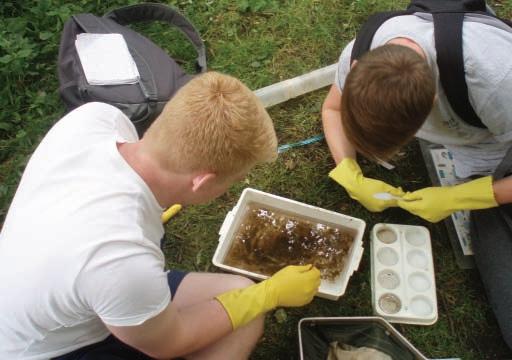
evolving and natural selection no longer applies to us. That everything we have built – our cities and our culture itself – was built with the same body and the same brain. However, they are wrong. Over the last 10,000 years data shows that human evolution has occurred a hundred times more quickly than in any other period in our species’ history. Data shows that if anything, the rate of human evolution is speeding up, not slowing down or stopping.
Food for life
Stanley Ho
The idea of food as a life saver is not a new idea. However in recent times modern society has turned to drugs for every illness when a simple diet change might be all that is needed. Food is the most-consumed cure out there, available at local grocery stores, supermarkets and produce barns. Certain foods can act as cancer-blockers, antidepressants, diuretics, anticoagulants, painkillers, antibiotics, anti-inflammatory agents, tranquilisers and so much more. And these foods in turn can ward off headaches, arthritis, heart attacks & strokes, colds, influenza, ulcers, cancers of many types, gallstones, constipation and most other disorders and afflictions you can think of.
70 – Olavian 2012
English & Drama
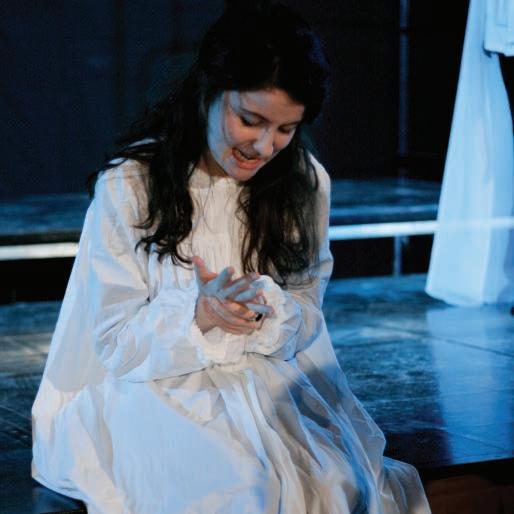
The Faculty of English & Drama
The English Faculty has continued to raise its profile within the school, enjoying an excellent year in terms of student involvement and academic results. Opportunities for drama have expanded throughout both the taught curriculum and extra-curricular activities, with students across all year groups involved.
At Key Stage 3, students have all taken part in interhouse competitions as part of English Week. Year 7s were asked to prepare speeches for a ‘Balloon Debate’. They chose a person, dead or alive, and had to justify why their subject should stay in a balloon that desperately needed to lose ballast to stay airborne. There were some amusing choices from business, politics, literature and entertainment. The best three speakers from each form battled for first place in a closely-contested competition in the chapel. Meanwhile, Year 8 had to compose and present stories, and Year 9 wrote monologues which were learned and performed. James Patterson told his story and David Van Egghen showcased his monologue at Open Morning in front of very large audiences. We also had the Key Stage 4 Drama club perform a production of ‘Frankenstein’ and in collaboration with the German department, the Key Stage 3 Drama club performed a selection of German fairytales from Der Struwwelpeter.
English Week reached out to the whole school: students and staff were encouraged to dress up as a fictional character and donate to a literacy charity. There were some impressive costumes that must have required quite a lot of courage on the bus or train on the way to school. The Invisible Man, Arthur Dent and Willy Wonka were amongst the most popular choices. We raised nearly £1500 and created quite a buzz of excitement on the day.
Tibor Fischer, author of ‘Under the Frog’, visited the school in the same week to give a reading from his novel and answer questions about being a writer. At the end of the week Max Kennedy’s play ‘The Bistro’, which he had written as part of a school playwriting scheme supported by the National Theatre, was performed in the chapel. Max became one of ten finalists whose plays were given professional ‘read throughs’ in June at the National.
Productions burgeoned, starting with ‘Our Country’s Good’, a Sixth Form play in November, followed by a whole school performance of ‘Macbeth’ in March and finishing with a lower school piece, ‘Grimm Tales’, in July. We were delighted to welcome two Year 11 student directors, Finn Calpin and Caspar Smart, to the stage with a witty production of John Synge’s ‘The Playboy of the
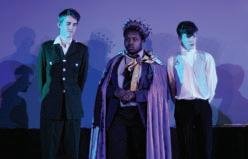
Western World’, and look forward to further contributions in the coming year from our students. Finally, in a joint venture with the Music Faculty, Miss Wilkie directed ‘Showstoppers’, song and dance from musicals staged in a sophisticated cabaret style setting, in February.
The Olavian Theatre Society enjoyed another busy year. Members saw ‘One Man, Two Guvnors’, ‘Saved’, ‘Posh’, ‘Noises Off’ and ‘Love Song’. All were challenging productions that provided plenty of heart-searching and discussion. Meanwhile, half of Year 7 saw a special ‘playing Shakespeare’ performance of ‘A Midsummer Night’s Dream’ at The Globe, as an introduction to Shakespeare in performance.
Matthew Roberts (Year 10) followed Timmy Soyombo’s victory last year in the Speak Out! Challenge with another impressive win and represented Bromley in the London final at the Queen Elizabeth Hall at the Southbank Centre. Olave’s hosted the Bromley Final, entertaining 18 schools from across the borough. An eminent judging panel included the Deputy Mayor and local business people who, along with parents, provided a real audience for the young people to perform in front of.
Our team was enhanced by the addition of Mr David Budds, an Old Olavian, to our ranks. He has provided many hours of erudite wisdom to his pupils and has been an invaluable Head of Year to Year 11. He moves with them to the Sixth Form, from where he will continue to offer support to our university applicants for Literature.
My thanks must be extended to all the staff and students for an exciting, fulfilling year.
Liz Goodman
S___Head of English Faculty
72 – Olavian 2012
School Productions 2011-12
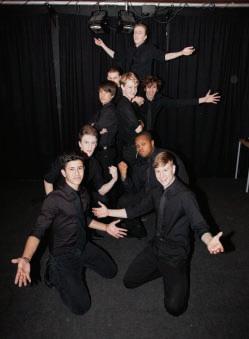
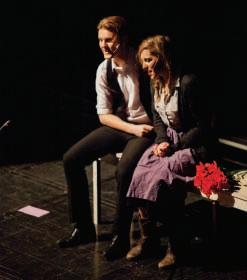
Showstoppers
Showstoppers saw St. Olave’s spend a February evening in the world of song and dance with a sensational showcase of hits from the musicals. Sixth Formers, Years 7 to 11 and the whole of year 8 combined song and dance to produce a stellar show that dazzled a sold-out audience. Draped fabric, tea lights, gold confetti and embossed tablecloths transformed the Great Hall into a sophisticated, intimate setting. On such an evening anything was possible… James Watson proved to be a professional Master of the House starting off proceedings with wit. Finn Butler and Jen Cocke demonstrated their strong, sweet voices with a superb performance of ‘I know him so well’ from ‘Chess’. Tom Hadden’s ‘Maria’ captured the charm and passion of Tony from ‘West Side Story’ while Mike Yates’ ‘Mack the Knife’ was smooth. Olivia Jenkins gave a passionate performance from the rock opera ‘Aida’. Grace Boyle and Lucy Clarke transported us to the magical Land of Oz performing a dramatic duet from ‘Wicked’, relying on perfect timing, pitch, green face paint and pink paper. James Bowman, Alex Ekong and George Mesure presented a wonderful and lively rendition of ‘Fugue for Tin Horns’. A touching, romantic scene from ‘My Fair Lady’ was created by Charlotte Flowers affecting a convincing cockney accent and George Mesure providing sensitive support. The vocal highlight came from Richard Decker, BBC Young Chorister of the Year, singing ‘Bring him home’ from ‘Les Miserables’.
A medley from ‘Oliver!’ opened the second half. Will Howarth created a confident, strong and unnerving portrayal of Fagin against Jack Bradfield’s cunning Dodger and Oliver Thompson’s engaging Oliver. The entire year 8 gave a rousing chorus of ‘Consider Yourself’ dressed as ragamuffins. Dance completed the show. An ensemble of Sixth Form girls leapt to ‘Fame’, choreographed by Shannon Lavender and Georgia Amos, and Kezia Mithra Johnson choreographed a sharp shoe shuffle from ‘We Will Rock You’. Eamonn Cox punctuated a suave rendition of ‘Luck be a Lady’ with just enough tantalising tippy tappy toes. A jazzy troupe brought ‘All That Jazz’ to life with energetic vocals and choreography. ‘Jets’ and ‘Cell Block Tango’ brought together musical talent and vivid characterisation for the jaunty jets and menacing murderesses.
The unanimous view was that this was a fabulous occasion, held together by Ed Barker’s slick lighting transitions and an impressively accomplished band. The evening oozed talent and flowed seamlessly thanks to Mr Price, Mr Cook and Miss Wilkie for direction. Long may such events continue!
English & Drama – 73
Showstoppers - My Fair Lady
Showstoppers - Jets
Our Country’s Good
During the last week of November, Sixth Formers performed ‘Our Country’s Good’, Timberlake Wertenbaker’s dark, thought-provoking play about the transportation of criminals to Australia. Written in the 1990s, the play tells of how the convicts and officers struggle to cope with their new home, facing starvation, on a play which blurs the boundaries between them and challenges the audience to ask questions about the penal system and humanity. A strong cast was supported by ingenious set design and atmospheric audio-visual effects.
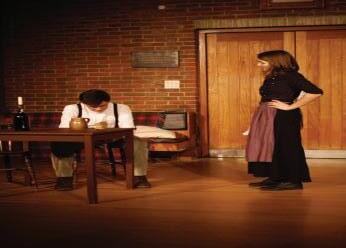
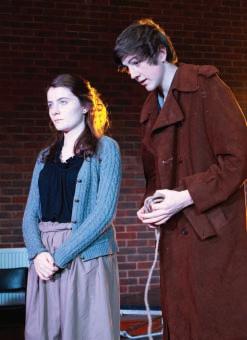
Macbeth
To recognise the links that the original school had with Shakespeare, a production of ‘Macbeth’ was staged at the end of March for the 450th Commemoration year. Michael (12O) and Grace (12P) gave powerful performances as Macbeth and Lady Macbeth, showing how their initially intimate relationship was torn apart by the murder of King Duncan. In this sinister portrayal, the witches were clearly in control of events as they manipulated the Macbeths, who were themselves terrifying at some times and at others clearly lost. Congratulations to the whole cast, directors and technical team for a job extremely well done.
Playboy of the Western World
Congratulations to Fintan Calpin (11J), Caspar Smart (11J) and their cast for their fantastic production of enjoyed this very funny, dark comedy. Particularly memorable moments included Emily O’Malley’s (12O) scathing tongue as Samuel Luker Brown (10N) cowered, Skanda Rajansundarum’s (11N) unravelling of his head bandages to reveal a slight scratch, Alex Tate (11K) and that pesky line, Jordan Butt’s (10M) drunken father, Colm McElligott (10J) being dragged along by a rope, the comedy duo that was Timmy Soyombo (11J) and Daniel Finucane (10N) and the flirtatious tactics of James Laing’s (11L) widow Quinn.
‘New Views’ Playwriting course & The Bistro Students from Year 12 and 13 participated in a playwriting
Following workshops and theatre visits, William Howarth (13F), Marko Ristic-Smith (13J), William Dudley (13J), Grace Boyle (12P), Michael Yates (12O), Max Kennedy (12O) and Eleanor Goodman (12P) completed the
meetings with the playwright Matt Hartley to discuss their plays.
by Max Kennedy, following his involvement in the ‘New
74 – Olavian 2012
VI Form Production – Our Country’s Good
Playboy of the Western World
working in France, and their bet to see who could make the most money in one evening. Congratulations to the cast for their fantastic performances and to Max for his witty writing.
Lower School Drama
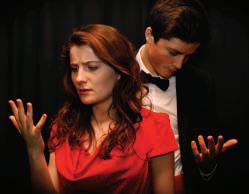
At the beginning of July, Lower School students performed in a production of ‘Grimm Tales’ based on adaptations by Carol Ann Duffy.
P UBLIC S PEAKING & D EBATING
Speak Out! Challenge
Following last year’s success in the “Speak Out” Challenge, St. Olave’s hosted the regional final, for the first time, on Wednesday 21st March.
to promote confidence in public speaking, attracted hundreds of entrants from schools all over the borough. In front of a large, enthusiastic audience in the Great Hall, the 18 finalists each spoke for 3 minutes on a topic of local business and education and our own Timmy Soyombo, the winner from last year, joined the panel.
Congratulations to Matthew, of St Olave’s, Year 10, who won the regional final! Matthew’s winning speech “Words” focussed on the power and importance of language. Professionally delivered, it was creative and sophisticated in its use of vocabulary, and fully deserved the first prize. Matthew therefore went on to represent Bromley in the London final at the Queen Elizabeth Hall at the Southbank Centre.
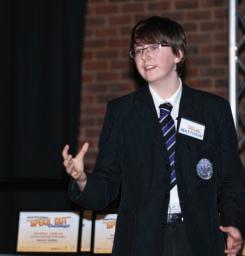
and it was delightful to see the Year 10 students effortlessly build rapport with their audience. Well done also to Samuel Luker Brown who stepped in as a reserve Astronaut inside us all”.
SpeakersBank
Last December saw the fourth annual public speaking day for Years 9 and 10. Led by an expert practitioner, students honed their presentational skills as they progressed throughout the day culminating in a three from euthanasia and weapons of mass destruction to resilience and being optimistic. Each of the students enjoyed the experience and learned some valuable tips and strategies, as well as having fun.
Senior Debating
in the Autumn term to take part in a regional heat of turned in a creditable performance on the prepared topic
English & Drama – 75
Year 12s portrayal of Macbeth
The cast from the premiere of ‘The Bistro’
‘Speak Out!’ challenge –Regional winner
and argued convincingly that sports clubs should not valuable experience for the team.
In February, the school then took part in the Oxford Union Schools’ competition at Whitgift School. Well done to the team, which comprised William Pyle (12W), Ashaki Newton Alkebulan (13H), Alexander Schymyck (13F) and Barney Holleran (13G).
During March the new year 12 team then organised an senior school inter-house competition where teams were able to flex their intellectual muscles and use their guile on such topics as the necessity of exploiting child labour in developing countries, assisted suicide and compulsory contraception.
House Senior Debating competition was held as part of the English and Drama week. Har vard, the opposition, emerged as winners in an exciting and close debate on
bounty hunters to capture and, if necessary, kill indicted war criminals.” Congratulations go to Aish Pai (12V), James Watson (12W) and Conrad Allison (12R), who carried the day with confident and persuasive arguments.
Junior Debating
this year by Cure House which won in both the Year 7 and 8 finals. Congratulations to the winning teams of 7C (Michael Damoah, Tom Lambourne and Ken Yanagida), 8C (Nathaniel Amos, Finn Robinson and Miles Gulliford) and 9H (Sean Seeds, Matt Simpson and Conor Watson); well done also to all participants who represented their forms.
Snails and Sonnets in White City
And then the whining school-boy, with his satchel And shining morning face, creeping like snail Unwillingly to school
But we weren’t going to school! Sam Luker Brown, Peter Debenham and I were off on the Central Line to the BBC to participate in the regional heats of “Off By Heart Shakespeare”. We had each memorised a speech muttering them under our breaths as we entered the aptly put it, “than you could shake-a-speare at.”
Despite our best attempts at luvvie-dom, other budding thespians stole our thunder and the game was up. We resolved to return to fight another day: “Once more unto the breach, dear friends, once more”!
Jack Bradfield (Yr 10)
A ROUND S CHOOL
Book Character Day
On Friday 20th April St. Olave’s was filled with literary characters with a ‘dress up as a book character’ day. At break and lunch time, corridors were filled with Gandalph, Willy Wonka and Oliver. Lessons were taught to James Bond, Gatsby, Jekyll and Hyde, and a whole host of other characters. Students were impressive in their imagination and creativity and raised around £1500, which was split between the National Literacy Trust and a mobile library travelling around Africa and India.
English and Drama Week
At the beginning of the Summer term, students enjoyed an English and Drama week which included, amongst other things, a Year 7 inter-house ‘balloon debate’ as well as a Year 8 inter-house competition where students were asked to write their own story subverting our
the misunderstood Bogeyman, the overworked Tooth Fairy and the Easter Bunny who was anything but sweet. On the Wednesday afternoon, local author Tibor Fischer spoke to Sixth Form students about his own writing and how they might progress further in their own work. To round off the week, there was a Lower School production of German Tales from Der Struwwelpeter, in collaboration with the German Jamboree, and Year 10 and 11 presented Mary Shelley’s classic tale, ‘Frankenstein.’
Budding Film Maker
Congratulations to budding film-maker Jack Bradfield (10L) whose film clip was selected to be part of ‘Britain in a Day’, a unique documentary which offers remarkable insight into the lives, loves, fears and hopes of people
shortlisted extracts from nearly 12,000 entries, was given its first showing at the British Film Institute and was broadcast on BBC 2 in June.
76 – Olavian 2012
‘O By Heart Shakespeare’ – Year 10 participants
curriculum extenSion
Year 9 Drama
On Thursday 8th of March, the company ‘Tender’ came to school to work with the whole of Year 9 exploring with each form for two and half hours, through the use of drama and dialogue, the nature of both healthy and unhealthy relationships.
Off-stage choices at the Churchill Theatre
GCSE students recently visited the Churchill for a behind-the-scenes tour and some hands-on experience of working in the theatre.This formed a valuable introduction to their course and gave them a taste of work-related learning, as well as helping them plan future productions.
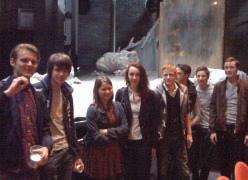
The Tempest at the Roundhouse
Year 12 English students enjoyed an intriguing performance of ‘The Tempest’ at Chalk Farm as an introduction to their A2 set text. They left the auditorium convinced, if they weren’t already, by this spectacular show that Shakespeare is magical, funny and retains his topical relevance.
One of Shakespeare’s last plays, The Tempest is a drama about redemption. Jonathan Slinger played a tenderhearted Prospero, full of care towards his daughter Miranda, choked up with emotion when recalling his wife and outwardly tender towards Ariel.
The most striking aspect of the production was the way that Prospero and Ariel had an identical appearance in both looks and clothing. This provided a sense of Ariel and Prospero learning from each other as they assumed aspects of each other’s characters. It also meant that the audience was never quite sure which of the two was being watched, as events unfolded, giving the impression that they were omnipresent – a clever device. The army of spirits doing Prospero/Ariel’s bidding all wore similar clothing too, creating the effect of livery-clad servants, almost as if anticipating Prospero’s return to his palace in Milan.
Towards the end, the duke and his sprite reversed roles: Ariel dressed Prospero in his formal suit as he prepared to assume his dukedom, while, a few minutes later, Prospero unbuttoned Ariel’s jacket as the spirit finally achieved his long-sought freedom.
Stephano’s and Trinculo’s double-act was genuinely funny and the transparent box that served as both Prospero’s cell and the stricken ship was a neat idea.
Year 13 Workshop - The Chaucer Man
Year 13 enjoyed a workshop from Trevor Eaton, the Chaucer Man, who brought to life ‘The Pardoner’s Tale’ and helped them compare it with Dr Faustus, putting both into context. He offered a gritty, fascinating rendition that made a lively end to the term.
English & Drama – 77
Clockwise from left: Year 12 at Chalk Farm to see ‘The Tempest’; Senior Debating Society; and ‘Playboy of the Western World’
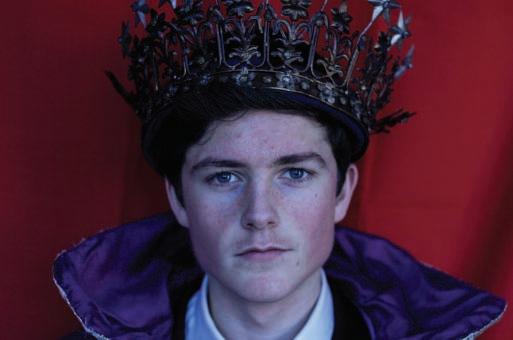

78 – Olavian 2012
Macbeth
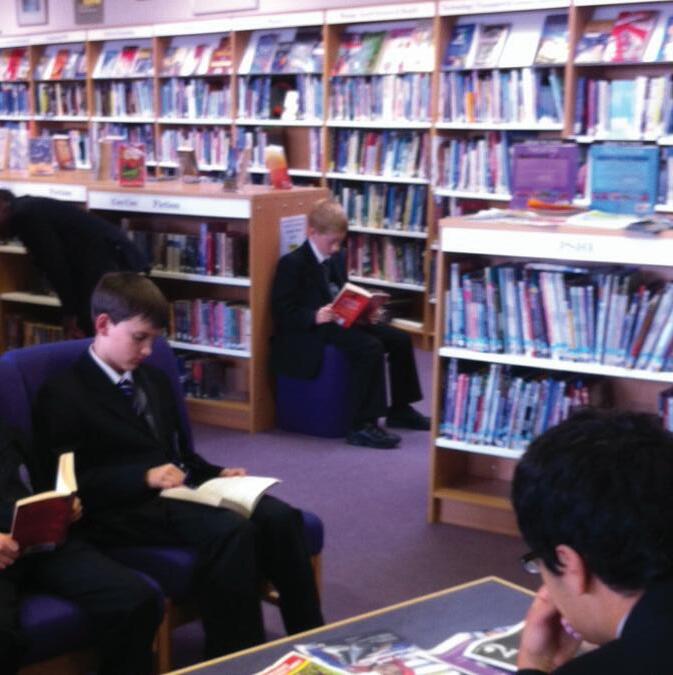
Library
Witha stock of more than 14,000 books, both libraries continue to thrive and be at the heart of St Olave’s. New stock has been bought to keep abreast of changing curriculum and to ensure that we meet the needs of our highly academic school.
Both libraries are in constant use. Throughout the day there are lessons in the Main School Library and it is always busy at break and lunch time, with students browsing, borrowing, reading, and studying. As well as the wealth of books that are available, there is always a wide choice of newspapers and magazines available for pupils. “How It Works” is a popular new addition to our collection, kindly donated on a regular basis by Sean Gebbett (7H). The most popular author amongst Olavians is Robert Muchamore, with his CHERUB series catching the imagination of wannabe spies; our most prolific reader this year has been Jonathan Joel (8B) followed by Advik Chaudhary (8C) and Jordan Adesina (7B).
For the first time this year we introduced a Reading Bingo to Year 7’s as part of their library induction lessons, where they were encouraged to broaden their reading habits. They acquired stickers, bookmarks and erasers along the way, as well as discovering different genres that they may not have otherwise selected.
We also expanded our shelves to include graphic novels in response to requests from Year 10’s and these have proven popular. Students are able to relax in the alcove on the new stools that have also been provided for them.
World Book Day heralded a library competition with a difference! The crime scene in the library was cordoned off where a “murder” had taken place. For three weeks the library was abuzz with amateur detectives, as every week brought a different set of tricky clues about books and authors that would help pupils solve the crime. The three successful sleuths and lucky winners of the competition were Finnian Robinson (8C) who won a £15 cinema voucher, along with runners up Kai Smith (9C) and Abishek Patel (10N) who each won Easter eggs. They correctly deduced that the poor victim was Mr Kenward (P.E.).and the fiendish murderer was Mr Davies (Art). The appropriate authorities were informed about this heinous crime!
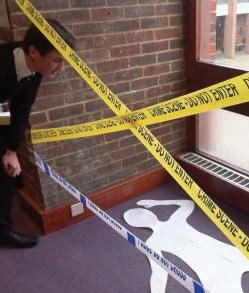
The Sixth Form Library is an integral part of our academic success. Sixth formers can choose to study in
the common room, or in the pavilion or elsewhere in the school but the Sixth Form Library is the one place they can go where they know that they can focus on their essay, revision or research without being disturbed. It is often packed with pupils and of course this is excellent preparation for future independent study at university. The library is well equipped with books and periodicals that take them beyond the curriculum and give them the extra knowledge that the top universities are looking for, and we continue to subscribe to daily newspapers and Private Eye, as well as to New Scientist and The Economist amongst others. We also updated our collection of DVD resources.
Both libraries are managed by two part-time staff and this year would not have been successful without the support of Peter Leigh (12X) who organised our student library monitors. We are enormously grateful to them all.
Jackie Humphries S___Senior Librarian
80 – Olavian 2012 Library News
Murder in the Library! – World Book Day competition
Music
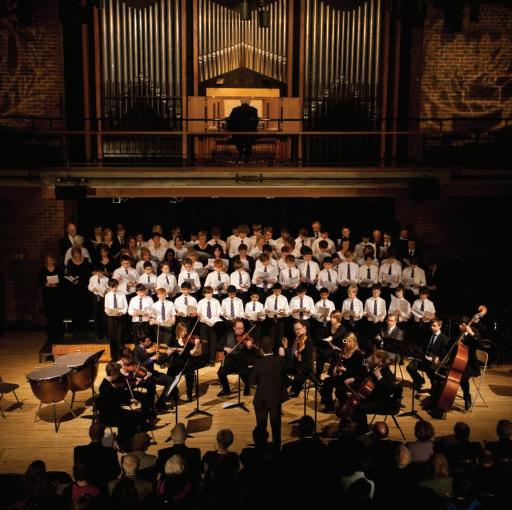
A Year of Music
Fighting off the effects of a global economic crisis doesn’t sound as though it has much to do with the remit of a school’s Music Faculty, but seemingly few in the world are exempted from having to tackle this challenge. That said, in spite of what could still be the most difficult of financial conditions this country we’ll ever see, it’s good to know that the family of St Olave’s is determined to battle on. Those student, parent and staff members connected with the various musical events this year will be able to testify that not only are we continuing to offer the regular programme, but we are also still managing to develop. For everyone else in the wider Olavian family I hope we have helped in some way boost your spirits with our music-making! Of course we also now welcome Mr Geoghegan to the fold, following the departure of Mr Cook in the summer. We look forward to discovering the many talents that Mr Geoghegan will share with the Faculty in his time at the school.
Highlights for me of the calendar to date have included the Commemorative Concert in April, which had a warm and enthusiastic reception from the audience. The ensembles were sounding as good as I’ve ever heard them and the atmosphere was truly exciting, everyone there present to celebrate the long history of St Olave’s. With William Howarth’s composition finding its way onto the music stands of our mighty Symphony Orchestra and the swelling of our choral and instrumental forces by parents and friends, the whole evening had a genuine community-spirited feel.
Year 8 enjoyed (endured?!) a spot of additional musical attention this year, with almost everyone in the cohort singing “Consider Yourself” from Oliver! at our Showstoppers evening. This is also now amongst my favourite memories of the year. The variety of solo and group talent seen that night was inspiring and it was a privilege to collaborate with the Drama Department on this one, to make it such an all-round memorable event. The very same Year 8 group also featured prominently in ‘O-Factor’, as well as the Samba Competition at the Summer Fun Day. Future Year 8 students have much to live up to in order to better the standards set.
There were some impressive individual achievements during the year, gaining for those concerned and for the school very high regard nationally. Richard Decker won the title of BBC Young Chorister of the Year – a title which has been a springboard for many of his predecessors into the professional world of music. William Howarth and Tom Steer won first and second
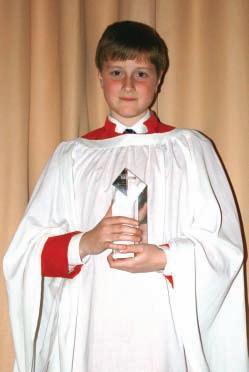
place respectively in the Woodard Schools Musician of the Year Competition in the school’s first year of entering the contest. Thomas Bridges did it again this year, by winning the Eltham Choral Society Composer’s Competition, which was judged by none other than the choral world’s international favourite John Rutter CBE. (You’ll no doubt remember that Tom impressed choral composing heavyweight Bob Chilcott in the Woodard Schools competition previously.)
It is hard to imagine how such achievements can be topped. One thing is certain: I am sure the next generation of musicians is not going to take that challenge lying down. Many thanks, as always, are extended to those who support the activities of the Music Faculty in any big or small way… Long may they continue!
82 – Olavian 2012
BBC Young Chorister of the Year
Matthew Price S___Head of Music
BBC Young Chorister of the Year 2011
Having distinguished himself in two earlier rounds, Olavian Richard Decker, (8B) won the final of the BBC Young Chorister of the Year competition on Monday 24th October at St Martin-in-the-fields, London. Aled Jones hosted the evening, with composer John Rutter, media marketing specialist Simon Abbott and professional singer and former YCOTY winner Laura Wright on the judging panel. Richard then had a busy year, carrying his well-earned title and all that arrives with such prestige.
Woodard Bicentenary Commemoration
A group of over thirty students representing all year groups attended a special service in Westminster Abbey on Thursday 24th November to commemorate the 200th anniversary of the birth of Nathaniel Woodard, an Anglican clergyman who founded eleven schools.
Four members of the St Olave’s Chamber Choir were hand-picked to sing in a combined Woodard choir, which performed Parry’s anthem ‘I was glad’ as well as Stanford’s setting of Psalm 150. Thomas Bridges (12W), who last year won the Woodard Composer of the Year Award, read one of the lessons.
Woodard Schools’ Musician of the Year 2012
William Howarth (13F) and Thomas Steer (13F) reached the final of the Woodard Schools’ Musician of the Year Competition 2012, held on Saturday 5th May at St John’s, Smith Square. Against strong opposition from 15 other accomplished senior finalists, St Olave’s swept the board, taking the top 2 prizes. Congratulations go both to William who took 1st Prize with a splendid performance of the Woods’ Sonata for Alto Saxophone and Piano, and to Thomas who took
2nd place with his performance of the Gregson Tuba Concerto. Both William and Thomas have played a huge part in music at St Olave’s for the last 7 years and these prizes are a fitting tribute to all they have done.
The Norman Trotman Music Competition
The Norman Trotman Music Competition final took place at BYMT’s Southborough Centre on Saturday 28th January and this year not one but two current Olavians were among the nine finalists from across Bromley Borough. William Howarth (13F) stunned everyone with the virtuosic first movement of Phil Woods’ ‘Sonata for Alto Saxophone’, followed by stylish interpretations of classics ‘My Funny Valentine’ and ‘Have you met Miss Jones?’ James Watson (12W) then performed charming pieces on the French horn by Carr, Strauss and Cooke with great flair.
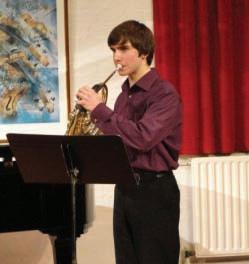
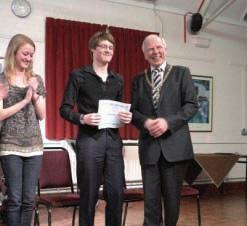
The competition was judged by Jo Cole, Head of Strings at the Royal Academy of Music. She made a particular point of saying how amazed she was at the standard displayed throughout the evening. From someone so highly regarded in their field, and who must see very many talented performers come through the conservatoire, this was praise indeed for William and James.
In the end, the trophy was taken by another worthy contender, Claudia Fuller from Newstead Wood School, on the violin. However, for all nine who took part, it was a major triumph to have reached the final, distinguishing themselves out of more than sixty already very talented candidates. All of these students no doubt have bright futures ahead of them in various musical circles. Congratulations go to both William and James for highly impressive performances.
Music – 83
Olavian nalists in the Norman Trotman Music Competition
Olavian in the Olympics
It was the moment at which one could suddenly impress one’s hosts (if one was on holiday) by saying, ‘I know someone in that choir [on the television screen]!’. We were delighted to see Oscar Ridout (9L), one of the Savoy Choristers, singing in the Dockhead Choir, which comprised forty children and teenagers, in the Olympic opening ceremony.
You can listen to Caliban’s Dream, the Underworld song involving the choir which many will undoubtedly remember (as well as Jerusalem) at youtu.be/ Mec8GZkEpD4
concertS
Recital Week
Held in October, the school’s first Recital Week for some years saw a showcase of the school’s musical talent in a series of lunchtime recitals. Performances included a sparkling rendering of Matthew Wootten’s (13J) A-level composition, saxophonists Will Howarth (13F) and Rob Laidlow (13F), Ms Marwood wowing the audience with a stirring Oboe solo and The Jazz Professors. Wednesday saw chamber music from Tom Saunders (13J), Eamonn Cox (13J) and Finn Butler (13F), and Thursday’s brass spectacular featured a quartet of Jack Sutton (13J), Eamonn Cox (13J), Tom Steer (13F) and Tim Munday (13I), followed by James Watson (12W) performing ‘Maria’ from ‘West Side Story.’ Tom Steer rounded off on the tuba with two impressive Bach Suites and the week ended in style with a Jazz marathon.
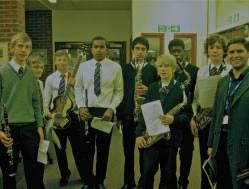
Autumn Mid-Term Concert
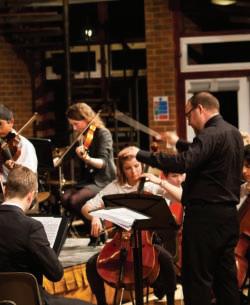
The Autumn term’s mid-term concert once again showcased the wide-ranging talents of the school’s soloists and junior ensembles. As parents, friends and teachers gathered in the chapel on a crisp November night, they were impressed by the standard of all involved, notably the Jazz Ensemble and the Intermediate Strings. Meanwhile, the Intermediate Wind Band graced the audience with their contemporary interpretation of the Largo from Vivaldi’s ‘Winter’. Performances from Guitar Group and Percussion Ensemble were enjoyed by all, in addition to those from soloists across the school, ranging from Harry Haynes (7C) to Eamonn Cox (13J).
Christmas Concert
The festive season burst into life with a dazzling Christmas Concert which gave the packed audience an experience to warm the heart on a cold December evening. There were particularly beautiful vocal solos from Richard Decker and Eamonn Cox, and an impressive piano solo from Matthew Wootten. The choirs, including the new 450 Parent Choir, Bands and Orchestras gave spirited and moving performances, with the inimitable Jazz Band rounding off the evening in style. We are indeed
84 – Olavian 2012
Oscar Ridout (9L) was part of the Dockhead choir, which sang in the Olympic Opening Ceremony.
Junior Jazz Ensemble at the Mid-Term concert
Christmas Concert 2011
fortunate to have John Castle, Martin Bunce, Doug Blew and Nick Beston, as well as other dedicated peripatetic teachers, to inspire our students, under the leadership of Music Faculty teachers.
Showstoppers
An outstanding event of the school year was the Showstoppers evening in February, a collaboration between the Music and English & Drama faculties. A more detailed description is contained within the latter’s section of this edition of The Olavian.
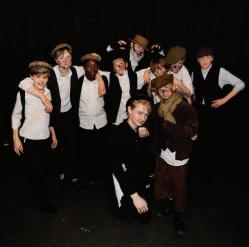
Bromley Schools’ Prom 2012
The Jazz Band, the jazz ambassadors of St Olave’s, took to the stage at Fairfield Halls on the evening of Monday 5 March to perform to a packed auditorium. The audience (mainly consisting of parents of the young musicians in the borough’s schools) was very enthusiastic and supportive, giving our students a real lift as they played the theme from “Family Guy” and the classic “What is hip?” in our fourth appearance at this biannual event. The group represented St Olave’s very favourably, under the capable direction of Old Olavian Nick Beston. There was a buzz about the performance, with literally thousands unable to stop themselves tapping toes, nodding heads and hand-jiving to our beat – well done to all involved.
450th Anniversary Easter Concert
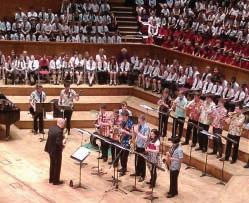
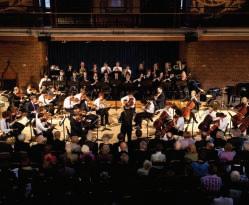
Wednesday 29 April: a packed audience was treated to a splendid concert in the Great Hall at St Olave’s. For the school’s flagship musical ensembles, weeks of rehearsal came to a head under the banner of celebration for this special anniversary year. As well as the stalwarts of the annual concert line-up, there were some new inclusions in this programme to mark the occasion. The Symphony Orchestra as an ensemble gave possibly its best performance in recent memory. It was obvious that a student’s own composition, written especially for our musicians at the time, captured the imagination of all the performers and also of those listening. William Howarth’s Migration, tailored to St Olave’s Symphony Orchestra’s own quirky configuration, took everyone on a journey from quiet, reflective beginning, through some good-humoured moments and on to a rousing, earth-shuddering finale.
After the echoes of both the piece and the applause had died away, the newly-formed Byrd Choir, a small group of 7 soloists (Richard Decker, Ollie Morrell, Thomas Bridges, Oscar Ridout, Peter Leigh, Tom Saunders, Eamonn Cox) directed by student Peter Leigh, stepped onto the stage. The quality of the singing particularly stood out in terms of the confidence, excellent pitch and range of timbre with which they tackled Haec Dies, a motet in six parts. Symphonic Wind Band was on fine form, as usual, with Gordon Jacobs’ suite. All players really gelled to perform this great piece, with both its proud and more lyrical passages.
Music – 85
‘Oliver!’ from Showstopppers
Jazz Band at the Bromley Schools’ Prom
The Symphony Orchestra in the 450th Anniversary Concert
Thomas Saunders deserves special mention also, for his spirited playing in Telemann’s Viola Concerto with the Chamber Orchestra. The four movements of the work give a rarely-heard instrument the chance to express the heights and depths of emotion and Thomas controlled all of these with great command.
Highlight for a number in the audience was the Choir, which included the new 450 Parent Choir, and that magical moment as they hit, with a power that filled the Great Hall, that first note of Handel’s Zadok the Priest. A small semi-chorus of students (Oscar Ridout, Thomas Bridges, Finn Butler, Peter Leigh, Seb Cook, Tom Saunders, Eamonn Cox and Daniel Morland) also had moments to shine out during Purcell’s Rejoice in the Lord Alway. There was also no mistaking the energy with which the Brass Band and Jazz Band rounded off the evening’s musical entertainment. Capturing all the vitality and ‘cool’ needed, both groups swung with gusto and completed the picture of a fantastic night of music-making for all concerned. Without exception, every musician leaving the Hall that night should have had a sense of great accomplishment and every audience member will have the memory of what was a truly first-rate St Olave’s concert, worthy of the name it was commemorating.
Jazz Night
Wednesday 2nd May saw the return of the annual St. Olave’s Jazz Night. A packed Great Hall was host to the magnificent St Olave’s Jazz Band, The Dixieland Band and the Junior Jazz Ensemble. A highlight of the evening was the performance from renowned jazz trumpeter, Paul Eshelby, accompanied by his pianist Cliff Hall. This was the final Jazz Night for many of the Jazz Band, and was a fitting send-off for the Year 13 Leavers.
Summer Mid-Term Concert
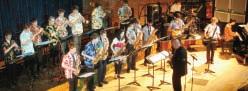
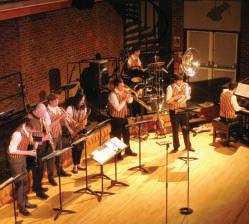
Thursday 21st June saw the final Mid Term Concert of the academic year. A wide-ranging programme included soloists on a variety of instruments as well as the Junior Jazz Ensemble, the Guitar Ensemble and the Summer Strings. Performances included Samuel Wootten (9L) playing ‘Autumn Leaves’ on the piano, Richard Decker (8B) giving a sensitive interpretation of Verdi’s ‘Volta la Terrea’ and a superb performance of Kabalevsky’s Presto by Abhishek Patel (10N).
Year 8 Samba Band of the Year
The second year of the Inter-House Samba Band of the Year competition took place at the Summer Fun Day on Saturday 7 July. There was a good turn-out from each Year 8 form to compete and everyone’s spirits were high, despite the rain-dodging going on! The public’s excitement was unmistakeably building as Cure were the first House to take to the Sambarena. They were followed (in chronological order) by Harvard and Leeke, with Bingham House rounding off the musical entertainment.
Each group had their own unique ‘style’, shall we say, and each performance was met with cheers and thunderous applause from the family and friends gathered in support. A tense atmosphere descended as voting took place. Bingham’s sambistas had clearly brought along the most support, Harvard’s performance had real finesse to it, Leeke’s musicians were energetic and enthusiastic. Who would win? Well, with a particularly high turn-out, excellent public support and a solid musical performance, the sambistas of Cure House reigned victorious and retained for themselves the trophy again this year.
86 – Olavian 2012
Jazz Night – The Dixieland Band
8C were victorious, becoming the St. Olave’s Samba Band of the Year
Modern Foreign Languages
Modern Foreign Languages
The Department of French
«Le français est une langue à vocation universelle, de gentillesse et d’honnêteté, et il nous a fait don de ces mots abstraits si rares dans nos langues.»
Léopold Sédar Senghor
The department has, as ever, lit up like the Bastille! There has been understandably a huge enthusiasm for the French, which has been underpinned by ever more trips overseas to France which have been experienced by most tranches of the year groups. There have been trips to Boulogne, Paris and Normandy. These have been a great success engendering a real want for a command of the French tongue not only in grammatical acuity but in idiom too. Several excellent assemblies highlighting the pleasures and benefits of these trips have emphasised to pupils the importance of learning French, and the sense of endearment to France was palpable - both in these assemblies and in the classroom as a whole - throughout the academic year. We look forward to our continuing to make French language, culture and learning ever-more exciting over the coming year.
Paris Trip
On Friday 24th October, Mlle. Delage, Mr. Evans and 20 students from the St. Olave’s Sixth Form converged on St. Pancras International with sleep still lining their eyes, packed and ready to embark on a 4 day trip to Paris. After buying some last minute supplies and a surprisingly uneventful Eurostar journey for the Year 13s, we arrived at the Gare du Nord in the French capital.
A short Metro journey brought us to our hostel in the vibrant community of Le Marais, only a stone’s throw away from the Hotel De Ville and the church of Notre Dame. The hostel itself was of beautiful 17th Century architecture, with a courtyard and restaurant on site, something that none of us were expecting. We checked in our bags and set off for our first destination, the Stade de France.
Here, two lucky students had the chance to lead two carefully selected teams out of players’ tunnel, the first highlight of the trip. Following dinner and a walking tour of the district led by Mlle. Delage which included the former site of the Bastille we retired to bed, anxious to see what tomorrow brought.
The next drizzly morning, we began seemingly endless train ride, marred with accordion players, to the Palace of Versailles and we were justly rewarded with striking architecture, stunning gardens, and one of a kind artwork. After we had eaten lunch and got out of the cold, the sun made an appearance and we went for some free time in a park, met some charismatic ducks, and ate crepes. We ambled leisurely along the Seine back to the hostel and, after eating dinner, visiting the surrounding area of the Pompidou centre, which contained some ingenious fountain sculptures and extremely talented street performers. We then indulged our immature sides at the cinema, watching an animated film called “Le Monstre À Paris”; it was full of laughs and an excellent way to close out the night.
Although we spent the first part of the morning at the beautifully designed Saint-Chappelle (literally ‘holy chapel’), many minds in the group were on the Rugby World Cup final between France and New Zealand, so afterward we jostled for space in the Hotel de Ville square to watch it on the big screen. France lost the game by one point, much to Mr. Evans’ approval, but it gave us the opportunity to mingle with the locals, learn some French chants (and swear words!), and make some cameo appearances on French national television. After Mlle.
88 – Olavian 2012
Marjorie Delage S___Head of French
A-Level French Pupils in Paris
Delage solemnly wiped away her Tricolore face paint, she led us to Chartier, a favourite restaurant on last year’s trip, for a hearty lunch. We would then burn all of this off during the exhausting uphill trek to Montmartre, where we took in the sights and bought various souvenirs. After trudging back to the centre of Paris and experiencing a stunning view from the top of the Arc de Triomphe, we strolled down the Champs Elysée and got the Metro to the Hostel for dinner. We spent our last night in Paris in style with a sublime after-dark view of the Eiffel Tower and the surrounding area from Trocadero.
After the customary breakfast of a croissant, a pain-auchocolat and a glass of orange juice, we spent the day visiting the Louvre, the gardens of the Tuilleries and the Musée d’Orangeries. In the former, many of us laid eyes on the Mona Lisa and the statue of Venus de Milo in person for the first time, but some people found it impossible not to get lost inside the vastness of the Louvre. When we’d rounded up the group; counted and double-counted, we said our final goodbyes to Le Marais and to Paris and boarded the train home. We will always be thankful for this opportunity to integrate with people from the other half of the 6th form, practice our spoken French in the proper environment and have fun whilst doing it. Special thanks to Mlle. Delage and Mr. Evans for making it possible.
French Christmas Cookery
Excitement (and a delicious chocolaty smell) filled the air on Wednesday 7th December, as Mlle Delage led her A-Level French group in a masterclass of traditional French Christmas cookery. The students saw both their language and culinary skills pushed their absolute limit as the usually serene Mlle Delage became a tough taskmaster in the kitchen, instructing them to create “une bûche”, the French take on a Christmas Yule log and cornerstone of their festive celebrations, from a foreign recipe. We were guided under the watchful eye of Mlle Delage to make sure our tasty treats turned to perfection!
Blazers came off, aprons put on and we were soon beating eggs and getting straight into the thick of things. The assignment required concentration, dexterity and good translation skills – only one of which the students been taught in an A-Level French class – so needless to say there were occasional mishaps. Luckily, Mlle Delage and Mr Arnold were there every step of the way to bring the recipes back on track.
To add a bit of friendly competition, we were quickly divided into two teams of 4 and one of 3, each of us set the task to make one. Unfortunately, one of the teams got off to a bad start and after an incident concerning a broken egg and flour, they were quickly out the running and made to watch.
However, the two remaining (more competent!) teams battled it out; following the original French instructions, slowly but surely, the “Bûche de Noël”s began to take shape and after some rolling-out and chocolate stealing (!), both teams had managed to produce some delicious looking cakes.
After some “expert” piping by Mlle Delage and a discussion of how delicious “Crème de Marrons”, a typical French ingredient, never to really trouble British shores, is, we finally sat down to eat our delicious creations accompanied by some French squash, which could have won the award for “Most Diluted Squash Ever.” A tie was announced between the two groups and the two “logs” were quickly devoured, with many of us returning for seconds, and extra chocolate! This proved to be an innovative new way of learning vocabulary for all involved and we all had a fantastic time. A huge ‘thank you’ to Mlle Delage for making this possible by assisting in, critiquing and introducing us to this lovely dessert!
Matthew Burns-Watkins & Alex Ekong
French Day at St. Paul’s Cray Primary School
On the Friday 3rd of February the St. Olave’s Year 13 French class were again invited to St. Paul’s Cray Primary School to help out at their annual French Day. Separated into small groups and assigned a year group, the Sixth Formers worked on preparing different activities suitable for their year group, with activities ranging from flash card number games to French animal bingo. The day also gave students the chance to visit the ‘French Café’ set up in the school for everyone to enjoy both a croissant and a drink, before enjoying the Year 4’s performance of “Boucles d’or et les Trois Ours”.
French Conference
On Tuesday 21st February twenty five Year 11 French students attended a day conference with the aim of improving their skills before the summer reading
French – 89
French Christmas Cookery with the Lower Sixth
and listening exams. Various sessions included work on their French orals, a writing session and in the afternoon reading and listening tests. Both of the day’s competitions were won by Olavians Jamie Cawley (11J) and Tomas Dean (11K) for their excellent contributions and questions.
Europa French Trip
In March, Year 7 travelled to the Europa Centre in Essex where they had the opportunity to walk around French shops including clothes shops, a much-frequented bakery and a butcher’s asking for various items in French. Students also had to ask about a missing person using their French vocabulary to describe eye colour, height, age and so on.
French Film Society
In the autumn and spring terms this year, Sixth Form students were invited to join the French film society which aimed at meeting up regularly at the Cinéma Lumière in South Kensington. This was the opportunity for our linguists to watch films with subtitles in order to gain some insight in both French culture and society as well as develop a greater understanding of the ‘l’exception culturelle française’. Over the two terms, they all thoroughly enjoyed a wide range of films from La Conquête to Les Adoptés.
Year 8 Boulogne Trip
On Wednesday 30th May, the whole of Year 8 went to Boulogne in France for a day trip. We all had great fun and it was a very enjoyable experience.
We met at school at 5:30am before setting off in our coaches to the Euro Tunnel. Once in France, we drove from Calais to Boulogne and arrived there at 10:15 French time. To start off, we all went round the old town and the ramparts. This was an opportunity to take a lot of lovely pictures of the amazing views and beautiful buildings. We then went into the Basilique NotreDame, a lovely, old cathedral where we saw fascinating paintings.
Next, we had to put our French skills to the test in the Boulogne market where the majority of us bought fancy hats and stylish shades. People also bought baguettes and other French delicacies, and someone even bought 3 kilos of onions!
At 12:30, we left the market and had a refreshing walk along the sea front before reaching the beach for our lunch. We ate our food quickly and all ran onto the warm sand where we played tag and messed around; we enjoyed the beach.
After lunch we visited Nausicaa, an interesting sea-life centre. We saw many stunning sharks and fascinating fish
90 – Olavian 2012
7L at the Europa Centre
Year 8 in Boulogne, home of Nausicaa
Year 10 French Pupils in Normandy
in the centre, as well as shells and under-water plants. We also saw a sea-lion show which was very interesting and fun, even though it was hard to understand the French speaker. The tricks that the animals pulled off were extremely impressive and really showed the intelligence of these creatures. We all found it a fun experience.
Once we had finished spending our final cents in the Nausicaa gift shop, we went and played games on the beach. We played a wide range of games such as football and cricket, and some of us still hadn’t lost the pleasure of pushing others over.
At 17:20 we departed for the Euro tunnel and had another pleasurable journey home. We arrived back at school with our hats and shades on (and a little bit of sunburn) at 19:30 (English time) and all went home weary yet very satisfied.
All in all it was a very enjoyable and memorable experience. We particularly enjoyed playing on the beach and spending time with our friends. Thank you to Mr Bowden and all the staff for making it a great day for all of us!
Jonathan Buchanan
(8H)
Year 10 Normandy trip
On the 9th of July, 44 boys, Mr Evans, Mademoiselle Delage, Mrs Goodman and Madame Storrs-Fox set out for Normandy at an ungodly hour of the morning. Travelling by coach, they reached L’Etoile de la Mer, which was to be their home for the next five days. A variety of activities included a riveting visit to Le Mont St Michel, which they left with much lighter pockets. Alongside this, the group ventured to a 360 cinema, where there was a film on the D-Day landings.
Other highlights included a visit to a French market, where students immersed themselves in the native language, and an activity day at a château. A memorable afternoon was spent playing on the beach, in torrential rain. They rounded off a fantastic trip with some French cuisine, including snails and various pâtisseries. All of the boys had a brilliant time, and thanks must go to all the dedicated teachers who made this trip happen.
The Department of German
The German Jamboree & Max und Moritz Lower School pupils, and a teacher, in school on a day during the summer holidays? Unheard of!
Nevertheless, for a day in the August of 2010, this was what took place, as the German Jamboree met up to put the finishing touches to the first stage of what was undoubtedly our most ambitious project yet.
The German Jamboree is a German extension club which was started by Frau Cooley to satisfy the six pupils’ (Tim Stickings, Peter Leigh, Matthew Burns, Thomas Bridges, James Watson, and Chris Self) hunger for more advanced German, only in their second year of learning the language. We had looked at word puzzles, moved on to history and culture - learning about Die Weiße Rose - and now, having translated several German children’s songs, we decided to start our most challenging project yet. Not just a translation of a entire book, but one in verse, and not just any book, but a book whose stories every German child probably knows by heart: Wilhelm Busch’s Max und Moritz.
Max und Moritz is a children’s story, a tale of two young miscreants who play devious pranks on their neighbours, and is a darkly humorous tale, part and parcel of Germanspeaking culture, firmly embedded in the minds of almost 100 million people and often referenced in literature and common parlance.

Within a few months, and with many hours spent bent over Frau Cooley’s yellowing copy of the original, the group had literally translated all of the Sieben Streichen, the seven pranks which Max und Moritz play on people. But the literal translation, finished on that summer’s afternoon, was only the easy part: while it was a translation, it didn’t work in English – At this point goes with a plate/Widow Bolte into the cellar/That from the Sauerkraut/She could fetch a portion for herself/Of which she was a fan/When it had been re-heated – may perhaps work for a cookery book, but did not match Busch’s exquisitely rhyming German.
But instead of giving up and descending into gloom, with the start of their Year 11, the group started immediately a task which would take us several months, as we painstakingly worked through each couplet, with the original side by side with the literal translation, and slowly but steadily produced a full, rhyming translation in English, of the German book. - Widow Bolte then went down/Into the cellar underground,/Where she kept her favourite snack/(Sauerkraut – her lips did smack!)/And with exceeding great desire/Did warm a little at the fire. - Then, we came to GCSEs, and, for the moment, the translation was forgotten about.

German – 91
Coming back to Year 12, now Sixth Formers, we pondered how German Jamboree would work, and came back to the translation. Surely, we though, it did not seem right that such a project should remain as a dusty stapled booklet in the deep archives of MFL. And it was at this point that the idea of publishing our own book was conceived. Undeterred by our teachers’ reminding us that we should be spending an equal amount of time outside lessons studying the subjects that we were spending studying them in school, we began to meet several times a week, as we strove to produce a book in 3 weeks, to ensure that we could present it to the world on Open Day. We agreed on a format, of German on the left page, and English on the right. Then, the text had to be formatted, a cover designed by a friend, and the entire book manuscript printed out in A4, as we checked every page for errors, and changed lines of translation that seemed slightly off, before producing a final manuscript.
Within a week, a copy had arrived, printed for us by a self-publishing company. We gathered round it excitedly, and, with a check-through, ordered the first copies, ready for our table on Open Day, where they were in such demand that our entire batch was bought up, and so many staff also wanted a copy that another batch had to be ordered!
In just over a year and a half’s solid work, we had produced a piece of work of which the outside reviewer said ‘A wonderful example of what today’s much maligned youth is capable and which, I hope, will inspire many others to knuckle down to their studies. Reader, I hope you will enjoy the work of Wilhelm Busch and the talented St Olave’s students as much as I have!’.
Our translation is not the first, nor is it the most professional. But it seems, given people’s reactions, that it has lost none of its ability to entertain.
Peter Leigh & Tim Stickings
Max und Moritz aside, the trips were, once again, the highlights of a very busy year in the German department. We took part in two exchanges, the superbly subscribed sixth form exchange with Heidelberg (62.5% participation) and the year 10 exchange with Starnberg. Both were thoroughly enjoyed by all participants, English and German, and many new friendships were forged and horizons widened. Many thanks to parents who supported, ferried, organised and, hopefully, also enjoyed the experience. My thanks go to the students, who enjoyed themselves greatly and impressed with their openness, pleasantness and generally excellent behaviour.
Aachen Christkindlmarkt Trip
On Thursday 8th December, Olavians had the opportunity to visit the charming, twinkly and wonderful Christmas Market in Aachen. They enjoyed Kaffee und Kuchen, stocked up on Christmas presents, visited the cathedral, which was the first monument in Germany to be included in the UNESCO Cultural Heritage list, and the gothic City Hall in which thirty two German kings celebrated their coronations, all in the heart of Aachen’s old city centre.
Sixth Form German Exchange - Heidelberg
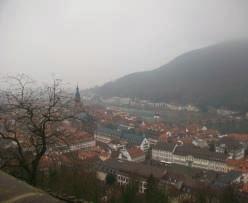
On Thursday evening, 9th February, 11 intrepid travellers (10 VIth form German students and Mrs Cooley) set off from London to take a coach via Frankfurt to Heidelberg in Germany, where the temperatures were below -100C. We were hoping to get some sleep on our 15½ hour journey, but for many of us the opportunities in a fully booked coach and with stops on the way, were rather scarce. As the hosts had been forewarned that we might arrive rather tired, they let most of us have a good nap in the afternoon after our arrival, so that the welcomecelebrations on Friday evening could be enjoyed to the full.
The weekend was spent with the host families, some joined up in groups to do and see a number of things; and then there was a full programme for the week.
On Monday morning, after a reception by the headmistress of the school, the students shadowed their partners for the 6 morning lessons. The reward was a visit to the Heidelberg brewery, a very popular item on our itinerary as it included free refreshments. On Tuesday, all of us – the German partners and teacher included- spent a day in Frankfurt. By now the weather had warmed up a little, to about – 3, and it was snowing.
The roads were slushy and it was a little too unpleasant to appreciate fully our guided tour through Frankfurt,
92 – Olavian 2012
Hanna Cooley S___Head of German
but we thoroughly enjoyed lunch in the ‘Ebbelwoikneip’ (Apple wine pub for the uninitiated) in Sachsenhausen; it was warm, friendly and the food was very reasonably priced. Both the following visit to the art gallery ‘Städel’ and the shopping time on the ‘Zeil’ went very quickly, giving us just a taste of what Frankfurt has to offer.
On Wednesday we had a guided tour through old Heidelberg, a small town dominated by the university, the oldest within the present boundaries of Germany. The highlight here was the ‘Studentenkarzer’, the student prison, where the university, which had an independent judicial and penal system, incarcerated students for wrong-doings, from the early 18th century up to the First World War.
In the afternoon we went ice-skating, which we thoroughly enjoyed, although it left one or two of us with aches and pains for the rest of the day/week.
Thursday saw us in Mannheim, a more industrial town and a stark contrast to the romantic Heidelberg.
We loved the dressing up in historic costume for the guided tour through the castle in Mannheim and, having recharged our batteries with sausages, crepes etc from a kiosk, we took a tram to the technology museum where we spent a couple of hours doing lots of hand-on experiments.
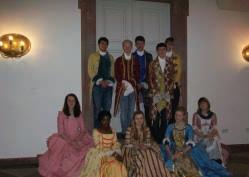
The next morning, the morning after the last night of the exchange (!!!), saw us at the school with all our luggage. We left it there for the morning, while we climbed up to the famous romantic castle ruins of Heidelberg.
By now the weather had warmed up to above zero, causing a lot of chilly mist across the town and the river Neckar, which rather spoilt the splendid views from the castle and caused us to take refuge in the vaults near the huge wine vat, thoroughly appreciating the warming powers of hot chocolate!
After picking up the luggage from the school we took a bus to the station where there were many tearful good-byes.
In spite of a train delay caused by a fire in Stuttgart, we arrived at Frankfurt station in time to have some lunch, get food supplies for the journey and be at the coach stop early enough to get the best seats at the back of the coach and on the ferry quickly enough to get comfortable seats.
We arrived early in London, 5 am in the morning, ready for some sleep (or a music lesson in the case of Tom Steer!) at the end of a great week.
Then, in May, it was time for our German Exchanges to enjoy some English culture. Ten students from the
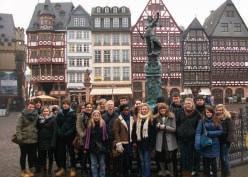
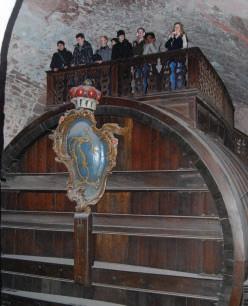
German – 93
Visting the German Wine Vat
The VI Form Germanists in Mannheim
VI Formers and their German Exchanges, Heidelberg
Hölderlin Gymnasium in Heidelberg came on their return visit of the 6th form exchange, having what they described as ‘the best week of their year!’ A glimpse of the Queen caused great excitement as she left Buckingham Palace in her coach and, again, on her return later, virtually at arm’s length! Not surprisingly, pictures galore flew to Germany; what a stroke of luck! During a day at school they enthusiastically took part in the Scottish dancing laid on for Year 13 students. A hearty meal, accompanied by bilingual conversations, drew to a close a week that was declared a great success, in which we had an excellent time with fun to be had all round.
The German Exchange was a brilliant experience and one that has developed the pupils’ passion for German language and culture.
GCSE German Exchange – Starnberg
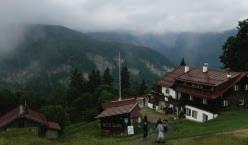
At the beginning of May Olavians and their families very much enjoyed the company of the Starnberg group on the first leg of the exchange.
Then, on Saturday 7th July, the beginning of activities week 2, six Year 10 students set off with Frau Cooley on the return leg of the Starnberg exchange. We were looking forward to seeing our friends again who had spent a week here after Easter. It turned out to be as great as we had hoped.
Although the weather was not brilliant it was good enough for us to do everything we had planned and
enjoy it. We spent two days in Munich, seeing the historic centre, the Olympic Park and the Bavaria film studios; we had two great days in the Alps, one walking through an amazing ravine cut by a river, the other to the fairy tale castle ‘Neuschwanstein’; a day at school and on a boat trip round Lake Starnberg and lots of free time with our German friends.
We thoroughly enjoyed the times out with our partners and even the food-faddies among us found German fare rather better than feared! The Germans’ hospitality and friendliness was thoroughly appreciated and we have deepened our existing friendships and forged new ones. The week passed far too quickly.
GCSE Rhineland Trip
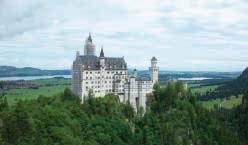
In Activitiy Week 2, those Germanists not on the Starnberg exchange went on a trip to the Rhineland, one of the most scenic areas of Europe. The group was based in Boppard, a charming market town to the south of Koblenz in the state of Rheinland-Pfalz, and made trips from there each day. Excursions included a boat trip along the Rhine to St Goarhausen followed by a cable car ride up to a viewpoint at Rüdesheim; a day at Phantasialand, one of Europe’s largest theme parks; and trips to Marksburg and Koblenz to see the confluence of the Rhine and Moselle. The pupils engaged in a range of activities in the local area: there was an opportunity to take part in a bowling evening, an afternoon of swimming and trips to ice cream parlours, and shopping and sightseeing in Cochem was also part of the programme.
94 – Olavian 2012
Starnberg Exchange (clockwise from top-left): Olympic Park, Munich; outside the Universität (street named after students Hans and Sophie Scholl, of Die Weiße Rose); Neuschwanstein (albeit in scafolding); and a rather misty Bavaria.
The Department of Spanish
The Spanish department has changed a great deal in the last five years, from only teaching a one year sixth form AS course for external students, to being taught in every year of the school.
Students understandably wanted to carry on studying the subject to A2, so some went to other centres for the necessary lessons although most were examined at St Olave’s. Eventually, we were able to run an A2 course in school.
Students in year 12 are strongly encouraged to undertake a period of work experience in Spain, and always find it very beneficial. Selina Li has written about her work experience below. We may also be able to organise a year 13 visit to Andalucía, our area of special study for the A2 course. Clearly, seeing the places and smelling the air will help us understand what it is really like to live in the region.
Four short years ago, two year 8 form groups started learning Spanish, while their peers started on German. Having chosen Spanish for GCSE, most of those students are now heading for their GCSE examinations, having already done some controlled assessments towards their final grade. Classes in year 8, 9 and 10 are following the same pattern.
These Spanish students went on an amazing visit to Murcia in South East Spain during activities week 2, and Callum Urwin of 11O has written about it below. We had a wonderful time, as well as learning a surprising amount of Spanish.
This year, two year 7 tutor groups have started Spanish, while their peers have started French. There will also be more students from the same cohort opting for Spanish when they reach year 8, although these students will have given up Latin and the chance to study German if they do so.
The Spanish department is an exiting place to work, with many new developments still working their way through the school. We will welcome our first internal AS students to the sixth form in September 2013.
Gillian Gardiner S___Head of Spanish
Annual Spanish Cookery Extravaganza
Once again, Ms Gardiner and her Year 12 Spanish class took over the main school kitchens for an afternoon to produce a range of South American specialities including Fajitas, Traditional Spanish Paella, Tortilla Española and
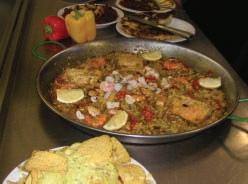
Tapas as well as cakes and biscuits and non-alcoholic sangria to help them get through the hard work in the kitchen.
At the end they were joined by A2 Spanish students for a tasting session, along with other members of the Sixth Form and Mr Buckley.
Year 12 Work Experience in Segovia, Spain
Every year the school offers language students in Year 12 and 13 the opportunity to do work experience in Spain, France or Germany, which is organized by Halsbury Work Experience. Taking advantage of this exciting offer, our Spanish class travelled to Segovia, a small, picturesque and historically rich town situated to the north of Madrid.
At Stanstead Airport, we met other Spanish students from different schools all over the country who were also going to Segovia. It was refreshing and inspiring to meet people who were so eager and passionate to learn Spanish. The flight lasted only around two and a half hours. When we landed in Madrid, we took a coach to Segovia which didn’t take long either. Looking at the unfamiliar scenery out of the window, we were desperate to get out and step into Spain! Soon enough, we arrived at Hotel Corregidor, which was a very pleasant and comfortable place to stay. The rooms were of a decent size, and it was within close reach to our work placements and Segovia’s many shops and restaurants.
Our work placements varied, with Harriet working in a primary school teaching Spanish children English, Lucy answering the telephone in a tourist office, Ria selling shirts in a Men’s Clothes Shop and Becky and I serving food in a Spanish restaurant. We were given a great choice as to where we wanted to work: in retail, hotel or restaurant management, in education, or even in the field of medicine or law.
Being a small and not very industrialized town, very few people in Segovia spoke English, which was all the better as we had to communicate solely in Spanish! Talking to
Spanish – 95
people at work and outside of work was great speaking practice. Being a waitress, I learnt the names of many Spanish dishes on the menu which I had never come across before. My tasks involved greeting and serving the customers, and helping with the daily running of the restaurant. I really loved talking to the customers there, many of whom were regulars. I was also lucky enough to receive free lunch every day, where I was served Spanish cuisine - a delicious three-course meal of the day.
After work, we were free to explore the culture of Segovia. Segovia is without doubt a unique and beautiful town with its snowy mountains and historic castles. I will always remember vividly walking down the streets, watching the light snow fall down on the town, and thinking that Segovia was a fairy-tale land in an oldenday romance movie. Despite the chilly weather, we managed to warm ourselves up with a trip to the café and ‘churros con chocolate caliente’ – thick hot chocolate with warm, chewy, fried sweet bread. Heaven. At night, we danced away, enjoying a taste of Spanish night life.
All in all, the trip was an unforgettable experience for all of us. By the end of the week, which had seemed to pass incredibly fast, we had made many new friends and felt sad saying goodbye to our colleagues who we had got to know at work. We would strongly recommend taking up this opportunity if you take a modern foreign language at A level, or wish to study languages at university (working in a foreign country is a great way to develop employment skills, like communication and the ability to adapt to a new environment). It is certainly an extremely valuable and rewarding experience, and most importantly, a lot of fun!
Selina Li (Year 12)
Spanish trip to Murcia
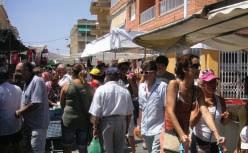
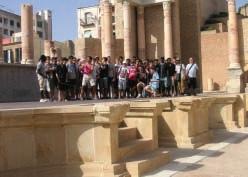
On the 9th of July, a group of year 10 students departed from Southend airport, finally on their way to Spain after a lot of waiting and preparation. When they arrived at the school where they were staying, they managed to find the energy to go for a splash in the pool despite being tired after the flight. Over the course of the week in Spain, they tried a variety of activities, including samba drumming, sailing kayaking and windsurfing, mud bathing, in which they were all covered in warm, smelly mud (supposedly good for the skin!). They also visited the Roman theatre of Carthago Nova, in the town of Cartagena. This visit was especially interesting as it allowed them to learn about the past, as well as giving them the chance to practise their Spanish reading skills. The teachers accompanying them on the trip to Spain were also very helpful, especially the Chaplain, who earned the nickname “Bantersaurus” from some of the boys. On one of the days the boys took the opportunity to visit the local market, where they had no choice but
to speak Spanish if they wanted to be able to taste the local food. On the final evening of the trip, the students were given awards, ranging from “best samba drummer”, to “dormouse award for sleeping anywhere”. It was a memorable visit which none of them will forget.
Callum Urwin (11O)
96 – Olavian 2012
Year 12 Spanish Students in Segovia
Year 10 in the theatre of Carthago Novo
Visiting the local market (and speaking Spanish)
Humanities
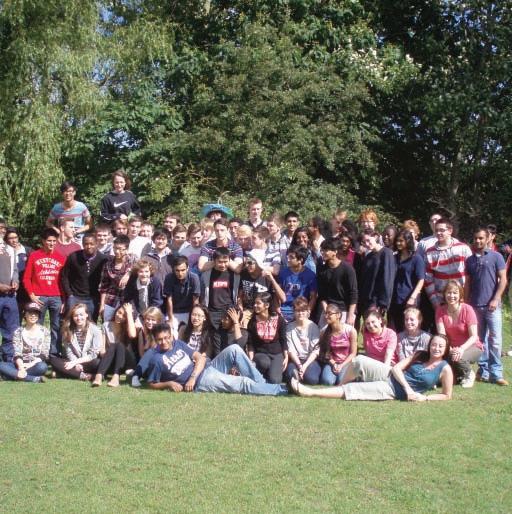
The Humanities Faculty
The year 2011-12 was one of transition for the Humanities Faculty. As the departments within the old Humanities GCE (Geography, Classics and Economics) and HR (History and RS) Faculties merged, they sought to emphasise their common links. These were drawn out during the first “Utopia Day” for Year 7 pupils in November 2011. Pupils were set the task of designing their own ‘utopian society’. Having studied a variety of case studies they worked in small groups from across the year group to consider the features required to create their own utopia! Needless to say, concepts of what a utopian society might look like were divergent, with several identifying the need for a single strong ruler against others who saw the need for anarchy at the heart of their vision.
The Humanities Faculty continued to run a wide range of trips and extra-curricular activities. Visits were paid to Greece, Washington & New York and Iceland with year 12 at the end of the summer-term. This alongside the well-established Political Economy and History societies means that pupils have ample opportunity to indulge their interests in the Humanities beyond the bounds of the curriculum. These will supplemented by the newly founded Classics and Geographical societies as 2012-13 promises to be an exciting year for the faculty.
Daniel Espejo Head of Humanities
The History Department
“Yes, yes, yes, I do see that there is a real dilemma here. In that, while it has been government policy to regard policy as a responsibility of Ministers and administration as a responsibility of Officials, the questions of administrative policy can cause confusion between the policy of administration and the administration of policy, especially when responsibility for the administration of the policy of administration conflicts, or overlaps with, responsibility for the policy of the administration of policy.”
A characteristically long and convoluted sentence from Sir Humphrey Appleby provided one of the highlights of the History Department’s visit with Year 13 pupils to see the acclaimed stage production of “Yes, Prime
Minister” in September 2012. The department also ventured into central London for a production of “Three Days in May”, which detailed the intense deliberations which took place in the British cabinet as the sceptre of defeat at the hands of the German Wehrmacht hung over Winston Churchill in May 1940. These visits, alongside the now-traditional crossings to the battlefields in France and Belgium - including a detour to Dunkirk for the first time - and the Sixth Form trip to Washington and New York, were the highpoints in a packed year of extra-curricular activities. The History Society also continued to flourish, producing an excellent magazine based around the theme of “Civil War”, and this was accompanied by a special supplement to commemorate the school’s 450th anniversary. These truly impressive endeavours were complimented by the best results in the department’s history at both GCSE and A-Level.
2012-12 promises to be another year of action for the History department, with new extra-curricular opportunities, including a return to the Normandy beaches for Year 9, available for pupils to enjoy and enrich their understanding.
Daniel Espejo
Head of History
Year 8 Rochester Visit
On a mild October day, Year 8 visited Rochester Castle and Cathedral as part of the Humanities’ curriculum – a combination of History and Religious Studies. Pupils had the opportunity to explore the castle, learn about the monks who once resided at the (no longer existent) abbey and at the end of the day, they went the cathedral for a service led by the school chaplain.
Year 13 History Theatre trip – Yes, Prime Minister
Soon after the start of the Autumn Term, Year 13 History students were lucky enough to see the staged version of the popular TV political sitcom ‘Yes Prime Minister’ in its final week in the West End on Tuesday 13th September. Jim Hacker, the sweaty, dithering Prime Minister, Sir Humphrey Appleby, the devious publicschool civil servant and Bernard the naive cabinet private secretary, with a steadfast moral compass entertained students whilst they observed features of the British political system which will inform their essay writing for the Development of Democracy course.
98 – Olavian 2012
Year 13 History Trip to the Houses of Parliament
Later in the term, the Year 13 Historians spent a day at the Houses of Parliament. Their tour included the impressive atrium of Portcullis House, the Central Lobby and the House of Commons and the House of Lords. They then got the opportunity to link up with several other schools to have a go at mock coalition building and Mr. Pendred soon revealed himself to be a budding Nick Clegg, throwing principle aside with an eye for the top job. Overall it was a brilliant trip, which taught students a lot about the democratic system in Britain and its nuances.
Sixth Form History Theatre Trip – Three Days in May
On Tuesday 10th of January a group of Year 12 and Year 13 historians visited Trafalgar Studios in central London, to watch a performance of the critically acclaimed play, ‘Three Days in May’, a play exposing in great historical detail the little known events of the 26th, 27th and 28th of May 1940. The play was a fantastic night out and has brought a fascinating area of our history course into sharp focus.
History Society Magazine
The chosen theme for the third issue of the History Magazine was Civil War, and articles were submitted on conflicts as long ago as AD69 and as recent as 2011 with contributions from almost every year group. In addition a special 450th Anniversary supplement was issued, including interviews with a former student and Mr Burston as the longest-serving member of staff. Articles ranged from a study of the school’s artwork to biography of famous Old Olavians. Both magazines can be found at tinyurl.com/olaveshistory .
Year 9 Battlefields trip
During the Year 9 battlefields trip in Activities’ Week 1, we visited the Somme, Ypres and Dunkirk. Our visits to Ypres and the Somme focused on World War 1.
We visited a variety of different WW1 cemeteries around Ypres. In Lijssentheok, at the Commonwealth cemetery we learnt about the way in which those who lost their lives have been commemorated. We also visited Langemark, a German war cemetery, with over 44,000 war dead buried. This was very different in many ways. Instead of having individual head stones there are plaques on the floor with up to twenty war dead buried underneath and several much larger mass graves. There were also a lot of oak trees, the national tree of Germany, which kept the cemetery in shade and made the atmosphere very sombre making you think about them in a different light than Lijssentheok.
At Langemark we also learnt the exhilarating story of
Private George Dancox, a latrine attendant who won the Victoria Cross having run ahead on into the German bunkers at Langemark. He captured an entire bunker having crossed no-man’s-land by bursting into it armed only with a live grenade in his hand. The German soldiers all knew what this meant; if they shot him they would all die from the grenade explosion. He made them surrender and his company subsequently captured the surrounding bunkers all thanks to his bravery and luck to not getting shot. He spent the next two weeks telling his story and recruiting new soldiers back in England before returning to the trenches and unsuccessfully trying to recreate his feat of heroism!
At the preserved German trench system at Bayernwald, it was great fun running around in them and climbing into the bunkers and tunnels. They did, however, make you think what it would have been like when shells were dropping all around you and machine guns hitting the mud an inch above your head. It gave us the idea of how the soldiers must have felt. It must have been absolutely terrifying.
On the last day we travelled towards Dunkirk as the British Army had in 1940 during WW2. On the way
Olavian 2012 – 99
Year 8 visit Rochester Cathedral
Year 13 Historians visit the Houses of Parliament
we visited Cassel and heard stories of the gallantry performed by men to hold off the Nazi advance so that their friends on the beaches could be evacuated. It was interesting to learn about the things they did to stop the Nazi war machine steam-rolling them. They used mines, Molotov cocktails, grenades and in one case a JCB to block the entrance to a nearby village which halted the Germans for days. The stories were fascinating but sad as most of the men died.
Overall we learned that if those men hadn’t sacrificed their lives during WW1 and WW2 then the world wouldn’t be what it is today. We also learned that their sacrifice wasn’t quite what it has been glorified to be. Often they were running straight into machine gun fire with shells exploding around them and wading through barbed wire. It was truly barbaric. I think that the one thing we took from it was that if must have been petrifying to be standing in that trench before you ‘went over the top’ yet those brave men still did it. They were truly courageous and should be remembered and respected as long as the memory lives on - which should be forever.
 Alex Mulroy (Y9)
Washington & New York Trip - Economics and History trip 7th-14th July
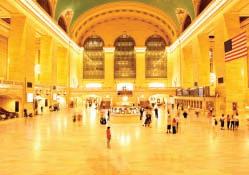
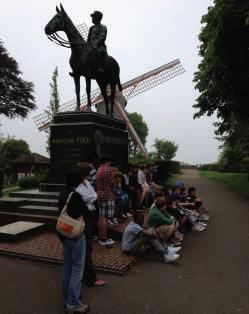
Activities week 2 saw over forty Economists and Historians brave the blistering heat in Washington and New York to develop their knowledge and understanding of the history of the United States and its economy. Visits to the World Bank and US Capitol in Washington proved to be particularly useful in highlighting the role played by the bank in funding capital programs in developing countries and in developing an understanding of the machinations of the US political system.
Despite the searing heat everyone enjoyed the trip and the cultural and educational opportunities provided by two of the USA’s most vibrant and hottest cities!
The Geography Department
“Geography is going places” is certainly an appropriate summary of the department’s activity this year. Fieldtrips in years 7, 8, 9, 10 and 12, including exciting and inspiring residential trips to Malham Tarn and our first superb trip to Iceland, have occurred alongside another extremely successful year in terms of examination results. 90% of students at GCSE achieved A*/A and 100% of students at A2 level achieved A*/B, the eighth year that the department has been above the school’s results average. The continually updated VLE in Geography allows students to remain up to date with
100 – Olavian 2012
Above: photographs from the Year 9 Battlefields trip
Grand Central Station, NYC
contemporary issues on a variety of scales, essential when the topics and case studies covered in class are continually updating. We wish our students leaving St. Olave’s to study Geography at university all the best and look forward to the development of the newly formed Geography Society and another exciting year!
Victoria Duguid Head of Geography
Year 7 Geography & RE fieldtrip: Farningham and Eynsford
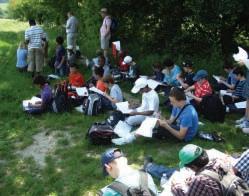
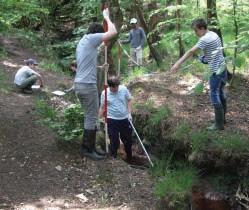
During their first Activities Week, Year 7 were taken on the traditional Geography & RE field trip to a number of locations in the Darent Valley, visiting the villages of Farningham and Eynsford, the hamlet of Hulberry and the Roman Villa at Lullingstone.
The aim of the RS part of the trip was to visit and learn about parish churches and the role they play in the local community. During the course of the day, the groups visited the parish church of St. Peter and St. Paul’s in Farningham, and the parish church of St. Martin’s in Eynsford. On arrival at St. Peter and St. Paul’s, everyone received a small booklet with questions regarding the churches to complete over the course of the day. Some of the questions required the boys to observe the features of the church and grounds; others asked for thoughts and opinions.
The well known Roman villa at Lullingstone was also visited, allowing the boys to see the house chapel, one of the first recorded pieces of evidence of Christianity coming to Britain.
Having walked back to Eynsford, and avoided falling into the river by the ford, Year 7s were to be seen all around the village, carrying out a count of pedestrian and traffic activity (low in both cases!), before returning to school at the end of an exhausting, but satisfying, day.
Year 8 Fieldtrip: Ashdown Forest
During activity week 1, Year 8 travelled to the River Warren so that we could complete our IPM’s as well as having a great time. During our activity week the standard of the activities was very high, as we had recently visited Boulogne, France, the day before and this trip was no let down.
Firstly we set off on a coach to our destination. When we arrived we walked a fair distance so that we could see the source of the River Warren and drew a field sketch of the area. Many great sketches were drawn from the two forms. Next we strolled down towards our location where we would collect the information for our IPM’s, taking a quick stop to learn how to complete some of the tasks, it made us very eager to complete the tasks in the
river! After that we took a break – lunch! - before the hard team work began. Having eaten and arrived at our assigned sections of the river, it was hard to get going, as the team roles and actions were hard to adapt to as some of us were in the wrong place or carrying the wrong equipment! Eventually the teams set off like steam trains all trying to collect all the data we possibly could in the amount of time we were given.
Soon the day came to a close and we all sat back on the coach exhausted from the day’s tasks but everyone would agree that it was a fantastic day out. Thank you to everyone that helped and organised this amazing day out, especially to all the staff that accompanied us on the trip. Without these people this day would not have happened!
Olavian 2012 – 101
Michael Jacobs (8L)
Year 7 Geography & RE fieldtrip to Farningham and Eynsford
Year 8 Fieldtrip to Ashdown Forest
Year 9 Fieldtrip: Walton on the Naze & Clacton on Sea
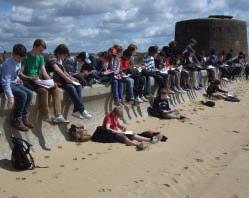
During Activities Week 2, Year 9 went on a fieldtrip to Clacton on Sea and Walton on the Naze in Essex. After a two hour coach journey, we arrived at Clacton and proceeded to examine the myriad of sea defences employed along the coast there. Clacton has been considered so worth saving that over £270 million has been spent on the sea defences there. The defences include a re-curved seawall, fishtail breakwaters, rock armour groynes and revetments. We walked along the defences as they were explained to us. The beach, although appearing to be sandy, is in reality a muddy beach. The sand is brought there by trucks to attract tourists and act as a barrier against the sea.
We then drove to Walton on the Naze, a few miles up the coast. We had lunch on the grass outside the tower which overlooks the beach. We then went down to examine the defences. At Walton, only the south side has been protected, mainly to save the tower from falling into the sea. The defences employed are a stepped sea wall, a revetment, rock armour and an A-frame groyne, which consists of a wooden frame with rock armour inside. This prevents long shore drift as well as defending from the sea. Although the south side of the Naze has been well defended from the sea, the north side has largely been left to nature. This can be seen by the fact that the cliffs on the south side of the Naze are stable and have plants growing on them, whereas the cliffs on the north side are slumped and are relatively bare of vegetation. Frequent landslides can be seen in the cliffs, caused by the combination of the permeable Red Crag overlying the impermeable London Clay beneath. This causes water to seep down through the Crag until it reaches the impermeable clay. The build-up of water causes rotational landslips in the cliffs.
As it was a bright sunny day in Essex, we went on a walk along the beach until we reached the end of the spit. We then walked back to the tower and took the coach back to school. Naturally it started raining as soon as we reached Kent!
During this fieldtrip we had an opportunity to appreciate the geography and geology of the sites as well as the man made defences employed. Our thanks are to Mr Pengilley and the teachers who helped to run the trip.
Thomas Miller (Year 9)
Year 12 Fieldtrip: Malham Tarn
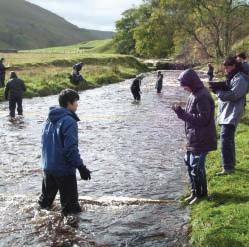
On the 16th of October 40 Geography students from Year 12 made their way to Kings Cross for their AS Level Fieldtrip to Malham in the Yorkshire Dales. A 3 hour train journey took them to Settle, a small town in North Yorkshire. A “short” 3.5 km trek followed as the
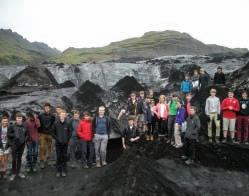
102 – Olavian 2012
Year 9 Fieldtrip to Clacton on Sea and Walton on the Naze
Year 12 Fieldtrip to Malham Tarn
Year 12 Geographers in Iceland
students walked past Malham Cove, a location which made up one of the CGI back drops in Harry Potter and the Deathly Hallows.
After catching their breath and taking in the scenery, the group continued up to Malham Tarn, which the Field Work Centre overlooked. With luggage dropped off and beds claimed everyone met for dinner and later an introductory lesson. After a long day everyone headed to their rooms to get some much needed rest.
Early the next morning some dedicated Geographers got up at the crack of dawn to head off to Gordale Scar. They arrived just before sunrise, seeing the stunning waterfall by the light of a misty dawn. Soon after they walked further downstream to see Janet’s Foss, an example of a waterfall that had been taught in previous lessons.
After breakfast half of the group got into their waterproofs and wellies in preparation for a day measuring the river channel characteristics of Cowside Beck. This is a small tributary stream situated just north of Malham Tarn. This took almost 6 hours, with most people arriving back with a soggy clipboard and wet feet.
The other half travelled to three settlements, investigating how their population characteristics changed according to their location. The groups then swapped over the following day. Unfortunately due to bad weather the sunrise trek was cancelled on the second morning.
After three longs days everyone got up on Wednesday ready for the 5 hour journey home, anticipating warmer weather and less rain back in the south east. The fieldwork was then be written up over the next month to help prepare for the Paper 2 Geographical Skills exam in January.
Olly Plumstead (Year 12) inaugural Year 12 iceland Trip
On Sunday 15th July twenty nine sixth form geography students, accompanied by Mr. Pengilley, Miss Duguid and Mr Waddington arrived at Heathrow for the school’s first ever trip to Iceland. From the moment that we first saw the country through the clouds it was clear that we would be experiencing a very unique and dramatic landscape, seemingly quite barren in places. Our first stop was the beautiful Blue Lagoon, a geothermal spa, renowned for the therapeutic qualities of its rich minerals and for the steamy water temperatures, averaging between thirty seven and thirty nine degrees Celsius. Having relaxed in there for a while we went to Perlan in Reykjavik, a very popular tourist attraction due to the spectacular views that it provides of the capital. There was plenty of time left to find our hotel as the sun didn’t set until after midnight!
In the morning we set off to the Svartsengi Geothermal Power Station in the south-west of the country. Geothermal Power is very significant in Iceland, supplying ninety percent of its power and much of its hot water, making it largely self dependent. From there we visited a volcanic crater lake, and climbed down the banks to the centre of the caldera where the water was crystal clear. Equally impressive was Gullfoss, a spectacular two-tiered waterfall and the most powerful one in Europe. We were able to wander right out onto a ledge from which we could really hear the power of the water. Later we went to see some geysers. One in particular was erupting every five minutes, sending super-heated water up to thirty metres in the air, thoroughly drenching those standing downwind of it! From the geysers we went on to see the fissure that marked the boundary between the Eurasian and North American plates before ending our day at the site where the first Icelandic Parliament, the world’s oldest, convened over a thousand years ago.
Our third day began with a visit to a stunning sixty metre high waterfall called Skogafoss. The more adventurous ones among us were able to climb right to the top, from where the views were amazing. After that we took a walk on the Solheimajokull glacier! Not the clean white mass of ice we had imagined but instead a raw and rugged glacial tongue covered with black volcanic ash. Our next stop was Reynisfjara beach, famous for its black volcanic sands, stunning basalt rocks, which were excellent for climbing, and the delightful puffins. Our third and final waterfall was called Seljalandsfoss, which was special because you could walk behind it, an opportunity for some really great photos.
On our final day we began with a short tour of Reykjavik, learning much about Iceland’s proud Viking heritage. This was followed by a visit to an interesting but rather smelly sulphur spring! Finally, we visited a bridge over the scar of the constructive plate boundary that allowed us to stand with one foot in Europe and one in North America. From there, we said goodbye to our tour guide, whose singing and tales of elves and trolls had kept us thoroughly entertained throughout coach journeys. Everybody really enjoyed the trip. An extraordinary experience to the “land of ice and fire”, which has helped to prepare us for both our studies of Tectonic Activity in Year 13, and for university.
Ben Fryza
Olavian 2012 – 103
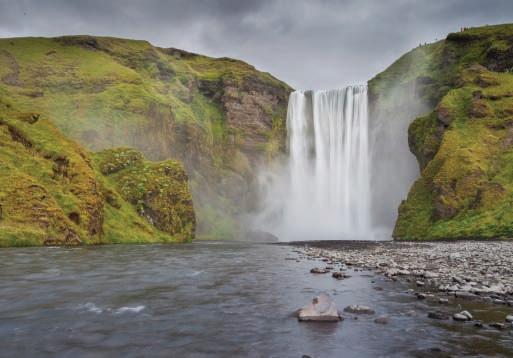
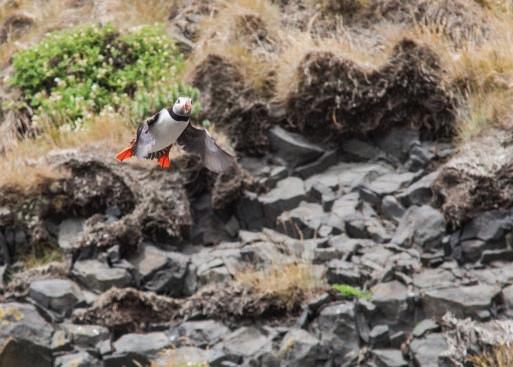
104 – Olavian 2012
Iceland: Puffin & Skogafoss Waterfall
The Classics Department Bassae, Brasenose and brilliance!
The Classics Department had a rather excellent year with two Oxbridge candidates William Dudley and Marie-Clare Doran attaining their places at Brasenose and Trinity respectively. The latter was strictly speaking a Newstead Wood girl but did all her Latin here at the school. Many of the this year’s Upper Sixth Classical Students who garnered 95% A/B grades have gone on to read Classics at University which has been a trend now for some years. It is very warming to think that they want to further their understanding of this subject at tertiary level. There were highlights too at AS with several candidates scoring the maximum points available, namely Eleanor Goodman, Thomas Silver, Alex Rodker and Emily O’ Malley. The indefatigable and wholly exceptional Peter Leigh scored full marks in his Greek GCSE. In all of this I have been superbly assisted, advised and aided by my two colleagues Mrs Sarah Latcham and Mrs Catherine Christie. Mrs Latcham had particularly difficult shoes to fill after the departure of Greg Cook but has more than amply done her task. She is a brilliant classroom practitioner, a demon cricketer and is partial to DoE. Sadly Mrs Christie left to re-join her old school Putney High but performed her duties with equal aplomb and was especially effective in her teaching of the Art and Architecture course.
The year saw an excellent trip back to our old stamping ground of Portchester and to the Greek mainland. As ever we tried some new sites some of which were simply staggeringly good such as Bassae and some not so good such as Tegea and Tripolis. For any readers out there contemplating a trip to Greece I advise a strong detour of Tripolis! This coming year we are doing a similar trip but trying out Orchomenos and Rhamnous.
The Department is as ever fighting fit and like the welltrained Spartan ready to take on the new challenges which lie ahead of us. Unlike Leonidas content to fight in the shade while grooming his flaxen locks, we will not wait in readiness but go forth in full preparedness.
David Craig Head of Classics
The 2012 Greece Trip
Mad dog and English folk go out in the midday sun
Why had I never thought of it before? “Take the underground”, the hotelier advised, and for once I agreed. The walk from the Hotel Achilles which we have used on several occasions is an unpleasant one to the Acropolis and yet until this trip I had never taken the underground. In future I will always; it is much easier and safer. It is also very cheap. Athens, a city which has
so much to offer for the Classicist is not the safest place to visit in these dire economic times. It is very disarming when on arrival at the hotel of choice that the first thing you are told about is the large number of streets which are not to be trod.
We were accompanied on this sojourn by my new and excellent colleague, Mrs Sarah Latcham whose support, knowledge and enthusiasm were wholly invaluable. It was the first time that she had been to the city and indeed to Greece. This year as ever we tried very hard to see all the main sites and do something different too. For those who have long read my ramblings, you may be assured that there is something new to discover here: new pictures to see and a new dog. You will recall that in the past Olavians have had their encounters with the ubiquitous Greek museum dog! Miss Gemma Gulliford was especially keen on one on the Acropolis. This time we met one who was most inappropriately christened Cerberus at Nemea and not on the banks of the Styx.
Athens in its sweltering heat still had the draw it has always had for me and by visiting the Acropolis on the Sunday, after having seen the New Acropolis Museum on the Saturday, the Parthenon was relatively quiet and singularly lacking the whistle-blowing guards. We managed to discuss the architecture, the frieze and the fact that the Parthenon was a statement of Athenian power and a celebration of the victory over the Persians. There was much enthusiasm for the Erechtheum, its asymmetry, its oddly placed porticoes and its split-level design.
Escaping the heat and the noise of Athens we embarked in the afternoon for Delphi via Eleutheria, a Fourth Century BC hill fort. Every time we visit this site in its beautiful setting the pupils are inspired to become the inner warrior with great zest to reach the top and man the battlements.
What is so important about Eleutheria is its position on the road to Delphi bringing to our attention once again that the pilgrimage to the Pythia was arduous. All who went there went by terrible roads, in frightful heat or indeed in snow. It is no surprise that Oedipus was waiting so long for the return of Creon. Its remoteness adds to its mystique, its overhanging Mountains of Parnassus, its site crammed full of objects of extraordinary wealth never fail to astound. There could be seen a colossal Sphynx, a bronze replica of the Trojan Horse, huge cauldrons, shields , treasuries , a race track and a theatre. The visitor in the Fifth Century must have been overawed by the utter glitziness of the place. The heat here was overpowering and the normally stalwart Olavian did not all manage the ascent to the race track at the top. I like Dephi the small town too. It is safe, car free mostly and full of rather quaint shops. I have been there
Olavian 2012 – 105
so frequently that I was even greeted as a long lost friend by one of the shopkeepers. The greeting was somewhat marred by a strong dialogue about the economic crisis which I had already had with another shopkeeper earlier in the evening. Money or lack of it is at the forefront of the Greek. Nonetheless I managed to buy an antique acroterion which past students of mine will be delighted to know sits in my garden along with other Classical ‘objets d’art.’ Sadly however because of the economic recession the magnificent eco-train has now gone out of service.
The journey to Olympia was not quite as successful as in previous years. Before we had crossed the sea in some style on a beautiful ferry but this year because of the single-mindedness of a truculent driver we went on another crossing which was rather unpleasant. It was particularly poignant that we should be visiting the site of the original games in the year of the London Olympics. The site was as every year very crowded with people heading in droves off the cruise ships to the ‘dromos’ missing the key temple of Hera and Zeus and apparently not appreciating the significance of the place as being primarily of religious importance. Away from the masses we really enjoyed looking hard at the Roman bath house complex and I hope now that all my students will be able to tell their children and grandchildren how to spot a Roman site.
The gem of this site is its wholly wonderful museum. This contains the pediments from the Temple of Zeus, and the metopes depicting the labours of Herakles. One of the pediments depicts the chariot race of Oenomaeus and Pelops, the founder of the Peloponnese. It is about the perils of cheating, about hubris and above all a dire warning to the competing athletes. It was a joy to hear so many of the pupils enthuse about the sculptures which had formed so much part of their work during the course of the year. This is what teaching is about, helping children to see and learn for themselves.
For many years my colleague and dear friend Greg Cook had enthused about the Temple of Apollo Epikouros at Bassae though we had never managed to persuade a coach driver to go the summit. It is an extremely remote temple at the summit of a mountain. It had been erected by the Phigalians and may have been designed by the architect of the Parthenon, Iktinos. It is reached after the most beautiful but hair-raising journey. Although only twenty miles from Olympia,the journey took two and a half hours. It is as though the architect was playing with design and its strange inner naos walls and window are bewildering. One of the great joys of teaching Classical Civilisation students is their depth of their knowledge and on this trip we had the wonderful Asher Leeks, who, as one of the girls, Anna Chadwick, said at Heathrow on the way out, ‘Asher, I’ll ask Asher, he knows everything!’
In her case it was how to remove Biro ink from her handbag, but Asher is a bit of a Gussy Finknottle when it comes to locusts and there we saw the most enormous variety ever. I could not help thinking of the irony as the temple was built to thank Apollo for keeping away the plague.
The final days ran their normal course with excursions to Mycenae, Argos, Nemea, Nafplion and Epidauros. Every year I make a small mistake and think that visiting somewhere entirely different will be a good idea and this year was the site of Tegea. We found it but it was very small but enlivened by an archaeologist from Sweden who was so astounded that anyone would wish to visit the site he had mostly excavated in recent years that he actually gave the site a great deal of meaning. Equally every year we have the tradition of giving a singing performance at the theatre at Epidauros. On the trip we had the delightful Peter Leigh who surely must share the title of the ‘boy who knows everything’ with Asher. Peter is a complete joy and a musical supremo who sang a piece from Handel’s ‘Semele’ to almost as much rapture as James Robinson two years earlier. As ever too we had a sprint race at Nemea which I in my accustomed mode lost with grace even though Cerberus the museum dog chased me all the way. Watched by a British family who were staying in the same hotel as us, the mother said ‘Gosh your pupils are beautifully behaved!’
This trip as in previous years was a complete joy with the pupils being a standard of how to behave on a school trip. The first thing I did on my return was to e-mail the Head of Sixth with the message that I was very proud of them. Indeed the word proud is inadequate. They were completely hilarious with the traditional last night mini cabaret being an utter success with this year seeing the first use of a bullet point comedy sketch. I will never forget the normally cerebral Asher evolving into a very naughty Zeus! The trip’s success though mostly down to the glorious behaviour of the pupils owes much to my colleague Sarah Latcham and to my wife Julia. My thanks go to both of them for enduring the heat and me!
David Craig
Year 12 Classics Trip to the British Museum
Year 12 Classical Civilisation students visited the British Museum for a study day. A highlight was the challenge to the students by one of the curators of Greek sculpture to analyse and comment on a range of marble body parts, some dating back over 2500 years. The group also admired the vast scope of the Parthenon sculptures, brought to Britain by Lord Elgin, and listened to academic and TV documentary presenter, Dr Michael Scott, on the significance of the sites of Delphi and Olympia.
106 – Olavian 2012
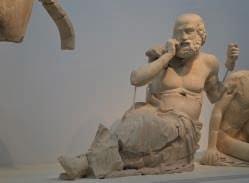
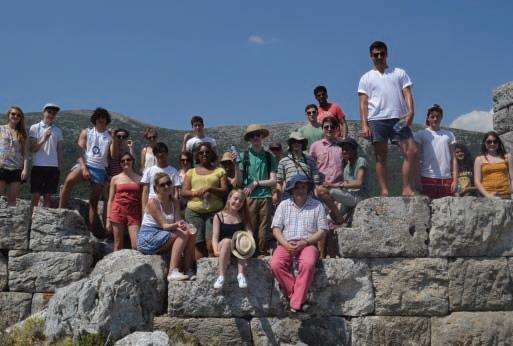

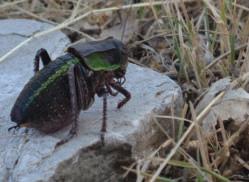
Olavian 2012 – 107
Greece Trip 2012
Year 9 Classics Trip to the British Museum
Later in the year, as part of the enrichment programme, all of Year Nine - though fatigued by the visit to First World War Battle sites – also spent some of a day in Activities’ Week 1 at the British Museum, where they enjoyed studying the Elgin Marbles.
They learnt about the symbolism of the marbles with particular reference to the metopes, the Great Panatheniac Frieze and the West Pediments. Their superb attention to the detail meant that they understood the context of the marbles within the political and military milieu of the last quarter of the fifth century and were able to posit some sensible analogies to conflicts being waged today.
taking the exam at the end of Year 10. Religious Studies has benefitted from the demise of modular GCSEs in that RS will now be the only exam being taken in Year 10 this year, which will, I’m sure, allow the boys to devote to it the laser-like intensity of their undivided attention.
In the school year 2011-2012, the department introduced a new A Level course for Year 12, covering Philosophy and Ethics from Plato to the present. The current group of Year 13s will be the first year group to complete the course, no doubt blazing a trail for others to follow.
Back at St Olave’s for the second time, the suit fits slightly better, the hairline is receding, but the knowledge has been re-affirmed that for today’s students it remains a wonderful thing to be an Olavian.
Andrew Lake
Head of Religious Studies
The Department of Religious Studies
Over20 years ago, I entered St Olave’s with an ill-fitting uniform, a heavy bag and a vague sense of good fortune. 7 years later, I left with a tasteless suit, a dodgy haircut and a certainty that it is a rare privilege to be an Olavian. Nevertheless, I must admit to being a little surprised to find myself back here, this time as Head of Religious Studies.
Seeing the whole thing from a fresh perspective, it has been entirely apparent that what I had always thought of as ‘just the way it is’ at St Olave’s is in fact quite extraordinary. Students demonstrate a remarkable depth of thought and willingness to engage with difficult concepts.
Accordingly, the department offers a stretching and challenging curriculum that gives students scope to synthesise, evaluate or tear to shreds ideas from a range of secular and religious sources.
Years 9 and 10 continue to take the Short Course GCSE,
More Questions than Answers
On Friday 27th January, the Religious Studies AS level students went to Bloomsbury Baptist Church for a fascinating Philosophy and Ethics conference which included talks on the philosophical and ethical issues surrounding the embryo, Religion and Relativism and how recent developments in quantum physics affect philosophical issues. In the afternoon speakers and participating students hotly debated whether Kant’s moral argument and ethical theory were a ‘miserable failure.’ Philosophy is a fascinating subject and, as the day showed, well worth exploring.
Year 10 Philosophy and Ethics Conference
On Thursday 9th February, ten students from Year 10 went to Newstead Wood School for a Philosophy and Ethics Conference led by Sixth Form students on topics covered in the GCSE course. During the day, the boys went to various workshops where they discussed topics such as arguments for design, the existence of God, and the soul.
Year 9 RS trip to Jewish museum
Despite being exhausted after a jam packed and rewarding History trip, Year 9 were on excellent form when they visited The Jewish Museum during Activity Week. The visit was designed to complement their GCSE course and allowed them to discover the different practices in the home and the synagogue according to the various strands of Judaism. The visit began with a general introduction during which the boys answered questions with aplomb and asked interesting questions to the delight of our hosts. In smaller groups they then participated in different workshops which allowed them the opportunity to explore items found in synagogues and Jewish homes as well as attempt to write Hebrew with a quill. The day was
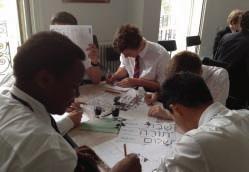
108 – Olavian 2012
Year 9 visit the Jewish Museum
a great success and many thanks are due to the boys for their excellent behaviour and enthusiastic participation.
The Department of Economics
The Economics department has had another successful year. This success has taken many forms which include: 40% of A level candidates receiving an A*,competing in the national final of the BASE Charted accounts challenge and competing in the London final of the Bank of England’s target 2.0 competition.
This success encapsulated John Burston’s fortieth and final year in the department before retirement. He will be solely missed. His replacement is Dominique Ellis who joins us after working in the city. Dominique is a graduate of Economics from Pembroke College Cambridge.
John Greenwood Head of Economics & Work Related Learning
Young Economist of the Year
Title: Theo Clifford’s essay was highly commended in the Royal Economics Society competition
The annual Royal Economics Society essay writing competition takes place between February and May. This year a number in Year 12 entered the competition which involved writing a 2500 word essay. This year’s topics included how to solve youth unemployment in the UK ; whether sustainable development is best for Africa; and whether the Eurozone should be broken up. One essay that was highly commended by the Royal Economic Society was written by Theo Clifford (12T) which debated whether there is a better way to solve the debt crisis than austerity. The competition enriches university applications and allows the students to undertake independent research in an area of Economic Interest.
CEO of B&Q’s National Youth Board
Jaideep Wasu (13H) has recently been announced CEO of B&Q’s first ever national Youth Board. Its task is to provide the youth perspective to re-think, re-design and shape the future of the company. Over four thousand individuals applied 4 months ago and the judging panel consisted of B&Q’s senior executives and main board members. Since his appointment, Jaideep has chaired a Youth Board meeting and represented B&Q at a reception in the House of Commons where he discussed B&Q’s work with government ministers and MP’s of all parties.
Young Enterprise
In September Year 12 students formed two companies to represent the school; Resolve and Skyline. Both companies have made excellent progress this term. Having raised sufficient funds, Resolve are beginning large scale production of innovative stationary solutions and in the future look to expand their range of ‘intelligent’ stationery. SkyLine enterprises has focused on two main products; personalised USB memory sticks, which will be pre-loaded with school material, and personalised cufflinks.
Following further development, ‘Resolve’ made swift progress continuing to sell leaflet advertising space to local businesses as well as creating an innovative design for a folder with an integrated hole punch. ‘Skyline’ specialised in designing and manufacturing personalized ‘sustainable’ products, including cufflinks made from wood, and has received orders from many high-end clients, including the Mayor of London.
The two teams then represented the School at the south London final on Friday 18th May. Resolve did very well to win best company report, with the judges indicating that the team had written the report to 100% of the criteria used for judging.
Political Economics Society
So popular have the weekly meetings been this year that the society has had to move to a larger room. There have been excellent presentations and lively debates on the on-going economic crisis of recession, sovereign debt, the euro and the failure of government policy. Broader social and political issues have included the role of the UN and NATO, the class war, poverty, the environment and a ban on smoking.
Target 2.0
On Wednesday 30th November Udit Gadkary (13G), Barney Holleran (13G), Payal Chheda (13N) and Deeya D’Souza (13K) took part in the Bank of England’s Target 2.0 Inflation Challenge. In the presentation the team had to consider the factors affecting the UK’s economic and inflation outlook and then decide what rate of interest should be set. After outlining the main economic issues and giving their decision, the team was then questioned by a judging panel. The team performed very well on the day and it was enjoyed by all.
Economics Conference
On Monday 5th December thirty Year 13Economists attended the annual Economics conference in London. The students were treated to talks from Alistair Darling MP, Hugh Pym, Larry Elliott, Tim Harford and Douglas Carswell MP. The conference provided a valuable insight into current economic events and areas of debate which link to the theories being studied within the classroom.
Olavian 2012 – 109
BASE Chartered Accountants Challenge

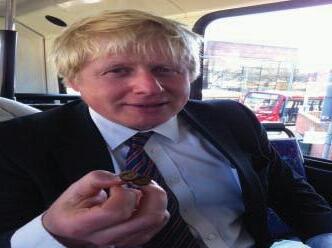
After last year’s success in the competition when the school achieved the prize of national runners up, six students represented the school in the London Heat of the challenge on Thursday 4th February at the Chartered Accountants Hall London. James Narula, James Allen, Michael Le Guillou, Ben Fryza, Kathryn Deegan and Lorraine Li were selected from 42 in year 12 based on their solving of a business problem and interview.
At the London heat the students had to solve a business problem for a company producing magazines based on profitability and ethical issues. In doing this the students had to analyse lots if data and make a presentation to a large audience. The team came first and therefore went through to the national final.
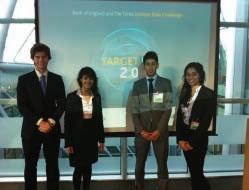
Then, on Thursday 28th and Friday 29th June the team took part in the national final in Birmingham. The team had to analyse accounts and make a presentation to a large audience as part of the process. This involved coupling the Economic climate with that of a set of business accounts. Despite not winning, the challenge was enjoyed by all.
Work Related Learning and Enterprise Days
On Wednesday 4th and Thursday 5th July Year 10 visited the Bank of England as part of a work related and enterprise day. Students learned about how monetary policy is used to control inflation within the economy and the day also involved playing an enterprise game which involved running their own pizza business.
110 – Olavian 2012
The BASE Chartered Accountants team
Sports
The Sports Faculty
The PE Faculty has continued to develop its programme and add to the activities available. One exciting development is the fitness suite (mainly funded by the PA) which opens officially in September 2012. Sport’s Prefects and staff continue to provide a range of oppotunities for the students which all support the Faculty in its aim for every student to find an activity that they will continue to be involved in at university and beyond.
Andy Kenward S___Director of Sport
London Youth Games
Congratulations to David Johansen(8H), Michael Jacobs (8L), Theo Haslam (9H) and Thomas Hart (9H) for being selected to represent Bromley in the London Youth Games, which were held on Saturday 30th June.
Sports Leadership
The Sports prefects continue to raise the bar in terms of their input into various sporting ventures at the school. They have run many practices, helped coach teams, organised fixtures and competitions as well as celebrating these successes in assemblies. Year 9 have undertaken sports’ leadership sessions course in their PE lessons and the Year 11 have completed their JSLA course. The students’ input into developing sport and physical activity is recognised and valued by the school.
Sports Dinners
The traditional Sports Dinners to celebrate the end of season for the various winter sports continue to be a huge success. Hosted by those on the next senior rugby tour (South America, 2013) the evenings consisted of dinner, speeches from the captains and various staff, as well as the presentations of the awards as voted for by the players. The quality of the speeches from the boys was again spectacular and matched the quality of the food provided by Head Chef, Jane May, and her staff. Thanks go to Mr Archer who has organised these evenings for us all to enjoy, and to all those who came to them.
Games Days
The Games Days during the Activities Weeks were, as ever, keenly contested with both Year 7 and Year 10 competing in House matches in AW1. A wide range of activities were undertaken including cricket, tennis,
softball and table tennis. The results have been added to the House totals and more activities for other year groups were played during Activity Week 2. Well done to everyone who participated in these events.
Marshall’s Educational Foundation
It was a pleasure to host the annual meeting of this charitable organisation which, each year, gives grants to St Olave’s and to the Stamford Schools in Lincolnshire. These are used to support students’ attendance on school trips where families are experiencing financial hardship, as well as providing small grants to our Year 13 leavers to help them with initial university expenses. The day included rugby and netball matches between the schools and, although St Olave’s emerged as the losers on this occasion, the matches were highly competitive and played in good spirit.
U18 London & SE Rugby Squad
Congratulations to Abigail Pottier (13M) who was nominated for the London and South East under-18 Divisional rugby Squad, following her performances at County level. Given that England is split into only four Divisional squads, Abigail was really pleased to have been invited to the trials.
Kent County Squad
Congratulations to Matt Holmes (13H), Richard Deniyi-Jones (13H) and Joe Theuns (12W) who, following trials, were all selected for the Kent County U18 squad. It is something of a record to have three Olavians playing at this level and could be a step towards possible representation at an even higher level.
Welsh Exiles Call-Up
Kiran Preddy (13N), a member of St. Olave’s First XV squad, has been selected to play for the Welsh Exiles U18 Squad. It includes a number of Welsh schoolboy internationals in a team compromising of boys of Welsh origin attending schools in England. Kiran played at scrum-half in a narrow loss to the Newport Gwent Dragons Academy.
U15 Rugby Tour
During October half-term, the U14 squad headed off to Torquay to play matches against Torquay Athletic RFC, where they eventually ran out 57-10 winners, and Brixham RFC, where they produced an impressive performance against some physically stronger players to finish with
112 – Olavian 2012
Rugby
a final score of 51-0. The team were well hosted both after the matches and at the hotel and the players and coaches all enjoyed another successful tour to Devon.
U13 Rugby Tour
October half-term also once again saw the Year 8 Rugby squad troop off to North Wales to take on the might of Llangefni and Bangor RFC. The squad of twenty two players and three staff had a great time as always with some strong fixtures, excellent hospitality, and the usual array of weather that North Wales could throw at them. Results included a narrow loss to a very large Llangefni side and a last minute try against Bangor to secure a win.
Kent Cup Winners
The St Olave’s U14 A team defeated an extremely physical King’s School Canterbury team in the Kent Cup final on 23rd November. Playing under floodlights for the first time, the players stuck together as a squad and this was proved by the commitment they put into their defence. Great solo tries from Douglas Mathers (9B) and Tom Willis (9C) put St Olaves into an early lead. King’s Canterbury hit back with some quick pickand-goes and finished with their Centre powering over the line. St Olaves spirit did not drop and after a nerve racking second half, they went on to achieve a 14-7 victory, earning them the title Kent Champions.
1st XV Rugby
The St. Olave’s 1st XV enjoyed an encouraging start to the season. Following a few disappointing results early on, impressive victories against Trinity and Beths produced some of the best flowing rugby of the season and were followed by a further win against Wallington. After a disappointing early exit from the Daily Mail Cup at the hands of Langley, the return fixture resulted in a more than convincing win. The highlight of the season however was the later 25-19 win over a strong Hurstpierpoint College team which set us up for a strong finish to the season, resulting in a successful year for the 1st XV. Impressive victories over Reigate (25-22) and Judd (29-0) followed on in the lead up to Christmas. This form was continued after the break with only a singular loss against a strong Brighton College team. Victories against Robert Clack (50-17) and local rivals Chislehurst and Sidcup (15-14) in a nail-biting encounter rounded off the season in winning style and the team then looked forward to continuing such success in the rugby sevens season.
2nd XV Rugby
The 2nd XV had a successful season, often showing the strength and team spirit to win against more powerful teams. The season opened with a win against a strong Colfe’s side. Other notable games included a closely fought defeat against Skinners and an emphatic win against a big Trinity side. The highlights of the second
half of the season included the game against Langley and the 48-0 drubbing of Dartford. However, the heart the team showed in the home fixture against Hurstpierpoint College was undoubtedly the highlight of the season for many of the players.
Under 16s Rugby
The current U16s have been a promising year group all through their school careers and, this season, the squad has not disappointed. The team won eleven of their regular fixtures, losing seven, although many of these losses came after three players, Mitchel Fruin (11M), Angus Dalgleish (11M) and Nicholas Colling (11L) were promoted to the 1st XV. They are a squad
Sports – 113
U14 Kent Cup Winners
The 1st XVI, 2011-12
The 2nd XVI, 2011-12
who have developed great depth, and with an improved sophistication to their level of attack, the team were able to record notable wins over Skinner’s, Langley Park and Eltham College.
Under 15s Rugby
This was a very good season for the U15s with a series of good wins over some excellent opposition. The season started well with some solid victories. However after losing a couple of important matches in the Kent cup and the Daily Mail the season looked a little fragile. After the half term tour to Torquay normal service was resumed with some excellent wins over Brighton College, Langley Park and Hurstpierpoint. The squad should be very proud of their season with particular mentions to Joshua Searby (10J) and Teddy McAleer (10K) for captaining and leading from the front.
Under 14s Rugby
The U14s have had an extremely successful season with notable wins against Dulwich College and Kings School Canterbury in the final of the Kent Cup. The season’s success has been down to a squad effort with noticeable changes throughout the two teams. The B team only lost two games all season allowing the winning atmosphere to flourish through the age group. Particular thanks go to the parents for their continuing support on and off the pitch.
Under 13s Rugby
The U13 squad is one with much potential as demonstrated by their wins over Eltham College, St. Dunstan’s and Brighton College. They have shown that they can play an exciting brand of running rugby, with a robust set of forwards and creative backs who have been well-orchestrated by captain Oliver Tomkins (8B) and fly-half Alex Lamberti (8B). Well done to everyone who worked hard through the season to improve their game.
Under 12s Rugby
The U12s enjoyed an excellent season and the players were committed and trained hard. The ‘A’ team had a very good win against Brighton College, but the performance of the season came at the unbeaten Trinity where only one score separated the teams. They also reached the semi-final of the Tiffin Tens Trophy, losing to John Fisher. The ‘B’ team are currently ranked fourth nationally.
Rugby 7s
The Sevens season started brightly for the school with many tournaments and successes. Firstly the U13 attended the Judd tournament and secured a place in the final, for the first time since 2004, and were narrowly beaten by John Fisher. The U14 squad managed to return with the silverware after beating Colfe’s in the final of the Beths’ 7s, while the U15 and U12 squads reached
the semi-finals of the Kent and Tiffin tournaments respectively. With several more tournaments to go there is much anticipation of further success.
CRiCket
Kent Cricketers
Congratulations go to Angus Dalgleish and Suraj Sridhar who have both been selected for the U17 Kent Cricket squad.
114 – Olavian 2012
Under-15 A, 2011-12
Under-12 A, 2011-12
Under-13 7s, 2011-12
Devon Cricket Tour 2012
Can a tour ever have been run in worse weather? Probably, but spirits were not dampened as the Year 8 cricketers embarked on a five day tour to Devon. Students got to enjoy Exeter University’s new cricket centre and unfortunately were only able to play one fixture against Shaldon, a match they won easily, posting 143 for 3 and then dismissing them for 31. A frustrating tour in cricketing terms, but so much more than just cricket is learned on such a tour, and so the experience was very worthwhile and enjoyable.
Cricket Dinner
As always this evening was well-attended and a fitting event to reflect on the season. Director of Sport, Mr Kenward, and Deputy Headmaster Dr Green both spoke about the history of Cricket at St. Olave’s given that this event also celebrated the 450th Anniversary of the school. An enjoyable evening was had by all, noting the many cricketing successes that school has had this year, including three players being selected for Kent, Sohayl Ujoodia, Angus Dalgleish and Suraj Sridhar.
U15 Cricket
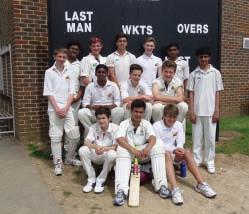
The cricket season is a busy time of the year with so many fixtures and such little time to fit them in. St. Olave’s struggled in their first two matches losing to Sevenoaks on the last ball of the game and Ravens Wood the same way on the next fixture. After that they found their feet with good wins against Langley, Wilsons and Skinners.
U14 Cricket
The U14 XI have played eight games to date, winning five and losing three. The most notable game was against Dartford when the opposition were bowled out for just fifteen runs, the captain Prabu Sathananthan (9C) taking five for five and Daniel Briscoe (9L) taking four for five. The team then reached the Bromley Cup final, after beating Ravens Wood, which will be played at the Kent County ground at Beckenham.
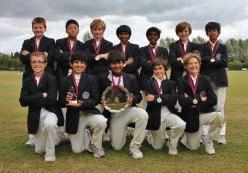
U13 Cricket
The U13 1st XI has gone from strength to strength since winning the Kent Cup last year. There is some exceptional talent in this team, both with bat and ball and, at the time of writing, they are currently unbeaten in both the Bromley Cup and the Kent Cup, hoping for a place in both finals during the last week of term. The boys also had an excellent tour away to Devon during the recent half term, securing an emphatic 100-run win against a local team, Shaldon Optimists; unfortunately, the persistent bad weather forced Torquay CC to cancel our two other tour matches. This team has great potential and will hopefully be crowned Champions of the two 20/20 tournaments!
U12 Cricket
The Year 7 cricketers hit the ground running thanks to the pre-season nets in the Spring Term and they have continued on a high through the season. They have only lost two matches, and have won their last seven. This has included progressing through to the semi-final of the Kent Cup after a thrilling 1-run victory over Skinner’s. Joint captains Matthew Lane (7H) and Sohayl Ujoodia (7C) have led the squad well and have been well-backed up by a very talented and committed group of boys.
Fives
Eton Fives: Autumn Term
There were thirty five fixtures and tournaments in the term in which over one hundred Olavians competed. All matches were won or drawn with the 3-0 win over Cambridge University being a particular highlight. Harry Ravi (13I), Tony Barker (13L), Brian Wang (13K), Ross Henderson (10M), Josh Ravi (10M) and Alexander Weeks (10L) dominated the Rossall Schools’ Championships winning Singles and Doubles Titles in both the Open and Colts categories. Harry Russell (9L)
Sports – 115
Under-15 Team, 2012
Under-13 Team, 2012
won a major U14 individual event held at Eton College whilst Morgan Pugh (8H) also reached the final. Chris Self (12P) became the first schoolboy player to win the adult Midlands Championships, in which Barker and Ravi also reached the Semi-Finals. The enormous and very talented year 7 squad also started to feature in matches and to benefit from additional coaching support from the Senior Team members.
Swiss Fives Tour 2012
Twenty young Olavians from the Lower School travelled to Zuoz in the Engadine Swiss Alps for a week of non-stop activity! Fives training took place every morning, with mountain hikes, cricket matches, basketball challenges, football matches, tennis tournaments and waterfall visits all adding variety during the afternoons. Every evening was Fives Club-night, all mixed in with the girls and boys from the Lyceum Zuoz, the Host school.
Eton Fives: Spring Term
This was a great term with wins over Berkhamsted, Eton, Harrow, Ipswich, Emanuel, QEB, Westminster and a number of adult sides. The juniors performed particularly well to defeat Ipswich 15-1. The seniors and U16s travelled to Shrewsbury to combine a fixture against Shrewsbury School and the Adult Northern Championships. Sanjay Kundu (12Q), Christopher Self (12P), Tony Barker (13L) and Harry Ravi (13I) were outstanding performers at both school and adult level and their seedings in the National Championships will be very high this year.
Senior Fives
Tony Barker (13L) and Harry Ravi (13I) won the “Pepper Pot” trophy for the second year in a row; this is the “Plate” of the Men’s National Championships. They remain the only school pair to have ever won it! Christopher Self (12P) became the first schoolboy to ever win the adult Midlands Championships. Sanjay Kundu (12Q), Tony Barker, Harry Ravi and Christopher Self all played in the Adult First Division, competed in all major adult weekend tournaments and were seeded second and fourth in the School’s Nationals. Both pairs featured in the National Semi-Finals, a superb testament to their level of play.
U16 Fives
Dominic Robson (11L) was the outstanding figure for the U16’s. Often playing in the Senior squad and outside school with the Old Olavians, he has become a very intimidating and effective force on the Fives court! Dominic stepped up and partnered Brian Wang (13K) in the U18 National Championships. Ben Kwok (11K) also played well for the Team and there were always determined performances from Sam Fergusson (11M) and Ben McKechnie (11N).
U15 Fives
Jonathan Leech (10N) and Nirjithan Sivapalan (10L) took part in the Turnbull Trophy and reached the SemiFinal. This is a prestigious event in which partnerships are a school boy with an Old Boy from the same school. William Phillips (10K) and Josh Ravi (10M) reached the 3rd round of the Senior U18’s in the National Championships – an outstanding achievement.
U14 Fives
Harry Russell (9L) enjoyed an outstanding season in which he won both regional Individual Competitions held at Eton College. William Edmonds (9H), Nathan Lewis (9H), Leo Henderson (9L), Nick Wright (9B) and Billy Belsham (9H) were all key players in the squad and their game benefited enormously from the extra training they attended.
U13 Fives
Kosi Nwuba (8B) was the rising star of the entire school team, having worked especially hard and with great dedication in the evening “Top 16” training. He joined Thomas Gallagher (8B) and Morgan Pugh (8H) as players who could represent the School at the highest level at U13 age. Thomas Gallagher and Morgan Pugh won the REFCA U 13’s Championship held at Eton College and then a few weeks later, Morgan and Kosi paired up for the National U13’s. They played brilliantly to reach the semi-final in which their three-hour epic match was lost on sudden death in the fifth set after a great come-back from 0-2 down in sets. This is the best result achieved in the U13’s by any Olavian pair.
U12 Fives
A fantastic Year 7 squad recruited by the sixth Form have been working very hard at Fives training. Kieran Walton (7L) and James Tate (7C) performed especially well to reach the fourth round of the U12 Nationals. James Tate and Josh Limbrey (7C) also reached the U12 Individual Final. William Carew (7L) and Sohayl Ujoodia (7C) travelled to Wolverhampton where they won the Midlands Schools U14s Plate competition. The Team enjoyed great results, including wins over Berkhamsted and Emanuel School.
Netball
The Netball Squad started the season with a fixture against old rivals, Colfe’s. An encouraging draw for the A team promised well for the new season with the team benefiting from new Year 12 talent. The B team showed a level of enthusiasm and commitment which was maintained throughout the term, and the skills of all these players were nurtured through the enthusiasm of captains, Emma Simber (13N) and Eloise Andrews (13G). Losses against strong teams from Newstead
116 – Olavian 2012
Wood and Stamford were balanced by convincing wins against Darrick Wood and Charles Darwin, and the A team performed strongly at the Kent Under 19 Tournament.
Lent term then saw the final A team league match against a strong Colfe’s team with St. Olave’s starting the game strongly and gaining an early lead. Unfortunately, a better performance by Colfe’s in the latter half edged them ahead and the final score was 12-16. The B team game also resulted in another loss but there was some very promising play and some wonderful shooting from the St. Olave’s team which bodes well for the future. Thanks go to the captains Eloise Andrews (13G) and Emma Simber (13N) for their excellent leadership.
Football
Fantastic results in the England Schools Football Association Cup and the Kent Under 19’s White Cup saw the 1st XI progress through the early stages of each competition with ease. Great team performances against St. Gregory’s and Phoenix High School were highs for the team, whilst dogged and sterling performances against Alleyn’s School and Dane Court School showed grit and character despite losses. Stars of the squad included James Narula (12T), a new joiner and individual with flair and an eye for goal, James Bowman (13J) and Declan Murphy (13G), new and old captains of the squad and two of the hardest workers on the pitch, the industrious team man Joe Coleman (12S), and the ever reliable goalkeeper Callum Scotland (13I), to name just a few of a talented and successful team who this season have represented the school to the highest standard.
AthletiCs & spoRts DAy
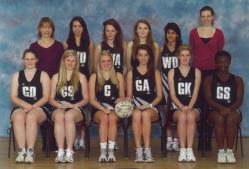
ESAA English Schools Track & Field Cup
This is one of the premier events of the athletics calendar and so it was encouraging to see so many fine performances. In the juniors both Tito Adesanya (8B) and Kosi Nwuba (8B) gave noteworthy performances.
The Intermediate boys also performed well and Jon Pairman (10L) scored over twenty one points in the High Jump saw St Olave’s win this event overall.
High Jump
Congratulations to Benjamin Stanbury, Year 9, who won the Kent School’s Junior High Jump competition with an exceptional jump of 1.67m.
Sports’ Day 2012
Fortunately the weather improved enough so that this year’s Sports’ Day can be remembered for one of excellent achievements from several of the competitors. Though no records were broken, the standard was extremely impressive in many events, with several closely-fought races and field events. The winner of the Junior Victor Ludorum, beating Tom Willis (9C) by just one point, was Ben Stanbury (9L) who was particularly awe-inspiring in the High Jump.
Overall the results were as follows:
1st – Bingham (1093 points)
2nd- Harvard (1027 points)
3rd – Cure (995 points)
4th – Leeke (928 points)
Well done and thank you to everyone who took part or helped with the organisation of this occasion.
Hockey
The 1st XI first had to rebuild, as must happen every autumn, with the influx of new Year 12 players. Teamwork was good, with players supporting each other positively. Indoor practice took place on Mondays in the Sports Hall. On Wednesdays, when the team did not have a match, they were able to use Darrick Wood school’s Astroturf pitch. This was a great advantage as all games are now played on Astroturf. Results included a 2-1win against Reigate Sixth Form College and an away loss against a strong Notre Dame side. The traditional hockey season for schools started seriously after Christmas and the squad enjoyed the Sixth Form Colleges’ cup as well as friendly fixtures.
Captain Ed Phillips (13L) led the team on the field by his exemplary play and conduct. Meanwhile, the best goals of the year were put in by Ryan Lee (13L). Cameron Saunders was splendid in goal and John Holden (13G) the best defender. It is unfair to pick out players for special mention as the whole team put in tremendous effort against very strong and experienced opposition.
Sports – 117
Netball 1st VII (A Team), 2011-12
Badminton
With the new Sports and Drama Hall in full operation badminton has emerged as a very popular sport. The weekly clubs are well attended and skill levels of the players are developing significantly. House matches have been played by the younger years and there is a real hunger for more. Matches against other schools have been restricted but nonetheless those who have played have performed very well, only just losing to Sevenoaks earlier in the year: most of the games were won or lost by just a few points and eventually Sevenoaks ran out winners by sixteen games to ten.
Squash
Squash has proved a popular sport this year with several players taking advantage of the well-attended weekly clubs now running. The first team travelled to Sevenoaks School to play some fixtures and, despite losing overall, played very well and gained valuable experience. Many thanks to Daniel Morland (13I), squash prefect, for the time he put into organising teams and practices.
Basketball
The senior basketball teams have gone from strength to strength, with tightly contested games against the St. Olaves’ Old boys, a decisive victory against the Bromley Men’s team and an impressive score line against Newstead Wood highlighted the school’s basketball superiority. Even with the impending departure of veterans Scott Johnson (13I) and Daniel O’Connor (13H), the future still looks bright for the squad, with senior starting members found in year 12 and 11 as well. The Year 11 recently beat Coopers’ School in a tournament with our teams finishing first and second. Basketball remains an important part of the curriculum and is also a popular extra-curricular activity. The younger year groups have competed in House basketball matches organised by the Sports’ Prefects, as well as playing in local competitions.
Tennis
Tennis remains a very popular summer sport and this year there have been increased opportunities for the pupils to get involved. The Sports Prefects have run extra-curricular sessions and a professional coach has helped at lunch-times and during Games. Years 8 and 10 as well as the Sixth Form entered the AEGON National Championships. The senior team lost their first match but the Year 8 and Year 10 teams were both undefeated and looked likely to top their pools.
In addition, table tennis is one of our most popular sports throughout the year, with many pupils playing either recreationally or in matches against other schools. A professional coach comes in on a Monday to help support this programme and those that attend have been fitted hugely and improved their skill level significantly.
Kent County Swimming
Theo Haslam (9H) competed in the Kent County Swimming Championship swimming in fourteen individual events.
He achieved the following: eight gold medals in 200m butterfly, 100m butterfly, 50m butterfly (gaining the Kent all time record in his age group), 100m freestyle, 50m freestyle, 100m breast, 50m breast (gaining the Kent all time record in his age group) and 100m individual medley (gaining the Kent all time record in his age group); two silver medals in 400m individual medley and 200m freestyle; two bronze medals in 200m individual medley and 50m backstroke; and two fourth place medals 200m breast and 100m backstroke. He also swam in the 13/14 age group 4 x 100m medley and freestyle relay teams, both of which reached the finals. In terms of his overall position he came second in Kent in the 13-year-old age group.
Well done also to Michael Jacobs, Year 8, who came also 2nd overall for his age group in the Kent Swimming Championships, setting four event best performances and gaining many medals. Michael also gained three national qualifying times in the Regional Championships and then competed against some of the top swimmers in Great Britain in Sheffield at the end of July.
St. Olave’s also entered the Kent County Swimming Competition with much success. Timothy Adelani (11L) came second in the intermediate 100m freestyle, Michael Jacobs (8L) came first in the junior 100m backstroke and David Johansen (8H) took bronze in the junior 100m freestyle. The seniors also did well with Chris Miles (13K) winning the 200m individual medley.
Fencing
Congratulations to Adam Whitelaw (9B) who has been selected to represent his country in the England U15 Epée Fencing team. Adam has been competing all over the country for the last year to build up points towards this selection. We wish him luck as he joins eleven other boys and twelve girls for a major international competition in Poland in March.
On Monday 7th May Adam won a bronze medal in the final of the U14 Epee British Championships in Sheffield. Adam had already competed earlier in the year to gain one of the four places to fence on behalf of south east England (Kent, Surrey and Sussex). This is the biggest annual competition and, as usual, all regions of Great Britain were represented.
118 – Olavian 2012
Art, Design & Technology
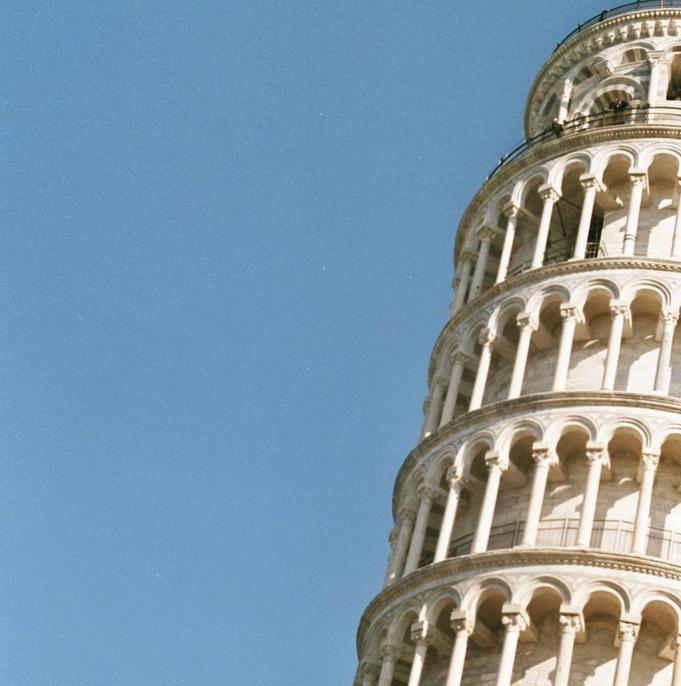
Art, Design & Technology
The Department of Design Technology
To be successful in the modern world, pupils need to be able to engage with, apply and learn new and evolving technologies. The pace of our world is dictated by the devices we rely on, the social networks we are addicted to and the structures and vehicles which shape our environment. Whilst the D&T of old could be called wood tech without a second thought, modern design and technology is about conceptual and innovative design, using new and aspiring technologies, and looking for opportunities to improve the way we live our lives through unique products and solutions.
The philosophy of the department is wherever possible to provide our pupils with access to modern design and manufacturing techniques, to develop creative problem solvers, and to helping those who study with us at GCSE and A-Level to move into careers in engineering and product design at the top Universities in the country.
The department continues to grow in strength and size through the hard work and dedication of the staff in the department, and pupils who study in our workshops; prefects and Arkwright scholars demonstrate excellence in the subject both in the classroom and in the running of extra-curricular pursuits.
2012 promises to eclipse 2011 with the department becoming a centre of excellence in D&T teaching, offering training to local D&T teachers. New additive manufacturing equipment compliments the laser cutting and Dye Sublimation facilities that are available to pupils, and new Science, Technology, Engineering and Maths challenges will help pupils link their learning of core subjects to the modern practical projects D&T now offer.
Design Ventura
For the second year running, a team of aspiring designers from the department developed a unique and innovative concept product for the Design Museums annual competition. This year saw Year 11 once again outshine teams from lower year groups to represent the school, with a product called Sixty, a set of tiles which slot together as a toy or installation, meeting the brief of “fun” set by the competition sponsors, Deutshe Bank. The group consisted of Keir Bowater, Max Legemah, Robert Edghill, Daniel Dawson and Benjamin Kwok. Once again the team from Saint Olaves came close to winning, attending the awards evening for the top ten teams in the country, and receiving a commendation for professionalism, placing them fourth from over 900 schools. A fantastic result for the team, with a product which has since been queried for commercial production by a local manufacturer.
Arkwright Scholarships (currently 11 between Year 12 and 13)
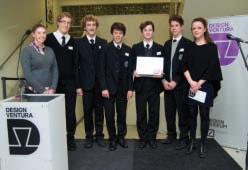
The department remains the strongest provider of candidates for the prestigious scholarship scheme in the UK, with 5 new scholars in Year 12 joining 6 in Year 13. With more applicants than ever for the award each year, and greater expectations on those looking to enter the world of Design and Engineering, those lucky enough to now have sponsors are in a fantastic position to realise their career aspirations.
120 – Olavian 2012
The Lower VI Arkwright Scholars
The Year 11 ‘Design Ventura’ Team
Philip Holton S___Head of Design & Technology
D&T Thorpe Park Trip
running, an educational visit to discover what career opportunities were available in the field of engineering pupils with first-hand knowledge of engineering, marketing and the electronics associated with ride development, as well as ample time to experience some of the most exhilarating rides in the UK today. Whilst the pupils thoroughly enjoyed the weather and the quiet park, all left wanting to become designers, structural engineers, or any of the other fantastic and inspirational roles that make the parks attractions the cutting edge thrill rides they are today.
Food Technology
addition of the Food Technology room. Year 7 pupils can now study food as part of the curriculum, developing skills and techniques to design and create tasty meals and snacks alongside their design and make projects in the workshops. Pupils in Years 10 and 11 also have access to the room as part of the PSHE rotation as well as Year 12 students as part of the Elective programme.
Spring Board Cooking Competition 2011
For the first time ever, Saint Olave’s pupils entered cooking competitions on the back of the launch of the new food room in the department. Competing against local food colleges and academies with dedicated rooms and staffing, pupils at the school excelled in the school heats of the Spring Board competition, producing delicious main courses such as butternut squash risotto, pan-fried chicken and bacon in a creamed leek sauce, and roasted vegetable pasta. Budding Chef Alexander from 7H shone above his peers, and went on to represent
cook off took place at Croydon College in a professional kitchen. Alex excelled despite his competition all being 5 years his elder, and in the end came second for the South of England. Professional chefs judging the competition challenged him to return next year having demonstrated ability and maturity above his years.
Kent Young Chef Competition
As a Kent school, Saint Olaves pupils were invited to challenge was to develop a new dish using locally sourced ingredients. Pupils from across Year 7 entered, with dishes such as Kentish roast pork and apricot salad, and a Kentish shepherd’s pie the highlights of another strong school based heat. Despite the excellence demonstrated in both technique and professional presentation, the boys failed to make the local heats, but were pre-registered to enter again next year due to the quality and level of application from such a young group of pupils.
Year 8 Food Challenge Days
As part of the 2nd Activity week, all year 8 pupils were introduced to the new food room and took on the creative challenge of making Pizzas from scratch. Despite some sticky dough and a few too many handfuls of cheese being stuffed into the crust, all pupils learnt how to create a dough mixture, prepare ingredients and
enjoyed it, even if the staff were a little bored of seeing pizzas all day!
D&T – 121
Year 11 discover the Food Technology room
Year 7 Olavian represented the school in the Spring Board cooking competition
Olavian Design Company
With so many talented creatives in the sixth form this and next year, the department set up their own design practice, offering custom made designs for every day products with an Olavian brand. Whilst the website is still in development, pupils met every week to design their company logo, build a portfolio of products from phone stands to toys and cufflinks, before planning and launching the sale of their first product, a travel chess set commemorating the 450th anniversary of the school. Next year the company is hoping to grow, providing products to sell at annual school events and as an enrichment club for GCSE and A-Level pupils.
Year 12 Seymour Powell enrichment day
Pupils studying Product Design at AS level were lucky enough to be able to work one to one with some of the most talented creatives and designers from the UK’s number one design firm. The challenge of the day at the Victoria and Albert Museum was simple, gather together inspirational images by exploring the miles of design and art based collections the museum had to offer, before conjuring up a new brand or concept technology for a product. Taking our extremely talented technologist out of their comfort zone for the first time was a fantastic experience for the group, who all came up with brilliant and innovative product concepts for a “Retro-sexual” male, and “Future-dreamer” female.
Guest Speakers inspiring engineers
Taking a day out of their busy careers, guest speakers from the South Bank University Product Design degree and Engineering software company Autodesk provided engaging talks to sixth form pupils with a keen interest in becoming engineers and CAD designers in the future. Learning about how Autodesk software shapes the cutting edge blockbuster movies we see in the cinemas was enough for some to start using the new software suite in the ADT computer room straight away.
establishing her unique and individual, more ‘fine art’ approach.
The department continues to put students through to higher education in art, fashion, graphics, animation, film and architecture. In a highly academic institution such as St Olave’s, it is good to see the success of our students in what is a highly lucrative sector of the economy – the creative sector.
GCSE examination results were improved and the A levels grades excellent with a wide variety of sculpture, paintings, photographs, films and prints produced by the 6th Form artists. One highlight was the selection of Aedryan Chklar’s computer drawing ‘Owl’ for the Royal Academy online exhibition. Another was Oliver Plumstead’s timelapse film of a day in the life of London. The standard gets higher every year.
The Royal Academy came to the school with a tutor and model for the regular life drawing day for the 6th Form. They worked hard all day, producing creative outcomes useful for coursework and portfolios.
Curriculum trips included galleries, Greenwich and London, and the 6th Form trip to Florence. This involved a guided tour and visits to all the wonderful cultural highlights of this fascinating city.
A large part of this year in the Art department was organising the 450th exhibition, commemorating the school’s anniversary of the granting of the Elizabethan charter of 1562. We borrowed a range of fascinating artefacts from Southwark library, which houses much of the school’s historical papers, documents, photographs and objects.
The Department of Art
TheArt department is now separate from Design Technology, but it continues to thrive and develop. Following the departure of Joel Fayers after family relocation, Siobhan Heraghty was appointed as an NQT in September 2011. Joel had great strengths particularly in graphics and printmaking and served the school both within the department and in the wider school setting in sport and as a Head of Year. He was also instrumental in helping to organise the very successful New York Art trips.
Siobhan has settled in well, passing her NQT year and
This was combined with other items from the school’s long history, and paintings and prints from the Governors’ art collection. The chapel was converted into a gallery for a week, housing what was seen as a stimulating exhibition and an insight into life of the school through the ages. Notable items included the original royal charters from the reigns of Elizabeth 1, Charles II, and George III, and an old school algebra exercise book from 16th century.
Additionally we were fascinated by photographs of school camps from the 1930s and the activities planned for the evenings, school reports, the clock donated by the family of Matthew Le Chavetois in memory of this Olavian pupil and later teacher killed in 1st World War, and canes from the period of the extraordinary but also notorious Dr Carrington. This headmaster oversaw the school being evacuated to Sussex and then Torquay during the 2nd World War, and then the whole school from Southwark to the green fields of Orpington in the 1960s.
122 – Olavian 2012
Thanks must go to Mrs Karen Smith who spent hours organising and cataloguing items for this tremendous exhibition.
Chris Davies S___Head of Art
Yr 10 Art Trip to London
Year 10 artists enjoyed a trip to London on Thursday 6th October taking in sights, transport, buildings and people. The group recorded their journey through drawings, photographs, film and notes, including visits to Greenwich Park, the Observatory, the Painted Hall, Trinity Hospital, the Island Gardens, Tower Bridge and City Hall. Although exhausted, the group recorded many images and ideas for their London project.
Royal Academy Outreach Life Drawing Workshop
On Tuesday 15th November a tutor and model from the Royal Academy Outreach programme came to the school. Year 12 and Year 13 Art students spent all day on an intensive exploration of drawing, visualising, discussing and discovering many aspects of the drawing of the human form.
Sixth Form Art Trip
On the afternoon of Friday 3rd February, the Year 13 Art group travelled to Beckenham to visit the archive collection and gallery of the Bethlem Royal Hospital. Students were treated to a fascinating brief history of the hospital and the part that art and photography have played in mental health.
OpinionARTed Competition
This year’s exhibition of art from all Bromley schools was held at Darrick Wood School. Adryan Chklar (13H) submitted fantasy figures drawn by hand and on the computer. Joanne Maure (12P) entered her tree against a sunset fabricated using the new Laser cutter. Oliver Plumstead (12P) created nine photographs around the theme of illusion, with light paintings and Photoshop manipulations.
Art Club
Art club has been thriving this year under new management. It takes place every Tuesday and involves pupils from Year 7 to 9. In one set of sessions, the links between food and art were explored during these sessions with icing biscuits and a gingerbread house. Thanks to the Art prefects for their organisation and enthusiasm.
Olavian Artwork shortlisted
Congratulations to Aedryan Chklar (13H) who was shortlisted for the Royal Academy of Arts online ’A-Level Summer Exhibition Online 2012’ Aedryan’s
Art – 123
Year 10 artists in London
Year 13 Art students visit the Bethlem Royal Hospital
OpinionARTed participants at Darrick Wood School
was one of over 1,450 submissions made from students across the UK, and the judging panel commented on the high quality of work received.across the UK, and the judging panel commented on the high quality of work received.
Year 12 Florence Art Trip
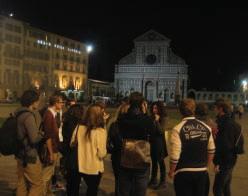
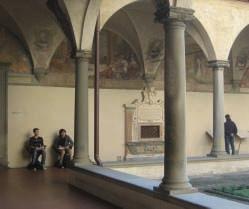
Year 12 and 13 Art students, accompanied by Mr Davies and Mrs Smith, enjoyed the artistic sights of Florence over the long weekend of 10-13th November. There is so much for everyone to see and enjoy in this fantastic city, but particularly for those studying art.
The weather was beautiful and sunny which meant that the whole experience was very enjoyable. Visits to the Academia, the Uffizi, Pitti Palace, the Cathedral Duomo and Boboli gardens were all stimulating. Florence is a city full of churches, galleries, statuary and Italian life, and the group ended up immersed in the culture of this wonderful place.
On the return journey we stopped off to view the Leaning tower at Pisa.
It was, in everyone’s view, a brilliant trip.
Chris Davies
124 – Olavian 2012
Year 12 Art students in Florence
Olavian 2012 – 125
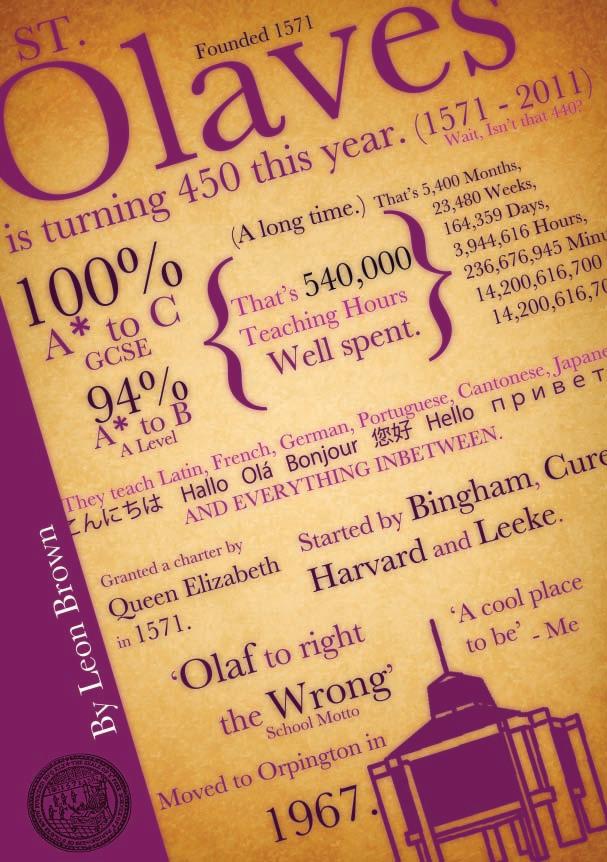
450th Anniversary: 1561 – 2011
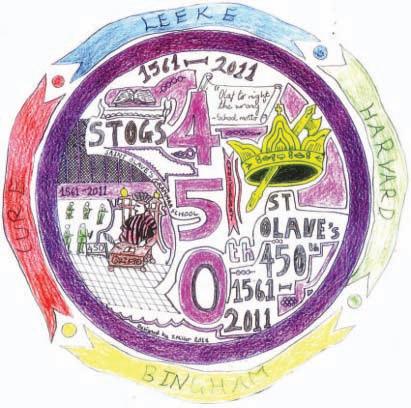
450 Years: A brief context
In 1013 (almost 1000 years ago) King Olaf of Norway sailed his Viking long-ships up the river Thames, tied ropes to the wooden piers of London bridge, then sailed back down river again so that the bridge collapsed, throwing the occupying Danish army into the water, and ensuring victory for the English King Ethelred. This most spectacular event was commemorated by the poet Ottar Svarte in the 13th century King Olaf’s Saga:
London Bridge is broken down, Gold is won and bright renown. Shields resounding, war horns sounding, Arrows singing, mail coats ringing, Odin makes our Olaf win! and gave rise to the children’s nursery rhyme. Olaf was later made a saint and part of his legacy was the naming of a number of churches and, of course, our school. It was almost 550 years later that Henry Leeke, a Southwark brewer, with property on both sides of Borough High Street, left a will in 1560 giving £8 a year from the rents towards “the finding and erection and maintaining of a Free school in the parish of Southwark.” The conditions stated that the parish of St Olave had to create “1 free school within the space of 2 years” and that “all the children and scholars dwelling in the parish should pay nothing.” This was done by Michaelmas Day, 29th September, 1561, when the first schoolmaster, one Richard Marlow, took up office, on an annual salary of £13 16s. 8d. The legacy of Henry Leeke is our very own, St Olave’s Grammar school – still free, and thriving to this day after 450 years as one of England’s oldest schools. Ten years later in 1571, that amazing lady, Queen Elizabeth I, secured the continued existence of our school by the conferment of the Royal Charter as a Grammar school.
It was fitting, therefore, that we should celebrate and commemorate our 450th Anniversary in style, reflecting on some of the traditions that we still hold dear. The founding of the 450 Parent Choir will, I hope, be a lasting legacy; there is now a core of parents, friends and Old Olavians who rehearse weekly and whose inclusion in the Christmas and Easter concerts provided a new dynamism.
A packed audience was treated to a splendid 450th Commemoration Concert which included the full Symphony Orchestra, Jazz, Wind and Symphonic Wind Bands. The Byrd Choir, a small group of eight soloists, directed by Peter Leigh, stood out for the excellent pitch and range of timbre with which they tackled the very difficult Haec Dies. The highlight was the massed Choir, including the new 450 Parent Choir, and that magical moment as they hit, with a power that filled the Great Hall, that first note of Handel’s Zadok the Priest.
The magnificent setting of Southwark Cathedral played host to the 450th Commemoration Service for St Olave’s, as well as for the Foundation and the original St Saviour’s Grammar School, allowing us to retain our annual link with the borough in which the school was founded. This was a very special event with contributions from students from both schools. It was good to see so many Old Olavians and parents in attendance at this historic event. A special Commemorative Dinner rounded off the day for invited guests at The Athenaeum.
The 450th Exhibition and Celebration started in the Great Hall with an entertaining history of society and the School given by myself, former Head of History, Mr Alan Evans and former Deputy Head, Mr John Burston, before the departing School Captain Timothy Munday and Vice-Captain Jennifer Cocke brought things right up to date. The exhibition, organised by Head of Art, Mr Davies, displayed a fascinating collection of manuscripts, paintings and artefacts, some dating right back to the school’s origins, including original Charters from Queen Elizabeth I dated 1562, and from King Charles II, dated 1674.
Other highlights included an Art Poster competition; a ‘Find the missing St Olave’s Steam Engine Name-plate’ essay competition; and a splendid Cricket Dinner. Drama too played its part, recognising the links that the original school had with Shakespeare by a fine production of ‘Macbeth’, including powerful performances from Michael Yates and Grace Boyle as Macbeth and Lady Macbeth.
Aydin Önaç
128 – 450th Anniversary Supplement – Olavian 2012
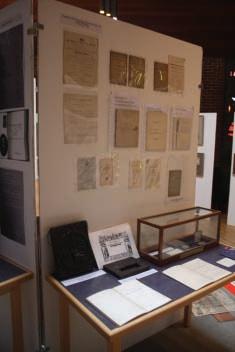
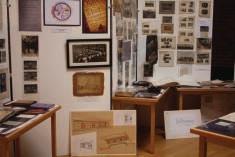
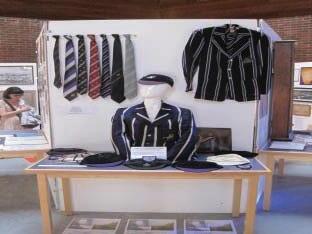
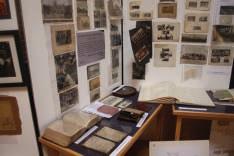
Olavian 2012 – 450th Anniversary Supplement – 129
The 450 Exhibition
450th Anniversary Poster Competition
The two winners of the poster competition for the 450th Anniversary of the school were Leon Brown (11N) and Thomas Miller (9L). Both received iTunes vouchers which were awarded in an Art Assembly, which also showcased some of the wide variety of work produced by the Sixth Form, from paintings to sculptures, graphics, photographs and filmmaking. Thomas’s and Leon’s posters form the divider for this section of the Magazine.
450th Anniversary Celebration: Full Report
To help celebrate the school’s 450th Anniversary celebrations, there was an exhibition of historical artefacts gleaned from Southwark Library, but mostly from the school itself. This made a fascinating display of times past at the school, from the 1698 bible, to the bundle of canes from the 1960s, from the original 1562 charter of Queen Elizabeth 1st, complete with handdrawn portrait, to an 1851 book of calligraphy exercises.
Probably one of the most moving items was the ‘Handbook of algebra and geometry for schoolboys’. This had the name “Hosier” written in the front, dated 1840. It was then left to the school in 1917, having belonged to another student named Brown who was killed in the First World War, inscribed by his father. This meant that this one book had been used by schoolboys for over 60 years!
As well as the historical items, on display were maps, paintings, prints and drawings associated with the school that belong to the Governors. To complete the exhibition current 6th Form artists displayed their A level work from this year’s examinations.
On the evening of Thursday 28th June in the Great Hall, the audience of over 200 were treated to a talk by Alan Evans, previous Head of History, on the school over 400 years. This was followed by John Burston, teacher at the school for 40 years, giving his impressions of the school since it moved to Orpington in 1967.
Music was provided by Eamonn Cox, Finn Butler and Tom Saunders. Songs given by Richard Decker. Tim Munday, School Captain
and Jen Cocke, Vice Captain, gave their views on being students at the school in 2012. Food and refreshments were provided by the PA. An amazing 450th cake baked by Karen Smith and iced by Clare Slyfield was the spectacular centerpiece. No-one dared to cut the cake, but it was then consumed at the Governors’ garden party!
A good time was had by all, and much appreciation expressed by the audience.
C E Davies (Head of Art)
450 Creative Writing Competition: St Olave’s Steam Train (30938)
Nameplate
One of the interesting features of the 450 year history of the school is the fact that it has a steam engine named after it. The “Schools” class consisted of 40 engines all named after “Independent” schools. A combination of short frame length (4, 4, 0 wheel arrangement) and high tractive effort (Power Class V) made the engines ideal for the Tonbridge/Hastings line with its tight curves and narrow tunnels. All of the class probably spent significant time at both London Bridge and Orpington Stations. St Olave’s (938) was the 39th in the class built at Eastleigh Works in 1934. It was renumbered 30938 post the 1948 nationalisation of the railways.
St Olave’s is the only school in the class which is now in the state sector but many still feature on our Rugby/Fives/Chess fixture list – notably Eton (900), Dulwich (907), Whitgift (916), Hurstpierpoint (918), Harrow (919) and King’s Canterbury (933). Only three engines still exist in preservation Cheltenham (925), Repton (926) and Stowe (928). The rest, including St Olave’s, were withdrawn in 1961/62, as diesel/electric traction became the norm, and subsequently broken up for scrap metal. A nameplate was presented to the school and is on display by the entrance to the Great Hall.
Having been given this information, the competition asked boys for a piece of creative writing that included more specific details of the St Olave’s engine – any distinctive features or unusual stories about it – and addressed the question – “Where is the other nameplate?”
130 – 450th Anniversary Supplement – Olavian 2012
(There would have been two nameplates (one for each side of the engine). It is likely that the other one was melted down but we do not know.)
Congratulations to the six winners who wrote engaging, well crafted stories to solve the mystery of where the second nameplate – the partner to the one outside the Great hall - is now.
It was Dr Green who inspired this competition, and who kindly provided the prizes.
Two entries from each year group were chosen as winners. They were each awarded a book token and had the promise of having their stories published in the Olavian Magazine, which they are,* immediately below this article. Well done to each of them and all who took part.
The winners were:
Sam Caine 7B
Henry Miller 7B
Kayo Kufeji 8H
Lucas Golding Yee 8H
Matthew Simpson 9H
Bradley Sawyer 9H
* Unfortunately, as we went to press, Sam Caine’s piece could not be located.
Where is the Missing Nameplate?
The old man sat on the bench, watching the rabble of schoolchildren rush past. As they ran, something fell out of one of their pockets. When they had gone, the old man bent down and picked the paper up. Squinting at the small letters, he read,
St. Olave’s Train Competition - Where is the Missing Nameplate?
He smiled. He knew where the nameplate was, unlike all these people. It had belonged to the 30938 St. Olave’s train, one of the SR V class, also known as ‘Schools Class’ trains. Apparently, they had been the most powerful 4-4-0s in Europe, perfectly designed to navigate the twists and turns of the Tonbridge-Hastings line. It had been based on the existing ‘King Arthur’ trains, which were 4-6-0s, but were not suitable to this railway line, due to a building error in one of the bridges. Most of the trains
were 8 ft. 6 in (2.16m) wide stock. Designed by R.E.L. Maunsell, these trains had been known as ‘Schools Class’ trains because each one of the forty of them produced belonged to a different independent school and at that time, one of them, now the only one of these schools in the state sector, was St Olave’s. The St Olave’s was the 39th ‘Schools Class’ train, built in the Eastleigh railway works in 1934.
It had been a cold, wet day, in November 1961. The St. Olave’s train had made its last trip, and was due to be sold for scrap metal. This was because of the new British Rail Class 201 diesel-electric multiple units, which took over the line from 1957 and the completion of the electrification of the South Eastern Main Line in 1961. One of its nameplates had already been given to St Olave’s, but the other was to be scrapped with the rest of the train.
When it was driven in to be scrapped, he had been working at the scrapyard. As he was taking it apart for scrap metal, he had noticed a nicely-curved piece of metal amidst the rest of the scrap. Intrigued by its shape, he had taken it home because he knew that with its strange shape that it could have some purpose, oblivious to the fact that it was actually the second nameplate for the St Olave’s train. He had taken it home that day and had used it as a shelf, with the flat back of the nameplate on top, for his tools in his shed. However, that had not been the end of the nameplate…
When he had had a child, he had taken down the shelf, polished it and used the plate as a small bench for his son when he was little. When his son, after a few years, had grown out of it, he stored the bench, with the rest of the baby things in the attic and forgot all about them.
Now the school were looking for it. He wondered if the nameplate was still there. Tucking the sheet of paper into his pocket, he rose onto his old, shaky legs and returned home, to check on the nameplate.
When he got home, he hurried, as fast as his weary legs would allow him, up to the attic. Opening the trapdoor, he climbed up and he searched for it. There it was, under a thick coat
Olavian 2012 – 450th Anniversary Supplement – 131
of dust. Excitedly, he brushed away the dust. The nameplate sat there, freed from its dusty prison, gleaming in the light. He smiled. He had found the nameplate.
Henry Miller (7B)
The Saint Olave’s Steam Engine
The Saint Olave’s steam engine lazily puffed its way out of the station, leaving behind it a trail of billowing cloud. It was six fifteen in the morning and for the boys, it was a routine schedule. They munched away in the carriages, tucking into their favourite snacks and treats whilst chatting amongst themselves as they shared the latest copies of ‘The Daily Mail.’ The rhythmic sound of coal being flung into the hearth gave the train a rather busy atmosphere. Ms. Fleemon, the supervisor for the boys and notorious Latin teacher, sat away in the corner, submerged in the eerie darkness. For some reason it seemed to fit her as her beady eyes darted swiftly from side to side. She looked shattered already. The day hadn’t even started.
In carriage four on the left hand side sat the four boys of this story, Edward, John, Blake and Joseph. They were a mischievous bunch who had a thing for getting themselves into an awful lot of trouble. They were eagerly discussing weird and wacky news stories. “Hey guys, come look at this!” Edward said as he gingerly popped the last Skittle sweet of the packet in his mouth. “What is it, mate?” Joseph replied. He leant over and stared quizzically at the newspaper. “Can you believe it? Those blasted Germans have attacked again!” It was indeed true. On the page, a headline read, ‘WWII HAS REACHED A NEW LEVEL AS V2 BOMB KILLS 470 IN COVENTRY.’ The headline was as striking as it was clear. “Wow,” Blake whispered. “Now we’ve got a fight.” * * *
They were well past halfway of the journey as the clock struck seven o’clock. Noise still remained in the carriage but at a mellower tone. The four were quiet and calm for once. As the others began to shut their eyes, John, the most mischievous of all the boys noticed a faint but undeniable ringing sound. He slowly lifted his head and peered out of the cramped and dusty
window. A single bolt was rattling out of place on the name plate which hung on the outside of the train. He quickly tapped on Edward’s shoulder. Abruptly, Edward awoke, blinking to regain his focus. “Look!” John said. “That bolt’s unscrewed. That plate’s going to come off.”
“Go get it then! I dare you,” Edward snapped. And so John came to his final decision.
“Well, I do need a bit of action today.” He grinned to himself. Edward raised an eyebrow.
John stealthily opened the window and climbed out, using the railings at the top of the train for the little support he could get. Immediately he was shocked by the force of the wind which rapped ferociously around his ears and almost took him off balance. John was nervous. He was well known for doing crazy things, but this by far was the stupidest thing he had done so far. The train roared across the railway tracks, leaving endless fields of British countryside behind it. As John looked down, he gulped nervously at the blur of track that would mean imminent death if he fell onto it. Slowly he edged himself over to where the name plate hung. It took him a good five minutes, and by the end of it his muscles were burning, almost crying out for help. The bolt was an arm’s length away. All he had to do was stretch an inch more, just a tiny space away. He had it! But suddenly the light was cut out as the train eased itself around a sharp corner. It had gone underneath a tunnel! John lost his grip and the plate slipped onto the track, pinging off his shoulder and landing on the track with an almighty screech. There was a rain of glaring white sparks before it disappeared in seconds. John shrieked out as the pain kicked in. Blood gushed profusely from his shoulder and his legs suddenly gave way underneath his weight. He heard a brief knock and a few cries coming from the carriage window. John screamed his final scream as he fell, further and further down below, before landing with a thud on the tracks. He was dead within seconds and a streak of blood splattered onto the steam engine’s wheels.
The driver heard something, shrugged his shoulders and continued on into the early morning light…
Kayo Kufeji (8H)
132 – 450th Anniversary Supplement – Olavian 2012
The St. Olave’s Steam Engine Nameplate
16th June 1940
“Come on guys, let’s do the final check. Make sure absolutely everything is turned off and locked up, we don’t want anyone finding this.” Jeff Carter shouts to his employees as they secure the now dormant MI5 base. With the war going on, the government want every able operative to be working as spies. The top-secret MI5 base is no longer needed and is being used as storage for England’s most precious goods.
“All systems shut down sir,” shouts military officer John Wood. “Looks like we can lock up this place for good.
“Great,” Says Jeff, “I can’t wait to get out of here. With all this ancient junk, it’s made this base seem like a dusty old attic.” Then he bellowed, “Alright then, everyone out! We are now locking up! You don’t want to be trapped here for who knows how long.” After everyone evacuated, Jeff closed the thick steel doors and locked them with the automatic lock on the door. This could only be opened by the passcode that not even Jeff knew, which was stored in the database of a microchip Jeff put in his pocket. “Okay everyone, that’s it for now, so run off and do whatever you need to do. Jeff went to his car, and tried to open the locked door. “Damn.” He said. “Where are my keys?” He reached into his trouser pockets and pulled out a set of keys. Unknown to him, the small microchip came out with it and fell onto the tarmac road. Unfortunately nobody seemed to notice and Jeff drove off in his car, followed by the volunteer soldiers.
21st August 1943
Harvey Stuntel tried to maintain balance in his jet. The English were on his tail, rapidly gaining speed. He tried to shoot them down, but they’d taken off half of his jet and Stuntel was going to crash-land. He was dimly aware of his engine exploding to his left. He cursed. His plane was now on fire, and he knew he only had a few seconds to live. As his jet went down he aimed for the seemingly open space with a slim hope of survival. As his vehicle exploded, a few pieces of debris ricocheted off the once MI5 secret base.
12th January 1956
“Lets see if this new technology actually works for a change, “ says Gerald Brown, fiddling around with the state of the art item finder. “It’s already programmed to track down the microchip, so all I need to do is search these areas.” Says Brown to himself; studying the map he was given. “Well this can’t be too hard.” Brown and a number of others were tracking down the lost passcode for the secret MI5 base in Devon. This was lost 16 years ago by a man named Jeff Carter, who has now devoted his life to finding it. Gerald, and some others, had been hired by him to help find it, although they had no idea as to where it might be. The only clue they had was that a German aircraft had crash landed near it and it was now scrap metal. They had searched that entire sight but they hadn’t found a trace of it. Now they were searching nearby towns for it in case it had been made into a car or something.
“That’s it for this town,” he said as he heads towards the train station. “The next city is 14 miles north, in a town called Moontown. This train should take me there, the St Olave’s steam engine 30938” He climbed aboard, and bought a ticket. He decided to explore the train to pass time. As he approached the engine, his tracking device started beeping uncontrollably.
“Excuse me,” shouted a middle-aged man, trying to be heard over the noise, “but could you turn that racket off!”
“Sorry sir,” said Brown, “but this is government order.” The man grunted and went to sit in the next carriage while Brown tried to work out the problem. He eventually blamed it on the government. “They should always test these things before sending them out. Or they will always break!.”
When he got off the train, the noise finally stopped. “What a relief.” Gerald said. Then the truth dawned on him. “Oh God.” He said. “I must get back on that train!” As quickly as he could, he stopped a car and flashed his card. “This is the governments orders. I need to borrow your car, and it will be returned to you in top condition.”
He was soon on the highway, in pursuit of
Olavian 2012 – 450th Anniversary Supplement – 133
the Steam train. As he drives along, he gets ready to jump onto the train. He jumps, and then misses, distracted by the car smashing into the tree and then exploding. ‘So much for returning it’ he thought. As the train speeds past him, he quickly throws a grappling hook, which gets caught on the last carriage just in time. “Phew” he says. But as he hit the track he starts shouting with pain as he gets thrown into the air after every bump. As he is dragged along the ground he reached and took a young boys sledge, which he used to save him from the pain. He slides along the snow until he reached a steep hill where he starts overtaking the steam engine. With skill, Brown jumps into the carriage where he comes face to face with the middle-aged man from earlier. “Hello again.” He says and then rushes to the engine. Brown whips out his device and searches from top to bottom, until he comes to a nameplate with the words Saint Olave’s on it. “This is it!” Gerald exclaims. “What everyone has been waiting for. I’ve found it! The passcode!” He gently removes the nameplate and holds it in his hands, staring at it. Then he goes to sit in the carriage to await his journey home.
Lucas Golding Yee (8H)
Steam Engine and Olavian
His hands in his pockets, the young boy made his way down the train, weaving in between his fellow passengers. Flynn stopped at the end of the carriage he was in and leant against the door. Train journeys bored the young boy immensely. Flynn gazed through the door’s window, searching for something to alleviate his boredom. To his dismay, the other carriage seemed as dull as this one.
Suddenly, a scream rent the air. Flynn’s breath caught in his throat, and his heart began to pound violently in his chest. In the carriage across from him, a man had come to his feet. He was dressed in rags, with a dirty face and desperate eyes- no different than any of the beggars and miscreants Flynn had seen on this train. But it wasn’t the man’s choice of clothing that shocked Flynn- it was the gun he held in his hand- and how casually he had just put a bullet through the head of a passenger.
Terrified, Flynn broke and ran. He stormed
through the cabin, screaming at the other passengers to run for their lives. Behind him the carriage door flew open and a man jumped across. His heart beating like a drum on parade day, Flynn ran even harder. He ripped open the door at the other end of the carriage. Cold, country air tore at his skin and clothes and his eyes began to water. Flynn froze. The gap between carriages seemed huge. More shouts rang from the man back in the carriage. Gritting his teeth, Flynn jumped.
Only as his boots connected with the other carriage did Flynn realize his mistake. The door on this side did not open. Flynn’s blood seemed almost to turn to ice. Turning back was out of the question- the gunman was too close. With horror, Flynn realized what he would have to do. Holding back a sob, Flynn slung his leg around the side of the train, and began to pull himself onto the roof.
Within seconds of Flynn slumping on the roof of the train, he had been spotted. The man yelled something at him, but it was snatched away by the wind. Then, the man began to climb up. Adrenaline filling his system, Flynn scrambled backwards. The man followed. As he gained his balance, the man took aim at Flynn and fired. The momentum of the train threw the shot off wildly, and it ricocheted off the side of the train. Another shot. This one struck the train’s nameplate, punching straight through the weak metal. The man took aim once more. Flynn took a deep breath. And the train rounded a corner.
The man was pitched from the train like a sack of rocks, his gun flying through the air. Flynn himself was thrown sidewards, and off the top of the train. Instinct prompted him to grab the closest thing possible- as luck would have it, the carriage’s nameplate, now hanging from the train by one bolt. Yet even as Flynn clung to it with all his strength, he knew it would not be enough. The plate was loosening- a screw that had been designed to hold a sheet of metal was now holding a teenaged boy. It could not hold for long. Flynn closed his eyes, and waited for the end.
His body was discovered by the tracks less than a day later, the nameplate clasped in his hands. The boy was given a hero’s funeral, and laid to
134 – 450th Anniversary Supplement – Olavian 2012
rest in a beautiful grave. Below the gravestone’s inscription was affixed the nameplate Flynn had died clinging to. Even now, his grave stands- a monument to Flynn Preaker; hero and Olavian.
Matthew Simpson (9H)
The Saint Olave’s Train
The Tonbridge/Hastings line. Miles and miles of metal rails separated by thousands of sleepers. Winding tracks and an eternity of narrow, sooty tunnels. Not fit for any normal train – but this train was far from normal. The ground starts to shake. The tracks rattle, and a speck emerges from a line of trees in the distance. Smoke bellows from the top, and a tremendous noise is heard. The speck grows larger and enters the tunnel. The train - small yet strong - powers through, unaffected by the tunnels that are too narrow for most other trains. At the end, the engine erupts from a cloud of smoke and soot. Up ahead the track curves sharply, a problem for the larger trains. The short frame means the train thunders round at a high speed. The track suddenly gets a lot steeper, but the train carries on going, pushed up the hill by the brute force behind the machine. Ahead – a station. In seconds the train transforms from a savage animal to a dignified beauty. It stops in the station, and the steam shoots out onto the platform. Now, before the passengers stood a glorious marvel. A wonderful spectacle. The sun glinted off the perfect, shiny boiler, and on the sides were the two nameplates with the words – Saint Olaves. For many more years the train ruled the rails. Constantly travelling backwards and forwards down the line, the train never failed to surpass its rivals. Whether it was about power or looks, the Saint Olaves train always came out on top.
The train carried on going strong for years and years. The engine had no weakness, but nothing can last forever. The old tracks the train would navigate, with their winding rails and beautiful landscape, had changed. The line now ran past houses and buildings, the natural beauty ruined. Also, as the train sped along, diesel and electric trains would pass in the other direction. The once classical, wonderful scene now gave way to an industrial horror. For this new, advanced world, the Saint Olaves train just wasn’t good enough. For the last time, the train arrived at
the engine yard. The carriages were detached and taken away. The sky seemed to turn from a bright blue to a murky grey as the train was pushed slowly forward by another engine. The points changed, and the train was wheeled down the line. The lantern beneath the boiler swayed in the wind, a cold breeze that had not blown before this fateful hour. Its light shone upon a sign, and two words. ‘Smelter’s Yard’. The lantern, a sign of the burning light of the train, flickered, and died. Just days later, the once amazing engine was now a pile of scrap. The only two parts that stood out from the pile of dull, broken metal were the nameplates. They were removed from the pile, and the only two reminders of the former glory were separated. One was sent away and presented to the school, but the other could not be saved.
One of the very last parts of the very special train was melted down, and became part of some very special gates, for a very special school. The nameplate isn’t as far away as we think.
Olavian 2012 – 450th Anniversary Supplement – 135
Bradley Sawyer (9H)
Top & Top left: The St. Olave’s Schools Class locomotive, No. 30938
Left: Royal Train arriving at Tattenham Corner station on Derby Day. View southward, towards Purley and London; ex-SE Purley - Tattenham Corner branch. The Station is all prepared for HM the Queen to attend the primary horse-race of the year. Her Pullman train is hauled by a resplendant SR Maunsell class V ‘Schools’ 4-4-No. 30938 ‘St Olaves (built 7/35)

136 – 450th Anniversary Supplement – Olavian 2012
Archive footage of the organ at Tooley Street
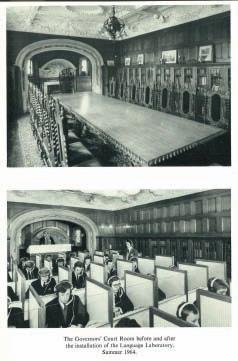
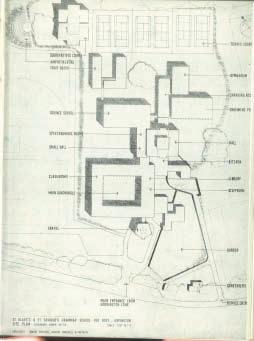
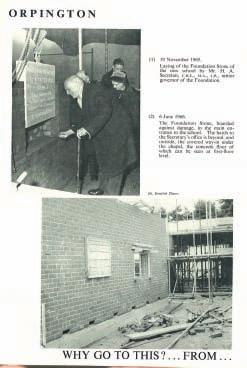
Olavian 2012 – 450th Anniversary Supplement – 137
Top: The Orpington school in its original shape
Above: 1967/8 (Just before the school move), Boys sketching in London
Left & Above left: Moving from Tooley Street to Orpington
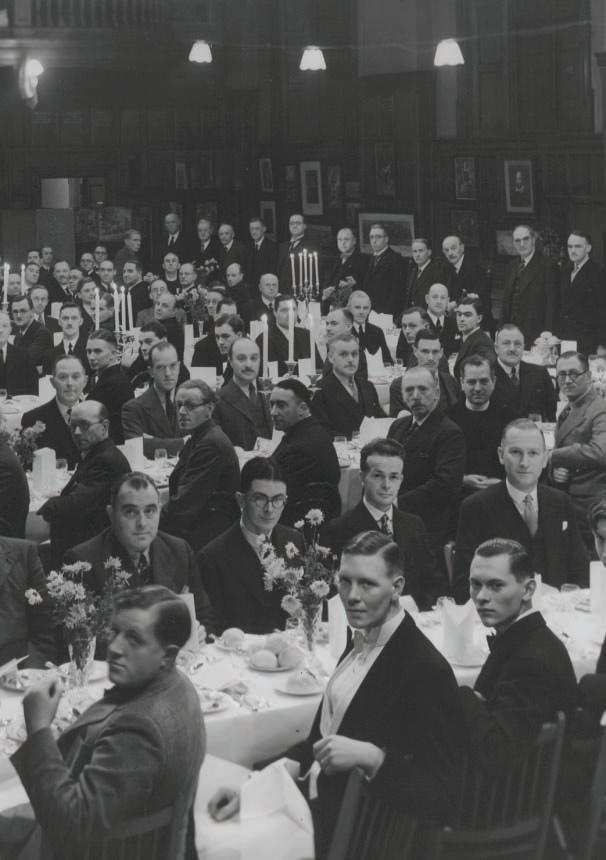
Old Olavian

140 – Old Olavian – Olavian 2012 Contents Editor’s Notes Chairman’s Report Annual General Meeting Annual Lunch History of the Old Olavians Fives Club, Pt 2 STOGS in the Fifties David Gould’s Leave – May to June 1943 Life on the troopship Mooltan – 1944 Clubs and Societies Old Olavian’s Lodge Cricket Club Tour 2012 Eton Fives Club Old Boys’ Notes 1950-2004 1940-49 in Memoriam 142 143 144 145 149 155 163 168 168 172 173 173 174 Chris Harris Chris Harris Kit Harris John Brown Robin Dadson David Gould Alan Wright Peter Hudson Lance Giles Howard Wiseman John Brown Leslie Watmore
Editor’s Notes
2012 – what a wonderful year that has been and how privileged we are to have been able to live through it. I am sure that there will be many of my older readers who, like me, will have been reminded of events during their youth: there was the spectacular celebration of the Queen’s diamond jubilee and this brought memories of my mother taking me and my brother to sit all night on the edge of the pavement in The Mall to watch the coronation procession on 2nd June 1953. I also remember the special assembly held during the afternoon early in 1952 when Dr Carrington told the whole school of the death of the king.
The jubilee celebrations were followed by the Olympics and Paralympics when we were all reminded of the way in which sport can bring countries together in peaceful competition, and we wondered at the supreme effort and achievements of the many athletes from around the world. I thought back to the Olympic Games of 1948 when I, as an eleven year old, first became aware of international sport. Those games were held in London, only three years after the war, and they were necessarily on a much smaller and less extravagant scale than the modern version. I still remember the names of Fanny Blankers-Koen and Arthur Wint who must have made some sort of impression on me at that tender age.
Although those two major events were celebrated across the whole country and around the world, I must admit that my own most special day came at a much more local level. Regular readers of these notes will know that I have for the past thirteen years been privileged to be the official scorer for Derbyshire County Cricket Club, and those who follow cricket will also know that Derbyshire have been one of the less affluent and less successful teams in the county championship during that time. So, when, on Friday 14th September, Derbyshire beat Hampshire and sealed, not only promotion to the First Division of the championship, but first place in the Second Division by the narrowest of margins, this was a very special occasion in my own personal calendar.
When I was a boy at St Olave’s and living barely a mile from Kennington Oval, I used to watch and support Surrey, at that time one of the greatest county sides of all time, as they won seven successive championships during the fifties. Now, however, my allegiance has shifted entirely to Derbyshire, and I would suggest, in what is no doubt a somewhat biased way, that Derbyshire’s, with its limited resources, is almost as great an achievement as that of Surrey all those years ago.
In past years I have often asked for contributions from my readers – this year three of them have responded magnificently, and I hope that you will enjoy what they have written. I would especially recommend Robin Dadson’s submission. He remembers, in fascinating detail, the way life was for those of us who attended STOGS before the momentous move to Orpington in 1968. I attended the school a few years before Robin, but his article brought back so many memories of those days, upon which I suspect that the majority of us look back more fondly than we did while we were living through them. I especially remember, as does Robin, many good Sundays on the north Kent marshes and other exotic places with Geoff Chapman and Aubrey Buck who jointly ran the Field Club for many years.
I would also commend two further fascinating contributions, both recalling events during WWII –David Gould kept a detailed diary of his extraordinary adventures in the Himalayas while on leave, and Alan Wright has reminisced on his wartime experiences in the navy. Both of these are thoroughly good reads, and I am sure my readers would find them worthwhile.
I am pleased to report that Robin has written a second instalment of his recollections, and that this will appear in next year’s edition of this magazine. I hope that some other of my readers will think to themselves something along the lines of, “I could do that”, and then sit down and do it. I look forward to receiving many more contributions next year.
As always, I give my special editorial thanks to Jane Wells who has given me so much help and support in producing our section of the magazine.
John Brown Editor, Old Olavian
Olavian 2012 – Old Olavian – 141
Chairman’s Report
Sadly the year started with the news of Derek Standen’s passing in October 2011. Derek was instrumental in setting up the Forties Group of the Old Olavians. He arranged their reunions and kept everyone in touch. In Derek’s absence, a lunch was booked for the 40s group at the RAF in April. It was very well attended, and he was, and is, much missed.
I attended Remembrance Service, which took place on November 11th in the Great Hall and, as ever, it was good to see Old Olavians attending, especially from The Old Olavians Lodge who are always represented at this service. I would encourage those local enough to be at the school at about 8.30am to try to come along in 2013. It is a solemn, but uplifting experience, and provides another opportunity to reflect on the sacrifices made, often by ones so young. The date is announced quite early in the winter term, and it will be in the newsletters.
The 450th Anniversary of the school was celebrated in fine style last year with some excellent events.
I am told by a reliable source that the Anniversary Concert in April in the Great Hall was possibly the best performance that he had witnessed at the school to date.
The following day was the annual commemoration service at Southwark Cathedral. Old Olavians met up in the morning to relive memories of days spent in the Tooley Street school buildings. More than a dozen spent perhaps an hour or more travelling through the building and sharing or just listening to recounted stories of Dr Carrington, Aubrey Buck, Geoff Chapman and ‘Butch’ Howell to name but a few. We then adjourned for a quick bite to eat at the Bridge, some with their partners, before walking the short distance to Southwark Cathedral.
This year, of course, was very special being 450 years since the school was founded. Although we will be able to celebrate another 450th anniversary in just 9 years, that being the anniversary of the signing of the Charter by Queen Elizabeth I, establishing the school as a free grammar school. Sixth formers from St Saviour’s joined the school for the commemoration service, as the establishment of the St Olave’s & St Saviour’s Foundation is their history also.
The Celebration and Exhibition in the Great Hall and Chapel in June took us back through the history of the school and included interesting and entertaining talks from Mr Alan Evans (former Head of History
and at the school for 36 years) and Mr John Burston (former Deputy Head, and a teacher at the school for 40 years), as well as from the Headmaster.
This evening included a musical interlude from a student Chamber trio, and the BBC Young Chorister of the year, Olavian Richard Decker aged 13, who sings at The Queen’s Chapel of the Savoy.
Following the presentations, there was a chance to look round a fascinating collection of splendid pictures and significant artefacts in the Exhibition put together by Chris Davies, Head of Art. It was a wide-ranging display of times past at the school, from the 1698 bible, to the bundle of canes from the 1960s, from the original 1562 charter of Queen Elizabeth 1st, complete with hand-drawn portrait, to an 1851 book of calligraphy exercises. There was so much to see and so little time, that I am hopeful that the exhibition can be put on again in the not too distant future.
After 40 years John Burston, my 6th form tutor, retired, and now only one member of staff from my time at the school remains - Mr Archer. So it was good that they were both able to attend the Old Olavians’ reunion just a week or so ago, in September. Replying to the Headmaster’s toast to the Old Olavians this year, our guest speaker was Sir Roger Sims. He attended the school in the 40s, served in the RAF, travelled and then settled into a life in politics, serving as MP for Chislehurst in Margaret Thatcher’s government. He has been a governor of the school and still sings at the school from time to time. His recollections from his school days, travelling in Africa, and from his time as an MP kept us both attentive and amused. I certainly didn’t know that a three line whip was simply indicated by underlining the debate/session on the letter from the party whip three times.
It is likely that we will return to the RAF Club in Piccadilly for the 2013 reunion.
And so that brings us to the beginning of a new year.
The Society, and ultimately the school, is grateful to those who remember this great institution in their own wills. No matter the amount, the funds can always be put to very good use.
Last year the society donated about £10,000 to the school and, amongst many other things, in these straitened times, it went to maintaining the services of an instructor for the school chess club. The results can be seen earlier in this edition of The Olavian.
142 – Old Olavian – Olavian 2012
Previous donations have helped kit out the kitchen area for Domestic Science, which is not only used for meeting the National Curriculum requirements, but also provides for the much-needed education of the Sixth-formers about to embark upon University existences.
And finally, I’d still like to know what else you would like from the Old Olavians Society, preferably with a suggestion of how it can be achieved. Write or email via our administrator at the school, Jane Wells at HYPERLINK “mailto:jwells@saintolaves. net”jwells@saintolaves.net.
Looking forward to serving, and hearing from, you.
Chris Harris (1970-77)
Can be contacted via OOs Administrator hyperlink, jwells@saintolaves.net
Old Olavians’ Society Annual General Meeting, 6th March 2012
1. Minutes of Last Meeting Agreed
2. Matters Arising
2.1 Licence to sell alcohol
With no regular usage of the Holyoak room as licensed premises, the licence was not renewed in November. This saves the society £350 per annum. Reinstatement cost is estimated at £500 - £1,000 should we require it; however special licences are available for about £25. These cover 96-hour periods and only require 2 weeks’ notice to be given to the borough council.
2.2 Next AGM
It was agreed last year that the committee would aim to hold the AGM closer to the financial year end, and would aim for November. This was not possible as the accounts were not completed in time. The meeting was reminded that only subscription members are eligible to vote. It is still preferable to get notice of the meeting to all members if possible, however not even all subscription members have an email address. Notice will still be given by email, and if the date is known by the date of publication of The Olavian, then it will be included in that mailing also.
3. Chairman’s Report
3.1 Membership
Old Olavians on Web Database – 6928, of which 2204 have provided their email addresses. 440, including 25 sponsorship members, have paid full membership of £20, entitling them to The Olavian, with a further 498 paying something.
3.2
Society Administration
This continues to be managed entirely by the school’s OO Administrator (Jane Wells). Audit & Magazine – managed by the committee pro tem.
3.3
Magazine
2011 edition distributed to 452 members – thanks again to the OO’s section editor, John Brown.
4. Finance Report
4.1
£25,523 £ 9,318
Profit/(Loss) £ (7,319) £ 9,994
Balance Sheet £36,213 £43,532
Benevolent Fund Income £ 2,677 £ 1,873
Expenditure £ 0 £ 1,725
Profit/(Loss) £ 2,677 £ 145 Balance Sheet £58,519 £55,842
4.2 Notes – General Fund
Income – Subs and sponsorship were up over £1500, and investment income was also up by £180.
Expenditure – The donation made to the school of £13,352, a correction of £1,157 between General Fund and the Benevolent Fund, and a restocking of OOs ties £1,298 during the financial year accounted for most of the increase in costs
4.3 The cost of maintaining the investments with our broker is becoming prohibitive. They have informally advised us that each account with them is likely to attract a management fee of £1,000 per annum. The meeting agreed that the committee would look into other options. Our rules simply state that any investments must be in fully quoted stocks. The meeting also agreed that the committee should act, once a suitable alternative way of holding the stocks had been found.
Olavian 2012 – Old Olavian – 143
Accounts
General Fund Income
Expenditure
2011 2010
£18,204 £19,312
4.4 It was agreed that the donation to the school would be £9,618, in order to maintain a reduced balance sheet of about £25,000. This includes the Sponsorship Income totalling £2,118. It was felt that £25,000 will leave more than sufficient cash to meet the outgoings of the Society, without having to sell any investments. Most of our income occurs in the first two months of the year.
4.5 Notes – Benevolent Fund
There were no requests for funds received during the year. Discussions would take place again with the Headmaster, regarding finding suitable uses for these funds, remembering that the objects are summarised as:
“TO ASSIST NECESSITOUS OLAVIANS, WHICH TERM SHALL INCLUDE BOTH CURRENT AND PAST PUPILS AND STAFF OF SAINT OLAVE’S AND SAINT SAVIOUR’S GRAMMAR SCHOOL, BY PECUNIARY GRANTS OR IN SUCH OTHER MANNER AS MAY BE DEEMED APPROPRIATE.”
4.6 Following the demise of the Old Olavians Rugby Football Club, the OORFC committee have asked the Old Olavians Society to maintain their remaining funds in a separate bank account. The money will be invested in short term investment accounts/bonds. This money will be held for the purpose of setting up a new Rugby Football Club in the future. If the funds have not been used for that purpose by 1st January 2037, then the funds can be paid to another Old Olavians Sports Club or to the school for projects that support sporting activities.
5. Functions Report
The reunion dinner at RAF Club – 16th September was attended by 72. Three headmasters attended, and a good time was had by all. The 2012 reunion is scheduled to be a lunch at the school on 22nd September.
6. Club Reports
6.1 Rugby Club
The club will continue to exist in a ‘hibernated’ state. £500 will not be paid to the Rugby Club this year. Old Olavians Rugby Football Club committee have asked the Old Olavians Society to maintain their remaining funds in a separate bank account. The money will be invested in short-
term investment accounts/bonds. This money will be held for the purpose of setting up a new Rugby Football Club in the future. If the funds have not been used for that purpose by 1st January 2037, then the funds can be paid to another Old Olavians Sports Club or to the school for projects that support sporting activities.
6.2 Cricket Club
Ian Giles reported another successful tour, which has been in existence since 1908. The £500 donation was agreed for another year. These funds are used to assist with travel and accommodation costs for the more junior members of the tour.
In order to promote the tour, and bring new players to the club, a match against the school, either in the evening or on a weekend has been suggested.
7. Election Of Officers
7.1 There were no resignations, and the Committee members remained in office:
Committee Chairman Chris Harris
3 Ex-Officio Members
Paul Ouseley, Bill Prouse, Trevor Read
8.
8.1
Other Business
Promoting Old Olavians Society
In order to make the current Olavians aware of what we do for them, the Chairman will discuss with the Headmaster ways of making the Society more visible. Where we have provided funds, then perhaps there should be a visible acknowledgement that it was paid for by Old Olavians.
Chris Harris (1970-77)
ANNUAL LUNCH
As a recent leaver, I was pleased to attend my first Old Olavians’ lunch. Joining in the meal excellently prepared by the catering staff and smartly served by members of the rugby squad, were current students and staff, ex-staff and leavers across eight decades. During the meal, old friends shared stories of old and new – of shared lives at the school and events in recent years, and before and after it a wider reunion took place. People who attended the school in different eras were drawn together by a shared memory and it was fascinating to listen to Olavians contrasting experiences in the 1940s, 1960s, 1970s and the present day.
144 – Old Olavian – Olavian 2012
Following the meal, keynote speaker Sir Roger Sims, MP for Chislehurst for 23 years, gave an energetic account of his travels and career as well as his experience at Tooley Street in the 1940s. The school’s current headmaster highlighted the latest successes in individual and overall achievement at St Olave’s and encouraged the Old Olavians’ to support the school’s work today. As the chairman (aka Dad) said at Grace, let us be thankful for what we have.
 Kit Harris
(2004-2011)
A brief history of The Old Olavians Fives Club
1928-1971
Fives: A game of handball played in a roomy court against a wall, chiefly at the great public schools of England (origin obscure). [Chambers 20th Century Dictionary]
As promised in last year’s edition of The Olavian, here is the second part of the history of the early years of the Old Olavians Eton Fives Club (written in 1971): it continues from shortly after the Second World War until 1971, when the Olavians won the Alan Barber Cup for the first time:
Chapter 6 Maturity
The revival after the war had been a slow one, but the roots had been so well established before 1939 that there was little doubt that the club would grow again. As early as 1951 RA Bodey, the captain, had prophesied that the club would attain a higher standard in Old Boys’ Fives than we had ever reached before the war if the present school team were to join us. Jim Biggs and Ian Stuart were the school first pair at the time: they did join us and there is little doubt that we can now be numbered among the strongest of all club sides.
In 1952-53, for the first time in the club’s history, one of our own pairs reached the third round of the Kinnaird Cup competition. Indeed in all our years, although at least one pair, and sometimes as many as five pairs, had been entered for this competition, not one of them had managed a win. Our first members to enter the Kinnaird Cup had been AHP Holyoak and AW Thompson, and RA Bodey and JG Ward, both of which pairs had drawn a bye in the first round in January 1932 and both of which pairs were defeated 3-0 at the Queen’s Club. In 1953-54 Jim Biggs reached the semi-final in partnership with Old Reptonian Philip Curtis; in the next two years he went one better and reached the final, and, in 1957, went on to win the cup. Biggs and Curtis reached the final again but in 1961 the Kinnaird Cup was won by our own two Jims, Biggs and Wallis, and they went on to repeat this twice in the next three years. There can be little doubt that the club’s stock rose in the Fives’ world as a result of their success.
Jim Biggs had always shown a talent for the game from his earliest playing days at school and for those who had followed his progress his eventual success was really no surprise though nonetheless pleasing for that. Jim Wallis, on the other hand, left school young without having reached a particularly high standard of play. By application to the game, coupled with his extraordinary ability to keep the ball in play, even with the most ungainly of styles, he managed to reach the top flight in Fives. It is worth remembering that he first reached the Kinnaird Cup final some ten years after leaving school, and now ten years later the same two Jims are still one of the top two pairs in the country.
In June 1958 a dinner was held to celebrate the club’s twenty-first playing season and Jim Biggs’ success in winning the Kinnaird Cup. This occasion was so successful that it was decided to hold another dinner to celebrate the thirtieth year since the club’s inauguration. Thereafter it was decided that we need seek no reason to hold a dinner: the dinner itself was reason enough. Every year since then, therefore, there have been some most enjoyable evenings in Westminster, Tooley Street or the Petts Wood area.
R.A. ‘Bo’ Bodey resigned as captain in 1958 after ten years which had seen the club achieve a greater standing than that reached at any time earlier in the club’s life. Much of the credit for this must go to Bodey for his enthusiastic approach. He was well supported during the greater part of this period by Doug Keeble, the secretary, who was particularly good at persuading the young talent at school to come
Olavian 2012 – Old Olavian – 145
and sample old boys’ Fives. Bodey was succeeded as captain by Jim Biggs who had contributed so much by his ability on court to help to achieve the club’s improved standing. It was during his six years as captain that tours were revived as a regular feature.
There had been two earlier tours, one in 1955 when four bachelors played Berkhamsted one Saturday and King Edward’s School, Birmingham, the next day; and a second in the following year when, in atrocious weather, two stalwarts, Doug Keeble and John Harvey, visited and lost to King Edward’s School and Repton. The first of the new tours was a visit to Stratfordon-Avon with matches against Old Edwardians and Old Berkhamstedians, both of which were drawn. This tour took place in 1959 just a week after the first stretch of the M1 had been opened. There was no speed limit in force then and Jim Wallis frightened the life out of the writer of this article by driving at over 120 mph most of the way.
In 1960-61 a second tour was added to the fixture list when we stayed at Worthing following a match at Charterhouse and one of Mark Cregeen’s meals in Godalming: we played pitch and putt at Worthing before travelling on to Lancing for another match on Sunday afternoon. This last-named tour has continued ever since with variations only in hotels and the number of players, while the Midlands tour underwent several changes, both of opponents and resting-places. The most popular “hotel” was certainly that provided by Jack Sayers who lived in Sutton Coldfield for a few years and provided us with superb beds and breakfasts. When he moved south again the taste for Fives in the Midlands was not so strong, and this tour, which later included Repton, was not continued.
For a short time three tours were run: in 1964-65, for example, four pairs visited Charterhouse and Lancing in October, four pairs played against Old Edwardians and Old Berkhamstedians in November, and two pairs went to King Edward’s and Repton in January. By 1967, however, the Birmingham tour had lost its popularity, although with better cars and roads a really long-distance tour to Shrewsbury and Repton was introduced in the same year and this too is a tour which is still going.
There can be little doubt that one of the reasons that the club has been able to extend its fixture list has been the advent of the motor car. Over the years the club has been blessed by a succession of wealthy and willing car-owners who have transported members to all parts of the country for the sake of a game of Fives.
Tribute has already been paid to Jim Biggs’ playing ability: to his captaincy he brought almost as much energy and certainly as much enthusiasm. As well as developing the tours he was keen to see the fixtures increased in number and widened in scope. More teams were invited to play on our courts at Tower Bridge and gradually the number of matches and distances travelled became larger. In every season but two, 1929-30 and 1935-36, the club had won more games than it had lost, but now the proportion of games won to games lost began to rise almost yearly.
It is interesting to trace the development of the fixture list in the post-war years. All three of the schools which were played in 1948-49, St Olave’s, Charterhouse and City of London have been “everpresent” opponents except that Charterhouse missed one season, 1951-52. The Old Citizens have been played twice every year since 1949-50 and have always provided us with the sternest opposition, until in 1967-68 a third match was arranged with them.
The Old Chigwellians have played us regularly every year since 1950-51 apart from a two-year lapse in the mid-fifties. The Old Aldenhamians, too, played us in that season, but did not appear regularly on our list until 1956-57. Mill Hill School were played in 1951 but the game has never been regarded as a major one there and their name has appeared only four times since, the last occasion being 1967.
The 1951-52 season saw the introduction of five new matches: Old Cholmeleians, amongst our most regular and best-liked opponents; the Jesters, a “must” on the fixture list of any self-respecting club; Old Harrovians, who beat us easily and did not play us regularly until 1956-57; Old Reptonians who have played us in at least one evening match in every year since then; and Old Westminsters who arranged matches with us throughout the fifties and again twice in the mid-sixties, but who found it increasingly difficult to raise teams as no young men joined them.
In 1953-54 new games were played with Old Carthusians, who have been with us ever since, and Harrow who have provided regular opposition since 1956-57.
Eton were played for the first time in 1954-55, but only for three seasons, until the fixture was renewed for two further years in 1962-63 and again in 196768. Repton, too, were played this year and the next, though not again until 1963-64.
Our first visit to Oxford came in 1956-57 when two pairs played the University, but Oxford was not visited
146 – Old Olavian – Olavian 2012
again until 1961-62 when two pairs met the Peppers, the University’s second team. The full Oxford side was not played again until 1965-66. Two pairs from King Edward’s School, Birmingham, visited us in January 1957, again in 1961, and every year since 1963. We took three pairs to Berkhamsted in 195657 and have been there every year since then, usually with five or six pairs.
In 1957-58 we went to Marlborough, an excursion to the west which we repeated in the following six years and once more in 1967-68. The game is only played by one house at Marlborough and they seldom provided us with worthwhile opposition so the fixture has lapsed. For the first few years of this fixture Larry West would join us at Hungerford and, after playing in the match, take us all to his home near Newbury for drinks and snacks. This much appreciated event was brought to an end by the untimely death of Larry in 1961. For a short time there was an Old Marlburian Fives club which met us at Marlborough and in London, but this too was unable to continue after 1965-66.
There was one remarkable afternoon towards the end of the 1958-59 season, when the Old Citizens, Old Cholmeleians and Old Olavians all met at Highgate to play in a Triangular Tournament organised by Gordon Stringer, that celebrated Old Citizen. Six pairs from each club played against their opposite numbers from the other two clubs, the result being chaotic but enjoyable. The idea has never been repeated.
The Old Berkhamstedians came into being in 195960 and have developed into one of our more respected and reliable opponents, while we went north to play the Old Edwardians at Edgbaston for the first time in this season, and they too have always been strong opponents until the last two or three years.
There were five new fixtures in the 1960-61 season when we met Cambridge University Penguins at home and Cambridge, the Old Salopians, Lancing College, Stowe and Westminster City School. We have played the first three named every year since then, and Stowe in most years, while Westminster City were regular opponents until 1968-69, since when their interest in the game seems to have died.
Old Stoics joined the ever-increasing ranks of opponents in the 1961-62 season and Old Westminster Citizens followed them in the next year as did Lancing Old Boys and Old Uppinghamians in 1963-64. Old Cranleighans appear on the card
for four years starting in 1964-65 including a visit to their courts in 1967.
The full Cambridge University team was first played in 1965-66 which is the same year that saw the reformation of Old Emanuel Fives Club. In 1966-67 the Old Ipswichians were started and are now playing regularly at home and away, while Imperial College made a brief and ineffective appearance on the scene.
1967-68 provided us with our first sight of Shrewsbury; we played Emanuel School for the first time post-war in 1968-69; in 1969-70, thanks to the Barber Cup draw, we came face to face with the Old Etonians at long last; and in 1970-71 we played Highgate and Aldenham schools for the first time.
In July 1960 Dick Spooner and Neil Davenport left school and started playing regularly for the club. They were the first of several good players to join the club during the sixties, and the strength of all pairs began to improve considerably.
When Jim Biggs resigned as captain in 1964 after six successful years, his place was taken by Dick Spooner who applied a fresh and enthusiastic mind to the job. For Dick Spooner, Fives is not a game which provides gentle exercise and enjoyment, but one in which every opponent, ledge or ball is seen as an instrument of destruction which must be destroyed before they are able to do their own destroying. Not a smile will be seen or a kind word heard on a court on which Dick Spooner is playing. Off the court, however, he is almost normal and he has spent many hours in thinking of ways in which the lot of members and the results of the club can be improved. Much of his waking life since his election as captain has been spent in thinking of ways in which the Old Boys’ knockout competition, later known as The Alan Barber Cup, could be won. The club has had a series of misfortunes in this competition, however, and our hopes have always been cruelly dashed.
The first inter-club knockout competition took place in 1936-37, but the Old Olavians were beaten 3-0 by the Old Citizens in the first round; in 1937-38 they lost 1-2 to The Wyverns in the second round, having had a bye in the first round. The war brought an untimely end to this competition and it was not until the 1964-65 season that the idea was revived by the EFA. Our results in these games can be read in full in the appendix.
The first club tournament took place on 17th March 1934. Fourteen players entered and were divided
Olavian 2012 – Old Olavian – 147
into two sections, the strong and not so strong: pairs were formed by drawing one player from each section. The pairs then played a knockout tournament, each match being decided by the best of three games. The score in the final which was between Bodey and SC Edwards and Waring and Norkett was 14-17, 15-12 when fading light brought play to an end for the day. The match was finished one Thursday evening four weeks later when Waring and Norkett emerged as winners. They were presented with Silver Spoons after the Match with The School on 14th April. The club continued to hold a tournament twice a year (in April and October) until the war, and it was revived as an annual competition in April 1948. The system was changed in April 1952 to an ‘American System’ where everyone remains in the competition for about five rounds until the four with the best records are discovered and put into a final round. This method has continued with only slight variations until the present day. The spoons are now known as the Cregeen Spoons since Mark Cregeen first generously presented the club with enough silver spoons to last for over a dozen years (first presented in 1963).
In April 1968 the first of our Invitation matches was to have taken place: this was originally the brainchild of Neil Davenport who had suggested that we should arrange a match against chosen and well-liked individuals from several clubs who should provide us with stiff opposition on our new courts at Orpington and then with friendly company at a dinner afterwards. Our first efforts to arrange this seemed doomed to failure. First it was difficult to find twelve guests who were all able to play on the appointed day, but once this had been done, we found that the courts were not going to be ready in time, and the project had to be cancelled until the following season when the whole procedure had to be gone through again. When the first of these matches was played in October 1968 it was so successful, however, that it has been repeated each year since and looks likely to be a regular feature of the Fives calendar.
Another club tournament for the Joe Ward Tankards was introduced in season 1971/72 in recognition of the services rendered by this much-loved President of the club.
The move of the school from Tower Bridge to Orpington was viewed with some apprehension by club members. It meant the loss of the courts on which the club had played its best Fives, and it seemed likely that we would be unable to keep many of our popular midweek fixtures since our opponents would not want to travel to Orpington after a hard day in the City. There is much correspondence on
the files between the secretary, the Headmaster, the Education Officer and Norwood Technical College which tells the story of how we tried to keep the use of the courts at Tower Bridge, but in vain. The chief difficulty from the running-of-the-club point of view was that no-one could give a definite date for when the courts at Orpington would be ready. We were told they would be ready by September 1967, then October, then the middle of January, then the end of February, then an indefinite date in the future, and then by May. It was not until 11th June 1968 that we first hit the ball on these courts. All this meant that we were never sure where our next home game was to be played. We had to leave Tower Bridge at Christmas 1967, and for the rest of the season played our home matches on other courts in London - at Westminster, Wandsworth and Highgate: even Spoonsday had to take place at Highgate.
However our earliest fears about the move to Orpington proved to be unjustified: the courts are much cleaner and provide good playing conditions in all weathers, while there can be no courts in the country (world?) which provide better viewing facilities for spectators. The number of midweek fixtures actually increased as more matches were arranged on the Westminster and Emanuel School courts.
Several times during the club’s history there has been talk of how to instil more urgency into the play at practice sessions. One method which was tried but soon faded was the “November Handicap” of 1959 in which players were given a plus or minus score according to their ability, and they started each game with a credit or debit score. In 1970 it was agreed to play, for a trial period, only set fours who could then proceed to play a proper match, best of five games. This too had a mixed reception, but the experiment continues.
The most important match in the history of the Old Olavians’ Fives Club so far came on Sunday 25th April 1971. This was the final of the Barber Cup and was to be played on the Eton College courts against the Old Edwardians. The Old Eds had won four recent finals so they were clear favourites on the day, but the Olavian team of Jim Biggs, Jim Wallis, Dick Spooner, Neil Davenport, Ray Toomey and Roland Williams all excelled themselves and the match was won 3-0. This was a fine performance which delighted the Old Olavian supporters. One feels that our founder, Bert Holyoak, would have been proud of them; the Old Olavians’ Fives Club had come a long way since that day in November 1928 when Holyoak waited alone on the courts for another three players to join him in a game of Fives.
John Brown (1948-55)
148 – Old Olavian – Olavian 2012
STOGS in the Fifties
On a typical early September morning in 1954 I stood, with approximately ninety-nine other boys of a similar age, behind the gates of the somewhat imposing red brick building which still stands to this day adjacent to the southern end of Tower Bridge. We were, of course, the latest annual intake of students to St Olave’s and St Saviour’s Grammar School for Boys and I think it is fair to say we all awaited our fate with a certain nervousness. I remember quite clearly the first boy that I spoke to as we stood in that group, and those few words we exchanged led to a lifelong friendship. We kept in touch for somewhere in the region of fifty years until, unhappily, I had the sad honour of composing a tribute to him which was published in The Olavian following his sudden death about five years ago when in his early sixties.
The main recruitment area for the school lay in the south-eastern suburbs of London stretching as far out as Eltham and Bexley although a few ‘foreigners’ did come from the other side of the river and had to cross that busy waterway in order to get to and from school each day.
Before very long we were all instructed to enter the building through the main entrance. This was the last time a boy would enter through this door for several years, maybe never again, as it was reserved for staff and the most senior monitors. Other monitors and sixth form students were permitted to gain access through ‘the covered playground’ which was under the building to the left of the school and was used as a car park by those few staff members that had a car or motor cycle. Any boy below this level was required to walk along the front of the school and enter through a side door. We were directed into the main hall which, with its panelled walls and beamed ceiling, seemed to resemble the great hall of an Elizabethan nobleman complete with an upper gallery running around three sides of the hall at first floor level. This was actually known as the balcony but it was as good as a gallery. The fourth side of the main hall was formed by a number of long windows built on top of an outer wall, perhaps eight feet in height, and stretched from the top of this wall up past the first floor to upper ceiling level and looked out onto Tooley Street. No doubt, as Good Queen Bess herself had placed her seal on the foundation document of the school nearly 400 years earlier, this was the whole intention but it all seemed very grand to boys that had grown up in south London. There were a number of classrooms leading off the balcony which had windows on their opposite side facing north towards the river. Little could be seen, however, due to an extremely high wall which formed part of a then very active warehouse as, in
those days, the Pool of London was still an extremely busy dockland area.
In no time at all the newcomers were split up and allocated their individual forms which were entitled 1A, 1B and 1C. There was no consideration of ability at this early stage; this would come later, and I was delighted to find that my newly-found friend whom I had met by gates had been allocated to 1C along with myself. By sheer coincidence there was another young lad allocated to my form that I already knew as we had previously been in the same Cub-Scout pack in Denmark Hill where we both lived. We were also allocated to our individual school ‘Houses’ all of which were named after former benefactors of the school as follows: Bingham, Cure, Harvard and Leeke. There was a short phrase circulating in order to help new recruits remember the four house names – Dr Harvard Cured Mrs Bingham’s Leeke. I found myself in Harvard house which was allocated green as the house colour whilst the other three carried red, yellow and blue as far as I can recall. This led to two very healthy, separate reasons for rivalry in sporting events and other competitions. Each form had loyalty from its members in inter-form events but, equally, members of the same form could become deadly rivals when inter-house events were involved.
During the 1940s and 1950s very popular reading for boys were books featuring fictitious schools - who hasn’t at least heard of Billy Bunter and Greyfriars or Tom Merry and St Jim’s? St Jim’s had two houses, namely School House and New House, which were always depicted as great rivals. Although St Olave’s had no such houses there was a ‘New Building’ and I regarded this as putting STOGS on a par with the famous, all though fictitious, St Jim’s.
Every boy had already met the headmaster of the day, the formidable Doctor Roger Clifford Carrington,
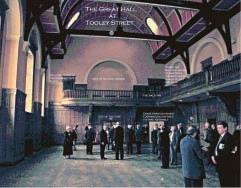
Olavian 2012 – Old Olavian – 149
when interviewed for a place at St Olave’s and they were now introduced to his very strict rules which were applicable from the very start without any relaxation whatsoever.
Late arrival at school in the morning was a very serious offence and the outer gates were closed each day precisely at a certain time. A boy might be seen running as fast as possible down Tooley Street and be but a hundred yards or so from the school but the gates would be shut at the appointed hour and he was deemed late. This resulted in an interview with Dr Carrington but it was no use making up excuses such as a train being late as he would ring the railway authorities to verify the story and, if the train had been on time, there would be dire consequences. As Carrington himself commuted to London Bridge Station from Penge he had a fair idea of what was going on with the train services so you had to be very wary. A genuine problem on the railway would, however, be accepted. If the few boys that lived north of the river found that Tower Bridge had been raised and they were obliged to divert over London Bridge and arrive late at the school as a result, this was deemed no excuse. Carrington maintained that they should never have relied on Tower Bridge in the first place and the offence of laziness would be added to their late arrival and the penalty calculated accordingly.
There were both morning and evening religious assemblies every day in the great hall which followed a time honoured ritual. Each form had its own allocated position in the hall with the more junior forms at the front and the higher forms positioned to their rear in progressive ranks until the most senior forms were reached at the very back. A long open space was reserved down the middle of the hall and it was here the school monitors (prefects) stood with the school captain at the front and the lesser monitors lined up in single file behind him. There the entire school would stand, staff and students alike, awaiting the entry of Dr Carrington. His arrival would be announced by the ringing of a hand-bell by the school janitor as the headmaster entered through a door which was faced by the whole assembly. He would then proceed to climb a few steps in order to take his place on a fairly large dais from whence he conducted the service. There was always a group of boys lined up before this dais and Carrington would give them a curt nod of dismissal at which they would file out of the hall and thus not participate in the forthcoming service. These few boys were of other faiths and I recall at the time wondering how such students had got into St Olave’s in the first place as it was very much a Christian school with close connections to Southwark Cathedral. The service would commence and consisted of the singing
of an opening and closing hymn and the reading of a lesson from a large bible, which resided on a lectern to one side of the dais, by one of the monitors. The hymns were sung to the sounds of the school organ which was accessed from the first floor balcony, sited immediately above the dais and usually played by the music master. After the religious aspect of the assembly had been concluded the boys of other faiths would return before proceedings ended. Carrington would dismiss the monitors first with a curt nod followed by each form in turn being given permission to leave in the same manner. The only real difference between the morning and evening assemblies was that after the morning gathering Carrington would make any relevant announcements concerning the school.
On reflection the whole procedures could be likened to a Royal Navy warship in the Napoleonic era with the captain being initially piped on board before conducting prayers and then addressing his officers and crew from an upper foredeck.
Lunchtimes were taken in two separate sessions at folding tables which were set up in the main hall. A long line of tables placed immediately under the windows was reserved for the staff and monitors and was mainly occupied during the first dining session with Dr Carrington sitting at the head. It was made very clear on day one that first-form boys were strictly forbidden to talk at the dinner table until such times as Dr Carrington, commonly referred to as ‘The Old Man’, gave his permission for them to do so. This rule normally stretched right through the first term so it meant around a hundred eleven-and twelve-year old boys had to sit in absolute silence as they dined for three months. Some found this impossible and, if caught by Carrington, they would be introduced to his ‘magic wand’ which turned naughty boys into good ones, in theory that is. The meals were served by boys from the middle school forms acting as waiters on a rota basis and the food was dished out by ‘dinner ladies’ who stood at long tables in one corner of the hall. Seated boys awaiting food were required to order their meal from the ‘waiter’ allocated to their table who would then fetch the required meal from the dinner ladies. Occasionally a ‘waiter’ might get an order wrong and fetch something a boy did not like, maybe cabbage for instance, but every boy had to eat whatever was on his plate come what may. This most likely came from the immediate post-war situation when many food items had been rationed and it was frowned upon to waste anything at all. Two or three masters officiated at each meal session and a boy was obliged to obtain a master’s permission before his plate could be passed down the table and placed in a pile to be carried away and washed. A
150 – Old Olavian – Olavian 2012
more lenient master might nod his head to indicate that a boy was permitted to leave a little on his plate, but any individual who had misbehaved in class could well find such permission was not forthcoming and he had to stomach whatever was before him. The hall was a hive of activity at lunchtimes which could lead to unfortunate situations. On one occasion a ‘waiter’ carrying several full dishes turned away from the dinner lady serving sweets and either tripped or collided with another boy. The sum result was the plates spilled all over the unfortunate waiter leaving him dripping in custard from head to toe. On another occasion a group of boys became quite rowdy on the first-floor balcony and engaged in a bit of pushing and shoving. Sadly for them they were immediately above the dinner ladies’ serving area in the hall below and a satchel fell from the balcony and landed in a large container of custard. Only the most senior boys were allowed to remain in the school buildings during the lunch period unless given special permission so the thunder was going to roll. The storm broke after assembly that evening when Carrington announced the names of several boys whom he wished to interview the following morning. The whole school knew exactly what that meant, six apiece, and the culprits had around eighteen hours to contemplate their fate. There was a large concreted playground around the school building together with some fives courts and those boys not dining played various games either before or after their lunchtime meal. Boys allocated to the second dining session were required to queue up along the warehouse wall until they were allowed to take their seats in order to eat. The rule forbidding access to the school building during lunchtimes applied even during the most adverse weather conditions so, in winter time, unless it was pouring down or snowing heavily, you were outside for an hour or more, no matter how cold it became.
To illustrate the sort of thing that was quite acceptable during my time at St Olave’s I would like to mention an incident which I am certain would have caused absolute uproar in 2012 and may well have been brought to the attention of their MPs by irate parents. It should be made clear that there was a very strict dress code with regard to what was worn to school and the official supplier of the school uniform had a small outfitters shop in London Bridge Station Approach. Parents were directed to this establishment and I believe I am correct in saying it was the only place where the school badge, cap, scarf and tie could be purchased along with a rugby shirt in the appropriate house colour, in my case green, and a school rugby shirt which was black. Every pupil was obliged to have all of these along with regulation black blazers,
grey flannel trousers, black shoes and grey or black socks. I distinctly remember how parents remarked on the extortionate cost of those items they were forced to obtain from this outlet although black blazers, trousers, shoes and socks which complied with the rules could be purchased from alternative suppliers at half the cost. Outer coats were required to be black or grey in colour and conform to the rules and dufflecoats of any kind were strictly forbidden. Now the mid-1950s were not so very long after world war two and there was a great deal of army surplus stock on sale at very reasonable prices. Duffle-coats had been very popular with the Royal Navy and were worn in abundance by all sorts of civilians when they became readily available. It was only a matter of time before some boys started to wear them to school on freezing winter days and, as nothing was said, the practice spread. Please remember at the time efficient central heating was a rarity and it was virtually unknown in private households many of which still relied on open coal fires. Things came to a head one particularly cold winter’s day when the thermometer had fallen to well below zero and it was snowing. After evening assembly all boys went to the cloakroom to collect their coats before returning home only to find every duffle coat had been confiscated. In his wisdom Dr Carrington refused to return them that evening so all the lads that had worn them to school in the morning had to travel home with just their blazers and flannels for warmth. There was a subsequent outcry by parents but this came to nothing as school rules, of which they were completely aware, had been broken. The duffle coats were handed back after a short time but were never seen again on a pupil commuting to St Olave’s.
There were no sporting facilities as such at the Tooley Street site apart from a gymnasium, four fives courts and, of course, the tarmac playground. Swimming lessons were held at Grange Road public baths which were about a fifteen-minute walk away and cricket, rugby, tennis, athletics and the like took place on the school playing fields at Dulwich some three miles or so distant. Most boys participated in some sort of sporting activities on the tarmac playground during their daily lunchtime break which ranged from ‘football’ using a tennis ball, ‘cricket’ which was played with a tennis ball and using a hymn book as a bat with a wicket consisting of a bin, crate, box or anything else that came to hand. There were also games of ‘tag’ using a tennis ball to hit any one of the many opponents involved who then took over with the ball. Being boys the idea was to fling the ball at someone as hard as possible in the hope of knocking his head off. Conkers were very popular in the autumn and nobody ever seemed to get hurt. The only ‘game’ I ever recall
Olavian 2012 – Old Olavian – 151
being banned was called something like ‘High Jimmy Nacker’. A team of about eight boys would bend over from the waist in the fashion of a rugby scrum using a convenient wall as a support and the opposing team would then run at the ‘scrum’ one at a time and leap onto the backs of those bent over against the wall. The idea was to collapse the ‘scrum’ with as few of your team as was possible but quite often this had not been achieved with all eight aboard. It was then quite acceptable to bounce up and down until the ‘scrum’ had collapsed and all sixteen boys were in a struggling heap on the ground. The thought of broken backs, necks or injured skulls through going clean over the ‘scrum’ and hitting the wall never seemed to occur to anybody and there was quite a lot of resentment when Carrington, quite rightly, banned the ‘game’. There was another traditional activity at St Olave’s when newly enrolled first-formers, known as ‘the weeds’, were cordially invited to come and view the famous St Olave’s tadpoles. Such invitations came predominantly from the newly-promoted second-year students who, of course, were no longer ‘weeds’. The actual dastardly game involved enticing an unsuspecting ‘weed’ into an isolated washroom and then sticking his head under a tap which was turned on covering the victim in cold water. A very unlucky ‘weed’ might suffer the indignity of being shown the ‘tadpoles’ that lived in the toilets which involved the flushing of the loo but I will say no more!!!! The practice was officially frowned upon but nobody did very much about it provided there had been no aggressive bullying as the monitors had suffered the same fate perhaps seven or eight years earlier and so turned a blind eye.
One day each week all the forms of a given year were required to make their own way to the sports ground at Dulwich after lunch for a sporting afternoon. On their sports day pupils would all have attended the first-session at lunchtime and then spend the afternoon participating in the sporting activity of the season. This really meant cricket in the summer months and rugby during the winter and nobody was excused unless there was a valid medical reason. There were a number of ways of getting to Dulwich from Tooley Street which were as follows - by train to either West Dulwich, East Dulwich or Denmark Hill then walk the mile or so to the grounds or alternatively by taking a number 78 bus to Peckham then changing to a number 37 which dropped you off within a few hundred yards of your destination. It sounds easy, but all routes were fraught with danger. True to style Dr Carrington required every boy to present himself at Dulwich in good time but trains could be cancelled or Tower Bridge could be raised thus causing unforeseen delays to the buses. Over and above this it was a
school rule that no more than two boys should occupy an individual train compartment and, on occasions the normal eight-coach trains could be reduced to four. It was not unknown for Carrington to appear at London Bridge and join the Dulwich-bound train in order to ensure rules were observed.
In many ways the grounds at Dulwich were quite magnificent compared to the facilities enjoyed by many other Inner London schools of the era but there were also marked disadvantages which would not be tolerated in 2012 and I will come to these later. I seem to recall there were four individual pitches, so four separate games of either cricket or rugby could be played out simultaneously. Unfortunately, to the north of the grounds was a gradual slope beyond which lay Denmark Hill and, as a result of this terrain, the grounds could become waterlogged following heavy rain or snow. Fear not, however, for the boys of St Olave’s were not deprived of their weekly sporting activities as, at such times, they were despatched on a circular cross-country run which took them through Dulwich Village, round the park and back. Alternatively they could be directed to run up Greendale, which was an unmade muddy track leading up the northern slope, where it joined a tarmac road and took you to Denmark Hill then back past East Dulwich station. The latter route was shorter but did involve the climbing of the slope as opposed to the flatter route around Dulwich Park. Masters positioned themselves at intervals along the chosen route and, if any boy was caught cutting the distance short, at the very best he would be sent off to do the whole run for a second time. As I have said every able-bodied boy was required to actively participate in sports which could lead to amusing situations. I myself have always been very short-sighted and thus obliged to wear spectacles. This was not so bad in summer when cricket was on the agenda nor was it a problem with cross-country running, but rugby and glasses simply do not mix. In spite of this Robin was going to be made to learn to play the noble game of rugby come what may, and I can still recall looking up at this huge games master named Mr Howell and being told so in no uncertain terms. The said Mr Howell had earned the nickname of Butch from us juniors for obvious reasons. A very funny incident occurred some years later as a result of this eyesight of mine. I was wandering around one cold winter’s afternoon in my capacity as one of the wingers in an inter-form rugby match. Blinking upwards at the fuzzy-looking sky, which was completely out of focus, I spotted the ball sailing high above me. Clearly someone had given it a hefty boot and it was rapidly heading for the opposition’s goal-line. For some inexplicable reason everyone else was slow off the mark
152 – Old Olavian – Olavian 2012
after the mighty kick and I was the only one chasing it. Eventually it dropped to earth a few feet from the goal line. This was going to be a certain try for yours truly, and right between the posts as well. I rushed forward to gather the ball when, to my astonishment, it flew away. Damn thing was actually a pigeon. The best bit was walking back down the whole pitch to the astonished looks of twenty-nine other players plus the master who was acting as referee.
There was another more serious incident on the rugby field when one chap, who had the notorious reputation of always running in the opposite direction to the ball, inadvertently caught it one afternoon when he got in the way of a misplaced kick. ‘Edmondson’s got the ball’ came the cry (name changed for obvious reasons) and all twenty-nine other players immediately flung themselves on the fictitious Edmondson who was flattened to the ground. When the refereeing master got us all off poor Edmondson he could not walk and was immediately carted off to Dulwich Hospital where it later transpired he had multiple fractures in one leg. But, as I have said, we were all going to learn rugby.
The disadvantages I mentioned earlier were the changing facilities which consisted of two wooden structures, one of which was about half the size of the other, and I cannot recall either having any sort of heating installed. I suspect they were left over from WW2 and may have housed troops or anti-aircraft crews during that conflict as they were both adjacent to the railway line which formed the southern border of the grounds. Alternatively they may have been purchased after the war and re-sited at Dulwich in order to provide some sort of changing facility. Snacks and drinks could be purchased at a small tuck-shop which was housed in the larger hut, but showering facilities were minimal and, even then, hot water virtually unknown. With around a hundred boys attending every sports afternoon it was usually quite difficult to get to have even a cold shower and not infrequently I remember washing down the muddy bits that showed at a standpipe out in the open air.
There were two highlights of the year consisting of the Masters v Boys cricket match and the school sports day. In actual fact the masters could field a pretty good cricket team and never disgraced themselves when playing against the school’s first eleven.
Basil Taylor, who was of Anglo-Indian descent, was a damned good batsman and Geoff Chapman a steady medium fast bowler. If I remember correctly Butch Howell was a useful all-rounder, but other names escape me. There was never a Masters v Boys rugby
match - I wonder why?
I have few memories of the annual sports day as athletics were never really one of my skills. The two things I do recall were one boy having to be taken to hospital after he had wandered into the shotputt area and had one bounce off his head. To everyone’s amusement the sports master who had the responsibility of driving him to hospital was more concerned about blood dripping onto the upholstery of his new car than the severity of the injuries. Fortunately these were by no means severe although, being head wounds, they bled profusely. Another highlight was assisting Mr PG Ramm, maths master, to get his ancient car going. He was a very pleasant young man, possibly on his first appointment, who had immediately been awarded the nickname ‘Piggie’ as a result of his initials. Judging by its looks his car might well have qualified for the London to Brighton Rally and seldom started without trouble but, at the annual sports day, there were always plenty of eager boys anxious to volunteer to give it a push. Once the thing got rolling everybody was treated to a series of grunts, rattles and bangs until the engine literally exploded into life and ‘Piggie’ trundled off followed by clouds of smoke to the sound of rousing cheers.
We also had an annual swimming gala at Grange Road Baths which is when I came more into my own as I had been a regular swimmer since teaching myself at Camberwell Baths from about the age of seven or eight. No glasses again, of course, but that didn’t matter in a swimming pool and I enjoyed representing my house on several occasions.
There were a number of out-of-school-hours activities such as a chess club, an RAF cadets squadron and many others. I joined The Field Club which was run by Geoff Chapman, a geography master, and Aubrey (Michael) Buck who taught biology. Mr Chapman was a keen ornithologist and led groups of boys on bird-watching expeditions at weekends, mainly to the north Kent marshes. Mr Buck, who was very diminutive in stature but a giant amongst men, oversaw various weekend expeditions when we participated in fossil-hunting at various disused quarries and clay-pits scattered around the home counties and also visited other venues such as the River Lea and the River Mole where we studied fresh water-life. It was all very educational and I was surprised just how easy it is to find fossils if you know what you are looking for. It also gave boys from Inner London the opportunity to enjoy a day out in the fresh air - there were frequent smogs in London in those days - and was also great fun. I do recall chugging back one
Olavian 2012 – Old Olavian – 153
winter’s evening just before Christmas from the North Kent area behind an ancient steam-engine heading for Gravesend where we would pick up the train for London Bridge. I think we had been out to a place called Cliffe on the old Sheerness branch where we had been fossil-hunting all day in a disused chalk-pit under the supervision of Mr Buck. The train was limited to just a few very old coaches which were quite crowded so we boys sat in the corridor in order to allow adult travellers the limited number of seats. We were all very tired but started up a sing-song and were delighted when several other passengers joined in including Mr. Buck and we had a most enjoyable journey as we rattled merrily on our way.
Yet again occasional amusing events occurred whilst out on these expeditions. There was one time when I believe Geoff Chapman came very close to throwing one youth, whom I shall call George for the purposes of this narrative, into the Thames Estuary. We had gathered at London Bridge Station to catch a train for Gravesend where we changed onto the branch line for the North Kent marshes and a day of bird-watching when George suddenly realised he had failed to pack anything to drink. After a bit of faffing around I think Geoff lent him some money to enable him to buy something from the station buffet. All was well until George realised he needed a bottle-opener to get at the contents of his bottle and he then proceeded to drive everyone barmy by worrying about finding one as none of us had brought along such an item. Once at our destination George was ordered to stay well to the rear of our little party where his constant worryings could not be heard. Some hours later we all stopped to eat our packed lunches and George kept ranting on about opening his bottle. In the end Geoff told him to go away in no uncertain terms and leave the rest of us in peace. George vanished accordingly. We munched away in silence for fear of frightening off the bird-life when Geoff shushed us into being even further silent. ‘It can’t be’, he whispered – ‘Boys I do think that over there is the very rare North Kent, lesser-spotted oohmegoolie bird which has only been seen on two occasions since 1931. I’ll just adjust my binoculars to confirm my suspicions’. Before poor old Geoff could raise his glasses to his eyes there was an almighty crash and the distant bird took off at a rate of knots. George then appeared from behind some bushes with a wide grin on his face, a large rock in one hand and a bottle with the neck missing in the other. ‘Opened it,’ he announced happily as Geoff visibly fumed, totally speechless.
I also joined the Life Saving Society and practised at Grange Road Baths under the supervision of Mr Wilby, Physical Training Instructor. Boys could
achieve a series of levels of proficiency in very worthwhile skills.
Dr Carrington had always carried an air of absolute authority and he would only have to appear on the balcony and overlook the hall for it to fall into absolute silence in seconds. Years after I had left school I bumped into ‘Butch’ Howell, the giant of a man who had taught me rugby. As I shook his hand I looked down upon his medium-sized frame from my own 6’ 3” and things suddenly fell into perspective. I also kept in touch with Basil Taylor, the talented batsman, but said a final goodbye to him in a nursing home in Sydenham where he was suffering from Alzheimer’s some fifteen years ago. So sad. Geoff Chapman and Aubrey Buck also stayed within my list of contacts and they both lived to a ripe old age. Geoff retired to his home town of Axminster, but we spoke on the ’phone for many years. Sadly, for a person so interested in bird life, he lost his sight in his latter years and finally passed away in his nineties. Dear old Aubrey - I looked him up by chance at his address in Edgware when I was in the area on business some twenty years ago. We had exchanged Christmas cards for decades but the look on his face when I introduced myself was amazing. I was invited in for a cup of tea, met his wife, and when I left he had tears in his eyes from realising I had remembered him for so long. One very interesting fact came to light, however, during our conversations which was that the entire staff were all as terrified of Carrington as the boys were!! Aubrey passed away some four years ago, a few days short of his hundredth birthday.
My final observation is on just how much the world has shrunk since the 1950s. Field trips were available during some school holidays and groups of students from St. Olave’s went as far afield as Flatford Mill in East Anglia and Slapton Ley in Devonshire. Very few boys had actually been abroad and some had not even seen the sea. There were no numerous jet-airliners, and package holidays to places like Spain were just starting to be marketed. I myself did not cross the channel until I was in my early twenties and it took until I had retired in 2008 to get any further than Florida although I had seen the wonders of ancient Greece. I have since made up for those earlier years and have now been all around the world, but I find it interesting to read in The Olavian of present school expeditions to South Africa and other distant shores we could only dream of sixty-odd years ago. Are present students luckier than we were? I think not, for what is normal to them may seem very run-ofthe-mill to those attending St Olave’s in 2100 as they return from their Easter scientific trip to the moon.
154 – Old Olavian – Olavian 2012
All I can say is that in the Great Hall in Tooley Street in the 1950s there hung two framed editions of the school songs. One, of course, was Olaf to Right the Wrong and the other was entitled Forty Years On. I remember discussing the implications of the latter with my teenage contemporaries and they seemed beyond belief. Well here I am nearly sixty years on, wondering where the hell they all went, and still remembering so vividly that typical early September morning way back in 1954. Such is what STOGS is made of.
Robin A Dadson (1954-59)
David Gould’s Leave: May - June 1943
In last year’s edition Tony Gould, son of David (1923-32), wrote to tell us of the death of his father in February 2011 at the age of 98. He sent us a copy of the diary which his father had kept during a month-long period of leave while he was serving in India during the war. We feel that this is well worth reproducing for younger generations of Olavians to share.
Tuesday 11th May, Karachi - After 18 months’ continuous service, interrupted by three days’ casual leave, my 31 days’ war leave in India began. Alladin awakened me at 05:00hrs and, having put the final touches to the packing, we left the mess and caught the 07:30 train for Lahore at the Cantonment station. This journey to Lahore, running relentlessly through the heart of the Indian Desert is probably the hottest and dustiest in India and, having already completed it three times before, I steeled my heart to twenty five hours’ monotony and discomfort. The windows never fit exactly and through the interstices the dust pours in just as if a March wind has blown over a pile of ashes.
Wednesday 12th May - I arrived in Lahore at 08:30hrs and spent twelve hours at Faletti’s Hotel, impatiently awaiting the departure of my train to Delhi. My only travelling companion was an R.I.A.S.C. Major who taciturnly contented himself with a ‘Good Evening’ and thereafter held his peace.
Thursday 13th May, Delhi - On reaching Delhi at 08:30hrs, I proceeded by a horse-drawn carriage to the Cecil Hotel, where Wilfred had booked me a room for the day, warning me that this was the last taste of luxury that I might expect for a month. There I breakfasted in royal ease and bathed in one of the two bathrooms inside my room. The rest of the day I spent swimming and sunbathing in the pool pleasantly situated in the grounds of the Cecil. Wilfred called at tea-time having come straight from his office. Over
two years had elapsed since I had last seen him as a Guardsman in the Welsh Guards. He had become much thinner as a result of living in the heat of Delhi. He described me as strong and brown and compared himself with Da Vinci’s pale scholar bent-of-back. We reminisced about the Welsh Guards securely laughing at the far-off unhappy days of humble servitude. The train for Bareilly was packed to suffocation and people in the 3rd Class carriages were standing and sitting on the running boards. A Parsee 2nd Class passenger ousted from the compartment into which he had climbed, sought asylum with us and promised to retire on reaching the next station where he hoped that with a policeman’s help, he would obtain justice against the scoundrel who had thrown him out and then ungraciously encumbered us with his goods and chattels. At the next station, the gentleman, having meanwhile contrasted the amicability of our compartment with the hostility of the one next door, leaned out of the window, poured abuse on deaf ears, proclaimed that he had been outraged and that justice would prevail, then thinking that this display of injured innocence would enlist our sympathies and lull to sleep our memory of his promise to retire, he relapsed into the comfort of his seat, indignantly mopping from his brow the perspiration which his mimic anger had caused. He further displayed his gratitude to our kindness by stumbling over our luggage to the compartment door at every halt throughout the night and shouting with a stentorian voice “Koi barf wala hai?”, “Barf Wala kahan hai?” (Where’s the fellow with the ice?) Though, repeatedly awakened and very resentful, I kept my patience and endeavoured to sleep. There was one pleasant feature in a journey that was otherwise tedious. About an hour’s journey from Delhi, we saw frequently in the long grass beautifully feathered peacocks in twos and threes enjoying the liberty afforded by the veneration of the local inhabitants.
Friday 14th May, Bareilly - We arrived at Bareilly at about 05:00hrs. After wending our way through the sleeping bodies on the platform, we found the 1st Class waiting-room and drank tea and shaved. Wilfred had discovered that the bulk of our luggage which had been put into the brake at Delhi, had gone astray. He had made a frantic effort to telephone back and a railway official, on receiving a handsome tip, had given Wilfred an assurance that all would be well. We were, however, very anxious when we took our seats on the narrow-gauge railway. About thirty miles from Kathgodam, we were refreshed by the first sight of the hills. As our luggage did not arrive with us, at Kathgodam we decided that Wilfred should proceed with the first bus to Ranikhet to make
Olavian 2012 – Old Olavian – 155
preliminary preparations for our expedition and that I with Alladin should await the arrival of the next train. We waited in vain for the first train and, as the next train was not due until the morrow, Alladin and I took the bus to Ranikhet. After three days’ travelling, in the plains in May, I was much relieved to be driven up a serpentine road, partly sunlit and partly shaded, which promised to bring me to a cool place, but my expectations were dampened when some British soldiers on leave from the Eastern Army declared that there was nothing to do in Ranikhet. On arrival at Ranikhet, I went straight to Mrs Browne’s - here I found Wilfred as I had hoped. Mrs Browne is the local secretary of the Himalayan Club, and the widow of an Indian Army Officer. Though in the evening of her life, she is young in mind, enthusiastic about climbing and characteristically wears slacks. She saw that we were tired, offered us tea and soon dispelled our gloomy forebodings by assuring us that our kit would arrive the next day. She indicated where we might buy stores, how we might engage porters and from whom we should obtain small change. Although we often had to accept a row of ten stamps as change in railway stations, buses and restaurants, we could scarcely expect the porters to accept stamps.
Saturday 15th May, Ranikhet - In order to intercept our luggage at the DAK bungalow where we were staying, we undertook to act as sentries and stop every bus as it came up. Wilfred and I did a couple of hours each and Alladin did the next. Wing Commander Smyth who was to join the expedition, arrived suffering from high fever and stated that he would have to spend a fortnight in hospital. Wilfred, Tony and I held a conference; Wilfred stressed the importance of our leaving the next day. Tony had brought equipment and food for a month for three, fearing that we might be inexperienced in preparing for a Himalayan trip. He gave us sleeping bags, ice-picks, wind-proof suits, rope, climbing boots and many kinds of tinned foods. From his stock of 6,000 cigarettes, he gave us 2,000 for the coolies. I volunteered to go and order the bus for 05:30hrs next morning and I was overjoyed on inspecting a newly arrived bus to find that all our lost luggage had arrived. When I reached the DAK bungalow, I saw Wilfred negotiating with the porter contractor and weighing out our luggage in 80 lb loads. As there were just eight loads, we engaged eight Dothial porters. These come seasonally from the mountains of Nepal and work for one to four rupees a day. They are hardy, willing, bare-footed and wear the same clothes in the cool of the morning as in the heat of midday. As I was doubtful whether Alladin was capable of the physical exertion which I had anticipated, I decided to leave him behind in Ranikhet.
Sunday 16th May, Ranikhet - At 06:30hrs, a rickety bus containing two officers, eight porters and at least 800lbs of luggage bounced and jolted out of the DAK bungalow. Our five hours’ journey was thrilling and precarious. The engine roared as we climbed steeply and the chassis rattled as we plunged downhill; repeated blasts on the horn echoed in the hills as we rounded hairpin bends; now we looked down valleys 1500ft below into which we might plunge precipitously, if there were any mechanical defect in the steering and now we could descry in the distance Kamet, Nandadevi and the snow-plumed crest of Trisul. On our arrival at Garud, the villagers swarmed around our bus and so great was the multitude of onlookers when I gave instructions to the booking clerk that I felt I was addressing my Company. When we left Garud, at 12:00 hrs, we adopted the following order of march. Wilfred led, followed by the eight porters and I brought up the rear. Wilfred and I carried rucksacks in the orthodox European manner over our shoulders whereas the porters bore the main weight of their loads on their foreheads by means of a strap. This method restricts the movement of the head and compels them to lean forward, but they go with amazing speed and energy up and down the steepest mountain paths. Barefooted they never slip, and never complain of gravel, rocks, mud or thorns. After five and a half hours marching in the heat of the afternoon we arrived at Gwaldam (7,000ft). We had covered eight miles only, but as we had gone up and down continuously I felt more tired than I used to feel after a twenty-mile route march in the Welsh Guards. After our evening meal, which the porters prepared, we distributed a handful of cigarettes. Contentment reigned around the camp fires until night fell. We crawled into our tents and were soon asleep.
Monday 17th May, Gwaldam - Having risen at 05:30hrs we drank some tea and ate a slice of bread. We arrived at Debal (4,200ft) at 11:00hrs after an easy journey that was mainly downhill. We chose a delightful camping ground on a sward at the river’s edge and spent the rest of the day swimming in ice-cold water and sunbathing. Some boys attracted by our caravan, the tents and the tins of food, gathered round and I spoke to them. Two boys aged about 14 revealed that they wished to join the Army and enquired whether I could enlist them. They were so eager that they professed to be 18. Later a man came bringing gifts of milk, potatoes and onions. He informed us that his son was sick, so we gave him two pills from Wilfrid’s medical box. He was apparently so satisfied with the success of the pills that he afterwards sent us a fish that he had caught in the river.
156 – Old Olavian – Olavian 2012
Tuesday 18th May, Debal - We were up at 06:00hrs, struck camp and were away by 06:40hrs. We marched up the valley for three hours and then breakfasted from fish, chapattis and onions. The porters always made our chapattis. They take a quantity of flour, add a little water, and knead the dough in a bowl. Then they detach a lump, roll it into a ball and throw it from one hand to the other, until it assumes the shape of a pancake. This is then thrown on a hot flat metal disc as big as a meat plate. After baking both sides they remove it from the disc and drop it among the burning logs. Having brushed off some of the ash, they hand it to you piping hot. We could not eat butter or dripping with these as the butter immediately melted, but quince jam was delicious. Owing to a lack of water at Lohajang (8,200ft) we pushed on until we came to a mountain stream (7,300ft). Our site commanded a magnificent view over miles and miles of mountain forest. The Sherpas included in our evening meal the ferns they had collected during the day.
Wednesday 19th May, Lohajang - When a Sherpa called me at 05:30hrs with a cup of tea, I discovered that I had been bitten ferociously during the night. I was constantly being stung whereas Wilfred was rarely troubled. As we rolled up the tents, so the smell of the nettles we had crushed became pungent. Having earlier discovered the value of marching in the cool of the day we set off at 06:10hrs in order to have breakfast at Wan (8,200ft) about eight miles distant. As we went we reminisced about the Welsh Guards and saw the sun rise over the hills at an elevation of about 30o. En route we met Mr Davies who suggested that we might go to Bhuna where there was excellent hut accommodation and whence an excursion to Trisul would be possible. When we arrived at Wan the Sherpas had our breakfast ready. Wilfred and I bathed in a pool of pellucid water and afterwards gazed at the hills which rose sharply to heights ranging from 10,000ft to 13,000ft all of which except the very highest were thickly grown with pine.
At about 14:00hrs we continued our journey to Bhuna. As the porters, who had already marched eight miles, could reasonably consider their day’s work over, we decided to distribute cigarettes and money as baksheesh. The track to Bhuna rises to a height of 12,200ft, over 4,000ft above Wan. It goes through magnificent country and at about 10,000ft rhododendron trees grow in great profusion, the flowers of which were in full blossom, and spread on the ground was a velvet carpet of mauve peonies. Every step we took, we climbed three inches and if
the path had been a consistent gradient we should have had to take over sixteen thousand steps to reach the summit of the pass. As a matter of fact, the path goes up and down and all you lose in height has to be made up later. As we encountered no streams for the first three hours of climbing, we offered our thirsty porters water from our flasks, but being Hindus they refused. They were not rewarded for their strict adherence to their religious customs until an hour later, when we chanced upon a trickle of water on the mountainside. As we ascended beyond 11,000ft I became increasingly weary and took two steps for every breath. My disappointment grew with every bend I turned when I saw the path winding up another mountain slope ahead. Finally, having passed the tree line, we reached the summit of the pass and were rewarded by a magnificent view of Trisul, snow-clad and resplendent in the westering sun, and to the left thirty miles away the Kamst and Badrinath group of mountains perfectly clear in outline, towering above us at a height of 25,000ft. We were enraptured by the vision of this majestic range of mountains rising above intervening clouds, like a heavenly castle.
As we descended toward Bhuna, 1,200ft below the summit of the pass, every step I took was accompanied by a dull ache at the back of my head. I ascribe this weakness and discomfort to inadequate eating arrangements. Up at 05:30hrs I had marched four hours on a cup of tea and then another seven miles climbing to 12,200ft with one moderate meal taken at 11:00hrs. The combined effect of the altitude and the empty stomach produced the feeling of fatigue and sickness. My heart, breathing labouredly and feeling that there was little blood in my head, I was very thankful when I reached the Forest Department bungalow at about 19:00hrs. After eating half a chapatti which I could scarcely swallow and drinking a cup of water I felt a little restored. When the Sherpas brought the porridge I ate about half my ration. I fancied some tinned grapes, but although I recognised the excellence of the flavour I could not really relish them. With few words, I raked over some straw, unrolled my sleeping bag and slipped in. I vaguely wish that I were in the valley below, but soon sleep put my troubles to rest.
Thursday 20th May, Bhuna - I was awakened at about 07:30hrs having almost slept the clock round and enjoyed breakfast in my sleeping bag. Wilfred and our porters went down the valley to Sataul to buy vegetables and to have clinkers put into my boots to make them safe for rock climbing. I washed socks, took photographs and decided to make up my diary, but horse-flies and ordinary flies so pestered me that
Olavian 2012 – Old Olavian – 157
to keep them off my body was a full-time job. My legs had already been savagely bitten by a small bloodsucking fly that seems the most obnoxious. General Bruce regretted that the anatomical structure of flies was such that they did not squeal when he killed them. I was exasperated to the degree of vindictiveness. When I had the good fortune to strike down one of these brutes as it hovered around me I had the great delight in hearing the crackle as I focused my magnifying glass on its convulsing body. The marvel was that there should be so many flies at this height.
In the afternoon Brigadier Williams, a Lieutenant Colonel and his wife arrived with a vast train of porters. I was diffident about meeting the lady as my beard was about a week old. When I told Wilfred on his return, he regretted the arrival of ‘Piccadilly Circus’.
Friday 21st May, Bhuna - We set off early for Bagchor Karak (12,300ft) taking the two Sherpas and four porters. As we intended to live two days in the snow above the tree-line, we all collected huge bundles of firewood, which, clumsily strung over our rucksacks, encumbered us especially when passing through narrow ravines. After about four hours climb, during which we rose 2,000ft, I began to tire. On and on over boulders and snow we went. My Sherpa would go forward over the snow and make footsteps. Often however, treading in his footsteps with my greater weight I would sink into the snow up to my knees and sometimes, when the snow covered a hollow, up to my thighs. I began to discern which snow would hold me and which would not, and I soon learned to handle my ice-pick to prevent my slipping hundreds of yards down the icy slopes. The exertion and glare of the sun gave me a slight headache.
Saturday 22nd May, Bagchor - Wilfred and Gialjin, the Sherpa who had been up to the North Col (24,000ft) Everest, set out about 06:00hrs to do some high altitude climbing on Trisul. They took the Meade tent and pitched at 16,600ft. Wilfred wrote his diary and regretted that he had brought neither tobacco nor reading matter. I arose at a more gentlemanly hour and greatly improved my technique in crossing snow. In about an hour and a half I reached a local summit some 1,000ft above the camp and could not refrain from gazing at the majesty of the dazzling snowcapped mountains. After about an hour the glare gave me so severe a headache that the descent was purgatory. That evening Piccadilly Circus arrived.
Sunday 23rd May, Bagchor - I had agreed to climb and meet Wilfred on his way down, but after the ill-effects of the previous day I determined not to
go beyond a height that I could conveniently stand. Angfourba and I climbed one of the lower ridges (14,000ft) of Trisul. At this height I soon began to feel weak and with a splitting headache it was as almost as much as I could do to reach the camp. Above the vegetation line there was neither tree nor bush to give a moment’s relief from the glare of the sun. Having arrived back at camp I placed a groundsheet over the tent roof, and a gas cape over the tent pole and guy ropes, and crept in under the shade, preferring to suffer the heat of the oven rather than the glare of the sun through one thickness of canvas. While I lay with my eyes closed listening to the constant roar of the mountain stream as it plunged down the rocky gulleys to the valleys below, a member of Piccadilly Circus came to invite me to dinner thinking that Wilfred would not return. I thanked him but assured him that Wilfred did intend to return and would expect me to dine with him. Wilfred attained 18,000ft on the pyramids of Trisul. Gialjin declared the climbing more difficult than on Everest. I was envious of their exploits and disappointed, but nevertheless thought it wiser to return to Ranikhet a fit man, having achieved a height of 14,000ft rather than to return triumphant but exhausted. Balls of hail, the size of marbles, fell during supper and before we went to bed the whole mountain and valley were enveloped in a huge inky cloud.
Monday 24th May, Bagchor - Wilfred got up at 07:00hrs. The Sherpas brought in tea, chapattis and porridge, in which they had thrown the remainder of the monkey-nuts. Three porters arrived about 09:00hrs and, to prevent their waiting in the rain, I got up. Loaded with 80 lbs each and barefooted, they made as good progress over snow, grass and boulders as I did. Their footwork is excellent over boulders which may slip or crack when they bear the weight of a man’s body over huge tufts of grass which may conceal stones or gaps and along the flinty paths as we dropped steeply into the Bhuna. From there I watched a storm six miles away over towards Nanda Ghunti. From the clouds were falling dark columns of rain which, caught at a lower altitude by wind, fanned out like the folds of a vast curtain drawn to one side.
In a talk with the Dhotials after lunch I learned that they came from their native Nepal for as long as four years to act as porters before going back. I enquired their names and ages: Nagia, head man, tough and reliable, 26; Jogia, young, strong and cheerful, 24; Arzan, wizened, skinny but hardworking, shyly laughed when addressed, 32; Doljit, big but declining, 39; Shiv Mal, average good type, 24; Kora Singh, understudy to Nagia, 34; Dollu & Gutia, unobtrusive
158 – Old Olavian – Olavian 2012
hard workers, 30, 25. That afternoon I filled my water-bottle, flask and kettle with hot water and had a complete bath, the first since Wan. As the Sherpas were due to leave the next day we had to discuss their pay. They asked for five rupees each a day. As they had been up Everest and we did not know their rates of pay, we gave them all they asked for and wrote off the amount as an unnecessary luxury.
Tuesday 25th May, Bhuna - The next day an unimpressive and self-appointed guide took us down to an ex-Subedar’s farm in Sutol. Anticipating our arrival the Subedar had made preparations. A blue quilt had been placed on a big seat made of earth. On the quilt was a bowl of bilberries and more flies per square foot than I have ever seen before. From the door and windows of a mud house five yards away there peeped from time to time modest women and shy children. The Subedar gave us milk and butter, spinach and fruit. His conception of duty as a host was not confined to gifts of fresh farm produce. He stayed with us all day long. I feigned interest in the Hindi version of Fauji Akhbar and suffered him to go painstakingly through every Battalion of the Baluch Regiment reading the number, rank and name of every sepoy NCO, VCO and officer killed or wounded or taken prisoner. Next he related his exploits in the last war; he had been to France and Egypt and could take an interest in the Tunisian victory, which had just been celebrated. The latest news that he could give me was that of the 16th of that day I had left Ranikhet. He had married four wives, because the first, then the second, then the third had failed to give him male issue. His fourth union had been no more blessed than the others. On his mountain farmstead he had six buffaloes, six cows, thirty sheep and some goats. The cultivation of the land was the province of the women. He spent his time at the manly occupation of spinning and in conformity with the rest of the farmers and shepherds he carried, wherever he went, his spindle and coarse wool. Ex-Subedar Umaat Singh’s kind consideration finally culminated in negotiating the purchase of a sheep for us, and he used his influence to persuade an unwilling shepherd to accept rupee notes. The shepherd complained that he had nowhere to put them except in his hand. I felt too that the shepherd thought notes were a suspicious abstraction to be avoided if tangible coins could be given in their stead.
Wednesday 26th May, Sutol - Accompanied by our self-appointed mountain guide, we set out next day along a valley to approach Trisul from the southwest. We travelled six hours through untrodden jungles. I experienced the following difficulties:
led by the guide, who despite his unprepossessing appearance and incomprehensible language, knew the mountain jungle as a bus driver knows his route; then followed our eight porters and I brought up the rear. At an extremely difficult obstacle we would close like a concertina, then as each man surmounted the obstacle we spread out. Once I was left behind and for trees and undergrowth I could not see ahead and for the roar of the torrent and the booming notes of the coppersmith bird my voice did not reach my companions.
A second difficulty was to remain on one’s feet. The guide would cut the bamboos 1-5 feet from the ground. Many of them were 12-15 feet long. If they fell parallel to the line of advance one tended to slip forward or backward according to the slope of the hill, whereas if they fell athwart one would slip to the right or left. I kept thinking of the prayer, “If we have slipped, permit us not to fall”. As a matter of fact as we were never on level ground but always climbing or descending or skirting hills we were all falling –Sahibs and porters and Mana the sheep.
A third torment was the danger from low overhanging trees. The more protection a topi gives from the sun, the less the field of view it affords, and mine was certainly designed to protect me from the sun. The result was that as I was groping my way forward studying the ground for my next footstep so with a shuddering crash my head would collide with the branch of a tree or else a bamboo suddenly released by the preceding man asserting all its malevolent resilience would strike my face with a vicious swish. Shiv Mal’s eye was cut in this way.
Fourthly we were ever apprehensive that if we slipped we might fall foul of the bamboos cut at three feet pointed like spears at our bellies or else become impaled on the bayonets cut at one foot.
Finally compelled by the density of the jungle we made our way along a path skirting a precipice, about 6ins wide, consisting of loose earth held together by bamboo roots.
For six hours we struggled and battled, crawled and kneeled, pushed through undergrowth back first, sweated and shed blood, and finally having covered four or five miles, we halted in sheer exhaustion and pitched camp. Our sheep Mana lay down too tired to move. One hour later all gathered in a circle for the ceremonial slaughter. A sacerdotal atmosphere was created when the Hindus took pieces of burning charcoal from a blazing log fire to placate their deity.
Olavian 2012 – Old Olavian – 159
Dollu slipped off his jodhpurs, sharpened his curved knife, seized the sheep between his legs, gripped its mouth and hacked at the jugular vein. The spurting blood was caught in a bowl and offered steaming to the sahibs. I dissuaded Wilfred from drinking. The head was chopped off and the sheep’s body, wool and all, was cast into the fire. Jogia directed operations at the fireside. He broke legs in twain, cut them off, washed them, ripped open the belly, extracted the heart, liver and kidneys, using his hands and one small knife. Two men tore out the entrails with the same nonchalance as they might collect firewood. Each man had now lighted his own little fire. Some placed on their fires bowls of saltwater in which they threw heterogeneous parts such as eyes or bits of entrails, the appendix or a chunk of tongue, while others as the work progressed, fling titbits according to their fancy into the burning embers, then, rummaging with their bare fingers in the fire, they would extract and eat their tasty morsel covered in charcoal and ashes.
That evening, as Wilfred and I sat in the setting sun in our clearing overarched with pine trees enjoying heart, liver and kidneys, we agreed that we had never eaten sweeter or tenderer meat.
Thursday 24th May, Jungle - We journeyed for five hours through even more difficult country, forcing our way over ground overgrown with rhododendron bushes and bushes of the prickly variety. Once on a hillside I slipped and fell octopus-like and my legs and arms and head became entangled in the branches. The gradient was so steep and the ground so slippery that I could not use my legs. Around my head the branches and undergrowth were so thick that, far from being able to move forward, I could not extract my arms to resume a position consonant with human dignity. By dint of careful easing here and a judicious tug there I was able to disentangle myself. None the worse except for a few scratches I pushed on in the wake of the others.
We arrived at a clearing suitable for camping at 13:00hrs and Wilfred and I regaled ourselves with chine. In the afternoon Wilfred displayed abounding energy by making a four hours’ reconnaissance of the next day’s route. Realising that I was on the eve of my last chance to climb a creditable height and mindful of my disappointment at Bagchor, I decided to conserve my energy and read “The Mill on the Floss” until Wilfred returned. In the evening, amid the serenity of the Himalayas, I bathed naked in an icy mountain stream.
Friday 28th May, Base Camp, 11,500 ft - After climbing up a steep rock-face, parts of which were
almost perpendicular, we pitched our tent on a ridge (13,900ft). We had left all trees behind at our base camp and were now living on the confines of the snowline. When the porters had returned to the base camp, I tried to light a fire with juniper wood, but it was so damp that I had no success. That afternoon Wilfred made an excursion to a glacier a thousand yards below. From our tent there was a magnificent panorama. On the left rose the twin peaks of Nanda Ghanti, then slightly to the right a high pass some 15,000ft on which two porters had recently died of exposure to the cold, and then in front of us beyond the glacier the vast mass of TRISUL surmounted by its snow plume, towered 10,000ft above us. Throughout that day and night avalanches came grating and rattling down the mountainside and, as frozen masses of snow and ice, stones and rocks gathered momentum, so the roaring crescendo was taken up and reverberated among the mountains like thunder.
Saturday 29th May, 2nd camp point above glacier 13,900 ft - Wilfred awakened me at 06:00hrs asking me to cooperate as he wanted to light the primus in the tent. We warmed up some bully and potatoes which he had cooked the day before, but, when he reached for something outside the tent, he upset the saucepan of cocoa. Our blankets were inundated and we had little to drink that morning. We set off at 07:00hrs over stunted juniper bushes and snow. I felt in good form but could have wished that my boots, like Wilfrid’s, had clinker nails. By 08:30hrs he had already begun kick-stepping and zigzagging over the snow which was variously one to two feet deep. About halfway up the peak Shananian Shankar our route lay over a series of boiler-plate slabs on the edge of a precipice. These boiler-plate slabs are fairly smooth convex rocks encrusted in ice but, where the sun has melted the ice, they are bare and of a crumbly texture. On such a surface I had little confidence in my boots unfitted with clinkers. Wilfred proceeded over the first in a masterly fashion, taking 15-inch steps and slipping back three or four inches at every step. Having reached the top, he laid onto the rope and I went up rather against my better judgement, but exhilarated that I was doing things that I had never dreamed of. The next was much more difficult. Wilfred went up as if he had been a fly on a wall. Then I began securely fastened by the rope. My boots would not grip, and, when I tried to crawl forward on hands and knees, I slipped back towards the precipice. I could maintain my position only by the contact of my whole body with the rock.
Having somehow manoeuvred into a new startingpoint, I began desperately to move up using hands, belly, knees and feet on the little purchase there
160 – Old Olavian – Olavian 2012
was, while Wilfred tugged at the rope with might and main. After that we had half an hour’s kickstepping and zigzagging up a snow-covered slope. I kept retarding Wilfred as, less experienced than he, I kept sinking knee-deep and waist-deep into the soft snow. I became so tired that I could hardly extricate myself and scarcely wanted to, but Wilfred plodded ruthlessly on and on, and, as I was fastened to him by the rope, I was determined to go on until I dropped. The elevation attacked me violently. At last I had to ask Wilfred to halt. We sat down and he consulted his altimeter. Owing to some barometric interference it read 15,850 ft. I was completely exhausted and confessed to Wilfred that I could not manage another 700ft. Not willing to let me be defeated he offered me some bully, but I had not the strength to bite and masticate. I let a cube of sugar melt in my mouth. Seeing that I was unlikely to improve, even if he could afford to give me an hour’s rest, he decided to climb the peak alone. When he had departed, I felt cynical about my fond ambition to climb a point higher than any in Europe without previous mountaineering experience. I had set that as the culminating physical achievement of the expedition. Within ten minutes Wilfred was back and to my astonishment claimed to have reached the peak. He estimated the peak to be about 150 ft higher just above a false crest. Surely I could reach it. There was no need of a rope.
I accepted the challenge, resolved at any cost to make the effort.
In five minutes I was standing on the summit of Shananian Shankar 16,586ft above sea-level. This is a triangulated height and we corrected the altimeter. We could see Bhuna some 6,000 ft below, but the view began to be restricted by approaching cloud. I was thrilled to have reached the summit, thought of Mont Blanc 15,780 ft, then I decided that I must face the problem of the descent. The elation at having achieved my objective somewhat offset the effect of my tiredness. From the summit northwards the mountain slopes down gradually until it meets the glacier. The whole way is covered with snow. Wilfred decided that glissading down this slope would be the quickest and least fatiguing method of making for camp. He stood on the surface of the snow, dug his ice-pick in behind and slipped gracefully down on the surface for about 500 yards. I was not so successful with the standing position so adopted equally good results in the sitting position. To stop I had merely to press heavily on the pick. After three minutes glissade I would stop to recuperate my strength and in that time I would cover some 600 yards. If I had felt strong I should have been fascinated by this novel method
of descending. Sometimes, if I thought there was little likelihood of my feet striking a submerged rock, I would allow my speed to increase to ten miles an hour. Then I would lose hold of my pick, flounder, stop and make my painful way 50 yards uphill to recover the pick. We halted together once and rested, then glissaded another 400 yards. To my anguish I discovered I had left my woollen gloves behind at the last halt, Wilfrid chivalrously went back for them as I would rather have paid for them than climb all the way back. At 14:00hrs we reached camp No 2 and were greeted by the porters. We had reached the summit at 12:00hrs, and had taken only two hours to come down in contrast to the five it had taken to climb. I attributed my success to a combination of three factors (i) Wilfred’s moral support; (ii) my increased acclimatization; (iii) the fact that on the two days preceding the climb I had eaten meat. Before we left this high camp I dropped my pack inadvertently on the ground and it rolled downhill and by virtue of its rotundity kept rolling. To my consternation I noticed my camera bounce out. At last it came to rest about 600ft below. Gutia dashed after it and retrieved both pack and camera. The view-finder window was broken and the snap release missing, but otherwise all was well.
Wilfred decided that he would look for the snap release, not so much for its intrinsic value, as for its usefulness and irreplaceability. Among the juniper bushes he might have searched a week in vain, but fortunately discovered it within two minutes after arriving at the spot which we had noted. We arrived at our base camp at 17:30hrs feeling fit and strong. I took out “The Mill on the Floss” and for half an hour lived in the domestic simplicity of 19th century England.
Sunday 30th May, Base camp 11,500 ft - We left the base camp for the return journey through the jungle at 09:00 hrs. The heavens opened and drenching rain fell. At first the deciduous trees gave us some protection, but soon the merest contact with a bush or bough released a shower of rain upon our heads. After an hour I was soaked to the skin. Water collected between my pack and the back of my battledress and slipped down through my shirt and was partly caught by the waist belt of the battledress and partly in the turn-ups of my trousers. Everybody was slipping about uncontrollably; our sodden clothes made us cold and our spirits fell. After three hours unremitting rain we chanced upon a huge rock in a clearing in the jungle, the face of which was overhanging a shelter some ten yards long and two yards wide. With the dry leaves we found under the rock we lighted a fire,
Olavian 2012 – Old Olavian – 161
then pitched the tents tying the guys onto branches of trees, removed jackets and pullovers, massaged our damp bodies to restore the circulation, aired shirts, shorts and stockings torn impatiently from the rucksacks and handed round to the porters windproof suits, pullovers and scarves. That afternoon we read in our rock cave while our trousers, socks and sleeping bags were airing. We had hung them on a rack formed by two small uprooted firs lodged against the face of the rock. Night fell before the airing was complete.
Monday 31st May, rock SW of Trisul - The Dhotials awakened us at 06:00hrs next morning. They gave us our breakfast and sat around ostensibly packing and doing odd jobs. They were in fact so familiar that they had gathered round for a kind of dressingparade. One would hold my socks over the fire for the last minutes’ airing before handing them to me, while another would singe my trousers endeavouring to be equally helpful. It was a fine morning and after three hours’ delightful journey we arrived at Sataul. We noticed from Sataul that the snow now lay on the mountains as low as 11,000ft. Before lunch I had a bathe in the rushing mountain torrent and washed all our socks, handkerchiefs and towels and then spread all the damp clothing in the sun. After lunch we had our clinic – a not infrequent performance when the villagers got wind of our coming - and Wilfrid distributed medicines according to the ailments of our patients. After this we were forced to retire to our tents to wait the dispersal of the multitude. The Subedar gave us more fresh butter, milk, vegetables and rice, and we in exchange gave him a tin of coffee. After smoking a cigarette in the light of our dying fire he departed and we went severally to our tents.
Tuesday 1st June, Sataul - The Subedar saw us off and gave us his blessing. As we went through the mountain forest one of us happened to turn back and then we both beheld Trisul appear as a celestial mountain. Set between dark ominous cloud and the black foreground of the pine forest with its lower slopes apparelled in white mist Trisul shone resplendent in the morning sun. Our path then lay through fine parkland reminiscent of the downs of Surrey. We had no sooner arrived at Wan and pitched our tents on a lawn beneath the shade of some magnificent 800 year old cypresses than heavy rain and hail enveloped the whole valley. As on the morrow Wilfred and I were to part company, we celebrated that night by regaling ourselves with our best tinned pears.
Wednesday 2nd June, Wan - After bidding farewell to Wilfred at 07:30 hrs, I set out with the four oldest men, Arzankara, Singh, Jogia and Doljit. I had a melancholy feeling of separation as if I had been
bereaved. This feeling seemed even to be shared by the porters, for we had all been happy together participating in the same joys and the same difficulties. It was as if we had all been in action and our party alone had survived. Wilfred had taken the best of the equipment and the youngest men as he had another week before he need return. That night I slept with my porter companions in the big bell tent.
Thursday 3rd June, Lohajang - We set off at 06:45hrs and our route lay along beautiful fresh valleys. The lower we went the more extensive was the cultivation. One of the greatest problems in Indian agriculture is the soil erosion. Torrential rains rapidly wash away the topsoil which is carried by the river current to form alluvial plains hundreds of miles away. All the rivers of the Punjab are red in the monsoon season, saturated with particles of soil. To counteract erosion the system of terracing has been adopted. All down the sides of the lower mountains in Garhwal terrace succeeds terrace, each sown with different crops and each contained and demarcated by rock walls. The rains fall and the water percolates from terrace to terrace, irrigating all and carrying no soil away. Standing on one side of the valley and contemplating the other side I was struck at once by the ingenuity of man’s organisation and the picturesque fairyland he has created. At 1500hrs I stopped at a ford and being weary decided to have tea made for the porters and myself. Gradually the inevitable little crowd gathered round and among them a party of boys. One about twelve was wearing a Gandhi cap, an immaculate dhoti and a fine tailored coat. He immediately aroused my interest and on my enquiring who he might be, he told me in pure Hindi that he was learning Sanskrit as he hoped to become a pundit. The purity of his language, his intelligence and education contrasted strongly with the illiteracy and gibberish of the Nepalese porters, who only knew enough of the lingua franca of India to enable them to call me at the right time and supply me with the necessities of life. The boy was so cultured and handsome that I called him Pundit Jawarhar Lal Nehru and he was pleased with the epithet. When I arrived at Gwaldam, I found Piccadilly Circus in occupation. Brigadier Williams insisted upon my having tea and dinner with them. Despite my unkempt and hirsute appearance, they treated me charmingly and we compared notes.
Friday 4th June, Gwaldam - To let Piccadilly Circus get well clear, I started late at 08:30hrs. I met Tony and the two Sherpas coming from the other direction. He gave me the latest news about the destruction of two important German dams and declared that he was daily expecting an invasion of Sicily. I gave him a short account of our expedition. That evening I
162 – Old Olavian – Olavian 2012
visited a temple of Vishnu, but was not allowed to go inside. A young priest however gave me a bouquet of a rose and three marguerites. As it was very warm in the valley we all five slept in the open.
Saturday 5th June, Jayghnath - I was called at 05:00hrs, drank a cup of tea and was swimming in a nearby river before six. We reached the bus terminus by 07:00hrs. Many distressed sepoys came to me with the complaint that there was no accommodation on the bus and if they were left behind they would unavoidably overstay their leave. For each one I wrote a certificate to their commanding officers explaining the circumstances. The journey was hot and noteworthy by virtue of an hour’s breakdown. At 17:00hrs we reached Ranikhet and Alladin greeted me. He was so disgusted with my beard that I shaved it off immediately. I went to Mrs Browne’s and read sixteen letters that had accumulated.
Sunday 6th June, Monday 7th June, Ranikhet - I spent the day in Mrs Browne’s bungalow, reading from cover to cover all the “Statesmans” from the 16th onwards. She treated me handsomely, giving me tea at mid-morning and throwing open her house to enable me to answer letters and read the newspapers. I much appreciated the comfort of her house and her bounteous generosity after the rough life I had been leading.
Tuesday 8th June, Wednesday 9th June, KarachiAs the heat, dust and noise of the next three days and night spent in trains on my way back to Karachi were a grim anticlimax to the purity and serenity of the Himalayas, I realised that I must bid farewell to the spiritual company of Mallory and Smythe and take my place once again in the prosaic task of winning the war.
David L Gould (1923-32)
Life on the Troopship “MOOLTAN” in summer 1944
notes made in 2005 by Alan John Wright (1936-42) (former Sergeant in the RAF)
I travelled on the Troopship “Mooltan” in July and August 1944 as an RAF Sergeant. There will soon be no survivors left of those who travelled on troopships of this pattern — those used later were less crowded and had better feeding and sleeping arrangements. I am therefore making this record in 2005 before all survivors are dead. I have dealt with the matter under the following headings:—
Preface
1. Ship’s Permanent Staff
2. Lay-out of Mooltan
3. Accommodation for Other Ranks
4. Feeding Arrangements for Other Ranks
5. General Conditions for Other Ranks
6. The Mechanical Condition of the Mooltan
7. Safety and Emergency Equipment
8. The Ship’s Armament
9. The make-up of the Convoy and its Escort
Preface
I travelled from Liverpool to Bombay in His Majesty’s Troopship Mooltan between 17 July and 20 August 1944. She was of about 22,000 tons. Prewar she had been a Pacific and Orient Liner on the UK to India run. She was driven by steam-reciprocating engines, and was built about 1922. She and her sister ship Maloja were among the last liners of this size to be built with such engines.
The route was Liverpool, Gibraltar, Port Said, Suez Canal, Red Sea, Arabian Sea and Bombay. None of the troops carried were allowed ashore at any intermediate point.
There were no Service Policemen on the draft, and I was one of the RAF sergeants detailed to act as police in the first two weeks of the voyage. These duties necessitated me visiting, especially at night, parts of the ship which were out of bounds to Other Ranks, and parts outside the Officers’ areas. I chatted at night to the gunners and the crewmen who served on the Bridge. This enables me to make these notes more fully than would otherwise have been possible.
1. The Ship’s Permanent Staff. She was an RAF Troopship - that meant that the Ship’s permanent staff, including the Officer Commanding troops and the Ship’s Warrant Officer were RAF.men. The Captain was a Merchant Navy Officer and the crew mainly lascars, but the helmsmen were English. We sailed in convoy and the Commodore of the convoy, a Merchant Navy Officer, was on the Mooltan, notwithstanding there were more prestigious ships (the Strathaird and her five sisters) in the convoy. I remember seeing the Senior Naval Officer (a Royal Navy Commodore) on the Mooltan when we were in port in Aden, but I cannot be sure he travelled with us all the time.
The Gunners on the ship were Royal Marine and Royal Navy, but may have included merchant seamen - some dressed so casually that it was not possible to tell. The gunners slept by their guns and never paraded
Olavian 2012 – Old Olavian – 163
formally, so I cannot tell who commanded them. The highest-ranking gunner I saw was a Royal Maritime Sergeant, and he served on the stern guns.
So far as I recollect there were no females among the permanent staff.
2) Lay-out of the Mooltan when used as a Troopship
The Mooltan for housing other ranks had three main troop decks below the principal open deck (which I will call ‘the promenade deck’). The boundaries of each mess deck consisted of the plates of the ship’s sides, one of the ship’s main bulkheads at the foreend, and a similar bulkhead at the aft end. The bulkheads had watertight doors which were normally left open. Each troop deck was divided into a Port and a Starboard Mess deck. There were cabins for Officers and Indian Army Officer Cadets, some on the promenade deck and others on the deck above (which I will call ‘the boat deck’). The open promenade deck was used for exercise and sleeping by other ranks: the open part of the boat deck was out of bounds to other ranks and was used for exercise by officers.
On our trip the numbers carried were approximately as follows:
3,300 RAF Other ranks (Sergeants and below) - all ground staff.
40 RN Chief Petty Officers,
150 RN Petty Officers and 100 Commandos (either Army or Royal Marine)
(Later we picked up 100 Jewish Troops in the Mediterranean and dropped them before entering the Arabian Sea).
There were about 250 RAF Ground Staff Officers, and about 50 Indian Army Officer Cadets. There were no females carried on this voyage.
As seen from the side in silhouette the Mooltan as a troopship was very much the same as the model in the Maritime Museum at Greenwich, except that at the stern there were the temporary screens which hid the guns and the temporary latrines and ablutions.
3) Accommodation for Other Ranks
The majority of the other ranks were quartered in the three main troop decks. The top one was below the promenade dock and had its portholes normally open by day: the middle main troop was below that, and
the portholes were never opened: the bottom main troop deck was below that, was partly below the water line and had no portholes. Each of the main troop decks was divided laterally by a partition into a port and a starboard Section.
There must have been one or two small mess decks either fore or aft or even below the main troop decks — the Chief Petty Officers, for instance, were not in the main mess decks. There were prison cells at the stern of the ship1 - these may have been lower than the third troop deck.
The permanent staff were housed separately. I cannot remember whether they all had cabins, or whether some were in mess decks.
There was a large hold towards the prow of the ship, and a large hold towards the stern. One RAF corporal who had survived the sinking of the Lancastria was housed in a cabin.
Each port and each starboard mess deck was equipped with mess tables running from the side of the ship towards, but not touching, the centre dividing partition. Each table took nine men per side. On both sides of each table was a bench. The tables were, but the benches were not, fixed to the floor. The centre dividing partition was about 10 feet wide, and contained the stairs to the deck above, ship’s trunking and a limited number of lavatories (part of the peacetime equipment). There were gaps in the partition for reaching the opposite mess deck.
The mess tables seated 18 men, nine each side. On one side of the top troop deck were over 400 RAF Sergeants - on the other (in which I was housed) were 250 RAF Sergeants and 150 RN Petty Officers. Above the tables were hooks so that hammocks could be slung fore and aft. Above the hooks was trunking, ventilation tubes and wiring. Everyone was issued with a hammock and a blanket for the trip. There were only hooks for two out of every three men - the rest had to sleep on or under the table or on the promenade deck. When all the hammocks were slung the deck above could no longer be seen. The hammocks had to be rolled (making a bundle 24 inches long and 18 inches in diameter) and slung in an allocated place by day. Some of the Petty Officers made theirs into a Zeppelin-shaped roll eight feet long — this apparently made a life-raft in emergency. There were small lavatories and washrooms on the
1 Prisoners were carried on the boat. These were British men who had committed a military or civilian crime, or men who had tried to evade being drafted. Habeas corpus did not apply.
164 – Old Olavian – Olavian 2012
troop decks, and these were left over from the days when there had been cabins below the promenade deck. They were quite inadequate for the number of men housed below the open deck. I describe below the temporary washroom and set of latrines which had been installed on the promenade deck between the rearmost cabins and the rear gun position. This made it nearly impossible to do a complete walk right round the open deck. The temporary structure was surrounded by canvas walls.
The washroom consisted of three or four long tables athwart-ships with hot and cold saltwater taps above them. On the tables were wash basins. The latrine section consisted of four or more planks athwart-ships each 18 inches wide which were fixed about 15 inches above the deck. They had egg-shaped holes spaced about 30 inches apart. These were for defecatingthere was no privacy and no distinction for Senior NCOs. Under each plank there was a trough which sloped gently towards one side of the ship: through the trough ran a stream of salt water, and this went straight over the side of the ship into the sea, carrying with it the excreta. In rough weather the stream and all it carried could slop over the sides of the trough. When we met bad weather part of the canvas walls was blown down and there was even less privacy. All were given a Board of Trade lifejacket, a torch, and a tinned emergency ration. I describe these more fully in the Safety and Emergency Section below.
4. Feeding Arrangements for other ranks
Each mess deck had 36 plates, 18 pint mugs and two dixies (oval shallow buckets of 2½ gallon capacity with a lid) and a tea dixie. Each table for Sergeants was provided with two orderlies, who came from one of the decks below. Members of other messes had to appoint two orderlies from among their number. There were three meals a day: - Breakfast consisting of porridge, bread, butter and egg or bacon or fish and tea.
Mid-day meal consisting of a meat (normally stew) or fish dish with potatoes and vegetables and a sweet, such as tinned fruit or roly-poly pudding or rice with custard, and tea.
Tea consisting of bread, butter, jam and tea.
An extra mug of tea was sometimes provided between mid-day and the tea time.
The food was collected by the orderlies from the galley in the dixies and the tea dixie, and was divided at the mess table. The tea dixie contained 18 pints - just
enough to fill each of the 18 tea mugs.
The bread was cooked on board and was better than any bread obtainable in wartime Britain. The rest of the food was not very appetizing. The meat was normally of poor quality, was tough and stringy and was served in a stew-form with fat floating on the surface. The custard was watery, and tasted as though it was made with dried milk. The vegetables arrived with some of the cooking water and were overcooked and tasteless.
The worst meal I remember was reconstituted dehydrated cod. This had been cooked in the same water in which it had been reconstituted; ammonia had been formed and the meal was probably poisonous - certainly nobody ate it.
After each meal the orderlies collected half a dixie of hot water (I cannot remember whether salt or sweet) from the galley for washing up. There was a 50-gallon tank with a tap providing hot salt water on the promenade deck.
A small can of unsweetened lime juice was provided each day for each table. Each Sergeant and Petty Officer was given a measure of rum, and corporals and airmen a portion of grog each day. This was meant to be drunk at once, but some of the Petty Officers stored their portions until they had a larger quantity.
Every morning all had to queue at a sweet water tap and were allowed to fill their regulation two-pint water-bottle once with water. Other than this, fresh water was not available. Most used some of their water for brushing teeth, and some for shaving, either daily or occasionally - it is almost impossible to shave satisfactorily with salt water. All were provided with one bar of salt water soap (more could be bought) for washing. The soap was poor for laundry use: when used for personal washing one never felt really clean as the soap left the skin feeling slimy. There was a canteen open for a short time each day - each table had a specified time. Orders were given to the table orderly; he brought back the goods and was paid by the recipient. Cigarettes, and tobacco, soap, thread, buttons and so forth were available. Chocolate was available but rationed. Virginian cigarettes were not available from the canteen - only inferior Indian ones. Officers were able to get Virginian cigarettes from the Officers’ shop.
5) General Conditions for Other Ranks.
Most other ranks found the conditions unpleasantworse than any they normally encountered in England
Olavian 2012 – Old Olavian – 165
or abroad (other than in the field or in action).
Both by day and by night the air was always of poor quality in the middle and lowest mess decks. This was made worse at night when large blanket-like cloths were put across the stairways to prevent light being shown. At night and in danger spots (such as passing Crete) the top mess deck became equally short of good air because the portholes were closed. There were air-ducts which forced air into the mess decks, but this was inadequate for the numbers housed below. The forced air system was very noisy and kept people awake until they got used to it. Such conditions led to more than half the other ranks seeking to sleep on the open deck. Some felt more secure on deck rather than below in view of the risk of being torpedoed. As space on the promenade deck was limited, a ‘rationing scheme’ was enforced - each man could only sleep on the open decks every third night. The shortage of hammock hooks and the rationing of open deck space meant that some had to sleep on or under the mess tables. The mess decks below were warm when we went through the Atlantic. Once we reached the Mediterranean the heat became unpleasant. In the Red Sea it became very oppressive below. Men were sweating a pint or more each, and with over 400 men in my mess deck, there was moisture in the scuppers. We were encouraged to take extra salt with our food and salt tablets were available.
In order to keep the air clearer, smoking was discouraged after dark in the mess decks. Smoking was banned after dark on the open deck on all ships in convoy, in order to prevent the glow being visible to the enemy, and an important part of police duties was the enforcement of this ban. I was surprised to find that on clear nights one could see a cigarette glow one mile away on other ships when the ban vas ignored . So far as I recollect a blind eye was turned to smoking in the mass latrines at the stern of the ship. Some men found this ban on smoking at night very irksome, and smoked under their blanket on deck. Some men found the absence of shower or bathing facilities for five weeks irksome. We had fairly good weather until we entered the Arabian Sea. There was then a lot of sea-sickness, there were insufficient lavatory bowls and the floors of the small lavatories below deck became awash with sick matter, and a small amount of this overflowed. There was also sick matter on the stairs when men could not reach the open deck in time. The RN Petty Officers said the conditions on the mess decks were a little worse than what would normally be expected in a Royal Navy Ship. There was insufficient open deck space, and the police had trouble enforcing a ban on the dangerous practice of lying on the hatch covers. In short the conditions were unpleasant, but
not as unpleasant as the conditions I was later to meet in the jungle. The cumulative effect of the conditions (poor food, insanitary conditions, overcrowding, poor air, lack of exercise, repeated dehydration and lack of personal cleanliness) was such that the men were not in a good ‘battle-worthy’ state when they left the ship, and the men’s resistance to germs was lowered. I was subsequently hospitalized with many of the Mooltan’s ‘passengers’ and was told by the medical staff that the personnel from this ship suffered an above average rate of diarrhea, dysentery and other stomach illness after landing. The debilitating effect of overcrowding on troopships was known to the authorities. When a trip lasted eight weeks or more as when going east via the Cape, they sought to give the troops a fortnight’s leave ashore in mid-trip. The two troopships I travelled on later in the war had been fitted out later than the Mooltan, and were much less crowded, and had cots and the troops on each deck were fed by shift on a cafeteria system in a dining mess-room.
6) The Mechanical State of the Ship. The RN Petty Officers who were with us were very critical of the state of the ship and it appeared to me (as a landlubber) that the ship was in urgent need of a refit. There were three major visible defects that to me seemed a hazard to all on board.
Firstly, each main troop deck was ended fore and aft by a waterproof bulkhead, with waterproof doors which were normally left open and unlocked. Each door was equipped with six or eight bolts. Some of the bolts were broken short and others were bent so that the hasp could not be engaged or so that that the thread was distorted and useless. The worst-equipped door had only two working bolts. One could not see how it could withstand a pressure of thousands of tons if the adjoining compartment were full of water. The watertight doors had brass seals - some were damaged and would have allowed a slow leak.
Secondly, there was something audibly wrong with one of the bearings on the propeller shaft at the stern of the ship. It had an irregular moan at each revolution, so clear that one could count the number of revolutions per minute. When she tried to go faster than 10 knots, the defective bearing caused a shudder throughout the ship. The Germans already were using acoustic torpedoes - this noise was an obvious target.
Thirdly, the steering gear failed twice during the voyage. When the convoy was in mid-Atlantic doing zigzags the rudder seized up. This steering failure caused the ship to go round uncontrollably in a large circle. The escort and most of the convoy
166 – Old Olavian – Olavian 2012
had vanished over the horizon before the fault was repaired; and we then had to catch up. Most of the troops were asleep and were unaware of the crisis. A further failure occurred when we were going down the Suez Canal: they put us to one side and let the rest of the convoy go through. We followed after the steering was repaired
Ships were still being sunk by submarines regularly, so skilled ship-workers were needed for new ships. This may explain the absence of proper maintenance.
7) Safety and Emergency Arrangements
Boat Drill was held from time to time - everybody knew their boat station. The ship had all the pre-war lifeboats of whaler pattern suspended from davits. They had water tanks - I don’t know if any food was stowed. There were, I believe, two or four of the war-pattern flat-bottomed type lifeboats on ramps sloping at 45 degrees. All were at the boat deck level, that is to say, out of bounds to other ranks. In my night patrols I did a rough calculation and found there were lifeboat places for no more than 600 to 1000 men. There were two stacks of Carley floats, about ten floats in total divided into sections by the usual watertight bulkheads with watertight doors. I have already mentioned the poor state of some of the fastenings.
All men were given a Board of Trade jacket. This was two kapok-filled pillows joined side to side with a hole in the middle for the head, and with tapes at the corners for tying so it could be worn as a sort of short vest. All were also given a small red-lensed torch on a string that lit when immersed in water and also an emergency ration consisting of an airtight tin containing 250 grams of cocoa powder and dried milk powder held together with the minimum of water.
It was self-evident that there could well be chaos if we were hit. I could understand the disorder which had arisen on troopships, allied or enemy, when they sank. I think we, as policemen, may have been given revolvers but if so I do not think we carried them on our rounds. My personal rifle and the side-arms of all troops had been collected and put in the ship’s armoury when we boarded.
Security was excellent. Weapon instruction at Blackpool had been solely on German anti-personnel weapons. I and two colleagues knew our destination. No other ranker knew it - most hoped we were going to Italy and the Mediterranean.
8. The Ship’s Armament
At the start of the war the Mooltan had been commandeered and converted to become an armed merchant cruiser. She was a slow ship and when she exceeded 10 knots she made heavy smoke, and was thus not suitable for this role. She had been converted to a troopship about three years previously (as had most of the other armed merchant cruisers).
By reason of her previous role she was relatively well armed. She had at the stern of the promenade deck a pair of 6 inch naval guns: this was unusual in a troopship. They were largely hidden by canvas screens, and were out of bounds. I was shown them by the Royal Marine Sergeant who commanded the gun crews. When the whole convoy had gun practice in mid Atlantic, all our guns other than the 6 inch guns were fired. The Marine Sergeant told me that the blast on firing them would have destroyed all the canvas around them and around the promenade deck washroom and lavatories.
At boat deck level there were several 3 inch quick firing guns - probably about nine or ten of them. Each was surrounded by a thick steel circular wall about 3 feet high. A gap on the inboard side allowed access. The crews stayed with them, night and day. Hot cocoa was provided in stainless steel buckets for those manning the guns at night.
The policemen on night duty brought the cocoa to the gunners to ensure the guns were fully manned.
There were several Bofors guns, and also several Oerlikon guns. I have no recollection of bringing cocoa to them - I assume they were not manned by night.
I remember several small signal guns in an ‘out of bounds’ forepart of the ship - they looked like small naval ships’ cannon from the Napoleonic age. In addition, above the boat deck, there was a mass of framing of the sort used for firing anti-aircraft rockets. This looked rusty and disused, and was certainly not used when we had gun practice.
At times the ship used paravanes - anti-mine floats at the end of lines fixed to the prow of the ship. When we passed Crete, we did so at night, and all the ships in the convoy put up barrage balloons.
9) The Make-up of the Convoy and its Escort
There were seven P and 0 liners in the convoy: the Mooltan, the Strathaird and its five sister ships. In addition there were three other liners, a Dutch liner,
Olavian 2012 – Old Olavian – 167
a French liner and a pre-1914 steam-driven liner. There were also about twelve medium-size freight ships, some of which made clouds of smoke when maximum speed was called for. It was a slow convoy and averaged about 10 knots. The convoy remained in Bombay at least two weeks after arriving. The ships in it were held together as a group - when I spoke to Canon Gordon Davies who had been sent to Bombay at the end of that year it was apparent that his convoy had substantially the same composition as the July convoy.
The convoy went far west into the Atlantic and we took eight days to reach Gibraltar. The escort for this part of the voyage consisted of a small number of cruisers, some destroyers and corvettes (we were a slow convoy) and a ‘Woolworth Carrier’ (merchant ship with a landing deck) with one or two observation biplanes. An American Cruiser was apparent for part of the Atlantic journey - I don’t know whether this was part of the escort.
After a two-day stop in Gibraltar - Patton had been crossing the Mediterranean to invade France - we picked up a new, much smaller escort. This included two Italian ‘co-belligerent’ destroyers which were fast, but much smaller than any British ones, and which had orange patches on the sides. Sister ships were working for the Germans - it was necessary to identify the co-belligerent ones. A small part of the convoy left us, with part of the escort and made for Italy. I believe the escort changed again between entering the Suez Canal and entering the Arabian Sea. It was not a big escort.
Clubs and Societies
Old Olavians’ Lodge No. 5051
An influx of young men, several of whom were former students at our school, has revitalised the Masonic Lodge during the last year.
The older members are particularly pleased that our links with their old school remain strong - even though some friendly banter about which is the real School Song is always a good subject for debate!
We are always ready to meet and welcome men with an interest in exploring Freemasonry.
We are a really open group nowadays, primarily existing in order to raise funds for charity. Visitors to the Lord Mayor’s Show will have seen us ‘on parade’ celebrating with St Bart’s Hospital the success of our fund-raising which has put some really wonderful machinery into the hospital’s front-line battle with
cancer. London Masonry’s next endeavour will be to raise funds in order to put several millions of pounds at the disposal of the Royal College of Surgeons for vital research.
Interested in learning more? Contact Peter Hudson, our Secretary on 01689 858583?
Peter Hudson
Old Olavian Cricket Tour - South Devon 2012
OO tour 2012 was hit by a couple of bracing revelations a few days before the first game. The first was that there had been a date mix-up and we had been doublebooked out of our hotel. The second was that our first fixture opponents, Barton, had been stricken with an (apparently emergency) christening and couldn’t get a side out to face us. Not an ideal start to the week, but people rallied round and we soon found ourselves with a new hotel and new opponents for the Sunday. Many tourists remembered Babbacombe from when we had played there a few years previously. They’re a very friendly bunch and have a lovely rustic ground with some charming contours. Anyone who thinks Lords has a bit of a slope has obviously never seen Babbacombe, where if you are fielding at deep square leg or sweeping the cover boundary your feet are considerably higher than the batsmen’s heads.
Due partly to the last-minute tour changes the OOs only had nine men on hand at the start of play, but since we had agreed with the opposition that we were probably the stronger side on paper this didn’t perturb Babbacombe at all. In fact they tried to even things out even more by having twelve or thirteen players while they were fielding, which we only noticed about half-way through our innings. The rules of the game were as unique as the pitch - two hours for the first innings and an hour and twenty overs for the second, with batsmen retiring on 50 (although they can return if their side is all out). Tyrell Duberry opened the batting with Sanjay Ranasinghe and hit a boisterous 34, before skipper for the day, Lance Giles, contrived to be dropped five times and hit four sixes on the way to 50 and early retirement. Mike Mitchell and Tom Parsons waved the willow vigorously and perished for the good of the team run-rate, and then the innings suddenly became becalmed. New tourist Tom Gallop was next in to bat but hadn’t twigged it yet and was still sitting in his civvies admiring the scenery. Dave Golbey, perhaps not realising the implications of being two men short, was in the pavilion keenly messing around with a new scoring program he’d bought for his laptop and didn’t seem to realise that play had ground to a halt. Since Golbey hadn’t got changed either, the skipper had to grab his kit again and head back to the crease to keep things ticking over until
168 – Old Olavian – Olavian 2012
one of them was fit to take the field. Perhaps it is just as well that John Brown had been sadly unable to tour this year, because he would no doubt have had a few things to say about proceedings. Throughout all of this it should be noted that the official scorer remained completely serene and with a neat and accurate sheet, which was a very respectable effort considering it was Tom P’s girlfriend and first-time tourist, Laura Pangbourne, who had never scored in her life before.
At the end of their two hours, the tourists had reached 169 for 7. To defend this total, Tom Gallop and Mitch opened the bowling and both proved all but unplayable, taking two wickets apiece and going for nine runs between them from ten overs. Tom P (3 for 35) and Sanjay continued the good work, spinning the ball opposite ways in most wily fashion. Kenny Maxwell chipped in with his first wicket in his first game in Devon, and Ty ‘Turn is over-rated’ Duberry even showed us an over of spin as Babbacombe were bowled out for 114 with only S Lewis (52) showing much resistance.
In high spirits and full of confidence we headed to Sidmouth the next day eager to put on a better show this year than last, when they had got the better end of a draw and one Zac Bess scored 154no against us. It had been raining that morning and conditions were still pretty fresh as OO captain Ian ‘Jonty’ Giles chatted with the Sidmouth skipper. Apparently they were fielding five first-team batsmen that day, and so everyone agreed we’d let them go out and get as many as they could and we’d try to chase the target down (when things had dried out a little, we added to ourselves.) Lawrence Roots had arrived to take over keeping duties from Dave Golbey, who had managed it with some poise the day before, so Dave opened the bowling instead, along with Tom Gallop. Marching out to face them came Z Bess (who had been playing for Somerset 2s this season) and A Griffith (who had smashed us for four of the biggest sixes you’re likely to see during a thumping they had given us a couple of years before.) Despite it being his first bowl all season, Golbey immediately hit a length with some movement and had both batsmen looking uncomfortable. With Gallop providing good tight support from the other end, the OOs had taken the initiative and were rewarded when Dave clean-bowled Griffith in his fourth over. It was vital we didn’t let their star batsmen settle, and Ian Giles brought himself and Jay Patel on to keep up the pressure, which they managed admirably. In either over-confidence or impatience at being shackled Bess walked across his stumps to scoop Gilesy down to fine leg, but was deceived in the air and bowled middle and leg. In his next over Jonty
bowled a fullish one and L Bess (brother of Z) latched onto it, sending it screaming towards the sea. Chris Swadkin at shortish mid-wicket leapt a foot in the air and intercepted it cleanly with both hands, arms fully extended, as if he was doing his early morning stretches. You couldn’t hope to see a better catch. Jay then joined the party by bowling S Szobchak (who had got 95 against us a couple of years ago.) Could the OOs keep it up? Yes they could! A couple of overs later Miles dollied up a far easier catch off Ian to Swaddy at midwicket and Sidmouth were five wickets down and reeling, and Ian wasn’t quite finished yet. In his next over he swung another one away late and Lawrence took the catch behind the stumps to leave the home team stunned at 74 for 6. Ty Duberry and Mitch came on to see us through to the end, and both bowled exceptionally well too, Ty giving away only twelve runs in six overs and taking the wicket of W Szobchak (who had got 70 opening the batting against us two years ago), and Mitch picking up 3 for 24 with a catch and stumping from Roots. Sidmouth finished on 140 from 38 overs and the Old Olavians were effervescing as they left the field.
Everyone was so keen to see how our batsmen would fare that we didn’t even have to extricate our umpires Stephen Parsons and Jasper Gundry-White (enthusiastically taking to the white coat after hanging up his pads for good last season) from the Sidmouth tea area with heavy artillery. T Parsons (20) and D Golbey (30) were first up, and put on a nice 46 opening stand to settle the nerves. Tom Gallop (26) carried on the good work before being bowled by a straight one pitched up (apparently they don’t bowl many of them in Australia), and despite a little wobble with a couple of quick wickets, Jay (24) and Mitch (14) saw us through to complete a terrific team performance and a very satisfying win.
After a pleasant spot of pitch and putt at the Torquay ornamental gardens the next morning we headed north to take on the might of our old friends at Sandford. After winning the toss in a forty-over game, skipper Swadkin confidently elected to bat. Although Golbey (29) continued his good form, we lost three quick wickets, and then another two to leave us on 84 for 5. Our run-rate was good, but could anyone stick around long enough to see out the overs? Enter Jay Patel. For the third year on the trot he strolled to the crease and casually proceeded to biff the Sandford bowling to all parts as if he was switching the heads off dandelions during a wander down a country lane. Mitch provided elegant and assured support with a very well-paced innings of 40. By the time Jay was out for 69, caught at the long-on boundary down the long Sandford hill, the pair had
Olavian 2012 – Old Olavian – 169
taken us to 168. With further quick runs by Swaddy, Roots and Ty, the OOs ended their innings on 217 to complete a first-rate rearguard attack.
Despite the rousing finish to our innings, the tourists were under no illusions that it would not be a stiff task to defend their total against the locals on their home patch. Sandford started their reply aggressively, but the OO bowlers refused to wilt. Coming on first change, Jay Patel wasn’t content with his achievements with the bat and also removed both opening batsmen clean bowled. At the halfway stage, Sandford were 104 for 3 and game was balanced very evenly. Mitch put in a classy spell of tight spin, taking two vital wickets and holding everything together. Jay returned for a few overs and decided to give spin a try too, and he took two wickets in his first over back. The required run-rate was rising to seven an over, but it would only take a few sixes from the new batsman, the big-hitting Matt Theedom, to swing things back in Sandford’s favour. Swadkin brought himself on and kept things under control well in the face of some desperate hitting from Sandford. Coming into the last few overs it could still go either way, but Golbey caught Theedom out off Jay’s bowling to give him his fifth wicket of the match and capped a superb personal effort. Swaddy picked up a couple of wickets too, and Sandford were all out for 199. Another fine win for the OOs.
The forecast for Wednesday had been bleak all week, and for once the weathermen had it right. Wellington boots or possibly a small rubber dinghy would have been required by fielders at Torquay’s sea-level ground. In place of cricket some tourists played golf at Starcross, where the sun came out and it actually turned into a very fine day, and where the tour party was bolstered by the arrival of a car of Colloffs - Janet, Amanda and Dave - who had made a little unexpected detour towards Wales on the way down from London. We found a lovely new pub called the Anchor on the edge of Starcross harbour to have lunch in.
Since James Hubbard and family were regrettably not able to tour this year (having just had a new addition to their ranks) and Jo Swadkin had unfortunately had to return home earlier in the week, Terry Smith took up the challenge of being Master of the Wednesday Quiz. Perhaps taking inspiration from his footballing days, Tel kept everyone in line by brandishing red cards at teams for any infringement of quiz discipline, real or imagined. The tension was high as the final round was completed, and after the scores were read
out Terry had one surprise left. His revelatory red card mechanism included variable points deductions for scale of offence. Totting each team’s cards up, it transpired that the quiz was a dead heat between every single team in it. What a coincidence!
As a side-note, during the quiz we were treated to this memorably surreal exchange between Stephen Parsons and Dave Golbey.
DG: “My phone’s a bit loud, isn’t it? I’m going to turn it off.”
SP, from across the room: “We can still hear you.”
DG, rather pointedly: “I’m not a phone.”
If that doesn’t look that funny on paper, well you just had to be there.
The weather was pretty gloomy on Thursday morning, but we headed off to Newton Abbot as optimistically as possible. Opposition skipper Conrad said he had quite a young side and thought it would be best to let us have a bat first, so Mitch and Derek Birmingham opened the innings for the tourists. Derek had been putting a tremendous effort into the social side of tour during the week so far, and being last to bed every night sadly can’t have helped his reactions much to one of South Devon’s notorious scuttling deliveries which kept low and disturbed his timberwork. Mitch played some nice shots in his 29, and Chris Swadkin looked in fine fettle during his 41, which included two excellent sixes, one of which “went like a tracer bullet!” according to the proud and seemingly surprised man himself. As play progressed the skies were darkening, and then a light drizzle started that gradually grew heavier, making the already slippery ground even trickier to negotiate. Play was halted for rain once, and the young men of Newton Abbot showed the gumption of barnacled sea sailors to manoeuvre the covers over the wicket in a fierce and chilly squall as everyone else hoofed it for the shelter of the pavilion. The game was eventually restarted in a reduced 20-over format. Stuart ‘Captain Incredible’ Taylor, all the way over from America, came a cropper on a muddy patch and pulled a hamstring and had to retire. Dave Colloff had already changed clothes four times as he thought the game was off and on, and seemed rather exasperated as he had to quickly buckle on some pads once more and stride to the crease. One ball later his stumps were out of formation and he was striding back again with a wry grin to some ebullient applause. As conditions worsened again Conrad had a chat with the batsmen in the middle and graciously offered to finish up this innings and then call it a day,
170 – Old Olavian – Olavian 2012
to which the batsmen resignedly agreed. We played out the remaining overs and trudged off to the warm bar. Quite a while later we realised nobody had told Jay that we weren’t coming out for the second innings, and he was still in the scorebox at the opposite side of the ground.
That night we had the tour dinner which was ably orchestrated by Brian Cantle, who, in the absence of the usual incumbents, took on the role of master of ceremonies in addition to his regular entertaining report of the week’s cricketing ups and downs and giving out awards for achievements cricketing and otherwise.
And so to the last day. Several tourists bade their fond farewells and headed back to the big smoke, but the rest of us had time for lunch in the Ship on Teignmouth’s back harbour before heading up into the hills for the last game against the friendly village of Kenn. We were greeted with the sight of their spankingly fine new pavilion, finished at last and lovingly varnished and with hot showers to boot. The pitch was almost as damp as Newton Abbot’s had been, but delaying the start and reducing the game to 30 overs a-side gave it just time to dry out enough to become playable. We also had to play on the highest strip on the square, which meant that the boundary up the hill was a scant thirty yards away from the batsmen. Sanjay (17) and Lawrence (34) got the batting off to a nice speedy start. Jay the skipper moseyed up to the wicket and creamed a couple of pleasing fours and seemed all set to carry on from his Sandford heroics. Then he prodded one out towards Kenn’s overseas pro Vinny and set off on the gentlest of jogs towards the other end. Vinny picked up the ball and threw the stumps down, running out Jay by a good couple of yards. Jay carried his walk on towards the pavilion and sat down. After a few minutes unusually stunned silence he remarked that he had quite forgotten that he could be run out. Swaddy succeeded in continuing his good form from the day before and smashed 43 including five sixes, although he did blot his copy book a tad by calling Derek through for a single that Usain Bolt would have thought twice about, and Lance also chipped a few into the nearby field in scoring 63 not out. With the score on 199 and four balls of the innings left, Stephen Parsons arrived at the crease. The last over of an Old Olavian innings at Kenn always seems to generate unusual events, and having scored 31 on both his highly entertaining previous two knocks at Kenn the crowd’s attention was glued to Stephen as he took guard. Vinny the pro was bowling left-arm round, and although he had mighty swings at the first three balls Mr Parsons was unable to connect with
any of the spinner’s angled deliveries. On the very last ball Stephen swung again and middled the ball straight back at the bowler. Vinny swiftly pouched the chance and immediately threw the ball to the floor in a gesture of final triumph (no doubt a bit annoyed that his side had conceded so many runs). Seeing the ball on the ground, Stephen called “Yes!” confidently, and set off for a run towards the bowler’s end. A few moments of general pandemonium ensued as some fielders scampered for the ball while others clamoured that it was actually out, until the umpire agreed that Vinny had had control of the ball long enough for it to be judged a catch, and off we went to one of Kenn’s gorgeous teas with Kenn needing a round 200 to win.
Dave Colloff and Grant Ward, a friend of Lawrence’s living locally, opened the bowling and couldn’t seem to bowl a bad ball. DC got a wicket and Grant got two, including Vinny with his very last ball, which was a slower one cunningly disguised with a loud grunt of apparent effort. Mr Incredible Stuart Taylor came on first change, and despite not bowling since his last tour three years ago hit a length immediately. He also took two wickets, spinning it up the slope and varying his flight beautifully. Derek Birmingham showed no ill effects from his social exploits and put in a good spell from the other end, before Stephen Parsons came on to tease with his leg-spin. 14-yearold Jimmy Gosling, who many tourists had seen grow up from a bouncing baby, had opened the bowling for Kenn very well earlier, and now showed he had also developed some incredible hitting power during the last year. Walking to the crease with his team on 54 for 5, he walloped six sixes to all parts of the ground and ended up on 67 not out. Although Kenn finished well short of their target it had been a very enjoyable game and we were just happy to be able to play at all, given the weather conditions. In fact, in light of the terrible season for rain, we had been exceedingly lucky to only lose one and a half games all week to the elements. It had been another brilliant tour, made all the more so by the contributions of everyone not mentioned here already, such as Ray and Linda Michael, Ed Davey, Jim and Pauline Edwards, Jackie, Penny Cantle and Pennie Giles, Dani Hewitt (and Ralph the dog) and Margaret Roots, who it was so lovely to see on tour again after the awful loss of her husband and enthusiastic tourist Ken. Many thanks to everyone who scored during the week, particularly Jim and Ray, and also to Sanjay for handling all the match fees and tea money.
The last words for this year’s report go to Penny Cantle. On the Saturday morning after the last game, when everyone was packing and settling their hotel
Olavian 2012 – Old Olavian – 171
bills, Brian was relaxing in an armchair surrounded by OO memorabilia with his feet-up, recalling past tours and landladies he had known. Penny appeared in the doorway looking slightly exasperated.
Penny: “Have you got the keys, I’m just popping down to the car.”
Brian - pausing briefly in mid-flow: “Certainly, here you are.”
Penny: “I don’t want them - that was what you said half an hour ago!”
If anyone reading this thinks they may fancy a few days’ cricket in Devon next year, don’t hesitate to get in touch and join the party.
Lance Giles (1988-95)
Fixtures 2013 (all 2pm starts; all to be confirmed):
Sunday 11th August v tba
Monday 12th August v Sidmouth
Tuesday 13th August v Sandford
Wednesday 14th August v Torquay
Thursday 15th August v South Devon
Friday 16th August v Kenn
Old Olavians’ Eton Fives Club
Results
Sun 12th August v Babbacombe
(2 hours v 1 hour and 20 overs) WON by 55 runs
OOs 169 for 7 (30 overs)
(L Giles 64*, T Duberry 34)
Babbacombe 114 (32 overs)
(T Parsons 3 for 35)
Mon 13th August v Sidmouth WON by 5 wickets
Sidmouth 140 (38 overs)
(I Giles 4 for 26, M Mitchell 3 for 24)
OOs 141 for 5 (34 overs)
(D Golbey 30, T Gallop 26)
Tues 14th August v Sandford (40 overs) WON by 19 runs
OOs 217 for 8 (40 overs)
(J Patel 69, M Mitchell 40, D Golbey 29)
Sandford 198 (39 overs)
(J Patel 5 for 32, C Swadkin 2 for 28, M Mitchell 2 for 29)
Wed 15th August v Torquay (40 overs)
Rain – no play
Match Abandoned
Thurs 16th August v South Devon (20 overs)
DRAWN - Rain
OOs 137 for 5 (20 overs) (C Swadkin 41)
South Devon did not bat
Fri 17th August v Kenn (30 overs)
OOs 199 for 8 (30 overs)
WON by 53 runs
(L Giles 63*, C Swadkin 43, L Roots 34)
Kenn 146 for 6 (30 overs) (G Ward 2 for 13, S Taylor 2 for 14)
Another spectacular year for the Old Olavians Men’s and Ladies’ Fives club! As the season opened last September, eight of the top ten nationally ranked men were Old Olavians, and two of the top four ranked ladies were also ours! The season that followed reflected this amazing strength in depth. The three major Men’s events all featured three Old Olavians in each Final – the London, The Northerns and the Kinnaird (Men’s National Championships). Matthew Wiseman, James Toop, Peter Cohen, Howard Wiseman and Seb Cooley all featured in at least one final each. Congratulation to Seb Cooley for winning them all – his second outstanding season in a row. As a Team, the Old Olavians convincingly won the prestigious three-pair club knock-out event: the Barber Cup, for the twelfth time in the last thirteen years. The Midlands Championships was well populated with Old Olavians who had chosen to pair up with the top players from the school. Chris Self (lower 6th), became the youngest-ever winner of the Midlands in partnership with Seb Cooley.
Peter White, Luke Stradwick, Peter Cohen, Anita Ganguly and Marianne Rees continued to play a very active role in the England International Handball Team, competing in Italy, Spain, USA and Ireland.
The Old Olavian Ladies also enjoyed a fantastic season, winning the Richard Black Cup – the ladies three-pair club knock-out event. Charlotta Cooley, Marrianne Rees, Emma Wells, Anita Ganguly, Anna Shelley and Sharon Greaves (guest player), all played brilliantly to win the event – it was especially pleasing to have back with us Anna Shelley who had travelled from the other end of the country to complete the team line-up!
The Club also piloted a number of Saturday morning club meets at the School which were really successful and will become a weekly event in the 2012-2013 season. Almost 200 fives-playing ex-pupils from St.Olave’s have been kept in regular contact, through Facebook, with what is going on with the Fives club. The main aim of the club going forward is to encourage as many past leavers to come back and join in on court! Many faces re-appeared through the
172 – Old Olavian – Olavian 2012
season and the number is growing fast! A number of players based abroad such as David Haydon, Ed Sanderson, David Eames and Chris Cooley still all manage to get some matches in whenever they visit England!!
Howard Wiseman (1980-87)
OLD OLAViANS’ NEWS
OLAVIANS 1940-1949
The rebirth of the 40s
In 1999 Derek Standen (1941-46) conceived the idea of bringing together OOs who joined the school in 1940-42 to an annual luncheon in the centre of London. Probably he had in mind the shared experience which we would all have had in Torquay during the war years. To succeed he had three hurdles to overcome: to find a suitable venue, to trace a set of elderly gentlemen who had left the school over fifty years earlier, and then to persuade them to join the lunch table.

Michael Pugh (1940-48) kindly helped him over the first hurdle by using his membership of the RAF Club Piccadilly to host the meal. Derek overcame the other two with the assistance of the OOs’ records and his quiet persuasiveness in writing to each of us from his home in Oxfordshire to urge us to join in. Gradually our numbers increased until by 2008, when the Headmaster Tony Jarvis came as our guest and speaker, we had up to forty OOs attending, and our reward was a fascinating lecture contrasting the classrooms and lessons as we knew them long ago with present day classrooms equipped with (to us) mind-boggling modern technology.
Then in 2009/10 Derek became too ill to arrange the lunches for 2010 and 2011 and in those years no 40s lunches took place. Sadly, on 16th October 2011 Derek died, greatly missed by all of us for his personal qualities and for his efforts to foster the Olavian spirit.
By the best of good fortune as the 40s lunch was being consigned to history, a deus ex machine (or rather dea ex machine) came forth in the person of Jane Wells, the excellent and universally popular OOs’ administrator, who volunteered to try to revive the annual lunch using her records to do so. She was now of course dealing with octogenarians whose numbers must have been depleted by the passage of time, but for this year she managed to obtain seventeen acceptances although on the day (25th April) only fourteen were able to attend. With a smaller than usual group the RAF club
assigned us to a smaller banqueting suite but this had the advantage of a long oval table around which we all sat with Jane as our guest of honour. The table enabled us to talk across it thereby facilitating general conversation and turning the meal into a light-hearted symposium. This was further enlivened after the meal when the eldest among us, Eric Hibbs, who joined the school in 1936 and remembered RCC’s predecessor, HG Abel, began the post-prandial reminiscences by regaling us with some entertaining memories of his days in Torquay. A ready succession of contributions then followed from most people round the table, the final word coming from one member generously offering to buy us all a drink at the bar afterwards. Though he had very few takers it reflected the bonhomie felt by us all as we set off for home.
Leslie J Watmore (1940-47)
OLAVIANS 1950-2012
Ron CORK (1962 to 1968) has written the following very welcome brief report on his life since leaving STOGS more than forty years ago: he started his school career at the Tooley Street building and moved from there to the new school building in Orpington.
I was not a success academically (unlike the majority of my contemporaries) and I left St Olave’s after my O levels. Careerwise, I started work (in February 1968) as an office junior at Lambeth Borough Council and continued working in Local Government in London until I retired in 2010 at the age of 59 as Head of Cabinet, Committee & Member Services at Westminster City Council.
I was brought up in Tulse Hill, South London, I married in 1972 and moved to Guildford, Surrey in 1973. Now I am seriously enjoying my leisure time - heavily engaged in voluntary work locally, and travelling (I have a second home in Paris), with occasional short-term work on local authority election duties.
At St Olave’s, my house was Bingham, and names from my year included, S. Ahmedzai, Robin Hood-Leader, Fokias, Malcolm Peach, Burgess, Ross, Upshaw, Callendar, Godwin, Savage, Norman Cockett, Fraser, Bennett, Hardy, Nelson, Evan-Cook, Graham DeRoy,
Olavian 2012 – Old Olavian – 173
Nick Turner, Gilbert, Mann, Davis, Darrell, Baulch, Beaman, Winchester.
Masters included Wimpenny, Renshaw, Newmarch –please excuse me for not remembering all forenames.
I would welcome any contact to catch up on the last forty plus years! (ronaldcork@googlemail.com )
Ross PENNELL (1989-1996) has written the following contribution about his life during the last fifteen years: Life after STOGS began with furthering my education, rugby and social skills at Loughborough University where I gained weight and my BSc (Hons) in Business Economics & Finance.
Post-graduation, having sworn I would never write another exam in my life, I qualified as an accountant with ACCA (of which I am now a Fellow), and am also a Member of the Chartered Institute for Securities & Investment. On the work front, my career in financial services in London comprised working for global investment banks, inter alia, Nomura, Barclays Capital and RBS.
It was at RBS in 2007 where, although I was powerless to help avert the bank’s near financial collapse, I happened to meet my now wife Lisa, who soon persuaded me to leave behind the grey skies of London and emigrate to the perpetual blue skies of South Africa, the country of her birth. So I now live in Cape Town and work as an Independent Financial Adviser, with views of Table Mountain and the ocean from my office window. I guess every cloud has a silver lining, hey?
It is fair to say that Saffas love their sport, as do I, and the numerous England v SA encounters in rugby and cricket keep the banter flowing. I no longer play rugby for fear of doing myself a nasty injury given the size of some of the locals; instead I run and cycle competitively, racing in the local league at weekends.
Lisa and I have a young son, Kristian Thomas Pennell, who was born in October 2011 and keeps us very busy and amused!
Ross finishes by adding that he is happy to be contacted either by e-mail (rosspennell@gmail.com), or he can be found on social media websites Linkedin, Twitter and Facebook (search Ross Pennell).
in Memoriam
James (Jim) R ANDREWS (1930-36) died in April 2012 at the age of 92: his son, Colin has sent us the following tribute, an abridged version of the eulogy he gave at his father’s funeral: “Jim, who was born in Sheffield in December 1919, spent his early childhood in Hither Green, Lewisham. On leaving school, his father introduced him to the senior partner of a small firm of Scottish Chartered Accountants in London, Finnie, Ross, Welch & Co, these days part
of the worldwide BDO organisation. Unfortunately, or fortunately in Jim’s case, the war interrupted his accountancy exams, and, through a connection with one of his firm’s clients, in November 1939 he volunteered to become a Paymaster Midshipman on HMS Derbyshire, an armed merchant cruiser being commissioned on the Clyde. During the war, and now a Lieutenant, he served on three ships, being involved in protecting North Atlantic and Mediterranean convoys, supporting landings in Salerno and Southern France and in various actions in the Far East.
When the war ended, he returned to his studies and qualified as a Chartered Accountant in 1947, being appointed Partner shortly afterwards. He spent his leisure time playing club cricket and developed into a useful leg-spin bowler. Having now met and married his wife, Sheena, in 1950 he moved to Glasgow to run the firm’s office there. He loved life in Glasgow, and the Scots, and learned to play golf, becoming a member of the Glasgow Golf Club. The firm’s clients in Scotland included wealthy estate owners and Jim’s specific areas of expertise were farming and forestry, tax planning and wealth management. He was a very astute investment adviser, and his clients had reason to be grateful for his expertise.
In 1969 Jim moved back down south, to Berkhamsted, and became Senior Partner a few years later, remaining so until 1983. When he retired he spent many years as Treasurer of the seniors’ section at Ashridge Golf Club. When not golfing, he was in the garden, where the lawn was his pride and joy and his roses a subject of great admiration.
Jim was a calm, patient, modest, self-effacing and gentle, in the true sense of the word, man. He was also a wise head and always gave sound advice, both professionally and privately; his command of the English language was second to none. Let me quote from a letter I received from a member of staff at BDO, “While I believe that I only met your father once, I heard his name many times and it was always with both love and respect. He was from the generation of Accountants when senior partners were exactly that and both the other partners and the staff looked up to them for guidance and assistance and this was exactly what they received. He will be missed by whomever he came in contact with”.
Jim, who died peacefully on 6th April 2012, is survived by his wife, Sheena, two children and five grandsons.
Raymond W COOPER (1949-54) – Derek W Burgess (1949-54) has sent the following tribute to his old school friend: I was saddened to hear of the sudden death of Raymond Cooper on August 29th 2012 in Canada. He had recently been diagnosed with cancer but was responding well to treatment. Unfortunately he caught an infection which his weakened immune system could not cope with and his body gave up.
174 – Old Olavian – Olavian 2012
I first met Ray in 1949 at Tooley Street when we both joined St. Olave’s. We became friends but drifted apart when we left school in 1954. Ray was a southeast London boy, as I was, and was intensely proud of being accepted into St Olave’s. We next met in 1957 at Inkerman Barracks, near Woking, when we were both training to be Military Policemen during our National Service days. Our reunion was short lived as Ray was posted to Cyprus and I went to Germany. Ray signed on for an extra year and rose to the dizzy heights of Corporal.
We totally lost touch then until about five or six years ago when Ray contacted me through Friends Reunited from Canada. He lived in Canada for many years where he had his family. Four years ago Ray came to England and we met up for the brunch before the Annual Commemoration Service at Southwark Cathedral. Ray was with his partner, Toni, and my wife was with me. We had plenty to talk about and enjoyed the company of other Tooley Street veterans. Last year we met again, this time at the school in Orpington where we were shown around the premises by a young student. Toni was with Ray and two of his grandchildren were with him. During their visit to England Ray proudly showed the Tooley Street building.
I enjoyed our long-distance friendship and was shocked and saddened to hear of his death. On behalf of all Old Olavians, especially those that knew him, I send sincere condolences to Toni and all of Ray’s family in Canada.
The editor remembers that Ray wrote a very full report on his visit to the school for Commemoration Day in May 2010 – this report appeared in The Olavian for that year, together with a photograph of Ray and a few friends.
Peter John GODDARD (Staff c1970) died suddenly on Sunday 6th May 2012 at the age of 73. Jonathan Hinton (1966-72) has sent us the sad news. He tells us that Peter taught Geography at St Olaves, I believe around the late 1960s until the early 1970s before moving on to Homewood School in Tenterden where he taught until his retirement. On his retirement he served as Councillor for the Tenterden South Ward on Ashford Borough Council for 10 years up until his death.
Raymond HIBBERT (1938-1945) – Dr Geoffrey Hatcher has sent the following tribute to his old friend and contemporary, Raymond Hibbert who died in 2011. Raymond left St Olave’s from the Classical Sixth in 1945, having been School Captain for the previous year. In Torquay he had broken the school mile record with four minutes and twenty-one seconds on a grass track and had represented the school in athletics, boxing, cricket and soccer.
He spent his time in National Service in the Intelligence
Corps, mostly in Italy, where he interviewed prospective Italian brides of British servicemen. At a Christmas party in Rome he met and fell in love with Anita Garibaldi when she was sixteen. In 1947 he brought her as his wife to Oxford, where he read PPE at The Queen’s College. He subsequently joined the Civil Service and worked with Christopher Soames in Paris before becoming Private Secretary to Julian Amery when he was Minister of Aviation. He clearly had a promising future but unfortunately, the night before he was due to fly to Moscow to discuss aviation policy with the Russians, he was thwarted by a cerebral haemorrhage caused by a previously occult, congenitally-abnormal blood vessel in his brain. This tempered his further promotion to high office. He lived out his retirement, firstly in the Canary Islands, and then quietly with his daughter in Dulwich.
Raymond and Anita and their family of six children lived for many years in Dulwich. I well remember having dinner there but was not allowed to help with the washing up because there was only one comparable dinner service and that was in the Vatican, belonging to the Pope.
Sadly, I believe that I was the only Old Olavian at his funeral in January last year.
Kenneth Anthony Reginald ROOTS (1955-1962) – Ray Michael (1955-63) has written the following tribute: Ken died in March of pancreatic cancer aged 68. He played a wide range of sports at school and for the Old Olavians – including cricket, rugby and fives, but he excelled at athletics. He was an outstanding sprint hurdler and was not only school champion but also set the school record which stood for many years. He was also South London Schools hurdles champion for many years. As a cricketer he was a stylish batsman with a textbook forward defensive stroke but with a penchant for the sweep shot, which often got him into trouble! On the Fives court he was a reliable and enthusiastic player who always played the game with a smile. He won the Joe Ward Tankard in the club pairs competition in four successive years from 1973-1976.
After leaving school Ken began his working career as a Trainee Hospital Administrator at Guy’s Hospital moving into Sterile Services management which he specialised in for the rest of his working life. Although he remained connected with Guy’s for twenty-nine years he took on wider management responsibilities within Lewisham and North Southwark Health Authority. He moved to the Royal United Hospital, Bath from where he took early retirement and then worked as a management consultant for various health trusts, commercial companies and NHS Estates. He was a member of various national standard committees and was elected as a Fellow of the Institute of Decontamination Science in recognition of his contribution to the Institute and his profession for over forty years.
Olavian 2012 – Old Olavian – 175
He spent his latter years with his wife, Margaret, and children in Colerne, Wiltshire, where he indulged his great love of horticulture and developed a passion for cooking (particularly his own produce). He was a cheerful and well-liked friend to many Old Olavians and he will be sadly missed.
John SWINDELL (1941-46) died on 5th November 2011. His friend, George Parslow (1939-46), has written the following tribute. John was born with a twin sister on 9/10 January 1930 - a surprise to his parents who thought they were having only one baby! He lived in south-east London for his whole life - from Greenwich to Charlton, Eltham and Charlton again. In 1939 he was part of the mass evacuation at the start of the war. He lived in the village of Trottiscliffe in Kent in a farm labourer’s cottage where he was given the job of collecting eggs from the farm’s free-range chickens. He passed the Scholarship, as it was then called, and joined St.Olave’s Grammar School which was evacuated to Torquay. He was practically starved at one ‘billet’ as they were called.
He returned to Eltham in 1944 when the School returned to Tooley Street. His school reports show that he was a good scholar. He left STOGS in 1946 and joined Hulton Press where he worked in the dark room and developed his lasting interest in photography. He belonged to the local Sea Cadets where he won an award for best cadet of the year. In 1948, he was called up for his two years National Service and joined the Royal Navy where he became a meteorological observer on HMS Vengeance, travelling as far afield as South Africa and the Arctic. In 1950 he returned to Hulton Press, where he played a part in establishing the Eagle comic. In his spare time he captained a men’s hockey team and did some private wedding photography. In 1957 he had a change of career and joined Ascots Camera Shops, who were later taken over by Dixons, where he won the Chairman’s Shield as the most successful shop manager. In 1971, he made another partial career change when he joined the ILEA as a Media Resources Officer, a position he held until retirement. He then enrolled on a Greenwich Guide Course and became one of the official Greenwich Guides, something he continued to do until last year. He was an active member of the Greenwich Historical Society, producing the annual newsletter, was a committed Mason, holding several Offices and was Treasurer of the local Parkinson’s Group which he supported. He married his wife Jean in 1957 and they had a son Robert. Sadly Jean died two years ago but John enjoyed his two grandchildren, Anna and Ruth. John had contracted prostate cancer in 1999, but had dealt with it with his usual good humour until recently, when it became suddenly more aggressive. He died quietly in Greenwich and Bexley Community Hospice on 5th November 2011. John was a member of the OO’s Forties Group and attended many reunions taking group photographs which appeared in the magazine.
THE OLD OLAViANS HONORARY OFFiCERS 2012 PRESIDENT
Aydin Önaç, Headmaster
The Headmaster’s House, St Olave’s Grammar School, Goddington Lane, Orpington, Kent BR6 9SH
Tel: 01689 820101
CHAIRMAN
Chris Harris, chris.r.harris@ukgateway.net
COMMITTEE MEMBERS
Bill Prouse
Paul Ouseley
Trevor Read
EDITOR OF THE OLD OLAVIAN
John Brown, 60 The Lawns, Rolleston-on-Dove, Staffordshire, DE13 9DB
Tel: 01283 813976
e-mail: johnmbrown60@gmail.com
OLD OLAVIANS’ ADMINISTRATOR
Jane Wells
Tel: 01689 820101 extn 161
email: jwells@saintolaves.net
SECRETARiES OF AFFiLiATED CLUBS AND SOCiETiES
CRICKET CLUB
Lance Giles, c/o 44 Harwood Avenue, Bromley, Kent, BR1 3DU
Tel: 07891 725488 e-mail: lancegiles@hotmail.com
FIVES CLUB
Howard Wiseman, 7 Genoa Road, Anerley SE20 8ES Tel: 020 8778 0752
OLD OLAVIANS’ LODGE (No. 5758)
Peter G Hudson OBE
9 Downs View Close, Pratts Bottom
Orpington, Kent, BR6 7SU
Tel: 01689 858583
e-mail: hudsons91@btinternet.com
RUGBY CLUB
Phil Grayson, 57, Byrne Road, Balham, London SW12 7JB
Tel: 07971 878750
HOLYOAK ROOM
St Olave’s School, Goddington Lane, Orpington, Kent, BR6 9SH
176 – Old Olavian – Olavian 2012
