THE RUBRIC
STORIES OF MINISTRY
SAINT MARK’S EPISCOPAL CATHEDRAL, SEATTLE, WA SPRING 2026, VOL. 83, NO. 1
STORIES OF MINISTRY
SAINT MARK’S EPISCOPAL CATHEDRAL, SEATTLE, WA SPRING 2026, VOL. 83, NO. 1
Mark ’ s episcopal cathedral
welcome inspire transform serve
Wherever you are on your spiritual journey, you are welcome here.
THE VERY REV.
STEVEN L. THOMASON Dean & Rector
MARIA COLDWELL Editor
KEVIN JOHNSON Photography
SAMANTHA CLARE
Design
The Rubric is a publication of Saint Mark’s Cathedral, Seattle, which celebrates who we are as a community—as a parish, as a cathedral for the Diocese of Olympia, as Episcopalians, and as Christians.
Dear friends,
In recent weeks and months, in these challenging times, countless people have asked me: What is Saint Mark’s doing to respond? My answer, in one way or another, conveys my conviction that we are called, as a community of faith and as followers of Christ, to carry on our mission. To be the Church in a bewildered world is not a reactionary flash in the pan; it is about staying the course. This issue of the Rubric, while not developed with that question specifically in mind, tells our story of staying the course as a faithful witness to God’s dream for humanity, and to the values of human dignity and solidarity while also striving for the care of all creation.
Affordable housing, community engagement, serving children at Lowell Elementary, and the work of racial justice are missional commitments, not just “projects” to undertake for a time. They will change the shape of this community, and with God’s help (as our baptismal covenant invites), they will change the world for good. Similarly, our commitment to migrant justice didn’t begin on inauguration day 2025, nor will it end at some certain date in the future. It may morph over time, as it has across the last five decades here at Saint Mark’s, but the thread is woven into the storied fabric of ministry seeking and serving Christ in all persons. Canon Griffin’s article is a touchstone in that fabric of faithfulness.
The TERRA exhibition served as source of inspiration for thousands who entered the cathedral during those three weeks in November to contemplate the global community and our place in it. Creation care remains a core commitment at Saint Mark’s, and construction projects on the horizon, made possible by the generosity of hundreds, are guided by that commitment to do our part in addressing the care of creation.
Finally, let me say how heartwarming it is to see how this cathedral community takes shape in creative, dynamic, and life-giving ways. We make the journey together. And, it is our practice in the first issue of the Rubric each year to publish the names of all who financially supported the cathedral’s mission and ministries in 2025, including 53 households who wish to remain anonymous. In all, more than 2000 donors—the most ever!—gave to Saint Mark’s last year. I thank God for all of you, and I thank you for your part in this wonderful cathedral.
Gratefully yours,
The Very Rev. Steven L. Thomason, Dean & Rector
SUNDAYS
11 a.m.
✴The Holy Eucharist
4:30 p.m.
✴ Choral Evensong ( first Sunday of the month, October–June)
7 p.m.
Contemplative Eucharist
9:30 p.m.
The Office of Compline broadcast on king 98.1 fm
WEEKDAYS
monday–friday, 7:30 a.m.
Morning Prayer online via Zoom
monday–friday, 6 p.m. Evening Prayer online via Zoom
monday, 6:30 p.m.
Cathedral Yoga in person in the cathedral nave
tuesday, 7 p.m.
Contemplative Prayer in person in the cathedral nave
✴ Taizé Prayer replaces Contemplative Prayer on the second Tuesday of most months.
wednesday, 6 p.m.
Cathedral Commons
in-person community supper followed by a forum or presentation, usually also available online via Zoom
thursday, 7:30 a.m.
The Holy Eucharist in person in Thomsen Chapel (1st/3rd/5th Thursdays of the month only)
by John Hoerster, Chair
The members of the Affordable Housing Committee (Karen Maeda Allman, Stone Fennell, Greg Hamm, John Hoerster, Bethany Hoy, Re Knack, Scott Kovacs, and Dean Steve Thomason) were delighted to announce in the Fall 2025 Rubric and at a special parish forum that Redwood Housing had been selected as our development partner for the St. Nicholas Affordable Housing Project, and that Saint Mark’s and Redwood had entered into a Memorandum of Agreement (MOA) outlining key terms of the Saint Mark’s/Redwood partnership. The MOA was a major and exciting step forward that has spurred a lot of positive momentum.
Here are just some of the actions taken in the few months since the Fall 2025 Rubric update:
• Executing a Joint Development Agreement (JDA) between Saint Mark’s and Redwood. The JDA (1) confirms important shared mission goals, (2) addresses formation of a Partnership in which Redwood and Saint Mark’s (or affiliates) are general partners, (3) requires Saint Mark’s approval of major Partnership decisions, (4) compensates Saint Mark’s for contributing the St. Nicholas site to the Partnership, (5) gives Saint Mark’s permanent site control as necessary to assure mission fulfillment, (6) confirms that Saint Mark’s will participate in the Partnership without financial liability, (7) sets the Partnership percentages of Saint Mark’s and Redwood for the Project’s
economic proceeds, and (8) provides for Saint Mark’s ownership and control of “Third Places” within the development that bring together Project residents, parishioners, and the broader community.
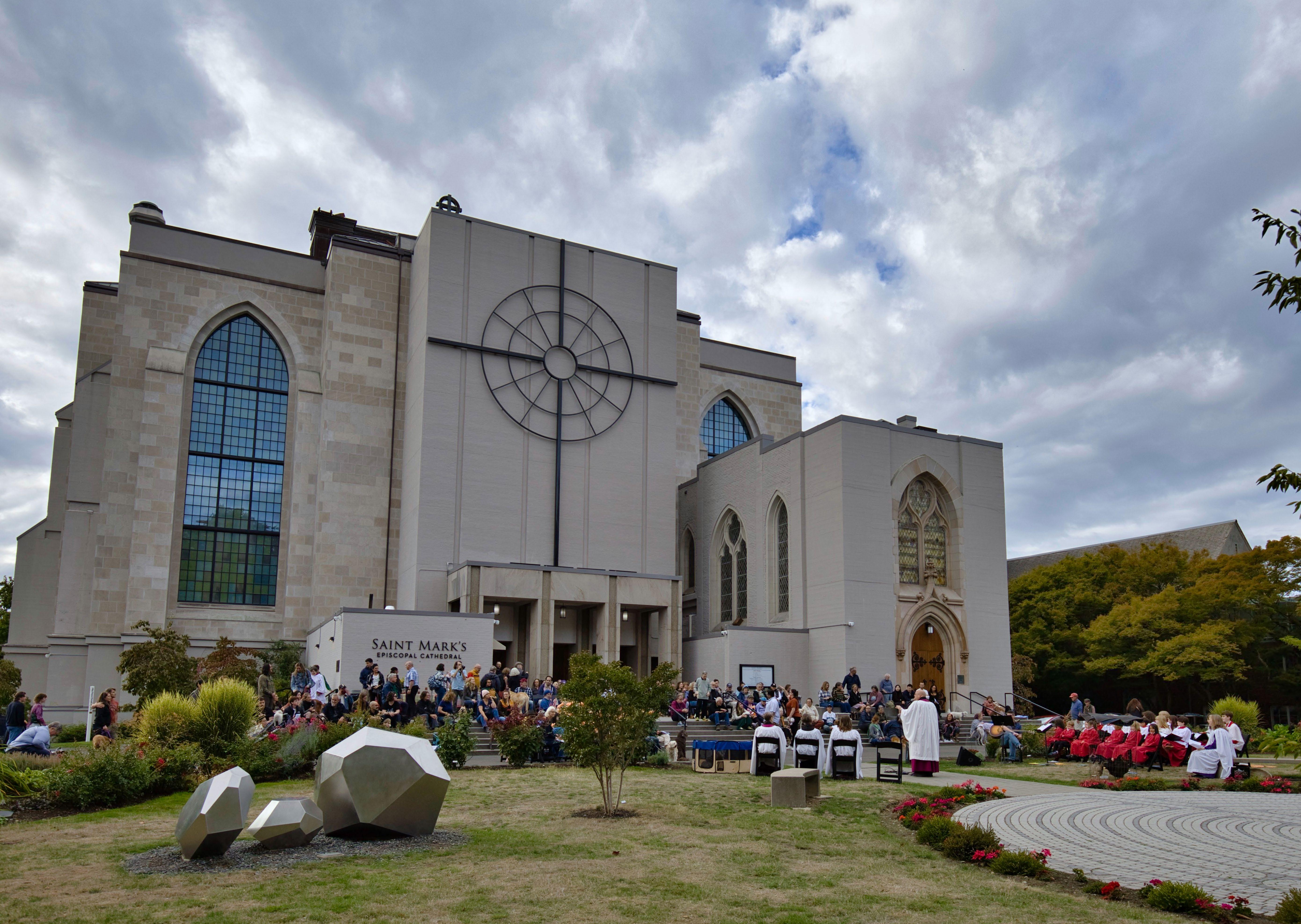
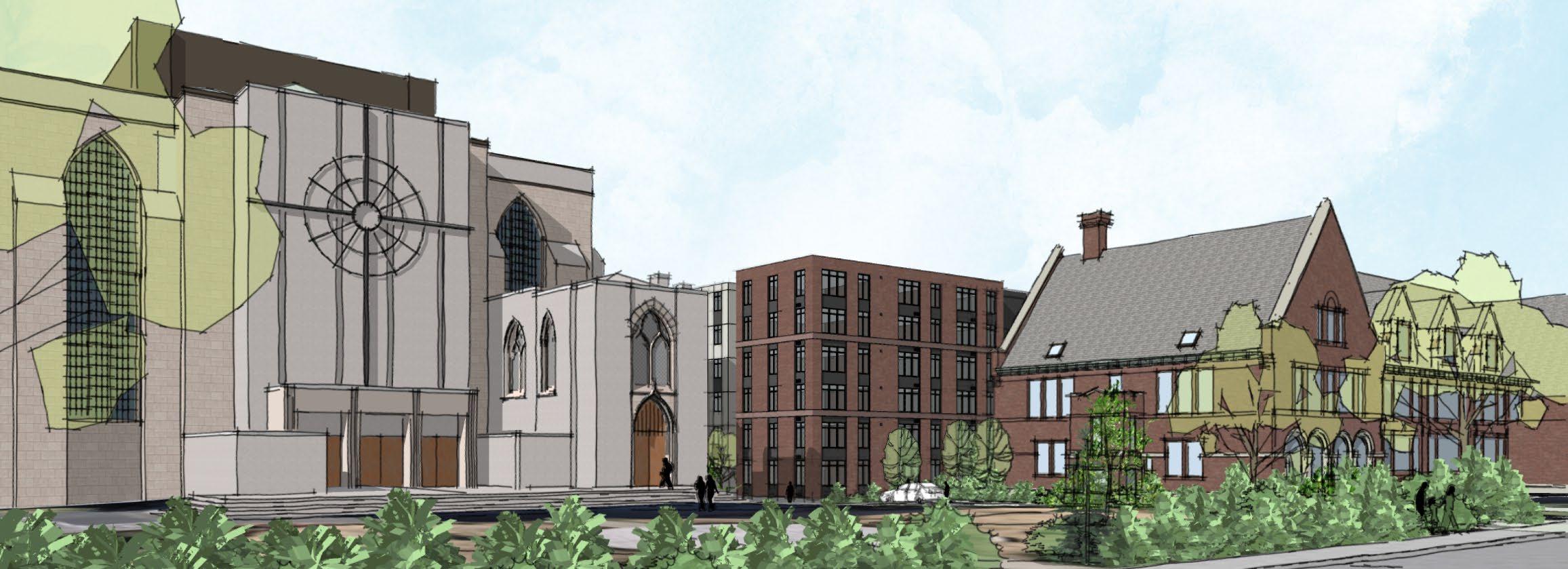
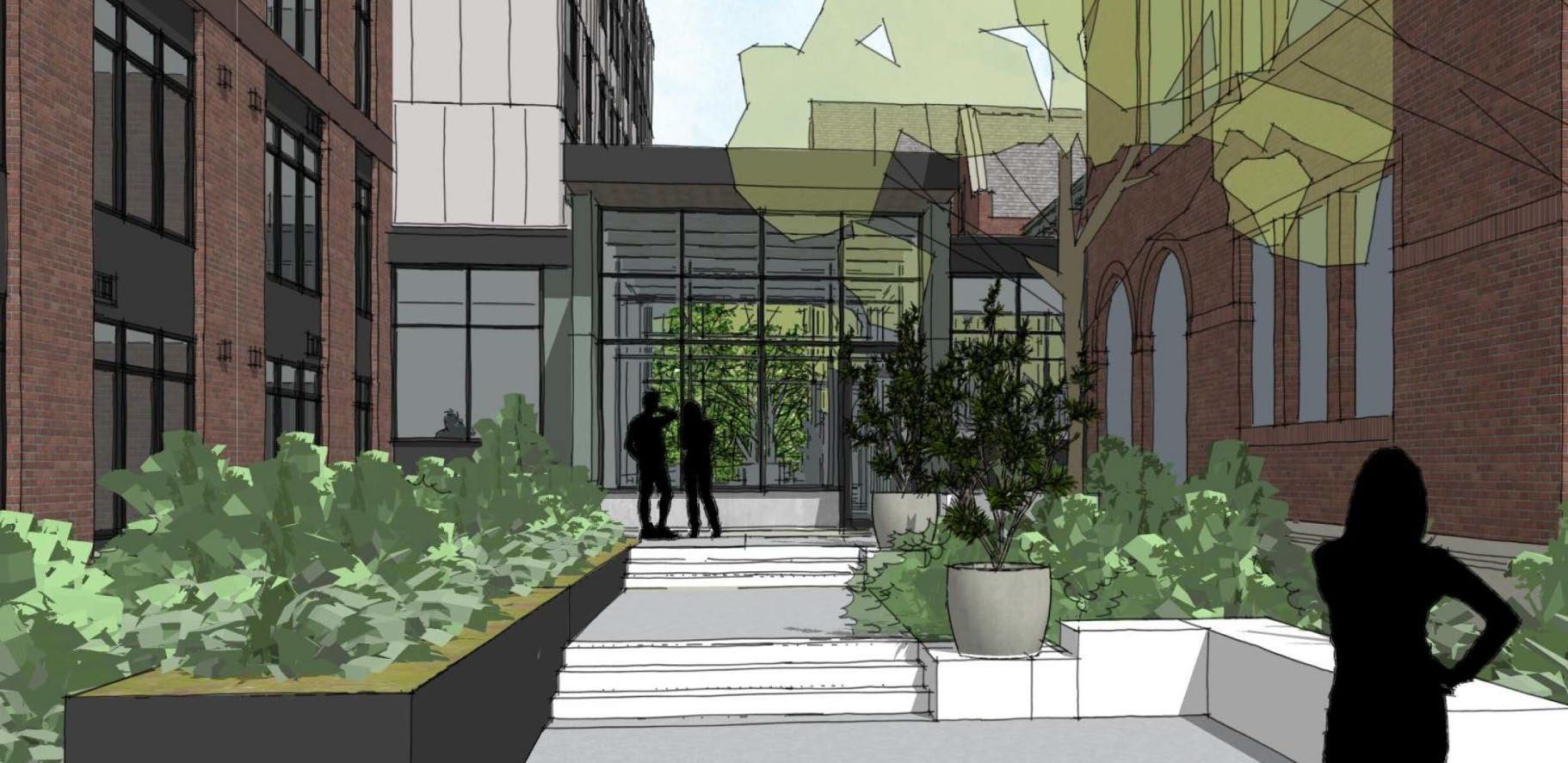
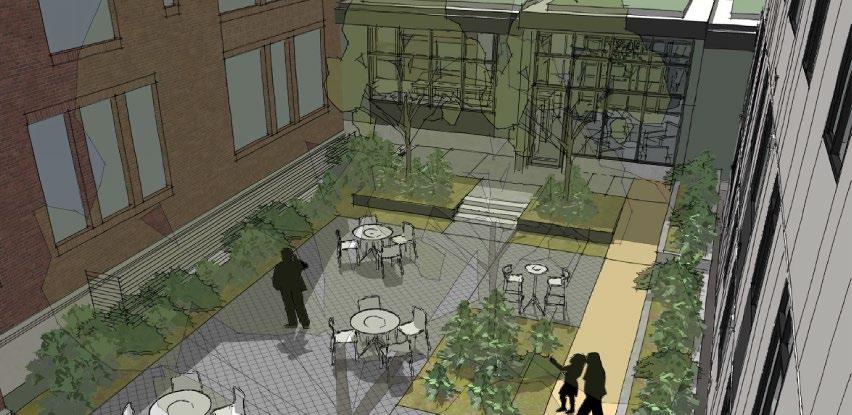
• Selecting Perkins Eastman as project architects and RAFN as general contractors, followed by several sessions with Redwood and Saint Mark’s to refine the Project’s architectural design. (Proving that a picture is worth 1,000 words, this article includes a few design illustrations).
• Refining the Project: intergenerational, family-oriented, independent living; 135 units (15% studio, 44% 1 bedroom, 30% 2 bedroom, 11% 3 bedroom); affordability split of units between 50% and 60% of area average median income; adaptive reuse of landmarked St. Nicholas building plus new six-story building; positive contribution to Saint Mark’s goal to be carbon neutral by 2030.
• Obtaining two market studies that support Project viability.
• Applying for Low Income Housing Tax Credit financing. In December, Redwood with Saint Mark’s assistance completed and submitted an application to the Washington State Housing Finance Commission of an application for Low Income Housing Tax Credit financing.
• Selecting Uncommon Bridges as a consultant to help refine and implement the community engagement plan that was developed by Redwood and Saint Mark’s and that focuses on four groups: parishioners; members of the Black community; neighbors and local businesses; and community organizations and public officials.
• Selecting Kendall Clawson/Northwest Leadership Consulting to consult on design, formation, and development of a Community-Based Organization (CBO) that is both affiliated with Saint Mark’s and meaningfully representative of the Black Community that has been harmed by housing inequities. Kendall has a separate article in this Rubric discussing her vitally important work to help guide the emerging CBO’s vision and governance.
• Applying for and receiving a Trinity New York grant of $150,000 to support the launch of the CBO and finalize our predevelopment activities. (We have now received three grants from Trinity totaling $400,000; these grants and Trinity’s related programmatic support have been a blessing.)
• Holding a Special Parish Forum on December
10, 2025 to update the parish about the project and introduce Redwood Housing, Uncommon Bridges, and Kendall Clawson. Slides and video of the forum are available on the Affordable Housing page of the Cathedral’s website.
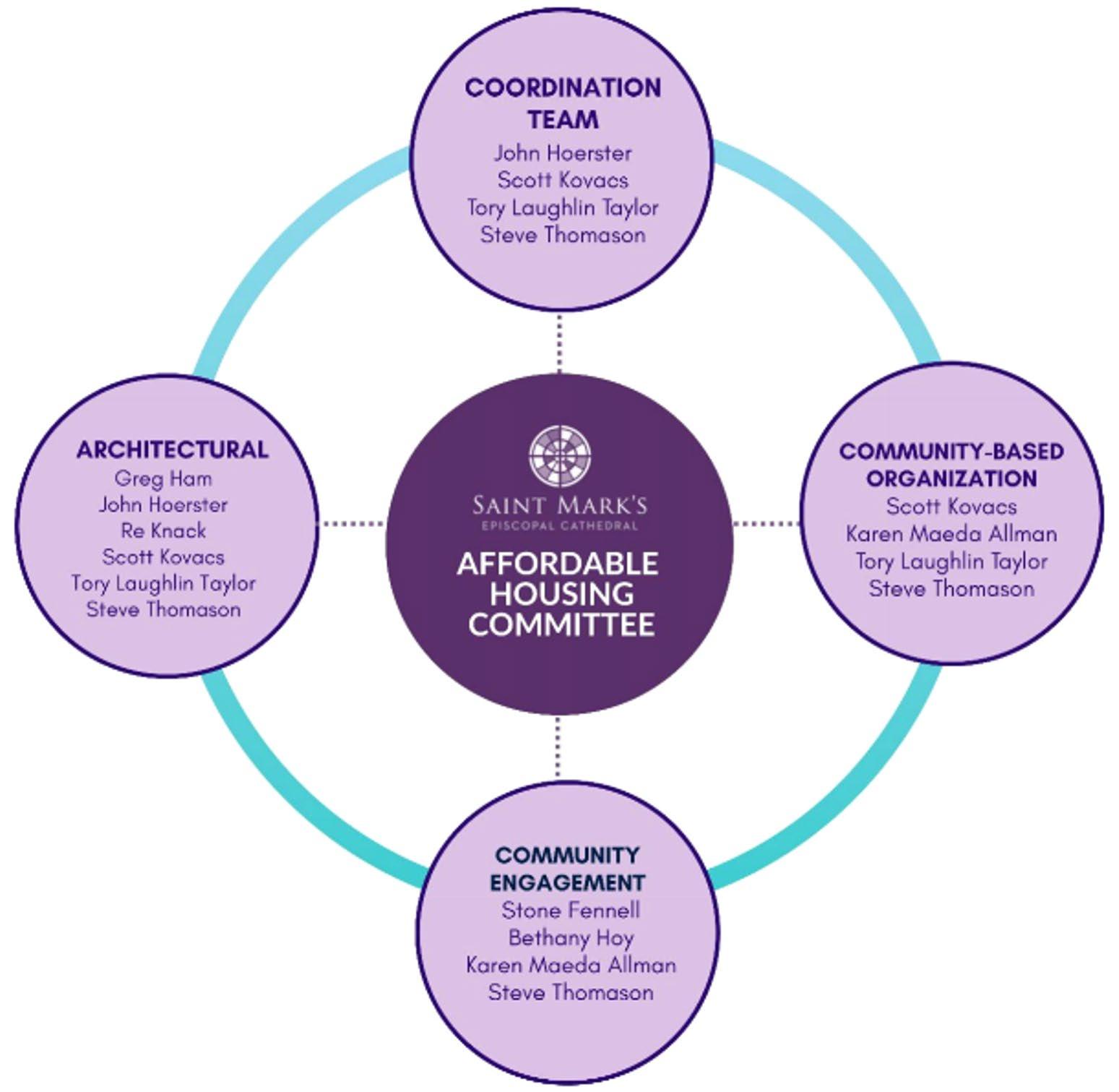
Upon execution of the JDA last October, the Project entered an important new chapter in which the Affordable Housing Committee’s work has increased significantly both in time and complexity. As a result, the Committee has reorganized to assure effective coordination of efforts and take advantage of members’ interests moving forward. The Committee plan is nicely illustrated by this chart:
We have been warned from the very beginning that there will likely be unexpected challenges and delays. So far, though, we remain on track to meet the Project timeline of starting construction in the first quarter of 2028 and taking occupancy in the third quarter of 2029.
To stay current as the Project moves forward, visit www. saintmarks.org/affordablehousing. And please ask questions and offer your comments and suggestions at affordablehousing@saintmarks.org
Let me close with a quote from Dean Thomason about our mission:
Neighborhoods matter to the fabric and well-being of families. Saint Mark’s, alongside the CBO, will be focused on creating lasting change in affordable housing access in an area that has experienced the historical legacy of racial discrimination on Capitol Hill. ◆
by Kendall Clawson
Iam the CBO (Community Based Organization) Consultant working with Saint Mark’s Cathedral on its Affordable Housing Project. I can’t tell you how excited I am to be a part of this project because from the moment that I read the request for proposals, I knew that Saint Mark’s was doing something special that I wanted to be involved with. In these times of upheaval and pain for so many people in our community, the idea of building something beautiful felt like a gift—a reprieve from actions and beliefs that create division—and frankly, it was a glimmer of hope for a sense of humanity that I think we all need. And with a lot of sharing, some prayer, and a lot of gratitude, this gift arrived at my doorstep.
Now that I am involved, I would like to begin sharing what we are thinking about and planning for the future of the Community Based Organization. There are a lot of moving parts to the Affordable Housing Project. What does the footprint look like…
what is the square footage of the apartments…where will the HVAC live? Those are all important details that our development partners are steadily designing as the project moves forward. But for the purpose of this article, we are talking about the other side of the project, the part that directly connects to why we are building an Affordable Housing Project at Saint Mark’s, and most importantly, who we hope to be in community with in the future.
When we talk about creating Affordable Housing at Saint Mark’s, we’re not just talking about crafting beautiful buildings on the tree-lined streets of North Capitol Hill. We are examining the deep roots that are connected to Black people whose footprints are present on every street. We are listening to the faint memories of Black children jumping rope on the sidewalks. We are placing our hands on the fingerprints of Black leaders and businesspeople who created what was once a thriving center of the Black community in
Seattle…their heartbeats pulsating on our palms. And most importantly, we are talking about a homecoming for members of the Black community who were most impacted by the sins born of racism in Capitol Hill.
The insidious acts of redlining, socalled “urban renewal,” and a thousand smaller acts of exclusion that severed those roots for hundreds of Black families altered the history of North Capitol Hill. The most basic expectation that one can have a place to call home was stripped away, and as painful as it is to acknowledge, there were folks connected to Saint Mark’s back then who were complicit in this displacement. Whether it was through active participation or their silence, this is part of our story too. But our story does not and will not end on this note that evokes shame and change paralysis. We have a plan.
Saint Mark’s has long centered its mission on housing and hunger— the most fundamental of human needs. We have talked about these
commitments, preached about them, studied them. Now, this Affordable Housing Project and its Community Based Organization offer us something more: the chance to live through our commitment to our mission. They invite us to pause and examine with open eyes and hearts the history that brought us to this moment. They encourage us to move past seeking answers or resolve in the moment because we have never been challenged to sit quietly and absorb what our history has created. Rather than accepting the privilege to shake off our responsibilities with “It wasn’t me. I didn’t do it,” we have the opportunity to model bravery when faced with an ugly truth. This, friends, is where our values meet the pavement, where truth-telling about housing injustice and harms done to the Black community move from liturgy into action.
This does beg the question: why focus specifically on the Black community when many communities of color face housing inequities? It’s true that redlining and displacement have wounded many communities. But it was the Black community who called this neighborhood home, who were pushed out from the very ground where our cathedral now stands. To build forward without looking back, to welcome “everyone” without naming who was explicitly harmed, would be to repeat the erasure.
This is why we’re not just building housing—we’re building a Community Based Organization designed and led with and for the communities most impacted by this history. We believe that having a strong Community Based Organization is the unifying force that will tie our missional work of housing and hunger to the space that we are building. That includes being purposeful in how we build the CBO’s components.
Here are some of the basics: we are actively working to assemble a diverse Board of Directors who will help us govern and lead the CBO via accompaniment and whose majority will be members of the Black community. Additionally, rather than relying on an outside management company, we want to incorporate the management of the building into the CBO so that our people can be a part of the daily buzz of getting kids off to school, celebrating a neighbor’s birthday or graduation, deciding how to use our outside spaces, and building supportive programming that emphasizes our missional work through the operation of the CBO.
Having a CBO also allows us to create what is often called a “third place”—not church, not home, but a shared space that connects the two… where genuine community happens. It invites us into a singular, cherished community of people committed not to talking about justice, but to doing it together. This isn’t Saint Mark’s doing ministry for others; this is all of us—parishioners, residents, community members—building something together. The work itself becomes the community. And the doing of the work supports our way of being as a community.
To be honest with you, this work asks something of us as a largely white congregation. It asks us to sit with discomfort, to move beyond guilt
into action, to learn what genuine allyship looks like. It asks us to understand that repentance isn’t just saying sorry. It’s turning around, changing direction, making different choices. It asks us to show up not as experts or saviors, but as partners and learners.
Here’s what fills me with hope: we have the opportunity to participate in restoration. To help families return to a neighborhood that holds their history. To build a community that doesn’t erase the past but honors it; that doesn’t offer charity but shares power; that doesn’t simply open doors but asks...who should be holding the keys?
This is ministry in its deepest sense. This is sacred work.
Not because it’s easy or comfortable, but because it offers us the chance to participate in something larger than ourselves—the slow, patient work of justice, the possibility of community that includes rather than excludes, the hope of home for those who should never have been forced to leave in the first place. The path forward begins by acknowledging the path behind. And then, together, we shall build community. Thanks for the opportunity to be on this journey with you, and I look forward to connecting with you all as we move forward together. ◆
by Cherie Bradshaw
As part of Saint Mark’s broader commitment to social justice ministry, the cathedral community has actively responded to the needs of students and families at Lowell Elementary School, our nearby neighbors, with amazing generosity. Never was this more evident than in November 2025, following an appeal by Dean Thomason, to help Lowell families address the suspension of SNAP benefits. The response was overwhelming, with a flood of food donations, grocery cards, and other forms of financial support totaling over $40,000!
As many of you know, the Lowell community is a diverse and vibrant one. There are over thirty different languages represented. The population includes all kinds of learners, such as those exceeding grade standards, those with mild to significant disabilities, students eligible for free and reduced lunch, and families who are unhoused or in transitional housing. The attendance zone is a very large one, including downtown Seattle, South Lake Union, Belltown, and south to the International District. The zone includes two Mary’s Place locations and various downtown shelters. Lowell is also one of three public schools in Seattle who serve medically fragile students. The staff at Lowell Elementary is very dedicated to providing all the opportunities an urban school has to offer. Above all, Lowell provides a warm, caring place for students and the families it serves.
A medical clinic, run by Odessa Brown/Seattle Children’s Hospital, is housed onsite; it is staffed by a pediatric physician and a mental health
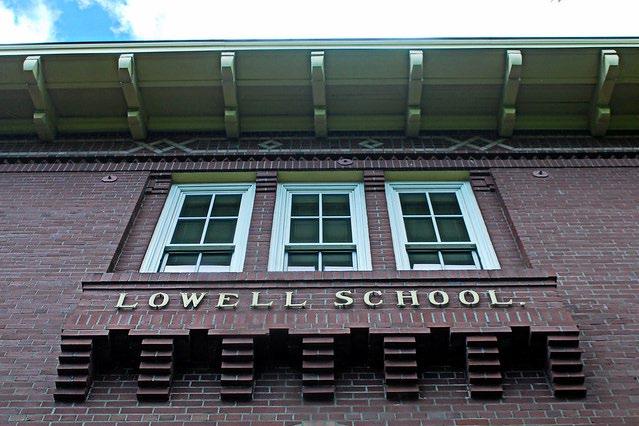
practitioner. A Food Pantry, resembling a small store, is stocked with fresh fruits and vegetables, canned and dry goods. A full-sized refrigerator is stocked with milk and eggs. Along with food items, hygiene products are available to families. The pantry is operated by the Urban League of Seattle. There is also a Clothing Closet, with donated items including sweatpants sets, leggings, outerwear, and other things for pre-K through 5th-grade students.
Recently, when asked about words that describe the Saint Mark’s partnership with Lowell School, Chelsea, the school’s Principal, and Angela, its Social Worker, responded with “forward-thinking,” “consistent,” “compassionate,” and “responsive.” They placed an emphasis on the critical value of the Threshold Fund at Saint Mark’s. Just this year Saint Mark’s helped a family that was unhoused to bridge the gap into permanent housing, while another family relocated into a safe housing development, thanks to the fund.
Currently there are Saint Mark’s parishioners who volunteer regularly
to support students within the classroom. On January 18th, the cathedral hosted an Afternoon of Service, where cards for Lowell staff were made, to be presented during Staff Appreciation Week in May. Another appeal for baked goods, flowers, and financial support will be coordinated with the Staff Appreciation Week. And following a request made by the school Principal, a comprehensive litter pick-up spanning the neighborhood surrounding the school is in the works.
Lowell appreciates donations made via the Giving Tree during Advent as well as online giving at the start of the school year for supplemental classroom supplies, and volunteers handing out backpacks during the “welcome-back to school” event on the playground.
Saint Mark’s proudly supports our wonderful diverse neighborhood school in its mission. By showing up in a myriad of ways throughout the year, the Holy Spirit breathes life into the partnership between Lowell School and Saint Mark’s, shaping us all into “beloved community.” ◆
by Maria Coldwell
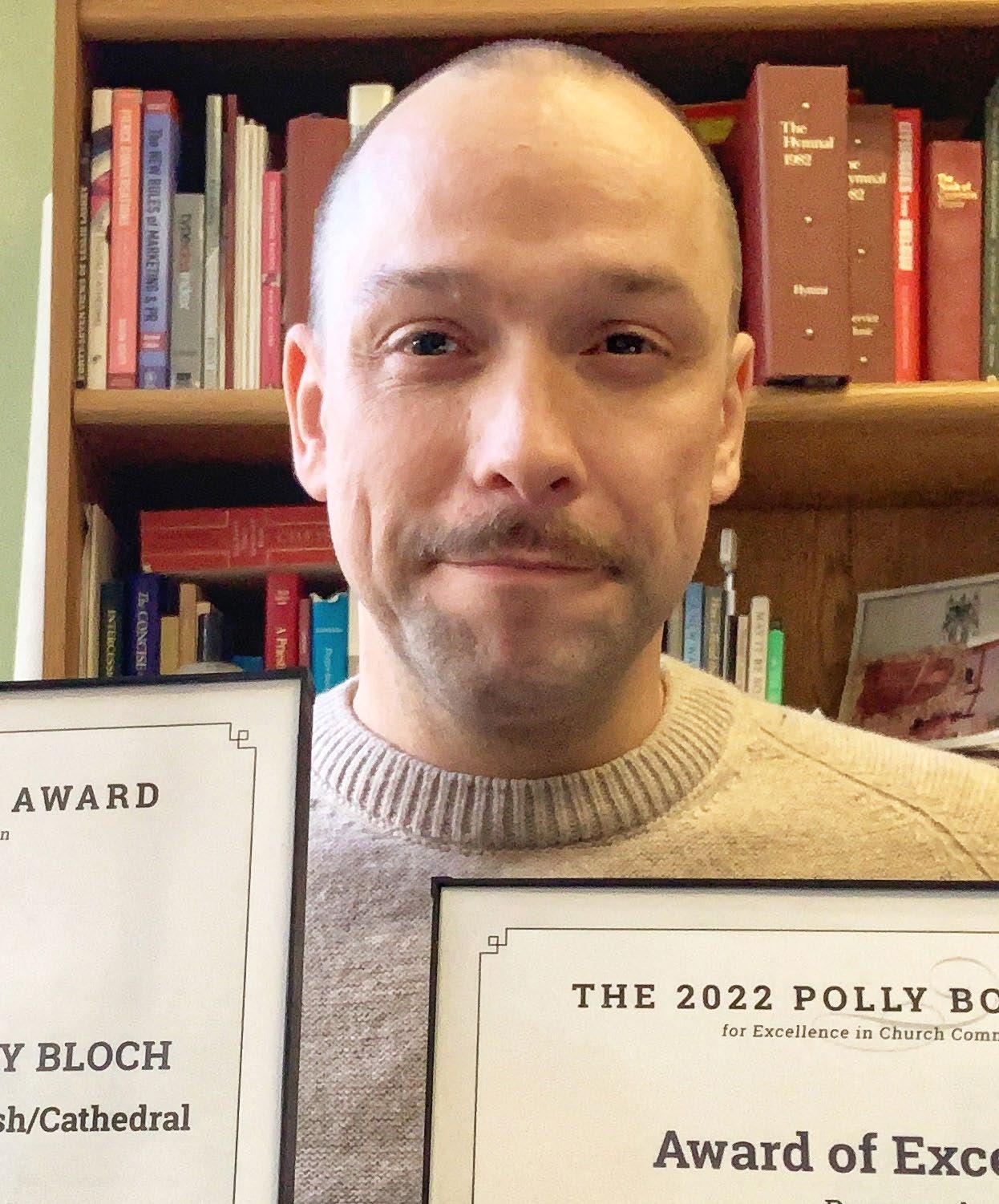
Saint mark’s celebrated Greg Bloch’s service of over a decade on the Cathedral staff after the 11am service on December 28, 2025. Greg resigned from his position as Communications Director, effective December 31st. He joined the Cathedral staff in 2014, first as a part-time worker in the Cathedral Shop, then as Communications Assistant, before assuming the role of Communications Director in 2019. After some time away visiting family in Europe, Greg will continue to make his spiritual home at Saint Mark’s, where his service in the music ministries has been and will continue to be a source of blessing to us all.
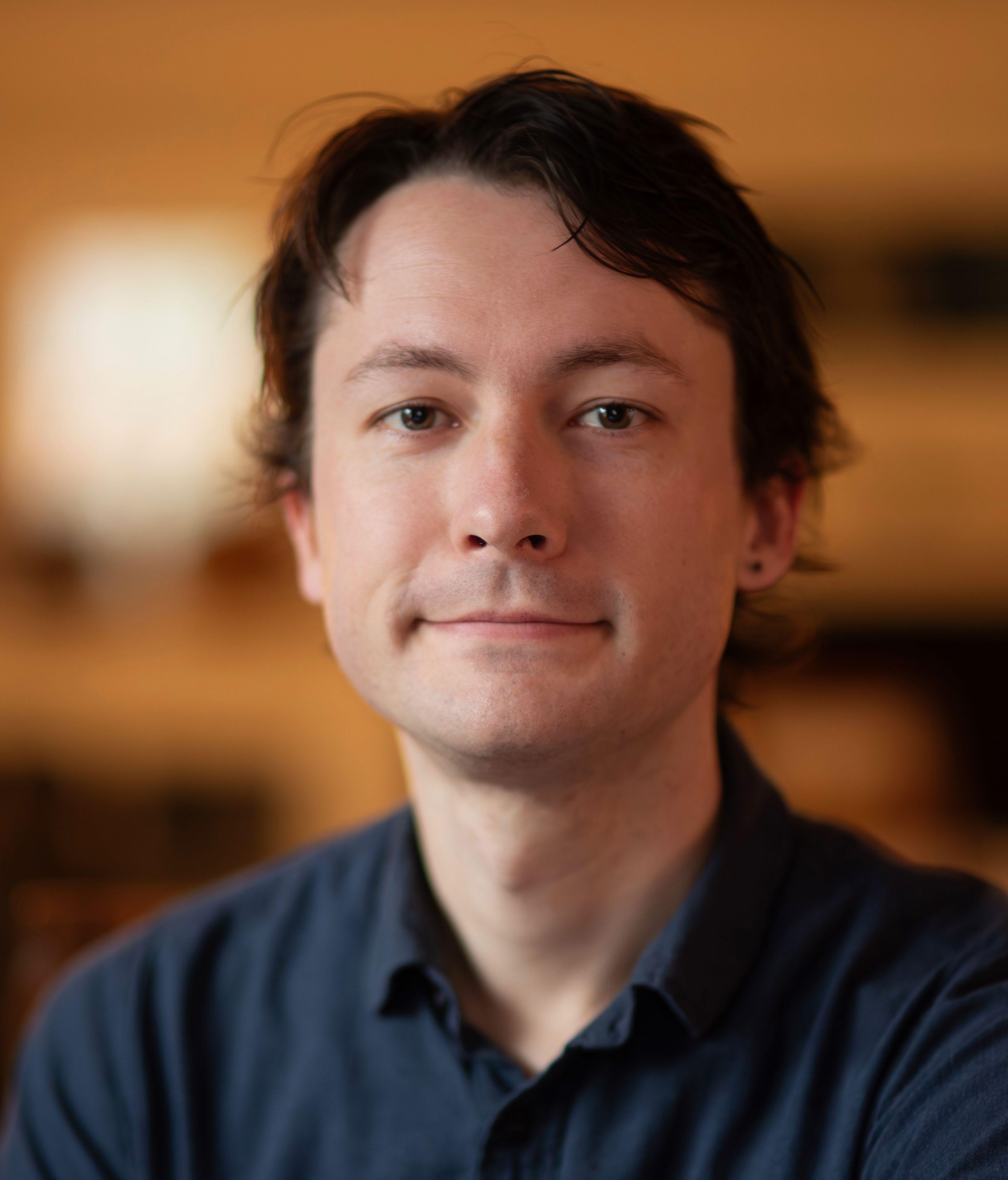
Seth Thomsen joined the Cathedral staff in December as Livestream Coordinator and Media Specialist (a part-time position). Seth has served for the past five years as director of livestreaming at Saint Paul’s Episcopal Church in Seattle, and he brings a
wealth of knowledge and experience in multi-track recording and audio engineering as well as film and visual media.
Seth will guide the Cathedral’s dynamic livestream ministry, which reached more than 100,000 people last year, from all 50 states and 21 countries. In this role he will also support volunteers in livestreaming our worship services and special events and provide technical support for our hybrid educational offerings in Bloedel Hall. As the Cathedral’s Media Specialist, he will serve as curator of all the Cathedral’s audiovisual systems and equipment.
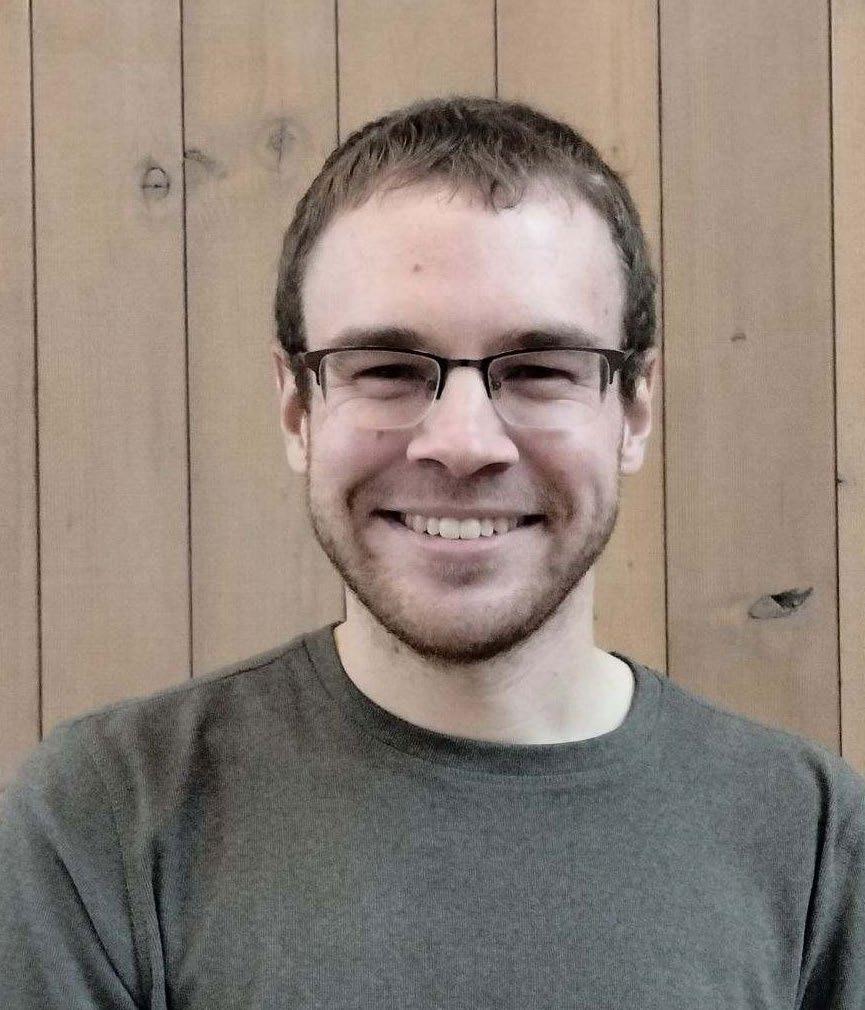
David Poortinga began serving as Cathedral Worship Coordinator as of January 1st. Since late July, David has been serving faithfully as Interim Liturgical Assistant. For these past several months, we have been discerning what kind of staffing is needed at this time to effectively support the worship life of the Ca-
thedral community. David’s new role is informed by that learning process. In addition to preparations for Sunday liturgies, David will expand his support to the full range of our seasonal, Diocesan and interfaith services. He will also lead our vergers and support the clergy and our other liturgical ministry leaders in their recruitment, scheduling, and training efforts. David brings a love of liturgy, a keen curiosity for learning, and a collaborative and affable spirit to this ministry.
As part of the restructuring of our liturgical leadership, David’s new role remains part-time, normally 20-25 hours per week. Canon Griffin and the staff clergy are also taking on more responsibilities in the area of liturgy and worship, and Hannah Hochkeppel will continue serving as Wedding and Funeral Coordinator, assisting the clergy and walking alongside couples and families in their planning. ◆

by S. Wayne Duncan
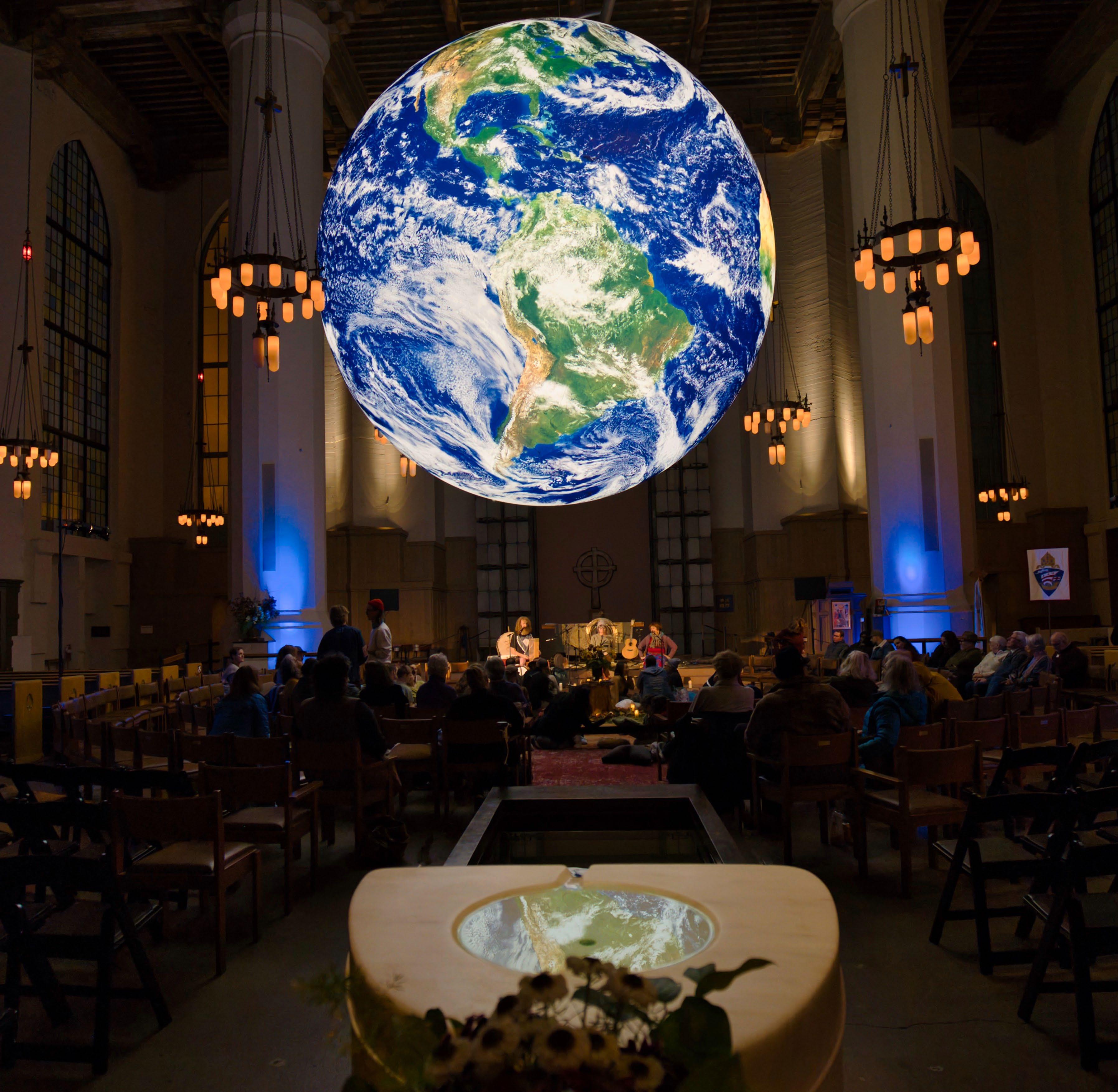
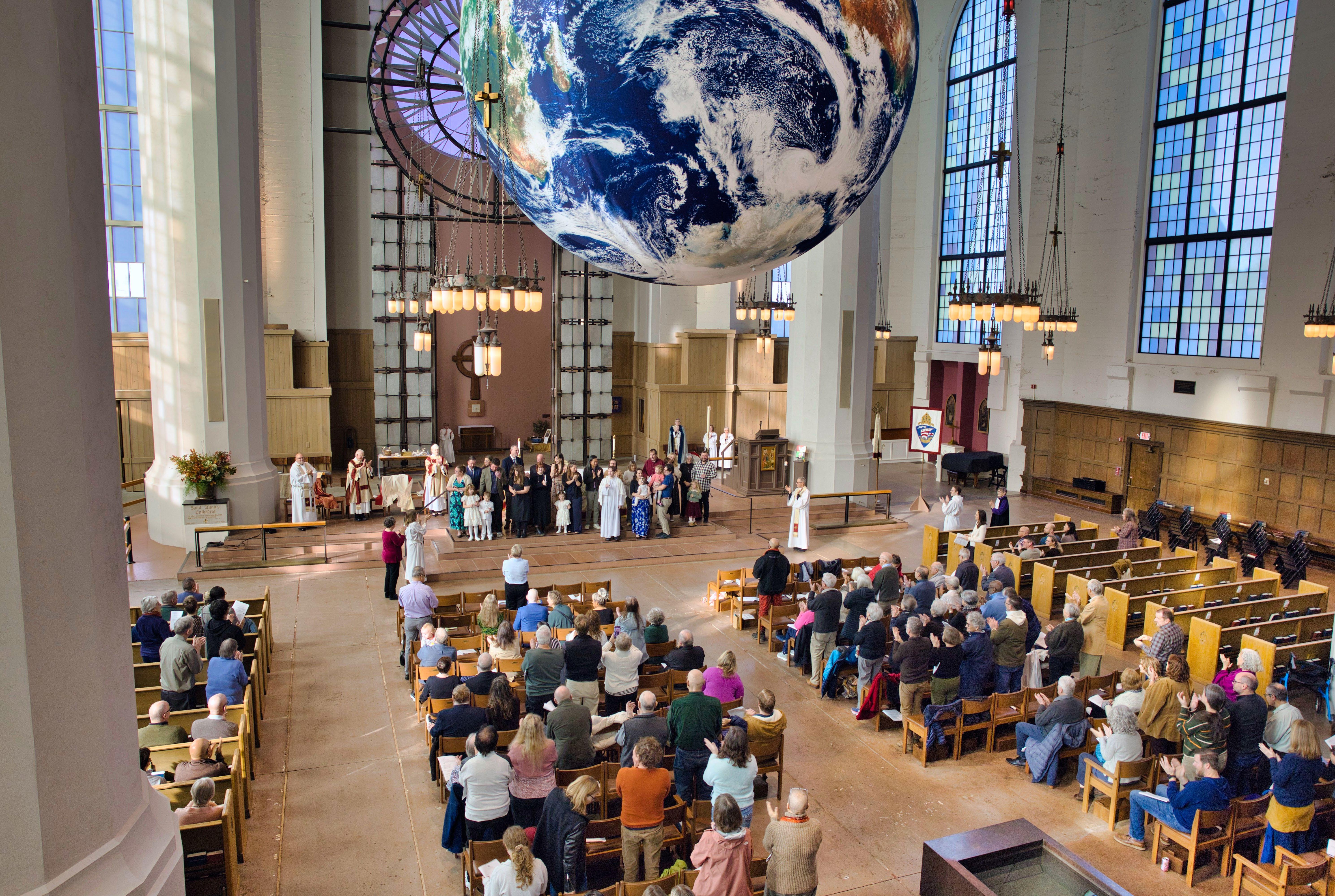
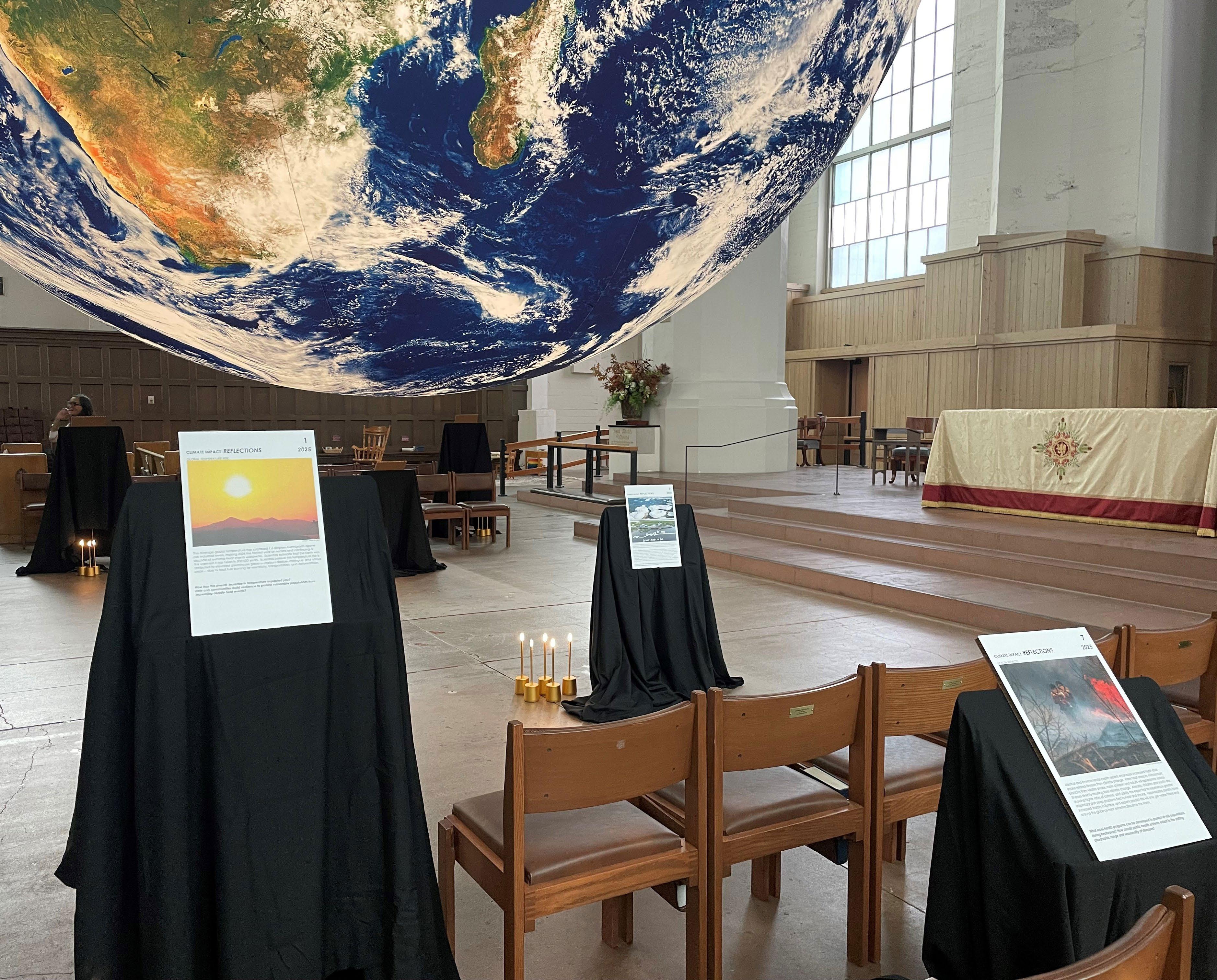
From november 2-23, 2025, Saint Mark’s Cathedral worshipers were greeted by Terra, a huge globe of the Earth, twenty-four feet in diameter and rotating from the cathedral’s ceiling. This three-week Terra Exhibition allowed thousands of visitors
to Saint Mark’s to experience the sight of the Earth’s vast oceans and continents without country borders or names. Expressions of excitement and wonder were often heard as visitors entered the nave and saw the stunning, slowly turning Terra.
In his sermon on the inaugural day of the exhibit, November 2, Dean Steve Thomason provided the history
of Apollo 8 orbiting the moon and astronaut William Anders taking the photo on Christmas Eve 1968 from 238,000 miles away. Dean Thomason encouraged viewers of this Terra to “consider the global indications of our common humanity, or our fragile island home and the threats to it….”
Over the following three weeks, visitors entered the nave to see this
modern Terra, based on a composite of thousands of NASA photographs and satellite images. Built on Orcas Island by Eric Morris, the Saint Mark’s exhibit attracted individuals from all over the Seattle area. Yoga classes occurred with Terra internally lighted and rotating above them, and a Taizé-inspired service included prayers and music for creation. Saint Mark’s Visual Arts Ministry member Maria Do designed a reflection kiosk exhibit that engaged visitors and encouraged them to reflect on the health of the planet.
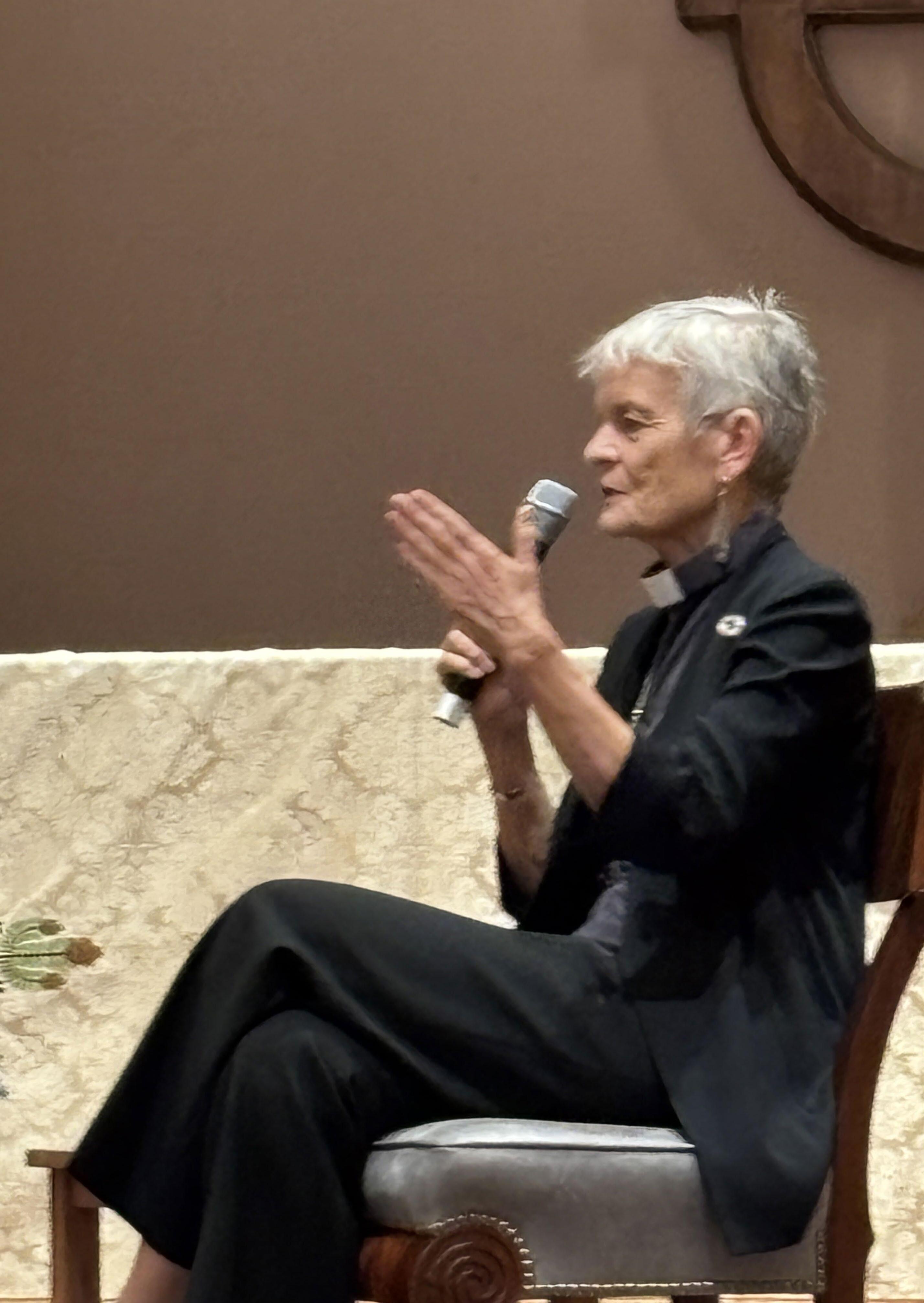
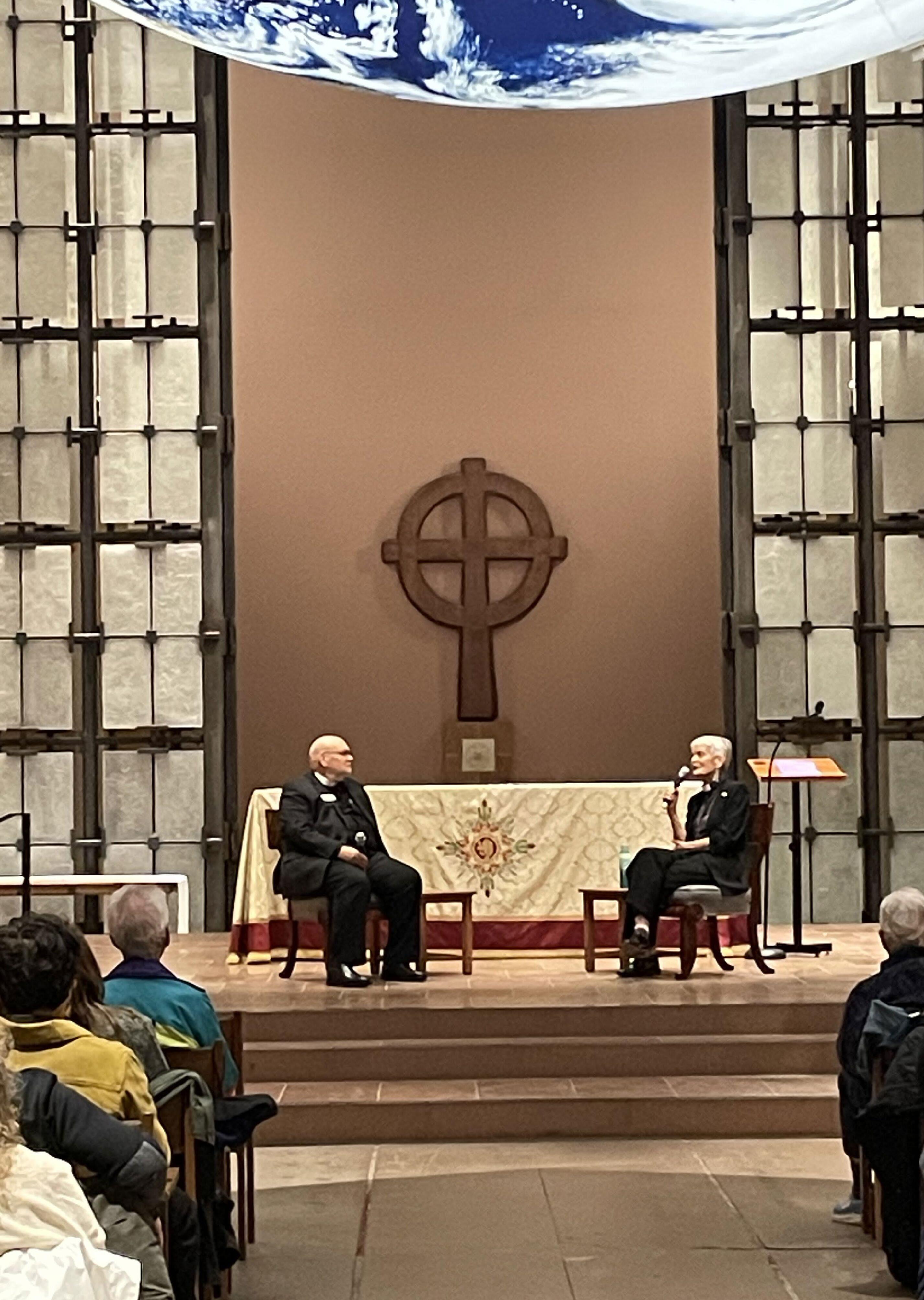
On Friday, November 14th, the Rev. Lisa Graumlich, Ph.D., Episcopal deacon and climate scientist, presented a talk about “Thin Places: Climate Change & Seeing Earth Whole.” She encouraged the audience to consider the Earth as a planetary body with circulatory, respiratory, and regulatory systems that are being pushed to their limits, “destabilizing the relationships that make life possible and that have held for millions of years.” She said that climate change is a spiritual crisis that requires prophetic transformation and our working together as a community
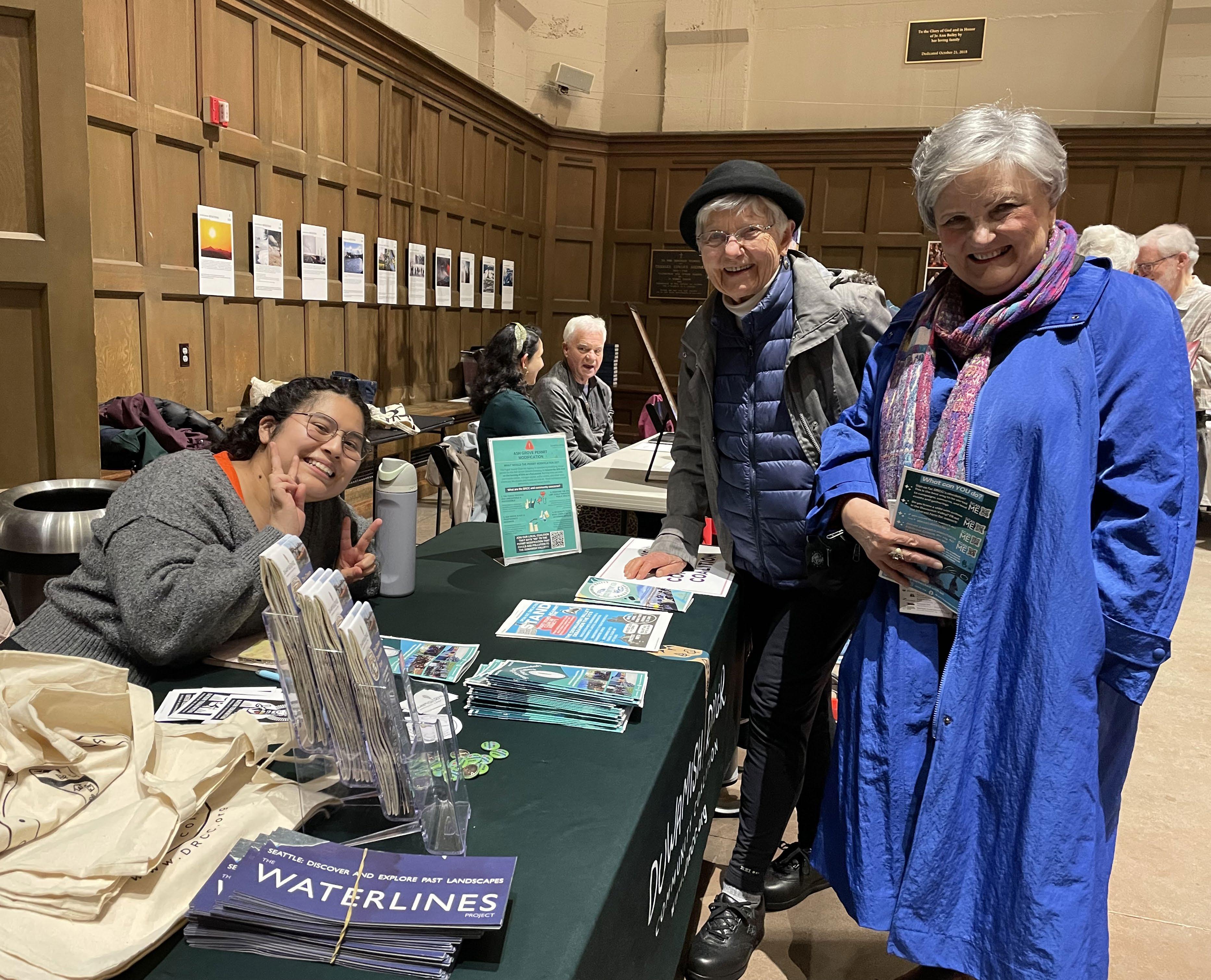
with faithfulness. She urged us to live “for a future beyond our eyes,” just as the builders of cathedrals did in centuries past—taking actions to preserve the health of the planet that will benefit the generations to come. Following her talk, the Rev. Graumlich engaged in a question-and-answer session, led by Dean Thomason. Her talk and conversation can be found at https://saintmarks. org/2025/11/thin-places-climatechange-and-seeing-earth-whole/. She also met with Saint Mark’s youth for a discussion about climate change, helping the next generation grasp the reality of what we are facing. As part of the evening, there was a community resource fair, organized by Saint Mark’s Visual Arts Ministry, where twelve community organizations and church creation care and climate justice groups shared information about their current programs and plans for 2026.
On Saturday, Nov. 22, Terra Exhibition co-producer Ben Browner organized a thousand-participant event (“The Circle”) that included Indigenous storytelling and song as
well as a wide range of musical performances and participatory singing. The cathedral nave was bathed in creative lighting as multiple groups performed throughout the five-hour program. Browner and Morris hope that the Saint Mark’s exhibition of Terra will be the first of many installations across the country, including some at other Episcopal cathedrals.
The following groups participated in the community resource fair:
Duwamish River Community Coalition, Empower Me, Faith Action Network, Save Our Wild Salmon, Third Act Washington, and Tree Action Seattle * Climate justice and creation care groups from the Episcopal Diocese of Olympia, First Church [United Methodist], St. James Cathedral, St. Joseph Parish, University Unitarian Church, and Saint Mark’s Cathedral * Saint Mark’s Intergenerational Ministries provided intergenerational resources related to creation care, and the Queen Anne Book Company displayed books on climate change.
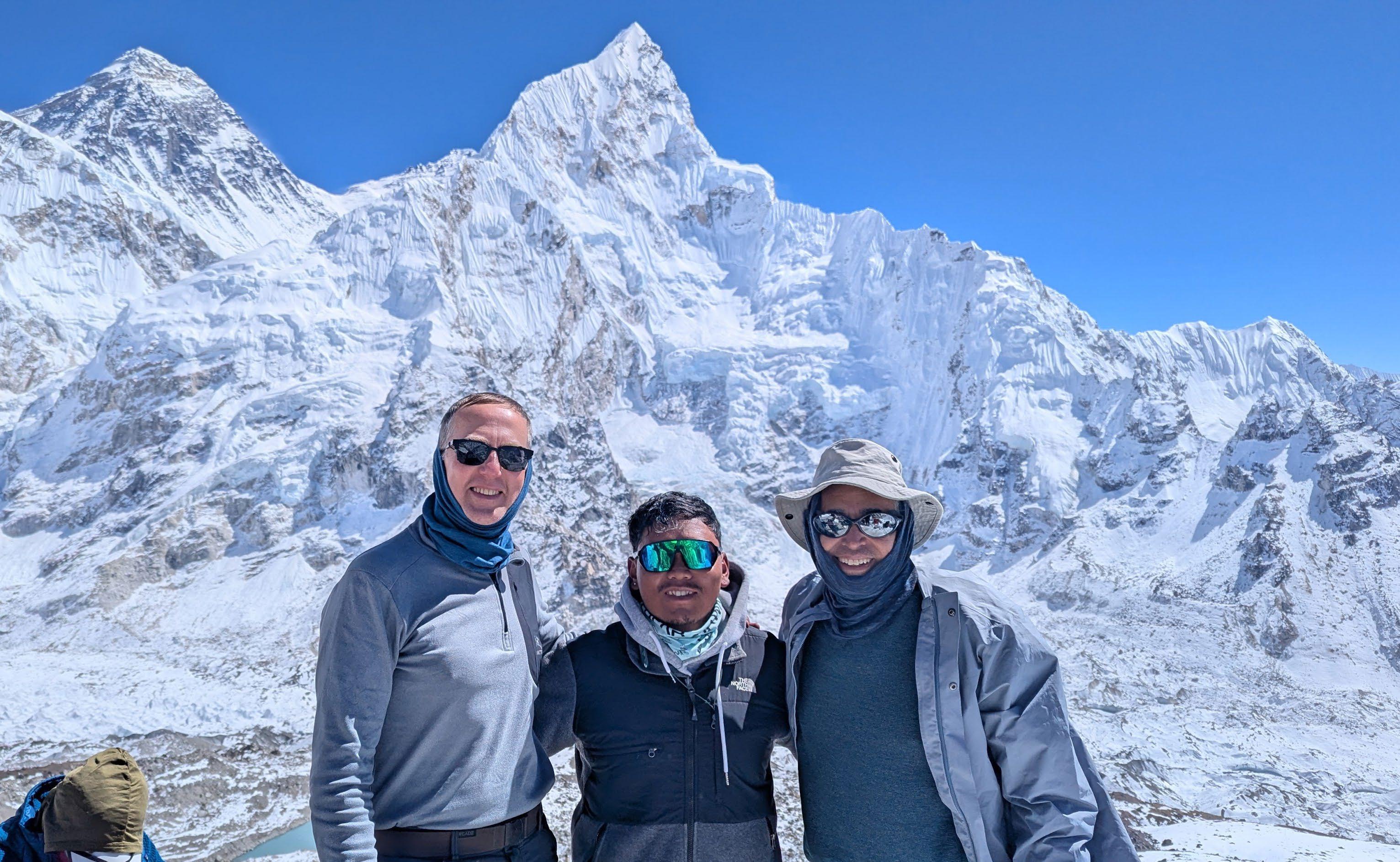
Canon Michael Kleinschmidt took a month of sabbatical time last fall to join a group of Seattle Mountaineers on an 18-day trek through the Khumbu valley in the Himalayas of Nepal. The trek began and ended in the village of Lukla, 84 miles from Nepal’s capitol city, Kathmandu.
by Canon Michael Kleinschmidt
Sitting in the common room of a guest house in the village of Lukla, Nepal, on All Saints Day, November 1, 2025, I wrote in my journal: This began as a sabbatical, then took on the flavor of pilgrimage, and now feels a lot like the pandemic lockdown. It was the fifth day of non-stop rain. The village was filling fast with trekkers and climbers who, like me and my companions, were eager to get to Kathmandu to connect with scheduled flights home. Apart from walking or riding a beast of burden,
the only way out was by helicopter or twin-engine propeller plane on one of the world’s shortest runways. But Lukla, at 9,000 feet, was socked in. No flying allowed. Our moods fluctuated wildly between desperation and resignation.
Six days earlier we exulted in the thrill of hiking across Ngozumpa Glacier. Flowing from Cho Oyu (26,862′) southward for 22 miles, it is the longest in the Himalayas. We stopped for a late lunch in the lakeside village of Gokyo. There we learned of a storm that was expected
to dump one to two feet of snow at our elevation (15,600′) that night. We needed to get down fast. Our local guides summoned three helicopters which in ten minutes of flying time undid all that we had achieved in fourteen days of hiking.
Those fourteen days were dazzling! Under crystal clear, indigo skies, we beheld some of earth’s most dramatic landscapes. We climbed to a ridge at 18,500′ and stared in wonder at Mount Everest. We drained our camera batteries trying to capture the stunning beauty of Ama dablam.
We engaged a culture saturated with signs and symbols of prayer practices in the Tibetan Buddhist tradition. We learned from our Sherpa guides that “In the Khumbu Valley, it is not your money but your relationships that will sustain you.” Thupden Sherpa, our head guide, made this abundantly clear when, on November 2 – the sixth day of our Lukla lockdown – he learned from a trusted colleague that some chopper pilots were landing safely in a farmer’s field just under the cloud deck in a village 1000′ below us. If we could just get ourselves down there, we might have a chance at getting out. What did we have to lose? We hiked hastily down to the spot and in five minutes we were airborne on our way to Kathmandu.
I think that habits formed by life in the workaday world can become a kind of narcotic. One of the greatest gifts of sabbatical time is learning how to live without that narcotic.
While we were on the move, my trekking companions and I enjoyed the spell cast upon us by the mountains and our agenda of carefully calibrated daily elevation gains. But, as soon as we were forced to abandon our itinerary, and simply watch and wait, I must admit that I became very uncomfortable. These words of a wise monk come to mind:
Work is not bad. Even the most contemplative among us must work. But work serves an end. Even the holiest work of your life is not your purpose. It facilitates your purpose, and your purpose is encounter: The welcoming of the eternal, living God into your midst. – Br. Lucas Hall, SSJE
Indeed, my trek among the mountains of Nepal was memorably thrilling. But lessons about the art of merely being, taught to me during my last five days in rainy Lukla, are what I pray will be with me forever. ◆
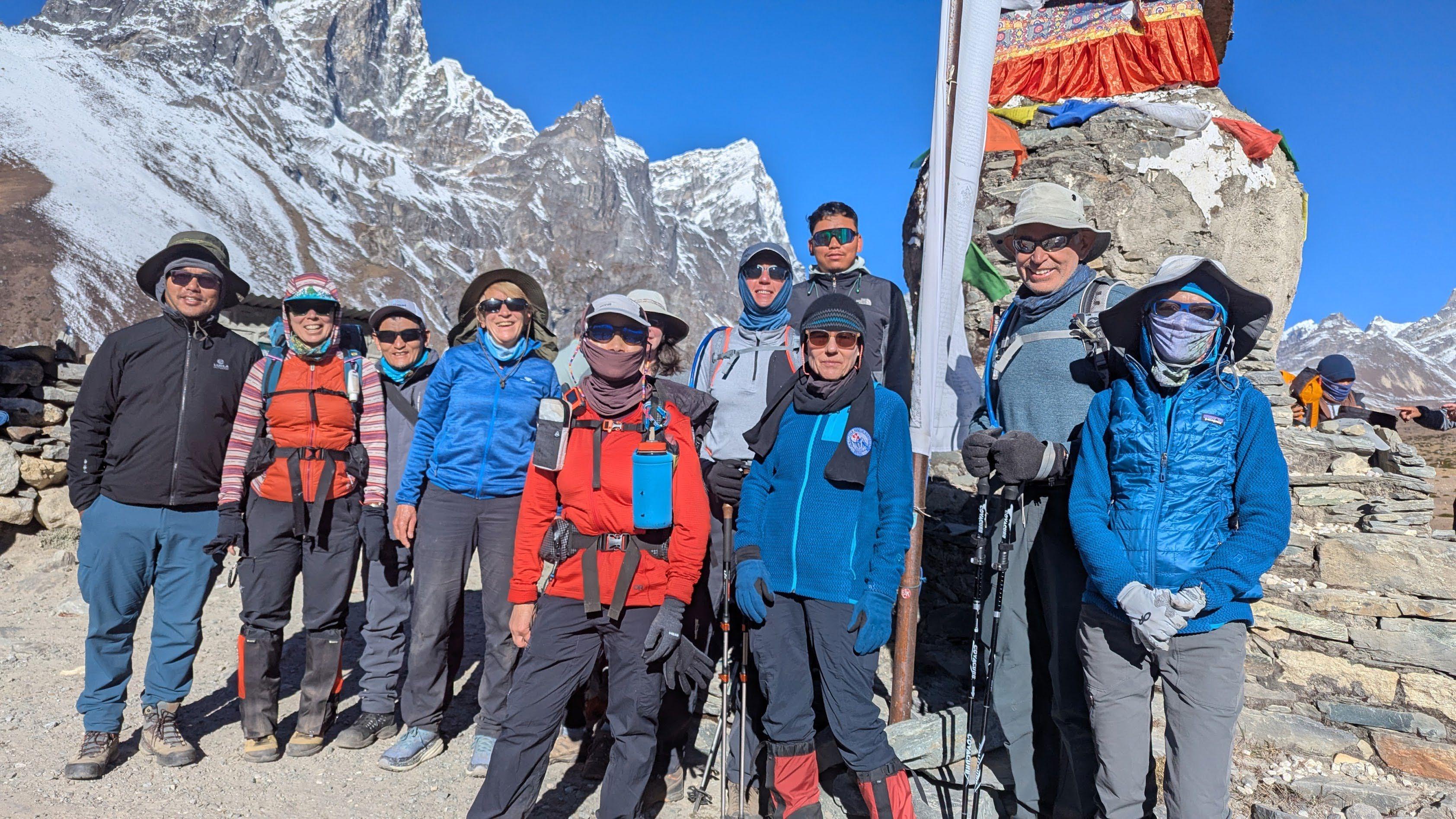
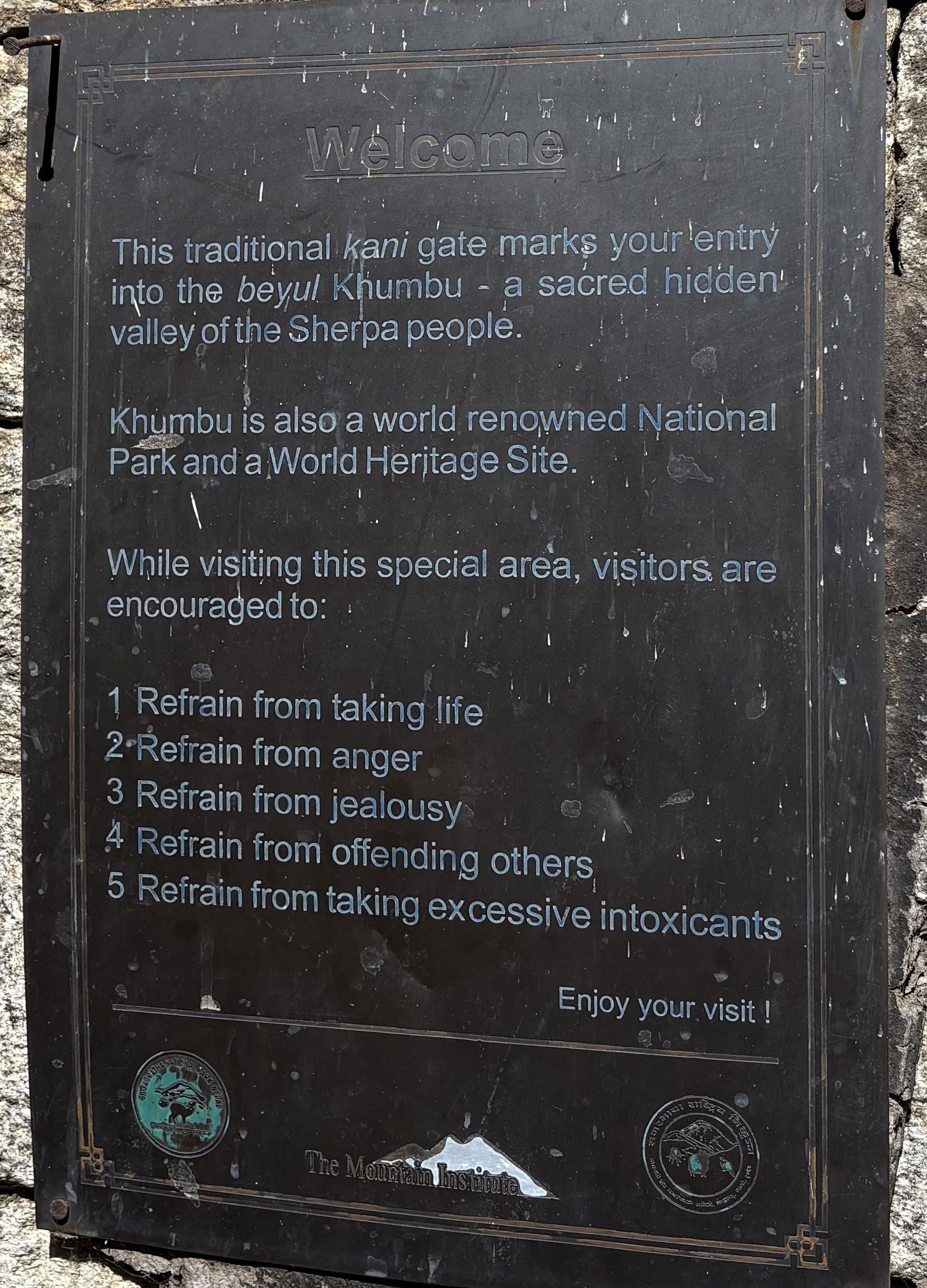

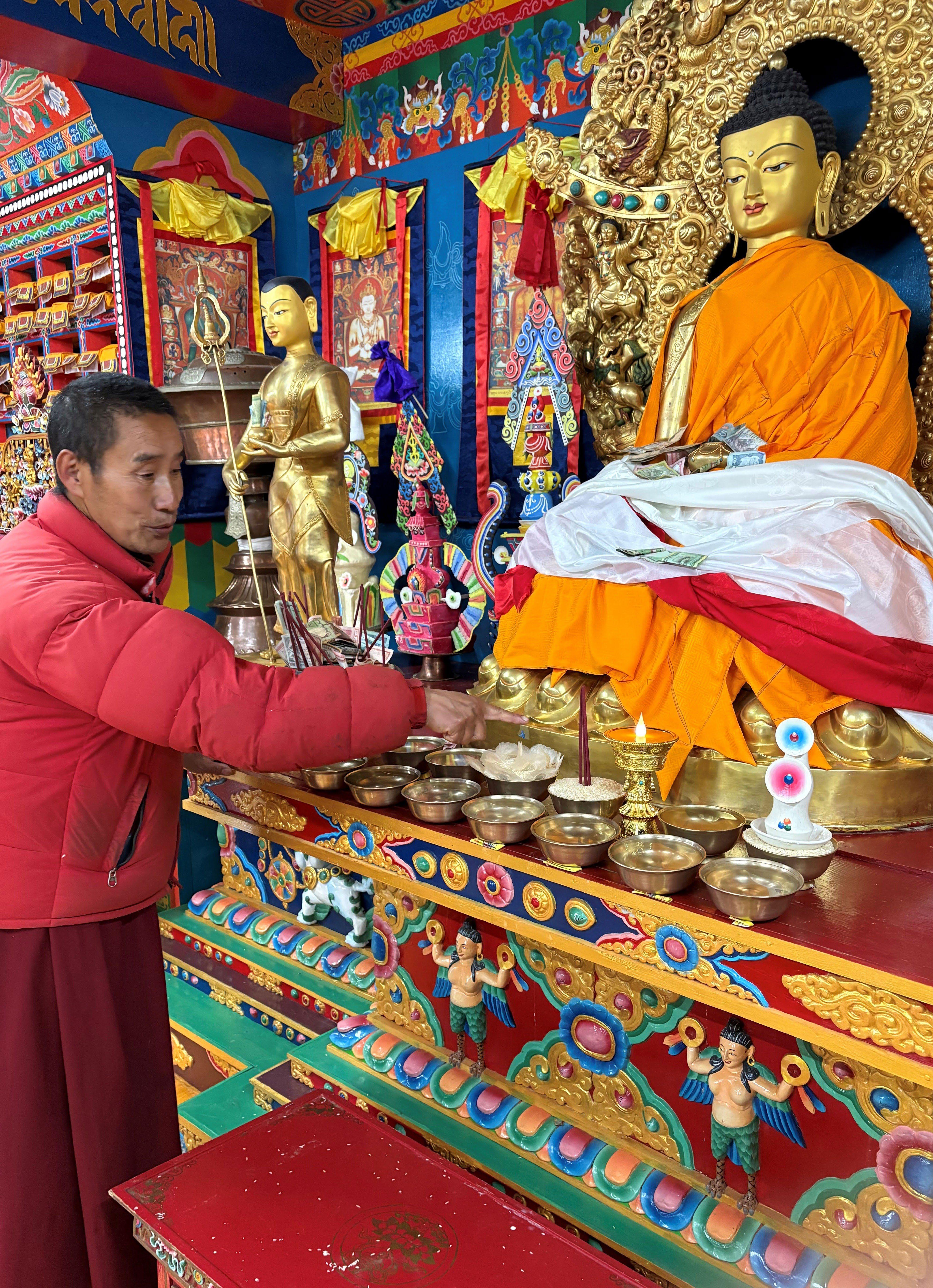
across Canon Kleinschmidt with local guide, Kusang Sherpa, and fellow Seattle Mountaineer, Andy. Everest (29,032’) looms at left, behind pointy-peaked Nuptse (25,792’). Photo taken on Kala Patthar (18,500’) a point on the southern ridge of Pumori (23,494’) west of Everest. top Our trekking group on a ridge above village of Dingboche (14,469’). Head guide, Thupden Sherpa is on far left. Mountaineers’ Global Adventure Leader, Cheryl, is fourth from left. Canon Kleinschmidt in center back. middle left Welcome sign at entrance to Khumbu Valley in Sagarmatha National Park, Nepal. middle right Nepalese Monk. left Ama dablam, 22,350’ (“Mother’s necklace” in the Sherpa language, describing its distinctive shape with long ridges like a mother’s outstretched arms and a hanging glacier resembling a traditional pendant worn by Sherpa women.)
by Marc Aubertin
As part of the Living Stones II — Building a Sound Future capital campaign, Saint Mark’s is planning and permitting a retrofit of the Cathedral House / Bloedel Hall HVAC system, converting from hot-water heating to Variable Refrigerant Flow (VRF) technology. This change will allow the campus to replace natural gas heating with electric VRF equipment. This will efficiently provide heating and cooling to Cathedral House, Bloedel Hall, and the second-level undercroft (crypt). Currently, those spaces are served by the main steam boiler that will be removed in a later construction phase.
Some background to this project: the 1958 west-end addition (including the parish hall built in memory of Julius and Mina Bloedel) has undergone multiple HVAC changes over the years. Early mechanical equipment no longer in use shows the main cathedral boiler once fed a shell-and-tube heat exchanger supplying fan-coil units and ceiling diffusers; those diffusers remain visible today. Later, likely during a fuel conversion and internal reconfiguration, two hot-water boilers and a new heating loop replaced the heat exchanger.
Here is the scope of the HVAC renovation by floor level:
• Ground level (Bloedel Hall, kitchen, administrative offices): layout has been reconfigured over time; core kitchen, lavatories, and stage remain. The current hot-water loop serves this area and will be replaced by VRF equipment.
• Second level (undercroft/crypt beneath the Cathedral): currently heated by the main steam boiler; will be included in the VRF retrofit.
• Third level (staff offices, conference rooms): often too hot in summer and cold in winter; will gain improved comfort from the new VRF system.
• Fourth level (Cathedral worship space, narthex, lavatories): not included in this phase; will be addressed in a future construction phase. (NB: Thomsen Chapel has a separate, recently installed system.)
• Fifth level (choir room, sacristies, vesting rooms, storage): previously served by an inactive gas furnace with abandoned ceiling diffusers; now served by the
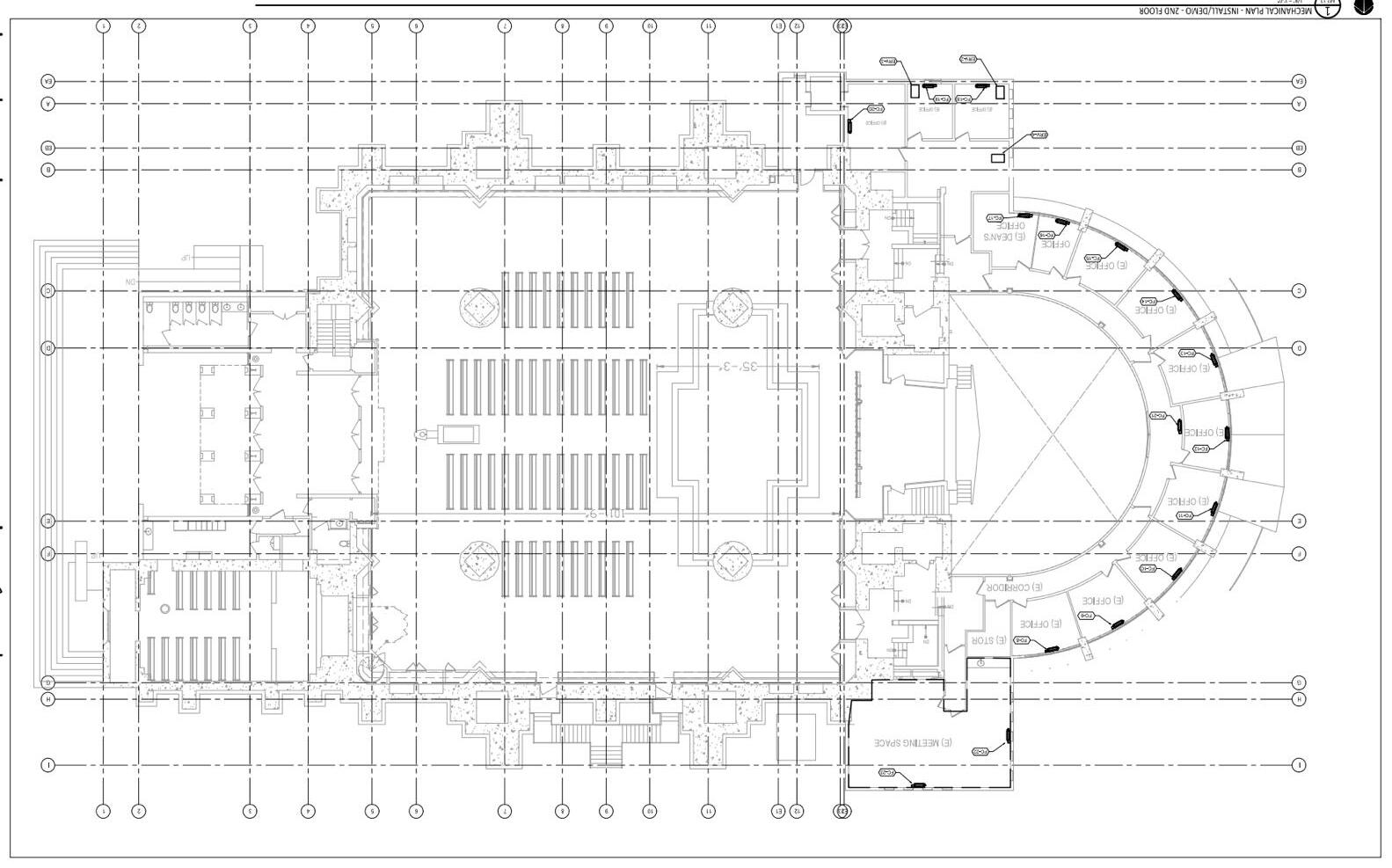
same hot-water loop as lower floors; will be converted to VRF.
Here’s what’s going away:
• The twin gas-fired hot water boilers.
• Many of the heat convectors (registers) that you now see in offices and hallways and in the window ledge in Bloedel Hall.
Here’s what will be added:
• New heating/cooling units within existing openings.
• Condensation drainage in offices, conference rooms, kitchen, hallways and Bloedel Hall.
• New rooftop condensing units and plumbing.
The retrofit will electrify heating and cooling, improve zoned comfort, and allow eventual removal of the main steam boiler.
Profound thanks to our dedicated partners Devin Yoshizumi, Eric Knowles and Mike Hatten and all the fine professionals of Solarc Energy Group for their work on this project. ◆
St. Mark’s has been named an Early Adopter in the WA Clean Buildings program, recognizing the carbon reduction and energy efficiency improvements we have undertaken thus far. We believe we are on track to achieve our goal of being net carbon emissions zero on campus by 2030.
by The Very Rev. Steve Thomason
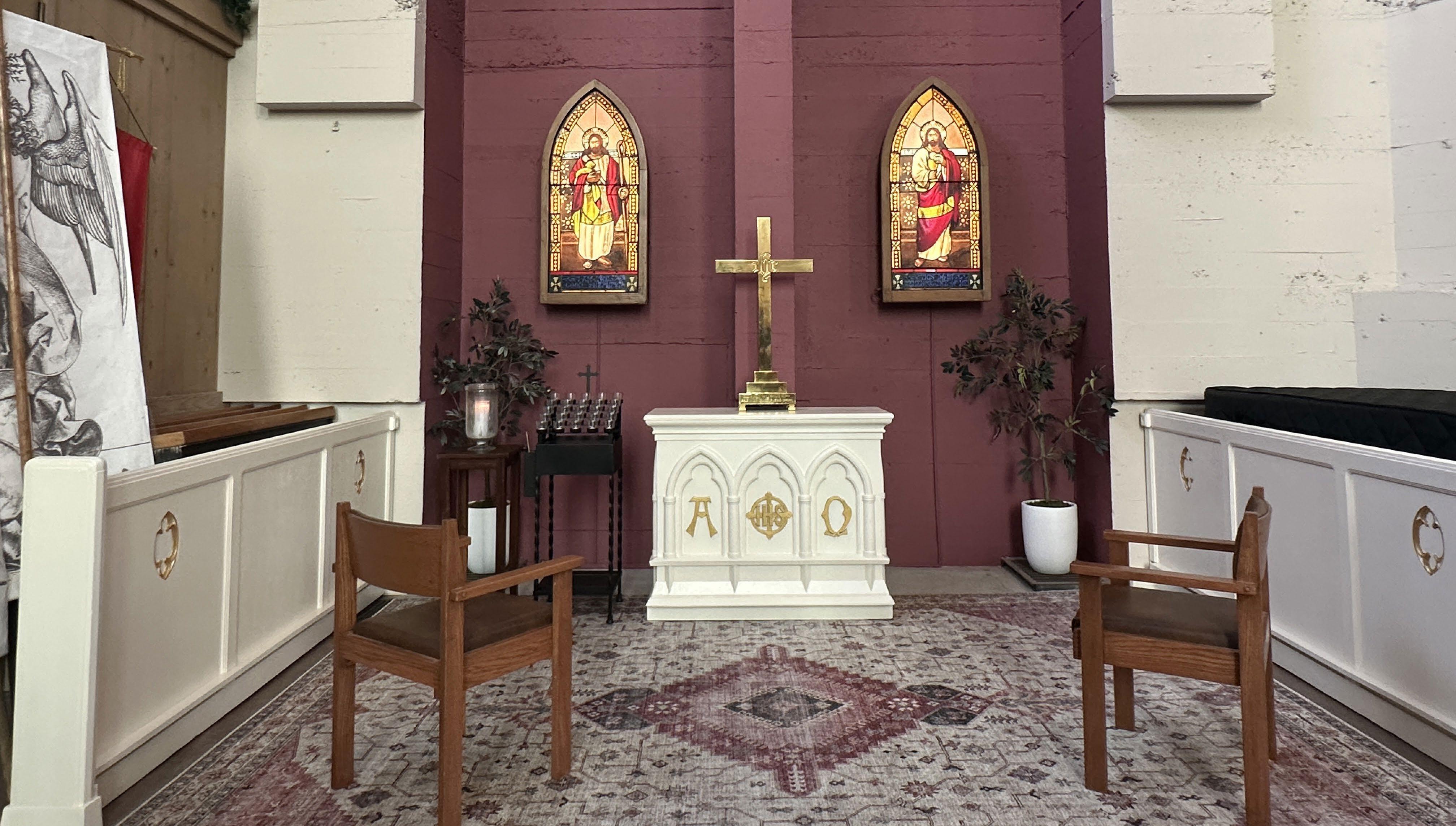
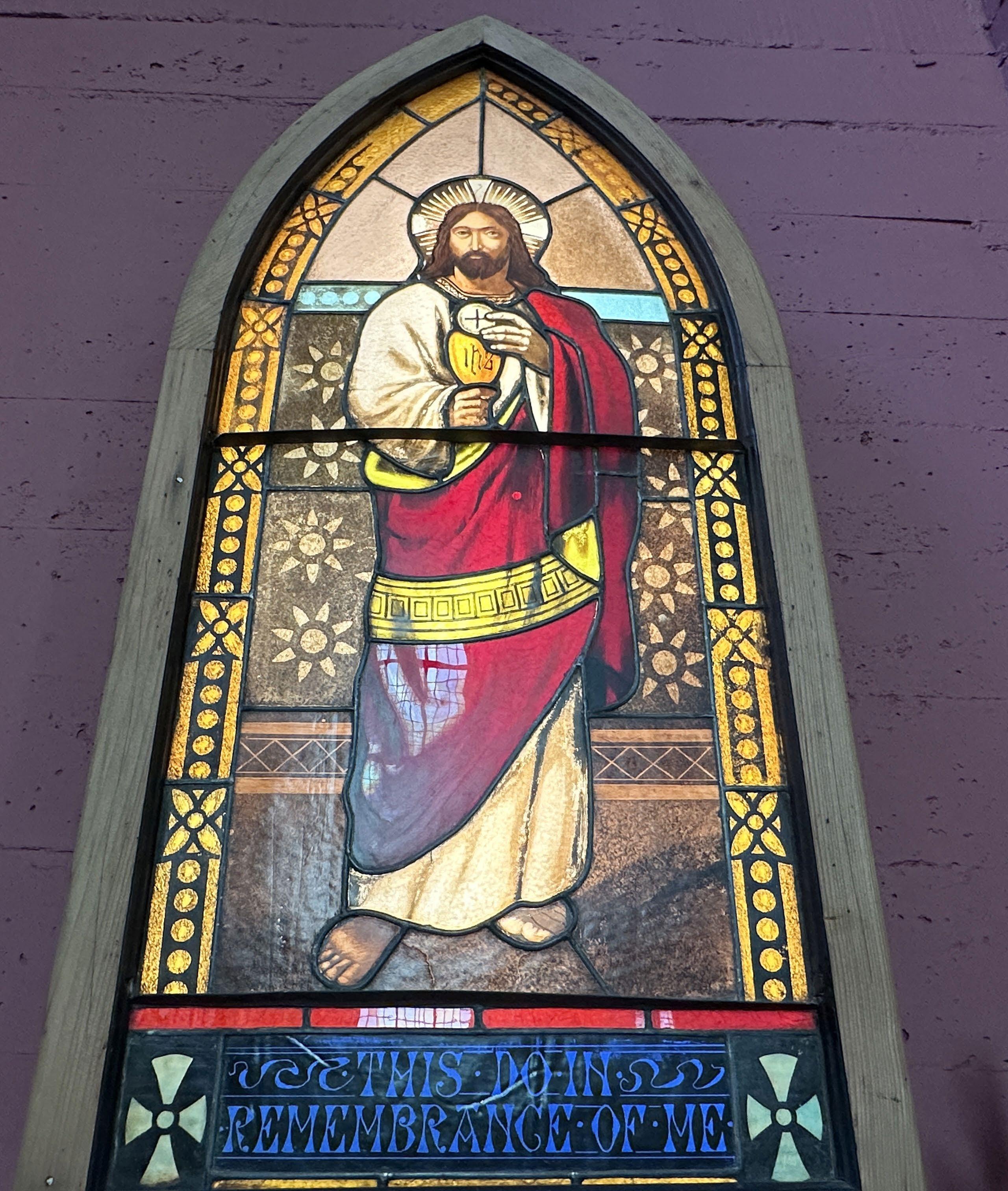
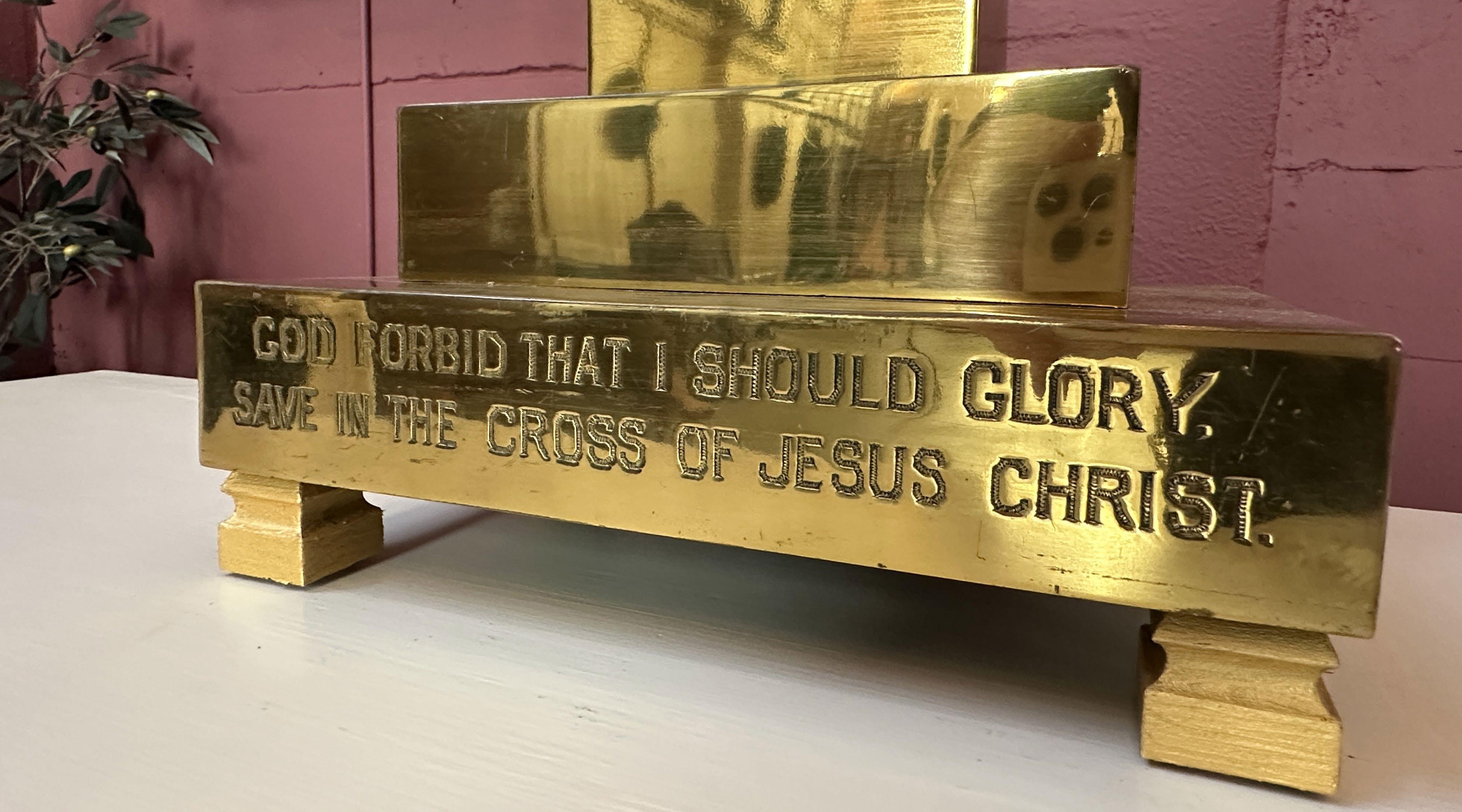
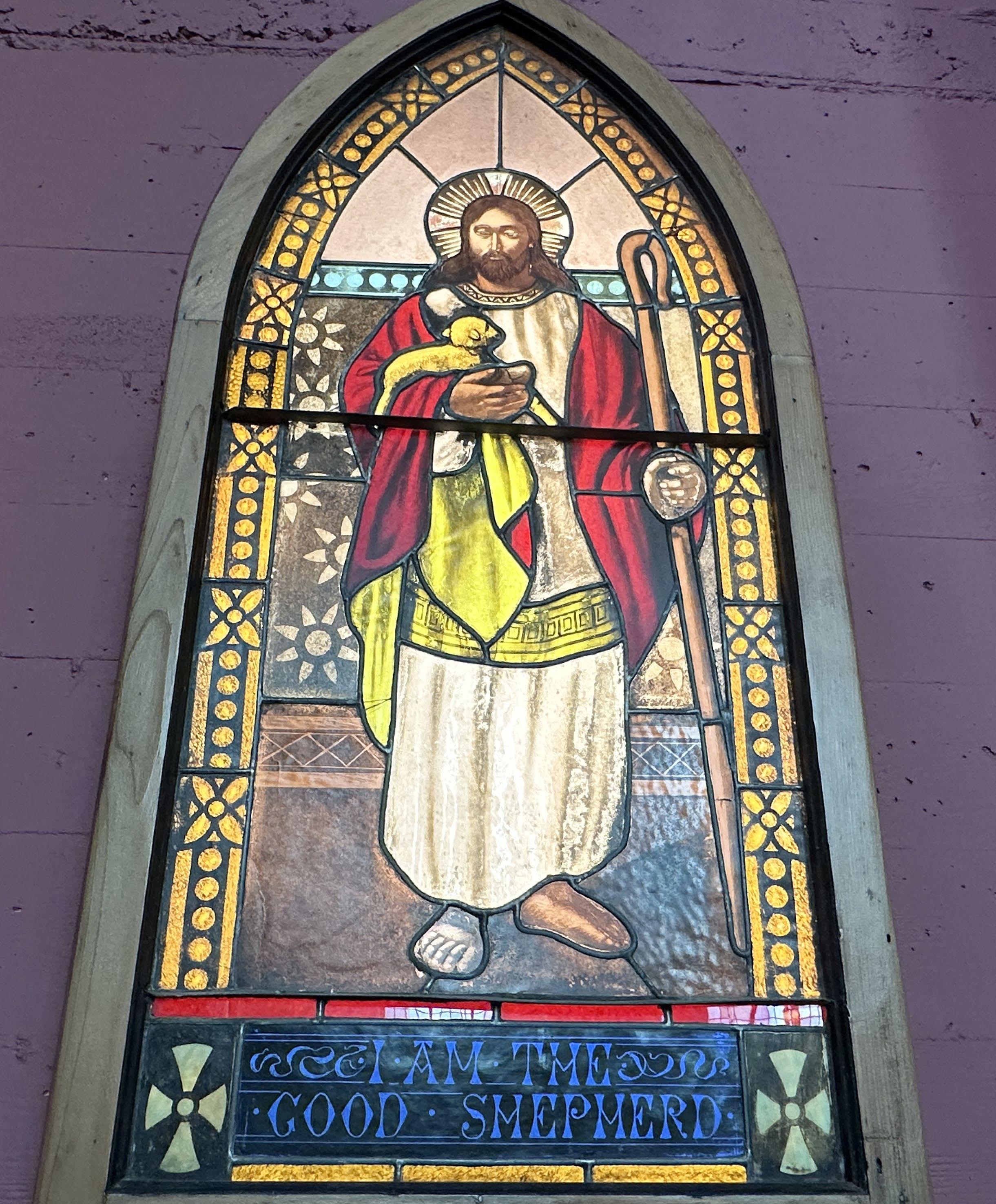
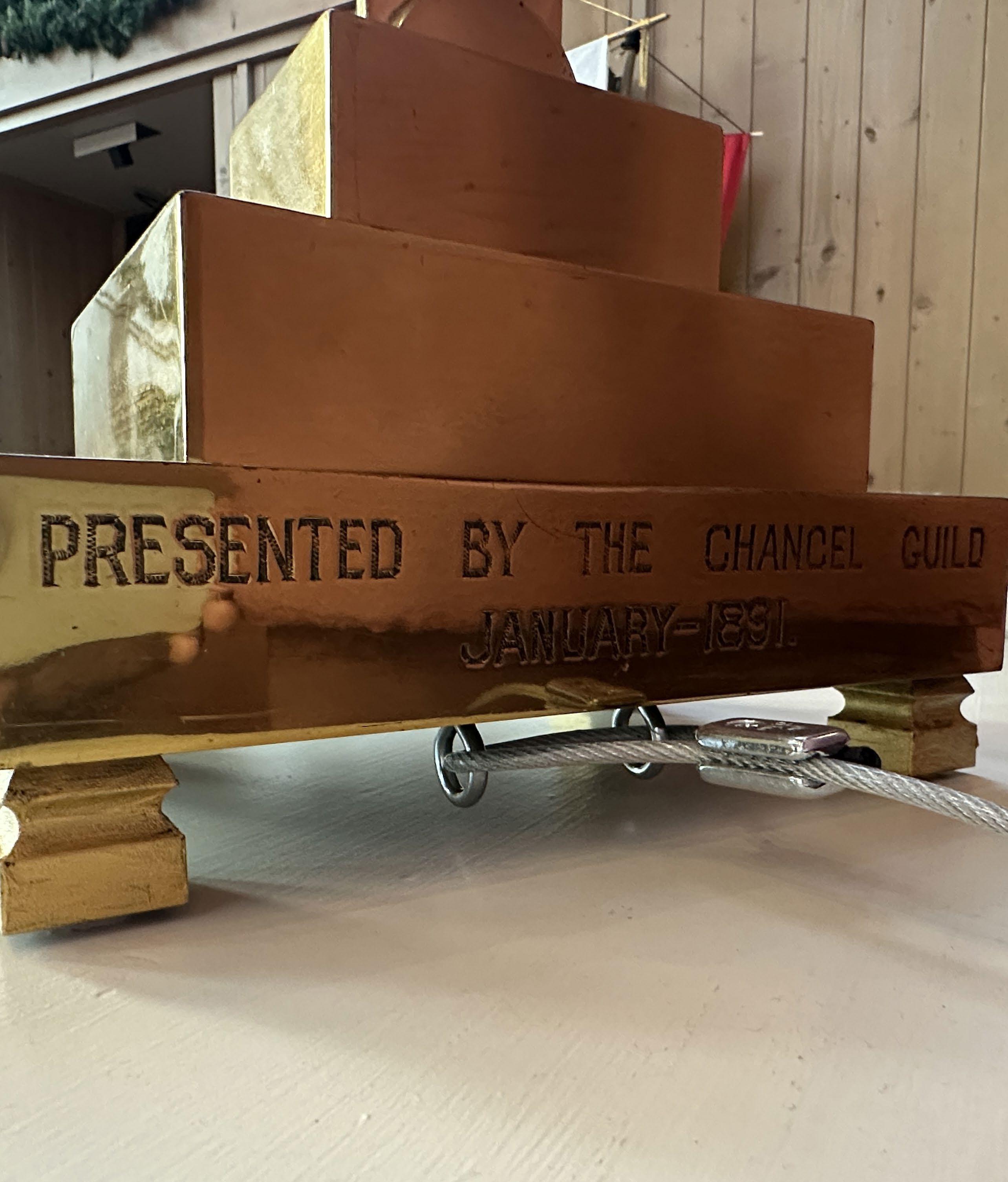
For centuries, cathedrals have set aside spaces around the perimeter of the nave for chapels, art installations, and places for individuals to sit in quiet prayer. At Saint Mark’s Cathedral, the northwest corner has served more as a place of storage than a focused prayer space. With help from Saint Mark’s Habitat for Humanity team, we have created a new place of prayer, with specially curated accoutrements that are designed to draw us into the numinous realm while also tethering us to our forebears in faith. These features include:
1897 Altar—this small altar was placed into service at Saint Paul’s Episcopal Church, Port Townsend, in 1897, and served that worshipping community for 127 years. Renovations in 2023 prompted construction of a new altar, so this one is held now in the cathedral for the Diocese of Olympia, honoring our connections with siblings at Saint Paul’s, which is the oldest Episcopal church building in the state of Washington (1865).
1891 Brass Cross—this cross was placed into service in 1891 at Saint Mark’s first church, at Fifth and Stewart. A gift of the “Chancel Guild” (aka Altar Guild), this cross is seen in photos for several decades, and we have brought
it out of archival storage for use in this space.
1898 Stained Glass Windows—these two of Jesus (and four more like them, of Matthew, Mark, Luke and John) are from Saint Mark’s second church, c. 1898, which stood on First Hill where the Polyclinic was recently located. The exact provenance of these windows is unknown, and we believe them to be much older. Jesus here is both Good Shepherd and Bread of Life.
1931 Modesty Panels—the white “sideboards” used to set apart this prayer space served as modesty panels for the front pews in the 1931 opening of Saint Mark’s third church, the one in which we now worship—Saint Mark’s Cathedral. When the center aisle pews were replaced with memorial chairs in 2018, these panels were stored and then cut down, restored and repurposed for this prayer space.
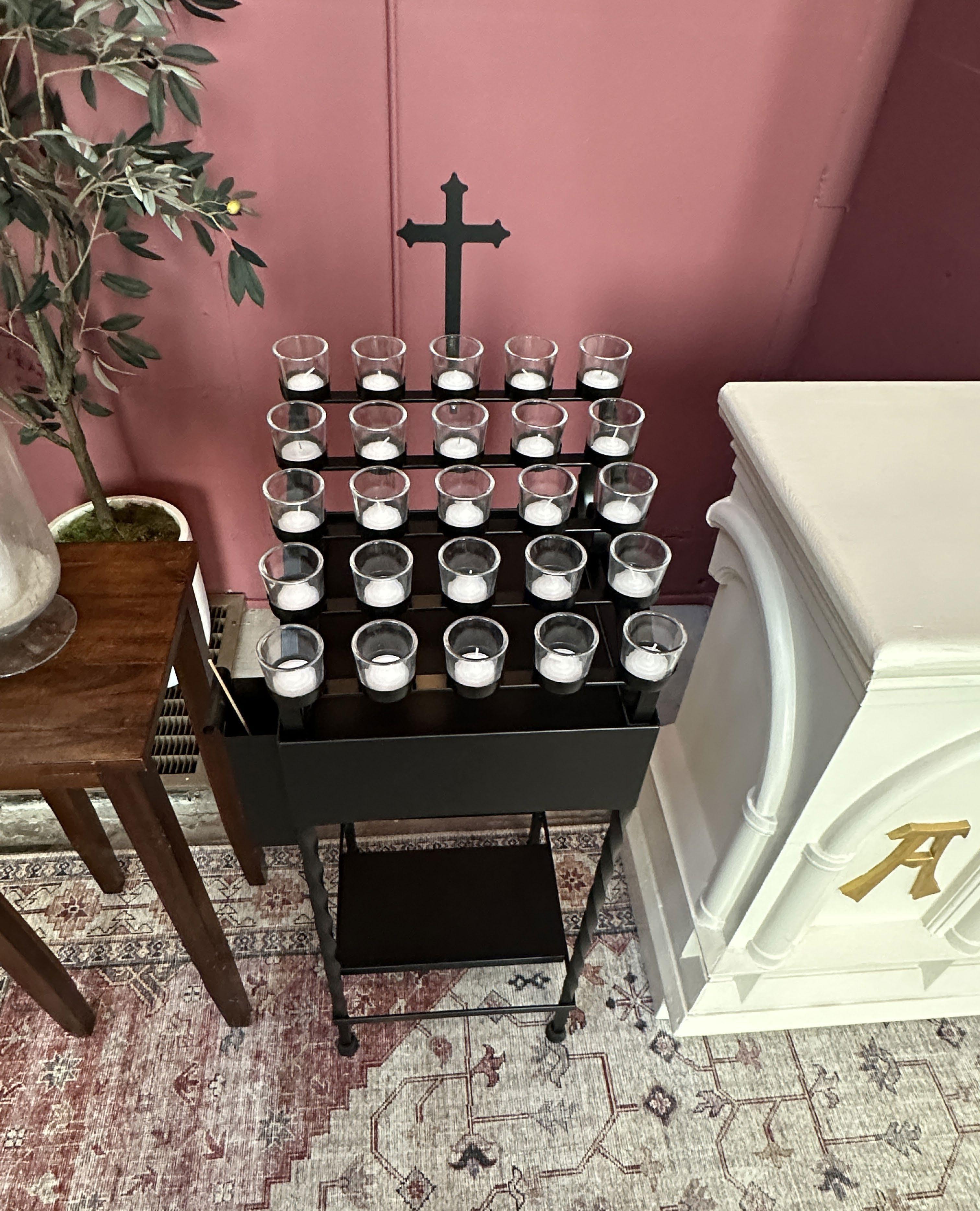
As people sit in prayer here, they may light a candle and perhaps consider how these objects invite us into the mystical sweet communion of saints. We remember how prayers from across the generations merge with ours to join the chorus of angels and archangels and all the company of heaven. ◆
by The Rev. Canon Emily Griffin
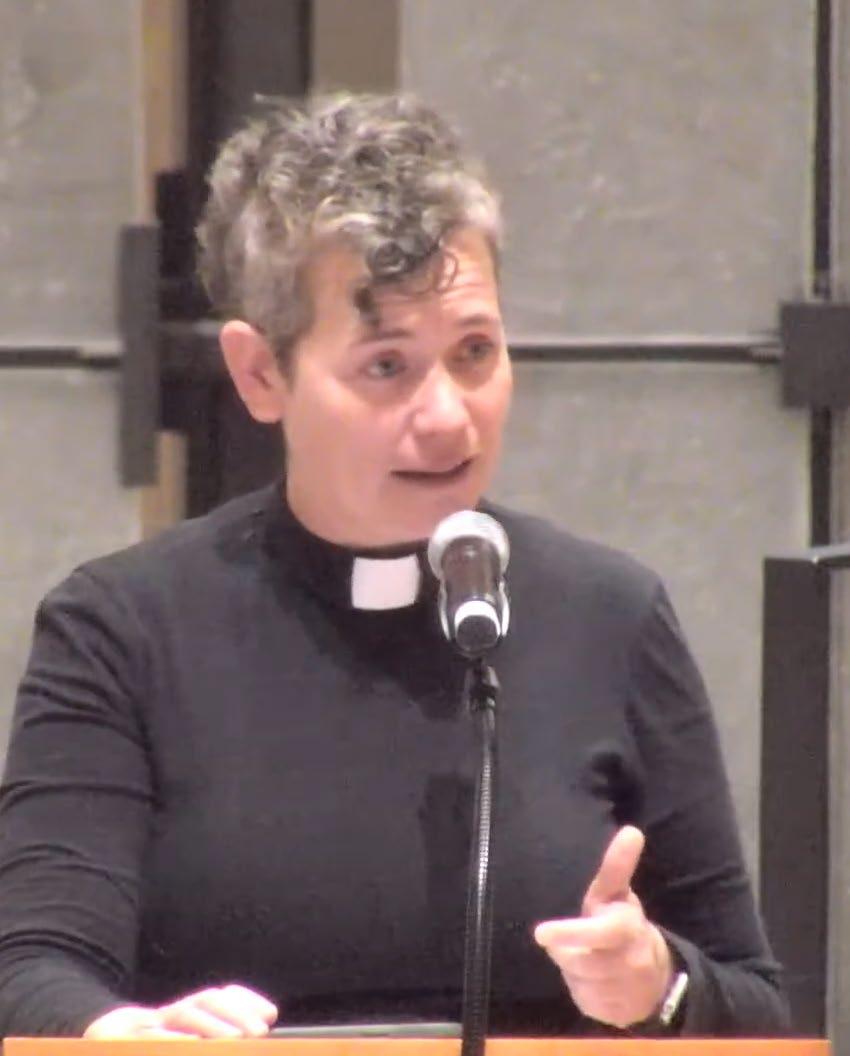
In the Baptismal Covenant, we promise to seek and serve Christ in all people, loving our neighbors as ourselves. This past year in the realm of migrant justice, Saint Mark’s lived into this promise in a variety of ways. When it became clear in January 2025 that houses of worship would no longer be considered “sensitive locations” for immigration enforcement, the Cathedral’s leadership needed to reconsider what forms our solidarity would take. In our 2021 Statement of Lament and Commitment to Action, we committed to “offer sanctuary to and advocate for immigrants and their families and…oppose the deportations of immigrants in our broader community, all of us one human family.” What would this commitment look like now? Housing families in danger of deportation on campus as a public advocacy tool, as we did from 2019 to 2021, no longer had the same impact and risked the
safety of those already vulnerable. So, rather than reviving a model of sanctuary that would no longer serve well, we spent 2025 strengthening partnerships that will help us love our migrant neighbors more effectively in this new time.
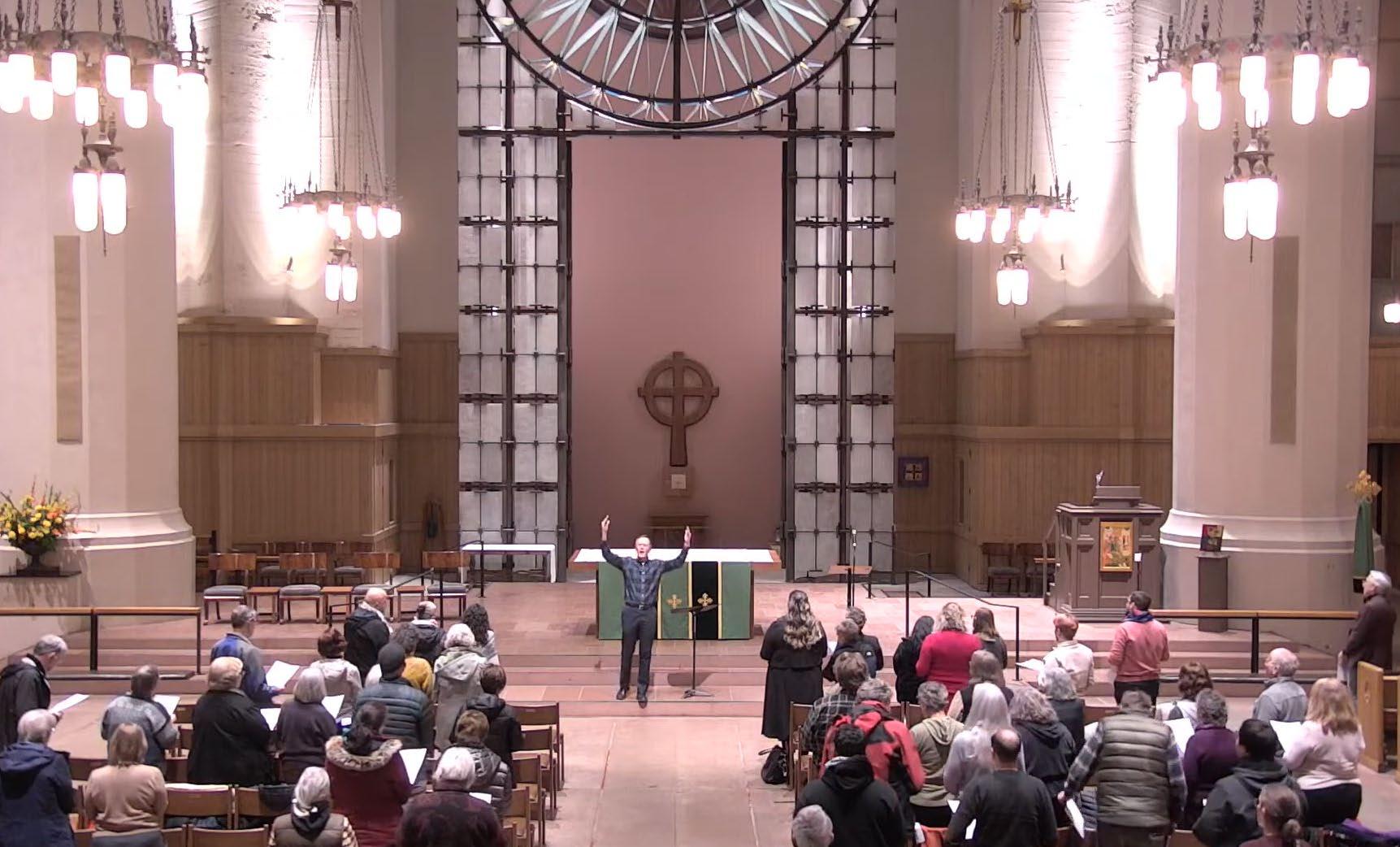
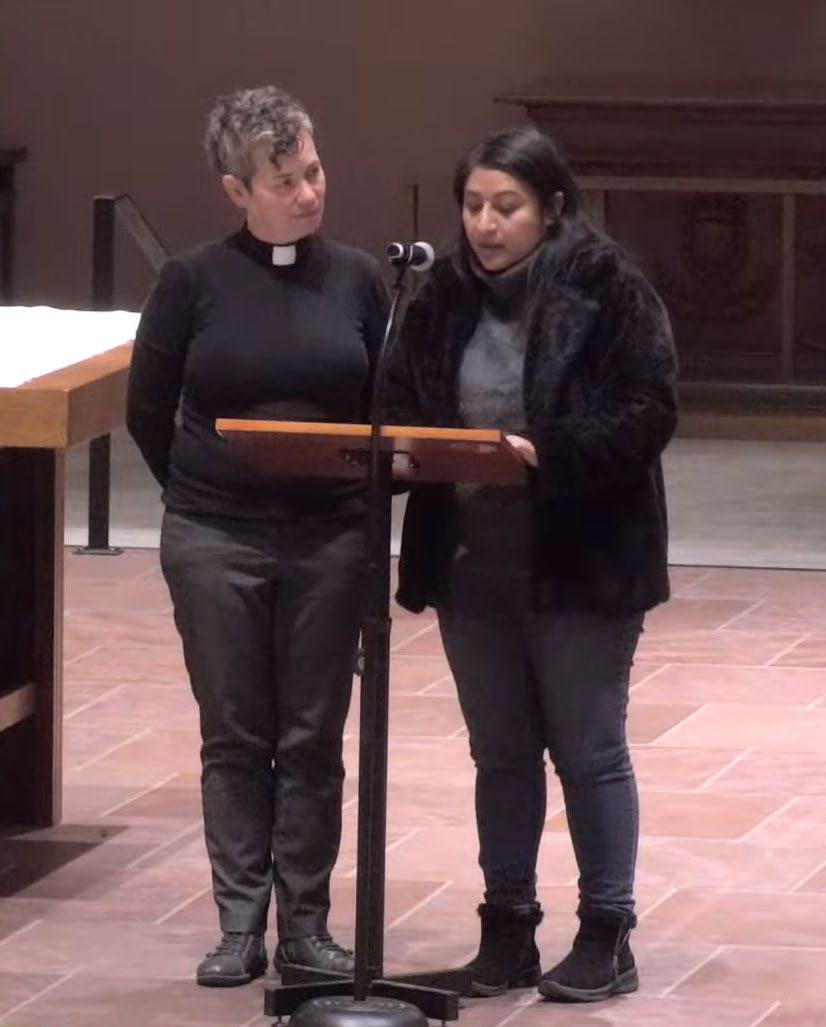
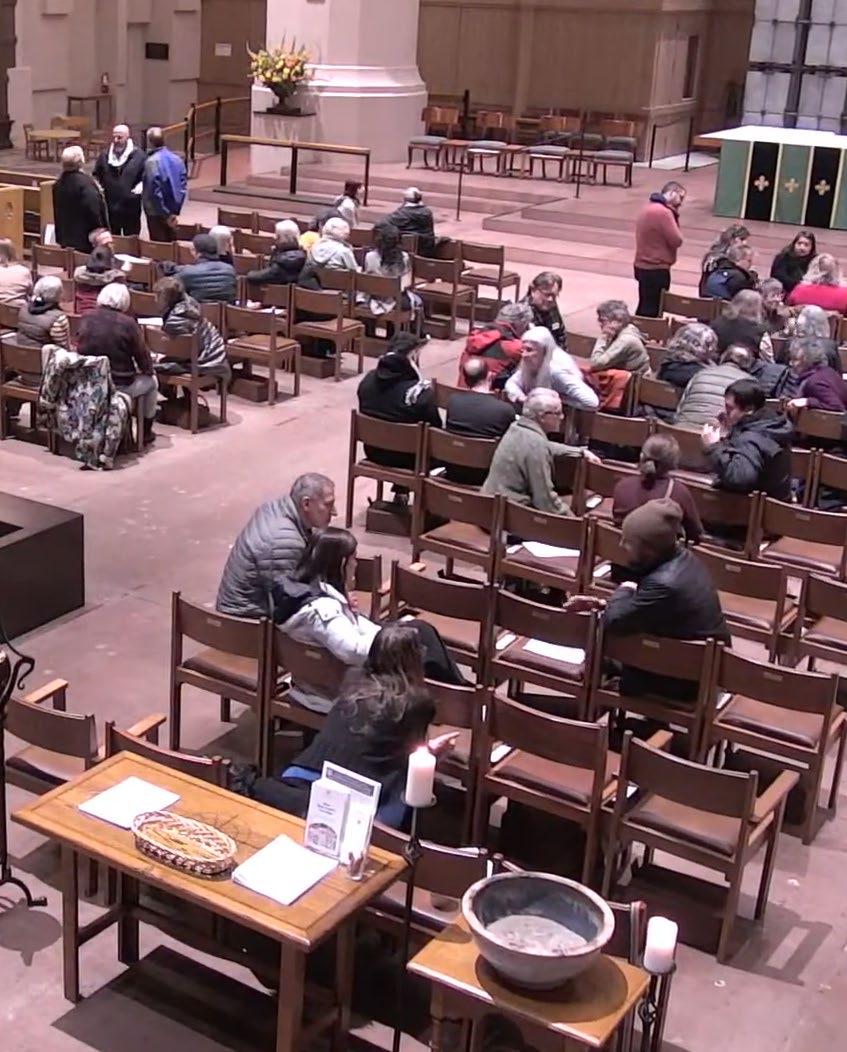
Last February, the Cathedral hosted an interfaith gathering with old and new community partners entitled Do Justice, Love Mercy, Walk Humbly: Living Faithfully in Chaotic Times. We reaffirmed our shared values, prayed together, and committed to magnifying our impact by working together across differences whenever possible. Since then, Saint Mark’s also participates in a monthly gathering of local faith leaders centered around migrant justice – including representatives from the Archdiocese of Seattle, First Covenant Church, and Riverton Park United Methodist Church (RPUMC) – to share resources and best practices, build
relationships of trust, amplify our collective voice, and strengthen our advocacy and mutual aid network. In addition, we partnered with the Washington Immigration Solidarity Network (WAISN) this past year to offer rapid response and accompaniment training here on campus. We formed a team at Saint Mark’s to accompany community members and do safety planning with them as they comply with the law and attend immigration court hearings, ICE check-ins, and other related appointments that highlight their vulnerability. We are currently exploring partnerships with the Archdiocese of Seattle and the Jewish Coalition for Immigrant Justice NW to expand and deepen this critical work, and we continue partnering with WAISN for information and resource sharing. Sometimes, solidarity means coming alongside others who have more experience offering direct support.
We are grateful to cathedral members who have shared their ministries outside our walls and are inviting others to join them – whether it is at Riverton Park UMC’s legal clinic, St. James’ Cathedral’s English tutoring program, Advocates for Immigrants in Detention Northwest (AIDNW) in Tacoma, or the ongoing work of longtime local partner Casa Latina. We learn things in real time relationships with those directly affected that we might never learn watching the news.
In the words of one parishioner, “I’ve been working at RPUMC for about a year now and have been impressed by the fact that the people we help are uniformly kind, good people just trying to make a better life for themselves and their families. They have often made enormous efforts to come to the United States and just want the ability to live and work. I have often thought that if the world worked the way it should, we would, as a country, be paying these people to come here rather than doing everything we can to make their lives more difficult.”
In our rapidly shifting political environment, it is difficult to feel like we are doing anything effectively for and with our migrant neighbors – much less loving them as ourselves. How
can we, in the words of the baptismal liturgy, “renounce the evil powers of this world which corrupt and destroy the creatures of God?” How can we, at the same time, provide refuge and sanctuary to those most in need of it? At its heart, sanctuary means prioritizing the safety of the vulnerable, listening to them and what they say they need, and letting their needs guide our response. That is what we have done alongside our ministry partners in the past year and will continue to do in the days, weeks, and years ahead. For updated information on our partners and various tools for advocacy and nonviolent resistance, see www.saintmarks.org/ justice/migrantjustice.
When asked “Who is my neighbor?” (Luke 10:25-37), Jesus shares a story about mercy and healing. In the parable, a Samaritan has compassion for someone who has suffered great violence and reaches across social, religious, and ethnic divisions to offer practical and meaningful help –and despite good reasons for mistrust, the person who has suffered accepts the help. In the process of practicing and receiving mercy, both find healing and live toward a better future. May we, in the words of Jesus, “go and do likewise.” ◆
Photos taken from the Do Justice, Love Mercy, Walk Humbly Interfaith Gathering on February 10, 2025
Saint Mark’s has recently applied for a Global Mission grant from the Diocese of Olympia (decision pending in March). The grant would support St. Mary’s School for Girls, Diocese of Aweil, Episcopal Church of South Sudan, in partnership with Sudan Sunrise. Specifically, this grant would help to purchase essential furnishings for the girls’ dormitories, including beds and mattresses. The dormitories were recently constructed in 2025, but projects such as furnishings remain unfunded and are needed to ensure completion by late spring of 2026.
Initially, St. Mary’s School will serve up to 200 girls from South Sudan (Christians and animists) and from Darfur (Muslim) in a secondary education setting that includes room and board. The eventual enrollment of the school will be 500 girls, which will include two girls from each tribe in South Sudan. In addition to being the first secondary school for girls in Aweil, St. Mary’s will also be the first school that seeks to build national reconciliation by bringing together girls from every tribe in South Sudan, and Darfurian Muslim girls as well.
Saint Mark’s Cathedral Parish has been committed to global girls’ education for several years, as an expression of our commitment to the UN Sustainable Development Goal (No. 4: Quality Education). This includes financial support for Sahar, an NGO which operated girls’ schools in Afghanistan before the Taliban regained control; for St. Andrew’s Arab Episcopal School and Princess Basma Rehabilitation Hospital and School in Ramallah and East Jerusalem; and now with St. Mary’s School in South Sudan, serving Muslim and Christian girls in war-torn areas.
by Elizabeth Clark-Stern
Pamela bradburn, author of The Visitation, once asked me if I thought that writing comes from “somewhere else.” The psychologist in me said, “the unconscious mind, wellspring of dreams, and multiple expressions of creativity.” The Episcopal Christian in me said, “the Holy Spirit.”
Wherever it comes from, our writers have discovered the joy of reading their work aloud to our supportive, spiritual, good-humored group. Deborah Anderson, author of Kneeling at the Cross said that she has been in many critique groups, and this is the first one where she feels comfortable being “out,” as a Christian.
We proud Christians hold Zoom meetings on the 4th Tuesday of the month at 4:30 pm. In September 2024 we hosted an in-person Salon in Leffler House. It was Marvin Waschke’s birthday. We sang, ate chocolate cake, and, in the tradition of Hemingway, Fitzgerald, and Dorothy Parker, sat in a circle and shared our work. Ninetyfive-year-old Dick Carter read enthusiastically from his memoir Oregon Born, which went to press in January 2025. Dick can send a PDF to anyone who wants to read it. Contact him at dickcarter29@outlook.com
Marvin Waschke’s 2025 book, Vine Maple Farm: A Whatcom County Idyl is a gritty, enchanting memoir of generations on his family farm. He writes, “The homestead is not just a few acres of land. It is the embodiment of a relationship between a plot of land, a layer of topsoil, and a family, which is nothing if not love and trust.”
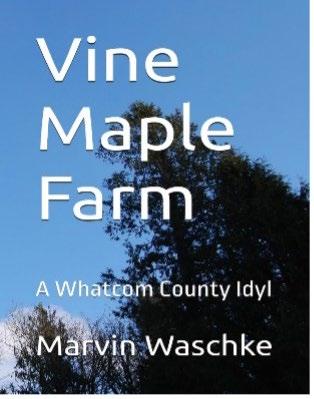
Saint Mark’s. The narratives reflect the transformations of American society and its private religions that began as we entered the 2020s. Both books are on Amazon.
Saint Mark’s Associate Priest, Mary Petty Anderson, has written a memoir that I believe, when published, will be as powerful and life-changing as Sallie Crotty’s Out of the Ashes (2022). In 2025, Sallie taught two interactive workshops for our Zoom Writers Group. Her unique method showed us how to write our own labyrinths, using our psyche instead of our feet. Sallie won the Woody Berlow Poetry Contest 2025 with this poem, “My father became a tree” published previously in Emerge Magazine:
My father became a tree when his brain died but his heart still fed his withering branches as the wounds formed on his trunk in the bed I stood by each day
When I brought my baby to visit, she ran her fingers around the wounds and I imagined her crawling snug in the cradle of his neck how the monitors would quiet and glow like fireflies flickering around his limbs while his breaths became the wind singing Rock-a-bye baby
In 2025 Marv also published Elementary Forms of Religious Life, a collection of stories written with a touch of humor and dedicated to
John McLaughlin, author of the novel, Run in the Fam’ly, (Univ. of Tennessee Press, 2007) and a bilingual children’s book, The Good Stranger’s Sancocho Surprise (Deletrea Press, 2020) is currently writing about living with chronic illness, as well as working on a memoir of his work in Latin America and a collection of poems.
Sermons from an Island: Christian Mythology and the Liturgical Year by Roger Sherman, went to press in December 2025. The Lectionary is a subjective, highly selective
lineup of stories that function like myths—and they are distinct from the literal record of the Bible. This selection of twelve sermons by Roger (who is Director of Liturgy and Music at Grace Episcopal Church on Lopez Island), provides imaginative interpretations of these myths in the context of the liturgical year. Roger writes, “Nobody hears more sermons than a church organist. This book interprets the Lectionary’s imaginative stories by encoding the symbolism partially through the lens of astrology or numerology. Using non-traditional elements can be more meaningful than literal interpretation.” It’s available through direct order by calling 1-360-376-4175, ext. 101.
Also offering a non-traditional perspective is Andrew Himes’ upcoming memoir, Jesus, Mao, and Me. He writes, “It explores the trap of ideological certainty, tracing a trajectory from the rigid precepts of Christian fundamentalism in my childhood to the equally extreme fundamentals of Maoism I adopted in my 20s. Is it possible to work for justice and build a life of compassion outside the boundaries of prescribed belief?”
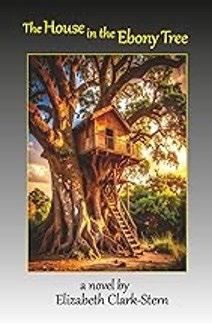
I also offer new ways of seeing race, class, and choice, in my 2025 novel, The House in the Ebony Tree. (Third Place Books in Lake Forest Park, and Amazon.) Two little girls meet in Tupelo, Mississippi in 1955. Dorothy (“Dot Dot”) is African-American, Grace Ellen (“Winkie”) is white. Their love of imaginative play and ballet grounds their friendship in something far beyond the prejudice of race and class. One of their fathers builds them a house in the ebony tree in Winkie’s backyard. It becomes a sanctuary for their dreams and ideas, far away from the eyes of a judging world. As they grow up, they live in different cities, but faithfully keep in touch, and share the greatest joys and deepest tragedies of their lives. The decades move on, and as Winkie moves back to Tupelo after 60 years, can their love overcome the forces that threaten to destroy their life-long friendship?
Returning to Pamela Bradburn’s original question: does writing come from “somewhere else?” Whether it is a poem, a garden, a new AI code, or innovative ways to face a difficult diagnosis, the creative and loving Holy Spirit burns brightly in us all. ◆
by joseph anderson
A goose stands on one leg placid stable at ease
Why do I need to put both my feet under me? yin-yang male-female good-bad love-hate Isn’t there really just the one thing needed?
How beautifully it cantilevers itself suspended in perfection a bridge over nothingness from nowhere to nowhere
At ease: the question has no answer the call no response the longing no reciprocation
None needed
by deborah anderson
I’ve often wondered What carving You there is like. Care must be taken to show the sinewy lingering exhaustion. Small muscles require deep cuts be rubbed smooth to show Your pain in persecution. Glistening oil softens legs bent towards nothing that brings relief Weeks and months spent shaping and smoothing the anguish of Your physical torture Loving hands that repeat for me the miracle of Your endurance I’ve often wondered what carving You there is like.
Poems by members of Writers Group.
Saint Mark’s Cathedral extends heartfelt thanks to all those listed below who gave a gift in support of the cathedral’s mission and ministries in 2025.
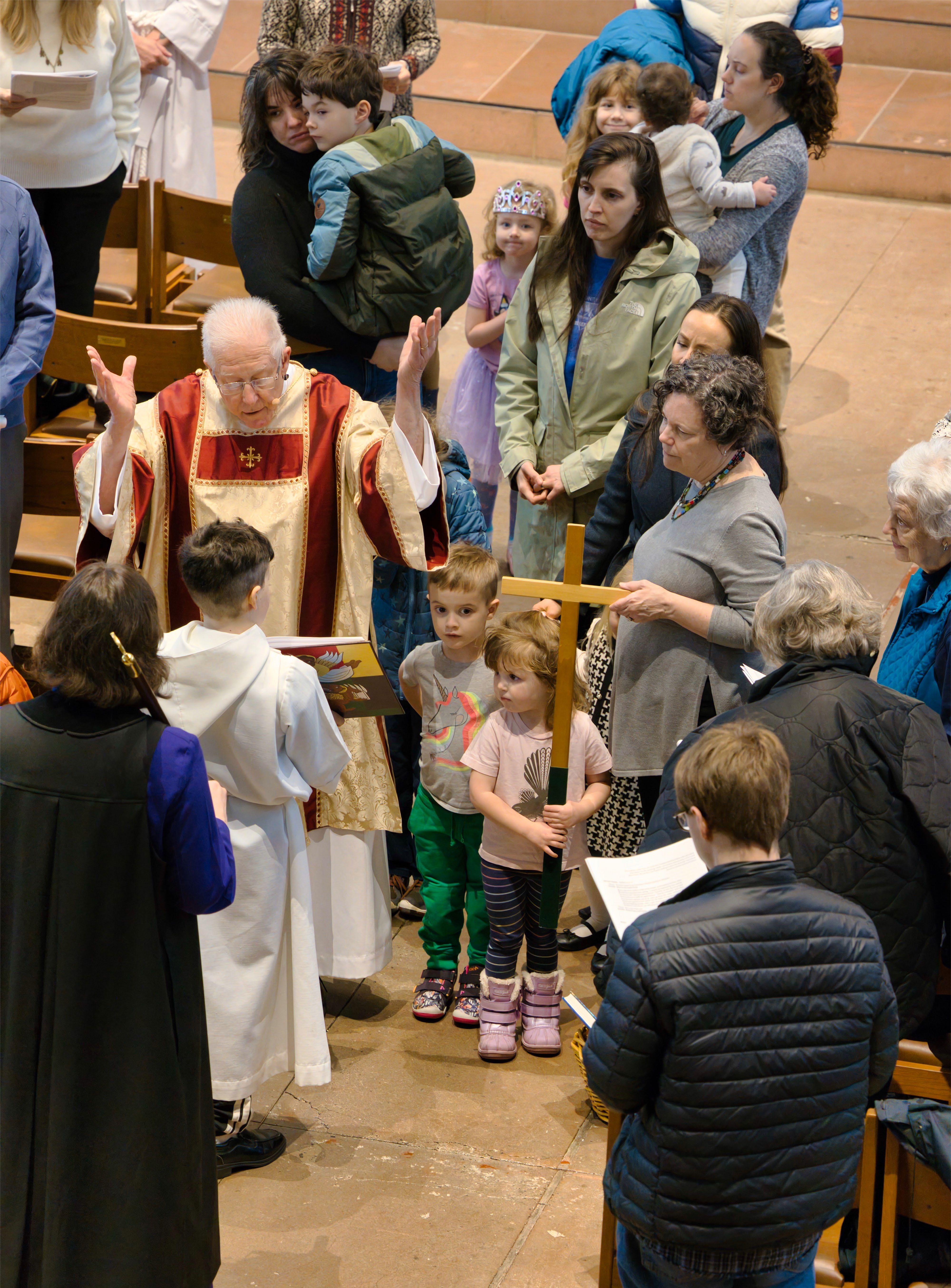
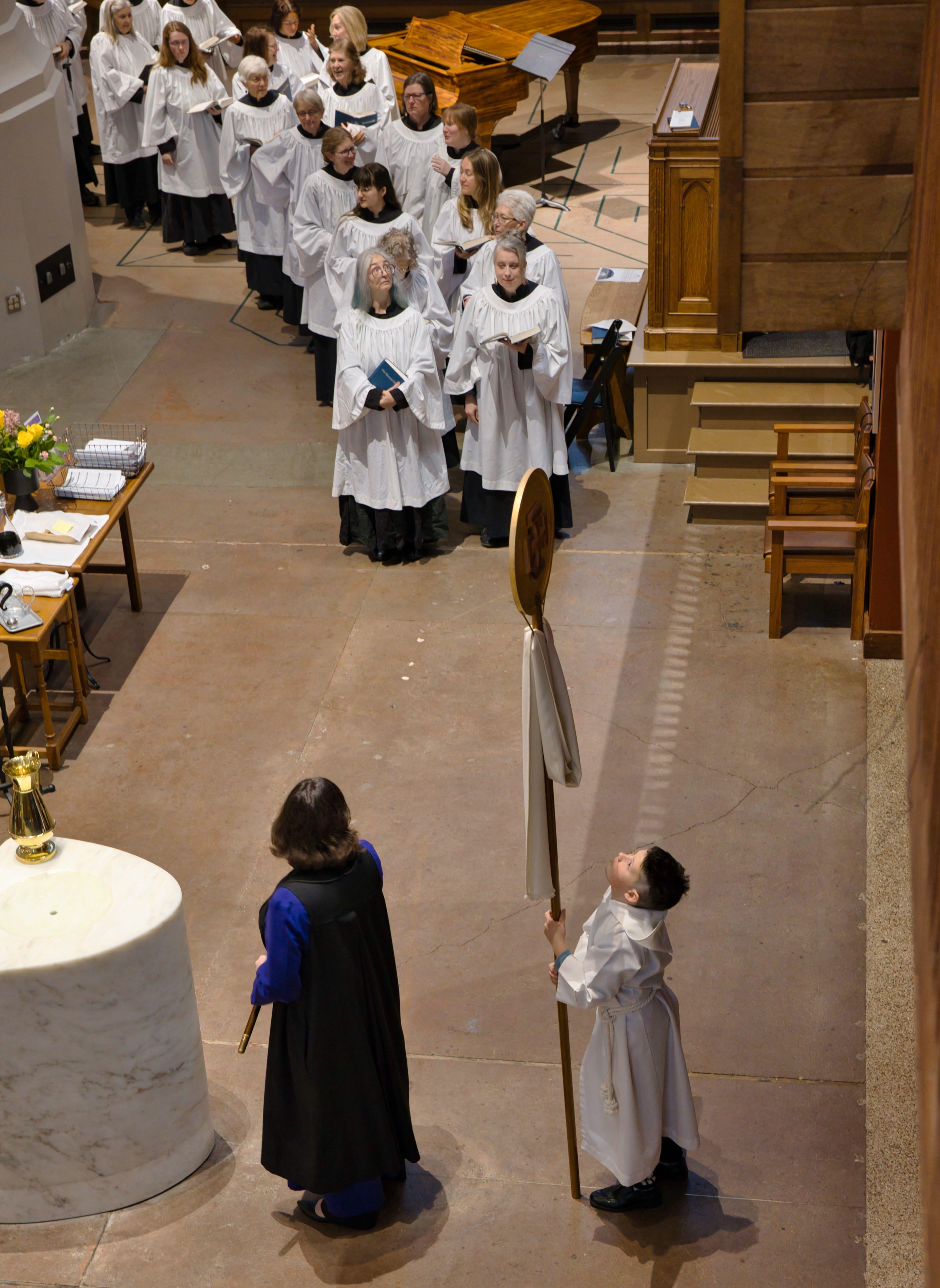
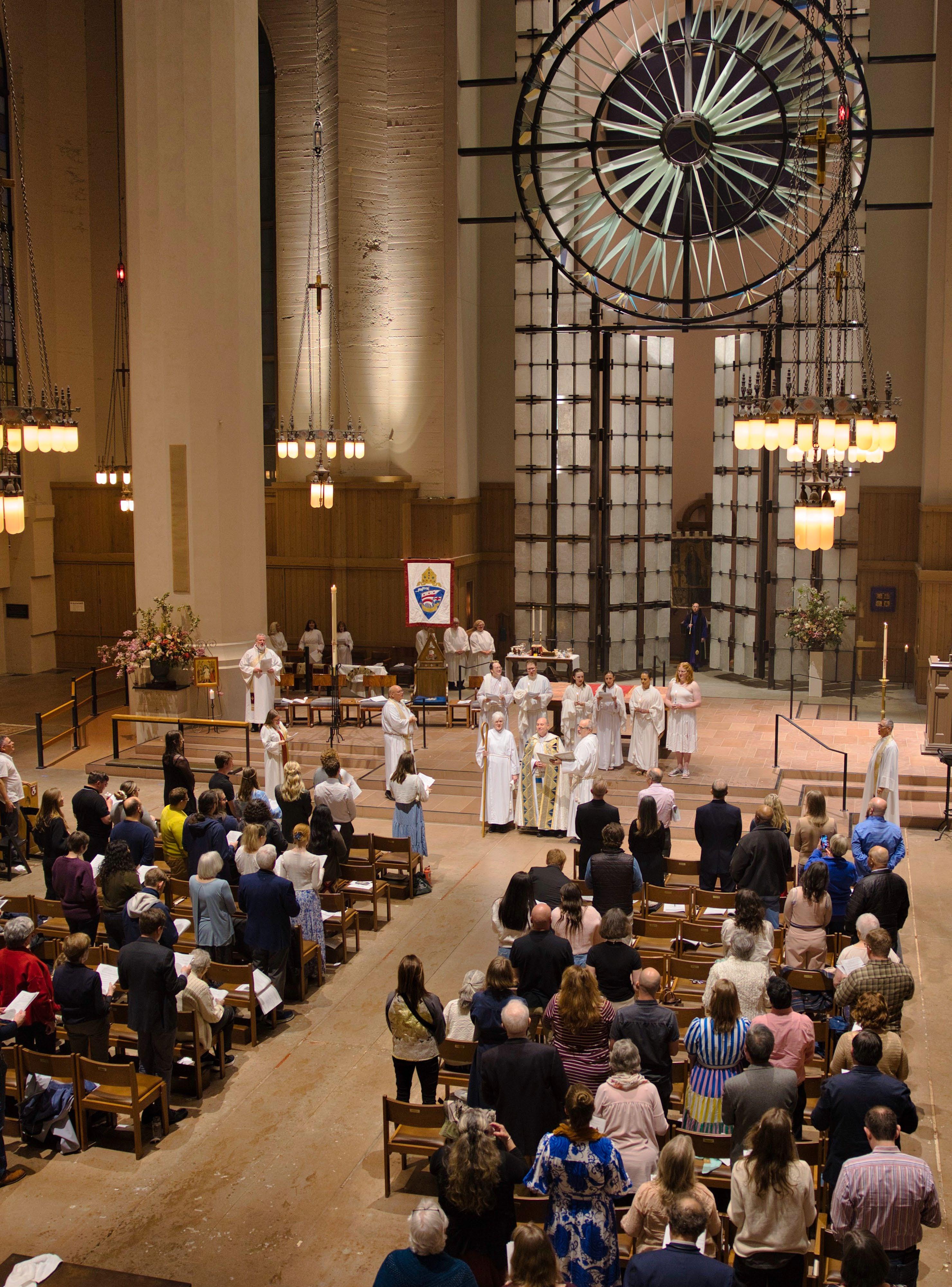
Gospel reading with Deacon Earl Grout and children; procession with Peter as crucifer; Easter Vigil proclaimation
Anonymous (35)
Melissa Aaron
Stephanie Abbott
Stephanie Abbott
Ashwin Abraham
Jon Achée
Kathryn Actis-Grande
Hafidha Acuay
Bill Adams & Amy
Donohue-Adams
Mike & Katherine
Adams
Chloe Adams
Cee Adamson
Brad & Angelina
Adcock
Cynthia Ademujohn
Alyson Adler
Aerosound
Allan & Anne Affleck
Trixie Agngarayngay
American Guild of Organists Seattle Chapter
Victor Aguiar
Dawn Aiken
Seyi Akanni
Kathy Albert
Vivienne Alcantara
Jorj Aldair
Glenda Aldana
Jerene Aldinger
Blake Alex
Michael & Marjorie
Alhadeff
Margaret Alison
Kay Allen
Georgie Allen
Christine Allen
Karen Maeda Allman & Elizabeth Wales
Kerry & Janet Allman
Nick Almerico
Chap & Eve Alvord
JoAn Andenes
Karen Andersen & V
Woolston
Stacy Andersen & Lyle Bicknell
Kenneth Andersen
The Rev. Deborah H.
Anderson
The Rev. Mary Petty Anderson
Patricia Anderson
Dan Anderson &
Montana Contreras
Marion Anderson
The Rev. Dr. Carey
Anderson
Katy Anderson
Allen Anderson
Geoffrey & Amy Anderson
Shelley Anderson
Jason Anderson
Maxwell Anderson
Tim & Susan Anderson
Vanessa Anderson
Judy Andrews & Doug Thorpe
The Rev. Dianne
Andrews
Emily & Marc
Antezana
Elizabeth & Angus
Mary Ann Antley
Heidi Antonio & Alix
Wandesforde-Smith
Vince Aoki
Cindy Arasim
Brynn Arborico
Andy Arnold
Mary Aronen
Kathy Ashworth
Ashlyn Aske
David Atcheson
Marc Aubertin & Mi-
chael Kleinschmidt
Melanie Audette
Amy Augustine
Barrie & Margaret
Austin
Dan & Gail Austin
Kalee Auvil
Charles-Henri
Avelange
Pam & Don Avriett
Jennifer Babuca
Ana Badell & Katherine Holmes
Rebecca & Nick Bailey
Elizabeth Bailey
Jo Ann Bailey
Alex Baird
Natalia Bajenova
Rachel Baker
The Baker Family
Camilla Baker
Shelley Baker
Sarah Bakker
Christi Ball Nichols
Martin Balogh
Marcos Banchik
Amy Baranski
Karen Bargelt
JohnPaul Baric
Connie Baring-Gould
Theresa Barker
Jean Barker
Wensley Barker
Donna E. Barnes
Ian & Laura Barnes
Richard Barnes
Harvey Barnes
Alexander & Barrett
Barnett
Jake Barokas
Tim & Tony Barrick
Lorraine Barrick
Wendy Claire Barrie
& Phil Fox Rose
Roy Barsness
Mary Clare Barth
Peter Bartholomaus
Timothy Bartholomaus
Alexis Basista
Audrey Bass
Carol Batchelder
Thomas Bauer
Anna Bauer
Amanda Baughan
Tallulah Baumgart
Layne & Ricardo
Bautista
Jade & Morgan Bawcom-Randall
Mary Bayne
William & Elizabeth
Jane Beadel
Nancy Beadie & Donald Argus
Molly Beall
James Bean
Maggie Beardsley
Erin & Casey Beary
Andersen
Brad Bebee
Judi Beck
Earl & Ann Beede
Tim Beggs
Isabella Beisel
Vladimir Bejdo II
Roxana Bekemoham-
madi
Steve Bell
Elisabeth J. Bell
Amanda Bell
Rachel Belle
Jason Bendickson
Curt Bennett
Kip Benyunes
Steve & Trisha Berard
Clara Berg
Al & Janet Berg
Julie Berger
Jean Berry
Jan Bersin
Jane E. Bertolin
Susan Betcher
Betcher Family
Foundation
Bourke & Miriam
Betz
David Betz-Zall
Berta Beveridge
Morgan Bevin
Joel Bevington & Seth
Tucker
Nancy Beyer Cannon
Doug Bierer
Hannah Binder
Seth Birnbaum
Aya Bisbee
The Ven. David
Bishop
Sally Bjornsen
Heather Black
Ben Black
Chad Blanchard &
Kathy Coggins
Eric & Dana Blazevic
Dena Blevins
Lena Blissell
Gregory Bloch
Sherilyn & Paul Bloch
Shannon Blood
Victor Bloomfield & Jennifer Skuk
Karin Bloomquist
Carolyn F. Blount
Indigo Blue
Chip Blundell
Maryann Bodnar
David Boeckh & Nick
Stevens
Michael Boeckh
Robert Boehlke & Jason Naki
Alex Bogdanowicz
Gerry Boler
Carl Bolstad & Beatrix
Joshua Borichewski
Tracy Bos
Molly Bosch
Amy Bosch
Joni Bosh & Worthington Smith
Suzanne Bottelli
Samuel Boucher
LaDonna S. Bowers
Mason Bowles
Janine Boyer
Colleen M. Boyns
Pamela G. Bradburn
Cherie & Hal Brad-
shaw
Alyson Bradshaw
Mark Bradshaw
Carmen & Matt Brady
Cheryl Braginsky
Josh Brainard
George Brainerd & Maryellen Hancock
Lecia Brannon
Bob Braun
Vee Braun
Mary Anne Braund & Steve Pellegrin
Melissa Braxton
Julie Braybrooks & Greg Simon
Ginna Brelsford & Robert Herr
Christopher Breunig
Kelly Brewer
Jenna Brewington
George Brewster & Melissa Wood
Brewster
Elizabeth Brinkley
Broadview Community United Church of Christ
Coley Brogan
Deborah Brown
Claire Brown
Rachel Brown
Lindsey Brown
Sarah Brown
Carl & Mary Brown
Katie Browne Brenna Bruce
Melissa Bryan
The Rev. Shelley Bryan
Wee
Jonathan Bryant
Jiho Bryson
Nabeel Buha
Alyssa Buller
Angela Bultemeier
John Bunch & Claire
Simon
Laurie Burdick & Carolyn Woodward
Susan Burgess
Katie Burgess
Shelby Burgess
Pamela Burke
Heather Burns
Lee Burnside
Tristan Burton
Phil Burwell & Pamela Bartlett
James R. Buskirk
Olivia Butkowski
Mary Beth Butler
Terri Butler
Jennifer Butte-Dahl
Evan Byrne
Alice & Jim Cabe
Rachel Cabral
Christopher Cabrall
Casey Cagle
Molly Callison
Margie Calvert
Margaretta & Joe
Campagna
Tom Campbell & Keith McCullough
Russell C. Campbell
Elizabeth Campbell
Haley Campbell
Amy Campbell
Amelia Canaday
Nicholas & Amelia Canaday Charitable
Remainder Trust
John Cannon
Capitol Hill Al-Anon
Family Group
Gretchen & Adam
Cappio
Julia Cappio
Sandra & Kent Carlson
Jessica Carlson & Austin LeSure
The Rev. Shane
Carlson
Sharlene Carmody
Luz Carnes
Amanda Carnes
Colton M. Carothers
Wendy J. Carpine
Libby Kelleher Carr
Eric Carr
Amelia Carroll
Alan Carter
Jane & Dick Carter
Robert & Lauren
Carter
Ginger Carter
Cameron Carter
Amelia Casciola
John Casseday
Ethan Cassel-Mace
Ace Cassidy
Toni Castro
Dorianne Caswell
The Cathedral Foundation of the Diocese of Olympia
Sarah Cave & Maggie
Jensen
Jeffrey Cave
Julianne Cederberg
Kelly Cercy
Shelly Chabak
Susannah Chace
Sherman Chace
Prachi Chachondia
Karen Ann Chalupnik
Tina Chamberlain
Erika Chang
Bonny Chang
Be Chanlimcharoen
Fay L. Chapman
The Rev. Canon Cristi
Chapman
Mica Chavez
Tong Chen
Joan Chen
Sarah Childers
Mary Childs
Coburn Childs & Luke Skinner
Maia Chin
Cathryn Chingren
Cynthia Chirot
The Chisholm Foundation
Thomas Choi
Erin Chonko
Neil Chrisman & Carolyn Carlstrom
Nick Chrisman
Patrick Christell
Ken Christensen
Erik Christensen
Church of the Ascension, Seattle
The Church Periodical Club
Micah Clark
Elizabeth Clark-Stern
Sandra & Sterling Clarren
Carol Clayton
Nancy Cleminshaw
Ivaly Cline-Welch
Mason Clugston
Amanda Coba
Lynne A. Cobb
Elora Coble
Anna & David Coble
Craig Cochrane
Cassie Cohen
Maria & Charles
Coldwell
Nancy Coleman
Rhea & Clark Coler
Marya Colignon
Maggie Collinge
Marcela Colmenares
Nicholas Coniaris
Fran & Gerry Conley
The Rev. Adam Conley
Yen Thai Connolly
Sarah Conover & Douglas Robnett
Jacqueline Conrad
LeAnne Conway
Claire Conway
Gretchen Lynn Cook
Andrew Cooley
Denise Cooley
Julia Cooper
Hana Cooper
Oona Copperhill
Patrick Corcoran
Ian Corey-Boulet
Barbara Cornell
Michael Correa
Bob Corwin
Julie E. Coryell
The Rev. Liz Costello
Christina Cote
Isaac Cotec
Matthew Cottingham & Kelly McAvoy
Michel Marty Couret
Bayne
Antley
Sam Beadel
Wiedmer
Tai Bonfiglio
Melissa Bordow
Mel & Mary Butler
Richard & Catherine
Butler
Libby Chapman
Chris Chaves
Gretchen Covey
Logan Craft
Saint Mark ’ s
1245 10th Ave East
Seattle, WA 98102
THE SAINT MARK’S MUSIC SERIES PRESENTS
Flentrop Organ Concert
Stephen Price, organist
SUNDAY, MARCH 22, 2026, 7:30 P.M.
Sing My Soul: 500 Years of European Sacred Choral Music
Choir of Magdalen College, Oxford TUESDAY, APRIL 14, 2026, 7:30 P.M.
All Bach on the Flentrop
Renee Anne Louprette, organ FRIDAY, MAY 15, 2026, 7:30 P.M
Information and tickets at: saintmarks.org/concerts