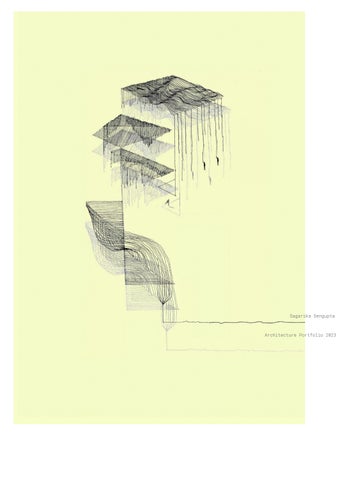
Sagarika Sengupta
Architecture Portfolio 2023
sagarika.s.sengupta@gmail.com
Sagarika Sengupta
Education
2012-2016 Army Public School, Dhaulakuan, New Delhi | High School
2016- 2021 School of Planning and Architecture, Bhopal, India | Bachelors in Architecture
Workshops | Conferences
2018 Film and Architecture | AA Conference
2019 Earthquake Resistant Design Workshop | Indian Institute of Technology, Kanpur
2020 Mycelium Architecture- Building with Fungi | ResArch Lab
2021 Alternate Approach to Housing | In Conversation with Moshe Safdie
Achievements
2019 Third Place | Earthquake Resistant Design Workshop | IIT, Kanpur
2021 First Place | Final Thesis Semester | SPA,Bhopal, India
2021 Top Five Best Thesis | SPA, Bhopal, India
2021 Rhino Professional Certification
Work Experience | Ongoing Ventures
2020 Six Month Internship | Benz und Ziegler, Munich, Germany
2022 Junior Architect | Studio Juggernaut, New Delhi, India
Feb2023-June2023
Apprenticeship at the Himalayan Institute of Alternatives,Ladakh under the guidance of Mr. Sonam Wangchuk
Hello! I’m Sagarika, a graduate from the School of Planning and Architecture, Bhopal. Over the course of my education, discovering experimental and investigative approaches to architecture that challenge how we view architecture and urbanism, has emerged as a primary interest of mine. I attempt to incorporate this in my design process and this portfolio is a conglomeration of the same.

Software Skills
Rhino 2D ( Certified ) | Rhino 3D ( Certified ) | Revit (Proficient) |
ArchiCad (Beginner) | AutoCad 2D (Proficient) |
Grasshopper ( Beginner) | Lumion (Proficient) |
Sketchup (Proficient) | Adobe Photoshop | Adobe Illustrator | Adobe Indesign
Other Skills
Site Supervision | Project Management | Concept Development | Urban Sketching |
Architectural Sketching | Documentation | Photography | Basic Web Design
Language Proficiency
English ( Fluent ) | Hindi ( Fluent ) | Bengali ( Fluent ) |
German ( Limited working proficiency - ongoing certification )
Alternate Interests
Writing | Urban Sketching | Languages |
Reading | Mountaineering | Travelling
+(91)9560489134

Works. Blurred Lines | Thesis Project Not the Grammys | Student Design Build 28-31 22-27 01-16 Other works | Ideas | Concepts 62-68
32-61 Professional Works
Jigsaw | Pavillion Design | International FINSA table
BLURRED LINES
2021 | Thesis Project
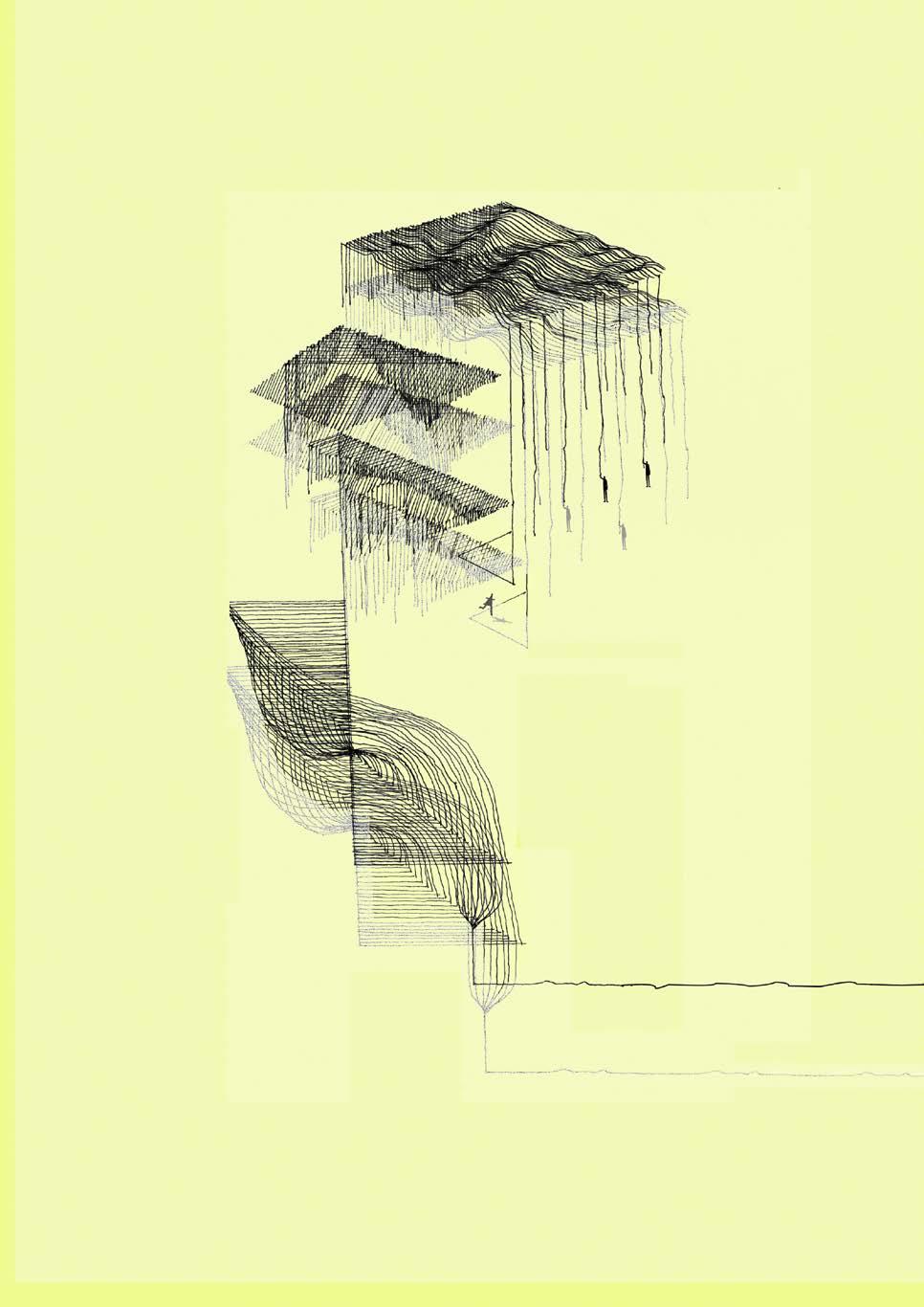
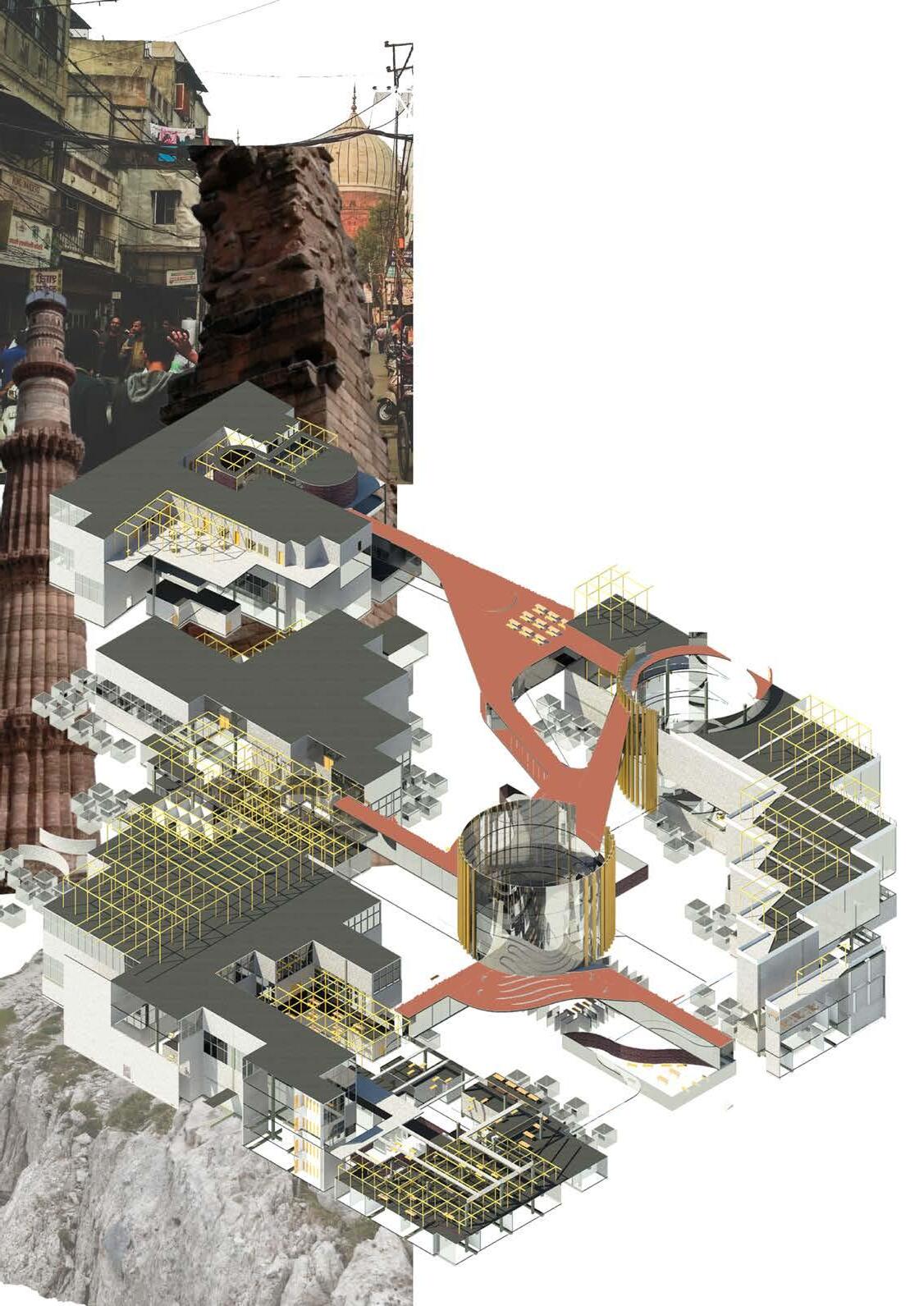
Our present urban tendencies indicate an ever-increasing intensification and densification of cities. This inevitably forces disparate programs to merge. For instance, A temple with an office or a school with a home. While unconcievable at first, these programmatic combinations lead to novel solutions as to how we program our spaces and how we divide our spaces. This also leads to distinct users coming together in one space.
Through this thesis, I attempt to welcome and formally design for these unique amalgamations. A design that expects and accepts and is constantly adapting to its changing context. I believe such a process creates avenues for innovation and invention, challenges notions of typologies and urbanism as we know it.
1/2
Lado Sarai Ward lies in the southern part of the city of Delhi, abutting Malviya Nagar, Vasant Kunj and Qutub Institutional Area.
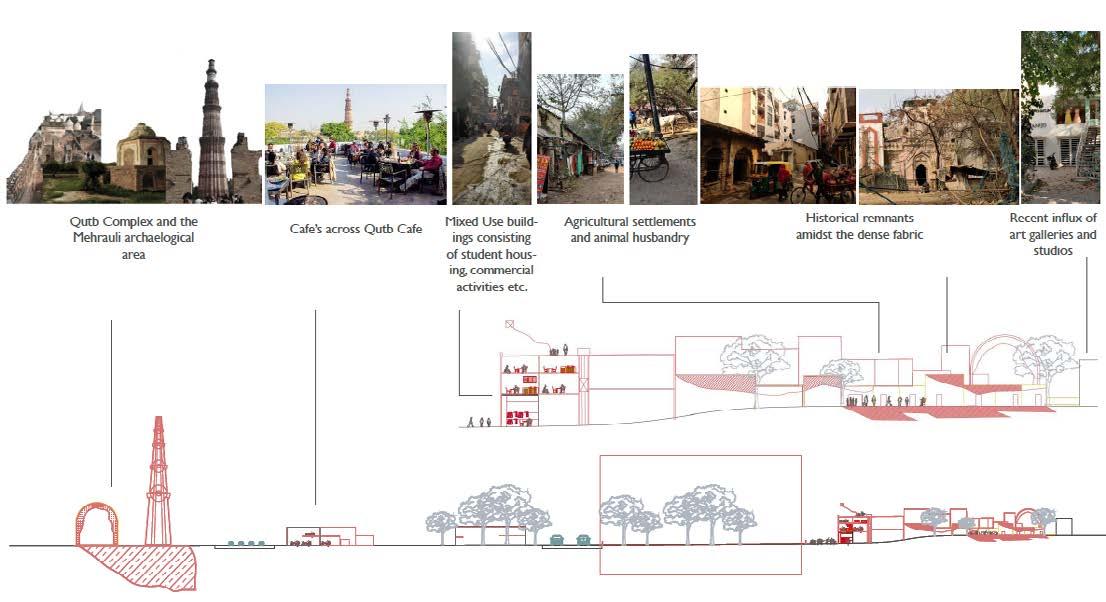
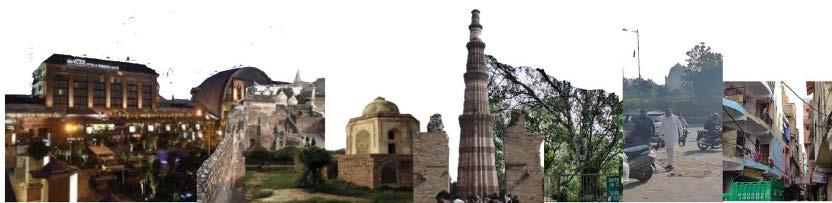

The precinct is one of many urban villages of the capital, and boasts layers of cultural and historic diversity.
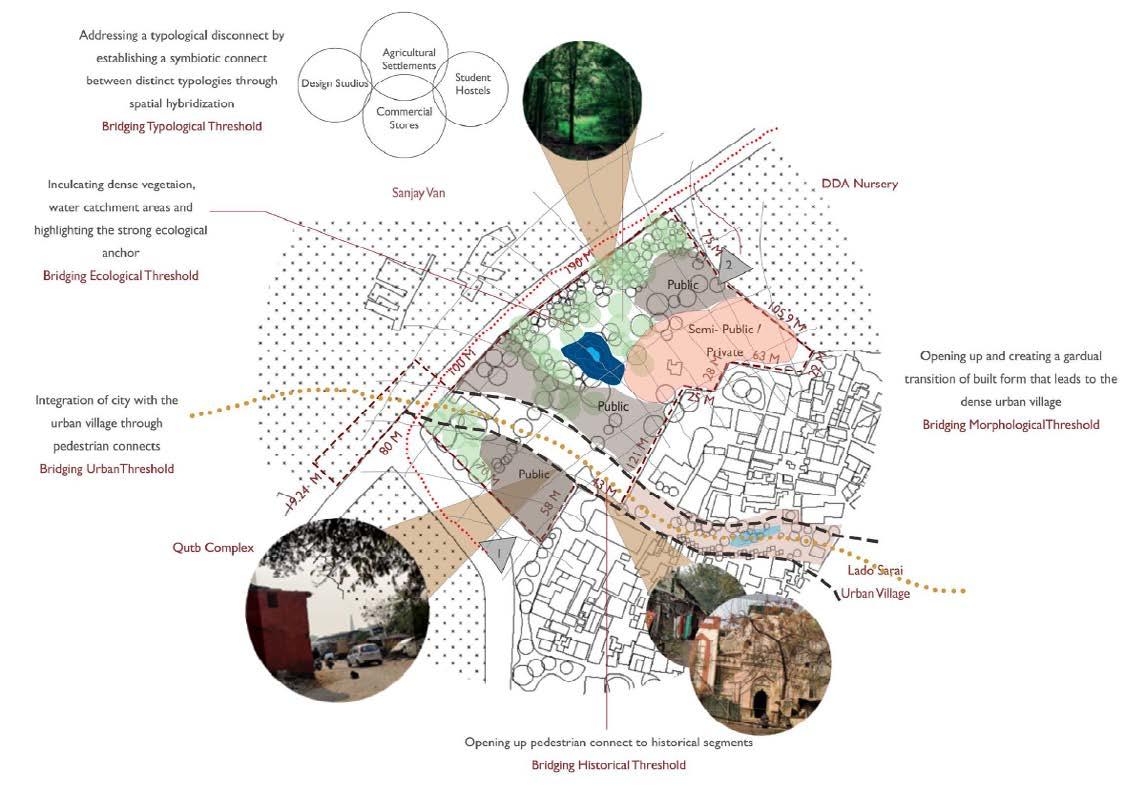
The Site, therefore lies at the confluence of distinct anchors and could potentially become a destination for a plethora of communities and lend a new layer of imageability.
3/4
Site Analysis
The urban village of Lado Sarai largely derives its hybridity of programs by virtue of EPHEMERALITY.
This refers to programs and communities being in constant transition and the precinct absorbs any change into itself.
In order to achieve the objective of blurring the edges and boundaries, I believe it to be necessary to inculcate this ephemeral nature into the design.
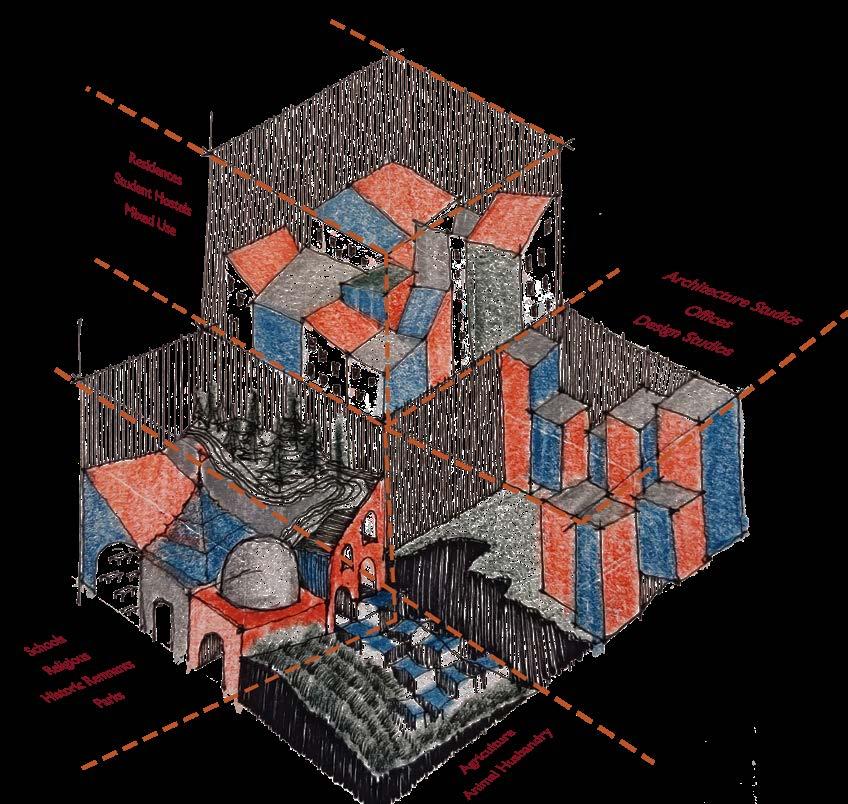
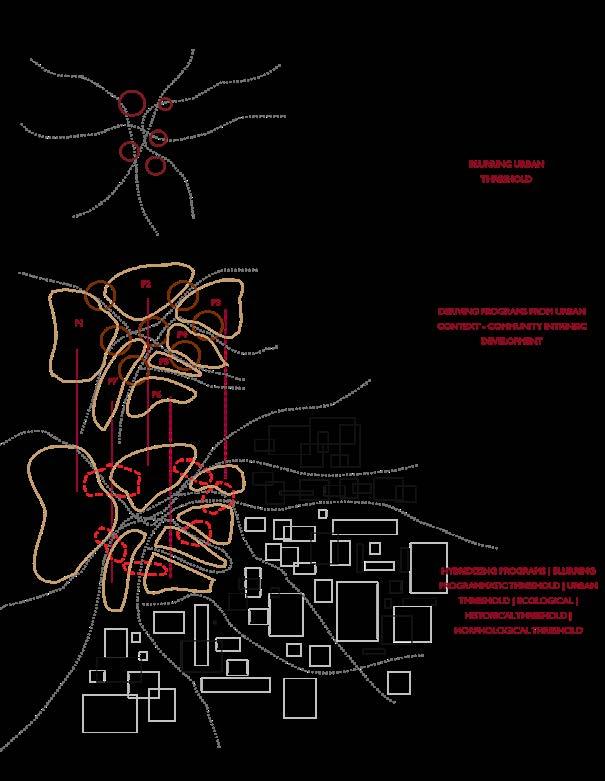
A design that accomodates and welcomes change much like the urban village and is not a stagnant entity that divides Lado Sarai from it’s surroundings.
5/6
Conceptual Development
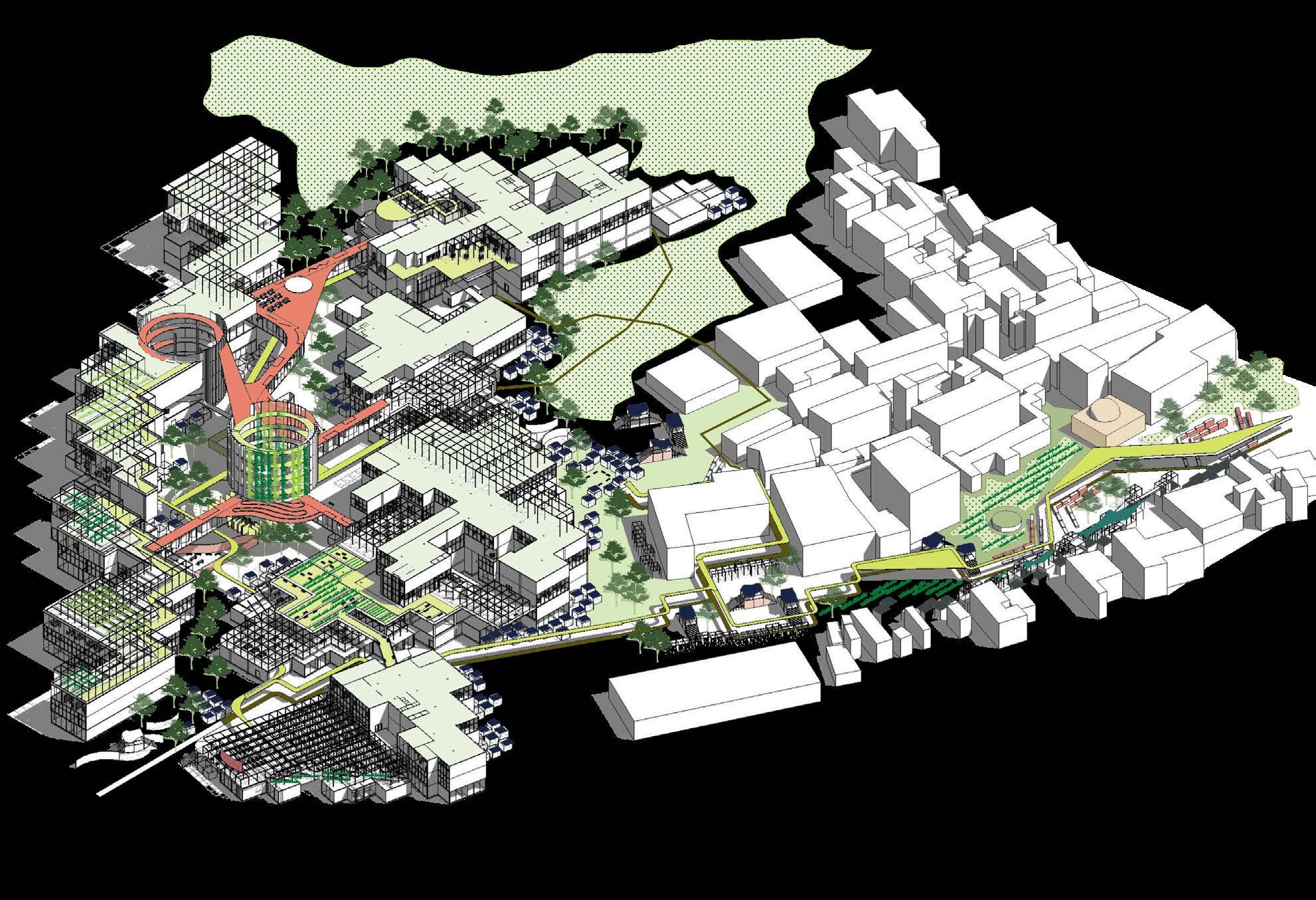
Dismantlable modules attached to agricultural settlements where local produce can be sold
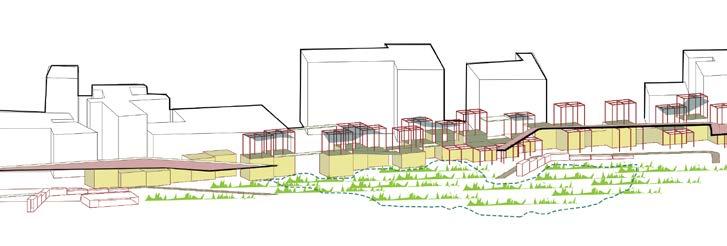
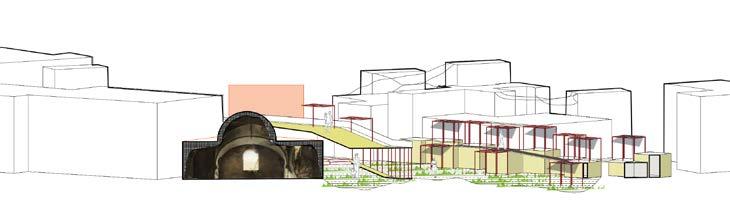
Activating a public space and highlighting the heritage area with urban farming patches and pedestrian bridges and paths.
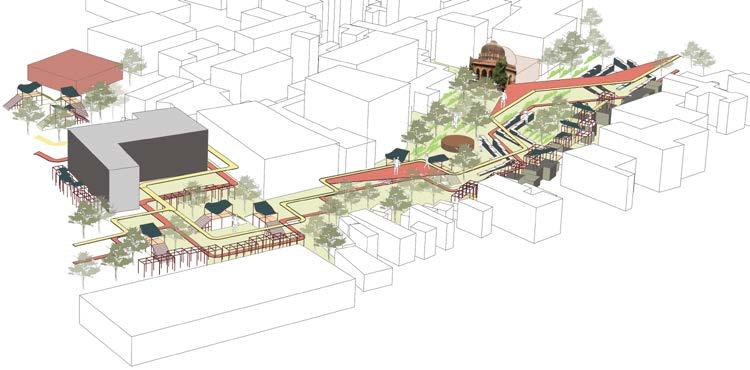
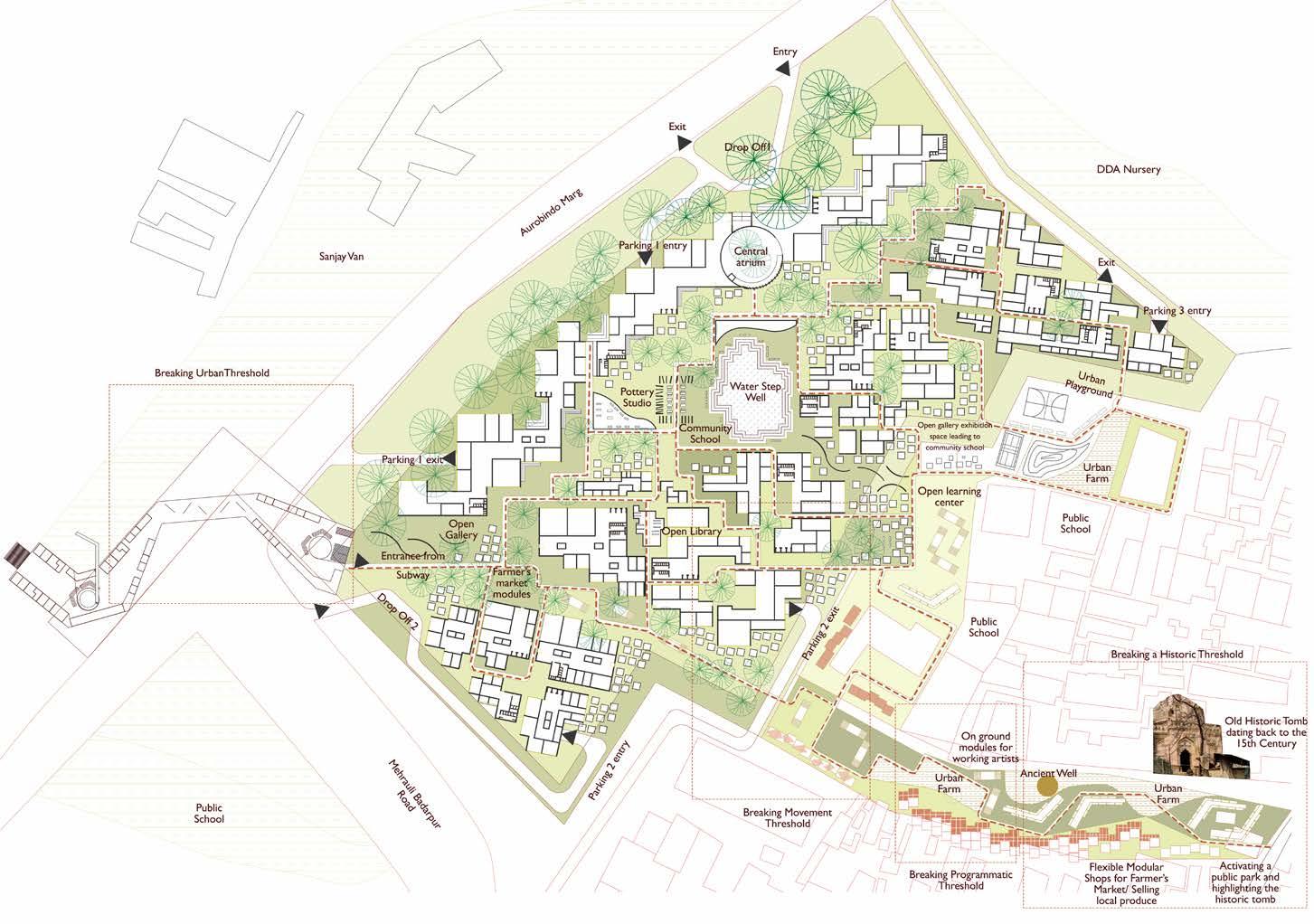
Pedestrian paths and bridges could be used as cycling paths that merge into the building and would in some ways re-instate the connection of the tomb with the Qutb Complex.
Artist modules that could be set up on ground where people could visually see how products are made before they are displayed for exhibition
7/8 Site Plan | Urban Components
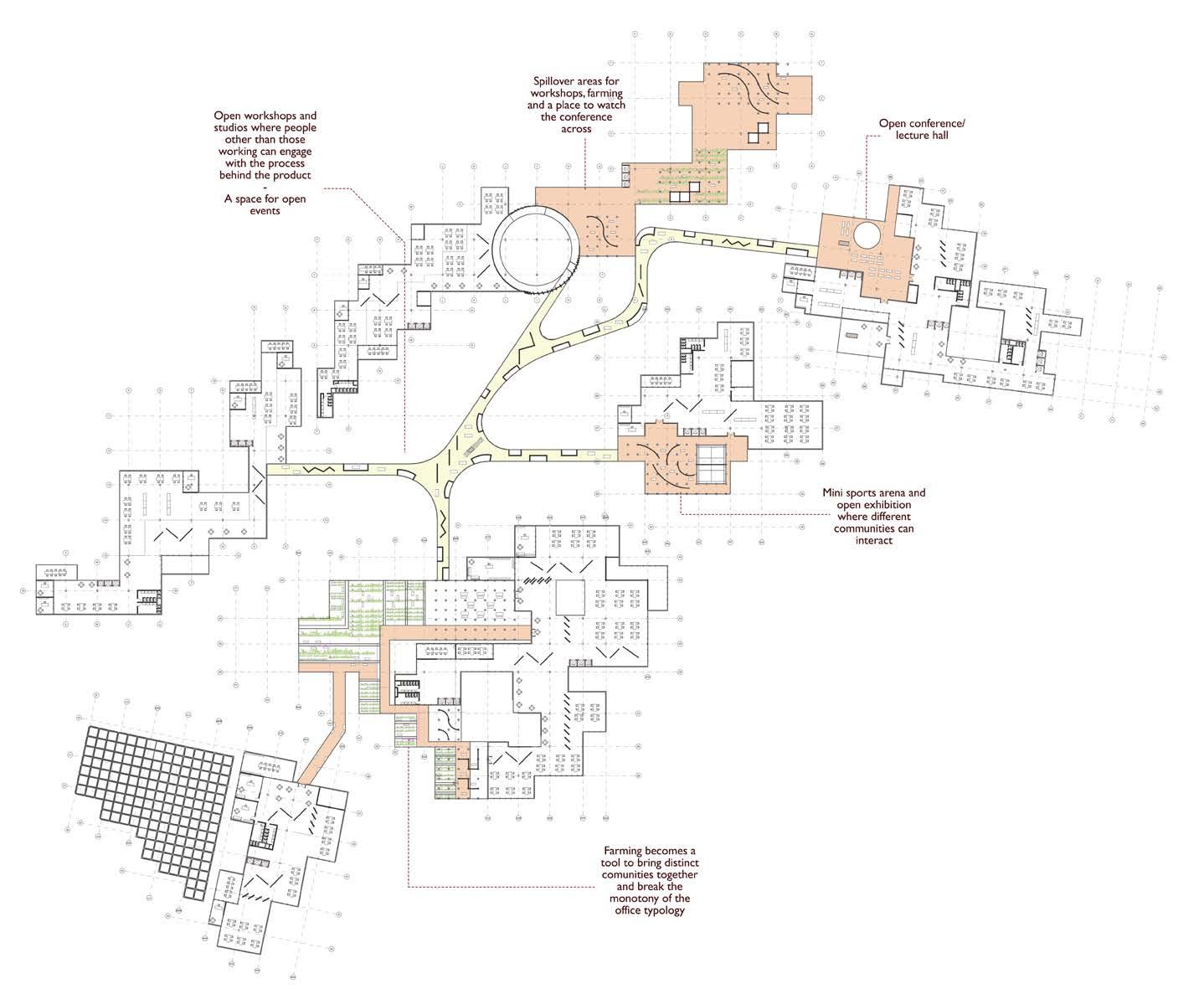
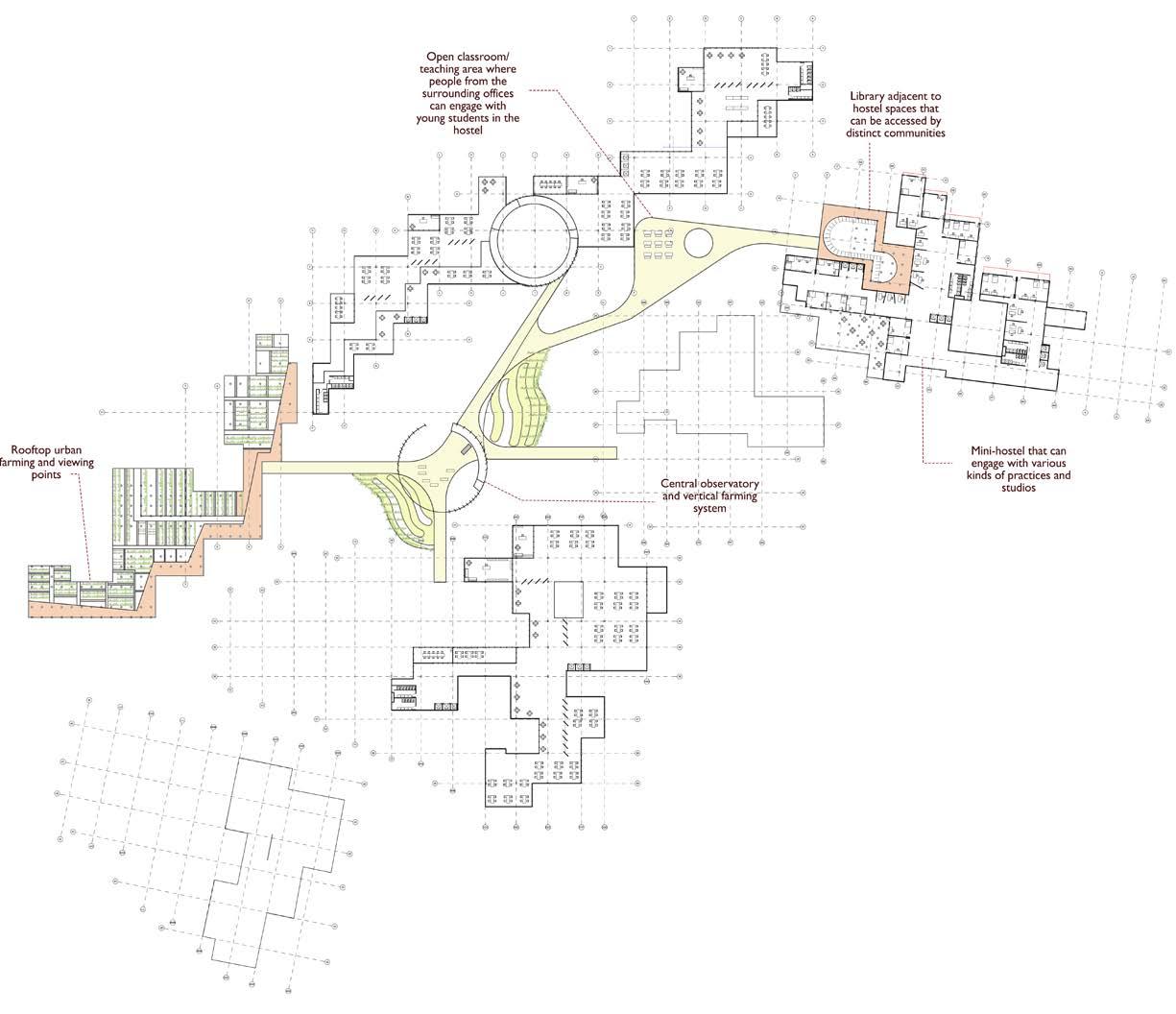
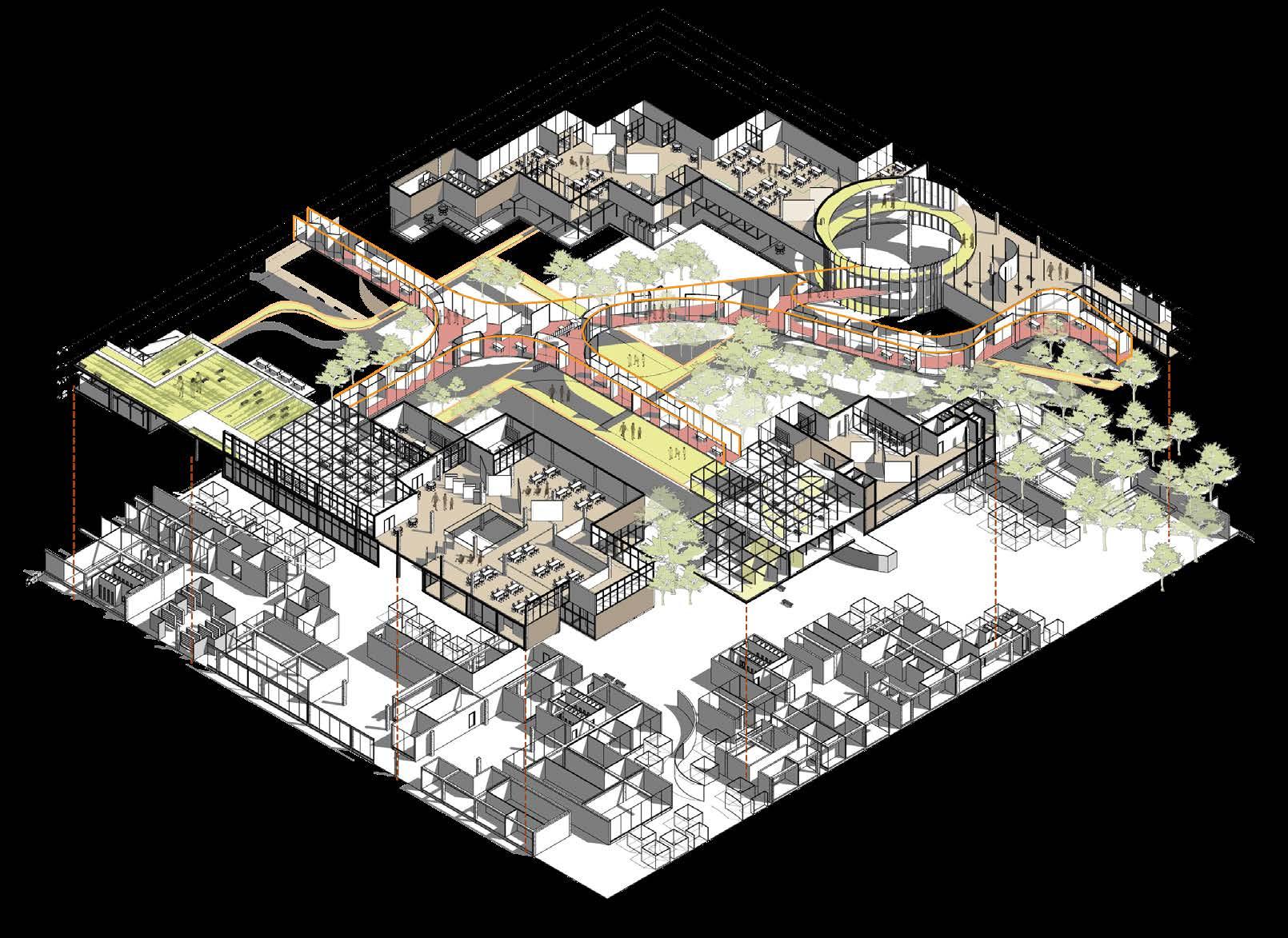
9/10 G+1 Floor Plan G+2 Floor Plan
Shops
Sculpture Workshop Modular markets
Cenral walkway leading upwards
Vertical farming observatory -viewing the Qutb Complex
Hybrid connecting bridges with various functions fostering crossdisciplinary interaction Office spaces
Central green interactive spine with community schools, open pottery workshops etc.
Ephemeral spaces for various possible iterations of typologies
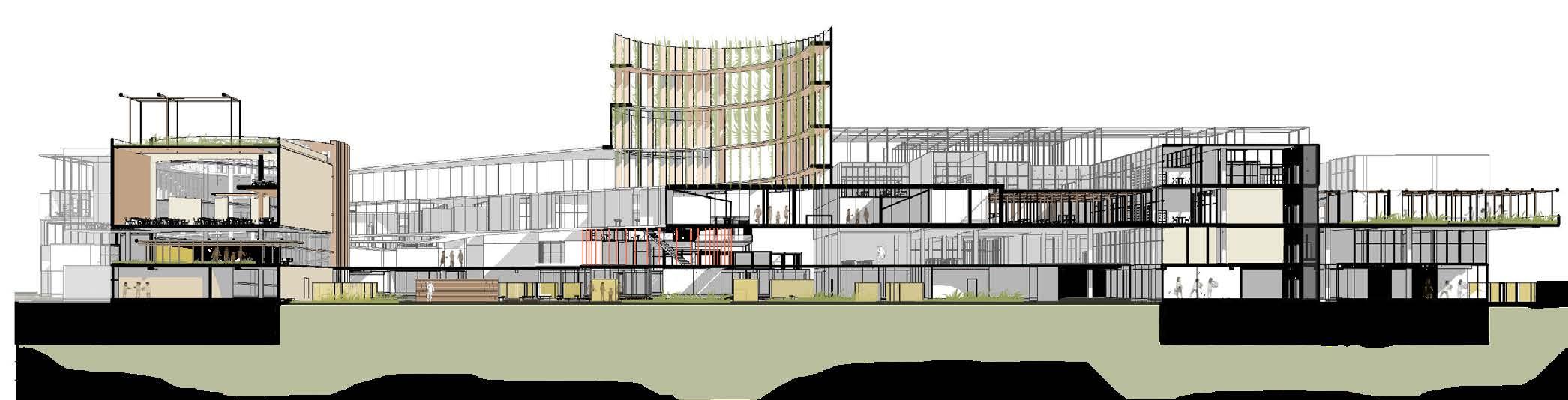
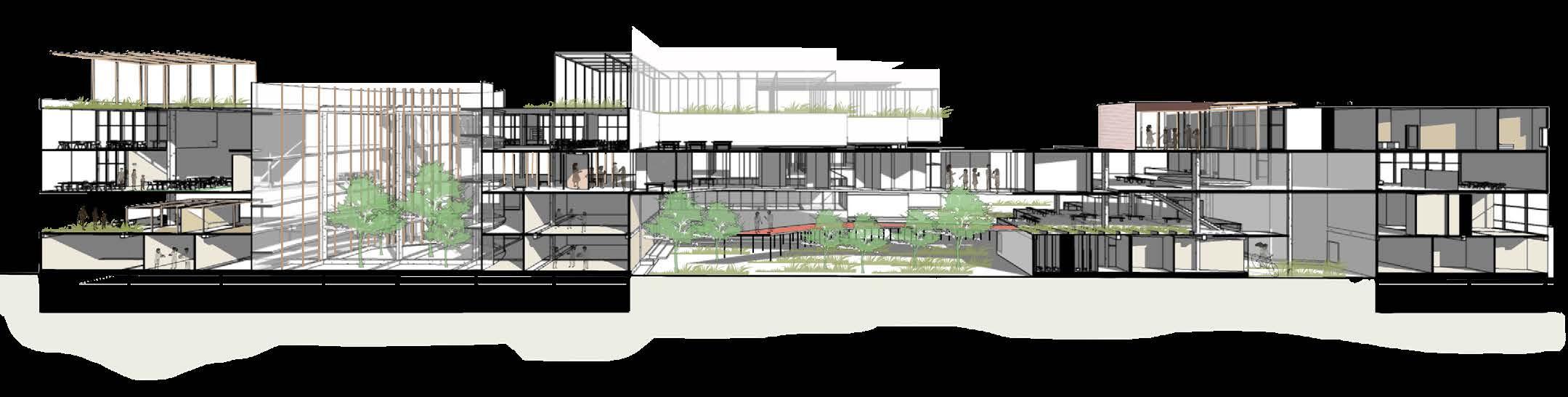
11/12 Section X Section Y +450 G+0 +450 G+0 -3500 -3500 G+1 G+1 G+2 G+2 G+3 G+3 G+4 G+4
Co-Living Hostel Library
Sections
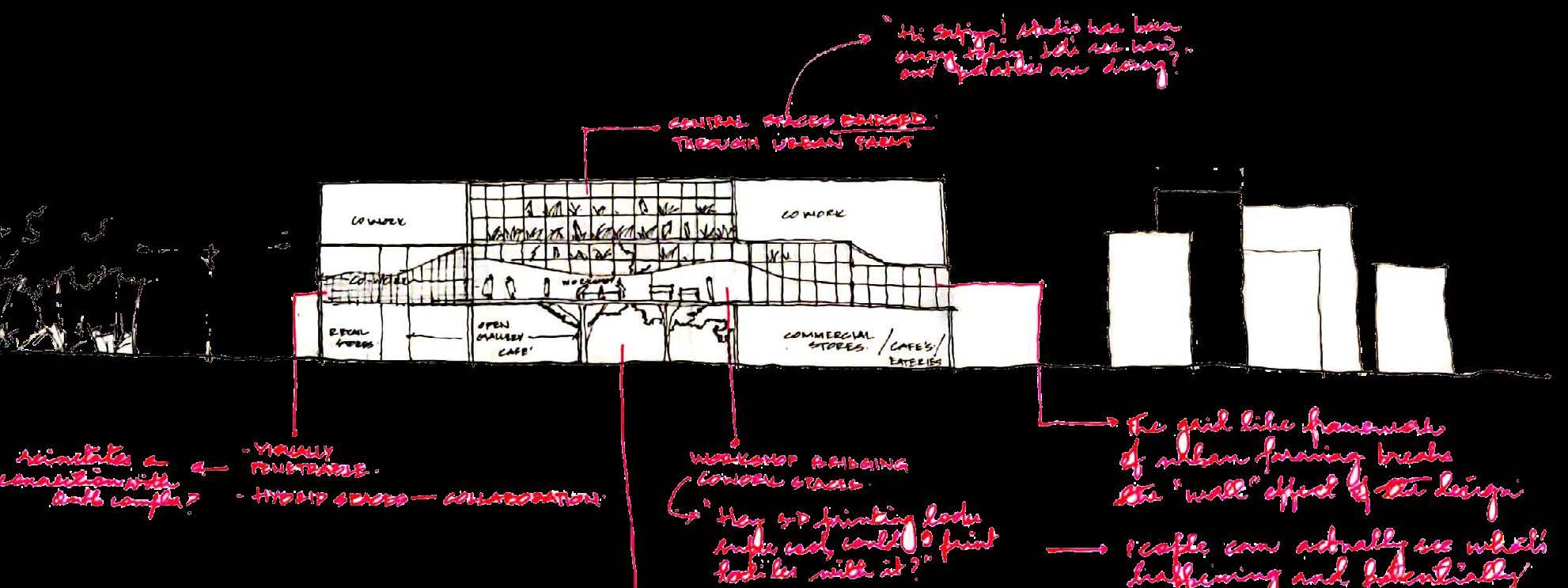
Hybrid bridges with a range of spillover functions that let distinct communities see the process behind the product.
The bridges transition from a pedestrian connect to the village, to a place for concerts and events, to a place for workshops and finally a vertical observatory that establishes a historical connect with the Qutb Complex
13/14
What happens when we blurr the thresholds and challenge the notion of typologies and urbanism as we know it? Can we expect and accept?
15/16
Jigsaw
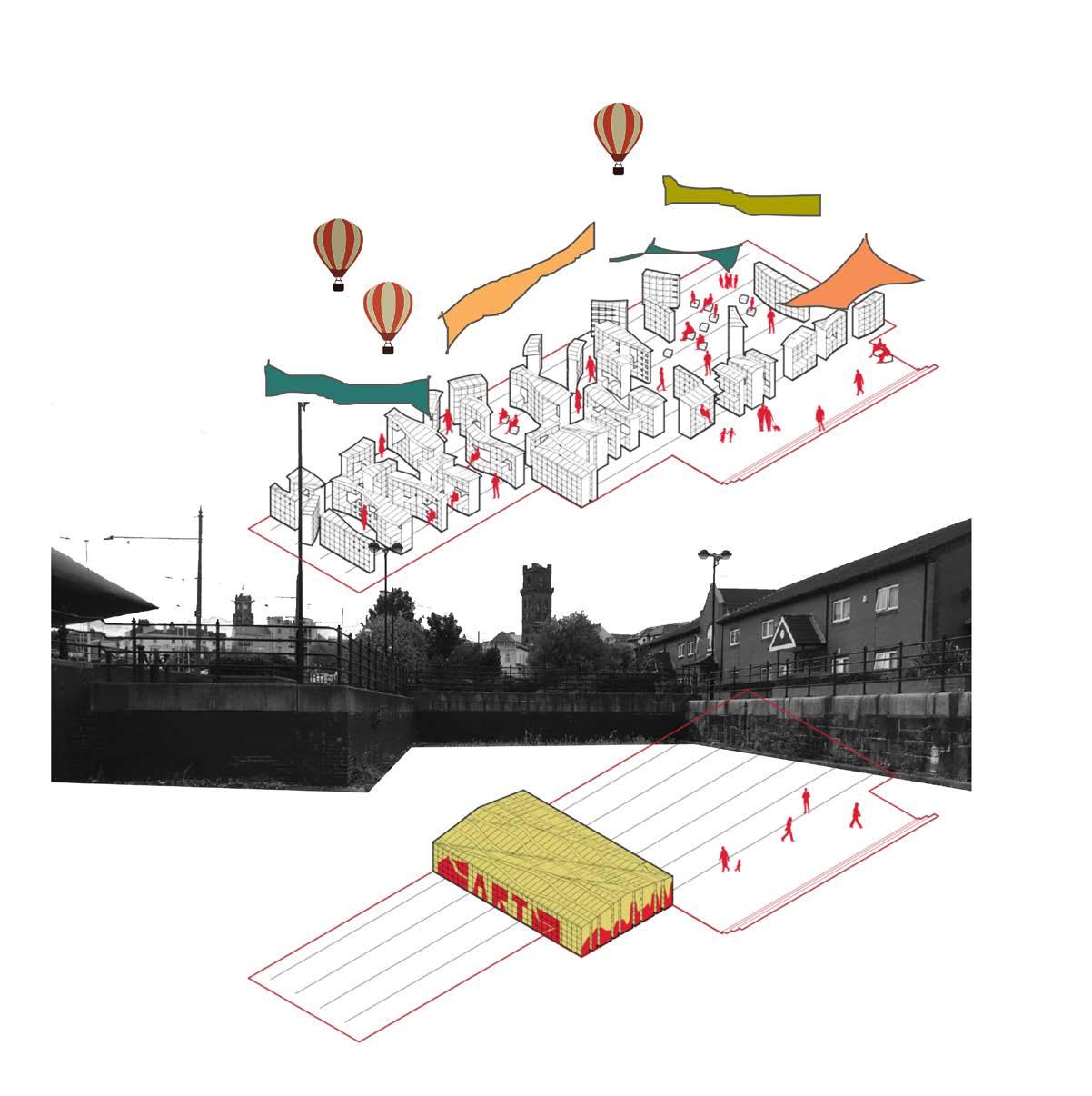
The design brief was to design a temporary structure that would house practical art activities for the local community of Woodside in Birkenhead. Coinciding with the Imagine Wirral year of Culture, the pavilion would host between 2 and 3 weeks of programming run by artists from the local community, designed for children, teenagers and adults.
Jigsaw, as the name suggests, attempts to create a space that can be molded, puzzled and unpuzzled by the users. This promotes interaction whilst making the pavilion a dynamic art piece in itself.
27/28
2019 | International Finsa Award 2019 | Pavillion Design | Team of Two
The project before unfolding mimics the traditional English form of a cabin and stands in rhythm whilst oddly distinct by the shore. Every stage of unfolding leads to a variety of spaces some of which are customized to specific needs and some which can be molded by the user. Over time, the structure which was once bare, becomes unique to Woodside adorned with paintings and sculptures and infinite stories to tell.
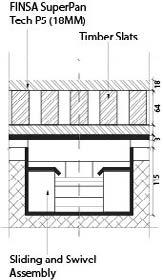
Sustainability and interaction were two factors that drove our design process. The project uses CNC for cutting recyclable palette wood into various shapes and sizes customized according to various art and crafts related needs. These can glide across steel guides placed on the ground and can also swivel and slidemaking spaces for hosting exhibitions, classes and talks.
01. Site-A potential node in the landscape
03. Mimesis-House form falling in place with the landscape
05. Structuring the palettes-An even 2.5 x .5 grid for effective resolution of ‘palette’ modules
Conceptual Process
02. Placing the Folly-Centrally placed interactive folly based on functional considerations
04. Human Scale-Insetting edge to optimise volume and create points of interest
06. Art Palettes-Distributing art palettes along the folly while taking advantage of CNC through curves
01. 02. 04.
03.
06. 05.
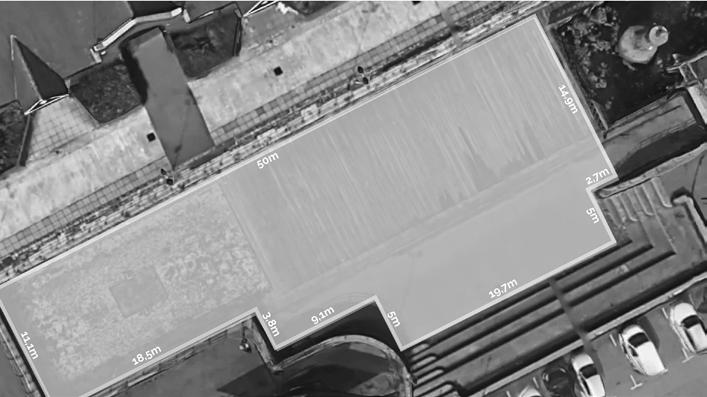
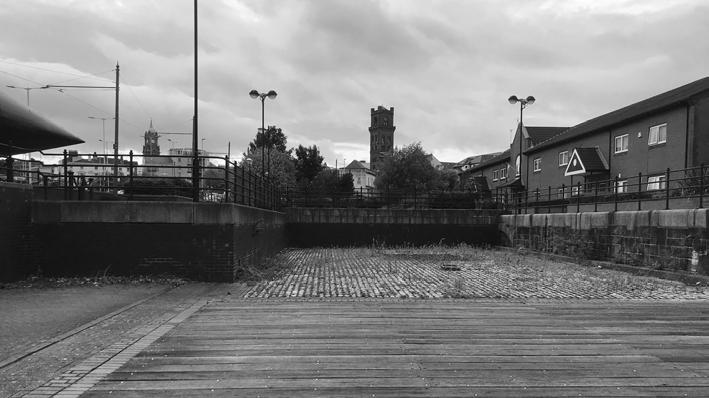
The site is located by the Mersyside river and is surrounded by an old community centre. The dimensions of the site are as indicated above.
29/30
Various iterations of the art pavillion moulded to user needs.
The Art Folly
Defining space around it, the folly in initially a local attraction, peaking curiosity in the public’s mind.
Unfolding
Inaugurated with a talk/ event, the folly unravels to form a stage setting for the public, soon expanding further as more events take place.
A Space for Everyone
Featuring adaptive modules that define flexible spaces. The folly soon explodes into personalised spaces for everyone; artists and public alike.
The Palette Pavillion
A canvas and palette in itself, the folly closes to form an immersive art exhibition for the people, and by the people.
Changing roof and form creates a sense of identity in the unique modules
Customised activites in the various art palettes. Seating/Working/ Display Canvas Storage/ Display Introspective Workspace Interactive Workspace High Seating
flexible
Canvas.
exhibition and storage.
Fabrication and mesh details with a section showing sliding and swivel assembly along steel guides.
with
mounts for
Waffle grid makes for stability and doubles up as spaces for
V1 V2 V3 V4 V5 V6 x2 V7 V8 V9 V10 V11 V11 V12 V13 V14 V15 V16 x2 V17 V18 V19 V20 V21 V21 V22 V23 V24 V25 V26 x2 V27 V28 V29 V31 V32 V33 V34 V35 V36 V30 V31 H 9M 14.9M 2.45M H2 H3 H4 H5 H6 H7 H8 x2 H1 31/32
Not the Grammys
2018| Student Design-Build | Pavillion Design | Team of Five
The design-built workshop was aimed at understanding hands-on building whilst creating a space for interaction. The class was divided into teams of six which resulted in various interventions in the campus.
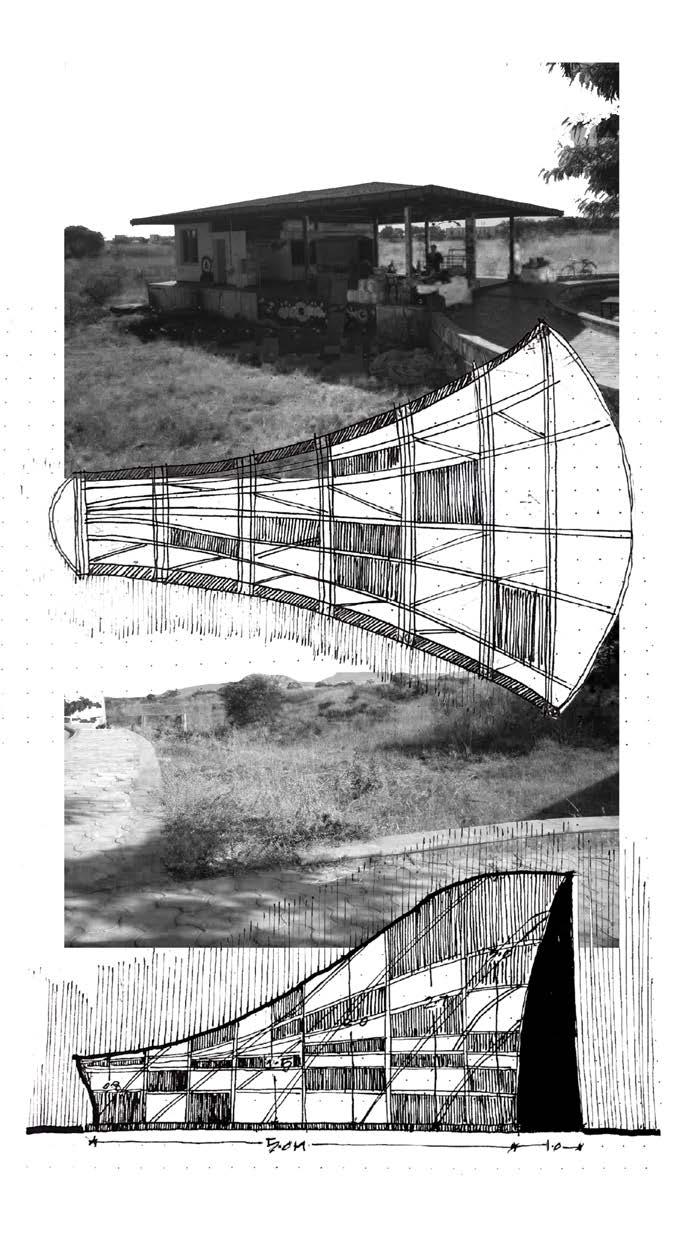
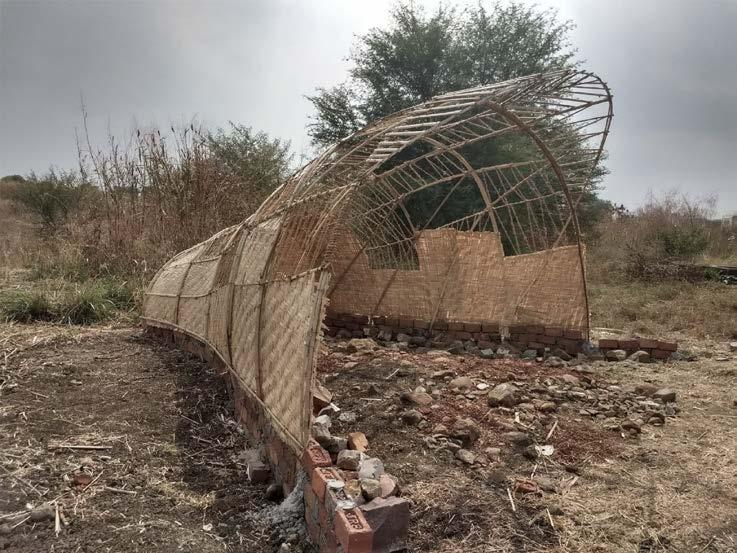
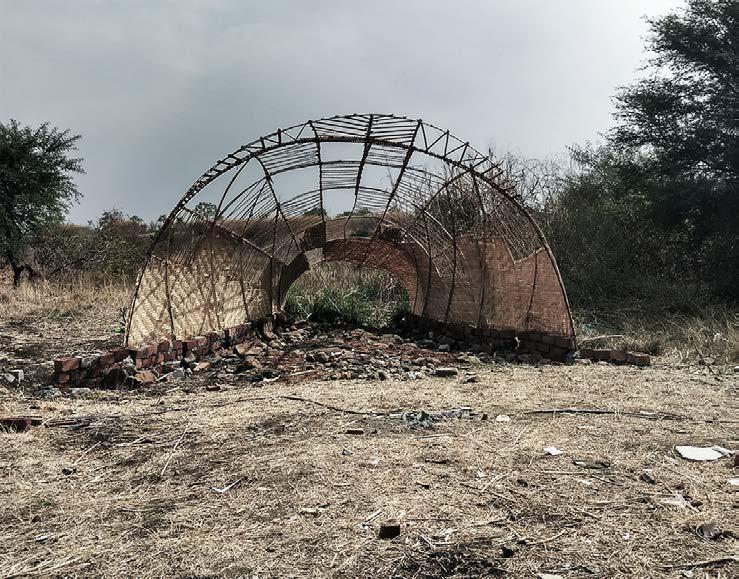
“Not the Grammys” was based on an idea of creating a space for various poetry events that are conducted often. Spoken word poetry is essentially a very closed and secluded event which ideally prefers an environment that is not within the confines of a room. The space is embedded below the road and enveloped by a lake and greenscape. It is an organic form that merges into the context built completely in bamboo.
This was our first design-built workshop and took about four weeks to construct.
33/34
The Base
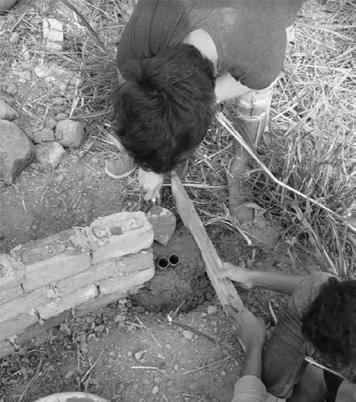
A plinth with three layers of brickwork and intermediate spaces filled with concrete and two cut pipes in which bamboo was to be inserted.
Preparing the bamboo
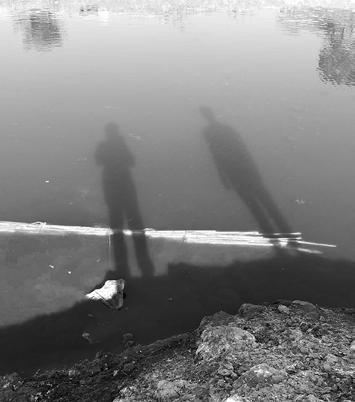
Bamboos were split and tied up to be soaked in a nearby lake overnight. This increased the flexibility of bamboo and made it easier to bend it.
The Framework
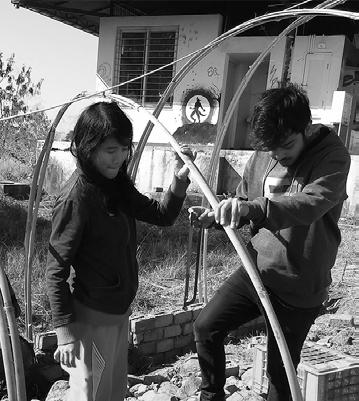
The Hiding is composed of six semicircular rings. Each of these are strengthened by two split bamboos tied close to each other. Transverse and diagonal members are later added to to increase stability and shear strength.
The initial intention was to build a stucture that also amplified the sounds in its interior and created a sort of acoustic nook. However due to time and economic constraints, the acoustic idea was stalled. The structure still stands in our university and we aim to install the acoustic elements in the near future.
The structure is covered in parts by bamboo matt and weaved jute. This assists in shading during the day and a clear view of the stars at night.
35/36 The Process
Professional Works
The Great Room
2022 | Studio Juggernaut | Renovation and Extension | Completed
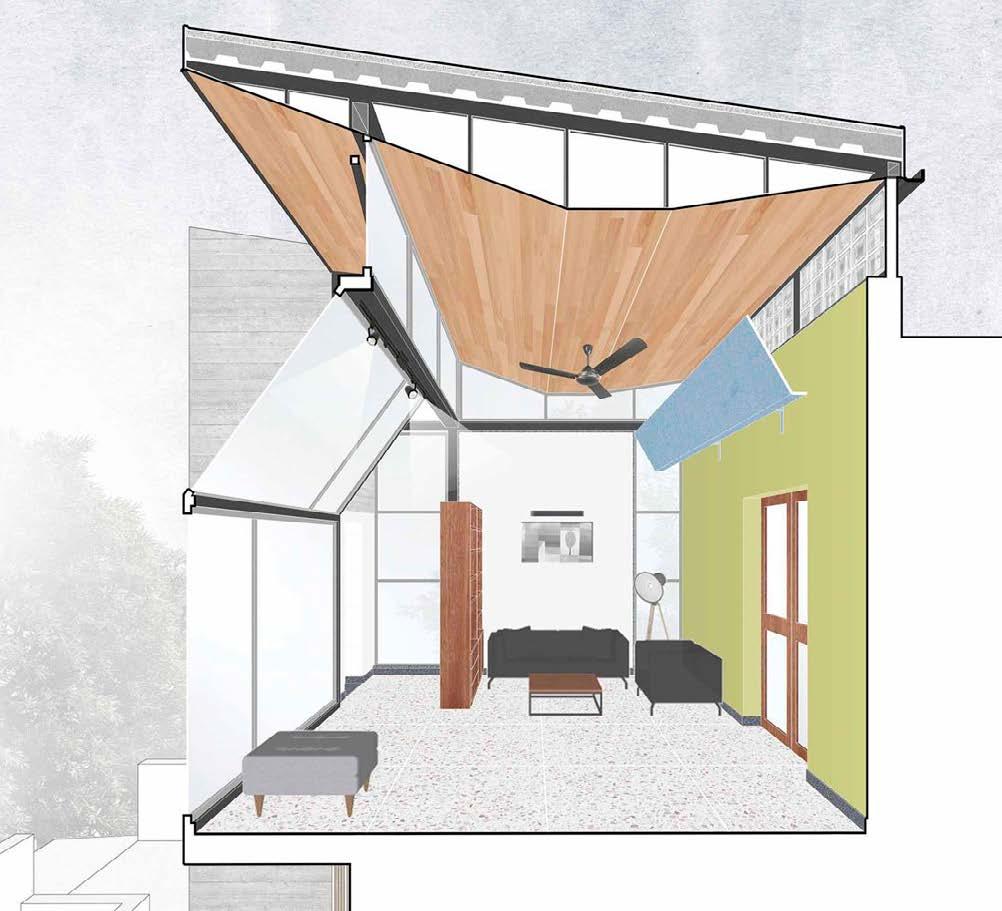
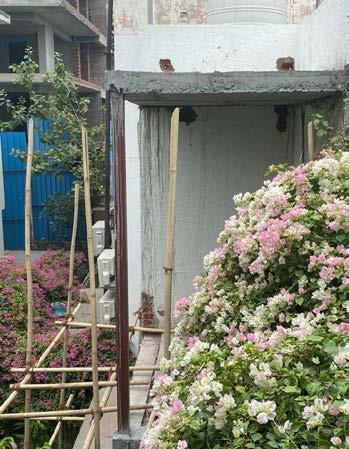
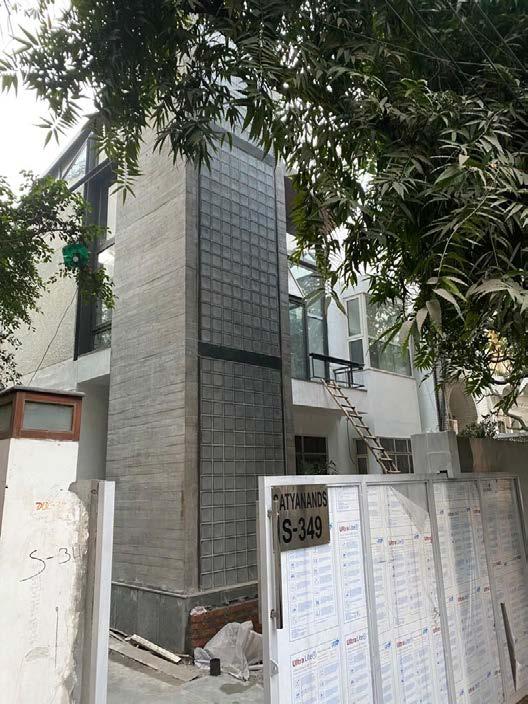
The design brief was to renovate and refurbish a residence located in Panchsheel Park,New Delhi.The primary focus was to add a modern industrial extension to a home that was built in the 1960’s and to make it accessible for its residents.
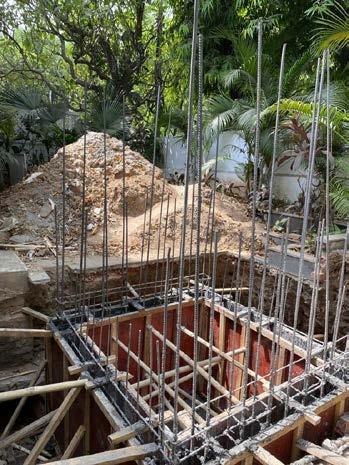
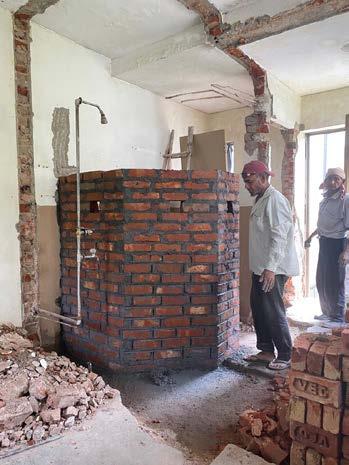
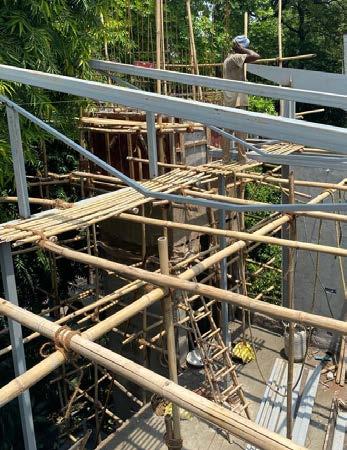
This involved constructin an elevator shaft, steel fabrication and insulating the home from the ever increasing noise pollution in Delhi.
As the project architect, I was involved in construction coordination, designing and supervising.The construction spanned over a period of one year and was one of the first projects I completed after graduation.
NOTES:
1.These drawings are GOOD FOR CONSTRUCTION.
2.Existing site conditions are drawn as per survey drawing; site conditions may vary.
3.Indicated dimensions shall be used in preference to scaling. All the dimensions shall be verified at the site; discrepencies, if any, shall be reported to the Architect immediately and prior to commencing any work where layout will be affected.
4.Contractor shall carefully review all architectural and engineering drawings; any discrepancies shall be discussed with the Architect prior to commencement of construction.
DN UP DN UP 4 ground floor demolition plan 1:100 5 first floor demolition plan 1:100
A B C D E F G 2040 3915 2765 5260 4675 3445 1 2 3 4 5 6 A B C D E F G 2040 3915 2765 5260 4675 3445 6375 1 2 3 4 5 6 UP 110 111 108 107 109 113 112 102 106 105 103 104 101 legend roomname 850 2095 001 002 003bedroom 1 004 005kitchen 006master bedroom 007bathroom 2 008 009bathroom 3 roomname 010 010 009 008 007 006 005 002 003 004 001 011 011 900 900 2610 b01 b02 store room b03store room roomname demolished upto 2100 from ffl demolished upto 2400 from ffl demolished upto 2100 from ffl demolished upto 2100 from ffl concrete slab above the KOTA stone flooring to be demolished demolished from 950 to 2100 demolished upto 2100 from ffl plumbing pipes to be rerouted excavation upto 2000mm for lift pit 565 2780 The Construction Process
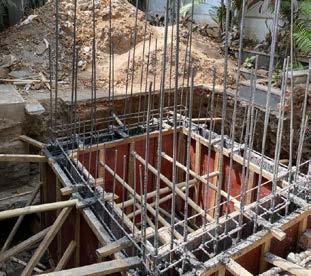
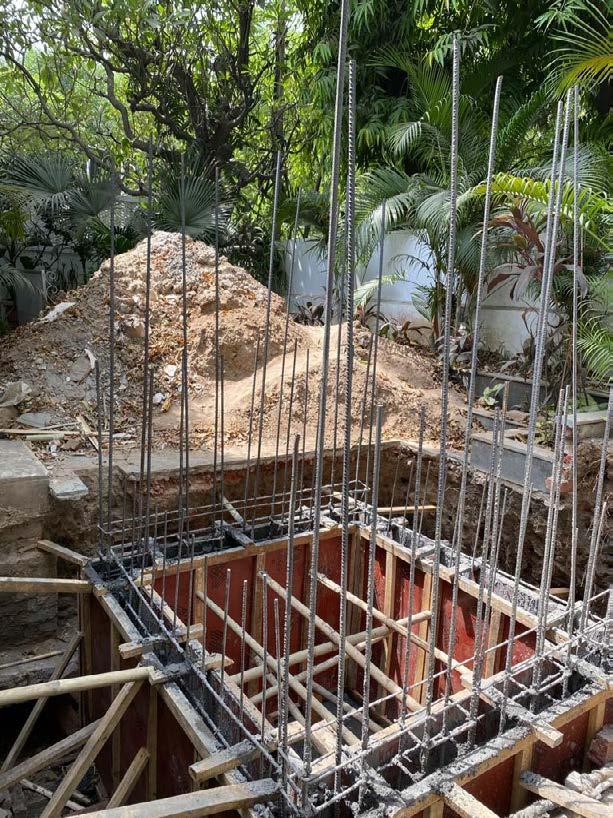
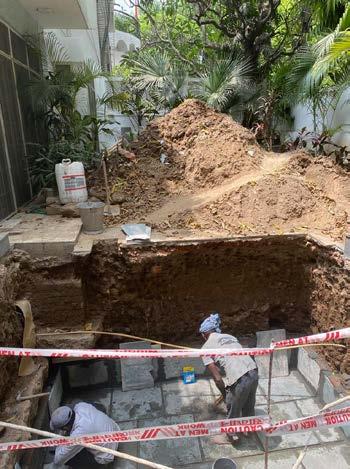
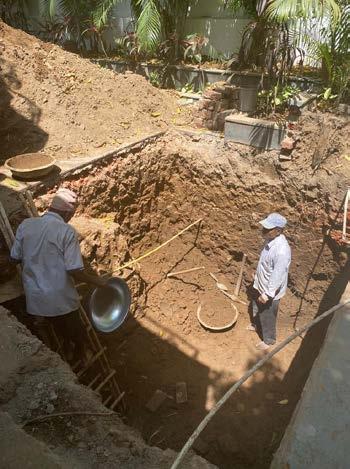
The elevator shaft with exposed horizontal boardform concrete
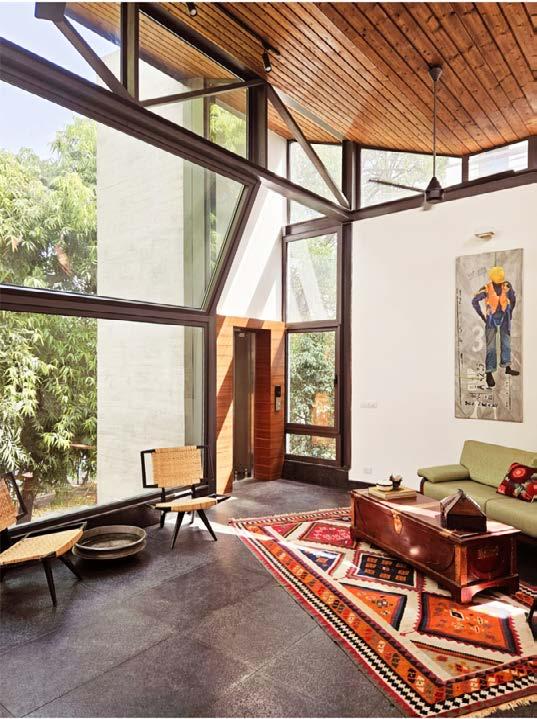
The Great Room after construction
s - 349 F G 2 3 4 5 101 3445 1555 900 750 2570 1100 1800 4520 N E S W 1 101 x101 i101 x107 x110 new masonry wall with 15mm plaster 1 1 103 x112 refer sheet a3.1 for wardrobe details slab extension for new bay window see sheet a2.1 and structural engineers drawings for details 1 proposed loggia & bedroom plan 1:30 101loggia 102bedroom roomname x102 x103 2 loggia & bedroom flooring plan 1:30 x111 1A 3 2 3 existing wooden flooring 100 mm granite skirting A B C MS frame for the glazing system 10mm thk granite stone ffe: 3.65 m ffe: 3.65 m dw3 custom section beam 5 200mm thk AAC blocks 15mm plaster
The Guest Room Plan
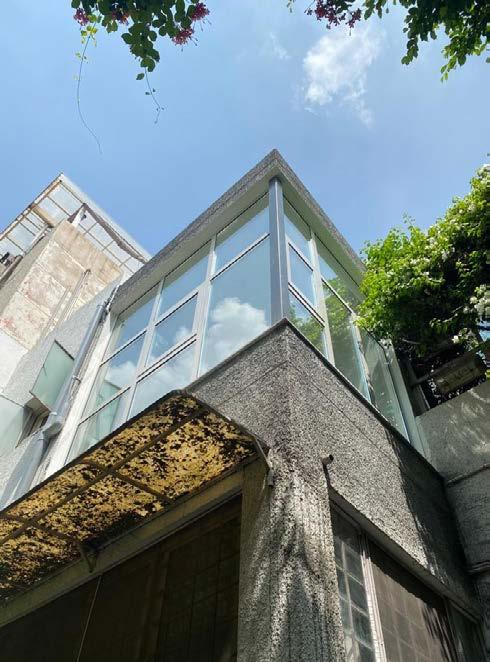
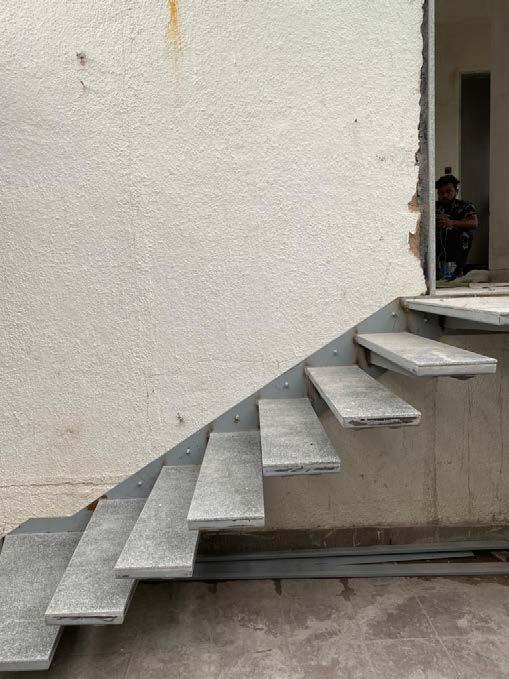
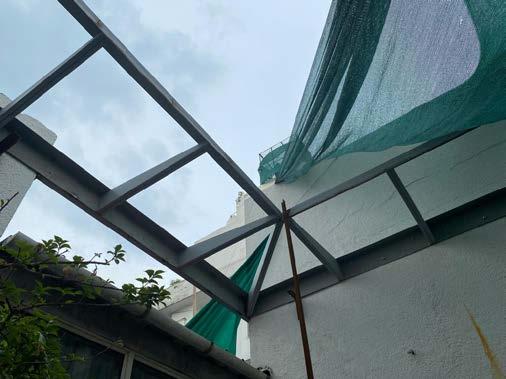
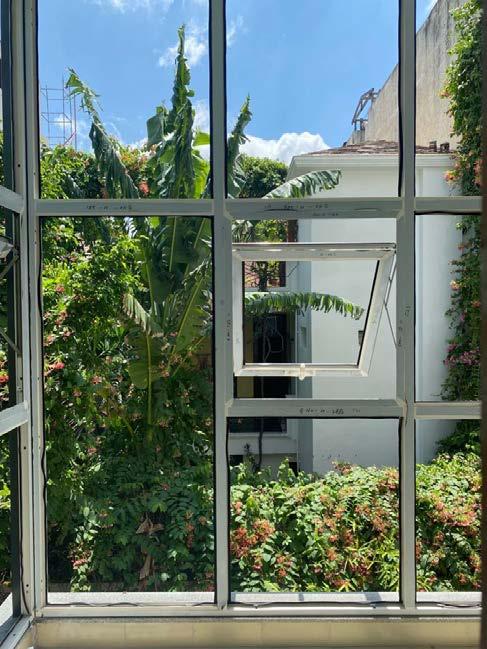
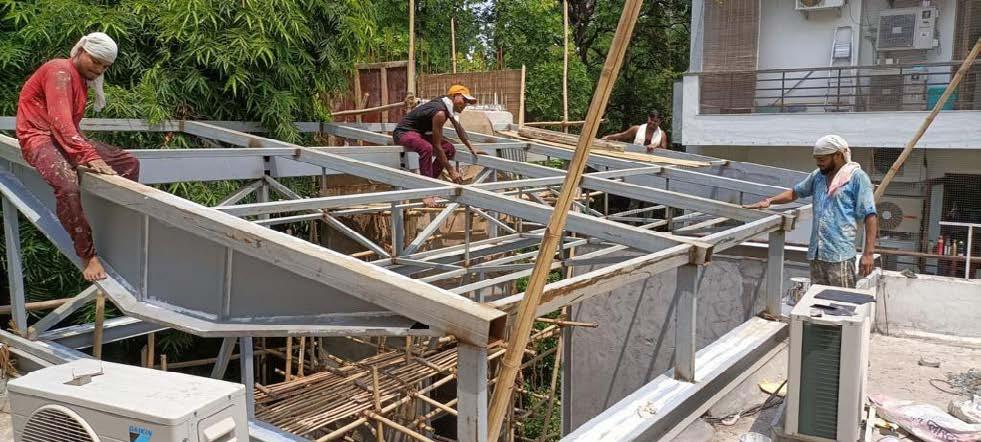
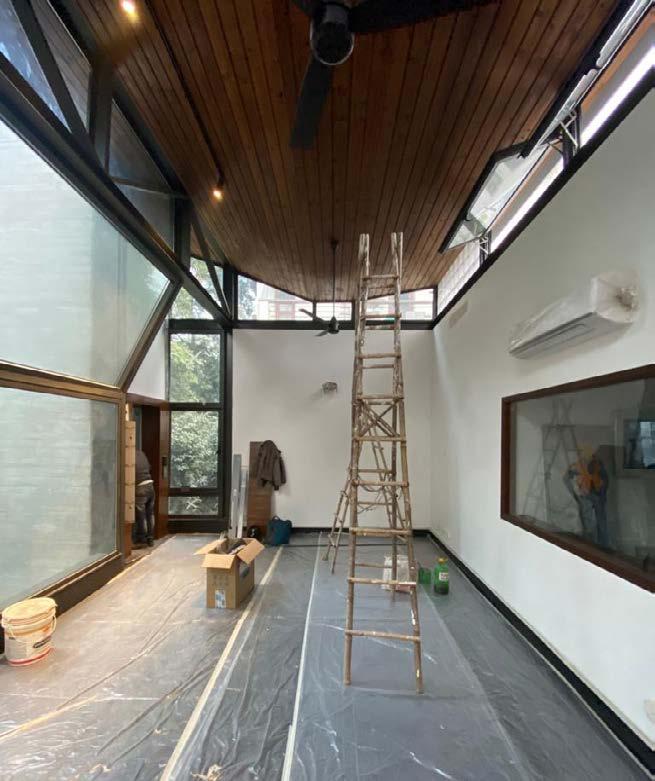
The guest room and the yoga room were other parts of the renovation project and also involved steel fabrication.These are some photographs of the construction process
The Yoga Room Plan
SB SB DN DN SB PHONE AC PHONE proposed, RCP and s-349, panchsheel 100% construction NOTES: 1. These drawings 2. Existing site drawing; site 3. Indicated dimensions scaling. All the discrepencies, immediately and layout will be 4. Contractor engineering drawings; discussed with of construction. reflected ceiling plan 1:30 3 flooring plan 1:30 1 proposed second floor plan 1:30 legend flooring legend 4 electrical plan 110 111 110 110 111 1 4 5 6 A B C 4 5 6 4 5 6 4 5 6 A B C N W 1 201 202 203 x201 x202 refer sheet a3.1 for wardrobe details 3150 985 2040 3915 3150 985 3150 985 3150 985 2040 3915 900 900 2175 3675 3985 3120 750 1500 575 1915 360 900 2900 425 2445 1240 new masonry wall with 15mm plaster eq 1200 1200 850 2200 2675 1440 900 SB4 SB3 SB2 legend name specifications AC PHONE 350 450 refer sheet a5.1 for railing detail guest guest guest name 1 125 1235 dw1 2 1B 1A 1A 1B 1B wooden flooring x203 ffe: 6.05 m B A C 2040 3915 2 3 4 W 1 112 114 2060 109 1 201 dw2 970 x115 refer sheet a5.3 for staircase details refer sheet a5.3 for bamboo screen details 3665 1 terrace and yoga room proposed plan 1:30 1 2 terrace and yoga room flooring plan 1:30 B A C 2 3 4 ffe: 4.65 m ffe: wooden shelf refer sheet a4.2 for wardrobe details overhead canopy, refer sheet a4.3 for details wooden flooring E C x116 x114 powder coated aluminium glazing w/ DGU 35mm dia bamboo sections
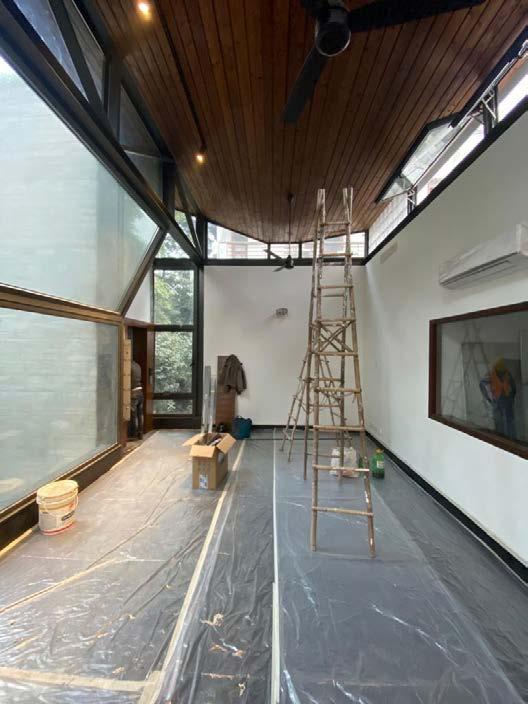
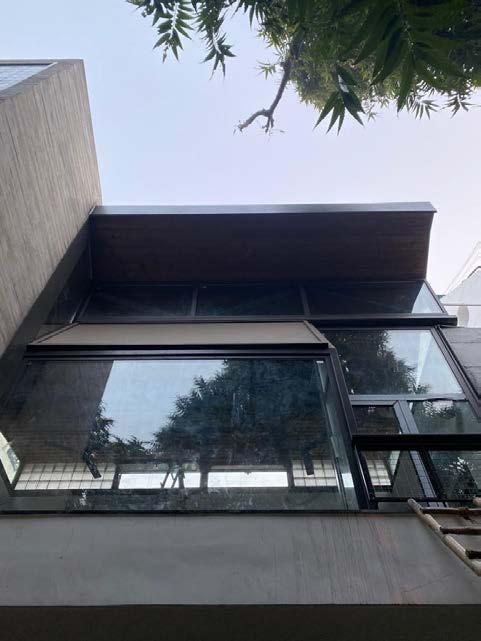
The steel fabrication was followed by involving the glazing team that installed double glazed units to insulate from the sounds. Moreover, the electrical and lighting system was organised and concealed in coheasion with the steel which was then wrapped with a wooden false ceiling.


A dark granite floor,tall glazings and a boat shaped ceiling created a sense of space and grandness
vertical components Studio Juggernaut on A3 a1.4 Delhi Office: C 7/125,Safdarjung Development Area,Delhi, India, 110016 Tokyo Office: 2-9-12-803 Minami Ikebukuro, Toshima-Ku, Tokyo, Japan, 171-0022 Contact +91-11-46010192 +91-11-41014659 New Delhi, India N elevation for C6 1:25 construction design C2 C2 C2 C2 C2 C8 C8 C8 C8 C6 C1 C3 C4 C5 C7 C1 cross-section for C1,C3,C4,C5,C7 (20x20x4 SHS) C3 C4 C5 C7 (98X45X4.8 RHS) I-section with 5mm thickness for C6 elevations for vertical components C2 C8 C8 diagonal member C9 elevation 4.8mm thick rolled hollow section C9 C9 C9 C9 C10 C12 C13 C11 C12 C11 C13 elevation for C13 quantity dimension (wxhxt) length member type C1 C2 C3 C4 C5 C6 C7 C8 C9 C10 C11 C12 C13 C14 63mm 659mm 390mm 340mm 485mm 205mm as per drawing 970mm as per drawing 3090mm 3350mm 2100mm 20mm x 20mm x 4mm 98mm x 45mm x 4.8mm as per drawing 20mm x 20mm x 4mm 20mm x20mm x 4mm 20mm x 20mm x 4mm 20mm x 20mm x 4mm 96mm x 48mm x 4.8mm 72mm x 72mm x 2mm SHS RHS SHS SHS SHS I-section SHS RHS SHS SHS SHS SHS SHS C-section 5 5 5 1 5 5 5 5 4 1 3 2 2 1 as per drawing 5100mm 75mm x 75mm x 2mm 300mm x 200mm x 2mm 96mm x 48mm x 4.8mm 1 a1.4a1.4 axonometric showing vertical members C11 72mm x 72mm x 2mm 72mm x 72mm x 2mm 150 C14 06 June, 2022 horizontal components Studio Juggernaut on A3 a1.2 Delhi Office: C 7/125,Safdarjung Development Area,Delhi, India, 110016 Tokyo Office: 2-9-12-803 Minami Ikebukuro, Toshima-Ku, Tokyo, Japan, 171-0022 Contact +91-11-46010192 +91-11-41014659 New Delhi, India N plan of B1 (100x100x4 SHS) plan of B2 (32X32X2 SHS) plan of B3 (4mm thick custom hollow section) plan of B4 (96X48X4.8 RHS) 4752 6600 6600 6600 1:25 construction design 100 32 elevation of B5 (32X32X2 SHS) 4 mm thick metal plate 100 B6 48 48 32 elevation of B6 (4mm thick metal plate) 700 45 100 700 129 45 profile of B6 1 cross-section 1:10 2 elevations 1:25 B1 B2 B3 B4 B5 150 06 June, 2022
The steel fabrication process for the great room
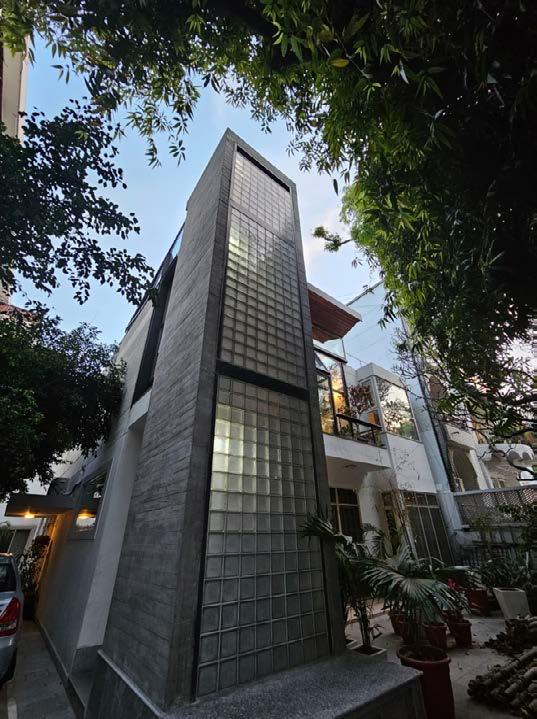
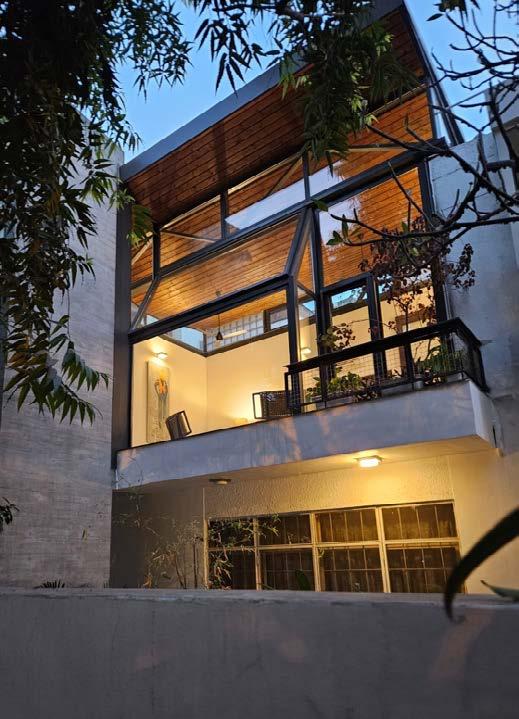
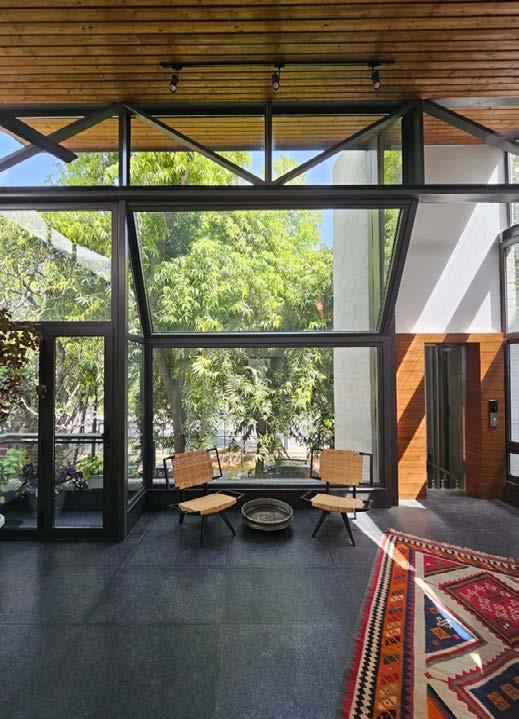 Final images for S349,
Varanasi House
2022 | Studio Juggernaut | Residence Design | Ongoing
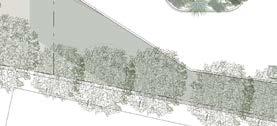
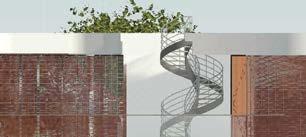
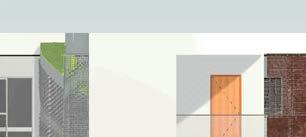
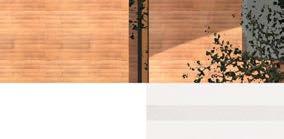
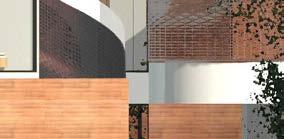
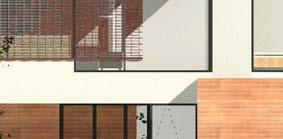
The design brief was to design a residence for a family of four in Varanasi.The design approach was modern and sculptural that met with the diverse needs of the family of four.
After various discussions and ideas, the agreement was to design a space that was organic and amalgamated in a seamless manner with the heavily forested site. This involved the use of rammed earth, and various courtyards to accomodate the greens.



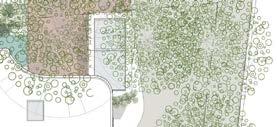
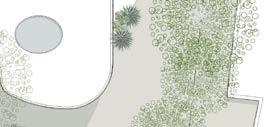


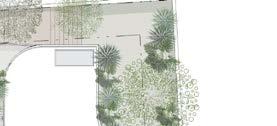

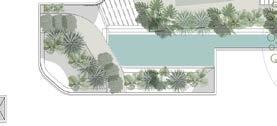
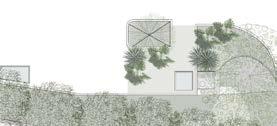


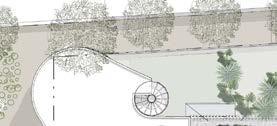

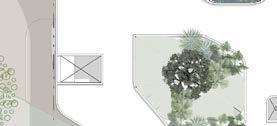








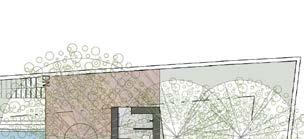

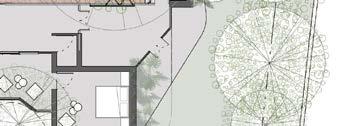
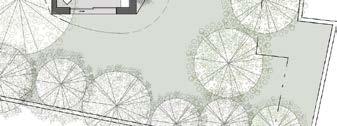

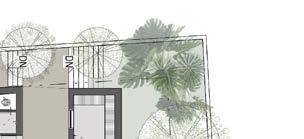
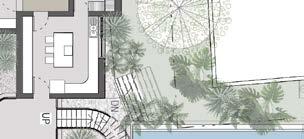

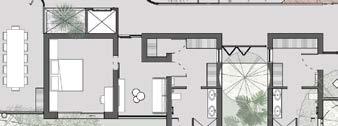
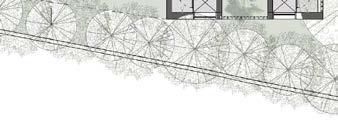

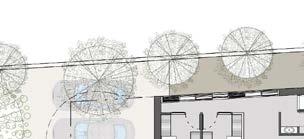
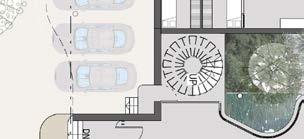

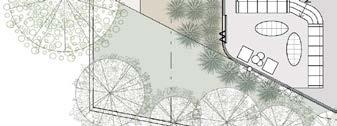


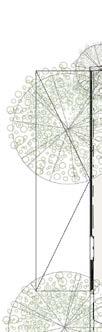











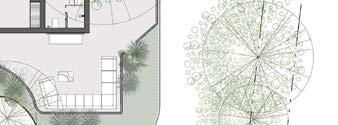
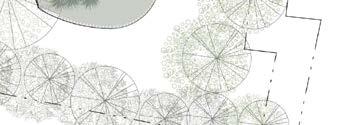

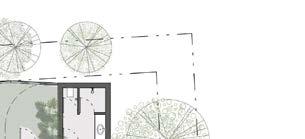
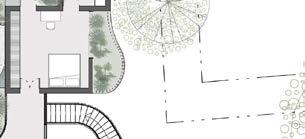

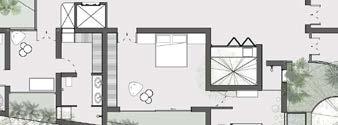

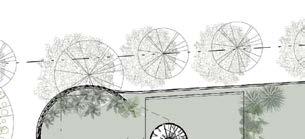
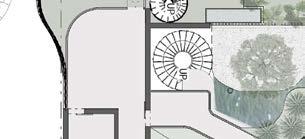

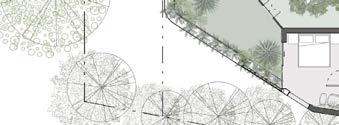






site plan 9630 sqft built up area
ground floor built up area 5209 sqft first floor built up area 4420sqft
ground floor plan first floor plan
East Elevation
south elevation
South Elevation
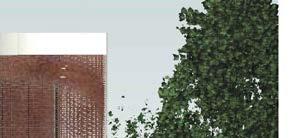
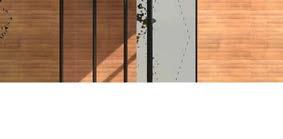

east elevation






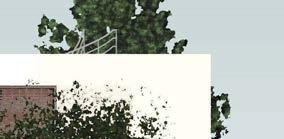

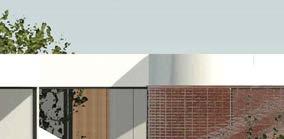





The climate bubble
2023 | HIAL | Passive solar retrofit | Design Proposal
As part of the team at HIAL,I was working towards an innovative project that is a step towards making the Indian Army carbon neutral.
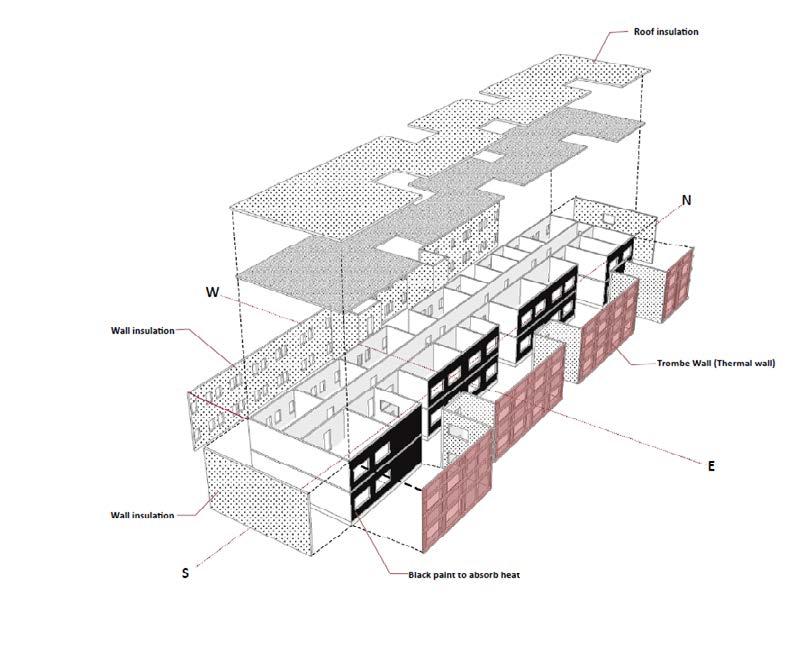
The 14 Corps Army Headquarters in Leh is one of the main headquarters that is key in managing military operations in Ladakh. However, owing to the extreme temperatures, the building used a central heating system in addition to kerosene heaters to maintain a comfortable temperature. This adds to the carbon footprint of Ladakh, poses health hazards and increases the overall maintenance cost of the building.
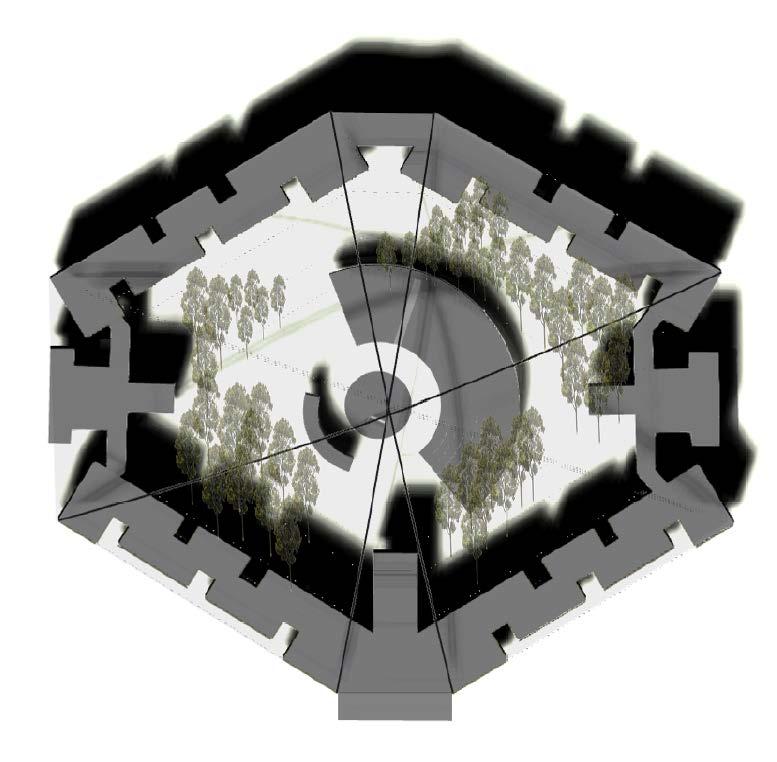
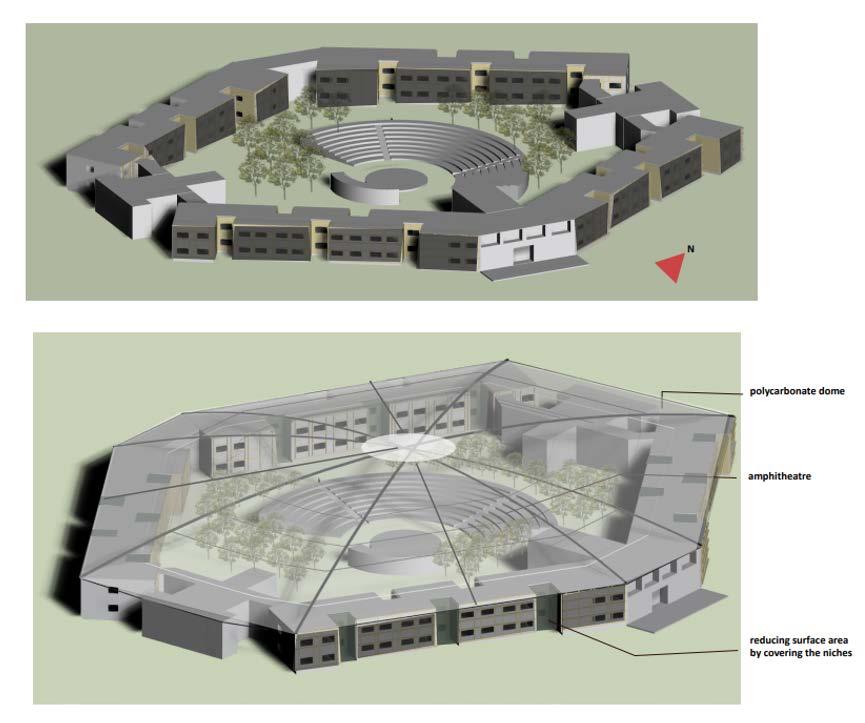
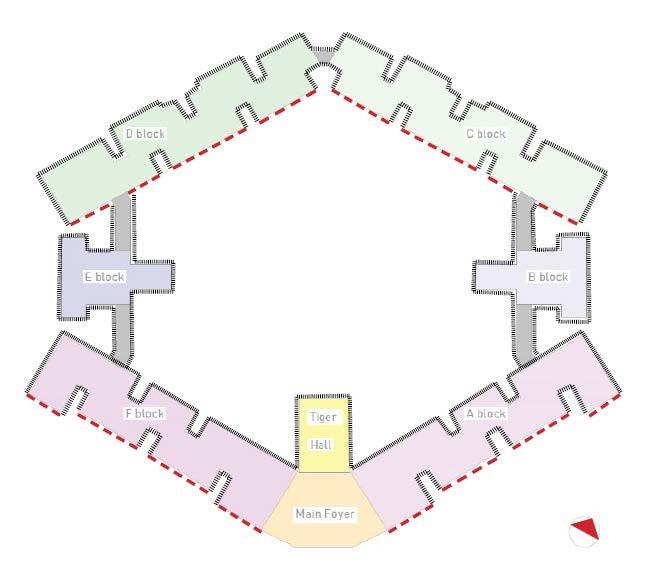
Keeping in mind the above factors, we proposed to retrofit the building in a way that makes it completely passive solar and cuts all dependency on fossil fuels. A key component in this retrofitting process is a central dome that would cover the entire building and would essentially trap all the heat and function like a greenhouse.
The total area that would be covered by the dome is 5877.13 square meters. The external perimeter is 520.15 meters. The internal courtyard area is 3561.54 square meters and the internal perimeter is 344.55 meters. The span of the dome is 90 meters. The areas are indicated in a schematic diagram attached in this mail for your reference. The dome would consist of steel girders as a support system which would have the dead load of polycarbonate sheet which would cover the dome.
Proposed design views

Solar Tent
2023 | HIAL | Solar shelter | Production
As part of the team at HIAL,I worked towards the production of the solar tent.
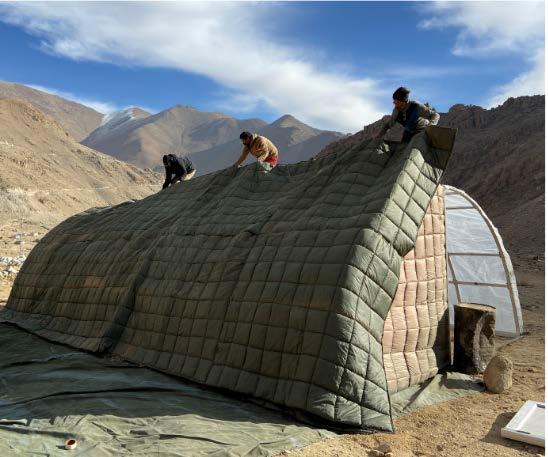
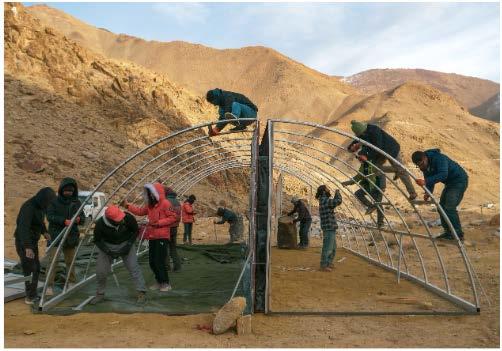
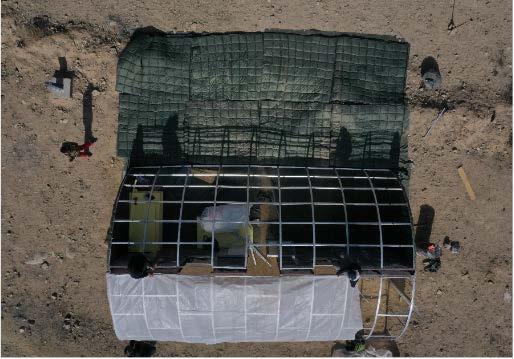
The solar tent was devised as an initiative to provide shelters for our soldiers serving at the borders. The borders of Ladakh are subjected to harsh conditions and the army often resorts to using fossil fues to aid heating. This uses a lot of energy and is also harmful to the environment and harzardous for people. Therefore, we had devised a solar tent that uses passive solar heating and can be assembled by the soldiers themselves easily.
The solar tent is designed on the principles of passive solar design strategies and to withstand the harsh winters of Ladakh. It is a portable Tent that can be assembled and dismantled whenever required or in case of relocation.
Ladakh the land of high passes has cold and dry deserts. Hence living in such conditions demands extraordinary life skills and comfortable shelter to live in. Therefore to survive the unforgiving winters of Ladakh people here have to use different means of heating such as burning fossil fuels, running heavy heating devices, etc. These activities in long term change the climatic conditions and cause environmental degradation.


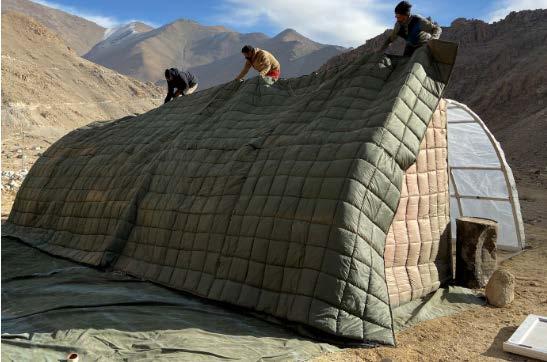
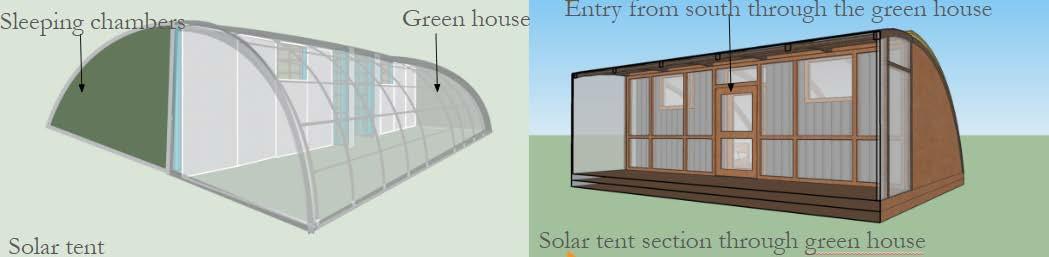
It has a barrel vault form with its front half acting as a greenhouse and the back half is designed as a sleeping chamber for soldiers. The sleeping chamber is insulated from its three surfaces whereas on its southern side it has a thermal wall that stores heat during the day and releases it during the night
Other works | Ideas | Concepts

51/52
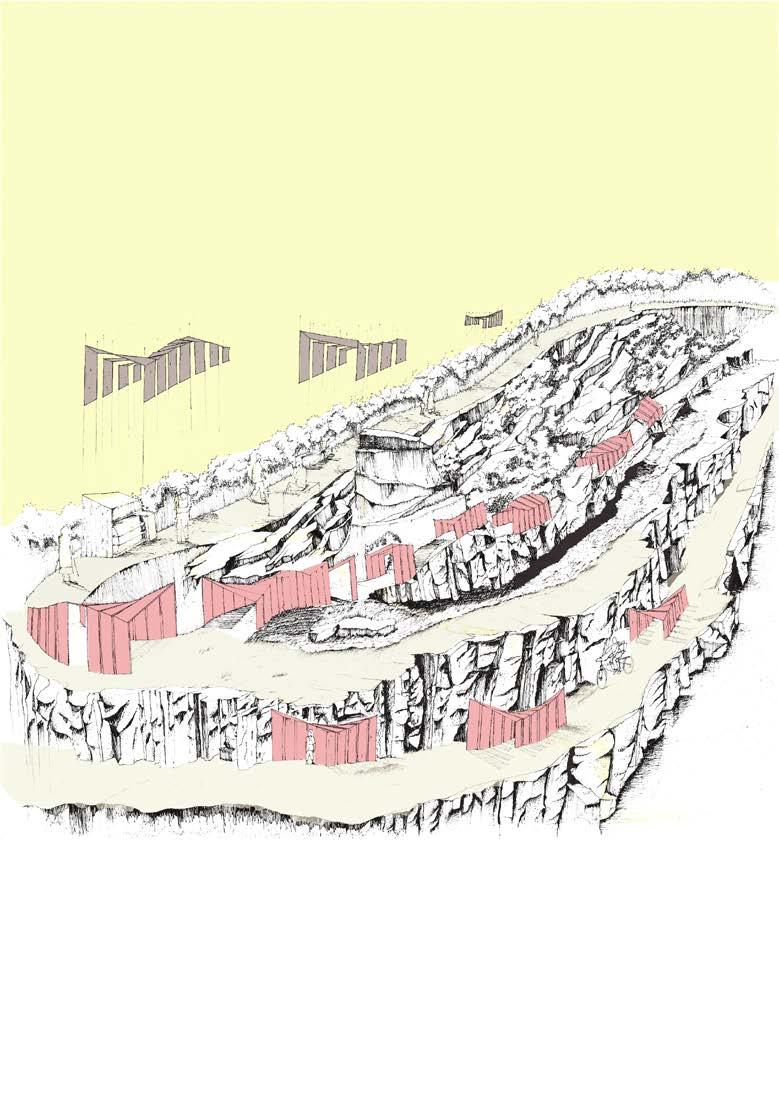
The Studio II design brief introduced students to small scale design interventions with an underlined aim of environment sensitive and coherent design. The site - Van Vihar national park in Bhopal, Madhya Pradesh, along Upper Lake, is a well-known tourist spot in the city with diverse flora and fauna. Our studio began with a bike ride through the site in November. This familiarized us with the site and the user group that frequented Van Vihar. Sitting on a rock by the shore, an interesting piece of hollow wood caught my eye. The depressions and rings in the wood almost resembled the topographical map of the site. It captured the essence of Van Vihar in a way that underpinned the subsequent design process.
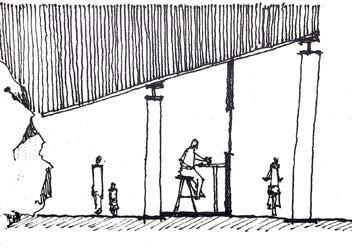
The Swerve comprises of a structure continuous through the site, swerving through the hills and by the lake; interspersed by neem trees and rocks, opening up to occasional kiosks, sitting areas and unexpected views.
Just like the wood piece I discovered on the first site visit, the Swerve changed angles constantly; sinking and ever so often, rising.
A hand-drawn view of the site post-design, was my entry for the Architectural Drawing Prize 2018.
53/54
Swerve- A schematic sketch of a section of the structure consists of wood panels and steel I-sections with a place for kiosks, walking and cycling.
Swerve- Sometimes, sinking and ever so often; rising.
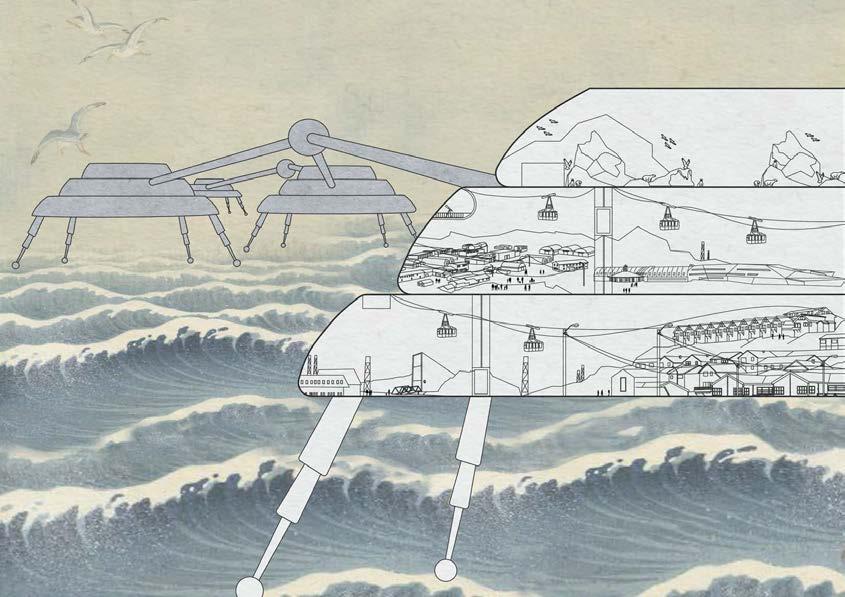
A team of three, we proposed an idea for the 120 Hours competition 2019. The brief called for ideas and concepts regarding the future of the north-most town - Svalbard.


( Top left ) A utopian architect best known for Walking Cities, Ron Herron reappears in the twenty first century from the 1960s. Walking Cities, designed for war could bring resources wherever necessary. It was radical and utopian at the time, but maybe radical ideas can fight Svalbard’s apocalyptic war. Driven by a strong passion to save a deteriorating settlement, Ron set off for the North Pole.
( Bottom left )With a population of polar bears exceeding that of humans, and permafrost that is melting at a life-threatening pace, Svalbard proves to be the best place to begin designing and testing the first “Walking City” prototype of Ron Herron. During the course of the apocalyptic war that Svalbard fights, the prototype, which began with Ron’s personal requirements expands to a larger and a more complex user base. These evolve according to the inhabitant’s immediate needs. Eventually, the Walking City incorporates Svalbard’s painted cottages, the research base, the seed vault, the un-used air trams and finally an entire ecosystem that preserves the arctic fauna. After a hundred years, Svalbard floats on torrid water that was once an endless icescape but a radical mind fought its fight and retained its original identity.
The dire situation that Svalbard finds itself in was unimaginable in 1964. But so was Herron’s idea of “Walking Cities”. Perhaps, unimaginable problems need unimaginable solutions.
55/56

Sagarika Sengupta +(91) 9560489134
sagarika.s.sengupta@gmail.com