What is a Hydraulic Stacker? Complete Buying Guide
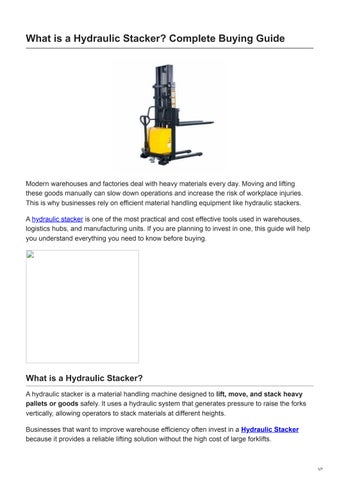
Modern warehouses and factories deal with heavy materials every day. Moving and lifting these goods manually can slow down operations and increase the risk of workplace injuries. This is why businesses rely on efficient material handling equipment like hydraulic stackers.
Ahydraulic stacker is one of the most practical and cost effective tools used in warehouses, logistics hubs, and manufacturing units. If you are planning to invest in one, this guide will help you understand everything you need to know before buying.
What is a Hydraulic Stacker?
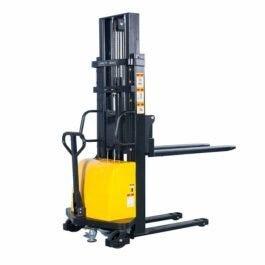
Ahydraulic stacker is a material handling machine designed to lift, move, and stack heavy pallets or goods safely. It uses a hydraulic system that generates pressure to raise the forks vertically, allowing operators to stack materials at different heights.
Businesses that want to improve warehouse efficiency often invest in a Hydraulic Stacker because it provides a reliable lifting solution without the high cost of large forklifts.
Key Characteristics of Hydraulic Stackers
• Designed for lifting and stacking palletized loads
• Operates using a hydraulic lifting mechanism
• Compact and easy to maneuver
• Suitable for warehouses with limited space
•Available in manual and electric variants
How Does a Hydraulic Stacker Work?
Ahydraulic stacker works using hydraulic pressure to lift heavy loads The mechanism is simple but highly effective.
Working Process
•The forks are placed under a pallet or load
•The operator pumps the handle or presses a pedal
• Hydraulic pressure lifts the forks upward along the mast
•The load is lifted to the required height for stacking
Components of a Hydraulic Stacker
Hydraulic Pump
Generates pressure that lifts the forks.
Mast
The vertical structure that supports the lifting mechanism.
Forks
Flat metal arms used to hold pallets or goods.
Wheels
Allow smooth movement across warehouse floors.
Types of Hydraulic Stackers
Different warehouses require different types of stackers based on workload and operational needs.
1. Manual Hydraulic Stacker
Manual stackers are operated by pumping a handle or pedal.
Best For
• Small warehouses
• Light to medium lifting tasks
• Budget friendly operations
Advantages
• Simple design
• Low maintenance cost
• Easy to operate
2. Semi Electric Stacker
Semi electric stackers combine manual movement with electric lifting.
Best For
• Medium sized warehouses
• Frequent lifting tasks
Advantages
• Faster lifting
• Reduced operator effort
• Improved productivity
3. Fully Electric Stacker
Fully electric stackers use battery powered systems for both lifting and movement.
Best For
• Large warehouses
• Heavy industrial operations
Advantages
• High efficiency
• Minimal manual effort
• Faster material handling
4. Straddle Leg Stacker
These stackers have adjustable legs that allow them to handle different pallet sizes.
Key Benefits
• Flexible pallet handling
• Suitable for mixed warehouse environments
• More stable for uneven loads
5. Walkie Stacker
Walkie stackers are controlled by an operator walking behind the machine.
Ideal For
• Logistics centers
• Distribution warehouses
• Narrow aisles
Benefits of Using a Hydraulic Stacker
Hydraulic stackers are widely used because they offer several operational advantages.
Improved Warehouse Efficiency
• Faster lifting and stacking
• Better inventory organization
• Reduced loading and unloading time
Reduced Physical Labor
• Eliminates heavy manual lifting
• Protects workers from strain and injuries
Space Optimization
•Allows vertical stacking of goods
• Maximizes warehouse storage capacity
Cost Effective Material Handling
• Lower cost compared to forklifts
• Minimal maintenance requirements
Easy to Operate
• Simple controls
• Quick training for operators
Industries That Use Hydraulic Stackers
Hydraulic stackers are used across many industries that require safe and efficient material handling.
Warehousing and Logistics
• Pallet stacking
• Inventory management
• Loading and unloading goods
Manufacturing Plants
• Handling raw materials
• Moving finished products
Retail Distribution Centers
• Storage organization
• Product movement within warehouses
Packaging and Supply Chain Facilities
• Handling bulk packaging materials
• Managing shipment operations
Important Factors to Consider Before Buying a Hydraulic Stacker
Choosing the right stacker depends on your warehouse size, load requirements, and operational needs.
Load Capacity
Always check the maximum load the stacker can lift.
Common capacities include:
• 500 kg
• 1000 kg
• 1500 kg
Choose a model that comfortably supports your typical load weight.
Lift Height
Different warehouses require different lifting heights.
Consider stackers that can reach your storage racks safely
Typical lift heights include:
• 1.6 meters
• 2 meters
• 3 meters
Warehouse Layout
The size of aisles and floor space matters.
For narrow aisles choose:
• Compact stackers
• Walkie stackers
• Electric stackers with better maneuverability
Frequency of Usage
• Occasional use → Manual stacker
• Daily use → Semi electric stacker
• Heavy industrial use → Fully electric stacker
Build Quality and Durability
Industrial equipment should be built with strong materials.
Look for stackers with:
• Heavy duty steel frame
• Reliable hydraulic system
• Durable wheels and forks
Maintenance and Service
Before purchasing, confirm:
•Availability of spare parts
•After sales support
• Maintenance services
Reliable service ensures longer equipment life.
Safety Tips When Using Hydraulic Stackers
Safety is extremely important when operating lifting equipment.