Program Notes:
March from “Symphonic Metamorphosis”
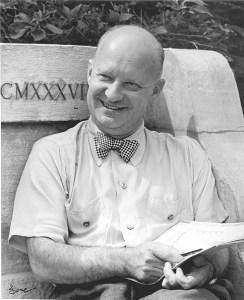
Paul Hindemith (1895 - 1963) was born at Hanau, Germany. He was an excellent violinist and leader of the Frankfurt Opera Orchestra. He was persecuted by the Nazis because his wife was half-Jewish and his own musical compositions were considered degenerate. He emigrated to the U.S. and joined the music faculty of Yale University. Hindemith began to write a ballet based on the music of German composer Carl Maria von Weber but after a falling out with his collaborator he converted his sketch- es into an orchestral work. March , the fourth movement, opens with fanfares. Weber’s original theme is a funeral march to which Hindemith doubles the tempo. March has a catchy tune and grows increasingly spectacular, ending fortissimo.
Symphonic Metamorphosis was inspired by some piano duets and other music composed more than a century earlier by Carl Maria von Weber (1786-1826). While Hindemith retains much of Weber’s melodies, he puts his own distinctive spin on them. Hindemith composed the work in the early 1940s. It was originally intended to be used as ballet music, but he and his collaborator, Léonide Massine, parted ways. Not letting good music go to waste, Hindemith re-imagined the work into an orchestral suite. The suite remains popular with both orchestras and wind bands thanks to a transcription by Keith Wilson, Hindemith’s fellow Yale professor
The Italian In Algiers (Die Italienerin in Algier), Overture
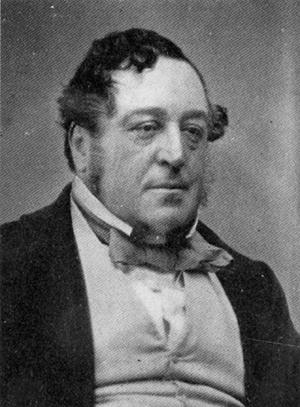
Giaochino Rossini (1792-1868) was a prolific Italian composer best known for his operas, which include William Tell and The Barber of Seville. He grew up mostly in Bologna in a musical family. The Rossinis wasted no time starting their son’s musical education: Rossini’s father, a horn player, had his son playing the triangle in his ensembles by the age of 6. It paid off: Rossini finished his first opera when he was 17. There followed two decades of continuous composition that would bring Rossini to all of the biggest cities in Italy as well as Paris, and during which time he composed an additional 38 operas, becoming a superstar throughout Europe. Then, at age 40, he retired from composition almost entirely He lived another 36 years writing barely a note.
The Italian Girl in Algiers (L’italiana in Algeri) was Rossini’s fifth opera, written in in 1813 when he was 21 years old. The mostly comic story revolves around the Bey of Algiers and his desire to add an Italian woman to his harem. The overture is something of a tribute to Haydn’s Surprise Symphony, with light pizzicato passages interrupted by huge orchestral hits. It also shows off Rossini’s flair for melodic invention. It is still frequently performed by orchestras and bands around the world. The opera itself continues to be performed by major companies everywhere.
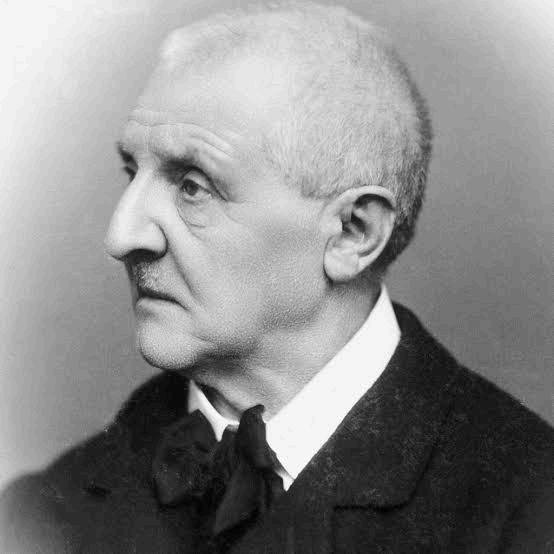
Adagio, an excerpt fr. Symphony No.7
Compositional fame came late to Anton Bruckner, and it was not until his sixties that he was truly appreciated as a composer. Throughout his lifetime, he had often been considered a social joke: a boor who spoke with a countrified accent, presented a consistently disheveled in appearance with baggy pants and sagging jackets, had a terrible time with women (there were nine marriage proposals, none accepted), drank heavily (Pilsner beer) and lived in an apartment which cleaning women often refused to clean up. For years, his loving sister “Nani” did most of the cleaning August Stradal recalled visiting one of Bruckner’s’ apartments and he reported; “in the middle of the first room there was a very old Boesendorfer grand piano, and its white keys could scarcely be distinguished from its black keys as a consequence of dust and snuff. “ He had only two books: the Bible and a biography of Napoleon which he reread constantly. Manuscripts of his symphonies and masses lay mixed with newspaper articles and correspondence. The composer was a devout Catholic, mired in fanatical Catholicism, encapsulated in psychological isolation and his fascination with death Sadly, Bruckner wrote;s “I always sit poor and forsaken and deeply melancholy in my little room.” (Bruckner and Mahler, JM Dent) His only constant companions were his music, his organ, and his religion.
The Seventh Symphony premiered in Leipzig on December 30, 1884, conducted by Arthur Nikisch who insisted (after hearing a piano version); “from this moment, I regard it as my duty to work for Bruckner’s recognition.” Symphony Seven was destined for a Viennese premiere shortly thereafter, but the composer asked that this plan be withdrawn or at least deferred, “because of the influential critics (like Hanslick), who would be likely to damage my dawning success.” The Leipzig performance had been great, and the following premiere in Munich, March 10 1885, was fantastic
The Adagio, which was played at Bruckner’s funeral, is a mournful elegy to Wagner In a letter of January 1883 Bruckner wrote, “One day I came home and felt very sad. The thought had crossed my mind that before long the Master would die, and just then the C sharp minor theme of the Adagio came to me ” Wagner died a month later
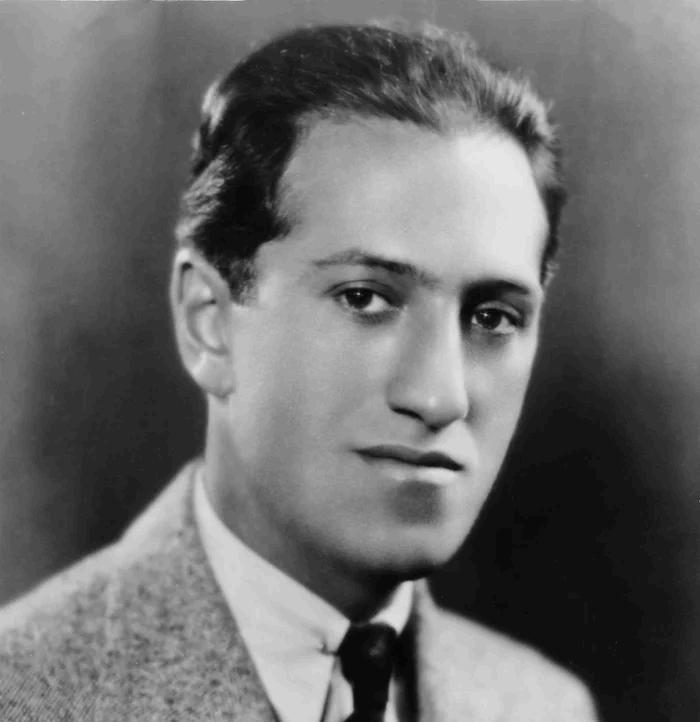
An American in Paris
George Gershwin, an American composer and pianist was the son of Russian immigrants. Fueled by a passion for music, George Gershwin began studying the piano at the age of 12. Not being academically inclined, he convinced his parents to let him quit school at 15, and he became a pianist in Tin Pan Alley, demonstrating songs for the Remick Publishing Company He began to compose popular songs while still a teenager and produced a succession of musicals, including Strike Up the Band (1927), with his brother Ira as lyricist. Gershwin was a sensitive songwriter of great melodic gifts and blended jazz, folk, and classical styles into a uniquely American musical form.
An American in Paris, Maurice Ravel, was much impressed by George Gershwin’s performance of the Rhapsody in Blue at a New York party in his honor in early 1928. Gershwin is said to have asked Ravel for lessons (Gershwin seems to have made a habit of dazzling established composers and then asking for lessons; possibly, the inevitable polite refusal became a badge of honor) but Ravel famously told him he should be “a first-rate Gershwin rather than a second-rate Ravel.”
Gershwin and his brother Ira spent three months in Paris shortly after this, warmly welcomed by Ravel among others; Ravel would pay Gershwin the complement of imitation in his Piano Concerto in G the following year. On an earlier visit Gershwin had dashed off a piece that he noted was “very Parisienne.” During and after his 1928 visit he returned to this fragment, elaborating it into An American in Paris, a “rhapsodic ballet,” which “depicts the impression of an American visitor in Paris, as he strolls about the city and listens to various street noises and absorbs the French atmosphere.” (The score provides the climactic finale to the 1951 film An American in Paris, a ballet in which characters danced by Gene Kelly and Leslie Caron declare their love against a backdrop of famous French paintings.)
Gershwin was no “untutored genius”—while working as a successful song-writer, between 1915 and 1921 he had been taking lessons in “classical” harmony and counterpoint—and while works such as Rhapsody in Blue were indeed orchestrated by others, Gershwin was at pains to note that the orchestration of An American in Paris was all his own work.
Mannin Veen “Dear Isle of Man”
Mannin Veen, published in 1937, is a classic band work of the post-Holst, pre-Hindemith era of band works; it draws on the composer’s experiences of Manx culture when his family lived on the Isle of Man, an autonomous island “Crown Dependency” situated between Ireland and the English mainland in the Irish Sea. The composition exhibits both symphonic grandeur and Celtic tunefulness, often featuring the principal clarinet.
Douglas, the capital of the Isle of Man, was a holiday mecca in Victorian times for people from Northern England. Even before Haydn Wood (1882-1959) was born, his family had regularly journeyed there from Slaithwaite, Yorkshire. At the beginning of the 1885 tourist season, Haydn's elder brother Harry was hired as leader and soloist of the large orchestra at the Falcon Cliff Castle in Douglas. That summer, Sabra Wood brought the entire family, including her little son Haydn, age 3, to proudly watch and listen to Harry and the orchestra. From the age of 7, Haydn studied the violin with Harry. He loved being a member of Harry's Students Orchestra and performed regularly on the Isle of Man.
By the late 1920s, Haydn Wood was becoming known as a conductor of his own music, and he conducted concerts at the Palace from then and throughout the 1930s. On June 19, 1927, in a huge Manx (the common demonym for the Isle of Man) Celtic Concert in which Harry was greatly involved, he conducted the Palace Orchestra in A Health to All Who Cross the Main for baritone, chorus and orchestra, with lyrics by Manxman Henry Hanby Hay, which he had composed expressly for the Manx Homecoming Celebration.
It was not until 1931 that Haydn Wood started composing his large-scale Manx orchestral pieces. The first of these to be played in Douglas was Mannin Veen, on July 9, 1933, conducted by the composer in an exciting concert which included the second and third movements of his new Concerto for Violin, performed by the Spanish violinist Antonio Brosa with the Palace Grand Orchestra. Mannin Veen was eventually published in 1937 and is a classic band work of the post-Holst, pre-Hindemith era of band works; it draws on the composer’s experiences of Manx culture when his family lived on the Isle of Man, this autonomous island situated between Ireland and the English mainland in the Irish Sea. The composition exhibits both symphonic grandeur and Celtic tunefulness, often featuring the principal clarinet.
On the occasion of the first BBC broadcast in February 1933 of Mannin Veg Veen, Haydn Wood was quoted as saying to the Isle of Man Times: “The critics were struck by the beauty of the national airs. I feel very proud and gratified that our tunes are so appreciated It was my original intention to call the work Mannin Veg Veen (Dear Little Isle of Man) but I found that people would insist on pronouncing ‘veg’ as a waiter does in a cheap restaurant when he bawls down the lift for ‘meat and a couple of veg.’ I decided to abandon the ‘potatoes and peas’ portion of the title.”
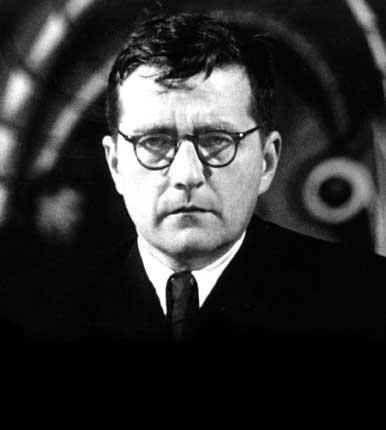
Galop fr. the Musical Comedy - Moscow, Cheremushky
Dmitri Dmitriyevich Shostakovich was a Russian composer who lived under the Soviet regime.
Shostakovich had a complex and difficult relationship with the Soviet government, suffering two official denunciations of his music, in 1936 and 1948, and the periodic banning of his work. Shostakovich's response to official criticism and, more importantly, the question of whether he used music as a kind of abstract dissidence is a matter of dispute. It is clear that outwardly he conformed to government policies and positions, reading speeches and putting his name to articles expressing the government line. It is also generally agreed that he disliked the regime, a view confirmed by his family and his letters to Isaak Glikman.
Shostakovich prided himself on his orchestration, which is clear, economical, and well-projected. This aspect of Shostakovich's technique owes more to Gustav Mahler than Rimsky-Korsakov. His unique approach to tonality involved the use of modal scales and some astringent neo-classical harmonies à la Hindemith and Prokofiev His music frequently includes sharp contrasts and elements of the grotesque.
His most popular works are his 15 symphonies and 15 string quartets. His works for piano include 2 piano sonatas, an early set of preludes, and a later set of 24 preludes and fugues. Other works include two operas, six concertos, and a substantial quantity of film music.
Admirers of Shostakovich’s symphonies and concertos are likely unaware that the composer also wrote a substantial quantity of lighter music. In his early days he composed incidental music and songs for many plays and even created full-fledged operas and film scores. Among them is the operetta Moscow, Cheryomushki which opened on January 24, 1959, to substantial success.
Moscow, Cheryomushki (often shortened to Cheryomushki) is an operetta (light opera) in three acts, libretto by the team of Vladimir Mass and Mikhail Chervinsky, the leading Soviet humorists at that time. The satirical plot deals with a theme common to the people of Soviet Russia and the Cheryomushki District: affordable housing. This district became the location for a massive subsidized housing project in the 1950s. The operetta tells a story of a group of friends who have been granted new apartments in the Cheryomushki. With each character, we see common issues associated with living in these areas: shared living spaces, corrupt politicians, and sneaky bureaucrats.
Galop is representative of the light, humorous style of the operetta. With its fast moving and comical lines, Shostakovich captures the humor (and melancholy) of the libretto, expertly
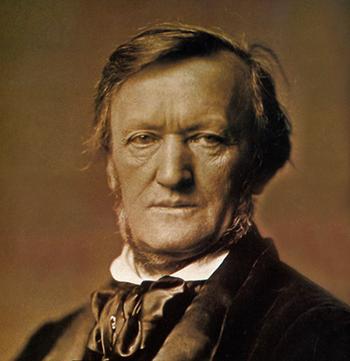
Elsa’s Procession to the Cathedral fr. Lohengrin
Wilhelm Richard Wagner was one of the most influential people who lived during the 19th Century His most influential works were in the medium of opera. These compositions include Der Ring des Nibelungen, Tristan und Isolde, and Die Meistersinger von Nürnberg. Even though he died more than a century ago, Wagner remains a divisive figure due to his personal views.
Wagner first attended school in Dresden and eventually attended Leipzig University in 1831. At this time he studied briefly with Christian Gottlieb Müller and was heavily influenced by Beethoven. He gained his first position through help of his brother as the choirmaster at the theater in Würzburg. Wagner composed operas at this time influenced by Weber and Bellini. His early career led him to travel throughout Germany with one company, hold a position in Berlin, and move to Paris in 1839. His first large success was with the premiere of Rienzi in Dresden on 20 October 1842. This was followed shortly by the premiere of Der fliegende Holländer, and then Wagner's appointment as assistant choirmaster for the court in Dresden. While in this position he presented the premiere of Tannhäuser.
In 1848, after the revolutions in Paris and Vienna, Wagner saw an opportunity to develop a German national theater and joined revolutionary minded people. When an attempt at revolution in Dresden failed, the composer was forced to flee because of his associations with the revolutionaries. He first stayed at the home of Liszt but then moved on to Zürich. Wagner spent much time writing in the 1850s and was able to secure living expenses from two women. Ideologically, he began to associate with the philosopher Arthur Schopenhauer. He conducted important works such as Tristan und Isolde and Die Meistersinger von Nürnberg but Wagner had also accumulated a lot of debt.
Richard Wagner is undoubtedly one of Western music’s most controversial figures. His operas (he called them music-dramas) redefined the genre and pushed it to its limits. His epic Ring Cycle spans four operas and about 16 hours of music. For this, he invented the leitmotif, a recognizable melodic theme connected to certain characters, places, events, or moods in his operas. He also invented new instruments (e.g., the Wagner-tuba) and had his own opera house built (at Bayreuth) in order to get exactly the sound that he wanted. He pushed harmonic boundaries ever further, eventually eschewing any tonal resolution in the opera Tristan und Isolde (which is often regarded as the first modern opera). For all of these operas, he assumed near total control, writing the librettos and designing the sets himself. He was also a writer whose opinions on many things, especially Judaism, have remained a stain on his character. In short, he was a large, uncompromising personality whose effects are still strongly felt in music and beyond.
Elsa’s Procession to the Cathedral, with its medieval color and pageantry, prefaces her betrothal to Lohengrin, mystic Knight of the Holy Grail, who comes to deliver the people of Brabant (Antwerp) from the Hungarian invaders. In the operatic presentation, a large double chorus (representing the people of Antwerp) adds its song of solemn praise to that of the orchestra. It is in this music, mystic yet powerful, that we find Wagner striking out with those new and intense musical thoughts that were to culminate in Tristan, The Ring, and Parsifal. Not quite emancipated from the musical speech of his operatic contemporaries, one finds in the Lohengrin score those unmistakable flights into musico-dramatic magnificence transcending all that preceded it in idiom and musical adventure.
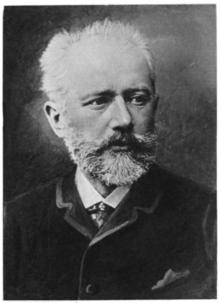
March Slav, Op. 31
Although musically precocious, Peter Ilyich Tchaikovsky was educated for a career as a civil servant. When an opportunity for a musical education arose, he entered the nascent Saint Petersburg Conservatory, from where he graduated in 1865. The formal Western-oriented teaching he received there set him apart from composers of the contemporary nationalist movement embodied by other Russian composers, with whom his professional relationship was mixed. Tchaikovsky's training set him on a path to reconcile what he had learned with the native musical practices to which he had been exposed from childhood. From this reconciliation, he forged a personal, independent but unmistakably Russian style, a task that did not prove easy. The principles of Russian nationalist artists were fundamentally at odds with those supporting European traditions, and this caused personal antipathies that dented Tchaikovsky's self-confidence.
Tchaikovsky’s works included symphonies, concertos, operas, ballets, chamber music, and a choral setting of The Russian Orthodox Divine Liturgy Some of these are among the most popular concert and theatrical music in the classical repertoire. He was the first Russian composer whose music made a lasting impression internationally, which he bolstered with appearances as a guest conductor later in his career in Europe and the United States. One of these appearances was at the inaugural concert of Carnegie Hall in New York City in 1891. Tchaikovsky was honored in 1884 by Emperor Alexander III, and awarded a lifetime pension in the late 1880s.
Despite his many popular successes, Tchaikovsky's life was punctuated by personal crises and depression. Contributory factors included his leaving his mother for boarding school, his mother's early death and the collapse of the one enduring relationship of his adult life, his 13-year association with the wealthy widow Nadezhda von Meck. His same-sex orientation, which he kept private, has traditionally also been considered a major factor, but musicologists now play down its importance. His sudden death at the age of 53 is generally ascribed to cholera; there is an ongoing debate as to whether the death was accidental or self-inflicted.
In 1876, Tchaikovsky was commissioned by the Russian Musical Society to compose a piece for a concert to benefit the Red Cross Society, in support of Serbian veterans wounded during the ongoing Serbo-Turkish war Tchaikovsky composed the programmatic march in just 5 days. The piece begins with 2 Serbian folk songs, to describe the oppression of the Serbs by the Turkish. A simple dance melody in a major key follows, representing the Russian effort to rally support for the Serbs. The Russian national anthem ("God save the Tsar") is heard, followed by a frenetic section depicting the Russian army coming to assist the Serbs. An eyewitness to the premier of the Marche wrote: "The rumpus and roar that broke out in the hall [is almost beyond] description. The whole audience rose to its feet It was one of the most stirring moments of 1876. Many in the hall were weeping." If this work sounds familiar, perhaps it's because Tchaikovsky used the Tsarist Anthem again in his 1812 Overture. Marche Slave became one of Tchaikovsky's most popular works and he often used it as a dramatic finale to his concerts while on tour.
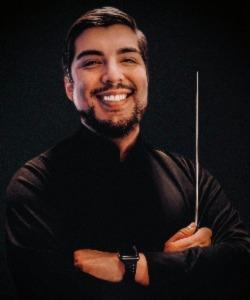
Dr. Nieves Villaseñor III - Artistic Director, Conductor
Dr Villaseñor is the Director of Bands and Coordinator of Music Education at University of the Incarnate Word in San Antonio, Texas. At UIW, he is the Director of the UIW Marching Cardinals, directs the UIW Wind Ensemble, and leads the UIW Cardinal Red Basketball Band. As Coordinator of Music Education and the Instrumental Area, Dr Villaseñor teaches courses in instrumental music education and the music-major sequence conducting course.
Previously, Dr Villaseñor served as Visiting Assistant Director of Bands at James Madison University, where he served as Assistant Director of the Marching Royal Dukes, Director of the JMU Pep Band, and conducted the JMU Symphonic Band. He also served as artist-in-residence at the Virginia Mennonite Retirement Community (VMRC) in Harrisonburg, Virginia.
Dr Villaseñor hails from the transient military community of Jacksonville, North Carolina. Dr Villaseñor completed his candidacy for the Doctor of Musical Arts in Instrumental Conducting with a cognate in Nonprofit Organizations from the University of Florida. He holds a Master of Music in Instrumental Conducting from Syracuse University, a Bachelor of Arts in Music in Saxophone from the University of North Carolina Wilmington, and an Associate of Fine Arts in Music and Music Education from CoastalCarolina Community College in Jacksonville, North Carolina.
As a strong advocate for community music and avid collaborator of area musicians, Dr Villaseñor was the founder and artistic director of the San Antonio Community Wind Ensemble, a program offering of Crossmen Youth Arts Academy and ensemble-in-residence at Texas A&M University San Antonio. He served as the Director of Secondary-School Music at Jubilee San Antonio Charter School and developed the school’s first-ever band and color guard program. Dr Villaseñor was also a performer in the WGI Independent World Class Silver Medalist Indoor Winds unit Crossmen Winds and a saxophonist with River City Big Band based out of San Antonio. In New York, Dr Villaseñor competed with DCA Open Class Finalist corps White Sabers Drum & Bugle Corps, was a performer with activist ensemble Unity Street Band, and became co-founder of the region’s first WGI Independent Indoor Winds unit, Vortex Indoor Winds. In 2022, Dr Villaseñor was selected as the recipient of University of Florida’s Graduate Teaching Award for his work with the introductory music-major conducting course.
Dr. Villaseñor serves annually on the instrumental music faculty of the North Carolina Governor’s School East at Meredith College in Raleigh, North Carolina, the nation’s oldest statewide summer residential program for academically and intellectually gifted high school students.
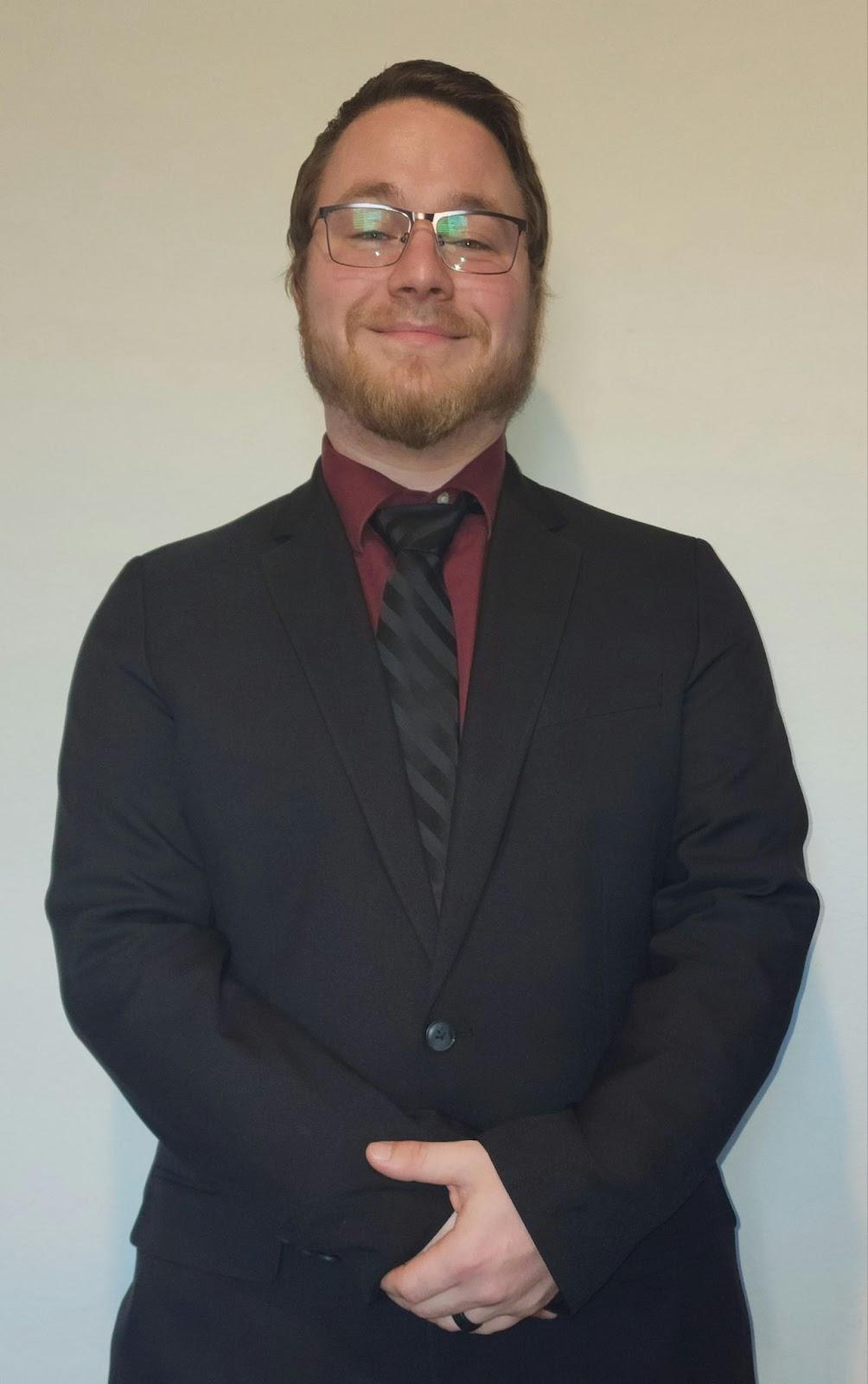
Kevin Rooney - Associate Director
Kevin Rooney is excited to begin his first year as the Associate Director of the San Antonio Community Wind Ensemble. He is in his third year as the Head Director at Morales Junior High in Uvalde, TX. He also serves as an assistant with the high school marching band, writing custom music and drill for the program. Prior to working in Uvalde, Kevin began his teaching career as an assistant in Mason, Texas in the heart of the hill country.
Kevin is a native Oregonian, earning his Bachelor’s in Music Education and his Master’s in Teaching from Oregon State University. While at OSU, Kevin performed with the Marching Band, Symphony Orchestra, and Wind Ensemble, where he had the privilege to work with Dr. Chris Chapman and David Maslanka on a recording of Maslanka's Mass in 2017. His favorite memory from his time at OSU though was meeting his future wife Jess in the marching band. Kevin and Jess (who plays horn in SACWE) live in San Antonio with their one-year-old dog Juniper, and their two cats: Souri, and Bug.
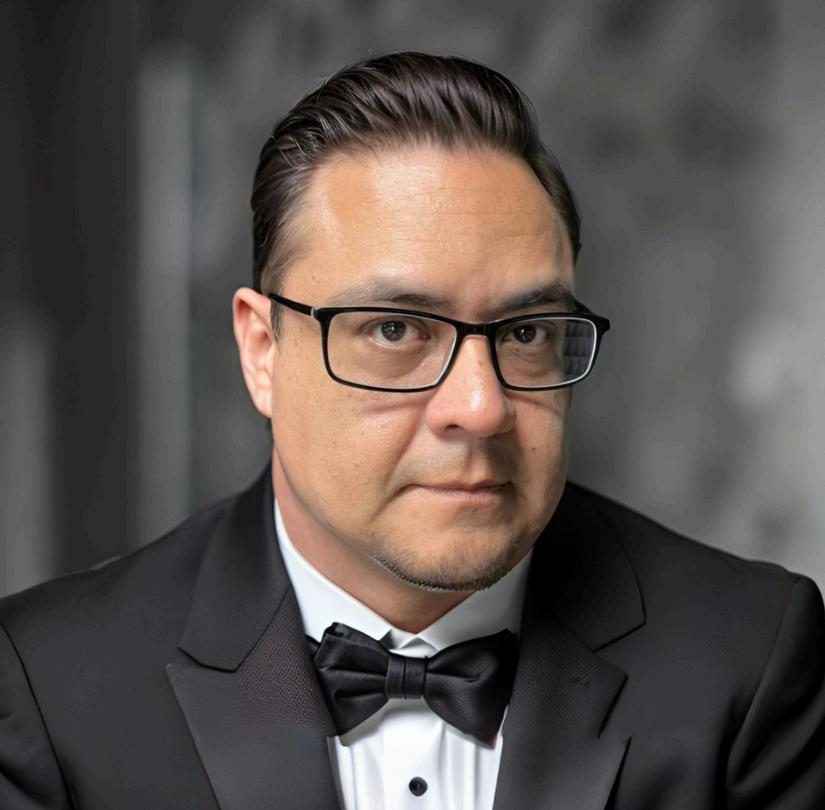
Mr. Aguilar is a graduate of Dillard McCollum High School in the Harlandale Independent School District, and The University of Texas at San Antonio. At UTSA, Mr. Aguilar studied conducting under the baton of Dr. Robert Rustowicz and was the Ensemble Associate for Dr. Kenneth Williams. Mr. Aguilar studied Saxophone, Clarinet and Flute under the tutelage of John Buchanan and Morgan King.
Mr. Aguilar has been a music educator in the San Antonio area for 24 years. Mr. Aguilar is the co-founder of the Homeschool Orchestra & Music Education ("H.O.M.E.") teaching band classes from beginning band to advanced band and the Full Orchestra. Before co-founding H.O.M.E., Mr. Aguilar was the founding Musical Director and Conductor of the San Antonio Youth Wind Ensemble (SAYWE) at St. Philip’s College. There, he collaborated with several notable composers, conductors and ensembles such as Frank Ticheli, Jerry Junkin, Larry Livingston, the Heart of Texas Concert Band, the 323rd Fort Sam's "Own" Army Band and
the San Antonio Symphony Mr Aguilar also conducted the San Antonio Youth Wind Ensemble at Carnegie Hall in New York City Mr Aguilar’s passion for serving youth in the community also led him to the position of Musical Director of the Academy of Fine Arts Jazz Ensemble (AFA Jazz), Music Director of the St Philip’s College Summer Theatre Company, Woodwind Instructor for the Academy of Fine Arts at St Philip's College and as Assistant Director of Bands in the Northeast Independent School District Currently, Mr Aguilar is building brand new band and theater programs at the Westwood Campus of Jubilee Academies and has served as Musical Director for the San Antonio Community Wind Ensemble since 2019
Mr Aguilar is an active adjudicator for UIL Solo & Ensemble Contests, Concert and Sightreading Contests and the TMEA All District, Region, Area and State Auditions Mr Aguilar is also an active music arranger and clinician for high school marching and concert bands throughout the state and has two publications; Woodwind Techniques and Exercises and Major Scales and Articulation Exercises that have been used by several Middle School and High School Band Directors as well as private instructors. Mr. Aguilar is a founding member of The San Antonio Wind Symphony (SAWS) and a member of The Texas Music Educators Association (TMEA) and The Texas Bandmasters Association (TBA)
Albert Aguilar - Musical Director/Conductor:




Crossmen Youth Arts Academy (www.crossmen.org) is a 501(c)(3) youth development organization assisting young people in becoming outstanding individuals through music and the performing arts. Originating as the Crossmen Drum & Bugle Corps in 1974 on the outskirts of Philadelphia, Crossmen relocated to San Antonio in 2006. A perennial Drum Corps International (DCI) World Champion Finalist, the Crossmen Drum & Bugle Corps has served thousands of students throughout its history, providing not only music education and high level performance opportunities, but using these to give our members the skills they need to succeed no matter where they go in life.
The San Antonio Community Wind Ensemble and the San Antonio Jazz Collective align their mission to that of Crossmen Youth Arts Academy by striving to enrich and shape the lives of young musicians and performers through the performing arts. Family, honesty, perseverance, dedication, independence, interdependence and excellence are taught and practiced by each and every member at Crossmen, SACWE and The Collective.
SACWE and Crossmen Youth Arts Academy extend their sincere gratitude to Dr. Martha Saywell, the Texas A&M University - San Antonio staff and administration for their support in producing this concert.
The San Antonio Community Wind Ensemble is a proud member of the Greater San Antonio Community Bands Association.
Join us for our next concert… “Anime, Fantasy Y Mas” on May 19, 2024 - 2:30pm Texas A&M University - San Antonio One University Way, San Antonio, TX. 78224
Please stay tuned at www.sacwe.org @sacwe @sacommunitywinds @sacwe