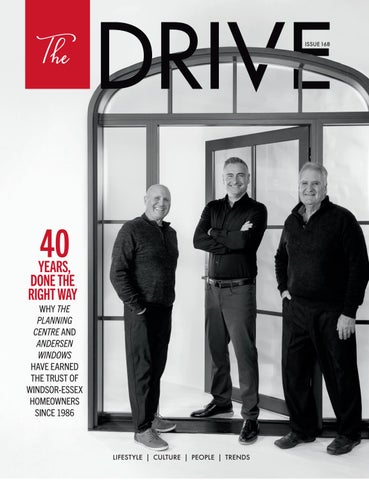
YEARS, DONE THE RIGHT WAY
WHY THE PLANNING CENTRE AND ANDERSEN WINDOWS HAVE EARNED THE TRUST OF WINDSOR-ESSEX HOMEOWNERS SINCE 1986
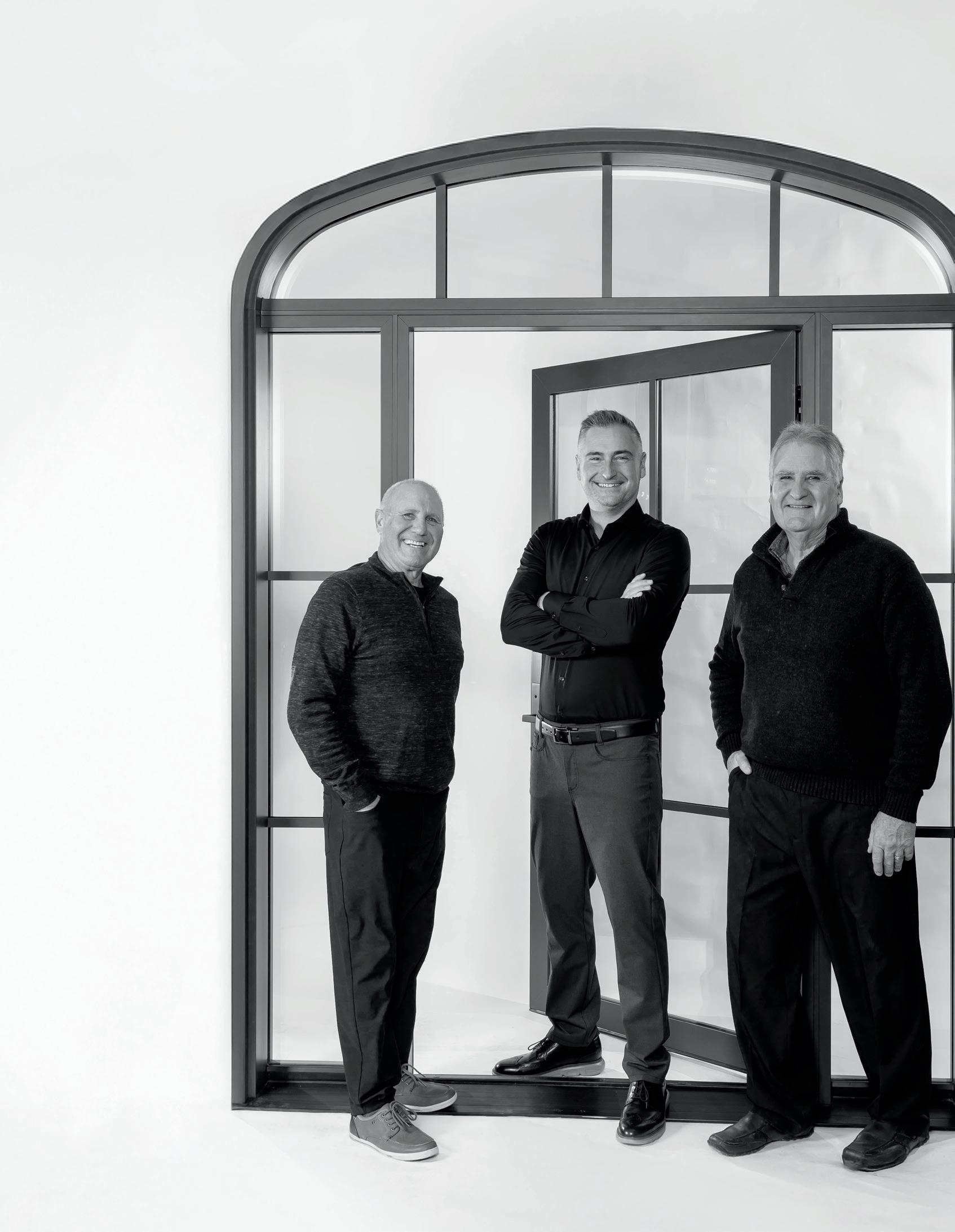























YEARS, DONE THE RIGHT WAY
WHY THE PLANNING CENTRE AND ANDERSEN WINDOWS HAVE EARNED THE TRUST OF WINDSOR-ESSEX HOMEOWNERS SINCE 1986
PAUL ST-PIERRE Publisher
BREANNE MCGINTY ..........Managing Editor, Director of Sales
GREG EDWARDS ......................................... Graphic Designer
SABINE MAIN Creative Director
MARNIE ROBILLARD Art Director
MEL MONCZAK Senior Account Manager
JAYCI WIGLE ......................................Sales Account Manager
MACKENZIE COJOCAR Publication Assistant
DEVAN MIGHTON Writer
LAYAN BARAKAT ......................................................... Writer
MELISSA BUZZEO Writer
TERI GYEMI .................................................................. Writer
MONA ELKADRI Stylist/writer
TREVOR BOOTH ................................................ Photographer
MAXIMUS REID Photographer
SYX LANGEMANN Photographer
ANTHONY SHEARDOWN ................................... Photographer
ANNA STANLEY Copy Editor



Forty years of excellence, precision, and dedication have made The Planning Centre a cornerstone of Windsor-Essex home improvement

DRIVE RECIPE
10 Oh So Mona serves love by the bite, one appetizer at a time
DRIVE CULTURE
22 The story of Gurbax Wahid: grit, ambition, and triumph against all odds
DRIVE MUSIC
36 Rhythm runs deep in John Burrows’ story, where talent, tenacity, and mentorship collide
DRIVE MIND
40 Envision the future you want to manifest this year and learn to stop wishing and start creating with Teri Gyemi
DRIVE EVENTS CALENDAR
42 Stay in the loop with local events in each issue and on our website thedrivemagazine.com 28
DRIVE COMMUNITY
Backyard ice rinks transform cold nights into shared memories in Windsor–Essex, where every skate tells a story


As we step into our first issue of the year, it feels only right to reflect on the one that just passed. A milestone year filled with celebration as The DRIVE marked its 25th anniversary. It was a year that honoured our history, our community, and the stories that have shaped who we are, while also opening the door to what comes next.
2026 brings fresh opportunities, new perspectives, and even more stories waiting to be told. This year, The DRIVE is leaning fully into creativity, community, and expansion, with a renewed focus on deeper storytelling that feels intentional, thoughtful, and true to our roots.
Curation and quality remain at the heart of everything we do. Every feature, every image, and every page is selected with care because meaningful stories deserve space, attention, and purpose. We’re excited to continue spotlighting the people, places, and ideas that make Windsor-Essex such a vibrant community.
To our readers, contributors, partners, and supporters, thank you. Your continued support allows us to grow, evolve, and keep telling the stories that matter most. We’re so glad to have you with us as we begin this next chapter together.
Thank you,
Paul St. Pierre Publisher

























































INGREDIENTS
• 450g pack puff pastry (2 rolls)
• 200g brie cheese, sliced thin
• 1⁄3 cup dried cherries
• 1 egg and 1 tbsp milk, whisked (for egg wash)
• Rosemary sprigs for garnish
INSTRUCTIONS
1. On a baking sheet lined with parchment paper, unroll one of the two sheets of puff pastry.
2. Place the sliced brie cheese over the puff pastry, covering the entire surface, then sprinkle the dried cherries over top.
3. Place the second puff pastry on top like a sandwich.
4. Slice one−inch strips through the puff pastry, then roll up the strips similar to the look of a cinnamon bun. Place the rolls on the baking sheet with parchment paper and lightly brush the tops with the egg wash. Place in the oven for 45−50 minutes at 350 degrees F.
5. Garnish with sprigs of rosemary and enjoy.
INGREDIENTS
• 2 small−medium sized pomegranates
• ½ cup crumbled feta cheese
• ½ small red onion, minced
• 1 ½ tbsp balsamic glaze
• 3 tbsp olive oil + extra for brushing
• ½ tsp black pepper
• 2 French baguettes
INSTRUCTIONS
1. Slice the baguettes diagonally into 1cm thick slices. Brush with olive oil and bake for 7−9 min at 350 degrees.
2. In a bowl, combine the pomegranate, feta cheese, red onion, balsamic glaze, olive oil, and black pepper, and mix until well combined.
3. Add a scoop of the pomegranate mixture onto a sliced baguette and enjoy.











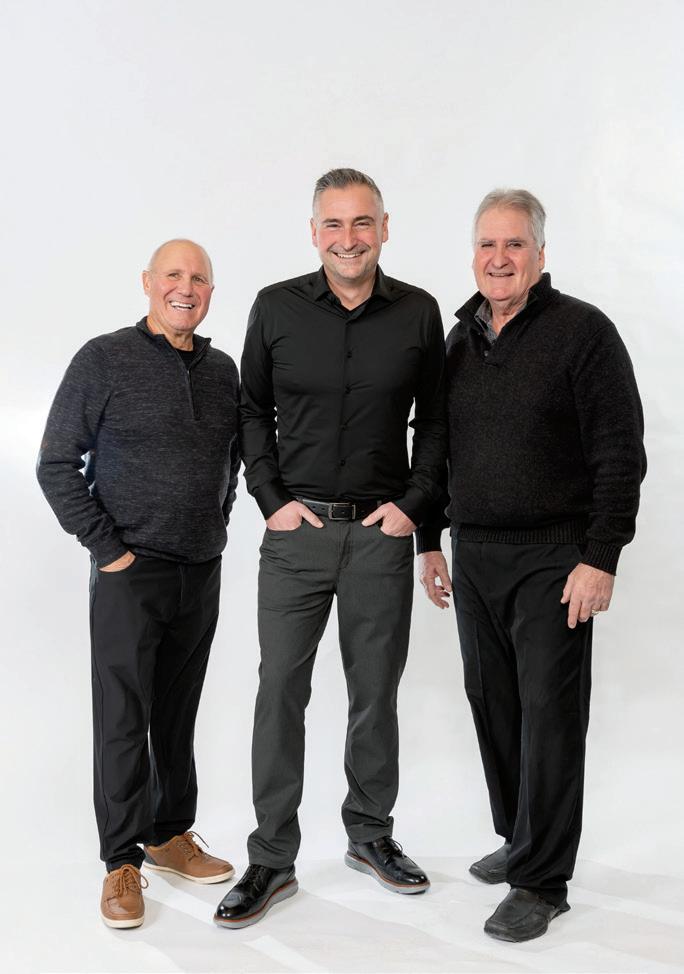
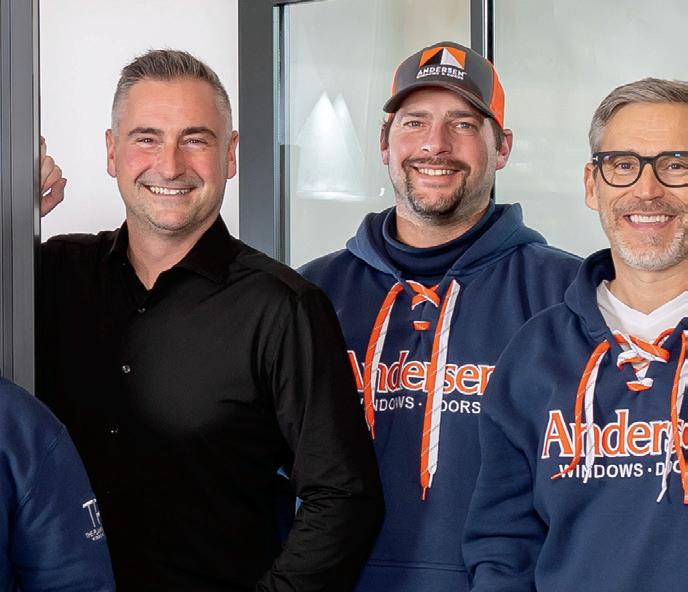
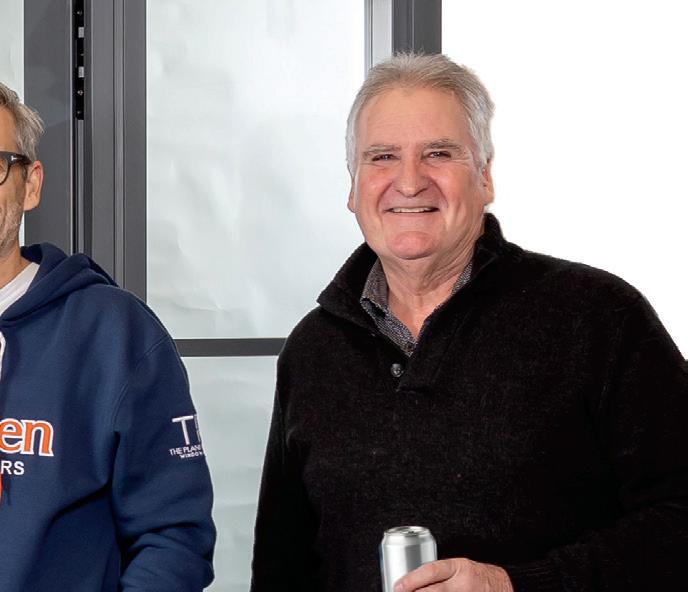
Four decades as Windsor-Essex’s exclusive Andersen Windows dealer
By Devan Mighton

In an industry where companies can appear overnight and disappear just as quickly, longevity matters. In Windsor Essex and across Chatham Kent, The Planning Centre has spent four decades doing something increasingly rare in the home improvement world: quietly earning trust, one project at a time.
Known locally as “Andersen Windows,” The Planning Centre is a second generation, locally owned business that has built its reputation on quality products, disciplined growth, and a customer for life mindset. As the company marks 40 years in business, its story is less about rapid






















expansion and more about consistency— showing up, doing the work properly, and standing behind it long after the installation crews have left.
The Planning Centre was founded in 1986 by David Johnson and Marc Rivest at a time when the window and door industry looked very diff erent than it does today. Big box retailers were not yet dominant, specialty dealers were few, and homeowners relied heavily on local expertise.
From the outset, Johnson and Rivest were deliberate about the products they carried. Rather than chasing volume, they focused on sourcing what they believed were the best built windows available. That search led them to Andersen, already an established name but not yet the household brand it would become.
Today, Andersen is the oldest and largest window and door manufacturer in North America, with more than a century of history. The Planning Centre is the exclusive Andersen Windows dealer in the region, a distinction that carries weight with both homeowners and builders.
finish - principles that apply equally to new custom homes, large scale renovations, and single window replacements.
“What we install becomes part of someone’s home for decades,” explains Johnson. “You don’t get a second chance at that.”
That mindset has helped The Planning Centre stand out in a crowded market. While many companies rely on subcontractors and short term labour, The Planning Centre has invested in consistency, experience, and accountability. Every project is treated as a reflection of the company itself, not just a transaction.
Longevity isn’t built on growth for growth’s sake. It’s built on consistency.
“There was a clear gap in the market,” says Steven Johnson, current owner and second generation leader of the business. “My dad and Marc saw a need for better products, better information, and better execution.”
The name The Planning Centre was intentional. In the early days, Johnson and Rivest didn’t just sell windows—they helped clients plan entire builds. They reviewed drawings, worked through design considerations, and acted as advisors at a time when homeowners often didn’t have access to architects or designers for every project.
Starting the business required real sacrifice. The founders sold nearly everything they owned to finance their first showroom, located on Tecumseh Road near Banwell. In the company’s earliest years, there was no streamlined shipping infrastructure from Andersen. Windows and doors arrived by rail car, were transported back locally, and assembled in house.
“They really ground it out,” Steven Johnson says. “There was no safety net. It was blood, sweat, and tears.”
But for Steven Johnson, the importance of the Andersen relationship goes beyond name recognition.
“Andersen actually supports its dealers,” he says. “If there’s a manufacturer issue, there’s no fighting, no finger pointing. They stand behind the product, and they stand behind us.”
Andersen is also the only premium North American window manufacturer with Canadian production facilities. Large stacking, folding, and specialty doors for the entire Andersen network are manufactured in nearby Strathroy and in Quebec— an often overlooked detail that matters to clients concerned about supply chains, quality control, and long term serviceability.
For more than 30 years, The Planning Centre has operated from its current location at 4535 County Road 46, just outside Tecumseh. The building itself is modest, but the reach of the work done there extends across Windsor Essex and into Chatham Kent. In many neighbourhoods, homeowners recognize the windows long before they recognize the name.
That recognition is intentional. Rather than chasing rapid expansion or multiple locations, The Planning Centre has focused on doing fewer things exceptionally well. Its reputation has been built on an uncompromising commitment to quality, fit, and
Forty years in business means seeing trends come and go. Vinyl windows surge in popularity. Energy standards tighten. Styles shift from traditional to modern and back again. Through it all, The Planning Centre has stayed focused on one thing: matching the right product to the right customer.
Every interaction starts with a conversation.























“You can overwhelm people fast with brands and options,” Johnson says. “So, we talk fi rst. Is this a fl ip house or a forever home? Where is it located? A subdivision doesn’t have the same weather exposure as a home on Lake Erie.”






That approach allows the company to work across a wide range of budgets and project types. The Planning Centre’s business is roughly split between new construction and full replacement projects, with services focused exclusively on windows





The product lineup reflects that range. Entry level and mid range vinyl options from brands like Stage and Dashwood, Gentek, and Stage sit alongside composite products and multiple Andersen lines. On the door side, Mastergrain entry systems and Artima allow for high end designs, including pivot doors and oversized custom entries.








“If customers can dream it or see it, we can usually execute on it,” Johnson says. “From practical replacements to 10 foot tall pivot doors or 50 foot stacking systems—we can do it.”











and doors. firsthand.

A key part of that education first philosophy is the showroom itself. Rather than relying on catalogs or selling out of the trunk of a car, The Planning Centre encourages customers to come in, touch the products, and see the diff erences





The showroom features most of what the company sells, allowing homeowners to compare materials, hardware, finishes, and construction quality side by side.

“It’s not about pushing one product,” Johnson explains. “It’s about showing people why one option costs more than another and letting them decide.”



That transparency helps dispel one of the most common misconceptions about the company—that it only serves the high end of the market.
“We’re not the most expensive,” states Johnson. “We can compete with anyone, and in many cases, we’re offering a better built product.”
In an industry crowded with vague promises and fine print, warranties are a sensitive subject. The Planning Centre takes a straightforward approach.
Our manufacturer warranties cover glass for up to 20 years and components for 10 to 15 years. On top of that, the company provides a five year, no questions asked guarantee on installation.
What we install becomes part of someone’s home for decades. You don’t get a second chance at that.
“If something is going to go wrong, it usually happens in the first couple of years as houses settle,” Johnson says. “After that, with what we sell, you don’t see much until year 40.”
That’s not an exaggeration. The company regularly services Andersen windows installed four or five decades ago—often saving homeowners from unnecessary full replacements.
“We’ll have customers come in thinking they need all new windows,” Johnson says. “Sometimes they just need parts. And because it’s Andersen, we can still get them.”
Another defining feature of The Planning Centre is how the work gets done. Unlike many competitors, the company does not subcontract installation.
Installers are employed directly, fully insured, licensed, and experienced. It’s a
smaller team by design—one office manager, a sales manager overseeing internal and external sales, and a dedicated installation crew—but it’s a structure that prioritizes accountability.
“We’re small and mighty,” says Johnson. “We try to punch above our weight.”
That family feel extends beyond staffing. Many employees have been with the company for years, contributing to the consistency customers notice from their first call through final installation.
Steven Johnson grew up in the business but didn’t step into ownership right away. After spending 15 years in banking at a senior level, he returned with a long term plan to buy the company from the original partners—a process that unfolded over nearly a decade.
“Having that outside experience helped,” he says. “It gave me perspective on discipline, planning, and risk.”
Taking over a respected local business came with responsibility. Johnson is careful to credit his father and Rivest for building a foundation strong enough to last.
“They can walk into any function in Windsor Essex or Chatham Kent and not have to duck away from anyone,” he says. “That says everything.”
Trust matters in any business, but especially in one where projects routinely range from $5-10,000 to well over $500,000.
“If you’re spending that kind of money, you need to know who you’re dealing with,” Johnson says.
That trust has been built largely through word of mouth. Until recently, The Planning Centre did little formal marketing, relying instead on referrals in a tightly knit region.
For Johnson, reputation isn’t something managed after the fact—it’s built into everyday decision making. That often means slowing projects down, asking harder questions, and in some cases,
steering customers away from choices that may not serve them well in the long run.
“We’ll tell people if something doesn’t make sense for their home or their budget,” he says. “Sometimes that means less work for us, but it’s the right thing to do.”
That philosophy extends to how the company handles challenges. Construction projects are complex by nature, and even the best planned jobs can encounter surprises - particularly in older homes. When issues arise, The Planning Centre’s response is intentionally hands on.
“We don’t hide behind contracts or paperwork,” states Johnson. “If something isn’t right, we deal with it. That’s how trust is earned and kept.”
It’s an approach shaped by decades in the field. After forty years, Johnson has seen how quickly reputations can be damaged, and how long they take to rebuild. By prioritizing honesty and accountability, The Planning Centre has positioned itself not just as a supplier, but as a long term partner for homeowners and builders alike.
“That relationship matters,” explains Johnson. “Because if we do our job right, we’re not just installing windows - we’re becoming part of someone’s home story.”
In the past few years, the company has increased its visibility through social media and advertising, largely to reach newcomers to the area who may not yet know the name.
The anniversary itself is being marked in typical Planning Centre fashion—without fanfare. The DRIVE Magazine cover feature is part of the recognition, along with continued investment in products, people, and community involvement.
“We operate in a humble way,” states Johnson. “We support the community, but we don’t need to shout about it.”
After 40 years, that restraint may be part of the company’s enduring appeal. In a market crowded with bold claims, The Planning Centre has built its legacy on something simpler: doing what it says it will do and doing it well.







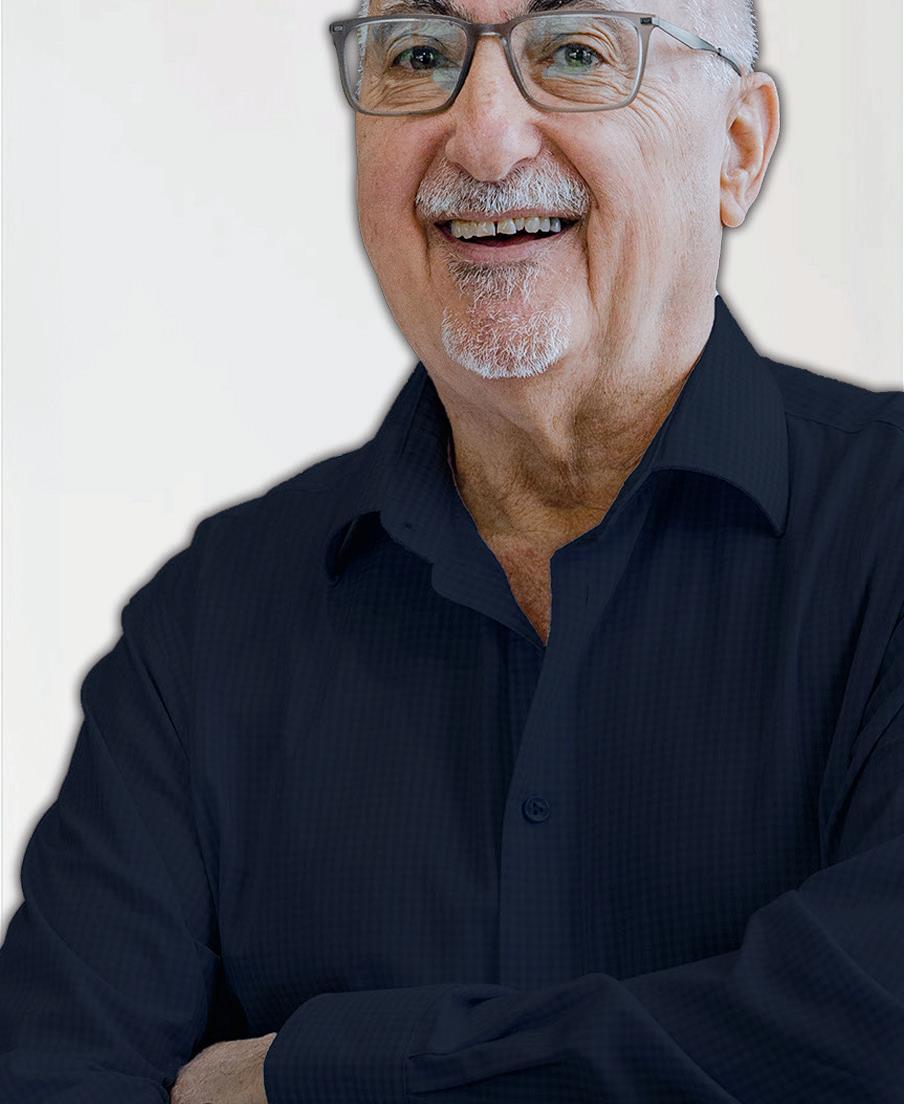




The journey of a man who built the life of his dreams one mile, one lesson, one belief at a time
By Layan Barakat
When I walk into the coffee shop on a Sunday afternoon, I expect the usual noise: chairs scraping, cups clinking, the air thick with the aroma of freshly ground coffee.
I spot him before I even start looking.
“Hello,” he says, as soon as our eyes meet.
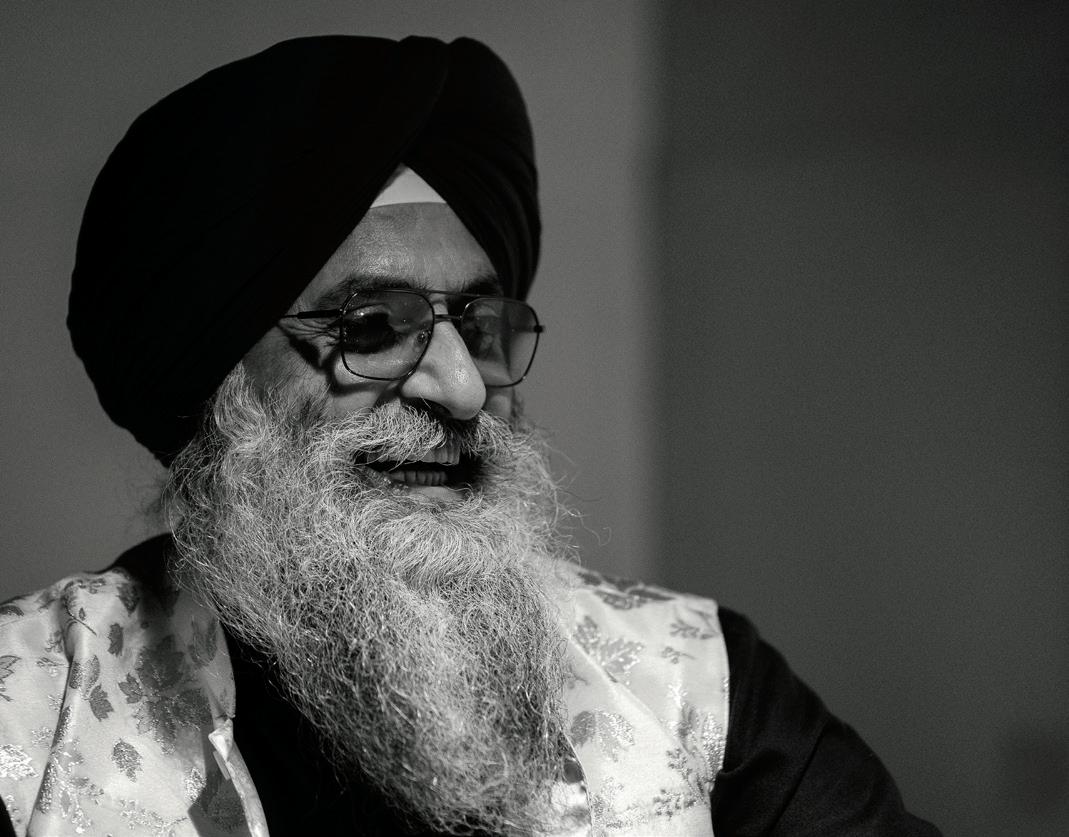
Gurbax Wahid greets me like an old friend, even though we’ve never met before.
We order quickly, peppermint tea for me, double espresso for him. As we glance around the bustling café, the chatter and clatter of a dozen conversations fade into white noise. We choose a corner table that gives us a view of the city that shapes his story.
“So, where do we start?” he asks.
I hold my cup in both hands, take a slow sip.
“Let’s start at the beginning.”
He shrugs off his Harley Davidson jacket, leans back, and begins to tell a story that takes me far from the café we’re sitting in.
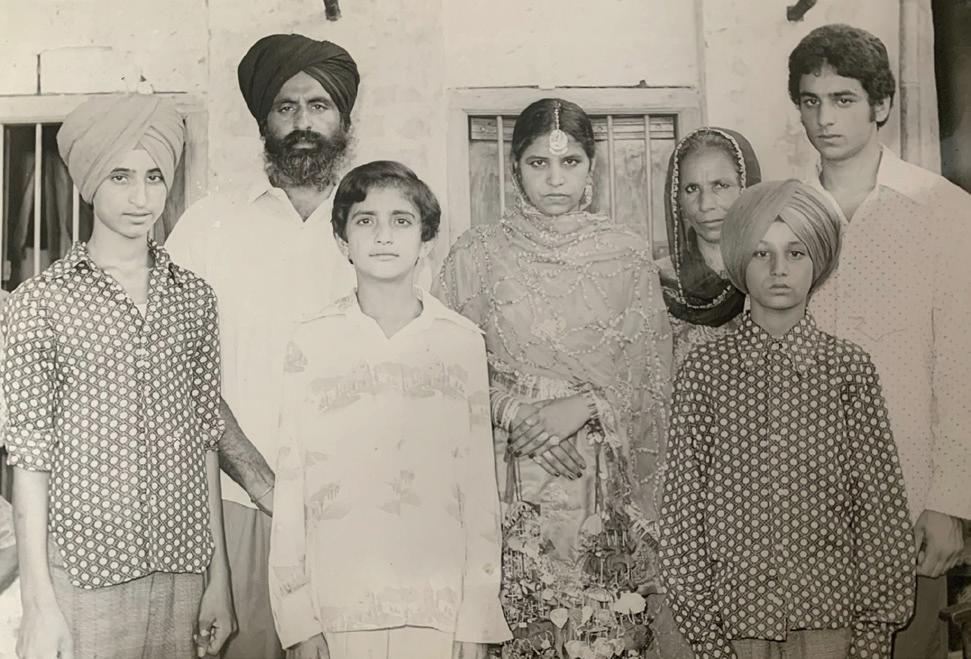
Gurbax was born in a small village in northern India where there was no electricity, no running water, and no formal
by Glazz Images

by
schooling; life was measured by land and labour. His family farmed rice, wheat, sugarcane, and cotton entirely by hand. “One acre could take half a day to work,” he explains. His mother spun cotton by hand, dyed it, and stitched it into clothing the family wore.
“I still have pieces of it,” he says, smiling down at the delicate porcelain of his coffee cup.
His father served in the Indian Army and was also a professional wrestler. “He was very good,” Gurbax recalls. “He reached a high level, almost like an Olympic level in India.” Then, in an instant, everything changed.
“I was around eleven,” Gurbax says quietly. “Suddenly, my life was… different.”
His father suffered a catastrophic injury, a fractured neck that left him paralyzed.
The next day, government officials arrived and told his mother to come to the hospital. She and Gurbax’s grandfather were escorted to the hospital in an army vehicle but learned his father had already been flown to New Delhi. Gurbax was separated from his family, his home, and everything familiar. “Those were the worst years of my life,” he says.
He doesn’t elaborate.
He doesn’t have to.
Eventually, his father recovered enough to live in a wheelchair. The family reunited, and life continued. Altered, but moving forward.
They did.
Gurbax excelled in the machining program he was enrolled in. Within two years, he was among the top students and thanks to his father’s army connections, he got his first apprenticeship. “They tested me harder than anyone else,” he says. “And I passed.” His father’s advocacy opened a new door that shifted his trajectory.
By his early twenties, his family had moved from government housing to private rentals, then to a home of their own.
For Gurbax, his path was anything but linear. Machining paid the bills when possible, and eventually taxi driving filled the gaps. He spent his days at machines and weekends behind the wheel, learning Windsor one street and one conversation at a time. Eventually owning a fleet of taxis turning his part-time job into an entrepreneurial endeavor.
English came slowly, he taught himself by listening to CKLW radio, repeating phrases, and learning cadence before grammar.

In 1990, Gurbax came to Canada with only twenty dollars and a dream. “No language, no education, no money,” he says, smiling. “But a lot of belief and a desire to do well.”
If you plant a cactus, don’t expect mangoes.
School didn’t come easily for Gurbax who ended up failing the tenth grade. What made the difference in his education wasn’t a sudden breakthrough, but persistence and his father’s support. “My father wheeled himself with me to the principal’s office,” he says. “He begged them to give me a chance.”
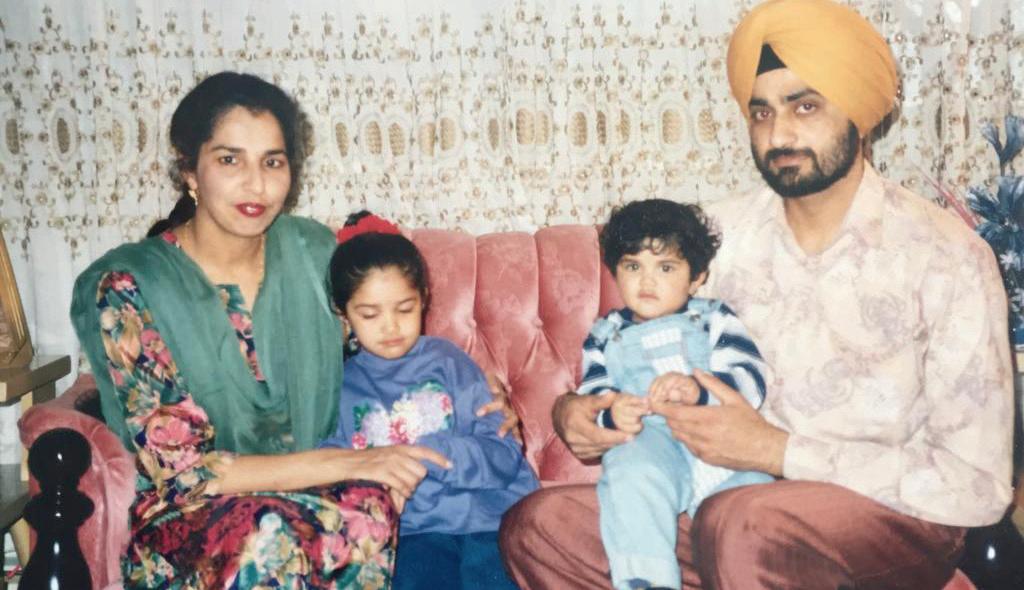
The early years were tough. He worked in a factory by day a donut shop at night and commuted between the two on a $10 bike purchased at a yard sale. Yet he made sure his new wife and growing family were cared for. “It was tough,” he says. “But my kids always had what they needed.”
His son Bikram remembers seeing all of this happen, “I’ve seen him build things brick by brick,” Bikram says. “I’ve seen the wall fall; I’ve seen businesses fail.” But he never saw his father panic. “No matter what happened, he just kept working. You could always count on my dad to make it work.”

“Radio?” I repeat. He leans back and smiles, “radio,” he laughs.
While he’s telling me about driving a taxi, an elegantly dressed woman stops at our table.
“I just wanted to say bye, Gurbax.”
They share a few words before she heads out of the café.
Moments like this happen often. Calls, messages, and people reaching out years later to say hello. “The fact that someone remembered me and called five years later,” he says, “that meant something to me.”
Community came naturally. Through the Sikh temple, and volunteer work with Easter Seals, Goodfellows and The Downtown Mission, his work brought him into places he never expected.
In his late thirties, education came back into focus when Gurbax decided to finish Grade 12. He worked nights and went to school full-time, studying English, Math, and Computer Studies. He jokes about nodding off as he remembers those days. He ended up graduating at the top of his class earning him The Student of The Year award. “I graduated at thirty-seven,” he says. “With a wife, kids, and two jobs.”
Talking about his children softens Gurbax. His daughter has three degrees and works in marketing, while his son achieved two degrees and is now the co-founder of Vision Studios in Windsor. “I used to think success only meant being a doctor or lawyer,” he says, shaking his head. “I’ve learned the world is bigger than that.”
Later, his son Bikram shares what that change looked like from his perspective. Growing up, his father wanted his children to have the safety that comes with titles and certainty, but over time, Bikram’s love for creativity became clear. Cameras showed up, music was made, and new ideas took shape. When Vision Studios opened last year, his father saw something new. “The way his eyes light up,” Bikram says, “the way he sends everything I make to his friends… that’s when I knew he was proud.”
At one point, my conversation with Gurbax turns to something less tangible. Manifestation. I mention the Mercedes
keychain he once kept in his room, long before he could afford the car. “I visualized,” he says. “Canada is a land of dreams, but you need the drive: language, education, money. Without them, it’s hard.”
Now, watching his father, his son sees a different version of aging than he expected. “Society tells you that getting older means slowing down,” he says. “But my dad works like a twenty-year-old.”
He laughs.
“If you want something done, you go to my dad.”
While we’re talking about visualization and manifestation, Gurbax gives me a nugget of wisdom. “If you plant a cactus,” he says, “don’t expect mangoes.”
I write it down, and for the first time since we sat down, I glance at my notes. “Your motorcycle!” I almost yell. “Tell me about it!” He laughs. “My dream machine!”
he says, matching my excitement.
Gurbax bought his first bike decades ago. It wasn’t the exact one he wanted, but he learned on it. Years later, he finally got the classic Harley he’d always wanted. “I love it,” he says. “It’s freedom.”
By the time we finish our drinks, the café is empty. We’ve talked past closing without realizing it. “One last thing,” I say. “If you could talk to your younger self, the one who just arrived in Canada with only a dream, what would you tell him?”
“Believe in yourself,” he says with a smile.
Outside, the street keeps humming, lives crossing and parting again. The word ‘sonder’ comes to mind. The realization that every passerby has a deep, complex story to share. Sometimes, all it takes is someone asking, where do we start?

By Layan Barakat

For generations, women were taught that menopause was something to grit their teeth through. Weight gain, exhaustion, brain fog, anxiety, sleepless nights, it was all framed as something women had to not only accept, but endure, but that story is finally changing.
Across North America, menopause has entered the mainstream conversation, fueled by national voices like Oprah Winfrey, Halle Berry, Maria Shriver, and Dr. Mary Claire Haver. What was once dismissed is now being re-examined with urgency, science, and compassion and for women in WindsorEssex, that information has become more accessible than ever.
At the center of this local movement are Dr. Kristen Kupeyan and psychotherapist Amy Mullins, two professionals who believe menopause is not the end of vitality, but a turning point for long-term health, confidence, and quality of life.
Dr. Kupeyan, a triple board-certified family and obesity medicine physician, has spent decades watching women struggle in silence. She explains that menopause is now understood as a major endocrine transition, not simply the closing of reproductive years. Estrogen, she says, is not just a reproductive hormone. It plays a central role in metabolism, insulin sensitivity, inflammation, brain function, muscle preservation, cardiovascular health, and bone density.
“When estrogen declines, everything shifts,” she explains. “Weight gain, fatigue, mood changes, sleep disruption, and brain fog are not character flaws or lack of discipline. They are biological responses.”
For years, women were told to eat less and move more when their bodies
stopped responding the way they once had. Many tried harder, restricted more, exercised longer, and blamed themselves when nothing worked. The truth, says Dr. Kupeyan, is that traditional weight-loss methods often fail midlife women because they ignore the hormonal changes driving the problem.
That realization is what led her to develop the Menopause Weight Method, a six-month, medically guided program designed specifically for women in menopause and post-menopause. Rather than focusing on calorie restriction or generic plans, the program addresses insulin resistance, muscle loss, stress hormones, inflammation, genetics, and hormone optimization, alongside protein-forward nutrition and strength-based movement. The goal is not just weight loss, but long-term health.
But physical care is only half the picture, that is where Amy Mullins comes in. A registered social worker and psychotherapist with over a decade of clinical experience, Mullins has spent years supporting women through stress, identity shifts, and emotional overload. What changed her focus was her own experience with perimenopause. While working with Dr. Kupeyan to address physical symptoms, she noticed unexpected emotional changes that caught even her off guard.
“I wasn’t falling apart,” she says. “But I wasn’t operating with my usual emotional ease either. And if it can rattle a trained social worker, imagine how disorienting it feels for women who think they’re supposed to just handle it.”
In her practice, Mullins sees shame and self-blame constantly. When anxiety increases or patience disappears, the internal narrative often becomes harsh and unforgiving. Historically, emotional symptoms have been brushed off as stress or personality rather than recognized as hormonally influenced. Without context, women turn inward and assume they are failing.
The partnership between Dr. Kupeyan and Mullins is built on the belief that physical and emotional health cannot be separated. Hormonal shifts affect mood, motivation, sleep, and stress tolerance. Treating those symptoms in isolation misses the bigger picture.
Importantly, this collaboration does not limit access to care. Women can engage with both practitioners through the Menopause

Weight Method program, or choose to work with either professional individually. Some women begin with medical support, others with therapeutic guidance, and many benefit from both—at the same time or at different stages of their journey. The model is intentionally flexible, recognizing that no two menopausal experiences are identical.
“When women understand what is happening in their bodies,” Mullins explains, “the shame lifts, regulation becomes possible and change becomes sustainable.”
While the Menopause Weight Method is offered online and accessible anywhere, its roots are local. Dr. Kupeyan has long seen women travel hours in search of answers they could not find elsewhere. Advances in virtual care now mean that world-class support is available without leaving home.
For any woman reading this and recognizing herself in the fatigue, the weight changes, or the emotional overwhelm, both women share the same message.
You are not alone, you are not broken and this stage of life does not have to be endured in silence.
Empowerment, they say, is no longer about pushing through. It is about understanding, informed choice, and having access to care that respects the full complexity of the female body and mind.
The menopause revolution is here. And for the first time, women are being invited not just to survive it, but to thrive, with access to a gold standard of care right here in Windsor.
To learn more, please visit: menopauseweightmethod.com or vistacounselling.com

By Mark Bennett
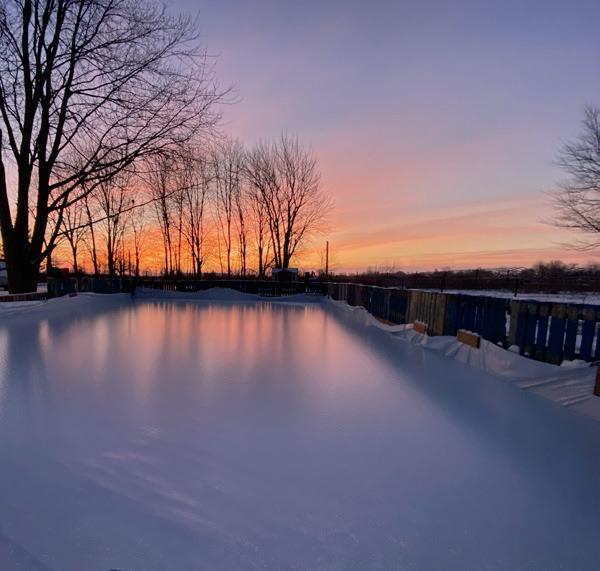
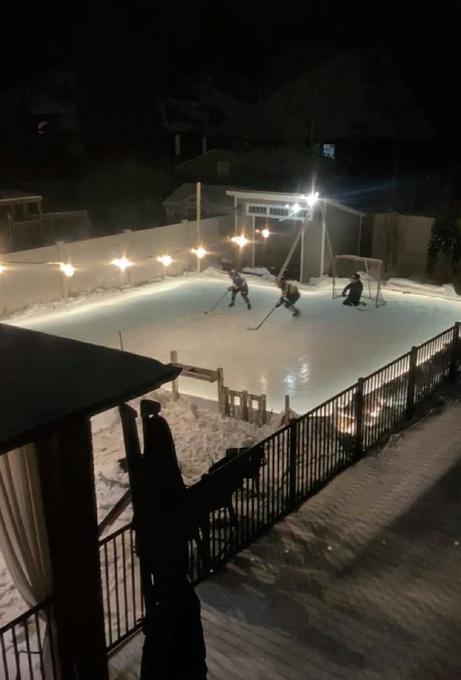
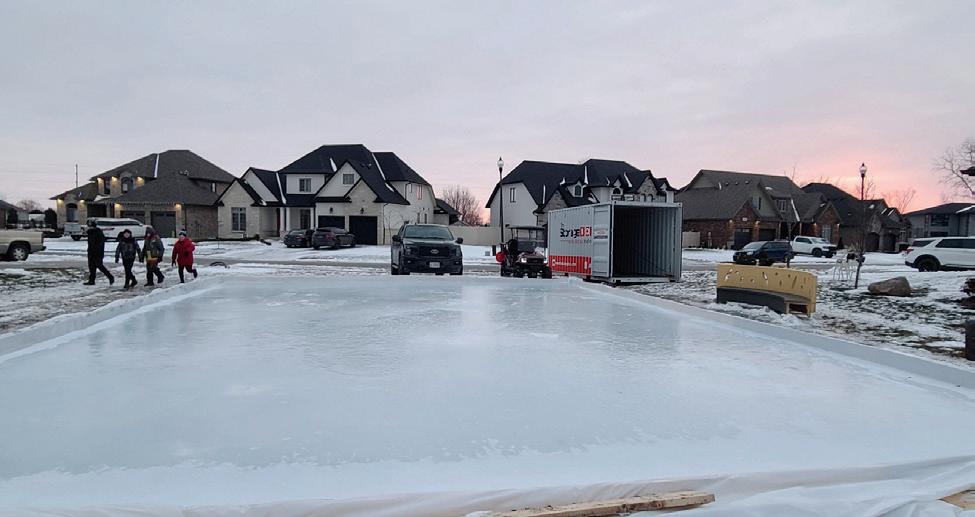
What defines fun during the cold months in Windsor–Essex? For these locals, it’s backyard ice rinks, familiar faces, and winter nights spent making the most of what’s right at home.
As temperatures drop and daylight fades earlier each evening, backyards across the region begin to transform. Hoses are uncoiled and boards are set as floodlights flicker on at dusk. What begins as frozen water becomes a gathering place and a familiar routine, giving people a reason to step outside and enjoy winter together.
Over time, many of these rinks become neighbourhood fixtures, encouraging people to linger during a season that can otherwise feel isolating. They draw families and friends outdoors for quick skates, impromptu games, or a few minutes of conversation at the boards. In a region known for its strong sense of commu-

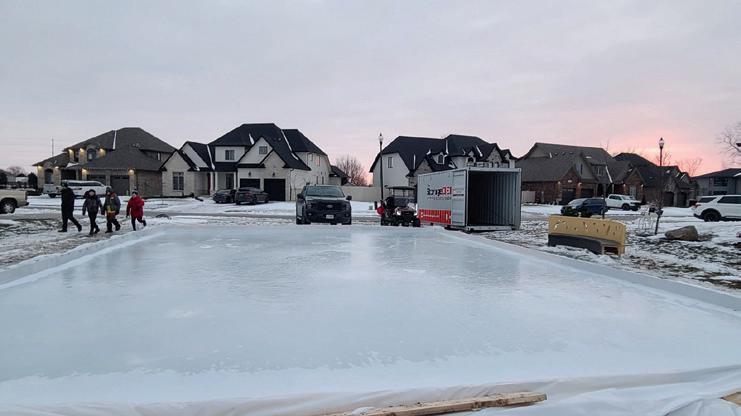




Thank you to everyone who submitted their ice rink moments.

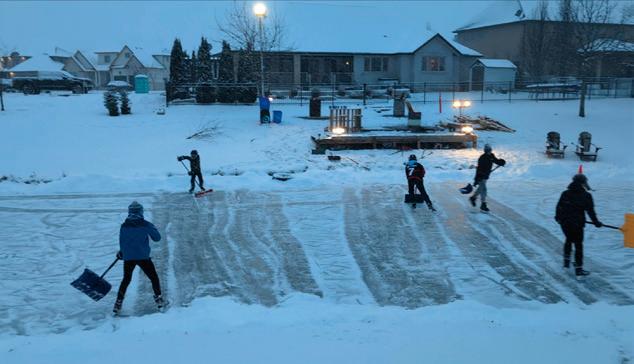







nity, backyard ice rinks feel like a natural extension of that spirit.
There is also a deep connection to memory woven into every rink. For adults, skating often brings back reminders of growing up in Windsor–Essex, from frozen ponds and street hockey games to winters spent outside until hands were numb and cheeks were red. For kids, these rinks are where those same memories are being created now, one lap and one goal at a time.
No two rinks look the same. Some are carefully framed and well lit, while others are bordered by snowbanks and imagination. What they share is purpose and a willingness to put in the work, so winter feels less like something to get through and more like something to enjoy.
As the season shifts and the ice eventually melts, the boards come down and backyards return to green. What remains are the memories of cold nights well spent, familiar faces gathered close, and a community that knows how to embrace every season.
In Windsor–Essex, winter fun does not require elaborate plans or perfect conditions. It is built at home, shared openly, and shaped by the people who show up. For many, it begins on a backyard rink, where winter becomes something to enjoy together.




















Ten photographers. Six locations. One winner—chosen by the community.
Sign up and stay up to date with all event announcements!






*Top 3 winners will be selectively chosen for a project of a lifetime with CMHA.



























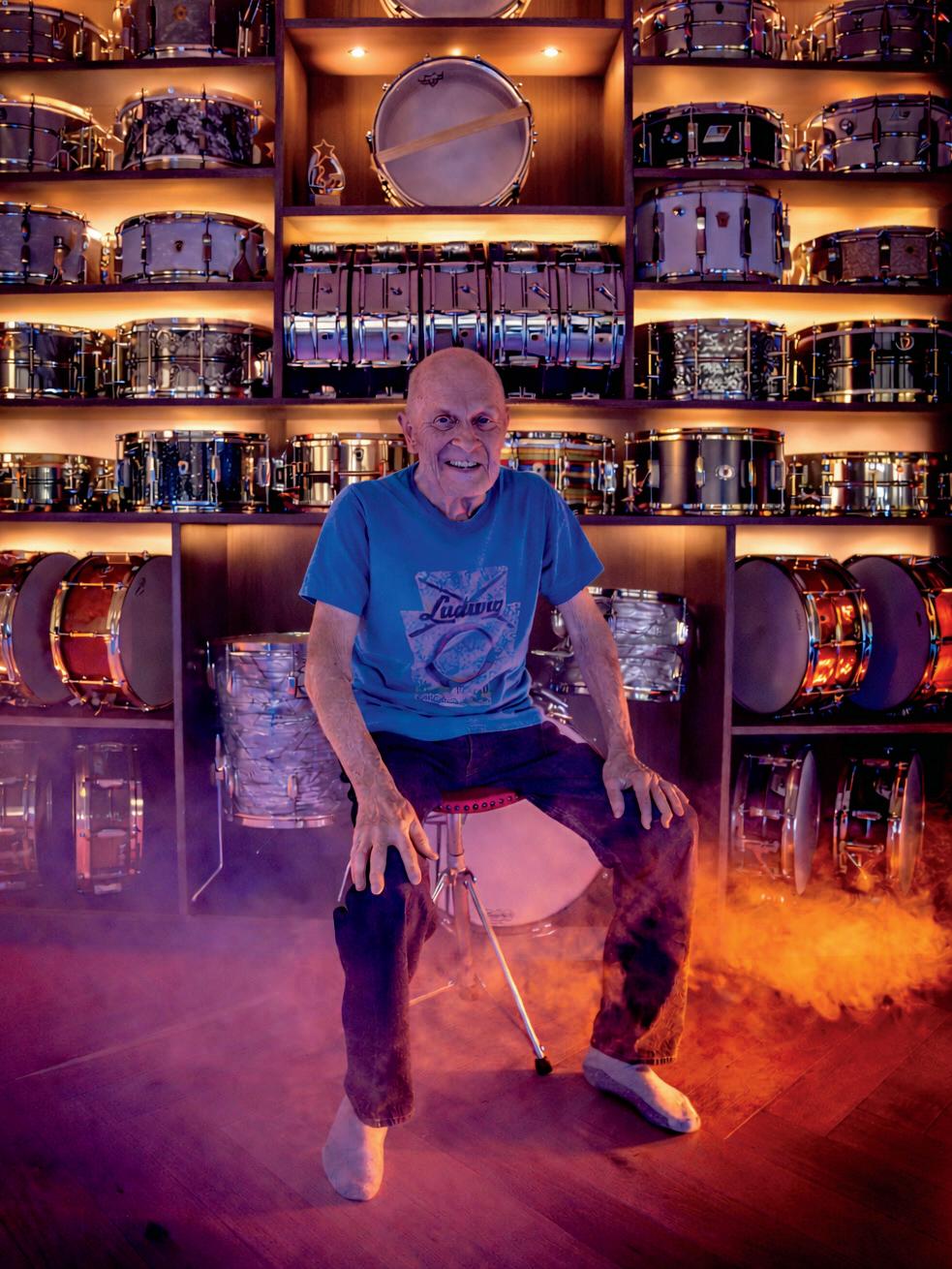
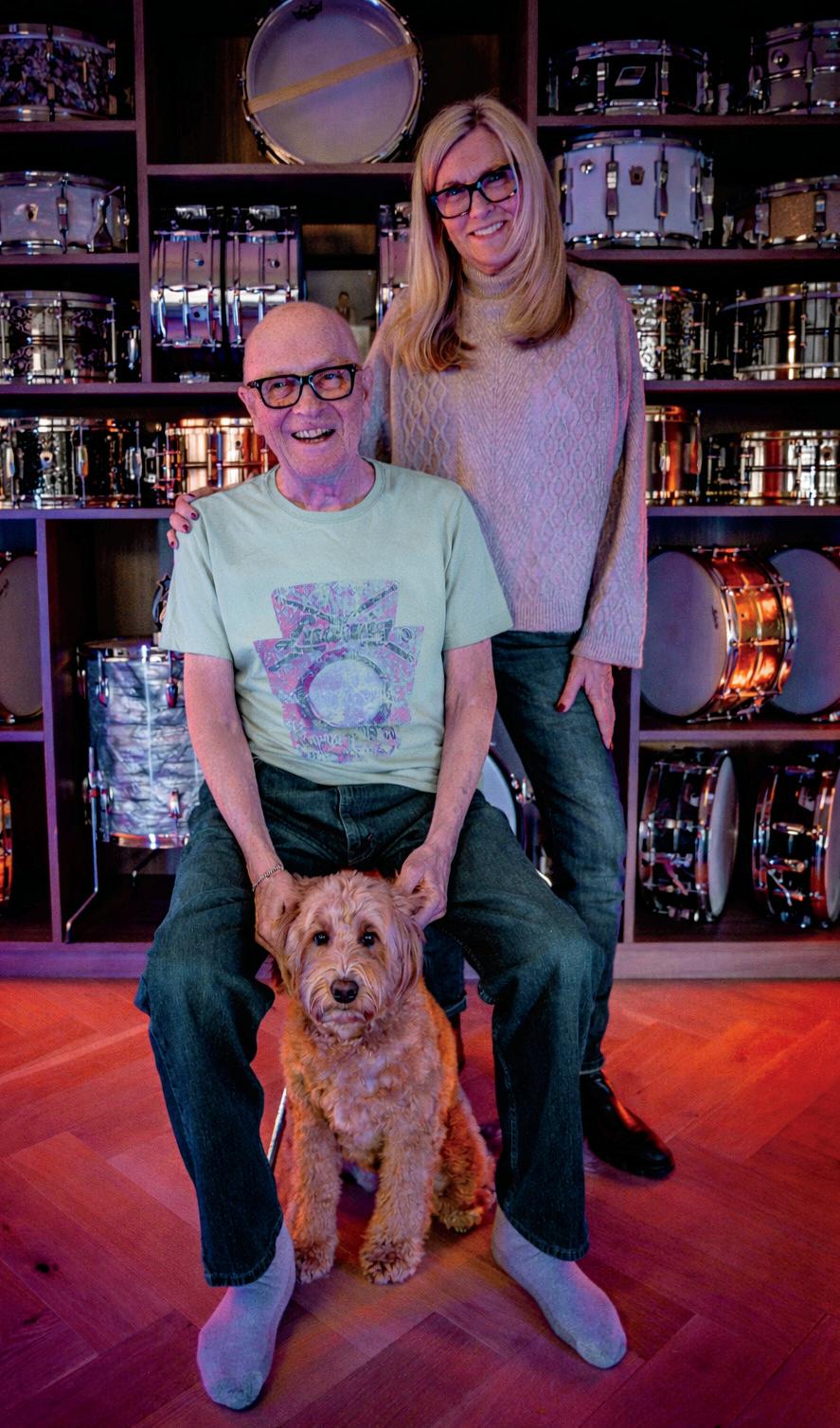
John Burrows and the music that shaped him. From early jazz influences to a family legacy that spans three generations
By Devan Mighton
Photos by Maximus Reid
For John Burrows, music wasn’t just a hobby - it was a calling discovered almost by accident. Growing up in Chatham, he remembers hearing drums from an apartment across the street. “I knew the people who had moved in there,” recalls Burrows. “They were probably in their 20s. One day, he invited me in, and I heard him practising on a rubber practice pad. That’s when it all started.” That moment led to a pair of drumsticks, no shortage of callouses, and the beginning of a lifelong journey in music.
Burrows’ early instruction was rigorous. “He taught me all the rudiments—the basics that most drummers today don’t really focus on,” explains Burrows. “That’s where my technical foundation started.” Over the decades, he has passed that foundation on, teaching hundreds of students through private lessons and drum lines, sharing not just skills but the joy of playing.
By age 12, Burrows was already performing professionally. A friend’s father sold him a drum set on the condition that he join his adult band. Burrows pooled his earnings from paper routes and lawn work to buy the kit, stepping onto stages at local halls and clubs. “The first New Year’s I played, I made a hundred bucks,” he laughs. “It just blew me away - I could make money doing something I loved.” High school brought more opportunities, from local dances to venues in Detroit, Sarnia, and Windsor, giving Burrows an early taste of life as a working musician in the Chatham and Windsor-Essex region.
Life, however, demanded balance. After high school, Burrows joined the Windsor
Police, a career that would span 30 years. “I needed a job,” he says simply. Yet, even as he navigated the discipline of law enforcement, music never left him. He continued performing with bands—including Brand X—and later earned a law degree, practising both criminal defence and prosecution. “Policing and music co-existed,” Burrows reflects. “Music was therapeutic. It was a distraction from work, but also a passion I could nurture.”
Family has been a constant thread. His son, Jeff Burrows, found fame as the drummer for The Tea Party. “Of course, you swell with pride,” John says. “I rooted him on from day one, and to see him perform on massive stages… it’s just remarkable.” Music now runs in three generations, with his grandson, Nicholas, drumming in New York City with his band Tempt, continuing the Burrows legacy.
Burrows’ passion extends beyond performance. His “Drum Rehab” initiative refurbishes drum kits for aspiring musicians, giving instruments a second life. “I never made a nickel,” he admits, “but it’s about helping people. If I can restore a drum set so someone else can enjoy it, that’s enough.” From gifts to local families to charitable donations, music has been his way of connecting with and supporting the community.
Reflecting on the local music scene, Burrows notes the independence it demanded. “You had to pursue it yourself,” he says. “Form a band, find players, figure out the sound you wanted. Back then, rock ‘n roll was just growing out of jazz. You learned by listening, practising, and figuring it out on
your own.” That self-taught mentality shaped not just his drumming but his approach to life, blending technical skill with creativity and persistence.
Today, Burrows’ influence resonates through his students, the performances of his children and grandchildren, and the countless drums he has restored. “I love drums,” he says simply. “I love taking them apart, fixing what’s broken. I hope my family sees that tenacity pays off - that with dedication, you can achieve what you want. Music, service, and a little persistence - that’s what I hope they take from me.”
In Windsor-Essex, John Burrows is more than a drummer. He is a teacher, a craftsman, a mentor, and a connector of generations. Through the highs of performance, the discipline of law enforcement, and the quiet work of restoring instruments, he has lived a life defined by rhythm, creativity, and generosity—a true testament to the power of following your passion.














Stop wishing and start creating
The beginning of a new year carries a quiet invitation. Beneath the resolutions, goal lists, and social expectations, there is a deeper question waiting to be answered:
“How do I truly want to live my life?”
As a life coach, I have found that meaningful change does not come from pushing harder or fixing what we think is broken. It comes from awareness, intention, and alignment. The new year offers a powerful opportunity to pause, take stock, and consciously envision the future you are ready to step into and have created a year or so from now.
This process is not about wishful thinking. It is about clarity, presence, and inspired action that supports true manifestation.
Before we can create a future, you love, you must first acknowledge where you are - without judgement or self-criticism. Awareness is the foundation of transformation.
I guide clients to reflect on eight core areas of life:
• Money & Finances.
• Career or Purpose Driven Work: This could be school if you’re a student.
• Health & Wellness.
• Family & Friends.
• Primary Relationship: If you’re not in a significant relationship, are you interested and ready for one?
• Fun & Leisure.
• Home & Surroundings.
• Spiritual Development: This relates to your inner world and how you connect to something greater than yourself.
For each of these areas, I ask them to rate their current level of satisfaction on a scale of 1 to 10, where 1 feels deeply unsatisfying and 10 feels fully aligned and fulfi lled. This exercise is not about perfection. It’s about clarity. Most people live full, meaningful lives while still having areas that feel incomplete or neglected. You may find that some areas of your life feel surprisingly abundant, while others quietly -or not so quietly, ask for attention. The purpose is simply to notice. When you name what is true, you replace vague unease with clarity - and clarity, although sometimes not what we want to admit, is empowering.
Once you have acknowledged where you are, the next step is to allow yourself to imagine what is possible.
Many people skip this step or limit based on past experiences or perceived constraints. Yet every meaningful change begins with a vision. Not a rigid plan, but a felt sense of where you are headed.
For each area of your life, ask yourself:
• What would a 9 or a 10 look like for me here? For example: Having an extra $20,000 in my slush fund for rainy days.
• How would my daily life feel if this area were truly aligned? For example: Having the $20,000 extra in my slush fund will allow me to feel a sense of ‘security.’
• Who would I be, or what kind of a person would I be, in this version of my life? For example: If having the slush fund gives me a sense of security perhaps I’d feel more empowered.
Let your answers be honest and personal. Your vision does not need to impress anyone else. It needs to resonate with you. This step reconnects you with desire rooted in alignment rather than comparison or lack.




With your vision in place, the next step is to bridge the gap between where you are and where you want to be.
For each area of your life, ask:
What is one small action step I could take that would increase my satisfaction by just one point?
Not a complete overhaul. Not an exhausting to-do list. Just one meaningful, manageable step. For example:
• In fi nances, it might be reviewing your spending or setting up automatic savings.
• In health, it could be adding a short daily walk or getting to bed an hour earlier.
• In relationships, perhaps initiating one honest conversation or planning quality time.
• In spiritual development, it might be five minutes of stillness, journalling or prayer.
Small intentional actions build trust with yourself. They send a powerful message that growth is safe, sustainable and within reach.
Manifestation is not only about vision and action - it’s about embodiment.
I encourage clients to go beyond visualization and sense into their future life. Close your eyes. Breathe deeply. Ask yourself:
• How does my body feel in this future version of myself?
• What emotions are present for me as I live this new life? Calm? Confidence? Joy? Ease?
• How do I move through my day?
• How do I speak to myself?
Give yourself the gift of embracing the sheer joy of living in this new way. As you visualize this transformed version of yourself, I suggest you even lift the corners of your mouth and hum a resonant, satis-
fying “Mmmmm,” allowing yourself to truly feel that positive vibration throughout your body. If we are frequency specific beings, then this process sets us up to be the vibrational match we wish to draw to us. This is asking you to be grateful for a life you haven’t yet lived.
Your nervous system responds to what feels familiar. When you regularly connect with the emotional and physical experience of your envisioned life, you begin to rewire your inner world to support, and draw to you, your outer goals.
This is not about denying present challenges. It is about expanding your capacity to hold both where you are and where you are going.
Manifestation is often misunderstood as controlling outcomes. In truth, it is about alignment - bringing your thoughts, actions, and inner state into harmony with your values and intentions.
As you move through the year, return to your ratings, your vision, and your action steps. Notice what is evolving. Notice where resistance appears. Meet both with curiosity, compassion and even humour. Growth is not linear. Some seasons are expansive; others are quiet and inward. Both are part of the process.
This new year does not ask you to become someone else. It asks you to become more fully yourself.
By honestly assessing where you are, envisioning where you want to be, choosing aligned actions, and embodying the life you are creating, you step into manifestation as a lived experience - not a distant goal.
The future you want is not something you chase. It is something you align with - one conscious step at a time.
I’m Teri Gyemi, a passionate life coach with a strong love for human behaviour. My own flawed past and my will to understand the hidden impulses that led me there, as well as my unrelenting desire to serve others, is what inspired me to become a life coach. Equipped with my certifications from the late Debbie Ford of The Ford Institute for Integrative Coaches, 2 decades experience as a life coach, practice as a workshop leader and educator, I have successfully supported clients through a holistic approach in realizing and executing their goals, healing emotionally, reviving their relationships or uncouple from unhealthy ones. My hope is that something I write will encourage those in need to take a step toward positive personal growth. terigyemi.com | psychologytoday.com
FEBRUARY 6 Connections’ Annual Trivia Night Giovanni Caboto Club | 6:30-10pm
FEBRUARY 7 Folk Festival | St. Nicholas Macedonian Community Centre | 2pm
FEBRUARY 8 Guardians of the Children 3rd Annual Corn Hole Tournament | McGregor Colombian Club | 12pm
FEBRUARY 8 Love is in the Air Valentine’s Day Vendor Market | Fogolar Furlan Club | 10am-3pm
FEBRUARY 9 Blind Date With a Book | Windsor Public Library Budimir Branch | 10am-6pm
FEBRUARY 10 Phogheads Comedy Showcase Phogheads | Doors Open 8pm
FEBRUARY 11 Chili Fest | St. Clair College Centre for the Arts | 11am-2pm
FEBRUARY 12 STEVE-O Crash & Burn Comedy Tour! | The Chrysler Theatre | 8pm
FEBRUARY 12 Galentine's Night at the Brewery Walkerville Brewery | 6-9pm
FEBRUARY 13 The Wizard of Oz Musical UMEI | 7pm
FEBRUARY 14 Pretty Woman – Dinner & A Movie | The Chrysler Theatre | 6pm
FEBRUARY 14 Valentine’s Day Market | WFCU Centre | 10am-3pm
FEBRUARY 15 Lee Siegel Sings Broadway Capitol Theatre Windsor | 2:30-4:30pm
FEBRUARY 16 The DateNight Tour Clean Comedy for Couples | Lakeshore St. Andrew's Church (LSA Church) | 7-9:30pm
FEBRUARY 16 Family Day Celebration | Atlas Tube Recreation Centre | 8:30am-1pm
FEBRUARY 16 Smores & Cocoa Festival WindsorEats Food Hall | 12pm-6pm
FEBRUARY 17 Paczki Party | WindsorEats Food Hall | 5-9pm
FEBRUARY 18 Date on Purpose Wineology Walkerville | 6:30pm
FEBRUARY 19 Music Bingo | Parks & Rec Gastropub and Sports Bar | 7-9pm
FEBRUARY 20 Latin Hustle Workshop | Art of Dance Windsor | 7-9pm
FEBRUARY 21 Augustus Ballroom Wedding Tasting Event | Caesars Windsor | 12pm-2pm
FEBRUARY 22 Bring on the Summer Pasta Fundraiser | Académie Ste Cécile International School | 5:30pm
FEBRUARY 23 Bloom Biz Chats | Céleste’s Café 6-7:30pm
FEBRUARY 24 Improv Drop-in Event | Chapter 2 Brewery | 6:30-8:30pm
FEBRUARY 25 Wild West Wednesday | Parks & Rec Gastropub and Sports Bar | 6:15-8:45pm
FEBRUARY 27 Windsor & Essex County Crime Stoppers 30th Annual Wild Game Dinner Colasanti’s Tropical Garden | 5pm
FEBRUARY 27 12th Annual Polar Plunge | Windsor International Aquatic and Training Centre | 6pm
FEBRUARY 28 Coldest Night of the Year 875 Ouellette Avenue | 4-7:30pm
MARCH 1 Fourth Annual Chili Fest | Wolfhead Distillery | 12pm-4pm
MARCH 2 Board Game Night | Windsor Public Library Forest Glade Branch | 6-7:30pm
MARCH 3 Create & Chat | Windsor Public Library John Muir Branch | 11am-12:30pm
MARCH 4 S.T.E.A.M. Club | Windsor Public Library Forest Glade Branch | 6:30-7:30pm
MARCH 5 She Means Business Women's Day Brunch | St. Clair College Centre for the Arts 9:30am-1pm
MARCH 7-8 Windsor-Essex International Women’s Day Expo | LaSalle Event Center | 10am-6pm
MARCH 9 Mack Flash Trivia | Canadian Brewhouse | 6-8pm
MARCH 10 Let's Talk English | Windsor Public Library Forest Glade Branch | 4-5pm
MARCH 12 Pasta Fest | St. Clair College Centre for the Arts | 11am-2pm
MARCH 13 Espresso Yourself | Windsor Public Library Fontainebleau Branch | 10:15-11:15am
MARCH 14 Windsor Pop Up Wedding Dress Sale Giovanni Caboto Club | 9am-4pm
MARCH 14 All About Maple The Canadian Transportation Museum & Heritage Village 10am-4pm
MARCH 15 Sunday Storytime | Windsor Public Library Riverside Branch | 11-11:30am
MARCH 16 Card Board Game Night | The Shadowbox Theatre | 5-10pm
MARCH 17 St. Patrick’s Day Party | WindsorEats Food Hall | 2-8pm
MARCH 18 PJs and Pancakes Windsor Public Library Bridgeview Branch 6-7pm
MARCH 19 Music Bingo | Parks & Rec Gastropub and Sports Bar | 7-9pm
MARCH 20 Sequins & Sparkles Soiree | Sho Art Studios | 7-10pm
*Event details are subject to change. We recommend verifying dates, times and availability with the event organizers before attending. The Drive Magazine is not responsible for any changes, cancellations or inaccuracies.

FEBRUARY 6 Live Music Friday w/ Bobby Sproat Walkerville Brewery | 6-9pm
FEBRUARY 7 Time Machine - A Tribute To Rush The Cherry Rock Lounge | 9pm
FEBRUARY 7 Family Concert: Broadway for Kids The Capitol Theatre | 11:30am-12:30pm
FEBRUARY 13 Live Music Friday w/ Joel Mayville Walkerville Brewery | 6-9pm
FEBRUARY 20 Live Music Friday w/ Allesandro Rotondi | Walkerville Brewery | 6-9pm
FEBRUARY 27 Live Music Friday w/ Aaron Furlotte Walkerville Brewery | 6-9pm
FEBRUARY 28 Red Astro – A Tribute to the Red Hot Chili Peppers | The Cherry Rock Lounge | 9pm
MARCH 7 LEASH - A Tribute to Pearl Jam | The Cherry Rock Lounge | 9pm
MARCH 13 Legends of Motown | The Chrysler Theatre | 8pm



How Landscape Effects transformed a challenging



















AHome is where life unfolds, and creativity finds its place. In this Home & Lifestyle edition, we explore the people and spaces across Windsor-Essex who bring care and intention to everyday living.
These pages showcase design, personality, and stories that inspire and delight, whether you’re refreshing a corner of your home or simply soaking in ideas. We hope this issue sparks curiosity, joy, and a deeper appreciation for the spaces around us.
We invite you to explore and discover the warmth and character behind the homes we call our own.
Cheers,
Breanne McGinty
Breanne McGinty Managing Editor




Follow and like us @thedrivemag
W.E Homes & Lifestyle magazine is delivered to 40,000 select homes and businesses throughout Windsor-Essex exclusively through Canada Post. Mail subscriptions available on line at thedrivemagazine.com/signup or by emailing info@thedrivemagazine.com
CANADA POST Delivery agreement no. 43497602. Printed in Canada. Owned and operated by the Landscape Effects Group of Companies, 1125 County Road #42 RR#1, Belle River ON, N0R1A0
PAUL ST-PIERRE ............................................................. Publisher
BREANNE MCGINTY ................ Managing Editor, Director of Sales
GREG EDWARDS ................................................. Graphic Designer
SABINE MAIN ..................................................... Creative Director
MARNIE ROBILLARD ................................................... Art Director
MEL MONCZAK ...................................... Senior Account Manager
JAYCI WIGLE ............................................. Sales Account Manager
MACKENZIE COJOCAR ................................. Publication Assistant
DEVAN MIGHTON ................................................................ Writer
MELISSA BUZZEO ............................................................... Writer
TREVOR BOOTH ........................................................ Photographer
ANTHONY SHEARDOWN ........................................... Photographer
SYX LANGEMANN ..................................................... Photographer
ANNA STANLEY .......................................................... Copy Editor

06
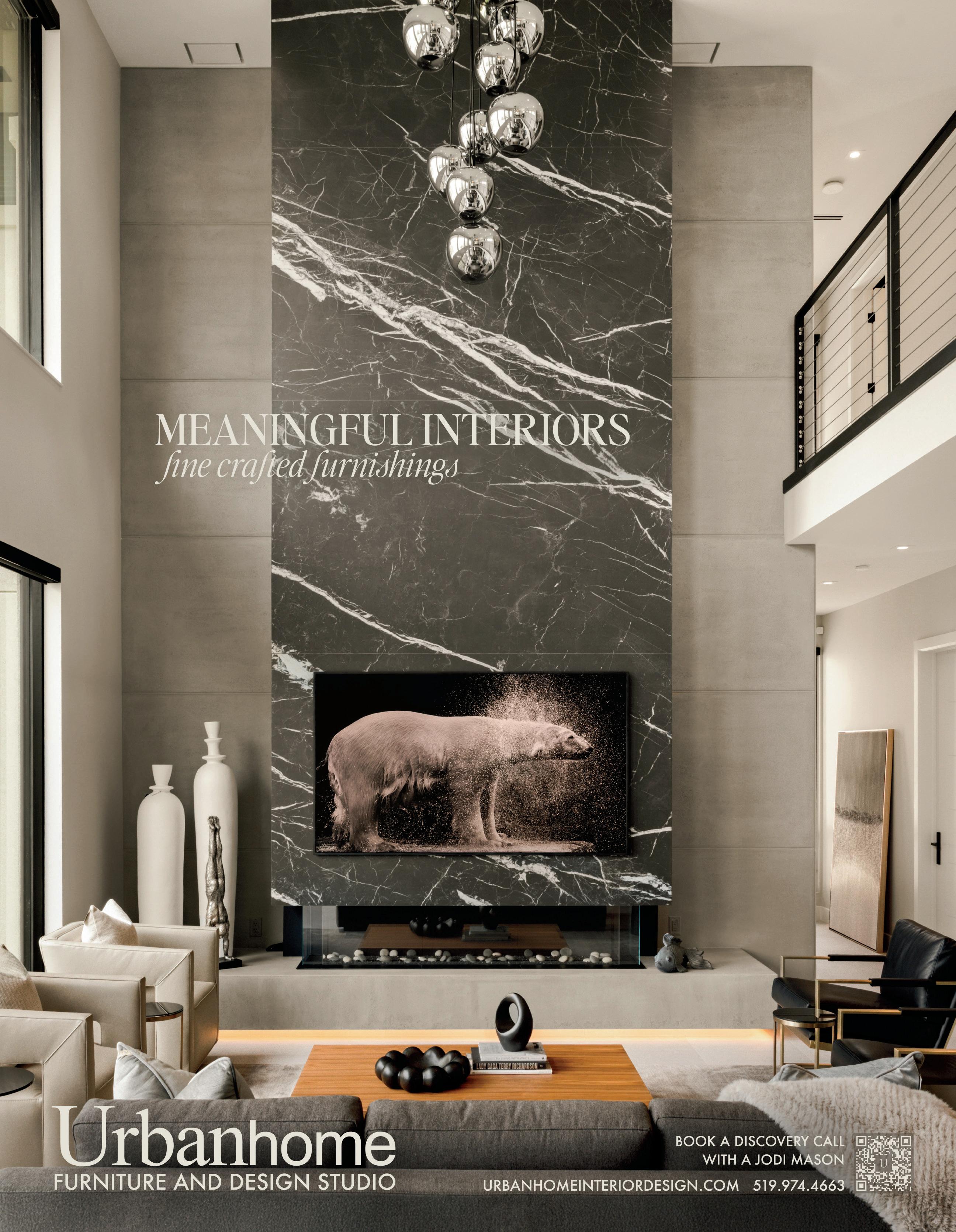
Jodi Mason guides every design choice with purpose, creating a home where elegance meets personal expression
10 WHERE NATURE AND DESIGN MEET
Landscape Effects transforms a challenging site into an award-winning, family- and wildlife-friendly paradise
Two families find home in the barndominium trend

A modern home defined by collaboration, clarity, and a deep sense of place
Written by Melissa Buzzeo
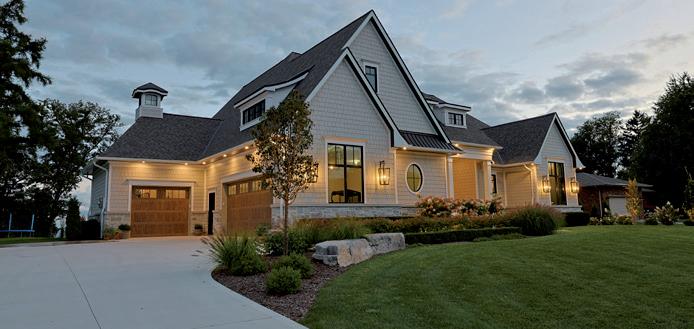
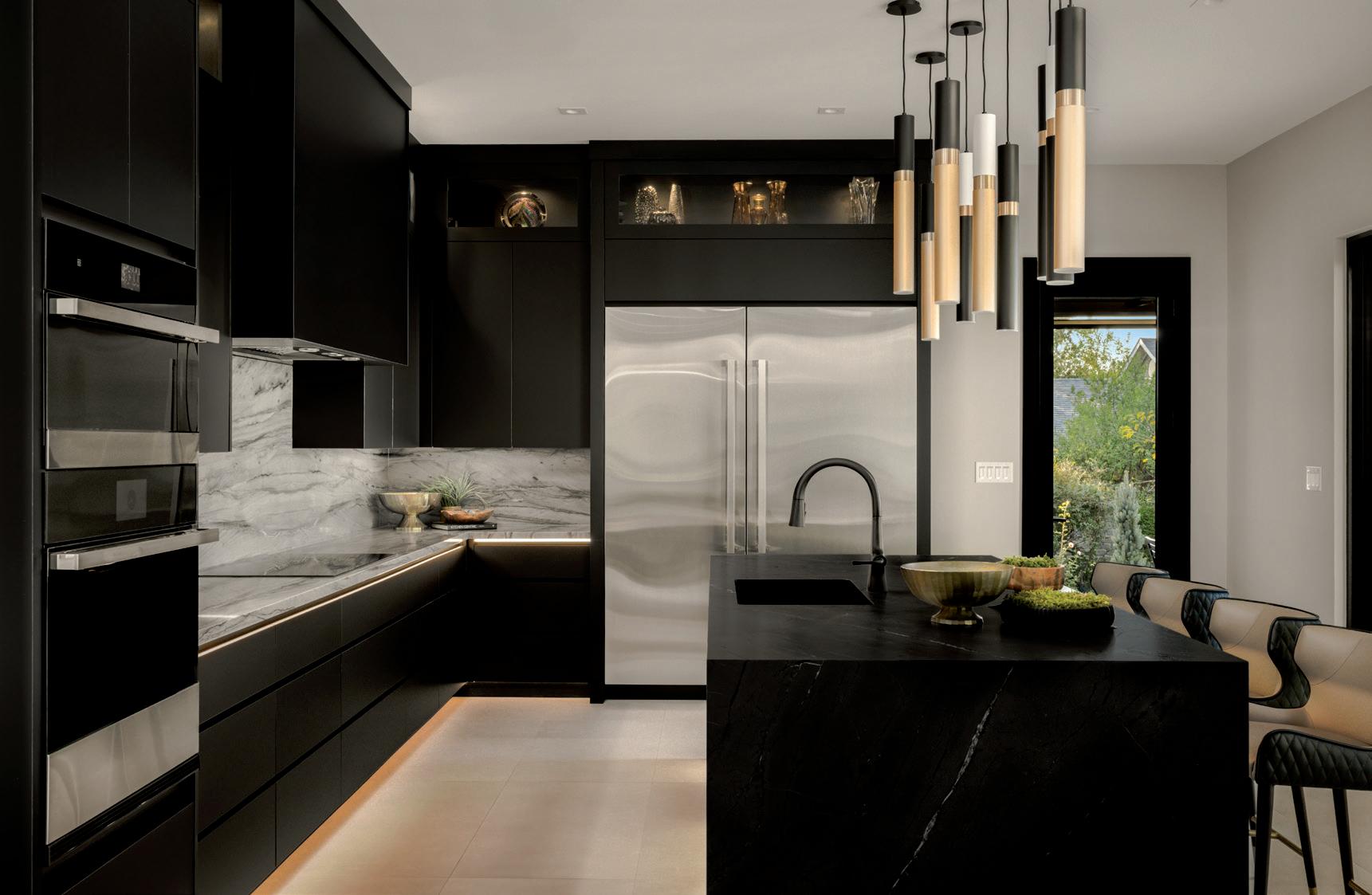
This project was rooted in collaboration from the earliest design conversations all the way to the final details. According to Jodi Mason, Owner and Principal Design Consultant at Urbanhome Interior Design, working closely with the homeowners, builder, architect, and trade partners allowed her and her team to align their vision, expertise, and execution, resulting in a home that felt intentional, purposeful and personal. The strength of this team approach was reflected in the home design and the overall experience.
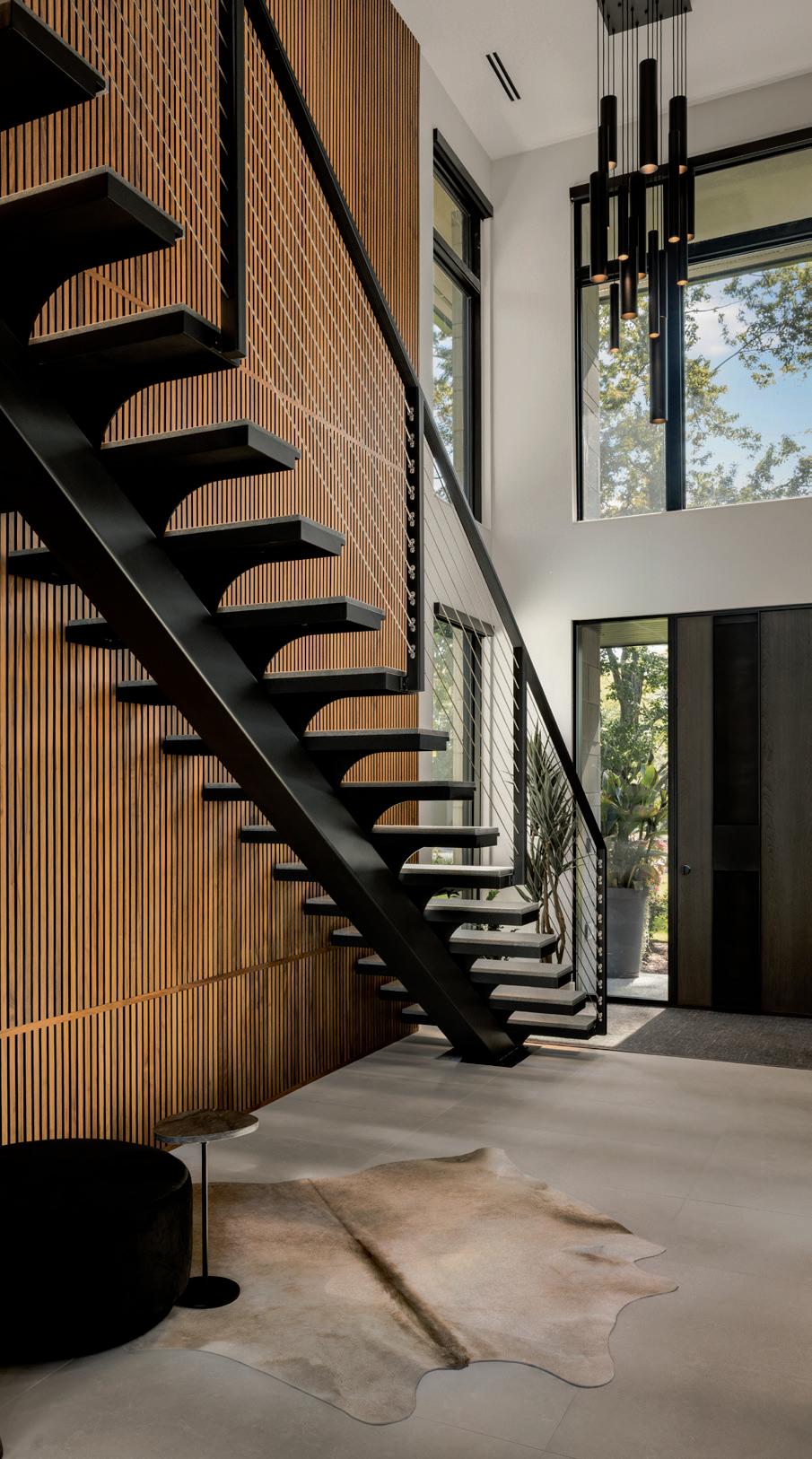
A project like this had to start with thoughtful, intentional design. Jodi explains how the interior and exterior of the home were designed to create a “home that feels cohesive from the moment you arrive.” The exterior architecture set the tone through its strong lines and modern materials used. Overall, these features created a “confident presence,” which the design team used to guide their interior decisions. When working on the interior spaces, Jodi says, “the team focused on scale, proportion and flow to ensure each space felt intentional and connected, rather than compartmentalized.” Finishes, colours, and textures were selected to complement the home’s spectacular views and enhance natural lighting inside the home, both day and night.
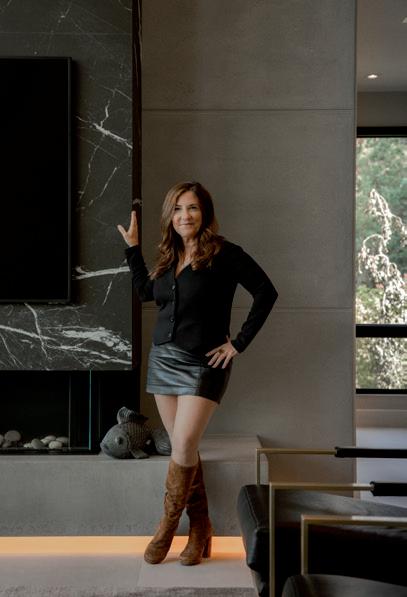
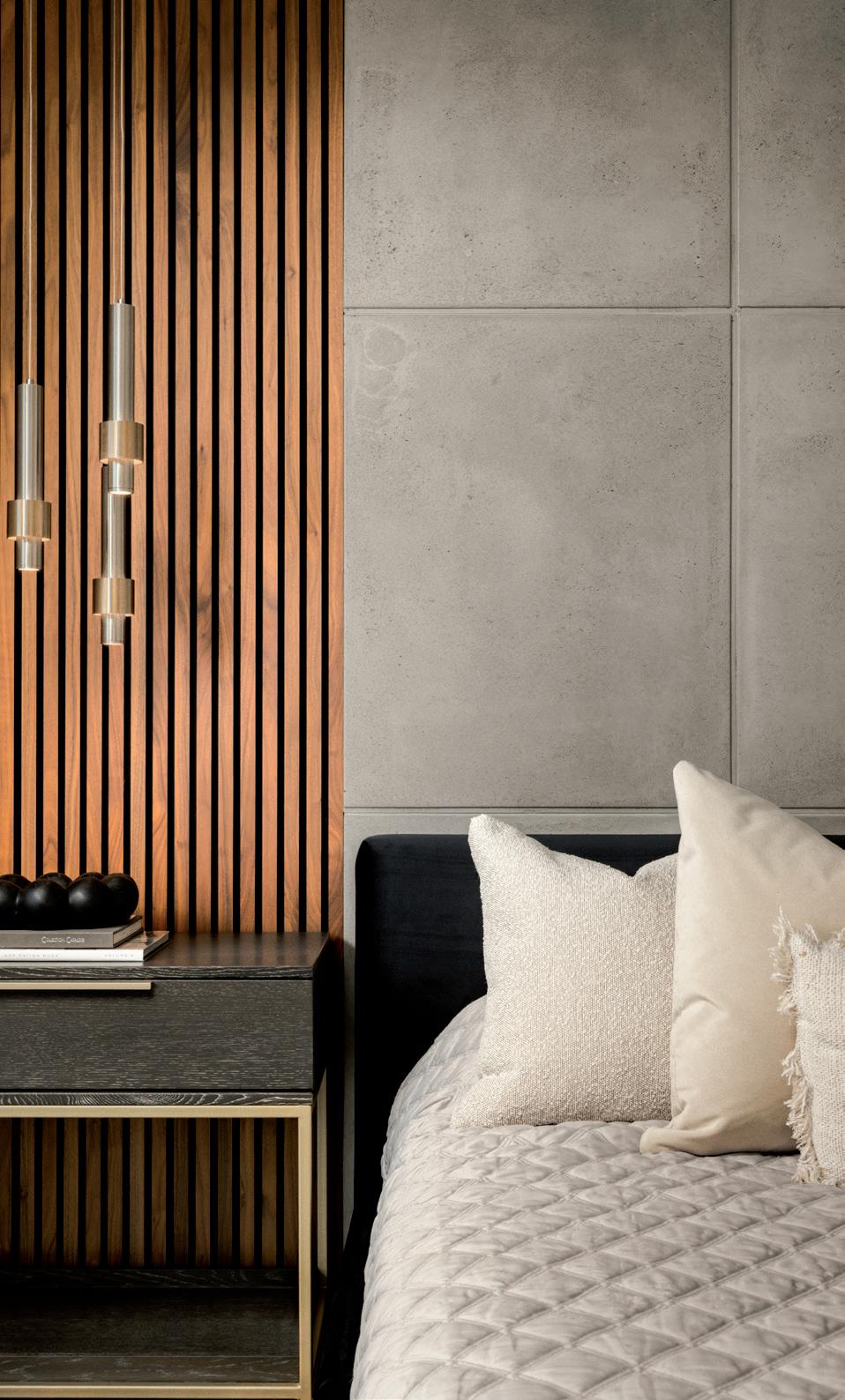
When designing the home, Jodi explains that collaboration with homeowners Alan and Phil was key. “It allowed the home to reflect their lifestyle while still pushing the ‘design forward’ approach the home called for,” she says. In doing so, texture and contrast were essential. The team paired warm elements, such as warm wood, with modern, structured forms such as tile flooring, leathered stone, and concrete panels. Jodi says these details, “kept the home feeling elevated, but livable.” In addition, custom details were layered throughout the home, creating character and a sense of individuality. Some of these details included unique ceiling treatments such as slat wall detail (a wall treatment used on the ceiling), lighting configurations, and accent walls, to name a few. Every detail of this home was thoughtfully considered. According to Jodi, design decisions were guided by both function and emotion, because how
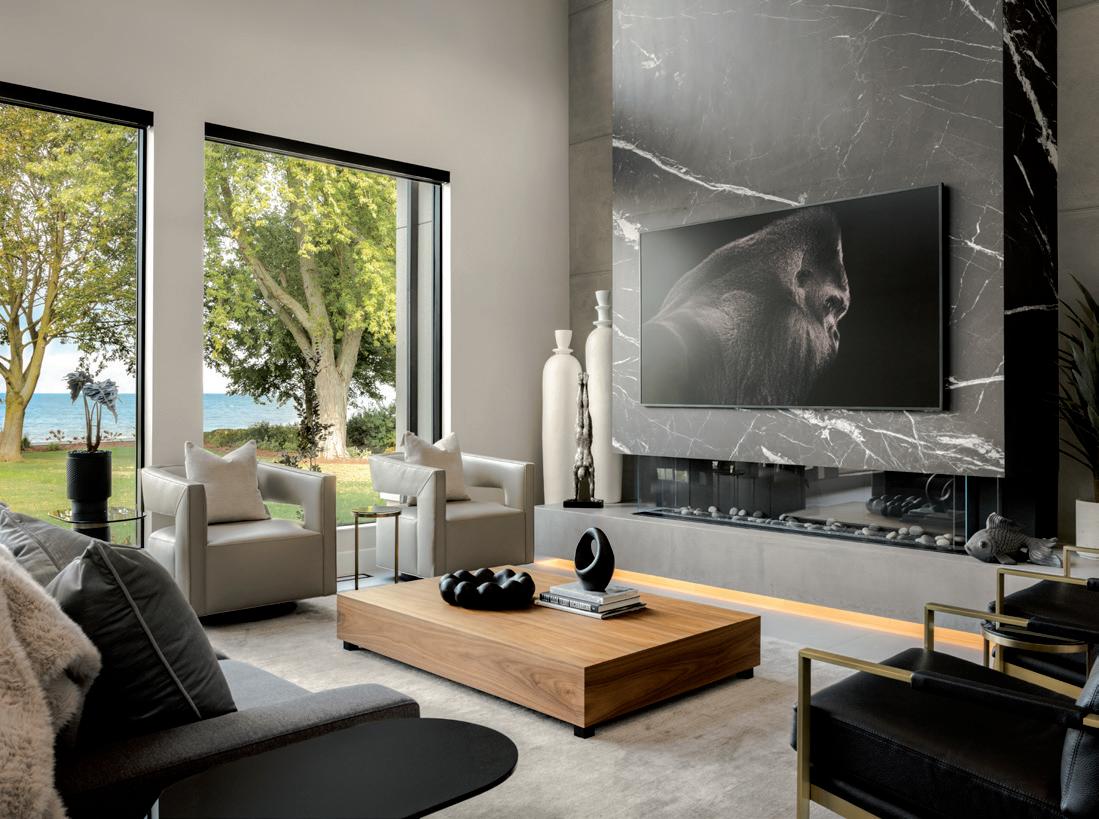
When design is guided by clarity, confidence, and collaboration, the result is a home that balances beauty, function, and feeling.”
a home feels to its owners is equally important as its visual appeal.
Now complete, Jodi offers several professional design tips and takeaways from this successful project. To begin with, clients should always start with a strong vision. Collecting photos is a great way to do this. They should take the time to learn and understand how they live and how they want their space to make them feel during their day-to-day activ-
ities, gatherings and times when they entertain. Clients also need to pay attention to environments that make them feel good and understand what it is that makes them feel that way. Next, clients should invest in higher-quality materials and furnishings in the right places. Jodi says this is important in order to, “balance clean lines with warmth through texture, lighting and soft furnishings.” She also suggests that clients think of long-term timeless design, as the home
will evolve and not require constant updates. To achieve this, quality furnishings and materials are key. Her rule is to “buy RIGHT- if you don’t want to buy TWICE.” Finally, Jodi emphasizes the importance of professional planning from the beginning stages. The client will not be disappointed, as professionals help “create clarity, confidence, and cohesion, with an end result that balances budget, style and form,” she says. W.E.


Landscape Effects transforms a challenging site into an award-winning, family- and wildlife-friendly paradise
Written by Devan Mighton
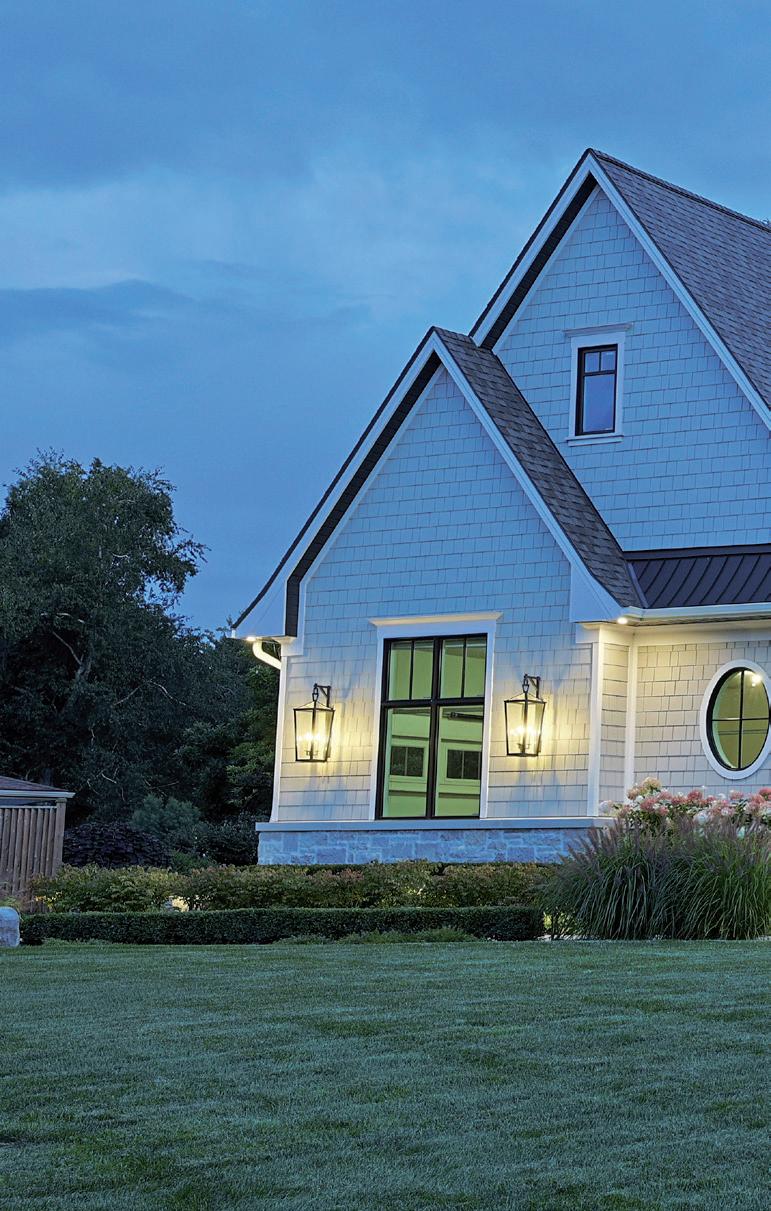
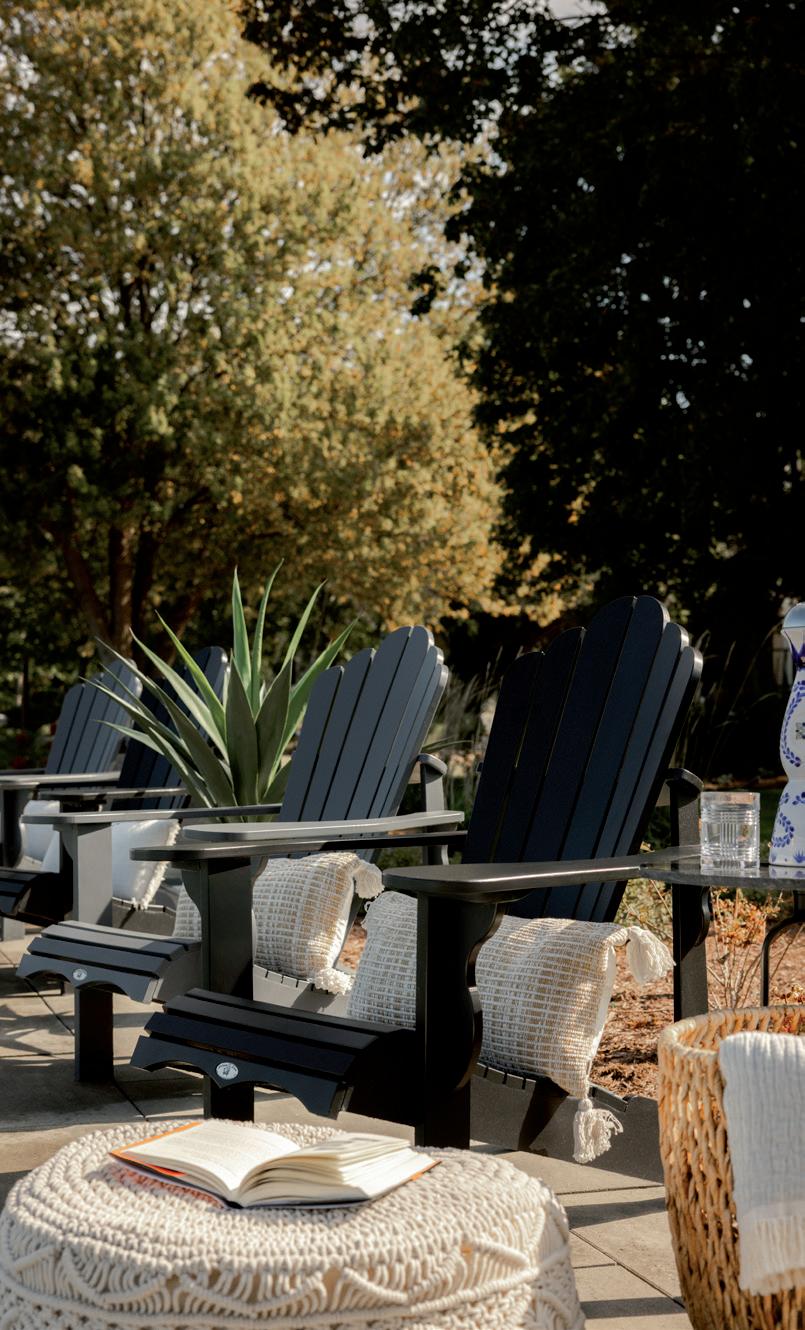
Some landscape projects succeed because of good design. Others succeed because of good timing. This award-winning project achieved both—and then elevated them through collaboration, craftsmanship, and a deep respect for nature.
Recognized with a Landscape Ontario Award of Merit in 2026, this project stands out as one of the rare builds where the landscape team was involved well before the home itself was constructed. That early engagement proved invaluable. By working
alongside the clients and builder from the outset, the Landscape Effects team was able to carefully coordinate grading, hardscape elevations, utility locations, pool equipment placement, irrigation systems, and lighting infrastructure long before installation began.
“This is the kind of project we wish we could do every time,” said lead designer Heather Horton. “When you’re involved early, everything flows better. You can solve problems before they ever become problems.”
When you’re involved early, everything flows better. You can solve problems before they ever become problems."
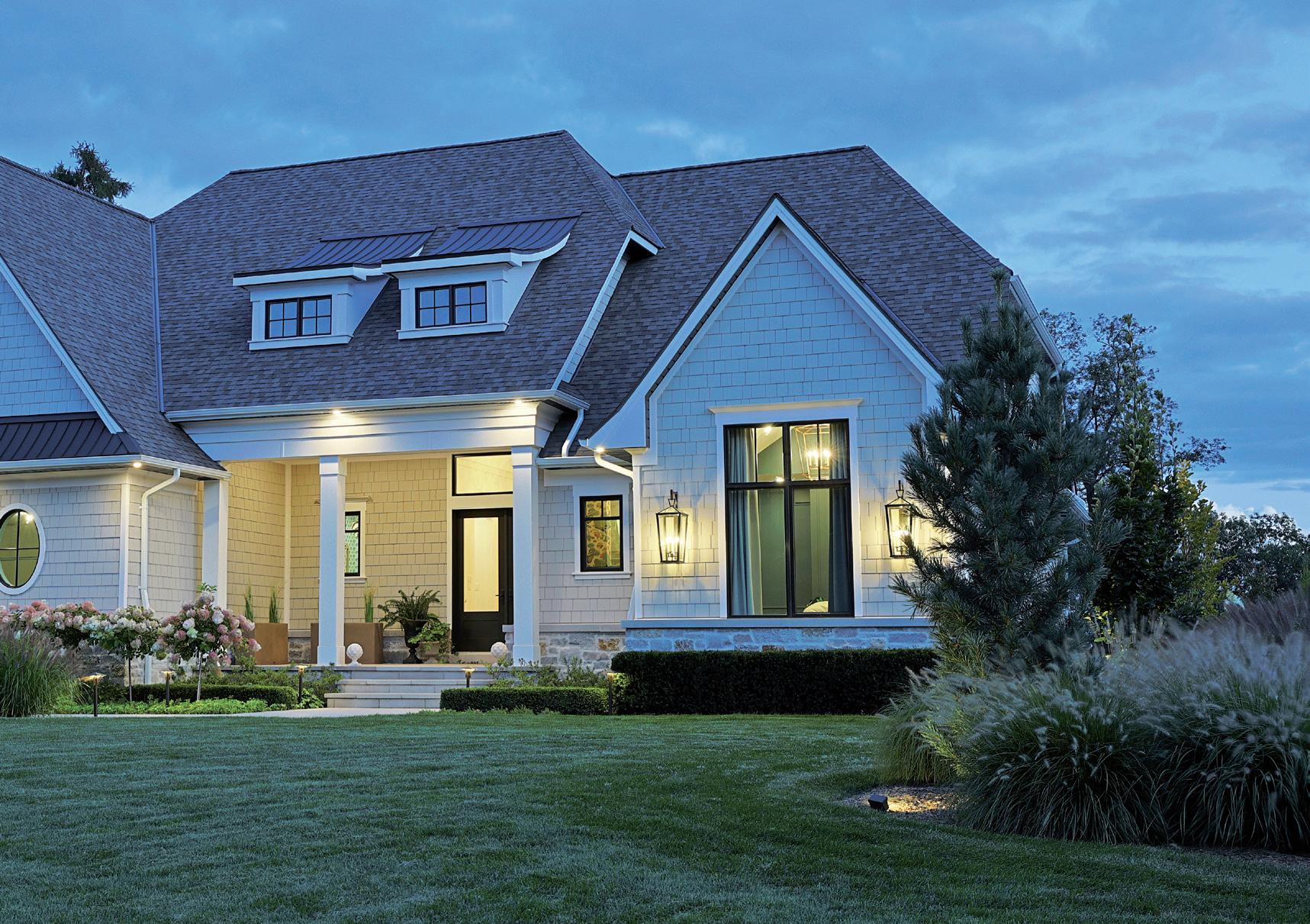
The vision for the property was clear from the beginning—create an outdoor space that supports both family life and local wildlife, without sacrificing beauty or function. That philosophy guided every design decision, from material selection to plant placement.
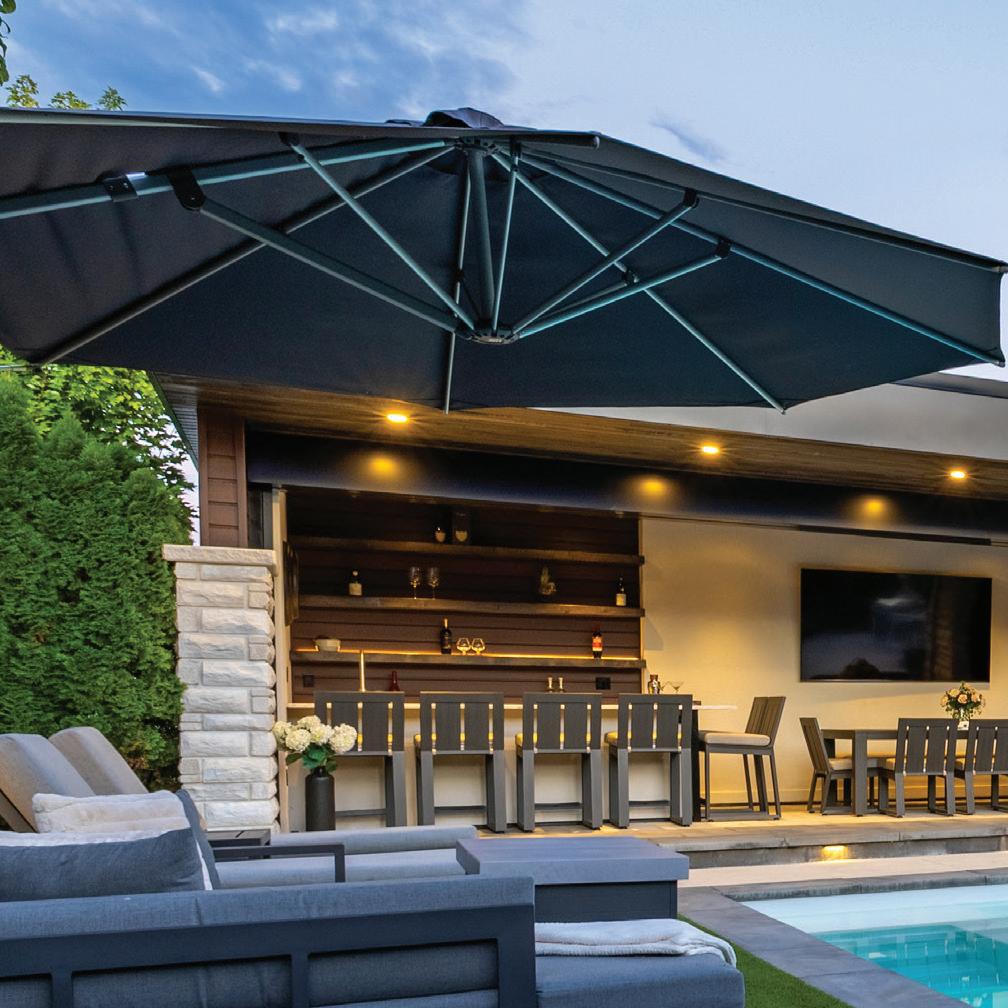
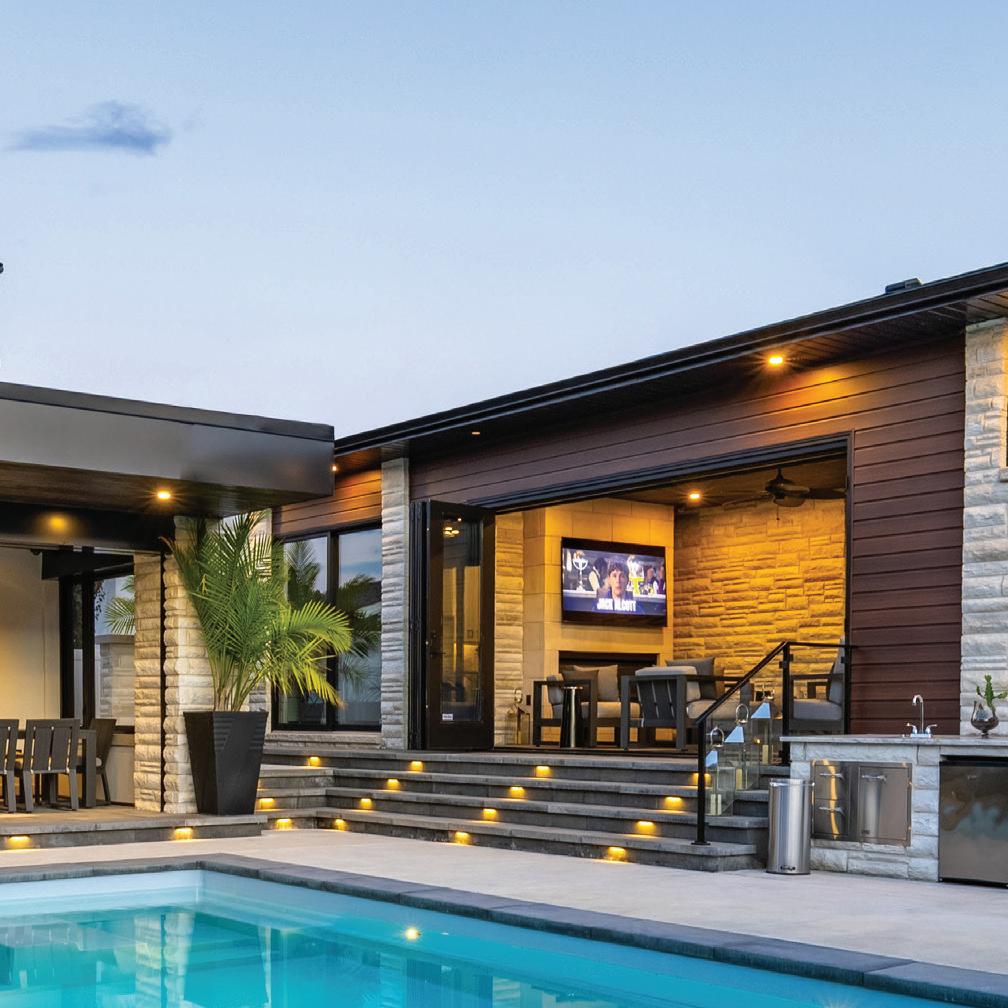
At the front of the home, the landscape presents a more structured and refined appearance. Clean hardscape lines and organized foundation plantings allow the architecture to take centre stage, while subtle transitions introduce softer, more natural plantings as the landscape moves outward. Repeating materials, including pavers used on the front walkway, porch steps, and rear patios, helps visually connect the entire property. Thoughtfully placed lighting accents walkways and focal trees, enhancing safety and curb appeal.
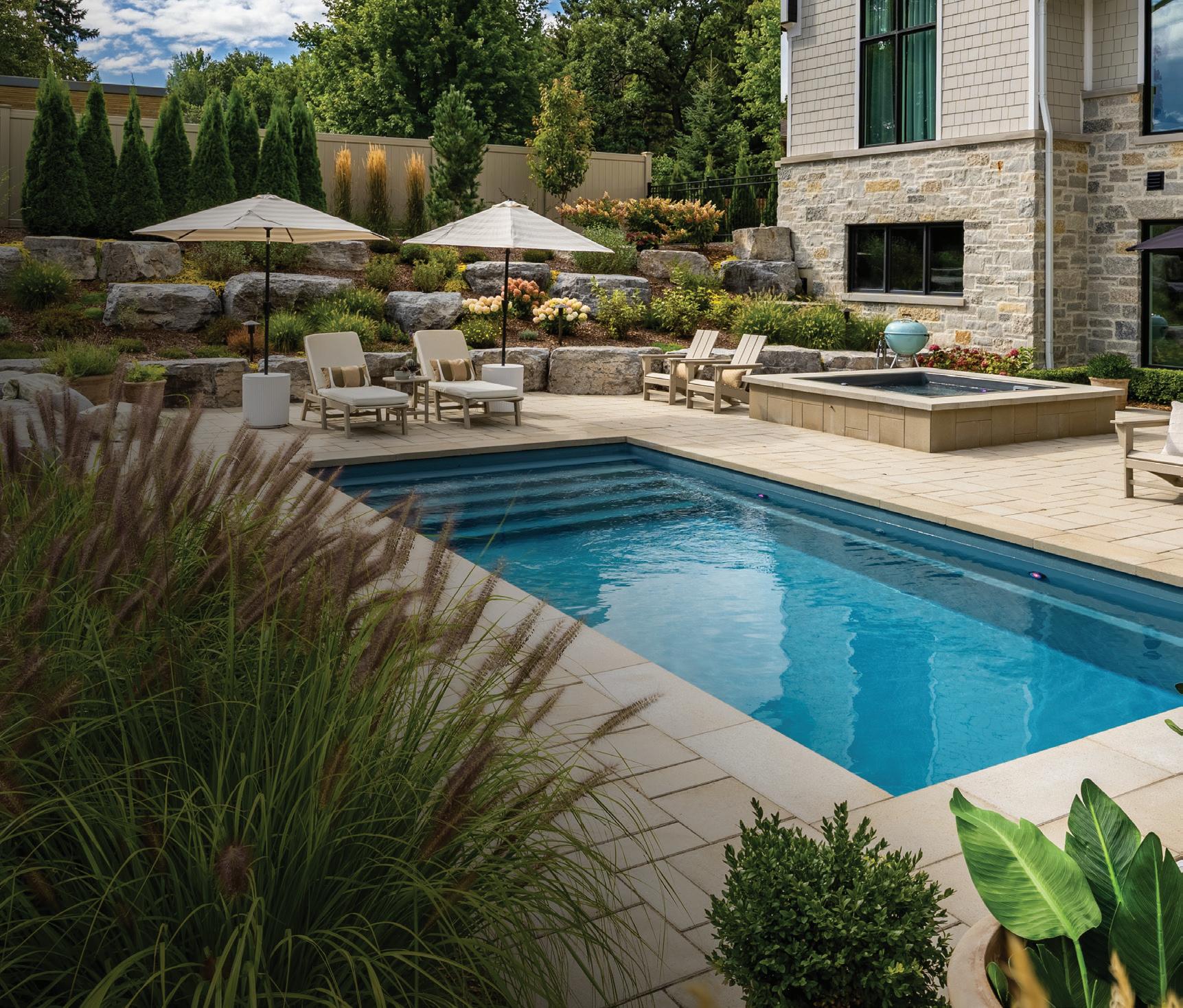
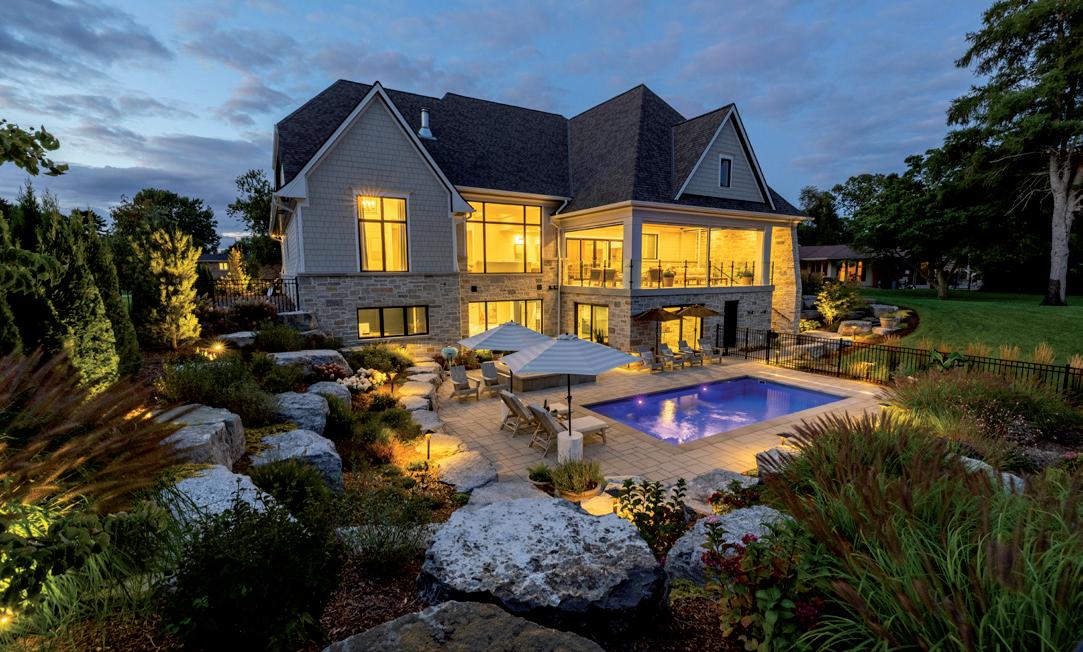
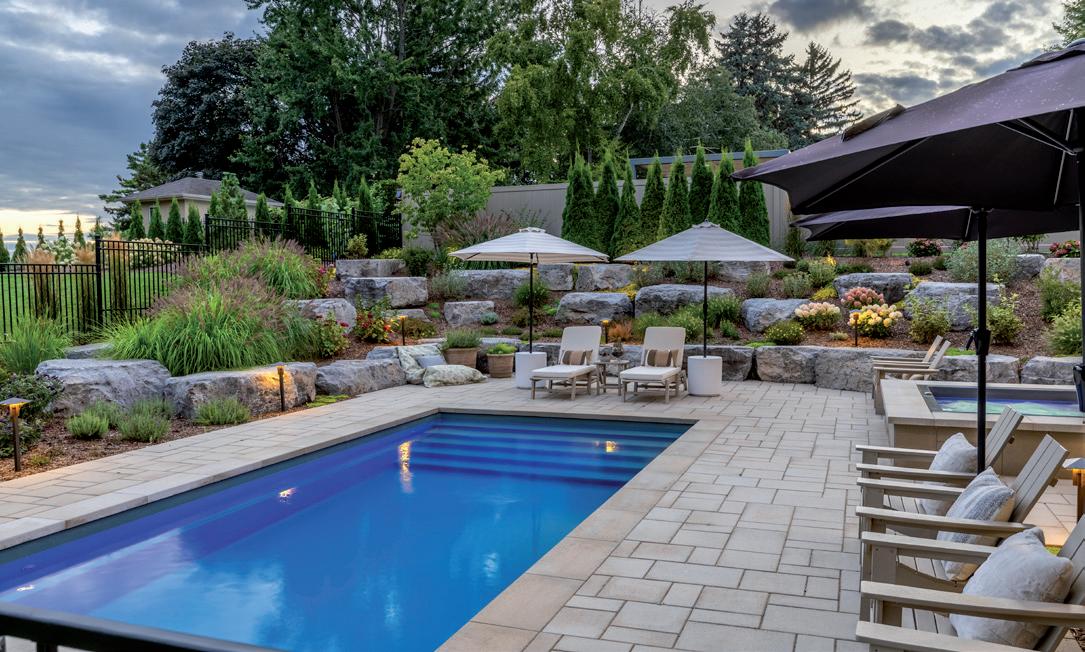
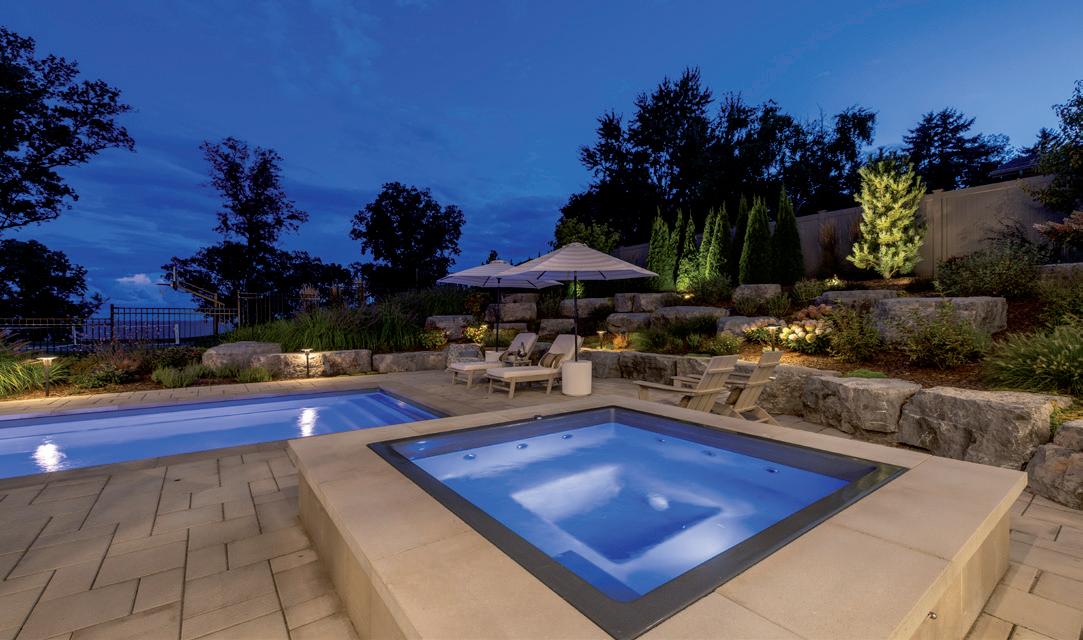
The backyard tells a different story, one rooted in nature and shaped by the land itself. A dramatic six-foot grade change over just 15 feet presented a significant challenge, addressed using extra-large natural boulders. These not only retain the slope but also double as informal bench seating, adding function and character. A compact fiberglass pool and raised spa demonstrate that a modest footprint can still support a generous, inviting entertaining space.
“The boulders and plantings are really the stars of this project,” Horton said. “The pool is almost secondary. It’s about how the space feels when you’re in it.”
Low-voltage lighting highlights textures and elevation changes without overpowering the landscape, while carefully selected plantings attract pollinators, birds, and other wildlife throughout the seasons.
Together, the project is a testament to what’s possible when skilled professionals, engaged clients, and clear communication come together—earning its Award of Merit not just for technical excellence, but for the experience it creates. W.E.





Written by Melissa Buzzeo
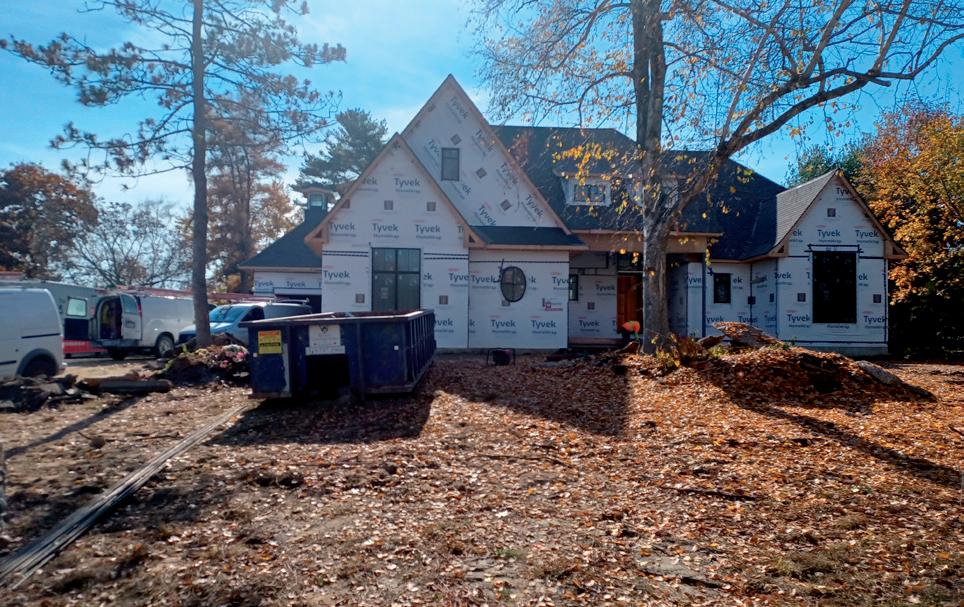
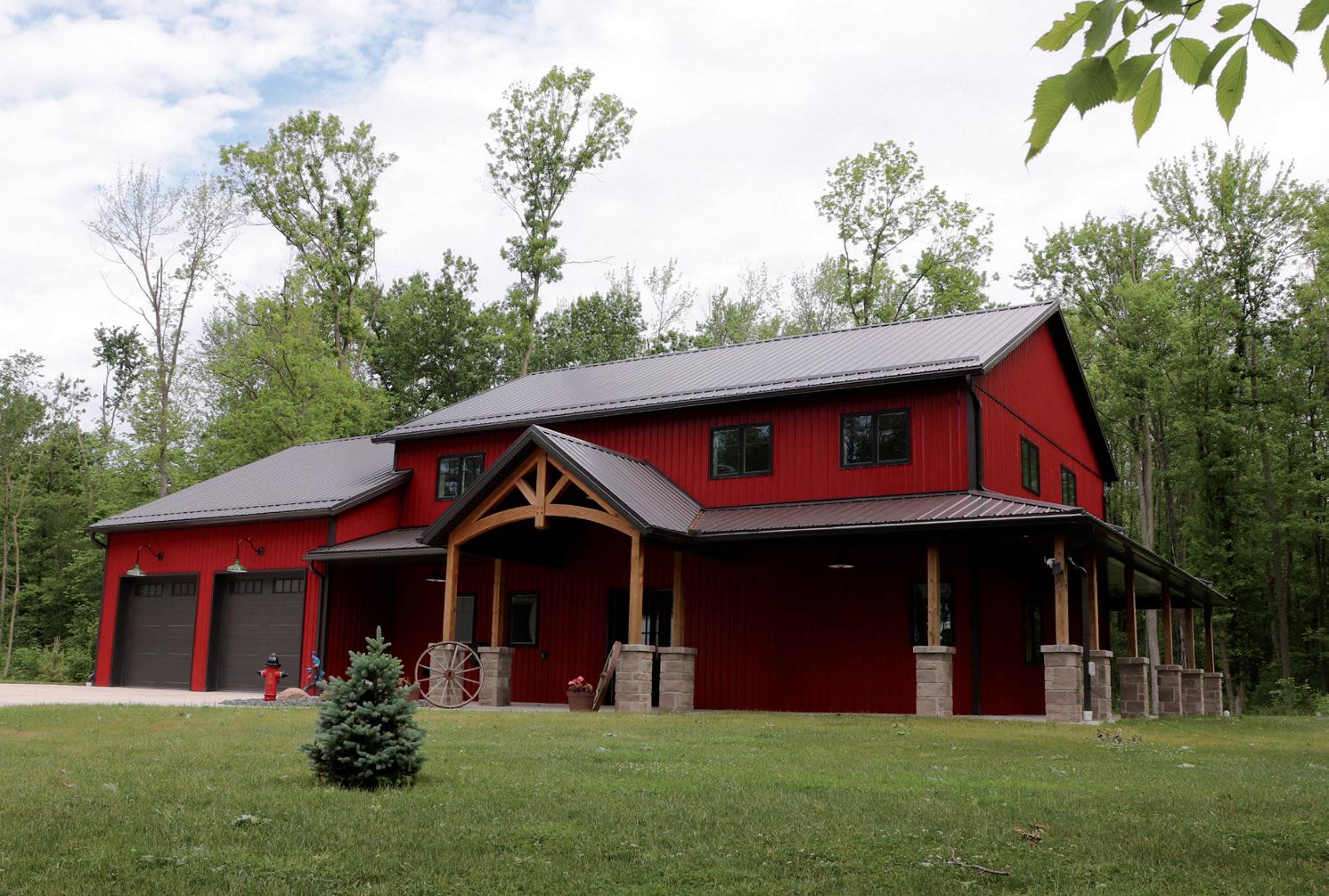
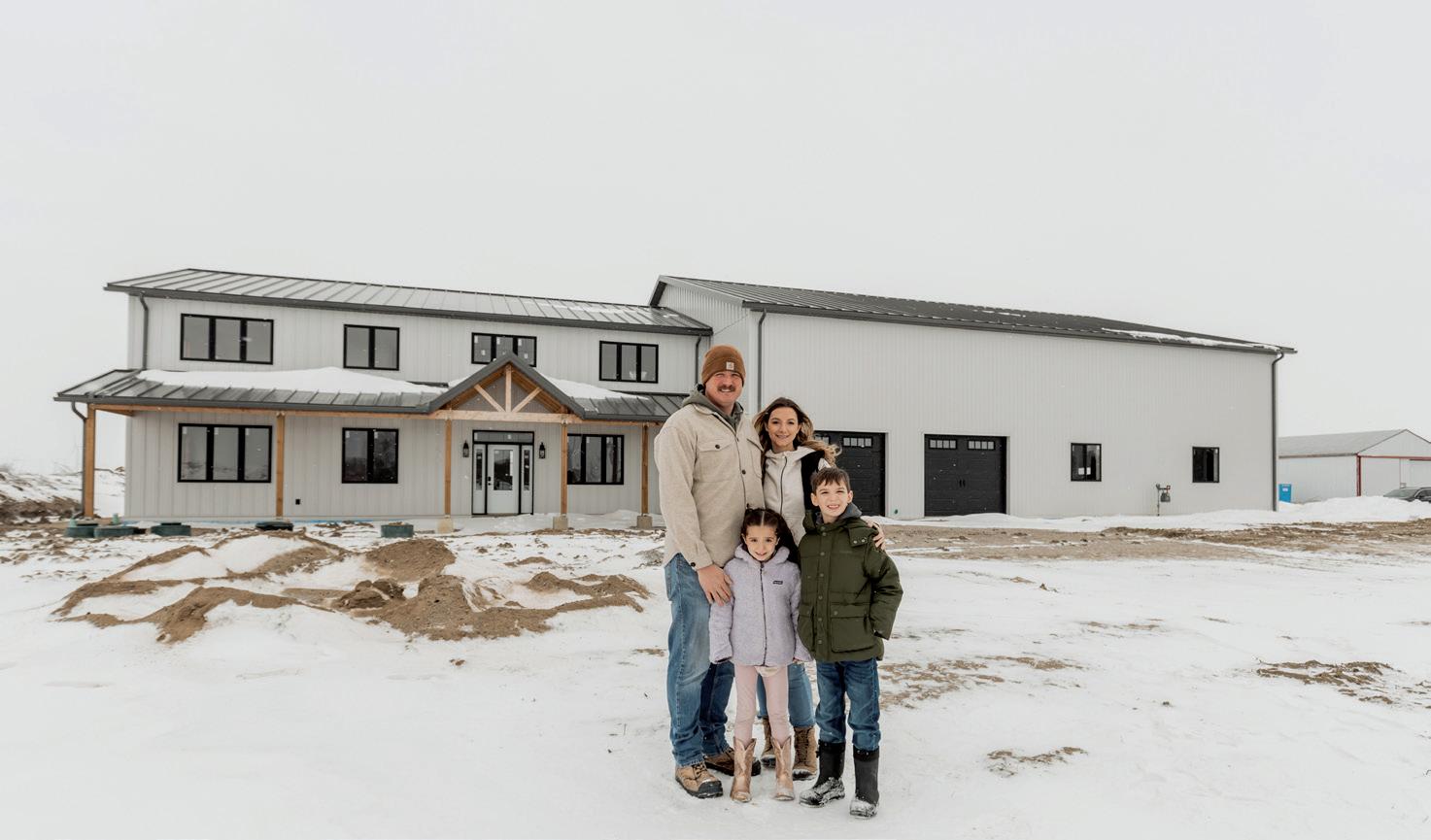
Nick and Carissa Gonzalez, along with Adam and Tanya Armstrong, are proud homeowners and soon-to-be homeowners - embracing a new housing trend known as barndominiums. Barndominiums, also known as “barndos,” are barn-style structures with fully finished living spaces on the interior. While
they are not new to the housing market, they have recently surged in popularity across both the United States and Canada. Meg Lyttle, Broker of Record and Owner of Nest Realty Inc. Brokerage, confirms that barndominiums have steadily grown in popularity over the past five years. She explains, “Post-COV-
ID, people became far more creative in how they combine work and play. With telecommuting now a long-term reality for many, living in a barndominium has proven to be a smart and flexible strategy.”
The house wasn’t meant to be perfect — it was meant to be right for our family."
According to Jake McAgy, a builder from J.D. Custom Construction, “Barndominiums offer a smart and modern housing solution for today’s homeowners with long-term value.” With the right contractor, homeowners can truly unlock all the benefits of this unique homestyle. Both the Armstrong and Gonzalez families were thrilled to discover the benefits of building this type of home and were sold on the idea. Carissa explains that one of the initial features that drew them in was the fact that they would get, “significantly more square footage for our money” by building a barndominium instead of a traditional new home. Both families also learned that this style of home would allow them to combine a house and shop (workspace) in one structure, rather than building two separate buildings. This proved to be a bonus, as combining the two not only saved on costs but also created an additional space that could be used year-round. Beyond serving as a workspace, the shop would double as an area where their kids and dogs could run around, ride cars, play games and stay active throughout the winter months. Tanya further explains, “The heated shop means projects happen yearround, equipment stays safe and muddy boots and tools don’t end up taking over the living space.”
Once the decision was made to build a barndominium, Carissa says the priority was “building it properly with the mindset that this could be our forever home.” From a construction perspective, Jake from J.D. Custom Construction says, “barndominiums are known for their low-maintenance construction.” Because Nick had been in the construction industry for approximately 15 years, he took on the role of general contractor. Some
parts of the construction were subcontracted, while others were completed by Nick, his father, and Carissa. “We focused on the structure and systems first, knowing finishes could be updated later,” Carissa says. “That meant perma-column posts.” She explains that many people assume a barndominium is built as a traditional pole barn, with wood posts placed directly into the ground that can eventually rot. Perma column posts,
however, are engineered with concrete and steel plates, which makes a significant difference in the overall structure.
The kids can be upstairs, others can be in the shop, and the main living area stays open and functional."
Similarly, the Armstrongs took on much of the construction work themselves and, in doing so, were able to keep their costs down. Adam explains, “We focused on low-maintenance materials, durability, and efficiency- things you don’t always see in magazine homes but that matter when you are juggling careers, kids and a working farm.” Meg Lyttle addresses the fact that each of these style homes is unique, allowing buyers their own interpretation of elevated functional living. Building without a contractor or builder also allowed the Armstrongs to design their home in a way where “every room, every detail
actually serves a purpose in our daily lives,” Tanya says.
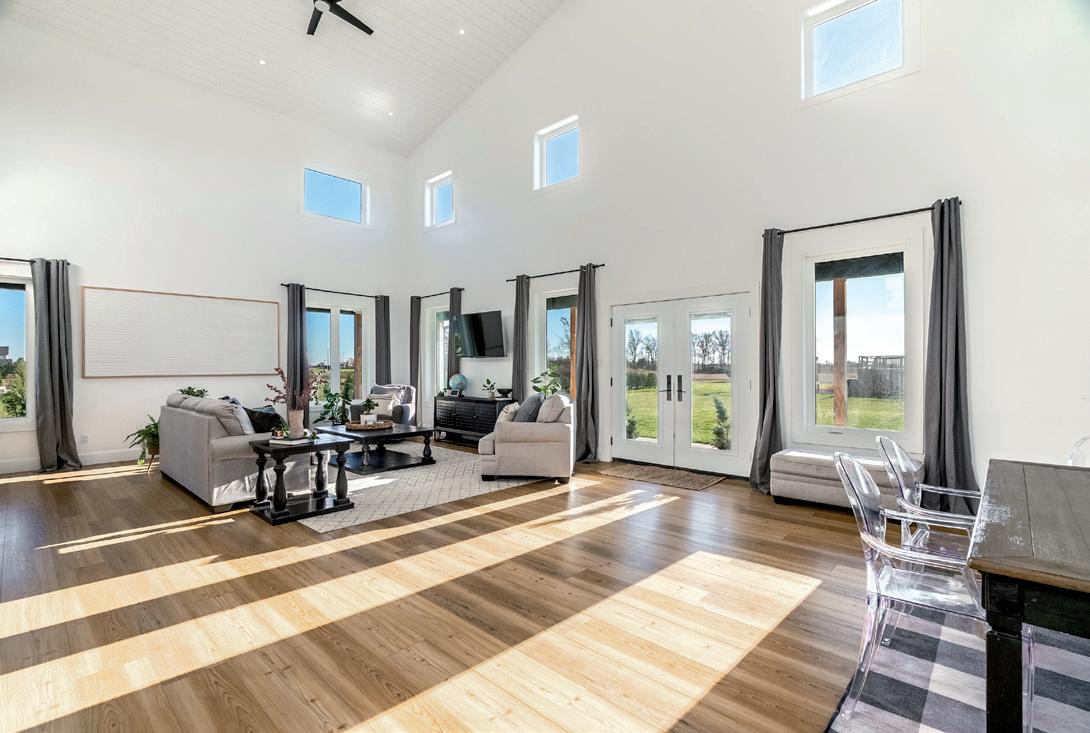
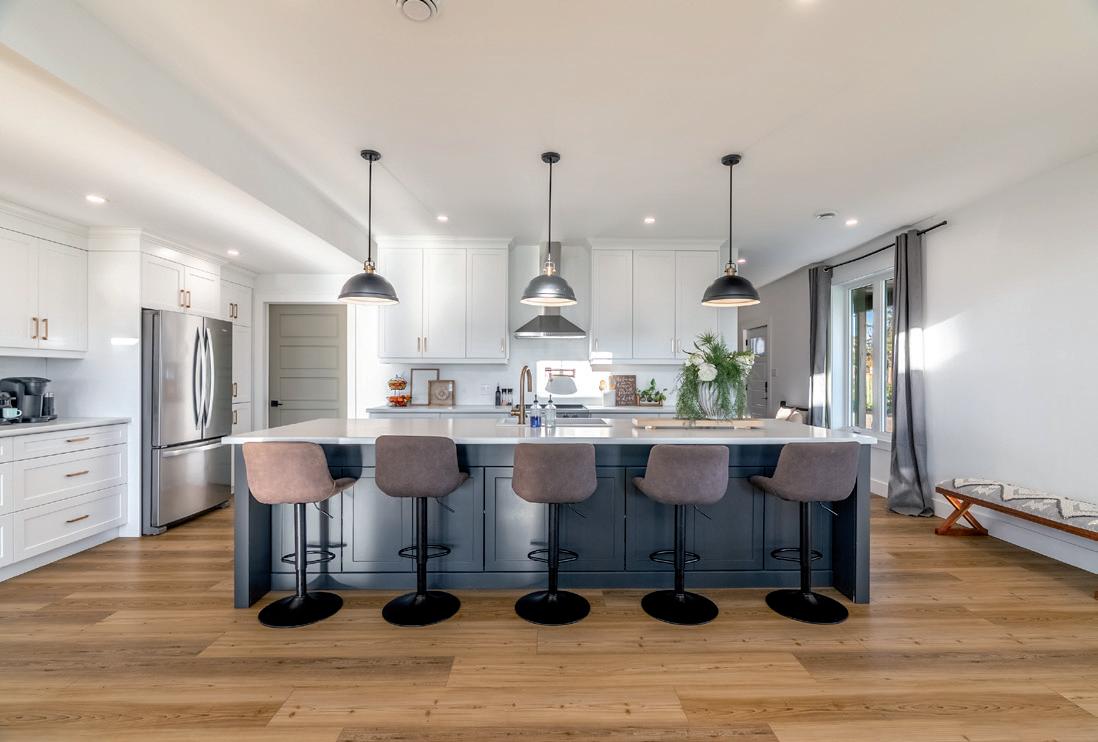
Jake from J.D. Custom Construction notes that barndominiums provide excellent design versatility, adding that this flexibility is another highly desirable feature of these homes. “Homeowners enjoy virtually limitless options for interior layouts and exterior aesthetics, allowing it to be customized to personal style and functional needs,” he says. For this reason it is not surprising that Meg Lyttle says, “Since 2021, Chatham-Kent has seen approximately 30 newly constructed barndominiums, which speaks volumes about the direction buyers and builders are heading.” The Armstrong family felt this approach was the right fit for them. “Our kids will grow up riding bikes through the shop, helping on the farm, and doing homework at the kitchen island while we finish work,” Adam shares. The Gonzalez family appreciated the layout options of this type of home. One of the major advantages for them is the open floor plan because there is so much space for entertaining and everyday life. Carissa says, “The kids can be upstairs, others can be in the shop, and the main living area stays open and functional.” The functionality
of these homes allows them to include smart home technology throughout, clean air systems, floor drains in case of leaks, air quality sensors, full alarm systems and so much more.
Meg Lyttle believes that while barndominiums remain a “niche market,” their appeal will continue to grow. She says, “I do not see this as a passing trend, but rather the beginning of a new era of intentional, easy living.” Both the Gonzalez and Armstrong families are pleased with their choice of homes, and rave reviews from visiting guests have been a bonus for the Gonzalez family. Carissa says that quite often her guests will comment on their “vaulted ceilings, the size of the island, heated floors, the brightness of the home with all the windows, the exterior colours, wraparound porch and spaciousness.” As the Armstrong family approaches the completion of their home, Adam acknowledges that “nerves are part of the experience when building without a contractor or builder.” Tanya and Adam take the nerves in stride. As Adam puts it, “The house wasn’t meant to be perfect- it was meant to be right for our family.” W.E.