COLLECTION OF WORKS
Ryan Liu

Ryan Liu
• Independence and Self-efficacy
• Flexibility and Adaptiveness
• Time Management
• Problem Solving
Drawing
• Critical thinking
• Organization
• Creativity
• Detail oriented
• Photoshop, Krita, digital drawing, photo manipulation
• Rhino 3D, Autodesk Revit, SketchUp, V-ray, D5
• Technical drafting, hand drafting, sketching
•,Pencil, ink, watercolours, analog mediums
Design
• Adobe Illustrator, graphic design
• Adobe Lightroom, photography
• Adobe InDesign, process documentation, layout
• Laser cutting, 3D printing, CNC model construction
Other
• Adobe After Effects, Premiere Pro, Lightworks, video editing
• Microsoft Suite, Google Suite
• Social media management, Instagram, YouTube
Hello there, I’m Ryan.
r395liu@uwaterloo.ca | https://ryerye474.squarespace.com/ |
I’m a 2nd year undergraduate student at the University of Waterloo in Canada, where I currently study architecture.
Throughout my years of experience in the arts, architecture to me has always been the medium I favored the most. It influences us on every level of life, and it’s through that ability to physically shape our experiences that draws me towards architecture as such an incredibly versatile medium.
It’s my firm belief that architecture should be designed for people, with the ways that they experience and interact with the world in mind, and that’s something I try to strive for in the work that I do. I believe in being well-rounded and staying open to experimentation, learning new things, and taking on a challenge with every new project I face, so I hope there’s something in my collection of works that grabs your attention.
Thank you for your time and consideration, I do truly appreciate it.
Urban Design Assistant City of Hamilton, ON
- Diagram illustration and layout - SketchUp modeling
Graphics Editor - Galt. Publications University of Waterloo, Cambridge, ON.
- Precedent research and graphic design
Undergraduate Research Assistant — Quality of MURBs in WR University of Waterloo, Cambridge, ON.
- Revit modeling and file management
Designer and Fabricator - F_RMlab University of Waterloo, Cambridge, ON.
- Digitally modeling and fabrication
Event Assistant - BRIDGE University of Waterloo, Cambridge, ON
Lead Project Manager for Mural Design KINGDOM Canada + Unionville High School, Markham, ON.
- Lead project coordinator - Character artist and designer
Volunteer Banner Designer City of Markham, ON.
University of Waterloo, Cambridge, ON Bachelor of Architectural Studies (BAS) Honours Co-op Program
Unionville High School, Markham, ON OSSD + AU.VA Diploma
Arts Unionville Visual Arts Program
Graduated with honors >90%
| Jan. 2025 –Apr. 2025
First in Class Engineering University of Waterloo Awarded to the student with the highest academic standing in class
Jan. 2024
Nov. 2024
| Sep. 2023 –Present | Sep. 2024 –Dec. 2024
| Jan. 2024 –Apr. 2024
| Sep. 2023 –Jun. 2023
| Apr. 2023 –Jun. 2023
| Mar. 2023
| Sep. 2023 –May 2028 | Sep. 2019 –Jun. 2023
Outstanding Design Work University of Waterloo
Energy+Design Award University of Waterloo Awarded for the best energy-related design
Project Reviews 2025 University of Waterloo
Dean’s Honours list University of Waterloo
President’s Scholarship of Distinction University of Waterloo Entrance average 95% or above
McPhie Family Architecture Scholarship University of Waterloo Awarded for exceptional entry portfolio and academic performance

Apr. 2024
Apr. 2024
Jan. 2025
Apr. 2024
Dec. 2023
Aug. 2023
Aug. 2023
LOCATION: Cambridge, Ontario, Canada
43°22’19.7”N 80°19’26.1”W
PROGRAM: Residential Housing
| 2023 | Arch 192 Studio Project
| Selected for Project Reviews 2025
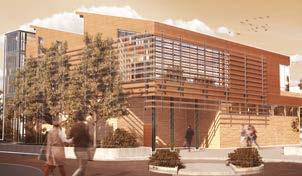
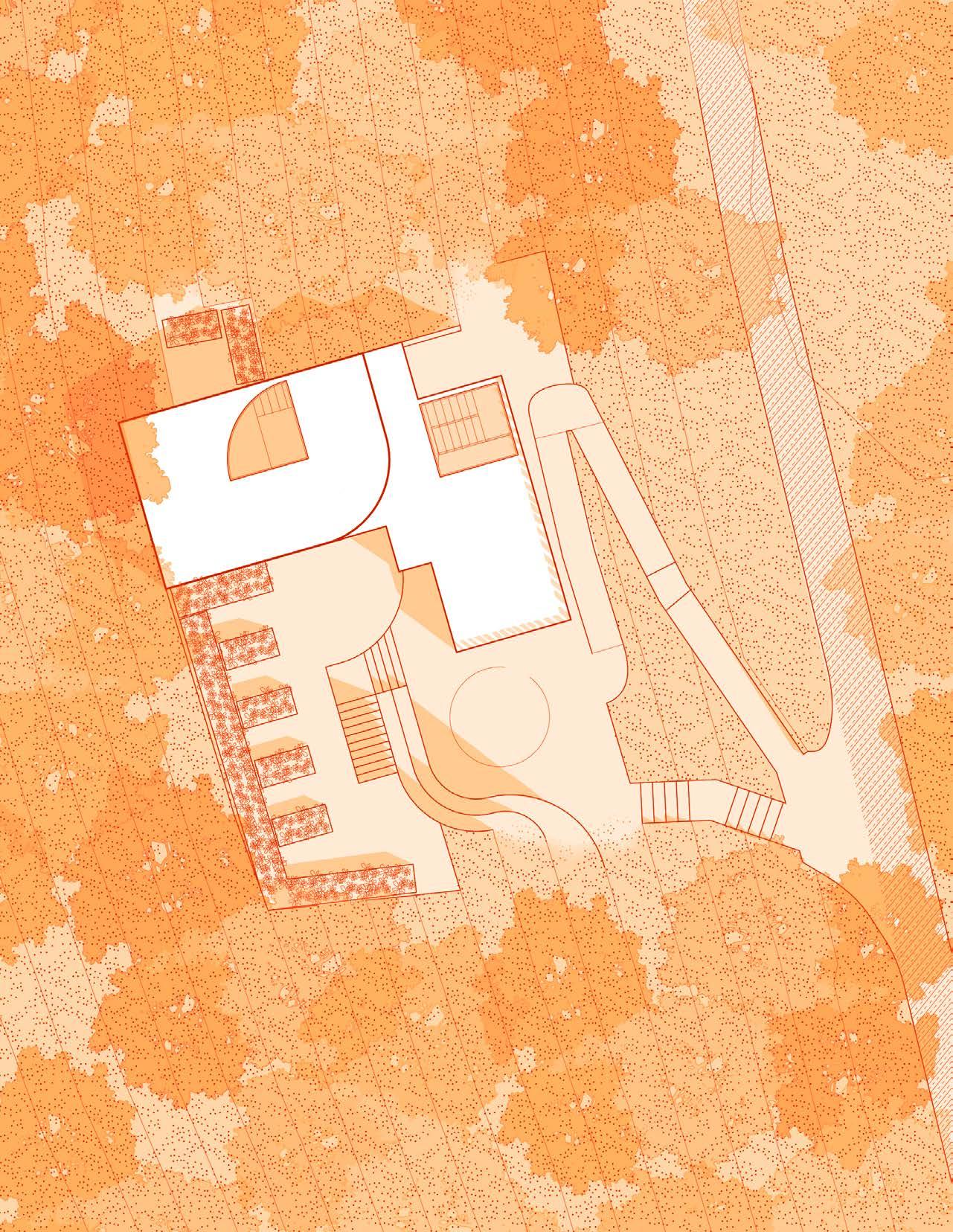
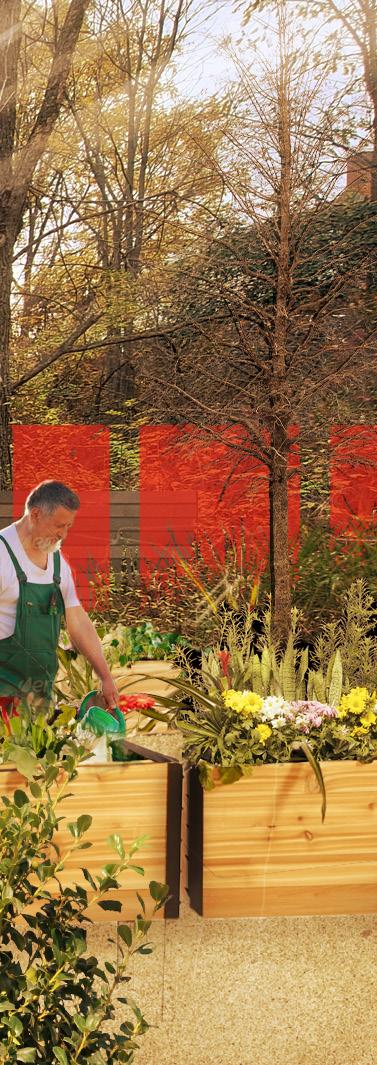
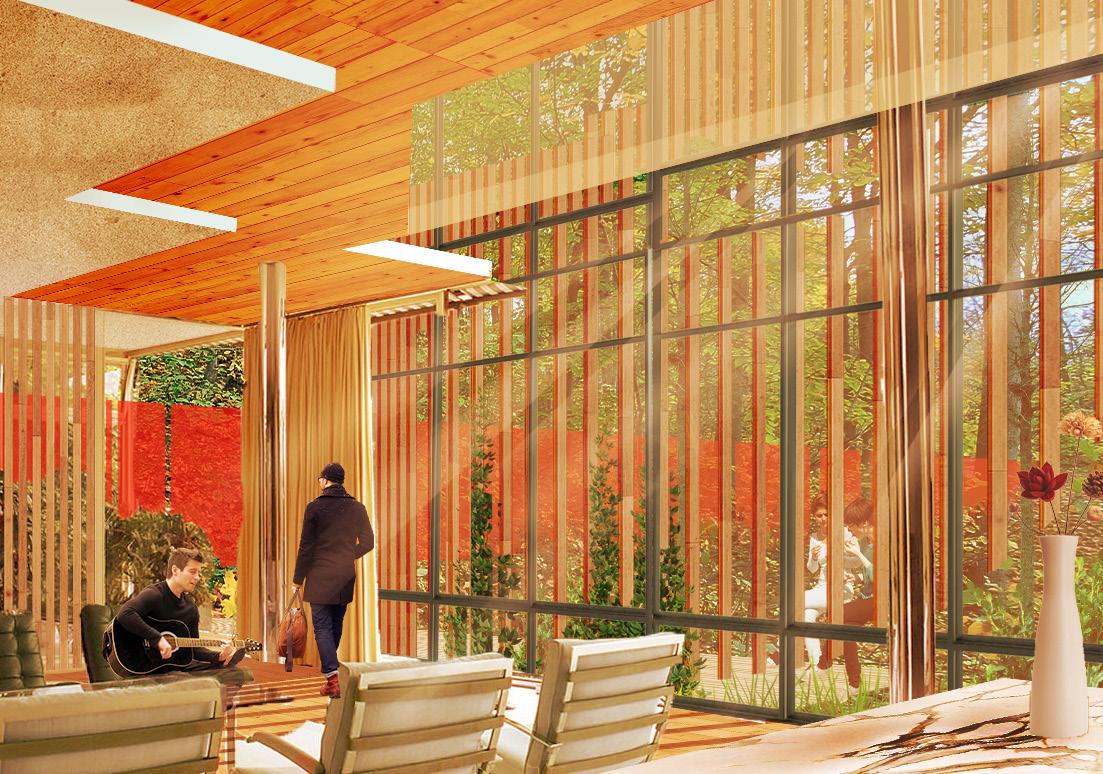
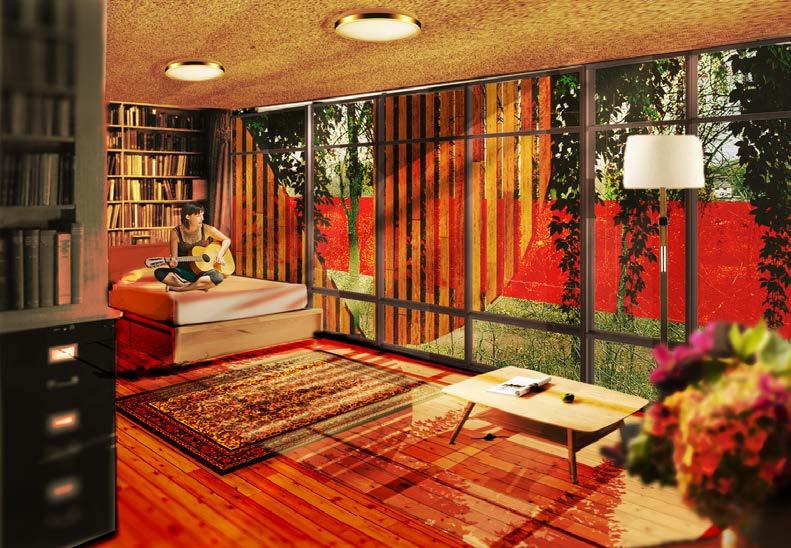
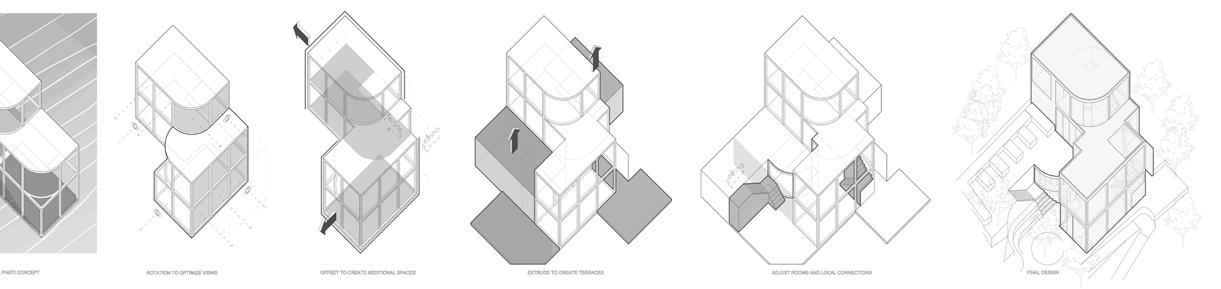
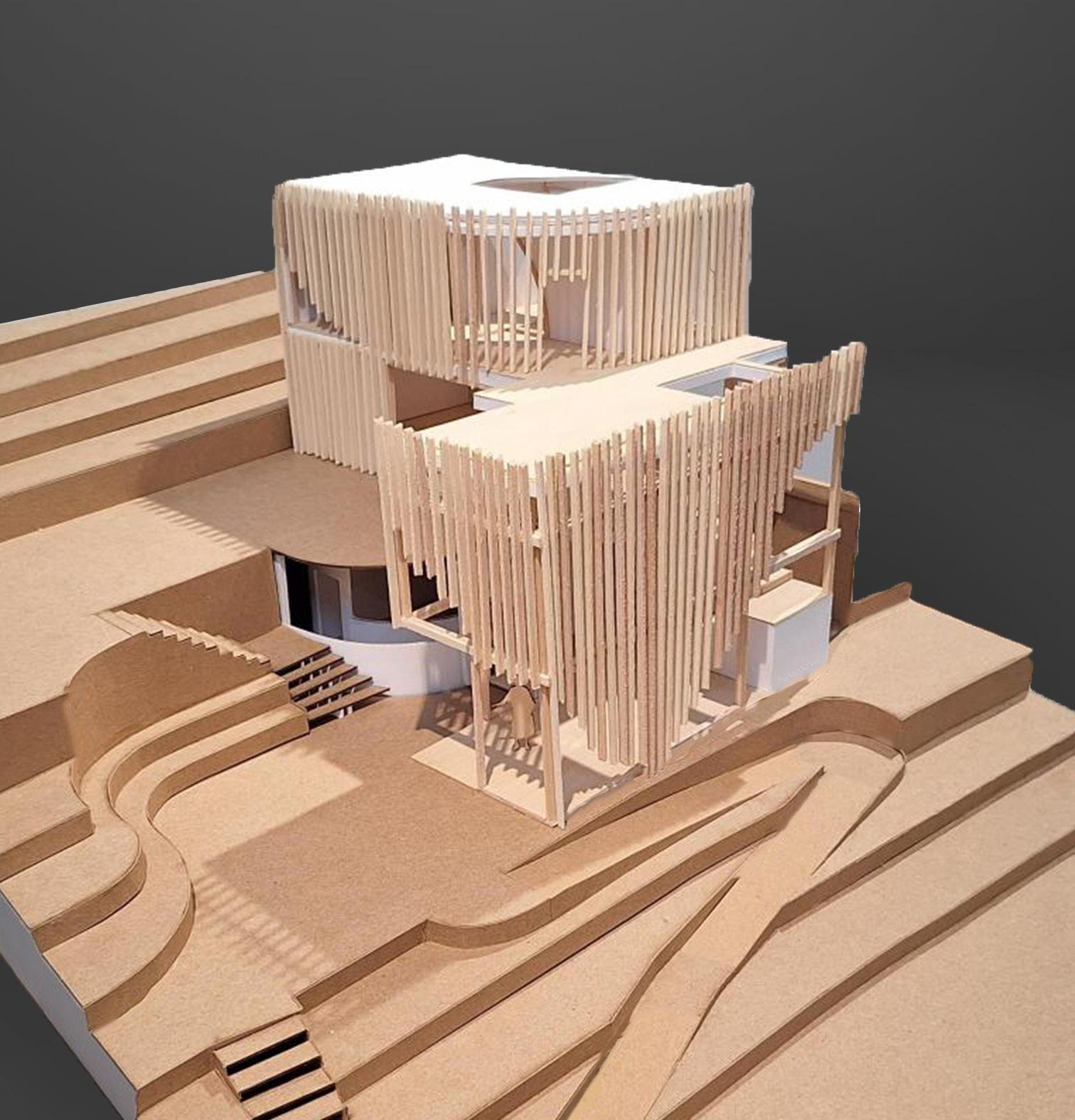
Built into the slope of an existing park, this project is designed to house a single resident and a temporary guest, while also facilitating enough space to host larger gatherings in collaboration with the CKCKW (Community Kitchen Co-operative Kitchener-Waterloo). By limiting the building’s massing to a selection of basic shapes and curves, the negative spaces formed by the generously sized windows accentuate the impression that the structure becomes embedded within its site.
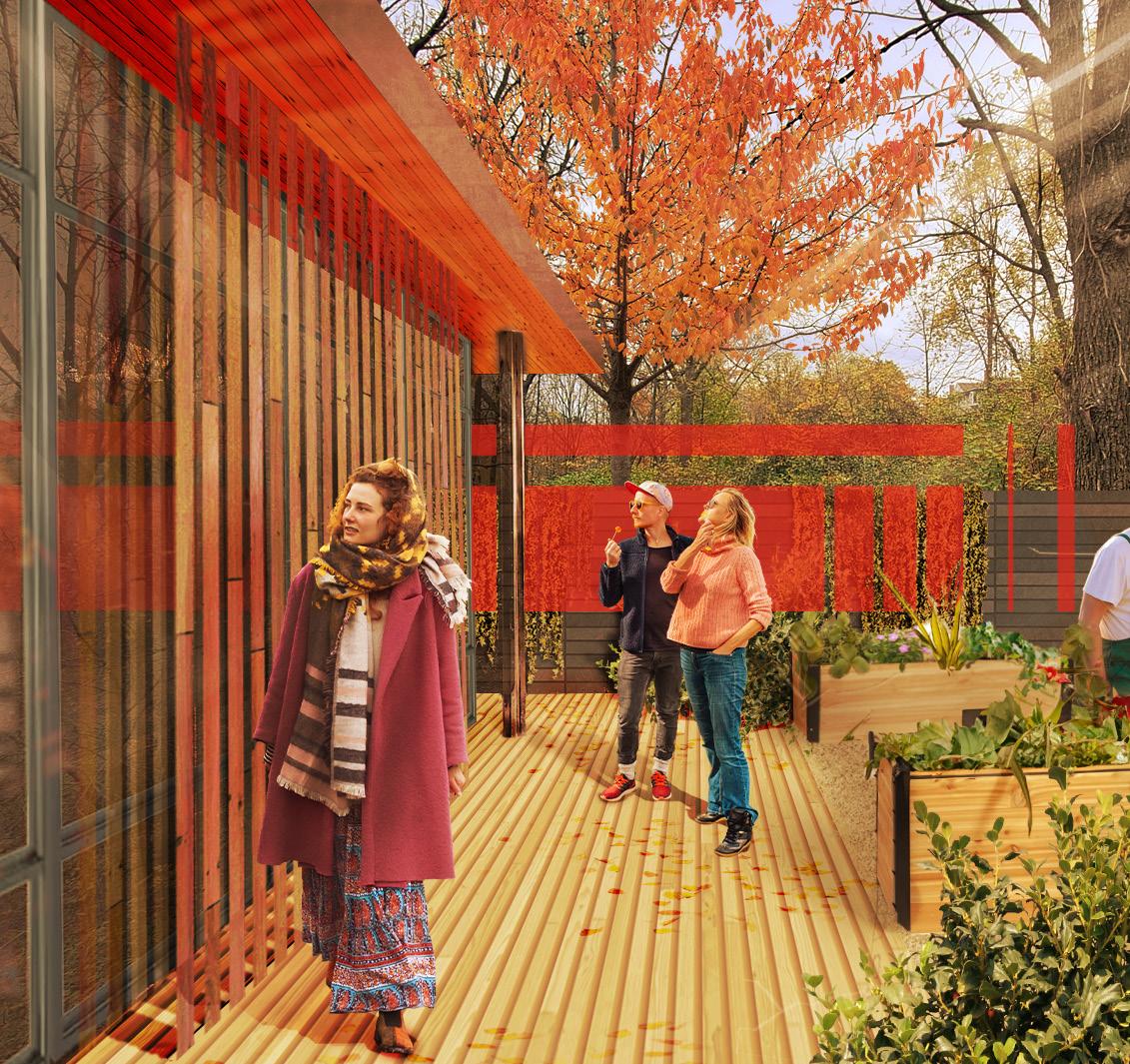
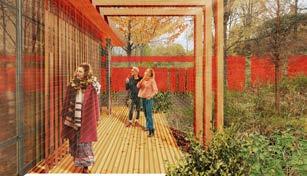
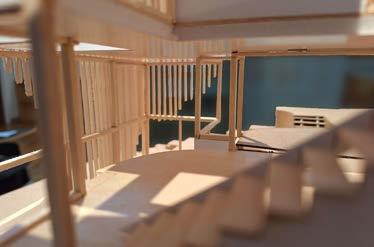
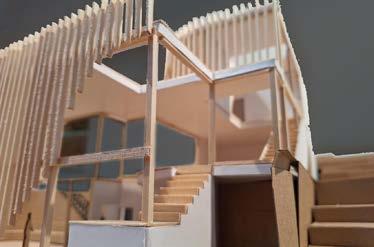
Located at Riverbluffs Park in Cambridge, Ontario, the verticality and angled slope of the site presented an immediate challenge for conventional buildings. This made it clear that creating a multi-story residence with ample fenestration on the east facade would take full advantage of these views provided by the selected site and its topography. To prevent excessive heat gain, wood shading screens were added to select faces of the building, the geometry of which was designed to reflect the geometries present throughout the house.
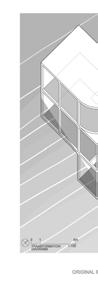
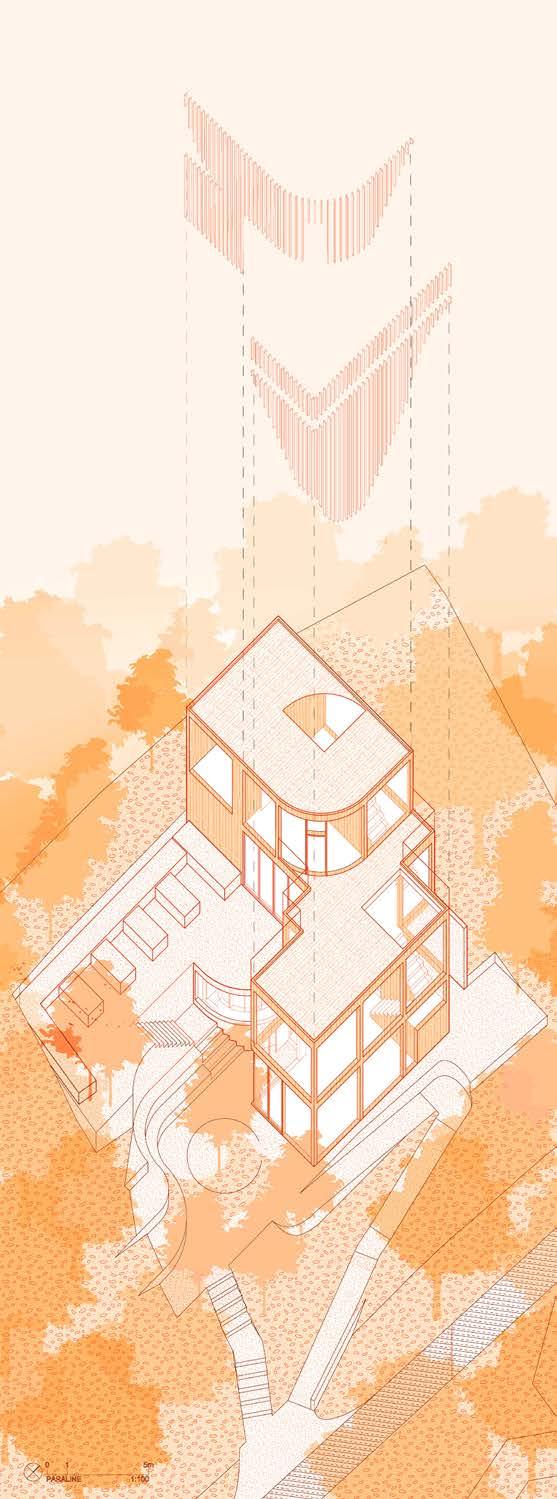
Axonometric Diagram of Site and Screen assembly
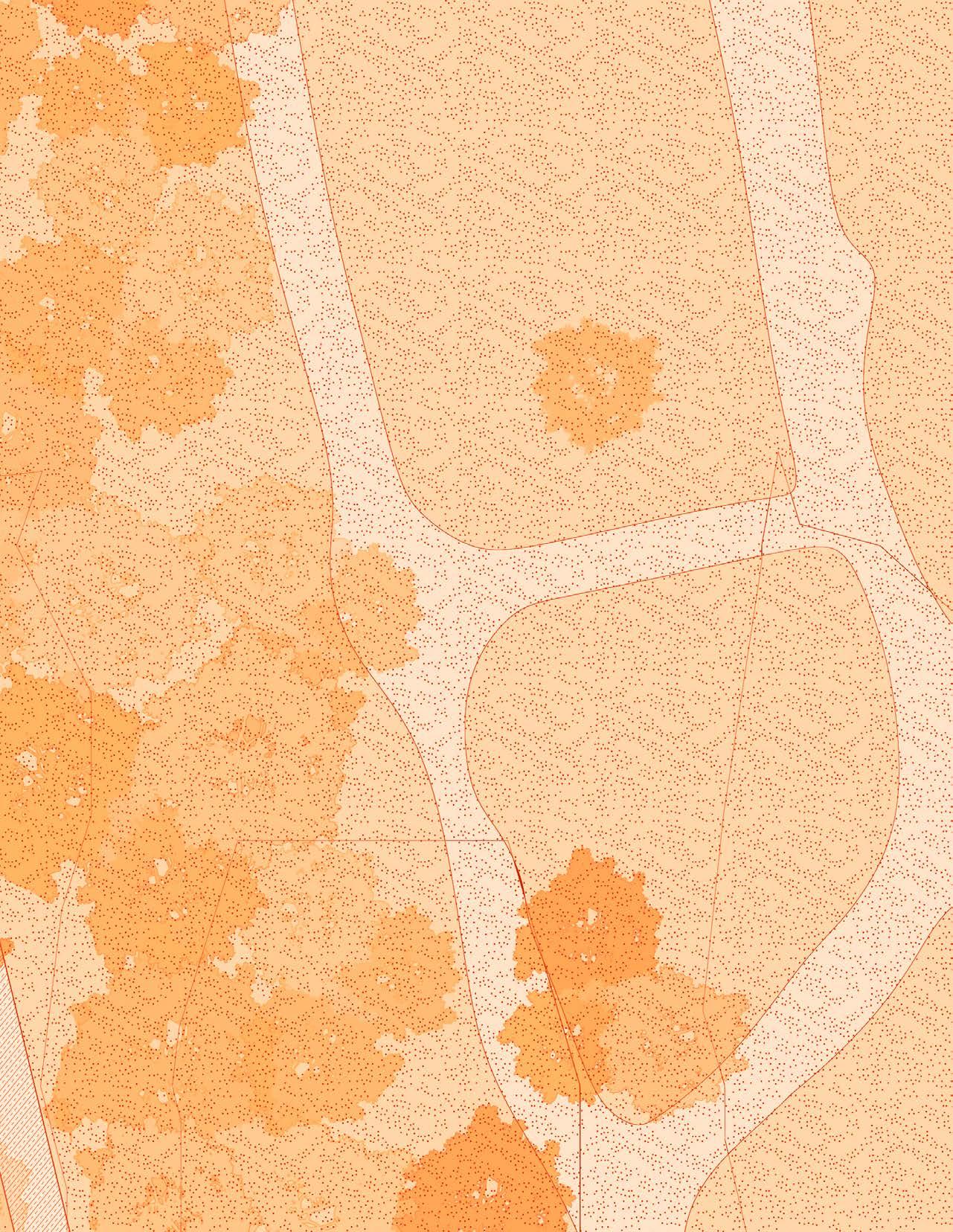
The presence of a pollinator preserve east of the main walking pathway prevented any development in that region, however the flat stretch of land did have the benefit of providing a mostly unobstructed view towards the river should the observer be elevated above the tree canopy and surrounding shrubbery.
While the house does have the capacity to support large events by its host/sponsor, it’s expected that these events and the guest lodging are reserved to the summer seasons, when access to the park and gardening conditions are optimal.
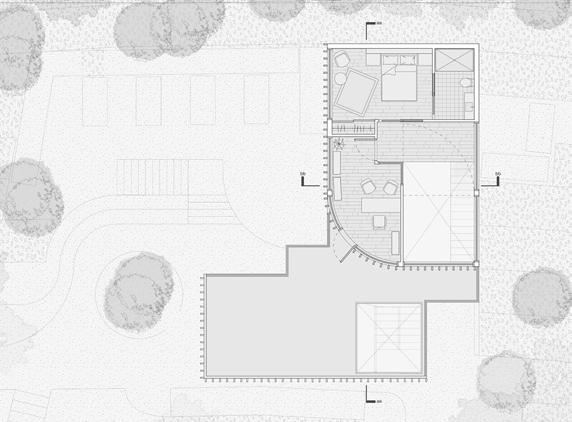
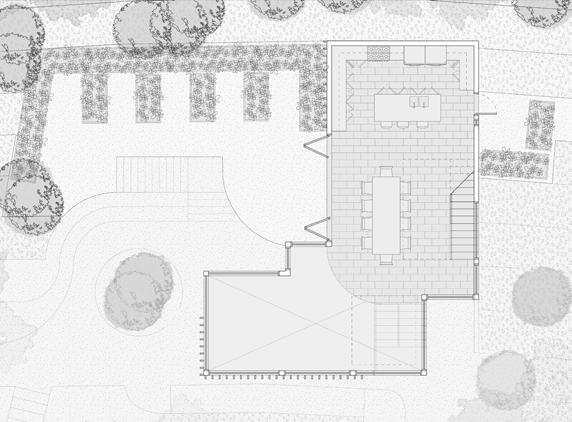
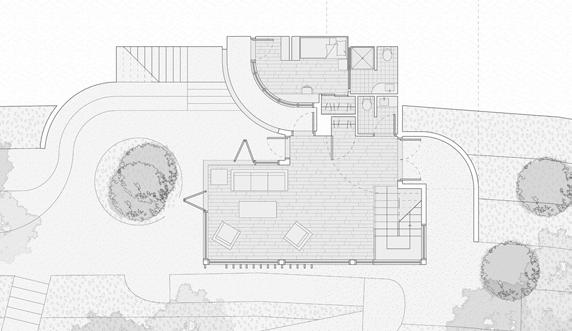
1st, 2nd, and 3rd floors in ascending order
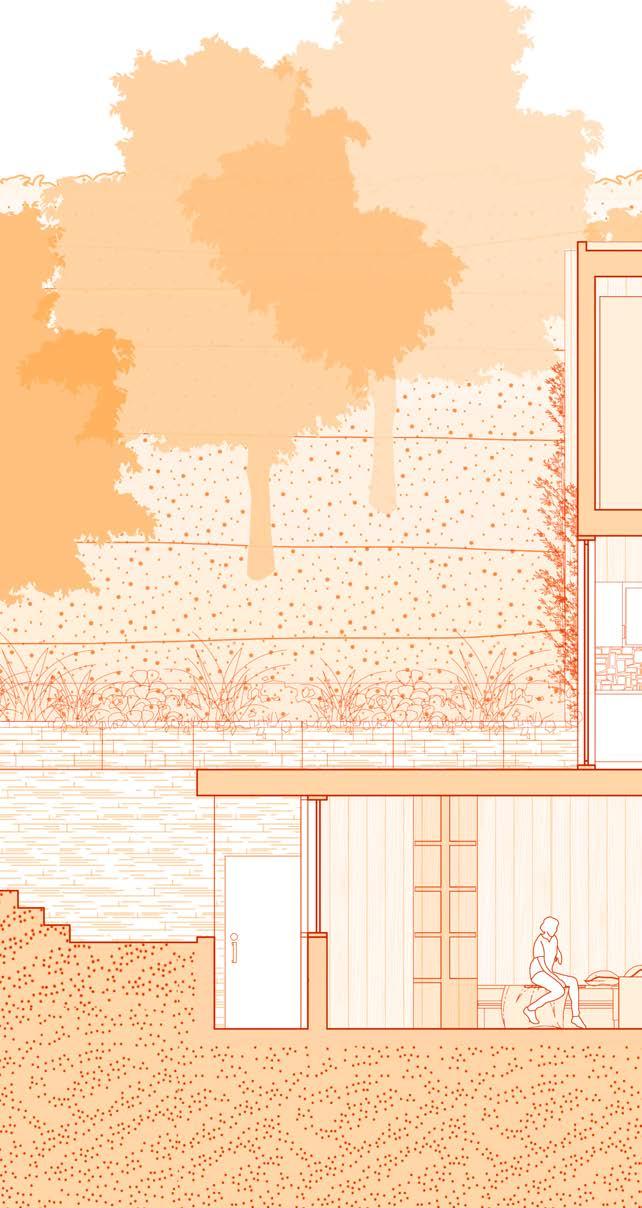
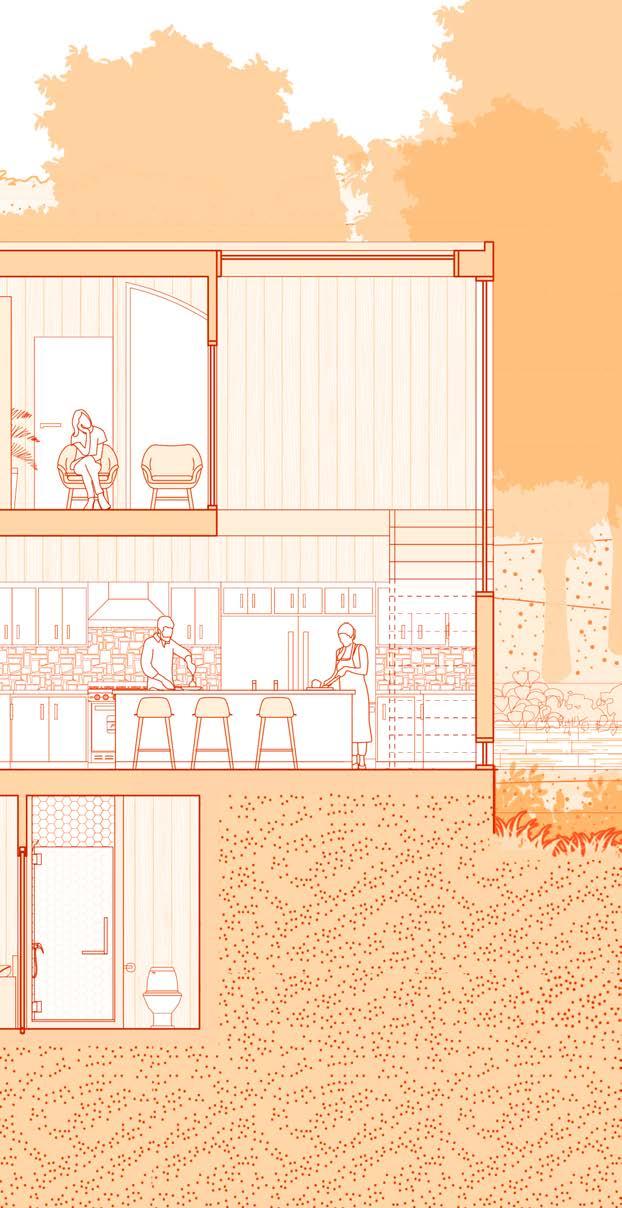
Due to the topography, most of the guest bedroom is embedded into the hill itself to create a cozy feeling while giving the guest more privacy away from the louder and more active parts of the house.
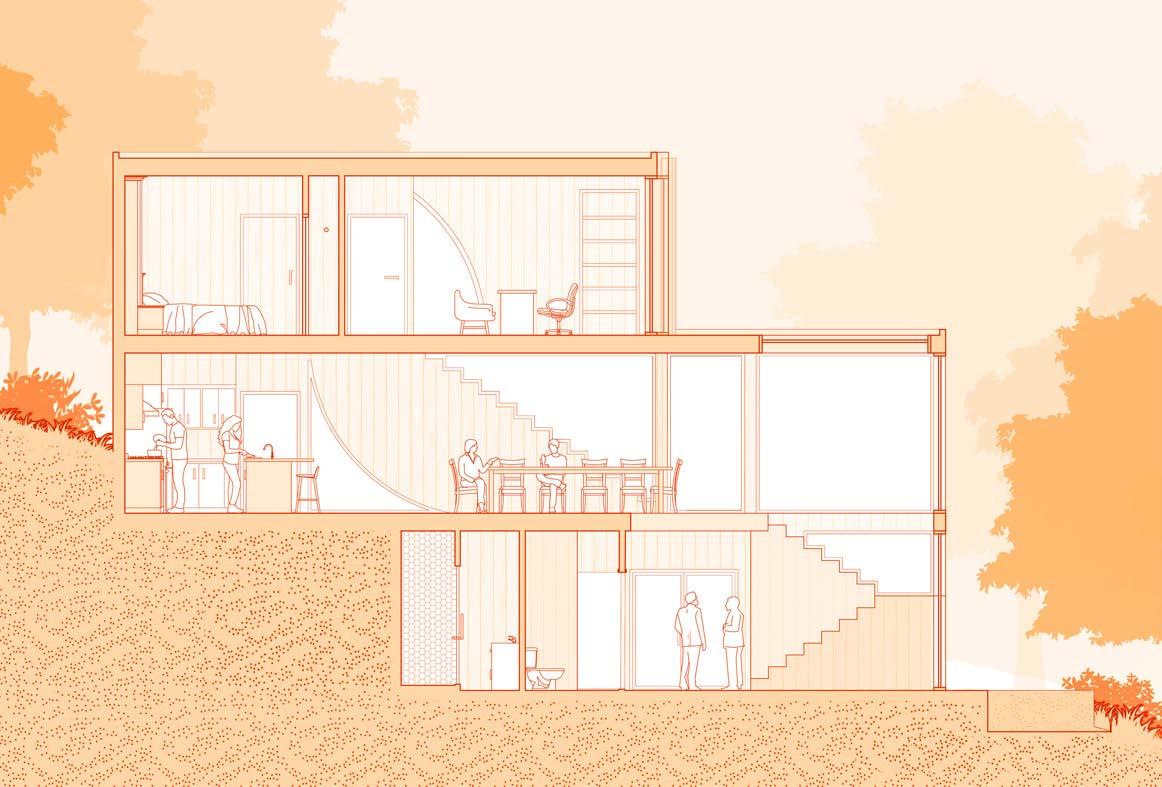
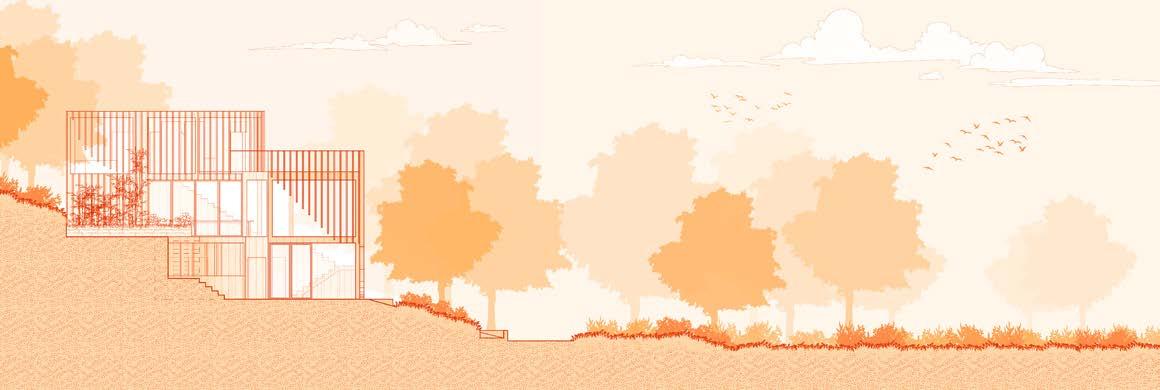
The building has 3 floors. The main floor contains the living room, guest bedroom and the main points of entry into the house. The 2nd floor contains the kitchen and dining room with access to an elevated patio. The 3rd floor contains the primary bedroom, office quarters, and access to a rooftop balcony.
LOCATION: Cambridge, Ontario, Canada
43°21’34.5”N 80°18’51.7”W
PROGRAM: Public Library
| 2024 | ARCH 193 Studio Project
| Awarded for Outstanding Design Work (1B)
| Selected for Project Reviews 2025
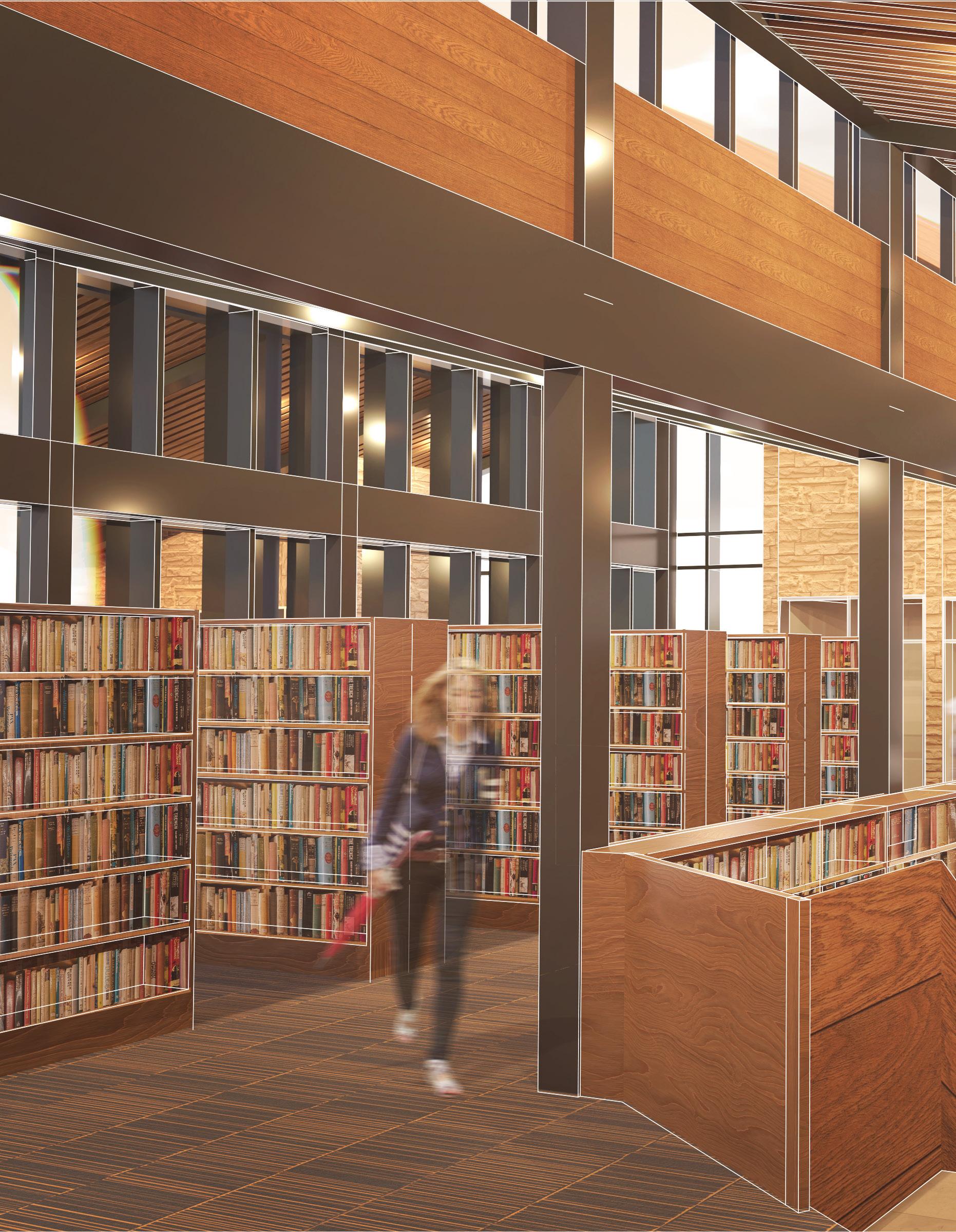
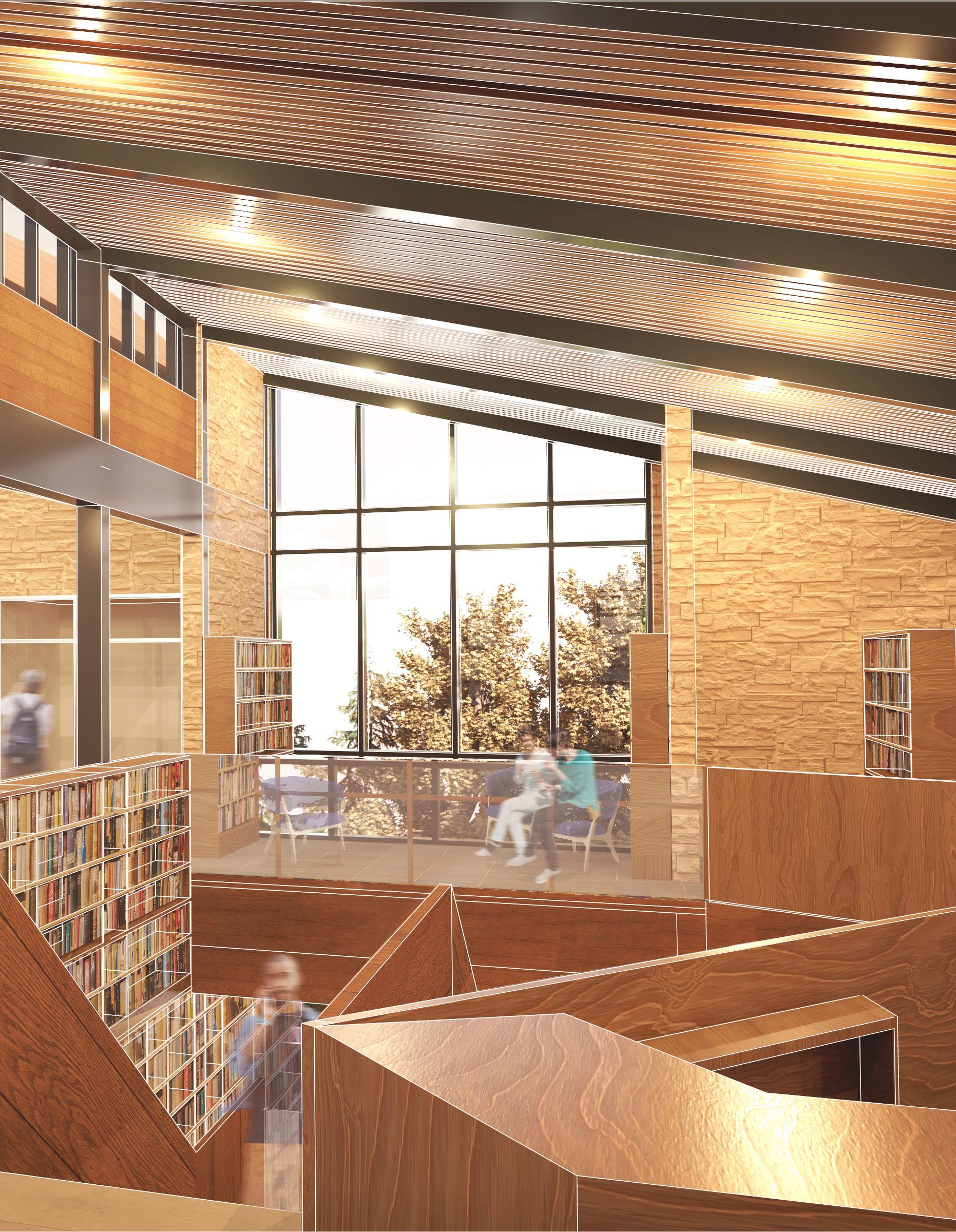
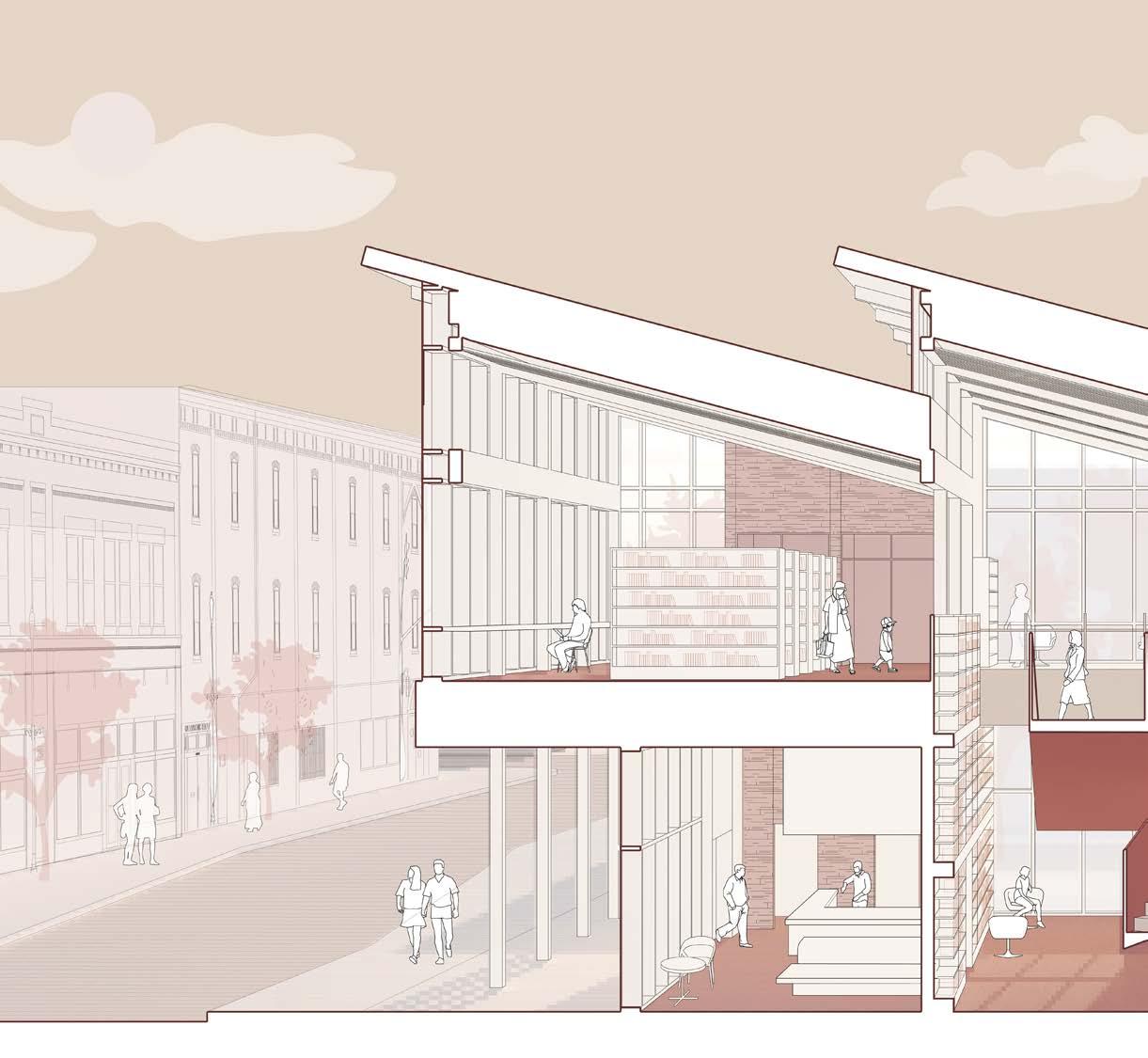
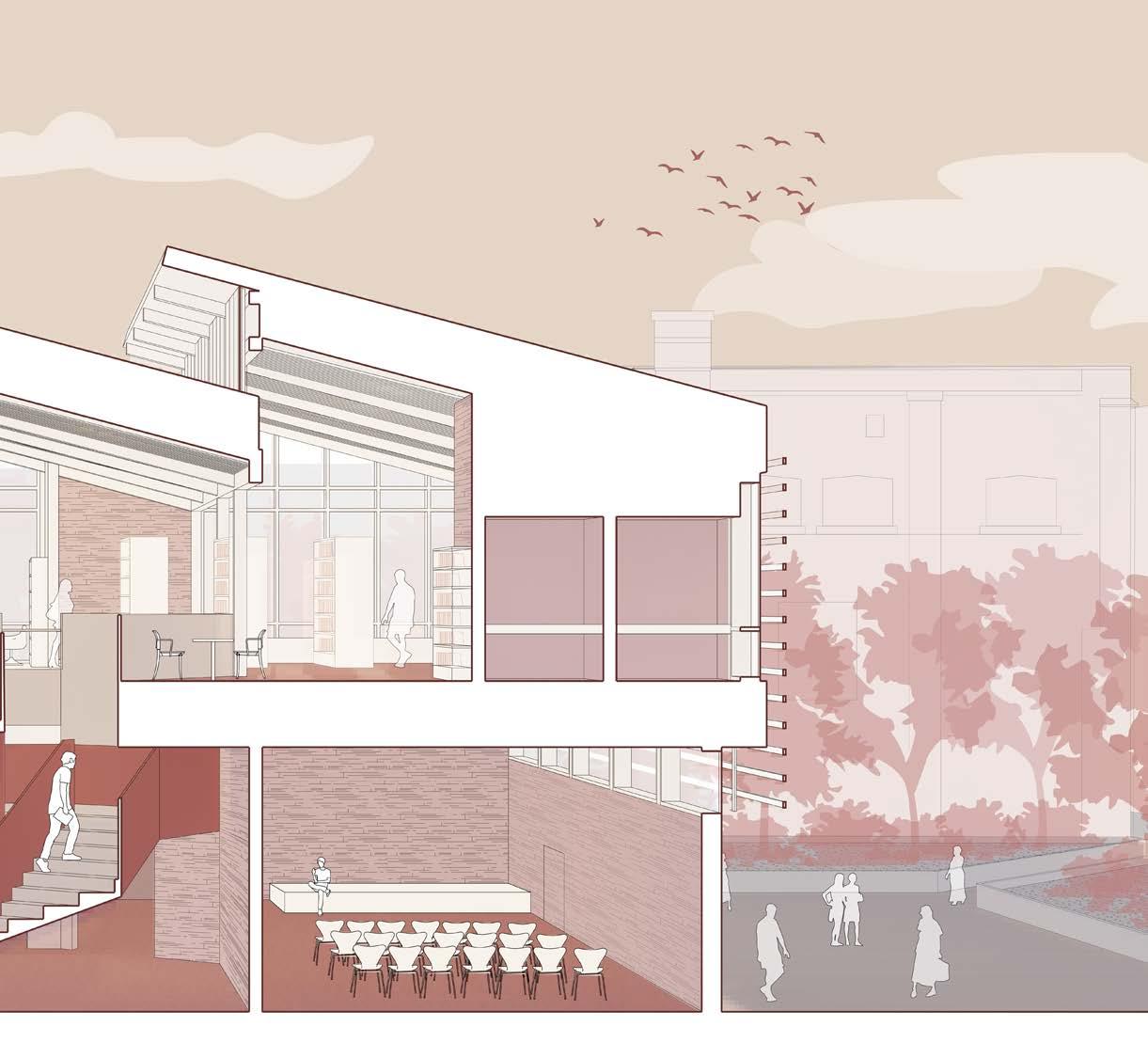
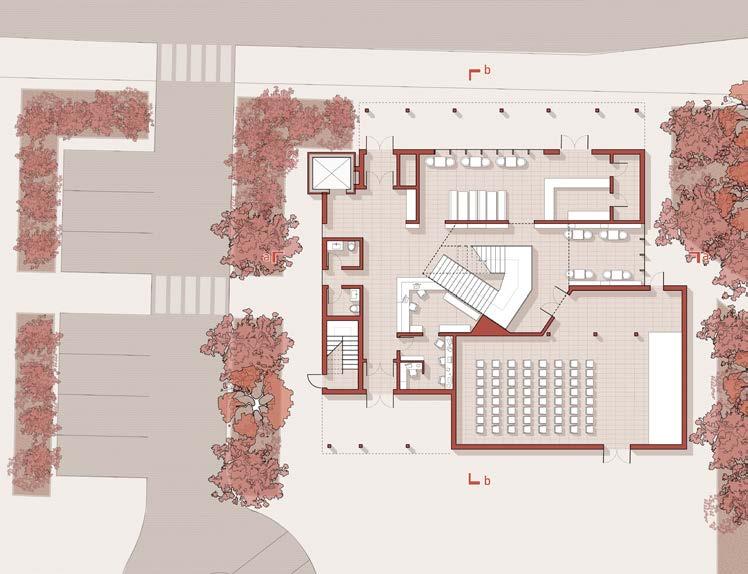
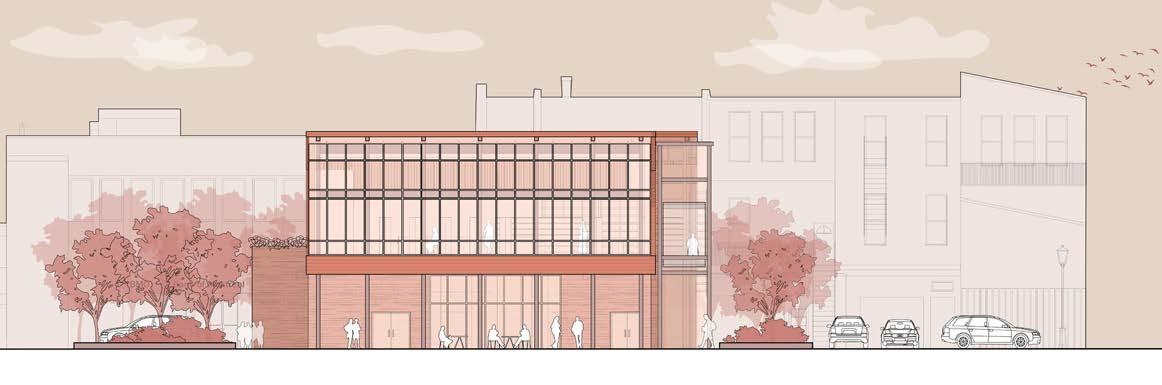
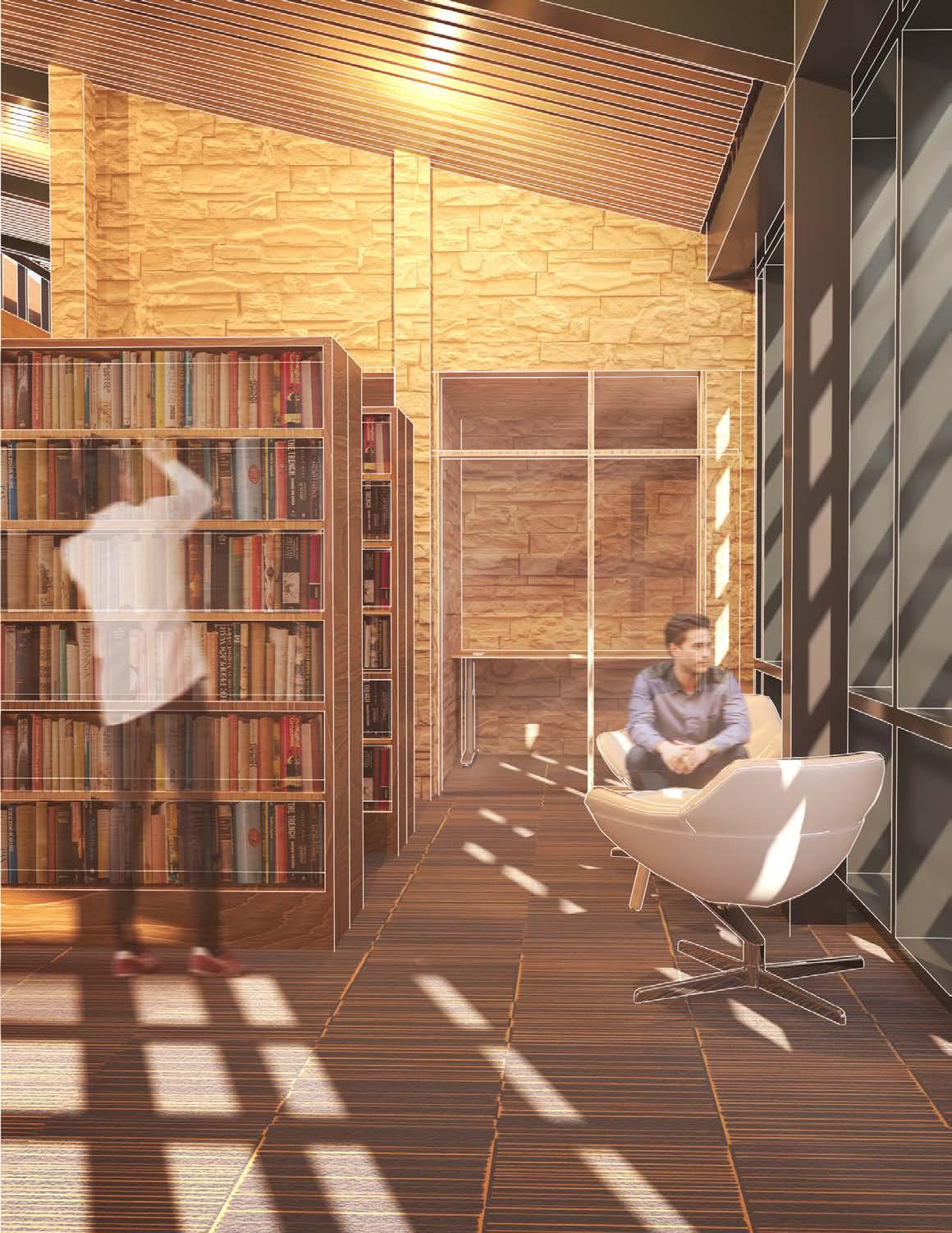
Constructed on an infill parking lot in Cambridge, Ontario, this library is designed to connect the surrounding networks of alleyways and sidewalks while the building itself serves a multitude of programs fit for the contemporary era. The ground floor includes a book cafe and auditorium space that integrates itself with the main lobby, while the library itself is elevated to the 2nd floor, focused on the open space formed in the center of the building and structure provided by the large sawtooth roof and steel framing.
AUDITORIUM
ADMIN
WASHROOMS STAIR
Seating
VESTIBULES
ELEVATOR
Sectional Perspective
GREEN ROOF (Outdoors)
AUDITORIUM
ADMIN CAFE + Outdoor Patio Seating
GREEN ROOF (Outdoors)
FIRE STAIR
GREEN ROOF (Outdoors)
READING / STUDY
BOOK STACKS
READING / STUDY
BOOK STACKS
WASHROOMS
VESTIBULES
ELEVATOR
READING / STUDY
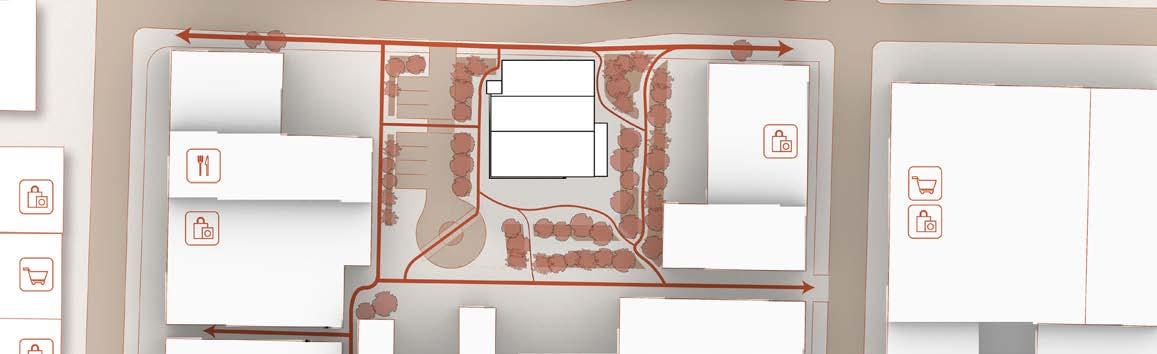
The site’s position in the downtown region puts it near a multitude of shops and services nearby, making it accessible from 4 different directions in addition to access from the main road to the north. Therefore, it became clear that the design of a future library should exist not only as a standalone building, but act as a mediator between these existing pathways and services.
BOOK STACKS
The program of the library is separated distinctly into two floors; The ground floor contains more hightraffic spaces such as the café and auditorium along with two entrance vestibules, while the 2nd floor is reserved for study and reading, among other quiet activities.
COMPUTER LAB
COMPUTER LAB
STUDY ROOMS
ADMIN
FIRE STAIR
WASHROOMS
COMPUTER LAB
ELEVATOR
STUDY ROOMS
ADMIN
FIRE STAIR
WASHROOMS
ELEVATOR
STUDY ROOMS
ADMIN
FIRE STAIR
WASHROOMS
ELEVATOR
Circulation Diagrams
1:250 x longs sec perspec x
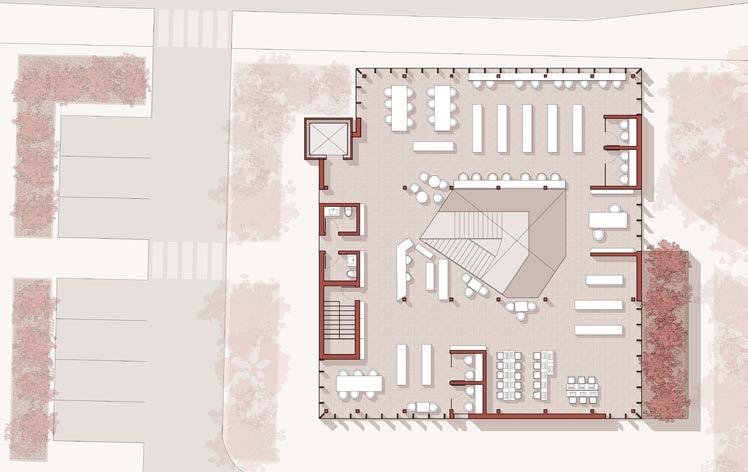
To further create a sense of interconnection between levels, an opening was created in the center of the 2nd floor to facilitate a physical and visual connection.
Furthermore, the café opens into the ground floor atrium space, acting as additional seating where users are encouraged to grab a light snack to go along with their reading, and vice versa, or simply to provide more seating during peak hours.
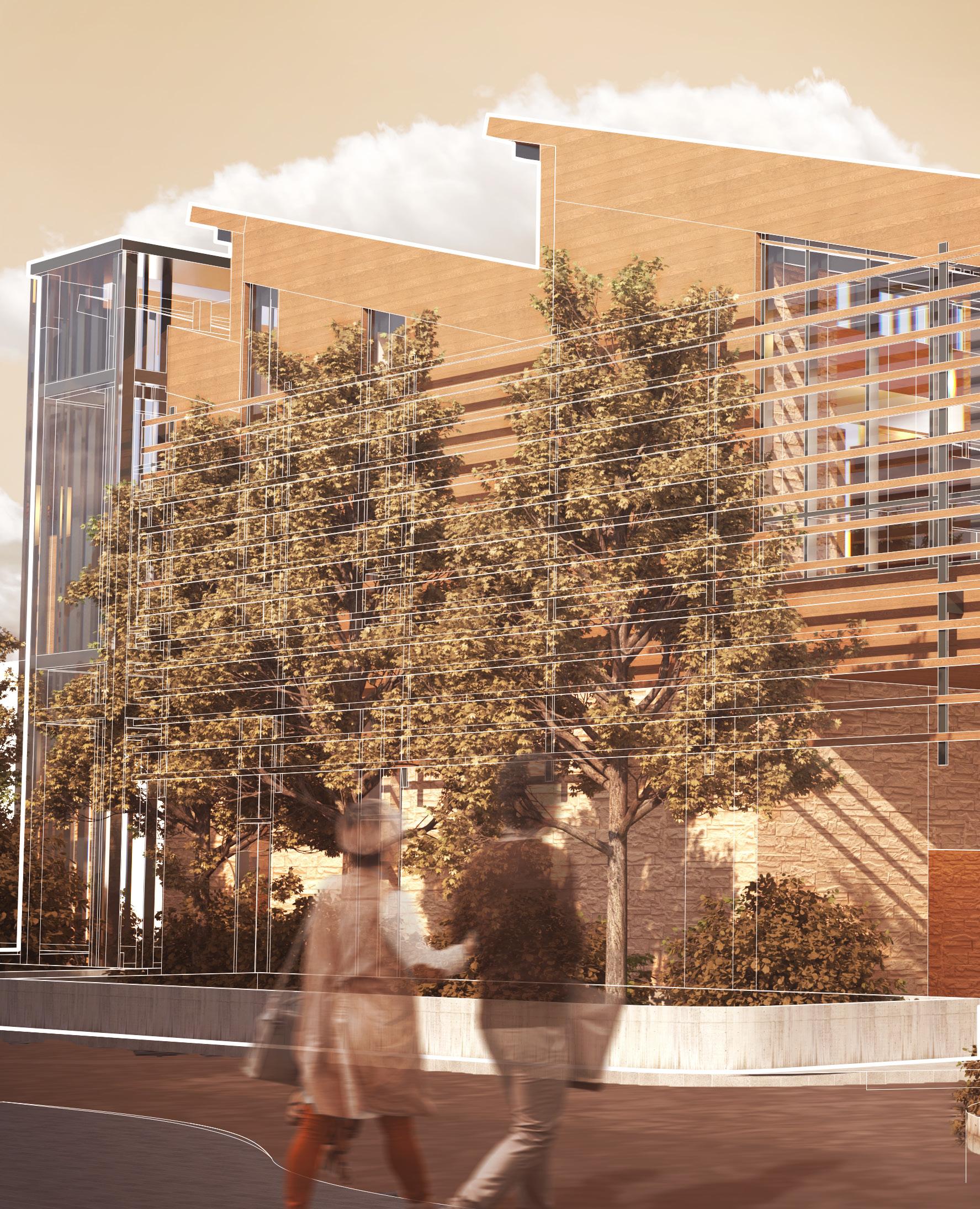
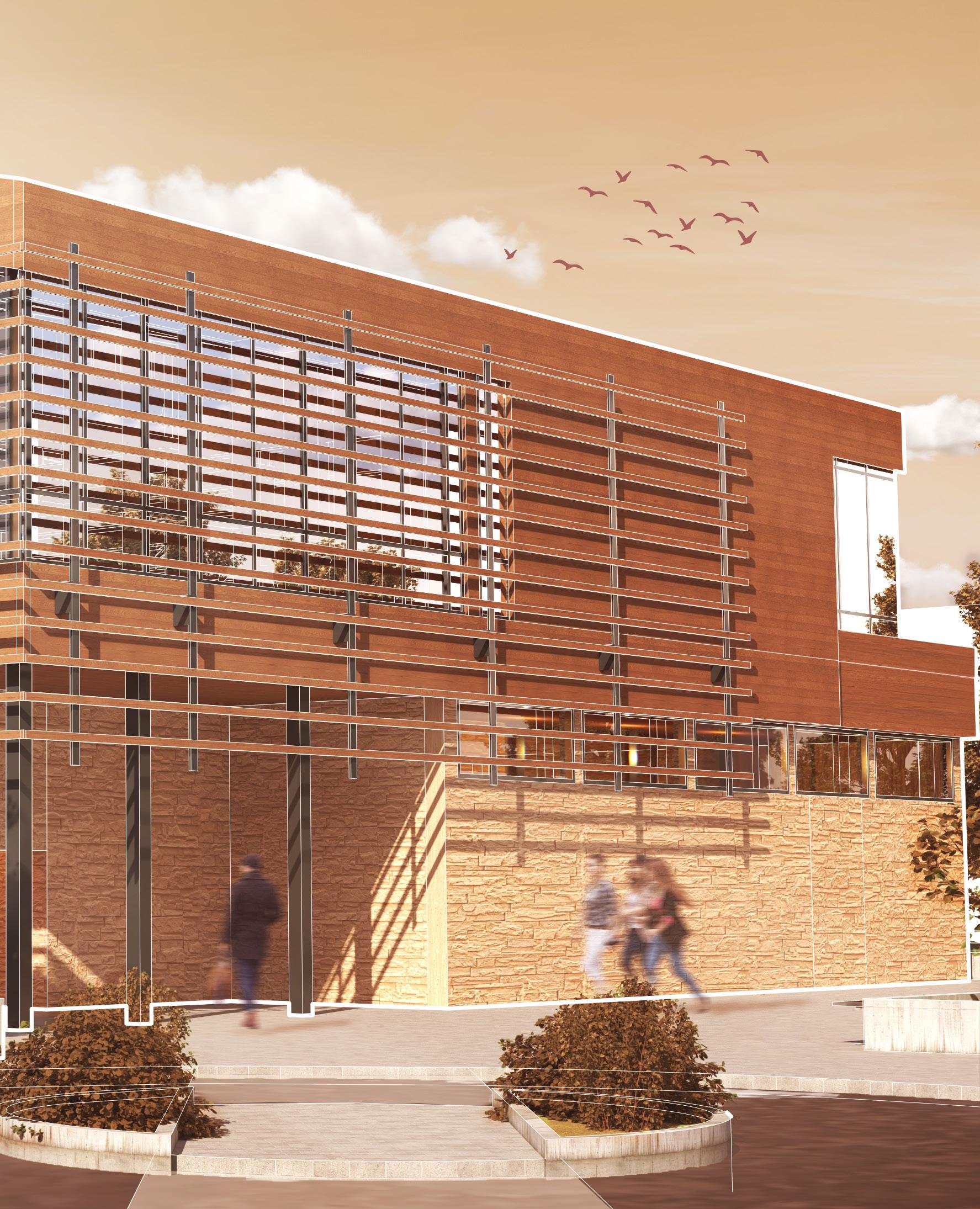
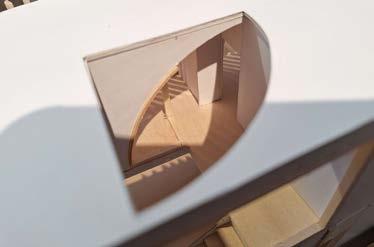
Assorted model photos above and below, images show the sectional view of the north half of the model and elevations from each direction. The alternate page shows a sectional view into the south half of the model and other detail shots.
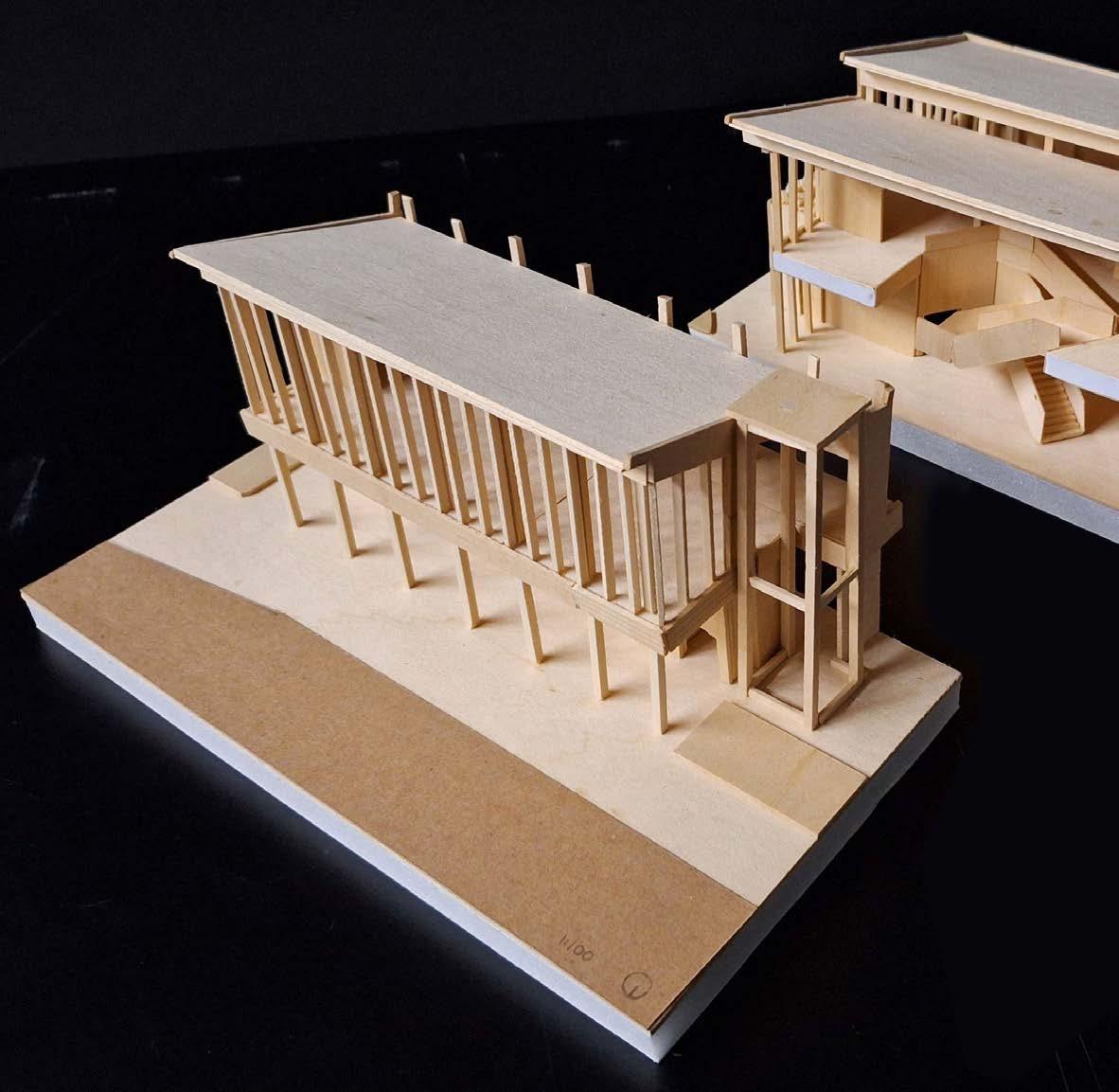
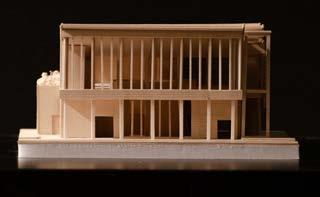
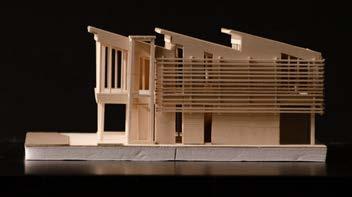
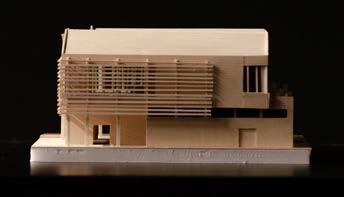

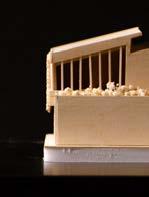

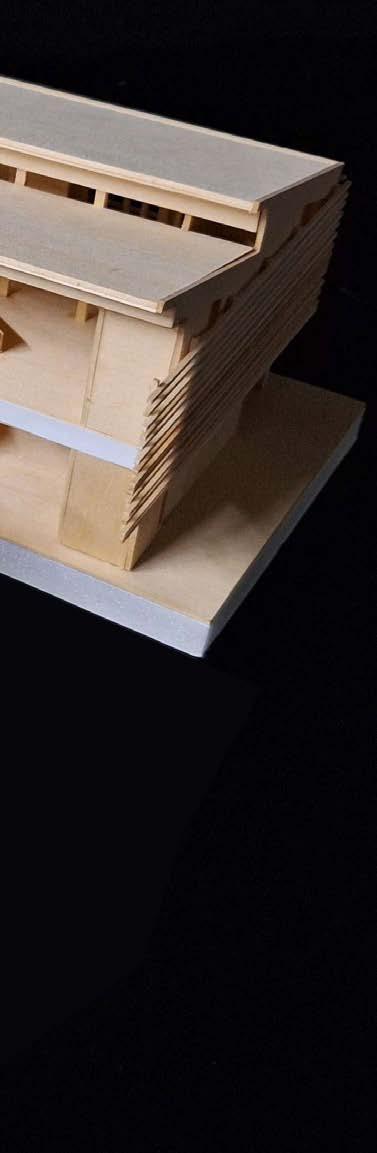
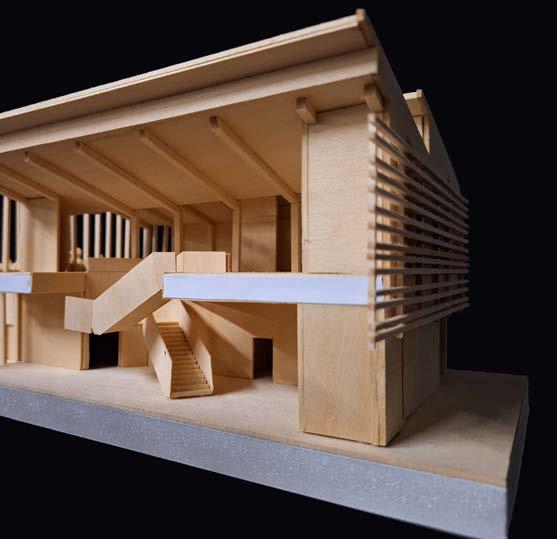
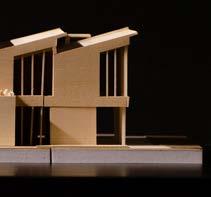
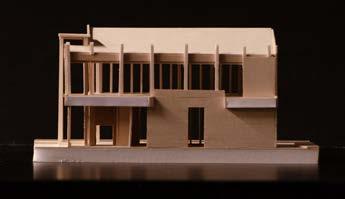

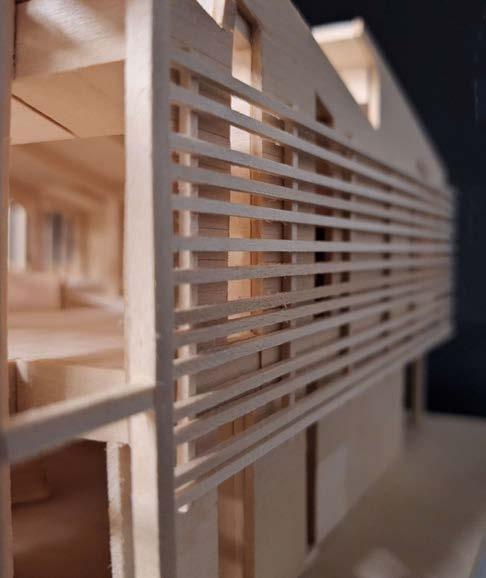
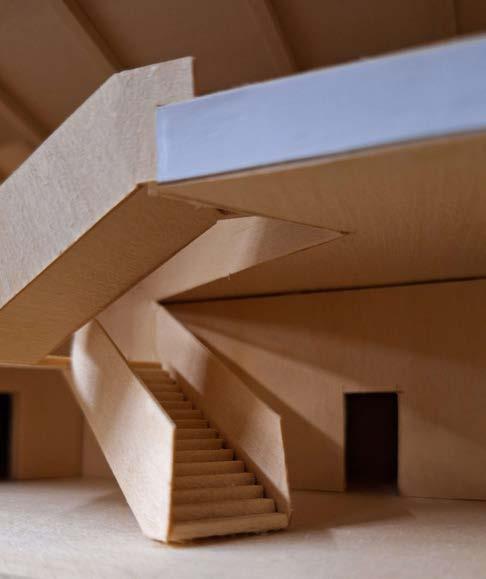
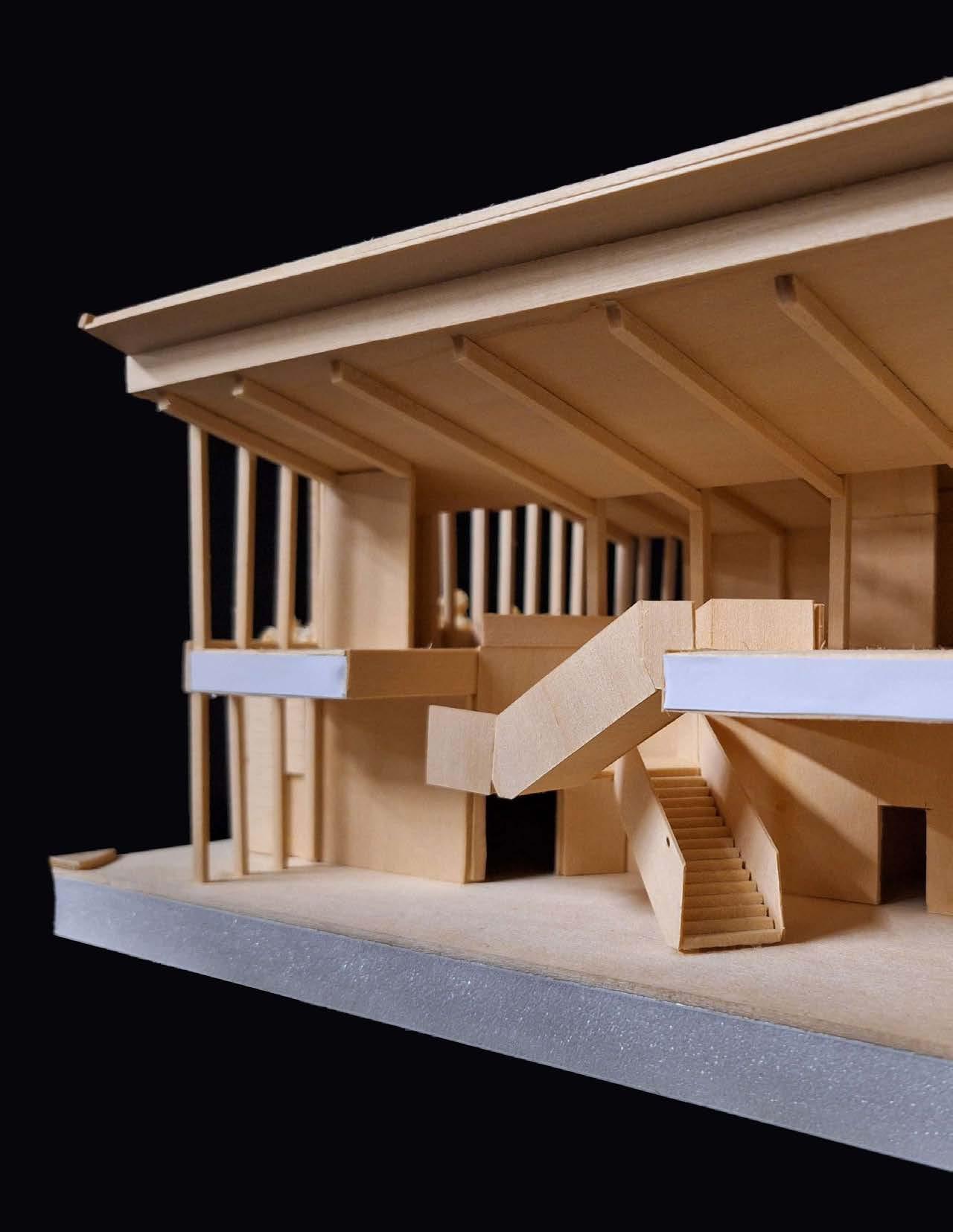
It should be noted that the final presentation model bears some interesting elements, such as a uniform wood profile, textured exterior, and the fact that it’s a sectional model, which can be cleanly opened and put together with ease. Due to this addition feature, extra attention was taken to express the detail in the feature stair and maintain the alignment of each joist.
(Constructed at a 1:100 scale)
LOCATION: Hamilton, Ontario, Canada
43°14’18.9”N 79°58’22.9”W
PROGRAM: Pedestrian Bridge
| 2024 | Arch 193 Studio Project
| In collaboration with Yukyoung Kim
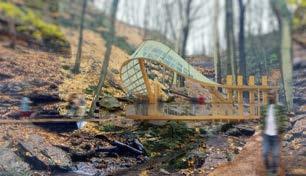
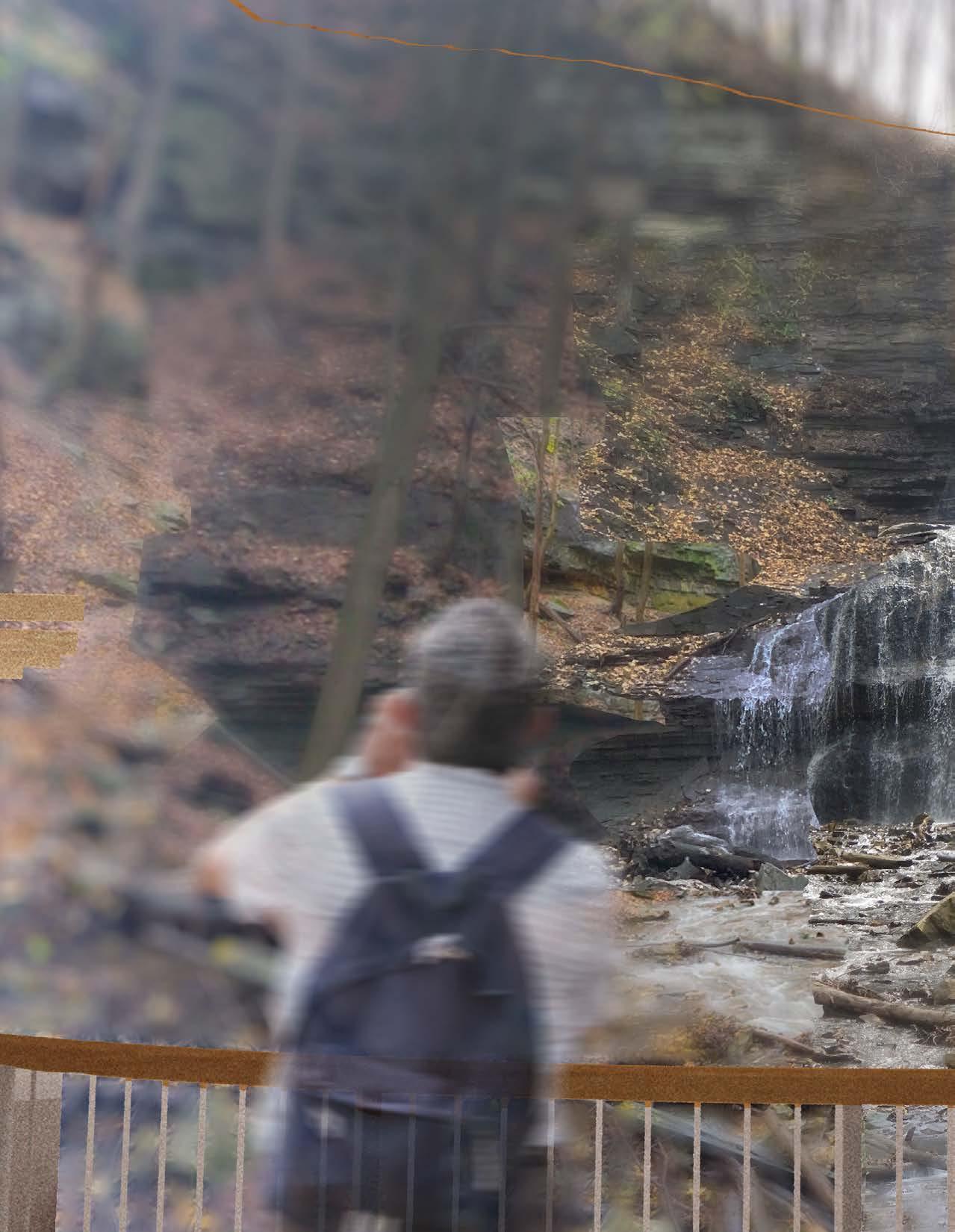
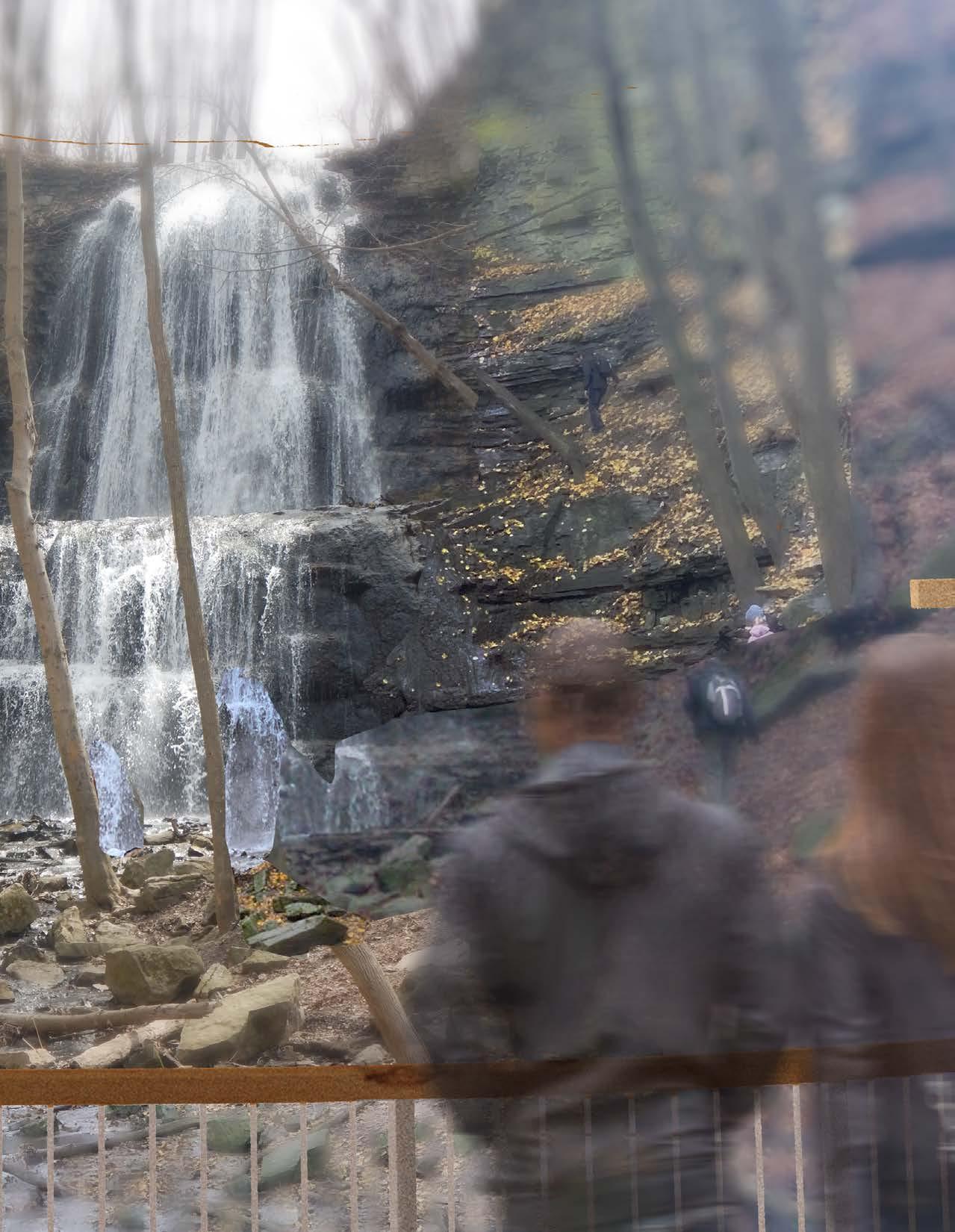
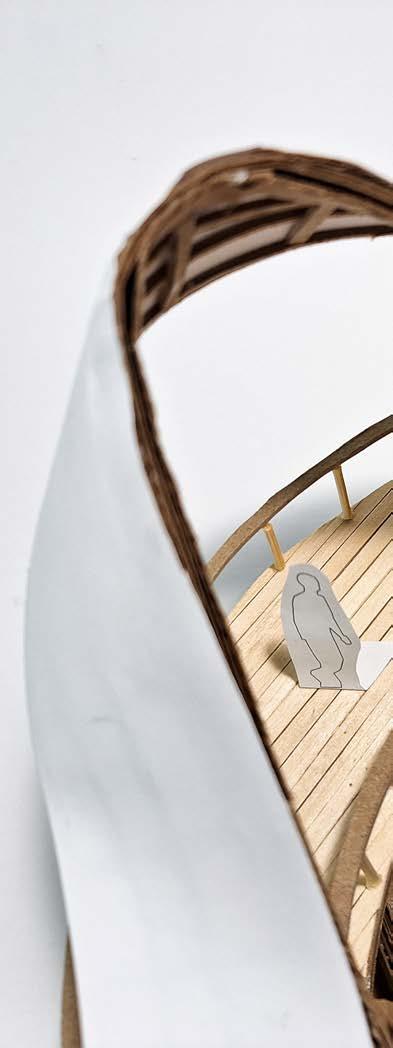
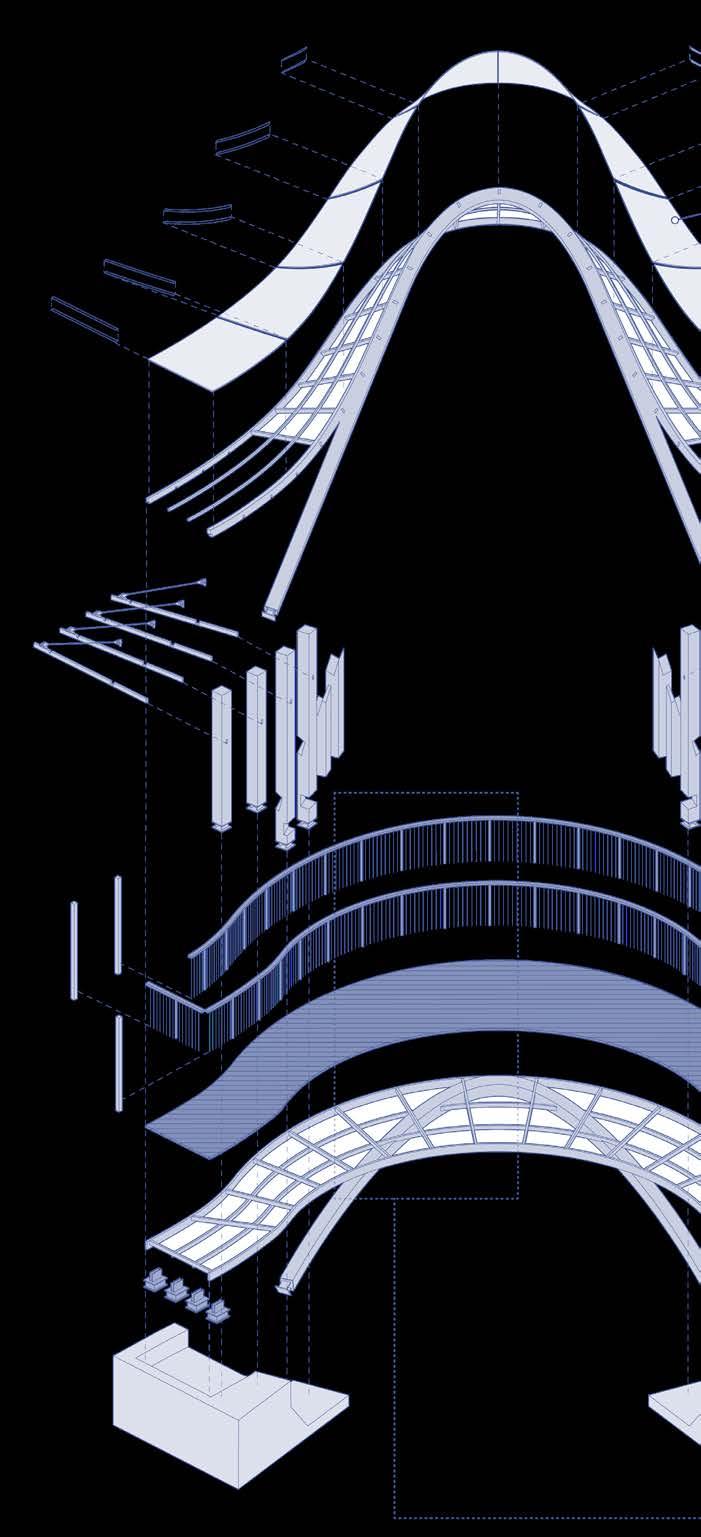
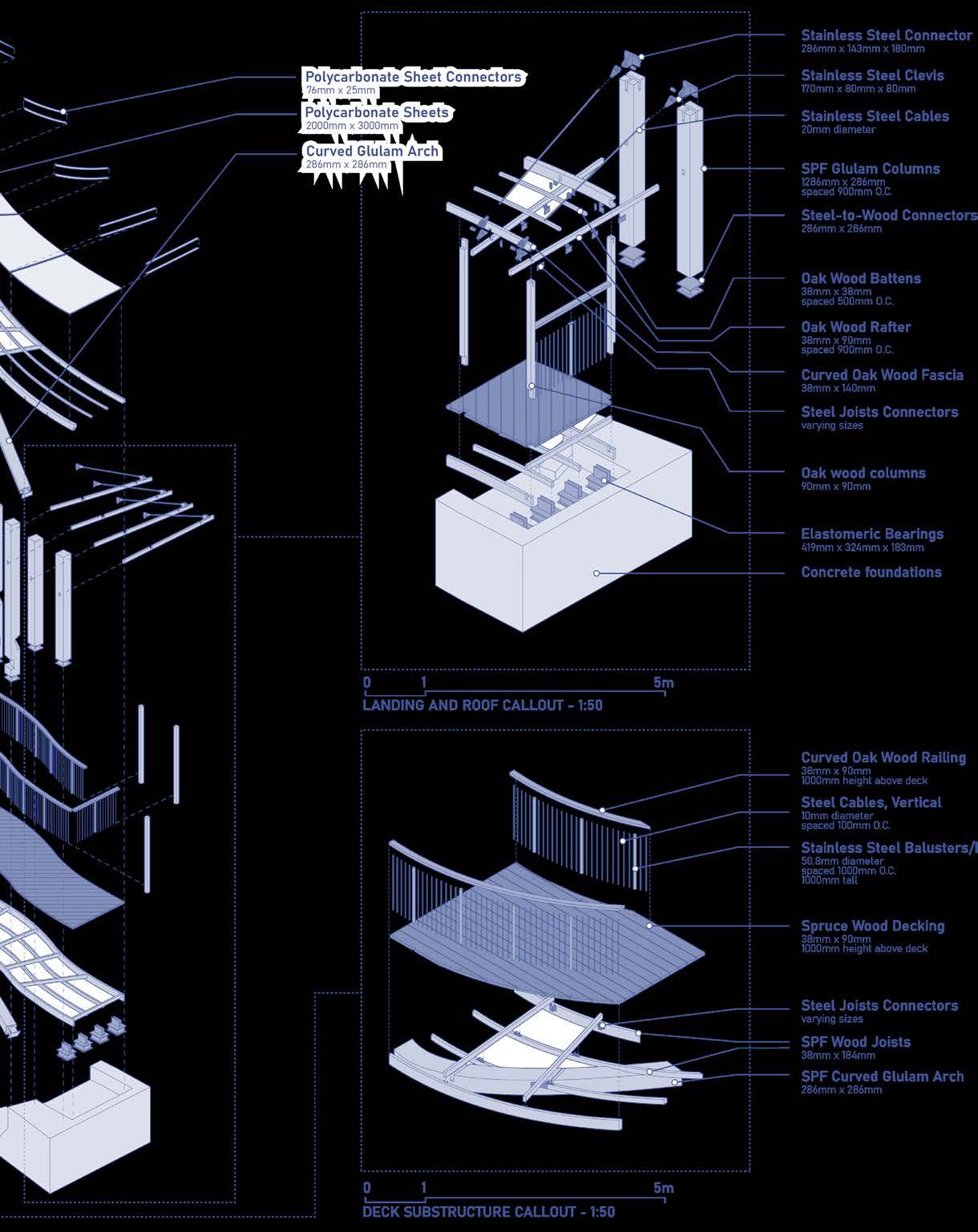
Designed as a replacement for the previous bridge at Sherman Falls, Ontario, the Ribbon Bridge uses large sweeping curves as a representation of the waterfall’s natural flow downstream, while directing the viewer’s gaze across the bridge itself. The main form and structure of the bridge rests on two large glued laminated timber arches designed to suspend the canopy above the deck without blocking viewing angles from either side of the waterfall.
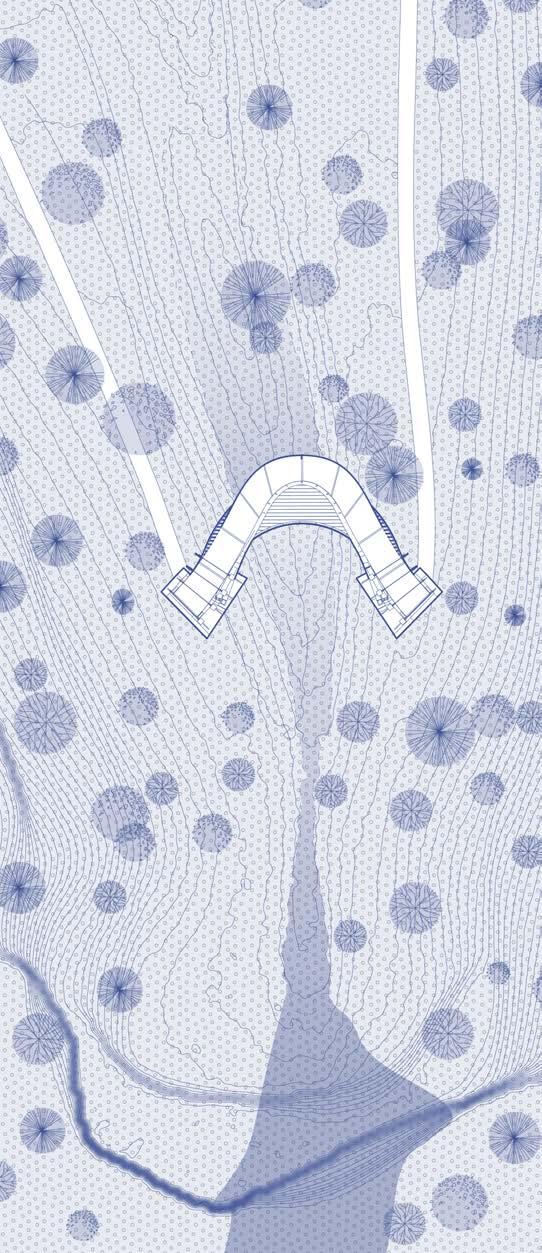
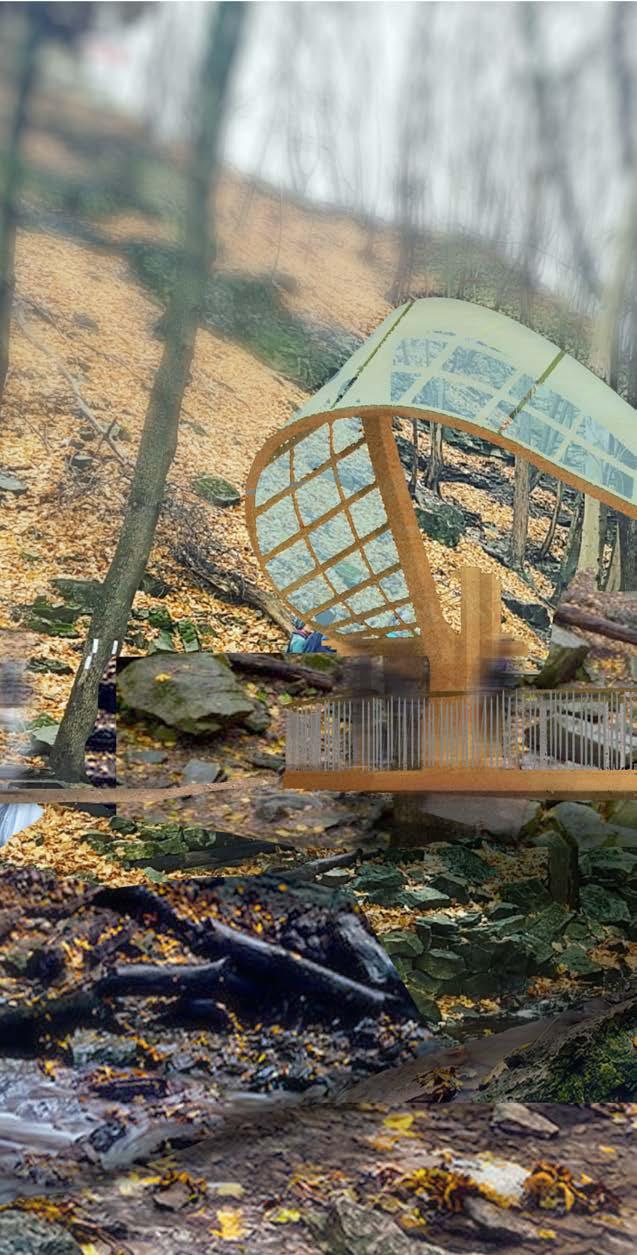
To ensure that both the views towards and away from the waterfall remain unobstructed, the entire roof was attached to massive timber arches, thus keeping it suspended above the deck while minimizing the presence of vertical beams.
The roofing material is made from curved polycarbonate sheets, chosen for its translucent appearance, durability, low maintenance, resistance to rain and snow, ease of assembly, and lightweight properties. The light blue tint reminiscent of flowing water.
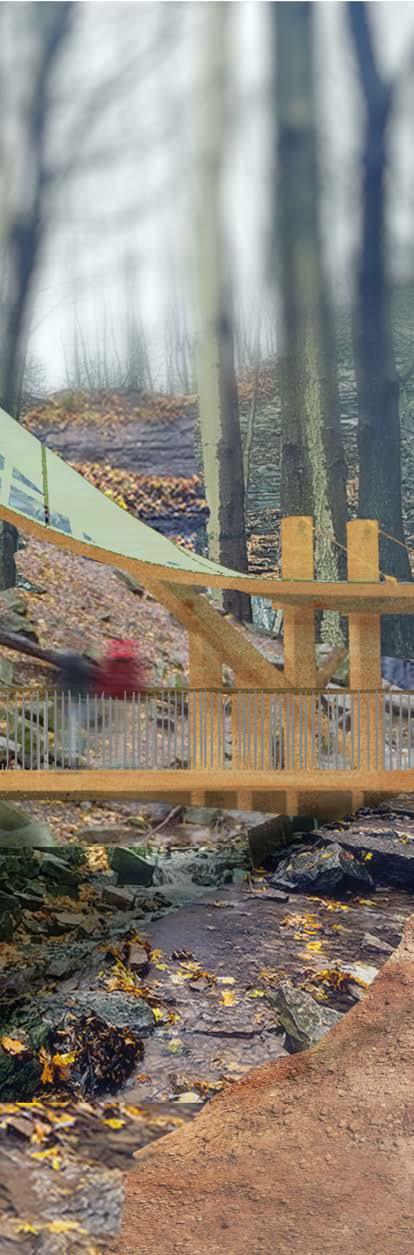
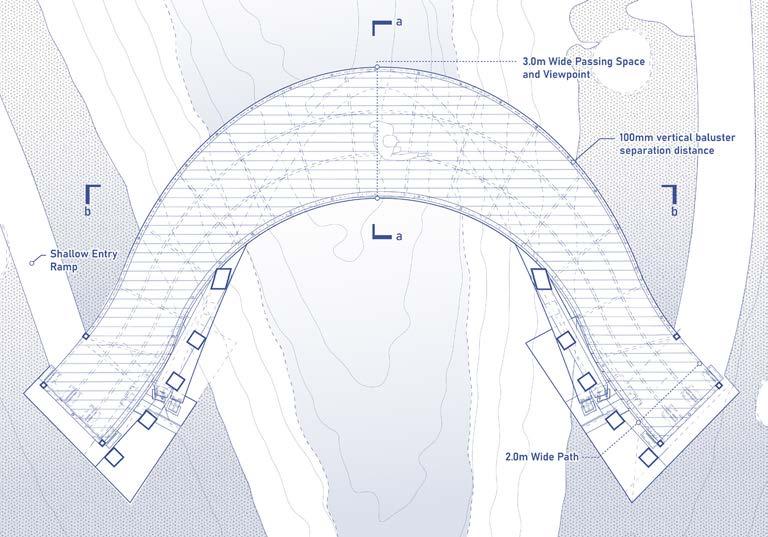
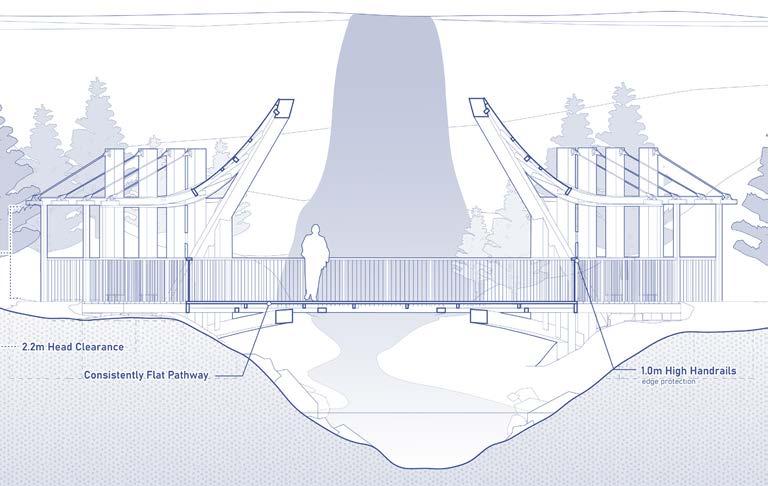
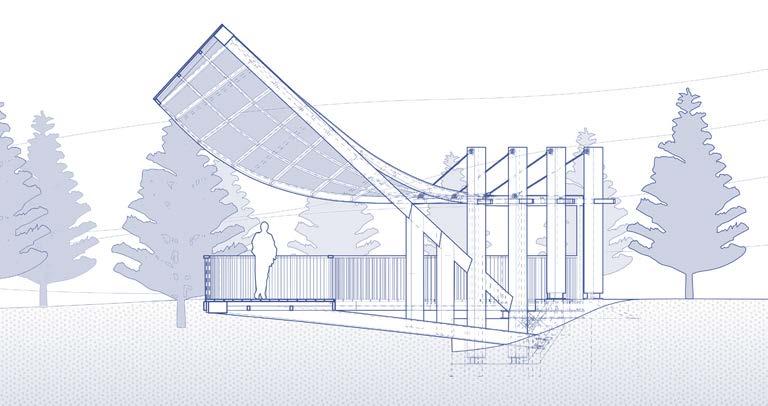
The main structure of the bridge is made predominantly from glulam beams and arches. It was decided early on that the use of such a material would allow us to create the curved movements that were desired for this project, while the natural texture of the exposed wood structure would blend in more cohesively with the forested site and its surroundings in contrast to something more aggressive like steel.
LOCATION: Jasper, Alberta, Canada
52°43’40.4”N 117°38’36.6”W
PROGRAM: Pedestrian Bridge
| 2024 | CISC Competition Entry
| In collaboration with Morgan Li Supervised by Terri Meyer Boake and Isabel Ochoa
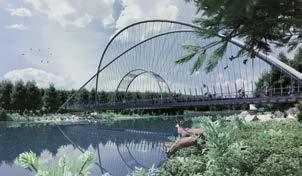
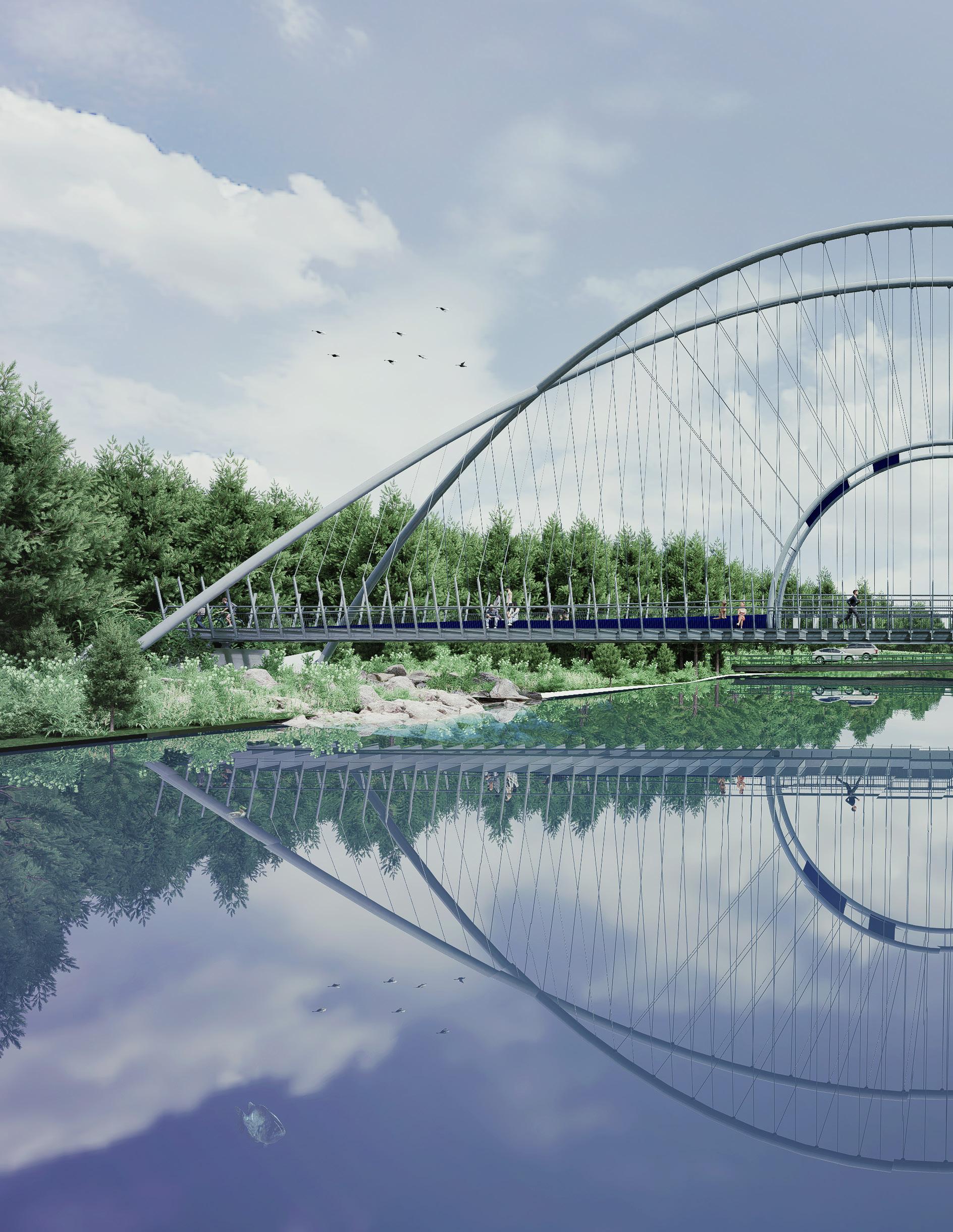
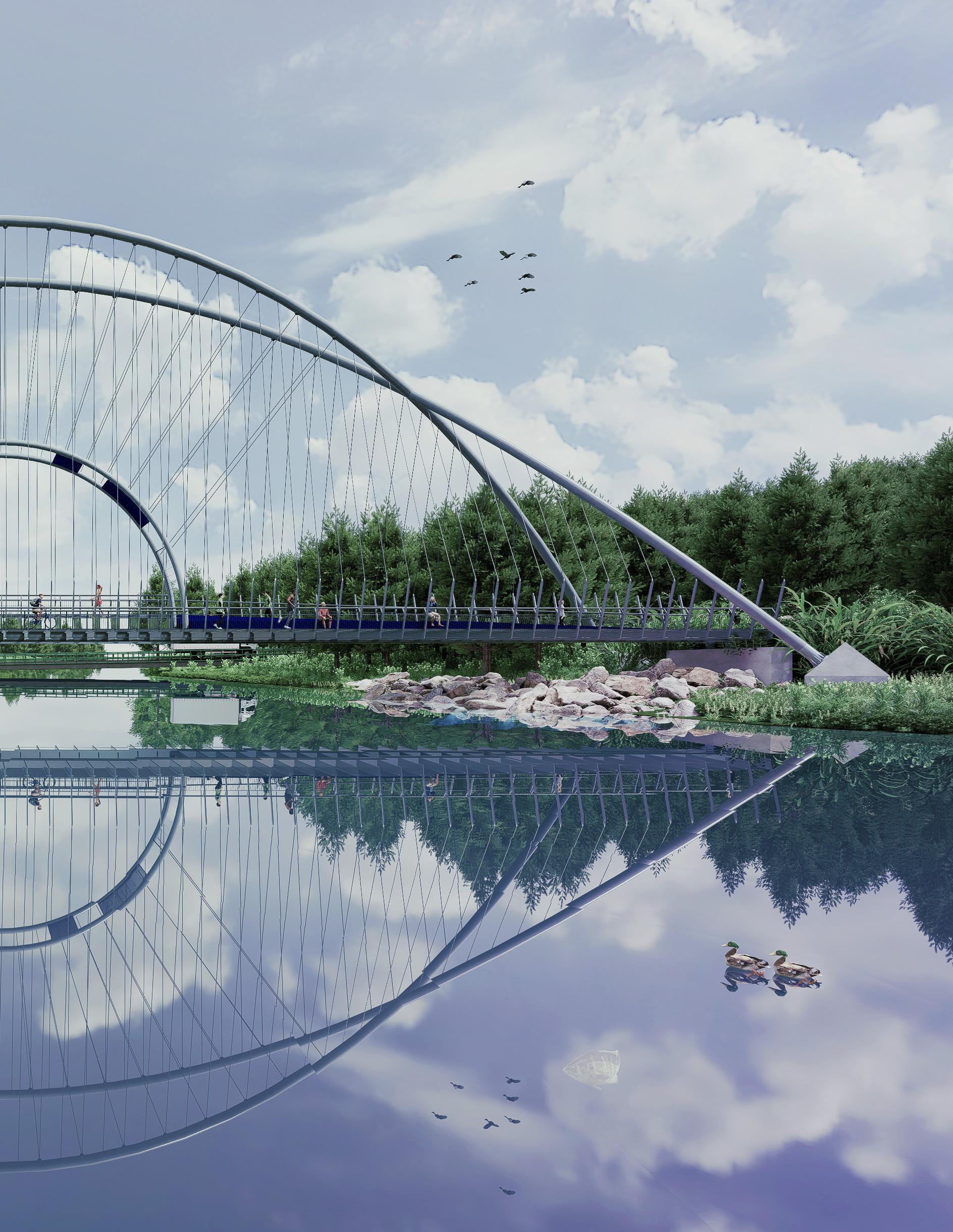
Located at the north end of Maligne Lake in Jasper, Alberta, this site within Jasper National Park offers visitors a wide choice of outdoor activities, including multiple hiking trails, a boat house for kayak rentals, and a small tour guide office with plenty of parking. The waters of the lake and river are crystal clear and the calmness of the waters perfectly reflects the Canadian Rockies sitting in the background.
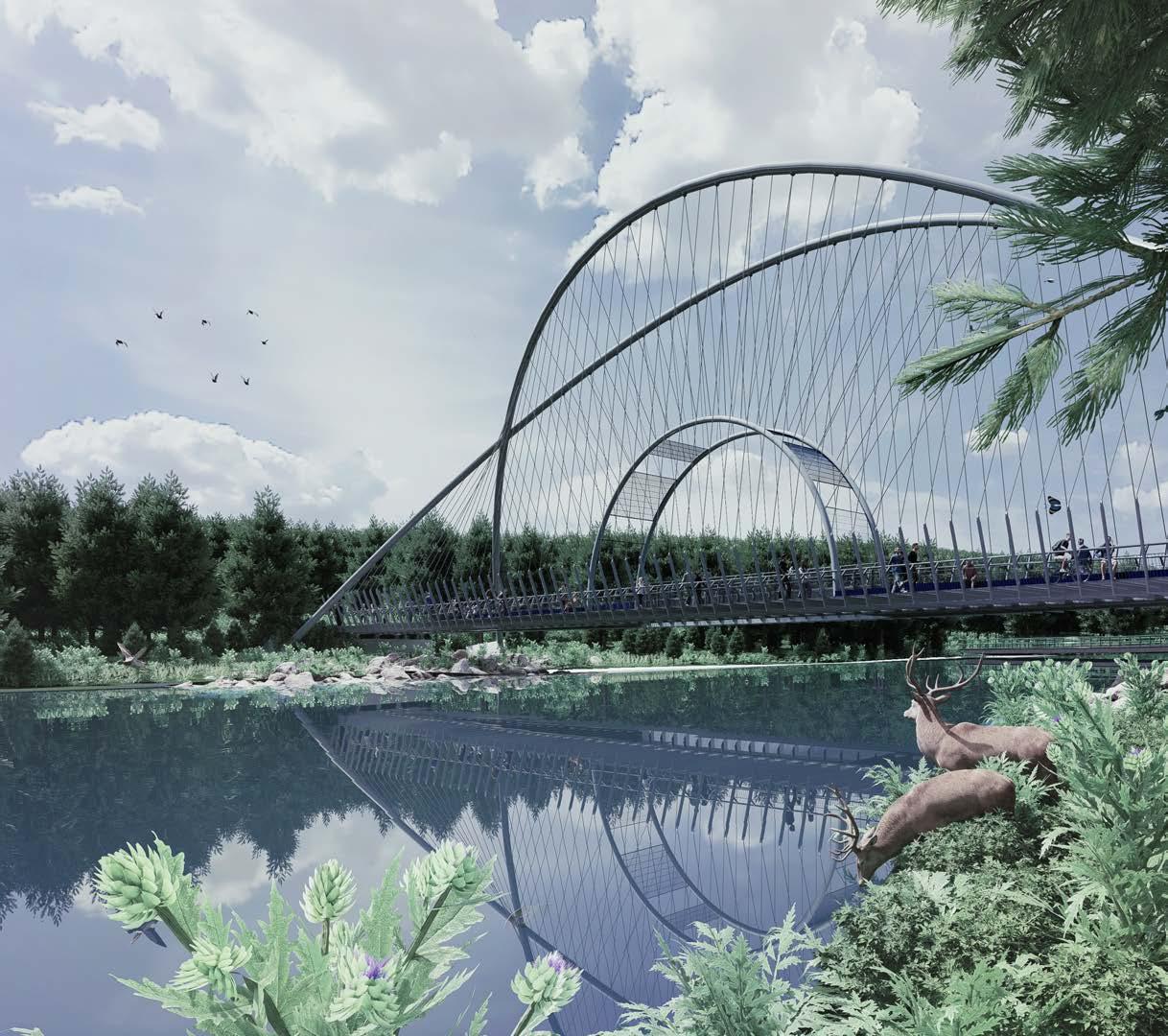
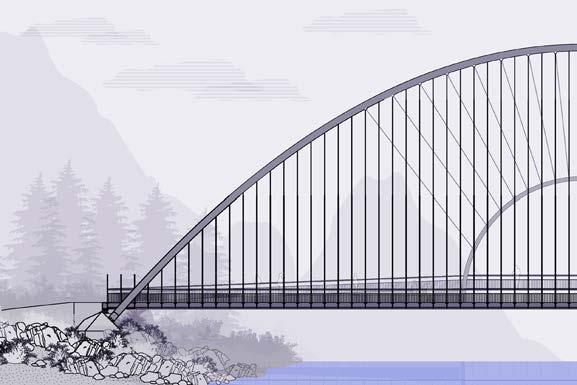
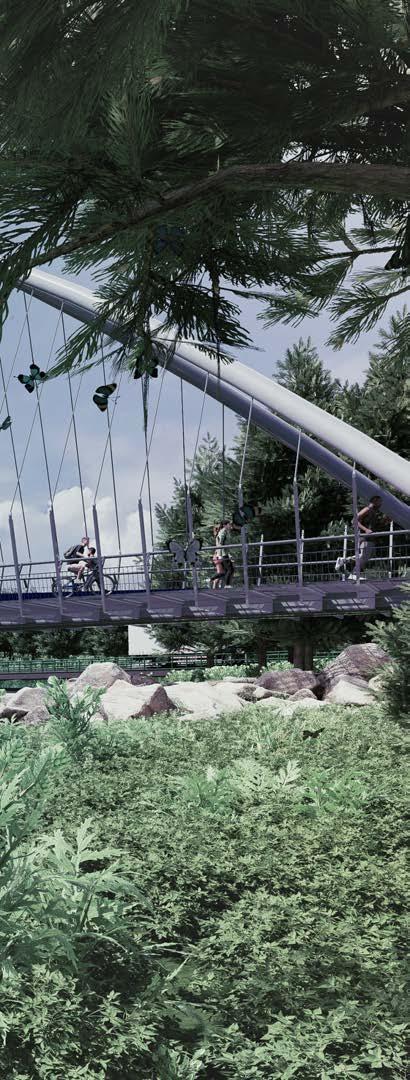
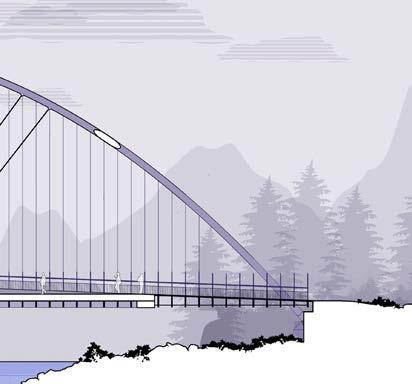
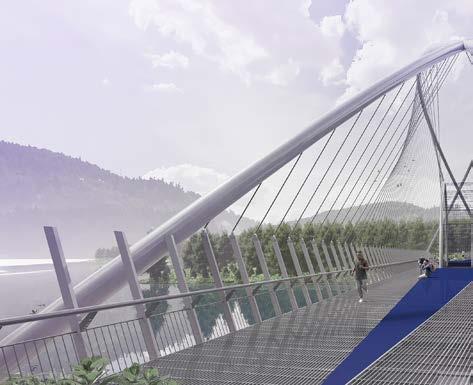
Despite the beauty of the lake and river, the current concrete bridge that exists for people was designed mainly for road traffic and lacks proper pedestrian infrastructure. Therefore, Cerulean Shores is designed to fulfill both needs, to improve pedestrian access between the adjacent hiking trails on opposite sides of the river while also providing a unique crossing experience for its users.
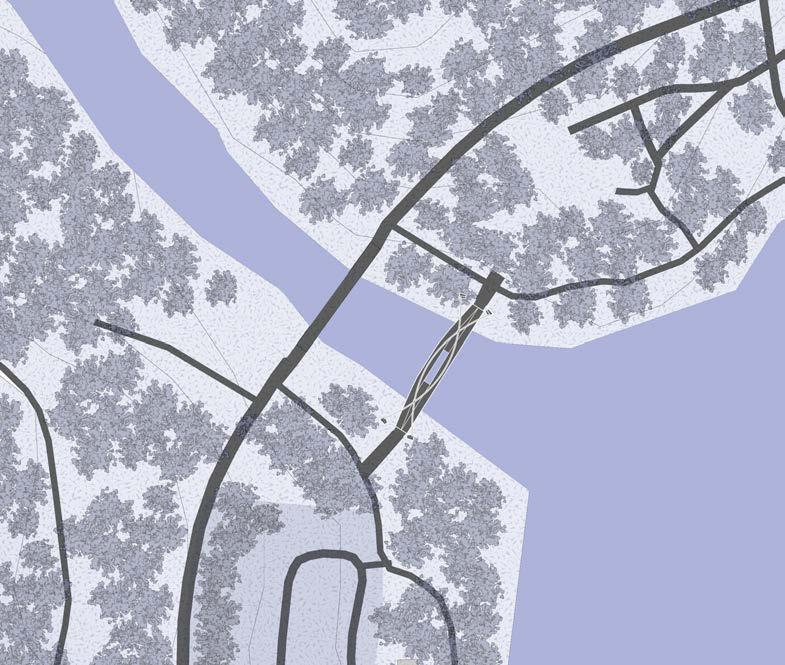
Close up Detail of Site Plan
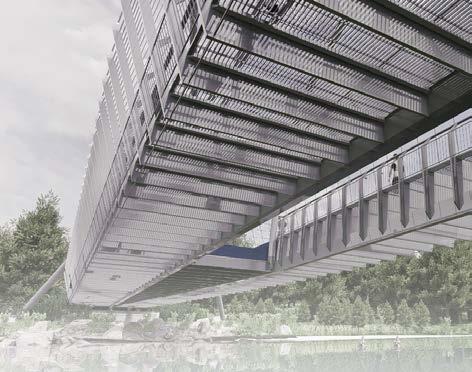
To further enhance the experience of viewing the crystal-clear waters of the river, the center of the bridge features a clear opening where users can view directly down into the water below.
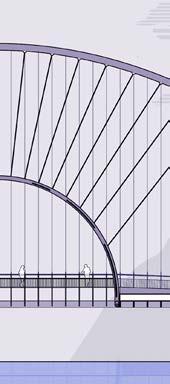
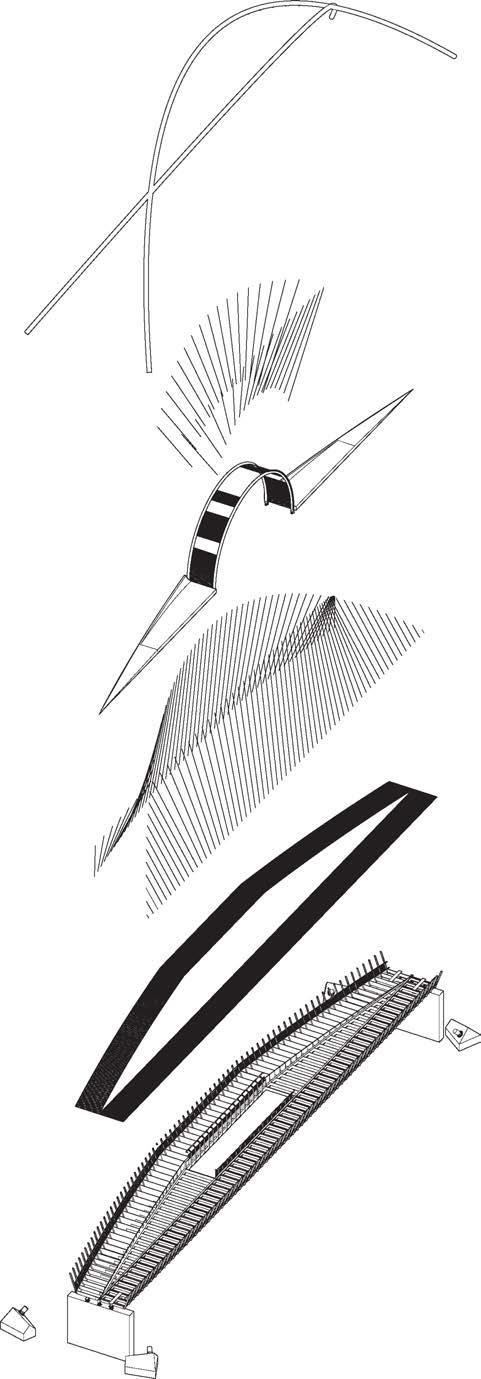
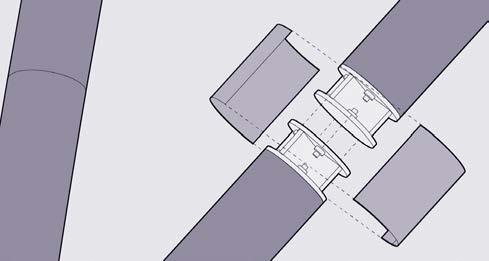
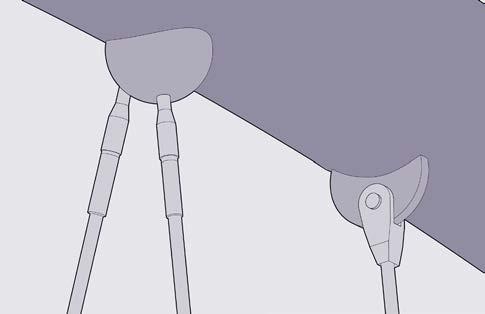
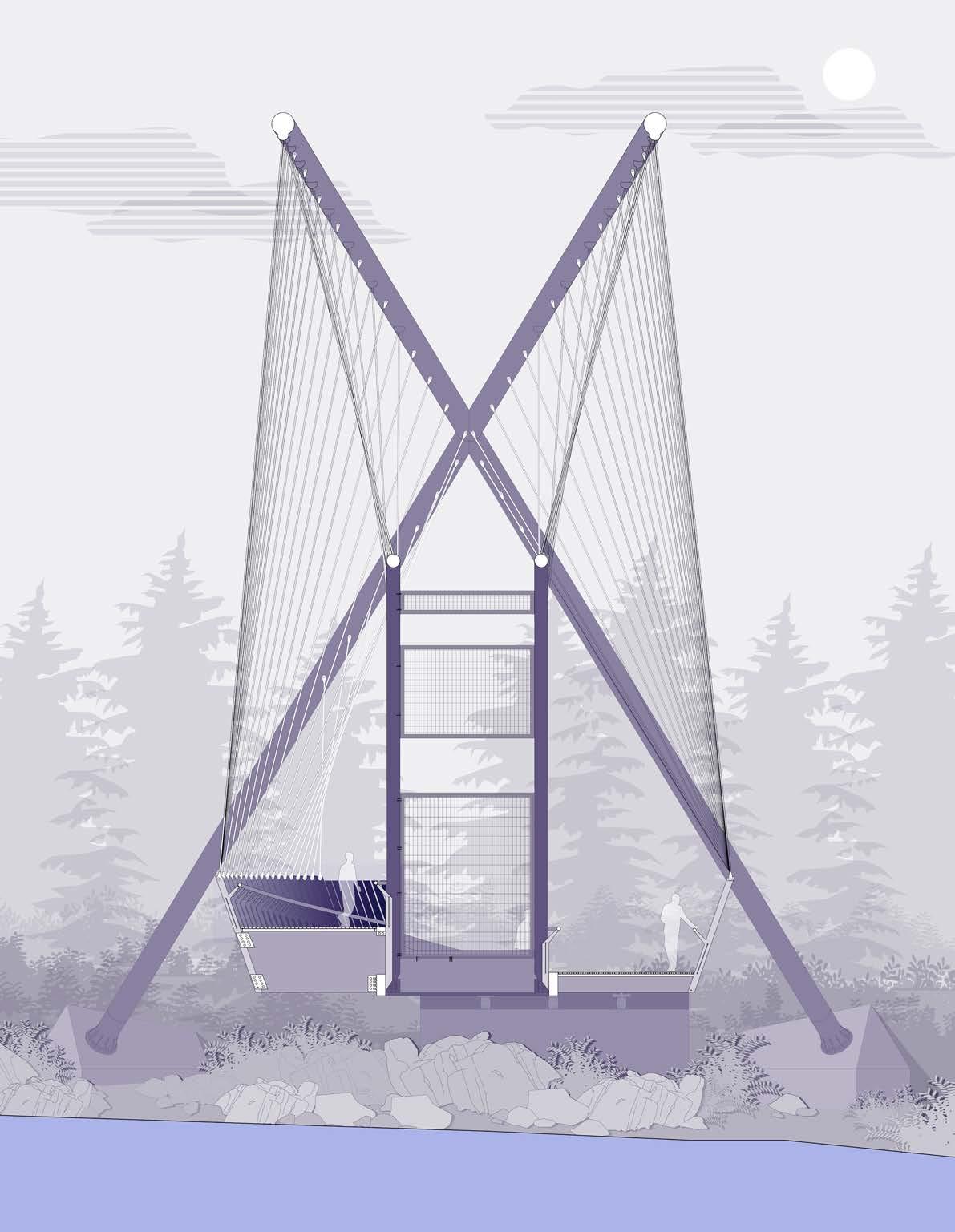
The use of large overhead arches and smaller arches connected to the center of the bridge act as connection points for additional tension cables.
Overhead steel arches (HSS tubes, 500mm diameter)
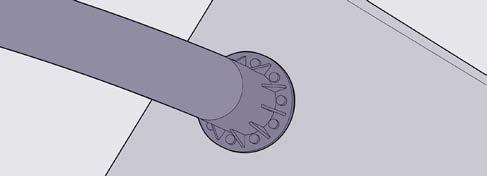
Steel cables (Connects to middle arches, 30mm diameter)
Interior steel arches and seating platform (HSS tubes, 300mm diameter) (HSS welded steel sheets)
Steel cables (Connects to cross bracing/ balusters, 30mm diameter)
Deck (Steel grate footpath)
Foundation and substructure (Railing, cross bracing, beams, joists, balusters, brackets)
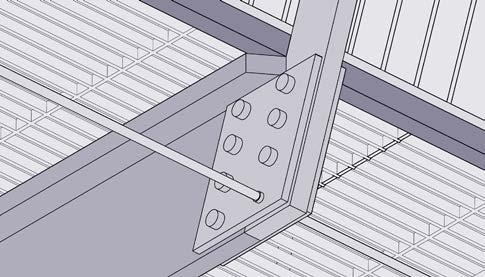
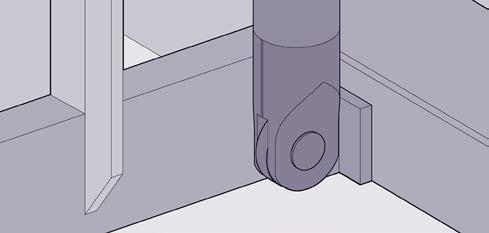

Structural

longs
sec perspec x
1:250 x 1:100 white
LOCATION: Prince Edward County, Ontario, Canada
44°05’40.2”N 76°50’38.3”W
PROGRAM: Passive House
| 2024 | Arch 126 Project
| Awarded the Energy+Design Award
| In collaboration with Saban Alford
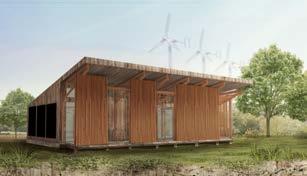
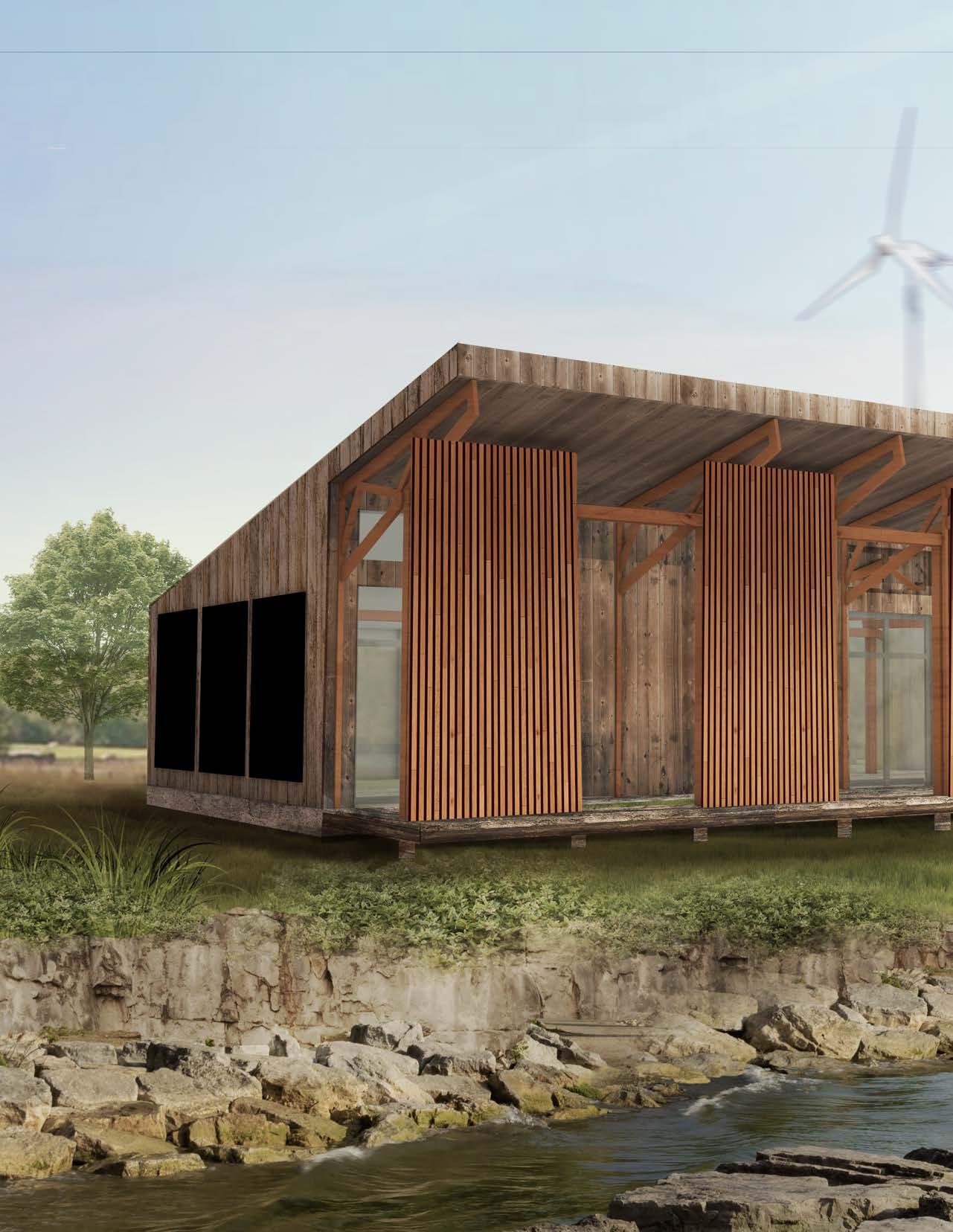
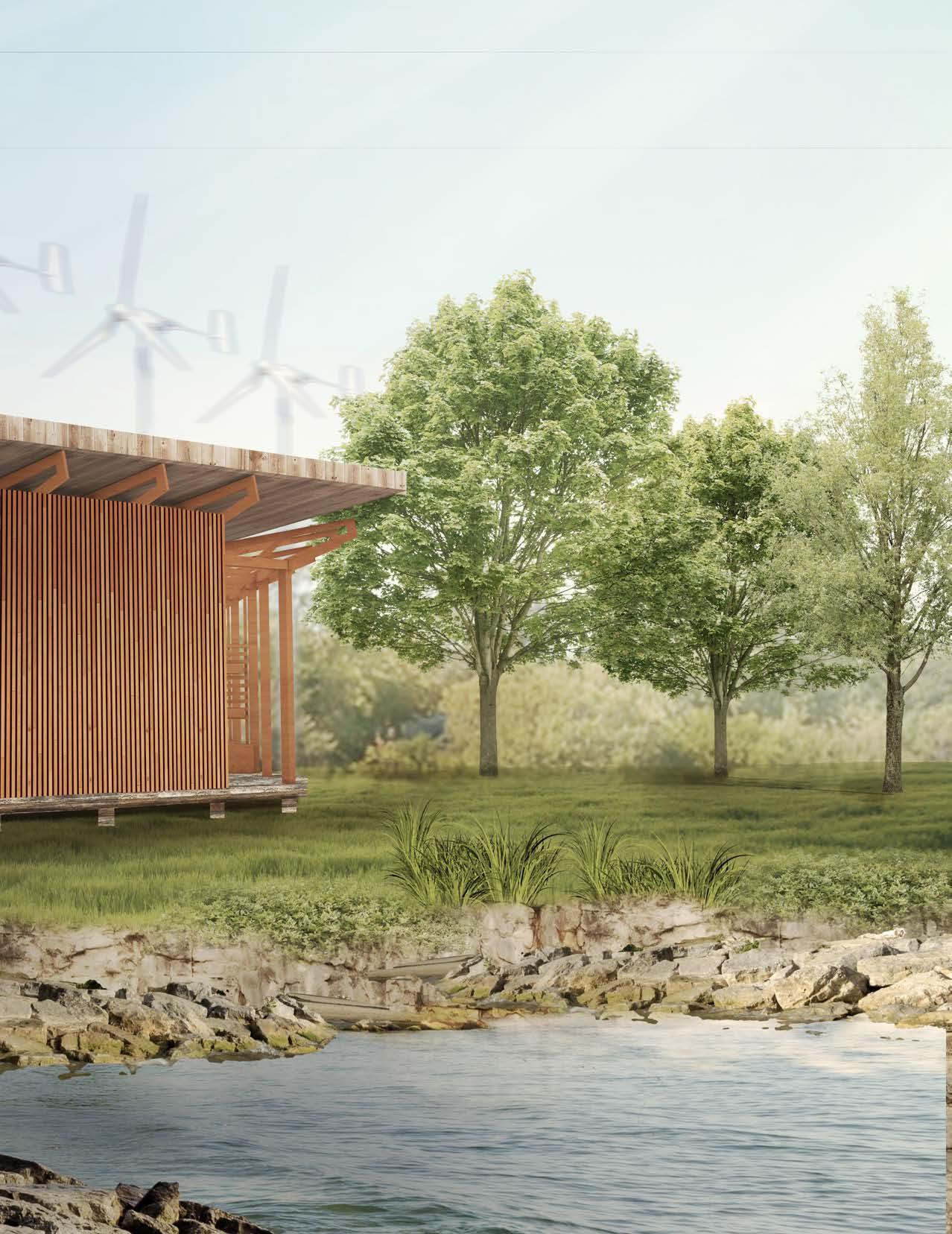
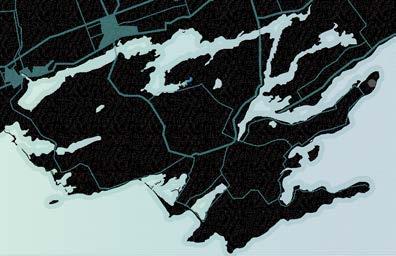
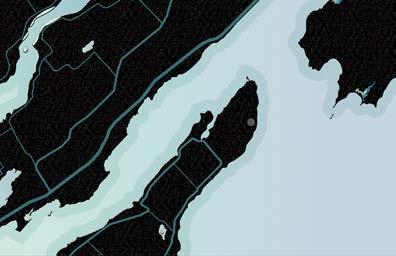
Free from the distractions of everyday life, Craftwork offers a temporary home for two artists in residence on the far eastern point of Prince Edward County, Ontario. With breathtaking waterfront views into the entrance to the Bay of Quinte, our artists can breathe easy knowing Craftwork was built as environmentally consciously as possible, allowing them to focus on creation, collaboration, and innovation during their 6 month residencies.
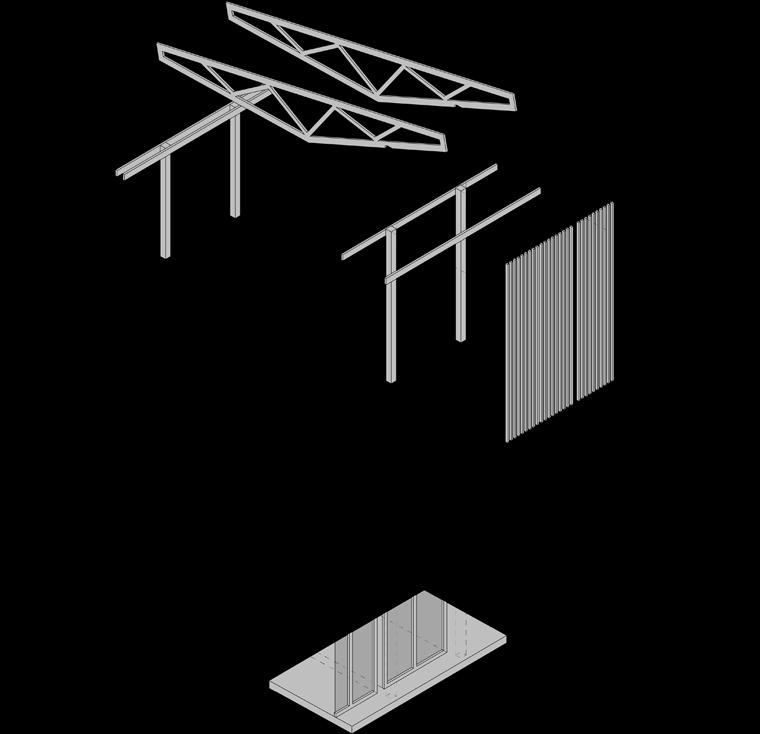
Re-purposed wood and metal from nearby abandoned barns is used throughout Craftwork, paying homage to the Southern Ontario countryside while also using as little new materials as possible. Furthering the goal of the lowest possible carbon footprint, sustainable systems, and strategies such as, among others, rainwater collection, purification, and wind turbines, run throughout Craftwork, allowing for complete off grid, comfortable living.
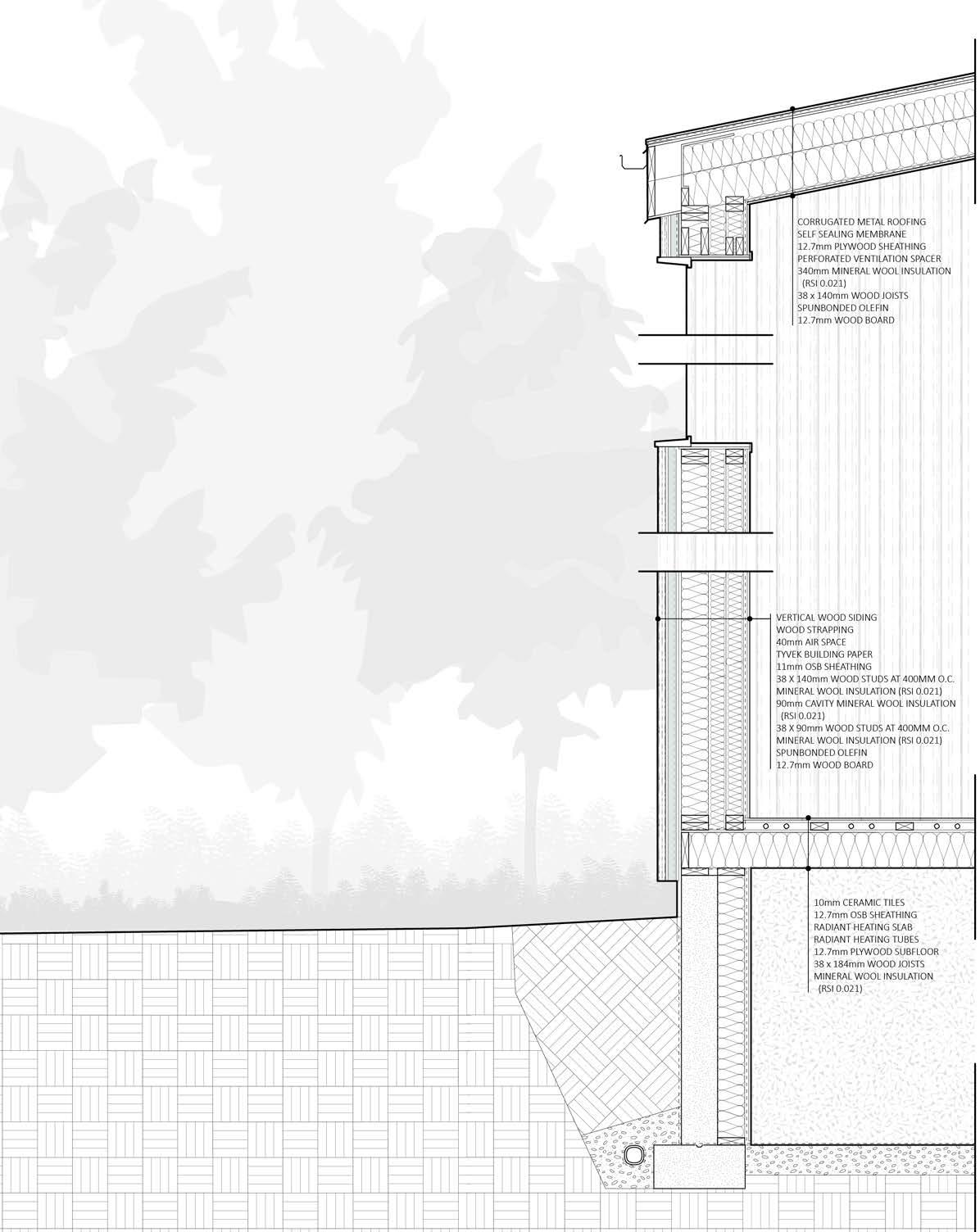
By focusing on using materials from second-hand markets, such as locally sourced or reused wood, corrugated steel roofing, and ceramic floor tiles from local vendors, much of the building can be salvaged or reused during its end life. Even the mineral wool insulation can be recycled indefinitely with an incredibly low carbon footprint.
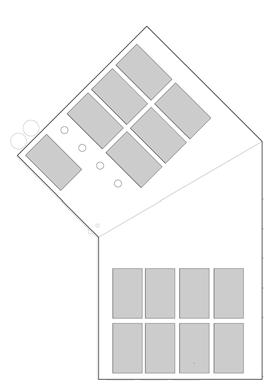
[Above] Site plan
[Left][ Component Axonometric Life Renewed
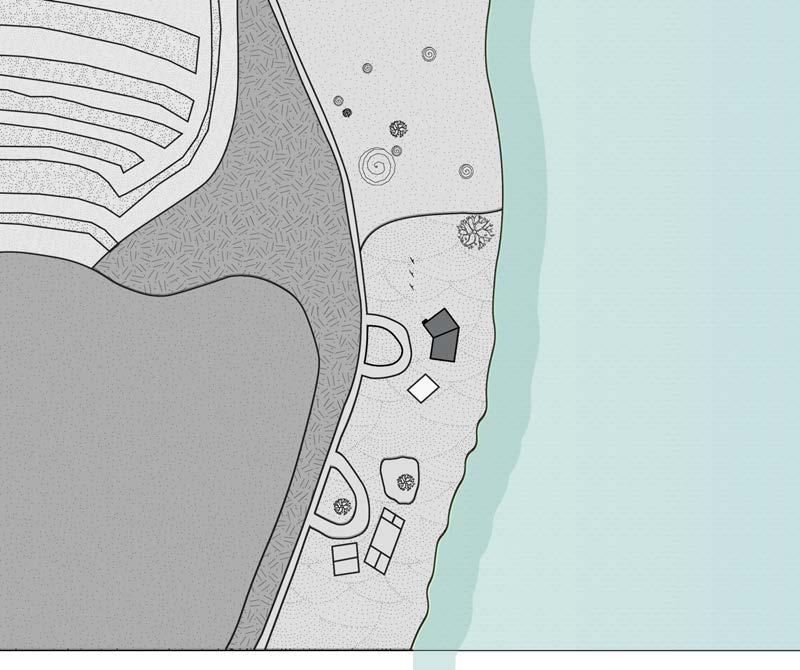
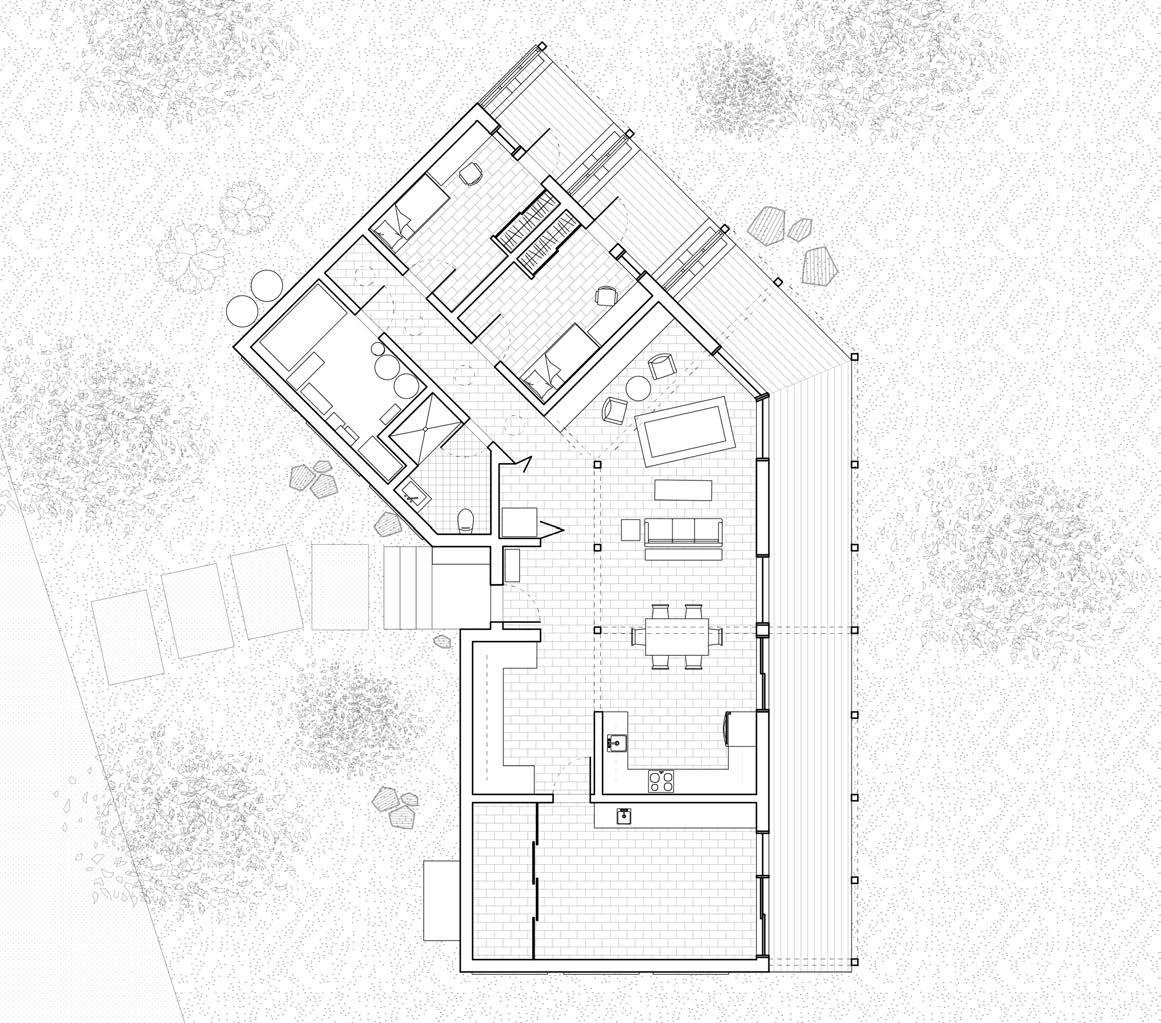
The main floor contains a kitchen, living room, pantry, artists studio, two bedrooms, and a shared washroom. Each bedroom also has its own semi-private patio space with vertical wall planters acting as partitions, while also providing each resident with their own personal space to grow small crops.
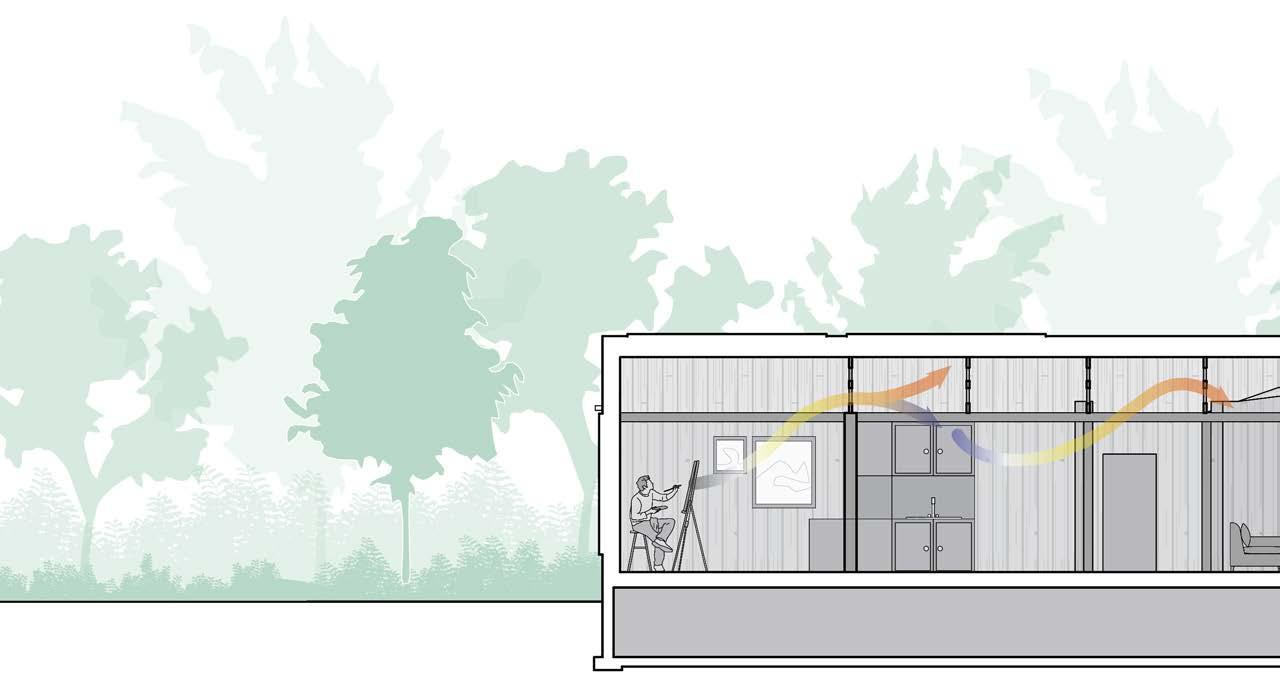
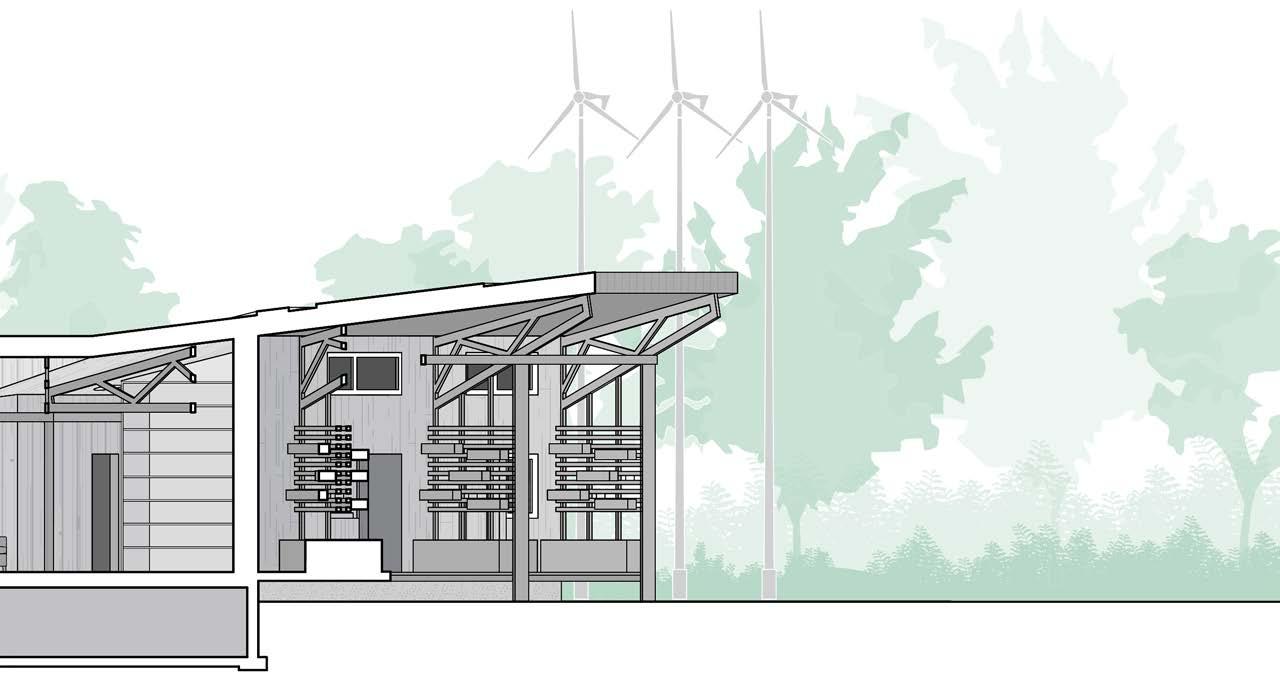
East Section
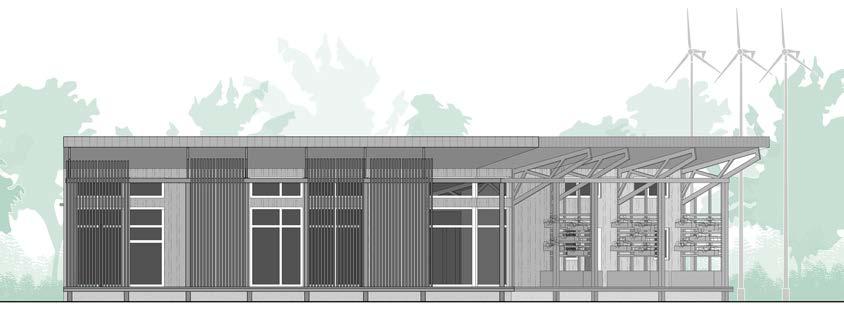
East Elevation
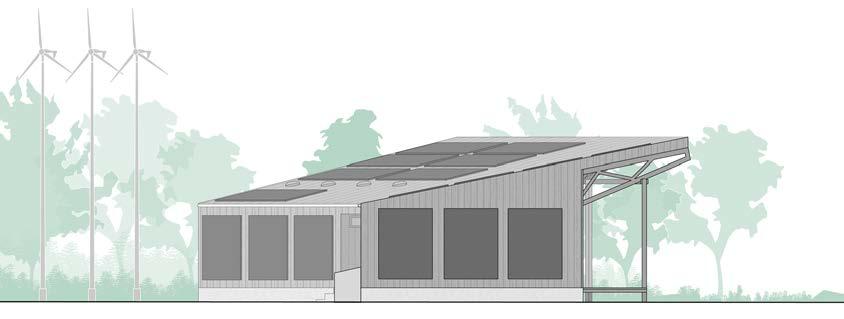
South Elevation
1 2500 w TEMP TEMP
A raised porch and setback from the waterline mitigates risk of flood damage.
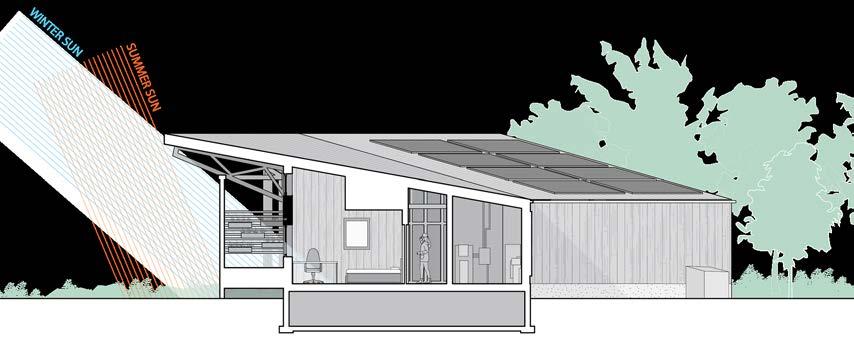
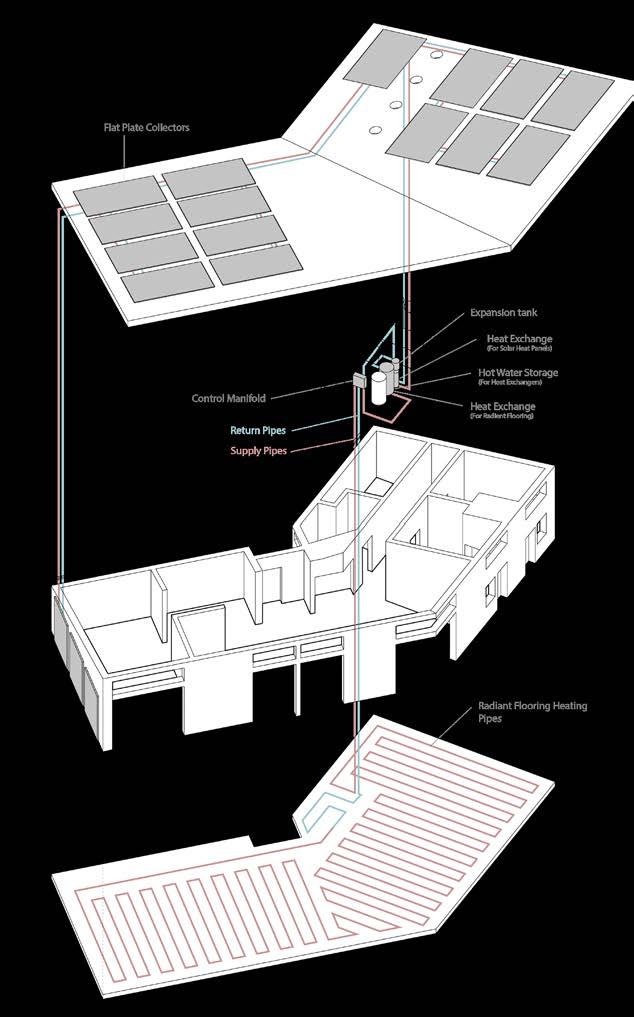
Solar hot water panels can be seen on the roof and south facing walls, thus maximizing heat absorption from year round sunlight.
1 2500 w
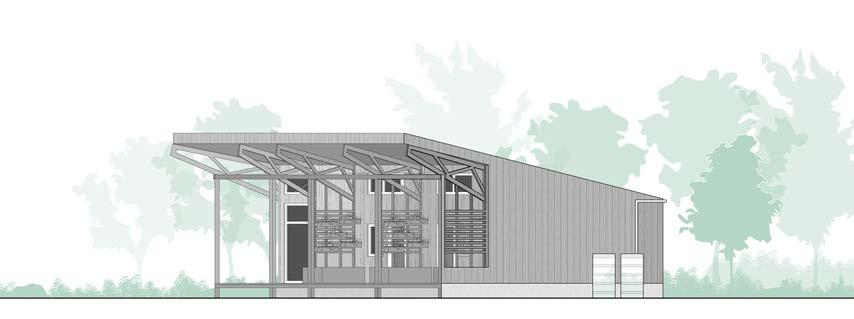
Each bedroom also has its own semi-private patio space with vertical wall planters acting as partitions and space to grow small crops.
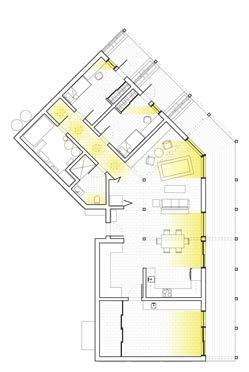
Large overhangs and wooden screens block summer sunlight from entering the east face of the building, preventing additional heat from entering the building while letting in ample amounts of natural sunlight.
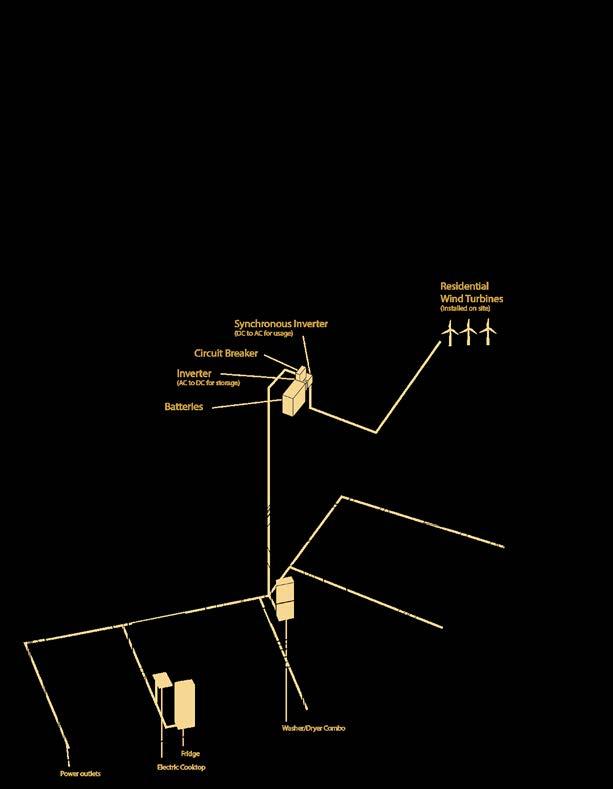
System Axonometric - Electrical Distribution
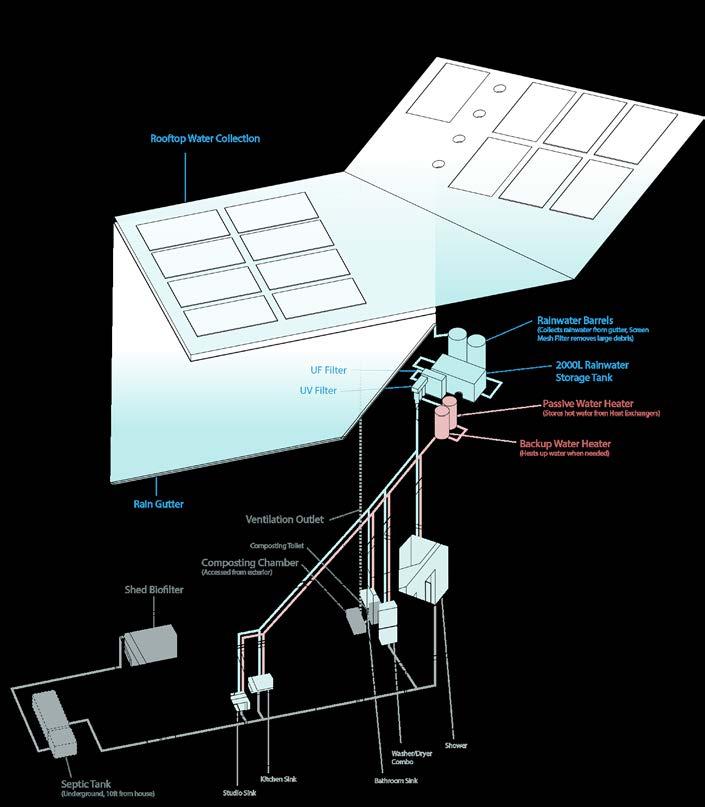
System Axonometric - Water Processing
The design features many strategies that allow it to function as efficiently as possible while remaining off-grid;
• The coastal location, empty nearby fields, and strong winds make the site an ideal candidate for wind power generation. Therefore, electricity is produced on-site from residential wind turbines and stored in batteries until needed.
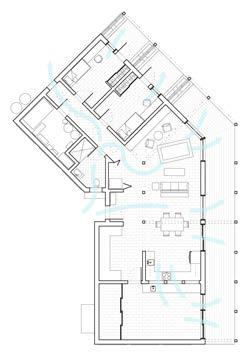
• Triple-glazed windows and high-RSI insulation thickness reduces heat loss in the winter and retains cool air in the summer
• The large roof footprint maximizes the collection of rainwater and surface area of solar water heaters providing the house with a consistent supply of thermal energy and hot water.
• Once collected, the rainwater is moved to an internal storage tank before undergoing a thorough filtration process. Now clean, the water can be transferred into a passive water heater connected to the solar hot water panels and heat exchangers.
• An on-site shed bio-filter processes all the wastewater produced by the house’s occupants.
• Radiant floor heating systems, heated using the solar hot water panels, provides efficient heating during the winter compared to conventional HVAC systems.
LOCATION: Prince Edward County, Ontario, Canada
44°05’40.2”N 76°50’38.3”W
PROGRAM: Passive House
| 2024 | Arch 292 Project
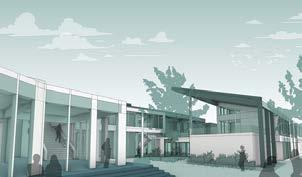
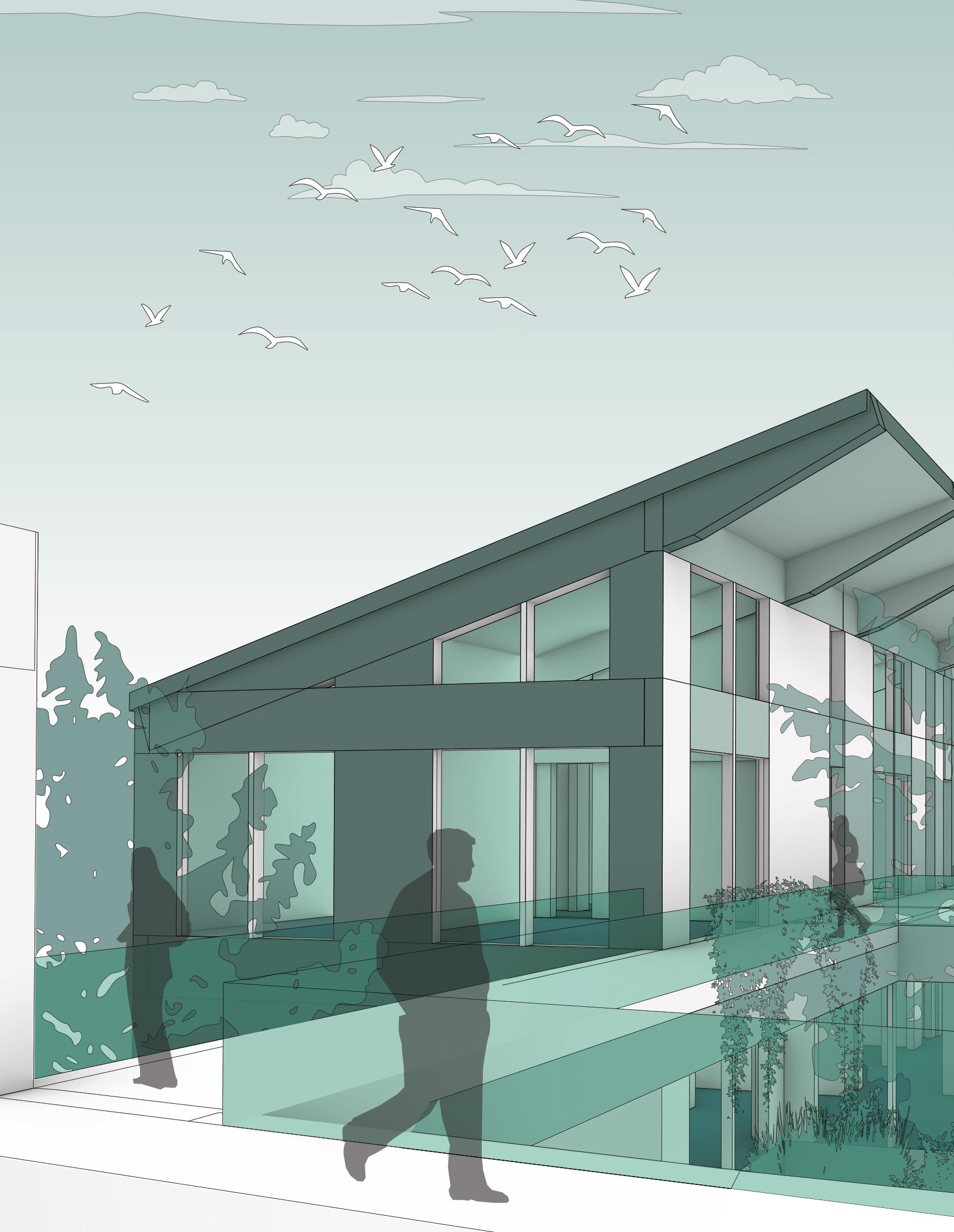
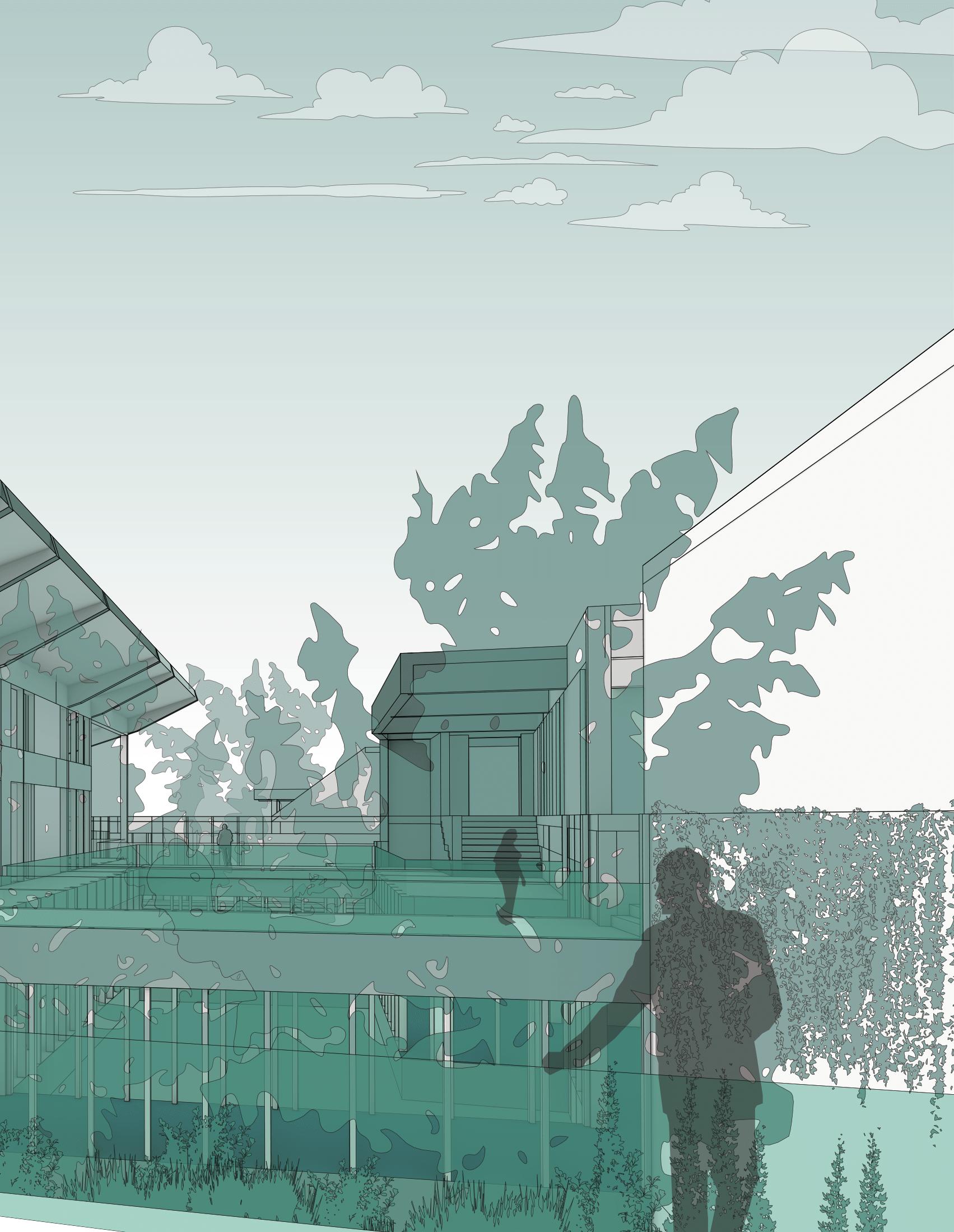
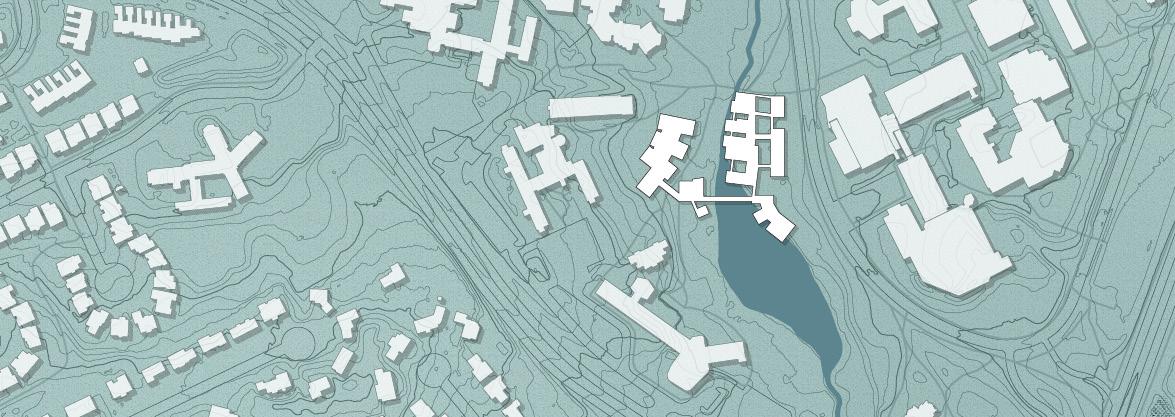
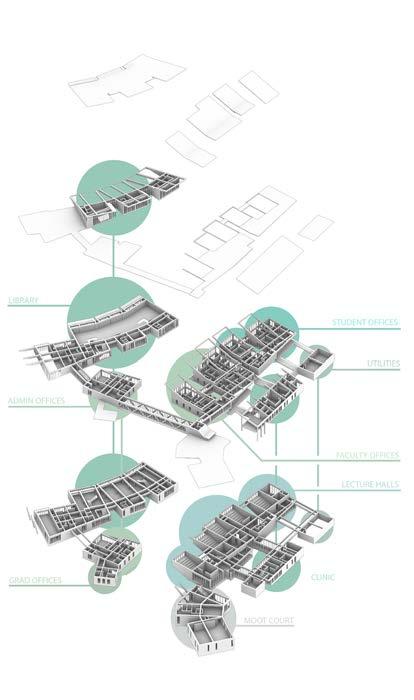
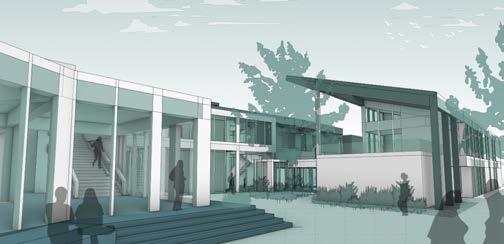
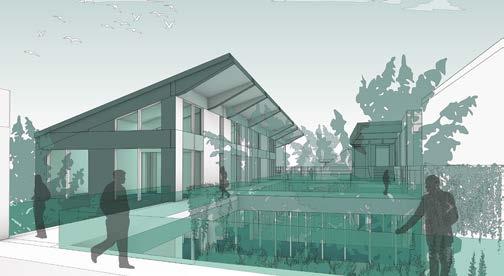
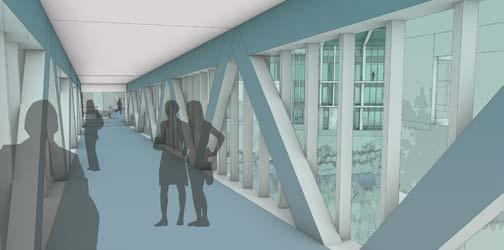
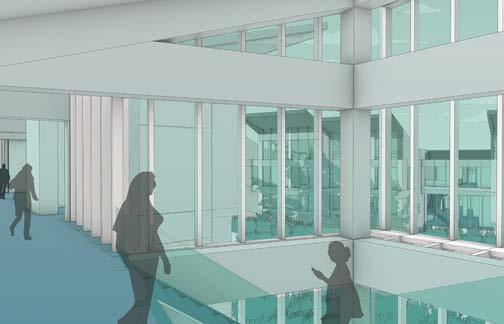
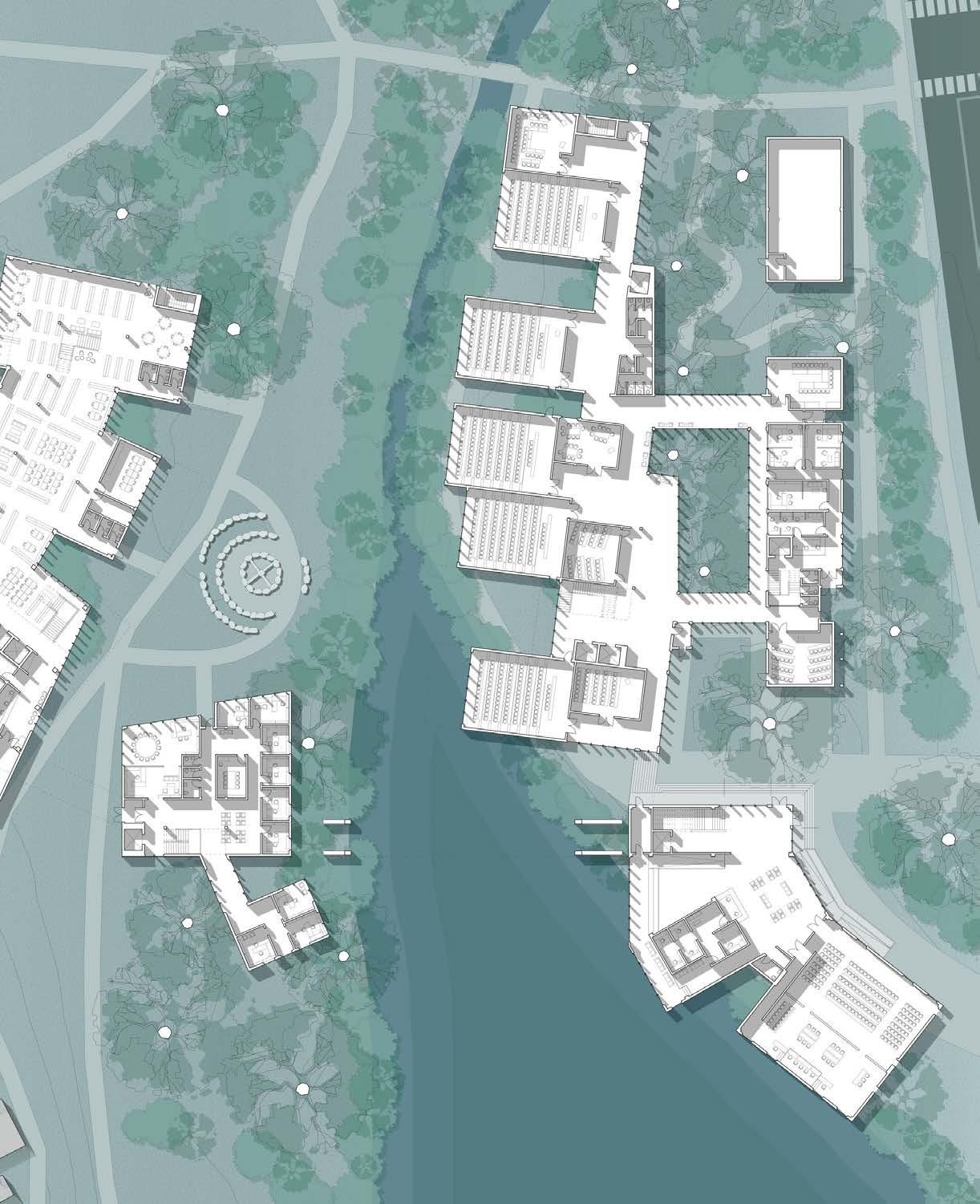
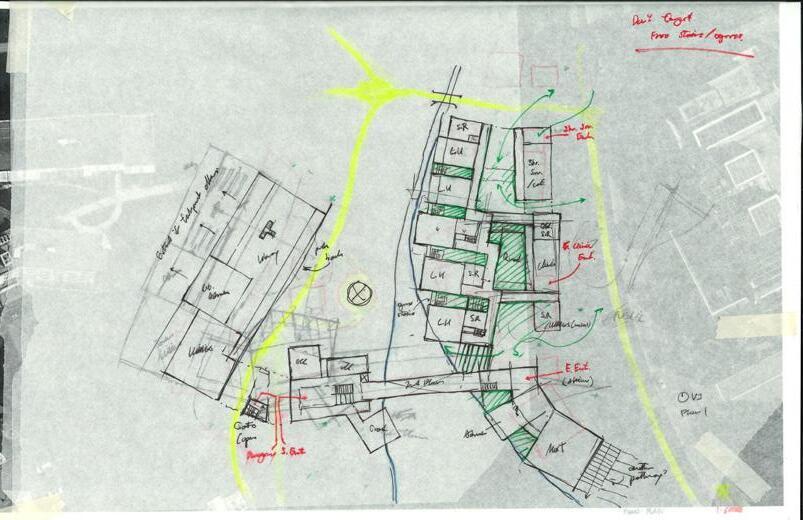
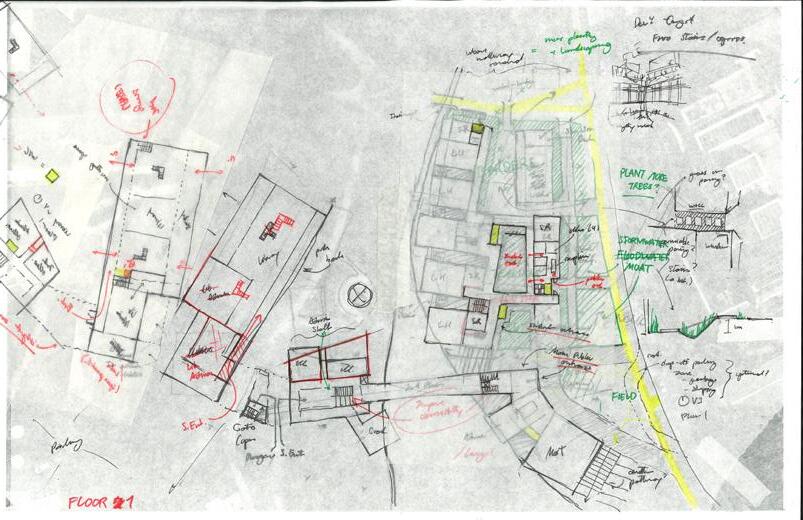
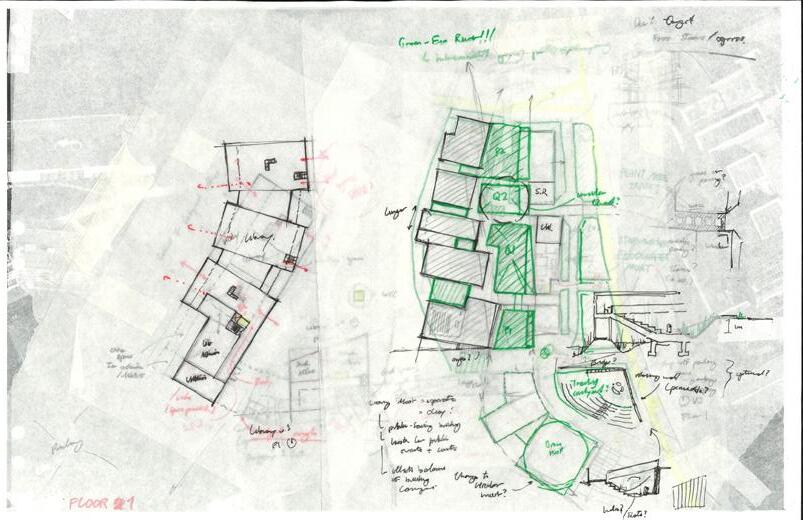
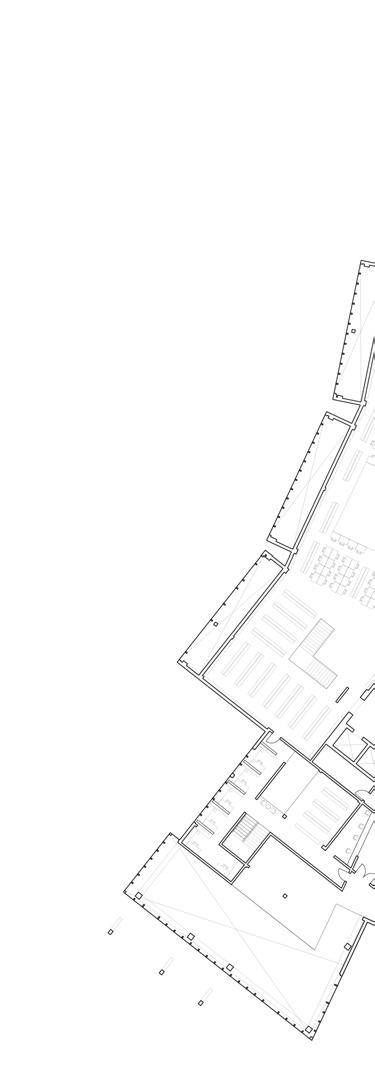
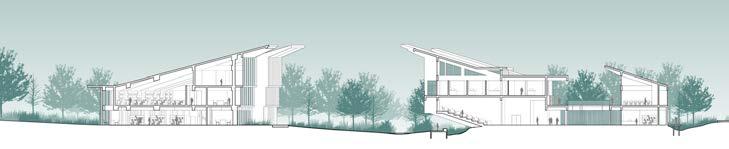
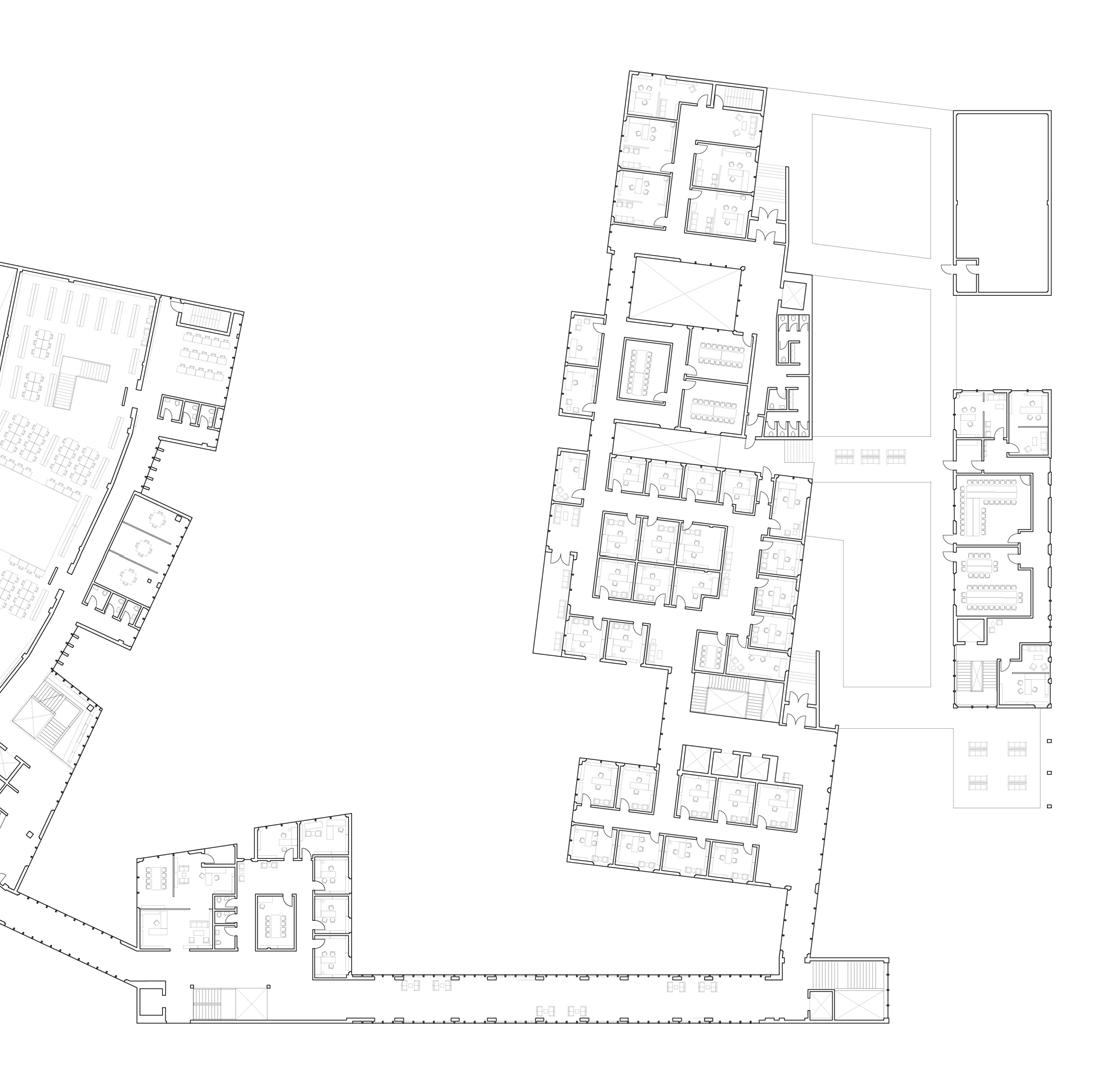
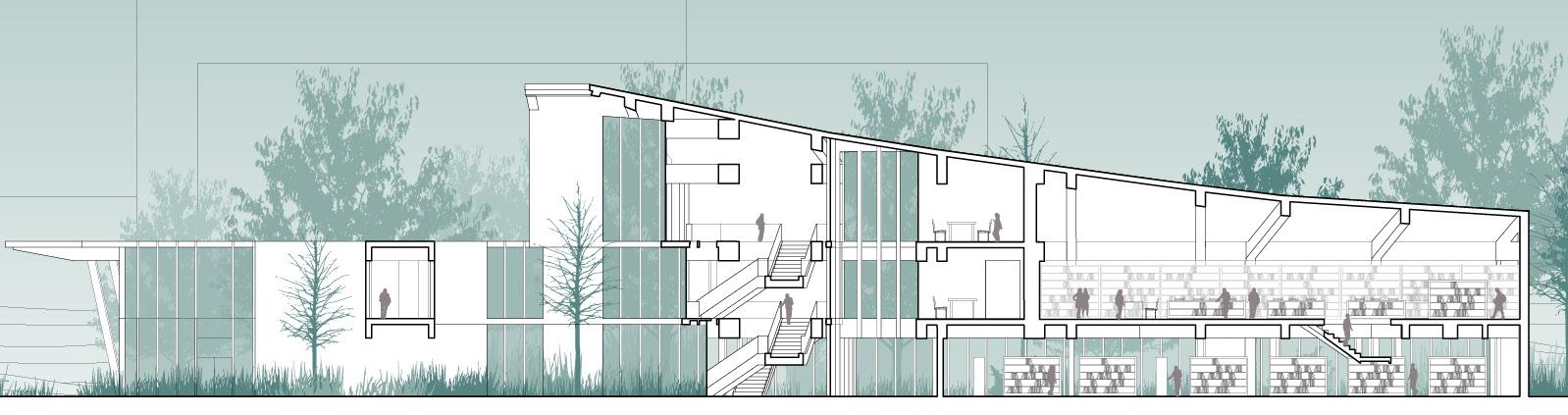
The Creekside Law School was designed with 3 main principles in mind; Transparency, Flexibility, and Ecology, under the pretense that where learning can and should occur anywhere, especially outside the classroom. This law school attempts to dismantle this preconception with the profession, whereby instead of a large singular building, the law school is split into multiple smaller segmented buildings, each able to function semiautonomously while still remaining interconnected to the rest of the “campus” with a series of indoor and outdoor walkways.
The school is designed to actively engage with both the law students and the wider public/student community thanks to its 3 main courtyards, each with a slightly varying program and function. Should any professor wish to teach outside of the classroom, the library’s 2nd floor is also designed to function as an alternative teaching space given the quiet and contained environment it provides.

“If the law is something that affects all of us, why can’t we all have an effect on the law?”
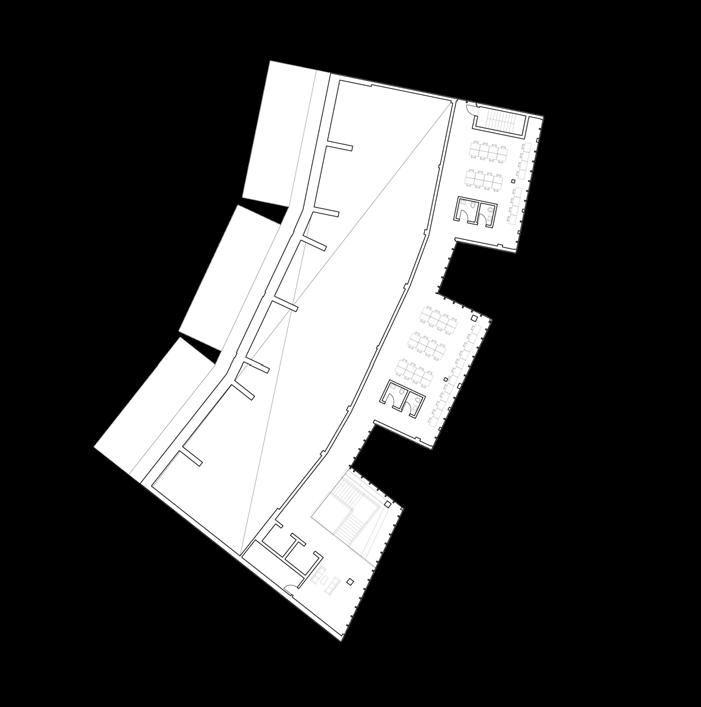
There’s also a pathway which goes below the lecture halls and along the creek into an open outdoor foyer-esque space. The building’s design allows it to follow the contours of the river, while additional planted beds, stormwater ditches, and sloped roofs allow for the management of excess rainwater and prevent flooding.

Although not explicitly architectural in their nature, I would like to showcase some other projects that demonstrate my artistic and design skills, flexibility with a diverse range of mediums, and some personal interests of mine. | 2022 |
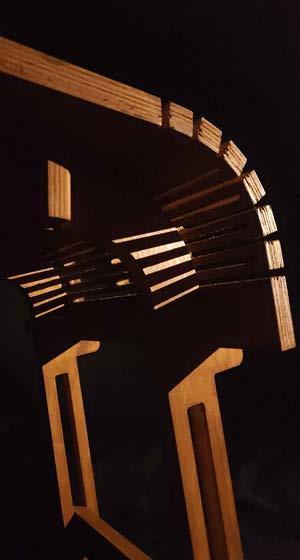
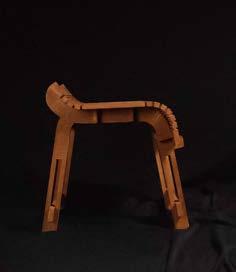
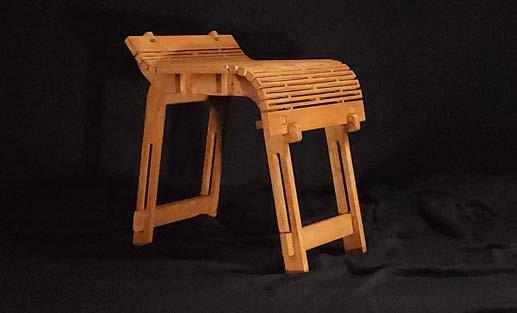
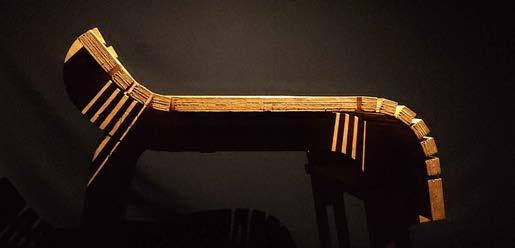
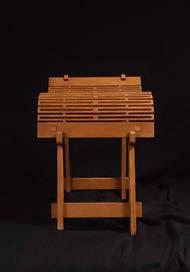
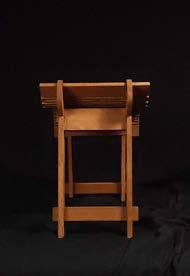
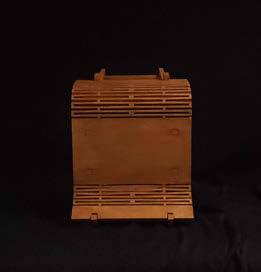
The Capybara Chair
This chair was created using a single sheet of 3/4” Baltic Birch plywood measuring 2ft by 4ft long, with the goal of creating an ergonomic chair using kerf cutting techniques Thanks to the precision of the CNC router, all joints that make up the seat are friction fitting to remain stable after sliding into place without the need for screws or bolts.
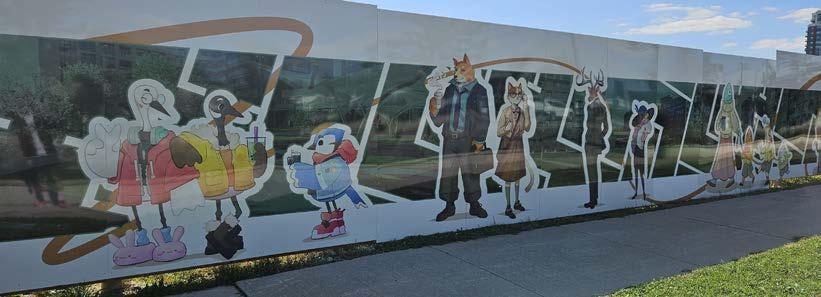
Banner Design for the City of Markham
| 2023 | KINGDOM Canada
Our graduating class was commissioned by KINGDOM Canada to design a 100m long mural for their construction hoarding, as a way to promote their new development while establishing connections with the community and our school’s arts program.
| 2024 |
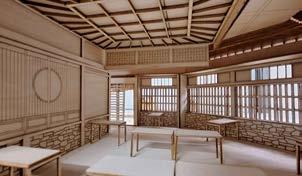
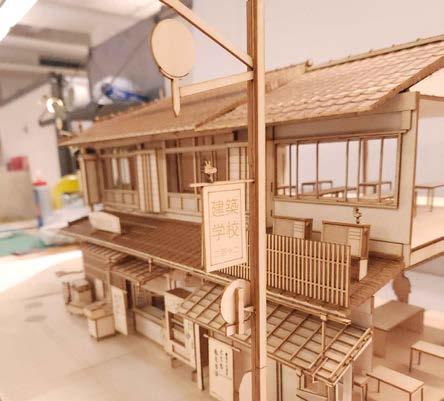
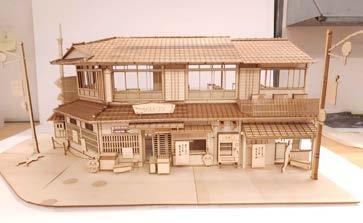
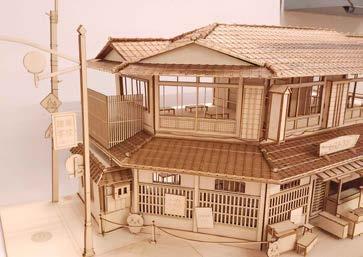
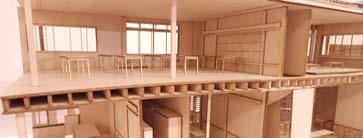
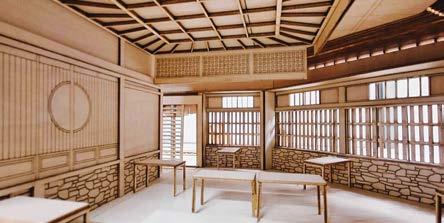
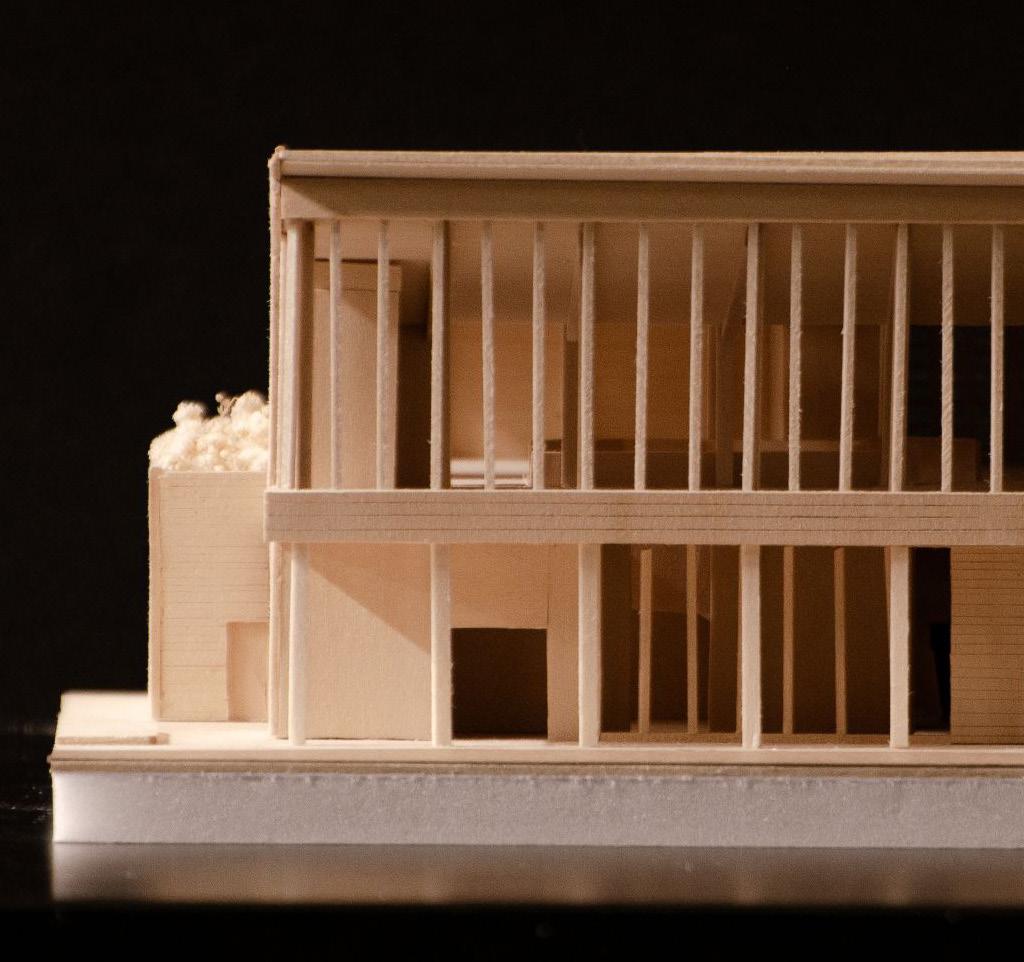
A detailed 1:24 replica of a wooden building in Kyoto, currently used as a restaurant. It’s a 2-story corner building with a pitched roof, operable windows, and a fully modeled interior including street furniture and lampposts.
The entire size of the model measures 80cm x 50cm x 38cm
| 2022 - 2025 |
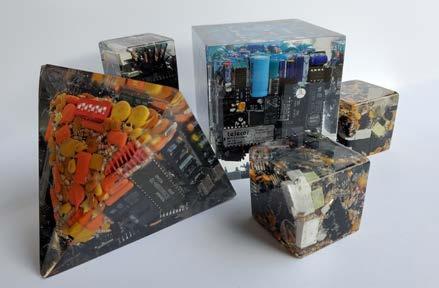
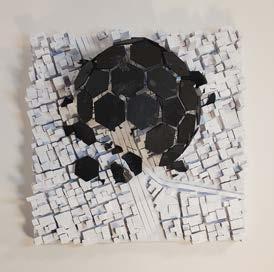
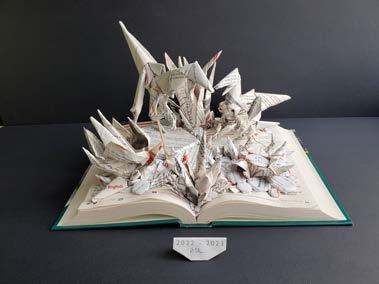
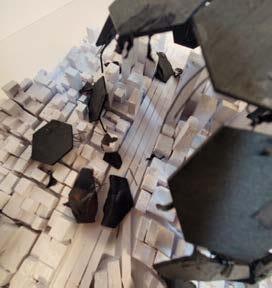
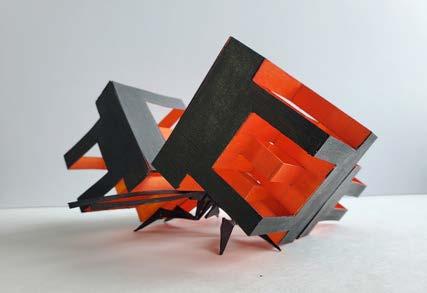
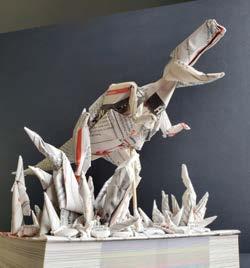
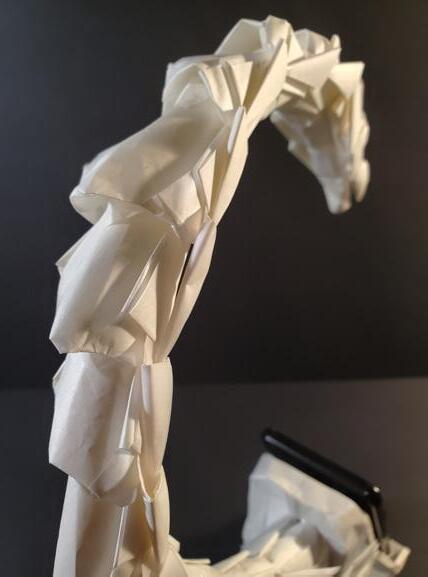
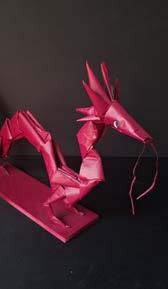
Over the years I’ve developed a repertoire of using various materials to create unconventional models and other 3-dimensional works of art. More sophisticated projects have involved the use of poured epoxy resin, though various other works involve paper folding techniques and modular construction.
For additional examples of my previous artworks, see my website linked in the documents attached.
Thank you for your time and consideration
r395liu@uwaterloo.ca
https://ryerye474.squarespace.com/