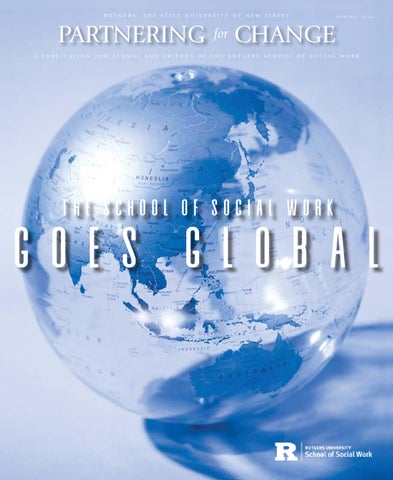
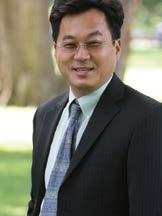
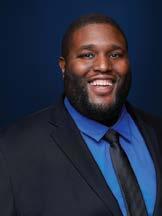
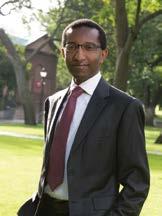
PARTNERING CHANGE for the school of SOCIAL WORK goes global
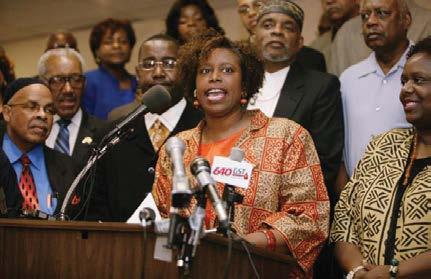
“We are way more powerful when we turn to each other and not on each other…and together tear down the mighty walls of injustice.”
CYNTHIA MCKINNEY
SPRING 2026
Published by the Office of Communications and Office of Development & Alumni Relations at the School of Social Work
Rutgers, The State University of New Jersey
120 Albany Street, Tower One, Suite 200
New Brunswick, NJ 08901
848-932-7520
DEAN AND EDITOR-IN-CHIEF
GEORGE LEIBOWITZ
DIRECTOR OF COMMUNICATIONS AND EDITOR
LAURIE ZAZENSKI
CONTRIBUTING WRITERS
GREG BRUNO
MELISSA KVIDAHL REILLY LAURIE ZAZENSKI
PHOTOGRAPHY
PETE BYRON
JOHN EMERSON
ROY GROETHING
JOHN O’BOYLE
LAURIE ZAZENSKI
GARRISON PRINTING COMPANY
We welcome your comments and suggestions. Please email us with your feedback or ideas to lzazenski@ssw.rutgers.edu.
IDear School of Social Work Community,
t is my pleasure to share the latest edition of our alumni magazine with you. In this issue, we turn our focus to global social work, a reflection of both our longstanding commitments and the urgent realities of our interconnected world. From global public health to human rights, the challenges facing communities today transcend national borders. So, too, must our response.
Social work has always been deeply rooted in place. Yet our profession has also been inherently global, shaped by international movements for human rights, social welfare, and community empowerment. Across continents, social workers are partnering with local leaders, governments, and grassroots organizations to advance well-being. Our alumni and faculty are part of these efforts, conducting global research, strengthening international service systems, and preparing the next generation of practitioners to lead with cultural humility.
Here at Rutgers School of Social Work, our global engagement is expressed through collaborative research initiatives, international partnerships, and globally-focused scholarship that informs policy and practice worldwide. We are committed to ensuring that our global work is reciprocal, community driven, and grounded in mutual learning and respect. As you read on, you will learn how leaders at our School are conducting research that addresses complex global challenges and are spearheading transformative efforts in communities across the world.
You will also read stories of alumni excellence and student successes demonstrating how they are driving our mission forward. Whether serving locally or internationally, our community continues to show how social work creates meaningful, lasting change.
As we look ahead, I am energized by the momentum we are building to expand partnerships, deepen our research impact, and equip our students with the skills and vision to navigate an increasingly complex global landscape. The work is ambitious, but so is our community. Whether you are engaging with us from across the globe or right here at home, please know that your connection to the School matters deeply. Our alumni network is a powerful force for good, and your leadership, mentorship, and advocacy strengthen our collective impact. Thank you for remaining part of this vibrant and committed community. Together, we will continue to advance justice and well-being—locally and globally.
In community,
George S. Leibowitz, Ph.D. DEAN AND DISTINGUISHED PROFESSOR, RUTGERS SCHOOL OF SOCIAL WORK
Rutgers Honors Faculty Innovators Advancing Social Impact and Research Excellence
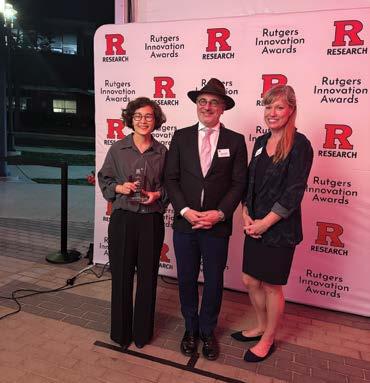
Last fall, Assistant Professor Woojin Jung and Associate Professor Emmy Tiderington received Rutgers Innovation Awards, which recognize researchers who have demonstrated excellence by developing a breakthrough idea, process, or technology that has the potential to benefit society and create economic value. The annual awards celebrate faculty whose work moves beyond the lab or classroom to address pressing societal needs, foster collaboration, and generate meaningful impact.
Dr. Jung and Dr. Tiderington were honored by the Rutgers Office for Research at its 2025 Rutgers Innovation Awards ceremony, where peers, industry executives, and Rutgers leadership gathered to celebrate the awardees’ accomplishments. The event highlighted the diverse ways Rutgers researchers are translating scholarship into action, whether through datadriven solutions, community-focused initiatives, or innovative approaches that expand the reach of academic research.
Dr. Jung earned the Social Innovation Award for her project, Robust Spatial Poverty Mapping and Efficient Resource
Allocation, which leverages spatial data and artificial intelligence to better understand poverty at a granular level and inform more effective distribution of social transfers. Dr. Tiderington received a non-patent award for creating and licensing training materials for homeless-service organizations that advance knowledge, practice, and public good.
“The Rutgers Innovation Awards highlight the importance and value of teamwork in research,” said senior vice president for research Michael E. Zwick, PhD. “Societal challenges are becoming more complex, and the requirements for solving them constantly evolve for faculty, students, staff, and industry. We are all in this together, and we are a team with one goal: to leave a better world for our children and future generations so they can pursue opportunities and make a life as rich and rewarding as the one we are privileged to live.”
Together, the achievements of Dr. Jung and Dr. Tiderington underscore Rutgers School of Social Work’s commitment to fostering innovative research that not only advances academic fields, but also contributes to a more equitable, informed, and resilient society.
“Many pregnant patients fear the consequences of truthful reporting of prenatal substance use to their healthcare providers. While state laws and associated policies on this issue vary widely, being reported for prenatal substance use can result in separation of mother and baby shortly after birth if the baby has been exposed to substances in utero.”
Assistant Professor Qiana L. Brown quoted in the story “Does cannabis affect your fertility?” from National Geographic
“Understanding African American elders caring for grandchildren is complex and reflects unique cultural, environmental, and institutional factors.”
Sojourner Truth Social & Racial Justice Visiting Professor Sandra Edmonds Crewe quoted in the story “Grandparenting in N.J. more likely among Black families, Census data confirms” from NJ.com
“As a resident of Cranford and someone who’s raised kids in this town, it’s extremely painful to know this happened and that the alleged perpetrator was accused of engaging in stalking behavior before his actions. Sadly, it’s something we’ve seen for some time and solutions are urgently needed.”
Professor and Director of the Center for Research on Ending Violence
Sarah McMahon quoted in the story “Cranford killings put spotlight on stalking and teen dating violence. Can schools help?” from Yahoo! News
“Even a person using advanced mathematical skills, their picks are not going to win most of the time.”
Associate Dean for Research, Distinguished Professor and Director of the Center for Gambling Studies Lia Nower cautioned that quantitative approaches are unlikely to lead to winnings in the long run in the story “In N.B.A. Betting Scandal, Influencers Played an Old Game in a New Form” from The New York Times
“We were impressed by the success stories in some states, such as those with recent eligibility expansions. Several of these states, like Virginia, Utah, and Missouri, doubled or tripled Medicaid-paid prescribing, driving strong population-level improvement.”
Distinguished Research Professor Stephen Crystal quoted in the story “Medicaid Crucial In Battling Opioid Epidemic” from U.S. News & World Report
SFACULTY ACCOLADES
Associate Professor Emily Bosk, a member of the Research-to-Policy Collaboration (RPC) Rapid Response Network (a group of researchers that helps translate science for a policy audience) received recognition from RPC for being highly engaged with policymakers with a Research-to-Policy Scholar Collaboration Award.
even faculty members were recognized in the 2025 Stanford/Elsevier Top 2% Scientist Rankings, which identifies the most influential researchers worldwide, based on rigorous analysis of bibliometric indicators such as career-long and single-year citations, h-index, and co-authorship metrics. This year’s honorees from the School of Social Work include Professor Edward Alessi, Distinguished Professor Victoria Banyard, Distinguished Research Professor Stephen Crystal, Associate Dean for Faculty Development & Professor
Elsa Candelario, MSW Program Director, Professor of Professional Practice, and Director of the Latina/o/x Initiatives for Service, Training, and Assessment (LISTA) Certificate Program, was elected treasurer of the Association of Latina/o Social Work Educators, effective in mid-2026.
Associate Professor Jamey Lister (PD/PI) was awarded a $150,000 grant from the New Jersey Department of Health (NJDOH) for “A Sequential and Multiple Methods Design to Assess Needs and Generate Action Plans for the Primary Care and Rural Health Systems of New Jersey” in Spring 2025. This twoyear project provides rural health and primary care system products required of NJDOH by the federal funding sponsor, the Health Resources and Services Administration. Dr. Lister’s team is responsible for all data activities and products, defines New Jersey’s rural and urban areas, and creates dissemination-friendly tables and maps that will be publicly accessible on the NJDOH website after project completion. Dr. Lister (PI) was also awarded a $113,796 grant from the New Jersey Division of Mental Health and Addiction Services for “NJ Promoting the Integration of Primary and Behavioral Health Care: Collaborative Care Model”
in Fall 2025. This is the second year of funding for a planned five-year project awarded by the federal funding sponsor, the Substance Abuse and Mental Health Services Administration. Dr. Lister’s team leads evaluative research data activities and provides scientific guidance to state health department and Rutgers Health partners regarding implementation of behavioral health services for patients accessing care in medically underserved areas of New Jersey.
Assistant Research Professor Cory Morton (PI) received $199,995 from Empower Somerset for his project, “Community-Level Partnerships for Success,” which aims to prevent substance use among adolescents and substance misuse among adults in Somerset County, New Jersey, while strengthening prevention capacity and infrastructure at the community level.
N. Andrew Peterson (PI), Distinguished Professor and Director of the Center for Prevention Science,
and Kristin Gilmore Powell (co-PI), Associate Research Professor and Associate Director of the Center for Prevention Science, were awarded $251,000 from the New Jersey Department of Human Services, Division of Mental Health and Addiction Services to evaluate its Opioid Overdose Recovery Program. The purpose of the program is to respond to individuals who are reversed from opioid overdoses and
ACCOLADES
Chien-Chung Huang, Director of the Hub for Aging Collaboration & Professor Emily Greenfield, Director of the Center for Research on Ending Violence & Professor Sarah McMahon, and Director of the Center for Prevention Science & Distinguished Professor N. Andrew Peterson. This recognition places these scholars among the top 2% of scientists globally, highlighting their exceptional contributions to research, policy, and interdisciplinary collaboration.
who are subsequently treated at hospital emergency departments. The grant aims include program evaluation and the maintenance of the program’s database infrastructure.
Professor Chiara Sabina (PI) received $63,234 from VIP Mujeres, a violence-intervention program based in New York City, to evaluate its Restorative Justice Program for an 18-month period.
The article “Examining the roles of rurality and Latine ethnic density on child maltreatment report and substantiation rates among Latine families: A county-level analysis,” authored by Associate Professor and PhD Program Director
Cassandra Simmel, PhD Program alum and postdoctoral associate at the University of Illinois Urbana-Champaign
Kate Golden Guzman, and former postdoctoral associate and associate professor at University of Georgia Liwei Zhang, won the Article of the Year Award from the Journal of Public Child Welfare. A five-member selection committee from the editorial board reviewed all articles published in 2024, using the following criteria: scientific merit and quality of research; timeliness of topic for child welfare and potential to inspire new insights or change current thinking; potential to contribute to child welfare knowledge, practice, policy, and/or
future research; and organization and clarity of ideas. This study investigated whether structural community characteristics, namely rurality and Latine ethnic density, associate with variation in Latine child maltreatment rates across 925 U.S. counties. Results highlight a complex interaction between ethnicity, rurality, and maltreatment.
Assistant Professor Durrell M. Washington Sr. received the 2026 Society for Social Work and Research (SSWR) Outstanding Social Work Doctoral Dissertation Award for his dissertation “Invisible Wounds and Sibling Dynamics: A Narrative Study Investigating the Influence of Juvenile Incarceration on Black Family Life.” In conferring the award, SSWR recognized the significance of the problem addressed, the rigor of Dr. Washington Sr.’s analysis, and the meaningful contribution his work makes to social work and social welfare knowledge.
Associate Professor Karen Zurlo (PI) received $40,000 from the Union City, Board of Education to support the implementation of the Parent Hope Project (PHP) in Union City Schools. Through this grant funding, school psychologists and clinicians will be trained in the manualized program of the PHP.
BRIDGING THE GAPS: RUTGERS MSW STUDENT ADVOCATES FOR INTERSECTIONAL JUSTICE THROUGH RESEARCH, STORYTELLING, AND ACCESSIBILITY
By LAURIE ZAZENSKI Communications Director at Rutgers School of Social Work
dvocacy doesn’t always look like holding a megaphone or organizing a protest. For Serene Rahman, a Master of Social Work (MSW) student at Rutgers School of Social Work, it looks like a deep dive into inclusive research, heartfelt conversations, and building networks in places often overlooked. It looks like advocacy shaped by commitment and lived experience—and a refusal to let barriers dictate the depth or reach of one’s impact.
“I think my advocacy comes in two primary forms: research and communication,” said Serene. “Because of my disability, I’m pretty limited in terms of traditional physical activism. I live in an area that’s completely unwalkable, and I also can’t drive. So, I’ve had to find other ways to contribute.”
Serene’s mobility limitations didn’t limit her dreams. Instead, they refined her approach. Where others might focus on organizing events or joining protests, Serene channels her energy into producing research that highlights voices and stories too often left out of academic discourse.
“As social workers, we know how existing research often centers majority experiences,” she explained. “Even as representation improves, there are so many underrepresented experiences, especially of individuals who carry multiple marginalized identities at once. Life at these intersections can already come with unique hurdles that are difficult to navigate, but the barriers that keep people from entering academic spaces only compound the problem.”
One of the most under-discussed of those barriers? Disability.
“People with disabilities face enormous challenges in higher education, even with accommodations,” Serene said. “Beyond the classroom, there’s a stigma that follows us into internship applications, assistantships, and academic conferences. How do you compete with someone who doesn’t have to factor in the energy costs or physical accessibility of every opportunity?”
It’s a question she’s wrestled with personally. “I’ve been lucky
in many ways, and I’ve had privileges that helped me succeed, but not everyone does,” she said. “I want to bring that perspective into spaces where disabled and marginalized voices are often absent or excluded by design.”
Originally, Serene intended to pursue a degree in psychology but eventually found a more fitting home in social work.
“My research interests have always sat at the intersection between individual psychology and broader systems,” she said. “Social work offered that systems-focused lens I was missing, and Rutgers offered something even more unique: a program deeply rooted in justice.”
What drew Serene to Rutgers School of Social Work was its emphasis on Liberatory Consciousness, a framework that encourages critical awareness of injustice, empathy, and intentional action. For a student focused on the experiences of those living at the margins of identity and access, it was a perfect fit.
“I was enamored by how Rutgers framed its commitment to justice—not just in theory, but in practice. It wasn’t just about diversity; it was about actively working toward liberation.”
That passion for equity extends beyond academics. Serene sees communication, particularly storytelling, as a critical advocacy tool. “I love to talk to people. I love to know their stories and their struggles,” she shared. “Stories are how we understand the world. They teach us empathy, and they help us connect to people we may never meet.”
Understanding that not everyone has the energy to explain their experience repeatedly, Serene has made it a personal mission to serve as a kind of “ambassador”—someone who can help bridge gaps in understanding when others are too tired or too burdened to do so.
“There’s a lot of emotional labor involved in being asked to educate others about your identity or your struggle,” she said. “I try to take on that burden when others can’t. I want to be a safe space where people can ask questions and come to understand experiences they’ve never lived.”
Through forums, classroom discussions, and informal networks, Serene has prioritized building meaningful connections with faculty,
“People with disabilities face enormous challenges in higher education, even with accommodations.”
staff, and fellow students. “In social justice, relationships matter,” she said. “Even if I can’t always be physically present, I try to make sure I’m helping others organize and connect in the ways that I can.”
Amid academic and advocacy commitments, Serene also prioritizes finding balance.
“I really believe it takes conscious effort,” she said. “I make time for things that fill my cup: coffee dates with friends, Dungeons & Dragons, video games, drawing, writing, music. Even just walking 20–30 minutes a day makes a difference.”
Her long-term vision for the profession of social work is both clear and inclusive. It centers on the people who exist at the margins of visibility, even within justice movements.
“All I really want to do is make a difference for individuals who’ve historically been neglected because they don’t fit into neat categories. The in-betweeners—those who are mixed-race, queer or disabled people who feel like they’re not ‘enough’ to claim their identity, children of immigrants who don’t feel at home in this country or their family’s former one, people of faith who lack a community.”
“We need to broaden how we talk about intersectionality,” she said. “We need to create more spaces, truly inclusive spaces, where people who live at the crossroads of multiple identities are not just included but centered.”
And if that future includes using art and media, two of Serene’s other passions, to tell those stories? “That would be a nice little bonus,” she said n
Lessons Across a Lifetime: A Cross-Generational Bond Shaped by Rutgers
By LAURIE ZAZENSKI Communications Director at Rutgers School of Social Work
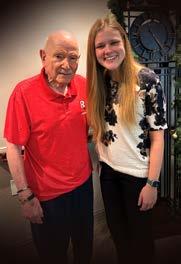
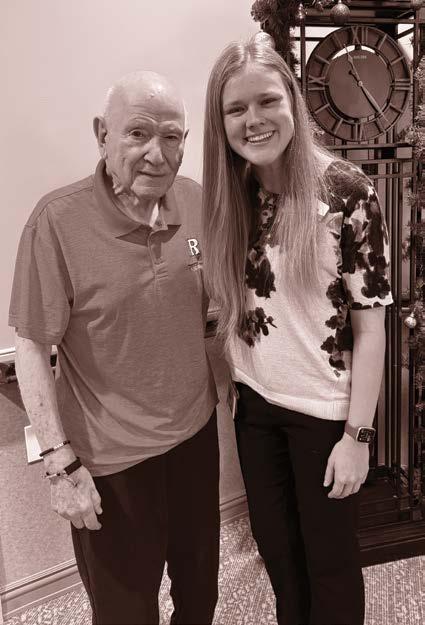
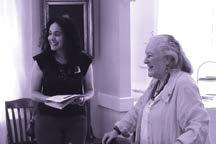
t a Central New Jersey senior center, an unexpected friendship and extraordinary bond have formed between two social workers whose careers began generations apart. One is just entering the field with hope and determination; the other, now a resident of the senior center, spent 65 years shaping it with grit, compassion, and an unwavering belief in humanity. Linking their stories is Rutgers School of Social Work and a shared understanding of what it truly means to care for others.
Nicole Goitiandia, SSW’22 entered Rutgers School of Social Work’s MSW program during the chaos and uncertainty of the pandemic, unsure of where she belonged. But then she discovered the Aging and Health Certificate Program and immediately felt something click. Nicole’s practicum assignment brought all her classroom learning into vivid reality. “I was placed in a senior center, and I had the best experience. I had an incredible supervisor and worked with Dr. Lauren Snedeker, Director of the Aging and Health Certificate Program, and knew working in aging was what I wanted to do for the rest of my life.”
When the senior center offered her a position at the end of her placement, she didn’t hesitate. And that’s where she met Lewis “Lew” Schwartz, SSW’60.
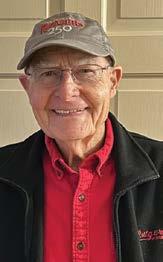
A fellow graduate of Rutgers School of Social Work, Lew, who is 90, made an immediate impression on 27-year-old Nicole. One of the first things Lew told her left a lasting imprint: “Protect your integrity. You can’t get it back once you lose it.” Nicole took those words to heart. “I will never forget them,” she says. “I think about them often, and they’ve set the foundation for where I am now.”
Lew spent nearly seven decades serving others—helping veterans, supporting families, building community programs, and volunteering wherever he was needed. “I made two good choices in my life: my spouse and my career,” he says. “I didn’t get paid a hell of a lot. But I remember being in a shop one day when a woman came up to me and said, ‘Mr. Schwartz, thank you for helping my son,’” he recalls tearfully. Moments like these remind Lew just why he chose the social work profession.
Their conversations meander across decades. Nicole shares the challenges she sees today: families struggling to access services, the weight of political polarization, the gaps in the healthcare system. Lew nods knowingly. They’ve seen the same problems and fought the same fights. It shows just how important the work is.
“We’ve become a narcissistic society,” Lew says. “People need to care about the bigger picture. Social workers need to be in the room where decisions are made. That’s where the greatest good happens.” Nicole admires how passionately he speaks about political involvement. “He reminds me that social work is about being part of something bigger,” she says.
Lew enjoys the camaraderie he has with a fellow social worker. “Social workers are competent,” he says. “They help direct me. I know they’re there for me if I need them.”
Their relationship is the kind that can’t be manufactured. It grows quietly through shared stories, tough conversations, and moments of simple presence. “Lew is my social work guide,” Nicole says. “He has lots of stories, which is great because I like to hear them and he likes to tell them.”
The Aging and Health Certificate Program didn’t just teach Nicole about gerontology—it taught her how to foster relationships like the one she has with Lew. Nicole often reflects on how unusual but deeply meaningful it is to have such a connection with someone so committed to their shared profession. “His love and care for people never waned,” she says. “I’m 27 and just starting my career, and I meet Lew who is 90. We’re able to talk about our profession and relate to each other so deeply. It’s a nice feeling.”
Nicole and Lew’s chance connection, strengthened by hours of conversation and sustained by mutual admiration, represents a special kind of social work education. It is knowledge passed down through generations. It is an elder guiding a newcomer, and a newcomer giving an elder renewed purpose.
In the quiet corners of the senior center, Nicole and Lew’s bond continues to grow. And because of Rutgers School of Social Work, lessons from the field continue to be shared, carried tenderly from one generation to the next. n
Beyond Theory: Social Work Students Learn to Evaluate and Improve Programs Through Applied Research
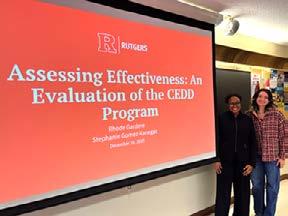
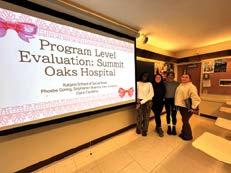
n December 18, 2025, students in the Master of Social Work (MSW) course “Evaluation of Social Work Practice and Programs” wrapped up the fall semester by presenting the results of their program evaluation projects that bridged research, theory, and practice. The final presentations showcased students’ ability to apply quantitative and qualitative research methods to real-world social work settings, demonstrating skills that are essential for ethical, evidence-informed practice.
OThe course, which is taught by Assistant Professor Woojin Jung, is designed to prepare students to systematically evaluate social work practice at the micro level and programs, organizations, and policies at the macro level. Building on prior research coursework, students learn how to move beyond theory and into application, designing evaluations, collecting and analyzing data, and communicating findings to diverse stakeholders.
A central goal of the class is to prepare students to step confidently into three research roles: evaluator of practice, evaluator of programs, and producer of research. Throughout the semester, students engaged in the full evaluation process while grounding their work in ethics, cultural responsiveness, human rights, and social justice.
“The course was one of the most rewarding educational ventures I have endured,” said student Jessie Gage. “While the course often pushed me outside of my comfort zone, it also taught me more than any other in my educational journey.” Gage emphasized that the class rewards meaningful engagement, noting that students who choose growth over ease “will likely learn more than they ever thought possible.”
Final projects reflected the course’s emphasis on real-world impact. Many students used their practicum placements as sites for evaluation, allowing them to assess interventions and programs they were actively involved in. These projects required students to critically evaluate practice, select appropriate evaluation methods, analyze findings, and clearly communicate results.
The presentations included:
Summit Oaks Hospital (Inpatient Psychiatric Program): Claire M. Ciardiello, Stephanie D. Fajardo, Phoebe Goring, and Kate G. Linnehan
Comprehensive Eviction Defense and Diversion (CEDD): Rhode-Taina G. Gardere and Stephanie Gomez-Vanegas Intimate Partner Violence (IPV) Legal Assistance: Jessie H. Gage, Max Hogan Montalvo, Naomi D. Hunt, and Jayda L. Sharp
Mountainview Behavioral Hospital: Julia C. Cofrancesco, Madelyn A. Kopec, Daniel E. Lundner, and Joshua Rothberg RWJ Trinitas Trauma-Informed Outpatient Behavioral Health Program: Michael Vascimini
Snyder House: Sarah M. Adler, Jada M. Kennedy, Valerie Sems, Jake M. Skurchak, and Taylor C. Stevens
Substance Abuse Program: Sam Cruz and Nunzio A. Frisina USCRI’s Services to Girls in Refugee Camps in Kenya: Melody Eric Bell-Gam
For Taylor Stevens, the final project offered a chance to apply evaluation skills directly within their practicum at the Department of Veterans Affairs (VA). “Using my practicum assignment with the VA as an opportunity to collect and analyze data regarding the veterans I interact with was exciting,” Stevens shared. Stevens’s project examined outcomes from the Snyder House Mental Health Residential Rehabilitation Treatment Program, revealing “an overwhelming consensus that veterans who complete the program move on with a more positive view of themselves.” The evaluation also identified opportunities to strengthen ongoing data collection for more comprehensive program assessment.
“I loved Dr. Jung’s class,” Sarah Adler added. “She was always super supportive and took the time to go around and make sure we all individually understood the material.”
Across presentations, students demonstrated growing competence in translating complex data into meaningful insights for clients, agencies, and communities. The final session highlighted not only students’ technical skills, but also their ability to approach evaluation as a tool for accountability, learning, and social change.
As the semester concluded, the December 18 presentations underscored the course’s core message: evaluation is not just about numbers or reports. It is about improving practice, strengthening programs, and advancing equity in social work. n
EMPOWERING EVERY VOICE:
H OW RUTGERS SCHOOL OF SOCIAL WORK ALUMNA CÉLINE FORTIN IS SHAPING THE FUTURE OF DISABILITY ADVOCACY
By LAURIE ZAZENSKI Communications Director at Rutgers School of Social Work
hen Céline Fortin, SSW’91 arrived at The Arc of New Jersey as a Rutgers School of Social Work intern in 1990, she couldn’t have imagined the experience would define the course of her professional life. Today, more than three decades later, Fortin serves as executive director of the organization—the state’s leading advocacy and service provider for individuals with intellectual and developmental disabilities (IDD) and their families. Her journey serves as a powerful example of how a foundation in social work education and mentorship from experienced leaders can ignite enduring impact in the field.
WFortin’s early career began after she earned a BA in art therapy and psychology. She worked in direct care settings, including a partial care program for individuals with mental health and developmental disabilities, and she also served as a live-in in a residential program. “Those early experiences were rewarding but also showed me that I wanted to help improve the systems that support people with disabilities,” she recalls. “I wanted to make change on a broader level.” That realization led her to social work. “Growing up, I always knew I wanted a career that made a difference,” she says. “Social work offered the foundation I needed to create lasting change in people’s lives.”
Choosing Rutgers’ Master of Social Work (MSW) Program was an easy decision. “Several of my mentors and peers were Rutgers School of Social Work graduates and spoke so highly of the program,” Fortin says. “What really sold me was the dedicated tracks in developmental disabilities and in administration, policy, and practice. It was the perfect fit for the kind of advocacy work I wanted to do.”
Her MSW practicum placement at The Arc of New Jersey turned out to be transformative. After what she describes as an excellent experience, she was offered a full-time position upon graduation in 1991, and she never left.
Over the next three decades, Fortin rose through the ranks of the organization, serving in several leadership roles, including associate executive director for 26 years. When The Arc’s longtime executive director retired earlier this year, Fortin was chosen to lead the organization into its next chapter. “I’ve really grown up professionally at The Arc,” she reflects. “It’s where I found my voice as an advocate and where I’ve been able to make a difference for people with disabilities and their families.”
As executive director, Fortin now oversees a statewide network of local chapters that provide advocacy, information, and direct services across every county in New Jersey. Her role involves collaborating with legislators, state administrators, community partners, and corporations, as well as directly engaging with individuals with IDD and their families.
“Our goal is to make sure people with disabilities have access to the supports they
need and that their voices are heard and respected,” she explains. “We also want to ensure that decision-makers understand who people with disabilities are and what they need to live meaningful lives in their communities.”
Leading a statewide organization can be demanding, but Fortin has learned to find balance. “It can be hard to ‘turn it off’ when you work in a caring field,” she admits. “One of my mentors told me, ‘You can’t help others if you don’t take care of yourself,’ and I’ve really taken that to heart.” She makes intentional time for family and friends and even turns to baking, particularly croissants, as her form of stress relief.
Fortin’s journey also shaped how she views mentorship and the future of the profession. “I went from being an intern at The Arc to leading the organization, and that happened because my supervisors believed in me and invested in my growth,” she says. “Now, I make it a priority to bring in MSW students every year. Right now, we have two Rutgers students who are doing amazing work and learning what it means to run a program and an agency.”
She believes that investing in emerging social workers is key to strengthening the profession. “These students are not just serving clients; they’re becoming strong, effective advocates who will drive systems change in the future,” she says proudly.
Reflecting on her career and the foundation that made it possible, Fortin says Rutgers School of Social Work continues to hold a special place in her story. “Social work gives us the tools to improve lives and strengthen communities,” she says. “Rutgers gave me the foundation and the confidence to do that. I’m proud to carry those values forward and help others find their voice along the way.” n
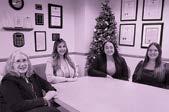
Céline Fortin, (SSW’91), Executive Director of The Arc of New Jersey, with the staff of The Arc’s Criminal Justice Advocacy Program including Director Robyn Holt, (SSW’25) and Case Coordinators Hannah Noel, (SSW’25) and Karlee Salus (SSW’26). All four completed their practicum placements at The Arc of New Jersey.
RESEARCH DRIVING CHANGE
Stories by GREG BRUNO
F ROM CLASSROOMS TO COMMUNITIES: AT RUTGERS SCHOOL OF SOCIAL WORK
hat shapes a child’s ability to thrive in school? Why do some teens fall through the cracks when warning signs of violence are clear? How can technology help us respond more fairly and effectively to poverty in times of crisis? And which young people grow up most likely to show up for others in moments of need?
Rutgers School of Social Work faculty are digging into these urgent questions, and many others, with research that advances scholarship and drives meaningful change in the lives of individuals, families, and communities. Read on for highlights of stories published in Rutgers Today that represent just some of the breadth and depth of our research.
Researchers Assess the Gender and Wealth Gap Within School Climate
Researchers have long known that when children feel supported by their teachers and peers, it is easier for them to develop skills to succeed in school and beyond.
But a new Rutgers study has found that the effects of positive support in the classroom are far from universal, and often, it’s Black boys from poorer neighborhoods who benefit the least.
“Boys perceive a positive school climate but don’t seem to benefit from it in the way girls do,” said Adrian Gale, an assistant professor in the Rutgers School of Social Work and the lead author of the study, published in the journal Developmental Psychology.
“If we can understand the mechanisms that drive this difference, then perhaps we can help boys attain better outcomes later in life,” Gale said.
Hit and Run Puts Spotlight on Stalking and Teen Dating Violence. Here’s How Schools Can Help. When two 17-year-old girls were killed by a male acquaintance in Cranford, New Jersey, in late September, most residents responded with shock.
Sarah McMahon, an expert in violence prevention at the Rutgers School of Social Work, saw something else: a reminder of an all-too-familiar pattern that is traumatizing many American teenagers.
“As a resident of Cranford and someone who’s raised kids in this town, it’s extremely painful to know this happened and that the alleged perpetrator was accused of engaging in stalking behavior before his actions,” McMahon said. “Sadly, it’s something we’ve seen for some time and solutions are urgently needed.”
Teen dating violence, which can include stalking and related behaviors such as harassment between current or former partners, is a national emergency. In a 2021 U.S. government survey among high school students who reported dating in the past 12 months, about 1 in 12 experienced physical dating violence and roughly one in 10 experienced sexual dating violence. The actual figures are likely even higher, McMahon notes.
Algorithm-Based Strategy Shows Promise in Reducing Urban Poverty
When the COVID-19 pandemic hit, aid organizations worldwide struggled to identify vulnerable households quickly and fairly. Many people who needed help were left behind.
Woojin Jung, an assistant professor at the Rutgers School of Social Work, said she has found a better strategy. Her team has developed a method that blends sociodemographic data and household surveys with community perceptions and satellite imagery to predict urban poverty – and to put people at the center of aid targeting.
“Existing approaches don’t always work during shocks or rapid changes,” Jung said. “We wanted to find a way to identify vulnerable households at speed and scale in urban settings.”
The findings are published in the journal Sustainable Cities and Society.
Who Shows Up in Times of Need? High School Extracurriculars Offer Clues
Are nerds the caring ones?
High school stereotypes suggest that athletes score more popularity points than marching band members, debaters or leaders in the student council, but research from Rutgers finds that so-called “geeky” activities may do more to cultivate compassion in the long run.
“By their very nature, sports encourage competition and division, pitting people against each other,” said Chien-Chung Huang, a professor at the Rutgers School of Social Work and lead author of the study published in Youth & Society. “There are other afterschool activities that do a far better job nurturing altruism.”
Extracurriculars have long been linked to higher grades, self-esteem and personal growth. Less understood is whether they foster generosity later in life, particularly during crises. n
Read the full stories online at socialwork.rutgers.edu/news.
SCARLET ROOTS, NATIONAL REACH: ALUMNI GATHERINGS 2025
In 2025, Rutgers School of Social Work alumni gathered on both coasts to celebrate connection, community, and a shared commitment to social justice, demonstrating that while our alumni network spans the country, Scarlet pride remains a powerful unifying force.
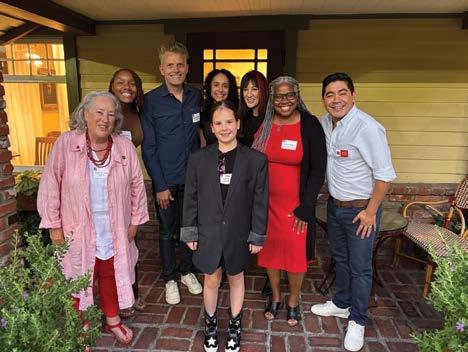
Building Community on the West Coast On July 11, 2025, the School held its first-ever West Coast alumni networking event at the Alcove Private Cottage in Los Angeles. The summertime gathering brought together Rutgers School of Social Work alumni living across the West Coast for an evening of reconnection and relationship-building.
Hosted by Alumni Council Member Susan Van Vleet and Alumni Council President Dr. Tawanda Hubbard, and with support from the Rutgers University Foundation, the inaugural event marked an exciting step in expanding the School’s alumni engagement beyond New Jersey. Against the backdrop of a warm California evening, alumni shared stories of their time “on the Banks” and explored new professional connections rooted in a shared educational foundation.
“It was an honor to be part of the inaugural West Coast alumni gathering last summer,” said Dr. Hubbard, who also serves as an Associate Professor of Professional Practice at the School of Social Work. “Alumni reconnected with their Jersey roots—sharing classroom memories, influential professors, and meaningful networking—while many expressed how safe and affirmed they felt in community with their fellow alumni. Our Jersey roots run deep, and our reach is wide, and we look forward to continuing to build and strengthen our West Coast alumni network.”
The evening underscored the strength and vibrancy of Rutgers School of Social Work’s national alumni community and signaled that this West Coast gathering is just the beginning.
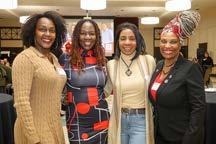
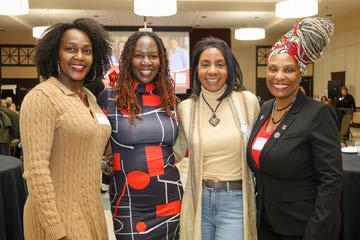
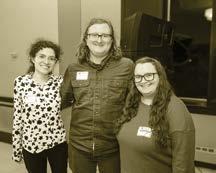
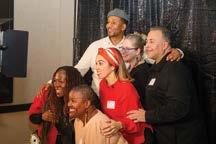
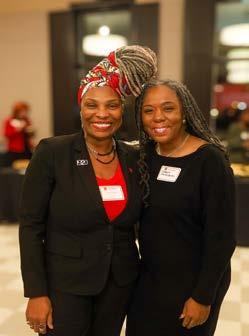
A Cherished Tradition: The Annual Winter Alumni Reception Back in New Brunswick, alumni came together once again on December 4, 2025 for one of the most well-attended Annual Winter Alumni Receptions in recent history. Hosted by the Rutgers School of Social Work and Alumni Council, the reception continues to be one of the School’s most anticipated traditions, offering alumni the opportunity to reconnect with peers and faculty, meet new alumni, celebrate their achievements, and hear updates from School leadership.
Dean and Distinguished Professor George Leibowitz addressed attendees, sharing reflections on the School’s continued growth and its enduring commitment to advancing social work practice and social justice. Alumni Council member Shelby Somers later introduced Practicum Learning Executive Director Mark Lamar and Senior Program Coordinator Sherie Augustin, who shared updates from their office and encouraged alumni to serve as practicum supervisors nationally. CONTINUED ON PAGE 22
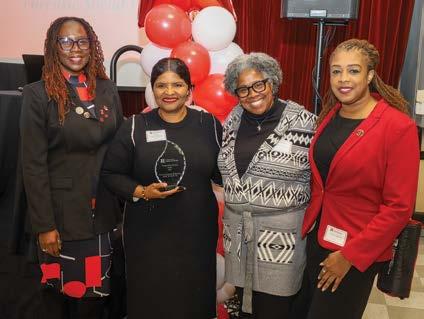
A highlight of the evening was the presentation of the Outstanding Alumni Award, which honors leaders in social work and social justice. This year’s recipient, Pamela Grayson-Baltimore, BSW’87, MSW’92, was recognized for her exceptional leadership and lasting contributions to the field. The award was presented by Alumni Council Vice President Tiffany L. Mayers and Alumni Council member Daveen L. Mann.
“Our Annual Winter Alumni Reception is a gathering that, year after year, feels like coming home—a space that rekindles cherished memories, a sense of belonging, and Scarlet pride while reconnecting us to our alma mater and one another,” said Dr. Hubbard. “Our 2025 AWAR did not disappoint, with record attendance, meaningful networking, and exciting updates from the School of Social Work. The Alumni Council looks forward to seeing you at our 2026 AWAR this fall—come out and join us!”
Staying Connected
From Los Angeles to New Brunswick, 2025 demonstrated the power of the Rutgers School of Social Work alumni network, rooted in shared purpose, strengthened by meaningful connection, and united by a commitment to advancing equity and justice in communities everywhere.
To learn more about upcoming alumni events, visit socialwork.rutgers.edu and follow the School @RutgersSSW on social media. Alumni are also encouraged to update their contact information at rutgersfoundation.org/connect/update-your-info to ensure they receive the latest news and invitations. n
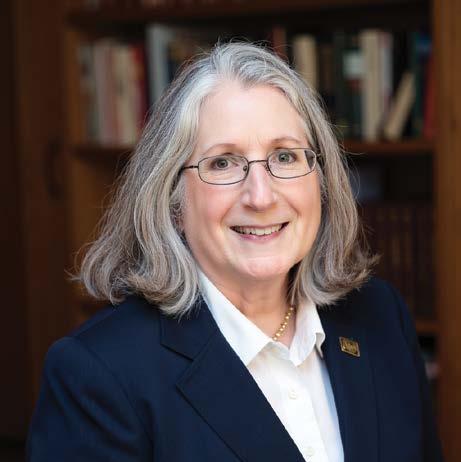
Announcing Dean Cathryn C. Potter’s Retirement
Ater serving Rutgers School of Social Work for more than a decade, Cathryn C. Potter, Ph.D. is retiring. Since her appointment as Dean and Distinguished Professor in 2013, Dr. Potter has provided exemplary leadership that has strengthened the School’s academic reputation, expanded its research enterprise, and significantly enhanced its national standing.
Under her leadership, RUSSW advanced from 26th to 16th, and then, soon after her tenure as dean to 12th and among the top 3 in the Big Ten, in the U.S. News & World Report national rankings. During her time as dean, Dr. Potter focused on hiring high-impact scholars and seasoned practitioners whose work has broadened the School’s local, national, and global influence. Dean Potter also oversaw a significant expansion of the School’s research portfolio to more than $60 million, supporting work in prevention science, aging, violence prevention, substance and behavioral addictions, behavioral health, poverty, social policy, and social determinants of health.
One of the hallmarks of her tenure was the development and implementation of the School’s ambitious five-year strategic plan, Toward a More Just Future. Developed through extensive consultation with students, faculty, staff, alumni, and community partners, the plan established six priority areas grounded in justice, equity, and innovation. Dr. Potter also reshaped the School’s physical presence. Through the One Square Block initiative, she led the successful consolidation of previously dispersed facilities into a cohesive footprint in downtown New Brunswick. This strategic effort enhanced accessibility, strengthened community engagement, and laid the groundwork for future academic expansion and a long-term capital plan for the school. In addition, she led the school through the COVID pandemic, providing steady and empathic leadership.
Prior to joining Rutgers, Dr. Potter served as executive director of the Butler Institute for Families and professor in the Graduate School of Social Work, and associate provost for research at the University of Denver. During her two decades there, Dr. Potter led the Butler Institute’s growth from a small training project into a large, diverse technical assistance and research group with a strong national reputation in child welfare.
Rutgers School of Social Work extends its profound appreciation to Dr. Potter for her visionary leadership, unwavering commitment to social justice, and tireless service to the University and the profession of social work. n
If you would like to make a gift in honor of Dean Potter, please consider contributing to the Potter Family Endowed Fund by visiting rutgersfoundation.org/potterfamilyendowedfund.
the school of social
work goes global
FAMILY AND INDIVIDUAL WELL-BEING. SOCIAL JUSTICE. COMMUNITY EMPOWERMENT. These are just some of the ideals that underpin the practice of social work. They are, by definition, rooted in place and community, and supported largely on a local, grassroots scale. But new programs and initiatives at the School of Social Work are challenging the idea that the profession’s future is limited to local impact. From Delhi to Guangzhou, from Taipei to Cape Town, the School of Social Work is forging partnerships, sending students abroad, presenting research on international stages, and asking a fundamental question: what does it mean for social work to be a truly global profession?
The answer, according to Dean George Leibowitz, requires both vision and action. “Social work has always been on the front line of community engagement, dealing with communities that face a variety of social issues,” he says. “We’ve always been involved in dealing with these things—only now, we’re upping the ante.” That means building on the success of existing student travel programs to create what the dean calls “robust partnerships around the world that feed into strategic priorities around research, faculty, and student exchanges.” During this sweeping moment of global expansion, one thing’s for certain: at the
School of Social Work, the solutions to our greatest challenges know no borders.
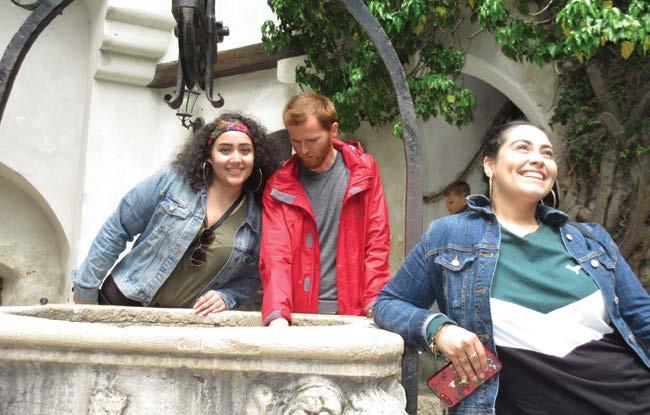
Study Abroad: Still a Priority Study abroad opportunities remain at the forefront of the school’s established global programming, and students can choose from a robust portfolio of facultyled experiences in Taiwan, Romania, Mexico, Puerto Rico, and beyond.
The programs are deliberately varied. Students in the Taiwan program explore the intersection of meditation and social work over two weeks in May.
Those who travel to Romania’s Transylvania region earn practicum hours working alongside local social service organizations. The winter program in Mexico’s Yucatán focuses on diverse research practices as well as community empowerment. A spring break program in Puerto Rico explores the child welfare system and nonprofit sectors. Along the way, students navigate language barriers, learn community systems, and, almost universally, fall in love with a place they may never have considered visiting before.
The value of these experiences runs deeper than a line on a résumé. “It broadens their perspective on what’s ‘normal’ and what works and doesn’t work,’” explains Associate Professor of Professional Practice and Office of Global Social Work Programs Director Rebecca Davis. “I watch them start out being kind of tentative and then, by the next week, they’re out going to the market on their own. Being away from home and being in disorienting situations builds confidence. You begin to reach out, learn new patterns, and challenge your routine. You’re put into a situation where everything is unfamiliar, and that’s where a lot of growth happens.”
The school is now working to expand its reach. Specifically, Davis is hoping to launch student exchange programs and integrate more global perspectives into existing curriculum. A seed grant from Rutgers Global is supporting the development of a new program in Liberia, and the school is exploring additional opportunities in Ghana and Paris. There are also plans to revive a beloved India program and to one day bring back programming in Israel, which was paused in 2023.
Building Partnerships and Thinking Long-term
Last fall, Leibowitz led a School of Social Work delegation to India as part of a broader university initiative that also included the School of Engineering and Rutgers Business School–Newark and New Brunswick. Over 13 days, the delegation visited 13 universities as well as non-governmental organizations (NGOs) and federal agencies in Delhi, Mumbai, and Kolkata—covering, as the dean puts it, “a tremendous amount of ground.”
The trip was a homecoming of sorts for Leibowitz, who has a longstanding relationship with the Tata Institute of Social Sciences (TISS), one of India’s most prestigious institutions for social science education and research. Plans are now in place to formalize that
relationship with a Memorandum of Understanding (MOU). The delegation also met with faculty and leadership at Lady Shri Ram College for Women in Delhi, SNDT Women’s University, and a host of research and technical institutions.
Beyond universities, the delegation engaged with leading NGOs, including Goonj (which redirects unused material from urban areas to rural villages across India) and Durbar (which addresses the health needs of marginalized communities). “We’re trying to fill unmet needs in concert with local governments, since you often hear on the ground that it’s hard to make change with just government involvement only,” Leibowitz says, adding that these connections may open opportunities for field-based learning and research collaboration.
The Indian Council for Cultural Relations (ICCR) and Rutgers also signed an MOU with the Indian Consulate in New York to bring a scholar from India to the School of Social Work—a bidirectional arrangement that reflects the spirit of genuine exchange rather than one-directional knowledge transfer. “This is not the old model of going somewhere, doing research, and leaving, with the people on the ground having no access to the findings,” Leibowitz emphasizes. “Our aim is to provide those feedback loops and scaffolding.”
Associate Dean for Research Lia Nower, who was part of the delegation, says India represents an especially compelling opportunity. “It’s a ripe area for student and faculty exchange, faculty master classes, and research projects,” she says. “There’s available funding for research internationally and there are partnerships to be had there.” She notes that the school’s approach runs on three parallel tracks: forging its own relationships in highopportunity countries, prioritizing the Chancellor’s targeted focal points like England and Ireland, and expanding existing student exchange relationships to include faculty research collaboration.
Research on the International Stage
The school’s global presence is also building through scholarship. In December 2025, Rutgers co-hosted the International Symposium on Children and Youth Health and Well-Being in Guangzhou, China, alongside Guangdong University of Foreign Studies and the University of Saint Joseph. More than 100 scholars and students from around the world gathered for two days of presentations, with Rutgers faculty— including Associate Dean Chien-Chung Huang, and faculty members
Laura Cuesta, Rebecca Davis, Katherine Marcal, Cassandra Simmel, and Abigail Williams-Butler— presenting across a range of topics. To open the conference, Leibowitz delivered a keynote on using human-centered artificial intelligence to address adolescent mental health challenges and substance use.
Just weeks later, Rutgers cohosted the 2025 International Conference on Integrated Health and Social Work at National Taiwan University, bringing together more than 20 scholars from 12 universities across South Korea, Vietnam, Macau, the United States, and Taiwan. Rutgers faculty and students presented their research, which is compiled in a forthcoming special issue on integrated health and social work in Taiwan’s top-ranked social work journal, the NTU Social Work Review, due out in June 2026.
For Huang, who has been leading the school’s Taiwan study abroad program since 2023 and has brought more than 100 students through Asia since 2011, events like these represent something larger than academic conferences. “These two conferences are a showcase of Rutgers’ commitment to global education,” he says. “Rutgers has become a global hub for social work and interventions, and I hope it will only grow in that regard in the future.”
New Frontiers
In February 2026, Assistant Professor Durrell Washington traveled to South Africa for a weeklong experience. Led by the organization Liberation for Us, social workers, clinicians, community-based researchers, activists, artists, and educators presented to young people at Camp of Good Hope—a program serving at-risk youth—
on youth advocacy, global liberation movements, and abolitionist approaches to social change. Washington, whose research focuses on incarceration and family support, was particularly moved by a visit to Robben Island, the prison where Nelson Mandela was held and where tours are still guided by former political prisoners. He is now developing plans for a qualitative oral history project and hopes to launch the program in South Africa within the next few years.
Meanwhile, Associate Professor Felix Muchomba will be visiting Tokyo on a two-week research trip this summer studying Japan’s landmark gender pay gap disclosure reforms—policy changes that require large and medium-sized companies to publicly report their gender pay data annually. For Muchomba, whose research examines how the gender pay gap shapes family life, Japan’s “super-aged” society offers a rare window into how workplace policy change ripples into household dynamics and caregiving responsibilities. “Social work has an important role to play,” he says, “not just in clinical practice or direct service, but in shaping the structural conditions that make families thrive.”
Thinking Globally
Underlying all of this activity is a shared conviction among faculty and leadership at the School of Social Work: global engagement is not an add-on to the school’s mission, but rather, it is central to it. Davis puts it simply: “We’re not so different. We all share the same problems. Gender-based violence, poverty, infectious diseases, child welfare—every country in the world deals with these in different ways. We can learn from each other.”
That philosophy has practical implications, too. As Nower notes, federal and state funding for social work research has tightened significantly in recent years. Expanding internationally opens the door to new sources of funding and new research partners. It also places Rutgers faculty in dialogue with scholars who bring different frameworks, methods, and solutions to the same stubborn human problems.
What has happened so far, Leibowitz makes clear, is only the beginning. “Global initiatives are one of our main priorities,” he says. “Now the question is, how do we build opportunities so that faculty who want to do community-engaged work will have an infrastructure in place to enable that mutual connection?” n
CLASSNOTES
Thank you to all of our alumni who have sent us their news and updates. We encourage you to keep us posted with any good news about your job, your life, or your family. Email your news to lzazenski@ssw.rutgers.edu.
Peter Bridge MSW, LCSW, D.Min, SSW’76 is enjoying spending more time, during retirement, with his wife of 48 years, Jane, their four children and their families, and eight grandchildren. His cherished years on the banks of the Old Raritan are never forgotten. Peter’s dual career as a licensed clinical social worker and ordained Episcopal priest was rich, fulfilling, and very busy. Rutgers School of Social Work was inspiring and formative in each of those roles. Rutgers taught, modeled, and embodied values which he cherishes to this day. Peter was greatly honored to be invited to preach at the interfaith service for Rutgers’ 250th anniversary. On that occasion, he highlighted some of the “Scarlet values” of human solidarity, love, and justice for all.
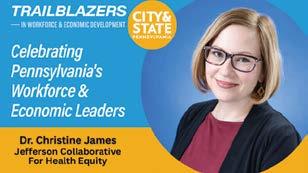
Christine James SSW’03, ’22 received the Trailblazer in Economic & Workforce Development award from City & State Pennsylvania for her work directing a training and workforce development program for community members to have a pathway into healthcare as certified community health workers. From health education classes and preventive screenings to skills training, Chris advances equity and opportunity at Jefferson’s Community Health Worker Collective, a division of the health system’s Community Health Collaborative. Under her purview is the Community Health Workers Academy, a training and workforce development program, which aims to support job security, economic advancement, housing stability, and other measures of well-being.
Patricia Marie Fantin, SSW’97 served as a direct practice social worker in the field of geriatrics for more than 20 years and now is a caregiver for her father. Although she is no longer practicing social work due to an injury, she is proud to say she incorporated her education at Rutgers School of Social Work into her practice and daily life each day since she graduated.
Reverend Karen E. Herrick, SSW’84 (PhD, LCSW, LMSW, CADC, ACMHP) created a TikTok account, @karen.herrick7, and YouTube channel, @KarenHerrickLive, where she discusses the 2023 American Psychological Association book, Death as an Altered State of Consciousness: A Scientific Approach. Dr. Herrick emphasizes how knowing about life after death helps people in chronic grief realize that their loved one is still “there” and that love never dies. Dr. Herrick teaches webinars to other therapists and wanted to increase the word of this knowledge to the everyday person.
This year, Marina Livis, SSW’12 launched her virtual private practice specializing in trauma therapy for late-diagnosed/late–identifying autistic adults. Marina was late diagnosed with ASD Level I five years after graduating from the School of Social Work. At the time, she had difficulty finding a neurodivergent therapist and felt it would
be helpful for others like her to have a therapist who has lived experience. Learn more about Marina and her practice at marinawellness.com.
Marla Meyers (Wallerstein), SSW’91 recently began in the role of vice president of advancement at Woods System of Care. She will also continue in her role as executive director of the Legacy Treatment Services Foundation.
George Pfirrmann, SSW’79 served as a social worker until June 2023. He began writing plays over 20 years ago while he was working. His newest play, Alexsei’s Quest, is a musical inspired by the life of the Russian dissident Alexsei Navalny. Alexsei’s Quest is looking to find a home in London or New York and had its first reading at the Manhattan Theatre Club Studios in November 2024. In May 2025, it was performed in Create Theatre’s New Works Festival where it was universally praised. In October 2025, a cabaret performance, including many of the songs from the show, was held at Don’t Tell Mama’s in New York City and was given a glowing review. For more information about Alexsei’s Quest, visit alexseisquestthemusical. com, and for more on George, visit georgepfirrmannplaywright.net.
Juan Rios SSW’07, ’15 was selected as a Robert Wood Johnson Foundation Health Policy Fellow at the National Academy of Medicine for 2025–2026 and will be placed in a U.S. Senate office as a Senior Health Policy Fellow. In this role, Juan will focus on youth mental health, community-based behavioral health systems, and the ethical integration of emerging technologies in health and social care. As a proud Rutgers School of Social Work alum, he is honored to bring a social work lens to federal policymaking and to represent his community in this national arena.
David Stein, SSW’93 passed away in 2025. David received his undergraduate degree in social work from Temple University in 1980 and then moved to Israel after graduation. While he was able to work a bit in a local low-income community, the strictures of kibbutz life didn’t allow him to spend much time doing this work. While he enjoyed working in orchards and chicken houses, to continue working in his chosen field, David returned to the U.S. in 1990, working more than full time while getting his MSW from Rutgers in Camden. His initial work was in geriatrics, including a position at the Philadelphia Corporation for Aging, and he briefly worked as a hospital discharge social worker. David spent the last 20 years of his career at an insurance company, working to get Medicaid recipients the care they needed. One of the assignments he enjoyed most was with the Camden Coalition, trying to get patients ongoing care rather than emergency room interventions. He retired in April 2024. Starting several years before he retired, and more so after, he was a very active volunteer with the Friends of the
Shelley Watkins-Taylor, SSW’06 has been working in several spaces since graduating from Rutgers, including nonprofit startups, drug rehabilitation and research centers, psychoeducation for detox and re-entry programs, schools and community engagement programs, and grief and trauma support spaces. She has also served juvenile sex offenders and families in crisis. Shelley is currently a writing studies professor at Montclair State University. Outside of teaching, her business, MERKABA MTS, supports individuals with cognitive impairment and minor mental health challenges. MERKABA MTS and Irvington Public Library are the sponsors of Say More Poetic Society’s monthly on-site community open mic that is focused on mental wellness, inclusive practice, aging seniors, and underserved populations. The group performs once a year at the Irvington Public Library during Black History Month and recently expanded to the Creating Healthy Communities Convening at New Jersey Performing Arts Center. The Society’s newsletter, The Black Space Ship, is seeking spoken-word artists, performers, and writers to submit pieces around culture and sponsors to help fund some local activities. Submissions should be emailed to saymorepoeticsociety@gmail.com.
Wissahickon in Philadelphia, serving as a trail ambassador and working on ecological restoration projects. David also led regular hikes there and elsewhere with the Appalachian Trail Club and Batona Hiking Club. He also religiously attended weekly ultimate frisbee games. David met his wife, Robin, in 2017, and they married in 2022. David loved traveling the world.
Susan Van Vleet, SSW’75 will present “Social Workers Make Great Business Owners” at the 2026 NASW National Conference, Beyond the Breaking Point:
Connection Through Purpose and Power. Van Vleet, a member of the School of Social Work Alumni Council, is the president of Susan Van Vleet Consultants® Inc. and V Squared Consulting. She has created and led training programs with multinational companies in 19 countries spanning four continents. Her company has 30+ copyrighted courses and two trademarks. n
IN MEMORIAM
We extend our deepest sympathy to the loved ones of the deceased alumni and friends listed below whose passing has been shared with the School through January 2026.
Miss Barbara Herochik, SSW’75
Mr. Horace Towle, SSW’64
Ms. Cristina Ramis-Diaz, SSW’74
Ms. Karen Ahern, SSW’91
Ms. Mary Sweeney, SSW’67
Ms. Nathalie Gaudier, SSW’08
Ms. Raquel Farber-Vazquez, SSW’84
Mrs. Patricia Kastner, SSW’03
Ms. Annmarie Agosta, SSW’00
Ms. Robin Oliver, SSW’96
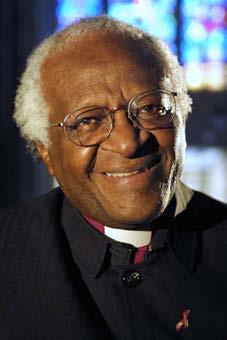
“My humanity is bound up in yours, for we can only be human together.”
DESMOND TUTU
Rutgers, The State University of New Jersey
120 Albany Street, Tower One, Suite 200
New Brunswick, NJ 08901
Visit us on the web: socialwork.rutgers.edu
Email us at: lzazenski@ssw.rutgers.edu
Follow us on Facebook, X, Instagram, LinkedIn, and YouTube @RutgersSSW
Permit No. 157
“Never, never be afraid to do what’s right, especially if the well-being of a person or animal is at stake. Society’s punishments are small compared to the wounds that we inflict on our soul when we look the other way.”