The Argo

The Music Man - Rutgers Prep’s Latest Musical
Cats was the first to go. Next was Mary Poppins. All the others met the same fate. Most names were eventually taken down, left to gather dust for yet another year. Only one name would prevail. And that name would remain a secret until one momentous Wednesday afternoon.
Students crowded into the Choir Room, eager to hear the news they had been waiting for since the school year began. The room buzzed with speculation. “Do you think it’ll be Anastasia?” “No, it’s definitely gonna be School of Rock.” “I think it’s Beauty and the Beast!” And it wasn’t long before their questions were answered. Everyone held their breath as Ms. Espinoza delivered the news that Rutgers Prep’s latest musical would be The Music Man

Jurnee Caldwell ‘26 and Siddharth Ghosh ‘29
While this musical is legendary in its own right, it’s completely understandable if you’ve never heard of it before. But just because it isn’t Wicked doesn’t mean that it isn’t a good show. To catch you up to speed, the basis of the 1957 Broadway hit, The Music Man, is this:
A traveling conman named Harold Hill goes to River City, Iowa. He plots to make some quick money by selling band uniforms and instruments to the locals who are interested in participating in his band. But unbeknownst to the townspeople, there is no band. Harold’s grand scheme is to skip town with their money. However, Marian, River City’s local librarian, is able to see through his fake praise and attempts to spread word about his manipulative tactics.
When Harold arrives at River City via train he finds an old friend
of his, Marcellus. While there, Harold notices many citizens entering the River City Billiard Parlor and he soon gets an idea. He quickly gathers a crowd and starts telling the parents of River City that the parlor was promoting gambling to their children. In doing this, Harold plans to exploit the parents' fears that their kids are going to spiral into becoming gambling addicts in order to offer them a simple solution: enroll their kids in his band. His plan works flawlessly — but Marcellus soon signals to Harold that the town’s music teacher, Mari-
an, is coming in, and she is the only one that could ruin his entire plan.
Harold then sees Marian, instantly falling in love and trying to speak with her. However, she ignores him and walks home. Harold later recruits a few other children of River City to his band. Everything goes well for Harold until Marian notices some issues and flaws in his backstory. But when Marian is faced with the opportunity to tell the Mayor about her findings, she must make a difficult decision.
Now, on to one of the most exciting parts of this year’s musical, the cast list! The following students will play these role(s): Buyu Lyu as Tommy Djilas, Zara Nagabhushana as Zaneeta, Lexi Kamvosoulis as Amaryllis, Indra Domanski as Winthrop, Laela Domanski as Mrs. Paroo, Parker Mitchell as Mrs. Shinn, Neil Mistry as Mayor Shinn, Shaunak Bose as Marcellus, Anna Chang as Marian, and lastly, Clement Lacroix as Harold Hill.
If you’re at all interested in this exciting story, make sure to be the first to buy tickets to see it in March.
Beyond the Binary: Uncovering Centuries of Trans Existence
Over the past few decades, society has seen a surge in individuals finding and pursuing the most comfortable and true version of themselves. For many, this includes the expression of genders and sexualities that differ from those assigned at birth. This shift has been accompanied by advancements in the science world, including LGBTQ-centered training in medical fields, safer measures in Hormone Replacement Therapy, and sex-change operations. Something that may be pleasing to these newfound sisters, brothers, and all others across the gender spectrum, is the knowledge that they’re not alone — they have friends that span history, from as early as 1200 BCE in Egypt. This is proof that transgender awareness, acceptance, and portrayal is anything but a new phenomenon.
We’ll begin in the African re-
Shaunak Bose '26
gions, with the Nuba peoples of Sudan. Since the inception of the tribe, culture has featured traditional roles for male-assigned people who dress and live as women, with many marrying men. Many scholars view these roles as early forms of transgender identities. The age, integration, and practice that this ancient civilization sports not only provides a beautiful basis for our tour of ancient trans history, but also shows just how natural transitioning is and has been for centuries.
Moving into Europe, a transgender emperor named Elagabalus once ruled the great nation of Rome. According to historians, Elagabalus not only exhibited great delight in taking on feminine titles such as “queen”, “wife”, and “mistress”, but is now considered one of the first people to have explored sexchange operation measures.
Our final destination brings us back to North America, where Indigenous cultures also recognized genders beyond the female–male binary. Two-Spirit (2S) people, for example, have existed far before the arrival of European settlers on Turtle Island and are one of the oldest instances of transgender influence in Indigenous history. Their community viewed them as being gifted, and it was believed that they carried both male and female spirits with them, giving them their name. This understanding of gender diversity was not only preserved in cultural traditions but also documented visually. An early 1860s painting by George Catlin titled “Dance to the Berdache,” where sac-and-fox warriors are dancing around an “I-coocoo-a” person, a male-bodied individual who lived in the social role usually filled by women in that cul-
ture.
Of course, these three regions aren’t the only places that featured transgender people. The Zapotec people of Oaxaca in Mexico, various Bantu peoples in southern Africa, the Khanith as a gender category in Oman, and other parts of the Arabian peninsula feature rich beliefs and practices revolving around the world outside the binary gender roles assigned at birth. As history continues to unfold, these stories remind us that authenticity has always existed, and that each generation brings us closer to a world where all identities are celebrated, not questioned. From ancient civilizations to modern movements, the journey toward understanding and acceptance is one that connects us all — and it’s far from over.
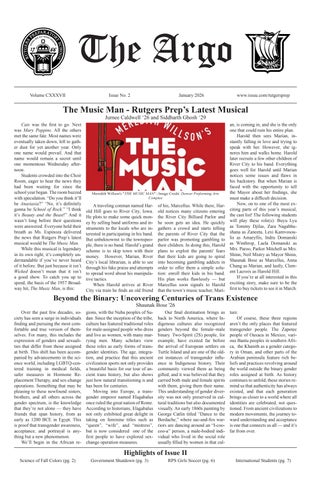
Meredith Willson's "THE MUSIC MAN" | Image Credit: Denver Preforming Arts Complex
Each year, fall brings a burst of color that turns familiar green trees into brilliant displays of red, orange, and gold. The changes are hard to miss while walking around campus. The trees that line the Raritan Canal and the edges of campus shift daily, layering the walkways with crisp leaves and a mix of gold, scarlet, and brown. But this seasonal change is more than decoration; it’s a sign of how trees prepare for winter.
Leaves get their green
The COVID-19 pandemic revolutionized vaccine science. When the coronavirus emerged in 2019, scientists faced a tremendous challenge to create a vaccine quickly enough to stop a rapidly spreading and mutating virus. Currently, traditional vaccine methods such as using weakened or inactivated viruses take years to develop and manufacture. Instead, researchers turned to a newer approach called messenger RNA (mRNA) technology. This newfound technology uses genetic instructions to teach cells how to recognize and fight the virus.
mRNA vaccines, such as those produced by Pfizer-BioNTech and Moderna, deliver a small piece of genetic code which tells the body’s cells to make a harmless spike protein found on the surface of the coronavirus. This spike protein functions as the virus’s glycoprotein, a unique identifier that distinguishes it from other cells. The immune system then learns to identify this glycoprotein as foreign and builds antibodies and memory cells to destroy the real virus, should it ever appear. This method has been proven to be fast, safe, and adaptable, marking a historic milestone in immunology and global health.
Now, scientists are exploring how this same technology might be used to combat another persistent threat, cancer. One of the many reasons cancer has been such a difficult problem to tackle is the body’s immune system struggles to detect cancer cells. Due
The Science Behind Fall's Brilliant Colors
color from chlorophyll, a pigment that captures sunlight to help plants make food through photosynthesis. As the days grow shorter and sunlight weakens, trees start to break down their chlorophyll and reabsorb its nutrients to store for spring. Once the green pigment fades, other pigments that were hidden underneath begin to show.
Carotenoids are one group of these pigments. They produce the yellows and oranges often seen in
Luka
Birac '27
maples, birches, and hickories. Carotenoids are present all year but masked by chlorophyll during the growing season. When the chlorophyll breaks down, their warm tones finally appear.
Then there are anthocyanins, the pigments behind the reds and purples found in sugar maples, sumacs, and oaks. Unlike carotenoids, anthocyanins are not always present. They form in late summer when sugars become trapped in leaves after cooler nights
slow down sap flow. These pigments help protect leaves from light damage and may allow trees to recover nutrients more efficiently before they fall.
Temperature and sunlight play a big role in how vivid the colors become. Cool nights and bright sunny days tend to produce the strongest reds, while too much cloud cover or warm weather can dull them. Drought can also cause leaves to drop before colors fully develop.
COVID-19 Vaccines Show Promise in Fighting Cancer
to cancer cells originating from the body’s own tissues, the immune system struggles heavily to detect the cancer. Unlike viruses, which are clearly foreign invaders, tumor cells often go unnoticed due to the fact that they carry many of the same molecular “identifiers” and glycoproteins as healthy cells. This allows them to grow and spread without triggering a strong immune response. Researchers believe mRNA vaccines may help retrain the immune system to recognize these hidden cells as dangerous, much like they taught the body to recognize COVID-19.
A recent study by scientists at the University of Florida and the University of Texas MD Anderson Cancer Center found that patients with advanced lung and skin cancers who received an mRNA COVID-19 vaccine within 100 days of starting immunotherapy lived significantly longer than those who did not. According to UF Health, the vaccine appeared to activate immune pathways that strengthened the effects of immune checkpoint inhibitors or drugs that prevent immune cells from attacking cancer.
PBS News also reported similar results, noting that some vaccinated cancer patients showed improved tumor control and longer survival. The vaccine seemed to boost the body’s production of interferons, which are proteins that coordinate immune defenses and increase the activity of antigen-presenting cells that help identify and destroy abnormal cells. This activa-
Maanit Khanna '28
tion made previously unresponsive, or “cold,” tumors more visible to the immune system, turning them into “hot” tumors that respond more effectively to treatment.
The mechanism behind this effect lies in how mRNA vaccines activate both innate and adaptive immunity. When the vaccine enters the body, it stimulates an immediate immune reaction that releases signaling molecules, including interferons and cytokines. These molecules alert immune cells to potential danger and train them to recognize specific antigens or, in this case, viral proteins.
In cancer, this same immune activation may act as a wake-up call, helping the body to notice tumor cells that had previously gone undetected. By amplifying immune activity throughout the body, the vaccine enhances the environment in which immunotherapies operate, allowing drugs that target immune checkpoints to work more efficiently. This synergy may explain why patients receiving both an mRNA vaccine and immunotherapy experienced stronger responses and longer survival times.
If future studies confirm these findings, mRNA vaccines could reshape cancer treatment. The technology’s flexibility allows scientists to easily redesign vaccines to target specific mutations or tumor proteins, creating a more personalized yet accessible form of therapy. Unlike traditional cancer vaccines, which can take months to engineer, mRNA vaccines can be produced in
By the time that November arrives, the chemical changes are mostly complete. Leaves that once powered photosynthesis now detach, leaving trees bare but ready to survive the cold months ahead. So the next time you walk along the canal or cross campus under a canopy of color, take a moment to notice what’s really happening. It’s science, but it’s also one of nature’s simplest and most beautiful traditions.
weeks, making them ideal for rapidly adapting to each patient’s needs.
Moreover, these vaccines could make existing cancer treatments more effective. For example, patients with tumors that do not initially respond to immunotherapy could receive an mRNA vaccine to activate their immune system, potentially turning previously untreatable cancers into manageable ones. This combination approach could expand the benefits of immunotherapy to a much wider group of patients.
Despite the excitement, scientists emphasize caution. The current evidence is mostly observational, meaning researchers have seen correlations but not yet proven that the vaccines directly caused the improved outcomes. More controlled, large-scale clinical trials are necessary to determine how timing, dosage, and cancer type affect results. Additionally, overstimulating the immune system could cause side effects, so careful monitoring is required to ensure safety.
Nevertheless, experts see enormous potential in this line of research. Dr. Elias Sayour, a pediatric oncologist and co-lead author of the University of Flori-
da study, described the discovery as one of the “silver linings” of the pandemic. He explained that mRNA vaccines have “shown us a whole new way to engage the immune system, not just against viruses, but potentially against cancer itself.” The success of mRNA vaccines against COVID-19 demonstrated how powerful and versatile this platform can be. What began as an urgent solution to a global pandemic has opened new doors for medicine, providing scientists with a flexible tool that can be adapted to countless diseases. Researchers are now designing cancer-specific mRNA vaccines that directly encode tumor antigens, allowing the immune system to precisely target cancer cells while leaving healthy tissue unharmed.
If these trials prove successful, mRNA vaccines could become a standard addition to cancer therapy, improving survival and transforming the way doctors treat tumors. The same innovation that helped the world overcome one of its greatest public health crises may soon be used to tackle one of its most enduring challenges and prove a significant advancement in the war against cancer.

The twenty-first century has been defined by the rise of digital technology. One of the most widely used forms of digital technology is interactive entertainment. Recently, much attention has been given to the rise of artificial intelligence and the dangers it poses. Video games, on the other hand, aren't as widely regarded as potential technological dangers facing society. However, as gaming has evolved from those early arcade games to a more sophisticated and highly addictive pastime, it is necessary to start evaluating its potential for harm to individuals and to society at large.
The addictive nature of video games can be traced to increasingly sophisticated designs that target the brain. Modern video games are designed to hack the reward systems of the brain in order to keep players perpetually engaged with the game. Developers hire
Video Games are More Addictive than Drugs
Opinion Article Written by Isa Abdur-Rahman '27
neuroscientists whose primary task is to determine what stimuli best engage the player and can make the player come back over and over again. In particular, neuroscientists and game designers tailor these games to appeal to the developing adolescent brain. According to the Pew Research Center, approximately eighty-five percent of teenagers play video games, making adolescents a primary target audience. Research conducted by the Trimbos Institute on behavioral design in video games further reveals why this strategy is so effective. Their findings show that many of the psychological mechanisms used in video games closely mirror those found in gambling, increasing their potential to be highly engaging and habit-forming. An example of this is the variable ratio reward, which is utilized in many prominent games such as Fortnite, NBA2K, and even
How Apes Learned to Talk With Their Hands
Zoe Xu '27
Have you ever wondered the inner thoughts of an ape? In the 1940s, psychologists made an attempt to raise a baby chimp but concluded that the chimpanzee anatomy does not allow for speech, yet some recent studies question this conclusion. In the 1960s, scientists then turned their way to teaching apes sign language and were found to be extremely successful. By the age of four, the chimpanzee could use over 100 signs. In the 1970s, sign language experiments were not limited to chimpanzees but included other apes such as gorillas and orangutans. However, skepticism in the field led scientists to question whether apes truly understood the meaning of the signs or merely learned to produce them for rewards. This question finally got its answer with the birth of Kanzi.
In 1980, when Kanzi the bonobo was an infant, he began to learn how to communicate with symbols. During his lifetime, he managed to master more than
mobile games such as Clash Royale. The variable ratio reward is a reinforcement schedule where the reward is delivered after a random and changing number of responses. This serves to create a sense of constant anticipation and unpredictability that our brains find irresistible. Slot machines, for example, rely heavily on this reward schedule. As a player spins, there is no way to determine which attempt will pay off. The excitement of this paired with the “near miss” illusion, where a player sees a reward just before falling short, serves as further enticement. While these are more complex methods, the use of sound effects and bright colors can lure people in, especially pre-pubescent minds.
But what exactly makes these tactics effective? Their effectiveness lies in how they influence chemical reactions in the human brain. Dopamine, a neurotransmit-
ter released during pleasurable activities, is often produced in greater amounts in anticipation of a reward than during the reward itself. Video game companies exploit this response by creating “near miss” experiences that keep players engaged. Stanford University neuroscientist Andrew Huberman says that the potential dopamine release when playing video games is 300% above baseline. For reference, nicotine products typically release 100% more than baseline dopamine, and cocaine releases around 225% more than baseline dopamine. This explains the addictive nature of video games. Another way video games mirror drugs is the inevitable cycle. The higher a person’s dopamine level, the larger the crash. So when the game stops, dopamine levels drop instantly. Even more concerning is that because nothing in the real world delivers an instant dopa-
mine hit like video games, everyday rewards can begin to feel mundane to a gaming addict. All of these factors lead a gamer back to the one place where dopamine and entertainment are constantly delivered.
Given how closely video games mirror the psychological effects of drugs and gambling, it is surprising that there are not stronger federal regulations on their design. This is not to say that gaming is unable to serve as a healthy way to decompress after a long day. However, the responsibility often falls on the individual to recognize when recreational play begins to shift toward compulsion. In the same way that people are cautious with marijuana, vaping, alcohol, poker, or fantasy sports, they should be just as—if not more—mindful and disciplined with their gaming habits.
The Impact of Social Media on Mental Health Caio Borges Indelli '29
300 symbols and understand spoken English. Among the so-called “talking apes,” Kanzi was the most accomplished, giving scientists an opportunity to study the ape mind. He was also the last of his kind and died earlier this year.
His death prompted researchers to reflect on both the lessons learned from decades of ape-language experiments and the cost of those efforts. The work with Kanzi and other apes showed that humans’ closest simian relatives possess a limited capacity for language, prompting scientists to rethink what makes humans unique.
As the death of Kanzi marks the end of an era, scientists are more inclined to study natural ape communication. A good case in point is the recent discovery from Dr. David Townsend and his team of a “lexicon” of bonobo calls, which reveals that the apes combine calls in complex ways: some calls modify other calls.
Social media is a part of daily life for much of the world, possibly even for you reading this. Maintaining a SnapChat streak, checking Instagram, or scrolling on TikTok are aspects of social media which have become routine in many lives. In fact, nine out of every ten teenagers claim to use social media daily. However, how does social media have an impact on mental health?
Although many adults will be quick to point out that social media is bad for you, it does have many mental health benefits. One benefit is how it enables people to express themselves and show creativity through social media’s capacity for sharing knowledge on nearly any topic. Additionally, social media can provide social support through online communities which can be accepting of who someone is.
Unfortunately, social media does have negative impacts on the mental health of some of its users. The most well-known of
these impacts is the isolation social media may lead to. By using social media as a form of connection, people spend less time connecting in person, which may lead them to feel lonelier than they would have been otherwise. This lack of a non-virtual presence also leads to a decrease in physical activity, which would release endorphins to help prevent depression.
Moreover, cyberbullying is a common occurrence on social media platforms. Cyberbullying is when one user intentionally and repeatedly harasses or makes fun of another user online. This can lead to a lack of self-esteem and even depression.
Lastly, overuse of social
media can lead to addiction. A social media addiction can cause an uncontrollable urge to log onto or use social media. This happens because interacting with social media releases dopamine, the brain’s “feelgood” chemical, and overdependence on it can lead to addiction, much like drugs do.
Although social media has many positive aspects and plays an essential role in daily life for many people, it is important to recognize its potential negative effects. Overuse can lead to depression, isolation, and even addiction. Used in moderation, however, social media can also serve as a tool for self-expression and communication.

2025 Government Shutdown
Becomes Longest in U.S. History
Shriya Chinthamaneni ‘28, Sophia Lai ‘28, and Zahra Shirley ’28
Editor’s Note: This article was written before the government reopened on November 12th, 2025.
On October 1st, 2025, the United States entered yet another historic government shutdown after lawmakers failed to pass a new federal budget. On November 5th, this shutdown became the longest in U.S. history, disrupting government services and forcing hundreds of thousands of workers to go without pay. This shutdown reflects the widening divide in Congress, as Republicans and Democrats continue to clash over federal spending on healthcare and tax credits, all while severely impacting federal employees and government operations.
A government shutdown occurs when Congress cannot agree on a budget or temporary funding bill before the deadline. Without approval, most government agencies lose their authority to spend money, and many federal services are forced to pause. This shutdown began because Republicans and Democrats in Congress could not compromise on a new spending plan. According to CBS’s report, Democrats wanted to extend health insurance tax credits and reverse cuts to Medicaid, while Republicans sought major spending reductions. The House of Representatives passed a short-term funding bill, but it failed in the Senate because Republicans did not get the 60 votes needed to pass the bill without Democratic support. U.S. law requires both chambers of Congress, the House and the Senate, to pass the same version of a funding bill before it can be signed by the president. Because that didn't happen, government funding expired on October 1, 2025, triggering a shutdown that is currently the longest in U.S history.
The government shutdown greatly impacts many people, programs, and the U.S. economy. The government shutdown has resulted
in around 750,000 workers being furloughed. During a government shutdown, the administration has limited spending freedom, which occurs by prioritizing the programs that the president deems essential. This leads to some programs being undermined while others get promoted. For example, many food assistance programs like WIC and SNAP, along with many childcare programs, are being delayed due to the government shutdown. In addition, the U.S. economy has been greatly impacted by the loss in billions of dollars due to the sudden discontinuation of these beneficial programs. The government shutdown has created disharmony and dysfunction in our nation, leading to hundreds of thousands of people being temporarily unemployed.
To end the shutdown, both parties must agree on a new spending bill that can pass through the Senate and be signed by the president. Possible solutions include passing a continuing resolution to temporarily extend funding while negotiations continue, or reaching a bipartisan compromise that balances healthcare spending with limits on federal budget caps. However, rising political polarization and the upcoming 2026 elections make such agreements unlikely. If the shutdown persists, federal services will remain restricted, workers will continue to go unpaid, and the economic slowdown could deepen further.
The 2025 government shutdown is a primary example of the danger of political disagreements that affect millions of Americans. Disputes over healthcare funding and Medicaid cuts between Democrats and Republicans have led to the longest ongoing government shutdown in U.S. history. Until both sides reach a compromise that will prioritize the people and restore full funding, millions will continue to bear the burden.
Child Care in New Mexico
Recently, New Mexico became the first state in the nation to offer no-cost universal child care to all residents, regardless of income. Governor Michelle Lujan Grisham and the New Mexico Early Childhood Education and Care Department worked together to announce this investment and put it into effect this past November 1st. The effect? Every family in the state will be predicted to save an average of $12,000 per child each year. The reason behind this move is explained by Grisham. She says, “By investing in universal child care, we are giving families financial relief, supporting our economy, and ensuring that every child has the opportunity to grow and thrive."
Child care assistance leads to nothing but growth. It is reported that families
Sora Taylor '29
who receive child care assistance record greater financial stability, more time to focus on their children, and the ability to choose higher quality care settings. Now, all families in New Mexico will have access to this opportunity. But this is not a short-term plan. New Mexico is also taking action to improve and build the supply of infant and toddler care statewide. Actions include establishing a $12.7 million low-interest fund to improve child care facilities, focusing on care for infants and toddlers, and partnering with employers and school districts to expand child care options for working families.
However, there have been concerns about the overall plan. To start, New Mexico currently does not have enough professional child care providers for in-
fants and toddlers, but is actively working to increase their numbers through recruitment campaigns and partnerships. Some critics and legislators have also raised concerns about the program’s long-term funding, questioning whether its costs are sustainable. In response, the state is pursuing new initiatives, including working with loan programs and partnering with employers.
Overall, while the plan may not be perfect, it is definitely heading in the right direction. New Mexico’s historic investment strengthens family stability, supports the workforce, and positions New Mexico as a national role model for building a long-functioning, high-quality early learning system.
What are Our Teachers Thankful for?
Every year in November, we dedicate a day to gratitude and family. This day is known as Thanksgiving. Most students celebrate Thanksgiving, but how do our teachers celebrate Thanksgiving? What are they thankful for? The best way to know is to simply ask. So, we interviewed four teachers to get a general idea of how some teachers celebrate the holiday and what they are thankful for.
Mr. Hawkins said that he was thankful for a lot of things. This includes his family, his fiancée, and the wonderful community at Rutgers Prep. He was also grateful to be able to turn “6-7” into a weapon to use on the students. He added that he was grateful for such a fun and successful cross country season these past few months. One of the ways he said he celebrated Thanksgiving was by going to visit his parents and his brother’s family up in Boston and having a family get-together.
The next teacher, Ms. Schwartz, said that she was most thankful for family this Thanksgiving season.
Sora Taylor '29
She added that she celebrated Thanksgiving by cooking a meal for her family and, before eating, going around the table to share what each person was thankful for. It is traditions like these that make Thanksgiving so important to her.
Next, we interviewed Mrs. Dutta. She said that she was thankful for how great of a job she has. She told us how lucky and proud she is to teach students who work very hard. She even said, “Why shouldn’t I be thankful? My life is very close to perfect and I should be happy with it.”
The last teacher we interviewed was Mrs. Macleod. She told us that she is thankful that she still lives in the same town where she grew up because her mom
lives only five minutes away, so she can see her at any time. Mrs. Macleod also said that she doesn’t have any specific Thanksgiving traditions, but that she does have a fond memory relating to Thanksgiving: she and her husband got married on Thanksgiving in 2015 in Copenhagen!
All the teachers we spoke to expressed their gratitude for their family and those they surround themselves with. Many teachers were grateful for how great of a community Rutgers Prep is and how great the students are. So just like us students, our teachers celebrate Thanksgiving with traditions of their own, surrounded by family, friends, and joy.

On November 2nd, 2025, the Rutgers Preparatory Upper and Lower School came together to celebrate Diwali, the “Festival of Lights,” with their annual Rutgers Prep Diwali Show. Diwali commemorates new beginnings and good morals. It symbolizes the choice of light over darkness. With over 400 people attending, Rutgers Prep celebrated this through dances, vocal performances, and by spotlighting renowned Indians.
The highlights of the evening were the creative
The Rutgers Preparatory School Diwali Show 2025
Nitara Baruah ‘28 and Jwala Rajinikanth ‘28
dances, performed and choreographed by Prep’s students. This year's lineup of dances included Bhangra, Tollywood, Garba, Girls Bollywood, Boys Bollywood, and Mixed Bollywood. Girls Bollywood performed popular songs like "Chikni Chameli” and “Lovely,” while Mixed Bollywood danced to wellknown titles like “Dhandora Baja Re” and “Chammak Chalo." Both of these groups did an amazing job of bringing energy and liveliness to the stage! Other
New Teachers Spotlight: Ms. Aquino
Yunjin Choi ‘28 and Zara Nagabushana ‘28
This year, we have the honor of welcoming Ms. Aquino, a new addition to the Rutgers Prep faculty for the 2025-2026 school year. She joins the language department as a Spanish teacher, bringing her wealth of experience and passion for language and learning. Before joining Rutgers Prep, Ms. Aquino taught advanced academic writing for international students at Syracuse University for three years. Prior to her teaching career, she served in the U.S Navy for 14 years, an experience

that continues to shape her values and and deepen her love for teaching. She lives by the Navy’s core values of honor, courage, and commitment.
Born and raised in Puerto Rico, Ms. Aquino fondly remembers learning to ride a bike with her grandfather, flying kites, and spending time at the beach in the warm weather. The sense of curiosity and appreciation
songs like “Kamariya” and “Sun Sajni,” performed by Garba, featured a beautiful circle formation done in traditional garba celebrations. Another key tradition in the Rutgers Prep Diwali Show is celebrating role-models during the spotlight segment. Every year, a Rutgers Prep student volunteers to share stories of the global impact famous Indian people have had. This year, there was one spotlight, which was done on Hrithik Roshan, a famous Bollywood actor known for
for culture stayed with her as she continued her education. She intended to study engineering but followed her passion for languages instead. Her high school Spanish teacher inspired her to go in-depth with literature and to appreciate her native language in a new way. Led by her guiding value, respect, Ms. Aquino treats everyone with politeness and courtesy, believing that respecting one’s peers, teachers, and work allows everything else to fall into place. She loves the international diversity of the Rutgers Prep community and enjoys working with students.
Outside of school, Ms. Aquino enjoys quilting, reading, and photography, and her favorite books include Don Quijote and Empty World. In the classroom, she values connecting with her students just as much as teaching the lesson. Every day, she begins class by asking, “How are you feeling today?,” showing a small but meaningful way she connects with her students and fosters a supportive environment.
As she begins her first year at Rutgers Prep, we are excited to welcome Ms. Aquino into our community. With her dedication to teaching, her commitment to respect, and her passion for language, she is sure to make a lasting impact on her students. We look forward to seeing the positive energy, curiosity, and care she will bring to campus.
his impressive dance skills and contribution to Indian cinema. His was awarded the Filmfare Award for Best Actor, and is praised for his versatile roles in Bollywood.
The night ended with a delicious dinner in the Dining Commons, featuring many traditional Indian dishes including: samosas, pakora, paneer, chicken butter masala, and much more.
From enthusiastic kindergarteners to talented seniors, each and every dancer brought something unique
to the stage. Everybody lit up the room with their joy and energy, earning rounds of applause from the crowd. A special shoutout went to the four graduating senior choreographers: Siyona Sreejit, Keerthna Kartik, Avni Yedlarajaiah, and Sharaya Soni. Their dedication, leadership, and guidance truly made this year’s performance unforgettable!
Terry Rozier and the Rise of Sports Betting
When the Boston Celtics drafted Terry Rozier with the 16th overall pick in the 2015 NBA Draft, it came as no surprise; he was a shifty guard with off-ball intuition, offensive explosions, and a knack for defense that complemented his ball-dominant teammates like Isaiah Thomas. However, a decade later, the same profile that once made Rozier a fan favorite for player props has begun to have a darker connotation. According to a federal indictment made public on October 23, 2025, Rozier had allegedly been sharing insider information to bettors to influence their bets. Rozier has denied the charges, but the NBA has placed him on immediate leave while the case continues. Although this is just one case, it marks a broader trend within sports: the rise of sports betting and the scandals that come along with it.
When the Supreme Court removed the ban on state-authorized sports betting in 2018, organizations like FanDuel, DraftKings, and BetMGM raced to launch their own versions of mobile sportsbooks. Even media brands such as ESPN
Aditya Nagpal
'27
released their own versions of the trend, hoping to profit off an industry that produced billions in revenue within its first year. Since then, legal wagering has been woven into mainstream media with ads, broadcasts, and apps, completely reshaping the way in which sports are watched. They’re not just games anymore — they’re wagers with real money at stake.
Next came the micro-bets. Now with increased accessibility and popularity, sportsbooks developed player props and parlays. What started out as trivial facets — points, rebounds, and assists — now became the star of the show. With this pivot, every possession denoted a new market. Same game parlays offered the grandeur of lottery winnings whilst live props refreshed with every whistle. The product changed from being a two hour contest to a series of coin flips, each with their own chance of upside. In this environment, even a morsel of information could result in the difference between gaining or losing a zero in your savings account.
On the opposite side
of the spectrum, legitimate underperformance has become a blast zone for athletes. A player making 3 of their 14 total shots isn’t just a disappointment anymore. It leads to a storm of comments, clipped replays, and DM floods. Props connect an individual’s loss to the player, resulting in an anger that goes straight to an athlete’s phone. Home arenas hear it in real time, and players change the way they play, forcing unnecessary shots and fighting pain to stay on the court. What started as a way to make some profit off of watching something we love has begun to poison the game from the inside out.
Regardless of how the Rozier incident turns out, its effects are clear. A spotlight has been placed on microbetting and the corporations behind it, and fans are finally starting to recognize the real costs that come with them. What happens next is a choice: either we protect the players and regulate our behavior, or we let price tags hang from every player and watch the game lose its life.

Ms. Jennifer Aquiano
Photo Credit: Rutgers Prep Directory
Terry Rozier on the Miami Heat Image Credit: WTOP
Rutgers Prep Girls Soccer County & Prep-B Tournament
Anna Jane Mathey '27
Athletics play a huge role in Rutgers Preparatory School’s culture, and the girls’ athletics this fall have been nothing short of spectacular. Rutgers Preparatory School’s Girls Soccer team is known for their greatness. Last year they achieved their ranking of #1 nationally, and this year they have worked tirelessly to stay there. In this season thus far, the Rutgers Prep Girls Soccer team has landed at the top of their league — they are Somerset Country Champions — and they are Prep-B champions. They have had an impressive season so far, going undefeated, and hope to continue bringing in the accolades as the season comes to an end.
On October 25th, the Rutgers Prep Girls Soccer team took on one of their toughest competitors, Pingry, in the Somerset County Championship. This game was long and hard fought by both sides, ending after double overtime and penalty kicks. When Alexa Lee ‘26, captain of the Rutgers Prep Girls Soccer team, was asked about her thoughts on the game she said, “We showed fight and heart up until the last PK.” After 100 minutes of intense soccer, the game was still scoreless, even though both sides had numerous fantastic chances on goal. This led to a pen-
alty shootout, where the Argonauts came out victorious as Brenna Buraszeski ‘27 scored the winning goal in sudden death.
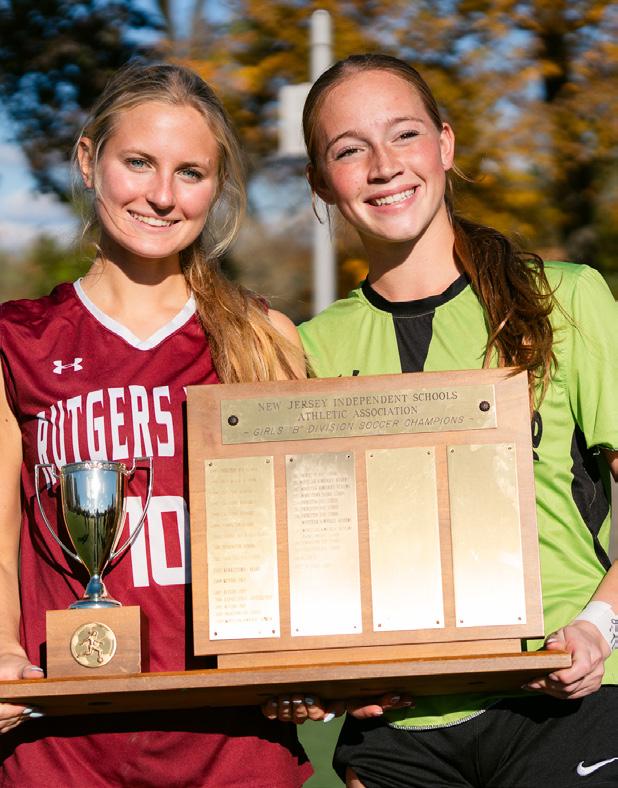
Shortly after their win in the county tournament, Rutgers Prep Girls Soccer was once again victorious in the Prep-B tournament. They played Gill Saint Bernards in the Prep-B finals and mercied them 6-0. Alexa Lee ‘26 said, “I thought we came out strong, scoring within the first 5 minutes and I think that really set the tone for us.”
With the team well into their state tournament, there is still so much excitement to see what they will do. Alexa Lee ‘26 stated, “I think the team has done amazing so far, especially since people doubted how we’d do this season with the loss of some incredible seniors last year.” It has been a difficult season, due to having an intense schedule and losing many of their key starting players, but it is clear that these girls have risen to the occasion, proving all of their doubters wrong. It is beyond exciting to see where they are going to end up! All in all, with the girls continuous talent, determination, and teamwork, they have accomplished, and will continue to accomplish, great things.
Rutgers Prep Argonauts Volleyball Triumphs in Sectional Championship and Advances in States Saanvi Chigurupati ‘28
The Rutgers Prep Argonauts have made history with their win of the NJSIAA Prep B Sectional Championship this season of volleyball. The journey of the Argonauts was powered by inarguable energy, teamwork, and determination. Newark Academy and Montclair Kimberley Academy are the two teams which the Argonauts defeated. Not only did they demonstrate their skill during these winning games, but also their defining characteristic: unity
Newark Academy challenged their concentration and calmness during the game. Though the first set was really close, the team eventually came together. Through continued support of one another, they were able to pull through and come out successful. The
The 2025-2026 Cross Country Season
As the fall sports season comes to a close, it’s very apparent that the cross country team shined in their final meets of the year. The NJISSA Prep State Championships, which was hosted at Blair Academy, was a difficult course of winding hills through forests and golf courses, but nevertheless, the teams had incredibly successful results. Three runners placed in the top 10: Lucian Kiraz ‘27, Ibrahim Rasool ‘28, and Layla Rasool ‘29. In such competitive environments, medalling with amazing times was especially impressive.
Just a week later, at the NJISSA Group Championship Meet, the runners braved both the cold and the infamous course at Holm-
Alina Zhu '27
del Park. Despite the fierce competition, the boys team secured second place in their division and the girls team made school history in placing third. Runners Lucian Kiraz ‘27, Ibrahim Rasool ‘28, and Layla Rasool ‘29 had outstanding times and qualified to run in the Meet of Champions the following week.
When asked about her freshman season, Layla said, “This year’s cross country season was an amazing experience.” She expressed gratitude toward the coaches for their support, and how “They believed in us even when we didn’t believe in ourselves and that helped us grow stronger both as runners and as people.” As part of
moments of the match that were once tense and tight turned into opportunities for the Argonauts to secure the win. They kept their composure in the final stages of the game and came out on top with an essential win.
The battle for the championship against Montclair Kimberley Academy held a feeling of suspense from the very beginning of the match up until the end. The Argonaut's were clearly determined; they refused to lose. They showed incredible heart from the very first to the very last serve, spike, and dig. The players of the two teams might have been involved in tough rallies, but they were calm in the face of the situation, encouraging each other. It was their teamwork and trust that ultimately led to a sectional championship victory.
With that win, Rutgers Prep went on to defeat Phillipsburg in their last game of the regular season. The victory was like a breath of fresh air before going to the state tournament. The same fighting spirit was evident once again in the quarterfinals, where the Argonauts beat St. Dominic Academy three sets to zero, thus making the start of their journey into states very powerful.
The story of the Argonauts is not a mere tale of victory alone but rather it is about solidarity, doggedness, and faith. Rutgers Prep is a family, and the Rutgers Prep Girls Volleyball team is a prime example of how special our community truly is, and tand what we can accomplish with hard work.
Girls Tennis Wins First-Ever State Sectional Title
Yunjin Choi ‘28 and Zara Nagabhushana ‘28
On October 14th, 2025, the Rutgers Prep Girls’ Varsity Tennis Team made school history by winning its first-ever Sectional Championship, a remarkable achievement for the program. With the leadership of Coach Courtney Smith and the team’s relentless hard work, the Argonauts advanced through every round of the tournament with skill, focus, and determination.
a big team this year, Layla said, “Everyone on the team showed so much dedication this season and the bond we built made practices something to look forward to. We all learned a lot about teamwork and believing in ourselves.”
The team’s determination and success truly showed how summer miles bring fall smiles, with hard work paying off immensely. While cross country can seem like an individual activity, this team truly shows the importance of support within the sport. The success of the Rutgers Prep Cross Country Team this year has embodied the idea of true heart and sportsmanship.
The team was led by first singles player and captain, Lyra Patel ‘26, who remained undefeated the entire season. Raghavi Aiyer ‘27 competed at second singles, while Sophia Lai ‘28 held the third singles position. The first doubles team of captain Lielle Parker ‘26 and Sanvi Narmeta ‘29, along with the second doubles pair of Zahra Shirley ‘28 and Ashwika Tipparaju ‘27 rounded out the lineup.
Rutgers Prep started strong, sweeping Immaculata 5-0 in the opening round. In the quarterfinals, they battled through a close 3-2 win over Princeton Day School, followed by another 3-2 victory against Ranney in the semifinals, which se-
cured their spot in the sectional finals.
Finally, the championship match took place on a cool, windy Tuesday afternoon as the team faced Red Bank Catholic in the final round of the NJSIAA Non-Public South Sectional Championship. From the first point, Rutgers Prep made their mark. “I knew going in that we were ready and fully capable of doing it,” said Lielle Parker ‘26, reflecting on the match. The Argonauts defeated Red Bank Catholic 4-1, capturing the title and making their mark in school history.
The team’s supportive and uplifting environment, with each member cheering on their teammates on and off the court, played a huge role in their success. This win perfectly emulates this school year’s theme of “First,” because it marks the first sectional title in the history of the Rutgers Prep Girls’ Tennis program. Their success acts as an inspiration to the entire community to aim high and create their own “Firsts” in sports and beyond.
Anna Jane Mathey '27 and Jordan Reigrod '27 with the Prep-B Trophy
Photo Credit: Aidan Rico '27
The International Students Experience at Rutgers Prep
Anna Chang '29
More than half a century ago, is when Rutgers Prepatatory School's relationship with international students began. In 1866, after Commodore Perry opened Japan to the West, the first Japanese boys arrived in New Brunswick seeking an edutcation in the English language before college. Reverend Alexander McKelvey, then rector of Rutgers Prep, personally welcomed them and even boarded some in his own home. By 1873, fifteen Japanese students were enrolled. Among them was Kojiro Hatatsuka, one of the earliest pioneers of this exchange. Like many of his classmates, Hatatsuka came through the efforts of Rutgers College graduates working as missionaries in Japan. He and his peers were learning not only English but also American customs and values that they could later carry back home.
Missionaries and naval personnel stationed in Japan also sent their sons here, and students such as Daihachiro Sagara excelled both academically and on our sports teams, forging a friendship between the United States and Japan. Through the early 1900s, youths from Latin America and Europe also attended Rutgers Prep. By the 1960s, the school was hosting regular short- and long-term exchanges. At that time, Rutgers Prep was still a boarding school, giving American students rare opportunities to meet peers from around the world.
After 1952, the school moved away from boarding but retained its global spirit. Cultural, ethnic and religious diversity became woven into everyday life. Today, more than forty languages are spoken in Rutgers Prep homes, and many families have parents born overseas. In the 2024–2025 school year, about six percent of Middle and Upper School students will be international.
A new chapter began in 2010 when Rutgers Prep launched a formal International Homestay Program. The first students in that program came from Jamaica, Mexico, Korea and China. One of the most memorable
was Marvadene “Bubbles” Anderson, a fifteen-yearold from rural Jamaica who stood six feet eleven inches tall. She had grown up without running water, became a netball star at home, and was brought to the school by a New Jersey resident who supported Jamaican youth. At Rutgers Prep, Bubbles quickly moved from being a curiosity to becoming a beloved student and teammate, even appearing in national media.
Today, international students, often called IS, are represented from kindergarten through grade twelve. Most who join in the middle school years, especially grades seven and eight, stay on for the upper school and graduate with their peers. Students may apply to any grade K–12, although openings in grades ten and eleven are limited. Once enrolled, they are fully integrated into academics, the arts, athletics, and school activities. Rutgers Prep offers a rigorous program and its international graduates continue to earn admission to top colleges and universities around the United States.
Cultural experiences remain central. International students visit museums, landmarks, and historic sites in the metropolitan New York area. They attend local sporting and cultural events and take part in clubs, activities, and athletic teams on campus. Most live with local host families arranged through Rutgers Prep’s preferred homestay provider, formerly known as the American Homestay Network. Daily life with a caring family dramatically improves English skills and helps students become part of American culture, continuing the school’s long tradition of providing a home away from home.
From Kojiro Hatatsuka in 1866 to the Jamaican student-athlete Marvadene Anderson in 2010 and the diverse cohort of today, Rutgers Preparatory School has been a gateway for young people from around the world to prepare for college, discover their talents, and build lifelong friendships.
The Political Strategy of William Shakespeare
In late May of 2017, Shakespeare in the Park’s production of Julius Caesar premiered at the Delacorte Theater in New York. The production soon found its name in headlines for having its title character resemble Donald Trump, wearing a blond wig and a long red tie. While Shakespeare isn’t here to critique the political landscape of the 21st century, one can still wonder: was Shakespeare truly attempting to spread underlying political ideas?
Arriving in London in the late 1580s, Shakespeare saw huge potential in the theater. At the time, theater largely consisted of religious stories, while other genres were left unexplored. This changed, as over the next 24 years, he would write 38 plays, 154 sonnets, and two long narrative poems as either histories, tragedies, or comedies. Eventually, Shakespeare was given the name “The Bard of Avon,” to acknowledge his role in the cultural flourishing of the Elizabethan era, while also referencing his birthplace, Stratford-upon-Avon. Across his works, he brought up repetitive themes including unchecked sovereignty, the fall of republic, racism, among other politically
Neil Bajaj '29
dense topics.
From 1398 to 1485, Shakespeare worked on two historical tetralogies that covered 90 years of English history. The first tetralogy, Henry VI (all three parts) and Richard III, focuses on the Wars of the Roses. The second explores the stories of Richard II, Henry IV, and Henry V. Shakespearean scholars are particularly fascinated about the characterization of Richard II. The monarch is shown to deeply believe in the “divine right” to rule but fails to be a responsible and effective ruler. He gets away with murder, and makes incompetent decisions. Shakespeare creates a lawyerly case against kingship here, leading readers to question what qualifies a ruler as “legitimate.”
The rest of the pieces in the tetralogies continue to explore the nuance of the “great chain of being,” a hierarchical structure in medieval Christianity where status was decreed by God.
After the histories, Shakespeare went on to write his most notable works: tragedies. Julius Caesar, written around 1599, became one of theater’s most iconic pieces.
The play depicts an assa-
sination plot to take down the power-gaining Roman dictator, Julius Caesar. Caesar’s assassination is considered nuanced, as his death led to the fall of the Roman Republic. The story serves as an example of political violence’s inability to protect democracy.
Another Shakespearean tragedy, Macbeth, is similar to Caesar. Its story shows how tyranny can result from taking political power through violence. A different story is told in Othello, a play in which Venetian soldier Iago manipulates the Moorish general, Othello. This story showcases the destructive power of racism and how it can be leveraged into psychological warfare.
Although we can’t see Shakespeare’s stance on modern figures, how Shakespeare used the theater to drive his political ideas can still educate people today. Whether it was Richard II being born into power, Caesar’s assasination ending the Roman Republic, or Iago using race as a tool for psychological harm, Shakespeare has made it clear that greedy and power-driven individuals often influence politics.
The Sudden Rise of Clash Royale
If you walked through the hallway or the lounge right now, you would find many people on their phones playing Clash Royale – but have you ever stopped to think of how the game came to be this popular?
Clash Royale is a mobile game that was released in March of 2016, developed by the company Supercell as a spin-off to their already popular game, Clash of Clans. Clash Royale instantly blew up on release, grossing more than $1 billion dollars globally in less a year. The game has been extremely popular because of it fast-paced matches.
Although its popularity briefly declined due to a series of bad updates in the past, this year marks a spike in interest, showing a consistent increase in both revenue and player count.
One of the major fac-
and Raunit Khanna ‘29
tors which can be attributed to this sudden spike in popularity is the popular Twitch streamer, Jynxzi, who decided to start streaming Clash Royale. These streams slowly gained popularity, reaching 40K viewers on Twitch. Over time, Jynxzi brought in highly skilled and influential players to compete with him. He even collaborated with other major streamers, helping spread the game’s popularity across social media.
However, Jynxzi was not the only reason for the game’s resurgence — Supercell also released several major updates that reignited player excitement. These included the ability to evolve common cards to enhance their stats and a new four-player mode called Merge Tactics, which added a fun twist to the traditional 1v1 format.
These streams and up-
dates caused the game’s player base to skyrocket. Player growth increased by 23.8% in a single month, totaling ≈11.55 million new players. As of October 2025, Clash Royale boasts 47.4 million concurrent players, a massive jump from the 4–6 million in early 2024. This surge in popularity also boosted Supercell’s financial success. In July 2025, Clash Royale generated $77 million USD in player spending, while May 2025 marked the game’s highest monthly revenue at $27.7 million USD. Since the start of 2025, the game has earned more than $145.8 million USD of in-game revenue, which excludes additional earnings from the Clash Royale Esports World Cup and other events. Thanks to these combined factors, Clash Royale is Supercell's top performing game.
Caio Indelli ‘29, Ansh Jalona ‘29,
Christmas Crossword

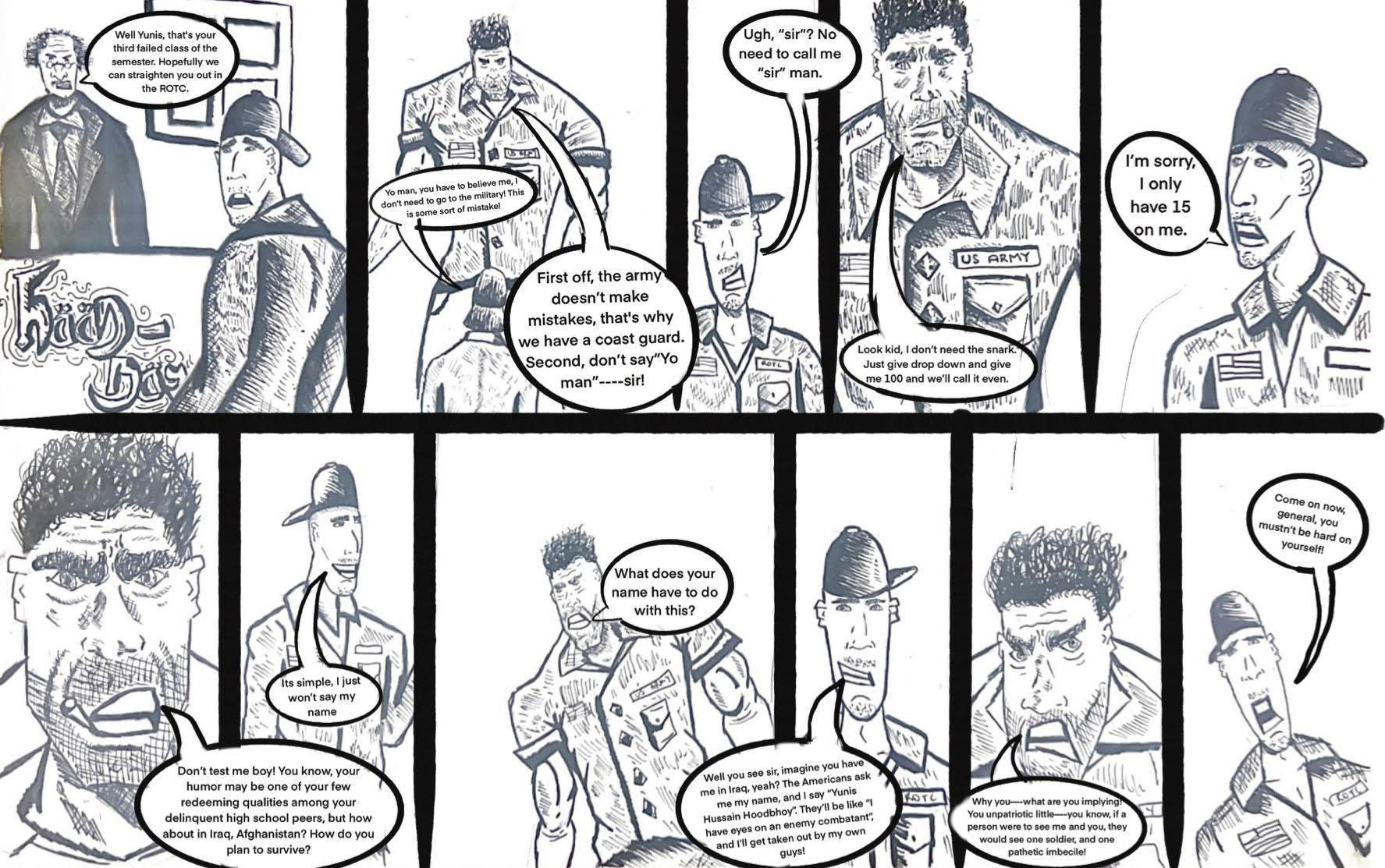
Comic Strip
Isa Abdur-Rahman '27
The 137th Editorial Board of The Argo
Chief Editors
Jurnee Caldwell ‘26
Jay Chavan ‘26
Raislyn Palmer ‘27
Anna Jane Mathey '27
Associate Editor
Trisha Paul '28
Tech Editor
Dev Menon '27
Faculty Advisors
Dr. Morgart
Mx. Stewart
The Argo is the student-run newspaper of Rutgers Preparatory School. The opinions and views expressed within articles are not necessarily representative of the opinions and views held by The Argo or Rutgers Preparatory School.
All articles and student photos herein are copyright © The Argo 2025.
Interested in submitting an article, taking pictures, or drawing graphics? Have a complaint or concern? Notice an inaccurate fact or statement?
Reach us at theargo@rutgersprep.org.