U S H
P O R T F O L I O R
A V I S H A H
This portfolio represents a harmonious collection of projects undertaken during my ongoing pursuit of an M.Arch degree at the University of Wisconsin at Milwaukee (UWM) and my B.Arch studies at the Institute of Design, Environment and Architecture (I.D.E.A) in India, as well as projects completed during my professional practice.
ABOUT ME
I am a highly ambitious individual with strong analytical skills, dedicated to designing spaces that resonate with user perspectives while respecting cultural heritage influences. With a comprehensive background in planning, design, analysis, implementation, and management of both small-scale and large-scale architectural and interior projects, I bring a wealth of hands-on experience from construction sites. I firmly believe in the power of collaboration and effective communication as integral components of creating designs that truly enhance society’s built environment.
RUSHAVI SHAH
Contact number: 612-685-5313
Email ID: rushavi96@gmail.com
CONTENTS:
VERSATILITY (FABRICATION)
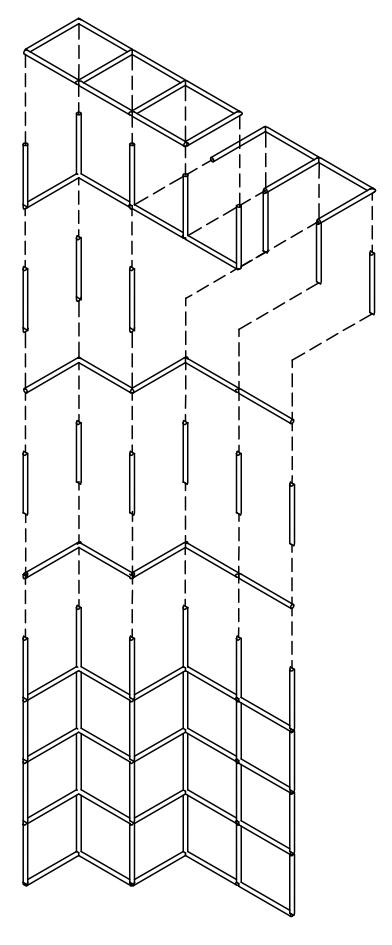
Emergency shelter PVC System Assembly
The Chipstone Foundation, Milwaukee
DESIGN THESIS
Children’s behaviour in built environment
Banswara, Rajasthan
URBAN INSERT
Generative and metrix diagrams Inferences Typologies
Jodhpur, Rajasthan
LEARNING WHILE PLAYING
Design concepts Evolution of design Visualization
Jodhpur, Rajasthan
PROFESSIONAL WORK: RAJESH DESAI
PROFESSIONAL WORK: SARANSH ARCHITECTS
INTERNSHIP WORK (2016)
PERSONAL PROJECTS
Kothari residence
Ahmedabad, Gujarat
RF Corporate House Akshatam-7
Mahuva, Gujarat Palanpur, Gujarat
Life on the Street Nature park & Mithi River Bridge
Palava, Maharashtra Mumbai, Maharashtra
Nook & Corners - Reshamwala’s house
Ahmedabad, Gujarat
RELATED STUDY PROGRAMS
Tropical Modernism, Sri Lanka
Identity of village: Naddi and Bal village, Himachal Pradesh
Versatility (Fabrication): The Chipstone Foundation, Milwaukee
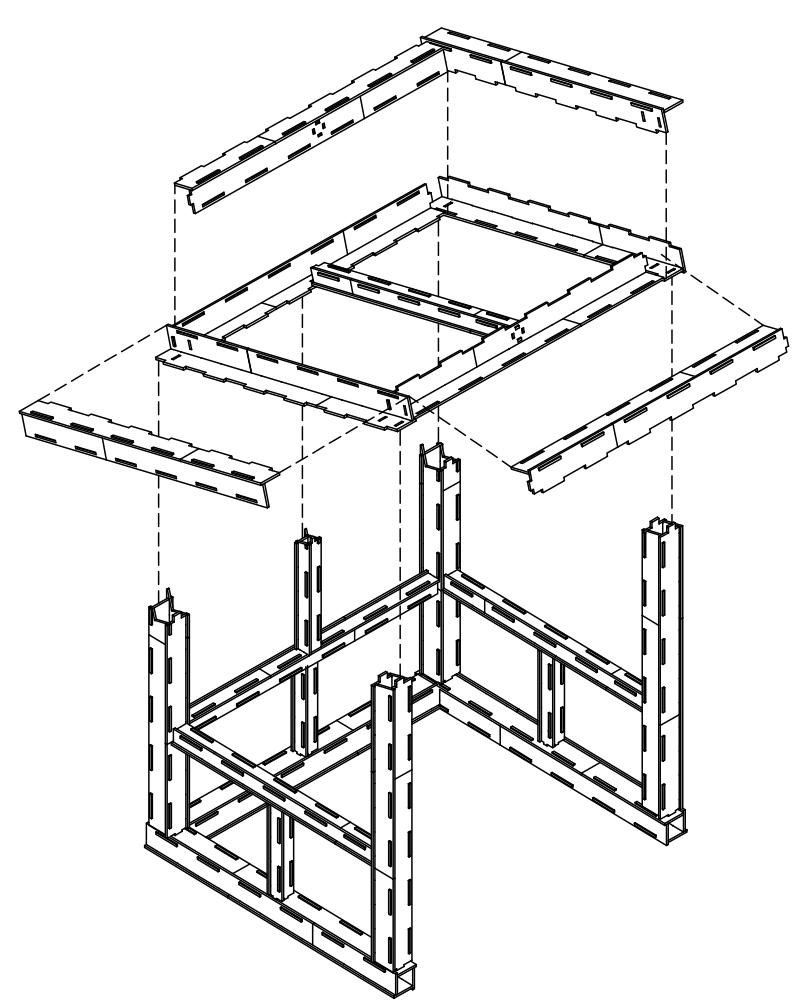
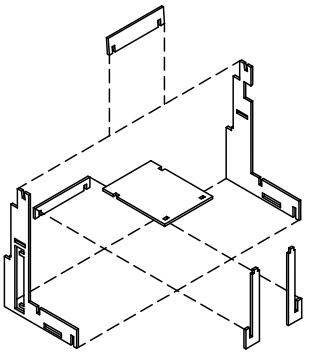
The fact that the Windsor chair is produced by hand, and the Emergency chair cut by a machine, showcases diverse modes of production, while the idea behind the designs remains very much the same - Versatility.
When the Windsor chair was created, it marked a point in history where furniture and people could escape boundries. The windsor chair was designed to be mass-produced before the mass-production era. Its components were crafted by different artisans all around, to later come together to assemble the chair.
While the Emergency chair was designed to be versatile in a unique way. Its roots come from a sense of emergency, when the possibility of assembling without the necessity of any tools can be appreciated. It is versatile in its conception because it should not assembled but admired unless you have a seating emergency.
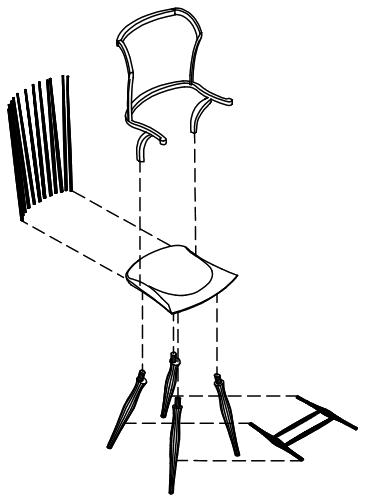
 Windsor Chair
PVC System Assembly Emergency Shelter using Cardboard assembly
D.E.Sellers Emergency Chair
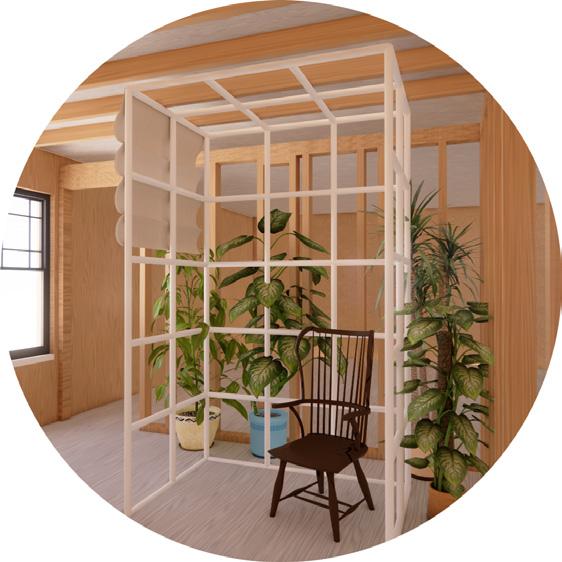
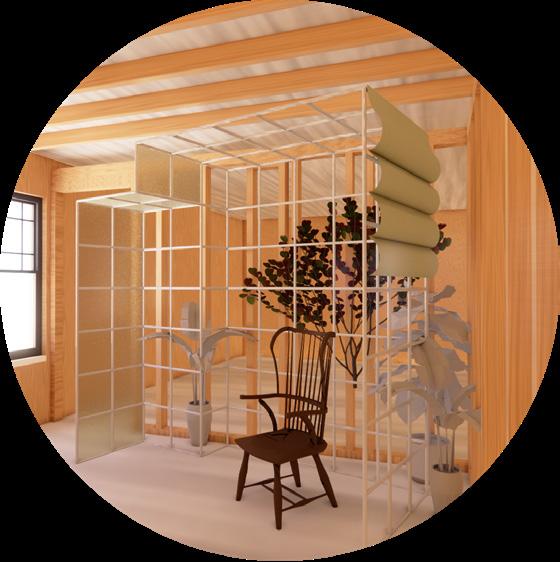
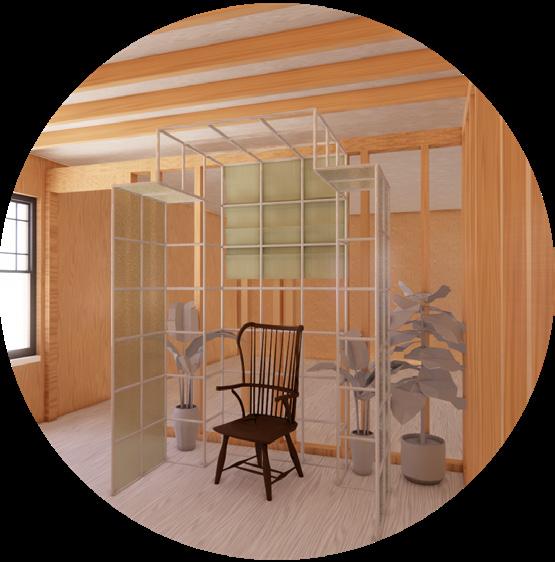
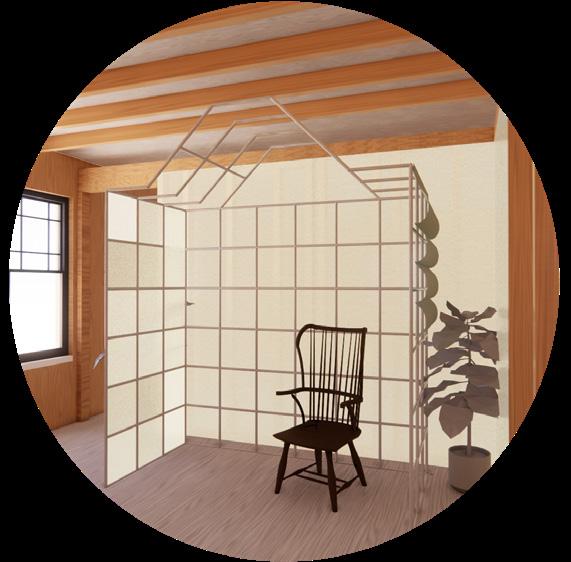
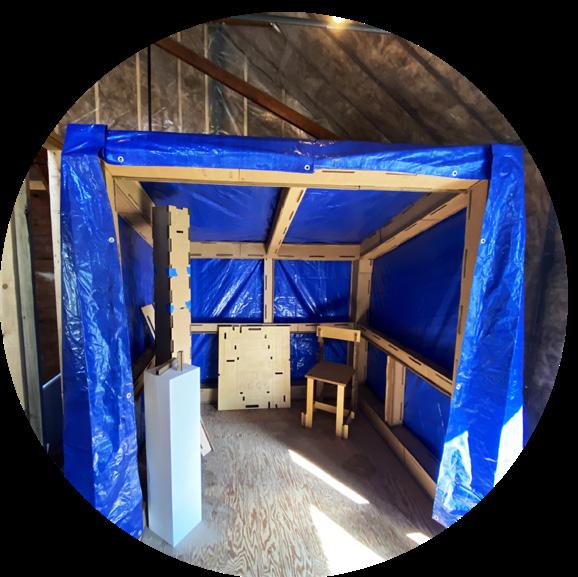
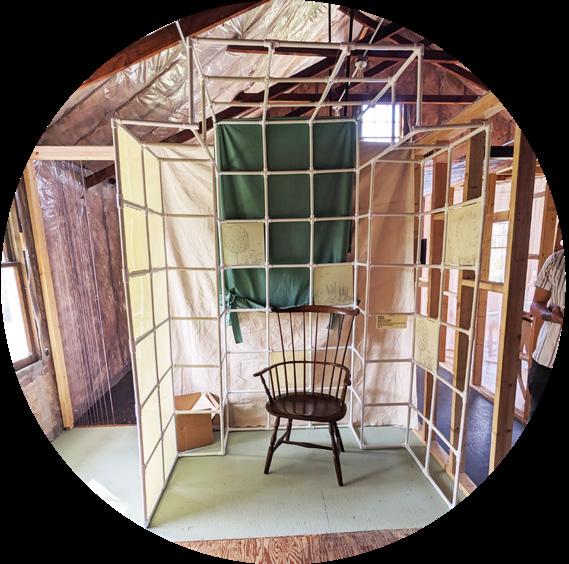
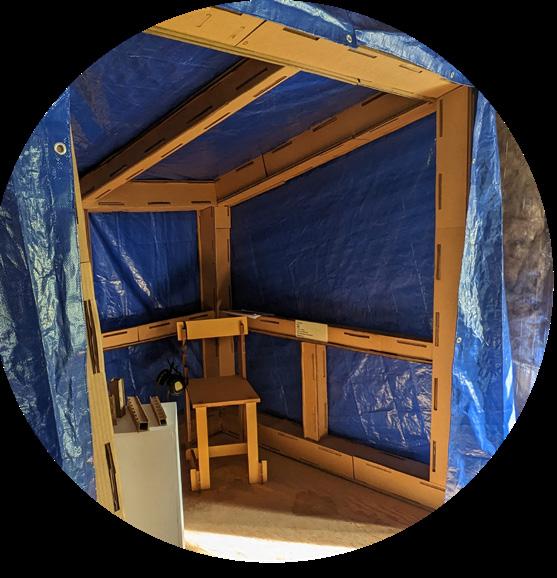
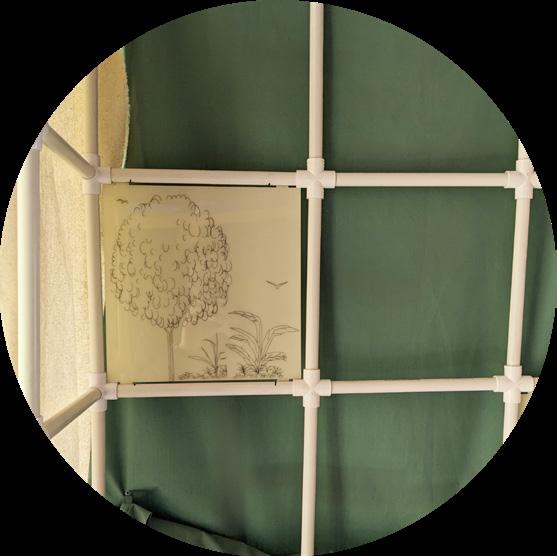
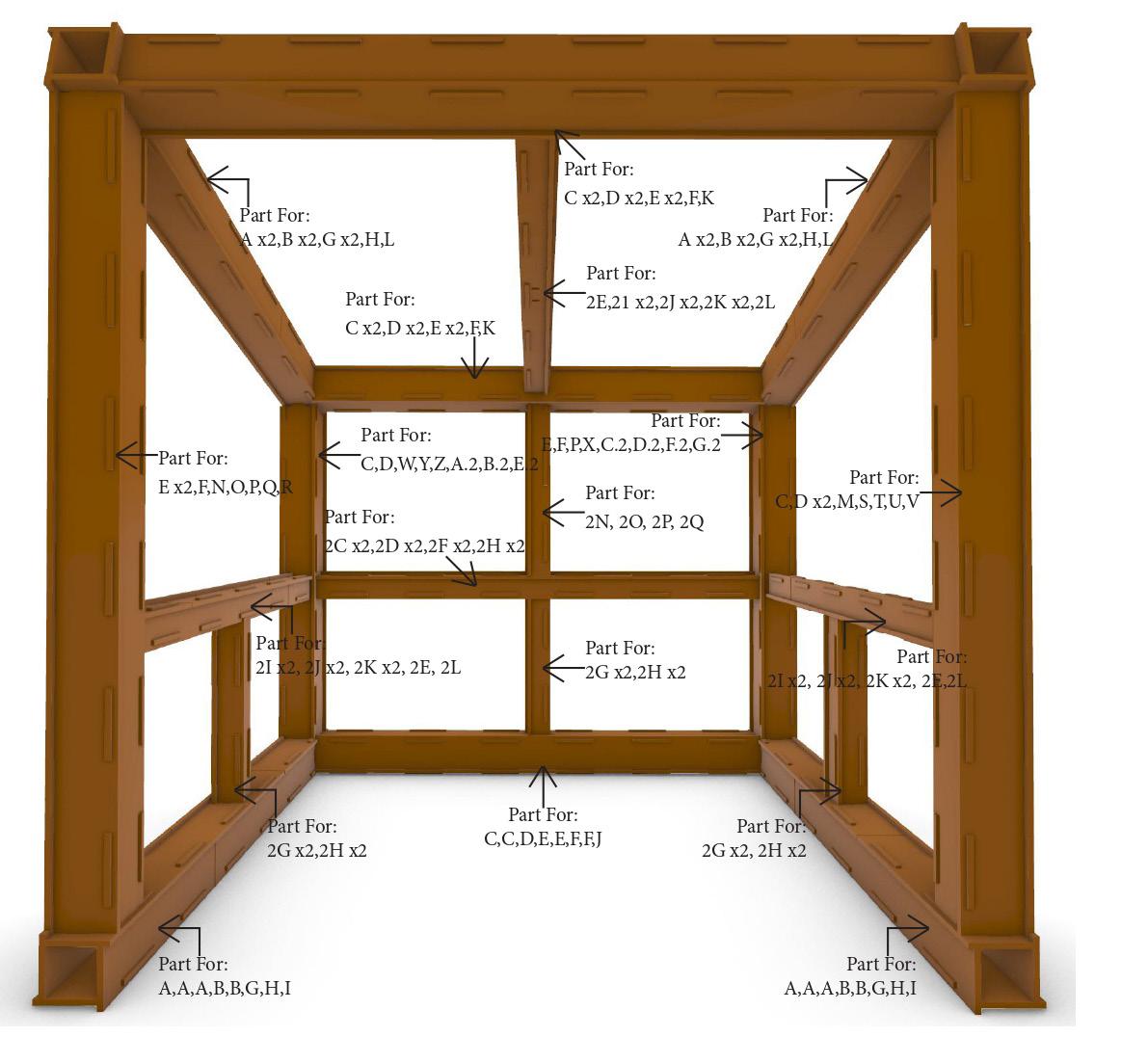
P R 0 T O T Y P E O P T I O N S C R A F T E D O B J E C T Emergency shelter assembly with details of Cardboard components
Design Thesis: Tribal School, Banswara, Rajasthan
Chidren’s behaviour in built environment
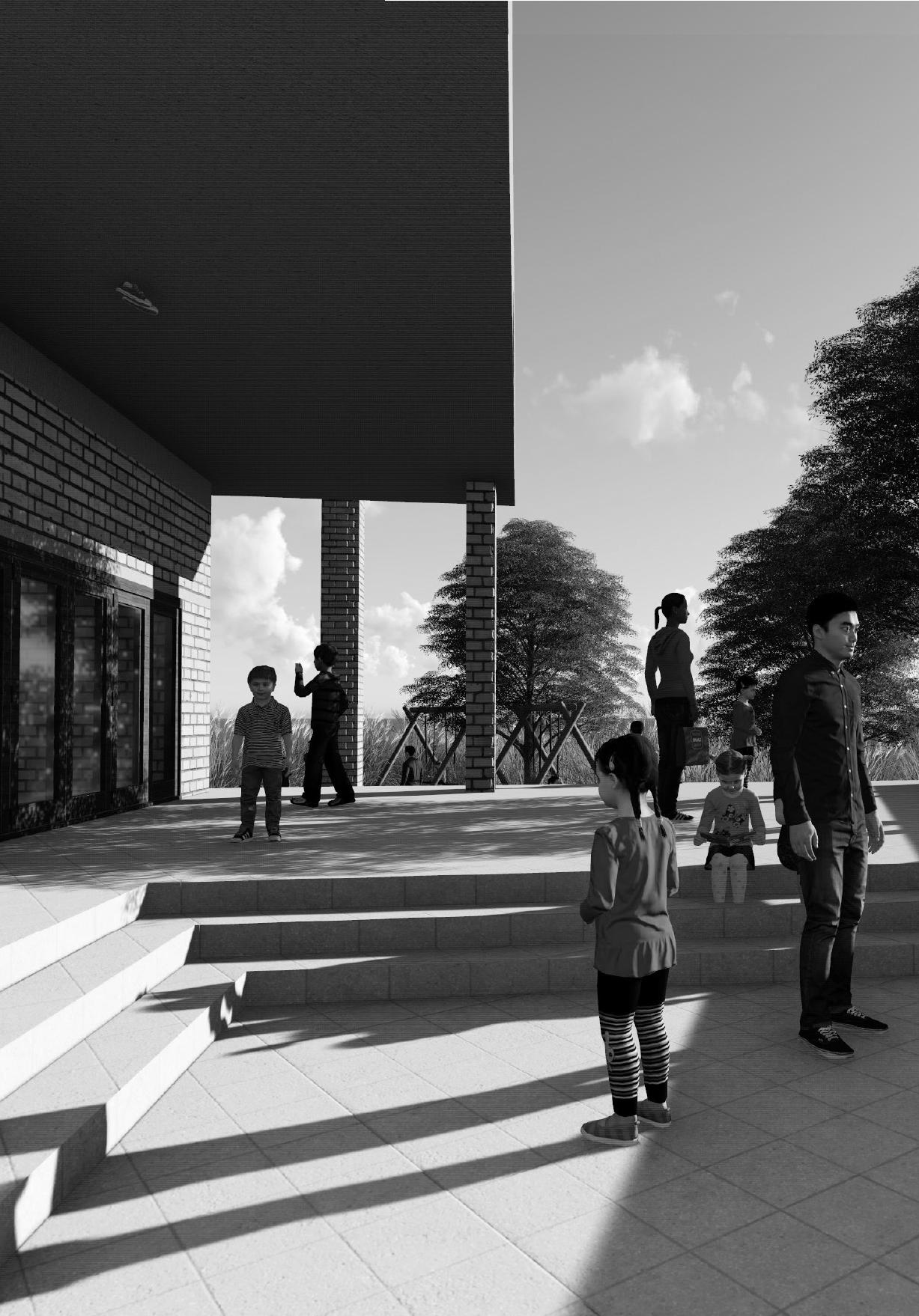
School buildings can foster a sense of belonging and the opportunities to connect with the community, allowing individuals to engage in self-initiated activities.
This thesis begins by comprehending the behavioral responses of children within the context of the built environment It involves analyzing various elements of different education centers and studying a village to grasp their cultural and architectural essense. The goal is to design a school that reflects their culture and architecture, involving the community in a way that cultivates a sense of belonging.
School as learning environment:
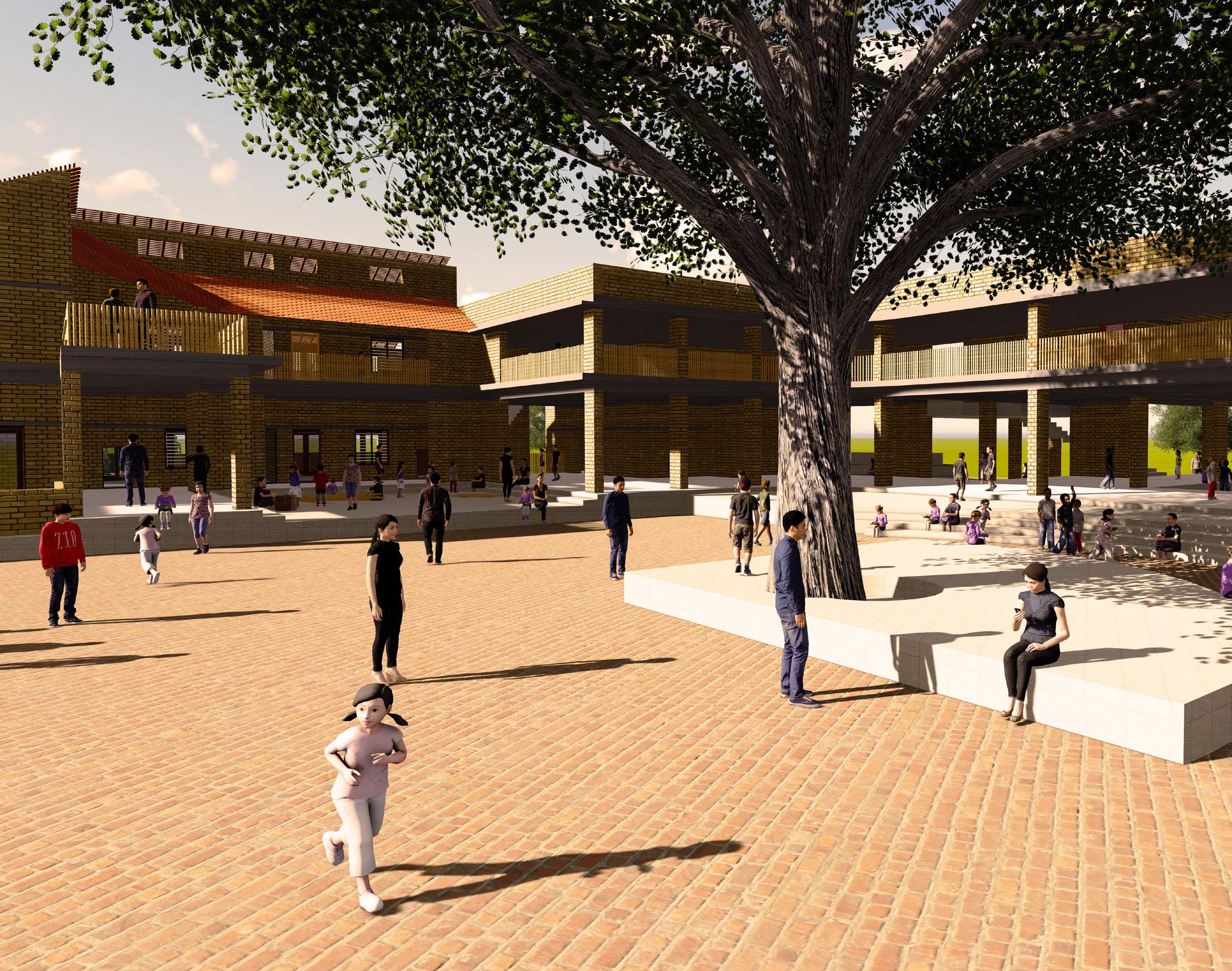
The articulation and design of the spatial environment should be thoughtfully crafted to facilitate the seamless coexistence of numerous activities transpiring simultaneously.
This harmonious arrangement ought to cater to the dynamic needs of both communal gatherings and individual pursuits, affording each participant the freedom to engage in their tasks autonomously while still fostering a sense of unity and collaboration within the shared space.
Architectural and landscape built elements:
Walls play a crucial role as protective enclosures and defensive barriers for buildings. Beyond their utilitarian purpose, they also serve as visual canvases that allow for punctures, enabling the infusion of light, air, and access into the building’s interior.
Moreover, walls facilitate smooth transitions for vertical circulation, ensuring convenient movement between different levels. However, it is essential to note that this distance may vary and disperse horizontally in diverse ways.
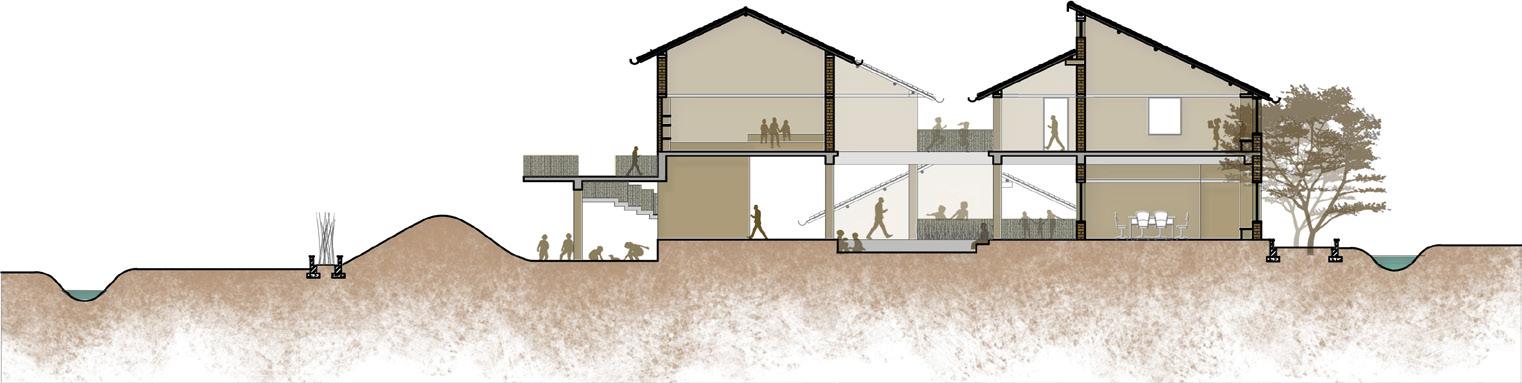
Use of otla by students as well as by community during different hours
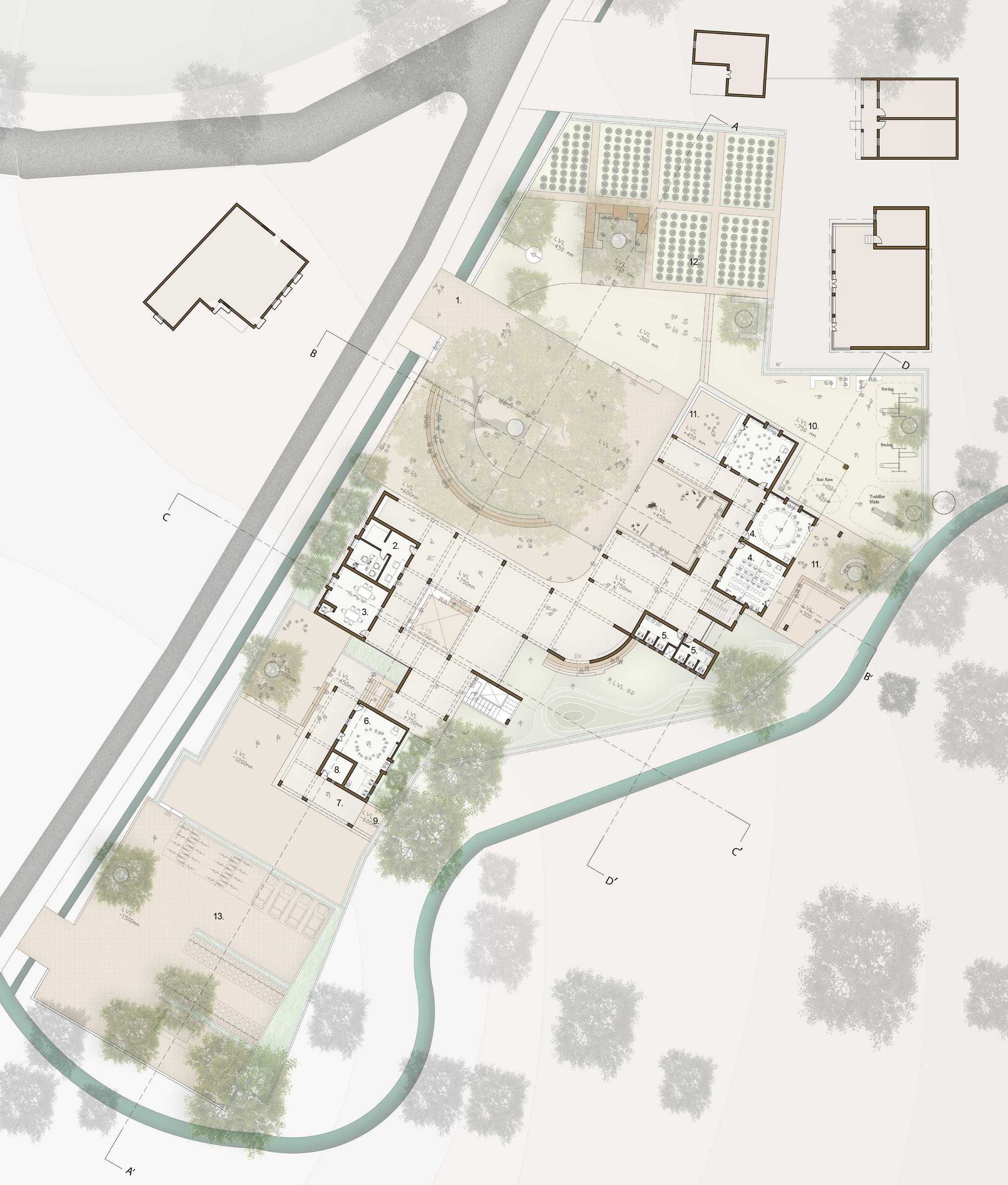

0 5 15M Section AA’
LEARNING SPACES AANGANWADI KITCHEN PARKING COMMUNITY FARMING
GROUND FLOOR PLAN
WASTE WATER CHANNEL
WASTE WATER CHANNEL
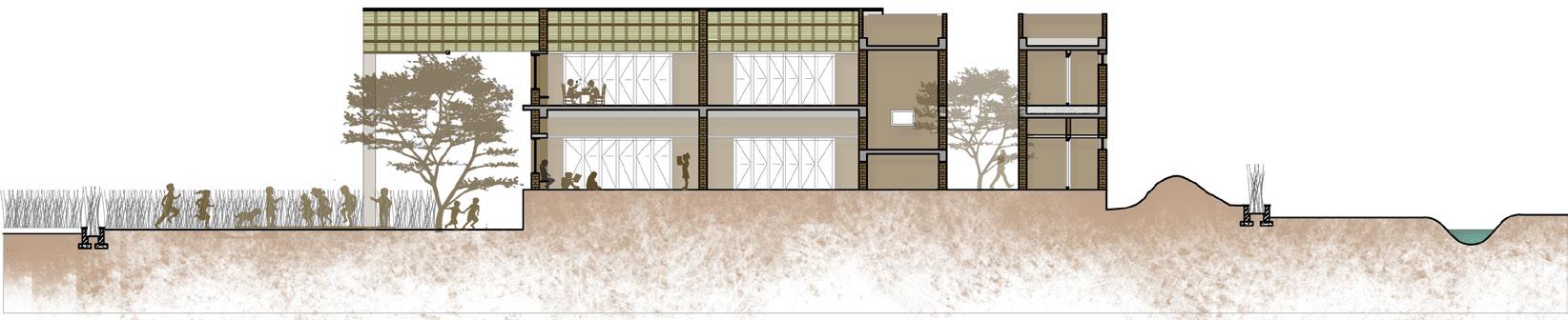
Section BB’
WASTE WATER CHANNEL
WASTE WATER CHANNEL
SECTION CC’
WASTE WATER CHANNEL
SECTION CC’
Section CC’
SAND PIT AREA
OTLO OUTDOOR TEACHING
LEARNING SPACES OPEN SPACE FOR ACTIVITIES
LEARNING SPACES
LEARNING SPACES
LEARNING SPACES
WASTE WATER CHANNEL
WASTE WATER CHANNEL
WASTE WATER CHANNEL
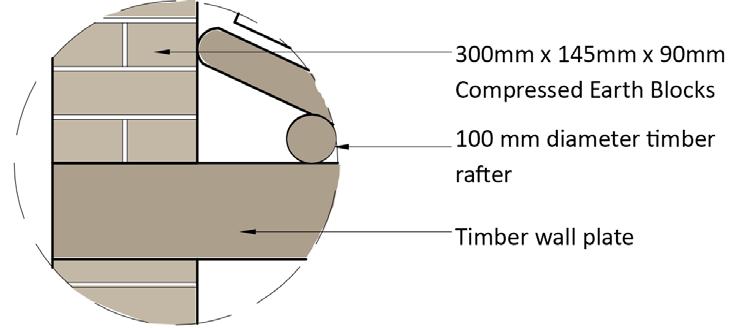
Detail A
TOILET
TOILET
LEARNING SPACES
SAND PIT AREA LEARNING SPACE
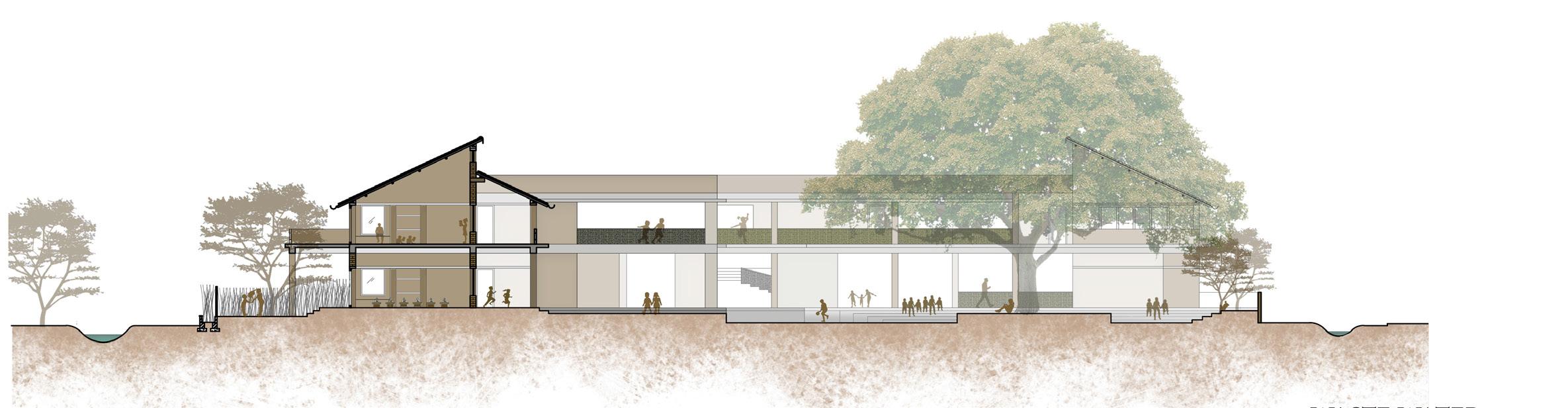
Section DD’
SECTION DD’
SAND PIT AREA LEARNING SPACE
SECTION DD’
WASTE WATER CHANNEL
WASTE WATER CHANNEL
Detail B
WASTE WATER CHANNEL
TOILET
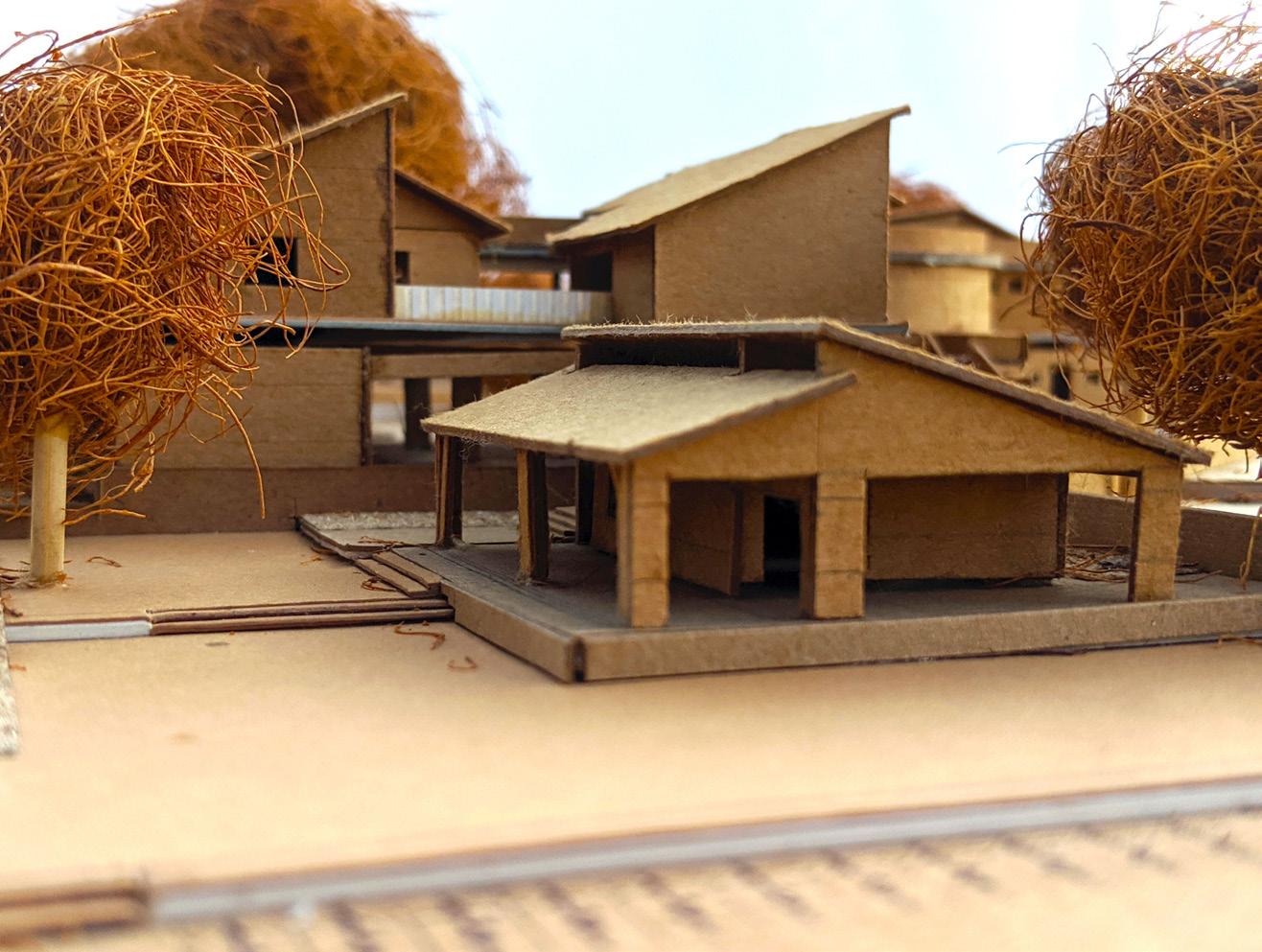
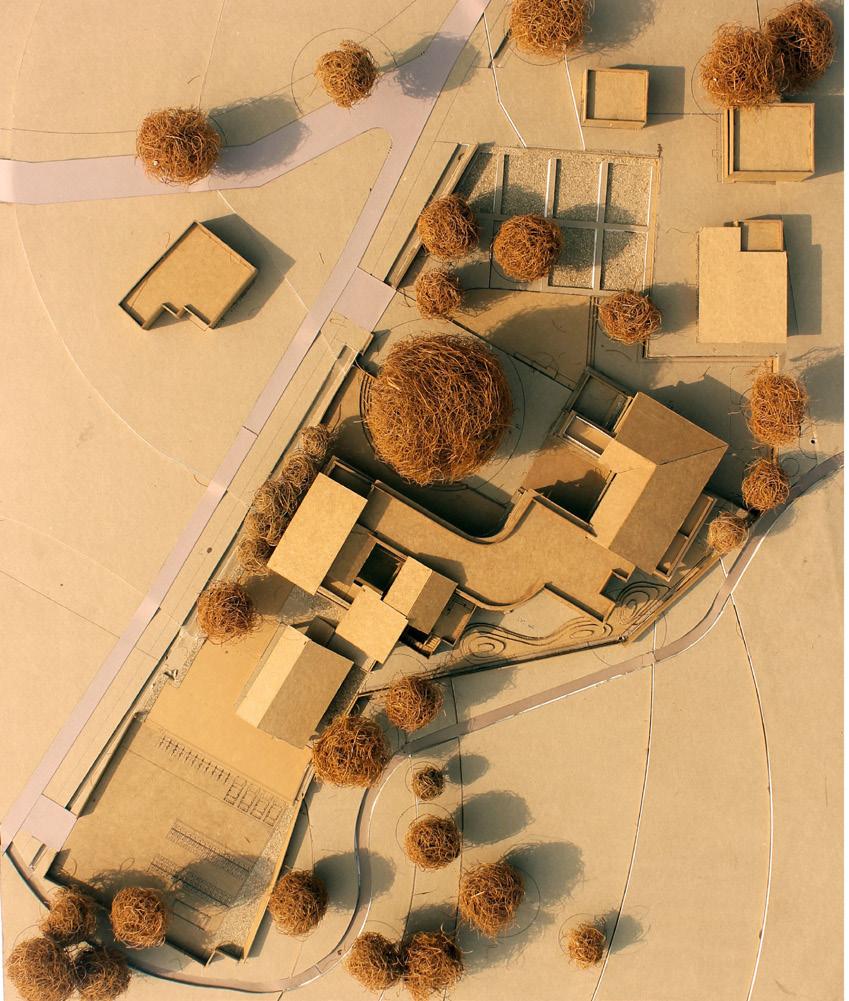
 Site model - 1:200
View of Aanganwadi in relation with primary school
Site model - 1:200
View of Aanganwadi in relation with primary school
Detail A Detail B
Jodhpur: Climate, Culture & Community
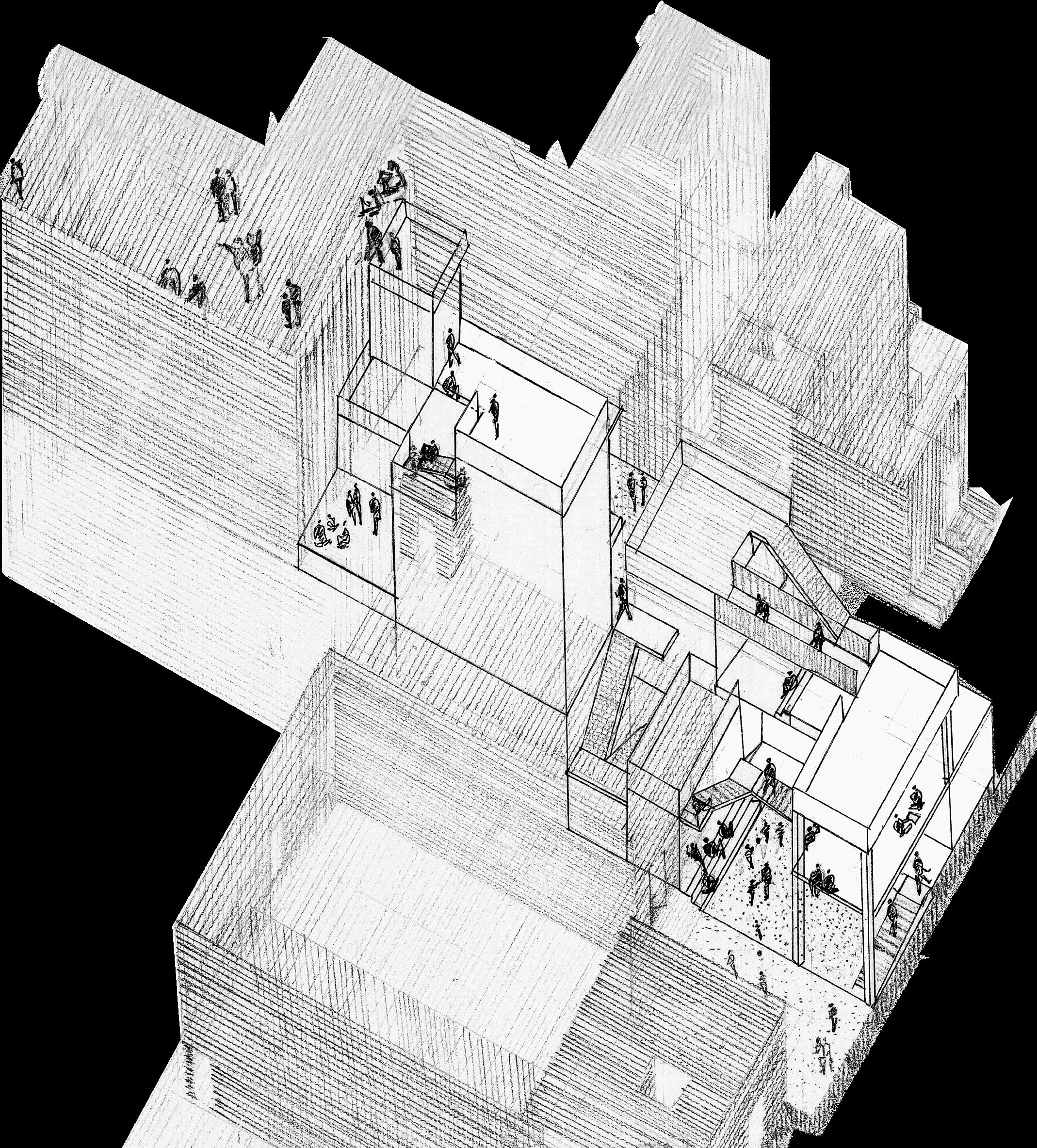
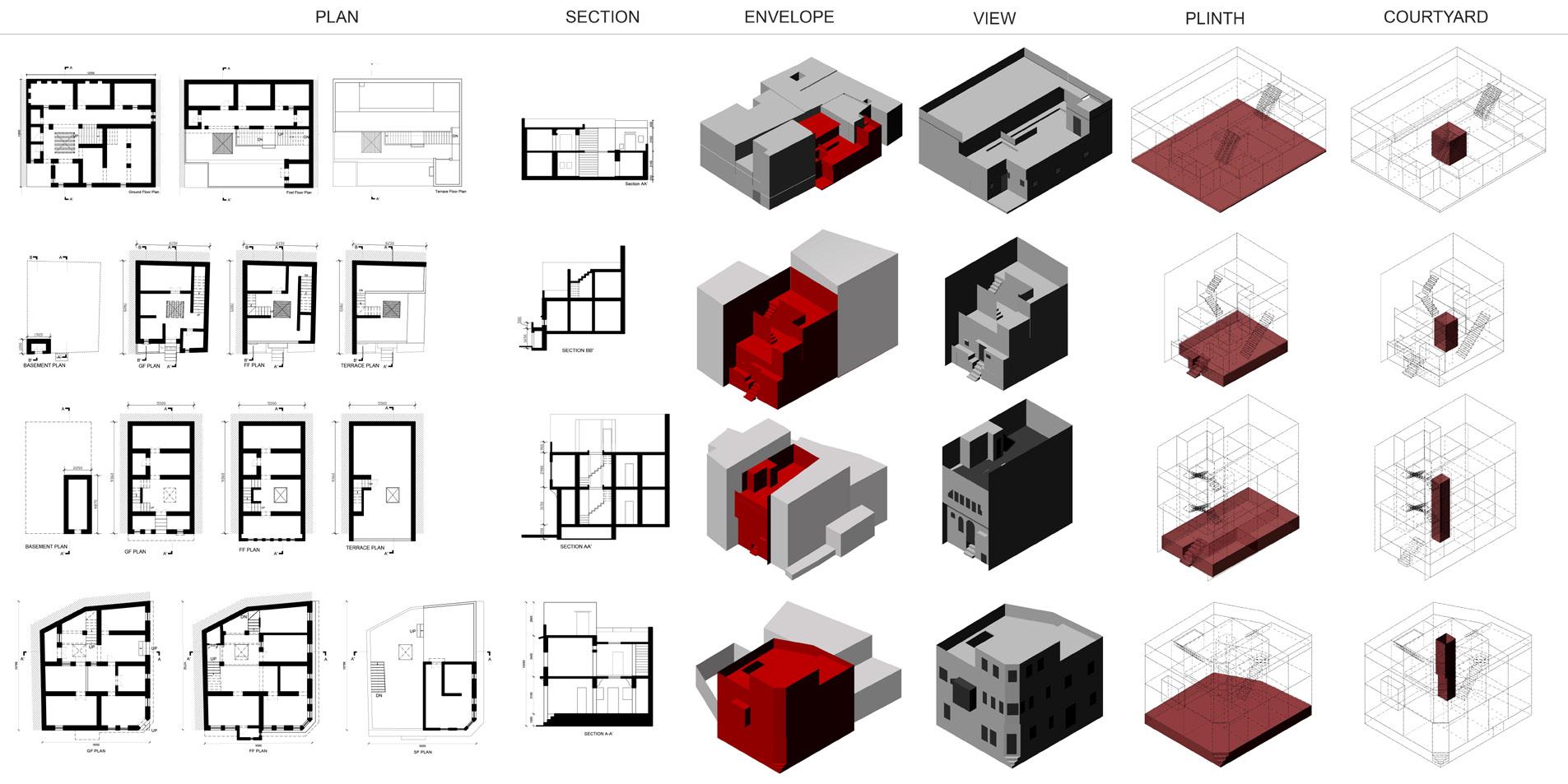
The core objective was to delve into the intricacies of the walled city’s settlement, comprehending its unique topography, climate, and cultural facets. To achieve this, a methodology involving generative and metric diagrams was employed, focusing on cities of similar nature.
Through these exercises, a diverse range of maps was generated, including terrace connections, interdependencies, activity density, projections, residue spaces, cul-de-sac patterns, plinth heights, and urban grains.
Analyzing these maps led to insightful inferences. For instance, it shed light on how the degree of node influenced population density and how terrace connections transformed based on the arrangement pattern within a cluster. Such detailed analyses provided a deeper understanding of the walled city’s dy-
Generative diagram of Terrace Connection:
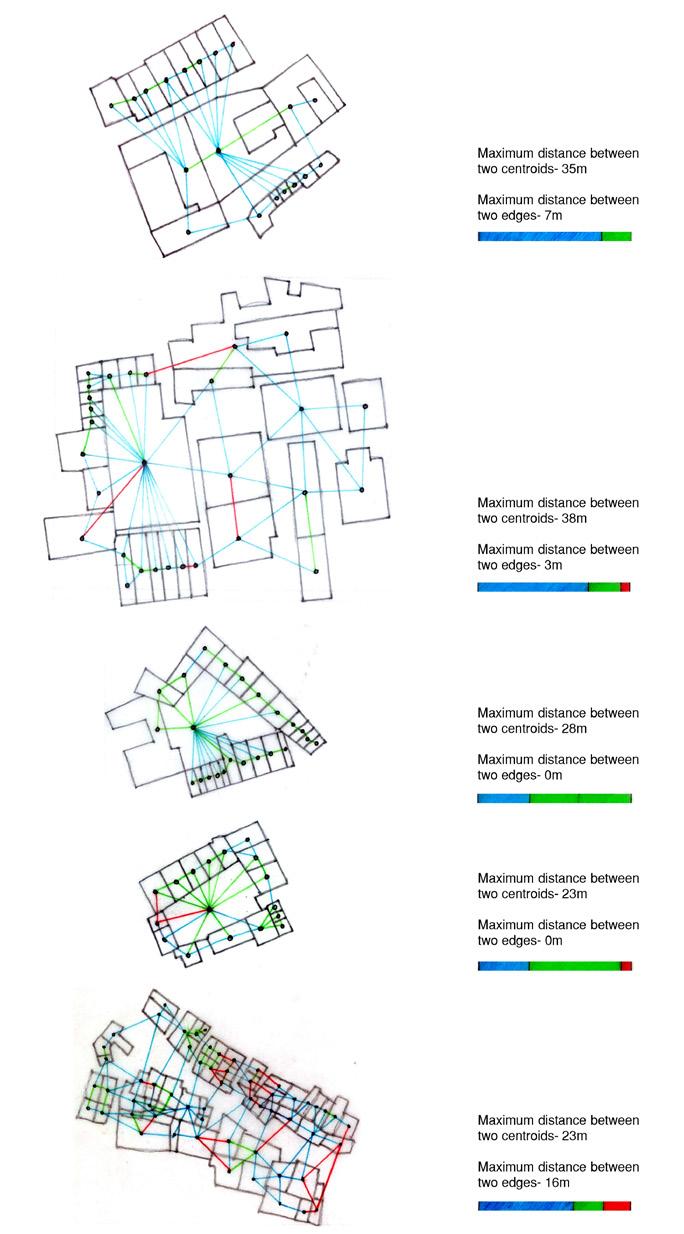
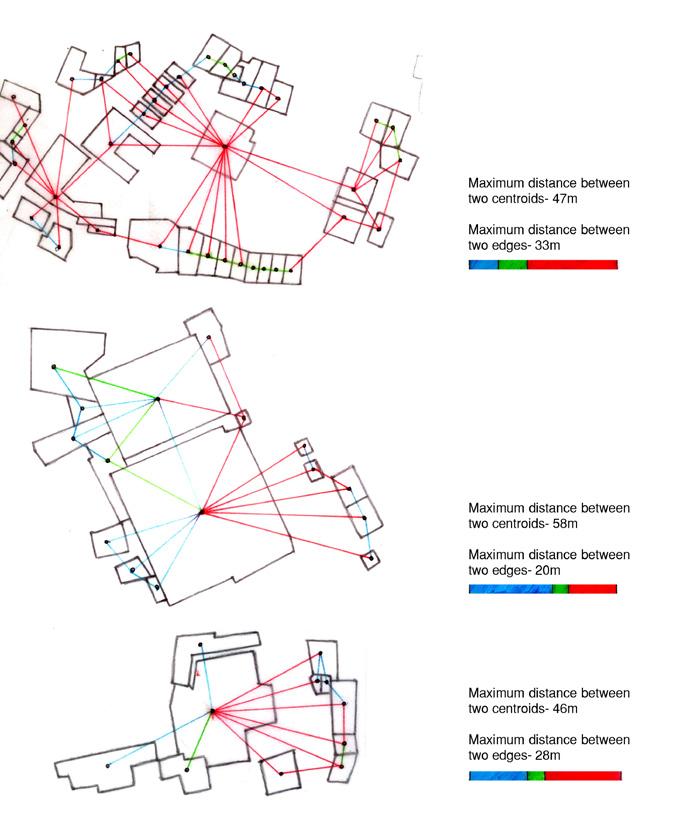
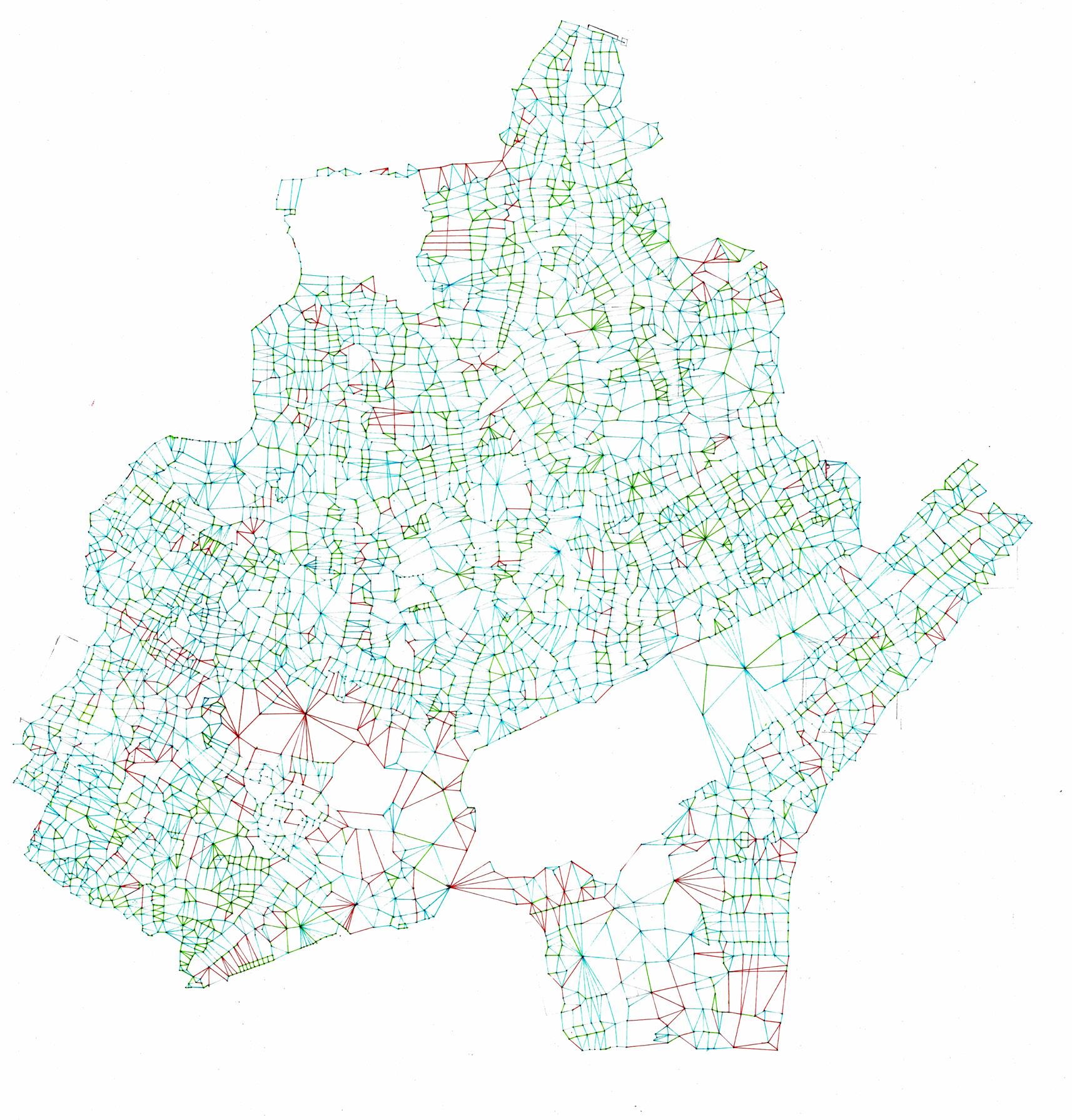
Physical Connection
Visual Connection No Connection
Typology analysis in terms of elements:
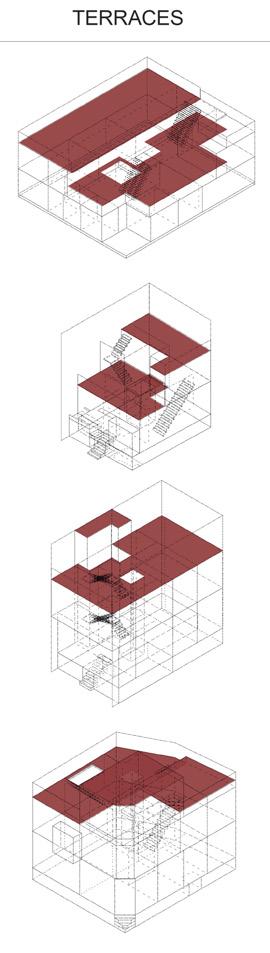
Inferences of different clusters:
Learning while Playing
A project to serve the underprivileged children and local women and provide them with basic health care, including education, nutrition, and supplementation with schooling activities
Aanganwadi basically means a courtyard of a house; this endeavor centers around fostering education within these nurturing spaces.
Addressing the unique needs and expectations of two distinct age groups presents an intriguing challenge. To meet this challenge, the design incorporates multifunctional spaces capable of adapting to various activities at different times. This versatility ensures the center’s utility for diverse purposes.
The site’s topography poses a significant hurdle, featuring a notable elevation difference from the two streets. A pivotal task is seamlessly integrating both levels on site. This integration serves as a conduit for local movement and facilitates circulation within the building, harmoniously uniting the community.
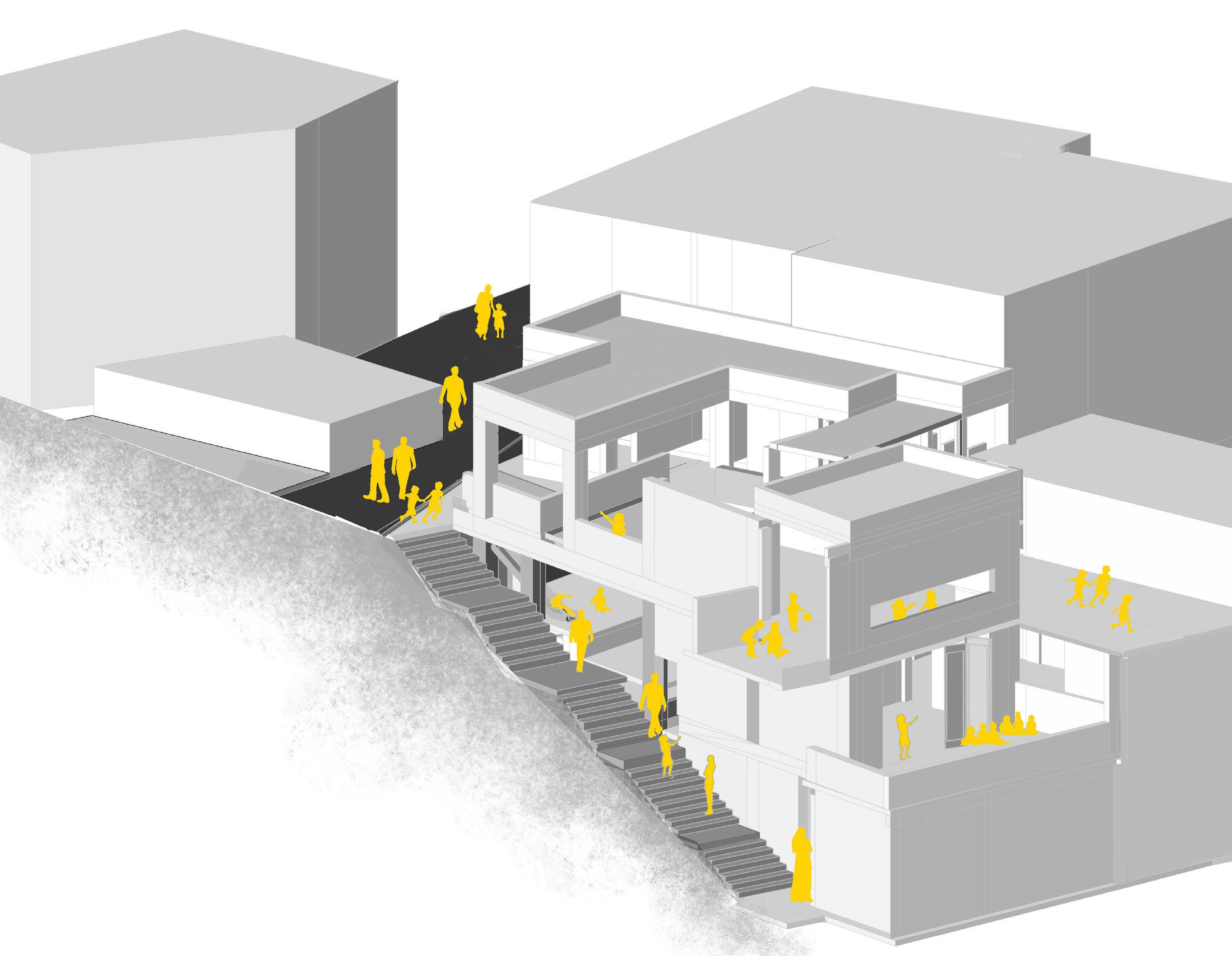
Design Concepts:
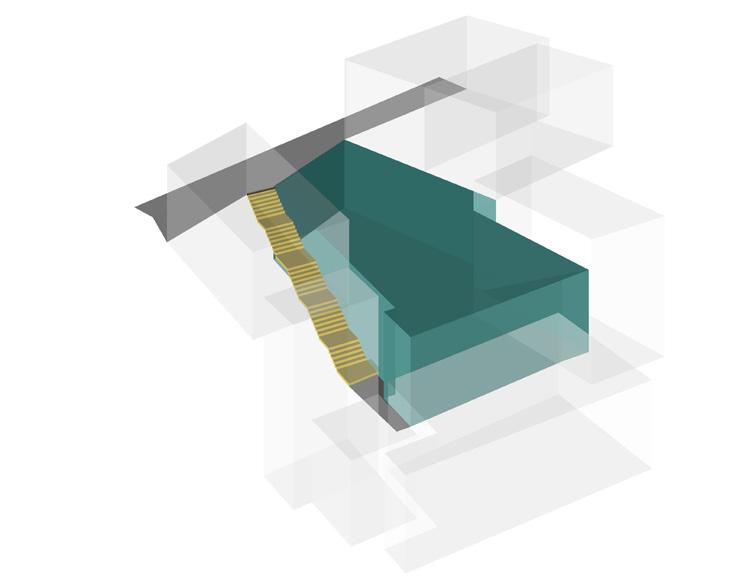

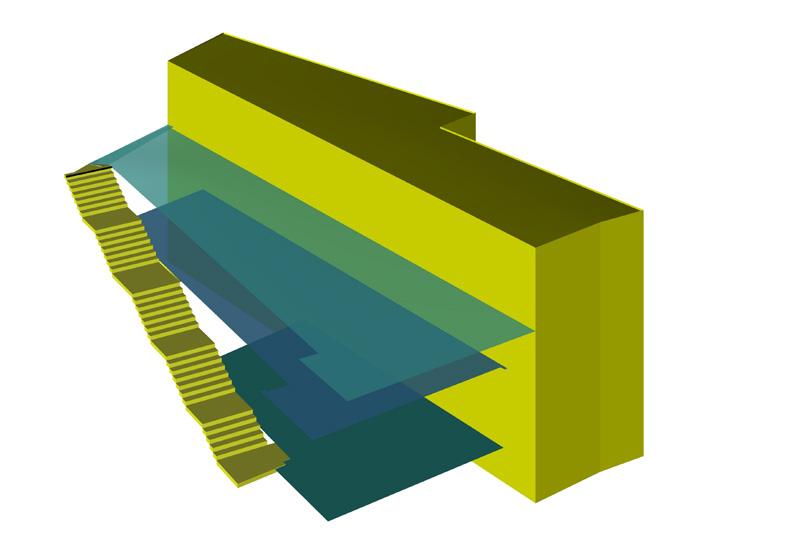
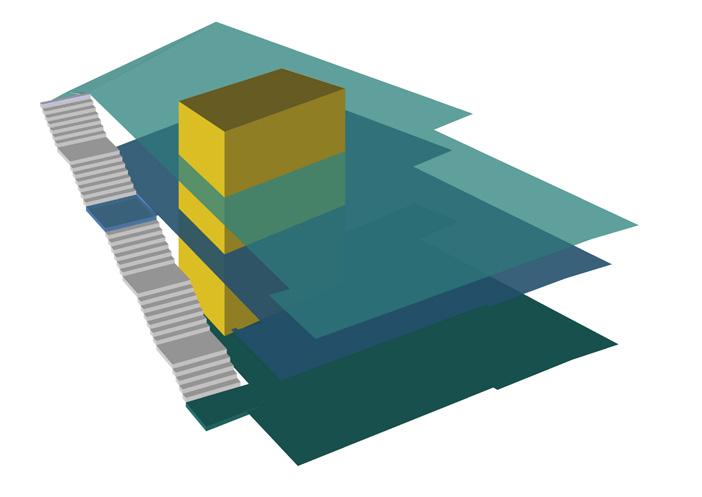
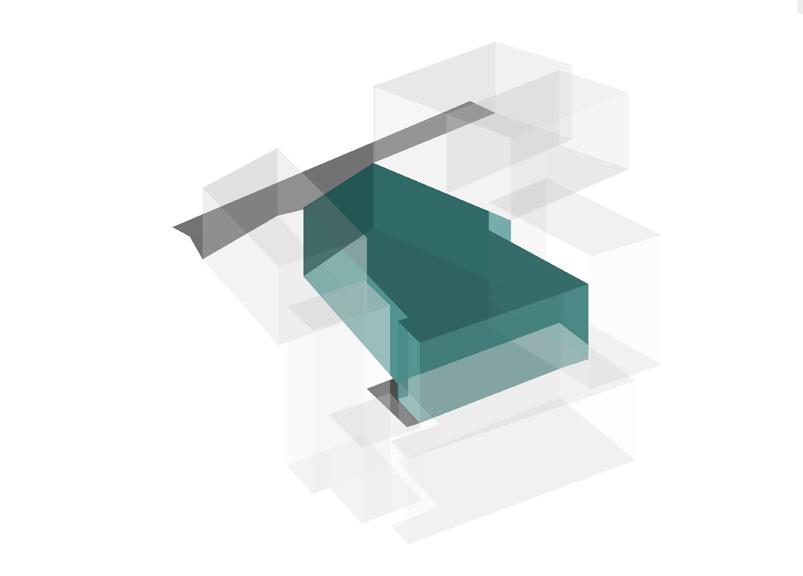 Site is sorrounded by dead walls
Connecting two streets of the site
Public and private space shares the same circulation element
Each landing provides entrance for the different floors and courtyard acts as light well
Services kept on the other side of the staircase
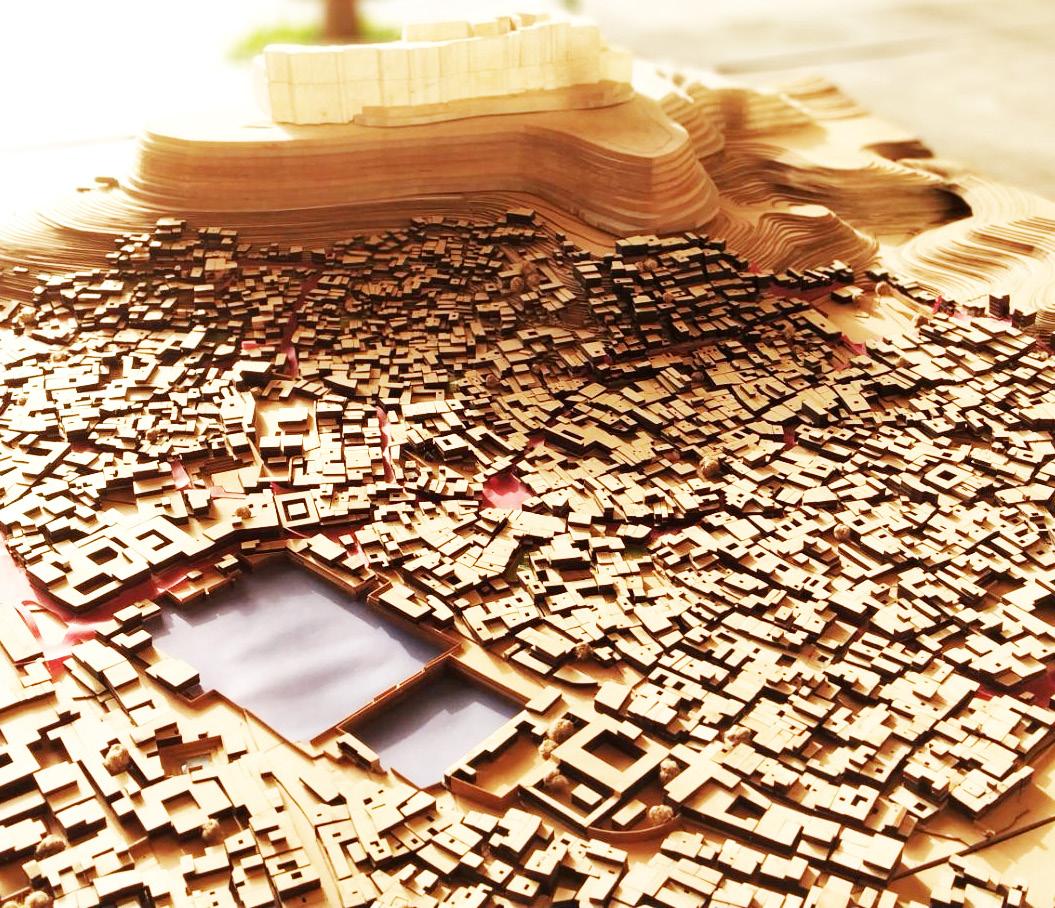
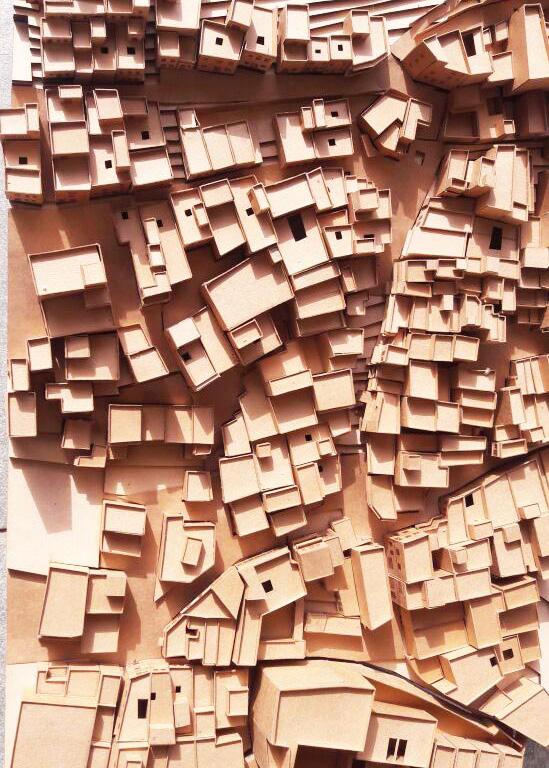
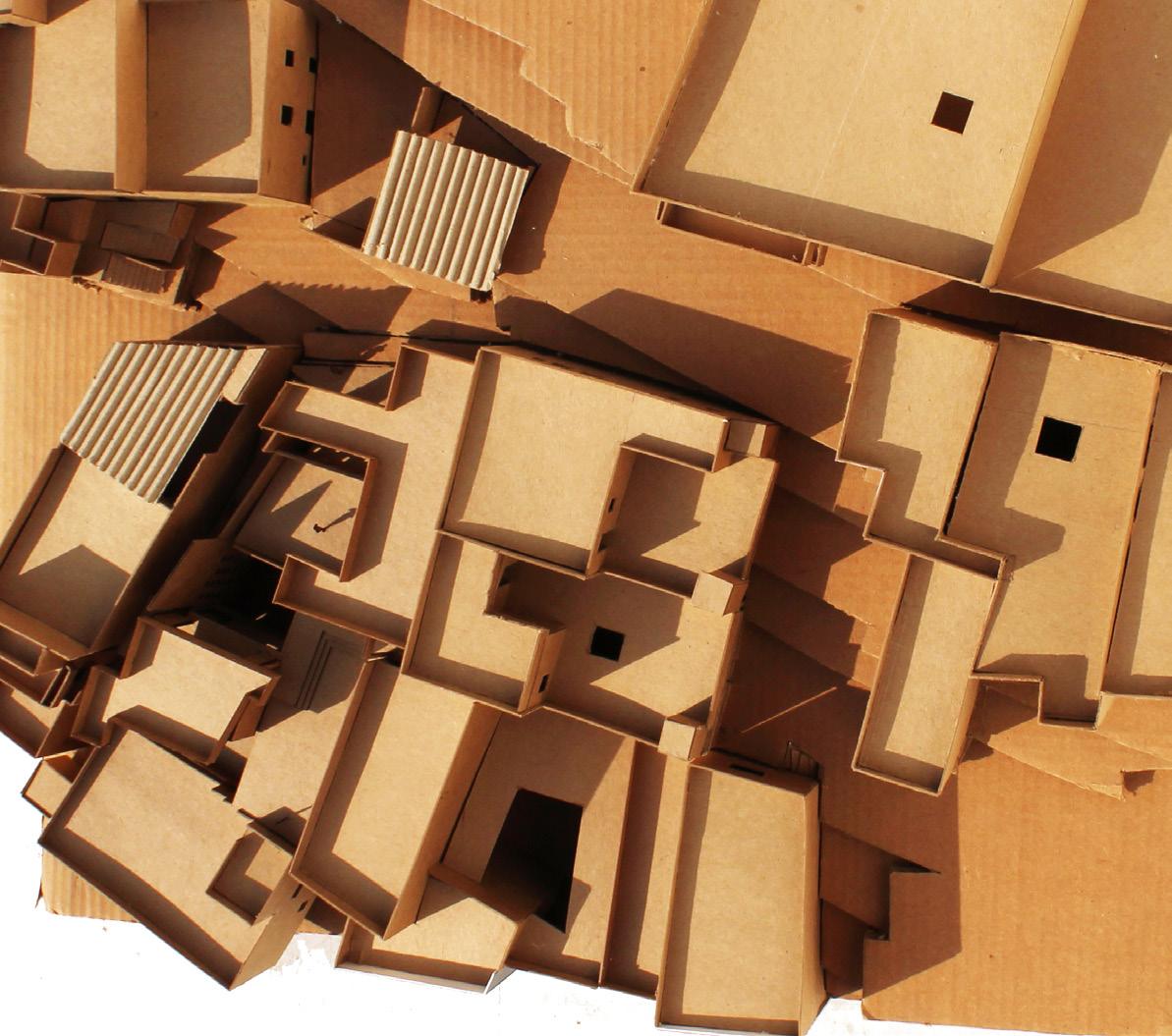
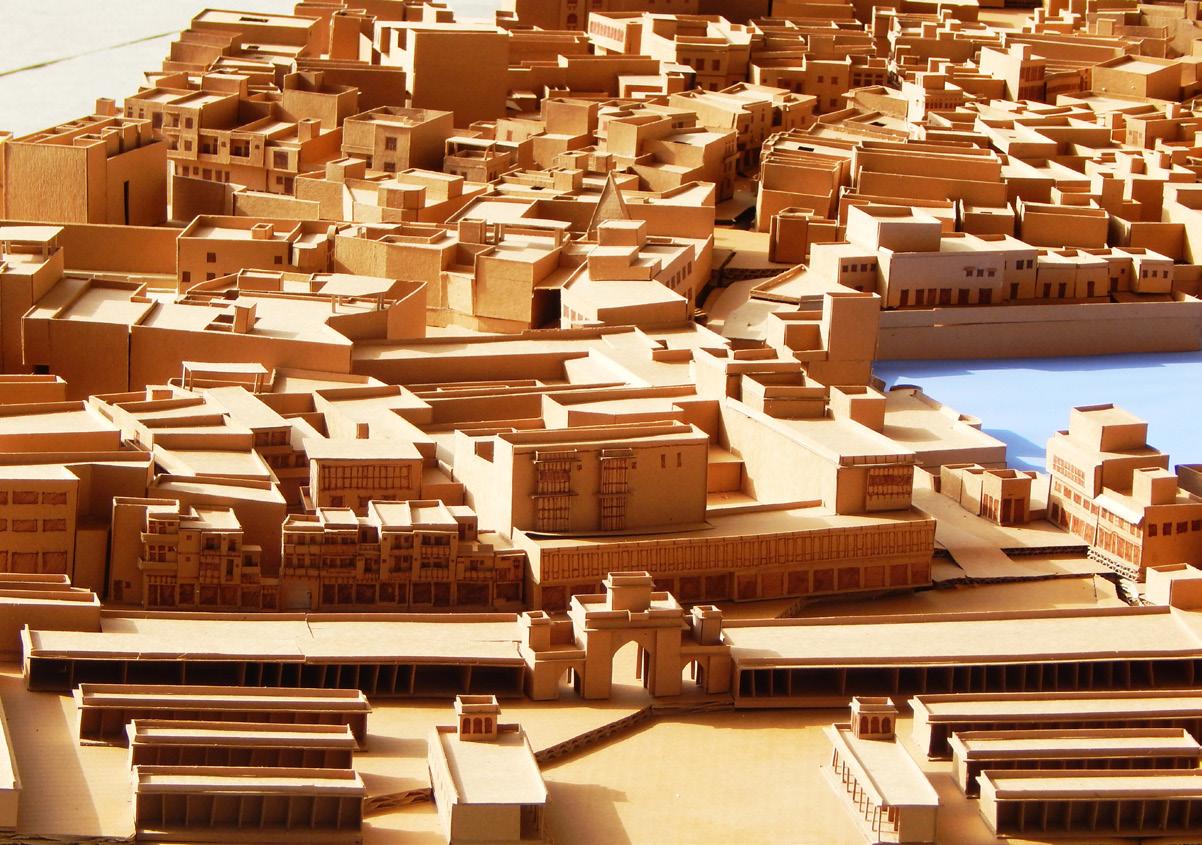
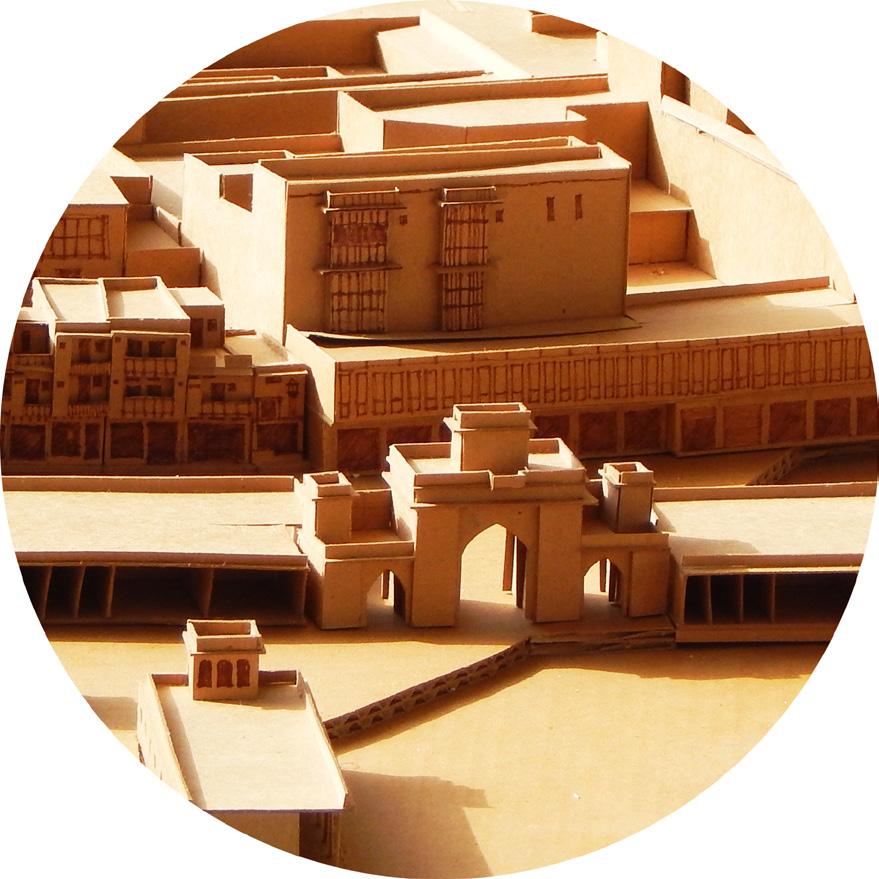
Site model (Marked area is the location of the site) Scale- 1:200
Site model Scale- 1:750
Site is sorrounded by dead walls
Connecting two streets of the site
Public and private space shares the same circulation element
Each landing provides entrance for the different floors and courtyard acts as light well
Services kept on the other side of the staircase
Site model (Marked area is the location of the site) Scale- 1:200
Site model Scale- 1:750
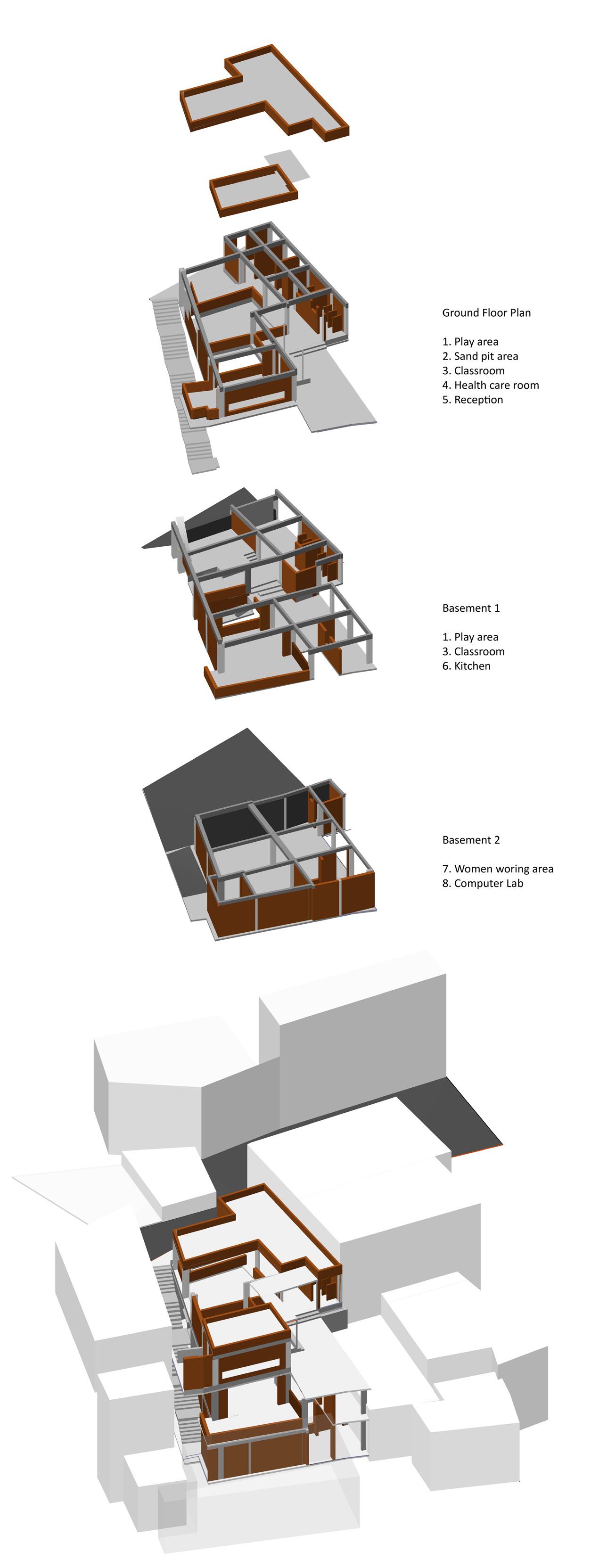
Ground Floor Plan 1. Play area 2. Sand pit area 3. Classroom 4. Health care room 5. Reception Basement 1 1. Play area 3. Classroom 6. Kitchen Basement 2 7. Women work area 8. Computer lab
Site model Scale- 1:200
Design model Scale- 1:100
Zoomed in detail of a site model
Professional Practice (2021)
Firm name: Rajesh Desai
Kothari Residence
Kothari residence is a family home located on the periphery of rapidly growing Ahmedabad city. There is a gas line passing through the center of the plot, dividing it into half. The challenge was to design the house only in the other part, while accommodating all the client’s requirements.
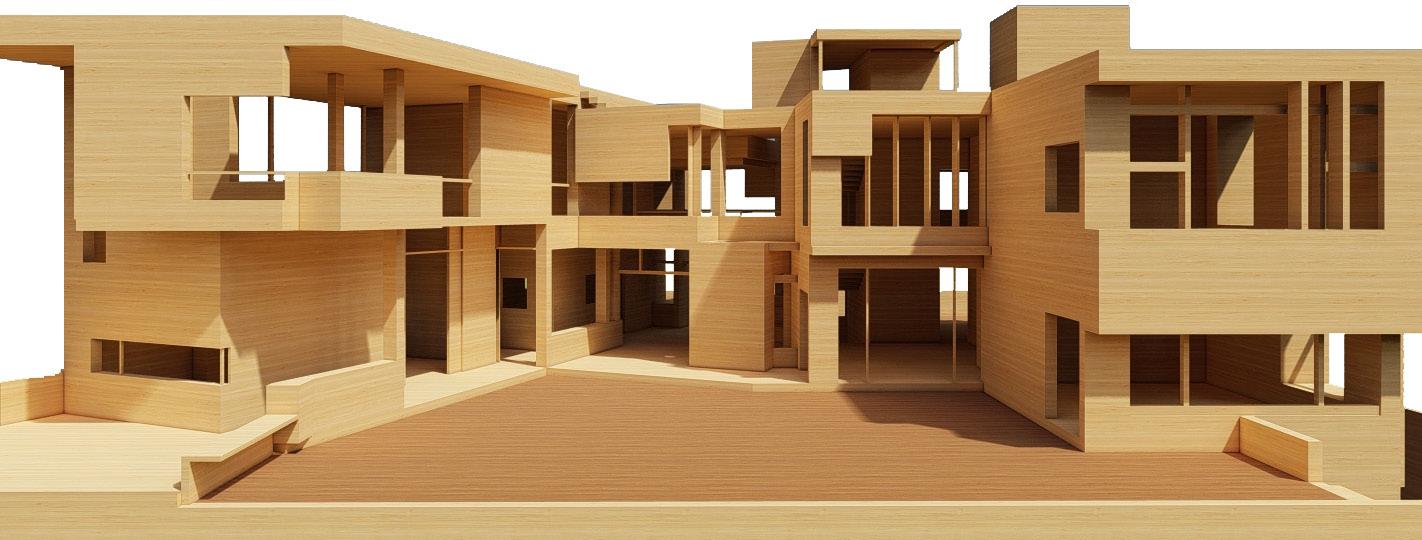
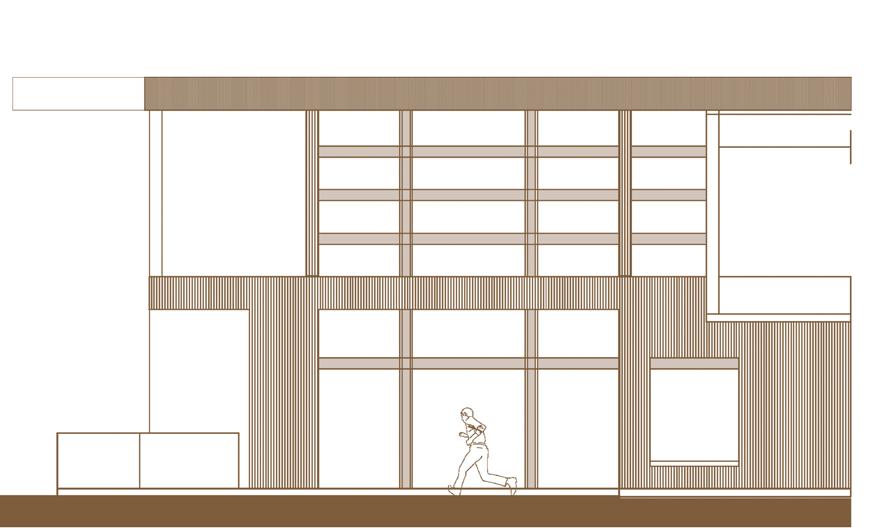
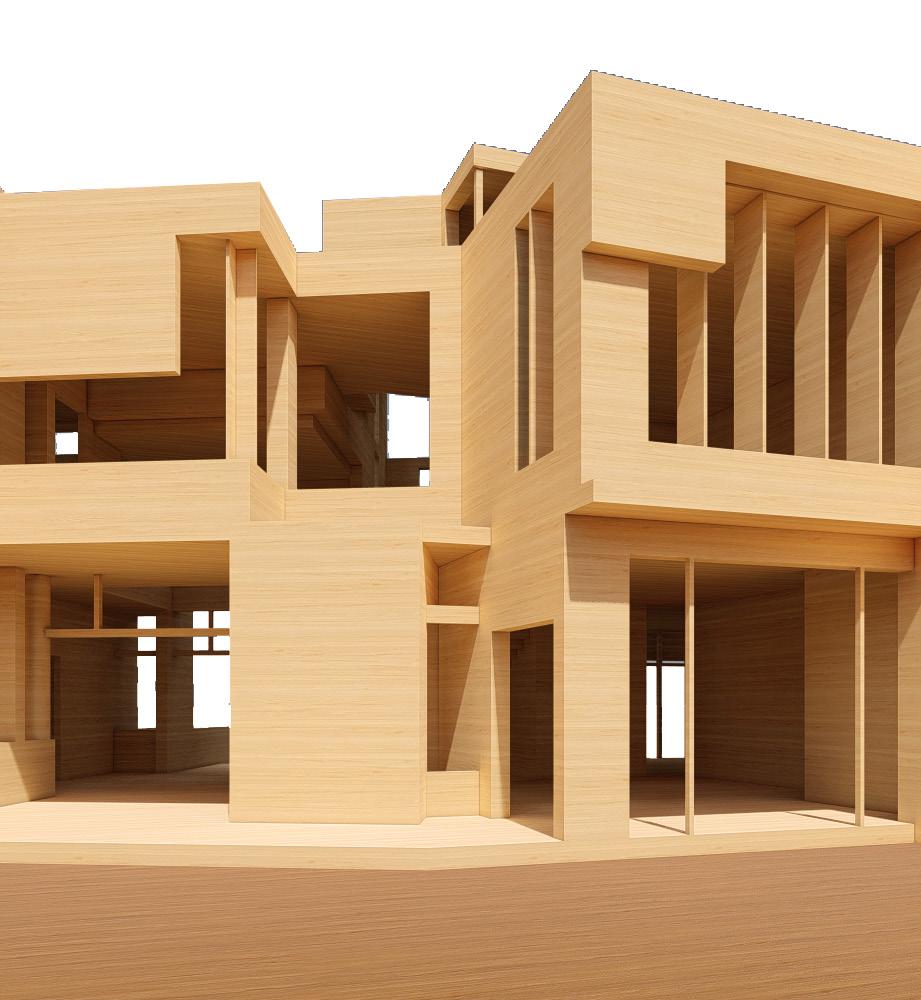
Volumetrically, the house is divided into split levels. The discreetly submerged design gracefully conceals its presence from the roadside, directing attention towards a delightful vertical journey within the central court.
To add a touch of visual intrigue, services are cleverly tucked away within a circular wall, breaking the monotony of the structure. Additionally, the upper floor ingeniously captures abundant natural light from the enchanting rooftop, creating a luminous and inviting ambiance.
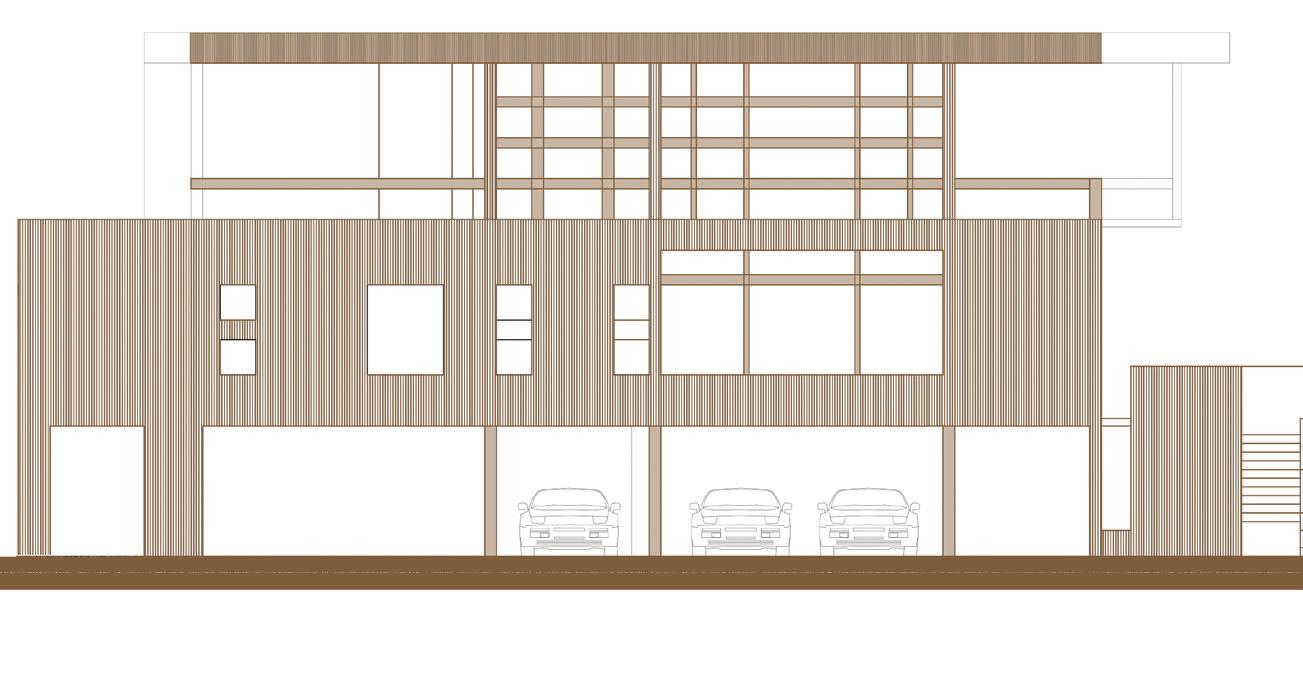 View from the front elevation
View of the house from the courtyard
Conceptual elevation from the front
Conceptual elevation from the main entrance
View from the front elevation
View of the house from the courtyard
Conceptual elevation from the front
Conceptual elevation from the main entrance
Professional Practice (2020)
Firm name: Saransh Architects
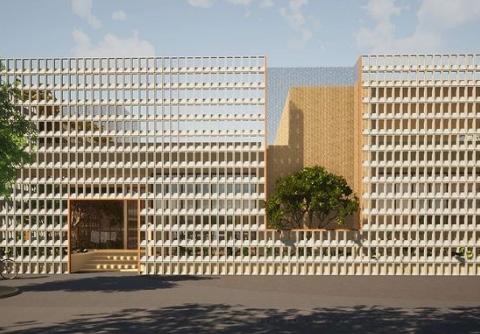
RF CORPORATE HOUSE
The RF corporate house in Mahuva, Gujarat was an ongoing project, designed to serve as a new corporate division for a peanut butter manufacturer. It features three cabins, a workstation area, a conference room, a reception space, service areas such as a kitchen and a toilet.
The space is thoughtfully divided into different areas, which are connected through passages and a central courtyard. The courtyard is a focal point here, visible from all spaces which is enclosed by glass walls and linked with the reception and a waiting area.
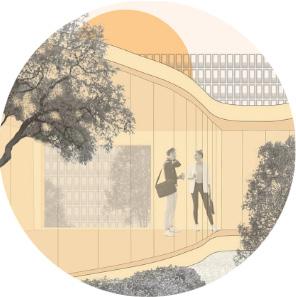
Privacy is ensured by placing all cabins away from the service area and the workstation.
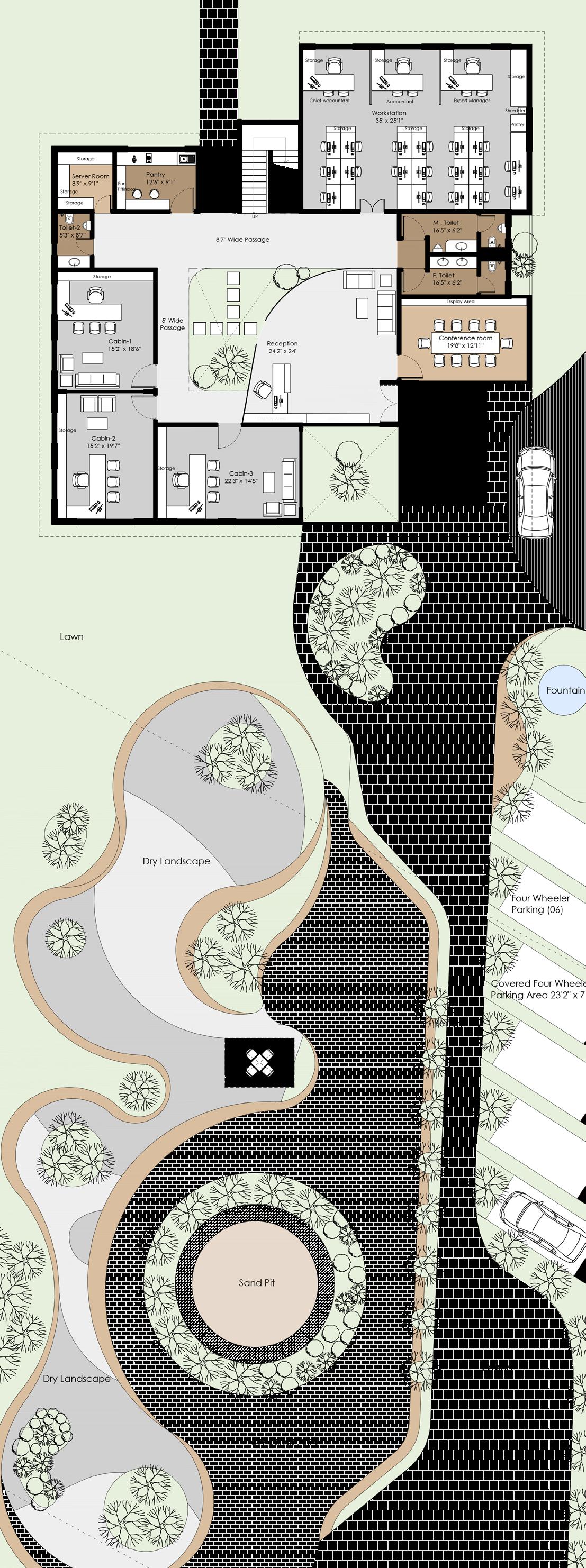 Conceptual landscape layout of the ground floor of the office
View of courtyard from the passage
Metal screen to accent the outer concrete screen
Conceptual landscape layout of the ground floor of the office
View of courtyard from the passage
Metal screen to accent the outer concrete screen
AKSHATAM - 7
Akshatam 7 is a gated row housing project in the newly developing area of Palanpur in the district of Banaskantha, Gujarat.
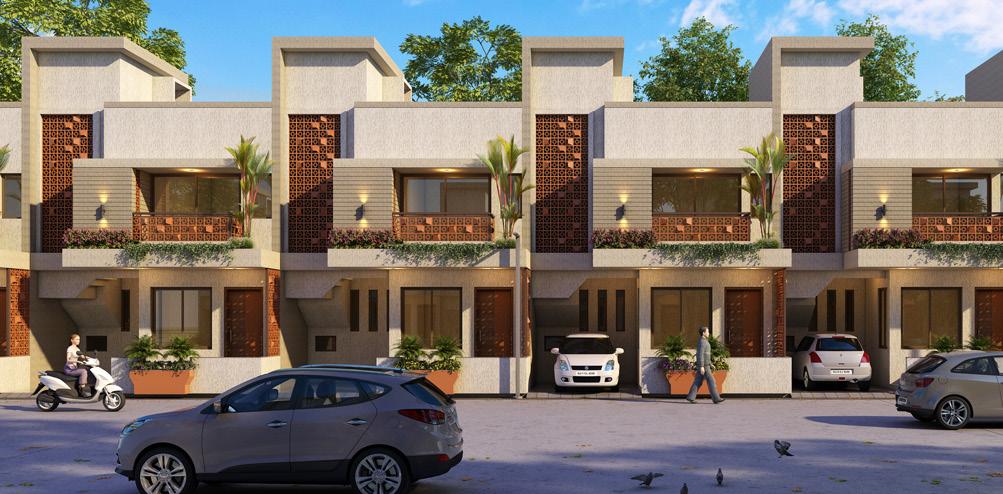
The site has an IOCL line passing through it, so construction on the entire length of that part of the site is restricted. The common open space was designed in this restricted zone, and all the dwellings were designed in the remaining area. There are a few pockets of open space scattered planned to break the monotonous nature of a housing scheme.
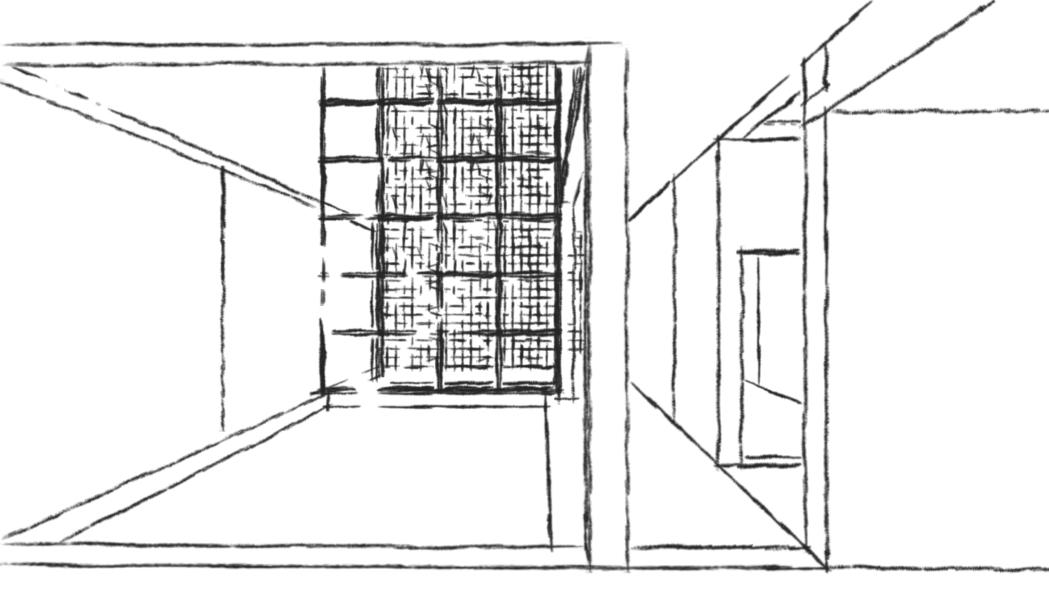
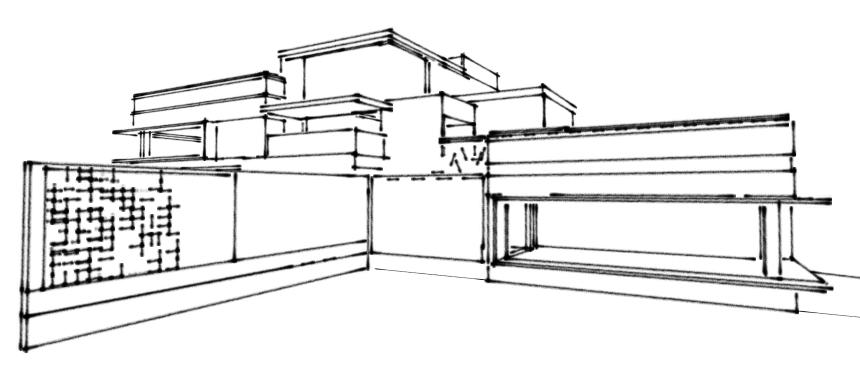
For the units, a covered balcony acts as an extended recreational space to the bedroom. To incorporate and control the nature of light in the stairwell, breezer blocks are used as a part of the facade.
 View of a front elevation
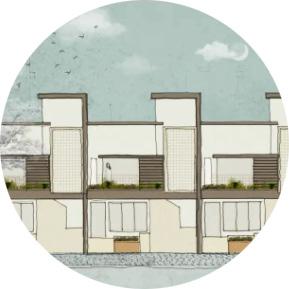
Conceptual elevation of a facade
Conceptual view of a club house from the landscape area
Conceptual sketch of a courtyard facing screen made out of breezer blocks to similar to the housing typology
View of a front elevation
Conceptual elevation of a facade
Conceptual view of a club house from the landscape area
Conceptual sketch of a courtyard facing screen made out of breezer blocks to similar to the housing typology
Internship work - 2016
Firm name: Prabhakar Bhagwat
Life on the Street
Streets: Demonstrating a public place that spills over and infusing life as a living spine between Retail and the North Spine.
This is the first stage of design development and evolution of the street which shows the different possibilities that can be done on the pavement with these elements showing in the plan. While there are different edge conditions that can be seen in typical layout and section.
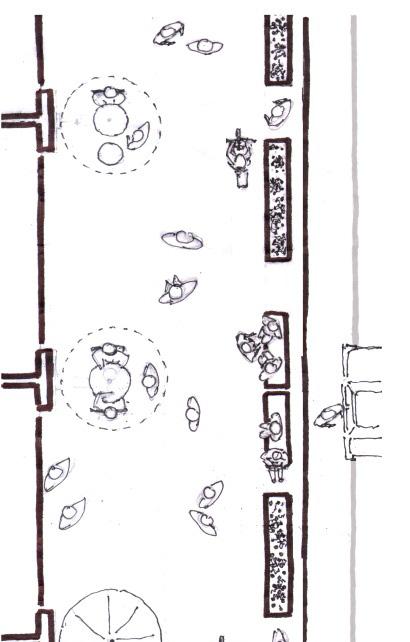
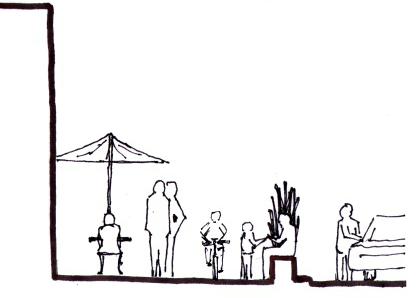
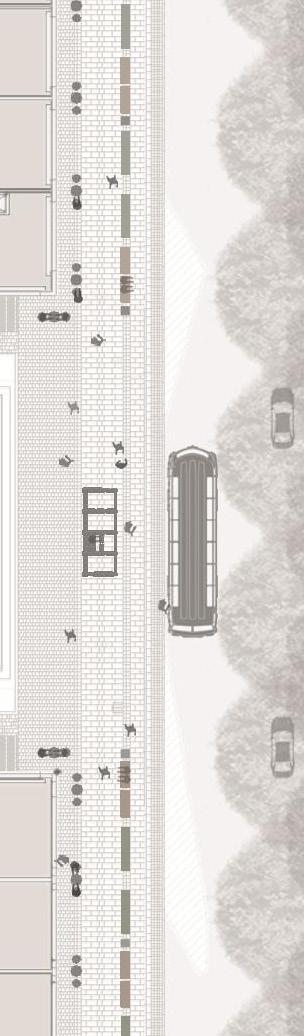
PLAN Bus Stand (4.8 M wide) (Ht:2.5 M) Bench (1.5 M wide) (Ht:0.45 M) Planting trough (2.4 M wide) (Ht:0.45 M) Dustbin (0.45 M X 0.45 M) (Ht:1 M) Café table sitting (0.60 M dia.) (Ht:0.75 M) Cycle Stand (@ 0.6 M c/c ) (Ht:0.9 M) Café table sitting Walkway + Bicycle path Road 1.5 2.7 0.3 M CoMbined 3 3’ Section 33’
Typical Layout and Section of an edge condition Section 33’ Plan of the Street
Maharashtra: Nature Park & Mithi River Bridge
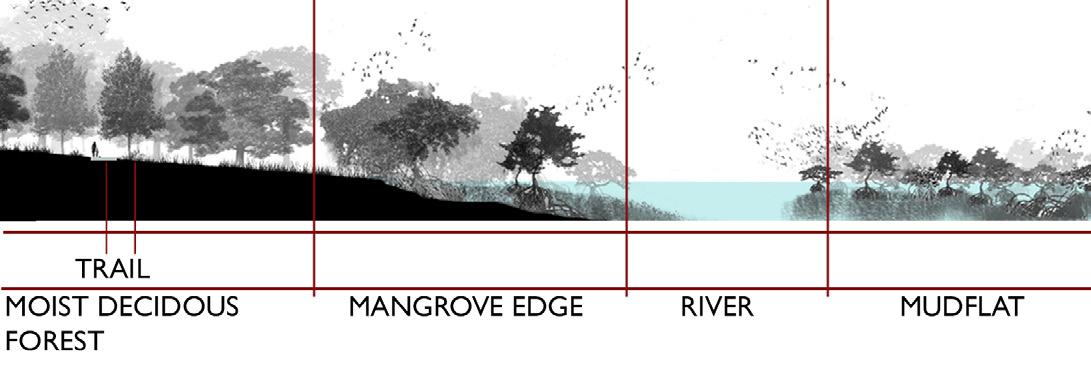
The Mahim Nature Park Makeover- An ecological intervention for the citizens of Mumbai to understand and embrace nature amidst the busiest and most densely populated part of Mumbai city.
Visualized as a sustainable model for the conservation and restoration of the park, estuary, and mangroves with an extension of the park over the BKC side.

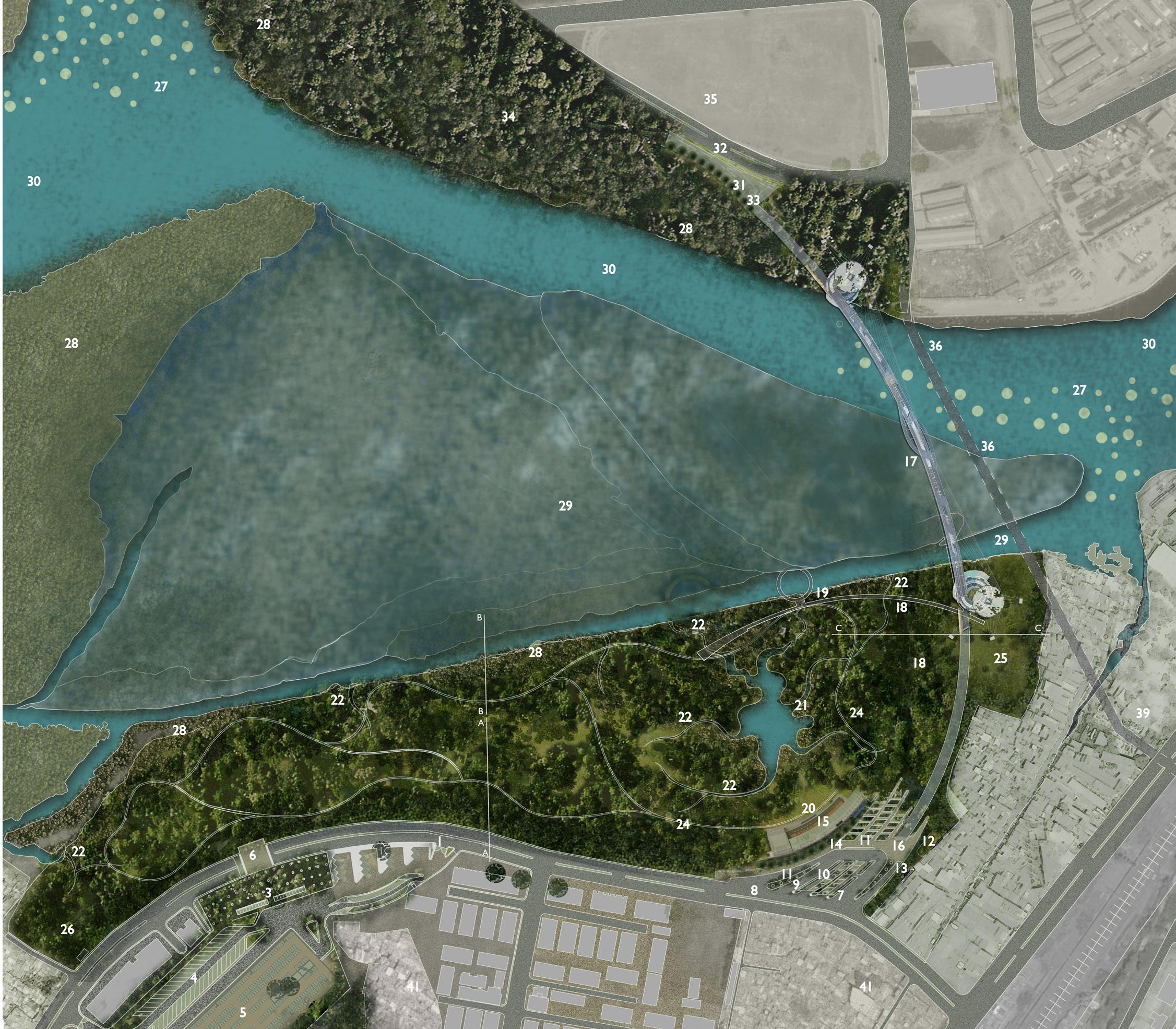 Presentation drawing of the master Plan
Section BB’
Section CC’
Presentation drawing of the master Plan
Section BB’
Section CC’
Personal Projects
Nook & Corners- Reshamwala’s house
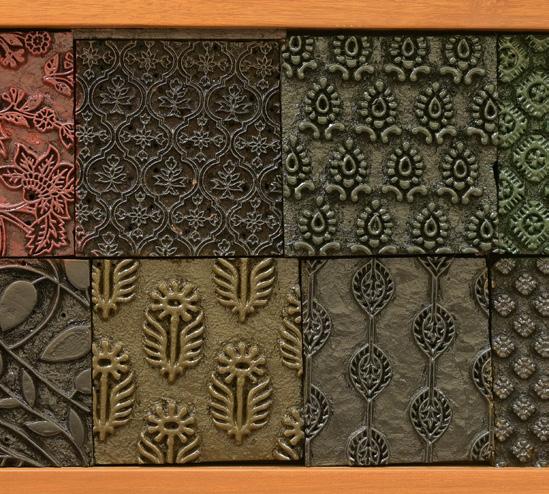
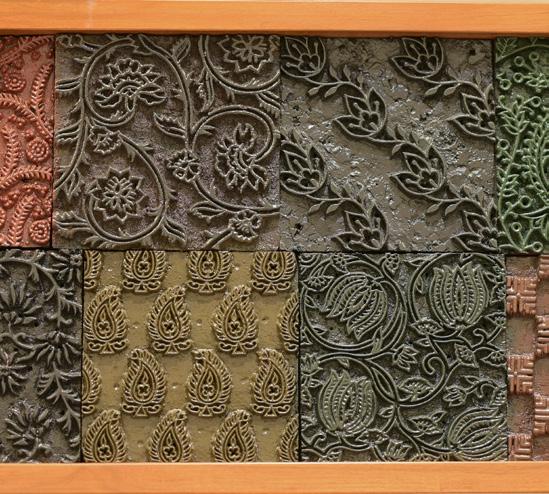
Reshamwala house, nestled in Ahmedabad City. The design accommodates four bedrooms and a living space.
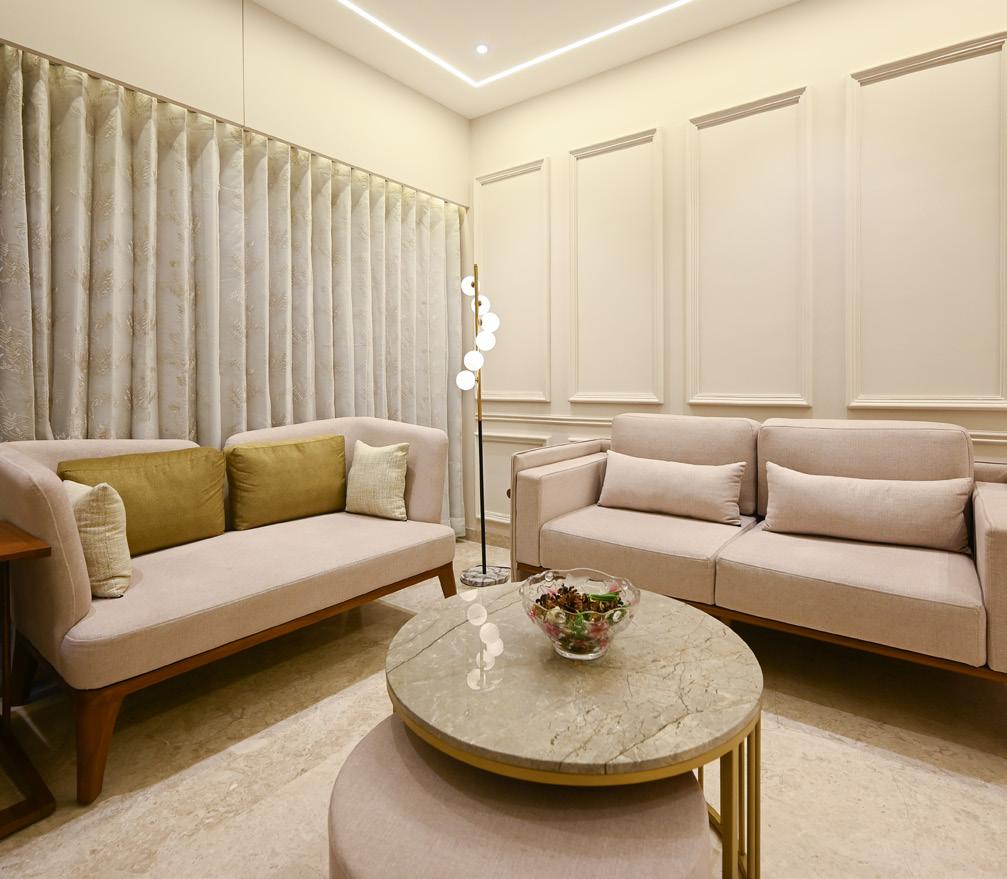
The idea was to utilize every corner of the house to reflect the client’s lifestyle. Traditional charm graces the living area, while each bedroom embodies a unique concept, reflecting user preferences.
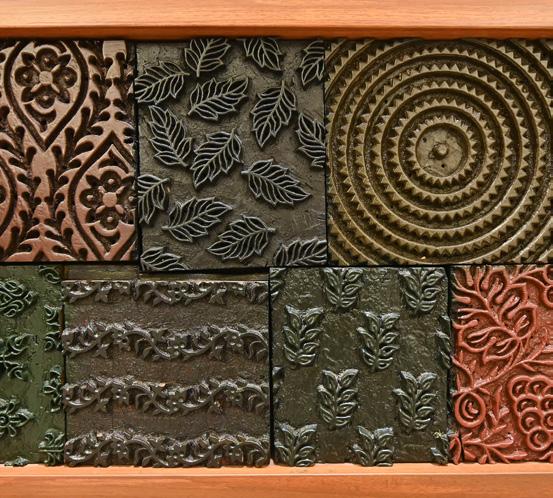
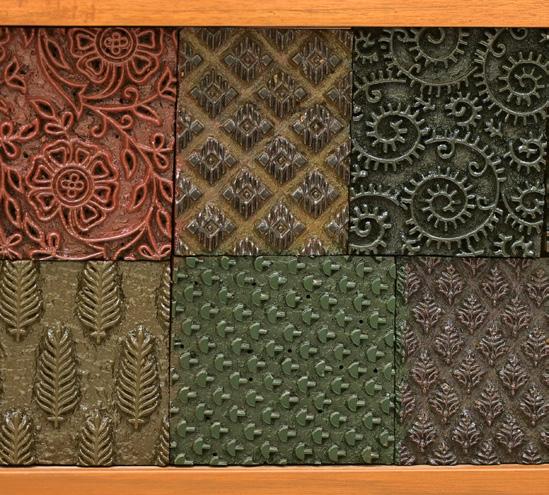
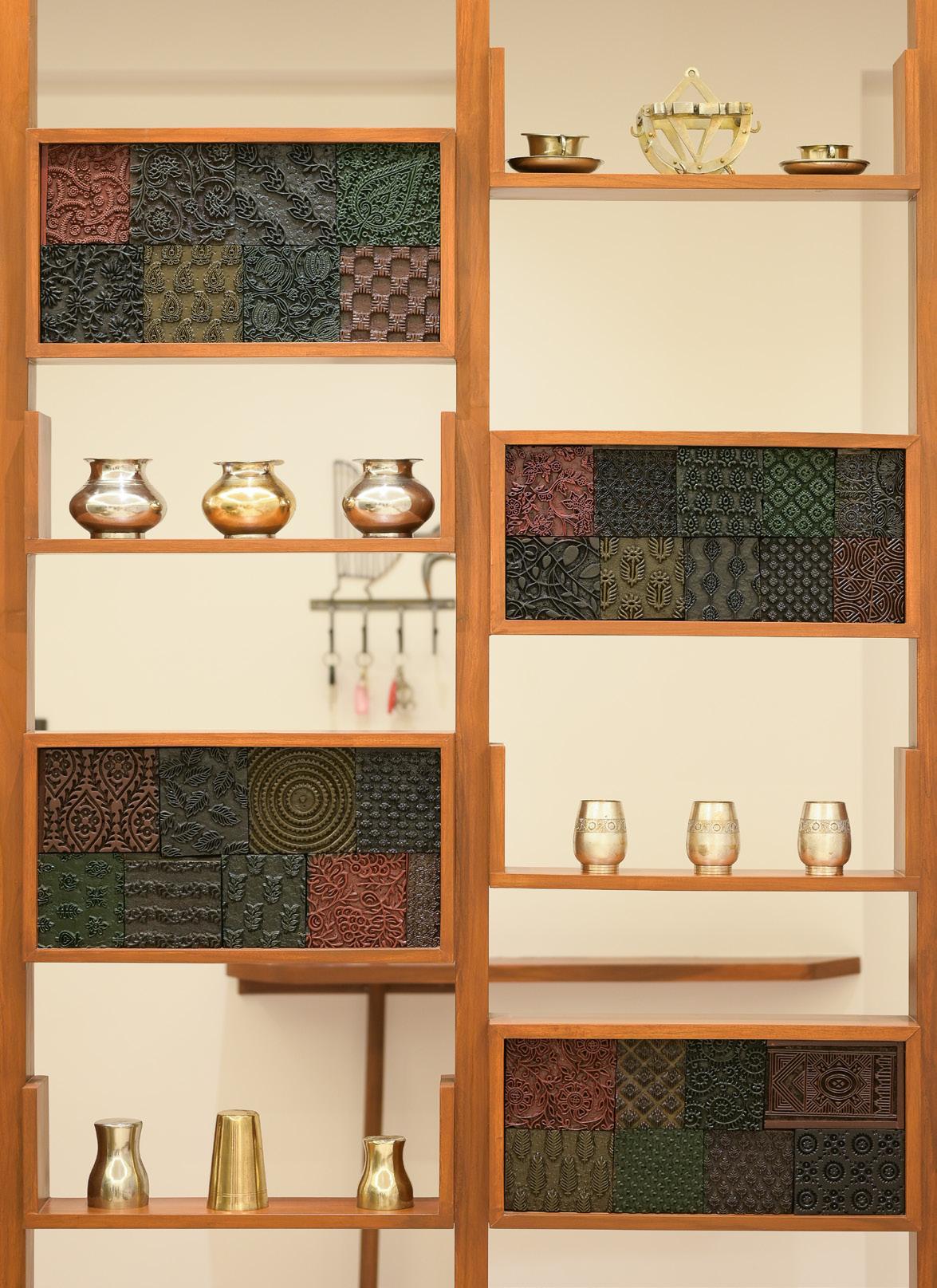
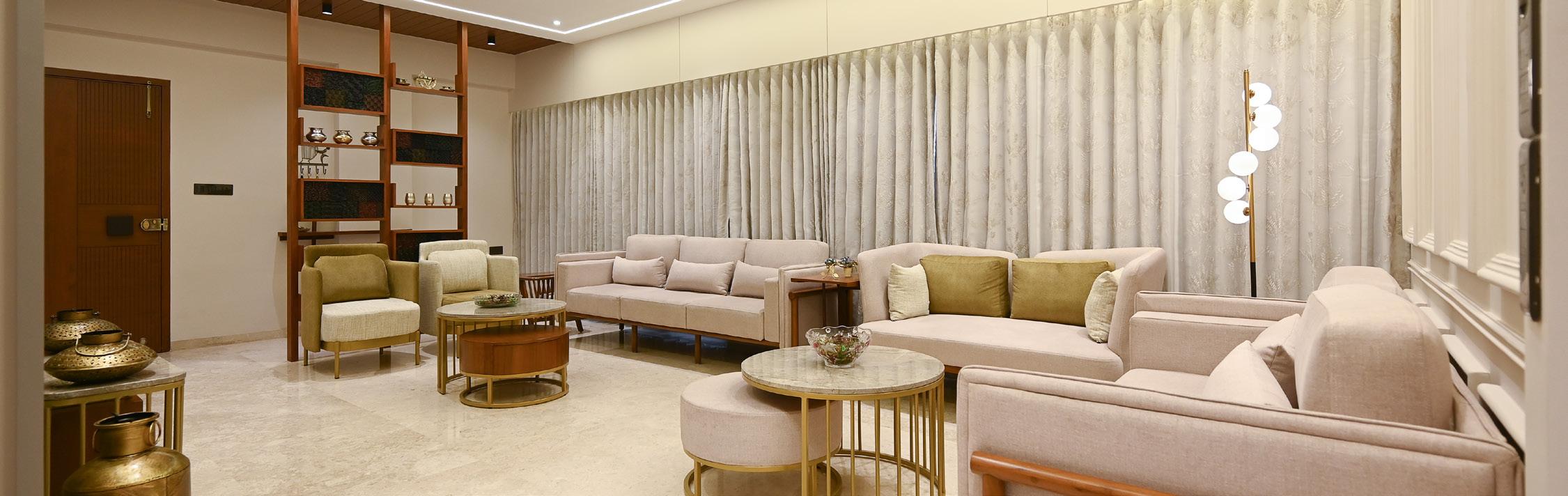 Partition made out of wooden blocks to add the traditional touch to the living room
The harmony of materials and colors complemented by placing light elements in the living room
Partition made out of wooden blocks to add the traditional touch to the living room
The harmony of materials and colors complemented by placing light elements in the living room
P A T T E R N A S S O R T M E N T
View of a Living room from a dining space
Related Study Programs
Tropical Wisdom, Sri Lanka
In December 2015, I embarked on an inspirational tour to explore the architectural marvels of Geoffrey Bawa, a renowned Sri Lankan architect and pioneer of ‘tropical modernism’
During this tour, I immersed myself in his iconic creations such as the Kandalama Hotel, the Sri Lankan Parliament, the Seema Malakaya, the Bentota Beach Resort, the Lighthouse Hotel and the Lunuganaga, meticulously studying twenty of his projects. Swift sketches captured the interplay between structure and surroundings
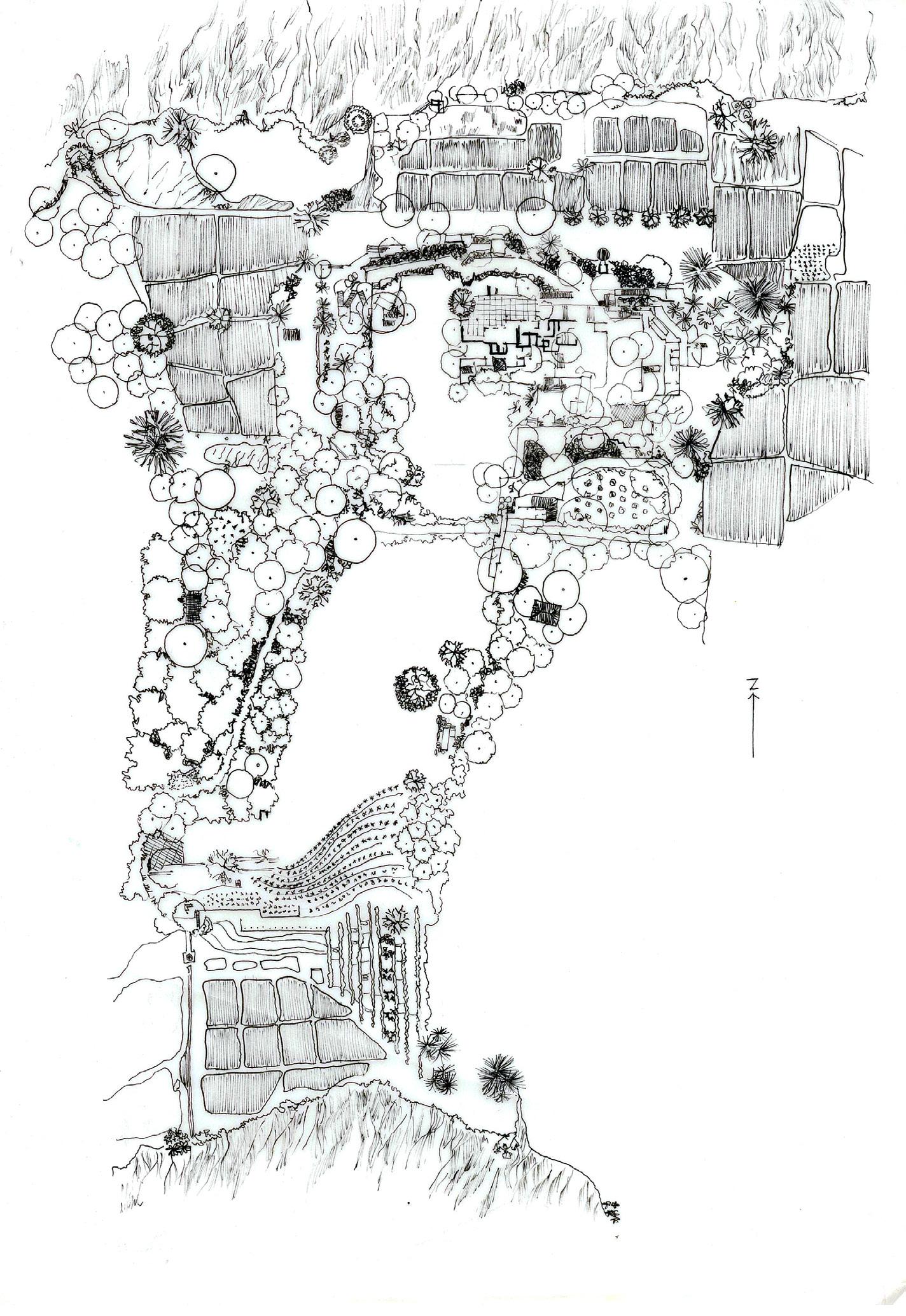
Bawa’s designs transcend boundaries, seamlessly blending the inside and the outside through artful courtyards and gardens, creating a poetic scene of interconnected spaces.
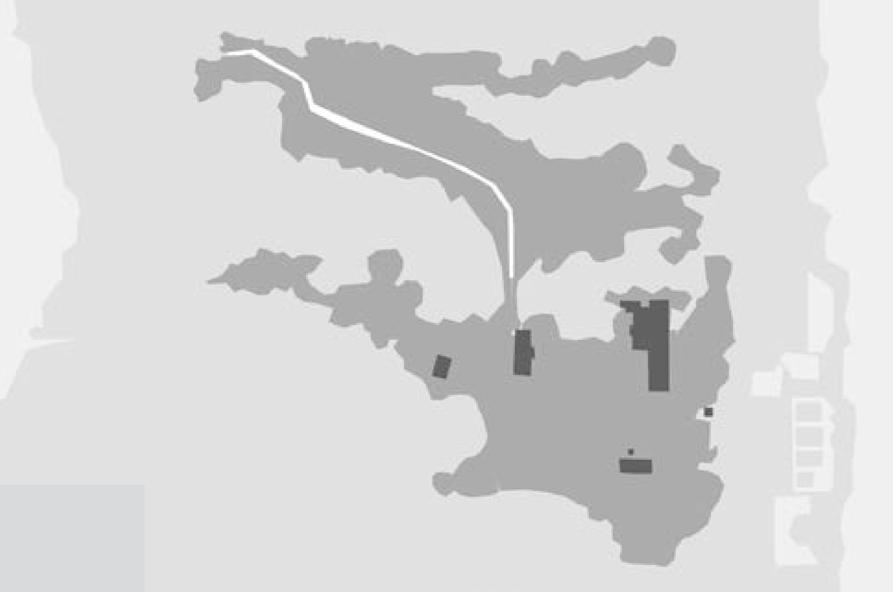
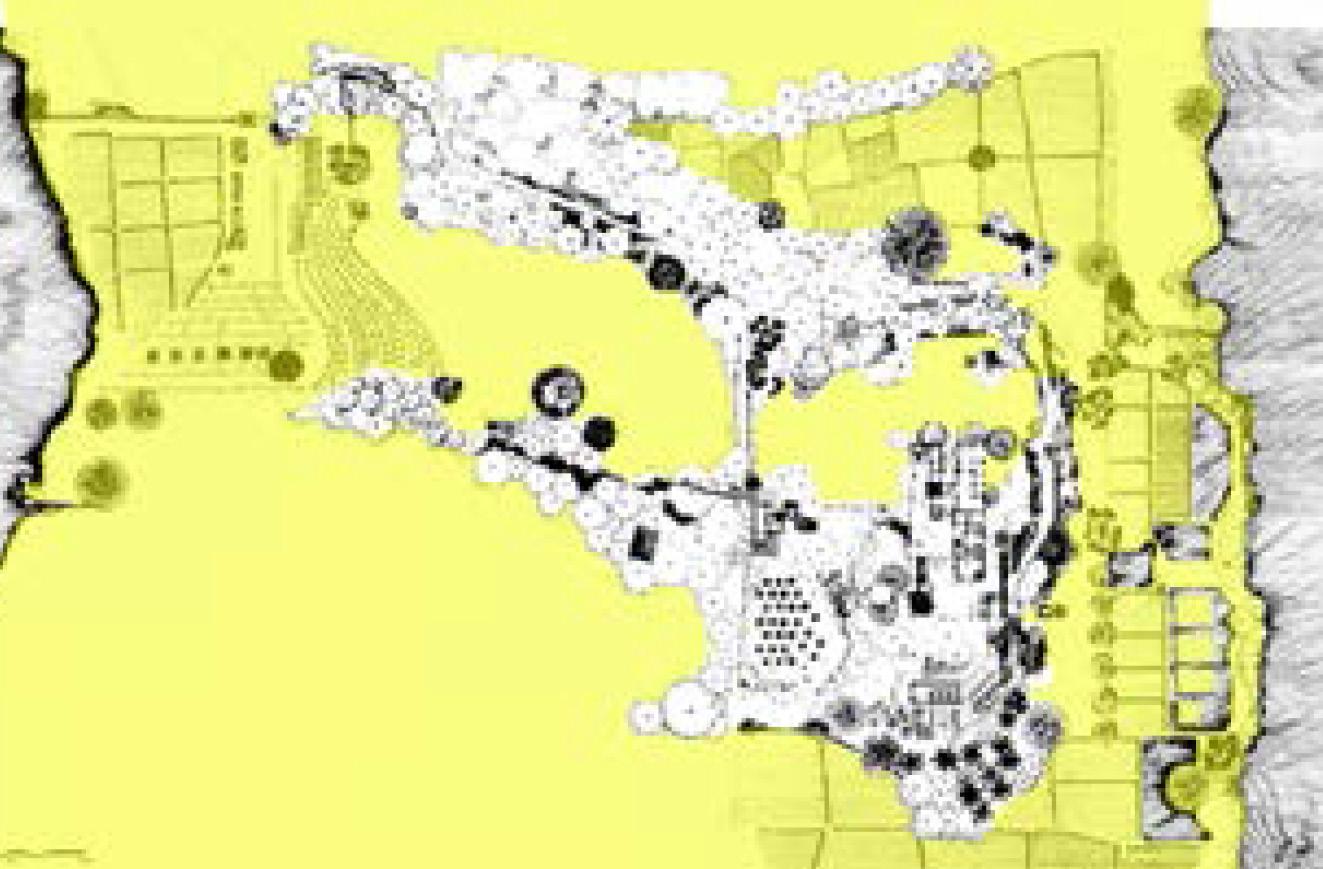
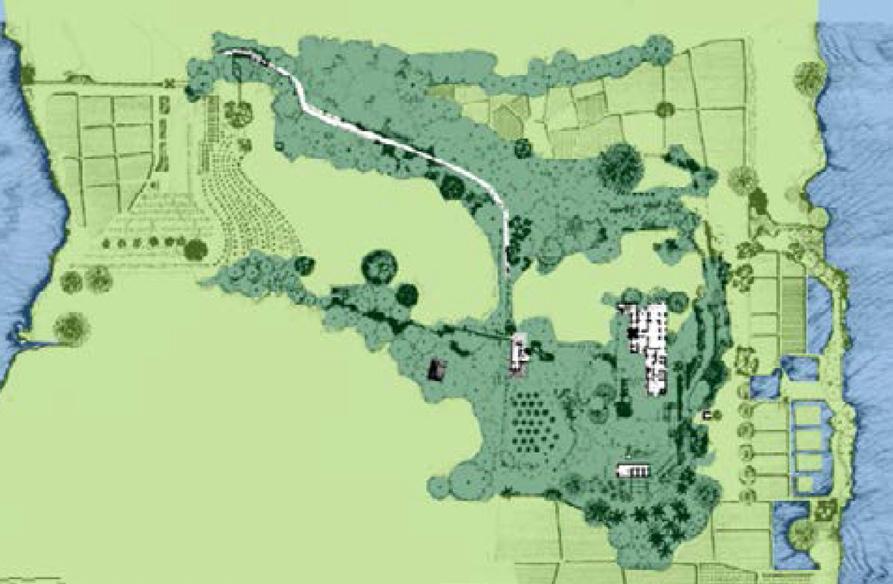 Plan of a Lunuganga garden
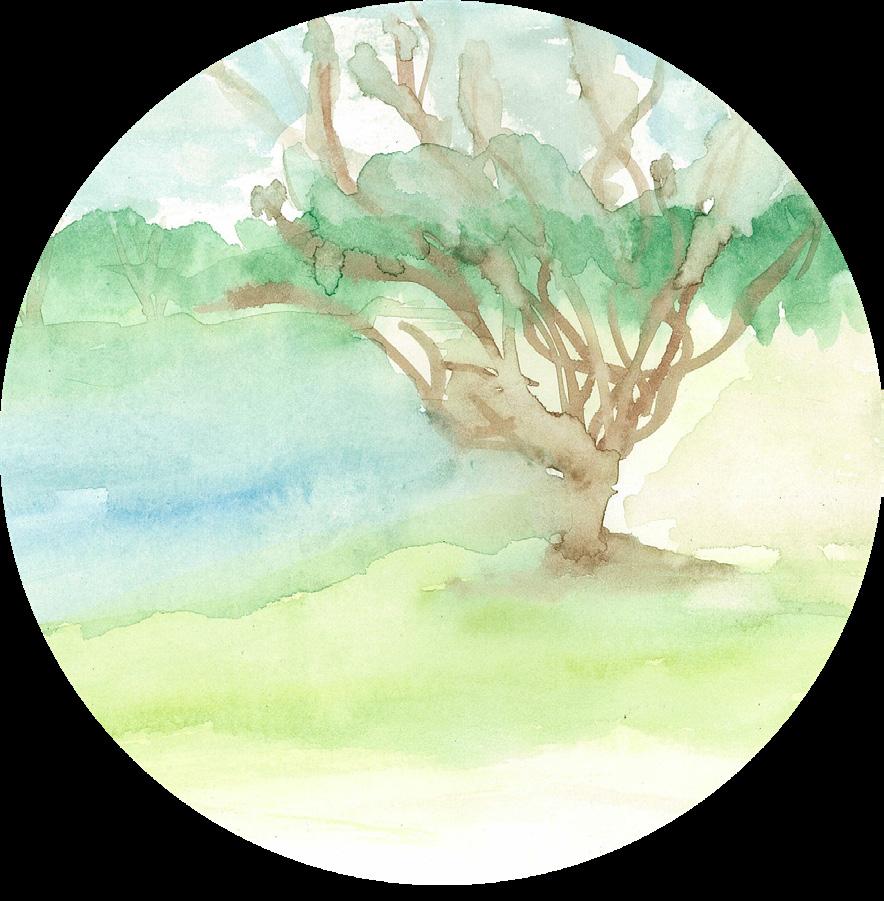
A tree by the lake side spreading out its arms to welcome the visitors
The collage of outside is created by cultivated gardens and uncultivated jungles.
Layer of in-betweeness
The water body gives a gesture of bringing the lake into the design.
Plan of a Lunuganga garden
A tree by the lake side spreading out its arms to welcome the visitors
The collage of outside is created by cultivated gardens and uncultivated jungles.
Layer of in-betweeness
The water body gives a gesture of bringing the lake into the design.
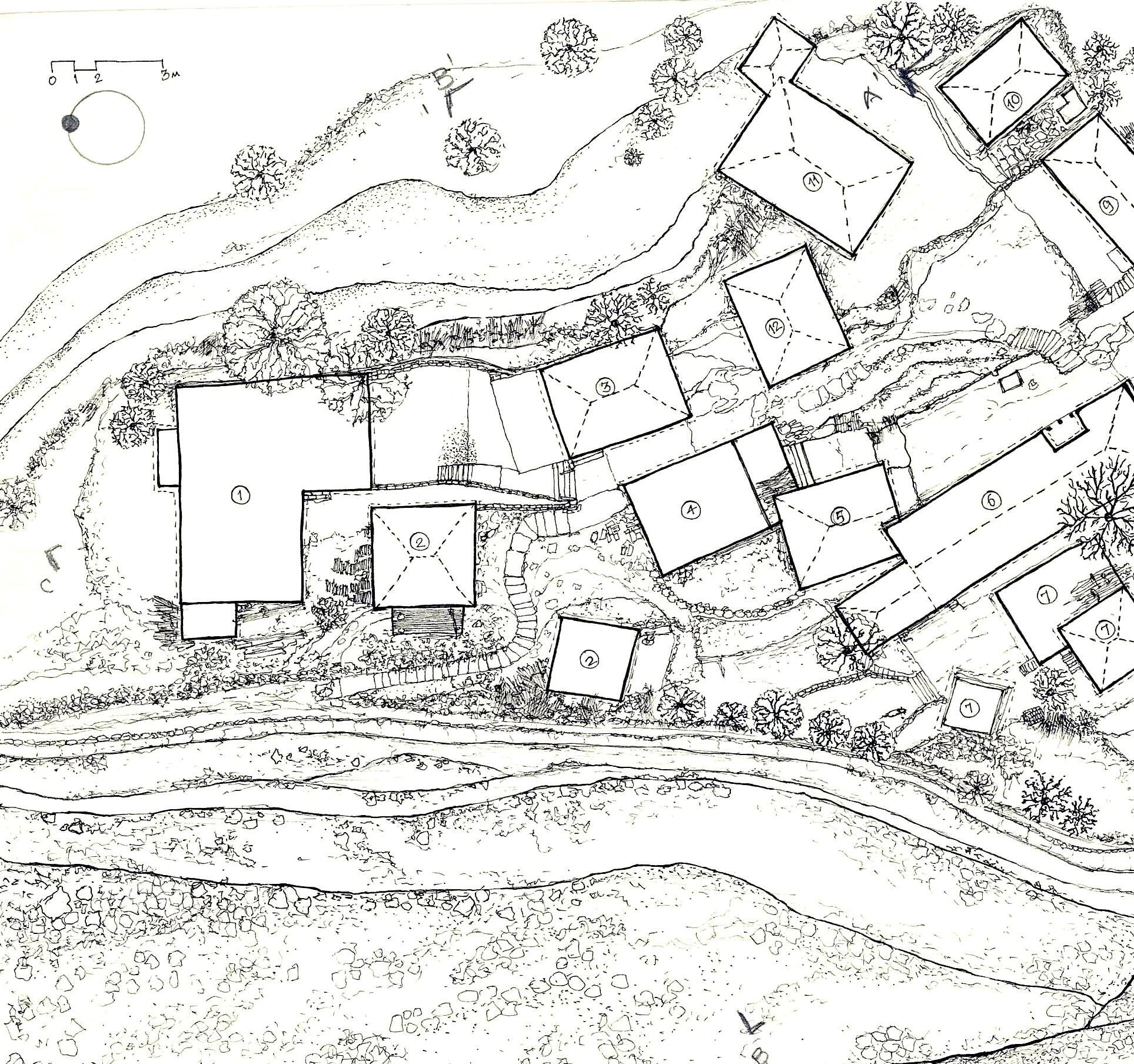
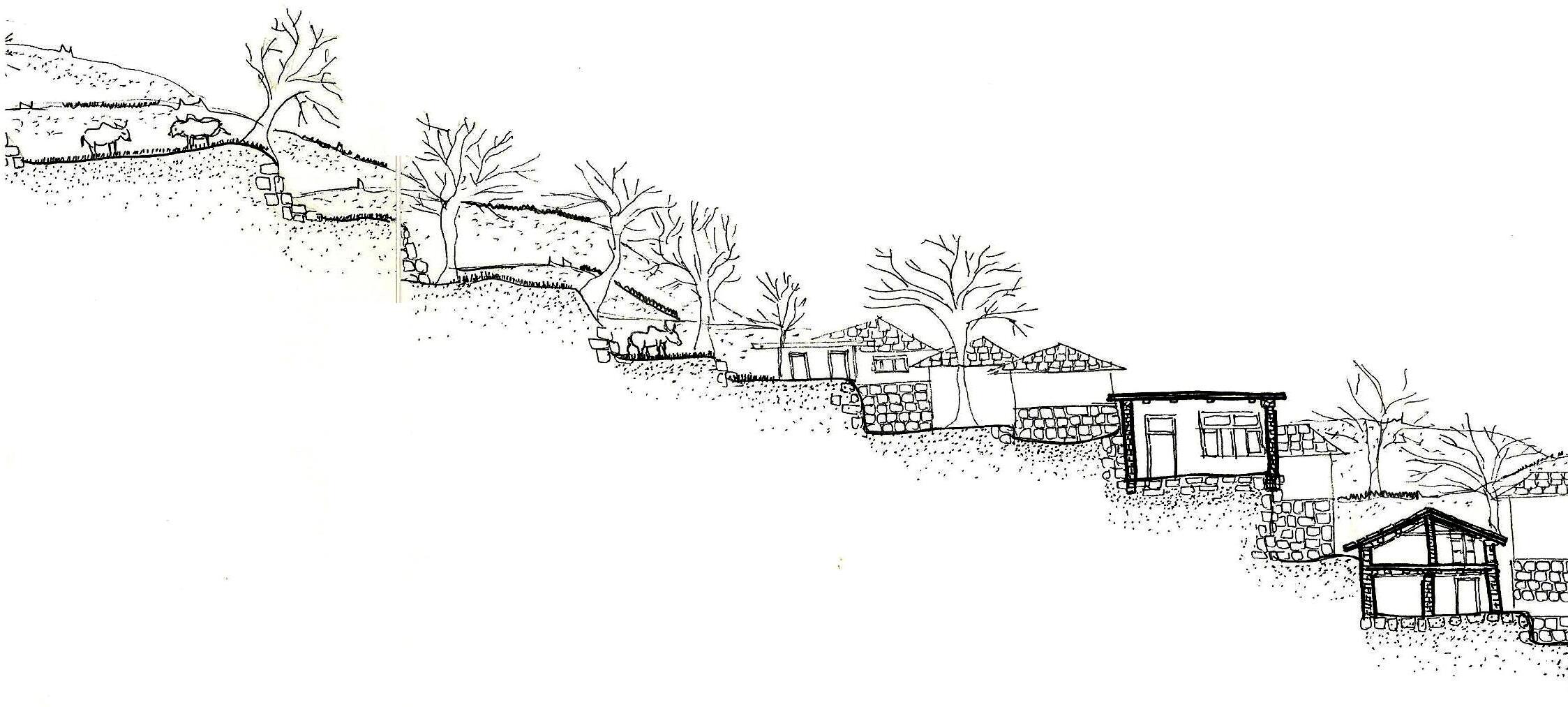 Site section of a Naddi village
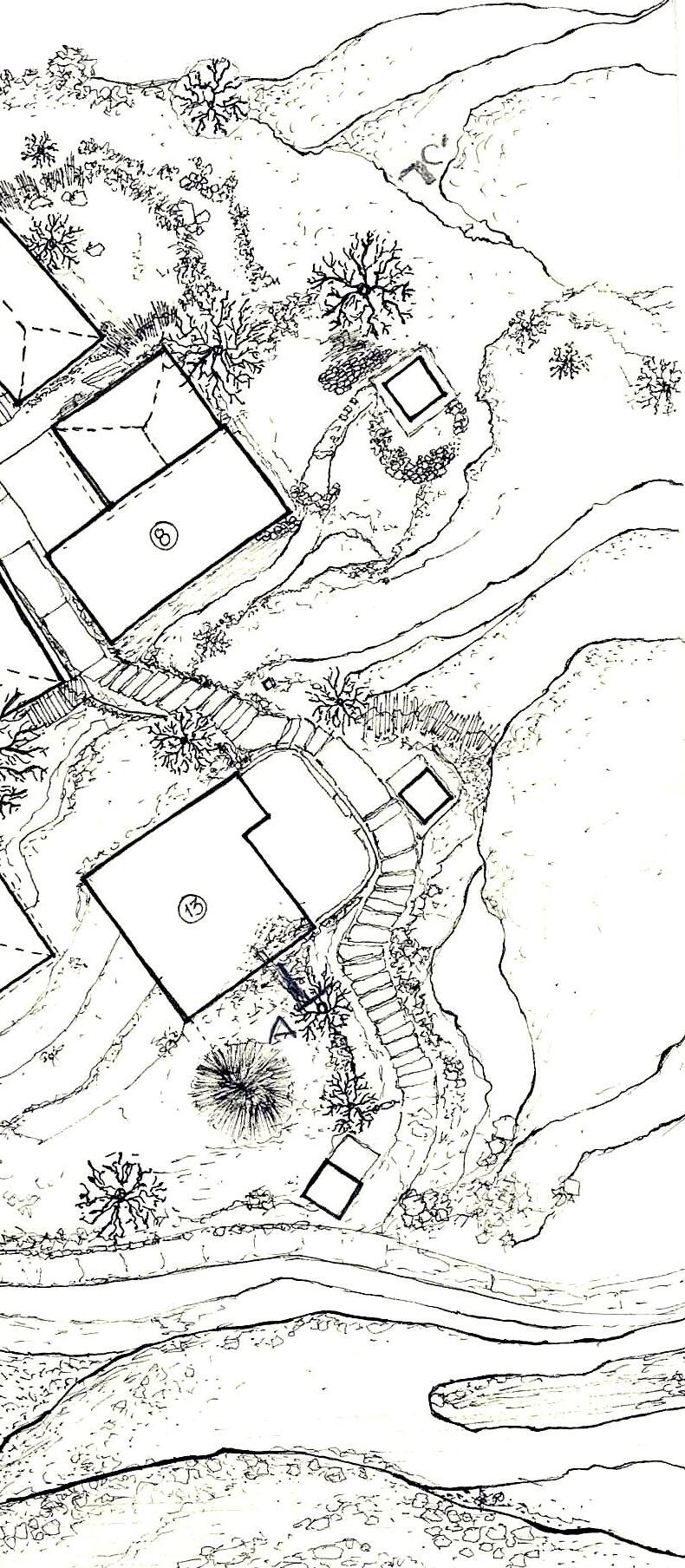
Plan of a Naddi village
Site section of a Naddi village
Plan of a Naddi village
Naddi Village, Himachal Pradesh
In December 2014, a study program was conducted in Himachal Pradesh to explore the proportions without any measuring tool and compare house forms between colder and hotter and drier climates.
Three clusters from the Naddi village and the Bal village were documented, showing variations in construction due to climate.
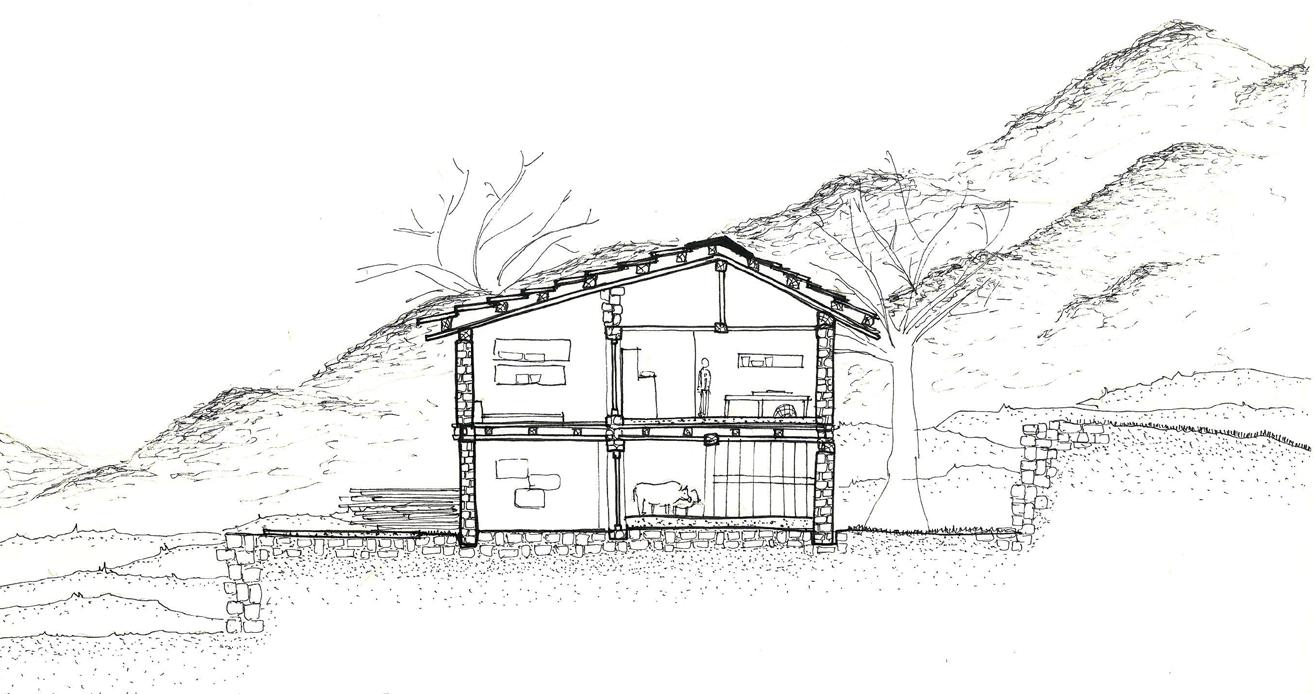
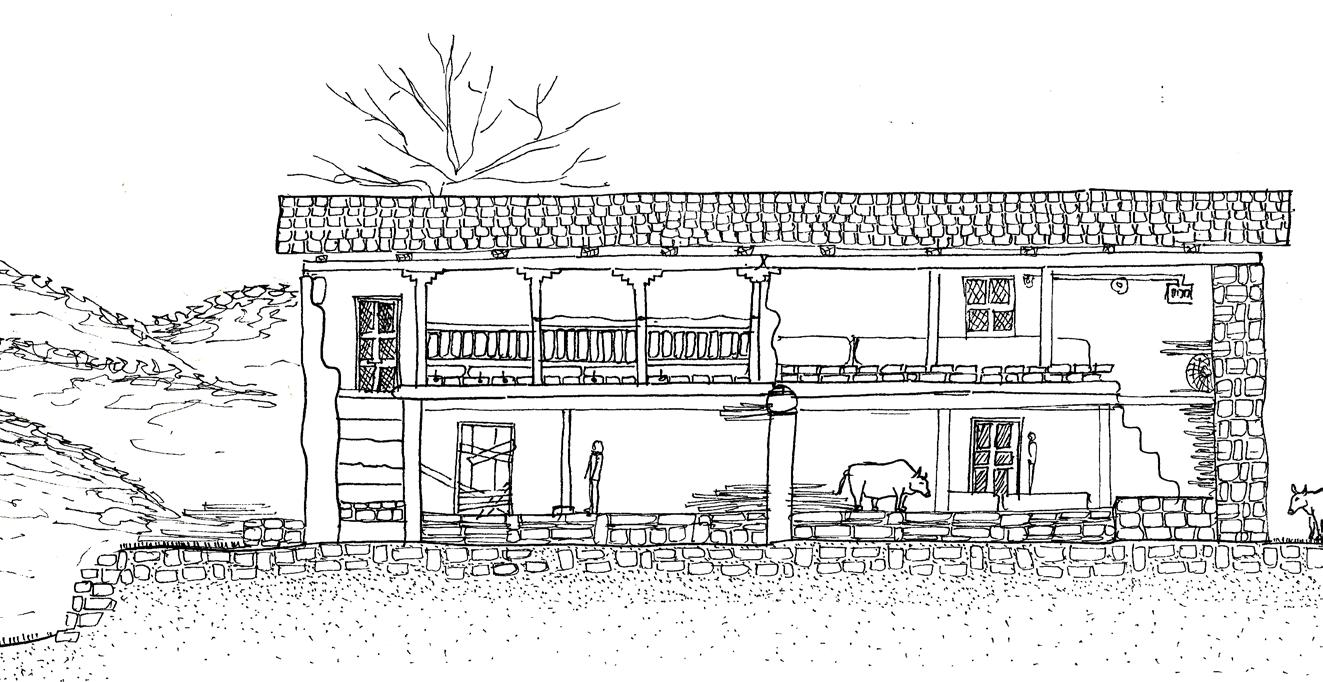
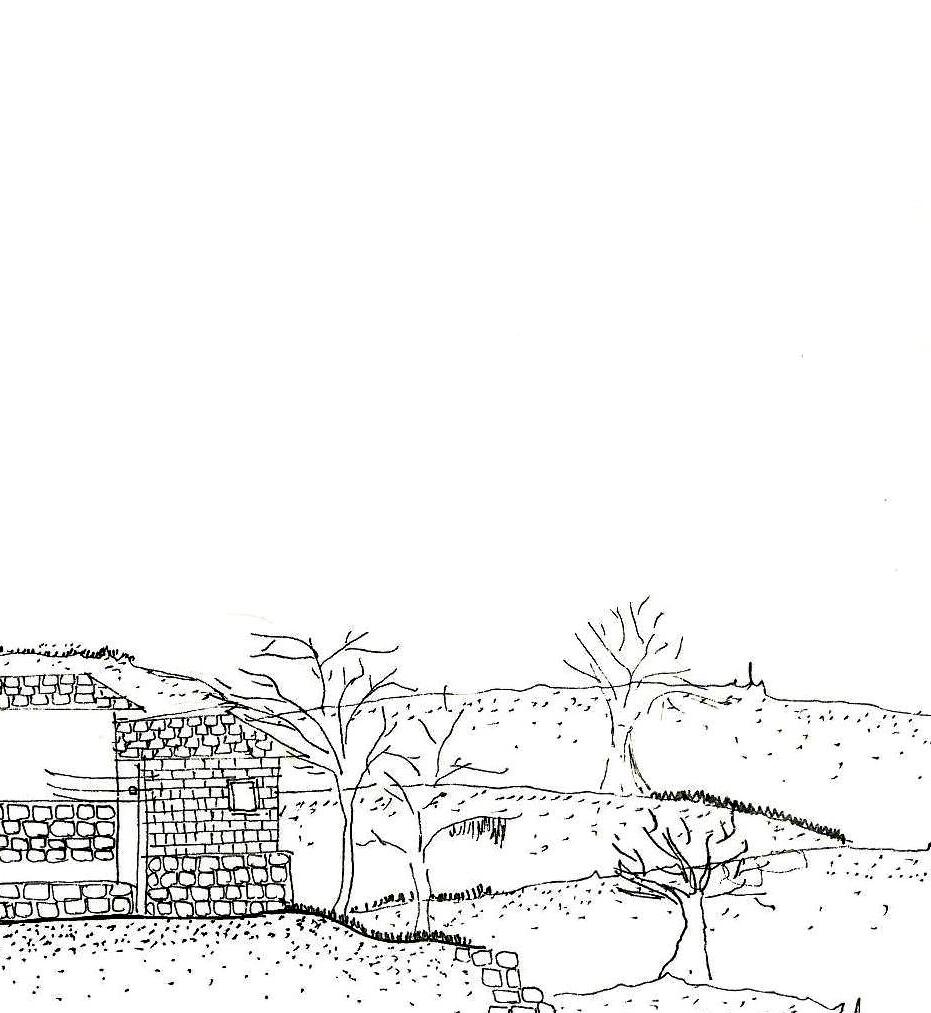
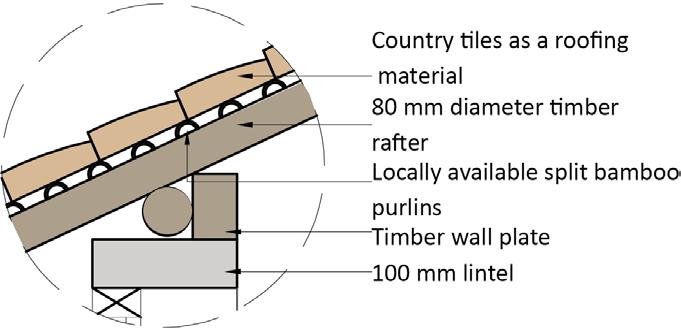
The traditional kath khuni technique was used, using stone and wood as primary materials. The program also highlighted diverse cultural aspects like traditional clothing, lifestyle, festivals, and religion, reflecting regional differences.
interdependency,
Elevation of a house in Bal village
Section of a house in Bal village

Rushavi Shah rushavi96@gmail.com 612-685-5313