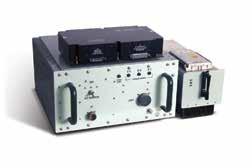



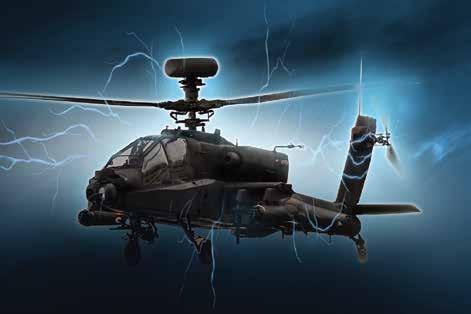

Introducing the VPXtra® 500DW-IQI, Behlman’s latest power supply with a wide range DC input that is fully compliant for all platforms in the Army CMFF program. This rugged, highly reliable switch mode 3U VPX unit meets a new standard of adaptability, and is backed by unmatched integration support from the Behlman team.
> Developed in alignment with the SOSA™ Technical Standard and VITA 62.0
> Delivers over 482 watts of DC power via two outputs
> 90% typical efficiency
> Features cutting-edge Tier 3 software
> System management integration via VITA 46.11 compatible IPMC
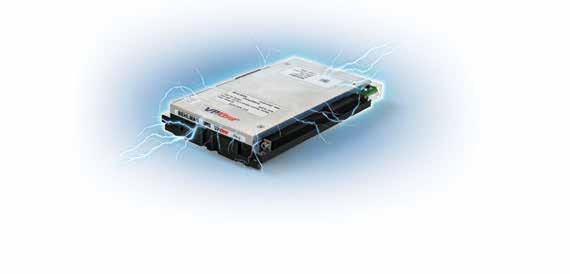


COTS (kots), n. 1. Commercial off-the-shelf. Terminology popularized in 1994 within U.S. DoD by SECDEF Wm. Perry’s “Perry Memo” that changed military industry purchasing and design guidelines, making Mil-Specs acceptable only by waiver. COTS is generally defined for technology, goods and services as: a) using commercial business practices and specifications, b) not developed under government funding, c) offered for sale to the general market, d) still must meet the program ORD. 2. Commercial business practices include the accepted practice of customer-paid minor modification to standard COTS products to meet the customer’s unique requirements
—Ant. When applied to the procurement of electronics for the U.S. Military, COTS is a procurement philosophy and does not imply commercial. Office environment or any other durability grade. E.g., rad-hard components designed and offered for sale to the general market are COTS if they were developed by the company and not under government funding.
By Jessica McFate, Vice President Director of Intelligence Operations at Babel Street
By Christian Jonglas, Technical Support Manager at GAIA Converter.


EDITORIAL
EDITORIAL SUBMISSION AND RELEASES
johnr@rtc-media.com
PUBLISHER/CEO
John Reardon • johnr@rtc-media.com
CONTRIBUTING EDITORS
John Reardon, Odile Ronat
ART AND PRODUCTION
CREATIVE DIRECTOR
Shae Mirizzi • shae.reardon@gmail.com
DIGITAL MARKETING MANAGER
Scott Blair • scott@blair-media.com
AD TRAFFIC
Vaughn Orchard • vaughno@rtc-media. com
FINANCE AND ACCOUNTING
Paige Reardon • paiger@rtc-media.com ADMINISTRATION/CIRCULATION
Dawn Dunaway • dawnr@rtc-media.com
ACCOUNT MANAGER
SALES MANAGER
Vaughn Orchard • vaughno@rtc-media. com
CUSTOM AND CONTRACT SERVICES
John Reardon • johnr@rtc-media.com
COTS Journal
CORPORATE OFFICE
RTC Media
110 S Rancho Santa Fe, Virgin UT 84779 PO 790039
Phone: (949) 226-2023
Fax: (949) 226-2050
www.rtc-media.com
PUBLISHED BY RTC MEDIA
Copyright 2025, RTC Media. Printed in the United States. All rights reserved. All related graphics are trademarks of The RTC Group. All other brand and product names are the property of their holders.






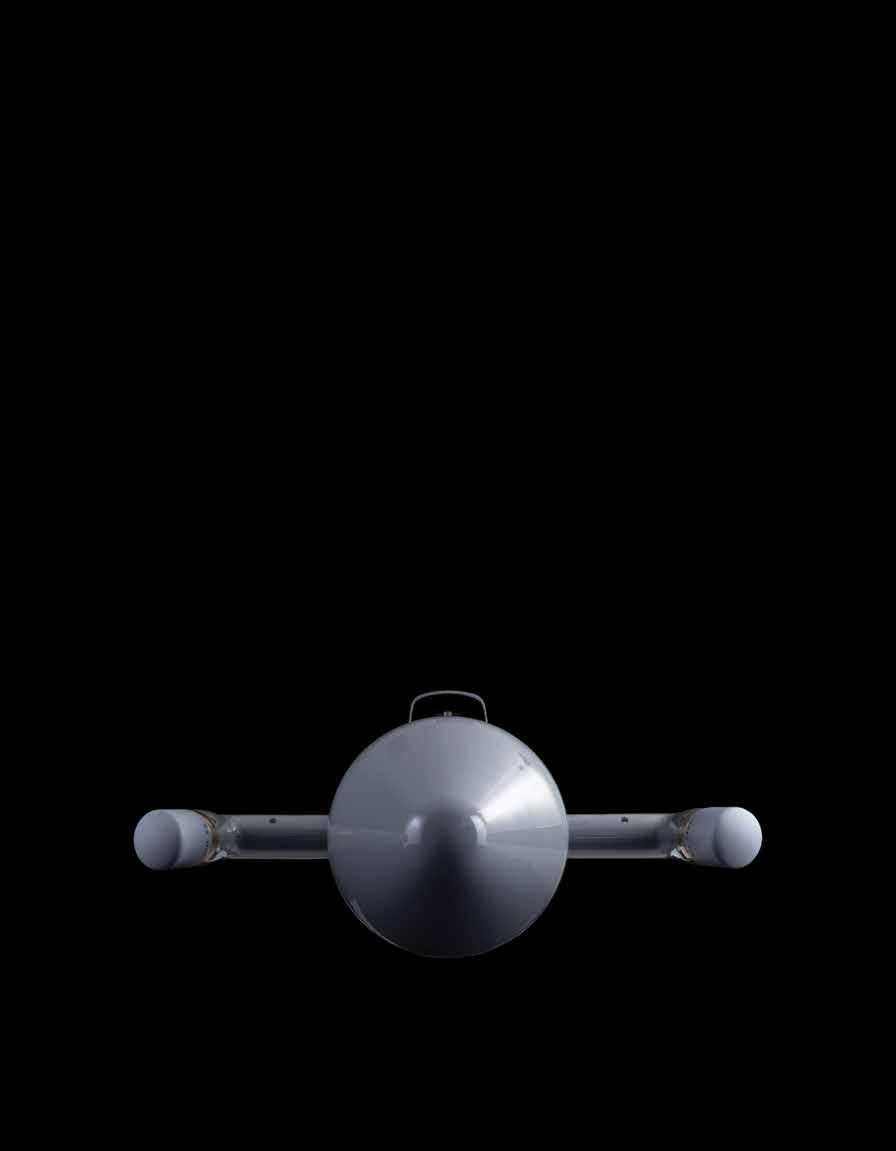
mPOD uses DRFM technology to emulate realistic combat scenarios, replicating near-peer jamming for fast, accurate electronic warefare training.
mrcy.com/mpod
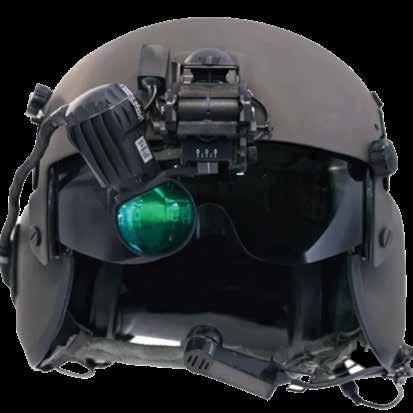
Air Warrior HUDs improve aircrew situational awareness, safety, and survivability in flight.
Elbit Systems of America (Elbit America) was recently awarded a $49.9 million Firm-Fixed-Price, Indefinite-Delivery/Indefinite-Quantity contract from the Army Contracting Command, Redstone Arsenal, Alabama, to produce Heads Up Displays (HUDs) as part of the United States Army’s Air Soldier System. Work under the contract will be completed through December 2030, subject to receipt of purchase orders, and will include post-production support.
The colorized HUD is part of the Army’s Air Soldier System, an assemblage of gear and equipment used in rotorcraft that is lightweight, integrated, and designed to enhance situational awareness and survivability. The HUD’s role in this system is to present key information to aircrew, keeping users always head-up and eyes out.
The Air Warrior HUD is a critical flight
The High-Performance, Fully NDAA-Compliant Flight Controller for Fixed-Wing and VTOL Platforms
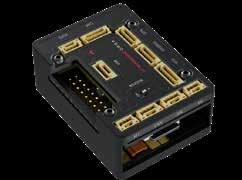
Orqa announced the launch of the H7 WingCore, a cutting-edge flight controller engineered to manage fixed-wing and VTOL (Vertical Take-Off and Landing) platforms. Specifically built to be “dual-use”, the H7 WingCore delivers uncompromised perfor-
display in operation on US Army UH-60 Blackhawks and CH-47 Chinooks.
“Since our inception, Elbit America has been dedicated to improving situational awareness through sophisticated displays that enhance a user’s understanding of the conditions outside their aircraft or vehicle,” said Scott Tumpak, Senior Vice President of Electronic Systems at Elbit America. “The Air Warrior Heads Up Display allows aircrew to focus on the mission because it’s designed to ensure safety, efficiency, and comfort for air crew.”
“In high-stakes environ ments, you don’t have time for uncertainty. Elbit America delivers combat-proven Heads Up Displays that provide aircrew the confidence to see first, act first, and win,” said Elbit America President & CEO Luke Savoie. “This contract is a testament to the faith the U.S. Army places in us to
mance for both defense and enterprise operators.
keep delivering key solutions to our soldiers, and we’re proud of our continued partnership.” Maritime tech firm DOLGO launches AI platform to solve ‘skills time bomb.’
ity through its dual, orthogonal ICM-42688 IMU configuration.
Key technical specifications:
In an era of increasing regulatory scrutiny, the H7 WingCore stands out as a fully NDAA-compliant solution. This certification means the H7 WingCore will appeal to US government agencies, security forces, and commercial entities who demand the highest standards of component provenance and data security.
The H7 WingCore is part of Orqa’s forthcoming fully NDAA-compliant fixed-wing ecosystem, where every element works seamlessly with every other right out of the box.
At the heart of the system is the powerful STM32H743 MCU, which provides the processing overhead required to run all major flight controller firmwares, including iNav, ArduPilot, and PX4. Whether managing traditional fixed-wing aircraft or complex VTOL (Vertical Take-Off and Landing) platforms, the H7 WingCore ensures rock-solid stabil-
• High-Voltage Support: Compatible with 3s to 12s LiIon batteries (11.1V –44.4VDC).
• Advanced Sensing: Features the DPS310 barometer and an onboard 160A current sensor.
• Orqa Custom OSD: A fully NDAA-compliant On-Screen Display supporting both text and graphics.
• Robust BEC System: High-output power (5V/8A and 6/7.2V/10A) to reliably drive servos and peripherals.
• Connectivity: Support for SIK Radio telemetry, USB-C, CAN bus, and twin switchable analog camera inputs.
Srdjan Kovacevic, Co-Founder and CEO of Orqa, said, “The H7 WingCore is more than just a flight controller; it is a direct response to the market’s need for a robust, reliable, and regulatory-compliant brain for complex unmanned systems.”
Dolgo, A Maritime Tech Startup, Has Launched Its New Ai Platform To Help Combat The Maritime Skills Crisis At The Recent Blue Innovation Symposium In Rhode Island.
Tampa-based DOLGO founder Nithesh Wazenn explained that the platform, which can be uploaded to a phone or computer like ChatGPT, will tackle one of the biggest challenges facing maritime: the vanishing, aging workforce. As a measure of the scale of the problem in the United States today, the average age of shipyard workers is 55 years old. This is

Janus Launches First Mission-Led Usv Platform Comparison Database.
Leading US marine autonomy specialist
Janus Marine & Defense has delivered an industry first – a groundbreaking Uncrewed Surface Vessel (USV) comparison website. It has launched Janus Navigator, a structured, filterable database of almost 200 global USV platforms with a sales capability.
Navigator has been created to allow clients to make informed choices and identify which platform class best aligns with their mission profile before important procurement decisions are made.
against a backdrop of shipbuilding demand being set to double over the next decade.
“I am super proud to launch DOLGO,” Mr. Wazenn said. “It’s easy to use, intuitive, and designed by gamers. This is the moment AI enables maritime to claw back time. Skills shortages are paralyzing the sector. It’s a ticking time bomb. DOLGO can provide a solution by retaining the expertise before it leaves forever. One platform driven by machine learning, constantly being updated with the knowledge of hundreds, then thousands of workers across a vast array of tasks.”
DOLGO has been spun out of the National Oceanic and Atmospheric Administration (NOAA) Ocean Enterprise Accelerator and has built its AI platform and undertaken testing with the University of South Florida’s marine science lab. The software enables workers to share knowledge, helping companies retain skills for both new and existing engineers.
Mr. Wazenn described how the platform gives shipyards a private AI system that continuously updates with proprietary knowledge from their workforce. Workers will be able to call each other on the platform to seek advice on engineering problems while the AI learns on the job.
He added that the DOLGO software further tackles the long-standing issue of ‘ownership’ of know-how. He also noted that shipyards are reporting that older workers can be reluctant to share valuable knowledge with younger col-
The site allows its users to compare and fil ter USVs across manufacturers, based on mis sion requirements and technical criteria, rath er than relying on individual OEM marketing materials. Platforms sitting on the database range from high-speed offshore hydrographic survey vessels to maritime robotics platforms and specialist security and surveillance USVs.
South Carolina-headquartered Janus is the first USV operations and sustainment com pany to be entrusted by multiple manufactur ers to support them in a resale capacity. The new online platform will ensure its clients get the right asset for their specific requirements. Users can filter their search by mission, vessel size, class, and product availability.
Navigator is also the first step in Janus’ in dustry-leading lifecycle management model.
leagues who are paid the same wage, leading to a ‘race to the bottom’ as new workers’ skills cannot replace those who are retiring.
Mr. Wazenn emphasised that AI will incentivise workers to share their expertise. On DOLGO, the engineer is rewarded with bonuses or benefits each time their knowledge is downloaded from the platform, using a concept similar to a Spotify download.
“Retaining expertise will not only drive efficiency and improve safety, but it will also prevent costly and time-consuming mistakes and equipment damage,” he added. “In addition, with turnover of younger workers high and with shipyards reporting attrition rates of 20%, we can help reduce training costs by automating learning.”
“It’s early days, and we’re focusing the AI on shipyards and autonomous vessels for now, where the skills shortage is acute, and the training demand is high,” he said. “But the potential to capture skills and training across maritime businesses is massive.”
DOLGO is one of seven pioneering ocean startups to be chosen by the Seaworthy Collective, a Miami-based non-profit that supports blue tech entrepreneurs. With only 10% of startups accepted into the program, companies can participate in full scholarships with no equity or fees through Seaworthy’s $14M National Oceanic and Atmospheric Administration (NOAA) Ocean Enterprise Accelerators partnership, The Continuum.

VITA™ 90 VNX+™ is a new rugged, high-performance, small-form-factor standard, recently ratified by ANSI and VITA, for addressing the robust embedded computing requirements of UAVs, UUVs, missiles, satellites, and cube satellites commonly deployed in industrial, military, and aerospace applications. Samtec’s rugged, high-density, high-performance interconnects and alignment products were selected in accordance with the VITA 90 standard for use on both the plug-in module (PIM) and the backplane, enabling a SWaP alternative to 3U OpenVPX. VNX+ modules are a fraction of the size of existing OpenVPX modules.
Suitable for rugged, high-reliability system applications, VITA 90 VNX+ adheres to a modular open-systems design approach, providing system architects with a high-performance embedded computing platform for space-constrained, harsh-environment applications. The commonality of VNX+ PIM designs encourages interoper-
Blighter has won a contract to supply its ground surveillance radars and BlighterNexus AI-assisted software to an undisclosed Eastern European Army to protect the country’s national borders.
According to Blighter, its B400 series low-power (4 Watts) and very low-probability-of-intercept (LPI) radars will be deployed imminently to fixed locations along the country’s borders and integrated onto army reconnaissance vehicles to provide a flexible mobile surveillance solution. Blighter radars operate 24 hours a day, 365 days a year, in all weather, including dense fog, to detect, classify, and track targets, including people, vehicles, and near-ground airborne threats, at ranges of up to 32 km.
The BlighterNexus software will be installed
ability, replaceability, and design reuse. This is validated through SOSA’s selection of this standard as their approved SFF PIM.
Form Factor & Connector Features
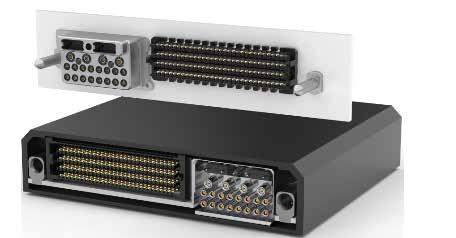
VITA 90 consists of several sub-standards, or dot specifications, each governing different domains of the SFF ecosystem. The base standard (90.0) specifies requirements for the plug-in module (PIM) and backplane for use in a compact, conduction-cooled chassis.
PIMs are approximately 89 x 78 mm in single or double heights. Single-height PIMs are 13 mm or 19 mm tall, and double-height PIMs are 27 mm or 39 mm tall. The highspeed data connector (HSDC) within the PIM is Samtec’s SEARAY™ high-speed 56 Gbps, high-density array. Configurations selected for the VITA 90 standard are 4-row and 8-row, with 200, 240, 320, or 400 total pins, allowing high-density design-in flexibility. The 320-Pin and 240-Pin connector configurations create additional space along the PIM’s connector face, enabling the integration of connector modules.
Connector modules, as outlined in VITA 90.2, support specialized contacts for co-
to ensure the radars are seamlessly integrated with the Army’s command-and-control (C2) networks, operator interfaces, and third-party sensors, delivering a unified display or com-
axial and optical connections, further enhancing PIM-to-backplane adaptability and functionality. Coaxial contacts (Samtec’s GPCC-20 & GPCC-16 Series) are available with either 50 Ohm or 75 Ohm characteristic impedance for transmitting Radio Frequency (RF) and/or video signals via coaxial cable. Contacts are shrouded to protect from physical damage and foreign objects and debris (FOD), with frequency capabilities from DC to 110 GHz. Optical interfaces are 12- and 24-fiber MT ferrule slots, allowing the adoption of any suitable pluggable, rugged optics cable assembly, including Samtec’s FireFly™ optical transceivers. Power supply modules, as outlined in VITA 90.3, support conduction- and liquid-cooled environments for higher-output applications. Samtec’s SEARAY™ connector was selected for the mating interface due to its open-pin-field versatility and performance.
Samtec’s guide hardware supports VNX+ modules. The guidance system has a builtin ground pin for first mate last break capability, allowing a ground to be established before connection is made.
mon operating picture (COP) across multiple border regions.
James Long, Blighter’s CEO, said: “Following a record order book in 2025, we are delighted to se-

cure another border surveillance contract in Europe, adding to our recent successes in the Middle East and Asia Pacific.
“We will continue to target new business at home and abroad through our growing sales force and by forging strategic partnerships. Attendance at international trade shows will continue to be a priority starting with this week’s Security and Policing Exhibition, where we are scheduled to meet with several overseas delegations, including other Central and Eastern European countries, as well as those from the Middle and Far East.”
Security & Policing, the official UK Government global security event, takes place at Farnborough International Exhibition & Conference Centre from 10-12 March 2026.
Following the first contract announced at the Paris Air Show (Salon International de l’Aéronautique et de l’Espace du Bourget) in June 2025, in the presence of the French Minister for the Armed Forces, Airbus Defence and Space and Greenerwave announce the strengthening of their strategic partnership through expanded collaboration.
This new milestone is marked by the signing of two additional contracts, totaling several million euros, further reinforcing and broadening cooperation between the two companies. These agreements reflect their mutual trust and shared commitment to developing cutting-edge technological solutions for their end customers, notably the French Armed Forces.
Through these agreements, Airbus Defence and Space is enhancing its end-to-end satellite communications (SATCOM) solutions by leveraging Greenerwave’s innovative flat-panel antennas, recognized for their multi-orbit capability and very low power consumption. This enables flexible, easily deployable, reliable, and resource-efficient solutions across demanding environments.
“The strengthening of our partnership with Airbus Defence and Space marks a major milestone for Greenerwave. It demonstrates the relevance of our satellite communication solutions in demanding environments,
It is hosted by the Home Office’s Joint Security & Resilience Centre (JSaRC). It offers an opportunity to meet and discuss national security issues with leading UK suppliers, UK and overseas Government officials, and senior decision makers across the law enforcement and security sectors. The event features 400+ exhibitors, delegations from over 40 countries, and is anticipated to attract nearly 10,000 visitors.
Blighter will showcase its border and coastal surveillance radars and its counter-drone (CUAS) solutions on stand A92 at Security and Policing 2026.
The UK Ministry of Defence trusts Blighter radars for forward operating base (FOB) pro-
where performance, energy efficiency, and flexibility have become strategic requirements. These new contracts also reflect our tangible contribution to French and European technological sovereignty,” said Geoffroy Lerosey, President and co-founder of Greenerwave.
“This strategic partnership between Airbus Defence and Space, leveraging over 50 years of expertise in the secured satellite communication domain, and Greenerwave, a leader in innovative multiband antennas, represents a major advancement in the emergence of a new generation of terminals for defence applications. Together, we will offer an end-to-end, disruptive solution that enhances the capabilities of the French armed forces. Through this collaboration, we guarantee them secure, resilient access to critical data, regardless of oper ational conditions and across all environments (air, land, sea). This alliance illustrates our shared commitment to placing innovation and technological sovereignty at the heart of our missions,”
tection, the South Korean Army for border surveillance along the Demilitarised Zone (DMZ), the United States Air Force for drone detection, Five Eyes/NATO customers for deployment on their mobile surveillance and armoured vehicles, and major UK airports for perimeter protection.
Blighter supports international systems integrators in creating layered, multi-sensor surveillance systems and can facilitate localised manufacture. Over 800 radar units have been deployed in more than 40 countries, making Blighter a trusted partner for surveillance projects among Defence, Homeland Security, Critical National Infrastructure, and Energy sectors worldwide.
Space Digital at Airbus Defence & Space.
One of these contracts falls under the Copernic procurement contract, a 10-year framework agreement led by the French Defence Procurement Agency (DGA) to provide the French Armed Forces with sovereign, flexible, and resilient satellite communication capabilities.
This strengthened partnership illustrates the shared ambition of Airbus Defence and Space and Greenerwave to actively contribute to French and European technological sovereignty by delivering high-performance “Made in France” communication solutions.
Through this strategic collaboration, Airbus Defence and Space and Greenerwave reaffirmlogical sovereignty, support for the French and European Defence Technological and Industrial Base (DTIB), and breakthrough innovation in

Collaboration will deliver integrated intelligence & sensing solutions with unified command and control for persistent ISR missions.
Palantir Technologies Inc. (announced a strategic partnership with Ondas Inc., a leading provider of autonomous aerial and ground robot intelligence through its Ondas Autonomous Systems (OAS) business unit and private wireless solutions through Ondas Networks, and World View Enterprises, Inc. (“World View”), a leader in high-altitude balloon intelligence, surveillance and reconnaissance (ISR) and stratospheric remote sensing, to develop and deploy a new generation of AI-enabled operational capabilities designed to scale persistent stratospheric, aerial, and landbased ISR missions. The partnership builds on Ondas’ recently announced strategic investment and partnership agreement with World View, positioning the strategically aligned companies to accelerate the development of next-generation multi-domain
ISR capabilities that leverage AI-driven insights to enable faster in-mission decisions compared to traditional ISR toolsets.
World View’s Stratollite® platform represents a fundamentally new class of sensing capability, operating in the stratosphere, the critical layer between satellites and aircraft to deliver persistent, longdwell intelligence, surveillance, and reconnaissance missions at significantly lower cost and complexity than traditional assets. When combined with Ondas’ unmanned aerial, ground, and counter-drone systems, the companies are building a multi-domain intelligence architecture designed to deliver persistent awareness and rapid response across complex mission environments for its Defense, homeland security, and allied security customers.
As demand for multi-domain sensing and persistent ISR grows, scaling this unified intelligence capability requires an operational software foundation that can coordinate increasingly complex missions. Through this partnership, Ondas and World View will apply Palantir’s Artificial Intelligence Platform (AIP) to the production, mission planning, and edge opera-
tions that underpin these systems, helping enable a new generation of scalable, software-defined stratospheric intelligence capabilities.
These Palantir-powered programs will enable Ondas’ and World View’s multi-domain autonomous fleets to communicate across domains and with their operators on the ground, creating a unified intelligence infrastructure. This integrated workflow marks a paradigm shift from the traditional ISR model that is focused on data collection. Instead, through this partnership, the companies are building an interconnected intelligence ecosystem that delivers decisions – not just data – to operators.
“Persistent sensing platforms like World View’s Stratollites and Ondas’ suite of autonomous systems represent a new frontier in operational intelligence,” said Dr. Alex Karp, co-founder and CEO of Palantir Technologies. “By combining Palantir’s software platforms with World View’s unique stratospheric capabilities and Ondas’ broader autonomous ecosystem, we’re building the operational backbone required to scale these missions.”

The company will integrate advanced systems across all surface combatant ships to stay ahead of emerging threats
General Dynamics Information Technology (GDIT), a business unit of General Dynamics, announced that it was awarded the Ship and Air Command, Control, Communications, Computers, Combat, Intelligence, Surveillance, and Reconnaissance (C5ISR) Systems Support (SACSS) contract to continue modernizing the US Navy fleet. The $988 million contract, awarded in December, has a one-year base period, four one-year options, and a six-month option.
C5ISR GDIT contract
Under the contract, GDIT will modernize and integrate C5ISR systems to enhance the operational effectiveness and readiness of naval forces. The company will provide integration, engineering, procurement, logistics, and installation services on all classes of surface combatant ships, including guided-missile ships, aircraft carriers,
BrainChip Holdings Ltd. announced a strategic collaboration with ForwardEdge ASIC, a wholly owned subsidiary of Lockheed Martin (NYSE: LMT) specializing in advanced ASIC architecture and microelectronics development.
Together, the companies are combining bestin-class AI technology with deep ASIC and system integration expertise to deliver differentiated edge-processing solutions for demanding aerospace, Defense, and advanced technology markets.
This collaboration brings together BrainChip’s leadership in neuromorphic AI architecture and ForwardEdge ASIC’s strengths in custom silicon development, heterogeneous integration, and advanced RF systems. The collaboration is focused on tightly coupling AI acceleration with signal processing and RF compute to enable high-performance, low-latency intelligence at the edge.
By embedding BrainChip’s neuromorphic

Coast Guard vessels, manned and unmanned aircraft, and shore stations. GDIT will upgrade these systems efficiently to enable the Navy to keep its current vessels operational and ensure mission continuity.
“C5ISR systems are foundational to how our Navy senses, communicates, and fights in the modern battlespace,” said Brian Sheridan, GDIT senior vice president for Defense. “We look forward to continuing to deliver innovative solutions to ensure these vital systems operate at peak performance and enable our
AI engines directly into ForwardEdge ASIC’s architectures, the companies are enabling cognitive processing closer to the sensor—reducing data movement, lowering power consumption, and enabling autonomous operation in complex operational environments.

“ForwardEdge ASIC is focused on architecting and delivering highly integrated silicon solutions that leverage the most advanced technologies available,” said Bill Jenkins, CRO at ForwardEdge ASIC. “BrainChip’s Akida architecture is a strong complement to our ASIC and RF platforms, allowing us to integrate dedicated AI acceleration directly into the silicon. This collaboration enables us to deliver scalable, high-performance, low-latency edge solutions that push intelligence closer to the point of sensing.”
Enabling a New Class of Cognitive Sensing Solutions
warfighters to stay ahead of emerging threats.”
GDIT has decades of experience delivering mission-critical services to the Navy. The company supports the development of advanced electronic warfare technologies for airborne platforms, provides training support services to more than 100,000 US and allied sailors worldwide, and delivers advanced artificial intelligence/machine learning solutions to modernize the Navy Enterprise Service Desk program.
The joint solution leverages a heterogeneous architecture that combines custom ASIC processing, RF signal chains, and neuromorphic AI acceleration to deliver efficient, real-time detection and classification. Key capabilities include:
• Cognitive RF and Signal Processing: Real-time classification of complex signals with adaptive, AI-driven processing.
• Scalable ASIC Platforms: Architectures designed for reuse across multiple programs and deployment environments.
• Efficient Edge Intelligence: Ultra-low-power AI processing optimized for latency-sensitive and resource-constrained systems.
This collaboration allows both companies to accelerate innovation while reducing integration risk for customers seeking production-ready edge AI solutions.
“ForwardEdge ASIC brings deep system-level design and integration expertise that is essential for deploying neuromorphic AI in real-world applications,” said Steven Brightfield, CMO at BrainChip. “This collaboration demonstrates how BrainChip’s AI technology can be tightly integrated into advanced ASIC and RF platforms to deliver powerful, efficient intelligence at the edge.”
UK-based engineers are rapidly developing a new way of tackling drone threats.
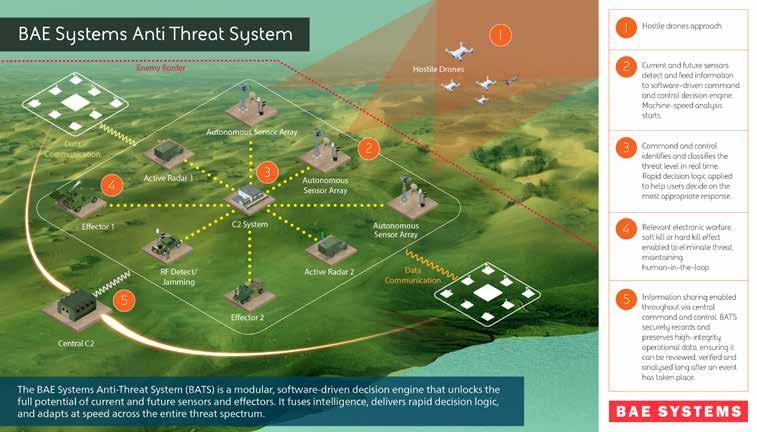
A team of UK-based engineers is developing a new way of eliminating hostile drones. The project is being funded and run by the country’s largest defence company, BAE Systems, which is leveraging its long-standing software expertise to create a cost-effective new system in just
months, to address the growing threat posed to key civilian and military infrastructure.
The BAE Systems Anti Threat System, or ‘BATS’, will enable customers to reduce the use of costly missiles by deploying smart software, electronic warfare, and kinetic measures to tackle increasing drone incursion threats to national borders, military equipment, airports, and urban centres.
Work to produce BATS began in October 2025 and is expected to be ready for system test-
ing as soon as next month, followed by live-fire trials in early Summer this year – representing rapid capability development to help meet customer demands.
“Drone incursions are a clear and present issue, putting citizens, military personnel, and infrastructure at risk. The technology evolves faster than traditional defence systems can respond, with new behaviours, payloads, and tactics emerging almost daily. That’s why we’re moving at pace to build a new system to support our customers in their efforts against this very urgent problem.”
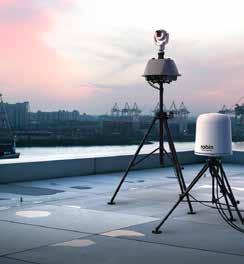
DroneShield announced a partnership with Robin Radar Systems to strengthen advanced radar technologies within its growing sensor ecosystem. Interoperability expands the radar options available to customers, strengthening layered airspace awareness across Defense, critical infrastructure, and public safety environments.
Robin Radar Systems is recognized for its
360°, 3D radar technology that detects and tracks small airborne objects, including drones. Its radars are engineered to deliver reliable detection and classification performance across complex environments.
Expanding the Sensor Marketplace for Operators
DroneShield’s approach to counter-UAS is intentionally ecosystem-led. Rather than offering a closed or static solution, the company has invested in building a scalable marketplace of interoperable third-party sensors. This model gives operators the flexibility to select the right sensing technologies for their specific environ-
ment, threat profile, and operational constraints, both today and as requirements evolve.
By adding Robin Radar Systems to its ecosystem, DroneShield continues to expand the options available to customers seeking radar-based detection as part of a layered CUAS deployment. Radar can play a critical role in detecting and tracking airborne objects across wide areas and in challenging conditions, supporting persistent awareness and resilience.
At the center of this ecosystem is DroneShield’s DroneSentry-C2 powered by SensorFusionAI, which combines inputs from multiple sensor types to create a consolidated operational
picture that reduces ambiguity and enhances decision confidence.
“Operators need systems that adapt to their mission, not the other way around,” said Angus Bean, DroneShield’s Chief Product Officer. “By partnering with Robin Radar Systems and expanding our sensor marketplace, we give customers more freedom to design their airspace security architecture, while SensorFusionAI ensures that all sensor inputs are fused into insights that support decisive action.”
“At Robin, we see ourselves as a new generation radar company - fast, adaptive, and built for integration. Our technology is designed to deliver seamless performance within broader security architectures. We’re pleased to be partnering with DroneShield to combine our mar-
As the proliferation of unmanned aerial systems (drones) has increased at an unprecedented pace worldwide, the threat has expanded beyond the battlefield to the American homeland, exposing Department of War installations, other US Government strategic sites, and National critical infrastructure to new risks. Disparate systems that act in isolation aren’t capable of effectively responding to this dynamic threat. Addressing this complex counter-UAS (C-UAS) challenge requires a common tactical command and control platform that integrates diverse systems to detect, track, and identify threats, enabling warfighters across the joint force to respond quickly
ket-leading IRIS 3D radar with their CUAS platform, enabling smarter, layered airspace protection worldwide,” said Marcel Verdonk, Robin Radar’s Chief Commercial Officer.
Robin Radar Systems brings decades of radar science and innovation to this partnership, delivering systems that are engineered for accuracy and optimized for modern CUAS challenges. This partnership ensures that operators no longer need to trade coverage for clarity. By combining complementary sensing technologies into a single, AI-enhanced platform, organizations can achieve both scale and understanding without increasing complexity.
and effectively.
The Joint Interagency Task Force 401 (JIATF-401), an organization focused on synchronizing C-UAS efforts across the Department of War and the broader Federal Government, has selected Anduril’s Lattice software as the tactical command and control solution for C-UAS. This $87 million contract is the first task order under the Army’s recently announced Enterprise Agreement with Anduril. By establishing both a common command-and-control software platform for C-UAS and a common process for US Government organizations to procure, deploy, and sustain ever-improving commercial counter-drone software at scale, JIATF-401 is rapidly accelerating the Nation’s response to the UAS threat.
An effective, multi-layered counter-UAS response includes a software solution that connects disparate systems and enables a

coordinated defense. As JIATF-401’s command and control software foundation, Lattice integrates a broad range of sensors and effectors — from legacy systems and newly fielded capabilities — to enable distributed detection, tracking, classification, and engagement of UAS threats in seconds. Leveraging commercial software best practices, Anduril’s development and deployment process delivers a continuously improving Lattice capability, drawing on operational lessons learned across its globally deployed footprint.
The enterprise license Lattice agreement follows years of successful air defense deployments across services and operational domains. Most recently, Lattice was chosen as the US Army’s next-generation fire control capability for C-UAS missions under the Integrated Battle Command System Maneuver program. As threats continue to evolve, a common tactical command and control backbone for C-UAS will be essential to rapidly integrate new sensors, effectors, and capabilities across the joint force as one element of effective counter-drone measures across the DoW.
The contract with JIATF-401 and Anduril’s broader Enterprise Agreement with the Army both serve as evidence of the Department of War’s focus on acquisition transformation. By establishing new, flexible approaches to acquire proven capabilities, the DoW is accelerating the delivery of top-tier tools and technology to the warfighter at scale to protect our citizens and servicemembers at home and abroad.

By Jessica McFate, Vice President Director of Intelligence Operations at Babel Street
The nation is confronting an unprecedented convergent threat environment. Adversarial state actors increasingly operate in parallel with transnational criminal organizations, cyber mercenaries, and proxy networks. These actors are not formally unified, but they are strategically aligned. They exchange tools, infrastructure, financing pathways, and narratives, and they collaborate across cognitive, cyber, economic, and legal domains to erode U.S. strategic advantage — often below the threshold of armed conflict.
For the command, control, communications, computers, intelligence, surveillance, and reconnaissance (C4ISR) community, this convergence fundamentally alters the operating environment. No longer confined to physical
domains of land, sea, air, and space, the battlefronts include domestic arenas, such as social networks, financial systems, global supply chains, legal institutions, and information ecosystems. While C4ISR professionals warn that bad actors’ speed of adaptation is measured in weeks, traditional defense acquisition cycles typically span years.
To mitigate the inherent convergent threats, the Department of War (DoW) and intelligence communities must turn the tables on adversarial exploitation by switching from reactive dependency to proactive integration, leveraging the speed-to-agility advantage of commercial off-the-shelf (COTS) technologies as core enablers of multi-domain defense.
Historically, mission-critical defense systems were purpose-built to meet narrowly defined operational requirements. Custom hardware and software stacks were optimized for survivability, determinism, and certification rigor. That model remains appropriate for many kinetic platforms and safety-critical systems.
However, legacy defense platforms were not designed to counter adversaries that weaponize commercial technology. When adversaries exploit the same cloud infrastructure, artificial intelligence (AI) tools, and data ecosystems that power global commerce, defending with purpose-built systems alone leads to compounding blind spots.


Convergent threat campaigns that are information-centric and networked mutate daily. An intelligence platform fielded after a multi-year development cycle risks irrelevance upon deployment. By contrast, commercial cloud, analytics, and AI ecosystems iterate continuously, incorporating threat intelligence, model improvements, and software updates at global scale.
Ruth Harris, executive director for national security and data science at RAND Europe, the European arm of RAND, and James Black, deputy director of the defense, security, and justice research group at RAND Europe, in an article titled, “Maneuver in the Marketplace: The Changing Economic Dimension of Warfare,” speaks to the changing nature of warfare and the growing recognition of the benefits of commercial technologies in this fight. “Discretionary wars in Iraq and Afghanistan, focused on counterterrorism and counterinsurgency, did not require large-scale mobilization and redirection of the commercial tech sector beyond traditional defense primes. Nor did they see campaigns to subvert and impose costs on the industrial ecosystems of adversary nations to undermine their military capacity for reconstitution, innovation, and adaptation, or to degrade their will-to-fight.”
“Western militaries need an urgent mindset shift … in how they conceptualize the role of the commercial sector and the mobiliza-
tion of private firms in support of operations … the agile use of commercial relationships should be seen as a form of maneuver; an integrated part of joint action, not just a precursor to it. This means warfighters working hand-in-glove with innovators; procurement managers acting with a wartime urgency and sense of mission; and business leaders planning how they’ll contribute to crisis response or a war economy.”
The question is no longer whether commercial technology can be used in defense missions; it is how to best integrate it effectively within C4ISR architectures while preserving security, interoperability, and mission assurance.
Effective counterstrategy requires mapping networks across signals intelligence, financial transactions, supply chain movements, social media narratives, and cyber infrastructure.
Modern intelligence fusion platforms leverage commercial data lake architectures, graph databases, and distributed processing frameworks to correlate structured and unstructured data at scale. The results go far beyond faster reporting to provide operationally relevant network mapping that exposes relationships among state actors, criminal intermediaries, and proxy entities in near real-time.
Influence operations now operate at
industrial scale. State-aligned actors leverage botnets, generative AI, and coordinated inauthentic behavior to manipulate narratives across multiple languages and platforms. Machine learning frameworks, natural language processing (NLP) libraries, and commercial GPU acceleration provide the computational backbone to detect anomalies in narrative propagation patterns. Cloud-native analytics pipelines can ingest high-volume social data streams; flag coordinated amplification; and identify cross-platform signature reuse.
For C4ISR engineers, the challenge lies in integrating these capabilities into secure operational environments. Edge-to-cloud architectures must ensure that sensitive analytic results can be disseminated without exposing classified sources and methods. Zero-trust access controls, role-based authentication, and encryption at rest and in transit are architectural requirements.
By leveraging commercial innovation cycles in AI while enforcing mission-grade security controls, defense organizations can counter influence operations at comparable scale and velocity.
Convergent threats target alliances as much as individual states, making
interoperability a strategic necessity. Effective counterstrategy depends on timely intelligence sharing across coalition partners, yet classification barriers and incompatible systems impede mitigation.
Commercial platforms, zero-trust network architectures, and software-defined access controls offer a path forward. Rather than relying solely on rigid network segmentation, modern architectures enforce identity-centric security models. Data tagging and attribute-based access control allow granular sharing while preserving compartmentalization.
For embedded system designers, this means building platforms that support standardized interfaces, encryption modules compliant with federal standards, and modular cross-domain guards that can be updated as coalition requirements evolve.
Adopting commercial platforms for mission-critical defense environments
Jessica Lewis McFate is Vice President Director of Intelligence Operations at Babel Street and a career intelligence professional, specializing in OSINT for national security. At the Institute for the Study of War, her research won acclaim for forecasting the rise of ISIS. She has authored over 50 publications, briefed top U.S. government agencies, appeared in print and broadcast media, and testified before Congress. A West Point graduate, she served as a U.S. Army officer with 34 months in country deployment in Iraq and Afghanistan supporting signals intelligence, human intelligence, and counter-corruption roles.
must comply with myriad requirements. Some of these include:
• Security Certification: Commercial software evolves rapidly, while Authority to Operate (ATO) processes can be lengthy. Continuous ATO models, automated compliance monitoring, and pre-certified secure baselines can reduce friction.
• Interoperability and Standards: Open standards, modular open systems approaches (MOSA), and well-defined application programming interfaces (APIs) enable extensibility and vendor competition.
• Cultural Resistance: Trust in commercial technology is imperative. Demonstrating mission assurance through pilot deployments and operational testing can build confidence.
Adversaries collaborate across integrated and networked domains and adapt in weeks. Organizations that integrate and operationalize commercial
innovation are the ones able to achieve a strategic advantage.
Properly integrated, hardened, and governed commercial capabilities offer myriad benefits: agility aligned with adversary adaptation cycles; scalability to handle global data volumes; cost efficiencies that enable broader deployment; and access to commercial innovation ecosystems.
The current battlespace is networked, cognitive, and economically intertwined. This requires powerful technology capable of fusing intelligence, defending infrastructure, countering influence operations, and evolving at operational speed.
Leveraging commercial technology can flip the switch from reactive defense to strategic advantage to deliver agility, scalability, and innovation access needed to outpace adversaries in today’s new battlespace.

By Christian Jonglas, Technical Support Manager at GAIA Converter.
As modern threats evolve, directed-energy weapons offer a cost-effective and flexible defence solution, relying on advanced power systems to deliver precision and reliability in the most demanding environments, says Christian Jonglas, Technical Support Manager at GAIA Converter
Drone warfare is changing military defence strategy. The ready availability of low-cost electronic hardware has made the drone a major threat not just in open warfare but in asymmetric conflicts and terrorism. Those factors have led to a wave of innovation in countermeasures against threats from a variety of armed drones, which often take the form of Remotely Piloted Aircraft Systems (RPAS).
For countermeasures, military organisations are turning to directed-energy weapon (DEW) technology for the increased flexibility it can bring to defence, alongside conven-
tional munitions. As they rely solely on a source of electrical power, they have no need for ammunition. This makes the DEW potentially far more cost-effective than kinetic weapons. The cost of energy for each shot can be just a few dollars, compared to the tens of hundreds of dollars often needed for precision-manufactured munitions. Additionally, DEWs do not suffer from the supply issues that might arise from the need to replenish the ammunition of systems used around a large perimeter.
There are multiple ways in which directed energy can disable or neutralise the threat from incoming drones and missiles. High-energy lasers (HELs) can burn holes through the casing and sever cables and PCB traces on the electronic control board inside. Or the intense heat may weaken the support struts for the propellers enough to desta-
bilise and bring down the drone. Other DEWs focus on the use of high-power microwave (HPM) pulses to disrupt the electronics inside the threat.
Operating with lower power levels, RF, infrared, and visible laser energy can jam or blind sensors enough to send a drone off course or cause it to crash. Others use RF jamming to disrupt communications between remote operators and drones. Some systems employ a combination of high- and low-power tactics. The HELMA-P counter-drone weapon developed by Cilas is an example of this. It is a system that can adjust power outputs to switch between attempting to blind a drone and physically disabling it. The system was deployed at the 2024 Paris Olympics to protect against possible attacks by terror groups armed with RPAS.
The uses for DEW technology extend beyond defence against direct attacks. Laser-based weapons
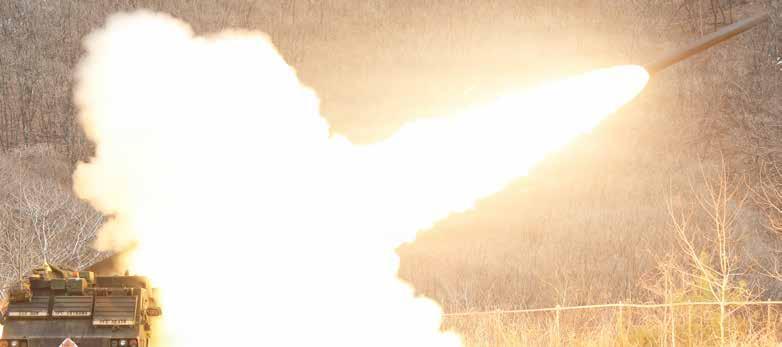

launched into space may provide the means to reduce the quantity of unwanted debris in Earth orbit. Ablation of the surface of a satellite or rocket casing by a laser can push the objects into lower orbits. The increased atmospheric drag then quickly de-orbits the debris.
With such a wide variety of technologies, there are inevitably wide ranges in the power demands they have. Some DEWs require tens of kilowatts of power to deliver the level of damage necessary to directly remove drone threats, which necessitates the use of large-scale electrical generation. Others that focus on sensor jamming or disruption can operate using just rechargeable battery packs. Some may use a combination of power sources to guarantee consistent power to the different subsystems. The drone will have built-in sensors that may include Lidar, radar, and camera units. High-precision motors will steer and stabilise the laser to ensure it remains on target. These functions will require power converters capable of delivering tens of watts. A separate power system can then be optimised to supply the intense bursts of energy needed for high-energy lasers.
The common factor in these systems lies in the need for clean and reliable power to supply the sophisticated electronics, sensor, and actuator subsystems that can direct the focused energy to precise locations on a fast-moving missile or drone. Despite the common requirements, the specific needs of each of these systems can differ radically. Each of the control and sensor subsystems may require independent supply rails, each with its own optimal voltage to support the regulators that supply each cluster of components and with galvanic isolation to prevent interference.
There will be cases where the sensor, computing, and actuator electronics need high levels of protection against conducted electromagnetic interference (EMI) from the high-power generators and subsystems that deliver the directed energy output. EMI filters in the inputs to the power converters can help protect sensitive electronics.
Although the variety of designs may suggest that a custom design is the best approach to take, advances in technology and design techniques make a modular architecture the most cost-effective and flexible option. The ability to select
and match modules to the application provides an efficient way to optimize space, weight, and power (SWaP) for the specific use case.
A modular architecture provides the developer with the ability to add functions where needed. Designers may select modules for their ability to provide filtering to downstream circuits. Another front-end unit might be added to deliver more stringent filtering, which may be necessary to ensure that sensors and other devices are not affected by surges or spikes induced on the input rails. By using modules with high power density in parallel, it is possible to achieve the kilowatt output levels required for situations where the design necessitates a unified power distribution architecture. Four of the modules in GAIA’s MGDM-500 / P series can support a 2kW laser. Synchronization support in the modules allows the designer to tune the switching frequency used by the converters to avoid interference with sensors and other electronics. It is essential to develop modular solutions that cater to the specific needs of military systems. In addition to supporting important standards on power quality, such as Mil-Std-461 and MIL-STD-1275, module designs should also consider less obvious requirements,
including thermal and electrical efficiency.
With high-power generators and energy weapons used in close proximity to other electronic subsystems in space-constrained enclosures, there may be limited opportunities for transferring heat away from the power systems. The use of potting, a technique that GAIA employs extensively in combination with baseplates of high thermal conductivity, helps address these environmental issues.
Long-term reliability is another key factor for systems that may be in place for years, but which need to react quickly to threats at any time. There are circuit-design decisions that make sense for industrial power converters. Those same decisions can be fatal to systems that must operate effectively at all times. A common choice for standard power converters with galvanic isolation between input and output is to use optocouplers to communicate across the isolation barriers. These optocouplers provide vital feedback to the pulsewidth-modulation con-
trol circuitry on changes in output voltage levels. This type of component is often considered a good choice because it is a relatively lowcost device with good linearity.
Unfortunately, the optocoupler’s transfer function drifts over time due to a gradual decline in the efficiency of the light-emitting diode (LED) that transmits voltage information across the isolation barrier. Ultimately, the drift is so great that the power converter fails. Using a magnetic coupler instead, which is an approach favoured by GAIA, overcomes this reliability problem.
In GAIA’s converters, reliability can exceed one million hours, far higher than the several hundred hours of many designs that continue to use optocouplers.
Future developments, such as new transistor technologies, will enable more compact DEW systems. Wide-bandgap materials, such as silicon carbide (SiC) and gallium arsenide (GaN), offer several advantages over silicon devices, particularly at high power levels and in high-temperature environments,
where they exhibit improved performance. SiC, in particular, can operate at higher ambient temperatures than competing materials. With GaN, lower switching losses result in less heat being generated during their operation.
Military systems will need to consider product lifetimes, making obsolescence management a critical part of the design. For this reason, using products targeted for high-volume applications that have similar requirements in terms of environmental performance and reliability, such as those made for automotive electronics, will be crucial in ensuring a viable source of components over the long term. Considerations like these are why it is important to employ power converters designed and fabricated by suppliers with a long history of experience in the military and defence sectors. A supplier like GAIA can provide the depth of insight needed and offer modules that consider the needs of this new wave of weapons and countermeasures.
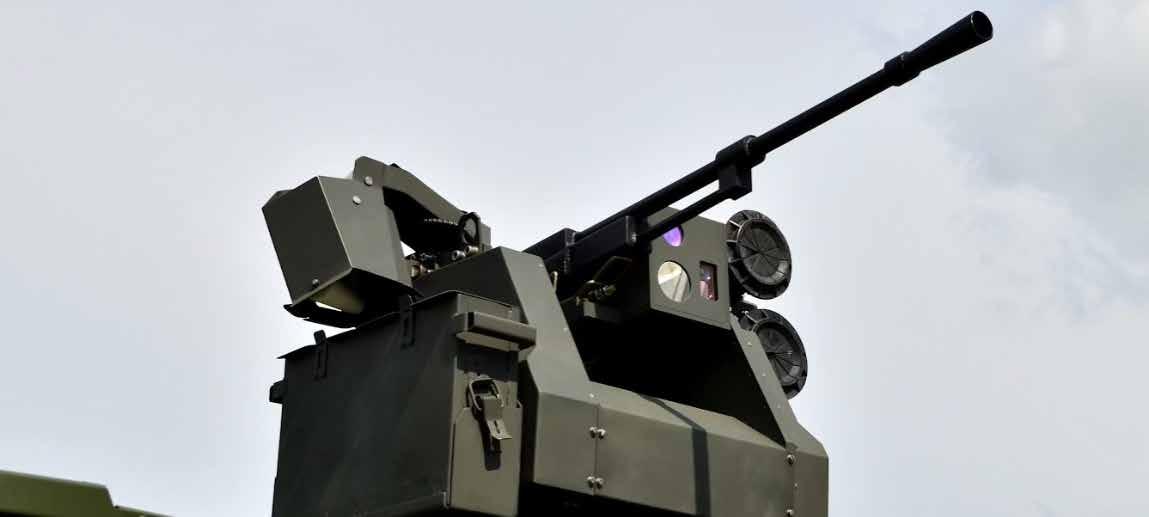
Crystal Group, Inc., a trusted designer and manufacturer of rugged technology in Eastern Iowa, announced the debut of two new edge computing solutions, the RE4100 Series and the RE1900M Rugged Sealed Embedded Computer.
Built to support AI-enabled, autonomous, and data-intensive missions in harsh environments, the RE4100 and RE1900M expand Crystal Group’s rugged computing portfolio with purpose-built solutions designed to deliver advanced performance at the tactical edge.
“As edge missions demand more autonomy, processing power, and resilience in smaller footprints, our customers need platforms that can keep pace,” said Kate Schlotterbeck, vice president, sales and marketing at Crystal Group. “The RE4100 and RE1900M
Teledyne FLIR OEM Expands
Neutrino ISR Series with Longest-Range SX8 ISR 50-1000 Model
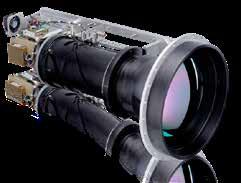
FLIR OEM, a Teledyne Technologies Incorporated company, announced the launch of Neutrino SX8 ISR 50-1000, the latest addition to the rebranded Neutrino ISR Series (formerly the Neutrino Ground ISR Series). With a 20x continuous zoom (CZ), the high-performance model offers the longest range to date in the entire Neutrino ISR lineup.
“The intelligence, surveillance, and reconnaissance (ISR) market in 2026 continues to expand to accommodate new applications and changing needs. The Neu-
deliver mission-ready AI and high-density compute with out compromising ruggedization, reliability, or long-term lifecycle support.”
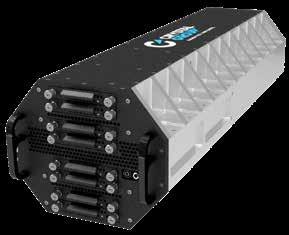
The RE4100 Series is an ultra-compact, high-performance-density edge compute platform designed for missions that require significant processing, storage, and networking capabilities. Engineered, manufactured, assembled, and tested in the United States, the unit is designed to meet key military and industry standards, including MIL-STD-810, MIL-STD-461, and MIL-S-901, and is aligned with leading-edge CPU and GPU roadmaps.
The RE1900M Rugged Sealed Embedded Computer provides a small-form-factor AI and inference capability for forward-deployed operations. Powered by industry-leading components, the system delivers up to 275 TOPs of AI performance to support real-time video analytics,
trino SX8 ISR 50-1000 is engineered to meet the most demanding long-range requirements for border surveillance, perimeter security, and counter-UAS (C-UAS) missions,” said Jared Faraudo, vice president of product management, Teledyne FLIR OEM. “The Neutrino ISR 50-1000 has the longest detection, recognition, and identification (DRI) ranges in the Neutrino ISR series with vehicle detection at 34 km, recognition at 23.5 km, and identification at 20 km.”
The Neutrino SX8 ISR 50-1000 is a turnkey solution for integrators developing mid- and long-range ISR systems. Combining Teledyne FLIR OEM’s world-class Neutrino mid-wave infrared (MWIR) camera modules with fully integrated CZ lenses delivers a complete, differentiated solution. The single-source camera, lens, and electronics deliver market-leading performance while reducing development risk, costs, and time-to-market.
The Neutrino SX8 ISR 50-1000 utilizes a cooled 1280x1024 thermal resolution Neutrino SX8 MWIR sensor with an 8 µm pixel pitch, providing optimal thermal sensitivity and high-performance imaging. The 50 mm to 1000 mm CZ lens is factory integrated to simplify integration and optimize performance. The system features a long-life Teledyne FLIR FL100 linear Stirling cooler with a mean time to failure (MTTF) of
IP68 sealed and engineered for shock, vibration, and amphibious environments, the lightweight RE1900M is well-suited for unmanned platforms, mobile systems, and edge video applications.
“The real differentiator is how these platforms are engineered for sustained performance over time,” said Cale Stephens, vice president, engineering and advanced technology at Crystal Group. “From component selection and thermal design to testing and lifecycle support, we build these systems to operate reliably in extreme environments while giving customers the confidence to scale and adapt their edge capabilities as mission demands evolve.”
Built to endure the unforgiving edge, the RE1900M pairs advanced AI acceleration with sealed, lightweight construction to support fast, intelligent decisions in the most demanding environments.
greater than 27,000 hours, backed by an industry-leading two-year warranty.
Seamless Integration and AI Ready
To simplify development and reduce time-tomarket, the module incorporates market-leading image processing and interface electronics, along with AgileCore™ imaging electronics from InVeo Designs LLC. The industry-standard interface offers flexible connectivity options for seamless integration into networked systems, including Gigabit Ethernet, Camera Link, and HD-SDI.
The Neutrino SX8 ISR 50-1000 is also Prism™ AI ready, supporting Teledyne FLIR OEM’s advanced AI models for detection, tracking, and classification. Integrators can also leverage Prism ISP libraries for enhanced data fidelity through features such as super-resolution, atmospheric turbulence mitigation, and contrast enhancement.
The Neutrino SX8 ISR 50-1000 is NDAA-compliant and ITAR-free. It is classified under the USUS Department of Commerce jurisdiction as EAR 6A003.b.4.a, providing greater flexibility for development with foreign customers. Integrators also have access to a comprehensive software development kit (SDK), integration support, and documentation from the highly qualified technical services team at Teledyne FLIR OEM.
Abaco Systems announces the launch of the SBC3801, a next-generation, SOSA-aligned 3U VPX Secure Single Board Computer (SBC) designed to deliver uncompromised security and performance for mission-critical applications. This SBC3801 integrates SecurShield™ Agent based on technology from General Dynamics Mission Systems, enabling a programmable hardware root of trust for advanced cybersecurity protection in a rugged
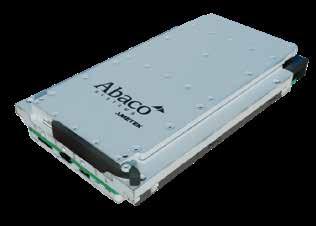
design for deployment in harsh environments. SecurShield TM combines CM2.0-compliant technology with an AMD FPGA fabric, Arm cores, and protected key storage, providing a robust foundation for secure computing in defense and industrial environments. This architecture ensures that sensitive data and cryptographic operations remain protected against evolving threats, while maintaining compliance with the latest security standards. Applications include:
• Software Defined Radios (SDR): Secure, high-speed signal processing for tactical communications
ty for precision strike systems
• ·Data in Transit (DIT) & Data at Rest (DAR): Encryption and secure storage for sensitive mission data
• Multi-Function Crypto Applications: Consolidated cryptographic operations on a single platform
• Smart Munitions Security: Hardware root of trust for next-generation weapons Systems

TASKING announced enhancements to its toolchain that enable seamless integration of AI into software development and verification workflows. These new capabilities accelerate design and improve the performance of functionally safe and secure embedded real-time applications across automotive, aerospace & defense, industrial, and robotics, while enabling OEMs to verify and validate (V&V) systems using agentic AI workflows.
Previously, workflows, processes, and tests were designed by hand. Developers can now use large language models (LLMs) to direct external AI agents and tools to automate many repetitive manual design, debug, and testing tasks. For example, AI-assisted workflows can implement comprehensive testing in earlier design stages to identify and resolve a wide range of issues soon-
er. The result is a faster time-to-market with reduced risk of human error, greater overall system reliability, and lower development investment.
AI-assisted workflows can implement comprehensive testing at earlier design stages to identify and resolve a wide range of issues sooner, resulting in faster time-to-market, reduced human error, greater overall system reliability, and lower development investment.
“AI enables today’s developers to be both more productive and efficient while at the same time delivering higher software performance and quality,” said Christoph Herzog, co-CEO of TASKING. “By taking over tedious and time-consuming tasks, AI-assisted tools can free up individuals to focus on value-added design. With the AI capabilities of the TASKING tools, development teams can now develop, verify, and validate complex systems faster, with less risk, and at a lower cost.”
AI is playing an increasingly significant role in the design, debugging, and testing of real-time embedded applications. However, as AI is often implemented as a probabilistic tool, it can produce different results each time it is used. For systems that need to verify and validate determinis-
tic behavior, AI must be carefully integrated into the workflow in a way that enables adherence to strict industry standards. For the foreseeable future, humans will remain in the development loop, so making them more productive and efficient in these processes is a differentiator for organizations willing to leverage AI.
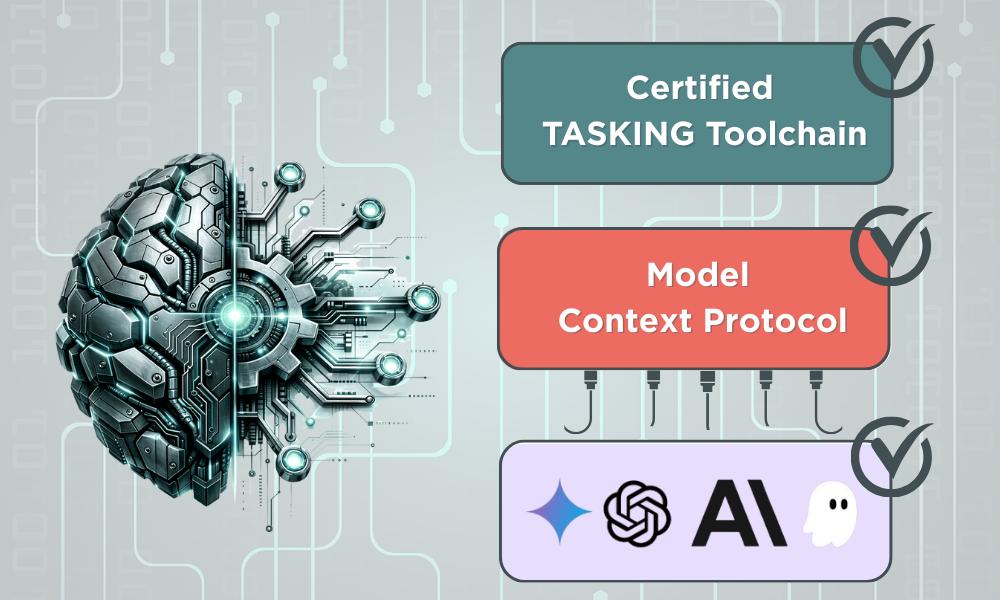
The TASKING toolchain is built on a foundation that enables OEMs to develop functionally safe and secure systems. Modern AI capabilities are supported within the toolchain via the Model Context Protocol (MCP), an open-source standard that enables AI agents to securely interact with development tools and access the data required to perform their tasks. In this way, developers can use an LLM to control AI agents that direct and automate key aspects of the development lifecycle, helping teams create safer, more robust code. With this strategy, the developers can:
• Rigorously apply coding standards.
• Optimize compilation configurations
• Automate Python-controlled debug tools
• Capture execution traces
• Manage iterative compile, debug, and test processes
Verify that system specifications and requirements have been met
Validate that the code is performing the task for which it was written
Simplify requirements traceability
The TASKING toolchain provides a rich array of reports that LLMs can ingest to access accurate data on how code is structured and compiled, as well as how it executes on the target system (both virtual and physical). OEMs can utilize external AI resources set up in their own enterprises or in agentic development environments such as AWS Kiro, Microsoft Copilot, or Anthropic Claude Code.
“With the TASKING toolchain, AI can become an integral part of functionally safe and secure workflows,” said Janez Ulcakar, director of research & development, TASKING. “Workflows also become more flexible and agile, enabling developers to continuously optimize and enhance code with productivity enhanced by AI assistance. This gives OEMs the competitive edge of not just improving code design but of optimizing their entire software development lifecycle.”
Teledyne Microwave UK Introduces New Wideband Limiter for Advanced Radar Electronic Support Measures & Electronic Warfare Systems
Teledyne Microwave UK, part of Teledyne Technologies Incorporated, has announced the release of its new Wideband Limiter, a passive 0.1–20 GHz RF protection module designed to enhance the survivability of Radar Electronic Support Measures (R‐ESM) and wider Electronic Warfare (EW) systems operating in increasingly complex threat environments.
Developed to address the growing impact of high‐power RF and emerging Directed Energy Weapon (DEW) threats, the Wideband Lim-
Platform
Decisive Drone Detection
Building on its award-winning portable AI-sensing radar for counter UAS, MatrixSpace announces a major update to its edge-to-cloud MatrixSpace AI Software Platform.
The platform now supports multi-sensor, multi-drone detection in real time for counter-UAS applications. It delivers true threat assessment and early warning – detecting, tracking, and identifying – to empower on-site and remote operators to make split-second decisions regarding airspace activity. The platform is sensor-agnostic and can be easily integrated into existing systems via open APIs.
This dramatically improves the assessment of risk posed by small, low-flying drones in complex airspace, such as public events, critical infrastructure, and battlespaces.
The MatrixSpace AI Platform consists of MatrixSpace AiEdge, the company’s intelligent sensor operating system, and MatrixSpace AiCloud, a software-as-a-service that collects data from AiEdge-enabled sensors for a unified view
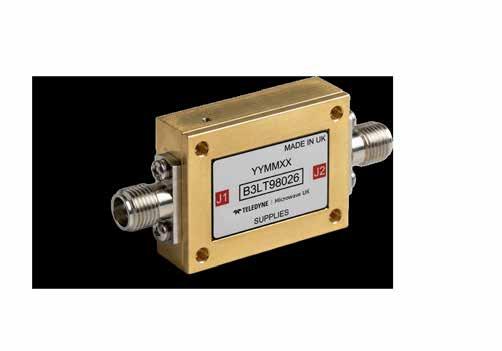
iter provides an always‐on layer of protection for sensitive receiver electronics. While R‐ESM platforms are inherently passive, future threat evolution continues to place greater demands on front‐end resilience. The limiter serves as a stra tegic safeguard, restricting harmful RF energy before it reaches critical hardware.
The module delivers wideband passive protection without compromising system sensitivity or coverage. With its compact, SMA‐based housing, it integrates cleanly into existing architectures and requires no system redesign. It is also fully compatible with Teledyne’s Phobos MTU (Mast Top Unit) and can accommodate additional RF elements, such as filters, when required.
By absorbing excessive RF energy before it enters the system, the Wideband Limiter helps reduce the risk of damage to high‐value elec-
of airspace activity. Unlike other offerings retrofitted for AI, MatrixSpace AiEdge and AiCloud are AI-native, enabling information to be rapidly actionable and easier to comprehend.
Quote from Matt Kling, VP and General Manager, AI Systems, MatrixSpace
“Most traditional systems rely on noisy, exotic sensors with siloed, cumbersome command and control (C2) structures that hinder decisive action. But as drone detection threats become increasingly complex, they require instant “threat truth”. Using AI to corroborate multiple inputs into one clear signal is the beauty of the MatrixSpace AI Software Platform, empowering customers to meet the threats we’re seeing today fully and in the future.”
MatrixSpace AiEdge, embedded in every MatrixSpace system, provides actionable intelligence at the point of sensor data collection. It detects, classifies, and tracks multiple object types, removing “clutter” to present a relevant picture of aerial activities, while fusing feeds from different sensors.
AiEdge fuses detections from MatrixSpace radars with complementary sensors such as Remote ID and ADS-B into a single, real-time track. By correlating multi-sensor data at the edge, AiEdge creates a common data representation and cues PTZ (pan-tilt-zoom) cameras for rapid visual confirmation, passing high-confidence tracks to the cloud for enterprise-level analysis.
Designed for future threat landscapes, the Wideband Limiter provides scalable protection for a wide range of modern EW and intelligence platforms, ensuring robustness without affecting overall system behaviour or capability. “As threat environments evolve, system survivability depends more than ever on resilient front end protection,” said John Toner, Sr. Vice President & General Manager, Teledyne Aerospace & Defence Electronics UK.
“Our new Wideband Limiter delivers the wideband coverage, low insertion impact, and compact form factor our customers need to keep their systems mission ready in the face of increasingly sophisticated RF and DEW challenges.”
Sitting above distributed AiEdge deployments, MatrixSpace AiCloud simplifies the management of geographically diverse sensor networks into a single, unified view. Instead of a bank of monitors displaying individual sensor feeds, AiCloud provides operators with clear visibility into low-airspace activity, alerts, and warnings across all protected sites—accessible on any device.
MatrixSpace AiCloud combines fused, real-time data from radar, optical, ADS-B, and Remote ID sensors to deliver consistent object tracking and actionable threat intelligence at scale. Within AiCloud, whitelisting and threat classification determine whether objects are friendly, unknown, or hostile, enabling fast, coordinated operator response. Local sensors continue operating autonomously when cloud connectivity is disrupted, with all activity synchronized for review once connectivity is restored.

New LX4580 is a Highly Integrated 24-Channel Mixed-Signal IC for Aviation and Defense Actuation Systems.
New IC features a redundant architecture tailored for mission-critical applications.
Microchip Technology announces the LX4580, a 24-channel mixed-signal IC designed to streamline high-reliability actuation control systems for aviation and defense applications. The LX4580 is highly integrated, replacing mul
tiple discrete components with a single device that supports synchronized data acquisition, fault monitoring, and motor control—reducing system size, weight, and complexity.
The LX4580 is offered in a compact 144-pin LQFP package and developed for applications including More Electric Aircraft (MEA), guided defense systems, drones, and launch platforms. The LX4580 integrates pressure sensing, temperature measurement, PWM motor-drive outputs, current sensing, Hall-effect sensor inputs, dual LVDT/resolver interfaces, and dual high-speed SAR ADCs. This level of integration

UEI Introduces Intel® x6425RE Quad-Core Processor Across Programmable Automation Controller Platforms
United Electronic Industries (UEI) announces the integration of the Intel® x6425RE quadcore processor into its family of programmable automation controllers (UEIPAC). This upgrade delivers enhanced performance, flexibility, and reliability for aerospace, defense, transportation, and automated testing applications.
The x6425RE processor brings real-time computing power with support for Windows 11 IoT Enterprise and Rocky Linux 9.2. Its 64-bit quadcore architecture runs at 1.9 GHz with a low 20 W power draw. With 8 GB RAM, 32 GB eMMC storage, and an M.2 slot for 320 GB and more
NVMe SSDs, it’s built for data-heavy workloads.
Adding this processor to the UEIPAC line expands customization options and boosts adaptability in demanding environments. Engineers can now run LabVIEW™ applications directly on the controller, eliminating the need for external PCs and reducing latency. Real-time control and monitoring are possible within a familiar Windows Embedded environment, improving mobility and efficiency.
alignment, and improved reliability compared to multi-device architectures.
“The LX4580 brings together an exceptional level of functionality in a single device, allowing our customers to simplify designs that previously required multiple ICs,” said Ronan Dillion, director of Microchip’s high-reliability and RF business unit. “By reducing system complexity and providing robust evaluation tools, we’re making it easier for engineers to accelerate development and deliver the next generation of reliable actuation systems.”
The device’s redundant architecture is tailored for mission-critical environments that demand fault tolerance and deterministic performance. By consolidating functions commonly spread across MCUs, ADCs, DACs, driver ICs, and regulators, the LX4580 reduces board space and wiring complexity, supporting manufacturers’ goals to minimize overall system weight while meeting demanding safety and certification requirements.
To accelerate customer development, Microchip offers application documentation demonstrating use with its MCUs. These resources enable standalone evaluation or rapid integration into customer control architectures, simplifying early design phases and helping teams address regulatory documentation requirements efficiently.
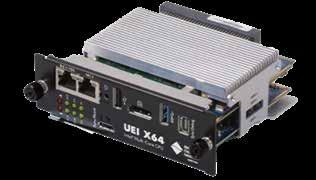
thon, LabVIEW™, MATLAB®, Simulink® — and compatibility with over 90 I/O and avionics boards for tailored solutions.
Built for rugged conditions, the system operates from -40 to 85º C and is backed by UEI’s 10year availability guarantee. Dual Gigabit Ethernet ports support IEEE-1588 and time-sensitive networking (TSN) standards for precise timing and low-latency communication.
Security features include TPM 2.0 for hardware-based data protection. Developers benefit from broad language support — C/C++, Py-
UEI’s latest platform empowers users to deploy high-performance applications directly on the controller, ideal for avionics testing and verification, hardware-in-the-loop (HIL) testing, ground vehicles, control, testing, and verification, and other mission-critical systems.
“Precision timing, deterministic performance, and secure control are essential in today’s embedded systems,” said Alex Ivchenko, Director of Engineering.
XChange3050 - Extreme Engineering Solutions introduces a 3U VPX 100 Gigabit Ethernet Switch with Layer 2 Switching and Optional Layer 3 Routing
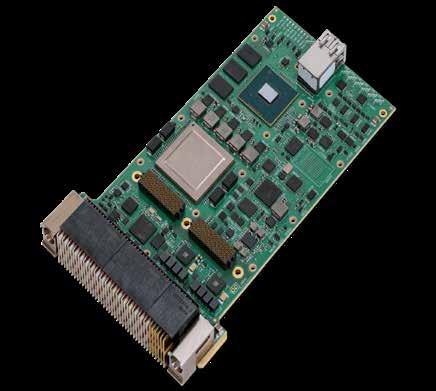
The XChange3050 is a conduction-cooled 3U VPX Ethernet switch module. The XChange3050 provides six backplane 100GBASE-KR4 Ethernet ports, six backplane 25GBASE-KR Ethernet ports, two backplane 10GBASE-T Ethernet ports, and an optional front panel optical Ethernet port.
The XChange3050 delivers full wire-speed
across all of its ports and supports jumbo frames up to 10 kB. It also supports IPv6 and a compre hensive set of IETF RFCs and IEEE protocols.
The XChange3050 is a conduction-cooled 3U VPX Ethernet switch module. The XChange3050 provides six backplane 100GBASE-KR4 Ether net ports, six backplane 25GBASE-KR Ether net ports, two backplane 10GBASE-T Ethernet ports, and an optional front panel optical Ether net port.
The XChange3050 delivers full wire-speed across all of its ports and supports jumbo frames up to 10 kB. It also supports IPv6 and a compre hensive set of IETF RFCs and IEEE protocols.
As a fully managed Layer 2 switch, the XChange3050 supports features such as VLANs

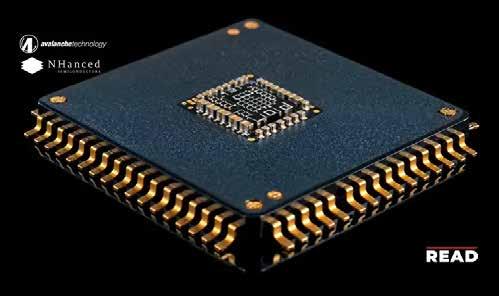
Avalanche Technology and NHanced Semiconductors Leverage Advanced 2.5D Integration to Bring Optimal SWaP and Reliability to Rad-Hard FPGAs
The combined solution of NHanced’s advanced hybrid bonding techniques and Avalanche’s Space Grade MRAM chiplet enables a reliable, rapid booting FPGA and sets the stage for additional System-In-Package (SiP) advancements for the Aerospace & Defense (A&D) community.
NHanced recently announced its collaboration with Avalanche Technology to deliver advanced solutions to the warfighter through the right combination of impactful capability and low-risk integration. The US Government’s acquisition strategies are evolving rapidly, with increased emphasis on the use of advanced commercial off-the-shelf (COTS) technology. In alignment with this vision, leveraging Avalanche’s industry-leading Space Grade MRAM as a chiplet in NHanced’s proven 2.5D integration flows creates an optimized (SiP) platform that can generate rapid solutions.
Avalanche Technology presented a vision for
High Performance Computing architectures at the 2019 MRAM forum, positioning MRAM to replace various legacy memory types across a range of SoC and FPGA architectures. This replacement is already a reality in high-reliability applications across the A&D ecosystem, revolutionizing SWaP and system adaptability in the process.
Open-standard interfaces and reusable building blocks, such as advanced Space Grade MRAM chiplets, promise to drive further meaningful integration in the industry. Integrating MRAM via heterogeneous 2.5D packaging decouples memory from the rigid constraints of monolithic fabrication. This modular approach streamlines the development flow, significantly lowering R&D overhead and accelerating timeto-market.
In support of that earlier vision, Avalanche’s first 2.5D MRAM implementation would be the industry- leading Gen 3 Space Grade High-Density Dual QSPI products, known as the gold standard for reliable SoC & FPGA booting today. Data integrity cannot be compromised in space systems; a technology that survives radiation but loses data, wears out over time, delays data commitment, or lacks flight heritage is not truly Space Grade. Partial compliance leads to failure. Avalanche Space Grade MRAM unique-
ly delivers on all five critical Space Grade criteria: radiation immunity, permanent data retention, unlimited endurance, deterministic nanosecond writes, and proven flight qualification – all without tradeoffs.
When paired with NHanced’s world-class hybrid bonding capability, the result is an ideal launchpad for rapid, low-risk innovation for the A&D sector. Foremost among today’s 2.5D and 3D integration methods, hybrid bonding delivers optimal SWaP, ruggedness, security, thermal management, latency, and power. RadHard systems can be created with performance and density approaching that of commercial solutions. Hybrid bonding enables seamless integration of advanced, proven building blocks, including high-density MRAM dies, into complex SiP solutions. Development timelines can be slashed from years to months. Other benefits include enhanced radiation tolerance through optimized die stacking, reduced system weight and power for satellite and defense missions, and scalable production that supports rapid iteration on mission-critical designs.
“Our collaboration with Avalanche showcases the power and promise of heterogeneous integration. By using hybrid bonding to stack proven best-of-class chiplets on custom interposers, our USUS fabs can deliver tailored solutions at a fraction of the time, budget, and risk of monolithic alternatives,” said Bob Patti, President of NHanced Semiconductors. “I foresee rapid customization and waves of innovation for both governmental and commercial applications.”
“Avalanche is thrilled to partner with NHanced to manifest the early vision of MRAM proliferation through heterogeneous integration. As the leader of Space Grade standard memory products for boot, storage, and processing functions in mission-critical applications, we are eager to enable low-risk rapid variants,” said Paul Chopelas, GM for Space and Defense at Avalanche Technology. “NHanced’s advanced integration capabilities allow us to extend further the SWaP, reliability, radiation resilience, and mission scalability of our flagship MRAM solutions to drive innovation at the SiP level.”
Roanwell Corporation Partners with United Security Inc. to Introduce TALON-PTT™, AI-Powered Breakthrough in High-Noise Communications
New tactical push-to-talk device isolates speech and filters ambient noise, delivering reliable communication in mission-critical environments.
Roanwell Corporation announced a strategic partnership with United Security Inc. (USI), an integrated security firm, to launch TALON-PTT™, an artificial intelligence-powered push-to-talk communication device designed to deliver clear voice transmission in high-noise operational environments.
The Tactical Audio Link for Operational Noise Filtering (TALON-PTT) uses AI-driven signal processing to isolate a speaker’s voice and filter out background noise, enabling clear com-
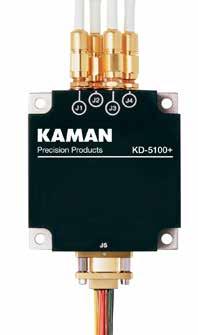
The Measuring Division of Kaman Precision Products, Inc., the world leader in the design and manufacture of high-performance position measurement systems, highlights its family of precision differential non-contact eddy-current
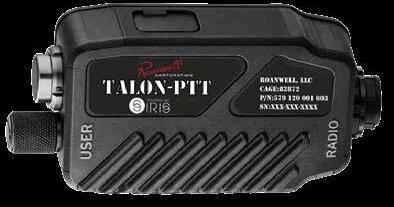
munication in high-noise environments where operational safety and decision-making are critical. The compact device is designed for use in security, military, emergency response, and industrial environments where engines, crowds, alarms, and other ambient noise can overwhelm traditional systems.
The partnership and product offering will roll up under USI Integrated Solutions, the company’s division focused on advanced security technologies and integrated protection platforms.
“TALON-PTT represents a meaningful advancement in practical communication performance and supports our continued expansion into security technology solutions,” said Christine A. Gelatt, Chairman & Chief Finance Officer of United Security Inc. “When teams can hear instructions clearly, they can act faster, make better decisions, and operate with greater confidence — particularly in high-risk or high-distraction environments.”
The partnership sees broad potential across industries and environments that require clear communication, including healthcare, higher education, large event venues, transportation, logistics, and security operations.
measuring systems for free-space optical communication.
Widely used in commercial and military imaging and communication satellites, interplanetary exploration vehicles, laser targeting, night vision, and optics stabilization systems, the differential inductance transducer systems have a proven track record of outstanding performance. Kaman’s measuring systems provide reliable, high-resolution position feedback, ensuring that a reflected laser beam finds its target hundreds or even thousands of kilometers away. The differential measurement family includes the KD-5100+ high-reliability displacement measurement system, the commercial-grade DIT5200L differential impedance transducer, and the KD-5600 digital differential measuring system.
The KD-5100+ features a stable design, extremely small size, and low power consumption, making it ideal for laser communications satellites and ground stations, image stabilization systems, and directed energy systems for ground, shipboard, and airborne applications. With its small package size – only 2 x 2.12 x 0.75 inches thick – the KD-5100+ is an ideal solution for meeting SWaP-C requirements. It is manufactured to Mil-PRF-38534 Class H, with
“TALON-PTT was engineered for demanding environments,” said Matt Steinbroner, owner and operator of Roanwell Corporation. “The device is glove-friendly, waterproof, and built to military durability standards, while still integrating easily into existing radio and headset systems.”
By reducing background noise and communication interference, TALON-PTT is designed to help lower the risk of miscommunication, reduce operator fatigue, and limit exposure to harmful noise levels.
The device features low-latency AI signal processing (under 20 milliseconds) and adjustable noise-filtering levels, enabling users to tailor performance to operational conditions.
Designed for portability and field durability, TALON-PTT measures approximately 2.5 inches wide, 4.25 inches long, and 1 inch high and operates on AAA batteries with up to 72 hours of runtime. The device integrates through LEMO audio ports, with adapter options available for compatibility with a wide range of communication systems.
MIL-SPEC components used throughout the electronics.
The KD-5600 digital differential measuring system is a highly accurate, easy-to-use precision system that offers improved communication and convenience. Kaman has brought together its custom sensors, signal processing, analog-to-digital converter, and custom calibration system to deliver the precision KD-5690 system. This system provides true digital, high-bandwidth, and high-linearity, with a high-end communication bus for fast data transfer.
Also on offer is the DIT-5200L, which provides true differential for common-mode rejection at an economical price. Capable of subnanometer resolution with high sensitivity (up to 10V/mil, 39 mV/μm) and outstanding linearity (up to 0.1 percent full range), this product provides a powerful solution for a diverse set of applications that demand exacting precision. The commercial-grade, fully analog product is built to IPC-A-160 Class 3 standards. Depending on the program requirements, it also offers the opportunity for commercial-off-the-shelf up screening. The I/O is via a 9-pin mini-D connector, and the input power connections are reverse-voltage protected.
Babel Street announced its 2026 strategic roadmap, marking a decisive shift toward Agentic Risk Intelligence. Following a year of leadership expansion and rapid market evolution, the company is advancing the industry toward an intent-driven system where AI agents execute complex intelligence workflows while remaining grounded in verifiable evidence and human judgment.
“The age of static risk intelligence is over. The future belongs to organizations that can see what others cannot and act before a risk becomes a reality,” said Benji Hutchinson, CEO of Babel Street. “We are deploying agentic AI to fundamentally change the speed, depth, and veracity of global intelligence. Analysts and operators will be empowered to surface hidden connections and produce evidence-backed conclusions at the speed and scale of modern risk.”
The global intelligence landscape is undergoing a fundamental shift. Threat actors are exploiting publicly available information and flooding the environment with synthetic media and automated deception. Traditional investigative platforms and
methods cannot keep pace, creating urgent demand for AI systems capable of closing this growing intelligence asymmetry.
Babel Street’s ‘AI-as-a-Worker’ approach enables analysts to direct AI agents that execute multi-step intelligence workflows at machine speed. While the system traverses massive datasets to extract entities, detect risk, and assemble intelligence, analysts maintain full oversight with complete traceability. Every finding is delivered with clear citations and source provenance, ensuring results can be validated, reproduced, and confidently used for highstakes decision-making.
Babel Street’s advantage begins with Data Dominance™, the company’s long-standing ability to transform vast amounts of publicly available information into contextual intelligence. This foundation enables connected intelligence that helps analysts and AI agents uncover hidden relationships and networks across fragmented data sources.
“AI falls short today not because it lacks sophistication, but because it is fueled by data that lacks context,” said John Larson, President and Chief AI Officer at Babel Street. “Most platforms operate with blind spots, relying on narrow datasets that create false confidence. Babel Street is the only platform combining Data Dominance with agentic
capabilities. Risk intelligence must be continuous, infinitely scalable, and instantly actionable. Babel Street is charting an aggressive course towards fulfilling this vision in 2026.”
Beginning this Spring, the company will make the first of its agentic workflows generally available, empowering analysts to assign research, entity discovery, and signal analysis tasks directly to the AI. The platform returns structured findings grounded in verifiable evidence with transparent citations and source provenance to ensure trust, auditability, and mission alignment. These workflows support critical missions such as vendor vetting, identity investigations, and global threat intelligence, where speed, accuracy, and evidence-backed conclusions are essential.


Annapolis Micro Systems.
Behlman Electronics.
Great River Technology.
Highland Technology.
Mercury Systems.
nVent.
ODU.
PICO Electronics, Inc.
www.odu-aerospace.com
COTS Journal (ISSN#1526-4653) is published monthly at; 110 S Rancho Santa Fe, Virgin UT 84779. Periodicals Class postage paid at San Clemente and additional mailing offices.
POSTMASTER: Send address changes to COTS Journal, 110 S Rancho Santa Fe PO 790039, Virgin UT 84779.
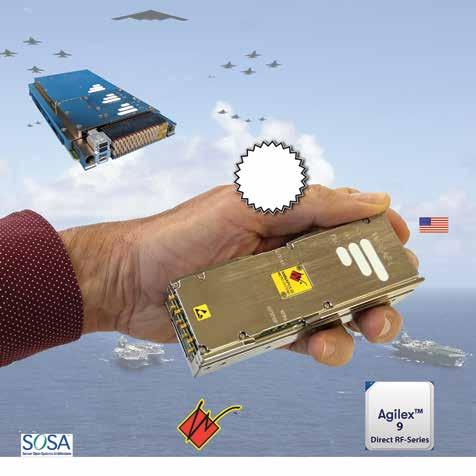




Behlman has provided reliable power to mission-critical military airborne, shipboard, ground and mobile applications for over 50 years. Behlman offers the widest array of COTS AC to DC and DC to DC power supplies that meet military requirements at industrial pricing.
> Proven military reliability without the high cost of full mil-spec
> Built to perform to full power at rated temperatures
> Modified COTS solutions that offer faster delivery, higher reliability and lower cost than custom designs
> Hundreds of designs to meet a wide range of applications