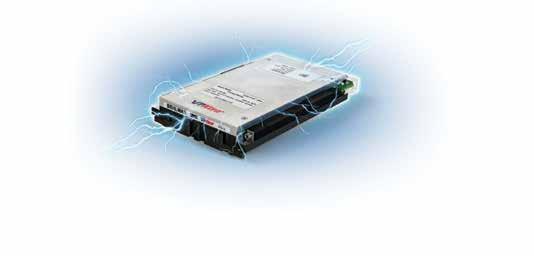


Behlman introduces the first test-proven VPX power supplies developed in alignment with the SOSA Technical Standard. Like all Behlman VPXtra® power supplies, these 3U and 6U COTS DC-to-DC high-power dual output units feature Xtra-reliable design and Xtra-rugged construction to stand up to the rigors of all mission-critical airborne, shipboard, ground and mobile applications.
> 6U power module developed in alignment with the SOSA Technical Standard
> Delivers 1050W DC power via two outputs
> VITA 46.11 IPMC for integration with system management
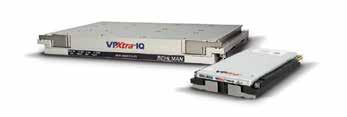
> 3U power module developed in alignment with the SOSA Technical Standard
> Delivers 800W DC power via two outputs
> VITA 46.11 IPMC for integration with system management
COTS (kots), n. 1. Commercial off-the-shelf. Terminology popularized in 1994 within U.S. DoD by SECDEF Wm. Perry’s “Perry Memo” that changed military industry purchasing and design guidelines, making Mil-Specs acceptable only by waiver. COTS is generally defined for technology, goods and services as: a) using commercial business practices and specifications, b) not developed under government funding, c) offered for sale to the general market, d) still must meet the program ORD. 2. Commercial business practices include the accepted practice of customer-paid minor modification to standard COTS products to meet the customer’s unique requirements
—Ant. When applied to the procurement of electronics for the U.S. Military, COTS is a procurement philosophy and does not imply commercial. Office environment or any other durability grade. E.g., rad-hard components designed and offered for sale to the general market are COTS if they were developed by the company and not under government funding.
By Chris Morton, Defense Industry Veteran & Global Director of Aerospace and Defense IFS

EDITORIAL
EDITORIAL SUBMISSION AND RELEASES
johnr@rtc-media.com
PUBLISHER/CEO
John Reardon • johnr@rtc-media.com
CONTRIBUTING EDITORS
John Reardon, Odile Ronat
ART AND PRODUCTION
CREATIVE DIRECTOR
Shae Mirizzi • shae.reardon@gmail.com
DIGITAL MARKETING MANAGER
Scott Blair • scott@blair-media.com
AD TRAFFIC
Vaughn Orchard • vaughno@rtc-media. com
FINANCE AND ACCOUNTING
Paige Reardon • paiger@rtc-media.com ADMINISTRATION/CIRCULATION
Dawn Dunaway • dawnr@rtc-media.com
ACCOUNT MANAGER
SALES MANAGER
Vaughn Orchard • vaughno@rtc-media. com
CUSTOM AND CONTRACT SERVICES
John Reardon • johnr@rtc-media.com
COTS Journal
CORPORATE OFFICE
RTC Media
110 S Rancho Santa Fe, Virgin UT 84779 PO 790039
Phone: (949) 226-2023
Fax: (949) 226-2050
www.rtc-media.com
PUBLISHED BY RTC MEDIA
Copyright 2025, RTC Media. Printed in the United States. All rights reserved. All related graphics are trademarks of The RTC Group. All other brand and product names are the property of their holders.




2V to 10,000 VDC Outputs
2V to 10,000 VDC Outputs
1-300 Watt Modules
Regulated/Proportional/Programmable Isolated/Single/Dual Outputs
1-300 Watt Modules Regulated/Proportional/Programmable Isolated/Single/Dual Outputs
High Reliability Greater
High Reliability
hrs. MIL-HBK-217F
• Military Upgrades Expanded
• Military Upgrades
Expanded operating temperature -55ºC to +85º C, no derating required
•
• Select Environmental Screening Referencing MIL-STD-883
• ULTRA Miniature



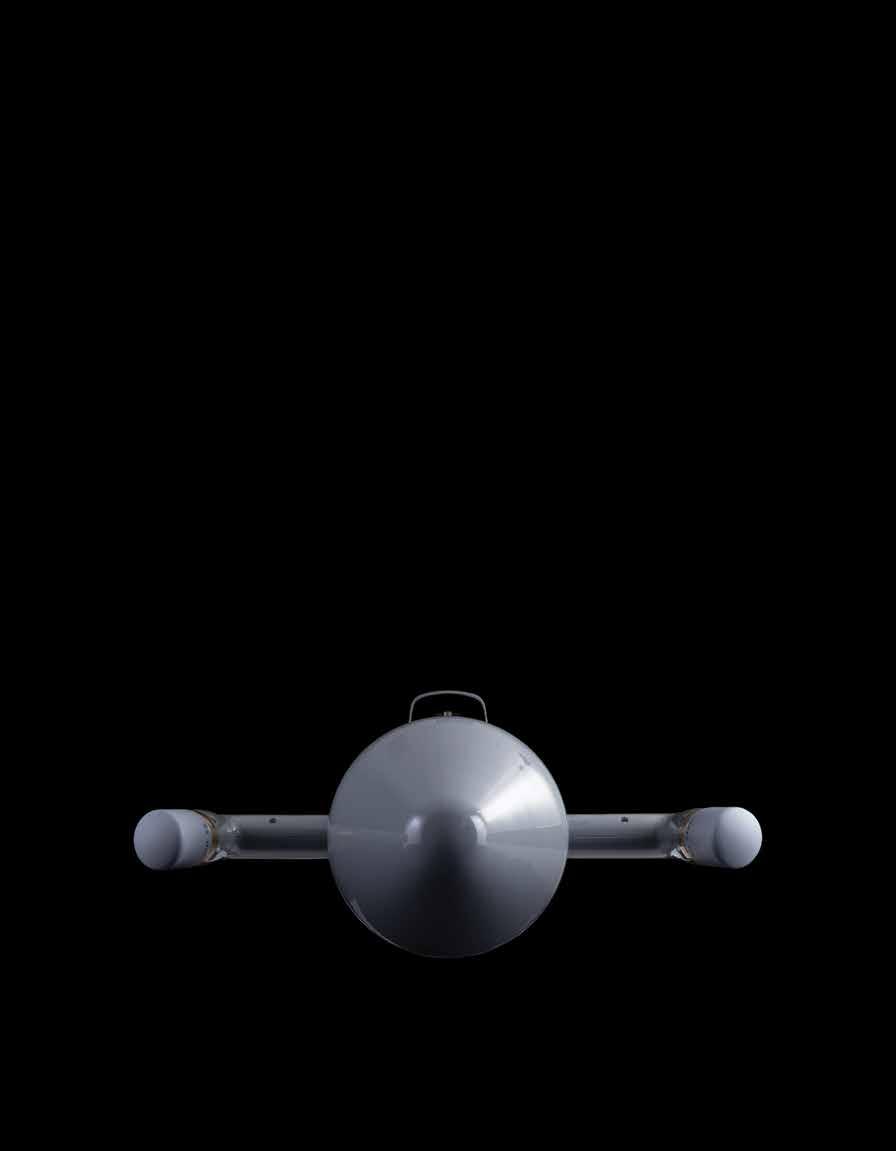
mPOD uses DRFM technology to emulate realistic combat scenarios, replicating near-peer jamming for fast, accurate electronic warefare training.
mrcy.com/mpod
tem helps protect aircraft and crews from missiles and other advanced threats.
BAE Systems has received Foreign Military Sales contracts from the US Army valued at $137 million to deliver its AN/ AAR-57 Common Missile Warning Systems (CMWS) to allied nations. The system helps protect aircraft and crews, enhancing their survivability against missiles and other advanced threats.
The CMWS detects infrared- and radio-frequency-guided missiles, unguided munitions, and other threats, and automatically cues warnings and countermeasures in real time. The system is installed on more than 40 types of rotary- and fixed-wing aircraft worldwide. With the new contract, CMWS will protect the fleets of more than 20 nations.
“International customers continue to choose CMWS for its proven effectiveness and reliability in combat, where it has saved many lives,” said Jared Belinsky, director of Integrated Survivability Solutions at BAE Systems. “We are proud of this legacy and look forward to continu-
iDirect Government, a leading provider of satellite communications to the military and government, announced it was awarded a contract for the Missile Defense Agency Scalable Homeland Innovative Enterprise Layered Defense (SHIELD) indefinite-delivery/indefinite-quantity (IDIQ) contract with a ceiling of $151B.
This contract encompasses a broad range of work areas, enabling rapid delivery of innovative capabilities to the warfighter with greater speed and agility. iDirectGov
ing to support U.S. coalition partners.”
BAE Systems has delivered more than 3,000 CMWS units worldwide. The Company continues to deliver systems ahead of schedule, underscoring its commitment and ability to provide mission-critical capabilities to warfighters quickly.
The Company’s missile warning systems
– including its 2-Color Advanced Warning System in use by the US Army – are core elements of the Company’s Intrepid Shield™ layered approach to platform survivability.
The Intrepid Shield approach leverages the full electromagnetic spectrum to detect, exploit, and counter evolving threats.

is eligible to compete with other qualified industry participants for task orders under this contract over the next 10 years.
iDirect Government, LLC, delivers secure satellite-based voice, video, and data applications with anytime and anywhere connectivity in the air, at sea, and on land. iDirect Government’s advanced satellite IP solutions are used for critical ISR, airborne, maritime, and COTM communications to support force protection, logistics, situational awareness, disaster recovery, and emergency response.
Building on more than 20 years of global satellite communications experience, iDirect Government provides the most band-

width-efficient, scalable, and highly secure platform to meet specialized applications of multiple federal, state, and local government agencies, including the Department of Defense, both domestically and abroad. iDirect Government, a US corporation, has been a trusted partner of the US government for more than 21 years. All its employees are permanent US residents, with a third being US military veterans.
iDirect Government’s specialized technology includes transmission security (TRANSEC), Communication Signal Interference Removal™ (CSIR™) anti-jam technology, and Open Antenna Modem Interface Protocol (OpenAMIP). The Company has Cybersecurity Maturity Model Certification (CMMC) Level 2. All Defense-grade products sold by iDirect Government are designed, developed, assembled, programmed, and verified within the United States.
ers For Us Air Force C-17 Fleet Modernization
Curtiss-Wright Corporation announced that it has been selected by The Boeing Company to provide mission computer technology for the US Air Force’s C-17 Globemaster III Flight Deck Obsolescence and Technology Refresh program. This major avionics upgrade is designed to extend the operational life and capability of one of the military’s most critical airlift platforms and will support cockpit upgrades for the global strategic airlift fleet. The contract has an estimated lifetime value exceeding $400 million.
Curtiss-Wright will supply Boeing with Modular Open Systems Approach (MO-
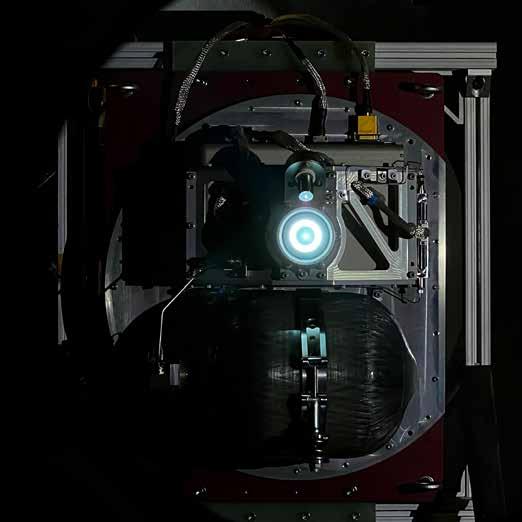
Orbion delivers 33 Aurora propulsion modules to York Space Systems for a military constel-
Orbion Space Technology has delivered 33 Aurora Hall-effect propulsion modules to York Space Systems (York) for use on spacecraft being built for a military constellation. Propulsion units from earlier production runs are already operating on York
Orbion, which produces its Hall-effect electric propulsion systems through a vertically integrated, high-volume process at its facility in Houghton, Michigan, enables reliable maneuvering and long-duration propulsion for spacecraft used for commercial, civil, and national-security purposes.
As part of its commitment to strengthening national space infrastructure, it is manufacturing propulsion systems for a number of upcoming US defense missions. Brad King, the co-founder and CEO of Orbion, says customers trust the Company because it delivers consistently.
‘Our customers rely on us to provide propulsion systems that perform as expected on orbit,’ he said.
‘Their confidence comes from our consistency. For Orbion, delivering flight-ready hardware is not a milestone – it’s the way we operate.’
Michael Lajczok, CTO of York, said: ‘Building and sustaining national security constellations requires partners who are proven on orbit and reliable in production.’
‘Orbion has proven to be a partner we can depend on, with the consistency and execution these missions demand.’
Orbion’s structured production line enables steady output of flight-ready systems, with the Aurora thruster moving through design, qualification, assembly, and acceptance testing under one roof. This approach allows Orbion to standardize components, shorten lead times, and maintain quality control throughout the full lifecycle.
This delivery supports national-security missions in Low Earth Orbit that require precise maneuvering, sustained propulsion, and reliable collision avoidance.
Working alongside York Space Systems, Orbion’s hardware is supporting the deployment and long-term operation of the military constellation, meeting its need for stable on-orbit positioning and response mission operations.
SA)-aligned mission computers for integration into the C-17 aircraft fleet. These systems will enable new levels of computing performance and technology insertion, and will support the US Air Force and allied partners through the aircraft’s planned service life.
“Curtiss-Wright is honored to collaborate with Boeing on this important military fleet modernization initiative,” said Lynn M. Bamford, Chair and Chief Executive Officer of Curtiss-Wright Corporation. “By delivering rugged, modular mission computing technology, we are supporting the long-term readiness of the C-17, a platform essential to global logistics and mobility operations. Our scalable, MOSA-aligned solution is designed to evolve with future mission needs, helping to ensure availability and performance for decades to come.”
The C-17 has served as the cornerstone of the US Air Force’s strategic airlift since
the early 1990s, providing global transport for heavy equipment, vehicles, and troops.
Curtiss-Wright’s selection for this program builds on our long-term relationship with Boeing and underscores the Company’s role in delivering critical computing solutions for next-generation aerospace modernization efforts.

ISTEC Services Limited, a British company with 37 years of operational experience in the design, manufacture, and supply of complex weapon integration solutions for military platforms, is announcing a new collaboration agreement with Fering Technologies.
This collaboration agreement is another demonstration of ISTEC’s growing portfolio of high-quality OEMs that are selecting it as their preferred supplier of sophisticated weapon mount integration solutions. ISTEC has a long, operationally proven histo-
ry of designing and manufacturing robust, high-quality crew-served weapon mounting solutions, smoke dischargers, and other ancillaries, such as weapon stowage, for military use across land, sea, and air platforms. Their systems have been used extensively in Land operations, such as in Iraq and Afghanistan, by both specialist and regular forces, and are fitted to key vehicles such as WMIK, Mastiff, Husky, and Jackal. They currently have over 20,000 mounts in use across all 3 services. ISTEC remains OEM, platform-, and weapon-agnostic and can therefore work with any OEM to design, integrate, and manufacture the necessary weapon mounts to maximise their platform’s firepower and physical protection.
Fering Technologies has designed and

The Boeing Company announced a contract award from the US Air Force that will keep the C-17A Globemaster III flying and mission-ready for decades to come.
The contract provides for the design, manufacture, integration, qualification, and military certification of a modernized flight deck for the C-17A. The program replaces critical avionics and mission essential equipment with modern, modular open systems architecture (MOSA) that enables plug-and-play enhancements and ensures the fleet can adopt new capabilities rapidly and affordably.
The Boeing Company today announced a
contract award from the US Air Force that will keep the C 17A Globemaster flying and mission-ready for decades to come. Shown here, C-17As line up on the flight-line. (Boeing photo)
“The C-17A has been the backbone of global air mobility for over three decades,” said Travis Wil liams, Vice President of United States Air Force Mobility & Training Services, Boeing.
“With the US Air Force requirement to keep the C-17A viable through 2075, we already have a clear and achievable roadmap to support their needs, and the needs of our international partners around the globe. By resolving avionics obsolescence and introducing MOSA, we’re preserving a proven, highly depend able, heavy airlifter and keeping it at the forefront of performance and efficiency for decades to come.”
Boeing delivered 275 C-17A aircraft be
manufactured the Fering Pioneer, a highrange (7,000km) hybrid all-terrain vehicle, and the Fering Pioneer X, a specific peacekeeping and defence edition. At IAV, Fering’s Pioneer X will be fitted with ISTEC’s commander’s swingarm, twin GMPG mounts, smoke dischargers, personal weapon stowage, and their Mk2 Softmount for HMG on a ring mount to maximise firepower and vehicle protection.
Gareth Reece, Chief Commercial Officer at Fering Technologies, said, “Fering is expanding into North America with new opportunities, and ISTEC is the industry standard for quality weapon mounts. Having successfully worked together in the past to ensure our innovative vehicles have the best possible crew-served weapon integration solutions, it is a natural progression for us to formalise this collaboration. We are looking forward to working more closely with ISTEC going forward.”
Anne Quelch, Director at ISTEC, said, “We are very pleased to be formalising this collaboration with Fering Technologies. The type of vehicle they produce is a perfect fit for our weapon integration solutions and demonstrates our close collaboration with OEMs to meet their specific requirements. ISTEC has vast experience in supporting a wide array of vehicle platforms, and this collaboration is one of many we are working on with various OEMS and consortia for the LMP programme to ensure that ISTEC’s products are the weapon mount of choice for potential bidders.”
tween 1993 and 2015. The Air Force received 222, and our international partners received 53, forming what is now a well-established, fully integrated virtual fleet support system across nine partner nations.

The initiative aims to decrease reliance on foreign markets.
Raytheon, an RTX business, was awarded a contract from the Air Force Research Laboratory to develop domestic production capability for thin-film lithium niobate (TFLN) wafers, a material essential to high-speed, secure communications and advanced sensing systems.
TFLN is used in next-generation photonics for many defense and commercial applications, including AI and computing technologies, data centers, and telecommunications. With supply currently dominated by foreign sources, Raytheon aims to ensure the US has a secure, domestic alternative available to the entire defense indus-
RTOS
DDC-I announces off-the-shelf support for the Deos™ safety-critical real-time operating system (RTOS) running on AMD Versal™ AI Edge and AMD
Versal Prime Series Gen 2 adaptive SoCs (system-on-chip). The integrated solution provides a compelling high-performance common compute platform for a variety of avionics applications, including IMA processor modules, navigation, display and video processing, smart sensors, DCUs, endpoint data acquisition, and control nodes.
AMD Versal adaptive SoCs combine world-class FPGA programmable logic with a high-perfor-
trial base and commercial industries.
“Global access to TFLN has become increasingly constrained, with supply consolidation leaving U.S. companies vulnerable to international disruptions,” said Colin Whelan, president of Advanced Technology at Raytheon. “Through this effort, Raytheon will stand up an independent U.S. supplier of next-generation TFLN, building an open, third-party source that can serve a broad range of defense and commercial customers.”
Under the contract, Raytheon’s Advanced Technology team will leverage its expertise in ion slicing to assist the US-based Company G&H in developing a manufacturing process for high-quality TFLN wafers. Once the process is established, production will transition to G&H in early 2026, which will manufacture the TFLN wafers at low-rate initial production. Raytheon and G&H will continue to collaborate closely to ensure successful technology transfer and production readiness.
“Establishing G&H as a robust, domestic merchant supplier of thin film lithium niobate is essential for cre-
mance processing system that features integrated Arm® CPUs, enhanced functional safety and security, and an expanded suite of hard IP, including AI Engines and DSP engines, to deliver breakthrough performance for embedded systems. The on-chip Arm Mali™ G78AE GPU enables display/ human-machine interface (HMI) applications at 4K60 resolutions with up to 268 GFLOPs of compute power. The devices also support high-speed streaming encoding and decoding. Together, these features enable avionics developers to employ a flexible, reusable single-chip processor for a myriad of applications, with optimized Size, Weight, and Power (SWaP).
“This integrated solution builds on more than 15 years of avionics leadership and our long-standing collaboration with DDC-I, further strengthening functional safety and certification support for Versal AI Edge and Prime Series Gen 2 devices,” said Minal Sawant, senior director of the Aerospace & Defense Vertical Market at AMD.
“The AMD Versal Series AI Edge and Prime Series Gen 2

ating next-generation faster and more efficient photonic transmission and sensing systems,” said Dr. Stratos Kehayas, president, Photonics at G&H. “G&H’s vertically integrated crystal and wafer manufacturing capabilities enable the reliable transition of this technology into U.S.-based production, strengthening supply chain resilience for both defense and commercial applications.”

devices are next-generation compute platforms with multiple cores, large multi-level caches, integrated GPUs, AI Engines, split-lock technology, and more. These features enable the devices to be readily configured for a broad range of avionics and autonomous vehicle functions,” said Gary Gilliland, Vice President of Marketing at DDC-I. “These capabilities mesh seamlessly with Deos’ own multicore SafeMC™ scheduling and cache partitioning technology. “
Deos is employed in commercial and military ground, marine, air, and space systems where reliability and determinism are paramount. Rooted initially in avionics, Deos was first certified to DO178 DAL A (the utmost software process standard) in 1998 and is deployed in over 10,000 commercial aircraft. Deos’ use cases have extended outside avionics, where its proven technical features provide numerous advantages over legacy RTOS architectures, especially as integrated system complexity continues to grow while still requiring a high degree of determinism and robustness. Deos is also aligned with modern military initiatives such as FACE®, MOSA, PYRAMID, and others.
Deos is a safety-critical embedded real-time operating system (RTOS) that employs patented cache partitioning, memory pools, and safe scheduling to deliver higher CPU utilization than any other certifiable safety-critical COTS RTOS while also addressing AC/AMC 20-193 multicore objectives. The Deos environment also offers security features, middleware, networking, and other components often desired for modern embedded systems.
Windward’s new mission-critical intelligence service center combines proprietary agentic Maritime AI™, multi-source intelligence, and a dedicated Windward analysts team to keep government, commercial, and legal organizations mission-ready in real time.
Windward, the leading Maritime AI™ intelligence company, announced the launch of the Windward Maritime Intelligence Operations Center (MIOC). The dedicated intelligence service center is designed to provide mission-ready, decision-grade maritime intelligence for government agencies, commercial enterprises, legal organizations, and insurance companies operating in increasingly complex maritime environments.
Escalating geopolitical tensions, expanding sanctions regimes, gray-zone warfare, and growing threats to critical infrastructure have made maritime risk harder to
detect, verify, and act on. At the same time, the proliferation of data sources and monitoring tools has increased complexity without necessarily improving clarity, leaving decision-makers with fragmented signals rather than defensible intelligence.
The Windward MIOC addresses this new reality by operating as a seamless extension of customer teams—either embedded on-site or deployed remotely. Drawing on operational models from Global Security Operations Centers (GSOCs) and Cyber SOCs, the center introduces a new standard of maritime service, shifting from passive observation to active orchestration.
Powered by Windward’s patented Maritime AI™, the MIOC leverages an Agentic AI SOAR layer to automate complex investigations, reducing ‘Mean Time to Decision’ (MTTD) by 80%. The center’s Multi-Domain Fusion model integrates multiple sources of intelligence, including imagery (SAR/EO), digital signals, and RF spectrum data, to eliminate the silos exploited by bad actors. Combined with Proactive Threat Hunting—using ‘Pattern of Life’ baselines to flag emerging evasion typologies—the MIOC delivers expert-led intelligence services and high-fidelity an-
alyst reports that ensure organizations can navigate strategic risks with certainty.
“As maritime threats become more sophisticated, all organizations must stay ahead of the curve,” said Ami Daniel, CEO and Co-Founder of Windward. “We launched the Windward MIOC to serve as the ultimate mission partner, placing elite tradecraft and agentic AI at our customers’ service. They can now leverage 15 years of know-how and hundreds of years of combined maritime and intelligence experience. We are providing the authority needed to command the seas and act with the precision and agility today’s missions demand.”
Through MIOC, Windward delivers intelligence capabilities that include Subsea Infrastructure Monitoring, Multi-Sensor Fusion, Investigative Due Diligence, IUU and Forced Labor Screening, Environmental Forensics, and Legal and Incident Reconstruction. The MIOC operates as a dedicated intelligence operations center, configured to fit organizations’ mission and operational needs. Available via subscription for real-time monitoring, or on an ad-hoc basis, services are delivered either remotely or physically on-site within customer organizations.

American defense companies strike a high-tech Gulf of America security partnership.
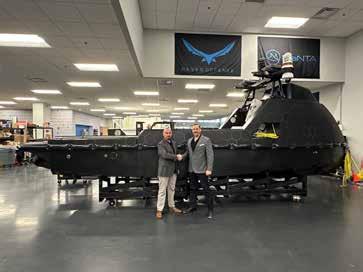
Partnership between Janus Marine & Defense and Raven Defense can build ‘wall of steel’ around US oil and gas and shipping operations. Companies will fuse the latest electronic warfare and autonomous vessel and air technology.
Deploying new technology can free up US Navy ships, slashing costs, without compromising lethality or vigilance.
Two leading American defense firms are striking a strategic agreement to build a hightech ‘wall of steel’ to support the US Navy, commercial shipping, and offshore operations in the Caribbean and Gulf of America.
The partnership sees South Carolina-headquartered marine autonomy specialist Janus Marine & Defense join forces with New Mexico-based US Department of War RF Systems contractor Raven Defense Corporation.
Janus CEO Jack Dougherty, a former US Navy Iraq War veteran, said the partnership aims to take pressure off the US Navy while protecting US oil and gas and shipping operations in the
Elma Electronic is pleased to announce it was awarded a contract for the Missile Defense Agency Scalable Homeland Innovative Enterprise Layered Defense (SHIELD) indefinite-delivery/indefinite-quantity (IDIQ) contract with a ceiling of $151B. This contract encompasses a broad range of work areas, enabling rapid delivery of innovative capabilities to the warfighter with greater speed and agility.
The SHIELD contract leverages artificial intelligence and machine learning-enabled applications where pertinent and maximizes the use of digital engineering, open systems architectures, model-based systems engineering, and agile processes in the acquisition, development, fielding, and sustainment of these capabilities.
David Feinstein, vice president of sales for Elma Electronic, noted, “Being selected for the SHIELD contract reinforces Elma’s role as a trusted partner delivering mission-ready embedded computing technology, prototyping, architecture development, as well as integration and assembly expertise for the na-
Gulf.
“The Gulf of America is seeing a massive increase in naval and commercial shipping and offshore activity,” he said. “This demands the latest technology to protect assets and people. The Janus–Raven partnership will provide a wall of steel around operations. The key is to use technology to take the pressure off US security forces in a contested, high-risk maritime environment. We can slash costs, without compromising lethality and vigilance, by deploying Janus experience with autonomous surface and subsurface vessels combined with Raven’s satellite communications, air drones, ISR, and electronic warfare expertise.”
Jack said the ‘wall of steel’ will protect offshore energy infrastructure, ports, and critical mari time corridors, reducing reliance on, and risk to, manned vessels. He said Janus’ expertise draws on over a decade of contracting experience lead ing and operating Unmanned Surface Vessels in defense and security operations, starting with the autonomous mine-hunting unit in 2014 in the US 5th Fleet.
Chris Patscheck, CEO of Raven Defense, which draws on decades of defense and elec tronic warfare experience, said the partnership is built on the latest maritime security needs — persistent, intelligent, and unmanned.
“We’re proud to step up for America’s interests in the Gulf with our friends at Janus,” he said. “Our solution integrates persistent intelligence, surveillance, and reconnaissance (ISR), autonomous patrol, rapid interception, and remote operations center (ROC) support. It is purpose-built for the unique threat environment facing offshore energy operators. By leveraging unmanned water and air drones, advanced signal-detection methods, and cybersecurity, our partnership provides continuous, pervasive coverage. We are setting a new standard for how energy infrastructure and shipping are protected.”
tion’s most critical defense systems. A key component of this contract is open systems architectures, an area where Elma has been at the forefront for decades.”
Feinstein added, “The SHIELD IDIQ is a license to innovate rapidly. Elma’s ability to integrate open-architecture hardware into deployable, high-reliability systems gives MDA and its partners the agility needed to address emerging and complex threats. As a first phase awardee, Elma is committed to fully support current and future initiatives for the DoW’s MOSA mandate, which seeks to improve system interoperability and technology insertion, and is a critical part of the Golden Dome program.”
The SHIELD program encompasses a broad range of work areas that enable rapid delivery of innovative capabilities to the warfighter with greater speed and agility. Key scope areas for Elma include rapid prototyping of rugged embedded computing systems to support evolving missile defense missions, embedded computing development using Modular Open Systems Approach (MOSA) principles, including alignment with SOSA, VITA, CMOSS, and other open standards, as well as system integration and assembly, delivering fully tested, mission-ready subsystems manufactured in the United States.
Elma Electronic is a long-established supplier
of critical embedded systems for military and aerospace applications worldwide, with a strong competency in modular open systems and open standards. As an ITAR-registered company, Elma’s US operations provide design, engineering, manufacturing, and testing capabilities, enabling close collaboration with government and industry partners throughout the program’s lifecycle.
Through the Company’s participation in developing industry initiatives and architectures, such as SOSA, CMOSS, OpenVPX, and other MOSA-aligned frameworks, Elma develops interoperable, scalable hardware designs for mission computing, C5ISR, electronic warfare, and sensor systems. This commitment to open standards translates into rapid technology insertion, lifecycle flexibility, and reduced total cost of ownership for its global customer base.

• $40M investment in 86,350-square-foot facility in Washington State, USA
• Annual production capacity of >30,000 radars across product lines
• More than 200 employees at full capacity
• Start of production in summer 2026

Echodyne, the radar platform company, announces a major near-term expansion in its advanced radar production capacity.
Echodyne’s new 86,350-square-foot facility will provide enough manufacturing and warehouse space to produce and ship more than 30,000 radars per year. The Company’s modular manufacturing approach allows production capacity to flex to match varying demand across product lines and to introduce new product lines and capabilities seamlessly. The investment reflects Echodyne’s continued commitment to enhancing security and safety as UxS becomes ubiquitous on the battlefield and in society at large, staying ahead of the accelerating demand in the US and Allied countries worldwide, and strengthening America’s defense industrial base.
Counter-UAS (C-UAS), beyond visual line of sight (BVLOS) operations for drone-as-firstresponders (DFR), force protection, border security, and on-the-move (OTM) are among the applications and capabilities driving accelerating demand for high-resolution radar surveillance
of air and surface domains. The Company’s patented metamaterials electronically scanned array (MESA®) technology delivers unrivaled data fidelity – pinpoint accuracy, track stability, AI-based threat classification, and well-defined, high-speed application programming interfaces (APIs) for easy integration into systems of systems – in a compact, solid-state, commercially exportable radar product.
Eben Frankenberg, the CEO of Echodyne, commented:
“We are proud to be opening this new facility in Washington State, the location of our headquarters and a long-time global hub for tech innovation and advanced manufacturing. The extraordinary performance of MESA radar stands in marked contrast to its purposeful simplicity, making high-fidelity radar broadly accessible for defense and civilian safety and security applications. This new investment in manufacturing capacity will allow us to supercharge production to meet the rapidly growing global demand for our products.”

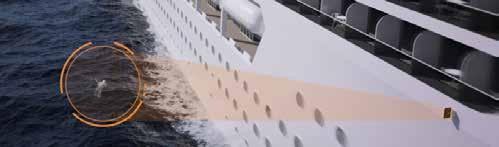
man over-
In 2010, the Cruise Vessel Security and Safety Act (CVSSA) was signed into US federal law, requiring cruise ships to install systems to detect or capture images of man-overboard incidents. ISO21195:2020 was born out of CVSSA, setting the standards for what detection systems should be designed to achieve and how they should perform.
Specifically, ISO21195:2020 requires that acceptable man-overboard detection systems have a minimum detection probability of 95% and generate no more than 1 false alarm per day on average. Having completed Phase 1 (a documentation and design test) in early 2023, MARSS has now also completed Phase 2, which involved the testing of a detection sensor.
While Phase 2 requires a minimum of 100 detections with a 95% detection success rate,
MARSS MOBtronic completed 120 tests, achieving 100% success.
Mike Collier, Product Development Manager at MARSS, stated, “We are extremely pleased to have passed Phase 2, and now are hopeful of completing Phase 3 before the end of 2023, which will involve the deployment of MOBtronic on a vessel in operational conditions for three months to measure the probability of detection and false alarm rates. Having been installed and operational on cruise ships for many years and now exceeding the ISO performance standard in Phase 2, we are confident that MOBtronic will continue to excel in Phase 3.”
While there are currently more than 300
cruise ships in operation, only a tiny fraction are equipped with a man overboard detection system. MARSS is looking to change this with MOBtronic, an automated man-overboard system for the instant detection, classification, and rescue support of a human falling overboard a vessel or maritime structure.
MOBtronic installations consist of multiple sensor pods mounted around the vessel to detect and monitor individuals who fall overboard accurately. Sitting behind the sensors is MARSS’ proprietary NiDAR Core hybrid intelligence platform, which will automatically detect the person falling and raise an alarm with the crew.


FROM PRINTING PARTS ON THE BATTLEFIELD TO AI‘S STRATEGIC MOVE
FROM THE FRONTLINE TO THE FLIGHTLINE
By Chris Morton, Defense Industry Veteran and Global Director of Aerospace and Defense at IFS
Traditional assumptions of warfare continue to be shattered and rewritten. The defense industry in 2026 will need to keep pace, explains Chris Morton, defense industry veteran and Global Director of Aerospace and Defense at IFS. From printing parts on the frontline to counter drone proliferation and the second wave of AI moving from battlefield to service hangar—here’s what the industry must prepare for:
Prediction 1: Taking production lines to the frontline to reduce supply chain threats and increase force efficiency and resilience
Recently, the US Secretary of the Army, Dan Driscoll, spoke on the Army’s ability to manufacture better than the vendor. He used the example of UH-60 Black Hawk’s external fuel tank and a tiny Black Hawk screen control knob and said, “The parts could be
3D-printed at higher quality for about $3,000 and $60, respectively, but cost $14,000 and $47,000 for full assembly replacements from the manufacturer.”
3D printing technology—enabled by advances in digital engineering—is pushing the production line closer to the frontline. Already, as part of the US Department of War’s (DoW) FY2026 budget, $3.3 billion has been allocated to additive manufacturing projects. By pushing the production of replacement parts closer to the point of use, military forces can reduce susceptibility to lengthy supply lines, repair equipment faster, and build resilience into global supply chains. This is especially critical for theaters of conflict burdened by a lack of transportation infrastructure or extreme distances.
In another example, the US Navy printed a replacement pump for one of its Arleigh Burke-class destroyers, re-
ducing the time to produce the part by 80%—a significant improvement over traditional casting processes. An additional point—it was printed in Spain, allowing the ship to continue its future deployment, rather than sitting at port waiting for a replacement.
These early adopters of expeditionary printing have been the services themselves, but the defense industrial base (DIB) has taken notice of the speed, innovation, and resilience this move brings to military forces. Undoubtedly, expeditionary manufacturing for repair and sustainment will spread and become a staple of the global industrial base.
None of this happens, however, without the digital thread—crucial for transferring design files to remote 3D printing locations. The importance of digital engineering has already been recognized by the Department of De-
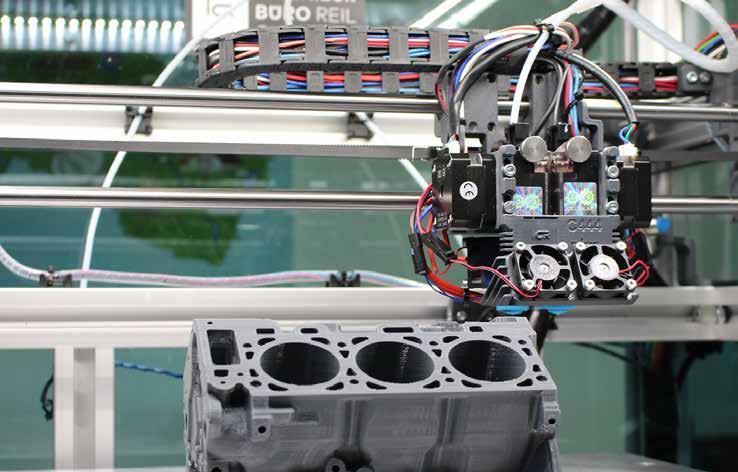
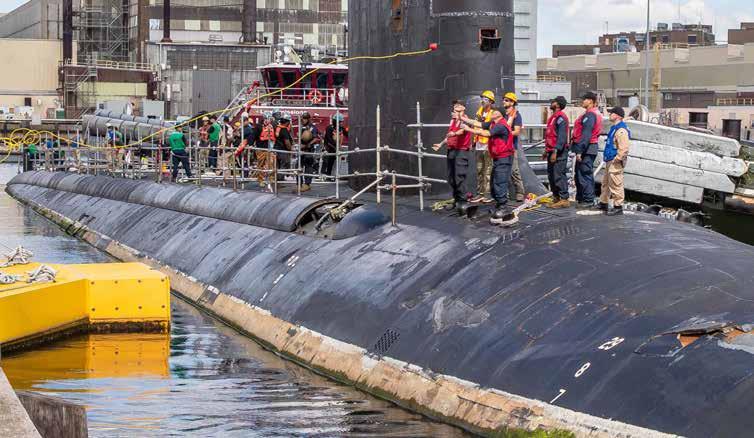
fense Instruction (DoDI) 5000.97, which mandates that all defense capabilities are set up for digital engineering.
Prediction 2: Commercial manufacturers are ready and waiting in the wings for times of conflict
Ukraine’s artillery consumption outstripped NATO’s production capacity within months. For decades, military planners assumed that stockpiles and well-developed supply lines could sufficiently resupply military forces in conflict long enough for the industrial base to ramp up production for whatever was needed. Regional conflict in Eastern Europe proved this assumption to be breathtakingly wrong. It wasn’t just that the DIB was unable to respond to demand in the field, but any belief that stockpiles provided a modicum of deterrence vanished.
Relying on larger stockpiles isn’t the answer. The kill chain must be extended from the frontline all the way back to the factory floor. But the DIB can’t afford to keep factories’ production lines idle waiting for conflict. Instead, in 2026, we will see increased reindustrialization of the manufacturing base, with defense manufacturers commercial-
izing and commercial manufacturers adding defense manufacturing capabilities. This allows for a defense capacity that can be rapidly scaled up in times of conflict. Commercial companies have noticed the opportunity—positioning themselves as viable options for defense contracts should the need arise.
But it’s not as simple as flipping a switch and making jet engines. Defense manufacturing requires a wide range of manufacturing processes. Mixed-mode capabilities allow manufacturers to produce both high-volume, standard components and custom, low-value items for defense applications within a single supply chain. Leveraging a business system that enables project, discrete, and process manufacturing in a single environment is critical to building diversity and resilience into production.
As the UK’s Finance Minister, Rachel Reeves recently said about investment into the DIB, “This additional investment is not just about increasing our national security but increasing our economic security, too.”
The last two years have seen an explosion in the proliferation of autonomous and first-person view (FPV) drones
on the battlefield. Relatively low-cost solutions have proven capable of delivering disproportionate effects, making this tech du jour a weapon of choice in Ukraine. The defense industry and governments alike have taken notice. The UK Ministry of Defence aims to deliver 100,000 drones to Ukraine by the end of 2025, and the US Secretary of War stated that “Drones are the biggest battlefield innovation in a generation.” The booming drone gold rush is exacerbated by the concept that drones are “bullets, not planes,” meaning that small, cheap drone swarms have become a real threat to majestic, heavy-duty assets.
With the backdrop of the relative effectiveness of drone warfare, the attention of the defense industry and governments is turning to counter-autonomous drone tech. For fiscal year 2026, the US DoW budget requested over $3 billion just for counter-drone capabilities alone. These capabilities come in the form of small handheld systems such as the DroneGun Mk4, built for rapid response to neutralize individual targets, or large vehicle-mounted Radiofrequency Directed Energy Weapons currently in testing by the British military.
As military forces experiment with
multiple applications to address the emergence of autonomous drones, the defense industry is innovating in parallel to develop a capability that meets diverse, emerging requirements. The winners will need to scale quickly to deliver tech that was essentially non-existent a mere five years ago.
Prediction 4: Industrial AI diffuses from the battlefield to maintenance bays and sustainment projects
In 1962, Everett Rogers argued that technology doesn’t spread in a straight line, but rather in waves. Early adoption of AI on modern battlefields, driven by an existential threat, quickly validated its value. Target recognition, analysis of intelligence volumes, and decision-support schema have been successfully employed and, in many cases, at scale. In a devastating strike against the strategic Russian bomber fleet dubbed Operation Spiderweb, Ukraine employed AI to find, target, and strike 41 aircraft.
But the second wave of AI in defense is upon us, and will not take place at the front; it will take place in shipyards, hangars, and maintenance bays. As military commanders begin to trust AI as a technology, they will demand its application elsewhere—and there are few areas as rife for adoption as in maintenance and sustainment. Fleet and field commanders don’t want to spend their time wondering whether their assets will be ready—they want them fully mission-capable to employ at a time and place of their choosing.
While some programs have leveraged AI behind the scenes for years, such as the US Air Force’s Conditions-Based Maintenance Plus Program Office, battlefield successes will accelerate the second wave. For decades, large assets such as ships and aircraft have been placed on complex schedules to be taken out of service for inspection of time-dependent components or to replace parts to stave off unplanned downtime. AI
completely upends this system by employing predictive algorithms that will predict failure, recommend maintenance, and optimize downtime.
Victory will still depend on the frontline, but readiness will be won on the flightline.
Mission briefing understood—2026 is ripping up the defense rulebook.
As global and regional conflicts continue, the defense industry will remain at the forefront of adopting new strategies, technologies, and assets in 2026. Supply lines will be bolstered by expeditionary manufacturing and the reindustrialization of the manufacturing base, while autonomous drone combat will meet its match as counter-drone technologies enter the frontline. And AI will become the difference between mission readiness success and failure as it spreads from the battlefield into maintenance facilities.
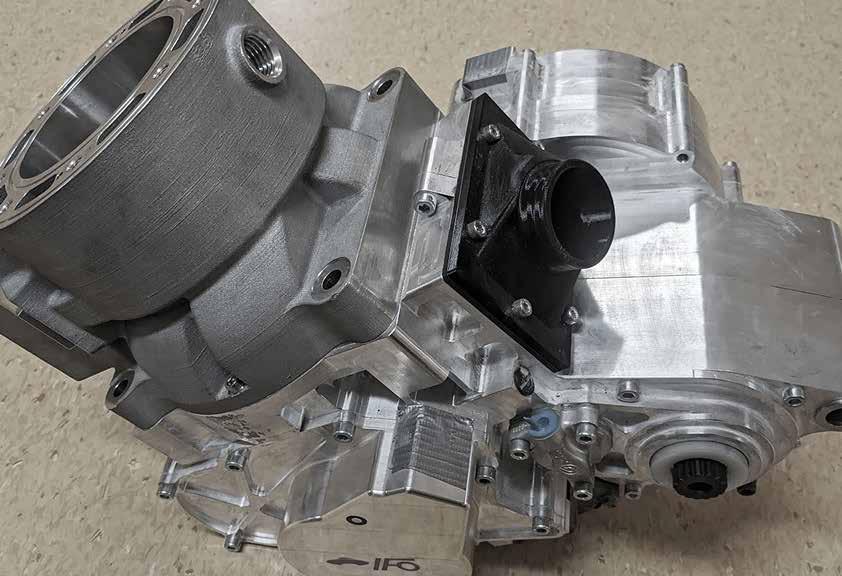

By Buck Biblehouse, Senior Editor
Vannevar Labs is redefining the “OODA loop” (Observe, Orient, Decide, Act) by deploying a software-centric approach to modern conflict. By moving away from legacy hardware-first systems, the company has built an integrated ecosystem capable of processing massive data volumes to generate tactical advantages. At its core, the technology leverages agentic AI—autonomous software agents that can reason through complex scenarios—to provide intelligence that was previously buried under petabytes of noise.
The technological backbone of Vannevar Labs is its ability to ingest and normalize terabytes of unstructured data in real-time. This includes satellite imagery, radio frequency (RF) signals, maritime logs, and foreign-language open-source intelligence (OSINT).
• Decrypt & Decipher Platforms: These modules utilize advanced Natural Language Processing (NLP) and machine learning to translate and
categorize adversarial data. Rather than simple translation, the system performs entity extraction and sentiment analysis at scale, allowing it to identify hidden connections within foreign military documents or technical journals.
• Data Lakes & Petabyte-Scale Analysis: The company maintains a proprietary repository of over 1 petabyte of adversarial data, growing by roughly 10 terabytes weekly. Their algorithms utilize this histori-


cal depth to train models that recognize “normal” patterns, making it possible to flag even the slightest anomalies in adversary behavior.
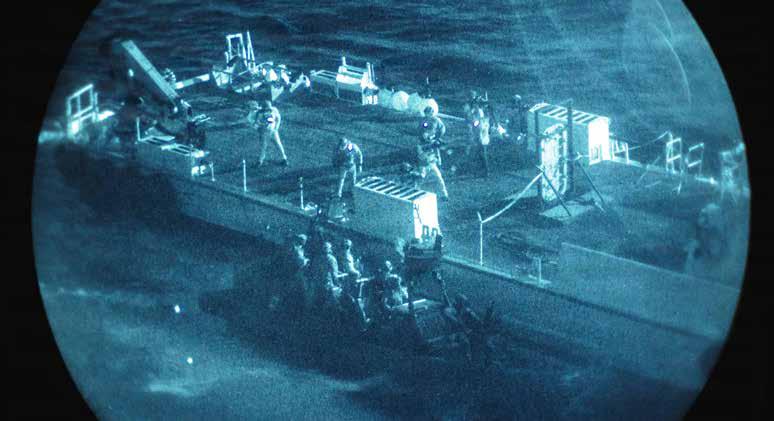
The technical demonstration at AFCEA highlighted the platform’s ability to transition from raw data to a functional Battle Plan. In the scenario of a suspicious vessel potentially carrying weapons, the software operates across multiple technical layers:
1. Probability Modeling: The system aggregates physical sensor data (ship displacement, speed, and AIS signatures) against historical smuggling profiles. It calculates a “weapons probability score” by cross-referencing the ship’s origin, cargo weight discrepancies, and the digital footprint of the shipping company.
2. Autonomous Tactical Planning: Once a threat is confirmed, the AI generates a
multi-phase boarding plan. It evaluates sea state conditions, optimal approach vectors for U.S. boarding teams, and fuel consumption for support craft.
3. Algorithmic Diversions: The most advanced feature is the AI’s ability to design asymmetric distractions. The system can identify specific “blind spots” in an adversary’s sensor network and suggest electronic or narrative diversions, such as localized signal jamming or the deployment of decoys, to mask the boarding team’s movements and saturate the adversary’s decision-making capacity.
In a separate technical application, the software demonstrates its utility in counter-intelligence and pattern recognition. By analyzing attendee lists, visa records, and digital behavior, the platform can assess the likelihood of foreign agents infiltrating the US.
The technology utilizes graph analytics to map relationships be-
tween individuals and foreign intelligence apparatuses. It doesn’t just look for names; it analyzes career trajectories, institutional affiliations, and travel patterns to provide a probability-based assessment of espionage risk. This allows security personnel to prioritize monitoring efforts based on data-driven “threat scores” rather than manual guesswork.
Vannevar’s technical edge lies in Software-Defined Defense. By decoupling intelligence capabilities from specific hardware, their tools can be deployed to the “tactical edge”—meaning a soldier with a laptop or tablet can access the same computing power as a rear-command center. This architecture ensures that as adversarial tactics change, the software can be updated in hours, rather than the years required for hardware modifications.
Consider a scenario involving a “dark” vessel—a cargo ship that has
disabled its Automatic Identification System (AIS) and is suspected of transporting advanced weaponry into a contested region. Traditionally, validating this threat would require days of human analysis across satellite imagery, port logs, and signal intelligence.
Vannevar’s Decrypt and Overwatch platforms automate this process by executing three distinct technical phases:
1. Multi-Modal Anomaly Detection: The AI first pulls terabytes of historical data to establish a baseline for the vessel. It cross-references current satellite imagery with historical displacement data. If the ship is sitting lower in the water than its manifest suggests, the AI flags a high “Weapons Likelihood Score.” It then scrapes localized foreign language news and port communications data that Vannevar ingests at a rate of 10 terabytes per week—to find men-
tions of the ship’s crew or cargo that never made it into official English-language channels.
2. The Automated Battle Plan: Once the threat is validated, the software transitions from analysis to agentic planning. It generates a comprehensive boarding plan for U.S. forces, calculating:
Optimal Intercept Points: Based on fuel consumption, sea states, and the ship’s projected path.
Risk Mitigation: Identifying the vessel’s internal layout from public blueprints to suggest the safest boarding entry points.
3. Algorithmic Diversions and Deception: The most transformative feature of the Vannevar ecosystem is its use of AI-driven diversions. To ensure the U.S. boarding team retains the element of surprise, the AI analyzes the adversary’s sensor network and local communication
nodes. It then suggests a series of distractions, such as non-kinetic electronic signatures or localized “information noise”, to draw the adversary’s attention to the opposite side of the vessel or a different sector entirely. This saturates the enemy’s cognitive bandwidth, forcing them to process false positives while the real operation commences.
For the COTS Journal reader, the significance of Vannevar Labs lies in software-defined defense. By leveraging petabyte-scale data lakes and agentic AI, they provide a capability that hardware alone cannot match: the ability to “see” a threat through the noise and “act” with a pre-calculated, diversionary strategy that protects American lives.
Rugged edge computing brand Cincoze has unveiled its all-new CV-200 Series slim-bezel industrial displays. The CV-200 Series features a minimalist profile, a narrow bezel, and industrial-grade reliability for industrial panel PCs and industrial touch monitors. Specifically engineered for modern factory HMI and process visualization, they carefully balance the durability required for harsh environments with seamless equipment integration and intuitive operation. The modular design of the CV-200 Series offers screen sizes from 10 to 21.5 inches for over 40 possible configurations. The first release is the 21.5” Full HD models with almost ten configuration options for various application needs.
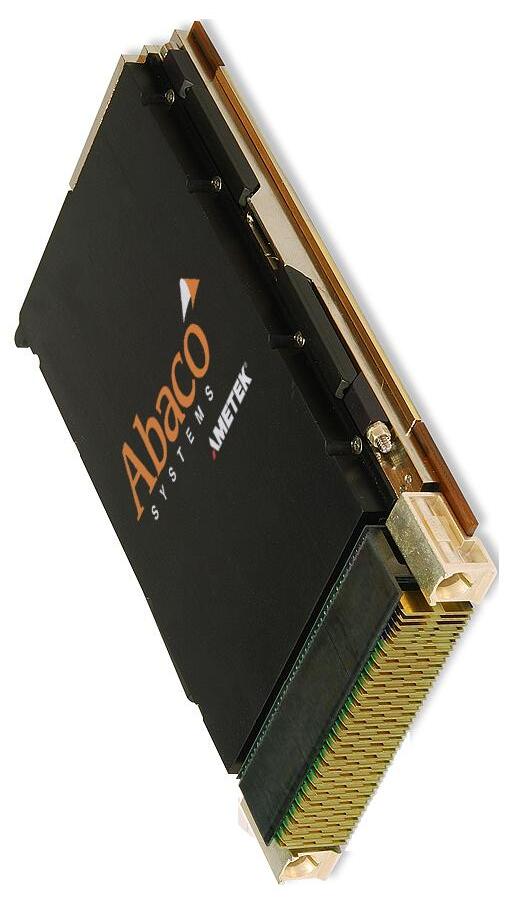
Rugged, SOSA-aligned SBC built on the latest CPU technology.
Abaco Systems introduces the SBC3518, a rugged 3U VPX Single Board Computer built on Intel’s Core Ultra Series 3 processors (formerly Panther Lake). Designed for the most demanding commercial, defense, and aerospace applications, the SBC3518 delivers high-performance computing and advanced AI capabilities at the tactical edge, where speed, reliability, and mission success are critical. This launch underscores Abaco’s leadership in SBC technology and its commitment to driving innovation for customers worldwide.
“As defense systems evolve toward greater autonomy and data-driven operations, the demand for AI-enabled SBCs is accelerating,” said Simon Collins, Director of Product Management. “With real-time AI processing, sensor fusion, and advanced signal handling at the edge, the SBC3518 offers a new level of capability for embedded AI performance
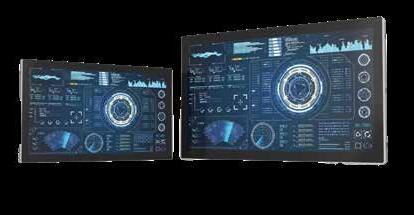
The CV-200 Series offers clear visuals and smooth operation, and integrates easily into production line equipment. Its slim, die-cast aluminum alloy frame has a bezel less than 3mm wide, increasing the display area without changing existing equipment setup. The Full HD screen and 178° wide viewing angle ensure clear and crisp readability from any position. Every model features a projective capacitive (P-Cap) touchscreen with an anti-glare (AG) coating for the clearest images, even in high-brightness indoor lighting conditions. Touch response is fast and precise, making daily HMI operation smoother and more natural.
Rugged and Durable for Industrial and Humid
across a wide range of applications.”
SBC3518 combines Performance, efficiency, and Low-Power cores with integrated GPU and NPU technology, delivering up to 100 TOPS of compute power for local, efficient AI execution. A proven FPGA architecture with dedicated user space enables customers and third-party developers to implement custom security solutions, safeguarding mission-crit ical data. The SBC3518 supports both air and conduction cooling for optimal reli ability in harsh environments.
SBC3511 and SBC3513 families, the SBC3518 continues Abaco’s tradition of advancing technology insertion roadmaps, offering a clear and con fident upgrade path for customers investing in next-generation em bedded systems.
gers or splashes of water. The backlight lasts up to 50,000 hours, and a 7H hardness Glass-Glass (GG) panel adds durability. The CV-200 Series meets the IEC 61000-6-4 industrial EMC standard, ensuring stable, long-term operation and giving operators total peace of mind.
Cincoze’s exclusive Convertible Display System (CDS) technology lets you pair the CV200 Series with embedded computer modules (P2000/P1000 Series) or monitor modules (M1000 Series). Customers can configure the system as either an industrial panel PC or an industrial touch monitor, depending on display size, computing performance, and functional requirements. This plug-and-play design sim-
The XPedite8370 from Extreme Engineering Solutions (X-ES) is a rugged, high-performance 3U VPX-REDI single board computer engineered for next-generation network information processing. Powered by the Intel® Core™ Ultra processor (Series 3)—formerly Panther Lake—it is meticulously aligned to the SOSA™ I/O Intensive profile, making it a drop-in powerhouse for modern open-architecture defense systems.
Security is central to the design, featuring integrated SecureCOTS™ technology paired with a Microchip PolarFire™ SoC FPGA. This combination enables the hosting of custom se curity functions to protect sensitive data from observation or modification in contested en vironments.
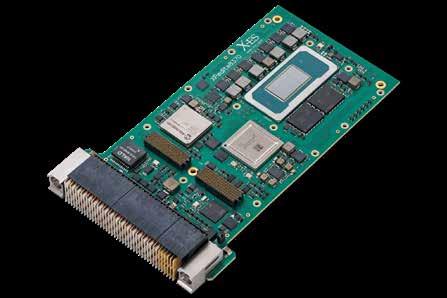
Key Technical Specifications:
Memory & Storage: Up to 64 GB LPDDR5 SDRAM (8 channels with in-band ECC) and up to 512 GB onboard NVMe storage.
High-Speed I/O: Features one 100GBASE-
The XPedite8370 delivers an optimal balance of high-bandwidth processing and low power consumption for the most demanding ruggedized embedded computing applications.

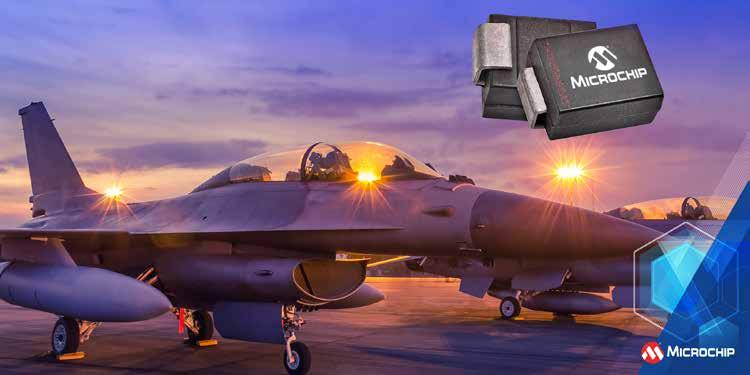
Microchip Launches Military-Qualified Plastic Transient
Voltage Suppressors for Aerospace and Defense Applications
The JANPTX devices meet the MILPRF-19500 qualification and offer a high peak pulse power rating of 1.5 kW
Microchip Technology announces the release of its JANPTX family of non-hermetic plastic Transient Voltage Suppressor (TVS) devices that meet the MIL-PRF-19500 qualification, offering high-reliability protection for aerospace and defense applications. These TVS devices are the first in the industry to achieve MIL-PRF-19500 qualification in a plastic package, offering engineers a lightweight, cost-effective solution without sacrificing stringent military performance requirements. The JANPTX product line is available in voltage ranges from 5V to 175V and includes 84 variants:
With a high peak pulse power rating of 1.5 kW and clamping response times measured at less than 100 picoseconds in internal tests, the JANPTX family is designed to help ensure the
safety and reliability of sensitive electronic components in demanding environments. Designed for surface mounting, these unidirectional TVS devices protect against voltage transients, including lightning strikes, electrostatic discharge (ESD), and electrical surges.
“Microchip’s JANPTX family sets a new standard for military-grade transient protection in aerospace and defense,” said Ronan Dillon, associate director of Microchip’s high-reliability and RF business unit. “By delivering the first MIL-PRF-19500 qualified plastic TVS devices, we enable engineers to achieve high reliability and performance in a lightweight, cost-effective package.”
The JANPTX TVS devices help safeguard airborne avionics, electrical systems, and other mission-critical applications where low voltage and high reliability are essential. Their advanced design provides protection against switching transients, induced RF effects, Electromagnetic Pulse (EMP), and secondary lightning events, and meets IEC61000-4-2, IEC61000-4-4, and IEC61000-4-5 standards.
Key Features of the TVS Devices
• Surface-mount unidirectional TVS design
• Can suppress transients up to 1.5 kW at
10/1000 µs
• Capable of clamping transients in less than 100 ps
• Working voltage range: 5V to 175V
• Military qualification: MIL-PRF-19500/716
• Equivalent hermetic packages available for surface mount and through-hole
• Weight: ~0.25 grams
Microchip’s scalable, customizable, and high-reliability solutions for aerospace and defense applications are designed to meet rigorous industry standards. Supported by a dedicated aerospace and defense team, Microchip offers controlled manufacturing, full traceability, advanced testing, extended-temperature operation, and radiation-hardened options, helping ensure long-term supply and dependable support for mission-critical designs.
Development Tools
Various SPICE models support JANPTX devices, enabling virtual prediction and simulation of circuit behavior instead of time-consuming physical prototyping and redesigns.
New NI PXI options build on 25 years of test expertise to accelerate system development, streamline integration, and boost engineers’ future readiness.
Emerson is expanding access to its field-proven NI PXI test platform with new high-performance hardware at a more affordable price point. These additions make it easier for more engineering teams to adopt scalable, low-cost automated test systems without compromising precision or reliability, while laying the groundwork for AI-enhanced workflows.
The new NI PXI hardware—including high-resolution oscilloscopes, multifunction I/O modules, embedded controllers, and an all-hybrid chassis—maintains the NI brand’s hallmark strengths in software integration, synchronized measurements, and high channel density, while lowering the cost barrier for test system development. Combined with powerful NI software ecosystems like LabVIEW TM, InstrumentStudio TM, and TestStand TM, Emerson empowers test teams to accelerate automation, simplify integration, and build future-ready test solutions that evolve with their needs.
By lowering the cost barrier, Emerson is opening the NI Platform to smaller teams and emerging industries. The new, affordable NI PXI products include:
• High-resolution oscilloscopes (NI PXIe5108): Four- and eight-channel options with 100-megahertz bandwidth, 250-Me
gaSample per second sample rate, and 14bit resolution. The flexible, high-density design means engineers capture more data, faster, with seamless precision.
• 18-slot hybrid chassis (NI PXIe-1081): An all-hybrid chassis with 2 gigabits per second system bandwidth. Built for growth, it scales easily and connects software-driven test systems so more teams can access critical data.
• Embedded controllers (NI PXIe-8842 / 8862): Simplified controllers supportingWindows 11™ and NI Linux Real-Time™. Engineering teams that don’t need a general -purpose interface bus (GPIB) can ensure more accurate and efficient measurements in their workstreams.
• 18-bit multifunction I/O modules (NI PXIe-6381 / 6383): New data acquisition (DAQ) modules offering industry-leading measurement performance with 18 bits of resolution and absolute accuracy down to 980 microvolts. With low noise voltage measurements across 16 or 32 channels, they deliver high accuracy and scalable solutions to automated test systems.
PXIe-8842 embedded controller, and NI
• PXIe-5108 Oscilloscope for software-driven mixed-signal measurements with InstrumentStudio
These new products represent the building blocks of a complete PXI system, where the true power behind better test capability lies in engineers’ access to modular, configurable systems that meet unique test and measurement needs.
“For 25 years, our modular NI PXI platform has empowered customers to future-proof their instrumentation investment through innovative upgrades that deliver the latest test and measurement capabilities. We’re excited that now more test engineers will be able to improve their workflows and increase their productivity through the NI platform with these new products,” said Charles Schroeder, NI fellow at Emerson’s test and measurement business.
“This foundational line of affordable, powerful NI PXI products allows test engineers to unlock deeper access to better data while making the right cost and performance tradeoffs for their organization. It introduces the future of test and measurement and reimagines productivity in the age of AI.”

Silvus Technologies (Silvus), a Motorola Solutions (NYSE: MSI) company and a global leader in advanced tactical wireless communications, announced the StreamCaster® MINI 5200 (SM5200). It is Silvus’ smallest, fully-featured mobile ad hoc network (MANET) radio, designed to equip ground forces with next-generation mesh networking to securely share voice, video, and data without dedicated infrastructure.
The ultra-compact 182-gram SM5200 features the high-speed power of a two-by-two MIMO radio, with up to two watts of output power and 100 Mbps of data throughput, providing the secure, reliable connection teams need to stay synced during critical missions.
Powered by Silvus’ battle-proven MN-MIMO waveform, StreamCaster MANET radios create a self-forming, adaptive mesh network capable of delivering real-time data, including high-fidelity video, across hundreds of nodes, even in the most contested environments.
“The SM5200 is a significant leap forward in providing communications flexibility at the tactical edge,” said Neema Daneshvar, vice president of Product at Silvus Technologies. “It is the smallest radio we’ve ever built that delivers full-size StreamCaster MANET radio capabilities, helping operators gain maximum
Concurrent is launching an enhanced version of its flagship rugged computing product, Kratos.
The new Kratos 32-core increases available Performance from the original 20-core version and so becomes the highest-core-count Intel® Xeon® 3U VPX computing board available. Built around a 32-core Intel® Xeon® processor in a SOSA® aligned 3U VPX form factor, this latest version sets a new industry standard for computing power in compact, mission-ready hardware. While the earlier released Kratos (20-core) combines 20 CPU cores with a vRAN acceler-
mobility without sacrificing the range or throughput they depend on.”
The SM5200 eliminates bulky, cable-heavy setups, enhancing operators’ freedom of movement, whether used alone or integrated into tactical networking systems like the StreamCaster NEXUS. Its next-generation audio circuitry delivers advanced voice quality, and its push-to-talk (PTT) function allows users to listen to two talk groups simultaneously. The SM5200’s dedicated radio over internet protocol (RoIP) interface seamlessly integrates land mobile radio (LMR) systems into Silvus mesh digital networks, keeping the entire team connected across devices.
The SM5200 supports consistent field uptime with diverse “plug-and-play” power options, from vehicle supplies to wearable batteries, while providing rapid connectivity for cameras, sensors, and end-user devices via Ethernet, USB, and RS-232 ports. The SM5200 is housed in a ruggedized, IP68-rated waterproof enclosure to perform in punishing environments where standard equipment often fails.
The SM5200 features AES256 and FIPS 140-3 encryption to protect sensitive data. With access to Spectrum Dominance 2.0, an ever-expanding licensable suite of low-probability-of-intercept/ low-probability-of-detection anti-jam electronic warfare resiliency and advanced threat protection capabilities, operators can achieve decision dominance and radio frequency spectrum overmatch even under electronic attack.
ator, making it ideal for rugged vRAN deployments in 5G private networks for defence, the latest version is a pure 32-core CPU engine designed to excel in data-intensive applications. With this leap in CPU performance, it also opens up additional markets where it can displace lower-end rack-mount servers, extending Concurrent’s reach into new mission-critical use cases.
Pioneering Engineering Leadership
Rachael Peterson, Principal Hardware Design Engineer at Concurrent, led the development of this upgraded Kratos. Rachael has built a career on challenging norms and driving innovation in a sector where women remain underrepresented. Having previously led the design of the 20-core version of Kratos, she has once again

pushed the limits of what’s possible in rugged embedded computing.

“Engineering is about curiosity and pushing boundaries,” said Rachael Peterson. “With this new Kratos, we’ve achieved something extraordinary, delivering up to 60% more Performance while keeping the same compact, rugged form factor. It’s the result of months of hard work and an incredible team effort. I’m proud of what we’ve created and excited to see the difference it will make for our customers in the field.”
MARSS has completed Phase 3 testing of the ISO 21195 standard for man-overboard (MOB) detection systems - a rigorous, internationally recognised benchmark, designed to verify real-world Performance and reliability on operating vessels. This milestone further establishes MARSS’s MOBtronic solution as the leading system proven to meet ISO requirements through real-world on-ship testing.
The ISO 21195 standard defines the minimum required Performance for automatic man-overboard detection systems used on passenger ships. It was developed collaboratively by maritime regulators, operators, and technology providers to define a reference framework against which MOB detection technologies have to be evaluated.
Tested and proven on an operational vessel Phase 3 of the ISO process represents the final and most demanding step in the certification, requiring the full installation of a system on an operational vessel and long-term performance monitoring under live conditions.
For MARSS, this latest result follows the successful completion of Phases 1 and 2, which verified technical and controlled-environment Performance. During Phase 3, MOBtronic was installed on a vessel operating in the Mediterranean, with testing conducted and witnessed by an independent classification body.
The assessment included more than 90 days of continuous operation, during which the system automatically logged and categorised all events
Miles Adcock, CEO of Concurrent, added:
“Kratos (32-core) is a significant milestone, not just for Concurrent, but for rugged computing as a whole. It shows that we’re not only keeping pace with industry demand but staying ahead of it, delivering technology that gives our customers an operational edge. Our team has once again pushed the limits of what’s possible.”
As mission environments become increas-
ingly data-driven, the need for compact systems that can deliver server-class Performance is greater than ever. The new 32-core variant of Kratos, with 256GB DRAM and 100Gbps Ethernet, enables true SWaP-C at the far edge. It demonstrates Concurrent’s continued focus on innovation, reliability, and industry leadership in mission-critical technology.
to measure false-alarm rates. MOBtronic recorded an average of just 0.45 false alarms per day, well within the ISO requirement of fewer than 1 false alarm per day.
Each alarm was immediately displayed to the ship’s crew via the onboard console, providing instant video replay to verify the cause. Any false alarms - typically caused by environmental factors such as ship operations, birds, or cleaning activities - were confirmed and ruled out by the crew within seconds, preventing any operational disruption.
As part of this extended monitoring period, MARSS and the independent classification body also conducted more than 100 controlled test launches simulating man-overboard events in multiple positions around the vessel, at different distances from the hull, at different speeds of fall, and at all times of day and night. MOBtronic achieved a 100% detection rate, exceeding the ISO’s minimum requirement of 95% probability of detection.
“This certification validates the years of research and real-world testing that have gone into making MOBtronic the most trusted man-overboard detection system available,” said Marco Cappelletti, Program Manager for Man Overboard Systems, at MARSS. “From controlled laboratory testing to extended trials on an operational vessel, each step has confirmed that MOBtronic delivers the performance, reliability, and assurance operators rightly expect.”
The successful completion of ISO Phase 3 not only demonstrates MARSS’s technical leadership but also reinforces the viability of automatic MOB detection systems as a practical, deployable safety solution for passenger vessels worldwide.
By detecting a man-overboard incident within seconds - and immediately providing crews with real-time replay, GPS position, and alert dataMOBtronic gives operators the ability to initiate search and rescue operations immediately, significantly improving the chances of saving lives. With all three phases of ISO 21195 testing now complete, MARSS is working closely with industry authorities and stakeholders to support the adoption of ISO-validated MOB systems across the global cruise and passenger shipping sectors.
“The completion of Phases 1, 2, and 3 set a major milestone in our path towards improving maritime safety and is the result of more than 10 years of R&D and experience with deployed MOBtronic installations around the world,” added Marco. “Our focus now is twofoldsupporting operators with deployments and continuing to advance MOBtronic through sustained development to further enhance safety at sea.”
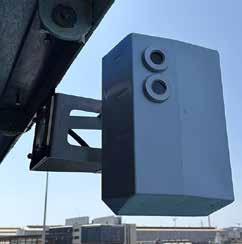
unit installed during Phase 3 testing on operational vessel. (Image credit: MARSS)
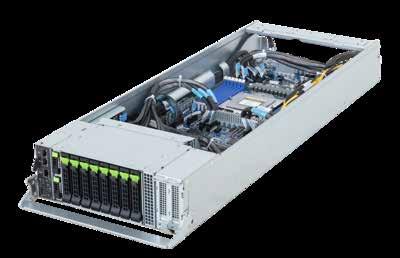
Giga Computing announced the launch of its next-generation AI and HPC server, GIGABYTE XN24-VC0-LA61, powered by the NVIDIA GB200 NVL4 platform. Purpose-built for its heterogeneous architecture of CPU and GPU, showcasing Giga Computing’s latest innovation in accelerated computing with liquid cooling technologies.
The XN24 server has been selected for the RIKEN Center for Computational Science (R-CCS) next-generation HPC-Quantum hybrid platform. The new platform integrates GIGABYTE servers into the development of FugakuNEXT, the eventual successor to Japan’s flagship supercomputer, Fugaku. This integration will use the NVIDIA CUDA-Q platform to support the development of hybrid quantum-GPU supercomputing systems and research into advanced scientific applications that bridge quantum and
GuRu Wireless, Inc., a leader in advanced wireless power solutions for national security and defense applications, announced a strate-
traditional high-performance computing.
Beyond the XN24, Giga Computing is also demonstrating a comprehensive deployment portfolio at the event—ranging from enterprise-grade AI infrastructure to rack-scale data center solutions—underscoring its role as a pivotal hardware provider for global high-end scientific computing data centers.
The GIGABYTE XN24-VC0-LA61 is a NVIDIA Grace Blackwell server platform based on NVIDIA MGX modular architecture. Featuring a 2U dual-processor design, it incorporates Direct Liquid Cooling (DLC) technology. Designed for modular scalability, the XN24 offers a flexible alternative for organizations to deploy NVIDIA Blackwell-class computing power without the immediate requirement of a full rack-scale infrastructure. It provides a core foundation for building scalable, highly efficient AI infrastructure.
Extreme Computing Density: Powered by NVIDIA GB200 NVL4, the system integrates
gic collaboration with Uniquest Corporation, a leading electronics distributor and manufacturer’s representative in South Korea, and Arion, a developer of AI-enabled unmanned aerial systems (UAS) for defense and public-sector operations. The collaboration is focused on delivering a persistent intelligence, surveillance, and reconnaissance (ISR) small UAS (sUAS) capability to the Republic of Korea for defense and national security missions.

two NVIDIA Grace CPUs based on the Arm architecture and four NVIDIA Blackwell GPUs. Each Superchip is equipped with 480GB of LPDDR5X ECC CPU memory, while the GPU provides up to 186GB of HBM3E memory, significantly accelerating scientific simulations, Large Language Model (LLM) training, and high-throughput inference tasks.
High-Speed Network Integration: The system supports the NVIDIA Quantum-X800 InfiniBand or Spectrum-X Ethernet platform, with 800Gb/s InfiniBand or 400Gb/s Ethernet per port, and utilizes NVIDIA ConnectX-8 SuperNIC solutions to ensure low-latency, high-bandwidth communication across multi-node clusters.
Flexible Storage and Expansion: It offers up to twelve PCIe Gen5 NVMe drive bays and supports optional DPUs (data processing units), such as NVIDIA BlueField, for hardware-accelerated offloading of compute and security tasks. The system is also equipped with 80 PLUS Titanium redundant power supplies to ensure efficient and stable data center operations.
The joint effort addresses a long-standing operational limitation of sUAS platforms: endurance. Current systems are constrained by battery capacity, requiring frequent recovery, battery replacement, or tethered operation, each of which introduces coverage gaps, operational risk, additional manpower, or mobility constraints. The companies plan to jointly develop a sUAS for persistent ISR, enabling sustained, untethered flight. The sUAS will be equipped with Arion’s operational sUAS platform and autonomy stack, and GuRu’s innovative 24GHz receiver, which will pair with GuRu’s 24GHz phased-array transmitter to enable wireless power transfer. Narbeh Derhacobian, CEO of GuRu Wireless, stated: “This collaboration marks a meaningful step in advancing persistent ISR from concept to demonstrated, field-ready capability. GuRu Wireless has developed and is actively demonstrating wireless power systems engineered specifically for ISR operations in operationally relevant environments. When combined with Arion’s proven experience delivering and validating UAS platforms for military and public-sector users, and Uniquest’s leadership in local integration and defense engagement, this effort is positioned to progress from demonstration
into formal operational evaluation.”
Shin Hee-joo, Director of Defense Business at Uniquest, said: “From an acquisition and operational perspective, endurance directly impacts mission effectiveness and force utilization. GuRu’s wireless power capability removes a fundamental constraint on sUAS operations. Through close cooperation with GuRu and Arion, we aim to validate this capability in Korea, establish operational references, and engage both domestic and international defense stakeholders on follow-on programs.”
Kim Yong-deok, CEO, Arion, said: “From an operational standpoint, endurance is the primary limiting factor in sUAS missions. Integrating GuRu’s wireless
Avalanche Space Grade MRAM is the only non-volatile memory architecture proven to
meet all five Space Grade criteria.
power capability with our AI-enabled sUAS platform will enable sustained ISR operations without recovery cycles, battery logistics, or tether constraints. This materially changes how persistent surveillance missions can be planned and executed.”
The collaboration is structured in phases, beginning with live demonstrations and progressing to verification activities and pilot programs with military-related units. In parallel, the companies plan to engage prime defense contractors and system integrators to evaluate integration paths, alignment, and scalability for broader deployment.
ering solutions that meet all five criteria required for missions: Survive. Retain. Endure. Commit. Proven.
While many technologies claim to be “Space Grade,” true Space Grade requires that 5 objective criteria be met simultaneously. Space Grade technology must:
Avalanche and NHanced are building a new rad-hard system-in-package FPGA integration designed to enable satellite and defense missions with dependable standby capability and high-confidence operational Performance.
Avalanche Technology reaffirmed its leadership as the only provider of truly Space Grade non-volatile memory, deliv-
• Withstand radiation without disruption,
• Retain data for the life of a mission,
• Endure unlimited writes,
• Commit data instantly, and
• Demonstrate real heritage.
In space systems, a technology that survives radiation but loses data, wears out over time, delays data commitment, or lacks flight heritage is not Space Grade. Partial compliance leads to failure. Avalanche Space Grade MRAM uniquely delivers on all 5 criteria through inherent radiation immunity, permanent data retention, unlimited endurance, deterministic writes in nanoseconds, and proven flight qualification, without tradeoffs. Today’s announcement
GuRu’s RF Lensing™ technology provides directed wireless power to airborne sUAS at operationally relevant elevations and ranges, supporting continuous flight without landings, battery swaps, or physical power connections.
A single ground-based Generator Unit (GU) is designed to support multiple sUAS concurrently, enabling continuous ISR coverage, dynamic repositioning, and multi-asset coordination over defended or sensitive areas. The architecture is intended for perimeter security, base and facility protection, border monitoring, and critical infrastructure surveillance, where persistence and responsiveness are mission-critical.
with NHanced focuses on 3 of these criteria: Survive, Retain, and Proven.
NHanced was seeking a reliable, spacegrade boot solution for its new rad-hard FPGA system-in-package integration, and selected Avalanche MRAM after other evaluated options fell short.
“We evaluated multiple solutions and picked Space Grade from Avalanche,” said Bob Patti, President of NHanced Semiconductors. “Avalanche’s memory architecture is radiation-immune, with error detection and correction built directly into the memory die. This allows radiation-induced errors to be handled seamlessly without system resets or data loss, reducing the complexity of integration and ensuring the boot memory operates reliably in harsh space environments.”
Avalanche’s non-volatile MRAM also guarantees long-term retention of mission-critical data during power interruptions and extreme temperature and radiation conditions encountered in both low Earth orbit and deep space. Its deterministic write behavior ensures that individual data writes complete in nanoseconds, minimizing the risk of corruption during power interruptions and firmware over-the-air updates. These capabilities, verified across extended durations in representative space conditions, give NHanced a proven, flightready memory solution that simplifies integration while ensuring reliability for mission-critical boot operations.
Blighter Surveillance Systems has further enhanced the stealth characteristics of its e-scan radars to serve better the growing number of developers of crewed and autonomous multi-sensor surveillance vehicles and platforms.
According to Blighter, the growing sophistication of electronic counter-countermeasures (ECCM) is driving rapid demand for Low-Probability-of-Intercept (LPI) radars. The need for covert radars that can see without being seen is particularly strong in the mobile surveillance market, where stealth, information superiority, and data security are paramount.
Blighter radars, including its B400 series, feature Low-Probability-of-Intercept (LPI) waveforms, making the radar signal difficult to detect and therefore to jam. Radar performance remains exceptional, with Blighter’s industry-leading capability for detecting and classifying people, vehicles, and near-ground airborne threats.
Mark Radford, co-founder and chief technology officer (CTO) at Blighter, says: “Our radars are inherently covert due to the design choices we made at the outset. We were first to market with a solid-state, non-rotating electronic scanning ground radar, and our adoption of the dual antenna FMCW (frequency modulated continuous wave) architecture and the decision to operate in the Ku-band spectrum have led to an exceptionally tough, EMC robust and stealthy radar design.”
Blighter continues to fine-tune its technology to improve detection, tracking, and classification of targets while staying covert. For example, new fast-scanning modes featuring sub-second update rates result in even less radar energy being transmitted in any given direction. Furthermore, when the radar is used with BlighterNexus’ Scan-Manager Application Module, it can operate in Multifunction Radar (MFR) mode with greater randomisation of the transmitted low-power waveforms.
“Developers of crewed and autonomous surveillance vehicles and platforms are already benefitting from Blighter’s LPI credentials,” says Mark Radford. “The radar’s solid-state design and extremely low transmit power (4 Watts) reduce the EMC and acoustic signatures and result in a smaller safety zone around the radar to aid sensor integration. But fundamentally, it’s the complexity and length of the combined e-scan, FMCW, and Doppler chirp waveforms that make the Blighter radar so difficult to detect and jam.”
In 2025, Blighter radars were integrated into
a fleet of custom-built multi-sensor mobile surveillance vehicles for on-the-go monitoring of a European land border: by Allen-Vanguard for its SECURIS rapid-deployable counter-drone system, and by a Southeast Asian military customer for mobile border surveillance vehicles.
“Our radar is probably the stealthiest and most resilient ground radar in its class and an excellent fit for developers in the multi-sensor mobile surveillance space,” says Mark Radford. “A great fit for customers wanting to add a covert radar into modernization programs, for electric and hybrid autonomous vehicles, as well as for patrol and target designator vehicles.”
What is Low-Probability-of-Intercept (LPI)?
Low-Probability-of-Intercept (LPI) is a radar design concept that emerged at the end of the Cold War as radar engineers sought ways to prevent emissions from being detected by increasing-
ly sensitive electronic support receivers. An LPI radar transmits in a way that makes its emissions extremely difficult for enemy receivers to detect, using low peak power, complex coded waveforms, frequency agility, advanced scan patterns, and very low side-lobe antennas, all combined with high processing gain to keep energy tightly confined to the main beam. Demand for LPI radars is driven by a combination of evolving threats, defence modernisation, and rapid advances in radar technology. Blighter’s non-rotating, solid-state, low SWaP (size, weight, and power) electronic scanning radars provide uninterrupted, rapid surveillance over a wide area, detecting moving vehicles/vessels, persons (including ‘crawlers’), and near-ground aerial threats at ranges of up to 32 km. The radars’ compact and modular design enables rapid deployment on towers and vehicles, as well as on dismounted portable systems on tripods.
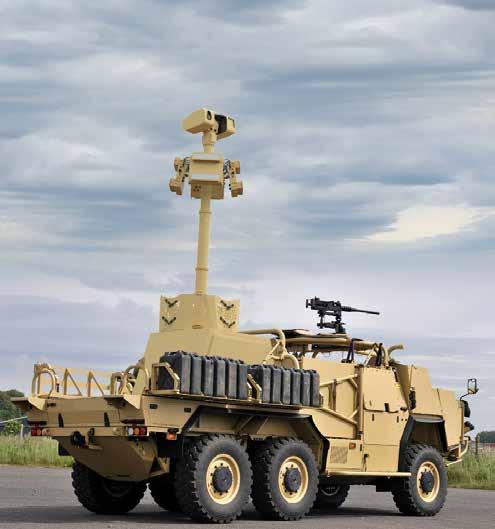
Annapolis Micro Systems.
Behlman Electronics.
Great River Technology.
Highland Technology.
Mercury Systems.
nVent.
www.odu-aerospace.com
COTS Journal (ISSN#1526-4653) is published monthly at; 110 S Rancho Santa Fe, Virgin UT 84779. Periodicals Class postage paid at San Clemente and additional mailing offices.
POSTMASTER: Send address changes to COTS Journal, 110 S Rancho Santa Fe PO 790039, Virgin UT 84779.
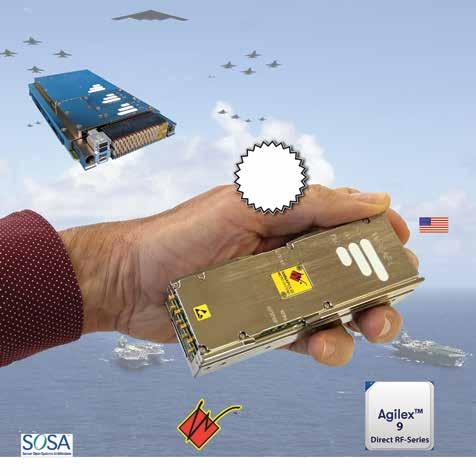




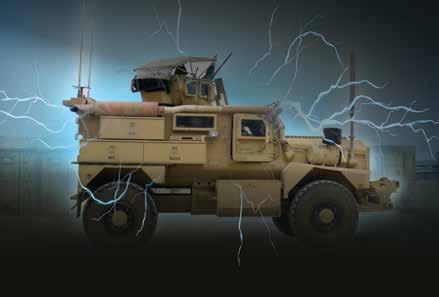
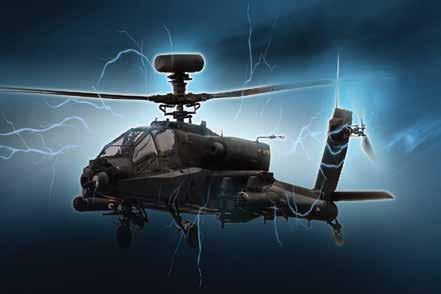

Introducing the VPXtra® 500DW-IQI, Behlman’s latest power supply with a wide range DC input that is fully compliant for all platforms in the Army CMFF program. This rugged, highly reliable switch mode 3U VPX unit meets a new standard of adaptability, and is backed by unmatched integration support from the Behlman team.
> Developed in alignment with the SOSA™ Technical Standard and VITA 62.0
> Delivers over 482 watts of DC power via two outputs
> 90% typical efficiency
> Features cutting-edge Tier 3 software
> System management integration via VITA 46.11 compatible IPMC