Taking action for nature together
Winter/Spring 2026
Taking action for nature together
Winter/Spring 2026
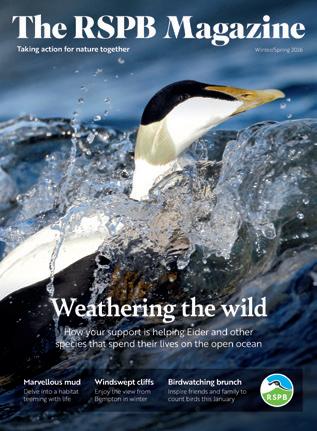
How your support is helping Eider and other species that spend their lives on the open ocean
Marvellous mud
Delve into a habitat
teeming with life
Windswept cliffs
Enjoy the view from Bempton in winter
Birdwatching brunch Inspire friends and family to count birds this January
The RSPB
Head of Supporter Communications
Luke Phillips
Supporter Communications Manager and Editor
Jamie Wyver
Our Media
Editor Emma Pocklington
Senior Visual Creative Nick Cox
Art Editors Emma Jones, Kit Cheung
Production Editor Emily Freer
Head of Client Services Ellen Wade
Account Manager Jessica Pratten
Advertising Di Marsh
Thank you to our advertisers for helping cover the costs of this magazine, saving more money for nature. To advertise, email Di.Marsh@ourmedia.co.uk
Magazine RSPBmagazine@rspb.org.uk (photos max 3MB each, no watermarks)
The RSPB Magazine, The Lodge, Sandy, Bedfordshire SG19 2DL
Membership enquiries 01767 693680 membership@rspb.org.uk
Wildlife enquiries 01767 693690 wildlife@rspb.org.uk
Advertisements in The RSPB Magazine are accepted on the understanding that they conform to the British Code of Advertising Practice. Adverts are not endorsed by the RSPB, unless otherwise stated.
The RSPB Magazine is available on CD for visually impaired members. Call 01767 693680 for information.
Views expressed by contributors are not necessarily those of the RSPB. While every effort is taken to ensure accuracy, we cannot accept liability for errors or omissions.
Circulation 561,119 Jan–Dec 2024 (ABC); The RSPB has 1,154,485 members.
Registered charity in England & Wales 207076, in Scotland SC037654. Member of BirdLife International.
Designed, edited and published by Our Media Limited. Printed by William Gibbons.
Our Media Company is working to ensure that all of its paper comes from well-managed, FSC®-certified forests and other controlled sources. This magazine is printed on Forest Stewardship Council® (FSC®) certified paper. This magazine can be recycled, for use in newspapers and packaging.
For many of us, the RSPB Big Garden Birdwatch is so much more than an hour counting birds. It’s an event. We gather together, equipped with drinks and snacks, pencil and paper (or smartphone) ready. The sense of excitement builds when the timer starts. Which bird will visit first? How many will come? Will that thrush on the roof nearby fly down so we can count it? Of course, you can take part on your own and still make it a very enjoyable ritual, a moment of ‘me time’ where it’s just you and the birds. The advantage of inviting others to join you is that you can share the passion and inspire new garden birdwatchers to get more enthused and involved in supporting birds and wildlife. Big Garden Birdwatch takes place from 23–25 January 2026. Take a look at p70 for ideas of how to join in.
There’s plenty to see at this time of year away from the garden, too. We head to the coast to dive into the world of sea ducks (p18), discover why mud matters (p27) and find out why RSPB Bempton Cliffs is well worth a visit in winter (p48). In this issue you’ll also find shrinking mammals, a bee sandpit and landscape-saving whisky!
Thank you to everyone who got in touch about the return of the magazine’s crossword. As we’ve been gathering your feedback, we’ve included a quiz this time (p59) to test your knowledge. The crossword will return in the next issue.
And thank you for all the support you’ve given us in 2025. We would like to wish our readers a very Happy New Year!

Jamie Wyver Editor
Protecting habita ts, saving species and helping to end the nature and climate emergency.


Beccy Speight
Beccy Speight has been the RSPB’s Chief Executive since 2019 and has led the organisation through some of nature’s most urgent challenges.
@beccyRSPB
It’s funny how one’s perceptions shift over time. This summer, I was lucky enough to spend time with friends in Italy and, while sitting outside and chatting, the gentle purring of Turtle Doves always accompanied our conversations. It was a sound I had almost forgotten I’d forgotten. Entirely familiar, but with a hint of novelty, I guess, because it’s sadly no longer part of my annual summer background at home.
The decline of Turtle Doves across the UK has been catastrophic and rapid. For people of my parents’ generation, it would have been a familiar sound in rural England. Reading accounts of the numbers recorded moving south along the East Coast in the 1960s and 1970s is frankly sobering.
And the science shows us why. Years of research by RSPB Conservation Scientists and others has shown that the leading cause of Turtle Dove population decline in the UK is a lack of suitable food – accessible wildflower seeds – from our farmed landscapes. This has resulted in a shortening of the breeding season, with fewer nesting attempts and, ultimately, fewer young doves to sustain the population.
And the science shows us what we need to do. Operation Turtle Dove, of which the RSPB is a partner, is working with farmers and many
‘Again and again, birds bring people together to bridge divides. They remind us that change is possible when people come together with shared purpose’
others to tackle this issue by providing the right food and habitat, and by bringing together a diverse group of people united in their love and appreciation for Turtle Doves.
A couple of years ago, I visited a farm in Suffolk where this work is being carried out. It was hooching with wildlife, and the farmer was rightly proud of what he had achieved. Our countryside conversations were wide-ranging and not without disagreement on specific topics, but his knowledge and work were inspiring.
It was a pertinent reminder that when attempting to save and restore a species, it is vital to work with everyone willing to help, irrespective of differences in other areas. And it isn’t just on this one farm. Operation Turtle Dove has a dedicated team of advisors who work with land managers across south-east and eastern England, helping them create suitable habitats and sharing their considerable knowledge.
But the story of the dove’s disappearance also goes beyond our shores. In recent decades, the decline has been exacerbated by unsustainable levels of hunting along their migration route through south-west Europe.
After years of campaigning, and following the introduction of a temporary ban on hunting in Western Europe and a subsequent decline in unsustainable hunting levels, there has been a rapid and encouraging start to population recovery. Another example of disparate groups working for a common cause and succeeding in the face of stiff odds.
Again and again, birds bring people together to bridge divides. Stories like that of the Turtle Dove offer us hope. They remind us that change is possible when people come together with shared purpose. Whether through farming, research, campaigning, or simply appreciating the gentle purr of a dove on a summer’s day, everyone has a role to play. The sound I heard in Italy was a call to action. If we act now, perhaps future generations will hear Turtle Doves not just abroad but, once again, in the heart of the English countryside. See p82.

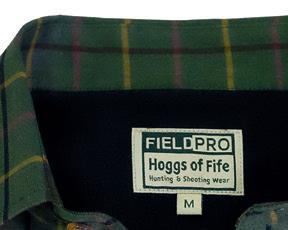

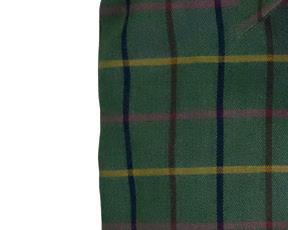
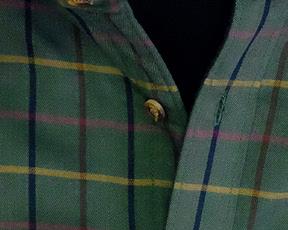









































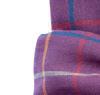

























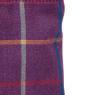





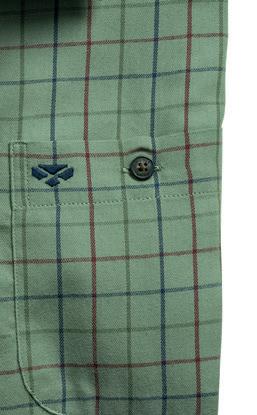
Is this Scotland’s Warmest Shirt? Well, thousands of our satisfied customers would certainly agree. This best-selling Hoggs of Fife fleece-lined shirt will keep you warm and cosy whether you’re working outdoors or hunkering down indoors. The fibres of the soft micro-fleece lining trap warm air, keeping you warm on the coldest day. Equally comfortable tucked-in or worn as a rugged overshirt. With one button-down chest pocket, double button cuffs and extended shirt tail. Trusted by outdoor professionals and country enthusiasts for over 137 years. All this plus our No Quibble Money Back Guarantee. Order Today.


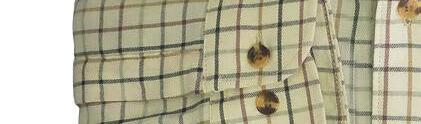
Sizes: S(35-37) M(38-40) L(41-43) XL(44-46) 2XL(47-49) 3XL(50-52) 4XL(53-55)
Colours: Beech, Bramble, Blackthorn, Bark, Birch, Boxwood
Fleece-Lined Shirt
Normal Price £44.95

Special Price £29.95 each (SAVE £15) 2 Shirts for £54.90 (SAVE £35) Plus FREE P&P worth £4.95














and
62
This season
10 How to: master good fieldcraft with Hep Cairnswood
11 Nature notes: Nicola Chester shares a lifelong passion for farming
12 ID challenge: learn to ID winter geese
13 Species focus: all about Snow Buntings
14 Days out in nature: discover winter wonders at RSPB events this season
16 Designed by nature: meet the incredible shrinking mammals
Comment
05 Beccy Speight: together we can change the fortunes of Turtle Doves
78 David Lindo: the power of community
Action for nature
35 People: RSPB Nature Prescriptions
36 Science: an update on garden bird feeding
45 Species: a conservation success story for Choughs in Cornwall
46 People: the brand-new RSPB Wild Questions podcast has launched
Features
18 Wildlife: meet the hardy ducks who live their lives at sea, and discover how your support is protecting them
27 Bigger picture: delving into marvellous mud, why is it so vital for nature?
48 Our places: take a windswept stroll along the clifftops at Bempton Cliffs
70 Our work: the Big Garden Birdwatch can be so much more than a simple count, invite your neighbours and get inspired
82 Takeouts: three things to think about and do after reading this issue
Together for nature
57 Your stories: Life member Rosemary’s generous gift for the ‘Rosies’
58 Your say: your letters and stories
59 Quiz: test your knowledge, and find the answers on page 68
60 Your photos: share your pictures with us
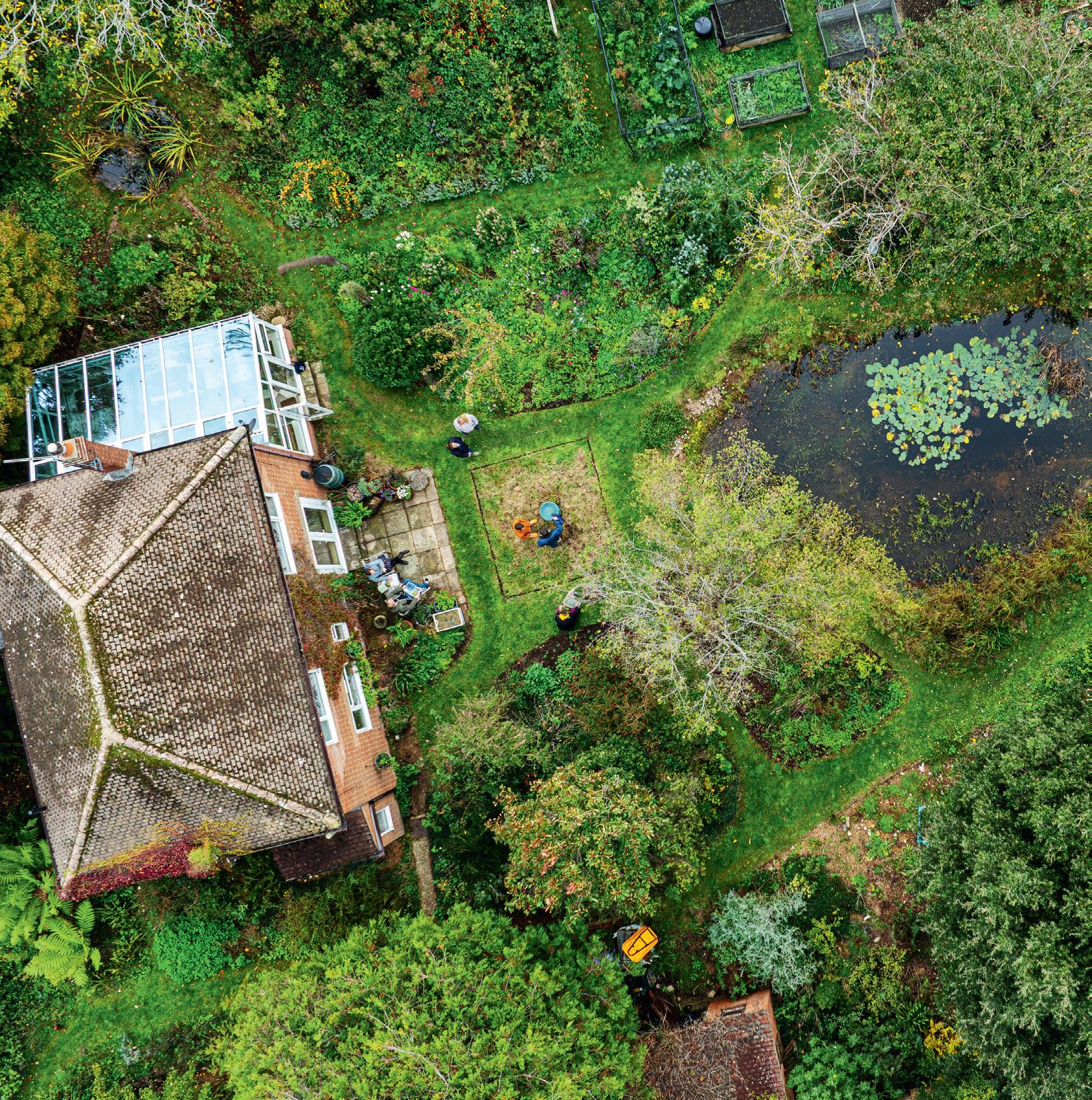
62 Your gardens: an innovative Essex garden where nothing is quite what it seems
66 Your questions: The RSPB answers your wildlife queries and species ID mysteries
On the cover
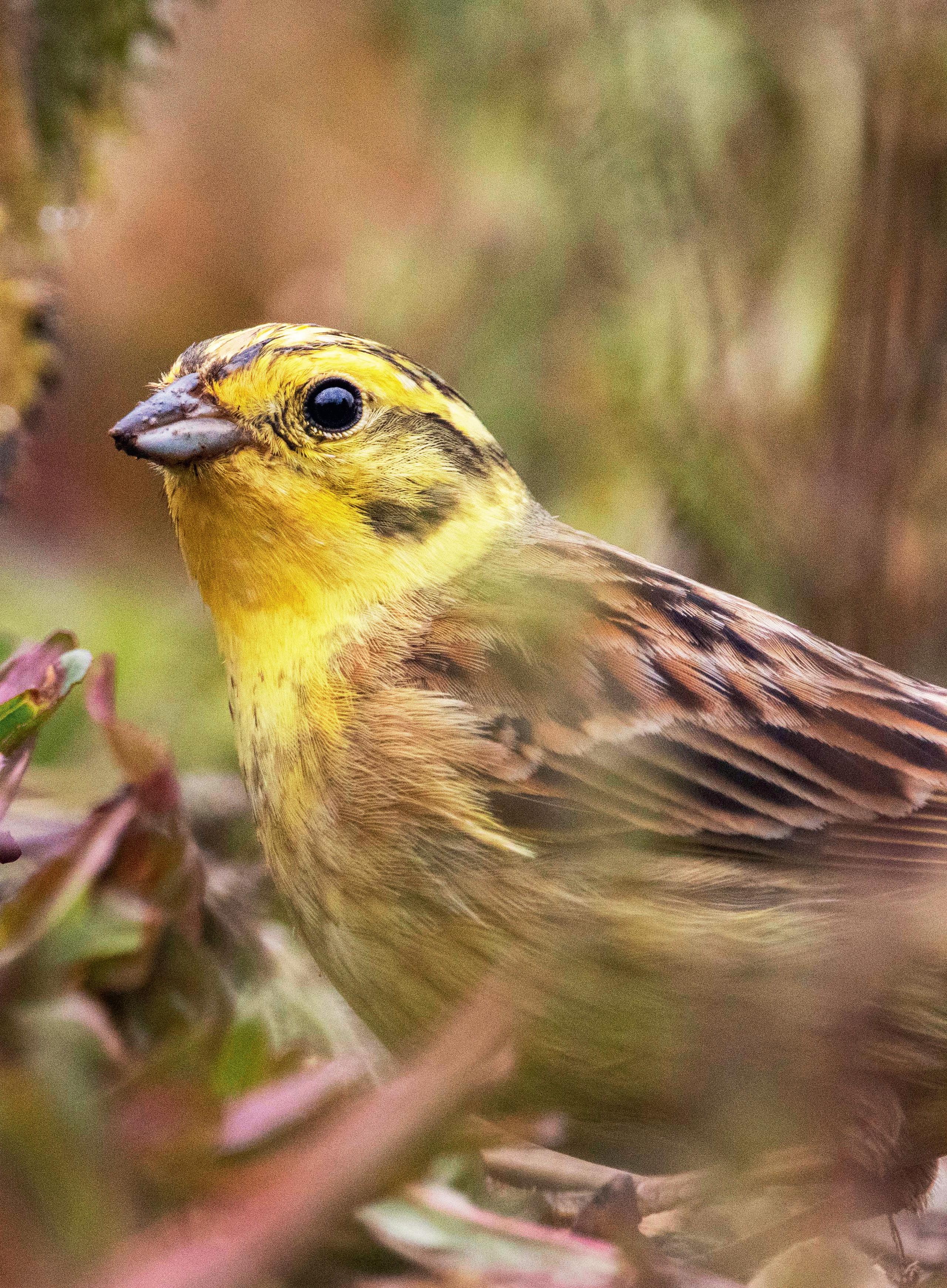
This bright yellow bird brings a flash of colour to a cold winter’s day. And there’s good news to be had behind this joyous sight. Conservation of the Yellowhammer has been a major success story at RSPB Hope Farm. Although the breeding population has doubled thanks to the insect-rich field boundaries and margins created here, the measures taken to boost seed food have had an even more significant impact on the number of wintering birds. Whereas winter numbers in the first few years rarely climbed into double figures, in recent years averages are well over 200, with a peak count of 723! As a result, Hope Farm is supporting the overwinter survival of Yellowhammers over a much greater area than the farm itself. This is significant because poor overwinter survival due to lack of seed food is the primary driver of the national decline. Yellowhammers also benefit from the regulatory requirement to delay hedge cutting until after 1 September, as it is a late-nesting species that can be actively rearing young throughout the month of August.
Essential skills for observing wildlife’s natural behaviours
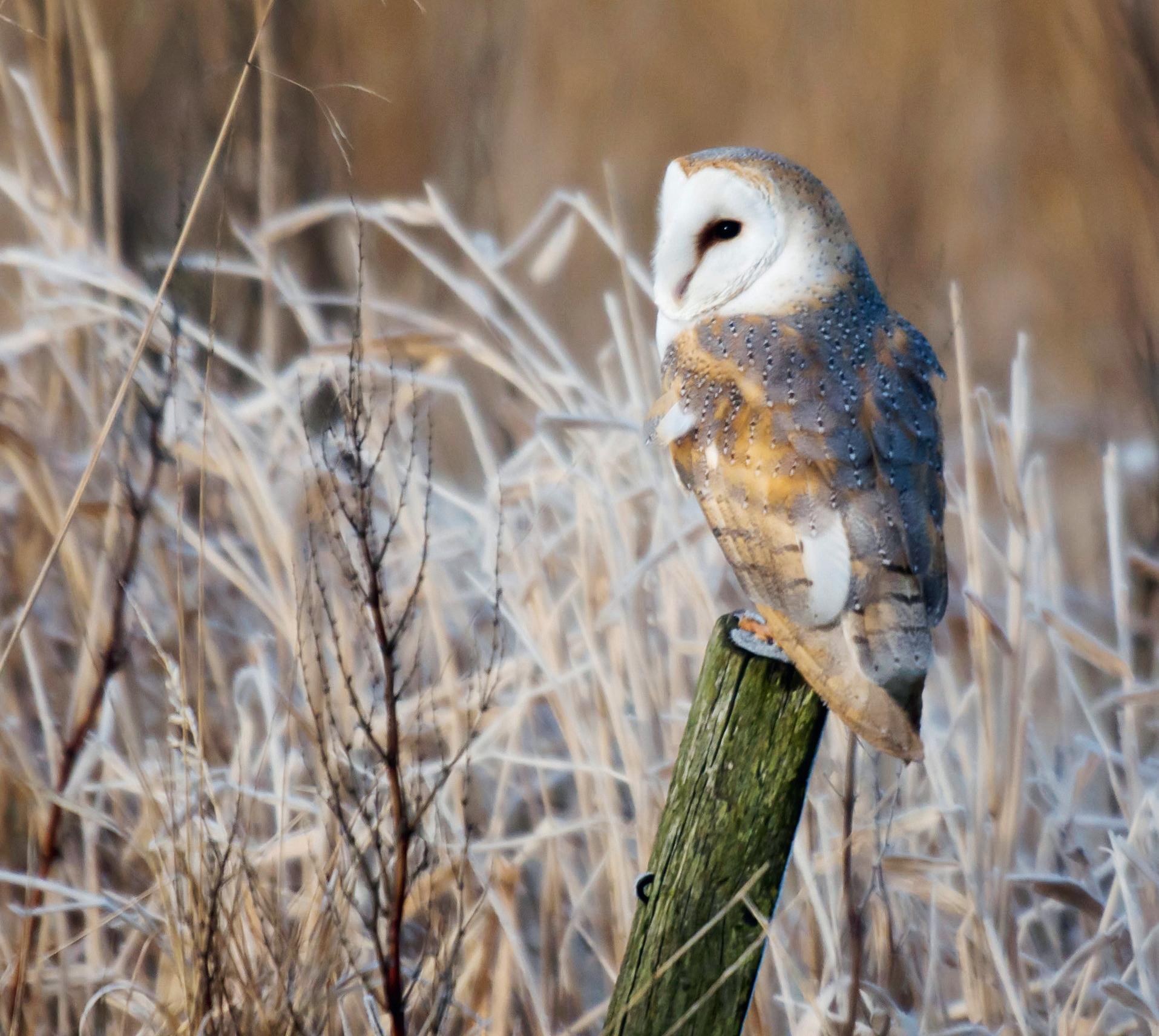
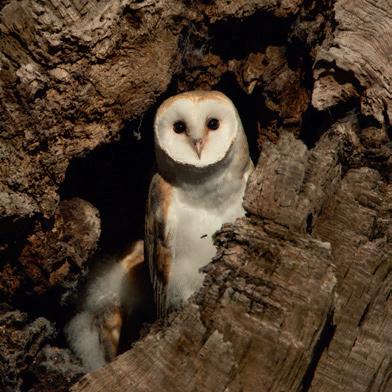
Watching wildlife at any time of year is magical. In winter, long-distance visitors are here to lift our spirits following their autumn migration, and once the quiet of winter has passed, birds are keen to start the breeding season. It’s a joy to watch, but it’s key that we don’t disturb wildlife at this crucial time. This is when we get a glimpse into the worlds of the creatures we live alongside, but getting too close can have damaging effects; for example, human disturbance can lead to seal pups being separated from their mothers making them less likely to survive. Nothing beats sitting at dusk watching a Barn Owl (pictured) silently hunt its prey, completely oblivious to an audience. Nature doesn’t know our intentions, so it’s vital that we speak with our actions.
Hep Cairnswood is a birder and writer living in West Yorkshire. @birdering; @theconsideratebirders
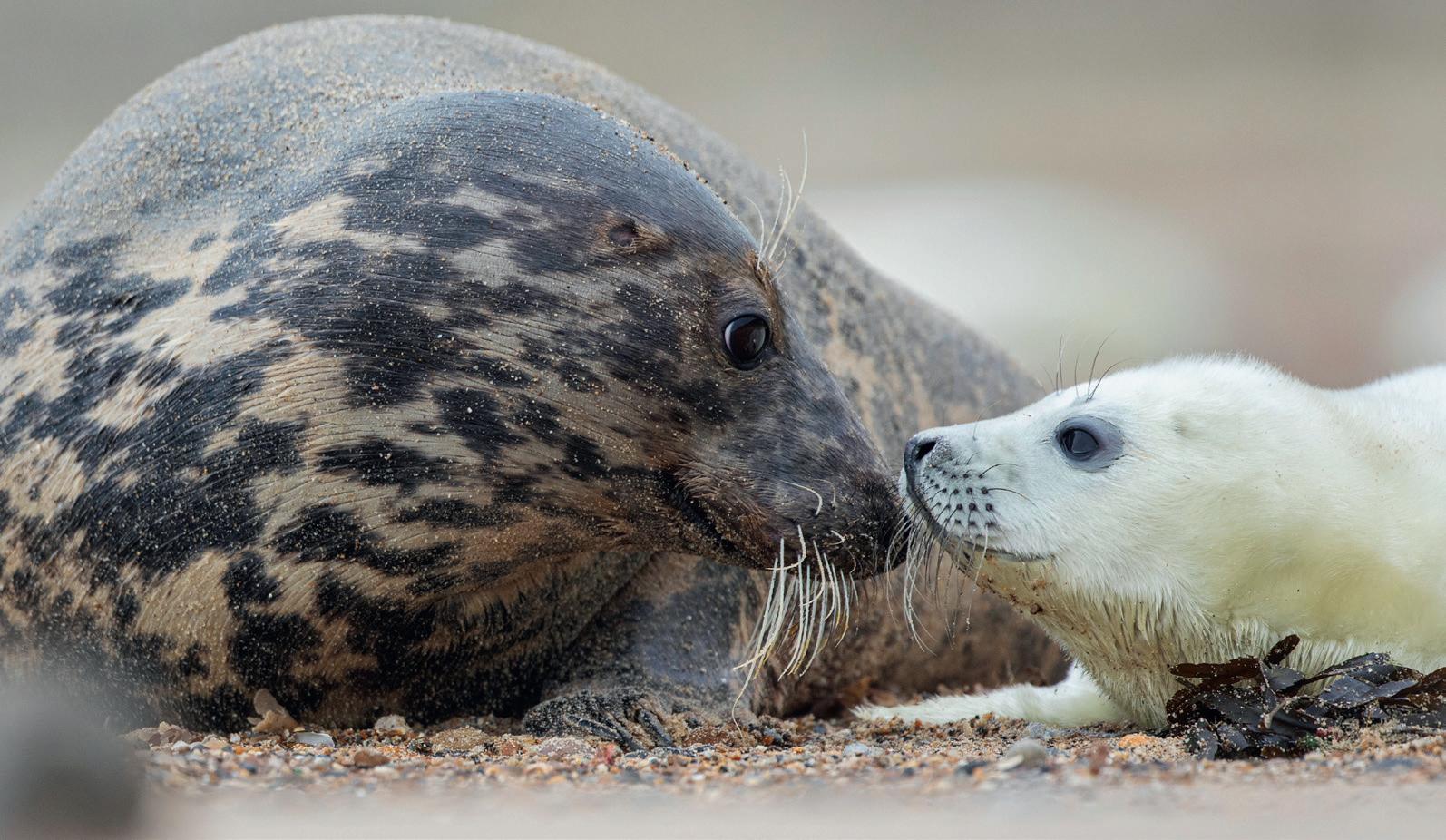
1. Know when to walk away Wildlife is constantly on alert to detect danger, and that includes us. If you disturb an animal it will let you know. Birds and mammals will use alarm calls and many will hide, run or fly away to protect themselves. This can be detrimental to exhausted migrant birds or animals that are nest building or raising young. If you observe these defensive behaviours, quietly retreat. It is particularly important to give seals space. Being frightened off their resting spots into water can harm them and leave them exhausted. Photographing them should be done from a safe distance using a long lens, as this photo was.

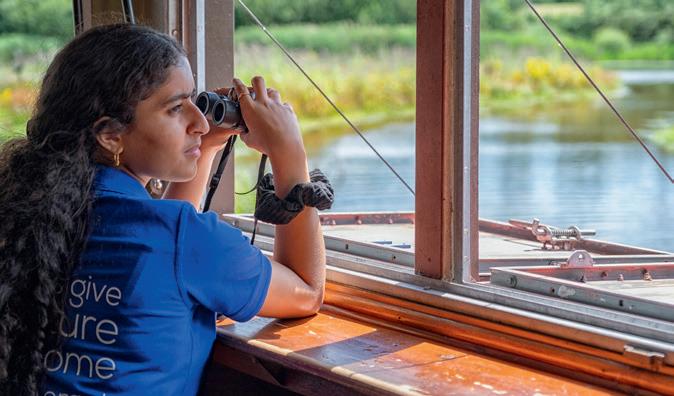
2. Be less visible to see more One of the best things you can do in nature is to keep your distance and be quiet. In the field, be mindful to move slowly around wildlife without breaking the horizon and stay low to the ground where possible.
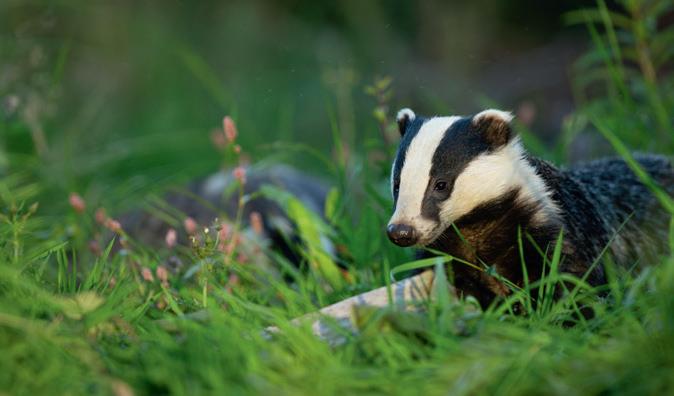
3. Keep your distance If you know the location of a Badger sett, you could set up a trail camera to observe them remotely or find a spot out of sight to watch them. It’s important to stay quiet as they are extremely sensitive to sound and smell.
4. Stick to paths and hides Outside of nature reserves, familiarise yourself with The Countryside Code and Scottish Outdoor Access Code and research the habitat and wildlife in that area. Hunker down and let nature come to you.
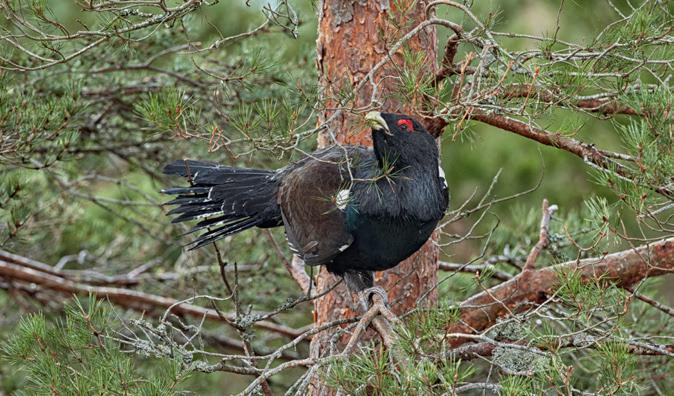
5. Observe the law One of the UK’s most sensitive species is the beloved Capercaillie. It is a wildlife crime to disturb breeding Capercaillie, so the best protection is to let them only be observed and monitored by the experts. lekitbe.scot

As a child, I was the farmer of a toy farm. So realistic were my animal figures and tractor models that I continued being a ‘farmer of the imagination’ in the fields or on our allotment. There I found the things my model farm couldn’t give me: the smell of the earth, things to pick and eat, birds singing and Water Voles in the stream. Although I worked on farms as an adult, it wasn’t possible to become a farmer or study at an agricultural college as a woman from a non-farming family in the 1980s and early 1990s.
Writing a book about that, and the story of three women in the 1940s who achieved their dreams to farm, was a revelation. After such a gargantuan effort to feed the nation during the Second World War, the farm gate was shut on the women who had carried out much of the work and innovation of that time. And, of course, the rapid modernisation and intensification of the farming industry then, under government directives, set a direction, mindset and pattern in motion that continues to have devastating impacts on nature today. I can’t help but put the two together and wonder if things might have been different if farm holders after the war had continued to diversify, and if more had been female.
When it comes to nature, farmers get a hard time. Add in weather, climate, markets, disease, government policy and the precarity of subsidies, and you might conclude that farmers get a very hard time overall. But farming and nature shouldn’t be so polarised; they start from the same place, after all. Most people are separated from the land and from any knowledge or agency in how their food is produced, while farmers are often
poorly rewarded for what they produce, misunderstood, and unsupported in farming that would benefit nature. The challenge of our time is how to feed ourselves sustainably, without exacerbating an unstable climate, and while stopping, then reversing, the devastating effects on farmland wildlife.
It’s a challenge we must share. There is a real opportunity for a caring and interested public, as well as farmers, to change the narrative at the grassroots, level. And many are. It probably won’t take much searching where you live to find a farm that is doing just that: building relationships, caring for nature.
Farming and nature can coexist in harmony. At scale, if we are mindful and work together, we can bust the stereotypes of who a ‘farmer’ is and diversify this relationship on a community-by-community basis. Those who manage this develop strong social links and love connecting people with the land and seasons, making us all nature-literate and agri-cultural.
As nature lovers, and consumers of food and drink, we must play our part in supporting, advocating and campaigning for what we want. Farming has always reacted to change, but it needs our help. The fact that more women are leading in farming, and studying agricultural courses, gives me – and that little-girlfarmer me – a lot of hope and joy.
Nicola’s book, Ghosts of the Farm, Two Women’s Journeys Through Time, Land and Community is out now (p15).

Nicola Chester is a columnist, nature writer and award-winning author. @nicolawriting or Nicolachester.wordpress.com
Numbers of these large birds seen – and heard – in our skies are bolstered in winter
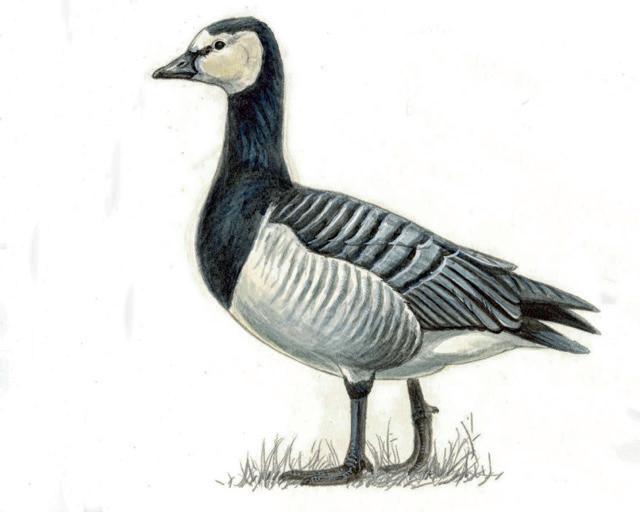
Barnacle Goose
These birds are a contrast of black, white and silvery-blue grey. They are very sociable birds, often seen in large flocks to feed. They migrate from their breeding grounds in Greenland and Svalbard to winter on our coasts and estuaries.
Pink-footed Goose
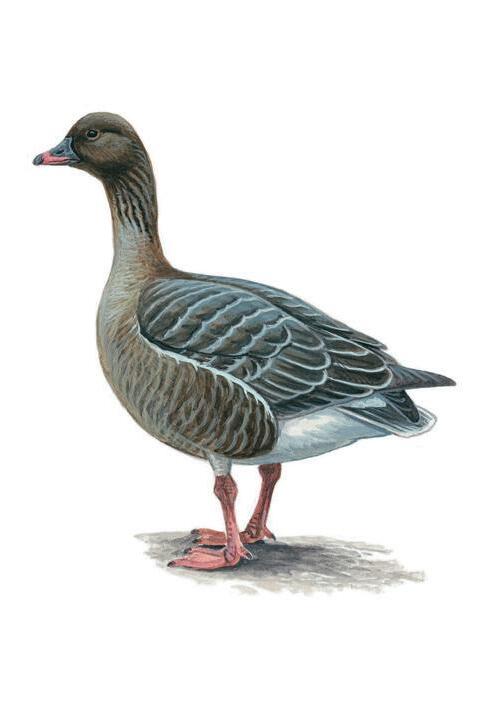
Around 85% of the world’s population of Pink-footed Geese spend winter with us feeding on estuaries and farmland. Look for their dark head and neck, grey-brown plumage and pink feet and legs. They fly in very large – and loud – flocks!
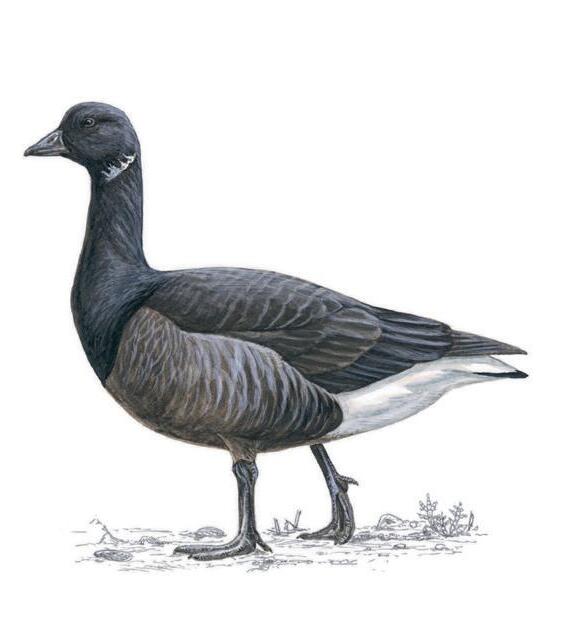
Brent Goose
Similar size to a Mallard. Very dark with a small white neck patch. There are two sub-species: the dark-bellied (pictured above) fly from Siberia and Russia while the pale-bellied breeds in Greenland and Spitsbergen. They fly in wavering lines.
White-fronted Goose
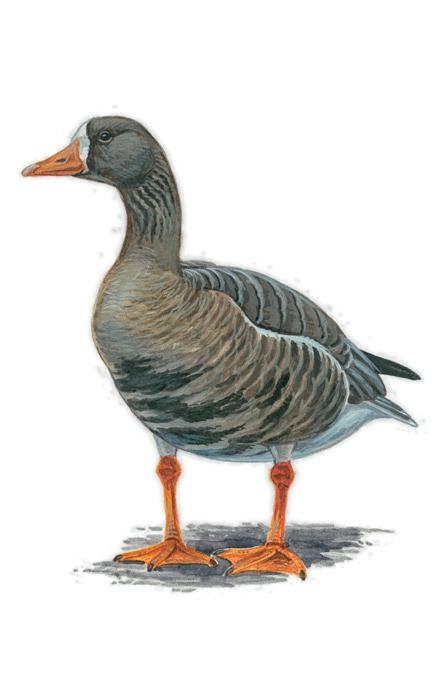
Smaller than a Mute Swan. White patch on the face and black stripes on the belly. Subspecies have different bill colours: birds from Greenland (pictured) have orange bills, Siberian birds have pink bills. Both have orange legs and grey-brown bodies.
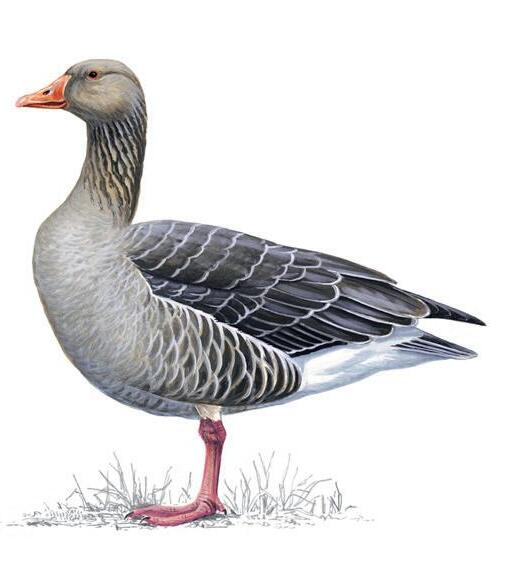
Greylag Goose
A large goose with a grey-brown barred back, a pale grey breast and mottled belly. They have white feathers underneath the tail, a large orange bill and light pink legs and feet. Seen feeding on farmland before roosting on estuaries and freshwater lakes.
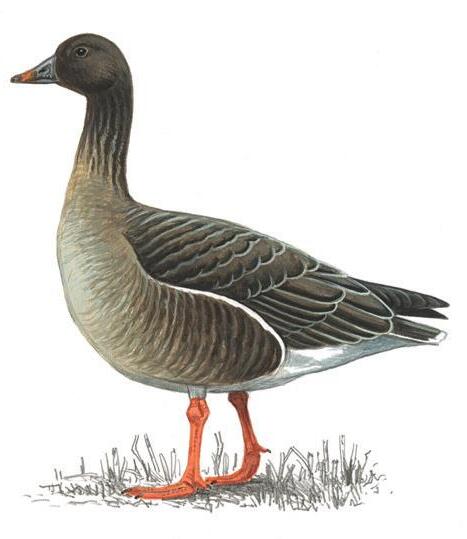
Tundra Bean Goose
Slightly larger than a Pink-footed, look out for orange legs, brown body and a dark sooty-brown head. The breast has fine barring with a white line along the edge of the folded wings. Their short bill has a yellow-orange patch towards the tip.
Our people
Dr Joelene Hughes, RSPB Principal Conservation Scientist
Alongside my colleagues, I identify and carry out social science research to help the RSPB, and the wider conservation sector, address conservation problems more effectively. I work to understand people’s values, needs and motivations around conservation, and I test the success of people-focused interventions in encouraging support for species and habitats. By working with different audiences, our science helps direct RSPB actions towards the best outcomes for nature and communities.
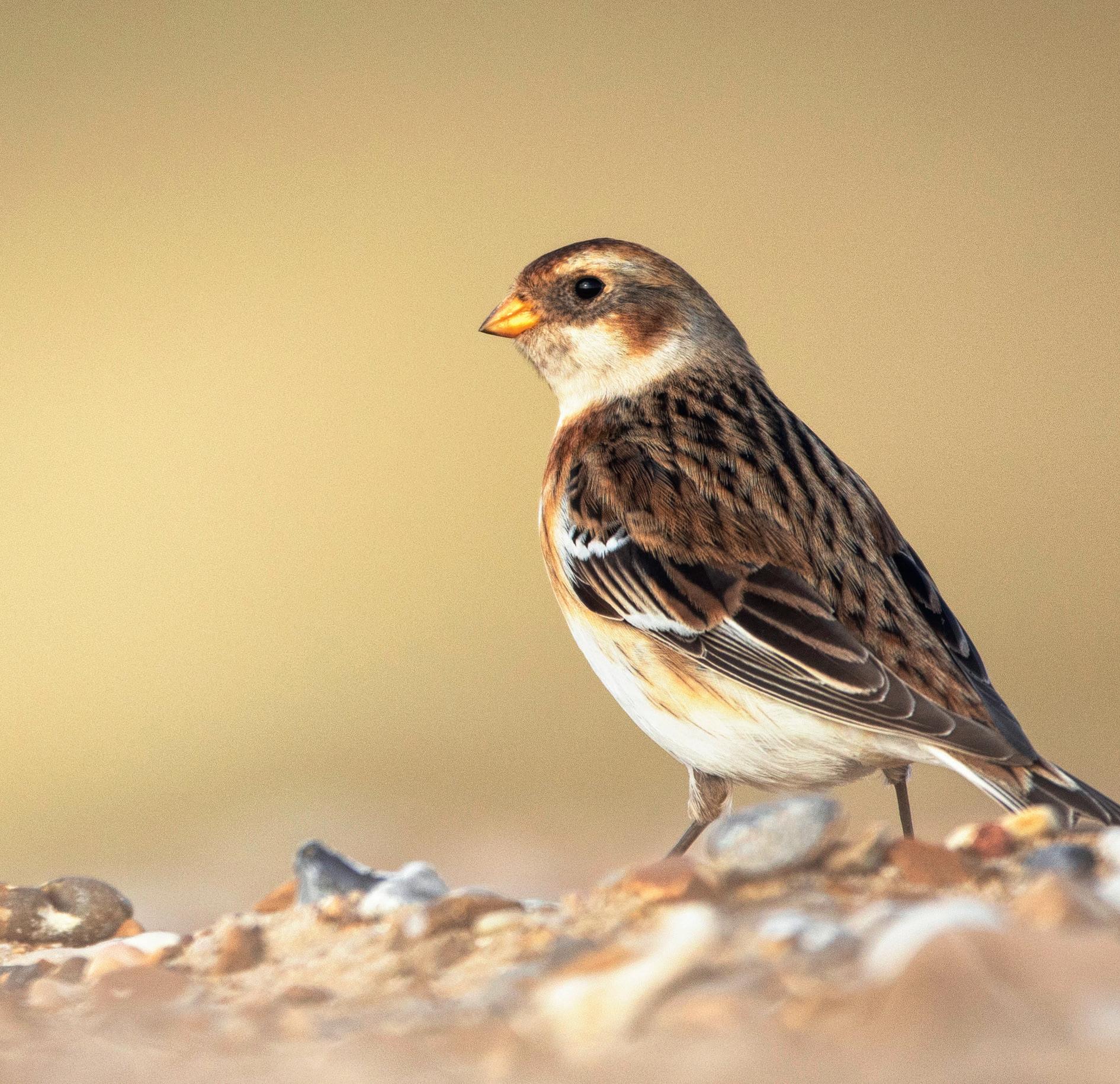
Chunky and sparrow-sized, Snow Buntings are arguably our prettiest bunting. In winter, they are snowy-white with a warm apricot scarf, poll cap and balaclava, a tawny-grey tweedy cloak and a neat wheat-seed bill. Plumage varies by age, sex and season: males become striking black and white in summer, while females are more streaky brown.
A tiny number (around 60 pairs) breed in the Scottish Highlands, especially in the Cairngorms, building deep, moss- and feather-lined nests among rocks. In winter, 10,000–15,000 birds migrate south, mostly from Iceland and Scandinavia. In the UK, they favour coastal fields, dunes and saltmarsh, particularly along the North Sea, where they feed on seeds and insects. The overwintering population has increased by a third over the past 40 years.
In flight, Snow Buntings earn their nickname ‘snowflakes’, flying in low, trilling, forward-rolling flocks that seem to tumble across bleak, foam-flecked shingle beaches. They are tough birds, breeding further north than any other small bird, and are considered a key indicator of climate change in Arctic ecosystems.
With dense feather insulation and a crouched walking habit to keep feet warm, Snow Buntings are well adapted to the cold. But they must feed constantly to sustain their high metabolism, so habitat protection and minimal disturbance during their winter stay is crucial. Climate change in their Arctic breeding grounds poses another serious challenge to these resilient little polar birds, which is why tackling the climate crisis is a priority for the RSPB.
and
What current projects are you working on?
I have the pleasure of being involved in a wide range of research with other scientists. Right now, I’m working with a psychologist to increase compliance with signs requesting dogs are on leads. Free-roaming dogs can disturb ground-nesting birds such as Little Terns and Ringed Plovers, and signs are often ignored. By researching dog-owner values and motivations, we’re testing whether behaviourally informed signs are better at catching attention and persuading walkers to use leads near nesting birds.
Why are social sciences important for nature conservation?
I’d encourage any budding conservationist to study social sciences. Conservation is about understanding people, communities and cultures so we can make the changes nature needs to thrive. For example, learning what outcomes farmers, teachers, house builders, doctors and patients need has helped us develop actions that support nature while matching their goals. Expertise in anthropology, psychology and economics, plus many more, helps turn conservation into effective action.
Start the year as you mean to go on, with great wildlife watching
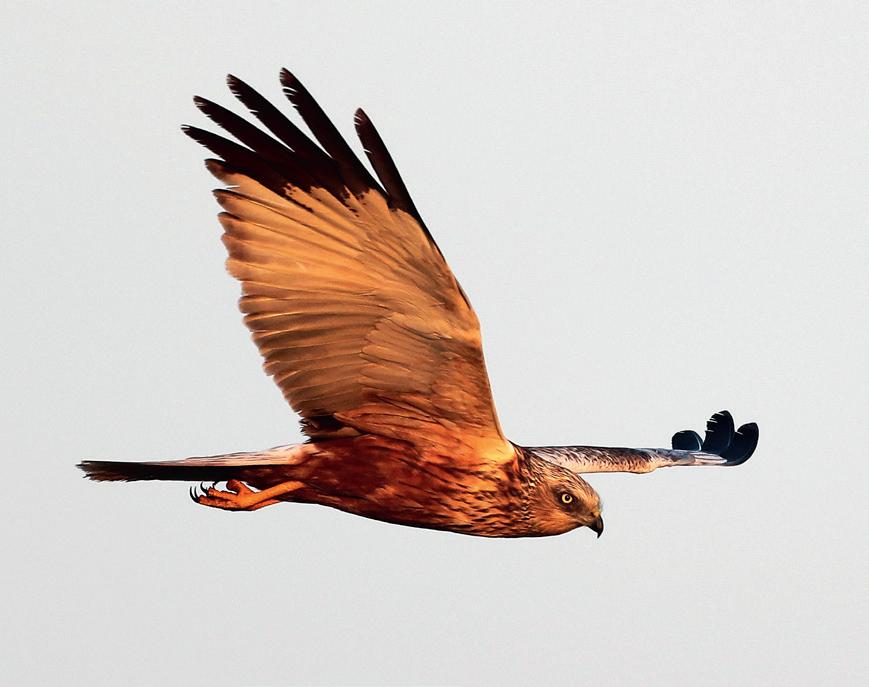
1. Harriers at sunrise
RSPB Titchwell Marsh
Experience a sunrise like no other as you witness Marsh Harriers emerging from their overnight roosts. Tucked away in a hide, you’ll have a front-row seat to the wildlife on this nature reserve waking up. You’ll be joined by a guide to provide expert insight and answer any questions before you head off to the café for a warming breakfast and hot drink. The event is running on 8 and 15 January as well as 5 and 12 February, £49 (£58 for non-members). Booking is essential via rspb.org.uk/sunrise-with-harriers
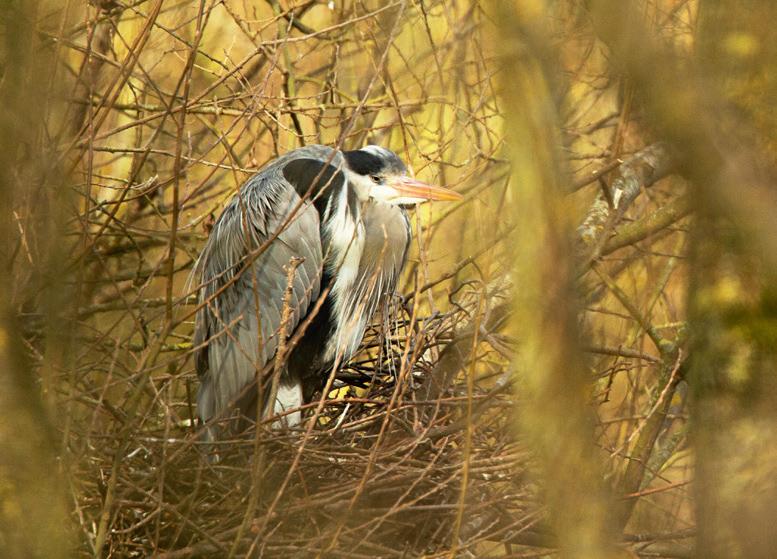
2. Heronry Experience
RSPB Fairburn Ings
Nothing quite compares to the bizarre sight of Grey Herons nesting in the trees, their huge dinosaur-like forms perched in large, messy nests. Witness elegant Grey Herons, as well as Cormorants, in their natural sanctuary with a special guided experience at RSPB Fairburn Ings. Discover more about their habits and observe their graceful flight at this West Yorkshire nature reserve, which is now home to some of the UK’s most elusive birds, including Bitterns, Bearded Tits, Cetti’s Warblers and Spoonbills. Multiple dates are available in February, and the event runs from 10.30am–12pm, £17 (£21 for non-members). Book via rspb.org.uk/heronry-experience
3. Get Big Garden Birdwatch ready
RSPB Lochwinnoch
Prepare for the RSPB’s annual citizen science event on 23–25 January with this handy workshop. Get familiar with frequently seen garden birds and carry out the Birdwatch with confidence thanks to the help of this beginner’s session. Expert advice from your guide will teach you how to identify common birds and how best to observe wildlife. You can also try out different binoculars and scopes, plus get 20% off in the shop when you book. Kickstart your 2026 with some birdwatching on 25 January from 10.15am–12.45pm, £12 (£15 for non-members). Book via rspb.org.uk/birding-for-beginners, and learn more about the Big Garden Birdwatch itself on page 70.
4. Crafted with love
RSPB South Stack
Love is in the air in Wales, and what better way to celebrate Dydd Santes Dwynwen (St Dwynwen’s Day) – the Welsh patron saint of lovers – than lino printing cards or your own artwork. Personalise your own pieces to the theme or gift them to that special someone in your life (including yourself!). Join us on 25 January between 10.30am–12.30pm, £21 (£26 for non-members). Book via rspb.org.uk/lino-print-workshop


RSPBshop.co.uk
RSPB watches (£30)
Whether you’re an enthusiast of Puffins, Avocets, Barn Owls or a lover of all birds, share your passion with one of these beautiful illustrated watches. With straps made from vegan leather or recycled plastic and dyed with sustainable inks, you can rest assured that your new accessory has been made with the planet in mind. Treat yourself or a loved one this festive season.
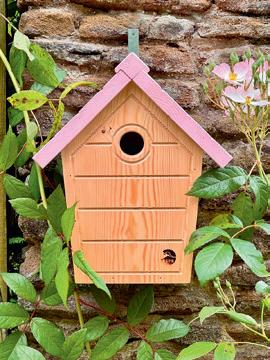


l RSPB cabin nest box in dusty pink (£25) Add an extra splash of colour to your outdoor space with this attractive cabinstyle nest box. It could make a sturdy love nest for a variety of birds! Also available in grey and turquoise.
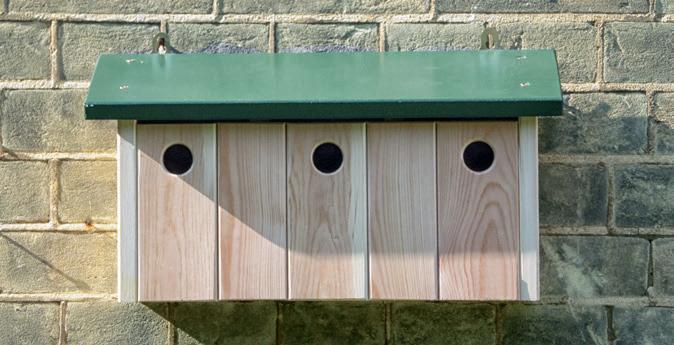
l RSPB House Sparrow terrace nest box (£45) Designed with House Sparrows in mind, this nest box is comprised of a row of three boxes made from strong, durable wood. Install it beneath the eaves of your house.
Out now Bookshelf
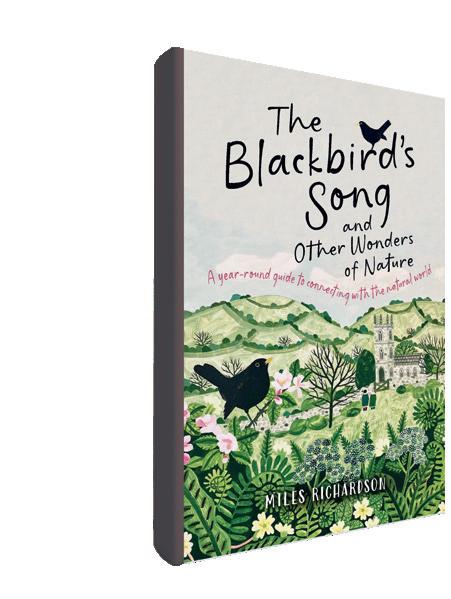
The Blackbird’s Song, paperback
Miles Richardson
£10.99 Uplifting almanac about reconnecting with nature to restore calm, balance and happiness in everyday life.
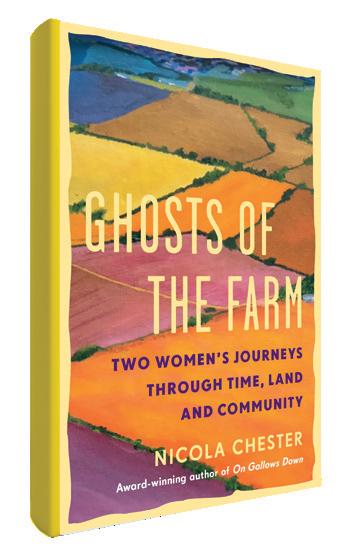
Ghosts of the Farm
Nicola Chester
£22 Entwined with her own lifelong desire to farm, Nicola examines the life of 1940s farmer Miss White.
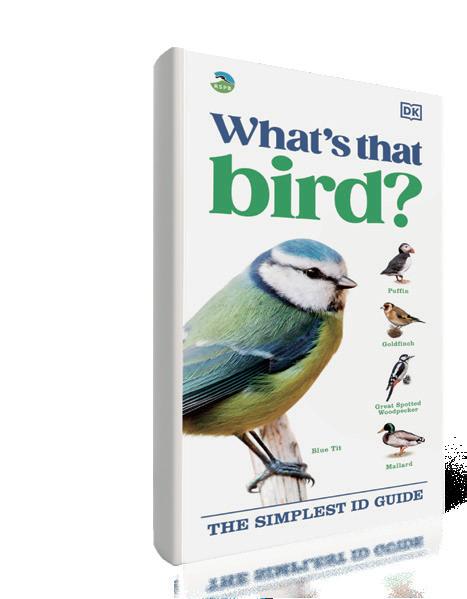
RSPB What’s that bird?
£9.99 The ideal birdwatching manual, with this handy illustrated guide you can learn to easily ID over 150 common UK species.
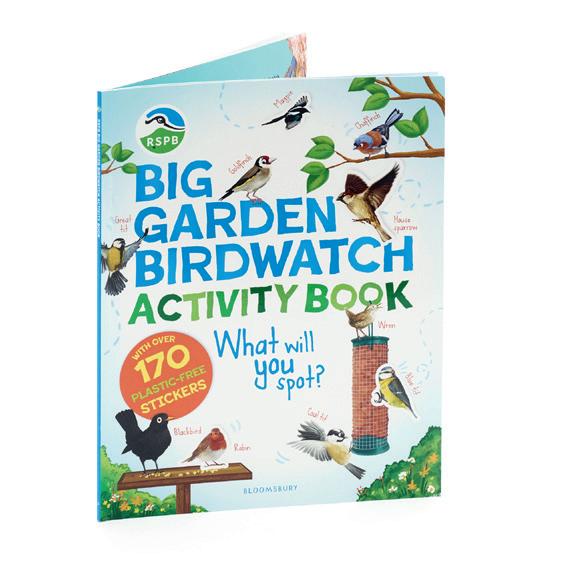
Big Garden Birdwatch activity book
The RSPB £6.99 Packed with puzzles, facts and stickers, this is the perfect gift for a budding birder. Available from the RSPB Shop
Designed by nature
Dominic Couzens
The fascinating phenomenon of shrinking to survive
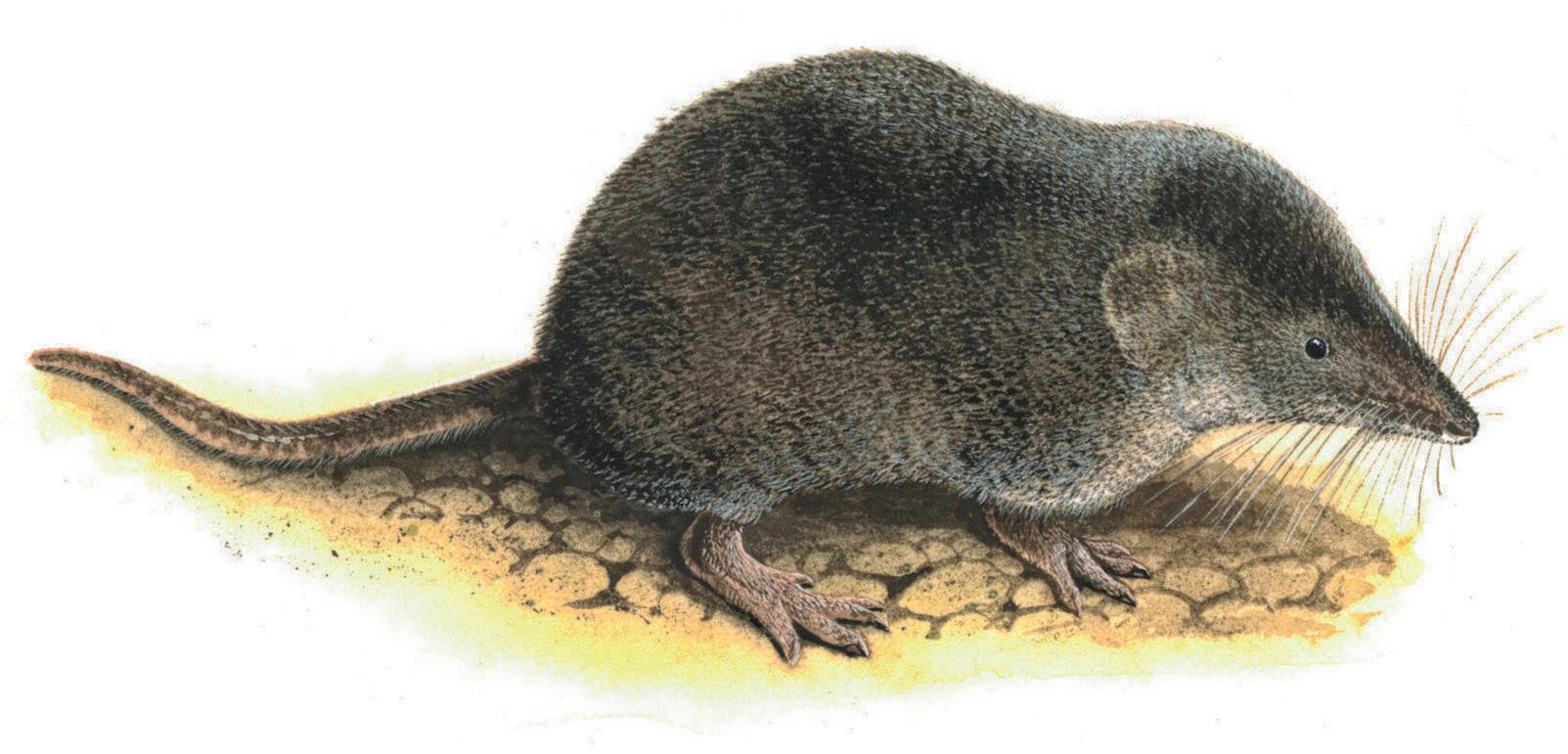
Of all the survival strategies used by animals to survive the winter, surely the weirdest is to literally lose their mind. Believe it or not, several UK mammals reduce the size of their brains in autumn and grow them back in spring. And in the case of Common Shrews, it is known to affect their cognitive ability.
It isn’t at all uncommon for animals to reduce the size of certain organs at different times of the year. In the case of birds, the gonads often shrivel almost to nothing in autumn and winter, when they aren’t needed, and migrant birds often shrink organs such as the liver and kidneys for their journeys.
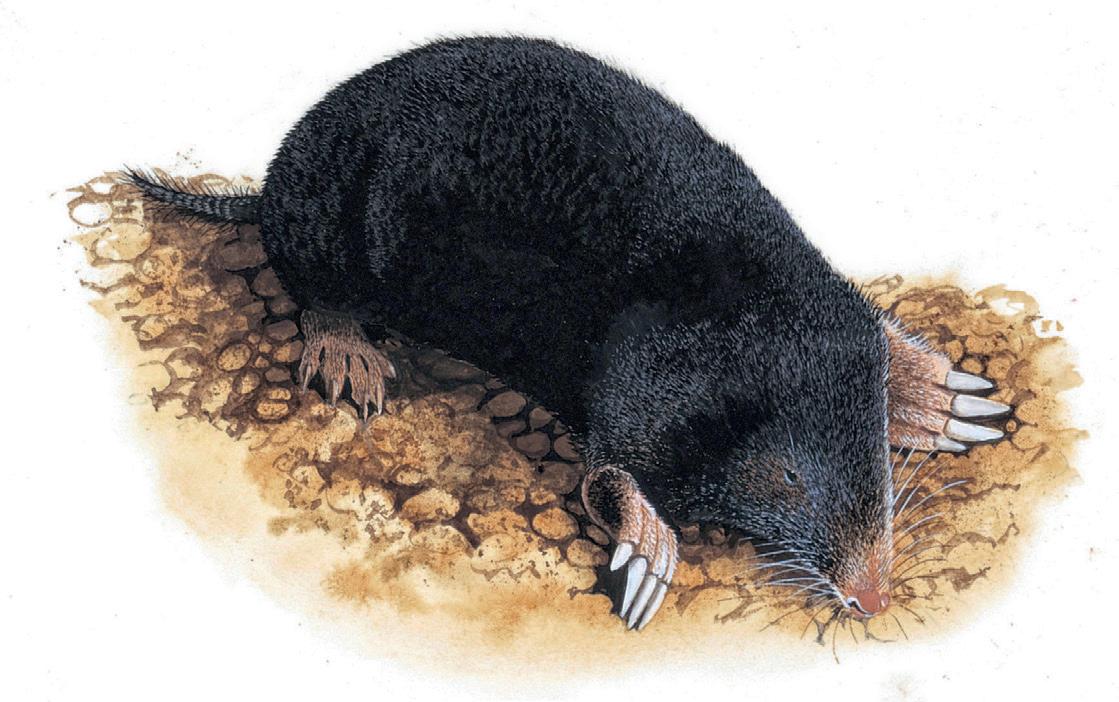
Recent research, though, has uncovered some really bizarre shrinkage phenomena in Common Shrews, Moles and Weasels, all of which are highly active all year round and which cannot migrate to warmer climates. It is most extreme in Common Shrews, supercharged small-bodied animals that have to eat constantly night and day. On average, their brain cases reduce in size by 15.3% between summer and November (and the brain tissue itself is 9% lighter), and then regrow by 9.3%, never completely recovering in size even the next summer. And it isn’t just the brain; changes in other parts of the skeleton and tissues mean that a Common Shrew becomes 17.6% lighter in winter, but as the breeding season approaches its weight balloons by 83.4%. This is known as Dehnel’s Phenomenon.
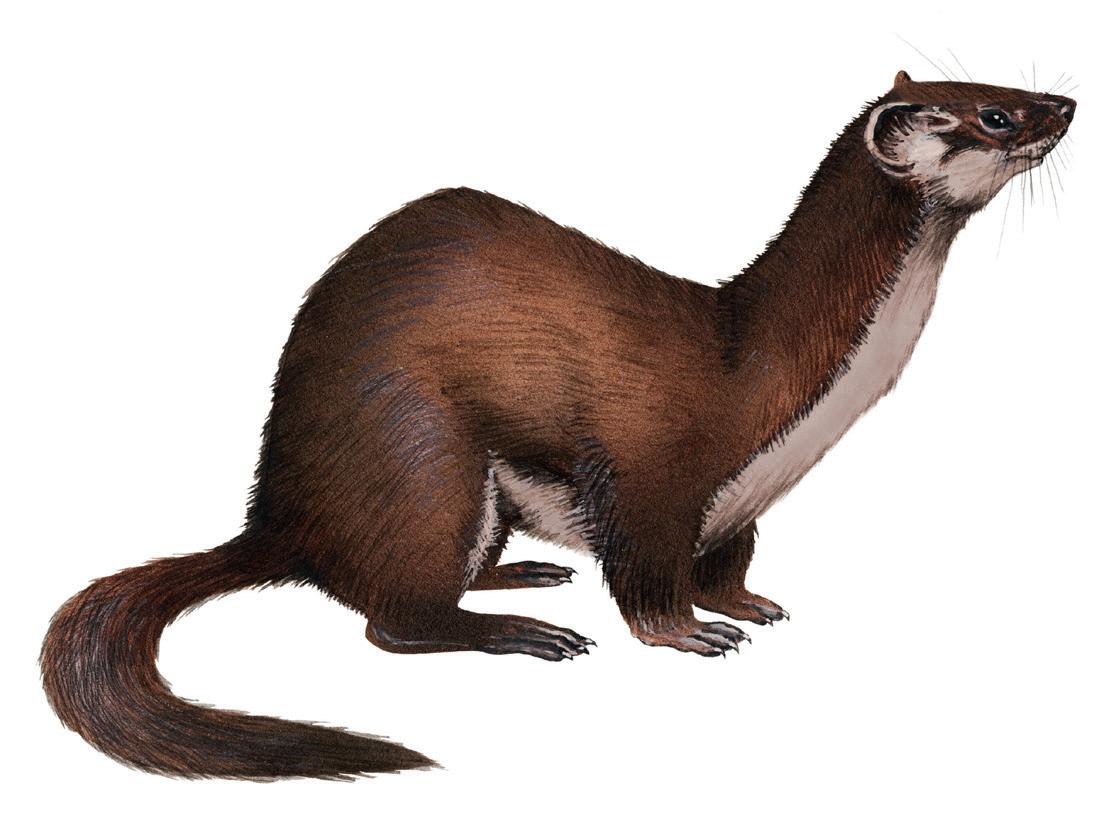
Among Moles, as winter approaches, the head reduces in size by 11% and then grows 4% in the spring. Moles live longer than shrews, and studies have shown that there is a much smaller effect the following autumn. Juvenile Weasels’ braincase measurements reduce by 16% and then grow by 4%, and the effect is strongest in males.
Dehnel’s Phenomenon has long been a mystery, but recent research in Moles has shown the brain reduction to be triggered by cold temperatures and is thus related to saving energy. The brain is one of the most energy-expensive organs, so any savings are beneficial. Overall, smaller animals require less energy to feed themselves than larger animals. The processes underlying the change are beginning to be worked out, and it seems that the brain shrinkage is caused by water being drawn out of the neurons, seemingly without damaging them. This is most unusual and may have promising implications in preventing brain tissue damage in humans.
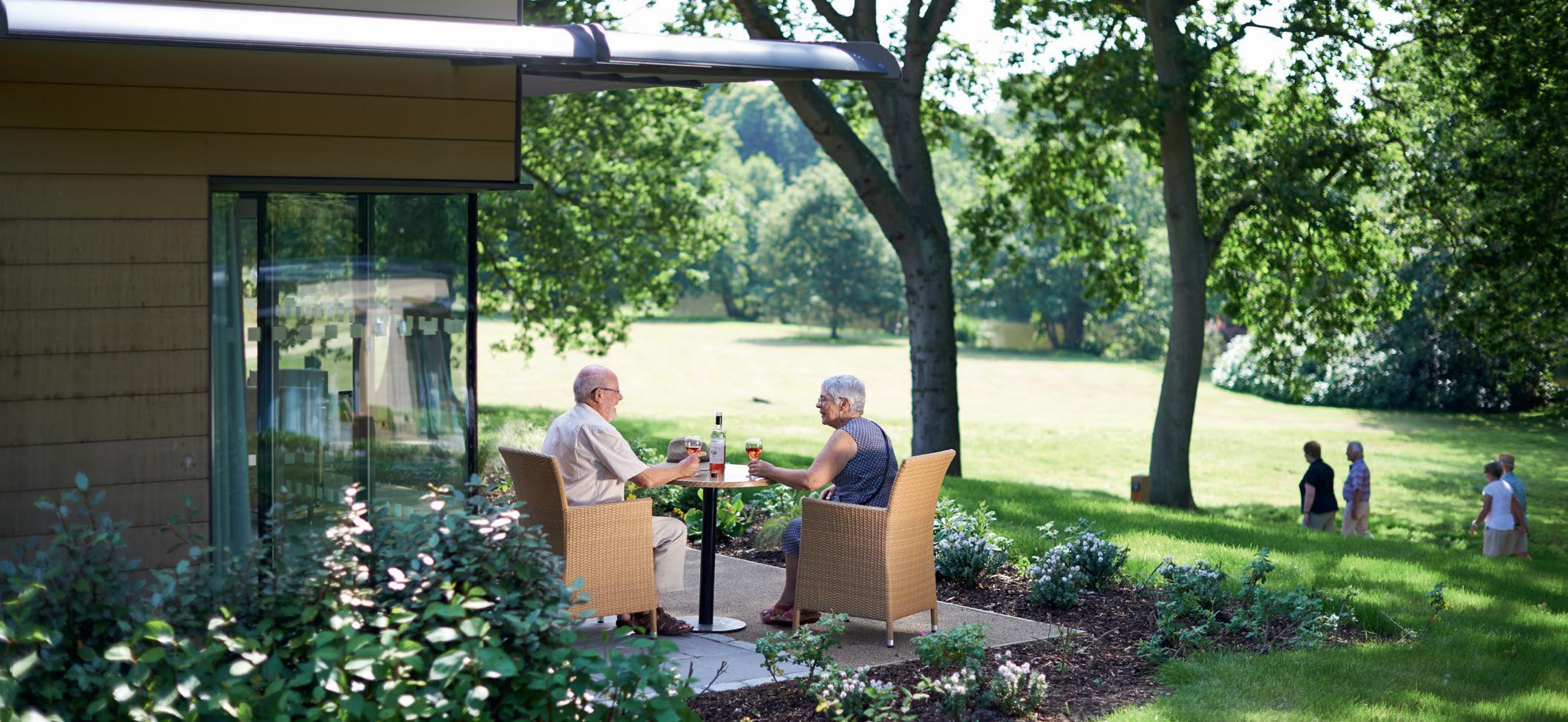

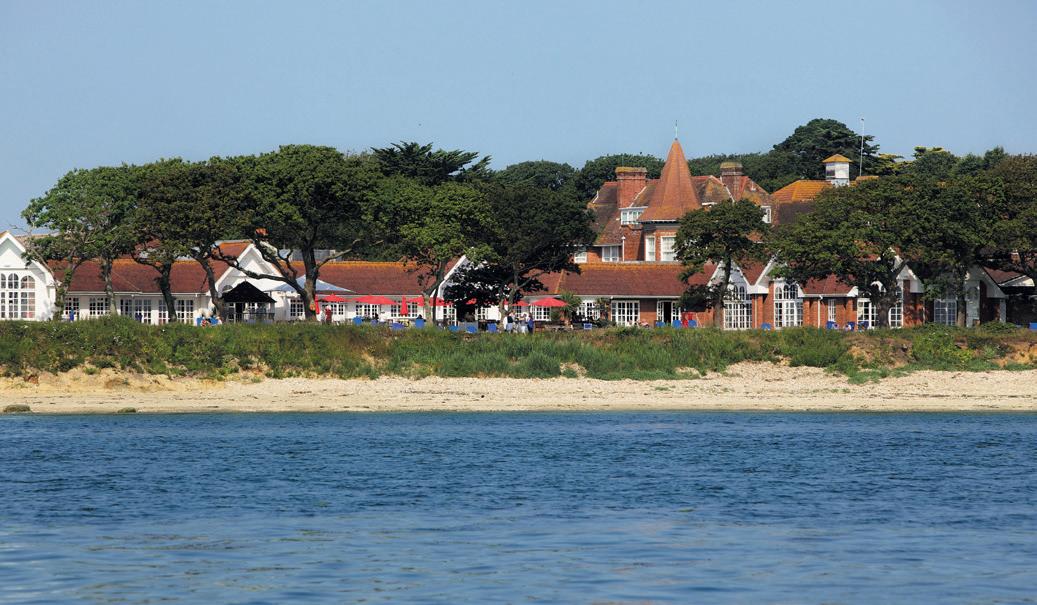
Set within 55 acres of Suffolk woodland, Gunton Hall is an ideal location from which to enjoy nature. Whether you want to take a stroll the local reedbeds to seek out Bittern, or enjoy butterflies aplenty in summer meadows, this is the perfect base from which to discover the very best of the UK’s wildlife.
Stay closer to nature when you book with Warner, from Red Squirrels on the Isle of Wight with a stay at Bembridge Coast, or Cranes on the Somerset Levels when staying at Cricket St Thomas manor house.
Back at base you’ll enjoy stylish accommodation, excellent dining, and live music and entertainment in an exclusive, adults-only getaway.
AND
Sea ducks are riding out wild weather in stormy winter seas. Charlie Elder explores their remarkable lives and the challenges threatening their future
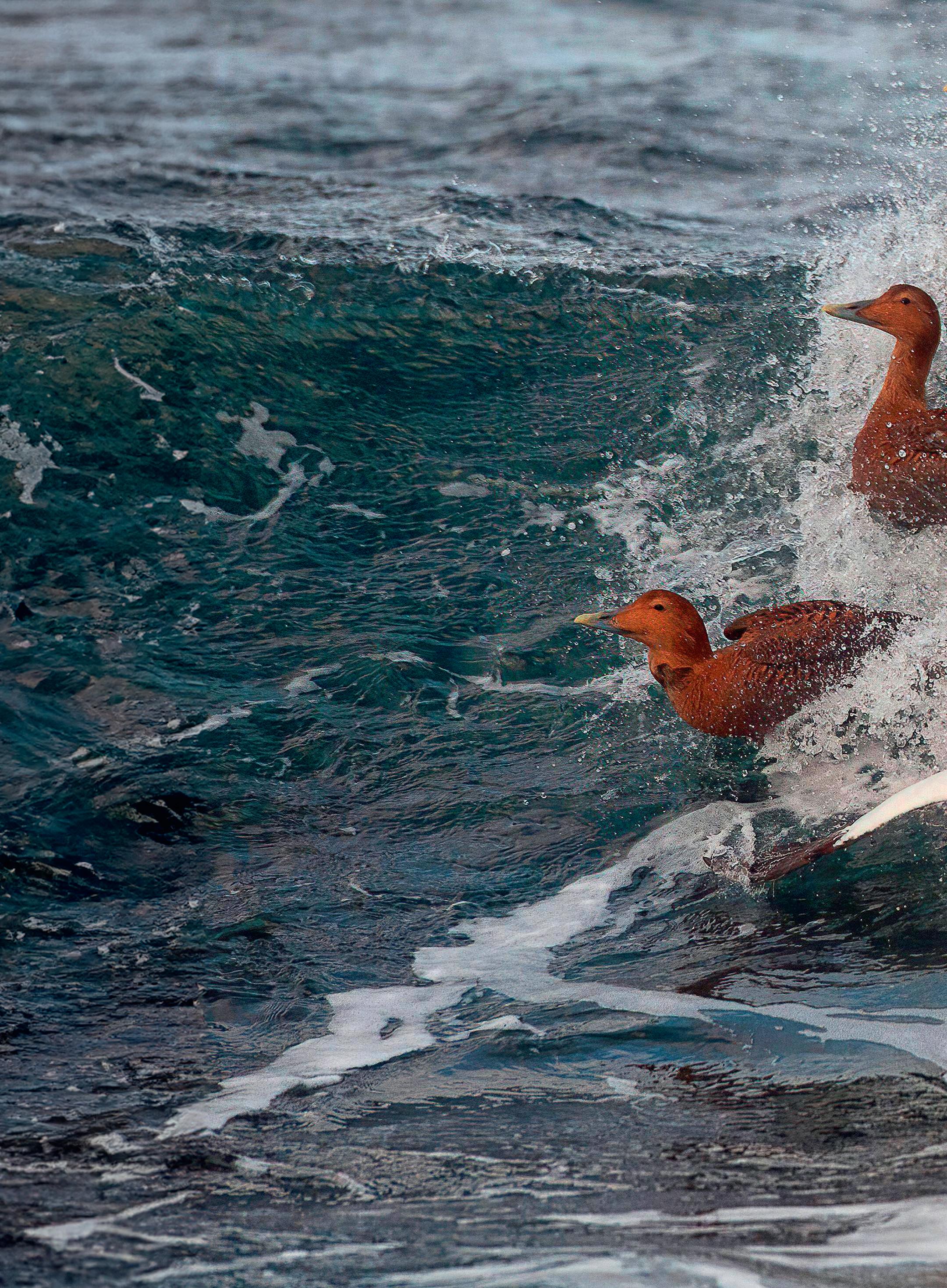
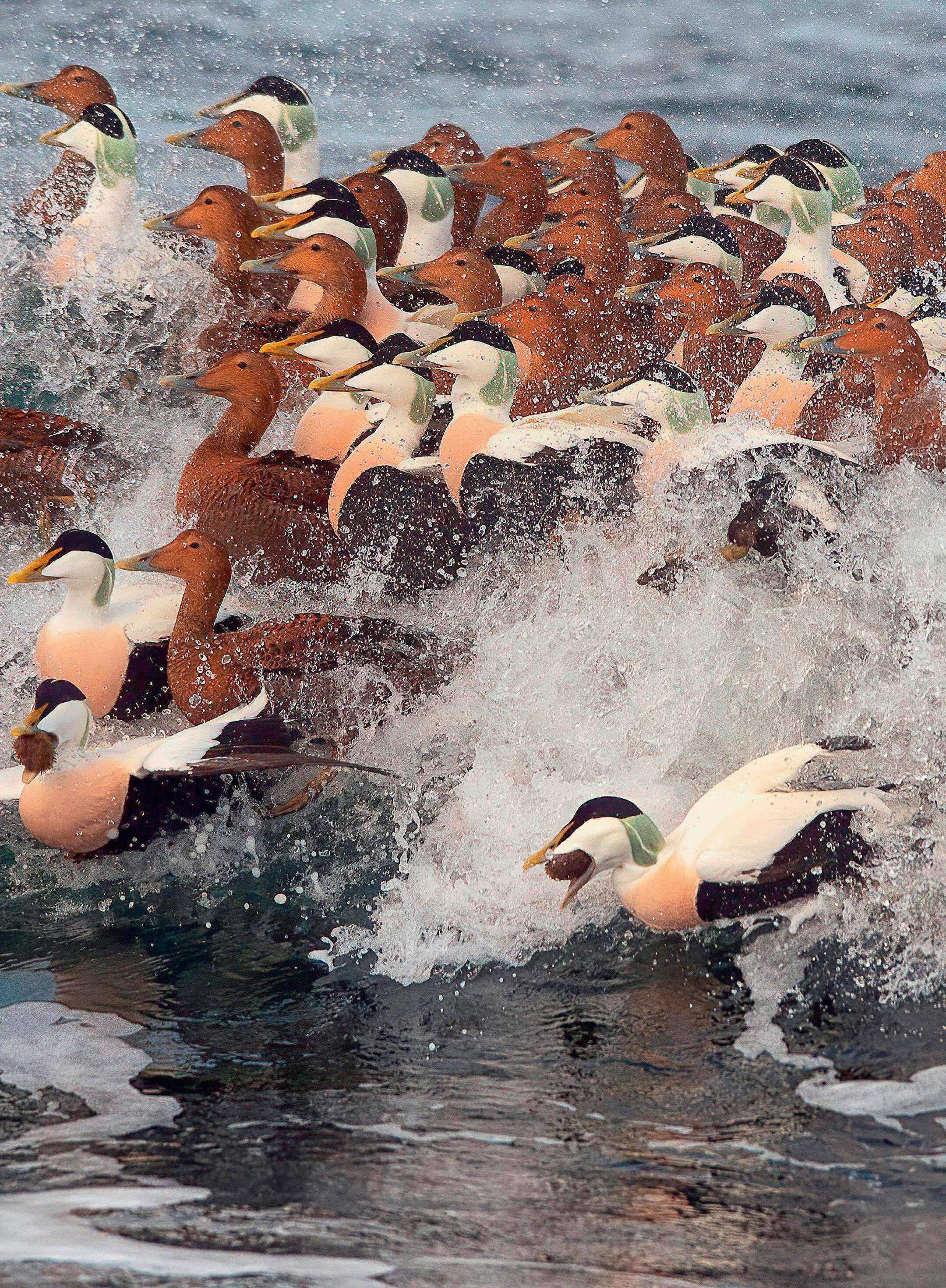
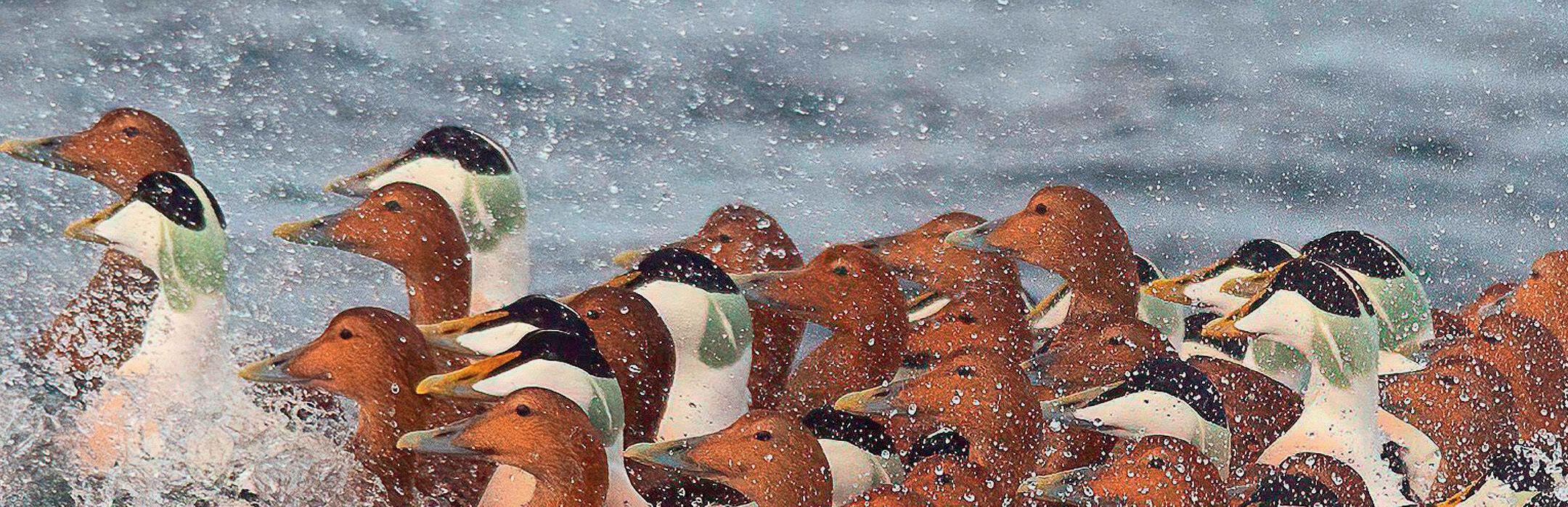
Foam-flecked waves whipped into a fury by winter winds thunder against the rocky coastline. This is no weather to be out at sea. Yet just offshore, a raft of ducks calmly ride the muscular swell, seemingly untroubled by the stormy conditions around them. These are the ultimate wild swimmers, at home in our coastal waters year-round: Eiders.
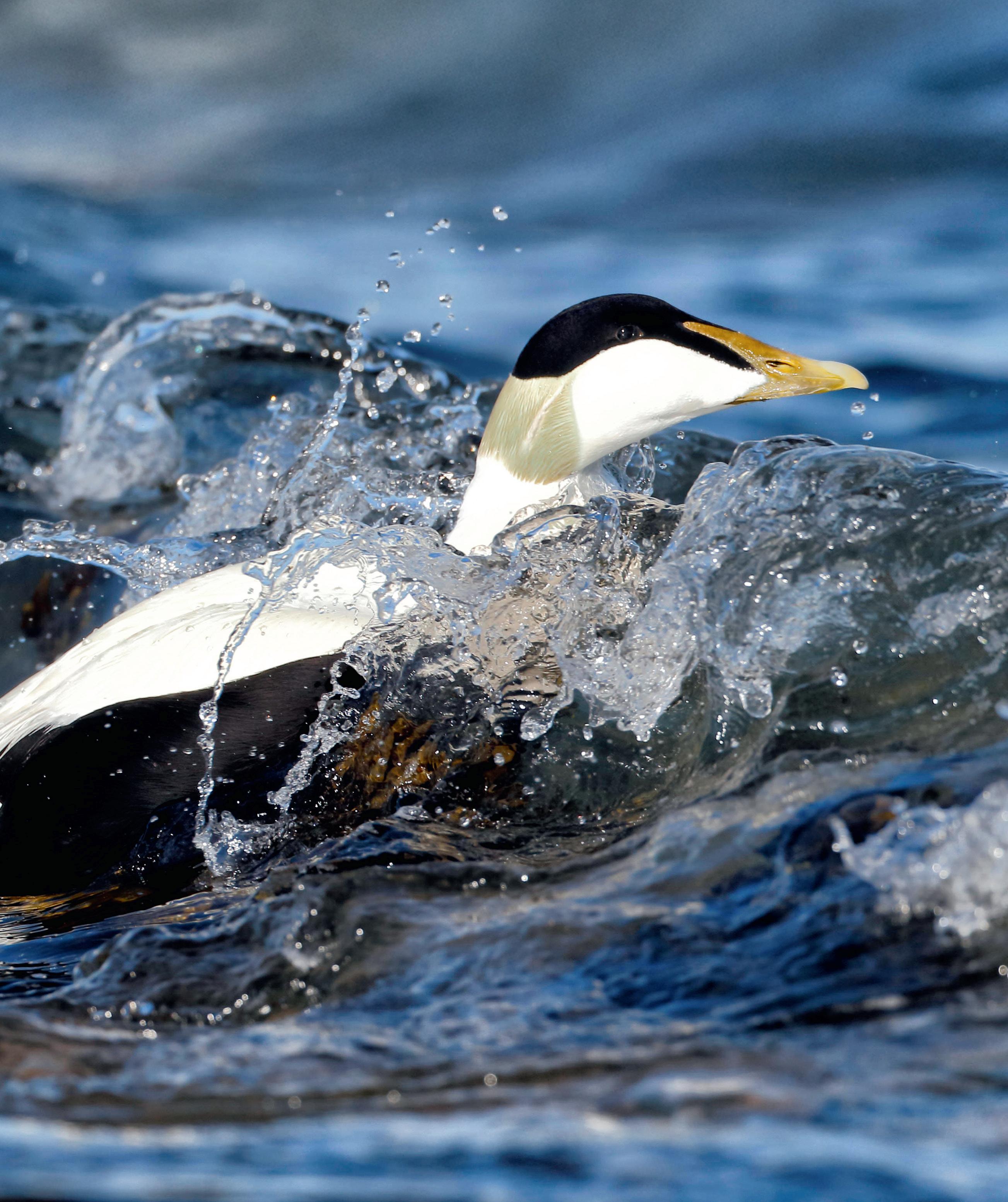
Previous: Eiders are sociable birds and form large flocks in winter. This group in the Atlantic are swimming and eating sea urchins
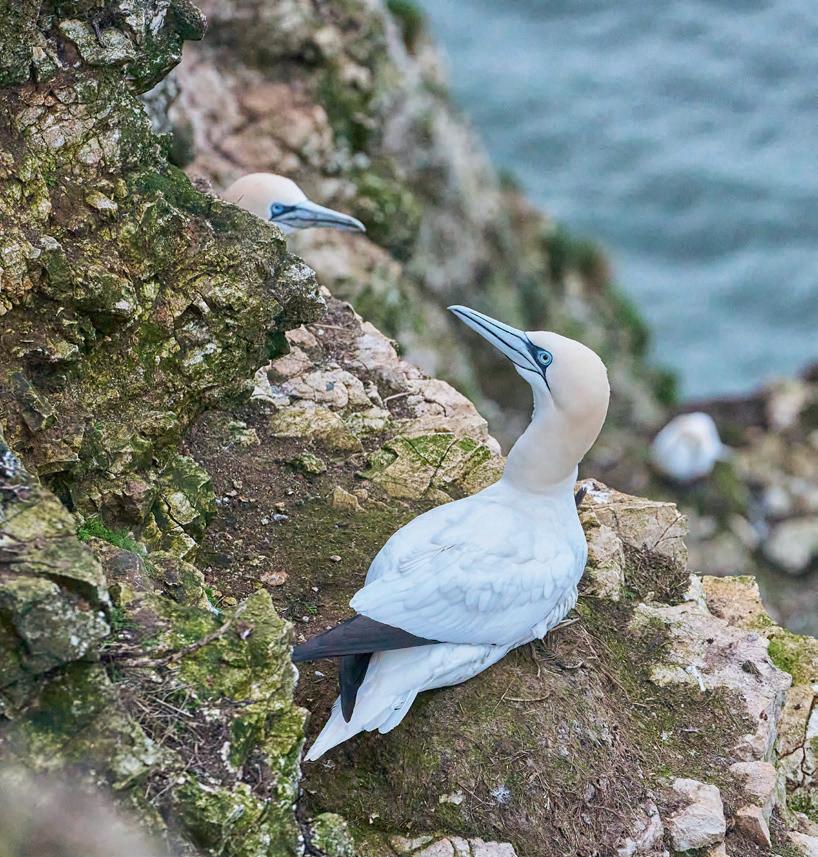
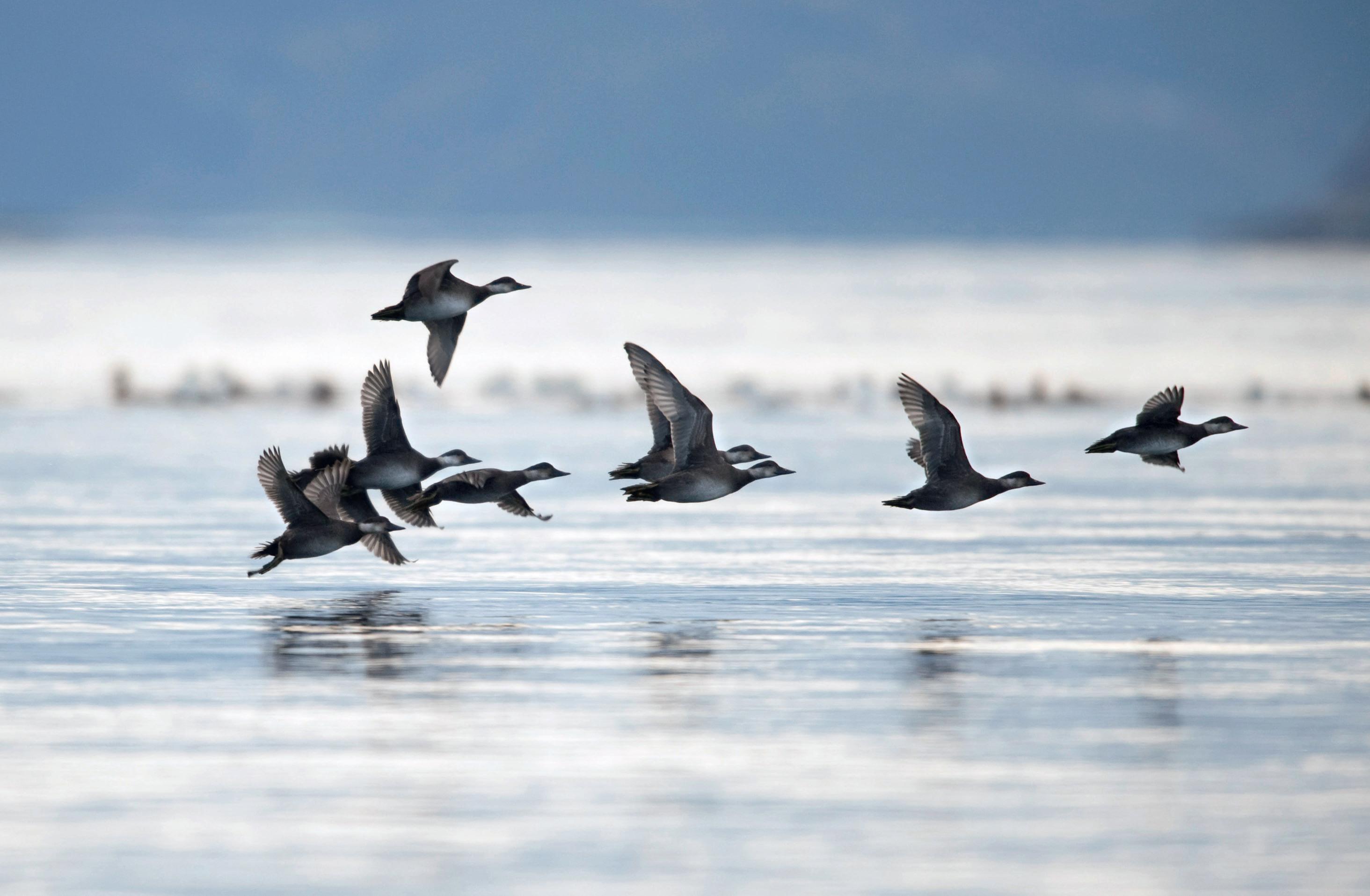
1. Flocks of Common Scoters gather around the UK and Irish coast
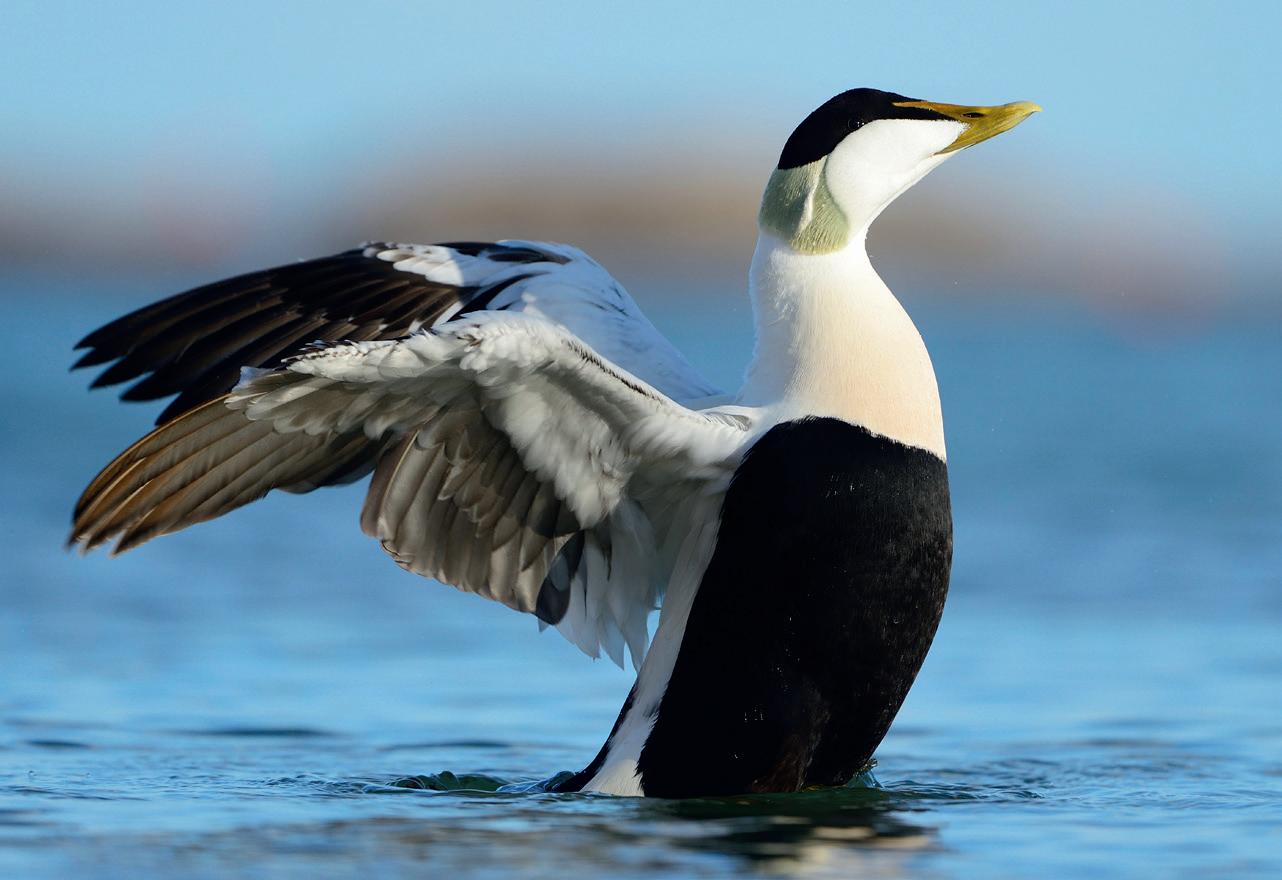
2. Male Eiders take four years to reach adult plumage
3. Goldeneyes visit from Northern Europe in the winter
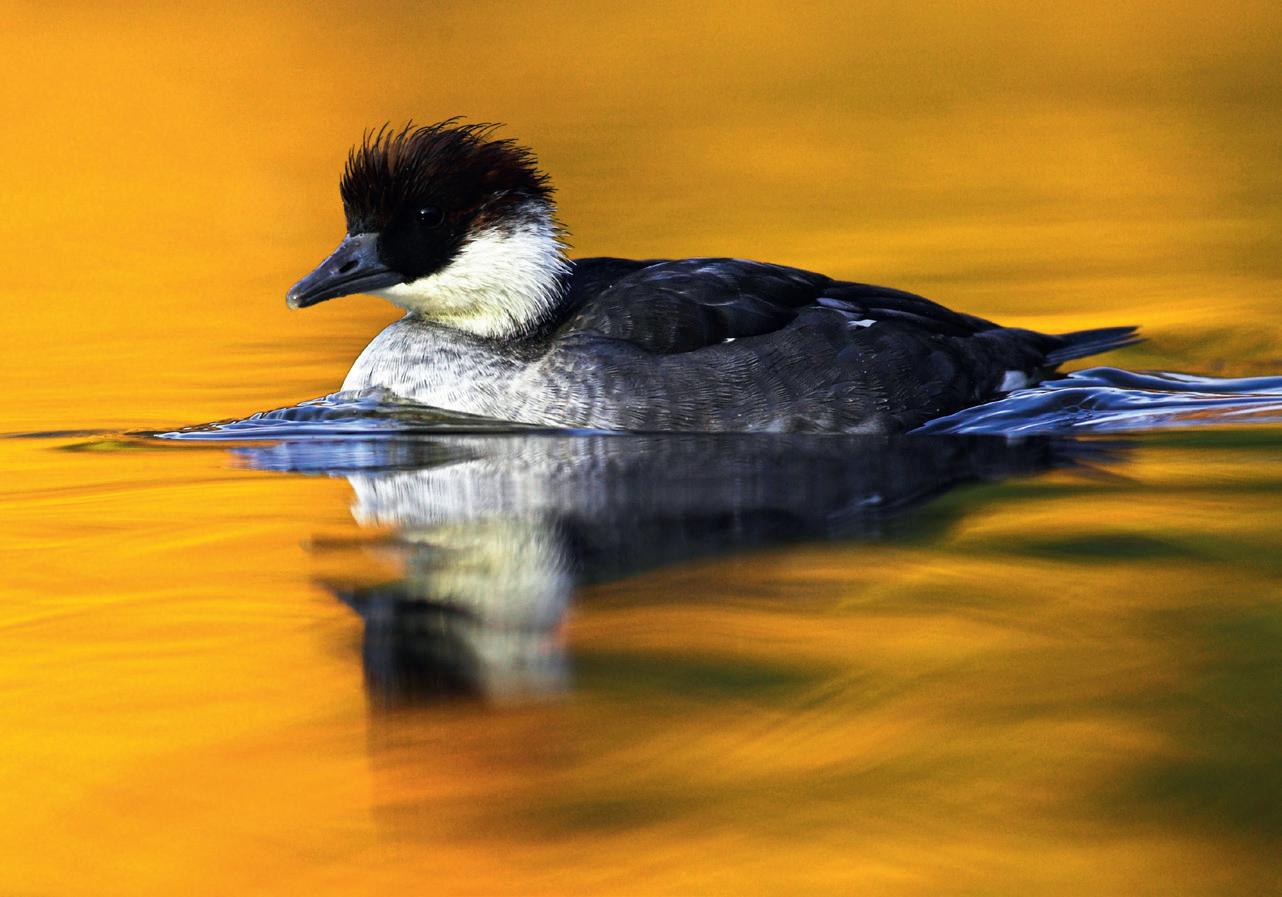
4. Female and juvenile Smews are often known as ‘redhead Smews’ thanks to their reddishbrown heads
Even from a distance these robust ducks catch the eye – the backs of males white as the breaking surf, the buoyant barrels of the brown females. Closer views reveal the species’ sturdy wedge-shaped bill, which gives the head its distinctive doorstop profile.
This is not a duck one would find paddling around a pond in your local park. The Eider is a hardy coastal bird, a marine specialist that feeds on shellfish and nests close to the shore. A true sea duck, this is a powerful, fast-flying and striking-looking species. It has an appetite for Blue Mussels, plunging up to 20 metres to prise these bivalves from rocks with its strong bill before swallowing them whole – the tough gizzard within its digestive tract crushing the shells.
At this time of year, ahead of the spring breeding season, flocks of Eiders can be spotted around our coastlines, with overwintering visitors from further north and east pushing numbers up to 86,000 birds.
Male Eiders are undeniably handsome. White above and black below, they have a dark crown that extends along the top of the bill, resembling a baseball cap pulled a little too far down over the eyes. The drakes also have a pink flush on the breast and a patch of celery-green around the back of the head. When courting, males make an endearing cooing sound: ‘ah-oooo’.
The female has mottled brown plumage, similar to that of a female Mallard, but the head shape, with forehead tapering into the triangular bill, sets the Eider apart.
The species is perhaps best known for the lightweight and insulative ‘eiderdown’. Breeding in the northern half of the UK and Ireland, and high
‘More than 13,500 birds migrate here to take advantage of our relatively mild conditions in winter’
into the Arctic, females line a ground nest with underlayer feathers plucked from their breast to keep the clutch of eggs from chilling. This cosy cushion of soft down has traditionally been harvested in countries such as Iceland to stuff quilts and pillows.
A similarly gregarious sea duck, the Common Scoter, can also be found around much of our coast during the colder months, numbering 135,000 birds. Though only a few dozen pairs of this northerly species nest in the UK, beside lochs and lochans in Scotland. They have dark plumage – the males glossy black, and females sooty brown with paler cheeks and upper neck.
Scan dense floating flocks of Common Scoters that dive to feed on shellfish and marine invertebrates offshore. Along Britain’s eastern and southern coasts in particular, one may spot a scarcer relative among them: the Velvet Scoter. This stockier winter visitor can be told apart by the white patch at the rear of the wings which is present in both males and females and seen in flight.
Male Velvet Scoters have a white eye marking and golden-yellow colouring on the bill, which is more conspicuous than the buttery smudge on the top of the male Common Scoter’s bill. Female Velvet Scoters have pale patches on either side of the head.
In keeping with our other ducks, scoters moult their plumage following the breeding season, which renders them temporarily flightless for roughly four weeks when the wing feathers are replaced. They typically gather in flocks at favoured sites during this vulnerable stage in summer and autumn. By the winter months, our ducks, both resident and migrant species, are looking their brightest best. Dapper drakes compete to pair up with females, which generally have a more understated appearance that provides vital camouflage while sitting on a nest.
Although Velvet Scoters do not nest in the UK, returning to breeding grounds in Scandinavia and Siberia in spring, our waters provide an important sanctuary during the non-breeding season for more than 3,350 birds.
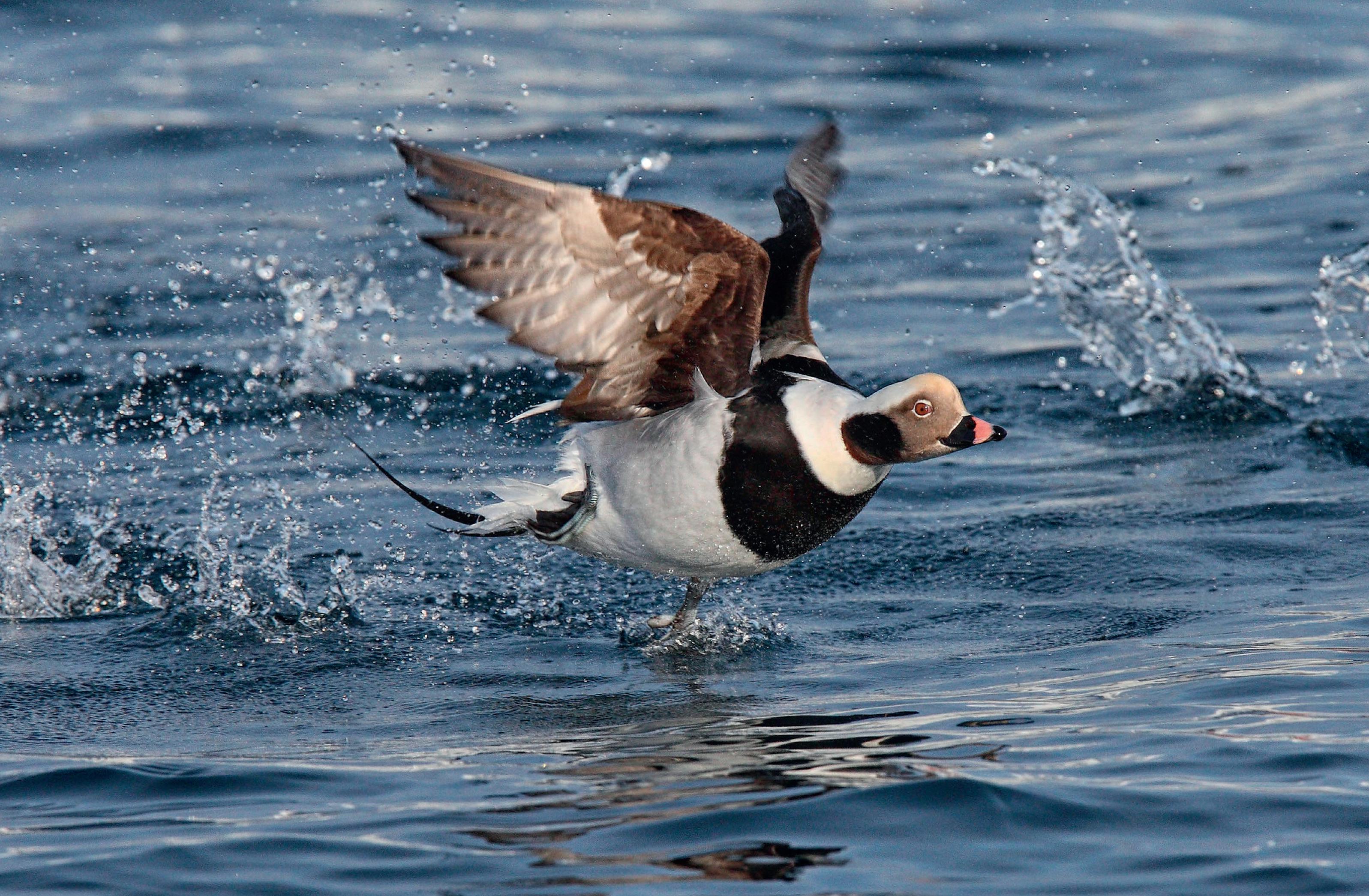
Like the Velvet Scoter, the Long-tailed Duck –also ranked as Vulnerable by the International Union for Conservation of Nature (IUCN) – does not breed in the UK. However, more than 13,500 birds migrate here to take advantage of our relatively mild conditions in winter, before returning north to tundra pools and coastal islands to nest in spring. Most flocks overwintering in UK seas can be seen off Shetland, Orkney and north-east Scotland. Named after the male’s elongated tail feathers – that wouldn’t look out of place on a pheasant – this is a small and prettily patterned species, sporting a mixed plumage palette of greys, browns, black and white. But despite its delicate appearance, the Long-tailed Duck is a tough Arctic specialist able to endure harsh conditions, plunging deep in freezing seas to feed on shellfish and crabs.
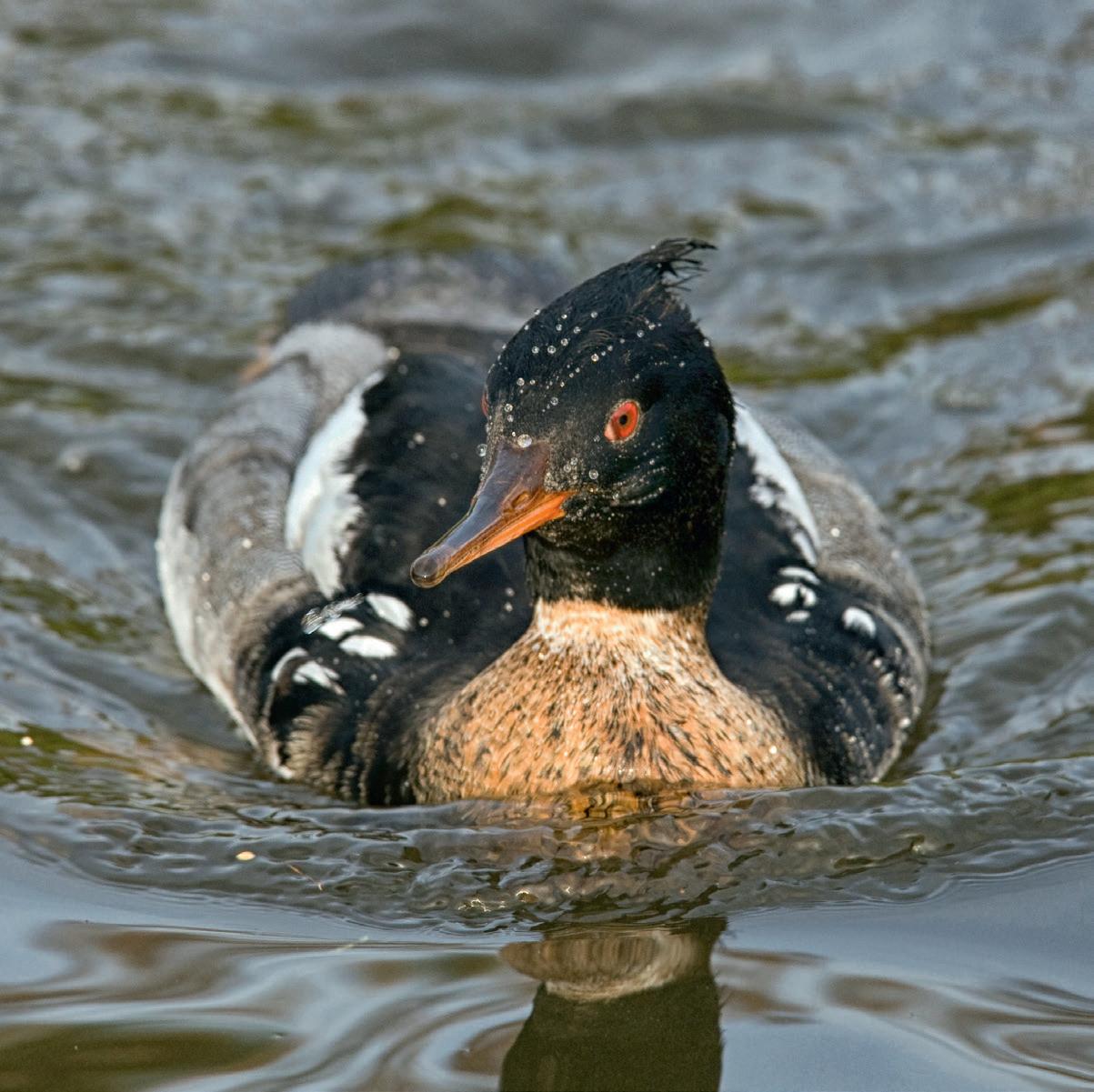
The Red-breasted Merganser takes a different approach to securing a meal, pursuing fish at speed

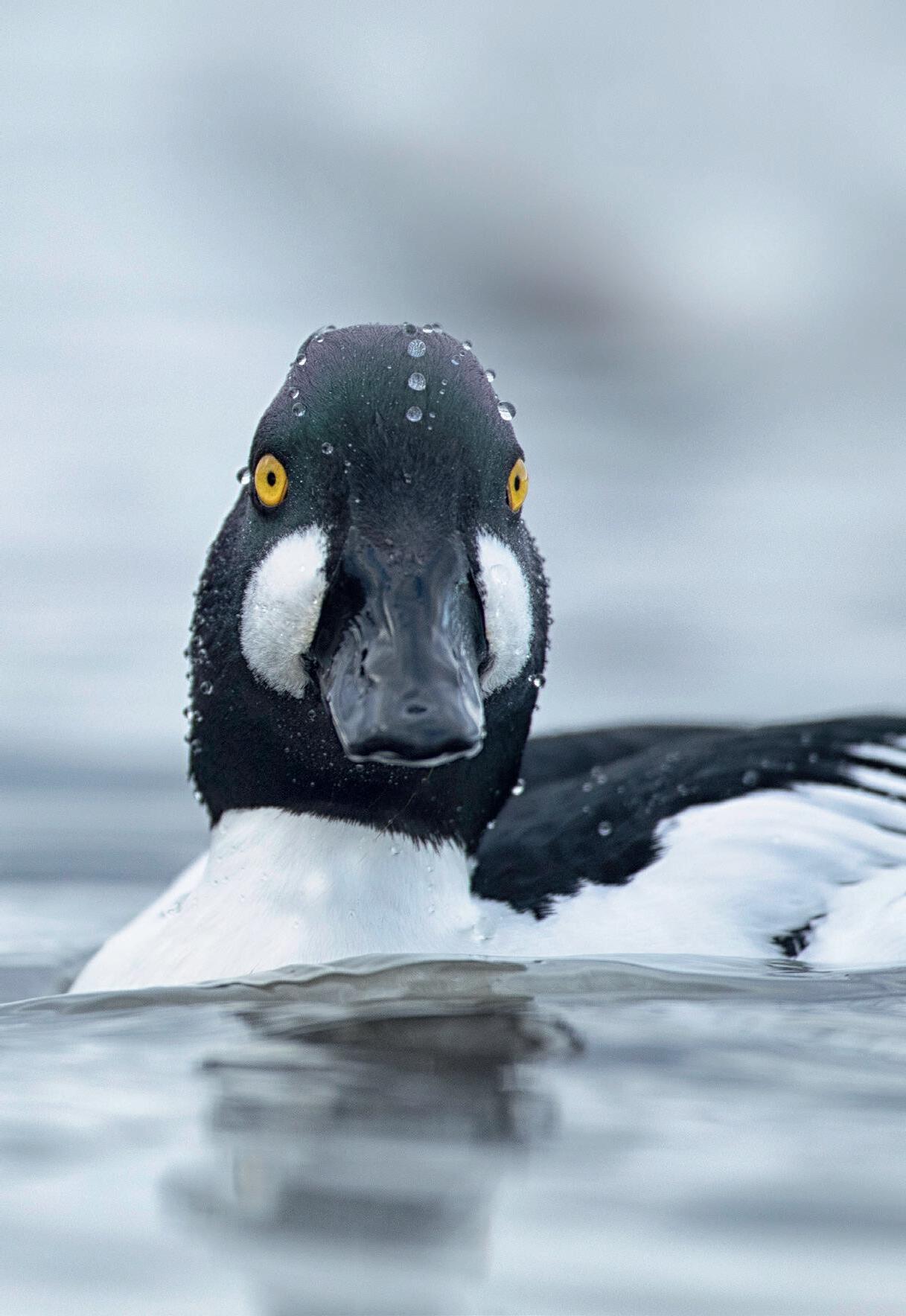
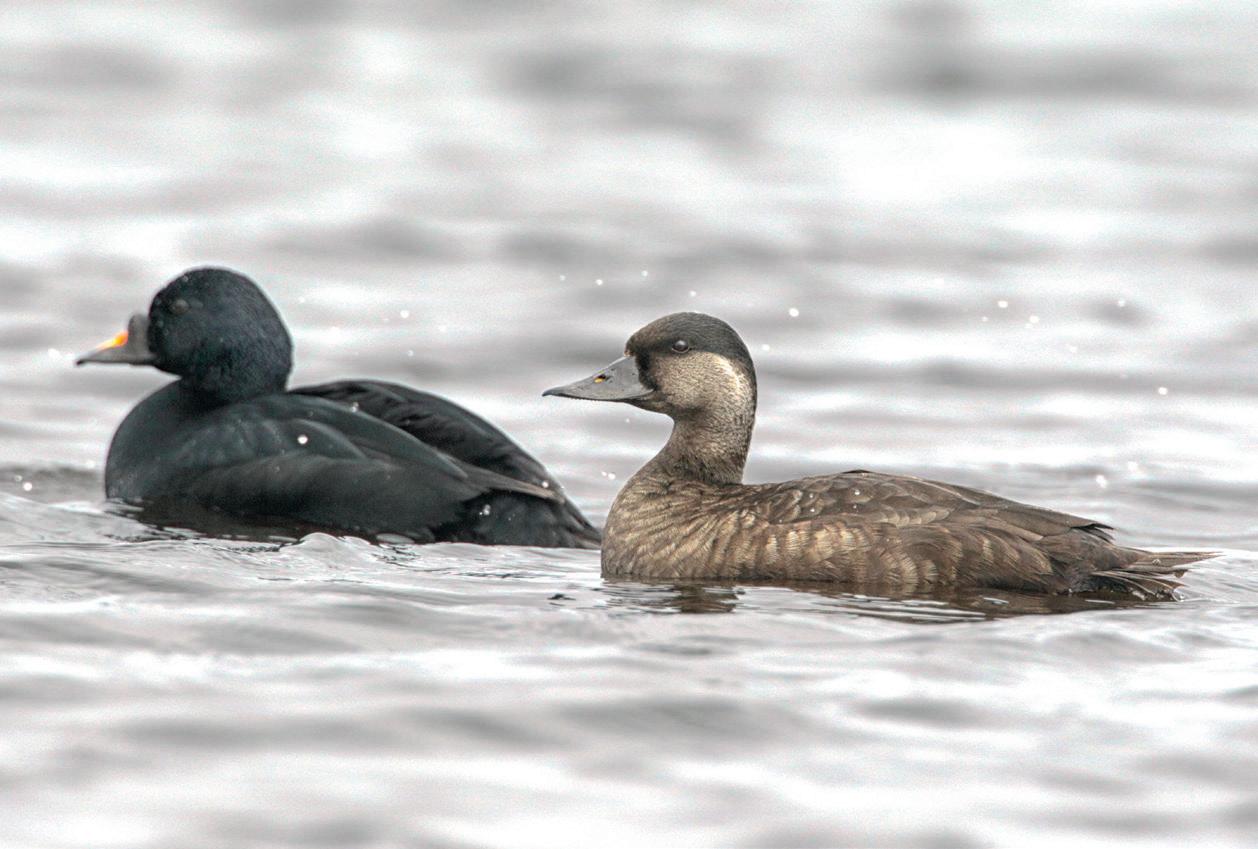
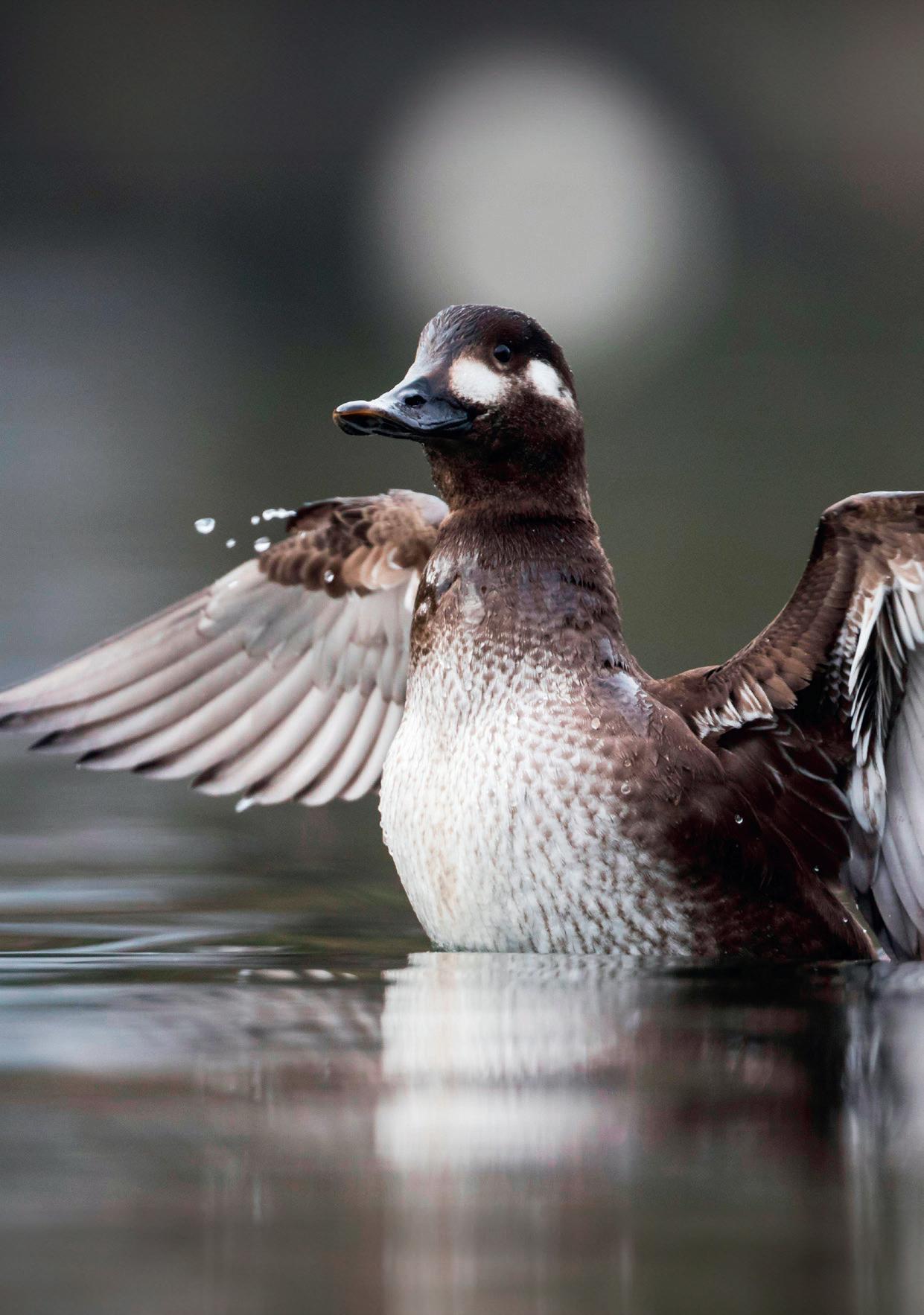
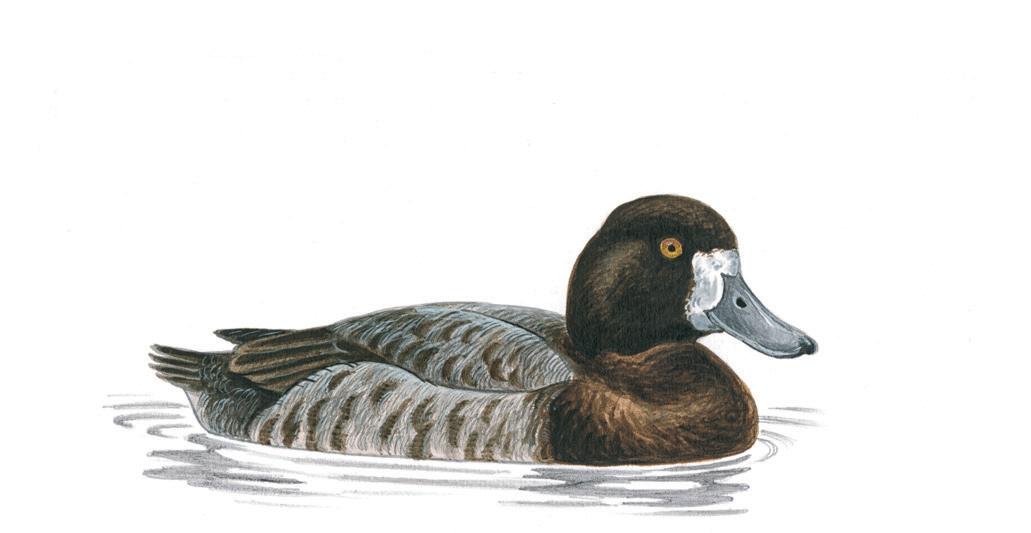
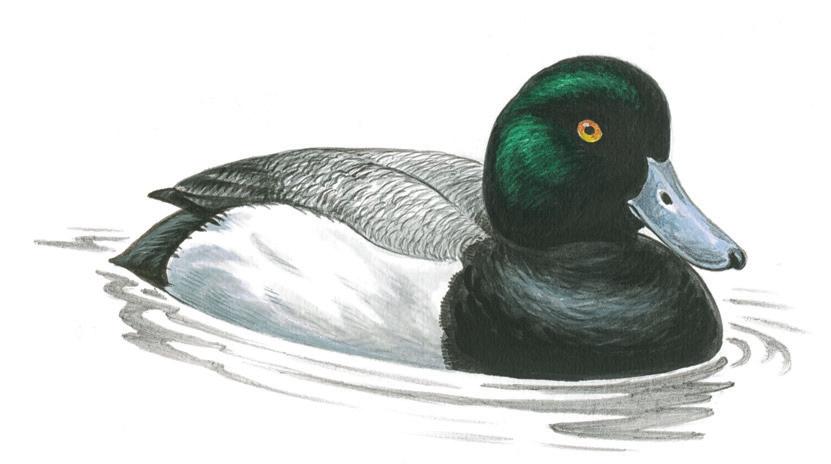
Diving ducks, including freshwater species and sea ducks, forage beneath the surface, either on the bottom or by chasing prey underwater. They use their wings and webbed feet for propulsion; their feet set far back on the body to generate downward thrust. To return to the surface they simply stop swimming, bobbing up like corks.
underwater. One of the so-called ‘sawbill’ ducks, it inhabits coastal waters in winter and is often grouped with the sea ducks. This agile swimmer, with a wispy crest, nests near lakes, rivers and sheltered bays, and its thin red bill has serrated inner edges which enable it to grasp slippery prey such as eels, small crabs, aquatic insects and shrimps.
The Smew, a scarce winter visitor, and the Goldeneye, which breeds in small numbers in Scotland, are also considered sea ducks, as both diving species are present in marine habitats outside the breeding season. Rare sightings in UK seas include the King Eider and Surf Scoter.
Worryingly, no UK sea ducks are faring well enough for inclusion on the Birds of Conservation Concern (BoCC) Green List, with all classified at Amber or Red levels of conservation alert. They face a plethora of threats on land and at sea, both at nesting and feeding sites and on migration. These range from coastal development, habitat destruction, avian influenza, disturbance and predation, to the effects of climate change on ocean ecosystems, oil pollution, unsustainable fishing practices, bycatch losses and the inappropriate siting of offshore wind turbine arrays.
Samuel Wrobel, RSPB Senior Marine Policy Officer, says seabird species, including sea ducks, are struggling because of the “industrialisation of our
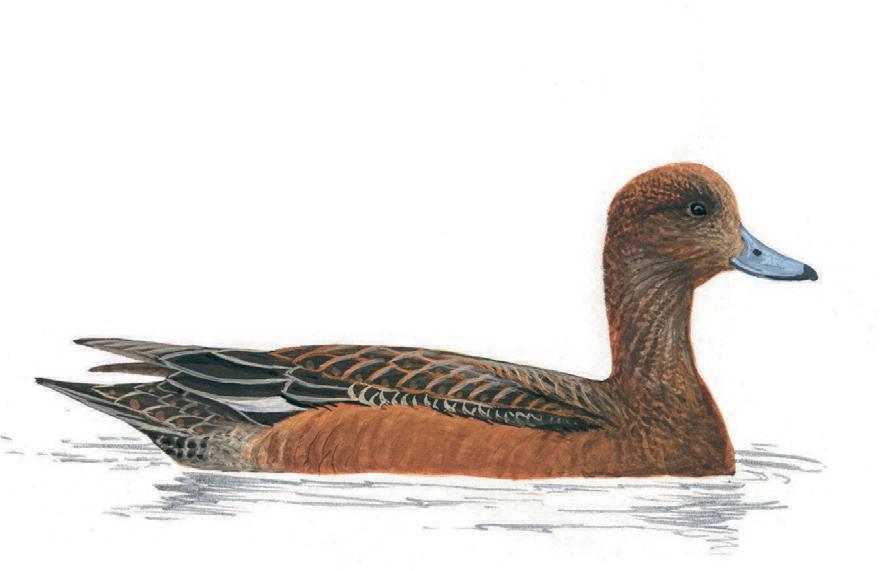
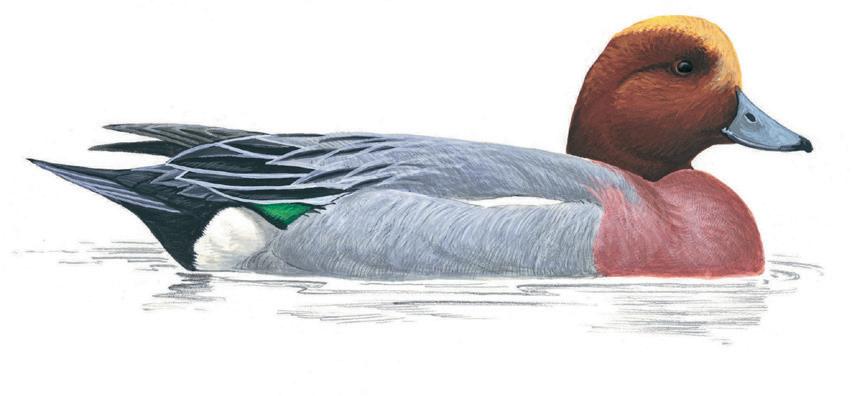
Dabbling ducks feed at or near the surface in fresh and brackish water, sometimes ‘upending’ – sticking their heads underwater and tails in the air – to reach food. They sieve seeds and invertebrates from the surface or wet mud and also feed on aquatic and terrestrial plants. Their legs are placed centrally, meaning they can walk well on land.
‘Diving
suffer huge losses by becoming tangled in fishery gillnets’
5. Common Scoters form pairs in their winter flocks
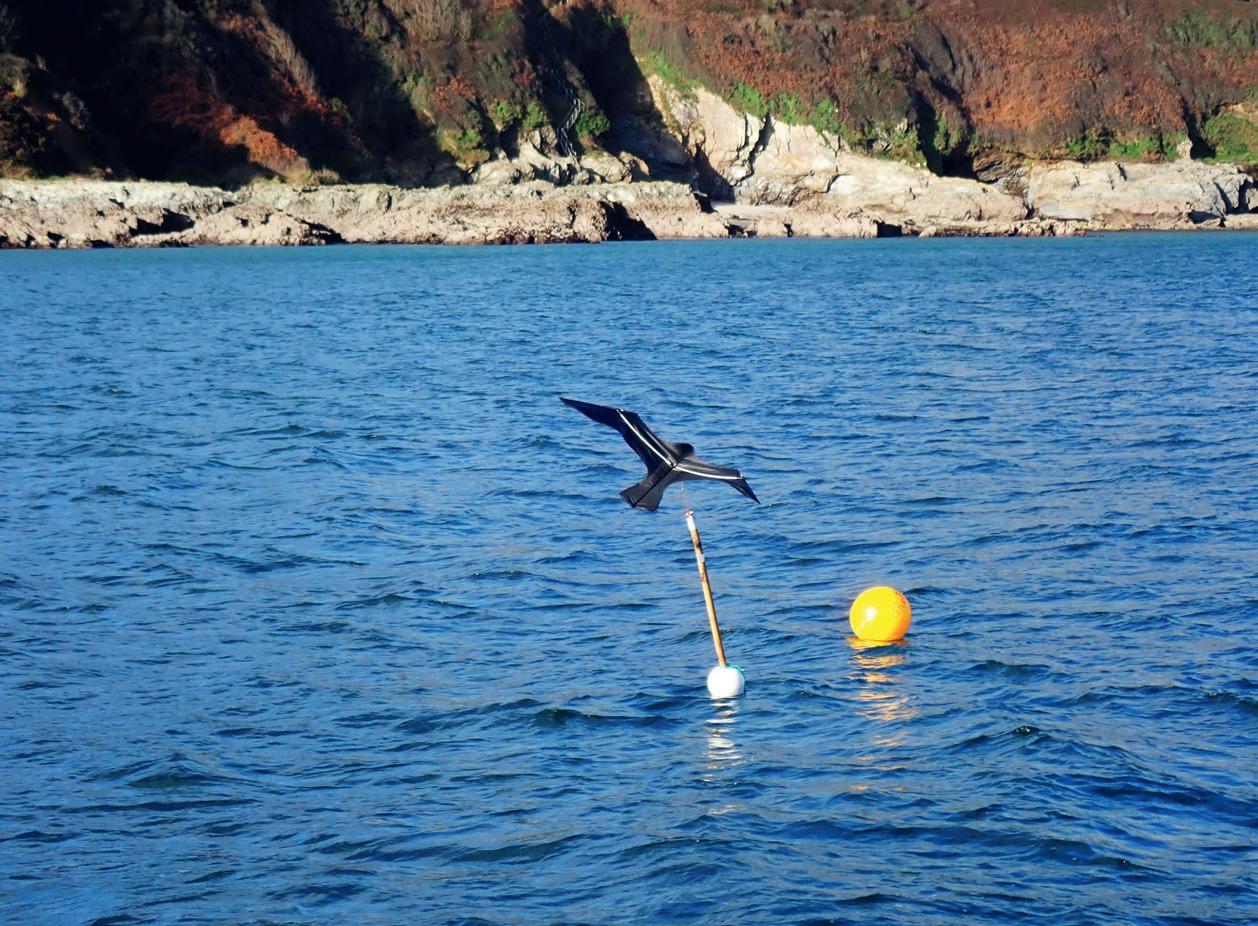
6. ‘Scary-bird kites’ are being used around gillnets to act as deterents for diving seabirds to prevent bycatch
7. The majority of the UK’s wintering Velvet Scoters are found in a small number of bays in Scotland
8. The tails of male Long-tailed Ducks can reach up to 13cm
seas”. The charity fully supports renewable energy, such as offshore wind, where developments have truly embraced a “nature positive” approach, he says, adding, “Building offshore wind farms in the wrong places, the most sensitive areas, is only going to accelerate seabird declines. We have an opportunity to get this right – to be a world leader on this issue.”
Some 200,000 seabirds die every year in European waters by becoming hooked or entangled in fishing gear. Samuel explains that international work with long-line fleets through the Albatross Task Force had successfully reduced albatross bycatch deaths, and there are ongoing trials aimed to find solutions closer to home.
Diving sea ducks suffer huge losses by becoming tangled in fishery gillnets. Accidental bycatch in these suspended nets is considered a key factor in the precipitous decline of Long-tailed Ducks. An estimated 17,000 die annually in the Baltic Sea,
‘Awareness of the plight of seabirds has never been greater, with strong public support for conservation’
along with thousands of wintering Velvet Scoters and Eiders.
One possible solution being researched is floating marine ‘scarecrows’ to deter sea ducks and other seabirds from diving around gillnets. These include a so-called ‘looming-eyes buoy’, which displays a staring pair of eyes, and a ‘scary-bird kite’ in the shape of a raptor.
Yann Rouxel, RSPB Bycatch Programme Manager, says trials, including off Cornwall and in the Baltic Sea, have shown promise but adds that reducing bycatch requires a combination of measures tailored to the location and the season. Fishing at night, when seabirds are less active, and at a greater depth could also make a real difference, balanced against the impacts on fishers.
“In some places the scarecrow devices might be all you need to help the issue. In other places where the problem is more intense you might need two or three different measures working together,” says Yann.
“We know the pieces of the puzzle but just need to put them together in the right way, in the right place and at the right time to reduce bycatch while also
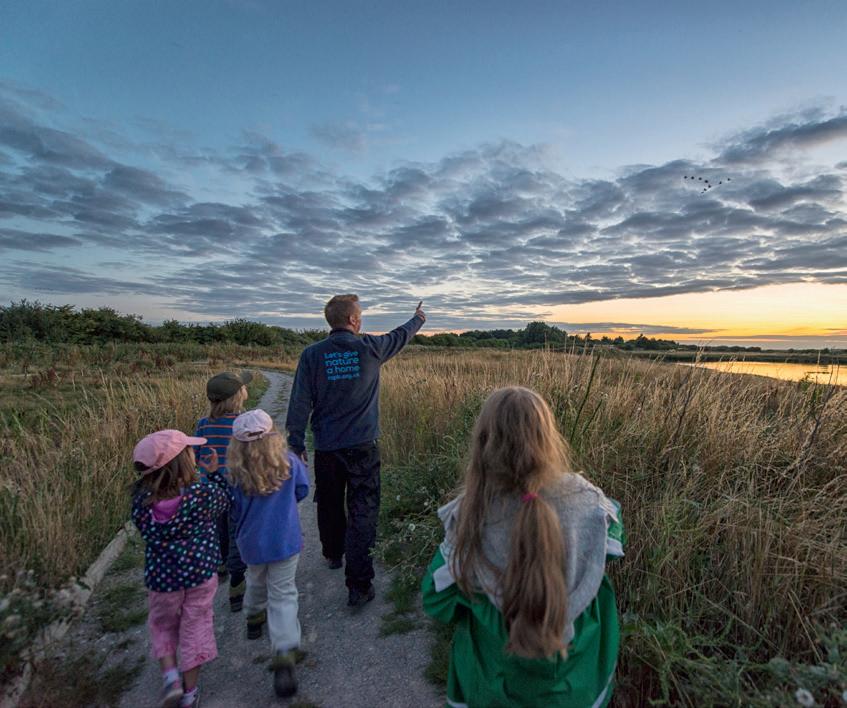
Winter is the perfect time to spot sea ducks riding the waves around our shores. Visit one of our coastal nature reserves, such as RSPB Titchwell Marsh in Norfolk (pictured above), RSPB Culbin Sands in Nairnshire, RSPB South Stack in Anglesey, or RSPB Rathlin Island in County Antrim for your chance of a sighting.
You can also help protect these remarkable birds by supporting the RSPB’s Marine Recovery Programme, which is working to put seabirds and marine life on the road to recovery.
Find out more about our work to protect seabirds at: rspb.org.uk/marine
demonstrating that this is economically viable for fisheries.”
Awareness of the plight of seabirds and marine wildlife has never been greater, with strong public support for conservation action to turn the tide and protect the oceans upon which we all depend.
Sea ducks may not be widely known – or widely seen, given they can nest in remote locations and feed out at sea – but these remarkable birds deserve all the publicity they can get.
During cold and stormy winter weather, as you keep warm inside, think for a moment of our spirited species surviving amid the waves, day and night. Even better, head for the UK coastline and see them for yourself.

Charlie Elder is a Dartmoorbased journalist and wildlife writer. His books include the RSPB Everyday Guide to British Wildlife and RSPB Everyday Guide to British Birds

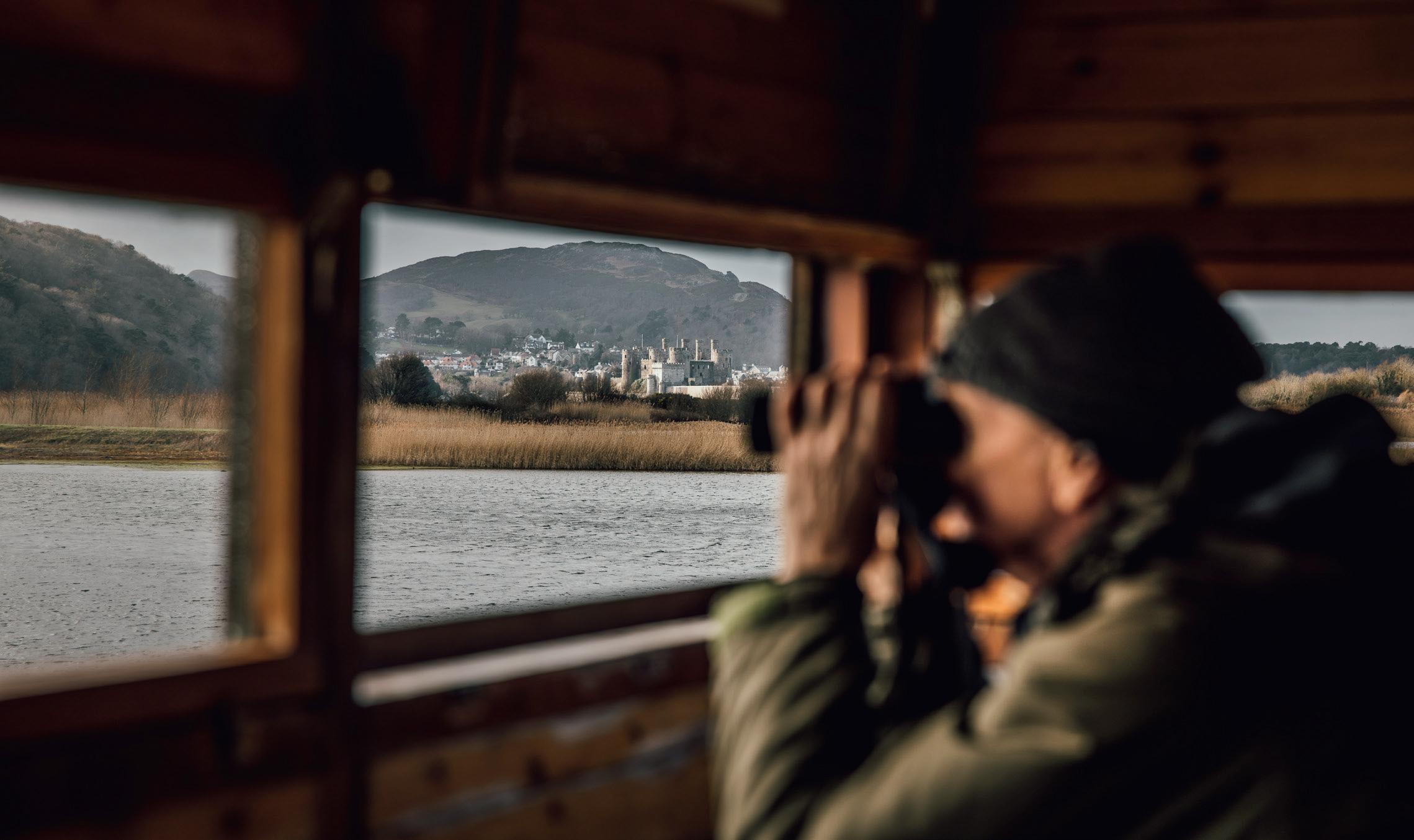
For a short break that brings you closer to untamed natural beauty, the Wales Coast Path is the perfect place to escape — from lively nature reserves to coastal exploration, enjoy a journey steeped in wildlife and sea air.
For a short break that brings you closer to untamed natural beauty, the Wales Coast Path is the perfect place to escape — from lively nature reserves to coastal exploration, enjoy a journey steeped in wildlife and sea air.
AYOUR NEXT ADVENTURE AWAITS
what will your 2026 look like? If you’re picturing a holiday destination uncovering medieval history on one of Europe’s areas of sand dunes, taking your explorers hunting for dinosaur on a trail from Llantwit Major to Nash Point, or practising mindfulness surrounded by remarkable wildlife, journey to Wales and create all-important memories with your ones.
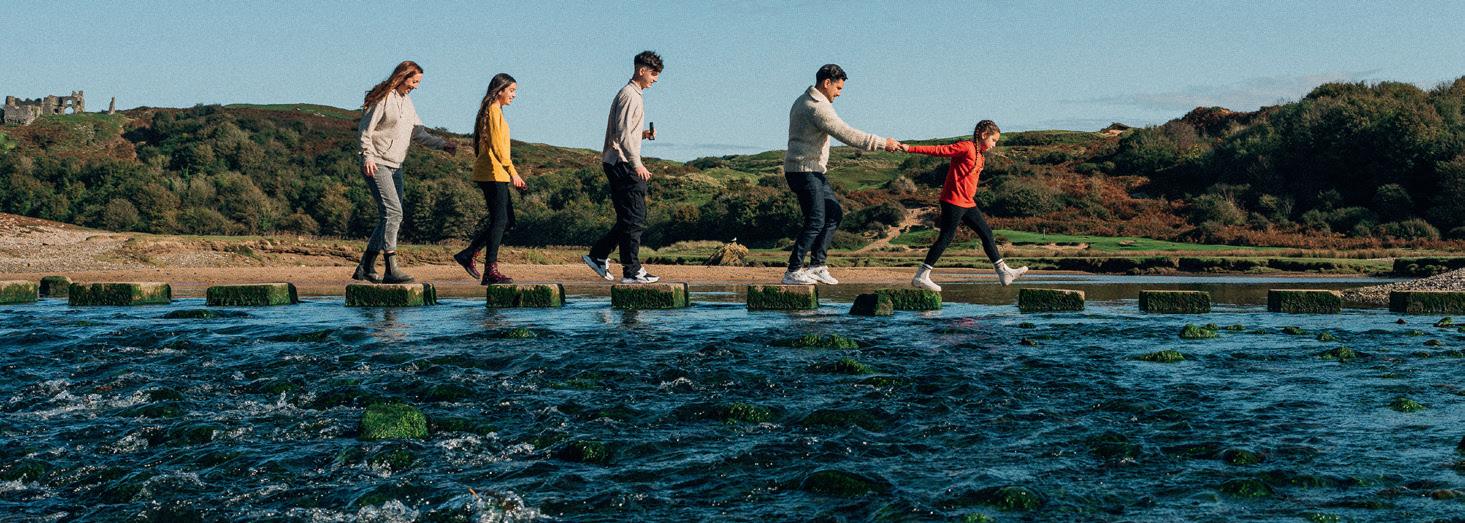
visit to Wales is an invitation to explore breathtaking scenery and encounter extraordinary wildlife along one of the most captivating coastlines in the world. Following the nation’s shore, the Wales Coast Path boasts 870 miles of dramatic sea views, towering cliffs, and thriving nature reserves along the way. It’s a place where every step brings new experiences and the sense of joy and wellbeing (Hwyl) — perfect for families looking to swap the everyday for something unforgettable.
Avisit to Wales is an invitation to explore breathtaking scenery and encounter extraordinary wildlife along one of the most captivating coastlines in the world. Following the nation’s shore, the Wales Coast Path boasts 870 miles of dramatic sea views, towering cliffs, and thriving nature reserves along the way. It’s a place where every step brings new experiences and the sense of joy and wellbeing (Hwyl) — perfect for families looking to swap the everyday for something unforgettable.
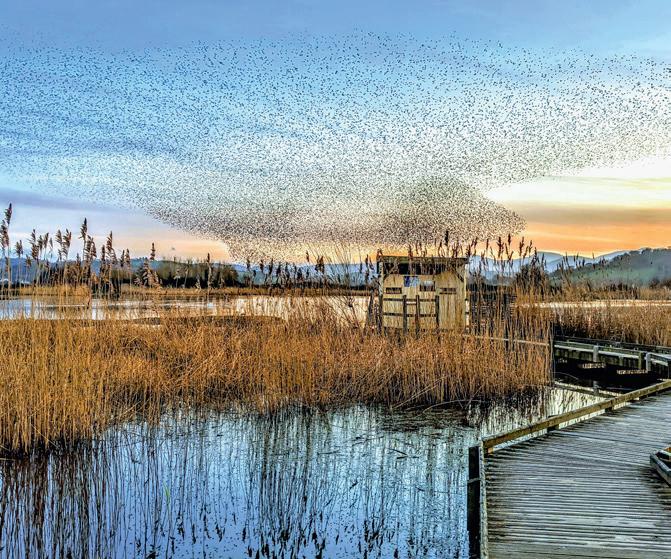
nature reserve and observe the beautiful bird species that call Wales home, each with their own personality and story. Spot the once scarce Avocet, which returned to the UK as a breeding species during WWII or look for Barn Owls (pictured left) hunting at dawn and dusk on their silent wings. Watch the captivating scene of tens of thousands of Starlings in their majestic murmuration at the RSPB Conwy nature reserve, or snap a photo of the playful Otters at RSPB Lake Vyrnwy and feel unbridled joy as you share moments of connection with the spirited Welsh landscapes.
Traverse the Wales Coast Path for a holiday teeming with stunning wildlife. Whether you’re seeking a cosy winter break, colourful spring retreat, warm summer adventure, or spontaneous autumn getaway, Wales feels alive all year round.
Start planning your Welsh holiday — discover your perfect getaway the Wales Coast Path.
Walk among the buzzing wildlife that thrives in the RSPB Newport Wetlands
DISCOVER WALES’ WILD HEART
Traverse the Wales Coast Path for a holiday teeming with stunning wildlife. Whether you’re seeking a cosy winter break, colourful spring retreat, warm summer adventure, or spontaneous autumn getaway, Wales feels alive all year round.
Walk among the buzzing wildlife that thrives in the RSPB Newport Wetlands
And after a full-on day of exploration, the Wales Coast Path has no shortage of welcoming accommodation to relax and recharge along the route. Discover the old charm of The Bull Hotel, Anglesey, on the doorstep of Beaumaris Castle and Eryri (Snowdonia) or visit the idyllic Penhelig Arms Hotel less than four miles from RSPB Ynys-hir located on the Dyfi Estuary near the Cambrian Mountains.
nature reserve and observe the beautiful bird species that call Wales home, each with their own personality and story. Spot the once scarce Avocet, which returned to the UK as a breeding species during WWII or look for Barn Owls (pictured left) hunting at dawn and dusk on their silent wings. Watch the captivating scene of tens of thousands of Starlings in their majestic murmuration at the RSPB Conwy nature reserve, or snap a photo of the playful Otters at RSPB Lake Vyrnwy and feel unbridled joy as you share moments of connection with the spirited Welsh landscapes.
YOUR NEXT ADVENTURE AWAITS
YOUR NEXT
So what will your 2026 look like? If you’re picturing a holiday destination uncovering medieval history on one of Europe’s largest areas of sand dunes, taking your young explorers hunting for dinosaur fossils on a trail from Llantwit Major beach to Nash Point, or practising mindfulness surrounded by remarkable wildlife, journey to Wales and create those all-important memories with your loved ones.
Scan the QR code to plan your next
And after a full-on day of exploration, the Wales Coast Path has no shortage of welcoming accommodation to relax and recharge along the route. Discover the old charm of The Bull Hotel, Anglesey, on the doorstep of Beaumaris Castle and Eryri (Snowdonia) or visit the idyllic Penhelig Arms Hotel less than four miles from RSPB Ynys-hir located on the Dyfi Estuary near the Cambrian Mountains.
Start planning your Welsh holiday today — discover your perfect getaway along the Wales Coast Path.
So what will picturing a holiday medieval history largest areas of young explorers fossils on a trail beach to Nash mindfulness wildlife, journey those all-important loved ones. Start planning today — discover along the Wales
Scan the QR code to plan your next Welsh adventure
Far from barren, mudflats are teeming with wildlife. Nick Williams reveals their importance and the challenges they face
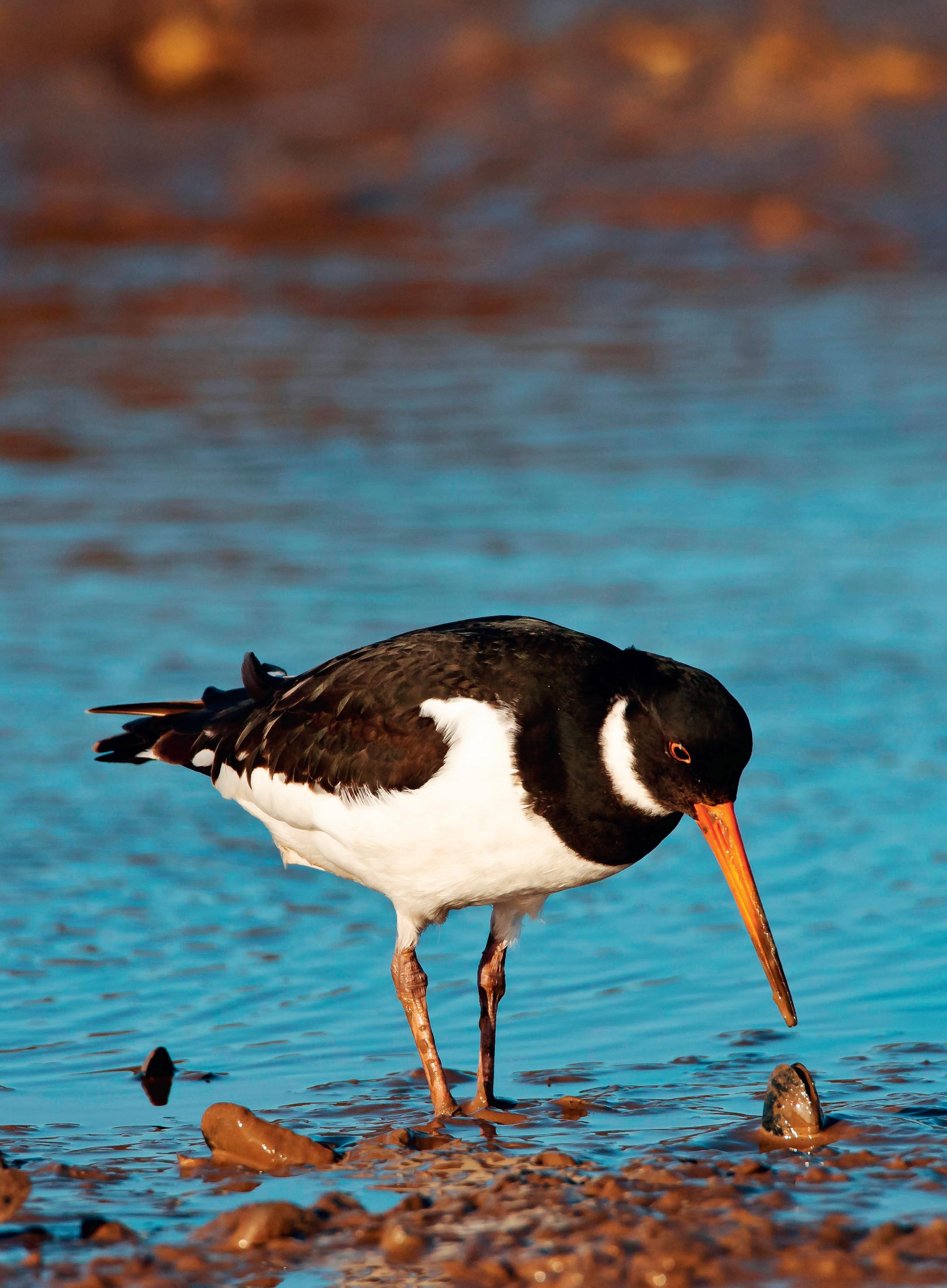
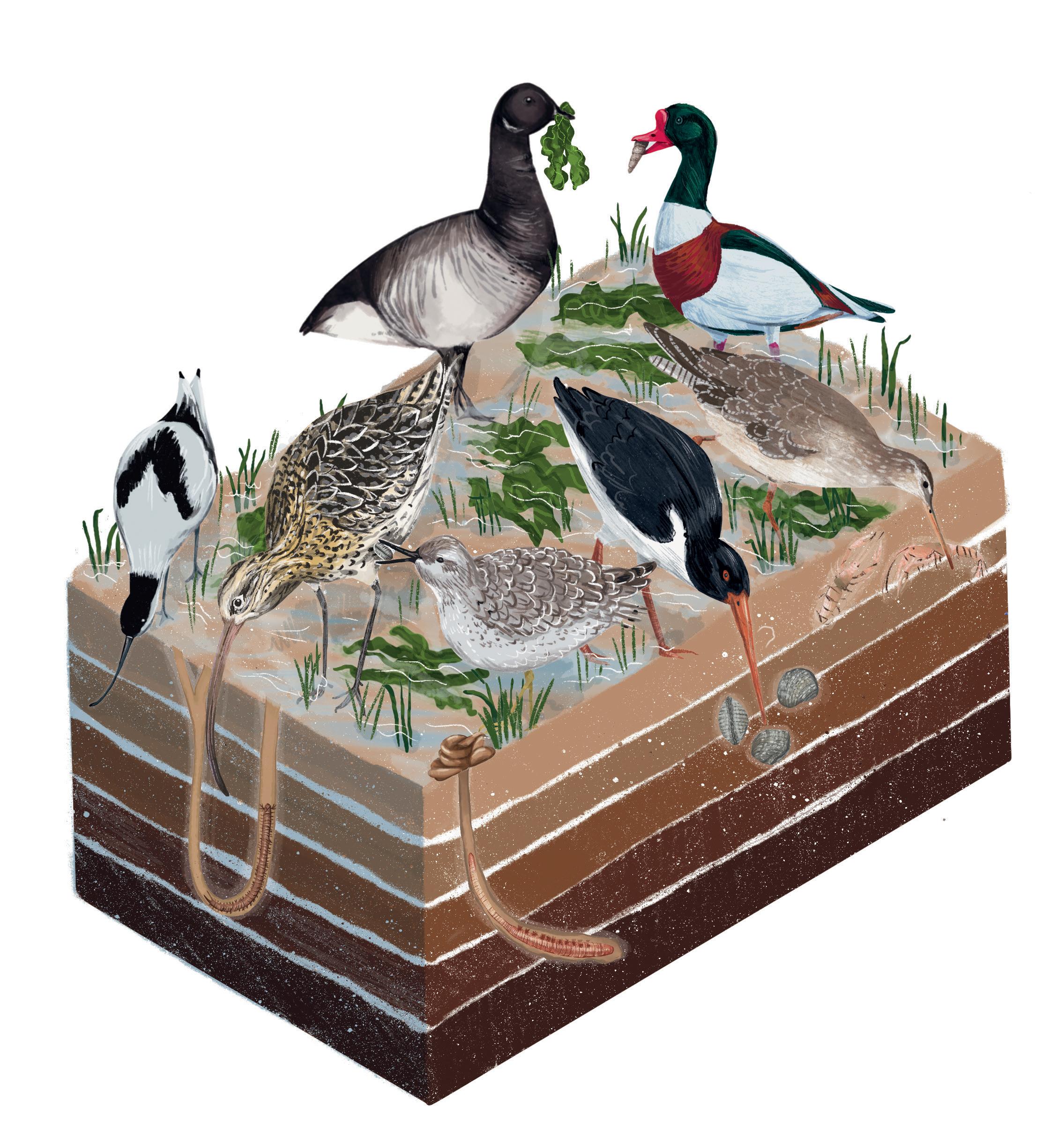
Low tide is approaching in the little harbour of Borth-y-Gest on the Welsh coast. As the water recedes, an intriguing cast of characters has begun to emerge. Wigeon bustle busily amongst the boats left stranded by the falling tide. Redshank scan the exposed ground for their next meal. Further off, Oystercatchers are probing for buried molluscs at the water’s edge.
Previous: In winter, many Oystercatchers have a wide white chinstrap
1. The high tide forces thousands of waders –including Knot – at RSPB Snettisham to take to the skies
2 In winter, the Curlew’s long beak probes deep into the mud to find crabs, marine snails and shrimps
3. Dunlins use their sensitive bills to feel for food hidden in the mud
4. Whimbrels flock in small groups, often in a V formation
This drama is played out right around our coasts twice a day, with a host of different creatures making their entrances and exits. And they are all here for one reason – our marvellous mud.
Rich but shifting sands
Looking out across a mudflat you’d be forgiven for thinking these are lifeless places. But in reality this mud – a combination of organic matter and sediment which can collect into vast expanses in the sheltered, intertidal areas of our coasts and estuaries – makes for a dynamic habitat full of curious connections. For example, did you know that Knot – one of our best-loved wading birds – often have fish to thank for easier foraging? When the tide covers our mudflats, Plaice and other flatfish cruise through the shallow water looking for food. One item on the menu are the exposed tips of siphons belonging to bivalve molluscs called Macoma, which sit buried in the mud, using their protruding tubes to feed on microalgae. As their siphons are shortened by the grazing flatfish, these molluscs must move themselves higher up within the mud to reach the surface. This, in turn, makes them easier to be found by the probing beaks of Knot as the water recedes.
An ebbing tide also reveals other dramas at play. Visit an estuary in autumn and you may well notice two Curlews walking side by side, giving bubbling calls and sometimes having a bust up. They are actually defending moving territories.
‘At the RSPB, we are lucky to manage a significant portion of the UK’s
of mudflats and sandflats’
Occasionally they will pick up a stick or bit of seaweed, possibly to make themselves appear larger; like rutting stags dressing their antlers with bracken.
As the tide rises once more, fish resume predator duties and the wading birds must move elsewhere. This twice-daily shift can create astonishing spectacles such as the ‘whirling wader spectaculars’ seen occasionally at RSPB Snettisham in Norfolk. These dramas on our mudflats are played out on a truly epic stage.
It is not easy to survive somewhere that has little or no stable ground, with high levels of salinity, and that gets inundated by seawater twice a day. That’s why the number of different species living in our mudflats is relatively low, but those that can survive here do so in extraordinary quantities.
Research has shown that in Suffolk and Essex’s Stour Estuary, the European Mud Shrimp – a type of small crustacean – can exist in densities of up to 100,000 per square metre. Increase the scale across the estuary’s 1,534ha of mudflats and there could be up to 1 trillion of them nestled within the mud here. Around our coasts, these huge densities of crustaceans, molluscs and other invertebrates ensure our mudflats provide an energy-rich buffet for birds.
Globally important mud
Every year, millions of migratory water birds arrive on our shores. Some come to spend the winter with us, these include: ducks, such as Shelducks; geese, including Brent Geese, and the entire population of Icelandic and eastern Greenland-breeding Pinkfooted Geese; and a wide variety of wading birds such as Grey Plovers, Black-tailed Godwits, Dunlins and many more.
Others, including large numbers of Knot, are making a pit stop as part of their journey between more northerly breeding grounds and non-breeding areas further south.
As these birds migrate, using a route that runs from the Arctic to South Africa known as the East Atlantic Flyway, they have come to rely on this network of well-protected, interconnected sites. This is where our coastal mud comes into its own. Apart from kelp forests and saltmarshes, mudflats are the rarest wetland habitat on Earth.
Our extensive coastline, dotted with sheltered bays and estuaries, combined with large tidal ranges (the Severn Estuary has the second biggest in the world!) means that many parts of our coasts, unlike most other countries, have the perfect conditions for mudflats to develop.
At the RSPB, we are lucky to look after a substantial part of the UK’s 270,000ha of mudflats and sandflats on our nature reserves. Our latest Wildlife on Reserves report illustrated how vital these nature reserves are for mud-loving birds. Over 482,000 waders and wildfowl visited our sites in February 2024. This is significant at population level – over 12% of all waders in the UK (excluding Snipe) during that month were found on RSPB nature reserves, an incredible statistic!
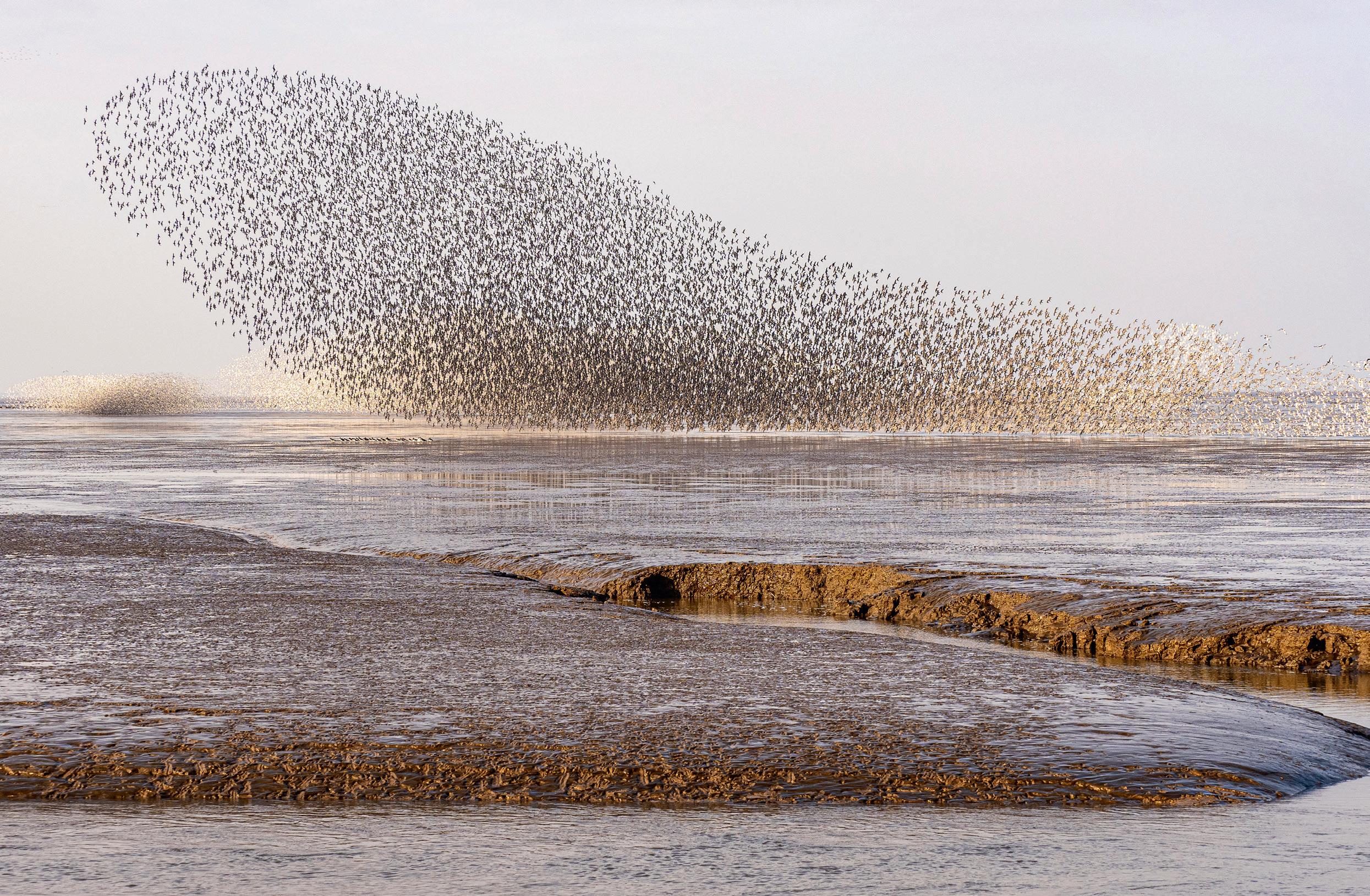
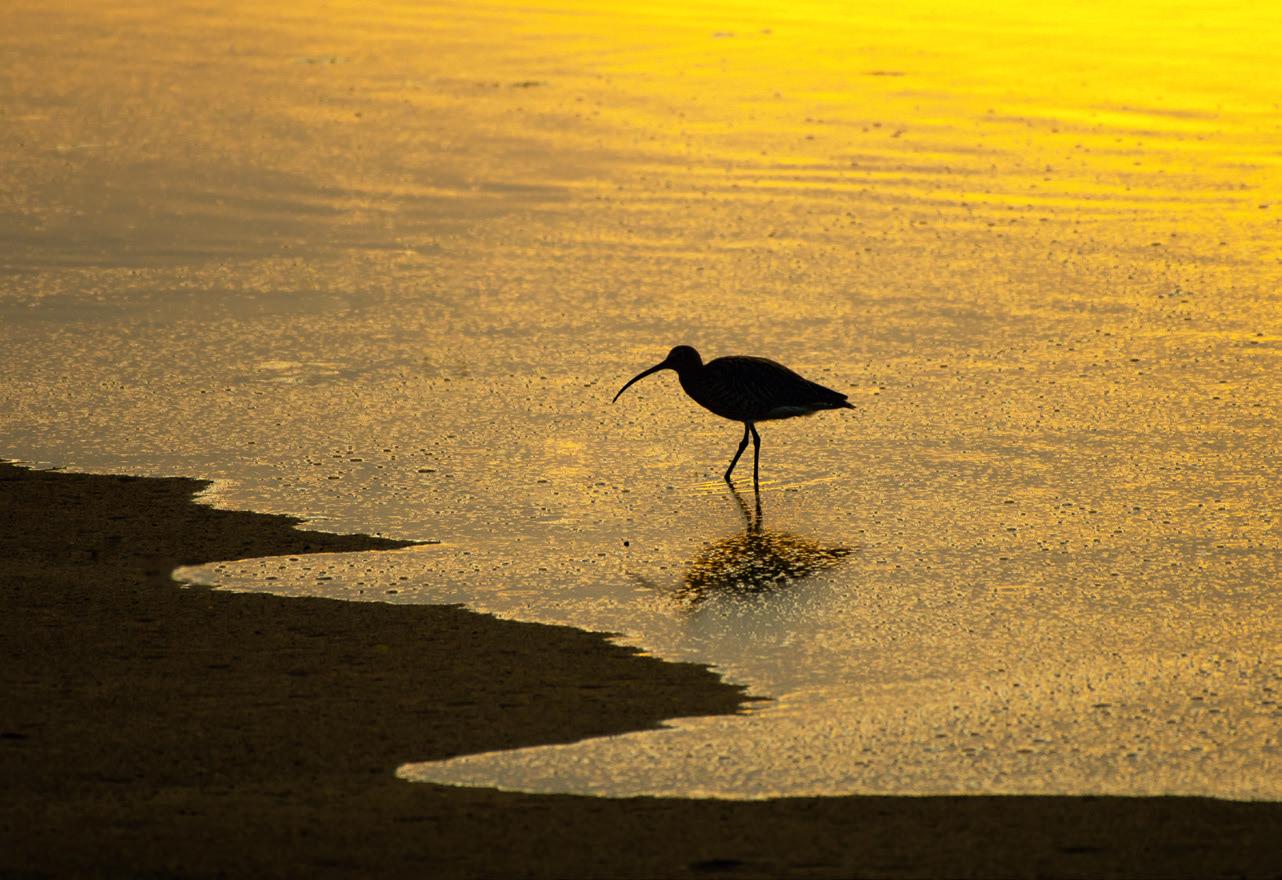
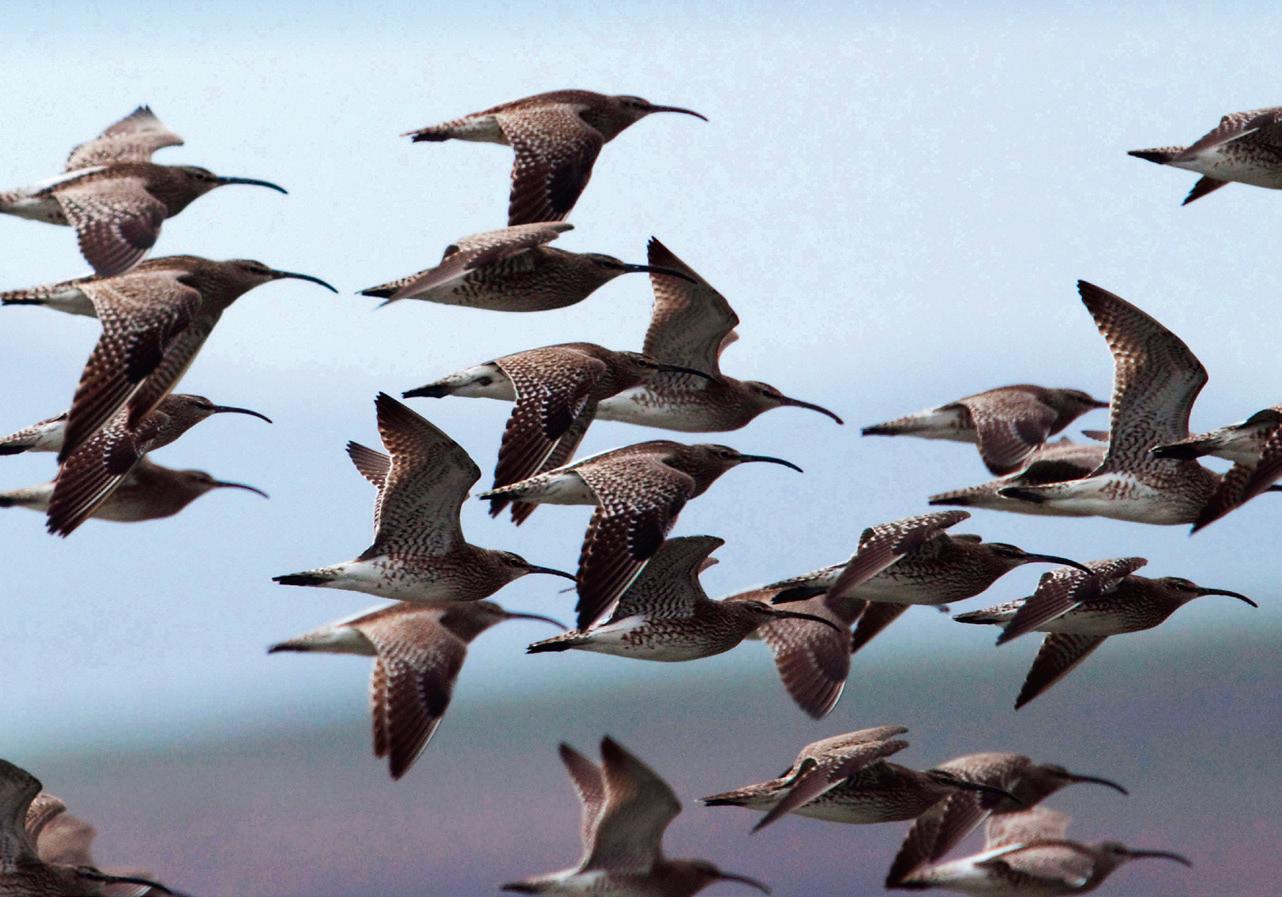
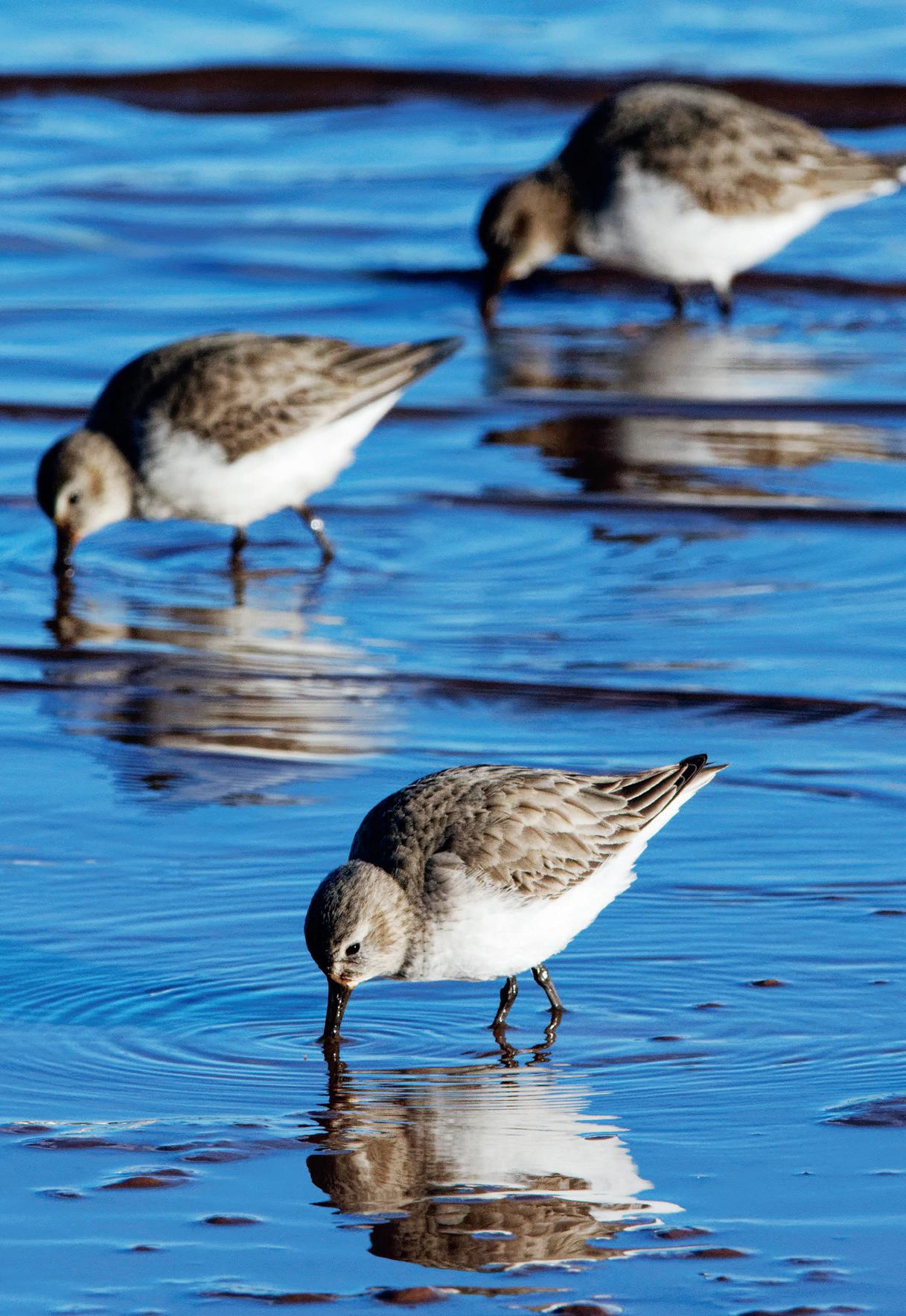
Mudflats are teeming with life and, as the tide goes out, waders, ducks and geese are treated to a veritable feast of plant life and small creatures, both above and below the surface.
‘Mudflats may look bleak, but they are full of life, drama, and vital connections between species’
As well as hosting internationally important wildlife populations, mudflats also deliver a wide range of benefits for people. They are home to shellfish which we harvest for food; keep carbon locked away from the atmosphere; absorb wave energy to limit flooding and coastal erosion; and, for many of us, improve our wellbeing through hours spent enjoying some brilliant birdwatching.
However, coastal mud exists within a wider system, which is under pressure. Hard coastal defences such as seawalls risk squeezing out these precious intertidal habitats as sea levels rise, especially due to climate change. In addition, inappropriately placed tidal barrages can interrupt the natural hydrological flows that our mudflats depend on, causing extensive ecological damage.
Looking inland, agricultural and industrial nutrient runoff entering our river systems can build up in a process called ‘eutrophication’. Once this nutrient-rich water flows downstream into our estuaries it can cause mudflats to become carpeted by algae, preventing both invertebrates and birds from feeding properly.
A key way of combatting these challenges is to create or restore intertidal areas along our coasts. This helps to compensate for, and redress the balance caused by, the huge loss of tidal flats due to historical land claim.
In a project that has recently celebrated its 10th anniversary, the sea wall at our Wallasea Island nature reserve in Essex was deliberately breached to allow the tide back in and create an area called Jubilee Marsh. By using material dug out from underneath London during the Crossrail project, the land here was carefully reshaped and structured to create a mosaic of different habitats. Thanks to this work, the reserve now hosts more than 39,000 wintering waterbirds where previously there was only arable farmland.
Like all our muddy wetlands, Wallasea doesn’t exist in isolation. It sits within a network of important coastal sites that lie between the estuaries of the Humber and the Thames and provide a refuge for a wide variety of wetland birds.
Alongside our partners, the RSPB is working to have 21 of these amazing sites, known as the East Coast Wetlands, recognised collectively as a new UNESCO World Heritage Site. Look out for more updates about this work featured in future issues of The RSPB Magazine.
When it comes to protecting coastal sites, including our mudflats, it is crucial to understand the bigger picture within the landscape.
Recent RSPB-commissioned research into the movements of more than 10,000 Black-tailed Godwits along the East Atlantic Flyway revealed that these birds’ journeys connected together more than 1,000 sites, including 49 major hotspots, four of which are included in the East Coast Wetlands World Heritage nomination.
“This highlights that, effectively, to secure the vital rungs of the migratory ladder, it is valuable to factor in not only maximum counts of birds at a site, but also how ecologically connected the sites are,” says Nicola Crockford, RSPB Principal Policy Officer.
This is why the RSPB is working hard with partners up and down the flyway: from restoring wetlands in Iceland for breeding wading birds (many of which spend the winter in the UK); to improving the protection of mudflats and saltmarsh at South Africa’s Berg River Estuary; and strengthening conservation efforts in Senegal where coastal sites support Black-tailed Godwits, Ospreys, Whimbrel and a host of other migratory species.
The RSPB is even sharing lessons beyond our own flyway. RSPB staff regularly collaborate with partners right around the world, including in China and South Korea where we are working together to promote and protect internationally important mudflats along the Yellow Sea coast that are vital for Spoon-billed Sandpipers as well as other migratory waterbirds.
Playing your part
Back in the UK, why not get out and discover a mesmerising mudflat near you? From the vast expanses of England’s Morecambe Bay to Northern Ireland’s Lough Foyle, Nigg and Udale Bays in northeast Scotland or Ynys-hir on Wales’ Powys coast; wherever you are in the UK some globally important mud could be just around the corner. To find your nearest RSPB nature reserve on the coast, visit rspb.org.uk/reserves. You could even volunteer on one of our 84 coastal wetland nature reserves, or get involved in regular waterbird counting.
When visiting our coasts and estuaries, it’s important to avoid disturbing wildlife so remember to obey signs, practise responsible dog walking, and avoid walking out onto the mudflats themselves as this can be dangerous for you and also disturb the birds.
Together, we can all play our part in looking after our amazing, enchanting, and ever-changing mud.
Nick Williams, Flyway Conservation Outreach Officer at the RSPB, is a writer, photographer and videographer who loves telling stories about our amazing migratory birds.


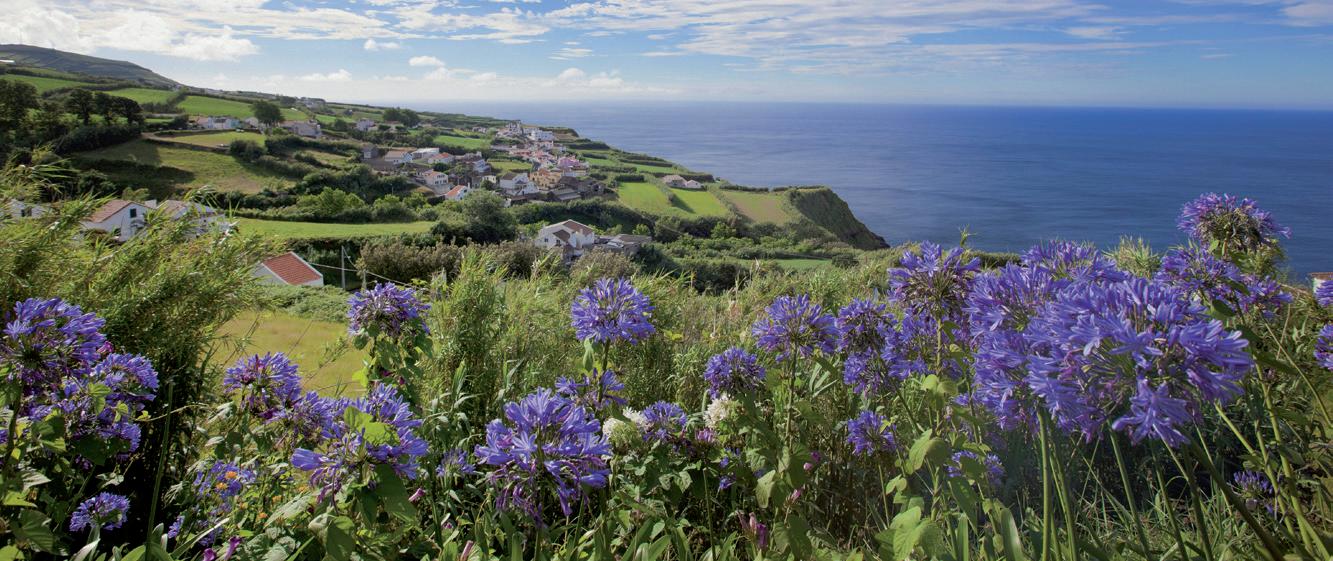
A nine night voyage around the Azores Archipelago aboard the MS Hebridean Sky – 6th to 15th April & 15th to 24th April 2027
Far out in the Atlantic, some 800 miles from the Portuguese coast, the nine islands of the Azores are known for their spectacular volcanic scenery, abundant flora and peaceful lifestyle. The appeal of this remote and unsophisticated archipelago is difficult to define in words, but if you appreciate dramatic scenery, exploring islands where time appears to be standing still, watching for passing whales and learning about the local people and their customs, then this could be the voyage for you. The islands are also perfect for walking enthusiasts with paths through verdant mountain landscapes and we have included some hiking opportunities which, weather permitting, will be a joy for the keen walkers in our group.
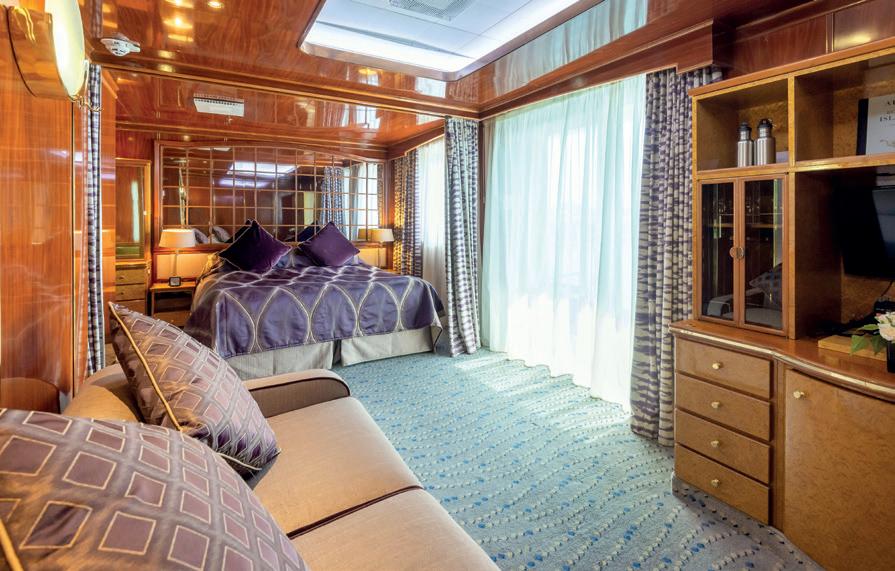
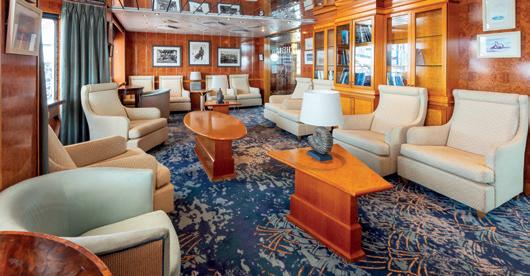
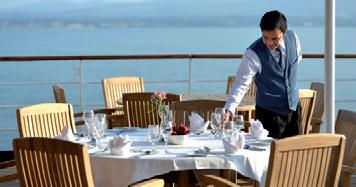
MS HEBRIDEAN SKY is one of the finest small ships in the world and offers exceptionally spacious and well-designed suites, beautifully appointed public areas and high standards of service and food. The vessel accommodates just 118 passengers and suites feature a seating area and some have a private balcony. The spacious and finely decorated public rooms include a lounge, elegant bar, library and a single seating dining room. Outside there is a rear sun deck where meals are served in warm weather under shade, a bar, observation area and comfortable deck furniture. The atmosphere on board is akin to a private yacht or country hotel and you can be assured that after a day of exploration ashore you will return to the comfort and peace of a well-run and luxuriously appointed comfortable small ship.
THE ITINERARY IN BRIEF
Day 1 London to Sao Miguel, Azores. Fly by scheduled indirect flight. Arrive this afternoon and transfer to the MS Hebridean Sky for embarkation. Enjoy welcome drinks and dinner as we moor overnight.
Day 2 Sao Miguel. Enjoy a full day exploring the island of Sao Miguel, known as Ilha Verde, the green island and home to some of the most stunning viewpoints in the Azores. This morning we head west towards the Sete Cidades volcano from where we can enjoy excellent views over the Lagos de Canarios. We will continue our drive along the attractive northern coast before arriving in the Furnas Valley, an enormous valley and luxuriant garden in the east of the island where we enjoy lunch. We will also visit the village of Furnas and the botanical gardens before returning to the ship and sailing this evening. For the keen hikers, if weather permits, we will arrange to walk the trail in Sete Cidades.
Day 3 Santa Maria. The most southerly of the islands of the Azores, Santa Maria was the first to be inhabited by Portuguese settlers in 1439. It was also

the first call made by Christopher Columbus on his return from the Americas in 1493 and during our island drive we visit the village of Anjos where he attended mass at the chapel of Nossa Senhora dos Anjos. Also see the remote settlement of Sao Laurenco known for vineyards which rise steeply up high sea cliffs in terraces whilst the coastline is accentuated by a dramatic waterfall, lava tubes and caves. Return to the ship via the picturesque village of Santo Espirito with its pretty whitewashed houses and 17th century Baroque church. The afternoon is free to explore the town of Vila do Porto independently.
Day 4 Terceira. This morning explore Angra do Heroismo, a charming UNESCO heritage town with a distinct Mediterranean flavour of cobblestone streets and a certain quiet charm. Enjoy a walking tour that takes in the Misericordia church, Convent do Sao Francisco, public gardens and museum. In the afternoon there will be free time to hike to Monte Brasil, offering wonderful views over the island, or alternatively relax and wander the historic town at your own pace.
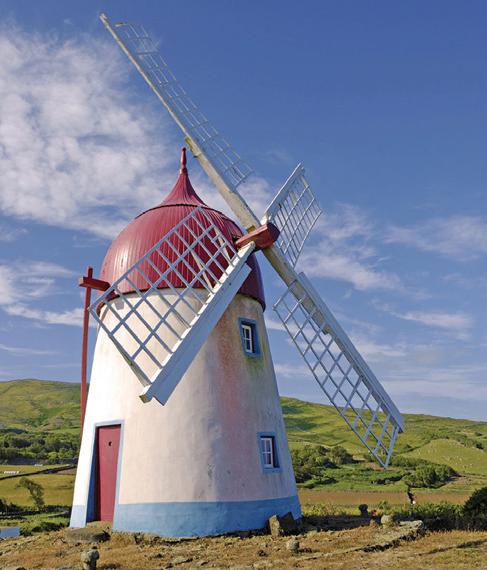
Day 5 Graciosa. Known as the ‘White Island’, Graciosa has a gentle rolling landscape, dotted with windmills and traditional whitewashed houses. Visit Furna do Enxofre (‘Cave of Sulphur’), a geologically unique phenomenon and one of the original examples of the volcanic Azores and take the winding stairway down to the magnificent
volcanic cavern and lake. Also see the village of Santa Cruz and the charming Matrix Church. Return to the ship for lunch and spend the afternoon at leisure to explore the small town of Vila da Praia.
Day 6 Flores & Corvo. Named after its abundant flora, Flores is often regarded as the prettiest of the Azores. A rugged terrain island with flowers growing in the deep canyons and waterfalls casting hues of blues and green as they splash down to the sea. Visit the vertical basalt cliffs of Rocha do Bordoes, formed by the cooling of lava. See a stunning array of natural features including calderas, fajas, rivers, waterfalls and valleys. This afternoon we will use our small ship to circumnavigate the tiny island of Corvo, the smallest island in the archipelago.
Day 7 Pico. Explore distinctive Pico, home to Portugal’s highest peak and numerous black lava flows. The UNESCO-designated Lajido Acros tells the story of early winemakers who used the volcanic soil for the grapes and, on a visit to a vineyard, we will enjoy a tasting of the local product. After a typical Azorean lunch we will learn about whaling life in the Azores at the Museum of Lajes returning to the ship via the Lagoa do Capitao offering views over the north of the island.
Day 8 Sao Jorge. This largely rural island is of geographical interest with its cliff shoreline marked with flat fajas sweeping to the sea. We start our full day tour on the western part of the island, Ponta dos Rosais, visiting a Forest Park and cheese factory. As we move to the north we enjoy the view over the Fajas, an area of flat land at sea level resulting from the erosion of cliffs. As we make our way to the south side towards Calheta we will stop for lunch at a local restaurant before continuing on to Urzelina to visit the remaining tower of a church buried under lava from the eruption of 1808. Now it is surrounded by fruit trees and vegetation. Upon our return to Velas we will take a walking tour of this charming old-world harbour town. We remain moored overnight for anyone wishing to take an after dinner stroll.
Day 9 Faial. Our day begins with an island drive where we explore the fairly recent volcanic activity at Ponta dos Capelinhos. See how a 1957-1958 volcanic eruption transformed the area and created a new land mass. Visit the Volcano Interpretation Centre before continuing to the impressive
PER PERSON
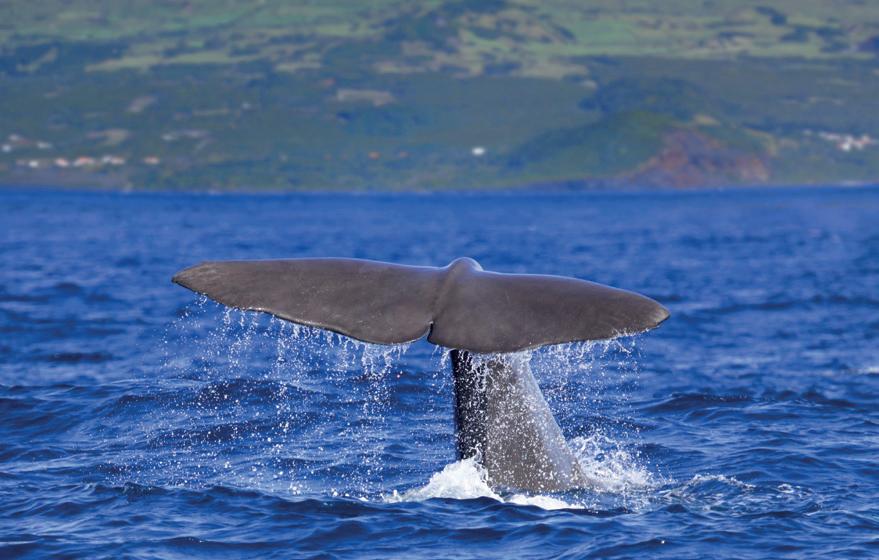
Caldera, now a nature reserve, which is 400 metres deep and nearly 1500 metres in diameter. This afternoon a walking tour of Horta will include the Scrimshaw Museum and Café Peter, a famous stopping point for sailors crossing the Atlantic.
Day 10 Sao Miguel to London. Disembark this morning and transfer to the airport for our scheduled indirect flight to London.
For those who would like to spend some time in Portugal prior to embarking the MS Hebridean Sky, we have arranged a three-night extension at the beautiful Palacio Estoril Hotel, located a short distance from Lisbon. Our stay will include a half day tour of Lisbon and a half day tour of Sintra and the remainder of the time will be yours to explore at leisure.

Special offer prices per person based on double occupancy start from £6395 for a Standard Suite.
Economy class scheduled air travel • Nine nights aboard the MS Hebridean Sky on a full board basis • House wine, beer & soft drinks with lunch & dinner • Noble Caledonia onboard team • Shore excursions • Gratuities • Transfers • Port taxes.
NB. Ports and itinerary are subject to change. All special offers are subject to availability. Our current booking conditions apply to all reservations. Travel insurance is not included in the price.
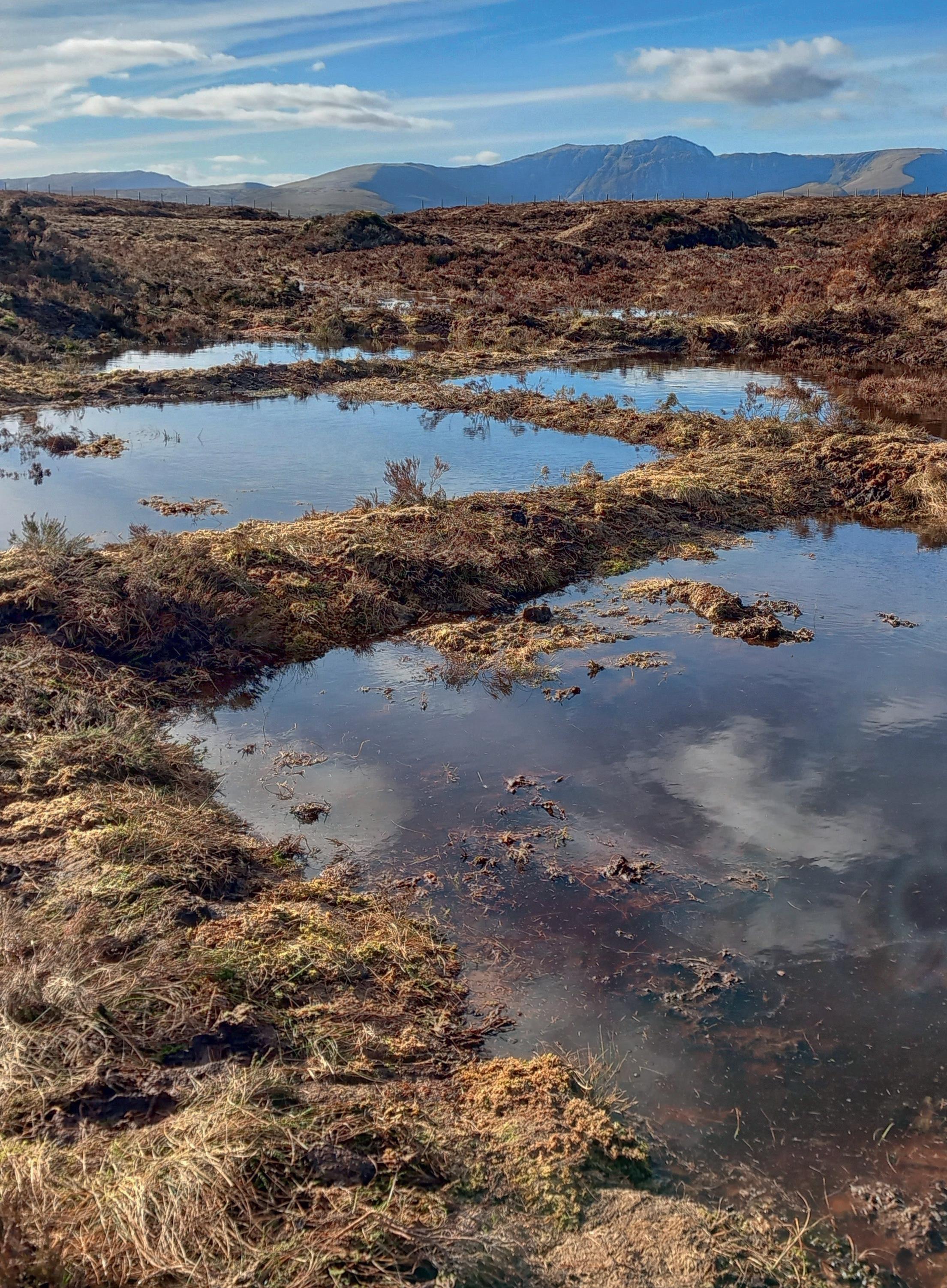
A peatland protection project, funded through a three-year Co-op partnership, is not only cutting carbon emissions but also helping species such as Hen Harrier, Otter, Greenshank and Bog Orchid.
Peatland stores about 30 times as much carbon as rainforest per square metre and also stems flooding, cleans water and supports a range of wildlife – but over 80% of the UK’s peatlands are in poor condition.
Thanks to a £2 million investment generated by sales of Co-op compostable carrier bags from 2023 onwards, nature is bouncing back in six peatland sites. Following the restoration of degraded blanket bog at Cerniau in RSPB Lake Vyrnwy, Wales, a rare type of bog moss has been recorded, plus sightings of Hen Harriers, Dunlins and Golden Plovers.
In Scotland, at Lumbister in RSPB Yell, Shetland, artificial drainage ditches have been blocked and eroding peatland features restored; long-term habitat management will improve conditions for species including Dunlin and Golden Plover. At Black Moss in RSPB Birsay Moors, Orkney, restoration work and ongoing habitat management will benefit Red-throated Divers and Short-eared Owls. Plus maintenance of restored black bog and pool systems in RSPB Forsinard Flows has encouraged the return of breeding frogs and improved conditions for waders and birds of prey.
During the third year of this partnership, Co-op is funding vital long-term management and protection work at more sites.
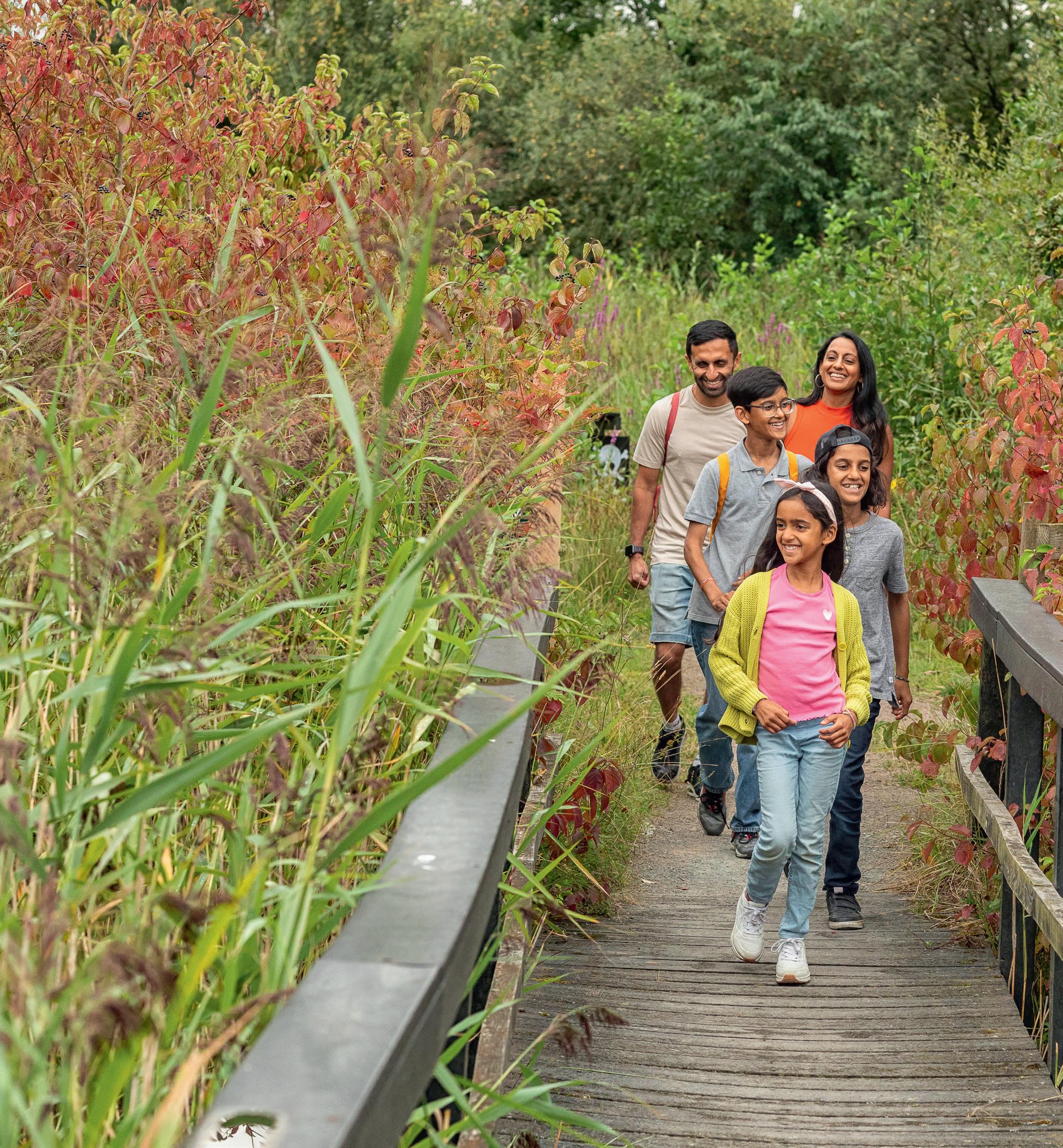
Our vision is to see both nature and people flourishing together. This inspired us to create RSPB Nature Prescriptions, designed to help people reconnect with nature as a powerful way to nurture well-being and address the growing mental health crisis.
We know that improving connections with nature can improve wellbeing, but for many reasons people can find it challenging to know how to do this. Through the Nature Prescriptions project we train healthcare and other trusted professionals to hold a conversation about the benefits of nature with the people they support.
The concept was trialled in Scotland, where 74% of patients reported that they benefited from their prescription. Since then, it’s been rolled out in more than 26 areas in England, Wales and Scotland, with more added all the time. Projects launched in 2025 focus on urban Cardiff and the West Midlands, supporting people in deprived areas.
Everyone involved receives a booklet tailored to the place they live, encouraging them to experience the joy of nature – perhaps listening for birdsong at different times of day, admiring the colours of autumn berries, or noticing spiders’ webs glistening with dew. Nature is all around us, even in the centre of a busy city, and we encourage people to notice nature wherever they live.
A growing number of healthcare providers and other professionals are being trained to deliver Nature Prescriptions – almost 1,000 to date, sharing more than 10,000 booklets. We’re also developing materials suitable for specific groups of people: for example, in October we launched our Windows to Nature booklet for those unable to leave their homes or staying in hospitals or hospices.
In December we published an Easy Read Nature Prescription booklet for people who prefer more visual materials. New designs will cater for children and young people and those with dementia. An audio version is on the way, too. Find out more at: rspb.org. uk/natureprescriptions
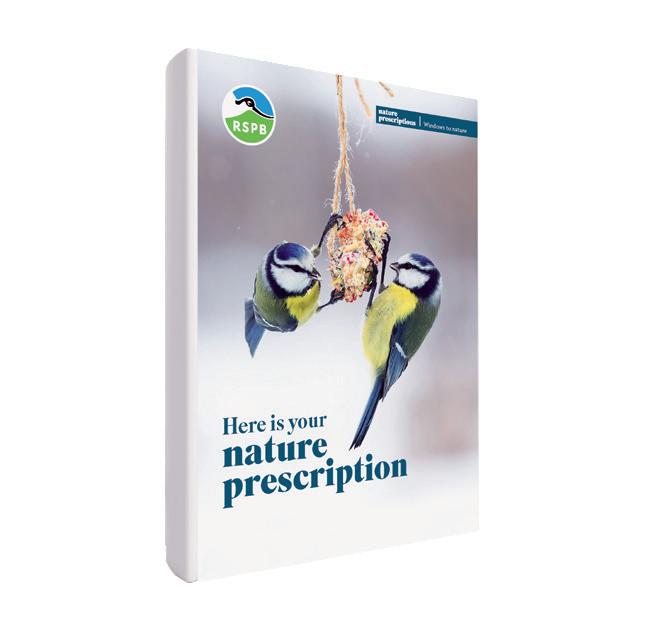
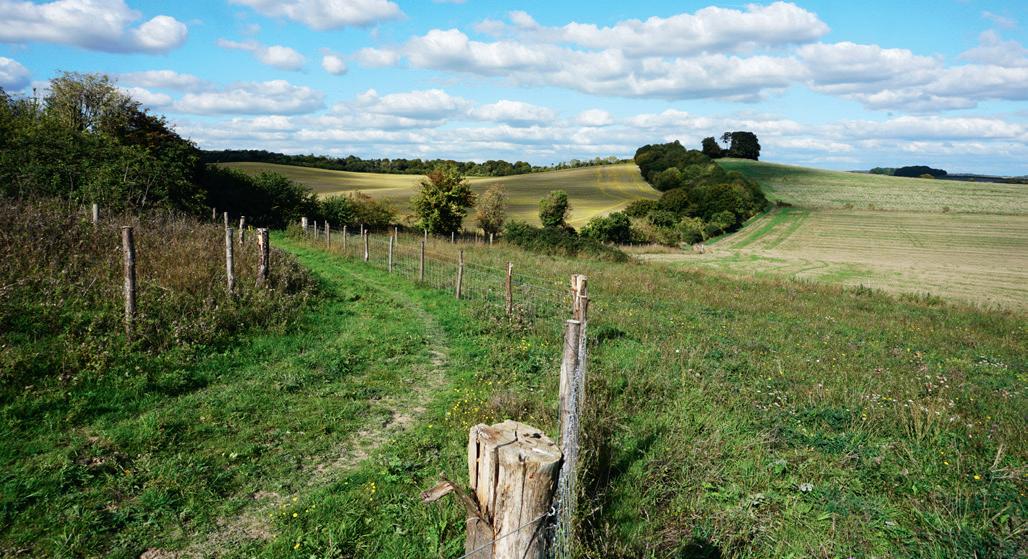
A new bridleway east of Salisbury provides off-road foot access between the villages of Pitton and Firsdown, and views across the burgeoning RSPB Roundbarrow nature reserve, which it flanks.
This 120ha former dairy farm, owned by Wiltshire Council and let to the RSPB in May, is being restored to create biodiverse chalk grassland for the benefit of rare ground-nesting birds such as Stone-curlews and Lapwings.
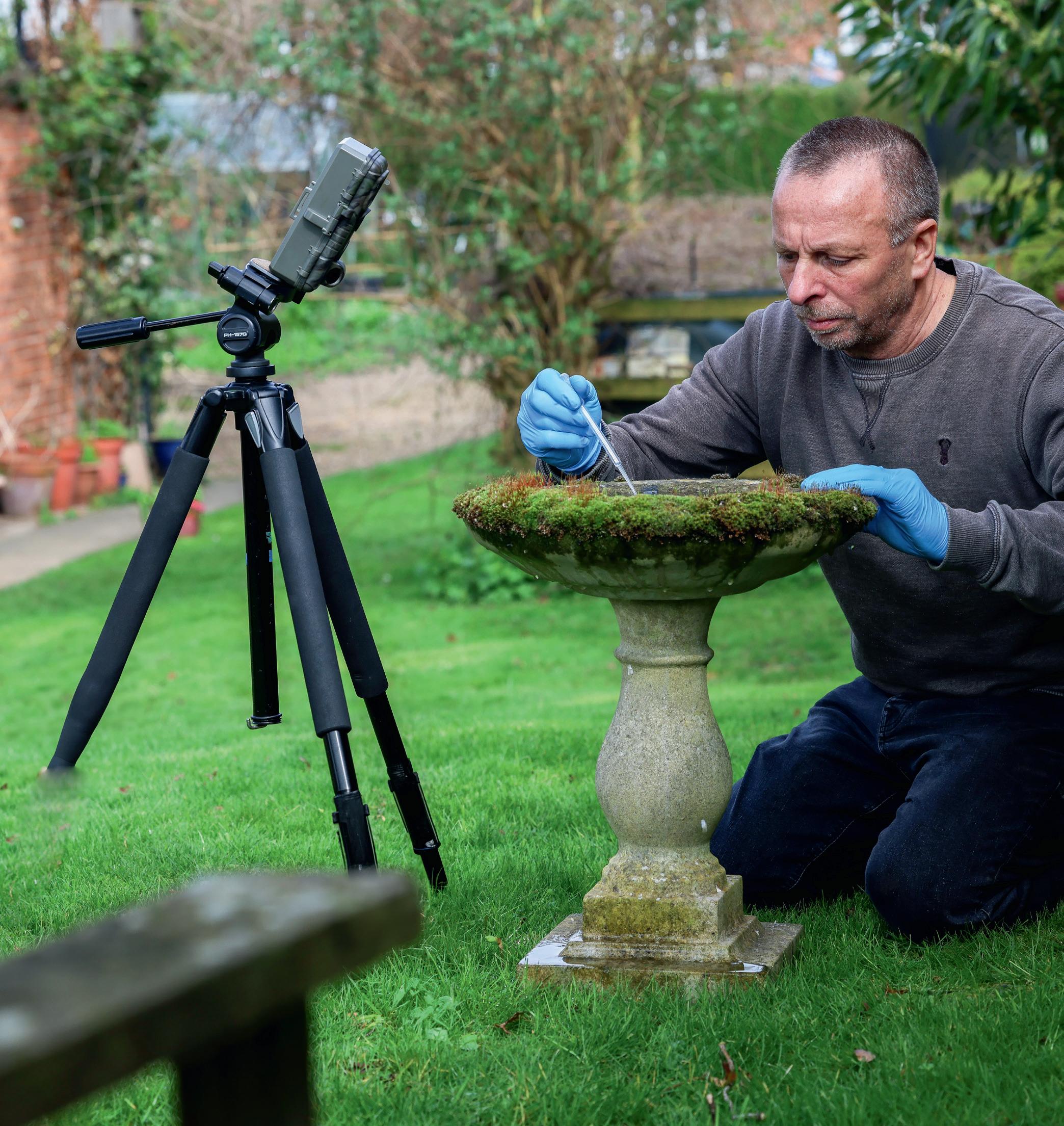
As part of the Garden Wildlife Health partnership, the RSPB is seeking solutions to the decline of the UK populations of Greenfinches and Chaffinches caused by the spread of trichomonosis. The disease, caused by a parasite, affects a number of bird species and is most likely dispersed through contaminated food and water that has come into contact with an infected bird. Our work includes testing infected sites (pictured).
As the Big Garden Birdwatch (23–25 January 2026) approaches, the RSPB is advising everyone not to use flat feeding stations such as bird tables, window feeders or other traytype seed feeders. Research so far suggests that these present the highest risk of disease as they can retain regurgitated food and faeces, so we have suspended the sale of these items.
The longer bird food remains in feeders, the greater the risk of disease spread. Avoid overfilling your feeders to reduce waste and prevent a build-up of food underneath feeders. Cleaning feeders and bird baths at least once a week can help limit the spread of diseases, too. The water in bird baths should be changed daily andl, if your feeders have a lot of visitors, cleaning more than once a week is best.
If you see diseased birds, stop feeding for two to four weeks. Once you stop seeing sick birds, gradually start feeding again. You may need to withdraw feeding for a further two-tofour-week period if you see more sick birds, or three to six months if the disease persists. Find the latest advice, and report sick or dead garden birds, at gardenwildlifehealth.org Look out for an update in the next issue of The RSPB Magazine
The Garden Wildlife Health project is a partnership between the Zoological Society of London (ZSL), the British Trust for Ornithology (BTO), Froglife, and the RSPB.
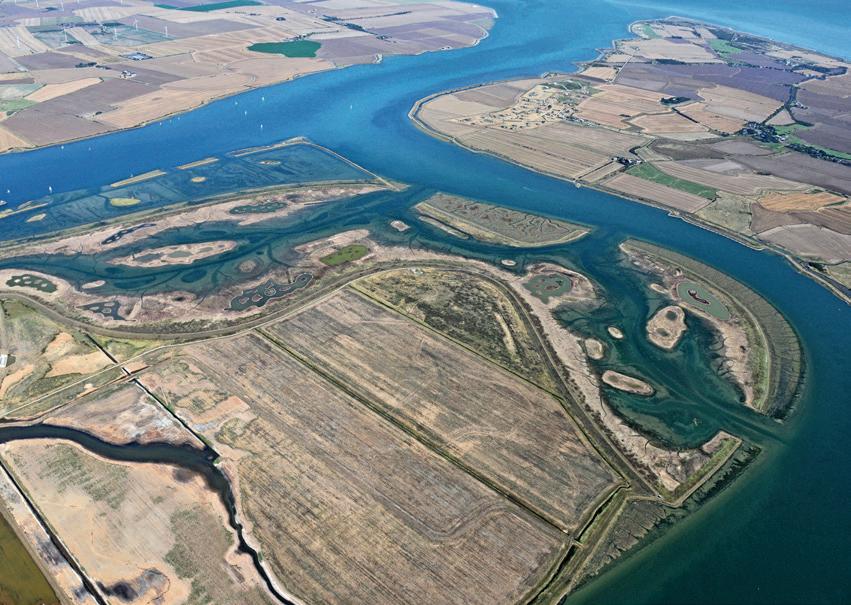
We’re celebrating the 10th anniversary of the creation of Jubilee Marsh on RSPB Wallasea Island Nature Reserve, Essex, and the flourishing wildlife it’s welcomed. Since 2015, when sea walls were breached to let the sea back in after four centuries, bird numbers have boomed from just a handful to nearly 40,000 overwintering individuals, including Avocets, Knot and Bartailed Godwits. The RSPB, supported by the Environment Agency, worked with Crossrail in using over three million tonnes of soil excavated during construction of London’s Elizabeth Line to create new spaces for birds and other wildlife. This is just part of work to benefit the East Coast Atlantic Flyway for migrating, breeding and overwintering birds.
Walking is one of the most beneficial forms of exercise, and also one of the most underestimated in terms of wellbeing.
When taking longer walks however, some of us can find it difficult.
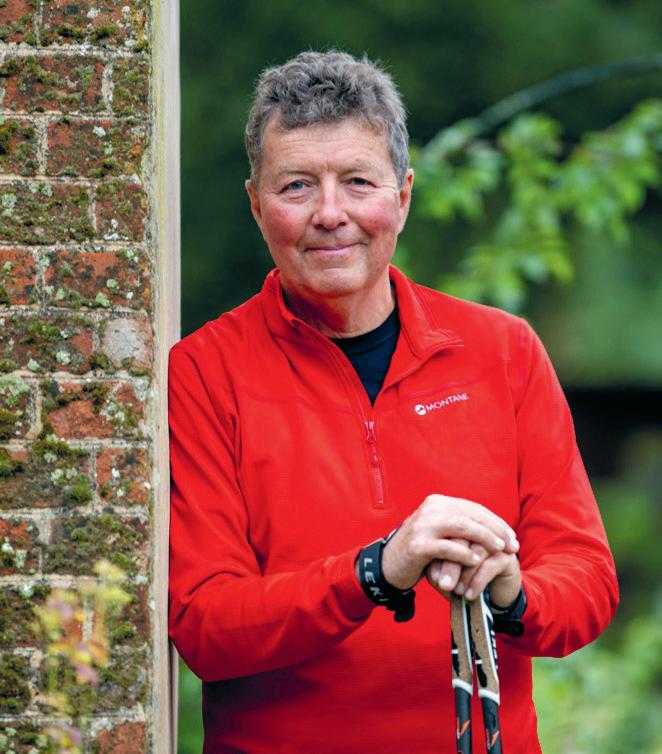
Paul Goddard, 67, a Nordic Walking instructor from Saffron Walden in Essex, swears by a product called Turmeric+.
‘I decided to become a Nordic Walking instructor in 2009 and started walking 40 to 50 miles a week. Four years ago it became uncomfortable to walk distances that should have been easy for someone of my age and fitness levels. I felt very apprehensive as walking is not only my passion, but my business.’
Paul continues: ‘I started doing some research. I learned that turmeric could be helpful and
bought supplements… and then stumbled upon Turmeric+ Gold.’ Curcumin, the active ingredient in turmeric, is difficult for the body to absorb. Some turmeric products offer high levels of curcumin but unless this is easily absorbed by the body, the higher amounts make little difference.
This is what led the scientists at FutureYou Cambridge to create Turmeric+ Gold using the patented ‘Curcuma Phospholipid Complex’ formulation. It’s 30 times more absorbable than standard turmeric and contains vitamin C and D, which contributes to normal collagen formation for the normal function of cartilage and normal

‘Soon after taking it I experienced that ‘light-bulb’ moment’
muscle function.
‘Soon after taking it I experienced that ‘light-bulb’ moment - I realised my knees felt like they used to. I take Turmeric+ religiously now. I walk around 200 miles a month.
‘Walking is great for fitness as well as your mental health. Being able to walk easily has made a huge difference to my life and I feel fitter now than I did twenty years ago.’
why thousands of people trust Turmeric+ Gold for joint support, backed by over 45 human studies.
• 30 times more absorbable than standard turmeric: Powered by the patented Curcuma Phospholipid Complex formulation, Meriva®.
• Science-backed: Uses sunflower lecithin to naturally enhance absorption.
• Plus essential vitamins: C and D to support healthy bones, muscles and

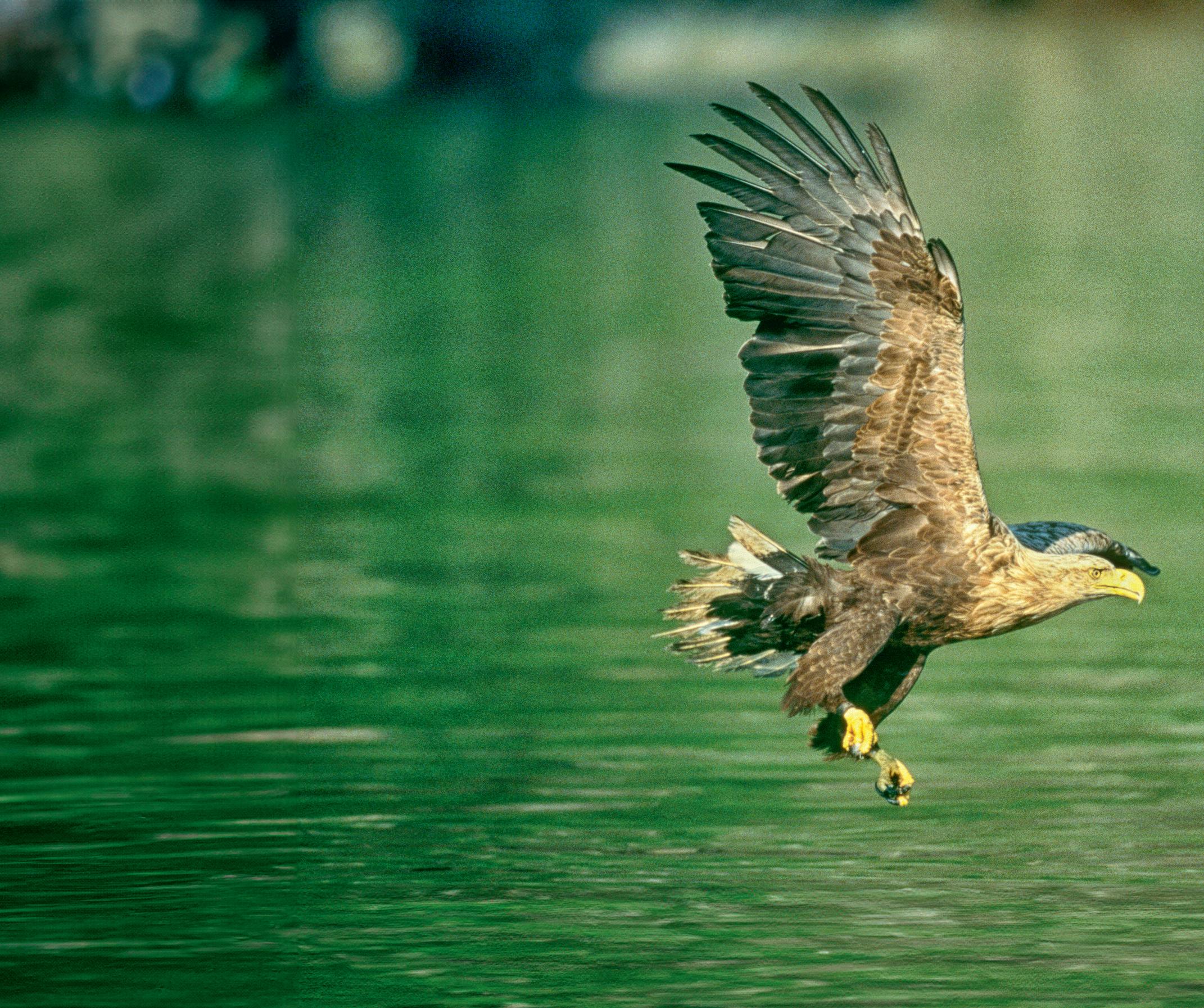
A powerful new film created by the RSPB celebrates 50 years of the successful reintroduction of White-tailed Eagles to the UK. Our largest bird of prey went extinct here in 1918, when the last wild individual was shot in Shetland. Following an attempt to re-establish a population on Fair Isle by then RSPB Scotland Director George Waterston and reintroduction champion Roy Dennis, the main phase of the project was launched in 1975 with translocations from Norway to the Isle of Rùm. Breeding populations have now taken root in Scotland, Ireland and southern England.
The half-hour film, Return, celebrates both the species’ revival here and the human connections it inspires. Accompanied by a gorgeous soundtrack from musician Alice Boyd, it’s a moving tribute to those involved in the project.
“I’ve had the privilege of seeing those birds in the sky and on the nest, and of speaking to people who’ve dedicated their lives to them,” reflects director Percy Dean. “Now I’m connected to the sky, and the eagles, and all those people.”
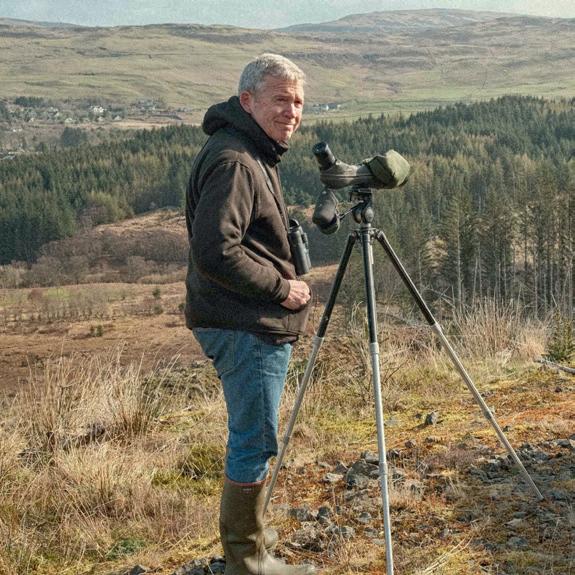
Another key figure featuring in Return is Dave Sexton (pictured), long-time RSPB Mull Officer, where he was a driving force behind the first successful breeding in 1985, he is now an RSPB Ambassador. “It’s a masterpiece of film-making, creating real emotion as well as a sense of well-being and happiness – a sense that a terrible wrong, their extinction in 1918, has been put right,” he says. Watch Return at rspb.org.uk/return
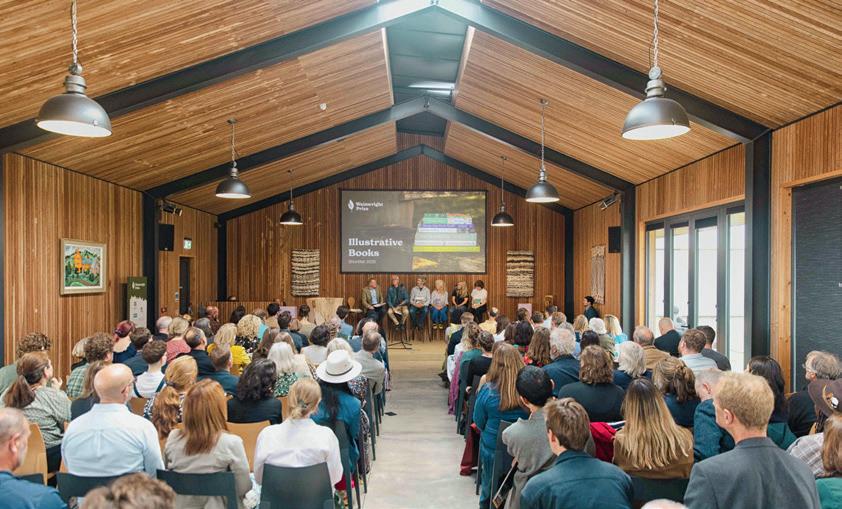
We’re proud to again partner with the Wainwright Prize, celebrating the best UK nature writing. The winners, announced in September, represent diverse backgrounds and subjects across six categories. This year’s Wainwright Prize Book of the Year went to Chloe Dalton for Raising Hare “It is the story of a very special hare that I encountered when she was a leveret, and raised and lived alongside but never caged,” says Chloe. “So it’s a story of coexistence.”
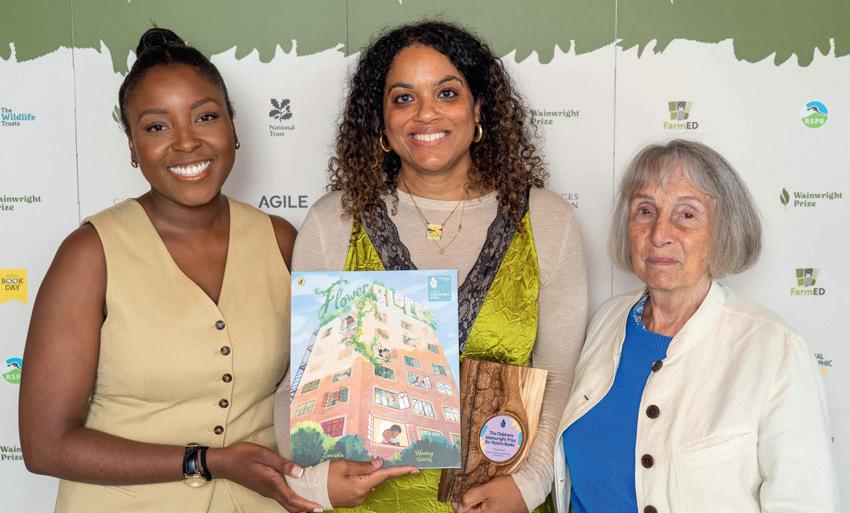
Lanisha Butterfield (pictured bottom left, centre) took the Children’s Wainwright Book of the Year award for Flower Block, illustrated by Hoang Giang, about a boy who plants magical sunflower seeds in his high-rise home. “If you can see it, you can be it,” says Lanisha, reflecting on the importance of diversity in nature writing. Guy Shrubsole won the Conservation Writing prize for The Lie of the Land; George Steinmetz’s Feed the Planet won for Illustrative Books; Wildlands by Brogen Murphy took the Children’s Wainwright Prize for Fiction; and the Children’s Wainwright Prize for Non-Fiction went to Secrets of Bees by Ben Hoare, illustrated by Nina Chakrabarti.
“These books are full of urgency, hope and joy,” reflects awards judge Alex Try, RSPB Director of Communications. “We’re delighted to help the authors reach more people.” Read more at rspb.org.uk/wainwright-winners
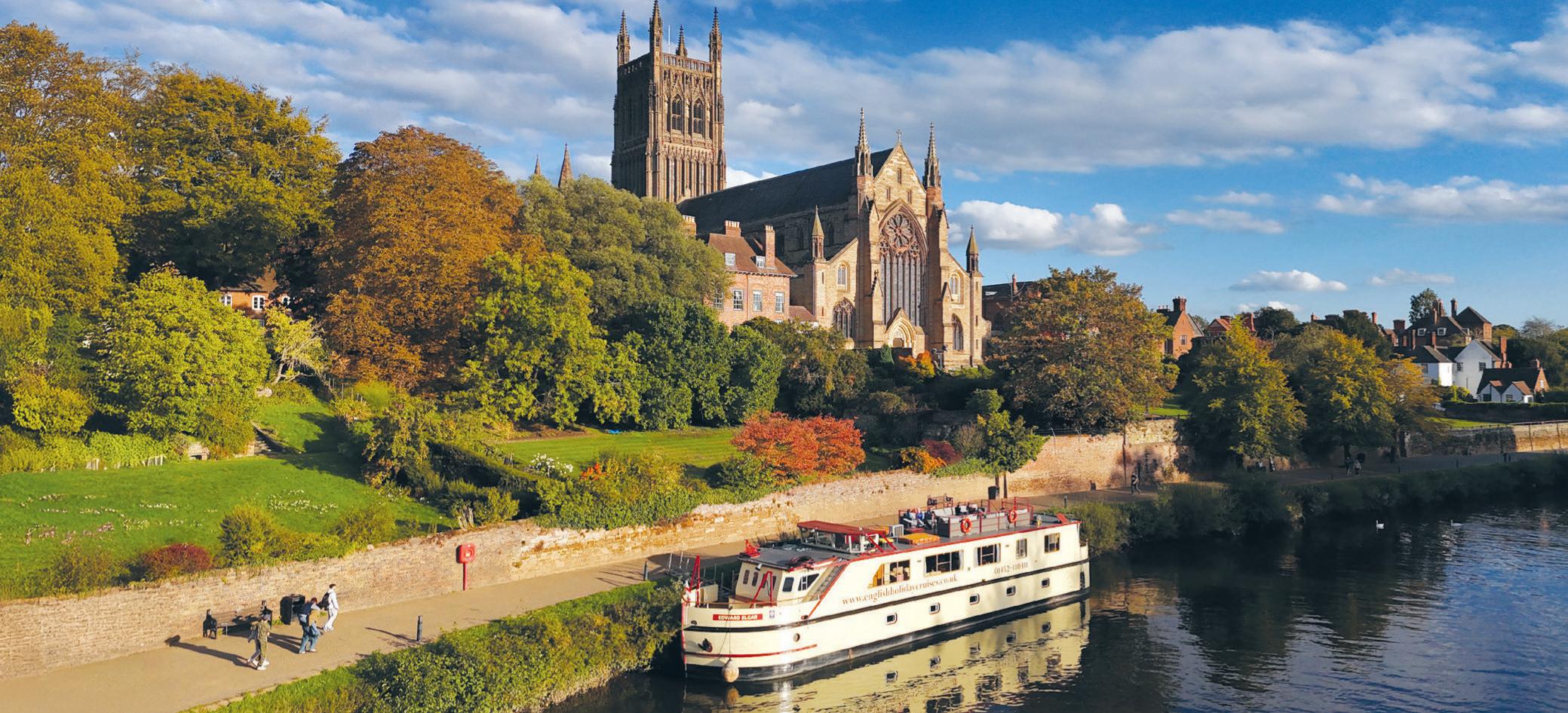
Luxury hotel boat cruises upto22 passengers.
Newdestinations daily. 3-6 nights long.
Traditional English food,specialdiets welcomed.
Includesfood, drink, tours&more- nohidden extras.
*Quote Ref TRM0126
Mooringscloseto toursortransport provided. Cosytwincabins -climate control, windows, ensuite. All deposits financially protected. Pre-cruisehotel packages available.














At the RSPB we know our connection to nature is irreplaceable. We must nurture and protect it, because without it we are lost.
That’s why we’re working tirelessly to tackle the biggest threats facing our world, so one day we can truly thrive together.
A gift in your Will to the RSPB is one of the most powerful ways you can support this mission for generations to come.
Request your RSPB Gifts in Wills guide at rspb.org.uk/legacy or call one of our Legacy Advisers on 01767 669700
The number of Hen Harriers killed or missing in the UK has reached a horrifying new high. A new RSPB report, Hen Harriers in the Firing Line, cites 102 confirmed and suspected incidents of persecution in the UK in the years 2020–2024 alone, with 89% of those cases in northern England. Persecution is the main cause for the low population of Hen Harriers in England and Scotland.
Tellingly, 112 birds fitted with satellite tags by the RSPB Investigations team and other conservation organisations suspiciously disappeared between 2010 and 2024, most sending their last transmission on or near land managed for grouse shooting. The RSPB is calling for the introduction of licensing of grouse shooting in England, in hope of deterring such crimes. Read the report at rspb.org.uk/hen-harrier-report
121 days – the life expectancy of young Hen Harriers in UK
10%
of the total number of potential breeding pairs of Hen Harriers were recorded in England in 2023
75% of deaths in Hen Harriers aged one–two years resulting from persecution
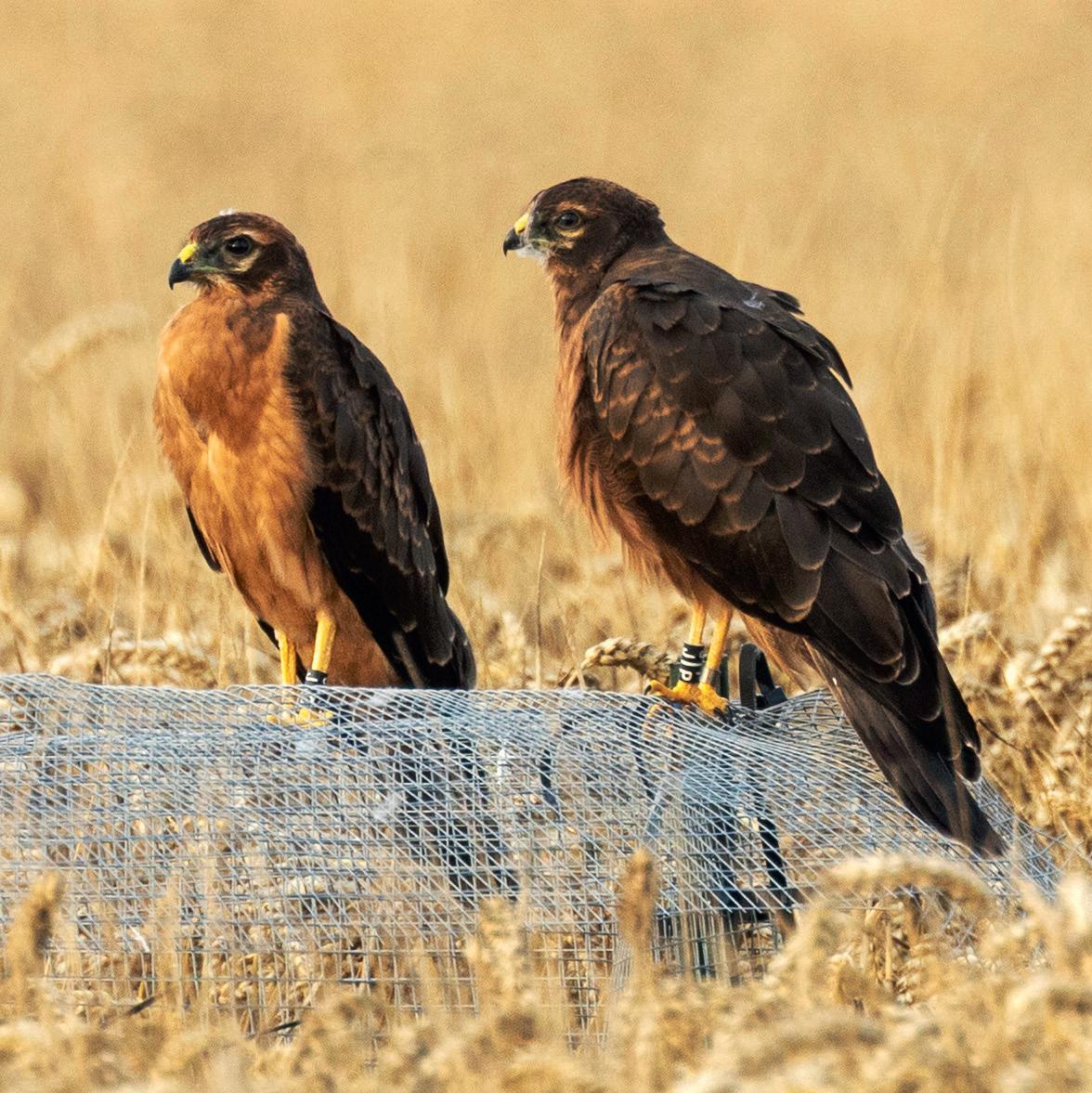
A pair of Britain’s rarest breeding bird have raised four youngsters in England for the first time since 2019. This slender, medium-sized raptor migrates from winter grounds in Africa to breed in Europe. Typically nesting in agricultural fields, particularly winter-sown cereals in the UK, Montagu’s Harriers have been impacted in Europe by the changes in farming, earlier harvests and wetter summers. After a recent high of nine successful nests in 2011, UK numbers dwindled, and in 2021 the bird was placed on the UK Red List of Birds of Conservation Concern.
So the news that a pair had been seen in England in May was greeted with huge excitement. After the nest was located, with the amazing co-operation of the farmer on whose land it lay, it was monitored by a volunteer and the RSPB; when the chicks hatched, a fence was carefully installed to protect them from ground predators. The young birds made their first flights in late July. It’s hoped the adults will return to breed in 2026.
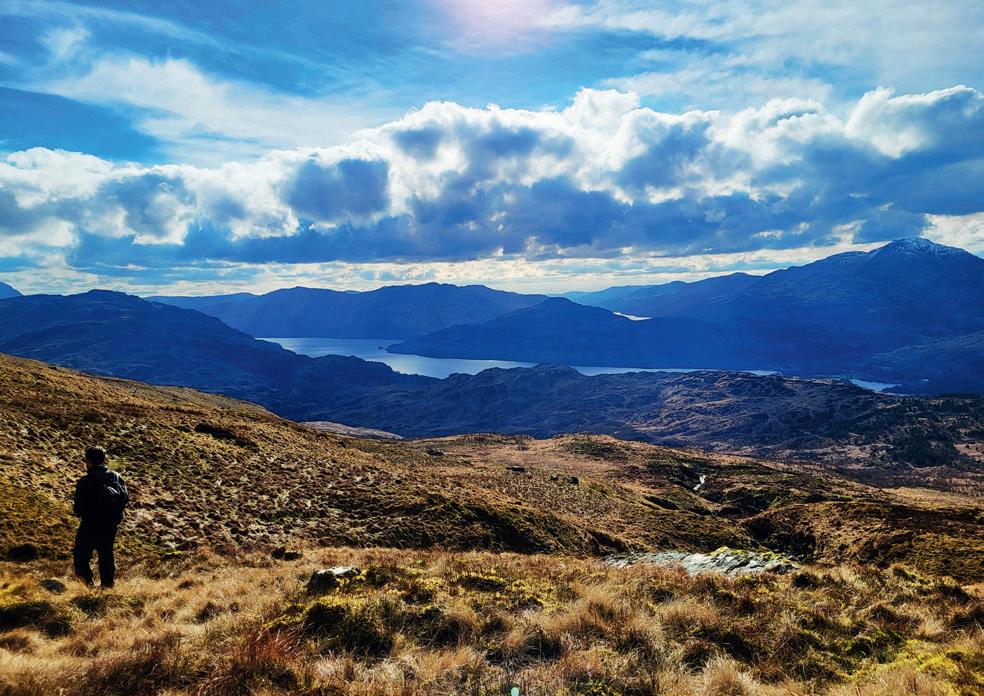
An ambitious 10-year project to restore 218ha of upland acid grassland at the RSPB’s Inversnaid nature reserve will benefit native wildlife including Black Grouse and Golden Eagles. Funded by SSEN (Scottish and Southern Electricity Networks) Transmission, work will involve the removal of invasive non-native rhododendron and Sitka Spruce; managing wild herbivores to prevent overgrazing; and using advanced monitoring technologies to measure biodiversity progress.
The project, linked to SSEN Transmission’s refurbishment of the Sloy-Windyhill overhead power line, provides a great example of how renewable energy development can leave a positive legacy and protect biodiversity.
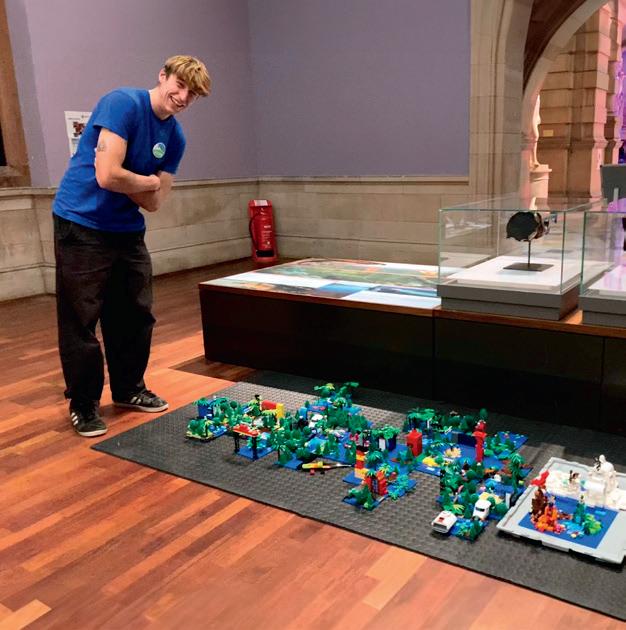
In June we celebrated our fabulous volunteers with the annual RSPB President’s Awards. Roy Williams, who is 80 years old and has volunteered at RSPB Sandwell Valley for a decade, won the award for Best Urban Action for Nature for leading and helping with 102 school groups in the last three years. Best Newcomer is Evan Williams (pictured above), working with school groups in Glasgow for the Giving Nature a Home project. The residential volunteering team for LIFE Raft was named Best Team for their work eradicating non-native rats and ferrets that prey on Puffins and other birds on Rathlin Island. The Manchester Swift City project was recognised as Community Champion, while Ashleigh Thomson won Young Volunteer of the Year for her work with Wildlife Explorers Conwy. Pete Wood was celebrated for Outstanding Voluntary Action, restoring wildlife-rich reedbed at RSPB Ham Wall. And Sharon Irvine showed Outstanding Volunteer Leadership, connecting children with nature through Wildlife Explorers at Northbourne. Thank you all!
Four Great White Egret chicks have fledged from two different pairs at RSPB Cors Ddyga on Ynys Môn – a first for Wales. “We are so pleased that the work to create wetlands for Bitterns and breeding waders has provided a place for other wildlife to move into as they adjust to our changing climate,” said Site Manager Ian Hawkins. Great White Egrets also bred for a second year running at RSPB Loch of Strathbeg in Scotland.
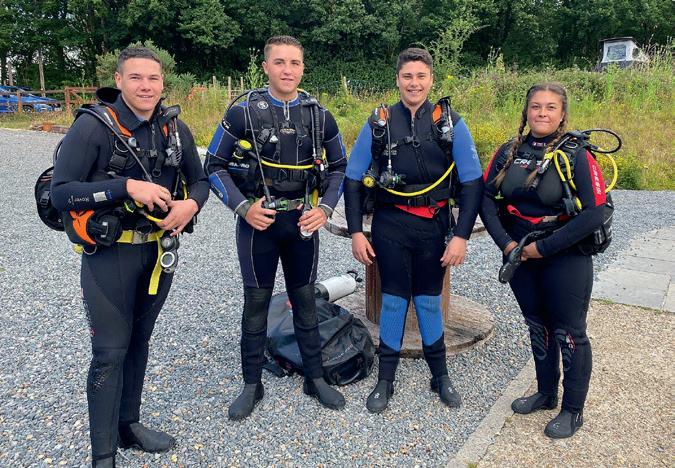
We’re celebrating a host of impressive successes on Tristan da Cunha and surrounding waters through a groundbreaking four-year project ending in December.
Atlantic Guardians, developed by the RSPB and the Tristan Government, and funded by Blue Nature Alliance, launched in August 2021 when the South Atlantic UK Overseas Territory established a vast new Marine Protection Zone. Determined to safeguard their pristine seas and ensure a sustainable fishery, the Tristanian community worked to expand wildlife knowledge, develop skills in marine conservation, nurture a love of the ocean and build global awareness of this remote volcanic archipelago and its natural riches. Just a few examples of these efforts
1. Young Ocean Champions training in scuba diving 2. The generations came together to build a traditional longboat dinghy used for fishing
3. The traditional longboat dinghy undergoes sea trials 4. The traditional bullock cart used on Tristan to bring seaweed to the fields as fertiliser, constructed by the community
include satellite-tagging Blue Sharks, placing acoustic recorders in the ocean to monitor cetaceans, and setting baited cameras to spot passing wildlife –including footage of a juvenile Blue Shark, suggesting an internationally important nursery in Tristan’s waters. Four young school leavers visited South Africa and the UK for specialist conservation training, and Janine Lavarello became the archipelago’s first Marine Protection Zone Officer. A revaluation of Tristan’s lobster fishery raised vital income, and the creation of various community events and facilities –from a South Atlantic schools’ network to the construction of a traditional longboat and a new fishing shed – celebrates this UKOT’s heritage and improves daily lives. Find out more at atlanticguardians.org










Regain






We are Ambassador. Britain’s authentic no-fly cruise line offering affordable quality and the warmest welcome at sea. Our IMO Tier III compliant ships allow you to explore more of our destinations including the Norwegian Fjords, Scandinavia, Iceland and the Caribbean, than other cruise lines offer. Experience amazing entertainment, outstanding cuisine and no-fly convenience on our affordable sailings that depart from seven UK regional ports, so you can enjoy yourself sooner without the long queues, luggage restrictions or exchange rate worries.



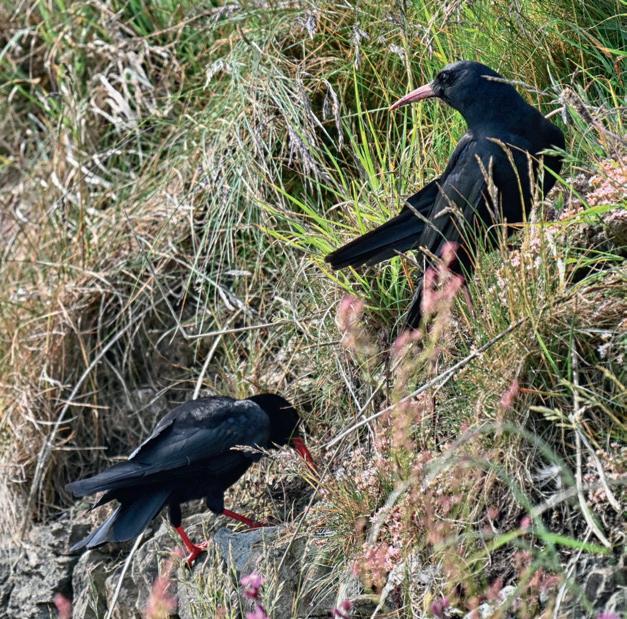
For the third year in a row, Cornish Choughs have raised more than 100 young. In fact, 129 Choughlets fledged from 48 breeding pairs, up from 114 youngsters last year and just 14 in 2013. It’s an amazing conservation success story: following the extinction of Choughs from Cornwall over 50 years ago, hard work by the RSPB and other organisations – including the National Trust, Cornwall Birds, volunteers who monitor the birds, and nature-friendly farmers and land managers – created the right conditions for their return.
Nearly a quarter of a century after the first birds returned to The Lizard in 2001, one of their daughters, now 16 years old, has successfully raised 48 chicks!
Hilary Mitchell and Steve Ashby from Cornwall Birds said: “No one back in 2001, when three Chough arrived on The Lizard from Ireland, would have imagined this level of success was even possible.”
An ambitious new five-year project will work to restore and protect Iceland’s lowland peatlands, benefiting species including Dunlin, Black-tailed Godwit, Redshank and European Eel. The €8m project is co-funded by the European Union through the LIFE programme. Historically, swathes of this important habitat have been drained, mostly for agriculture. The new project, launched in September and led by the Agricultural University of Iceland, together with six partners including the RSPB and Fuglavernd/ BirdLife Iceland, will work across 407,000ha to restore structure, functions, health and climate change resilience. Iceland’s peatlands are home to internationally important breeding populations of migratory wading birds who winter in the UK, including 61% of the world’s Golden Plovers, 28% of the world’s Whimbrels and 12% of Redshanks.
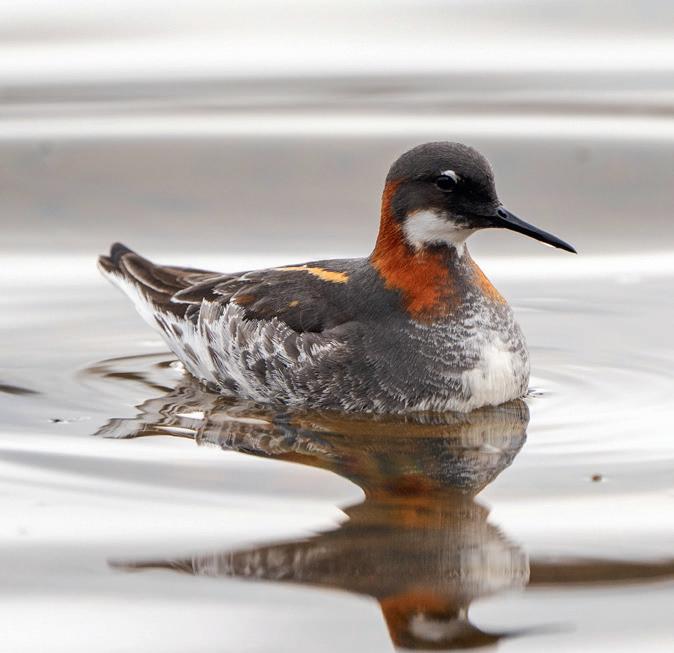
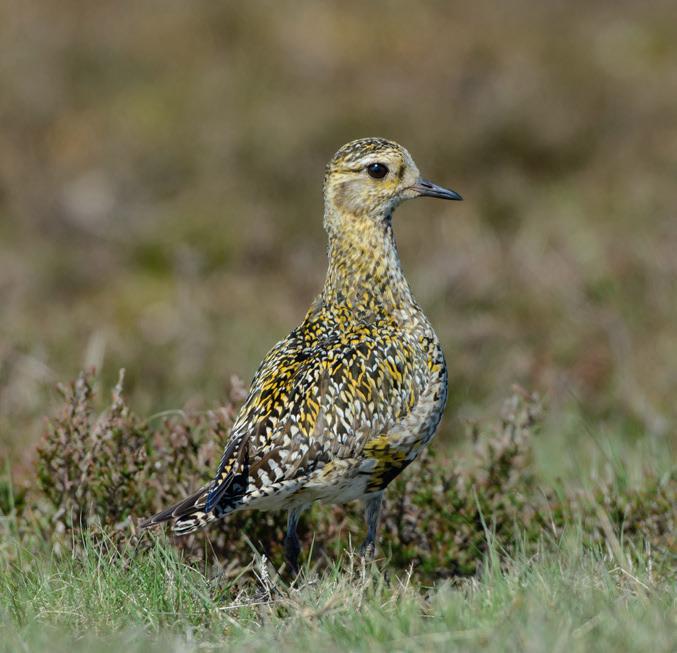
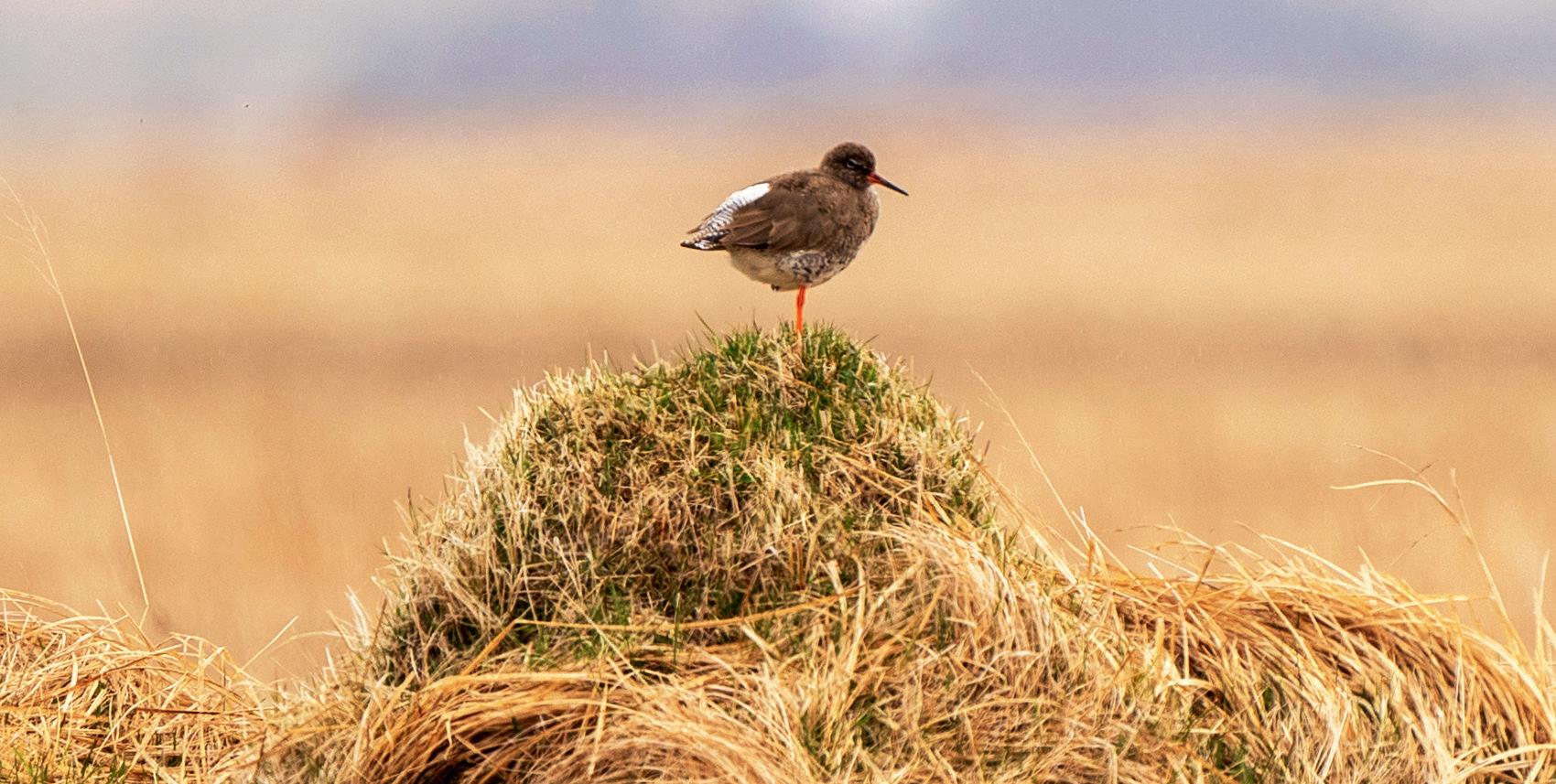
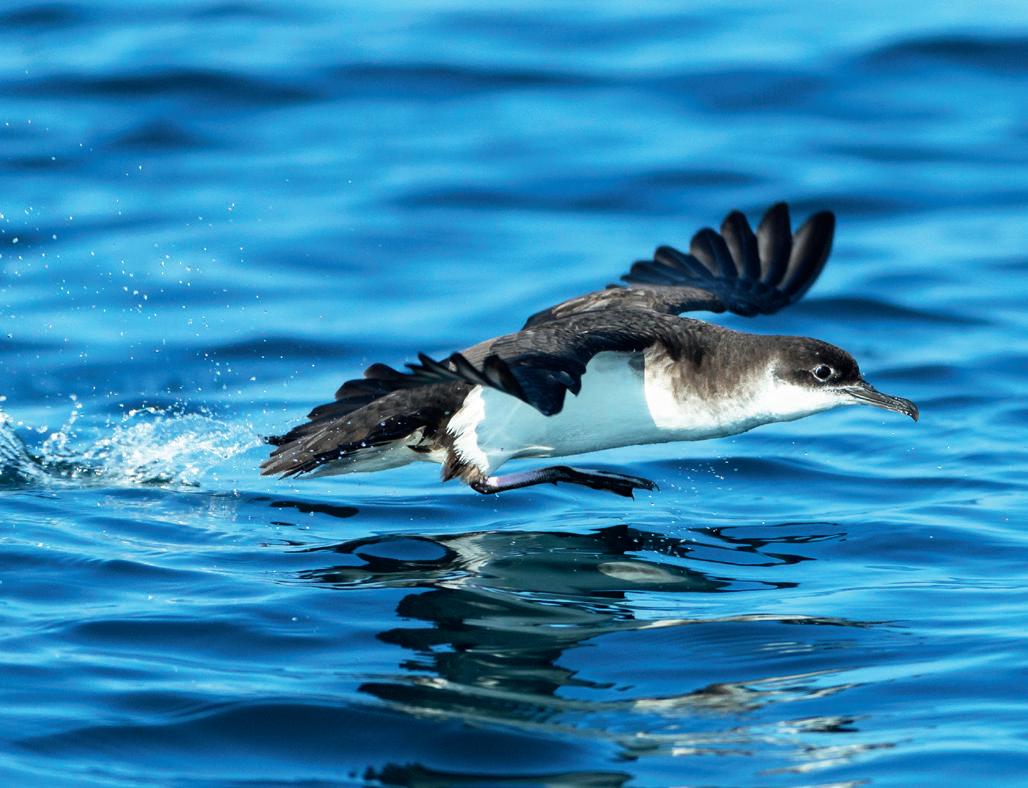
Manx Shearwaters have nested successfully on Rathlin Island for the first time in decades, following years of conservation work. These Amber-listed seabirds once bred in significant numbers on this island off the coast of County Antrim, home to Northern Ireland’s largest seabird colony, but no confirmed nesting had occurred since before the end of the last century. Since 2021, the LIFE Raft (Rathlin Acting for Tomorrow) project – a partnership led by the RSPB – has been working to remove non-native Brown Rats and ferrets, which prey on eggs and chicks. This benefits burrownesting Manx Shearwaters, Puffins and other species. We’re thrilled to have footage showing the Manx Shearwaters flying into the burrows, indicating the birds are breeding on Rathlin Island again.

The new RSPB podcast, Wild Questions, hosted by RSPB TikTok creator Yas Devi (pictured above) and The RSPB Magazine editor Jamie Wyver takes a quirky look at the world of birds.
Each episode features a new guest and their unusual nature questions: expect weird and wonderful tangents but solid science facts! rspb.org.uk/ wild-questions
The information about profits at RSPB Hope Farm (pictured) last year in the Autumn/Winter 2025 issue of The RSPB Magazine was incorrect. The figure quoted related to the profit shared between the RSPB and its contractors within its Contract Farming Agreement, including environmental payments, in 2022. This was a year when prices of grain were high and the RSPB made one of its best profits on the farm as a result. RSPB income from Hope Farm was £8,000 last year (2024); this was from both the cropping and environmental management funded via government payments. Not all English farmers are able to access this support and have also had to cope with challenging weather conditions.
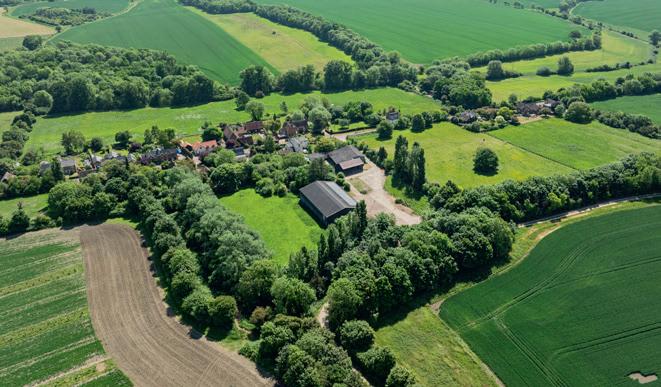
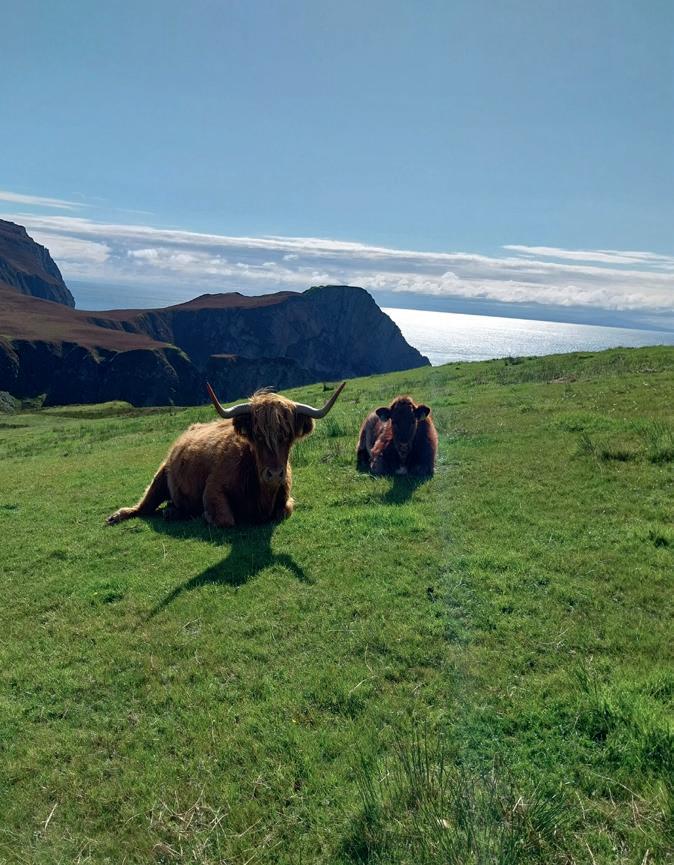
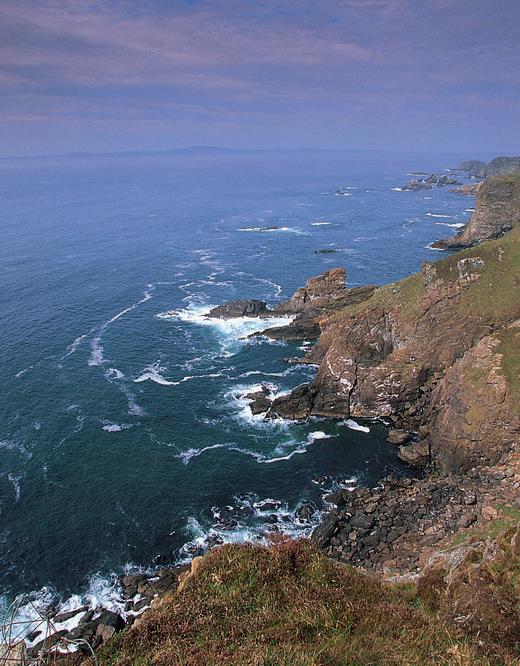
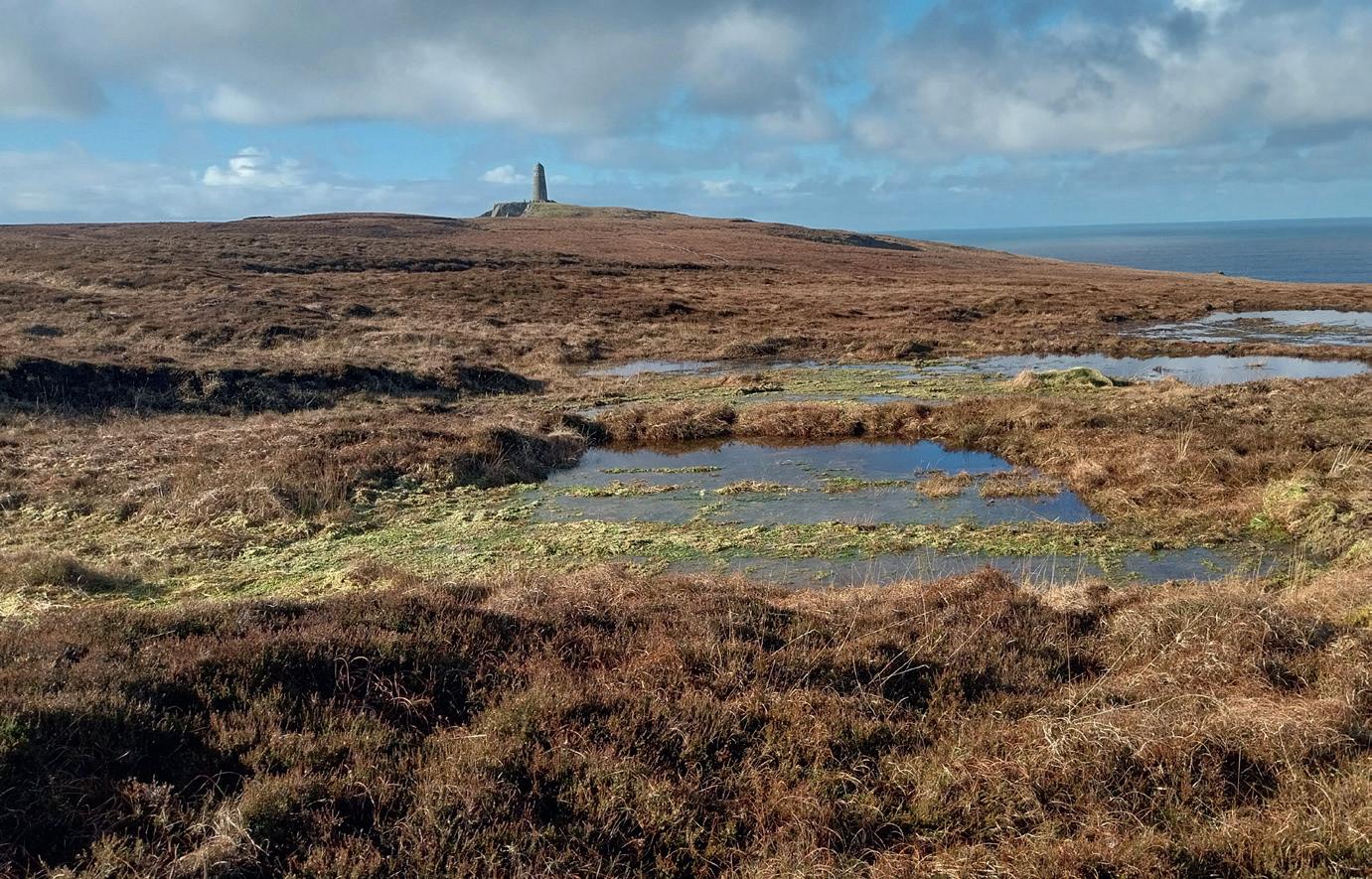
Plans are under way to restore around 1,000 hectares of peatland over the next five years at The Oa (pictured above). This is thanks to a partnership between Suntory Global Spirits, Diageo, The Glenmorangie Company and the RSPB.
The Oa is an RSPB nature reserve on the southern edge of Islay, with moorland and nature-friendly farmland bordered to the south by towering rock faces. Here, the peatland has been artificially drained due to centuries of domestic peat cutting. This practice was once essential for the survival of rural communities.
Restoration work will result in the peat bog’s increased resilience against flooding and wildfires. It will also provide improved habitat for many species, including Curlew, Golden Eagle and Hen Harrier, and the vast flocks of geese that visit Islay each winter.
Other wildlife, including butterflies, will benefit, too. For example, increasing the amount of cottongrass will help boost numbers of the Large Heath, and more Devil’s-bit Scabious will provide food for the caterpillars of the Marsh Fritillary.
Peat restoration also plays an important role in the country’s response to climate change, with this habitat storing about 10 times as much carbon as all of the UK’s forests combined.
Collaboration on this scale amongst peers in a highly competitive market such as Scotch whisky is unprecedented. It’s an example of the way the RSPB is partnering with commercial organisations that want to make a genuine contribution to nature – responsible business collaboration can have much greater impact and influence than that of one organisation alone.



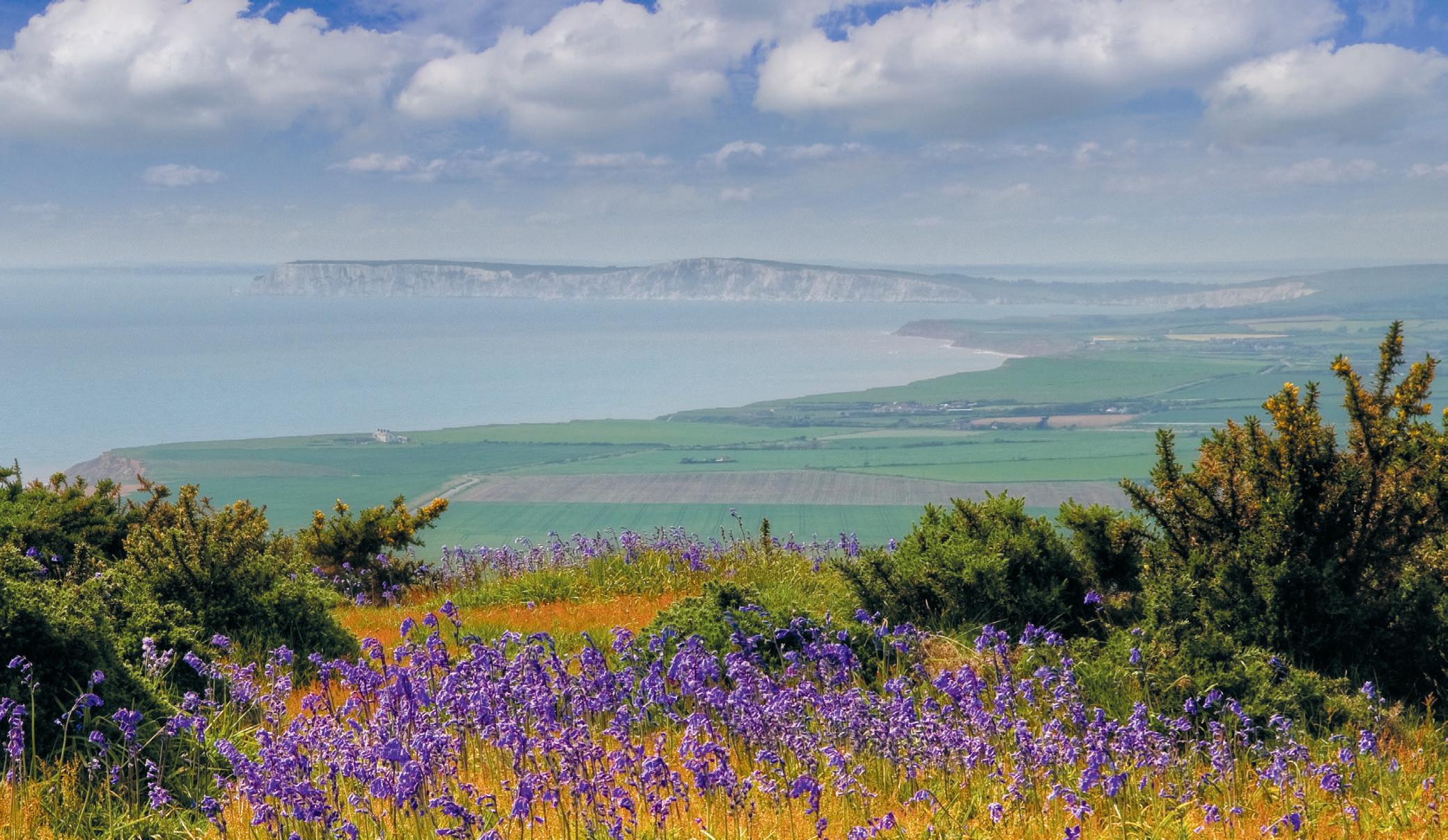


We developed our unique C.H.R.I.S® system to ensure the very best performance for your conservatory, giving you a room to use all year round, whatever the weather.
Eliminates noise
Prevents UV fading
30,000 + installations The only conservatory insulation independently tested & proven to work
10-year insurance-backed guarantee
5-Star Google & Trustpilot ratings
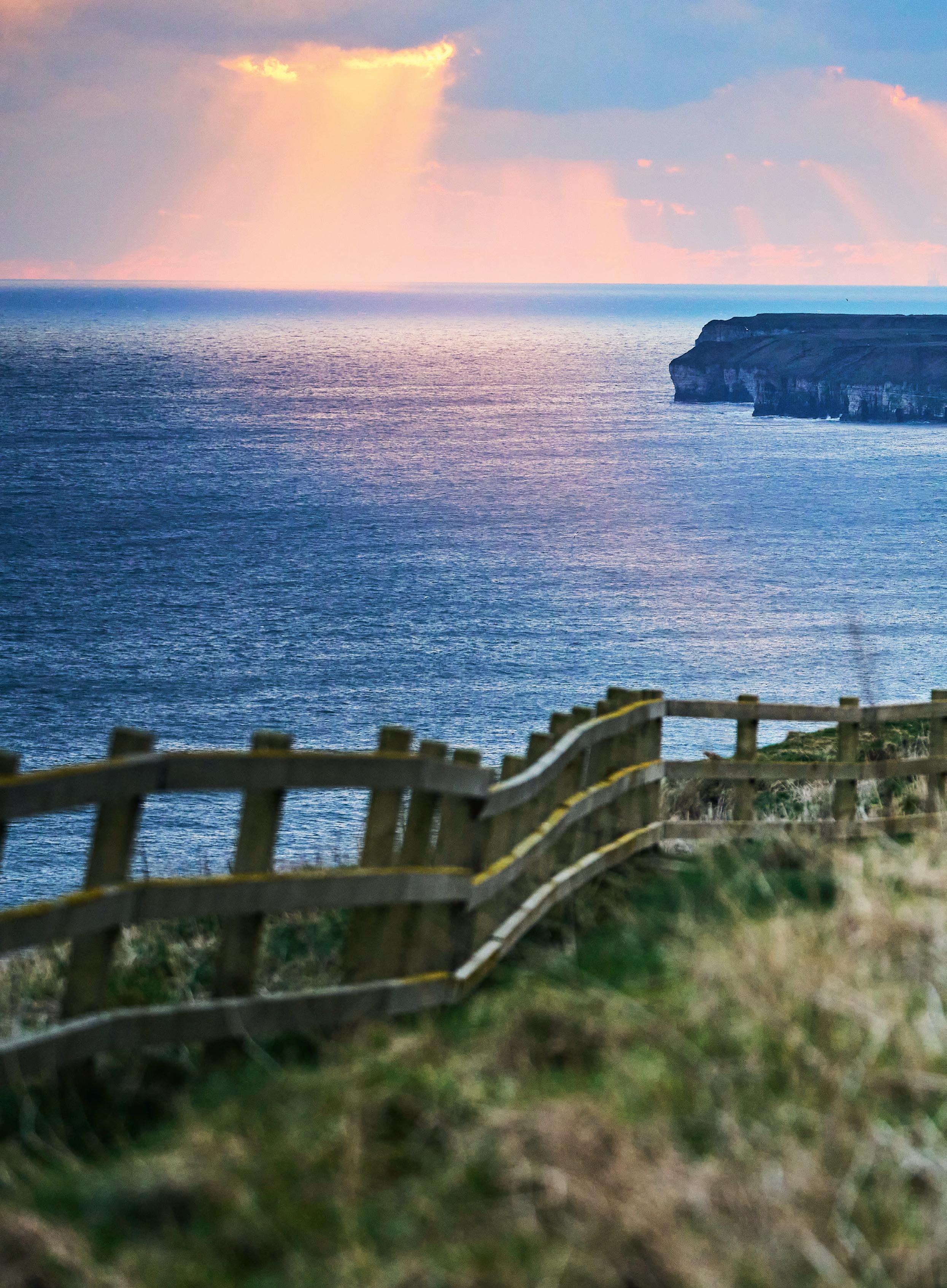
Famous for its summer seabirds, a winter visit to this site might seem unusual. But a cold clifftop walk has plenty to offer, as Emma Pocklington discovers
Getting there
The nearest train station is Bempton, which is around a 1.5 mile walk from the nature reserve. If coming by car, Bempton is a 30-minute drive from Scarborough.
Entry
Free entry for RSPB members, and £4 for non-RSPB members in winter. Parking is included in the admission fee.
Seasonal highlights
See a small number of Gannets securing the best early nesting spots. Short-eared Owls and Barn Owls can be seen quartering over the grasslands. Winter rarities might show up.
This season’s star species Barn Owl, Snow Bunting, Linnet,
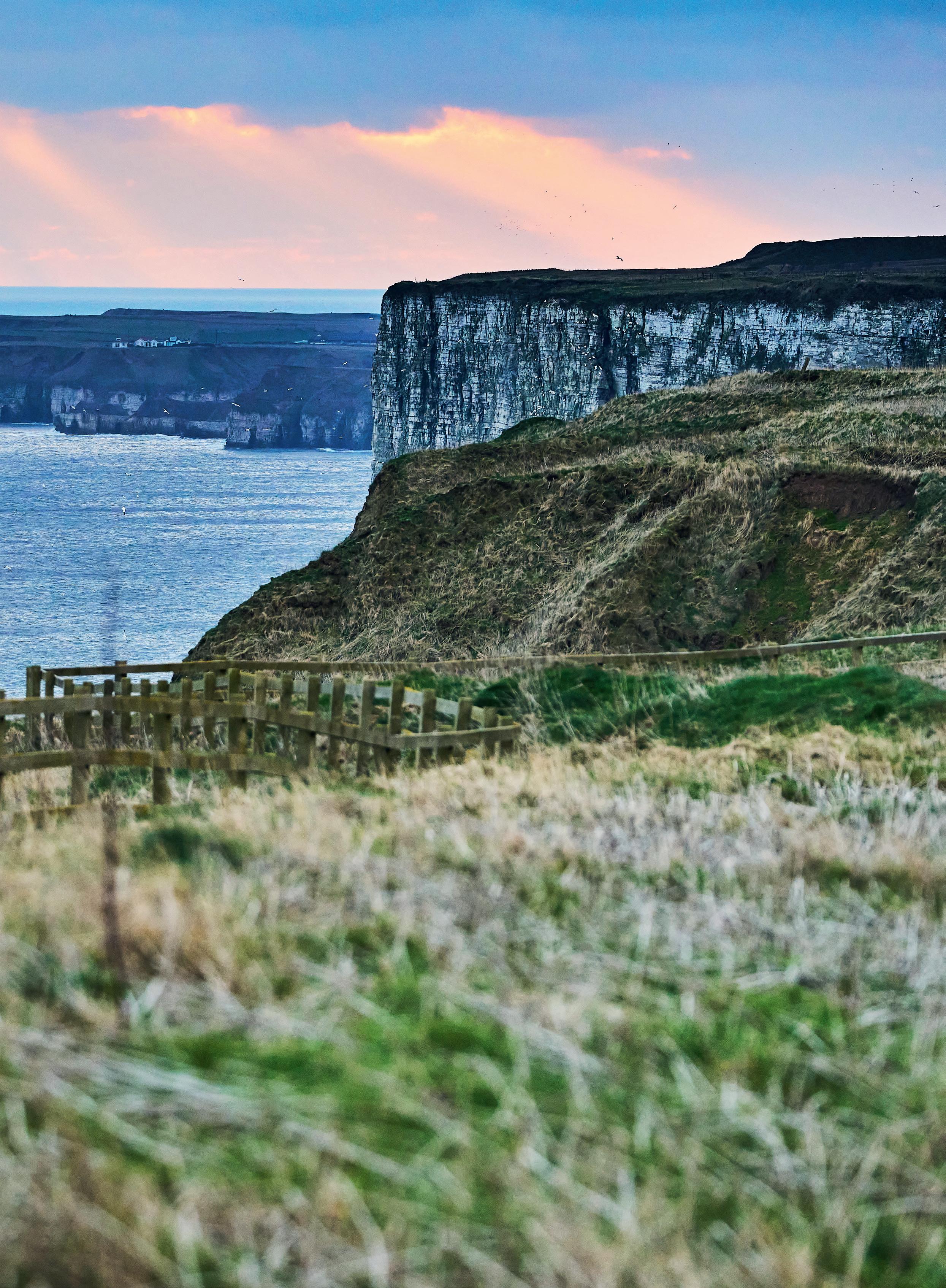
Scan for more info

Yellowhammer, Short-eared Owl, Tree Sparrow, Merlin
Accessibility
Parking: 74 car parking spaces, with 11 Blue Badge spaces and a drop-off point immediately outside the visitor centre. Wheelchairs: Level access for the visitor centre and shop. There are viewpoints with accessible bays; benches at regular intervals; and some trails have tarmac paths.
Dogs: Dogs on leads are allowed on all footpaths and well-behaved dogs are welcome in the visitor centre. Assistance dogs are welcome in all parts of the reserve.
More info
Visit rspb.org.uk/bempton-cliffs or scan the QR code.
tood atop the sheer cliffs, overlooking the North Sea, the Gannets come close enough to touch. At this range I can see the flawless texture of their streamlined feathers. Fading down the long neck, the head’s gentle cream gives way to the pure, brilliant white of the body. There’s that piercing blue eye.
Previous: In winter you can enjoy dramatic sunrises and sunsets at Bempton Cliffs
1. In breeding season, around 15,000 pairs of Gannets nest at Bempton
2. Emma (ahead) and Dannie walk the clifftop trail
3. The towering chalk cliffs at Bempton overlook the North Sea
4. Red-listed Tree Sparrows have suffered serious declines, but thrive at Bempton
I’m at the RSPB’s iconic Bempton Cliffs in Yorkshire, but this is not Bempton as many may know it.
The cliffs are not heaving with a plethora of seabirds, there is no clamour and bustle of nesting and rearing chicks. It is February and there are only the Gannets and the Fulmars, and the odd Shag scooting across the waves below.
On planning this visit, I hadn’t relished the thought of a trip to some exposed cliffs in the tight grip of winter. Everyone I spoke to warned me “wear layers!” And the conditions were as brutal as I had been warned they would be. Wind whipped in off the North Sea, making my eyes water. My toes went numb. At least it wasn’t raining.
My day began with a trip to the visitor centre. Heaving in summer, in winter things are less manic, but there are still plenty of hardy wildlife watchers availing themselves of a warm drink and a piece of cake before heading out into the cold. From the windows I could see over the rough grasslands and few weather-beaten trees, to the tops of the sea cliffs beyond. Out of the corner of my eye I did spot a brief distant flash of white, my first tantalising glimpse of the Gannets.
Nature’s rest stop
I am met by Dannie Jackson, who has been the Duty Manager at Bempton for five years. After giving me an outline of the site, together we step out into the biting wind. The first thing to catch my eye is a sparrow, perched at head height in the low scrub just outside the centre. Accustomed as I am to friendly
‘Often the first stop for exhausted migrant birds who have just crossed the North Sea, there is no telling what might turn up here’
House Sparrows in Bristol city centre, I give it a smile, but I do a double take. Instead of a grey head I see chocolate brown.
“Oh my gosh it’s a Tree Sparrow,” I gasp. This is a lifer for me. Dannie laughs at my amazement.
“They’re so common here I forget they’re a rare sight for some people,” she says. “They nest in the boxes on the visitor centre and do very well. Over 400 fledged in 2023 and over 250 in 2025.” With the serious declines this little bird has suffered since 1970, this is heartwarming news to begin the day with. The hedges here are alive with them, chattering away in busy flocks.
This first surprising sighting is typical of Bempton in the winter, it is a place of special species and breathtaking moments. In winter look for Redwings, Goldcrests and Bramblings. Woodcock have been seen here, as have Snow and Lapland Buntings.
Often the first stop for exhausted migrant birds who have just crossed the North Sea, there’s no telling what might turn up here. In October 2024 a Pale-legged Leaf Warbler stayed for about a week, this was the first of this species to be seen alive in the Western Palaearctic. Rare shrikes have been seen here, too. Dannie shows me the ‘magic bush’ that she and her colleagues often check. One of the first trees on site that migrant birds hit, it often holds rarities.
The space in front of the centre may not look like much, but the team has worked hard here to provide everything an arriving bird needs. There are hedges and trees (small because of the harsh conditions but actually around 30–40 years old), the long grasses are alive with small mammals such as voles and mice, and in summer wildflowers provide plentiful insects. There are also sources of water in the shape of both seasonal and more established ponds. These areas welcome Barn Owls and Short-eared Owls, as well as other raptors: Kestrels, Peregrines, Sparrowhawks and even the occasional Marsh Harrier.
Of course, what Bempton is most famous for is those sheer cliffs. Indeed, look at the site on a map and it is a long strip that runs along the coast, the abutting fields on the clifftops are owned by farmers.
“One farmer has allowed us to take over the edges of his fields so we’ve planted a sacrificial crop there,” Dannie explains, as we walk the edge of the cliff. “When the wintering birds come in, such as buntings and Yellowhammers, it adds to their food supply in the wintertime.”
Heading along the Staple Newk Trail, I wasn’t sure what to expect in the depths of winter, knowing that the Puffins, Guillemots and Razorbills that nest here come spring would be absent, so my heart soared as I saw the ethereal white shapes of Gannets riding the wind. There was no summertime clamour of calls, but the cliffs were by no means empty.
There have been seabirds nesting on these cliffs for hundreds of years. In 1869 a local reverend, Barnes Lawrence, was the first to begin protecting them, as shooting for fashion and for sport was rife. Kittiwake feathers were fashionable on hats, and the
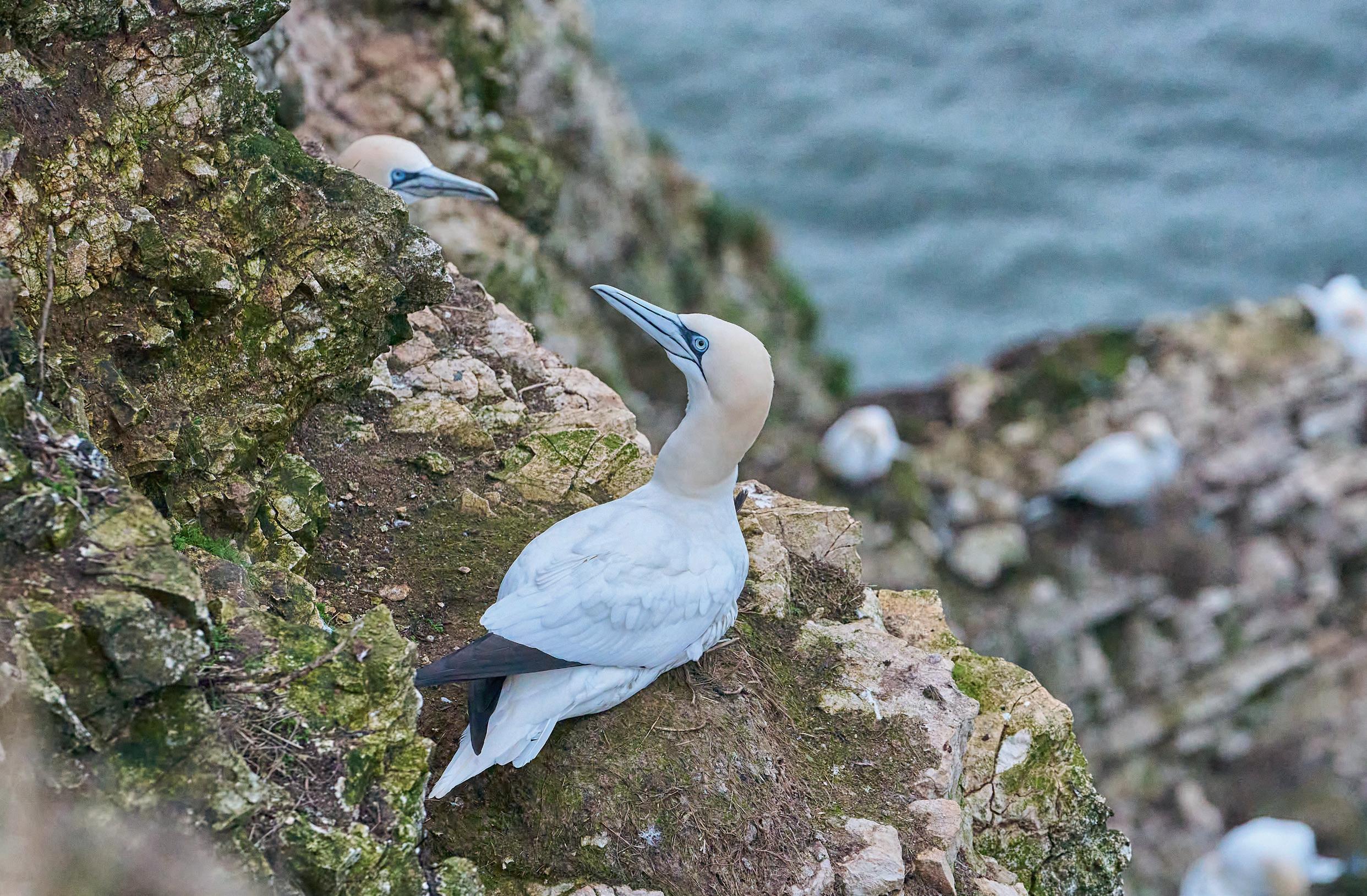
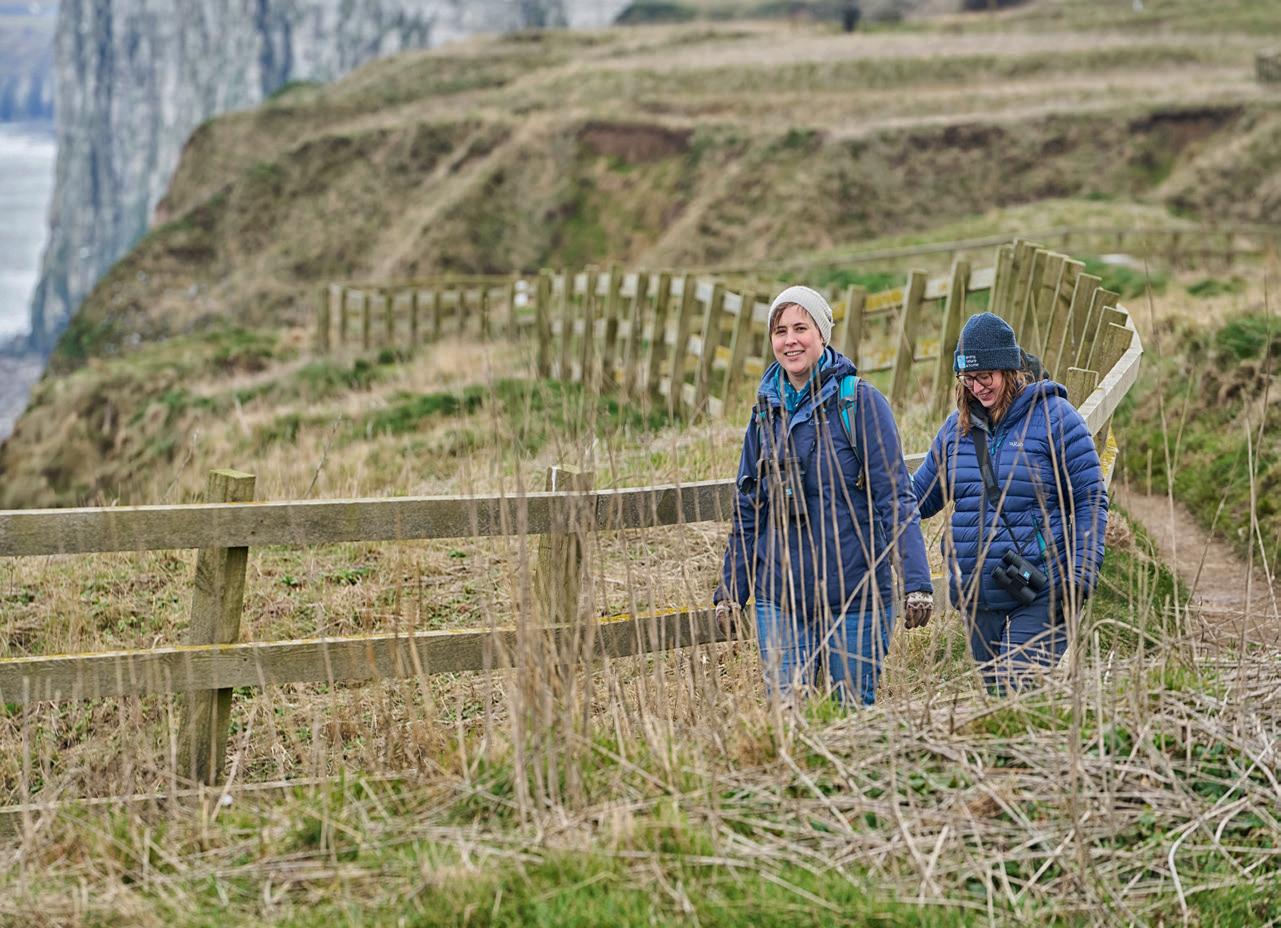
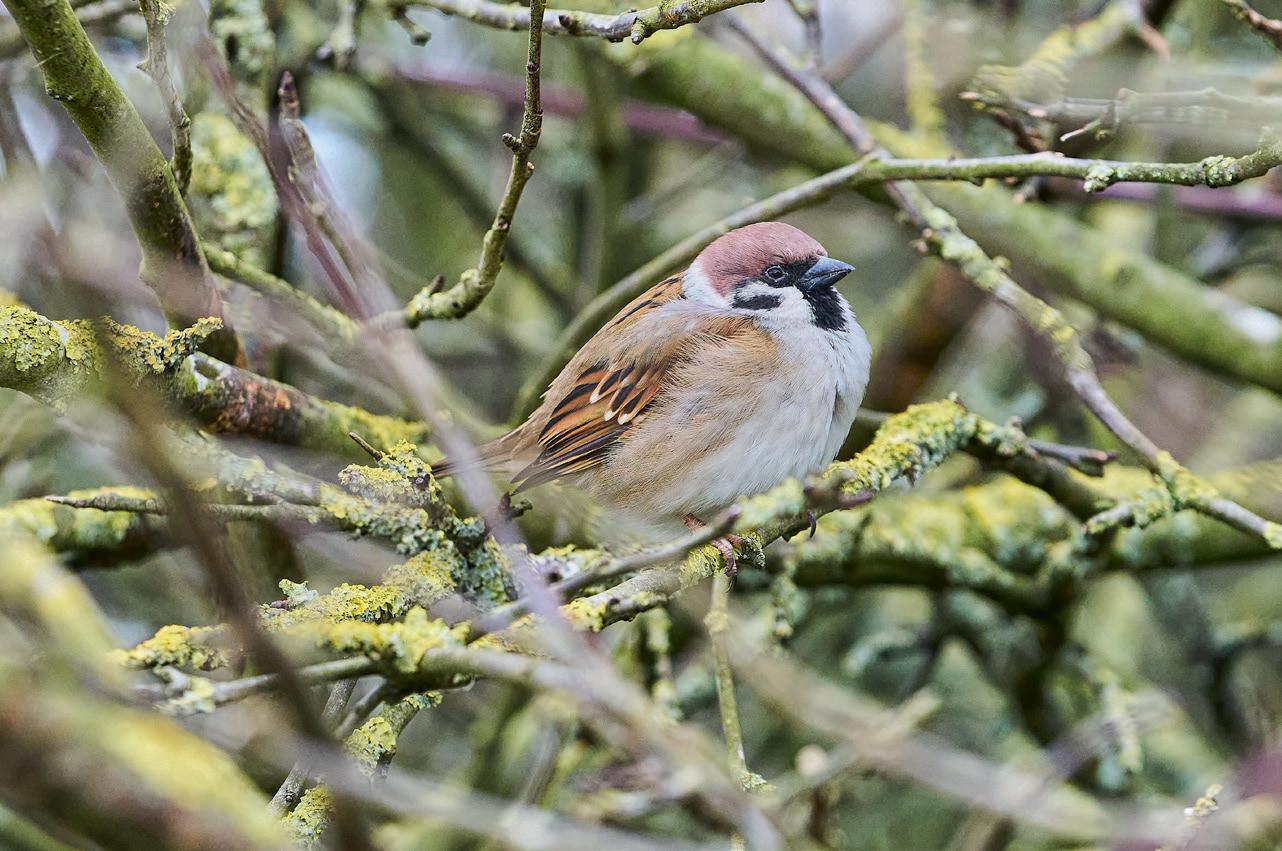
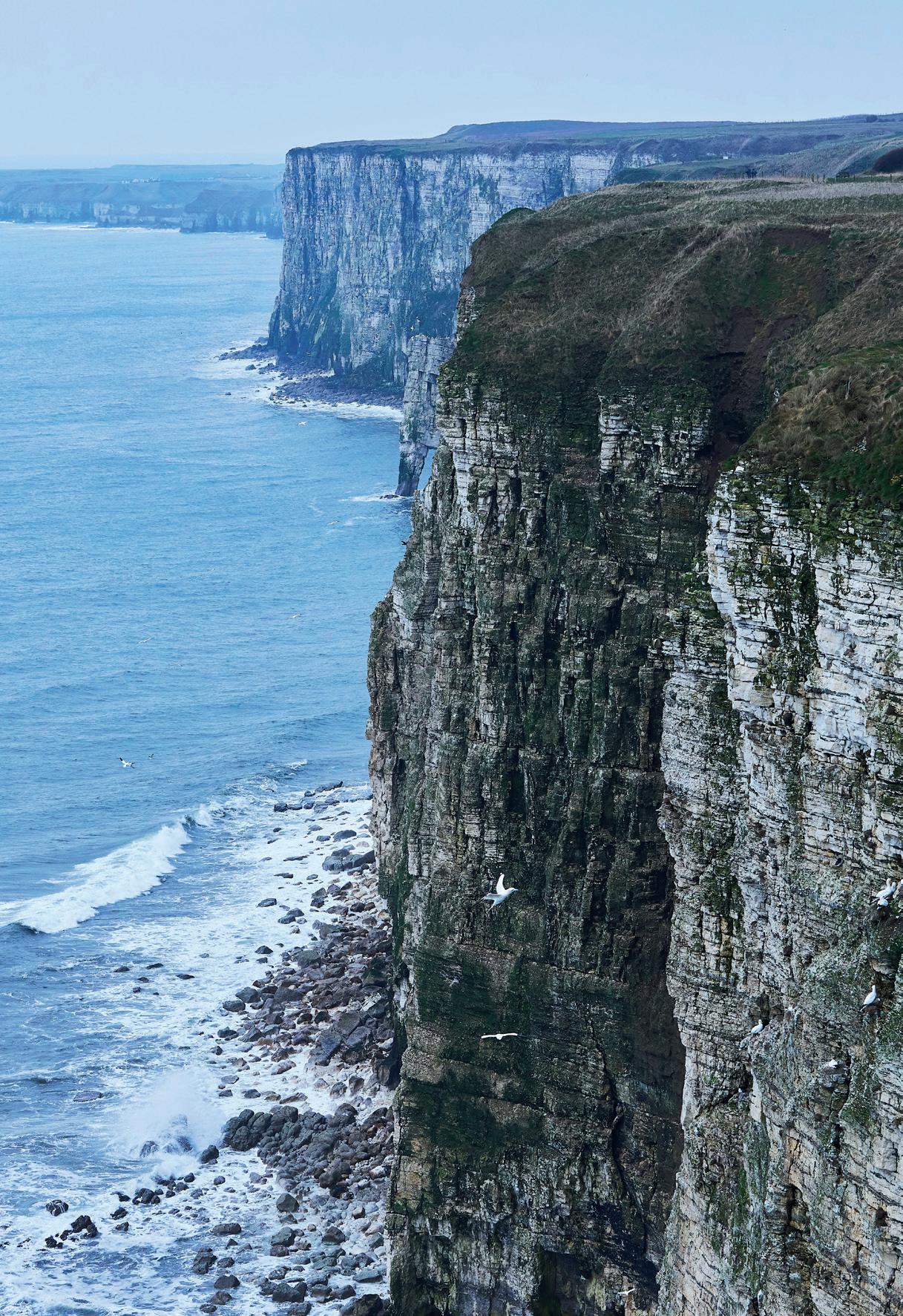
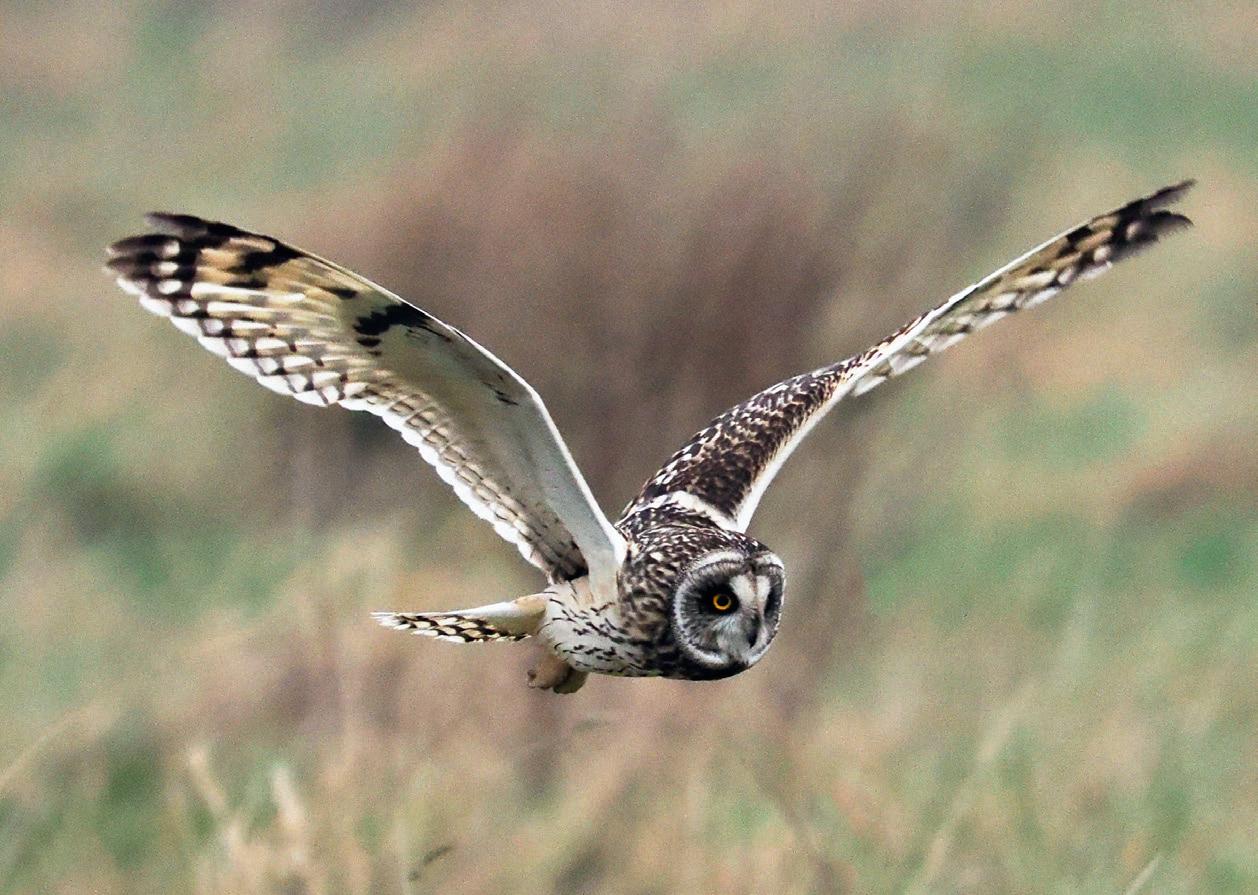
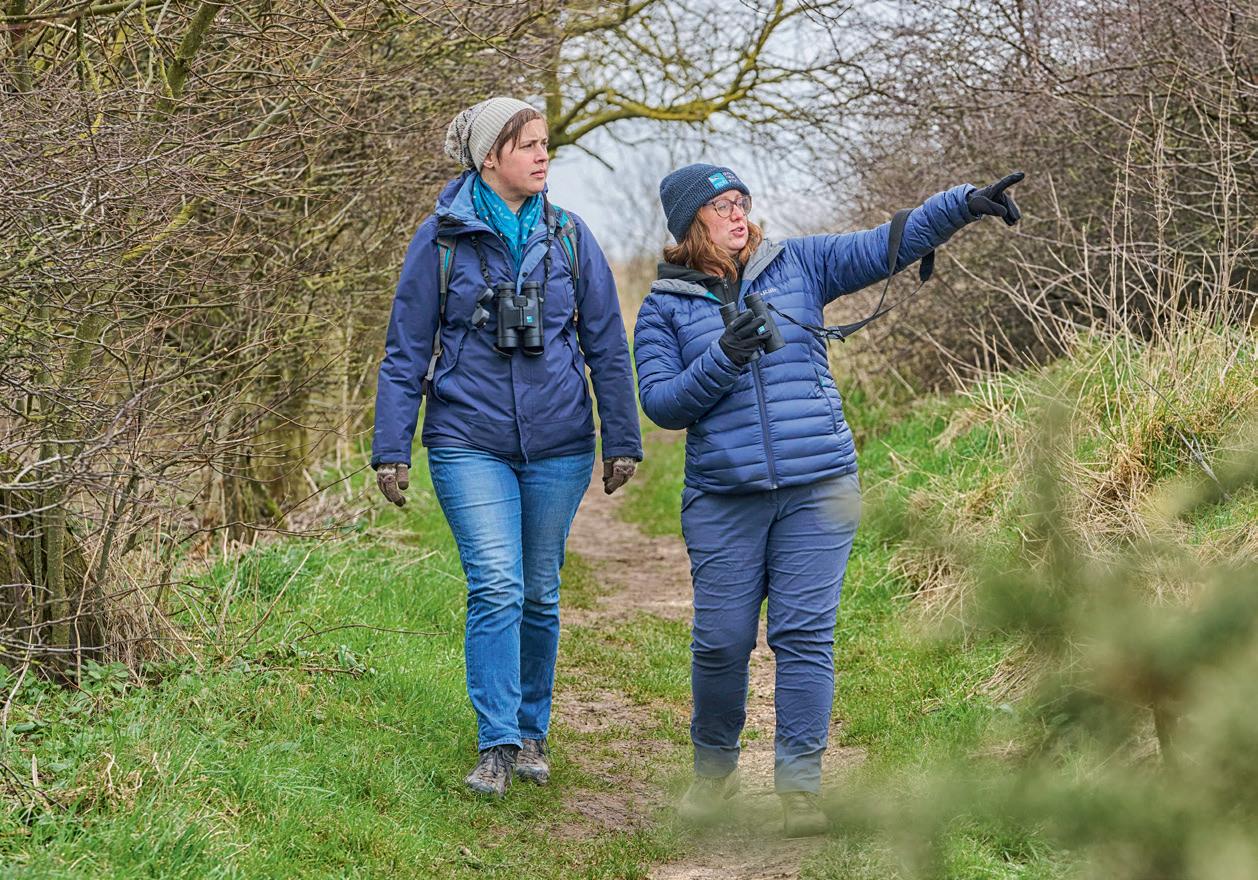
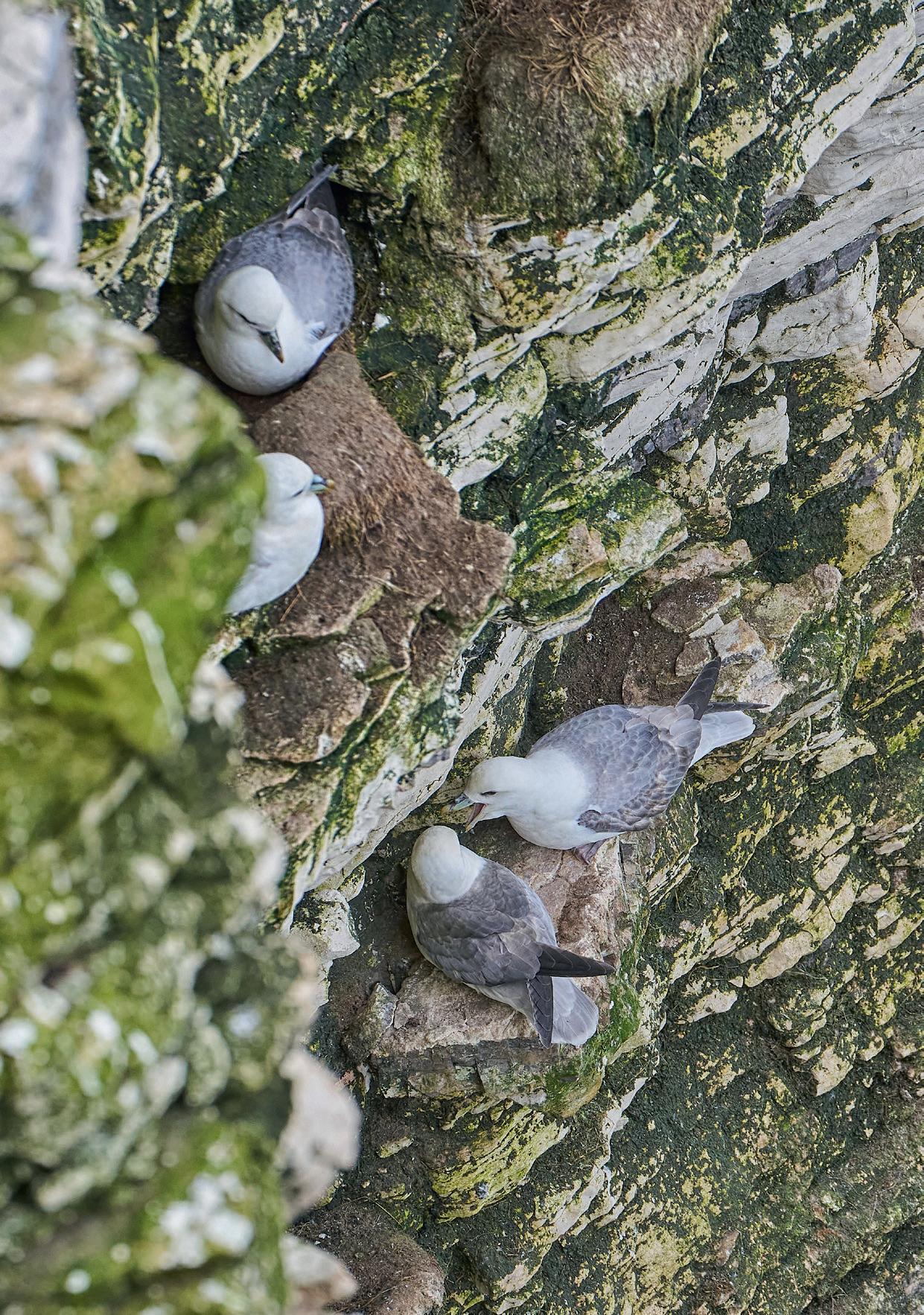
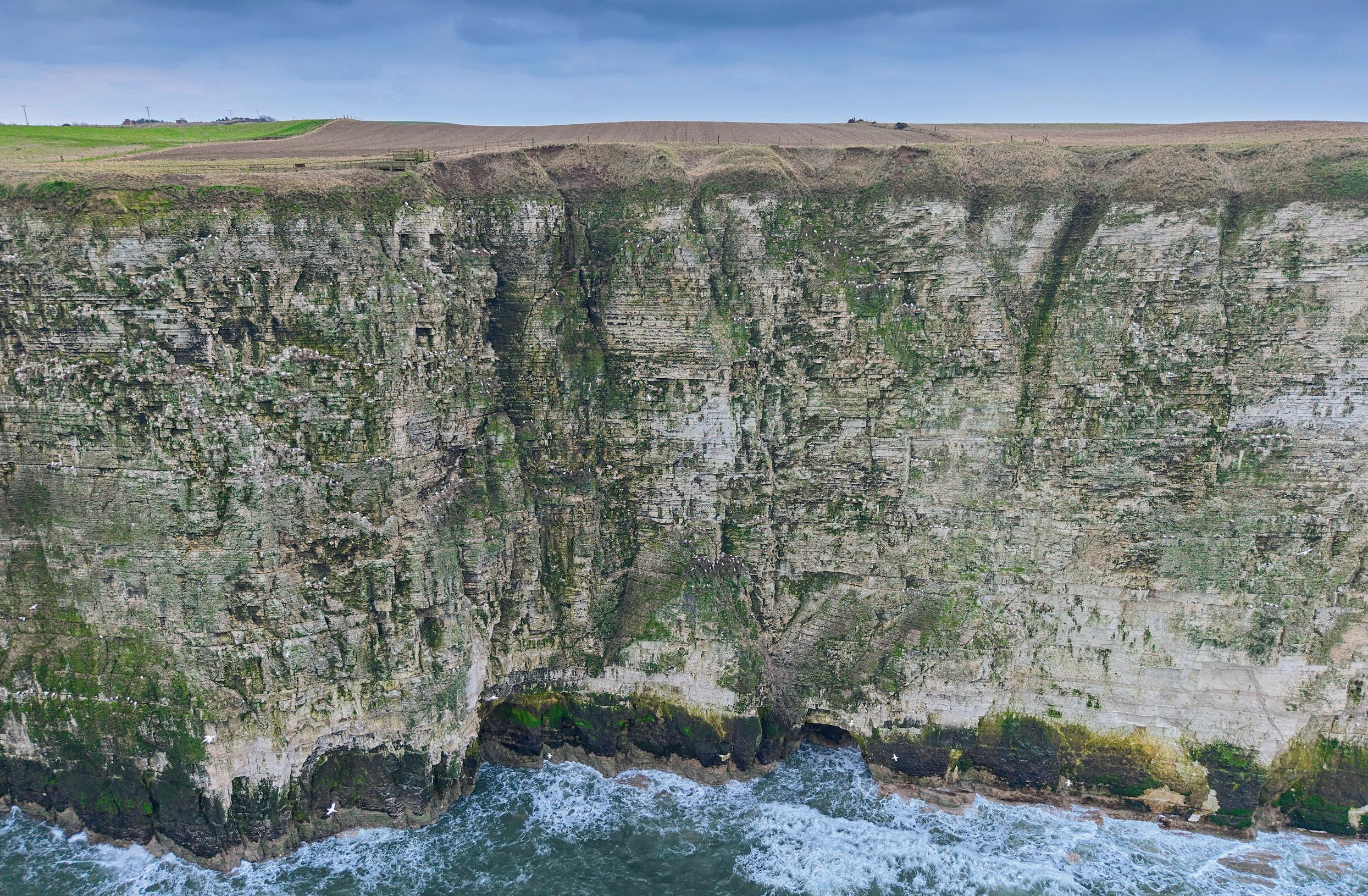
‘I hear the roar of the sea, the throaty grumble of a landing Gannet, and then the Skylark begins its climb again’
birds here provided easy target practice for those getting their aim in before heading to the grouse moors. The reverend aimed to put a stop to this as, as well as being worth protecting in their own right, these birds were actually also providing a valuable service to humans. The sheer volume of them all gathered on the cliffs, chattering away, was enough to be heard in the dark and so it helped to avoid shipwrecks in these perilous waters.
In 1954 the problem had shifted to egg collecting, thieves scaling the 400ft cliffs on ropes to raid the precious nests. There were some species individuals that never produced a single egg year on year, the problem was so rife. And so the Protecting Birds Act stepped up.
The RSPB then started to acquire land here in 1976, to add to this protection, and today this has expanded to include 5km of cliffs.
Time to reflect
5. Short-eared Owls often hunt in the day in winter
6. Dannie (right) shows Emma the scrub area, including the famed ‘magic bush’
7. Fulmars often return to the same nesting site each year, with the same partner
8. Crevices in the cliffs provide shelter for nesting birds
It’s over these cliffs that Gannets glide at eye level. No binoculars are needed here. On my visit they are already jostling for nest space on the, as yet, lightly occupied cliffs. Mated pairs greet each other with beak waggles and preening. Should an interloper intrude on their space a swift sword fight ensues. They are also already picking up nesting material, flying over our heads with beaks full of seaweed. Sadly some of the nests out on Elephant Rock contain the bright blue of fishing line. Dannie once saw one with a mobile phone.
Fulmars ride the updrafts, their tails fanned out to ride the wind. More demure than the Gannets they quietly pair up and preen. They seem to love riding these rough winter winds, taking off from the cliffs just to enjoy the whirl before landing again.
There are plenty of gulls around, too. I saw Herring and Great Black-backed on my visit but you could see Black-headed and Common too, as well as rarer species such as Glaucous, Iceland and Little if you’re lucky.
An optimistic Herring Gull is guarding a prime spot on the rock. Dannie laughs at its hopefulness, doubting whether it will be able to hold on to that spot long enough to nest. It has room now, but come spring 15,000 Gannets will be jostling for space here, the Guillemots already pushed out to other spots.
Turning around and heading back on ourselves to walk the Jubilee Corner Trail, we pass several of
Bempton’s hardy volunteers. A large team is crucial to the running of things here, particularly surveying, the most vital task.
“Our role here is to monitor the seabirds and their productivity,” says Dannie. “We do counts on the seabirds, monitor eggs and chicks, and do a full seabird colony count every five years. We do the monitoring from the top of the cliffs but also do counts from boats and sometimes use drones. A conservation science team also do tagging of the birds and they go down the cliffs to do that.”
A Skylark climbs into the sky over the fields, singing its heart out over and over, while a Peregrine spooks a flock of pigeons, flushing them into the air. Out at sea we see first a pod of dolphins leaping through the waves, then two Harbour Porpoise further to the north. In fact, so perfect is this location for spotting marine mammals that Bempton Cliffs is now a ‘Shorewatch’ destination – a partnership between the RSPB and Whale and Dolphin Conservation – where volunteers carry out structured ‘watches’ for Minke Whales, dolphins, Grey and Harbour Seals and Harbour Porpoises.
My face is stinging and my hands numb, but I am beginning to see why the staff and volunteers here find the winter to be so special.
“It’s such a beautiful place to be in winter,” says Dannie. “Seeing the Gannets is almost more special than in the summer because you don’t really expect it, and the Fulmars are a joy to watch. The reserve is quiet at this time of year, almost contemplative. It’s a place where you can feel calm and at peace.”
We pass the Narrow Crag, formely a blowhole, it is a key spot for burrowing Puffins in summer. Currently it is home to a sheltering flock of pigeons, fluffed up against the cold. Thoroughly frozen, we head away from the cliffs and back to the shelter of the visitor centre, ready to warm up.
In a few months this spot will be thronging with people eager to see the seabirds: the Razorbills and Guillemots, the business-like Puffins bustling about in their neat little suits. But now it is muted. The sea and the sky are a wall of grey, there are only a handful of people to wave good morning to on the paths. And yet. Standing for a moment in this exposed spot before heading back inside, I close my eyes: I hear the roar of the sea, the throaty grumble of a landing Gannet, and then the Skylark begins its climb again.
Nature has certain annual events we love to see: a seabird colony in late spring, a Starling murmuration in the winter, skeins of returning geese in the autumn. But by seeking certain spectacles are we also missing too much? A February visit to a seabird colony may be considered ‘out of season’, but nature never closes.

Emma Pocklington is Editor of The RSPB Magazine. As well as working across all the RSPB titles, she has also written for BBC Wildlife and BBC Countryfile magazines.
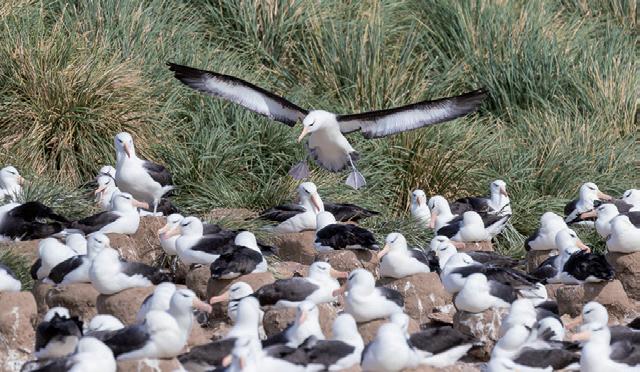
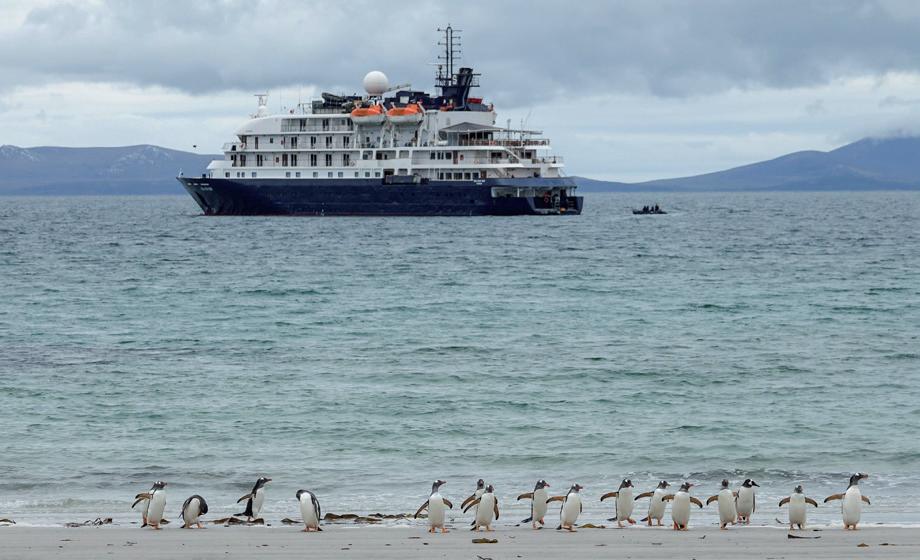
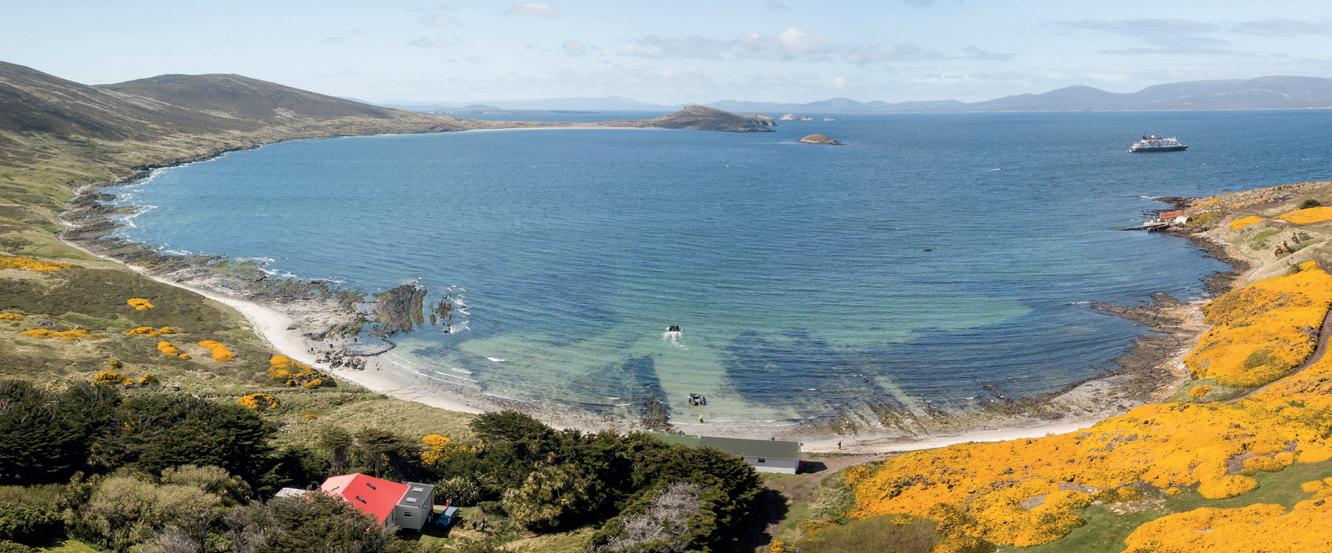
An exploration of the Falkland Islands Archipelago aboard the MS Island Sky 5th to 19th January 2027
The distant Falkland Islands in the South Atlantic are one of the most fascinating places to visit on the planet. Rich in biodiversity they offer a rare opportunity to observe wildlife up close in their natural habitat. This unique expedition offers the opportunity to discover the many wonders of the archipelago. We have timed our expedition for January when the weather and wildlife-viewing opportunities are optimal, the penguin colonies will be loud and active and we can witness young gentoo and rockhopper penguin creches whilst the friendly and inquisitive Commerson’s dolphins play in the surf and albatross brood-guard their fluffy chicks.
The scenery and unspoilt landscapes of the Falkland Islands upon which tourism has failed to leave footprints of any great number or significance is truly spectacular. The wildlife on the 420 rocky islands is staggering and it really is an enchanting place with a unique character, a true outpost and particularly fascinating for the British whose presence in one form or another dates back to the 18th century when whalers and sealers would use the islands for shelter. Rolling hills are interspersed with bogs and small lakes, creating a habitat for penguins and seabirds which nest amongst tall tussock grass, while seals and whales cavort along the coast.
To enjoy the wonders of this faraway paradise in the company of a small and enthusiastic party is the perfect way to achieve the most from a visit to this extraordinary place. Our highly adaptable Zodiac craft will allow us to enter tiny inlets and marvel at some truly wondrous sites. Whilst at sea or in between our landings you can pass the time looking for wildlife on deck, attending the series of lectures by our expert expedition team or simply relaxing on board.
MS ISLAND SKY is one of the finest small ships in the world. With a maximum passenger capacity of only 118, the all-suite vessel has the benefit of unusually large accommodation, public areas and spacious outside decks. All suites feature a sitting area and some have a private balcony. The spacious and finely decorated public rooms include a lounge, elegant bar, library and a single seating dining room. Outside there is a rear sun deck, a bar and comfortable deck furniture. The atmosphere on board is akin to a private yacht or country hotel. A little music in the lounge or bar after dinner, talks from the onboard speakers, informative port briefings and of course good food which may be enjoyed leisurely in the attractive dining room, all contribute to making any voyage aboard the MS Island Sky a memorable experience.
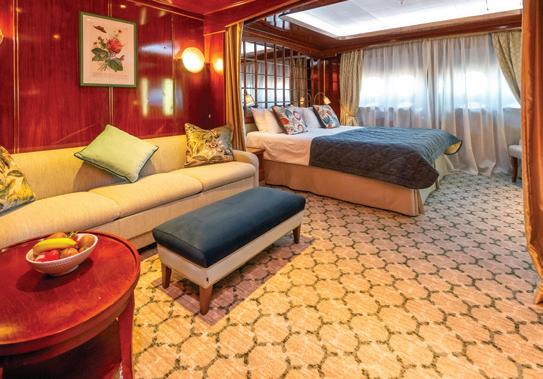
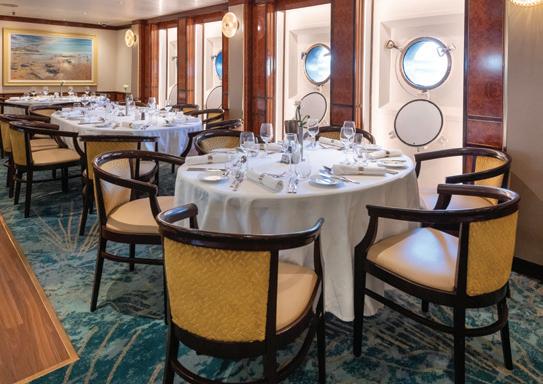
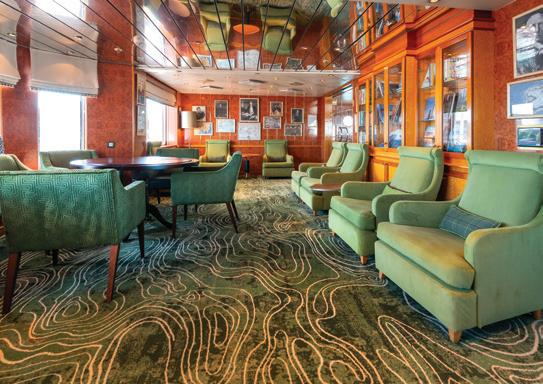
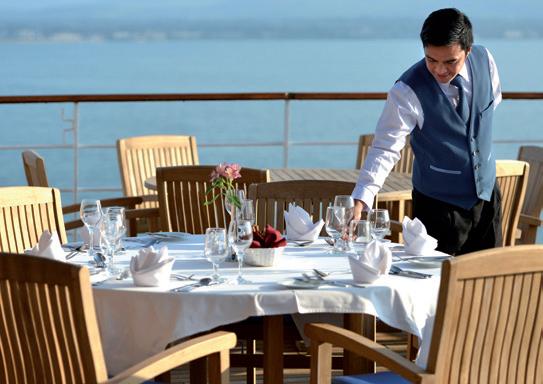
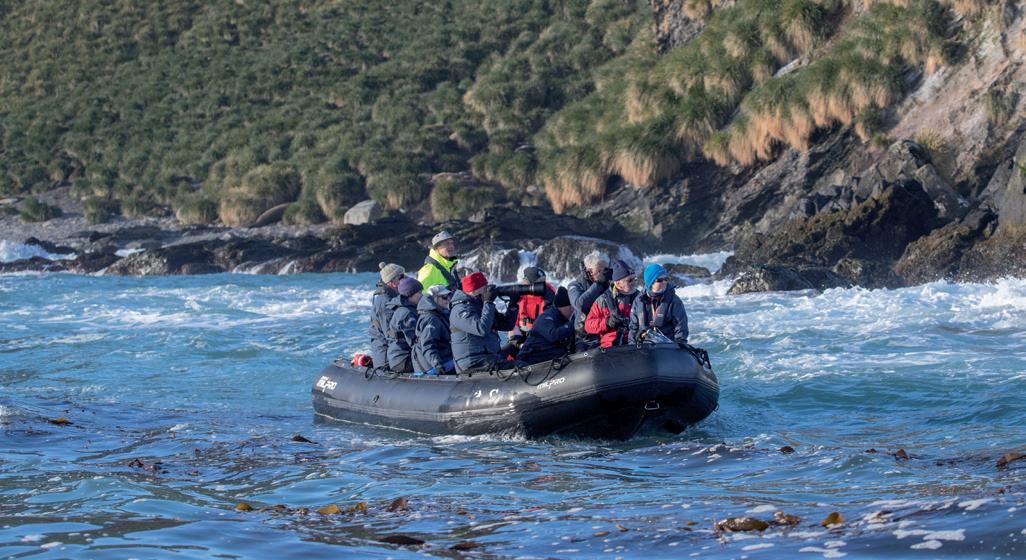
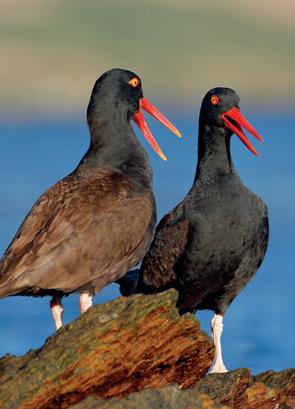
Day 1 London to Buenos Aires, Argentina. Fly by scheduled flight.
Day 2 Buenos Aires. Arrive and transfer to our centrally located hotel for an overnight stay. This afternoon join an orientation tour of the city.
Day 3 Buenos Aires to Ushuaia. After breakfast in the hotel we will transfer to the airport for our scheduled flight to Ushuaia. On arrival we will transfer to the MS Island Sky.
Day 4 At Sea. Enjoy a relaxing day on board.
Day 5 New Island, Falkland Islands. New Island has a fascinating history with the abundance of wildlife and sheltered harbours having attracted sealing and whaling operations from 1774. Today it is known for its breathtaking landscapes, spectacular cliffs and white sand beaches. The island is home to forty bird species, including the world’s largest population of slender-billed prions, black-browed albatross, striated caracara and southern rockhopper penguins. Landing this morning at Coffin Harbour we will have a chance to visit the Captain Barnard Museum before walking to see the resident black browed albatross and rockhopper penguins. Over lunch we reposition to North Harbour to access the colonies of Magellanic penguins, gentoo penguins and albatross.
Day 6 Steeple Jason & Carcass Island. Steeple Jason is home to the world’s largest black-browed albatross colony, with over 250,000 breeding pairs. The island also hosts southern rockhopper penguins and imperial cormorants. A morning ship cruise will observe this amazing site before we sail to Carcass Island arriving over lunch. At our anchorage at Dyke Bay we may be greeted by playful Commerson’s dolphins before we walk to the nearby Magellanic and gentoo penguin
breeding grounds. We may also see Falkland skuas, South American terns and grass and cobbs wrens.
Day 7 Saunders Island & Keppel Island. Named after British Admiral Sir Charles Saunders, the island was the base for the first British settlement in the Falklands in 1765. We will awake at our anchorage off ‘The Neck’ which is a wildlife haven, teeming with colonies of gentoo, Magellanic, and king penguins. It also boasts a diverse array of shorebirds, including Magellanic and blackish oystercatchers, kelp geese, and Falkland steamer ducks. An active walk will visit the albatross and rockhopper colonies along the north coast which also provide elevated views of both sides of the neck and the stunning white sand beaches. We will sail in the late morning by Rookery Bay which is home to blackbrowed albatross. Along the rocky coastline, imperial cormorants and southern rockhopper penguins can also be spotted. In the early afternoon we arrive at Keppel Island, home to the first long term settlement in the archipelago established by the South American Missionary Society in 1855. The island also boasts a diverse range of wildlife including an albatross colony.
Day 8 Falkland Sound & Port Howard. This morning we will sail into the Falkland Sound which divides the two main islands and will land at Port Howard, location of the oldest and largest sheep farm in the Falkland Islands with 45,000 sheep. We will have the opportunity to speak to the owners and learn about farming on the islands. There is also a small museum providing insight to the 1982 conflict.
Days 9 & 10 Stanley. Stanley, the capital of the Falkland Islands will be our base for the next two days and during our time here we will organise a number of tours. A walking tour of Stanley will include Christchurch Cathedral, the southernmost Anglican cathedral in the world and the Historic Dockyard
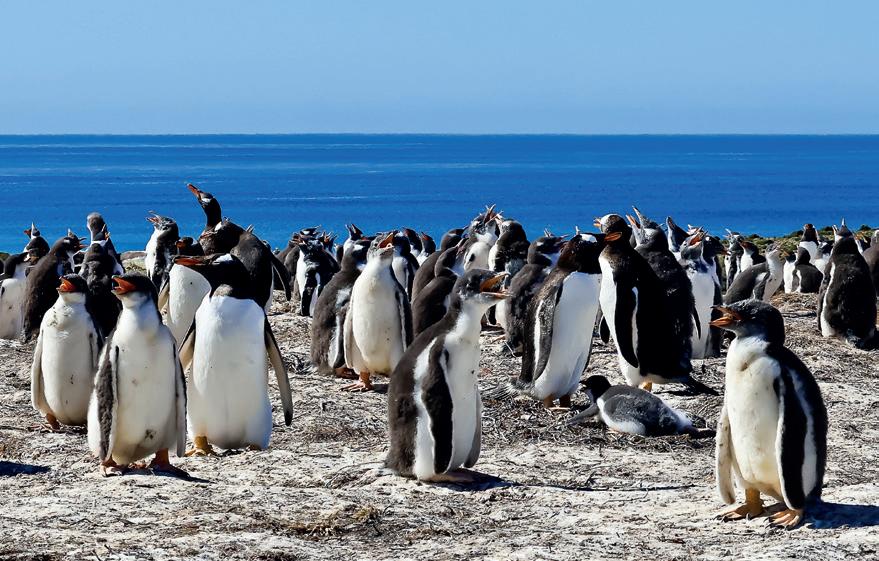
Museum. Wildlife enthusiasts can join a 4x4 off road expedition enjoying the rugged landscape as we drive to Volunteer Point, home to a colony of over 1000 king penguins or alternatively join the expedition team on walks around Gypsy Cove where we find a colony of Magellanic penguins. For those wishing to stretch their legs there will be an opportunity to hike in the mountains surrounding Stanley whilst a battlefields tour will visit some of the major sites from the 1982 conflict.
Day 11 Southern Falklands. As we sail along the south coast of the Falklands archipelago our Expedition Leader and Captain will look for a suitable landing site based on weather and sea conditions. We may land at Bleaker Island, home to gentoo penguin colonies, as well as shoreline birds such as kelp geese and blackish oystercatchers.
Day 12 At Sea. Enjoy a relaxing day on board.
Day 13 Ushuaia to Buenos Aires. Disembark after breakfast and transfer to the airport for our scheduled flight to Buenos Aires. On arrival transfer to our hotel for an overnight stay.
Day 14 Buenos Aires to London. After breakfast we will transfer to the airport for our scheduled flight to London.
Day 15 London. Arrive today.
Special offer prices per person based on double occupancy start from £9495 for a Standard Suite
Economy class scheduled air travel • Two nights hotel accommodation in Buenos Aires with breakfast •10 nights aboard the MS Island Sky on a full board basis • House wine, beer and soft drinks with lunch and dinner • Noble Caledonia expedition team • Shore excursions • Gratuities • Transfers • Airport taxes • Port taxes.
NB. Ports and itinerary are subject to change. All special offers are subject to availability. Travel insurance, dinner on day 2 and day 13 are not included in the price. Zodiacs will be used during this expedition. Our current booking conditions apply to all reservations.
Join thousands of other members who have chosen to receive their magazine via a monthly email. So far, these members have helped us save enough paper to avoid cutting down 363 trees.
Many of you wrote in and said you’d prefer to receive The RSPB Magazine digitally, so we listened. You can now choose to read online.
If half of all RSPB members were to make the switch, we’d save a huge amount of paper; every six months, we’d save enough to cover the entire area of the RSPB’s Hayle Estuary nature reserve in magazine pages laid side-by-side. That’s equivalent to around 108 football pitches! Plus, saving money on postage means we can put more funds into our vital conservation work.
Join the thousands of other members already enjoying the many benefits of a digital magazine. For instance, you can access your magazine wherever and whenever you want; dive into extra video, audio and knowledge-stretching quizzes; and filter content by author or topic to find exactly what you’re after.
If you’re happy with your print magazine, you don’t need to do anything, but if you’d like to give the digital version a try, scan the QR code (right). You can switch back any time.

How to switch
If you’ve decided to go for the digital magazine, thank you! To switch, scan the QR code with the camera on your smartphone, or visit rspb.org.uk/ go-paperless
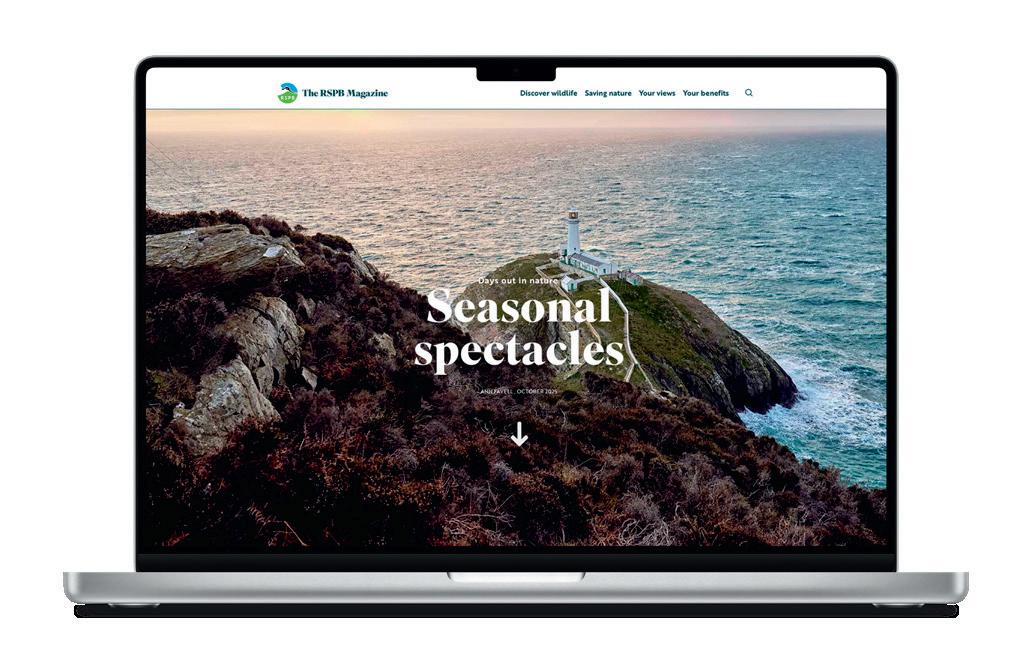
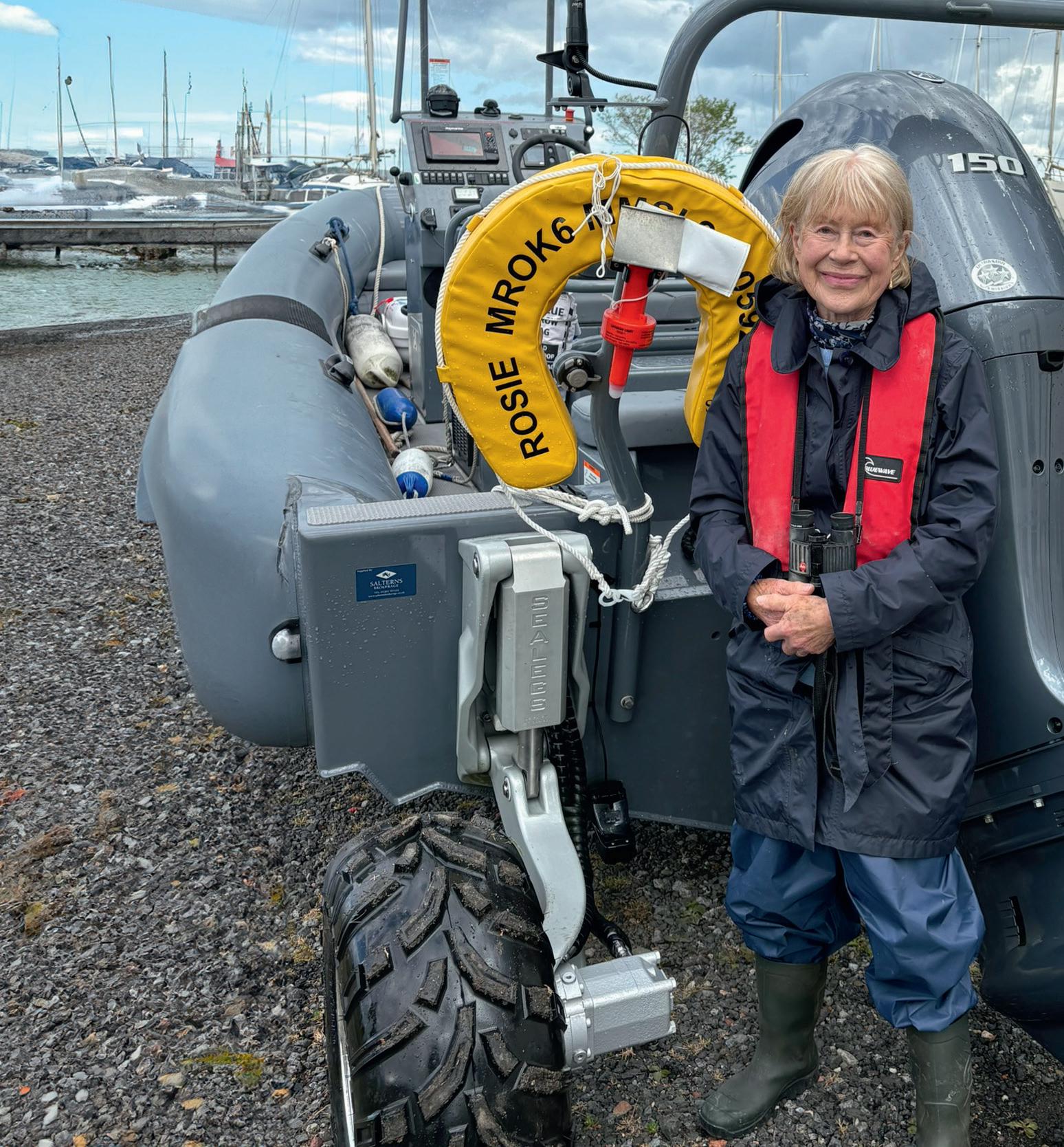
Bitterns’ wings beating over still water, Bearded Tits whispering through the reeds, and long walks through woodland, wetland and coastal scenery. For Rosemary and Michael, this corner of Suffolk was special. Every year, they holidayed in Aldeburgh and visited RSPB Minsmere, whose wild beauty shaped their life with birds and the RSPB. They joined about 50 years ago and later became life members.
From supporting Capercaillie work in Scotland to island restorations on Henderson and Gough, their generosity touched many RSPB projects. When Michael passed away in 2020, their commitment continued through a legacy gift, and Rosemary remained closely involved, determined to keep making a difference.
In 2023, Coquet Island, home to the UK’s rare Roseate Terns, needed support. The reserve team required a safer, more reliable way to reach the island and remove their boat each day. Traditional moorings and cranes were dangerous or damaging to the fragile shore, but an amphibious craft offered the perfect solution. At the time, Rosemary had been discussing with the RSPB’s Philanthropy team where to direct a significant gift. When she heard about the project, she knew she wanted to help. Her donation completed the funding for Sealegs, the amphibious boat now in use at Coquet. It’s already transforming the team’s work, allowing safer access, faster monitoring and better protection for the terns.
In honour of her generosity, the RSPB named the boat after Rosemary, who is known as Rosie to her friends. With Roseate Terns affectionately known as ‘rosies’, it felt meant to be. Rosemary visited Coquet this spring (pictured), and seeing the terns up close brought back lovely memories of those days with Michael: the wonder, the love of nature, and a gift now helping seabirds thrive.
MAKE AN IMPACT
Inspired by Rosemary’s story? Take a look at the vital RSPB projects you can support with a generous donation at rspb.org.uk/ philanthropy
We recently spent a day at RSPB Leighton Moss, Lancashire, and I wanted to share what a brilliant experience it was for me and my three children. It was especially memorable for my eldest son, who chose to walk on ahead, keeping to the trails and wanting to explore at his own pace. Armed with notebook and binoculars, he recorded everything he saw – and had the absolute thrill of spotting his very first Bittern (pictured)! It was a quiet, proud moment for him (and for me).
Meanwhile, my younger two were absolutely spellbound by the Marsh Harriers. Watching them glide and hover over the reeds sparked so many questions and a real sense of wonder in them – the kind of curiosity you can’t get from a screen. Days like this remind me how vital places such as Leighton Moss are. Not just for wildlife, but for families, too.
There’s something incredibly grounding about stepping away from the noise and pace of modern life and sinking into the stillness of nature. We left feeling recharged, connected and full of stories to share.
Thank you to the RSPB for keeping these spaces thriving – and for the memories we made that day.
Anthony Rigby

The star letter wins a pair of RSPB 8x32 Avocet binoculars from our Viking Optical range –waterproof, nitrogen-filled and robust. To see the full range, visit rspbshop.co.uk
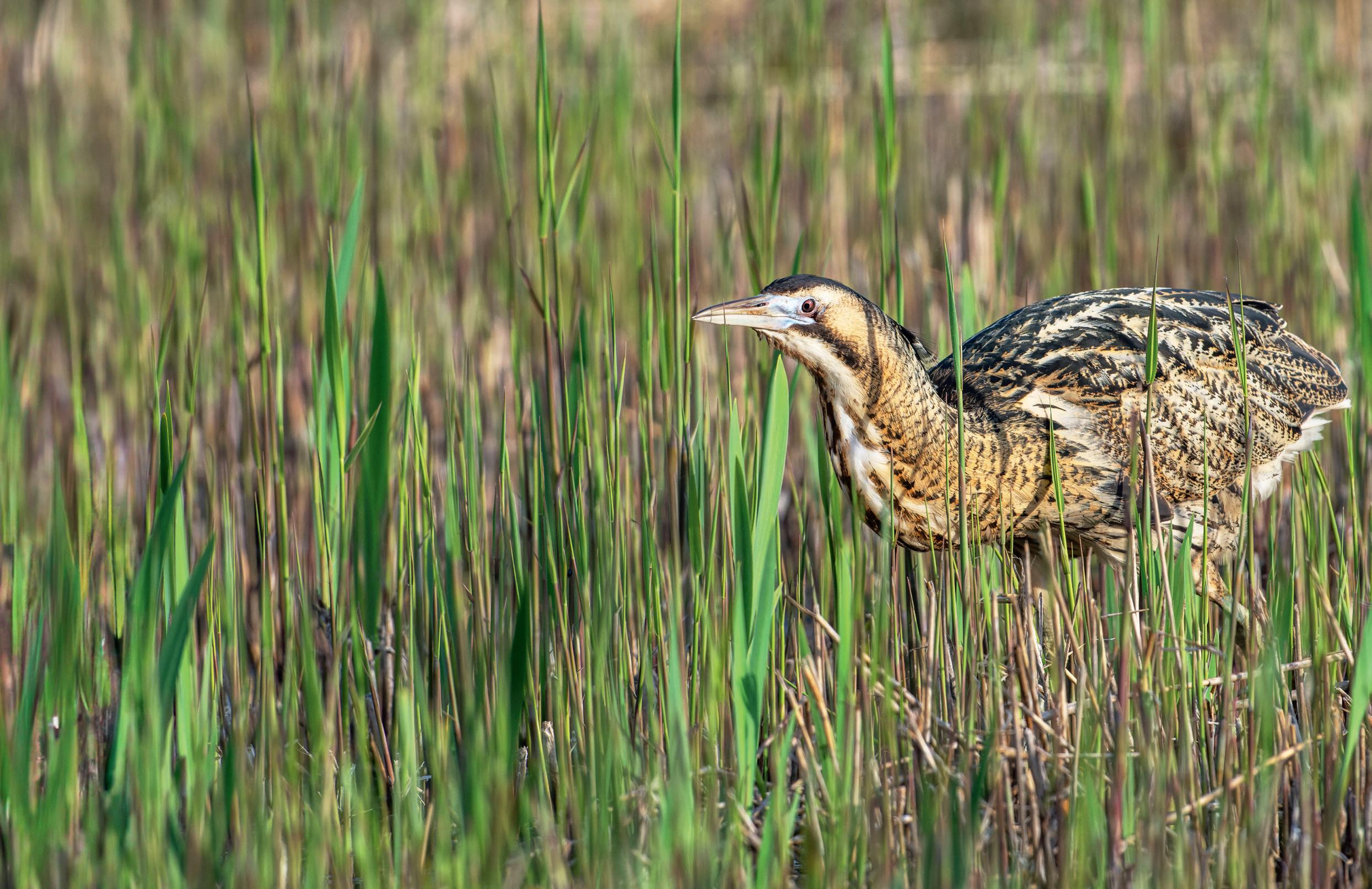
Make the switch to the digital version of this magazine to save paper, reduce print costs for the RSPB and also enjoy interactive content online. Visit rspb.org.uk/gopaperless
Digital and delighted Congratulations on the digital version of The RSPB Magazine
I am 74 this year and have managed to keep up with modern technology and the benefits gained from so many aspects of the digital world.
Indeed, digital photography has revolutionised the way we can see the natural world. For instance, to be able use a mobile phone to identify a plant or wildflower from a photograph is like having a complete reference book with me at all times.
I know people still enjoy a printed version of the magazine. But how many of us in the past have accumulated vast piles of magazines that have been printed and delivered at some expense?
Even now, I am dictating this letter on my computer to send it by email. So, congratulations on the digital version of the magazine. I look forward to reading it on my tablet.
John Longcroft-Neal
Memory release
The article about the reintroduction of White-tailed Eagles brought back some happy memories. My husband and I went to Rum for our honeymoon in September 1980. We’d heard that the eaglets were about to be released on the island.
On our third day, we headed to the Bullough Mausoleum and saw these magnificent birds. One perched on the ground came up to my waist. We watched the keepers release a bird. It took flight immediately, rapidly becoming a dot in the sky. We felt so privileged to witness such a wonderful event.
CORRECTION
In the Autumn/Winter 2025 issue of The RSPB Magazine we incorrectly called the River Irwell the River Orwell. Thank you to the reader who spotted this.
Several years later, when sailing around the west coast of Scotland, we spotted a White-tailed Eagle flying over Loch Dunvegan, Skye. Our children were as excited as we were.
Marie McDougall
Each week, I help out at RSPB Fairburn Ings, West Yorkshire. I arrive early to visit Big Hole lagoon in the hope of seeing a Hobby hunting dragonflies.
On this occasion, when I returned to the car park having failed to see a Hobby, a female Kestrel landed on a nearby telegraph pole. She seemed to say, “You might well be looking for my flashy little cousins, but I am pretty good-looking myself. ” This Kestrel changed my perspective. Enjoy the beauty that’s right in front of you. Let it come to you.
Tom Spickett
How closely have you been reading? Take our quiz and see how you score!
In 2025…
1 Conservationists celebrated 50 years since the return of which large bird of prey to the UK?
A White-tailed Eagle
B Golden Eagle
C Bearded Vulture
D Short-toed Eagle
2 Which bird held the number one spot in the 2025 Big Garden Birdwatch results?
A Tree Sparrow
B Woodpigeon
C House Sparrow
D Blackbird
3 The international Permanent Court of Arbitration backed up a huge campaigning success by ruling that the ban on catching which group of fish in UK waters would remain?
A Tuna
B Cod
C Flatfish
D Sandeels
4 Thanks to your support, our naturefriendly farming petition helped secure how much funding for nature on farms in England?
A £900 million
B £1 billion
C £2 billion
D £2 billion plus £400 million to plant trees and restore peatlands
5 The RSPB’s biggest UK nature reserve (covering 21,000ha) turned 30 – but which one is it?
A Forsinard Flows, Scotland
B Geltsdale, England
C Conwy, Wales
D Portmore Lough, Northern Ireland
6 RSPB Campfield Marsh was designated the UK’s 12th English Dragonfly Hotspot following the introduction of which dragonfly species?
A Emperor Dragonfly
B Hairy Dragonfly
C Azure Hawker
D White-faced Darter
Answers on page 68
7 The RSPB and Royal Horticultural Society (RHS) garden at the Hampton Court Palace Garden Festival highlighted which long-distance migrant bird?
A Swift
B Arctic Tern
C House Martin
D Swallow
8 Featured in our Spring/Summer issue, a golden variant of which mammal is found on Rathlin Island?
A Brown Hare
B Mountain Hare
C Irish Hare
D European Rabbit
9 Montagu’s Harriers nested in the UK for the first time since 2019. How many chicks did they successfully rear?
A Two
B Three
C Four
D 10
10 And in other breeding news, Great White Egrets bred in Wales for the first time, with two nests at which RSPB nature reserve?
A Ynys-hir
B Cors Ddyga
C Lake Vyrnwy
D Newport Wetlands
Turtle Doves
11 Although they feature in a Christmas carol, where are UK-nesting Turtle Doves most likely to be spending the festive season?
A South Africa
B South America
C West Africa
D Eastern Europe
12 “Precious little angel, you’re my own sweet Turtle Dove” is a lyric from a song performed by which of these musicians (who have all sung about Turtle Doves)?
A Marianne Faithfull
B Frank Sinatra
C David Gray
D Annie Lennox
13 Turtle Doves are ‘obligate granivores’ which means their diet consists almost entirely of what?
A Grass
B Berries
C Seeds
D Insects
14 Where did ‘Turtle’ come from in ‘Turtle Dove’?
A The birds were thought to rest on the backs of turtles during migration
B The birds’ ‘turr-turr’ purring call
C The wing pattern resembles a turtle’s shell
D They were once eaten in ‘mock turtle soup’
15 Over the last 50 years, the Turtle Dove has unfortunately been the UK’s fastest declining bird. But how many have we lost since the 1960s?
A 67%
B 77%
C 87%
D Nearly 99%
Famed for their mention in the song ‘The Twelve Days of Christmas’, Turtle Doves have almost been lost from the UK. The recent recovery of their European population gives us a unique opportunity to help them return here, too. Find out how you can help Redlisted Turtle Doves continue their comeback. Visit rspb.org.uk/dove Scan for more info

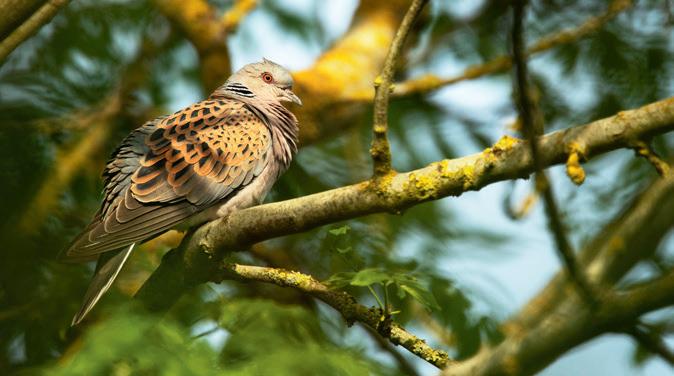
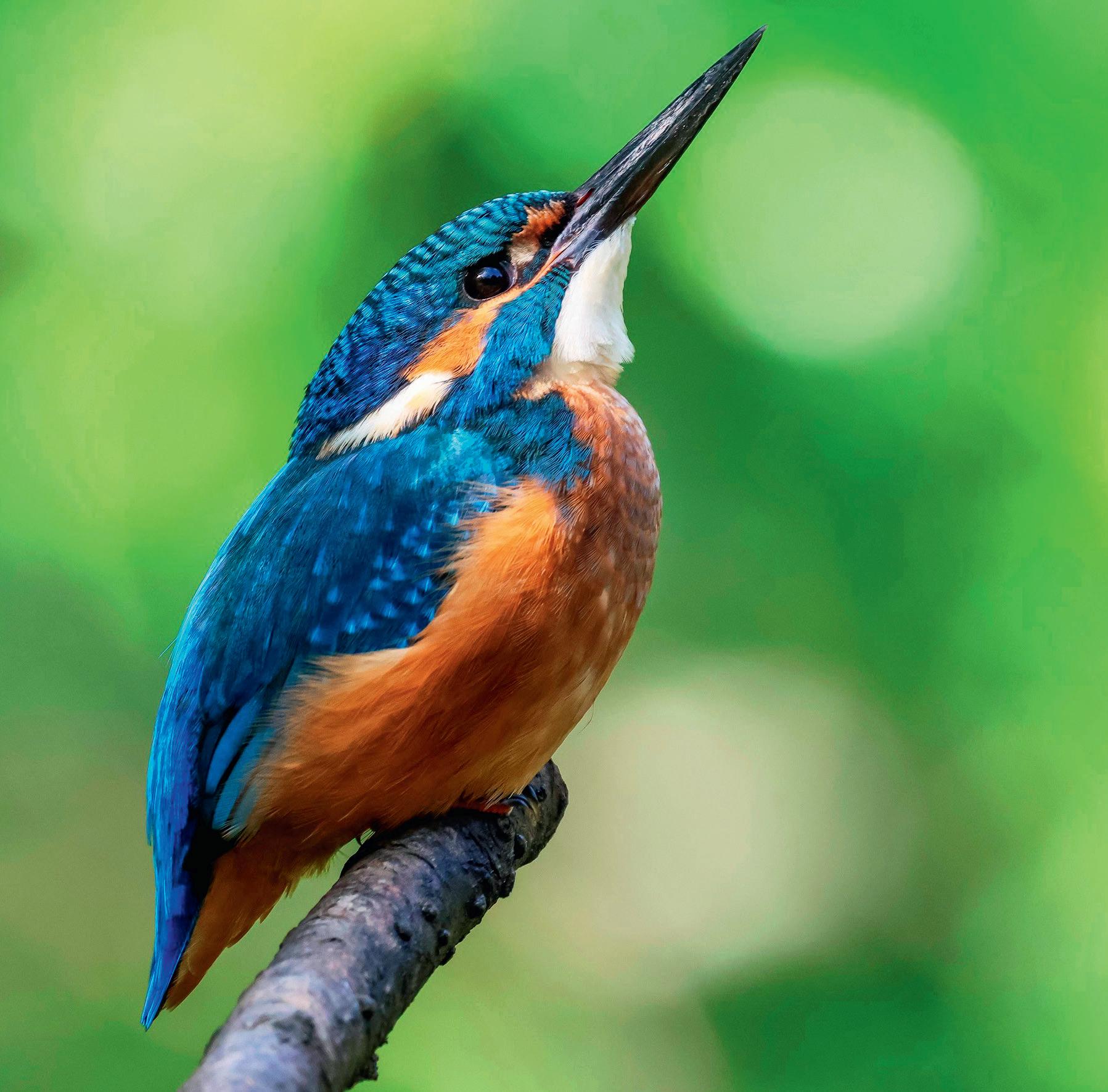
Send your wildlife photos to us at RSPBmagazine@ rspb.org.uk
“While visiting RSPB Nagshead recently, I was lucky to get extremely close to this male Kingfisher, who didn’t seem at all bothered by my presence!”
Garry Innoles
Our star amateur photo wins £250 to spend on anything at the RSPB Shop! From wildlife garden ideas to homewares, books and even chocolate, everything is produced in the most sustainable and nature-friendly way possible, and proceeds go directly towards wildlife conservation. So treat yourself or a loved one, safe in the knowledge that you’re supporting both wildlife and sustainable, ethical businesses.

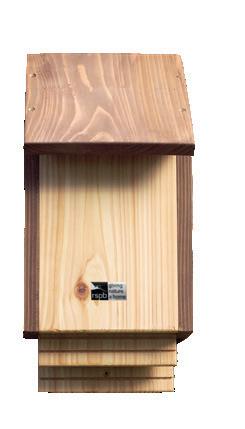
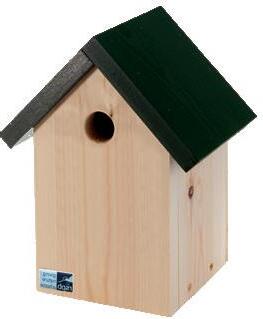
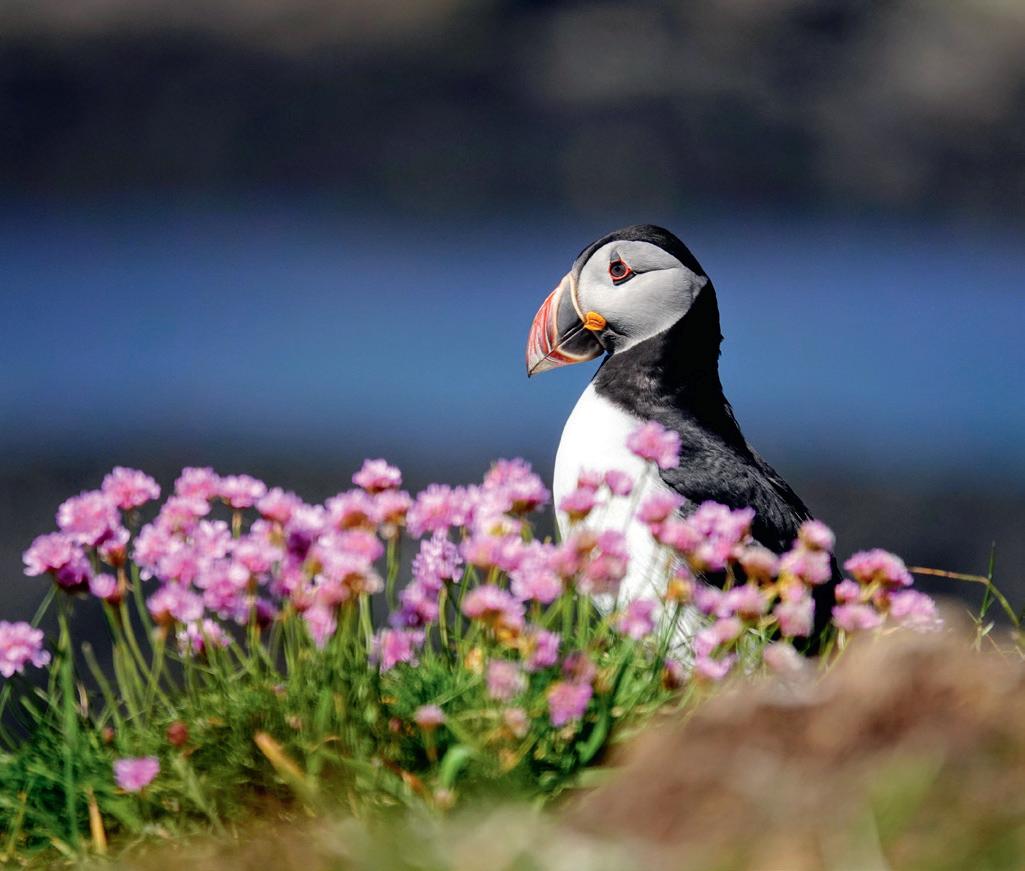
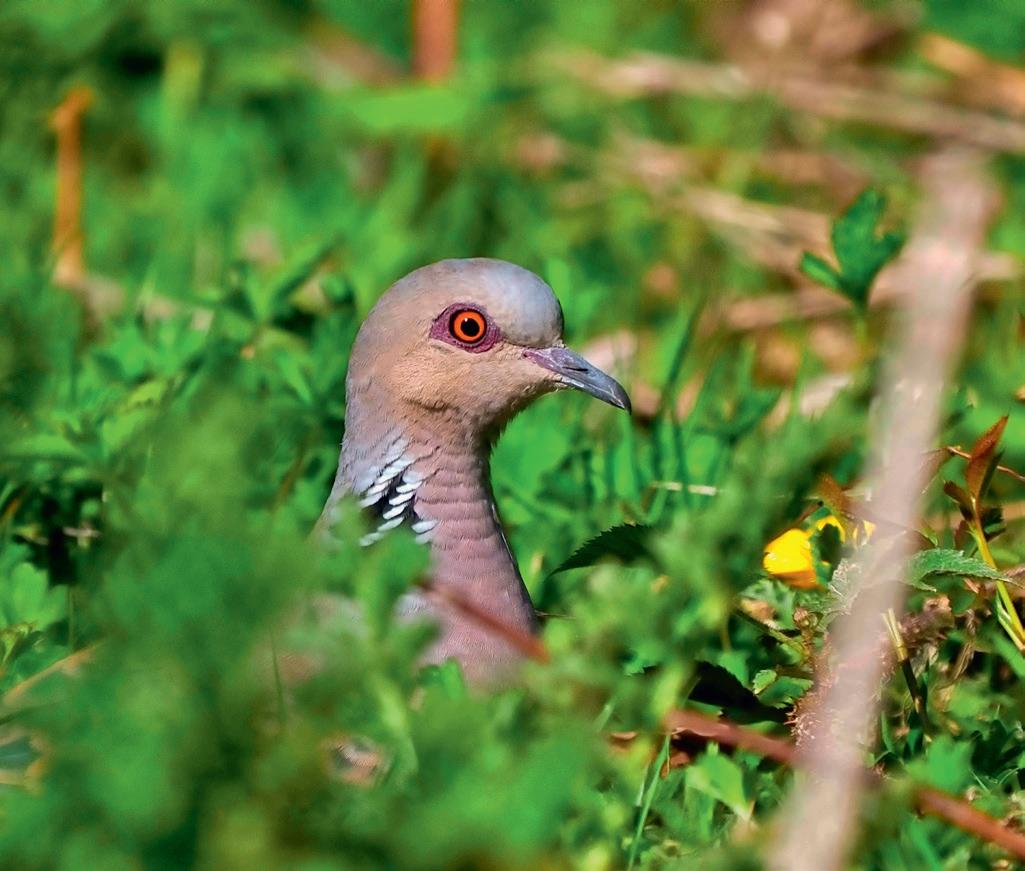
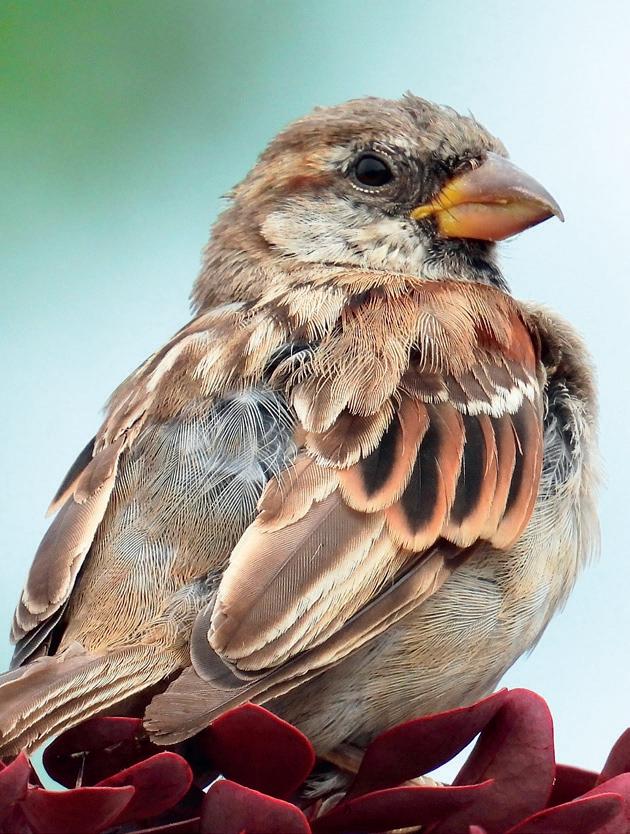
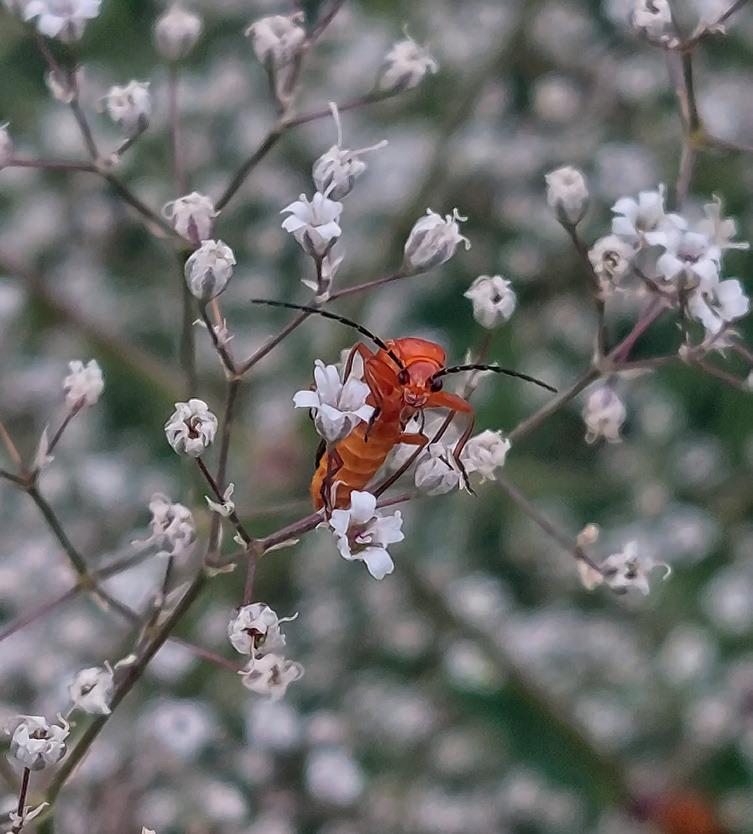
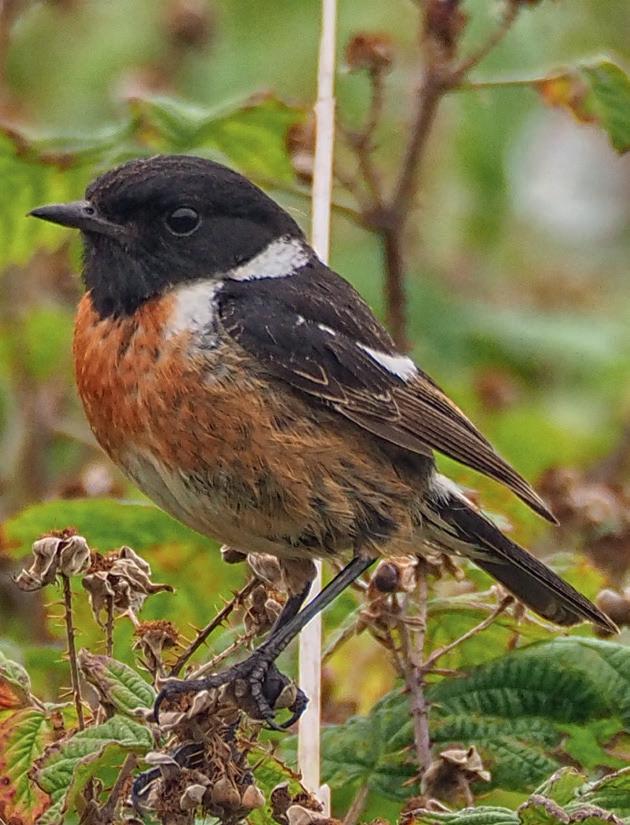
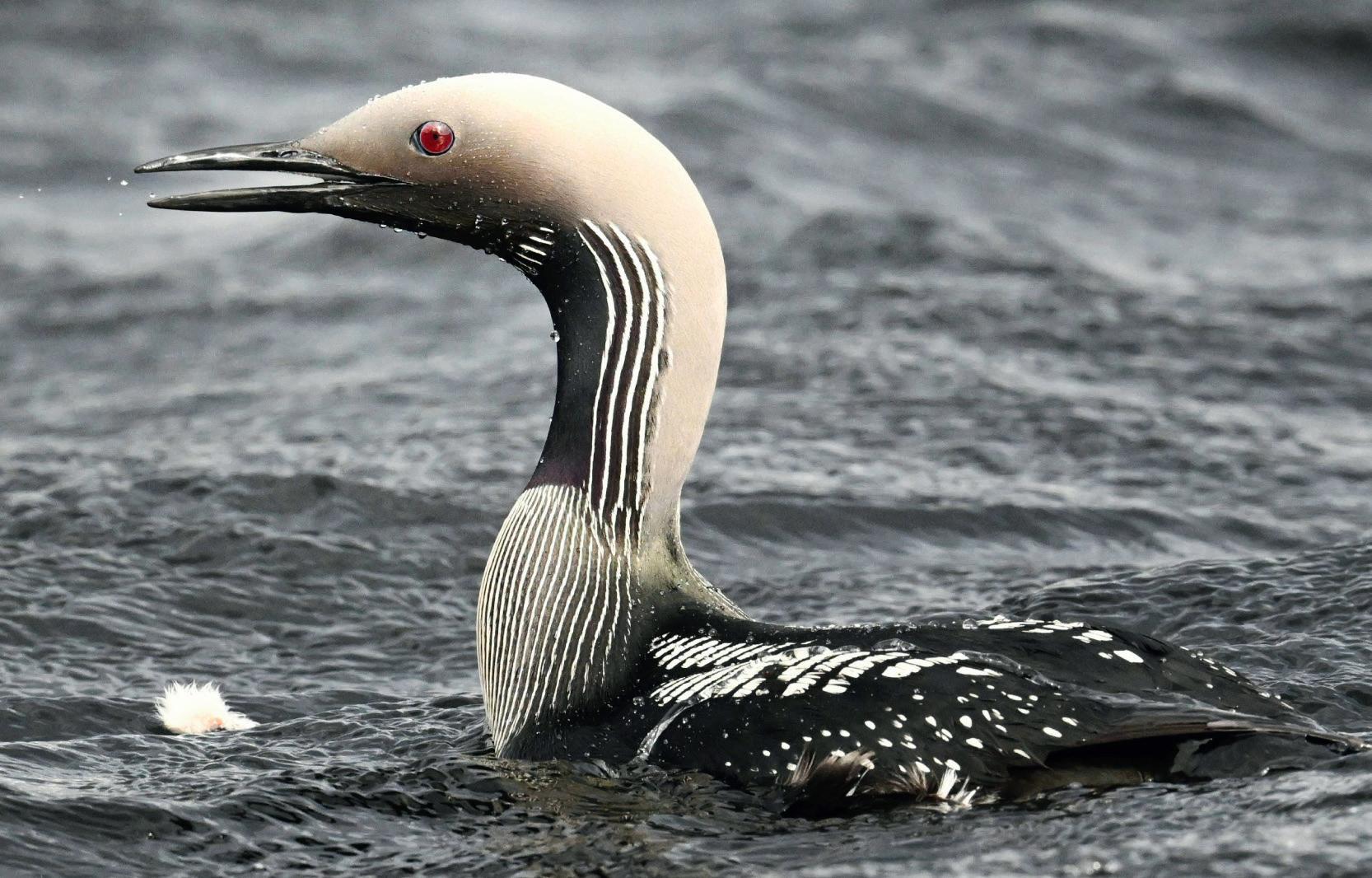
Low-fertility soils provide ideal conditions for colourful flowers galore.
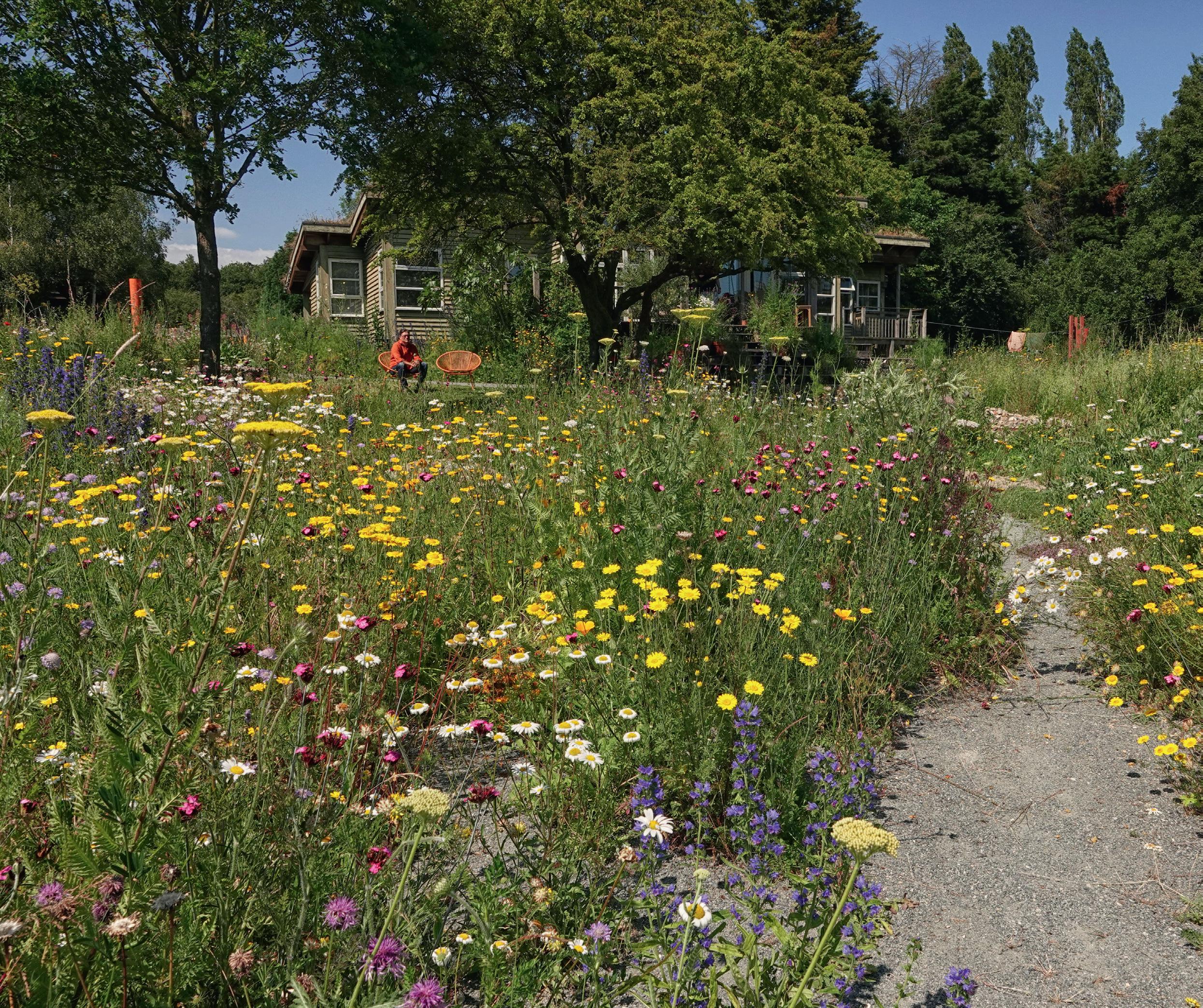
Adrian Thomas meets John Little, a pioneering gardener proving urban spaces thrive when we invest in gardeners and embrace bold, unconventional habitats
There are some people you meet who change how you think about things. When it comes to wildlife-friendly gardening, that person is John Little!
This is the man who places log piles on roofs, grows plants in crushed concrete, and – famously – has an old van half buried in the garden as habitat!
He is also a leading voice encouraging investment in gardeners, which he believes is critical if we are to have inspiring urban spaces full of wildlife.
I was therefore delighted to visit John at Hilldrop, his home in Essex. Here, he lives in a self-made, green-roofed house surrounded by 4 acres of garden, a living
laboratory for his experiments in sustainable gardening. When John took on the garden 34 years ago, it was all grass. With a mini-digger, he stripped the topsoil and reshaped the land. “Fertile soils limit the mix of plants that will grow,” says John. “Reducing nutrient levels is key to a colourful landscape on a realistic maintenance budget.”
He then covered the ground with a mix of certified-safe recycled aggregates, including brick rubble, crushed glass and surplus sand from the A13 roadworks. He sowed seed directly into this, avoiding the need for compost or plastic. The result is an open mosaic habitat: a
riot of plants interspersed with patches of bare ground. It is naturally beautiful.
The paths are also for wildlife. Made of hoggin – a blend of sand, gravel and clay – they are home to various mining bees. Just the act of walking along the paths keeps them free of vegetation. Even the plants in pots on the steps are growing in almost pure recycled sand, mixed with garden compost.
However, this is all just the launchpad for John’s passion to encourage biodiversity in public spaces. It started when he took on the grounds’ maintenance of the Clapton Park housing estate in London. It was there,
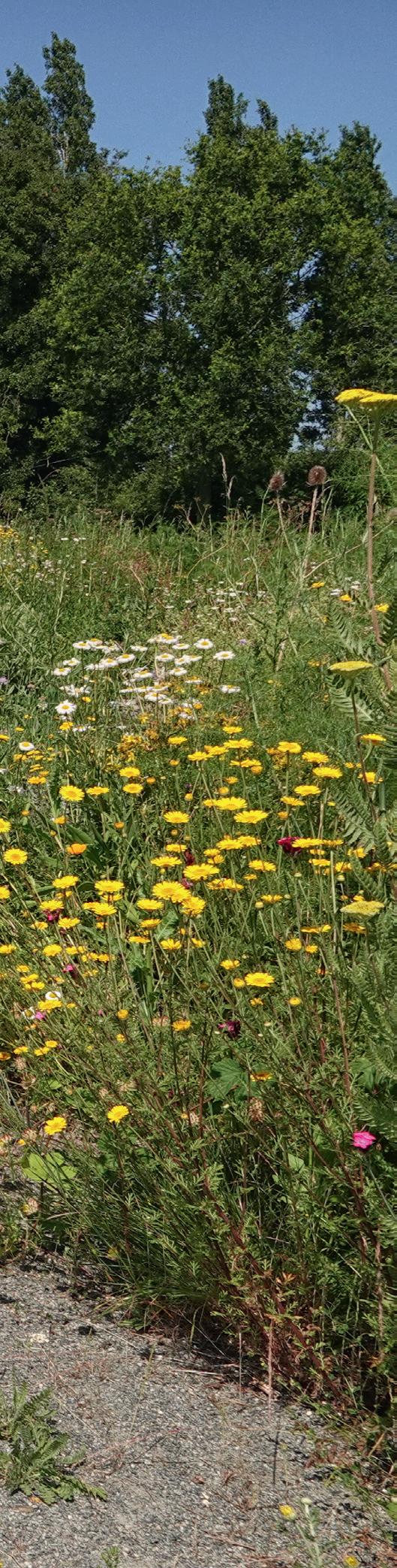
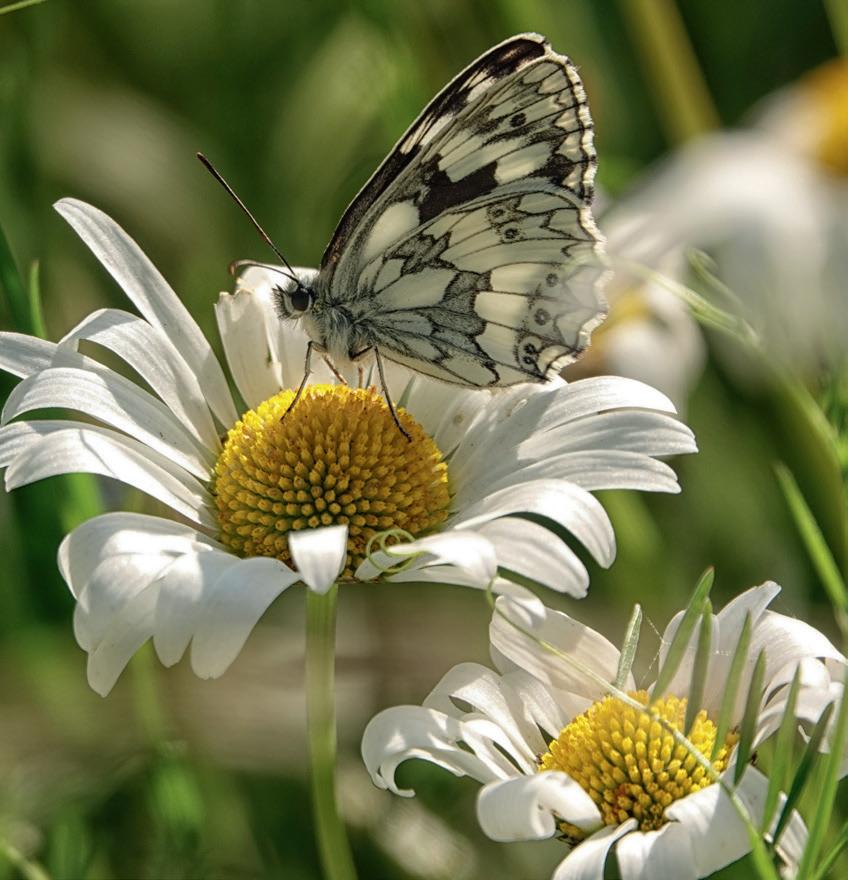
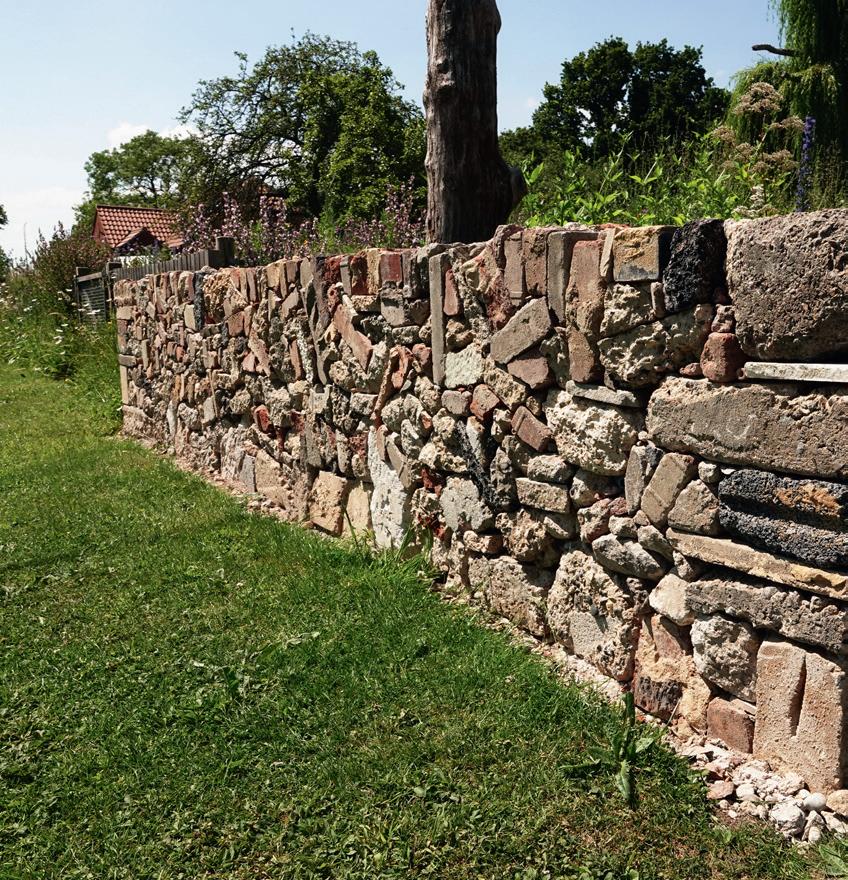
talking to residents daily, that made him realise what was required for success.
“Urban greenspaces need to be looked after, and you need gardeners on hand to share their joy,” he says. “We need to put a proportion of the money that goes into buildings into the people who care for places once they are made.”
To promote this, John has established a not-for-profit enterprise called Care Not Capital, which offers free training to gardeners and councils to help them create spaces for people and wildlife.
Somehow among this, John also helps to run Green Roof Shelters, whose bug-magnet bike shelters and greenroofed containers have graced everything from playgrounds to award-winning show gardens. “It is all about making people’s lives better,” John concludes. “And putting a biodiversity twist on everything benefits everyone.”
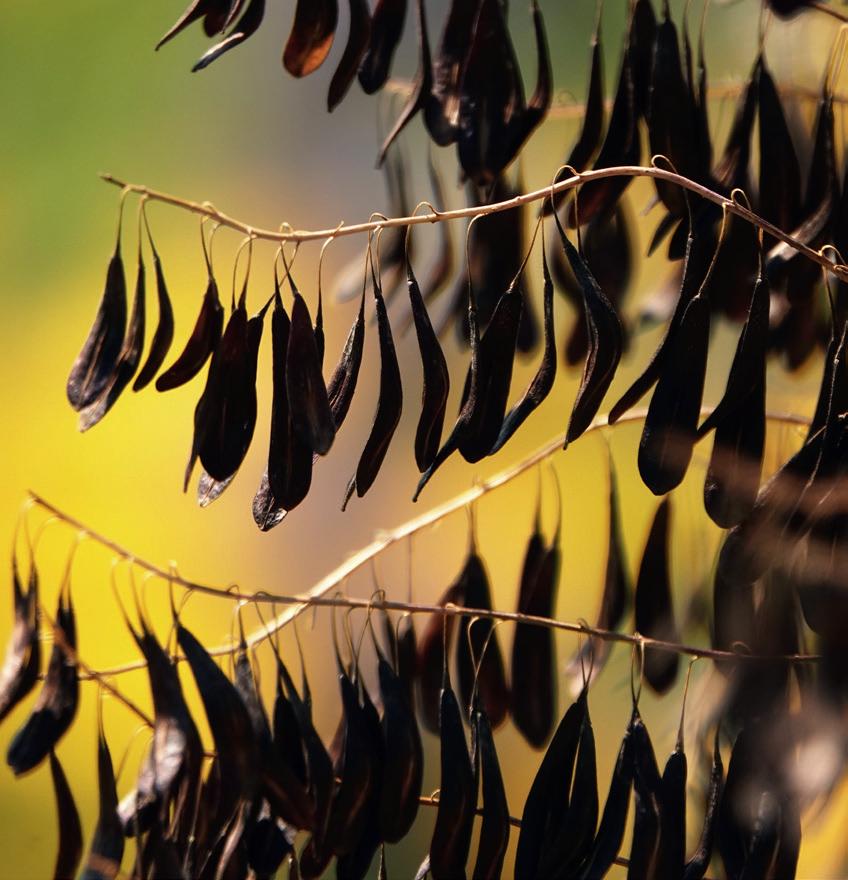
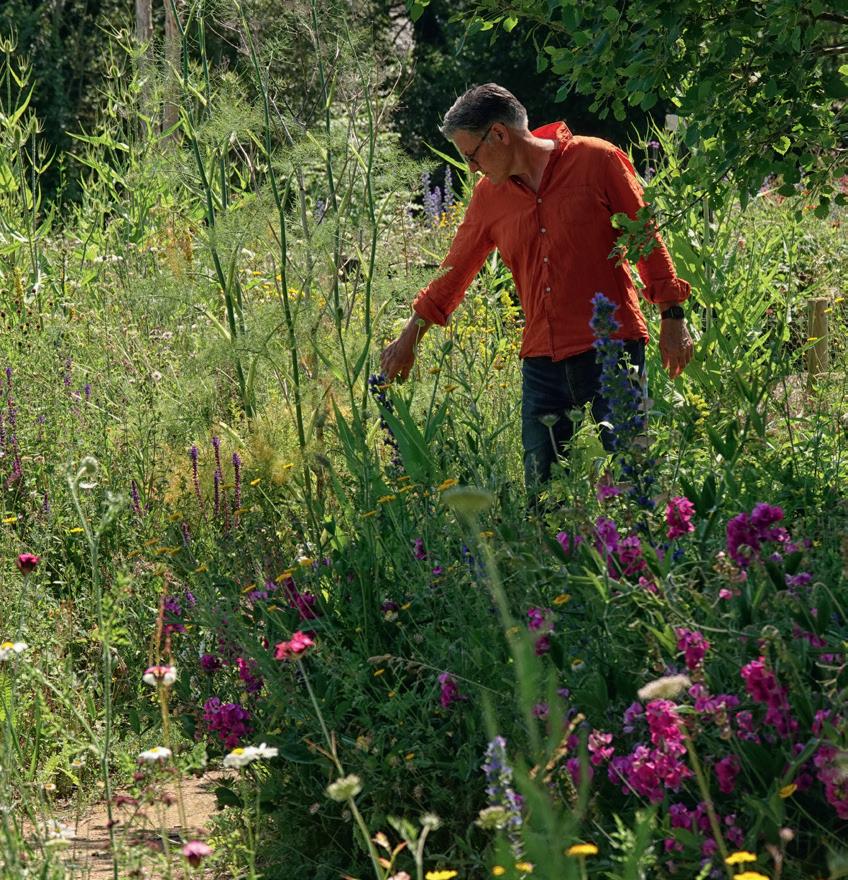
1 Make your garden a more ‘complicated’ place – dig a trench, make mounds and remember the value of lots of bare ground.
2 If you do have any building work done, find interesting ways to incorporate any ‘waste’ into the garden, such as spent bricks or concrete.
3 Don’t think you have to make a plant perfectly happy – they are easier to manage if the conditions are a bit tougher.
4 If a book says, ‘This is the only way to do something’, don’t believe it!
1. Marbled White butterflies provide checkerboard perfection in meadow areas, here on Oxeye Daisy
2. The seeds of Woad hang like miniature socks on washing lines, and then self-sow into the poor soils
3. Dunan Nuttall, a drystone waller, created this wonderful wildlife wall for John using demolition waste. It cost just £30 in materials!
4. John has a busy life, and lower fertility soils help to reduce the work, but he emphasises that the gardener is critical and there is no such thing as ‘lowmaintenance’ public space
John has two open days a year where you can see Hilldrop in action. For dates see grassroofco
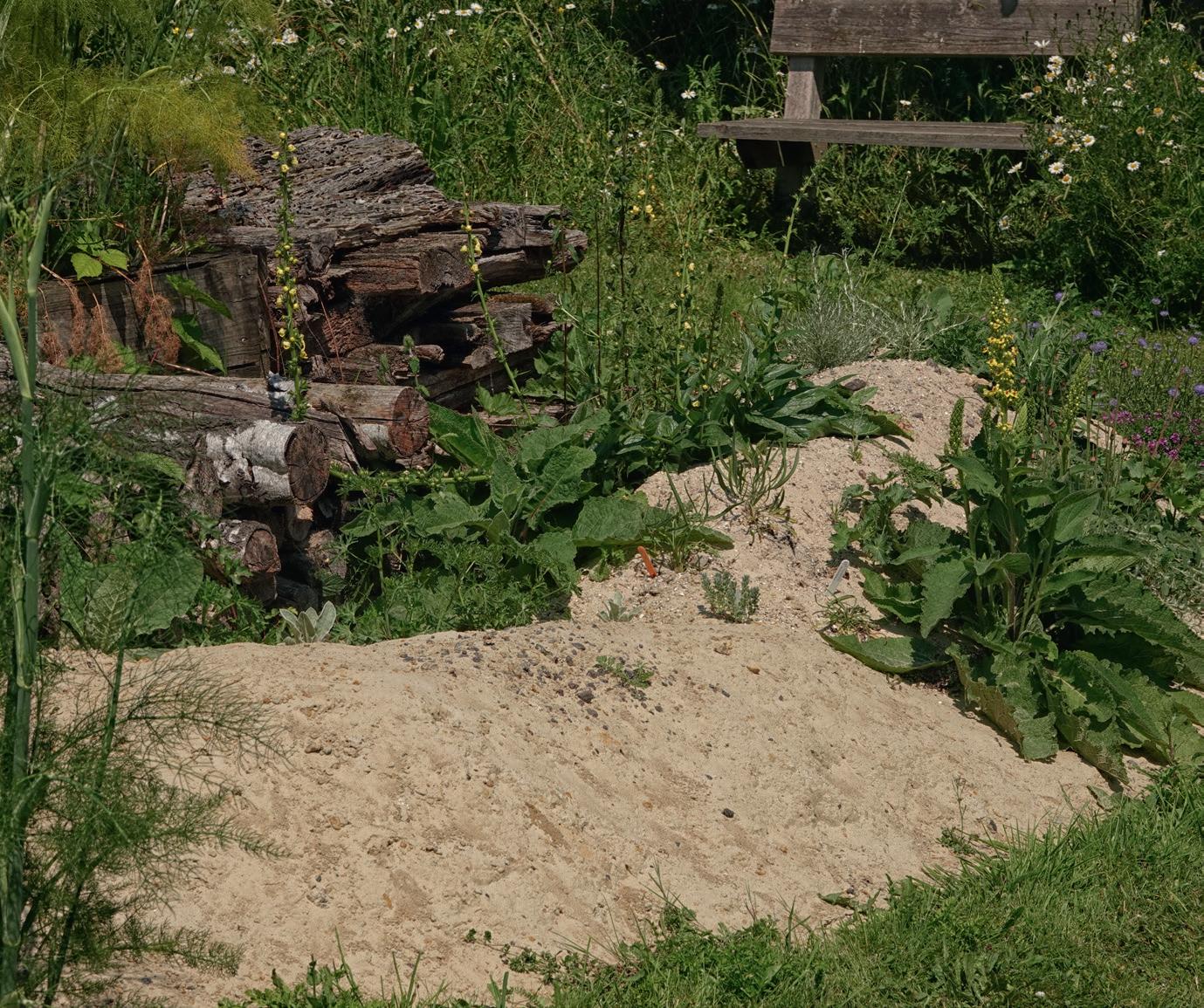
This activity could not be simpler! Just pile some sharp sand or crushed hardcore in a sunny spot and watch it draw in ground-nesting bees. Builders’ merchants will usually deliver these in bulk bags.
Ideally, dig out a shallow pit as a base to remove some of the fertile soil below,
Stood proudly on John’s veranda are tall planks of wood drilled with hundreds of holes for solitary bees. It is clearly very successful, given the number of occupied holes they have plugged with mud and leaves.
The golden rules for success are: Include a range of hole diameters, from 2mm to 8mm.
Drill as deep as you can, but don’t go through the other side of the wood. The hotel should face south in a sunny, sheltered spot.
Sand the entrances smooth to avoid the bees snagging their wings. Use untreated wood.
and try to have a good depth of sand –at least 30cm – to make it more difficult for weeds to grow through it.
Don’t rake it flat but create some all-important contours instead! There is a risk Foxes will paw at your sandy bank, but allow them their fun – that’s nature, and some disruption is good!
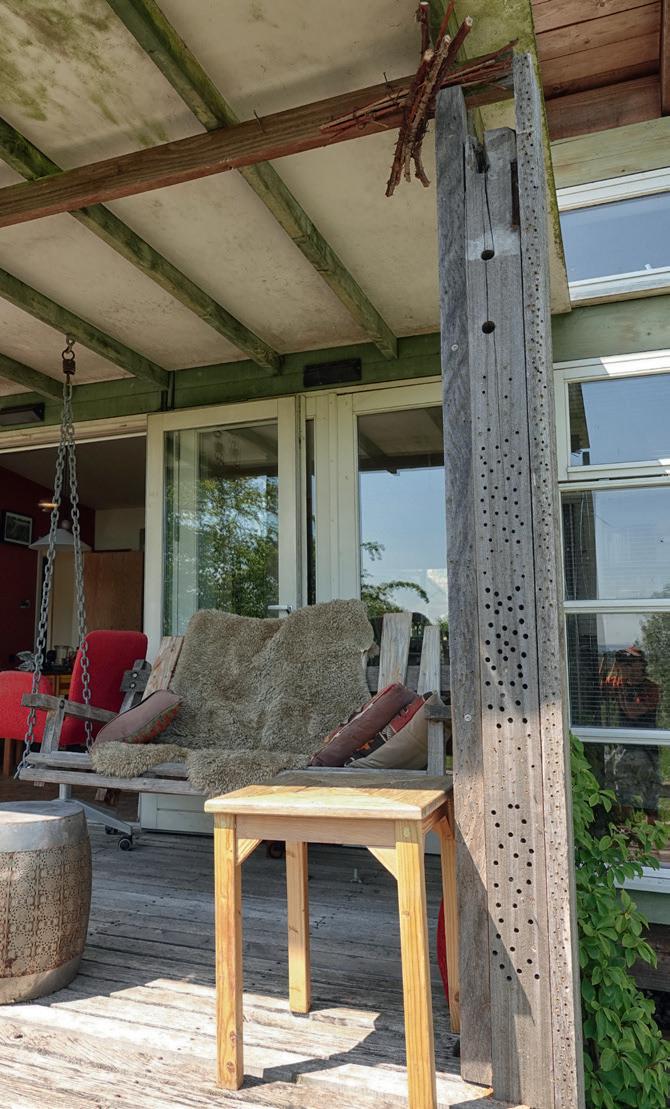
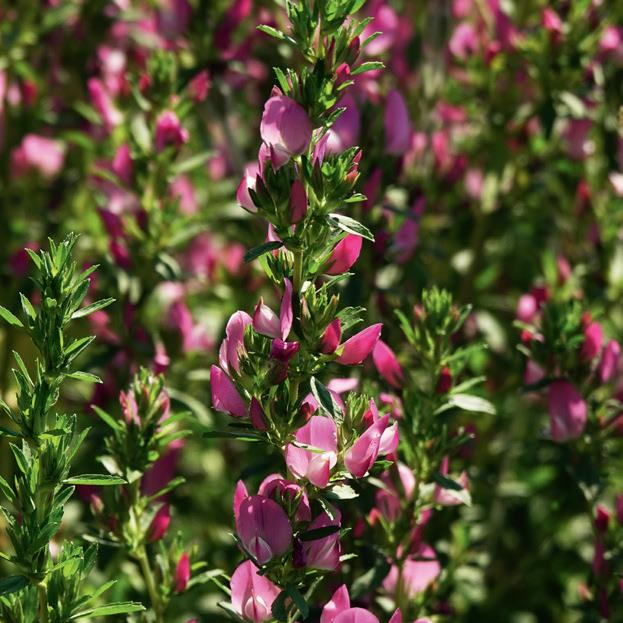
This is one of the standout plants in John’s garden, both visually and for bees.
A member of the pea family, it is native across much of England. Its close relative, Restharrow, has a range that extends well into Scotland and Ireland.
It grows up to about 60cm tall and is, in effect, a diminutive shrub, lasting year after year.
Its name is due to the tough, twiggy stems, which would bring the harrow to a halt.
The flowers, which have a very sweet scent, are a rich pink and have a long flowering season.
It is easy to grow from seed, which can be purchased from good native wildflower seed merchants.
It copes well in free-draining conditions such as sand, chalk or gravelly soils.
Plant in a sheltered spot that gets plenty of sunlight. A sunny bank, rock garden or south-facing wall are ideal locations.
The roots were once used to make herbal tea, but with diuretic properties, so maybe not one to try!
Other native wildflowers in the pea family that look great in the garden include Tufted Vetch and Dyer’s Greenweed.
Of the 275 or so UK species of bees, about half are solitary bees that dig nests in warm, sunny, usually light soils. However, several species of solitary cuckoo bees sneak into the nests of mining bees and lay their eggs on the nectar and pollen supplies of the host.
The further south in the UK, the more species you are likely to find, and diversity is highest in and around heathland habitats.
Many species of ground-nesting bees visit gardens, feeding on nectar and pollen in flower beds and tree blossoms, and utilising suitable nesting sites.
Perhaps the most familiar is the Tawny Mining Bee, which flies from late March to June. Arguably the most attractive is the Ashy Mining Bee (pictured right) with its black and white ‘fur’.
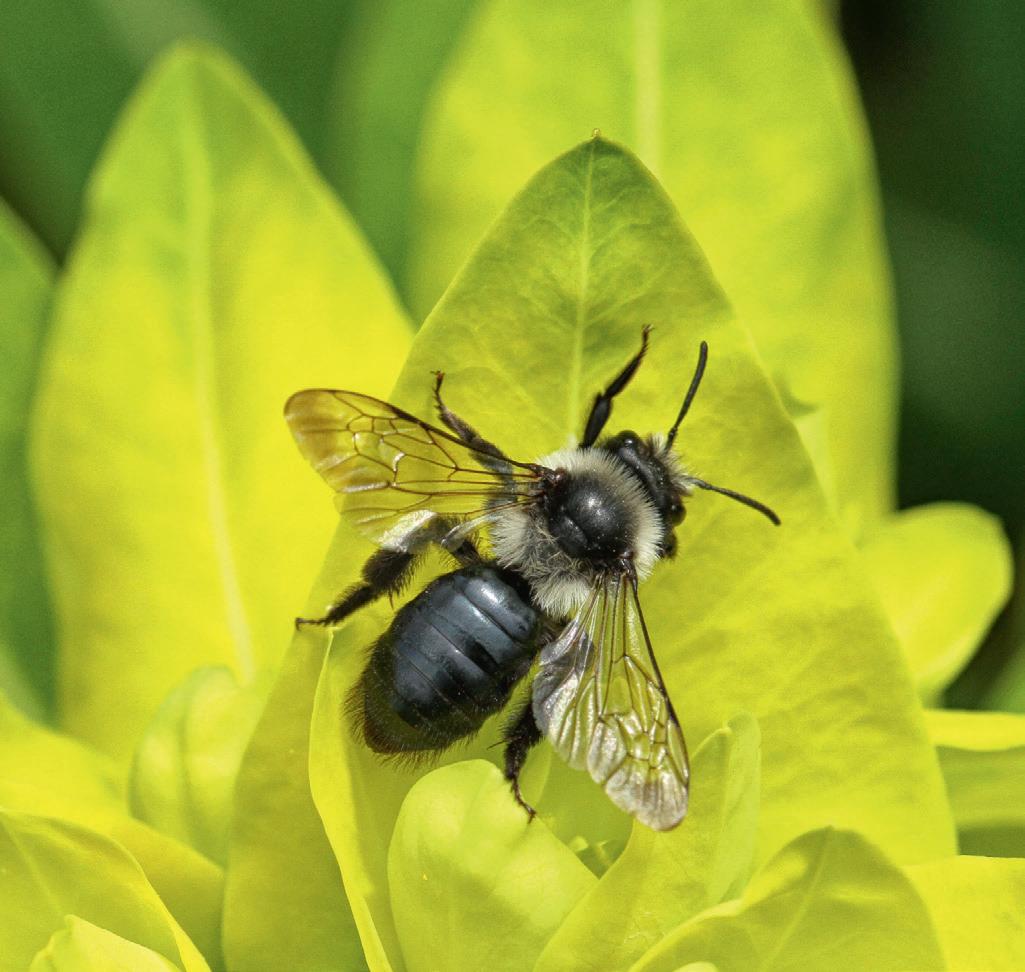
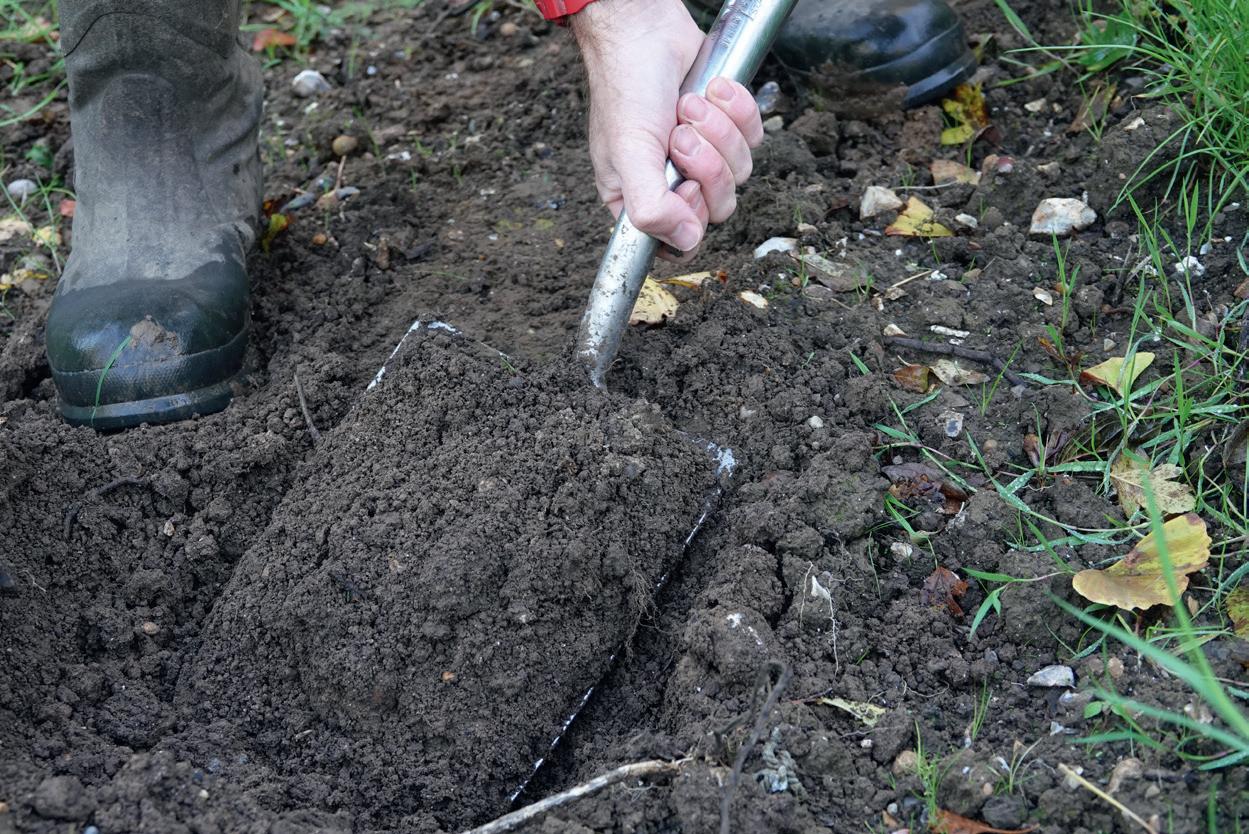
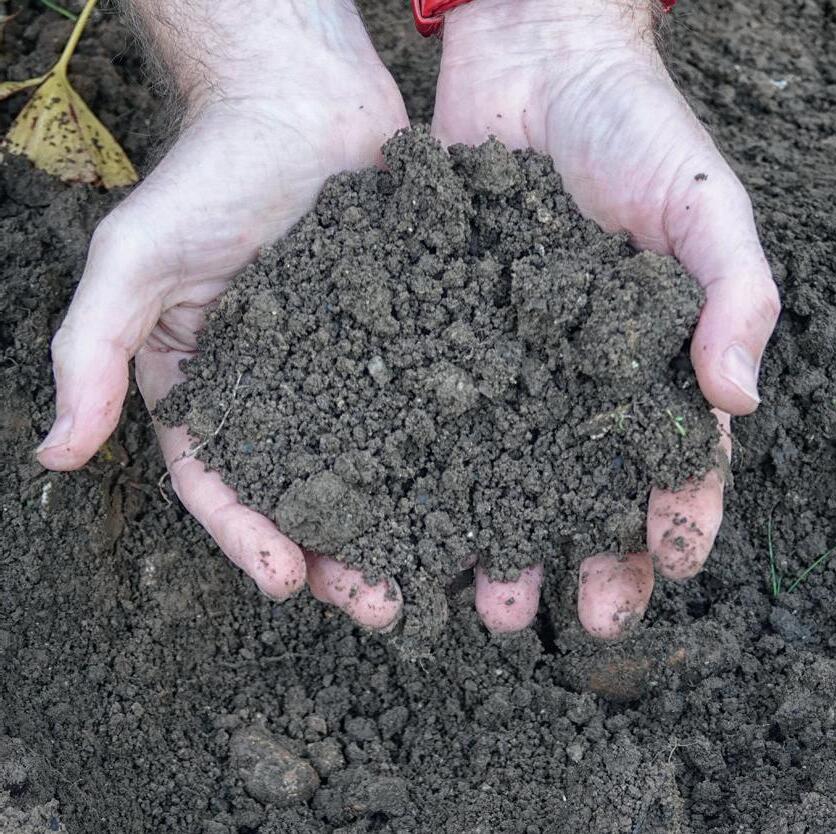
Your letters
As a gardener, I am keen to manage my soil better, but I need clear guidance on what is most beneficial for helping soil organisms thrive and how, even in a small way, I can contribute to carbon sequestration. There are thousands of gardens – it would be good to leave a legacy of better soil management.
Dr Angela Cook
Adrian says: What a fabulous question, Angela, and one so often overlooked. A healthy soil can indeed lock away valuable amounts of carbon, either in the form of organic matter beneath the surface or in supporting plants above. And, of course, soil can support so much
life, including the biodiversity within the soil, the creatures that feed on it, and the plants it supports.
In summary, creating a healthy soil and helping combat climate change can be achieved by:
Increasing organic matter in the soil, for example by adding mulches and growing cover crops;
Avoiding turning the soil where possible, for example by adopting no-dig techniques;
Growing lots of plants, especially those that are long-living. If that can include woody plants such as trees and shrubs, even better; Avoiding pesticides.
Of course, retaining some bare soil is valuable for all sorts of wildlife, and – as John’s work shows – a ‘poor’ soil in terms of nutrients doesn’t necessarily mean it’s not healthy. Intriguingly, recent research has found that crushed concrete, such as in John’s garden, may also help capture atmospheric carbon dioxide.



Questions answered by India James, Molly Brown and Alex Wilkins, RSPB Wildlife team
Ask us about wildlife at YourQuestions@rspb.org.uk
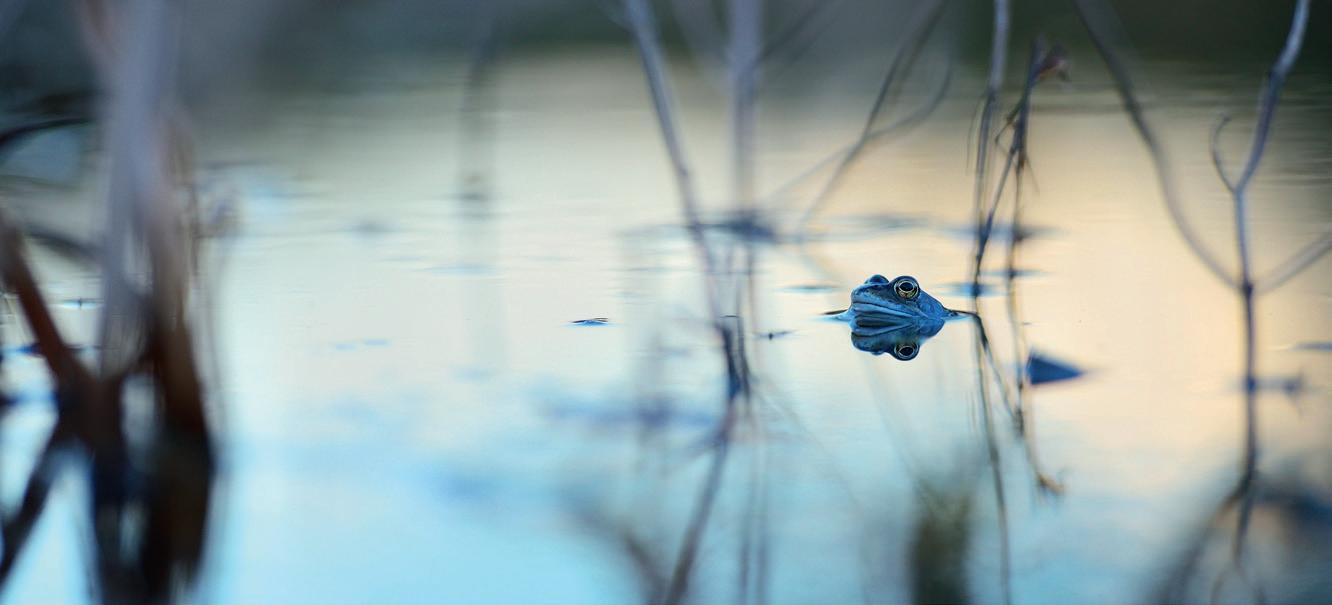
I found a dead frog in my pond after the ice melted, did it die from the cold?
Cathy Peters
Very cold or freezing weather can be a challenge for wildlife, including pond inhabitants. Common Frogs (pictured above) often overwinter in the silt at the bottom of ponds, but sometimes ‘winterkill’ occurs, which is a noninfectious event linked to freezing conditions. The exact cause isn’t fully understood, but it may result from a lack of oxygen; from a build-up of toxic gases from decomposing material beneath the ice; or, in very shallow
ponds, the entire water body freezing. To help prevent this, you can sweep snow from the surface of the ice to let sunlight through to aid oxygen production – but only attempt this if it is safe for you to do so. For more ideas, see our guidance on keeping water available in winter below.
If you find any dead amphibians, please report them to Garden Wildlife Health at gardenwildlifehealth.org
Cross-species feeding is recorded in many garden birds. We’ve also had reports of a Mistle Thrush feeding a Blackbird fledgling and a Great Spotted Woodpecker feeding a House Sparrow. Some parents instinctively continue feeding after their brood has failed. Nesting close by can also cause confusion, leading some birds to feed the young of another species. Less commonly, begging calls of orphaned chicks can trigger nearby adults to provide food.
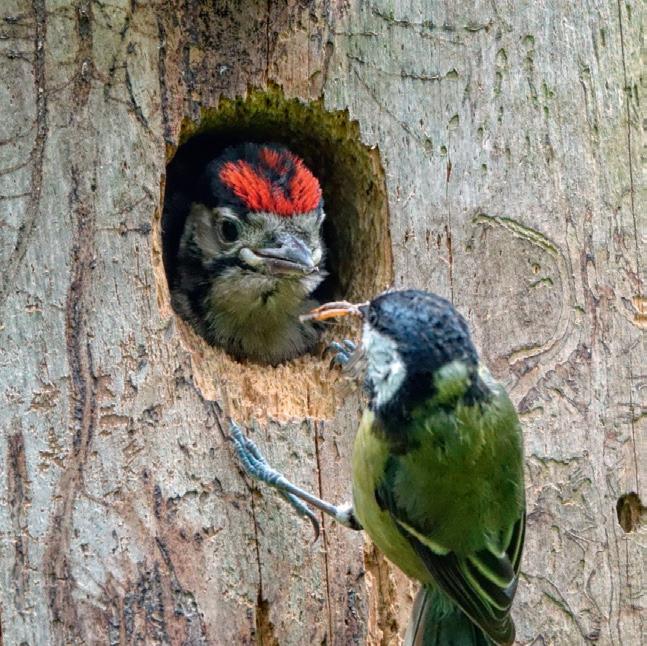
How to…
Birds need water in winter for drinking and to keep their feathers in good condition, helping them to fluff up and trap body heat to stay warm. In freezing temperatures when natural water sources ice over, birds rely more on garden bird baths. To help, float a light ball in the water to keep it moving; line
a bath with polythene to lift ice out easily; or melt the ice daily by pouring in warm water. There are specialised bird baths that keep water from freezing, though these are more of an investment. Remember never add chemicals such as glycerine, antifreeze, salt or sugar, as these can damage feathers or even prove toxic.
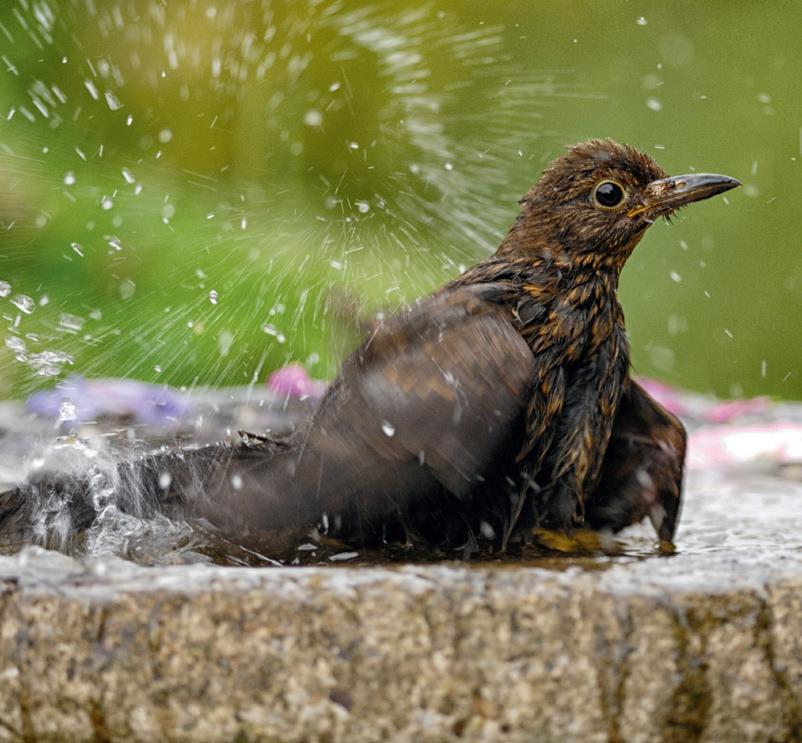
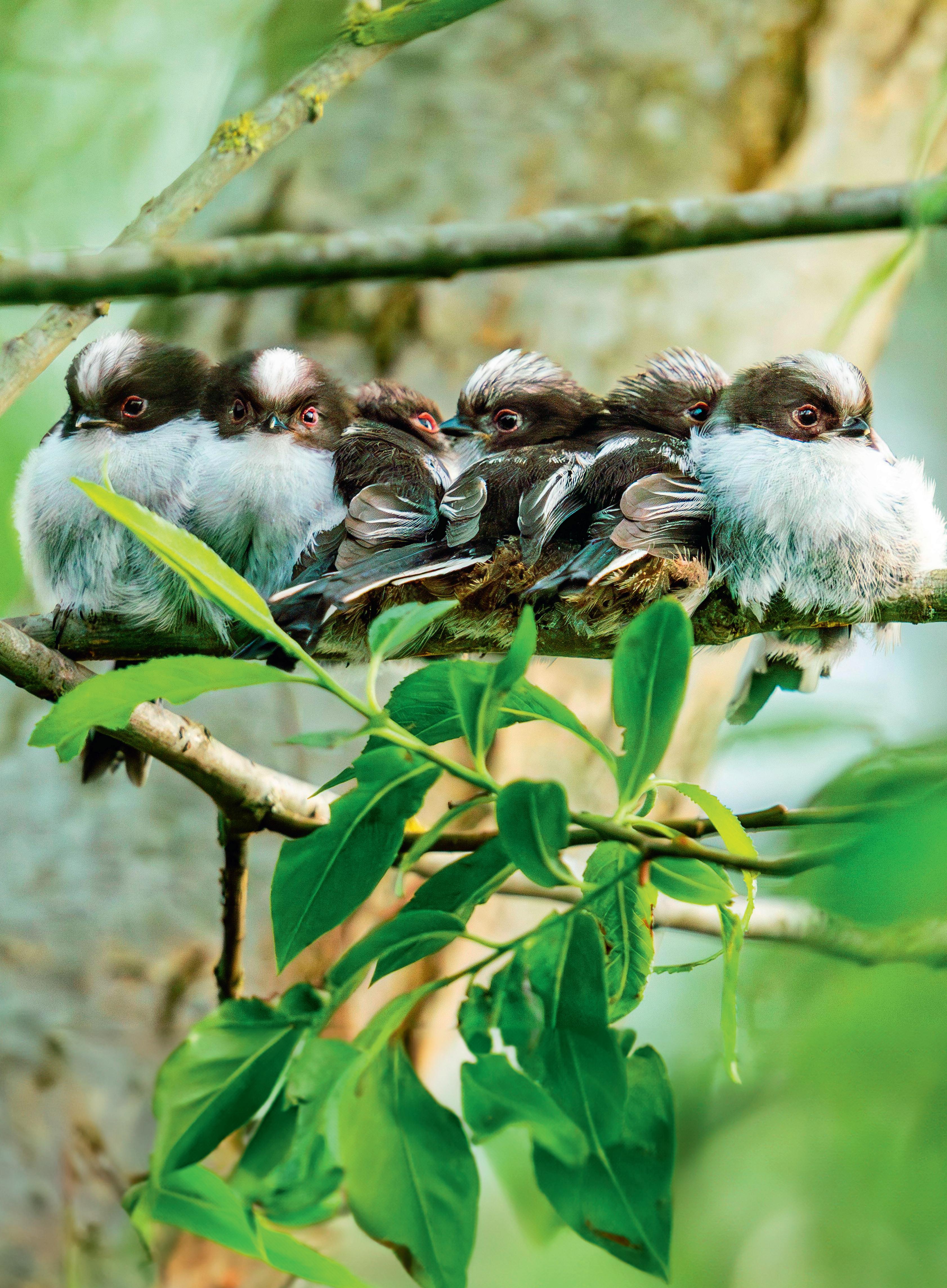
Victoria McCann
This is typical behaviour of Long-tailed Tits, especially at this time of year. In winter, they are more often seen travelling in flocks and visiting gardens for food. Due to their small size, they would be much more at risk from the cold if they roosted alone, so huddling together helps them survive the cold winter nights. Juvenile Long-tailed Tits (pictured) roost together immediately after fledging; to begin with they all try to get into the middle of the roosting line, but once hierarchies are formed, individuals at the top of the hierarchy get the middle spots.
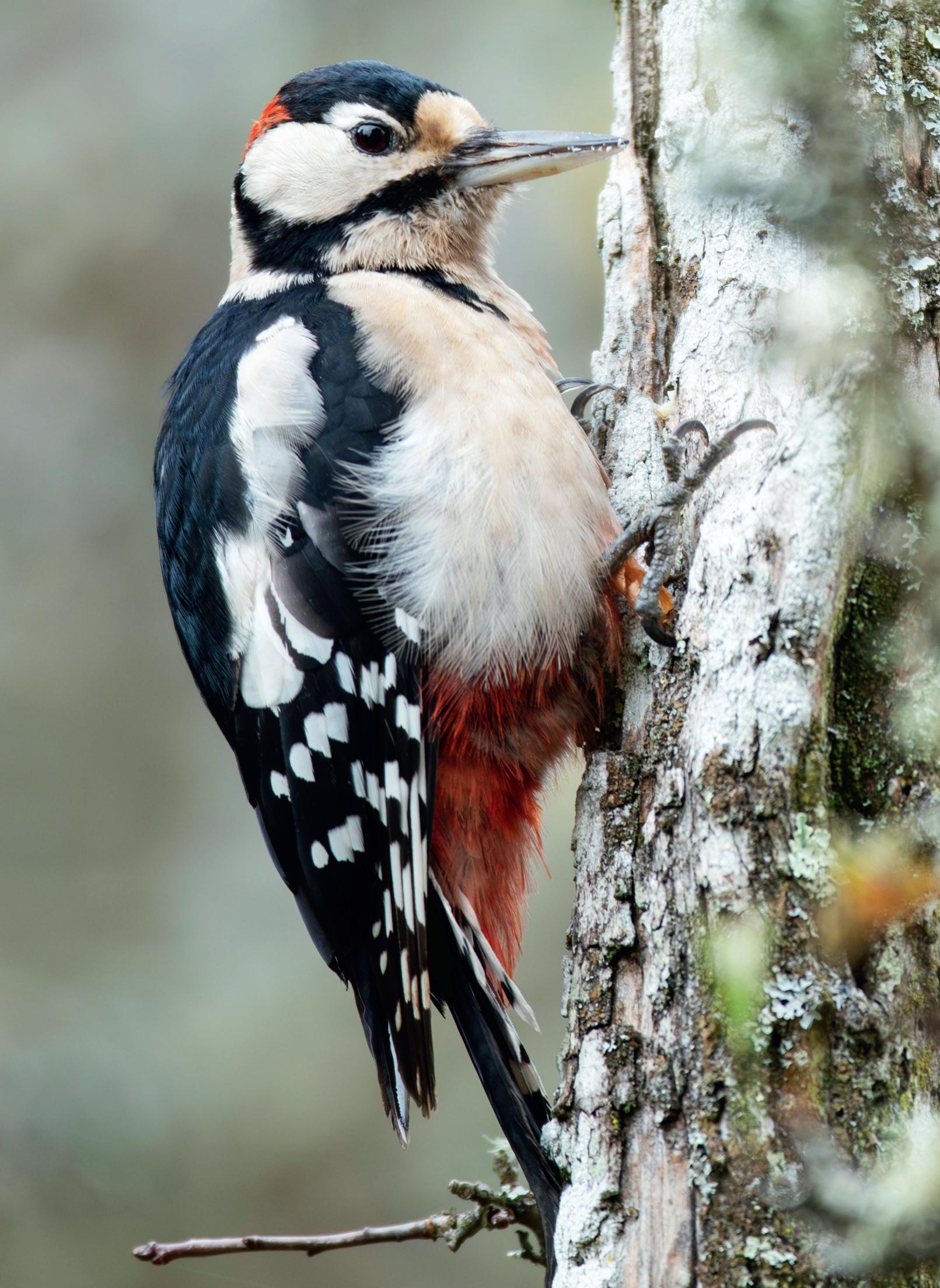
In the UK we have rabbits and hares, which are a familiar sight across our countryside. Both species have become naturalised. Rabbits were introduced by the Normans and the Brown Hare by the Romans, and both belong to the family, Leporidae. The two can be confused but have key defining features that make them easy to tell apart. We also have the Mountain Hare, native to the Scottish Highlands, whose grey-brown fur turns white in winter. The Irish Hare, a subspecies of the Mountain Hare found in Ireland, has red-tinged brown fur.
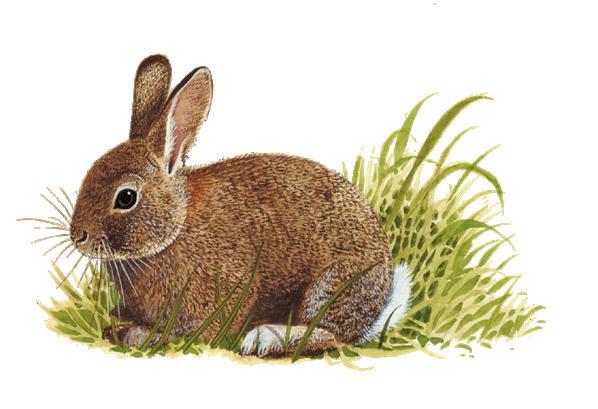
Rabbit
• Small, usually only reaching 40cm in length Grey, brown fur
• Shorter ears
• Dark brown eyes Classic cotton-ball like tail
Have you ever wondered if woodpeckers get a headache while drumming?
It used to be a widely held belief that spongy bone in the front of woodpeckers’ skulls and the muscles around the lower beak act to cushion their brains when drumming. These biological shock absorbers have inspired the engineering of shock-absorbing materials and products such as helmets.
However, a recent study by researchers who analysed Black, Pileated and Great Spotted Woodpeckers (pictured left) showed that their skulls do not protect their brains as previously thought.
The researchers found that the birds’ bills and heads stop at the same time on impact, meaning both experience the same force. The birds’ skulls were found to act like a stiff hammer when they were drilling.
Scientists have long been intrigued by the conundrum of how woodpeckers can drill with such force and still protect their brains. A shock-absorbing mechanism in the skull would make it harder for the birds to peck into wood to drill for food and create nest cavities. The energy from the impact would be dispersed in the spongy bone in the skull, making the behaviour less energy efficient. Using your head like a hammer seems to be more efficient.
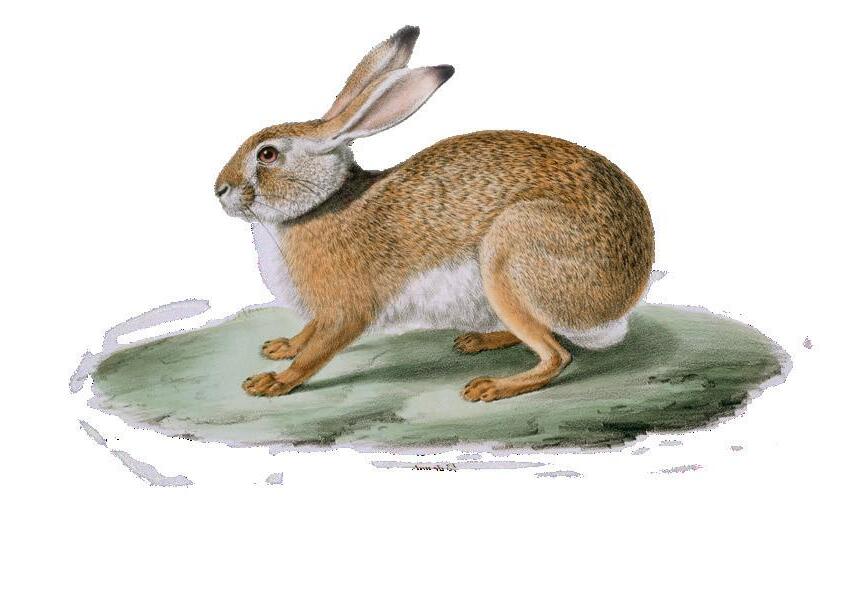
• Golden-brown fur with a pale belly Long ears with black tips
• Amber eyes
• Tail is two toned, with white underside and black top
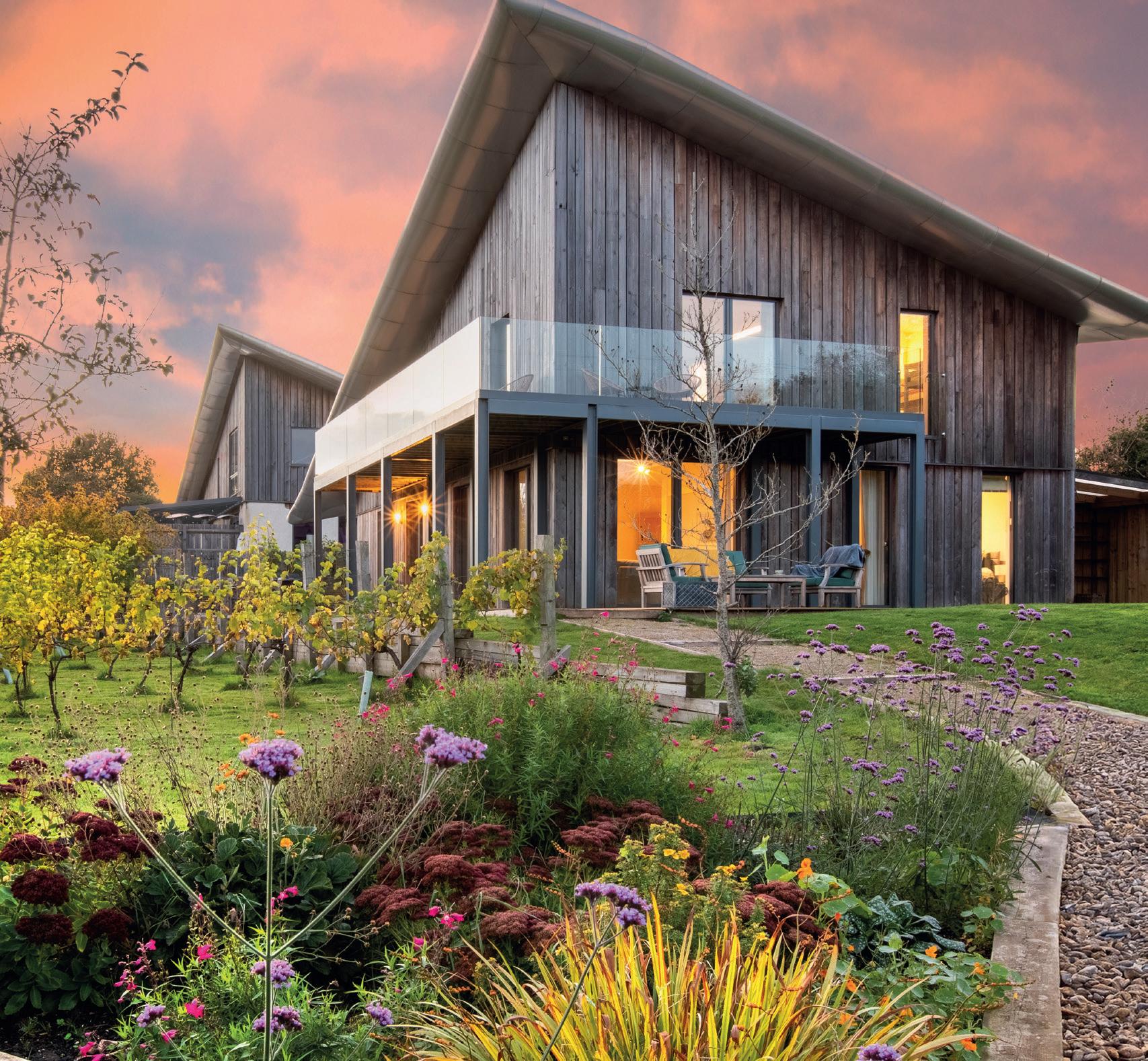
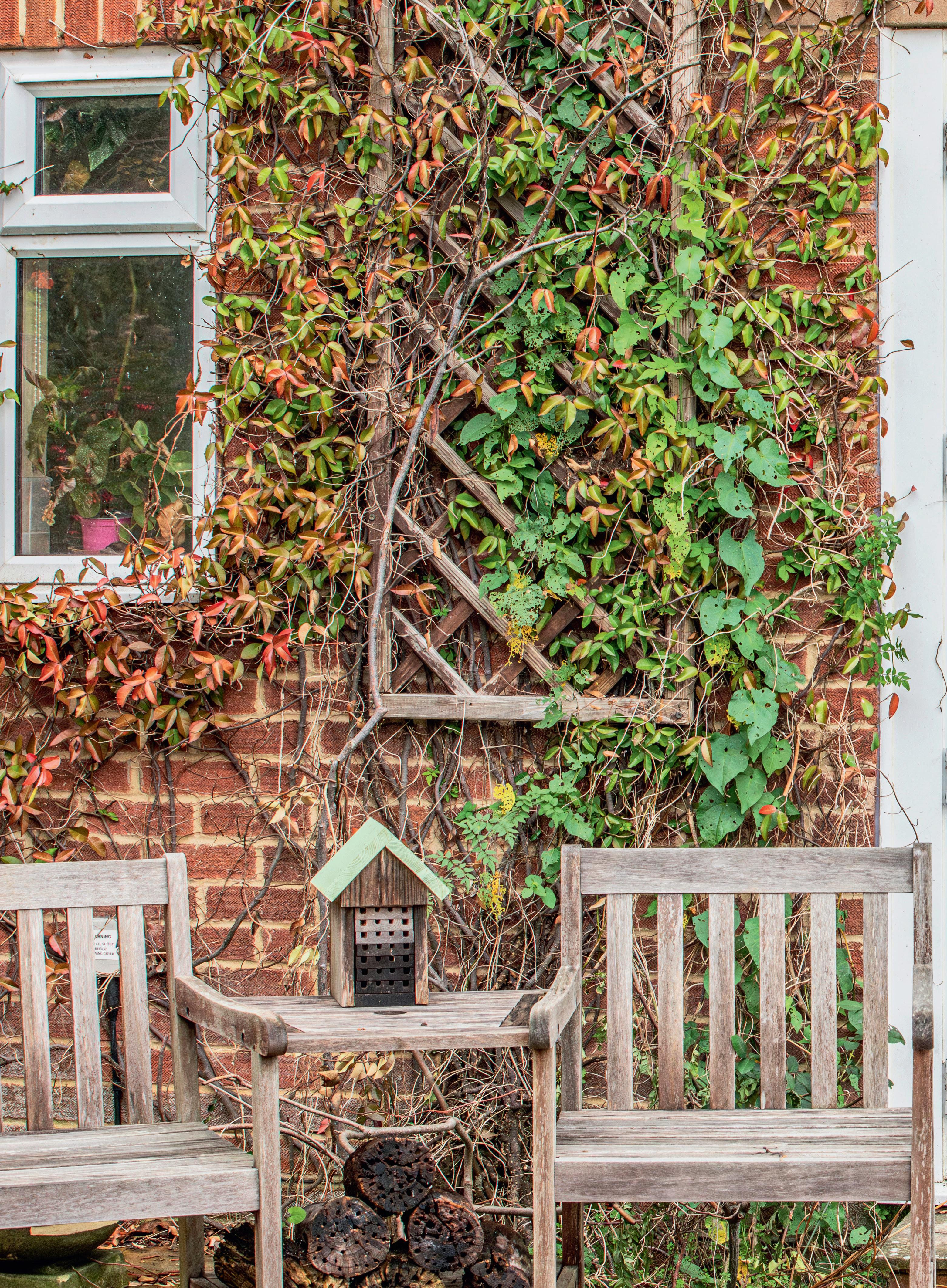
The RSPB’s annual citizen science event doesn’t just help wildlife, it can also inspire novice birdwatchers into a lifelong love of the natural world
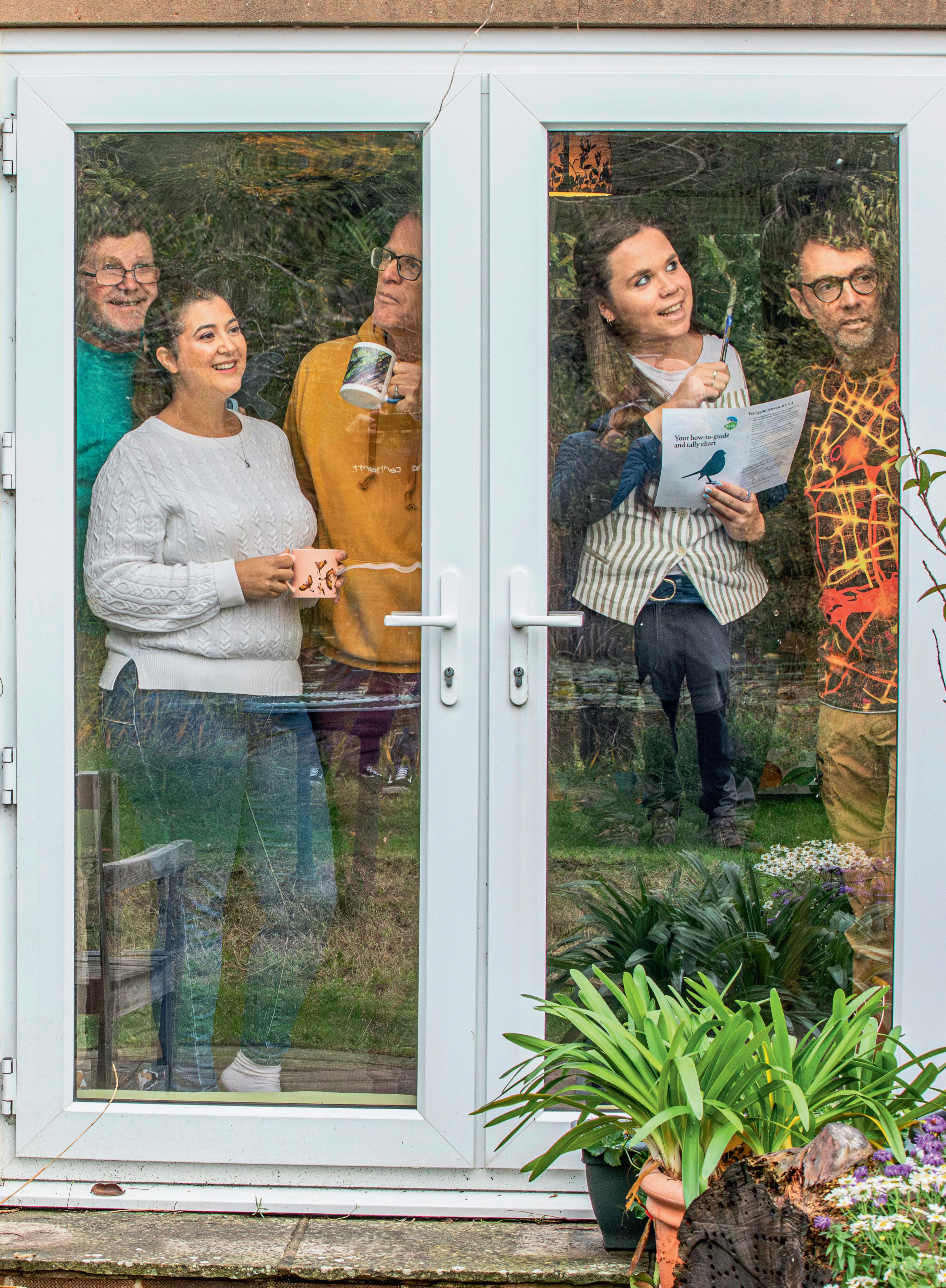
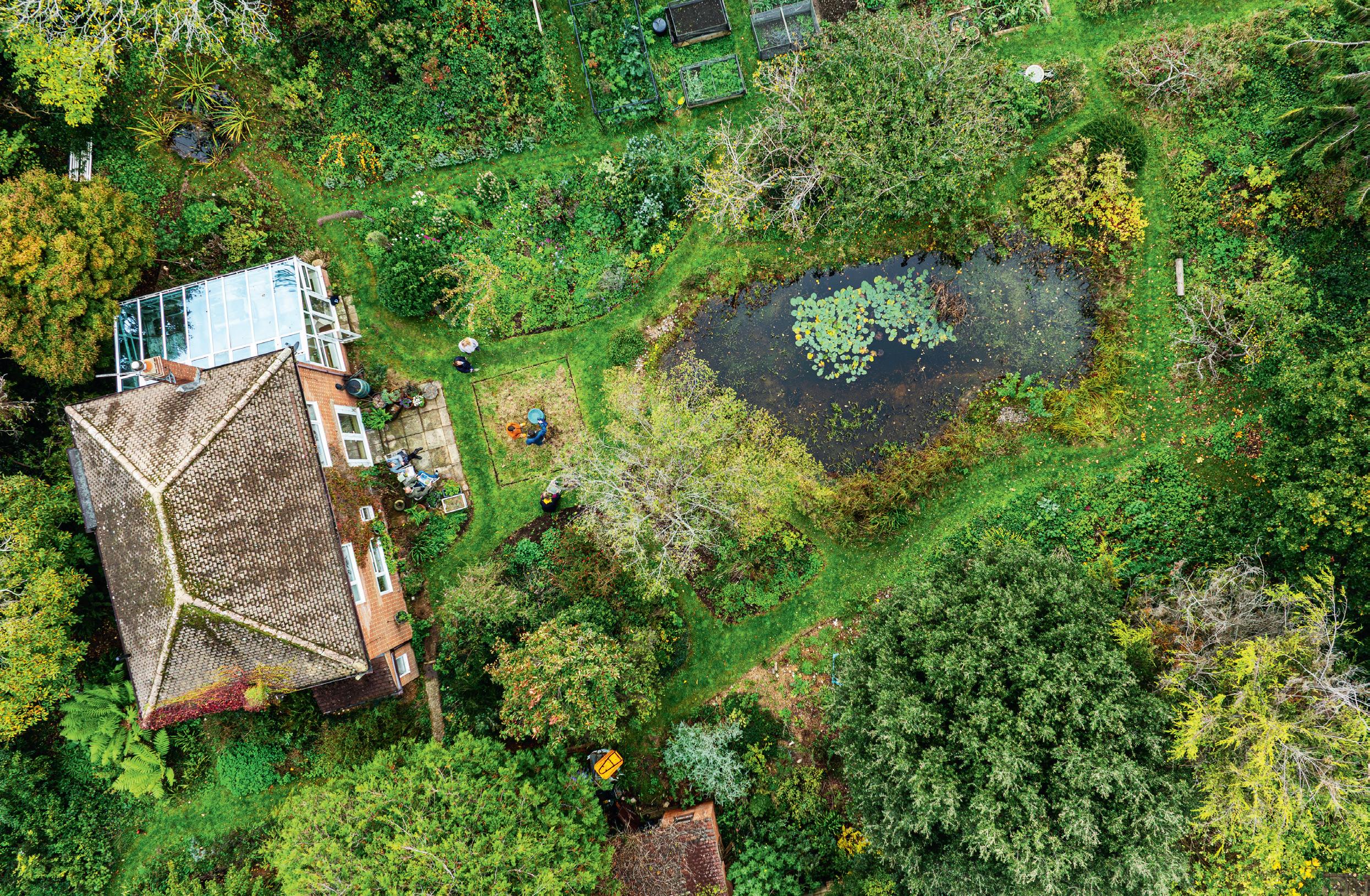
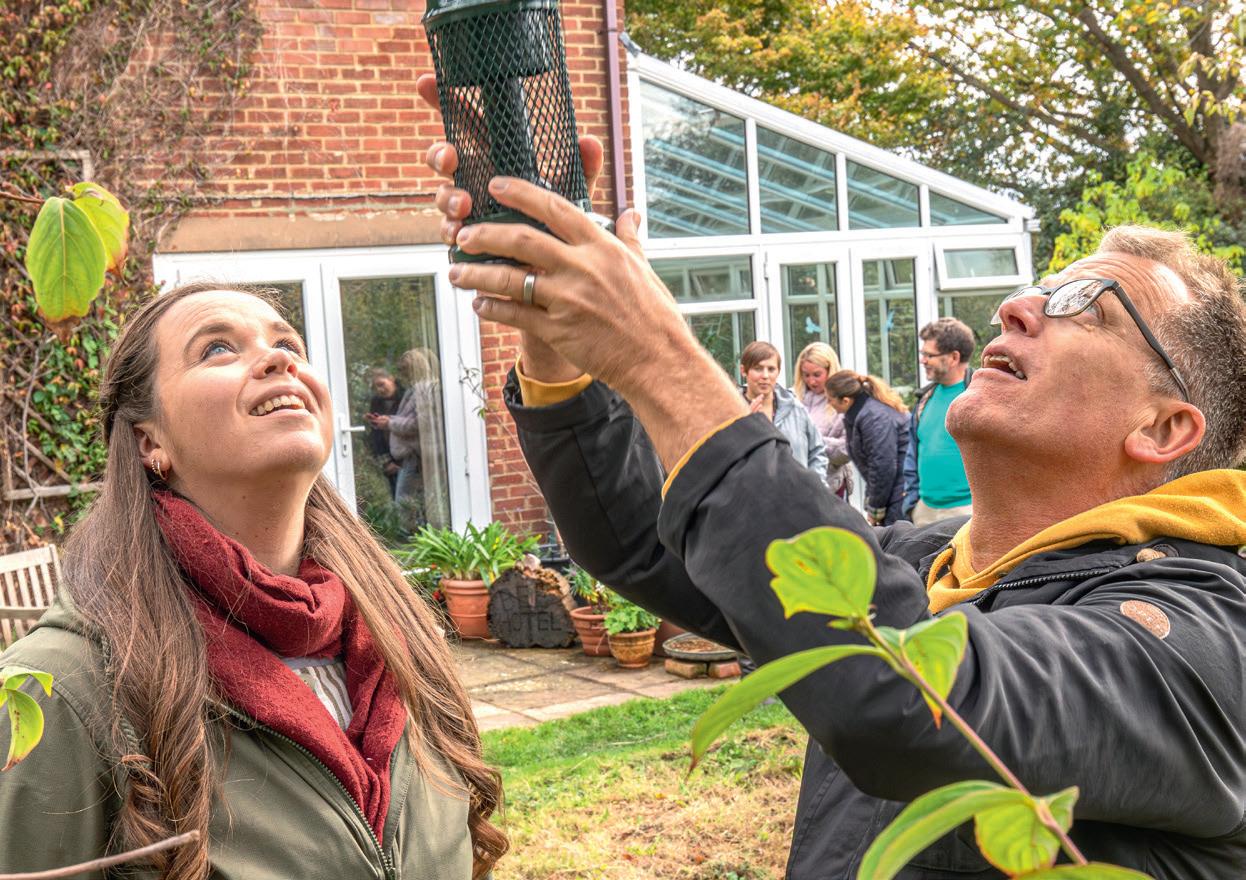
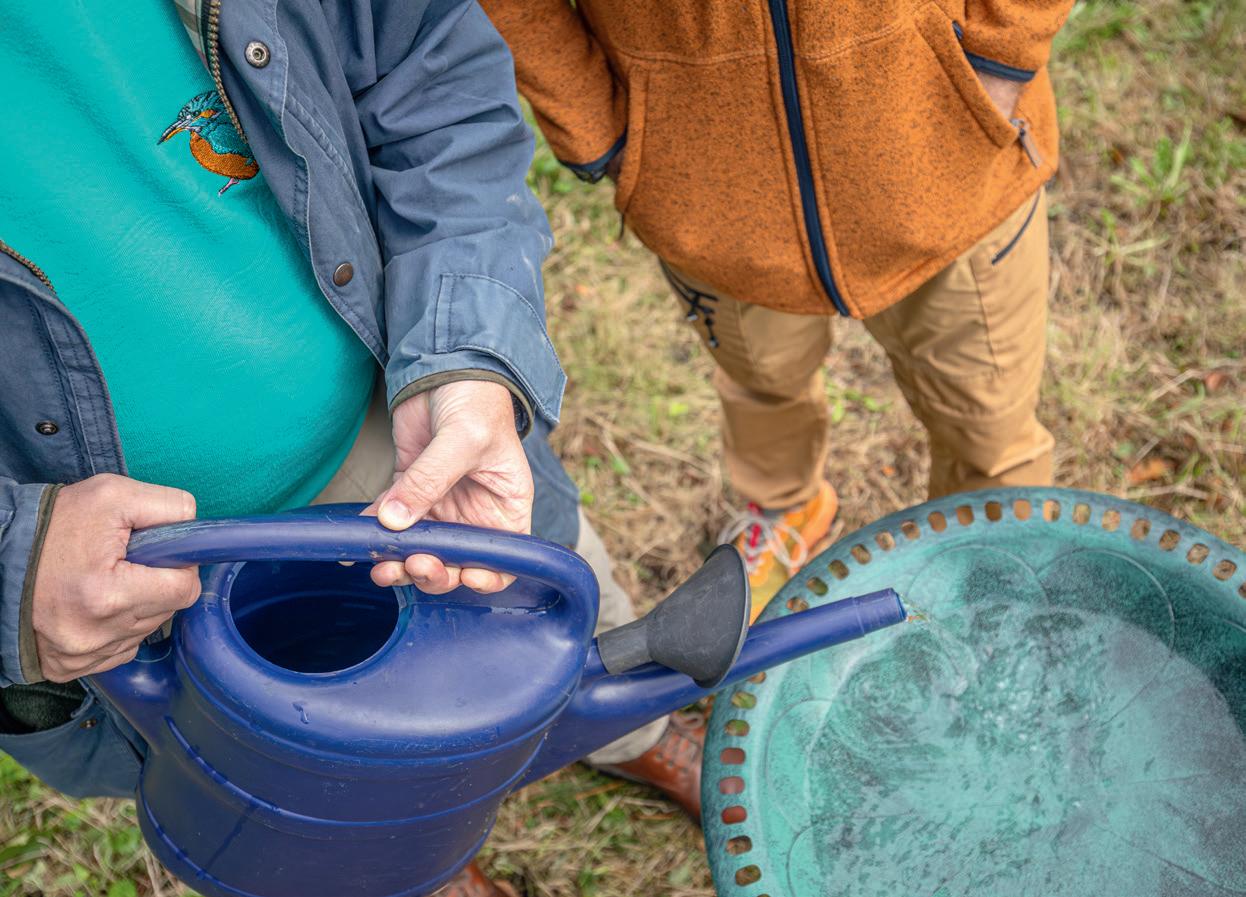
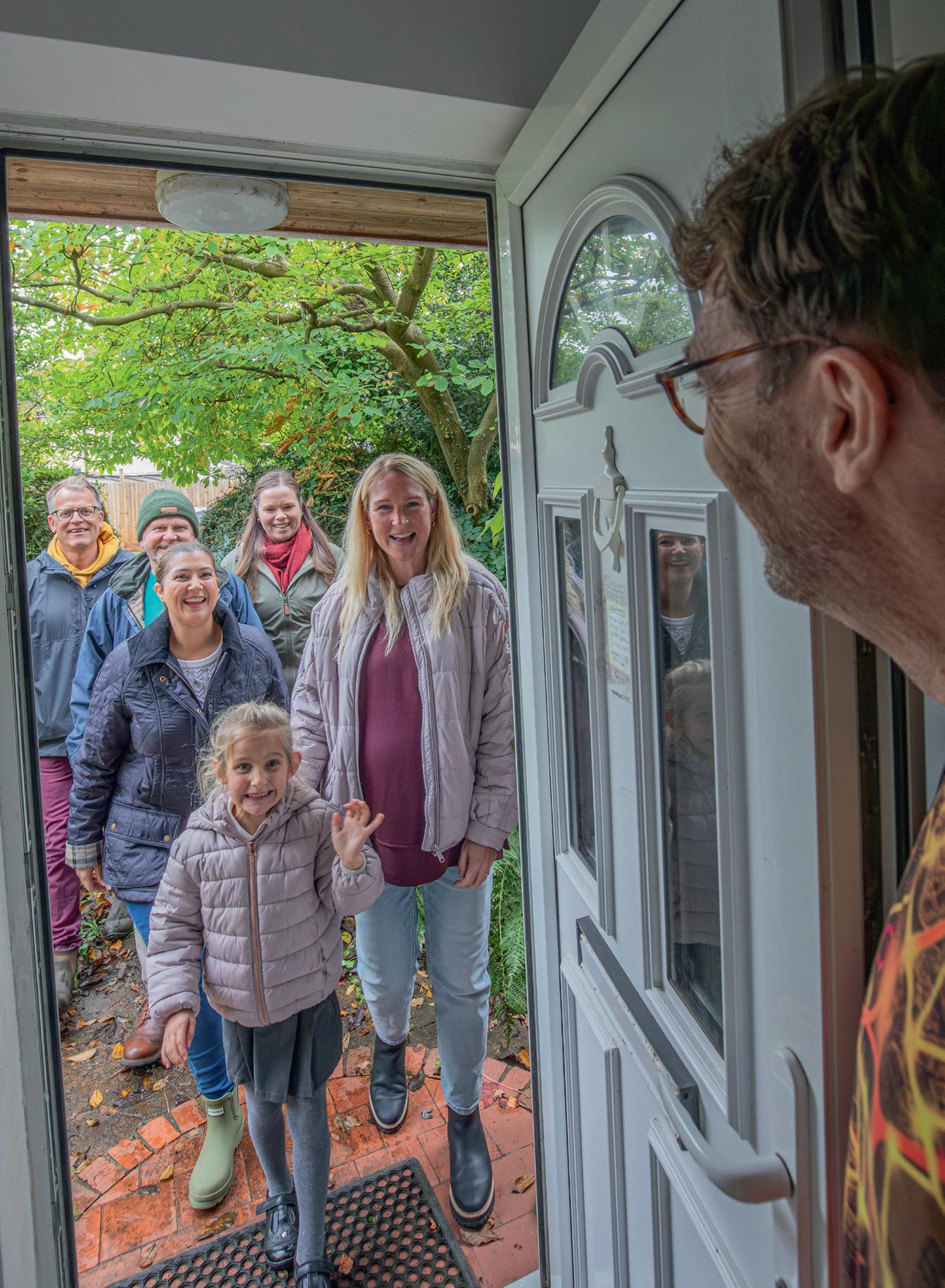
Whether it’s chatting to family on the phone, sitting with a friend sharing a plate of biscuits, or swapping stories with the neighbours over the garden fence, many of us will have a Big Garden Birdwatch story to share. “Did you see..?”, “Well we had three...”, “Of course the woodpecker didn’t show up.” These are the everyday nature experiences that bind us.
The world’s largest garden wildlife survey, the Big Garden Birdwatch is a huge driving force for nature. Since 1979, it has help us build a picture of how garden bird populations are faring. But it is also so much more than that. It is a story to share with fellow nature lovers, common ground that we can all compare. For you don’t need to travel, have access to a large green space or even own a pair of binoculars to do the Birdwatch. You only need a local green space (your garden, balcony or a local park) and a way to write down what you see. That’s it!
Many may also be surprised by the wealth of wildlife they see on their first Birdwatch. Taking the time to stop and listen, newcomers may discover the flock of local House Sparrows, or the resident Starlings. Perhaps a Robin hops from garden to garden or even a Sparrowhawk makes an sudden, dramatic visit. The Big Garden Birdwatch is the perfect way to inspire others to enjoy the nature on their doorstep, and become advocates for it in the future. We need more people than ever to love their local wildlife.
Four long-term Birdwatchers share their stories of how they’ve done just that, and used this annual event to inspire others.
Too cool for nature?
David Lindo, The Urban Birder
One of the greatest pleasures that I get from birding is showing a passer-by something amazing that I had just discovered through my telescope. I love the sound of the ensuing gasp of astonishment that
Previous: A group of RSPB colleagues, (from left) Mark, Kara, Hugo, Katie and Adrian, enjoy the Big Garden Birdwatch together
1. Adrian Thomas is the RSPB’s wildlife gardening expert, and his home near Brighton is the perfect place to watch garden birds
2. Katie and Hugo fill and place a pre-cleaned bird feeder to draw in the widlife
3. Adrian welcomes his Birdwatch guests to his home
4. Providing water is a great way to draw in garden birds
‘I think the sight that met her young eyes changed her life. She was dumbfounded’
invariably occurs followed by the furtive glance with their naked eye as they try to work out exactly where the object of their fascination is within the vista before them. I particularly remember an occasion when I was at a RSPB Peregrine Watchpoint outside Tate Modern, London. I had my scope trained at one of the magnificent falcons when a young girl decided to peer through. I think the sight that met her young eyes changed her life. She was dumbfounded. The world’s fastest animal right there in front of her eyes. Her reactions moved me to tears.
My work is all about public outreach. I try to demystify the world of natural history to make it palatable and understandable to the most uninterested of us. Indeed, I particularly target those of us who think that they are too cool to bother with nature. When I ran my Vote for Britain’s National Bird Campaign back in 2014/15, my aim was not primarily to discover Britain’s National Bird but instead to get people who professed to have zero interest in birds enthusiastically talking about them. Those were the voices that I was really most interested in hearing.
The RSPB’s Big Garden Birdwatch is a great initiative to get people united around our UK birds. The premise is so simple: over the course of an hour to identify and count the birds that visit the garden or parkland that you have chosen for your study area. It can be done while sitting inside looking through the window of a comfortable heated hide – aka your lounge – as you indulge in tea and biscuits. The preparation is simple: just put out food to attract the birds and sit back to watch the show. Simple. Well, to increase your chances of getting a few birds through it would pay to have been feeding them for a while before your Big Garden Birdwatch count, held annually over the last weekend of January. If you are a complete novice, it could be good to cast your eyes over the identification guides that the RSPB produces for the occasion. That way, you will be ready to identify the usual suspects with ease as they show up in the garden.
It is also a great excuse for a social gathering. Get your family and friends around as more eyes watching may equate to more birds. Once, I was in the palatial West London home of a friend of Simon Cowell’s. She had invited me to help her identify the birds during her Big Garden Birdwatch hour. The first birds I saw were a pair of Stock Doves at the back of her garden. She was delighted as they were a new species for her, and immediately reached for her chequebook and made a substantial donation to conservation. If only all fundraising was this easy!
Jane Schwab, University Swift Champion
In my second year at university, once I’d found my feet in Manchester, I decided to dedicate some time to volunteering. Since I hope to work in ecology –particularly biodiversity, conservation and rewilding – joining the RSPB felt like a perfect fit. I took on the role of University Swift Champion, and my work
Our work Big Garden Birdwatch
involves bridging the RSPB Swift conservation team and universities across Greater Manchester. We work to raise awareness of Swifts; why they matter, why they’re in decline and how people can help.
Over the past year, I’ve helped at a range of events focused on connecting people with nature. The biggest event of the year was the Big Garden Birdwatch at Castlefield Viaduct nature reserve. Over the weekend, we hosted talks, birdwatching, apple feeder making, displays of vintage RSPB magazines and children’s crafts. I promoted the event through university channels and nature society pages and, despite the inevitable rain, turnout was fantastic.
Our aim has always been to raise awareness, educate and inspire action – and I truly think we achieved that. I’m currently in Spain for my research year, still focusing on bird conservation, but I’m excited to see what’s next: a planned ‘Swift Cycling Path’ through Greater Manchester, more collaboration with university faculties, and the launch of an official blog and Instagram to engage even more students with the RSPB.
Bringing family together Nicola Chester, wildlife author
A lifetime (so far) of Big Garden Birdwatch, the last weekend in January around which so many connections and memories pivot, has meant counting birds in nine different gardens over 40+ years. My first was also the first ever in 1979, and I’m ashamed to say that what I remember of that was our dentedbut-glorious green and gold biscuit tin, shaped like a circus tent. I also missed a few when I lived in a cabin in the foothills of the Rocky Mountains in Canada and the Rockies were my back garden. It just wouldn’t have been fair.
Over that time, Greenfinches, Mistle and Song Thrushes have become so much rarer, but the ruckus of Sparrows and Starlings have stabilised, with the living space we’ve provided under our house eaves. Bullfinches and Marsh Tits are relatively new on the scene. And our garden, over 20 years, has got deliciously wilder, lovelier, and friendlier to wildlife. Increasingly, the birds I’m counting aren’t so much on the feeders as they are in the fruit trees, or bending the long stems of seedy grasses, alighting on teasles and tweezering the thistle heads.
There has been plenty of drama and surprise, too. A Stoat ribboning through proceedings, a Coot (we’re a bit far from water), fly-throughs by Sparrowhawk and two species of owl at once (a Tawny sleeping in
5. The Birdwatch doesn’t have to be all about counting birds, it can also be about enjoying nature with friends 6. Whip up themed snacks for your Birdwatch event, turn to page 76
7. Sarah and her daughter Attie spotting birds
8. From left; Katie Nethercoat, Kara Lynsdale, Hugo Blomfield, Adrian Thomas, Mark Weston, Sarah Hunt and Emma Pocklington
the oak and a Little Owl glaring from the neighbour’s fence.) It never happened again. Mum had a Goshawk sweep through the garden. But it was July and no way was she allowed that.
While I’ve always been a diligent counter, definitely not counting the birds that are always in the garden until it’s Birdwatch-time (Long-tailed Tits, I’m looking at you), I have, embarrassingly, forgotten once or twice, to send in my counts. But, of course, although counting the birds and sending your results in is the most important part, making involved, citizen scientists of us all, it’s not the only important thing. The fact we already know who’s likely to show up and be counted means we are connected to and invested in the wild world outside our window.
It’s a conversation starter with neighbours –“You’ve got Redpolls?” – and widens our community. It’s connection with family. When I left home, my first Big Garden Birdwatch was done over the phone with Mum, 200 miles away; and when the children came along, sitting on the draining board, their little feet in the kitchen sink, Nannie joined in by phone, too. Now, my oldest two report on the birds from their urban flats via WhatsApp.
That one Birdwatch weekend of the year is so much more than that. It’s helped build childhoods grounded in nearby nature, it’s connected us with family and community. The birds always bring us together. The birds, always, are home.
Michael Teague, RSPB University Ambassador I first got involved with my local RSPB group in Lincoln last summer, volunteering for their Peregrine Watch at the cathedral, and got chatting with committee members about how we could get more students involved in RSPB events. I’m a mature student studying Ecology and Conservation at the University of Lincoln, so it was the perfect chance to connect my studies with something that makes a difference locally. Not long after, Alasdair McKee, RSPB Local Groups Development Officer, approached me about becoming an RSPB University Ambassador.
Since then, I’ve helped bring the university and the RSPB Lincoln Local Group closer together through events and initiatives that encourage students to experience nature on their doorstep. We’ve had a fantastic response, with students joining the group’s monthly field trips. We were even mentioned in the Summer/Autumn issue of The RSPB Magazine for the initiative.
‘It’s helped build childhoods grounded in nearby nature, it’s connected us with family and community’
Like many students, I live in the city centre without access to a garden, so when the 2025 Big Garden Birdwatch came around, something I’ve taken part in since my childhood growing up in the New Forest, I came up with the idea of running on-campus events so everyone could take part. Working with the RSPB group and the university estates team, we organised sessions at both campuses, inviting students, staff and members of the public to spend an hour counting birds, learning about the local ecosystem and simply enjoying noticing nature.
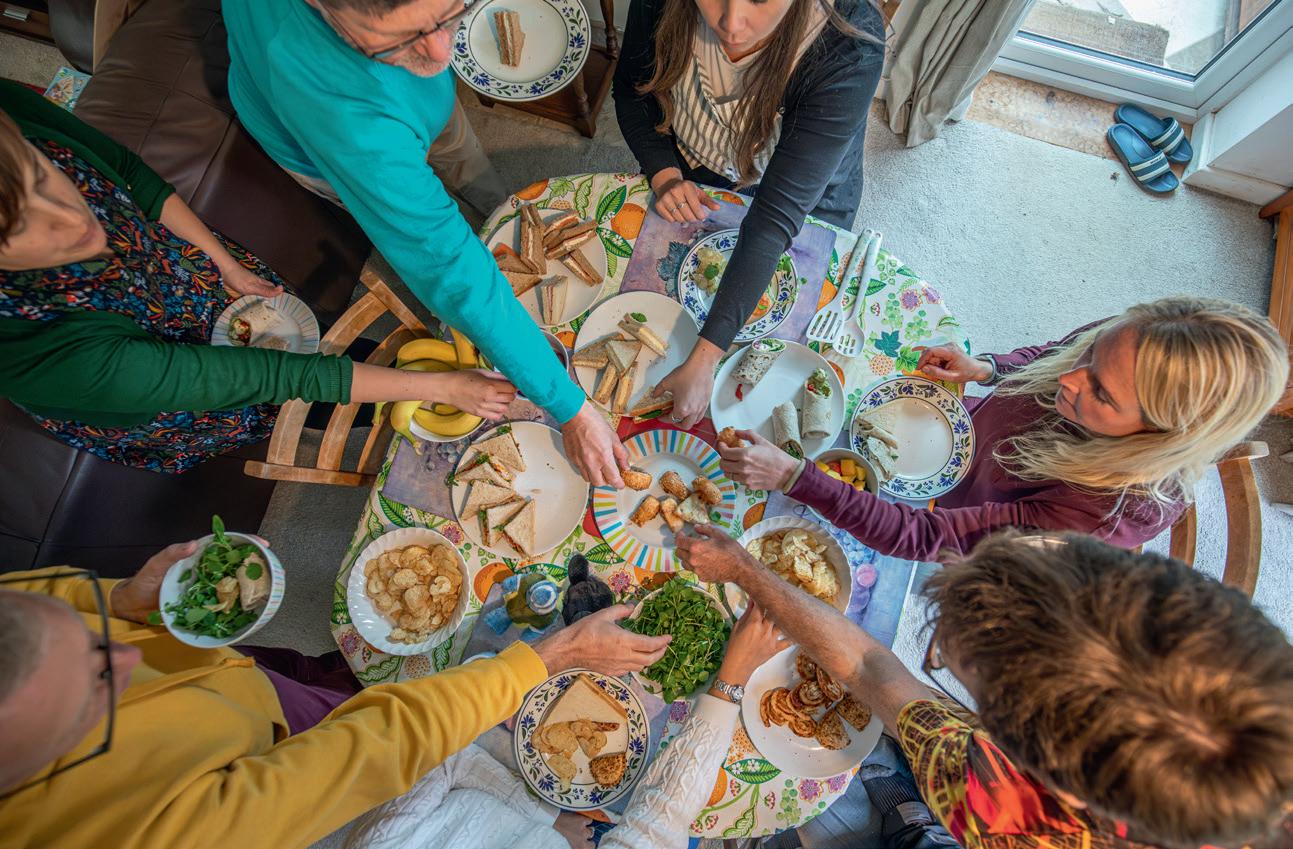
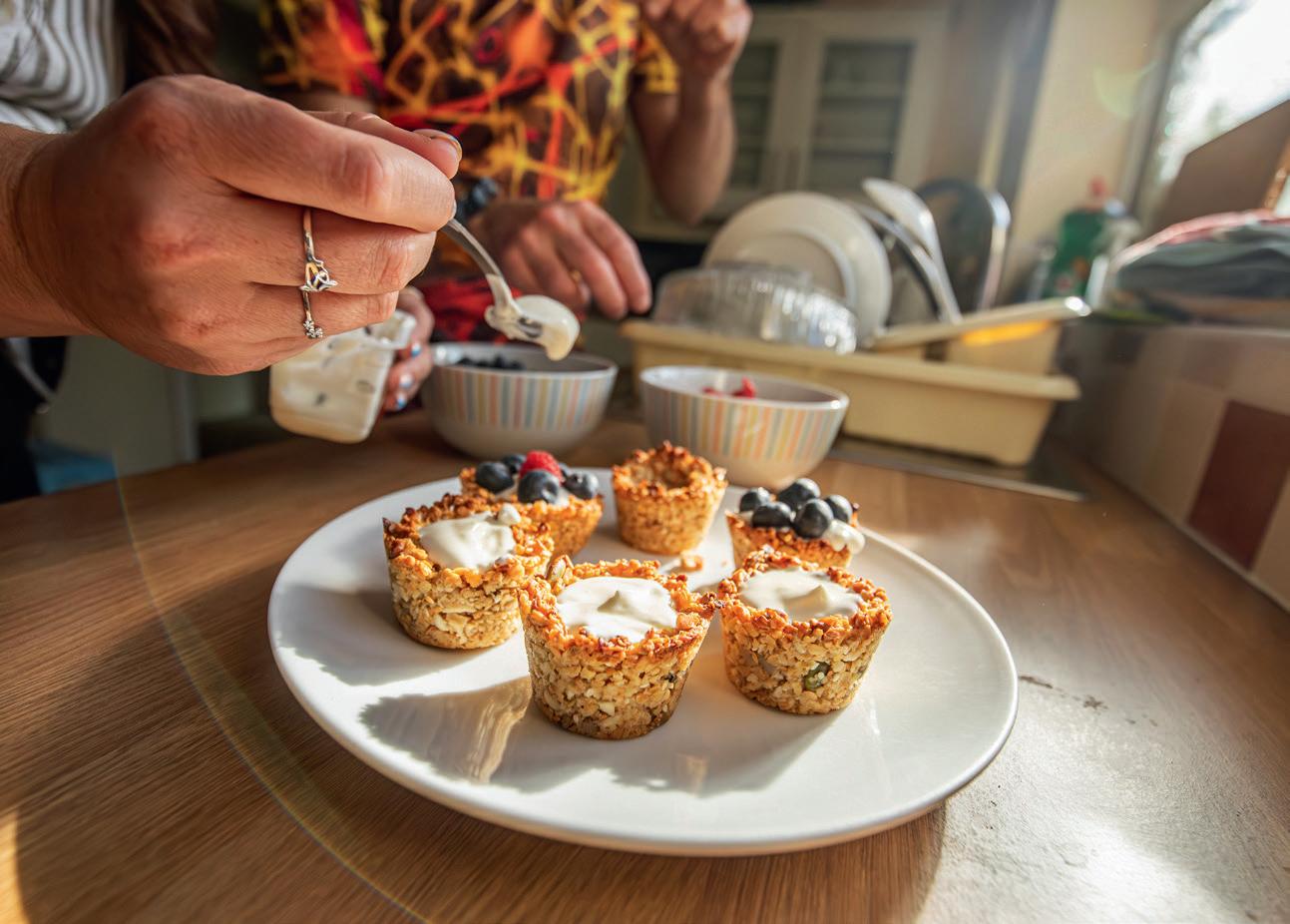
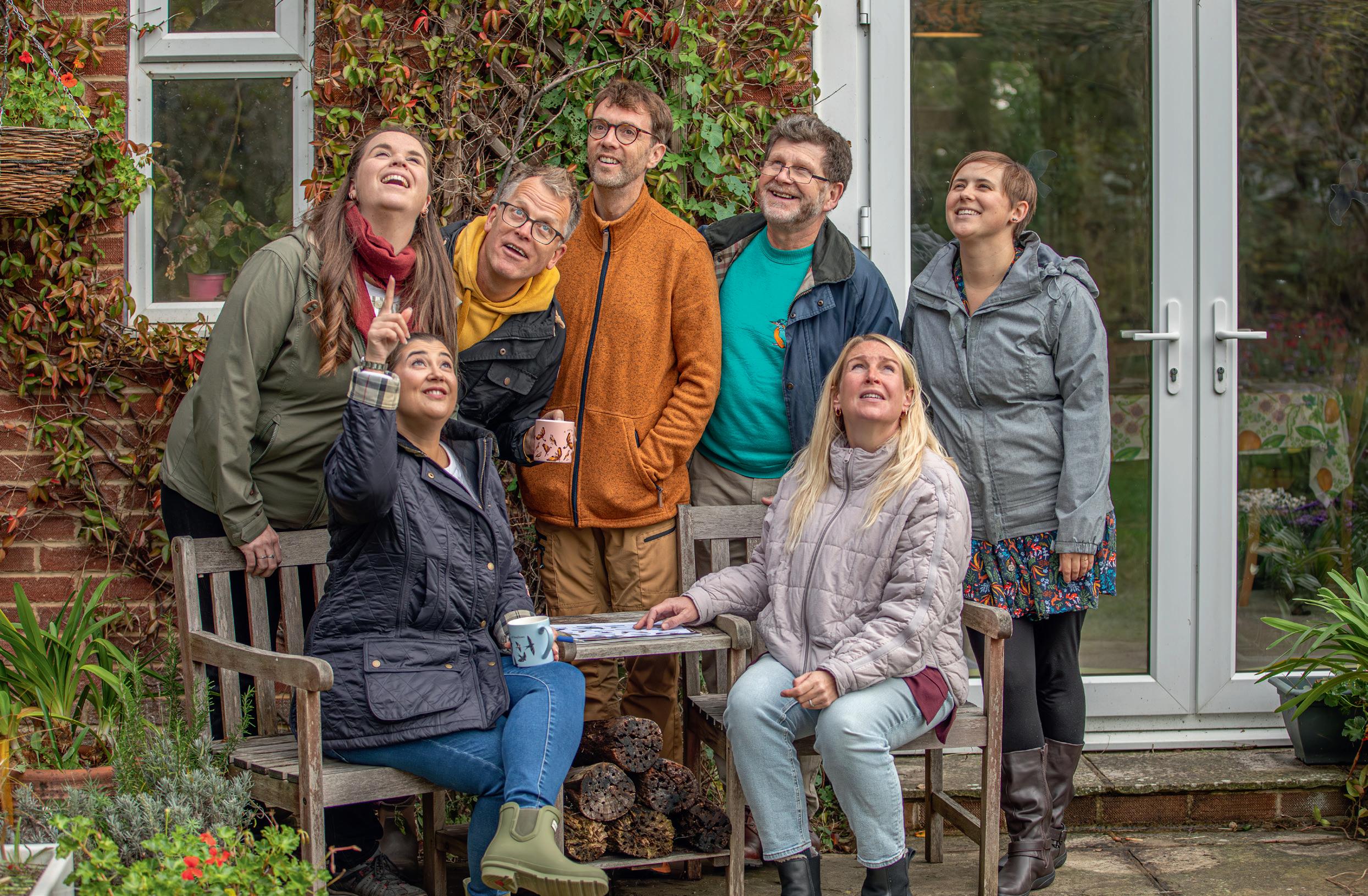
Despite the blustery weather, the event was a roaring success. Almost 40 people came along across the two events, a mix of students, staff, RSPB members and locals. The highlight was spotting three Kingfishers, a species you usually don’t expect during the Big Garden Birdwatch, which thrilled everyone. What struck me most was how people of all ages and experience levels shared sightings and swapped stories. For many, it was their first time birdwatching; for others, it rekindled something they hadn’t done in years. It was a reminder that even in the middle of a city, nature is all around us. I’m already planning to run similar events for the 2026 birdwatch, and hopefully for many years to come.
Share your passion
It’s estimated that 85% of the UK population live in urban areas, but wildlife in these locations can often be overlooked. For many, the idea of appreciating nature conjures up images of standing in a flowerfilled meadow in the countryside where the only sound is birdsong and a babbling brook. But that’s just not true, nature is everywhere; sometimes we just need to be reminded to look.
In 2025, we saw an increase in people living in towns and cities taking part in the Big Garden Birdwatch. With funds raised by players of People’s Postcode Lottery, bespoke participation packs were sent to households across Birmingham and Manchester, encouraging them to take part in the Birdwatch. A total of 649,890 packs were delivered and despite Red weather warnings in place for a storm that weekend, there was a 50% increase in participation. This was an amazing result for urban wildlife and local communities.
The Big Garden Birdwatch is for everyone. This year, why not see who else you can get involved in your annual ritual? Whether it’s friends, family, next door neighbours, or even a local group, showing people the wonder of nature on their very doorstep can change lives. Register to take part on 23–25
January 2026. Let’s make it count.
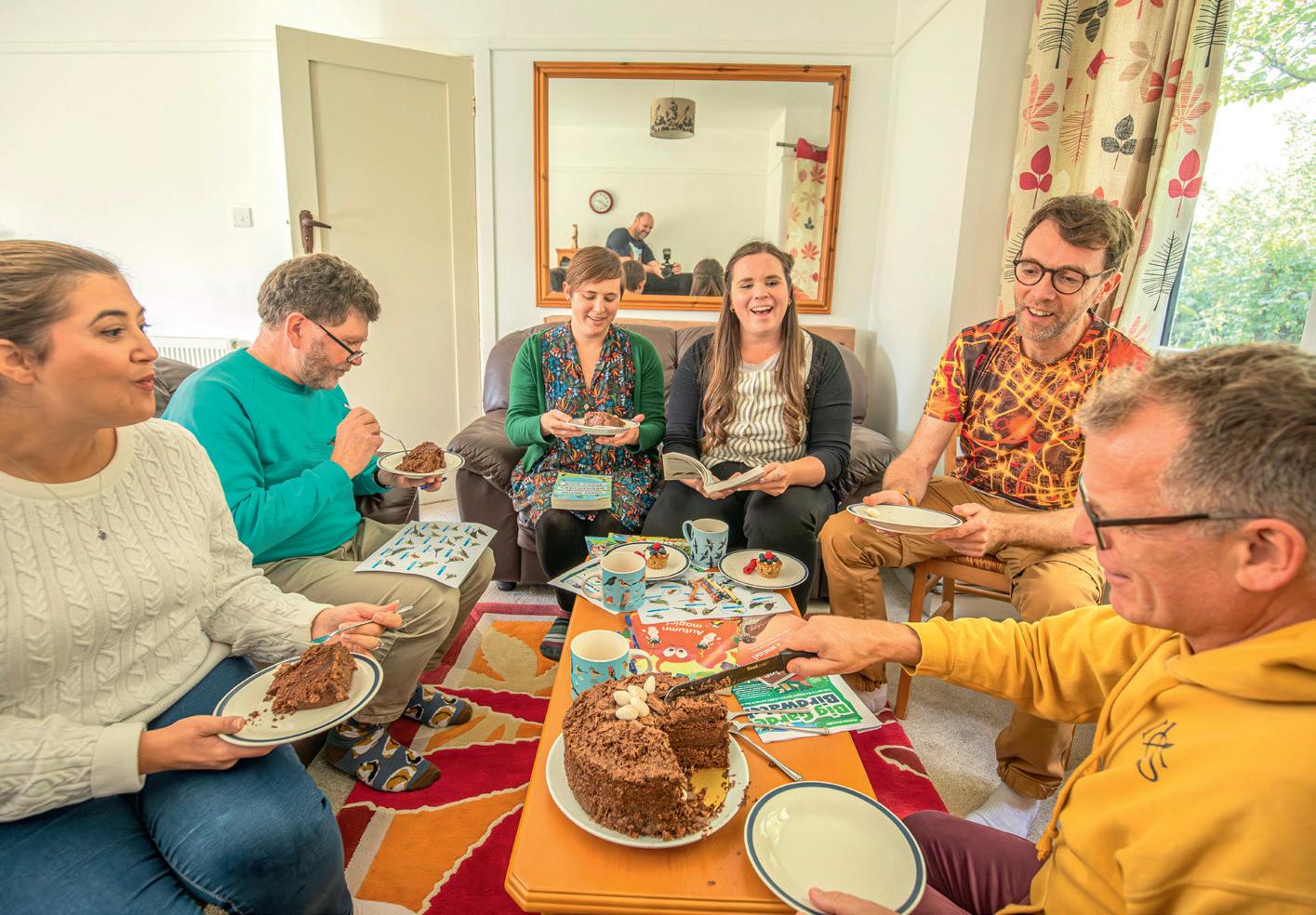
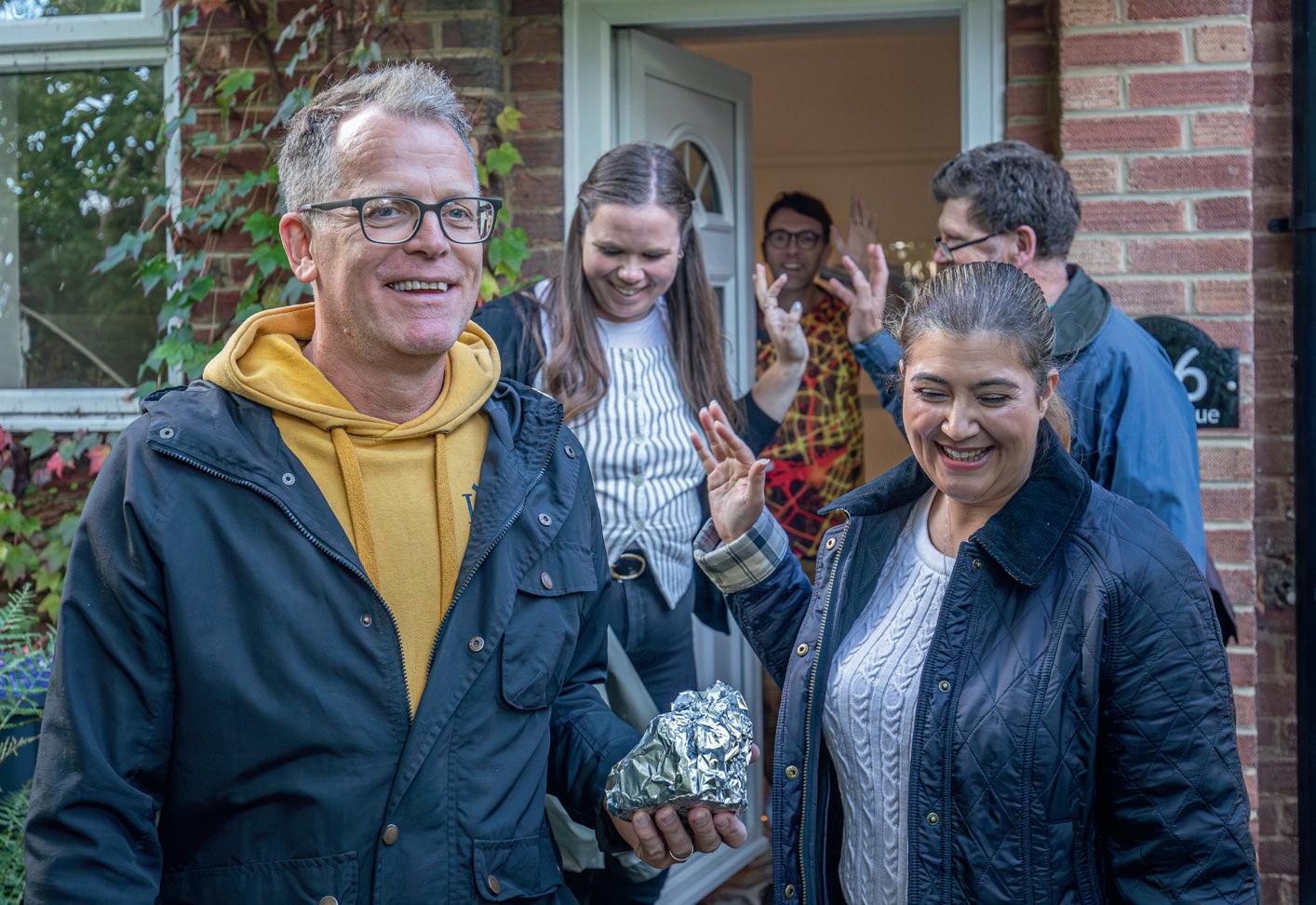
Ingredients: 50g unsalted butter (or vegan alternative)
50g honey 1 tsp vanilla extract Pinch of salt

100g oats 30g mixed nuts (optional) 35g mixed seeds
6 tbsp Greek yoghurt (or vegan alternative) Berries
1 Heat your oven to 200°C/180°C fan/gas mark 6. Melt the butter, honey and vanilla in a saucepan. Set this aside.
2 Mix the oats, mixed nuts, seeds and salt together. Combine with the melted butter mixture.
3 Grease a muffin tin. Divide the granola mixture evenly. Dip your fingers in water and shape the nests by pressing them in the middle.
4 Bake for 12 minutes until golden brown. Allow them to cool.
5 When you’re ready to eat them, spoon yoghurt into each nest and top with the berries and extra nuts.
1. Can we take part as a group? Absolutely! But if you’re counting together, make sure that you only give us one set of results.
2. Can I take part for all three days? You can, as long as each time you are in a different place. We ask for only one result from one location.
3. Does the time of day matter? It might affect the number and variety of birds you see, but it won’t affect the overall results. With so many people taking part across the country, factors such as time aren’t an issue.
4. Why is it held over one weekend? It’s a snapshot in time. By keeping the time of year consistent we can better compare the results.
5. Why in winter? Birds are more likely to be in our gardens, and it’s also for consistency. Learn more at rspb.org.uk/bird-watch























1 Wool Regulates your temperature Wool naturally adjusts to your body temperature, keeping you warm in winter and cool in summer – even with two body temperatures in the same bed!
2 Hypoallergenic, Antibacterial & Dust Mite Resistant - Wool duvets are ideal for allergy sufferers, as wool repels dust mites, mould, and bacteria and is naturally antibacterial.
3 Moisture-Wicking & Breathable - Wool absorbs excess moisture and releases it into the air, preventing clamminess and overheating.
4 Eco-Friendly & SustainableMade from natural, biodegradable materials with no synthetic fillings or harsh chemicals, love your Baavet and it should last a lifetime.
5 You will have the best sleep ever! Having a regulated temperature is key for optimal sleep quality because it helps your body maintain a stable core temperature, which is essential for deep, uninterrupted rest.
6 You will feel better! Getting a good night’s sleep improves brain function, boosts immunity, supports heart health, balances hormones, enhances mood, and promotes overall physical and mental well-being


7 Genuinely British made Each duvet is carefully made in Britain, at Baavet HQ nestled amongst the beautiful mountains of Snowdonia, ensuring top craftsmanship and quality.
8 100% British Wool - Baavet supports local farmers paying them a premium price for their high quality chemical free wool.
9 Our customers love them! Users praise Baavet duvets for their comfort and quality, with many noting improved sleep and satisfaction.
10 Variety of Weights Baavet offers duvets in different weights—Super Light, Light, Medium, and Winter—catering to various preferences and seasonal needs.
• Your Baavet is available in 4 di erent weights and prices start at £115 for a Super Light single.
• We also make wool pillows, mattress protectors, wool mattresses and even dog beds!
• All our products are British made using British wool.

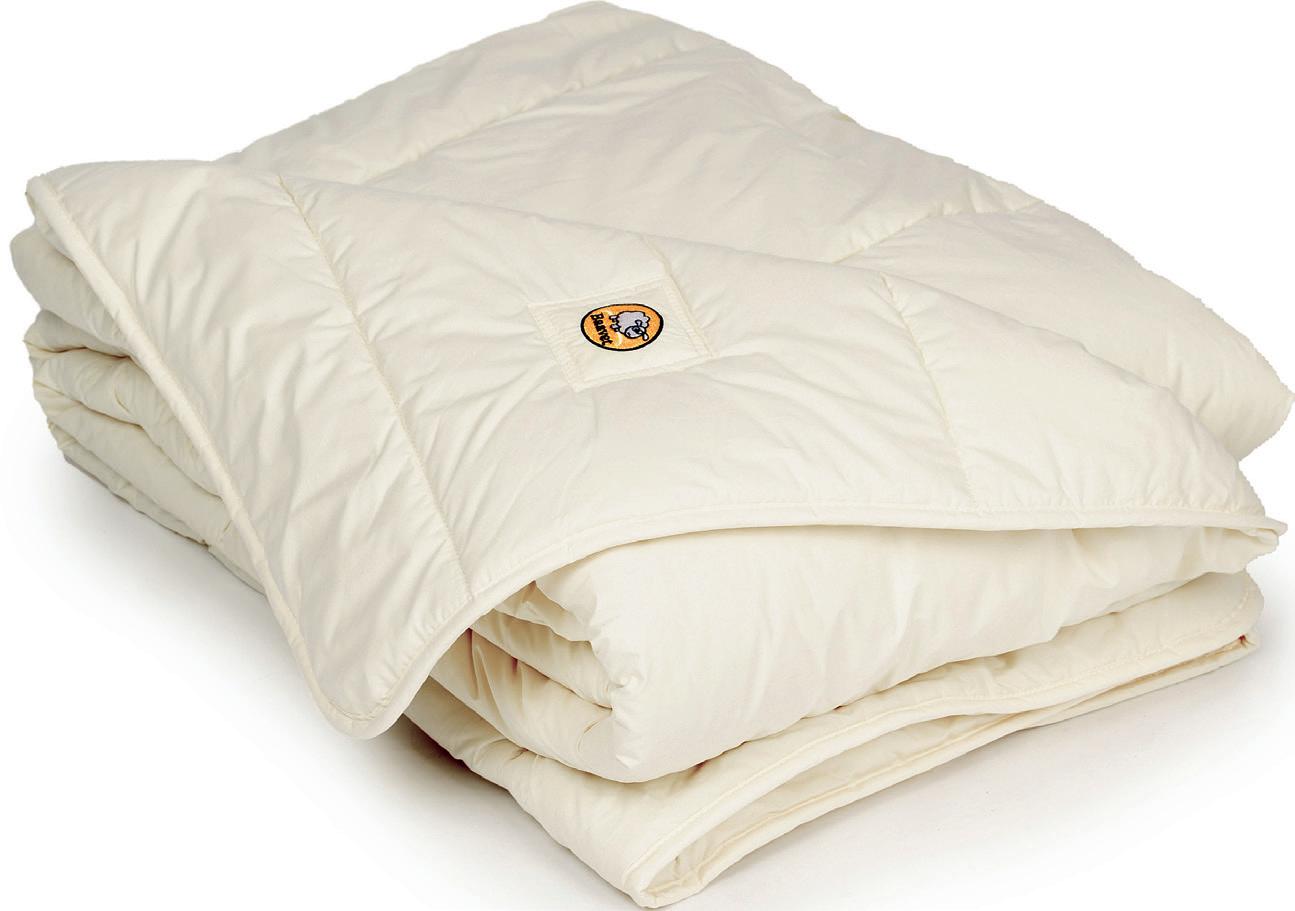







“The service at Baavet is amazing!”
“I placed my order and received my parcel the next day. I was also able to talk to a person before placing my order. I have recommended this company to siblings and they have also had good experiences. So it does seem to be consistently good customer service. The quality is still fantastic. Their product checking process seems to be super stringent. I would definitely recommend this company and will be purchasing from them again.”
Trusted Customer







“Just what we were looking for!”
“Your service following our purchase of a new duvet was impeccable. It was delivered on time within two days of our order being placed. The duvet has proved to be just what we were looking for and we are very pleased with it.” -
Trusted Customer


David Lindo is The Urban Birder and founder of The Urban Birder World, theurbanbirder world.com
Whether you live in the middle of a city or within a small village, community action plays a crucial role in the preservation of many of the locations that you visit to enjoy nature. We are living in an age where a lot of natural places must be actively managed and protected by us. Throughout my career as a broadcaster, writer and campaigner for urban birds I have been involved in many campaigns and projects designed to protect urban natural spaces. As involved as I have been with some of them, there is only one that is truly entwined within the core of my being.
I have been birding Wormwood Scrubs, my local patch in West London, for decades. Locally known as The Scrubs, at 67ha it is one of the largest green spaces in the capital. It is completely encircled by urbanity, including the notorious prison of the same name. I have discovered many interesting species there including regionally important numbers of breeding Song Thrushes and Linnets. But throughout all the joy this green oasis has given me, pain was never too far away. Developers of all shapes have always had their beady eyes on my sanctuary; chainsaws at the ready, keys in the ignitions of their JCBs.
During the early ’80s, the community got together led by a young birder called Lester Holloway to head off the Channel Tunnel’s plans to carve up the land. Although ultimately having to concede some land, it led to the formation of the Friends of Wormwood Scrubs. Over the ensuing years we successfully fought
‘We are living in an age where a lot of natural places must be actively managed and protected by us’
off a number of development plans. The dark ominous cloud cast by HS2 has been our latest battle. Their plan is to build a humongous train terminal at the northern edge of the site. The construction work initially resulted in a lot of noise and destruction. The prospect of increased footfall after the completion of the works adding to the already high numbers of professional dog walkers on the site was a frightening prospect. We had already lost our ground-nesting Meadow Pipits as a consequence.
In my view, The Scrubs would have died a death were it not for the amazing leadership shown by the RSPB’s Kate McVay who is Community Ecology Advisor seconded by idverde UK who involve themselves in greenspace management. Her main job for the past five years had been pulling together community members not only for practical voluntary conservation work on The Scrubs but to engage the not-so-invested people with the progress stories. She has also helped steer a grand biodiversity plan for the area involving HS2. Under her guidance, the volunteers work outside the breeding season scything portions of the grassland by hand to encourage wildflower growth, controlling the spread of brambles while managing public access; all to encourage the widest spectrum of biodiversity possible. Already we have seen jumps in the population of Common Lizards, Slow Worms and, for a site with no standing water, our first Common Frog!
My work schedule does not allow me to regularly visit my beloved patch any more. I miss birding there, especially during the migration season, no matter where I find myself in the world. However, I can rest assured knowing that the future of The Scrubs is in good, capable hands. The grassland area has finally been given Local Nature Reserve status, and the numbers of volunteers has increased. Kate herself has been recognised as an outstanding citizen by the local council.
Communities do not need many members to make a difference. All you need is love and commitment.


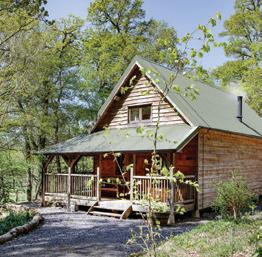





From charming country cottages to spectacular coastal retreats, we have something for everyone in our collection of beautiful, self-catering holiday homes. Our expert local teams are always on hand to help plan your perfect getaway – so why not escape to one of our properties today?
hideaways holidays.co.uk
Looking to let your holiday property? Email us at: newowners@hideawaysholidays.co.uk
WILDLIFE HOLIDAYS
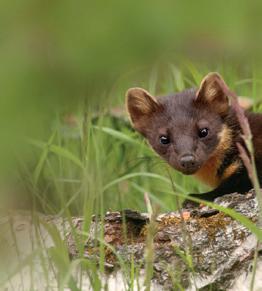
Inaudible to humans and harmless to all species
FIELD CENTRE
• The internationally-acclaimed, award-winning Field Centre for the Highlands of Scotland
• All inclusive wildlife holidays with no single supplement
• Brilliant bird watching
• Comfortable accommodation and exceptional food
• Pine marten, red squirrel, beaver and wildcat hides, nature trails and a loch



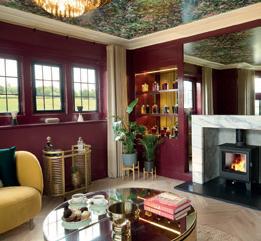


To advertise here, please contact Kirsty Hibbert, 0117 476 7383, kirsty.hibbert@ourmedia.co.uk
Nr Dungeness/Rye B&B, All Ensuite, RSPB 3 night or more 10% discount. 01797 362381. www.broadacrehotel.co.uk
Nr Penzance. 2 remote cottages on Penwith moors. Slps 2-4. Available all year. See for miles across fields & heathland down to the sea. Nr Marazion Marsh & Hayle Estuary. Tel: 01736 363677. www.dingdongcottages.co.uk
Arnside, s/c flat on promenade slps 4, estuary views, Leighton Moss 15 mins. 01524 761749. www.inglewoodcourt.co.uk
Lake District, Ravenglass. Enchanting coastal cottage, sleeps 3, panoramic sea/estuary views. Near Drigg, Duddon, St Bees, Hawk & Owl Centre, Eskdale, Wasdale, Scafell. www.rosycot.co.uk 01946 723413
Beaver, otter, owls, dipper, kingfisher
Cosy cottage, slps 2, near river with 34 acres. On Devon/Cornwall border 01566 784196 www.coombemillshippen.co.uk
Glorious North Devon Only 9 cosy caravans on peaceful farm. Wonderful walks in woods & meadows. Easy reach sea, moors & lovely days out. £125-£395pw. Discount couples. Nice pets welcome. 01769 540366 www.snapdown.co.uk
Exmoor, nr Dulverton. Very comfy cottage in tranquil secret setting, fine views, direct access ancient woodland nature reserve (SSSI), moor & river. Ideal location for birdwatching and walking. Sleeps 2-4. Tel: 07974 770761. www.mounseyend.co.uk
Nr. Weymouth. Comfortable VE4★ cottage slps 4. Nr Jurassic coast & bird reserves. 01305 760120. www.stonebank-chickerell.co.uk
POOLE HARBOUR shoreline cottage sleeps 4. Stunning views. Close Poole Quay. Prices from £350pw–£1040pw. www.sandbanksview.co.uk Simon 07860 866183
Weymouth
Overlooking RSPB Lodmoor & bay The perfect holiday home for birdwatchers, beach goers and Dorset coast explorers. RSPB Arne 40 minutes. Well appointed bungalow. 2 double bedrooms (king size beds) study/spare room, lounge kitchen diner. Wi-Fi. TV. Off road parking. Details and booking: 07974 381845
Slimbridge. Tudor Arms. Real ale & good food pub with rooms. Close to WWT. enquiries@thetudorarms.co.uk Tel: 01453 890 306. www.thetudorarms.co.uk
DUNGENESS: comfortable cottage ideal for RSPB. 2 en suite double bedrooms. Openplan kitchen/dining, large lounge, wood fire, Wi-Fi. Sightings of rare birds. RSPB site next door. www.wiwurri-dungeness.co.uk or annpatriciamcferran@gmail.com
Holiday cottages . Between Boston & Skegness. Ideal for RSPB Freiston Shore, Frampton Marsh & Gibraltar Point. For brochure: crewyardholidaycottages.co.uk 01205 871389
Weybourne North Coast next to Cley etc, comfortable 5-bedroom house, 10 bed, slps 14, large dining, living room, parking, garden, Wi-Fi etc. Ring/text 07966133463 for details
WEYBOURNE Two self-catering holiday lets (sleep 4/5 and 6/7) within private nature reserve. Beach 250m. Bird list 251 species! Tel: 01263 588131 www.denmarkhousenorfolk.co.uk
Cromer. Coach House Studio. Delightful. Sleeps 2. Private courtyard. Large reception. Ideal for exploring N Norfolk, both east & west. Dogs welcome. www.coachhouse.studio
Wells-next-the-Sea. ‘The Snug’, a cosy hideaway for 2. Also 1 double room B&B 01328 710594. www.thesnuginwells.co.uk
Holme next the Sea. Comfortable bungalow near beach, sleeps up to 6. Convenient for Wild Ken Hill, RSPB at Titchwell & Snettisham, and 2 long distance paths. Dogs accepted. davidtuthill28@hotmail.com
Between Blakeney & Cley. S-C annexe slps 2. Garden area, birdsong and parking. Also B&B suite. 01263 740 840
Period cottage, N Norfolk, 1 mile coast. Sleeps 2+2. Quiet village, large garden, private parking, Wi-Fi. 07850 989531. www.churchcottagelangham.co.uk
Salthouse, near Cley. Lovely cottage. Slps 6, garden, parking, log stoves, Wi-Fi. All-year availability. 01256 381333. www.chalkhillbluecottages.co.uk
NORFOLK Tranquil B&B moments from RSPB Strumpshaw Fen. 1 dble & 1 twn rm, both w/private ensuites. Perfect for birdwatchers. £80 per night, 07739 917214
Brancaster Staithe. S/c cottage, slps 2-7, Titchwell 3 mls, coastal path 200m, 01223 690335. www.seaaster.co.uk
Thornham. Bungalow slps 6, dogs welcome. Sea/ marsh views, enclosed garden, ample parking. suehaines1087@outlook.com Tel: 01449 781145
Hunstanton, Cosy 2 bed annexe sleeps 2/3, Great location for beaches RSPB Titchwell and Snettisham, Ken Hill and stunning coastal path. Parking. Open all year. 07432563331. Joannabostrom@hotmail.co.uk www.seahenge.co.uk
SNETTISHAM Beach right next to RSPB reserve. Quirky holiday home created around a Victorian railway carriage, available all year. 4 bdrms, Wi-Fi, woodstove, big garden. www.the-patch.com
SHERINGHAM: Comfortable, convenient, flint fishermen’s cottage, close to beach, shops and amenities. Wi-Fi. Sleeps 2-5. 01223 834476. sue.hunting@ntlworld.com
BIRDER’S PARADISE NORTH NORFOLK Snug, comfortable cottage sleeps 5. Views of Scolt Head Island, 13mins drive to RSPB Titchwell. Sarah: 07747 075340 or email sarahcynthiajohnson@gmail.com


Brancaster. Comfortable SC house 6 bedrooms slps 10. Pet friendly. 07768 333373
Lindisfarne Reserve. Cosy farm cottages 4. 1/2m shore or mainland slps 5. The Lookout, s/c studio slps 2. 01668 213533. www.fenham-le-moor.co.uk
Meare. Licensed 4 B&B close to the Moors & Wetland bird reserves. 01458 860449 www.mearemanor.co.uk
Shapwick. Take advantage of our location, staying in one of our unique luxury cottages. Easy access to Avalon Marshes, RSPB’s Ham Wall & other reserves. 07513 438623. info@wheelwrightscottages.com
Westhay. Farmhouse B&B 4 silver, 1/2 mile Avalon marshes, Shapwick Heath etc. 01458 860238. www.newhousefarmbandb.co.uk
Close to Wenlock Edge. Self-catering coach house, ideal for 2, walks from the door, tranquility and views. Phone 01584 841649 or www.ferndaleflat.co.uk
Close to Minsmere. Superior 4 Gold Award barn conversions. Both sleep 2. Perfect location for exploring Suffolk Heritage Coast and Heathlands. Weekly/short breaks. 07860 222616. holidaysatprioryfarm.co.uk MINSMERE 3 miles 2 ground floor level cottages, each sleeps 2 adults. Pets



Close to RSPB Minsmere, in the pretty village of Westleton. Self-catering cottage, newly refurbished and well equipped, 3 bedrooms, sleeps 5. Outside space and off road parking. Short breaks or longer stays. Sue Brett 01728 648700 or 07970 986342, www.westletonbandb.co.uk
SIBTON WHITE HORSE INN 01728 660337

Rural, peaceful setting 15 minutes from Minsmere. Relaxed, informal, friendly (with no younger children). 5 well appointed rooms with gold comforts. Suffolk dining pub of the year on 7 occasions. 2 AA Rosettes. Family owned and managed for 19 years. www.sibtonwhitehorseinn.co.uk www.southwoldbirdwatchingcottage.co.uk


Yorkshire (continued)
Yorkshire Wolds & coast, RSPB Bempton
Stylish 4&5character cottages. Sleeps 2&4. Dog friendly. Short breaks. 01377 255639 www.churchfarmgarton.co.uk
Borders
Near Jedburgh. Modern guesthouse in peaceful setting beside Jed Water. Wide variety of birds on doorstep. Pets welcome by arrangement. Own riding stables. AA 01835 863279. www.ferniehirstmill.co.uk
Dumfries & Galloway
Luce Bay Comf trad seaside cottage. Sleeps 4 STB
Dogs welcome. Mrs McMillan 01581 500233. www.lucebayholidaycottages.co.uk
Tree sparrows galore! Peaceful s/c cottages, wonderful views. Dumfries 5 miles. www.mcmurdoston.co.uk 01387 740200
Stylish, cosy, eco-friendly, new-build cottage with panoramic views across farmland, Solway Firth & the Lake District hills. Ideal location from which to watch migrating barnacle geese. Very close to RSPB Mersehead. 01556 504030. www.discoverscotland.net
Highland – Mainland

Highland – Islands

of Mull Luxury 4 S/C just for adults. Abundance of birds & wildlife.
01688 317713 www.hideawaylodges.co.uk


Mid Wales (continued)
Cottage for two with own nature reserve in quiet valley next to RSPB reserve, Elan Valley. A very special place for wildlife and birdwatchers. 01597 811169. www.wildlifecottagewales.co.uk
LUXURY COTTAGES
Sleep 2–4 bordering Cors Caron NNR. Over 140 recorded bird species. www.cruglasfarmcottages.co.uk
North-West Wales
Explore Alderney. Autumn/spring migration stopover. Comfy CH cottage sleeps 7. Coast and country walks from the door. Pets welcome. Tel Bryony 07781 152205

Micro Expedition Ship | Wildlife Cruises Island-Hopping Adventures | Private Charters

hebrideanadventures.co.uk or email info@hebrideanadventures.co.uk
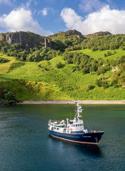
Y Felinheli/Menai Straits. Close to Anglesey & Snowdonia. Modern cottage, garden, sleeps 2. WTB

07910 095991. trefeddyg.cymru
Llyn Peninsula near Abersoch
Close to Wales Coast path. Static caravan off beaten track. Peaceful location, birds, walking, golf. Beach 5 mins. Dogs welcome. 07811 186969. margery.griffin@gmail.com
Abereiddy, Pembrokeshire Beach, cliffs, coastpath 1/2 m. Traditional stone cottages on farm in peregrine territory, CH, one with log stove, 2 or 4 bedrooms, might suit 3-generation parties. Pets welcome. Brochure 01348 831482
Limousin, France Le Moulin de Pensol. Self catering gites set in 8ha of nature reserve. 68 species of butterflies. English hosts, tour included. Tel: 0033 647720095 www.lemoulindepensol.com
rosemoor-40-60-ad.pdf 1 21/03/2022 08:43


Dave Slater, Professional Birding guide in the beautiful Scottish Highlands. Tours and trips to suit all pockets, from day trips to all-inclusive holidays. Comfortable tour vehicle for up to four people. Call 07955336955 for details.
www.birdingecosse.co.uk
Nethybridge. High standard s/c cottage. Open all year, red squirrels and crests in the garden. Tel: 01479 821803 or email salmonpools@googlemail.com
www.Brodgarcottage.co.uk on RSPB Nature Reserve in the heart of Neolithic Orkney, Brodgar otters featured on Spring Watch Slps 4 Relaxed tailor-made wildlife and culture holidays for small groups of up to 5 people Contact Steve Sankey Gerraquoy, Grimness South Ronaldsay Orkney KW17 2TH Tel: 07730 004911
Uninterrupted views perfect for bird watching from both cottage and new lodge. www.denecottage-orkney.co.uk
Secluded cottage nr Breckon Beach. N.Yell slps 2+2. Run by a Shetland Nature tour guide & ex RSPB Warden. www.westerbrake.com
Ystrad Meurig, Mid Wales
Spacious, modern bungalow, sleeps 2, adjacent Cors Caron nature reserve. Excellent birding, walking, touring. WTB No smokers/ pets. Brochure 01974 831471. www.maesgylfinir.co.uk
Secluded large comfortable, beautifully restored off-grid barn, mid Wales. Sleeps 4/6. Ynys-Hir & Dyfi Osprey nearby. Surrounded by nature, wild walking & swimming. www.aimwild.co.uk. +44 (0) 7761 985732

BIRD COTTAGE, sleeps 4. Fantastic birdlife, views & walking. Peace & quiet. Close to Kite centre & Elan Valley. Tel John 01483 200079. www.birdcottagewales.co.uk
Dyfi Valley nr RSPB Ynys-Hir (Springwatch) & Dyfi Osprey project. S/c cottage, sleeps 5. Tel: 01654 702952. glangwyneddcottage@gmail.com
Our warm and comfortable red sandstone cottages provide a spacious home from home, including biomass fuelled central heating, in lovely countryside two miles from the sea at Little Haven, with Skomer nearby On your doorstep you ll find the Rosemoor Nature Reserve, with its 5 acre lake, home to otter, wildfowl and kingfisher Peregrine Falcons breed within view of our gardens John M and Jacqui Janssen, Rosemoor, Walwyn’s Castle, Haverfordwest Tel: 01437 781326 rosemoor@walwynscastle com www rosemoor com (with lots of photographs)
Enjoy a wonderful stay in our beautiful stone cottage with log-burner and all amenities, set in 15 acres of conserved countryside. See the red kite, kingfisher and heron fishing on our lake, a heavenly spot! ffermyfelin.com/accommodation
Contact: Anne Ryder Owen 07961 218 683
Holiday cottages in Llanon, between St Davids & Fishguard Pembs. Slps 2 or 4. Quiet location, lovely coastal walks. Close to RSPB Ramsey Island, Skomer. Details & prices: srsb.shaldonhouse@gmail.com
www.troedyrhiw.com
Cleddau Estuary, Pembs. Isolated cottage on shore, slps 2-8, birder’s paradise. brickyard-cottage.co or thcb@cam.ac.uk
Beautiful eco holiday cottages seek birders Wild flower meadows. Underfloor heating, log burner, EV charger. Strumble Head, Pembrokeshire www.stonescottages.co.uk 01348 891344
Fabulous Apartment Southern Spain Views to Gib & Morocco. bushchat.co.uk for details & bird list. 07802 924940
CLUBS & GROUPS
Gay Birders Club. LGBT group. 60+ events annually, UK & abroad. www.gbc-online.org.uk
BIRD PHOTOGRAPHY COURSES Friendly professional help & advice 01483 200079, 07811 341600 www.birdphotographycourses.co.uk
RCK Photography – Images of birds & wildlife taken by RC Kilgour on mainland Britain & the off islands available to view at rckphotography.co.uk or tel: 07930 420146
THE PRICE OF DORMICE Comedic criminality in Oxford, with subversive ideas on how to help wildlife. stevelunn.net
PROPERTY FOR SALE
Former mill in 34-acre nature reserve with river, woodland, meadows, ponds near Devon/Cornwall border. Ex-home of environmental scientist, James Lovelock, together with successful holiday let. Beaver, otter, owls, kingfisher, dipper. Tel: 01566 784196
Three things to take away from this issue – and do
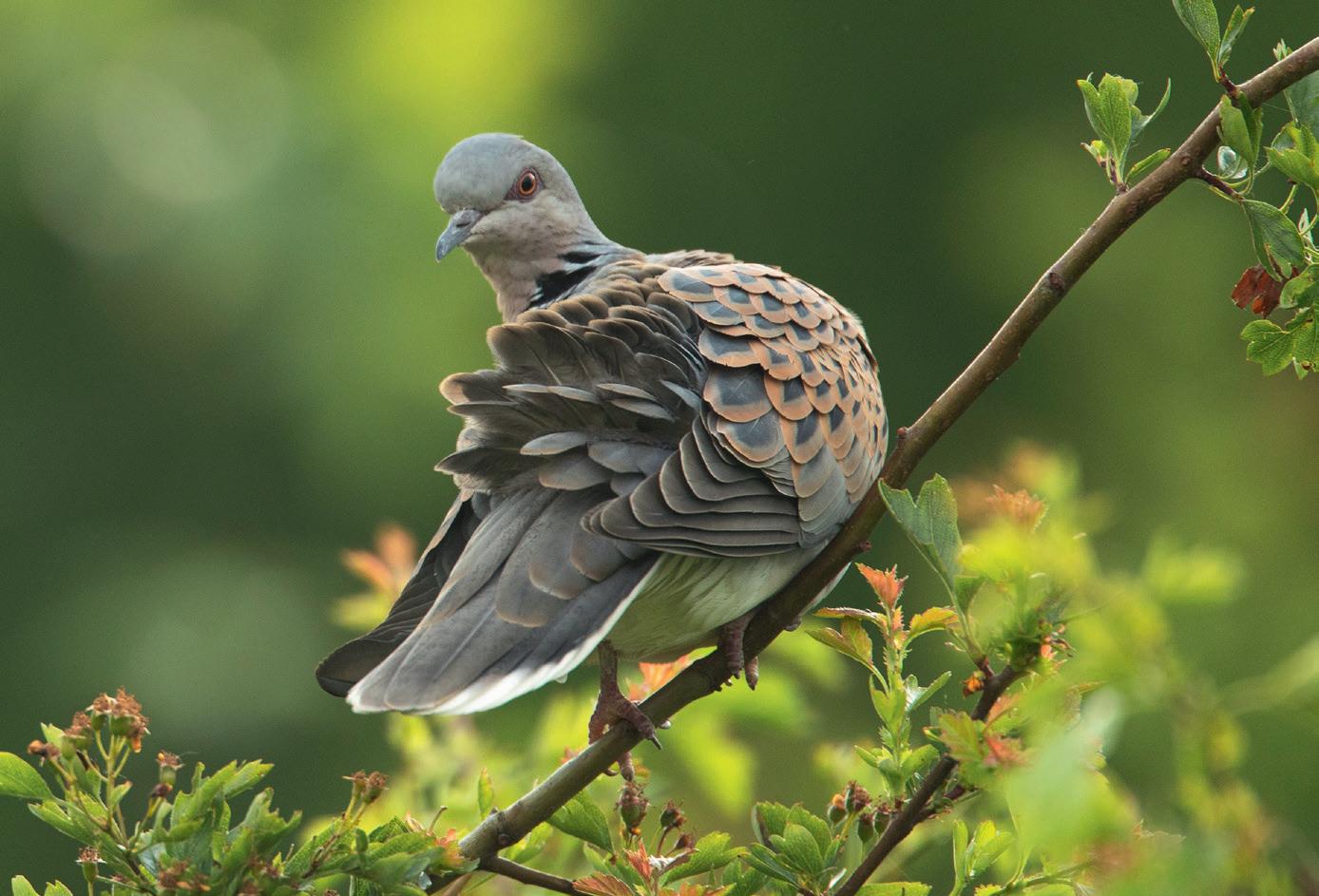
Scan to donate

The Turtle Dove’s purring call has fallen silent across the UK. Now, thanks to a significant reduction in hunting in Europe, and efforts in the UK through Operation Turtle Dove working with farmers, landowners and volunteers, alongside the RSPB’s scientific research, these dainty doves have a chance to recover. Farmers also need more Government funding and support. That’s why, over the festive period, we’ve been collecting messages of hope for Turtle Doves and have shared these with Emma Reynolds, the Secretary of State for Environment, Food and Rural Affairs, showing that the public wants to see a future where Turtle Doves and other farmland wildlife thrive. Let’s make the most of this opportunity: together, we can save Turtle Doves. Support this work with a donation at rspb.org.uk/dove
Switching to a digital membership can bring your magazine to life in ways that print just can’t. Articles about your favourite species are paired with videos of RSPB experts and audio clips of bird calls. You can test your knowledge with wildlife quizzes, explore interactive maps and even take advantage of exclusive discount codes. We have loads to offer you when you make the switch.
Choosing a digital membership also helps the RSPB save money, which can then be funnelled into vital conservation work. It also saves huge amounts of paper, which is good for the planet but also great for your storage space!
If you’d like to make the switch simply visit rspb.org.uk/ go-paperless to opt in.
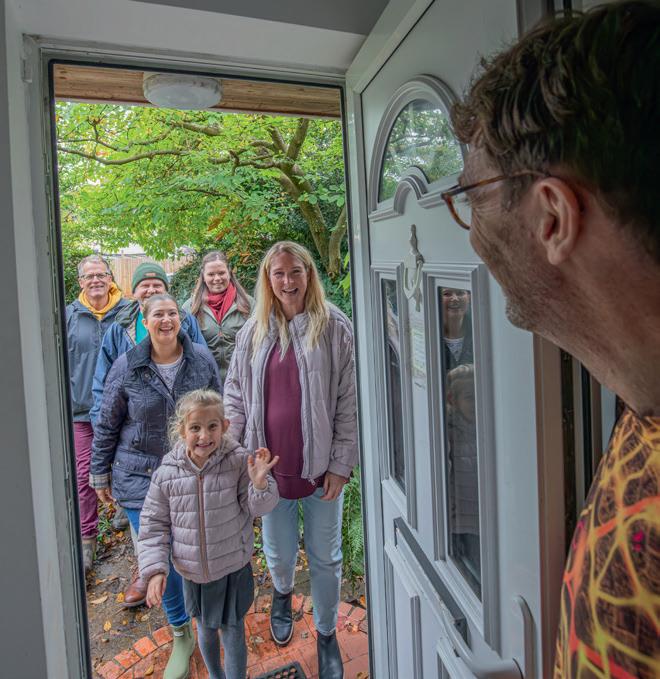
Inspired by our feature on page 70? Why not host your own Big Garden Birdwatch brunch to inspire your friends and neighbours? Bake some delicious treats, get the kettle on, and invite people round to enjoy the Big Garden Birdwatch with you, and discover how easy it is to monitor their garden birds. Register ahead of time to take part on the weekend of 23–25 January 2026 at rspb.org.uk/bird-watch