Nature’s Voice
News from RSPB Northern Ireland and the Isle of Man
News from RSPB Northern Ireland and the Isle of Man
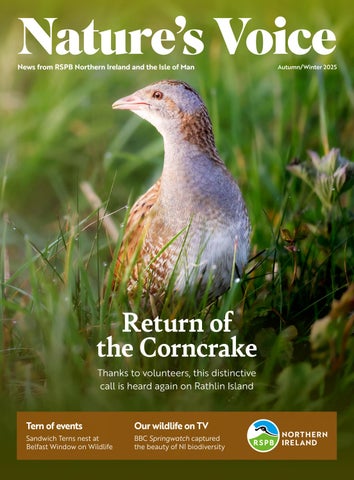
Thanks to volunteers, this distinctive call is heard again on Rathlin Island
Tern of events
Sandwich Terns nest at
Belfast Window on Wildlife
Our wildlife on TV
BBC Springwatch captured the beauty of NI biodiversity
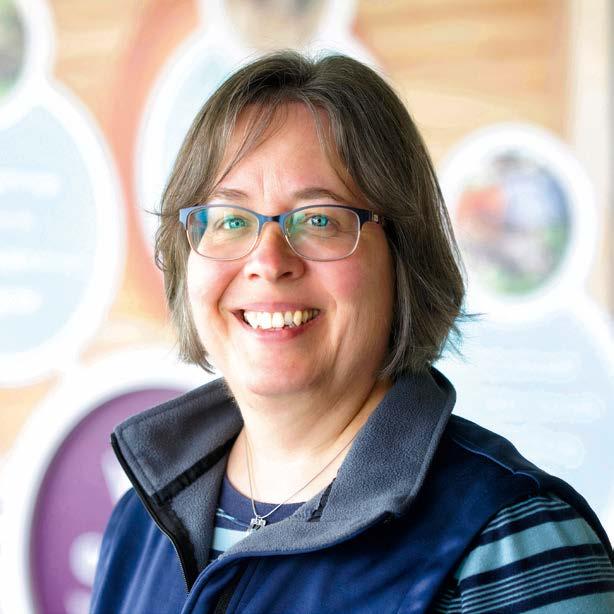
As we say goodbye to the golden days of summer and embark on the richness of autumn, it’s with real joy that I welcome you to the latest Nature’s Voice
In this edition, we’re celebrating a record-breaking milestone – the return of six calling male Corncrakes to Rathlin Island, which you can read about on page 6. A huge thank you to the Giving Corncrake a Home project for their continued hard work to bring this species back to our shores.
We reflect on a special TV moment for RSPB NI, with Belfast’s Window on Wildlife and Rathlin Island Nature Reserves featuring on the BBC’s Springwatch. How wonderful it was to share our love for Northern Ireland’s wildlife across the UK. I never fail to be amazed by the species that call Belfast Window on Wildlife home in the heart of a working port. It’s a real spectacle so do plan to visit (please check www.rspb.org.uk/days-out/reserves for opening hours).
Whether you’re lending a hand in the field, supporting from afar or simply sharing in our love for Northern Ireland’s wildlife, thank you for being an RSPB member. Together, we are bringing nature back, one call, one field and one season at a time.
Joanne Sherwood Director, RSPB NI
Our species
This summer, RSPB NI received confirmation of funding for PeacePlus Nature – an ambitious €20.8 million project that will bring together nine partners to tackle the decline in priority species and habitats across Northern Ireland and bordering counties.
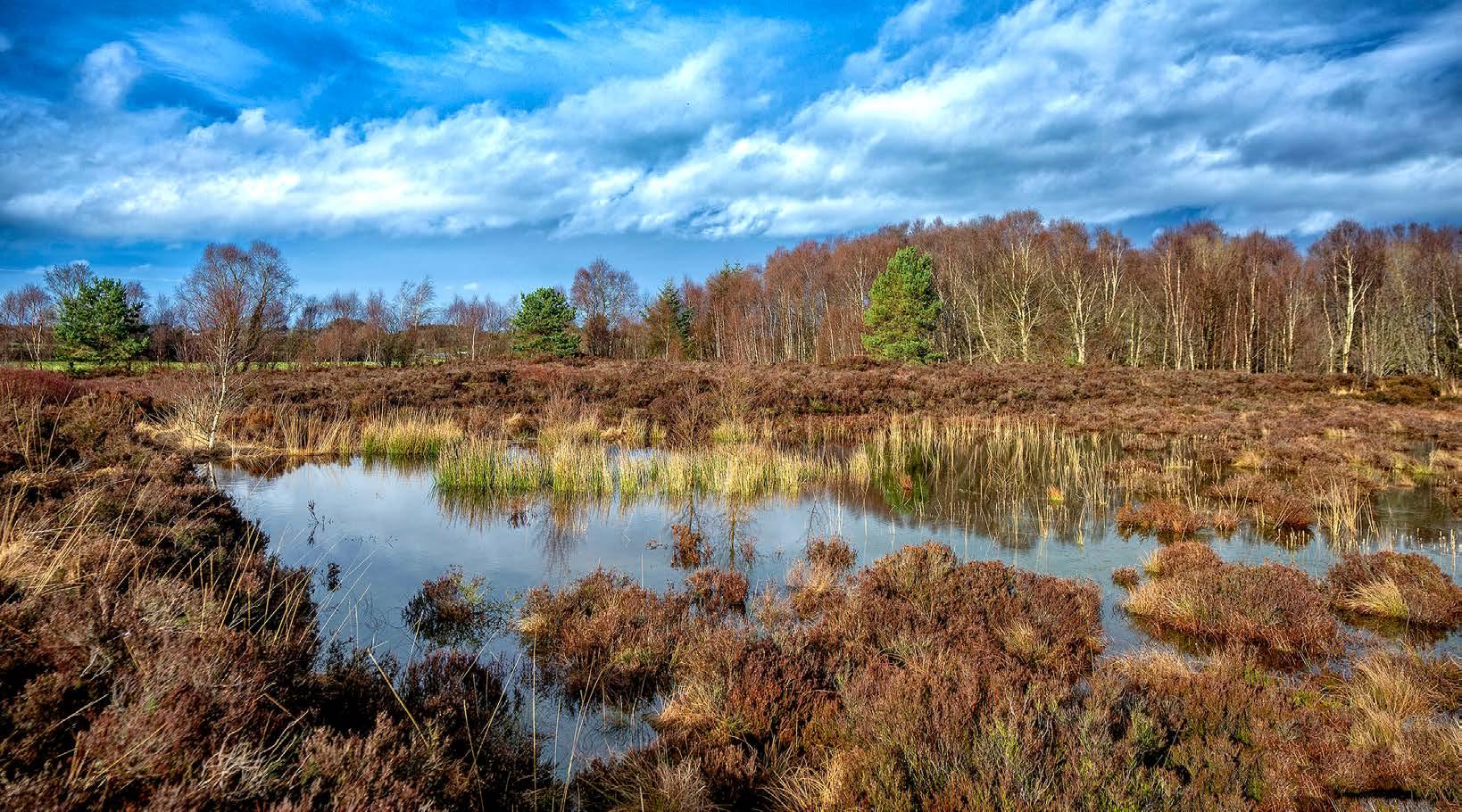
The project will work to restore lowland wet grassland, limestone grassland and priority species, from breeding waders to Marsh Fritillary butterfly, while also supporting peatland (above) restoration. It’s supported
Our people
by PEACEPLUS, a programme managed by the Special EU Programmes Body. Joanne Sherwood, RSPB NI Director, shared her thanks. “We’re grateful for this funding and look forward to delivering this project, in partnership with Birdwatch Ireland, Butterfly Conservation, Monaghan County Council, River Blackwater Catchment Trust, Truagh Development Association, Lough Neagh Partnership, NI Water and An Tasice (The National Trust for Ireland).”
Volunteers are vital to our success
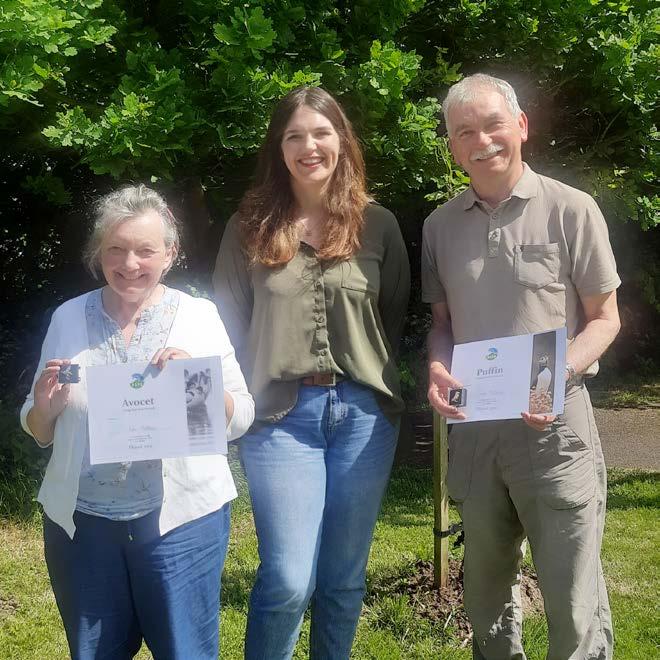
From the farmlands of County Down to the wild beauty of Rathlin Island, our volunteers are helping to protect some of the most important habitats and species in the country. Over 600 volunteers in Northern Ireland support our work and we’re incredibly grateful for every one. Over the last year they’ve donated over 20,000 hours of their time to help us with the work we’re doing to protect nature. Siobhan Bentley, RSPB NI Volunteer Development Officer, recently presented two volunteers with awards for their long service – Kate McAllister (left) has been with the Antrim Group for 25 years, while James McDowell (right) has spent 10 years as leader of the Coleraine Group.
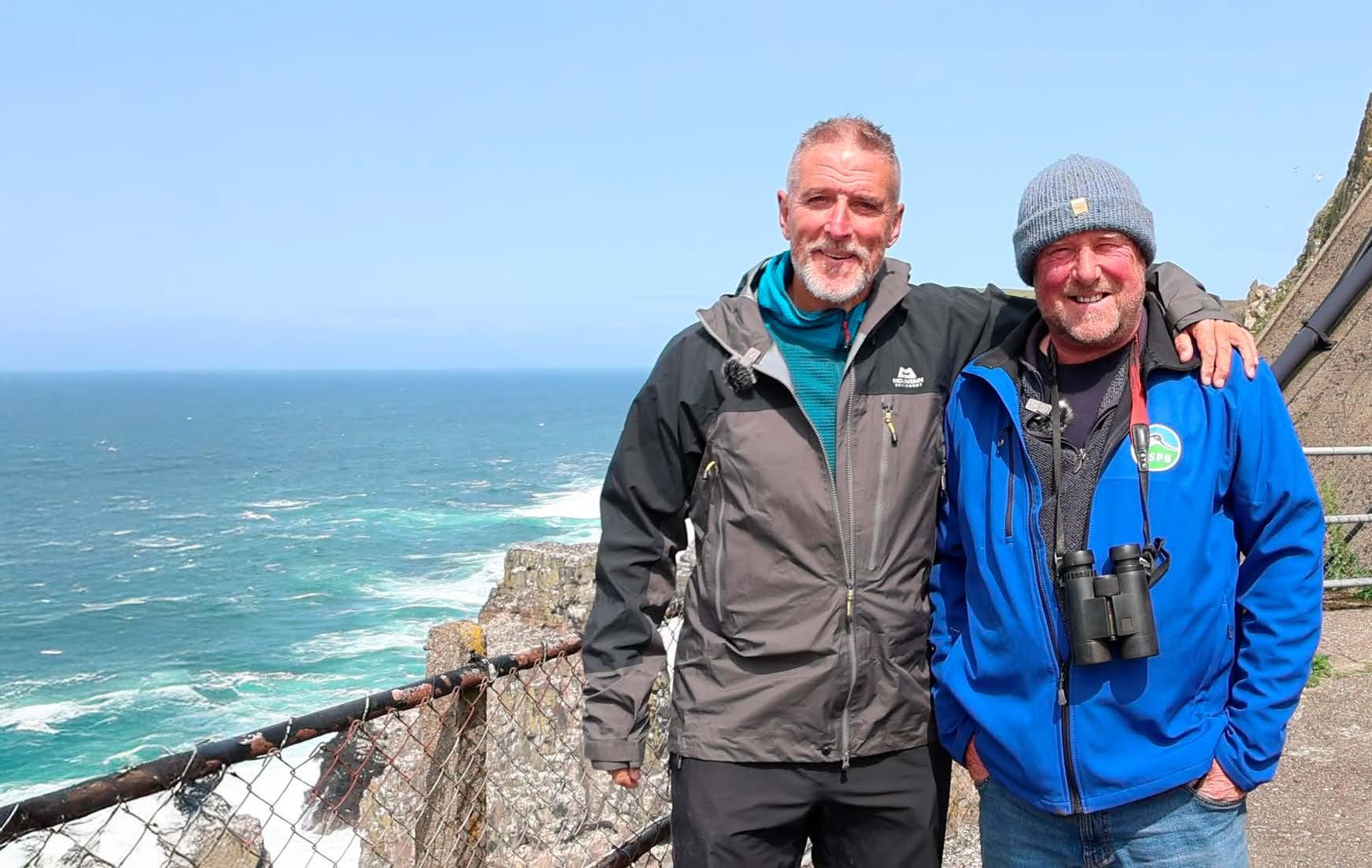
Did you catch the latest series of the BBC’s much-loved nature series Springwatch? It was a thrilling summer for RSPB NI, as it was filmed right here on our doorstep. It was amazing to have viewers from across the UK glimpse the wild beauty and rich biodiversity of Northern Ireland, with cameras capturing the magic of RSPB NI reserves.
It was a joy to welcome the Springwatch team to Belfast’s Window on Wildlife, where nature thrives against the backdrop of the city. From the hypnotic courtship dances of Lapwings to the busy chatter of nesting terns, the reserve buzzed with life.
On Rathlin Island, Northern Ireland’s only inhabited offshore island and home to an internationally important seabird colony, the spectacle was just as stunning. Puffins, Guillemots and Razorbills put on a dazzling display, and viewers could see the vital conservation work being carried out by our dedicated team and volunteers.
Having Springwatch showcase our unique landscapes and incredible wildlife was an exciting and proud moment for everyone at RSPB NI. If you missed the episodes, watch them at bbc.co.uk/springwatch
The RSPB Belfast Local Group hosted a special photography competition in memory of Ian Jackson, one of the group’s founding members and a dedicated supporter for over 50 years.
A passionate advocate for wildlife and an accomplished photographer, Ian’s legacy has left a lasting impact on both the RSPB NI and the wider nature community. The competition was held in partnership with Ballynahinch Photography Club, which Ian also founded five decades ago.
All nine winning images – including two awarded to the same talented individuals – were submitted by members of NI Local Groups or RSPB NI Volunteers. These stunning photos will soon be proudly displayed in one
of the hides at Belfast’s Window on Wildlife reserve, alongside this Red Kite photo taken by Ian.
In a further tribute, a plaque will be put up to honour Ian’s remarkable contributions, ensuring his passion for wildlife and photography continues to inspire for years to come.
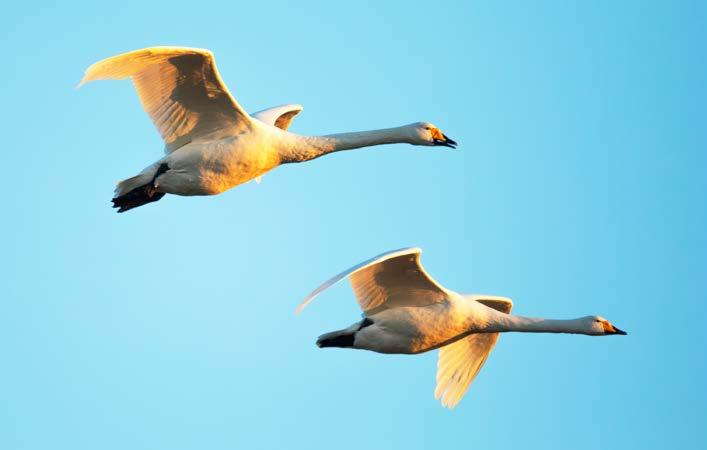
RSPB NI’s Belfast WOW
Visiting RSPB NI’s Belfast Window on Wildlife in autumn offers a captivating glimpse into nature’s seasonal shift. As migratory waterfowl such as Brent Geese and Whooper Swans arrive, the site is busy with activity. Hides provide a place to watch Redwings, Fieldfares and other thrushes as they forage for berries amid the changing foliage. Crisp air and soft light make photography especially rewarding. Enjoy a peaceful moment with nature. Read a full guide in The RSPB Magazine
Over the last year RSPB NI has been focused on campaigning for farms that balance nature with farming in Northern Ireland. Over 100,000 people across the UK signed a petition calling

on the UK Chancellor Rachel Reeves to increase investment for nature-friendly farming. We’re delighted to share that over 1,500 people signed the petition here in Northern Ireland.
To follow on from the success of the UK-wide petition, RSPB NI launched a new e-action that urged supporters to contact the Minister for Agriculture, Environment and Rural Affairs, Andrew Muir. This was to tell him of their support for prioritising nature-friendly farming and the need for an urgent increase in resources and funding. An amazing 350 supporters contacted the minister, strengthening this call.
species
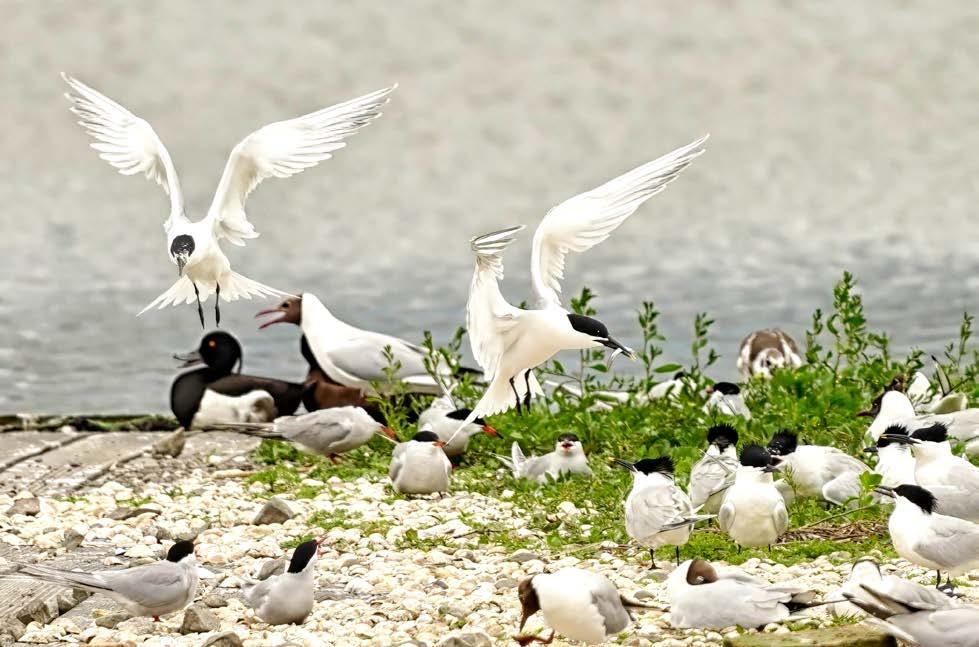
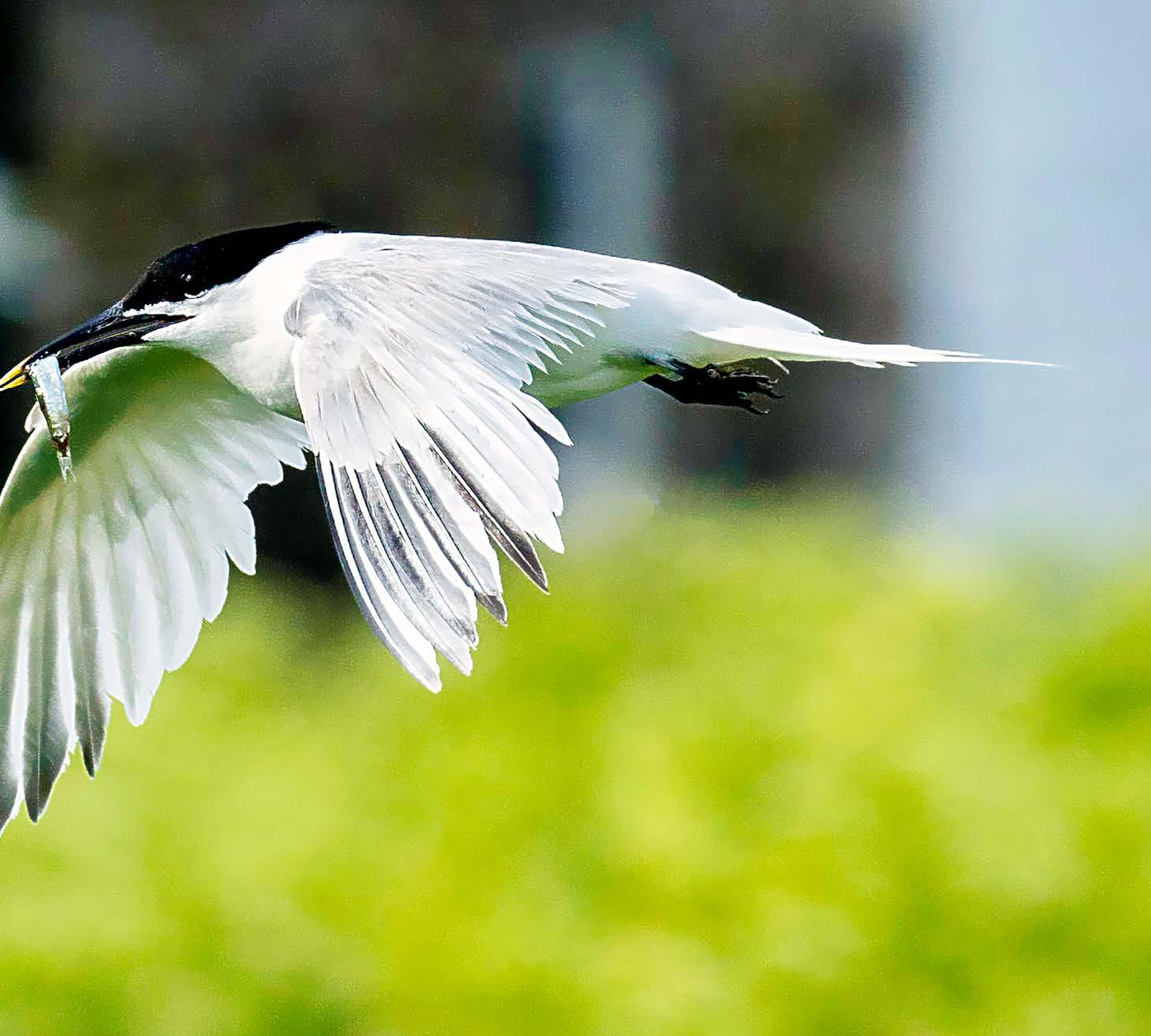
We bring some truly exciting news from Belfast Window on Wildlife. For the first time since records began, Sandwich Terns have chosen our site to nest!
These elegant seabirds, with their distinctive black caps and sharp calls, have taken up residence on one of the man-made tern islands, making 2025 a landmark year for the site.
Their arrival marks a significant moment for the nature reserve and a positive sign that ongoing habitat
management is making a real difference. Sandwich Terns are known for being selective nesters, so the fact that they’ve settled at the site speaks volumes about the quality of the environment the team have created.
“It’s been a joy to see the chicks hatch and grow as they settle in alongside our other tern species,” says Warden Aoife DeBhal. “We’re hopeful this is the start of many successful breeding seasons to come for these graceful new residents.”
The Sandwich Tern is a striking seabird with pale grey upperparts, white underparts and a shaggy black crest during breeding season. It has a long, slender black bill tipped with yellow, and graceful, pointed wings.
Sandwich Terns migrate to our coasts from West Africa to breed between April and August. These terns are knowing for their distinctive, rasping call and dramatic plunge-dives into the sea to catch small fish.
To mark World Oceans Day, RSPB NI hosted an event at Stormont to highlight the importance of nature being at the heart of offshore planning. With 79% of people in Northern Ireland believing that new sea developments must not harm wildlife or habitats, it’s clear that protecting our marine environment matters to many.
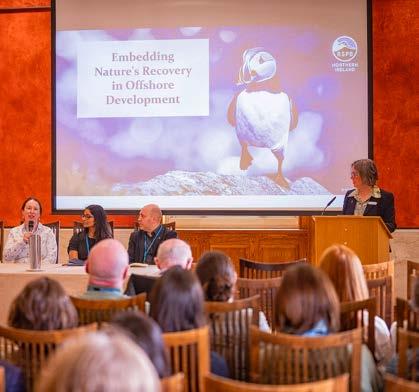
We were pleased to welcome Minister for the Economy Dr Caoimhe Archibald, Emma Sheerin MLA, DAERA, the Department for the Economy, Renewables NI, fellow NGOs and others with an interest in marine environments.
Their support helps highlight the need for action to restore marine life, not just protection. With collaboration and care, we can ensure a healthier future for our seas, where climate solutions and nature recovery go hand-in-hand.
Thank you to everyone who joined us to help turn the tide for our oceans.
Scientific name Thalasseu sandvicensis
Wingspan 95–105 cm
Length 36–41cm
Where to see
Marine and intertidal areas, wetland
Conservation status Amber List
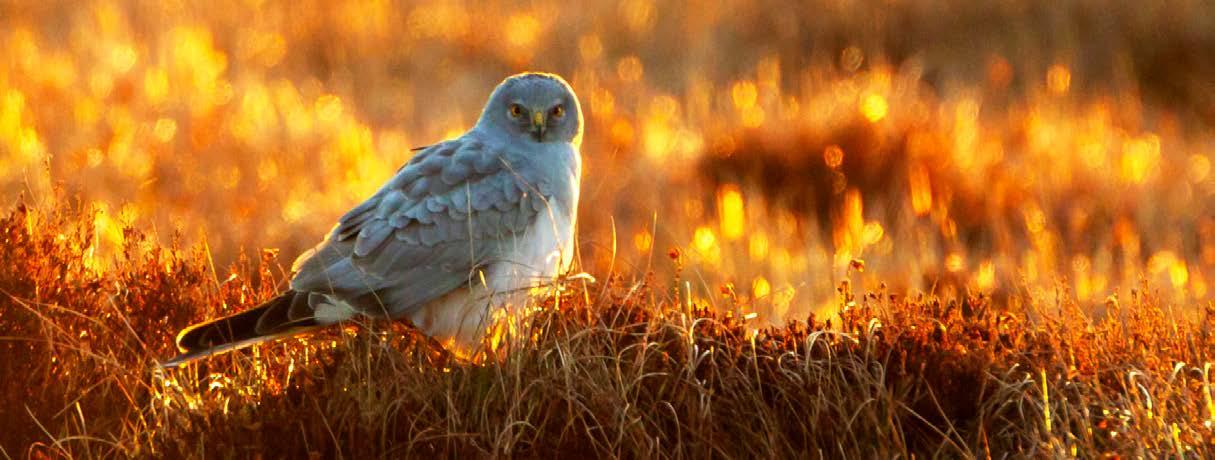
Manx BirdLife, in partnership with Manx Wildlife Trust and the Manx Ringing Group, is launching an exciting new project to track Hen Harriers on the Isle of Man, using satellite tags. Over the next five years, the team will aim to fit several birds each year with lightweight tags, starting with four this season.
This project builds on earlier work with the RSPB and will give vital insights into how Hen Harriers use the Manx landscape throughout
the year – particularly in winter, when little is known about their habits. This will help us better understand their movements, roosting behaviour, survival rates and threats, informing conservation planning and future policy.
The team will also connect with local schools and communities, through updates and educational activities to highlight the importance of the Isle of Man’s Hen Harrier population.
I’m quite new to birdwatching. Which of our migratory birds can I look out for this autumn and where can I see them?
Elaine, Carrick
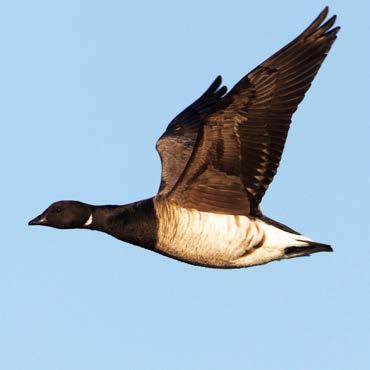
It’s amazing to hear you’re getting into birdwatching. Autumn is a fantastic time to start – many fascinating migratory birds arrive this season. Look out for Brent Geese (pictured) along the Strangford Lough shoreline and Belfast Lough, or visit Portmore Nature Reserve to spot Whooper Swans arriving from Iceland. Redwings and Fieldfares can be seen in hedgerows and fields.
During the summer I noticed some nests on the side of my house. They looked like they were built from mud or sand. What species use them?
Benny, Toomebridge
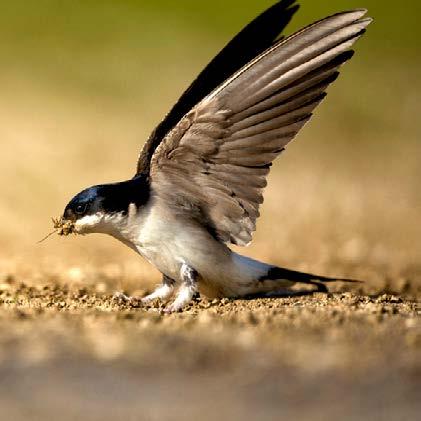
Great observation! They are very likely from House Martins (pictured). House Martins are small, swallow-like birds with white underparts and glossy blue-black backs. They build neat, bowlshaped nests from mud pellets, usually under the eaves of houses or sheltered walls. They migrate here from Africa in spring to raise their young and often return to the same nesting sites each year.
I want to plant some berries and shrubs this autumn to support wildlife in my garden. What do you recommend?
Marina, East Belfast
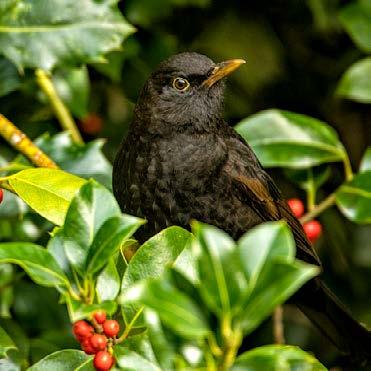
This is a great way to support birds. Holly provides bright red berries for Blackbirds (pictured) and Thrushes, while Rowan trees attract species such as Song Thrushes and Waxwings. Hawthorn offers both dense shelter and red berries loved by many garden birds. Ivy is excellent at providing late berries and cover, while also supporting insects.
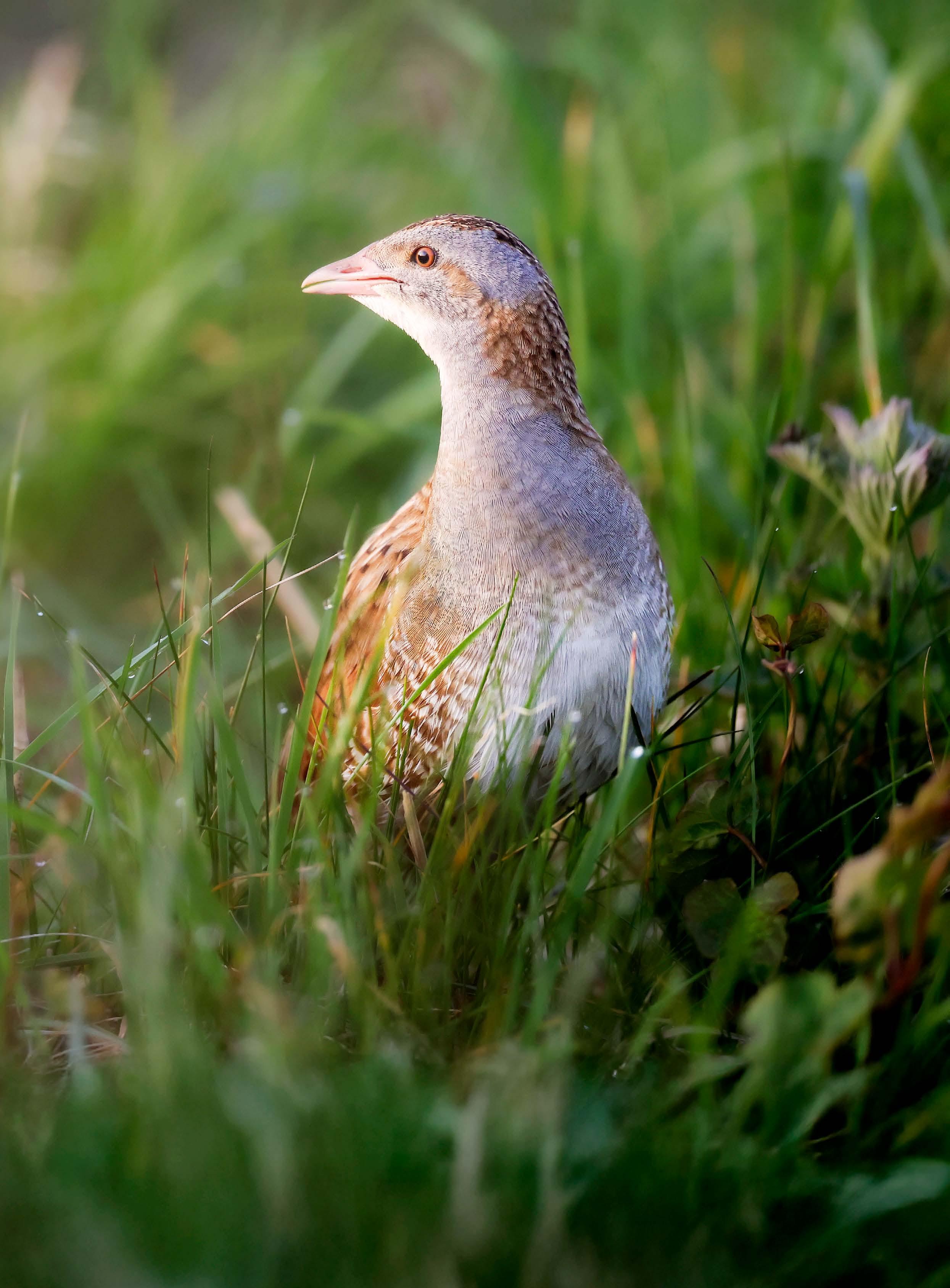
The elusive Corncrake has had its best year yet on Rathlin Island, thanks to everyone involved with RSPB NI’s Giving Corncrake a Home project
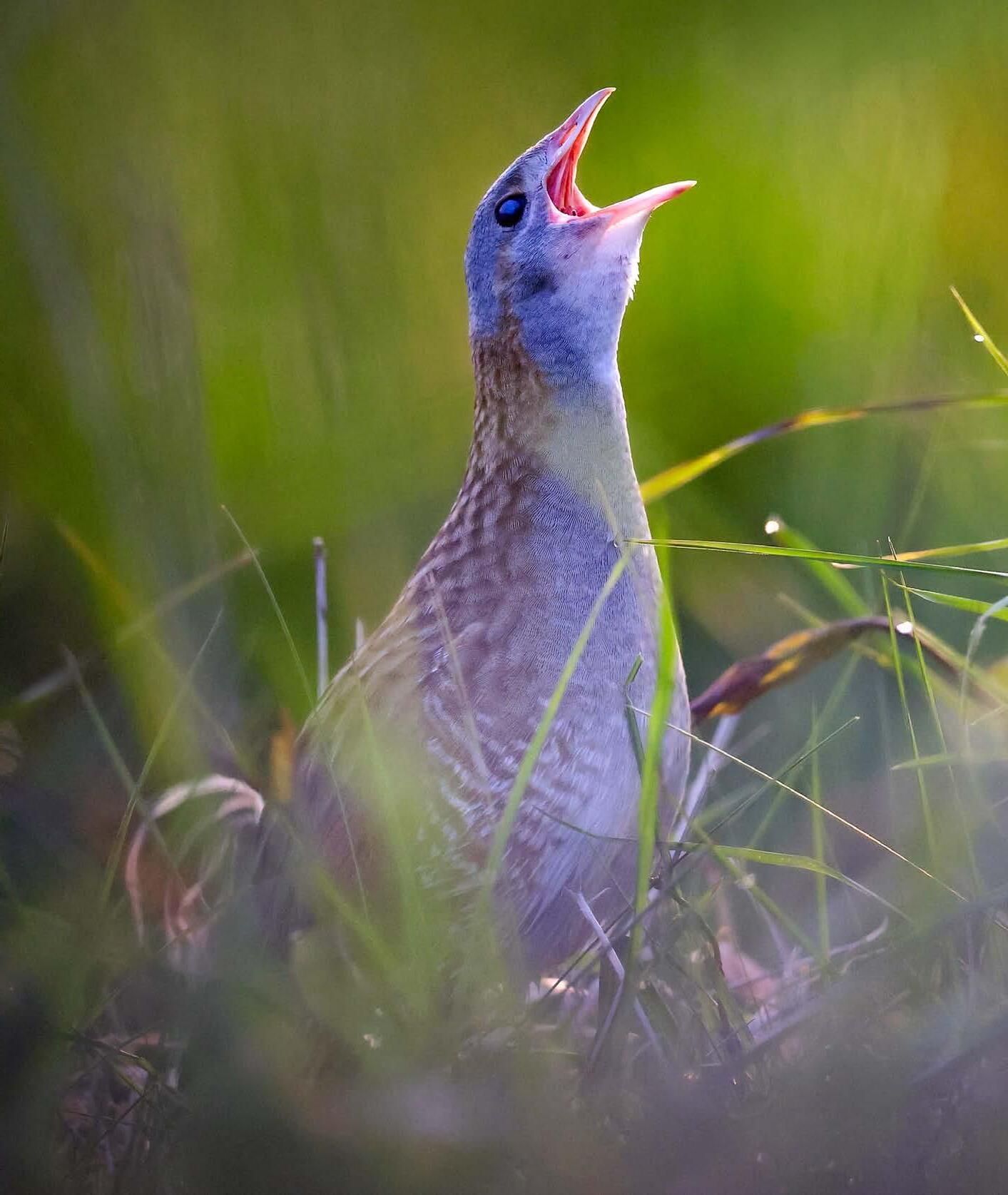
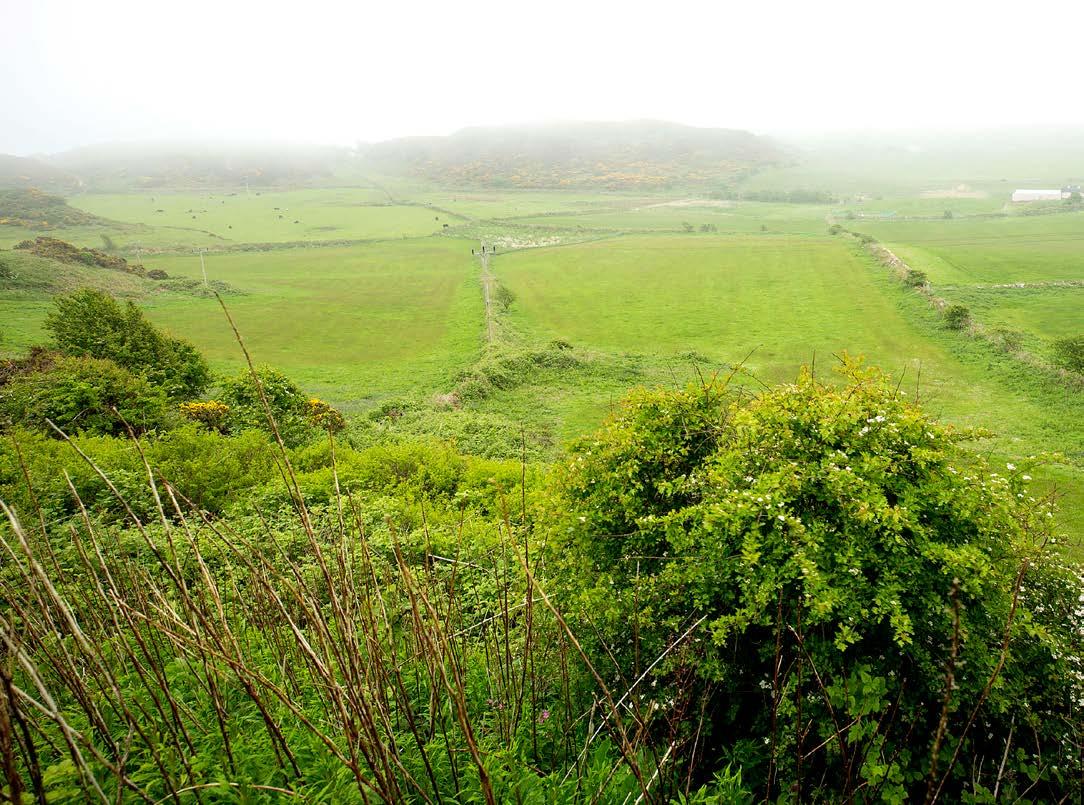
Once a familiar soundtrack to summer nights in the countryside, the harsh, rasping ‘crex crex’ call of the Corncrake had all but faded into memory. But this year, that ghostly voice has returned with unexpected strength, as six males have been heard on Rathlin Island, the highest number recorded since the species became locally extinct in Northern Ireland.
The Corncrake is one of Northern Ireland’s most elusive and threatened breeding birds. Once widespread, it has suffered dramatic declines due to changes in agriculture and habitat loss. This special bird is rarely seen, preferring to skulk in tall grasses, but its distinctive call is unmistakeable and this year it has returned with renewed strength.
Behind the scenes
Over the last 15 years, RSPB NI have been working to bring this species back to our shores. For several years now the numbers have been steady, with three to four returning each breeding season to Rathlin Island. But this year, for the first time since the Giving Corncrake a Home project began, the numbers have nearly doubled and six calling males have been heard.
Liam McFaul, RSPB NI Warden on Rathlin Island, witnessed the bird’s decline first-hand: “When I was growing up, Corncrakes were everywhere, you couldn’t step outside without hearing them. Now, even hearing one call is rare. That’s why creating early cover with nettle rhizomes is so important. Without it, Corncrakes could have disappeared from Rathlin for good.”
This groundbreaking result is a direct reflection of the years of dedication and hard work by the RSPB
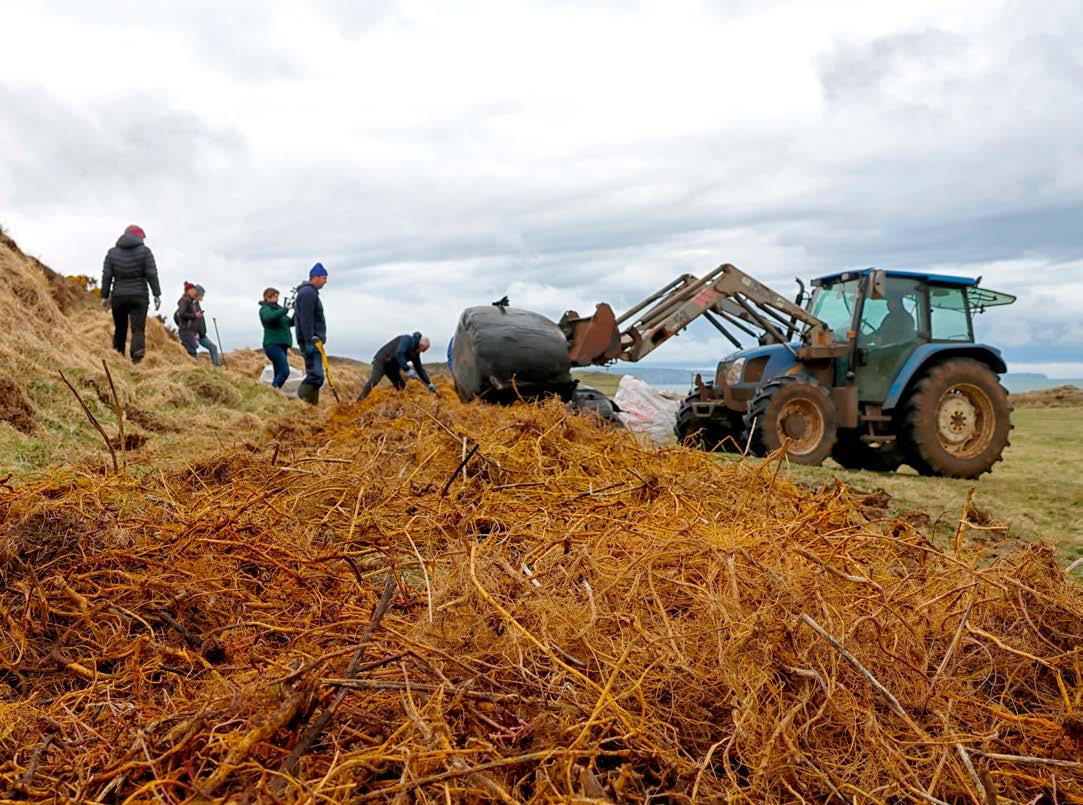
NI’s Giving Corncrake a Home project, made up of Conservation Officers and volunteers who have worked with local landowners and farmers across Northern Ireland. A key part of the effort has been the strategic digging up and replanting of nettles. This plant is vital for Corncrakes as it provides the tall, dense vegetation that the species likes for cover and, importantly, for nesting.
Grasp the nettle
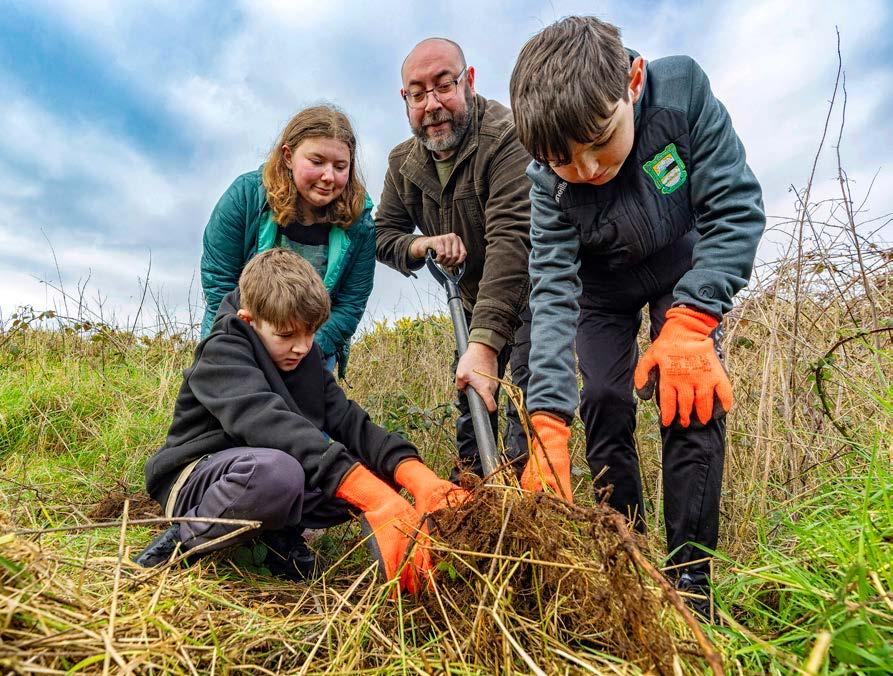
Each winter, the project recruits several volunteers to carefully dig up nettle roots on the mainland, working with farmers and landowners, before washing and transporting them to Rathlin Island. Then they’re replanted with the hopes of expanding the Corncrake’s habitat one patch at a time.
‘A key part of the effort has been the strategic replanting of nettles that Corncrakes prefer for cover and nesting’
Corncrake project in numbers
14
412 6 93 bags of rhizomes collected in winter 2024–25 volunteers hours digging calling males hours coordinating
47
“Last season was active and eventful to say the least,” shares Project Lead, Anne Guichard. “We held nine nettle-dig events, located in parks and farms across Ballymena, Ballyclare and Glenwherry. From these digs we were able to collect 14 bulk bags of nettle roots known as rhizomes, thanks to the efforts of volunteers who dedicated 412 hours to digging nettles.”
Anne continues, “Our volunteer Coordinators, Jodie and Fiona, also dedicated a further 93 hours behind the scenes and are vital to the success of the project. I’d like to give a special mention to full-time placement student Adam who came on board, full of energy, with a willingness to help the team meet their goals.”
The Giving Corncrake a Home project also went to the local community, attending fairs and open days such as CAFRE Greenmount, Charity Jobs NI and Queens University Charity and Volunteering. This was a great opportunity to spread the word of the project, and the work RSPB NI is doing to support Corncrakes in Northern Ireland.
“This is gritty, physical work,” says Anne. “But hearing that telltale ‘crex’ returning year-on-year makes every cold winter morning spent on the hills worth it.”
The success of the returning Corncrake to Rathlin is not just a win for the species, but it’s a testament to the power of community-driven conservation. Volunteers from all walks of life have contributed to the project, braving wind, rain and nettle stings in the shared hope of bringing this iconic species back from the brink.
To have six calling males now is a beacon of hope and proof that conservation, when it’s collaborative and rooted in local knowledge, really works.
As the summer unfolded, the call of the Corncrake continued to ring our across the meadows of Rathlin, a ghost of the past made real again by teamwork, dedication and a deep connection to nature.
Get involved...
Work begins again this winter, as the Giving Corncrake a Home project will take up nettle digging across the coast from November to January. It’s actively recruiting for volunteers to join them in digging up, cleaning and eventually transporting the nettle roots over to Rathlin Island to be replanted. If you’d like to volunteer, need more information about nettle digging, or have nettles suitable for digging then please email us corncrakeni@rspb.org.uk
Find out more
Scan the QR code to hear the call of the corncrake and get a glimpse of what it’s like to volunteer with RSPB NI. bit.ly/RSPBNICorncrake

Contact
RSPB Northern Ireland
Headquarters
Belvoir Park Forest, Belfast BT8 7QT 028 9049 1547 rspb.nireland@rspb.org.uk
Follow us
facebook.com/RSPBNI twitter.com/RSPBNI @rspb_ni
Antrim
Brenda Campbell, 028 9332 3657 group.rspb.org.uk/antrim
Belfast
Eleanor Brennan, group.rspb.org.uk/belfast
Coleraine
James McDowell, 07596 503 435 group.rspb.org.uk/coleraine
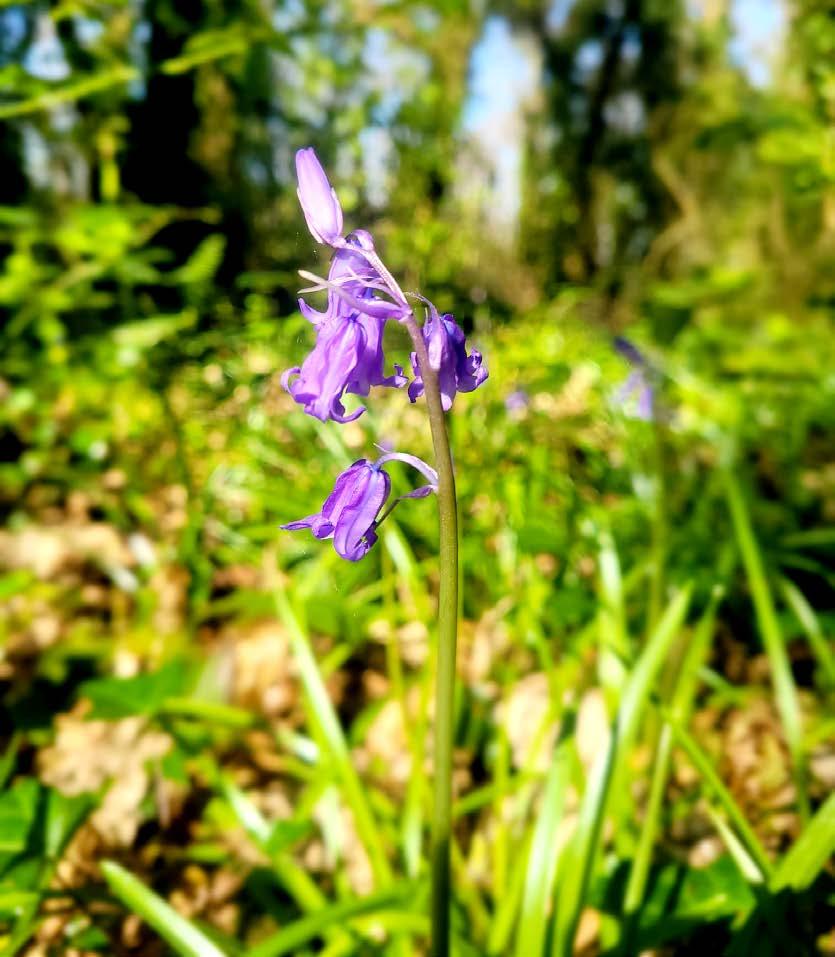
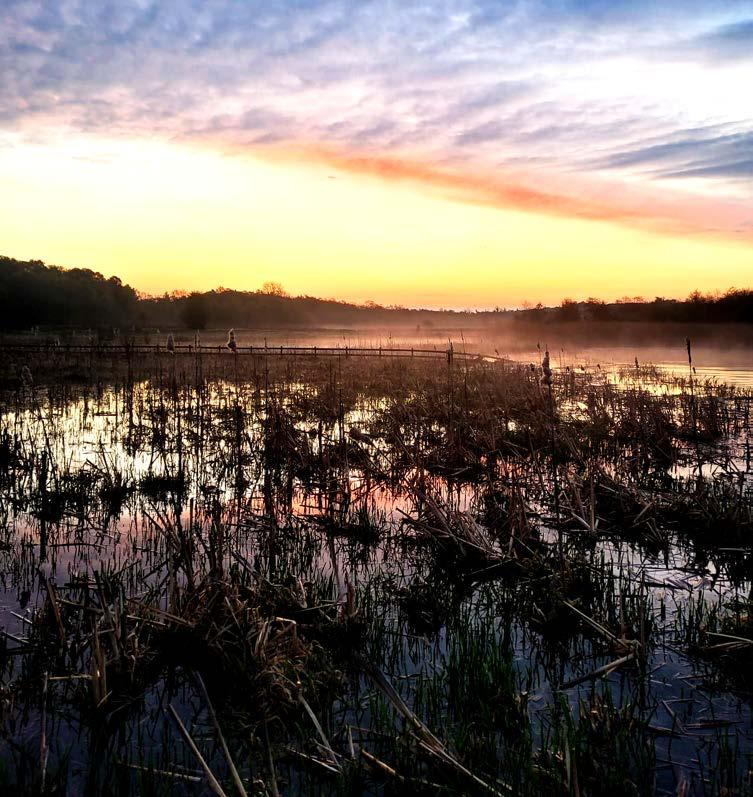
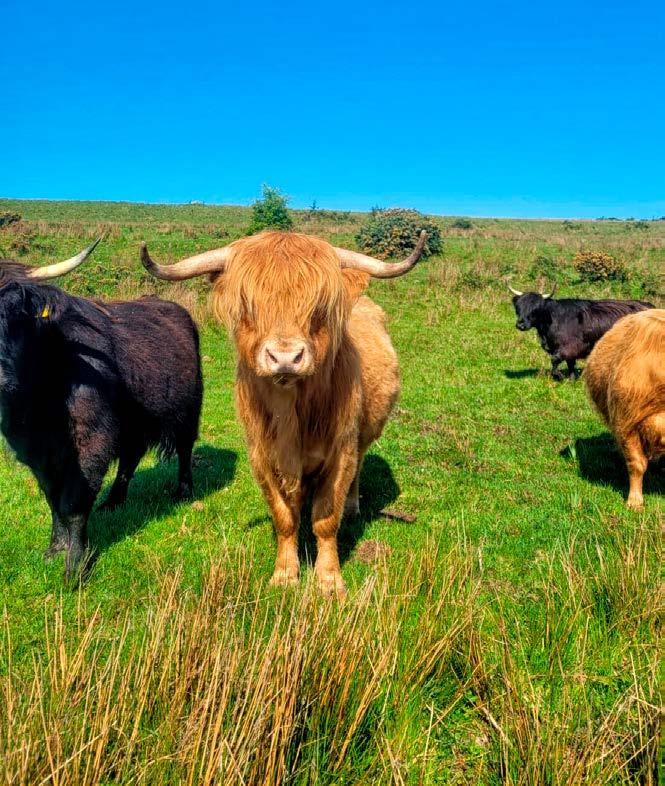
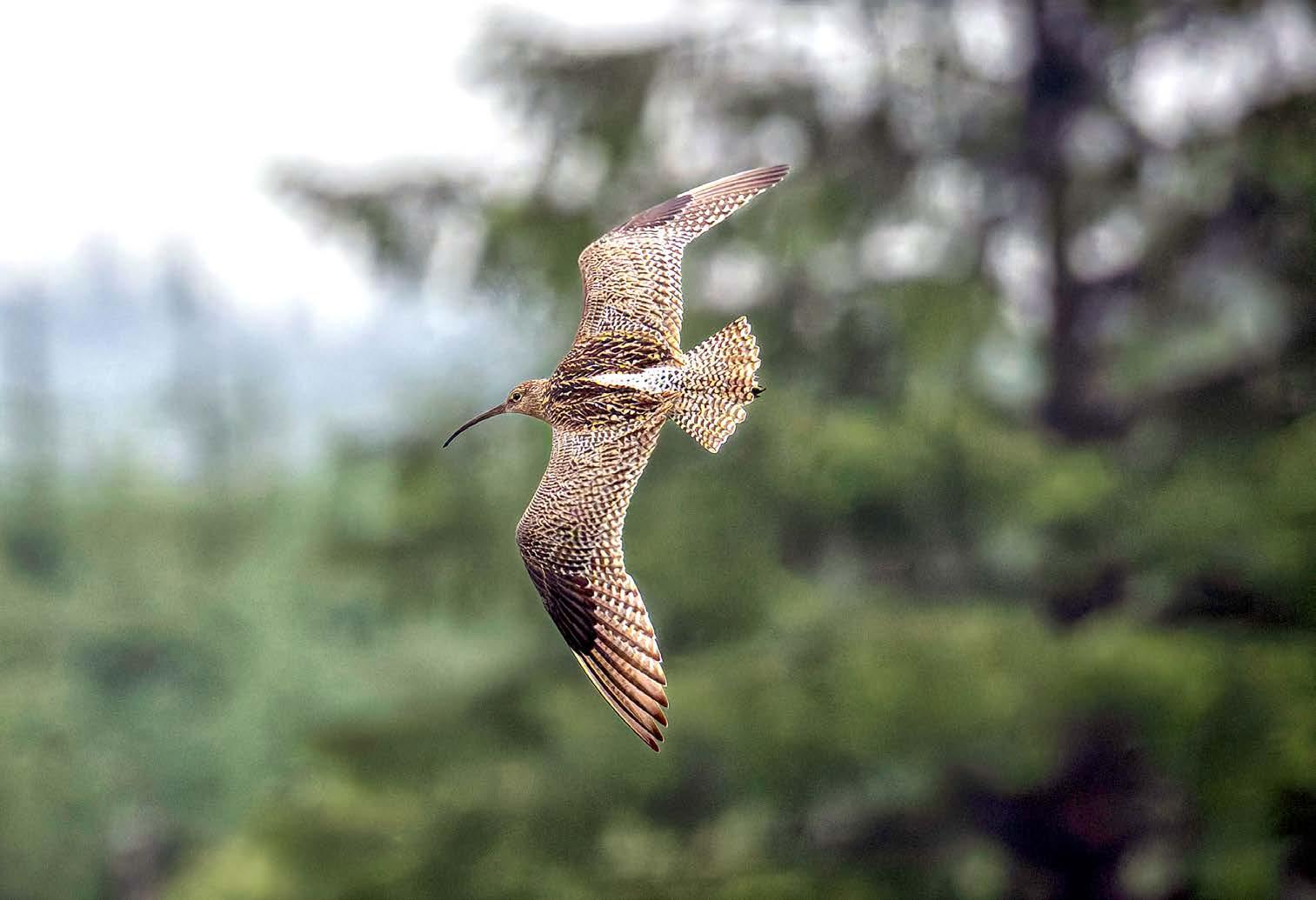
1. Curlew flying across Slieve Beagh, by Matthew Dean
2. Bluebells on Lough Erne, by Amy Burns
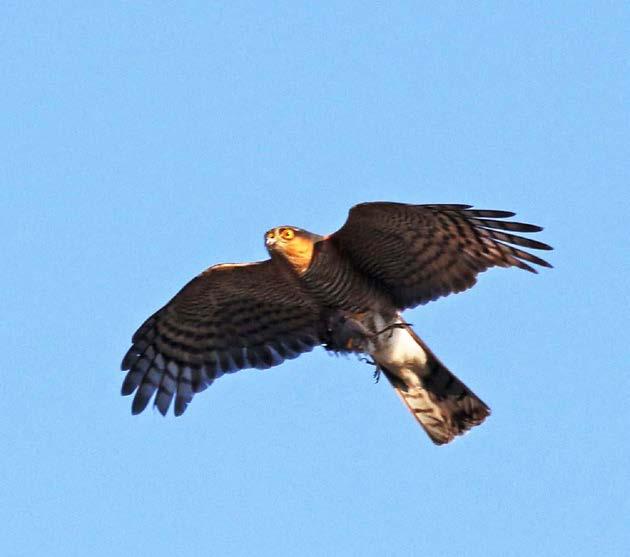
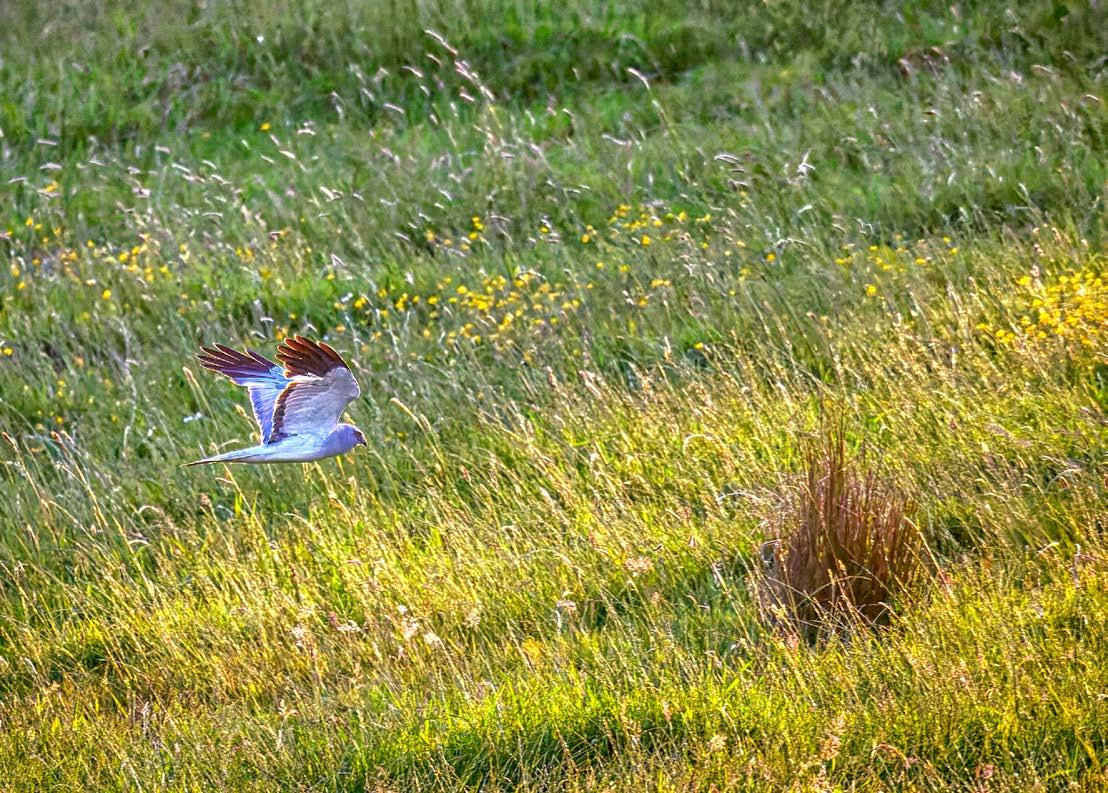
3. Hen Harrier, Slieve Beagh, by Matthew Dean
4. Lough Erne at sunset, by Stephen Magennis
5. Highland Cows, Lough Erne, by Amy Burns
Fermanagh
Rosalind McConkey, 028 6632 0794 group.rspb.org.uk/fermanagh
Lisburn
Ian Raine, group.rspb.org.uk/lisburn