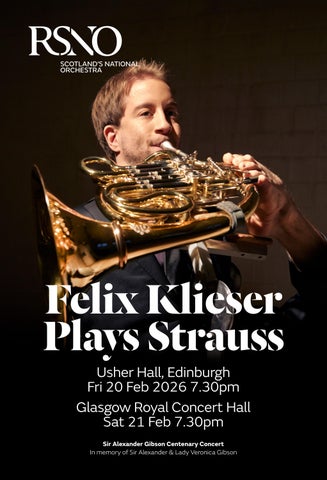
Felix Klieser Plays Strauss
Usher Hall, Edinburgh Fri 20 Feb 2026 7.30pm
Glasgow Royal Concert Hall Sat 21 Feb 7.30pm
Sir Alexander Gibson Centenary Concert In memory of Sir Alexander & Lady Veronica Gibson


Felix Klieser Plays Strauss
Usher Hall, Edinburgh Fri 20 Feb 2026 7.30pm
Glasgow Royal Concert Hall Sat 21 Feb 7.30pm
Phenomenal horn player Felix Klieser takes the spotlight tonight. He’s the perfect soloist for Richard Strauss’ swashbuckler of a concerto. But that is just the upbeat to what comes next. After the interval Music Director Thomas Søndergård and the full RSNO embark on one of the greatest adventures in 19th-century music, Bruckner’s colossal Eighth Symphony, which has been compared to a cathedral in sound and a mighty mountain range. Either way, it’s breathtakingly beautiful.
MOZART Overture to The Marriage of Figaro [4’]
R STRAUSS Horn Concerto No1 in E flat Major Op11 [16’]
INTERVAL
BRUCKNER Symphony No8 in C Minor [88’]
Thomas Søndergård Conductor Felix Klieser Horn
Royal Scottish National Orchestra
Sir Alexander Gibson Centenary Concert
In memory of Sir Alexander & Lady Veronica Gibson
The Glasgow performance on 21 Feb will be broadcast live on BBC Radio 3
The Glasgow performance will be recorded for the RSNO Archive. Supported by the Iain and Pamela Sinclair Legacy.
If viewing these notes at the concert, please do so considerately and not during performances. Please silence all mobile telephones and alerts, and refrain from taking photographs, without flash, until the end of each piece.
Felix Klieser with the RSNO Chamber Ensemble
Sun 22 Feb 2026: 1pm NEW AUDITORIUM, GLASGOW ROYAL CONCERT HALL
Beethoven’s
Violin Concerto
Beethoven Violin Concerto
Jörg Widmann Con brio
Mendelssohn Symphony No5 Reformation
Jörg Widmann Conductor
Veronika Eberle Violin
EDINBURGH FRI 27 FEB: 7.30PM
GLASGOW SAT 28 FEB: 7.30PM
Brahms Horn Trio Op40
Beethoven Quintet for Piano and Winds Op16

Welcome
Welcome to this very special concert.
Tonight, we are dedicating our performance to the great Sir Alexander Gibson and his wife Lady Veronica, as last week marked the 100th anniversary of Sir Alex’s birth. Sir Alexander Gibson was the longest-serving Principal Conductor and Music Director of the then-named Scottish National Orchestra, and you can read more about his extraordinary musical career on the following pages of this programme.
Sir Alex’s legacy within Scotland is immeasurable and the profile he raised for Scotland and Scottish culture cannot be understated. As someone who grew up as a young musician in Scotland, I was always aware of what an immense musical presence Sir Alex was, attracting world-class artists to Scotland – the likes of Jessye Norman, Yo-Yo Ma and Vladimir Ashkenazy. The Scottish cultural landscape wouldn’t be what it is today without Sir Alex, and it feels only right that we are remembering him across the cultural sector and with our friends at the Royal Conservatoire of Scotland and Scottish Opera. Our three organisations are holding a celebration at the Scottish Parliament next week to celebrate Sir Alex’s achievements and legacy.
This evening, we welcome our present-day Music Director Thomas Søndergård back to the podium alongside the phenomenal Felix Klieser. Felix first played with us in 2024 at matinee concerts in Lanark and Greenock, and we just knew we had to have him back for a Season concert. Felix will also be joining our Chamber Ensemble on Sunday afternoon in Glasgow Royal Concert Hall’s New Auditorium to perform a programme of Brahms and Beethoven. We hope to see many of you there.
Alistair Mackie CHIEF EXECUTIVE
Keep in touch with the RSNO
Royal Scottish National Orchestra 19 Killermont Street
Glasgow G2 3NX T: +44 (0)141 226 3868
Scottish Company No. 27809
Scottish Charity No. SC010702
Sir Alexander Gibson CBE
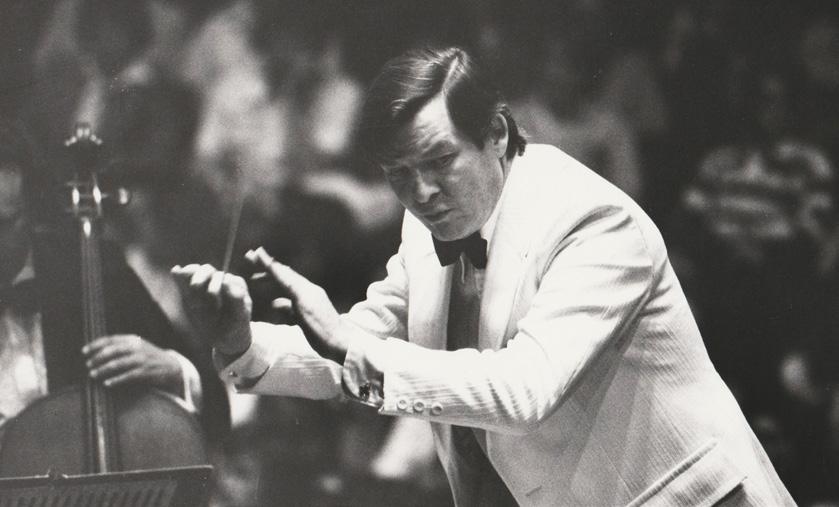
In celebration of 100 years since his birth, the RSNO is dedicating this evening’s performance to Sir Alexander Gibson CBE (1926-1995), the Orchestra’s longest-serving Principal Conductor and Music Director, from 1959 until 1984, and the first Scot to be appointed to the position. Sir Alexander Gibson was created Commander of the British Empire in 1967 and made a Knight Bachelor in the Queen’s Jubilee Honours list in 1977.
Born in Motherwell on 11 February 1926, Alex Gibson grew up in the Lanarkshire village of New Stevenston and was educated at Dalziel High School, where he showed early signs of his musical talent on the piano and organ. By 18 he was studying at the Royal Scottish Academy of Music and Drama, working simultaneously as organist of Hillhead Congregational Church in Glasgow’s West End. War interrupted his later studies at Glasgow University, when he was assigned to the Royal Signals Band. Gibson
remained in military service until 1948, when he took up a scholarship to attend the Royal College of Music in London, followed by further courses of study at the Mozarteum in Salzburg and the Accademia Chigiana in Siena.
Following appointments with Sadler’s Wells Opera in London and as an Assistant Conductor of the BBC Scottish Orchestra, Gibson was appointed Music Director of the Scottish National Orchestra or SNO (as it was then known) in 1959. It was an unusually bold appointment by a board and management who, up until that point, had favoured Vienna-based conductors such as Hans Swarowksy, Walter Susskind and Karl Rankl – all regarded as ‘safe’ musical hands, with repertoire mostly focused on Central European composers. Aged just 33, Gibson brought a new energy to the SNO and made his mark straight away – for his first season he changed the layout of the Orchestra, introduced new repertoire including all seven of Sibelius’ symphonies, initiated a
contemporary music festival and conducted the British premiere of Schoenberg’s Violin Concerto.
With a mission to make music and opera more accessible to people in Scotland, as well as putting Scotland on the cultural map, Gibson founded Scottish Opera in 1962, utilising the SNO as the orchestra in the pit. He conducted the Orchestra for its first-ever foreign tour in 1967, and its first US tour in 1975. The SNO made its first commercial recordings with Gibson, possibly the only recordings ever to be made in Glasgow’s St Andrew’s Hall before it burned down in 1962. Thanks to those critically acclaimed recordings and tours, the world was beginning to take notice of the Gibson/SNO partnership, and together they attracted some of the best international talent to perform in Scotland, such as Jessye Norman, Arthur Rubinstein and Mstislav Rostropovich.
What does Alexander Gibson mean to the RSNO today? Although there are very few members of today’s Orchestra who played under Gibson, his 25 years are not easily forgotten, and there are still traces of his influence when the Orchestra performs certain repertoire, especially his
beloved Sibelius. Despite being made nearly 50 years ago, his recordings of Sibelius’ symphonies and tone poems are still regarded as among the finest interpretations to this day; it’s thanks to those recordings and many others made by Sir Alex and ‘his’ SNO that today’s RSNO is considered one of the world’s great recording orchestras.
Ewen McKay
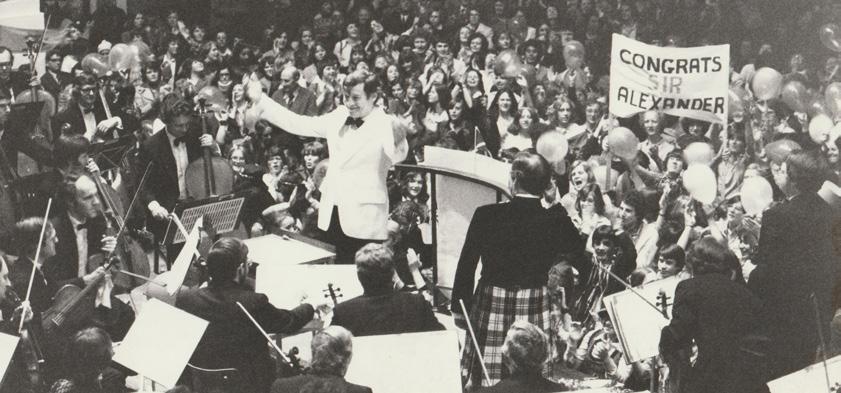
At Edinburgh’s Usher Hall the day after being awarded his knighthood, May 1977.
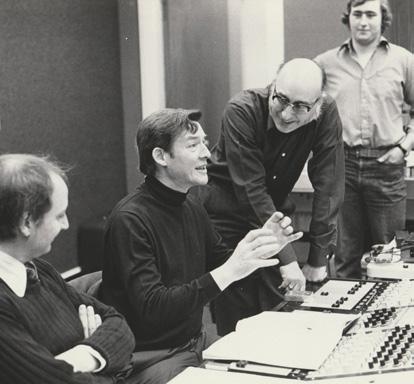
At a recording session for Walton’s Symphony No1, Henry Wood Hall, Glasgow, 1983.
Royal Scottish National Orchestra
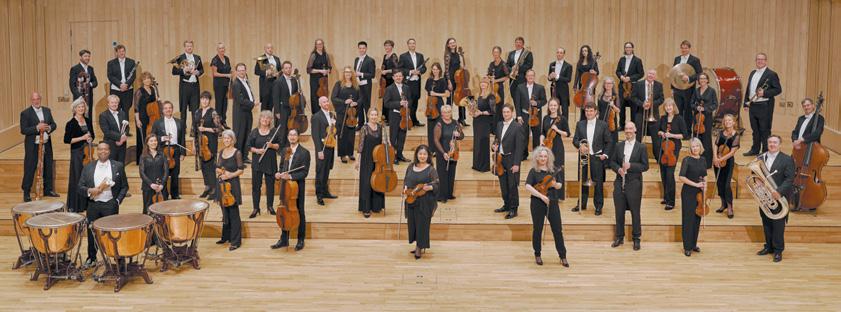
Formed in 1891, the Royal Scottish National Orchestra (RSNO) is one of Europe’s leading symphony orchestras. Awarded royal patronage by Her Late Majesty The Queen in 1977, its special status in the UK’s cultural life was cemented in 2007 when it was recognised as one of Scotland’s five National Performing Companies, supported by the Scottish Government.
Led by Music Director Thomas Søndergård, the Orchestra performs across Scotland, including concerts in Glasgow, Edinburgh, Dundee, Aberdeen, Perth and Inverness, and appears regularly at the Edinburgh International Festival and BBC Proms. The RSNO tours internationally, most recently visiting China and Europe.
The RSNO has a worldwide reputation for the quality of its recordings, receiving a 2020 Gramophone Classical Music Award for Chopin’s Piano Concertos (soloist: Benjamin Grosvenor), conducted by Elim Chan, two Diapason d’Or awards (Denève/Roussel 2007; Denève/Debussy 2012) and eight GRAMMY Award nominations. In recent years, the RSNO has cultivated an international reputation for world-class film, television and videogame soundtrack recording. The Orchestra has recorded for BAFTA-winning
series Silo (Apple TV) and worked with the likes of GRAMMY Award-winning composer Lorne Balfe on Life on Our Planet (Netflix). Other notable titles include Nuremberg (Sony Pictures), Now You See Me: Now You Don’t (Lionsgate), Horizon: An American Saga (Warner Bros) and Star Wars Outlaws (Ubisoft). The Orchestra records at its bespoke in-house facility in Glasgow.
The RSNO believes that music can enrich lives and aims to inspire, educate and entertain people throughout Scotland and beyond with its performances, recordings and engagement programmes. Supporting schools, families, young professionals and wider communities, the RSNO delivers high-quality initiatives for all ages and abilities. The RSNO’s engagement offering includes its singing strand, encompassing a Buggy Choir and Chorus Academy in both Dundee and Glasgow and a lunchtime Workplace Choir, which complements the well-established and highly respected RSNO Youth Choruses and RSNO Chorus. The community choruses are designed with the benefits of group singing for health and wellbeing at their core and are open to all.
FIRST VIOLIN
Igor Yuzefovich LEADER
Shlomy Dobrinsky
ASSOCIATE LEADER
Tamás Fejes
ASSISTANT LEADER
Patrick Curlett
Ursula Heidecker Allen
Lorna Rough
Joana Rodriguez
Alan Manson
Elizabeth Bamping
Caroline Parry
Veronica Marziano
Susannah Lowdon
Liam Lynch
Laura Ghiro
Catherine James
Freya Hall
SECOND VIOLIN
Jacqueline Speirs
ASSOCIATE PRINCIPAL
Marion Wilson
Nigel Mason
Emily Nenniger
Paul Medd
Anne Bünemann
Sophie Lang
Robin Wilson
Kirstin Drew
Colin McKee
Helena Rose
Fiona Stephen
Seona Glen
Joe Hodson
Rosamund Noll
On Stage
VIOLA
Jane Atkins
GUEST PRINCIPAL
Felix Tanner
Asher Zaccardelli
Susan Buchan
Claire Dunn
Beth Woodford
Francesca Hunt
Maria Trittinger
Katherine Wren
Lisa Rourke
David McCreadie
Elaine Koene
CELLO
Pei-Jee Ng PRINCIPAL
Betsy Taylor
Kennedy Leitch
Yuuki Bouterey-Ishido
Sarah Digger
Gunda Baranauskaitė
Rachael Lee
Robert Anderson
Chloe Randall
Laura Williamson
DOUBLE BASS
Nikita Naumov
PRINCIPAL
Carlos Navarro
Michael Rae
Neus Camp
Alexandre Cruz dos Santos
Moray Jones
Kirsty Matheson
George Podkolzin
FLUTE
Katherine Bryan PRINCIPAL
Oliver Roberts
Janet Richardson PRINCIPAL PICCOLO
OBOE
Adrian Wilson PRINCIPAL
Peter Dykes
Henry Clay PRINCIPAL COR ANGLAIS
CLARINET
Timothy Orpen PRINCIPAL
William Knight
Duncan Swindells PRINCIPAL BASS CLARINET
BASSOON
David Hubbard PRINCIPAL
Gareth Humphreys
Paolo Dutto
PRINCIPAL CONTRABASSOON
HORN
Amadea Dazeley-Gaist PRINCIPAL
Alison Murray
Andrew McLean
Jim Mildred
Elise Campbell
WAGNER TUBA
Martin Murphy
Andrew Saunders
Neil Mitchell
Ian Smith
TRUMPET
Jason Lewis
ASSOCIATE PRINCIPAL
Katie Bannister
Robert Baxter
Mark Elwis
TROMBONE
Dávur Juul Magnussen
PRINCIPAL
Cillian Ó Ceallacháin
Alastair Sinclair PRINCIPAL BASS TROMBONE
TUBA
John Whitener PRINCIPAL
TIMPANI
Stefan Beckett
GUEST PRINCIPAL
PERCUSSION
Simon Lowdon
PRINCIPAL
Julian Wolstencroft
HARP
Pippa Tunnell
Sharron Griffiths
Teresa Barros Pereira
Romão
Thomas Søndergård Conductor
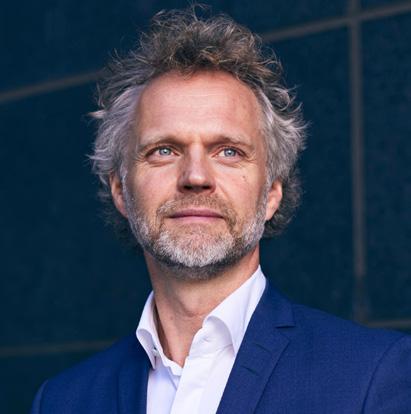
Danish conductor Thomas Søndergård has been Music Director of the RSNO since 2018, following six seasons as Principal Guest Conductor, and is Music Director of the Minnesota Orchestra. Between 2012 and 2018, he served as Principal Conductor of the BBC National Orchestra of Wales (BBC NOW), after stepping down as Principal Conductor and Musical Advisor of the Norwegian Radio Orchestra.
He has appeared with many notable orchestras in leading European centres, such as Berlin (Berliner Philharmoniker, RundfunkSinfonieorchester Berlin, Mahler Chamber Orchestra, Konzerthausorchester Berlin), Munich (Symphonieorchester des Bayerischen Rundfunk), Zurich (Tonhalle-Orchester Zürich), Leipzig (Gewandhausorchester), Paris (Orchestre National de France), London (London Philharmonic, BBC Symphony, London Symphony, Philharmonia Orchestra) and Amsterdam and Rotterdam (Royal Concertgebouw Orchestra, Netherlands Philharmonic, Rotterdam Philharmonic), and is a familiar figure in Scandinavia, with such orchestras as the Oslo Philharmonic, Gothenburg Symphony,
Danish National Symphony, Royal Stockholm Philharmonic, Swedish Radio Symphony, Finnish Radio Symphony and Helsinki Philharmonic. North American appearances to date have included the symphony orchestras of New York, Chicago, Cleveland, Cincinnati, Baltimore, St Louis, Toronto, Atlanta, Montreal, Vancouver, Houston and Seattle, and the LA Philharmonic.
Following his acclaimed debut for Royal Danish Opera (Poul Ruder’s Kafka’s Trial), he has since returned to conduct Die Walküre, Elektra, Le nozze di Figaro, Il barbiere di Siviglia, La bohème, The Cunning Little Vixen and Il viaggio a Reims. He has also enjoyed successful collaborations with Norwegian Opera and Royal Swedish Opera. His Stockholm productions of Tosca and Turandot (both with Nina Stemme) led to his Bayerische Staatsoper debut, conducting main season and Opera Festival performances of Turandot with Stemme. He made his Deutsche Oper Berlin debut with the world premiere of Scartazzini’s Edward II and has since returned for Berlioz’s Romeo and Juliet and Strauss’ Elektra.
His discography covers a broad range of contemporary and mainstream repertoire, including Nielsen, Sibelius symphonies and tone poems (with the BBC NOW), Lutosławski and Dutilleux cello concertos (with Johannes Moser and the Rundfunk-Sinfonieorchester Berlin) and violinist Vilde Frang’s celebrated debut recording (with the WDR Köln). With the RSNO on Linn Records Thomas has recorded works by Richard Strauss, Prokofiev, Bacewicz, Lutosławski and Szymanowski.

In 2023, Thomas was a recipient of the Carl Nielsen and Anne-Marie Carl Nielsen’s Foundation award for his outstanding contribution to Danish musical life. In 2022, he was decorated with a prestigious Royal Order of Chivalry, the Order of Dannebrog (Ridder af Dannebrogordenen), by Her Majesty Margrethe II, Queen of Denmark.
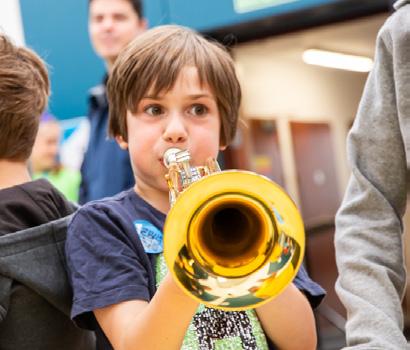


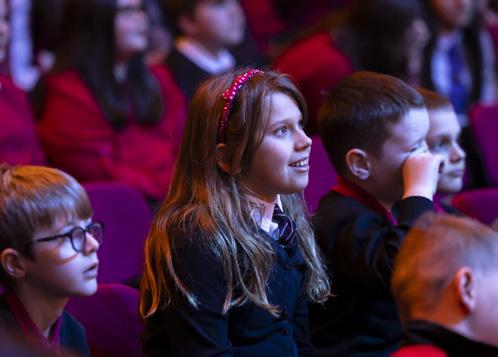
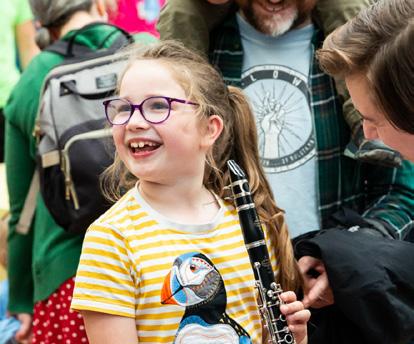

Your support can brighten a child’s day. Will you help us bring the joy of music to children across Scotland?
Scan the QR code to be taken to our donate page or visit rsno.org.uk/every-child

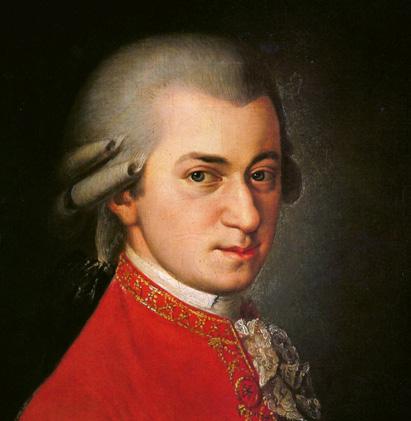
Wolfgang Amadeus Mozart (1756-1791)
Overture to The Marriage of Figaro
FIRST PERFORMANCE
Full opera: Vienna, 1 May 1786
DURATION Overture: 4 minutes
The late 1780s were Mozart’s prosperous years, a time of unparalleled productivity that culminated in three of his best-loved operas, The Marriage of Figaro (1786), Don Giovanni (1787) and Così fan tutte (1790). But it was also a time of radical social and political upheaval – the storming of the Bastille took place in July 1789, for example – and aristocrats across Europe had reason to be wary. Marie Antoinette’s nephew, Joseph II, had only recently taken the Austrian throne, and he was doing his best to propel the Habsburg Empire into the world of the Enlightenment. It was against this shifting and chaotic background that Mozart and his librettist Lorenzo Da Ponte created some of their most enduring operatic masterpieces.
The origins of The Marriage of Figaro lie in the play of the same name by the French dramatist Pierre-Augustin de Beaumarchais. It was a sequel to his earlier play The Barber of Seville,
which had scandalised Paris with its risqué content, both moral and political. The Marriage of Figaro was no less controversial, and had in fact been banned in Vienna as being ‘impertinent and subversive’. This was scarcely the time, the powers-that-be felt, to produce a play in which servants expose the libertine excesses of a ruling aristocracy.
If Da Ponte’s own account is to be believed, it was he alone who persuaded Joseph II to allow the opera to be written. As he recalled in his Memoirs, ‘I went, without saying a word to a living person, to offer Figaro to the Emperor. “This Marriage of Figaro,” he said, “I have just forbidden the theatres to use it!” “Yes, Sire,” I replied, “but I was writing an opera and have omitted anything that might offend good taste or public decency. And I may add that Herr Mozart’s music is marvellously beautiful.”’
As was customary for most opera overtures of the 18th century, Mozart’s to The Marriage of Figaro contains no music from the opera itself. Nevertheless, the Overture perfectly captures the spirit of the ensuing action. Breathlessly quick from the outset, the running notes for strings and bassoon establish a tremendous momentum, setting a frenetic pace that continues throughout the opera. Suppressed excitement turns to high-spirited celebration as the whole orchestra joins in.
©
Mark Fielding
Richard Strauss (1864-1949)
Horn Concerto No1 in E flat Major Op11
FIRST PERFORMANCE
Meiningen, 4 March 1885
DURATION 16 minutes
1. Allegro
2. Andante
3. Allegro
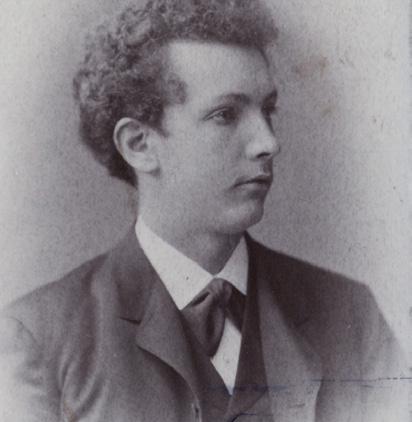
The eldest child of Franz Joseph Strauss, the celebrated principal horn player of the Munich Court Orchestra, Richard Strauss was surrounded by music from an early age. By 13 he was playing the violin in his father’s semi-professional orchestra and by 15 he had heard many of Wagner’s works. As he later wrote: ‘It was not until, against my father’s orders, I studied the score of Tristan that I entered into this magic work, and later into Der Ring das Nibelungen, and I can well remember how, at the age of 17, I positively wolfed the score of Tristan as if in a trance.’
Strauss’ first Horn Concerto was written during his last year at school (1881-2). Though certainly not Wagnerian in outlook, it has many of the
characteristic Straussian touches which led Hans von Bülow to describe the composer (in a similarly early work, the Serenade in E flat Major for 13 Wind Instruments Op7) as ‘by far the most striking personality since Brahms’.
The Concerto is set in the Classical manner, and the opening full orchestral chord is followed by a brief passage for the soloist based almost entirely on notes of the common chord: a heroic theme based on rising and falling arpeggios. The movement proceeds with the orchestra elaborating upon the soloist’s statements. A fanfare-like motif, making use of the rising triad that opens the work, is magically transformed in slow motion to form a bridge to the slow second movement. The brass and timpani, so evident in the first movement, stand aside and woodwinds become more prominent. The finale is a fast rondo featuring a brilliant main melody for the horn. Linking all three movements is a rhythm heard in the first movement, used in the slow movement as the violins’ accompanying motive and, in the final rondo, reappearing as the principal theme triumphant on solo horn.
The work was premiered in March 1885 with Gustav Leinhos as soloist and the Meiningen Court Orchestra conducted by Hans von Bülow. Although Strauss could not be present himself, his uncle Carl Horburger made the 50-mile journey especially and wrote to his nephew about the occasion, saying that von Bülow conducted ‘obviously with great commitment and interest’. When Horburger mentioned that he thought the ending a little too abrupt, von Bülow retorted, ‘Why? I don’t think so, after the horn passages and the final C – I think the ending is rather good.’
© Mark Fielding
Anton Bruckner (1824-1896)
Symphony No8 in C Minor
FIRST PERFORMANCE
Vienna, 18 December 1892
DURATION 88 minutes
1. Allegro Moderato
2. Scherzo: Allegro Moderato – Trio: Langsam [Slow]
3. Adagio: Feierlich langsam; doch nicht schleppend [Slow and solemn; but not dragging]
4. Finale: Feierlich, nicht schnell [Solemn, not fast]
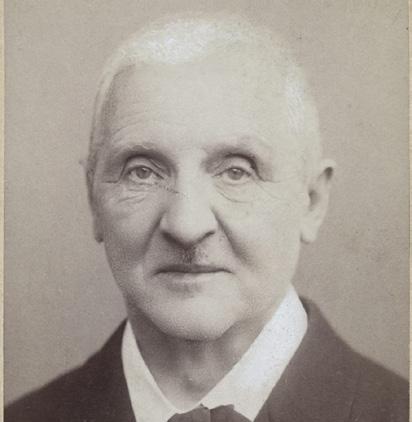
Bruckner’s symphonies have famously been described as ‘cathedrals in sound’ – a useful image, though it has its limitations. Like a cathedral, the Eighth Symphony is spacious, intricate in detail, but also mysterious, with dark corners, full of reminders of human mortality. But there’s also an impassioned, often troubled human drama enacted here amid the imposing architecture.
Bruckner began sketching the Eighth Symphony in 1884, buoyed up by the triumphant premiere
of his Seventh Symphony in Leipzig. Three years later the score was finished. At the bottom of the final page, Bruckner added one eloquent word – ‘Hallelujah!’ Full of pride, he sent the score to the conductor Hermann Levi, whose performance of the Seventh Symphony had been such a vindication for him after years of neglect and ridicule. But the new work baffled, even disturbed, Levi. ‘I am absolutely at sea in Bruckner’s Eighth Symphony,’ he wrote to a friend. ‘What can I do? It makes me shudder to think of the effect of such news on our friend!’
Bruckner was indeed shattered by Levi’s reaction; but then he pulled himself together and began to revise the Symphony extensively. His next letter to Levi is astonishing in its selfabasement: ‘I really should be ashamed of myself … What an idiot! It’s already beginning to look quite different …’
The new version of the Eighth, completed in 1890, is indeed ‘quite different’ from the original. It is slightly shorter, proportions being adjusted with the precision of a master-architect, and the harmonies and orchestration are richer and more refined. But the most significant difference is that the revised score is significantly darker than the original. The anxious, probing first movement originally ended loudly and triumphantly in the major key: Death is followed by joyous Transfiguration. Now it ebbs away pianissimo in a desolate C Minor: Death holds dominion over all.
After this the Scherzo powers forward like an elemental engine, building to two exhilarating climaxes, with pounding timpani and chiming brass. At the centre of the movement is a gentler, more introspective Trio, in which the harps appear for the first time; then the Scherzo is heard again.
Harps were quite a novelty for Bruckner. The composer’s pupil Friedrich Eckstein remembered him insisting that there was no place for the harp
in a true symphony. ‘Then one day I arrived at my lesson to find the Master in unusually high spirits. I was scarcely in the hallway when he cried: “I’ve put harps in the Adagio! I just had to, there was no other way!” I listened … and as [the harps] spread their magical sounds over the stately chorus of string voices, they seemed to lift the movement above all earthly things.’ In fact, this wonderful Adagio is not without its intimations of ‘earthly things’: the opening theme, full of romantic longing, recalls both Wagner’s eroticmystic masterpiece Tristan und Isolde and Schubert’s famous song of loneliness and alienation, Der Wanderer (The Wanderer). It is not hard to hear this movement as a huge song of longing, despite moments of angelic consolation, penned by a lonely, misunderstood man who never found the loving life partner he yearned for.
Despite the thrilling call to action at the beginning of the Finale, most of this movement unfolds slowly, and the stop-start nature of much of the argument understandably frustrates some listeners. But tune in to Bruckner’s timescale, grasp the patient unfolding behind the craggy and impassioned outbursts, and the emotional logic of this movement becomes clearer as it progresses. At last, after a cathartic reminder of the first movement theme, quiet drum-taps introduce the coda: an awe-inspiring slow crescendo, black-hued at first, but emerging into a blazing C Major at its height. Trumpet fanfares erupt, then the themes of all four movements are fused in polyphonic ecstasy. Transfiguration has come at last.
© Stephen Johnson
What was happening in 1892?
1 Jan Ellis Island, in New York Harbour, began processing immigrants to the US
27 Feb Rudolf Diesel applied for a patent for his compression ignition engine
11 Mar The first public basketball game was played, between students and faculty at the Springfield YMCA in Massachusetts; the students won
15 Mar John Houlding, the owner of Anfield, founded Liverpool Football Club
31 Mar Buenos Aires’ Chief of Police formally opened the world’s first fingerprinting bureau
4 Jul Samoa changed time zone from 4 hours ahead of Japan to 3 hours behind California and jumped the International Date Line – 4 Jul occurred twice
9 Aug Thomas Edison received a patent for a two-way telegraph
18 Aug William Ewart Gladstone became the Liberal UK Prime Minister, with Irish Nationalist Party support
31 Oct Arthur Conan Doyle’s The Adventures of Sherlock Holmes was first published in The Strand Magazine
8 Nov Grover Cleveland won the second of his non-consecutive terms as US President
18 Dec Tchaikovsky’s The Nutcracker premiered at the Imperial Mariinsky Theatre in St Petersburg
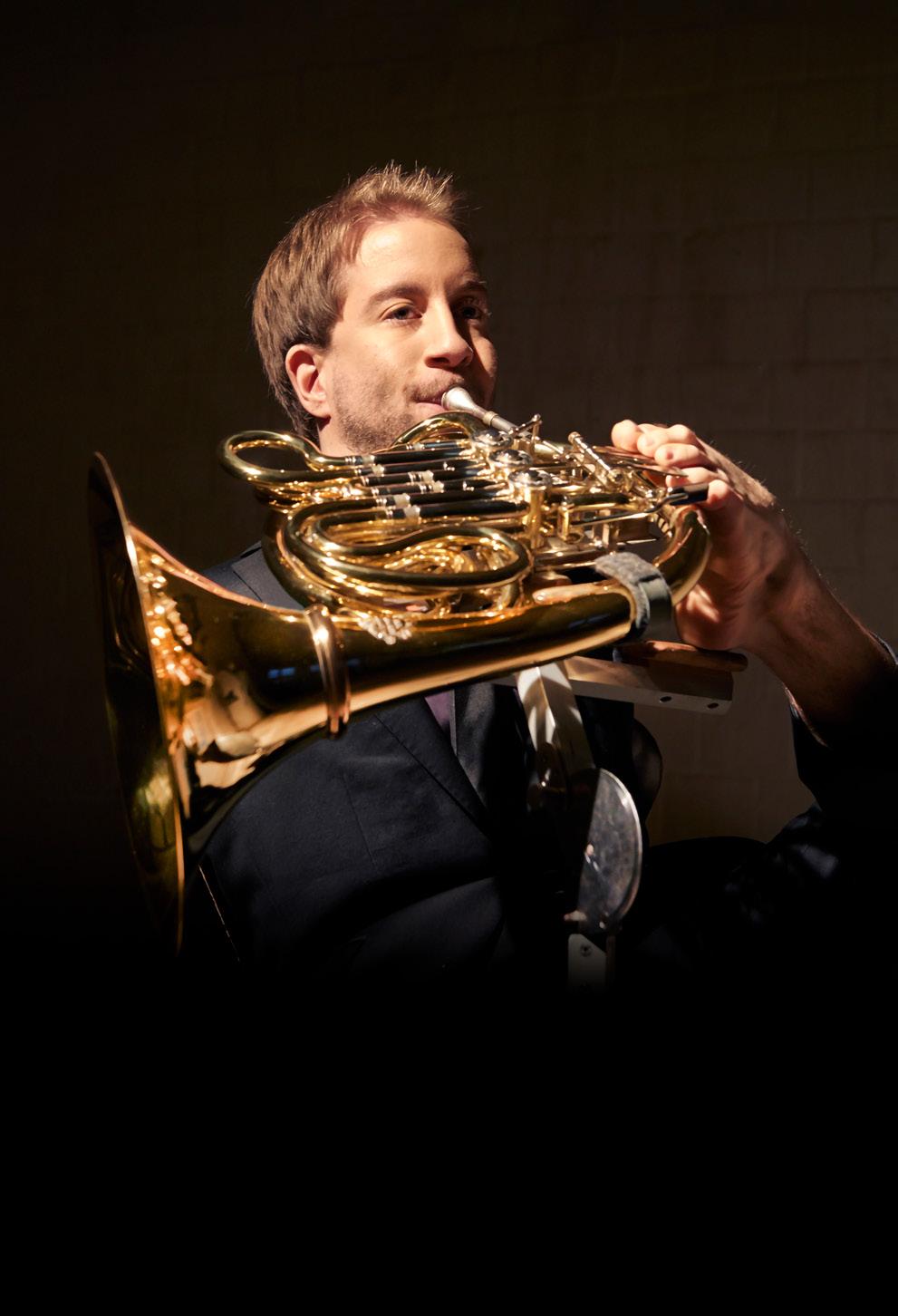
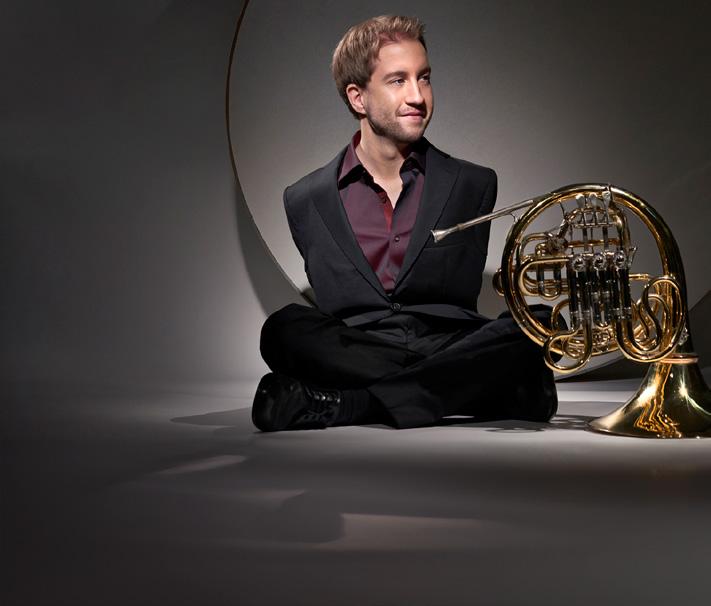
Felix Klieser
Horn
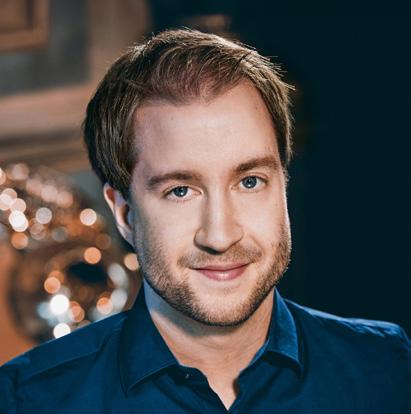
Felix Klieser has always been a problem solver who focuses on the art of the possible. Born without arms to a non-musical family, at the age of four he determined that he would learn to play the French horn. He took his first lessons at the age of five and became a junior student at the Hanover University of Music, Drama and Media at 13. In 2014 he received the ECHO Klassik Award as Young Artist of the Year and also the Music Prize of the Association of German Concert Directors. His second book, Imagine It’s Not Possible – Yet Someone Does It Anyway, was published in 2024.
In 2022 he made his debut at the Ravenna Festival at the invitation of Riccardo Muti, and the following year made his highly acclaimed debut at the BBC Proms, marking the conclusion of his two-year residency with the Bournemouth Symphony Orchestra.
Klieser’s debut album, Reveries, with works for horn and piano, was released in 2013 and received an ECHO Klassik Award. In 2019 he
released his recording of the complete Mozart Horn Concertos with Camerata Salzburg on Berlin Classics, and it subsequently spent three months in the Top 10 of the German classical music charts. His recording with CHAARTS Chamber Orchestra (Beyond Words, with arias arranged for horn and orchestra) has been a huge digital success on platforms such as Spotify and Apple Music. His recording of the horn concerto Soundscape by Swedish composer Rolf Martinsson is on his 2025 album Northern Colours with the Deutsche Radio Philharmonie and Jamie Phillips.
Orchestras Klieser has performed with include the Camerata Salzburg, Mozarteum Orchestra Salzburg, Orchestra Sinfonica di Milano Giuseppe Verdi, Orquesta Filarmónica de Gran Canaria, Slovenska Filharmonija, Chamber Orchestra of the Bavarian Radio Symphony Orchestra, Amsterdam Sinfonietta, Kammerakademie Potsdam and RSNO.
He has also performed as a chamber musician at the Mecklenburg-Vorpommern Festival, in the Philharmonie in Essen, in Die Glocke in Bremen, the Beethovenhaus in Bonn, the Tonhalle Düsseldorf, the Oxford Chamber Music Festival, the Gstaad Menuhin Festival and the SchleswigHolstein Music Festival.
His horn, Alexander (Mainz) or ‘Alex’, a model 103 from the manufacturer Gebr, leads a life of its own on Instagram and Facebook.


RSNO Benefactors, Patrons and Circle members
We are grateful to all our individual supporters for their generous philanthropy and loyalty. Your support enables the Orchestra to achieve its most ambitious goals and to continue inspiring people across Scotland both on and off the concert stage.
RSNO Benefactors
Sir Ewan and Lady Brown
Gavin and Kate Gemmell
Kat Heathcote and Iain Macneil
Ms Chris Grace Hartness
RSNO Patrons
Geoff and Mary Ball
Lady Rebecca Fraser
Walter and Janet Reid Charitable Trust
George Ritchie
Stephen Sweeney
Valerie Wells
Chair Patrons
Assistant Conductor
Celia Llácer
The Solti Foundation Chair
First Violin
Maya Iwabuchi LEADER Dunard Fund Chair
Tamás Fejes ASSISTANT LEADER
The Bill and Rosalind Gregson Chair
Ursula Heidecker Allen
The James and Iris Miller Chair
Elizabeth Bamping
The WL and Vera Heywood Chair
Alan Manson
The Hugh and Linda Bruce-Watt Chair
Liam Lynch
Mr Kyle Anderson Weir
Lorna Rough
The Sir Richard Dunbar Chair
RSNO Conductors’ Circle
Ardgowan Charitable Trust
Stina Bruce Jones
Ian and Evelyn Crombie
Kenneth and Julia Greig
Shirley Murray
David and Alix Stevenson
Eric and Karen Young
Learning and Engagement Patrons
William Brown, W.S
The Dundee RSNO Circle Committee
Neil and Nicola Gordon
Professor Gillian Mead, FRSE
Nicholas and Alison Muntz
Maurice and Nicola Taylor Charitable Trust
Second Violin
Marion Wilson ASSOCIATE PRINCIPAL
The Nigel & Margot Russell Chair
Sophie Lang
The Ian & Evelyn Crombie Chair
Emily Nenniger
Mr Jamie & Kyle Anderson Weir
Viola
Tom Dunn PRINCIPAL
The Cathy & Keith MacGillivray Chair
Lisa Rourke SUB PRINCIPAL
The Meta Ramsay Chair
Francesca Hunt
The Rolf and Celia Thornqvist Chair
Beth Woodford
Mr Jamie & Kyle Anderson Weir
Cello
Pei-Jee Ng PRINCIPAL
Mr Jamie & Kyle Anderson Weir
Betsy Taylor ASSOCIATE PRINCIPAL
The Maxwell Armstrong Chair
Kennedy Leitch ASSISTANT PRINCIPAL
The David and Anne Smith Chair
Rachael Lee
The Christine and Arthur Hamilton Chair
Double Bass
Nikita Naumov PRINCIPAL
The Gregor Forbes John Clark Chair
Michael Rae ASSISTANT PRINCIPAL
James Wood Bequest Fund Chair
Flute
Katherine Bryan PRINCIPAL
The David and Anne Smith Chair
Oboe
Adrian Wilson PRINCIPAL
The Hedley Wright Chair
Peter Dykes ASSOCIATE PRINCIPAL
Witherby Publishing Group Charitable Trust Chair
Cor Anglais
Henry Clay PRINCIPAL
In memory of a dear friend, Fiona H
Clarinet
Timothy Orpen PRINCIPAL
The Shirley Murray Chair
William Knight
The Turcan Connell Chair
Horn
David McClenaghan SUB-PRINCIPAL
The Springbank Distillers Chair
Alison Murray ASSISTANT PRINCIPAL
Mr & Mrs Pierre and Alison Girard
Martin Murphy ASSISTANT PRINCIPAL
The Gordon Fraser Charitable Trust Chair
Andrew McLean
The Catherine McLagan Chair
Trumpet
Christopher Hart PRINCIPAL
Ms Chris Grace Hartness
Timpani
Paul Philbert PRINCIPAL
Ms Chris Grace Hartness
Staff
Chiko Parkinson
COMMUNITY SINGING ASSISTANT
Supported by ScotRail
We are also grateful to those who give but who wish to remain anonymous.
If you would like to discuss how you can become an RSNO Patron, please contact Constance Fraser, Head of Development (Individuals and Partnerships), at constance.fraser@rsno.org.uk
RSNO Circle
Virtuoso
Ms Catherine Y Alexander
Mrs A M Bennett
Mr Alan and Mrs Carolyn Bonnyman
Dame Susan and Mr John Bruce
Stephen and Morny Carter
Francesca and Eoghan Contini Mackie
Dr Clive Criper
Martin and Carola Gordon
Scott and Frieda Grier
Judith and David Halkerston
Iain MacNeil and Kat Heathcote
MBE
Ian and Sarah Lister
Miss A McGrory
Maureen Michie
Mr James Miller CBE
Mrs Abigail Morrison
Nicholas and Alison Muntz
Meta Ramsay
Mr and Mrs W Semple
Gregor and Lesley Stewart
Mr Ian Taft
Claire and Mark Urquhart
Raymond and Brenda Williamson
Margaret Duffy and Peter Williamson
Symphony
Mr John Brownlie
Mr A Campbell
Dr K Chapman and Ms S Adam
Sir Sandy and Lady Crombie
Mr W G Geddes
Elizabeth Gibb
Dr Robert Gibb
Mr I Gow
Mr J D Home
Christine Lessels
Katharine M E Liston
Philip Whitely and Robert H Mackay
Hon Lord McGhie
Mrs A McQueen
Mr Iain Percival
Mr and Mrs David Robinson
Mrs Henrietta Simpson
Ian and Janet Szymanski
Dr C Cradock and Dr S Todd
Nelson and Barbara Waters
Concerto
Neil Barton
Mrs Mary Black
Miss D Blackie
Dr C M Bronte-Stewart
Dr F L Brown
Mr and Mrs Burnside
David Caldwell
Ms H Calvert
Ross Cavanagh
Myk Cichla
Terry and Joan Cole
Dr J Coleiro
Mr and Mrs B H Cross
Christine and Jo Danbolt
Mr P Davidson
Steven J Davis
Mr and Mrs K B Dietz
Mr C Ffoulkes
William Findlay
Mr and Mrs M Gilbert
Lord and Lady Hamilton
Mrs S Hawthorn
P Hayes
David G Henderson
Dr and Mrs P Heywood
Ms H Kay
Mr and Mrs W Kean
Nicholas Kilpatrick
Morag MacCormick
Mr and Mrs Marwick
Mr S Marwick
Mrs Sandra Maxwell
Mr and Mrs G McAllister
Mrs M McDonald
Dr A H McKee
Mr Rod McLoughlin
Morag Millar
Mrs B Morinaud
Dr and Mrs D Mowle
Mr KR and Dr CC Parish
Ms A and Miss I Reeve
Mrs E M Robertson
Sheriff Linda Ruxton
Dr and Mrs G K Simpson
Dr Norma H Smith
Mr and Mrs A Stewart
Jenny Stewart
David and Helen Strachan
Mr I Strachan
Dr G R Sutherland
Mr and Mrs J B Watson
Mr and Mrs D Weetman
Helen and Peter Wilde
David W Wren
Roderick Wylie
Sonata
Mr and Mrs G H Ainsley
Mr K Allen
Dr A D Beattie
Mrs H Benzie
Mr R Billingham
Lord and Lady Borthwick
John Bradshaw and Shiona Mackie
Mrs Bryan
Andrew Burrows
Mrs C M Campbell
Miss S M Carlyon
Amanda Carter-Fraser
Alan Clevett
Lady Coulsfield
Adam and Lesley Cumming
Mrs C Donald
J Donald and L Knifton
Mr John Duffy
Mr R M Duncan
Brigadier and Mrs C C Dunphie
Mrs E Egan
Mr R Ellis
Mr R B Erskine
Dr E Evans
Dr A Ewing
David Ferrier
Kenneth Forbes
Mr D Fraser
Philip and Karen Gaskell
Mrs M Gibson
Mrs M Gillan
Mrs J K Gowans
Dr J and Mrs H Graham
Professor and Mrs A R Grieve
Simon and Fiona Guest
Dr P J Harper
Dr N Harrison
Mr and Mrs R J Hart
Bobby and Rhona Hogg
Mr and Mrs F Howell
Mrs A Hunter
Inez Hutchison
Professor R N Ibbett
Thomas Jakobsen Burns
Geoffrey and Elizabeth Johnston
Ms K Lang
Dr Dorothy A Lunt
Mrs Jean C Martin
Mr and Mrs J Martin
Ms S McArthur
Jean McCutcheon
Rhyse McDermid
Mr M McGarvie
Mrs S McGeachan
Dr Colin McHardy
Ms H L McLaren
Margaret McLay
Libby McLean
Mr and Mrs B Mellon
Kathryn Michael
Simon Michaelson
Mr I Mills
Mrs P Molyneaux
Kenneth M Murray
Bruce and Christine Nelson
Alastair Ogilvie
Mr and Mrs K O’Hare
Mr and Mrs K Osborne
Dr G Osbourne
Mr A Ownsworth
Mr R Parry
John Paterson
Misses J and M Penman
Mr J W Pottinger
Miss J A Raiker
Alastair Reid
Ms F Reith
Dr and Mrs D Robb
Anne Robertson
Mr I Robertson
Ms A Robson
Mrs J Shanks
Mr J A Shipley
Dr M J and Mrs J A Shirreffs
Richard and Gillian Shirreffs
Ana Smith
Mrs E Smith
Mr M Smith
Dr and Mrs B Stack
Mrs Lorna Statham
Mrs R F Stewart
Mr and Mrs B Tait
Lisbeth Thoms
Dr and Mrs T Thomson
Dr Morag Ward
Dr Alex Watson
Mr W Watters
Alan Weddell
Mr and Mrs D Weetman
Mr R Young
Thank you to all our members of the Circle, including Overture members and those who wish to remain anonymous.
If you would like to discuss how you can become an RSNO Circle member, please contact Polly Lightbody, Individual Giving and Partnerships Officer, at polly.lightbody@rsno.org.uk

Charitable Trusts and Foundations
Charitable trusts and foundations have a distinguished history of supporting the RSNO, both on and off the stage. From one-off donations for specific concerts and musicians’ chairs, to multi-year funding for our community engagement initiatives, including our Schools Programme, every grant in support of our work is truly appreciated. We are grateful to the following trusts and foundations for their generosity:
Aberdeen Endowments Trust
ABO Sirens Fund
Adam Mickiewicz Institute
Alexander Moncur Charitable Trust
Alma & Leslie Wolfson Charitable Trust
Adam Mickiewicz Institute
Balgay Children’s Society
Boris Karloff Charitable Foundation
Brownlie Charitable Trust
Castansa Trust
CMS Charitable Trust
Common Humanity Arts Trust
Cookie Matheson Charitable Trust
Cruden Foundation
David and June Gordon Memorial Trust
Dunclay Charitable Trust
Educational Institute of Scotland
Ettrick Charitable Trust
Fidelio Charitable Trust
Forteviot Charitable Trust
Gannochy Trust
Gaelic Language Promotion Trust
Gordon Fraser Charitable Trust
Great Britain Sasakawa Foundation
Harbinson Charitable Trust
Hobart Charitable Trust
Hugh Fraser Foundation
James Wood Bequest Fund
Jennie S Gordon Memorial Foundation
Jean & Roger Miller’s Charitable Trust
Jimmie Cairncross Charitable Trust
John Scott Trust Fund
John Mather Trust
Jones Family Charitable Trust
JTH Charitable Trust
Leach Family Charitable Trust
Leng Charitable Trust
Lethendy Charitable Trust
Marchus Trust
McGlashan Charitable Trust
Meikle Foundation
Mickel Fund
Miss E C Hendry Charitable Trust
Miss Jean R Stirrat’s Charitable Trust
Murdoch Forrest Charitable Trust
N Smith Charitable Settlement
Nancie Massey Charitable Trust
Noel Coward Foundation
Northwood Charitable Trust
Nugee Foundation
Pear Tree Fund for Music
PF Charitable Trust
Pump House Trust
Q Charitable Trust
R J Larg Family Trust
Ronald Miller Foundation
Rowena Alison Goffin Charitable Trust
Russell Trust
Scops Arts Trust
Scott Davidson Charitable Trust
Scottish Enterprise
Solti Foundation
Souter Charitable Trust
Stanley Morrison Charitable Trust
Stevenston Charitable Trust
Sylvia Aitken Charitable Trust
Tay Charitable Trust
Thriplow Charitable Trust
Tillyloss Trust
W A Cargill Fund
W M Mann Foundation
W M Sword Charitable Trust
Walter Scott Giving Group
Wavendon Foundation
Weir Charitable Trust
Zich Trust
We are also grateful to a number of trusts that wish to stay anonymous.
If you would like more information about our work and how you can make a difference, please contact Niamh Kelly, Trusts and Projects Manager, at niamh.kelly@rsno.org.uk
A big Thank You to our supporters
FUNDERS




PRINCIPAL MEDIA PARTNER



CORPORATE SUPPORTERS


PRINCIPAL TRANSPORT PARTNER


BROADCAST PARTNER

PARTNERS
Adelaide Place • Age Scotland • Black Lives in Music • Charanga • Children’s Classic Concerts
Children’s Hospices Across Scotland • Classic FM • Douglas Academy • Dundee Science Centre
Dunedin Consort • Edinburgh Zoo • Education Scotland • Fanzclub • Gig Buddies • GMAC Film
Heads of Instrumental Teaching Scotland • Hebrides Ensemble Kibble • Luminate • Marine Conservation Society
MARSM • Music Education Partnership Group • ParentZone • The Pyramid at Anderston
Royal Conservatoire of Scotland • Scottish Book Trust • Scottish Chamber Orchestra
Scottish Refugee Council • Sistema Scotland • St Mary’s Music School • Tayside Healthcare Arts Trust
Trees for Life • University of Glasgow • V&A Dundee • Visible Fictions
With thanks to Mr Hedley G Wright and the Springbank Distillery for their support of the RSNO
If you would like more information about sponsorships, corporate partnerships or fundraising events with the RSNO, please contact Constance Fraser, Head of Development (Individuals and Partnerships), at constance.fraser@rsno.org.uk
Royal Scottish National Orchestra
PATRON
His Majesty The King
ARTISTIC TEAM
Thomas Søndergård
MUSIC DIRECTOR
Patrick Hahn
PRINCIPAL GUEST CONDUCTOR
Celia Llácer
ASSISTANT CONDUCTOR
Ellie Slorach
ENGAGEMENT CONDUCTOR
Kellen Gray
ASSOCIATE ARTIST
Neeme Järvi
CONDUCTOR LAUREATE
Alexander Lazarev
CONDUCTOR EMERITUS
Stephen Doughty DIRECTOR, RSNO CHORUS
Patrick Barrett DIRECTOR, RSNO YOUTH CHORUSES
CHIEF EXECUTIVE
Alistair Mackie
CHIEF EXECUTIVE
Dr Jane Donald
DEPUTY CHIEF EXECUTIVE
Charlotte Jennings
EXECUTIVE ASSISTANT (MATERNITY LEAVE COVER)
Nicola Kelman
EXECUTIVE ASSISTANT (MATERNITY LEAVE)
PLANNING
Tammo Schuelke
DIRECTOR OF ARTISTIC PLANNING
Xander van Vliet
ARTISTIC PLANNING MANAGER
Rachel Pullin
ARTISTIC PLANNING OFFICER
Richard Payne
HEAD OF LIBRARY SERVICES
Megan Bousfield
LIBRARY ASSISTANT
Christine Walker
CHORUS MANAGER
ORCHESTRA MANAGEMENT
Matthias Van Der Swaagh
HEAD OF ORCHESTRA MANAGEMENT
Brodie Smith
DEPUTY ORCHESTRA MANAGER
Megan Walker
ORCHESTRA AND PROJECTS OFFICER
OPERATIONS AND PRODUCTION
Craig Swindells
HEAD OF PRODUCTION
Ashley Holland
STAGE MANAGER
RSNO BOARD OF DIRECTORS
Elected Directors
Gregor Stewart
CHAIR
Gail Blain
HONORARY TREASURER
Ruth Binks
Kayla-Megan Burns
Ken Hay
Kat Heathcote MBE
Don Macleod
David Robinson
John Stewart
David Strachan
Cllr Edward Thornley
NOMINATED DIRECTOR
Julia Miller
COMPANY SECRETARY
Dylan Findlay
ASSISTANT STAGE MANAGER
Ted Howie
FACILITIES MANAGER
LEARNING AND ENGAGEMENT
Andrew Stevenson
DIRECTOR OF ENGAGEMENT
Anna Crawford
ENGAGEMENT DELIVERY MANAGER (MATERNITY LEAVE)
Rachel Naismith
ENGAGEMENT DELIVERY MANAGER (MATERNITY COVER)
Maisie Leddy
ENGAGEMENT PRODUCER
Chiko Parkinson
COMMUNITY CHORUS AND PARTNERSHIPS
COORDINATOR SUPPORTED BY SCOTRAIL
EXTERNAL RELATIONS
Dr Jane Donald
DIRECTOR OF EXTERNAL RELATIONS
Carol Fleming
HEAD OF MARKETING
Constance Fraser
HEAD OF DEVELOPMENT (INDIVIDUALS AND PARTNERSHIPS)
Kirsten Reid
HEAD OF DEVELOPMENT (TRUSTS AND PROJECTS) (MATERNITY LEAVE)
Lisa Ballantyne
PARTNERSHIPS OFFICER
Keilidh Bradley
GRADUATE ANIMATOR
Ian Brooke
PROGRAMMES EDITOR
Fred Bruce
TRUSTS AND PROJECTS ADMINISTRATOR
Clara Cowen
MARKETING MANAGER
Player Directors
Katherine Bryan
Christopher Hart
David Hubbard
William Knight
David McClenaghan
Lorna Rough
SCHOOLS ADVISORY GROUP
Ruth Binks
Pam Black
Norman Bolton
Martin Greig
Neil Millar
Mae Murray
Seonaid Eadie
EXTERNAL RELATIONS OFFICER
Katie Kean
COMMUNICATIONS AND MARKETING OFFICER
Niamh Kelly
TRUSTS AND PROJECTS MANAGER
Polly Lightbody
INDIVIDUAL GIVING AND PARTNERSHIPS OFFICER
Graham Ramage
GRAPHIC DESIGNER
Sam Stone
INFORMATION SERVICES MANAGER
Ross Williamson
VIDEO PRODUCER (MARKETING)
AUDIO
Hedd Morfett-Jones
STUDIO MANAGER
Sam McErlean
MEDIA MANAGER AND AUDIO ENGINEER
Ahan Sengupta
TRAINEE AUDIO ENGINEER
FINANCE AND CORPORATE SERVICES
Nicola Mills
DIRECTOR OF FINANCE AND CORPORATE SERVICES
Susan Rennie
HEAD OF FINANCE
Jade Wilson
FINANCE OFFICER
Abby Dennison
FINANCE ADMINISTRATOR
Phoebe Connolly
FINANCE ASSISTANT
Contents © Copyright RSNO and named authors.