VOL 115, MARCH 2026
END OF AN ERA FOR RESPECTED FIRST NATIONS VETERAN
ADVOCACY
EXCELLENCE AT WOONONA/BULLI
VOL 115, MARCH 2026
END OF AN ERA FOR RESPECTED FIRST NATIONS VETERAN
ADVOCACY
EXCELLENCE AT WOONONA/BULLI
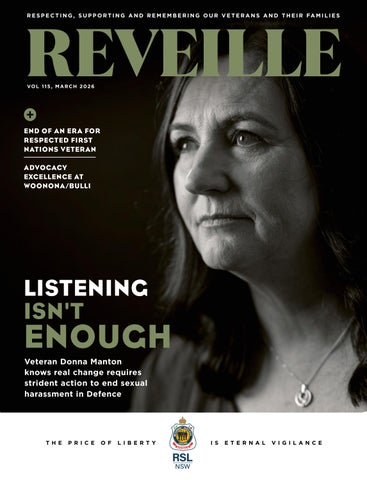
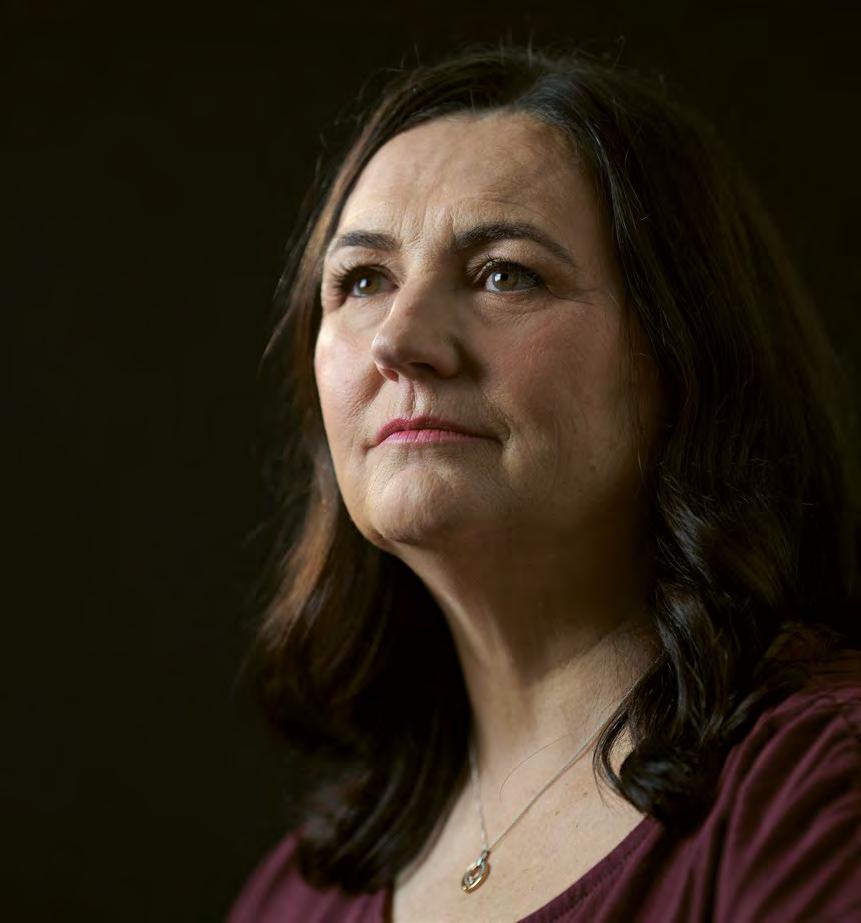
Veteran Donna Manton knows real change requires strident action to end sexual harassment in Defence



20 WOMEN VETERANS’ ADVOCACY
COMMUNITY CONDUIT
Veteran Brian Frost is working hard to improve connections between sub-Branches and ANZAC House.
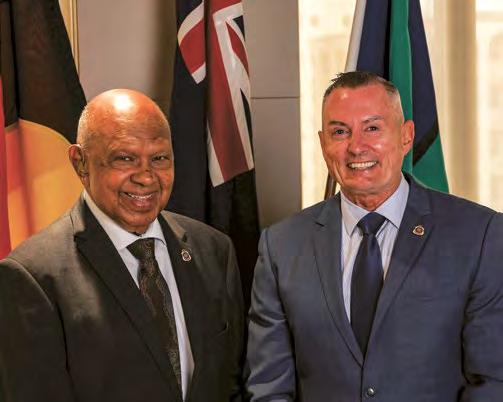
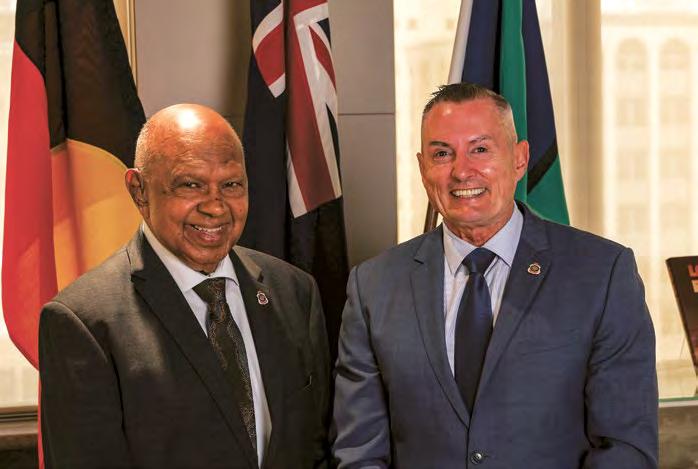
Gudjala Elder Uncle Harry Allie joins Air Command Warrant Officer Steve Weaver for a one-on-one chat.
How RSL NSW is supporting and advocating for women veterans both in and out of Defence. 28 MEMBERSHIP
The Woonona/Bulli RSL sub-Branch has bolstered its membership through advocacy and a strong social calendar.
RSL NSW NEWS
ANZAC Day March guide, Board Director appointments, honours for Australian veterans, the changing RSL badge and more.
Events and stories from sub-Branches and their members across the state.
Acting President Vince Williams and Acting CEO Trina Constable on the Listening Tour, Strategic Plan and more.
“RSL NSW has endured for 110 years because it has been willing to adapt. The Listening Tour is an opportunity for members and sub-Branches to help shape the organisation’s future.”
As I write this, the ANZAC House team and I are partway through a Listening Tour, visiting RSL subBranches around the state. We are hosting face-to-face forums and listening closely to members' insights about the needs of their local veteran communities and their sub-Branches.
The tour is a continuation of the dialogue at the 2025 State Congress & AGM in October last year. There, we heard support for a strategy that would ensure advocacy, welfare and peer-to-peer support remain core to our purpose. We also heard the need for changes to be communicated early and in a way that strengthens sub-Branches.
This consultation with members is helping to articulate the vision for the next RSL NSW Strategic Plan for 2026 and beyond, and ensure the plan reflects both metropolitan and regional perspectives. Already, we’ve visited Queanbeyan, Rooty Hill, Wagga Wagga, Tamworth
and Inverell, and we'll soon meet with members from Byron Bay to Bathurst, and west to Dubbo.
I encourage you to come along to a session near you. If you’re unable to attend in person, you can register to attend one of our virtual livestreams, the next of which takes place on Tuesday 12 May.
RSL NSW has endured for 110 years because it has been willing to adapt. The Listening Tour is an opportunity for members and sub-Branches to help shape the organisation’s future. The team and I look forward to seeing you soon.
REGISTER to attend an upcoming session and contibute your voice to the future of RSL NSW.


Since 2021, the RSL NSW Strategic Plan has delivered meaningful outcomes for veterans and their families. Approximately 83 per cent of its initiatives have been wholly or partly implemented, a result of the dedication of RSL sub-Branch volunteers and leaders, and your team at ANZAC House.
We have strengthened governance standards and financial oversight. More members are able to access wellbeing and advocacy assistance. The Veteran Support Navigator on the RSL NSW website has greatly improved access to support and services for veterans and families. Rigorous training and compliance frameworks are equipping volunteers to provide assistance to their peers. These outcomes are the result of acting on member feedback, and
demonstrate that the Strategic Plan only has value when it delivers real outcomes.
The next Strategic Plan is currently being developed. It will be based on feedback heard during the Listening Tour, and will focus as much on organisational behaviour as on community initiatives. Because members are not asking us to change who we are. They are asking us to change how we operate.
Finally, as we approach ANZAC Day, RSL NSW will continue to work with the NSW Government regarding the new public holiday arrangements to ensure commemorations remain respectful and accessible. I look forward to standing alongside veterans and their families to mark this commemoration together.

THE RETURNED AND SERVICES LEAGUE OF AUSTRALIA (NEW SOUTH WALES BRANCH)
ANZAC House, Suite 12.02, Level 12, 60 Carrington Street, Sydney, NSW 2000
Phone (02) 9264 8188
Email support@rslnsw.org.au Web www.rslnsw.org.au
Acting President Vince Williams
Acting Chief Executive Officer Trina Constable
State Secretary Jeff O’Brien
Publishing Director Jelena Li
Managing Editor Hallie Donkin
Editor
Lachlan Haycock
Creative Director Gareth Allsopp
Senior Designer Nina Armitage
Cover photography
Rohan Thomson
Reveille is published by the New South Wales Branch of the RSL in association with Mahlab. Everything in this magazine is copyright and may not be reproduced unless written permission is granted by RSL NSW prior to its publication date. All rights reserved © copyright by RSL NSW. All contributions are welcome; please contact news@rslnsw.org.au. All care will be taken with material but no responsibility is assumed or accepted by the publisher or RSL NSW for loss or damage. All opinions expressed in Reveille are not necessarily those of the publisher or RSL NSW.
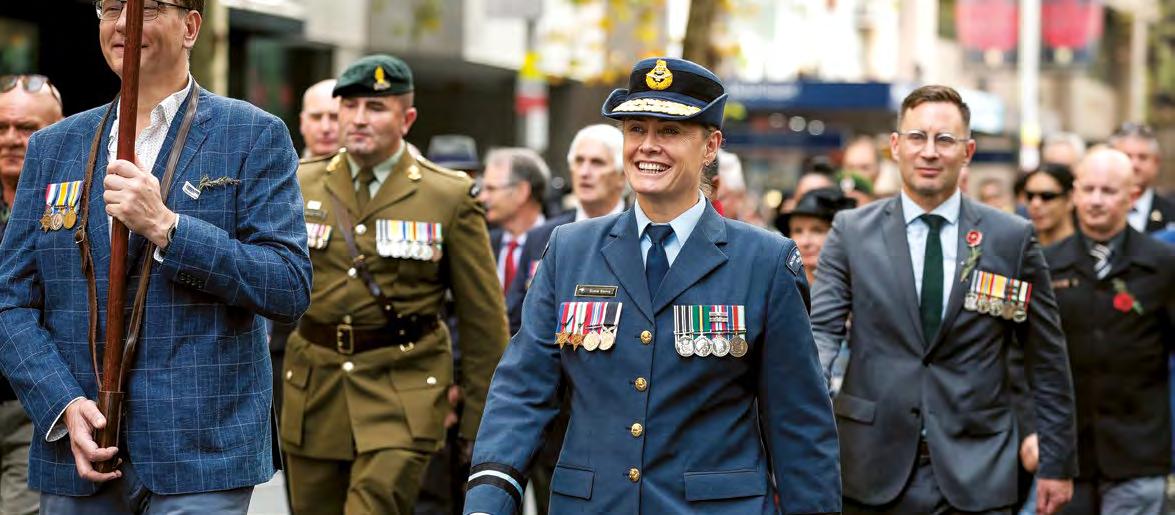
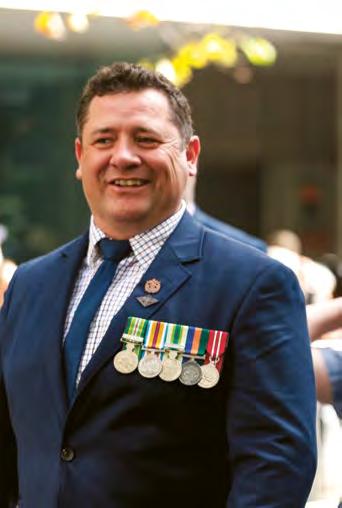
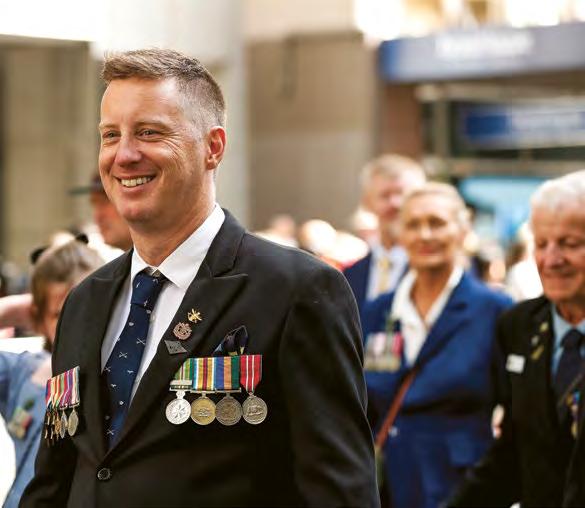
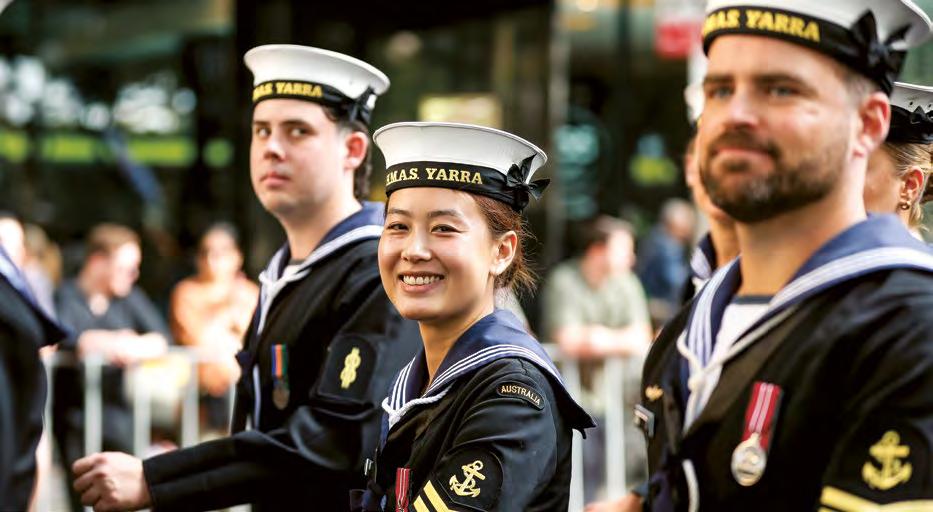
Here’s a guide to the ANZAC Day March in Sydney, outlining who can participate, how and where to assemble, a timeline of events, and more.
Anyone who has served in the Australian Defence Force is eligible to participate in the March. Veterans’ descendants are invited to march with a unit formation as carers (maximum of one carer per marching veteran), banner parties or flag carriers.
All other descendants are invited to march within the descendants contingent. One descendant of a deceased veteran may honour their relative’s service in the march and may wear their medals on the right breast.
The march is not a parade – no vehicle, animal (except registered service animals), weaponry, memorabilia (including historic uniforms) or photographs may be included.
Veterans should assemble with one of the units of which they were or are a member. The choice of where to march is a personal one, however those who served together should march together as an act of remembrance and mateship.
Formations of more than eight should march as close to eight abreast as practicable. Units should form up as follows:
1 Leader
2 Banner party
3 Veterans
4 Carers
The march is around three hours long. Veterans who may not cover the whole distance on foot are encouraged to position themselves at the side of their formation so they can fall out independently and proceed to an exit point.
Veterans are entitled to free public transport on ANZAC Day.
The NSW Taxi Council has generously offered to place vehicles and drivers at RSL NSW’s disposal for the transport of veterans with a disability or limited mobility through the march. For bookings, please contact the NSW Taxi Council on 02 8339 4644 before 8 April.
The march will be televised on ABC TV and can be streamed on ABC iView after the event.
1 Navy / Army / Air Force
2 Commonwealth troops
3 Civilians in support of Australian troops
4 Descendants of Australian veterans
5 Allies
The Order of March cannot be changed without the approval of ANZAC House.
DOWNLOAD or request printed copies of route maps and other resources by using the QR code. You can also contact RSL NSW on 1300 679 775.
Timeline
4:15AM
Dawn Service at the Cenotaph, Martin Place 9:00AM
Sydney CBD March commences 12:30PM
Commemoration Service at the Anzac Memorial, Hyde Park 5:OOPM
Sunset Service Ceremony at the Cenotaph, Martin Place
RSL NSW has appointed three Directors to the Board, filling casual vacancies.
The Board had issued a statewide call for expressions of interest from RSL NSW members, which attracted 22 nominations.
The recruitment process was overseen by a selection panel that considered candidates’ experience and expertise against a set skills matrix, and the overall balance of capabilities needed to support the organisation at a Board level moving forward.
Three RSL NSW members were appointed in casual vacancies. The new directors join Acting President Vince Williams, who was appointed to the Board in October 2025.
The appointed Directors will serve on the Board until this year’s Annual General Meeting in October, when the positions will be subject to re-election.
“We’re grateful to everyone who put themselves forward to serve this proud and much-loved institution,” said RSL NSW Chair Louise Sullivan.
FROM THEN TO NOW
The RSL badge has a long and proud history.
Back in 1916, members of Returned Soldiers' Associations took to affixing their badge to their uniform while waiting for the Australian Government to issue its Returned from Active Service badge.
The iconic shield shape of the current badge was designed by engraver Walter Oliver. This design, which originally featured an Army soldier and a Navy seaman, became standard by 1919 and has continued to be the visual template for the badge until the present day.
In October 2025, RSL Australia approved a change to the badge to reflect the ascension of King Charles III. The new design features a new crown and floral emblems.

Glen Babington North Bondi RSL sub-Branch
St Edward's Crown
Australian wattle

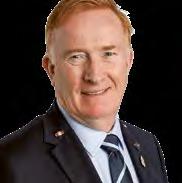
Bridie AM Castle Hill & District RSL sub-Branch

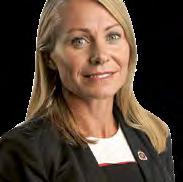
Sarah Watson Yass RSL sub-Branch
To ensure the correct application of the badge, RSL NSW members can access brand guidelines on the Events and Promotional Tools page on the Member Portal.
Tudor Crown
Rosemary and a poppy, representing ANZAC and Remembrance Days



Each year, the Australian Honours and Awards system provides a deserving platform for the distinguished and conspicuous service of individuals, including veterans.
On 26 January 2026, Her Excellency the Honourable Ms Sam Mostyn AC recognised the following RSL NSW members for their dedicated service to the country.
Each award is a testament to the recipient’s continued efforts to embody the spirit of what it means to wear an RSL badge.
Medal (OAM) in the General Division
James Edward Butt
Gladesville RSL sub-Branch
Francis Raymond Cole City of Blacktown RSL sub-Branch
Christopher Noel Colvin City of Orange RSL sub-Branch
Anthony John Cox Albion Park RSL sub-Branch
COMMEMORATION
125 YEARS OF SERVICE TO THE NATION
This year sees major anniversaries for the nation and its armed forces.
Craig Charles Delaney Mosman RSL sub-Branch
Gregory John Roese Tamworth RSL sub-Branch
Steven John Sullivan Taralga RSL sub-Branch
Richard Noel Wills Ballina RSL sub-Branch
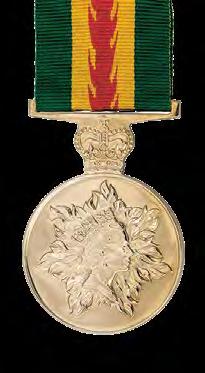
Australian Fire Service Medal
Liam Angus MacWilliam City of Queanbeyan RSL sub-Branch
Medal (OAM) in the Military Division
Warrant Officer
Cheryl Anne Collins CSM Sussex Inlet RSL sub-Branch
The Royal Australian Navy and the Australian Army were formed on 1 March 1901, the same year as Australia was federated, making this their 125th, or quasquicentennial, anniversary.
The Royal Australian Air Force also marks 105 years on 31 March.
Conspicuous Service Cross (CSC)
Sergeant Kirsti Anne Claymore Paddington/Woollahra RSL sub-Branch
Bar to the Conspicuous Service Medal (CSM and Bar)
Lieutenant Commander
Justin Magnus Downey-Price CSM
Avalon Beach RSL sub-Branch
Conspicuous Service Medal (CSM)
Captain Benjamin John Hurst Oatley RSL sub-Branch
Warrant Officer Class One
Nigel Turner Ward Medowie RSL sub-Branch
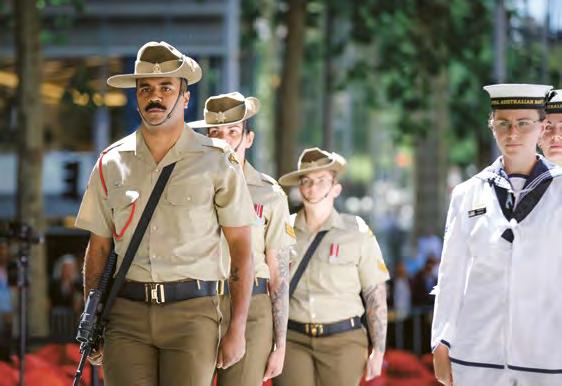
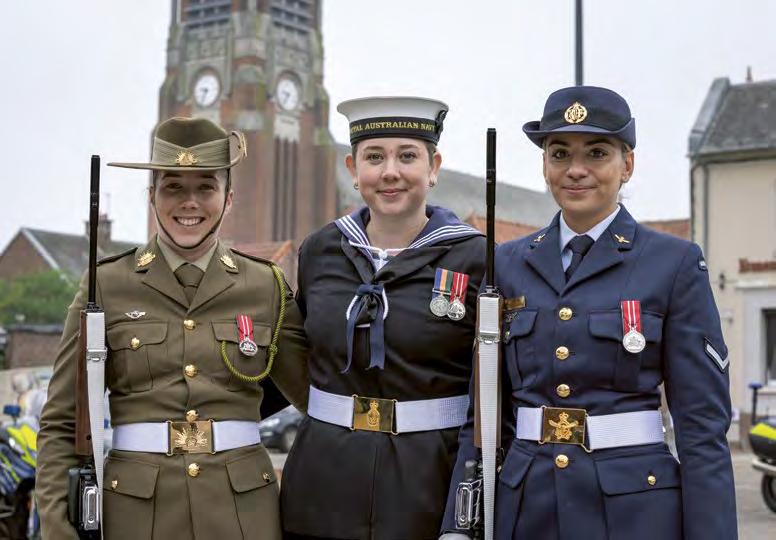
Army and Navy personnel at a 2025 Remembrance Day service

A new RSL NSW Strategic Plan for the 2026-2031 period is currently being drafted ahead of the 2026 State Congress & AGM. But that doesn’t mean work on the current iteration of the Strategic Plan has stopped.
As of the end of 2025, 83%
of the Strategic Plan 20212026 has been delivered or transitioned into business as usual.
Among many other things, that means more veterans and families accessing support and services in the RSL NSW network.
The RSL NSW Board has confirmed that the Annual State Congress & AGM will return to Tamworth for the second year running. Mark your calendar for 23-25 October 2026 at the Tamworth Regional Entertainment and Conference Centre. Sub-Branches should keep an eye on ANZAC House communications for more information closer to the date.
Here are milestones your sub-Branch should keep in mind when considering a donation to the RSL NSW Veteran Support Fund.
1 JAN Donation period opens
Check out the RSL NSW website for a list of the approved initiatives
30 JUN Proposal deadline for following year’s round RSL sub-Branches must submit a funding proposal form by this date
31 DEC Donation period closes
$15,000
Amount donated to the National Centre for Veterans' Healthcare as of February, representing more than a third of its $40,000 goal for 2026.
How do I nominate a charity or initiative?
Contact your local sub-Branch to find out what your organisation will need to provide to be nominated for the VSF.
LEARN how one VSF recipient helps veterans bond with their children.
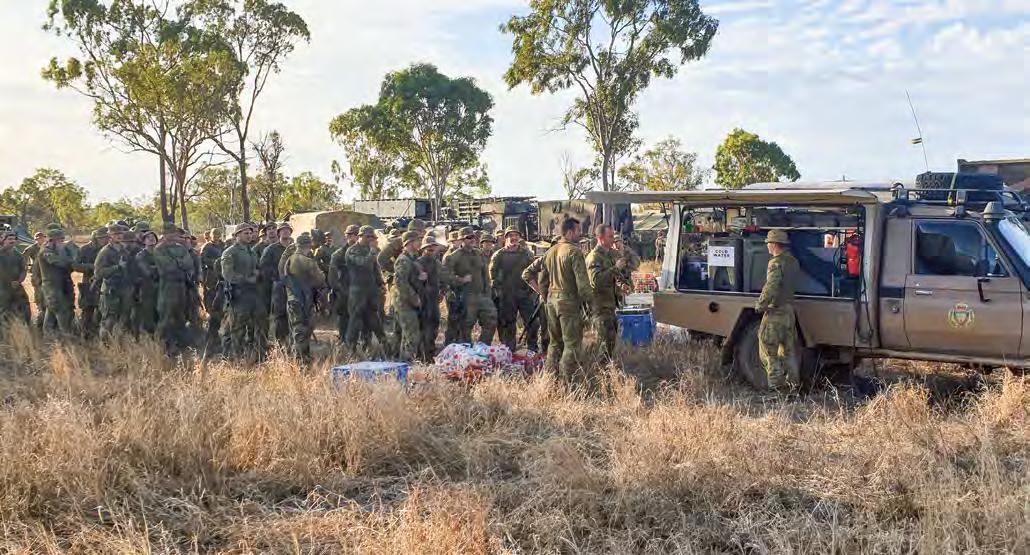
A ‘brew truck’ from VSF recipient Everyman’s Welfare Service offering refreshments at Exercise Diamond Dagger
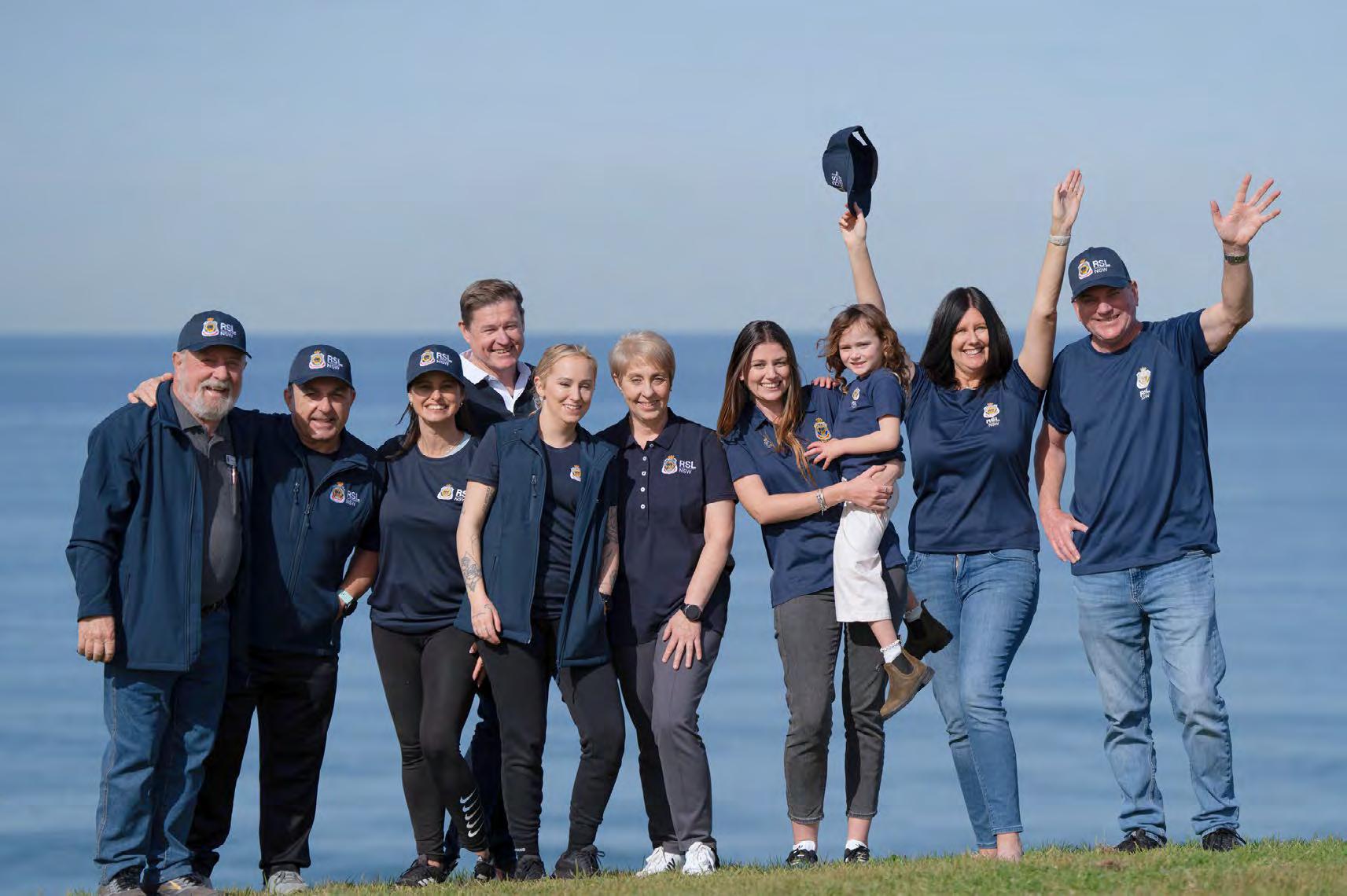



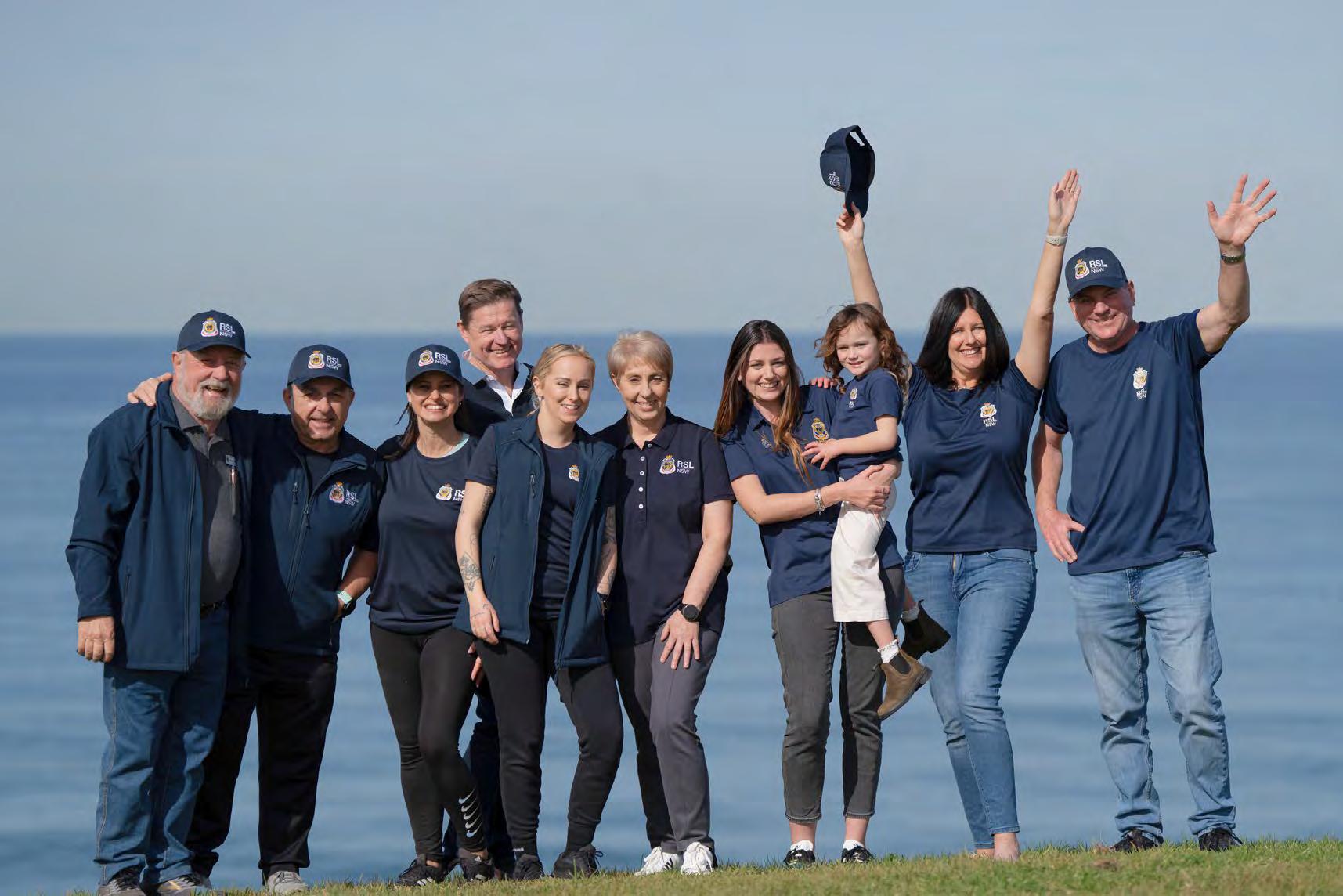

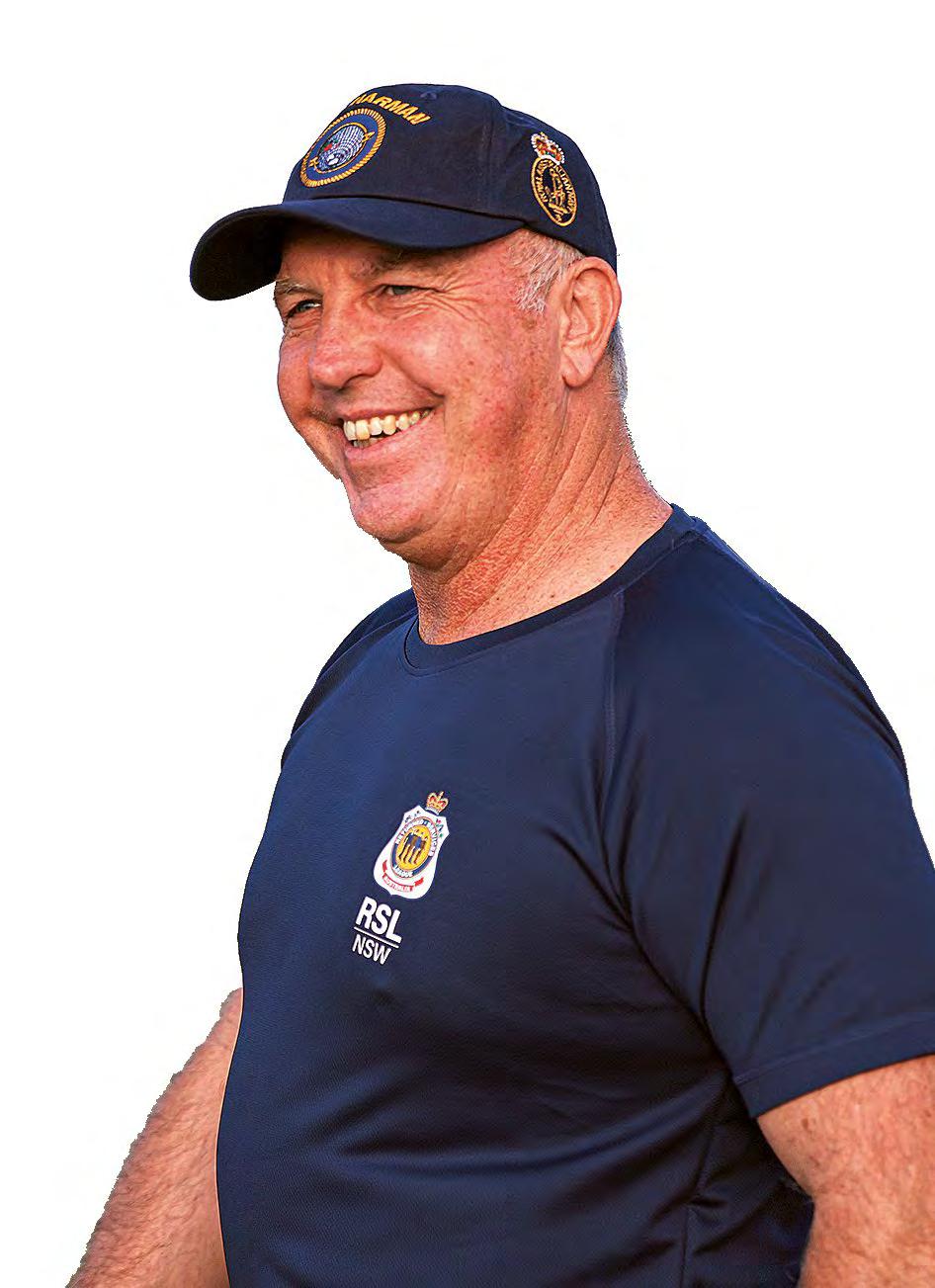
Brian Frost is part of a passionate ANZAC House team working to enable better support and services for the veteran community –especially current Defence personnel.
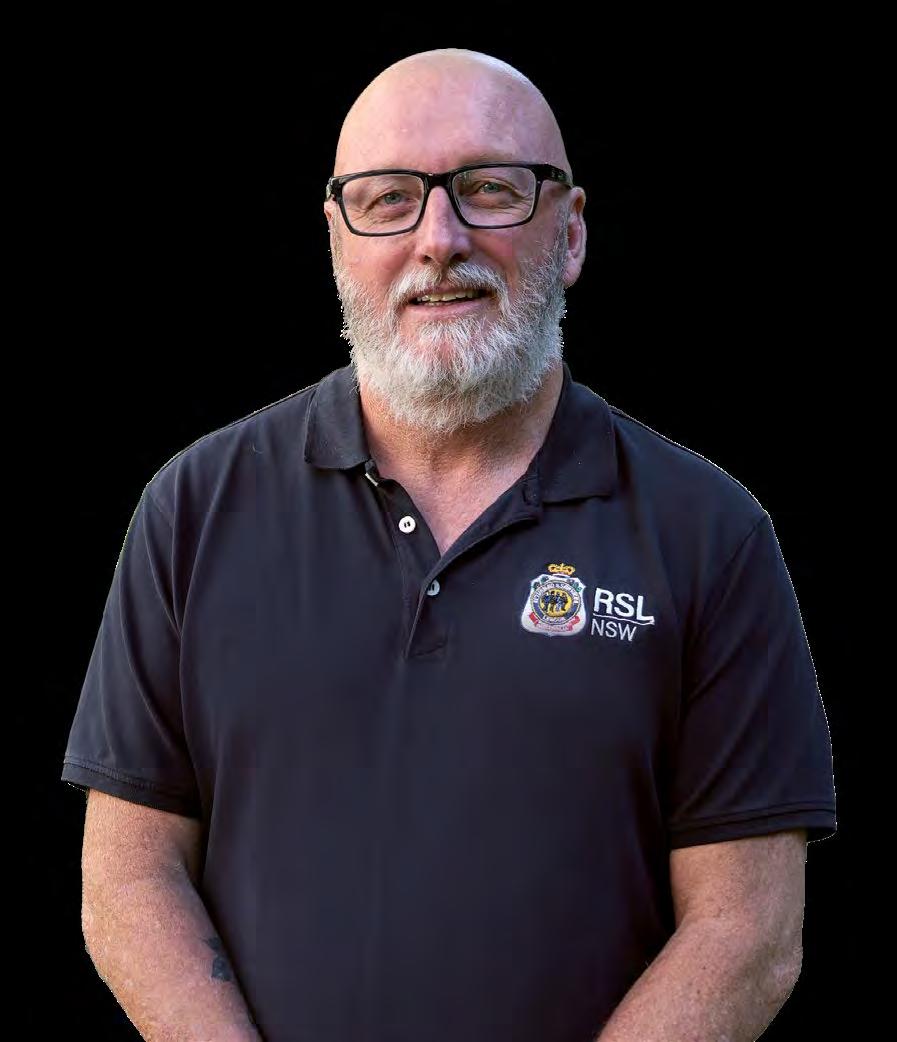
BRIAN FROST COMMUNITY SERVICES MANAGER
Forging stronger transition support pathways for current Defence personnel is hugely important to me.
I did 11 years as a communications operator in the Air Force, from the mid 1980s to the mid 1990s. I joined at age 18 and hadn’t done any work experience apart from jobs during the school holidays.
So, when I transitioned out at the end of my 20s, I really struggled to adapt.
Especially at that time, there was no established process for transition. I was in the Air Force one day and a civilian the next.
In the years following, I tried to connect with a few RSL subBranches, but they didn't offer what I needed: support for a 30-something veteran. Real interactions with people. Not a committee meeting with a beer and a feed afterwards.
“My son's in the Air Force at the moment, and I thought it was prime time to connect with the ex-service community, to make a difference in the lives of people like him.”
— Brian Frost
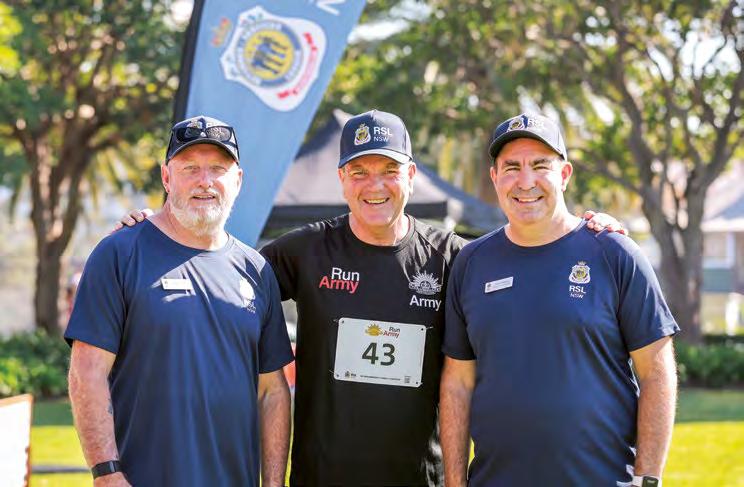
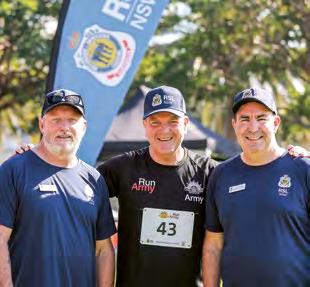
The ANZAC House team helped out at Run Army in 2025, one of many occasions where they collaborate with Defence bases.
Now, following a career in juvenile justice, community services and employment services, I’ve come back around to being heavily involved in RSL NSW.
My son's in the Air Force at the moment, and I thought it was prime time to connect with the ex-service community, to make a difference in the lives of people like him so that when he gets out, his experience is better than mine.
That’s the ethos I bring to the role of Community Services Manager. I work in a team that is maximising the impact of innovative RSL NSW programs that contribute to essential support, community and advocacy for veterans and their families.
This includes building the statewide network of Community Relations Partners – people who support, upskill and connect »
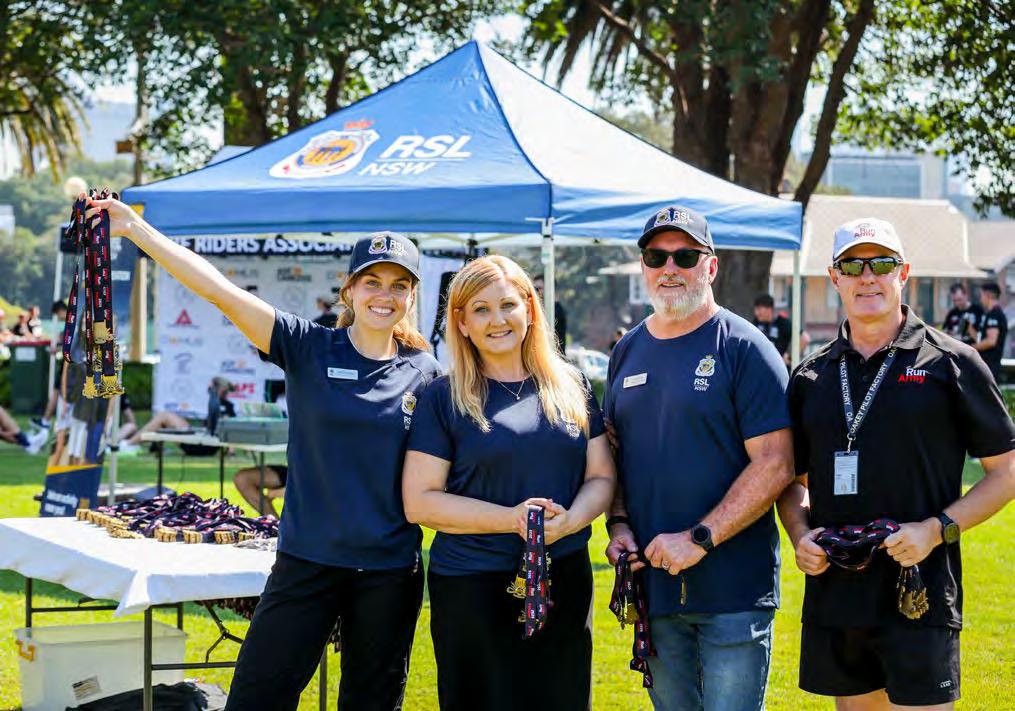


“ONE OF THE BEST JOBS IN THE WORLD” — Jonathan ‘Jono’ Tuckfield
One of the Community Relations Partners (CRPs) in NSW is former Army Reservist Jonathan ‘Jono’ Tuckfield, who collaborates with sub-Branches in the South West and Riverina Districts. He says helping sub-Branches deliver support and services in their local community is “one of the best jobs in the world”.
Meanwhile, Brian Frost says a major focus for
RSL NSW across the next 12 months is to onboard new CRPs.
“The CRP program is working really well already, and the idea is to eventually get to the point where we have the entire state covered," he says.
SCAN the QR code to learn how CRPs support sub-Branches.
“Every team member at ANZAC House is focused on improving the delivery of programs for members. We have different opinions and ideas, but also a drive to collaborate.”
— Brian Frost
sub-Branches with resources and external stakeholders to improve how they engage with veterans and their families.
It's been very rewarding to see the growth of the RSL NSW Sport & Recreation Program, with 137 sub-Branches having joined since 2023. It's my job to ensure the way it runs aligns with subBranch expectations, so they can organise more effective activities and reach more people.
In addition, my job is to act as a connector between ANZAC House and sub-Branches – and by extension, community groups and Defence. We’re providing RSL NSW with a presence on Defence bases, at sporting events such as Run Army and at transition seminars, so Defence members know they have access to a network of services and a likeminded community thanks to RSL NSW.
We’re seeking to get into those establishments to educate current Defence personnel while they’re still serving about the benefits of RSL NSW membership and the support available to them as they transition out, so they are better prepared for civilian life.
In particular, we’re developing our relationship with the team at HMAS Penguin in Mosman. They became very enthusiastic about working with us again after the success of last year’s Run Army event, at which RSL NSW had a significant presence.
That collaboration is already making a positive impact. At the Gate 2 Gate Fun Run last November – hosted by HMAS Penguin and open to both veterans and families – the presence of RSL NSW members more than doubled the total number of participants.
A central component of the design of these initiatives is that they are ongoing.
None of them are a one-anddone. The programs are always evolving in line with member interests. This involves ongoing monitoring to ensure they remain relevant to sub-Branches and communities.
If the needs of members change, then it’s on us to bring it back in line. That’s why we appreciate member feedback.
Many of the new programs from RSL NSW have been made possible by generous funding from north of the border.
A $2.6 million investment by RSL Queensland will help to evolve a common operating service model that will deliver consistent RSL services for veterans and families in NSW.
This funding is helping RSL NSW to create a sustainable, efficient and impactful statewide service delivery model, and simplify access to a wide network of veteran-specific services and support.
Every team member at ANZAC House is focused on improving the delivery of programs for members. We have different opinions and ideas, but a universal drive to collaborate.
For a team that’s always growing, it's quite unique to have such a vast range of skills.

Connecting veterans and their families to essential support and services – all in one place
One search, thousands of services
Localised results
Access on the go, anytime, anywhere
Veteran and family support in one easy-to-use tool

rslnsw.org.au/find-help/
Key figures behind the Aboriginal and Torres Strait Islander Veterans Commemoration Service reflect on its 20-year history and the power of remembrance.
Words by Girard Dorney
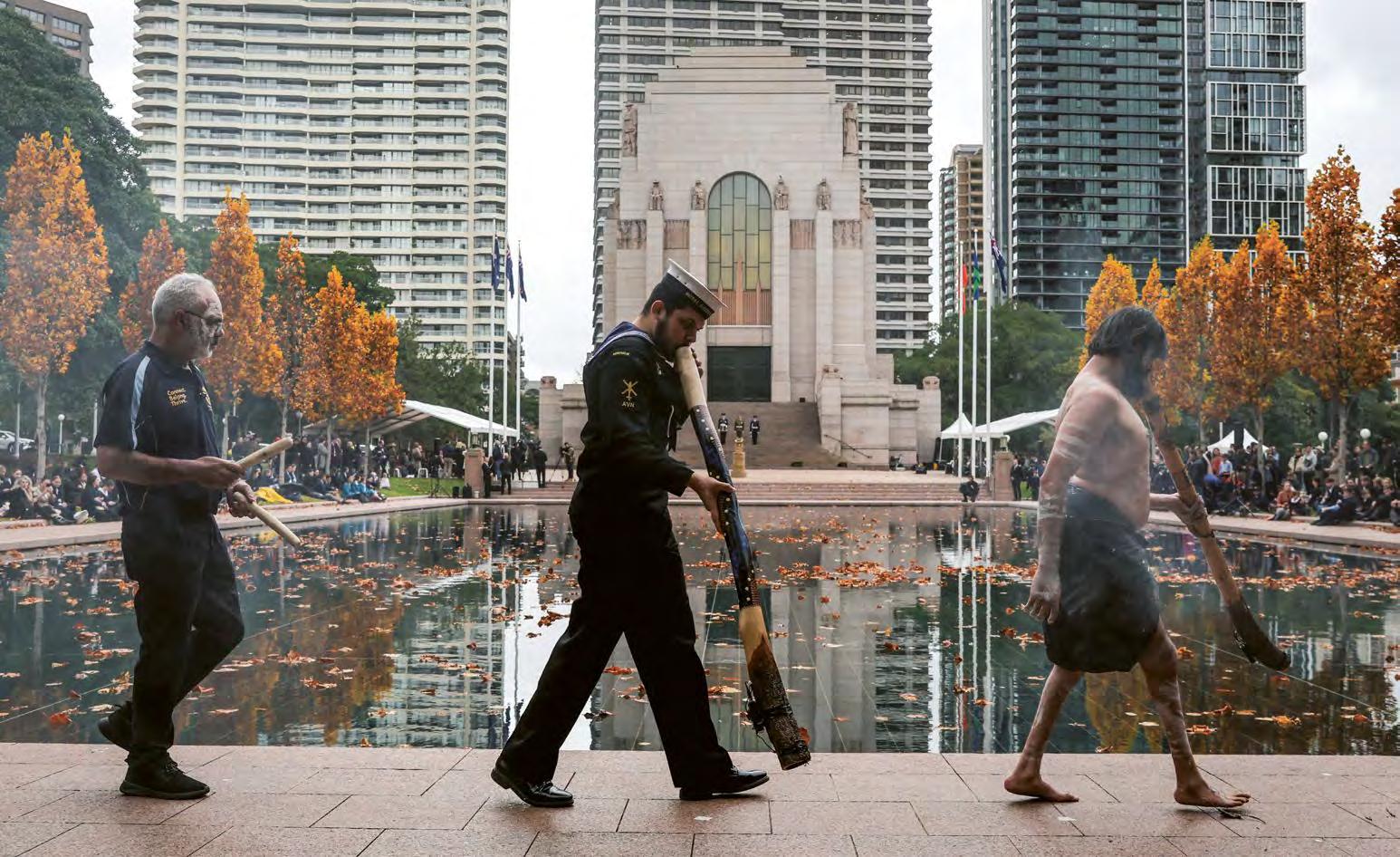
Adidgeridoo plays before the military band signalling the service at the Anzac Memorial in Hyde Park, Sydney, has begun. Next to the nearby Yininmadyemi memorial, a chaplain offers a prayer as native plants are burned for the smoking ceremony.
The Catafalque Party marches to its post. School children perform a traditional dance. A guest speaker tells their story, intertwining their First Nations heritage with the ANZAC spirit. Wreaths are laid. As the ceremony nears its conclusion, a school choir sings the national anthem in Dharawal language.
“There is no sort of break in the ceremony to go, ‘Now we're doing something Indigenous. Now we're doing something military,’” says Air Command Warrant Officer Steve Weaver AM, a proud Wiradjuri man and frequent Master of Ceremonies for the Aboriginal and Torres Strait Islander Veterans Commemoration Service.
“It all knits together because both cultures are so ingrained in our history and traditions.”
By design the service is seamless, but not simple. The rich history of First Nations service in Australia’s armed forces has far too many stories to be simple.
“Harry’s tenure has been conducted in a quiet, respectful manner that has built up the Indigenous Defence community.” — Air Command Warrant Officer Steve Weaver AM
Even as Australia was federating in 1901, enshrining in its constitution that “[A]boriginal natives shall not be counted” among the people of the Commonwealth, dozens of ‘natives’ were fighting in the Boer War.
In World War I, service was officially denied to nonEuropeans. It was still possible to sign up. In the early days it was easier if your skin was ‘white enough’, but later, as casualties mounted, many recruiters stopped caring about colour.
Air Force veteran and Gudjala Elder Harry Allie AM BEM, Chair of the commemoration service's organising committee, had an uncle, Charlie, who enlisted in 1917.
His unit fought at Semakh near the Sea of Galilee in 1918, charging the Turkish defences.
Charlie would also serve in World War II, along with another of Allie’s uncles, Bill. The nonEuropean policy remained into the 1940s, but there were more exceptions, including specially raised Indigenous units. Allie remembers the photos of his uncles in uniform receiving pride of place at his grandmother’s home. Unfortunately, that lounge room in Charters Towers, Queensland, was one of the few places where they got recognition.
“In the early days, they didn’t get into the RSL,” says Allie.
Eventually they were asked to take part in ANZAC Day ceremonies. Progress happened in fits and starts. In 1949 an amendment was passed that gave First Nations veterans a federal vote.
The catalyst for this legislation? Indigenous people risked their lives for a country that wouldn’t give them a vote. This narrative shocked Australia’s conscience, then transformed its laws. »
It’s often this way that stories don’t simply illustrate the past –they show you the way forward. Growing up in Gundagai, Weaver cherished the local ANZAC Day services and as a young teenager wore a Vietnam-era jungle green shirt until it disintegrated.
“I think it was always in my DNA that I was going to join,” he says.
It’s a poignant choice of words for an Indigenous man. Weaver says his fair skin means people don’t assume he’s First Nations. He spent his first years in the Air Force hearing racist jokes and innuendo from comrades who didn’t know he was the butt of them.
“I wanted to embrace my Aboriginality because my dad didn't. But I found that work environment a real impediment for me to say, ‘I'm a proud Aboriginal man’, like I do now.”
The turning point came when he began studying the history of Indigenous service. The story of Len Waters, the first Aboriginal fighter pilot in World War II, resonated with him.
“He was a kid very similar to me – grew up in impoverished circumstances, didn't do well at school.”
Weaver says his family had to hunt in order to eat. And while his father had learnt from experience to hide his background, he drew on Wiradjuri principles when hunting: assess and adapt to your environment, don’t bend it to your will.
“I wanted to embrace my Aboriginality because my dad didn't. But I found that work environment a real impediment for me to say, ‘I'm a proud Aboriginal man’, like I do now.”
— Air Command Warrant Officer
Steve Weaver AM
Waters’s journey was also one of adaptation. Starting as an aircraft mechanic, he studied at night to make up for his poor schooling, until one day
he was commanding operations as a Flight Sergeant.
“Len had to demonstrate work ethic and courage and resilience unlike any other aviator of the time because he was overtly Aboriginal,” says Weaver.
To navigate his own career, Weaver adopted the mindset his father passed down to him and lessons from Waters.
“I've always adapted my leadership style to suit my environment and tried to be the hardest-working person in the room,” he says.
It’s served him well. On tour in Afghanistan, he held command during a Taliban attack that lasted more than 24 hours. For this he was awarded a Commander's Commendation from United
States Marine Corps General John Allen, and an Australian Forces Commander's Commendation from General Angus Campbell.
“Hopefully the example that I've provided in my role is that you can walk in two cultures. I can walk in my Indigenous culture and I can walk in my ADF culture, my Air Force culture, and they complement each other.”
“We've come a long way in the 38 years that I've served,” says Weaver. “But today a young Indigenous Defence member is eight times more likely to leave the ADF than a non-Indigenous member.”
He believes mentoring young First Nations people early in their career, and making the

stories of the past real to them, could help reverse that trend.
“Because if they can't see it, they can't be it,” says Weaver.
The Aboriginal and Torres Strait Islander Veterans Commemoration Service can be part of that. After all, what is commemoration but a form of storytelling?
“It is not just an event. It is a living testament to courage, resilience and the shared history that binds us as Australians.
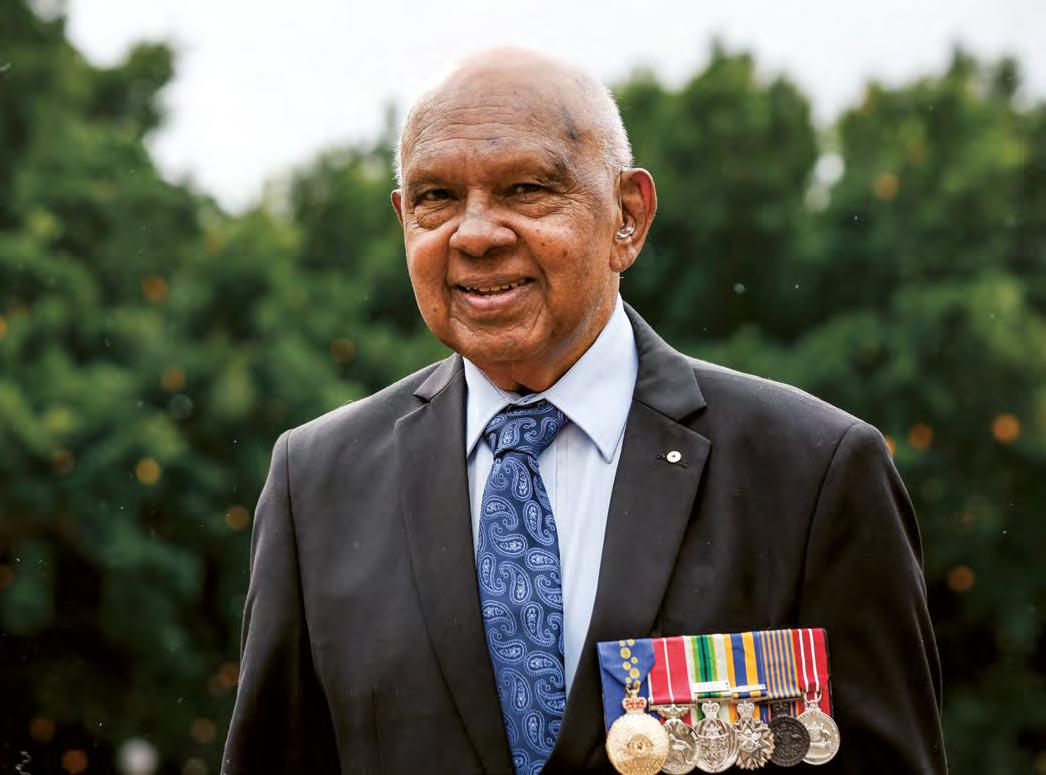
Uncle Harry Allie enlisted in the Air Force in January 1966. His 23-year career took him from his home state of Queensland to postings in places such as the USA and Malaysia.
In the last of these, managing a workforce of 60 local staff with complex cultural needs, Allie honed a philosophy of integration. “It was about bringing us all together to serve for Australia.”
His motto was simple: “We serve as one.”
Described by Air Command Warrant Officer
Steve Weaver as a “national institution”, Allie’s life is one of service and honour. In 2012 he was made Inaugural Indigenous Elder for the Air Force and he has also earned a Member of the Order of Australia, a British Empire Medal, and the 2022 RSL ANZAC of the Year Award.
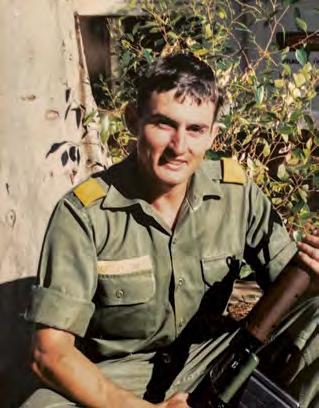
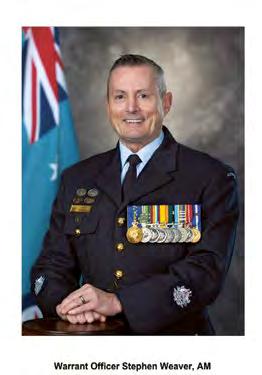
LEFT: Uncle Harry Allie enlisted in the Air Force in 1966. RIGHT: Air Command Warrant Officer Steve Weaver joined in 1988.
Remembrance is not only about the past, it is about shaping a future where every veteran’s contribution is valued equally.”
READ information about the service, including a guide for schools.
This year, he steps down as the inaugural Chair of the Aboriginal and Torres Strait Islander Veterans Commemoration Service's organising committee, a role he's filled since its inception.
“Harry’s tenure has been conducted in a quiet, respectful manner that has built the Indigenous Defence community in a way that I don’t think we will understand until long after he's left the role,” says Weaver. “He has shaped it in ways that bring people closer together.”
Allie’s advice to his successor is characteristically understated and generous.
“Work with NSW veterans and all the organisations that are involved with the ceremony to make it the success that it is. I will be there to support you all the way.”
Sexual harassment and assault remain critical issues for servicewomen, and outcomes for veterans hinge on whether services provide gender-responsive support.
Words by Caroline Riches
Women veterans are a growing and diverse cohort, yet many share a similar experience: feeling invisible during transition and disconnected from support systems.
Some carry trauma from sexual harassment and assault while in Defence, while most say their wellbeing post-service is eroded by institutions that don't always listen, adapt or deliver services that reflect their realities.
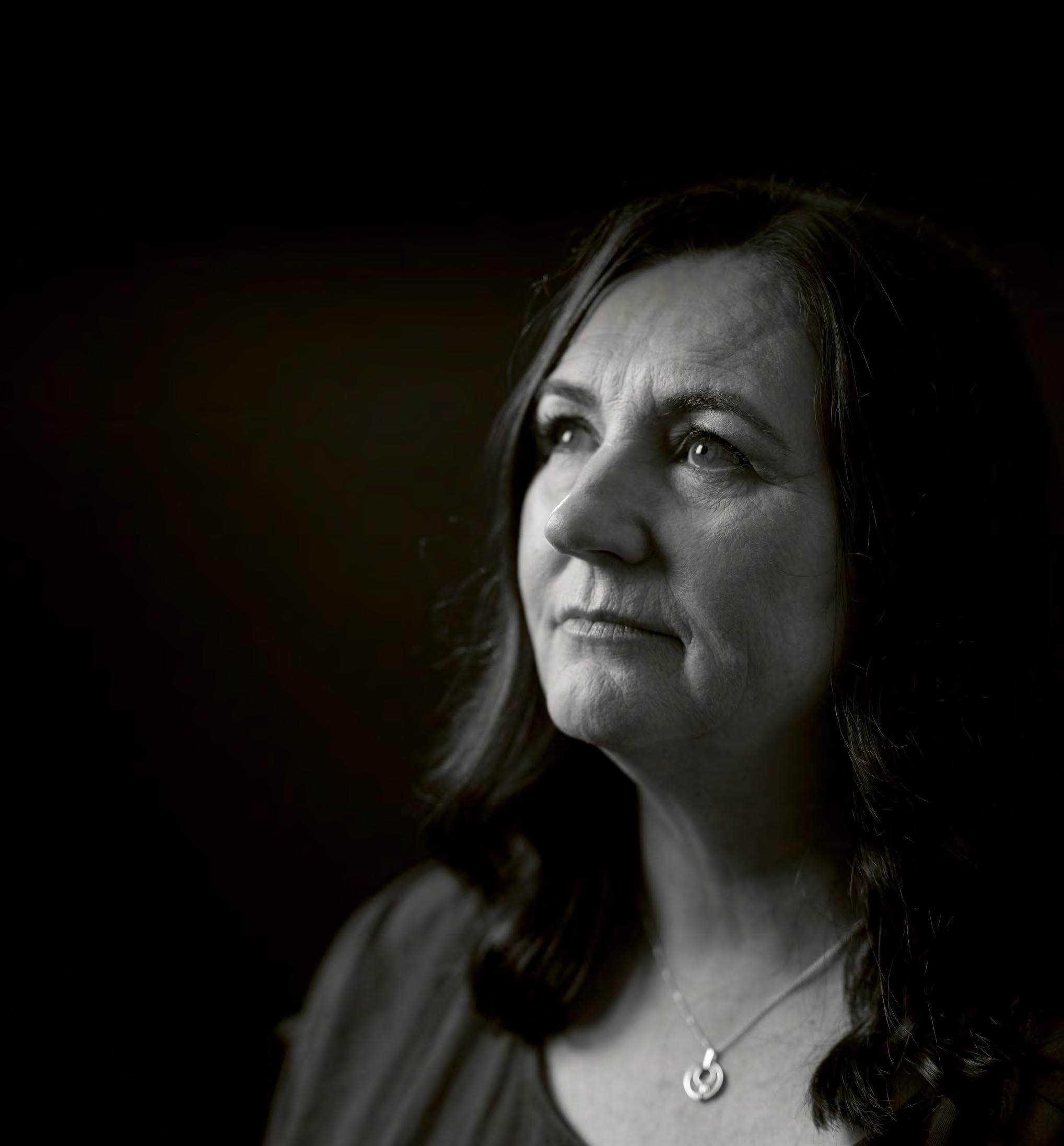
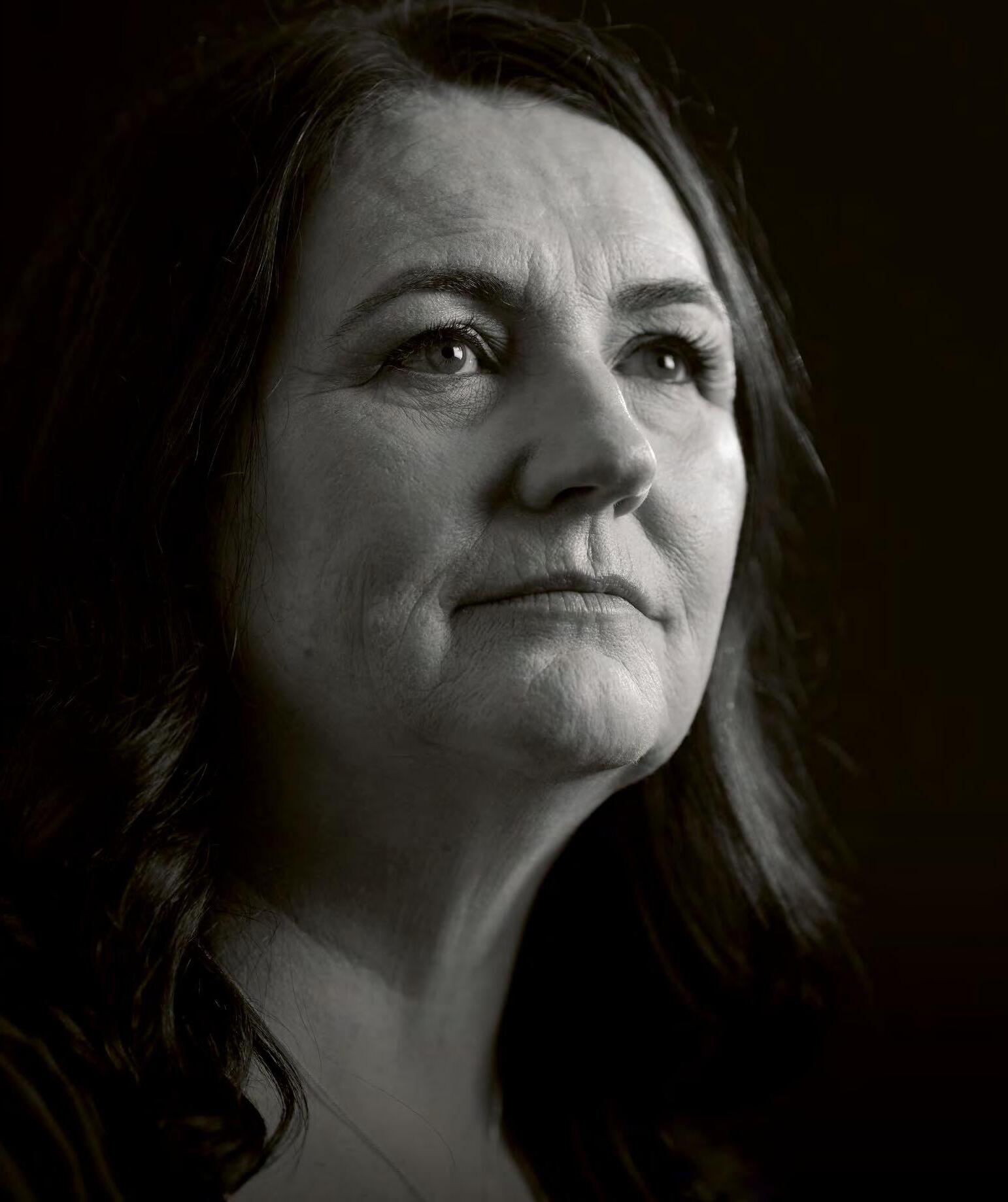
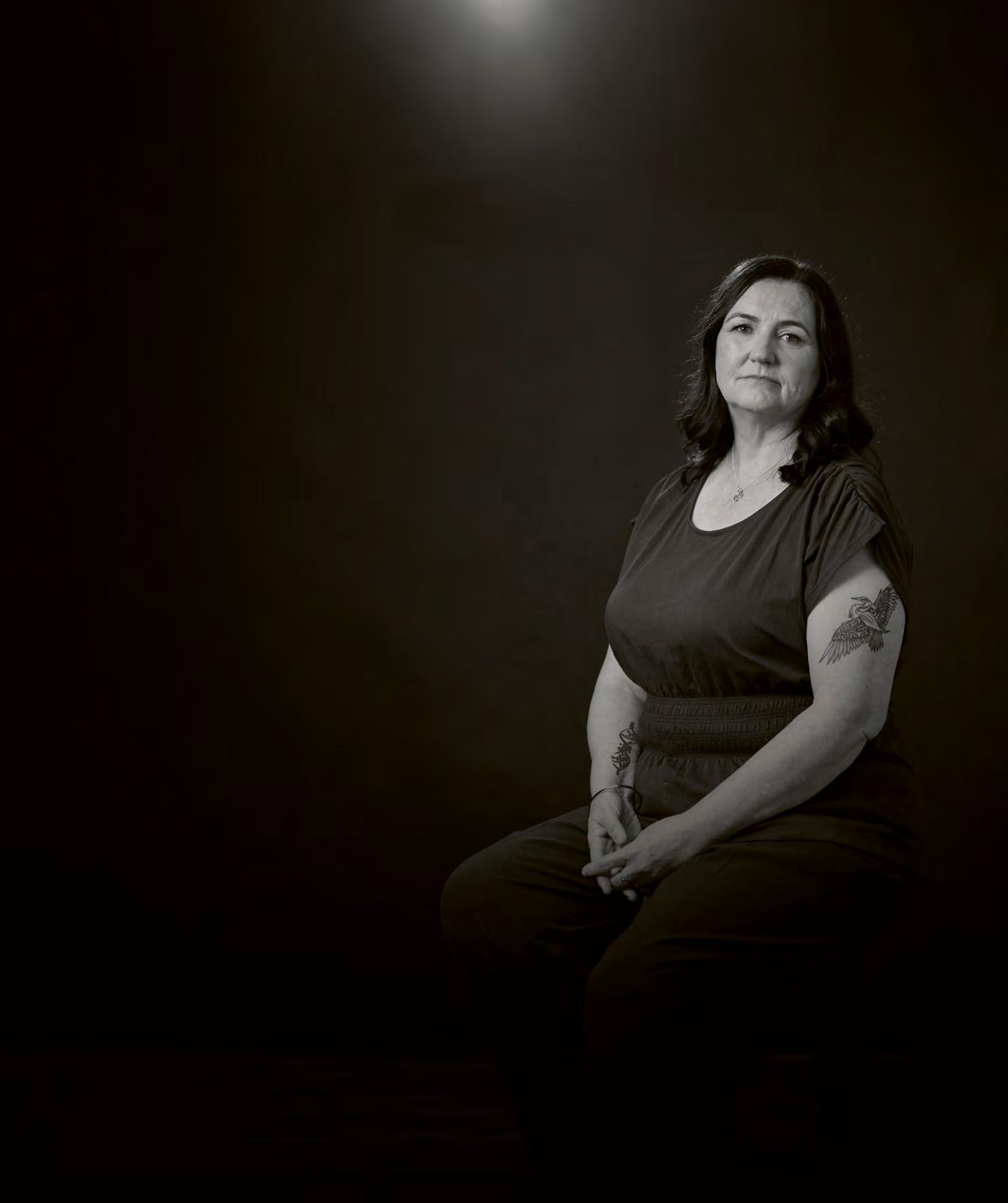
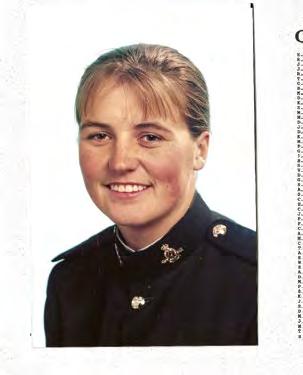
Donna Manton, pictured here, served for 32 years in the Air Force and Army, and has experienced her own challenges.
"Things have improved from a very low base, but progress is too slow," the Braidwood RSL sub-Branch Treasurer tells Reveille. »
“Even after 30 years in Defence, I underestimated the scale of abuse. The number of people saying they never reported come in almost daily.”
— Donna Manton
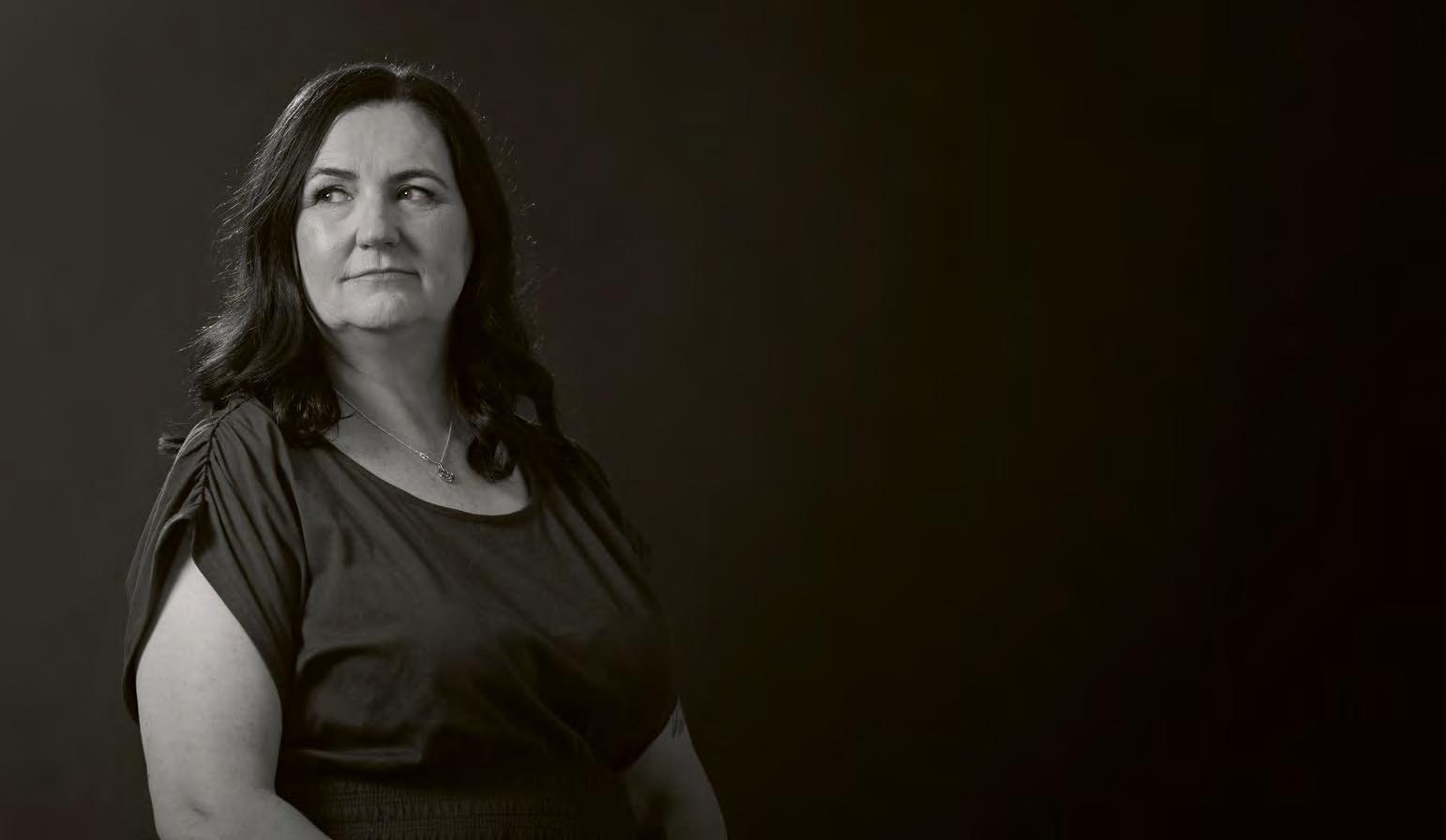
The core issue? A lack of respect.
"In many cases, women remain sexualised, not equals – and this must change. We’re not add-ons to fit the culture; it must adapt for us. We need to normalise women's presence by embedding our rights and needs into decisions. We need to be valued rather than tolerated."
Manton works at The Athena Project, a veteran-founded organisation supporting victimsurvivors of sexual violence in Defence, and says she's "blown away" by the number of disclosures she encounters.
"Even after 30 years in Defence, I underestimated the scale of abuse. The number of people
saying they never reported come in almost daily. Few escape Defence with no story. Most face sexual harassment, if not extreme violence like assault or rape."
Llani Kennealy left Defence in 2024 after a 33-year military career, including senior roles as the inaugural Gender Advisor to the Chief of Air Force, and the Department of Defence’s implementation of Australia’s National Action Plan on Women, Peace and Security. Now Chair of Women Veterans Australia (WVA) and a military gender expert, Kennealy leads national advocacy to improve women veterans' experiences from service entry through transition and beyond.
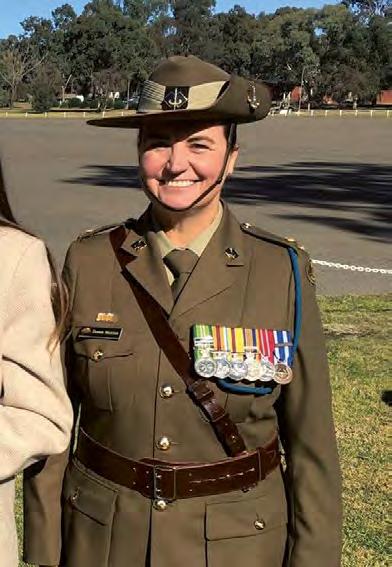
Donna Manton in uniform
She insists reform must focus on outcomes, not trauma.
"My advice is simple: stop asking women veterans to share their experiences unless you are prepared to act. Implementation, resourcing and accountability are what give women confidence that institutions can truly change."
The challenges faced by women veterans extend well beyond individual incidents.
The Department of Veterans' Affairs 2025 Baseline Data Report found women veterans are twice as likely to die by suicide as civilian women. Open Arms 24/7 Support Line 1800 011 046 Suicide Call Back Service 1300 659 467
52 % of women veterans live with long-term health conditions
This compares to 36 % of non-serving women
Women comprise 80 % of military sexual misconduct victims
26 % of women in Defence experience workplace sexual harassment Within Defence, 43 % witness sexual harassment, yet 80% of victims don't report it
The Royal Commission into Defence and Veteran Suicide deemed sexual violence a systemic Defence problem
Lifeline 24/7 Crisis Support 13 11 14
disproportionately harming women and elevating suicide risks. Its Final Report said this will continue without deep reform.
To make things worse, victims told the Royal Commission that, after reporting, they were often isolated, shunned or discharged through weaponised administrative or medical processes. Others stayed silent for fear of reprisals.
Kennealy acknowledges there have been improvements in policy, language and visibility of women in Defence, but says cultural change remains uneven.
"While younger women may have more formal protections today, many still report similar barriers: isolation, disbelief and fear of career repercussions," she says. "Change has occurred largely because women have continued to speak up, often at personal cost, rather than because systems were inherently responsive."
Blue Support Service 1300 22 4636
In a statement to Reveille, a Defence spokesperson acknowledged that while "there is still work to be done", the Australian Defence Force (ADF) remains committed to implementing the recommendations of the Royal Commission as a priority.
"All personnel have a right to be respected and deserve to have a positive workplace experience," the spokesperson said. "There is no place for sexual violence in Defence. Defence Force members convicted of sexual and related offences can expect to be discharged from the ADF.
"Defence has amended legislation, improved education, training and awareness initiatives, and updated policy and guidance to managers and commanders on prevention, support and reporting."
In addition, Defence is developing a comprehensive sexual violence prevention strategy in partnership »
In Shining a Light: Stories of Trauma & Tragedy, Hope & Healing, published by the Royal Commission in 2024, a member of Navy personnel described the bullying and violence she received after enlisting.
“I first enlisted [in the Navy] in 1996 [when] I was consistently bullied and objectified into the old school world of men who did not want females in their technical world.”
“We’re not add-ons to fit the culture; it must adapt for us. We need to normalise women's presence by embedding our rights and needs into decisions.”
— Donna Manton
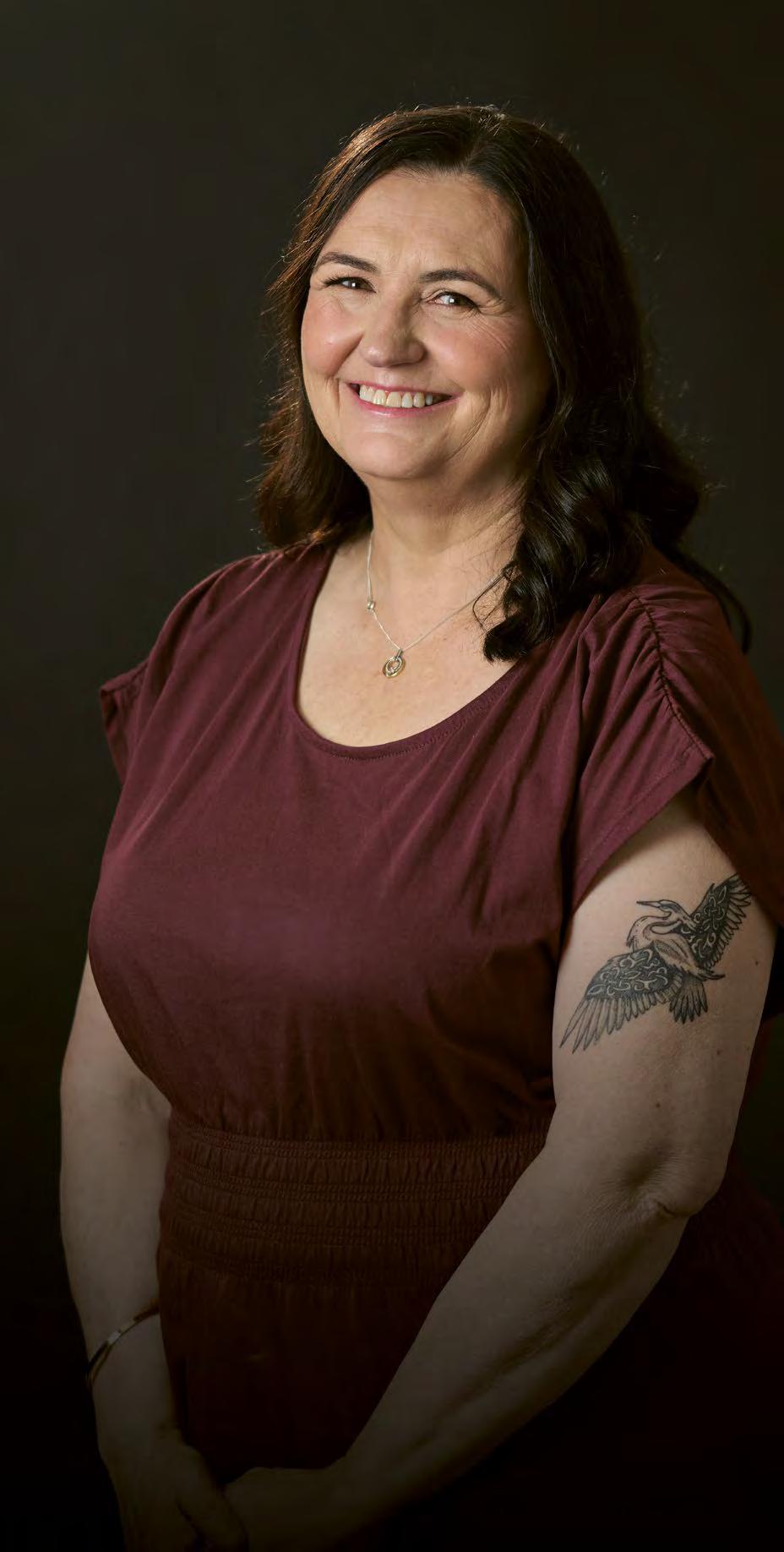
with the Australian Human Rights Commission and Our Watch, to be published this year.
Meanwhile, federal senators Jacqui Lambie and David Pocock’s November 2025 bill proposes an independent authority within Defence to monitor sexual assault prevention, intervention, reporting and culture. It will oversee prevention, investigations and survivor support to enforce zero tolerance. And since December 2025, military sexual convictions must be reported to police, exposing offenders beyond Defence.
Kennealy hopes Defence treats this moment as genuinely transformative.
"Survivors are watching closely to see whether reforms translate into safer environments, trusted reporting pathways and real consequences for misconduct. The test will be whether Defence embeds survivor-centred, trauma-informed practice as standard, not exceptional."
She warns that large organisations risk defaulting to compliance rather than change.
"Implementation must be driven by sustained leadership accountability and cultural change at all levels."
ESOs 'don't reflect women' Women comprise up to 14 per cent of Australian veterans, based on Census data, with
women making up 20.1 per cent of Defence. Their participation is expected to rise to 35 per cent by 2035. This means more women entering civilian spaces and needing support from veteranspecific services over time.
Women-specific ex-service organisations (ESOs) include The Athena Project, which offers peer advocacy for sexual violence survivors; WVA, which advocates for policy reform, improved services and genderresponsive systems; and Women Veterans Network Australia (WVNA), which provides safe, peer-led spaces. These organisations, alongside RSL NSW, also provide practical support, such as navigation of claims, referrals, crisis support and connection to community.
Kennealy says ESOs have a vital opportunity to amplify veteran voices and support long-term wellbeing, but notes many women experience them as male-centric.
"Research shows that women veterans value connection and peer engagement, yet many do not see themselves reflected in the language, imagery or leadership of ESOs. Saying an organisation is inclusive and being experienced as inclusive are two different things."
Cath Allen, Veteran and Family Wellbeing Lead at RSL NSW, says it's not about making people feel inferior or unkind,
but empowering them through education to better support women – but also to know where they can't help too, to avoid retraumatising.
"I would never walk up to a man on a commemorative day and say, 'You've got your medals on the wrong side.' But that still happens to our women veterans."
RSL NSW is co-leading vital research with the NSW Office for Veterans Affairs and Monash University, examining the support services that exist for women veterans in NSW, the reasons they may not be connecting with these services, and evidence-based ways to meet their needs.
The Shaping Support Services for Women Veterans research project, whose advisory group includes Allen, Manton and Kennealy, could have wide-reaching impacts across Australia once completed.
The research is being co-led by provisional psychologist and Monash PhD candidate, Ayisha Miller, who was shocked at the lack of peer-reviewed research on women's experiences with ESOs.
"There's a pressing need to develop culturally sensitive and trauma-informed services. We have an incredible network that's supporting this project, as well as a diverse advisory panel of government and national group representatives, practitioners and livedexperience experts," says Miller.
She explains that the research, still in the data collection phase, shows that women veterans’ needs are often more complex and poorly understood by mainstream veteran services –which were originally designed for men.
In addition, women simply struggle to see themselves reflected in these spaces. »
One Army veteran wrote of being raped by four male colleagues, all of whom outranked her, leading her to feeling suicidal.
“After returning from Iraq, I was diagnosed with PTSD... In the years post-discharge, I have worked extensively with a psychiatrist and psychologist to be ‘okay’ with what has happened to me.”
"In the military, women often feel they have to take on a masculine role to prove themselves. Once they leave, there's no support to help them recalibrate; they're thrust into a society that expects women to be feminine. Often, ESOs seem to perpetuate that highly masculine environment where women don't feel that they belong."
Kennealy says the research aims to inform the design of services that are gender-responsive and genuinely accessible.
"Many women don't identify with traditional veteran spaces, leading to disengagement and unmet needs. This research seeks to shift women from the margins of veteran policy into the centre of service design.
"Without this evidence, reforms risk being gender-neutral in theory but gender-blind in practice. These efforts help ensure the Royal Commission's recommendations lead to meaningful, lived change rather than procedural reform."
Kennealy notes that while policy can change overnight, cultural change, particularly around treatment of women, requires courage and sustained effort. Culture should never be used as an excuse for poor behaviour.
"Behaviour shapes culture, and culture should be a positive force that unites people around a shared purpose."
Manton is hopeful about creating change. After all, public health campaigns have altered attitudes towards seat belts, smoking and skin cancer.
"It takes strong messaging backed by consistent actions. At the moment we have strong rhetoric but no follow-through."
She believes the most urgent task is holding leaders to account.
"Until perpetrators face real consequences and leaders remove them publicly, shame will keep falling on victims."
However, she sees momentum as shame slowly shifts from victims to perpetrators, and leaders push legal changes so commanders can act more easily, including presumptive discharge when people are found guilty.
She also advocates for education for commanders and leaders on balancing victim and perpetrator rights, plus broad behavioural
change programs taught by sociologists, psychologists and culture experts.
ESOs must first examine whether women veterans can safely access and use their services. This requires a forensic look at women’s participation across programs, governance and leadership, as well as clear codes of conduct, visible leadership commitment to women’s safety and genuine inclusion in decision-making.
Allen, meanwhile, hopes veteran services will look very different in 10 years.
“Implementation, resourcing and accountability are what give women confidence that institutions can truly change.” — Llani Kennealy
A female Air Force chaplain laid the blame of inaction at the feet of Defence leadership.
“It should not be up to victims like me to be speaking up to bring about these changes, at great personal cost to ourselves. “Our senior leaders should be beating a path, to be stating … that the ADF is admitting it has a problem with the unacceptable behaviour.”

A Defence spokesperson said there is work to be done on fixing the treatment of women in Defence. IMAGE: Defence Images
"I would love to see a support service environment for veterans that is proactively inclusive, not reactive – and marketing, spaces, systems, forms, events and hierarchies that naturally meet the needs that our women veterans highlight."
For Kennealy, the critical piece is upskilling ESOs and advocates to better understand women veterans' lived experiences and reflect that in their approach.
"The last thing we want is a woman seeking help, not feeling heard or like they belong, then disappearing from support altogether. That woman needs to be picked up, given a safe space to be heard and be supported."
Progress must be measured by outcomes, not intent. It must also be visible.
"This research provides an opportunity for veteran services in NSW to develop a deeper understanding of service delivery. Beyond simply documenting women’s experiences, it builds on the findings of the Royal Commission and charts paths from traditional support models to more nuanced and informed approaches.
"This will benefit all veterans and their families."
1 Consult women members
Ask directly about their service needs and wants. Seek input on desired policies, programs and activities.
2 Partner with women’s ESOs
Collaborate with The Athena Project, WVA or WVNA.
3 Host expert training
Invite specialists for sessions on trauma-informed practice and respectful engagement.
4 Offer tailored support
Provide claims navigation, crisis referrals and wellbeing programs – services already available via RSL NSW.
5 Create safe spaces
Launch women-only or facilitated groups to boost safety and participation.
6 Elevate women’s voices
Create pathways for women to get onto committees and boards.
7 Learn from peers
Study successful ESOs and sub-Branches engaging women veterans – the Narrabri RSL sub-Branch, for instance, which welcomed its first female President in 2024.
“WE’VE
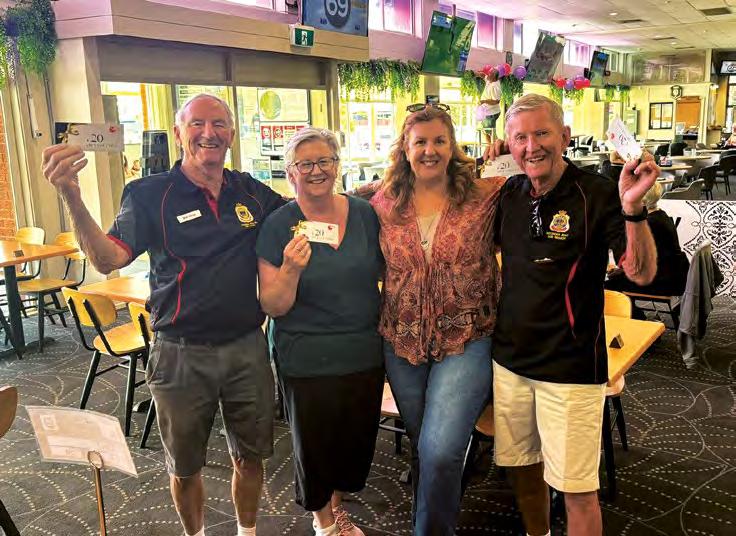
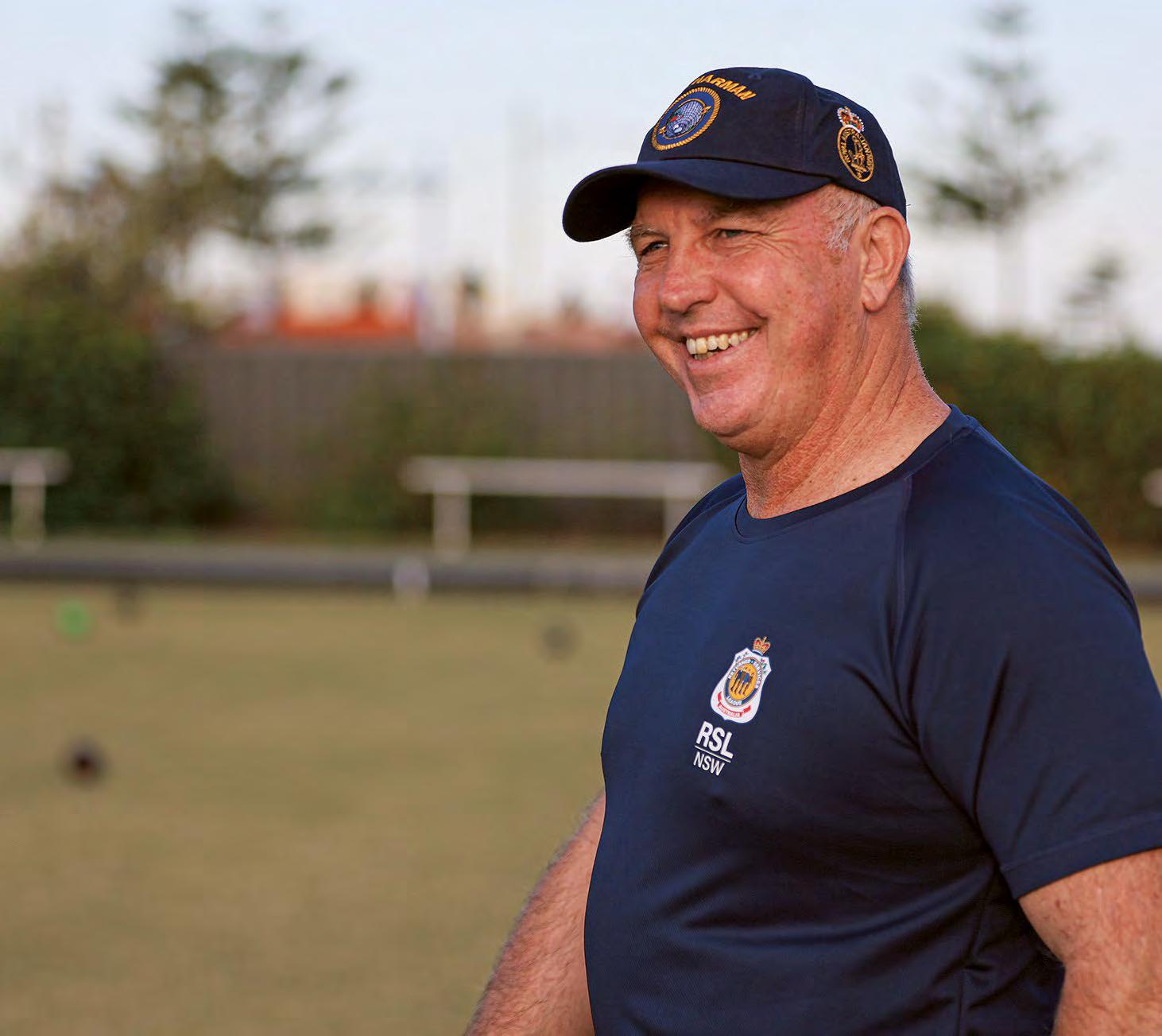
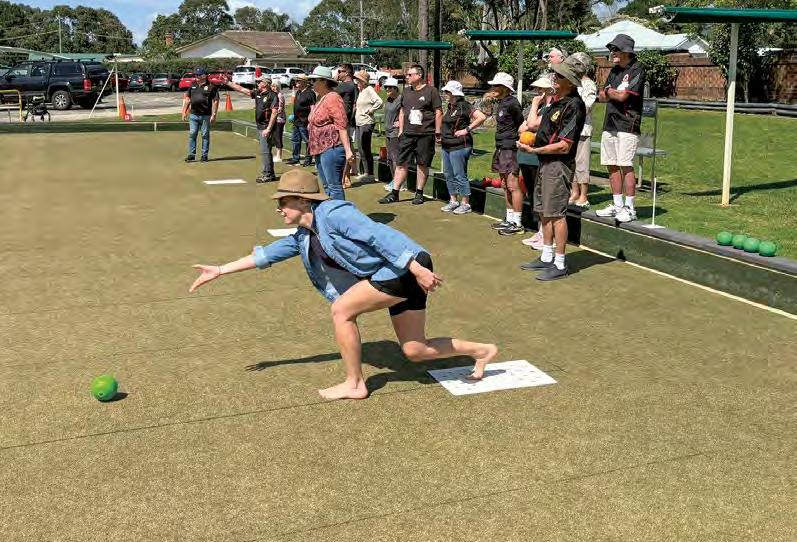
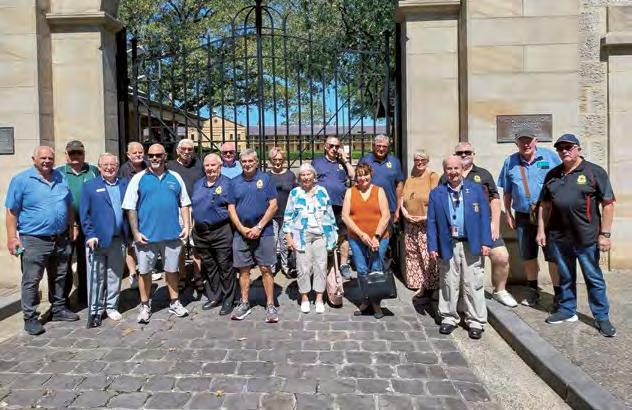
ABOVE: Lawn bowls and prizes at the Woonona/Bulli RSL sub-Branch. LEFT: A tour of Victoria Barracks in Paddington.
By combining relentless advocacy with a rich social calendar, the Woonona/Bulli RSL sub-Branch has cultivated a profound sense of belonging among members.
Words by Girard Dorney
When asked how they advertise a culture of inclusion at their meetings and events, the executive team at the Woonona/Bulli RSL subBranch aren’t confused, but they do think the question puts the cart before the horse.
“It is our culture,” says Secretary Neil Wilcock. “We don't really have to do anything.”
In other words, inclusivity is obvious from the moment a potential member first enters the door. This was the experience of Treasurer Mark Adamson.
He hadn’t “bothered” with RSL sub-Branches after leaving the Navy in 1975 for a reason that will be familiar to many.
“I'm typical of a few veterans who think, ‘I didn’t do enough’ or ‘I never fought in any [real] wars’,” he explains. “Though
I was involved in overseas operations in the Vietnam era.”
Adamson’s brother nagged him for years to sign up, but it wasn’t until 2018 when he retired and moved to the Woonona/Bulli area that he tested the waters.
“I went up with my wife and they welcomed me the first day, and it’s been like that ever since.”
The sub-Branch’s inclusive approach extends to other organisations. It has a mutually respectful and rewarding connection with the Woonona Bulli RSL Club and fruitful working relationships with its neighbouring sub-Branches. But where it really shines is with its people.
Whether it’s one of the eagle eyes who make up the majority of the Illawarra’s two SAS Darts teams, a former Navy cadet with a son who fought in the battle of Mosul who became a compensation advocate, or a war widow in the RSL Auxiliary attending the monthly coffee and cake morning, the sub-Branch’s arms are open.
“The feedback we get is always positive – well, one or two people might say the music at an event is too loud,” jokes President Phil Williams before becoming more serious. “They all say, ‘This is our tribe. We’ve found our tribe.’ It makes our job more fulfilling.”
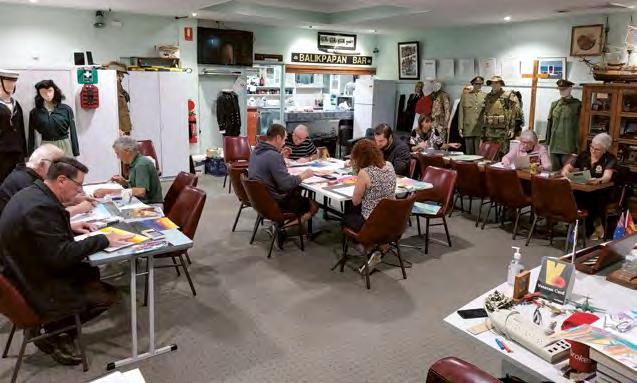
Like other sub-Branches, Woonona/Bulli realised that if it wanted to become more central in the social lives of their members, it would have to offer more than the organisation of commemorative services.
Wilcock has been the driving force here, says Adamson.
“When I went to my first RSL NSW State Congress and AGM, I listened to how RSL NSW was promoting the RSL NSW Sport & Recreation Program,” says Wilcock. “They said the funding was available and that it improves camaraderie and social connection. I picked it up and went from there.”
Today, the sub-Branch runs a robust calendar with at least 10 major activities a year, one for every month outside the busy December–January period.
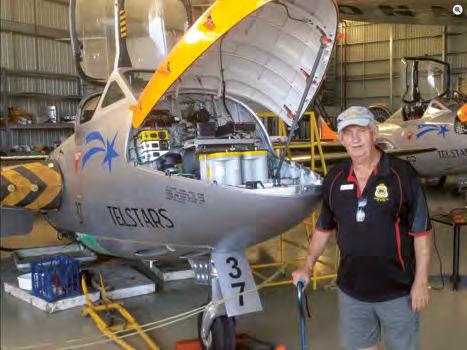
Every interest is catered for. Those into sport can turn up for the biannual tenpin bowling and NRL Lawn Bowls days. If you prefer self-expression, there are art classes almost every month.
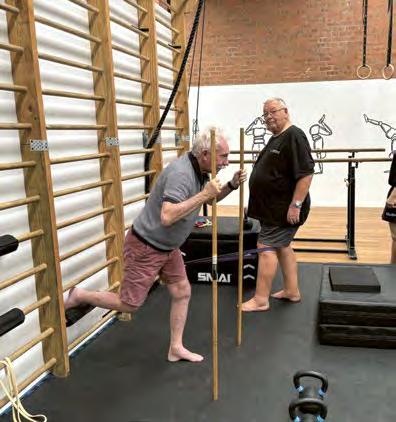
Sub-Branch activities include art classes, gym sessions, lawn bowls, golf days and day trips.
Then there are the excursions with broad appeal, such as travelling to the Kokoda Track Memorial Walkway at Concord in Sydney, or taking a cruise down the Port Hacking River.
But if a member feels that nothing from that list is for them, they needn’t fret.
“Every meeting, we do a Sport & Recreation Program update, and we say if anyone has new ideas, let us know. If it’s feasible, we’ll run with it,” says Wilcock.
This seemingly simple gesture is actually an outgrowth of another of the executive team’s values: transparency.
“We canvas everything with our members. Doesn’t matter if it’s a short-term monetary thing,” says Williams. »
“They’ve got faith in us to do the right thing, but we make sure we keep the faith by telling them what we’re doing.”
Inclusion and transparency are clear values of the modern RSL, but the last pieces of the subBranch’s culture hearken back to the institution's original purpose. Adamson sums it up with two words: welfare and advocacy.
“It’s the heart of what we do,” agrees Wilcock.
Williams explains that, while the archives show Woonona/ Bulli has a long history of both, the outstanding advocacy it offers today began organically
after the introduction of the Advocacy Training and Development Program (ATDP) standards.
“We were fortunate to gain two members from the Illawarra Veterans Entitlement Service,” says Williams.
Peter and Anne Pioro quickly made their presence felt as the sub-Branch’s accredited advocates. The key to their success? Relentlessness. One example: a commander in the Navy died by suicide due to bullying he experienced while serving, leaving behind his wife and children.
“She was left alone and no one would take responsibility,” says
Williams. “But Peter was like a fox terrier; he wouldn't let it go. He fought for her with the Department of Veterans’ Affairs and the Navy, and proved that she was entitled to a war widow’s pension and a gold card; plus, the kids got gold cards till they were 25.”
“I went up with my wife and they welcomed me the first day, and it’s been like that ever since.”
— Mark Adamson, Woonona/Bulli RSL sub-Branch
The RSL NSW Advocacy Support Program has two goals: Attendees
1 Provide consistent processes and systems to support volunteer Advocacy Training and Development Program (ATDP) advocates in their delivery of services to veterans
2 Establish development pathways for emerging ATDP advocates, supervisors and mentors
Sub-Branches seeking to strengthen local support –including assistance for advocates – are encouraged to apply for funding through the RSL NSW Support and Assistance Fund.
The initiative is designed to help ensure sub-Branches with limited resources can continue supporting veterans and their communities by providing targeted financial assistance for wellbeing-related activities.
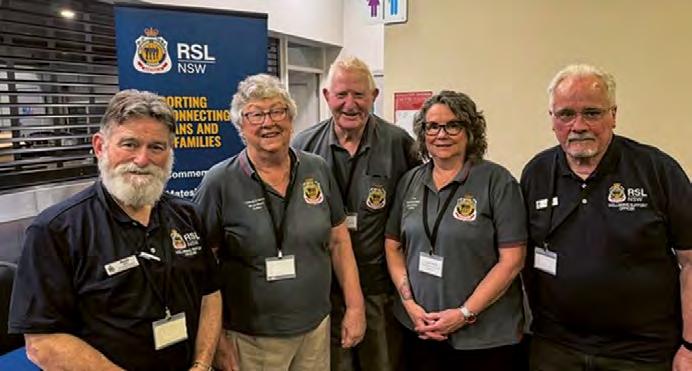
The sub-Branch’s reputation quickly grew.
“We had four advocates with 130 cases at one stage, and clients were being referred to them from all over the country. And, believe it or not, a lot of those came from the case officers at DVA.”
The sub-Branch nominated the Pioros for Order of Australia Medals, which they were awarded. Before they left for Dubbo for personal reasons, the Pioros helped mentor new advocates, 20-year Navy veteran Jim Christensen and Greg Jones, the former Navy Cadet with an Iraq veteran son.
“Advocacy is where our reputation comes from. And once that word gets out, we don’t have to advertise,” says Williams.
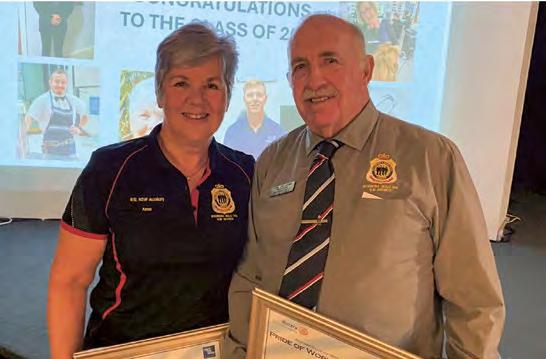
The wider community agrees. Williams received life membership in RSL NSW in 2025. He and an Auxiliary member, Anne Adamson, received a Pride of Workmanship award from the Rotary Club of West Wollongong for their service and dedication.
President Phil Williams and Auxiliary Coordinator Anna Adamson were honoured with Pride of Workmanship awards.
One recent story encapsulates what Woonona/Bulli stands for: the inclusivity, the collaboration with others, and the passion for veteran welfare.
“An ex-Army veteran approached the City of Wollongong RSL sub-Branch, but was living in our area,” says Wilcock. “She was a recently single mother with two young kids, one about three and another about six months old, and was about to experience homelessness after a notice of eviction.”
The two sub-Branches collaborated on funds, forwarded her on to the Shoalhaven Veteran and Family Hub, supported her with food vouchers, helped guide her through government housing bureaucracy, then wrote a letter advocating for her to receive a place nearby so she wouldn’t have to leave the area.
She received housing, but there was an even more telling sign that Woonona/Bulli had lived up to its ideals.
“She’s now a member of the sub-Branch,” says Wilcock matter-of-factly.
1 Open your doors to everyone
Being inclusive is more powerful than talking about being inclusive. Word-of-mouth will get the message out.
2 Make your subBranch visible
RSL NSW-branded merchandise can give members a sense of belonging and acts as a low-cost recruitment tool.
3 Make a good first impression
A warm welcome when a prospective member turns up is a critical retention technique that’s easily missed.
4 Be a ‘spoke’ and leverage the ‘wheel’
Access online resources and get in contact with your region's Community Relations Partner to find out how your sub-Branch could benefit from the Advocacy Support Program and Sport & Recreation Program.
5 Know you're not alone
For complex advocacy and support cases, partner with nearby sub-Branches to share the burden. 5 TIPS
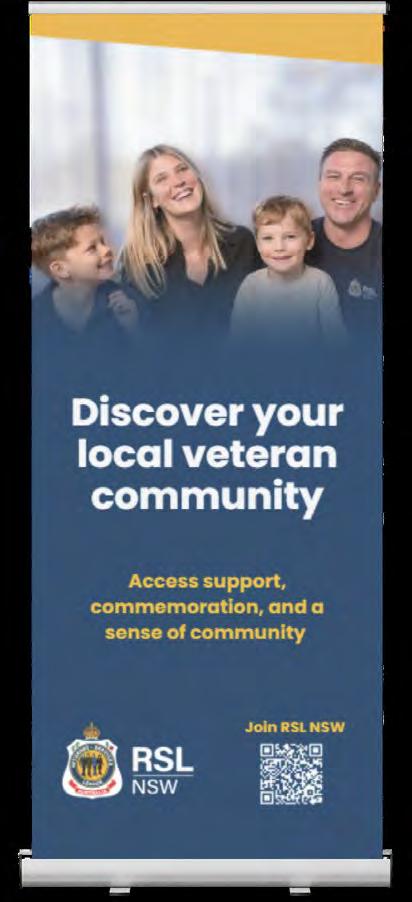
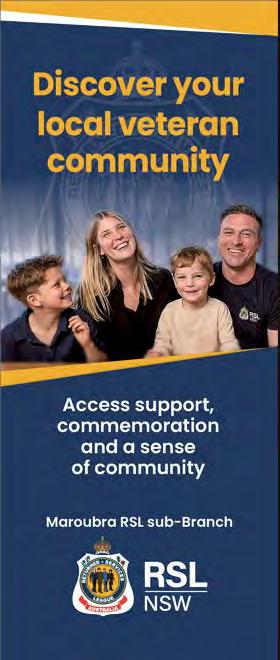
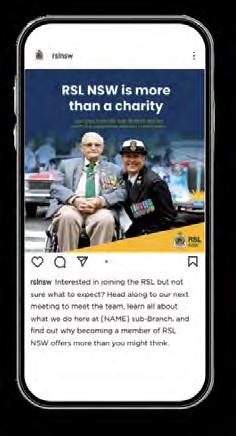
A range of promotional tools is available to sub-Branches to reach out to veterans in their community, promote services and support, and encourage them to join RSL NSW
Download, print or order on-brand resources from the RSL NSW Member Portal. Visit the ‘Events and Promotional Tools’ section to find:
Promotional material, including signage, posters, and banners, to help you promote your sub-Branch to local veterans and their families
Social media resources, templates and guides to make it easier for your sub-Branch to connect with community online
Event collateral to promote your meetings, Sport & Recreation Program, and social events and build your veteran community
A new member welcome kit, to turn interest into membership and active sub-Branch involvement
Scan the QR code to view the Member Recruitment Toolkit and instructions on how to order


Need help accessing the
AU X I L I A R Y
In Sydney’s west, a team of dedicated volunteers is making a difference in the lives of its peers.
Clara Elliott, Sandra Smith and Wilma Taylor are members of the City of Penrith RSL Auxiliary, which fosters closer links between members and with the general public – all while raising an impressive amount of funds for the subBranch’s commemorations and other events.
Last year, the group’s efforts were rewarded with the Lady Woodward Cup at the RSL NSW Annual State Congress & AGM, an award that recognises outstanding achievement in fundraising, and engaging and supporting the local community. Here, they share how the group works closely with and supports the sub-Branch, the impact of their presence in the community, and more.
What sort of activities do you organise?
Wilma Taylor: “Social visits are just one example of what we do. The wife of one RSL NSW member attached to the sub-Branch has earlystage dementia. We go out to visit her and, although
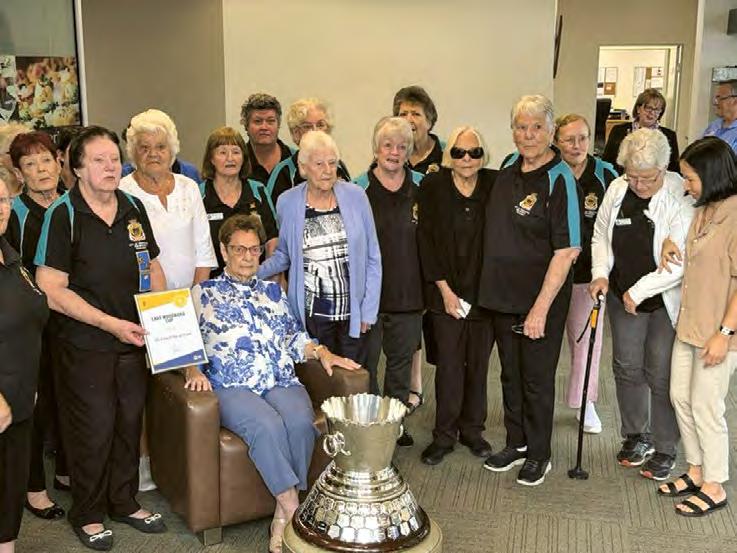
she may not remember our conversations, she appreciates our company.”
Sandra Smith: “We also help out at commemorative events. We set up a table with all the badges. Some of our members hand out the program. We also interact with and seat VIPs, including any politicians who come along. The general public too. I think we make a huge difference. Last year, we raised $14,000 on ANZAC Day and $9,000 on Remembrance Day from selling badges and memorabilia, all for the sub-Branch.”
How would you describe the relationship with the subBranch executive?
Smith: “We do a lot together with the sub-Branch. The Auxiliary raises funds and provides administrative support, and the sub-Branch provides a space in the office where we can gather. They’re wonderfully supportive. The guys are brilliant.”
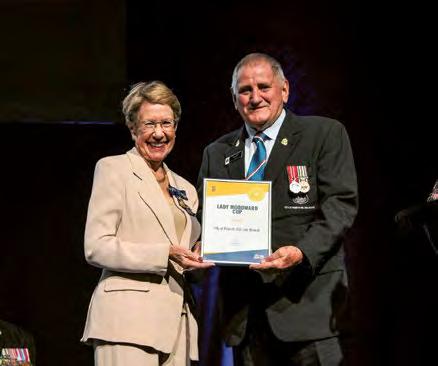
The group was awarded the Lady Woodward Cup at the 2025 Congress by Her Excellency the Hon Margaret Beazley AC KC, Governor of NSW.
Taylor: “It’s really easy to get on with them. One of us will throw an idea in, and someone at the sub-Branch will pick it up.”
Clara, you’ve been a part of the RSL Auxiliary in various capacities since 1973. What’s kept you coming back?
Clara Elliott: “I love the work. I love raising money for our veterans. I love ANZAC Day mornings and watching the march. Although I can’t always do it as much as I would like, I love helping out where I can.”
READ the full interview with the City of Penrith Auxiliary on the RSL NSW website.
RSL NSW Sport & Recreation events have changed one veteran's life for the better.
Words by Warren Keep, Grenfell RSL Sub-Branch Sport & Recreation Manager
Keith Ingelsman was born in 1945, joined the Navy as an aviator in 1963 and retired in 2010. He moved to the tranquil town of Grenfell in 2007 and used to drive past the Grenfell Bowling Club without ever stopping in for a game.
In 2025, Grenfell RSL Bowls was established with the support of the bowling club. A few days later, Keith walked through the gate for the first time, uncertain what he’d find – only to be greeted warmly by members, who found him a set of bowls and a bowling stick before beginning a game.
Keith began returning week after week, the greens became
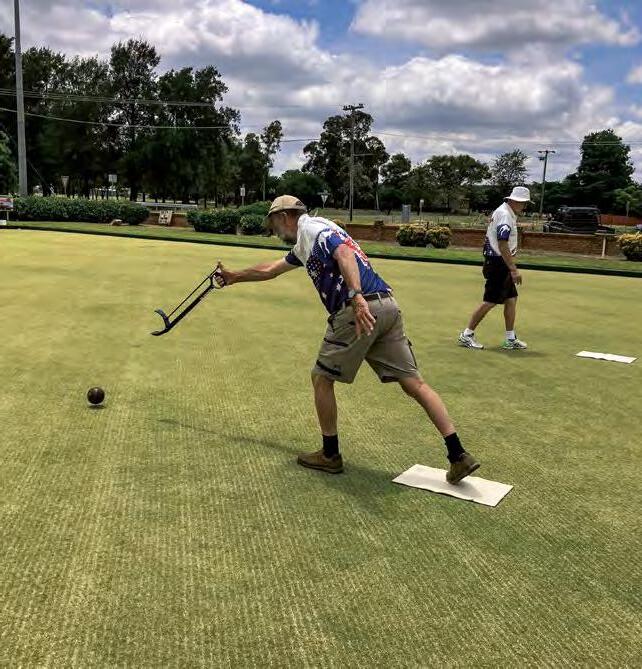
more familiar underfoot and the other members became friends. Sharing tales of Navy days, he soon became a regular bowler with his mates from the sub-Branch.
The Grenfell RSL sub-Branch has established weekly coffee mornings and afternoon bowls as part of the RSL NSW Sport & Recreation Program, with new ideas being considered for the year ahead.
SCAN the QR code to view the Sport & Recreation Program events calendar.
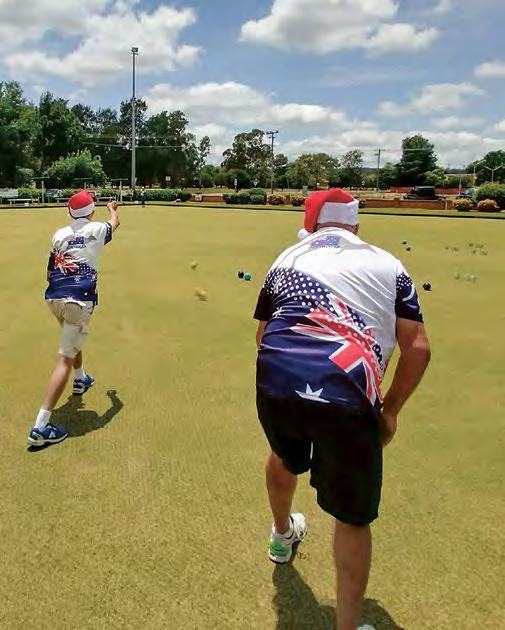
Keith Ingelsman (top) and others enjoying a sunny day of bowls
We welcome contributions to the community noticeboard on the Member Portal. It’s a place for both subBranches and members of other ex-service organisations to share word of events, reunions, activities and other information that POST YOUR EVENT ON OUR COMMUNITY NOTICEBOARD
may be of interest to RSL NSW members. The information may be shared in a future edition of Reveille.
SCAN the QR code to access the noticeboard.
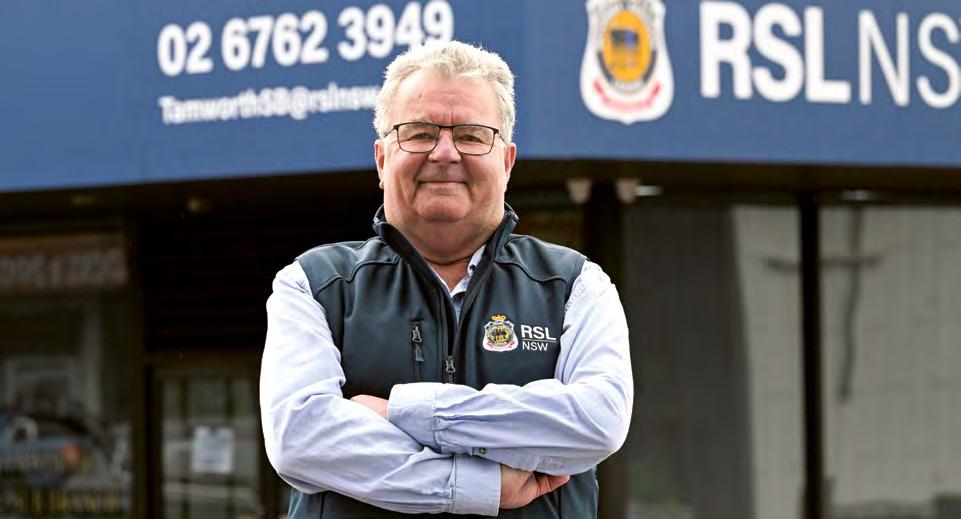
David Howells in front of the Tamworth RSL sub-Branch's snazzy new signage. IMAGE: Gareth Gardner © Northern Daily Leader/ACM
TA M W O R T H
The Tamworth RSL sub-Branch has enjoyed a glow-up with the installation of new public signage.
RSL NSW members attending last year’s Annual State Congress & AGM were among the first to witness the vibrant new livery fronting the Tamworth RSL sub-Branch building on Bridge Street.
Sub-Branch President David Howells told Reveille it immediately had an impact.
“The building had the same faded navy, yellow and red for some years,” he explained. “People would confuse it with other places or institutions. We had some people asking us when our bistro opened or what time our gaming room opened. They thought we were an RSL Club, which we are decidedly not.”
The sub-Branch worked closely with ANZAC House to sign off on the new design, which ended up being installed in a single day.
“I’ve now had calls from people driving up the road saying it stands out and looks really modern,” said Howells. “I would encourage other sub-Branches to work closely with ANZAC House to make sure any redesigns are done in line with RSL NSW branding.
“The benefit to your sub-Branch completely outweighs the cost of installation.”
Submit your sub-Branch news and images news@rslnsw.org.au
Four RSL NSW sub-Branches are among the recipients of Commonwealth funding through the Saluting Their Service Commemorative Grants Program.
The Department of Veterans’ Affairs initiative aims to encourage commemorative projects that honour and preserve the stories of veterans.
Wyong
$4,522
To install new commemoration plaques on the town's cenotaph
City of Newcastle
$8,129
To purchase glass cabinets to upgrade the display of weapons from past conflicts
Castle Hill and District
$9,586
To install new fencing at the Centenary of ANZAC War Memorial
Inverell
$10,000
To restore the town's Vietnam War Memorial
SCAN the QR code to read about the support available for RSL sub-Branches requiring grants assistance.
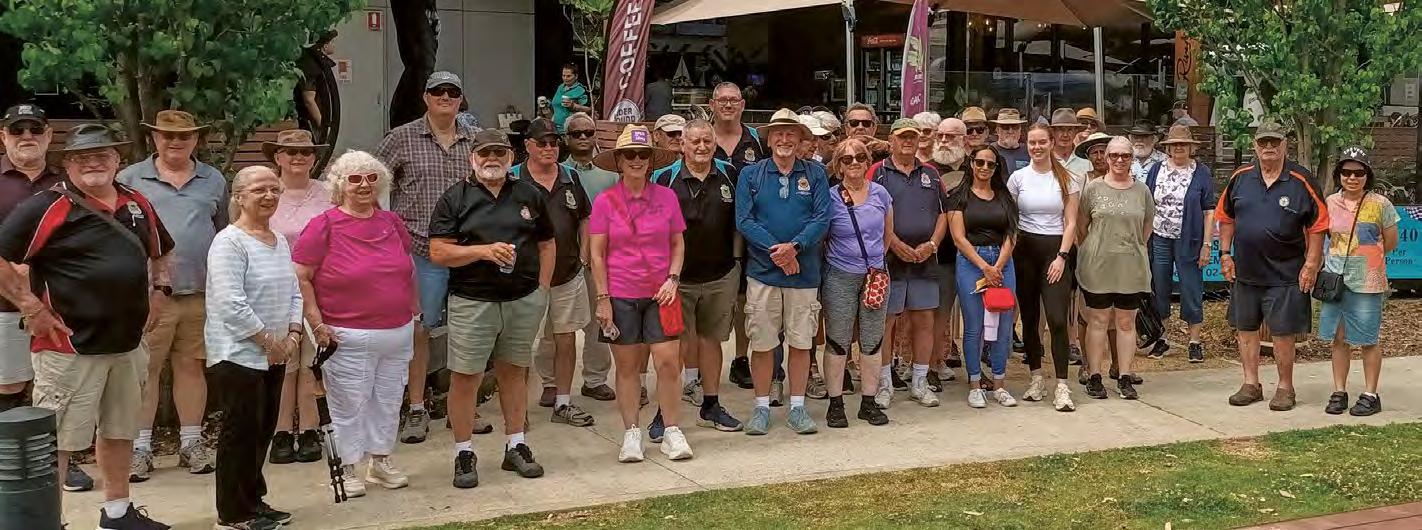
Veterans and partners enjoyed an outdoors walk as part of the St Marys RSL sub-Branch’s wellbeing efforts.
The sub-Branch’s extensive range of activities, organised as part of the RSL NSW Sport & Recreation Program, included a recent walk along the Nepean River.
More than 40 RSL NSW members and their families from the St Marys and City
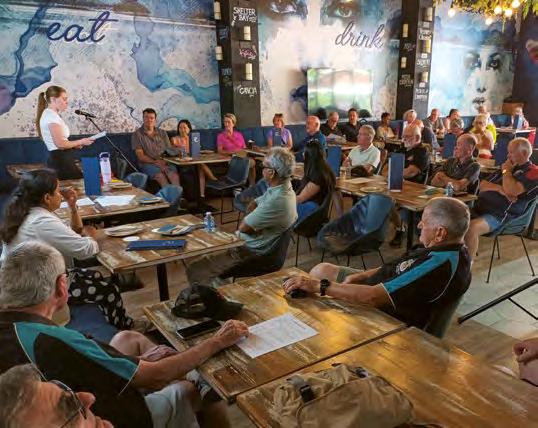
Tasty grilled fish, chips and salad were enjoyed upon the group’s return.
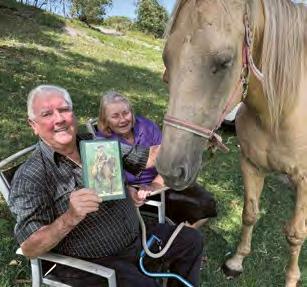
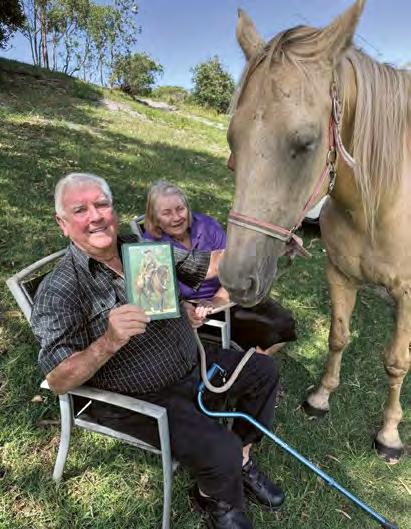
Equine therapy has boosted this veterans' wellbeing.
Air Force veteran Len and his wife Shirley were treated to a special morning organised by the Nelson Bay RSL sub-Branch. The pair spent valuable time at the volunteer-run Hunter Horse Haven, home
to unwanted horses which have been rehomed and rehabilitated.
Len used to dress as a light horseman for ANZAC and Remembrance Day services in Queensland. of Penrith RSL sub-Branches participated in practical exercises and demonstrations from a visiting exercise physician before embarking on the walk.
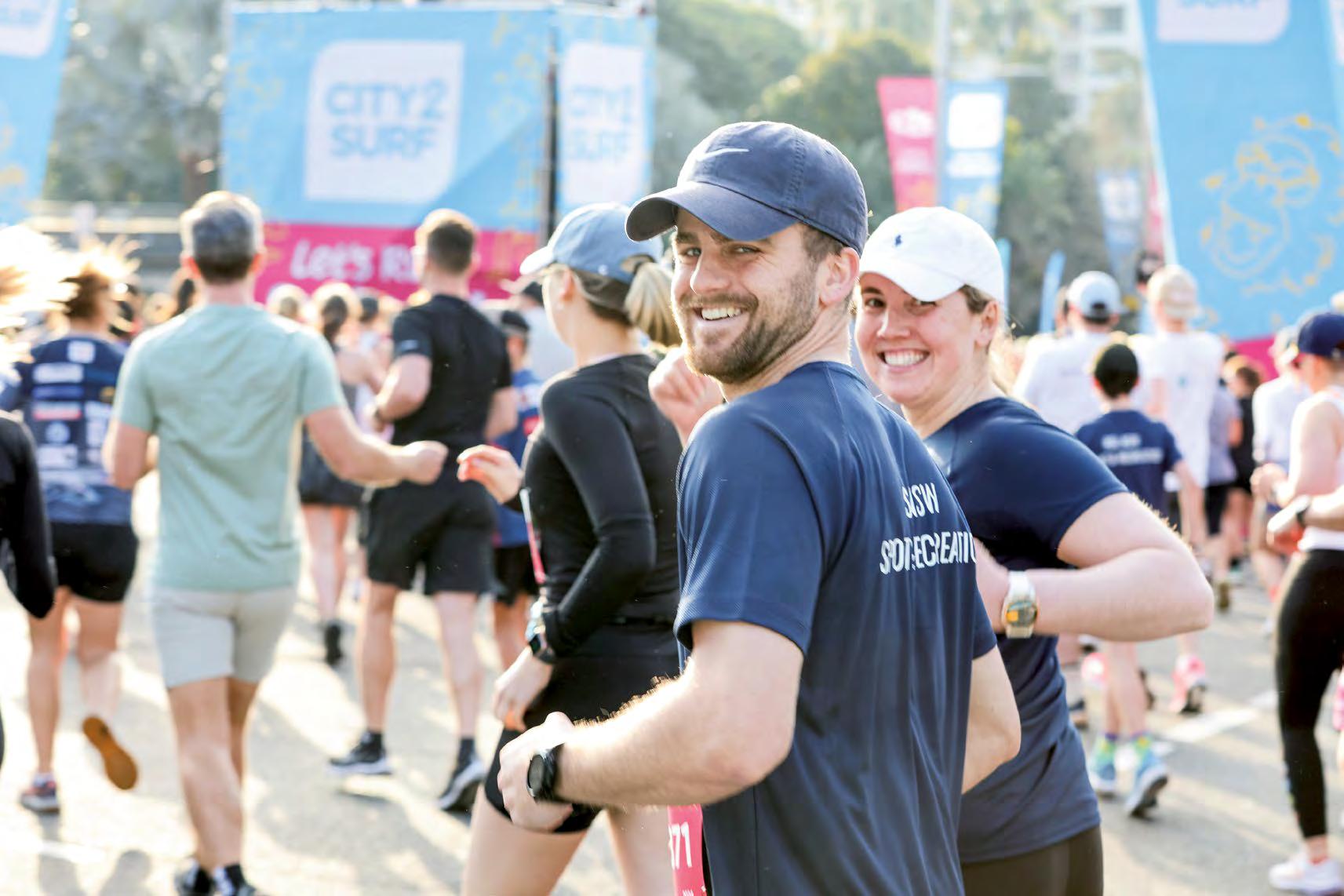
Get involved in Australia’s largest sport and recreation program for veterans and their families
The RSL NSW Sport & Recreation Program has set a gold standard for encouraging the physical and social wellbeing of veterans and families.
It’s free to all RSL sub-Branches to take part. Benefits of signing up for the program include access to:





Remembering the service and bravery of those who have served our country.
ABEL, DV N451586
ALGAR, DA R29966
ANDERSON, JF R53755
ANDERSON, B NS4959
ANGEL, GB PM962569
BELLWOOD, J F62610
BEVEN, GD R136517
BULMER, KV R59424
COOMBS, J R94603
COOPER, JL P63467
COSTAIN, LFJ C43376
CREWS, AH R318131
DAVIDSON, AD R66318
DE KORT, PC R107203
DORAHY, VG R37776
DUNGER, GS 2033
EMERTON, RF S7886
FEGAN, JW R62355
GEESING, EW R96041
GIBSON, IS S124688
GREATRIX, DB R103556
HALE, PJ R43579
HARRIS, JE R55208
HAYES, GC R66460
HICKS, RKP R64365
JOHNSON, GWR R115375
KEMMISH, MJJ R114920
LUSCOMBE, CG O108669
LYNCH, DJE R49089
MARSHALL, T 33936
MCDONALD, TH R106908
METCALF, DC R95755
MILLER, AD FR1160
MINGO, GK CSKX832110
MOORE, PJ R105268
MORONEY, JH R52939
MUNDY, PJ R96559
NEASBY, G R43134
NICHOLS, DA R94491
NOLAN, AJ S10191
PECK, DS LFX91764
PERRETT, JK 918
RICHARDSON, WJ R93570
RICKARDS, DJ R95163
ROWAN, MJ R66808
SELLWOOD, CSN 34536
SEWELL, TJ R64788
SHALLESS, RD R49094
SMITH, CP R57368
SNOW, SJ S125275
STEVENS, R R36496
STEWART, TA CMX724248
STRANGE, AK R95662
SWAIN, KA 53928
VAUGHAN, PN S130192
WHITBY, KL R47019
WILKIN, GM 47868
WILLIAMSON, LG R62546
ADAMS, GW 2784094
BAILEY, BR 2793201
BALL, BKA 218695
BARRETT, NJ 242967
BENSON, DL 2781298
BERRY, N VX500472
BOLTON, B 2/759212
BROWN, DG 2795932
BUFFETT, DJ 218742
BURKE, TB 2781889
BUTT, JE 2116317
BUTTROSE, GK SX35494
CAMERON, RJ A219267
CARR, GH 2791660
CINCOTTA, VJ 2116083
CLARK, HM F187565
CLARKE, EV 2785737
CLAUSEN, RE 213632
CLIFFORD, DJ 221054
COOK, GG 2792564
COOMBS, GA 2/13725
CRAIG, PJ 2792302
CRISP, DL 2746436
CUNNEEN, MC 2135138
DAWSON, GT 2/43039
DUFTY, LA NX134279
FAIRHALL, AJ 2783963
FORDE, CH 43865
GHERSI, WP 2950015
GILLIES, RH 1202701
GLYNN, WE 35527
GREEN, ML 2787367
GRENFELL, PB 3168895
HADLEY, SR 2821554
HALL, JK 2147617
HAPP, DA 2/5168 »
HARDIE, RJ 2796754
HARRISON, KN 2755672
HARVISON, GG 2239696
HASLER, FD F331134
HAYWARD, LR 2237134
HEMSWORTH, LM 2/4957
HEYWOOD, DG 2137538
HOLLAND, GC 229980
KELLY, RJ 216696
KENNEDY, WS 279396
KENNY, KJ 2789673
LANGLEY, ML 2791540
LEE, M 2774883
LISLE, RM A219906
MARKEY, JE 2740621
MARTIN, JL 214084
MASTERSON, JA 3/713014
MAURER, BF 217494
MAXWELL, EO 2791925
MCCARTHY, DI 22310
MCGAVIGAN, PA 2779471
MCINTOSH, J 2785891
MORLEY, RS NX49067
MOZLEY, DW 29007
MURRAY, WP 17617
NELLER, KJ 1730852
NICHOLSON, RH 2791730
NIXON, BE NF437660
NOACK, EG 2769398
NOLAN, BC 3795505
O'BRIEN, TM 2/410315
O'KEEFE, GB 2/400835
O'NEILL, LF 54331
O'NEILL, DJ 7863NS
PARKER, IH 2786067
PARR, JA 2789288
PENNEY, BL 2276670
PINK, RJ 2782926
POOLE, D 2794529
PRYDE, AL 224499
ROSEBY, JG NX147703
ROSS, TCJ 8691736
ROWLING, ID 216430
RYAN, TJ TX500030
SAMIN, EC 2786106
SHAW, MNL 38290
SIMPSON, DM 2777197
SINNOTT, TF 1400163
SLAVEN, SJ 232695
SMITH, WF 2/400454
STACY, DA 51400230
STEPHENS, KJ 8517169
SUMMERS, KJ 2792574
TABONE, JC Z2140872
TICKNER, ERH 217135
TING, WJ 2/71194
TOLHURST, N 216390
TOWNSEND, WT NX207975
TRUDGEON, JW 2786997
WADDELL, BL 234567
WEBB, K 216718
WEBSTER, EJ 2152085
WINTON, LF 2783897
ZAMMIT, L 2/770371
ZEILSTRA, JC 1202213
ALLPORT, MJ A316873
BAKER, BW A217163
BURLING, AC A22532
BUTT, V N225442
CAMERON, RJ A219267
COLLINS, J A221839
CONROY, WA A223348
DAVIE, M 234001
DREW, DV A12703
EBDON, KF A223586
FELSCH, DJ A217910
FERRIER, M 109747
GOSSNER, PV A218482
GRAHAM, AC 163566
GREENWOOD, TL 164505
HANSARD, RG 135601
HOBSON, NW 116949
JAMIESON, K A17830
JONES, CJ 8201395
KING, R 446064
KIRKWOOD, MK 109437
LEE, WM A45105
LEWIS, TV 34968
LOWE, NA A219784
MAHER, TH A222704
MAKKINK, KL A225123
MARNEY, CWE A110291
MATTHEWS, K 439429
MCINTYRE, TP A117667
NOLAN, DJ O119112
OWERS, BH 133450
PATMAN, KD A229135
PAVITT, BC A228633
POTTER, DH A232205
QUIRK, PA A217035
ROBINSON, B 108827
RODGERS, JA A225851
SCATTERGOOD, WD A228533
SCHRAMM, MW 8143802
SELMAN, CW A219862
SHORTEN, TE A124325
SMITH, PH 424225
SMITH, MW A217724
SPACKMAN, JJ A219000
STEEL, AJ A220499
STEWART, RH 432590
STUBBINGTON, JS A62856
TAPE, WF A111096
TUMETH, AR 131035
WESTON, BD A113070
WINSLOW, ER 428662
The information contained in the Last Post has been provided by the DVA and RSL members. Where possible we have attempted to provide all service details. We regret any missing information.
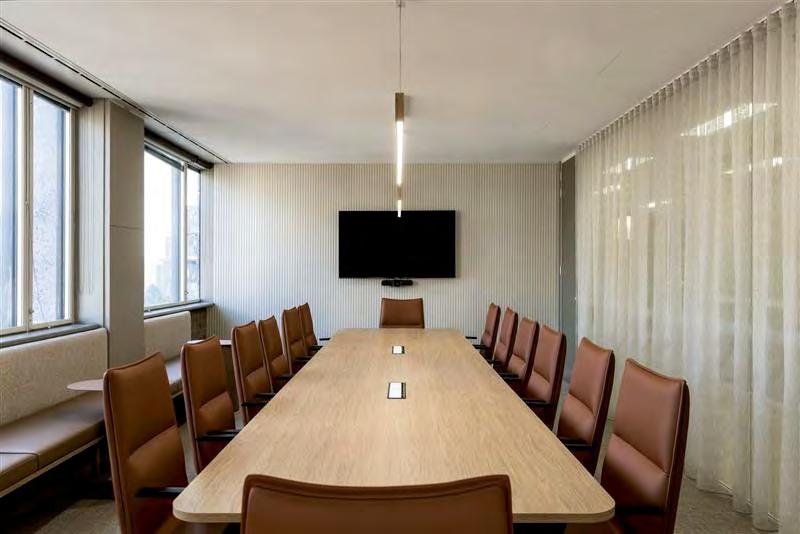
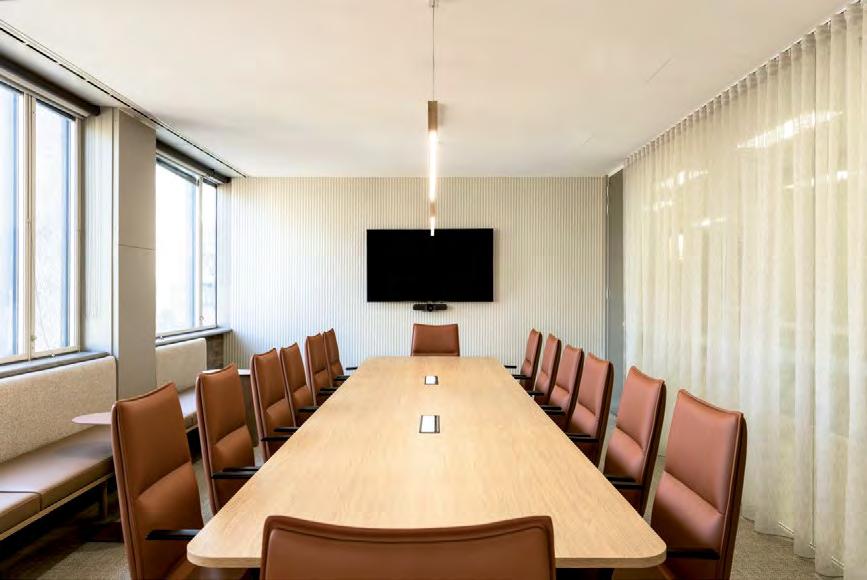
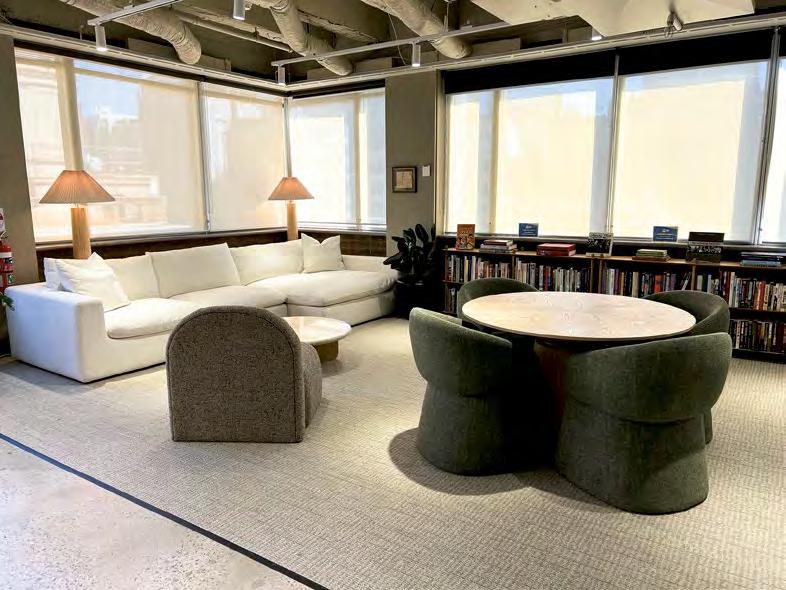
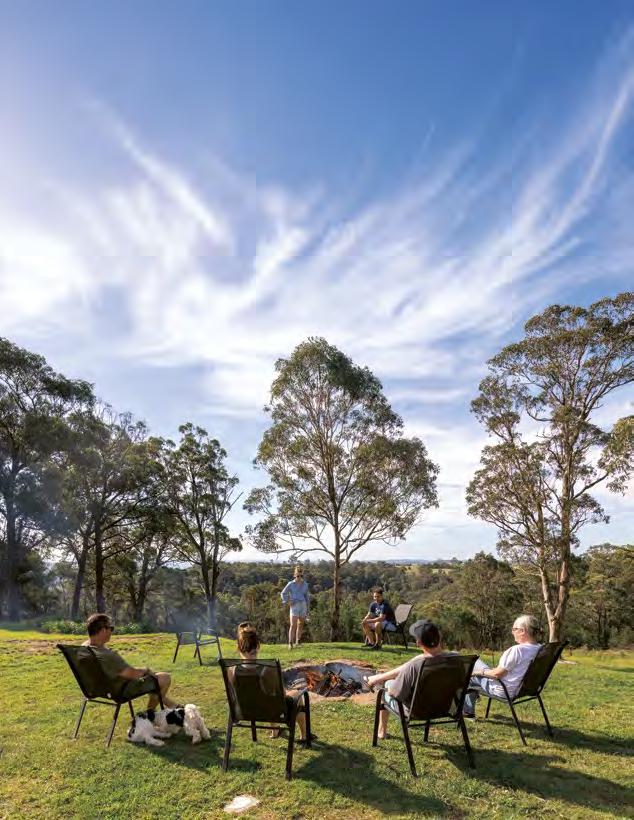
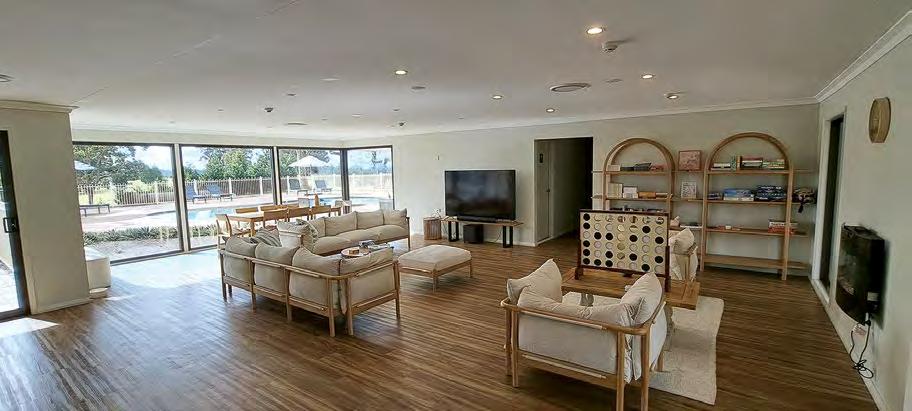
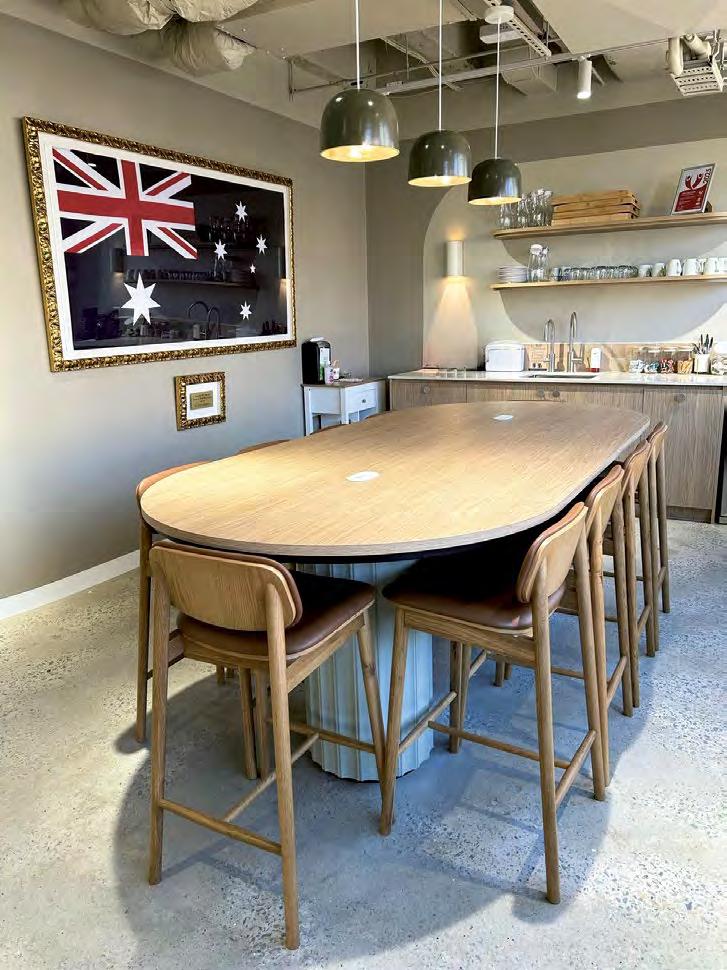
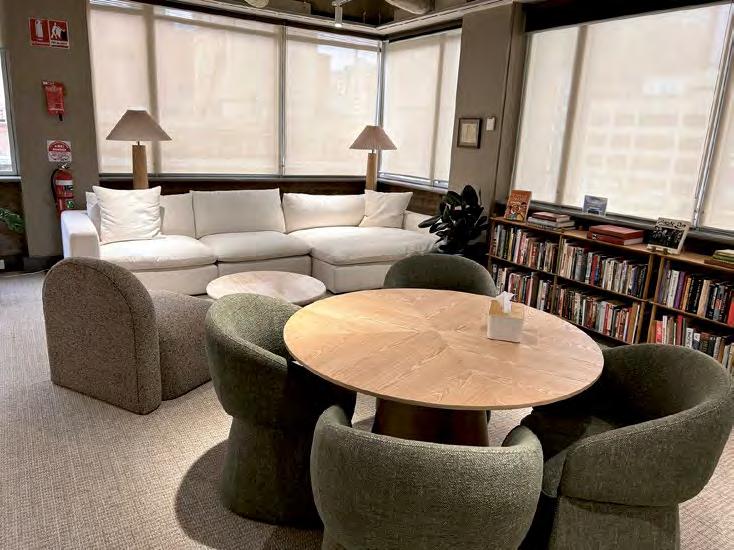
Level 12, 60 Carrington Street, Sydney is now home to a refreshed space designed for RSL NSW staff, members, veterans, and their families.
Drop in to relax in the lounge, have a brew, or browse the library.
Need a place to meet?
SATURDAY 14 FEBRUARY 2026
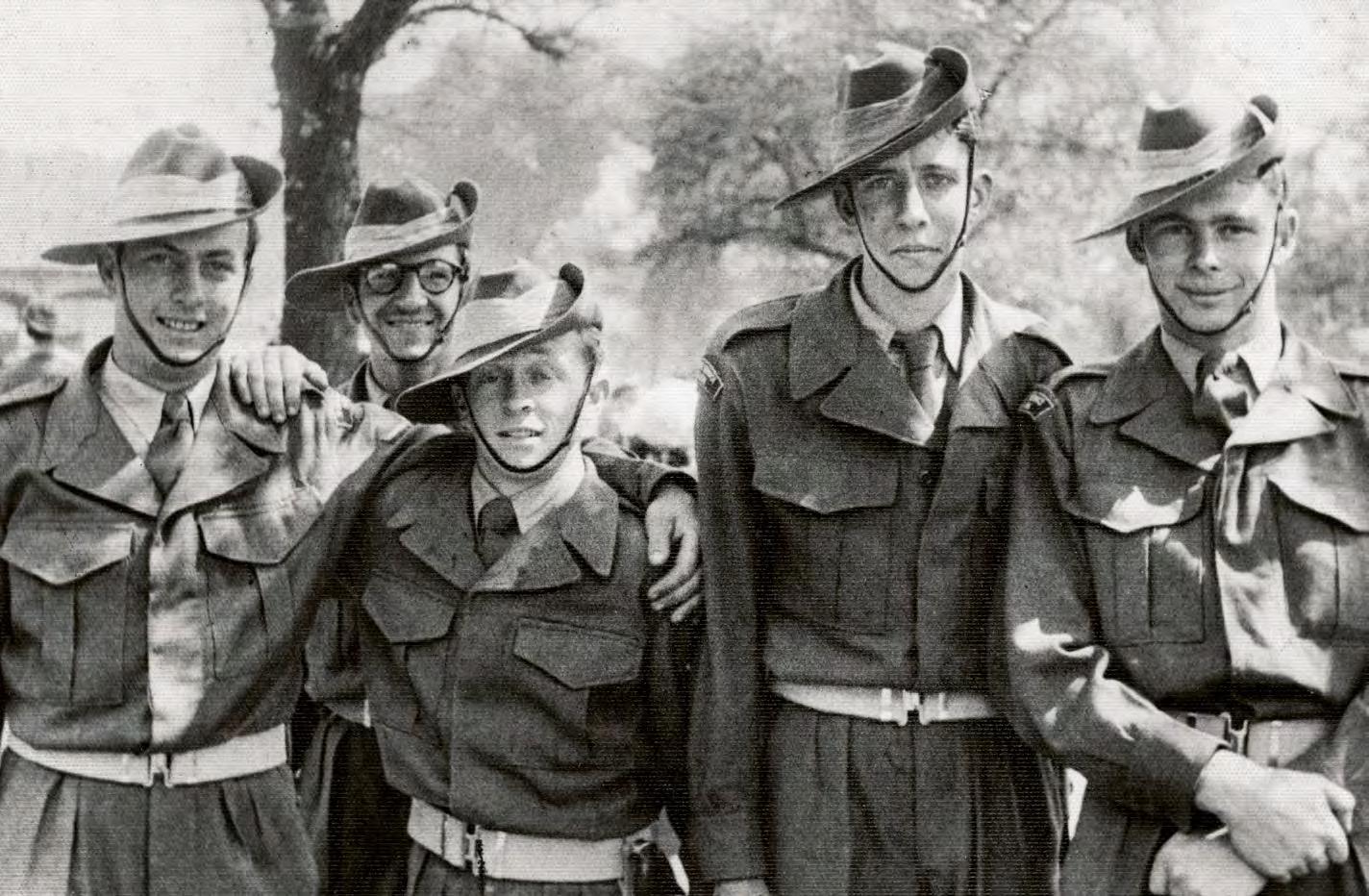
The first national service scheme, which ran from 1951 to 1959, mandated 3–6 months of full-time training for most 18-year-old males.
The second scheme, running from 1965 to 1972, involved a ballot selection system and saw nashos sent to places such as Vietnam and Malaysia. In total, more than 280,000 nashos were called up to serve.
As a veteran, you may be eligible for Dialysis at home at no cost.

For veterans living with kidney disease, dialysis no longer means hours of travel and ongoing hospital visits. With Dialysis Australia, full treatment of Haemodialysis and Peritoneal Dialysis can be delivered in the comfort of your own home with a nurse by your side. Home dialysis offers you flexible treatment times, improved quality of life, lower costs and more time for what matters.
As a DVA Gold Card holder, you’re fully covered with no out-of-pocket costs while you receive your dialysis treatment at home.
For more information call Dialysis Australia today on 1800 994 244 or visit www.dialysisaustralia.com.au