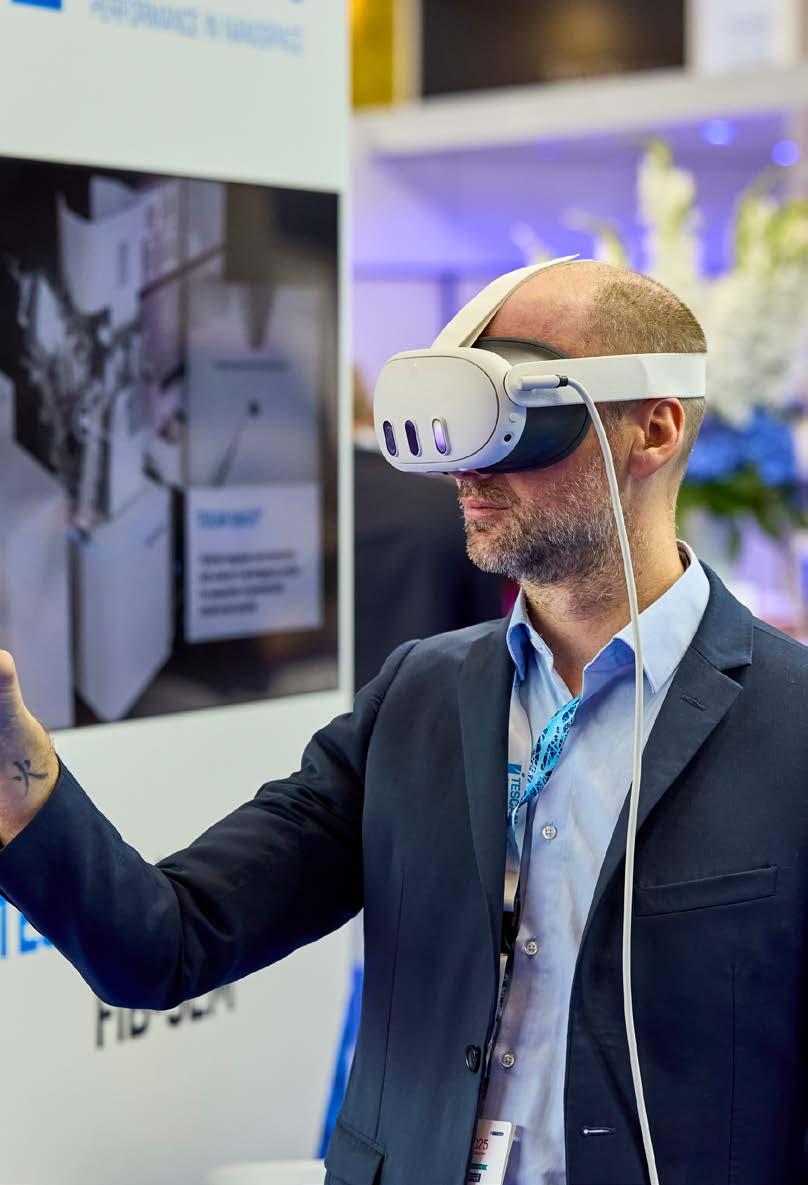
mmc2025 incorporating EMAG 2025: Report and Picture Special
Sustainability in microscopy:Transforming research practices
Microscopical Marine Marvels
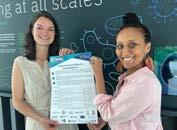
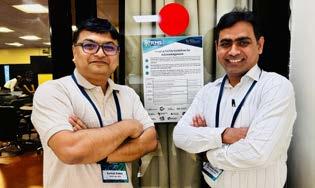
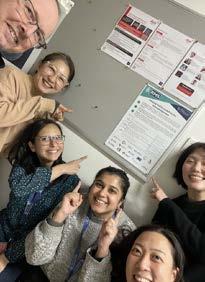
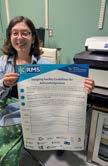
Introducing the RMS Flow Cytometry Section
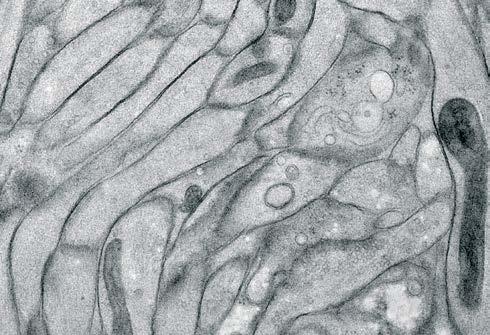
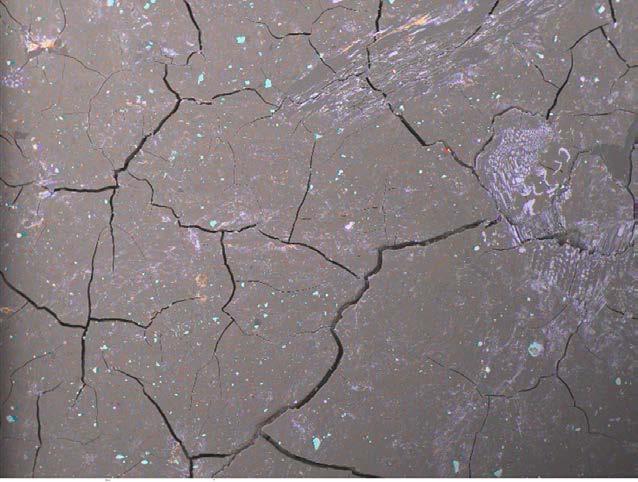
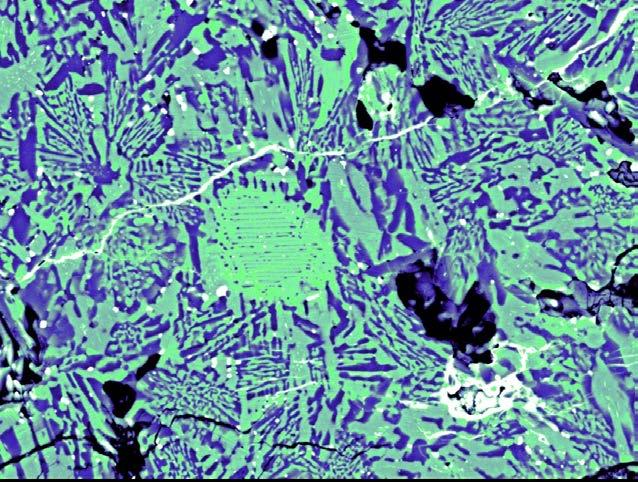
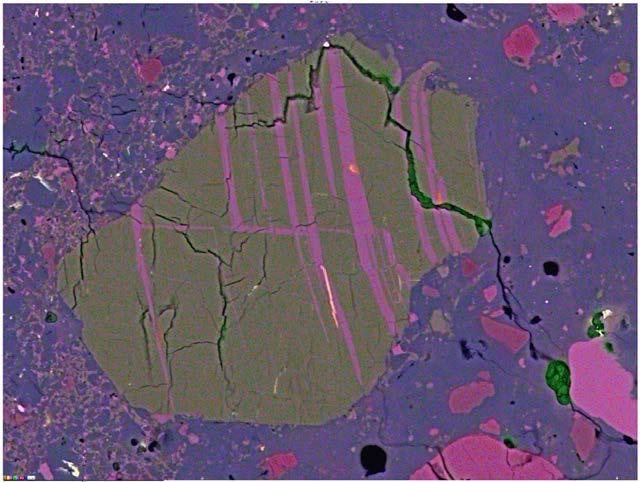
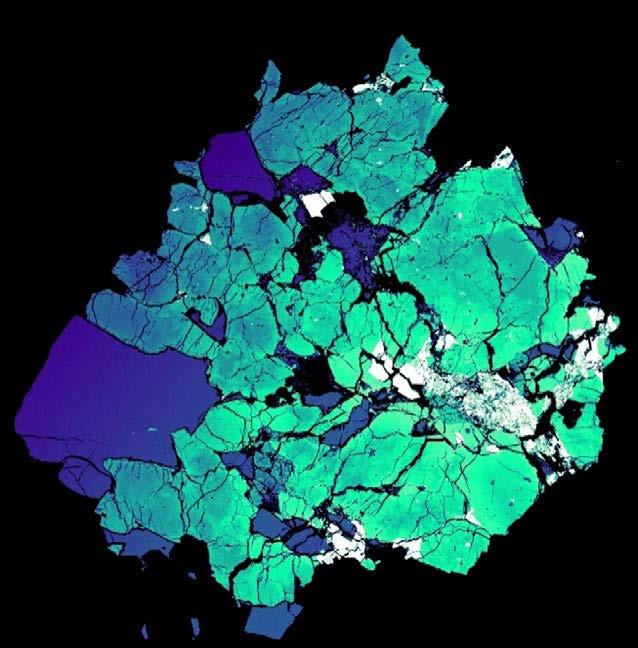
Microscopic meteorites:Art, science and stories from space
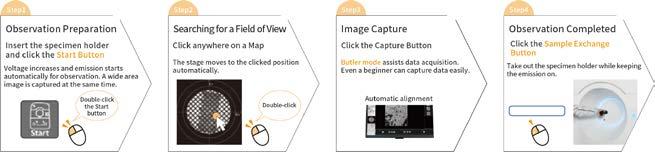
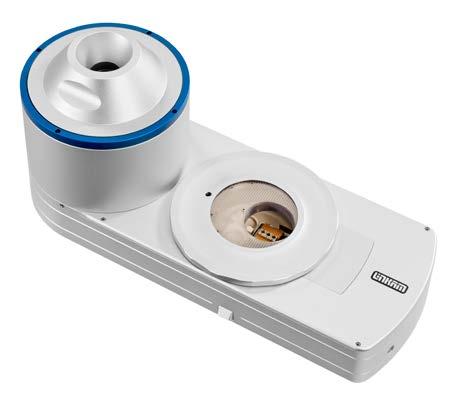
Specimen observation in 4 steps
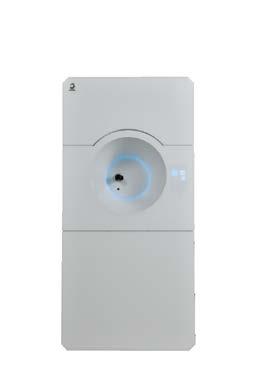
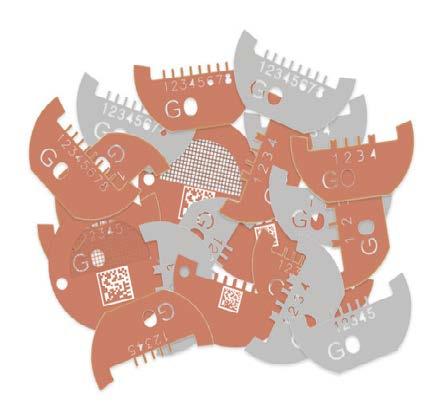
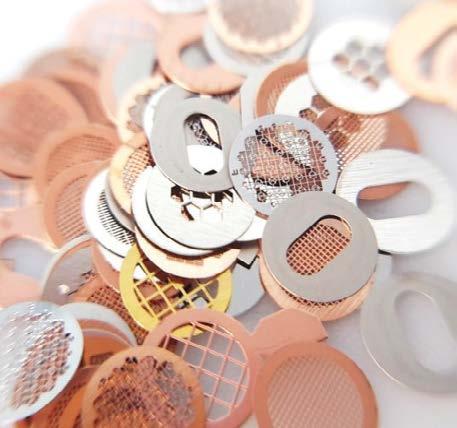
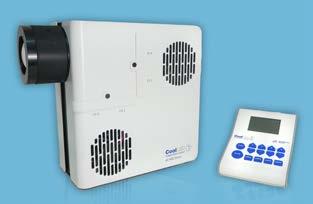
We developed the JEM-120i with the concept of "Compact", "Easy To Use", and "Expandable". With the new external appearance, this instrument has evolved into a useful tool that anyone can use easily, from operation to maintenance.
It takes only 4 steps from loading a specimen to completing observation. The JEM-120i is equipped with an enhanced TEM control system and fully automated apertures, eliminating the need for switching magnification modes and selecting an aperture. Observation operations can be performed more smoothly than with previous models.
MAGAZINE
infocus is the Magazine of the Royal Microscopical Society (RMS) –the only truly international microscopical society. The RMS is dedicated to advancing science, developing careers and supporting wider understanding of science and microscopy.
infocus is published four times per year by the RMS. Designed and produced by Creative Design. Reproduction in whole or in part without permission from the RMS is forbidden. Views expressed in the Magazine are those of the individual contributors and do not necessarily reflect those of the RMS.
RoyalMicroscopicalSociety
@RoyalMicroSoc
@RoyalMicroSoc
FROM THE SCIENTIFIC EDITOR
Dear Readers,
I hope those of you in the northern hemisphere have enjoyed (or are still enjoying) the hot and sunny days of summer ; for those in the south, I hope the winter was fine, and that you’re looking forward to spring But no matter where you are – at the beach or by a fireplace - it is time for our latest issue of infocus!
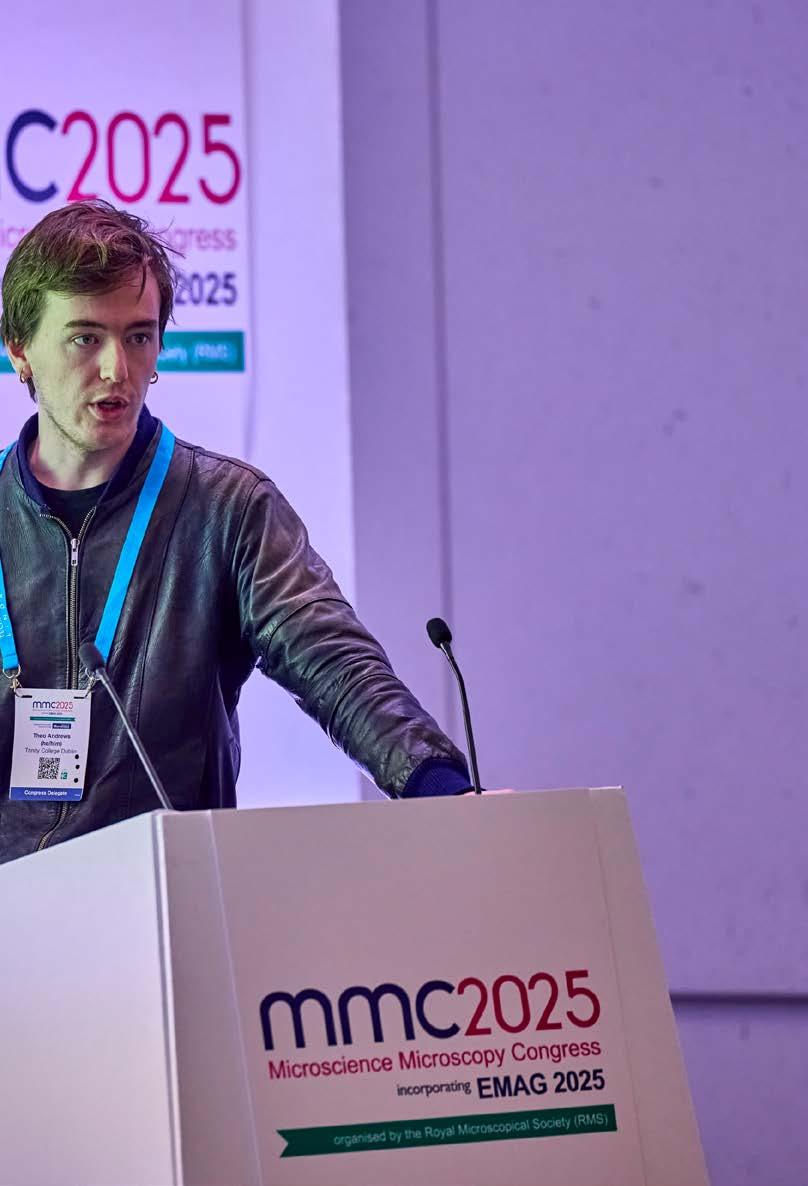
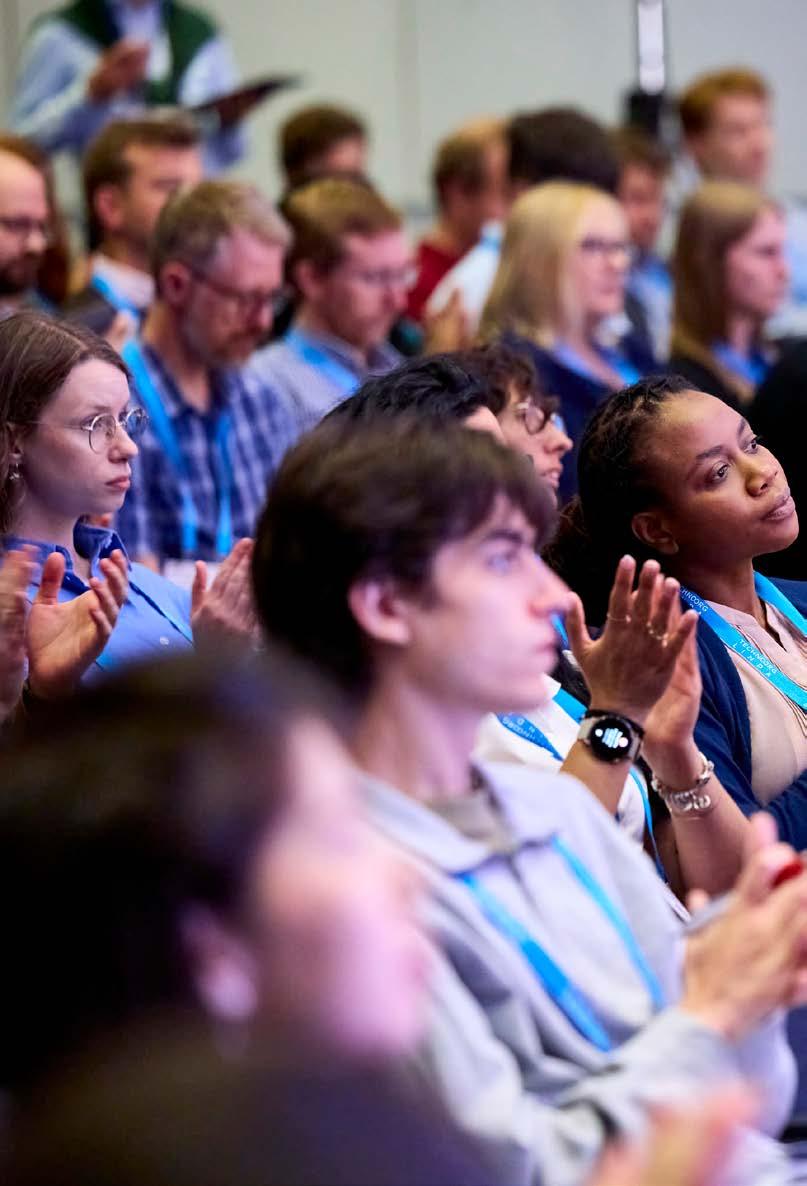
The highlight of the last few months, from an RMS perspective, was undoubtedly mmc2025 during the first week of July. One of the biggest microscopy events of its kind was back at Manchester Central, bringing together the global microscopy, imaging and flow cytometry communities It is always great to see old friends, meet new people and chat with our corporate partners in the exhibition. In this issue, we have a special report, with a picture special capturing some of the best moments. Perhaps you can spot yourself in one of the images? – if so, let us know on social media! - using #RMSinfocus
We have some other amazing articles in this issue – including the ever-reliable John Hutchison’s latest piece on a recently donated antique slide collection - this time looking at some remarkable marine creatures. We also find out more about the RMS’s Flow Cytometry Committee – including what they get up to when they’re outside the lab.
One of the most important challenges across the sciences is how to engage effectively with wider society through outreach and education.To this end, Lorelei Robertson writes about her involvement in a meteorite-themed art exhibition bringing microscopy to the public. And speaking of the future, how about sustainability in microscopy? Morag Rose Hunter addresses this increasingly important topic and how we can improve our practices.
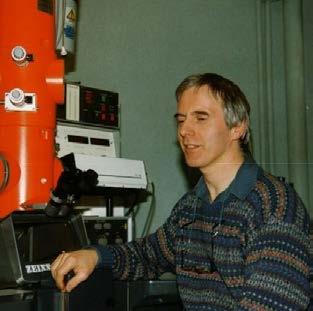
I would like to finish by paying tribute to a colleague and friend of mine, Laurence Tetley, who recently passed away. Laurence was a long-time member and stalwart of the Scottish Microscopy Society and a distinguished microscopist here in Glasgow, where he was especially renowned for his expertise in electron microscopy.We are grateful to Richard Burchmore for providing a moving tribute to our colleague and friend in this issue.
Slàinte!
Leandro Lemgruber
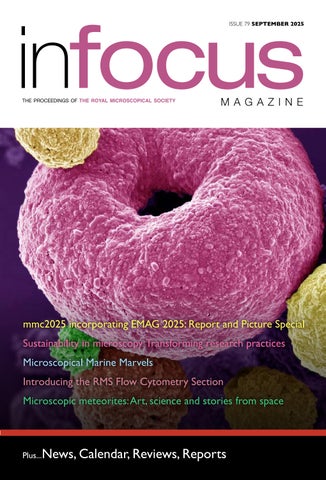
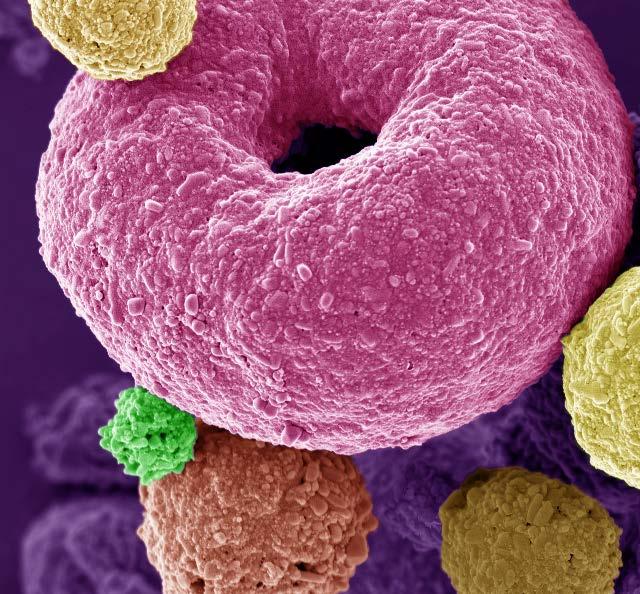
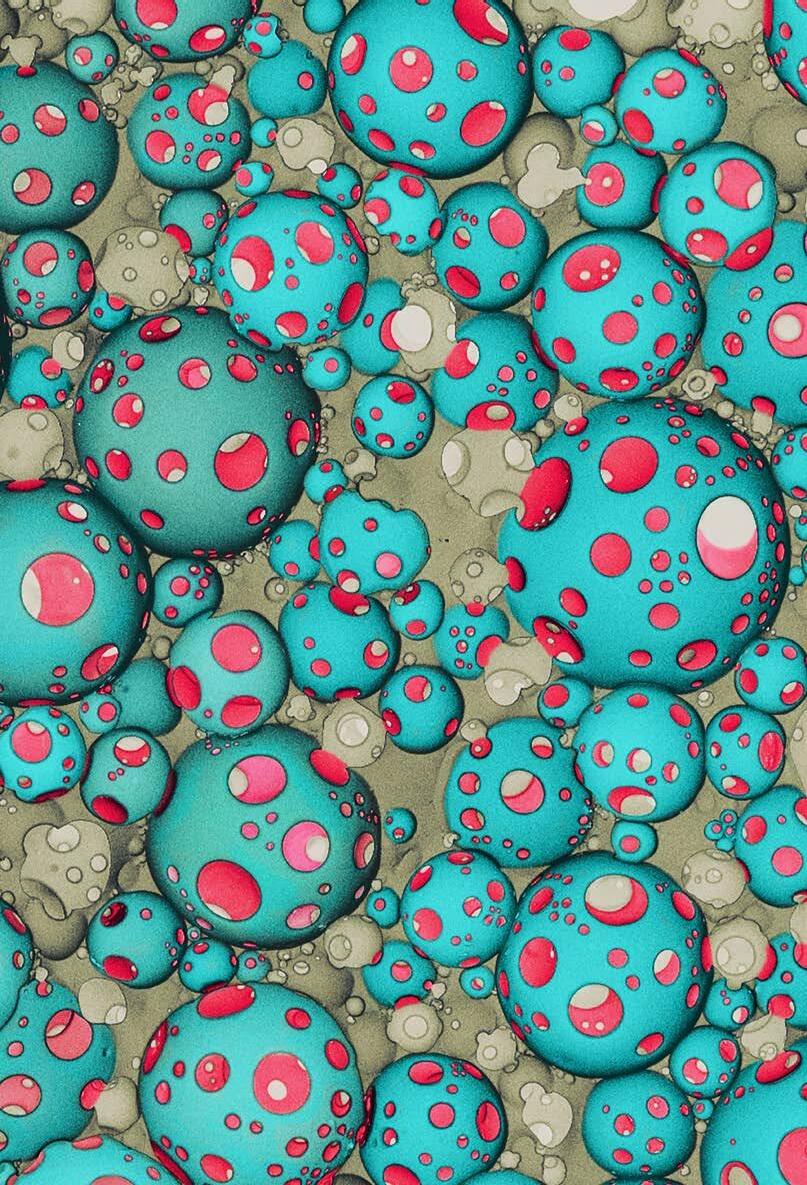
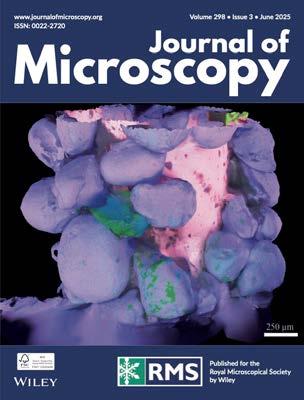
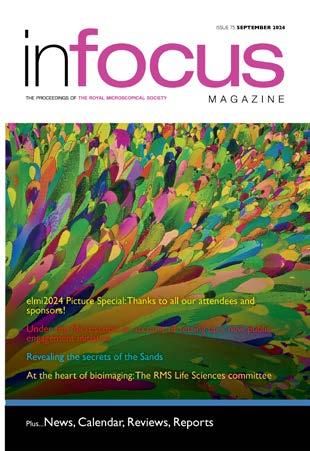
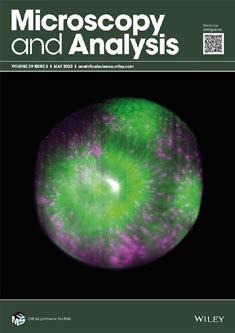
COVER IMAGE: Donut worry, be happy!
By
Zeeshan
Mughal,The Open University. Coloured scanning electron micrograph of lithium manganese iron phosphate (LMFP) particles.The LMFP is a promising cathode material for lithium-ion batteries and the donut shapes are formed due to the variation in temperature during the drying process. Shortlisted entry in the RMS Scientific Imaging Competition 2025, Electron Microscopy, Physical Sciences category.
mmc2025 incorporating EMAG 2025: Report and
Picture Special
The Royal Microscopical Society would like to thank everyone who attended the Microscience Microscopy Congress (mmc) 2025, incorporating EMAG 2025
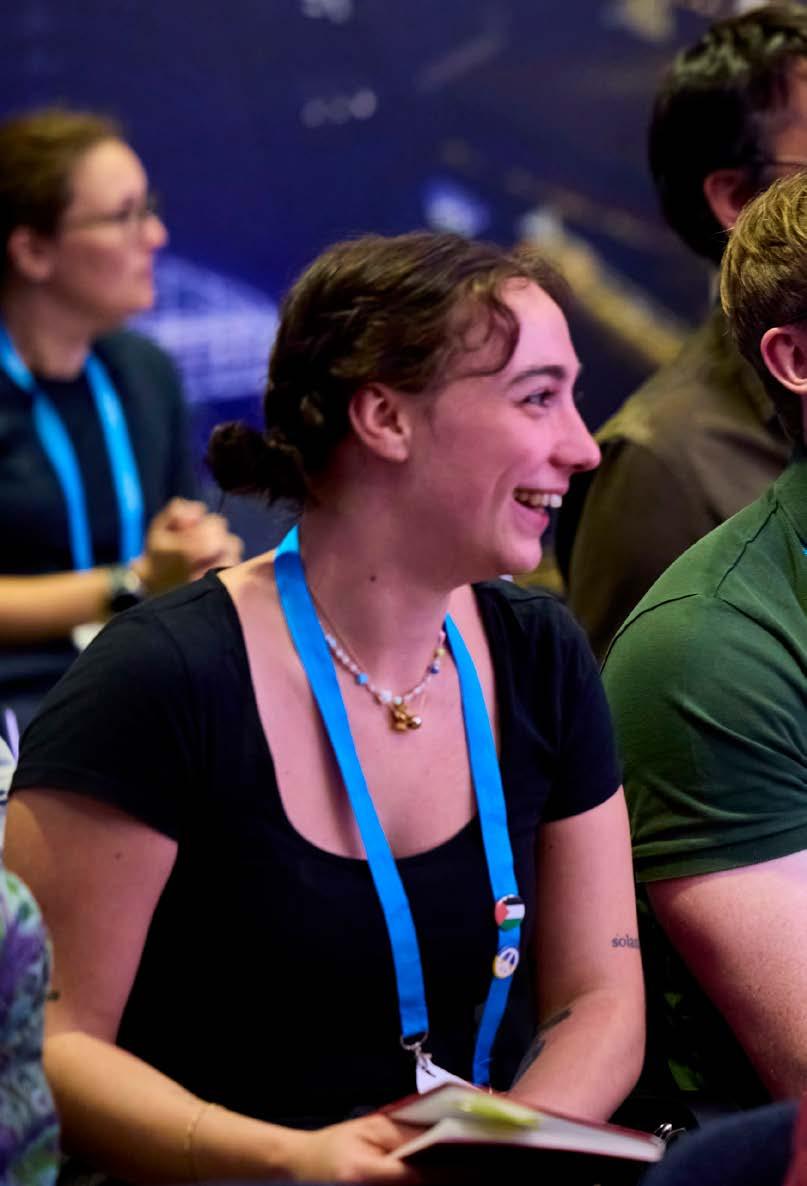
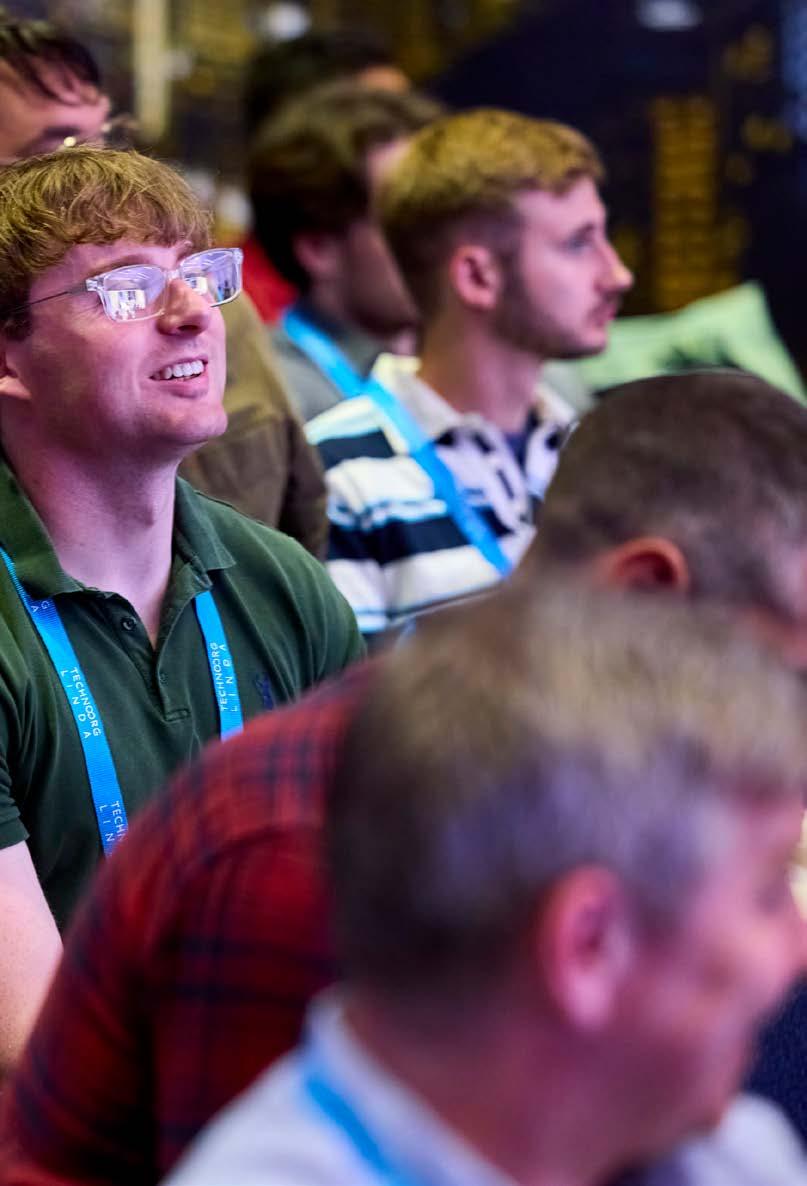
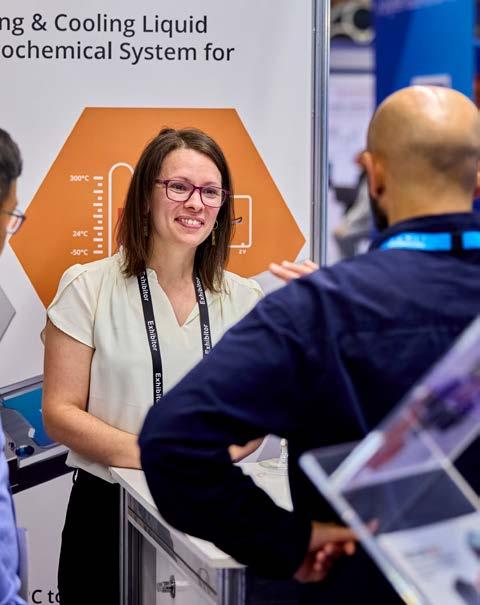
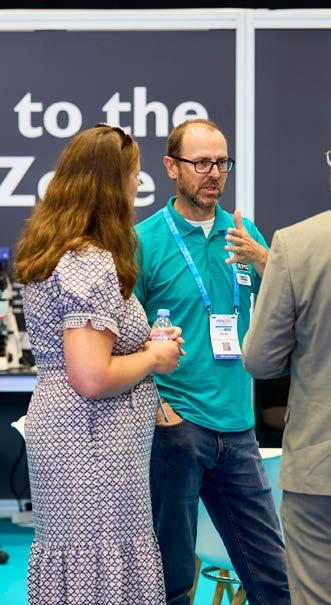
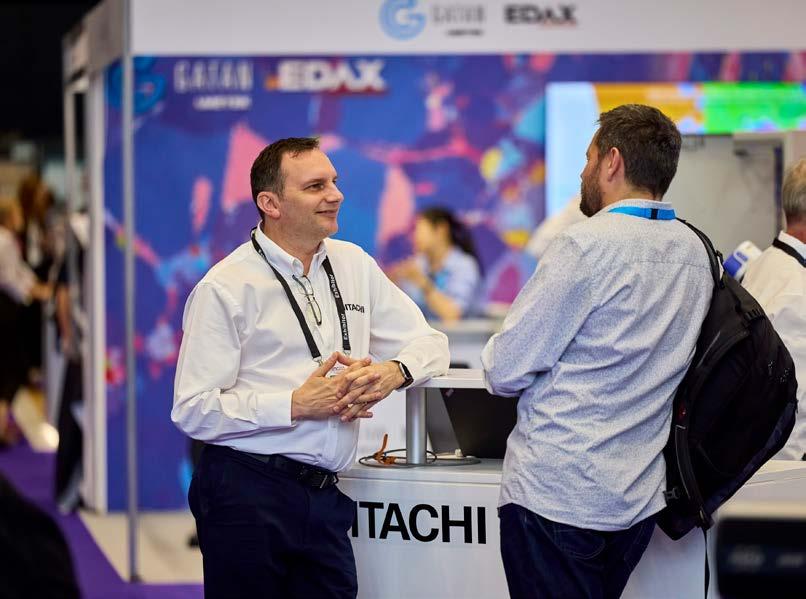
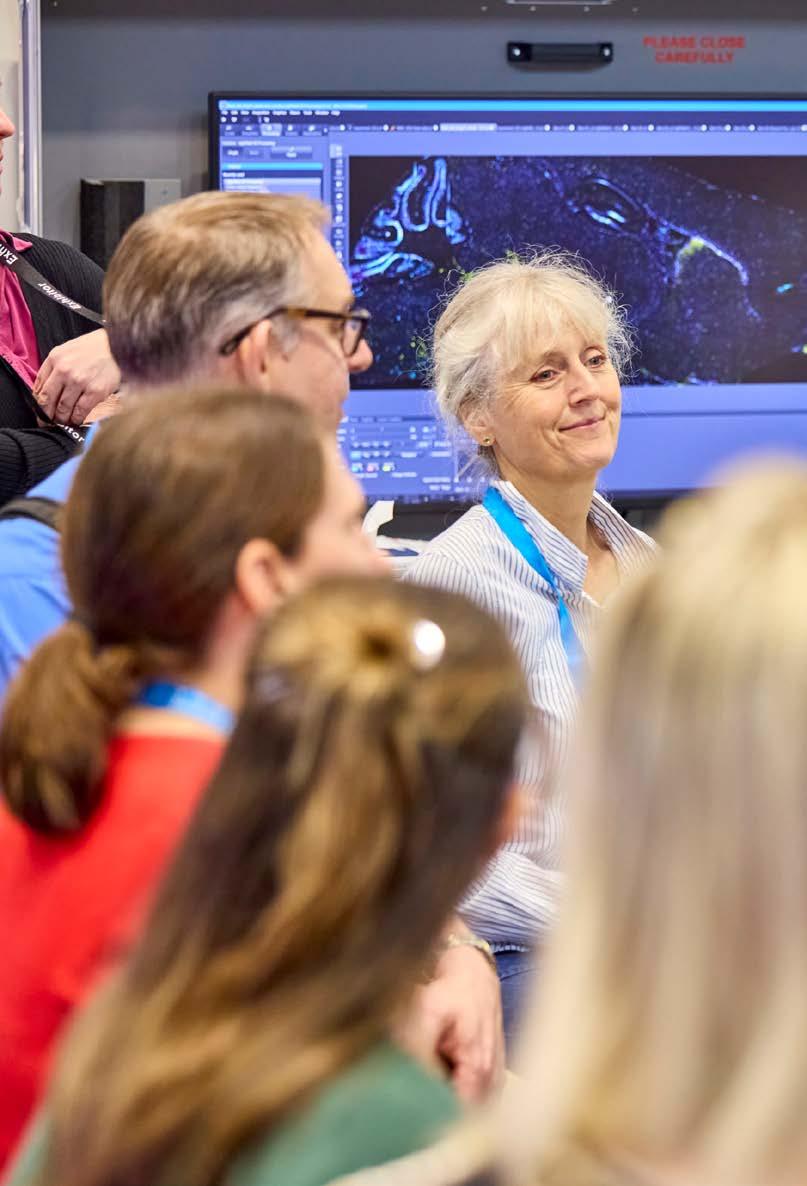
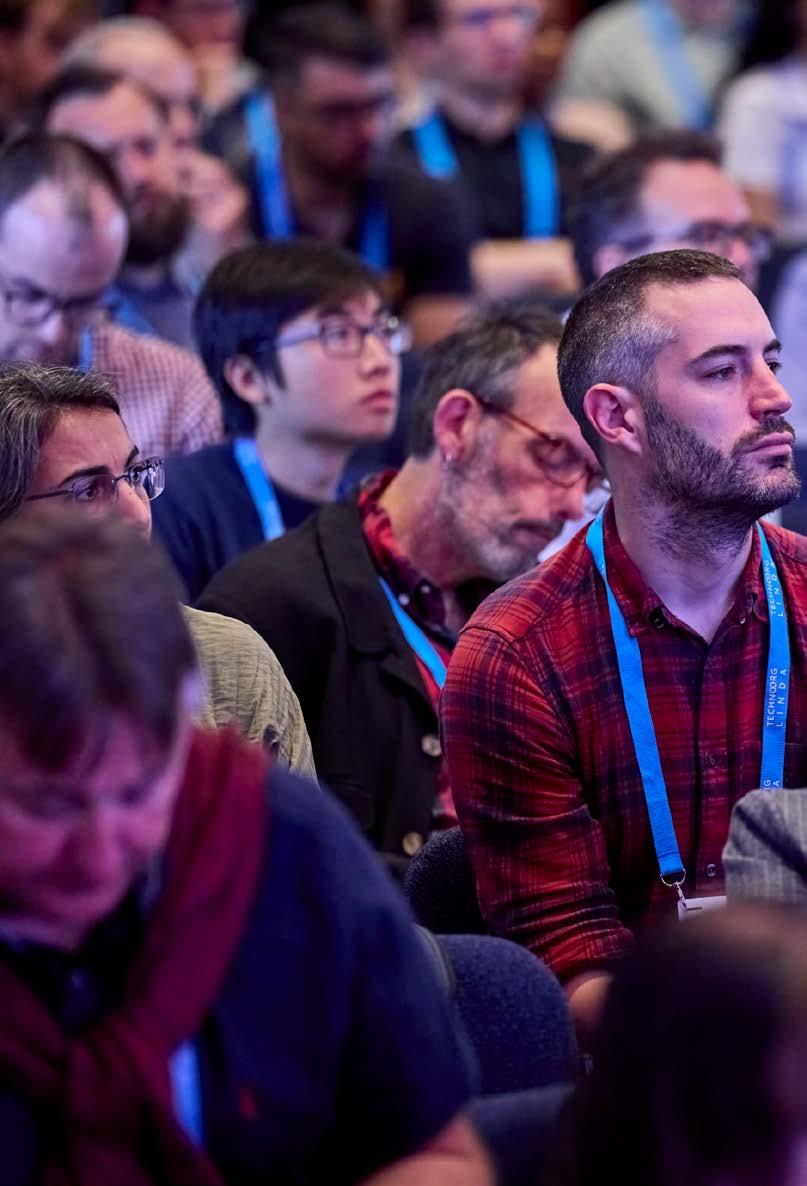
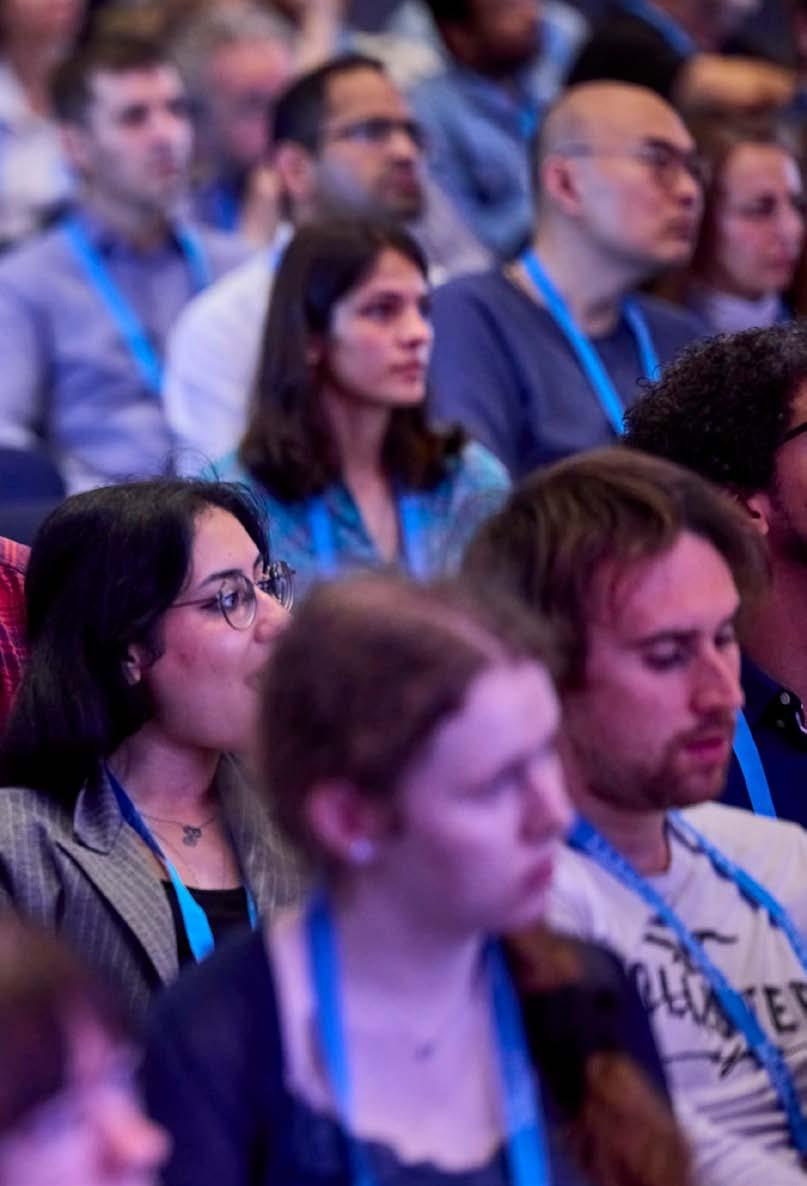
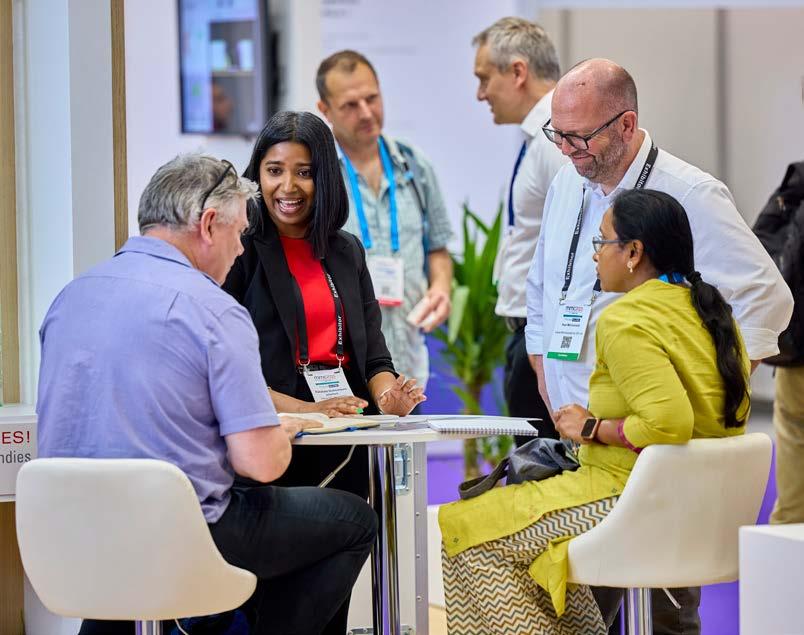
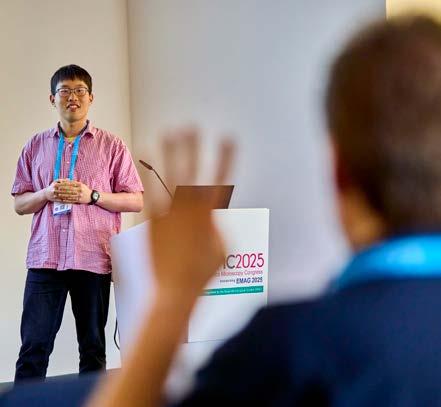
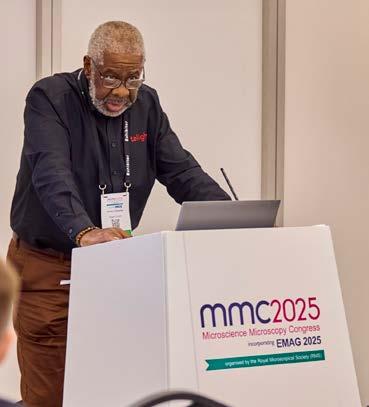
The event was a huge success, with more than 1,100 attendees and almost 100 exhibitors descending on Manchester Central during the first week of July for the latest instalment of a Congress series which has become an essential calendar fixture for the international microscopy community.
RMS Chief Executive Sali Davis said: “We would like to give our sincere thanks to everyone who attended mmc this year – the exhibitors, delegates, volunteers and everyone else who helped make the Congress such a special occasion.We’ve had some really positive feedback from attendees and we’re already looking ahead to mmc2027, which we hope will be even bigger and better!”
Over three days, this international event combined a heady mix of vibrant conference sessions (36 in total – including EMAG 2025 sessions) covering all the latest techniques and applications in microscopy – with a world-class exhibition showcasing the very latest products and technology from some of the leading companies in the field
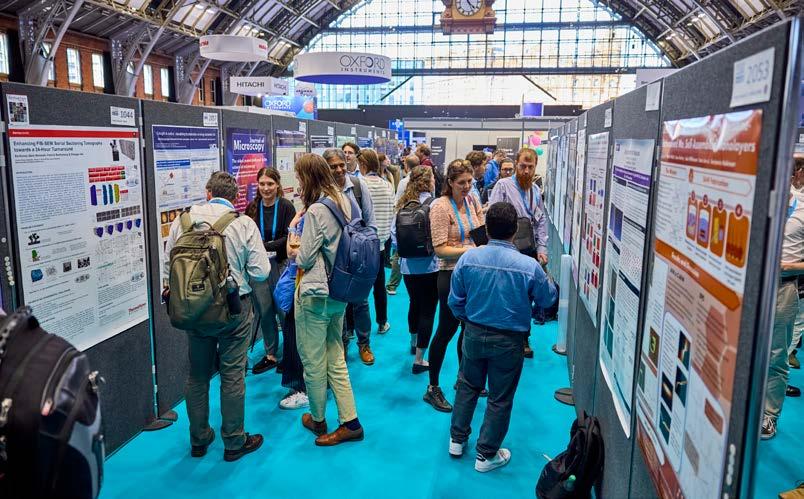
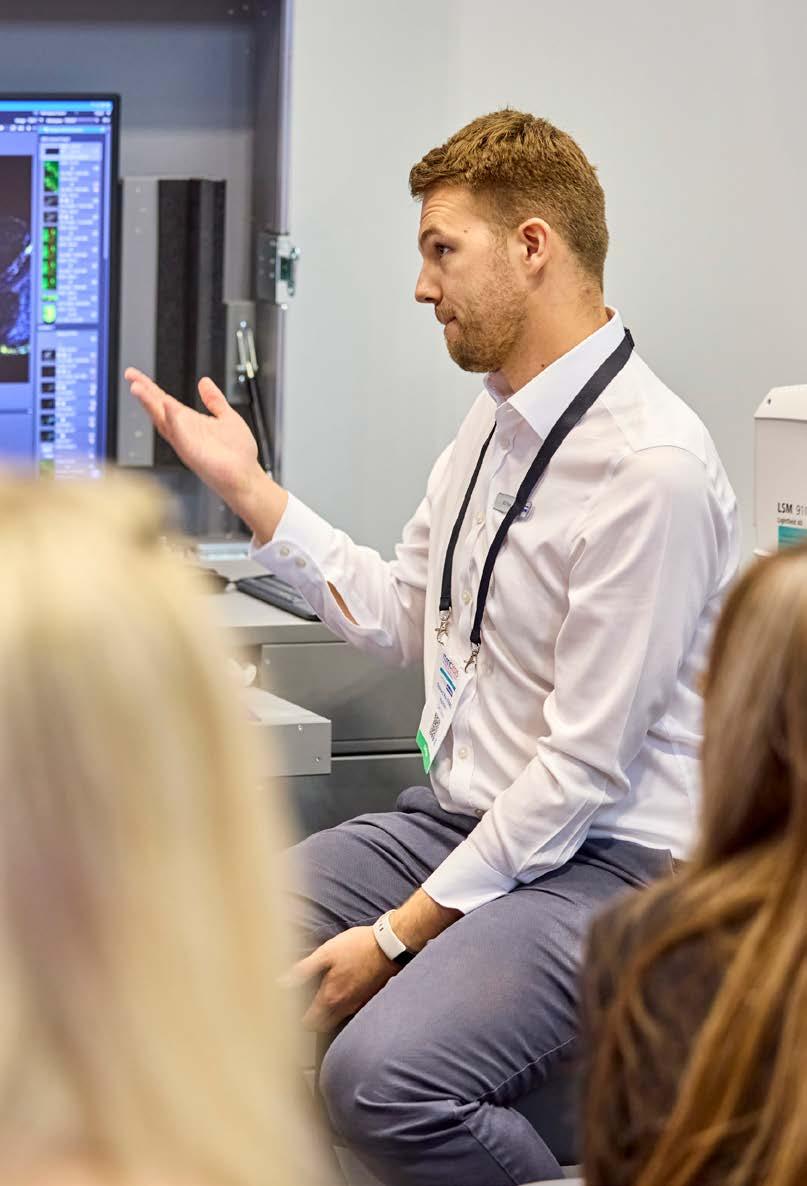
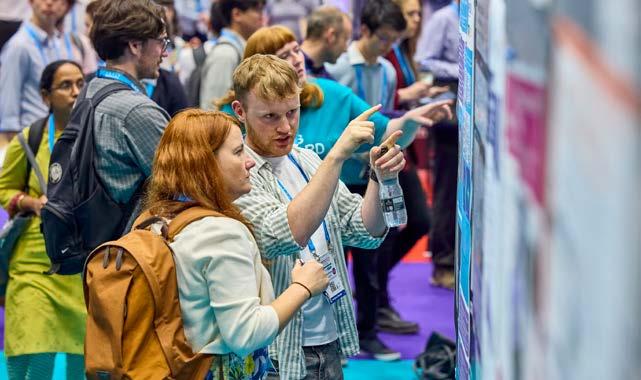
The event incorporated pre-conference meetings and workshops – including an Early Career Symposium and the BioImaging UK meeting –as well as free-to-attend company workshops throughout the exhibition. More than 200 poster presenters discussed their research during bustling poster sessions. The RMS also hosted its everpopular Learning Zone, offering expert advice for visitors, as well as a programme of well-attended talks in a dedicated lecture theatre.
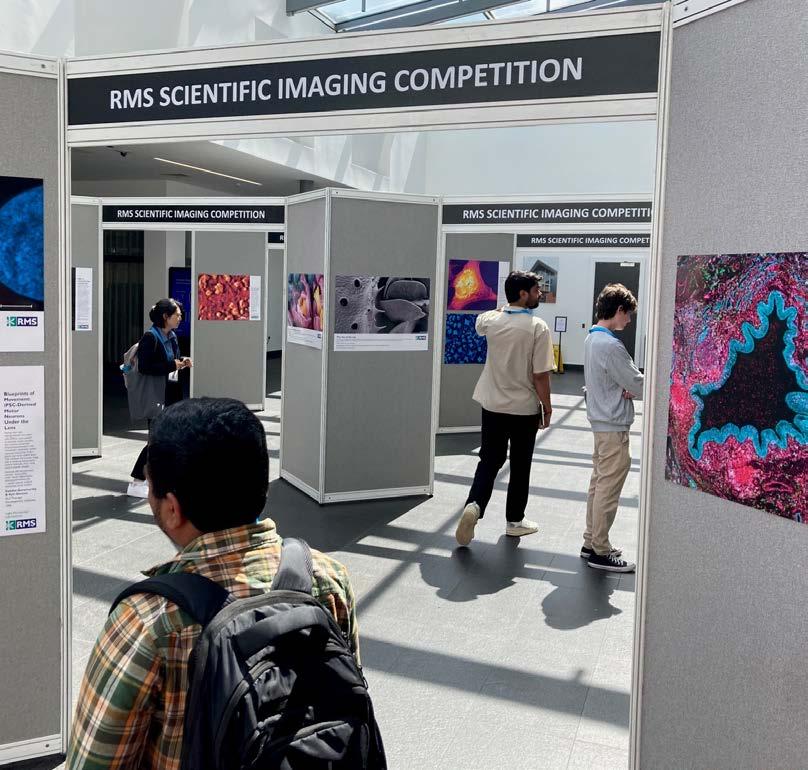
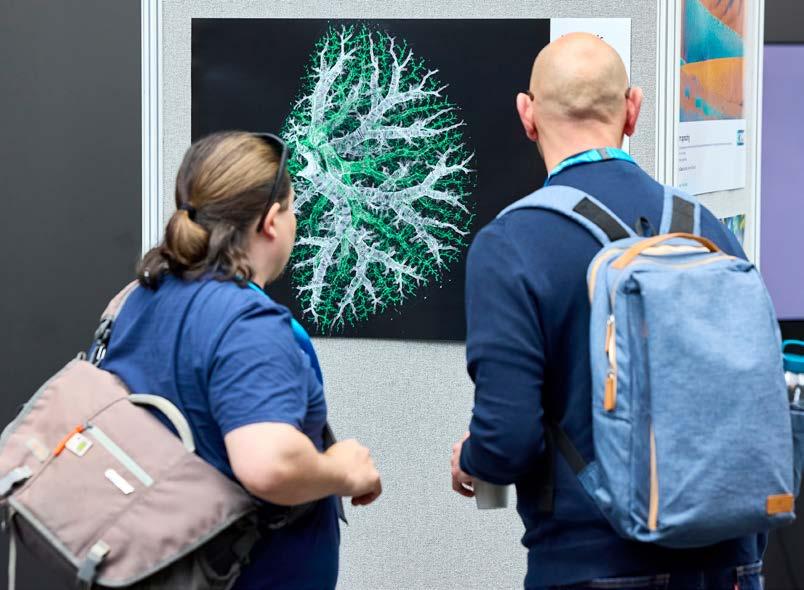
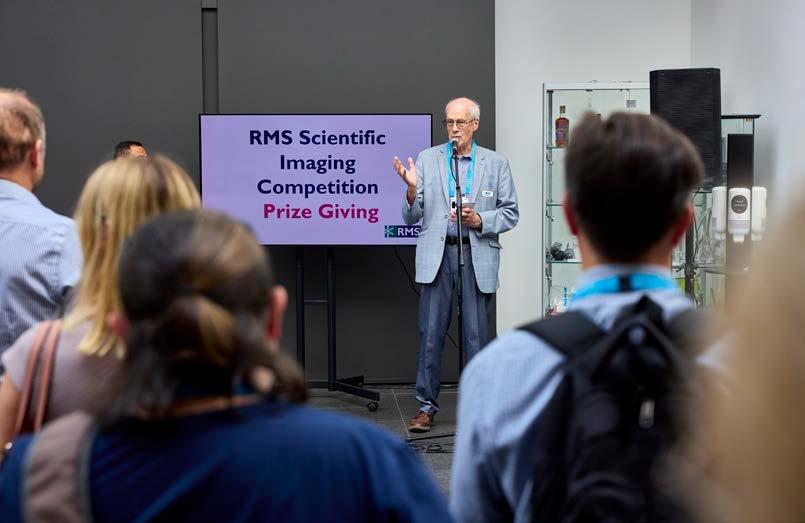
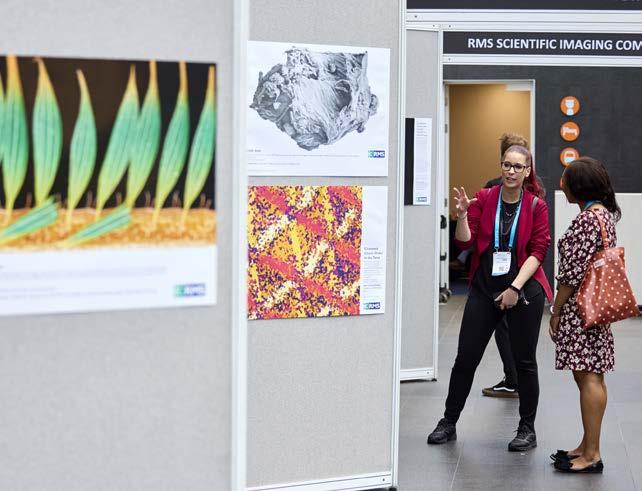
Meanwhile, a gallery of shortlisted images in the 2025 RMS Scientific Imaging Competition provided an aesthetic focal point throughout the event, with the winners announced during a special prize-giving ceremony.
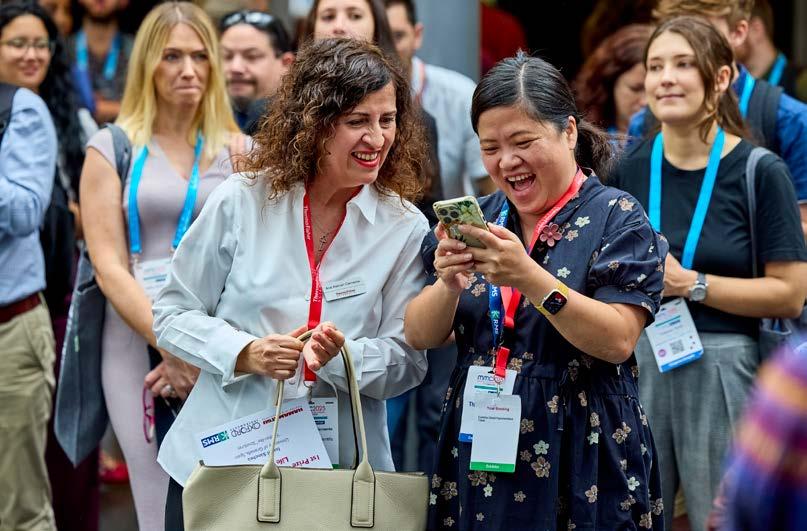
We hope you enjoy our round-up of some of the best images and highlights from mmc2025…
RMS Early Career Award-
Winner Announced During Early Career Symposium
mmc2025 got off to a flying start with our preCongress workshops and meetings on Monday, 30 June.These included the Early Career Symposium, which featured the climax of the 2025 Early Career Award Competition.
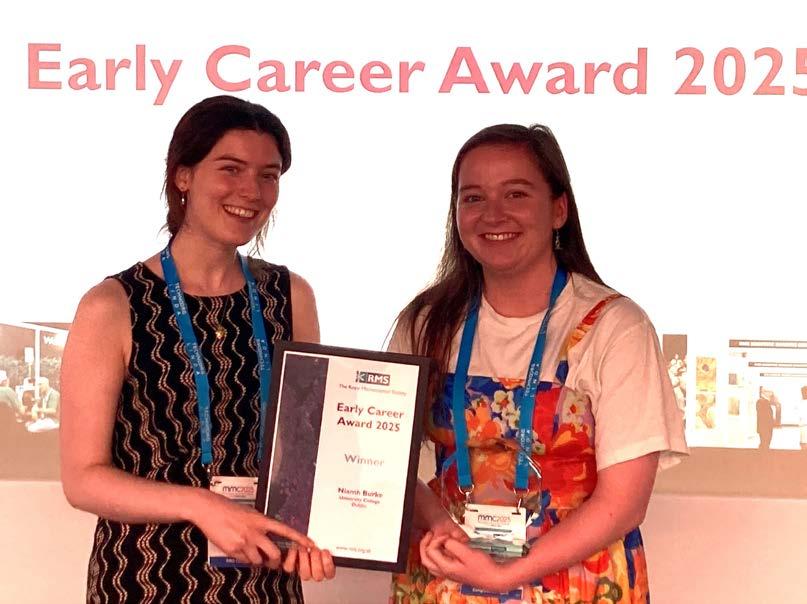
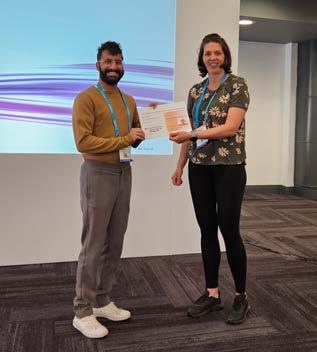
Congratulations to Niamh Burke of University College Dublin, on winning this year’s competition with her talk on the enderscope community project, co-developing accessible imaging tools with the public.
Niamh was one of three short-listed entrants who gave talks on their work at the Symposium, emerging as the winner after some difficult deliberations by the judges.
The Early Career Award recognises the achievements of an outstanding early career imaging scientist in their contribution to microscopy, image analysis or cytometry. This contribution may be through an impressive research application, development of techniques or analysis tools, an inspiring public engagement initiative, or a demonstration of exceptional support to other members of the community.
It is awarded annually by the RMS Early Career Committee
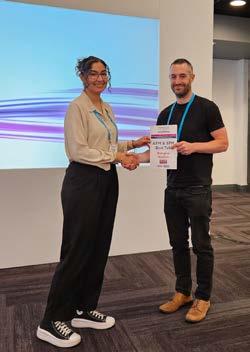
Niamh Burke (right) receiving the Early Career Award certificate from RMS Early Career Committee Chair, Katherine Paine .
Thanks to all our amazing Exhibitors
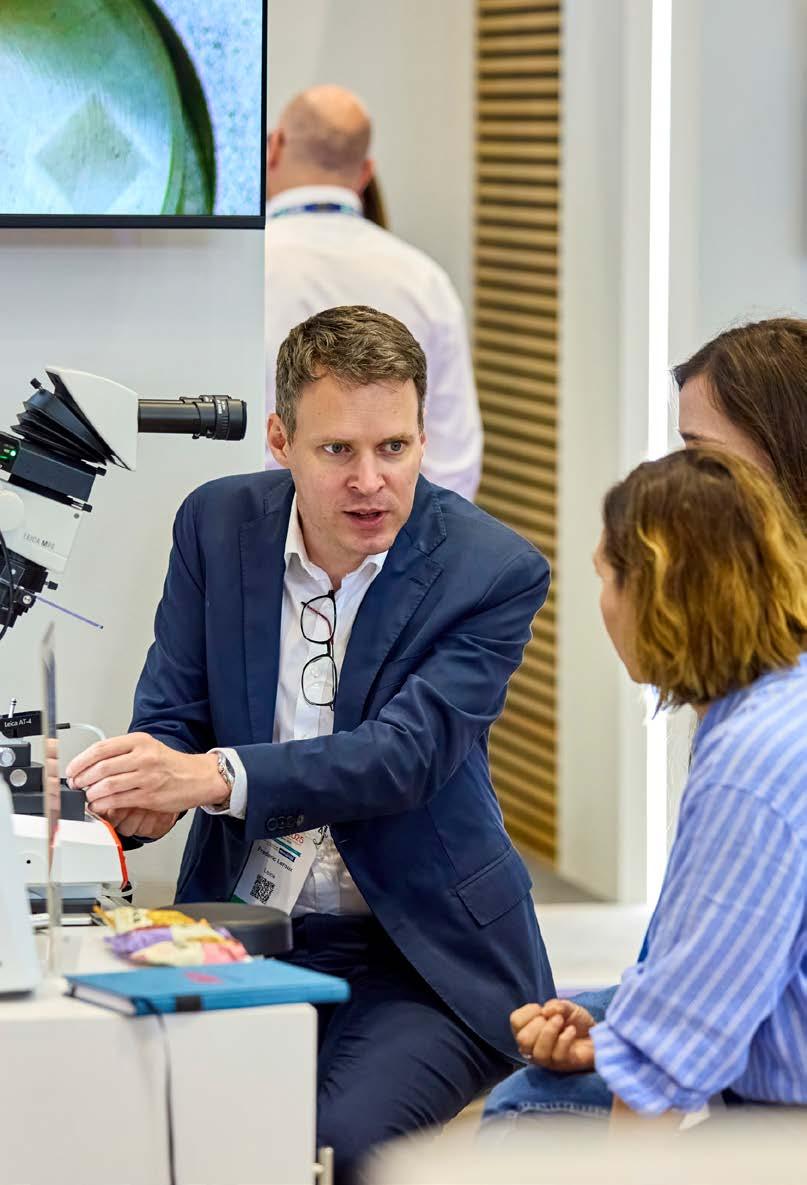
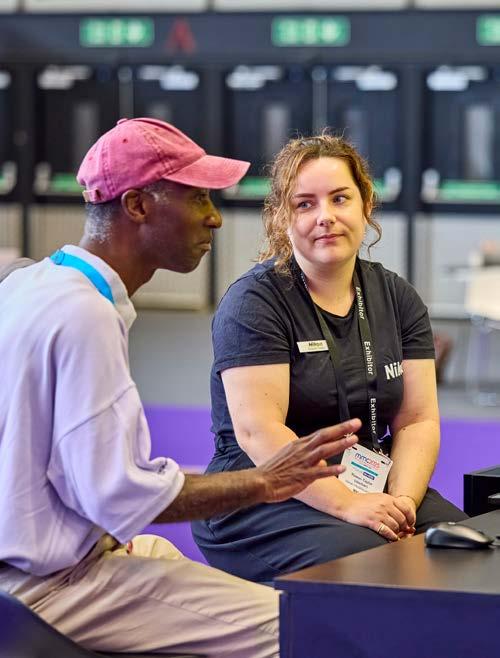
Almost 100 exhibitors filled the mmc2025 exhibition hall, showcasing the very latest technology and applications in microscopy and imaging over three action-packed days.
We would once again like to say a huge thank you to all our fantastic sponsors for making the mmc2025 exhibition one of the biggest, best and most memorable ever.
3i - Intelligent Imaging Innovations
AdvaScope s.r.o.
Agar Scientific, a Calibre Scientific Company
Agilent Technologies
AHF analysentechnik AG
Apex Probes Ltd
BioImagingUK
Blue Scientific Ltd
Bristol Nano Dynamics
Bruker
Cairn Research
Cephla
Chip-Nova Ltd
CN Tech
Confocal NL
ConnectomX
CoolLED Ltd
CooperSurgical Fertility and Genomics
CrestOptics spa
CSR Biotech
D-Tails
DAEIL SYSTEMS
DEBEN UK Ltd
DECTRIS
Delong Instruments
DENSsolutions
DRTEM / Single Particle
ELLIOT SCIENTIFIC LTD
EM Resolutions
EM Systems Support Ltd
EMSIS
Euclid Techlabs
Evident
Ferrovac
Gatan/EDAX
Graticules Optics Ltd
Hamamatsu Photonics UK
Limited
Henry Royce Institute
Hitachi High-Tech Europe
GmbH
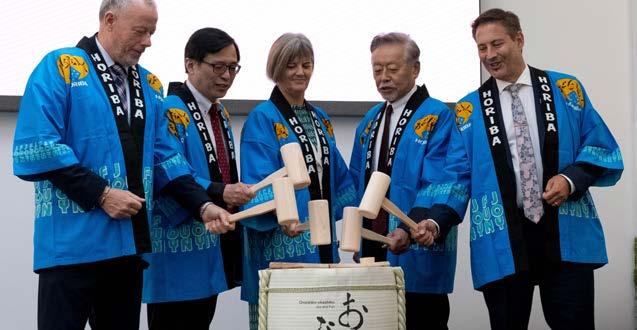
HORIBA
HÜBNER Photonics
Hummingbird Scientific
IMC21
INSCOPER
ISS Group Services
JEOL
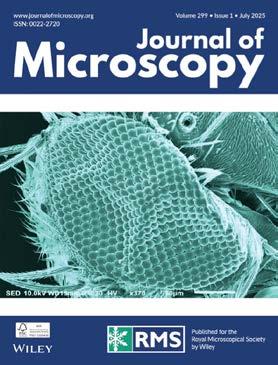
Journal of Microscopy
Kashiyama Europe GmbH
Lambda Photometrics Ltd
Laser 2000 (UK) Ltd
Leica Microsystems
Lightcore Technologies
Mel-Build
Merrow Scientific Ltd
Microbiology Society
Microscopy Society of America
MicroSupport Co.,Ltd.
Miltenyi Biotec
Molecular Machines and Industries
NanoMEGAS
Nanosurf
Nikon Healthcare UK
NINGBO YONGXIN OPTICS
CO.,LTD.
Northern Light Microscopy
ONI
Oxford Instruments
Park Systems UK
Photon Lines Ltd
Prior Scientific Instruments Ltd
Protochips, Inc.
Quantum Design UK
Quantum Detectors Ltd
Quorum Technologies
Renishaw plc
RMC Boeckeler
SciMed Ltd
SenseAI
SmarAct GmbH
Spicer Consulting Limited
Technoorg Linda Co. Ltd.
Teledyne Photometrics
Telight
TESCAN
The Advanced Materials Show
Thermo Fisher Scientific
Toptica Photonics
turboTEM
VitroTem
Vmicro
XEI Scientific, Inc.
YPS
ZEISS
Media partners
Journal of Microscopy
FocalPlane
Action-packed conference, poster sessions and prize-winners!
With nearly 400 abstracts submitted, this year’s conference was one of the best ever in the history of the event, with some incredible science on show.
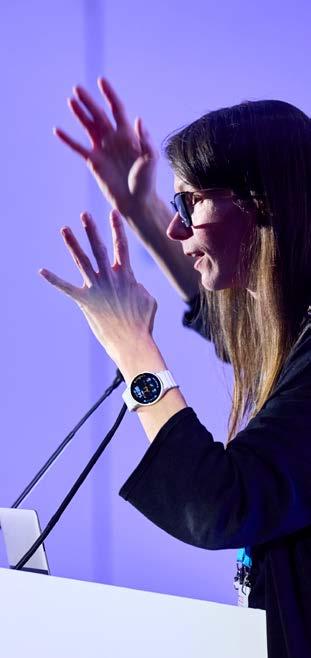
We were treated to six parallel streams of conference sessions covering the full range of microscopy and imaging techniques across the sciences.We also saw some packed-out audiences for our plenary speakersPeter Crozier (Arizona State University, USA), Rachel Oliver (University of Cambridge, UK), Assaf Zaritsky (Ben-Gurion University of the Negev, Israel), Jessica Wade (Imperial College London, UK) and Uri Manor (University of California San Diego, USA).
Meanwhile more than 200 poster presenters shared their work during vibrant poster sessions, and many other presenters gave flash talks during the conference sessions.
Here is a rundown of all our prize-winners for best posters and talks:
Poster Winners
Prize sponsored by the Microbiology Society:
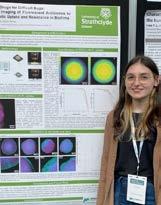
Poster Winner 1066. Connor MacDonald –University of Strathclyde. Revealing Previously Unseen Channel Structures in Pseudomonas aeruginosa Biofilms with Multi-scale Imaging
Poster Session 1.
1st Prize Poster Winner
1057. Andreas Rialas – University of Nottingham. 3-Dimensional Characterisation of Hydrated Bone ECM Hydrogels using High-Pressure Freezing, Cryo-FIB-SEM and Cryo-Negative Staining
2nd Prize Poster Winner
1070. George Doherty – KCL. Elucidating Spatio-Temporal Nuclear Dynamics in 4D Using Stateof-the-Art Imaging in Beating Hearts
Poster Session 2.
1st Prize Poster Winner
2135. Helena Watson – Rosalind Franklin Institute. Advances in plasma FIB and multiscale cryo-ET imaging for structural cell biology
2nd Prize Poster Winner
2119. Katie Beirns – Rosalind Franklin Institute. Watching through a graphene window:A novel view of mitochondria
Frontiers in Bioimaging
1st Prize Poster Winner
2093. Nachiket Pathak - Humboldt Center for Nano- and Biophotonics, University of Cologne. Sensing cell-level contractility deep inside cardiac organoids using microlasers
2nd Prize Poster Winner 2077. Laura Copeland – University of Stratchclyde . Fourier Ptychographic Microscopy for Applications in Live Imaging of Plant and Algal Tissue
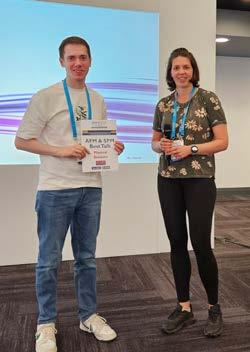
AFM & SPM
Best Poster sponsored by IOP’s Nanoscale Physics and Technology Group:
2060. Nishan Nathoo – University of Sheffield. Atomic Force Microscopy Reveals the Molecular Architecture of the Streptococcus pneumoniae Cell Wall during Division
Best Talk Biological AFM Sponsored by Bruker:
Itzel Garcia-Monge – University of Leeds. Revealing the unbinding mechanics of hyaluronan receptor interactions on live cells
Best Talk Physical Sciences AFM
Sam Harley – Lancaster University. Variational Autoencoders as Feature Extractors for Break-Junction Data Analysis
EMAG
Flash talk: 1002. Madelaine Badenhorst, Nelson Mandela University. Studying Recrystallisation Dynamics of Swift Heavy Ion Tracks in Y3Fe5O12 (YIG)
Talks:
1st - 173. Ella Greenaway, Oxford University. Investigating the time dependence of the reversible oxidation state in ceria using electron microscopy
2nd - 62. Tom Stoops, EMAT. Atoms on the move: Quantifying intraframe dynamics in ADF-STEM 3rd - 302. Jack Fawcett Houghton, University of York. In-situ grain boundary formation in the electron microscope: the case of the Σ5[100](012) tilt boundary in anatase nanoparticles
Best Posters
1013. Aidan Horne, University of Warwick. Lorentz TEM Characterization of Magnetic Skyrmions above RoomTemperature in a van der Waals Ferromagnet Fe3GaTe2
2033. Ben Muggleton, University of Leeds. Phase and Orientation Mapping of Topological Thin Film Heterostructure using 4D-STEM
2046. Francesca Wilcocks, University of Leicester. Quantification of Elements in Olivine; How Quant Optimised EDS and SEM-WDS compare to EPMA
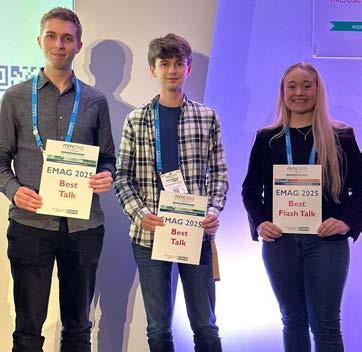
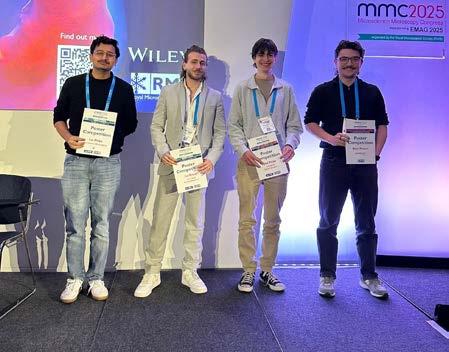
Some of our poster and best talk prize-winners are pictured here.
The RMS was delighted to announce the winners of the 2025 Scientific Imaging Competition at mmc2025
Covering all branches of microscopy, this year’s entries were among the finest seen in the history of the competition.
A shortlist of more than 30 images - across six different categories - formed an eye-catching exhibition at Manchester Central.
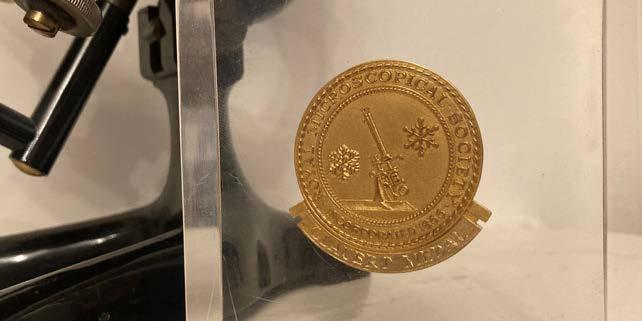
This year’s competition also featured the awarding of the Glauert Medal -named after the first female President of the RMS, Audrey Glauert - for best overall image.
Following some difficult deliberations by the judges, the following images were announced as the winners and runners-up:
AFM and Scanning Probe Microscopies
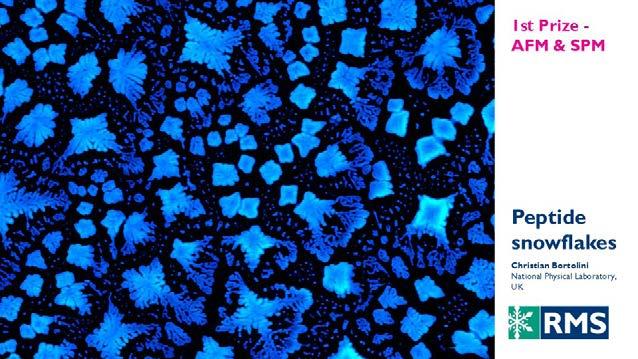
1st: Christian Bortolini, National Physical Laboratory. Peptide snowflakes
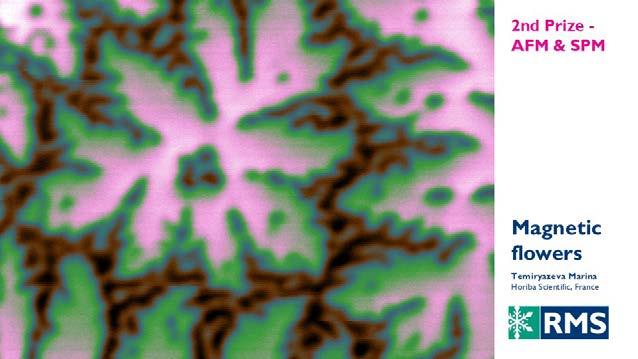
2nd:Temiryazeva Marina, Horiba Scientific, France. Magnetic flower s
Electron Microscopy - Life Sciences
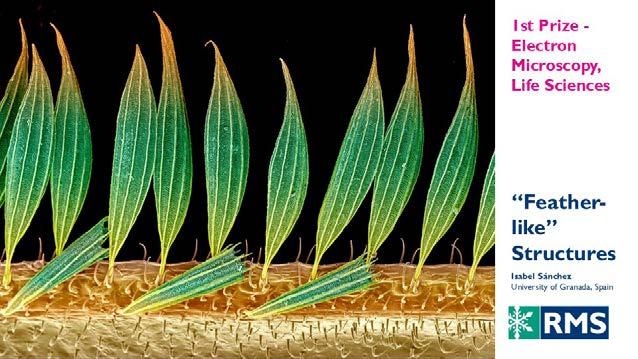
1st: Isabel Sánchez, Centro de Instrumentación Cientifica, University of Granada “Feather-like” Structures. *Glauert Medal winner
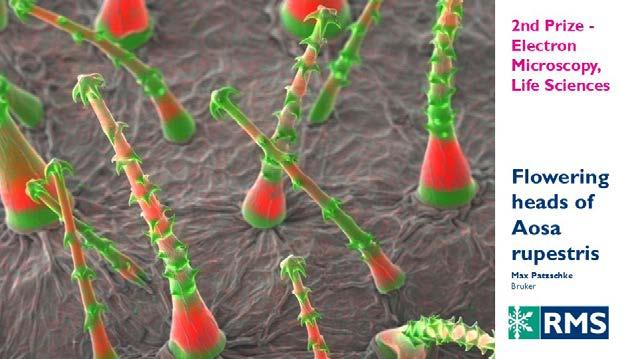
2nd: Max Patzschke, Bruker. Flowering heads of Aosa rupestris
Electron Microscopy - Physical Sciences
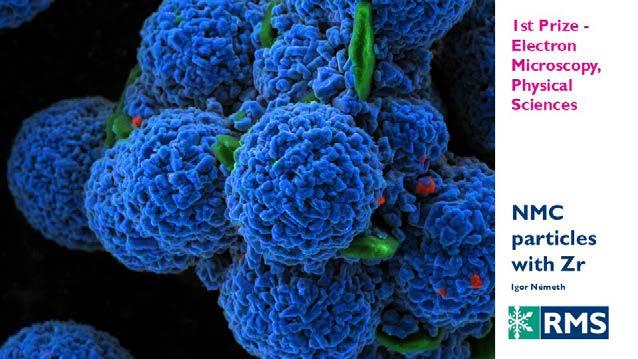
1st: Igor Németh, NMC particles with Zr.
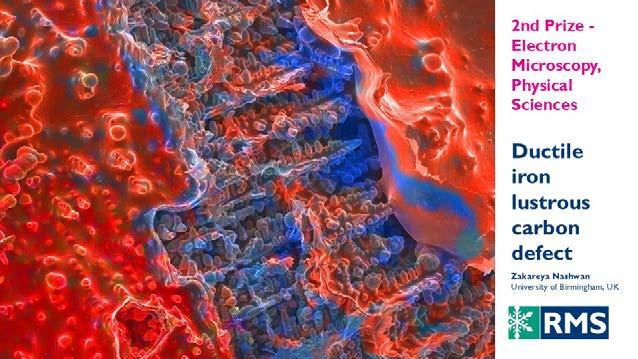
2nd: Zakareya Nashwan, University of Birmingham, Ductile iron lustrous carbon defect
Light Microscopy - Life Sciences
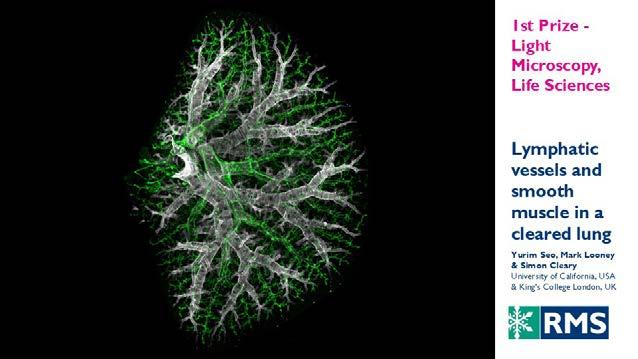
1st:Yurim Seo, Mark Looney and Simon Cleary, University of California, San Francisco and King’s College London. Lymphatic vessels and smooth muscle in a cleared lung
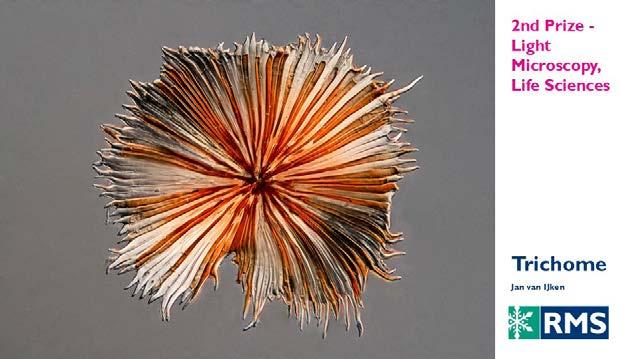
2nd: Jan van IJken, photographer / filmmaker, Trichome
Light Microscopy - Physical Sciences
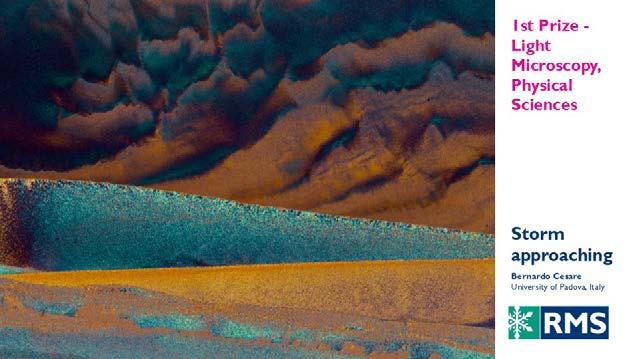
1st: Bernardo Cesare, Geosciences - University of Padova, Italy. Storm approaching
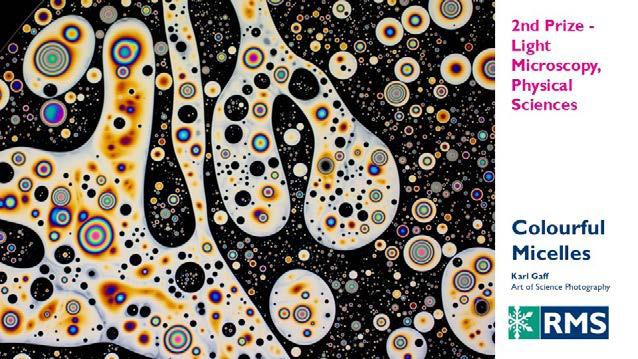
2nd: Karl Gaff,Art of Science Photography. Colourful Micelles
Short Video
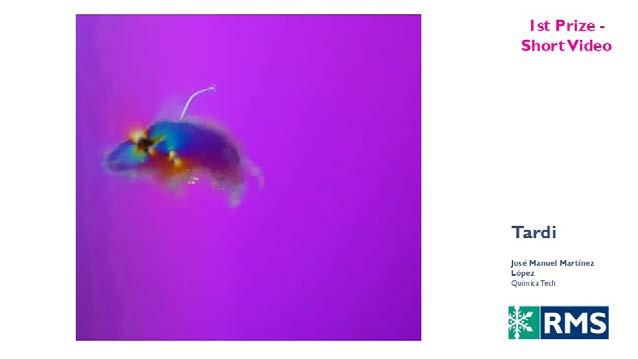
1st: José Manuel Martínez López, Química Tech. Tardi
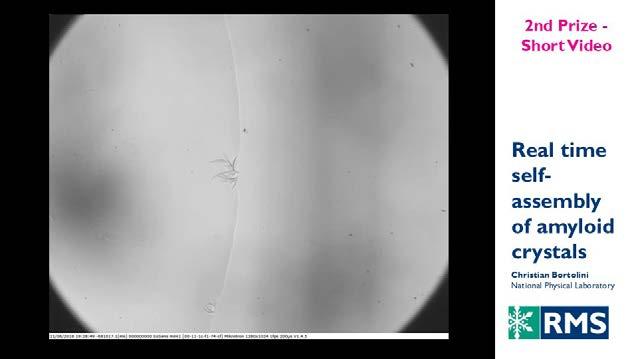
2nd: Christian Bortolini, National Physical Laboratory. Real time self-assembly of amyloid crystals
Read more on page 28
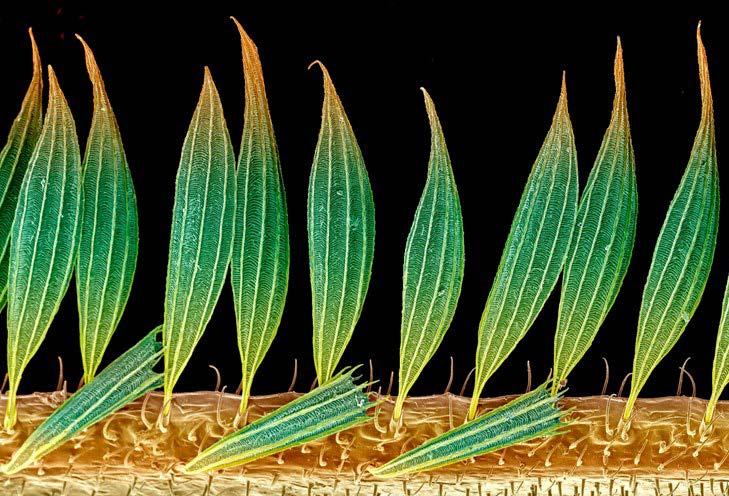
Below: First Prize in the Electron Microscopy Life Sciences category – and Glauert Medal for best image overall - went to Isabel Sánchez (Centro de Instrumentación Cientifica, University of Granada) “Feather-like” Structures
RMS Learning Zone
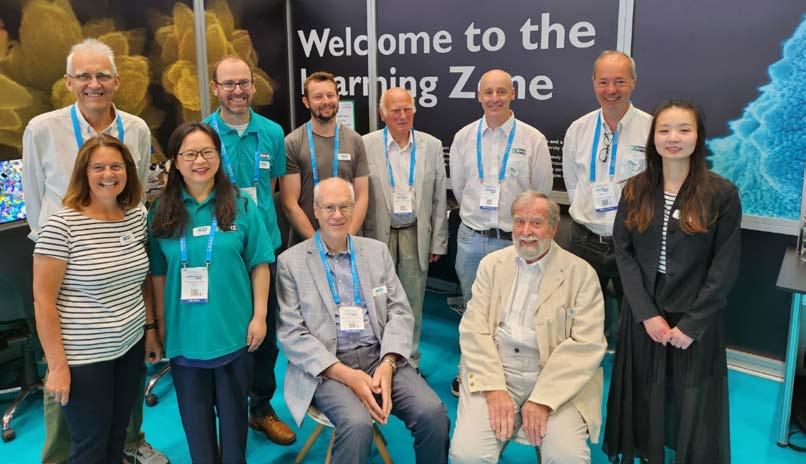
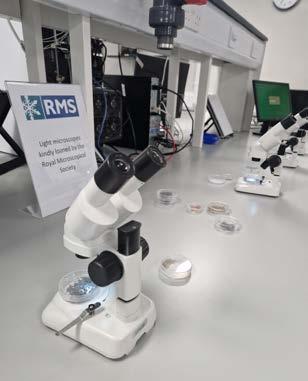
A major part of our flagship event since 2002, The Learning Zone was back once again this year, accompanied by a dedicated seminar theatre offering a daily programme of introductory talks and workshops. Our team of expert volunteers were on
hand to answer questions, provide demonstrations and give advice throughout the exhibition.We were also delighted to welcome a number of school groups and teachers on the final day Special thanks go to all our Learning Zone volunteers for all your efforts!
mmc2025 – in your own words…
The exhibition hall at MMC 2025 was a vibrant hub showcasing the latest innovations in microscopy, imaging systems, and laboratory technologies. I had the opportunity to interact with several exhibitors, including leading manufacturers and emerging startups. These interactions provided valuable insights into cutting-edge instruments, software solutions, and imaging platforms currently shaping the field.
Siddhi Chugh, University of Southampton. UK.
Overall, mmc was once again a fantastic experience,
Manchester, with its rich industrial heritage and dynamic cultural scene, provided the perfect setting for this international gathering of microscopy experts, researchers, and industry professionals.
Xin Chen, University of Cambridge, UK.
After the engaging conference sessions, the poster sessions delivered a whole extra world of cutting edge research, friendly chats, and shared experiences over refreshments; building a foundation for future collaborations.
Tom Stoops, University of Antwerp, Belgium.
Beatrice Bottura, CRUK Scotland Institute, Glasgow, UK.
Attending the Microscience Microscopy Congress 2025, incorporating EMAG, was a profoundly enriching experience both professionally and personally.With its robust and diverse programme, mmc2025 served as an exceptional platform for me to present my research and engage with leading experts in the microscopy and bioimaging communities.
Nusrah Afolabi-Balogun, Fountain University, Osogbo, Nigeria.
Ayesha Mubshrah, University of Bristol, UK. and an opportunity to make new connections and catch up with old friends in the microscopy world.
The exhibition events were also impressive and well-organized. I was surprised by the diversity of the companies attending mmc2025. I met people from world-famous large companies from Japan, Europe, and America. I also saw small starting-up companies from China, Europe, and the UK.
Peng Bao, University of Liverpool, UK.
The conference brought together researchers from a wide range of disciplines, allowing me to network in fields both directly related to, and outside my field, for potential collaborations or new areas of interest to investigate in my future career.
Fraser Eadie, University of Strathclyde, UK.
Overall, it was a unique experience to be able to present my work to researchers from different disciplines and receive valuable feedback on my poster.
Katie Choi, University of Nottingham, UK.
It was more than just a conference; it served as a dynamic platform for subject specific workshops, networking sessions, and commercial demonstrations. The event offered a brilliant opportunity to showcase my PhD research.
The RMS would once again like to thank all our attendees for making the event a huge success. We hope to see you again at IMC21 and mmc2027!
The 2025 RMS Scientific Imaging Competition
This popular event started out in the 1960s, when preparing micrographs was much more challenging than it is now; images were usually recorded on black and white film and the developed negatives then had to be enlarged and printed. The micrographs, usually up to 10 x 8 inches in size, were then mounted on card, ready for displaying. And remember -negative film came in cassettes of 24 or 36 shots, and in the case of electron microscopes, the negatives were usually glass plates, 6 x 9 cm in size, with only 12 loaded in the microscope, after they had been carefully desiccated to preserve the microscope vacuum. Every exposure had to count!
For submitting an image to the RMS Micrograph Competition at that time, it also had to be carefully wrapped and entrusted to the postal service for safe delivery.
Now, times have changed. Digital image acquisition and processing have almost completely replaced film, so huge numbers of images can be routinely acquired and stored for later image processing and analysis.This in turn means that images can be submitted to competitions remotely. Whereas a few dozen mounted, black and white prints would be submitted from around the UK in the early days, we now receive hundreds of digital images from as far afield as India, Australia and the Americas The 2025 competition entries comprised more than 240 images and video clips covering all aspects of microscopy: electron and light microscopy in both life and physical sciences, scanning probe microscopies, “others”, as well as short video sequences.
For selecting winners in each category, the judging panel, consisting of Joelle Goulding, Pippa Hawes, Alice Pyne and myself, assisted by Lucy Ridler and Owen Morton in the RMS office, had first to agree on a short-list from each category.This was a particularly tough call, as almost all entries were excellent, most including that elusive “wow!” factor. In a few cases the addition of colour to electron microscope images was over-done, but usually it added to the overall impact The final 38 shortlisted images were then professionally printed to exhibition standard and, along with a large-screen monitor showing the six video clips, displayed in the entrance foyer at mmc2025 as a very attractive welcome into the main hall.
During the mmc conference the first and second places for each category were finally selected and announced. The winning images are are shown overleaf.The authors of winning and second-placed entries received certificates and attractive cash prizes.
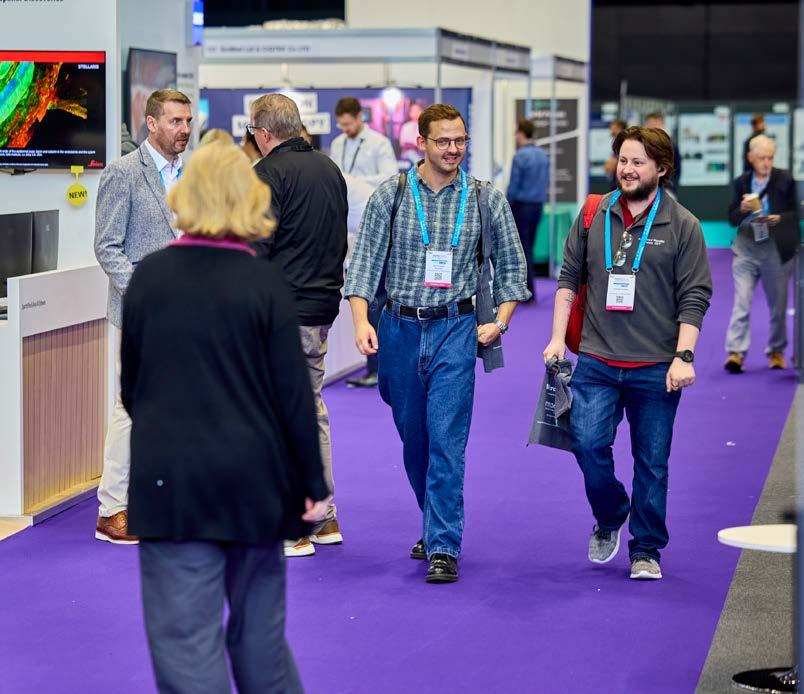
Attendees at mmc2025 walk among the gallery of images shortlisted in the RMS Scientific imaging competition
AFM and Scanning Probe Microscopies
1st: Christian Bortolini, National Physical Laboratory. Peptide snowflakes Atomic-force microscopy image (10 × 10 µm²) of an amyloid-like peptide dried on freshly cleaved muscovite mica.The peptide aggregates form irregular, leaf-like crystalline patterns reminiscent of snowflakes.
2nd: Temiryazeva Marina, Horiba Scientific, France Magnetic flowers . The beautiful magnetic flowers have grown on the structure CoPt/YIG. On the one hand they please our eyes, on the other hand this material may be useful for spintronics. Scan size is 11x11 µm.This MFM image was taken using SmartSPM Horiba Scientific.
Electron Microscopy - Life Sciences
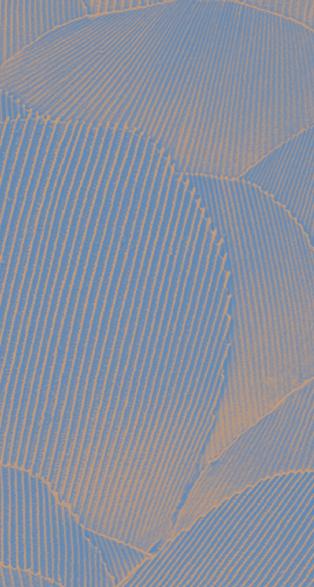
1st: Isabel Sánchez, Centro de Instrumentación Cientifica, University of Granada “Feather-like” Structures. This false-colour Scanning Electron Microscope (SEM) image reveals the edge of a mosquito wing, covered with “feather-like” structures.Mosquitoes are known for their distinctive flight,facilitated by a wing design and movement that set them apart from other insects.This silent and efficient wing architecture allows mosquitoes to manoeuvre with remarkable precision and agility in the air. In collaboration with Lola Molina and Daniel Garcia-Munoz Equipment used: Quanta 650 FEG (Thermofisher) Secondary electron image. Image width: 0.137 mm. *Glauert Medal Winner for Best Overall Image.
2nd: Max Patzschke, Bruker. Flowering heads of Aosa rupestris. The flowering heads of Aosa rupestris show mineralization with silicon (green) and calcium (red), enhancing structural strength and resilience to environmental stress. Combined with its harpoon- shaped leaf hairs the plant enhances its resistance to external stressors and potentially enhancing its ability to life in challenging environments.
Electron Microscopy - Physical Sciences
1st: Igor Németh, NMC particles with Zr. EDS maps of NMC particles with Zr grains.The powder sample was poured on carbon pad and dusted off. No further sample preparation.
2nd: Zakareya Nashwan, University of Birmingham, Ductile iron lustrous carbon defect. Ductile cast irons are used in several critical components across many applications like automotive, railway, energy generation and aerospace. Failure during service of these components could be catastrophic. Entrainment defects form due to turbulent filling of the moulds.They are found hidden inside casted metal components and they reduce mechanical propertie significantly leading to premature, catastrophic failures. A scanning electron microscope image with a layered energy dispersive x-ray elements maps reveals the first observed lustrous carbon entrainment defect on a fracture surface of a ductile cast iron test bar.The image shows the lustrous carbon film is hindering the growth of the dendrites causing internal porosity that would lead to premature catastrophic failure.
Light Microscopy - Life Sciences
1st: Yurim Seo, Mark Looney and Simon Cleary, University of California, San Francisco and King›s College London. Lymphatic vessels and smooth muscle in a cleared lung. Delicate lymphatic vessels, blood vessels and airways in the lungs are essential for life and disrupted in several diseases.These vascular and airway structures are mostly too small to resolve using nuclear medicine scans, and form structures that cannot be fully appreciated by viewing slices of lungs under conventional microscopes. A solution for this problem has been provided in the form of tissue clearing methods, which allow researchers to turn opaque lungs transparent and view intricate structures deep inside intact organs in 3D using fluorescence microscopy. In this cleared mouse lung, lymphatic vessels are displayed in green and the smooth muscle tissue that surrounds airways and arteries is shown in white.
2nd: Jan van IJken, photographer / filmmaker, Trichome. Plant hair. Transmitted light, Differential Interference Contrast.
Light Microscopy - Physical Sciences
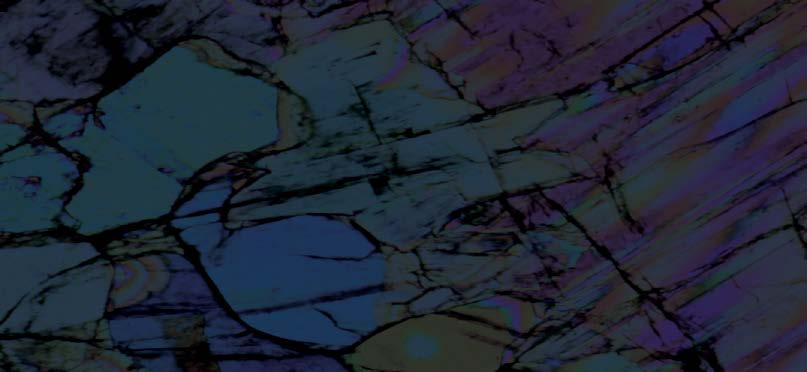
1st: Bernardo Cesare, Geosciences -University of Padova, Italy. Storm approaching. Polarized light photomicrograph of a thin slice (thin section) of an agate from Brazil.The unusual, extremely fine-grained texture of the rock has created this view, reminiscent of an approaching thunderstorm on a hilly landscape.
2nd: Karl Gaff, Art of Science Photography. Colourful Micelles. On the microscopic regime, micelles jitter chaotically in the molecular storm of Brownian motion, but this situation appears more relaxed. The surface tension of this soap film membrane exhibits relatively strong elasticity that dampens the Brownian chaos and lateral motion caused by gravitational draining, surface tension and air currents, making this mesmerizing a sight easier to photograph through the microscope! The vibrant hues arise from thin film interference, where light waves reflecting off the upper and lower interfaces of the film interfere to produce the hypnotic colours.
Short Video
2nd: Christian Bortolini, National Physical Laboratory. Real time self-assembly of amyloid crystals.
Glauert medal presentation
This year a very special additional prize was awarded for the image that the panel agreed was the “best in show”. First introduced in 1972, the Glauert Medal was so named to commemorate the term of office of Dr Audrey M Glauert as the first
female President of the Royal Microscopical Society (1970 – 71). It was hoped that the medal would be presented to the outright winner of future competitions.
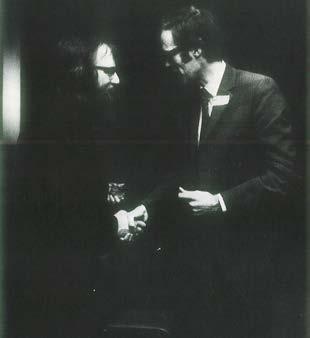
I had the special privilege of receiving a Glauert Medal myself for ‘best overall image’ in 1975 imaging
1st: José Manuel Martínez López, Química Tech. Tardi.
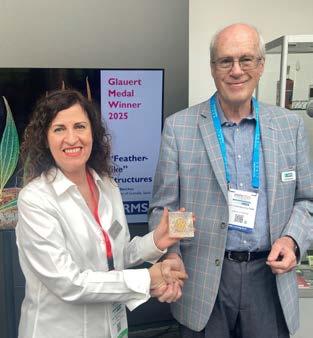
competition, and I was able to return the gesture this year as a judge – several decades later! The very worthy winner was Isabel Sánchez, for her first-prize-winning entry in the Electron Microscopy Life Sciences category – ‘Feather-like structures’. Unfortunately Isabel was unable to attend mmc2025, but the medal was received on her behalf by Ana Alarcon Clemente of Thermofisher (pictured with me, above right).
Our Scientific Imaging Competition is intended to promote the presentation of images that demonstrate skilled use of the microscope in
acquiring the image; where colour has been added, it needs to be done to enhance the image. Excellent presentation and a certain impact factor are also considered. Having received more than 240 images this year, it confirms that the competition now attracts many microscopists from around the world, and continues to fulfil its original purpose – encouraging the preparation and presentation of images of the highest quality.
We look forward to seeing your latest images in 2027, so get busy!
The Glauert Medal is 35mm in diameter, and just 2 or 3mm thick. Due to the softness of the metal, it is encapsulated in a large, acrylic block. Only seven were produced in the early 1970s.
A young John Hutchison (right) receives the Glauert Medal in 1975.
Full circle: John presenting the Glauert medal at mmc2025.
Discovery at the Speed of Light
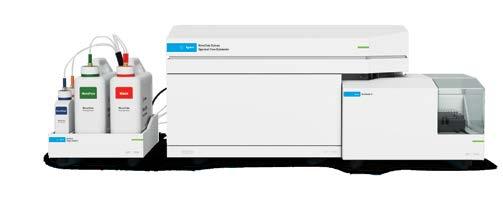
Spectral flow cytometry with the Agilent NovoCyte Opteon
Showcasing up to 5 lasers, 73 detectors, a demonstrated 45-color panel, and more powerful features:
– Exceptional performance with innovative optics
– Integrated fluidics sensors for consistent data and reliability
– Enhanced resolution with multidimensional autofluorescence subtraction
– Streamlined spectral experiment setup, analysis, and reporting
– Automation ready with autosampler and robotics compatibility
See more markers at agilent.com/lifesciences/opteon
Cytometry in Oceanography and Aquaculture: A Sea of Possibilities
9 -11 April 2025
Ensenada, Baja California, Mexico
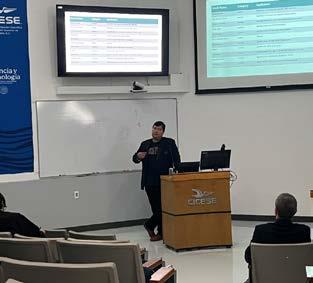
The symposium “Cytometry in Oceanography and Aquaculture: A Sea of Possibilities” took place from April 9–11, 2025, at CICESE (Centro de Investigación Científica y de Educación Superior de Ensenada) in Ensenada, Baja California, Mexico. This marked the first time a symposium of this nature had been held in Mexico.
Ensenada relies heavily on the sea for its livelihood. As a result,much of the city’s research is focused on oceanographic topics. This makes the introduction of flow cytometry to this community especially valuable. Many in the biological sciences are unaware
that flow cytometry is a versatile technology, often associating it exclusively with immunology. However, its applications extend far beyond that; it can be a powerful tool for studying environmental systems and a wide range of other fields.With this in mind, we aimed to share our expertise in nonconventional sample analysis using flow cytometry
The event brought together professionals and graduate students from across the marine and aquatic sciences. Alongside the symposium, a training course in cytometry with applications in biomedicine was also held. The symposium welcomed 26 participants, while the biomedical
course hosted 30 attendees, bringing the total number of participants to 56.
For many, this was their first hands-on experience with cytometry. To support their learning, we prepared short introductory training videos in advance of the symposium.These materials helped attendees familiarise themselves with the field beforehand. During the event, hands-on training and scientific discussions further deepened their understanding of cytometry’s potential in marine research, highlighting its relevance to environmental and aquatic science.
I had the honour of being invited as a keynote speaker, presenting on the capabilities of imaging flow cytometry -specifically using the ImageStream Mk II -in analysing marine and environmental samples. My sessions combined theoretical background with practical demonstrations. It was especially rewarding to teach imaging cytometry in Spanish, my native language, which helped break down language barriers and made it easier to communicate complex concepts to the local community.
I would like to express my sincere gratitude to The Royal Microscopical Society, CYTEK, and the International Society for the Advancement of Cytometry (ISAC) for their generous support, which made my participation in this meaningful event possible.
Dr Luis Steven Servín González Flow Cytometry Specialist
The University of Warwick, School of Life Sciences
Calendar
We are very pleased to continue offering a range of ‘in-person’ and virtual events this year, in order to maximise accessibility and provide opportunities to those who might not otherwise be able to attend.
The following information was correct at the of publication but could potentially be subject to change in the coming weeks. Please visit our event calendar at www.rms.org.uk for the latest updates.
If you have any questions about a booking you have already made for an event, or need any help or advice, please contact us at info@rms.org.uk
2025
August / September
31 August – 4 September Microscopy Conference 2025, Karlsruhe, Germany (Affiliate event)
8-12
8-12 Flow Cytometry Course 2025, York, UK 15th AFM BioMed Summer School, Sheffield, UK (RMS sponsored event)
16-17 Workshop on the Applications of 4D-STEM, Leeds, UK
October
6-7 Facility Management Training Course 2025, York, UK
December
4-5 Virtual European Flow Core Meeting 2025, (Online, free event)
2026
January
6-7
Flow Cytometry Facilities Meeting 2026, Liverpool, UK
8-9 Light Microscopy Facilities Meeting (UKLMF), Newcastle, UK
May
18-20 Microscopy of Oxidation 12, Loughborough, UK
July
12-16 Synergy in Science, Glasgow, UK (RMS Sponsored Event)
August
28 August – 5 September IMC21, Liverpool, UK
For further information on all these events, please visit our Event Calendar at www.rms.org.uk
Featured RMS events
Workshop on the Applications of 4D-STEM
16-17 September Leeds, UK
Applications of 4D-STEM is a workshop to be held in Leeds on 16th and 17th Sep 2025 and is organised jointly by the Royal Microscopical Society and the Electron Microscopy and Analysis Group (EMAG) of the Institute of Physics. The workshop is kindly sponsored by Tescan.
The purpose of this workshop is to highlight the applications of 4D-STEM across a broad range
Virtual
European Flow Core Meeting 2025
4-5 December (Online, Free event)
We are excited to announce the 3rd Virtual European Flow Core Meeting, taking place on 4-5 December 2025.
The meeting is aimed at all those that run or work in a Flow Cytometry Core Facility and seeks to address common subject matters, themes, and circumstances within the european community. We will focus on new and emerging
of materials classes, both hard and soft, and by demonstrating the micro- and nano-structural information that can be derived and linked to the processing and performance of materials.
Over two days, the workshop will comprise both keynote and invited talks from active researchers in the field, contributed poster presentations and demonstrations on the TESCAN TENSOR, the world’s first dedicated multimodal analytical STEM microscope optimized for 4D-STEM workflows and enhanced by integrated and fully automated beam precession.
technologies as well as operational aspects of running, and working in, a core. We will include talks about national cytometry societies, presentation from current core facilities (Crib talks) and also from our industry colleagues (Techno bites).The meeting will run over two days, from lunchtime to lunchtime (4 and 5 December 2025). Although in a virtual format, there will be ample time in the programme for discussion and questions from the community. The meeting will be ‘live’ and will not be recorded, it will be unavailable online afterwards.
Sustainability in microscopy: Transforming research practices
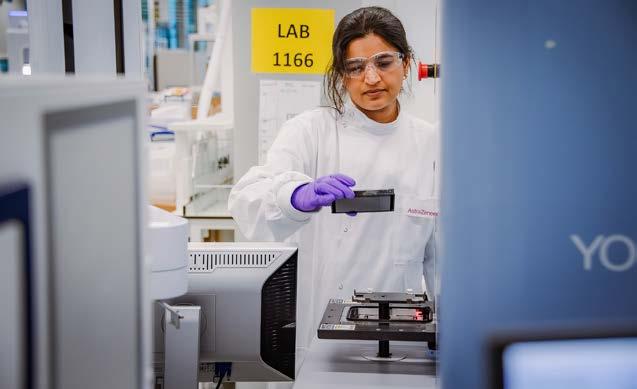
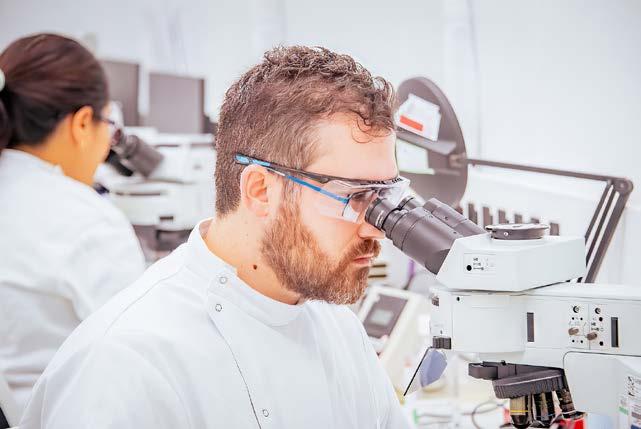
By Dr. Morag Rose Hunter, Centre for Genomics Research, AstraZeneca UK
The environmental imperative in scientific research
The scientific community increasingly recognises that laboratory practices can significantly contribute to the environmental footprint.At AstraZeneca, our ambitious sustainability strategy extends beyond corporate policies to fundamentally transform how we conduct research across our organisation and supply chain. Light microscopy presents unique sustainability challenges and opportunities compared to other laboratory techniques -and implementing sustainable practices can often yield substantial cost and time savings.
Beyond the bench: The broader sustainability context
While individual scientists can make immediate changes to laboratory practices, true sustainability requires examining how our work connects to larger systems. This holistic perspective reveals opportunities for meaningful impact.
Energy consumption extends far beyond laboratory equipment. Consider data storage - a critical but often overlooked aspect of microscopy work. With each gigabyte of data generating approximately 0.3kg of CO2 and microscopy datasets frequently reaching terabyte scale, our digital footprint is substantial.
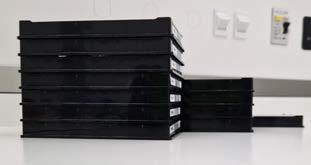
Plasticware required for 384 samples in 96-well plates, excluding edge wells (left); 96-well plates, including edge wells (centre; saving 200g of plastic); in a 384-well plate (right; saving a total 420g of plastic).
Whether managed internally or by third parties, we advocate for renewable energy sources to power these data centres.
Supply chain decisions also significantly impact sustainability. Selecting vendors committed to environmental stewardship, implementing bulk ordering to reduce transportation emissions, judicious use of temperature-controlled shipping, and establishing centralised reagent management systems can dramatically reduce environmental impact. While these organisational changes require time to implement, they create lasting benefits.
Maximising existing resources
Before initiating new experiments, we should ask: “Is laboratory work necessary?” Robust data management systems and transparent research practices can prevent redundant experiments. At AstraZeneca, our integrated image-metadata system links directly to electronic laboratory notebooks, allowing researchers to discover and build upon colleagues’ previous work.
Microscopy images contain rich information that can answer questions beyond their original purpose. Our team has extracted valuable insights about micronuclei, cell cycle dynamics, and growth rates from existing nuclear stain data - an approach that, in one project alone, saved 150kWh of energy, 1 tonne of plastic, 5TB of storage, one full-time equivalent position, and over $50,000.This data reuse principle also underpins the value of Cell Painting, label-free imaging, and AI-driven image analysis, which can identify previously unrecognised phenotypes in existing datasets.
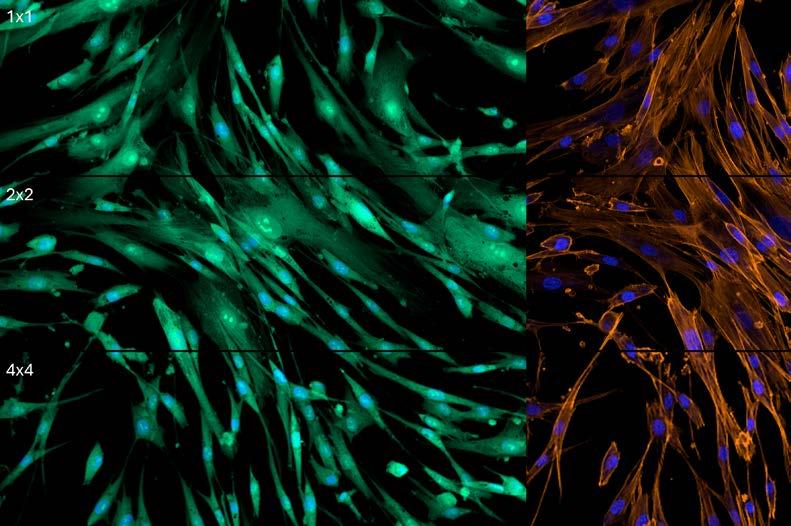
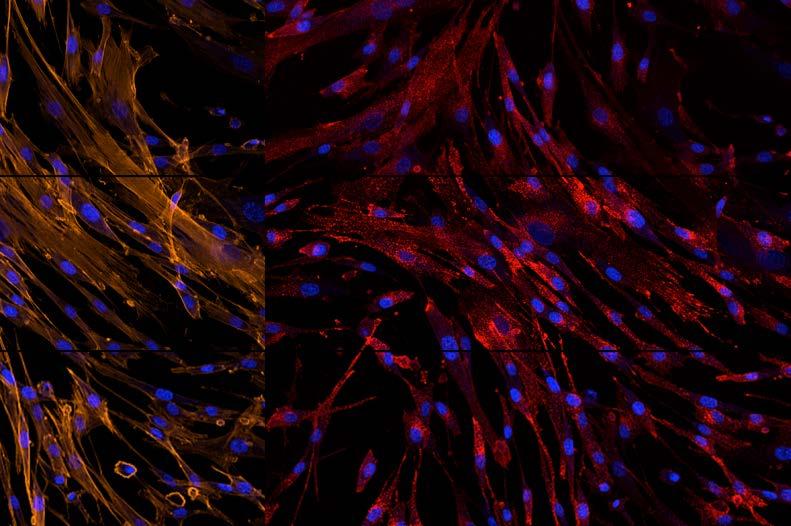
Binning reduces image size, and therefore the data processing and storage footprint. Sometimes the level of detail available in a fullresolution, 1x1 binned image is not necessary. Human lung fibroblasts with stains for the whole cell area (green), actin filaments (orange), and endosomes (red).
Strategic experimental design
Thoughtful experimental design maximises the value of each experiment while minimising resource use. Using statistical power calculations based on preliminary data helps determine the optimal number of replicates needed for robust results. While this approach might occasionally increase experiment size, conducting one definitive experiment is more sustainable than multiple inconclusive ones.
Design of Experiments (DoE) methodology has proven particularly valuable for complex assay development, frequently reducing plasticware waste by over 75% and reagent consumption by 50-90%. At AstraZeneca, one application for DoE is optimisation of immunofluorescence staining conditions. A single well-designed experiment can simultaneously evaluate multiple parameters - such as whether blocking is required, wash step optimisation, and recombinant antibody performance. Recombinant antibodies themselves
represent a more sustainable choice over polyclonal or monoclonal options, eliminating animal products while providing consistent quality across large batches.
Miniaturisation offers another powerful sustainability strategy. Converting experiments from coverslips in 24-well plates to 96-well formats significantly reduces reagent volumes throughout the experimental workflow -from culture media to fixatives, antibodies, and fluorescent dyes. These reductions cascade through the supply chain, decreasing shipping emissions, packaging waste, and hazardous waste disposal.
Edge effects in multiwell plates often concern researchers, leading many to exclude outer wells - wasting up to 37.5% of available space in 96-well formats. However, statistical correction methods can compensate for these effects, allowing full plate utilisation. Alternatively, specialised low-evaporation plates effectively minimise edge effects during extended time-course experiments.
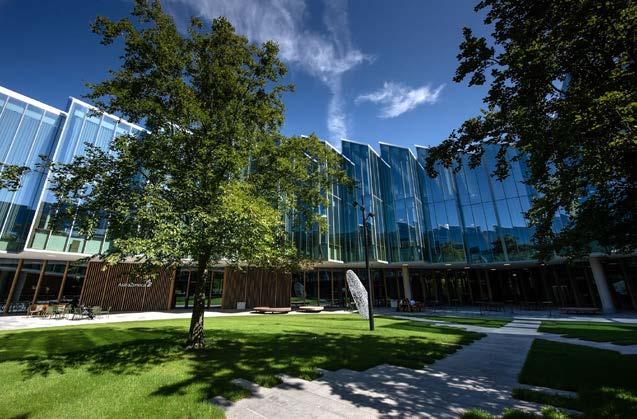
The Discovery Centre – AstraZeneca in Cambridge, UK.
Resource Sharing and Optimisation
Equipment sharing, long practised in microscopy through core facilities, delivers substantial sustainability benefits. Shared instruments reduce laboratory space requirements -significant considering labs typically consume 5-10 times more energy than office spaces -while preventing emissions associated with manufacturing redundant equipment.
Strategic scheduling of back-to-back users minimises power cycling of sensitive components, extending equipment lifespan. One of our automated confocal microscopes has operated almost continuously for years, with lasers functioning 50,000 hours beyond manufacturer specifications -eliminating the need for multiple replacement sets and their associated environmental costs.
Shared automated systems enable multiple research teams to benefit from miniaturised experimental formats through automated liquid handling and microscope stages. These systems also enhance experimental reproducibility, reducing the need for technical replicates. Even modest investments like automated handheld multichannel pipettes can
significantly improve workflow efficiency when processing multiple multiwell plates.
Optimising Data Collection and Storage
Image acquisition and management present critical opportunities for sustainability improvements. Implementing these practices may challenge conventional microscopy practice but yield substantial benefits:
• Employ binning to combine signals from multiple pixels, reducing image size while improving signalto-noise ratios and accelerating acquisition and analysis.
• Determine the minimum number of fields required for statistical significance, and consider whether lower magnification imaging might provide equivalent data while covering larger sample areas. Our experience shows that machine learning-based image analysis often detects phenotypes effectively at lower magnifications than conventional analyses.
• Save maximum projections rather than individual z-planes when three-dimensional information isn’t essential for analysis.
• Implement lossless compression by defaultwe’ve reduced data volume by an average of 24% on high-throughput confocal systems without compromising image quality.
Information technology infrastructure supports sustainable microscopy through FAIR data principles: Findable, Accessible, Interoperable, and Reusable. At AstraZeneca, we’ve implemented data lifecycle management policies that automatically queue data for deletion after predetermined retention periods (typically 1-10 years), focusing storage resources on the most valuable datasets.
Conclusion: Sustainable Microscopy as Scientific Best Practice
Sustainable microscopy practices extend beyond environmental benefits to enhance research quality and efficiency. By thoughtfully planning experiments, maximising existing resources, sharing equipment, and optimising data management, we reduce our environmental footprint while generating more robust scientific insights. The digital aspect of microscopyparticularly data storage -represents a significant but often overlooked sustainability consideration.
Implementing these approaches doesn’t merely benefit the environment -it transforms how we conduct research, leading to more efficient experiments and higher quality data. Small changes in experimental workflows and data management practices accumulate into substantial environmental and financial benefits over time, advancing both scientific discovery and planetary health.
Author information:
Dr. Morag Rose Hunter Centre for Genomics
Research, AstraZeneca UK
‘PORE-fect Gaudi’
By Anıl Ceylan, Izmir Institute of Technology, Baldemir Lab
Shortlisted in the Light Microscopy, Life Sciences category of the 2025 RMS Scientific Imaging Competition. Hand-coloured scanning electron microscope (SEM) image of a highly porous tissue scaffold, fabricated from a biocompatible polymer using emulsion templating, with a field of view of approximately 250 µm.The vivid coloration is inspired by the trencadís mosaic featured on the façade of Casa Batlló, designed by Antoni Gaudí.
Microscopy Journal of
The Journal of Microscopy publishes top quality research articles, review articles and Hot Topic papers covering all aspects of microscopy and analysis. This includes cutting-edge technology and innovative applications in physics, chemistry, material and biological sciences.
You can read the latest Early View papers online at www.journalofmicroscopy.org
They include:
ORIGINAL ARTICLE
Fast Gaussian fitting peak extraction for confocal microscopy
Jian Liu, Zhenlong Xu, Ziyi Wang, Xiaoyu You, Chenguang Liu
Accurate measurement of sample height is crucial in confocal microscopy measurement.This precision depends on how well the system can detect the brightest point in the light intensity data. Current methods are either too slow or not precise enough, making real-time measurements difficult This study introduces a faster way by simplifying the math involved. The new method avoids complex calculations by introducing a Gaussian function linearisation technique, enabling faster solutions without compromising accuracy.Tests show that this approach is just as precise (within 3 nm) as older, slower methods but works over 144 times faster. This improvement could help scientists and engineers perform faster and more reliable confocal microscopy measurements.
ORIGINAL ARTICLE
Influence of polarisation states on the axial point spread function in subtractive second harmonic generation
microscopy with a vortex beam
Huizhen Xu, Kanwarpal Singh
Doughnut-shaped vortex beams are widely used to enhance lateral resolution in super-resolution fluorescence microscopy and subtractive second harmonic generation microscopy The influence of polarisation states on the axial point spread function is investigated theoretically and experimentally in subtractive second harmonic generation microscopy using a first-order Laguerre–Gaussian vortex beam. The influence of left-handed circular, right-handed circular and linear polarised states are analysed for second harmonic generation imaging and compared with results of fluorescence imaging. The results exhibit great agreement with theoretical predictions, and demonstrate the superiority of left-handed circular polarisation in achieving a complete dark central spot and an extended axial point spread function.
ORIGINAL ARTICLE - Open access
Ptychographic analysis of human bone marrow-derived mesenchymal stem cell morphology: The impact of cell senescence
replicative senescence, a state of irreversible cell cycle arrest that limits
enables quantification 3D strain loading conditions, offering a unique tool to investigate the biomechanics of biological tissues and biomaterials. This review advancements its applications across scales ranging from organ- to Borsetti, of internal Iotti, Francesca fields under realistic Rossi, Jeanette A. Maier
their utility in regenerative medicine applications. To identify novel markers of senescence useful to enhance the quality of MSC-based therapies, we compared young and senescent human bone marrow-derived mesenchymal stem cells (hMSCs) using a non-invasive, label-free approach based on quantitative phase imaging (QPI) with the Livecyte microscope. Senescent hMSCs demonstrated substantial morphological alterations, including a threefold increase in cell area, elevated dry mass, reduced thickness, and decreased sphericity compared to their younger counterparts.Additionally, motility metrics such as instantaneous velocity and displacement were significantly reduced in senescent cells, underscoring functional impairments that could hinder their therapeutic potential in regenerative medicine. The application of QPI offers a promising tool for monitoring cellular health, identifying, and potentially eliminating,senescent cells to improve the quality and effectiveness of MSC-based therapies.
INVITED REVIEW - Open access
An overview of reliable and representative DVC measurements for musculoskeletal tissues
Gianluca Tozzi Enrico Dall’Ara
Musculoskeletal tissues present complex hierarchical structures and mechanical heterogeneity across multiple length scales, making them difficult to characterise accurately. Digital volume correlation (DVC) is a non-destructive imaging technique that highlights recent , in DVC, focusing on
tissue-level mechanics in both mineralised and soft tissues. Instead of a traditional systematic review, we identify key technical challenges including the treatment of tissue interfaces, border effects, and the quantification of uncertainty in DVC outputs Strategies for improving measurement accuracy and reliability are discussed. We also report on the increasing use of DVC in in vivo applications, its coupling with computational modelling to inform and validate biomechanical simulations, and its recent integration with data-driven methods such as deep learning to directly predict displacement and strain fields.Additionally,we examine its application in tissue engineering and implant–tissue interface assessment. By addressing such areas, we outline current limitations and emerging opportunities for future research.These include advancing precision, enabling clinical translation, and leveraging machine learning to create more robust, automated, and predictive DVC workflows for musculoskeletal health and tissue engineering.
ORIGINAL ARTICLE - Open Access
Optimisation of freeze substitution protocols for the examination of malaria parasite structure by volumetric electron microscopy
Rachel Rachid, Camila Wendt, Wanderley de Souza, Kildare Miranda
Malaria is one of the deadliest infectious diseases in the world, annually responsible for over 400,000 deaths. It is caused by parasites of the genus Plasmodium, which undergo remarkable structural changes during their development within different cells across various hosts.An important approach to understand the structural basis of biochemical and physiological processes during Plasmodium infection has been the quantitative measurement of dimensional parameters obtained by different microscopy techniques. In this regard, sample preparation, particularly electron microscopy protocols that rely on roomtemperature chemical fixation, has posed significant challenges, as it is known to produce artefacts such as shrinking, swelling and displacement of structures and osmolytes. In contrast, specimen immobilisation by cryofixation followed by freeze substitution minimises these artefacts and provides better sample preservation. Nevertheless, the composition of the freeze substitution medium may vary depending on the cell type, making it a critical factor for achieving optimal sample preparation. In this work, we optimised a freeze substitution protocol for the structural analysis of intraerythrocytic stages of the murine malaria models Plasmodium chabaudi and P. berghei. We tested different freeze substitution recipes, considering the biochemical composition of malaria membranes, and compared the results with those obtained through conventional chemical fixation. Overall, the results showed a significant improvement on the preservation of cell morphology and haemozoin crystals Establishing an efficient and reproducible freeze substitution protocol for murine malaria models provides an important tool for advancing our understanding of the structural organisation of Plasmodium spp.
ORIGINAL ARTICLE - Open Access
A workflow for semiautomated volume correlative light microscopy and transmission electron tomography
Volume Correlative Light and Electron Microscopy (vCLEM) is a powerful method for assessing the ultrastructure of molecularly defined subcellular domains. A central challenge in vCLEM has been the efficient navigation of Regions of Interest (ROIs) across multimodal and multiscale imaging datasets.We developed two key tools to overcome this challenge. First, we developed a multimodal image registration tool (SegReg) that utilizes segmentation of common objects across modalities and uses a Graphical Processing Unit (GPU) for registration of imaging datasets in two and three dimensions. Secondly, we developed a dedicated image viewer to visualize multimodal image registration in three dimensions (NavROI). Here, we demonstrate the integrated use of SegReg and NavROI to navigate large mouse tissue blocks with preserved fluorescent signals to allow selective targeting for TEM tomography of ROIs containing synapses and the cisternal organelle on the proximal region of the axon of a selected pyramidal neuron. By providing real time guidance to precise X-Y trimming of selected ROIs, reliable estimates of cutting depth relative to ROIs and a clear visual navigation of multimodal and multiscale images, our integrated workflow significantly improves the efficiency and accessibility of vCLEM analysis.
METHODS AND PROTOCOLSOpen Access
Kohki Konishi, Guilherme Neves, Matthew Russell, Masafumi
Mimura, Juan Burrone, Roland Fleck
DeepEM Playground: Bringing deep learning to electron microscopy labs
Hannah
Kniesel, Poonam Poonam, Tristan
Payer,
Tim Bergner, Pedro
Hermosilla,
Timo Ropinski
Deep learning (DL) has transformed image analysis, enabling breakthroughs in segmentation, object detection, and classification However, a gap persists between cutting-edge DL research and its practical adoption in electron microscopy (EM) labs. This is largely due to the inaccessibility of DL methods for EM specialists and the expertise required to interpret model outputs.
To bridge this gap, we introduce DeepEM Playground, an interactive, user-friendly platform designed to empower EM researchers – regardless of coding experience – to train, tune, and apply DL models. By providing a guided, hands-on approach, DeepEM Playground enables users to explore the workings of DL in EM, facilitating both first-time engagement and more advanced model customisation.
The DeepEM Playground lowers the barrier to entry and fosters a deeper understanding of deep learning, thereby enabling the EM community to integrate AIdriven analysis into their workflows more confidently and effectively.
Submit to the Journal of Microscopy
1. No submissions fees 2. No page or colour charges
3. No page limit
4. Simple online submission
5. Helpful, friendly editorial team
6. Average time from submission to first decision is less than 50 days
7 High readership figures
8. Online tracking system – authors can easily check the status of an article in production and receive emails at key stages
9. Rapid publication with Early View papers published online in advance of print, significantly shortening time from acceptance to publication
10. Free electronic offprints
Journal of Microscopy App Available for iPhone and Android
Search for Journal of Microscopy on the App Store or Google play and access your personal or institutional subscription wherever you are, whenever you want.
Journal of Microscopy Journal of
welcomes
Microscopy
two new editors
We are pleased to welcome two new faces to the Journal of Microscopy Editorial Board!
Professor Dylan Owen, Department of Immunology and Immunotherapy, University of Birmingham, UK, and Dr Venera Weinhardt, Centre for Organismal Studies, Heidelberg University, Germany, have recently joined the Journal as Scientific Editors.
Professor Owen completed an MSci in Physics in 2004, MRes in Chemical Biology in 2005 and PhD in biomedical imaging in 2008, developing spectral and lifetime fluorescence microscopy platforms for studying cell membrane biophysics, under the supervision of Profs Paul French and Tony Magee at Imperial College London. He then moved to the University of New South Wales to work in the lab of the late Prof Katharine Gaus, applying single-molecule localisation microscopy (SMLM) and fluorescence correlation spectroscopy (FCS) to the study of T cell signalling.
In 2013, he started his own lab at King’s College London, developing new SMLM analysis methods and using advanced fluorescence imaging in the study of membrane biophysics and immunology.
Since 2019 he has been Interdisciplinary Chair of Immunology and Mathematics at the University of Birmingham, where his lab has several research themes including AI-driven bioimage analysis and community data sharing initiatives.
Dr. Venera Weinhardt is a project leader at the Centre for Organismal Studies, University of Heidelberg, where she develops advanced imaging techniques to study cellular and organismal structure.
With a background in physics and over a decade of experience in X-ray imaging, she leads an internationally recognised research group focused on innovative vivo imaging, novel mechanisms, throughput workflows.
Her expertise lies in life science applications, particularly developing novel mechanisms,
Dr Venera Weinhardt. methods such as in and highcontrast
Professor Dylan Owen.
advancing in vivo and low-dose imaging, and designing new imaging geometries. She has also contributed to the development of restoration, image formation, and analysis workflows.
As a recipient of the Walter Benjamin Program from the German Research Foundation, Dr. Weinhardt joined the group of Prof. Carolyn Larabell at UCSF and Lawrence Berkeley National Laboratory.There, she focused on enhancing the spatial resolution and image quality of soft X-ray microscopy, applying these advances to study cells in both normal and infected states (including HSV-1 and SARS-CoV-2).
Dr Weinhardt is also dedicated to advancing laboratory-based soft X-ray tomography (SXT), with her research supported by the EU’s Research and Innovation Act (CoCID project). She has demonstrated the power of quantitative, highthroughput SXT imaging for investigating pathogeninfected cells, highlighting the potential of this state-of-the-art technology. To complement SXT, she develops correlative imaging modalities, such as axial super-resolution fluorescence microscopy for imaging cancer and immune cells, supported by the MSCA doctoral networks of the EU (CLEXM project).
…And we bid a fond farewell to Mark Rainforth and Carolyn Larabell
We would like to thank Professor Mark Rainforth and Professor Carolyn Larabell for all their
contributions to the Journal of Microscopy, as they step down from the editorial board.
Mark (Professor FREng, University of Sheffield), is a former RMS President and joined the editorial board
in 2012, handling papers in the fields of materials, metals, crystals, ceramics and EBSD.
A winner of the IOM3 Rosenhain Medal, Mark is recognised for his work on the characterisation of a wide range of advanced materials and surfaces.He has published 306 refereed scientific papers and is co-author of the book ‘Ceramic Microstructures’.
Mark pursued a career in industry before taking a PhD in the School of Materials in Leeds in 1990, after which he moved as an academic to the Department of Materials in Sheffield, where he was head of department from 2011 – 2015.
Carolyn Larabell joined the Journal as a Scientific Editor in 2019, handling papers in the fields of X-ray microscopy/tomography, correlated cryo fluorescence and x-ray tomography, cryo light microscopy, image segmentation/annotation, cell structure and nuclear structure. She is Professor and Vice-Chair of the Department of Anatomy at the University of California San Francisco School of Medicine, with a joint appointment as Advanced Light Source Professor at Lawrence Berkeley National Laboratory.
Carolyn is also the Founding Director of the National Center for X-ray Tomography (NCXT), an NIGMS-NIH and DOE-BER supported Biomedical Technology Research Resource.With a background in both light and electron microscopy, Carolyn trained as a Cell Biologist and has a long history of developing and implementing new technologies for imaging cells.
Professor Mark Rainforth.
Professor Carolyn Larabell
Microscopical Marine Marvels
By Dr John Hutchison Hon FRMS
Our recently acquired collection of antique microscope slides includes some in the category “marine zoology”. The earliest members of our society – mainly wealthy, professional gentlemen – were keen to explore the new world that was opening up under their microscopes, and having neither the time nor skill to make their own, were avid collectors of slides made and sold by well-known mounters.
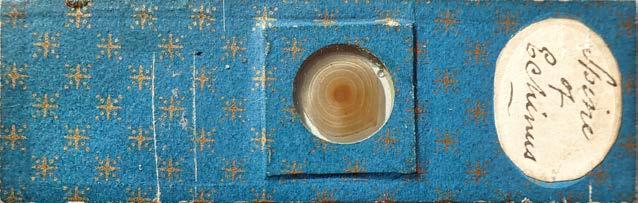
This article continues my previous ones describing some of the fascinating specimens that have survived well over 120 years since they were first mounted. Here we focus on some rather unusual slides showing organisms found in shallow seawater. Among the earliest of these are some made by Charles Topping (1800 – 1874). At the start of
his business in the early 1840s, Topping used starpatterned papers of various colours to prepare his slides. These were paper-wrapped on both sides, and were also covered along their edges with pinkcoloured paper!
Following these early paper-covered slides,Topping
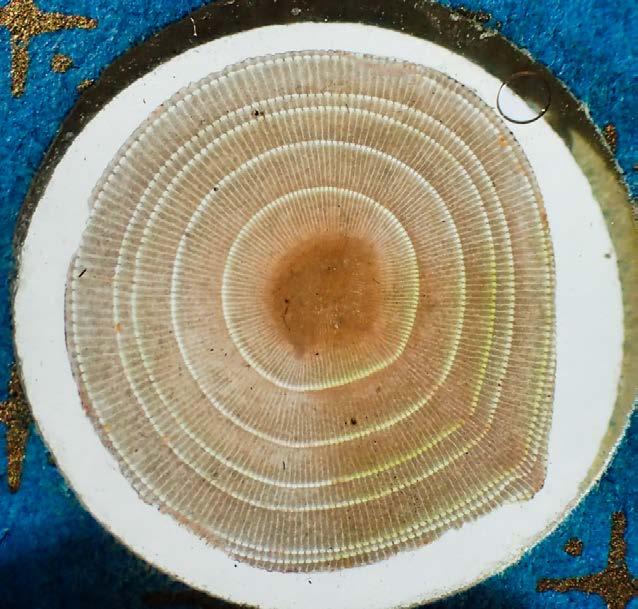
Figure 1. Early C.M Topping slide showing a cross-section of an echinus (sea urchin) spine. Note the growth rings and very fine structure
Figure 2b.The internal structure, imaged with incident lighting. went on to produce mounts with more elaborate designs,usually including his monogram.An example is shown in Figure 2.
In a few cases his slides themselves are wooden, with glass slips providing the "window" as shown in Figure 3.
As one of the most famous mounters of his time, in February 1846 Charles Topping was admitted as an “Associate Member” of the Microscopical Society of London (which later became the RMS) “in recognition of his services to microscopical pursuits”. Why he did not become a full Fellow is not known, although it may reflect his social standing as a
Figure 2a.Topping slide showing echinus spine, 1 mm in diameter.
Figure 3. Topping slide made of wood.
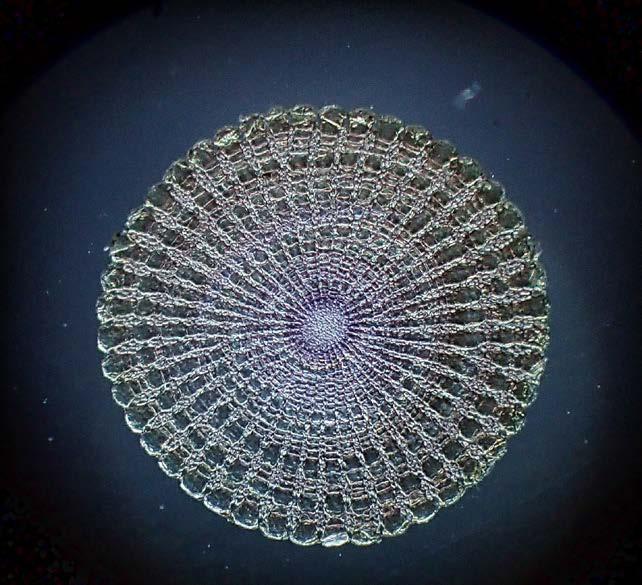
Figure 4.Transverse section of the base of an echinus spine.
“tradesman” rather than a wealthy, professional “gentleman”…. thankfully, times have changed!
Later, other mounters also produced attractive slides of echinus spines, an example being shown in Figure 4.This was produced by the London firm Clarke and Page in the early 20th century.
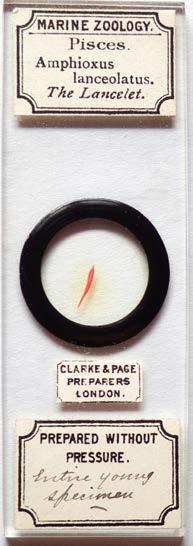
Clarke & Page also produced large numbers of slides “prepared without pressure”, using sealed mounts in which the specimens were mounted in liquid or balsam, preserving their shape and colour, as shown in Figure 5.
A boneless wonder
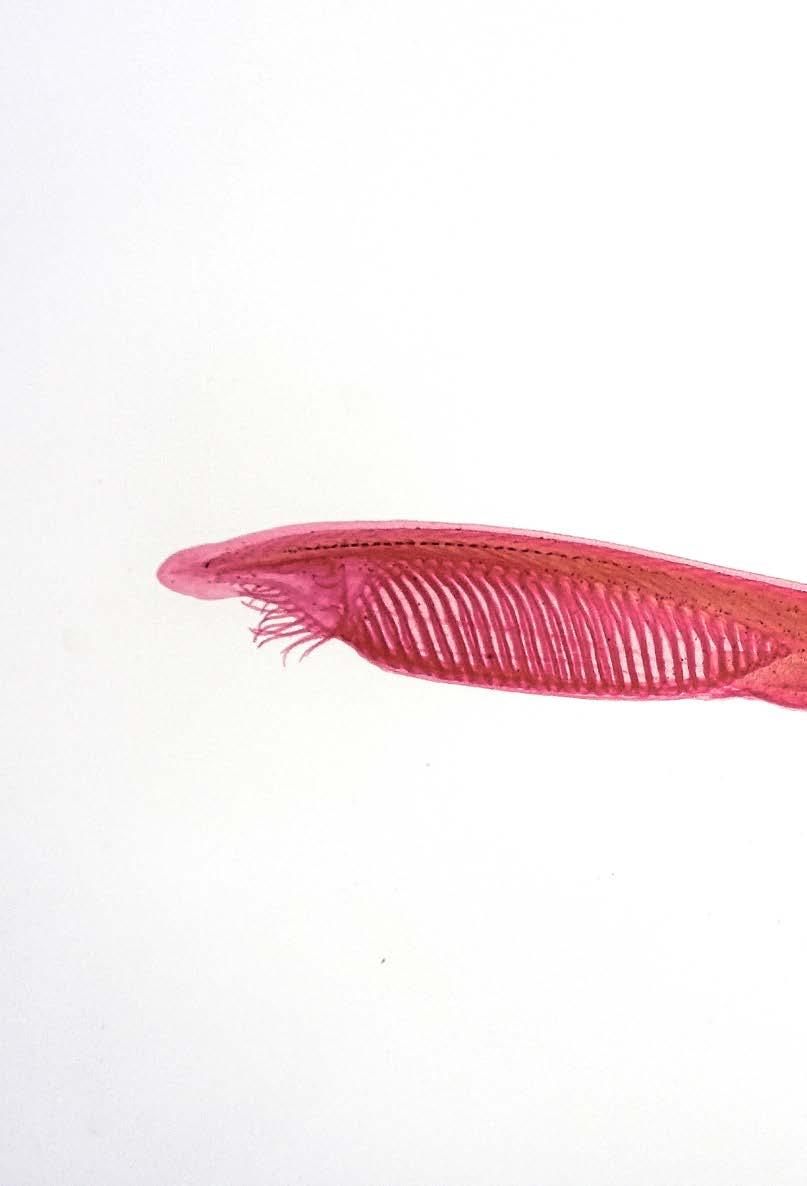
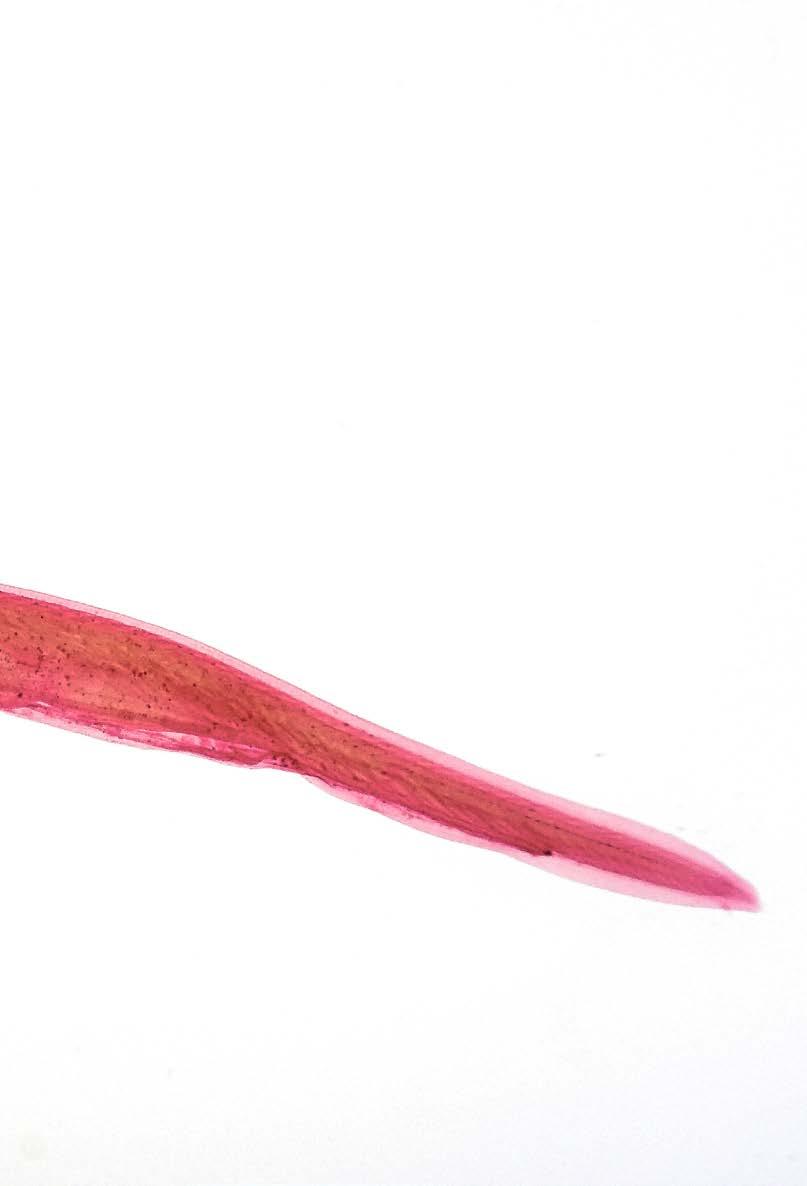
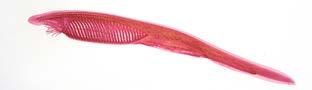
This strange creature is an amphioxus, which although resembling a fish in appearance, is actually
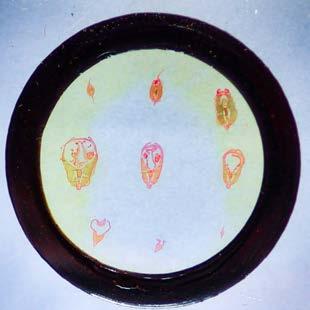
amphioxus cross-sections.Again, this was prepared by Clarke and Page.
an invertebrate, lacking a skeleton and backbone. It has an elongated body, flattened laterally and pointed at both ends. A “stiffening rod” of tightly packed cells extends the whole length of the body. The mouth is on the underside of the body and is surrounded by a tuft of 20 or 30 sensory appendages used for finding food particles
Like father, like son
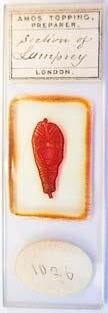
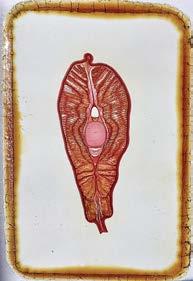
Charles Topping’s son Amos followed his father’s footsteps in making excellent mounts, and a superb example is shown in Figure 7.
Figure 5.A complete amphioxus specimen.
Figure 6. A carefully mounted series of
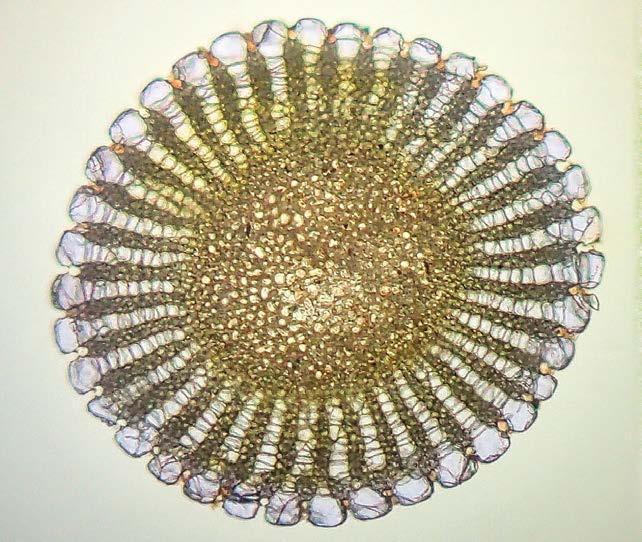
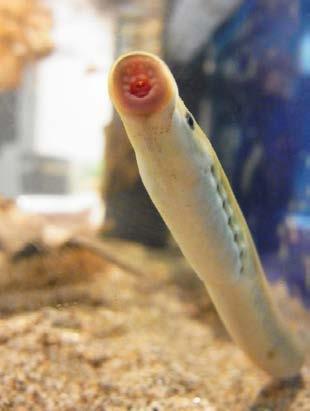
Figure 7.Transverse section of a lamprey.This exquisite slide shows a complete cross-section of a lamprey – a very strange fish indeed as shown in Fig. 8.
8.The lamprey. Image credit: Eastern-brook-lamprey L reissneri-02” by Loki austanfell, CC BY-SA 3.0.
Coral details
Edmund Wheeler (1808-1884) also produced large numbers of paper-covered mounts, as shown in
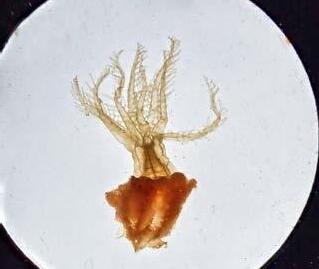
Figure 10. Red coral – note the wrong label!
Figure 9.Again the majority of his slides include the “EW” monogram.
Figure
Figure 9. Fruiting part of young coral (Wheeler).
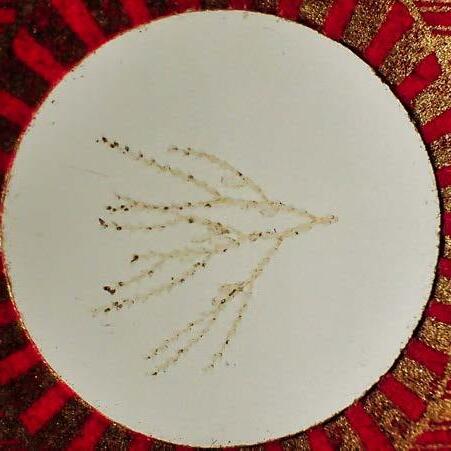
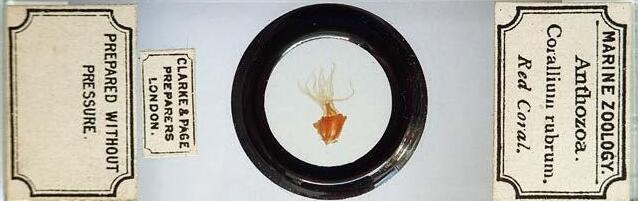
Clark & Page also mounted excellent slides of corals, as shown in Figures 10 and 11.
A colourful creature
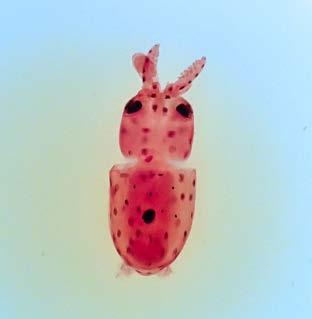
The cuttlefish is an unusual invertebrate, with the amazing ability to rapidly change colour and markings to avoid predators, or for males to impress females. When born, the young are known as “hatchlings” and a nice example is shown in Figure 12.
This one is only 5 mm in length, while a fully grown adult can be up to 50 cm in size. Although as an invertebrate the cuttlefish has no skeleton as such, it has an internal “bone” (cuttlebone) – a porous structure composed of aragonite, a crystalline form of calcium carbonate. It serves to maintain the animal’s shape and also contains multiple chambers that can be filled with gas or liquid to
control buoyancy when required. Having been used in crushed powder form in the past as a polish by goldsmiths and even as an additive in toothpaste, cuttlebone is used today for cage birds and other pets as a source of calcium. The complex internal structure is shown in Figure 13.
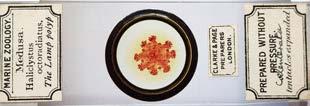
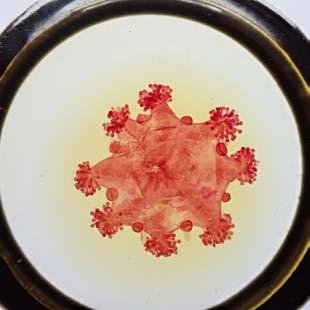
Figure 11.Although described in the label as Red Coral, this is actually the Medusa Haliclystus (Kaleidoscope Jellyfish) shown in Figure 10.The labels on these two slides have somehow been interchanged, presumably when they were made.
Figure 12. Newly hatched baby cuttlefish
Figure 13. Internal microstructure of cuttlefish bone.This section is 10 mm in length and was photographed using incident light.
Scales on sole skin revealed
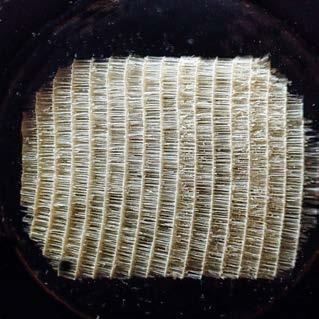
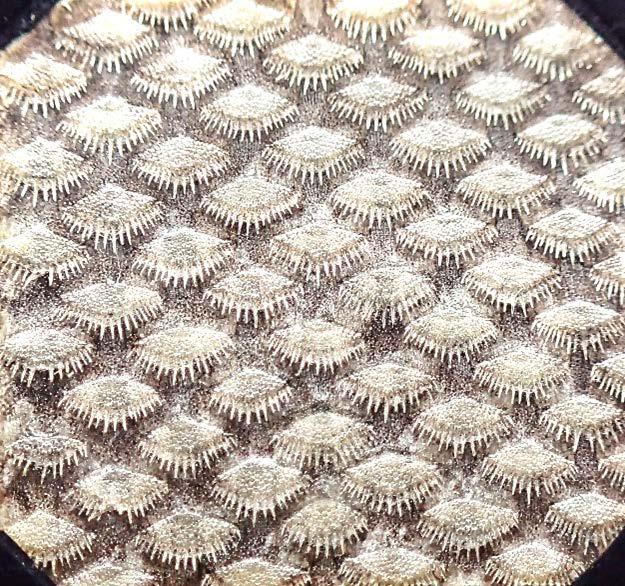
In partnership with his father-in-law Joseph Sinel, the zoologist James Hornell set up and ran a “biological station” in Jersey for a few years in the 1890s – a public aquarium and rentable laboratory space for visiting scientists.They also produced slides, mainly showing marine organisms. When Sinel moved on to other business, James Hornell continued to make slides himself, many of which have survived. Figure 14 shows an interesting example.The common sole is a well-known flat fish, usually eaten with the skin removed.This skin has a fascinating structure which on the microscopic level is seen to be a surprisingly regular array of scales, less than 1 mm in size.
Figure 14.This image shows a 1 cm2 area of sole skin imaged using incident light.
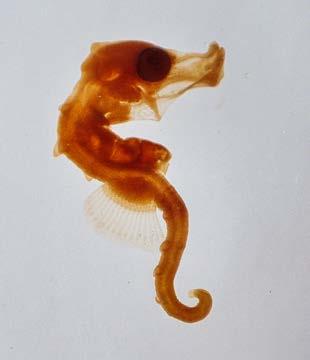
Figure 15. Newly hatched seahorse.
Strange role-reversal
Another rather odd creature is the seahorse, so-named owing to its remarkable resemblance to a horse. In addition to its strange shape this extraordinary fish, which can grow to around 10 cm in size, has some strange features, especially its breeding habits.When hatched, the young are only about 4 – 5 mm in length, as shown in Figure 15, and at that stage are very vulnerable.
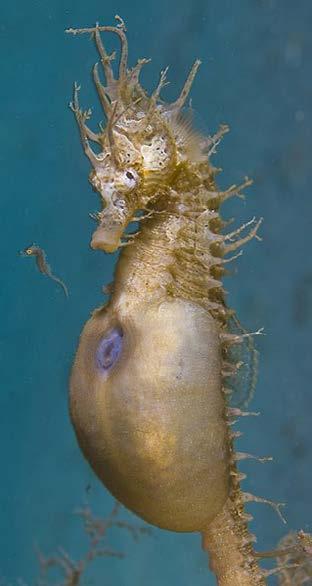
However, they are born in very large numbers, in what is a unique process, shared only with pipefish and sea dragons. In this reversal of roles it is (wait for it…) the male which gets pregnant and incubates the eggs until they hatch! Yes, the female deposits up to two thousand eggs into a special pouch
on the male’s abdomen at the base of its tail, where they are fertilized and incubated for up to six weeks before being forcibly ejected into the surrounding water to fend for themselves. The huge numbers being born in this way ensure a viable survival rate, thought to be as low as 0.5%.
Nature’s strongest, toughest material
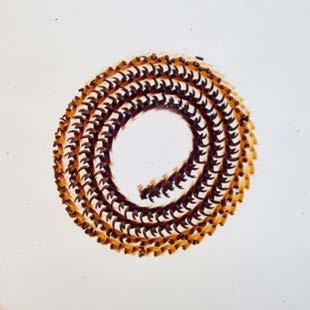
When exploring rock pools on many of our coasts, you will have seen limpets clinging fast to the rocks on which they live.When the tide covers them they can move around, grazing on algae as they move. Their feeding habit involves the use of a particularly interesting organ – the palate, or ‘tongue’ – an example of which, belonging to a common limpet, is shown in one of the most intriguing of our ‘marine’ slides (Figure 17).
The palate is known as a radula. Being several centimetres in length, this one has been coiled up to fit on the slide, where it reveals an array of sharp teeth. These would be used by the limpet to scrape the algae on which it feeds, from the rock on which it lived. The teeth are formed as a composite of the iron oxide-hydroxide mineral, goethite, and a protein-rich matrix. Our own RMS member Asa Barber investigated the mechanical properties of limpet palates back in 2015 and was
Figure 16.A male seahorse giving birth. Image credit:“seahorse baby” by jidanchaomian, CC BY-SA 2.0.
Figure 17.The palate of a common limpet.
astonished to find that the teeth were made of the strongest, toughest known natural material with a tensile strength of 3 – 6.5 GPa ! (J. Royal Society Interface 12 20141324, 2015.) When the teeth and the tongue eventually wear out they would be continuously replaced.
Concluding remarks
It is a real pleasure to continue this exploration of everything that our recently acquired collection of antique microscope slides has to offer. The sheer number of slides, the variety of specimens and superb state of preservation are enough to keep
any science historian busy, and there may yet be more discoveries to come!
The collection really is a wonderful treasure trove of colour and creativity. It serves both as testament to the tremendous expertise of the early slide mounters, and as a window into the microscopical curiosities of the past.
Dr John Hutchison
Submit to infocus
infocus welcomes submissions of articles of general interest to microscopists.
You provide the text and images and we take care of the rest. It’s the ideal way to share your work with the microscopical community.
Full submission information and guidelines are available at www.infocus.org.uk
To submit an idea or if you have any questions about the process please email the Editor (editor@infocus.org.uk)
“Science starts small: Promoting Nanotechnology in Young Minds” by the Nanoscale Function Group
14-15 May 2025
University
College Dublin, Dublin (Ireland)
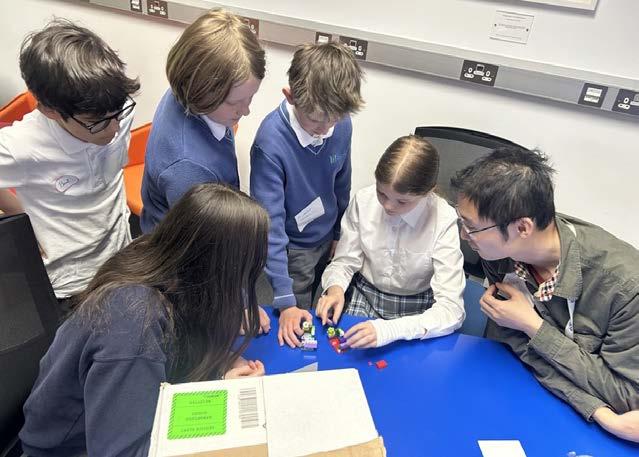
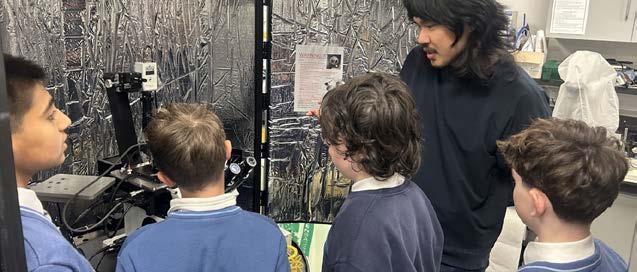
The phrase “Science starts small” holds a double meaning for us. At the Nanoscale Function Group, our research is rooted in the study of functional materials at the nanoscale. But beyond our lab work, we believe meaningful scientific impact often begins when curiosity is sparked early, especially in young minds. With this belief, we hosted a two-day outreach activity on 14th and 15th May 2025 at University College Dublin (UCD), titled “Science Starts Small: Promoting Nanotechnology in Young Minds”. A total of 22 primary school pupils aged 9-12 from St. Nicholas Montessori School, Dublin, participated. Each day ran from 10am to 2pm, filled with a lab tour and interactive classroom activities focused on our core research tool: the Atomic Force Microscope (AFM).
The day began with a chance to get to know each other, followed by a short pre-questionnaire to assess the pupils’ expectations and existing knowledge of the nanoscale. This was followed by a presentation introducing the fundamentals of the AFM and nanoscale physics, using familiar examples
from nature and materials science. Since the AFM is often described as a “touching microscope”, we designed a series of tactile and visual activities.The first was a matching game in which pupils paired AFM images of, e.g., chocolate, bacteria, insects, etc., with a pool of possible answers.This engaging
challenge offered a first glimpse into the capabilities of nanoscale imaging. After this introduction, the class split into two groups for more focused activities. One group explored our lab to see AFMs in action. We began with a demonstration using a fully functional LEGO-built AFM to explain the mechanics and operational modes. Pupils then observed AFM imaging of samples such as snake
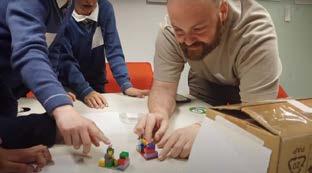
skin using our Asylum Research MFP-3D system, and examined AFM cantilevers under an optical microscope. Complementary activities like cleaving highly-oriented pyrolytic graphite (HOPG) with tape and pipetting onto hydrophobic surfaces made fundamental nanoscale concepts tangible and memorable. Meanwhile, the second group participated in additional hands-on classroom activities. One station featured a “mystery box” challenge, where pupils reached blindly into a box to feel and identify different surface textures.Using only their sense of touch, they were asked to distinguish between properties such as smooth, rough, sticky, hard, and soft.Another popular activity was a LEGO challenge where one pupil built a LEGO structure and hid it inside a box, while their partner attempted
to reconstruct it by feeling the original and building a copy using an identical set of blocks – an analogy for how an AFM constructs images line by line. During a lunch break, the pupils asked questions about our research, and many expressed a strong interest in science and nanotechnology.Afterwards, we conducted a post-event questionnaire. The feedback was overwhelmingly positive with some pupils describing it as their “favourite school trip of the year”. At the end of the day, each pupil received a certificate of participation along with a goodie box containing UCD-branded stationeries, and 3D-printed models of an AFM cantilever and general physics concepts, such as the Bohr atom model.
Reflecting as a team, we recognised both the challenges and rewards of breaking down complex concepts for a young audience. Explaining the physics behind cantilevers or advanced scan modes demanded creativity and clarity. Seeing pupils engage and learn was deeply fulfilling and has prepared us to communicate science even more effectively in the future – not just to children,but to all audiences. Special thanks to Drs Waseem Ahmad Wani and Sinny Trivedi for co-organising and initiating this inspiring event. We hope this marks the beginning of many more outreach efforts from the Nanoscale Function Group – because science truly starts small.
Lima Zhou PhD student University College Dublin
New Member Welcome
The Royal Microscopical Society would like to welcome our new members who have joined us in the last three months.We hope they enjoy a long and rewarding membership with the RMS.
Miss Lucie Marx
Ms Sara Fatima
Iain Harley
Professor Lin Wang
Mrs Xuemeng Chen
Dr Kate Stokes
Dr Narima Eerqing
If you know of anyone who might be interested in becoming a member of the Royal Microscopical Society and if you would like us to contact them, please send their details to our Membership Administrator, Debbie Hunt – debbie@rms.org.uk
Application forms are available to download at www.rms.org.uk/membership
Don't forget you can now log into the RMS website and check your membership status, renew and download receipts. If you have never logged into the RMS website, please enter the email address that is linked to your membership and then click 'forgotten password'.
If you have any queries or questions about your membership please contact Debbie Hunt debbie@rms.org.uk
Member Profiles
Name Dr John D Howard
Tell Us About You?
I did my PhD at the University of Sheffield in insect RNAi with chemically modified dsRNA. I've spent the last few years at Liverpool School of Tropical Medicine investigating insecticide resistance in Anopheles mosquitoes (the principle malaria vector). I've recently returned to the University of Sheffield and have made the jump from insects to algae-bacteria consortia, which I'm trying to use for land/water decontamination, as well as understanding the pathways involved.
Why did you become a member ofthe RMS?
I've used a little bit of microscopy before but my new project utilises it heavily as a tool, as well as there being several side-projects that would benefit from microscopy.Therefore,I wanted to be right in the middle of the microscopy world, hearing about the latest advances in both microscopy itself, as well as the after-the-fact image analysis wizardry!
How do you feel being an RMS member benefits you?
I'm hoping it's going to provide what seems like a really friendly community to pick of tips from and ask stupid questions of as I finally get to dive deep into the world of modern microscopy.
Name Dr Kate Stokes
Tell Us About You?
I recently started as a Product Scientist at Oxford Instruments. My interest in microscopy began during a summer internship while studying Physics (MPhys) at Warwick, working with SEM, EDS, and FIB. I continued developing expertise in SEM, AFM, and Raman spectroscopy during my EngD at Birmingham. Now, I’m excited to apply this experience to support SEM,AFM, and Raman analysis in my new role.
Why did you become a member ofthe RMS?
I am very passionate about microscopy and would like to become more actively involved in the wider microscopy community.
I was also heavily involved in science outreach throughout my time in academia, including four years with Discover Materials at the University of Birmingham. I have seen the outreach initiatives led by the RMS and I am enthusiastic about the opportunity to contribute to similar projects.
How do you feel being an RMS member benefits you?
Having recently completed an EngD and transitioned into a professional role, I see RMS membership as a valuable resource for my career development. Access to workshops, conferences, and a network of experienced microscopists will be instrumental in helping me stay current with advancements in the field and grow within the microscopy community.
Name Lin Wang
Tell Us About You?
A tenured Senior Scientist at the Central Laser Facility (CLF), STFC Rutherford Appleton Laboratory, I also hold concurrent academic appointments as a Professor at Xidian University and an Associate Professor at the University of Nottingham. As the CLF's lead for technology development and user operations in super-resolution microscopy, my expertise covers the full research lifecycle. My research portfolio includes over 40 peer-
reviewed journal publications, 2 book chapters, and 12 patents.
Why did you become a member of the RMS?
I became a member to be part of a community that shares my passion for microscopy and its role in advancing scientific understanding.
How do you feel being an RMS member benefits you?
Being an RMS member gives me access to a vibrant community of experts who share knowledge and insights that continuously expand my understanding of microscopy applications.
New corporate member
Mel-build
Your One-Stop Destination for All Your Research Needs.
We are TEM holder and SEM Stage Maker in JAPAN
https://melbuild.com/
Virtual ‘town hall’ meeting on core facilities attracts huge global audience
RMS thanks partners and co-chairs for staging online event
The RMS would like to thank all the organisers and participants who contributed to a highly successful online event, held at short notice in June.
Titled “Navigating Strategies for Core Facilities
2025:A Town Hall Webinar”, and held in partnership with the Microscopy Society of America (MSA) and Global BioImaging, this was a free and open forum to discuss how core facilities can thrive in today’s challenging and ever-evolving funding environment. Despite limited time for planning and promotion, the three-hour meeting attracted an impressive 270 participants from a host of different countries spanning five different continents. The idea for the event grew out of a conversation between RMS President Peter O’Toole and Page Baluch of Arizona State University on an email ‘list serv’ for confocal microscopy.
Pete recalls: “An open question was initially posed by Page, on how colleagues were dealing with the rapid changes in purchase prices for equipment, coupled with the loss of grant funding. It was clear that these sorts of challenges are affecting people right across the global microscopy community, so why not throw this open to a public forum? - to see what solutions might be out there for navigating these financial pressures.”
Within just a few days, a number of co-chairs had enthusiastically stepped forward to oversee the meeting, which covered topics including:
• Demonstrating and Defending the Impact of Core Facilities
• Smart Budgeting: Planning and Maximising Resources
• Future-Proofing: Best Practices for Sustainable Success
Importantly, it was agreed the meeting would not be recorded, to enable participants to talk freely
and share their experiences in a supportive and friendly environment.
Pete says: “Everyone really entered into the collaborative spirit, and we had some great contributions from participants. I certainly learned a few things from the ideas and examples people were giving, and I’m sure it was the same for everyone else.”
He adds: “It was just a great example of our international community pulling together and doing something really impactful at short notice –something that has hopefully given colleagues around the world some practical help as well as a bit of a morale-boost.
“I’d like to put on record my thanks to the Microscopy Society of America and Global BioImaging, as well as each of the co-hosts who really stepped up to the plate to deliver this event; Michelle Itano, Page Baluch,Kirk Czymmek,Paul Voyles,Andy Stone and Johanna Bischoff.
“I’d also like to thank the RMS staff for facilitating the webinar at the busiest time of the year for them, in the run-up to mmc2025.”
Although the meeting was not recorded, those who attended can access a number of presentation slides and helpful links contributed by participants in the group ‘chat’ during the meeting.
‘Globe’ image by Juliana Kozoski on Unsplash ‘laptop’ image by Fabian Irsara on Unsplash
Experience precision with DiATOME Diamond Knives
Perfect for biological and materials science sectioning, these high-purity knives ensure sharpness, minimal compression, and long-lasting performance. Crafted from gem-quality diamonds.
Histology
Ultramicrotomy
Prepare very thin sections of specimens for TEM or SEM with Diatome’s range of Ultra knives. Engineered to facilitate consistent, precise specimen preparations.
Prepare semi-thin sections required for examination under optical microscopes with the Histo knife. Highly precise blades tailored for sectioning embedded and non-embedded specimens.
Resharpened byAgar Scientifc
DiATOME diamond knives can be resharpened multiple times and still retain their original diamond length and flawless quality. Please contact us for a quotation.
Introducing the RMS Flow Cytometry Section
Formed in 1988, the Flow Cytometry Section is made up of a cross section of cytometrists representing research, clinical and industrial aspects of flow cytometry.
The Committee acts as a point of contact for informationand advice, supporting RMS members and the wider cytometry community with a series of meetings, courses and workshops throughout the year. It is also recognised by the International Society for the Advancement of Cytometry (ISAC) as an ‘Associated Society’.
The Committee oversees several well-established meetings, including the annual Flow Facilities Meeting and FlowcytometryUK. It also organises an annual, week-long course aimed at beginners and those who want to expand their knowledge of flow cytometry.
In addition, several one-day, focussed meetings are organised when appropriate, on subjects such as data analysis, cell sorting, and DNA analysis by flow cytometry.
The Flow Cytometry Award is awarded once every two years at the FlowcytometryUK meeting, in order to celebrate outstanding work applying cytometric techniques in the field of immunology or cell biology. The medal is open to applicants worldwide who have been engaged in independent research for less than 10 years, or are in a tenured academic, or clinical, support role .
Anyone working in the field of cytometry is welcome to come forward with ideas for courses and you are encouraged to contact the section Committee if you would like to help!
Name: Yanping Guo (Flow Cytometry Section Chair)
Affiliation: UCL Cancer Institute
Flow cytometry interests:
I manage the flow cytometry facility at UCL Cancer Institute, overseeing daily operations and providing tailored support to our diverse user base. My research passion centres around the application of
flow and mass cytometry in basic, translational, and clinical cancer research. I’m particularly interested in exploring heterogeneity in cancer, the tumour microenvironment, and immune responses to disease.
Beyond technical expertise, I am passionate about training a new generation of scientists and deeply committed to ensuring every user gets the best possible outcome, from personalised training to troubleshooting. I also take pride in securing cutting-edge instruments for our facility.
What I like doing when I’m not doing cytometry: When I’m not immersed in the world of flow cytometry, you’ll often find me experimenting in the kitchen, where I love creating new dishes and exploring different flavours. I also have a soft spot for watching videos of cute animals, which never fail to brighten my day. One of my greatest joys is working with guide dogs (Ron and David - pictured) in training, and I’m excited to welcome my third guide dog trainee into my home, in the near future, continuing this meaningful journey of supporting these incredible animals.
and method development of cell sorting and cytometry analysis. I have the privilege of working with an amazing team. It is a fantastic job -so varied - working with researchers and all kinds of samples from within the University and beyond - recently including Uganda, Kenya, Sudan and Ethiopia. I am a co-organizer (and tutor) on flow cytometry courses - Hands-on and Virtual - and was awarded the RMS medal for Flow Cytometry in 2016. I am currently the Vice Chair of the RMS Flow Cytometry section and look forward to the times ahead with Yanping as the Section Chair.
What I like doing when I’m not doing cytometry: In my spare time I support local schools as a Governor and I love to run, walk and cycle on the North York Moors with family and friends - so if you are in the area let me know.
Name:
Barry Moran (Flow Cytometry Section Deputy Chair)
Affiliation: Trinity College Dublin, Ireland
Name: Karen Hogg (Flow Cytometry Vice Chair)
Affiliation: York University
Flow cytometry interests:
I was hooked on science as an undergraduate when I was introduced to parasitology, I then became fascinated by immunology and was able to combine the two for a PhD with malaria vaccine research and a postdoc looking at skin responses to schistosomiasis.
In 2003 I was enticed by the scope of a job at the newly created Bioscience Technology Facility in Imaging & cytometry (I&C) and I have never looked back -I am now a Senior Experimental Officer -my role is to underpin the scientific service within I&C as well as take a lead role in the research, operation
Flow cytometry interests:
Following a few years as a researcher in San Diego after my Masters, I was looking for opportunities to return to Ireland outside of classic lab research. I saw the emergence of core facilities in the US so when I had the chance to set up the Flow Cytometry Facility in Trinity College Dublin, I jumped! It has proven a really enjoyable career choice that has given me many new avenues, including creating a thriving technology hub, teaching & training students and researchers, collaborating with brilliant groups studying immune disease, infection and cancer, as well as doing my own research and undertaking a part-time PhD.Applying cytometry and complementary technologies to add some value in understanding the immune dysfunction underpinning the very debilitating skin
disease hidradenitis suppurativa has been a highlight.
Having been recently appointed as Director of Research Technology in the School, I can now sink my teeth into more strategic operations on how we can improve research infrastructure, funding and support to better facilitate our world-class research.
What I like doing when I’m not doing flow cytometry: While I love playing music, tennis, football and running, much of my free time now is taken up running after our two young kids!
instrumentation, improved data analysis and applications in new fields including microbiology and marine biology.
These advancements have significantly broadened the scope and impact of flow cytometry in scientific research and clinical applications and enabled me to support an ever-growing network of scientists across the UK and Europe.
Name: Bev Goward
Affiliation: Sony Biotechnology, a division of Sony Europe B.V.
Flow cytometry interests:
Flow Cytometry has been part of my life for over 20 years. It all began during my post-doctoral research at Imperial College investigating the role of Natural Killer cells in unexplained recurrent miscarriage. In 2005 I left the bench to begin a sales career in life sciences, with a focus on providing flow cytometry solutions for the scientific community
During this time, I have witnessed the significant advancement in technology, transforming it into a powerful and versatile tool for scientific research, beyond phenotyping of immune cell populations. Key changes include increased multiparameter capabilities, enhanced sensitivity and precision, spectral flow cytometry, smaller, more portable
What I like to do when I’m not doing flow cytometry: My biggest passion is spending time in the great outdoors with my husband and dogs. Come rain or shine, when the weekend comes, you will find us hiking up mountains, swimming in lakes and basking in the tranquillity of nature.
Name: Rajeev Gupta
Affiliation: UCL Cancer institute, University College London Hospitals and HSL Pathology Limited
Flow cytometry interests:
I am a stem cell biologist in the UCL Cancer Institute, a Consultant Haematologist at University College London Hospitals and the Clinical Director for Haematology at HSL Pathology Ltd. I studied genetics and medicine at Leeds, after which I undertook my PhD research in developmental biology at NIMR Mill Hill. It was there that I became interested in haematopoiesis, and so decided to train as a clinical haematologist. I was first exposed to flow cytometry as a junior doctor, but it was only as a post-doc working on haematopoietic stem cell biology first at The Chester Beatty Laboratories then later at the Weatherall Institute in Oxford that I could really get my hands dirty. Now, one of my key roles is to run the flow cytometr y laboratory at HSL, where we provide clinically validated multiparameter immunophenotyping
tests for patients with haematological cancers and immunological disorders. Most patients are from the NHS and private medical sectors in the UK, but we also work with commercial clinical research organisations around the world. In 2024 we ran over 10000 individual assays using a bespoke suite of customised lyophilised antibody panels. HSL also sponsors research in the UCL Cancer Institute, where we are using spatial transcriptomics to discover new clinically relevant biomarkers for haematological malignancies.
What I like doing when I’m not doing flow cytometry: Hanging out with my wife and family, making and drinking cocktails, playing with 35mm film cameras and avidly supporting my beloved Liverpool FC.
Name: Phil Hobson
Affiliation: Francis Crick Institute
Flow cytometry interests:
I’m currently a Deputy Head of the Flow Cytometry Science Technology Platform at the Crick. I started in 2014, coming from a post-doctoral position, to the flow cytometry facility at Mill Hill’s National Institute of Medical Research. I learned how to run the jet in the air sorters we had, the Mo-flo XDPs, and the Influx. At that time we got one of the first 30 parameter Fortessas, later rebranded the Symphony, and my love with high dimensional panels and data analysis was born. In 2016, with Mill Hill merging with the Cancer Research Institute at Lincoln’s Inn Fields to form the Crick, we moved to St Pancras. I was given the opportunity to run the newly purchased Mass Cytometers for both solution based and imaging based approaches. Setting up the workflows for these machines and then designing both imaging and solution based data analysis pipelines really cemented my love
for all things high dimensional in flow cytometr y field However, I was finding commercial based data analysis solutions were not quite answering the questions I wanted to ask.Therefore, I started on the journey of learning R and applying that to flow cytometry data In 2019, I was made Deputy of the STP, where my remit covers high dimensional flow cytometry and imaging, Health and Safety and looking after the high containment CL3 facility.
What I like doing when I’m not doing flow cytometry? I love computer gaming, reading fantasy and science-fiction books and walking.
Name: Andrea Holme
Affiliation: Francis Crick Institute
Flow cytometry interests:
I am the Deputy Head of Flow Cytometry at the Francis Crick Institute in London. Early in my career, I was honoured to be selected as an
ISAC Marylou Ingram Scholar, and I am pleased to be a member of the RMS Flow Committee. My experiences across multiple countries have shown me that the cytometry community is knowledgeable, supportive, and inclusive. It is an exciting time to leverage advanced technologies and new applications to drive significant breakthroughs in research.
What I like doing when I’m not doing flow cytometry: Traveling, reading, pottery (very badly)
Name: Katy Moffat
Affiliation: The Pirbright Institute
Flow Cytometry interests:
I run the flow cytometry facility at the Pirbright Institute, Surrey. Our core facility has cell sorters
and flow analysers in high and low containment buildings, and we are a research facility specifically designed for the study of veterinary and zoonotic pathogens. The photo is of me with our trusty old BD FACS Aria U3 which is now 18 years old and is still the cell sorter of choice for many of our users.This instrument sits in the low containment
facility and is used for non-infectious samples –usually for T and B cell panels. I enjoy the challenge of working with researchers to help develop and troubleshoot flow panels for different species; our researchers are working with tissues and cells from farm animals and are limited by the choice of antibodies (and fluorophore combinations) available for different cell receptors. We also have research groups creating recombinant viruses as vaccine candidates and I have spent the past few years with these groups optimising methods and conditions for isolating recombinant viruses with our cell sorters to reduce production time. I spend a lot of time training users on our analysers and sorters and troubleshooting instruments and enjoy this aspect of my work too.
What I like doing when I’m not doing flow cytometry: I have three border collies and I love taking them out hiking. We normally go to NW Scotland for one or two weeks per year and bag some munros. My main passion is dog agility. Rosie (tricolour) and Jack (chocolate and white) run at Grade 7 and Champ and my young one, Mollie (black and white), is one win away from Grade 6. I am chairperson of our local agility club and I design and build agility courses and teach agility on a Tuesday and Thursday evenings. I hope to take my Kennel Club judging exam next January, with the aim of judging KC events next year – giving back to the agility community. I often compete during the summer months at the weekends.
Name: Radhika Patel
Affiliation: AstraZeneca
Flow Cytometry
Interests: My career in flow cytometry began when I was offered the opportunity to join the flow and light microscopy hub at the ICR. From
there, I progressed to manage one of the flow hubs at Imperial College (Paddington) for two years before joining the Cambridge flow cytometry hub at AstraZeneca as a Senior scientist in 2022.
I am a strong advocate for the use of flow cytometr y beyond immunology Recognising its significant contributions throughout the drug development and discovery pipelines, including target discovery, validation, and drug screening. My projects have ranged from organoids and complex cellular models to detecting nanoparticles. Additionally, I have expertise in high-dimensional flow cytometr y panels for immunology screens, and I am focused on setting up automated workflows across all aspects of flow cytometry
The robustness and power of flow cytometry at single-cell resolution inspire and motivate me in my work. I am dedicated to continuous learning and enjoy collaborating with other scientists to develop novel technologies and approaches to interrogate cell biology.
What I like doing when I’m not doing flow cytometry: I enjoy baking and love to relax with a jigsaw puzzle and a cup of tea while half watching TV. I have a passion for traveling and sampling local cuisine.
Name: Hilary Sandig
Affiliation: Cancer Research Horizons
Flow cytometry interests: As an immunologist, flow cytometry is my bread and butter. I am currently working in the oncology field as a Group Leader at Cancer Research Horizons, the translational arm of CRUK, where we drive drug discovery projects both internally and with academic and industry partners. Previously, I have used flow cytometry as a tool to investigate the immune response in allergy and inflammation whilst working in academia and in industry.
At CRH, we use flow cytometry every day as a key readout for assays with immune cells and tumour cells, and sorting by flow cytometry is used, for example, to generate modified cell lines for target validation or screening.
Flow cytometry is a fast-moving field. The instrumentation and reagents have developed to a point that experiments being performed today would have been beyond my widest dreams as a PhD student. When I first learnt flow cytometry, many instruments had only one laser and we were struggling to combine three antibodies, whereas today instruments with five lasers are commonplace and samples can be stained with 20+ antibodies.
At CRH, we use state-of-the-art flow cytometr y technology to deeply phenotype the immune cells which infiltrate human tumours. These studies help us to understand which immune cells within tumours express our drug targets and at what levels.
What I like doing when I’m not doing flow cytometry: I like being outdoors, being active, and reading fiction.
Name: Dr Steven Servin
Affiliation: FlowSRL at the University of Warwick
Flow cytometry
interests: I’m Dr Steven Servin, the Flow Cytometry Specialist at the University of Warwick’s School of Life Sciences. I’ve been in this role for three years and was a co-founder of the flow cytometry facility at Warwick Before that, I was a postdoctoral researcher with Professor John McCarthy, studying biological noise. My journey at Warwick began with my PhD, having moved to the UK from Mexico in 2016.
In Mexico, both my undergraduate and master’s research focused on microRNA’s involvement in cervical cancer—that’s also where I first encountered a cytometer. I used to call it “the Totem” because it was a massive LSR. During my PhD in synthetic biology,flow cytometry became my most indispensable tool. In those days, my BD LSR Fortessa, affectionately named Tessa, and I became inseparable—little did I know that our partnership would continue far beyond my PhD.
I initially joined my current position as a general technician, maintaining the Fortessa, a FACS Aria, and other instruments belonging to the Warwick Integrative Synthetic Biology Centre (WISB).When the grant for this initiative ended, my manager, Dr. Sarah Bennett, and I spearheaded the development of a resource-sharing facility, leading to the creation of the Bio Analytical Shared Resources Laboratories (BioSRL). Together, we co-led and successfully secured a UKRI ALERT bid, which enabled us to acquire the UK’s most advanced ImageStream.
The combination of imaging cytometry and the unique nature of SLS’s samples has shaped my career. I specialise in working with non-conventional samples for flow cytometry, and in an average week, I analyse at least three different branches of the
tree of life. Sometimes, I even work with samples on the fringe of life—such as viruses—or entirely non-organic artificial particles.
There’s never a dull week in this job. One day, I might be analysing tuberculosis, chloroplasts, or marine samples; the next, I could be collaborating with external industrial partners or planning our lab’s next five-year budget to ensure its continued success. The diversity of challenges and opportunities makes this role both dynamic and incredibly rewarding.
What I like doing when I’m not doing flow cytometry: On my spare time I like to listen to soundtracks, jazz and audiobooks whilst painting miniatures. I love Dungeons and Dragons; I’m a DM and play a level 18 wizard! I love fossils and I’m trying to learn cuneiform to eventually be able to read ancient clay tablets (gossip from the past).
Name: Pruntha Yoganathan
Affiliation: Synnovis – Guy’s and St Thomas’ NHS Foundation Trust
Flow cytometry interests: I’m a Specialist Biomedical Scientist at Synnovis, applying
flow cytometry to diagnose and monitor blood cancers such as leukaemia and lymphoma, including CD19 monitoring for Rituximab therapy, as well as platelet testing for bleeding disorders.
While studying Biomedical Science, I developed an interest in flow cytometry through my undergraduate dissertation on how short-chain fatty acids influence T-cell cytokine responses. I graduated during the early days of the COVID-19 pandemic, when many of the opportunities I’d hoped to pursue were suddenly out of reach! That moment shifted my career focus onto what mattered to me the most, being in the lab and contributing to patient care through impactful bench work.
Drawn to both haematology and flow cytometry, I began my career as an Associate Practitioner in the Immunophenotyping Department at The Royal Marsden, where I built a strong foundation in integrated diagnostics for haematological malignancies. I went on to complete my IBMS registration portfolio and gained hands-on experience in sample set up and processing of up to 13 colour panels for diagnostic interpretation. I also worked with BC DxFLEX cytometer and CellMek sample preparation systems, exposing me to the growing role of automation in flow cytometry.
At Synnovis, I’m involved in both sample preparation and data analysis for clinical reporting. I collaborate closely with scientists and consultant haematologists to
ensure the production of a high-quality pathology service. I’m especially passionate about improving patient outcomes through optimising panel design, driving assay reproducibility, and supporting education within the cytometry field
What I like doing when I’m not doing flow cytometry: Outside the lab, I love exploring new places and experiences.Travelling is a big passion of mine, whether it’s a quick weekend getaway or an opportunity to immerse myself in a new culture in another country.Closer to home,I enjoy discovering London’s diverse food spots to inspire me to create new recipes in my own kitchen. I also enjoy painting and visiting art galleries in my free time.
Name: Jennifer Cassels
Affiliation: University of Glasgow
Flow cytometry interests: Like most cytometrists, I stumbled into the world of flow cytometry in 2010 when I was (not so) gently encouraged to apply for a position at the Paul O’Gorman Leukeamia Research Centre (POG), which is a part of the School of Cancer Sciences, as a Flow Cytometry and Cell Processing Technician. Having only really heard the terminology used in undergraduate immunology lectures, I was beyond surprised to get the position but am eternally grateful for being pushed to apply – I definitely found my thing! Fast forward to 2025 and I am now running the Cancer Sciences Flow Cytometry Facility which captures users from POG, the Wolfson Whol Cancer Research Centre and the CRUK Scotland Institute, looking after 8 instruments instead of 2 and generally have flow on the brain most of the time. We have a large and diverse user base who never fail to challenge us. I
love teaching and training users of all levels and am highly motivated to support each and every user to get the best possible outcomes from their flow cytometry. My early days at POG have given me a strong expertise in hematopoietic stem cells and leukaemias, and also the processing and handling of these incredibly precious patient samples.
What I like doing when I’m not doing flow cytometry: I love to go walks with my partner and our labrador, Dexter; the Scottish countryside is closer to the city than you realise and, when the weather behaves, beautiful. I love to bake (baking is science right?) and to keep fit, I CrossFit. I have taken part in competitions in the past, but nowadays it's more about health and fitness than keeping up with the youngsters.
in flow and mass cytometry, my expertise spans immunology, cancer biology, and stem cell research. I walked pass postdoctoral careers, and two years as lecturer in the far east, prior to my current management role here in Liverpool.
I am deeply committed to cytometry education and training. Drawing on my lecturing background, I initiated and solely lead a rolling quarterly Flow Cytometry Course at the University of Liverpool. Open to staff and students both locally and regionally, the course includes two lectures and a practical session each round. It has successfully promoted cytometry adoption in researches, expanded our user base, and strengthened institutional ties, also benefiting over 150 postgraduate and staff to date
I actively collaborate with new technology developers in the field,including the implementation new technology such as label-free cytometry into my core. I also explore collaborative opportunities to pilot new technologies and extend support to interdisciplinary projects, including organoid development with the School of Engineering.
Name: Christopher Law
Affiliation: University of Liverpool
Flow cytometry
interests: I am the Manager of Cell Sorting Mass Cytometry, LivSRF, University of Liverpool, where I oversee and manage the core comprising eight instruments and support over 400 users across the university and nearby institutions, including LSTM and LJMU.With over 22 years of experience
My collaborative reach spans institutions across the UK, including Lancaster, Keele, Dundee, Edge Hill, and Manchester. I am engaged in grant development and contribute to the scientific community as a peer reviewer for nine journals, including BMC Cancer, Scientific Reports, Discover Oncology, Pharmacological Reports.
What I like doing when I’m not doing flow cytometry I have a great passion for church involvement, management and planting. I am Director of my church, the Manchester Alliance Church,a registered charity with a congregation size of 2400 people. I am a Lead Vocal in worship. I am passionate in writing Christianity articles, serving as the Editor of my church’s quarterly magazine, “Lux Ecclesiae”. I am also Trustee of the Chinese Alliance Churches Union, overseeing 12 member churches in the country of this denomination. Separately, I love reading too, in particular history books.
Introducing X-Cite TETREM™
Simple, powerful and versatile excitation for fuorescence microscopy
• Fluorophore Excitation: Efcient excitation of DAPI, FITC, TRITC/mCherry and Cy5
• Independent Channel Control: Control each of the four channels individually or simultaneously
• Flexible Connectivity: Control via smartDIAL, USB, TTL or third-party software
• Microscope Compatibility: Liquid light guide coupling with adaptors for a wide range of microscopes
• Compact Design & Budget-Friendly: Ideal for small laboratories and upgrading from an arc lamp system
NEWS From the RMS President
Dear readers,
Time certainly seems to be flying this year with so much going on at the RMS, and it’s hard to believe our September issue of infocus Magazine is already here.
I’d like to begin by reflecting on what was a truly memorable Microscience Microscopy Congress 2025 (mmc2025), which took place in Manchester during the first week of July.It really was a superb turnout for our flagship event, with attendance numbers for both delegates and exhibitors rivaling the record figures we saw in 2023 – despite the challenging financial circumstances facing many within both academia and industry. It just goes to show how valued mmc is an event, and how it always manages to bring people together.
A huge amount of credit needs to go to the scientific organisers, who ensured that this year’s content was absolutely stellar, and also to our commercial sponsors for all their support. From our amazing plenary talks and conference sessions, to the satellite meetings, workshops and scientific posters,all our speakers and presenters brought their ‘A-game’ along with them, and it was great to see.You can read more and, if you were there, relive some of the best moments in our picture special on page 4. I’d like to thank everyone for continuing to support this great event.
Back in June we held a series of successful courses, covering Electron Microscopy, Light Microscopy, and how to ‘Get The Most’ from your confocal. Once again it was really heartening to see these so well attended, and the feedback we have received has been excellent. On a less positive note, our upcoming Flow Cytometry Course has unfortunately had to be cancelled for the first time ever, due to low uptake, which is perhaps an indication of the financial pinch starting to be felt – though we plan to return with a bang next year, when, fingers crossed, we might also start to see an improving picture for university budgets.
June also provided a great example of how the RMS is able to respond, at very short notice, to demand within the microscopy and wider science community. Working in partnership with the Microscopy Society of America and Global BioImaging, we hosted a hugely successful virtual meeting, titled “Navigating Strategies for Core Facilities 2025:A Town Hall Webinar”.This was a free and open forum to discuss how core facilities can thrive in today’s challenging and everevolving funding environment. Despite having just a couple of weeks to set this up, and with planning for mmc2025 in full flow, we managed to stage a threehour, online event for around 270 people logging on from a host of different countries spanning five continents. I’d like to give my sincere thanks to all the co-chairs of this meeting who stepped in from several different countries at such short notice to deliver a much-needed and hopefully morale-boosting event for our global community. We hope to welcome a similarly large and international audience when we host our third ever Virtual European Flow Core Meeting in early December.This will provide a great opportunity to address common issues, themes and circumstances across Europe, and I look forward to catching up with friends and colleagues from across the continent.
Dr Peter O'Toole.
Finally, with both university and school terms soon to get restarted, I’d like to say a few words about our ongoing outreach and education activities – including the portable SEM scheme for secondary schools and other settings, which has been superbly developed by RMS Outreach and Education Committee members Alex Ball and James Perkins.More than 15,000 students and teachers have now benefitted from this initiative, and I look forward to many more experiencing the wonder of electron microscopy in the near future. Meanwhile our Microscope Activity Kits will be winging their way to a new batch of primary schools, providing ‘wow’ moments to hundreds more children as they examine their first ever samples.
My very best wishes to all RMS members and the wider microscopy, Imaging and Flow Cytometry communities.
Peter O’Toole, RMS President
RMS and Global BioImaging (GBI) launch ‘Acknowledgement Guidelines’ campaign
Organisations join forces to boost worldwide recognition of Imaging Scientists
An international project to highlight research contributions made by imaging scientists in supporting roles has been launched by the RMS and Global BioImaging (GBI).
The organisations have joined forces to produce an accessible poster setting out clear acknowledgement guidance for researchers and institutions assigning authorship in publications.
The advice is intended as a ‘gold standard’ resource to help ensure facility staff and imaging scientists
– who are often left unacknowledged despite contributing to many aspects of research - get the credit they deserve. It is also aimed at helping strengthen the case for sustained investment in imaging infrastructure and staffing.
Imaging facilities across the world have been downloading and printing the poster, and displaying it prominently in the workplace. As part of a social media campaign, staff proudly shared photos of themselves with the poster, to help raise awareness
and encourage others to do likewise (see images below).
The resource has also been translated into 10 different languages and counting, to maximise accessibility across the global imaging community.
Collaborative working
The campaign is the first major initiative undertaken jointly by the RMS and GBI, as the organisations seek new opportunities to advocate for imaging professionals, expand global networks, and promote best practices across the field
RMS President Peter O’Toole said: “This initiative is a really exciting milestone in our shared mission to strengthen the global imaging community. The collaboration brings together the RMS’s long-standing leadership in microscopy and GBI’s worldwide network of imaging infrastructures and communities to advance imaging science on a global scale.”
He added: “We want to spread the word about this great new resource and hope that as many imaging facilities as possible across the international community are able to make use of it.”
Strategic Alliances Manager for GBI,Yara Reis added: “These guidelines address a persistent and widespread issue in science - namely the under-recognition of imaging facility staff and imaging scientists in support roles. Imaging scientists are often indispensable to both research and diagnostics—contributing to experimental design, method development, sample preparation, data interpretation, teaching, and even manuscript writing.
“Despite their central role, they are too often left unacknowledged in scientific publications, or incorrectly omitted from authorship. This lack of visibility not only hinders their career progression and professional recognition, but also makes it harder to demonstrate the value of these roles to institutions, funders, and governments.”
Project history
The Acknowledgement Guidelines were originally drafted by Natasha Stephens following discussions with the RMS EM-UKI community and transformed into a clear, accessible poster by a BioImagingUK working group, including Jemima Burden, Maddy Parsons, Jessica Valli, and Daniel Soong.
New applicants for RMS Mentoring scheme
The latest round of applications for the RMS Application Coaching and Personal Mentoring Scheme was a great success, with a further 13 prospective ‘mentees’ coming forward.
The scheme, which is designed to support career development and the unique roles specific to microscopy, imaging and flow cytometry, has now attracted 77 applicants since it was first piloted in 2023.
The next round of ‘pairing’ for mentees and mentors will be taking place in March 2026.
Two different tracks of the scheme are offered - one to tackle soft skill development (personal mentoring) and the other for hard/technical skills (application coaching). Both are aimed at peer-to-peer support - importantly not replacing project supervisory roles.
It is hoped that both mentees and mentors can benefit from the relationship,finding it rewarding and useful for career development.
Find out more
Charlotte Clews took part in the mentoring scheme when it was first piloted. Read more
Edinburgh Science Festival
The School of Chemistry at the University of Edinburgh hosted the public engagement event “Nature’s Architecture” at the Edinburgh Science Festival on 14 April, 2025. The event was organised by Professor Fabio Nudelman and Dr Jenny Gracie (both School of Chemistry, University of Edinburgh) and Dr Fraser Laidlaw (School of Physics and Astronomy, University of Edinburgh).
We were delighted to welcome members of the public to discover how the microstructure of shells and bones determines the strength and resilience of
skeletons, and ultimately enable animals to survive. The event included lectures on electron microscopy and biomineralisation, and a hands-on activity using light and scanning electron microscopy.
The event was limited to 20 tickets because of the lab activity, and we were fully booked!
Feedback from the event has been great, with participants particularly enjoying getting ‘hands on’ with the electron microscope, getting to see the experiments in action, and understanding how they apply to science and industry through the combination of our talk and practical experiments.
We are grateful to the Royal Microscopical Society for kindly lending their light microscopy activity kit and to Kamila Melicherikova and Rana Abdullah (PhD students in the Nudelman group) for the lab demonstration!
Microbiology Society Annual Conference 2025
Liverpool, United Kingdom
31 March – 03 April
The Microbiology Society held its 80th annual conference from the 31st of March to the 3rd of April 2025 at the ACC Liverpool, United Kingdom. This year’s conference contained over 70 sessions, covering a diverse range of topics from antimicrobial resistance (AMR) to the use of artificial intelligence (AI) in research. It welcomed over 1,700 attendees presenting over 1,200 abstracts, and it was such an exciting opportunity for me to attend this conference as an undergraduate student.
Each day of the conference featured at least one prize lecture delivered to all attendees, covering a broad range of topics. I particularly enjoyed the talk delivered by Prof Richard Lenski, which focused on his long-term E. coli evolution experiment, where he and his team tracked 12 bacterial populations over 30 years and 75,000 generations. Furthermore, each day consisted of several concurrent sessions, and attendees were free to move between each session to attend the talks most relevant to their interests.
I spent my time at the conference attending talks from almost every session and broadened my knowledge on many multidisciplinary topics.
I attended this conference after submitting an abstract to present the work I did as a summer student supported by an RMS Studentship. My poster presentation focused on the use of the Mesolens (a giant objective capable of delivering high resolution at low magnification) to quantitatively track the uptake of fluorescent antibiotics in Escherichia coli biofilms My study demonstrated a potential for manipulating E. coli nutrient transport
channels for better antibiotic delivery to help ease the burden of AMR. My presentation was met with friendly discussion and many great questions about my study, and it was very nice meeting people interested in my work.
In terms of social events, there were various networking opportunities, including an early career social hosted on the first night, where I was able to socialise with other researchers at similar career stages.This event was particularly appealing to me as an undergraduate, and I was able to get a better idea of what a career in research looks like. Other events were held on each night of the conference, presenting ample opportunities for networking and socialisation. The welcoming atmosphere and friendliness of attendees and organisers has made this experience extremely enjoyable and helped me feel part of the community.
I would like to thank the Royal Microscopical Society, the Microbiology Society, and the University of Strathclyde for financially supporting my attendance at this conference.
Ash Eana University of Strathclyde
In Memoria m
Laurence Tetley 1950 - 2025
Laurence Tetley, who recently passed away, was a distinguished microscopist with a long career dedicated to parasitology at the University of Glasgow. He was a leading expert in electron microscopy, a technique that significantly advanced our understanding of cell trypanosomes and their related species.
Laurence worked closely with the eminent parasitologist Keith Vickerman, who supervised his PhD work. He contributed to understanding the variable surface coat which enables African trypanosomes to evade the host immune system, causing sleeping sickness across much of sub-
Saharan Africa.Throughout his subsequent academic career, as the microscopy expert in a leading group of parasitology researchers, Laurence imaged parasites from schistosomes to Theileria and made diverse contributions as a result Laurence was first and foremost a technologist, building, modifying and repairing instrumentation, and working closely with academic colleagues and industry collaborators to develop novel techniques and applications for electron microscopy.
Laurence primarily exploited transmission electron microscopy, a technique in which a beam of electrons is transmitted through a sample to form an image which can be magnified and captured
biology in various parasites, especially
The sample is fixed, stained and sliced into thin sections for imaging.The wavelength of an electron beam is much shorter than that of light so electron microscopy enables much higher imaging resolution, sufficient to detect molecules and atoms. Brought to bear on parasites, Laurence was able to visualise membranes and organelles such as nucleus and microbodies. His work captured images of parasite surfaces, subcellular structures and interactions with host cells, and advanced understanding of how parasites multiply, interact with their hosts and cause pathology.The requirement to fix and stain samples prior to electron microscopy introduces many possibilities for artifactual changes in the sample structure, and one of Laurence’s key attributes was to exercise caution in the interpretation of electron micrographs. He was frequently the first to apply new approaches to parasitology questions and his careful and thorough work advanced many aspects of parasitology.
Laurence was a dedicated colleague and a longstanding member of the Royal Microscopical Society, as well as a stalwart of the Scottish Microscopy Society. He consistently demonstrated a willingness to engage with others and was often available to review electron micrographs—a collection accumulated before the digital era and stored in numerous file boxes within his cluttered office. Many of these discussions would naturally continue informally over drinks in the evening, as Laurence was a garrulous and humorous friend to many.
Dr Richard Burchmore (University of Glasgow)
Microscopic meteorites: Art, science and stories from space
By Lorelei Robertson, University of Nottingham
Microscopic meteorites is an art exhibition recently created by Dr Luke Norman and myself, to show the public the wonders of meteorites at the microscale, as well as (hopefully) educating them about space and space rocks at the same time .
The rest of this article needs to be prefaced with a warning: I am not a planetary scientist. I’m an imaging scientist by trade, a geologist by training, and a space lover by nature. Until this project I’ve had limited experience working with meteorites. One week in my master’s year analytical techniques module (coincidentally the module that introduced me to the world of Scanning Electron Microscopy) and mounting them into resin blocks for other colleagues to analyse these extra-terrestrial marvels.
However, when a colleague - Luke Norman, our Knowledge Exchange Fellow and outreach wizard - announced he’d bought a few meteorites and secured funding to produce an art exhibition as part a collection of outreach events dubbed ‘Summer of Space’, and was asking for someone to analyse and image these meteorites, the answer had to be yes.
So, armed with three meteorites: NWA10203 (Lunar), NWA2949 (Vesta), NWA4766 (Martian), and two samples from Cretaceous-Paleogene boundary rocks, I went on my way to prepare and analyse these samples, with one question constantly on my mind:How can planetary science become art and an educational tool for the public?
Figure 1. Microscopic meteorites logo.
Figure 2. Energy Dispersive Spectroscopy elemental overlay map of the K-Pg boundary rocks from Red Deer Valley, Canada.
Any geologist or planetary scientist can attest to this: scientific images of rocks, extra-terrestrial or not, can be beautiful, whether under an optical microscope or in an electron microscope. You’re almost guaranteed to find these images scattered around different offices, labs or computer desktop backgrounds of anyone that works with them. So, trying to create beautiful pieces of art was not going to be the main issue here; they would almost certainly create themselves. Finding a way to connect these images in a way that would also teach the public about meteorites? That was going to be more challenging.
How the samples were analysed
The small pieces of meteorite and boundary samples were all mounted into resin blocks and polished flat, to provide a nice flat surface for analysis.All the samples were analysed in a JEOL IT200 SEM, using back scattered electron imaging, as
well as chemical analysis using Oxford Instruments’ energy dispersive spectroscopy detector.Additional analysis for automated chemical analysis was undertaken on the meteorite samples, on a FEI Q600 SEM, and FEI Mineral Liberation analyser software.The boundary samples were also analysed using Oxford Instruments’ Wavelength Dispersive spectrometer on a JEOL 6490 LV SEM.
Some of the back scatter images were then false coloured to increase their visual aesthetic. Colour images are almost always more eye catching than black and white versions.
The samples had lots to show us, and there was much we could learn from them; even to a welltrained geologist this would be a lot to take in and would require a lot of work to understand. Our audience would include people that had never seen SEM images before, let alone EDS maps that detail the microscopic chemical changes in a sample. So, to keep it more manageable, only one major point
Figure 3. False coloured back scattered electron image of the Vesta meteorite NWA294.
was focused on for each sample, to help keep the brain overload to a minimum.
Martian
How can we say that rocks that have been classified as meteorites have originated from space, and they aren’t just earth rocks? Their composition can tell us a lot about where a sample has originated from, especially with the presence of certain minerals. In the case of the Martian meteorite NWA 4766, it can be proven that this is not from earth due to the presence of Maskelynite, which makes up 20 % of the area of the sample.
Maskelynite is a glassy feldspar ‘mineral’ that is formed in some meteorites and meteorite impact craters. It forms when feldspar grains are turned into glassy material and lose their crystal structure due to the pressure and temperature of shock compression. In other words, the temperatures and pressure that transform feldspars into Maskelynite
can only be found during meteorite impacts. So, using this material, scientists can prove that a sample is either a meteorite (that was once part of a meteorite impact site), or has been formed due to a meteorite impact.
Lunar
Once a meteorite has been classified, and its origin determined (which is a whole fascinating topic in itself) it can start to be analysed to figure out which type of environments it has been subjected to. Rocks and minerals also hold memories; of how they were formed or what other environments they have been subjected to throughout their journey to get to Earth, and the lunar sample NWA 10203 is no different.
In areas of the meteorite are beautiful, striped minerals of the pyroxene mineral group. Pyroxene group minerals are silicates found in solid solution. They can be made up of various compositions, with
Figure 4. Energy dispersive spectroscopy elemental overlay map of a zoned pyroxene mineral grain from the lunar meteorite NWA10203.
calcium, iron and magnesium as end members. In high temperature environments, these end member compositions can coexist in one mineral structure. However, when the mineral starts to cool, these elements can no longer co-exist and separate into distinct areas in the mineral space, creating these stripes we see, also known as exsolution lamellae.As this shows that the pyroxenes were once subjected to high temperatures, it can suggest that parts of the moon were once volcanically active and these pyroxenes were either present in magma, or in the surrounding rocks that would have been subjected to high temperatures due to the environment.
Vesta
These exsolution lamellae are also found in the meteorite NWA 2949 that originated from Vesta. This is one of the larger objects found in the asteroid belt, being almost 530 km in diameter, it can even be seen from Earth in the night sky. As mentioned before, the exsolution lamellae formed in pyroxene occur due to cooling from high temperature environments, normally associated with volcanic activity. So, the presence of the lamellae helps solidify the theory that Vesta was once volcanically active, which is believed to have occurred 4.5 billion years ago.
Figure 5. False coloured back scattered electron image of the Martian meteorite NWA4766.
K-Pg boundary
The Cretaceous-Paleogene boundary is most notably known for being the time-period during the extinction of the dinosaurs, which was believed to have been caused by a meteorite impact. But what evidence do we have to back up this theory? Well, sedimentary rocks that were deposited during this time-period all over the world have much higher concentrations of Iridium in them compared to normal. Iridium is rare on the Earth’s crust, so the most likely culprit is an interloper, something not from Earth, a meteorite.
The hope was that running a WDS spectra on the samples would show a small Iridium peak, which would show that the levels are higher than normal in samples from various parts of the world.However, with the iridium concentration still being in the parts per billion, that was just a bit too low a concentration for our detectors to pick up. So, the learning outcome would have to be something different here.
Iridium levels are not the only way to show the geological history in the samples from this time-
period. One of the samples analysed was from an area of Canada called Red Deer Valley, with a lot of the sample being exclusively coal material. Coal being made from organic matter, and this deposit in its original context being over seven meters in height is another geological clue to show that an extinction event occurred here. With majority of flora and fauna being killed off after a meteorite impact, their biological material should end up in the geological record, in this case, from our samples we can see the coal.
Round-up
After spending hours and hours imaging and analysing these microscopic marvels, it’s easy to see just how beautiful they all are. It wouldn’t be difficult to create an art exhibit that just shows all the images, but that wouldn’t be as rewarding. I believe that art and science can go hand in hand, using these images to draw people in, and letting them tell the stories that these rocks hold, then slowly introducing new ideas to people that don’t normally get the opportunity to gain experiences
Figure 6. Resin block with meteorites samples embedded in them, ready for carbon coating.
and interactions with samples like these. Even if it’s only one small thing, maybe it could inspire people to research more, and to learn more about space, and what makes up this small solar system that we call home.
At the time of writing this, the exhibition has only been open a week and the response has been really positive. And so these tiny little space rocks that have travelled a long, long way from home, may just have managed to catalyse interest in electron microscopy even more.
Microscopic Meteorites is currently available to visit at Sherwood Observatory, Sutton-in-Ashfield from June to September and then will be travelling across the country.To find out more, visit our Summer of Space website: https://www.nottingham.ac.uk/nmrc/ summer-of-space.aspx
Lorelei Robertson, Electron Microscopy Technician, Nanoscale & Microscale Research Centre (nmRC), University of Nottingham
Lorelei Robertson
Lorelei Robertson is an Electron Microscopy Technician in the Nanoscale and Microscale Research centre,at the university of Nottingham, where she helps with the running of the scanning electron microscopes and associated sample preparation laboratory. She spends a lot of time working on outreach and public engagement projects to help inspire the next generation of electron microscopists, technicians and scientists.
Figure 7. Microscopic Meteorites art exhibition in the exhibition space at the Sherwood Observatory, Sutton-in-Ashfield, Nottinghamshire .
Telight expands to Asia
Telight is expanding its presence in Asia with the installation of its Q Phase holographic microscope at Xiangtan University in China and a new exclusive distribution partnership with PHYSIO MCKINA in Japan These milestones mark significant progress in bringing advanced, label-free live-cell imaging technology to key Asian research markets.
By strengthening local collaborations, Telight is deepening ties between European and Asian scientific communities and supporting innovation in fields such as oncology, stem cell research, and
cellular biology. The full success story focused on the international expansion has been described by EU Business in Japan.
https://telight.eu
Laser 2000 Extends Academic Discount on Semrock Fluorescence Filters for a Third Year
Supporting the Microscopy Community Across the UK and Ireland
Laser 2000 is delighted to announce the continuation of its 10% academic discount on Semrock fluorescence filters for the third consecutive year, reaffirming our commitment to supporting academic researchers and microscopy facilities.
Over the past two years, we’ve helped more than 40 institutions across the UK and Ireland take advantage of this offer—providing access to high-
performance filters that meet the demanding needs of modern fluorescence microscopy.
Semrock filters are known for their exceptional transmission, blocking and durability—qualities that make them the preferred choice in a range of applications including widefield, confocal and superresolution microscopy.Whether in teaching labs or cutting-edge research environments,Semrock filters consistently deliver the performance microscopy professionals rely on.
With a full range of filters available—including single-band, multi-band and custom sets—Laser 2000 can help match the right filter sets to your fluorophores, system configuration and imaging goals.
To request a current pricelist or discuss your lab’s requirements, get in touch with our team. www.laser2000.co.uk
Linkam showcases new stage innovation at M&M 2025
Linkam Scientific Instruments is showcasing a range of microscopy stages and instrumentation at this year’s M&M conference, including its core stages, new products, and its cryogenic temperature portfolio.
Linkam’s showcase at M&M 2025 includes the new IHS1700 stage, an infrared heating system developed alongside researchers at the University of Huddersfield,UK,which has a temperature range of room temperature to 1700 °C and uses infrared heating to achieve a maximum 2000 °C/min. Linkam will also be presenting some of its most popular stages for temperature controlled analysis, including the MFS,THMS600, and imaging platform.
Cryo-microscopy continues to be a key focus at M&M 2025, and Linkam will deliver two poster presentations relating to its cryogenic systems –the CMS196V4, and the CryoGenium plunger.
The CMS196V4 is Linkam’s cryo-correlative microscopy system, which enables cryofluorescence, correlative light and electron microscopy (CLEM) and cryo-super resolution. The stage uses liquid nitrogen cooling to maintain vitrification of samples and was developed together with the Leiden University Medical Centre (LUMC) in the Netherlands.
The CryoGenium is a fully automated system which offers a range of features for users of cryoEM, cryo-tomography, single particle tomography (SPT) and cryo-CLEM methods.The system offers an alternative to common blotting mechanisms by employing a novel suction approach to control ice thickness. This improves process stability and repeatability while also allowing for real-time optical monitoring of a sample as it undergoes plunge freezing.
Dr. Michael Schwertner, Senior Research Scientist at Linkam, will be giving poster presentations on the CryoGenium, an automated blot-free cryo-plunger with optical real-time feedback for single-particle and cell-based workflows and its new platform for cryo-fluorescence with high stability and improved ease of use. Attendees can visit booth #1439 for more information.
Clara Ko, Sales and Marketing Director at Linkam, comments:“Across the scientific community,we are seeing analytical instrumentation get better in every sense, in terms of time-to-results, sensitivity and specificity and our stages are continuing to support researchers across the globe. As demand for innovation across academic and industrial research continues, we are proud to supply environmentaland temperature-controlled stages, paving the way
https://www.linkam.co.uk/
HORIBA opens new Analytical Solution Plaza to support UK science and research
HORIBA, a global leader in analytical and measurement technology, has expanded its worldwide network of Analytical Solution Plazas with the opening in the UK of its latest advanced technology centre. Sited in the centre of the country on MIRA Tech Park, the HORIBA Group’s new customer and scientific collaboration site was opened by HORIBA Group CEO, Mr. Atsushi Horiba, and British Ambassador to Japan, Her Excellency Ms Julia Longbottom CMG.The Plaza will be a resource for all of HORIBA’s business fields in the UK, giving their customers and the wider UK scientific community ready access to the company’s breadth of advanced technological capabilities and scientific expertise.
The new 290m2 Analytical Solution Plaza United Kingdom will house a broad range of HORIBA’s cutting-edge technologies which can support an extensive array of analytical applications from biopharmaceuticals, cell and gene therapy, and clinical diagnostics, through to Net Zero and clean energy, the environment and climate change, plus advanced manufacturing and materials. Scientists from all fields will be welcome to collaborate on demonstrations, feasibility studies, educational seminars and training, with access to technology
displays and working products.These activities will be facilitated by the Plaza’s open-plan demonstration area zoned by technology capability, its chemistry lab and access to stunning event space.
The UK’s new Plaza will expand on HORIBA’s current customer collaboration sites, including its UK locations with over 800 employees nationwide, as well as its Analytical Solution Plazas worldwide. Like other Plazas, the new UK-based facility will offer analytical testing services to support scientists, with quality data available on a contract analysis basis. In addition to broadening resources for HORIBA customers in the UK, the new Plaza will also offer an ideal location for on-site STEM outreach programmes to interact with and inspire visiting school children and university students.
HORIBA’s technology capabilities encompass many areas of expertise. Those to be showcased at the new Plaza include: microscopic and nanoscopic chemical imaging; molecular fingerprinting with optical spectroscopy; fuel cell and battery materials testing; particle characterisation; water quality testing; medical and veterinary diagnostics; and gas analysis for industrial and environmental applications.
www.horiba.com/uk
Read Microscopy and Analysis, issue 2 online
The redesigned layout and enriched content of Microscopy and Analysis Issue 1, released in March, have been met with enthusiastic acclaim from the microscopy community.The issue is filled with valuable articles that have inspired and informed our readers. With 15,000 print readers, 51,000 newsletter subscribers, and additional distribution via social media and the Wiley network, this issue has reached an extensive audience, establishing us as a leading microscopy magazine with significant market penetration This is our second issue of the year, and we are delighted to present another captivating magazine. Across 52 pages,you can explore a profile of Jennifer Lippincott-Schwartz (page 16), who revolutionized our understanding of cellular dynamics through pioneering fluorescence microscopy methods Our
feature “Seeing More with Quantum Light” (page 19) reveals groundbreaking insights, such as how QuantumEnhanced Microscopes are pushing the boundaries of biological imaging. The cover story (page 22) delves into the rapid advancements in light sheet microscopy for life sciences research, driven by scientific exploration and innovative scientific CMOS cameras. Our sections on Light Microscopy, Correlative Microscopy, Electron Microscopy, and X-Ray Analysis offer important insights into new developments, techniques, and applications in these fields.
We hope you enjoy reading this issue and discover content that will aid you in your research. The second issue came out in May and is available at Wiley Analytical Science.
Glucose-powered nanorobots mimic cellular communication
Researchers from the Martin Pumera Research Group have published a study on glucose-powered nanorobots and their integration into cellular microenvironments through the in-situ generation of H2O2. The team used Telight’s QPhase microscope to monitor cell motility and proliferation in real time—without labels or phototoxicity.
QPhase’s high-precision, label-free imaging was instrumental in capturing subtle dynamic changes, helping to quantify how nanorobots influence live-cell behaviour. The publication marks another
milestone where Telight technology supports cutting-edge applications at the interface of nanomedicine and live-cell imaging.
https://telight.eu/glucose-powerednanorobots/
Agilent xCELLigence RTCA
Instrumentation Supports Potency Assay Development for CAR T Therapy
Innovative technology supports testing of accuracy and reliability in Autolus Therapeutics’ recently approved CAR T therapy AUCATZYL®
Agilent Technologies Inc. is pleased to announce its innovative technology role in supporting the testing of accuracy and reliability in Autolus Therapeutics’ FDA approval for AUCATZYL®, a recently approved CAR T therapy. Agilent xCELLigence Real-Time Cell Analysis (RTCA) technology was utilized in the research and development of potency assays for CAR T therapy by Autolus Therapeutics. The xCELLigence RTCA technology supported the development and implementation of the potency assay. By providing precise and reliable cell analysis capabilities,Agilent supported Autolus’s efforts in establishing robust analytical methods.
Dr. Xiaobo Wang, Vice President and General Manager of the Cell Function and Phenotyping Business at Agilent stated, “Agilent is honoured to have contributed to this development in cancer treatment. The collaboration between Agilent and Autolus highlights the importance of innovative technologies and cooperative efforts in advancing cancer therapies.”
David Brochu, Chief Technical Officer at Autolus
Therapeutics added, “Agilent’s support was invaluable in our journey to FDA approval.Agilent’s state-of-the-art xCELLigence RTCA technology facilitated the accuracy, reliability and precision of our potency analytical procedure.”
The xCELLigence Real-Time Cell Analysis (RTCA) technology is a cutting-edge platform that continuously monitors cell behaviour in realtime without using labels or dyes. This technology measures electrical impedance to provide dynamic information on cell numbers, viability, and morphology. Unlike traditional endpoint assays, xCELLigence RTCA offers real-time insights, enabling more accurate and timely decision-making in drug development. Its ability to deliver continuous, real-time data sets it apart in the market, providing researchers with a deeper understanding of cellular responses and enhancing the development of effective therapies.
Agilent is committed to advancing scientific innovation and supporting groundbreaking therapies that enhance health outcomes.To learn more about Agilent’s real-time cell analysis solutions, visitAgilent Cell Analysis.
If you would like your Company News to appear on these pages, please contact infocus Magazine at advertising@infocus.org.uk
The announcements in this Section are compiled by the manufacturers. They in no way represent a recommendation by the Royal Microscopical Society for any particular instrument or equipment.The Royal Microscopical Society does not endorse, support, recommend or verify the information provided on these pages.
By Karmen Owen, University of South Carolina School of Medicine
Shortlisted in the Light Microscopy, Life Sciences category of the 2025 RMS Scientific Imaging Competition. 20x Mouse Tongue stained with PAS and counterstained with fast green.
‘Mouse Tongue’
NEW PRODUCTS
Thermo Fisher Scientific Enhances Life Sciences Research Accessibility with Three New Electron Microscopes
As the world leader in serving science and driving innovation, Thermo Fisher Scientific is proud to announce the launch of three new electron microscopes this year, significantly advancing the democratization of life sciences research and setting new standards in scientific discovery.
Talos 12 cryo-TEM: adaptable for researchers across disciplines and experience levels
The Thermo Scientific Talos™ 12 TEM is designed to make advanced sample analysis more accessible for biological research, pathology, and drug development. With enhancements that improve ease of use while maintaining high quality imaging with high reproducibility, the Talos 12 lowers the requirements for highly skilled TEM operators.The new model features a smaller footprint and nextgeneration enclosure, making it suitable for more lab spaces. Streamlined workflows – from routine imaging of cells and tissues to AI-assisted sample characterization to cryo-EM – enable the userfriendly Talos 12 to support remote operation for collaboration regardless of location.
Hydra Bio Plasma-FIB: with enhanced AI Workflows
The Thermo Scientific Hydra Bio™ Plasma-FIB now incorporates exclusive AI-driven applications to provide novel strategies for volume EM, enhancing reliability and throughput.
Room temperature volume acquisitions now see a reduction in acquisition time by up to 50% by only capturing areas of interest at high resolution at high resolution the features of interest. And for cryo volume acquisitions, reliability and ease of capture are significantly improved through AI monitoring. These enhancements streamline workflows for biologists and complement the lamella preparation protocols available with the system that allow the Hydra Bio Plasma-FIB to deliver high-quality data for diverse biological applications from tissue volumes to in situ proteins.
Krios 5: revolutionizing Cryo-EM with next-level throughput and precision
The Thermo Scientific Krios 5 cryo-TEM is engineered for next-generation atomic-resolution imaging, offering up to 25% higher throughput than previous models. It enables researchers to study molecular structures faster and with greater accuracy, ideal for single particle analysis (SPA) and cryo-electron tomography (cryo-ET). The system provides detailed 3D visualizations of proteins and their interactions within cellular environments, with innovations like AI-powered experimental setup and vacuum capsule transfer, making it a powerful tool in structural biology and drug development workflows.
www.thermofisher.com
Control Your Four-Channel LED Illuminator in Imaging Software
Whether you’re managing a core facility or pushing the limits of live-cell imaging, the demand for efficiency, reproducibility and flexibility has never been higher. For widefield fluorescence, the CoolLED pE-400max LED Illumination System meets these challenges head-on, offering four channels that are independently controllable via software,TTL or manual control pod.
Best of all, the pE-400max integrates seamlessly with major imaging platforms, including Leica LAS X, Nikon NIS Elements, Evident cellSens, and µManager, enabling effortless synchronisation and automation across a range of applications – from routine imaging to advanced acquisition protocols.
TEM
Grids
Graticules has the largest range of TEM grids in the largest range of materials to satisfy your requirements for metal foil grids. Nobody else offers grids in copper, copper rhodium, nickel, gold, molybdenum, titanium, aluminium and stainless steel From simple mesh patterns to finder grids, AHERA grids and specialist patterns, Graticules will likely have grids that satisfy your application, if not, we can make to custom designs.
All of their standard grids are 100% inspected to ensure every grid you take from one of the AntiStatic vials is useable.
Key advantages of the pE-400max:
• Compatible with a range of fluorophores from DAPI through YFP to Cy5 (365–635 nm), thanks to four independently controllable LEDs.
• Software control for fast, flexible workflows including time-lapse and Z-stacks.
• TTL synchronisation with cameras and peripheral devices, enabling high-speed capture where extra data points reveal hidden details.
• Intensity modulation, ensuring reproducibility across users while reducing photobleaching and phototoxicity.
• Embedded illumination settings within experiment files, supporting consistent, publication-quality results across sessions and operators.
Ideal for both routine to advanced fluorescence applications, the pE-400max delivers the flexibility facility managers need and the performance researcher’s demand.
www.coolled.com/products/pe-400max
Brands behind the name are Maxtaform, Embra, Brandsma,Value and GOFIB
www.graticulesoptics.com
NEW PRODUCTS
Revealing life in its full context
Live imaging of large multicellular systems with open top dual view light sheet microscopy, powered by Leica Microsystems
Visualizing the dynamics of individual cells to understand the underlying mechanisms shaping complex tissues is an overarching goal in cell and developmental biology. However, visualising single cells in the innermost layers of large 3D multicellular systems such as developing model organisms or 3D cell culture systems, including spheroids or organoids, is challenging.This is mainly due to light scattering causing poor penetration.
In addition, understanding complex processes in these samples often requires crossing large spatiotemporal biological scales. Due to its high spatiotemporal resolution and low phototoxicity light sheet microscopy should be the method of choice for imaging large living samples1
Viventis Deep, from Leica Microsystems, is an open-top dual-view and dual-illumination lightsheet microscope purposefully designed for live imaging of large specimens at single-cell resolution. The configuration of objectives together with a
customizable multiwell mounting system combines for the first-time to create a dual view light sheet imaging system with multiposition imaging2
The unique combination of open top configuration, penetration depth into the sample easy sample mounting, throughput and long-term live imaging enables the gain of quantitative single-cell information in large specimens even over extended periods of time.
References:
[1] J. Huisken, J. Swoger, F. Del Bene, J.Wittbrodt, and E. H. K. Stelzer. Optical Sectioning Deep Inside Live Embryos by Selective Plane Illumination Microscopy. Science, vol. 305, no. 5686,Art. no. 5686,Aug. 2004, doi: 10.1126/science.1100035
[2] Moos, F., Suppinger, S., de Medeiros, G. et al. Open-top multisample dual-view light-sheet microscope for live imaging of large multicellular systems. Nat Methods 21, 798–803 (2024). https:// doi.org/10.1038/s41592-024-02213
Powerful, transparent and researcher-friendly microscopy for advanced fluorescence applications
Laser 2000 is proud to offer the Luminosa confocal microscope from PicoQuant, a next-generation system delivering high-end fluorescence lifetime imaging (FLIM) and confocal capabilities with a strong focus on data transparency and user flexibility
As PicoQuant’s exclusive UK partner, Laser 2000 brings researchers a system designed to meet
the growing demand for open, reproducible and customisable workflows in advanced fluorescence microscopy.
New features in Luminosa include:
• NEW:Add-ons that enhance spatial resolution, enable metabolic imaging or extend live-cell experiments
• NEW: NovaFLIM software for fast analysis of FLIM, FLIM-FRET and anisotropy data
• NEW: NovaISM software for FLIM analysis with high resolution and contrast
Luminosa combines PicoQuant’s renowned timeresolved fluorescence technology with an intuitive user interface and robust hardware—ideal for applications such as FLIM, FRET, single-molecule studies and live-cell imaging. It integrates easily into a wide range of research environments, from microscopy cores to individual research labs.
www.laser2000.co.uk
Introducing the UltraMicroscope Choros™ – Expanding the Possibilities of 3D Imaging for Large Samples
Miltenyi Biotec is proud to announce the launch of the UltraMicroscope Choros™, a next-generation light sheet microscope engineered for researchers seeking to advance the frontiers of large-volume 3D imaging.
Building upon the legacy of the widely adopted UltraMicroscope Blaze™,the new UltraMicroscope Choros features a dedicated standalone stage and offers double the imaging volume of the Blaze with its standard cuvette. This powerful enhancement enables effortless imaging of entire cleared mice, large human biopsy tissues, and even whole human organs – without the need to section or trim precious samples. Researchers can now preserve sample integrity while gaining unprecedented insight into complex biological structures.
The UltraMicroscope Choros is designed as a seamless part of an integrated workflow. Fully compatible with LightSpeed Mode and MACS® iQ View – 3D Large Volume, it provides a robust end-
to-end solution from sample preparation through to image acquisition and processing. This makes the Choros a powerful tool for high-resolution, high-throughput imaging in fields ranging from developmental biology and neuroscience to oncology and regenerative medicine.
With the UltraMicroscope Choros, Miltenyi BioTec continues its commitment to innovation in advanced microscopy—empowering scientists to explore biological systems in more detail and at greater scale than ever before.
www.miltenyibiotec.com/ ultramicroscopechoros
NEW PRODUCTS
Going for gold with HORIBA’s FLIMera and InverTau™ systems
Fluorescence microscopy is a powerful technique that can reveal the structure and dynamics of biologics, such as in cell research, drug development, diagnostics and neuroscience. In addition, it is also applied to the study of materials science, including polymers and nanomaterials.However,fluorescence microscopy is heavily dependent on the excitation’s wavelength and intensity, emission range, fluorophore concentration and microenvironment Fluorescence lifetime, on the other hand, is specific for a molecule.
Using Fluorescence Lifetime Imaging (FLIM) adds significant, additional contrast to standard fluorescence microscopy images,helping to uncover the valuable molecular processes that lie within.
The golden standard for fluorescence lifetime measurement is Time-correlated Single-Photon
Counting (TCSPC), and HORIBA’s FLIMera and InverTau™ are precisely developed with TCSPC as a mode of measurement, together with software that is a breeze to operate. Both of these systems are
to perform TCSPC, recording up to 24,192 fluorescence decays simultaneously, making it ideal for real-time, video-rate image acquisition (30 fps). If higher resolution FLIM is required, by scanning the laser across the sample and using a pinhole in the emission path, the InverTau™ operates on the principle of confocal microscopy. This enables it to collect images with spatial resolutions of up to 4K × 4K. Being complementary to each other, the FLIMera and InverTau™ can simply be added to a C-mount port, upgrading your fluorescence microscope and enabling simple FLIM acquisition, driven through the easy-to-use EzTime Image software and making this technique accessible like never before.
Designed not to be solely dependent on each other, the FLIMera and the InverTau™ offer flexibility and a more financially viable way to build your FLIM setup – one module at a time. More information about the FLIMera and the InverTau™ is available in our technical newsletter.
www.horiba.com/uk
Agilent Unveils Transformative Seahorse XF Flex Analyzer: Revolutionizing 3D Tissue and Organoid Research
Agilent Technologies Inc. announced release of the new Seahorse XF Flex Analyzer, a high-performance, 24-well system designed to expand real-time metabolic analysis into optimized 3D tissue and organoid workflows, along with dedicated consumables and kit.
“The new Seahorse XF Flex Analyzer has significantly enhanced our research capabilities. Its 24-well userfriendly design allows us to focus on experiments rather than struggling with equipment, while its heightened sensitivity makes it easier to detect subtle changes in metabolic activity in 2D and 3D cellular models. This efficiency and versatility, especially in studying brain tissue, has made it an invaluable tool for advancing our understanding of metabolism,” stated Dr. Yvonne Couch, Associate Professor of Neuroimmunology at the University of Oxford, UK. “The XF Flex instrument has been crucial in accurately measuring metabolic responses, yielding insights that were previously difficult to achieve.”
“We are excited about the groundbreaking Seahorse XF Flex Analyzer as it will revolutionize the understanding of cellular metabolism in 3D models and organoids,” added Chris Braun, associate vice president of Marketing, Cellular and Biomolecular Analysis Division at Agilent.“Surpassing conventional methods, this innovative solution provides richer
insight into metabolic functions in living cells with precise, real-time bioenergetic measurements, enabling researchers to uncover disease mechanisms and open novel therapeutic avenues.” In combination with the Seahorse XF Flex Analyzer, the optimized Seahorse XF Flex tissue workflow includes several key components designed to enhance real-time metabolic analysis in live tissue models. It features the Seahorse XF Flex 3D Capture Microplate, essential for capturing 3D tissue samples, and the Seahorse XF 3D Mito Stress Test Kit, used to measure mitochondrial function in these models. The workflow also incorporates a precision-cut vibratome, a tool that allows for the creation of consistent and smooth tissue sections, crucial for accurate metabolic analysis.Additionally, the intuitive XF software simplifies assay setup, automates data quality control, and transforms data into actionable insights with minimal effort. These components work together to provide a comprehensive solution for researchers, ensuring higher sensitivity and consistency in their measurements. https://www.agilent.com/en/product/ cell-analysis/real-time-cell-metabolicanalysis/xf-analyzers/seahorse-xf-flexanalyzer-9318021
NEW PRODUCTS
FIB Lift-Out Grids
In recent times the need for different types of EM grids has expanded, and the commercial introduction around 15 years ago of Nanomanipulators was perhaps the start of this.Their requirement for halfmoon type grids with pins or slots to hold lamella samples led to the introduction of FIB Lift-Out Grids.
Having made custom grids for many OEM companies since the inception of these products, Graticules has recently introduced their own brand
of products with multiple pin configurations and in copper or molybdenum.
Over the years the design and quality requirements of the grids has changed, driven by the increased demands of the analysis and automated workflow systems. This is something that Graticules has addressed with improvements in processing and investment in new plant. The latest innovation has been the addition of unique DMC marking on each grid for true traceability.This has meant significant development and major investment in bespoke systems that are capable of achieving the 100% readable micro coding demanded.
www.graticulesoptics.com
Revealing Hidden Histories: Non-Destructive Imaging & Analysis Systems from BlueScientific
As the demand for analysing and digitizing artifacts grows in art conservation and archaeology, new non-destructive techniques have become crucial. BlueScientific, a premium distributor of advanced analytical microscopy systems, is at the forefrontempowering UK researchers and institutions with cutting-edge techniques including micro-XRF, microCT (XRM) and Raman Spectroscopy solutions.
Whether investigating pigment composition in historic paintings or analysing microstructures in ancient artefacts, tools like the Bruker SKYSCAN 1273 and the next-generation X4 POSEIDON XRM alongside the ELIO and M6 JETSTREAM micro-XRF systems, enable in-depth analysis whilst preserving the integrity of valuable samples.
Prof. Lisa-Marie Shillito of Durham University exemplifies how advanced non-destructive imaging is transforming heritage science.Prof.Shillito’s team,part of NEMCAS, works across archaeological artefacts, soils, and organic materials — traditionally relying on extensive sample preparation and 2D thin-section microscopy to study structure and morphology with optical and electron microscopy techniques.
With the Bruker SKYSCAN 1273, and soon to be installed X4 POSEIDON, their work now preserves valuable samples while delivering richer, non-invasive analyses. As Prof. Shillito explains, “X-ray micro-CT is a game changer - enabling us to analyse the same
materials with minimal preparation, in 3D, providing much more detailed insights.” The SKYSCAN 1273 is especially well-suited to heritage applications, offering a large, versatile chamber for diverse sample types coupled with a powerful 130kV X-ray source but in a benchtop format.Through tools like these, NEMCAS is helping to redefine how we explore and protect the material traces of the past.
Another notable example of non-destructive analysis uncovering hidden histories is the decades-long study of Gauguin’s Nevermore, led in part by Dr Silvia Amato and Prof.Aviva Burnstock at The Courtauld Institute of Art (2024).An initial 1983 investigation (Hale, 1983), followed by The Courtauld’s 2014 portable X-ray work, revealed an earlier composition beneath the surface. In 2015, scanning micro-XRF with a Bruker M6 JETSTREAM (supplied by BlueScientific) improved sensitivity for the same dwell time, with elemental mapping exposing previously unseen details. A 2021 re-examination using an upgraded dual-detector M6 JETSTREAM offered unprecedented clarity, suggesting Gauguin reused the canvas during a fabric shortage in Tahiti between 1897–1900. https://blue-scientific.com/
Excelitas Introduces X-Cite TETREM LED Light Source for Fluorescence Microscopy
Four-channel wavelength switchable light guide-coupled unit simplifies control of multiple fluorescence channels
Excelitas®, the leading provider of advanced, lifeenriching technologies that make a difference, serving global market leaders in the life sciences, advanced industrial, next-generation semiconductor and avionics sectors, announces the launch of the X-Cite TETREM™ —a four-channel, switchable light guide-coupled LED light source designed to optimize fluorescence microscopy workflows.
The X-Cite TETREM uses Excelitas’ new smartDIAL™ control interface, enabling researchers to intuitively and easily control multiple channels manually via an easy-to-read display featuring advanced controls. Offering high power for routine imaging applications, TETREM is an accessible, budget-friendly solution for fluorescence microscopy laboratories.
Key features of the X-Cite TETREM include:
• Fluorophore Excitation:Available in two models, XT640S (365nm DAPI excitation) and
• XT640L (385nm DAPI excitation),TETREM supports DAPI, FITC,TRITC/mCherry and
• Flexible Connectivity: Control via smartDIAL, USB or TTL inputs
• Compact Design: Ideal for laboratories where space is limited or direct coupling is impractical
“We are thrilled to introduce the X-Cite TETREM, which brings intuitive channel control and highperformance fluorescence illumination to labs seeking a cost-effective solution,” said Michelle Gal, Senior Product Manager, Excelitas.“This latest X-Cite® solution upholds our commitment to providing reliable, high-quality LED fluorescence illumination systems for microscopy applications. In addition to delivering precision, versatility and value, X-Cite TETREM simplifies individual channel control, excites the most common fluorophores and offers an accessible alternative to high-end illumination systems for a variety of routine fluorescence imaging applications.”
For over 75 years Graticules Optics has been manufacturing high quality eyepiece reticles and stage micrometers for light microscopy. They have built-up an unmatched range of products including a large portfolio of specialist patterns. Additionally, Graticules has the capability to make products to custom designs.
Whether you are looking for a simple horizontal scale eyepiece reticle or a complex calibration artefact, Graticules will have a solution for you.
Eyepiece Reticles are made in sizes to fit all types of eyepieces from every microscope manufacturer.
Stage Micrometers are made for brightfield and incident applications in a variety of lengths to suit different magnifications Recently white glass products have been introduced to satisfy the requirement in top light applications for a high contrast image. Traceable calibrations can be satisfied by the supply of ISO 17025 traceable calibration certified scales
To complete the range of products for Light Microscopy, Graticules also manufactures Sedg ewick Rafter counting chambers, Howard Cells, the unique England Finder slide and have a wide range of haemocytometer, cytometer, sperm mobility (including both Makler and Shukratara) and other chambers.
Graticules has videos on their website which show ‘How to size and fit an eyepiece reticle’, ‘How to calibrate a microscope with a stage micrometer’ and a comprehensive table of diameters for common microscopes.
www.graticulesoptics.com
ORCA®-Halo: A New Benchmark for Backilluminated sCMOS Imaging
microscopy.
Low Readout Noise: Flexible settings to optimize performance on specific samples,enhancing sensitivity for faint signals.
Enhanced Cooling Options: Featuring both forced air and water cooling mechanisms, the ORCA-Halo minimizes dark current for long-exposure imaging, ensuring reliability under various experimental conditions.
Hamamatsu Photonics stunningly detailed images, ideal for advanced proudly announces the addition of the ORCAHalo, C17440-20U, to its renowned ORCA® family of scientific CMOS (sCMOS) cameras. Designed to meet the needs of academic researchers and Original Equipment Manufacturers (OEMs), the ORCA-Halo combines cutting-edge reliable technology with excellent image quality performance. It sets a new standard for backilluminated sensor cameras.
Designed to excel in every lab, here are the ORCAHalo’s key features:
Back-Illuminated Sensor: Achieving a peak quantum efficiency (QE) of 86%, it ensures low noise and improved signal-to-noise ratios, even for demanding fluorescence imaging applications
High Resolution & Wide Field of View: With 9 MP resolution (3000 × 3000 pixels) and a compact 3.76 µm pixel size, this high-resolution camera captures
Proprietary Light Sheet Readout Mode: Patented technology synchronizes readout timing with excitation light, reducing scattered light and delivering superior results in light-sheet microscopy.
The ORCA-Halo represents Hamamatsu’s commitment to making premium imaging accessible to a broader audience. Developed for routine inspections, this addition to our lineup reflects the same reliability and performance standards that define the ORCA camera series, maintaining the high expectations of academic researchers and OEMs worldwide.
www.hamamatsu.eu
Mountains® 11 sets a new standard in surface and image analysis
Digital Surf announces the release of Mountains® 11.0, the newest version of its acclaimed software platform used for surface metrology and microscopy image analysis. Already considered a reference tool by instrument manufacturers and end users across research and industry, Mountains® continues to raise the bar with powerful new features that make analysis faster, more visual and more efficient than ever.
Among the standout enhancements in version 11.0:
Sharper, smoother, next-level 3D views –
Powered by a new rendering engine, 3D models are now ultra-responsive and more interactive, with advanced lighting effects like roughness and metalness for more realistic visualization.
Stitching reinvented – Whether working with profilometry, SEM, SPM or light microscopy data, users benefit from redesigned stitching tools that handle large datasets with ease, streamline alignment and offer smarter automation.
PDF batch export – Share results in seconds thanks to a new one-click export system that
merges and organizes multiple documents into professional-quality PDF or RTF reports.
Smarter workflows – Copy and reuse parts of an analysis instantly across documents.
Enhanced technology-specific tools – From new curve fitting functions for spectroscopy to fiber classification in SEM and innovative 3D visualization for profilometry, Mountains® 11.0 delivers targeted upgrades across its product ranges.
The release also includes 3 new products: MountainsSEM® Image Analysis, focused on 2D SEM image enhancement and particle analysis and MountainsSPIP® Nanospectral Starter & Expert, offering advanced nanoscale spectral analysis tools for SPM.
“Mountains® has become a standard in labs and production facilities worldwide,” said Christophe Mignot, CEO of Digital Surf. “Version 11.0 reflects our ongoing commitment to provide users with cutting-edge tools that make complex analysis not only possible, but intuitive and shareable.”
www.digitalsurf.com
If you would like your new product information to appear on these pages, contact infocus Magazine at advertising@infocus.org.uk
The announcements in this Section are compiled by the manufacturers. They in no way represent a recommendation by the Royal Microscopical Society for any particular instrument or equipment. The Royal Microscopical Society does not endorse, support, recommend or verify the information provided on these pages.
REPORT European Geoscience Union Annual Meeting 2025
Vienna, Austria 27 April–2 May 2025
By Alice Macente
The European Geoscience Union is Europe's premier geosciences union, dedicated to the pursuit of excellence in the Earth, planetary, and space sciences for the benefit of humanity, worldwide. It was established in September 2002, making EGU25 the 22nd EGU conference.
With 20,984 registered attendees, this year’s EGU was something exceptional. There were attendees from 130 countries, 1,102 scientific sessions and over 18,000 presentations,both on site and virtually, with 56 per cent from Early Career Scientists.
For geo-scientists, EGU is an extremely important place to network, exchange ideas and nurture new
collaborations. For me, it was a great opportunity to meet old and new colleagues and coming back to more geoscience-based data after years of working with more analytical methods.
I was invited as solicited speaker to talk within the Tectonic Studies session called “Fluid-rock interactions: interplays, processes and tracers”. In my presentation titled “From pore-scale to macroscale: Understanding fluid-rock interactions using X-ray Computed Tomography”, I showed some of my most recent research, conducted while I was working at the University of Leeds. I was presenting results focusing on the combined effect of corrosion and carbonation related to the Carbon Capture and Storage (CCS) infrastructures. The talk was very well received, with a few questions and a few people stopping by after the session to discuss. In particular, the points discussed at the conference will form the basis for the discussion of the paper we are now
Alice delivering a talk.
Stephansplatz.
writing with my coauthors, making the contribution more robust and placing it within the broader CCS current atmosphere. There is a lot of effort focusing on CCS technologies now, as CCS has been identified as one possible strategy to reduce carbon emissions and safely store them underground through in-situ mineral trapping. This study in particular combined expertise from geoscience with mechanical engineering, and looked at the whole combined effect, from the injection pipelines down to the rock storage properties evolution. It was therefore important to present this study in an international and broad geosciencebased community. I am very happy with how it was received.
I also attended various other sessions, related to fluid-rock interactions, mineral chemistry and CCS technologies, and was overwhelmed by the amount of science I was listening to. I was also pleased to see many interesting posters given by PhD students, master students and Early Career researchers! In fact, I was also a judge for the Outstanding Student and PhD candidate Presentation (OSPP) evaluation, so that gave me the chance to really dive deeply
into some of the student and PhD candidate presentations.
On the social front, I had the time to travel around Vienna a little bit: the conference registration comes with a free public transport ticket valid for the duration of the conference, which allows you to travel around Vienna in a sustainable way. I got the chance to visit the Belvedere Museum, which is home to some of the most famous artists in the world, including Klimt, Jacques-Louis David, Monet and others. The interiors of the palace are themselves a piece of art,as are the gardens outside.
I would like to thank the Royal Microscopical Society, the Collaborative Computational Project in Tomographic Imaging at Diamond Light Source, and the European Geological Union EDI committee for the financial support that made it possible for me to attend this conference in this incredible, lively city.
Palace.
Interior of the Belvedere Museum.
Belvedere
CYTO 2025: 38th Annual congress of the International Society for the Advancement of Cytometry
Denver, Colorado, USA, 31May – 4June 2025
Kleopatra Dagla and Rachael Walker, Flow Cytometry Facility, Babraham Institute, Cambridge, CB22 3AT
The International Society for Advancement of Cytometry (ISAC) annual conference, CYTO, is the main international conference on the many facets of cytometry science and engineering. This year it was held in Denver, Colorado, which is known for its warm hospitality, thriving cultural scene and natural beauty that combine to create one of the world’s most spectacular cities. Home to cutting-edge research institutions and a thriving life science industry, the city is a hub for biomedical research, with leading academic institutions and research hospitals.
Over 1,600 Flow Cytometry enthusiasts attended the conference, which had a packed timetable of plenary and parallel scientific talks, posters sessions and commercial tutorials. The meeting was the perfect place to learn about the latest instrumentation, gather information about core facility management and to network with cytometry colleagues. There was something new to learn for everyone, no matter how many years they have been working in flow
A highlight of the meeting was the tutorials on the first day. There was an excellent one on guidelines for control optimisation, handling of autofluorescence and quality control when running spectral cytometry experiments, given by experts in the field including Dr Florian Mair and Dr Oliver Burton.
Each year the Hooke Lecture is a key talk given by a pioneer in their field. This year it was given by Dr Lewis Lanier, who talked about Natural Killer cells giving a history of the research into these cells and his contributions to the field.The activity of these cells was first described in 1973, and flow cytometry was critical to the identification of these innate lymphocytes and the discovery of their receptors, signalling pathways and mechanisms of host protection against tumour and pathogens. There were workshops each day about a variety of topics including Standardisation of Spectral Flow Cytometry, Autofluorescence, Data management, negotiations, Quantitative flow cytometry and Developing an OMIP.
There were a lot of opportunities for networking, either during the coffee breaks and poster sessions at the sponsors exhibition or at the events hosted by vendors each night.And on the last day we had a chance to unwind and celebrate yet another successful symposium at the closing reception. Held at the Lucky Strike we were given the opportunity to discuss science and have a lot of fun over food, drinks, rounds of bowling and arcade games.
We would like to thank the Royal Microscopical Society for the financial support that made it possible for us to attend this conference.
Specialists in SEM, TEM, and Cryo-EM
Agar Scientifc is an international supplier of scientifc instruments and accessories to support all forms of microscopy. Find everything you need at www.agarscientifc.com
Check
Scanning MicroscopyElectron (SEM)
Solutions for SEM
Find SEM consumables kits, specimen stubs, carbon adhesives, plasma cleaners, vacuum coaters and much more…
Cryo-EM Catalogue
Solutions for Cryo-EM
Browse a comprehensive portfolio of equipment and consumables such as cryo grid boxes, clipping station, EM support flms etc.
Manufactured byAgar Scientifc
Discover high quality, reliable consumables manufactured onsite, including flaments, calibration specimens, coated grids and embedding resins.
Submission Guidelines
infocus is the Royal Microscopical Society’s (RMS) vibrant and striking quarterly magazine for members. It provides a common forum for scientists & technologists who use any form of microscope, including all branches of microscopy. Published four times a year,infocus is free to members of the RMS. infocus features articles on microscopy related topics, techniques and developments, an events calendar, news, event reports, book reviews, new product information, and much more. infocus welcomes submissions of:
Articles -Full articles or reviews of general interest to microscopists, of approximately 30004000 words (excluding references), with images/ figures (as many as appropriate, 4-8 as a guide) Longer articles can also be considered.
Short Articles - Short topical articles, review articles or articles providing hands-on help for microscopy methods.
Primer Articles -Short general articles that are focussed on specific techniques
Debuts -Student articles publishing emerging results from a project. Results may still be incomplete, but areas of progress/problems should be highlighted, with the aim of provoking feedback.
Book Reviews – if you are a member of the RMS and are interested in writing book reviews for infocus, please contact Owen Morton owen@rms.org.uk
Please see recent issues of infocus for examples of articles and reviews.
If you are interested in submitting to infocus, contact: editor@infocus.org.uk
Article Text
• Text should be in a standard font (e.g. Times New Roman or Arial) at a size of 12 pt.
• Articles should begin with a brief summary, which accurately summarises the content and is intelligible without reference to the text.
• Footnotes and appendices should not be used unless absolutely necessary.
• The hierarchy of headings within the text should be clear.
• Spelling should conform with The Concise Oxford Dictionary and SI units must be used.
• Abbreviations should be used sparingly and only if a lengthy name/expression is repeated throughout the article. When used, the abbreviated name or expression should be cited in full at first usage, followed by the abbreviation in parentheses.
• Authors should provide a photograph, brief biography as well as contact information that will be published.
References
References in the text should be in the form Joy (2000) or Joy & Williams (2000). For three or more authors, use the form Echlin et al. (2000).The reference list should:
• be listed in alphabetical order of first authors’ surnames.
• (where a journal is cited) - include authors’ surnames and initials, date of publication, title of paper, name of journal, volume number, and first and last page numbers.
• (where a book is cited) - include authors’ surnames and initials, title of book, year of publication, edition, followed by publisher and town, county/state (and country if necessary) of publication.
• (where a URL is cited) – include authors’ surnames and initials, year of publication, title of page, URL and date accessed.
Images / Figures
• Figures can be one column/half page width, 65.5 mm or two column/full page width, 135 mm.
• Larger images may fill the page/spread. A full page of the magazine is 170 x 250 mm, a double page is 340 x 250 mm.
• Text in figures (labels, axis labels, legends, etc) should be Helvetica or Arial, 8pt size.
• Figure and table captions should be listed numerically at the end of the article text
• Line weights and line strokes should have a maximum value of 1 and a minimum of 0.25.
• For graphs and plots, whenever possible, please submit vectorized images.
• As much as possible, please avoid white spaces.
• All images must be high resolution – 300dpi or more.
Double page of magazine, 340 x 250mm (Trim size)
• Submission files should be in CMYK format and can be supplied as tiff, jpeg or eps files.
• Images MUST include scale bars or field widths where relevant.
• Total number of images/figures/tables should not exceed 15 including tables.
Proofs
Prior to publication, authors will be sent a PDF of the article by email for approval.
Authors should ensure articles are thoroughly checked before submission – proof amendments should be limited to minor corrections only.
Copyright
Authors are requested to assign copyright to the RMS. However, authors may make copies of their own articles without seeking permission from the RMS, provided that such copies are for free distribution only (they must not be sold) and provided that infocus is properly acknowledged (issue number, month and page number should be given). Permission to reproduce material from infocus in other publications will not be given to third parties except with the consent of the authors concerned.
Authors are responsible for obtaining permission to reproduce copyright material from other sources. Approval for reproduction/modification of any material (including figures and tables) published elsewhere should be obtained by the authors before submission of the manuscript and the source of the material should be properly acknowledged.Authors are responsible for any copyright fee involved.
One column/half page width, 65.5mm
Authors are requested to complete and submit a signed copy of our copyright sign-off form. This is available on the RMS website (www.infocus.org.uk).
Figure 1 Width of figure or table confined to one column
Two column/full page width, 135mm
Figure 2 Width of figure or table spanning full width of page