WIDENING THE ROOM
WIDENING THE ROOM
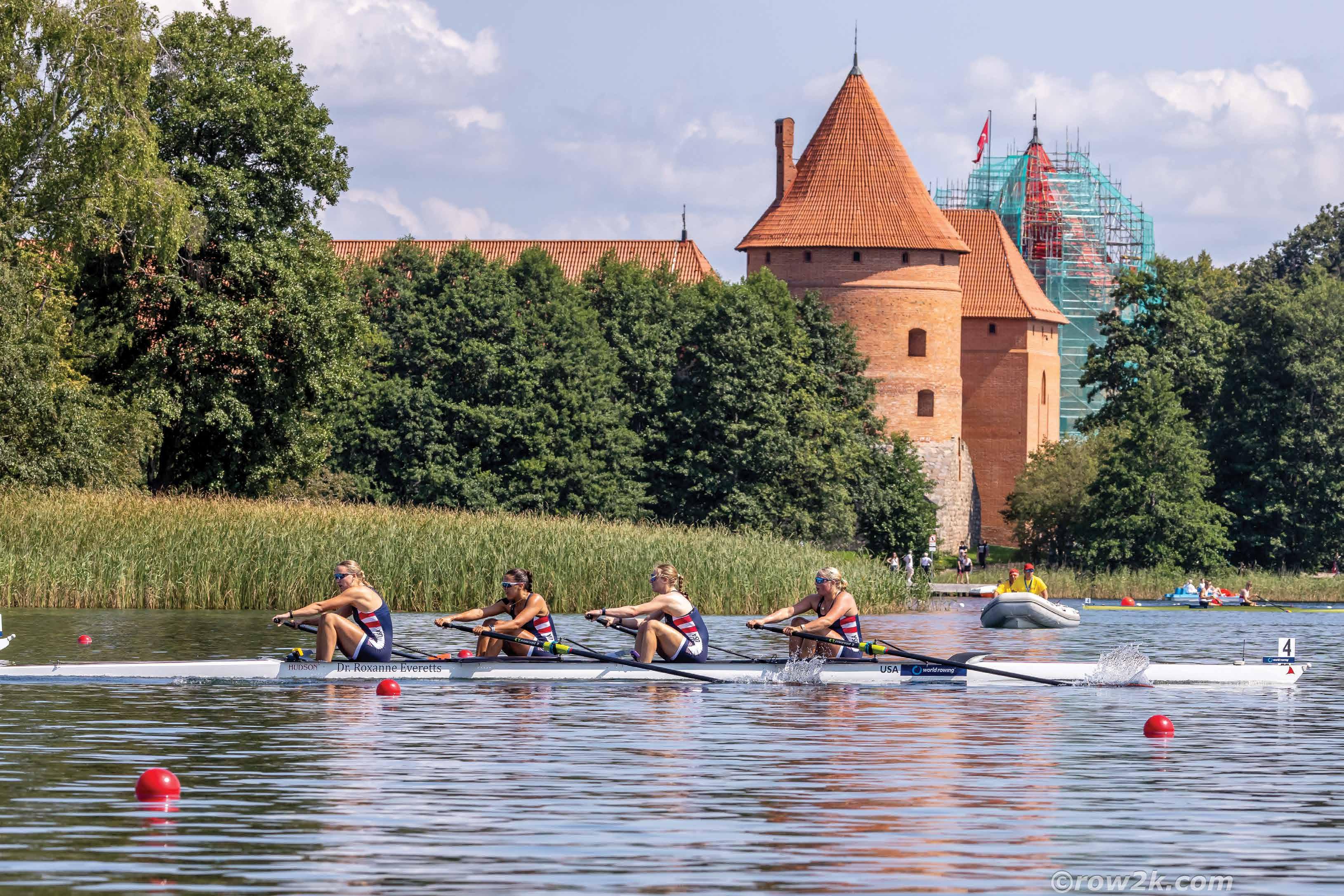
Claire Van Praagh, Stroke
2025 USRowing Under 19 Athlete of the Year
Women’s Four, Gold Medalists // U4.22
2025 World Rowing Under 19 Championships
Official Boat Supplier of USRowing U19 and U23 Teams




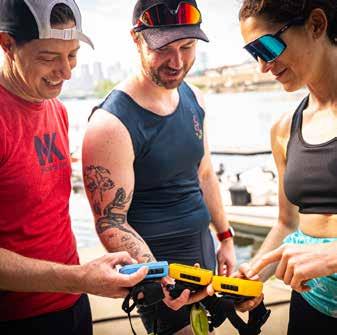
For a limited time, get $45 OFF the SpeedCoach® GPS 2.
When racing season is underway, every practice counts.
The SpeedCoach® GPS 2 delivers real-time, stroke-by-stroke performance metrics so athletes and coaches can see exactly how technical adjustments impact boat speed — while they’re still on the water.
Monitor speed, rate, split, time, and distance instantly. Measure the impact of technical changes in real time. Build sessions around objective feedback instead of guesswork.
Data-driven athletes don’t wait for race day to find speed. They train with it.
Built to last and trusted by programs for over a decade, the SpeedCoach® GPS 2 continues to set the standard for reliable, measurable performance.

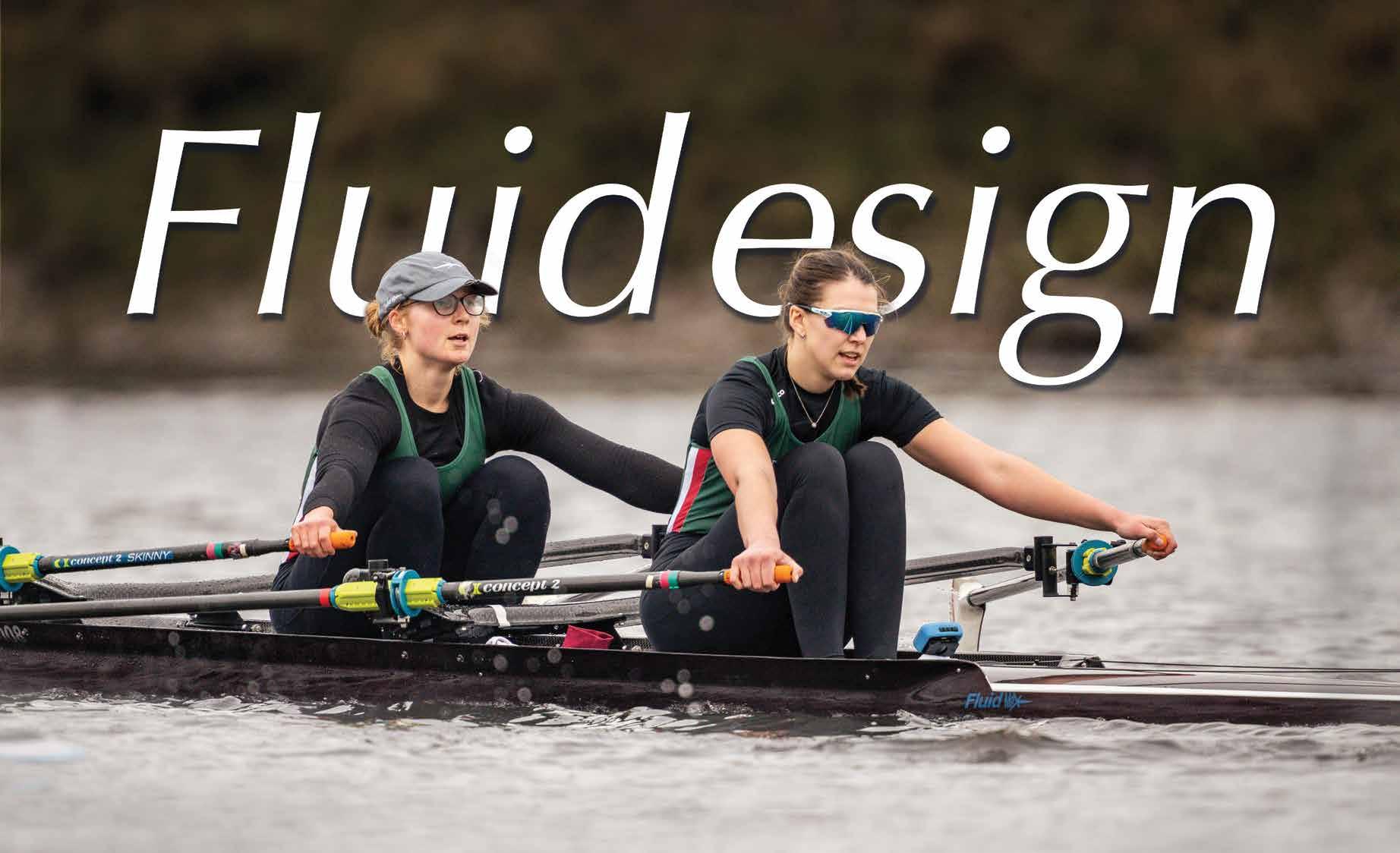
Women’s Championship 2X –University of Leads

Follow us on Facebook: @Rowfluid • Instagram: rowfluidesign


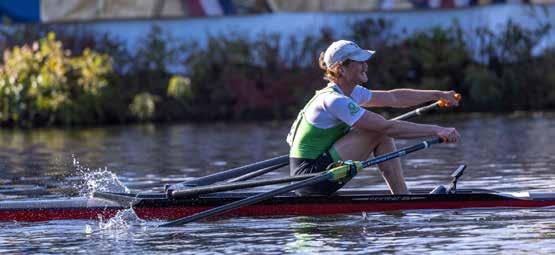
Lightweight Cooper Tuckerman switched into a Phantom 25 after rowing a different brand boat in 2024 and was 30 seconds closer to repeat winner, Finn Hamill. An impressive 4th place both years, Cooper was 47 seconds behind Hamill in 2024 and only 17 seconds back this year, rowing the Phantom 25.
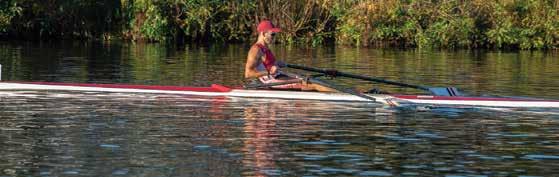
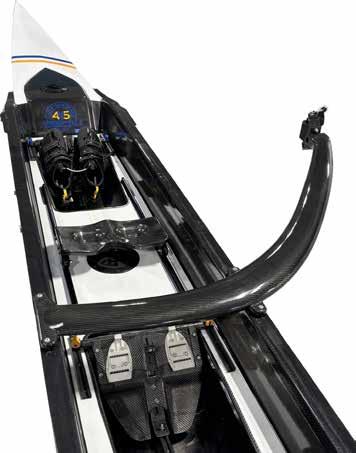
Victor Corja powering his club’s Peinert 26 with a carbon rigger. HEAD OF THE
Chip Davis PUBLISHER & EDITOR
Chris Pratt ASSOCIATE PUBLISHER
Vinaya Shenoy ADMINISTRATIVE ASSISTANT
Art Carey ASSISTANT EDITOR
Ian Parish ASSOCIATE
CONTRIBUTING WRITERS
Andy Anderson | Nancy Clark
Martin Cross | Frank Fitzpatrick | Volker Nolte
Luke Reynolds | Marlene Royle
Robbie Tenenbaum | Hannah Woodruff
CONTRIBUTING PHOTOGRAPHERS
Jim Aulenback | Steve Aulenback
Julia Kowacic | Katie Lane | Karon Phillips
Patrick White | Lisa Worthy
MAILING ADDRESS
Editorial, Advertising, & Subscriptions PO Box 831 Hanover, NH 03755, USA (603) 643-8476
ROWING NEWS is published 12 times a year between January and December. by The Independent Rowing News, Inc, PO Box 831, Hanover NH 03755 Contributions of news, articles, and photographs are welcome. Unless otherwise requested, submitted materials become the property of The Independent Rowing News, Inc., PO Box 831, Hanover, NH 03755. Opinions expressed by authors do not necessarily reflect those of ROWING NEWS and associates. Periodical Postage paid at Hanover, NH 03755 and additional locations. Canada Post IPM Publication Mail Agreement No. 40834009 Return undeliverable Canadian addresses to Express Messenger International Post Office Box 25058 London BRC, Ontario, Canada N6C 6A8.
POSTMASTER: Send address changes to:
ROWING NEWS
PO Box 831, Hanover, NH 03755. ISSN number 1548-694X
ROWING NEWS and the OARLOCK LOGO are trademarks of The Independent Rowing News, Inc. Founded in 1994
©2026 The Independent Rowing News, Inc. All rights reserved. Reproduction in whole or in part without written permission prohibited.
PLEASE SHARE OR RECYCLE THIS MAGAZINE

Follow Rowing News on social media by scanning this QR code with your smart phone.

The former Navy SEAL hopes to win a spot in the men’s eight that will go for America’s first Olympic gold in the event since 2004. If he succeeds, those who helped him develop won’t be surprised.
BY FRANK FITZPATRICK
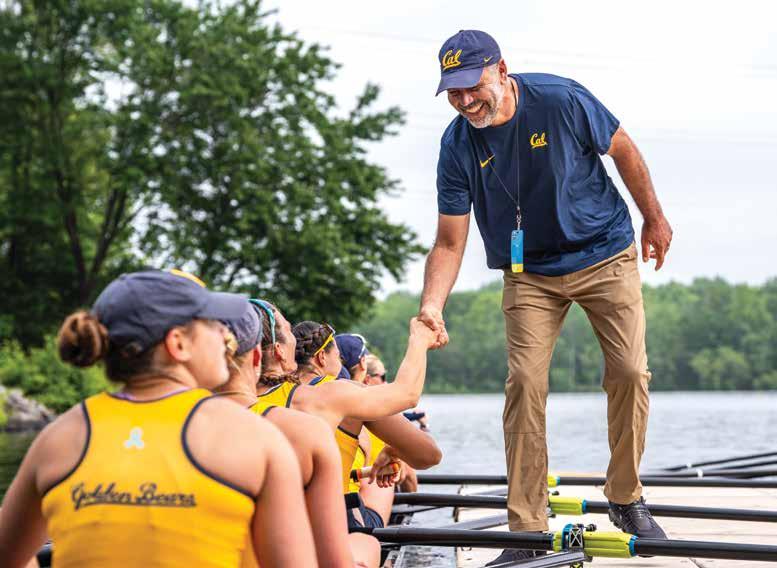
Cal vs. Washington, Texas vs. Stanford—rivalries between the best and fastest men’s and women’s crews ever, each coached by men who traveled similar paths to the top.
BY CHIP DAVIS
What’s holding us back? Maybe it’s the lies we keep telling ourselves.
BY CHIP DAVIS
DEPARTMENTS
News The Boat Race lineups Oksana Masters sets Para record USRowing leadership change
Sports Science Newer Is Not Necessarily Better
Coxing A Time to Rig and a Time to De-Rig
Recruiting Deal With the Pressure By Keeping Control
Fuel What Makes Rowers Healthy?
Training Sharpening Crews for Championships
Coach Development Widening the Room 14 From the Editor
Doctor Rowing
CHIP DAVIS
The biggest myth in rowing is that we can’t [insert your idea here]. There are four other whoppers, all equally false, that I debunk in the feature “The Five Biggest Myths In Rowing,” beginning on page 50.
I’m sure more than one person told Michael Herman, who didn’t find our sport until after college, that you can’t just teach yourself to row on an erg and then go to the Olympics. He’s well on his way to doing so, however, having won a bronze medal in the men’s eight—less than two tenths of a second off the defending Olympic champs, Great Britain—at last summer’s world championships.
You can’t just teach yourself to row on an erg and then go to the Olympics? Herman is well on his way to doing so.
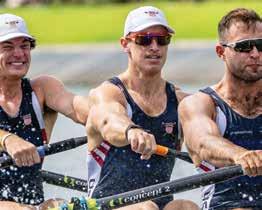
Of course, he hasn’t gotten this far without a lot of help from others since that fateful first time he sat on the erg (because the treadmill was broken). Frank Fitzpatrick, a veteran sportswriter and Pulitzer Prize finalist we’re proud to have join the Rowing News crew, tells the Navy SEAL’s incredible story, so far, beginning on page 34.
Finally, the spring racing season—the only one that really matters for student-athletes—is under way, and the two fastest rivalries in American rowing, Cal-Washington and StanfordTexas, are on collision courses, as described on pages 42-49, to decide the men’s and women’s national champions on May 31.
We can’t wait.

I know that rowing is good for me and keeps me fit and healthy. But as it turns out, my rowing was also good for someone else. I saved a man’s life! Here’s what happened.
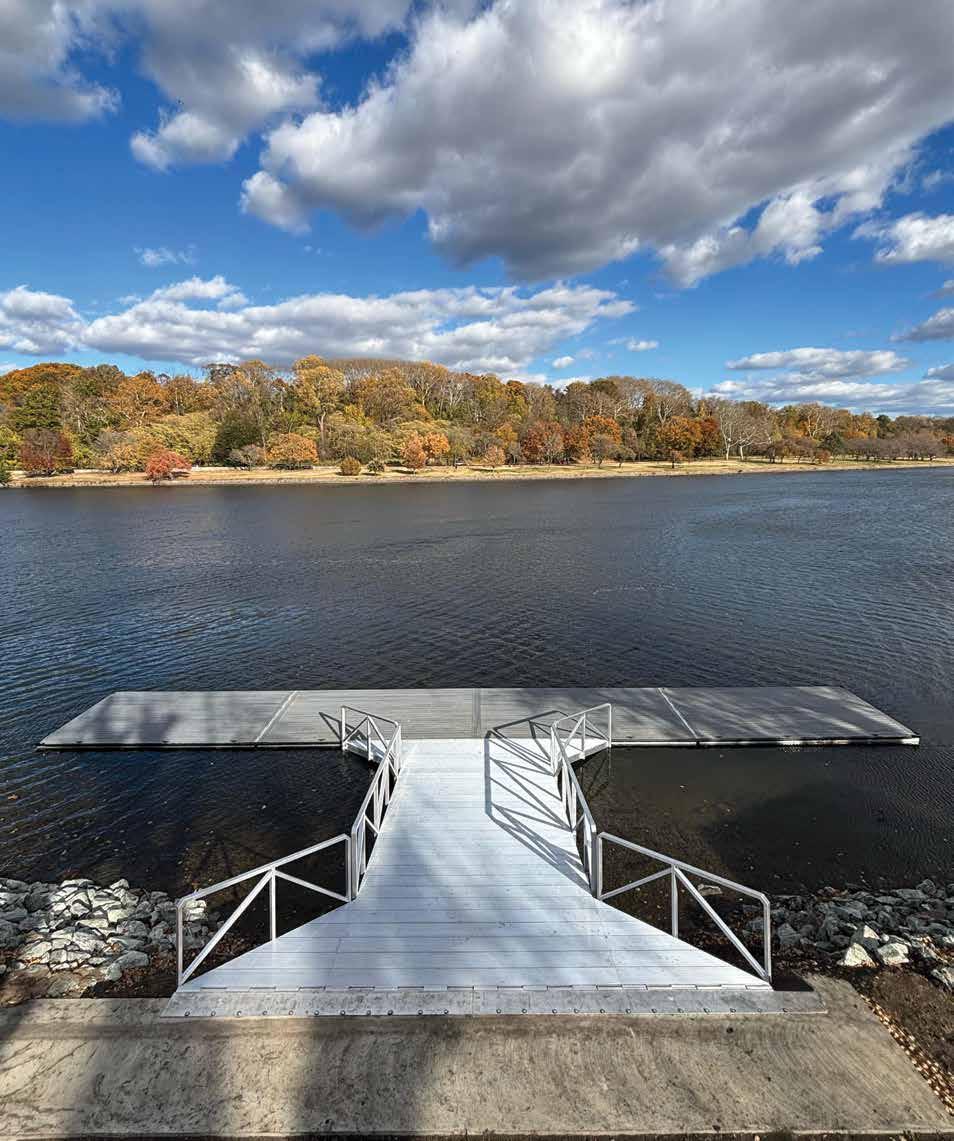
I row on the North Canadian River in Oklahoma City with a Liteboat 5.0 coastal rower. The river was dammed in 1918 to form adjacent Lake Overholser, but the river is still there and is an excellent channel for rowing.
My route runs from the Riversport boathouse to the dam and back (twice), which is about 7,500 meters. On a recent morning, as I approached the dam, I saw a pickup truck in the river, close to the bank and half submerged. That was not normal!
I had my phone with me, so I called 911 and reported it. Remarkably, no one else had called it in. A few minutes later, I heard the sirens of the Oklahoma City Fire
Department rescue team and the OKC police.
They asked me to look in the windows of the truck to see if anyone was inside, but the windows were tinted, so I couldn’t see. But yes, a man was inside, and he was alive! They had to break the driver’s side window to get him out.
He had been in the water for 10 hours at that point, having driven off the road at about 1 or 2 in the morning. It was a little after 11 a.m. when I saw the truck and called 911. The water had invaded the cab, and the man was submerged up to his neck. The temperature the night before had gone down to 30 degrees, so it’s amazing that hypothermia had not rendered the man unconscious, if not worse.
Hooray for rowing!
Bob Woods Oklahoma City, Okla.
Because of an editing error, the story about Temple rowing coach Brendan Cunningham in the March issue misidentified his highschool rowing coach. Dave Krmpotich coached him when he rowed for Monsignor Bonner High School.

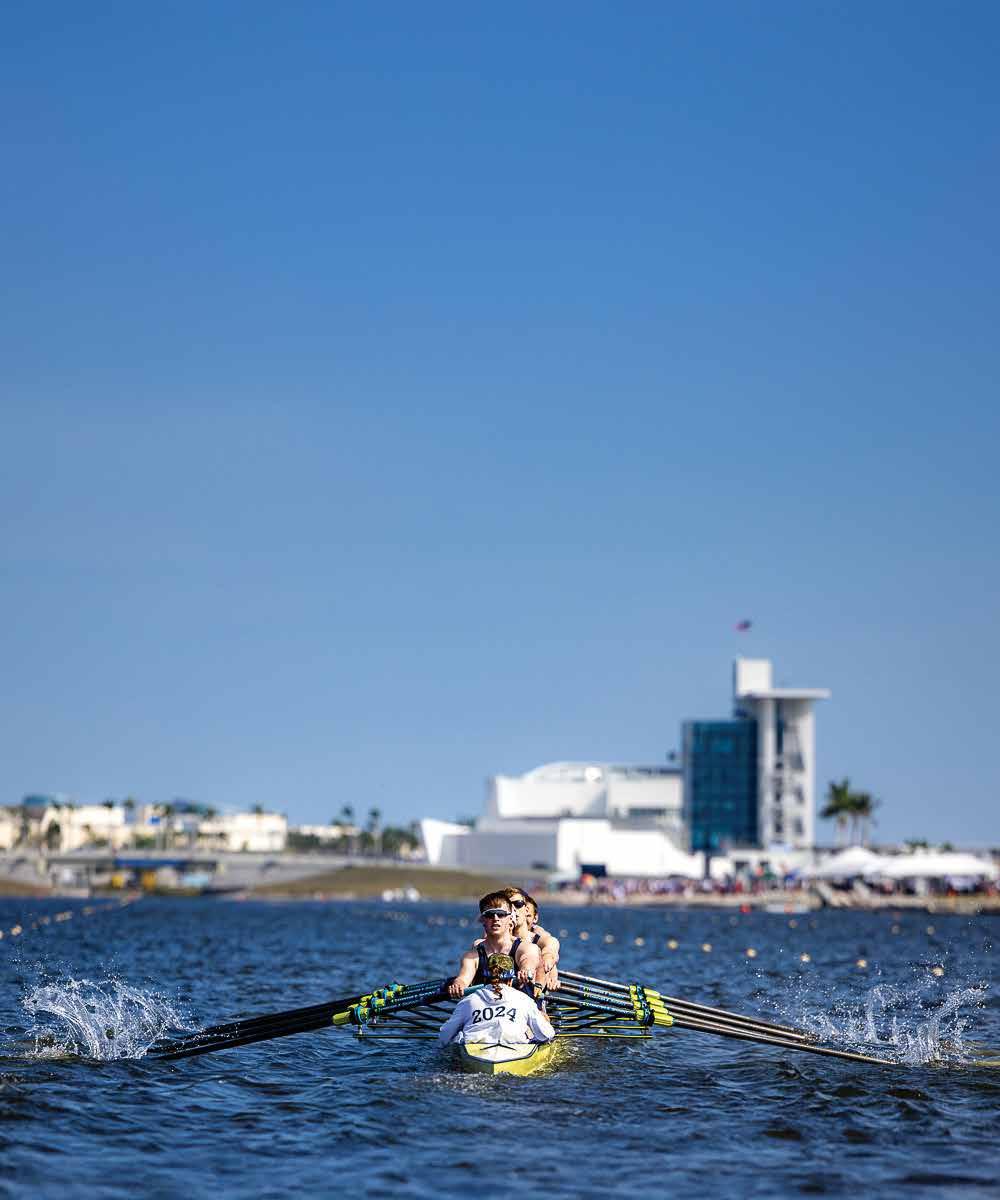

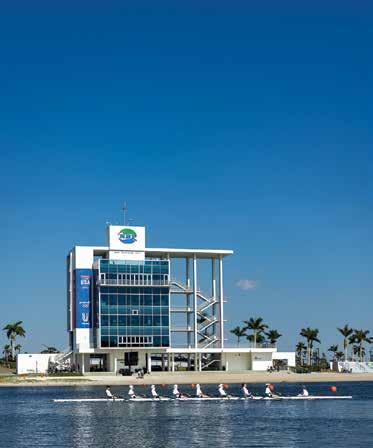
Train like champions at Nathan Benderson Park. Recognized as North America’s best rowing venue, NBP provides elite facilities and seamless support—so your team can focus on results.
Benefits of Training at NBP
• World-class rowing venue in Sarasota, FL
• Perfect training climate, with great weather and calm conditions
• Just 1 mile from I-75 with ample trailer parking
• 550-acre park with trails for walking, running and fitness
• 5 miles from airport, walking distance to shops and dining, minutes from world-renowned beaches








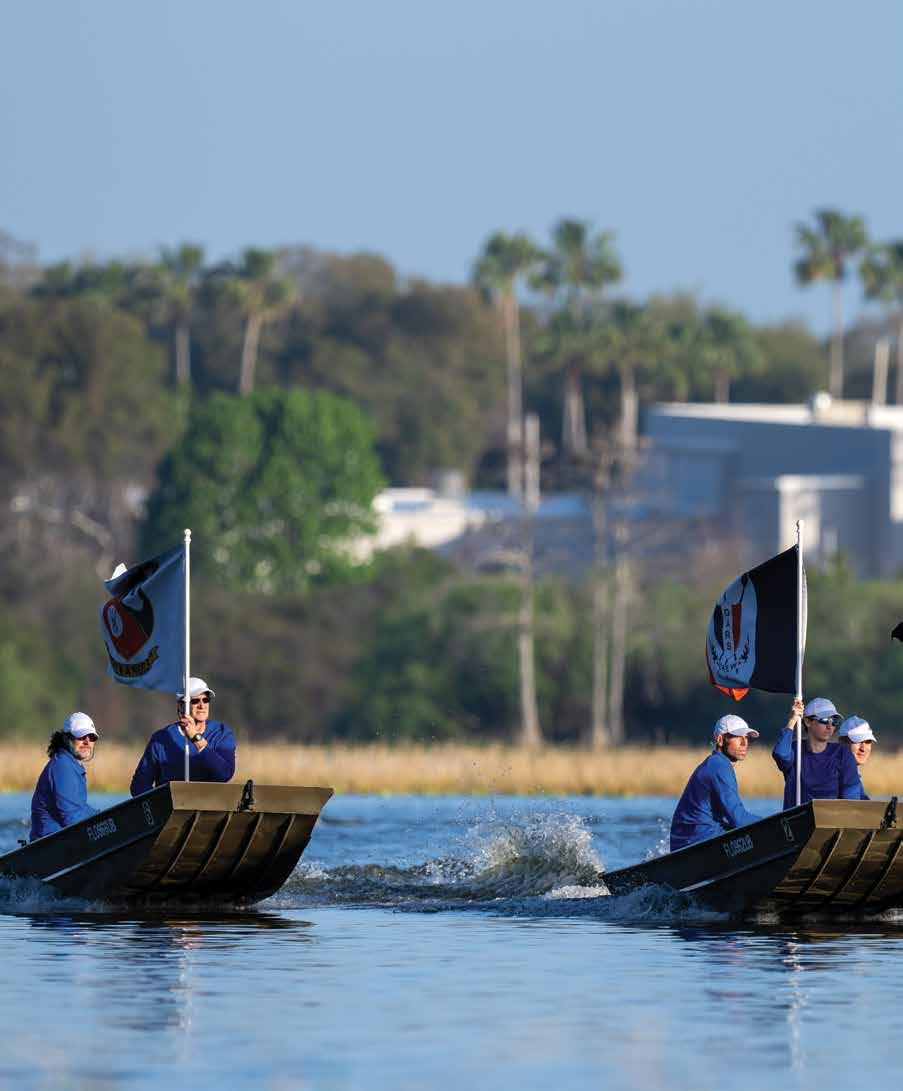
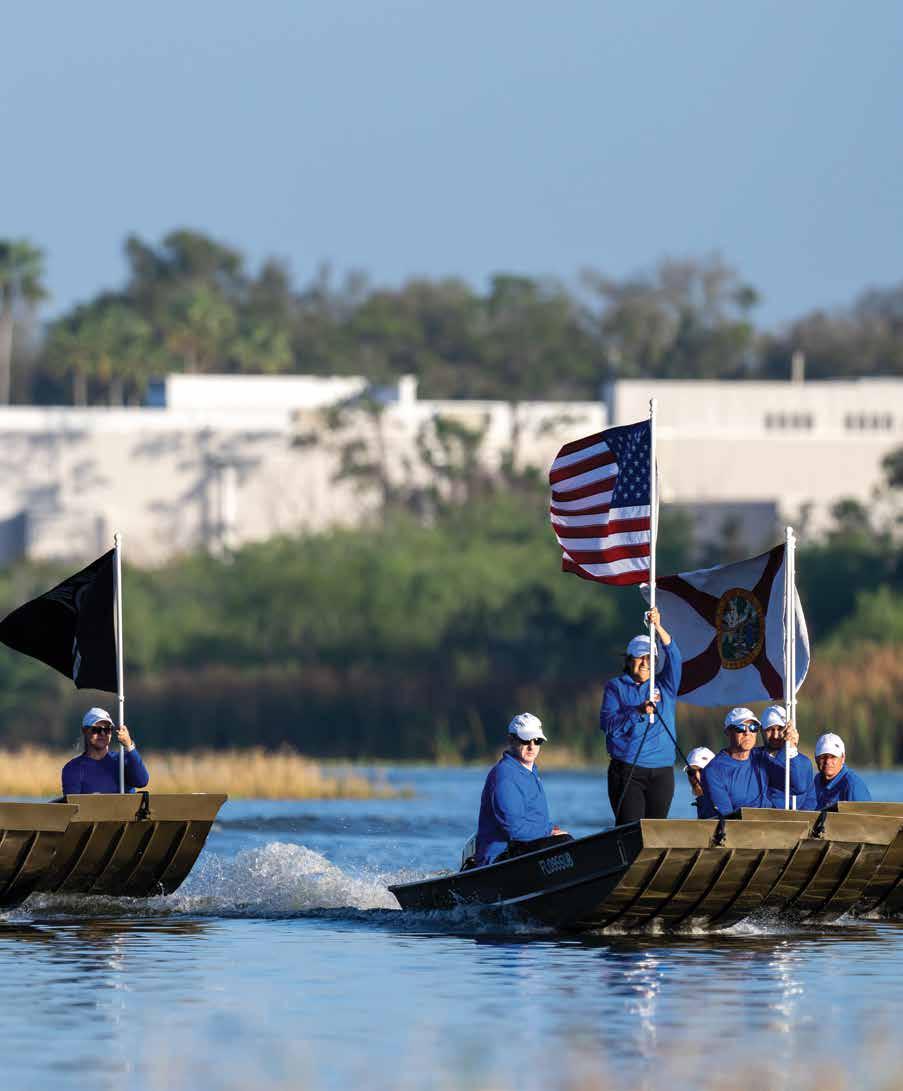
At the Orlando Area Rowing Society, Inc.’s OARS Youth Invitation, the Crew Angels Launch Boat Team, led by Steve D’Amico, 25year veteran of the United States Air Force, parades the U.S., Florida, and other flags down the Turkey Lake course at Bill Frederick Park in Orlando, Fla..
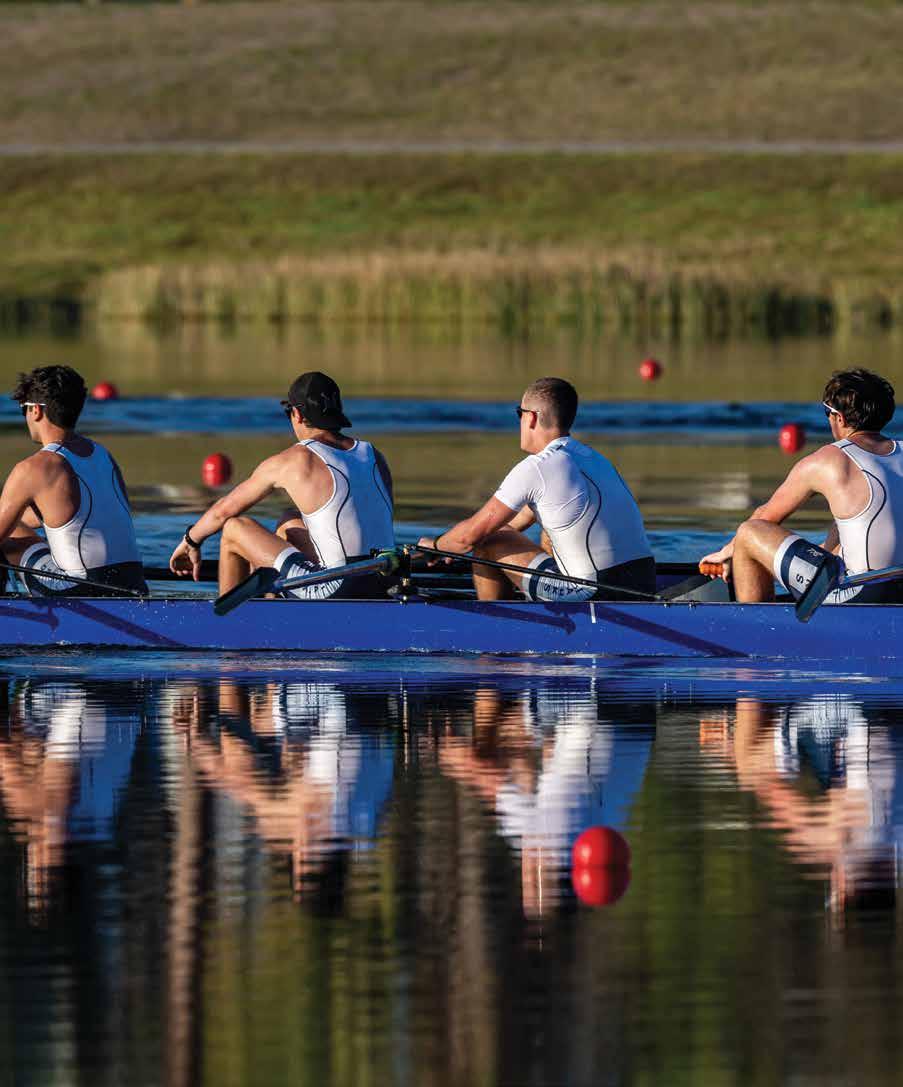
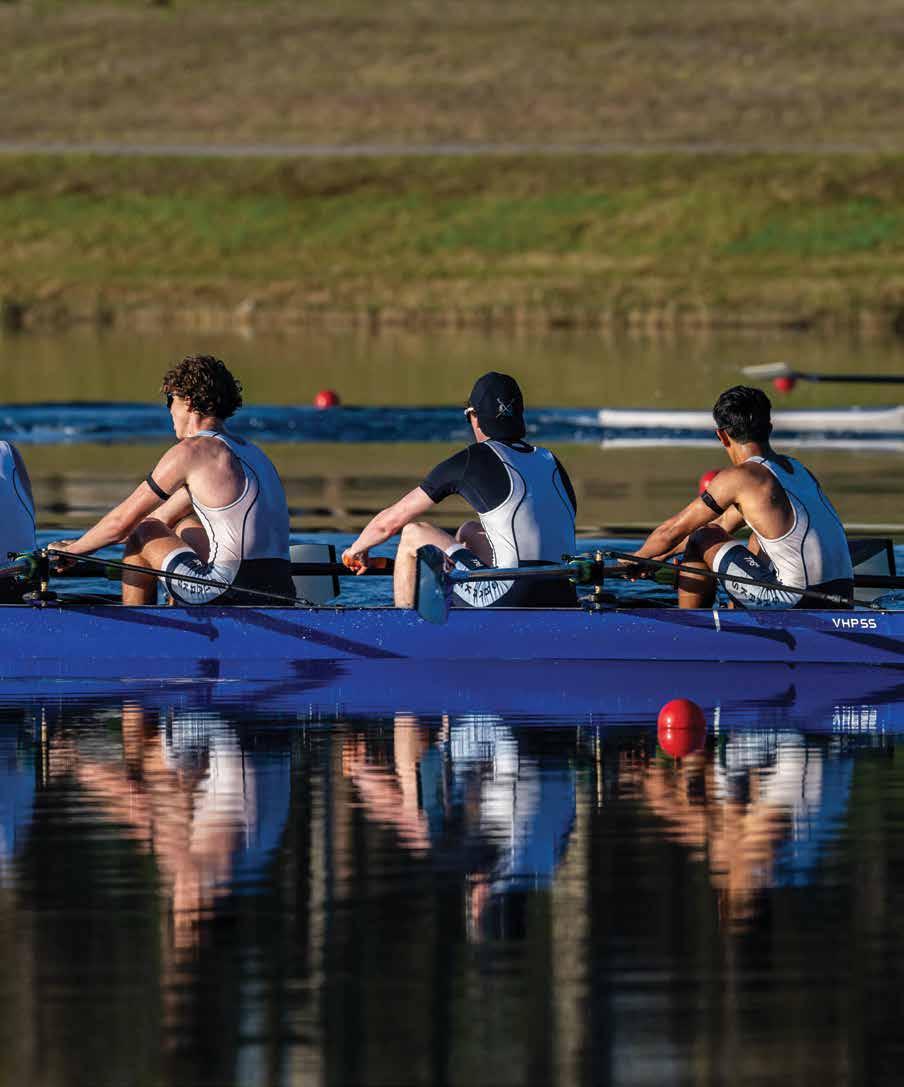
The American Youth Cup, held in February at Nathan Benderson Park in Sarasota, drew over 600 middle- and high-school crews from across the country for 10-lane racing on calm waters. New events for 2025 included U16 coxed quads and youth second quads, with a regatta schedule crafted to maximize racing experience. Under 15 1,000-meter singles races were held on the park’s separate 1,500-meter course to give young scullers extra attention and margin for safety, without delaying the 2,000-meter racing on the main course.

Eleven of the 36 rowers who will vie next month in the venerable contest between Oxford and Cambridge have U.S. roots.
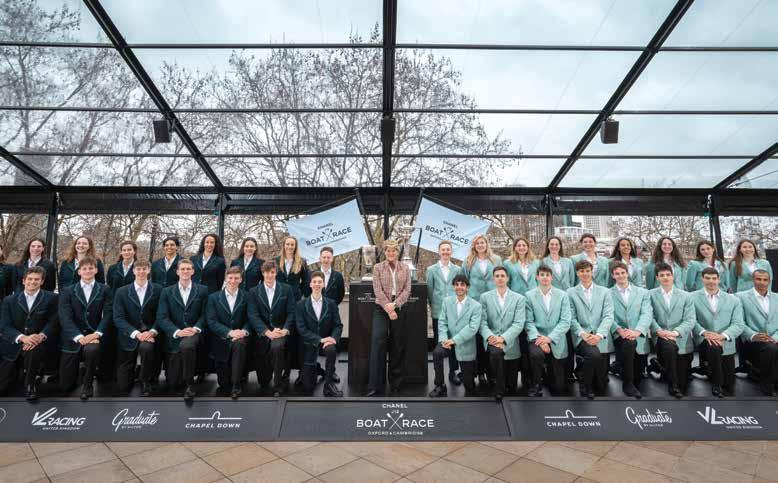
The Thames is full of surprises and during the official crew-naming ceremony for the 2026 CHANEL J12 Boat Race, the river showed its teeth.
It was whipped up by a cold, blustery southwesterly wind that froze the couple of hundred spectators to the marrow. Some thought it an omen for the conditions the athletes might expect on Boat Race Day. But rough or smooth, pretty much anything can happen—and has—during that iconic race.
So, in the beautiful surrounds of Somerset House, in the heart of London, the 36 athletes who will do battle on April 4
were introduced to the world’s media. With the contest just over three weeks away, each rower and cox took the opportunity to shake hands and be photographed with his or her opposite number. There were smiles and warm handshakes, but all that will be forgotten, of course, when they line up on the Putneyto-Mortlake championship course. The introductions were choreographed beautifully by Britain’s go-to TV sports anchor, Clare Balding, who will host the race itself for the event’s new broadcaster, Channel 4 TV.
By mid-afternoon, when the dust had settled, the sense
Paralympian Oksana Masters won a record-setting 12th Para gold medal at the Milano Cortina 2026 Paralympic Games on March 11, earning victory in the women’s sitting 10-kilometer Para skiing event. Masters, who won a bronze medal rowing in the 2012 London Paralympic Games with doubles partner Rob Jones, is one of the most decorated Para athletes of all time, having won a total of 22 medals across the Para sports of rowing, skiing, and cycling.
was that the Cambridge men remain very strong favorites to win their fourth race in a row, while the Dark Blue women are marginal favorites to overturn an eight-year losing streak.
The Oxford men, under coach Mark Fangen-Hall, are improving and headed from Somerset House to Amsterdam to race in the Heineken Cup, as did the Dark Blue women. But on the championship course, the men will face a Cambridge squad that— if the rumors are to be believed—might be the fastest ever Light Blue crew to take to the water. Coach Rob Baker claimed that he had oarsmen in his 3V that in any normal year would get into the Blue boat.
The Light Blue women have improved their speed significantly since Oxford beat them on the Charles by over 20 seconds. That much is evidenced by their victory over a Leander crew that had bettered them earlier in the season. But Dark Blue Coach Alan French has kept his lineup unchanged for most of the fixture season, and his sternfour combination, three of whom went to school in the U.S., are a formidable unit.
Echoes of U.S. influence on the race were in evidence everywhere. Would you believe that work on building the Palladianstyle location was begun in 1776—the same year the 13 colonies declared their independence? Out of the 36 rowers named, 11 are from the USA.
Almost half of both the men’s and women’s Cambridge crews are Americans. Camille VanderMeer’s name stands out among the Light Blue women. The 2025 world champion hails from Elmira, N.Y., and is a graduate of Princeton. She will hold down the key six-seat of the Cambridge boat behind the German, Mia Freischem, and fellow American stroke woman, Aidan WrennWalz.
For the Light Blue men, William Klipstine, a walk-on for the Wisconsin Badgers, brings length and poise to the seven-seat. He’s part of a super impressive stern-four combination led by German Olympian Fred Breuer. The boat is coxed ably by Virginian Sammy Houdaigui. Originally from the Big Green, the U23 medalist steers a great line and likes to throw in an aggressive maneuver or two.
The Oxford women’s lineup contains two Americans. Julietta Camahort learned her rowing at Marin Rowing Association
in California. Her gold medal in the world junior championships took her to the Stanford Cardinal, where she excelled and won U23 honors. Lightweight Emily Molins also went to Stanford, where the Illinoisan had a distinguished career. Both these women will row in the bow four of the Dark Blue boat.
It’s striking that the Oxford men have only one American: James Fetter, another Cardinal graduate, from Palo Alto. But scratch the surface, and both of Oxford’s stern pair—British star Harry Geffen and Aussie Alex Sullivan—rowed in the States, Geffen in the 1V at Yale and Sullivan in the 2V at Harvard.
It runs the same in the Cambridge men’s crew, where Breuer won the 2023 IRAs with the University of California, Berkeley, and Brit Gabe Obholzer took a silver at the IRAs in 2025 with Harvard. Though Obholzer is British, he speaks with an American accent—thanks to living with Klipstine, and Kyle Fram of Lawrenceville, N.J.
All three of these men who share an apartment have represented their countries at major international championships. The same could not be said for Oxford’s fourman, 19-year-old Scot Fergus Pim. His stroke man, Geffen, described him as “pretty much a walk-on this season.” He was discovered at a fresher’s fair after he pulled a 14-second 100 meters on the Concept2. Pim’s dad won The Boat Race in 1997, so there is history. By contrast, Cambridge’s 18-year-old wunderkind, also in the fourseat, is Pat Wild, who took a world-junior gold in the pair last year.
What’s left before race day are fixtures for both Cambridge crews against strong opposition. The fixture between the Leander men and Cambridge should be spectacular, with the might of Britain’s international rowers expected to sit in the former crew. Oxford’s women also will race Leander.
Depending on the results of those contests, the coaches might fine-tune their line-ups. The rowers know their seats are never really safe.
MARTIN CROSS
2026 CHANEL J12 Boat Race crews, with nationality and U.S. university
*Denotes Blue rower
Oxford Men
Tobias Bernard*, joint UK/FRA
Stroke Harry Geffen, UK, Yale
7 Alex Sullivan, AUS, Harvard
6 Jamie Arnold, AUS, Cal
5 Alex Underwood, UK
4 Fergus Pim, UK
3 James Fetter, USA,Stanford
2 Julian Schoeberl, AUT
Bow Felix Crabtree, UK
Cambridge Men
Cox Sammy Houdaigui, USA, Dartmouth
Stroke Fred Breuer, GER, Cal
7 William Klipstine, USA, Wisconsin
6 Alexander “Lexi” Mclean, Joint AUS/UK, Yale
5 “Gabe” Obholzer, UK, Harvard
4 Pat Wild, UK
3 Kyle Fram, USA, Columbia
2 Noam Mouelle*, FRA
Bow Simon Hatcher*, USA, Brown
Oxford Women
Cox Louis Corrigan, UK
Stroke Heidi Long *, UK, Virginia
7 Sarah Marshall*, UK
6 Esther Briz Zamorano, ESP, Stanford
5 Kyra Delray*, UK, UCLA
4 Julietta Camahort, USA, Stanford
3 Lilli Freischem*, GER
2 Emily Molins, USA, Stanford
Bow Annie Anezakis*, AUS, Princeton
Cambridge Women
Cox Matt Moran, UK
Stroke Aidan Wrenn-Walz, USA, Harvard
7 Mia Freischem, GER
6 Camille VanderMeer, USA, Princeton
5 Antonia Galland, GER
4 Carys Earle *, UK
3 Charlotte Ebel, joint USA/GER, Syracuse
2 Isobel Campbell, USA, Cal
Bow Gemma King*, UK
New Events for 2026 including Championship Weekend + Champ Mixed Eight!
August 2-9, 2026 • St. Catharines, Ontario, Canada
Masters: August 2 • Race Week: August 4-6 • Championship Weekend: August 7-9
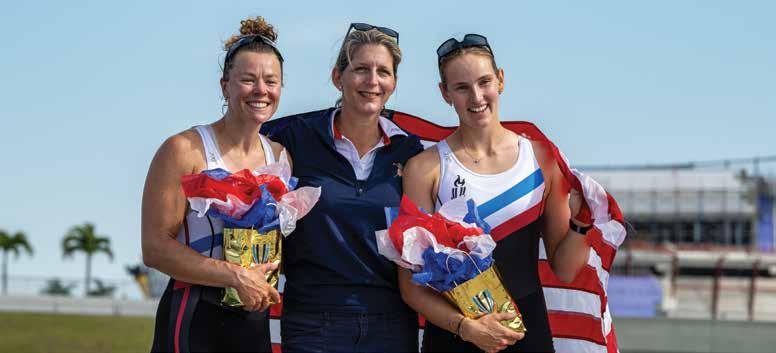
Under her leadership, USRowing’s revenue soared, but success on the water proved elusive. Her departure was preceded by months of tension and conflict with the board.
USRowing CEO Amanda Kraus is leaving the sport’s national governing body this month, it was announced in March.
“Leading USRowing has been one of the great honors of my professional life,” Kraus said in an official statement.
News of her departure circulated in the rowing community during the week preceding the announcement after several months of tension and conflict between the CEO and USRowing’s board of directors, which is chaired by Kirsten Feldman.
Minutes of board meetings for this year have not been published. The last published minutes, two pages long, from 2025 use the phrase “discussion ensued” six times, with no specific information.
Feldman, who was elected to the board as the Northeast Region representative, did not return a call or text and email messages seeking comment.
In an email, USRowing Chief Marketing Officer Lizzie Seedhouse wrote:
“The organization does not have further comment, and USRowing representatives have all been directed to follow our policy of redirecting all media inquiries to media@ usrowing.org.”
“I loved working with her,” said Josy Verdonkschot, The McLane Family Chief High Performance Officer at USRowing, who was hired by Kraus in 2022. “We always functioned as a team. I got full freedom to execute things the way I wanted. She did a great job.”
Verdonkschot said the board has assured him that his Olympic program will continue as planned. The United States hosts the LA2028 Olympic Games from July 14 to 30, 2028, including the premier of the new Olympic rowing sport Beach Sprints.
Kraus led USRowing to record revenue—almost $19.6 million in 2024, with a surplus of $489,000, according to the organization’s annual report. In 2019, USRowing’s income was $12 million, which fell to $7.1 million in the Covid year of
2020, before Kraus was hired in the summer of 2020.
On the water, USRowing under Kraus was less successful, winning Olympic events only twice across five senior World Rowing Championships (women’s four in 2025) and two Olympic Games (men’s four in 2024).
During her tenure, membership was essentially flat at about 75,000. USRowing called 2024 the “second highest year in history for organizational membership.”
The national governing body signed an all-time high of 286 sanctioned regattas in 2024 but lost collegiate and scholastic association members when it tried to force schools into safety and liability agreements.
Kraus’s total compensation in 2024 was $326,515, according to USRowing’s most recent tax filings.
The board intends to appoint an interim CEO and launch an immediate search for a permanent successor. CHIP







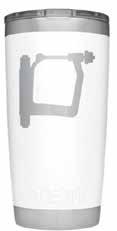

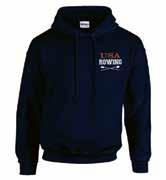
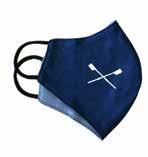
2-layer neck gaiters will protect you throughout the seasons. Stretchguard fabric with extreme 4-way stretch for optimal comfort. Super soft, silky feel that is lightweight and breathable. 100% performance fabric, washable and reusable.
$20
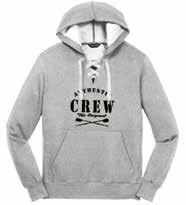
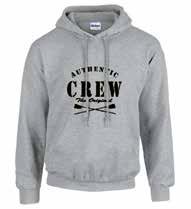
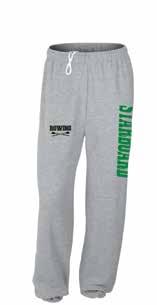
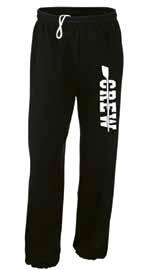
ALL AVAILABLE WITH YOUR TEAM LOGO AT NO EXTRA CHARGE (MINIMUM 12)
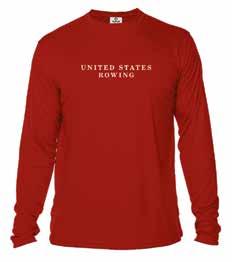
UNITED STATES ROWING UV
VAPOR LONG SLEEVE $40
WHITE/OARLOCK ON BACK
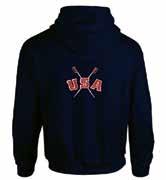
NAVY/CROSSED OARS ON BACK
RED/CROSSED OARS ON BACK
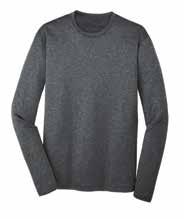
PERFORMANCE LONG SLEEVES

PERFORMANCE T-SHIRTS
PERFORMANCE TANKS
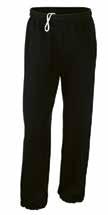
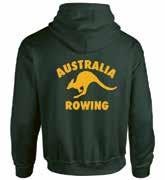
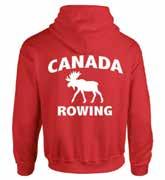
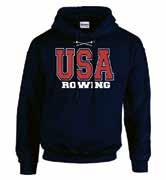
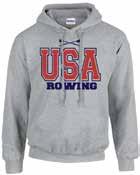
Order any 12 performance shirts, hooded sweatshirts, or sweatpants and email your logo to teamorders@rowingcatalog.com and get your items with your logo at no additional cost!



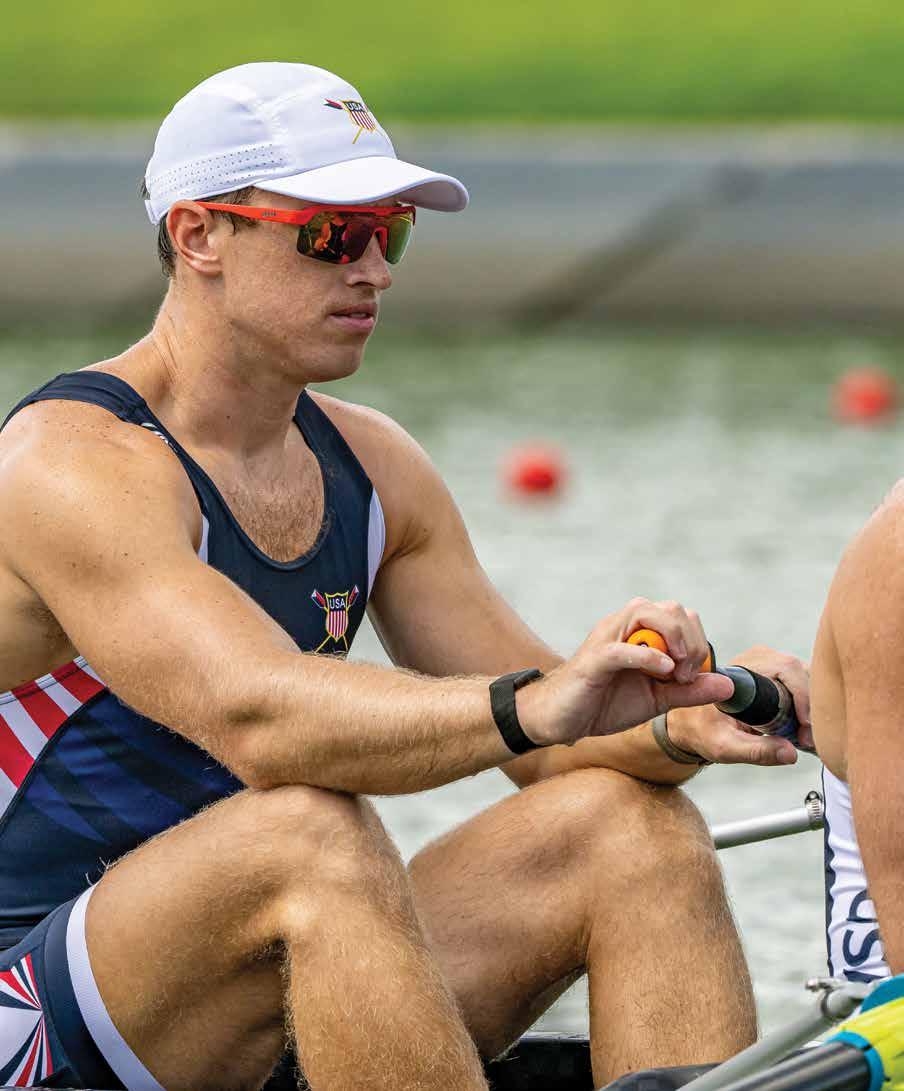
The former Navy SEAL hopes to win a spot in the men’s eight that will go for America’s first Olympic gold in the event since 2004. If he succeeds, those who helped him develop won’t be surprised.
STORY BY FRANK FITZPATRICK
Not surprisingly, at the moment his life changed, Mike Herman was in the gym.
A Navy SEAL aboard the USS Herschel Woody Williams in 2021, Herman liked to incorporate a long run into his job’s daily rigors. But on that morning, the lone treadmill in the ship’s gym was out of service.
“I went looking for something else and I noticed there was an erg. So I got on it,” Herman recalled. “One of the guys in my platoon had rowed, and I asked him for a couple of workouts. And I just went from there.”
As much as he liked the rowingmachine sessions, he wasn’t sure how to gauge his efforts. The platoon-mate, once a collegiate lightweight rower, suggested the best way might be to test himself with a 2K.
“I said, ‘OK, what’s your best 2K?’” Herman said. “And he was like, ‘It’s a 6:17, but you’re not going to beat that.’”
The provocation ignited Herman’s hyper-competitiveness. On his initial attempt, he pulled a 6:15. Before his deployment ended, he would, with his friend’s assistance, cut that time to 6:02.
“That led me to believe that maybe I could do this for real,” Herman said recently during a break from training in Colorado Springs. “And like anyone getting into something, when you realize you’re pretty good at it, you kind of think, ‘I wonder how far I can take this?’”
The answer, as it turns out , might be all the way to the Los Angeles Olympics in 2028.
Mission-oriented and resolute, Herman, a native of a Maryland suburb of Washington, D.C., has undergone a remarkably rapid transformation. At 29, he’d never been in a rowing shell. At 33, he’s an Olympic-caliber oarsman.
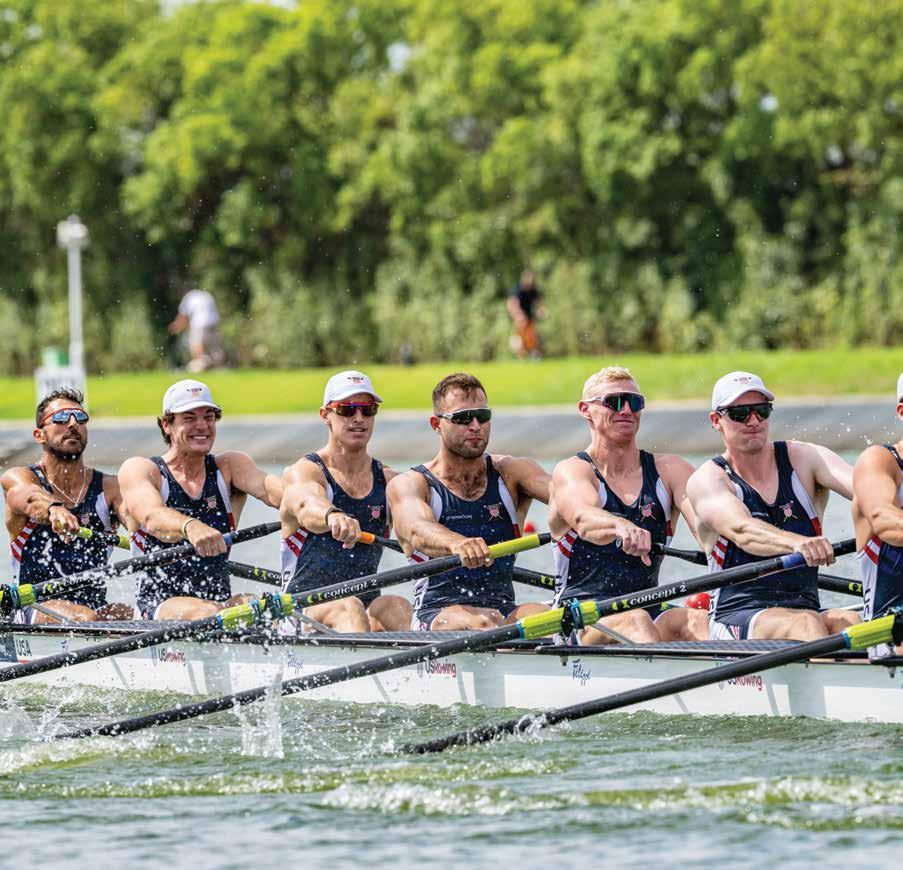
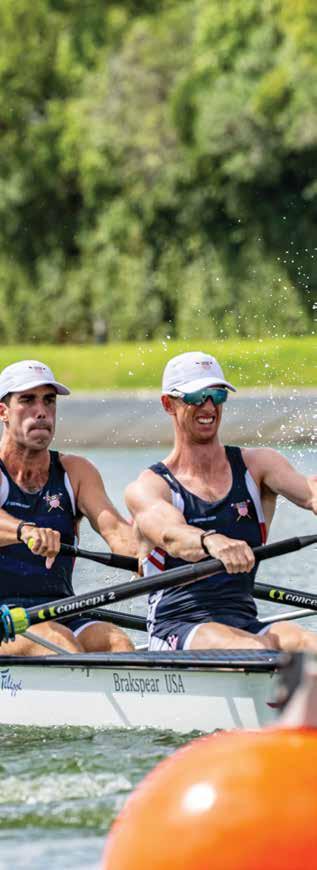
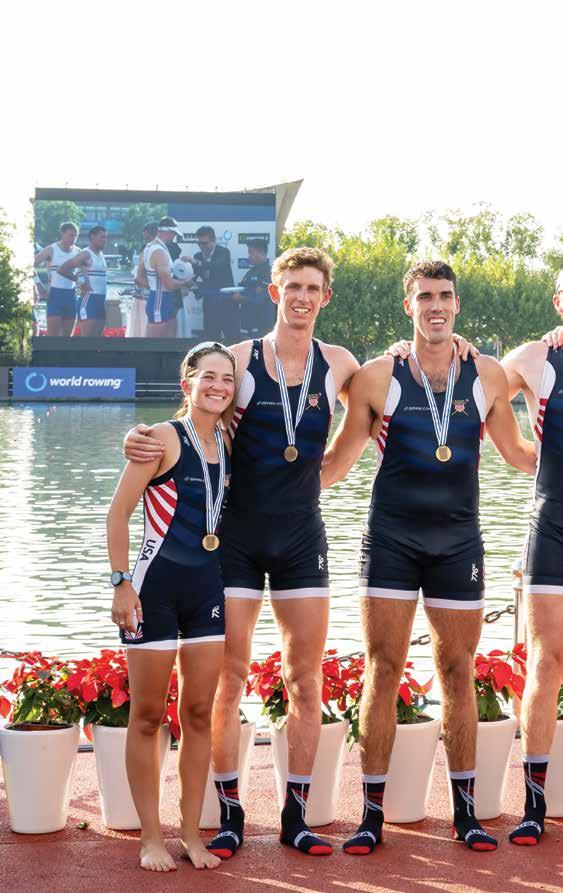
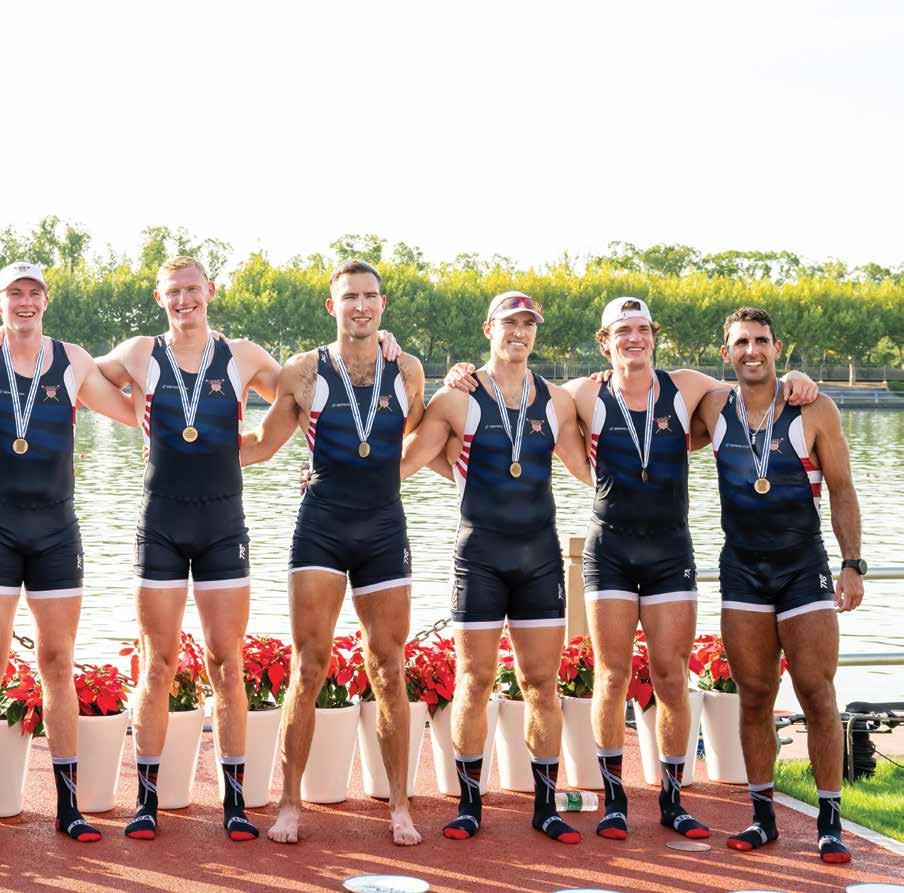
Herman’s sudden leap to prominence, just four years after he discovered the sport, helped the U.S. men’s eight pull off a coup of its own at last summer’s World Rowing Championships in Shanghai. A year after the Paris Olympics, in what typically is a transition year for American rowers, the U.S. crew surprised almost everyone by capturing a bronze medal. With Herman in three-seat, the U.S. finished 2.42 seconds behind a powerful Netherlands boat and just a breath (.16 of a second) after runnerup Great Britain.
A few weeks before, Herman had been
part of a mixed-eight crew that won at the World Rowing Cup II Varese. At that same event, he also competed in the men’s double sculls, finishing 15th.
“I never thought he’d get this far and I told him as much,” said Bill Manning, who mentored Herman at Philadelphia’s Penn AC. “I said, ‘You’re 30, and I’d hate for you to spend time doing something that’s not productive. It was highly unlikely he’d ever make a senior national team. Well, he proved me wrong.”
Herman’s steely eyes are now focused on 2028, when he hopes to win a spot in the men’s eight that will go for America’s first Olympic gold in the event since 2004. If he succeeds, those who helped him develop won’t be surprised.
“The reason he’s been so successful so quickly is that he’s so incredibly persistent. He’s a tenacious SOB when it comes to going after something he wants,” Manning said. “He was a Navy SEAL, and for those kinds of people, that’s probably a common quality. Elsewhere, it’s pretty unusual.”
Herman grew up in Bethesda, Md. He wrestled and played lacrosse at The Heights School. But at the University of San Diego, he didn’t compete in a single sport.
“I was in Navy ROTC,” he said, “and that pretty much took up all my time.”
After graduation, Herman—6-foot-3, 215 pounds—was commissioned in the Navy, where his appetite for physical activity was whet by the intense SEAL training and enhanced by his belated embrace of rowing. Ending his eight-year Navy career as a lieutenant in 2022, Herman went looking for assistance, reaching out to coaches he found on USRowing’s website.
“A lot of them didn’t reply, said they didn’t take novices, or they no longer had a high-performance program,” he said. “But I was able to get in touch with Bill at Penn AC. He was just starting to platform his program there and he said I should come to Philly.”
Used to uprooting every two years in the Navy, Herman had no difficulty abandoning Virginia Beach and heading north. He found a place to live, got a job selling software to the Department of Defense, and began training with Manning.
“He’s not like most of these nationalteam wannabes,” Manning said. “He didn’t row at some elite prep school or brand-name
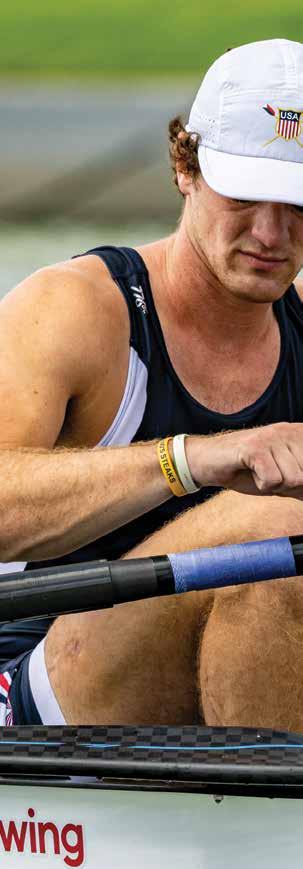
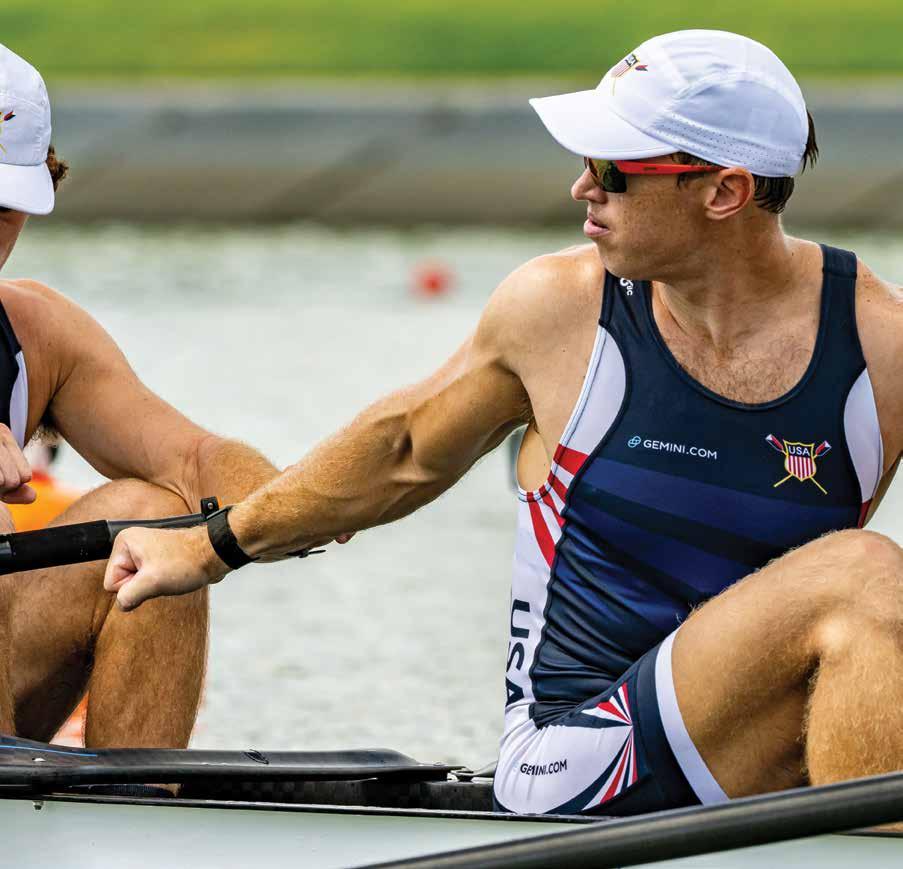
Ivy college. He was willing to relocate his life, move out of the home he owned, come to Philadelphia, find a roommate, find a job, and devote himself to making the team. Most people are like, ‘Well, I want to make the team but I have this relationship I can’t leave.’ Or ‘I have to keep this job or live in this town.’ It doesn’t work. Mike threw caution to the wind and said, ‘I’m going to go after this.’ That’s rare.”
The veteran coach initially stuck the almost 30-year-old novice in a U23 camp. All of Herman’s crewmates were several years younger, most were just as inexperienced.
Before long, Manning realized that the eager ex-SEAL’s ambition required more personal schooling then his busy schedule would permit. So he directed him to Dan Beery, a member of the U.S. eight that won gold at the Athens Games.
Herman moved in with Beery, and at 6 a.m. each morning, the two were out on the upper Schuylkill, a tranquil stretch of the river near Norristown.
His new roommate’s potential was obvious and, wanting to ensure that it flowered, Beery drew on lessons from his old mentor, legendary coach Ted Nash. Nash, who died in 2021, had been a participant or coach at every Olympics from 1960 through 2008.
“I knew what Ted looked for. And Mike checked a lot of those boxes,” Beery said. “We did some of Ted’s rhythm-comp workouts that go all the way back to the Boys in the Boat. Mike really wanted to do those old workouts. Those Boys in the Boat guys won a gold medal at the 1936 Olympics for a reason. They trained like beasts. Their boats were 50 pounds heavier and they used wooden oars. Ted picked up those workouts when he went out to Washington and trained with Stan Pocock [the legendary boatbuilder and coach]. And Mike just attacked them like a beast.”
At one point, Herman asked Beery to run him through a training exercise that perhaps only a SEAL would request. To simulate racing speeds without fatigue, a rope from the launch is attached to a rowing shell. Unless the launch creates a perfect V-shaped wake, the rower is in danger of capsizing, or worse.
“The possibility of injury is great,” Beery said. “You’ve got to create that perfect
V. And if the rope’s not perfect, it twists the boat, and you can catch a crab and flip over. But Mike is so strong, he was able to do it. You should really do it only with someone who’s done it before. Or a Navy SEAL.”
Herman tends to be reticent and self-effacing, adhering to the tenet in the Navy SEAL Code that says “I do not advertise the nature of my work.”
“He’s been through some stuff, but he would talk about it only vaguely and indirectly,” Beery said. “I never tried to dig into it. About the most he’ll ever say is ‘I enjoyed the training.’”
Whatever the experiences, they helped Herman deal with the nerves rowers–especially novice rowers–face in competition, his coaches say.
Gradually, as Herman’s abilities were refined, he was entered in races that Manning termed “the very bottom rung on the ladder”—C and D events at the Independence Day Regatta, Canadian Henley, the club nationals. Still, he kept improving, and practicing more intensely.
“Another athlete came up to me and said, ‘Bill, Mike’s lips are turning blue,’” Manning said. “And I said, ‘Yeah, that’s what happens when you’re pulling really stinking hard.’ He has that ability to put himself at a level of physical discomfort a vast majority of people would not do.”
Early on, Herman was a single sculler almost exclusively. He sought every racing opportunity he could find, frequently finishing at the bottom of those C and D finals. But he progressed rapidly, and that improvement caught the eyes of USRowing officials. In late 2024, Herman was invited to the National Training Center in Sarasota. He’s made his home there ever since.
There, the ex-SEAL’s self-confidence and determination have enabled him to overcome his inexperience as well as any unease he might have felt in the company of the nation’s top rowers, said Casey Galvanek, USRowing’s head men’s coach.
“He’s flexible and willing to do what it takes to get it right,” Galvanek said. “He asks questions. He’s willing to make changes. He came down here thinking, ‘I need to work on these things to make my stroke better.’ He figures it out. That’s a huge positive. A lot of people are waiting for the coaches to do things for them.”
Until the serious international season begins this summer, Herman will shuttle between Sarasota and Colorado Springs. Working out in the high-altitude Rockies increases red-blood cell counts and helps rowers utilize oxygen more efficiently when they return to sea level.
“We send them to altitude two or three times a year,” Galvanek said. “Right now, we’ve got 32 people there and 20 here in Sarasota.”
In Sarasota, the long days typically include two sessions on the water, plus weight training, boat maintenance, meetings, nutrition lessons—a schedule one of Herman’s companions called “an off day for a SEAL.”
At some point, the 50-plus rowers will be culled and the national teams selected. Right now, a spot on the eight looks like Herman’s primary target.
“My first time ever in an eight was in January 2025,” he said. “I’d been primarily sculling. But at our training camp, there were eight sweepers—four ports, three starboards, and me. So they were like, ‘OK, you’re a starboard now.’ I started sweeping a little more and was in the eight for most of camp.”
Herman occupied the three-seat when that boat took third at Shanghai. And that spot was fine with him.
“I wasn’t in any position to argue,” he said. “When we were preparing for worlds, we heard from a gentleman, Stan Cwiklinski, who’d been on the 1964 Tokyo gold-medal winners. He was the threeseat in that boat. He said his coach told him the three was the seat with the least responsibility. I told him that was OK. I didn’t mind at all.”
CREWS EVER, EACH COACHED BY MEN WHO TRAVELED SIMILAR PATHS TO THE TOP.
Either Cal or Washington will win each of the next two IRA national championships until the Olympics draws enough of their top international recruits home to train and be selected (they hope) for the LA2028 Games.
Even with a boat full of European giants who have rowed since they were boys, Harvard, coached by the great Charley Butt, has managed no better than runnerup to the West Coast duopoly since Covid canceled the IRA in 2020.
Only the University of Washington and the University of California, Berkeley, have been the national champions since then, and each has won every men’s heavyweight event at the IRA recently—first, Cal in 2023; then, Washington in 2024.
“It’s hard to beat Cal one day and Washington the next,” mused Butt at last year’s wind-whipped IRA. Harvard finished ahead of Cal in the Saturday semifinal when white-capping conditions (worst in the center lanes where the top-ranked crews raced) caused Cal to crab. Cal went on to post the fastest time of the regatta, a blistering 5:24, in the petite final.
The tailwinds at the 2025 IRA made times as unreliable as the racing conditions and compressed the finishing margins. But they didn’t change the final outcome from the year before. In the Sunday final, Washington finished ahead of Harvard for the second year in a row, 5:29.78 to 5:30.75.
Ever respectful and modest in his comments, Cal head coach Scott Frandsen likes how his crews are racing already this year after the first varsity went 5:26 against the University of California San Diego at the Redwood Shores Invitational on March 7.
Comparing times in rowing is rife with folly, but you have to be a fast crew to break 5:30, no matter the conditions. Cal has proven early in the season that it is fast. And deep: The Golden Bears raced six varsity eights at Redwood Shores. Frandsen has enough athletes to boat seven eights, he said, if no one is sick, injured, or otherwise unavailable because of the never-ending and random challenges that befall a program— like water unfit for racing in the seeded lanes.
“That’s outdoor sports,” Frandsen said. “That’s rowing.”
The latest challenge for Cal’s great rival, Washington, and much of the rest of the IRA grand-finals crews is roster limits. As college athletic departments try to adapt to chaotic rule and financing changes while still feeding the out-of-control budget beast that is college football, many are turning to roster limits, capping the number of student-athletes allowed to compete in varsity sports. Frandsen, working with rowing-aware athletic-department administrators, has managed to evade the axe that has chopped rosters at other programs. For now.
“A head coach’s No. 1 job is developing resources,” Frandsen said.
How those resources—roster size, recruits, money—translate to boat speed against two-time defending national champion Washington will be tested, and tested often, later this spring.
It’s the best and fastest rivalry in American rowing right now.
It’s also appreciated and valued by the rivals. When the University of Washington dropped the bombshell announcement in 2023 that it would be leaving the Pac-12 and joining the Big 10—a conference that does not include men’s rowing—the first call Washington coach Michael Callahan made was to Frandsen to assure him that the Huskies would always race Cal.
After the demise of the Pac-12, men’s rowing joined the Mountain Pacific Sports Federation, and what used to be the Pac-12 championship regatta is now the MPSF Men’s Rowing Championship. Cal won the first one last year, just weeks after losing to Washington in Seattle for the Schoch Cup.
Frandsen rowed at Cal, was an assistant coach at Cal, and succeeded coaching legend Mike Teti (hired away from USRowing after he coached the men’s eight to Olympic gold and bronze medals) as Cal’s head coach. In between, Frandsen rowed and won medals for Canada’s Olympic squad, including a silver in the pair at the 2008 Beijing Games with Washington alum Dave Calder.
Washington’s Michael Callahan has achieved similar greatness with Washington, where he rowed in college and coached as an
assistant before succeeding his coach, Bob Ernst, who, over 40 years, guided both the Washington men and women, won eight national championships, and coached the U.S women’s eight to Olympic gold in 1984.
Callahan, while coaching Washington to a sweep of the 2024 IRA, also coached the U.S. men’s eight, which had failed to qualify for the Olympics at the 2023 worlds. He prepared the 2024 U.S. men’s eight for the last-chance qualifier in Lucerne, which they won, and then took them to the 2024 Paris Olympics, where they won bronze.
The Huskies and Golden Bears are scheduled to race practically every other week from the April 25 Schoch Cup to the MPSF regatta (May 16, 17) and then the IRA National Championship Regatta (May 29 to 31). Both programs could send crews to Henley Royal Regatta but probably should be racing in Lucerne at the World Rowing Cup, where they could make the A final racing against the world’s national teams.
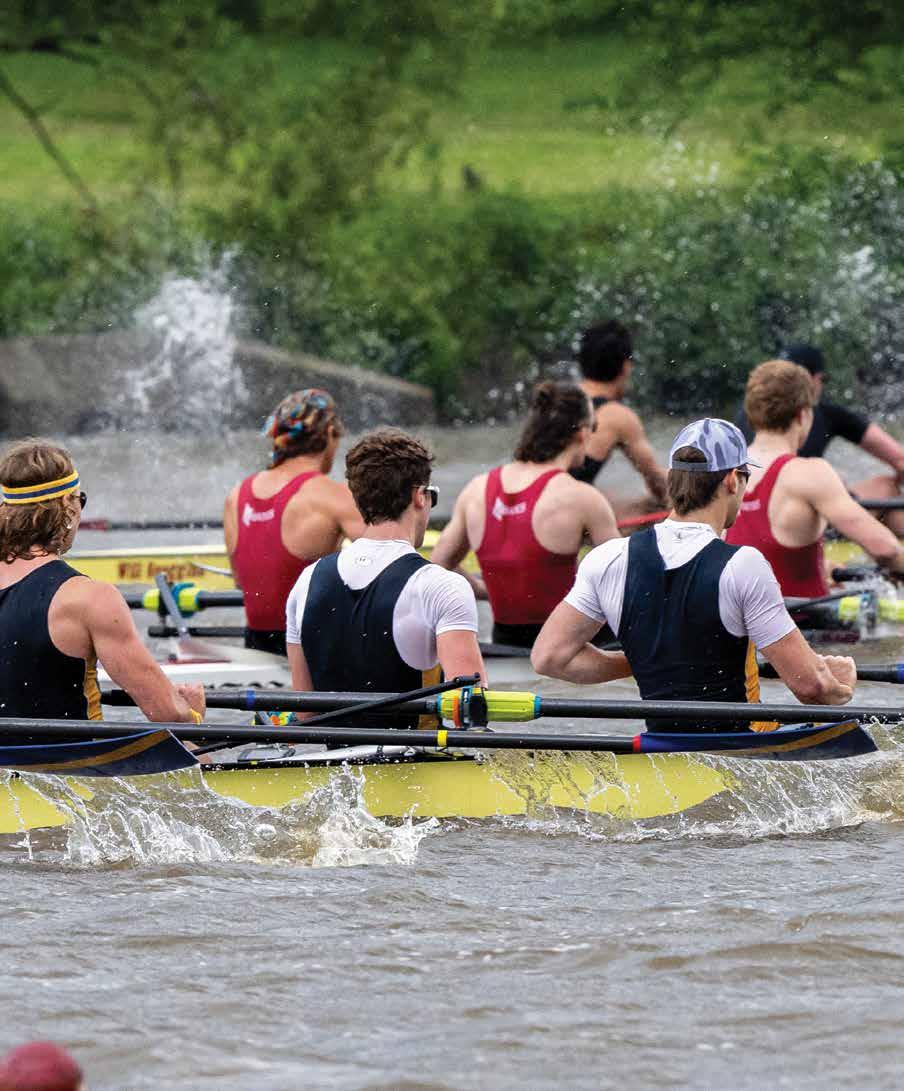
The field is shallower in men’s Division III rowing, with eight crews racing at the IRA national championship regatta compared to the 24 in Division I, but the desire to win is the same. Last year, it was Trinity College’s desire to be better than ever that led coach Kevin MacDermott’s charges to the title. That, and some advantageous preparation.
In addition to greater commitment to training, Trinity raced at the 2024 Knecht Cup Regatta on the same racecourse in Camden, N.J., that would later host the IRA. With a full day of training on Friday and racing on Saturday and Sunday, the Bantams got more time on the championship course than they get on fully buoyed six-lane courses the rest of the year combined.
The 2025 DIII championship final was held on the same Saturday as the DI semi with terrible conditions, but their experience “made the IRA like a home race,” MacDermott said. “They’d been down that course so many times.”
Although a third of that championship varsity eight—the three-, six-, and sevenseats—graduated, this year’s squad is “pursuing with vigor” a repeat, MacDermott

said. They’re “inspired to write their own legacy” and planning a Henley trip to mark the 50th anniversary of Trinity’s 1976 victory in the Ladies Challenge Plate.
Billy Boyce’s Harvard lightweights dispelled the canard that “lightweight rowing is always close because the athletes weigh the same” by crushing the competition in two years of undefeated racing, capped by back-to-back wins at the IRA national championship regatta in both the first and second varsity events. The Crimson lights went on to Henley, vanquishing Great Britain’s top rowing university, Oxford Brookes, en route to winning the Temple Challenge Cup.
There’s good reason to believe Harvard could three-peat as lightweight national champions, and a whole league full of reasons they might not. Cornell, second to Harvard at Sprints last year, before administrators kept the crew home from the IRA for disciplinary reasons, was second to Harvard again at the Head of the Charles. Dartmouth’s lightweights won the silver at the IRA, and coach Trevor Michelson has a small group of hard workers ready to go one better in 2026, despite the challenge of roster limits.
“It sucks,” Michelson said, “but we turn it into an advantage” with customized training programs for each athlete that have enabled the Big Green lights to score personal bests on the erg and other performance tests, like the Big Green’s onwater “Slim Fast” course.
“There are a lot of really good coaches in this league,” said Michelson of the lightweight league, which is now the pinnacle of the sport since its exclusion from the Olympics after the Paris Games. “A lot of different teams can win this thing. Everyone’s good. That’s what makes it fun.”
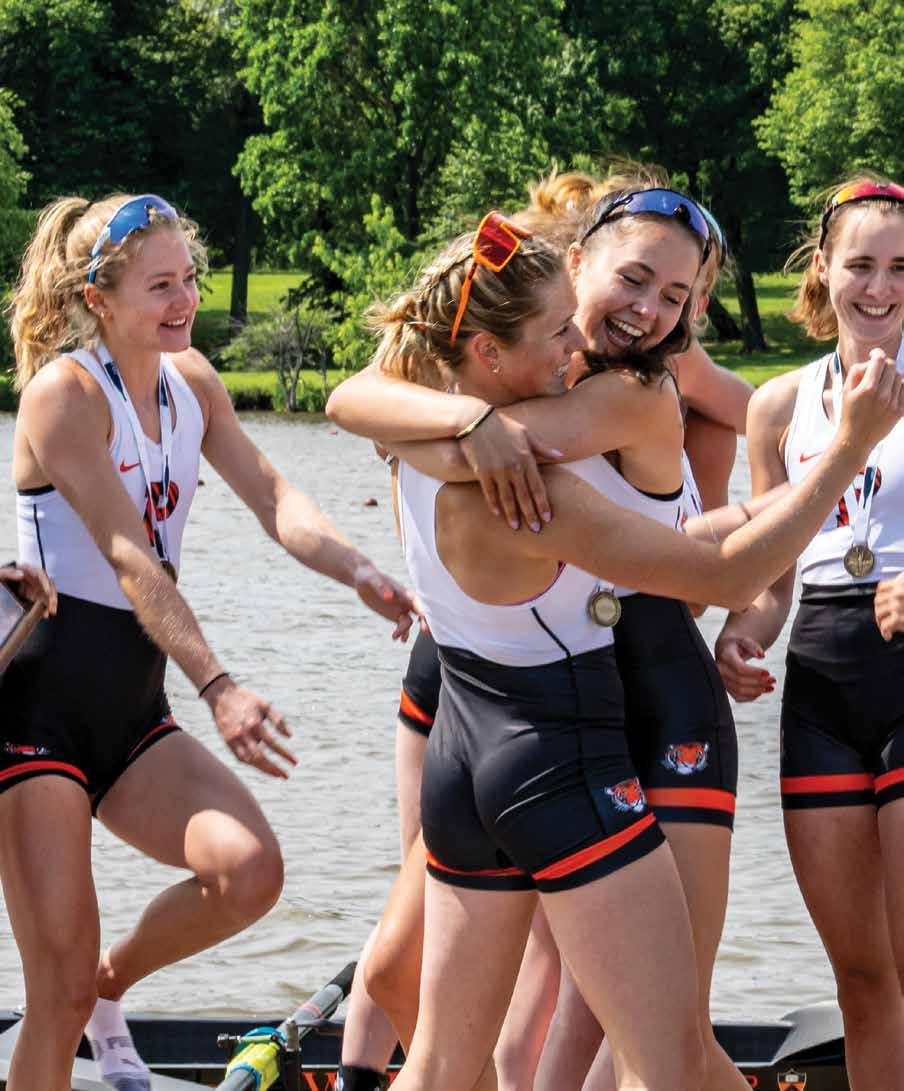
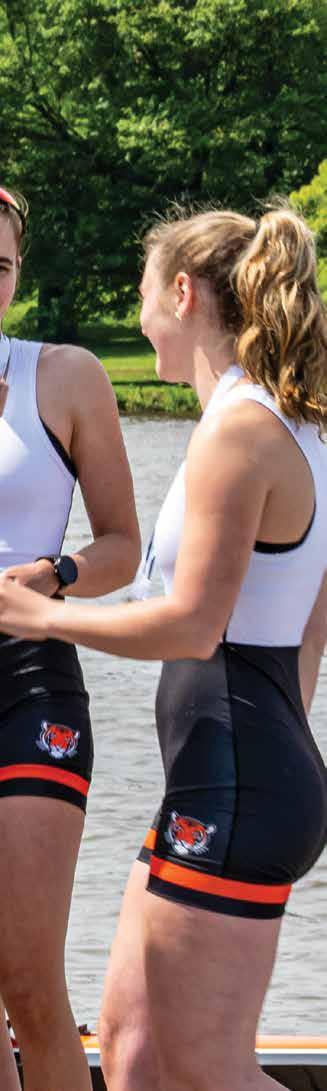
Also having fun in lightweight rowing are the Princeton women, who won their fourth-straight national championship in 2025. The Tigers won the lightweight coxed-four event at the Head of the Charles last fall but finished second to Radcliffe in the lightweight eights by over six seconds. Georgetown, Wisconsin, Boston University, MIT, and Sacred Heart all finished more than 30 seconds farther back.
Stanford vs. Texas
Stanford is the defending NCAA Division I national champions and entered the 2026 spring season ranked at the top of the coaches poll—rightfully. Texas is likely to be The Cardinal’s greatest obstacle for a repeat title, since the Longhorns return almost all of the youngest roster to race at NCAAs from last year and gain impressive additions to this year’s squad, including Maya Meschkuleit, the Canadian Olympic medalist and a member of Yale’s NCAA grand final-winning first varsity eight.
For the past six years, Stanford and Texas have been the top programs in women’s collegiate rowing, and rowing in general. Both crews beat the Canadian national team handily in a friendly race last spring, and coaches of the U.S. national team (which features alumnae of both) want no part of a potentially embarrassing race against either of them.
No one else has won the NCAA Division I championship since 2019, when Washington, coached by former Stanford head coach Yaz Farooq, won, with Texas finishing second.
Leading each program are two old friends-turned-intense rivals.
In 2016, Stanford coach Derek Byrnes moved from overseeing the very successful lightweight program, which he coached to two consecutive undefeated years capped by IRA championships (where lightweights have their nationals) to become head of all women’s rowing at Stanford after Farooq, who led The Cardinal to NCAA national championships, moved to Washington.
Texas coach Dave O’Neill also moved into his current position after winning national championships—two NCAA titles with Cal, where he coached for 16 years. In his first 10 years at Texas, he’s won three NCAA titles. This, his 11th year in Austin, very well could add to that total.
Of course, neither man rowed in the program he now coaches, nor did either attend the universities that now employ them. But no one puts more into coaching their crews than these two.
“For the last couple of years, I’ve seen a lot of both of them, and respect the hell out of both of them,” said Tennessee head coach
Kim Cupini, whose Lady Vols finished fifth at last year’s NCAA championship. “They’re different personalities, but I’ve enjoyed working well with both.”
Cupini works with Byrnes and his lighthearted manner to coordinate their first real 2,000-meter race of the year, a regatta in which the coxswains arm-wrestle for lane choice in each event.
“We won all the lanes and lost all the rowing races last year,” she said.
Cupini spent the winter bantering with Byrnes, chirping each other by text and sharing fabricated images of “yoked up” coxswains doing pull-ups wearing chains.
Cupini also worked successfully with O’Neill to organize the inaugural SEC championship regatta in Oak Ridge, Tenn.
“He pushes us all to be better,” said Cupini, who called the SECs and the opportunity to race Texas before the NCAAs “phenomenal, a great opportunity.”
Last year’s league championship, based on team points, came down to the final of the first varsity eights race, which Texas won. Both programs received bids to the NCAA championships even though the SEC, with only four teams competing, is not an automatic qualifier.
“Racing both bookends our season,” Cupini said. “Stanford is our first 2K [March 28], and Texas is our last 2K [SECs, May 10] before NCAAs [May 29 to 31].”
Also racing in the NCAA championship regatta—this year on Georgia’s Lake Lanier (site of the 1996 Olympic regatta)—will be crews from Division II and III. Rowing is one of the only sports that runs the three championships at the same venue at the same time.
The events are not separate, and the fields are not combined. Instead, the NCAA regatta intertwines the heats and semifinals of the different divisions into a single schedule. With team hotels far from the racecourse, if the weather makes a mess of the regatta schedule as it did last year, student-athletes could be spending long days waiting around, taking lots of long bus rides back and forth, or both.
Defending Division II national champion Embry-Riddle entered the year ranked No. 1 in the coaches’ poll, and
Grant Maddock, head coach of both the men’s DI program as well as the women, returns with his Collegiate Rowing Coaches Association DII Staff of the Year Sami Bay and Drayton Piper.
Embry-Riddle Aeronautical University added rowing as a varsity sport only eight years ago when it moved from the National Association of Intercollegiate Athletics to NCAA Division II. As a highly ranked STEM school, EmbryRiddle was attracted to the sport because the top rowing programs also are among the best academically. The 2025 rowing title is the school’s first NCAA national championship—and likely not its last.
All Division II rowing schools have notched a vital win already this year. Delegates at the NCAA Division II business session in January voted to approve an exception that allows women’s rowing and field hockey to continue to conduct championships.
In Division III, after winning the 2024 national championship on points and the 2025 national championship along with both first and second eights finals, the only higher accomplishment for Tufts is to threepeat.
Winning the collegiate-eight event at the Head of the Charles doesn’t get you anything come spring, but the Tufts women did it for the third straight year last fall, highlighting the depth and consistency head coach Lily Siddall has built with the Jumbos.
The spring racing season—the only one that matters to college varsity programs— begins earlier than ever, with racing for some crews under way in February. Top crews put down early markers at events like the Sarasota 2K and San Diego Crew Classic.
“It’s always great to get the season started,” said Mara Allen head coach at the University of Central Florida, after her crews won their first races of the season against Jacksonville. “I’m proud of the team for a good start to the year, and I’m excited for the rest of the season.”
ergs the other half of the year.
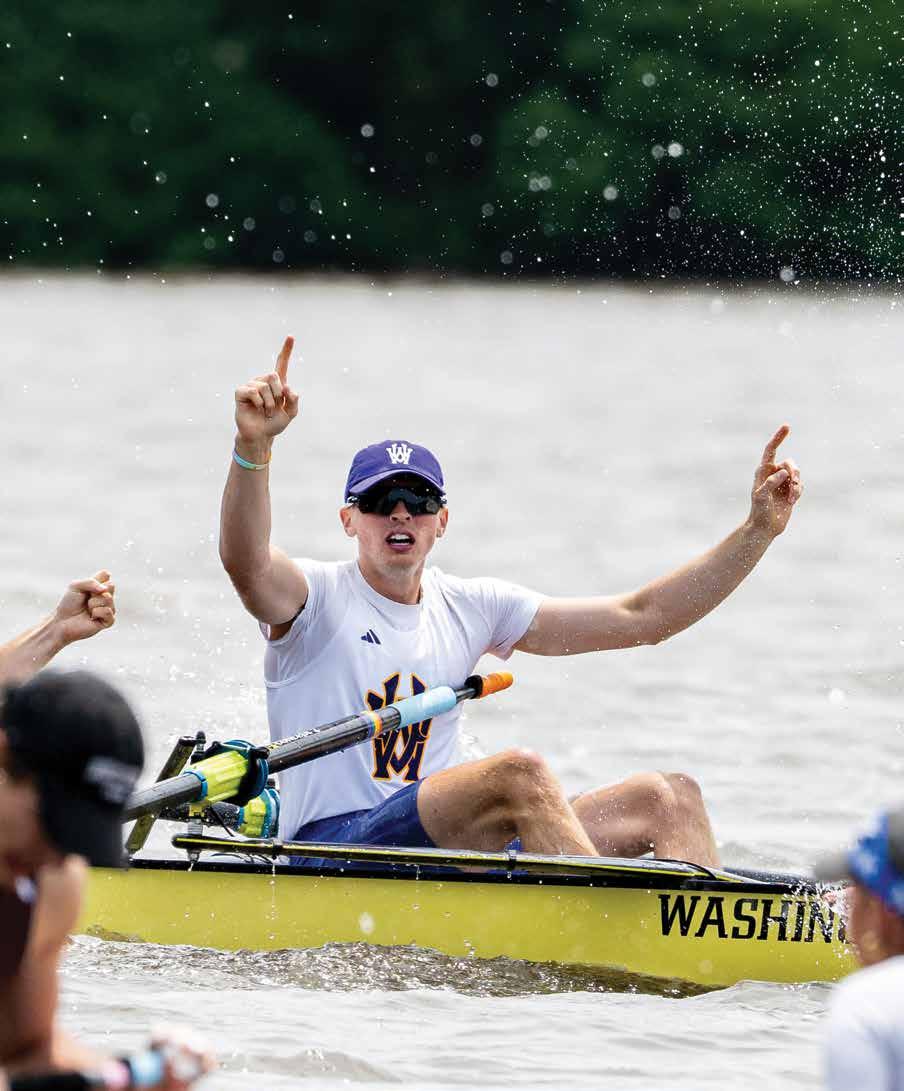
Our sport is awesome but in the world of athletics it’s considered minor. What’s holding us back? Maybe it’s the lies we keep telling ourselves.
MIt's not.
yth No. 1: "It’s such an expensive sport."
Sure, you can spend $100,000 buying and outfitting a new eight, especially if you add a Peach system and other options. But you can pick up a good used shell that's the right size for the intended athletes for less than $10,000 from any number of the established boatbuilders. (A local university or club might provide an even better bargain.)
Compare that to what it costs to outfit a hockey team, ski racer, or cyclist on a per-athlete basis.
"The idea that rowing is an 'expensive sport' gets repeated all the time," said CJ Bown, vice president of sales at Pocock Racing Shells, "but a lot of it comes from people misunderstanding how the equipment actually works.
"Right now, on the Finish Line Rowing website, 12 of the 15 used eights listed are under $10,000. Programs don’t need to buy new boats every year. It’s fun. It’s nice. And don't get me wrong, I love selling new boats, but they aren’t always the right answer for every club.
"If a club can save money on boats, they can invest it somewhere that actually moves the needle—better coaching, better coaching education, and building a deeper program."
Rowing is a relative bargain, since our equipment lasts seemingly forever. I scull a Van Dusen Advantage single that's just as capable of winning the Head of the Charles as it was when it was made—in 1997—even if its operator isn't.
"Carbon doesn’t 'go bad,'" Bown said. "Boats need maintenance and occasional refurbishment, but the boat lasts a long time.
"Now, that doesn’t mean new boats aren't important. Manufacturers have made real improvements over the years. Customer service and support are better. Those are very real reasons programs choose to buy new boats."
You can get started in the sport of
indoor rowing on the same equipment with which the best in the world train and compete— the Concept2 RowErg. Price: $990. Again, the equipment lasts practically forever; my 1994 erg is still in regular use.
Rowing clubs charge so little for Learn to Row programs and continuing membership that there's a new venture in the business of growing rowing clubs with financially viable models built for the long term. The company's name, Growyourclub.com, says it all. Key to making it work, said Ruben Rapi the co-owner and a former U23 Swedish national-team rower, is charging more, rather than less, for basic program fees. It's about giving the clubs the tools, systems, and strategies to bring in more members, grow their income, improve their service, and retain people for the long run.
Myth No. 2: "Rowing’s not a spectator sport."
“Follow the money” is a tried-andtrue axiom in investigative reporting, and the $45,000 gate at the 2024 IRA National Championship Regatta at Mercer Lake shows how much people want to watch great rowing.
The 2.8 million viewers who tuned in to last year's Boat Race certainly found rowing a sport worth seeing, and the peak audience of 2.18 million who witnessed the 2025 women's Boat Race made it the most-watched women’s sporting event in the UK last year. The 200,000 who went to see it in person certainly consider it a spectator sport, as does the city of London, which benefited to the tune of 15 million pounds ($19.8 million).
Streaming service Overnght continues to pour money into our sport to buy the broadcast rights to just about every regatta founder Kevin McReynolds can sign up—and it’s making money doing so. Subscribers pay $105 a year for unlimited viewing, and McReynolds can't add regattas fast enough.
"Rowing has always been a spectator sport, but people were not able to view it consistently before the new age of streaming," said McReynolds. "We have found that once fans can follow races live, understand the storylines, and see the intensity on the water, they stay, and that’s exactly what we’re seeing reflected in subscriber growth on Overnght.”
The sold-out crowd at the last Olympic regatta roared as the Sinkovic brothers sprinted through the pairs final to win the gold on the last stroke of the race. You needn’t have watched rowing before to sense what was going on and to feel the thrill of that incredible contest.
Our sport is intrinsically and naturally a spectator sport. We just have to get folks down to the water to see it. Selling them something nice to eat and drink while they're there doesn't hurt, either, as Henley Royal Regatta proves to the hundreds of thousands who flock to the Thames every summer.
Myth No. 3: "The problem with U.S. rowing is that we don't scull."
Not only do we scull but many of us scull quite well, thank you very much!
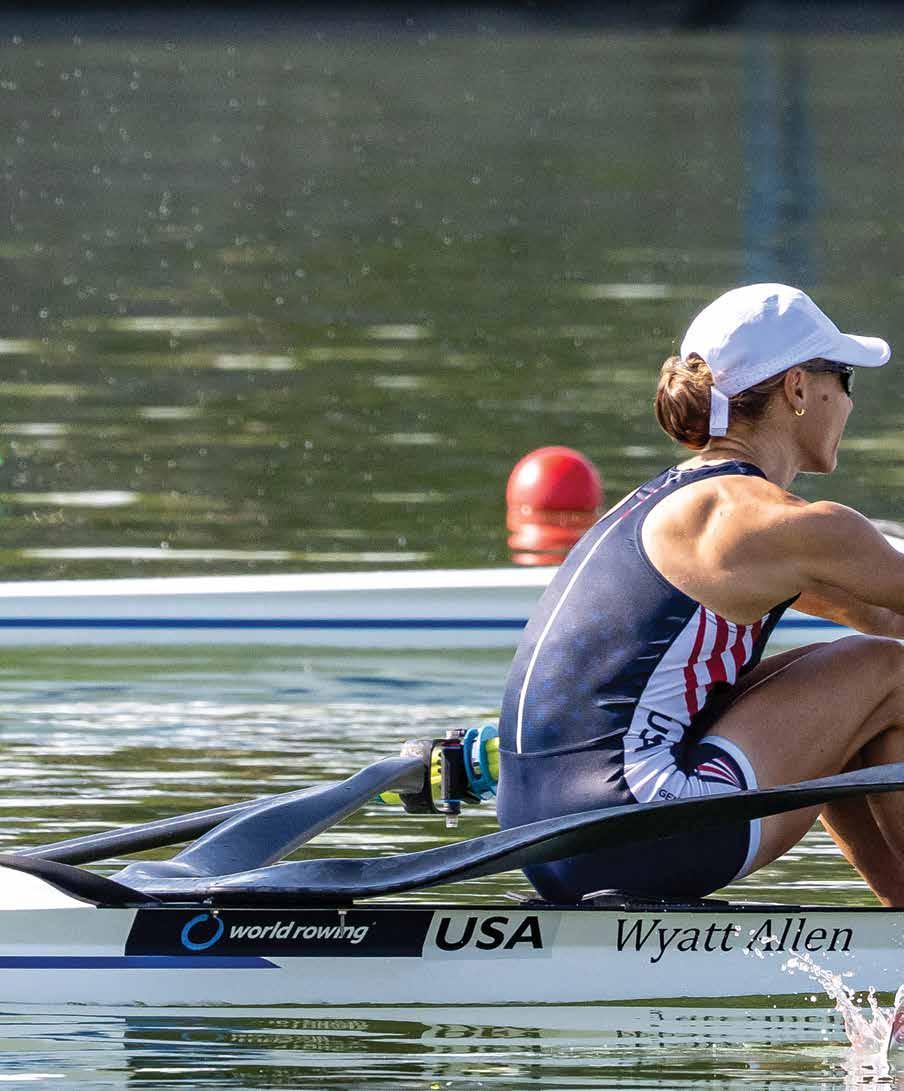
The U.S. is the current world champion in the women's lightweight single, thanks to Michelle Sechser, who at some point in her career probably got some medical support from Dr. Kris Karlson, who volunteers for the national team and won both the 1988 and 1989 worlds in the same event, plus another gold in the lightweight double in 1989.
From Anne Marden's 1984 (quad) and 1988 (single) silver Olympic medals to Jakob Plihal's World Rowing Cup silver medal last year in Varese, American scullers have been on the podium at elite international competition regularly.
True, the breakthrough gold medals haven't been there in traditional flat-water Olympic sculling since the gold of Brad Lewis and Paul Enquist in 1984, but Chris Bak is already the most decorated Beach Sprint sculler, and a favorite for Olympic golds—in both the men's single and mixed double—when the sport makes its debut at the LA2028 Games.
Many of those who perpetuate the "Americans don’t scull" fallacy have experienced our sport primarily through their college rowing experiences, often in the last century. It's true that university rowing, especially at the top IRA schools (and certainly in the days when “the boats were made of wood and the oarsmen of iron”) was almost exclusively sweep rowing in eights, except when you might seat-race in and/or row in prep school in coxed fours.
But this isn't your grandfather's sport anymore.
The most popular events at North America's biggest regattas are often sculling events. In November, the youth doubles at one of the largest races in America, the Head of the Hooch, drew 106 boats each in the men's and women's youth doubles. Sculling events often outdraw sweep events at the Royal Canadian Henley Regatta in August.
Beyond the part of rowing that matters most—racing—the part we spend the most time doing—training—has come to involve sculling significantly, even in programs that race eights exclusively.
"Every program has been adding sculling boats to its fleet," said Vespoli USA's Dave Trond, who, as the president of the largest boatbuilder in America, should know.
Practically every oarsman at Dartmouth College is provided a single to scull, and scull they do, especially in the autumn and during the two training trips they take every year. All three of the Big Green's varsity coaches were international scullers. Heavyweight head coach Wyatt Allen won the Diamond Challenge Sculls at Henley Royal Regatta (as well as gold and bronze Olympic medals in the eight); lightweight head coach Trevor Michelson represented the U.S. at the World University Games in 2015 in the lightweight single; and women's head coach John Graves is an eight-time U.S. national team member as a sculler, and advanced to the final of the Diamonds at Henley in 2017
Last year, Dartmouth finished second in the lightweight national championship, third in the heavyweight national championship, and the women qualified for the NCAAs for the first time in 13 years. Who beat them? Washington was the men's IRA heavyweight champ, stroked by Ryan Martin, an American sculler who won the youth national championship in the quad. Stanford won the NCAA championship and celebrated with a trip to Henley, where it entered a quad.
So, yeah, we scull. It's just that the eight is the premier event, so the top athletes—many of whom are also scullers—row sweep in the championship regattas.
Myth No. 4: “American juniors can't make the varsity in college.”
Four of the women in the Yale boat that set a record in winning the first-eight grand final at the 2025 NCAAs are from the U.S., so clearly the statement that Americans can't make collegiate varsities isn't true. But the myth has its origin in facts.
Several IRA-winning men's heavyweight varsities in this century have had few—and some zero—U.S. oarsmen in the boat. Rowing News has told the story of how the recruitment of European rowers by Ivy League schools in the late 1900s began the now-common practice of university scouts traveling the world to find talented junior rowers to fill out their rosters.
A month doesn’t go by without my receiving an email about how there's no room for American kids in American collegiate rowing, often with spreadsheets and roster summaries attached. It's never from someone younger than me.
In one way, the complaints are right: Rowing is truly international. American university coaches are paid to develop crews that compete with other crews developed by other paid professional coaches, and they are judged by their competitive records, not by how many U.S. kids they have in their top boats.
When reporting our story on coach compensation last year, we found a lot of six-figure-plus contracts, and not one stipulated that the coach recruit and train U.S. athletes preferentially.
U.S. junior rowers generally do quite well at the World Rowing Under 19 championships, but a lot of other countries do even better. The U.S. is just one supplier of recruits for the best universitylevel rowing country in the world— the USA.
So it stands to reason that the rosters of the best rowing universities in the world are full of the best rowers from around the world, not just the U.S. Are the critics jingoistic or just nostalgic for the way it was when they rowed in college and fell in love with our sport? Like it or not, collegiate rowing is just another thing that brings many of the best in the world to the USA.
Or, as a veteran coach at one of the world’s most esteemed universities told an old griper, "So what? What's your point?"
Myth No. 5: "We can’t do [something new or different] because...."
Rowers are experts. Just ask us. Actually, don’t bother, because a veteran oarsman is sure to mansplain why it won't work.
For 33 years, Rowing News has succeeded as an independent niche publication—something we were assured would never work.
One assumes the Yale oarsmen who smeared oatmeal in their boat to fashion the original sliding seats were told it would never work, too. Our thanks for not listening and giving us sliding seats.
Big blades, called “hatchet blades” in the early ’90s when they replaced tulipshaped blades, might have been shunned if they hadn't come from the Dreissigackers, the brains behind Concept2, and been used by winning crews. Some who were losing to early adopters of the big blades tried to get them banned, instead of accepting the reality that the new oars were better.
The superior design prevailed, and our sport improved. New ideas keep coming and making our rowing experiences better. Boats used to be too heavy for just eight kids to carry, but now middleschool rowing is taking off and they can carry their own equipment. Recently, we celebrated the 50th anniversary of the brave women who fought for the equal treatment promised by Title IX, and today women’s collegiate rowing is arguably bigger and better than men’s (which also has come a long way in 50 years).
While rowing, we may be going backward, but our sport continues to go forward.

While innovations in equipment can make a boat go faster, often the best way to increase speed is to improve training and use your existing equipment correctly.
In rowing, the measure of performance is the time it takes to cover 2,000 meters or the average speed a rower achieves over that distance.
Performance depends on a combination of factors: physiology, psychology, anthropometry, technical and tactical skill. Also crucial—equipment.
The history of rowing is marked by innovations in boats and oars that have enhanced performance. Outriggers made it possible to build narrower, lighter boats, and carbon-fiber oars made them lighter and stiffer, while new blade shapes reduced air resistance.
In the 1950s, with the so-called standard blade, which was long and narrow, 2K race times were around 7:30. With the introduction of the Macon blade, a symmetric tulip-like shape that was much
wider, race times improved immediately by about 10 seconds and trended toward 7:10 until 1980.
With sliding-rigger single sculls, race times dropped suddenly to about 6:52 and remained fairly constant at this level even after sliding-rigger boats were banned following the 1983 season.
In the first few years after so-called big blades were introduced in 1992, winning single-sculls rowers at the Rotsee Regatta in Lucerne, Switzerland, reduced race times to under 6:40. Since 2010, however, victors in the single-sculls race have been finishing in about 6:45.
This coincides with the findings of Valery Kleshnev, a Russian sports scientist and biomechanics expert who has compiled race results showing that international performance in all boat classes appears
to have stagnated since 2010. Which is surprising, since equipment has continued to evolve and oars and boats have continued to improve.
While innovations in equipment can make a boat go faster, often the best way to increase speed is to improve training and use your existing equipment correctly. Invest in a training camp or hire an experienced coach for a weekend. Or send the club coach to a coaching conference to learn the latest oar science and how to rig boats properly.
You don’t need to know every skill but you should know all the parts of a boat so you can describe equipment problems accurately to facilitate solutions.
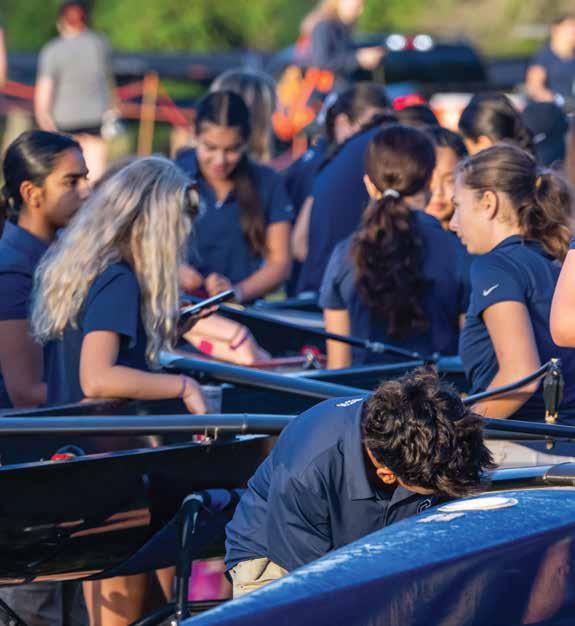
With spring racing season comes frequent de-rigging and rerigging of your racing shells. Coxswains who are attentive and efficient make trailer loading and rigging safer, easier, and faster for everyone and set themselves up for the best possible arrival on race day.
First, de-rigging. This is a good time to take stock of your tools and ensure that you have the wrenches you need to get the boat de-rigged efficiently. If your rowers are standing around waiting for tools consistently, this means it’s high time to ask the coach to pick up a few more wrenches. It’s also an opportune time to take inventory of all the hardware on your boat—bolts, nuts, washers, wing nuts, spacers. Make sure that each seat has the full complement of parts and that you have a few spares, too.
Check the boat for damage: dings and scratches on the hull, bent backstays or pins, seat wheels that can’t spin, loose tracks, and foot stretchers that aren’t seated properly. If you notice a larger issue with the rigging, like inconsistent placement of washers or backstays, gather your rowers to clarify how the hardware should look on the boat after it’s rigged.
Know your team’s system for where hardware and seats go (securely fastened on the boat or in a separate container) so you’re confident these will arrive safely and you’ll know where to find everything once you get to the racecourse. It may or may not be your official job to ensure that riggers, oars, and slings get on the trailer, but you should always check. After all, you can’t race without the necessary
equipment.
When loading a trailer or putting boats in slings, be mindful of the safety of the hull. You’ve probably heard that most damage to boats happens on land. If you’re maneuvering your boat in a tight space during trailer loading, ask another coxswain to watch the bow if you’re with the stern, and vice versa.
Always, always make sure slings are pushed all the way out at the base. Best practice: Roll your boat to waists and slide the slings underneath it rather than roll it down into slings and risk putting the corner of a sling through the hull. (It
happens, and it’s not pretty!)
If it’s windy, you’ll want to keep extra hands on the boat at all times until the hull is safely in the boathouse or strapped down on the trailer. You should also be skillful strapping a boat to a trailer. If not, practice. Most teams have coxswains or rowers who are designated boat-strap experts; shadow them and ask them to inspect your work until you’re confident of your ability.
If you’ve de-rigged properly and organized and loaded the trailer well, unloading and rigging should be easy. Sometimes you’ll find a bolt or rigger that
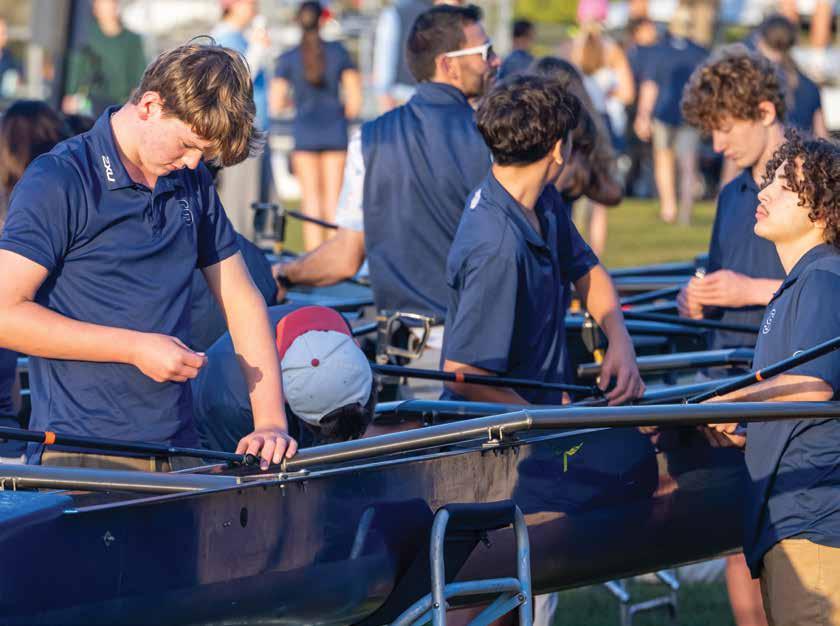
doesn’t fit on the boat properly. Don’t force it! While some boats might need a little bit of a squeeze to get parts back on, more likely this indicates that you’re installing the hardware in the wrong place or that something shifted in transit. Call over a coach for help.
After your boat is rigged, go over each seat carefully and check everything that could come loose. While your rowers may rig the boat, you should check every station before each race. Like a pilot performing a pre-flight inspection, you want to make sure you’re ready for racing.
Get the small things right, too.
Regatta sites are often full of mud, gravel, or sand, so if you have boat covers or bags, make sure the insides stay off the ground and are free of dirt and debris so your boats won’t get scratched. If you drop hardware in the mud, rinse or wipe it off so grit doesn’t get stuck in bolt threads.
At some programs, coxswains are involved heavily with rigging and help coaches set oars and even spread the boat. You don’t need to know every skill but you should know all the parts of a boat so you can describe equipment problems accurately to facilitate solutions. A pin or collar shifting around on the water is
an immediate issue your coach needs to address off the water; a loose backstay is a problem you can handle quickly yourself.
Trailer-load days are a great way to assume a leadership role in a way that’s visible and meaningful to your team and coaches. Take charge with enthusiasm and you’ll show up at the regatta site confident that you and your team have everything you need to succeed.

Selecting a university is an important decision. While coaches may seek a quick answer, take the time to ensure the school is the right academic, athletic, and personal fit.
The college recruiting process can be exciting but also high pressure. It’s not uncommon for coaches to ask student-athletes to make decisions quickly, particularly during or immediately after official visits. These situations can feel overwhelming for both athletes and their families.
That’s why it’s important to approach the process thoughtfully and maintain control of your decision-making timeline.
1. Focus on Your Top Choices
Narrow your list to the schools that genuinely interest you. Taking too many visits can create unnecessary confusion and make it more difficult to evaluate each program carefully.
2. Stay in Control of Your Timeline
Selecting a university is one of the most important decisions you will make. While coaches may request a quick answer, it’s important to take the time needed to ensure the school is the right academic, athletic, and personal fit.
3. Communicate Your Timeline Clearly
If you don’t establish your own timeline, coaches may set one for you. Be transparent about when you plan to complete your visits and when you expect to make a final decision. Clear communication helps coaches understand your process and demonstrates professionalism.
4. Respond to Pressure with Professionalism
If a coach asks for a commitment while you still have visits scheduled, a thoughtful response can help manage the situation. Share the date of your final visit, explain that you plan to discuss your options with your family afterward, and offer a clear time frame for when you’ll provide a decision. This approach keeps the process
A thoughtful response can help manage the situation.
respectful and organized for everyone involved.
While coaches and universities often work within specific recruiting timelines, it’s important to remember that a rushed decision is not always the best decision. Take the time necessary to gather information, evaluate your options, and make a confident, well-informed choice.
TENENBAUM
To reduce inflammation, keep a diverse microbiome. And restrict when you eat. Daytime is best for fueling and performing. Darkness is best for rest, recovery, and fasting.
Most research related to sports performance and nutrition is studied from the perspective of male athletes who have gotten sick or injured and want to know:
Why did I get a stress fracture?
Why do I take longer than others to recover from hard workouts?
Why was I the only one on the team who got sick?
The Wu Thai Human Performance Alliance is looking at what makes us healthy, including studies with female athletes. Here are highlights of research results presented by exercise and nutrition scientists at the first Wu Thai Female Athlete Research Meeting last November at Stanford University.
The gathering included a report on educational efforts to improve our oftenunhealthy sports culture. Rowers, for example, talk proudly about how hard they train but do they ever brag about how much they rest? Well-rested rowers, after all, are better able to win championship regattas at season’s end.
The Healthy Runner Project
From 2010 to 2013, 38 percent of Stanford University’s female athletes suffered bone-stress injuries. Could nutrition interventions prevent stress fractures and bone injuries?
The Stanford health-care team designed a study to figure out whether the injuries were caused by poor nutrition, overtraining, impact forces, or other factors. Given that weight-conscious runners commonly undereat, the likelihood that insufficient food was

at the root of the problem and hurting bone health seemed plausible.
In the Healthy Runner Project study, each athlete filled out an extensive questionnaire, was measured for bone density, and met with a registered dietitian (RD) for a nutrition assessment. Each season, the RD talked with the running team and met with each individual, encouraging her to make just one or two small dietary changes.
Examples of a small change included choosing more carbohydrate-rich foods, refueling sooner after workouts, or adding a snack to boost daily energy intake. During the seven years of the study, many of the women reported resumption of regular menstrual periods, which contributed to improved bone density. Bone-stress injuries dropped in half—from 63 to 27 injuries per person-year. By comparison, UCLA runners (with no nutrition goals), reported no change in bone-injury rate.
This successful project had strong support from coaches, athletes, and administrators alike. They were able to change the food culture so that runners felt comfortable eating larger portions and enjoying food as one of life’s pleasures. They stopped fearing food as the fattening enemy.
The juniors and seniors on the teams became role models of effective fueling and influenced the newcomers positively. The athletes learned to embrace the importance of eating well for the whole season, their future career, and their long-term health.
If you stop eating at meals because you think you should or the food is gone (and not because you feel satiated), I suggest you think again, talk with a sports RD, and make changes that invest in your health.
Daytime is best for fueling and performing. Darkness is best for rest, recovery, and fasting. To determine if eating within a certain time-window (time-restricted eating, TRE) impacts performance, the researchers first studied mice. Mice ate either ad lib (whenever they wanted) or within a nine-hour period. They ate standard mice chow or high-protein or high-fat chow. With TRE, after one week on the high-fat diet, the female mice ran longer and even outran the male mice. Unlike the males, they didn’t gain weight with the high-fat diet and were more sensitive to meal timing.
Does this mouse research translate to humans? Obviously, many differences exist between humans and mice. Humans are more genetically diverse, and their food intake is harder to monitor. (What people say they’re eating can be very different from what they actually eat!)
TRE can be difficult for studentathletes to follow because of crowded class, work, and training schedules. For health benefits, the speaker encouraged everyone (not just athletes) to enjoy meals at similar times each day and to refrain from eating for about 12 consecutive hours a day, say from 7 p.m. to 7 a.m.
We humans—including rowers— are walking ecosystems with trillions of bacteria (microbes) living in our guts. Lots of communication occurs between the microbes and your body. A diverse population of microbes contributes to a
healthy microbiome, which has a positive influence on your metabolism.
For example, a healthy microbiome can influence how many calories your body burns or stores as well as your ability to fight off infection. Your microbiome also influences your moods and behavior via connections between your gut and your brain.
Compared to genes (which can’t be changed easily), the microbiome is highly malleable. Therefore, we need to do more research to determine what constitutes a healthy microbiome and how microbes make us healthy. What foods should we be eating to enhance microbe diversity?
At first, we got our food by hunting and gathering, then through agriculture. Today, factory farms supply much of what we eat, and much of that is ultraprocessed. These changes have altered today’s microbiome. Our ancestors used to have about 700 species of microbes in the gut. With industrialized (ultraprocessed, packaged) food, the number of species has dropped to about 200.
One result of our depleted Western microbiome is chronic inflammation, which is bad for our health (inflammation aggravates heart disease, diabetes, and Alzheimer’s). Greater diversity is linked with better health. Shifting to a diet high in fermented foods (yogurt, kefir) and fiber (whole grains, fruit, veggies) can make a powerful health difference.
By enjoying fermented and fiber-rich foods daily, you can increase the diversity in your gut and improve markers of inflammation. Until we can track food intake accurately, researchers won’t know precisely how changes in diet impact gut microbiomes. In the meantime, we await more helpful discoveries from the Wu Tsai Human Performance Alliance.
NANCY CLARK, M.S., R.D., C.S.S.D., counsels both fitness exercisers and competitive athletes in the Boston area (Newton; 617-795-1875). Her best-selling Sports Nutrition Guidebook is a popular resource, as is her online workshop. For more information, visit NancyClarkRD.com
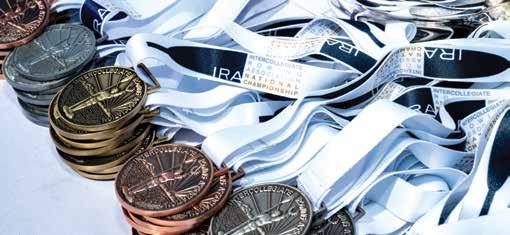
As power builds, emphasis on technique becomes paramount.
Evaluating race plans, refining lineups, and tweaking training are all part of the process of gaining speed for championship racing in late May and early June.
For a boat that needs to raise its cadence, build in pieces at the target ratings, such as 10 times 30 seconds on/30 seconds off.
As bow balls duke it out at scholastic regattas, coaches see first hand, from week to week, how their teams stack up against opposing crews. A few scenarios arise: The boat is fast; the boat is slow, unable to match the cadence of the opposition; or the boat is lacking power and efficiency at race pace.
With a fast crew, continue building on the sessions they’re responding to, maintain aerobic base, and notch up intensity a couple weeks before the championships, lowering the volume and staying focused
on efficiency.
For a boat that needs to raise its cadence, build in pieces at the target ratings, such as 10 times 30 seconds on/30 seconds off, or three times six minutes of one minute on/one minute off with full recovery between sets, so quality stays high. Sets of 20 strokes of high-rate half-slide rowing, in addition to practicing full-speed starts, also can turn the tide.
If the crew needs to develop more stroke power, repeats of 2,000 meters at 20 strokes per minute, alternating 750 meters at 75 percent power, then 250 meters at 100 percent power, are effective when practiced twice a week. As power builds, emphasis on technique becomes paramount.
Additionally, straightforward oxygentransport workouts—three repeats of 1,000 meters with a start at target-race cadence and full recovery, or one set of 1,500 meters, 1,000 meters, then 500 meters with starts at an open rating—will help your crew row high-quality strokes while pushing their limits and blending power and efficiency.
What we design for determines who our athletes become.
The measure of a program is not its speed. It is its standards. Championships matter. Habits matter. Performance matters. But those outcomes are temporary and vary from season to season.
Responsibility—taken seriously and carried consistently—lasts long after an athlete leaves the boathouse.
Most coaches say they want to develop grit, leadership, and character. The harder question is whether we design for those traits with the same intentionality we bring to training plans and race strategy.
We never leave technical development to chance. We break down stroke mechanics. We monitor volume. We measure progress. Yet when it comes to character, we often assume it will emerge naturally from hardship or competition. It doesn’t.
Responsibility is built the same way speed is built—through repetition, exposure, and clear expectations. That belief led me this year to bring leaders from outside rowing into our program, adults who carry serious responsibility in environments where consequences are real.
We have hosted leaders from health care, higher education, public service, and criminalistics. Though their professions differ, a common theme emerged in our erg-side conversations.
Serious people move. They don’t wait to feel ready.
In medicine and business, that means stepping into risk before certainty arrives. Apply for the job. Launch the venture. Make the decision.
Confidence is not the absence of doubt. It is action taken despite it.
That translates directly to sport. Leadership is rarely convenient. It is speaking up first, volunteering first, taking responsibility before someone assigns it.
your competitive edge. For information, email Marlene at roylerow@aol.com or visit www.roylerow.com.
Public service offered another lesson:
Progress is built through volume. Campaigns are won by door-knocking, by showing up again and again, by having the same conversation hundreds of times. It is repetitive, often unglamorous work. Culture is built the same way.
We also heard a clear message about precision. In fields where decisions affect livelihoods or liberty, there’s no room for casual execution. You cannot “mostly” follow a process. You either do it correctly or you do not.
That standard sharpens how athletes think about their own habits. Seat racing, recovery protocols, attendance, communication—these small acts of responsibility accumulate.
There’s a practical coaching benefit to bringing outside voices into the room. Athletes eventually habituate to their coaches. It’s human nature. When they hear the same expectations day after day, the message can dull.
An outside leader resets the signal.
When professionals reinforce the same habits we emphasize—preparation, accountability, initiative—the message registers differently. It confirms that our standards are not arbitrary, subjective preferences but expectations transferable beyond our boathouse.
Inviting serious professionals into our program sharpens us as coaches, too. It forces us to articulate why we ask for what
we ask and reminds us that the traits we value are not sport-specific virtues. They are adult competencies.
Winning races remains a worthy goal. But if a program is serious, it should aim at something more durable than podium photos. The best outcome we can deliver is not simply a faster athlete.
It is a person who can carry responsibility—steadily, consistently, and without being told.










ADVERTISERS INDEX
Active Tools 19 Barrett Singer 29 Canadian Henley 27
Concept2, Inc 67
Hudson Boat Works 2..3
Leonard Insurance 64
Maas Boats 56
Nathan Benderson Park 18
Nielsen-Kellerman 5
Peinert Boatworks 10
Peterson Architects 65 Pocock Racing Shells 8..9
Robbie Consulting 29 Row Alaska 68 RowAmerica 15
Rowing Catalog 30..33 Sarasota Crew 16
Shimano North America 24 SportGraphics 12..13 The Dr Lenny Peters Cup 17
4 Vespoli USA 64
optimistic; it’s that attitude that gets things done, that gets boats moving— there are signs we could be moving into a better place. I spoke with Bill Miller, who has worked tirelessly over the years to promote rowing history. At Mystic, the seaport is renovating a huge room that will house the Wells Boat Hall, including vintage shells and oars, many of them donated by the National Rowing Foundation. It won’t be all rowing; the boat hall will need to share the space with other types of boats.
There’s also talk that the huge boathouse construction project in Sarasota at Nathan Benderson Park will include a hall-of-fame exhibit. Bill thinks this would be the best place in the country for a rowing museum. The superb racecourse in Sarasota hosts races virtually every weekend with very large participation. That is what a museum needs—guaranteed crowds that would be on site throughout the year.
No talk of rowing history can be complete without mentioning the late Tom Weil. A Yale lightweight in the ’60s, Weil amassed a gigantic collection of 5,000 to 10,000 rowing artifacts. His collection of rowing items is extraordinary. He had donated numerous medals and silver trophies to the RRM, but the gigantic collection he kept at home needs to be preserved, catalogued, and made available for research.
• Pre-Design
• Site Analysis
• Site Layout and Planning
• Space Requirements
• Equipment Layouts
• Concept Studies
• Feasibility Studies
• “Simple Boathouse” advising
• Full Architectural Services or Partner with another firm
• Rowing Tank Design
Luckily, Marist University, on the banks of the Hudson River at the site of the old three-mile IRA regatta in Poughkeepsie, N.Y., has stepped forward to accept his complete collection. Although it’s not in a location that will draw large numbers of visitors, two very knowledgeable women at the Marist archives are hard at work doing what’s needed to preserve it. They are archiving everything digitally and will continue to expand the work that is already on their Marist Archives and Special Collections website (https://archives. marist.edu). Search for “Tom Weil rowing.” Already, they have over 2,000 items available digitally.
As Weil said on the eve of the HarvardYale regatta in 2015, “There is now no venue in the United States that offers an overview of rowing’s remarkable story, a significant element of which is the saga of the oldest intercollegiate athletic contest in the U.S., the rowing rivalry between Yale and Harvard dating back to 1852.”
That’s right. Long before football, baseball, or basketball, rowing was the first intercollegiate sport.
The sport of rowing and the extraordinary people who have rowed need a place where they can be celebrated. Let’s not give up just because a great museum has closed its doors.
DOCTOR ROWING, a.k.a. Andy Anderson, has been coxing, coaching, and sculling for 55 years. When not writing, coaching, or thinking about rowing, he teaches at Groton School and considers the fact that all three of his children rowed and coxed—and none played lacrosse—his single greatest success.
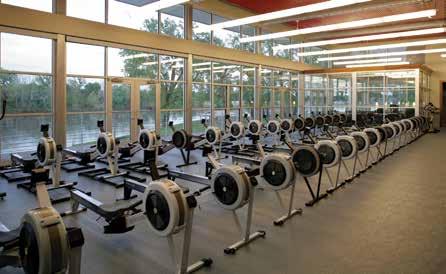
ROWING PROJECTS AT: • Bates College • Bergen County • Brunswick School • Culver Academies • Episcopal H.S. of Jacksonville • Foundry, Cleveland • Harvard University • MIT • Mt. Holyoke College • Princeton University • St. Paul’s School • Tufts University • University of Kansas • University of Wisconsin • Wellesley College • Washington State University • Williams College • WPI • SERVICES:

ANDY ANDERSON
With the closing of the River and Rowing Museum in Henleyon-Thames, our sport and the extraordinary people who have rowed deserve a museum and hall of fame.
Sad news came last September that after 35 years the River and Rowing Museum in Henley-on-Thames was closing its doors permanently. I used to take crews there for a visit any time we were racing at Henley, and if you can get tired and hungry high-schoolers interested in the history of their sport after a long practice, you know you’ve got a winner.
Sadly, the RRM could not stay in the black, and its terrific collection of boats, oars, trophies, photos, videos, and rowing ephemera has been moved out of the award-winning building and into storage across the UK and the rest of the rowing world.
If a museum celebrating the history of our sport can’t make it in Henley, where thousands of rowing aficionados gather every summer and where there are rowing clubs around every bend in the river, is there any hope that a rowing museum can succeed anywhere?
Long before football, baseball, or basketball, rowing was the first intercollegiate sport.

The
The answer appears to be “No.” A stand-alone rowing museum just doesn’t attract enough interest to pay the bills. The River and Rowing Museum in Henley was losing close to a million pounds ($1.3 million) a year, and only the extremely generous contributions of a few passionate donors kept it afloat these many years. As its name indicates, it wasn’t just about rowing; it contained interesting exhibits about the Thames River and an outstanding exhibit bringing The Wind in the Willows to life.
I wondered: Are there any successful sports museums that are not tied to professional sports? What about a Museum of the Olympics? The U.S. Olympic and Paralympic Museum, a $91-million facility, opened in Colorado Springs in 2020, and there are other Olympic museums in 24 countries around the world.
There are many small museums dedicated to single sports (the museum of skiing in Norway, the Miracle on Ice Museum in Lake Placid, to name two that I’ve visited), but the closing of the RRM reminds us of what a niche sport ours is. The Colorado Springs museum looks very cool, but its Hall of Fame includes only three rowers: Jack Kelly Sr., Jack Kelly Jr., and Anita DeFrantz. All are certainly deserving, but where are the Boys in the Boat or Joe Burk or the women’s gold-medal eights of 2008, 2012, and 2016?
There have been several attempts to create a rowing museum in the United States. At one point, the Head of the Charles, needing more space than their offices in the Cambridge Boat Club allowed, investigated purchasing the abandoned New England Sports Museum, a stone’s throw from the regatta’s finish line, to create expanded HOCR offices and a rowing hall of fame and museum.
But the building was in such terrible shape that it would have cost millions to make it work. Mystic Seaport, an excellent museum in Connecticut, gave its small library room to rowing enthusiasts to host a rowing hall of fame and museum. That space functioned for 17 years until the building was torn down to make a better entryway to the museum grounds. Most of the boats and oars are being held in storage for a future site.
If you are optimistic—and rowing folk are invariably