Thu 12 and Fri 13 March 2026 • 20.15 Sun 15 March 2026 • 14.15
Shostakovich and Elgar
Thu 12 and Fri 13 March 2026 • 20.15 Sun 15 March 2026 • 14.15
conductor Santtu-Matias Rouvali
cello Senja Rummukainen
Nikolai Rimsky-Korsakov (1844-1908)
Capriccio espagnol, Op. 34 (1887)
• Alborada
• Variazioni
• Alborada
• Scena e canto gitano
• Fandango asturiano
Sir Edward Elgar (1857-1934)
Cello Concerto (1919)
• Adagio - Moderato
• Lento - Allegro molto
• Adagio
• Allegro intermission
Dmitri Shostakovich (1906-1975)
SymphonyNo.6inBminor,Op.54(1939)
• Largo
• Allegro
• Presto
Concert ends at around 22.15 / 16.15
Most recent performances by our orchestra:
Rimsky-Korsakov Capriccio espagnol: Nov 2014, conductor Xian Zhang
ElgarCelloConcerto:Feb2019,celloTruls Mørk, conductorGianandrea Noseda Shostakovich Symphony No. 6: Oct 2004, conductorVladimir Jurowski
One hour before the start of the concert, Remko de Jager will give an introduction (in Dutch) to the programme, admission €7,50.Tickets are available at the hall, payment by debit card.The introduction is free forVrienden.
Cover: Anton Sobotyak (unsplash)
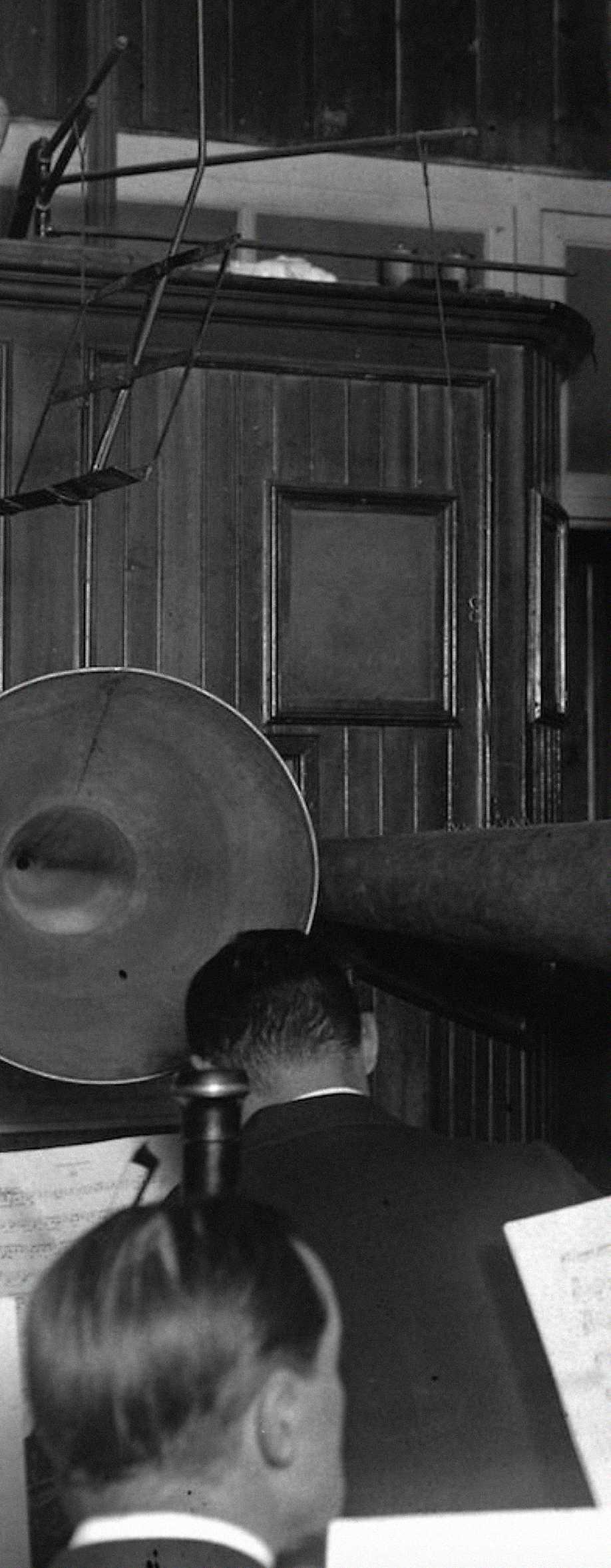
Sir Edward Elgar (in the background) conducting the first recording of his Cello Concerto,November 1920. Soloist is Beatrice Harrison. Publicity Photo His Master’s Voice
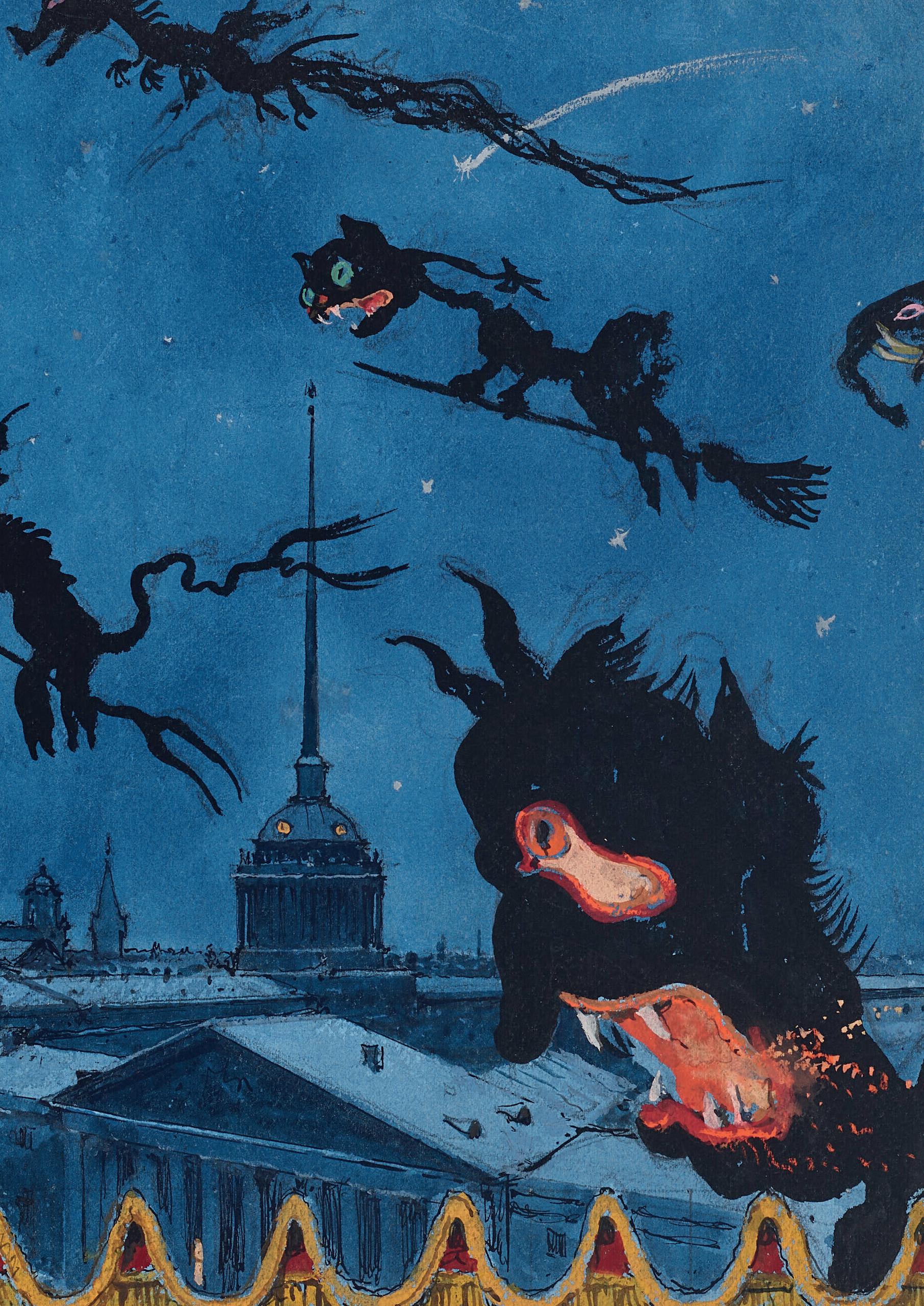
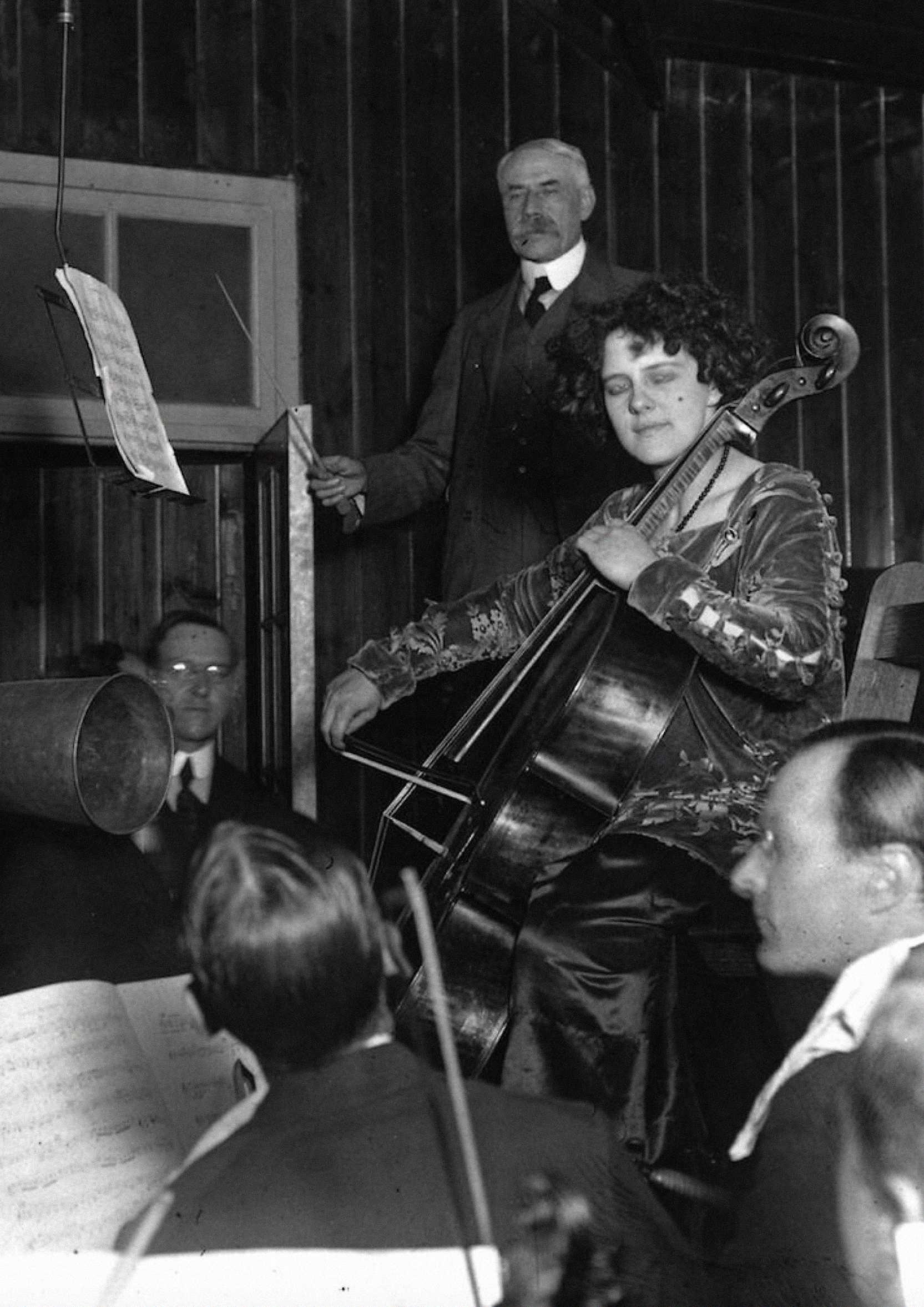
Elgar's Cello Concerto from 1919 clearly echoes the First World War. With the Second already looming, Shostakovich wrote his Sixth Symphony. Those who want to take their mind off war can turn to Rimsky-Korsakov.
Nikolai Rimsky-Korsakov wrote his Capriccio espagnol in the summer of 1887. It is a beautiful evocation of Spain, with original Spanish tunes (the official title is ‘Capriccio on Spanish themes’). He took great pride in it: during the first rehearsal, the musicians interrupted with loud applause for the composer. His colleague Tchaikovsky, who was present at the premiere, was very enthusiastic; he thought it was a wonderfully orchestrated work. However, the latter comment stung Rimsky a little. For him, it was not just about the orchestration, however good it was, with exotic instruments such as tambourines, castanets, and strings that have to strum like a guitarist in the fourth movement. 'A brilliant composition for orchestra' – that's how he preferred to see it. Capriccio espagnol has five movements. The first, Alborada, is an exciting dance with a virtuoso clarinet solo, typical of the music of Asturias in north-western Spain. The second movement begins with a melody in the horn section, which is then varied by the rest of the orchestra. Movement 3 picks up where movement 1 left off, this time with the violin in the solo role. Movement 4, Scena e canto gitano (Scene and Gypsy Song), opens with five cadenzas over everchanging drum rolls. It connects to the final part, Fandango asturiano, with a dance. Which brings us back to Asturias.
On the one hand, it did him good. After undergoing a dangerous operation to remove his inflamed tonsils, the now 61year-old Edward Elgar had retired to his beloved cottage ‘Brinkwells’ near Fittleworth, Sussex, England, in the summer of 1919. Peace, quiet, concentration and the comfort of nature. But on the other hand: wasn't it here that he had been regularly startled at night in recent years by the rumbling of artillery, unmistakable signs of the war being fought on the other side of the Channel? Sad memories. Elgar had begun his Cello Concerto while still in his hospital bed. The anaesthetic had not yet worn off when he’d asked for pen and paper to jot down the main melody of the first movement. Not cheerful sounds. Compared to his earlier work, how different my husband’s music has become, Elgar's wife Alice realised. More contemplative, more melancholic. For the composer, the Cello Concerto represented fear, despair and disillusionment. Death and human mortality – deeply felt and nobilmente conveyed (‘nobly’, the designation for the main theme, and a prominent indication in Elgar's work overall). With the end of the war, the world had not immediately turned into paradise. In other respects, too, this is music about mortality. The concerto would be Elgar's last major work; after this, he was
to write only occasional music. A few months after the premiere on 27 October 1919 in London, which failed due to far too little rehearsal time, Elgar's wife died. He himself lived for another fifteen years, but all that time he would miss her muchneeded stimulus and encouragement for his composing. The Cello Concerto did not achieve success until much later, in the 1960s, thanks to cellist Jacqueline du Pré, whose recording of it became an unusual bestseller for classical music.
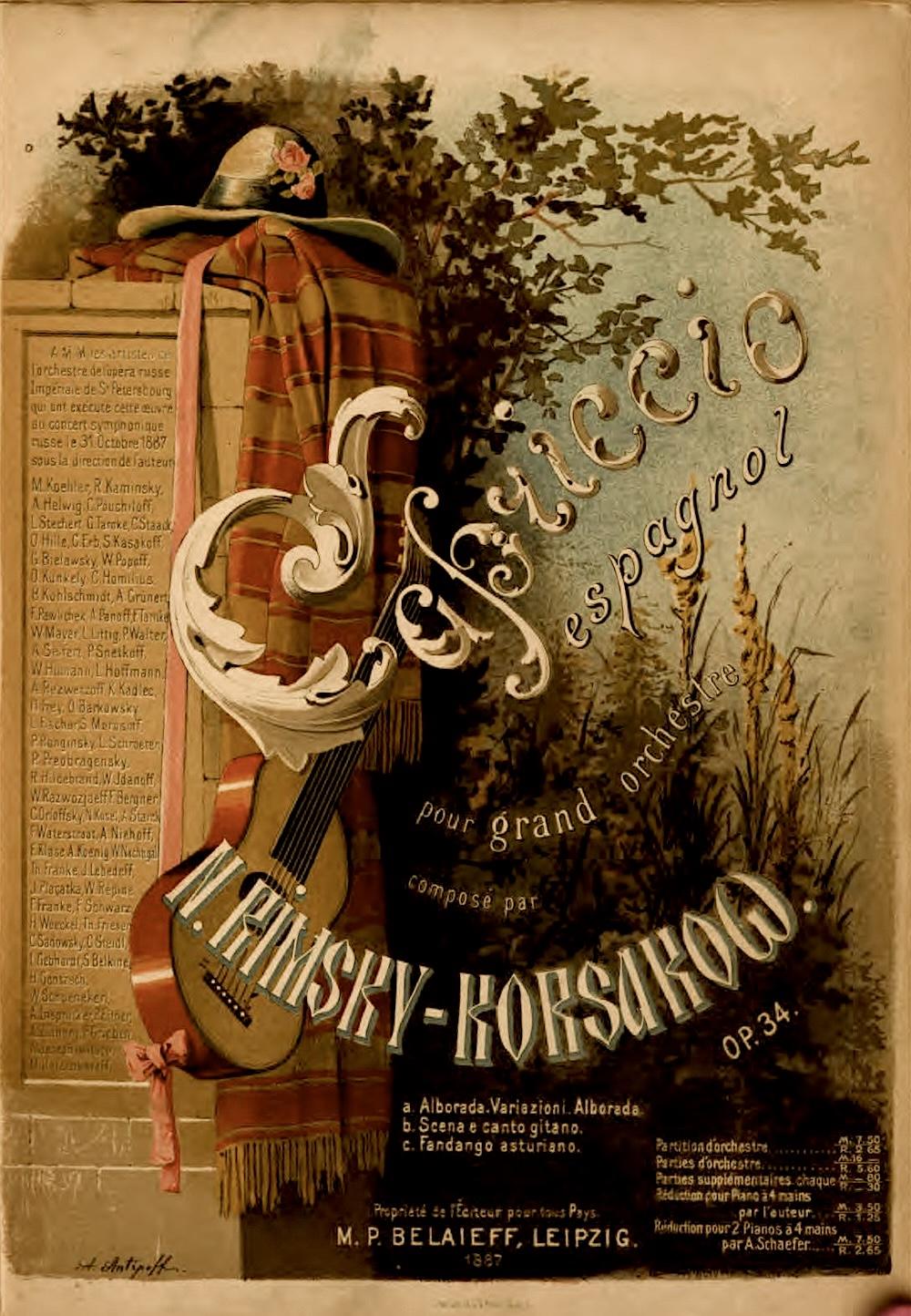
Capriccio espagnol. Cover of the first edition, after a design by A. Antipoff. M.P. Belaieff, Leipzig 1887
Dmitri Shostakovich surprised everyone with his Sixth Symphony. In 1938, the then 32-year-old composer had announced that he was working on a new symphony about Vladimir Lenin. A fine Soviet subject. But what did the audience and critics get to hear when the symphony premiered the following year? Nothing about Lenin. Particularly the galloping finale made people wonder if the composer really had been taking things altogether seriously.
Moreover, it was a short work, less than half an hour long, certainly not intended to be grandiose. And why the light-hearted tone of the second and third movements, at a time when dark clouds were gathering over the world? Russia had signed a non-aggression pact with Nazi Germany, resulting in Germany's invasion of Poland and later an attack on the Soviet Union itself. At the same time, there was also unrest within the country. Suddenly, the talented director Vsevolod Meyerhold, a friend of Shostakovich, was arrested by the authorities and executed. No, something was wrong. Or was it? ‘The character of the Sixth Symphony will differ in mood and emotional tone from the Fifth, which is characterised by moments of tragedy and tension. My latest symphony is dominated by music of a contemplative and lyrical nature. I wanted to express moods of spring, joy and youth in it,’ so said Shostakovich to the press. In doing so, he stayed close to himself. It was a period of relative calm and joy for the composer: he was happily married to Nina Varzar, had a son and a daughter, and, with his successful
Fifth Symphony, had rehabilitated himself in the eyes of Stalin and his cronies for his ‘incomprehensible’, ‘decadent’, ‘anti-state’ opera Lady Macbeth of Mtsensk. What was also surprising was the structure of the Sixth. Only three movements. A slow, sometimes almost Tchaikovsky-like Largo, followed by two short, fast movements: a waltz and an extremely cheerful finale. Where had the first movement gone?! The reception of the Sixth was lukewarm; the composer was criticised for not expressing himself more heroically: ‘deep thoughts and meaningful artistic concepts’ were lacking, according to the Soviet press. Fortunately, Shostakovich did not risk being sent to Siberia for this, but what to make of it was unclear. Later, the Sixth became somewhat squeezed between the dramatic Fifth that preceded it and the enormous, popular Seventh, ‘Leningrad’, that followed it. Nevertheless, the Sixth clearly has its own charms and became a favourite of great conductors such as Serge Koussevitzky and Leopold Stokowski.
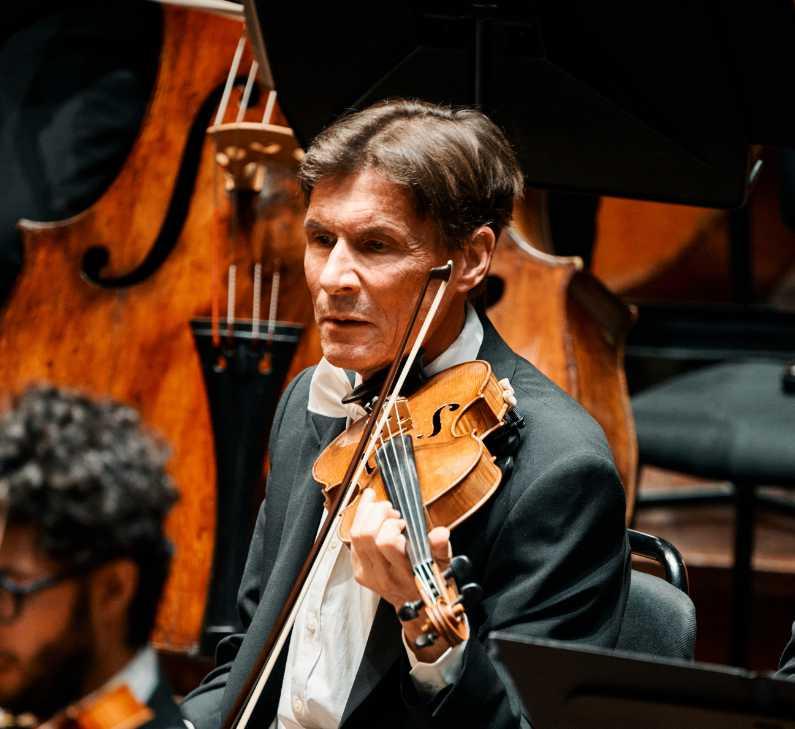
Farewell Arno Bons
This is the last concert week of our violinist Arno Bons. After 44 years with the Rotterdam Philharmonic Orchestra, he is now retiring.
Photo: Eduardus Lee
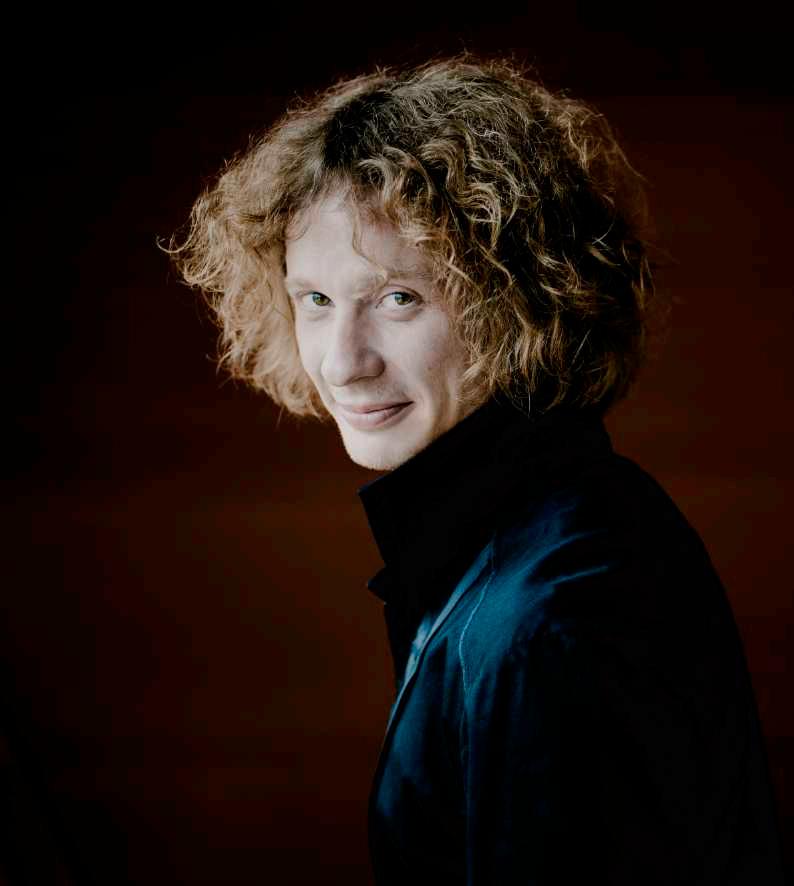
Santtu-Matias Rouvali • conductor
Born: Lahti, Finland
Current position: principal conductor Philharmonia Orchestra, honorary conductor Tampere Philharmonic Orchestra
Previously: principal conductor Tampere Philharmonic Orchestra and Gothenburg
Symphony Orchestra
Education: studies percussion and conducting at the Sibelius Academy in Helsinki, with Jorma Panula, Leif Segerstam and Hannu Lintu
Guest appearances: Berliner Philharmoniker, Deutsches Symphonie-Orchester Berlin, Münchner Philharmoniker, Orchestre
Philharmonique de Radio France, Orchestra dell’Accademia Nazionale di Santa Cecilia, orkesten van New York, Cleveland, Chicago en Los Angeles, Royal Concertgebouw Orchestra
Discography: Recordings for Ondine, Orfeo, Alpha Classics and Philharmonia Records, acclaimed with Editor’s Choice Award (Gramophone), Choc (Classica), Diapason d’Or, Preis der deutschen Schallplattenkritik
Debut Rotterdam Philharmonic: 2026
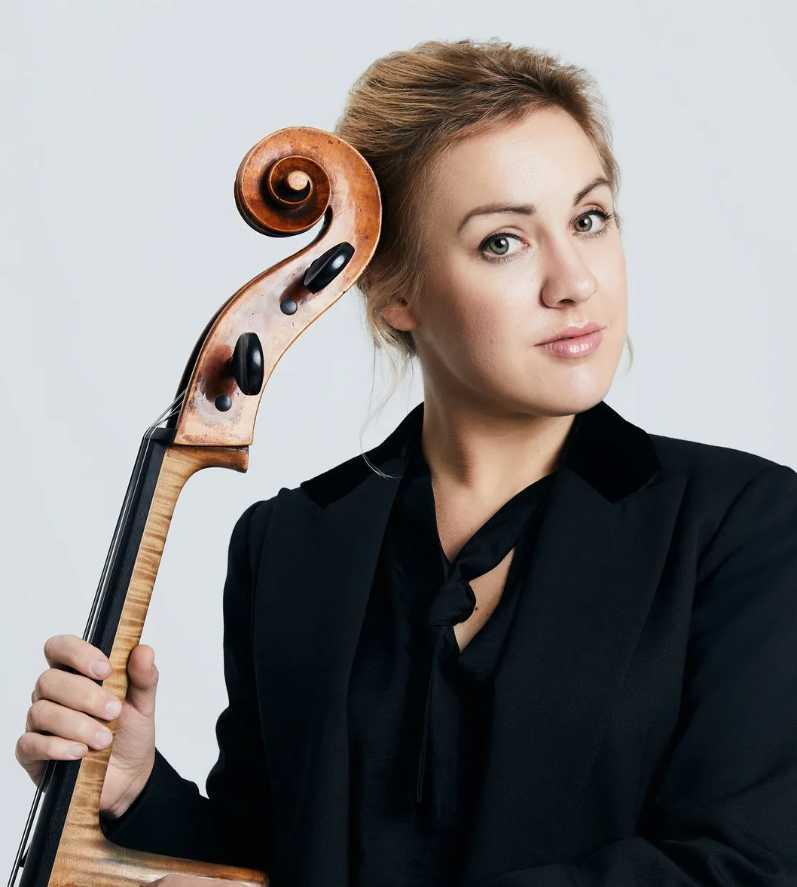
Born: Helsinki, Finland
Education: first cello lessons at age six, studies at the Sibelius Academy (Helsinki), Folkwang Universität der Künste (Essen), Norwegian Academy of Music (Oslo) with Truls Mørk and the Universität der Künste (Berlin)
Breakthrough: 2024–2025 season: debuts at BBC Proms and Osterfestspiele Salzburg
Guest appearances: Helsinki Philharmonic Orchestra, Finnish Radio Symphony Orchestra, Tapiola Sinfonietta, Iceland Symphony Orchestra, Gothenburg Symphony Orchestra, BBC Symphony Orchestra, BBC National Orchestra of Wales, Royal Scottish National Orchestra, Orquestra Filarmônica de Bogotá, Cleveland Orchestra
Chamber music: with lya Gringolts, Augustin Hadelich, Janine Jansen, a.o.
Instrument: David Tecchler (1707), on loan from the Finnish Cultural Foundation
Debut Rotterdam Philharmonic: 2026
Desplat Conducts his Film Music
Fri 20 March 2026 • 20.15
Sat 21 March 2026 • 20.15
conductor Alexandre Desplat Desplat Music from Godzilla, The King’s Speech,The Shape of Waterand otherfilms
Thu 2 April 2026 • 19.30
Fri 3 April 2026 • 19.30
Sat 4 April 2026 • 19.30
conductor LeonardoGarcíaAlarcón soprano Sophie Junker altoWiebke Lehmkuhl tenor(Evangelist) Moritz Kallenberg tenor(Arias) Mark Milhofer
bas (Vox Christi) AndreasWolf bass (arias) Tomáš Král
chorus LaurensCollegium, Nationaal Jongenskoor
Bach St. Matthew Passion
Proms: The Four Seasons Recomposed
Fri 10 April 2026 • 20.30 violin/leaderWilliam Hagen
RichterThe FourSeasons Recomposed
Music for Breakfast 4
Sun 12 April 2026 • 10.30
Trattoria Sophia musicians and programme: rpho.nl/en
Fri 17 April 2026 • 18.00
conductorYannick Nézet-Séguin Wagner Siegfried (concert version)
Chief Conductor
Lahav Shani
Honorary Conductor
Yannick Nézet-Séguin
Principal Guest Conductor
Tarmo Peltokoski
First Violin
Marieke Blankestijn, Concert Master
Vlad Stanculeasa, Concert Master
Quirine Scheffers
HedYaron Meyerson
Saskia Otto
Arno Bons
Rachel Browne
Maria Dingjan
Marie-José Schrijner
Noëmi Bodden
PetraVisser
Sophia Torrenga
Hadewijch Hofland
Annerien Stuker
Alexandra van Beveren
Marie Duquesnoy
Second Violin
Charlotte Potgieter
Frank de Groot
Laurens vanVliet
Elina Staphorsius
JunYi Dou
Bob Bruyn
Eefje Habraken
Maija Reinikainen
Babette van den Berg
Melanie Broers
Tobias Staub
Sarah Decamps
RobinVeldman
Viola
Anne Huser
Roman Spitzer
Galahad Samson
José Moura Nunes
Kerstin Bonk
Janine Baller
Veronika Lénártová
Rosalinde Kluck
León van den Berg
Olfje van der Klein
Jan Navarro
Cello
Emanuele Silvestri
Gustaw Bafeltowski
Joanna Pachucka
Daniel Petrovitsch
Mario Rio
Eelco Beinema
Carla Schrijner
Pepijn Meeuws
Yi-Ting Fang
Killian White
Paul Stavridis
Double Bass
Matthew Midgley
Ying Lai Green
Jonathan Focquaert
Arjen Leendertz
Ricardo Neto
Javier Clemen Martínez
Marta Fossas Mallorqui
Mario Fernández
Flute
Juliette Hurel
Joséphine Olech
Manon Gayet
Flute/Piccolo
Beatriz Baião
Oboe
Karel Schoofs
Anja van der Maten
Oboe/ Cor Anglais
Ron Tijhuis
Clarinet
Julien Hervé
Bruno Bonansea
Alberto Sánchez García
Clarinet/
Bass Clarinet
Romke-Jan Wijmenga
Bassoon
Pieter Nuytten
Lola Descours
Marianne Prommel
Horn
DavidFernándezAlonso
FelipeFreitas
WendyLeliveld
RichardSpeetjens
LaurensOtto
PierreBuizer
Trumpet
Alex Elia
Adrián Martínez
Simon Wierenga
Giovanni Giardinella
Trombone
PierreVolders
AlexanderVerbeek
Remko de Jager
Bass trombone
Rommert Groenhof
Tuba
Martijn van Rijswijk
Timpani/ Percussion
Danny van de Wal
Ronald Ent
Martijn Boom
Jesús Iberti Rubira
Harp
Albane Baron