Programme Notes
Thu 27 November • 20.15
conductor Lahav Shani
piano Martha Argerich
Johan Wagenaar (1862-1941)
Ouverture Cyrano de Bergerac, Op. 23 (1905)
Robert Schumann (1810–1856)
Piano Concerto in A minor, Op. 54 (1841/45)
• Allegro a ettuoso
• Intermezzo: Andantino grazioso
• Allegro vivace
intermission
Johannes Brahms (1833-1897)
Symphony No 2 in D major, Op. 73 (1877)
• Allegro non troppo
• Adagio non troppo
• Allegretto grazioso
• Allegro con spirito concert ends at around 22.30
Most recent performances by our orchestra:
Wagenaar Overture Cyrano de Bergerac: Jun 2025, conductor Lahav Shani (on tour) Schumann Piano Concerto: Feb 2018, piano Till Fellner, conductor Jukka-Pekka Saraste
Brahms Symphony No. 2: Jun 2020, conductor Lahav Shani
One hour before the start of the concert, Emanuel Overbeeke will give an introduction (in Dutch) to the programme, admission €7,50. Tickets are available at the hall, payment by debit card. The introduction is free for Vrienden.
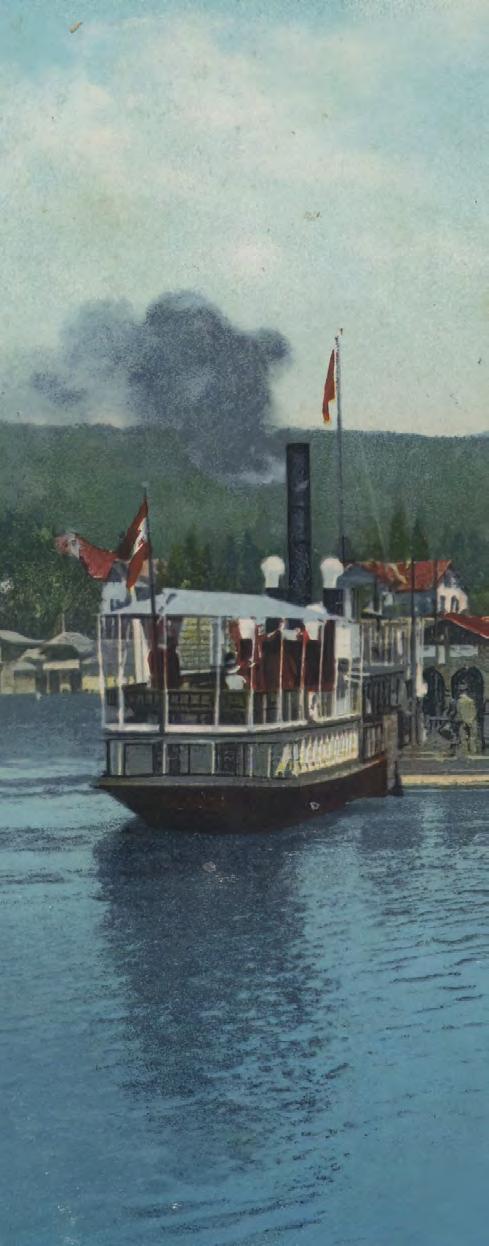
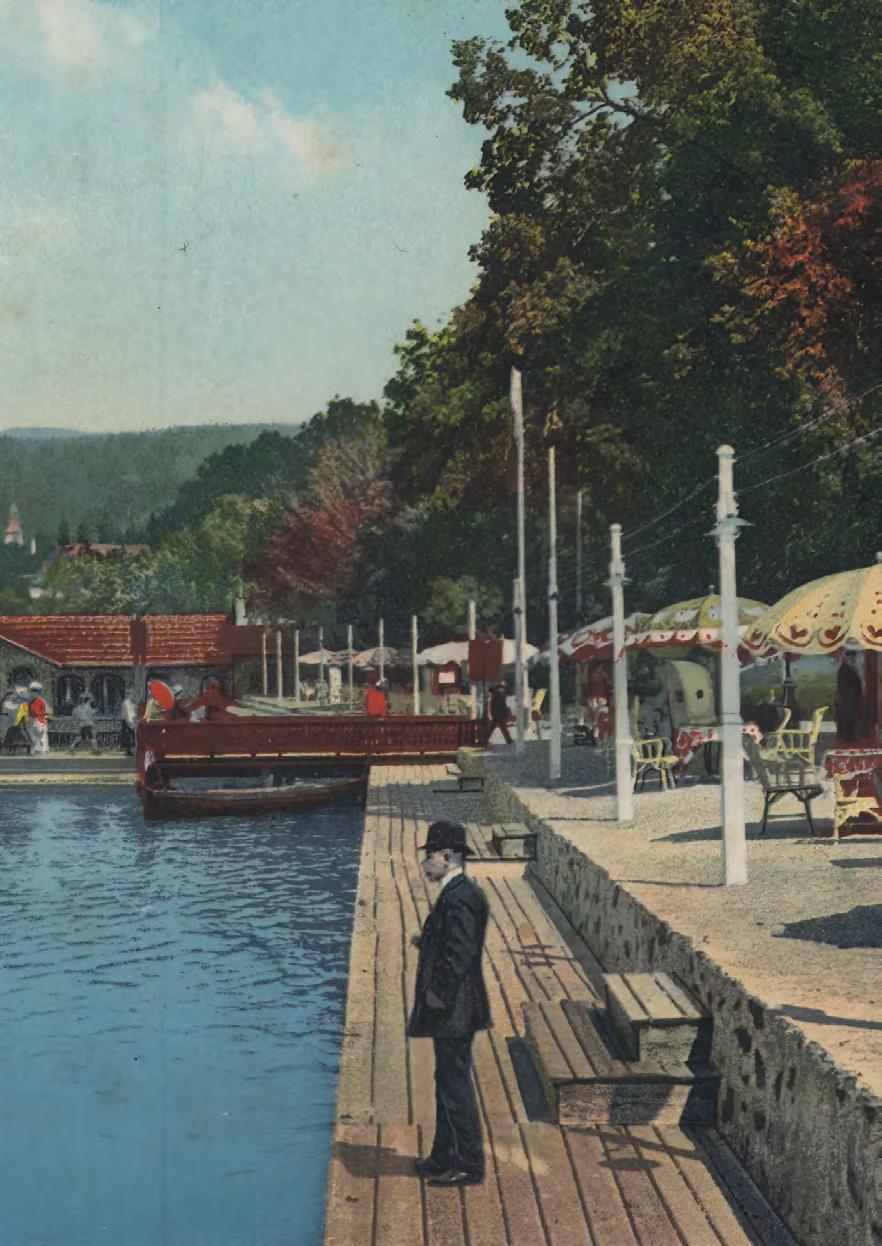
Cover: Photo Adrien Delforge (Unsplash) Pörtschach am Wörthersee, Brahms’s beloved holiday resort. Postcard (1911) by Leon Editions, Klagenfurt
The three composers from the Romantic period performed in this concert bring great happiness. We hear Wagenaar’s lyricism and heroism; the sunshine of Brahms; and Schumann’s yearning for love that transforms into joy.
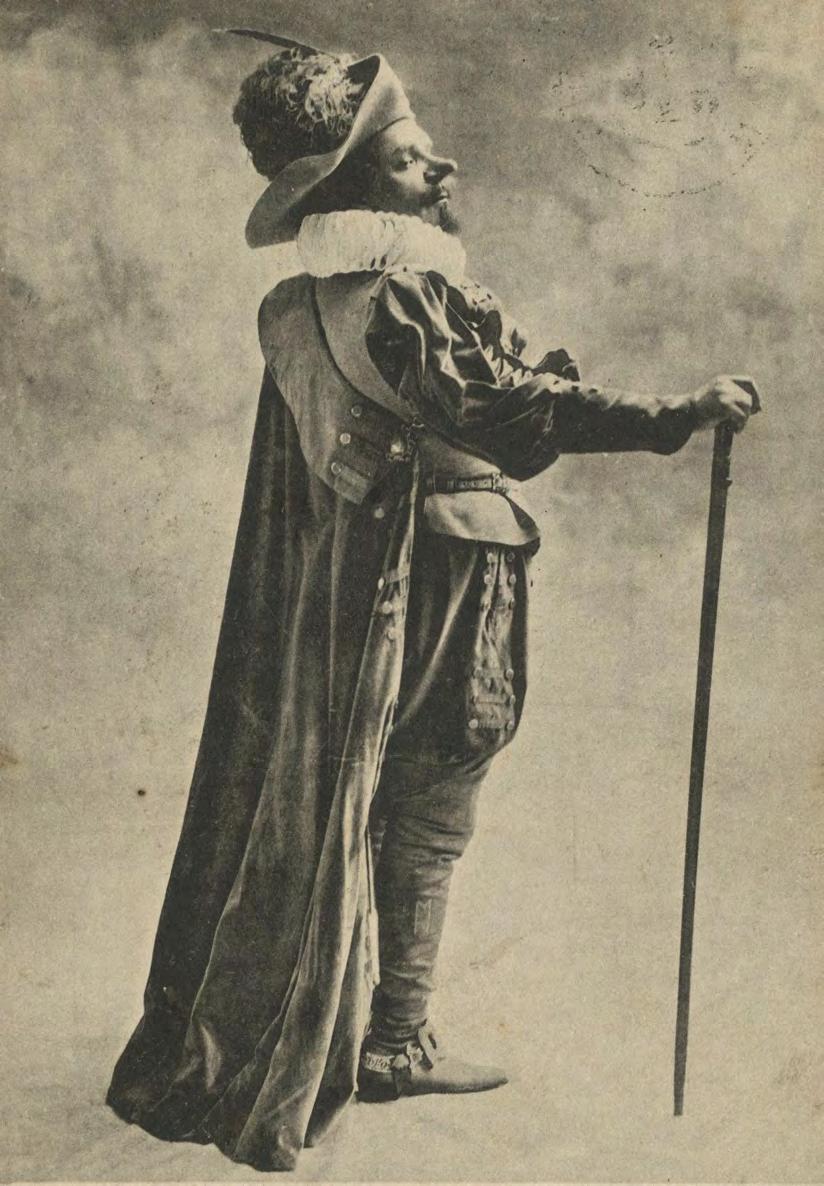
In around 1900, Johan Wagenaar, organist of Utrecht’s cathedral and director of the Royal Conservatoire Te Hague, was one of the leading fgures of the music world in the Netherlands. Te fact that his name remains familiar is mostly due to his composition of brilliant concert overtures. Of these vibrantly orchestrated, eternally fresh works, Cyrano de Bergerac (1905) is one of the most captivating. At the top of the score, Wagenaar wrote, ‘Tis overture relates only to the principal character from Rostand’s comédie héroique and his characteristics’. Te frst theme we hear depicts Cyrano’s ‘Heroism’, followed by Wagenaar’s description of his ‘love, poetry’. Other personality traits are explored in the music, although the frst two musical themes have the upper hand. Wagenaar chooses not to delve into the plot of Rostand’s drama. Perhaps he assumed that listeners would know the story. Te soldier-poet Cyrano is secretly in love with Roxane, but he feels that love has little chance due to his disfguringly large nose. Christian, another soldier, also loves Roxane, but cannot fnd the words to express his love. Cyrano undertakes the role of ghostwriter; Roxane falls for the poetic love letters. By the time she learns the true identity of the author, it is too late: Cyrano dies.
A maelstrom of emotions characterise the music of Robert Schumann. Te composer was ofen pulled by competing inner voices. Modern psychology tends to diagnose him as manic depressive. But in fact it is hard now to get to the truth. In his earlier work Schumann ofen appears full of cheer. Tis is true of his Piano Concerto, composed for his wife, the pianist Clara Wieck. He was just 31; she was even ten years younger. He had been courting this beautiful young woman – a pianist of great promise - for years. But throughout these years her father thwarted any relationship between the two whenever he was able. But now, in 1841, they were married! ‘I don’t wish to write a virtuoso concerto. I have something diferent in mind’, explained Schumann, who wished to dedicate the piano and orchestra instead to more important, emotional causes. He poured out the love in his heart in this Piano Concerto, especially in the passionate Allegro afettuoso (‘with feeling’). Initially he had settled for this frst movement alone, to be published separately as a ‘Fantasy’. But four years later he added an Intermezzo and Finale to arrive at a threemovement concerto. If you were to study the original score of the Finale, you would notice something curious. One section of it
is written in a diferent hand: that of Clara. Schumann relied on her help in writing out some passages that he had already scored in a diferent key for this movement.
Originally Schumann had been urged by his publisher to expand his Fantasy into a threemovement work on the basis that a traditional Piano Concerto would sell better. In other words, a commercial concession. But what does that matter, when – at least to modern tastes - the more of Schumann we listen to, the better? But Schumann’s contemporaries clearly thought otherwise. At the concerto’s premiere in Vienna in 1847, conducted by Schumann with Clara at the piano, almost no one liked it. Its reception upset Clara, although curiously Schumann himself remained undeterred by the poor reviews: ‘Have faith,’ he told Clara. ‘In ten years’ time people will think completely diferently!’
A sunny postcard
‘You have never heard anything so worldweary,’ wrote Johannes Brahms to a friend on completion of his Second Symphony. ‘It is in F minor throughout’. To Clara Schumann, his most intimate confdante, he confrmed that his latest work had a ‘very elegiac’ character. In fact, Brahms tricked them both, because his Second Symphony is an undisguised evocation of a radiant summer, written in the glorious key of D major.
It is tempting to connect the relaxed atmosphere of Brahms’s Second Symphony with the background to its creation. Te 44-year-old composer was spending the summer of 1877 by Lake Wörthersee in modern-day Austria. Brahms was no stranger to melancholy, but in this idyllic setting he fourished and thoroughly enjoyed himself: ‘Lake Wörthersee is an untouched source,
melodies futter all around so one has to be careful not to step on them’. Te sun shone on his desk, diluting his black ink.
Rather than writing a virtuoso concerto, Schumann wished to dedicate the piano and orchestra instead to more important, emotional causes
But the origins of this work’s cheerful character probably reach deeper. Brahms’s First Symphony had been the result of twenty years of toil. He had been determined to write a symphony that could stand tall against the great Beethoven. At the première of the work it appeared that the mission had been accomplished. And now, he could begin work on his second with a sense of relief.
No movement of the symphony is in a minor key; there is not even any notable minor passage. Tere are no agonising introductions to fast tempo movements, as there are in his First Symphony. Brahms dispenses with all sudden mood swings and instead conjures up an unspoilt nineteenth-century undulating landscape. Rarely has his work sounded so carefree for such a long period. In the fnale the good mood expands into unalloyed joy, for which Brahms used a musical term rare for the Romantic period: ‘con spirito’, meaning ‘with spirit’. In that fnal movement there is scarcely pause for refection; the music is as exuberant as any fnal movement of Haydn, and as celebratory as any chorus from a Handel oratorio. Why Brahms could not express this feeling to Clara with honesty remains a mystery.
Stephen Westra
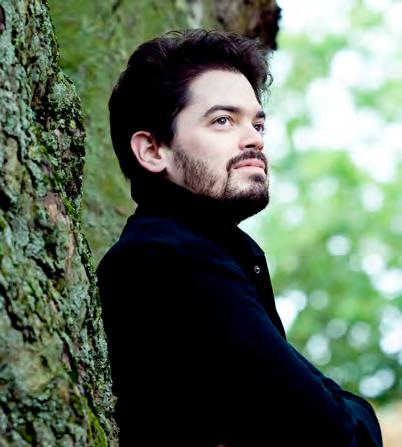
Born: Tel Aviv, Israel
Current position: chief conductor Rotterdam
Philharmonic Orchestra; music director Israel Philharmonic Orchestra; chief conductor designate Münchner Philharmoniker (from 2026)
Before: principal guest conductor Vienna Symphony Orchestra
Education: piano at the Buchmann-Mehta School of Music Tel Aviv; conducting and piano at the Academy of Music Hanns Eisler Berlin; mentor: Daniel Barenboim
Breakthrough: 2013, First Prize Gustav Mahler
International Conducting Competition in Bamberg
Subsequently: guest appearances Wiener Philharmoniker, Berliner Philharmoniker, Gewandhaus Orchester, Münchner
Philharmoniker, Symphonieorchester des Bayerischen Rundfunks, London Symphony Orchestra, Boston Symphony Orchestra, Chicago Symphony Orchestra, Philadelphia Orchestra, Royal Concertgebouworchestra
Debut Rotterdam Philharmonic: 2016
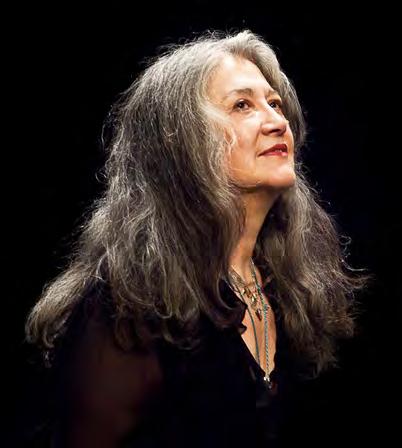
Born: Buenos Aires, Argentina
Education: with Friedrich Gulda in Austria; Arturo Benedetti Michelangeli, Stefan Askenase Awards: Geneva International Music Competition (1957); Ferruccio Busoni
International Piano Competition Bolzano (1957); Praemium Imperiale Award (2005), Kennedy Center Honor (2016)
Breakthrough: 1965, after winning the Fryderyk Chopin International Piano Competition
Warsaw
Subsequently: soloist with all major orchestras in the world
Chamber Music: with pianists Stephen Kovacevich, Alexandre Rabinovich, the late Nelson Freire and Nicolas Economou, violinist
Gidon Kremer, cellist Mischa Maisky
Festival: honorary president International Piano Academy Lake Como
Documentary: Martha Argerich – Evening Talk 2002
Debut Rotterdam Philharmonic: 1969
Fri 28 November 2025 • 20.15
conductor Lahav Shani
violin Patricia Kopatchinskaja
Shostakovich Violin Concerto No. 1
Brahms Symphony No. 3 ‘Eroica’
Proms: Nutcracker & Company
Sat 13 December 2025 • 20.30
conductor Aziz Shokhakimov
violin Maria Milstein
Glinka Overture Ruslan and Ludmilla
Tchaikovsky The Nutcracker: Suite Tchaikovsky Serenade mélancolique
Khachaturian Masquerade: Suite
Music for Breakfast 2
Sun 14 December 2025 • 10.30
RDM Kantine musicians and programme: rpho.nl/en
Fri 19 December 2025 • 20.15
conductor Jan Willem de Vriend
oboe d’amore Karel Schoofs
Bach Sinfonia from Cantata No. 174
Bach Suite for Orchestra No. 3
Bach Concerto for Oboe d’Amore in A Mozart Adagio and Fugue
Mozart Symphony No. 35 ‘Ha ner’
Sat 20 December 2025 • 20.15
Sun 21 December 2025 • 14.15
conductor Eduardo Strausser
vocal ensemble King’s Singers Christmas Programme
Thu 8 January 2026 • 20.15
Sun 11 January 2026 • 14.15
conductor Giedrė Šlekytė
cello Truls Mørk
Dvořák Cello Concerto
Schubert Symphony No. 8
‘Unfinished’
Koldály Dances from Galanta
Chief Conductor
Lahav Shani
Honorary Conductor
Yannick Nézet-Séguin
Principal Guest Conductor
Tarmo Peltokoski
First Violin
Marieke Blankestijn, Concert Master
Vlad Stanculeasa,
Concert Master
Quirine Sche ers
Hed Yaron Meyerson
Saskia Otto
Arno Bons
Rachel Browne
Maria Dingjan
Marie-José Schrijner
Noëmi Bodden
Petra Visser
Sophia Torrenga
Hadewijch Hofland
Annerien Stuker
Alexandra van Beveren
Marie Duquesnoy
Second Violin
Charlotte Potgieter
Frank de Groot
Laurens van Vliet
Elina Staphorsius
Jun Yi Dou
Bob Bruyn
Eefje Habraken
Maija Reinikainen
Babette van den Berg
Melanie Broers
Tobias Staub
Sarah Decamps
Viola
Anne Huser
Roman Spitzer
Galahad Samson
José Moura Nunes
Kerstin Bonk
Janine Baller
Francis Saunders
Veronika Lénártová
Rosalinde Kluck
León van den Berg
Olfje van der Klein
Jan Navarro
Cello
Emanuele Silvestri
Gustaw Bafeltowski
Joanna Pachucka
Daniel Petrovitsch
Mario Rio
Eelco Beinema
Carla Schrijner
Pepijn Meeuws
Yi-Ting Fang
Killian White
Paul Stavridis
Double Bass
Matthew Midgley
Ying Lai Green
Jonathan Focquaert
Arjen Leendertz
Ricardo Neto
Javier Clemen Martínez
Flute
Juliette Hurel
Joséphine Olech
Manon Gayet
Flute/Piccolo
Beatriz Baião
Oboe
Karel Schoofs
Anja van der Maten
Oboe/Cor Anglais
Ron Tijhuis
Clarinet
Julien Hervé
Bruno Bonansea
Alberto Sánchez García
Clarinet/
Bass Clarinet
Romke-Jan Wijmenga
Bassoon
Pieter Nuytten
Lola Descours
Marianne Prommel
Bassoon/ Contrabassoon
Hans Wisse Horn
David Fernández Alonso
Felipe Freitas
Wendy Leliveld
Richard Speetjens
Laurens Otto
Pierre Buizer
Trumpet
Alex Elia
Adrián Martínez
Simon Wierenga
Jos Verspagen
Trombone
Pierre Volders
Alexander Verbeek
Remko de Jager
Bass trombone
Rommert Groenhof
Tuba
Martijn van Rijswijk
Timpani/ Percussion
Danny van de Wal
Ronald Ent
Martijn Boom
Harp Albane Baron