PROGRAMME
conductor Bas Wiegers
piano Kirill Gerstein
Mirela Ivičević (1980)
Black Moon Lilith (2019/21) Dutch premiere
Thomas Adès (1971)
Piano Concerto (2018)
• Allegrissimo
• Andante gravemente
• Allegro giojoso
intermission
Igor Stravinsky (1882-1971) Petrouchka, Burlesque in Four Scenes (1911/1947)
• The Shrove-Tide Fair
• Petrouchka
• The Blackamoor
• The Shrove-Tide Fair and the Death of Petrouchka
concert ends at around 22.15 / 16.15
Most recent performances by our orchestra:
Ivičević Black Moon Lilith: first performance by our orchestra
Adès Piano Concerto: first performance by our orchestra
Stravinsky Petrouchka: Sep 2019, conductor Lahav Shani (on tour)
One hour before the start of the concert, Michel Khalifa will give an introduction (in Dutch) to the programme, admission €7,50. Tickets are available at the hall, payment by debit card. The introduction is free for Vrienden.
Cover: Photo Alexander Shustov (Unsplash)
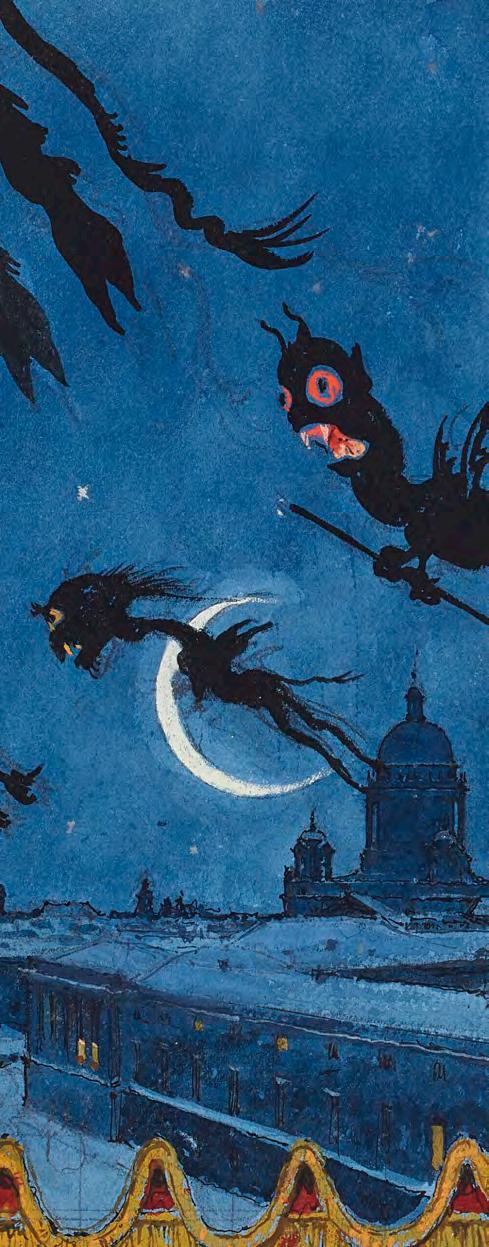
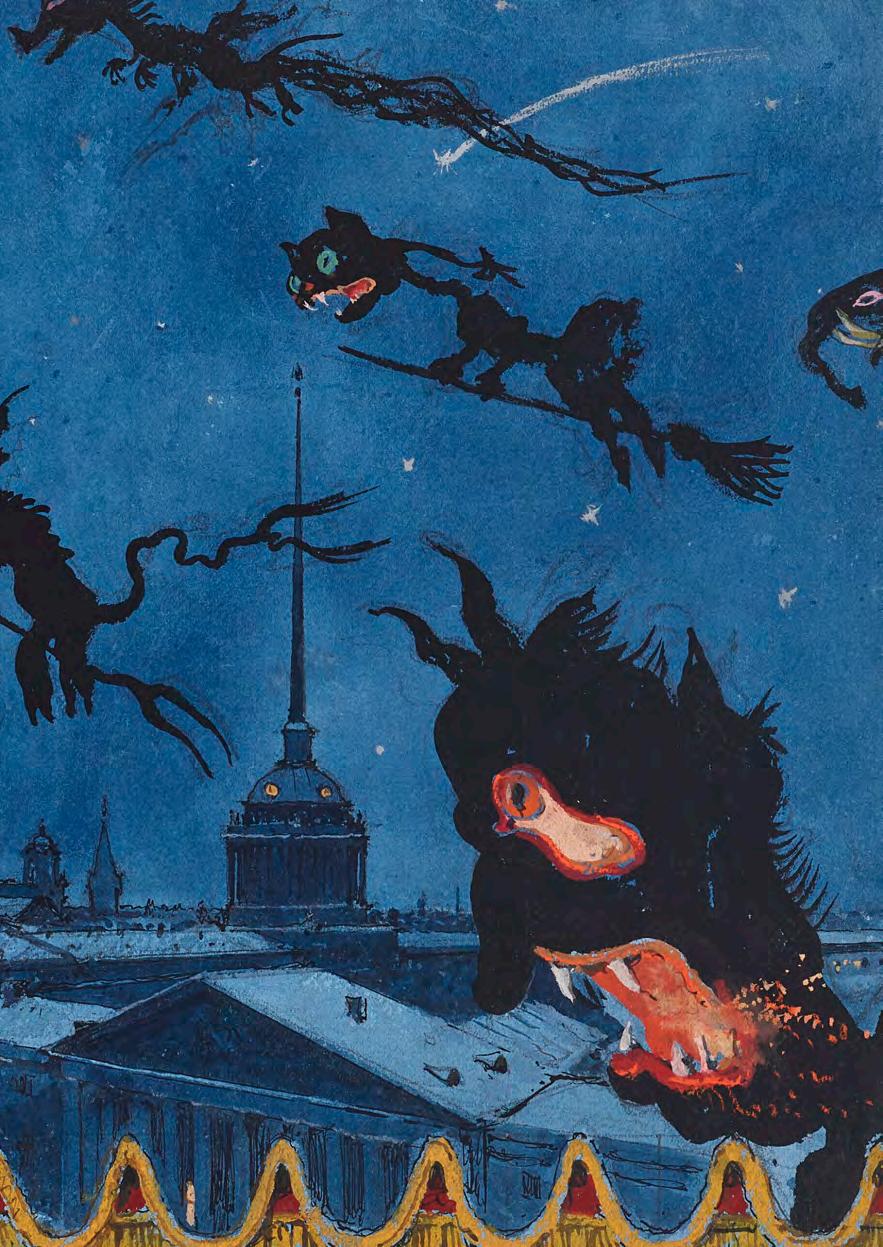
Saint-Petersburg by Night: drop curtain for Petrouchka. Design by Alexandre Benois (1911)
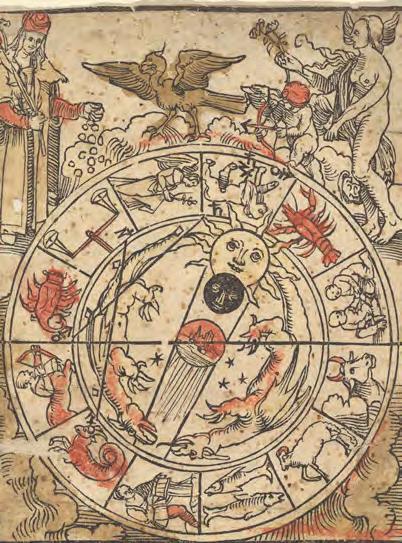
Astrological chart with the signs of the zodiac, earth, sun and (black) moon. Woodcut, early 16th century. Coll. The Elisha Whittlesey Fund, Metropolitan Museum of Art, New York
Demonic arts
In her work Black Moon Lilith, Mirela Ivičević reveals the demonic aspects of our subconscious. Thomas Adès reveals the devilish artistry of his wildly virtuoso Piano Concerto. Igor Stravinsky’s Petrushka tells the tale of three marionettes manipulated by a dark puppeteer. Slightly sinister, completely irresistible.
Over centuries, the moon has acquired a fxed place in music history. Unlike the stars, and our own sun – also favoured by many composers – the moon is nearer to us, and shows a ‘face’. It is therefore easy to personify and readily flls the role of companion and interlocutor in music. Ofen, it also acts as a mirror that refects back at us, or magnifes, our thoughts and emotions.
In her work Black Moon Lilith, Croation composer Mirela Ivičević portrays the moon not as a comforting presence; indeed, it is conspicuous by its absence. As the composer explains: ‘it is the furthest from the earth, the furthest removed from what we know’. Te music depicts darkness, the unknown and, very audibly, fear. Te background to the work is the wars in the former Yugoslavia that harmed her family, and the fear of the resurgence of fascism all around her. Her works ofen convey a socio-political message, which is hardly surprising for a composer
who studied in the Netherlands under the socially engaged Louis Andriessen. In creating the nightmarish sounds of this work, Ivičević not only drew upon her own orchestral expertise, but also created electronic soundscapes that signifcantly enriched her sonic pallet. And sometimes we hear an almost heavenly quality to this dark work, in which light sometimes glimmers. As Ivičević explains: ‘the things within us that we fear are the things that make us free.’
Extremities
British music, and indeed music throughout the world, would be diminished without Tomas Adès. Since his cheerfully shocking opera Powder her Face premiered in 1995, he has continued to set of freworks in various musical genres. Adès is a versatile composer who takes full advantage of his musical heritage. Whilst he sometimes makes clear reference to previous stylistic periods or specifc composers, Adès’s work always
sounds original and captivating – not to say confrontational – because he never hesitates to add a sharp edge to beauty.
Accordingly, even though his Piano Concerto has the traditional three-movement structure (fast – slow – fast) he allows himself within that structure all the liberties of a twenty-frst century composer. He maintains a beautiful balance of musical content. As in almost all his works, Adès imbues this work with a nervous undertone. Tis is most palpable in the outer movements, that echo like factory foors full of machinery that threatens to derail, set against tightly directed industrial processes. Te middle movement depicts the eye of the storm. Te pianist takes on the role of storyteller with a Rachmaninof-style emotion.
Te almost continuous tension, together with the remarkable piano part, makes listening to this work a virtually physical
experience. ‘And yet,’ Adès reassures us, ‘it’s no more difcult than any other extremely difcult piano concerto.’
Box of colours
It’s true that there was no shortage of fairytale ballets around 1900, but no one had experienced anything like Petrushka before. In this ballet the young Igor Stravinsky introduces a Parisian audience to a gaudy Russian carnival – perfect timing, given that a taste for the exotic was all the rage. Te impresario Serge Diaghilev, who discovered Stravinsky, capitalised on this trend. He had launched the composer onto the world stage in 1910 with his colourful ballet Te Firebird, the success of which cried out for a sequel. Stravinsky wanted to write about a puppet that comes to life, and Diaghilev immediately saw the theatrical potential. He introduced Stravinsky to scenic director Alexandre Benois and in 1911 the ballet Petrushka was in production.
There was no shortage of fairytale ballets around 1900, but no one had experienced anything like
Petrushka
before
Te story unfolds against the background of a Russian Shrove Tuesday carnival. A solo fute draws attention to a puppet stall in which the marionettes are arguing amongst themselves. Petrushka is in love with the Ballerina, but the Moor is his rival in love. Is the puppeteer, a dark sorcerer, pulling the strings? Or is he himself a powerless onlooker as their bickering grows out of control? Either way: the Moor stabs Petrushka dead. At the end of the ballet, however, Petrushka’s ghost returns to laugh mockingly at everyone at the carnival.
Tis was a scenario with which Benois provided Stravinsky with a box of vibrant colours. He brought the puppet characters out of their box; dancers need legs, afer all. He also introduced a sorcerer to bring the puppets to life and invited all the carnival goers to play a role in the story.
Zapping and Zappa
In 1911 the music had an overwhelming efect on a public accustomed to romantic ballets, fowing melodic lines and graceful movement. Even buried within all the modernity of Starvinsky’s earlier ballet Te Firebird, one could still recognise the smooth romantic sweep of Rimsky Korsakov. But Petrushka introduced us to a new soundscape, thanks entirely to the composer’s fragmented narrative style. He presented the carnival scenes in the way that we nowadays switch windows on our computers, or zap between TV channels: switching with no transition
from one image to the next, making the chaos of a carnival almost tangible. Rhythms constantly shif. Ofen one hears a musical depiction of two disparate things occurring at the same time: a barrel organ brought into the mix, two orchestras playing simultaneously. Tis connects the music with the cubist art movement in vogue at that time. In the paintings and collages of Picasso and Fernand Léger diferent forms and materials are used alongside, through and over each other.
All this innovation was not without repercussions. Tis work signifed the end of the Romantic style of music. Tere was hardly a composer of the younger generation not infuenced by Petrushka. Te music lef its mark on the early albums of Frank Zappa. And there are experimental pop bands still today drawing on its inspiration.
Michiel Cleij
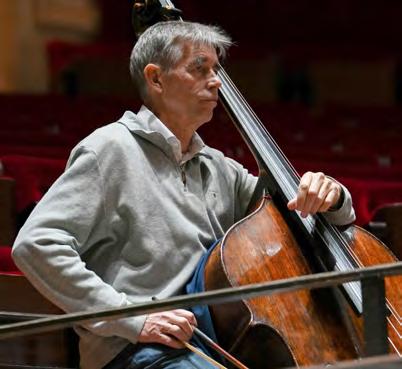
Farewell Harke Wiersma
Tis is the last concert week of our double bass player Harke Wiersma. Afer 44 years with the Rotterdam Philharmonic Orchestra, he is now retiring.
Photo: Sanne Bakkes
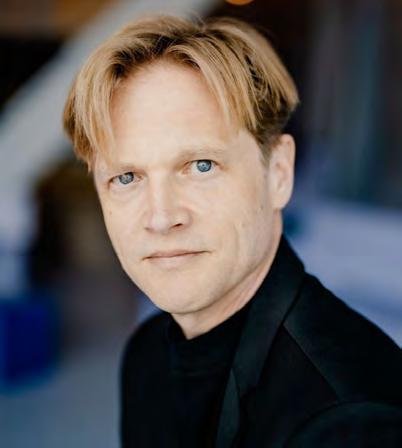
Bas Wiegers • conductor
Born: Dussen, the Netherlands
Current position: Associated Conductor Munich Chamber Orchestra
Education: Amsterdam Conservatory, violin with Johannes Leertouwer and Peter Brunt, conducting with Roland Kieft; Hochschule für Musik Freiburg with Rainer Kussmaul Awards: Kersjes van de Groenekan Violin Scholarship (1999); Kersjes van de Groenekan Conductors Scholarship (2009)
Guest appearances: Britten Sinfonia, Klangforum Wien, SWR Sinfonieorchester, Rundfunk Sinfonieorchester Berlin, Ensemble Modern, Trondheim Symphony Orchestra, Nationaal Symfonieorkest van Estland, Asko/ Schönberg Ensemble, Royal Concertgebouw Orchestra; Wiener Festwochen, Prague Spring Festival, Huddersfield Contemporary Music Festival, Ruhrtriennale, November Music, Holland Festival
Musical partnerships: composers such as Georges Aperghis, Georg Friedrich Haas, Helmut Lachenmann, Salvatore Sciarrino, Rebecca Saunders
Debut Rotterdam Philharmonic: 2015
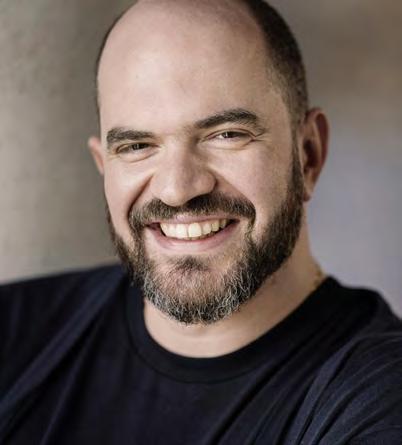
Kirill Gerstein • piano
Born: Voronezh, Russia
Education: Manhattan School of Music with Solomon Mikowsky; Berklee College of Music in Boston; with Dmitri Bashkirov in Madrid, and with Ferenc Rados in Budapest
Awards: First Prize Arthur Rubinstein Competition (2001); Gilmore Artist Award (2010); Opus Klassik 2025
Breakthrough: 2000, in Brahms’ Piano Concerto No. 1 with David Zinman and the TonhalleOrchester Zürich
Subsequently: Los Angeles Philharmonic, Boston Symphony Orchestra, Philadelphia Orchestra, Cleveland Orchestra, New York Philharmonic, London Philharmonic, Berliner Philharmoniker, Münchener Philharmoniker, Staatskapelle Dresden, Chamber Orchestra of Europe, Royal Concertgebouw Orchestra
Premieres: compositions by Thomas Adès, Timothy Andres, Chick Corea, Alexander Goehr, Oliver Knussen, Brad Mehldau
Debut Rotterdam Philharmonic: 2007
Photo: Marco Borggreve
Photo: Marco Borggreve
Musicians Agenda
Thu 27 November 2025 • 20.15
conductor Lahav Shani
piano Martha Argerich
Wagenaar Ouverture Cyrano de Bergerac
Schumann Piano Concerto Brahms Symphony No. 2
Fri 28 November 2025 • 20.15
conductor Lahav Shani
violin Patricia Kopatchinskaja
Shostakovich Violin Concerto No. 1 Brahms Symphony No. 3 ‘Eroica’
Proms: Nutcracker & Company
Sat 13 December 2025 • 20.30
conductor Aziz Shokhakimov
violin Maria Milstein
Glinka Overture Ruslan and Ludmilla Tchaikovsky The Nutcracker: Suite Tchaikovsky Serenade mélancolique
Khachaturian Masquerade: Suite
Music for Breakfast 2
Sun 14 December 2025 • 10.30
RDM Kantine musicians and programme: rpho.nl/en
Fri 19 December 2025 • 20.15
conductor Jan Willem de Vriend
oboe d’amore Karel Schoofs
Bach Sinfonia from Cantata No. 174
Bach Suite for Orchestra No. 3
Bach Concerto for Oboe d’Amore in A Mozart Adagio and Fugue
Mozart Symphony No. 35 ‘Ha ner’
Sat 20 December 2025 • 20.15
Sun 21 December 2025 • 14.15
conductor Eduardo Strausser
vocal ensemble King’s Singers
Christmas Programme
Chief Conductor
Lahav Shani
Honorary Conductor
Yannick Nézet-Séguin
Principal Guest Conductor
Tarmo Peltokoski
First Violin
Marieke Blankestijn, Concert Master
Vlad Stanculeasa, Concert Master
Quirine Sche ers
Hed Yaron Meyerson
Saskia Otto
Arno Bons
Rachel Browne
Maria Dingjan
Marie-José Schrijner
Noëmi Bodden
Petra Visser
Sophia Torrenga
Hadewijch Hofland
Annerien Stuker
Alexandra van Beveren
Marie Duquesnoy
Second Violin
Charlotte Potgieter
Frank de Groot
Laurens van Vliet
Elina Staphorsius
Jun Yi Dou
Bob Bruyn
Eefje Habraken
Maija Reinikainen
Babette van den Berg
Melanie Broers
Tobias Staub
Sarah Decamps
Viola
Anne Huser
Roman Spitzer
Galahad Samson
José Moura Nunes
Kerstin Bonk
Janine Baller
Francis Saunders
Veronika Lénártová
Rosalinde Kluck
León van den Berg
Olfje van der Klein
Jan Navarro
Cello
Emanuele Silvestri
Gustaw Bafeltowski
Joanna Pachucka
Daniel Petrovitsch
Mario Rio Eelco Beinema
Carla Schrijner
Pepijn Meeuws
Yi-Ting Fang
Killian White
Paul Stavridis
Double Bass
Matthew Midgley
Ying Lai Green
Jonathan Focquaert
Arjen Leendertz
Ricardo Neto
Javier Clemen Martínez
Flute
Juliette Hurel
Joséphine Olech
Manon Gayet
Flute/Piccolo
Beatriz Baião
Oboe
Karel Schoofs
Anja van der Maten
Oboe/Cor Anglais
Ron Tijhuis
Clarinet
Julien Hervé
Bruno Bonansea
Alberto Sánchez García
Clarinet/ Bass Clarinet
Romke-Jan Wijmenga
Bassoon
Pieter Nuytten
Lola Descours
Marianne Prommel
Bassoon/ Contrabassoon
Hans Wisse
Horn
David Fernández Alonso
Felipe Freitas
Wendy Leliveld
Richard Speetjens
Laurens Otto
Pierre Buizer
Trumpet
Alex Elia
Adrián Martínez
Simon Wierenga
Jos Verspagen
Trombone
Pierre Volders
Alexander Verbeek
Remko de Jager
Bass trombone
Rommert Groenhof
Tuba
Martijn van Rijswijk
Timpani/ Percussion
Danny van de Wal
Ronald Ent
Martijn Boom
Harp Albane Baron