MODERNITÉ
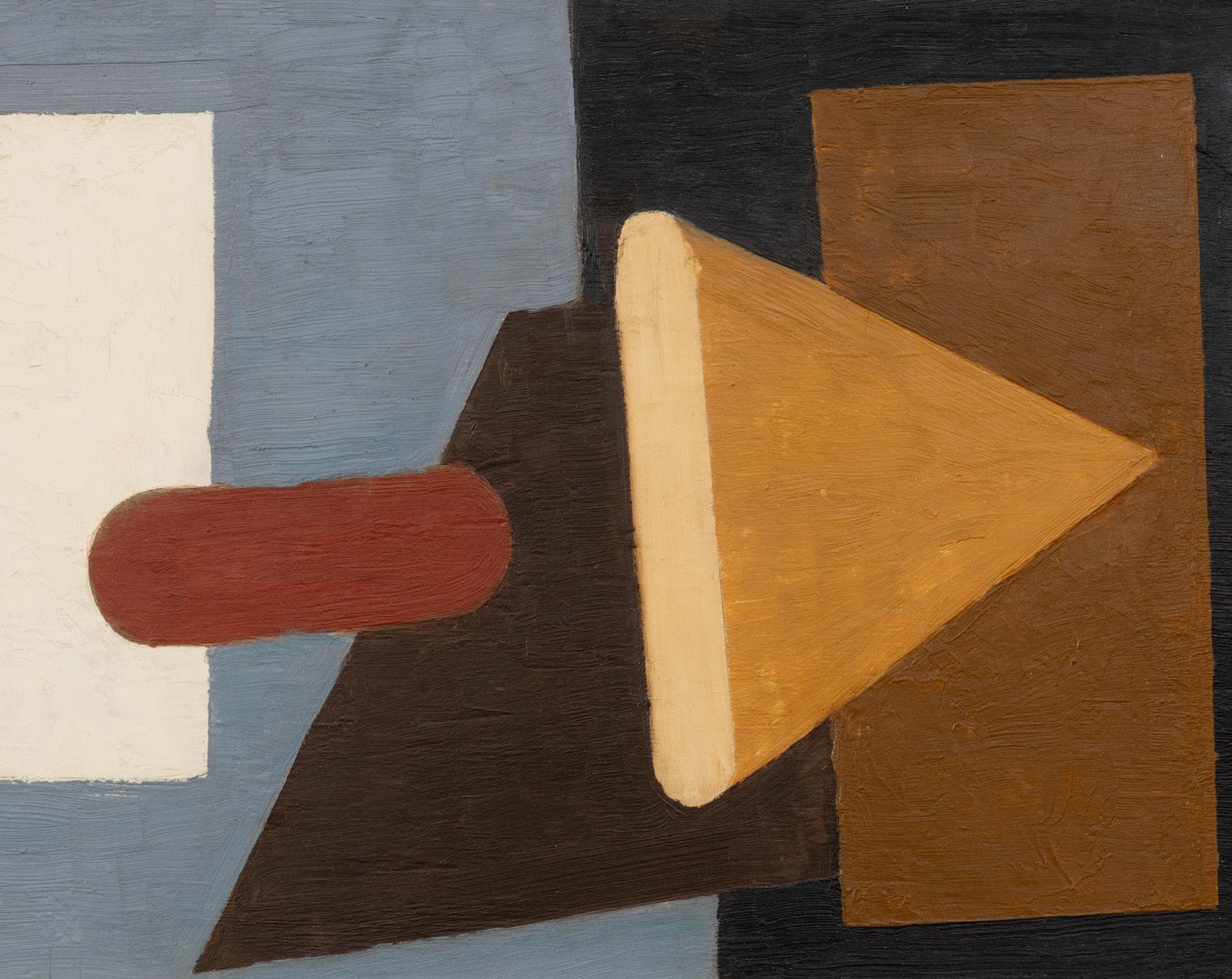

A simplistic view of modernism in the fine arts might be that it is a movement emphasizing innovation and new forms of expression, along with the unavoidable lists of identifying “labels,” such as Cubism, Fauvism, Orphism, Dadaism, Precisionism, Constructivism, and Abstract Expressionism, among others. While helpful, these often do not capture the swirl of dialogue among artists or the cross-currents of interactions between Europe and the United States.
The purpose here is not a survey of modernism in all its forms over a great number of years. Too tall a task. Rather, this collection is intended as a selected representation of the international exchange and influence between the American and European art circles.
The currents of exchange included many European artists (Charchoune, Crotti, Hélion, Survage, Hayden and Goncharova) working in the Paris hub of the avant-garde, welcomed American artists (Davis, Gallatin, Hartley, and Sheeler to name a few), and subsequent work and exhibitions in New York that contributed to the very foundation and life of American modernism. Many of the artists in the convergence of ideas and styles formed or joined groups and collectives to promote and support their brethren. Examples can be found in the Section d’Or (Crotti, Gleizes, Villon) and the American Abstract Artists (Gallatin, Balcomb Greene, Gertrude Greene and Morris).
Modernism, even in its infancy and all its incarnations, cannot be separated from the turmoil of events and creativity beginning in 1900 and lasting through the 1940s.
The early formative years, 1900 through 1913, emerge in the streets of Montparnasse and boldly wade into the American imagination at the legendary 1913 Armory Show in New York. The seeds are sown by a surprisingly diverse group of artists arriving in Paris to immerse themselves in the general wave of creativity.
These include Joseph Csáky who emigrates from Hungary to Paris, Henry Hayden who leaves Poland for Paris, Léopold Survage, who, from Finland, joins the early Cubists, Serge Férat and Natalia Goncharova, each of Russian extraction. To this list are added Jacques Villon and Marcel Duchamp, who make a controversial entry into New York, shattering the heretofore tame American aesthetic. Crossing the Atlantic the other way are Alfred H. Maurer, who trains in Paris, and Marsden Hartley, who lives a nomadic life between Paris-Berlin and the United States. Each of these artists inevitably influence other artists and imbue the cross-currents of creativity with a new and stronger impression.
This serenity of the first steps of modernism is shattered by the destructive forces of World War I, which disperses artists to various then-neutral countries and fundamentally changes the art movements. Jean Crotti and Marcel Duchamp arrive in New York to which Marsden Hardley returns.
The all too brief interwar years are the most fertile for transatlantic exchanges: American artists study in Paris, seeking an alternative to the popular Social Realism that prevailed at home; US collectors and museums welcome European Abstract movements, and art dealers and galleries span the two poles. George L. K. Morris studies with Léger in Paris. American art galleries promote European artists and those strongly influenced by and displaying European esthetics. José de Creeft established an American career. Hilla Rebay, an artist in her own right, becomes a leader in the museum world as the first director of the Guggenheim Museum. John Graham becomes a keystone figure bridging European and American modernism, influencing a new generation of artists through his writings and curatorial work.
When the Museum of Modern Art mounted its 1936 exhibition of Cubist and abstract art, it featured exclusively European artists. American abstract artists,
though active and innovative, remained largely invisible to the museum-going public. Jean Hélion’s fluency in English after years in the US, and his prominent role in European groups like Art Concret and Abstraction-Création positioned him uniquely to bridge this gap, connecting the European vanguard with America’s developing abstract movement. Along with Balcomb and Gertrude Greene, and over thirty other artists, Hélion co-founded the American Abstract Artists group in 1936.
Once again, war results in a tragic diaspora of artists. Folmer is interned in Germany, Hayden goes into hiding and loses most of his artwork, and Hélion, having returned to France, is held as a prisoner of war. This catalogue focuses on artists whose transatlantic connections were established primarily through the earlier voluntary exchanges of the interwar period. The baton has been passed to American modernism, born from European currents. Maturing somewhat late from the initial modernism movement, American artists now begin to create their own unique avant-garde center of creativity.
The gallery’s presentation embodies these transatlantic currents. Paul Rosenberg’s Paris gallery represented several artists in this exhibition. When the Nazi occupation forced his flight to New York in 1940, Rosenberg rebuilt his gallery in America, continuing to support the European artists who, like him, found themselves displaced, as well as American artists who continued to define the modernist aesthetic at home. Rosenberg & Co.’s program continues to demonstrate the enduring relevance of these networks today.
The corresponding brief biography of each artist is meant to highlight the artist’s creative journey and to underscore the extraordinary flow of influences, periods, experimentation and shifts.
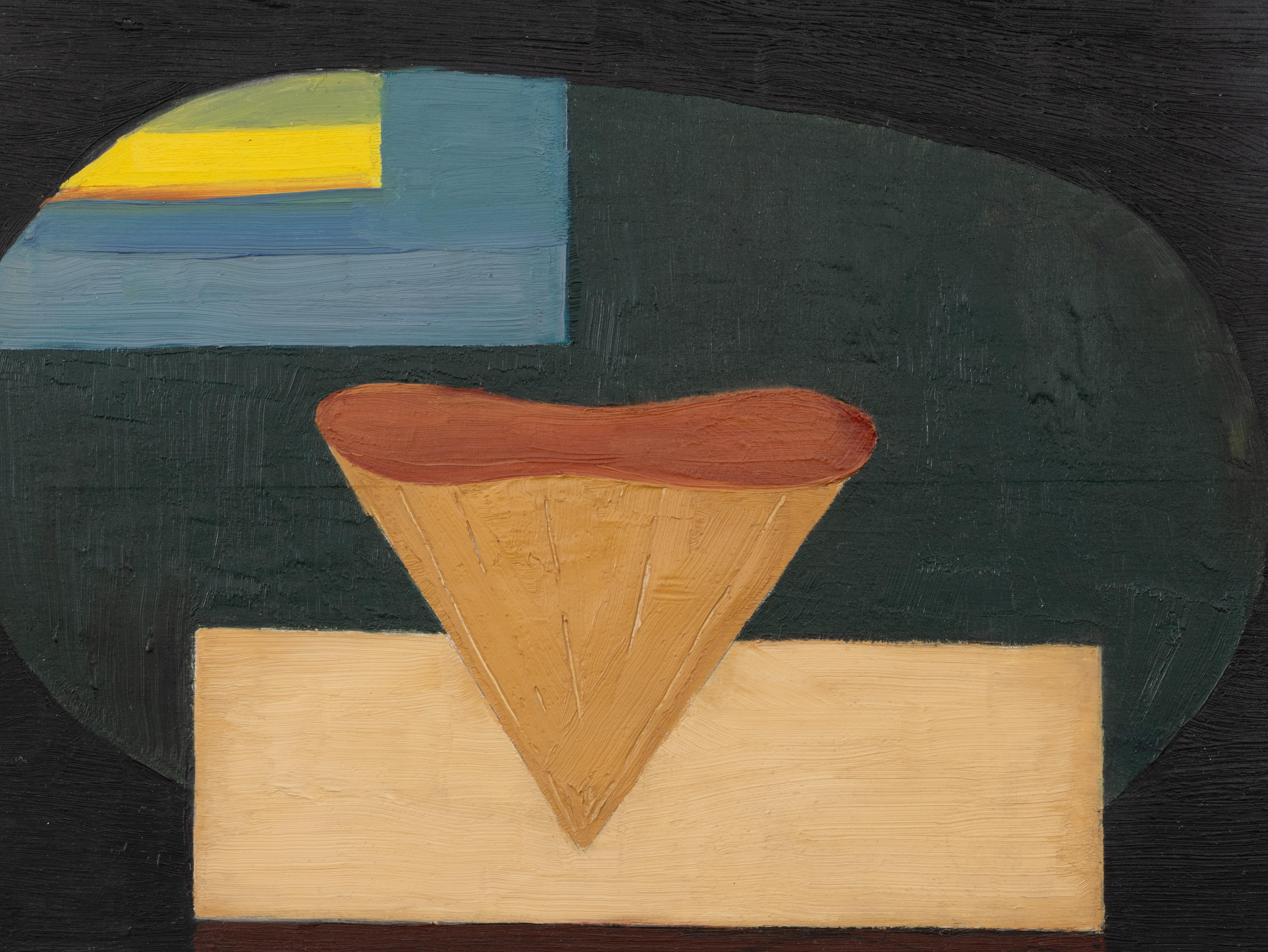
b.1888, Buguruslan, Russia d.1975, Villeneuve-Saint Georges, France
Serge Charchoune was a Russian-born painter and poet, born in 1888 in Buguruslan. He studied at the Moscow Academy of Artbefore moving to Paris in 1912. There, he trained under Henri Le Fauconnier at the Académie de la Palette and exhibited for the first time at the Salon des Indépendants. His early paintings reflected the strong influence of Cubism and Fauvism.
In 1920, Charchoune held his first solo exhibition in Paris at Galerie Fournet.
A year later, he joined the Dada movement, contributing to its exhibitions and reviews. In 1922, he exhibited at Berlin’s renowned Der Sturm gallery before returning to Paris, where critic André Salmon introduced him to gallerist Jeanne Bucher, who showcased his work in 1926.
Around this time, Charchoune began incorporating the structured principles of Purism into his practice, influenced by his contact with Amédée Ozenfant. This led to the development of a distinctive style he called “Paysages Elastiques,” or “ Cubisme Ornemental,” balancing organic and geometric forms.
In 1935, Charchoune turned his focus to the connection between music and painting. He described music as a source of visual inspiration, stating, “Music gives me the theme. While listening to music, I see the painting with my eyes closed, like a colored seam stretching out before me.”
Charchoune rejected conformity to any single modernist movement. Instead, by merging Cubism, Dadaism, and Purism in ways that dissolved the boundaries between ”high” and ”low” art, his work remains an important contribution to the development of abstraction and ornamental art.

Serge Charchoune
La course effrénée de Phébus, 1943
Oil on cardboard
9.8 x 10.8 in.
25 x 27.5 cm
b.1889, Pavlohrad, Ukraine
d.1951, Moscow, Russia
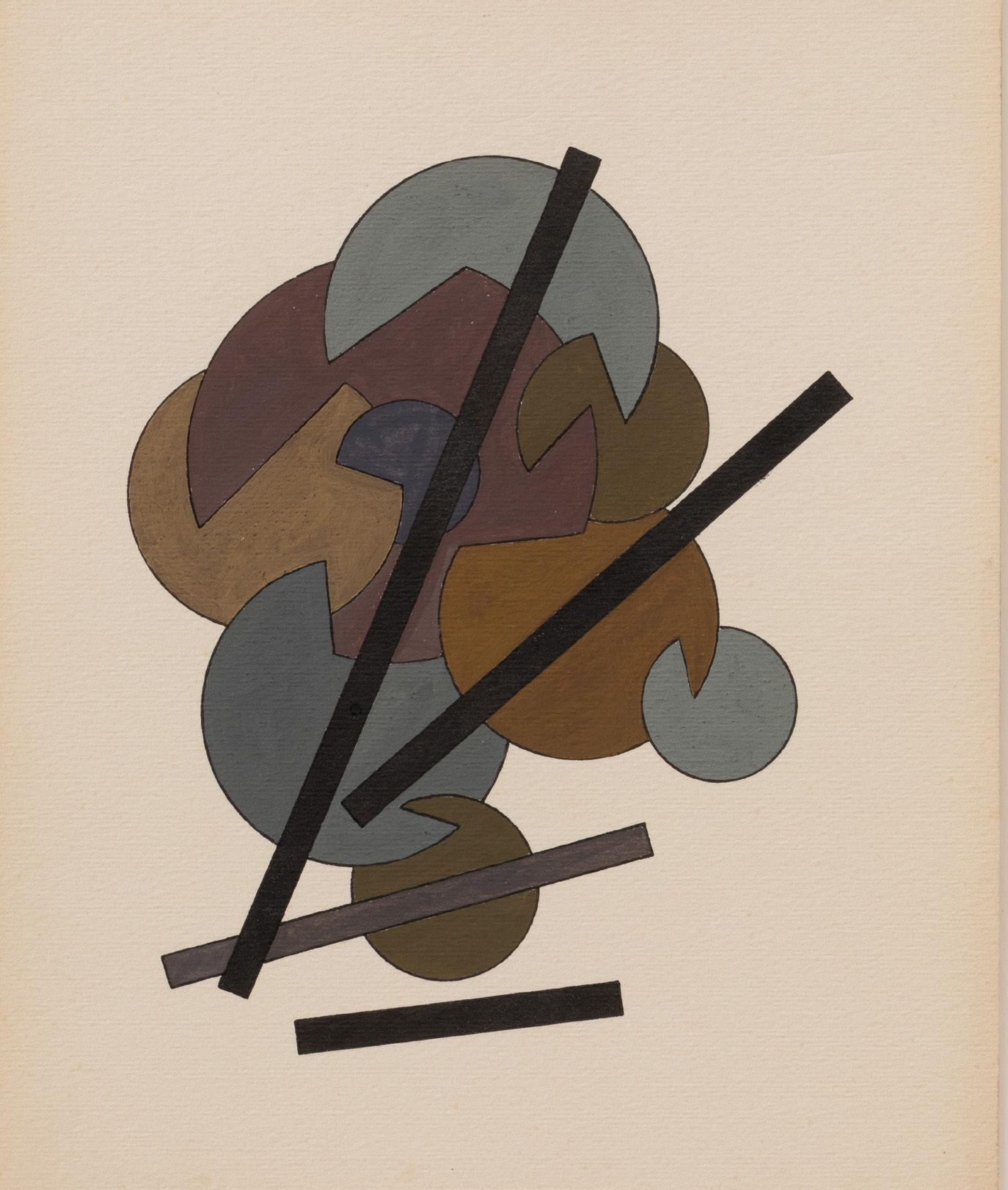
Yakov Chernikhov was a pioneering architect and theorist whose work played a vital role in shaping early 20th-century modernism. Born in Pavlograd, Ukraine, he studied at the Odesa Arts Institute under Kiriak Kostandi and Genradii Ladyzhensky, later continuing his education at the Imperial Academy of Arts in St. Petersburg. It was the re that Chernikhov developed a deep fascination with avant-garde movements such as Futurism, Constructivism, and Suprematism, which would influence his approach to both architecture and art.
In 1925, after graduating, Chernikhov founded his Experimental Laboratory of Architectural Forms and Methods of Graphic Art, where he taught and mentored students as an “artist-architect.” His philosophy championed creative freedom, experimental design, and independent thinking—ideals that often put him at odds with the increasingly repressive Stalinist regime, which was hostile to the radical nature of his work.
Chernikhov was incredibly prolific, producing over 17,000 drawings throughout his career. His most famous work, 101 Architectural Fantasies (1933), reimagined architectural possibilities with geometric purity and visionary designs. In these works, Chernikhov merged technological and industrial influences with artistic abstraction, envisioning architecture not just as functional space but also as a medium for radical visual expression. Although many of his ideas were never realized in built form, his work remains a significant contribution to architectural theory, cementing his place as a key figure in the history of modernist architecture.
Yakov Chernikhov
Untitled (from the series Aristografiya), mid 1920s
Gouache and ink on paper
11 x 9.25 in.
27.9 x 23.5 cm
29.8 x 23.5 cm
b.1884, Guadalajara, Spain
d.1982, New York, New York
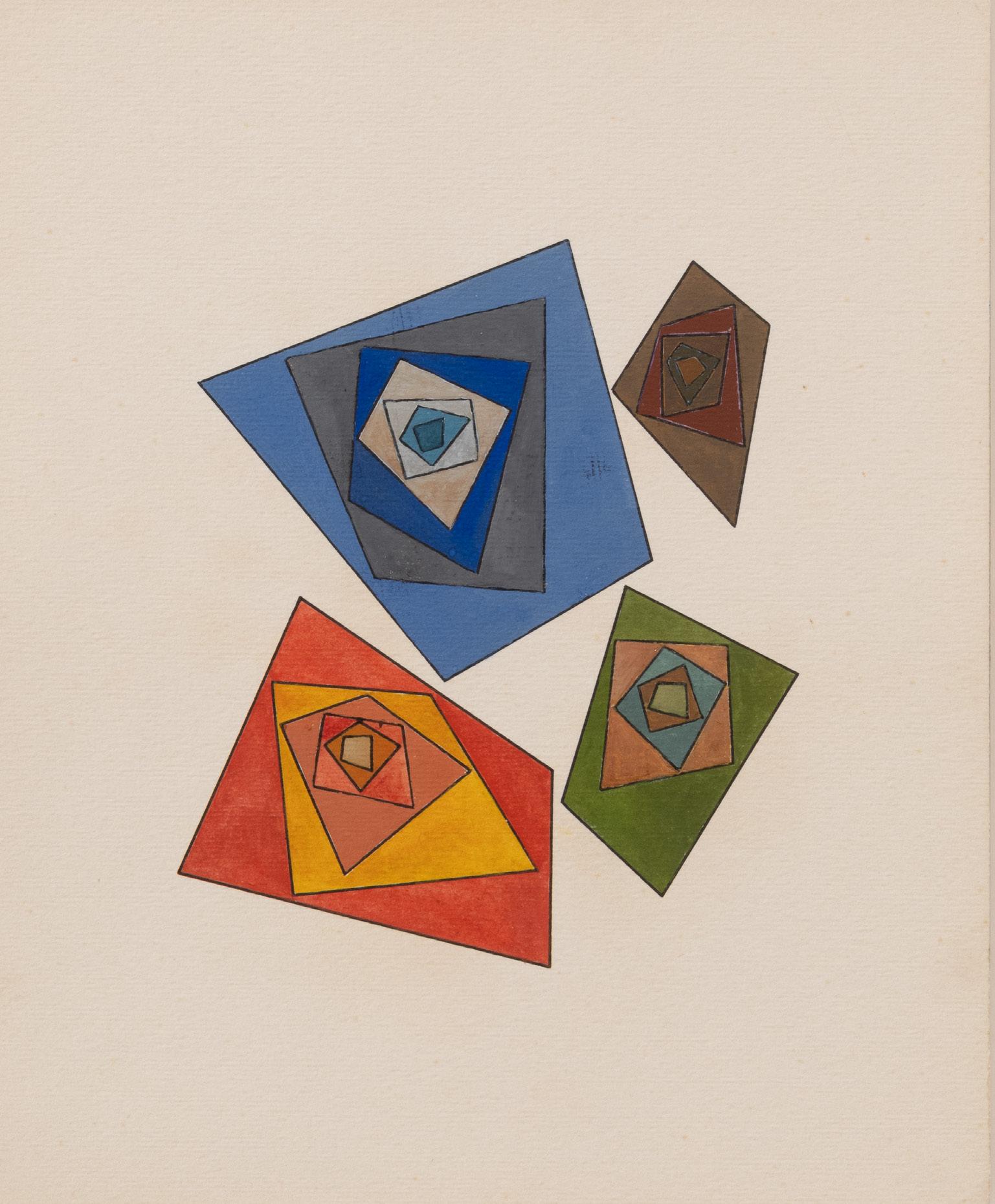
A major contributor to modernist sculpture, Spanish-born artist Jose de Creeft experienced early international success in Paris before establishing himself as an artist in America. De Creeft’s early training as a draftsman began in Madrid. In 1905, he continued this education in Paris after being encouraged by Auguste Rodin to enroll in the Académie Julien.
Once in France, he befriended fellow Spaniards Juan Gris and Pablo Picasso. He was an early advocate and practitioner of the direct carving approach to sculpture. In addition to his widely celebrated sculptural work, which includes Central Park’s Alice in Wonderland sculpture, de Creeft’s paintings are equally significant as they allowed the artist to express ideas that transcended carved forms. More abstract than his sculptures, de Creeft’s two-dimensional pieces allowed him to explore his imagination further and more rapidly document his thoughts.
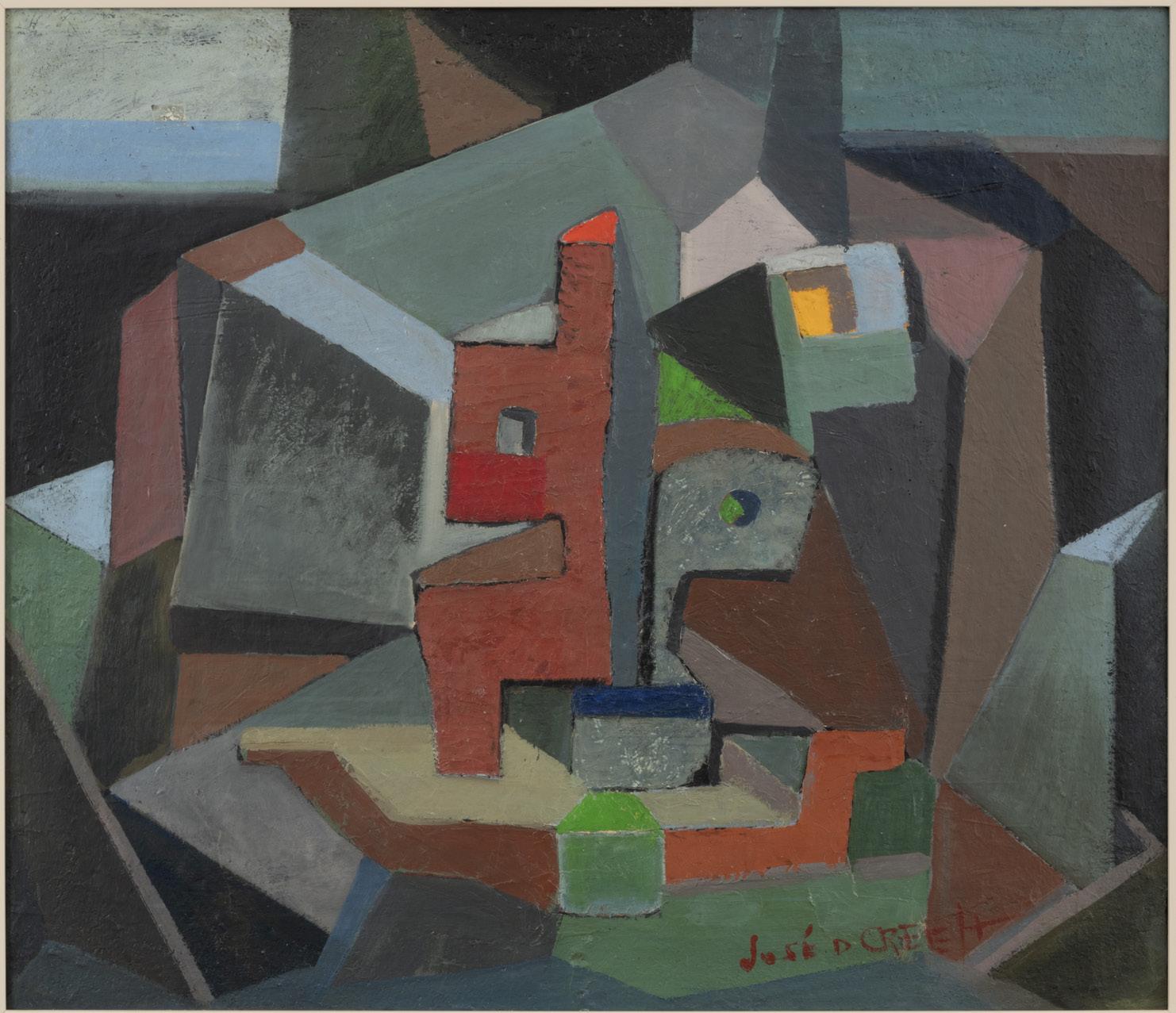
Pueblo, c. 1935–1940
b.1878, Fribourg, Switzerland
d.1958, Paris, France
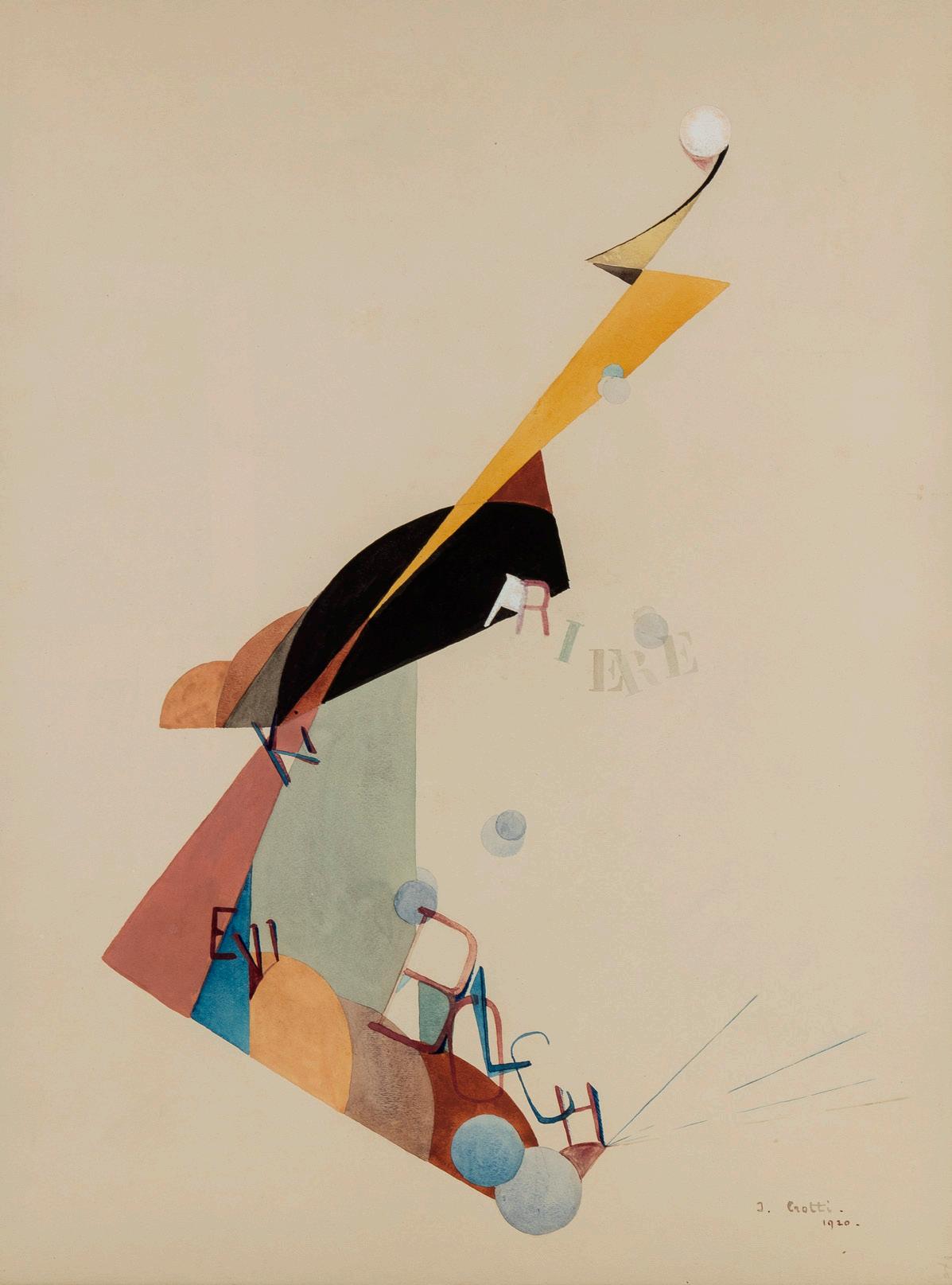
Jean Crotti was a Swiss-born painter whose work bridged several key movements of early 20th-century modernism, including Cubism, Orphism, and Dada. Born in 1878 in Bulle, Switzerland, he was the son of a painting contractor and trained in Munich and Paris. Between 1910 and 1912, Crotti became closely aligned with the Cubists and Orphists of the Section d’Or, developing relationships with Francis Picabia, Jean Metzinger, Albert Gleizes, and his future brothers-in-law Raymond Duchamp and Jacques VIllon.
To escape wartime Paris in 1914, Crotti left for New York with his first wife, Yvonne Chastel. There, he shared a studio with Marcel Duchamp and met Duchamp’s sister, Suzanne, an artist in her own right and a major figure of the Dada movement.
Crotti soon began his Dada period and exhibited alongside Duchamp, Gleizes, and Metzinger in a 1916 show at the Montross Gallery. In 1919, he divorced Chastel and married Suzanne Duchamp.
During this period, Crotti created a series of mechanomorphic works on glass that became a Dada trademark and helped inspire Duchamp’s Large Glass. He exhibited in both the United States and Europe, often alongside Picabia, Duchamp, and Gleizes.
In 1920, Crotti returned to Paris and founded “Tabu-Dada,” a short-lived but influential movement that sought projection of the subconscious and would later be an important source of inspiration for the Surrealists.
b.1888, Szeged, Austria-Hungary d.1971, Paris, France
Joseph Csáky was a Hungarian-born sculptor who, contemporaneously with Pablo Picasso, revolutionized the development of Cubist sculpture. Born in 1888, he began his studies in 1905 at the Mintarajziskola (School of Decorative Arts) in Budapest, gaining early experience in a painter’s studio, a porcelain factory, and a lead foundry.
In 1908, Csáky moved to Paris to study at the Académie de la Palette and took up residence at La Ruche, the famed artist studio complex. There, he began applying Cubist principles to sculpture, using planes transformed into abstract, architectonic forms. Csáky’s sculptural interpretations of Cubist motifs are characterized by elements borrowed from non-Western sculpture, the integration of open space, and the use of geometry.
His work from this period reflects Cubism’s emphasis on reducing form into component shapes—cubes, spheres, cones, and cylinders and includes multiple versions of Tête cubiste across various media. In the 1920s, Csáky shifted toward a more figurative language under the influence of Purism and artists like Amédée Ozenfant and Le Corbusier.
Later in his career, inspired by Aristide Maillol, he focused on stylized human and animal forms. From radical abstraction to lyrical figuration, Csáky’s work remains a key contribution to 20th-century modernist sculpture.
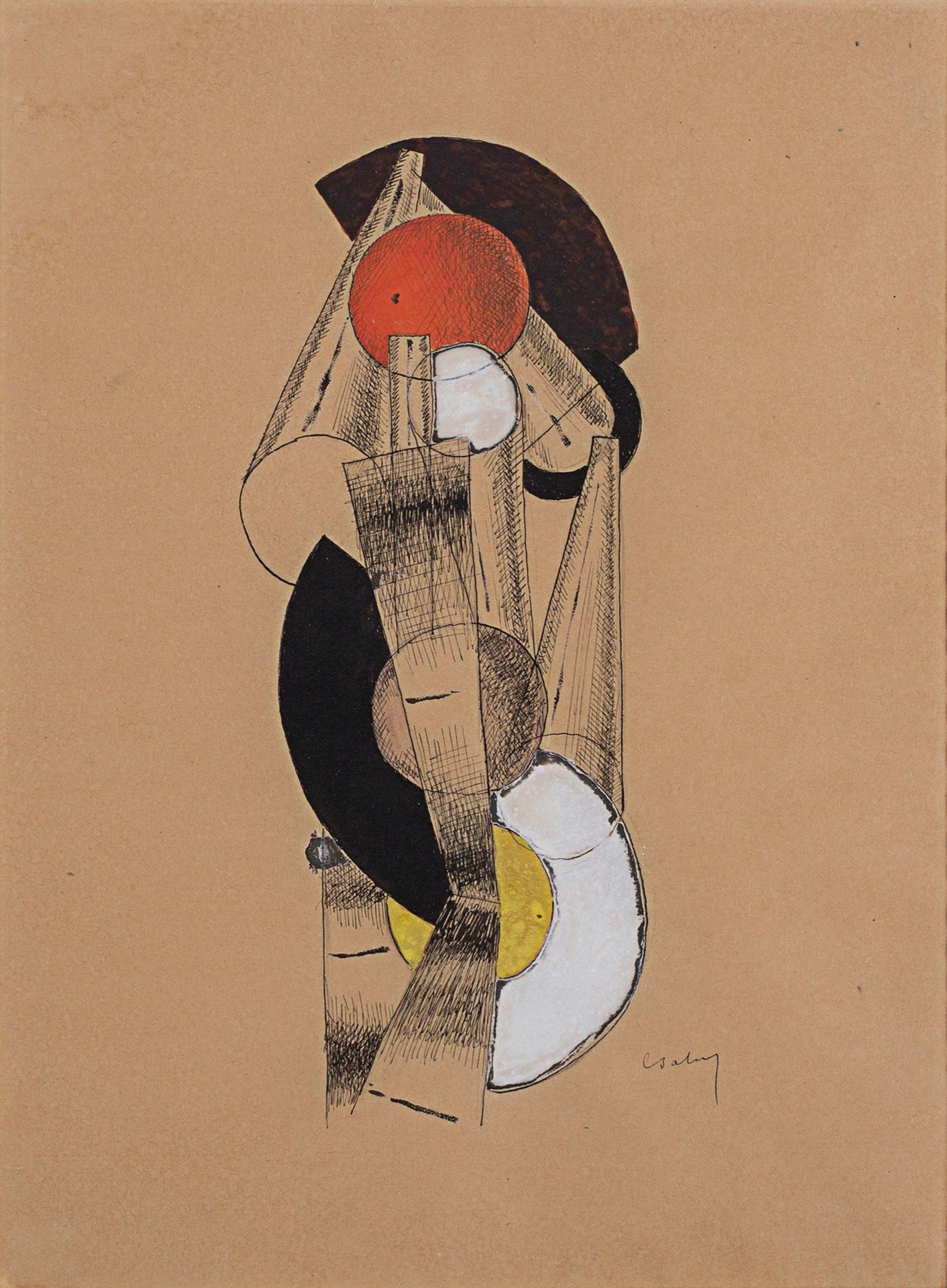
Joseph Csáky
Imbrication de cônes, 1920 Gouache and India ink on brown paper
12.1 x 9.8 in.
30.7 x 25 cm
b.1892, Philadelphia, Pennsylvania
d.1964, New York, New York
Stuart Davis was a preeminent figure of American modernism known for achieving an artistic style that synthesized abstraction with elements of popular culture. Born into an artistic family in Philadelphia, he left high school in 1909 to study under Robert Henri in New York City. His early works, rooted in American realism, earned him recognition, and he became one of the youngest artists featured in the 1913 Armory Show. This event inspired Davis to pursue modernism and experiment with styles such as Cubism and Fauvism through the end of the decade.
By the early 1920s, Davis developed what he called ”Color-Space Compositions.” These works, often depicting landscapes, still lifes, and urban scenes, used bold, flat expanses of color to define space and form. During this period, he became close friends with artist John Graham, who had been taught by John Sloan at The Art Students League. In 1926, Davis’s solo show at The Whitney Studio Club received recognition by the club’s director, Juliana Force, helping him secure a trip to Paris in 1928. There, he painted street scenes.
In 1929, Davis moved to Greenwich Village and joined the Public Works of Art Project, which was later integrated into the WPA. Under this organization, he completed several murals. Davis was at the height of his career when he passed away from a stroke in 1964. Davis’ work stretched from the early twentieth century into the postwar era and was defined by his American approach to international modernism.
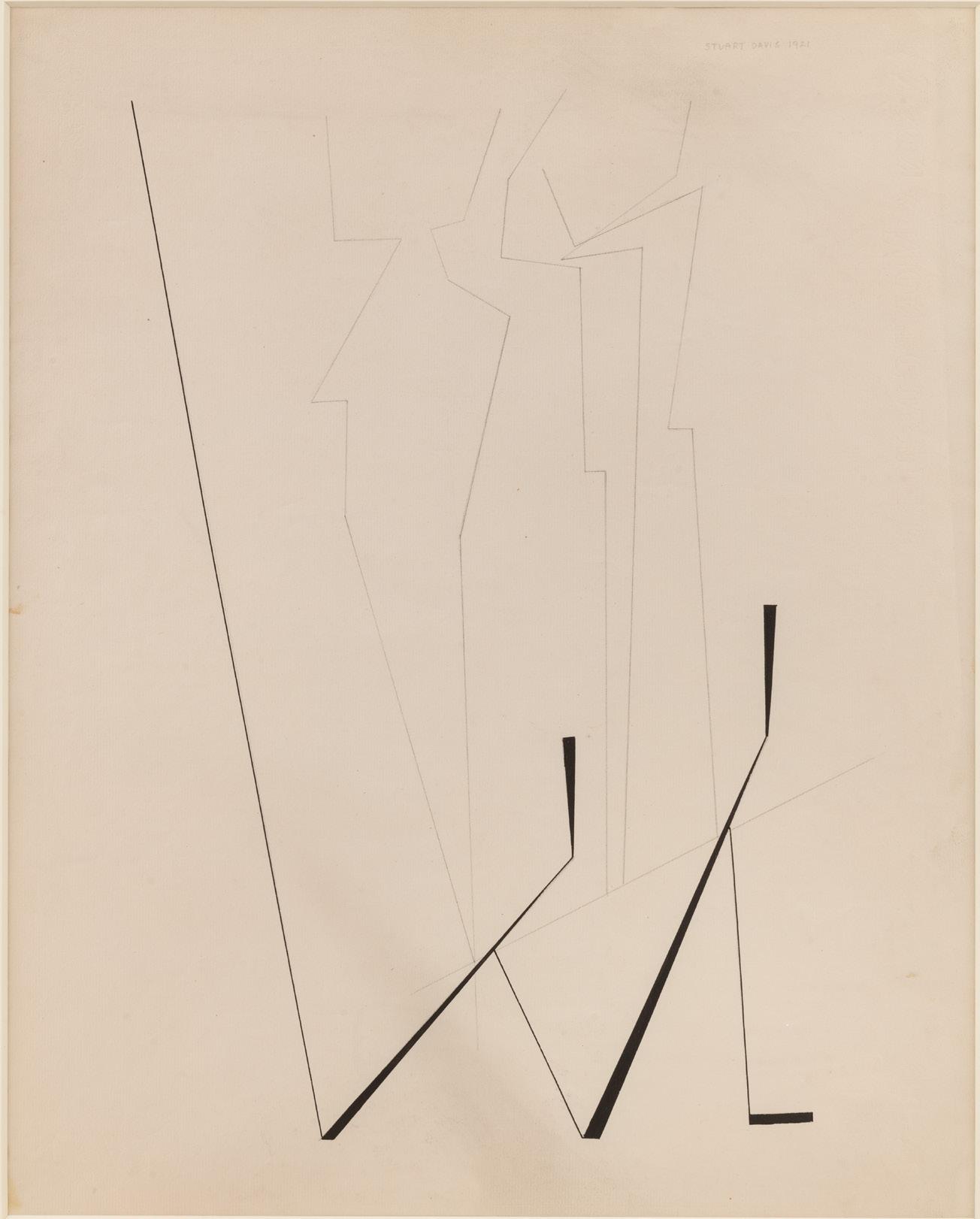
Stuart Davis
UntitledDrawing, 1921
Ink and pencil on paper
23 x 18.25 in.
58.4 x 46.4 cm
b.1907, Saint-Louis, Missouri
d.1972, Paris, France
William Einstein was an American painter and stained glass designer, best known for his work in abstraction. Born in Saint-Louis, Missouri, he studied at the St. Louis School of Fine Arts before moving to Paris at the age of twenty in 1927. There, he studied under Fernand Léger and Amedee Ozenfant at the Academie Moderne, immersing himself in the city’s avant-garde culture. During this time, he formed relationships with influential figures like Giacometti, Duchamp, and Soutine.
Einstein was an active participant in the Abstraction-Création group, a collective that championed non-representational art, and regularly exhibited at the Salon des Surindépendants. His four year stay in New York during the 1930s was a formative period; he worked at An American Place Gallery and co-curated the 1936
John Marin Retrospective at the Museum of Modern Art with Georgia O’Keeffe.
After serving in World War II, he returned to Paris in 1946, where he continued to make significant contributions to the modernist movement. Although his work was not widely known in the United States, Einstein remained an important figure within the European art world throughout his career.
b.1881, Moscow, Russia
d.1958, Paris, France
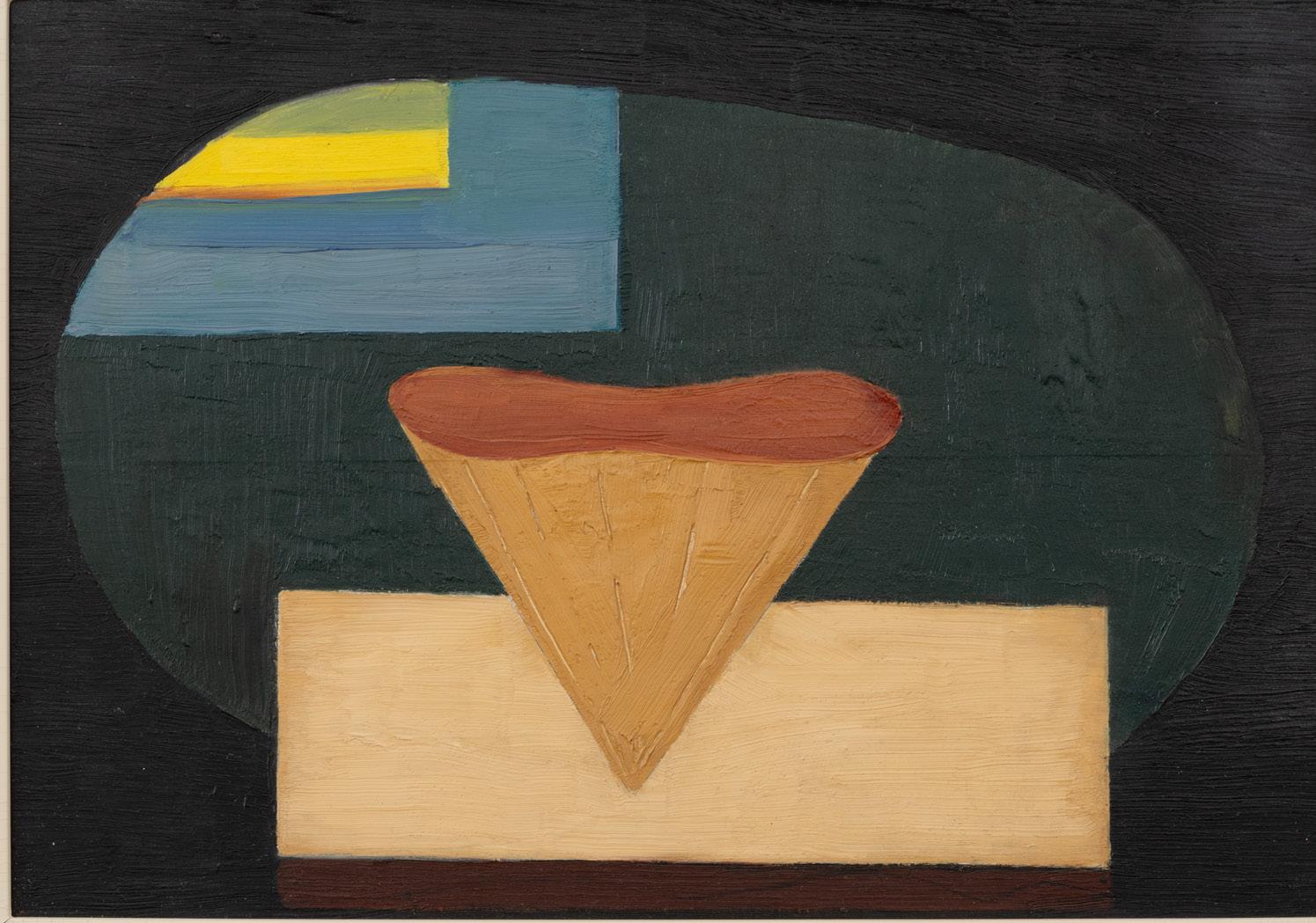
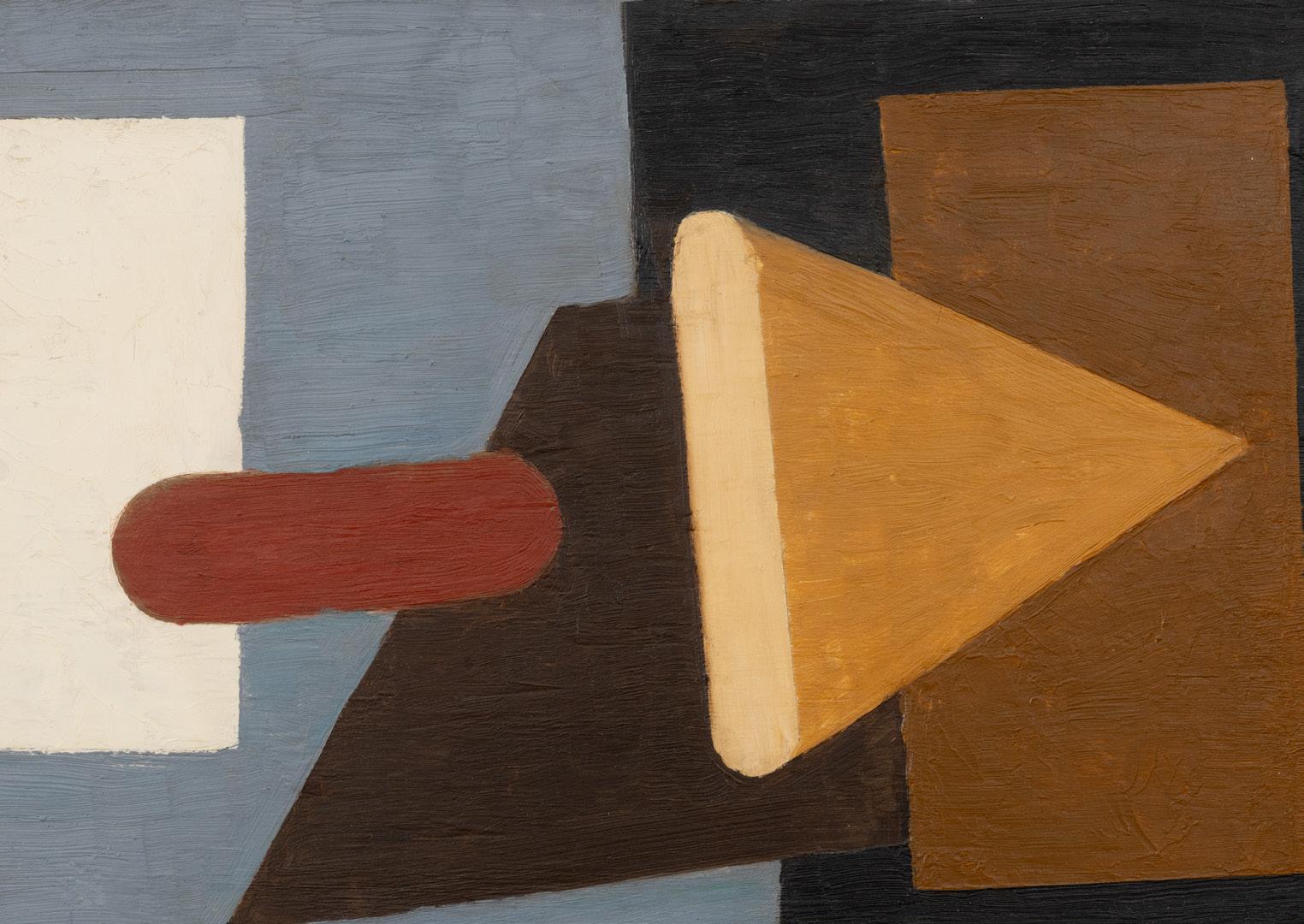
Serge Férat (born Serguei Zhastrebzov) was a French-Russian painter and designer from Russian nobility near Moscow. He studied at the School of Fine Art in Kiev before traveling across Europe with his cousin, Yelena Zhadviga Mionteska (the writer later known as Helène d’Oettingen). They settled in Paris in 1901 where d’Oettingen’s literary salon, Boulevard Bertier, became a gathering place for artists and writers.
It was here that Férat met Pablo Picasso, who introduced him to Guillaume Apollinaire. The two became close friends, and Apollinaire suggested the pseudonym “Serge Férat.” Surrounded by influential figures, Férat gained fame for his wealth and support of artists, collecting works by Picasso, Rousseau, and de Chirico. He studied under William-Adolphe Bouguereau at the Académie Julian.
In 1914, Apollinaire made Férat director of the journal Soirées de Paris. A few years later, Férat designed the sets, costumes, and program for Apollinaire’s play Les mamelles de Tirésias. The Russian Revolution and Apollinaire’s death in 1918 marked a shift. Financially ruined and emotionally devastated, Férat’s work took on a more somber tone. As many from his former circle distanced themselves, Férat continued to produce art, though he died in 1958 impoverished and largely forgotten by the artistic community he once helped shape.
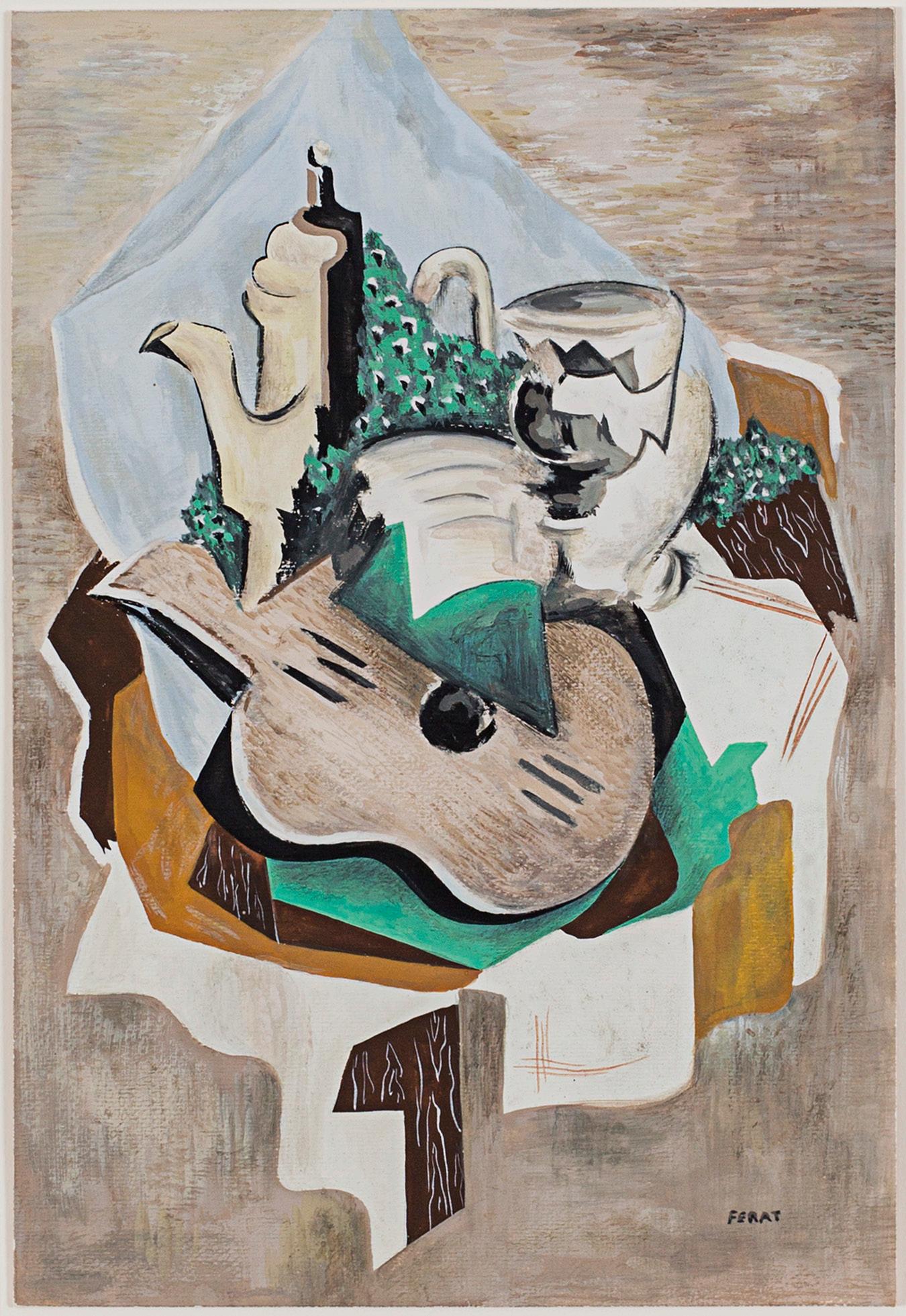
Serge Férat
Nature morte à la cafetière à laguitare, c. 1918
on paper
12.2 x 8.3 in.
31.1 x 21 cm
b.1895, Nancy, France
d.1977, France
Georges Folmer was a French painter and theorist whose career bridged Cubism and abstraction in the mid-20th-century. Born in 1895, he began studying painting, sculpture, and architecture at the age of 15 in his hometown of Nancy, France. During World War I, while interned in Germany, he painted theatrical scenery for prisoner productions alongside fellow artists. He was later transferred to Geneva where he briefly attended art school before fleeing to Algeria to escape the war. There, he discovered the North African light and color that would influence his early work.
In 1919, Folmer settled in Paris and became a regular exhibitor at the Salon des Indépendants, d’Automne, and the Tuileries. Critics at the time remarked on his new style,citing a ”solidity in construction” and ”colourful cadence,”which would become his first move towards Cubism.
In the 1930s, Folmer deepened his exploration of abstraction. Influenced by Auguste Herbin and the Abstraction-Création movement, he pursued technical research into the Section d’Or and harmonic spatial division. In 1935, he exhibited at the first Salon d’Art Mural alongside Delaunay, Gleizes, and Kandinsky, fully committing to what was then called “non-imitative plastic art.”

Georges Folmer
Composition, 1938–1940
Oil on canvas
28.7 x 23.6 in.
73 x 60 cm
b.1881, Villanova, Pennsylvania
d.1952, New York, New York
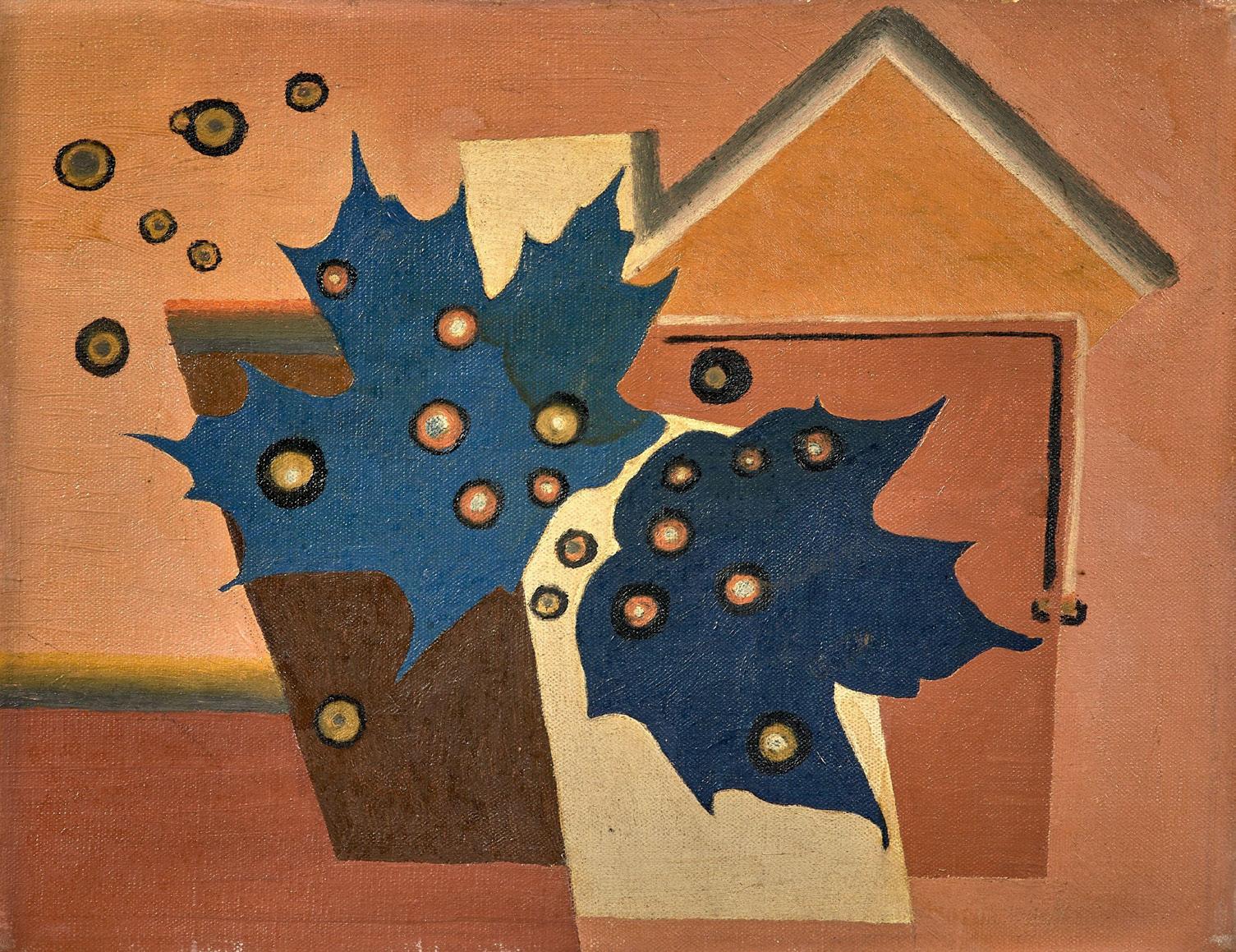
A.E. Gallatin was an influential art collector, patron, and abstract artist born in Villanova, Pennsylvania to a wealthy and prominent family. He began collecting art as a teenager, initially focusing on works by artists like Aubrey Beardsley and James McNeill Whistler. Gallatin’s passion for art deepened after he inherited his family’s fortune in 1902, allowing him to become a major figure in New York’s art scene. He developed a particular interest in the Ashcan School, an American artistic movement that depicted urban life with a raw, unidealized approach.
While initially dismissing modernism, Gallatin eventually became one of the largest advocates of modern art in the United States. Influenced by friends and fellow art critics such as C.R.W Nevinson and Clive Bell, Gallatin became fascinated by the formalist nature and pure abstraction of Cubism. By the 1920s, he embraced Cubism and joined the Societe Anonyme, amassing works by artists like Picasso, Georges Braque, Henri Matisse, and Juan Gris during his frequent visits to Paris.
In 1927, Gallatin made a significant contribution to the modern art world by opening the Gallery of Living Art at New York University. The Gallery, the first museum in the U.S. dedicated exclusively to modern art, even before MoMA opened its doors in 1929, showcased his growing collection and became an important resource for both artists and the public, offering free admission and fostering engagement with contemporary art.
As he grew his collection, Gallatin developed into an artist himself. He studied under Robert Henri in 1926 and soon transitioned to abstract art, drawing on influences from Cubism and Constructivism. By 1937, Gallatin joined the American Abstract Artists group alongside fellow New York artists Charles G. Shaw and George L.K. Morris. His work, characterized by both Synthetic Cubist and Constructivist styles, undoubtedly was inspired by the works in his collection.
b.1881, Paris, France
d.1953, Avignon, France
Albert Gleizes was a French painter, muralist, theorist, and early pioneer of Cubism. Born in 1881, he began his artistic career during his military service in 1901, exhibiting early works at the Société Nationale des Beaux-Arts in Paris (1902) and the Salon d’Automne (1903-1904).
Over the next several years, Gleizes founded the utopian intellectual community Abbaye de Créitel and later befriended Jean Metzinger, Fernand Léger, Henri Le Fauconnier, and Robert Delaunay. Together with these artists, he exhibited paintings at the 1911 Salon des Indépendents, a show widely credited with introducing Cubism to the larger public. The following year, Gleizes and Metzinger co-authored Du Cubisme, the first theoretical treatise on the movement. The two co-founded the Section d’Or, a collective dedicated to the expansion of Cubism in New York from 1915 to 1919, after Gleizes was released from serving in World War II.
A prolific writer and theorist, Gleizes published several influential works, including Painting and its Laws (1923) and Humanism (1937). By the 1930s, his focus shifted toward spiritual themes and utopian ideals, founding the commune Moly-Sabata near Lyon and joining the group Abstraction-Creation.
In the final years of his career, Gleizes continued his collaboration with Léger and Delaunay, creating Cubist murals for the 1937 Paris World’s Fair. His last major fresco, Eucharist, was painted for a Jesuit church in Chantilly in 1952. A retrospective at the Chapelle du Lycée Ampère in 1947 highlighted his impact on modern art just before his death.
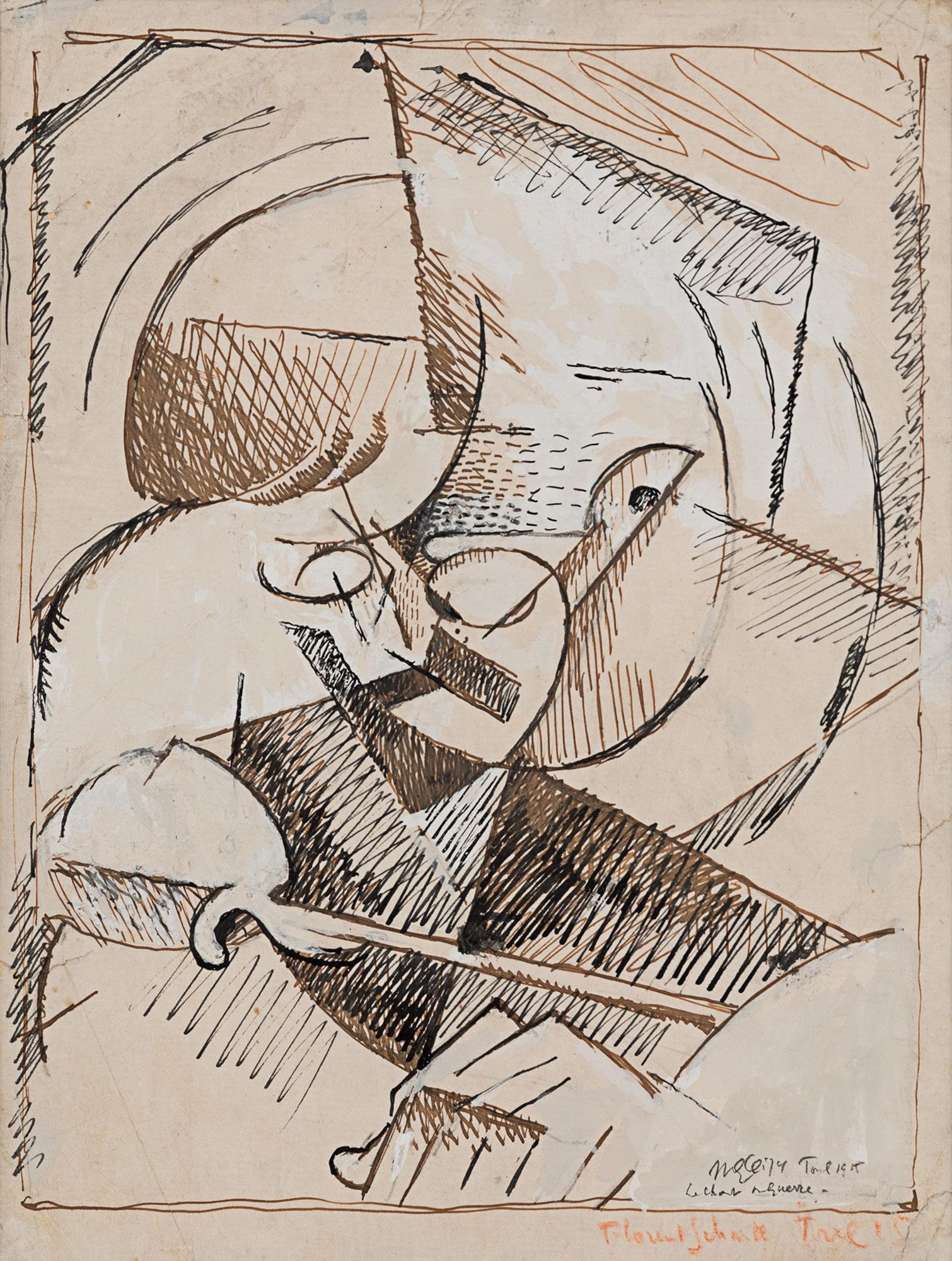
Ink and gouache on paper
10.6 x 7.9 in.
27 x 20 cm
b.1881, Tula, Russia
d.1962, Paris, France
Natalia Goncharova was a Russian artist known for her contributions to Cubism and Futurism. Her early artistic development began at the Moscow Institute of Painting, Sculpture, and Architecture, where she met her lifelong partner and fellow innovator Mikhail Larionov. Goncharova became a key figure in the Russian avant-garde movement, forging new paths in both the visual and performing arts. A founding member of Der Blaue Reiter in Germany, she exhibited alongside Wassily Kandinsky, Franz Marc, Paul Klee, and Gabriele Münter.
Goncharova’s work spanned various disciplines, from painting to printmaking and theatre design, reflecting her belief in the fusion of all art forms. Her participation in important exhibitions such as the Donkey’s Tail, Moscow (1912) and a 1913 retrospective showcasing over 800 of her works solidified her status in the Russian art world. Along with Larionov, she co-founded several new artistic movements, including Neo-Primitivism and Rayonism. The Rayonist movement in particular synthesized the contemporary movements of Cubism, Futurism, and Orphism in order to depict a single site from multiple perspectives.
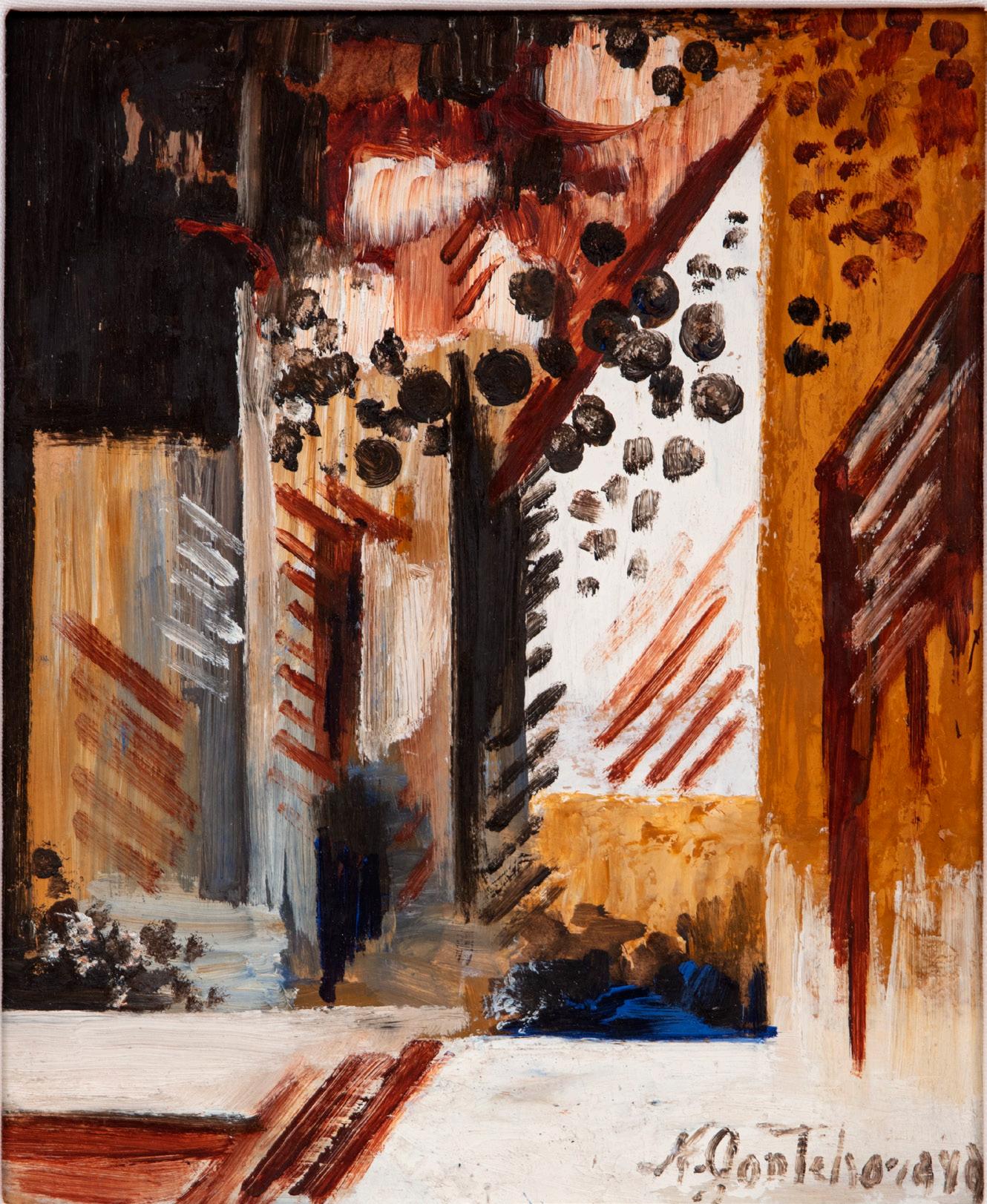
Natalia Goncharova
TheVillage in Brown and Black:Rayonist composition, c. 1950
Oil on board
10.6 x 8.7 in.
27 x 22.1 cm
b.1904, Van Province, Ottoman Empire (Now Turkey) d.1948, Sherman, Connecticut
Arshile Gorky was an Armenian-American painter whose work played a pivotal role in bridging European Surrealism with American abstraction. Born Vosdanig Adoian near Lake Van in Turkish Armenia, he survived the Armenian Genocide and fled with his family, losing his mother to starvation in 1919. He immigrated to the United States the following year, adopting the name Arshile Gorky to distance himself from the stigma attached to Armenian refugees.
Gorky briefly studied at the New School of Design in Boston. In 1924, he moved to New York City, attending the National Academy of Design and later teaching at the Grand Central School of Art until 1931. His early work reflected strong influences from Cézanne, Picasso, Braque, and Miró.
During the Great Depression, Gorky worked as a muralist for the Works Progress Administration, where he encountered future Abstract Expressionists such as Jackson Pollock and Mark Rothko. His work was included in the 1935 exhibition Abstract Painting in America at the Whitney Museum, and in 1938 he held his first solo exhibition at the Boyer Galleries in New York.
In the 1940s, Gorky developed a unique personal style merging Surrealist imagery with innovative techniques, laying important groundwork for the gestural methods later seen in Action Painting. In 1948, following a series of personal tragedies— including the loss of his studio to fire, deteriorating health, and the breakdown of his marriage—Gorky took his own life.
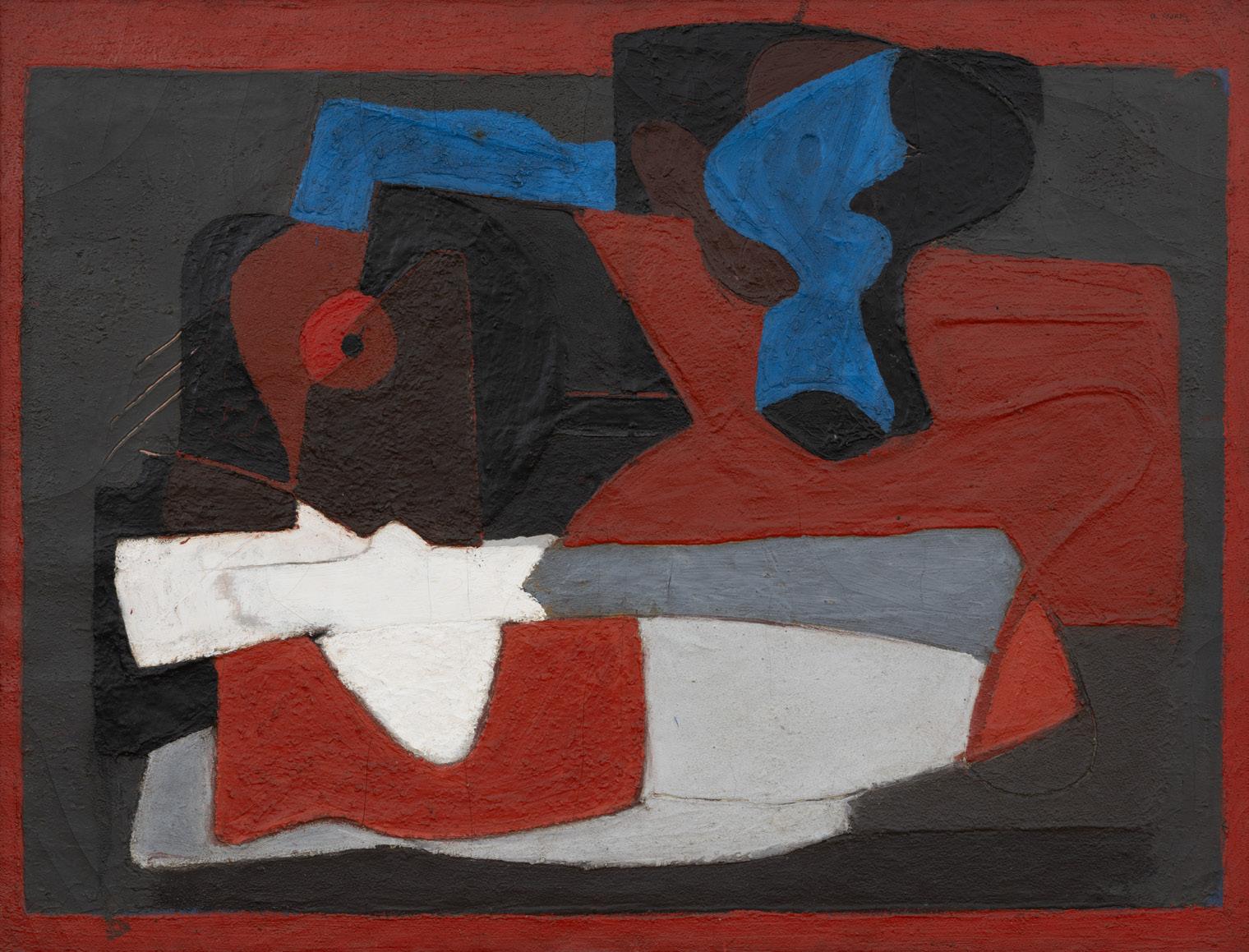
Arshile Gorky
Enigma (Composition of Forms on Table), 1928–1929 Oil on canvas 33 x 44 in.
b.1886, Kiev, Ukraine
d.1961, London, United Kingdom
John D. Graham was a Ukrainian-born artist, writer, and curator. Born
Ivan Gratianovitch Dombrowsky in Kiev, he served as a cavalry officer in the Czar’s army during World War I before fleeing the Bolshevik Revolution and emigrating to the U.S. in 1920. Settling in New York, he anglicized his name and studied at the Art Students League under artists such as John Sloan and Kenneth Hayes Miller.
In the 1920s, Graham explored Post-Impressionism and Synthetic Cubism. In 1925, he briefly moved to Baltimore, Maryland, where he met Duncan Phillips, a prominent collector of modern American art. In 1929, Graham held his first solo show at Duncan Phillips’s Gallery in Washington, D.C. Frequent trips to Paris exposed him to Surrealism and the School of Paris. Graham brought back his deep knowledge of modernism to his New York art circles, ultimately establishing himself as an emissary of contemporary European art, particularly that of Surrealism.
Graham’s 1937 treatise, System and Dialectics in Art, influenced a generation of young artists including Jackson Pollock and Willem de Kooning. Graham fostered modernism and the avant-garde utilizing the Socratic method to explore themes of the primitive subconscious.
Graham became an advocate for these young artists, curating a show at the McMillen Gallery in 1942 that combined the works of great European modernists— Picasso, Georges Braque, and Henri Matisse—with younger, yet unknown American expressionists, among them Willem de Kooning, Lee Krasner, and Jackson Pollock. Graham also counted Stuart Davis, Arshile Gorky, David Smith, and Dorothy Dehner among his friends and admirers.
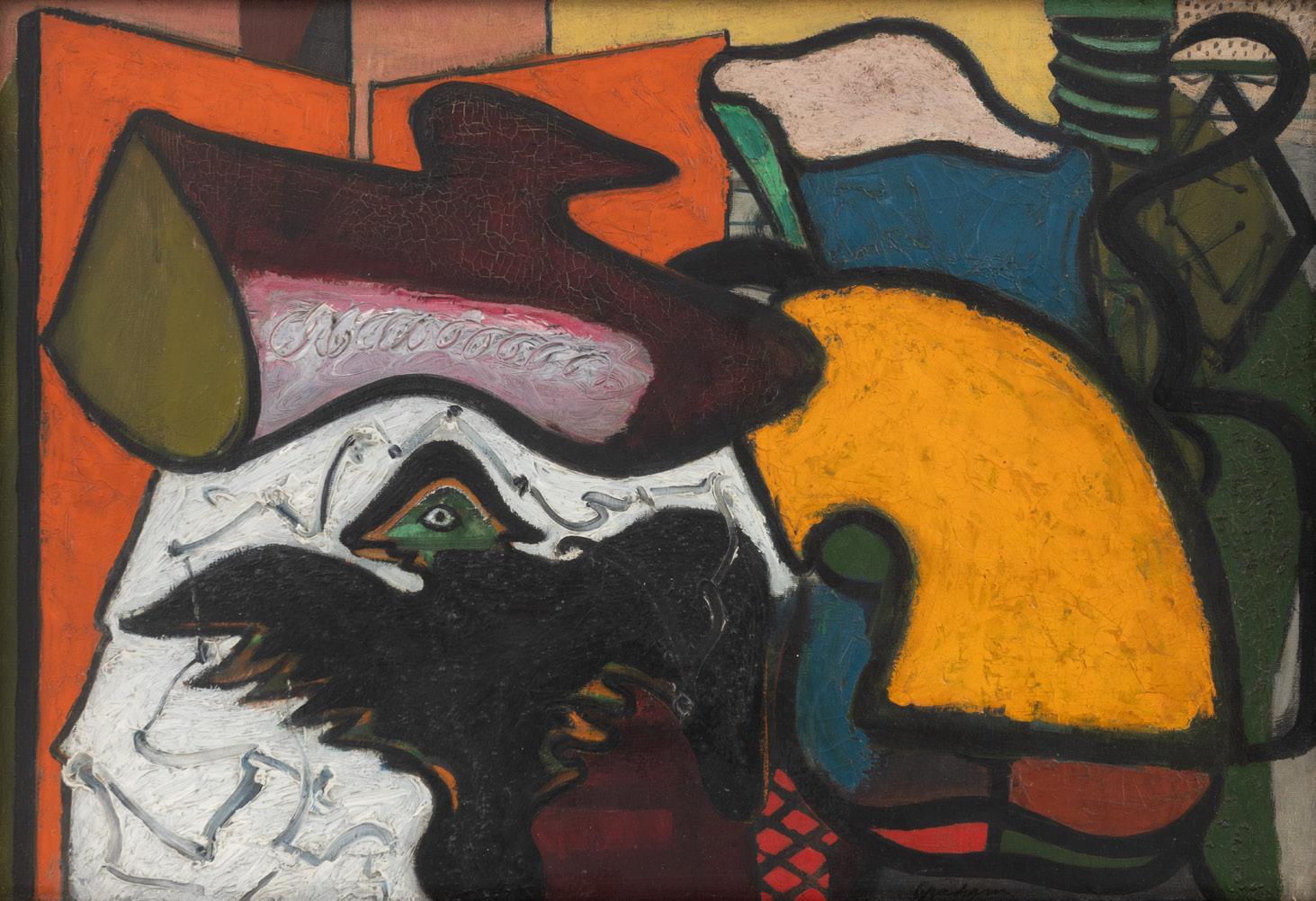
b.1904, Millville, New York
d.1990, Montauk Point, New York
Balcomb Greene was an American abstract artist whose work blended elements of Cubism and Abstract Expressionism. Influenced by Juan Gris, Piet Mondrian, and Pablo Picasso, Greene believed that abstract art could reach beneath surface attitudes to engage the deeper self, writing that it could “contact the whole ego rather than the ego on the defensive.”
In 1931, Greene traveled to Paris with his wife, artist Gertrude Greene, studying at the Académie de la Grande Chaumière. Upon returning to the United States in 1935, he became an active figure in the New York art scene, serving as the first president of the Artists Union and, in 1936, as the founding chairman of the American Abstract Artists group (AAA).
Throughout the 1930s, Greene’s work remained strictly geometric and non-figurative, reflecting his deep commitment to abstraction. It wasn’t until the 1940s that he began incorporating the human figure, signaling a shift toward a more expressive and psychological dimension in his painting.
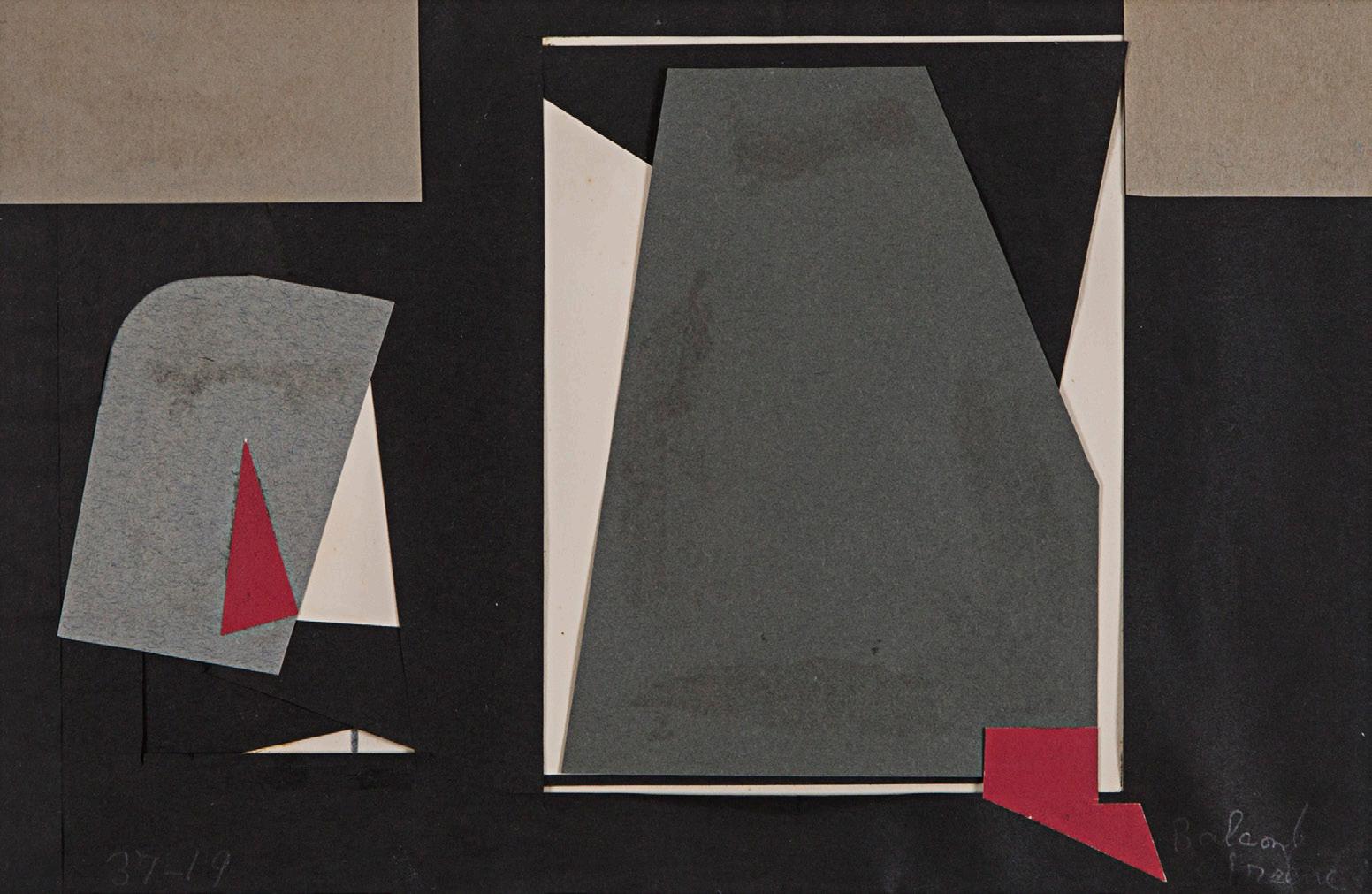
b.1904, New York, New York
d.1956, New York, New York
Gertrude Greene was an American artist and founding member of the American Abstract Artists group, known for pioneering abstract wood reliefs in the United States. Born Gertrude Glass, she began studying sculpture in 1924 at the Leonardo da Vinci School while working as a kindergarten teacher. Her early training in traditional sculpture provided a strong foundation for her later abstract work.
After marrying Balcomb Greene in 1926, the couple spent time in Vienna and Paris, where Gertrude was exposed to avant-garde movements such as AbstractionCréation, Art Nonfiguratif, and Constructivism. Inspired by the Russian Constructivists’ union of politics and art, she developed a distinctly modern, socially conscious approach to abstraction.
By 1935, Greene was creating wood constructions—credited as the first fully abstract American reliefs—which today are held in major museum collections. During the 1940s, she experimented with paper collage studies, using them to develop ideas later translated into three-dimensional form.
In addition to her artistic practice, Greene was deeply involved in political and artistic activism. She co-founded the Unemployed Artists’ Group and played a role in the formation of the WPA in 1935. In 1937, she became a founding member of the American Abstract Artists group, advocating for wider acceptance of abstraction in the U.S.
By the 1950s, Greene had shifted her focus almost entirely to painting, incorporating gestural elements as her style moved away from Constructivism and toward a more expressionistic approach.
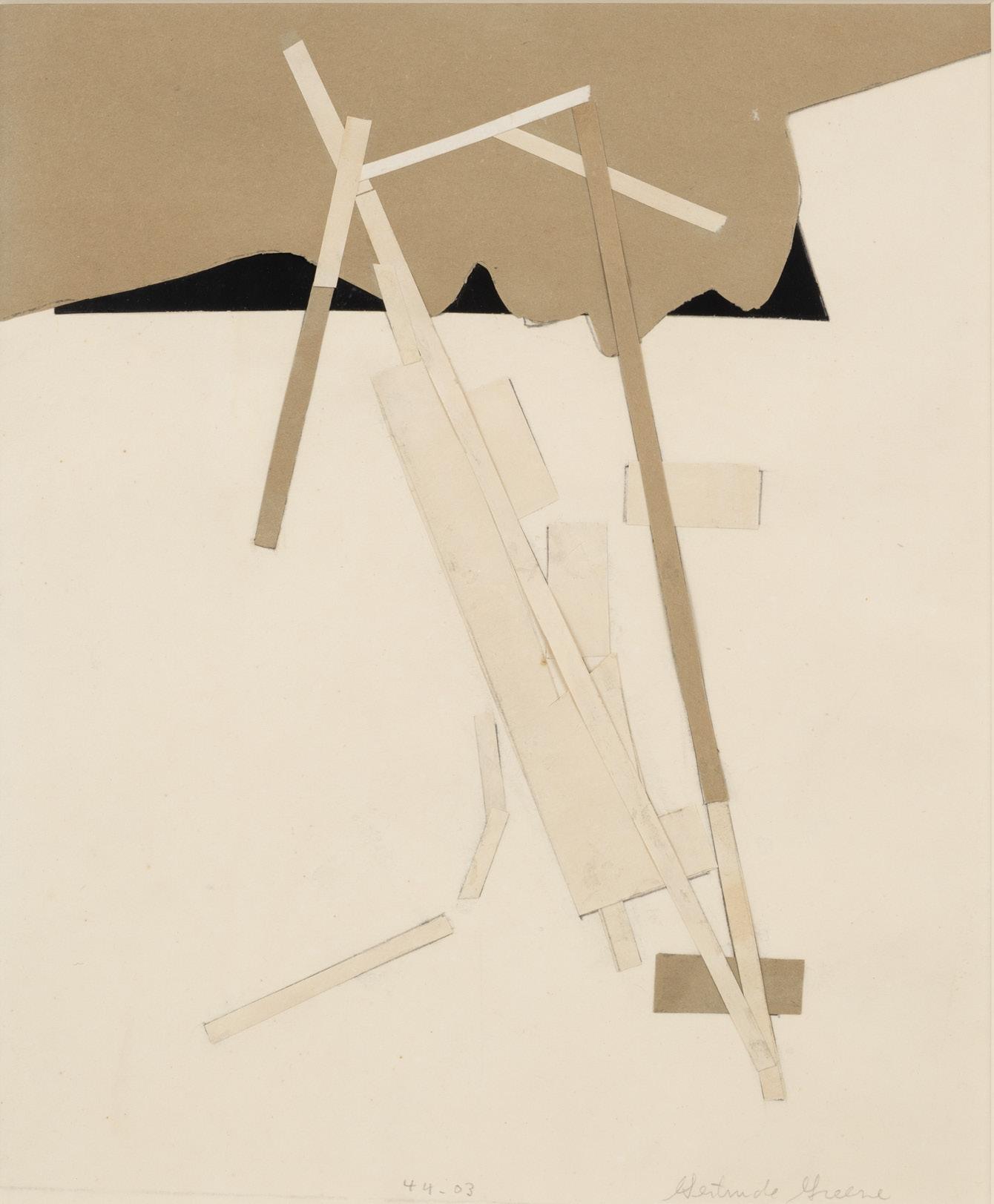
Gertrude Greene
Untitled (44-03), 1944
Paper collage
12 x 10 in.
30.5 x 25.4 cm
b.1877, Lewiston, Maine
d.1943, Ellsworth, Maine
Marsden Hartley was an American Modernist painter and writer whose work reflected a deep engagement with European avant-garde movements and American landsca pe traditions. In 1909, he met Alfred Stieglitz, who gave him his first solo exhibition at the influential 291 Gallery in New York. A second successful show in 1912 enabled Hartley to travel to Europe, where he was introduced in Paris to the circle of Gertrude Stein and the work of Cézanne, Matisse, and Picasso.
In 1913, Hartley moved to Berlin where he became close with members of Der Blaue Reiter, including Wassily Kandinsky and Franz Marc, and exhibited with them at the Herbstsalon. He returned to the U.S. in 1915 as World War I escalated.
For the next two decades, Hartley traveled widely, painting still lifes and landscapes inspired by places such as Bermuda, New Mexico, France, Austria, Italy, Germany, Mexico, and Nova Scotia. Works from this period reflect his interest in the spiritual dimensions of nature. He was also an accomplished writer, publishing the essay collection Adventures in the Arts in 1921.
In 1937, Hartley returned to his native Maine, aiming to become “the painter of Maine” and to portray American regional life. His late work focused on local sujects with a distinctly personal and national vision, cementing his legacy as a major figure in American modernism.
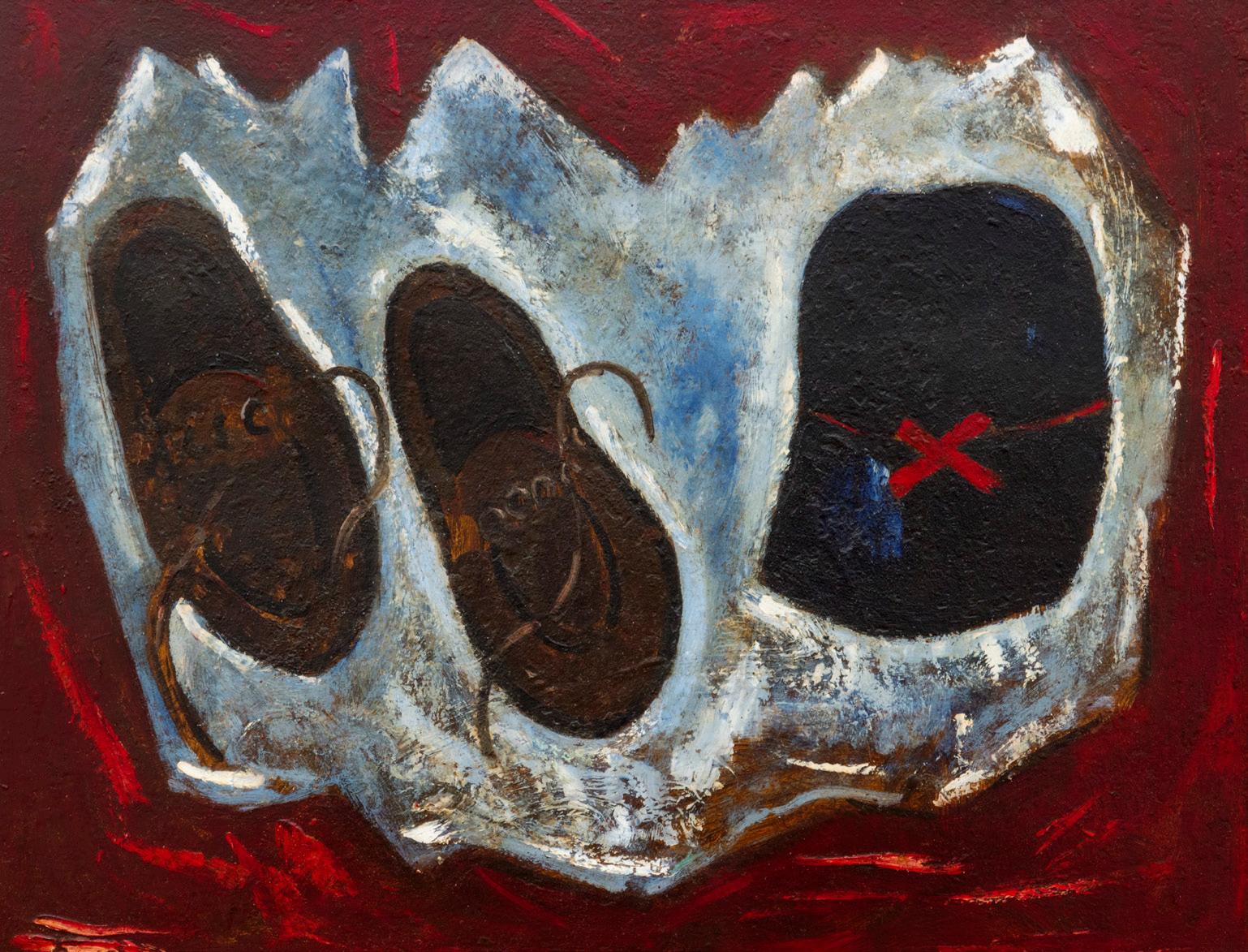
Marsden Hartley SkiSigns, c. 1939–1940 Oil on board
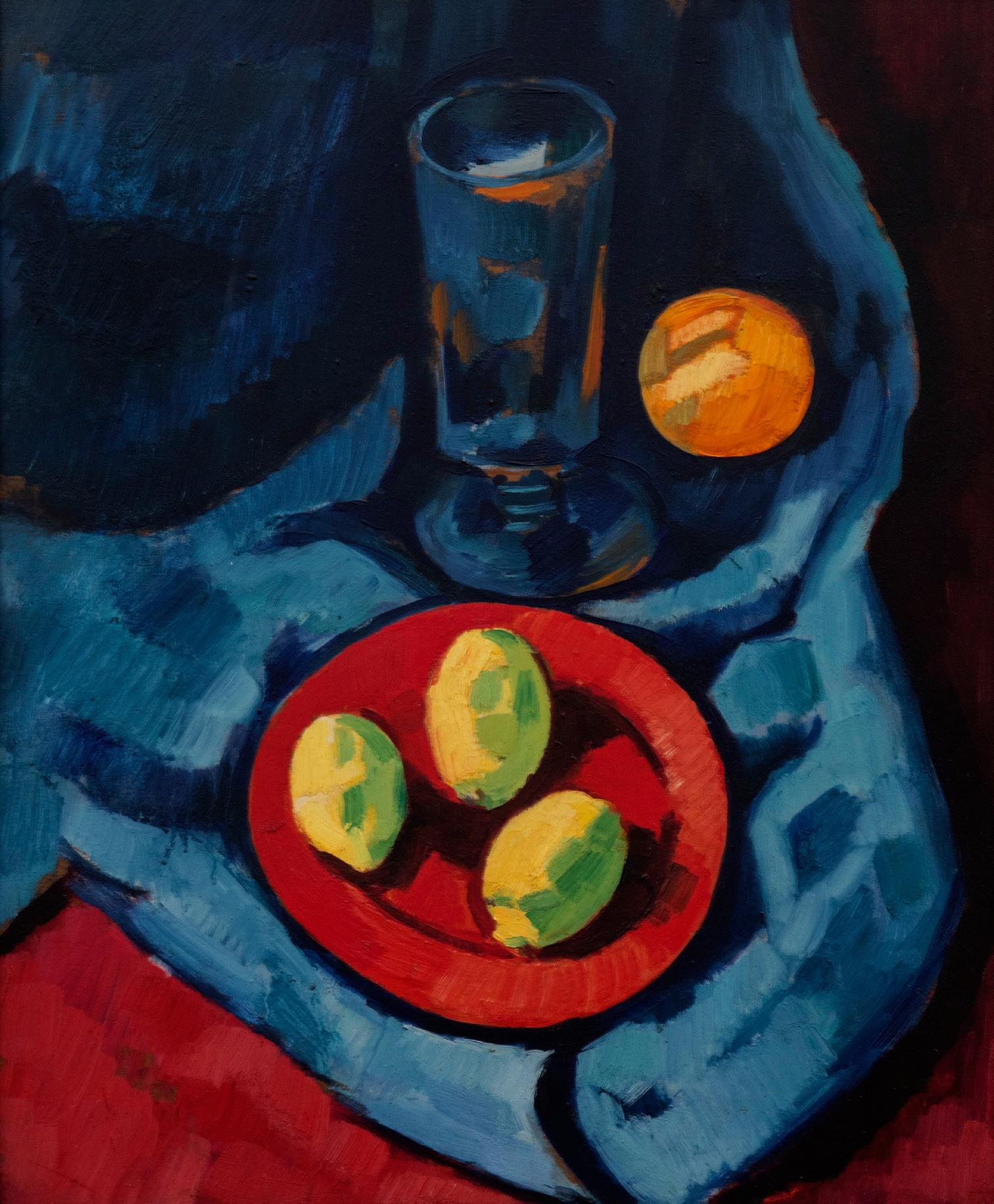
b.1883, Warsaw, Poland
d.1970, Paris, France
Henri Hayden was a Polish-born painter whose career led him down a path from early Cubism to colorful landscape painting. Born in 1883 into a family of wine distributors, he studied simultaneously at the Polytechnic School and the Academy of Fine Arts in Warsaw before abandoning engineering to pursue art full time. In 1908, he moved to Paris and enrolled at the Académie de la Palette, where his early work showed the influence of Cézanne through faceted brushstrokes and palette-knife textures. Hayden’s style shifted toward Cubism after befriending artists such as Juan Gris, Pablo Picasso, Jacques Lipchitz, and Jean Metzinger in Montparnasse. Gris introduced him to dealer Léonce Rosenberg, who began representing him in 1915. By the mid-1920s, however, Hayden moved away from Cubism, turning instead to a more naturalistic mode of painting.
With the outbreak of World War II, Hayden was forced into hiding, fleeing first to Mougins—where he reunited with Robert Delaunay—and later to Roussillon, where he became close with Samuel Beckett. Returning to Paris after the war, he discovered his studio had been looted by the Germans and his entire body of work stolen. Although this loss deeply impacted his career, in later years, his art gradually regained recognition.
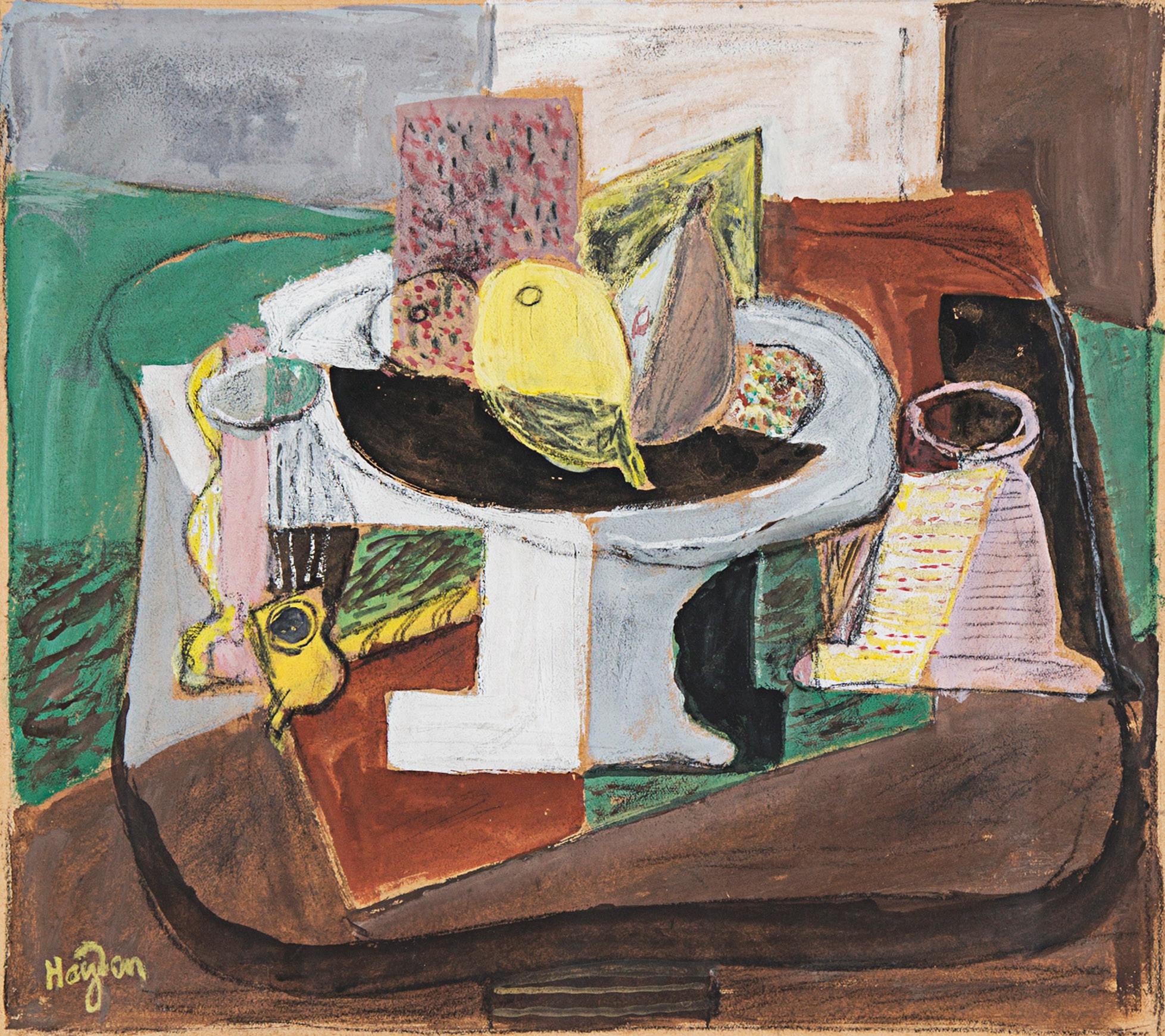
10.25 x 11.6 in.
26 x 29.5 cm
b.1904, Couterne, France
d.1987, Paris, France
Jean Hélion played a key role in bringing European abstraction to American shores. Born in 1904, Hélion abandoned his chemistry studies at university to become an apprentice to an architect in Paris. It was while he was apprenticing that Hélion first began to paint. In 1926, when Hélion was twenty-two years old, he met the Uruguayan artist Joaquín Torres-Garcia who introduced him to Cubism. Together, they collaborated on the avant-garde magazine L’Acte. Jean Hélion soon became a prominent member of Parisian art circles, exhibiting in the 1927 Salon des Indépendants.
Hélion moved to the United States in the 1930s and co-founded the American Abstract Artists group in 1936. In 1940, compelled by Europe’s suffering, the artist returned to France to fight in World War II. Shortly after joining the French army he was captured by the Nazis and interned in a prisoner of war camp near Poland. After miraculously escaping, once back in the United States, he recounted the event in his 1943 wartime memoir They Shall Not Have Me. Like many artists who experienced the war firsthand, both Hélion and his art were profoundly changed by what he had experienced. His works became more figurative as he attempted to grapple with bleak reality. Helion found his way back to Paris in 1946 where he resided until his death.
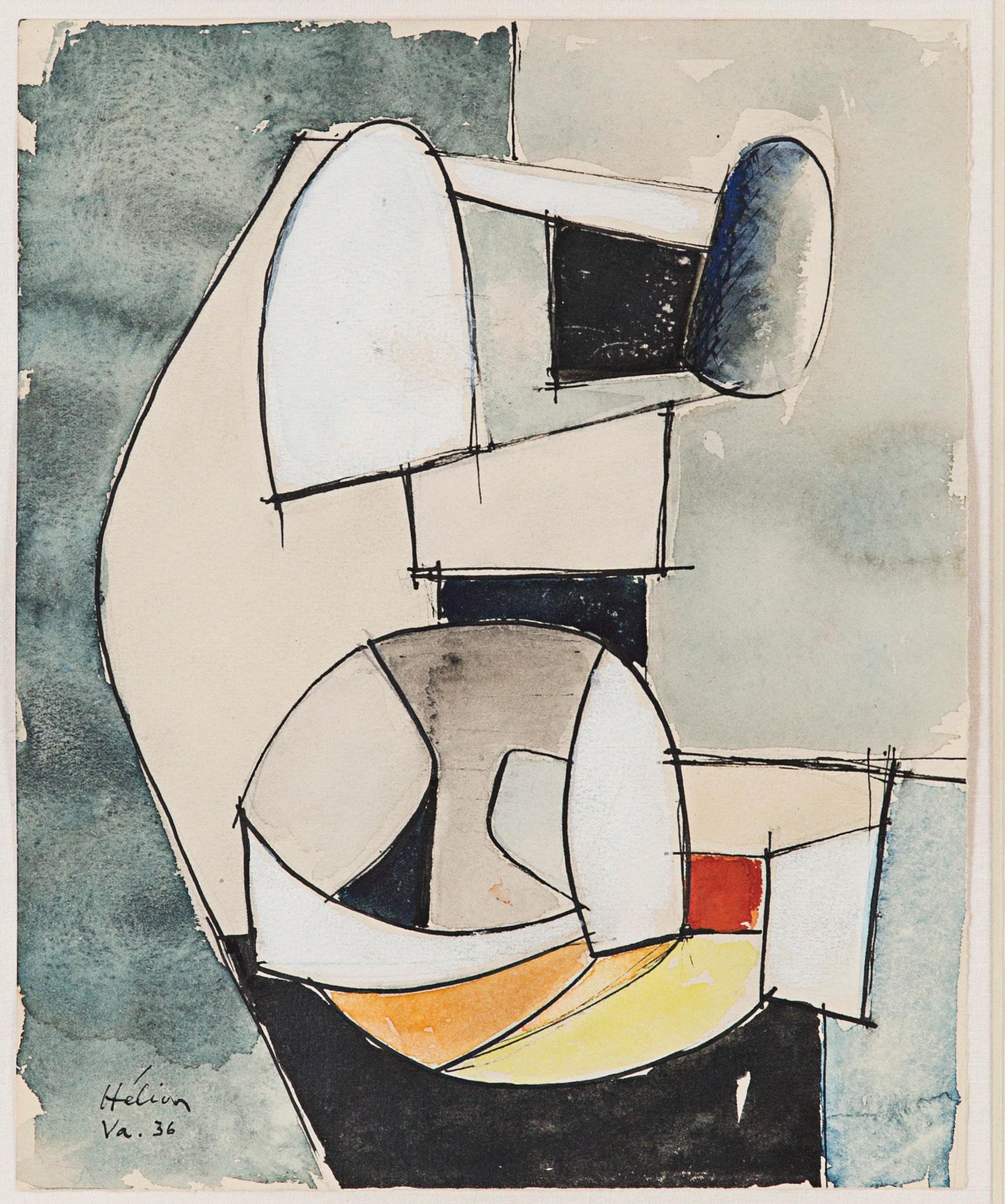
Jean Hélion
Composition abstraite, 1936
Watercolor and India ink on paper
9.9 x 9.25 in.
25 x 23.5 cm
b.1904, New York, New York
d.1932, New York, New York
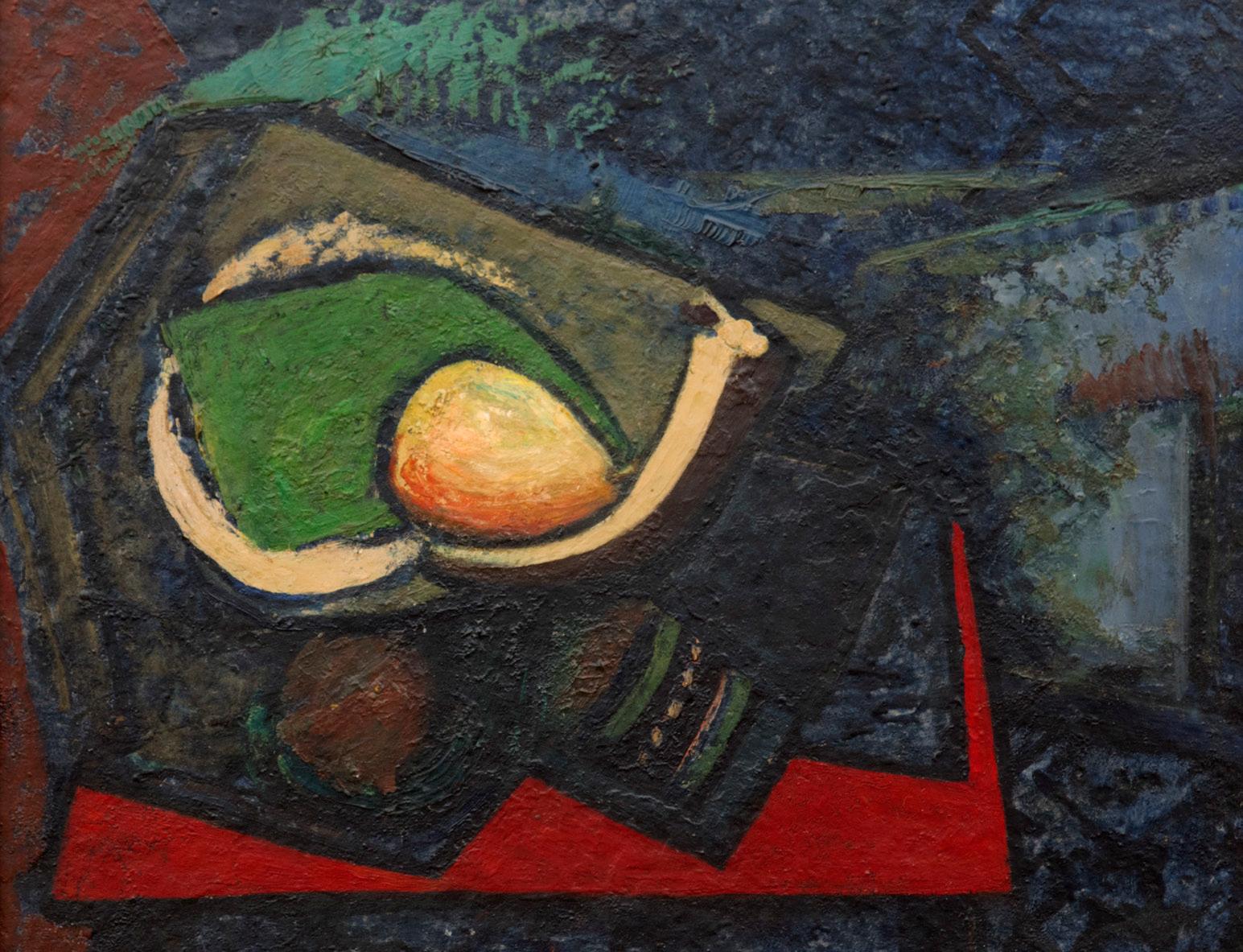
Alfred Henry Maurer was an American Modernist painter, recognized for his adoption of the Fauvist aesthetic. Born in 1868, he was the son of German lithographer Louis Maurer. He left school in 1884 to work at his family’s lithography firm, Maurer and Heppenheimer, and from 1885 to 1897 studied at the National Academy of Design in New York under Edgar Ward and William Merritt Chase.
In 1897, Maurer moved to Paris to study at the Académie Julian and joined a circle of American and French artists. During this time, he painted in a traditional style, heavily influenced by the Old Masters at the Louvre.
Maurer gained recognition in 1901 when his Whistler-style painting An Arrangement won first prize at the Carnegie International Exhibition. Though initially successful with portraiture in this style, in 1904 he shifted to a Cubist and Fauvist approach. While this stylistic change cost him mainstream success, he earned respect in avant-garde circles, exhibiting at Alfred Stieglitz’s 291 gallery and the 1913 Armory Show.
Rejecting realism for modernism, Maurer used vibrant colors, expressive brushwork, and sweeping gestures. He returned to the U.S. in 1914 due to the war and settled in New York, where he continued to exhibit his work in significant shows such as the 1916 Forum Exhibition at Anderson Galleries. Maurer exhibited regularly with the Society of Independent Artists and was elected as a director of the organization in 1919.
b.1905, New York, New York
d.1975, Stockbridge, Massachusetts
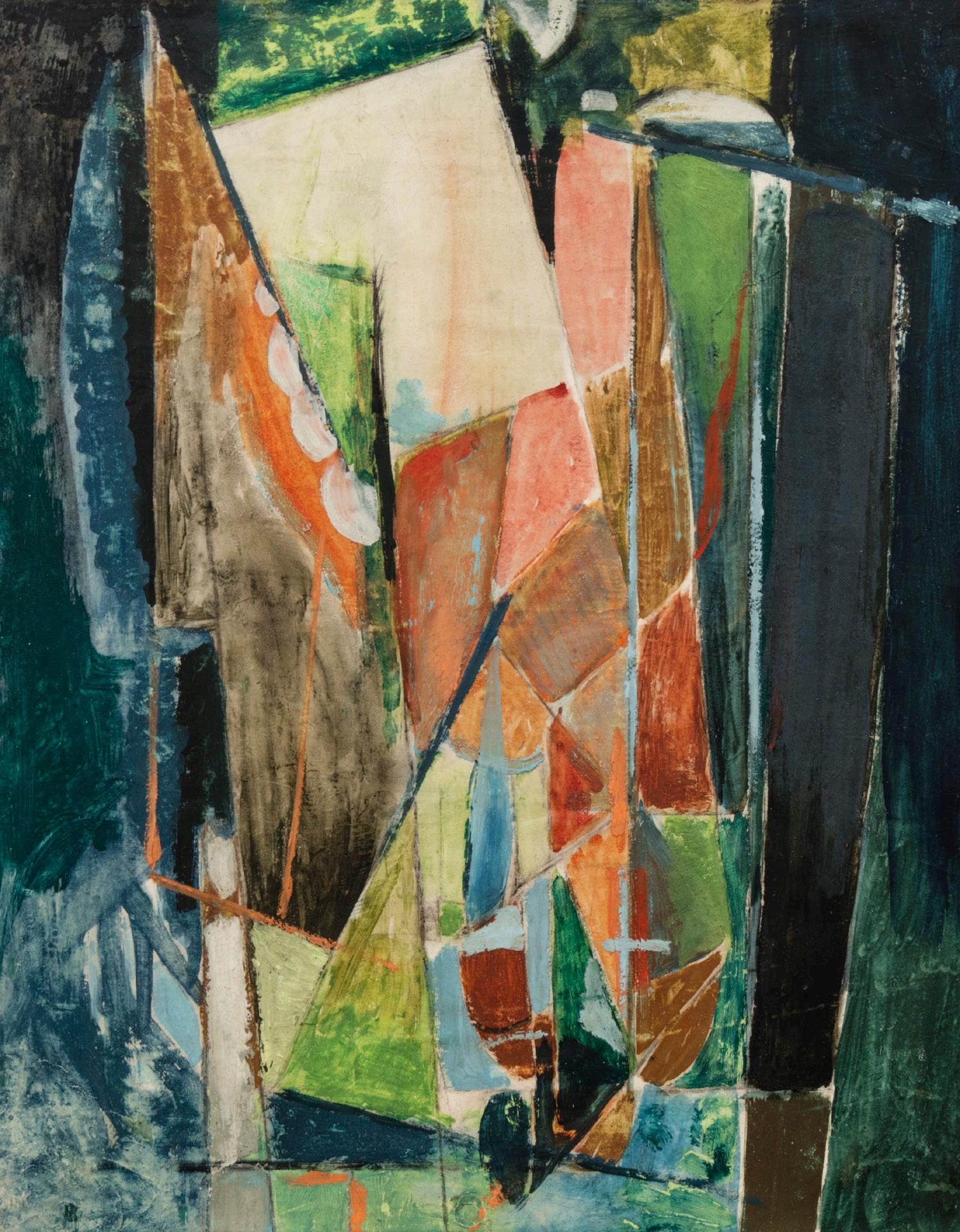
George L. K. Morris was an American writer, editor, painter, and sculptor best known for his advocacy of abstract art in the early 20th century. After graduating from Yale in 1928, Morris pursued his creative interests at the Art Students League in New York where he studied under John French Sloan and Kenneth Hayes Miller. The following year he traveled to Paris accompanied by Albert Eugene Gallatin. While there, Morris took classes at the Académie Moderne, where he was taught by Fernand Léger and Amédée Ozenfant.
During this time, Morris befriended Jean Hélion, through whom he made the acquaintances of Jean Arp, Constantin Brancusi, George Braque, and Pablo Picasso. Upon returning to New York in 1936, Morris co-founded the American Abstract Artists. Committed to the possibilities of European “non-objective” art, particularly Cubism, Morris worked to provide a historical case for American abstraction. During World War II, Morris worked as a draftsman for a naval architect’s firm. Whereas many of his peers turned away from Cubism after the war, Morris was devoted, continuing to produce his signature checkerboard works until his death in 1975.
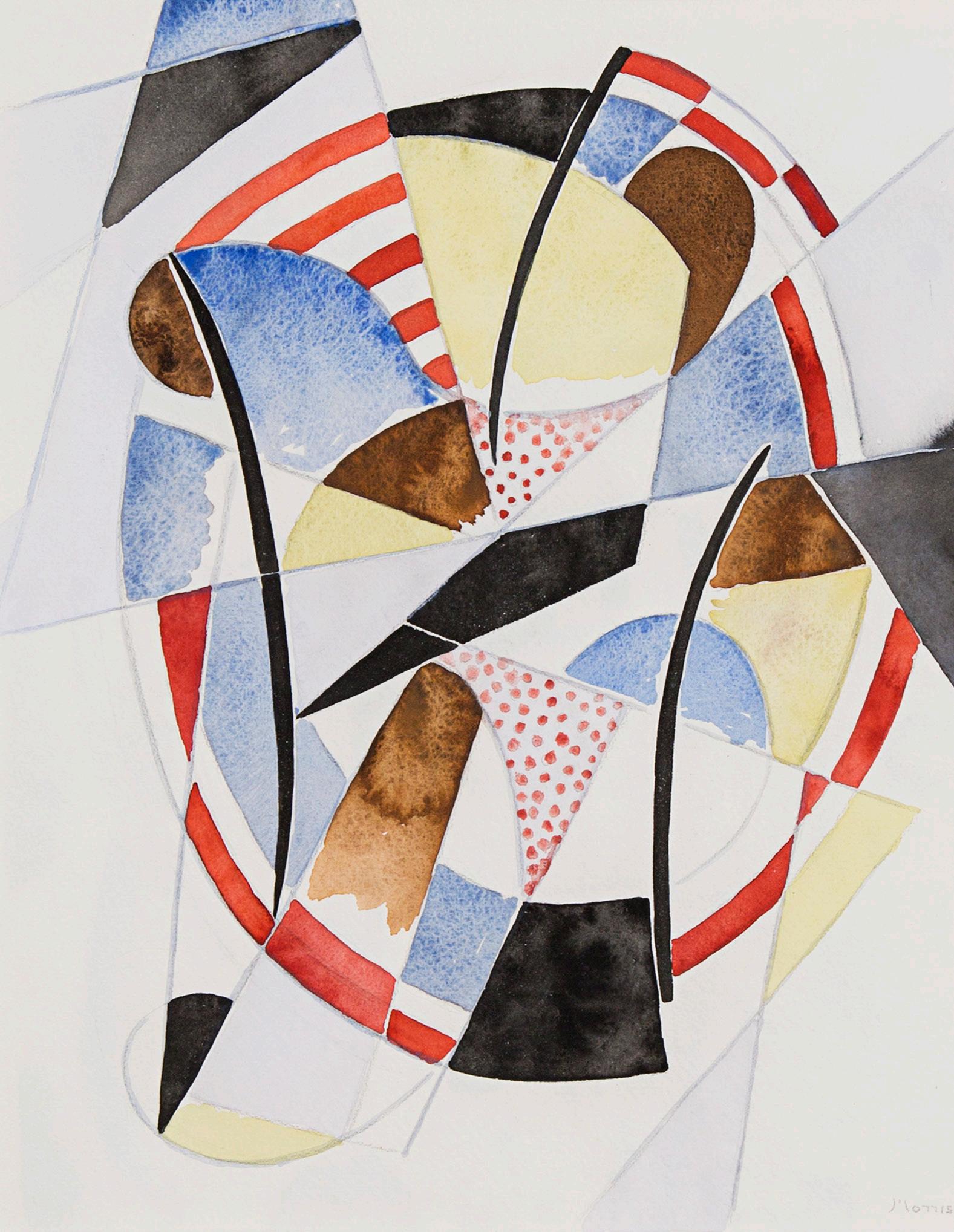
14 x 11 in.
35.6 x 28 cm
b.1890, Strasbourg, Germany
d.1967, Westport, Connecticut
Hilla Rebay was an abstract artist, proponent of non-objective art in the United States, and co-founder of the Solomon R. Guggenheim Museum of Art. Rebay was born into a German aristocratic family in Strasbourg, Alsace-Lorraine. She first studied at the Cologne Kunstgewerbeschule and later attended the Académie Julian in Paris, where she studied figurative painting.
Rebay returned to Germany in 1910, where she began to develop her interest in modern art under the influence of Jugendstil painter Fritz Erler. In 1912, she participated in her first exhibition at the Cologne Kunstverein and the following year was shown alongside Alexander Archipenko, Constantin Brancusi, and Marc Chagall at the Salon des Indépendants in Paris. She met Jean Arp in 1915, who introduced her to the non-objective art of Wassily Kandinsky, Paul Klee, Franz Marc, and Rudolf Bauer. Rebay’s work became increasingly abstract as she aimed to depict expressions of a spiritual nature devoid of ties to the external world in her collages and non-objective paintings.
Rebay moved to the United States in 1927 and quickly became an established figure in New York City. After painting a portrait of Solomon R. Guggenheim, Rebay became his close friend and art advisor, particularly encouraging him to purchase non-objective art. She eventually served as the first curator and director of his Museum of Non-Objective Painting, later renamed the Solomon R. Guggenheim Museum.
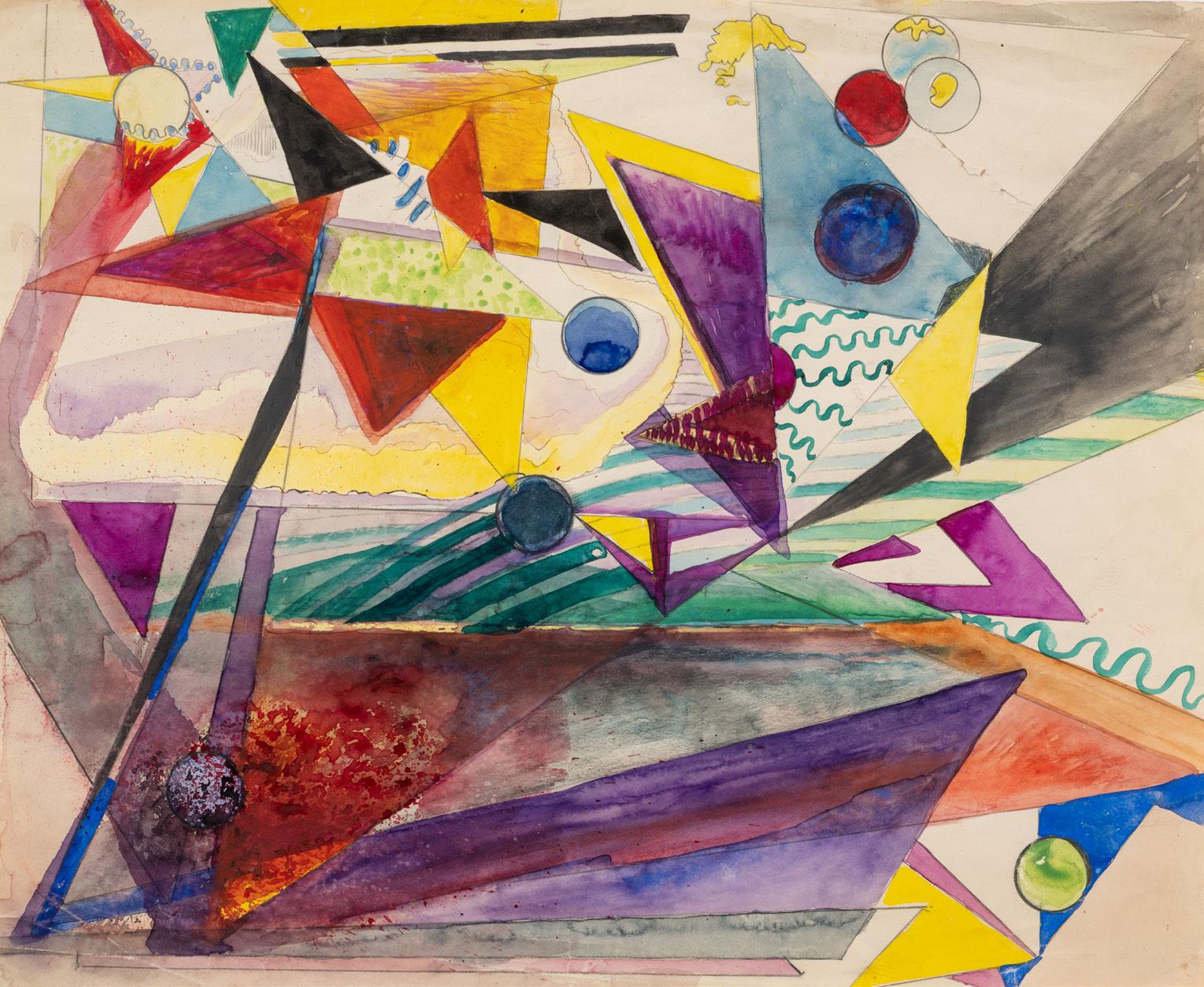
Hilla Rebay
c.1940s
14 x 16.5 in.
35.6 x 41.9 cm
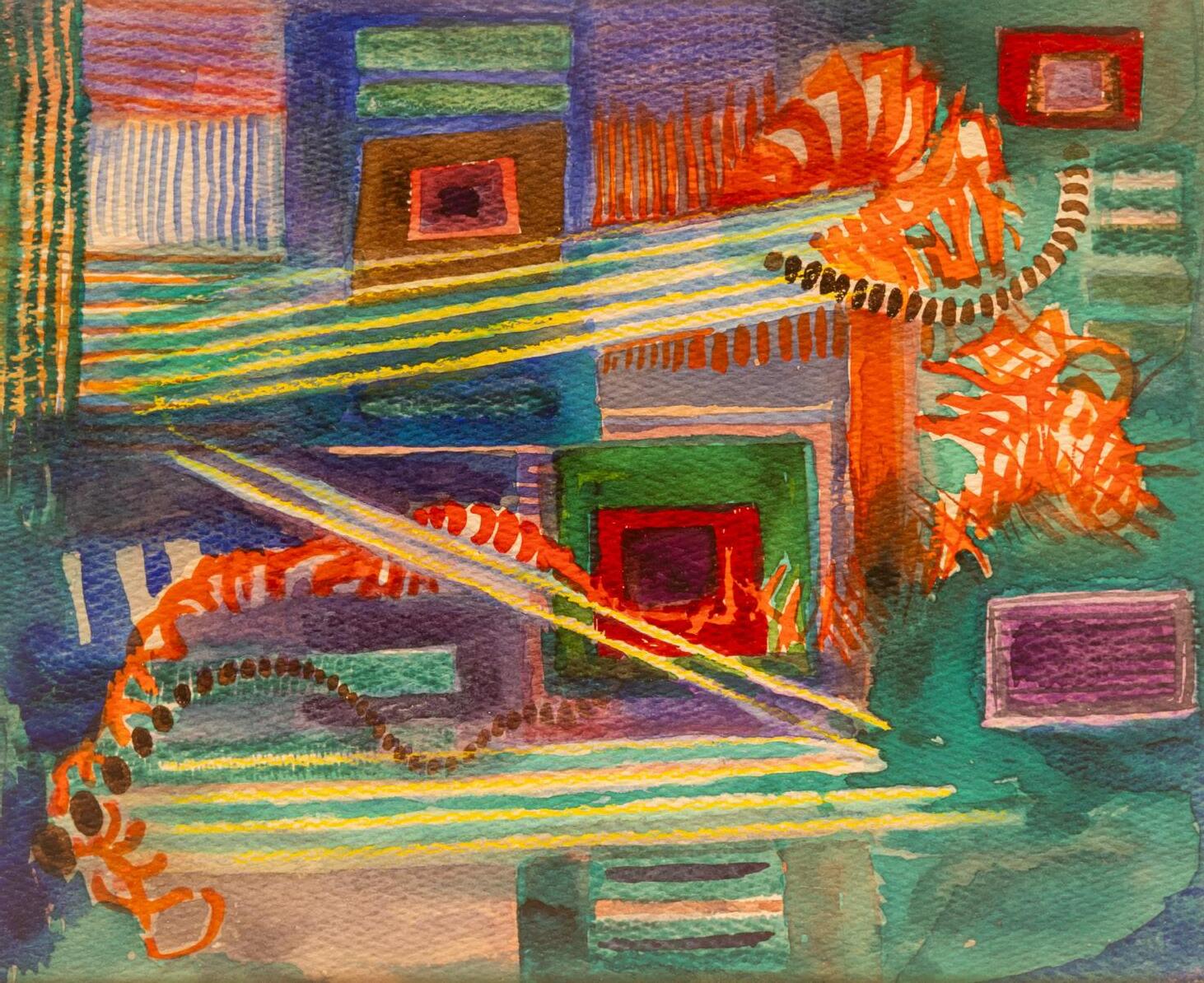
b.1883, Philadelphia, Pennsylvania
d.1965, Dobbs Ferry, New York
Charles Sheeler was a painter and photographer known for his role in defining Precisionism, a distinctly American response to modernism that arose in the United States after WWI. Sheeler’s artistic education began in industrial drawing and the applied arts at the School of Industrial Art in Philadelphia in 1900. He continued his education at the Pennsylvania Academy of the Fine Arts in 1903, where he studied under American Impressionist William Merritt Chase. While travelling abroad in Europe in 1908, Sheeler deepened his appreciation for Renaissance masters like Giotto and was exposed to Pablo Picasso and Georges Braque, which inspired his early Cubist experiments.
During the 1910s, Sheeler moved to Doylestown, Pennsylvania where he taught himself the technical skills of photography and worked as a freelance photographer. His stark, carefully composed images of barns, domestic interiors, and local architecture reflected a clear structural sensibility that carried over into his painting, merging realism with modernist abstraction. He exhibited in the 1913 Armory Show and became associated with key figures in the New York modernist circle, including Alfred Stieglitz.
In 1920, Charles Sheeler collaborated with Paul Strand on the short film Manhatta, focusing on urbanization—a theme he would explore further in his paintings and photographs. His 1927 commission to photograph Ford’s River Rouge Plant established him as a leading precisionist and inspired a series of works celebrating American industry. In the 1930s, Sheeler focused more on painting, receiving major commissions, including the Power series for Fortune magazine in 1939. From 1942 to 1945, he worked in the MET’s Department of Publications, photographing works from the collection.
In his later years, Sheeler’s work became increasingly abstract, layering multiple perspectives into distilled, geometric compositions. In 1959, a stroke ended his artistic career. Sheeler left behind a body of work that defined the balance between modern industry and artistic tradition, capturing the spirit of a mechanized yet deeply structured American landscape.
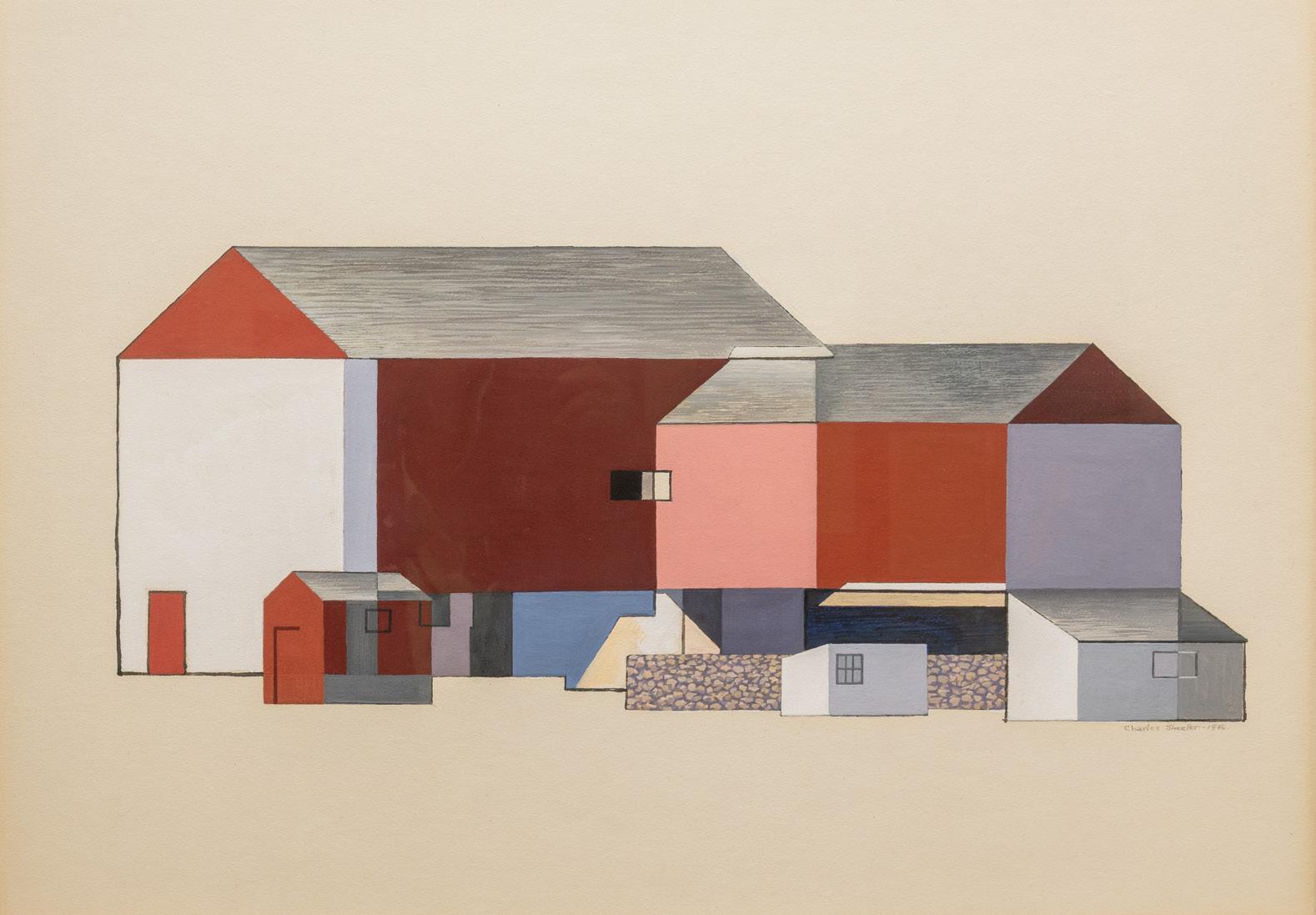
Charles R. Sheeler
Barn Abstraction, 1946
b.1879, Lappeenranta, Finland
d.1968, Paris, France
Léopold Survage was a Finnish-born painter who initially trained as a pianist, influenced by his father who owned a piano factory and instilled in him a deep love of music. Survage dreamed of becoming a professional pianist, but after a debilitating illness in his twenties, he turned to the visual arts. He studied at the Moscow School of Painting and in 1908 moved to Paris, where he worked under Henri Matisse and exhi bited with early Cubists at the Salon d’Automne. His early work focused on fragmented perspectives, reimagining natural forms like trees, flowers, and birds as geometric planes.
Survage’s most famous series, Colored Rhythm: Study for the Film (1913), explored the intersection of music and painting, attempting to create a sense of motion within static imagery. After sharing a studio with Amedeo Modigliani, he moved to Nice, where his work evolved into a more mystical, Neo-Classical style, blending abstraction with emotive and symbolic elements.
Although his career began within the Cubist tradition, Survage’s later compositions transcended conventional notions of movement and space to evoke deeper rhythms and sensations. This evolution made him a distinctive figure in the development of modern abstraction.
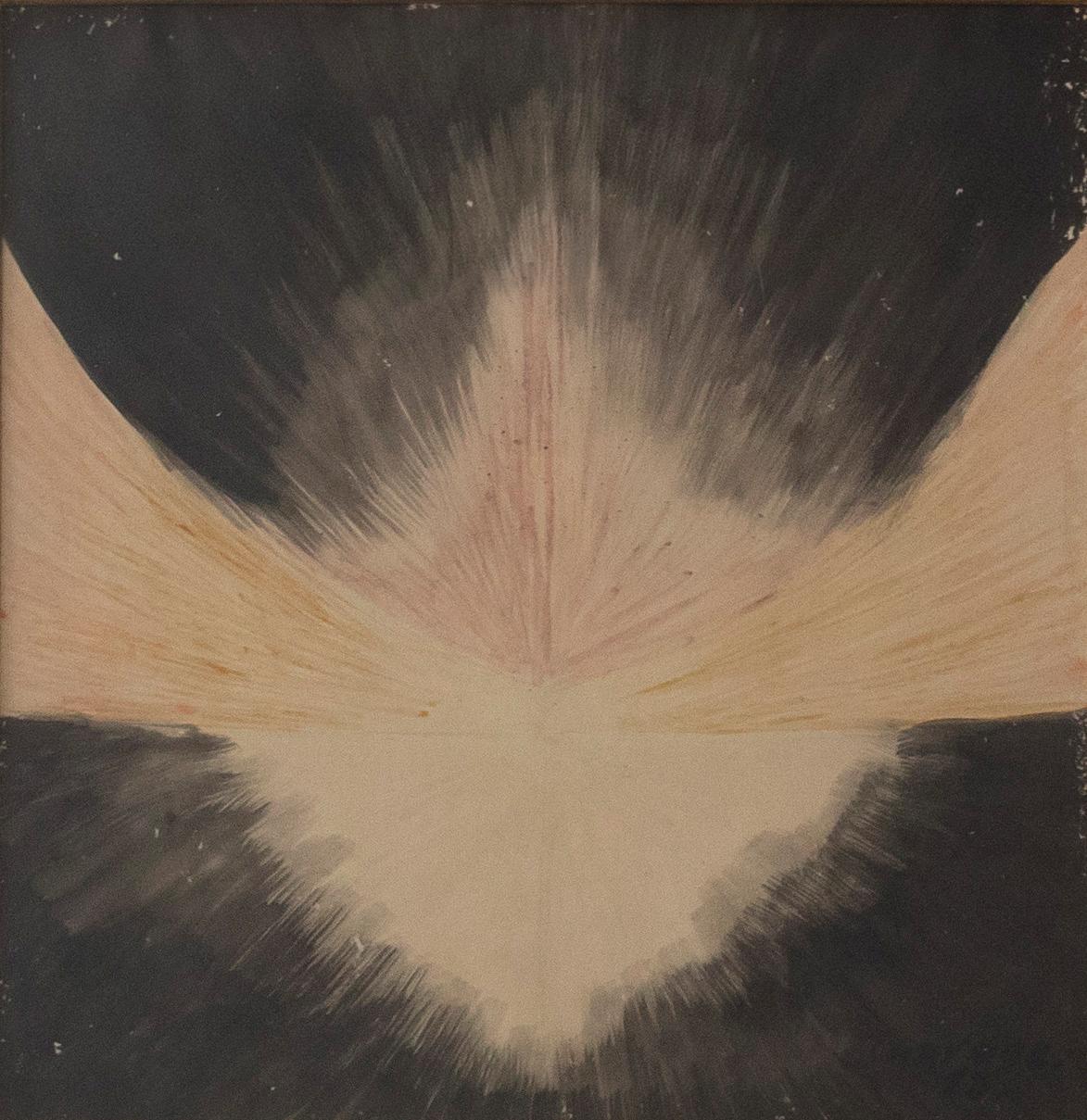
32.4 x 31.75 cm
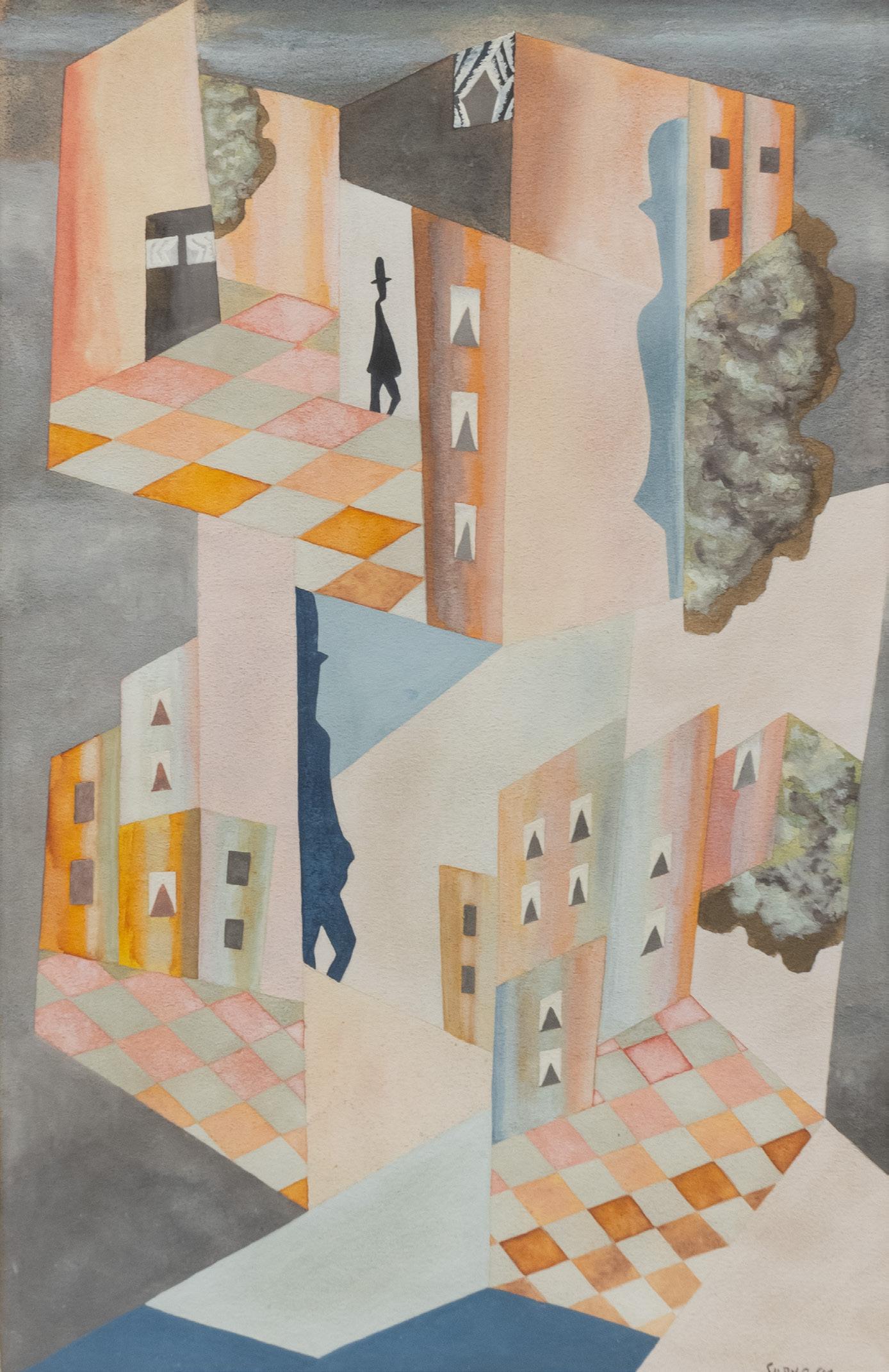
b.1875, Damville, Normandy, France
d.1963, Puteaux, France
Jacques Villon was a French Cubist painter and abstract printmaker. Born Gaston Duchamp, he later changed his name to distinguish himself from his siblings: Marcel Duchamp, Raymond Duchamp-Villon and Suzanne Duchamp. Villon began his artistic training under his grandfather Emile Frédéric Nicolle, who taught him the art of engraving and printmaking. In 1894, Villon began studying law at the University of Paris but was soon drawn towards artistic pursuits. He moved to Montmartre with his brother Raymond in 1895 and began studies at L’Ecole des Beaux-Arts. He became a graphic artist, contributing posters, cartoons, and illustrations to Parisian magazines and newspapers. Remaining an active figure in Montmartre, in 1903 he helped to organize the drawing section at the first Salon d’Automne in Paris and from 1904–05 studied at the Académie Julian.
Villon moved to Puteaux in 1906 where he would frequently meet with other artists, including Frantisek Kupka, Albert Gleizes, Robert Delaunay, Fernand Léger, Francis Picabia, Jean Metzinger, and Guillaume Apollinaire. Later called the Puteaux Group, the gathering would debate the on-going artistic developments of the capital and share ideas on new innovations. Villon helped to organize the group’s first show, the Salon de la Section d’Or, held at he Galerie La Boétie in October 1911. The following year, Villon exhibited at the Armory Show in New York, where his works proved popular and all were sold. He had his first solo exhibition in the United States at the Societe Anonyme in New York in 1921.
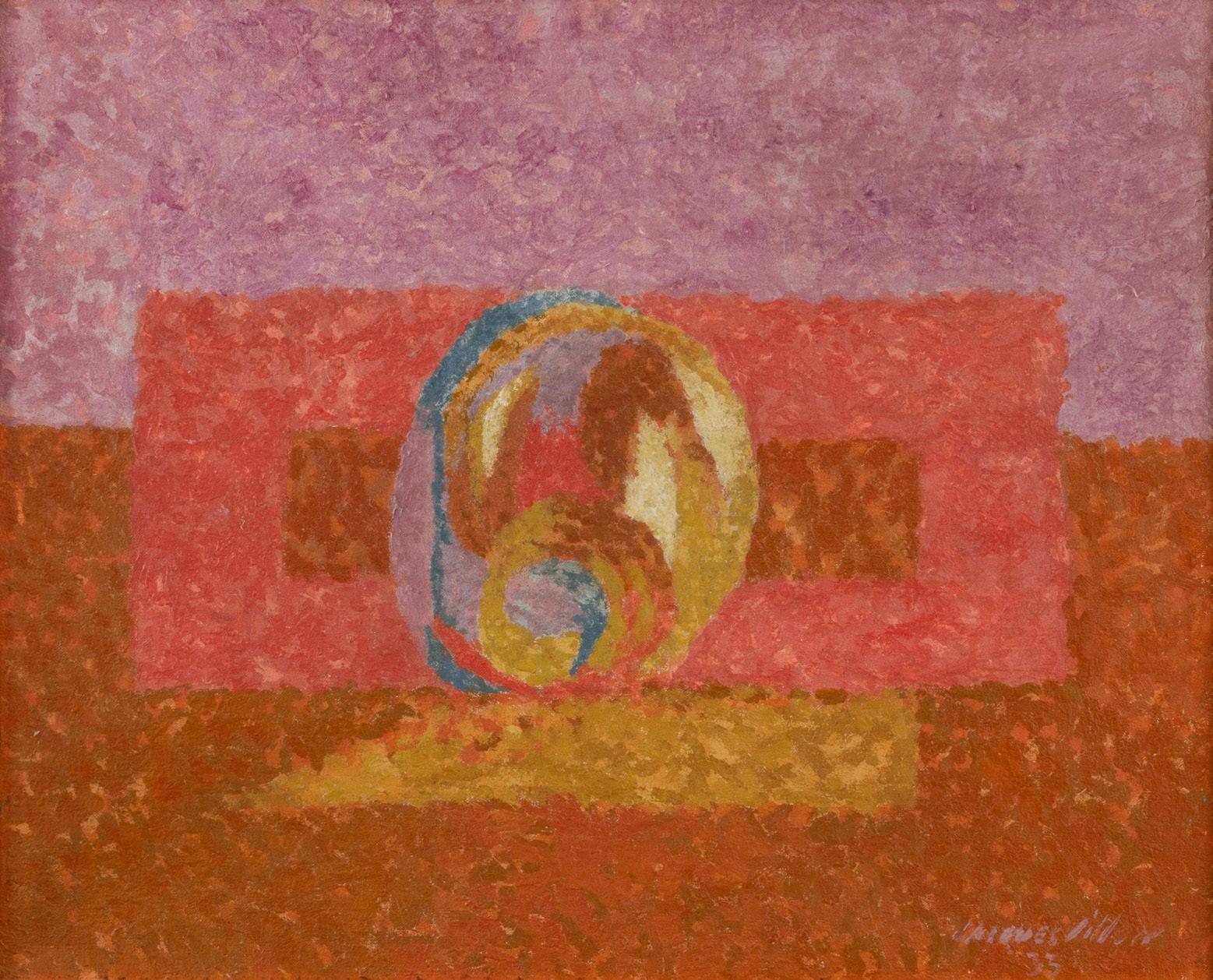
In his later career, Villon worked prolifically as a printmaker, maintaining his interest in abstracting form from observation in a colorful, geometric style. Jacques Villon
Rosenberg & Co.
19 East 66th Street
New York, NY 10065
www.rosenbergco.com
© Rosenberg & Co. 2025
