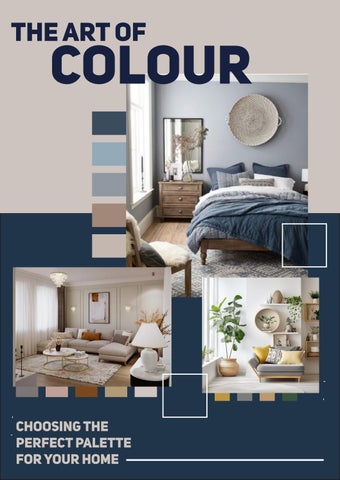
THE ART OF cOLOUR


CHOOSING THE PERFECT PALETTE FOR YOUR HOME


![]()


CHOOSING THE PERFECT PALETTE FOR YOUR HOME


A colour palette is a carefully selected group of colours used in design and visual composition. It plays a crucial role in shaping the atmosphere of a space, ensuring that colours work together harmoniously to create a cohesive and visually appealing aesthetic (Alex, 2023).
Colour palettes are often based on HSL (hue, saturation, and lightness), which helps define the exact tone and intensity of a colour (Robinson, n/a). When chosen thoughtfully, a colour palette can establish a professional and polished look or evoke a specific mood or emotion within a space.
Lighting plays a significant role in how colours appear in a room. Spaces with less natural light often benefit from a warmer colour scheme, as these hues can help create a sense of warmth and brightness (Kanlux, n/a).
A well-balanced colour scheme follows the 60-30-10 rule, a widely used design principle that helps distribute colour effectively:
60% Dominant Colour: This is the primary colour used for walls, large furniture, or significant elements.
30% Complementary Colour: A complementary colour that supports the dominant shade, often seen in upholstery, textiles, or accent walls.
10% Accent Colour: A bold or contrasting shade used for smaller decor items, artwork, or statement pieces.
By following these guidelines, you can create a colour palette that enhances your home’s style while reflecting your personal taste and desired ambiance (Brennan, n/a).
let’s take a look:
60% green this is the main colour
Sometimes it’s hard to know where to start, here are some ways to help you inform your decision:
1. Pick a piece of furniture
Got a favourite piece of furniture? Pick your colours based around it!
2. Look at light
Consider your room’s direction: North-facing spaces feel cooler, so warm tones add cosiness. South-facing rooms can handle cool, dramatic shades.
3. The use of the room Pick the scheme based on the mood/activity you want to achieve to eat, sleep, etc.
4. Take in inspiration from around you Pick a scheme from the colours of a painting you like. Nature is a great source of effortless colour combinations too!


10% yellow this colour helps items to ‘pop’
30% pink this colour supports the main colour
When choosing a colour palette for your home, it’s essential to understand how colours interact with one another. The study of colour harmony explores how different shades and tones work together to create a balanced and pleasing environment (Interaction Design Foundatgion, 2023). Colours have the power to significantly influence our emotions and perceptions. For example, warm colours like red and yellow can make a space feel inviting and energetic, while cool colours like blue and green tend to evoke calmness and relaxation. By understanding the psychological effects of colour, you can tailor your space to create the desired mood (Cherry, 2024).
At the core of colour theory lies the colour wheel, a tool used to understand how colours relate to one another. The wheel shows primary colours (red, blue, yellow), secondary colours (orange, green, purple), and tertiary colours (combinations of primary and secondary) (Robinson, n/a). By studying this wheel, you’ll gain insights into colour harmony - how certain colours, when placed together, enhance each other and create a sense of balance.

Context plays an important role in colour harmony as well. A colour that works beautifully in one room might not suit another due to differences in lighting, size, or function of the space. It’s important to consider these elements when applying colour theory to your home. Without harmony, a room can feel either too dull or overwhelming. Too many competing colours can make a space feel chaotic, while too little contrast can make it feel flat or boring. Fortunately, there are established colour formulas to help you achieve harmony in your palette (The Gem Picker, 2023). These colour combinations, such as complementary, analogous, and triadic colour schemes (Robinson, n/a), provide guidelines to help you choose colours that naturally work well together. By using these formulas, you can create a cohesive and inviting space that feels thoughtfully designed (More about combinations on the next page).
EFFECTIVE COLOUR HARMONY

INEFFECTIVE COLOUR HARMONY

Ultimately, selecting your palette based on harmony is key to creating a home that not only looks great but feels great. Whether you prefer a calming retreat or an energising environment, colour harmony helps you achieve a space that’s both functional and aesthetically pleasing.


Choosing the right colour scheme is essential for creating a balanced and visually appealing space. Different colour schemes can evoke different moods and styles, depending on how the colours interact with each other. Here are some key colour schemes to consider (Robinson, n/a):
complementary colours
A complementary colour scheme is based on two colours that are directly opposite each other on the colour wheel. This creates a bold, high-contrast look, ideal for making certain elements stand out. Examples include blue and orange or red and green. When used carefully, complementary colours can bring vibrancy and energy to a space (Robinson, n/a).
triadic colours
A triadic colour scheme consists of three colours that are equally spaced around the colour wheel. This scheme offers a lively and balanced look while maintaining harmony. A common example is the combination of red, yellow, and blue. To make the most of a triadic palette, one colour should be dominant, with the other two used as accents (Robinson, n/a).
analogous colours
An analogous colour scheme is made up of two to five colours that sit next to each other on the colour wheel. These colours naturally blend well together and create a cohesive, calming effect. A classic example is blue, teal, and green, which can be perfect for creating a serene and harmonious environment (Robinson, n/a).
tetradic colours
A tetradic colour scheme (also called a double-complementary scheme) consists of four colours: one dominant colour, two complementary colours, and one accent colour. This scheme is rich and dynamic but requires careful balance to avoid overwhelming the space. A common combination might include red, green, blue, and orange, where one colour is dominant and the others are used strategically (Robinson, n/a).


By understanding and applying these colour schemes, you can create a home that feels both stylish and well-balanced.


When selecting a colour palette for your home, it’s helpful to understand the difference between cool and warm tones. Each type of palette can evoke a distinct atmosphere, making it important to choose the one that aligns with the mood you want to create.
Cool colour palettes often feature shades of blue, purple, pink, and violet (Innovatud Design, n/a), all of which are known for their calming and serene qualities. These colours can create a relaxing atmosphere, making them ideal for spaces like bedrooms, bathrooms, or any room where you want to unwind. Both black and white have cool shades, which can create contrast and visual clarity in a design. Cool colours typically have an undertone of blue, which adds to their cool and refreshing vibe. These tones can make a space feel more open and airy, making them a great choice for smaller rooms or areas where you want to promote focus and clarity.
In contrast, warm colour palettes tend to feature earthy tones and rich hues, like wood and timber, as well as shades of orange, yellow, olive, burgundy, or deep red (Innovatus Design, n/a). These colours are often associated with energy, comfort, and warmth, creating a welcoming and vibrant environment. Warm colours typically carry an undertone of red, which can bring a sense of passion or coziness to a room. A warm palette can be perfect for living rooms, kitchens, or any space where you want to invite activity and a sense of intimacy.


When choosing between cool and warm palettes, consider the emotional tone you want to set in the space. Cool colours are ideal for a tranquil, modern look, while warm tones bring energy and a sense of grounded comfort to your home.


Blending warm-toned furniture with cool paint can create a harmonious and inviting space. This contrast allows different elements to stand out while still feeling cohesive, making the room visually appealing and well-balanced (ECOS Paints, 2025).
Pairing warm and cool tones adds depth and dimension, helping to enhance the overall ambiance of a space. The interplay between these colors can make a room feel more dynamic, preventing it from looking too flat or monotonous. Strong contrasts between warm and cool shades naturally draw the eye to key areas, allowing you to highlight specific features such as architectural details, statement furniture, or decorative accents. By strategically using this contrast, you can create a focal point that enhances the room’s aesthetic appeal.
here are some examples:


Understanding the relationship between warm and cool colors, as well as their subtle undertones, is essential in crafting a well-balanced home. By carefully selecting and mixing these tones, you can create a space that feels both comfortable and stylish, tailored to your personal taste and design goals.


Black and white are two of the most versatile and powerful colours in interior design. They have a timeless elegance that can elevate any space, whether used as a staple piece or as an accent to highlight other design elements. These colours have the ability to anchor a room, create bold statements, or even offer a sense of balance and simplicity.
While both black and white are often regarded as neutral tones (ECOS Paints, 2025), they can also serve as striking contrasts when paired with other colours when they have warm or cool tones. For example, the starkness of black can be beautifully balanced with warm tones like deep gold or earthy terracotta, while white pairs well with soft pastels or vibrant hues. The contrast between black and white adds visual interest, helping to make a room feel dynamic yet cohesive.
To avoid a space feeling too sterile or too dark, it’s important to consider the hue, saturation, and palette when incorporating black and white. A well thought out mix of different shades and tones within this monochrome spectrum can add depth and dimension to your space. For instance, blending crisp whites with soft greys or inky blacks with charcoal can prevent the room from feeling flat or overwhelming. This subtle variation ensures the room remains visually engaging while maintaining the sophisticated simplicity that black and white offer.
Monochromatic colour schemes, which use variations of a single colour, can also be effective when working with black and white. However, even within a monochromatic palette, it’s important to include enough variety to keep the space feeling lively and inviting. The subtle shifts in shade and tone, from pure white to off-white, or from black to charcoal, can provide just enough contrast to keep the room from feeling monotonous. Equally, incorporating a variety of textures is key to adding depth and interest to a monochromatic space. Mixing different materials, such as soft fabrics, natural wood, glossy surfaces, or matte finishes, creates layers that enhance the overall aesthetic (Sunbrella, n/a).

Incorporating black and white into your design is about finding balance and variety. When used thoughtfully, these colours can create a harmonious, elegant, and impactful look that complements both modern and traditional interiors alike.


The way colors are positioned in a room can significantly alter how the space feels. Strategic placement can make a room seem larger, cozier, taller, or more balanced. Here’s how different colour placements influence a space (Redhouse Design Build, n/a):
shorten a room
Painting the far wall a darker colour than the others brings it visually forward, making the room feel shorter and more enclosed.
enlarge a room
Using light colours on all walls helps reflect light, making the space feel bigger and more open.
lower the ceiling
A dark-coloured ceiling creates a cosy, intimate feel by making the ceiling appear lower.
raise the ceiling
Keeping the ceiling light while using darker walls makes the space feel taller and airier.

narrow a room
Painting both side walls a darker colour while keeping the floor and ceiling light makes a room feel narrower.


elongate a room
Darker colours on the shorter walls and ceiling, and lighter colours on the longer walls can stretch the perception of a space, making it seem longer.
shorten the walls
Painting just the upper portion of the walls dark can visually reduce their height, making the space feel cosier. This approach offers a different technique to achieve a warm and inviting atmosphere.
broaden a room
A light-coloured ceiling enhances the sense of openness by making the space feel wider and airier. This effect helps create a more expansive and balanced room.

compact a space
Using dark shades across all walls and surfaces reduces the perception of space, making the room feel smaller, cosier, and more enclosed.
highlight a feature
Painting both side walls in a darker colour while keeping the main wall light directs focus toward the centre, creating a narrowing effect and emphasising the room’s depth.


By understanding these principles, you can manipulate color placement to create the perfect ambiance, whether you want to open up a space or make it feel warm and inviting.

Colour is more than just a design choice - it is a powerful tool that shapes how we experience and connect with a space. From setting the right mood to enhancing functionality, the careful selection and placement of colour can transform a house into a home.
Understanding colour theory, harmony, and placement allows you to create visually appealing and emotionally engaging spaces. Whether you prefer the timeless elegance of black and white, the calming effect of cool palettes, or the warmth of earthy tones, every choice influences the atmosphere and perception of a room.
By following fundamental principles like the 60-30-10 rule (ECOS Paints, n/a), considering natural light (Kanlux, n/a), and balancing warm and cool tones, you can craft a space that is both aesthetic and functional. Interior design is about expressing personality and enhancing well-being, and mastering colour is the first step in that journey.
As you begin experimenting with colour in your own spaces, trust your instincts, explore different palettes, and embrace the creative process - because the perfect colour scheme isn’t just about design; it’s about making a space truly feel like home.


Alex, (2023). How to create a color palette for design systems. Available at: https://medium. com/@imperavi/how-to-create-a-color-palette-for-design-systems-a803e90adc15 [Accessed 14 April 2025]
Artists & Illustrators, (2013). Learning from Turner: part 4. Available at: https://www.artistsandillustrators.co.uk/how-to/watercolour/learning-from-turner-part-four-temperature/ [Accessed 14 April 2025]
Brennan, L, S (n/a). A Simple Design Rule [That Just Might Blow Your Mind]. Available at: https://saralynn-brennan.com/the-60-30-10-design-rule/ [Accessed 14 April 2015]
Cherry, K (2024). Color psychology: does it affect how you feel? Available at: https://www. verywellmind.com/color-psychology-2795824 [Accessed 14 April 2025]
DePaul University (n/a). Color context/simultaneous contrast. Available at: http://facweb. cs.depaul.edu/sgrais/color_context.htm [Accessed 14 April 2025]
ECOS Paints (2025). Cool vs. Warm Paint Colors: The Impact on Interior Design. Available at: https://ecospaints.net/blog/cool-colors-versus-warm-colors-in-interior-design#:~:text=As%20a%20rule%2C%20neutral%20colors,blue%20undertones%20may%20seem%20 cool.
Epifano, M, Sullivan, D (2024). 37 Soothing Cool Color Schemes for Decorating Your Home. Available at:https://www.thespruce.com/cool-home-color-schemes-451997 [Accessed 14 April 2025]
The Gem Picker (2023). How to Pick a Cohesive Color Palette for Interior Design. Available at: https://thegempicker.com/interior-color-palette/ [Accessed 14 April 2025]
Hannah, J (2023). An introduction to colour theory and colour palettes. Available at: https:// careerfoundry.com/en/blog/ui-design/introduction-to-color-theory-and-color-palettes/ [Accessed 14 April 2025]
Innovatus Design, (n/a). Don’t start with a paint colour. Available at: https://www.innovatusdesign.com/the-truth-about-mixing-warm-and-cool-colors-in-interior-design/ [Accessed 14 April 2025]
Interaction Design Foundation, (2024). Color harmony. Available at: https://www.interaction-design.org/literature/topics/color-harmony?srsltid=AfmBOorg4wzKJ0QWGY6lTWTNumTdX_a5LdBrLFvUlxKEYSaUXfNHTeAq [Accessed 14 April 2025]
Kanlux (n/a). How does light affect the perception of interiors? Available at: https:// www.kanlux.com/en/articles/How-does-light-affect-the-perception-of-interiors# :~: text=Light%20colours%20reflect%20light%2C%20making,achieve%20the%20desired%20 visual%20effect. [Accessed 14 April 2025]
RedHouse Design Build, (n/a). How Paint Can Shape a Room. Available at: https://redhousecustombuilding.com/how-paint-can-shape-a-room/ [Accessed 14 April 2025]
Robinson, S (n/a). How to use a paint colour wheel. Available at: https://www.wow1day.com/ blog/paint-colors/how-use-paint-color-wheel [Accessed 14 April 2025]

Stephens, S (2022). 24 Warm Color Palettes to Inspire Your Dream Space. Available at: https://www.lovetok-now.com/home/design-decor/warm-color-palettes [Accessed 14 April 2025]
Sunbrella (n/a). How To Incorporate Black And White Interior Design Into Your Home. Available at: https://shorturl.at/07VKp [Accessed 15 April 2025]
The Interior Design Student (n/a). Colour in Interior Design: Part 1. Available at: https://interiordesignstu-dent.com/study-notes/colour-in-interior-design/ [Accessed 14 April 2025]