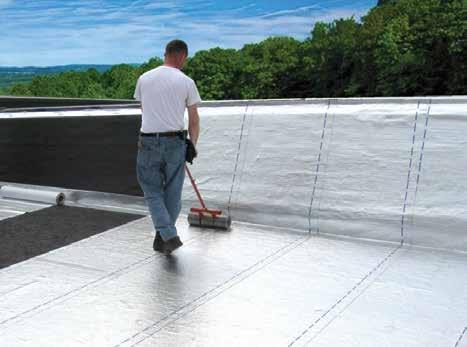
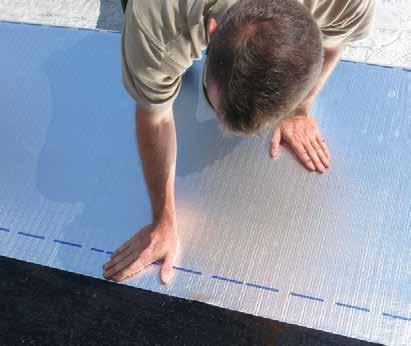
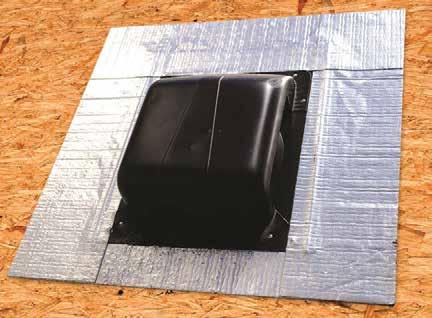
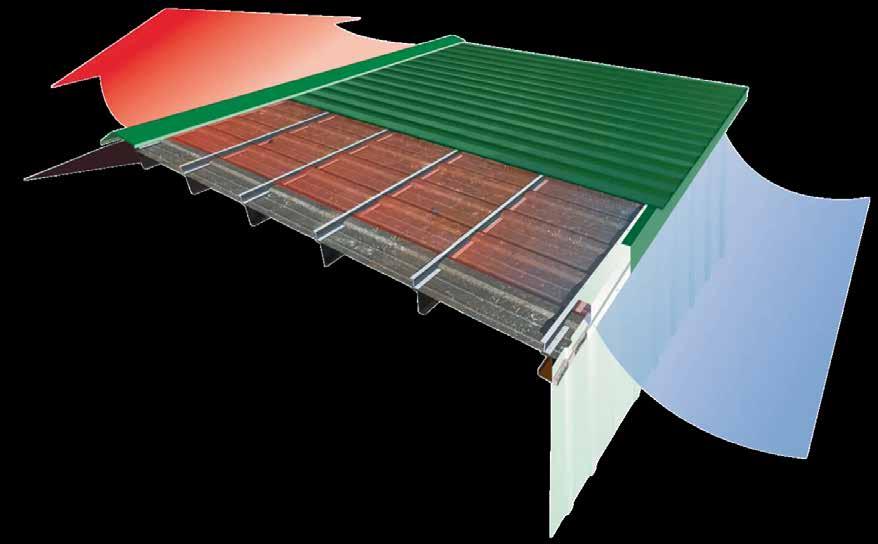
Peel & Seal® provides a complete waterproofing barrier to the elements.
Self-adhering and easy-to-use low-slope and flashing membrane.
Peel & Seal® is the original, self-stick roll roofing specifically designed for low-slope roofing applications, as well as a durable flashing membrane for exterior penetrations. Designed to be left exposed to the elements, count on Peel & Seal® to provide a long lasting, durable, and maintenance-free surface.
• Aggressively adheres direct to the surface
• Designed to be left exposed to the elements
• Ideal for hundreds of waterproofing applications
• 10-year warranty
Count on Peel & Seal® for ease of installation and increased savings! UV-resistant.
All feedback and reprint permission requests (please include your full name and address) contact: Lisa Pate, Editor, at: lisapate@floridaroof.com (800) 767-3772 ext. 157
Florida Roofing Magazine PO Box 4850 Winter Park, FL 32793-4850
View media kit at: www.floridaroof.com/ florida-roofing-magazine/ #FRSA #roofingprotects
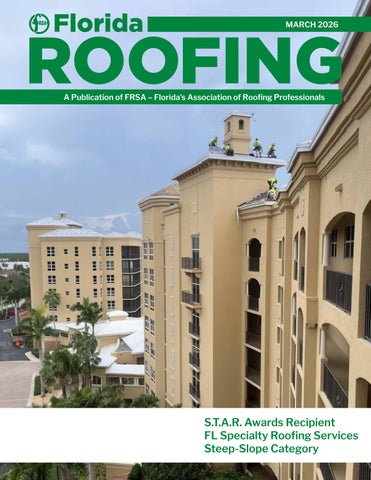
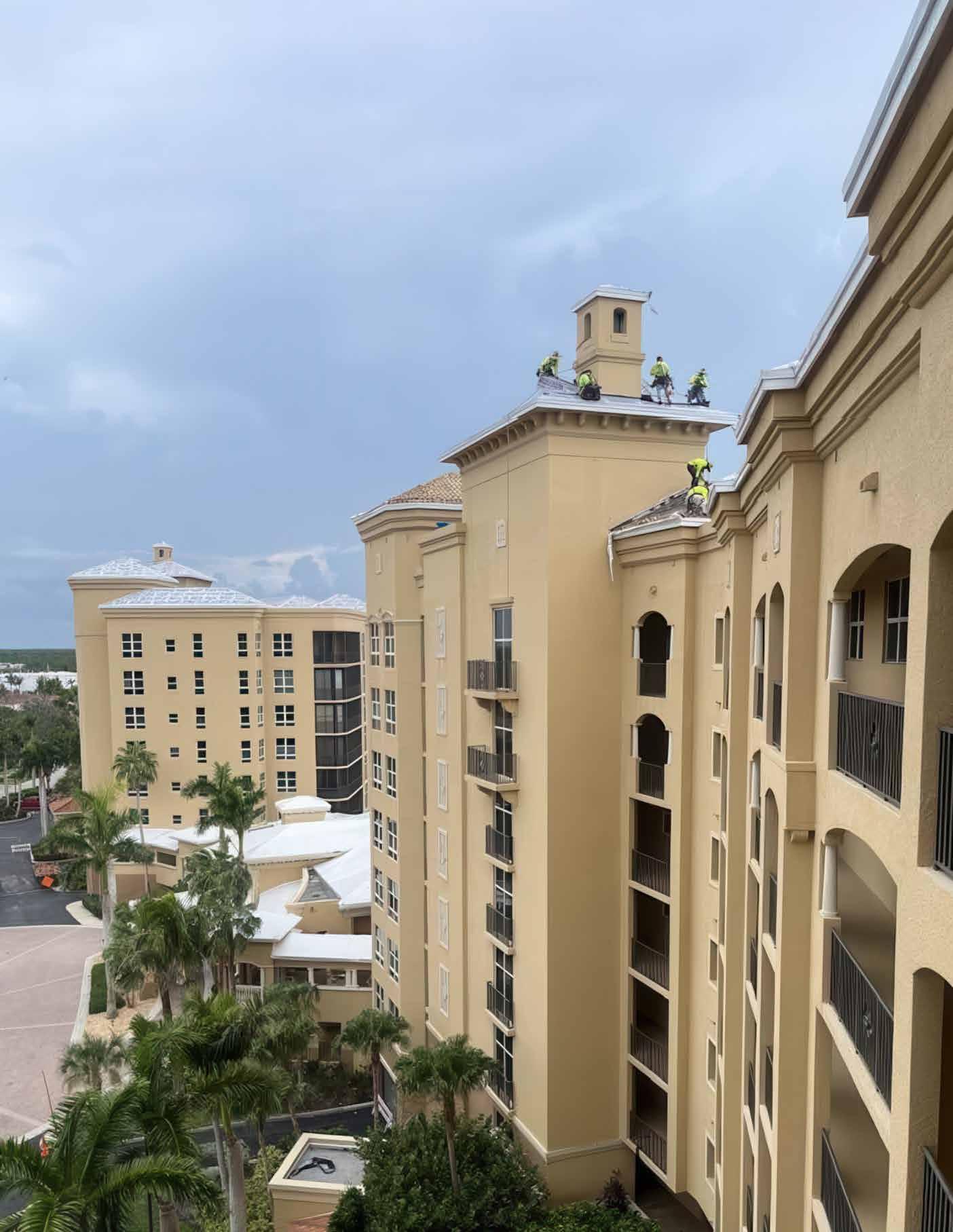
FL Specialty Roofing Services received a Second Place S.T.A.R. Award in the Steep-Slope category for its work on the Grand Isles Project in Punta Gorda.
Industry Updates
March is National Ladder Safety Month
The American Ladder Institute (ALI), the only approved developer of safety standards for the U.S. ladder industry, is gearing up for its annual ladder safety blitz, National Ladder Safety Month. Held every March, it is the only program dedicated exclusively to promoting ladder safety at home and work. The 2026 observance will mark the event’s 10th anniversary with the theme “10 Years of Safer Climbing.”
ALI reminds everyone that ladder safety remains a critical and preventable issue on jobsites across the country. As such, it created National Ladder Safety Month and in 2026 the awareness campaign focuses on five key topics: Choosing the Right Ladder, Check Before You Climb, Set It Up Safely, Climb Safely, Work Safely and Safe Steps with Stepstools.
Ladders are among the most used tools in construction yet they’re often taken for granted. ALI urges contractors, construction crews and safety professionals to refocus attention on training, equipment inspection and safe climbing practices. National Ladder Safety Month is an opportunity for every jobsite stakeholder to take the time to review procedures and recommit to keeping workers safe. At the heart of every campaign is ALI’s own ladder safety training, available all year long at laddersafetytraining.org. This free online repository includes videos on a range of safety topics for all types of ladders. For more information, visit www.laddersafetymonth.com.
NRCA Updates
Lindy Ryan Awarded the J.A. Piper Award NRCA named Lindy Ryan, a former NRCA President, its 79th annual J.A. Piper Award. The award recognizes roofing professionals who have devoted constant outstanding service to the association and roofing industry.
After attending the University of Central Florida, Ryan and her husband opened a small general contracting firm and had trouble finding a roofing contractor, so they obtained their roofing contractor licenses to conduct business in Florida. They subsequently converted their general contracting company, General Works, into an exclusively roofing business.
Fifteen years later, General Works became so successful it joined the Tecta America family. At Tecta America, Ryan rose through the corporate ranks to lead the Southeast region, managing a large territory during a national recession. She developed a national service department and built one of the most robust employee training programs in the roofing industry, graduating hundreds of skilled professionals every year.
In 2007, Ryan was elected to and served as President of the National Roofing Legal Resource Center. She was elected to NRCA’s Executive Committee in 2010 and five years later was elected to become the first woman to serve as NRCA President. Ryan continued to serve on NRCA committees until her retirement in 2021.
Roofing Alliance Student Competition
The Roofing Alliance selected a team from Auburn University, Auburn, AL, as the first-place winner of its 12th Construction Management Student Competition after hearing oral presentations from the finalist teams during the 2026 International Roofing Expo in Las Vegas. Members of the winning team included Madi Goodwin, Heather Henderson, Patrick Johnson, Graham Roh (team captain) and Ashwin Varadhan. The team received a team trophy, a $5,000 L.B. Conway scholarship for its school and individual awards.
The team from University of Florida, Gainesville, placed second in the competition. Team members included Nicholas Fredette, Tyler Isaacson, Sophia Petrandis, Rylee Rauktis (team captain) and Christian Walker. The team received a team trophy, a $2,500 Fred Good scholarship for their school and individual awards. Sophia Petrandis from University of Florida received the second-place award for Best Individual Student Presenter and received a $200 gift card.
FRSA congratulates Rylee Rauktis, an Educational Foundation scholarship recipient and daughter of Todd Rauktis, Commercial Roofing Specialties, Orlando!
The team from Clemson University, Clemson, SC, placed third in the competition. Team members included Drake Hamlin, Sean Linnane, Remi Nguyen (team captain), Ben Reynolds and Grant Thomas and received a team trophy, a $1,000 scholarship for their school and individual awards. Additionally, Remi Nguyen received the first-place award for Best Individual Student Presenter and received a $300 gift card.
The teams were tasked with submitting a qualified bid package for the Cannery Casino Hotel in Las Vegas. Teams researched the project, submitted a qualified bid package proposal and provided an oral presentation to illustrate their roofing, project management, estimating and safety knowledge.
PATCHES is a place where children with complex medical needs are given culturally sensitive, compassionate care. By providing best practice interventions, our nurses and therapists help each child reach maximum health so they can develop, thrive and grow.
PATCHES is a place where children with complex medical needs are given culturally sensitive, compassionate care. By providing best practice interventions, our nurses and therapists help each child reach maximum health so they can develop, thrive and grow. PATCHES offers families of seriously ill children daily
Community Involvement Award
NRCA and CNA announced CYE Enterprises Inc., Jacksonville, as the grand-prize winner of the CNA/ NRCA Community Involvement Award for its charitable efforts with Blessing Others All the Time.
CYE Enterprises, in partnership with Blessing Others All the Time (see photos above), hosted the 3rd Annual Back-to-School Community Drive-Up Event in Jacksonville, providing more than 1,300 K–12 students with free backpacks filled with school supplies. The initiative, supported by volunteers, local sponsors and donors, aimed to ease financial strain on families and equip students for academic success. CNA awarded CYE Enterprises with $7,500 for the scholarship.
NRCA's New Slate of Officers
Chad Collins, Roofing Corp of America, Atlanta, was elected Chairman of the Board and Sherri Miles, J.D. Miles & Sons Inc., Chesapeake, VA, was elected Chairman of the Board-elect. Michelle Boykin, Weather Shield Roofing Systems, Wyoming, MI; Scott Kawulok, B&M Roofing of Colorado LLC, Frederick, CO and Lynn Price, Dryspace, Cedar Rapids, IA, were elected Vice Chairmen for twoyear terms.
Additionally, the following were elected as new NRCA directors for a three-year term:
■ Tim Stephens, Architectural Sheet Metal Inc., Orlando
■ Greg Arnold, Nations Roof of New England LLC, West Haven, CT
■ Matt Atkinson, Bone Dry Roofing, North Charleston, SC
■ Alexandra Chacon, Construction Link Outsourcing, San Jose, Costa Rica
■ Eric Dosch, Schwickert’s Tecta America LLC, Mankato, MN
■ Heidi J. Ellsworth, The Coffee Shops, Sisters, OR
■ Bryson Galloway, Barr Roofing CO, Abilene, TX
■ Dave Hesse, Kalkreuth Roofing & Sheet Metal Inc., Frederick, MD
■ Anthony Kahny, Deer Park Roofing LLC, Cincinnati, OH
All 2026-27 officers and directors will assume their roles June 1.
Your new hires show up eager...
Don’t leave their success to chance. Give them the professional foundation every Florida roofer needs – from day one. This 100% industry-created manual delivers:
• Core roofing technology and terminology
• Basic math for use in the field
• Proper tool and material handling
• Installation best practices
• Real-world scenarios Results?
Constructive Knowledge and the Hidden Immigration Risks of Subcontracting
Trent Cotney, Partner, Adams & Reese, LLP and FRSA General Counsel
Immigration compliance in roofing is often viewed narrowly, limited to completing I-9 Forms for direct employees and preparing for the possibility of an ICE audit. While those obligations remain essential, they no longer capture the full scope of immigrationrelated risk facing roofing contractors. Increasingly, liability exposure is being driven by what regulators believe contractors should have known about the labor supporting their projects, even when that labor is supplied through subcontractors or third-party crews.
Federal immigration law allows enforcement agencies to pursue employers not only for actual knowledge of unauthorized employment but also for constructive knowledge. Constructive knowledge exists when an employer, based on the totality of the circumstances, should have known that unauthorized workers were being used. This standard often overlaps with what regulators describe as willful blindness, where an employer avoids asking questions or ignores warning signs in order to maintain plausible deniability. In the roofing industry, where work is frequently performed by sub-labor crews, the risk of crossing this line is greater than many contractors realize.
ROOFING
5,500 Industry Professionals
1,332,902 Industry-focused 12-Month Digital Impressions
skip@floridaroof.com
Roofing presents unique enforcement challenges because of its reliance on short-term projects, rapid labor scaling during storm response and repeated use of the same crews across multiple jobs. Regulators evaluating these arrangements look past contractual labels and focus instead on functional realities. They examine who controls scheduling, who directs the work, who supplies tools and safety equipment and who has the authority to remove workers from a site. When those indicators point toward meaningful control by the contractor, immigration exposure may follow, even in the absence of direct hiring.
Enforcement agencies also pay close attention to patterns that suggest constructive knowledge. These can include subcontractors that exist solely to supply labor, inconsistent or incomplete business documentation, crews that rotate names but remain operationally identical or continued use of a labor source after warnings, audits or credible concerns have been raised. No single factor is determinative for misclassification of labor but taken together they can support a finding that a contractor should have known unauthorized employment was occurring.
One of the most persistent misconceptions in roofing is that classifying workers or crews as independent contractors eliminates immigration risk. Immigration enforcement does not follow tax classifications or state labor labels. Instead, agencies assess how the work is actually performed. A contractor can comply with 1099 requirements and still face immigration liability if the facts demonstrate reliance on unauthorized labor through sub-labor crews.
Risk mitigation does not require contractors to verify the immigration status of subcontractor employees, which is prohibited under federal law. It does, however, require intentional compliance structures. These include vetting subcontractors as legitimate businesses rather than labor-only providers, using written agreements that clearly assign responsibility for hiring and verification, avoiding payment practices that obscure workforce identity and establishing internal protocols for addressing immigration-related concerns when Print Circulation
Legislative Session Update
Kylee Anzueto, Government Affairs Advisor, GrayRobinson
Florida’s 2026 Regular Legislative Session opened with a strong emphasis on affordability as Governor Ron DeSantis delivered his final State of the State address. Framing the session around continuing Florida’s “free state” model, the Governor outlined a broad set of priorities that included property tax reform, immigration enforcement, insurance and housing relief, social services and investments in environmental protection and infrastructure. While much of the speech highlighted accomplishments from his terms in office, DeSantis renewed his call for significant property tax cuts and urged legislators to move quickly on his remaining legislative agenda.
Legislative leaders echoed the Governor’s focus on affordability while signaling early areas of tension. In their opening remarks, House Speaker Danny Perez and Senate President Ben Albritton both provided their opening remarks by emphasized the rising cost of living for Floridians and the need to address taxes, insurance and economic growth. Perez reflected on last year’s difficult, extended session, encouraging members to turn the page and focus on governing. Albritton recommitted to a rural economic development initiative and suggested that sweeping property tax changes might be better addressed after session.
During the second and third week, discussions were dominated by debates over property taxes, government spending and the balance of power between state and local governments, alongside continued movement of other policy matters. The DeSantis administration escalated the property tax conversation with the release of a 98-page Department of Government Efficiency report criticizing spending by 13 cities and counties. The report argued that rising salaries and discretionary programs had fueled rapid budget growth amid increasing property tax revenues. Local officials pushed back, calling the report politically motivated; legislators have considered multiple property tax proposals, including HJR 213, which would slow growth under the Save Our Homes cap.
In week four, tensions came to a head midweek when budget negotiations stalled after the House and Senate failed to agree on releasing their respective chairman’s proposals. Senate leaders opted to delay the release of the 2026–2027 budget by one week to remain aligned with the House, canceling all Senate budget meetings until the following Thursday. While leadership insisted that communication remained open and that no formal conflict existed, divisions persisted over budget timing and available revenue. Senate budget committees are now expected to begin reviewing the plan, with the full Appropriations Committee scheduled to take it up.
If the chambers remain unable to coordinate on budget release, legislators could be headed toward a budget-focused special session in May or June. Prior to the week four budget update, Chair Hooper had continued to warn and inform legislators that they will likely need to agree on a budget that cuts spending levels by at least $1 billion from the current year’s plan and may need to cut up to $4 billion.
Special Session
DeSantis announced in early January that legislators would return to Tallahassee after the regular session ends in March to consider a mid-decade redistricting. The Governor cited a pending U.S. Supreme Court case from Louisiana that could change how states are allowed to consider races when drawing congressional maps. Supporters of redrawing Florida’s lines argue the current districts rely on racial considerations to create minority-access districts. Albritton said the expected Supreme Court ruling should provide clearer guidance on how redistricting should be handled moving forward.
Property Taxes
The DeSantis administration's 98-page report criticized spending by 13 cities and counties, accusing local governments of lacking budget discipline and allowing spending to grow rapidly due to rising property tax revenues. The report targets increase in salaries, mental health and homelessness programs, arts funding, overtime pay and what it describes as improper or unlawful spending on diversity, equity and inclusion initiatives, as well as investments in electric vehicle programs, climate efforts, bike lanes and public art. It argues that personnel costs are a major driver of growth, noting that compensation in Florida’s 10 largest cities rose by $1 billion over four years, outpacing both population growth and inflation. The report recommends placing limits on municipal salaries, requiring public posting of salaries, reviewing whether some of Florida’s 411 cities should be consolidated or eliminated, banning local green energy mandates, expanding restrictions on DEI efforts and making permanent the state CFO’s authority to audit local government spending. Local officials, particularly in St. Petersburg, pushed back and argued
the report is politically motivated and designed to justify property tax cuts that could reduce funding for essential services like police and fire.
HJR 203 proposes a phased elimination of nonschool property taxes for homestead properties by increasing the exemption by $100,000 each year for ten years, with full exemption beginning in 2037. The bill also prohibits counties and municipalities from reducing law enforcement funding below recent funding levels. Supporters, alongside the sponsor, argued the proposal would make homeownership more affordable, forcing local governments to find efficiencies and prioritize public safety funding. Opponents raised significant concerns about longterm impacts on local government revenues, warning that the loss of a stable funding source could lead to service reductions, higher fees or cost shifts to renters, businesses and non-homesteaded property owners. Local governments, counties, labor groups, housing advocates, environmental representatives and faith-based organizations testified that the proposal lacks an implementation plan and could undermine core services, including fire protection, water management, housing programs and disaster response. Fire service organizations supported an amendment aimed at protecting first responder funding, though broader concerns remained. The bill passed the committee on a party-line vote, with all Republicans voting in favor and all Democrats voting against it.
E-Verify
The House approved a measure (HB 197) that would require the use of the federal E-Verify system to ensure new hires are legally authorized to work. Sponsored by Republican Representatives Jacques and Michael, this legislation would extend to small employers with 25 or less employees. The bill passed on an 80-30 vote with two Republicans voting against it: Representative J.J. Grow and Representative Susan Plasencia. The bill has now been referred to rules in the Senate for further consideration.
Workplace Law
Minimum Wage Requirements (HB 221), sponsored by Republican Representative Chamberlin, has passed its second committee and is awaiting its final committee stop. The highly debated measure creates an exemption from Florida’s state minimum wage requirements for employees participating in structured work-based learning programs who voluntarily choose to opt out. It allows employers to offer internship, pre-apprenticeship and on-the-job training opportunities to inexperienced workers in exchange for skill development and career training, with the goal of improving long-term earning potential. Under the bill, these programs are limited to a maximum of 252 days or two semesters, with shorter limits for
minors. Participants must still be paid at or above the federal minimum wage during the program and the state minimum wage once it ends. For workers under 18, a parent or guardian must also sign the opt-out waiver. During committee review, members questioned whether employees could legally waive their constitutional right to minimum wage, how the policy would be enforced and whether it could lead to worker exploitation. Supporters argued that the bill would expand training opportunities and accelerate career development, while opponents warned that it could conflict with constitutional protections and weaken wage standards. The bill advanced on a party-line vote, with Republicans in favor and Democrats in opposition. FrM
Kylee Anzueto, GrayRobinson, is a Government Affairs Advisor specializing in policy and appropriations at both the Florida Capitol and local levels. Based in Orlando, she offers clients strategic insights, detailed summaries of state and local hearings and tailored government affairs updates and reports. Anzueto works diligently to strengthen relationships with elected officials across the state and represents GrayRobinson at key board meetings. She also delivers educational briefings to select groups, including college students pursuing careers in the legislative field.
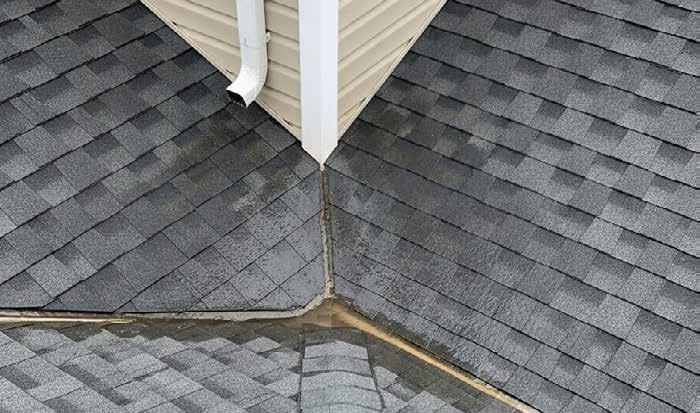
What's Wrong With These Pictures?
Preventing Rework in Roofing: What Contractors Miss That Costs Them Most
John Kenney, CPRC, CEO, Cotney Consulting Group
Ask any roofing contractor what hurts profitability the most and you will hear the usual answers: material increases, production delays, labor shortages or schedule conflicts. All of those are valid concerns but there is another issue that silently drains margins on every roof and one many companies never track. It is called rework. Despite being commonplace, very few contractors realize how much of their annual profit can disappear with a single corrected detail, a missed measurement or an unnecessary return trip.
The reason rework is so damaging is that it rarely arrives in large, obvious pieces. It shows up in minutes, not hours. A foreman sends someone back to redo flashing that should have been done right the first time. A crew has to pull off a section because someone misread the scope requirements. A jobsite is missing fasteners, so part of the job sits idle until someone can run across town. No one enters “rework” into a cost code. It hides inside labor, wasted trips, callbacks and missed details. Over the course of a year, those minor incidents multiply. By the time a contractor adds it up, if they ever do, the cost rivals or well exceeds what they lost on material increases.
Rework does not start where most people think it does. In roofing, most rework is born long before the crew arrives on the roof. It begins with unclear scope language, missing details in the handoff from estimating to operations and job packets that fail to answer the questions field leaders inevitably ask. Too often, the field team is expected to “figure it out” from drawings that may or may not reflect the actual conditions. When information is missing, foremen make assumptions. Sometimes they are correct. Sometimes they are not. When they are wrong, rework follows.
A breakdown in communication among the estimator, project manager and foreman is another consistent source of rework. Everyone believes they share the same understanding of the work but unless those expectations are documented, reviewed and discussed, misunderstandings surface on the roof. The estimator might include a particular detail that never makes it into the supervisor’s packet. A project manager might deliver verbal instructions that are interpreted differently in the field. The supervisor may see a condition that does not match the drawing but hesitates to call because they assume it is small. When people make decisions based on assumptions rather than clear direction, rework is almost guaranteed. Material problems are another frequent cause. It only takes one missing box of fasteners or one incor-
rect roll type to derail a crew. Rushing through submittals, failing to verify what the supplier delivered or staging materials out of sequence often leads to field corrections that cost time and money. Even experienced crews get frustrated when they cannot maintain a steady workflow because the right materials are not where they need them, when they need them. And once a crew loses rhythm, rework tends to follow, as rushed work and frequent stops lead to mistakes.
Quality control failures also create rework in ways contractor’s underestimate. Sometimes it is the small, easily overlooked details, such as a termination that is not sealed correctly, a transition that gets rushed at the end of the day or a mechanical penetration that no one checks after installation. These details matter. A missed detail during installation becomes a leak call later. Returning to a site for a leak investigation and repair costs far more than doing it right the first time. Those callbacks not only drain labor but also damage customer confidence and often stretch service departments thin.
Poor sequencing can also drive rework. If the tearoff gets ahead of the installation, crews often feel the pressure to hurry. Hurrying creates mistakes. When trades overlap or schedules get compressed, installers spend more time working around obstacles than installing. In those moments, even good crews produce errors they would never make under normal conditions. The schedule itself can create rework when it is unrealistic, uncoordinated or not communicated clearly.
One of the most common forms of rework appears at the end of the project: punch lists. Ideally, punch lists should be short and manageable. In reality, many contractors receive punch lists so long they resemble a second job. When installation details are not verified throughout the job, they pile up at the end. Corrections that could have been handled in minutes during installation now require a trip back, extra labor and coordination with the general contractor or building owner. The longer the punch list, the more the original job’s
profit evaporates. Punch list rework is often a direct reflection of the attention or lack of attention paid during the job.
Reducing rework is not complicated but it does require leadership. Foremen need clear expectations and the authority to slow down when something is unclear. Project managers must verify that crews have everything they need to install the first time correctly. Estimators must provide a clean scope, precise drawings and detailed handoffs. Everyone has a role in preventing rework and the companies that do it best treat rework as a controllable factor rather than an inevitable part of construction.
The most effective contractors create a culture where communication is steady, details are verified and the crew understands what “done right the first time” means. They do not wait until the end to inspect work. They review details during installation. They avoid burying field leaders with incomplete or inconsistent information. They take the time up front, so they do not pay for it later. And when rework does happen, and it always will to some degree, they address the cause immediately so it does not reoccur.
Rework is not an inevitable part of construction. It is the consequence of breakdowns in clarity, communication, preparation and discipline. Contractors who decide to treat rework as a measurable, preventable loss find profit they did not know they were losing.
They slow the job down, when necessary, not because they want to work slower but because they want to avoid doing the work twice. And when you stop doing things twice, profit has a way of finding its way back into the books.
John Kenney, CPRC is CEO of Cotney Consulting Group, Plant City. He has decades of experience on commercial roofing projects, providing a unique understanding of what it takes to succeed in roofing – on the roof, in the office and at scale. John saw the need to provide contractors with strategic guidance built on real-world field knowledge. Cotney Consulting offers COO on Demand, online training, technology solutions, business advisory consulting, collections, contracts, Castagra estimating training, safety and OSHA training. John partners with FRSA to provide educational seminars. For more information, contact John at jkenney@cotneyconsulting.com or 813-851-4173.
Additional Changes in the 2026 Ninth Edition of the Florida Building Code
Mike Silvers, CPRC, Owner, Silvers Systems Inc. and FRSA Technical Director
In my February article (Changes in the 2026 Ninth Edition of the Florida Building Code), I shared upcoming changes and noted that I would continue to discuss those changes over the next few months. It's important to note that these changes will not go into effect until December 31, 2026 but, for planning purposes, I want to provide you with a heads up. We will offer a number of seminars that address the roofing-related changes in more detail, including during our 104th Convention, June 10-12 at Gaylord Palms in Kissimmee.
This month’s article will address changes and additions to the codes flashing requirements (italicized terms are those defined in the code). Please note: We will use the numbering from the Building volume in Chapter 15 here. The codes Residential sub-volume has similar sections in Chapter 9. Actual code language is in blue and my comments are in black.
2023 Florida Building Code, Building, Eighth Edition Chapter 15 Roof Assemblies and Rooftop Structures
Section 1502 Definitions.
1502.1 Definitions.
FLASHING. The roofing component used to seal roofing systems, where the system is interrupted or terminated.
Section 1503 Weather Protection.
1503.1 General.
Roof decks shall be covered with approved roof coverings secured to the building or structure in
accordance with the provisions of this chapter. Roof coverings shall be designed in accordance with this code, and installed in accordance with this code and the manufacturer’s approved instructions such that the roof covering shall serve to protect the building or structure.
1503.2 Flashing.
Flashing shall be used to seal roofing systems, where the system is interrupted or terminated and shall be installed in such a manner so as to prevent moisture entering the wall and roof through joints in copings, through moisture-permeable materials and at intersections with parapet walls and other penetrations through the roof plane.
TABLE
1503.2 – METAL FLASHING MATERIAL (below)
1503.2.1 Locations.
Flashing shall be installed at wall and roof intersections, at gutters, wherever there is a change in roof slope or direction and around roof openings. Where flashing is of metal, the metal shall be corrosion resistant with a thickness of not less than provided in Table 1503.2 or in compliance with RAS 111.
Exception: This requirement does not apply to hip and ridge junctions.
1503.3 Coping.
Parapet walls shall be properly sealed with weatherproof materials. When coping is used, it shall be of noncombustible material of a width no less than the thickness of the parapet wall.
TABLE 1503.2 – METAL FLASHING MATERIAL
1507.3 Clay and concrete tile.
1507.3.9 Flashing.
At the juncture of the roof interruptions, terminations and penetrations of the roof system, vertical surfaces flashing and/or counterflashing shall be provided installed in accordance with the manufacturer’s installation instructions or the recommendations of the FRSA/TRI Florida High Wind Concrete and Clay Roof Tile Installation Manual, Seventh Edition where the basic wind speed, Vasd, is determined in accordance with Section 1609.3.1.
1507.15 Liquid-applied roofing.
1507.15.4 Flashing.
Flashing shall be applied in accordance with Section 1507.15 and the manufacturer’s installation instructions.
A new section that involves flashing for Lightning Protection Systems (LPS) has been added.
1510.8.6.Installation on roof coverings and comp nents. Lightning protection system components directly attached to or through metal edge systems, gutters or roof covering shall be installed in accordance with this chapter, with compatible brackets, flashing, fasteners or adhesives, installed in accordance with the metal edge, gutter or roof covering manufacturer’s installation instructions. Flashing shall be installed in accordance with the roof covering man ufacturer’s installation instructions and section 1503.2 and 1507 where the lightning protection system installation results in attachment to or a penetration through the roof covering. Lightning protection system component attachment methods shall be
designed by a registered design professional to resist design wind loads
Now that we have reviewed these modifications, let me explain why these changes were submitted and approved and what we hope it accomplishes. Because some roof covering types did not include a specific flashing reference while others did, some incorrectly argued that flashing was not required in the ones lacking a specific reference. By adding a flashing section for each roof covering type, we guide the user to the code’s Definitions and General sections and the manufacturers installation instructions. Since the definitions and general sections apply to the entire chapter, many of these requirements have been enforceable in the past. The additions and changes should help clarify that all roof coverings require flashing. Generally, drip edge and metal edge are considered flashing but due to the large number of changes to their requirements during this code cycle, we will discuss those separately in future articles.
Understanding the changes in the code’s upcoming requirements should help with planning upcoming projects. Knowing what is changing in the building code allows roofing professionals to be proactive instead of reactive and better adapt to an ever-changing roofing landscape.
Mike Silvers, CPRC is Owner of Silvers Systems Inc. and is consulting with FRSA as Director of Technical Services. Mike is an FRSA Past President, Life Member and Campanella Award recipient and brings over 50 years of industry knowledge and experience to FRSA’s team.
FRSA Members in Action
Before the 2026 Legislative Session began, FRSA members volunteered to deliver Political Action Committee donations to legislators in their areas who support business and industry issues. This gives
members an opportunity to meet with legislators, discuss items of importance to the industry and enables them to engage – a much better option than just mailing a donation.
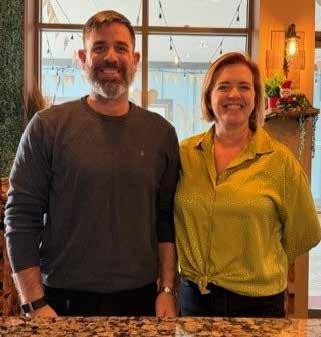
Kenny Harp, Imperial Roofing Contractors of Polk County, with Rep. Jennifer Canady
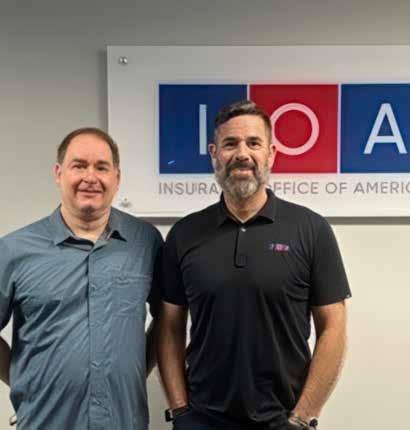
Phillip Lane, Insurance Office of America, with Sen. Kristen Arrington
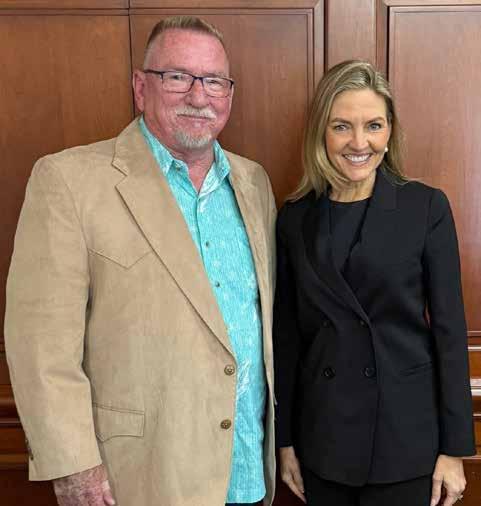
Rep. Brian Hodges with Phillip Lane, Insurance Office of America
FrM
FrM
Leadership Sets the Roofline: How Good Leadership Shapes a Strong Safety Culture
Kevin Lindley, Safety Rep, FRSA-SIF
In roofing, safety is not just a program – it reflects leadership. While policies, procedures and personal protective equipment are essential components of any safety plan, they are not the foundation of a company’s safety culture. Leadership is. The attitudes, behaviors and priorities demonstrated by owners, executives and supervisors ultimately determine whether safety is treated as a core value or just another box to check for compliance.
Safety Culture Starts at the Top
Employees take their cues from leadership. When company leaders consistently prioritize production over protection, workers notice. Conversely, when leadership visibly commits to safety – even when it impacts schedules or increases short-term costs – it sends a powerful message that people matter more than profits. A strong safety culture begins with leaders who speak about safety as often as they discuss budgets and timelines, who are present on jobsites and who hold themselves to the same standards expected of their crews.
In the roofing industry, this leadership commitment is especially critical given the high-hazard nature of the work. Falls remain the leading cause of fatalities in construction, which is why OSHA’s Fall Protection Standard under 29 CFR 1926.501 requires employers to provide fall protection equipment and systems for employees working at heights of six feet or more. When leadership actively enforces this standard in the field rather than treating it as paperwork, it reinforces that compliance is about protecting lives, not avoiding citations.
Actions Speak Louder Than Policies
Most roofing companies have written safety programs but few consistently follow them in practice. Good leaders understand that a safety culture is built through everyday actions. A supervisor who allows work to continue without proper fall protection “just this once” can undermine months of safety messaging. On the other hand, a leader who stops work to correct an unsafe condition – even under production pressure – demonstrates that safety expectations are real and non-negotiable.
When leadership addresses unsafe acts immediately and constructively, encourages open communication and recognizes safe behavior in the field, employees are far more likely to follow established procedures. Over time, these consistent actions shape
a work environment where safety is the norm rather than the exception.
Empowerment Builds Ownership
Strong safety cultures are not driven solely by topdown enforcement. Effective leaders empower employees to take ownership of safety by inviting input from the field and encouraging hazard reporting without fear of retaliation. Workers performing the tasks often have the clearest understanding of job-specific risks, particularly in roofing where conditions can change rapidly due to weather, access limitations or roof design.
When leadership values employee feedback and acts on it, workers become more engaged and proactive. This shared responsibility transforms safety from “management’s job” into a collective commitment, strengthening both accountability and trust across the organization.
Training Reflects Leadership Commitment
Training is another area where leadership sets the tone. OSHA standards, including those addressing fall protection, ladder use and personal protective equipment, require employers to ensure employees are properly trained to recognize and avoid hazards. However, compliance alone does not create a strong safety culture.
Leaders who invest in ongoing task-specific training and who reinforce training through field oversight demonstrate a genuine commitment to worker safety. Training supported by leadership accountability sends a clear message that safety knowledge must be applied consistently, not just acknowledged during orientation.
Consistency Builds Trust
Trust is essential in roofing, where workers rely on one another and their supervisors to ensure safe conditions at height. Inconsistent leadership quickly erodes that trust. When safety rules are enforced selectively or relaxed under production pressure, employees become disengaged and less likely to take safety seriously.
Good leaders apply safety expectations consistently, regardless of job size, schedule demands or employee experience. This consistency builds credibility, reinforces accountability and strengthens the overall culture of safety.
The Long-Term Payoff
A leadership-driven safety culture benefits both workers and the company. Organizations that consistently demonstrate strong safety leadership often experience fewer injuries, lower workers’ compensation claims, improved employee retention and a stronger reputations within the industry. Most importantly, they create an environment where employees can perform their work confidently and return home safely each day.
In the roofing industry, safety culture does not develop by accident. It is shaped daily by leadership decisions, behaviors and priorities. Good leadership goes beyond written programs and regulatory com-
Constructive Knowledge, continued from page 8
they arise. Training supervisors and project managers on what they can and cannot ask and what they should not ignore, is also critical. Of course, in the State of Florida, even subcontractors must have a roofing license
The direction of immigration enforcement in construction is shifting away from isolated paperwork errors and toward broader assessments of conduct and patterns. For roofing contractors, this means immigration compliance is no longer solely an HR issue. It is a contracting issue, a risk management issue and, increasingly, a business continuity issue. Contractors who understand and adapt to this shift will be far better positioned to withstand scrutiny, while those who rely on outdated assumptions about subcontracting insulation may find themselves exposed in ways they did not anticipate.
FrM
The information contained in this article is for general educational information only. This information does not constitute legal advice, is not intended to consti tute legal advice, nor should it be relied upon as legal advice for your specific factual pattern or situation.
Trent Cotney is a Partner and Construction Team Leader at the law firm of Adams & Reese, LLP and FRSA General Counsel. You can reach him at 866-303-5868 or email trent.cotney@arlaw.com.
Free Legal Helpline for FRSA Members
pliance. It models expectations, empowers employees and reinforces the belief that safety is a core value. When leaders lead by example, OSHA standards become more than regulations and safety becomes more than a policy – it becomes part of the company’s identity.
Interested in obtaining workers’ comp insurance? Members of FRSA-SIF/BrightFund have access to Safety Reps who visit jobsites and conduct safety inspection training and toolbox talks for crews. Please contact Alexis at BrightFund by phone at 800-7673772 ext. 206 or by email at alexis@brightfund.com.
This high-grade sealant produces superior adhesion on a variety of substrates with excellent weathering capabilities.
Available
Adams & Reese is a full-service law firm dedicated to serving the roofing industry. FRSA members can contact Trent Cotney to discuss and identify legal issues and to ask general questions through access to specialized counsel. They offer free advice (up to 15 minutes) for members. If additional legal work is required, members will receive discounted rates. This is a pro bono benefit provided to FRSA members only. Contact Trent at 866-303-5868.
What to Include in an Employee AI Acceptable Use Policy
SeayHR
AI use has exploded in the workplace since its widespread launch to the public in the last couple of years. Whether employers want them to or not, employees are turning to AI tools for everything from writing emails to analyzing data, which makes having a clear AI Acceptable Use Policy more critical than ever. A solid AI use policy defines which tools are allowed, sets boundaries for appropriate use, outlines security and confidentiality requirements and provides guidance on how employees should handle sensitive information when using AI. Without clear guidelines and a plan to regularly update the acceptable use policy as AI evolves, companies face potential legal, regulatory and security risks, as well as missed opportunities to leverage AI safely and effectively.
Top Five Components to Include in Your Employee AI Acceptable Use Policy
To be effective, an AI use policy for employees should address the following five points:
1. List Approved and Prohibited AI Tools
Include a list of which AI tools employees can use at work and which are prohibited. For example, many companies allow enterprise-grade platforms like Microsoft Copilot or ChatGPT Enterprise for employee use but ban free, unverified apps that don’t meet their company’s data privacy standards. By explicitly stating which tools employees can and can’t use, a company can help reduce data leaks.
2. Define When AI Use is Acceptable
An AI policy should define clear, appropriate use for AI. For example, does your company approve of using AI to help craft clear and courteous responses to customers? What about drafting internal templates or creating internal reports or presentations? It is also a good idea to specify uses that are not allowed such as generating legal documents or confidential client communications without review. By specifying which types of information can be generated using AI, companies can reduce misunderstandings and promote consistent use.
3. Explain How to Protect Sensitive Data
Outline what types of data should never be entered into AI platforms. Some common types of data that should be protected are private financial information, HIPAA-regulated data and employee records. Include examples in the policy such as employee earnings,
health records or sensitive information and explain why sharing even seemingly harmless details can expose sensitive information when shared with public AI systems.
4. Clarify Who Owns AI Content
Company AI use policies should clarify who owns AI generated content. For instance, does the company own an AI generated report for a project being handled by an employee? Are all materials produced with AI tools on company systems or during work hours considered company property? Defining these points clearly helps prevent disputes over intellectual property rights.
5. Reinforce Human Accountability
An AI use policy should reinforce human accountability for the work they produce. Put simply, AI makes mistakes so it cannot replace human oversight or decision-making. Make it clear that workers are still responsible for verifying accuracy, tone and compliance before sharing AI-generated output. For example, if AI drafts a client report, the employee must ensure all facts are correct and align with company standards before submission.
Additional Considerations
A successful rollout of an AI use policy will include training to be sure that employees are well-informed about the AI tools approved for use, what types of content are approved for creation with AI and how they are expected to protect company data and integrity.
Employers should train managers on appropriate and inappropriate uses of AI among their teams, as well as on how to identify the use of unapproved tools or the misuse of approved tools. Ongoing training and awareness efforts support fairness, transparency and accountability across the organization.
SeayHR Can Help Craft an AI Acceptable Use Policy
SeayHR offers a suite of flexible, high-impact services that complement your existing HR support. These projects are built to address your most pressing challenges and every engagement is handled by experienced HR professionals who bring not just technical knowledge but real-world insight to help your business
■ Client information could be inadvertently shared with third parties
■ Quality control concerns when AI-generated content isn’t properly reviewed
An effective AI policy establishes clear guidelines for acceptable use, protects sensitive information and helps employees understand how to leverage AI responsibly.
Free HR Helpline for FRSA Members
FRSA partners with SeayHR to offer FRSA members HR information. This resource is available to provide answers to your HR, personnel management and
FRSA MEMBER BENEFIT
The Psychology Behind the Sale: Why Homeowners Decide Before We Think They Do
Gary A. Cohen, Executive Vice President, Certified Contractors Network (CCN)
For most of the construction industry’s history, sales training has focused on logic: explain the scope. Present the materials. Justify the price. Answer objections. Close the deal. And for a long time, that approach worked well enough.
Today’s market is different. Homeowners are more skeptical, more informed and more overwhelmed than ever before. They gather estimates online, read conflicting advice and walk into conversations already bracing themselves for pressure. As a result, many contractors are experiencing longer sales cycles, more price resistance and a familiar but frustrating
referred to as the primal brain.
The primal brain is not concerned with specifications, warranty language or spreadsheets. Its job is survival. It is constantly scanning for risk, uncertainty and threat. It asks questions like: Is this safe? Can I trust this person? What happens if this goes wrong? Am I about to make
Long before a homeowner compares bids or reviews a proposal, the primal brain has already leaned toward yes, no or not yet. The rational brain is then used to justify that emotional decision with logic. This explains something every experienced contractor has seen: two proposals can be nearly identical, yet the homeowner chooses the one that “felt right.” That feeling isn’t accidental, it’s biological.
Why More Information Often Creates
In response to increased competition, many contractors try to win by explaining more. More features. More data.
Unfortunately, the primal brain doesn’t respond well to overload. When it encounters too much unfamiliar or complex information, it doesn’t engage. Instead, it re-treats. Confusion triggers delay and delay looks like indecision.
This is why homeowners so often ask for “just the bid.” They’re not asking because they don’t care; they’re asking because their primal brain is overwhelmed and looking for an exit.
Education still matters but how and when education is delivered matters far more than how much.
The Shift from Selling Products to Guiding Decisions
One of the most powerful shifts contractors can make is moving from a product-centered conversation to a decision-centered one.
Most homeowners don’t replace roofs, siding or exterior components often. They don’t have a framework for evaluating quality, risk or long-term performance. When contractors jump straight to solutions, homeowners are left trying to judge something they don’t fully understand and uncertainty grows.
By contrast, when contractors help homeowners understand how to evaluate a contractor, what questions matter and where risk actually lives, something important happens: the homeowner gains confidence.
Confidence is the Currency of the Primal Brain
This is where the long-standing principle of “never buy a product, buy a contractor” becomes more than a slogan. Homeowners aren’t just buying materials; they’re buying the services provided by the people who will be on their property, the process that will be followed and the accountability that will exist long after the job is complete. The primal brain cares deeply about those things, even if the homeowner can’t articulate them clearly.
Price Resistance is Really Risk Resistance
When homeowners push back on price, it’s easy to assume the issue is affordability. More often, it’s uncertainty. The question running beneath the surface is not “Is this expensive?” It’s “What if this turns out to be a mistake?”
Low prices reduce financial pain in the short term but they increase perceived risk if the contractor appears rushed, unclear or interchangeable.
Higher prices can feel safer when they are supported by clarity, professionalism and trust.
This is why contractors who slow down, ask better questions and educate homeowners on the consequences of poor decisions often experience fewer objections — even at higher price points. The primal brain is willing to invest more to avoid regret.
A More Ethical, Effective Way to Sell
Neuro-based selling is sometimes misunderstood as manipulation. In reality, it is the opposite. It removes pressure by replacing persuasion with understanding. When homeowners are given the tools to evaluate their options properly, they don’t need to be “closed.” They arrive at conclusions naturally. The role of the contractor shifts from persuader to guide, someone who helps them navigate complexity with confidence. This philosophy has been formalized and taught within organizations such as Certified Contractors Network (CCN), where sales are viewed not as a transaction but as a professional responsibility. The emphasis is on education, clarity and ethical differentiation, values that align closely with the mission of trade organizations like FRSA.
The Future Belongs to Trusted Educators
As the market continues to tighten, the contractors who will thrive are not the loudest, the cheapest or the most aggressive. They are the ones who understand how people decide and who respect that process.
Homeowners don’t want to be sold. They want to feel safe making a decision they can stand behind.
When contractors learn to speak to the primal brain first through trust, clarity and genuine education, logic follows naturally. Sales become smoother. Relationships improve. And the industry moves closer to the professionalism it has long deserved.
How Neuro-Based (Primal) Selling is Changing the Way Contractors Win Trust, Value and Sales
For decades, contractors have been trained to believe that homeowners make buying decisions logically: comparing materials, scope, price and choosing the best deal.
But if that were true, the most detailed proposal would always win. The most qualified contractor would never lose to the lowest bidder. And “I need to think about it” wouldn’t be the most common objection in our industry.
The reality is this: people do not buy construction projects logically — they buy emotionally and justify with logic afterward.
Modern neuroscience confirms what experienced contractors have felt for years. To understand how homeowners actually make decisions, we need to understand how the brain works and why the primal brain is the real decision-maker.
The Two-Brain Reality of Buying Decisions
Neuroscience shows that the human brain operates through two primary systems:
■ The rational brain – analytical, slow, logical, detail-oriented
■ The primal brain – fast, emotional, instinctive and survival-focused
Here’s the critical insight for contractors:
■ The primal brain decides whether to buy
■ The rational brain explains why afterward
The primal brain is concerned with:
■ Safety and risk
■ Trust and familiarity
■ Loss avoidance
■ Emotional comfort
■ Fear of making a bad decision
This explains why homeowners often say things like:
■ “Your price is higher but we feel better about you.”
■ “We just trust you more.”
■ “Something didn’t feel right with the other contractor.”
Those aren’t logical statements. They’re primal brain decisions.
Why Traditional Sales Approaches Fail Today
Most contractors still lead with products, features, specs and price. Unfortunately, data overload shuts down the primal brain.
When the brain feels confused or overwhelmed, it delays decisions, which show up as:
■ “Send me the bid.”
■ “We’re getting more quotes.”
■ “We’ll call you.”
The confused brain doesn’t say “no.” It says, “not now.”
That’s why educating homeowners how to decide is more powerful than telling them what to buy.
The Four Primal Questions Every Homeowner is Asking (Even If They Don’t Say It)
Neuro-based selling reframes the conversation around the questions the primal brain actually cares about:
1. Do I really understand my problem?
Most homeowners don’t know what’s wrong. They only know something feels off. When contractors rush to solutions without helping homeowners understand their problem, trust erodes immediately.
2. Will this actually work long-term?
Products don’t fail; installations do. Homeowners fear future regret more than present cost.
3. Can I trust these people?
They’re coming onto my property, around my family, working on my largest investment. The primal brain is hyper-focused on people, not brochures.
4. Am I making a smart decision or an expensive mistake?
Price isn’t about money. It’s about risk. Homeowners fear paying twice more than paying more once.
Why “Never Buy a Product… Buy a Contractor” Works
One of the most powerful reframes in construction sales is this simple truth: The best materials in the world, installed by the wrong people, will still fail. This message works because it:
■ Speaks directly to risk and loss avoidance
■ Removes brand obsession
■ Re-centers the decision on craftsmanship and accountability
■ Aligns with real homeowner fear
When contractors help homeowners evaluate the process and protection and not just products, they position themselves as guides, not salespeople.
Education Reduces Objections Before They Exist
Neuro-based selling isn’t about manipulation. It’s about clarity. When homeowners are educated on:
■ How to evaluate contractors
■ What questions to ask
■ Why the lowest price often leads to dissatisfaction
■ How poor installations create long-term cost
They naturally disqualify unsafe choices on their own. This reduces:
■ Price objections
■ Delays
■ Buyer’s remorse
■ Post-sale disputes
And it increases:
■ Trust
■ Confidence
■ Commitment
■ Closing ratios
Why
This
Matters More Than Ever in Today’s Market
The market has shifted:
■ Fewer leads
■ More competition
■ More skeptical homeowners
■ More online misinformation
Contractors who rely on charm, pressure or pricing alone are losing ground. Those who win consistently are doing something different:
■ They slow the process down
■ They educate before they propose
■ They build emotional safety before presenting price
■ They sell decision confidence, not just projects
Where This Philosophy is Being Taught and Refined
Organizations like Certified Contractors Network (CCN) have formalized these principles into what’s known as Primal Selling, a structured, ethical, neurobased sales system designed specifically for the construction industry. Rather than sales gimmicks, the focus is on:
■ Understanding buyer psychology
■ Creating trust through education
■ Building value before price
■ Helping homeowners make safe, confident decisions
Final Thought: Better Sales Through Better Education
At its core, neuro-based selling isn’t about selling more. It’s about:
■ Fewer bad-fit customers
■ Fewer disputes
■ Higher satisfaction
■ Stronger referrals
■ Healthier margins
When contractors stop asking, “How do I convince them?” and start asking, “How do I help them decide?” Everyone wins.
Gary A. Cohen is Executive Vice President of Certified Contractors Network (CCN), the leading comprehensive training, coaching and networking membership organization in North America. Gary is also a 30-year veteran of the home improvement industry, spent 11 years at the Robert H. Smith School of Business at the University of Maryland as a Professor of Business and served 4 years as Associate Dean of the business school. Gary has been a certified leadership coach for the past 18 years. He can be reached at gary@contractors.net.
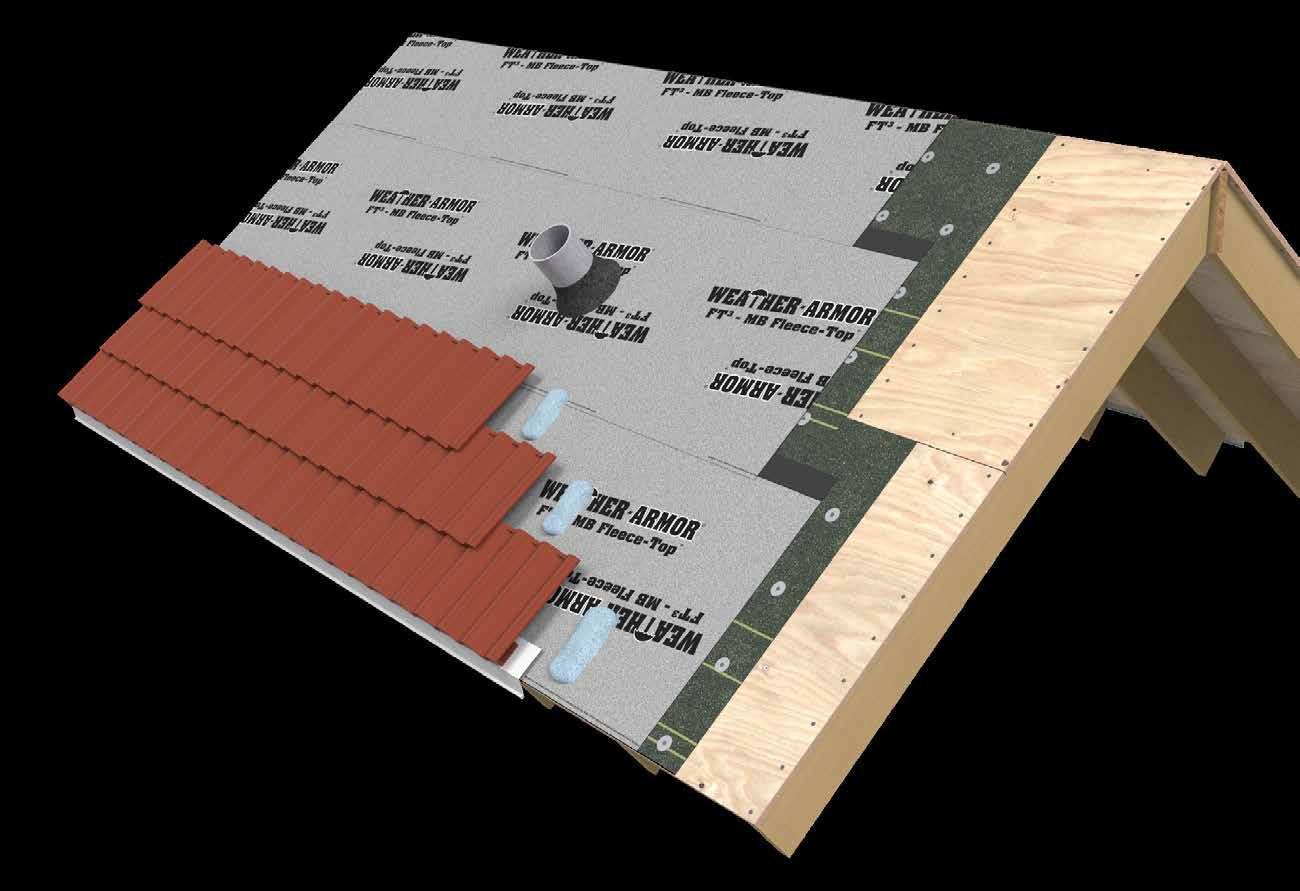
THE STEEP-SLOPE DUO YOU CAN COUNT ON.
APOC delivers a full-system solution built for performance, speed, and safety. Pair Weather-Armor® FT³ underlayment with APOC Polyset AH-160 adhesive for a codecompliant roofing system that installs fast and holds strong — no mechanical fasteners needed.
FT³: Fleece-top underlayment with superior grip for safe, easy tile installation.
AH-160: Fast-setting polyurethane foam adhesive for strong, reliable tile bonding.
When used together, APOC FT³ underlayment and AH-160 roof tile adhesive streamline installation, reduce labor, and deliver long-term durability.
www.apoc.com | www.icpgroup.com info@icpgroup.com
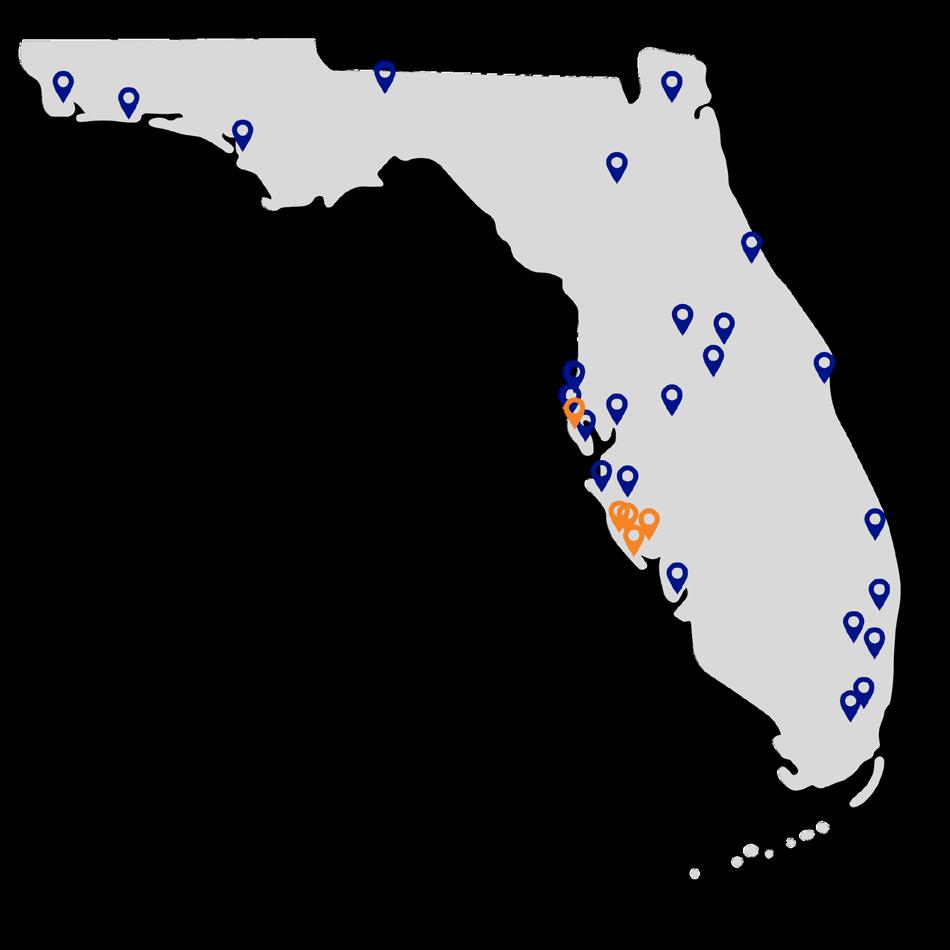
• 34+ Locations Across Florida
• Proudly Stocking the Top Brands You Need
• Experts in Residential, Commercial, Metal, and Tile Roofing
At QXO, we’re not just here to help you build more — we’re here to empower your vision, fuel your ambition, and create a lasting impact. Together, we shape the future, one bold step at a time. Visit QXO.com to find a