Import shortages don’t stop your schedule — because our products don’t come from overseas. Made in the USA means steady supply, no tariff headaches, and products you can count on, every job, every time. At MFM Building Products we manufacture a family of weather barrier products that are proudly made right here in the USA. With no tariffs or import shortages to slow you down, you get steady supply, dependable performance, and the satisfaction of supporting American manufacturing. It’s the way we’ve been doing business since 1961.
All feedback and reprint permission requests (please include your full name and address) contact: Lisa Pate, Editor, at: lisapate@floridaroof.com (800) 767-3772 ext. 157
Florida Roofing Magazine PO Box 4850 Winter Park, FL 32793-4850
View media kit at: www.floridaroof.com/ florida-roofing-magazine/ #FRSA #roofingprotects
Your Roofing & Building Partner from the Panhandle to the Keys.
At Gulfeagle Supply, we know what it takes to keep Florida roofers moving.
With locations across Florida, our teams are proud to service contractors like you with top brands, accurate deliveries, and local expertise.
Holiday Greetings
FRSA President Tibor Torok, Bob Hilson & Co. Inc.
This month, the magazine focuses on equipment maintenance and marketing. They both cost you money and they both make you money if accomplished in a professional manor. Maintenance and marketing are critical to the success and growth of your company. If you cannot perform the tasks yourself, you need to hire a professional.
The tools we use in the performance of our craft are generally simple and easy to maintain but some of the new tools and safety equipment, just like the vehicles we drive, have gotten more complicated and often require special tools and testing beyond what we can handle in our shops. Maintenance check lists and logs are necessary to ensure tools and equipment are ready and will function as intended. This will save you money, time (which is ultimately money) and aggravation. See the article on page 20 for more information.
As year-end approaches, many of us are reviewing what was accomplished, items that remain on the todo list and how we fared compared to our goals. There are two articles in this issue that provide guidance on preparing for the new year.
The wide array of marketing tools available today can be daunting to a lot of us because it is a multitentacled monster that swallows up dollars and spits out pennies. Maybe that's just me, since I know some of the newer contractors today are much more Internet-savvy than the more seasoned veterans.
How do we market? Who do we market to? These are the million-dollar questions. You have your website, digital advertising, TV and radio. Someone must track your branding, SEO and social media. One way to make sure you’re visible to building owners and consumers is to make sure your FRSA membership dues have been paid. Active members are listed through a link on the homepage of FRSA’s website. And don’t
forget community involve ment – it’s an opportunity to give back, support and engage with local and po tential customers.
Speaking of community involvement, it’s December and the holidays are here, don’t forget to share a por tion of your blessings with those less fortunate. Merry Christmas, Happy Holidays and the best of wishes for the New Year to you and yours.
Kind regards,
Tibor Torok FRSA President slrcbhc@msn.com
Industry Updates
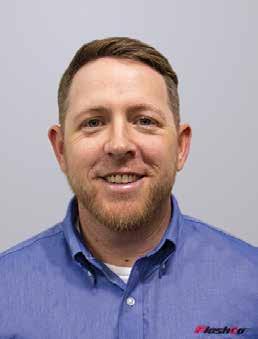
FlashCo Adds New Sales Representative for Florida Region FlashCo announced the hiring of Aaron Foster as Sales Representative for Florida. Foster joins FlashCo with over nine years of experience in the roofing and outdoor industries. Most recently, Foster was a Sales/ Account Manager for Universal Roofing in Orlando.
“We are very excited to add Aaron to our sales team,” says Rick Santolaya, FlashCo National Sales Manager. “He has built solid business relationships with a wide range of customers and knows the Florida market very well. His sales and roofing background will be a big asset for FlashCo.”
Foster began his roofing career at Total Home Roofing as a Sales Consultant and then worked for Universal Roofing, where he consistently delivered increased sales for his territories. Florida is supported by FlashCo’s plant in Piedmont, SC.
Co-Inventor of Galvalume Leaves Enduring Legacy in the Metal Construction Industry
The global metal construction community is mourning the passing of Angelo “Ange” Borzillo, the co-inventor of Galvalume coated steel and a 2022 inductee into the Metal Construction Hall of Fame. Borzillo passed away in October at the age of 92, leaving behind a transformative legacy that continues to shape the steel and metal building industries worldwide.
More than half a century ago, while working at Bethlehem Steel in Pennsylvania, Borzillo and his colleague, Jim Horton, set out to improve upon the limitations of traditional galvanized steel coatings. Their experiments led to a groundbreaking formulation – 55 percent aluminum, 43.5 percent zinc and 1.5 percent silicon – that dramatically improved corrosion resistance and durability. The result was Galvalume sheet steel, a material that became the backbone of countless roofing and wall systems around the world. By 2021, Galvalume sheet was produced under license on six continents, with more than 220 million tons of cumulative production and billions in annual global revenue. Yet for Borzillo, it was never about the numbers – it was about innovation, collaboration and improving the world through better materials.
“Ange was incredibly humble and quick to acknowledge the support he received from colleagues,” said Arif Humayun, President of BIEC International Inc., who worked alongside Borzillo for more than four decades. “He always said, the best days for Galvalume are ahead of us. I wasn’t sure what he meant but now I understand.”
FRSA Works with Palm Beach County Building Officials
FRSA Past President, Manny Oyola, Jr., MOJR Consulting Inc. and FRSA Technical Advisor, met with Melvin Corredor (new Chief Building Official) and Neil Bleakley, Palm Beach County Building Department, to discuss how changes on roofers addressing roofto-wall connections will be incorporated into their hurricane mitigation form. Corredor was formerly with the Village of Wellington where he was the Chief Plans Examiner and former President of the Palm Beach County Building Officials (BOAF). We wish them well in their new positions.
Duro-Last Celebrates
Opening of New Manufacturing Facility in Kernersville, NC
Duro-Last, a member of the Amrize family of brands and a leading manufacturer of custom-fabricated single-ply roofing systems, celebrated a major milestone with an open house for its eighth manufacturing facility in North America. The 103,000-square-foot Kernersville facility produces Duro-Last customfabricated membrane as well as custom accessories and edge details for thermoplastic single-ply commercial roofing installations.
The event brought together Duro-Last contractor partners, vendor representatives, community members and local dignitaries, including Kernersville and Forsyth County leaders and NC State Senator, Dana Caudill Jones. Highlights included a contractor-
State
focused vendor showcase, plant tours and a ribboncutting ceremony that underscored Duro-Last’s ongoing commitment to innovation, quality and customer success.
Roofing Alliance 2025–2026 Construction Management Student Competition
The Roofing Alliance, the foundation for the industry, is proud to announce the 12 university teams that will compete in the 2025–2026 Construction Management Student Competition.
Now in its twelfth year, the competition continues to challenge the next generation of construction management leaders, giving students the opportunity to demonstrate their roofing knowledge, problemsolving skills and ability to work as a team.
The 2025–2026 project will center on the Cannery Casino Hotel in Las Vegas, Nev., a project provided by Commercial Roofers Inc. The following universities will participate:
■ Auburn University, Auburn, Ala.
■ Bradley University, Peoria, Ill.
■ California Polytechnic State University, San Luis Obispo
■ Clemson University, Clemson, SC
■ Colorado State University, Ft. Collins
■ Florida Gulf Coast University, Ft. Myers
■ Illinois State University, Normal
■ Louisiana State University, Baton Rouge
■ Texas A&M University, College Station
■ Tuskegee University, Tuskegee, Ala.
■ University of Florida, Gainesville
■ University of North Florida, Jacksonville
“The student competition is one of our most impactful initiatives,” said Roofing Alliance President Greg Hudson. “Not only does it showcase the incredible talent coming into our industry, it also strengthens connections between students, faculty and roofing professionals nationwide.”
“The student competition is one of the highlights of our year,” said Alison LaValley, CAE, Executive Director of the Roofing Alliance. “We are continually inspired by the energy, innovation and dedication these teams bring to the future of roofing.”
The final phase of the competition will be held during the International Roofing Expo (IRE) in January. Finalist teams will present their proposals to a panel of industry judges, with awards presented at the NRCA Industry Awards and Reception. For more information about the Roofing Alliance and its initiatives, visit www.roofingalliance.net.
The Roofing Alliance Launches University Level Minor Dedicated to Roofing
The Roofing Alliance announces the launch of the nation’s first Minor in Roofing – a landmark initiative funded, developed and driven by the Roofing Alliance in partnership with Clemson University.
This innovative program reflects the Roofing Alliance’s long-standing commitment to advancing education, workforce development and the roofing profession. Designed and supported by Roofing Alliance members, the minor consists of four courses, totaling 12 credit hours: Roofing Fundamentals, Roofing Management, Roofing Business Principles and Leadership and Sustainable Roofing Practices.
“Our members recognized the need to integrate roofing education into construction management programs nationwide and the Roofing Alliance took the lead to make it happen,” said Alison LaValley, CAE, Executive Director of the Roofing Alliance. “Through our collaboration with Clemson University, we created specialized courses that are already reshaping the educational landscape of our industry.”
Since the program’s inception, more than 250 undergraduate and graduate students have enrolled. The effort has also engaged more than 90 companies as guest lecturers, with over 50 donating roofing materials, further showcasing the industry’s investment in its future leaders.
To expand the program’s reach beyond Clemson, the Roofing Alliance also developed roofing-specific manuals aligned with these courses. The manuals are now available to all construction management programs accredited by the American Council for Construction Education, ensuring that the Roofing Alliance’s vision for roofing education can be implemented at universities nationwide. The manuals can be purchased at www.floridaroof.com/clemsonmanuals:
■ Course 3: Roofing Business and Leadership – business operations, leadership, sales, procurement and innovation.
To enroll in the classes, visit www.clemson.edu.
Lowe’s Completes Acquisition of FBM
Lowe’s Companies, Inc. has completed its acquisition of Foundation Building Materials, a building materials and construction products distribution company with over 370 locations across the U.S. and Canada.
Lowe’s expects the acquisition to enhance its offering to Pro customers through an expanded product assortment, faster fulfillment, improved digital tools and a robust trade credit platform. FSM will provide Lowe’s with growth opportunities to expand its Pro
footprint, given its complementary presence in key geographies like California, the Northeast and the Midwest. It also creates cross-selling opportunities between FBM and Lowe’s, as well as the recently acquired Artisan Design Group.
“Completing the acquisition of FBM is an important step in accelerating our Total Home strategy to serve large Pro customers within a $250 billion total addressable market. We would like to extend a warm welcome to the FBM team and we look forward to building on their proven track record of profitable growth,” said Marvin. R. Ellison, Lowe’s Chairman, President and CEO.
As previously announced, FBM will continue to be led by its Founder, Ruben Mendoza, and its senior leadership team with over 200 years of combined industry experience.
“Together with our recent acquisition of ADG, we are creating a comprehensive interior solutions platform to better serve the homebuilder,” said Ellison. “With these acquisitions, Lowe’s will be well-positioned to expand our market penetration and capitalize on the expected recovery in housing, with an estimated 16 million new homes needed in the U.S. by 2033. By expanding our Pro penetration, we also expect to drive more sustainable sales and profit expansion and deliver long-term shareholder value.”
This is among the latest and largest acquisitions to take place in the building materials industry. The Home Depot acquired GMS Inc. for $55 billion through SRS Distribution, which it acquired in June 2024 for $18.25 billion. Meanwhile, QXO completed its acquisition of Beacon Building Products last March for $11 billion.
Frm Don't
Deadline: March 15
TPS & Parole Expirations: Previously Authorized Workers Losing Status
Trent Cotney, Partner, Adams & Reese, LLP and FRSA General Counsel
Across the roofing industry, contractors are quietly facing a workforce issue with serious legal implications involving longtime employees who were previously authorized to work in the United States and are now losing their status through either expiration or termination of the Temporary Protected Status (TPS) designation or the humanitarian parole programs under which they were admitted. From the termination of the CHNV (Cuba, Haiti, Nicaragua, Venezuela) parole program to the revocation of the October 2023 TPS designation for Venezuela, employers must navigate complex and rapidly changing immigration dynamics while maintaining compliance with employment eligibility laws.
Unlike undocumented entrants who never received authorization, TPS and parole beneficiaries often built years of work history under valid federal protection. Many have tax records, driver’s licenses and other evidence of lawful employment during their authorized period. When DHS phases out specific designations or revokes parole status, those individuals may suddenly become unauthorized through no wrongful act of their own and employers are left to address the potential liability and operational disruption.
Understanding TPS and Parole Status
TPS is a humanitarian designation granted to nationals of certain countries experiencing armed conflict, natural disaster or other extraordinary circumstances that temporarily prevent safe return. It authorizes lawful presence and employment through an Employment Authorization Document (EAD). Parole programs (such as the CHNV program for nationals of Cuba, Haiti, Nicaragua and Venezuela) allow individuals to enter and work in the U.S. for a limited duration under humanitarian or public-interest grounds. The U.S. Department of Homeland Security (DHS) recently terminated the CHNV parole program, sending notices to beneficiaries that their status and their parole-based work authorization is revoked effective immediately.
5,500 Industry Professionals
1,332,902 Industry-focused 12-Month Digital Impressions
For roofing employers, this means an employee who was fully authorized yesterday may become unauthorized today. DHS treats the loss of valid authorization as any other case of unauthorized employment, even if the employer acted in good faith when the worker was initially hired.
The Employer’s Legal Duty
Under federal law, every employer must verify identity and work authorization of all employees using Form I-9. Employers must update Section 3 of the I-9 when an employee’s authorization has an expiration date. If a worker’s documentation expires and no new authorization is provided, the employer must terminate employment or risk penalties for continuing to employ an unauthorized worker.
With the recent terminations of TPS or parole status, roofing contractors face heightened risk: they may not rely solely on the fact that the worker presented valid authorization when hired. They must monitor ongoing status changes. In the case of the Venezuela TPS revocation, DHS took action to terminate the October 2023 designation effective April 7, 2025.
Failing to timely reverify can trigger civil fines, criminal exposure in repeated cases and even debarment from public work. Contractors on federal or public projects should pay particular attention, since DHS and Print Circulation
other agencies increasingly cross-reference payroll and certify payroll information to flag inconsistencies.
Human and Operational Impact
For many roofing contractors, this issue is not academic. Workers who have been on crews for years may lose their EADs on short notice. Projects that depend on specialized crews, especially those trained in safety and manufacturer installation protocols, may suffer sudden labor disruptions.
Contractors must balance compassion with compliance. Continuing to employ a worker whose authorization has expired, even temporarily, can expose the company to substantial risk. At the same time, abrupt terminations create morale, retention and reputational problems. The key is advance planning, transparent communication and consistent documentation.
Best Practices for Roofing Contractors
1. Track expiration and termination dates proactively. Maintain a confidential log of work-authorization expiration dates, status redesignations and parole terminations; review the monthly log and provide reminders to affected employees at least 90 days in advance of any anticipated change.
2. Establish a reverification policy. Your written policy should mirror federal requirements and state that employment cannot continue if valid documents are not produced or status is revoked.
3. Avoid over-documentation or discrimination. Do not request specific immigration documents or ask about nationality. Employers may only ask for acceptable documents under Form I-9 instructions. Do not treat employees differently because of country of origin or program status.
4. Communicate with sensitivity. When advising an employee about upcoming status expiration or termination, avoid discussing the reason for their status. Simply inform them that employment must cease if updated authorization is not submitted by a specific date.
5. Consult legal counsel. With the recent terminations of large programs such as the CHNV parole program and the Venezuela TPS revocation, it may be wise to consult immigration counsel about whether any affected employees may be eligible for alternative status and to ensure your compliance systems keep pace with policy changes.
Handling an ICE or DHS Audit
In an audit, DHS will review I-9 records for expired documents and evidence of whether the employer followed a uniform procedure when authorization was
lost. Contractors should keep copies of their policy, logs of status monitoring, termination letters (when applicable) and avoid communications that treat similarly situated employees differently. Employers who demonstrate proactive, consistent processes are in a stronger position to defend themselves.
Looking Ahead
Immigration policy is rapidly evolving and roofing contractors should expect continued turbulence in workforce authorization. The termination of parole for Cubans, Haitians, Nicaraguans and Venezuelans and the revocation of the TPS designation for Venezuela illustrate the speed at which status can change. Employers cannot treat authorization as static. Instead, they must monitor and act.
In the coming year, contractors should look for DHS guidance on electronic I-9 recordkeeping, digital reverification and further work authorization redesignations. While policy uncertainty remains, employers who adopt structured compliance systems, treat affected workers fairly and stay abreast of developments will be best positioned to minimize liability and preserve workforce integrity.
The bottom line: you cannot control immigration policy but you can control preparedness. By maintaining current records, verifying status in good faith and acting consistently, roofing employers can navigate the risk of status expirations or terminations without compromising operational stability or legal compliance.
Frm
The information contained in this article is for general educational information only. This information does not constitute legal advice, is not intended to constitute legal advice, nor should it be relied upon as legal advice for your specific factual pattern or situation.
Trent Cotney is a Partner and Construction Team Leader at the law firm of Adams & Reese, LLP and FRSA General Counsel. You can reach him at 866-303-5868 or email trent.cotney@arlaw.com.
Free Legal Helpline for FRSA Members
Adams & Reese is a full-service law firm dedicated to serving the roofing industry. FRSA members can contact Trent Cotney to discuss and identify legal issues and to ask general questions through access to specialized counsel. They offer free advice (up to 15 minutes) for members. If additional legal work is required, members will receive discounted rates. This is a pro bono benefit provided to FRSA members only. Contact Trent at 866-303-5868.
Revenue Estimating Conference A Deeper Dive on Property Taxes
Chris Dawson, Attorney, GrayRobinson and FRSA Legislative Counsel
In October, the Revenue Estimating Conference met to discuss the impact of several proposed changes to property taxes. The Conference discussed the methodologies used by the Department of Revenue to reach impact estimates. Specifically, the Conference discussed the following proposed legislation:
HJR 201 (immediately eliminates non-school property taxes on homesteads)
■ The Conference adopted the high estimate, which has a statewide recurring impact of $18,289,515,902.
HJR 203 (gradually phases out non-school property taxes on homesteads, fully eliminating them in 2037)
■ The Conference adopted the high estimate, which has a statewide recurring impact of $13,272,938,219.
■ The estimate does not fully capture the effect of new home constructions, home sales and switching homesteads.
■ This amendment fully eliminates non-school property taxes on homesteads in 2037 but this does not show up anywhere in the estimates because 2037 is beyond the forecast window.
HJr 205 (provides a full exemption for non-school homestead property taxes for residents aged 65 or older)
■ The Conference adopted the middle estimate, which has a statewide recurring impact of $6,688,355,044.
■ The Conference expressed concerns that the methodology adopted may not reflect an accurate distribution of the value of homes owned by seniors. The Conference discussed whether there is any methodology that could account for that discrepancy and concluded there was no way to do so. They also concluded there was no way to know whether the estimate would overrepresent low-value or high-value homes.
HJr 207 (introduces a new 25 percent CPI adjusted homestead exemption applied after existing exemption)
■ The Conference adopted the high estimate, which has a statewide recurring impact of $4,602,775,850.
■ There was only a high and low estimate for this proposed amendment.
HJr 209 (adds a $100,000 homestead exemption for properties with a multiperil insurance policy)
■ The Conference did not adopt an estimate for this proposed amendment and will consider it again at a later conference.
■ The estimates rely on an ambiguous or unknown definition of “multiperil insurance,” so the Conference waited to adopt any methodology to see if there can be a new methodology that uses a clearer definition.
HJR 211 (removes the $500,000 cap on the transferable “Save Our Homes” property tax benefit for all non-school property taxes)
■ The Conference adopted the estimate, which has a statewide recurring impact of $336,848,018.
■ There was only one estimate provided for this proposed amendment.
HJR 213 (makes homestead property assessments for non-school property occur once every three years and changes the maximum assessment to 15 percent once every three years)
■ The Conference did not adopt an estimate for this proposed amendment and will consider it again at a later conference.
■ The Conference believed that the methodology could not account for certain effects portability may have on taxable values. The Conference waited to adopt any methodology to see if that effect could be accounted for in a new estimate.
HB 215 (allows married couples to combine up to $500,000 of their "Save Our Homes" benefits from their previous homes before their marriage and requires millage rate increases to be approved by a two-thirds vote of the local governing body)
■ The Conference did not adopt an estimate for this proposed amendment at this time.
■ Since this proposed bill has two separate components, the Conference decided to split the bill into two separate, partial bill write-ups.
■ The estimate for this proposed bill relied on reasonable but arbitrary guesses on how many married couples would be able to take advantage of the proposed benefit, but the Conference agreed there was no better way of making the estimate. However, the estimate may include some non-marital households or others who would not actually benefit from the statute.
■ The Conference agreed that the provision in the statute that requires a two-thirds vote for millage rate increases would have an impact of zero.
The Conference assumed, for purposes of estimates, that all the proposed amendments would be selfexecuting and all the estimates may underestimate the true impact of the proposed changes. There is no impact if a piece of proposed legislation is not passed. For most proposed changes, the Department of Revenue provided the conference with three different methodologies to produce a high, middle and low estimate. The estimates all assume that only the proposed change being considered will be passed. There are no estimates of the impact of multiple changes being adopted.
In Other News
Senate President Jim Boyd
Republican Senator Jim Boyd has been chosen by his colleagues to serve as the next President of the Florida Senate, succeeding President Ben Albritton after the November 2026 elections. Currently, Senate Majority Leader Boyd brings extensive experience as both a lawmaker and business leader.
Speaker Sam Garrison
Republican Representative Sam Garrison was sworn in as the next Speaker of the Florida House. His widely praised address emphasized humility, reflection and accountability, warning Republicans against complacency amid their current supermajority of 85 out of 120 seats. Garrison reminded members that Democrats once held power for 122 years, urging unity amid recent intra-party tensions. As he prepares to lead the 2027 and 2028 sessions, he noted that while the legislative process can be messy, the focus must remain on producing results and a balanced budget that reflects Florida’s priorities.
Central Florida Infrastructure and Transportation
Governor Ron DeSantis announced several major Central Florida transportation projects aimed at reducing congestion and improving infrastructure. Plans include 17 miles of new express lanes on I-4, a 100-space truck parking facility to enhance freight safety and the nation’s first Advanced Air Mobility vertiport. Many projects are being expedited under the state’s Moving Florida Forward Infrastructure Initiative.
State Manufacturing
Florida Commerce Secretary Alex Kelly warned legislators that the state’s manufacturing workforce is aging rapidly, with over half of workers older than 45 and retirements outpacing new entrants. He stressed that while Florida ranks third nationally among manufacturing companies, sustaining growth will require attracting and developing new talent to maintain the industry’s competitiveness.
Audit of DBPR Reviewed
An audit presented to the House State Administration Budget Subcommittee uncovered major oversight failures within the Department of Business and Professional Regulation (DBPR) related to Florida’s prescription drug supply chain. The report found weak compliance controls, inaccurate registries and lapses in IT security. DBPR Secretary Melanie Griffin acknowledged the deficiencies but attributed them in part to staff and leadership turnover during the review period. She emphasized that corrective measures have been implemented and that no consumer harm was reported. Lawmakers from both parties called for stronger accountability, cybersecurity measures and systemic reforms to prevent future failures.
Chris Dawson is an Attorney and professional Lobbyist for GrayRobinson’s Orlando office and is licensed to practice law in both Florida and Alabama. He primarily focuses on lobbying and government relations for public and private sector clients at the executive and legislative levels of state government. He is credentialed as a Designated Professional Lobbyist by the Florida Association of Professional Lobbyists. Chris also holds two degrees in Civil Engineering and has experience in construction litigation and design professional malpractice defense.
Frm
A Strategic Blueprint for a Successful 2026 Readiness Plan
John Kenney, CPRC, CEO, Cotney Consulting Group
As the year winds down, most roofing contractors focus on finishing projects, closing the books and preparing for the holiday season. Closing your year out can feel like a sprint to the finish line but there is no better time to be utilized as a launchpad than now. December lends itself to reflect, recalibrate and set your foundation for successful performance in the upcoming year. It allows contractors to evaluate the current year’s results, realign their teams and establish clear priorities, entering January with momentum and purpose. Without learning from your results, you will start the year by reacting to challenges that could have been anticipated.
As a roofing contractor, you will always face some unpredictability, like shifting job schedules, late deliveries and changing client timelines. However, a company’s long-term direction should never be reactive. It must be deliberate. An actual readiness plan helps contractors step into the new year with clarity and structure. The process provides a blueprint for assessing where the business stands, where it is headed and what adjustments are necessary to stay competitive. Every plan will look different depending on the company. Still, high-performing contractors evaluate seven essential areas before the calendar turns: financial health, operations, sales and marketing, people, risk, technology and culture. Treating this process with the same discipline as a significant project, assigning ownership, setting deadlines and defining outcomes, ensures the plan becomes a measurable roadmap rather than a wish list.
The first area to evaluate is financial health. Your numbers will tell the story of your business performance in 2025 and how prepared it is for the demands of 2026. Performing a complete financial review will provide you with an honest look at actual revenue compared to your goals as well as gross margin trends, overhead structure and cash flow management. Take time to understand what drove your strongest months and what affected the weaker ones. Ensure your overhead is appropriately aligned with projected volume and that your pricing structure reflects current labor and material trends. Review your backlog and sales pipeline carefully. Ask questions so you can build your 2026 forecast based on data, not assumptions. What contracted work will you carry into the new year and what qualified leads are positioned to convert early in the first quarter? Realistic forecasting protects profitability and gives your leadership team the information to plan resources effectively.
Operational performance is another area where minor improvements can deliver significant results. Profit fade causes frustration. Sources of profit fade are poor workmanship, weak communication, job handoffs or inconsistent scheduling. Review how effectively your estimating and sales teams transitioned projects into production. Ask whether field teams consistently received the information, materials and direction needed to execute efficiently. Evaluate crew productivity and completion timelines and look hard at project closeouts. Were punch lists handled quickly or did some drag on for weeks? The end of the year is the ideal time to tighten procedures and document changes. Update your standard operating procedures where bottlenecks occurred and address recurring issues with training before they repeat in the coming year.
Sales and marketing deserve the same disciplined review. Sales volume matters but repeatable, profitable work builds the foundation of stability. Assess where your best projects came from: referrals, partnerships or digital leads and whether your marketing attracts the right customer. Review how proposals are written and delivered, because the quality of your scope descriptions and communication often determine whether a project begins smoothly or falls into confusion. Establish your 2026 sales goals and marketing plan based on data, capacity and profitability, not just revenue targets. Adjust your messaging to focus on your strengths and reputation so your marketing tells that story clearly and consistently and your clients understand what sets you apart beyond price.
Your company’s strength and scalability depend entirely on your team’s strength, so no readiness plan is complete without focusing on people. Evaluate individual performance and identify future leaders. Schedule comprehensive reviews and go beyond performance numbers. Discuss career development and operational improvement opportunities. Identify your performers with the most potential and what resources or mentorship could help them take the next step. Reassess your recruiting strategies and training plans.
What essential roles need to be filled? Review your compensation and incentive programs, so they align with your company’s priorities: quality, accountability and teamwork and make sure they do not unintentionally reward the wrong outcomes. When your people understand the company’s direction and see their role in its success, culture becomes your most significant competitive advantage.
Risk management should also be part of every December review. In most roofing companies, risk only becomes visible after something goes wrong. Take a proactive approach. Start by verifying that insurance policies and bonding capacity are adequate for your current size and 2026 project goals. Review contracts, look for dispute patterns or payment delays and update your terms to protect your company’s position. Verify all state licenses, OSHA certifications and other requirements are current. Evaluate safety performance trends, identify recurring issues and ensure near-miss reports are used as learning tools. Effective risk management isn’t just about compliance, it is about creating a safety culture that safeguards your reputation and enables your team and clients to rely on consistent performance.
Technology continues to shape every part of roofing, from estimating and scheduling to accounting and
outperform those who depend on luck or momentum. A structured readiness plan keeps your company aligned, proactive and confident as you enter 2026. Treat December not as a slowdown but as a strategic checkpoint, a chance to reflect, refine and get ahead. In a competitive and unpredictable market, success doesn’t favor the fastest responders but the bestprepared leaders. The companies that take the time to plan with purpose and execute with consistency are the ones that stay ahead and stay relevant.
Frm
John Kenney, CPRC is CEO of Cotney Consulting Group, Plant City. He has decades of experience on commercial roofing projects, providing him with a unique understanding of what it takes to succeed in roofing – on the roof, in the office and at scale. John saw the need to provide contractors with strategic guidance built on real-world field knowledge. Cotney Consulting offers COO on Demand, online training, technology solutions, business advisory consulting, collections, contracts, Castagra estimating training, safety and OSHA training. John partners with FRSA to provide educational seminars. For more information, contact John at jkenney@cotneyconsulting.com or 813-851-4173.
Roof Loan Program
Offer your customers up to $50,000 in financing options. For more information, call Adrienne at 407-835-3500 ext. 3593 or apply online at www.OrlandoCreditUnion.org
Florida’s Residential Reroof Market May Be on Life Support in Some Areas
Mike Silvers, CPRC, Owner, Silvers Systems Inc. and FRSA Technical Director
Over the last several months, I have spoken with several roofing contractors in different parts of the state who shared their concerns about a dwindling residential reroof market. They state that this work has not only been nearly non-existent for months but that, in general, there is little of this type of roofing work going on. Many of these are very well-established companies with a history of performing projects at a high volume consistently for decades. They wonder what is causing this new disturbing phenomenon. They are familiar with the cycles that have always been part of being in the roofing business but this seems different. Usually, these types of downturns happen during recessions but according to economist we aren’t currently in one. Although financial apprehension is probably part of the issue, this feels deeper than just national economy concerns. Could it be more localized and, if so, why might it be happening? How can Florida be the hottest residential reroof market one day and the opposite a short time later? Is part of the answer captured in the last sentence?
I wrote an article titled “Are 'Free' Roofs Sustainable?” in March 2020. It discussed what I called the "free roof syndrome." The following is an excerpt.
So, what about the roofing industry, how isn’t this a win for us? Many roofing contractors take great pride in how long their roofs last. For that matter, so do many manufacturers. When someone sees a roof being replaced prematurely in their neighborhood, it not only reflects poorly on the contractor but also on that type of roofing product. Most won’t know why it’s being replaced; they only see a newer roof that didn’t perform well. This causes people to reach false conclusions and that reflects poorly on the entire industry.
Also consider that when a competitor (using the word lightly) convinces the majority of people in a neighborhood that they can get them a free roof, it interrupts the normal replacement cycle that provides work for contractors who would replace them over the years, when they actually need replacement. Many of these folks are much better at selling, than roofing. At that time, I failed to fully grasp how broad the impact of "free roofs" could be. Insurers were running scared of lawsuits brought by attorneys working with some roofers and independent adjusters that were being awarded large settlements on questionable merits. The insurers were paying for roofs at a pace that had never happened before. For many roofers at the time, it seemed like a great opportunity to sell more work.
Some manufacturers jumped on the bandwagon introducing contractors to attorneys who were actively pursuing insurers and started training contractors on how to take advantage of all this work. Word got out that the cash was flowing in Florida.
Companies came from all over the country to literally cash in and many companies were started just to respond. They would canvas neighborhoods with a gang of quickly trained salespeople who knew little about roofing but were armed with an offer of a free roof that was hard to turn down. They would go door to door using the well-worn approach that your neighbor took advantage of this opportunity, are you going to miss out? Some of these companies were selling (not necessarily doing) millions of dollars of work per week. It could be characterized as a gold rush but, as get-rich quick schemes usually do, what is left behind is usually badly depleted.
As if this wasn’t enough, on top of the free roof syndrome many areas of the state were battered by hurricanes that opened the roofing market to many with less than a long-term interest in providing their customers and communities with consistent, quality roofing services. The influx of those attempting to respond to the increased demand opened the door for many businesses that, prior to the storms and the emergency orders that followed, were not permitted to perform reroofing because they didn’t have a Florida roofing contractor’s license. Many owners replaced roofs voluntarily and sometimes prematurely due to concerns about future storms.
On top of this, those same insurers that screamed for relief from “one way attorney fees” and got it in a big way by favorable legislation, made another big change. It seems that in their reviews of the previous massive roof purchases, they gleaned some new data indicating that older roofs were partially to blame. That data didn’t seem to reveal that one reason that older roofs were being replaced so often was the insurers’ previous policy of not repairing older roofs but, instead paying out for new ones; not necessarily because they weren’t viable but to avoid lawsuits and large settlements. Once they got relief from the state for the unequal claims’ settlements, they suddenly started demanding that the insured homeowner should replace any roof that was 10 to 12 years old to help reduce future claim exposure. Even when legitimate claims were filed, it was now easier to justify denying them. So, now that they have been relieved of a fear of lawsuits from their insured, why not insist homeowners spend their
money by prematurely replacing viable roof coverings to possibly save the insurers money from claims in the future. If homeowner’s baulked, they were threatened with cancellation or non-renewal. In summary:
■ the free roof syndrome driving replacement of thousands of roofs
■ hurricanes causing roof replacements both from damage and perceived damage
■ insurers insisting on premature roof replacement paid for by owners
■ homeowners’ financial apprehension.
When one considers these factors, it is no wonder that the residential reroof market is off.
With all this in mind, one could wonder what the future of Florida’s reroof market holds. Roof replacements have always been cyclical. Roofs will continue to need replacement and just as it has slowed down, it will open up again creating new opportunities down the line as these systems age and require replacement. One indication that this will eventually happen can be found in the number of companies being formed or consolidated by larger companies supported by venture capital, private equity firms, hedge funds and similar entities. These folks don’t typically invest in markets that are going to shrink over the long haul.
These slow cycles can wreak havoc for individual companies and the industry overall. Slow downs from recessions, pandemics and unusual market forces push good contractors and other roofing professionals to leave our industry. In a profession already short on experience, losing this talent takes a toll. As an industry, we need to work hard to keep these folks involved.
What can a contractor do to help offset the currently declining reroof sales? The following are a few possibilities to add to sales:
■ Expand your service department. Consider offering annual service contracts that provide owners with peace of mind that also generate current sales and future opportunities for contractors.
■ Expand your commercial reroofing involvement.
■ Possibly pursue or expand your company’s new construction options.
■ Expand your offerings by adding options like gutters, soffits, skylights, etc.
■ Take advantage of new opportunities to enhance roof-to-wall connections.
■ Consider different ways of advertising or marketing than you have previously used.
During my tenure with FRSA, I talk to contractors every day; both seasoned and those relatively new to running a contracting business. For the most part, I have great faith in those that I talk with and their ability to adapt and thrive. Keep your chin up and know how important the service you provide is. This lull too shall pass.
Frm
Mike Silvers, CPRC is Owner of Silvers Systems Inc. and is consulting with FRSA as Director of Technical Services. Mike is an FRSA Past President, Life Member and Campanella Award recipient and brings over 50 years of industry knowledge and experience to FRSA’s team.
What's Wrong With These Pictures?
Benefits of Equipment Maintenance
eMaint, A Fluke Reliability Brand
Equipment maintenance is the process of ensuring that machinery, tools and other equipment continue to operate efficiently and safely. It involves regular inspection, testing, servicing and repair of equipment to prevent unexpected failures and extend operational life. The maintenance can be both routine and corrective. Basically, it’s any work that maintains vital assets, whether heavy machinery or small technical tools.
Effective equipment maintenance reduces downtime, improves safety and increases efficiency and productivity, making it a fundamental part of asset management. Equipment maintenance can be further optimized through the use of a computerized maintenance management system (CMMS). From tracking assets to scheduling maintenance, a good CMMS makes everyone’s job a little easier.
Types of Equipment Maintenance
There are different methods of equipment maintenance, each with its specific purpose and approach. A robust equipment maintenance strategy will encompass a range of approaches and activities aimed at keeping machinery in optimal condition. Regular and well-planned maintenance ensures that equipment operates reliably, supporting productive, safe operations.
Preventive Maintenance
Preventive maintenance involves scheduled inspections and routine equipment servicing to prevent potential problems. The goal is to identify and address issues before they cause a breakdown. Activities can include oil changes, lubrication, alignment and replacing parts.
Predictive Maintenance
Predictive maintenance uses data analysis and monitoring technologies to predict when equipment might fail. By analyzing data from sensors and historical performance, maintenance teams can schedule repairs just in time to prevent failures, optimize maintenance schedules and reduce costs. Think of it as a tech-enhanced version of preventive maintenance.
Reactive Maintenance
Also known as corrective maintenance, this approach calls for repairs after a machine breaks down or a part fails. It involves fixing or replacing components only when they are not functioning correctly. Initially, avoiding routine service can reduce maintenance spending but the cost of replacing an entire machine often outweighs any short-term savings. Preventative
equipment maintenance might slightly increase your monthly costs but a prolonged asset lifetime makes it a worthwhile investment.
Condition-Based Maintenance
Condition-based maintenance involves monitoring the actual condition of equipment to decide what maintenance needs to be performed. It often uses real-time data from performance metrics, inspections and tests to determine the required maintenance actions. Once equipment usage reaches a predetermined point, a maintenance task is created to maintain peak performance and efficiency.
Benefits of Equipment Maintenance
Implementing a multifaceted equipment maintenance program offers numerous benefits to companies. Here are some of the key advantages of regular equipment maintenance:
Increased equipment lifespan: Regular maintenance helps extend the life of machinery and equipment by addressing wear and tear. This practice ensures that components are always in good working condition. Reduced downtime: Preventive and predictive maintenance strategies help identify and address potential issues before they result in equipment failures. When these strategies are implemented, organizations see a reduction in unexpected downtime, ensuring continuous operations and productivity.
Cut maintenance costs: While maintenance requires a budget, a proactive approach can reduce costs. Emergency repairs and equipment replacement can significantly eat up maintenance funds. Effective, proactive maintenance can lead to significant cost savings over time by reducing the need for major repairs and extending equipment lifespan.
Improved safety: Properly maintained equipment is safer to operate, reducing the risk of accidents and injuries. Regular inspections and servicing ensure that safety features function correctly, protecting workers and equipment.
Enhanced performance: Well-maintained equipment operates more efficiently, leading to better performance and productivity. Regular service ensures that machinery runs optimally, reducing energy consumption and improving output quality.
Regulatory compliance: Many industries have regulatory requirements for equipment maintenance to ensure safety and environmental standards are met. Adhering to these regulations helps organizations avoid fines and legal issues.
Better resource management: Maintenance planning and scheduling promote resource optimization, including using spare parts and labor. This leads to more efficient operations and better inventory and personnel management.
Examples of Equipment Maintenance
Equipment maintenance takes many forms. What a maintenance task entails depends on the type of asset being worked on and whether it’s a routine or corrective task. Some common examples of equipment maintenance are:
■ Oil changes
■ Filter replacements
■ Cleaning and sanitizing
■ Lubrication
■ Calibration and alignment
■ Software or firmware updates
■ Parts repairs or replacements.
Best Practices for Equipment Maintenance
Proper maintenance can extend the life of equipment and increase workplace productivity but only when it’s done correctly. Equipment maintenance is easy if you have the know-how. Here are some best practices to get you started.
Inventory your equipment: Knowing exactly what you are dealing with will stop anything from falling through the cracks. Take stock of the equipment your company is using, its age and its manufacturerrecommended maintenance windows. This will help you create a maintenance plan and avoid scrambling to find machine-specific repair methods in the future. Keep equipment clean: It sounds simple but consistently cleaning equipment improves its performance. Dirt and grime can easily clog filters or cause electrical system issues.
Always use equipment correctly: Avoid unnecessary issues by always using equipment as directed by the manufacturer. Machines already wear down on their own, no need to speed that process up through improper usage. Follow the instructions for increased longevity.
However, the most common and often most important form of equipment maintenance is the inspection. You can only fix equipment if you know there is a problem. Routine inspections scheduled at either a strict cadence or at consistent usage triggers are the backbone of all optimized equipment maintenance strategies. Kick Off 2026 With a Game-Changer
Don’t skip alignment and lubrication: Misalignment can be a silent problem that takes years off an asset's lifetime. Always ensure that your equipment is properly aligned and calibrated so it consistently runs at peak efficiency. For equipment with moving parts,
Looking to star t the year with fresh strategies, power ful connections, and new growth oppor tunities? Then don't miss CCN’s Winter Conference: Innovate 2026, happening Januar y 8-11 in For t Myers, FL.
Mark your calendar for the CCN Innovate 2026 Conference and join the ultimate gathering of home improvement pros. Register at www.contractors.net.
reduce friction as much as possible through consistent lubrication.
Choose a maintenance strategy that fits: When building your equipment maintenance strategy, ensure that it makes sense for your company. Condition-based maintenance might sound great but if you lack the capabilities to easily monitor asset usage, it may not be the right fit. On the other hand, it could be cheaper to replace your equipment than constantly service it. In such cases, reactive maintenance may be the best choice.
Make timely repairs: Don’t let routine service go overlooked. Sticking to the recommended maintenance schedule is crucial to keep equipment in good condition. Having a solidly scheduled maintenance plan can greatly help in this regard.
Use a CMMS: Consider a CMMS as your maintenance command center. Track assets, schedule maintenance and gather insights into usage and equipment health.
Equipment Maintenance Software
Equipment maintenance software plays a critical role in managing and optimizing maintenance activities. Solutions like eMaint are computerized maintenance management systems. A CMMS provides tools and features that help maintenance teams plan, execute and track maintenance tasks effectively. Here are
some key features and benefits of equipment maintenance software:
Automated scheduling: A CMMS can automate routine maintenance task scheduling based on predefined intervals or real-time data. This ensures that maintenance activities are carried out on time, reducing the risk of equipment failures.
Asset tracking: The software allows for detailed tracking of every asset, including maintenance history, performance data and upcoming service requirements. With this information, teams can maintain a comprehensive record of each piece of equipment.
Equipment Maintenance Software
Can Help Investing in equipment maintenance software like CMMS can greatly enhance maintenance program efficiency and effectiveness. By leveraging the advanced features of these tools, companies can optimize their maintenance activities, improve equipment reliability and achieve significant cost savings.
Frm
Meet eMaint, the revolutionary CMMS, EAM and IIoT software from Fluke Reliability that connects hardware and software in a cloud-based ecosystem, empowering you to boost uptime, strengthen reliability and drive production. For more information, visit www.emaint.com.
Restroom Access on Jobsites: An Overlooked But Serious Issue
Kevin Lindley, FRSA-SIF Safety Rep
Anyone who has spent time on a construction site knows that nature doesn’t always wait for a convenient moment. The need to use a restroom can arise suddenly, yet for many field workers, especially those in remote or difficult locations, suitable facilities may not be available. This seemingly simple issue can have serious implications for worker health, safety and dignity. It also raises an important question: what are an employer’s responsibilities regarding restroom access on jobsites and what does OSHA require?
the regulation makes an exception for “mobile crews having transportation readily available to nearby toilet facilities.”
Workers who continually or frequently move from jobsite to jobsite on a daily or hourly basis would be considered a “mobile crew.” This definition easily applies to many field construction crews. The phrase “readily available” is defined as “easy to get, find or use without difficulty or delay.” The key question then becomes: what constitutes “without difficulty or delay?”
If a worker must ask a coworker who is the driver for transportation, this could create difficulty, especially if the driver is busy or uncooperative. If accessing the restroom depends on the availability of transportation or the schedule of others, delays are likely. In such cases, OSHA’s “readily available” condition may not be met.
If restroom facilities are within a short walking distance, ideally ten minutes or less, workers can reasonably excuse themselves to get there on foot.
OSHA addresses sanitation requirements for the construction industry under 29 CFR 1926.51. Subpart A of this section covers drinking water standards, while Subpart C specifically outlines the requirements for “toilets at construction jobsites.” According to OSHA, one toilet is required for every jobsite with 20 or fewer employees. As crew size increases, the number of toilets required increases per the table provided within the OSHA regulation. Where permanent plumbing is unavailable, OSHA allows for portable toilets that meet certain sanitary standards. However, Continued on page 28
Finish Strong and Start Smart: Building Your 2026 Business Roadmap to Successs
Gary A. Cohen, Executive Vice President, Certified Contractors Network (CCN)
As 2025 comes to a close, many roofing contractors are taking a deep breath and for good reason. This year has been challenging for much of our industry. Between unpredictable weather patterns, material price fluctuations, shifting consumer demand and ongoing labor shortages, 2025 tested the resilience and adaptability of roofing business owners across the country.
But here’s the truth. Challenging years like this one often reveal our greatest opportunities for growth. The companies that emerge stronger in 2026 will be the ones that don’t simply “hope” next year will be better. They plan for it.
If you want to hit the ground running in January, now is the time to build your comprehensive 2026 business plan. This plan should be more than just a spreadsheet of numbers. It’s a living roadmap that connects your vision to measurable results, aligning every department in your company toward one unified goal: profitable, sustainable growth.
Too many contractors operate reactively, moving from one crisis to the next. They wait to see what the market does or how the season unfolds before setting their direction. The most successful roofing companies do the opposite, as they lead with intention.
A comprehensive business plan gives your company direction, discipline and alignment. It ensures that your marketing, sales, production and operations teams are all rowing in the same direction, guided by shared targets and strategies.
When we talk about a business plan, we’re not talking about a vague wish list or a set of generic goals. We’re talking about a fully developed roadmap that
breaks your company down into functional areas and assigns each department clear objectives, measurable metrics and a defined budget. That means creating specific, documented plans for:
■ Marketing: defining your lead generation goals, marketing mix, campaign calendar and advertising budget
■ Sales and sales management: setting revenue goals, training investments, demo and closing rate targets
■ Production: mapping capacity, scheduling, material forecasting and job cost controls
■ Operations: establishing systems, process improvements and customer service benchmarks
■ Human resources: identifying staffing needs, training plans and culture initiatives
■ Financial management: building a detailed budget, profit and loss projection and cash flow plan.
When each area has its own roadmap and each roadmap supports the company’s overarching vision, your business gains clarity, accountability and momentum.
A key part of business planning is ensuring that every department head contributes to the process. It’s not enough for ownership to set the annual revenue goal and hope everyone else figures out how to get there.
Each department needs to take ownership of their role in the company’s success. Marketing should know how many leads must be generated monthly to hit sales targets. Sales should know their demo and close rate goals and average job size required to achieve the revenue objective. Production should plan capacity and staffing to meet those goals efficiently and profitably.
This integrated approach creates alignment across the business and eliminates the silo effect that holds so many contractors back. Every part of the company starts pulling in the same direction, guided by clear numbers and expectations.
At the heart of your business plan is your budget. A strong budget isn’t just a forecast. It’s a financial map of your strategy. It shows you where to invest, where to tighten up and where you can expect returns. Each department should have its own budget, built collaboratively with the leadership team. Your marketing budget, for example, might allocate funds for digital campaigns, canvassing or events like home shows. Your production budget might include equipment upgrades, safety training or performance bonuses.
A budget empowers your team to make informed decisions all year long. When the inevitable challenges arise, you’ll have a financial foundation to fall back on, not a gut feeling.
Once your plan and budgets are in place, the next step is measuring progress. This is where key performance indicators (KPIs) become your best friend. KPIs provide visibility into your business’ health in real time. They allow you to catch problems early and make proactive adjustments before small issues become major setbacks. Examples of powerful roofing company KPIs include:
■ Marketing: cost per lead, lead-to-appointment ratio and appointment set rate
■ Sales: demo rate, close rate, average job size and net sales per lead issued
■ Production: on-time completion rate, rework percentage, job gross profit and material variance
■ Operations: set rate, issued rate (call center metrics), customer satisfaction score, service call frequency and warranty claims
■ Finance: gross margin, net profit percentage, EBITDA (earnings before interest, tax, depriciation and amortization) and cash on hand. Additionally, liquidity ratios are important financial health metrics. This includes the current ratio and debtto-equity ratio
When these metrics are displayed on a dashboard, your leadership team can easily review progress during weekly or monthly meetings. This keeps everyone accountable and ensures the plan stays on track.
At CCN, we teach that success isn't achieved through giant leaps – it's built through a series of small, consistent improvements compounded over time. Our Virtuous Cycle of Success, is an eight-step system that guides contractors through continuous improvement across marketing, call center, sales, production, customer experience, financial review and leadership accountability.
When a company commits to making microimprovements in every step of this cycle, the results compound dramatically. Imagine if you improved each department’s performance by just 50 basis points each month (0.5 percent). Those small, steady gains multiply into macro-results by year end. The results are higher revenue, stronger margins and a more profitable and resilient business.
This mindset of continuous improvement transforms a business from reactive to proactive, from chaotic to intentional. It’s not about perfection. It’s about steady progress.
At CCN, we’ve seen firsthand the power of structured business planning. Our Business Roadmap to Success Bootcamp has become one of our best attended and most impactful programs year after year.
Contractors come to this event to build out their annual business plan in a guided environment – walking step-by-step through departmental budgets, KPI dashboards and team accountability structures. Many Continued on page 28
Navigating a Divisive Political Climate in the Workplace
Seay Management Consultants
It’s no secret that the U.S. is in a heavily divided political climate, negatively affecting relationships inside and outside the workplace for some time. In a recent Gallup poll, nearly half of U.S. workers said they had discussed political issues with a coworker in the past month. Business owners should be mindful of the stress employees may be carrying with them into the workplace – from anxious feelings about political leaders to the rising cost of living.
While people on the left and right may be feeling these stressors, they often have vastly different ideas of how to solve them, which can lead to conflicts among employees or between employees and managers when not carefully managed. This is why it’s more important than ever for business owners to create a strategy to foster a respectful and collaborative work environment.
Understanding the Impact of Political Divisions at Work
While political discussions can bring coworkers together, there is also a real risk of political divisions creating tension in the workplace, especially among employees who are already disengaged. According to the Gallup poll, 12 percent of respondents said that political conversations at work have made them feel uncomfortable and three percent reported being treated unfairly for their views.
Younger employees are also more likely than older employees to report feeling uncomfortable because of political discussions, which matches the research that finds Gen Z is “hypersensitive” and struggles with interpersonal conflict.
Without proactive management, political divisions between employees can escalate into disputes that harm morale, productivity and retention. Business owners should promote a workplace culture that values respect and communication over division. To achieve this, Human Resources (HR) must take a leadership role in fostering an environment where differences are acknowledged but managed in a constructive manner.
Tips for Business Owners to Manage Political Tensions in the Workplace
Set Clear Expectations for Behavior
Start by creating or revisiting workplace policies around respectful communication and behavior. Employees should understand that while their opinions are valued, workplace discussions must remain
professional and respectful. Discourage political discussions by reminding employees that the office or jobsite is not the right place for a political debate and communicating to managers the importance of staying neutral should a political discussion come up. You may also wish to prohibit political displays at work such as clothing with political slogans.
Provide
Training
on Conflict Resolution
Give employees and managers the skills they need to navigate sensitive topics by offering training on conflict resolution. Conflict resolution training helps both employees and managers address disagreements calmly and productively.
Encourage Open Communication
Allow employees to voice concerns or frustrations in a constructive way. For example, anonymous feedback tools such as suggestion boxes or regular one-on-one check-ins with managers can help HR identify simmering tensions before they boil over. Actively listening also shows employees that management cares about their wellbeing.
Model Positive Leadership Behavior
Managers and business owners should lead by example because employees often take cues from leadership on how to behave in high-pressure situations. Demonstrate calmness and respect in your interactions, especially when discussing sensitive or polarizing issues.
Adopt a Problem-Solving Approach
When conflicts arise, focus on finding solutions rather than assigning blame. This approach helps to deescalate situations and encourages a collaborative mindset among employees and managers.
Create a Culture of Respect
Celebrate and promote an inclusive workplace while encouraging a neutral political environment. Employees should feel valued for their contributions rather than judged for their personal beliefs. Small gestures, such as recognizing a range of cultural events or offering team-building activities, can help build mutual respect.
Proactive Conflict Management for Managers
Managers are often on the front lines of workplace disputes. Business owners can set managers up for success by training them to manage interpersonal conflicts effectively through:
■ Active listening skills: encourage managers to fully understand all sides of a disagreement before deciding how to intervene
■ Support a structured mediation process: provide training on how to mediate conflicts neutrally and constructively
■ Escalation protocols: provide guidelines on when managers should involve HR or higher management to prevent conflicts from escalating further.
When to Seek Professional Assistance
Despite best efforts, some workplace conflicts may require external support. Complex issues, such as harassment claims or persistent interpersonal disputes, can benefit from professional mediation or consulting services.
Resolve Workplace Conflicts with the Help of Seay Management Consultants
Seay Management Consultants, Inc. is a full-service human resource management and labor relations consulting firm that has been operating in Florida since 1966. We specialize in helping business owners across the country navigate workplace challenges, including conflict resolution for employees and managers, assistance with employee issues such as discipline and dismissal and resolving employee problems and conflicts. Our team brings decades of expertise to help business owners create a harmonious workplace where employees and managers can thrive, regardless of what’s going on in the country.
Frm
Seay HR provides a broad range of HR services designed to support your business’ growth and ensure compliance with all state and federal employer regulations. From severance packages to wage and employee handbook development to onsite training and consultation, Seay HR is available to help you in every aspect of human resources so you can get on with running your business.
Free HR Hotline for FRSA Members
As an FRSA member, a free HR hotline service is available to you to answer your questions regarding Human Resources issues such as compensation, wage and hour, hiring, dismissal, HR policy and more. Contact the HR experts at Seay Management Consultants at 888-245-6272 or admin@seay.us.
Finish Strong, continued from page 25
describe it as the most productive three days they spend all year.
The reason this program draws such large attendance is simple: business planning works. Companies that build intentional plans outperform those that don’t. They gain control over their destiny rather than letting external forces dictate their outcomes.
December is the perfect month to pause, reflect and plan. Block off time with your leadership team before the holidays to map out your 2026 vision. Set measurable goals for every department. Assign ownership. Build your KPI dashboard. Most importantly, commit to reviewing and improving your plan monthly throughout the year.
Next year will present new challenges and opportunities, just like every year does. But those who take the time to plan will be the ones who thrive. So, finish strong in 2025 and start 2026 even stronger. Your future success will not be built on hope but instead on a well-crafted roadmap that turns your vision into action.
Frm
Restroom Access, continued from page 23
Otherwise, employers should ensure that onsite toilets are provided.
Providing restroom access is not only about regulatory compliance – it’s about respecting employees’ dignity, protecting their health and maintaining company integrity. Requiring workers to relieve themselves in wooded areas or behind structures poses numerous risks. There are potential legal and reputational issues if such acts are observed by the public, clients or nearby residents. Health risks may also arise, including dehydration, urinary tract infections and other medical issues caused by delaying restroom use. Productivity losses are another concern, particularly when workers must leave the site or rely on others for transportation. When two employees are required for a restroom trip, lost time doubles.
Roofing and construction are demanding trades. Workers already face enough physical challenges and hazards. Ensuring access to a clean, private restroom is a small but essential gesture – one that supports health, morale and professionalism. Providing a toilet isn’t just an OSHA requirement, it’s a reflection of respect for your crew and a commitment to doing business the right way.
Frm
Interested in obtaining workers’ comp insurance? Contact Alexis at BrightFund at 800-767-3772 ext. 206 or alexis@brightfund.com.
Ready to elevate your roofing business? Join thousands of industry professionals at the International Roofing Expo—the ultimate destination for innovation, education, and networking.
JANUARY 20-22, 2026 Las Vegas Convention Center | West Hall
Discover hands-on product demos, dynamic education sessions, and cutting-edge solutions designed to tackle your biggest challenges. Whether you’re a roofing or home improvement contractor, builder, or distributor, this is your chance to connect with the community that drives the industry forward.
Don’t miss the event that transforms businesses and builds lasting partnerships. For more information, visit www.theRoofingExpo.com.
Lower Workers’ Comp Rates for 2026
Lisa Pate, FRSA Executive Director
The Florida Office of Insurance Regulation (OIR) has announced a 6.9 percent reduction in workers’ comp rates. This is the ninth consecutive year of rate decreases. New rates will go into effect beginning on January 1, 2026 or whenever your workers’ comp policy is renewed.
Each year, FRSA testifies before the OIR, asking for stability in the rates or a rate freeze for roofing classification code 5551. Mark Askins, CEO of BrightFund, FRSA’s workers’ comp program, warned that the continued rate cuts have discouraged most insurers from writing workers’ comp for high-risk professions, such as roofing.
“The underwriters don’t feel that they are able to get the necessary premium to pay for the loss costs over time,” Askins said at the hearing. “It’s because of this that we’ve seen in the past five to 10 years that carriers are determining the viability of making money in a particular class code has driven them out of the state.”
Only a handful of carriers now write high-risk classifications in Florida, he said. He predicted that the lower rates will mean those carriers will increase their minimum premium per employer to at least $25,000 – a level that will prove costly for some small businesses. That leaves professional employer organizations (PEOs) and the assigned risk market as the only viable options for some roofers in Florida, Askins said.
Assigned risk policies carry a “scarlet letter” stigma for employers who may want to return to the voluntary market someday and paperwork for the assigned risk market is a difficult process for agents and employers alike, he added.
“We’re hoping to avoid that and be able to continue to offer, as we have for the past 70 years, well-priced, well-serviced policies for loyal customers in the roofing industry,” Askins stated.
Our concern is two-fold: rates that continue to drop are not sustainable for insurance providers who see roofing as a high-risk industry with little return on premium. We don’t want insurance providers to stop writing workers’ comp coverage and follow the same path as homeowners’ insurance coverage. Second, an unintended consequence of lower workers’ comp rates is the increase in experience modification rates. With higher mods, it makes it more difficult for contractors to bid on many jobs as building owners and GCs often require a mod rate below a certain level.
The good news is that the roofing contractors will be paying 11.04 percent less on the classification code 5551 for the 2026 year.
Frm
Looking for workers’ comp insurance with exceptional customer service, a drug-free workplace program and the potential for dividends? Call 800-767-3772 ext. 206 and speak with Alexis at BrightFund.
Workers’ Comp Rate Comparison – January 1, 2025 vs January 1, 2026
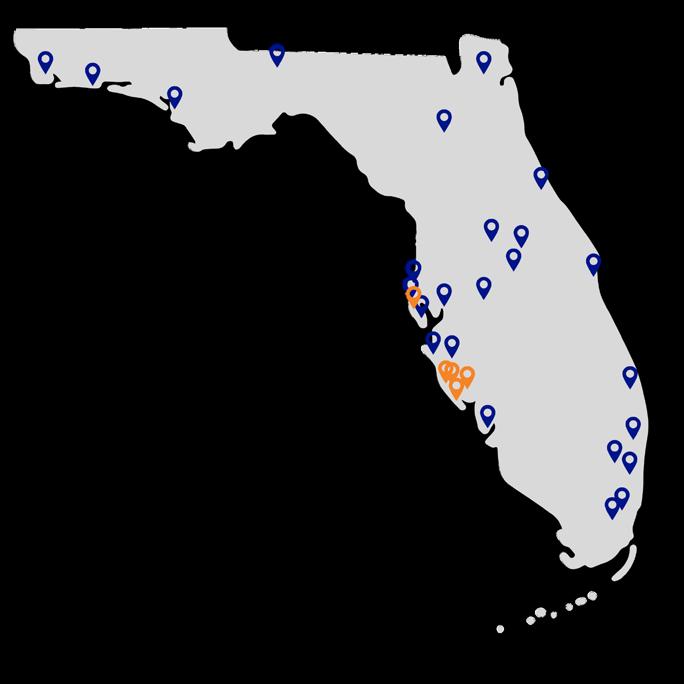
• 34+ Locations Across Florida
• Proudly Stocking the Top Brands You Need
• Experts in Residential, Commercial, Metal, and Tile Roofing
At QXO, we’re not just here to help you build more — we’re here to empower your vision, fuel your ambition, and create a lasting impact. Together, we shape the future, one bold step at a time. Visit QXO.com to find a