
Stories by Sullivan Hadley & Arthur Will
by

A L etter from the P resident of K e PL er e du CAtion


Dear Kepler Students and Parents,
One of the things about winter is that it tends to show up around the same time every year. Sometimes it’s chillier than others, and sometimes we don’t get much snow, but one thing you can always count on is that winter will follow autumn and consistently show up just before spring. Of course, I’m joking a bit here, but not entirely. The fact is—something Kepler taught us—because the earth travels in faithful ellipses, we know the year will bend towards the cold for a season, but it will never abandon its course.
Such are the cycles of life, especially during our concentrated years of education. There will be days where we’re hot—on our A game if you will—and there will be days when we’re cold, just trudging along one step at a time like a hiker wearing snowshoes. The most important thing to remember is that it’s all part of our course and we must be faithful to it, every day and every step of the way; we must not abandon the chilly seasons of life just because they feel austere. With Christmas being only a few weeks behind us, spring is just around the corner. As a matter of fact, the days are already getting longer and tomorrow will stay light longer than today.
And what better way to celebrate seasonal faithfulness than to publish another fabulous issue of the Kepler Eccentric. I’ve said this before, and I’ll keep saying it until it’s no longer true—God forbid that day ever come—reading the next edition of the Eccentric is always one of the highlights of my year.
Before we know it, Easter will be here. But during this cycle of our academic season, let’s once again rededicate ourselves to the disciplined pursuit of wisdom so that when we look back on this quarter at the end of the year, we can rejoice that we were faithful—just like the earth on its ellipsis. May your third quarter be filled with joy, growth, and wonder as we continue our quest for that ultimate earthly possession, a humane education.
By God’s Grace and For His Glory,
Scott Postma President, Kepler Education
L etter from the s tudent L ife C oordin A tor

Greetings, Students and Kepler Families!
Welcome to the Winter, 2026 edition of the Eccentric, Kepler Education’s student magazine. Thanks, as usual, to our hardworking Student Council volunteers who helped gather submissions for this issue! I am continually amazed at the creativity of students here at Kepler. I’ve taught for various schools, both brick and mortar, and online, for over 20 years and I can honestly say that Kepler students are some of the brightest and most enthusiastic students that I’ve ever taught. Their passion for learning and for celebrating God’s world is clearly manifest in the pages of this edition of the Eccentric Winter means different things to those of us throughout our large country. Some of us have feet of snow for many weeks, and some of us barely see a few snow-flakes. Historically, countries and cultures have usually been united by shared climate, along with language, religion, and cultural practices. Of course, other large countries like Russia and China have multiple climate zones. So what provides unity to a nation where Winter is so different?
This is where the deeper things become most important. Some have claimed that America is simply a “propositional nation,” held together by shared beliefs such as “liberty,” “freedom,” and the “pursuit of happiness.” The trouble is that we agree less and less on what these words mean. One man’s “liberty” to attempt to change their gender is another’s sinful attempt to alter God’s creation. Where can we find stability in these troubled times? Our only secure foundation is in the Lord Jesus Christ (Ephesians 2:20). This is what the miracle of Christmas was all about. The Creator of the universe entered into his own creation, became part of a sinful world–without being contaminated by it. Through his righteous life, his innocent death, and his powerful resurrection, he has changed the course of history. He literally put history back on track!
In the same way, Winter can be cold, dreary, and dangerous. But, Spring is coming! Even in the darkest days of winter, we can look forward to the rebirth of nature, and the resurrection of the world. God is the greatest Storyteller and the Ultimate Artist. Is it any wonder that the very patterns of nature teach us about him?
Returning to the question of unity and diversity in our nations, we here at Kepler (if you are united to Christ) are citizens of another Kingdom (Philippians 3:20). Our shared unity in the Spirit transcends our national, and even our denominational boundaries. Additionally, our shared pursuit of the True, the Good, and the Beautiful gives us a sense of purpose and joy that our fragmenting culture cannot comprehend. In these tumultuous times, learn from the past, be faithful in the present, and be hopeful for the future.
Dr. Gregory Soderberg Student Life Coordinator




n ote from the s tudent C oun C i L P resident
Hello, fellow Keplerites!
Welcome to our 2026 Winter edition of the Eccentric ! Thank you to all who submitted their pictures, poems, and prose to the Student Council. Your contributions are what made this magazine! Thank you to Dr. Soderberg, our Student Life Coordinator, and to Tristan, our Student Council president, for their hard work put into making this magazine happen. And lastly, thank you to everyone here at Kepler, for making this school what it is today. The third quarter is over, and we are on the home stretch. Work is important, but rest is as well. Enjoy this Christmas-themed edition, meditating upon the love of Christ and His sacrifice for us.
Jasper Crawford Student Council Vice President
by James Beauchamp


by Ward Swait
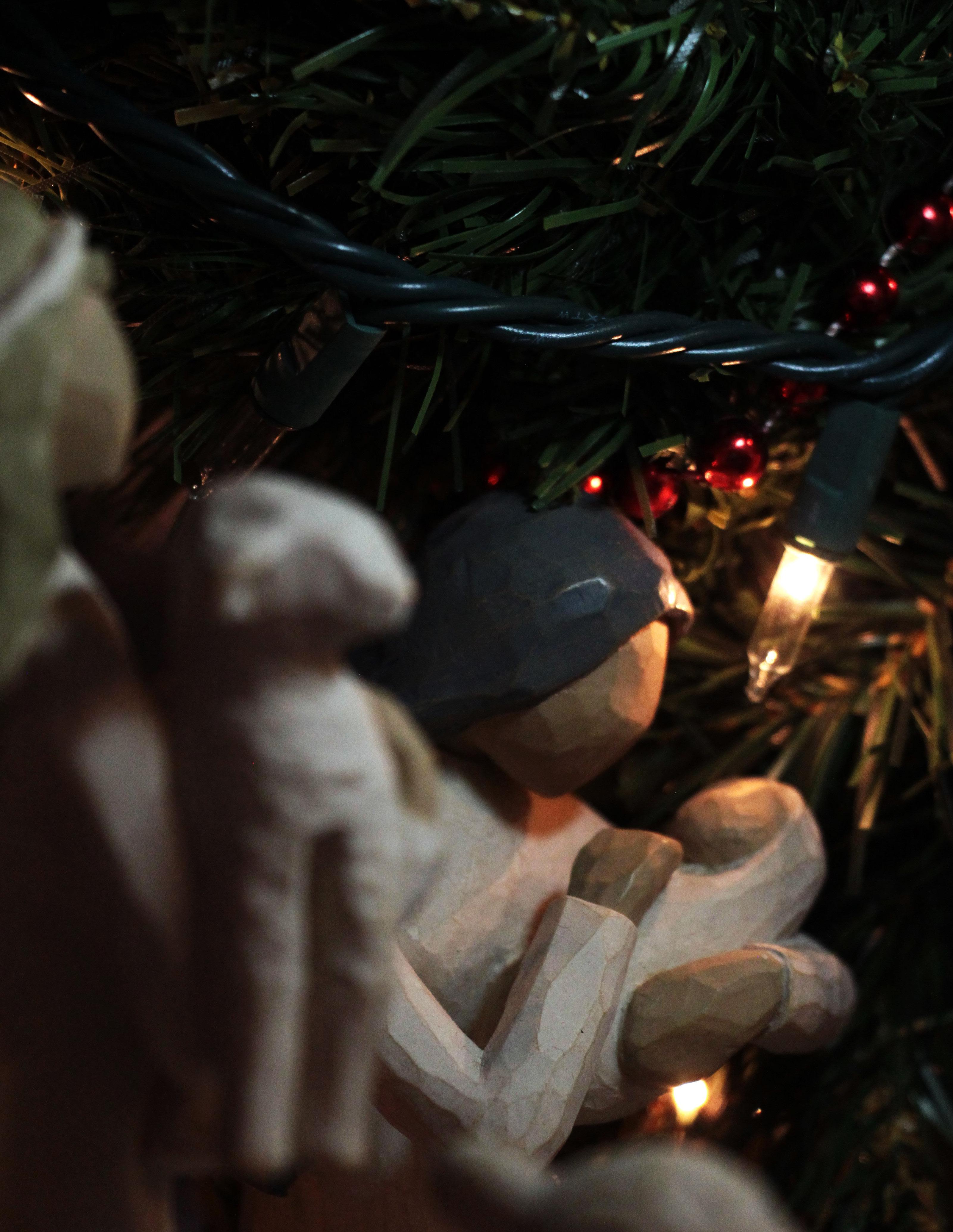
This Christmas tree: a festive world unto itself Is girt is robes of green, embroidered with berry chains And bright with many colored stones. This lady-world Is peopled by pleasant creatures of greens and reds And golds. Her great globed fruit hang from supple Branches. At her feet lie royal riches, scarlet treasures Ribboned in gold most gay, a blessing-throne of thanks.
She is a mountain altar to heaven's starry gods.
She is Woden's wooden pillar decked in greenery. She is burning branches, a pagan pyre to send smoke-men To heaven. She is a humble stable by Judah's star o’erhung. She is rood, the rod of Jesse, and the olive branch dove. She is burning pine forest, sweet incense to the Lord. She is this Christmas tree, a festive world unto itself.
Let It Snow by
Elaina Warner


m urder in the m A nsion
A rt 4
by Sullivan Hadley
As a brief little introduction, we were informed that James Kendrick had died. Our detective told us that it started several days ago, with them traveling to the Lewis residence. As a last note, we were informed that James was the second one to die in this mystery. Brave onward, readers!
As we approached the house, walking nonchalantly, there was no conversation. James had no desire to talk and had made this plain by refusing, ignoring, or not hearing my questions when asked. People always tense up before anticipation of excitement, thought I. What a shame! By the time that the excitement comes, they are almost always a jumbled mess of nerves and can be of no assistance if assistance is, in fact, needed.
When we got close, I led the way, taking us to George’s study window. There are two windows in his study, because George did not like the idea of feeling trapped in or enclosed. I believe he even once got a diagnosis as claustrophrobatic, or something of the sort, whatever that means. The windows themselves are a good eight and a half feet off the ground, and his windows open right out onto Mrs. Lewis’ garden, populated between the beds by pebbles and smooth rocks of the same sort the driveway was covered with. It gave the look of a statue garden, except, without any statues. We approached the window and James looked at me as if to say, “Now what?” I motioned my fingers to my lips to indicate the quietude necessary and beckoned him to come closer. At the proper distance, I whispered to him, “Get on my shoulders and look into the window, tell me if Mr. Lewis is working at his desk or if
he is sitting at the fireplace.”
James lumbered onto my shoulders and started peeking up into the window, when he aggressively whispered, “Down, down! Or we’re both dead!”
“Tell me, what, what did you see?”
He started running toward the front of the house, “No time for that! You stay guard here while I run into the house and push him out! You’ll know what to do!”
Naturally, I did as he told me to, and walked to the nearest bench in sight of both windows and sat down. The lights went out in the study, James yelled something, somebody groaned, and a form jumped out the window, only detectable by the low thud of the gravel, but quite easily detectable by the spilling of gravel from the evident escape. It ran but feet away from where I was, yet the cloudy sky despised me and did not allow a moment of clarity for me to examine its characteristics. And thus, I returned home, wanting a good rest before the sure to be hurried and worrisome search for clues tomorrow.
As expected, I was awoken by the telephone the next day at approximately 5:45 a.m. Oh no! Make sure no one has disturbed the crime scene! Surprised as I am to hear a death has occurred, I assure her I am coming to help her cause, if breakfast is provided. But,
“What good is breakfast when my husband is dead?”
“Mrs. Lewis,” I attempted to respond quite frank and make myself clear, “the brain does not function properly unless adequately given sustenance, and my brain, wonderful though it is, cannot be excluded from all others in this manner.”
“But…”
“No ‘but’s, I shall be late or promptly there, depending on breakfast being served, so, which is it?”
“Late. Never mind, I don’t want your help, you were always just a pain in the wisdom tooth anyways.”
And just like that, she hung up on me. To explain, Mrs. Lewis and George were dating when I shared a room with George in college and often George and I would go out and do many risky things, bordering the line of foolishness and stupidity, often resulting in one, or both, of us getting injured, or nearly injured. She was the one to greet me at the door, when I came and visited George, as recorded in James’s diary. As you can guess, this led to a staredown between her and somebody directly behind me who had frustrated her one too many times. To get out of her way so she could glare them down, I ducked and started moving towards the passageway. At last, she let out a disgruntled, “Come in,” in a low whispery voice. The day before George and her wedding, I had a conversation with her. As I remember it, here it is:
“Heather, are you nervous?” Naturally, start with a common question to open the dialogue.
“Well,” she paused for sometime. “No, no! I’m not nervous, just excited! I love George, and George loves me.” She said this to encourage herself. She was very nervous and was a total wreck all the way up to her walking down the aisle.
“Ok then. Can I give you one piece of advice?” Naturally, I couldn’t directly argue with her, so this was my roundabout way of doing so.
“Sure, go ahead.”
“You love too much. You love with all of you. You are ruled by your passions and desires, and that will end up being harmful to
you and potentially to your husband.” I got up and left promptly after saying that, not allowing her to have a response.
So, after eating a swift breakfast consisting of a ham, egg, and cheese sandwich and a cup of coffee, I zoomed off to the Lewis premises. All was quiet from the outside as I came up to the door and entered without knocking. In the hallway, the rug was rumpled up from someone running with no traction on it. Presumably from James last night. Moving on to the living space and then to the study, it was all completely empty. George’s body was nowhere to be found; several bloodstains had soaked the carpet; and the window remained open. His desk was neat as usual. I sat down at the desk and started rummaging through the drawers. No papers anywhere. I stood up and shouted across the house, “Heather!”
I heard a little “eep!” and she soon appeared at the doorway of the study, the usual glare on her face, affected by evident recent crying.
“Where is George?”
With tears in her throat, she managed, “Follow me.”
Slowly, we walked out of the house and onto the driveway. We traversed our way all the way to the edge of the street before she said, “Turn around,” in a whisper.
I turned around. The only noticeable object on the view from there is the mansion, cut out in a little semicircle of trees, with fields of tall grass on the side of each. At the chimney, George hung from the chimney. He wore a black suit, which was clearly outlined against the chimney. The roof itself was a black, although less refined and gleaming as George’s suit.
A sob let loose from her heart, and I raised my arms to comfort her, and willingly, she accepted a hug.
by Corin Batchelder
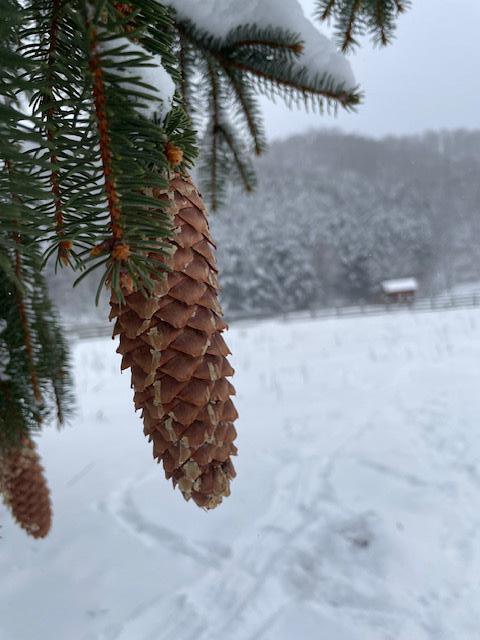
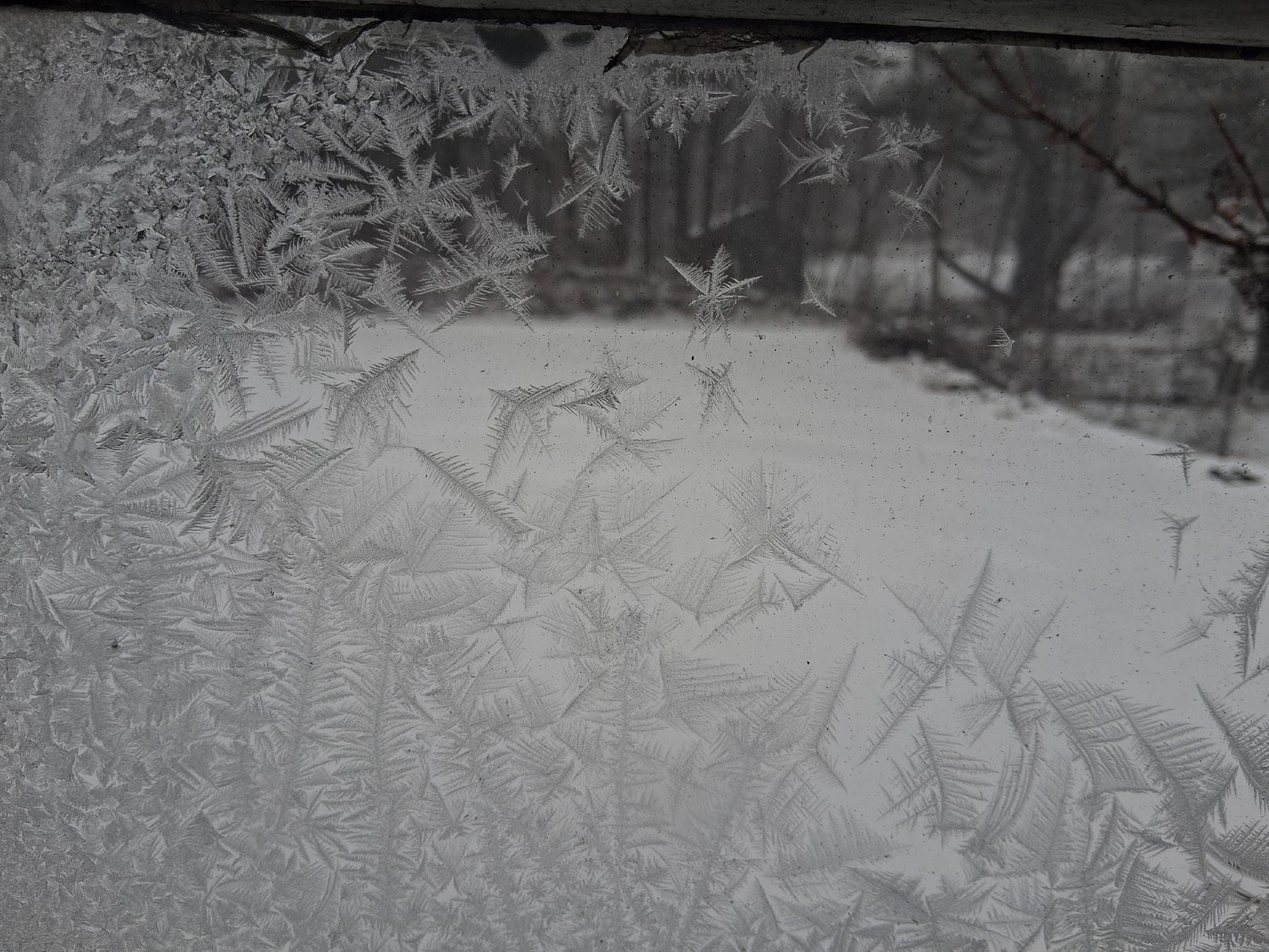
Little wings in fluffy snow that glows, An art among plain holes all made by heavy boots. Now the snow is falling light in poles of wings, And little angels fill up, all up, with snow.
by Corin Batchelder

Tt he s n AK e C h A rmer C h AP ter ii : t he r oA d to n ew h A r L in
by Arthur Will
emujin and his horde of Mangudai rode northward with their captive to the Molga capital of Mönkh Darkan, where sat Tohktamysh Khan.
The speed of Molgai raiders, particularly of the Mangudai, was truly legendary, and Temujin was fulfilling the very soul of this legend as he rode; full on three hundred Mangudai, riding day and night, their horses as tireless, vicious, bloodthirsty, and sleepless as their masters, made it fully fifty miles, right to the edge of Terranova, before Temujin was forced to switch horses and begin afresh, and all in under three hours.
By midday the next day, if they continued to change horses at every waypoint, they would have made it over two hundred and fifty miles to Möhnk Darkan.
But Temujin also had a more immediate goal, and it was slightly closer: the city of Khorkoin Khot, where the great general Subotai was to meet him, about seventy miles from where he was now. He would spend the night there, and Subotai would send out his fastest and hardiest riders to deliver the news to Tohktamysh.
The prisoner had been bandaged and given some foul medicine to keep her alive, but even so Temujin knew that under ordinary circumstances the prisoner could not have survived a gallop as hard as the one he was setting. But these were not ordinary circumstances; the Auraboris wanted Godivia alive, and thus Godivia would live.
Hours passed as the ride continued, and Temujin’s thoughts were occupied with absolutely nothing.
It is a virtue of the male sex that, when they so choose, they can effectively think of nothing. They can concentrate, but at the same time they can keep their minds completely blank of any thoughts or ideas whatsoever. Temujin’s mind was blank, but the blank was filled with violence.
Nothing worried Temujin. Nothing concerned him. His face was passive. He was not thinking. He was hardly breathing. But permeating his very soul was an eternal lust for destruction.
He found it an extremely efficient way of whiling away long hours of riding which he would ordinarily have found dull beyond description.
Forty miles and two hours later, the Molgai changed their horses once more at the town of Chukhal-bish, and then prepared to pound out the last thirty miles as fast as they could possibly go.
“Does the prisoner live yet?” he said as he mounted his next steed.
“Indeed she does, Lord,” said Teneg, who had been assigned to keep watch over her.
“Good,” said Temujin. “Then we keep riding.”
Dawn had come by the time Temujin and Teneg, having left the rest of the horde to make camp right outside the city walls, finally rode into the courtyard of the looming Keep in the center of the city and dismounted.
Attendants led their horses to the stable, and Temujin, followed by Teneg with the prisoner slung over his shoulder, mounted the steps of the Keep and marched inside. The guards that flanked the door with their
long, brutal pikes might have been made of solid stone for how motionless they stood, but upon seeing Temujin, both of them sank to their knees with their heads bowed so that the peaks on their iron helmets knocked against the ground.
Temujin took no notice.
“How far do we have to go?” asked Teneg as they strode through colonnades and archways made of solid, pitch-black stone and up long staircases made of the same material, illuminated only by dim flickering torches. “Not too far, I hope. My shoulder is killing me.”
“Be thankful that it is merely your shoulder,” replied Temujin. “Were you to… accidentally complain or fail in your duties, there might very well be other things killing you.”
Teneg redoubled his efforts.
Temujin was well aware of the terror he instilled in all of his followers, but he was terribly practical. He used what he could to his advantage, but if it offered no utility and showed no promise of doing so, it was at once discarded. A rusty hammer might be treated thus by Temujin, but so would a faulty horse… or a faulty man.
Temujin smirked slightly as Teneg panted and puffed behind him as they wound their way up the merciless stairs up to the chamber where Old Subotai, greatest general of the Molgai, would be sitting.
A couple minutes later, Temujin encountered the first token of resistance he had yet received: the guards outside the door to Subotai’s chamber.
“Halt!” cried the one on the left. “Lord Subotai allows none to disturb him in his meditation.”
“None,” said Temujin evenly, “excepting me.”
He raised his right hand, the palm open, and slid his sleeve down a couple of inches,
revealing the back of his wrist. Both guards widened their eyes in surprise, and then pulled the doors open.
“Come, Teneg,” Temujin barked. “Your journey is almost over. When I or Lord Subotai says the word, you shall be allowed to depart as swiftly as you may.”
Teneg gasped and staggered forwards. He was pretty sure that, ordinarily, the extra weight would not have been a problem for Teneg at all, but the stairs made the whole ordeal a different proposition entirely.
On a high-backed chair made out of the same cold, black stone as the rest of the room and all the stairs behind, an old man with a straggling beard was sitting bolt upright, his bright and piercing eyes contrasting sharply with his sunken and hollow cheeks and thin white hair.
“Without leave of the Auraboris,” the man said in a booming voice, “all who enter this room and come before Old Lord Subotai shall be shown to a most grim fate. What, little ones, is your errand?”
It didn’t seem possible that such a voice could have come from such a frail old man.
“I come with leave of the Auraboris,” replied Temujin coolly. “I bear something for which he shall reward me well. I have come bearing Lady Godivia, wife of Æthelred.”
“Indeed?” asked Old Subotai. He creaked up out of the black throne. “I shall have a look for myself.”
A cane in his hand, he climbed falteringly down the stairs which led up to his throne, his staff making a hollow clunk with each step.
“Come to me,” he said as he reached the bottom. “I would see what you bear.”
“Give her to me, Teneg,” ordered Temujin. “You may depart now.”
Teneg, gasping in relief, handed the unconscious woman to his fearsome master, and
then beat a hasty retreat. The guards closed the great double doors behind him as he backed out.
Temujin slung the lady Godivia over his shoulder and strode over to meet the old general. Once he stood a few paces in front of Subotai, he laid her down on the floor between them.
Godivia had once been extremely fair to look upon, golden haired, tall, and with a ringing laugh that made everyone who could hear her break out into smiles themselves.
Age and worry had, if anything, increased her beauty still further, though it was of a different kind now; white speckled her hair, which had turned prematurely gray.
Her face was wrinkled slightly, but despite the clotted wound in her shoulder, her expression was peaceful.
“She has not died, I hope?” Subotai asked, looking up.
“She has not died,” replied Temujin firmly. “The Auraboris wanted her alive.”
Subotai stooped down and brushed two fingers over the side of her neck. Her expression wavered slightly, and he stood back up.
“She has not died,” Subotai repeated. “You have done well, Temujin. The Auraboris will be pleased. Leave her here with me, and you may proceed to Möhnk Darkan in the morning with your men. But I also have someone whom I should like you to meet.”
He snapped his fingers, and two attendants rushed into the room.
“They will take care of the prisoner,” Subotai continued. “Follow me.”
The dais on which Subotai’s chair sat was very high, reaching up well past their heads. When Subotai sat, his hard, cold, bright eyes roving around the room, alighting arbitrarily upon certain men who suddenly felt as though they were being ripped inside out and their souls laid bare for inspection.
Temujin had never felt this way, though he to some degree knew what the others must feel like. Though not completely disarmed by the old man’s stare, he still found it incredibly unnerving.
But he had never expected that the height of the chair was also used to disguise something else…
Subotai gripped a knob that was nearly invisible against the black stone and heaved on it suddenly. Stone gears ground and Temujin felt the ground sliding forward beneath him at the same time as portions of the wall drew apart, revealing a black nothingness.
The floor quickly turned into stairs, spiraling downwards in a long, black tunnel. There was no light at all. A hollow boom above him told him that the doors outward had closed.
He and Old Subotai were standing perfectly still as the stairs continued to corkscrew downwards at a snail’s pace, grinding, groaning as stone supported by metal rubbed against an endless wall of the same black stone which permeated the rest of the keep… not that Temujin was able to tell in the darkness.
“We have not long to go,” said Subotai, his voice completely flat in the darkness. “Do not be afraid, little son of Tohktamysh. I have done this many times.”
“The ‘Little son of Tohktamysh’ knows not the meaning of fear,” said Temujin coldly. “As evidenced in my victory against the Barrabs in the battle of Tol Khugarsan. You would remember it. You were there.”
“Fearlessness on the battlefield,” said Subotai, “is not the same as having no fear. Inside of every man, there is one thing which, above all else, he is desperately afraid of, and it will inevitably be his undoing. I have found and conquered mine. I have found those of others and conquered them because of it. Tell me, Temujin, what is yours?”
Temujin said nothing.
“Ah,” said Subotai and the staircase ground to a halt. “We have arrived. Come.”
A crack of light opened in the wall, and the stone barrier ground and squealed, sliding gradually apart, shining a shaft of light upon the two of them.
Temujin squinted against the unaccustomed glare, but Subotai seemed unaffected.
As Temujin’s eyes adjusted, the blinding light resolved itself into a bright white eggshaped token half as tall as he was sitting on the floor directly in the center of a circular stone room.
Standing beside it was a Durshang; claws, long serpentine neck, fangs, the strange, hypnotic yellow eyes…
The serpentine man stepped forward.
“Ssubotai,” he said. “You bring company today.”
“So I have indeed,” said Subotai. “This is Temujin, son of Tohktamysh, Khan of the Golden Horde of the Molgai.”
“Ah, yesss, the invinccible sson of the Khan,” said the Durshang, sounding pleased. “I was ssent to meet you, and Ssubotai. The Auraboriss has servants even in Arumbara, and I am the besst of my kind for withsstanding your frigid northern climatess… come. We musst sspeak, and the Auraboriss shall sspeak through me.”
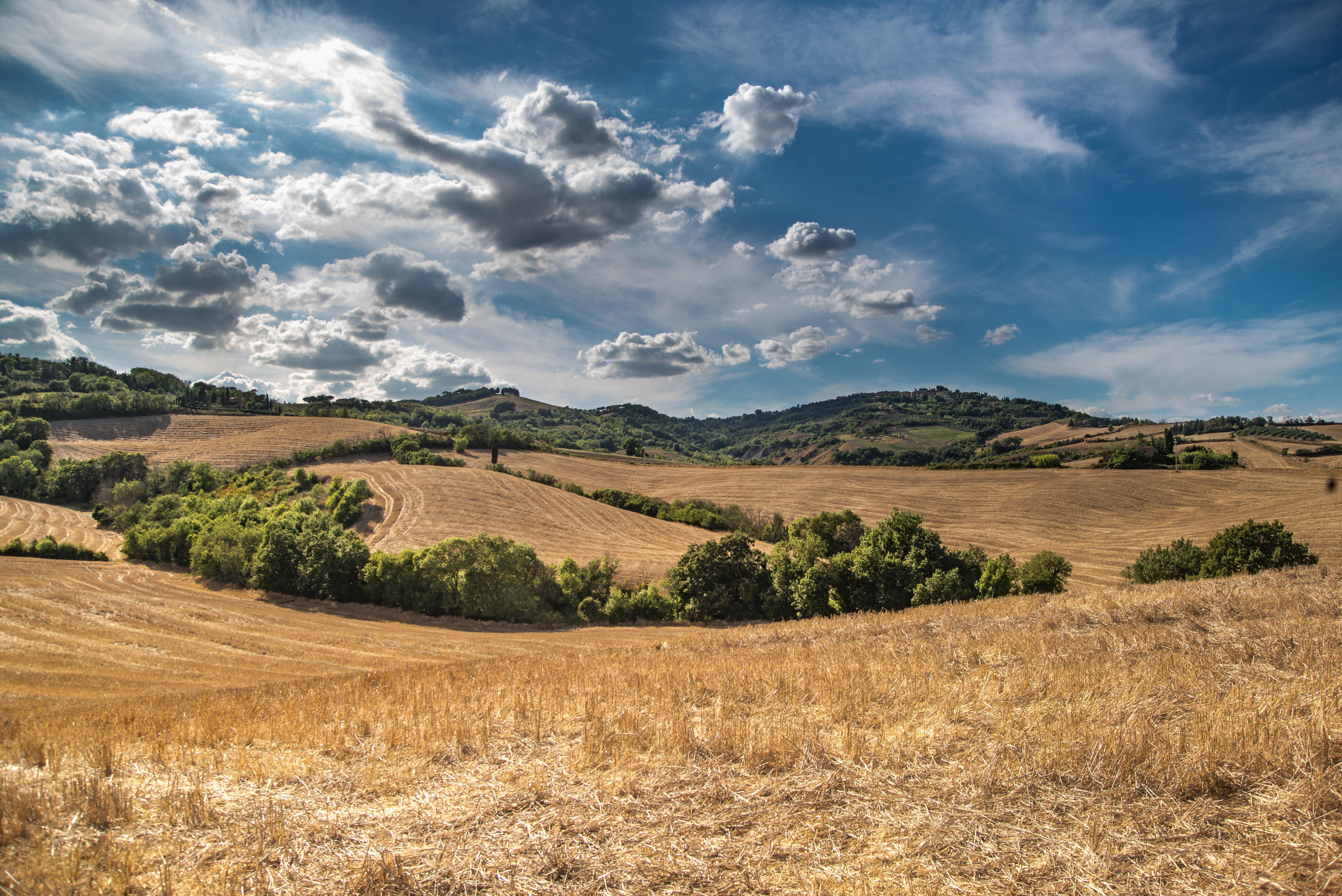
The horse’s hooves thundered along the beaten dirt road which led the way to New Harlin, the capital of Terranova.
Patches of old cobbles, supposedly from the old Rema Latanate Empire which had inhabited this region five thousand years ago, still dotted the path every few hundred yards, but these were few and far between, and when they did happen the horses had more trouble on these than they did with the ordinary road.
Edith and Benke were not riding fast because they were being chased, they were riding fast because they were afraid that they might be if the Molgai riders managed to defeat Simon and his soldiers.
So they galloped.
Neither of them said anything, though what with how fast they were going, communication would have been just about impossible anyway.
Nevertheless, Edith was grateful for the silence.
Simon had promised to go looking for Beowulf, but she doubted whether or not he would be found.
Berend was growing restless beneath her, clearly wanting to go faster.
“No,” Edith whispered. “You’ll leave him behind. We need to stay with him.”
Slowly, the scenery around them changed; the rolling hills and dense pockets of forest which characterized the territory of the Wolf Clan gave way to the more orderly fields and farms outside of New Harlin.
“I think we’re out of danger now!” Benke shouted. “The Molgai won’t dare venture this close to our capital, not without their general!”
Edith did not want to slow down, and neither did her horse. Instead, she allowed Berend to put on an extra kick of speed.
Benke and his horse, which was beginning to show signs of discomfort, had to fight desperately to draw level.
“Slow down!” he bellowed. “We have company!”
As they ran along the bottom of a slight valley, two other riders appeared on the hilltop, stood for a moment, and then galloped down after them at full speed.
“Are they Molgai?” Edith yelled. It was the first thing she had said on their entire trip.
“Can’t be!” Benke yelled. “But even if you don’t stop, I will!”
Edith slowed Berend, banked, and came running back to where Benke had already stopped his horse and was dismounting.
Berend trotted to a halt next to him.
The two riders were closing in fast.
The larger of the two riders, who happened to be the one in front, held his palms outward in a gesture of peace as he neared.
Both riders slowed.
Edith could now see that one was a young man, and the other was an astonishingly pretty girl, who couldn’t be more than a year or two older than herself.
The riders drew up and halted.
They were both slender but strong-looking, and while they looked fresh their faces were serious.
“Benke?” asked the man, who was by far the older of the two riders. “What are you doing here? Weren’t you posted in Fatemplom?”
“Was,” said Benke. “Lord Simon sent me back with this girl.”
The man looked at her for the first time, and his eyebrows rose in surprise.
“Another victim of Temujin’s raids?” he asked.
“So I understand,” said Benke. “But if I understand aright, there’s something special about this one. I don’t know much, and the story’s not mine to tell, but what I do know is strange.”
“Where are you taking her exactly?” the man queried.
“The capital,” said Benke. “Straight to his majesty Aurelian.”
The man’s eyebrows rose further.
“To the King himself?” he said. “This one must indeed be special. What do you know?”
“You’ll have to ask her,” said Benke. “I know nothing. Maybe Lord Simon will know more.”
“Very well,” said the man. “I will speak with Lord Simon when I can. In the meantime,
you may return to Fatemplom while I and my sister will take the girl back to New Harlin.”
“But,” objected Benke, but the man cut him off.
“Better go now, Little Ben,” he said wickedly. “You know how you stand in the local opinion.”
“Sig, please no!” said the girl, suppressing a giggle.
Benke’s face colored and Edith suppressed a laugh.
“I told you not to call me Little Ben,” said Benke. “And, if you are really so hostile as to send me away like this, then alright I’ll be out of here.”
“I wouldn’t say hostility is really your problem,” said the man, grinning.
“Sigismund, stop it!” said the girl. “Don’t be horrible!”
“You remember what happened last time you strolled into the ballroom last year?” the man continued mercilessly.
“Goodbye!” said Benke haughtily, wheeled his horse around, and took off.
The girl broke down into a fit of laughter.
“Oh, poor Benke!” she sobbed, unable to contain her laughter. “Oh, poor, poor Benke! What an expression! That was absolutely priceless…”
The last word trailed off as she fell forward, clutching at the horse’s neck and trying not to fall off as she continued to quiver with laughter.
“Allow me to introduce us,” said the man. “My name is Sigismund, and my hysterical sister over there is Sofia.”
A piece of jerky, thrown by his hysterical sister, hit him in the side of the head. He ignored it.
“We’ll take you back to New Harlin with us,” he continued. “Sofia?” He turned to his sister, who was still fighting back chuckles. “You good with that?”
“S-sure,” she said. “But why is it that you have to keep reminding poor Benke about that? You know he hates it.”
“Nonsense,” said Sigismund. “It’s good for him. He’s too popular anyway. A little humility could go a long way towards bettering his life, don’t you think?”
“No, I certainly don’t think,” replied Sofia. “But we’re wasting time.”
“Funny how you only just noticed,” said Sigismund. He turned back to Edith. “I’ve introduced us,” he said. “What’s your name?”
“Edith,” said Edith. She was about to add, “daughter of Æthelred,” but decided that for present it would be better to hide that fact. She didn’t quite know why, but whenever she said that name things seemed to happen.
“Well, Edith,” said Sigismund brightly, “I’ll take you to the king. But I’ll have to know your story later.”
“I don’t know if I want to tell it,” said Edith. “Ever. Not without my brother here.”
“Well, you can tell us more when you want to,” said Sigismund. “If you want to. Will you come to the palace with us?”
Edith hesitated, unsure whether or not she could trust them. They were, after all, complete strangers. But then, there was nothing else she could do.
“Will Simon find my brother?” she asked suddenly.
It was a stupid question, she knew it—but she had to ask it anyway.
Sigismund was about to answer, but then closed his mouth. He looked slightly confused.
Sofia, however, seemed to understand the situation perfectly.
“If anyone will be able to find your brother,” she said kindly, “it will be Simon.”
Edith smiled for the first time since the fires. It felt strange on her face, as though something unfamiliar was invading. But it felt good. Warmth flowed through her.
“You really think so?” she asked.
“Yes I do!” said Sofia, tossing her hair back. The bright gold caught the sun, illuminating her face and making it look even more pretty than it had before. “Now come on with us. We were heading back to the city anyway, and we don’t want to be late for dinner!”
“Alright!” said Edith. “Alright! I’m coming!”
She nudged Berend who, only too glad to get moving again, trotted forward.
She drew level with them quickly.
“What’s up with Benke?” she asked.
“He slipped up at a ball a couple years back,” said Sofia. “Made a complete fool out of himself, and suddenly he was the most popular guy in that district of the city.”
Edith laughed.
“Poor guy,” she said.
“I know, right,” said Sofia. “But it wouldn’t be half so bad if Sigismund didn’t keep reminding him about it.”
“It toughens him,” said Sigismund. “It’s good for him. He’s too popular, he can do to be reminded of it occasionally.”
Bantering, the trio made their way at a steady trot towards a bright city on a hill, surrounded by thick, powerful walls: the city of New Harlin.

Outside the cavern of the Uuchben-kaano, Beowulf shivered.
Not because it was cold; the warm summer midnight air made that impossible.
But because he felt as though he ought to be cold.
The mysterious, hooded stranger was sitting opposite from him, facing him from across a small, dim fire which flickered and popped, sending odd shadows across the clearing in the woods.
Since leading him out of the cavern, the stranger hadn’t said a word; instead, he had kept the flute thrust through his belt and his hood thrown back, regarding Beowulf silently
He had perfectly white hair and his face showed creases, but the sparkle in his eyes did not quite seem to match his body in age.
The way they were regarding him shrewdly, studying him, while his fingers were laced across the serpentine-patterned flute thrust through his belt.
His eyes didn’t seem younger than the rest of him; they seemed older.
Beowulf shivered again, and shifted uncomfortably.
“Can I ask who you are?” he said, trying to break the silence.
The stranger said nothing, merely staring him down. Beowulf squirmed.
“Why did you save me?” he asked. “What was that place? I’ve heard of the Uuchben-kaano, but I never thought it was real. Does the exiled serpent clan have anything to do with it?”
Still no answer.
“I think I’ll go to sleep,” said Beowulf, but made no motion to do so.
He was well aware that he was just letting his mouth run just to make himself feel more comfortable, and while he was speaking it almost worked, but when he closed his mouth again, he found that his discomfort had only deepened.
The minutes passed.
Suddenly, just when Beowulf was beginning to wonder if he should get up to collect more firewood, the man spoke.
“I am the snake charmer,” he said. “I guard the lair of the Uuchben-kaano. I watch. I wait. I make sure that the wrong people do not fall down the hole.”
“Don’t you mean, you make sure that people don’t fall down the wrong hole?” asked Beowulf.
The man shrugged.
“Perhaps. It can easily mean the same thing.”
The man’s piercing black eyes continued to stare right into his.
They were hypnotic—strangely oblong, and hooded, like a snake’s. Beowulf had to close his eyes experimentally several times and glance around the forest just to make sure he could look away.
He had the sneaking suspicion that, if the snake charmer had wanted to hold his gaze, his gaze would have been held.
A doubt which had been nagging at the back of his mind suddenly surfaced when he looked back at the mans eyes.
“Who is Auraboris?” he asked.
The man’s eyes narrowed sharply.
“Who told you that name?” he asked.
Beowulf’s discomfort suddenly heightened. He fidgeted nervously with a stick without noticing it.
“Well, when I was being chased by Temujin in the woods, he may have let the name slip,” he said. He paused. Then, “Do you know who he is?”
The snake charmer shrugged.
“Auraboris,” he said. “He is a monster beyond reckoning. Temujin is invincible?”
Beowulf nodded. “So I’ve heard.”
“The Auraboris controls Temujin,” said the snake charmer. “The Auraboris is a monster, a demon incarnate, the last living servant of Naaz. A man—rather, a demon—who is that old and possesses such power as to control even the invincible is a force to be reckoned with.”
The man’s pupils widened and then contracted again as he spoke, giving his tone a mesmerizing effect.
Beowulf forced himself to look into the fire instead of the man’s eyes, but he could still feel them boring into him.

“I don’t suppose you have any food, do you?” asked Beowulf after a few minutes of uncomfortable silence.
The man said nothing. Beowulf resigned himself to the fact that it would be impossible to get him talking again without something special—such as the mention of Auraboris.
A servant of Naaz.
The name did not mean much to him, but he had heard stories. Or rather, stories of rumors of stories, and it didn’t seem good. All he knew was that Naaz was ancient.
A few hundred years ago, hadn’t someone who had claimed to have been Naaz reborn been killed? Somewhere in the kingdom of Itail, many thousands of miles to the west. He didn’t know much.
He shook himself.
He didn’t like where his train of thought was taking him.
And the man’s gaze was desperately uncomfortable.
Suddenly, hooves sounded through the night.
“Temujin!” Beowulf exclaimed suddenly, leaping to his feet and drawing the short sword he had snagged from the Molga rider. “We should get out of here!”
“No,” said the snake charmer. “It is not Temujin. It is a friend.”
“A friend?” asked Beowulf.
“A friend,” said the snake charmer again. “Do, sit down, child.”
Beowulf felt himself compelled to sit down once more.
The sound of hoof beats grew louder, and a man in brilliant gilded armor astride a chestnut stallion galloped into the clearing, screeched to a violent halt, and trotted over to the campfire.
He looked first at the old man, who for the first time shifted his gaze upwards.
He smiled slowly, the expression creeping
across his face gradually, methodically, like some viscous liquid dribbled on a flat surface.
Beowulf didn’t think he liked the man’s smile. At all.
“Simon,” he said, “if you are looking for a boy, this is he.”
The man, Simon, looked down at Beowulf.
“You are Beowulf?” he asked.
Beowulf nodded.
“Son of Æthelred?”
Beowulf nodded again.
The man smiled suddenly— a much pleasanter sight than that of the snake charmer.
“Good!” he said “Good! It is well! Your sister sent me out to find you. I have been hunting for hours. I was beginning to think I would never find you and I was regretting making such a promise, but I saw the fire and here you are. Will you accompany me back to New Harlin?”
“My sister?” asked Beowulf, standing up suddenly. The snake charmer was forgotten. “Edith? Is she alive?”
“Last I saw,” said Simon. “I sent her on to New Harlin as well, so if you would do me the courtesy of accompanying me, then you should be seeing her again at some point tomorrow afternoon.”
“The sooner the better!” said Beowulf.
He knew nothing of the man, but he had seen his sister. Alive. Nothing would stop him from coming, despite whatever the more cautious voices were saying in his head.
“Right then,” said the man, Simon. “I’ll help you up.”
He reached down, and Beowulf took his hand.
The man was incredibly strong, and pulled him up easily, almost casually, onto the horse’s back behind him.
“Wait,” said the snake charmer. He was rising to his feet.
“Yes?” asked Beowulf, who was growing
very impatient. He wanted to leave. He wanted—no, he needed —to see his sister again.
“You must have some token,” said the snake charmer. He reached into a fold of his cloak and pulled out a small ring, shaped like a serpent devouring its own tail.
An Ouroboros, like the ones in the cave.
“This is for your protection,” he said. “Show this to anyone who bears the mark around his wrist, and they will know what to do with you.”
He pressed it into Beowulf’s outstretched palm. It was cold. And heavy. Far heavier than it should have been.
“Thank you,” he said, looking down at it in considerable surprise.
“Pray, do not mention it,” said the snake charmer in the same cold, toneless voice he had been using up to that point. “Take it as something… owed.”
The smile began to creep back across his face.
Beowulf shivered for a third time; he knew he definitely did not like this guy, though he wasn’t entirely sure he had a good reason. It was just a feeling. He thrust the little charm into his pocket.
“Well, are we ready then?” asked Simon. “The sooner we get started, the sooner we reach New Harlin, and the sooner you may see your sister.”
“Absolutely,” said Beowulf fervently.
The sooner he got away from the old man and his unnerving stare the better.
Simon uttered a sharp command, and the horse began to trot away, picking up speed as it went.
“Remember me!” the snake charmer shouted from behind. “You and I will meet again, and when we do, the memory of me will be useful to you! And do not lose the charm!”
The little Ouroboros sat like a lump of lead in his pocket.
But it was weighing even more heavily in his mind.
♦♦♦
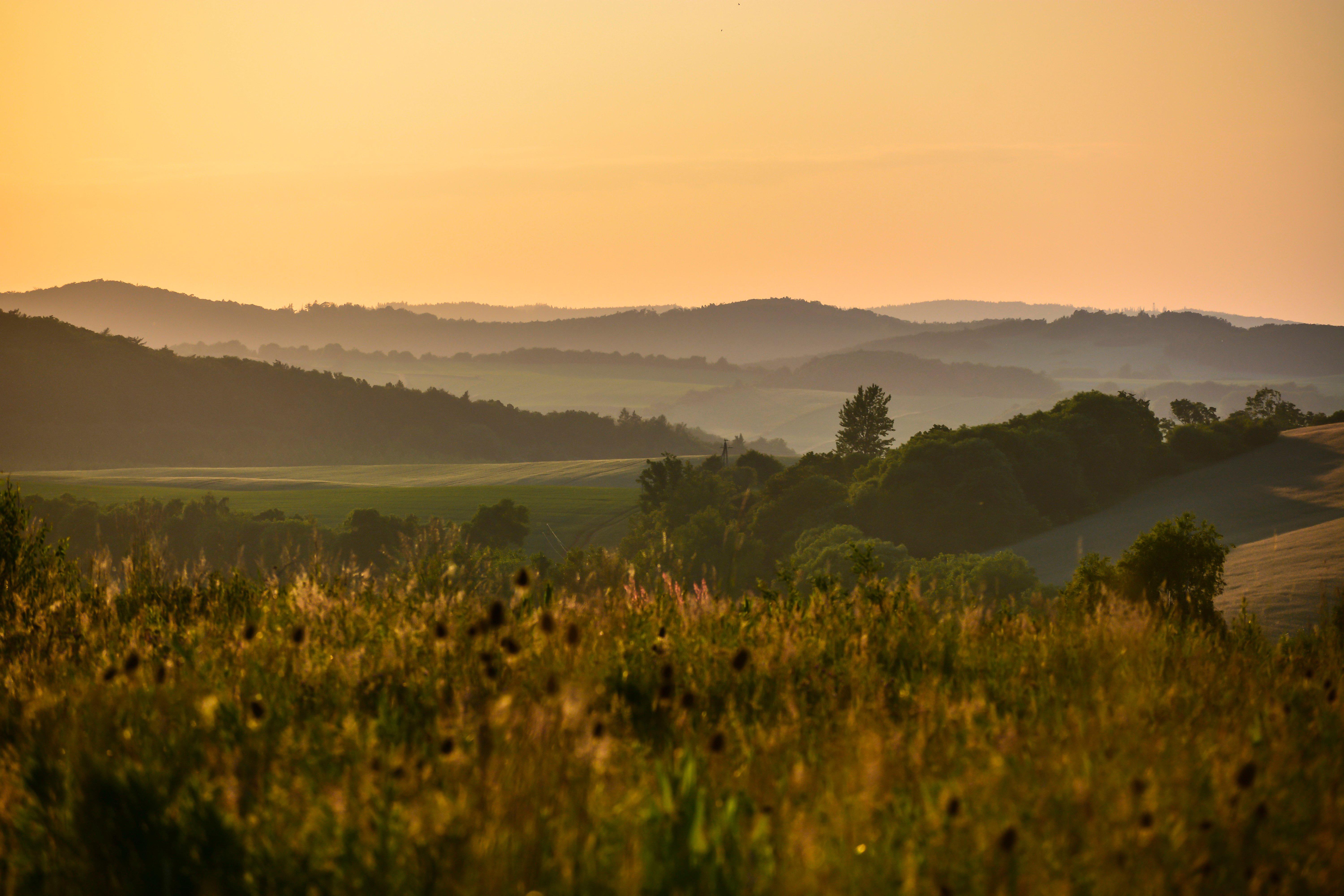
Simon’s horse was tireless, pounding out energy and strength for hours.
And hours.
And hours.
Beowulf’s tailbone hurt worse than he had thought anything ever could hurt… but it was nothing to the bruises he had received earlier from being dragged along by Teneg and the Mangudai.
“When are we going to stop?” he asked, for what must have been the fiftieth time.
“When the horse tires out,” replied Simon, also for the fiftieth time.
“This horse,” grumbled Beowulf, “must be made out of solid iron if it can stand to go at this pace for as long as it has.”
Simon laughed.
“No, it is not made out of iron, but it could be something close. It’s bred from the Royal Stable, so it’s fast and strong. More so even than the Molgai horses, though it isn’t quite so strong as what we had in days gone by.”
“Fast,” grumbled Beowulf. “Fast indeed. I can’t tell the difference between the scenery now and the scenery about a year ago when we had first started riding.”
Simon laughed again.
“It hasn’t been quite that long,” he said. “A couple of hours, maybe, but I was lucky and found you fairly quickly and I left your sister many hours ago.”
“Edith,” he breathed.
Simon said nothing. Beowulf, feeling slightly guilty about complaining about his own discomfort when this man had been riding for hours, tried to forget the pain that was shrieking for attention all over his body.
He grimaced, and slapped at a horsefly
that had decided to land right next to him.
“You’re welcome,” he told the horse. The horse flicked its tail, and continued to drum out a steady pace.
The horizon was brightening. It was almost dawn.
“Can you just tell me straight how long you think we have until we reach wherever we’re trying to go?” he asked.
“To New Harlin? I couldn’t say. Haven’t kept track of the miles. But I would hazard a guess that we shall arrive within the next three or four hours, as long as the horse stays fresh.”
“If the horse’s tail bone is as tired of me as my tail bone is of it,” Beowulf grumbled to himself, “then I shouldn’t think that it will last all that much longer.”
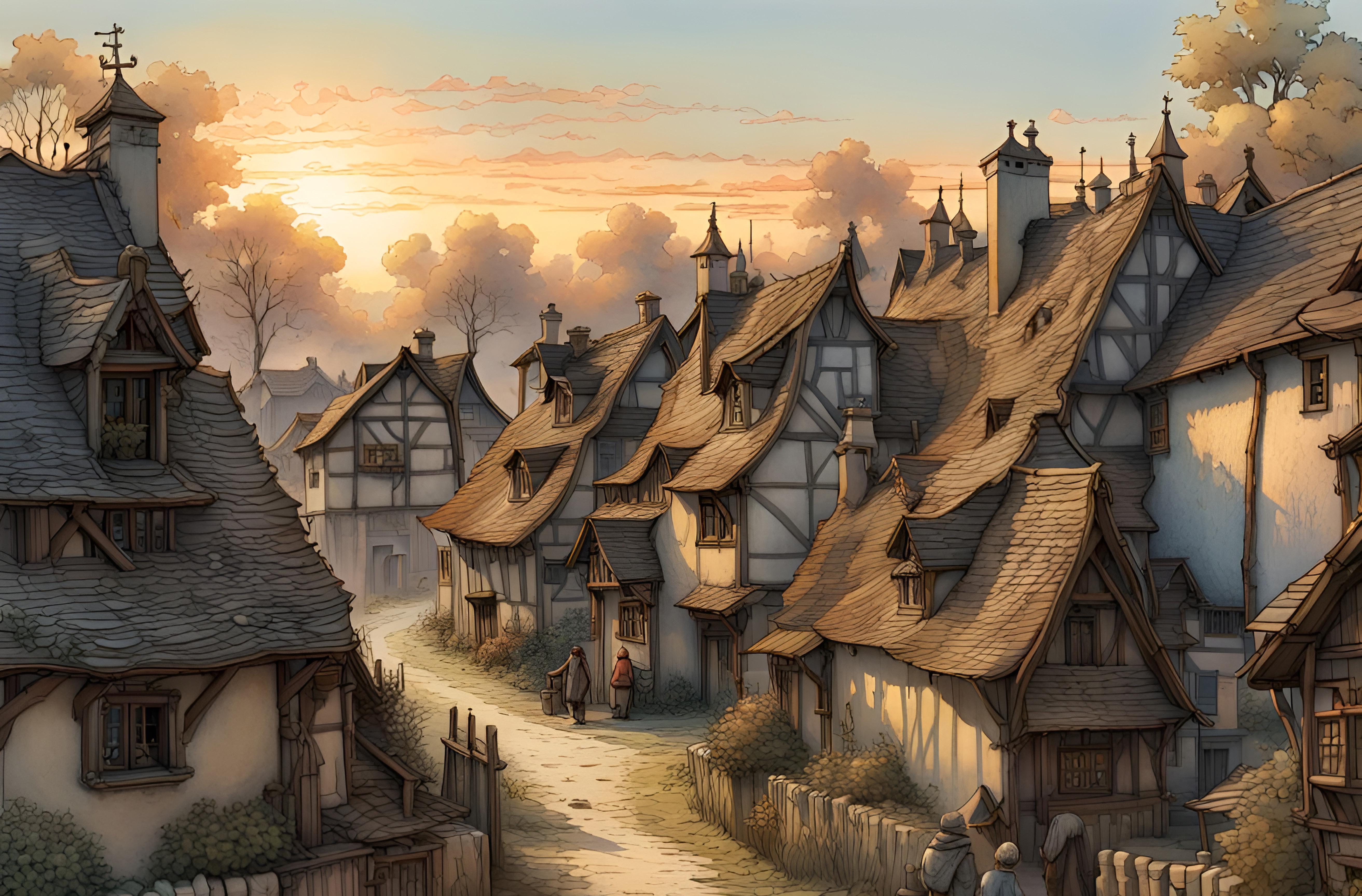
Suddenly, Beowulf noticed that the horse was slowing down. Simon was reigning in, heading towards a small plume of smoke that was rising from a village on a hilltop, maybe about half a mile distant.
“We’ll stay there for the night,” Simon said. “There. You get your wish.”
“It’s not me,” said Beowulf. “I want to see my sister more than anything. But my tailbone says thank you.”
The village grew larger rapidly, and within a few minutes Beowulf was surprised to find that they were going uphill.
He also noticed that the horse was showing signs of physical exhaustion as well. Simon appeared to have called his shots very well, and picked a very opportune moment to stop.
As they rode into the town, the few villagers out and about at that time were surprised by the strange sight that met their eyes: a very tired, very dirty, slightly wet, very bruised, and very uncomfortable boy with black hair riding on the back of a large chestnut war-stallion, holding onto a regal-looking man in gilded armor.
Beowulf was suddenly very conscious of his appearance, but when Simon turned towards an inn on the side of the street, he suddenly found himself far too tired to care anymore.
Simon dismounted, and Beowulf flopped off of the horse after him, only barely managing to land on his feet.
“You know,” said Simon, “what sounds good to me right now is a bowl of rabbit stew and a piece of bread before hitting the sack. What about you?”
Beowulf, who was having trouble being both articulate and intelligent at the same time at the moment, did his best and slurred that he supposed this sounded a little nice.
“A little,” Simon said, laughing. His laugh was pleasant, but Beowulf’s tired and irritable mind noted that he seemed to be doing it rather a lot. Perhaps he was just tired and that was making him imagine that Simon was putting up a pretense with his laugh. The facade was probably just his imagination. Or lack of imagination, as the case may be.
“Yeah,” said Beowulf drowsily, telling himself that he was to forget it all and succeeding in his mission. “A little.”
He was drifting off. Dozing. He staggered sideways, and Simon caught him.
“Steady on there, lad,” he said.
The next thing Beowulf knew, he was lying on a hard but not uncomfortable mattress in a small, bare wooden room.
There was a wooden stand by his bed, with his sword and bow and belt sitting on it.
Sunlight was streaming in the small window and right across his face.
Groaning, he flopped his arm across his eyes, trying to keep the sun out.
But it was no use. He was quite irreversibly awake now, and he decided that he might as well make the most of it.
He sat up, blinked blearily a few times, climbed out of his bed, buckled his belt on, threw on the boots that were sitting by the closed door, and headed out of the room.
He found he was standing on what appeared to be a balcony that also wanted to be a hallway. Doors lined the wall behind him every four yards or so, and a polished wooden railing rose up on the opposite side, sheltering the main room and diner of the inn.
He scanned the room below him, and soon located Simon, still in his gold-patterned armor, conversing with a guard.
The pattern of a wolf running in a red field embroidered on the window curtains told him that the town was Wolf clan, but not much else immediately grabbed his attention.
He focused back on Simon and the stranger.
The stranger’s arm was resting on the table, and his sleeve was rolled up just barely, as if by accident, revealing a thin, obsequious tattoo of a small serpent swallowing its own tail encircling his wrist.
The little ring in his pocket, which he had completely forgotten about, suddenly felt very heavy, and his hair stood up on end.
“Show this to anyone who bears this mark around his wrist,” the snake charmer had said, “and they will know what to do with you.”
He looked at Simon, who appeared to have just been rolling his sleeve back down.
Beowulf’s suspicions were wide awake, but he dared not assume anything just yet… and when he looked back at the stranger’s wrist again, the pattern could not be seen.
He resolved to descend the stairs quietly and join them at their table.
If there was a serpent, perhaps he would be able to see it then.
Almost he believed that he had imagined it; but in his heart he knew very well that he had not.
Forcing himself to breathe evenly, he trotted down the stairs two at a time, making what he was fairly sure was only a natural amount of noise.
Judging by the sun that was shining through the windows, it was about midday, and the bar was relatively empty.
The inn in Beowulf’s home village had been much the same in that respect; it generally never filled up until the sun had set and the day’s work was over.
In fact, other than an old man snoozing in the corner, the bar keeper busily scrubbing glasses behind the bar, and, of course, Simon and the guard, he was the only person in the inn.
Trying to act more confident than he felt, he squared his shoulders, took a deep breath, and strode purposefully over to the table where the suspects were talking.
Simon noticed him coming, and turned, greeting him with another of his wide, pleasant smiles.
“Beowulf!” he said cheerily. “We were just talking about you.”
“You were?” asked Beowulf, trying not to sound curious. Simon’s reaction had unmanned him somewhat; he figured that, if he had caught Simon in the act of something suspicious as he had suspected upon seeing the Ouroboros around the guard’s wrist, he would have acted a little more guilty when he saw him coming. Instead, he had continued to act as he always did—as though there wasn’t such a thing in the world as a problem.
The guard had jumped slightly, not having noticed him coming, but had recovered himself quickly, and smiled as well, though, Beowulf noted, not so skilfully or so warmly as Simon could do it.
“Yes indeed,” said Simon. “But come now, you must be hungry. Can I get you anything? A sandwich? Some of this inn’s famous
stew? I might add that the beer they serve with their stew really completes the meal. It’s not quite as good during the summer as it is in the winter, it being a hot stew and beer and all, but it’s still something pretty special.”
Beowulf’s stomach rumbled loudly at the mention, and he was surprised to find himself saying, “Yes, please, I’m starving. And it doesn’t matter what you get, I could eat just about anything.”
“Right,” said Simon, laughing once again. “Stew and beer it is, though you might want to have eaten at least half of your first bowl before drinking too much beer. It’s much easier to get drunk on an empty stomach.”
He began to walk off.
“Wait a second,” said Beowulf, and Simon turned around. He raised his eyebrow enquiringly. Beowulf pointed at the guard. “Who is that?”
Simon smiled broadly.
“But of course!” he said. “Forgive me. That was terribly rude of me. Beowulf, this is Swipor, a guard from New Harlin whom I happen to know. He’s on leave now, visiting his family in this town of… what was it again?”
“Freobriw,” said the guard, Swipor.
“Yes, thank you,” said Simon. “Anyway, Beowulf, this is Swipor, a friend of mine. Swipor, this is Beowulf, a boy whom I rescued in the woods last night.”
“A pleasure to meet you,” said Swipor cheerfully, and stuck out his hand.
“And you,” said Beowulf, forcing a smile onto his face. He took Swipor’s hand and shook it.
“Well, then,” said Simon cheerfully. “Now that we’ve all met up, I’ll proceed to get your food.”
He returned to the counter, but as he flashed Beowulf a parting smile, for the first their eyes met.
Beowulf’s eyes widened in surprise. Simon’s eyes were a soft, pale grey, and looked like they had the potential to be kindly, but his pupils were fixed dead center, giving him a strange, disconcerting, unfocused look. When he looked at Beowulf, he seemed not to be staring at him, but through him. Or even inside him.
But the next moment Simon was walking away towards the bar.
Beowulf shook himself.
Dream fog, he told himself. He had imagined it. Just like the Ouroboros around Swipor’s wrist.
The little Ouroboros talisman in his pocket grew heavier at the thought, but not by much.
He sat down in the chair that Simon had just vacated, and tried to look into Swipor’s eyes.
Swipor looked at him questioningly.
“Do you want something?” he asked.
“Sorry,” said Beowulf, looking away and feeling slightly embarrassed.
The man’s eyes were perfectly normal.
Bright blue, just like all of the Wolf Clan, with pupils and irises that moved normally.
He must have imagined it.
“If there’s anything you need,” began Swipor, who sounded genuinely concerned.
“No, really,” said Beowulf. “Sorry for staring.”
At that moment Simon returned and Beowulf sat up.
“Your stew should be on the counter in just a minute,” said Simon. “If you want to sit with us in the meantime I can pull up another chair for you.”
“Thanks,” said Beowulf.
Simon whisked the chair from one table over to the one they were sitting at.
Beowulf sat down.
“Anyway, what were we speaking about before we were interrupted?” asked Simon.
“Well, we were talking about what the Auraboris might be—” began the guard, but Simon cut him off abruptly.
“Ah, yes, of course, thank you,” he said. “We were talking about what the Auraboris might be to the Molgai.”
Swipor appeared slightly confused.
“But that’s not,” he began again.
“No, really,” said Simon seriously. “I’m positive it’s Tohktamysh. You know what the raiding Mangudai we’ve captured have said about him.”
Swipor’s brow furrowed deeper, but then his expression cleared suddenly.
“Not at all,” he said. “I disagree entirely. It’s Subotai. Think about it: most accomplished general in history, officially conquered Barraby, Rajputan, and has taken all the fortresses we own outside of the Terranova mountain range, and I hear that he’s also taken large portions of Cabaltica, Pandaria, and Ching-Hong. Think about it. He’s never been defeated. Ever.”
Simon took on a satisfied expression.
“But Tohktamysh is the power behind Subotai’s conquests. The way I see it, Auraboris is more of the spider-like watcher-in-the-shadows type.”
“Hang on,” said Beowulf, becoming more and more confused. “You said that you were talking about me.”
“Yes, of course,” said Simon, flashing him another broad smile. “But when I said that the conversation had already drifted off onto this topic. You were indeed mentioned, but we had progressed.”
At that moment, all conversation was cut off by the barman announcing Beowulf’s soup.
“Freobriw’s famous stew ready, for whoever was asking for it,” he called out in a bored
drawl. “Famous stew plus home-brewed beer.”
Beowulf, who had been getting more and more uncomfortable throughout the whole proceedings, rose up from his chair as though it had shocked him.
He hit his shin bone on the table, let out a sharp yelp, and his chair fell down.
The old man who had been drowsing in the corner looked up sharply, glaring angrily in the direction of the noise.
“Sorry!” Beowulf said through his teeth, trying to force down the pain. “Sorry! It was an accident!”
He righted his chair and attempted to proceed toward the counter, trying to look dignified.
“Clumsy young clot!” shouted the old man. “Next time watch what you’re doing!”
Beowulf made no answer.
The barman had politely pretended not to notice, and in a minute the old man was snoring again and Simon and Swipor had resumed conversation, though not, as far as Beowulf could tell, about Auraboris.
Swipor’s confusion when Simon had interrupted him had made Beowulf even more suspicious than he had been already.
But when he returned to his place at the table and started eating, he suddenly found that he had no room to pay attention to anything else. The stew really was very tasty, even in midsummer.
He inhaled his bowl so rapidly that he began to get odd looks from Simon and Swipor.
Having finished it and downed his mug of beer, he went back over to the counter.
“Sir?” he asked.
The barkeeper looked at him, looking amused.
“Good stew?” he asked.
“Very,” said Beowulf. “Can I…?”
“Have another helping? Of course,” said
the barkeeper happily. “Just as long as you can pay for it, of course.”
Beowulf’s stomach growled loudly.
“I’m sorry,” he said, disappointed. “I don’t have any money.”
“I’d be happy to pay for anything you need,” said Simon from behind him, and Beowulf whirled around suddenly, “but it appears that we have some… unwelcome visitors.”
Screams and shouts sounded suddenly from outside.
An expression of alarm grew slowly across the barkeeper’s face.
The door of the inn was thrown open with enormous force, and a large, hairy brute of a man with a torch in one hand and a drawn and bloody dagger in the other shouldered his way in.
“You!” he said, spotting Simon. He grinned nastily, showing broken, bloody, and extremely dirty teeth. “You ain’t got no fancy band of cursed Horse-tribe warriors this time. It’s time you and I came face-to-face once again.”
“Why?” asked Simon, drawing his own sword, a long, thin, double-edged sword which glinted brightly in the sunlight through the windows. “Do you wish to take another punch to the face?”
The man grinned again, and pulled back his left hand to throw the torch.
The old man in the corner looked up, looking first in Beowulf’s direction with an expression of anger, and then at the hairy man. His expression changed to one of fear.
Before the man had a chance to throw, Simon had flown across the room at an incredible pace and thrust the man through the chest with his sword.
He dropped to the ground with a faint gurgle, and the torch rolled free onto the floor.
Beowulf and Swipor joined him, both of them with swords drawn.
“Who was that?” asked Beowulf.
“An old friend I made last night,” said Simon. “One of the Molgai raiders who was running after your sister. I think he was out to get me. In the meantime, we need to get to the stable and get out of here before they can catch us.”
“What about me?” asked the old man, getting up from his table. “What will become of me?”
Simon smiled at him. It was a smile that, when Beowulf had seen it before, seemed pleasant, despite the unsettling way his eyes stayed locked dead center, but this time it made the hair on his back stand straight up.
“Why, my good man,” he said. “That is entirely up to you.”
He dashed out of the inn.
“Follow me, boy!” he called. “We do not have forever! The Molgai are burning Freobriw!”
The old man in the corner suddenly drew something out from under the table.
It had a wooden grip and a long, thin metal barrel, with soot blackening the outer rim.
The old man had a hand cannon.
“I bought you in Cabaltica,” the man said. “Once I was rich. And yet here I am about to be overrun by barbarians who haven’t even heard of such weapons. I’ll at least make them pay dearly for killing old Aldarop.”
An arrow flew through the window and buried in the man’s throat.
Twitching, his eyes rolled back in his head, the hand cannon slid from his grasp, and he dropped face-first onto the table. Blood began pooling.
“Beowulf!” shouted Simon. “THEY ARE COMING! I CANNOT WAIT FOREVER, AND I WOULD NOT BREAK MY PROMISE TO YOUR SISTER!”
But Beowulf, who was naturally curious, had just seen something he’d only heard about.
In spite of the danger, he ran to get the small wood-and-metal weapon that he’d heard spat fire like dragons.
Swords rang outside.
Swipor suddenly corralled him, throwing an arm about his waist to stop him. The sleeve on his arm slid up, revealing, plain as day, the Ouroboros tattoo on his wrist.
The ring grew heavy in Beowulf’s pocket.
“Steady on, lad!” Swipor shouted. “We’ll be killed! Do not go after an old man’s trinket!”
Beowulf gritted his teeth, tore free, dove to the floor, and caught the small weapon.
Fire exploded from the back of the bar with a deafening roar, enveloping the bar.
A single Molgai horseman leapt out of the flame, waving a torch and bellowing.
Beowulf raised his weapon and pulled the trigger he found underneath, and with a loud bang, a burst of flame, and a hard jerk in his hand, he fired, and the man suddenly dropped off of the horse to the floor.
The fire was spreading rapidly, consuming the entire inn.
Then Beowulf ran.
He raced ahead of the flame and saw Swipor ducking out the doorway. He shouted out into the street, and saw, with horror, that the entire village was burning.
A few raiders with torches, and yet another village of the once great Wolf-clan was going up in smoke.
He felt a powerful arm wrap around his waste and jerk him up onto the back of a large, chestnut stallion.
Simon had caught him.
He uttered a sharp command to the horse, who reared forwards and plunged past the burning buildings, past scattered groups of frenzied Molgai warriors, and out onto the side of the grassy hilltop on which the town of Freobriw had once sat.
“Why were they following us?” asked Beowulf as they tore down the hillside, aiming for the open country.
“They were following your sister,” answered Simon, urging the horse to go even faster. “I and some of my men met them and drove them off. I daresay they’ve been tailing me ever since.”
“But why burn the town?” asked Beowulf. “All those innocent people. They had nothing to do with us.”
“They are barbarians,” responded Simon. “Would you have expected them to knock politely on the inn door?”
“What will happen to Swipor?” Beowulf asked.
“Swipor will be fine,” said Simon.
“But all that fire and all those Molgai…”
“Swipor,” insisted Simon, and Beowulf sensed a hard edge to his voice, “will be fine. How many more questions will you throw at me?”
Beowulf didn’t answer.
The horse was accelerating, and the ground fairly flew underneath its hooves.
Even carrying two people, this horse was faster than he had ever seen any horse go before. Except for when Berend was truly agitated.
A couple hours later, the rising plume of smoke from the town of Freobriw had vanished behind them, and in front of them the great fortress of New Harlin, the capital of Terranova, loomed on the horizon.
2026 S pring S eme S ter
God’s Great Covenant: Old Testament I with Hannah Anderson (Grades 3–6)
3–12)
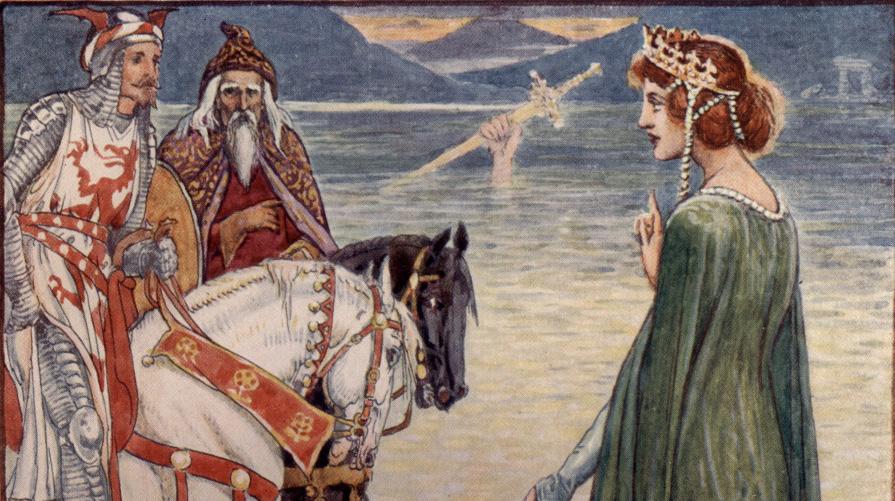
In this single session course, you are invited to curl up with a blanket and hot beverage and enter into the world of Camelot. Presented as a narrative that casts you as visitors warmly received into the court of Camelot at the Feast of Pentecost, you will experience the sights, sounds, and smells of the great feast and witness the deeds done by the greatest knights in all the world. For this course, you are invited as a family: register once and then gather your group for this literary journey. See you in Camelot! (April 24th, 2026)
“Who is God?” “God is a Redeemer.” In this course, students come to understand the character of God, as shown through His covenants. The God’s Great Covenant curriculum teaches simple theology through story, catechism, etymology, and historical tie-ins.
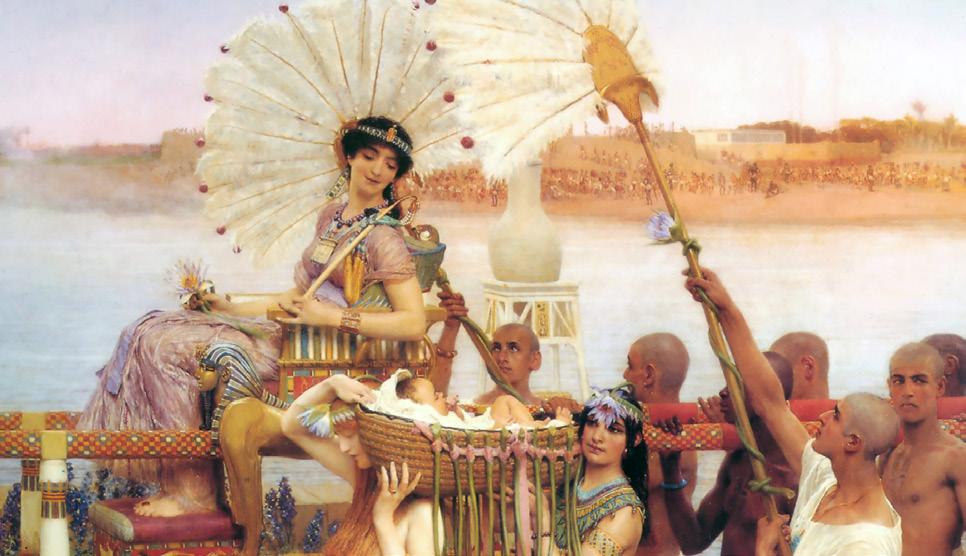
This first book presents the overarching Old Testament themes of the promises and power of God, recounted in simple, weekly stories. Students will follow along with God’s people, see how He leads them and keeps His promises, and learn how the stories of God’s people begin to point us to the coming Savior, Jesus Christ. Not only will students learn story: they will understand the framework of the Old Testament: the Tanakh books, types of literature contained in the OT, and repeating themes seen in symbols like kingship, water, and slavery.

In this summer class, students will consider actions taken by characters they will come to know and love in J. R. R. Tolkien’s masterpiece The Hobbit. Students will write about what was done and how, but they will spend most of their time contemplating why a character made a specific decision and whether that choice was a good choice. This will require them to read closely and think deeply. Working through the first half of The Lost Tools of Writing Level One will provide students with the tools to think and write well. They will learn questions to ask, ways to organize their thoughts, and rhetorical devices that will delight their readers even as they persuade their readers toward truth. New skills will be introduced each week, and students work toward mastery of those skills by practicing them throughout the course. They will be assigned weekly reading and pre-writing or essay homework and will make brief posts in class discussion threads. We will read portions of books in class and spend time conversing about these stories together. It is my hope that students will leave this class with a love of story and the ability to share with others the truths that exist in these tales.
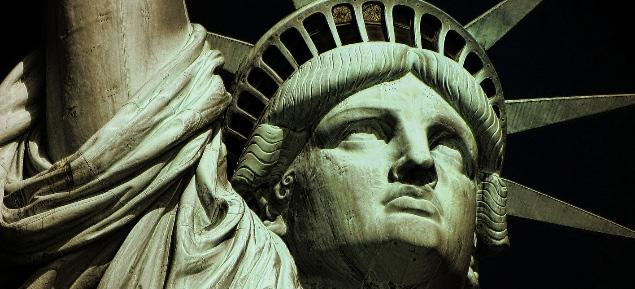
History has the potential to be the most thrilling subject, but too often we bog it down with dates and facts, forgetting that history is about stories and people. And when history is not being reduced to a simplistic 3x5 card to memorize, the narrative is often being used to further identity politics. But to be able to properly make sense of the past, we must treat historical characters like real people, and not just reduce them to saints and sinners. The events of history are a fascinating tangle of reasons made by complex people just like us. Because of all this, history can be really daunting for people who both know how complex it is and also love how fun history can be, but they don’t have the knowledge or time to spend trying to navigate all the materials. This course provides students with the tools to both truly appreciate and enjoy American history. Drawing from classical Christian thought and readings from multiple sources, this course equips students with tools to read history both critically and charitably. They’ll gain a richer understanding of the events and people who shaped America, and they’ll grow in their ability to think historically with nuance, imagination, and wisdom.

The course will present an overview of astronomy including topics such as history, the night sky, the sun, planets, asteroids, comets, exoplanets, stars, black holes, our galaxy, the large-scale structure of the universe, cosmology, and a universe fine-tuned for life. Besides teaching astronomy, this course will also equip students to defend their faith with sound reasoning and confidence in a secular environment and to engage in thoughtful discourse related to contemporary scientific discoveries. It will teach discernment about philosophical agendas and provide the tools that will help students better relate and integrate what they believe by faith to what they learn about science. The course will also strengthen their faith by introducing them to the fine-tuning of the constants of physics, which is widely regarded as the most persuasive current argument for the existence of a Grand Designer for the universe. Can science and Christian faith be reconciled? How do we relate astronomical discoveries of our century to the Christian worldview and Scriptures? What is the evidence that points to a beginning for our universe? What are the limits of science? Does science unveil fingerprints of a Superintelligence behind the cosmic blueprint? These are some of the questions we plan to address.

The alarm has sounded ever since Rachel Carson’s Silent Spring was published in 1962. What was once a movement about the harmful effects of synthetic chemicals has warped into a narrative claiming that humans are destroying the environment through climate change, desertification, mass extinction of species, and famine for the entire human race. It makes one wonder, are we truly headed for such peril? The narrative tells us humanity is a blight on the earth; Scripture tells us mankind is God’s image-bearer, charged to “work and keep” creation. Christians should resist fear-mongering and instead respond with clarity and hope. Building a biblical philosophy of environmental stewardship rooted in piety rather than panic, students will be trained to think critically about environmental claims and to understand the created order as a gift entrusted to humanity. Lies such as, “humans are a blight on the earth”, will be explored, debunked, and responded to in a biblical way. Questions surrounding climate change and loss of biodiversity will also be discussed.

This course exists to provide students with a classical ad fontes alternative to modern geometry courses & textbooks. During this course, students will study 5 books of Euclid’s Elements (I–III, V–VI). The vast majority of time is spent with Euclid, although two other texts are introduced to provide background, context, and perspective. The class and coursework are organized and arranged to first disorient students away from their preconceptions regarding mathematics. Next, students are immersed in a beautiful world of numbers to allow them a sense of the aesthetics of math. After those preparatory experiences, students are introduced to Euclid and learn to follow and create proofs, perform complex constructions, and think critically about the nature of geometry. In short, students will learn to think like mathematicians rather than mere computers.
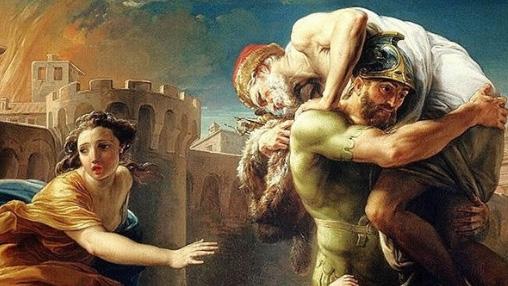
Introduction to the Ancient Great Books is a course designed for middle grade students who desire to study the Great Books but may be concerned about the pace and level of material normally attempted in a Great Books course. What makes this course distinctive is that focal literature selections are paired with history selections as well as a “living” book and the time spent with individual works is extended over several weeks, so that the student is reading short sections from three works each week. This allows the student to absorb the material at a moderate pace and also allows ample time for connections between the works. Students are provided with a comprehensive reading guide for all primary weekly assignments in both ancient history and literature which includes explanatory notes as well as questions that help the student to identify the major points and themes of each selection as they read. Optional assignments of chronological history “spines” to give more context to the readings as well as movies, videos, music, and art that relate to the focal material will also be provided. Composition instruction will be an introduction to the progymnasmata levels of chreia/maxim and confirmation/refutation. These assignments are integrated into the history and literature being studied, and will consist of two essays per semester, one from each level. Assessments will be based on five narrations per semester of weekly reading. Daily time spent on assignments is expected to be approximately two hours.
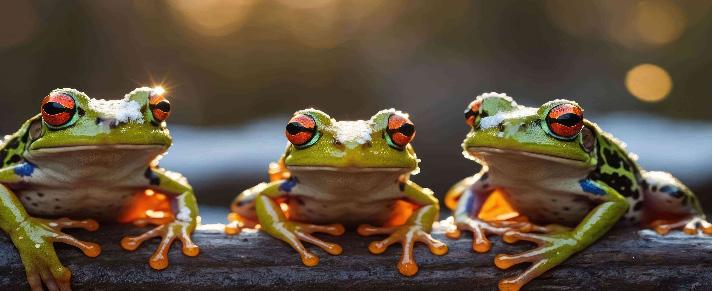
Biology is the branch of science that studies the language of God for life. Paul, writing to the Romans, says that God’s “invisible attributes, namely, his eternal power and divine nature, have been clearly perceived, ever since the creation of the world, in the things that have been made”. The structure of life itself testifies of God’s power, among other attributes. Studying biology is studying in detail how God executed his eternal decrees in Creation, so that we can glorify Him for all that was made. Throughout this class we will study how life is organized by God, starting at molecular level, and developing through the kingdoms of life and the study of the ecological relationships between different living beings in different environments. By the end of this class, we will have visited most of the different areas of Biology and learned with each one how God organized life to glory of His name. May He teach us to praise His holy name for the works of creation.

This class will teach you the basics of Hiragana and Katakana, along with fundamental Japanese grammar. The curriculum is designed to help you acquire practical Japanese, especially useful for daily conversations. As the class progresses, we will also incorporate Japanese conversation practice, helping you use Japanese in real-life situations. Additionally, the class aims to help you become capable of reading passages from the Bible in Japanese.
9–12)
Calculus for Everyone is a classical approach to mathematics that allows any high school student who has completed a first-year algebra course to learn the fundamentals of calculus. This integrated course examines the history of its development, beginning with the problem of change, and focuses on “the concepts of calculus proper” (Stokes, 2020, p. xvii), encompassing physics and philosophy of motion as well as “real calculus: derivatives, integrals, limits, and the Fundamental Theorem of Calculus” (p. xxvi).
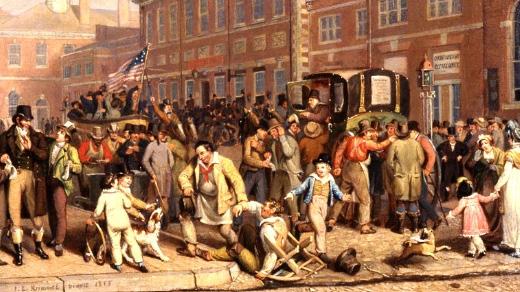
This 16-week course is on American government. Students will take midterm and final exams and write two 1,000-word essays. This course is approved for dual credit through Colorado Christian University. We discuss the ideas that shaped the American political system and American political life, including liberty, equality, individual rights, self-government, federalism, Christian religion, etc. I will lecture on the Declaration of Independence, the Constitution, the Bill of Rights, and major figures of American political history. Students will watch one lecture per week and read primary-source material from American political history that relate to the theme of the lecture. In a weekly 90-minute session, we discuss the lecture and the assigned readings.
11–12)
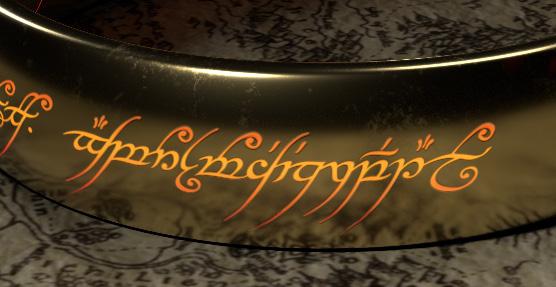
Dive into the captivating world of J. R. R. Tolkien and explore The Lord of the Rings as the culminating integration of his academic and literary works. While commonly associated with other fantasy works like Game of Thrones Tolkien did something completely unique and invented not just a rich secondary world in Middle-earth, but also created the text of The Lord of the Rings as part of that world. By studying how Tolkien structured The Lord of the Rings as an ancient epic, students learn not only a deeper appreciation for Tolkien’s literary craft, but also gain a gateway into the larger study of the humanities through fantasy, theology, and imagination.
Kepler Education has partnered with several like-minded institutions to help college-bound students successfully navigate their path to post-secondary education. Whether it is a grant or dual enrollment credits, each of our partners offers Kepler students a unique opportunity and educational experience that is suited to their particular calling and need.


Visit kepler.education/dual-credit to view courses offered in partnership with Faulkner University and Colorado Christian University