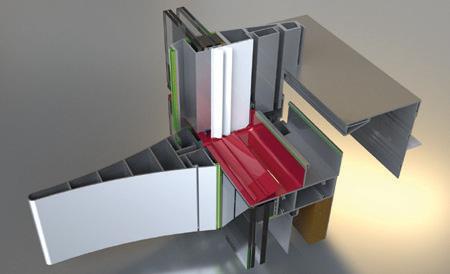
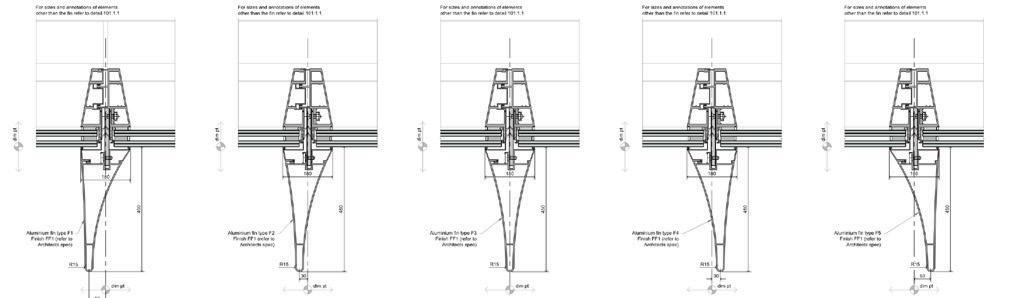
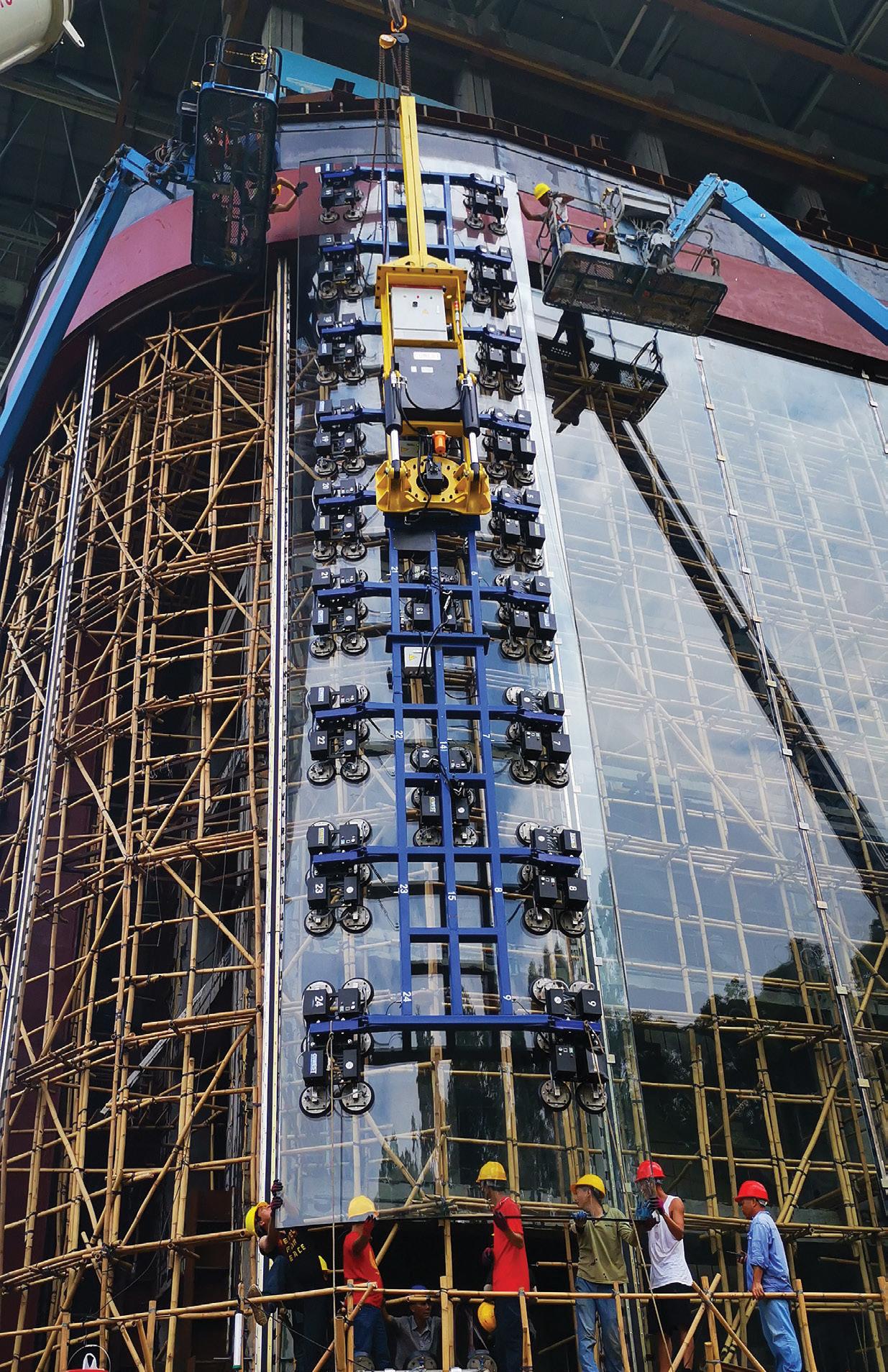
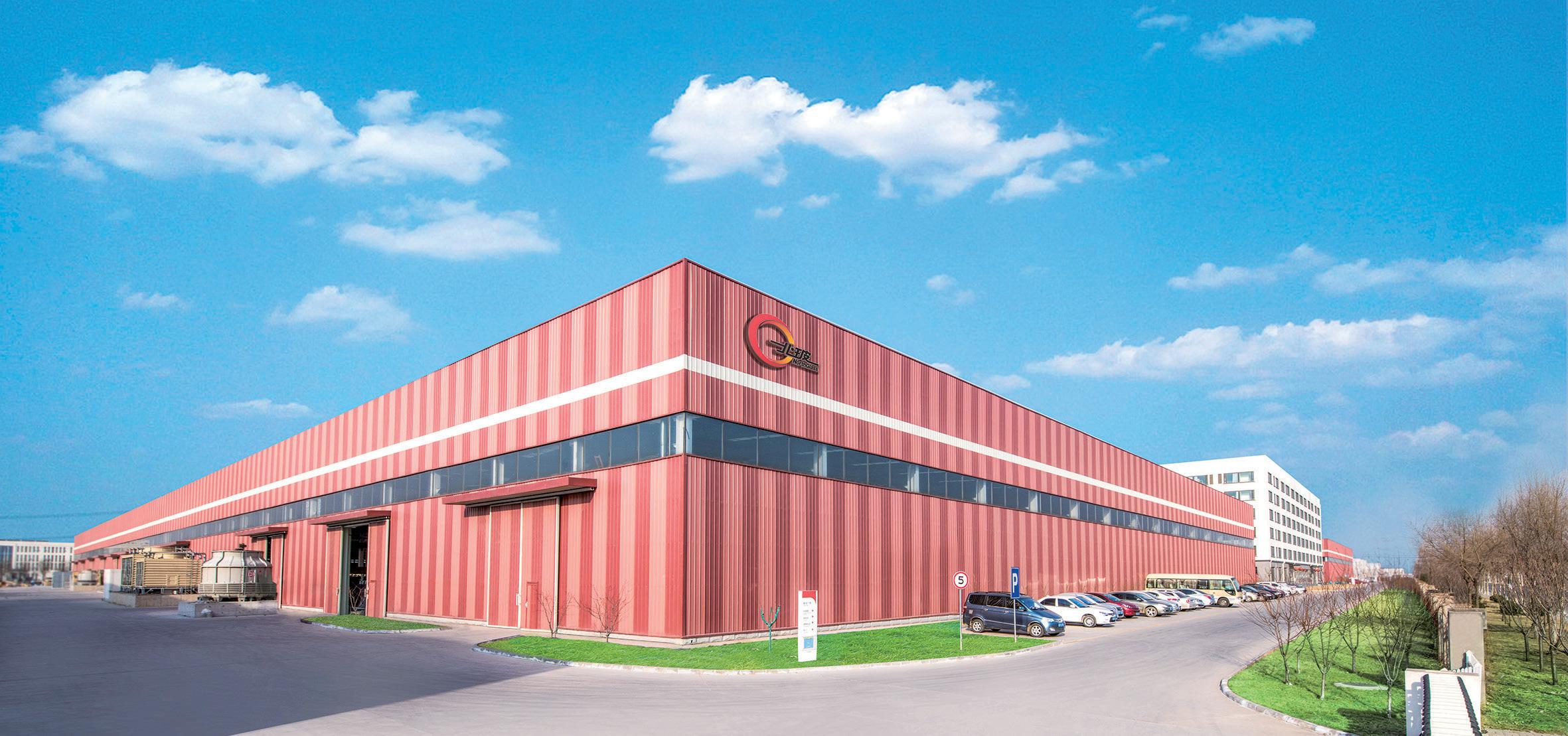
Address: Xiao Tang Nanhai Nonferrous Metals Industrial Park, Shi Shan Town, Nanhai District, Foshan City, Guangdong Province, China
Zip: 528231
Tel: 86-757-8555 8828 Fax: 86-757-8555 0238
Website: www.jma.cn, www.jma-aluminum.com
E-mail: sales@jma.cn, jmmaster@jma.cn
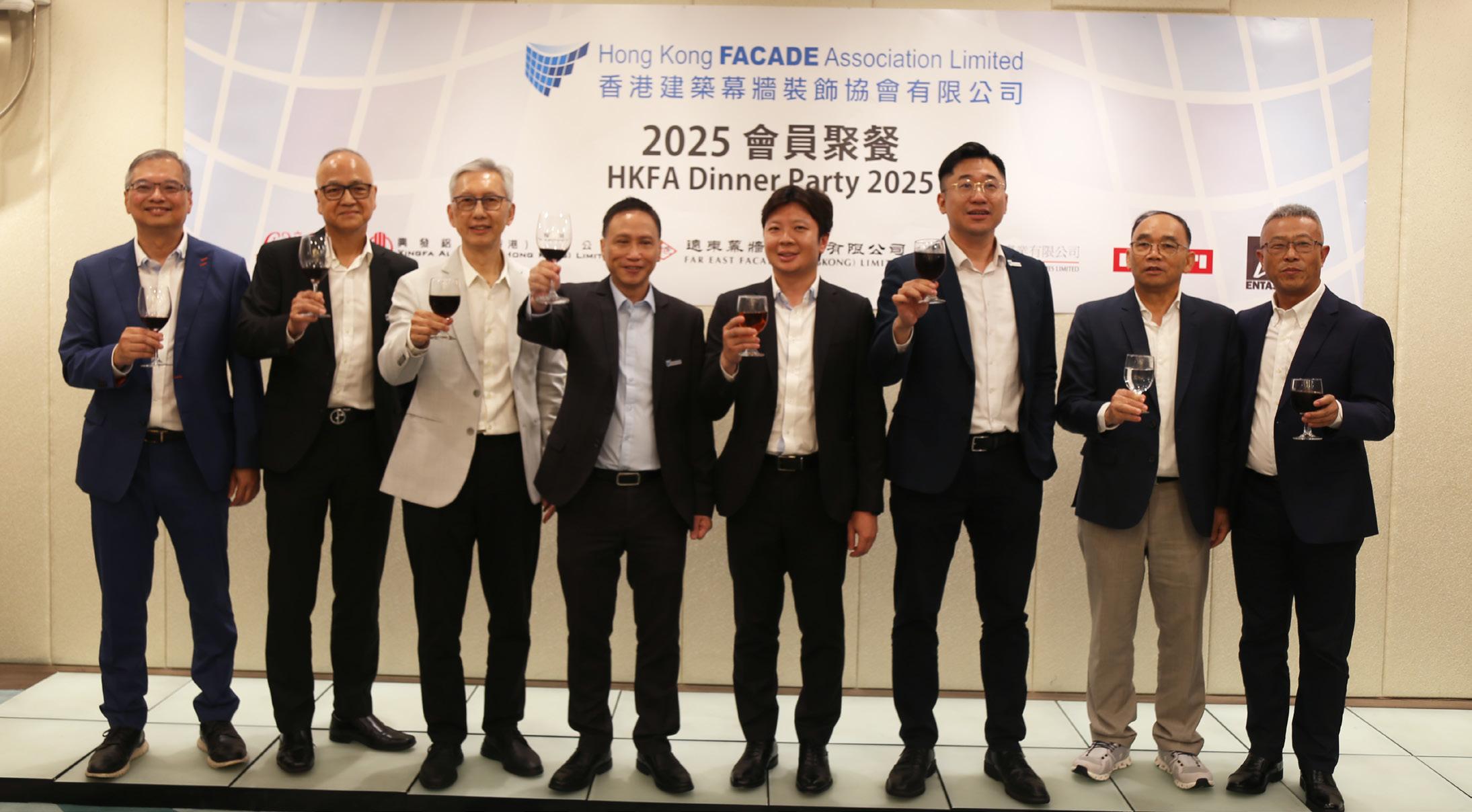
MESSAGE FROM HKFA
Photos: Swire Properties
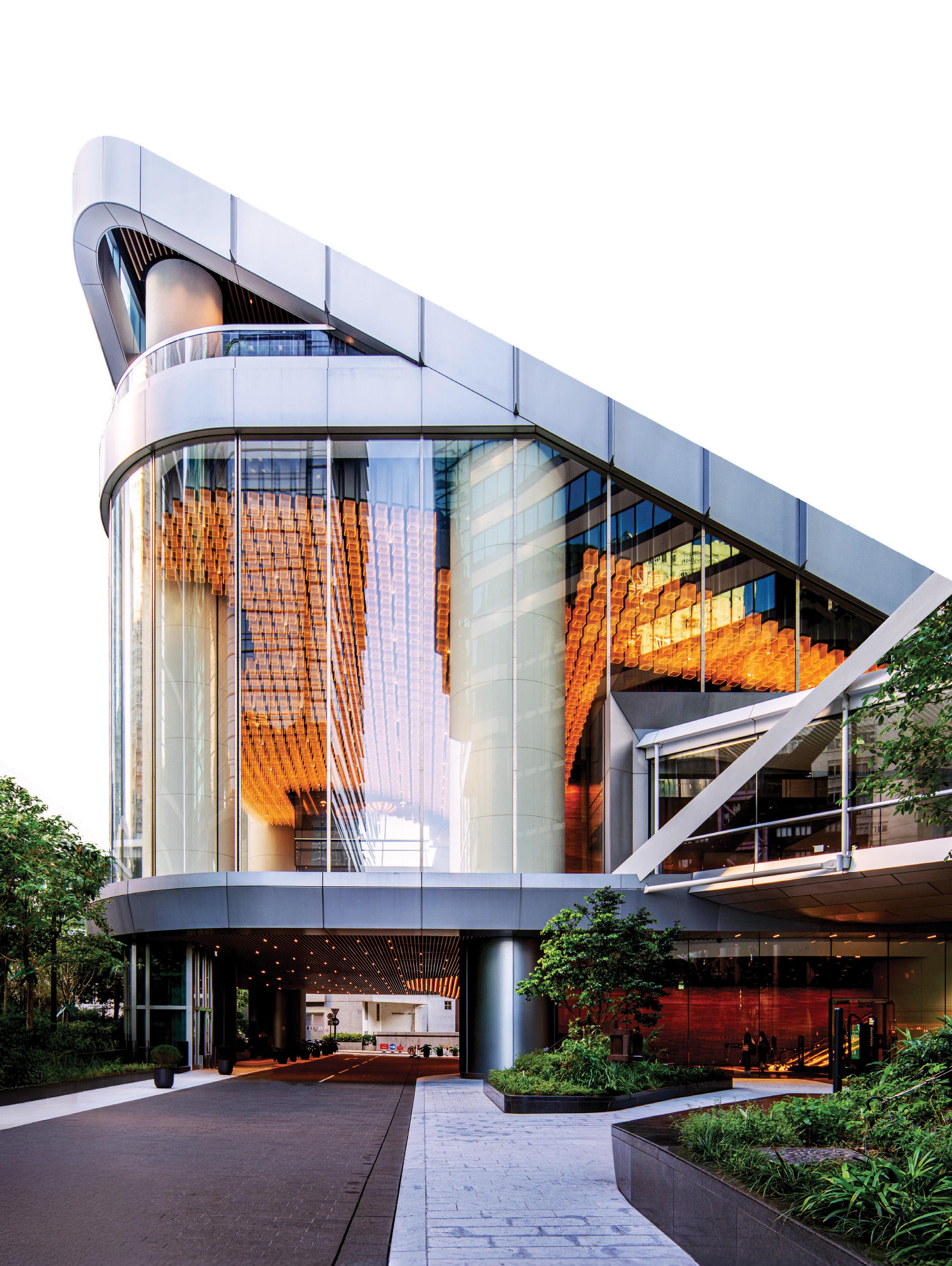
“During the design phase for Two Taikoo Place, our primary focus was finding a fabricator who could supply the signature 15m-high curved glass panels for the podium glass wall. In discussions with EOC, the team identified three fabricators globally who could handle the task, one of them being NorthGlass. The extended team, including EOC, the architect, and client representatives, visited these three fabricators, NorthGlass in China and two others in Europe, to meet their senior staff, assess capabilities, and inspect their factories. We came away incredibly impressed with NorthGlass’ facilities and equipment, which rivalled, if not exceeded, those in Europe. We had successfully partnered with NorthGlass on One Taikoo Place for the podium as well.”
Shaw explained that Two Taikoo Place features large 3m x 3m curtain wall panels, including curved and tapered corner units. A two-storey mock-up was built with a China-based fabricator, but the glass showed prominent stress marks from heat strengthening, an issue they couldn’t resolve. Since these panels are a key USP, visible distortions were unacceptable. The team quickly decided to control the IGU fabricator selection to ensure top quality. Having discussed the podium glass wall with NorthGlass earlier, they ordered sample flat and curved IGUs for review. IGUs from other suppliers were also tested in a beauty contest. Only NorthGlass and one European fabricator met the required standards and were shortlisted for the curtain wall.
“In the end, NorthGlass supplied 99% of the glass used in Two Taikoo Place. Everyone involved in the project has been incredibly impressed with the quality of the glass. IGU-related defects were also extremely rare. It has been a true pleasure to work with Paul and his team at NorthGlass.”
Philip Shaw
Swire Properties
Assistant General Manager, Projects
Two Taikoo Place: A New Civic Landmark for Vertical Urbanism
A Tower Rooted in Landscape and Community
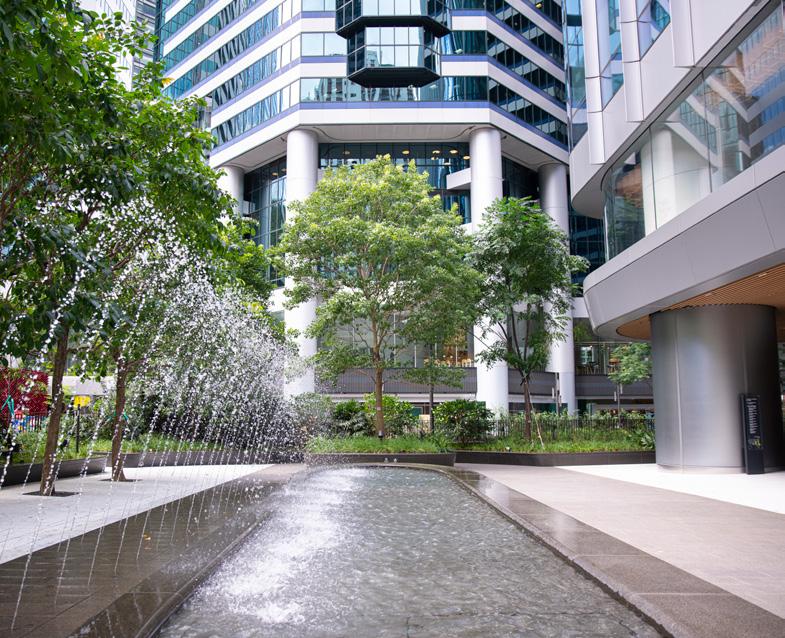
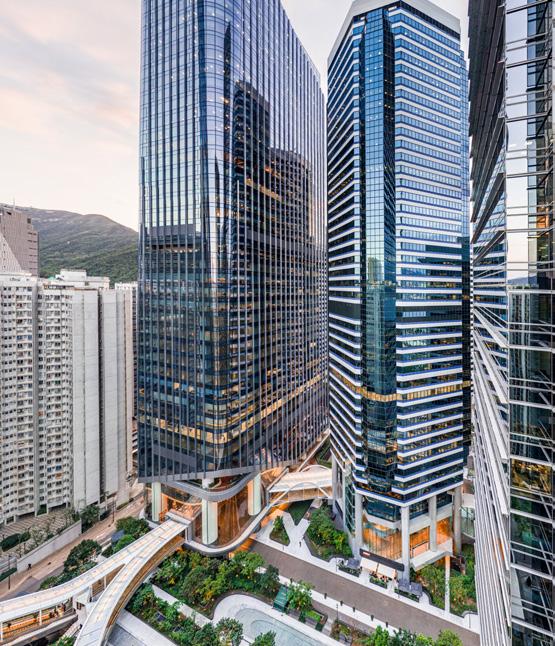
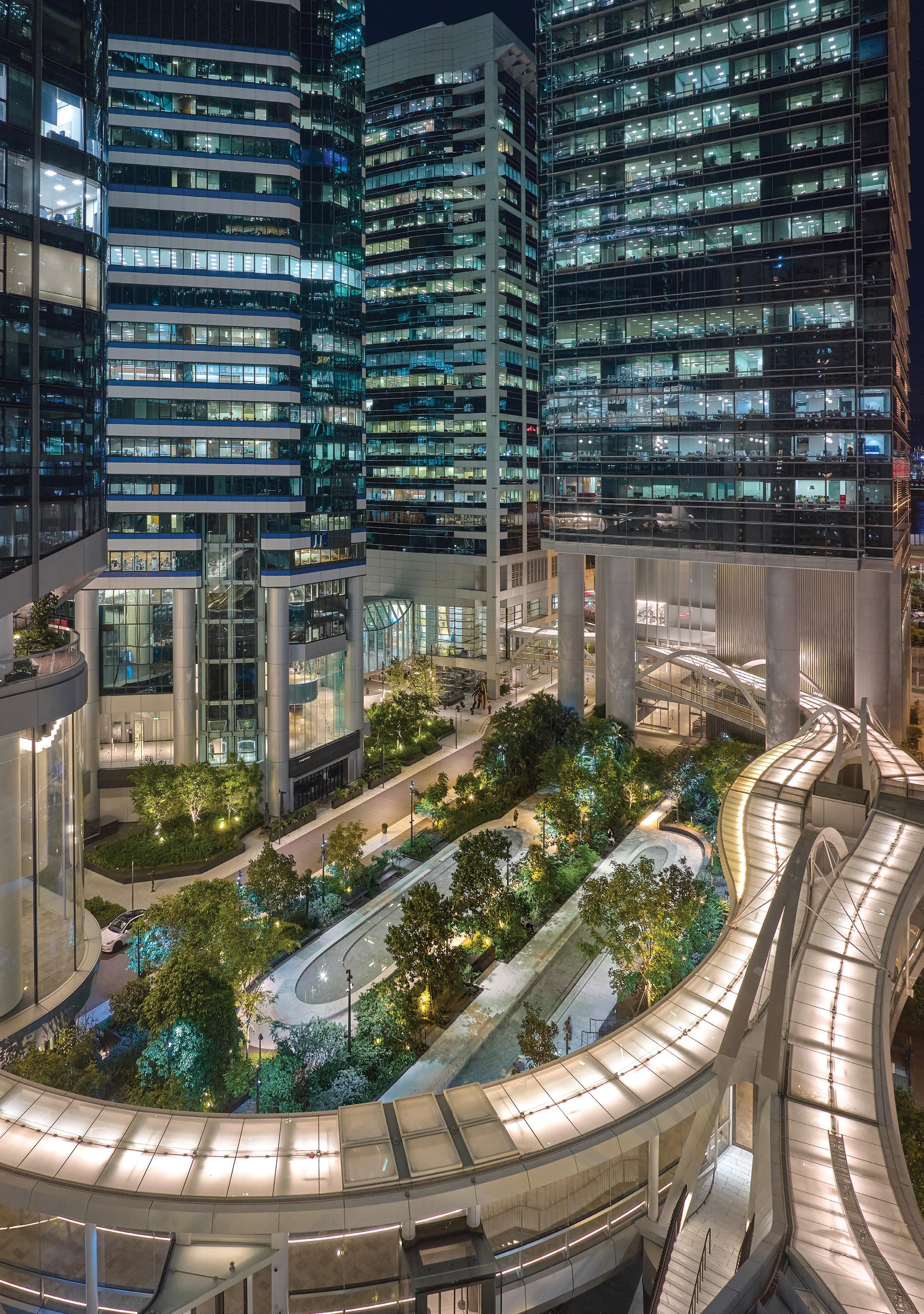
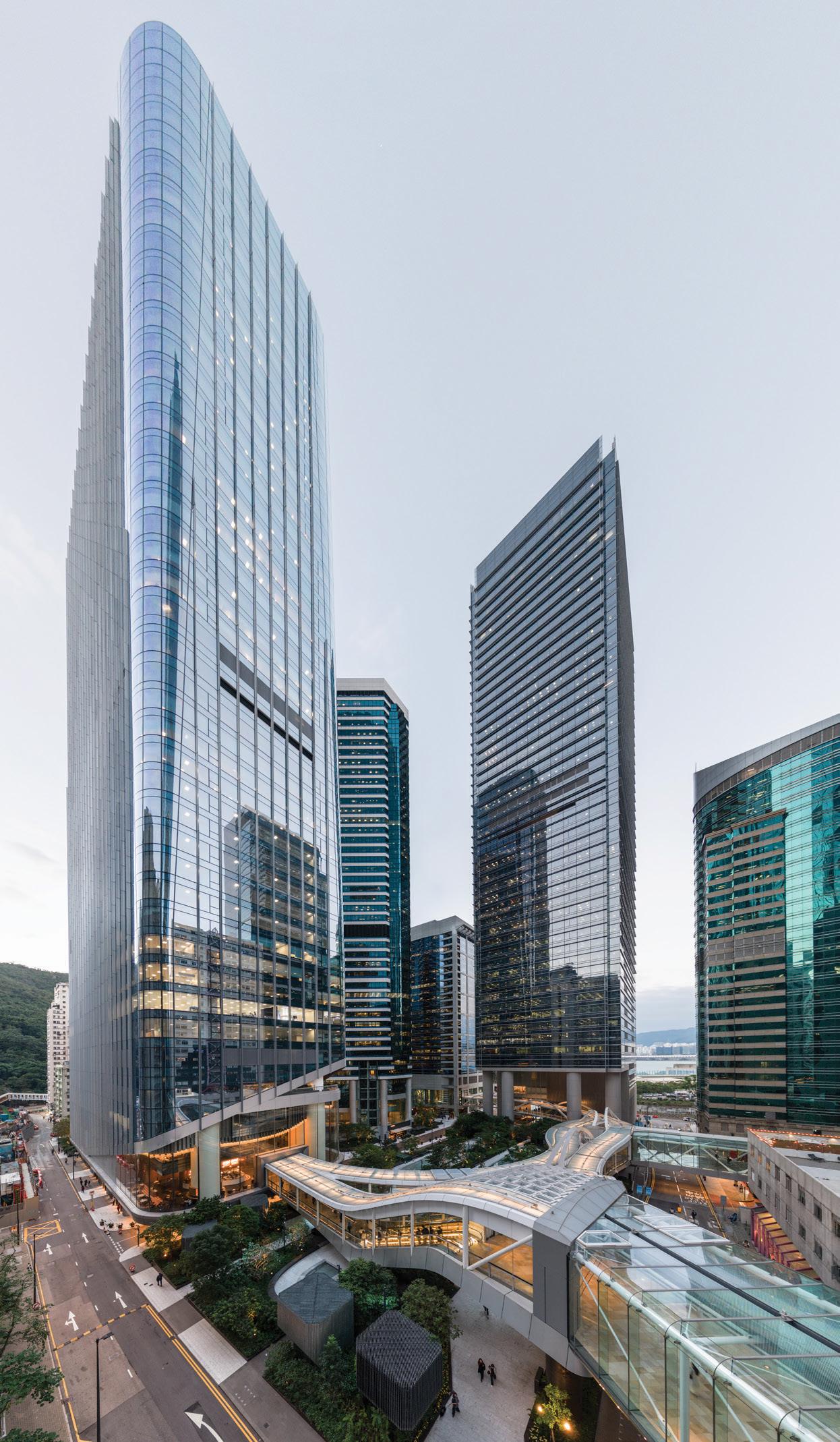
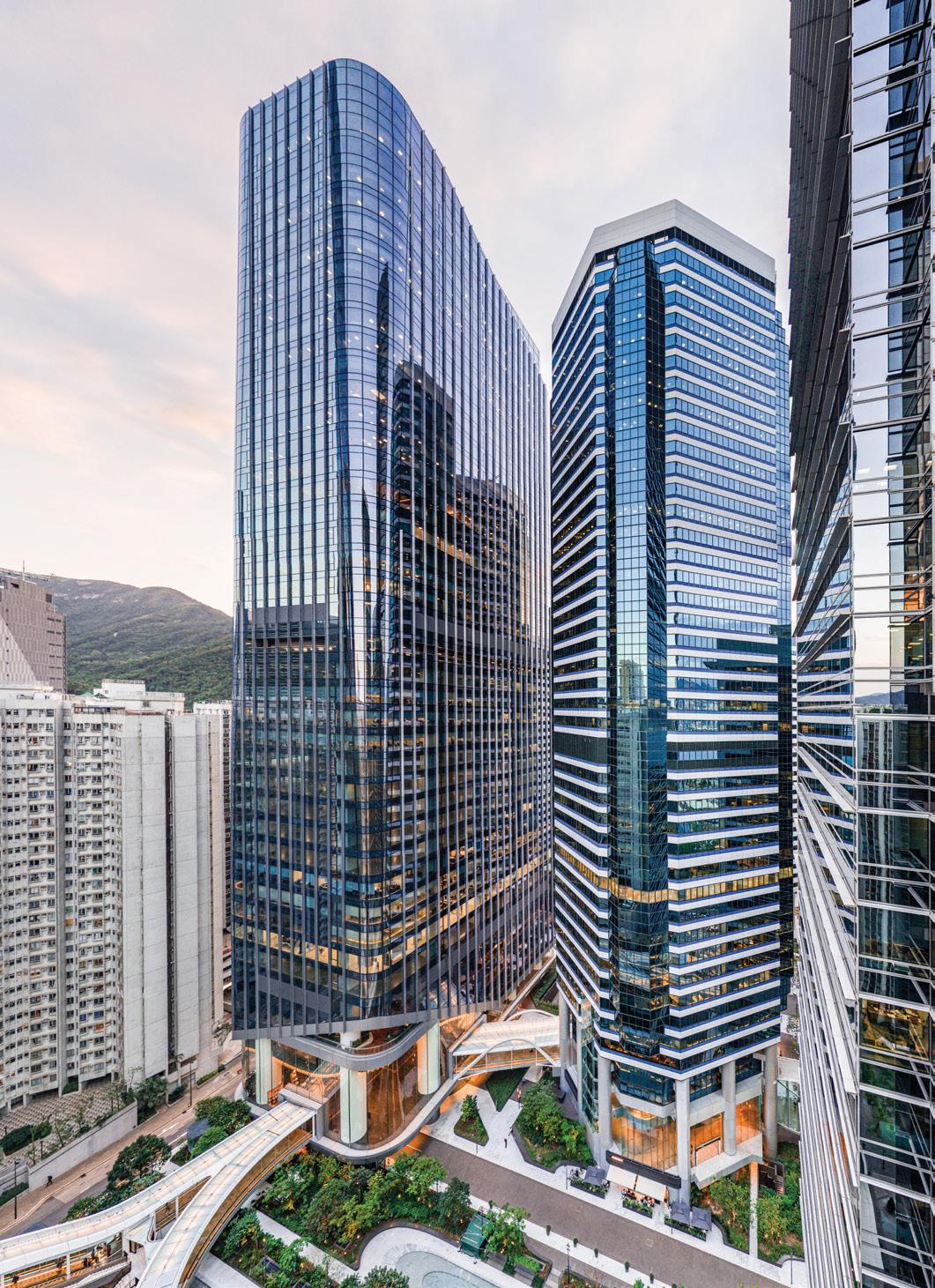
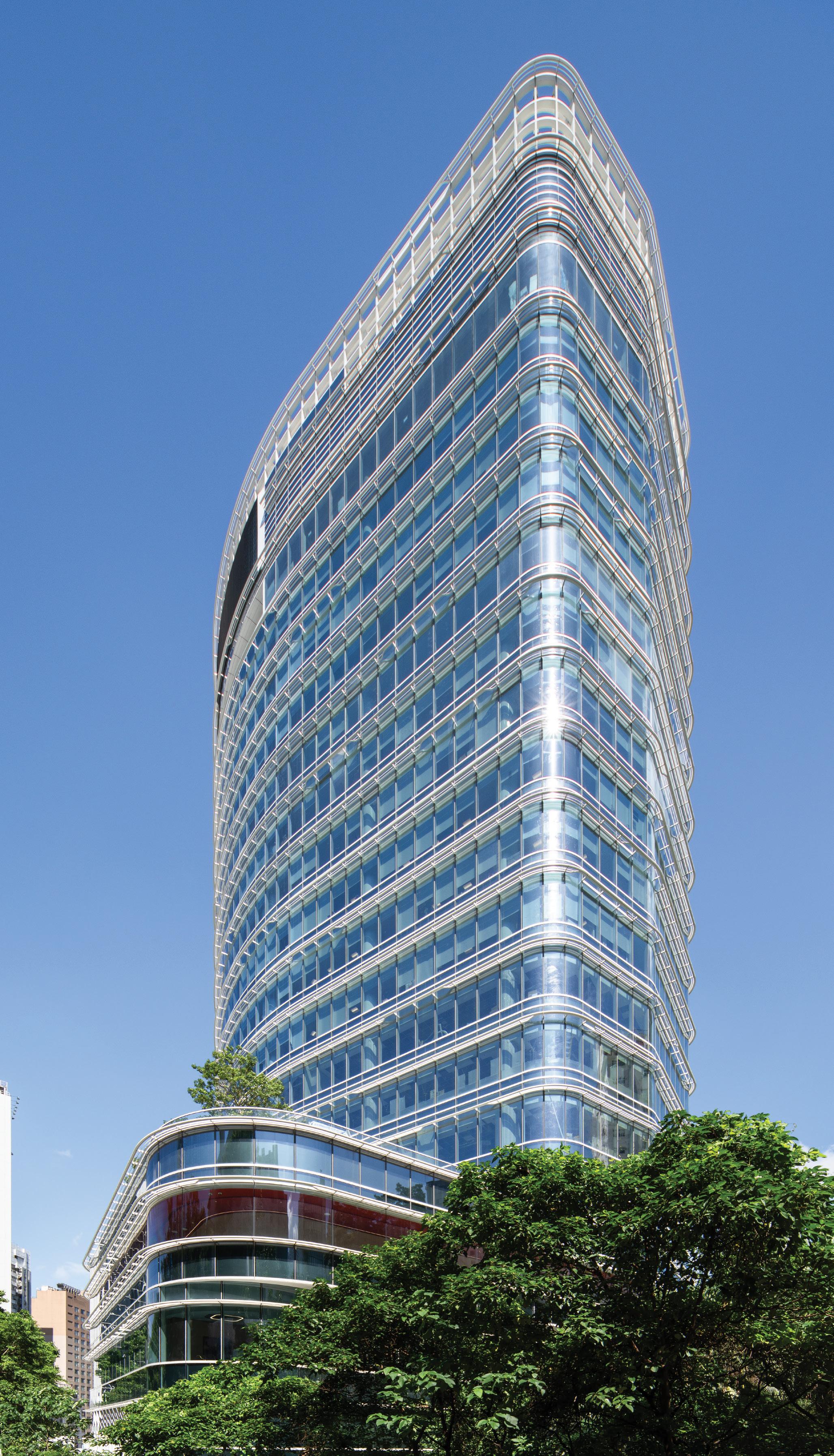
Rising 195 meters above Quarry Bay, Two Taikoo Place represents the latest evolution of Swire Properties’ longterm vision for transforming Hong Kong’s eastern harbour into a mixed, connected, and resilient district. The 42-storey tower adds roughly 1,000,000 sq. ft. of Grade A workspace and amenities to Taikoo Place while simultaneously giving back more than 70,000 sq. ft. of new public landscape.
Three ageing office blocks have been replaced by Taikoo Square, a continuous green plane animated by water features and a canopy of mature trees. The new open space establishes an urban foreground that recasts this part of the city from a commercial cluster into a civic precinct and a model for how vertical density can coexist with nature.
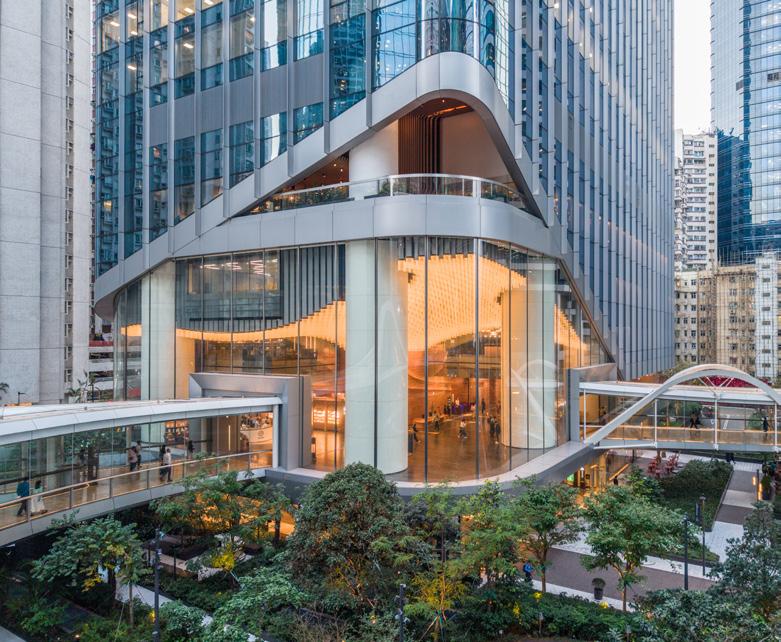
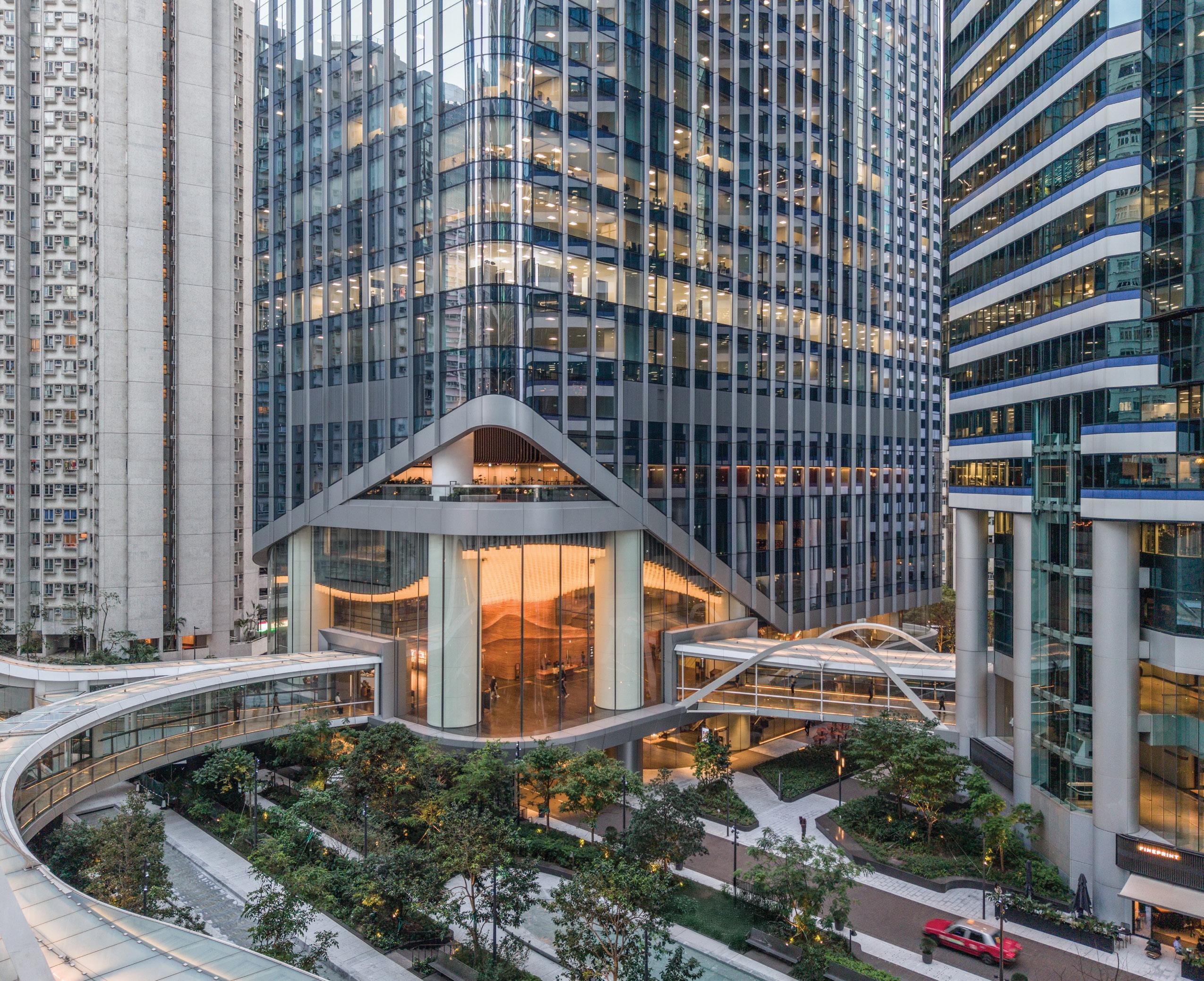
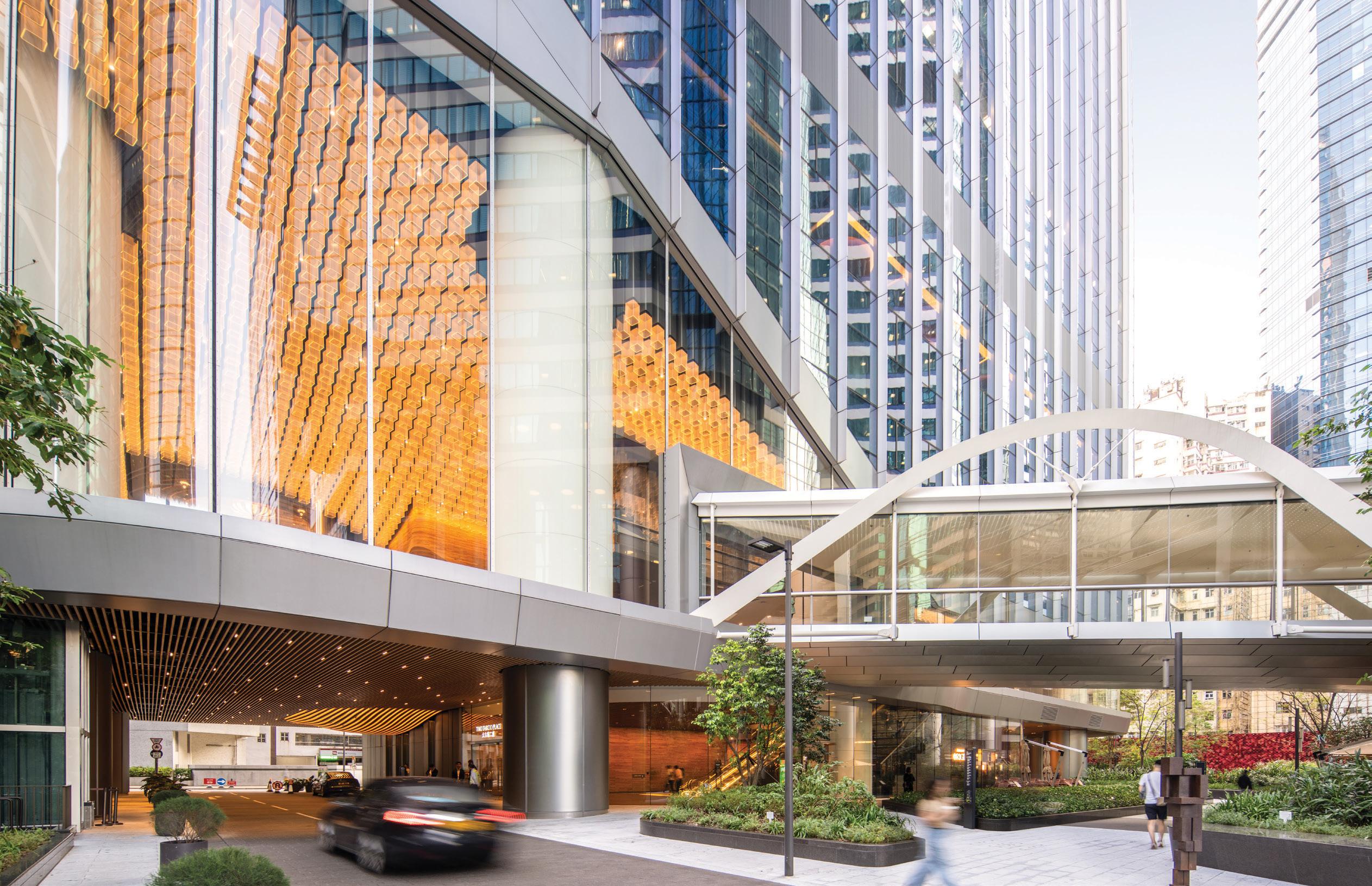
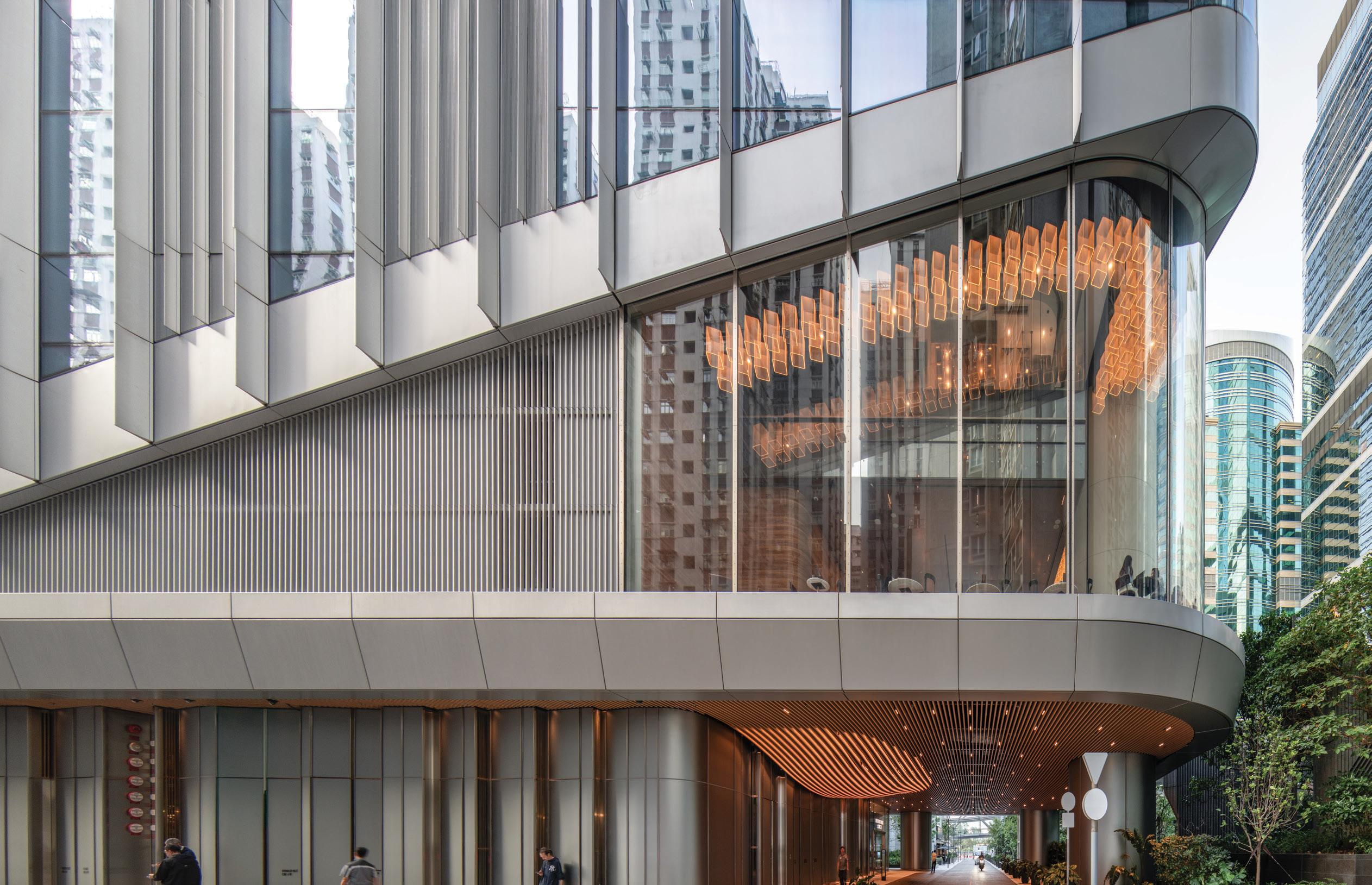
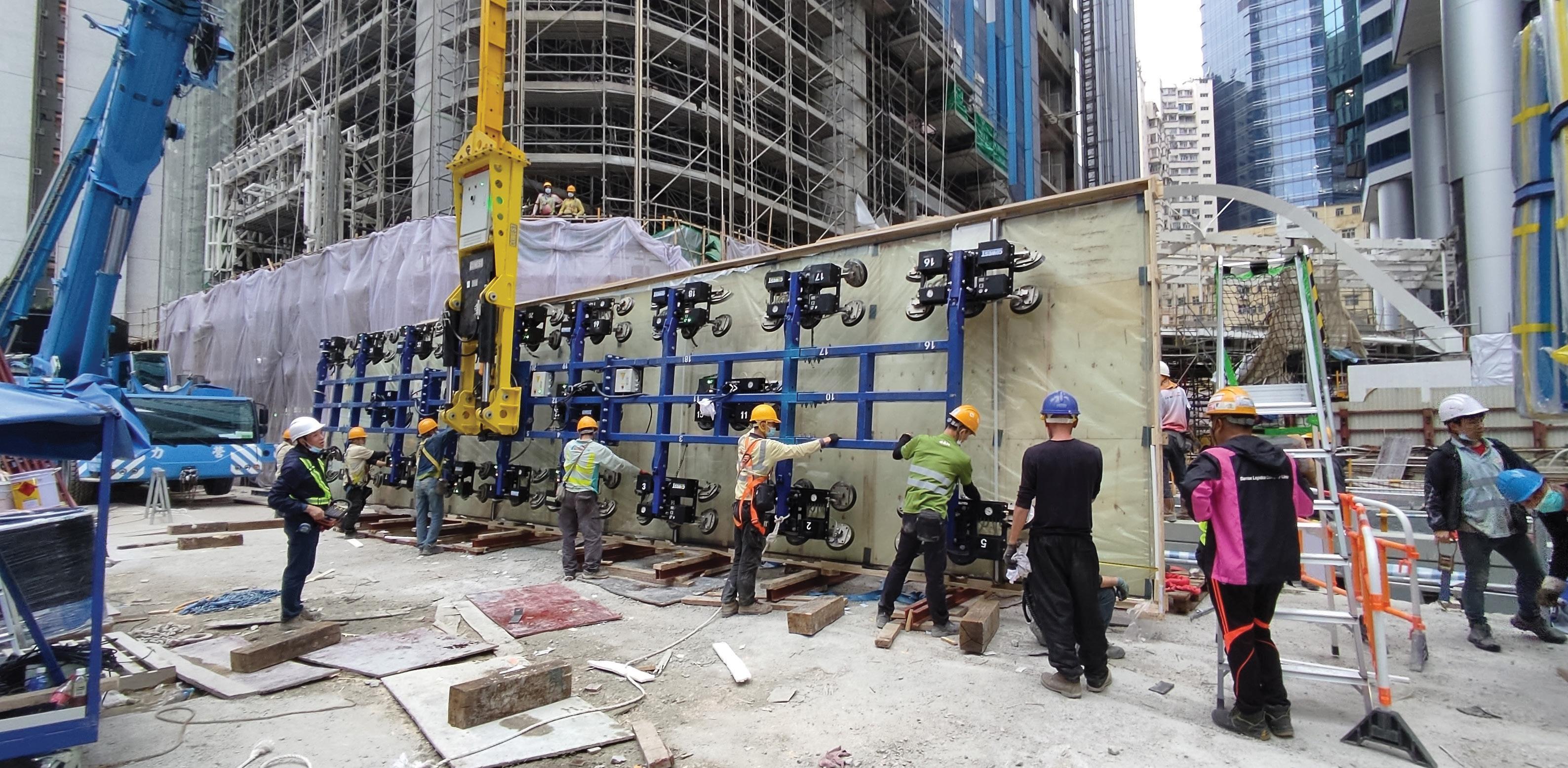
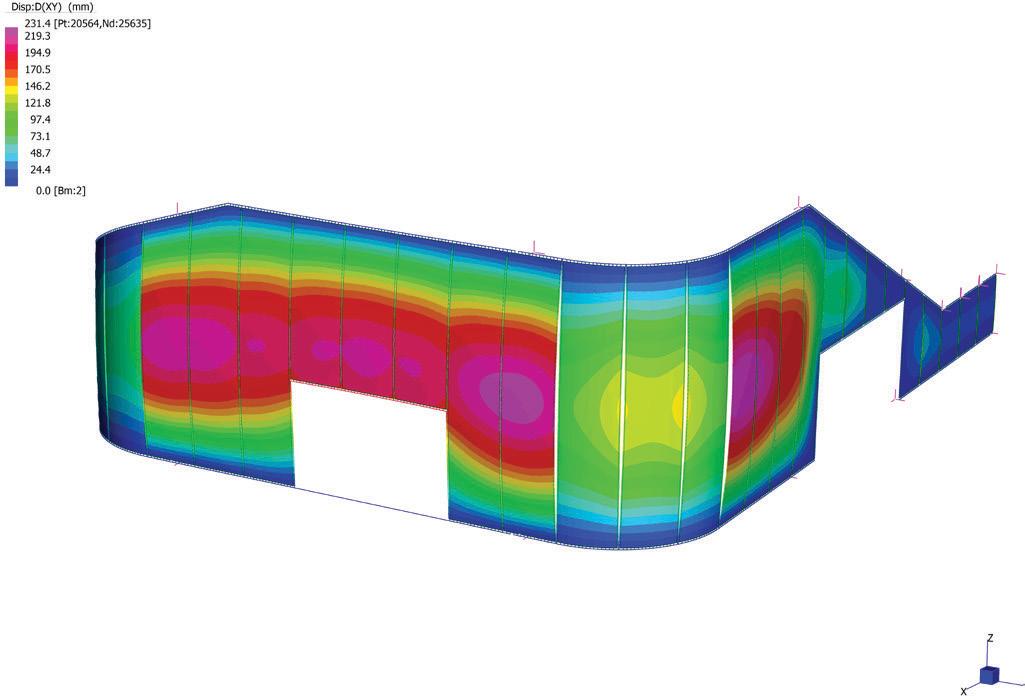
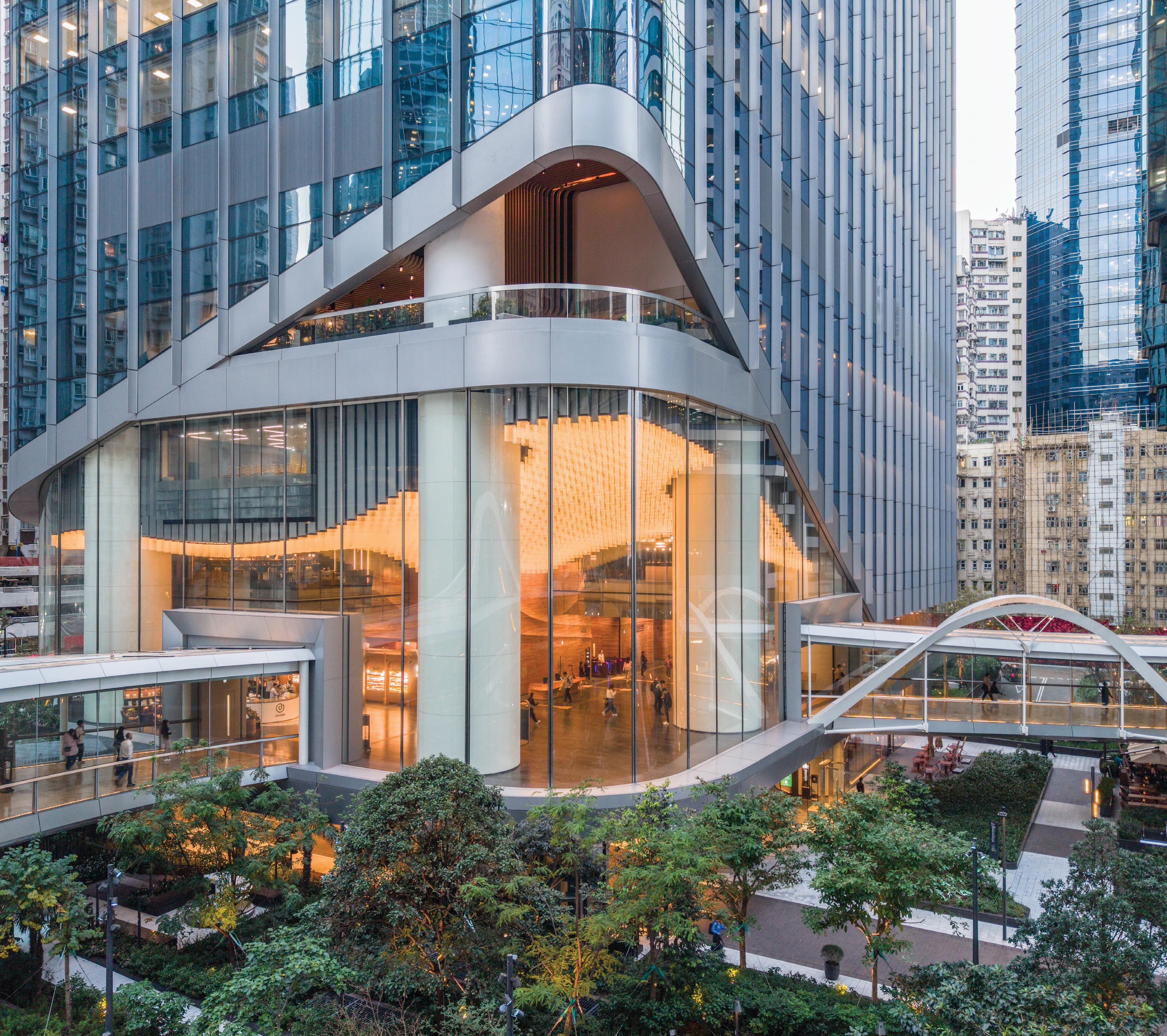
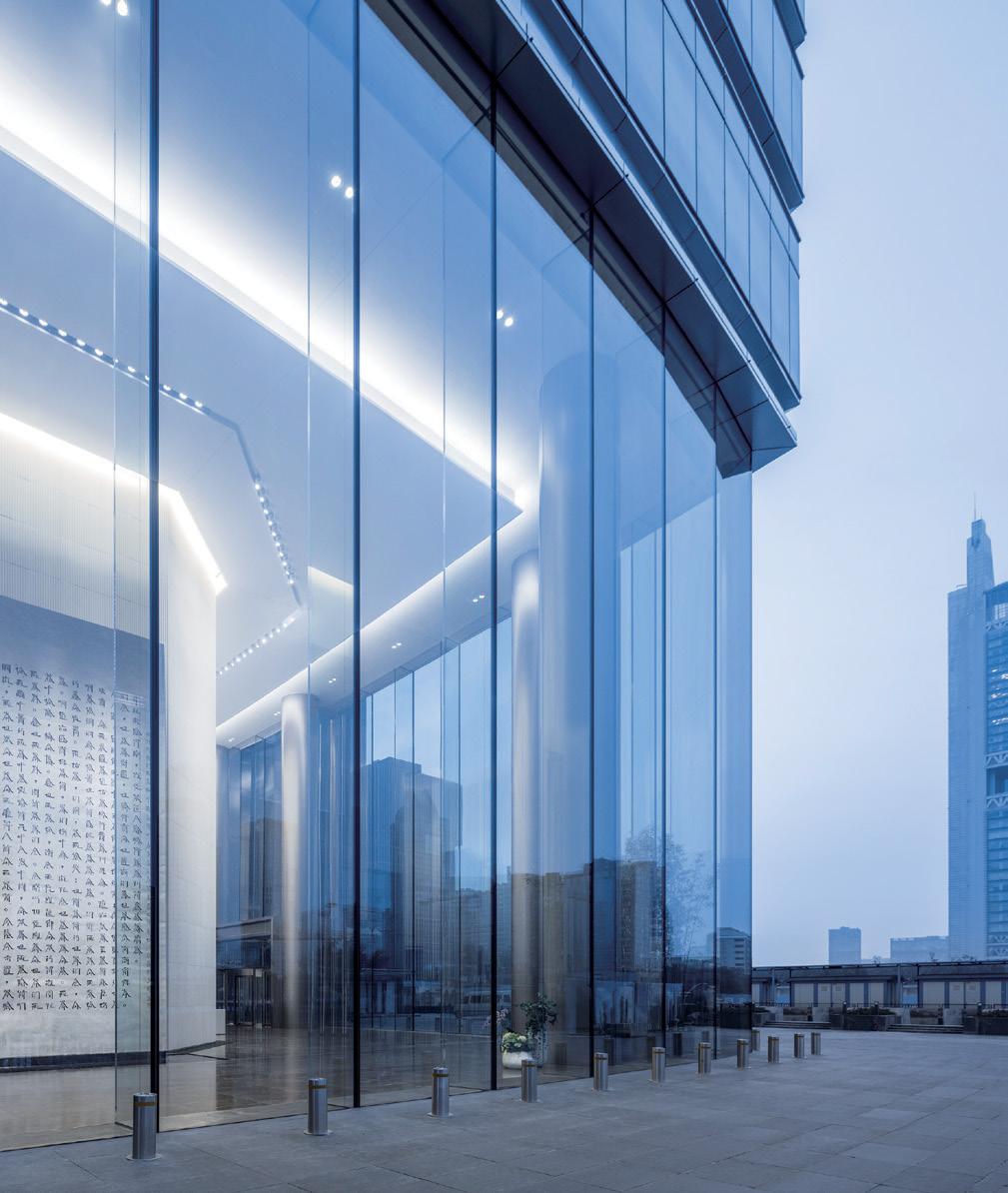
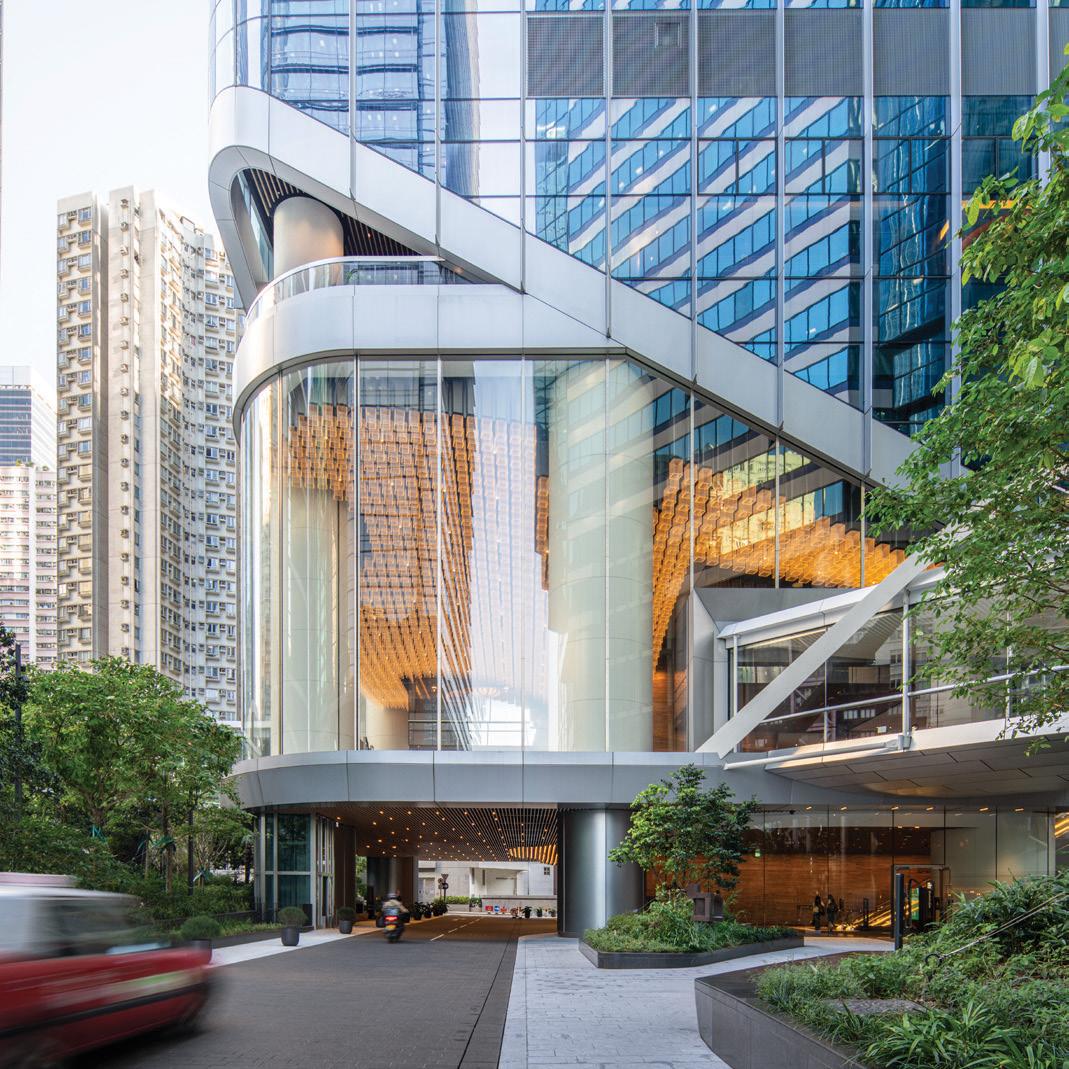
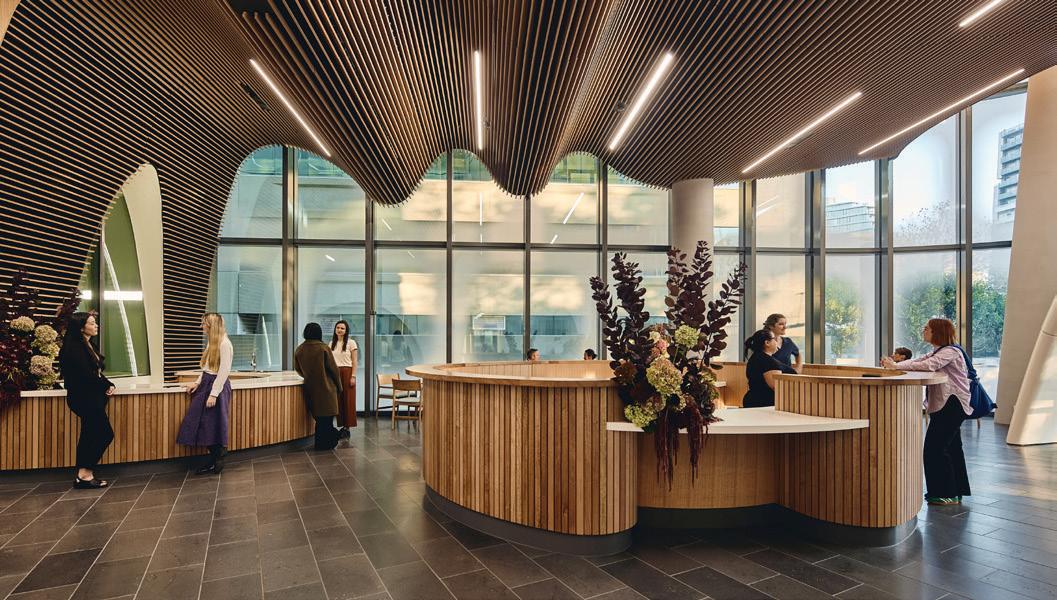
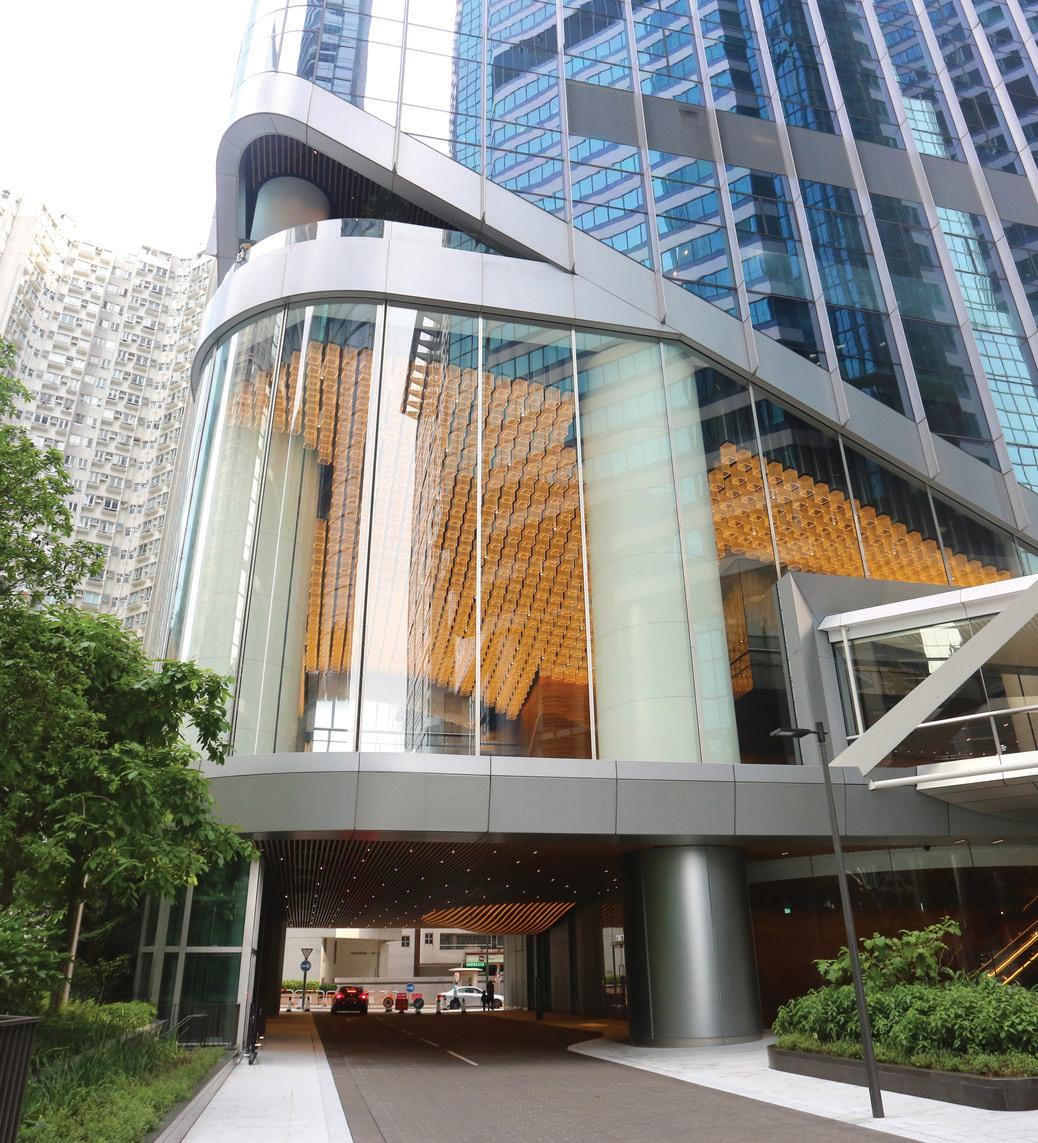
At the intersection of tower and city lies the Great Room, a three-storey atrium conceived as both threshold and public forum. Here, the building opens itself fully to Taikoo Square through a 15-metre-tall mullion-less glass façade, one of the most transparent structural glazing systems ever realized in Hong Kong. Curved glass panels, each approximately three meters wide and weighing more than 1,200 kilograms, span across a stainlesssteel tension-rod system engineered to resist typhoon wind loads of up to 265 kilometres per hour.
The resulting envelope is both enclosure and exhibition, a civic interior flooded with daylight where cafés, cultural venues, and co-working programs coexist. Within the dense urban fabric of Hong Kong, this degree of openness marks a fundamental shift toward permeability, inclusion, and visual continuity between interior and street.
Performance, Transparency, and Urban Generosity
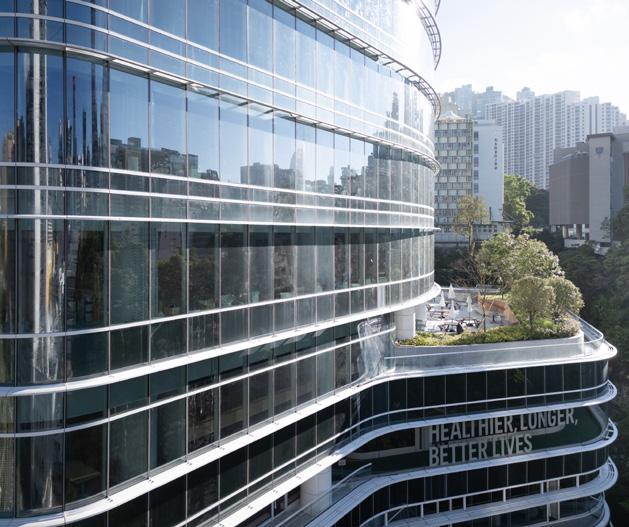
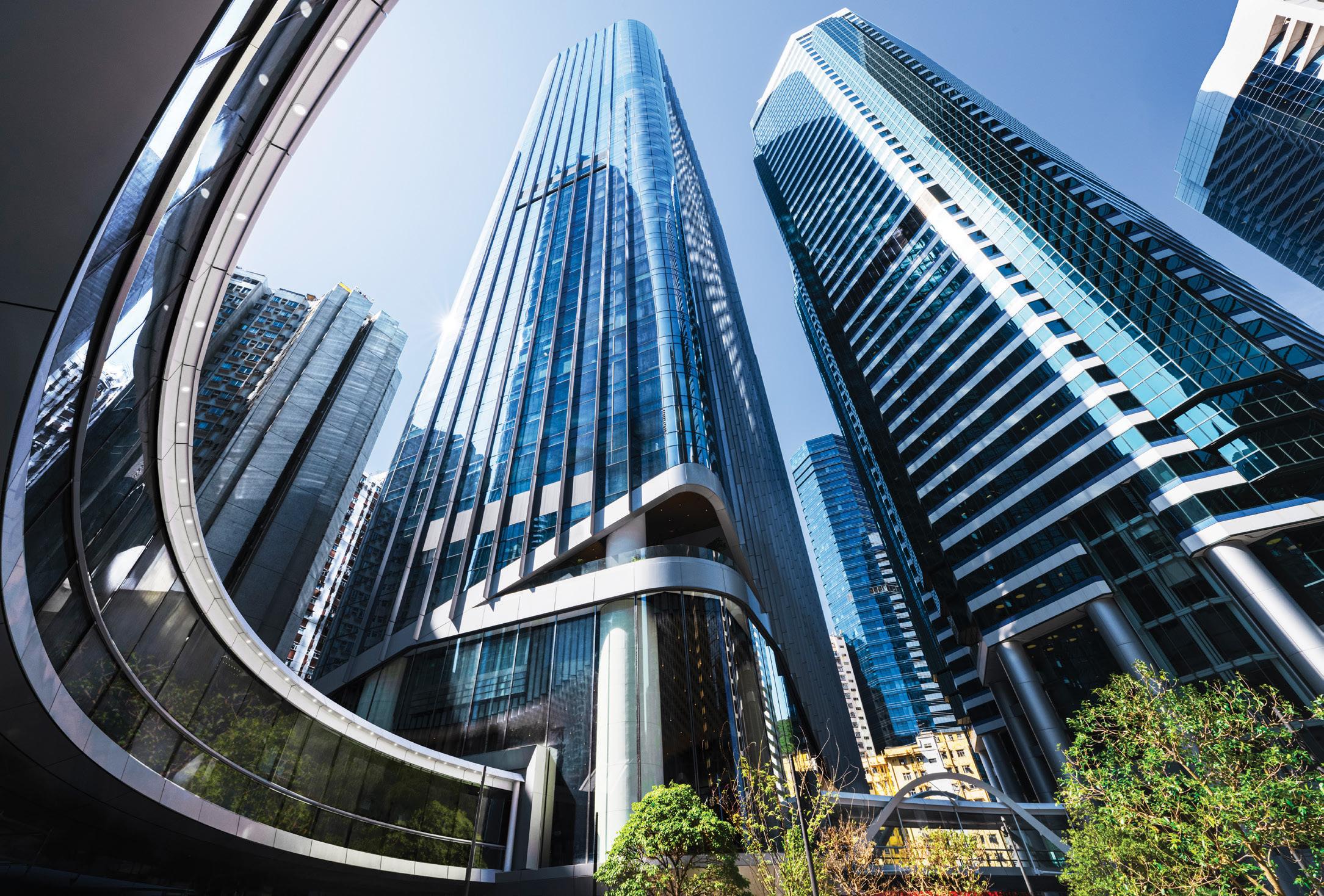
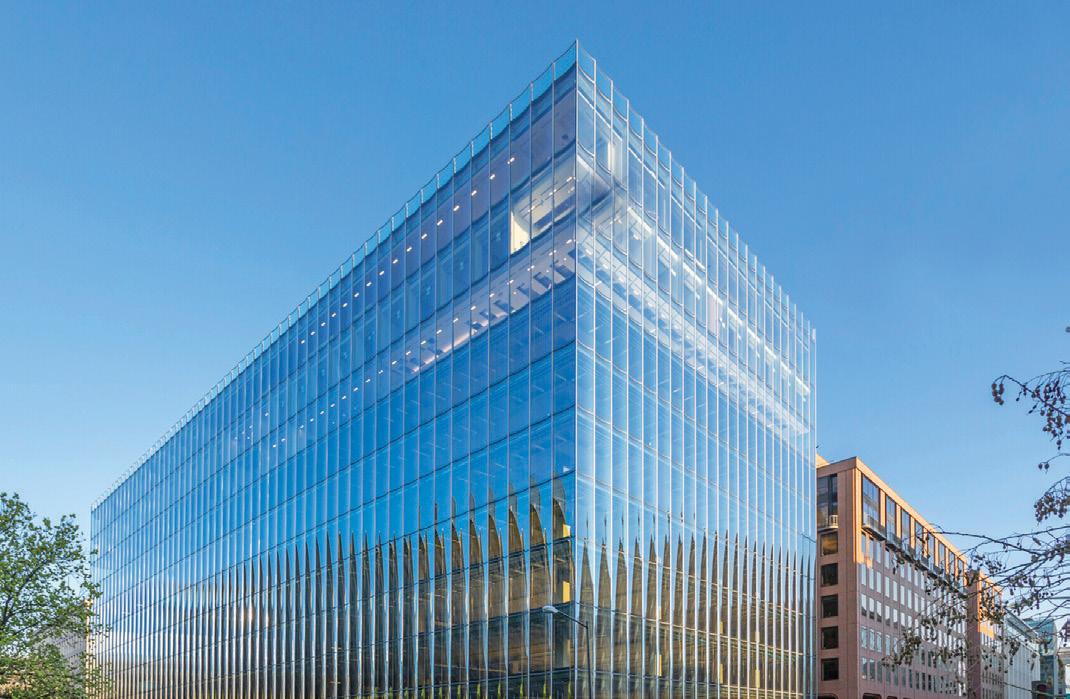
Above the Great Room, the tower’s massing introduces a new softness to the skyline. Its sculpted, tapering corners and continuous vertical fins lend the façade a kinetic quality that changes character as the sun moves across the harbour. Three-meter-wide full-height glass panels paired with slender aluminium louvers modulate daylight and solar gain, balancing transparency with energy performance. From a distance, the tower reads less as a monolith than as a column of shifting light.
Text: NBBJ Photos: Tam Wai Man for ROF Media
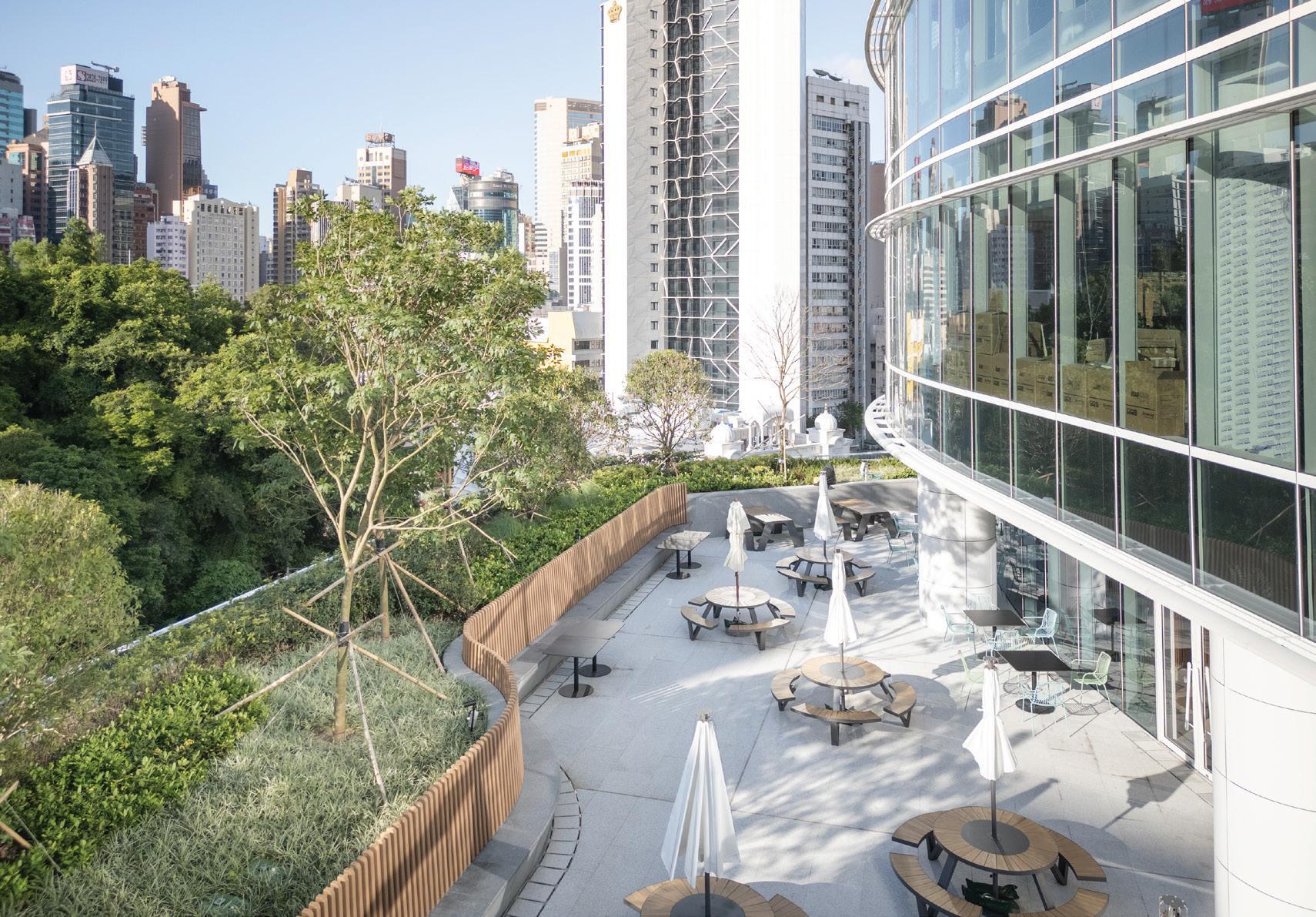
The first four floors of the tower extend the public realm vertically. Landscaped terraces, lounges, and co-working spaces connect directly with the activity of Taikoo Square, allowing the tower to function as a social extension of the park below. These levels are designed to encourage interaction, casual meetings, and informal gathering, integrating nature and amenity into the daily rhythm of Taikoo Place. Above, the remaining office floors provide adaptable and efficient workspace environments supported by advanced building systems and abundant natural light. The vertical composition culminates in a sky garden terrace at the top of the tower, offering panoramic views toward Victoria Harbour and serving as a place of quiet reflection high above the city.
Environmental performance underpins the project’s architectural expression. Two Taikoo Place achieves Platinum LEED, WELL, and BEAM Plus certifications through an integrated suite of sustainable systems. On-site renewable energy, generated by rooftop photovoltaic panels and compact wind turbines, contributes roughly six per cent of total demand. The high-performance double-glazed façade employs low-emissivity coatings and vertical fins to minimize heat gain while preserving views.
Greywater reuse, condensate recovery, and efficient irrigation reduce potable consumption, and 88 per cent of demolition material from
the former buildings was recycled or repurposed. A network of smart sensors and analytics continuously adjusts lighting and HVAC systems in response to occupancy and climate, maintaining comfort with minimal energy input.
Beyond technical achievements, Two Taikoo Place is recognized as a catalyst for integrated urban design, achieving the Urban Land Institute (ULI) Award for Excellence in 2024. By dissolving conventional boundaries between commercial and civic domains, it demonstrates how the vertical workplace can engage directly with public life. The transparency of the Great Room, the tranquillity of Taikoo Square’s landscape, and the continuity of elevated pedestrian links collectively extend the social field of Quarry Bay. In doing so, Two Taikoo Place reframes the high-rise not as an isolated object but as an infrastructure of urban connection, an architecture that mediates between the engineered precision of its façade and the informal life unfolding around it.
Through its synthesis of openness, performance, and urban generosity, Two Taikoo Place sets a new benchmark for the future of dense-city workplaces, reaffirming Hong Kong’s role as a laboratory for vertical design innovation.
Engineering Transparency: How Eckersley O’Callaghan Reimagined the Façade at Two Taikoo Place
In Hong Kong’s ever-evolving Taikoo Place precinct, the new tower at Two Taikoo Place sets a benchmark for façade engineering. Eckersley O’Callaghan, the firm behind the building’s envelope engineering design, shares how they balanced innovation, sustainability, and architectural ambition to deliver a world-first glass structure that defies convention.
Designing for Light, Views, and Structural Elegance
The brief for Eckersley O’Callaghan at Two Taikoo Place was to provide façade engineering design services for the entire building envelope. This comprised two distinct systems: the curtain wall that wraps the tower above the podium, and the feature structural glass wall enclosing the podium levels. As with all their projects, the firm’s focus was to deliver the most optimal engineered solutions aligned with the client’s goals.
For the tower façade, that meant maximising access to daylight and views while incorporating the latest innovations available on the market. The podium presented a more radical challenge: to engineer a glass envelope over 15 metres tall with no visible structural support, capable of withstanding Hong Kong’s potential typhoon conditions.
To enhance the building’s performance and create a unique aesthetic, the team tackled several complex challenges. One key decision was to maximise views from the main office floors. Their solution was a 3-metre-wide unitised curtain wall—double the
width of typical office floor systems. This dramatically expanded the field of view and, when paired with high-performance solar coatings, increased visible light transmission and deeper daylight penetration into the office interiors.
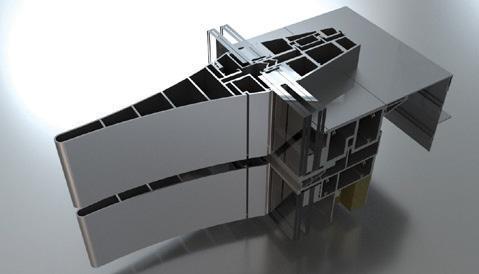
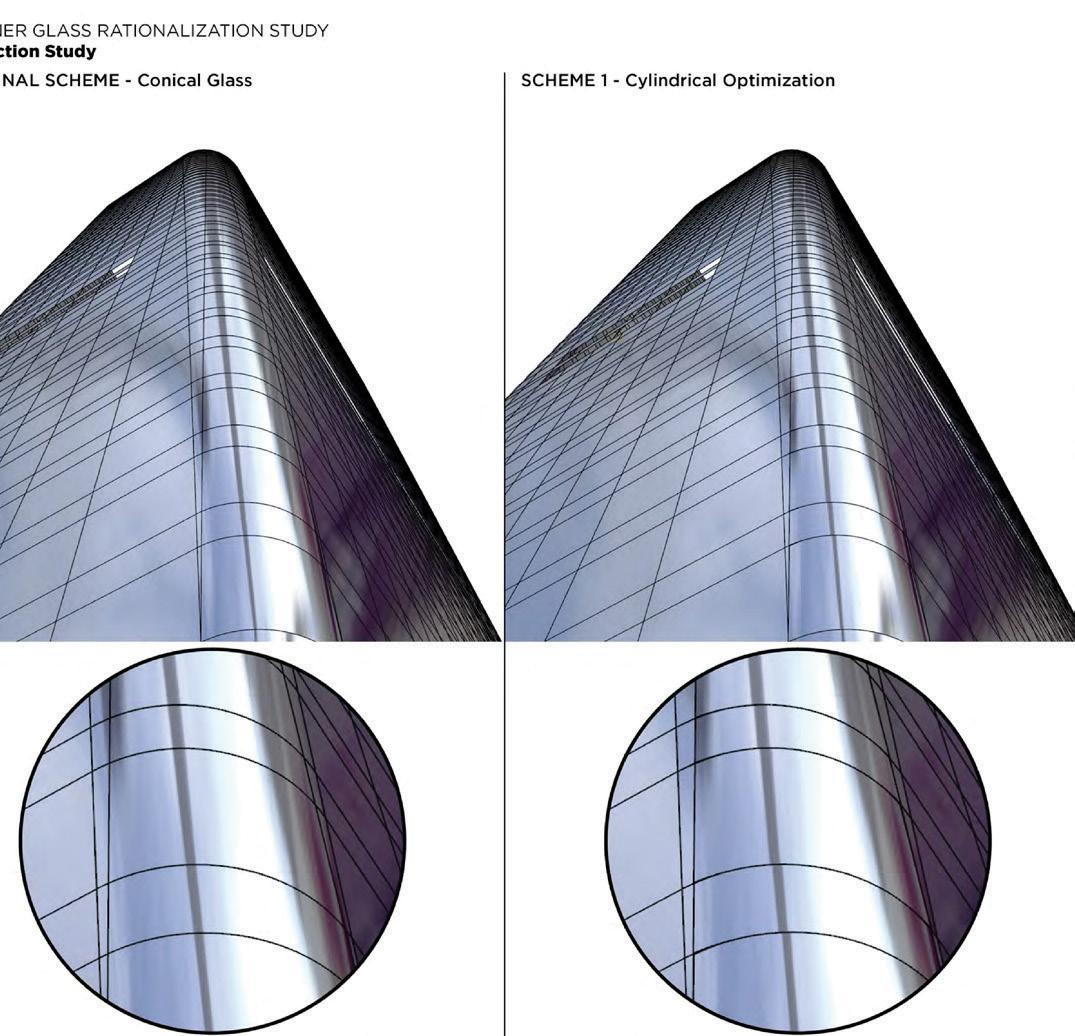
The building’s tapered corners were also optimised using digital design techniques. This allowed the preferred conical form to be rationalised into cylindrical panels, significantly simplifying fabrication and reducing costs.
At the podium level, the Great Room overlooking the park is a standout experience for those crossing through Two Taikoo Place via the footbridge connections. The brief called for an uninterrupted visual connection between the interior and the park—a glass wall that would appear invisible. This posed a significant challenge given the curved geometry of the space, the height of over 15 metres, and the need to resist high wind loads.
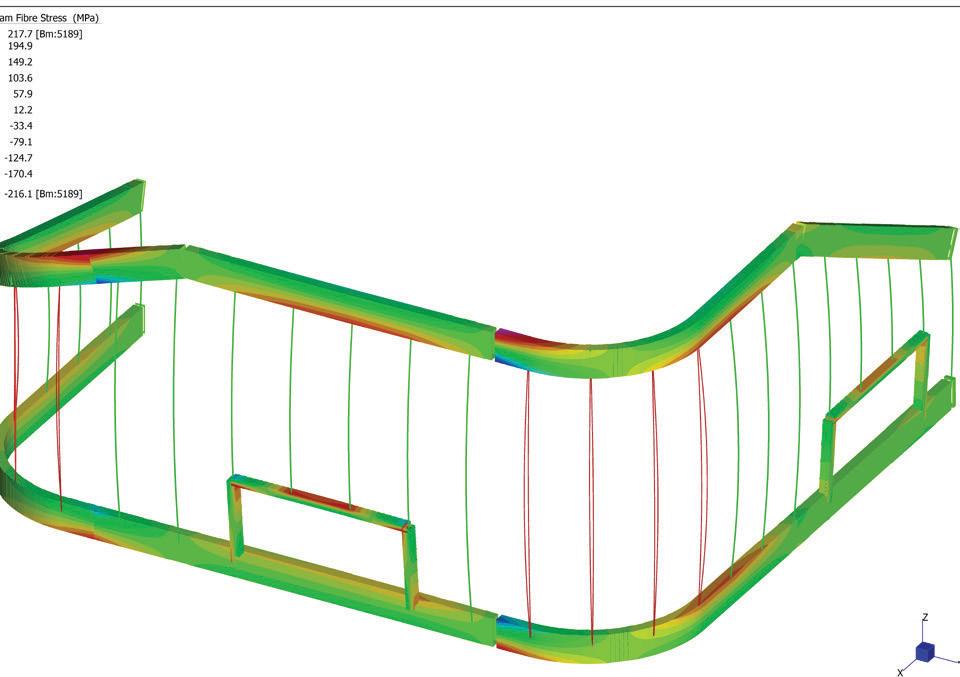
To meet these demands, the team pursued a cable wall system, where tensioned cables inside the glass panels form a net anchored to the building’s structure. Although this technique has existed for two decades, Eckersley O’Callaghan aimed to make the tensioned system disappear entirely. Their solution embedded vertical tension rods within the thickness of the glass panels, positioned between joints so they appeared as part of the joint itself. These rods were tensioned at the top and bottom of each 15-metre panel, with forces reaching up to 100 tons—equivalent to suspending ten double-decker buses from a single rod.
Text and images: Eckersley O'Callaghan
This photo: Tam Wai Man for ROF Media
While conceptually simple, the system required meticulous execution to ensure the detailing remained quiet and invisible. The result is a remarkable feat of engineering: a world-first solution that balances load and geometry while offering users an extraordinary connection to the park beyond.
Sustainability Through Innovation and Minimalism
Two Taikoo Place was conceived during a period of tightening sustainability criteria, making the building envelope a critical component in moderating energy exchange between interior and exterior environments.
The tower levels feature thermally insulative glass throughout, enhanced with high-performance solar coatings. This combination effectively isolates thermal changes and significantly reduces solar gain, easing the load on internal heating and cooling systems. The result is lower operational energy consumption and, by extension, reduced operational carbon over the building’s lifespan.
The Great Room glass façade exemplifies a highly engineered system that uses the absolute minimum amount of material to achieve maximum impact. This principle—doing more with less—is fundamental to sustainable engineering. By covering a substantial area with glass and virtually no supporting structure, the design achieves a low embodied carbon footprint compared to conventional mullion-supported systems.
A Cultural Continuum of Innovation
Taikoo Place has long been defined by its commitment to best-inclass design, particularly in its façades. Each new building addition reflects contemporary technology and innovation, creating a precinct-wide identity of continuous improvement.
Two Taikoo Place continues this tradition, most notably through the Great Room glass façade. It sets a new benchmark for what a lobby can be—free of mullions, glass fins, or visible cables. It’s a quiet yet powerful statement of what’s possible when engineering and architecture converge in pursuit of clarity, performance, and cultural resonance.
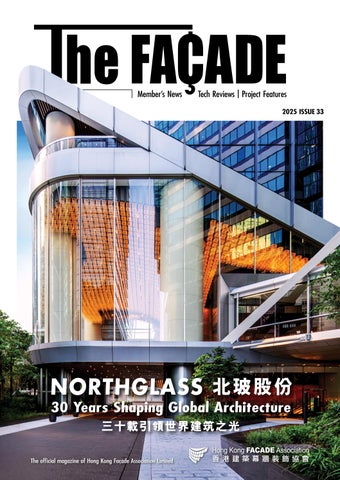
NorthGlass: Thirty Years of Innovation, Shaping Global Architecture
In 2025, as NorthGlass celebrates its 30th anniversary, the company is accelerating its global expansion, writing a remarkable chapter in the advancement of China’s glass deep-processing industry. Established in 1995, NorthGlass successfully developed China’s first horizontal roller-type glass bending and tempering furnace with independent intellectual property rights. Within just a few years, it rapidly rose to become a leading global brand, marking the beginning of the “NorthGlass chapter” in China’s glass industry.
Text & Photos: NorthGlass / ROF Media / Shutterstock
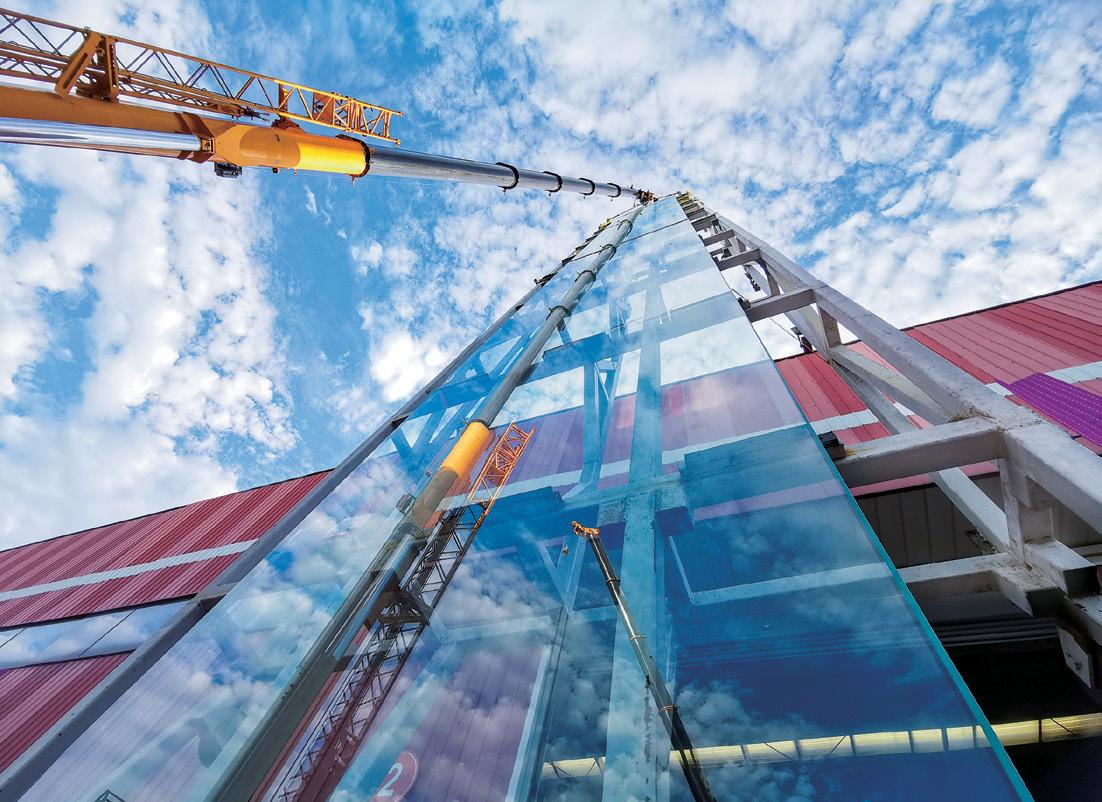
Driven by innovation, NorthGlass has continuously broken technological barriers. From the first tempering furnace capable of processing 3.5-meter ultra-wide curtain wall glass to 23-meter “super glass,” the company has repeatedly set new industry benchmarks. Since 2002, NorthGlass’ tempering equipment has ranked among the world’s top for 24 consecutive years, achieving the highest global production and sales volume and covering more countries and regions than any competitor in the industry.
In 2011, NorthGlass was successfully listed on the Shenzhen Stock Exchange (stock code: 002613), gaining strong support from the capital market. With the launch of the NorthGlass High-End Equipment Industrial Park, the company established a nationwide collaborative R&D and production network, employing over 2,500 staff and operating more than 500,000 square meters of production space. Its product portfolio spans equipment manufacturing, highend glass, energy-efficient fans, and other sectors.
Building on the tempering technology accumulated by its parent company, in 2008 NorthGlass established strategic partnerships with the global top-tier technology giant to provide high-end architectural glass for the flagship stores worldwide. In 2009, the company developed 12.8-meter curved tempered glass, followed by 18-meter flat & curved tempered glass in 2010.
In 2012, Tianjin NorthGlass Glass Industrial Technology Co., Ltd. was established with a total investment of RMB 500 million. In 2014, NorthGlass supplied special structural glass for headquarters project of global top-tier technology giant. The NorthGlass trademark was recognized as a China Well-Known Trademark in 2017, and in 2019, the Light Stone prefabricated unitized curtain wall system was launched.
By 2022, NorthGlass successfully produced 23-meter glass panels, and in 2023, the company established the Glass Deep Processing BU, integrating R&D and production across Tianjin, Shanghai, and Luoyang, while entering the high-end residential market.
The NorthGlass Glass Deep Processing BU currently operates in Tianjin, Shanghai, and Luoyang. Leveraging decades of expertise and proprietary tempering, coating, and automation equipment, the division has become a specialized high-tech enterprise producing tempered glass of superior optical quality. Its clients span over 50 countries and regions and include globally renowned companies such as Google, Oracle, DJI, Huawei, OPPO, Tencent, LOUIS VUITTON, HERMÈS, GUCCI, Cartier, CHANEL, BVLGARI, and GIVENCHY. NorthGlass also collaborates extensively with worldrenowned architectural firms, including Foster + Partners, Zaha Hadid Architects, BIG, MAD, Snohetta, SOM, PCPA, KPF, gmp, Nikken Sekkei, UN Studio, NBBJ, EOC and ARUP, earning high praise from clients and peers alike.
As a proponent and practitioner of the “Super Glass” concept, the BU has built professional R&D, process, and production teams to master the deep-processing of ultra-large, ultra-wide, and ultra-tall glass. In 2021, it produced a single glass panel of 50.869 m² for Beijing Taikang Tower, setting a Guinness World Record. NorthGlass continues to
push the limits, achieving processing dimensions from 3.6 meters to 24 meters, arc lengths exceeding 12 meters, and minimum radii down to 75 mm, turning architects’ visions into reality.
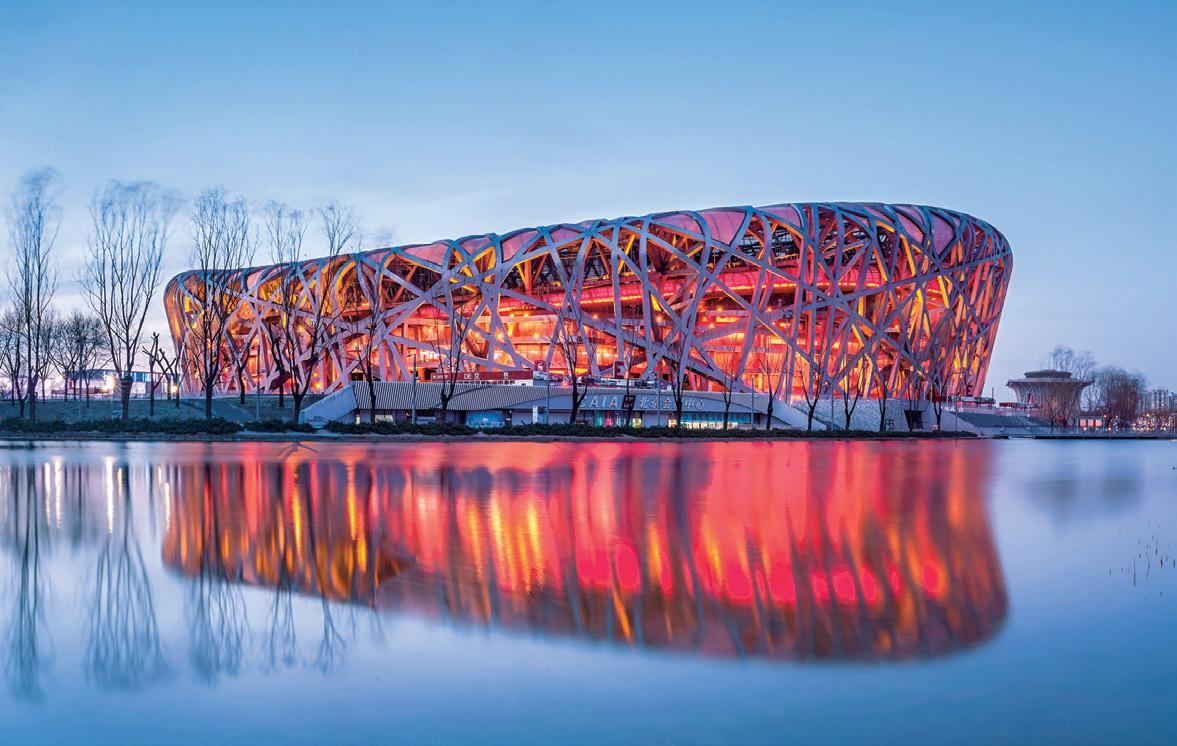
NorthGlass’ glass products are widely applied in iconic buildings worldwide, including the National Centre for the Performing Arts, Beijing National Stadium (“Bird’s Nest”), National Aquatics Center (“Water Cube”), Beijing National Speed Skating Oval (“Ice Ribbon”), China National Convention Center Phase II, Beijing Daxing International Airport, Shanghai Expo Axis, Hangzhou International Expo Center, BRICS Xiamen Summit Main Venue, SCO Qingdao Summit Main Venue, China Development Bank Headquarters, Beijing Library, Shanghai Tower, Huawei Global Flagship Stores, Nike Shanghai 001 Flagship Store, Olympic Plaza in Japan, Leadenhall Building in UK, Abu Dhabi International Airport in UAE, Oracle Headquarters in USA, New Performing Arts Venue in Australia. NorthGlass is also a key supplier of architectural glass for flagship stores and headquarters of top global electronics companies.
NorthGlass Deep Processing Glass Products
• Ultra-Large & High Structural Glass: Designed for large-scale curtain walls and super-tall structures.
• Convex & Concave Tempered Glass: Ensures even coating and consistent curtain wall color.
• Digital Printed Glass: Offers customized patterns to enrich architectural creativity.
• Silk-Screen Glass: High-precision decorative patterns combining aesthetics and functionality.
• Cast Glass: Unique textures and colors, tailored for high-end, bespoke spaces.
Germany Neue Nationalgalerie
Revitalizing a Modernist Icon: Neue Nationalgalerie Reimagined
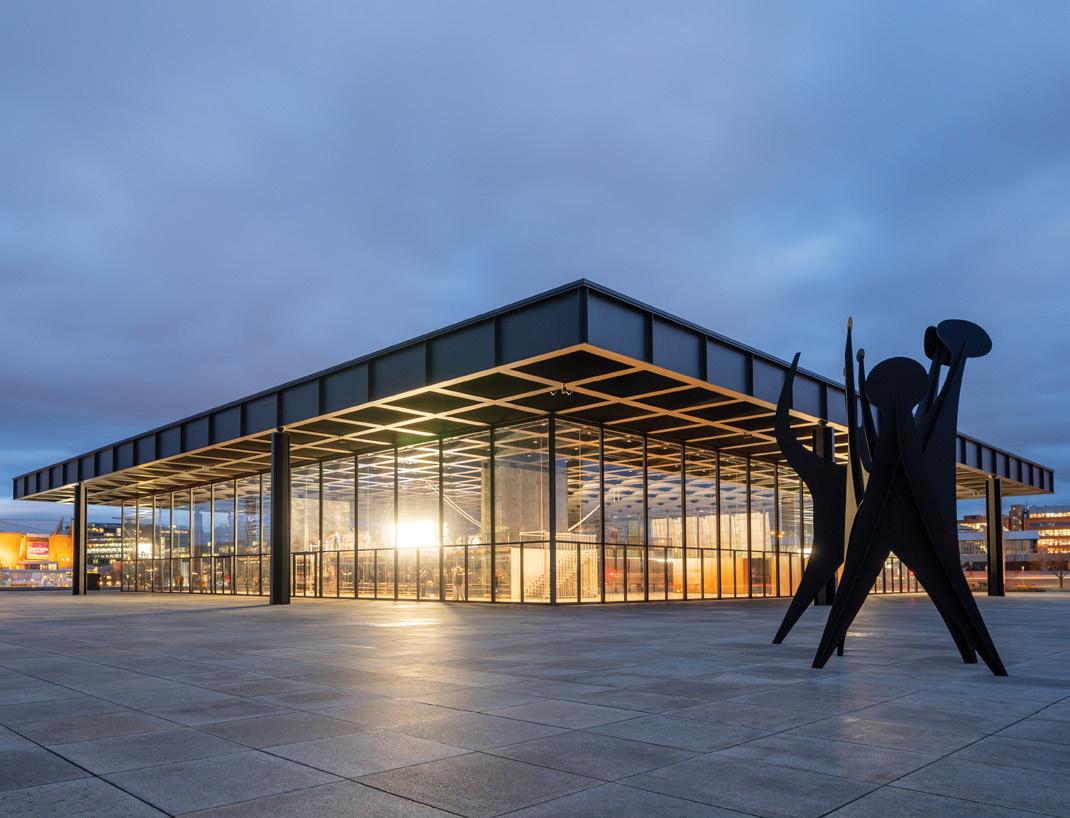
The Neue Nationalgalerie in Berlin, designed by Ludwig Mies van der Rohe, opened in 1968 as one of his late masterpieces and a milestone of modernist architecture. Known for its monumental steel roof and transparent façade, the museum is regarded as one of the masterpieces of modernism. Its structure combines a fully glazed upper pavilion with subterranean galleries, turning the building itself into a stage for modern art.
After nearly five decades of use, the building required comprehensive renovation. In 2012, David Chipperfield Architects was commissioned to lead the project, which began in 2015 and concluded with the reopening in 2021. The refurbishment preserved the architectural integrity while upgrading systems and replacing the façade.
For the renovation, NorthGlass supplied ultra-large tempered laminated glass panels measuring 3.5 meters in width—a rare specification in Europe. These panels ensured the seamless transparency of the pavilion while meeting contemporary standards of safety and energy performance. This renewal allows Mies’s vision of pure modernism to endure, with space and light once again in perfect harmony.
@Tam Wai Man
AIA’S REDEVELOPED HQ SETS THE STANDARD FOR URBAN WELLNESS AND GREEN INNOVATION
Arquitectonica
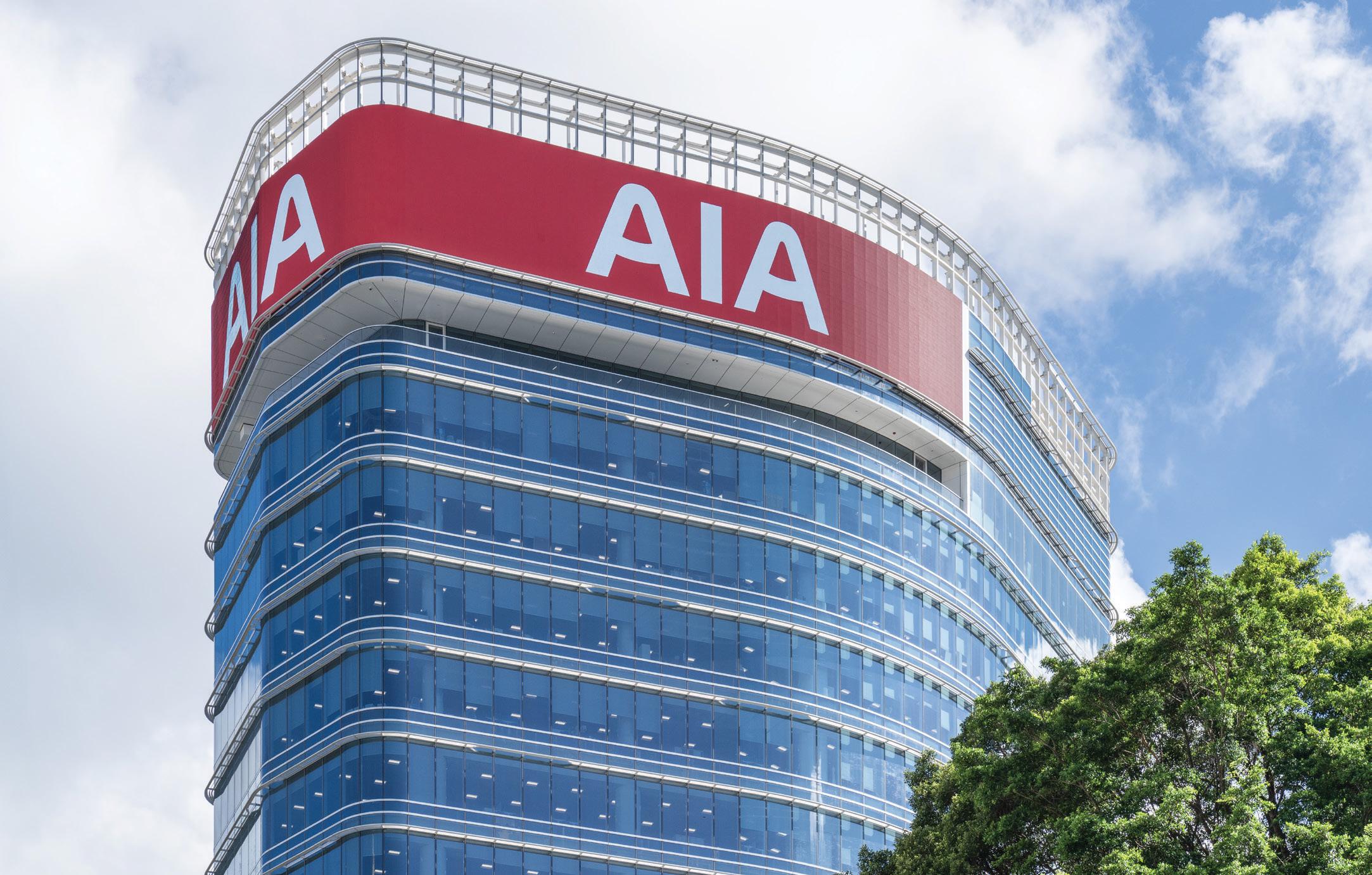
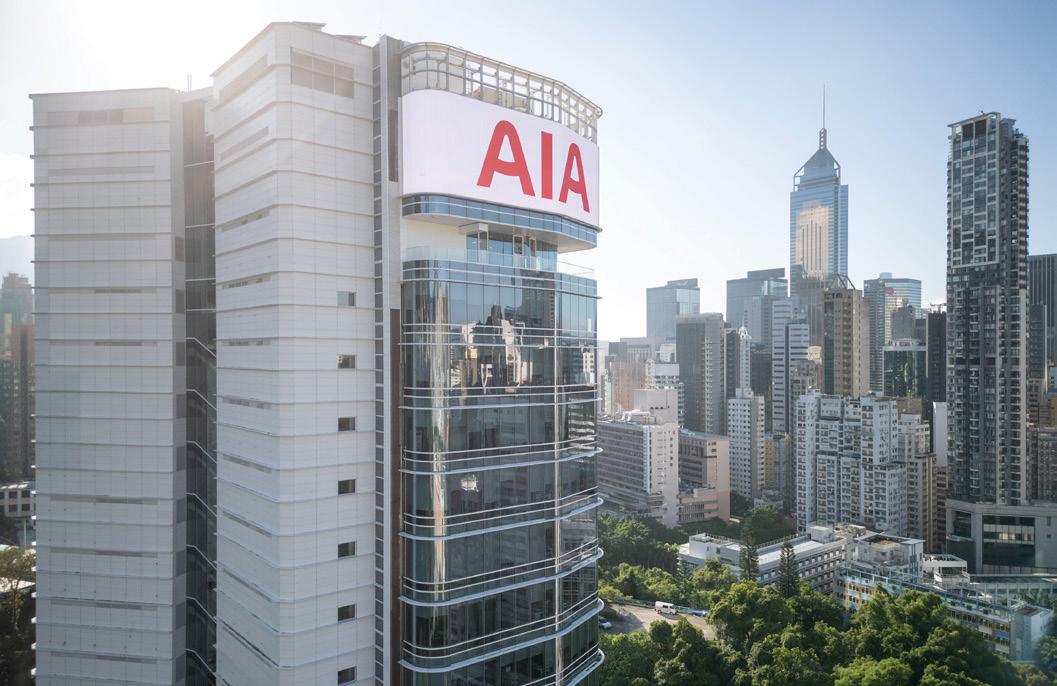
Perched on the hillside of Wan Chai, No. 1 Stubbs Road, the redeveloped AIA Headquarters is a forward-looking statement on how design, technology, and sustainability can redefine the urban workspace. The original AIA headquarters located on the same site was completed in 1969 and marked the beginning of the district’s transformation from a sleepy residential neighborhood into a bustling commercial hub. Designed by global architecture firm, Arquitectonica, this 22-story glass tower atop a four-level podium reimagines the company’s workplace and embodies a new paradigm for corporate campuses in Asia.
At 94 meters tall, the redeveloped AIA headquarters is a striking addition for the Wan Chai skyline. It is a living blueprint for the future, where sustainability isn’t an afterthought but embedded in the DNA of its design. Every detail—from the solar panels soaking up the city’s intense sun to the rainwater capture system that nourishes the landscape gardens—serves a purpose.
Michael Griffiths, Director at Arquitectonica in Hong Kong, explains the vision behind the project. "We wanted to create a space that breathes, that interacts with its surroundings in a meaningful way." It’s why the building produces its own energy, thanks to the solar panels. It’s why the gardens, fed by captured rainwater, don’t just exist for show—they supply fresh herbs for onsite use.
The architecture makes a bold statement, not through height but through its parabolic floorplates and glazed façade. The building’s envelope is defined by a high-performance sleek curtain wall with low-E glass and solar control is engineered for aesthetics and performance by enabling maximum daylight penetration into the workspace while strategically mitigating solar heat gain.
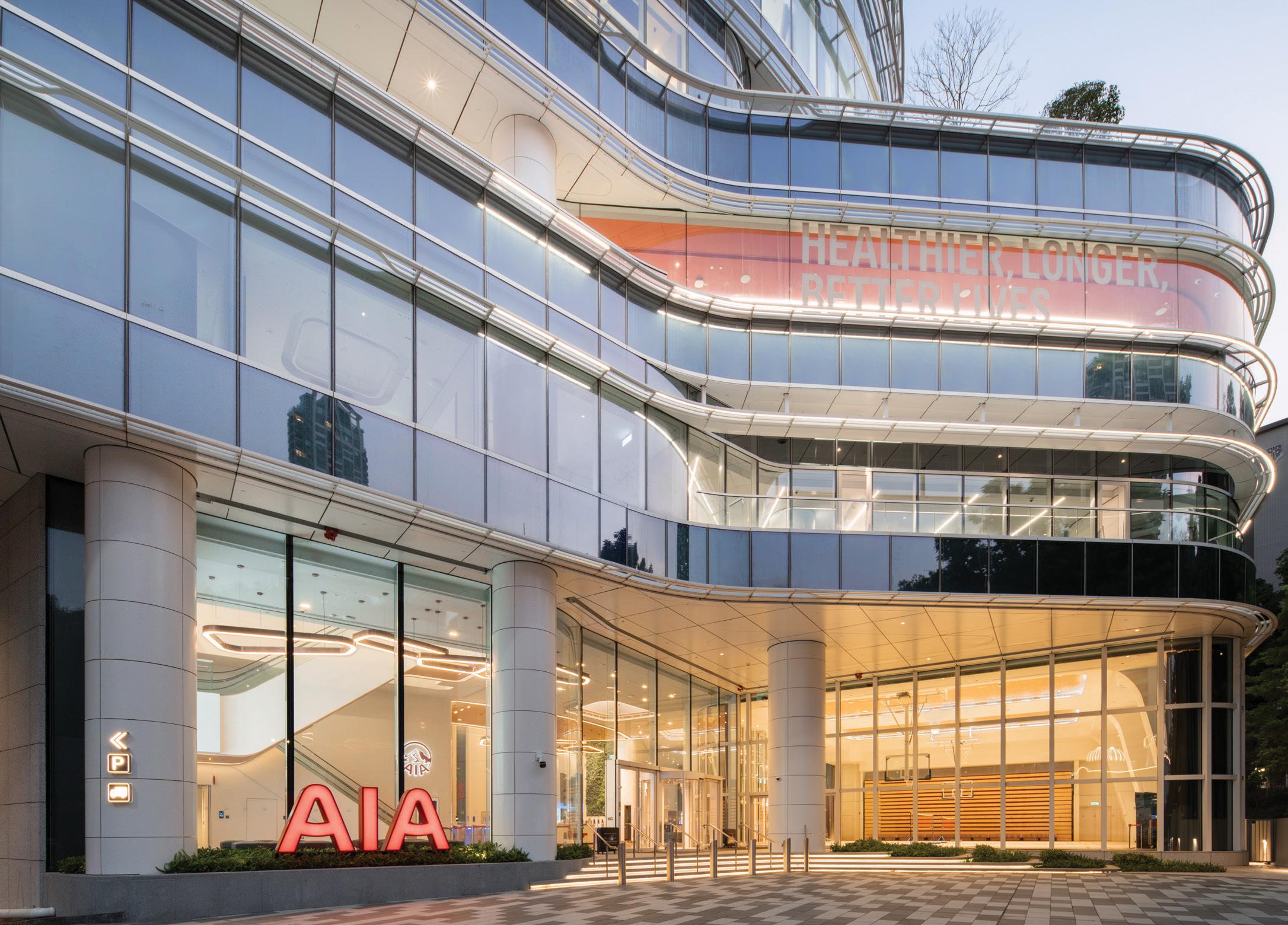
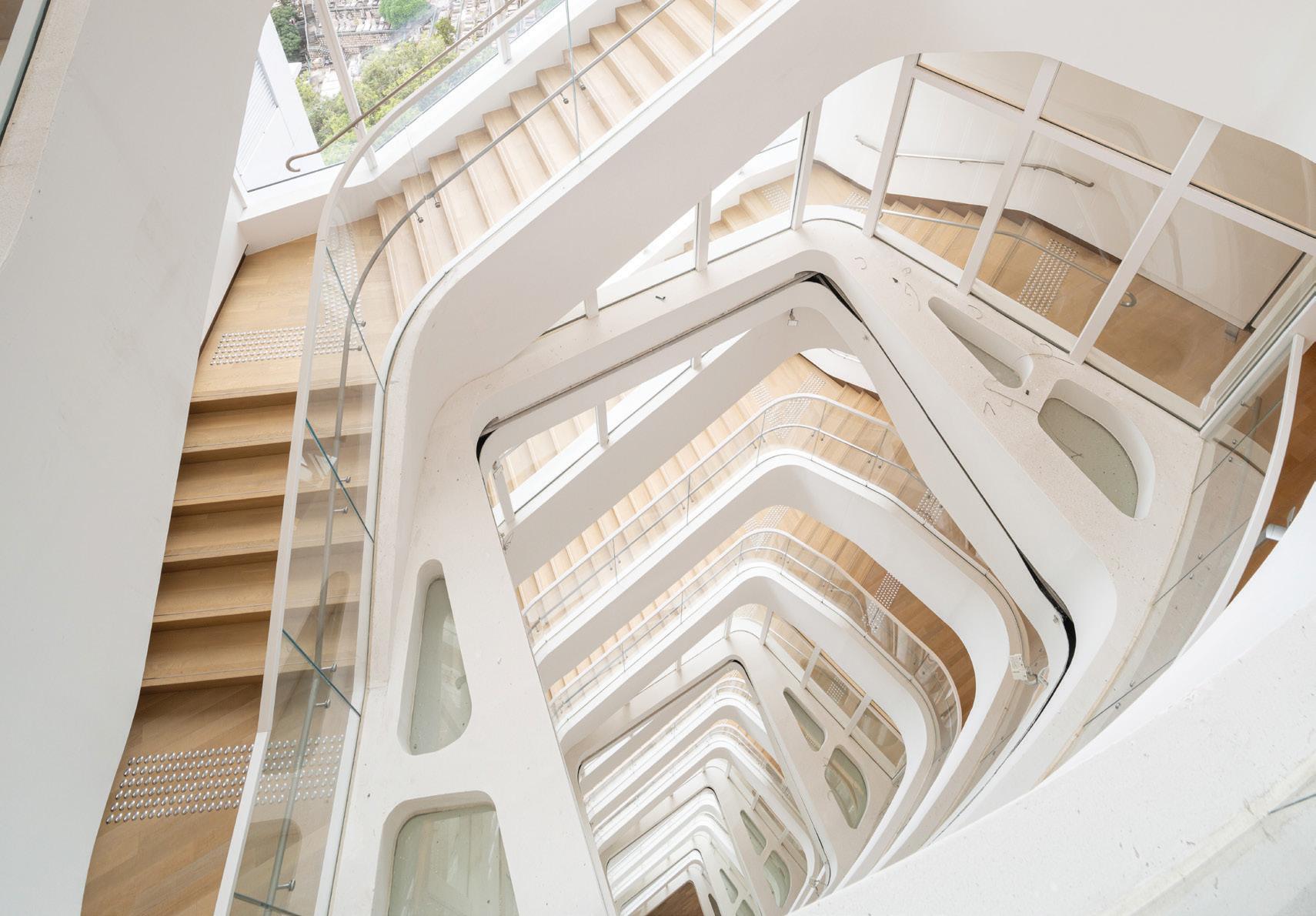
The façade also plays a pivotal role in supporting the urban campus concept. Behind the glass envelope, a full-height 80-metre atrium brings daylight deep into the building, encouraging visual connectivity and casual movement. The transparency of the envelope turns this central atrium into a visible heart, fostering community among employees across the 12 typical office floors.
To optimize the typical office floorplates and create a comfortable and flexible working environment, the design team shifted the core of the building to the rear southern side of building. This placed all open office spaces on the northern elevation to enjoy uninterrupted views and indirect sunlight.
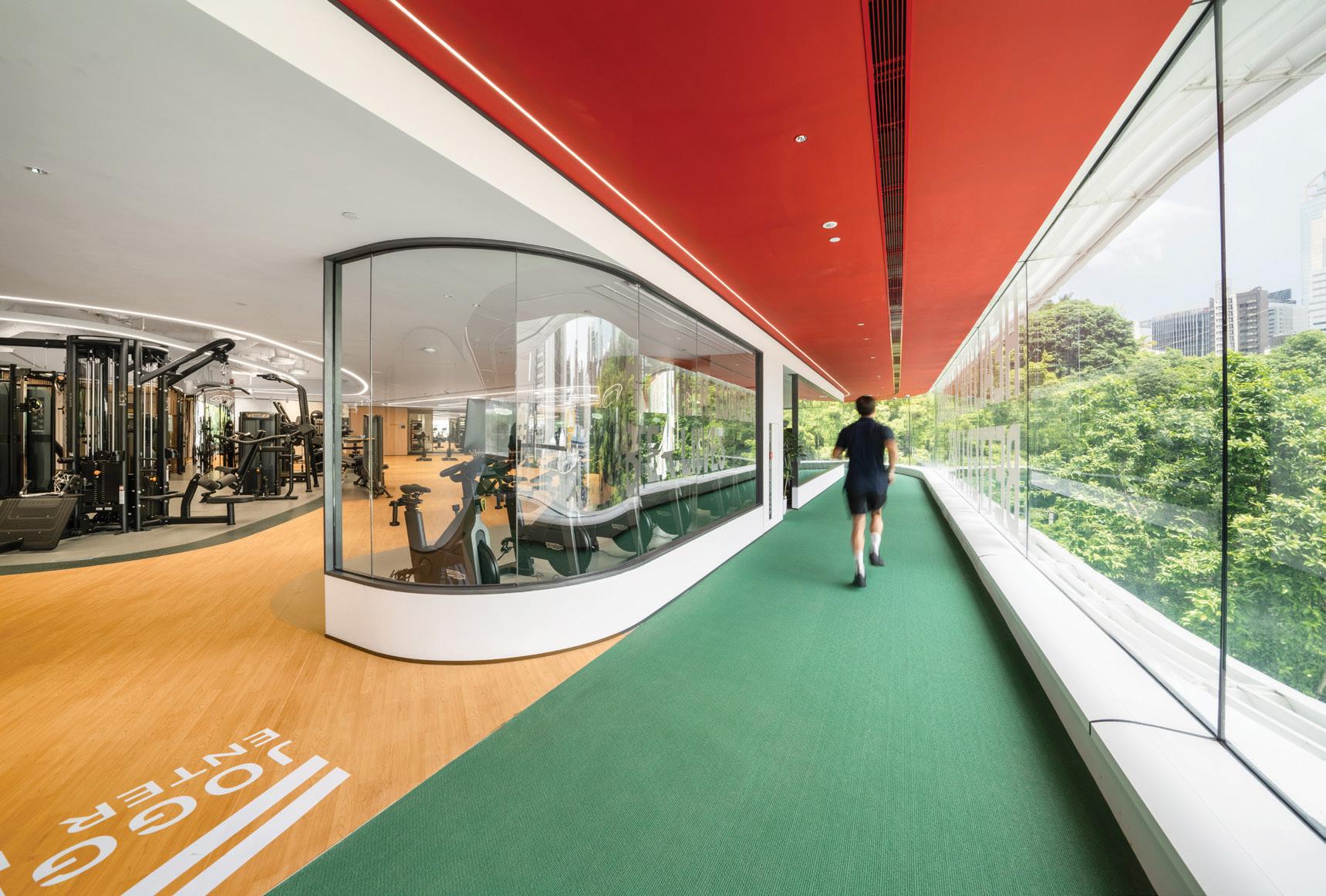
Amenities like the approximate 200-meter indoor running track, urban food garden, multi-functional sports hall, and rooftop terraces are all visually and physically linked through a system of inter-floor bridges and the glazed curtain wall.
Text:
Photos: Tam Wai Man for ROF Media
The building’s strategic orientation works in tandem with the façade’s layered system of solar control, where fritted and low-emissivity glass panels are used to reduce glare and cooling loads, supporting passive energy saving measures. The building envelope is not a static skin but an intelligent interface between environment and interior. Advanced glass coatings dynamically modulate solar heat gain, incorporating smart sensors and building automation systems, the façade interacts with the building’s broader Building Management System, which monitors and controls lighting, air quality, and temperature in real time.
These innovations are critical components in the building’s successful achievement of the industry’s highest environmental certifications, including BEAM Plus NB v1.2 Platinum certification, LEED v4 Platinum, , and WELL platinum pre-certifications.
Arquitectonica and AIA Group both had sustainability top of mind during the design and construction process. This commitment is visible in the façade design, but also in the adaptive re-use of the original building materials and site, the team used the existing structural piles and worked around immovable subterranean infrastructure to minimize construction waste and reduce embodied carbon. Additionally, stone and other structural elements from the previous tower were repurposed for public seating and outdoor terraces.
This permeability transforms the typical high-rise urban campus into an interconnected series of spaces that directly contribute to employee health, wellness, success, and happiness.
As described by Griffiths “We knew we had to make the building feel alive. So, we split the core, let the light flood in, and designed spaces where people can move, connect, and even exercise.” That extends to every part of the building, the most striking expression being the red ribbon of a running track looping around the structure—an escape route for workers to break up their screentime.
The building has already received multiple accolades, including the Asia Pacific Property Award (2023-2024) for Best Office Development in Hong Kong, and Real Estate Asia Awards 2024 for both Sustainable Development of the Year and Office Development of the Year.
The redevelopment of No.1 Stubbs Road into AIA Group’s newest headquarters is a testament to the future of what an urban corporate campus can be. With a conscientious focus on employee wellness and sustainability, it sets a new precedent.
Skin Deep:
The Cellular Façade Defining Melbourne’s New Cancer Centre
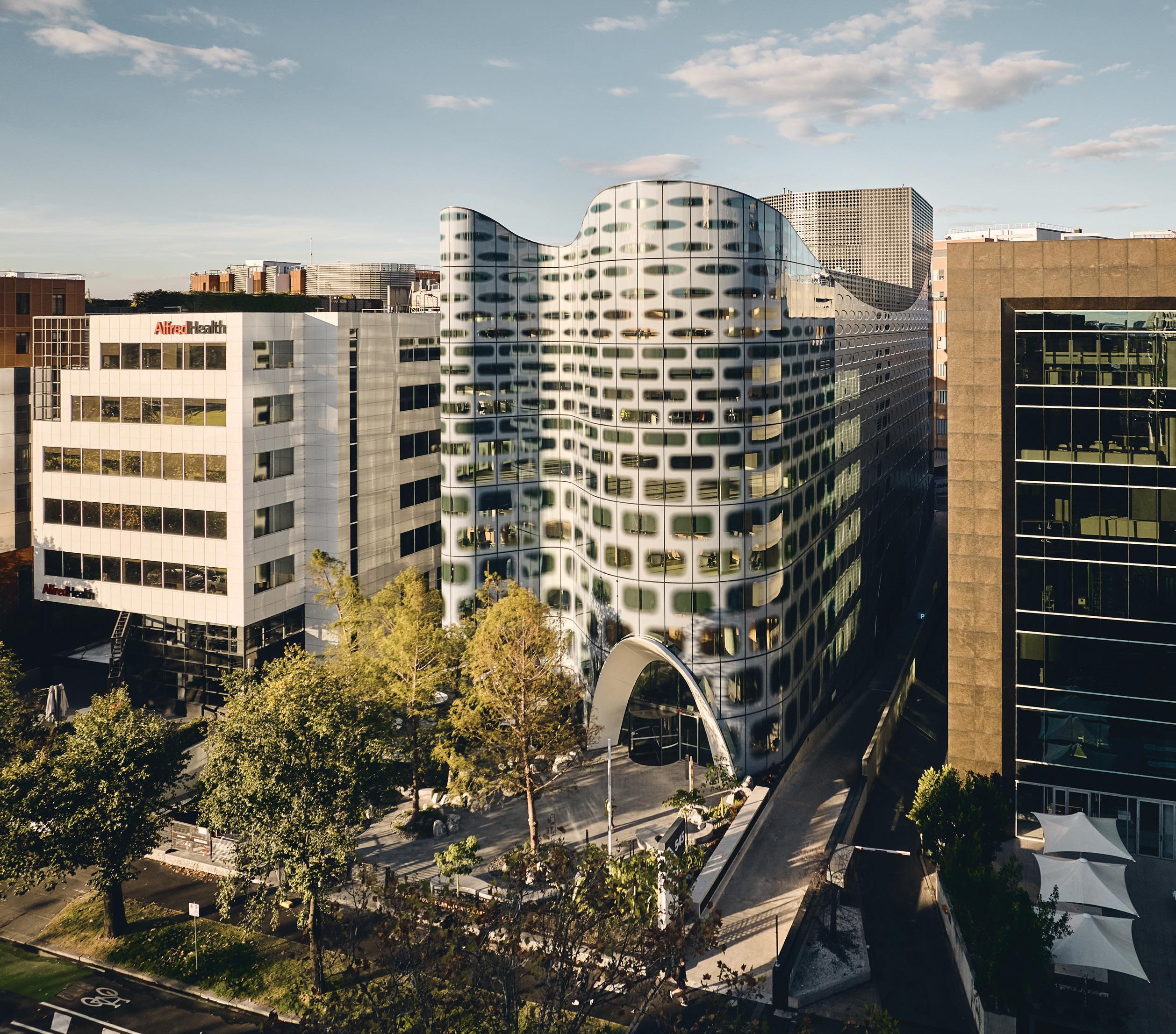
A skin-inspired veil of curved glass and cellular frit defines the Paula Fox Melanoma and Cancer Centre in Melbourne. Designed by Lyons Architecture, the building merges environmental performance with symbolic clarity, delivering a facade that’s as functional as it is iconic.
Located on the traditional lands of the Bunurong people at 545 St Kilda Road, Melbourne, the Paula Fox Melanoma and Cancer Centre (PFMCC) is a six-level healthcare and research facility developed by Alfred Health. Completed in 2024, the 15,784m² building consolidates the Victorian Melanoma Service into a single, high-profile address, with a design brief that demanded a facility “not like a hospital.”
The result is a building that prioritises patient wellbeing, research excellence, and architectural distinction.
Façade as Identity
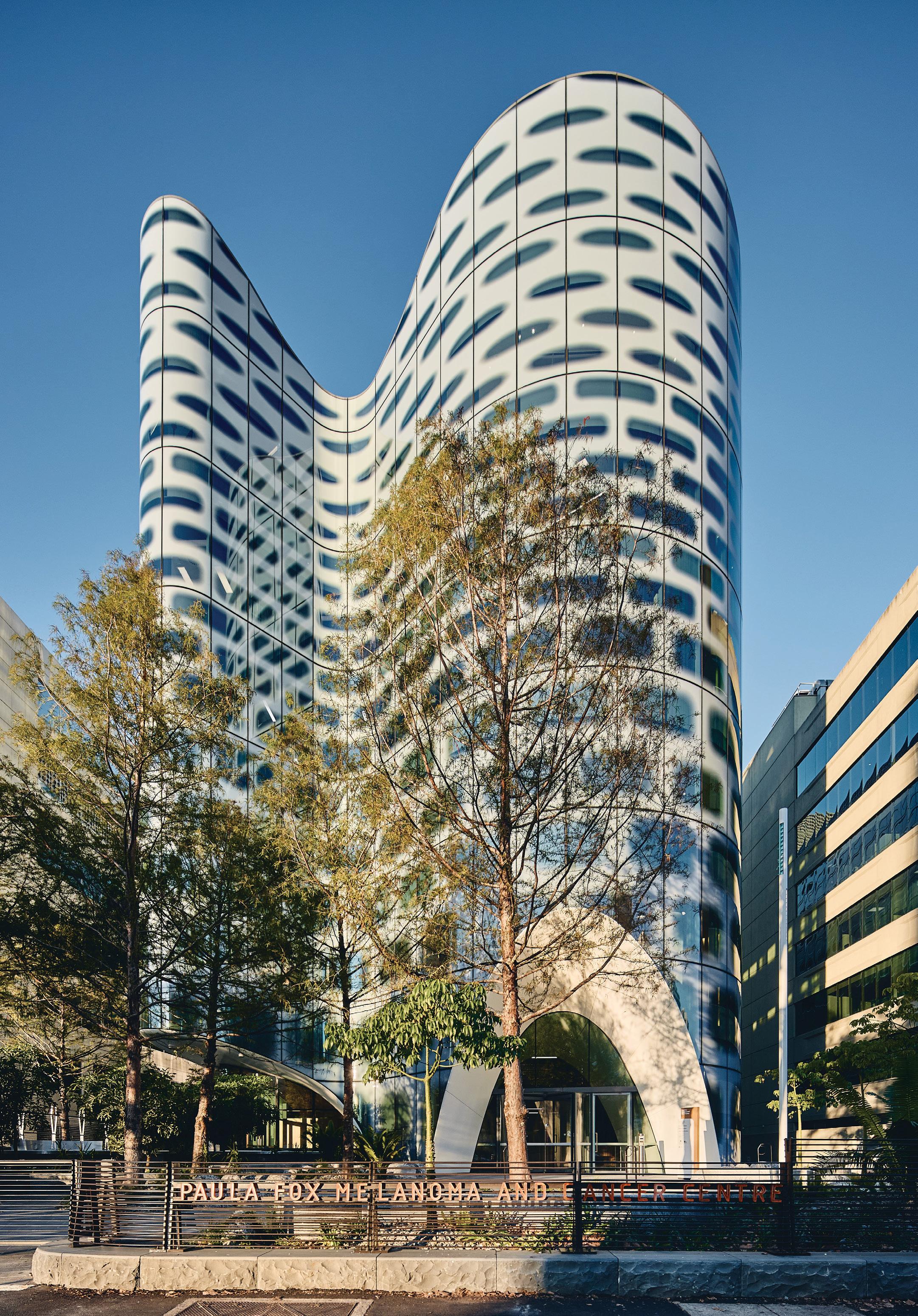
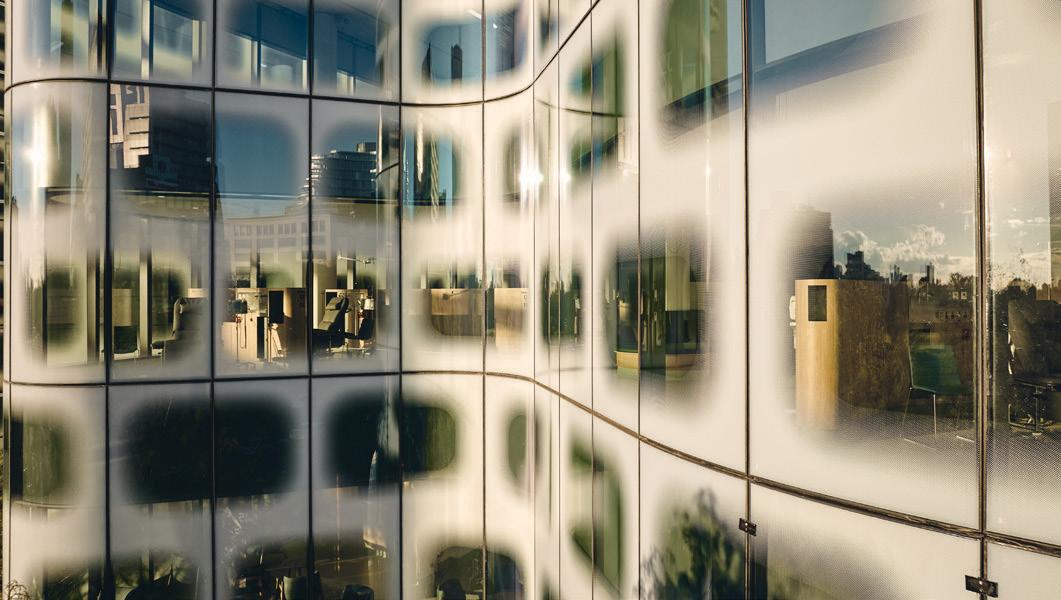
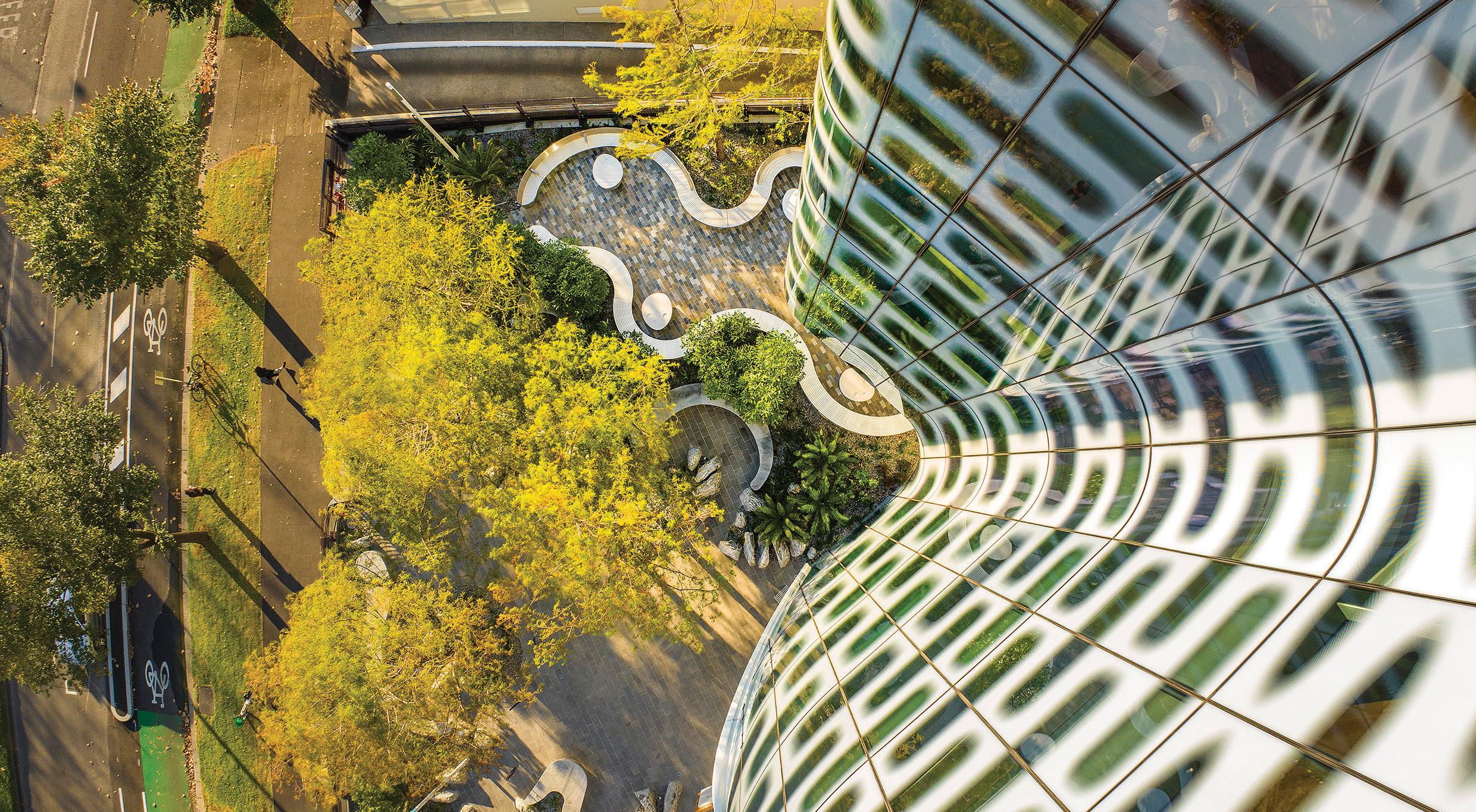
The most striking feature of the PFMCC is its cellular veiled façade, a curved glazed skin wrapped in a dynamic white frit pattern. Lyons Architecture conceived the façade as a symbolic and performative element, drawing inspiration from the epidermis and the layered structure of healthy skin cells. The frit pattern shifts in density and form across the elevation, echoing cellular morphology and reinforcing the building’s identity as a centre for skin cancer treatment.
This design achieves more than visual impact. The frit acts as a solar filter, modulating daylight penetration and reducing glare, while
North Elevation
South Elevation
preserving views to adjacent green spaces like Fawkner Park and St Kilda Boulevard. The curved glass panels, each weighing up to 700kg, were engineered to meet stringent fire safety and acoustic standards, with Kane Constructions managing the complex installation and compliance challenges.
The façade’s material palette is deliberately restrained to amplify its conceptual clarity. Over 1,000 glass panels form the building’s outer veil, with the frit pattern printed directly onto the curved glazing. This approach allows the building to read as a singular, sculptural object, while delivering high-performance outcomes in thermal comfort and energy efficiency.
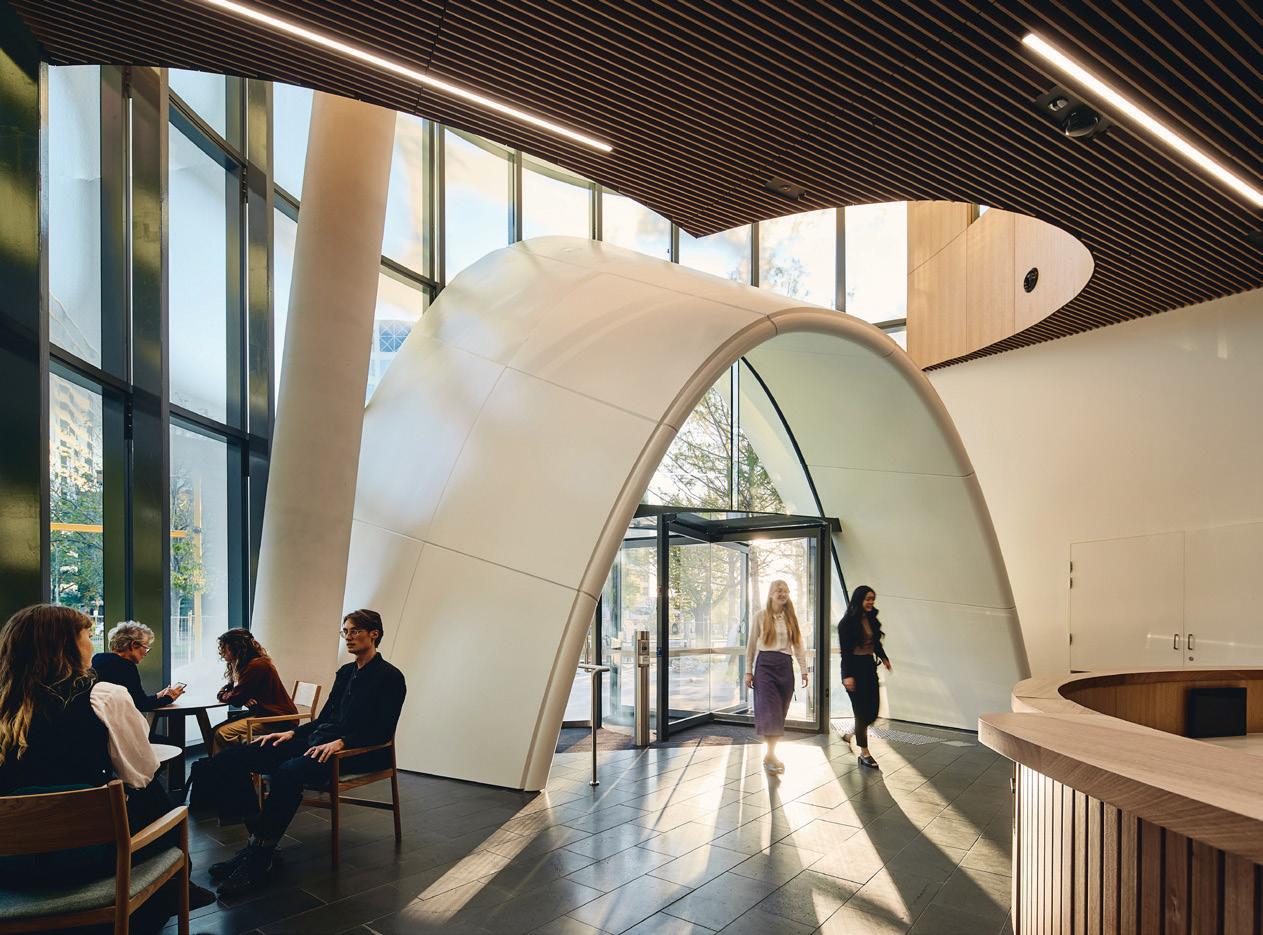
Internally, the glazed envelope creates a soft, light-filled environment that supports the centre’s therapeutic mission. The lift and services core is located on the southern edge, freeing up the east, north, and west elevations for full-height glazing and maximum daylight exposure. This orientation supports passive design strategies and enhances the spatial quality of both clinical and research areas.
Environmental Intent
The building’s environmental strategy is embedded in its form and materiality. The fritted glass façade reduces solar gain while maintaining
transparency, contributing to a comfortable internal climate without compromising aesthetics. Air leakage, movement, and acoustic performance were key considerations in detailing the curved glass junctions, which required bespoke firestopping solutions beyond standard practice.
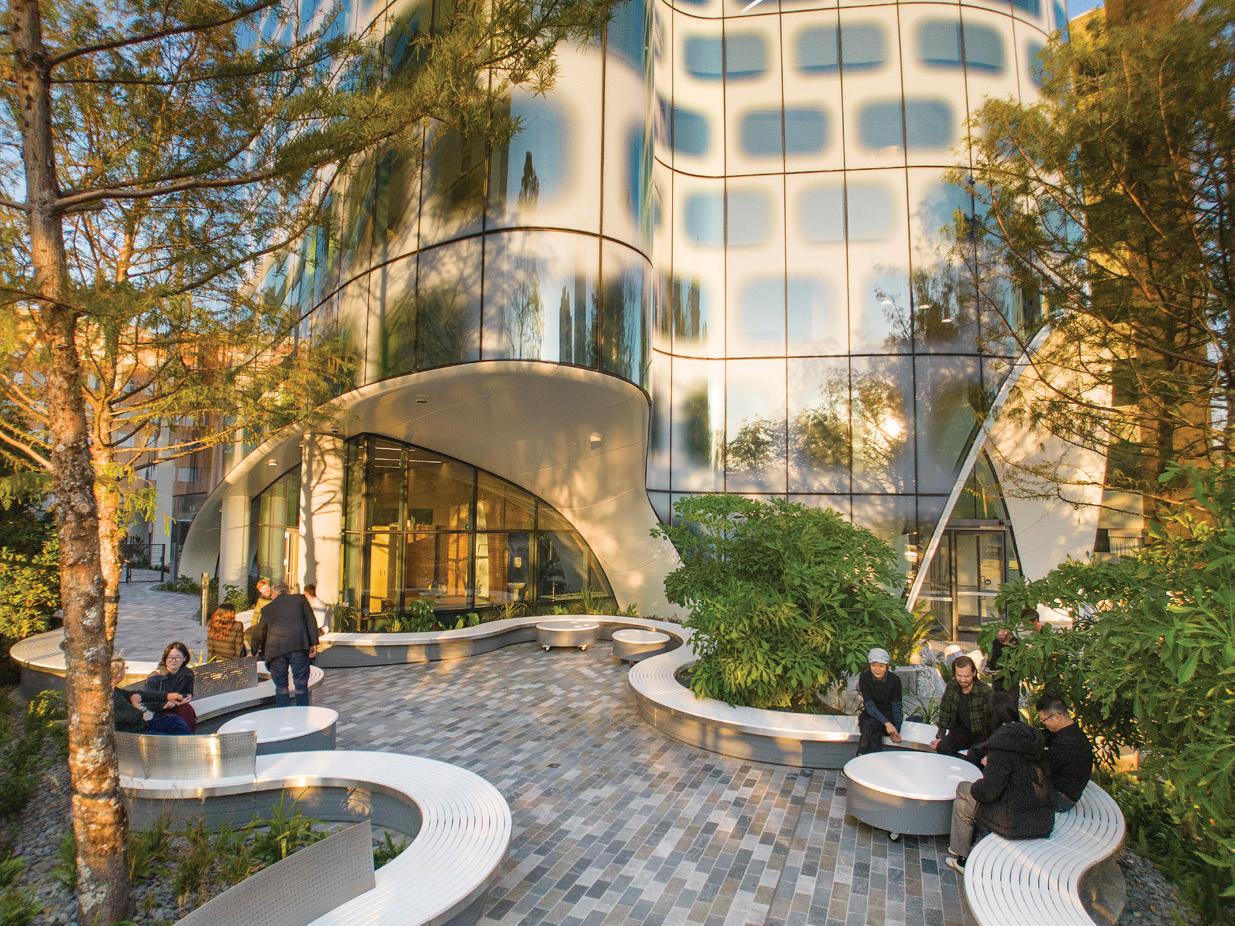
At ground level, a botanical garden-inspired landscape provides biophilic retreat spaces for patients and visitors. These green zones are designed to support mental wellbeing and offer moments of calm within the clinical setting. The landscape design, by Rush/Wright Associates, reinforces the building’s humanist ethos and extends its environmental narrative beyond the envelope.
While the lower levels focus on patient care, wellbeing centre, concierge, clinical spaces, and day therapy pods, the upper floors house research laboratories and workspaces for clinicians and staff. Floor-to-floor heights were designed to accommodate future programmatic shifts, ensuring long-term adaptability for evolving healthcare needs.
The building’s spatial organisation supports a “bench to bedside and back” philosophy, enabling translational research to occur in close proximity to patient care. This integration of function, environment and design intent positions the PFMCC as a model for future healthcare architecture.
Structure, Skin, Sustainability: A Tower Engineered for Efficiency
8 Bishopsgate is a precision-built tower that redefines façade performance and structural integration in high-rise design. WilkinsonEyre’s approach prioritises sustainability, clarity and civic contribution—making it a benchmark for speculative commercial buildings in the UK.
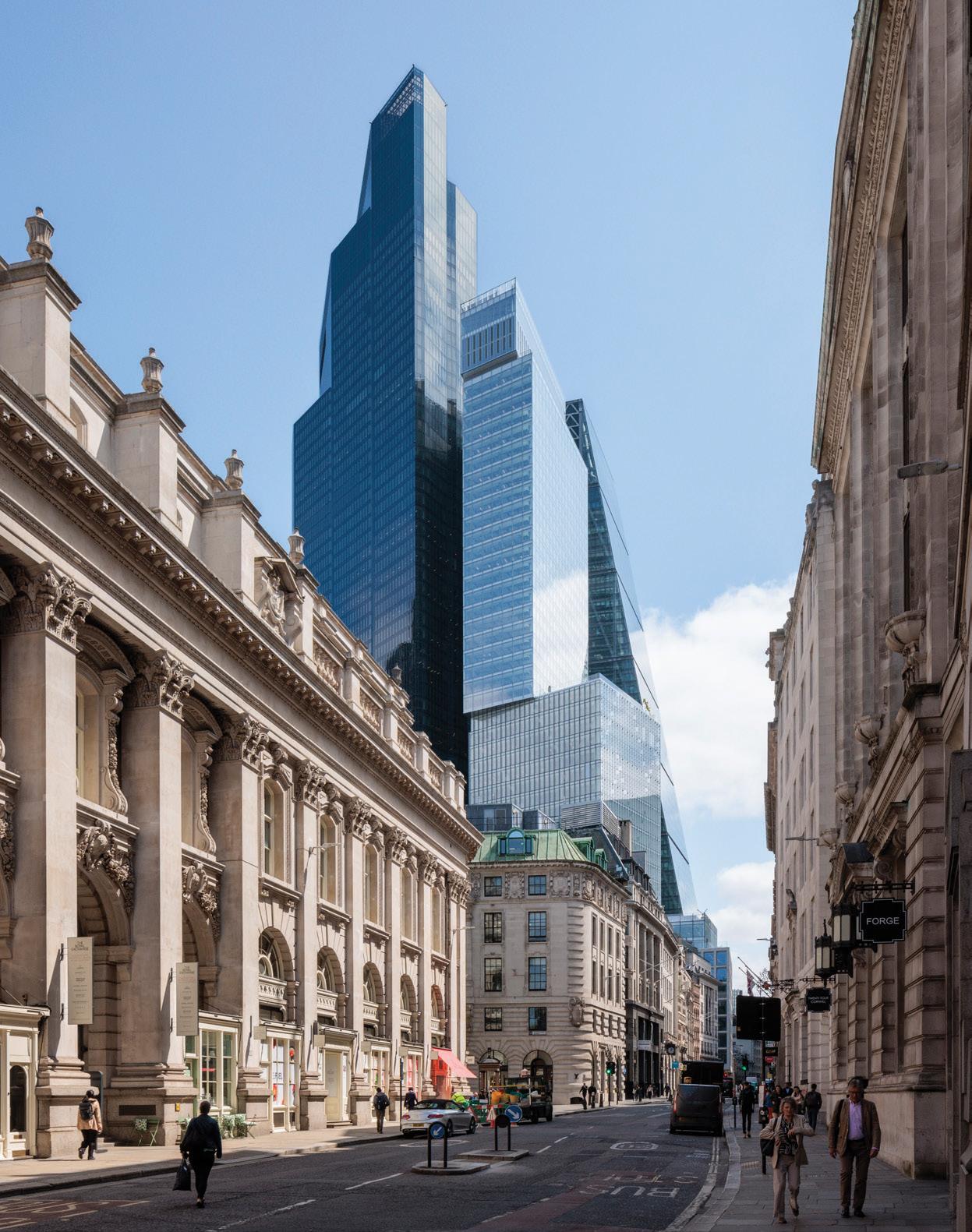
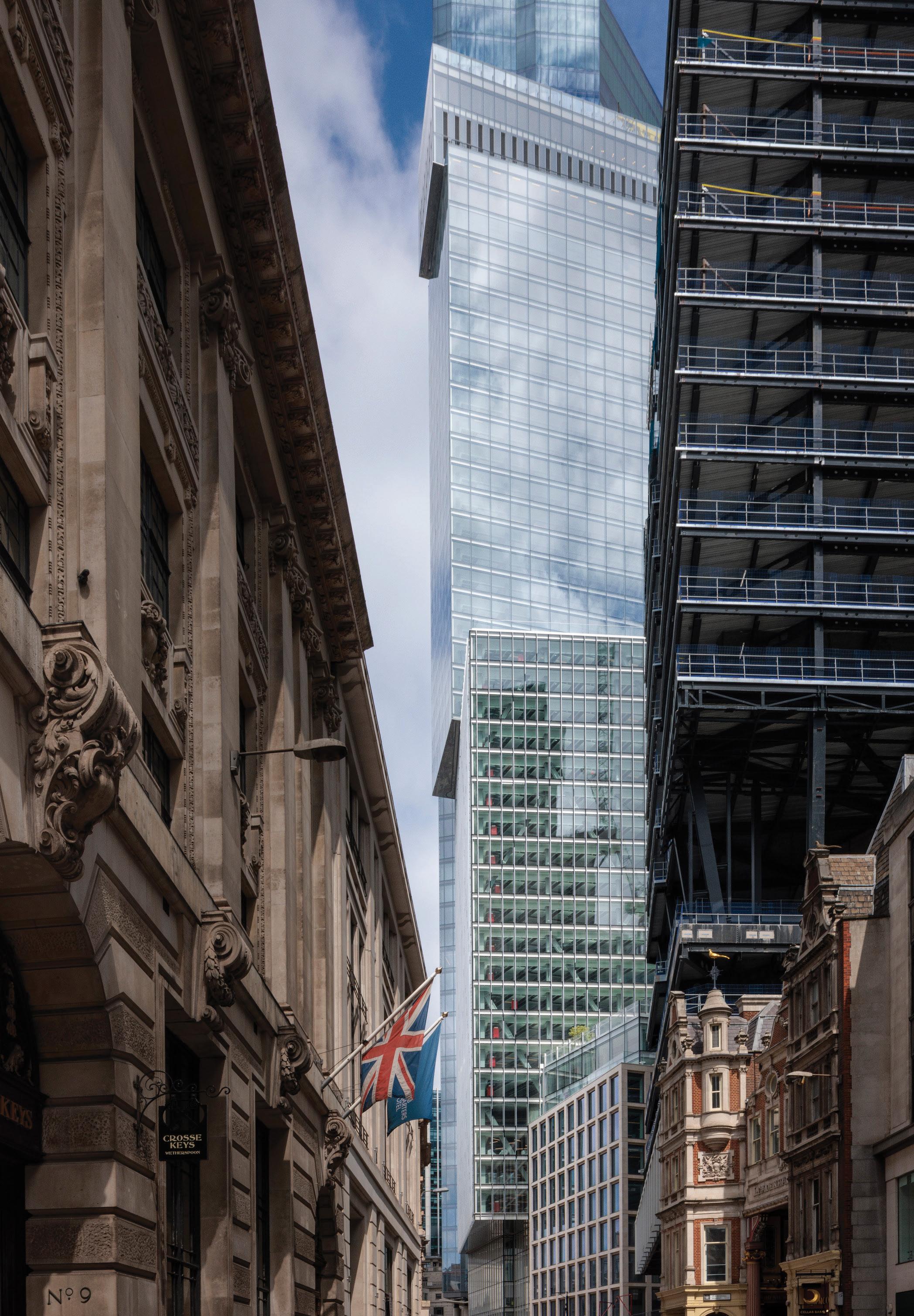
Located in the City of London’s eastern cluster, 8 Bishopsgate responds to stringent planning constraints, including the London View Management Framework and protected views from Fleet Street to St Paul’s Cathedral. The building’s stepped massing mitigates visual impact and breaks down the tower’s scale into three distinct blocks. Each block is differentiated by material, structural logic and scale, contributing to a legible and dynamic composition.
The tower reaches approximately 200 metres and comprises four stacked volumes. Designed by WilkinsonEyre, the building includes flexible retail space at the base and a public viewing gallery at the top. The architectural concept is driven by performance, clarity and civic accessibility.
Structural Strategy & Material Efficiency
8 Bishopsgate is a structurally light tower, achieved through rationalised steel design and strategic integration of services. A steel-braced box at the core enables cantilevers on the west façade, eliminating the need for transfer structures and increasing usable floor area. Steel sections were calculated to match individual load requirements, reducing overall tonnage. Compared to typical towers of similar scale, the frame uses 25% less steel, contributing to lower embodied carbon.
The structure and services are fully integrated into the architectural vision, allowing for efficient spatial planning and reduced environmental impact. The stepped profile also accommodates terraces and cantilevers, enhancing the building’s visual rhythm and functional flexibility.
The building envelope is defined by a high-performance Closed Cavity Façade (CCF) system, engineered and installed by Permasteelisa Group. A total of 37,750 square metres of unitised
façade and 700 square metres of stick system were deployed. Materials include aluminium, glass, glass-reinforced concrete (GRC) and stone. The CCF system delivers airtightness, thermal efficiency and adaptive shading, reducing cooling demand by 530kW (5%).
Known for its engineering expertise and innovative façade technologies, Scheldebouw’s bespoke façade solution achieved Environmental Product Declaration (EPD) verification and was instrumental in securing the building’s BREEAM Outstanding and EPC A ratings. The double-skin envelope enhances daylight penetration and internal comfort, aligning with the project’s sustainability goals and user-centric design intent.
Operational Performance
8 Bishopsgate is recognised as the UK’s most sustainable speculative tall commercial building. Embodied carbon was tracked at each design stage using RICS methodology,
enabling targeted reductions. The façade’s performance, material optimisation and smart building systems contribute to long-term operational efficiency.
The UN sustainable development goals have been at the heart of project decision-making, resulting in a tower that demonstrates holistic sustainability, balanced with occupant health, wellbeing and operational needs.
This user-centric building has been designed to enhance health and wellbeing, offering adaptability through smart building systems, flexible HVAC design and a wide range of tenant amenities. Cycle facilities
accommodate nearly 1,000 bikes, with generous provisions for showers, lockers and maintenance.
The tower was the first in the UK to achieve both BREEAM Outstanding and EPC A ratings.
Approximately 10% of the building is dedicated to tenant amenities, including cafés, lounges, flexible workspaces and a retractable 200seat auditorium. The ground floor includes a public café, while the top level features The Lookout, an admission-free viewing gallery offering panoramic views of London. These elements reinforce the building’s civic contribution and accessibility, extending its impact beyond commercial tenancy.
Where Industrial Architecture Meets
Environmental Intelligence
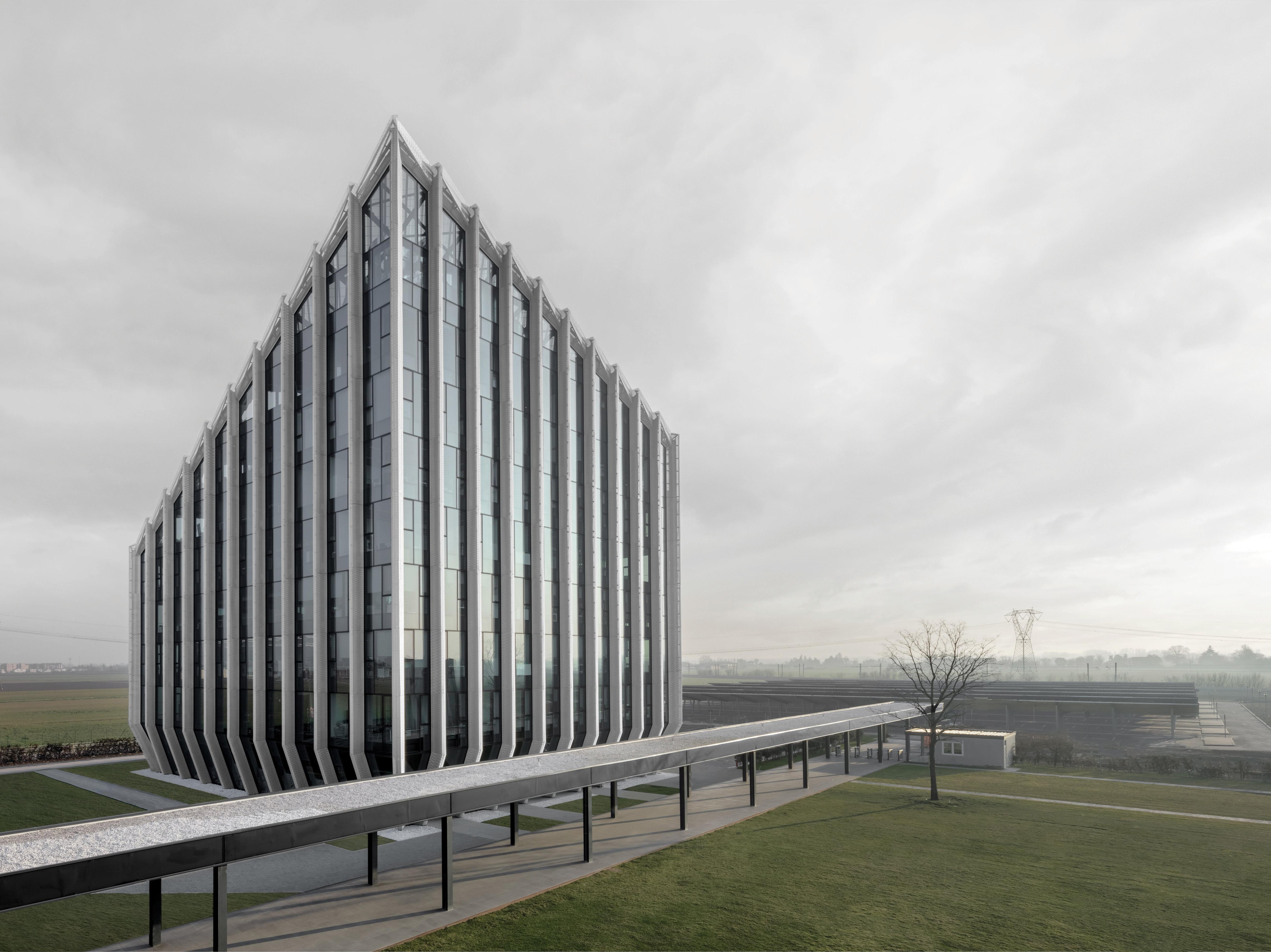
Bonfiglioli’s new headquarters in Calderara di Reno is more than a workplace, it’s a strategic instrument of industrial evolution. Designed by Peter Pichler Architecture, the building redefines what sustainable architecture can mean for manufacturing.
Bonfiglioli’s HQ Rewrites the Industrial Playbook
In Calderara di Reno, just outside Bologna, Bonfiglioli’s new headquarters, spanning 6,200 square metres, completes the EVO complex, the company’s largest industrial site in Italy. Conceived not as a standalone office but as the operational and symbolic core of a manufacturing ecosystem, the building responds to a precise set of client imperatives: energy autonomy, spatial flexibility and architectural identity rooted in the company’s mechanical DNA.
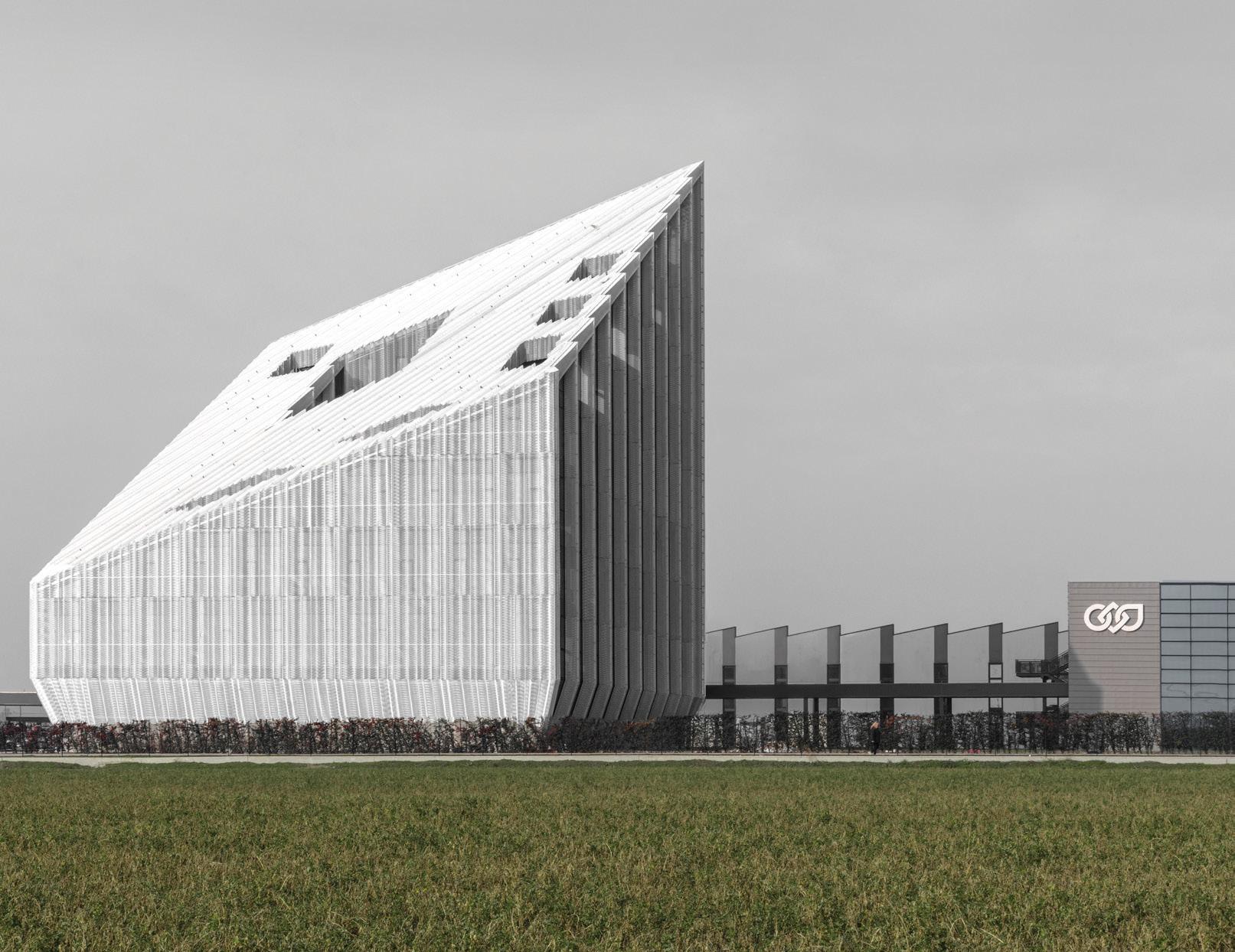
The design begins with a clear environmental agenda. As a nearly Zero Energy Building (NZEB), the headquarters integrates geothermal heat pumps, radiant ceilings and a 3 MW peak photovoltaic array. These systems are not add-ons, they are embedded into the building’s geometry and massing. A tilted roof enlarges the north façade, optimizing indirect daylighting across workspaces and reducing cooling loads.
The central courtyard, a typology inherited from the EVO masterplan, enhances passive ventilation through a chimney effect and anchors the building in its landscape.
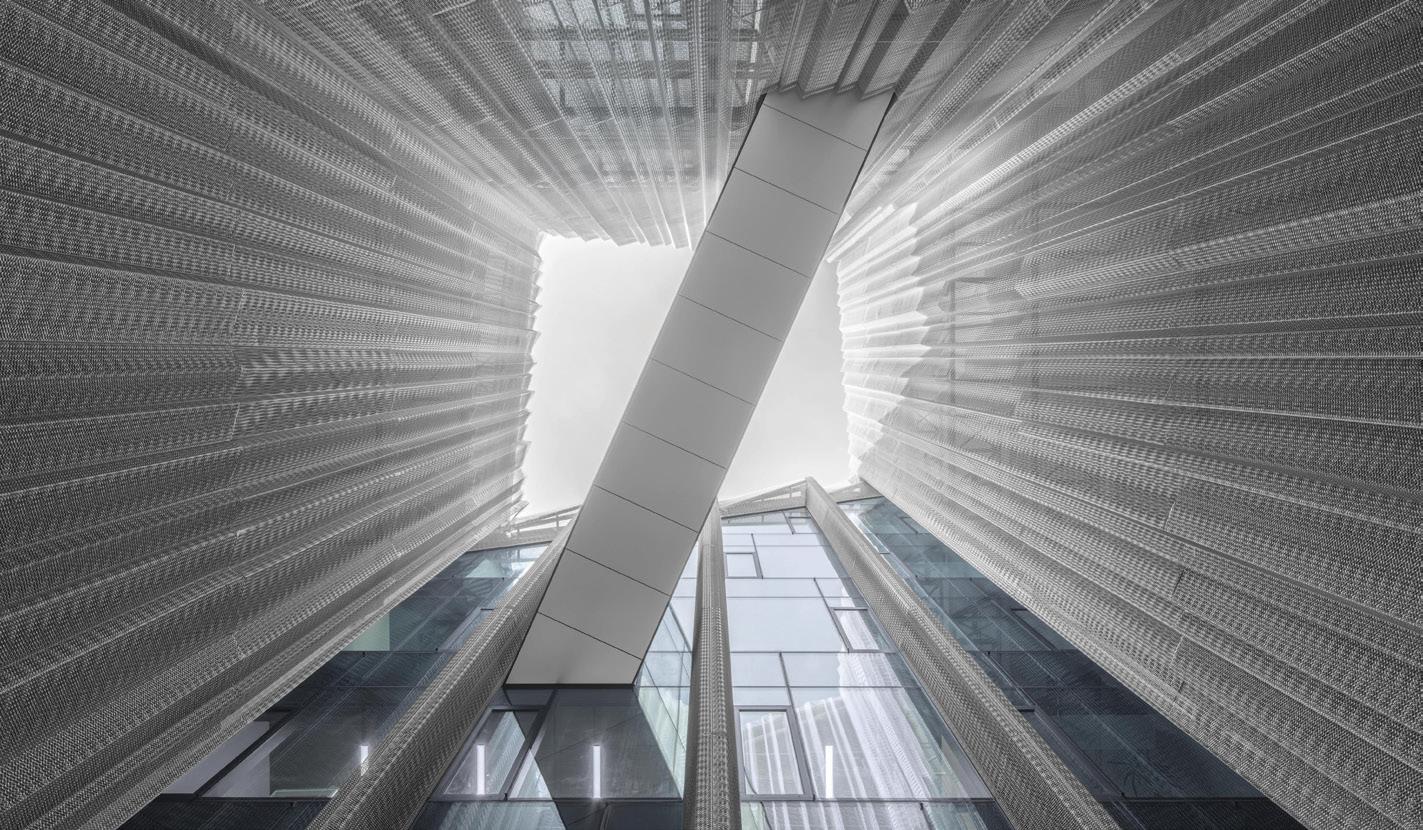
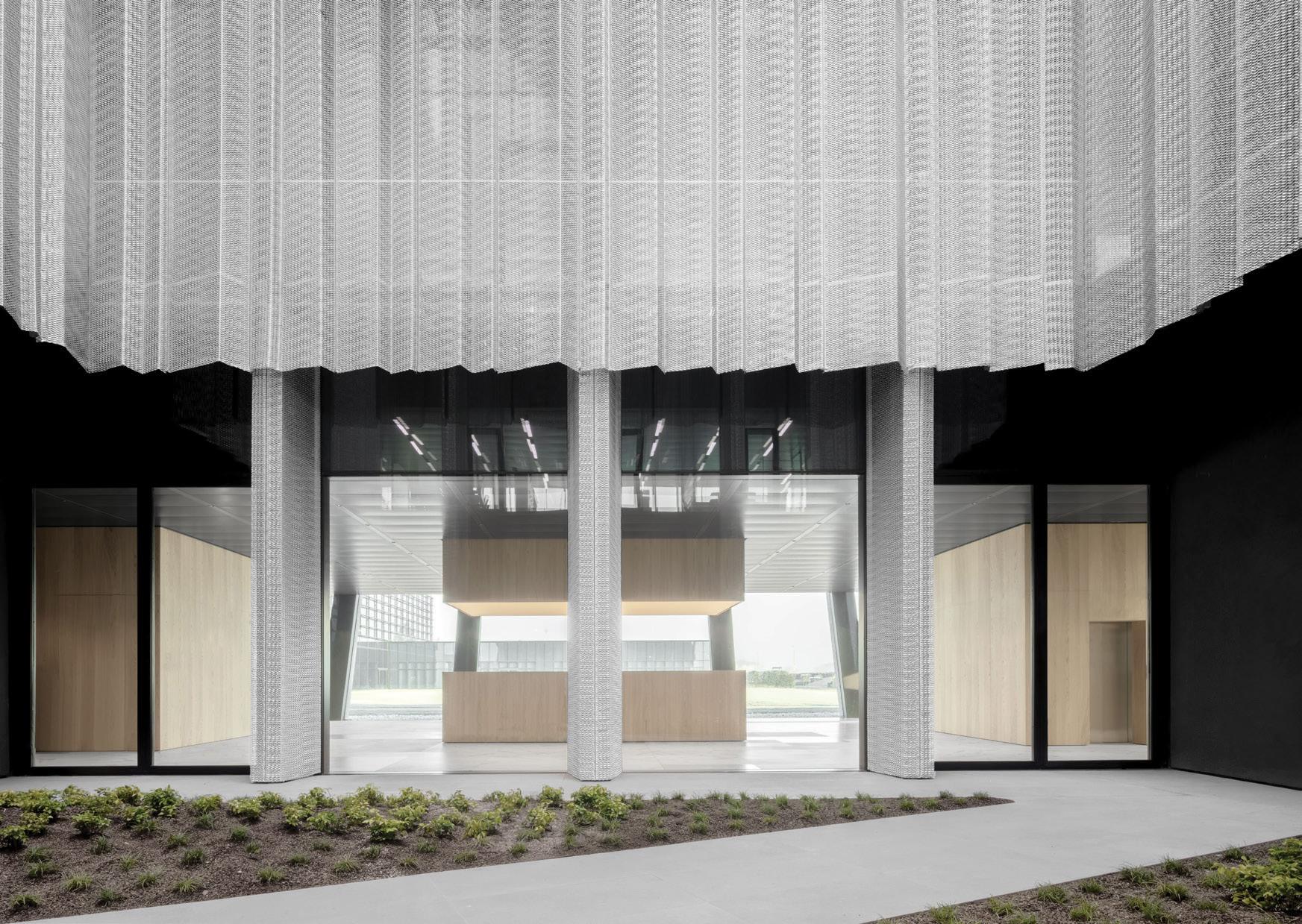
One of Peter Pichler Architecture’s signature moves—the use of sculptural envelope systems—is evident here. Façade planning was led by Pichler Projects, and it’s here that the building’s architectural language is most clearly articulated. A custom pleated aluminium mesh wraps the south-facing elevations and roof, acting as a second skin that filters sunlight, mitigates heat gain and stabilizes the indoor climate. The pleated geometry references Bonfiglioli’s gear systems, while the metallic finish evokes the shavings produced in their supply chain. This dual-layer envelope is both expressive and performative, an industrial metaphor rendered in high-efficiency cladding.
A Headquarters Built to Think Ahead
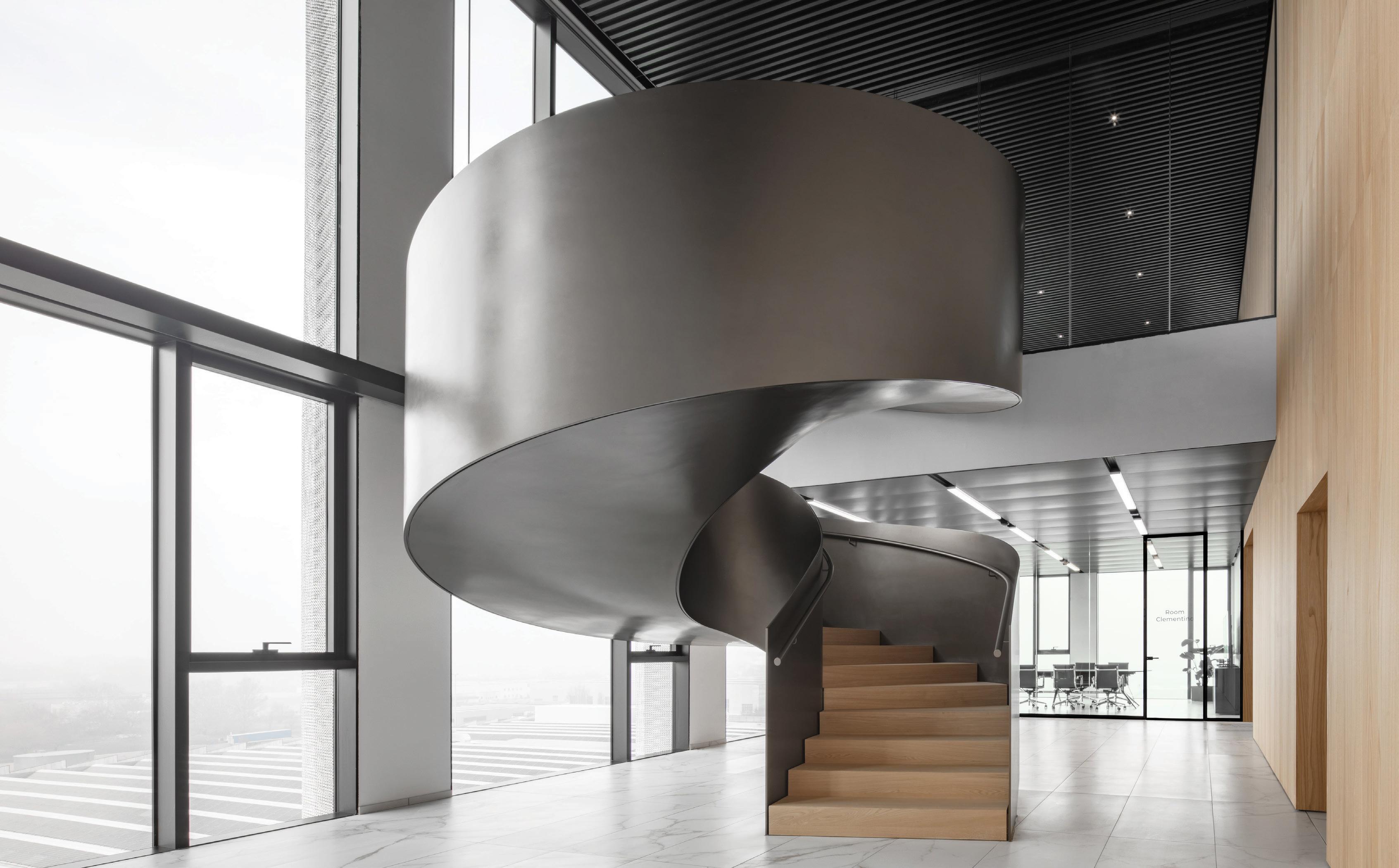
Inside, the building is structured for adaptability. An Exoskeleton system allows column-free spans, enabling flexible layouts and future-proofing the interior against evolving departmental needs. Circulation is orchestrated through two sculptural steel spiral staircases, which serve as both vertical connectors and spatial anchors. A thirdfloor bridge spans the courtyard, linking departments and facilitating cross-functional workflows. The spatial organization supports public engagement and operational synergy with adjacent EVO buildings, reinforcing Bonfiglioli’s integrated approach to production and administration.
Workplace well-being is embedded in the architecture. Indirect natural light is maximized through orientation and envelope design, while six south-facing terraces offer outdoor spaces for pause and reflection. Views of the Santuario Madonna di San Luca connect the building to its cultural context, grounding its futuristic form in the landscape of Emilia-Romagna.
This is not a headquarters that simply houses operations, it choreographs them. It reflects Bonfiglioli’s commitment to sustainability, innovation and circular economy principles, while offering a spatial framework that can evolve with the company’s ambitions. The building is a model for low-carbon, energy-autonomous industrial architecture, demonstrating how design can serve both performance and identity without compromise.
Levitation and Legacy: Yohoo Museum’s Façade Rewrites the Rules
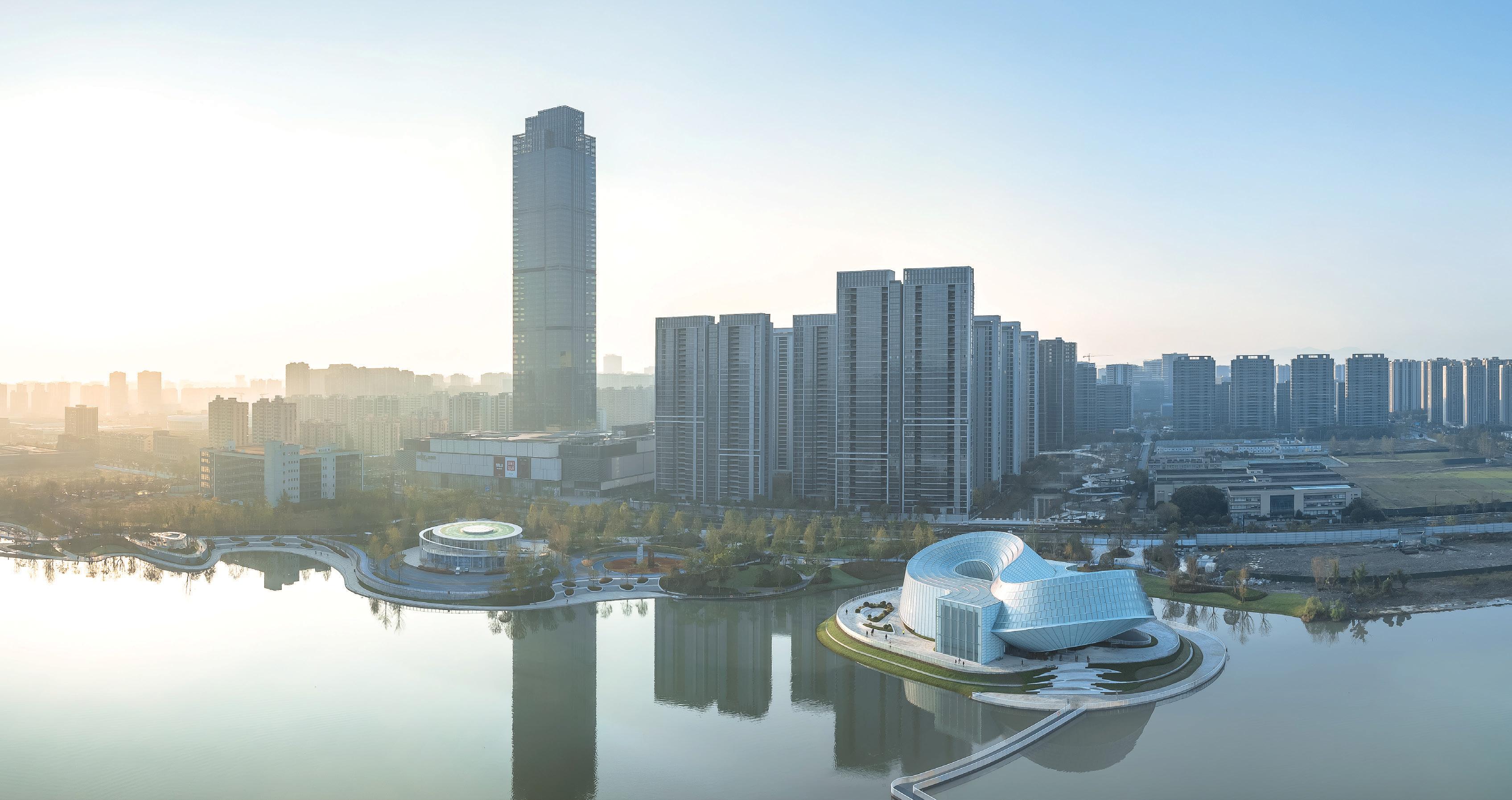
Aedas’ Yohoo Museum in Hangzhou redefines the architectural envelope as a cultural interface, where jade, glass, and steel converge to express weightlessness, heritage, and environmental harmony.
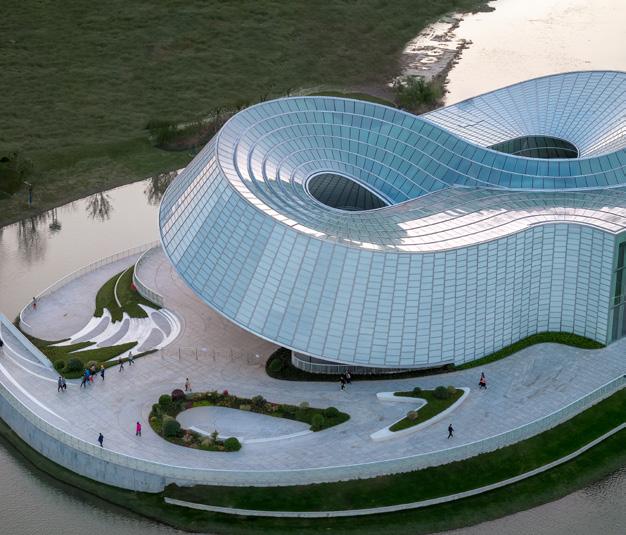
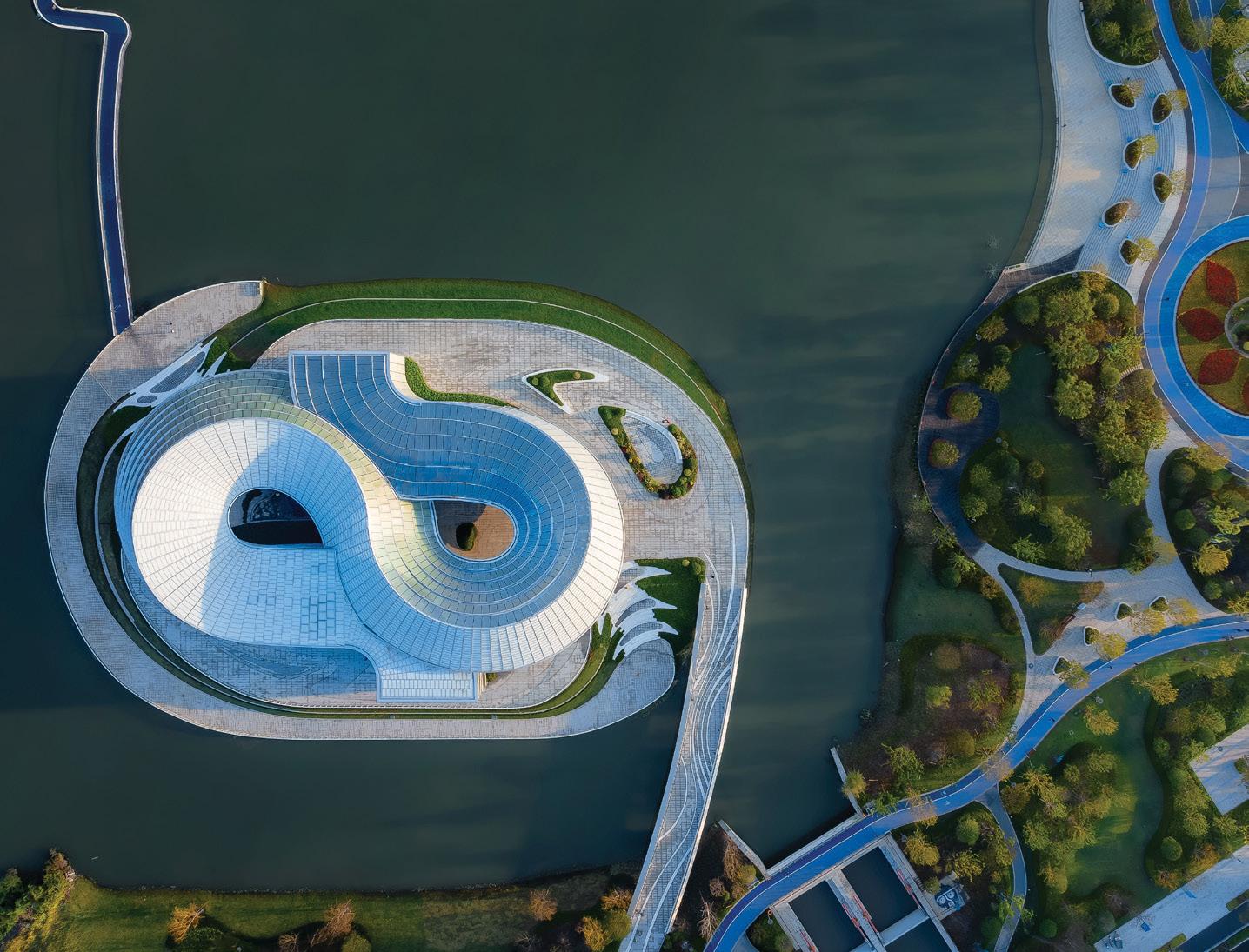
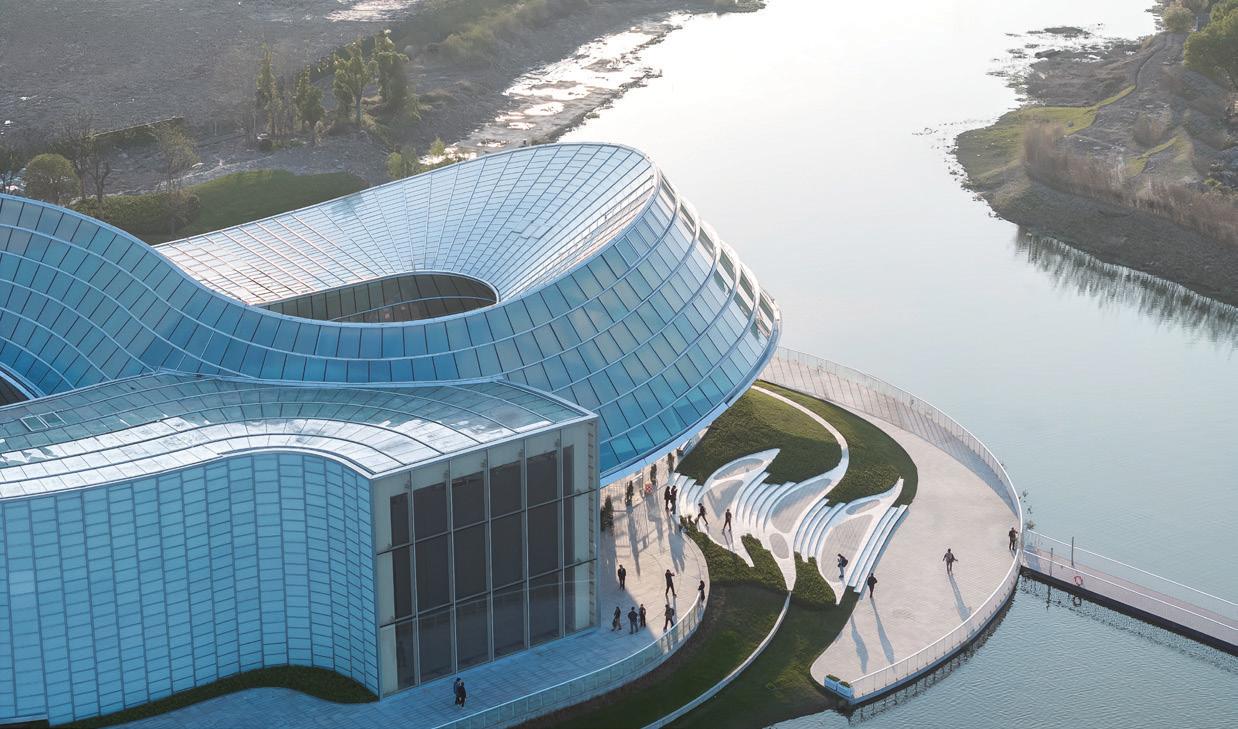
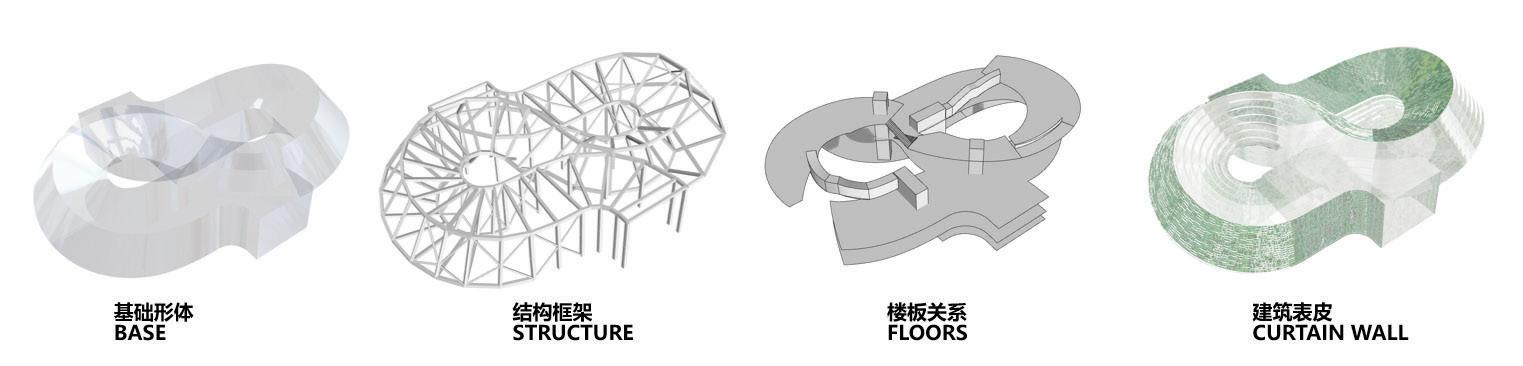
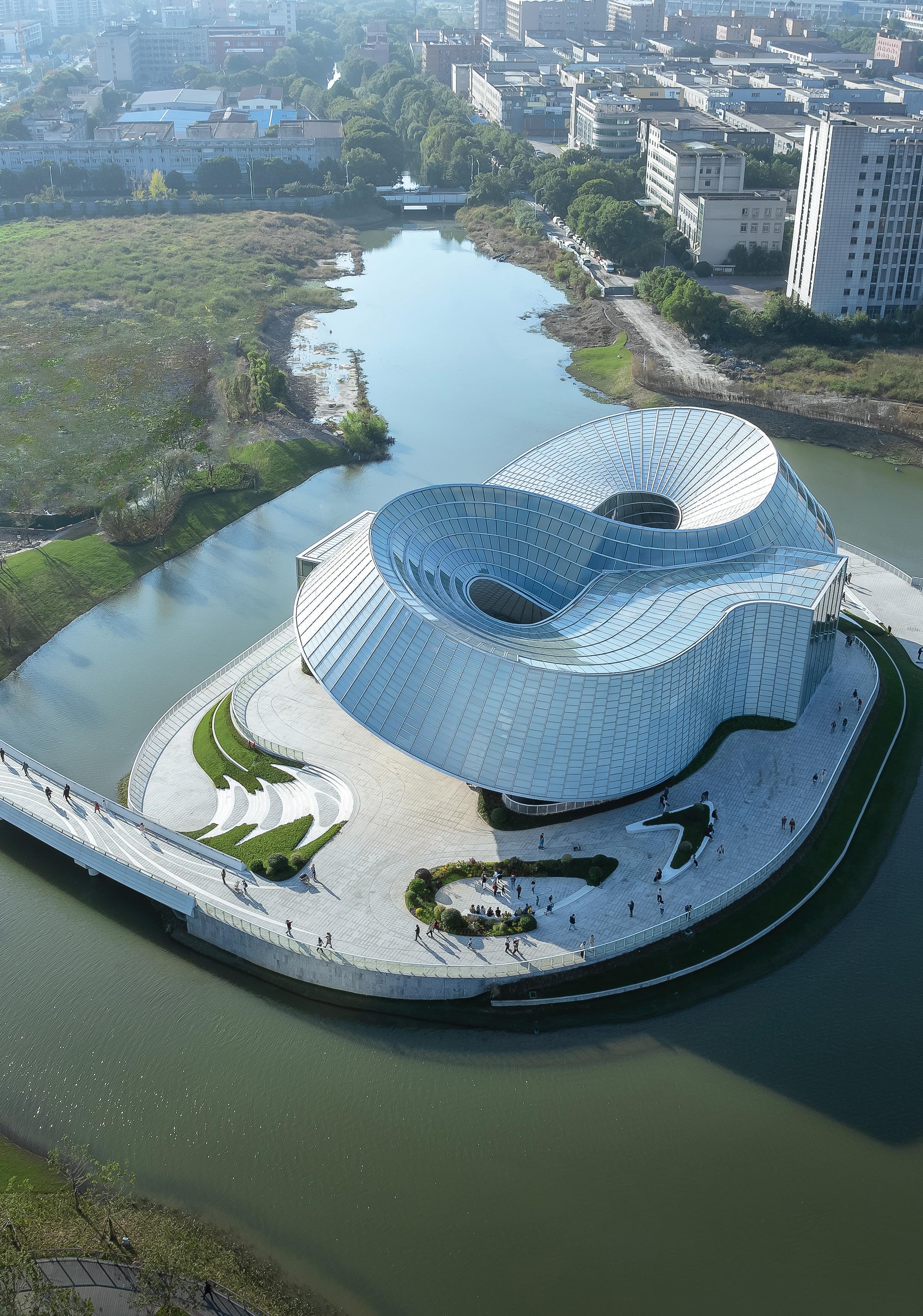
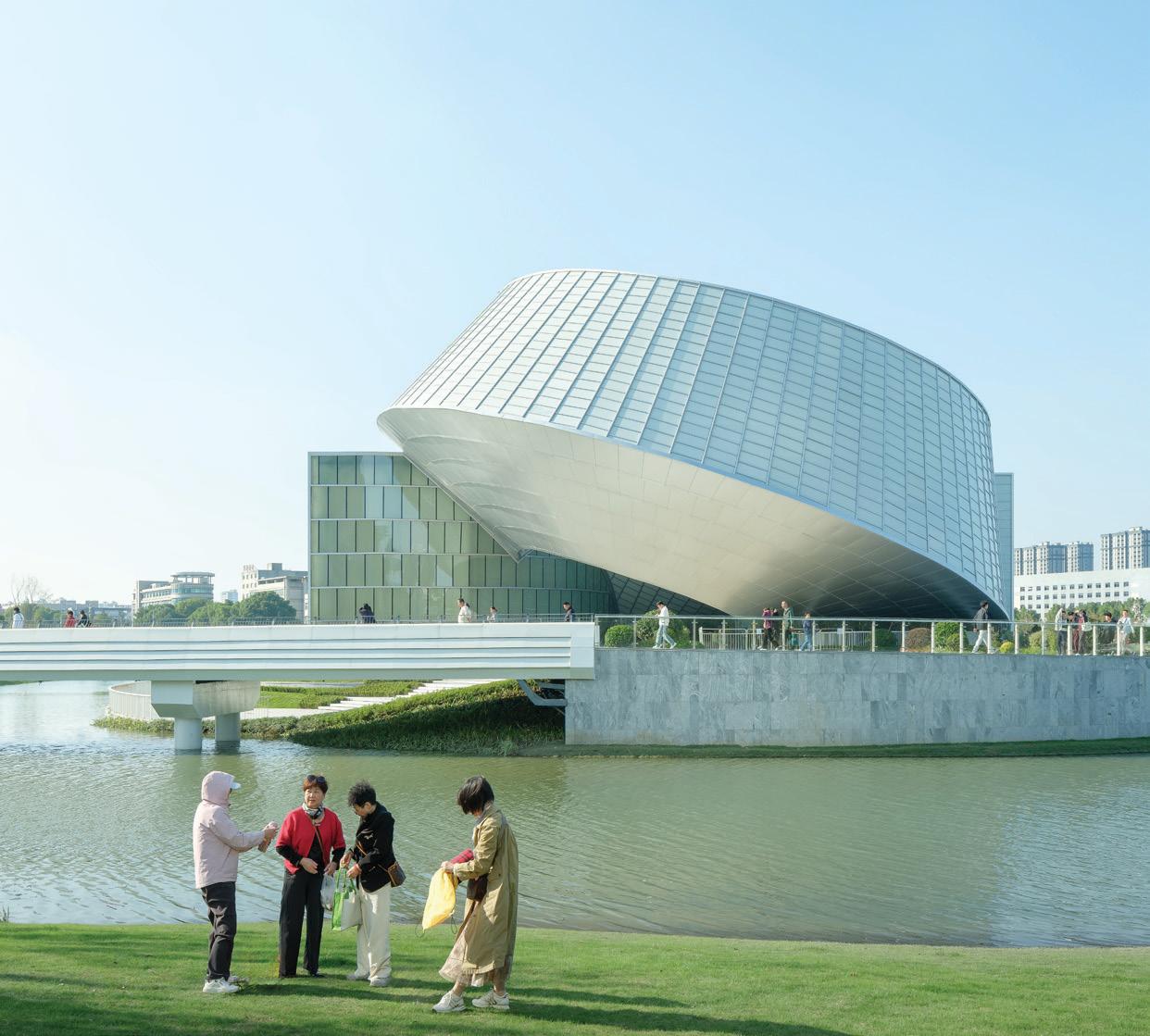
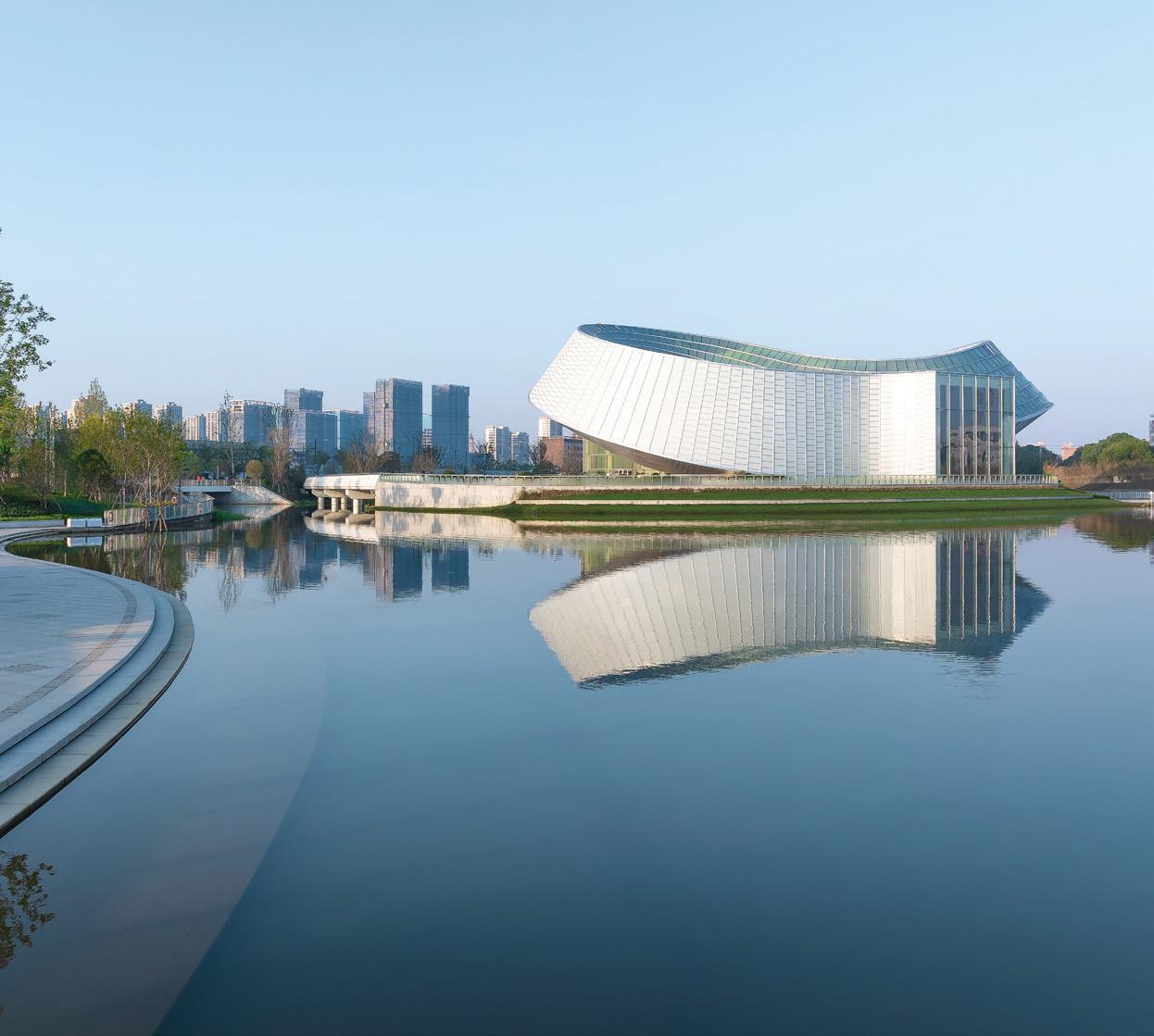
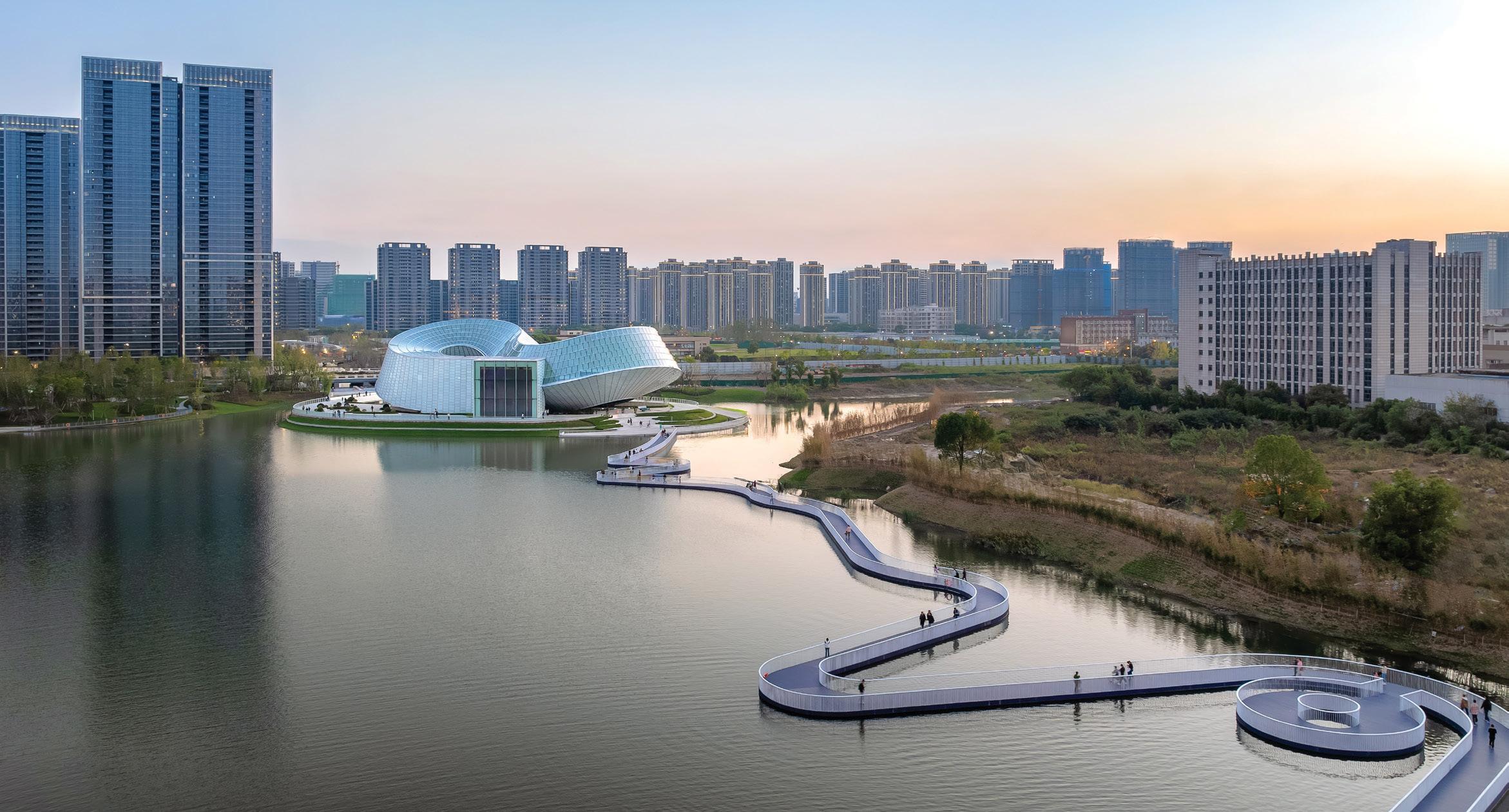
Set within the waters of Liangzhu Yohoo Park, the Yohoo Museum is conceived as a “boundless” structure, its double-ring form inspired by interlocking jade artifacts from ancient Chinese rituals. Designed by Aedas under Global Design Principal Ken Wai’s direction, the building’s silhouette appears to levitate above the lake, its uplifted edges engineered to evoke lightness without compromising structural integrity. This illusion of suspension is not aesthetic alone, it reflects Hangzhou’s historical relationship with water and the city’s evolving urban identity.
Façade as Cultural Interface
The museum’s envelope is a deliberate narrative device. Its north-facing glass curtain wall, textured to resemble white jade, stretches horizontally to frame views of the exhibition and office zones. On the south, the entrance is marked by emerald glass, a multilayered laminated system that modulates daylight while amplifying interior luminosity.
These materials are not decorative; they are performative. The façade’s vertical and horizontal framing accentuates curvature while reinforcing the building’s steel skeleton, enabling the dramatic cantilevered edges without visible support.
Material selection is central to the museum’s architectural language. The steel frame provides the structural backbone for the building’s floating geometry. Jade-like glass panels, engineered through multilayer lamination, deliver both translucency and thermal performance. Their crystalline depth diffuses natural light across the interiors, creating a serene, low-glare environment suitable for artifact display.
The interplay between opacity and transparency is calibrated to optimize daylighting while minimizing solar gain, aligning with passive environmental strategies.
Environmental Integration
The museum’s lakeside siting is not incidental, it’s a strategic response to Hangzhou’s cultural and ecological context. The building’s elevated position above water references the Grand Canal and Liangzhu Culture, embedding historical continuity into its spatial logic. Winding walkways
blur the boundary between built and natural environments, encouraging visitors to engage with the landscape as part of the museum experience. These circulation paths also serve as thermal buffers, reducing heat island effects and enhancing microclimatic comfort.
Aedas’ design intent is not to house history but to embody it. The interlocking ring form symbolizes cultural continuity, while the building’s material palette evokes ritualistic purity. The façade’s dynamic interaction with sunlight, casting shifting shadows and refracted light, ensures the museum remains a temporal experience, changing with time and perspective.
The central courtyards and light wells reinforce the ancient Chinese cosmological concept of connecting heaven and earth, anchoring the museum in both myth and modernity.
The Yohoo Museum’s architectural envelope is more than skin, it’s a spatial manifesto. Through its integration of cultural symbolism, material innovation and environmental responsiveness, it challenges conventional museum typologies. It stands not just as a container of artifacts, but as an artifact itself, an emblem of Hangzhou’s past, present, and speculative future.
Exploring the Necessity of Thermally Broken Windows in Hong Kong
Technical review by: Y.Z. ZHOU of Warmframe Technology Corporation, Beijing, China, and Richard LI of AECOM Building Engineering (Façade), Hong Kong
ABSTRACT
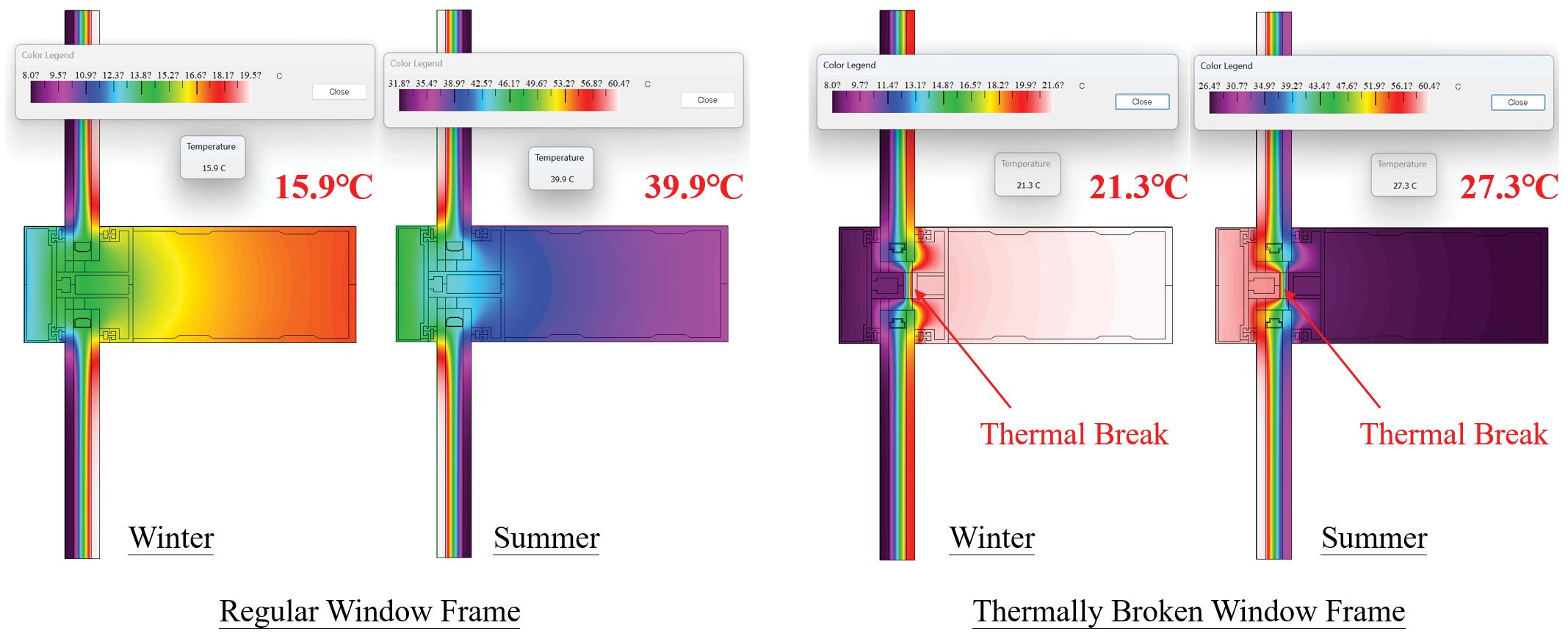
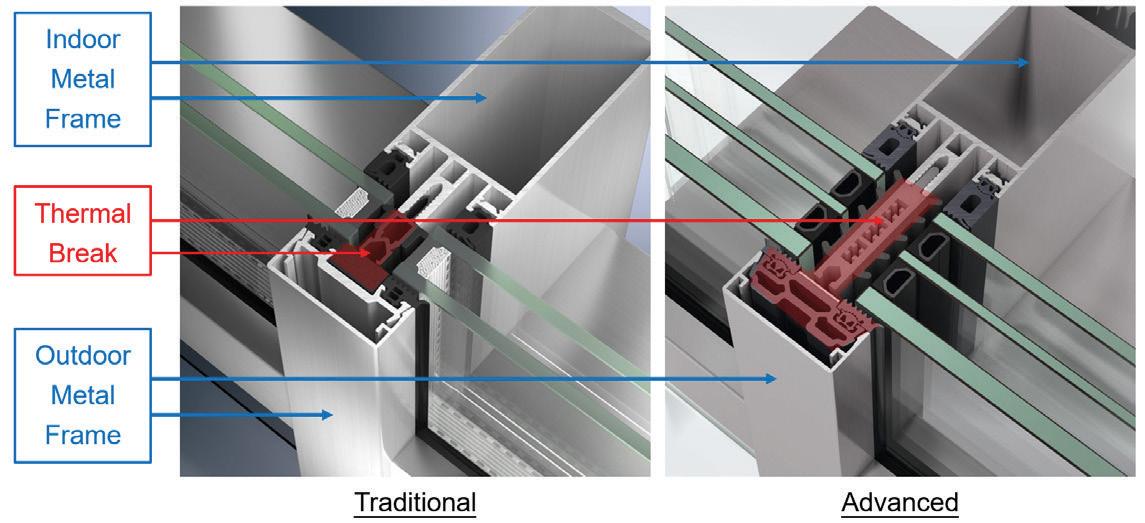
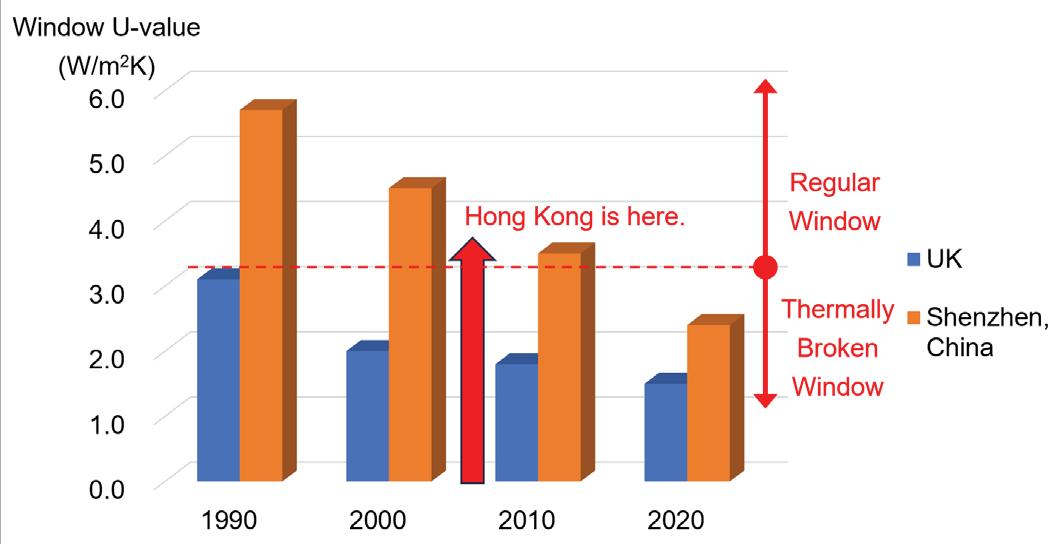
Thermally broken windows consist of thermally broken frames and insulated glass, and have superior thermal performance compared to regular windows. Their characteristics of low U-value and low shading coefficient contribute to reduce both the heating and cooling loads of buildings in Hong Kong, thereby significantly reducing carbon emissions. Thermally broken windows are globally recognized as one of the most important technologies for achieving a safer and greener society, and have been widely used around the world for three decades. Shenzhen, China has been using thermally broken windows since the new national code changed the maximum allowable window U-value from 3.5 W/(m2·K) to 2.4 W/(m2·K). However, Hong Kong hardly uses any thermally broken windows, which is worth discussing.
This paper discusses the barriers to the adoption of thermally broken windows in Hong Kong. The first issue is the shortcoming of the current OTTV method, which was obtained based on a set of conditions that are no longer valid. The new conditions lead to a different result, which leads to the overestimation of the building energy performance. The second issue is about the current practice of LEED in Hong Kong. Engineers use the glass center U-values as the window U-values, which doesn’t follow the actual requirement of LEED. This discrepancy means that the actual energy performance of the buildings is unlikely to meet the design requirements. The third issue is that the Buildings Department (BD) does not approve thermally broken windows due to structural safety concerns, and a simple and mature solution to address BD concerns is presented. The paper also discusses its limitations and the future plan for the comparable energy simulation and experimental testing.
Keywords: thermally broken window, U-value, OTTV, building envelope
BACKGROUND
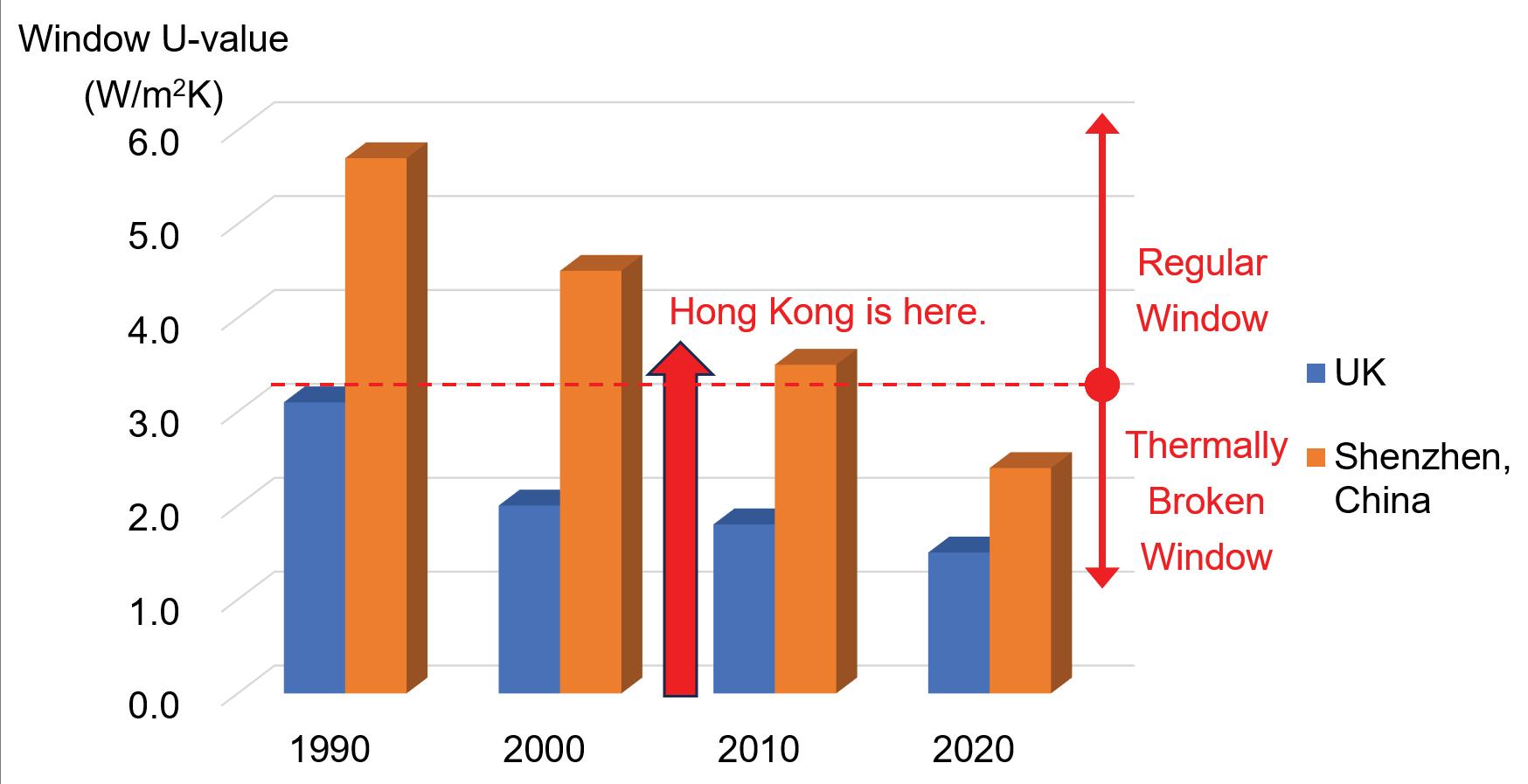
Germany was one of the early adopters of thermally broken windows, switching from regular windows in the 1990s when the window U-value limit changed from 3.1 W/(m2·K) to 1.8 W/(m2·K). The United Kingdom completed a similar upgrade in the 2000s. The United States and China began using thermally broken windows in the 2000s, but only for buildings in cold climates back then; buildings in hot climates didn’t use thermally broken windows until 2020. In Shenzhen, almost all the buildings used regular windows in the past, but since the new code, GB55015-2021: General Code for Energy Efficiency and Renewable Energy Application in Buildings, was introduced in 2021, the maximum allowable window U-value was changed from 3.5 W/(m2·K) to 2.4 W/(m2·K), requiring thermally broken windows. Hong Kong doesn’t have a window U-value requirement. Wong (2017) showed that the most popular configuration of windows for commercial buildings in Hong Kong were non-thermally broken (regular) frames with low-e IGUs [1]. The typical window U-value in Hong Kong is estimated to be an average of 3.6 W/(m2·K) (Figure 2).
RESEARCH QUESTIONS
• Hong Kong uses the Overall Thermal Transfer Value (OTTV) as the sole indicator for the energy efficiency design of buildings, and there is no window U-value requirement in the code.
• For the project seeking LEED certification from the U.S. Green Building Council (USGBC), when window U-values are required by the ASHRAE standard, the engineers simply treat the glass center U-values as equivalent to the window U-values, neglecting the frames.
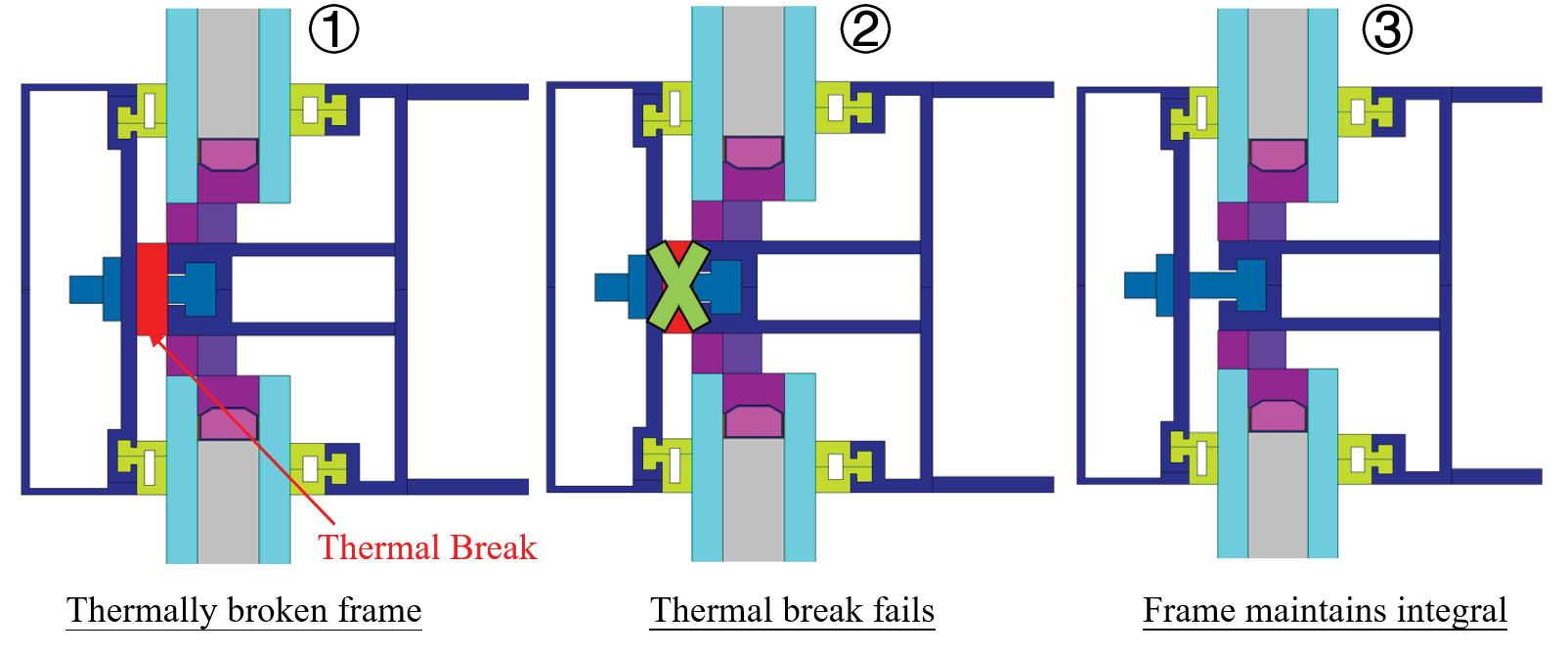
• The Hong Kong Buildings Department (BD) hesitates to approve thermally broken windows due to structural safety concerns. If you do want to use the thermally broken window in the project, you have to initiate a review process which will cost extra time and money, with no guarantee of approval.
CONCLUSIONS
Through the thorough analysis, this paper concludes that the barriers to the adoption of thermally broken windows are as follows:
• The original OTTV code ignores the heat conduction through windows (Qgc), but now Qgc has become the second important factor (40%) of the total heat transfer through the building envelope due to the latest changes in the OTTV limits, outdoor temperature and opaque walls.
• For LEED projects, the window U-value should take into account the U-value of the frame and glass using the area-weighted method, but the current practice is to treat the glass center U-value as the window U-value, which results in a large discrepancy between design and reality.
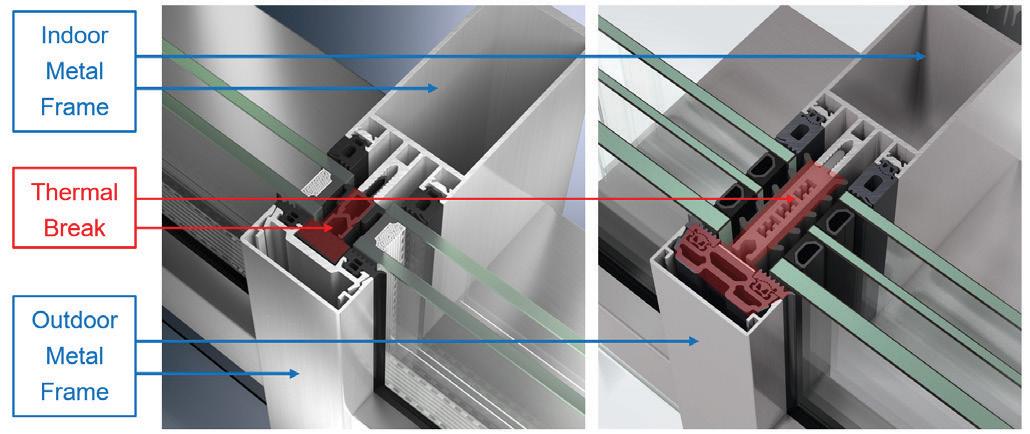
• The Hong Kong BD is concerned about thermal break failure resulting in glass falling from the building and doesn’t approve thermally broken windows. Bolting the outer metal frame along with the thermal break to the inner metal frame is a simple and mature solution, but has not been promoted by stakeholders due to the OTTV and LEED issues mentioned above.
These issues have not received sufficient attention, which delays the adoption of thermally broken windows, but more importantly, will probably lead to overestimation of building energy performance, or in other words, the actual energy performance of buildings is unlikely to meet the design requirements.
Figure 2: Window U-value Requirements
G&M ENGINEERING CO., LTD
G&M – Elevating Façade Engineering into an Art Form
G&M is a leading subcontractor specializing in podium façade and curtain wall works in Hong Kong, with over 30 years of engineering excellence. We deliver one-stop design-and-build solutions, repair, and maintenance services for complex building envelopes.
Our expertise extends beyond flat planes — G&M now pioneers double-curved façade systems, bringing architectural imagination to life through precision engineering and advanced fabrication technology. By integrating DfMA (Design for Manufacture and Assembly) principles and BIM digital modelling, we ensure seamless coordination from design to installation, achieving both aesthetic beauty and construction efficiency.
Committed to sustainability and innovation, G&M aligns every project with our ESG values — reducing material waste, optimizing logistics, and promoting safer, greener construction practices.
From Kai Tak Sports Park, a world-class sports and entertainment venue, to Two Taikoo Place, featuring a 15-metre-tall frameless structural glass wall supported by integrated pre-tensioned stainless-steel rods — the first of its kind in Asia — G&M continues to redefine façade craftsmanship, transforming architectural transparency into an art form.
CLP KAI TAK HEADQUARTER
KAI TAK SPORTS PARK
TWO TAIKOO PLACE
THE MILLENNITY KWUN TONG
Organisers:
Cary Lau
Global Design Principal
Aedas
Hugh Brennand
Managing Director, Buildings|Asia
Egis & Inhabit
Wai Tang Founding Partner
QUAD studio
Stephen Chow Managing & Creative Director CAN Design
Wisely Suen Director – Architecture Lead8
Nicolas Medrano
Design Principal
SOM
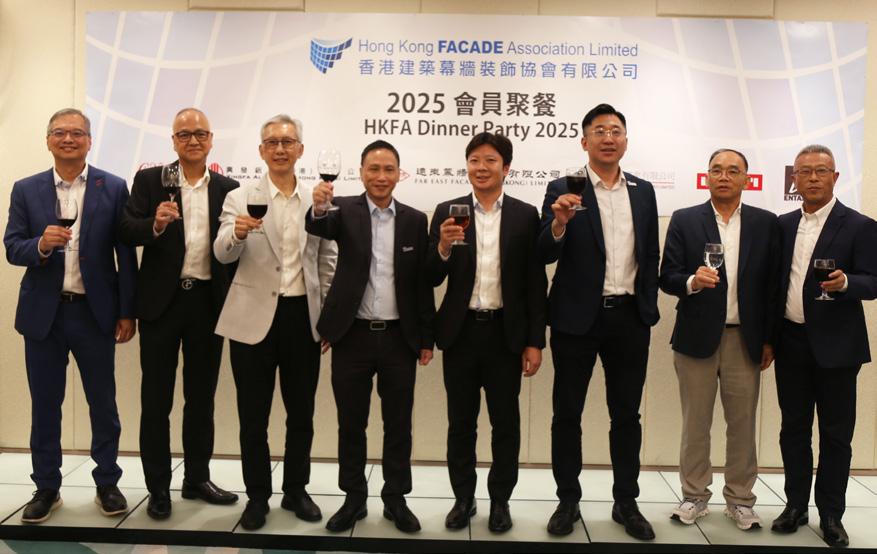
Hong Kong Façade Association (HKFA) is delighted to announce that it has renewed it’s role as Supporting Organisation in the upcoming Build4Asia Awards 2026 (B4AA).
HKFA President of The 9th Council Board 2023-2026, Mr Simon Chan, has joined as an esteemed member of the official Awards Jury.
B4AA continues to honour excellence through the Excellence in Façades category —highlighting innovation, sustainability, and design leadership in façade systems.
This year, we’re proud to spotlight Façade Lighting as a new award category, recognising outstanding integration of lighting design into building façades.
For more information and how to enter, please contact the organiser—ROF Media, bryan@rofmedia.com or call +852 3150 8912. Submission Deadline 27 Dec 2025.
Glory Wang
Managing Director
Atelier Pacific
Alan Cheung
Managing Director
One Bite Design Studio
Simon Chan President Hong Kong Façade Association
Mike Kavanagh
COO
S&techs
Contact Us for Details
David Morris Practice Director PMDL Architecture & Design