JUNGLE AUTONOMY
A tribal group in Malaita defends its right to independence.
A DAY SPENT IN SANTO
A guide to exploring Vanuatu’s tropical island.
THIRTY
YEARS IN THE MAKING
How a chief’s dream brought a canoe house to life.
A tribal group in Malaita defends its right to independence.
A DAY SPENT IN SANTO
A guide to exploring Vanuatu’s tropical island.
YEARS IN THE MAKING
How a chief’s dream brought a canoe house to life.
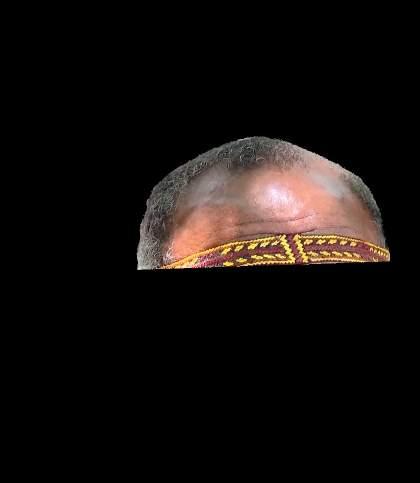
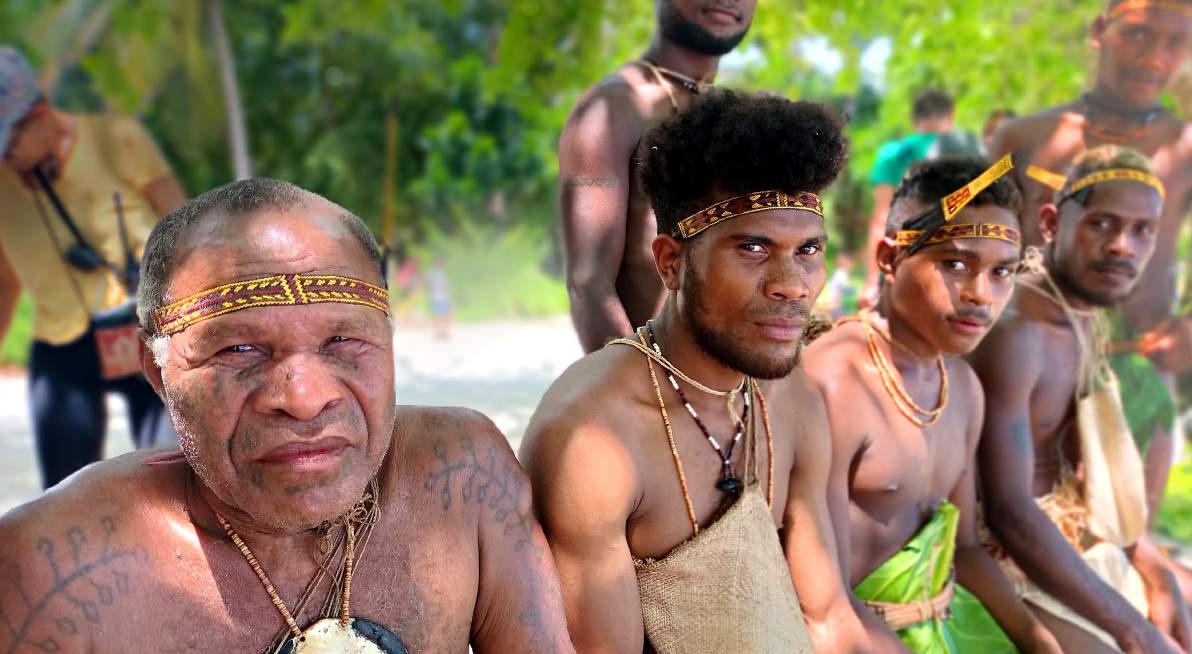
An ancient tribal group deep in the Malaitan jungle defends its right to cultural and ecological independence with help from the Australian Museum.
You could say matters reached a boiling point nearly a century ago, when the Solomon Islands’ colonial masters decided to impose punitive head tax on the people of Malaita.
After Guadalcanal, Malaita is the next largest island in the Solomon Islands and the most populous, comprising a mix of various tribal groups split between coastal wane i asi or ‘saltwater people’ and wane i tolo or ‘bush people’ who live in the mountainous interior.
Of the second group, one stands distinct—the Kawai. These hardy, superstitious people share a history that reaches back some 5000 years, to when Melanesian
people began migrating across the South Pacific, developing their own distinct ethnic communities.
Although superficially explored by the Spanish in the 16th century, it wasn’t until the mid-19th century that Western civilisation and the more remote Malaitans came face to face in earnest, beginning a chapter in history that is only now being resolved.
The flashpoint was what became known as the Tax Collection Massacre when, in 1927, a group of Kwaio led by
a fierce tribal elder or ramo, Basiana, ambushed a party led by William R. Bell, the Australian-born District Officer of Malaita, as they came to collect an unpopular tax imposed on them.
Apart from this punitive levy, discontent had been brewing for years over rampant ‘blackbirding’ as well as general discontent at the encroachment of Western Christian customs on their traditional values and beliefs.
In response, the administration assembled a ragtag posse some two weeks later, comprising eager locals, government officials and some military sent from Australia aboard the warship, HMAS Adelaide. When the dust settled months later, at least 60 Kwaio, many of them innocent, were dead, and 200 supposed perpetrators, including Basiana, were arrested, jailed and tried. Basiana was later convicted and publicly hanged.
Thirty years later, celebrated Hawaii-born anthropologist Roger Keesing earned his PhD after living with and studying the Kwaio people intensively, ultimately publishing numerous papers and books, including the seminal Kwaio Religion in 1982. While he is mostly sympathetic to the Kwaio position, he is not without criticism, stating "the concept of 'résistance' is somewhat clumsy in its romanticisation of action directed to a collective cause", meaning that the series of conflicts resulting from the massacre was as much about intertribal feuds and hierarchy as it was colonial protest.
Academic debate aside, what is abundantly clear is that the Kwaio people strive for cultural and ecological independence to this very day, declining all but the most essential assistance from outside their isolated, mountaintop redoubt.
The Kwaio people strive for cultural and ecological independence to this very day, declining all but the most essential assistance from outside their isolated, mountaintop redoubt.
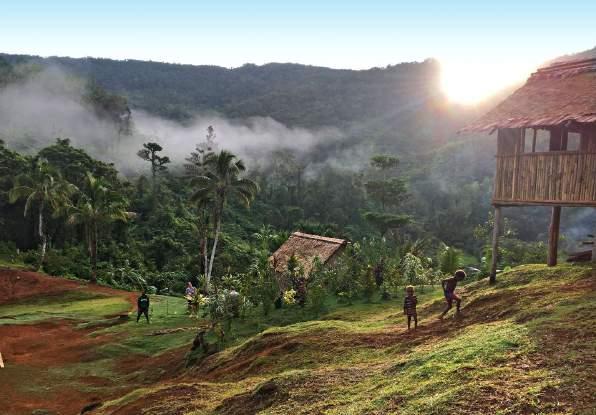
For anyone venturing into their territory, the ascent into the highlands is demanding. The track is steep, frequently slick with mud, and the air oppressive with heat. Progress is uneven, broken repeatedly by river crossings and natural obstacles that disrupt any steady rhythm.
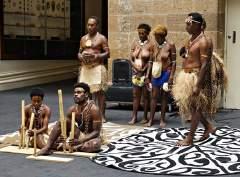
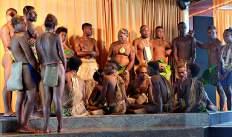
The trek takes around eight hours, and it is only in the late afternoon, as the highlands draw near, that the air begins to cool. The journey concludes— or perhaps properly commences — with a formal welcome to country. Participants don kapolato, the traditional dress fashioned from banana leaves, and the evening unfolds with ceremonial speeches, hospitality, and customary dances.
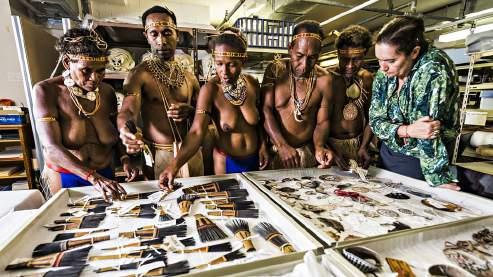
Several years ago, the Kwaio established the Kwainaa’isi Cultural Centre in conjunction with the Australian Museum, creating a formal foundation for a sustained partnership with the Kwaio community. This collaboration was significantly advanced by Professor David McLaren of James Cook University, who continues to work closely with the Kwaio on public health initiatives.
In March of 2019, the Kwaio Conservation Alliance was formed in partnership with community leaders Chief Esau Kekeubata and Tommy Esau. Now operating as the Baru Conservation Alliance, the organisation has played a central role in guiding community-led, future-oriented conservation initiatives in the region. Its objectives include building research capacity at Kwainaa’isi, documenting traditional knowledge, preserving cultural practices, and strengthening conservation strategies in Malaita’s highland rainforests. A reconciliation ceremony held in July 2018, following decades of tension stemming from the 1927 massacre, marked a critical turning point and enabled the establishment and subsequent growth of the alliance. Over the coming years, the Alliance is expected to support the expansion of designated conservation areas and the continued development of local and international networks. To strengthen cultural heritage and reinforce community values, additional cultural centres and schools are planned. Future initiatives will also prioritise improvements to village infrastructure, including accommodation, as well as the upgrading of access tracks within and between villages.
Beyond these activities, the Kwaio are cautiously venturing into tourism activities, providing exclusive and carefully controlled interactions with local operators and expedition cruise companies like NZ-based Heritage Expeditions, who offer a rare cultural exchange with passengers who must consent to wearing the traditional attire of the Kwaio, an experience few are likely to forget!
The author travelled to Malaita aboard the Heritage Adventurer in 2022, meeting the Kwaio people. Additional material provided by the Australian Museum.