JOURNAL RODALE INSTITUTE
Global Leader in Regenerative Organic Agriculture
Global Leader in Regenerative Organic Agriculture
Support and training give organic producers a powerful head start
+ The Keys to Eating Healthy
The Most Versatile Crop Regenerative Aquaculture to Eating Healthy Versatile Crop Aquaculture
We’re training the next generation of regenerative organic farmers. Help us connect them with their next opportunities.
Rodale Institute’s multiple-track training program gives aspiring farmers the knowledge and experience they need to start their regenerative organic careers. Our active alumni network will yield your best new hire. Send job opportunities to Education@RodaleInstitute.org.
BY
10 TRAINING DAYS
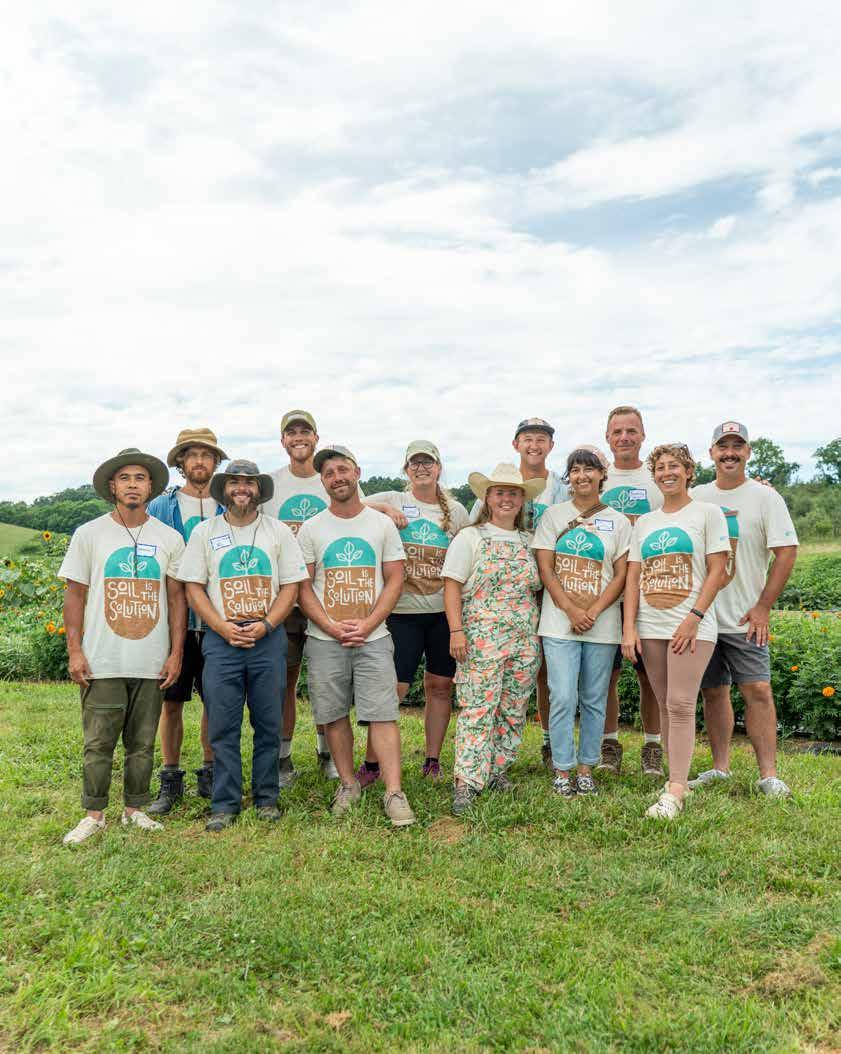
Rodale Institute is preparing the next generation of regenerative organic farmers.
18 SEA CHANGE
The future of farming includes harvesting food and agricultural resources from the water.
22 SOWING COMMUNITY
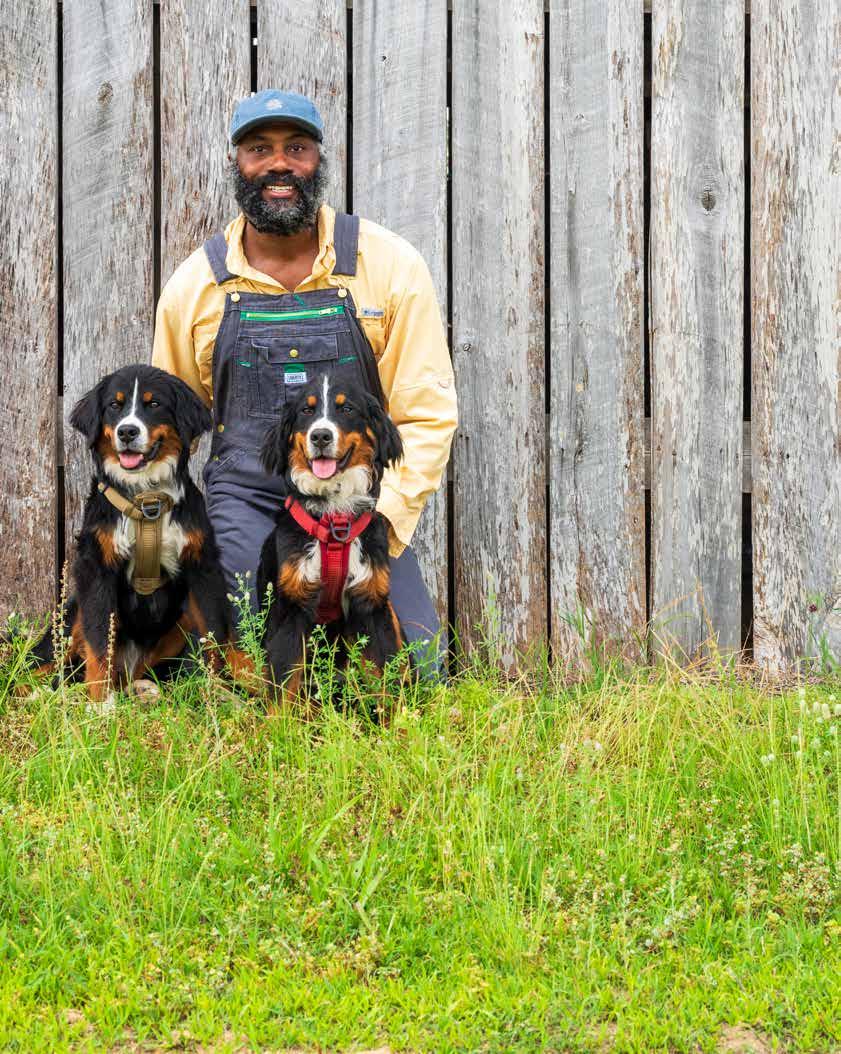
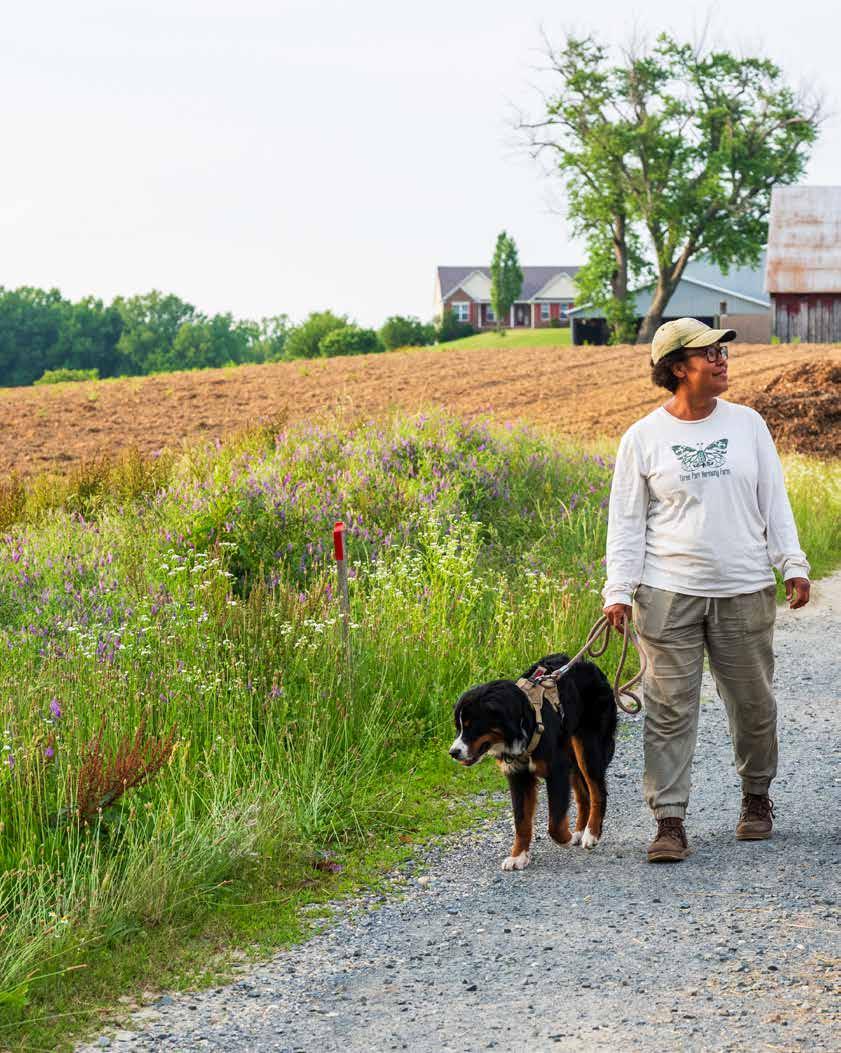
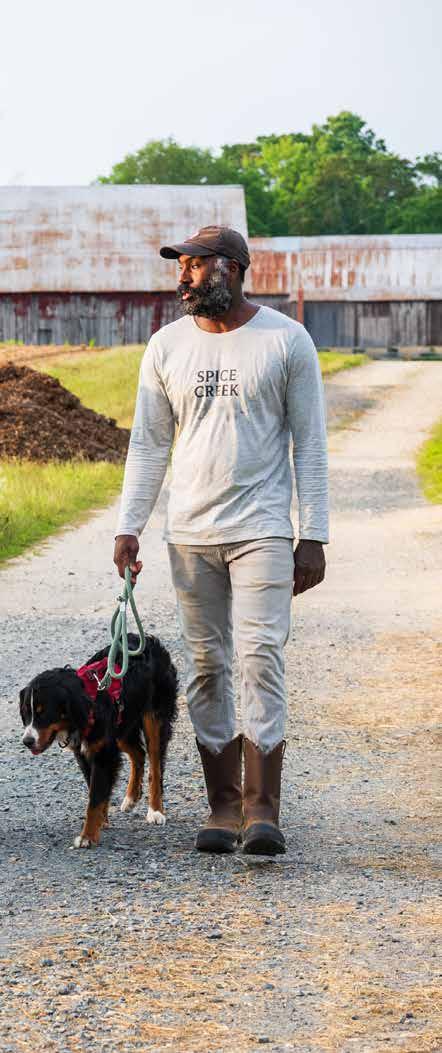
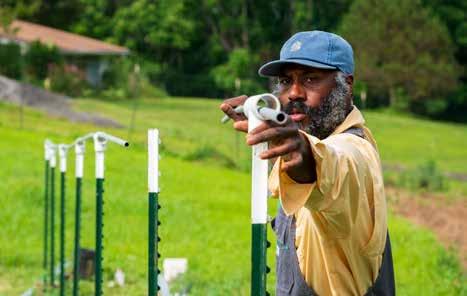
Farmers D’Real Graham (shown at left) and Gail Taylor are on a mission to build a healthy, cooperative food system.
3 LETTER
The Rodale Institute CEO highlights the progress toward a healthier food system.
4 HEALTH
Regenerative healthcare connects farming practices and the well-being of people.
6 EDUCATION
Through a new online training program, farmers from anywhere can learn how to run a successful operation.
8 RESEARCH
Hemp is a versatile crop that offers a variety of benefits for organic farmers.
28 NEWS
Rodale Institute sets and attains high standards for its own farm.
30 PROFILE
Farmer Cee, winner of the inaugural Good Farmer Award US, describes her experiences, goals, and keys to success.
32 VISION
In an excerpt from a soon-to-be-released book, Rodale Institute CEO Jeff Tkach explores the life of the farm.
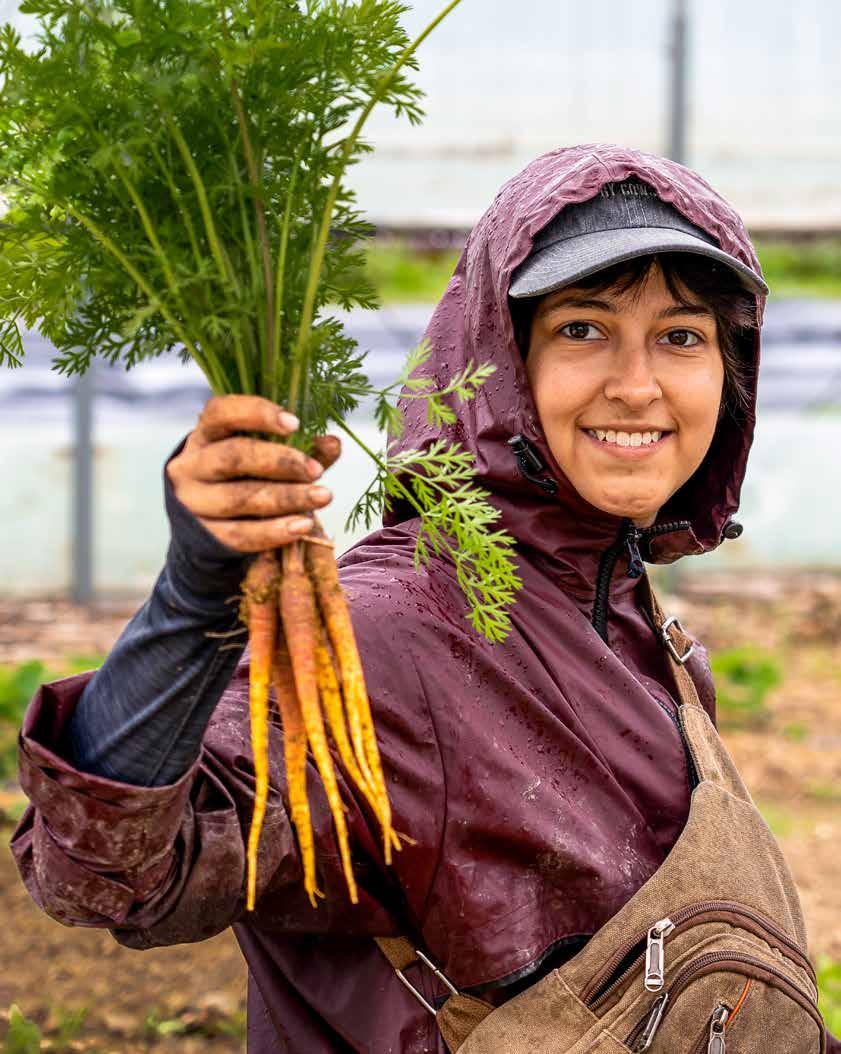
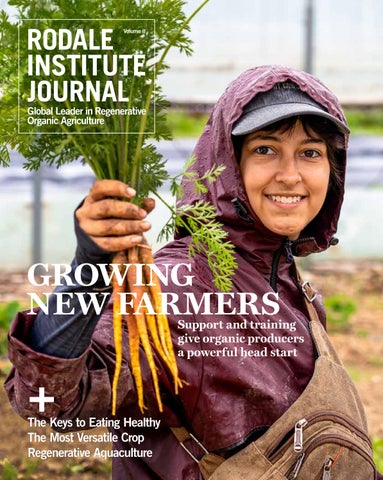
ON THE COVER: Isidra (Izzy) Garcia is learning about the opportunities, challenges, and rewards of working as an organic farmer. Meet her and other students on page 10. Photograph by Alex Hillestad
These locations are carrying the mission far and wide through solutions-based research, consumer education, and farmer training.
Main Campus
Kutztown, Pennsylvania
Founders Farm
Allentown, Pennsylvania
RESEARCH AND PARTNERSHIP CAMPUSES
Davines Group–Rodale Institute
European Regenerative Organic Center
at Davines Group Village
Parma PR, Italy
Rodale Institute Trailside
Organic Farm at Cornwall Manor Cornwall, Pennsylvania
St. Luke’s–Rodale Institute
Organic Farm Easton, Pennsylvania
REGIONAL RESOURCE CENTERS
California Organic Center at McGrath Family Farm Camarillo, California
Midwest Organic Center Marion, Iowa
Pacific Northwest Organic Center at Cascadian Farm Rockport, Washington
Pocono Organic Center at Pocono Organics Long Pond, Pennsylvania
Southeast Organic Center Chattahoochee Hills, Georgia
BOARD OF DIRECTORS
Cochairs
Maria Rodale, Roberta Lang
Christa Barfield; Christopher Ely; Matthew Grand; Alison Grantham, PhD; Mark Koide; Pedro Landa; Brian Lenhart; Sam Nana-Sinkam; Esther Park Hallam; Maya Rodale; Loren Speziale; Scott Stoll, MD; Jennifer Taylor, PhD; Bill Wolf
Chief Executive Officer
Jeff Tkach
BLUE ROOT MEDIA
Editorial Director
Scott Meyer
Design Director
Kimberly Brubaker
Photography Director
Rob Cardillo
Copy Editor
Diana Cobb
Production Editor
Nancy Rutman
All text and images (except where noted) by Blue Root Media
© 2025 Rodale Institute
Rodale Institute is a 501(c)(3) nonprofit dedicated to growing the regenerative organic agriculture movement through rigorous research, farmer training, and education. The Institute’s groundbreaking scientific research and direct farmer support programs serve as catalysts for change in farming and food production worldwide. Over its 80-year history, Rodale Institute has proved that organic farming is not only viable but essential to humanity’s survival.
Rodale Institute 611 Siegfriedale Rd. Kutztown, PA 19530 (610) 683-1400
RodaleInstitute.org
WE ARE AT A CRITICAL MOMENT for the well-being of ourselves and the environment. The industrial agriculture system is generating an ever-growing number of overweight, undernourished people. That’s right—our population is facing an epidemic of obesity and malnourishment, as well as a wide variety of related chronic illnesses, because of an excess of high-calorie, low-quality food. At the same time, the production of that food is depleting the soil, poisoning the water supply, and disrupting the ecosystem we all depend on to survive.
I’m happy to be the bearer of good news: This grim situation is not hopeless. We can build a food system that nurtures the health of people, communities, and the planet. In fact, the work to bring about this transformation is already under way. The publication you’re holding is full of examples of how regenerative organic agriculture is a revitalizing force.
On page 10, you’ll meet six members of the latest cohort of the Rodale Institute Farmer Training program and see their ambitious plans for launching their own operations after they complete it. Gail Taylor and D’Real Graham have been growing hundreds of pounds of fresh, organic food for the people of Washington, DC, on a compact urban farm, and they’re now expanding their harvest on more expansive land outside the city with support from the Rodale Institute consulting team. Learn about their story on page 22.
Rodale Institute researchers nationwide are digging into how organic farming practices affect the vitality of soil, the productivity of crops, and the nutritional value of the food those crops yield. Get the details on page 4. Many organic farmers are discovering that industrial hemp offers them valuable benefits as a cash crop and as a cover crop for their fields, and Rodale
When Rodale Institute was established nearly 80 years ago, it was an almost singular voice questioning how conventional food production methods were impacting the health of humans and the environment. While farmers were encouraged to apply fossil fuel–based fertilizers and toxic pesticides and herbicides to their land with promises of higher yields and profits, organic agriculture was dismissed as out of step with progress.
After years of research and education by Rodale Institute, regenerative organic farming is now recognized as forwardthinking. In 2025, Fast Company magazine included Rodale Institute on its prestigious list of the “World’s Most Innovative Companies.”
“Innovation is at the core of Rodale Institute’s mission,” says Jeff Tkach, CEO of the institute. Being on the Fast Company list “affirms that our work is shaping the future of food and farming, offering real solutions to the global climate crisis while ensuring healthy, nutrient-dense food systems for people across the US and beyond.”

Institute scientists are studying its variety of applications. You can find out about the plant, its uses, and the research on page 8.
All the progress we’re making is because of you and your investment in our important work. We know you care about the quality of your food, about the natural environment, and about the well-being of people and communities. Rodale Institute has joined with a group of partners to establish a certification that has set the highest standards for soil health, animal welfare, and social fairness in organic agriculture today. Nearly 20 million acres of farmland, including the 386 acres on our main campus farm in Pennsylvania, have earned the Regenerative Organic Certified (ROC) seal of approval. You can now find more than 2,500 products in retail stores across the US with the ROC seal. (Learn more about it on page 28.)
Conscientious shopping plays a vital role in influencing our food system. Making a contribution to Rodale Institute and supporting the effort to train farmers and arm them with the most credible research goes even further, increasing the supply of products that you rely on to stay healthy and making them accessible to more people. We are grateful to everyone who joins us in this effort to create a brighter, healthier future for all.
Jeff Tkach CEO, Rodale Institute

Regenerative healthcare connects the vitality of the soil with your diet and well-being.
WE ALL KNOW that eating a healthy diet is essential to staying well. Today, healthcare practitioners from many disciplines are going beyond simply urging patients to choose nutritious foods and are treating a wide range of ailments and chronic diseases with prescriptions for foods at their peak of nutrient density and raised without toxic chemicals—in other words, regenerative organic crops. Why is it necessary for doctors to prescribe food? What does it mean for you? How is Rodale Institute making a difference? Here’s what you need to know.
Obesity. About 40 percent of adults in the US are overweight enough to be classified as obese, says a 2024 report by the CDC National Center for Health Statistics. Obesity is a critical risk factor for type 2 diabetes, cardiovascular disease, and many other serious conditions. It is not just the by-product of an excessive abundance of food; households that are food insecure in the US are at a higher risk of obesity because of the quality of food commonly available to low-income people.
Ultraprocessing. Corn, soybeans, and wheat, the most widely planted crops in the US, are the raw materials of the industrial food system. They are used to make sweeteners, hydrogenated oils, refined flour, and other ingredients that fill you up but don’t nourish you. These ultraprocessed foods make up
more than 50 percent of the average American’s daily calorie intake.
Consumption of ultraprocessed food is responsible for an estimated 124,000 premature deaths yearly in the US, says a study published in the American Journal of Preventive Medicine in April 2025. “Ultraprocessed foods increase our risk of morbidity [illness] and mortality [death] through two mechanisms: the impact of the foods themselves and the loss of benefits from other more nutritious foods that they replace in our diet,” says Meagan Grega, MD, a Pennsylvania physician who is certified in lifestyle medicine and has been a featured speaker at the Rodale Institute Regenerative Healthcare Conference.
Nutrient loss. Industrial agriculture emphasizes productivity over quality. An analysis of USDA nutrient content data from 1950 to 1999 for 43 crops (mostly vegetables) showed a decline in the concentrations of most nutrients, notably protein, calcium, iron, riboflavin, and vitamin C. During the same timeframe, grain yields more than doubled, and the protein concentrations in these crops declined significantly.
Life choice. Compared with the typical “Western diet,” the “optimal diet” has a higher consumption of whole grains, legumes, fish, fruits, vegetables, and nuts and fewer calories from red and processed
“Let food be thy medicine and medicine be thy food.”
—Hippocrates (400 BC)
meats, sugar-sweetened beverages, and refined grains, Grega says. Citing a study based on the 2019 Global Burden of Disease study, she notes that eating the optimal diet starting at age 20 and sustaining that for a lifetime “may result in an additional 10.7 years of life expectancy for a woman and 13 more years of life expectancy for a man. Adopting an optimal diet at age 60 would still provide an impressive benefit, with an estimated 8 additional years of life expectancy for a person of either gender.”
Organic boost. Many studies have found that crops raised organically have greater concentrations of vital nutrients than do conventional crops. A 10-year comparison at the University of California, Davis, for example, found that tomatoes grown organically were richer in anticancer flavonoids than the conventionally grown fruits were.
Soil power. Research at Rodale Institute has found that microbes in organic fields are mostly nutrient recyclers supporting crop growth, while those in conventional fields are mostly parasites living on chemical fertilizers and competing with plants, says Andrew Smith, PhD, chief scientific officer. These differences may be why studies show higher levels of bioactive phytonutrients in organic crops. Rodale’s Vegetable Systems Trial has linked beneficial fungi in the soil with increases in phosphorus, potassium, and other nutrients in grains, sweet corn, asparagus, and potatoes.
Serving communities. Rodale Institute plays a central role in bringing organic food to several healthcare institutions. Since 2014, the St. Luke’s–Rodale Institute Organic Farm has been providing fresh, certified organic produce to patients and staff of the St. Luke’s University Health Network in Easton, Pennsylvania. In 2023, the Cornwall Manor–Rodale Institute Trailside Organic Farm in Cornwall, Penn-
The annual Rodale Institute Regenerative Healthcare Conference brings together researchers, farmers, and consumer advocates to share knowledge and exchange ideas for extending the benefits of organic food to all. Launched in 2022, the conference features leading-edge soil and health experts discussing “food as medicine” from a variety of perspectives. “Regenerative healthcare aims to prevent disease through an organic, whole-foods, plant-forward diet that begins on farms that work in harmony with nature,” says The Power of the Plate, a 2020 report from Rodale Institute. “Regenerative healthcare harnesses the power of nutritious food and lifestyle to suspend, reverse, and prevent disease.”
Scan the QR code for more insights into farming and healthy food.

sylvania, produced 9,150 pounds of fresh food in its first full growing season for the residents of the retirement community. A new partnership with Phoebe Ministries at Rodale Institute’s Founders Farm in Allentown, Pennsylvania, was launched in 2025 to grow organic food for the senior populations of Phoebe’s sites in the state. The three partnerships are bringing highly nutritious food to the people who need it most. These farms also serve as models to show other healthcare institutions how to connect with organic farmers and nourish their communities. Linking human health to the health of the soil—the founding principle and ongoing mission of Rodale Institute— is the key to reversing the rising tide of chronic, lifestyle-related diseases.
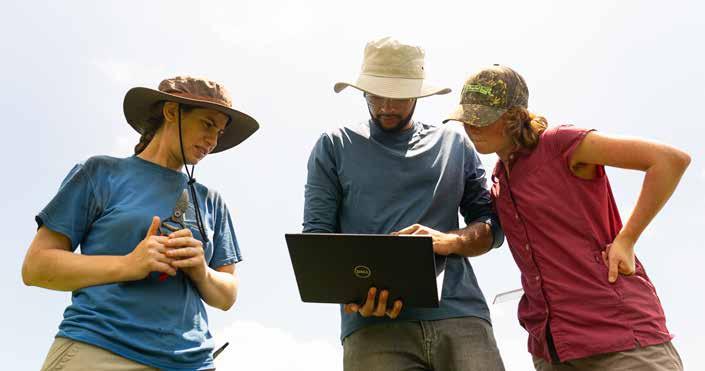
Through online education, more farmers than ever are learning how to succeed with regenerative organic methods.
THE MOST ESSENTIAL TOOL for organic farmers is knowledge. They need to understand the basics of topics ranging from soil science and entomology to cost accounting and marketing strategy, as well as the requirements of earning and maintaining organic certification. Rodale Institute Farmer Training (RIFT) has been preparing agricultural entrepreneurs for more than 15 years at its main campus near Kutztown, Pennsylvania. (Learn more on page 10.) Now Rodale Institute’s deeply researched and experiencetested expertise is coming directly to farms across the country.
“Farmers typically don’t get vacations or even weekends off when they can take time to focus on learning,” says Renée
Baran, Rodale Institute dean of education. “But new farmers and many experienced ones have gaps in their knowledge they need to fill.”
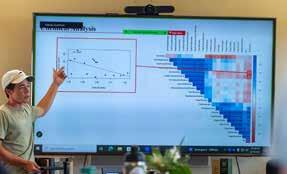
A new online platform will allow farmers to dig into pertinent topics whenever they can and wherever they are. “At Rodale Institute, we have accumulated more than 75 years’ worth of knowledge, and for the past three years, we’ve been capturing much of our RIFT curriculum on video,” says Jason Slipp, PhD, director of education. “We’re now offering it to farmers who are not able to enroll in our nine-month, in-person program.” The courses include regenerative organic agriculture–focused subjects, such as soil health, crop rotations, and weed control, along with business
topics, like financial recordkeeping. The curriculum delves deeper than the rudimentary content easily found online. “These are university-level classes based on proven instructional principles,” Slipp says.
The Rodale Institute education team is developing an online learning platform to organize and present a wide range of course materials and activities. This robust system includes tools for creating assignments, hosting discussions among peers and instructors, and administering tests and quizzes. Students can work at their own pace and focus on the areas that are most important to them. “This is easy for everyone to use, even if they’re not too tech savvy,” Slipp says.
While Rodale Institute Farmer Training online will be accessible to any individual who is seeking knowledge, the program is already attracting interest from higher education institutions, farm apprenticeship programs, and
other organizations across the country that support emerging agricultural producers. One early adopter is Good Roots, which works to help organic farmers build “lasting, sustainable businesses for their families, communities, and the earth,” according to its mission statement. “Farmers need training in business management and
finance to ensure they are profitable and viable for the long term,” says Rebecca Frimmer, a partner and principal consultant for Good Roots. “The biggest challenge for farmers is finding the time to balance all that must be done. It’s essential to carve out the space to work on the farm business and not just in the business.
Rodale Institute’s in-person and online educational programming is focused on supporting organic farmers, but it also offers anyone with an interest in growing nutritious food and living healthfully opportunities to build their knowledge and skills. In addition to the many hands-on workshops presented at the Pennsylvania farm throughout the year, you can enroll in courses such as “Being a Regenerative Consumer” and “Regenerative Health: The Power of the Plate” on the virtual campus. If you’re interested in topics like gardening or hobby beekeeping, Rodale Institute pros share their expertise in online classes. When you sign up, you get to grow your own know-how while supporting the effort to increase the number of organic farmers.
For details and schedules, go to RodaleInstitute.org/education.
“Smaller-scale producers may not have the resources to access consulting services or other professional services like bookkeeping and marketing,” Frimmer continues. “The self-paced educational resources and interactive support offered by Rodale Institute open up effective ways for Good Roots to ensure the next generation of farmers can scale up with strong financial and marketing foundations.”
“We train a dozen or so new farmers in our in-person RIFT program each year,” Baran says. “Our virtual campus can serve 7,000 farmers.” The RIFT online training will continue to add courses and work with new partners to provide comprehensive education. “We want to be the ‘regenerative organic agriculture university’ where farmers can find the information they are looking for,” she adds, “with real scientific integrity and a community of others to connect to and learn with.”
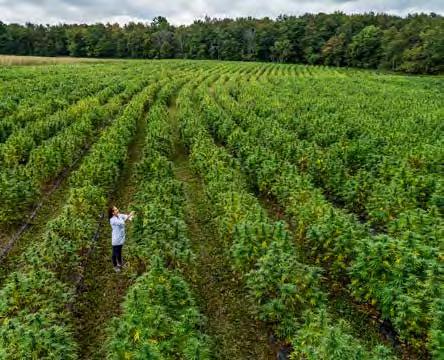
Farmers and scientists are exploring the benefits of hemp for both regenerative organic farmers and consumers.
HEMP HAS BEEN MAKING an astonishing comeback. The crop was a highly valued agricultural resource for the first 150 years of American history; then it was banned for the next 70 years, until the 2014 US farm bill allowed farmers to plant it again. Now its growth is yielding a wide range of products that can support the health of people and the planet. Rodale Institute researchers are working with organic farmers to maximize its agricultural, medicinal, and economic value.
“The hemp research conducted at the Rodale Institute Pocono Organic Center
has received global awareness for its reports on soil health, nitrogen management, cover cropping, and hemp’s weed suppression capabilities,” says Ashley Walsh, president and founder of Pocono Organics, a Long Pond, Pennsylvania, operation that produces certified organic CBD products with its own Regenerative Organic Certified hemp. “The ongoing research collaboration [between Rodale Institute and Pocono Organics] validates the benefits of our regenerative organic practices and helps us pioneer new approaches that benefit the entire organic hemp industry.”
Let’s begin with making an important distinction. Hemp has a complicated history because botanically it is Cannabis sativa—the same plant as the one known as “marijuana.” But they are different in significant ways. Tetrahydrocannabinol (THC) is the psychoactive component of marijuana, or the compound that triggers the sensation of euphoria. By law, hemp plants must have a THC concentration less than 0.3 percent, which is below the threshold that causes people to feel high.
Our bodies naturally produce endocannabinoids, enzymes that aid in managing sleep, mood, appetite, immune functions, and more by playing an active role in the communication between our nerve cells and brains. While hemp contains little or no THC, it produces other types of cannabinoids, such as cannabidiol, or CBD. Many people today use CBD products to relieve chronic pain, insomnia, and other conditions. CBD is extracted from the flowers of hemp plants and infused into tinctures, skin lotions, and other wellness products. “After being diagnosed with gastroparesis (a paralyzed stomach) in my late twenties and turning to plant-based medicine, including CBD, I experienced the transformative power of this remarkable plant firsthand,” Walsh says. Research report: Organic farmers can optimize the CBD content of hemp by carefully managing the amount of nitrogen fertilizer the crop gets, according to a study led by Dinesh Panday, PhD, a Rodale Institute soil scientist. The results of this study were published in 2025 in the scientific journal Agrosystems, Geosciences & Environment.
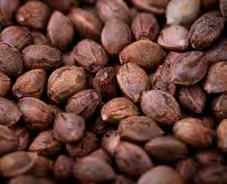
Hemp seeds are rich in vitamins E, D, and A and healthy fats with a high content of heart-protecting omega-3 and omega-6 fatty acids. The seeds also supply your body with polyphenols and terpenoids, nutrients that have antimicrobial, antioxidant, and anti-inflammatory properties. Hemp seeds can be eaten raw or roasted, and they are typically used whole or ground in salads, smoothies, and yogurt.
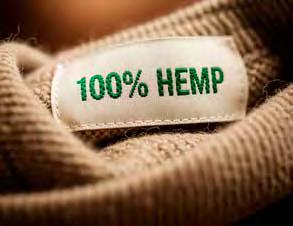
For centuries, hemp was grown primarily as a raw material for rope, canvas, and other textile products. Hemp fiber has a similar texture to linen and can be woven into fabrics such as denim. It is stronger and more durable than cotton

sil fuels and is compostable. The main ingredient is the plant matter left after CBD is extracted for products sold by Pocono Organics. “Our first generation of this material has been used in an injection molder to make bowls and cups,” explains Ronald Kander, PhD, who is leading the project’s team of materials engineers from Philadelphia’s Thomas Jefferson University.
but requires less space, water, and other inputs to grow.
Research report: Planting industrial hemp crops close together produces higher yields than when plants are spaced more widely, but allowing more room between rows encourages thicker stalks and stronger fibers, according to the results of a field study at the Rodale Institute Pocono Organic Center. “This trade-off [between productivity and better quality] gives farmers flexibility depending on their priorities,” the researchers note.
A group of scientists working with the Rodale Institute Pocono Organic Center have been developing a composite made with hemp stalks. It is strong yet flexible like plastic but is produced without fos-
Hemp’s deep root system supports a diverse population of microbes and mycorrhizal fungi, important indicators of soil vitality. Rodale Institute researchers also note that hemp roots draw heavy metals out of the soil, making the crop an option for bioremediation of contaminated sites.
Research report: Tissue mineral testing of hemp plants grown in research plots found that this crop had accumulated a significantly greater concentration of lead and cadmium compared to the concentration of these heavy metals that had accumulated in sorghum-Sudangrass, a cover crop often used by organic farmers, the Rodale research team reports.
The vigorous growth of hemp produces a dense, leafy canopy that keeps sunlight from reaching weed seeds in the soil
and prevents them from sprouting. It is so effective that hemp may deplete the volume of weed seeds in the soil, the researchers say, making it a useful component of an organic crop rotation.
Research report: In a 2016 to 2020 field study at Rodale Institute, yields of soybeans and wheat increased—while weed pressure decreased—when these crops followed fiber hemp in rotation.
The global industrial hemp market size is projected to grow from more than $11 billion in 2025 to nearly $48 billion by 2032, says Fortune Business Insights, a source of economic data. Farmers growing hemp for fiber can earn up to $1,220 per acre, and those growing it for seed can earn up to $550 per acre, according to data included in the 2023 Rodale Institute report Growing Industrial Hemp as an Organic Cash Crop.
“Hemp is a powerful plant ally for me as a regenerative organic farmer because it enriches the soil, supports biodiversity, and thrives without heavy inputs,” says Clarenda “Farmer Cee” Stanley, the 2025 Good Farmer Award US winner. (Meet her on page 30.) “As part of Green Heffa Farms’ healing herbs and products, it carries those same benefits forward—offering plant medicine that is both restorative to the land and to the people who use it.”
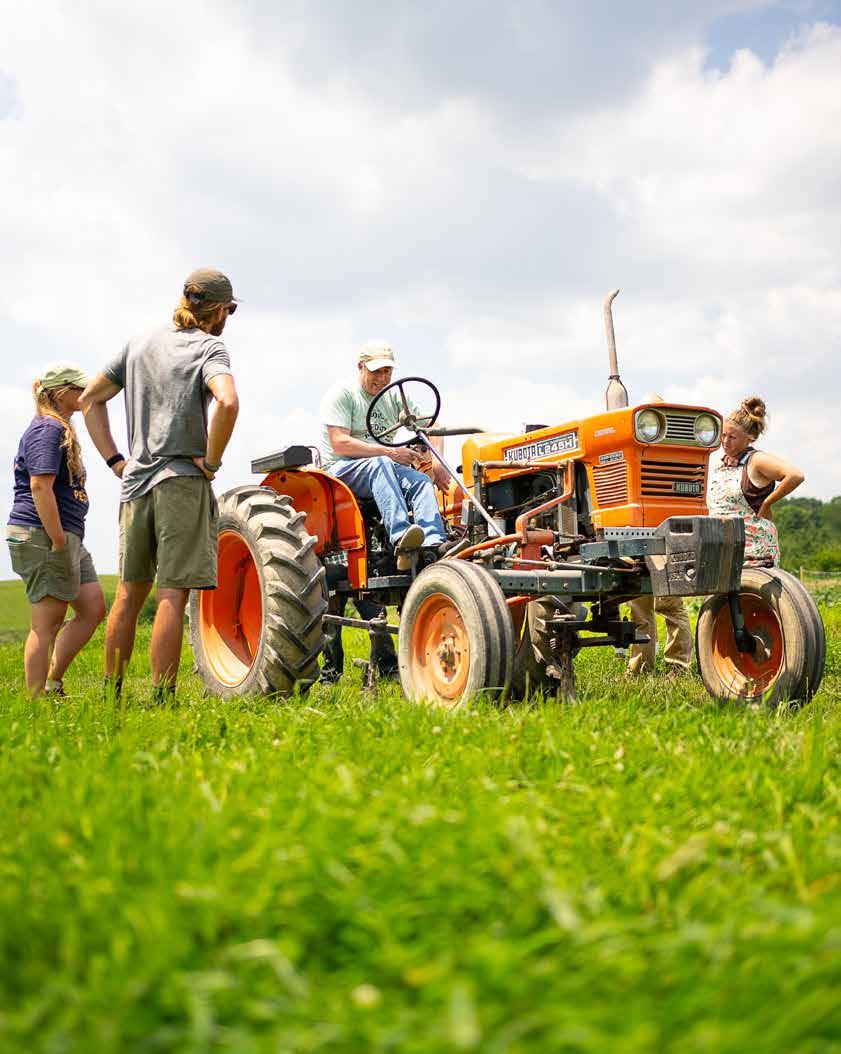
Rodale Institute is preparing the next generation of regenerative organic farmers.
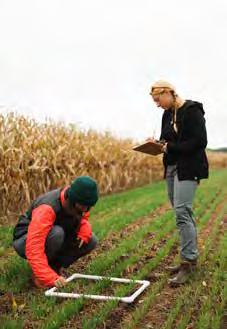
Over the nine-month Rodale Institute Farmer Training (RIFT) course, the students see the complete seasonal cycle of crops, from seeding to harvesting, and learn firsthand about managing a farmer’s workload.
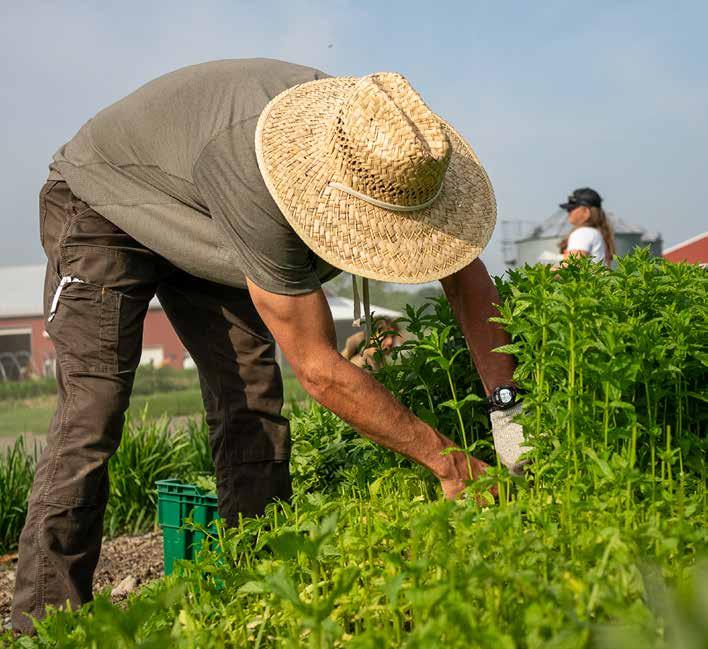
Shawn Cabalsi was building a successful career in the technology sector, but the 43-year-old felt unsatisfied by his accomplishments and disconnected from his purpose. “I got really interested in how to live more naturally, more ethically, more morally,” he says. “That brought me to farming.”
Just a few decades ago, farming was primarily a family business that was passed down from one generation to the next, along with the necessary land. The essential skills were learned on the job starting at an early age. Now the average age of American farmers is 58 years old, and most children from farm families choose less-demanding occupations. But a growing group of younger people, who come from different backgrounds and experiences, are opting for agriculture as a career.
Cabalsi joined the 2025 cohort of the Rodale Institute Farmer Training (RIFT) program, which teaches novice organic farmers about all aspects of establishing and maintaining an agricultural business. It’s a comprehensive, nine-month course that culminates in a capstone project: The students draft their own farm plans that they can use to set up their operations, apply for grants and other funding, and seek organic certification.
The nine RIFT participants for 2025 range in age from early twenties to early fifties, and they hail from locales across the United States. Most have little or no background in agriculture. They all, however, share a passion for building a brighter future for themselves and their families, their communities, and the planet through regenerative organic farming. Their stories about why they want to farm and what they plan to do inspire hope that they will succeed.
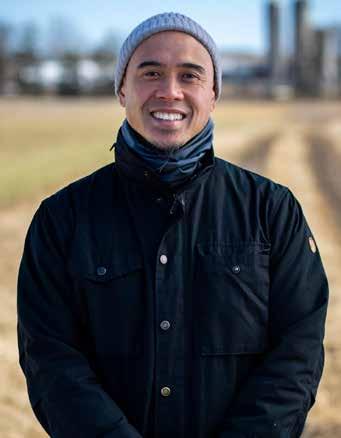
Shawn Cabalsi
Where he’s been. A Pennsylvania native, Cabalsi was working for tech companies when he began reading the works of agricultural philosophers Wendell Berry, E. F. Schumacher, and Masanobu Fukuoka. They introduced Cabalsi to ideas about ethical living and “their critiques of the modern American food system, the industrialization of our civilization, and the issues of environmental degradation,” he says. “Farming is a big step for me toward being more in harmony with nature.”
Where he’s heading. “I’ve helped found a nonprofit 501(c)(3) organic farm,” Cabalsi says. Located in Macungie, Pennsylvania, his 11-acre farm provides fresh produce to local people facing food insecurity. “I came to the RIFT program to learn how to do organic certification and grow with regenerative methods,” he adds. “We’re also planning to use the farm to educate community members about how to grow their own food and connect with nature.”
RIFT students can now earn college credits at Northampton Community College in Bethlehem, Pennsylvania, for completing the Rodale Institute coursework. Cabalsi is using the credits toward earning a master of arts in regenerative design, an online graduate degree program offered through Prescott College in Arizona. “This program explores how you design natural and social systems that are more regenerative versus extractive or wasteful,” he explains.
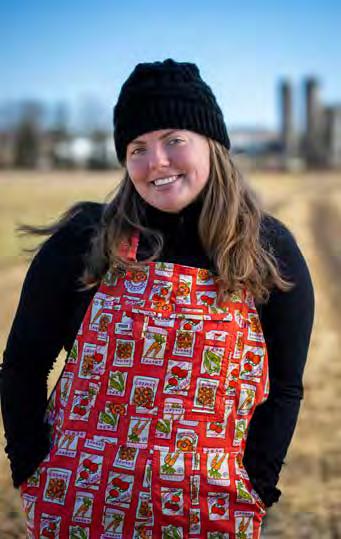
Where she’s been. A flower shop in Allentown, Pennsylvania, has been in Gemmel’s family for several generations. Because of this background, she says, she began studying for a business degree (with an interest in small business) at Lehigh University. After graduation, she traveled to Ecuador, Spain, and Malawi and became interested in the varied cuisines and food production systems she saw and experienced. “I was looking for my passion in life,” she says, “and then I discovered that I love fresh food, farming, and working outside.”
Where she’s heading. “I want to keep that florist heritage alive within my family, so my goal is to start a small-scale flower farm that supplies my grandparents’ flower shop and my own [direct-to-consumer] market, which will be different than my grandparents’ shop,” Gemmel says. “I also want to use my business background to help other farmers with marketing or other needs. I want to make feel-good products and to support small businesses in my community.”
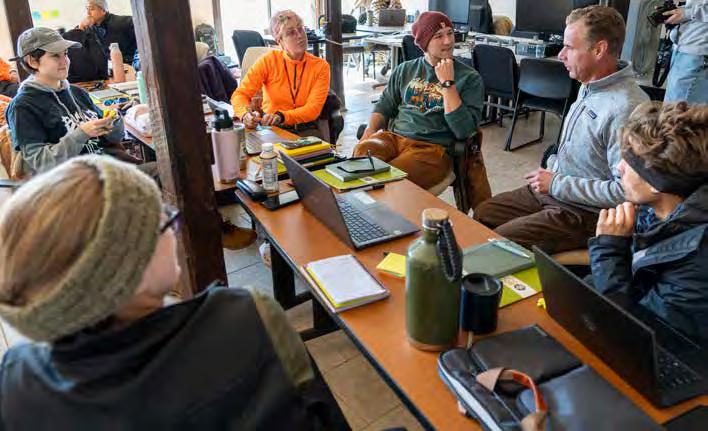
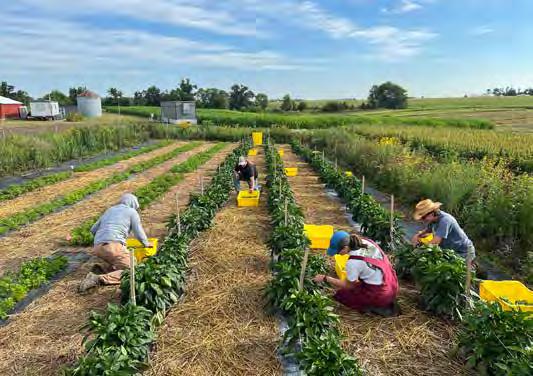
About 40 percent of the students’ time is spent in the classroom studying botany, soil science, finance, marketing, and more as they develop their capstone farm plans. Field trips broaden their experiences. This year’s cohort joined with a local nonprofit to plant a new plot (below) for a group serving military veterans.
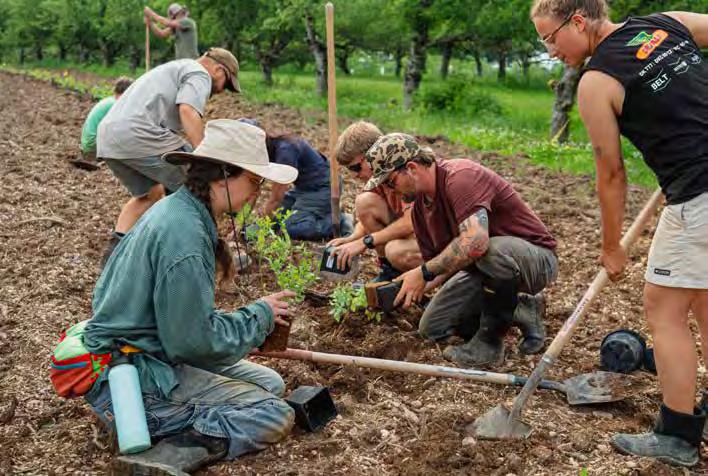
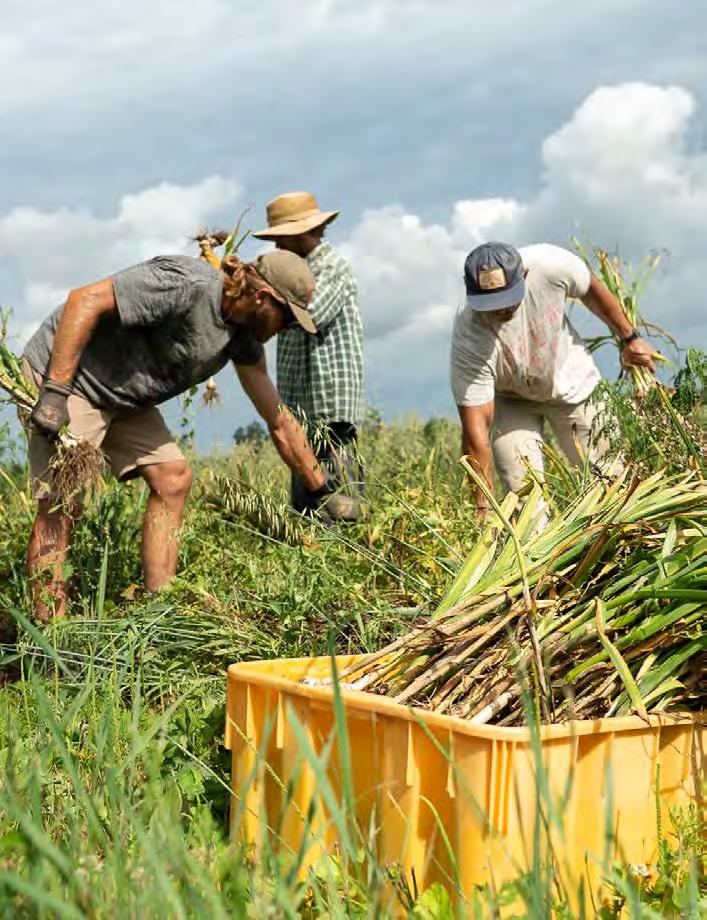
Teamwork is essential for success in the
in
and in garlic harvesting.
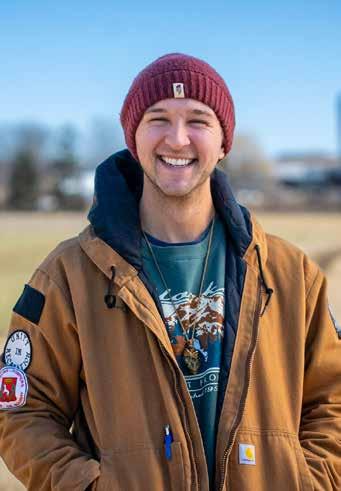
Where he’s been. Raised in Tipp City, Ohio, a Dayton suburb surrounded by cornfields, Wilks studied acting, anthropology, and French at Ohio University and then traveled for a few years, including a spell teaching English in France. When he moved back to the US, he pursued a certification in project management. While gathering skills in this field, he thought about what kinds of projects he wanted to work on. “I thought about what would have the biggest impact,” he explains. “For me, climate change is one of the most important issues that’s facing humanity.” Wilks explored opportunities in renewable energy, but they didn’t inspire him. “Then I started learning about regenerative organic agriculture and how we can use soil to sequester carbon and grow food for ourselves while also taking care of the planet,” he says. “That really excited me.”
Where he’s heading. “I would like to initially find farms that are doing diversified vegetable production, the kind of farming that I want to do,” Wilks says. “After working as a farm manager for a few years, I’ll be ready to start my own [operation]. I would consider going international—going back to France, potentially—but right now I’m kind of sticking with the Midwest or here in Pennsylvania.”

Where she’s been. Cooper was living in Central Indiana and working as a senior manager at Meijer, a large department store chain. She and her partner, Garrett Tidler, saw “insecurities” in the food system during the COVID pandemic, she says, and they became concerned about what might happen if this food structure were to fall apart. “It made us very interested in growing our own food, growing food for our family and community, and doing our growing organically and healthfully,” she says. Tidler completed the RIFT program in 2024 and is continuing to build his knowledge and skills in the program’s 22-month “fellowship” track. Last season, Cooper left her job in Indiana and started working at the St. Luke’s–Rodale Institute Organic Farm (in Easton, Pennsylvania). “I’m used to manual labor and hard work,” she says, “and it feels good to be outside in the sun and getting the fruits of my labor.”
Where she’s heading. “My farm plan is to grow medicinal herbs to make teas and tinctures,” she says. “Today, I harvested borage, edible marigolds, and calendula, which are all part of my crop plan, and then I put them in the dehydrator. I’m starting to test some of my tea blends. Eventually, I would like to become an herbalist. I want to promote the holistic approach to preventing disease and mental illness. I am three and a half years sober from alcohol, and one of my personal journeys is to cure the years of damage that I’ve done to my body and mind through substance abuse. It’s healing for me to grow herbs and create products that I can use and benefit from—and then to use the plants I’ve grown and what I’ve learned to educate other people.”
The couple expect to go back to Indiana, where they own a home and where the farms are full of field corn and soybeans, “crops that are not used for human consumption— other than in high-fructose corn syrup and highly processed soy products—and that are all heavily sprayed [with herbicides],” Cooper says. “We believe that there is a market for the products that we’ll be growing. Central Indiana needs an organic movement, and we want to be a part of it.”
RIFT prepares new farmers to operate an agricultural business using regenerative organic methods. As you can see on these pages, the student farmers learn from hands-on practice, interactive experiences, and direct instruction. During the program, they receive a weekly stipend of $600 and free housing. These benefits and “organic-focused education for 35 consecutive weeks is not common in other farmer-training programs,” says Justin Barclay, Rodale Institute’s global education operations manager. Successful participants have the goal of starting an agricultural business, can work in a team environment, and are willing to be coached, he explains. Thanks to the supporters of Rodale Institute, more than 100 individuals since 2011 have completed the farmertraining program. They take with them lasting benefits, including college credits (which can be applied to accredited degrees), ongoing access to Rodale Institute’s online classes, and networking opportunities with other new farmers that they can rely on as they establish and sustain their operations.
Scan this QR code to see more of the RIFT students at work and learn how you can help grow the supply of organic farmers and organic food.

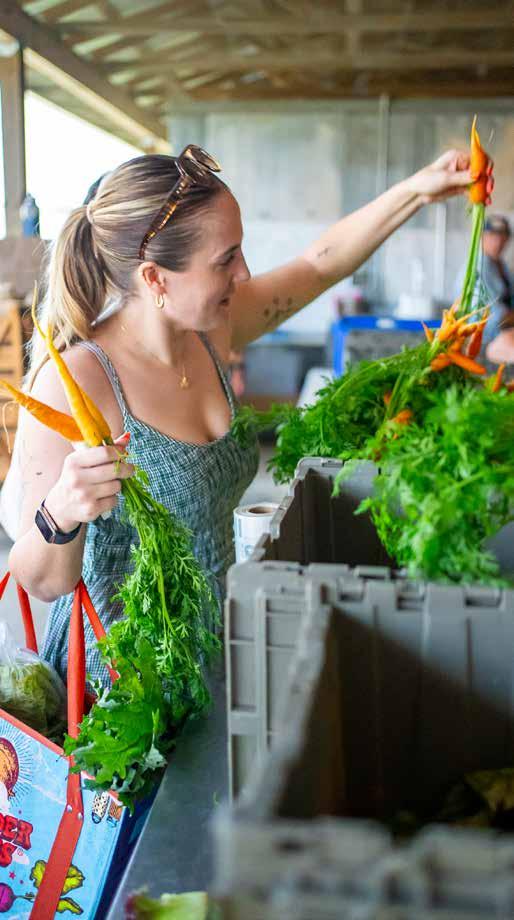
Isidra Garcia
Where she’s been. While studying video editing at Kutztown University (near Rodale Institute’s main campus), Garcia had an internship with the Rodale Institute communications department in 2024. “I had been working on a documentary about fast fashion and the impacts on the environment, and that spiraled into learning about different fabrics. I got really into hemp textile, which is being studied by Rodale researchers,” she says. “During my internship, I fell in love with agriculture because it brought me closer to nature.”
Where she’s heading. “Because soil health is so important, I plan to have my own plot of land to do my part to restore the soil,” Garcia says. “I enjoy making fresh pico de gallo, and I’d like to grow the ingredients and use them to make a line of pico de gallo products. I still love editing videos, and I want to produce videos on my own farm to educate consumers about organic food and farming and how we can help the earth with our choices.”
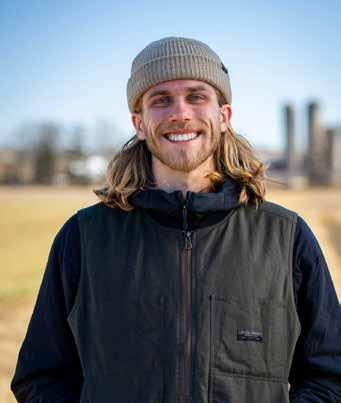
Where he’s been. Eckert’s entrepreneurial drive and his enthusiasm for feeding people have led him from working as a chef to setting up an indoor microgreens operation to teaching high school students about urban food production. “I’m a problem solver by nature, and I believe it’s my mission to work on the problems of the food system,” the native of Washington state says. “I didn’t feel like I was solving anything in a restaurant kitchen.”
Eckert launched and operated a small, Seattle-based community farm that kindled his interest in regenerative agriculture. His experience working for a large composting operation in Sweden inspired his ambitions to turn waste material into valuable resources. “I began thinking about what we can do to return degraded ecosystems to equilibrium,” he says.
Where he’s heading. The first step is to find a small piece of land in Washington, “ideally that’s been degraded,” Eckert says. The next is to restore it through regenerative organic care. “I want to show how building the soil can bring any place back to health,” he adds. Eckert aims to use composted waste from schools, hospitals, and other local sources in the process and later to sell the compost made on the site to gardeners in the area. He also plans to set up a native plant nursery on the site.
“The operation needs to be economically viable because that’s part of the story I will tell to educate people about composting, homesteading, and the power to regenerate the land,” he says. Through farm-to-table meals offered on the property, Eckert will bring in the public to gather and see the transformation. “Community engagement is where I can have the biggest impact,” he notes. RIJ
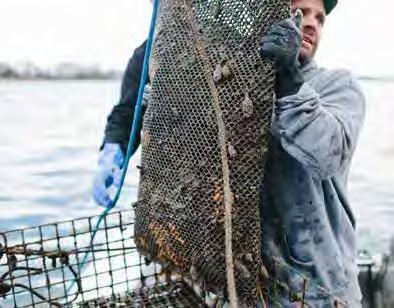
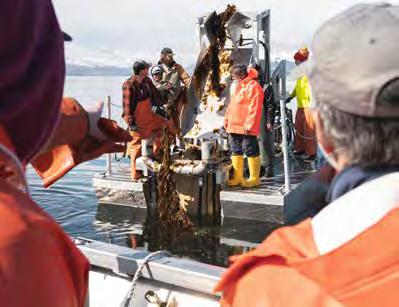
The future of farming includes harvesting food and agricultural resources from the water.
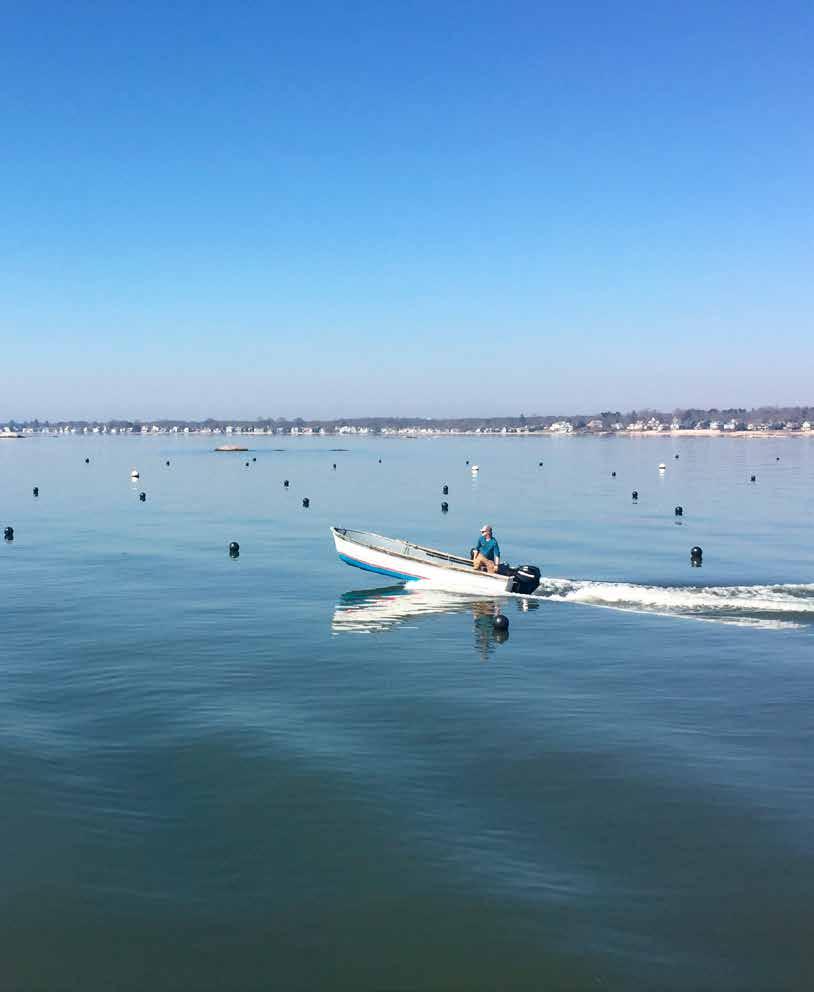
Healthy soil is the foundation of regenerative organic agriculture. But soil covers less than one-third of our blue planet. Water fills most of the world’s surface area. Like soil, it provides essential nourishment and a livelihood for people around the world.
Now, Rodale Institute has formed a research partnership with GreenWave, an organization focused on regenerative aquaculture, to explore how ocean-based food production can provide valuable resources to land farmers.
Before modern humans began cultivating crops, they were gathering food from the water. Today, American consumers, on average, eat about 20 pounds of fish and shellfish each year, according to a 2024 report from the USDA Economic Research Service. Seafood cultivation isn’t new, but it has scaled up dramatically in recent decades, with more than 50 percent of the global supply now raised on water-based farms, says the National Oceanic and Atmospheric Administration.
As the world’s population grows, “our food system is being pushed out to sea,” says Bren Smith, GreenWave’s cofounder and co–executive director. “We’re going to be eating more food from the sea, and the wild supply will not support us. With Rodale Institute, we are building a healthier food supply and connecting land and ocean farmers through regenerative practices.”
Overfishing, habitat loss, climate change, and other factors have been reducing the stocks of wild fish and seafood for decades. When fishing became an unsustainable way of life for Smith in the 1990s, he “went into finfish aquaculture with the idea that ‘blue’ jobs were putting people back to work,” says the native of Newfoundland, Canada, who fished the Georges Bank and Grand Banks areas for tuna and lobster starting at age 14. “I soon saw that all the mistakes that have been made in farming on land were being repeated in the sea.”
Commercial aquaculture has in many ways become as resource intensive and environmentally detrimental as industrial land-farm production, with the excessive application of artificial nutrients, pesticides, and antibiotics; the degradation of the water and the surrounding landscape; and the disruption of the ecosystems that sustain life. Smith imagined a different way of raising seafood. “I thought we should grow seaweed and shellfish—crops that don’t swim away and that can feed on the nutrients that already exist in the water,” he says.
The GreenWave model for a vertical underwater farm has hurricaneproof anchors on the edges and floating hori-
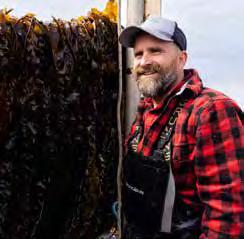
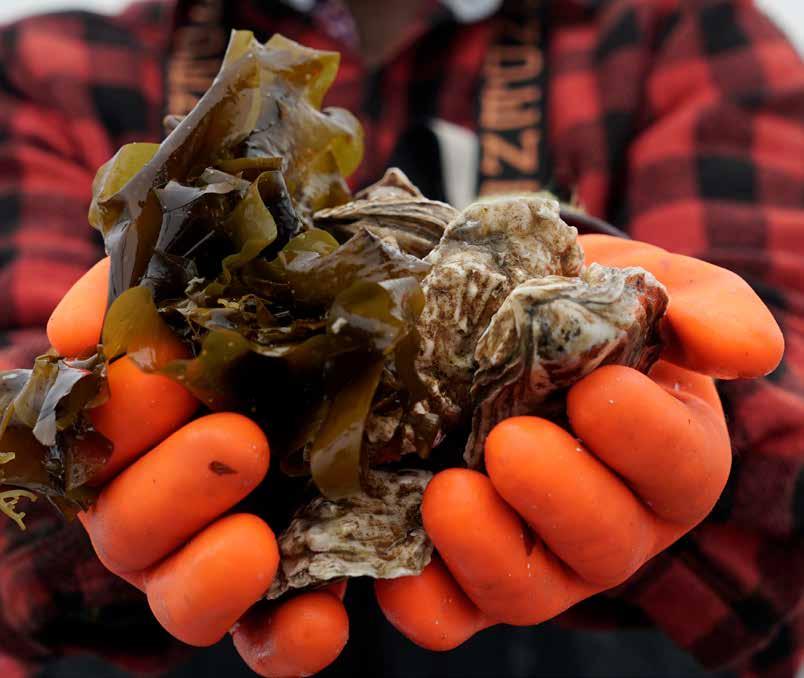
zontal ropes across the water’s surface. “If you look for our farms from the shore, there’s almost nothing to see,” Smith says. “They have very small footprints.” Kelp and other types of seaweed grow downward from the ropes next to scallops in hanging nets and mussels held in suspension in mesh socks. At the base are oysters in cages and clams in the sand. These types of shellfish are all filter feeders that consume microorganisms, primarily phytoplankton and algae that are naturally abundant in the water.
The farms produce two cash crops: high-protein shellfish and mineral-rich kelp. “We grow incredible amounts of food in small areas, raising 250,000 shellfish and 25 tons of greens per acre
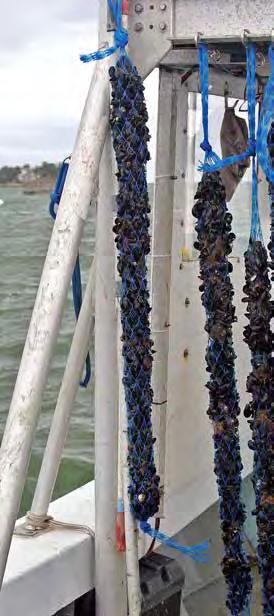
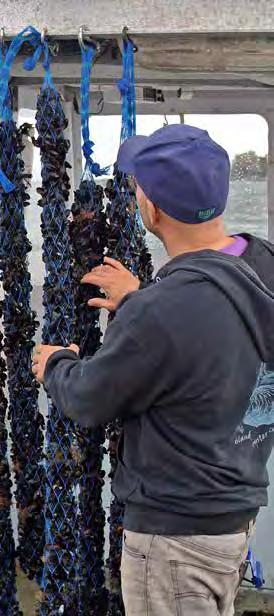
every five months,” he says. “This is zeroinput food that requires no fresh water, no fertilizer, no feed, and no land.”
GreenWave offers farmers a tool kit to set up their own regenerative ocean farming operations. “We want to help create farmer-owned and farmer-run co-ops in communities where fishing is a way of life,” Smith explains. Through the organization’s open-source model of sharing information, “anybody with 20 acres, a boat, and $30,000” can find the knowledge they need to get started. Since launching its first regional training program in 2017, GreenWave has educated and supported more than 8,500 ocean farmers, nursery operators, and entrepreneurs. “We’re no longer pillagers hunting the last fish,” he says. “We are a new generation of climate farmers who have joined the fight to restore our planet.”
Seaweeds such as kelp play a key role in aquaculture by absorbing carbon dioxide from the water and releasing oxygen that is essential for sea creatures. This process helps to balance the water’s acidity (which is increasing due to rising global temperatures) and in turn ensures that the bivalves can form healthy, protective shells. The shellfish filter the water, allowing more sunlight to reach the kelp, which stimulates growth.
Land-based farmers and gardeners living near bodies of water have long used seaweed as a soil amendment. “Whenever coastal communities needed nutrients for their crops, they’ve gone to the sea—that is, until fossil-fuel fertilizers came along,” Smith says.
Those synthetic fertilizers don’t build healthy soil, so organic land farmers don’t use them. Natural resources like kelp can provide vital nutrients to crops while supporting the soil’s overall health. “We have long known that products harvested from the sea have the power to promote plant growth and plant health,” says Andrew Smith, PhD, Rodale Institute’s chief scientific officer. Kelp acts as a “biostimulant” that activates the beneficial microbes in soil, improves nutrient uptake by crops, and protects plants from stress such as drought.
To learn more about the value of seaweed for organic farmers and consumers, the scientists at Rodale Institute are evaluating kelp biostimulant in real-world conditions. The researchers are conducting a two-year field trial and a one-year greenhouse experiment to test how GreenWave’s kelp biostimulant impacts the nutritional content of lettuce and bell pepper crops and contributes to soil health. It is being compared to biochar, a widely used organic soil amendment. The kelp will be applied at different rates in separate plots and used in combination with biochar in other plots.
“Kelp has many trace minerals that support healthy plant growth,” says Dinesh Panday, PhD, the soil scientist leading the research project. “We are studying its value for specialty crops in regenerative organic systems.” Panday expects results to be released in 2027.
Fish and other types of seafood are smart choices when you want to eat healthy meals. They’re loaded with protein and low in saturated fats and calories. With all the varieties available, you may be wondering which are good for you and the environment. The Monterey Bay Aquarium Seafood Watch program has published a “Super Green List” of items that are nutrient dense for people and can be harvested with little or no impact on the ecosystem. The top 10 items include foods produced by the GreenWave farming model: mussels, clams, oysters, and kelp. When seafood is in your dinner plans, go for these options and eat well while protecting our blue planet.
For more information, visit seafoodwatch.org/seafood-basics/ sustainable-healthy-fish.
“We need credible science to evaluate kelp’s benefits and find out how to get the most from it,” says GreenWave’s Smith. “We knew we had to have a technically sophisticated partner to dig deep into this. When we were meeting with the research team at Rodale Institute, I knew we were talking farmer to farmer, that we are working toward the same goals.”
In a regenerative food system, producers on land and sea share and protect the natural resources we all depend on. While GreenWave is implementing a new vision for ocean agriculture, Rodale Institute is supporting the next generation of soil-based organic farmers. “We’re both seeking sustainable solutions to improve the health and wellbeing of people and the planet,” says Smith of Rodale Institute. RIJ
To learn more about GreenWave, go to greenwave.org. Dig into all of Rodale Institute’s innovative research at RodaleInstitute.org/science.

Farming is the foundation of a couple’s mission to build a healthy, cooperative food system.
By Scott Meyer
Cardillo
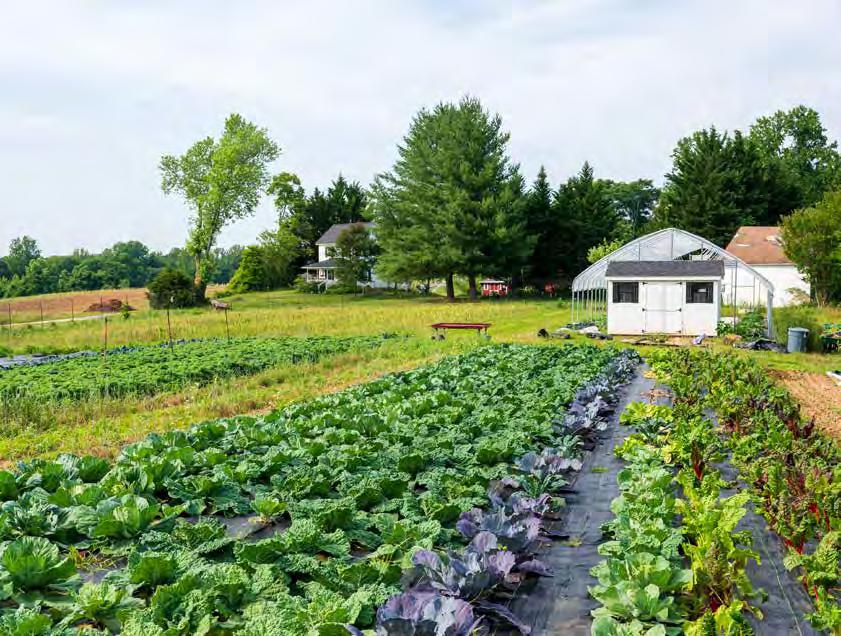
On a steamy, early-summer day at Spice Creek Farm in Brandywine, Maryland, the tomato plants are stretching skyward, a sign that they’re ready for support. D’Real Graham, who tends the farm with his life partner, Gail Taylor, sets up a trellis for training the tomato vines so the fruit stays off the ground. Nearby, peppers and squash are bulking up, too, while rows of kale and chard are at their productive peak. As Graham drives in the posts for the trellis, Ruby and Ivy, their Bernese mountain dogs, nibble on the leafy greens.
Taylor has been raising food on a 2-acre urban farm in Washington, DC, for more than 10 years, but 2025 is the couple’s first full growing season on the more expansive, rural site in Brandywine, which is about 25 miles southeast of the city. A former tobacco farm, Spice Creek encompasses 24 acres on which the pair are implementing their ambitious plans to establish a food system that is community based and equitable. “We want to provide good, healthy food to people, especially children, and we want to be part of a community of farmers,” Taylor says. “We are creating a food hub and joining with others to build a Black agrarian corridor here in Southern Maryland.”
Their progress toward those goals made them finalists for the inaugural Good Farmer Award US, a joint effort by Rodale Institute and the Davines Group to recognize outstanding farmers making positive environmental and social contributions to agriculture through regenerative organic practices. The Rodale Institute consulting team is currently working with Taylor and Graham to help the couple scale up their operation.
Taylor and Graham came to the region and to agriculture from different backgrounds. Taylor spent her teenage years near Albany, New York, and moved to Washington after studying US foreign policy and Latin America at Syracuse University and spending time in Guatemala and Chile. In 2005, she began volunteering at Deep Roots Farm, a 200-acre regenerative organic farm in Upper Marlboro, Maryland (like Spice Creek, in Prince George’s County). The following season, she was hired by Gale Livingstone, proprietor of Deep Roots. “I was looking for a change from policy work, and farming felt to me like I was having a positive impact for people,” Taylor says.
Her responsibilities grew, as did her commitment to serving her community with fresh food. But she grew tired of the long commute from the city out to the farm. In 2011, she drafted a business plan for an agricultural operation that began as a backyard CSA (community supported agriculture subscription service) from her home in Washington. “Three people offered me the use of their yards to grow food, and I set up a greenhouse in mine to raise seedlings for sale,” Taylor recalls. “I rode my bike to each yard on Thursdays to collect the harvest, which I put on my porch for the six CSA members.”
Taylor was ready to expand and identified an unused 2-acre plot that she wanted to transform into an urban farm,
but tax laws in the city made it cost prohibitive to lease for that purpose. “DC had no policy for levying property taxes with agriculture exemptions like you find in so many places,” she explains. With pro bono assistance from American University law students, Taylor led the effort to pass the city’s Urban Farming and Food Security Amendment Act of 2014, which changed laws and allowed the city to lease land to growers. Taylor launched Three Part Harmony Farm on her chosen site in 2015, and its 64 3-by-100-foot beds produced 7,000 pounds of fresh food in 2024.
Graham was raised in Michigan and pursued a career in education, and he moved to Washington to work for an educational nonprofit. Like Taylor, he started as a volunteer at Deep Roots
“I WAS LOOKING FOR A CHANGE FROM POLICY WORK, AND FARMING FELT TO ME LIKE I WAS HAVING A POSITIVE IMPACT FOR PEOPLE.” —Gail Taylor
Farm, and his role grew. “I was ready to pivot from office culture to agriculture, but it was hard,” he says. “At first, Farmer Gale only trusted me to do weeding, but I came to it humbly and was willing to learn.” By the end of his first year there, he was driving the delivery van and managing the Deep Roots stand at three weekly farmers’ markets.
Graham met Taylor when he was running a pop-up plant stand at Union Market in DC and bought lavender and rosemary seedlings grown in her greenhouse. A few years later, they began a personal relationship and eventually started looking for a larger space where they could increase production and begin implementing their vision for a food hub. They leased the Brandywine property in 2022 to grow crops to add to the harvest from the city lot. In December 2023, the couple entered into a lease-to-purchase arrangement for the land with support from Dirt Capital Partners, funders of regenerative organic agriculture projects.
The property came with a brick house by the roadside, a few outbuildings of different ages and styles, and a smaller cabin set near the center of the acreage. The entire parcel had been owned by several generations of the locally prominent Baden family, and the fields were used to raise tobacco, and later corn and soybeans. “I researched the history of this land, and I learned that 110 people had been enslaved here at one time,” Graham says.
The property is bordered on one side by Spice Creek, which runs into the nearby Patuxent River, a tributary of the Chesapeake Bay. The sloping field on which the couple intended to plant in summer 2022 needed remediation before it was suitable for growing regenerative organic crops. “The soil was so degraded that we brought in seven truckloads of compost,” Graham says.
Gail Taylor and D’Real Graham have connected with experienced and beginning growers in Southern Maryland to share valuable knowledge and insights with each other. The two are also getting technical assistance from the Rodale Institute consulting team on preparing their chicken pasture, choosing appropriate equipment, and other needs.
Rodale Institute consultants help beginning and transitioning farmers with just about every aspect of operating a successful organic farm, from soil building, weed management, and crop rotations to navigating the certification process, recordkeeping, and inspection preparation. The consulting team also helps with business strategies, such as identifying buyers and markets, accessing financial resources, and networking with other farmers.
To date, the consultants have provided technical assistance that has impacted more than 2.8 million acres of farmland, including 1.86 million acres that have been certified organic through Rodale Institute’s direct support.
“Each farmer has a main contact they can reach out to with any question,” says Kegan Hilaire, a Rodale Institute consultant. “But there is a whole team behind the main consultant, and we all work together to serve the farmer’s needs.”
For more details and to support the effort to increase organic acreage, visit RodaleInstitute.org/consulting.
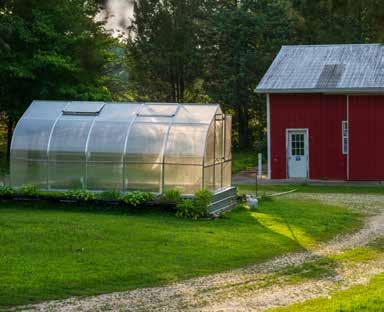
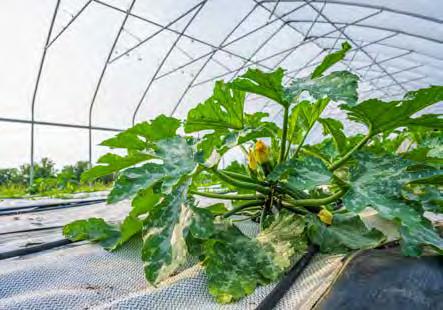
Taylor and Graham then installed deer fencing followed by beds that they dug by hand and planted with their first crops of sweet potatoes, white potatoes, watermelon, eggplant, and tomatillos. They’ve since added more beds using a walkbehind tractor, installed a water line for drip irrigation, set up a station for washing the harvested produce, and added a small greenhouse where they raised seedlings for themselves and to sell to local farmers and gardeners.
“We’re about to plant cotton and cowpeas,” Graham says. “We are raising cotton because we want to learn how to grow it, and we want to restore our community’s relationship to the plant.”
A field on the other side of the brick house is planted with native species that attract pollinators. The two farmers are preparing to raise chickens on pasture in that field and put their two pups-in-training, Ruby and Ivy, to work protecting them.
As the agricultural operation grows, it faces fresh challenges. “When farmers begin to scale up, they need to balance their short-term needs for infrastructure and equipment while staying focused on their long-term plans,” says Kegan Hilaire, Rodale Institute’s small farms and diversified vegetable consultant, who has been advising the couple (supported by funding from American University’s Healthy Schools, Healthy Communities Lab) on a variety of topics. “A walkbehind tractor can get you started, for example, but it’s not going to be enough when you’re working 20 acres.”
Hilaire has provided the pair with guidance on accessing grants and other economic resources for projects such as livestock fencing and stream conservation. But 2025 has brought a dramatic reduction in federal support for smallscale, organic farms. “We didn’t bring a lot of capital to this,” Graham says. “We’ve depended on grants for funding, and those cuts have had a big impact on us.”
Like many farmers across the country now, Taylor and Graham are challenged
to find reliable labor to help with tending and harvesting the crops. “For many Black and Brown people, working in agriculture has negative connotations,” Graham notes. In 2025, he and Taylor have one worker who is living with them in the brick house. “We are planning to develop the white cabin into a home for us and to keep the brick house for employee housing, which we think will make us more attractive to people who want to do the work,” Graham says.
While building up Spice Creek Farm, the couple is forming a new agricultural community in this corner of Maryland. Graham names a half dozen nearby farms with which they share information and resources and discuss topics such as crop rotations. “We think it makes sense to rotate in coordination with each other so we are serving customers without competing to sell the same products,” he says. The social support is beneficial too. “We like to just sit down to meals together and talk with people who understand our lives.”
Those connections are central to the larger plan for Spice Creek Enterprise. “We’re reactivating what I did in the city when I set up a multifarm CSA,” Taylor explains. That cooperative effort provided 270 members with a variety of food from 12 different sources. “We want to relaunch that idea here, creating valuable marketing opportunities for other farmers while offering customers the chance to choose to buy from Black farmers, women farmers, and regenerative organic farmers,” she says. “We believe we can all succeed together.”
For Taylor and Graham, success will include offering workshops that support beginning farmers and teach consumers about healthy food and restoring the vitality of the land. “We aspire to be land stewards as much as farmers,” Graham says. “We wake up every day with the goals of building the soil and producing food that’s good for people,” Taylor adds. “We want to get to the point where we can nurture the next wave of beginning farmers.” RIJ
To learn more about the Good Farmer Award, visit RodaleInstitute.org/ good-farmer-award-us.
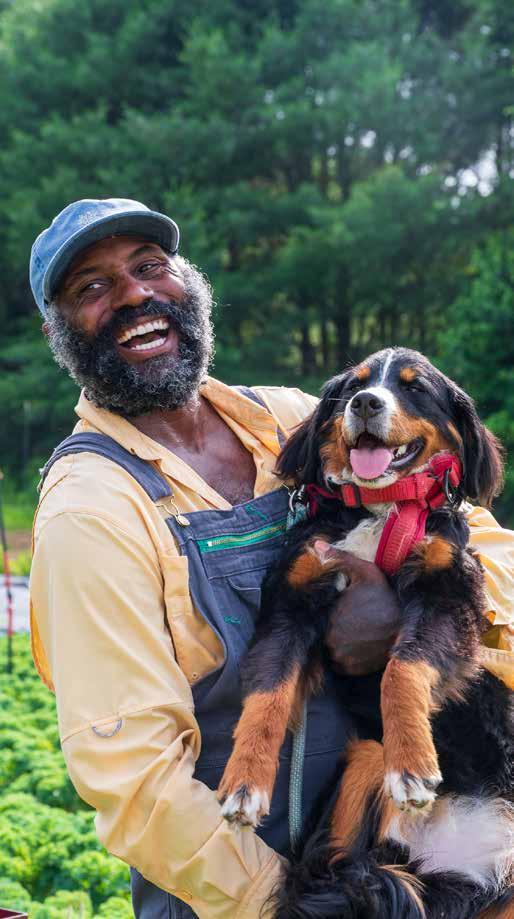
“WE ASPIRE TO BE LAND STEWARDS AS MUCH AS FARMERS.”
—D’Real Graham
America’s leading organic research farm gets a new, advanced certification.
THE VISION FOR REGENERATIVE ORGANIC AGRICULTURE grew out of the fertile soil at the Rodale Institute main campus. Since the 1970s, scientists and farmers there have been raising crops and livestock and studying the impact of soil management practices on food quality and human health. Now this Kutztown, Pennsylvania, research farm has submitted to a rigorous, independent evaluation and received “Regenerative Organic
Certified” status and the “ROC” seal of approval.
“We lead by example,” says Jesse Barrett, Rodale Institute’s farm operations specialist. “Certifying our farm helps us to educate other farmers that this certification exists and is accessible to them.”
In 2017, Rodale Institute joined with other farmers, researchers, and business leaders to establish the Regenerative Organic Alliance, a nonprofit aimed at creating a healthy food system that respects land and animals, empowers people, and restores communities and ecosystems through regenerative organic farming. The standards the alliance developed for producers of food, textiles, and personal-care ingredients build on the requirements for the “USDA Organic” certification and address various consumer concerns about current farming practices. The ROC seal is shorthand you can use to ensure that
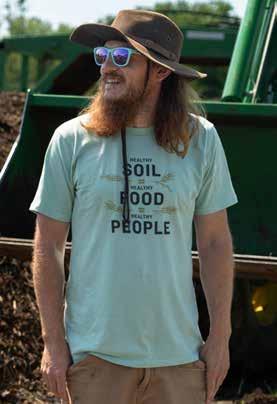
“We lead by example. Certifying our farm helps us to educate other farmers that this certification exists and is accessible to them.”
—Jesse Barrett
The Regenerative Organic Certified program is adding new operations every month. These stats (as of October 2025) show how the impact of regenerative organic farming is growing steadily. To learn more and for the latest data, go to regenorganic.org.
19,702,235 certified acres
414 certified farms and ranches
592 crop types
2,612 certified products
328 brands licensed
the brands you are buying value healthy soil, healthy food, healthy people, and a healthy planet.
Soil health. To achieve ROC designation, farmers must nurture the vitality of the soil by planting cover crops, pasturing livestock, applying compost, and using other chemical-free practices. Soilless systems, such as hydroponics, can currently receive the USDA Organic certification, but they are not eligible for the ROC label. “Soil building is the foundation of everything we do,” Barrett says.
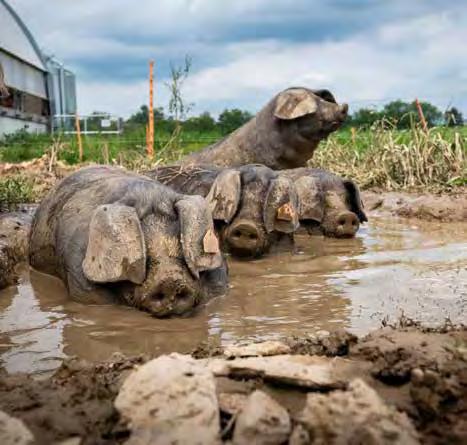
Animal welfare. Meat and dairy operations that have earned ROC status provide their livestock with spacious shelter, access to pastures, freedom to express natural behaviors, and protection from unnecessary suffering. The practices of confined animal feeding operations (CAFOs), which produce about 99 percent of meat currently sold in the US, are prohibited. The conditions for the hogs in Rodale Institute’s pastured pork production research project and for the cattle raised at the farm exceed the ROC standards, Barrett reports.
Social fairness. The USDA Organic certification has no requirements for the treatment of people, but ROC operations must pay living wages to farmers and other workers in addition to ensuring that they have safe working conditions and the freedom of association (with a union). “The audit of our human resources department, which included reviewing employee complaints and pulling pay stubs, was very in-depth,” Barrett says. “It left me thinking we should develop tools like templates for workplace policies and employee handbooks. They would be helpful to a lot of farmers.”
Another distinctive standard of ROC operations is the progressive improvement in practices that benefit the land and all the life forms that depend on it. The Rodale Institute farm has earned the bronze level of certification. The institute will next work toward silver certification, following the same steps as all farms working through the ROC process. Farms at the gold level are connecting to other ROC operations that process and distribute the harvest. “The goal is to bring more regenerative organic products to the marketplace,” Barrett says, “so building out the supply chain is key to achieving the highest level of certification.”
A farm entrepreneur is using her knowledge, experience, and harvest for the well-being of herself and her customers.
Clarenda “Farmer Cee” Stanley came to organic farming after establishing a career as a highly successful fundraiser and nonprofit executive. In 2018, she brought her personal experiences and leadership skills to launching Green Heffa Farms, a 14-acre herb operation in North Carolina, with the goals of supporting economic empowerment, equity, environmental protection, and consumer education. The farm’s products include medicinal herbs, herbal tea blends, and hemp-based remedies. Her farm is the first owned by a Black woman to become a Certified B Corp (bcorporation.net), which recognizes her brand as one that actively benefits people, communities, and the planet. Farmer Cee is also the winner of the 2025 Rodale Institute and Davines Group Good Farmer Award US. We checked in with her on her journey to becoming an organic farmer, her challenges, and goals.
RODALE INSTITUTE JOURNAL: WHAT INSPIRED YOU TO BECOME A REGENERATIVE ORGANIC FARMER?
FARMER CEE: I had a successful career in fundraising, culminating in becoming the first Black senior fundraiser at the world’s largest environmental nonprofit. Being in this role came at a cost: I was often the only Black woman in the room, and that room didn’t always want me there. I was deeply committed to the planet, but I reached a point where I had to confront a hard truth: Those in power didn’t truly care about all of us. That disillusionment took a toll. The racism, the resistance to equity, and the performative allyship wore me down. I started having anxiety attacks and was eventually diagnosed with an anxiety condition. I wasn’t just tired of racism; it was literally making me sick.
Herbs became part of my healing. And growing healing herbs both regeneratively and organically allowed me to reclaim my wellness, my voice, and my purpose. Creating a values-based business gave me the opportunity to lead in a way I rarely saw in those rooms where philanthropy was being discussed. I became the kind of leader I once needed.
RIJ: WHAT ARE YOUR SHORT-TERM AND LONG-TERM GOALS FOR GREEN HEFFA FARMS?
FC: For the short term, our goal is to meet the demand for high-quality herbs. Every year we grow more, and every year we still sell out. That tells me two things: 1. People are craving high-quality, transparently grown herbs. 2. We’re doing something right with connecting to our target market. L ong term, it’s about growing our impact but not just for us. I want to work with other farmers, especially those historically excluded from supply networks, so they can become part of our sourcing ecosystem. I also want to help open more doors within the herb industry, focusing on farmers who’ve been left out, underappreciated, or overlooked. We focus on cooperative economics, not extractive expansion. That’s how we grow with intention and protect the integrity of everything we cultivate.
RIJ: WHAT HAVE BEEN THE KEYS TO YOUR SUCCESS?
FC: I grow slow so I don’t owe. And by owing I mean much more than financially. Green Heffa Farms is not indebted
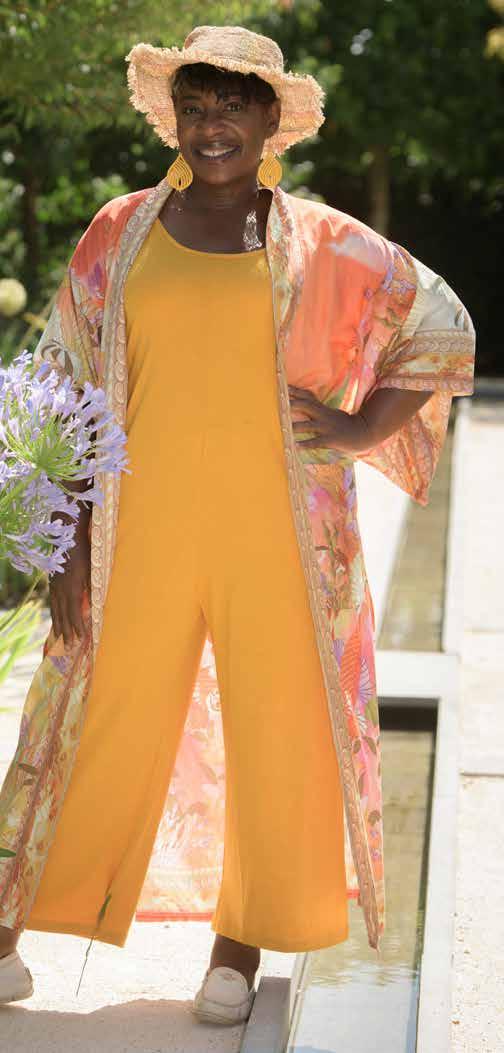
How can you make a difference as a consumer? Farmer Cee urges you to consider these questions.
• Do the PRODUCTS in your pantry and fridge align with your beliefs?
• Who are you following and uplifting on SOCIAL MEDIA?
• Whose NAMES do you speak in rooms of opportunity? Do you show support for people who have not been included?
• Are you holding COMPANIES accountable for their sourcing and their partnerships?
environmentally, ethically, or spiritually. I’ve resisted the pressure to scale fast or take on investors who don’t align with our values. I’d rather grow roots than build scaffolding that can’t hold. And I build the brand to protect the land. All of our products, tea blends, and social media posts circle back to the land and collective healing. Our story is rooted in the soil, and the brand is how I educate, advocate, and uplift. Green Heffa Farms isn’t just a business. It’s a movement.
RIJ: WHAT CHANGES TO POLICIES, CULTURE, OR INDIVIDUAL BEHAVIOR WOULD BE HELPFUL TO YOU AS A BLACK WOMAN FARMER?
FC: Policywise, we need equitable access to funding, land, and markets without the double standards. Too often, those of us who’ve historically been denied resources are expected to jump through endless hoops, only to be told no. Culturally, we need to stop romanticizing farming while ignoring real challenges small farmers face. Individually, I encourage people to look at where their dollars go. Are you supporting farms and brands that reflect your values? Are you showing up for those of us who’ve had to fight harder to even be allowed to care for the land the way it deserves? In 2025, inclusion shouldn’t be an option. It should be the standard.
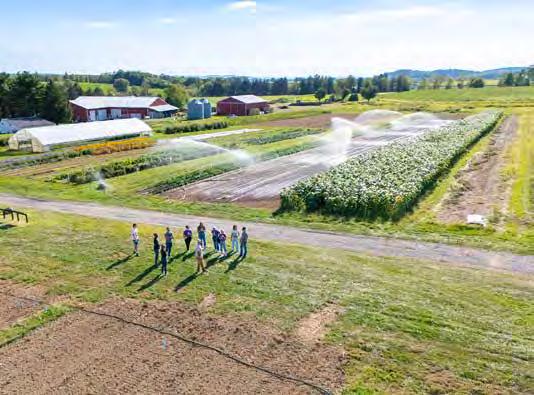
At Rodale Institute’s main campus, people nurture the land, and the land nurtures the people.
In this book excerpt, Rodale Institute CEO Jeff Tkach celebrates the plants, animals, people, and values that grow from the land.
THE FARM SPEAKS TO ME. Sometimes it’s loud. Like really loud. Especially in July. My office is in a 250-year-old stone farmhouse. Like other CEOs, I have a desk, a conference table, a laptop, and a phone. But when I take one step outside of my office door, I enter a 400-acre farm. This farm is teeming with LIFE. Several times per day, I go for walks on the farm. The farm calls me to walk, and at some point in my day, I always answer. It is the moment in my day that I most cherish.
In the heat of early July, a hummmmmm comes from the ground. A pulsation proclaiming I’m alive, I’m alive, I’m alive. Everywhere I look, nature is thriving: apple orchards heavy with fruit, amber waves of grain swaying in the breeze, vegetables pushing up from the earth, wildflowers splashing color onto the landscape—all growing in harmony like a natural symphony.
In one field, we don’t mow the meadow so that it can be a habitat for pollinators. On some days, my job requires me to be on the farm late into the evenings. Around 9 p.m. on summer nights, millions of fireflies flash in the sky. It always stops me in my tracks. Fireflies used to be prevalent—until humans started spraying chemicals—but here they’re flourishing thanks to a healthier ecosystem that we have created on our farm. It’s a clear sign that when we give the land what it needs, it gives back in ways we never could have imagined.
On a summer day, as I walk the farm and listen, I cherish connecting with the part of nature we often overlook: humanity. Everyone here on this farm listens closely to the land, to the farmers, to the rhythm of the work, because within the land and the people who tend it is where real intelligence lives. In an era of the acceleration of artificial intelligence, we turn to nature for the most ingenious answers.
At this moment, as I walk the farm, I feel connected to all the people on all the farms all over the planet. Turns out, food and regenerative organic farming are antidotes to loneliness, creating a shared space for connection, for meeting new people, and for delivering nourishment that goes beyond the body and feeds the ache of the soul. We keep discovering that the farm contains answers to our world’s greatest problems. What we’re learning is that the things we were told had nothing to do with each other are actually interconnected.
“When we begin to reconnect with our food, we reconnect with each other.”
The beauty here isn’t just in the plants; the animals are essential too. The air is filled with birds singing. Some rare species have recently returned to our farm as if they know something significant is happening here. We have pigs roaming freely in the pasture. Same with our cows. Pigs and cows are not meant to live in buildings, which is how most species of livestock are raised these days. I am not interested in a debate as to whether or not we should be consuming them. Animals simply make the land healthier. Research shows that they need the land to thrive, and the land needs them too.
Everything you do, whether it’s eating a fresh tomato, getting good sleep, choosing what candidate to vote for, or trying to feel like you belong, is endlessly connected, like a giant infinity loop. Labels, categories, and “us vs. them” become absurd when we’re sharing a meal together from the farm. When we begin to reconnect with our food, we reconnect with each other.
This is the miracle of life on Earth. What we put on our plates can change the future of humanity.
Excerpted with permission from a forthcoming book, The Farm Is Here, by Jeff Tkach. The book will be available in early 2026.
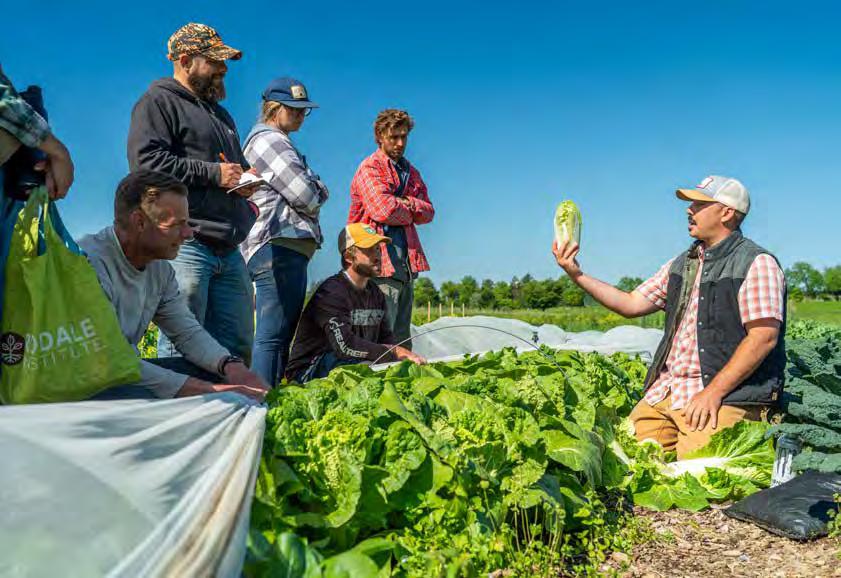
Rodale Institute’s Consulting Team is transforming farms, supply chains, and communities.
Transitioning to regenerative organic agriculture is complex. We make it easier. Our team of scientists, agronomists, and farm managers partners with farmers, brands, investors, and institutions to deliver measurable results:
• Custom business plans, crop strategies, and direct farm operational support that turn vision into thriving operations
• 2M+ acres certified organic with our direct support
• 38,000+ acres actively transitioning
• 2,500+ acres fully managed by Rodale experts
From healthcare systems growing food for patients to multinational brands rebuilding supply chains, we guide every step with science, strategy, and boots-on-the-ground expertise.