Rochester Area Media Partners LLC, Chris Hastings, chairman
FOUNDERS
Bill and Mary Anna Towler
EXECUTIVE DIRECTOR
Ryan Williamson
EDITORIAL
Editor-in-chief: Leah Stacy
Arts reporter: Patrick Hosken
Multimedia reporter: Roberto Felipe Lagares
Contributors: Beth Adams, David Andreatta, Kellen Beck, Flo Cardella, Vanessa Cheeks, Noelle E. C. Evans, Leah Joy, Daniel J. Kushner, Johanna Lester, Stephen Lewis, Megan Mack, Mike Martinez, Jessica L. Pavia, Abby Quatro, Jonathan Robinson, Mona Seghatoleslami, Brian Sharp, Meili Shepard, Veronica Volk
CREATIVE
Art director: Jacob Walsh
ADVERTISING
David White ads@rochester-citynews.com 585-730-2666
CITY is available free of charge. Additional copies of the current issue may be purchased by calling 585-784-3503. CITY may be distributed only by authorized distributors. No person may, without prior written permission of CITY, take more than one copy of each monthly issue.
CITY (ISSN 1551-3262) is published monthly 12 times per year by Rochester Area Media Partners, a subsidiary of WXXI Public Broadcasting. Periodical postage paid at Rochester, NY (USPS 022-138). Address changes: CITY, 280 State Street, Rochester, NY 14614. Member of the Association of Alternative Newsmedia and the New York Press Association. Copyright by Rochester Area Media Partners LLC, 2026 - all rights reserved. No part of this publication may be reproduced or transmitted in any form or by any means, electronic or mechanical, photocopying, recording or by any information storage retrieval system without permission of the copyright owner.
Origin story
EDITOR'S LETTER
BY LEAH STACY LEAH@ROCHESTER-CITYNEWS.COM
By all accounts, my ancestors emigrated to the United States over the course of the last century. It’s not likely any of them were even here during the Civil War — we are not what you’d call an “old” American family. In fact, it’s probable I am only third or fourth, maybe fifth generation on either side (and that’s on people having babies in their twenties). My mom’s Polish and Irish ancestors settled in the Albany area, while my dad’s Polish, Irish and French-Canadian ancestors came to Rochester. Many of my paternal relatives have deep Rochester roots, with jobs at Bausch & Lomb, Kodak, Sibley’s and Paychex. My grandfather worked for the first Prudential office here. After college, I added to the list of legacy companies with a job at Gannett.
I’ve always been fascinated by genealogy, and as I grow older with no children of my own, I think about my family’s origin story a lot. In light of recent headlines, it’s a timely reminder that unless you have Indigenous heritage, every family in the United States can be traced to an immigrant who took a boat or plane or train from the place they once called home. How much did they weather in the old countries before striking out for the promise of a new life in America?
My second trip to Ireland was in 2023, with my sister and her husband (who is also very Irish). One of the most moving parts of the trip was when we visited EPIC, The Irish Emigration Museum in Dublin. You don’t expect to walk into a museum and immediately want to cry. As I moved through the curated journey of Irish history, it was like something deep inside me remembered.
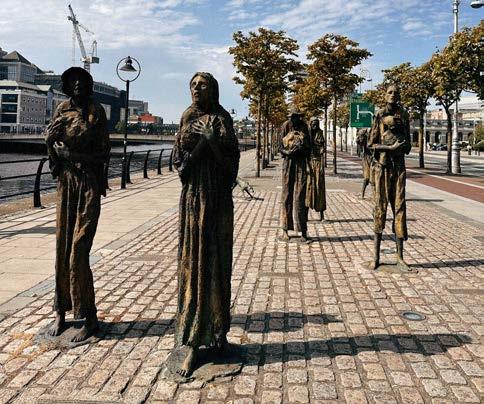
Steps away from EPIC, along the River Liffey is The Famine Memorial, a collection of life-sized stone sculptures depicting hollow, starving Irish people during the Great Famine (184549), which killed half the country’s population. A deep silence enveloped us as we moved among the sculptures. Some of our ancestors survived this horror, and left the barren fields behind to find prosperity.
Now, almost three years later, I think of other families who have a dream of starting over. Of families being split apart by a government that has forgotten their own origin stories — that people in their bloodline, too, came to these shores from another place, and were allowed to stay and build a life. Of the meaning of the “American Dream” in 2026, as the country approaches a 250-year milestone this July.
In these pages, you will find many origin stories as we explored the concept of family — chosen, biological, artistic, found, thematic and more. As always, I am exceedingly grateful for the team that comes together each month to make each issue happen.
My CITY family.
L
ABOUT OUR COVER:
Break out the crayons (or colored pencils or watercolor paints), because this illustration by CITY art director Jacob Walsh is meant to be colored. Once you’ve created a work of art, tag us @roccitymag on Instagram or email a photo to jacob@roccitymag.com for a chance to be featured in the next issue!
The Famine Memorial in Dublin
The mother of all movements
How a local suffragist led the way for free-range parenting.
BY VERONICA VOLK | VVOLK@WXXI.ORG
Elizabeth Cady Stanton was 26 years old when her first child, a son, was born.
“I was entirely afloat, launched on the seas of doubt without chart or compass,” she wrote in her autobiography, “Eighty Years and More: Reminiscences, 1815–1897.”
Stanton was one of 11 children, five of whom died as infants and small children. As she watched her mother grieve the cycle of childbirth and loss, Stanton was determined to spare herself and her son the same fate.
“Having gone through the ordeal of bearing a child, I was determined, if possible, to keep him,” she wrote.
“So I read everything I could find on the subject.”
Skeptical of male experts and the books they wrote, Stanton rejected common practices like tight swaddling, which liberated her infant’s tiny limbs. A parenting style rooted in independence began to take shape.
“Though uncertain at every step of my own knowledge, I learned another lesson in self-reliance,” she reflected.
Living in Boston, she homeschooled her children while reading, writing and hosting reformers. But after moving to Seneca Falls, with her husband often away and three young boys to raise, domestic labor became stifling. Stanton felt — as so many mothers do — wedged between deep devotion to her children and a growing resentment of the constraints of motherhood. In the trenches of that tension, seeds of revolution were sown.
On July 9, 1848, Stanton visited Jane Hunt in Waterloo for tea with fellow reformers Lucretia Mott, Martha C. Wright and Mary Ann M’Clintock.
Hunt was two weeks postpartum, likely with linen cloths tucked under her skirts to protect the upholstery in her sitting room. Wright was six months pregnant with her seventh child, sweltering and exhausted under layers of corsets and skirts.
HISTORY
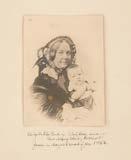
Left: Suffrage parade, New York City, May 4, 1912. COPYRIGHT AMERICAN PRESS ASSOCIATION Top Right: Elizabeth Cady Stanton and her daughter, Harriot. RETRIEVED FROM LOC.GOV
Bottom Right: Lucretia Mott, 1868. RETRIEVED FROM LOC.GOV
Mott, just returned from an extended stay with the Onöndowa’ga at Cattaraugus, had seen women live differently: wearing loose clothing, speaking freely, choosing their leaders, owning property and their own bodies.
In Boston, Stanton’s exposure to lectures, churches, and other intellectuals was constant. Here in New York, these gatherings were more intimate, allowing these women to share their frustrations earnestly.
She later wrote, “I poured out... the torrent of my long-accumulating discontent, with such vehemence and indignation that I stirred myself, as well as the rest of the party, to do and dare anything.”
Within days, Stanton wrote and delivered the Declaration of Sentiments, forever linking the theoretical idea of suffrage to the visceral reality of motherhood.
Their movement took root and grew, branched out and sometimes splintered. The lessons of Hunt’s tea party echo through contemporary struggles over reproductive rights, parental leave and education. History repeats — and remembers Stanton’s great intervention was that motherhood should not be a retreat from public life, but a source of power, motivation and hope.
Veronica Volk is an audio journalist and podcast enthusiast at WXXI. On instagram @soundslikeveronica.
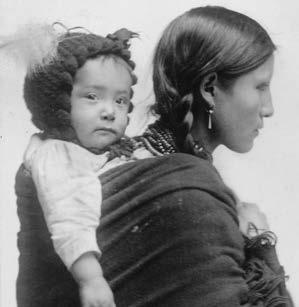
Native American woman from Plains region with baby on her back. RETRIEVED FROM LOC.GOV
A second act
THEATER
BY DAVID ANDREATTA
Mark Cuddy was known as a hands-on artistic director during his nearly three decades at the helm of Geva Theatre.
But he’s been giving new meaning to that reputation as the founder of his latest venture, The Classics Company, which arrived on the local theater scene with authority in January with a striking production of Anton Chekhov’s “The Seagull” at the Multi-use Community Cultural Center (MuCCC) on Atlantic Avenue.
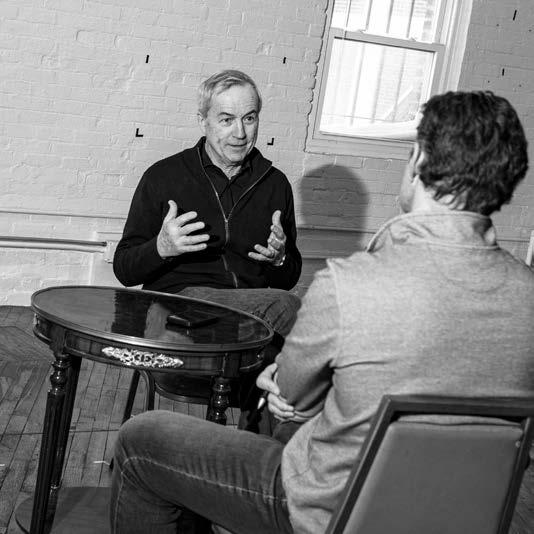
When he wasn’t clearing snow from the sidewalks around the theater, he was shuttling props through the back door. On a frigid winter morning a few days after the show closed, Cuddy helped his prop supervisor haul a sofa from the set in a rental truck and lug it up two flights of warehouse stairs into storage. Then he sat for an interview.
“It feels sometimes like all I’ve been doing is shoveling and lifting and moving stuff,” Cuddy said with a laugh after recounting his day.
Except for his sore muscles, he wasn’t complaining. Fortyfive years of running theaters around the country has taught Cuddy that the shoveling, lifting, programming, theater booking, fundraising, scheduling, casting, ticket sales and concessions are all part of the gig.
It’s just been a minute since he’s had to worry about all of those things at once.
After Geva, Mark Cuddy bets on Chekhov — and Rochester.
At Geva, from which he retired in 2022 after 27 years, Cuddy had access to a costume shop, prop shop, scene shop, marketing and fundraising departments, along with an annual budget of roughly $8 million.
The Classics Company launched with a budget of about $140,000, said Cuddy, who met with CITY at Swillburg Studio, a rehearsal space on South Clinton Avenue that he sprang to rent after it occurred to him that he didn’t have one of those anymore either.
“I’m chief cook and bottlewasher now,” Cuddy said. “I’m running the checks, I’m doing the bookkeeping. I’m making the decisions on what The Classics Company is about and what we’re trying to do.”
What the company is trying to do is elevate classical theater in Rochester by devoting entire seasons to the work of a single playwright who influenced the
theatrical canon. Think Henrik Ibsen and George Bernard Shaw. Its inaugural season features three plays by Chekhov, the 19thcentury Russian doctor-turnedplaywright who helped birth modern drama with works that featured frank discussions about social tensions of his day.
The concept is adventurous and would be hard to justify at a regional or community theater, where programming is expected to be topical yet varied and ticket sales account for the bulk of the revenue. (That said, the dashed expectations and melancholic bewilderment of Chekhov’s characters complement the anxious undercurrent in the modern-day United States.)
At The Classics Company, charitable contributions carry the load. Cuddy expects nearly threequarters of the company’s revenue to come from donations, which include $5,000 from him and his wife, Christina Selian.
“That’s my revenue model,” Cuddy said. “If I couldn’t raise the money, I wasn’t going to be able to do it.”
The support the local theater community has given The Classics Company underscores the deep ties Cuddy forged over decades and dispels any notion he is doing this alone — he’s not, and quick to point that out.
Mark Cuddy sits down with David Andreatta inside of the Classics Company Theatre studio
PHOTO BY ROBERTO F. LAGARES
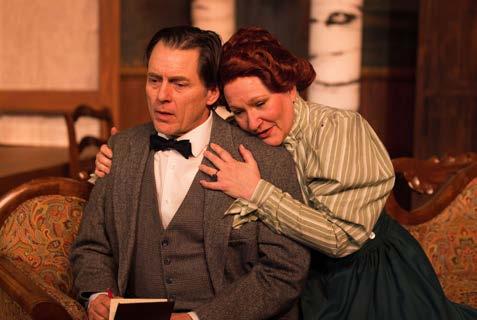
Scenes from the company's January production of “The Seagull.”
PHOTO BY GOAT FACTORY MEDIA
“I’m chief cook and bottlewasher now ... I’m running the checks, I’m doing the bookkeeping. I’m making the decisions on what The Classics Company is about and what we’re trying to do ”
The playbill for “The Seagull” was peppered with thanks to local theater stalwarts — from patrons and actors to representatives of other companies — who gave their time, talent and money to the production. They included electricians, carpenters and prop and sound specialists from Geva Theatre; the former costume designer from School of the Arts; the artistic directors at JCC CenterStage and Out of Pocket Productions; and the names of some 80 other donors.
Todd Green, a principal at the investment firm Alesco Advisors, and his wife, Stephanie Green, are longtime patrons of the arts and the lead sponsors of the company’s second production, Chekhov’s “The Cherry Orchard,” which opens March 6.
Green said they invested because of their confidence in Cuddy’s work and their belief that there is room for classical theater in Rochester.
“This is an arts-loving, artsappreciating community,” Green said. “I think it’s important that when there are grassroots, startup enterprises, people are willing to take a risk on them.”
The Classics Company incorporated last year after Cuddy spent months quietly bouncing his idea off members of the theater community over meetings in coffee shops. He views the venture as part education, part entertainment in a city known for its appreciation of the arts and history.
“People are making up history and there’s a sense in contemporary pop culture that history doesn’t matter,” Cuddy said. “But people are questioning, in a good way, history and what we’re built on and I think they want something besides the latest thing.”
Audiences of Cuddy’s inaugural production in January appeared to agree.
According to the company, more than 600 people saw “The Seagull,” which ran for 11 performances in a theater of about 80 seats. The production was brought to life by a superlative ensemble cast that included standouts Natalia Hulse as aspiring actress Nina Zarechnaya and Aaron Duclos as unfulfilled writer Boris Trigorin.
Whether that level of interest is sustainable is an open question — even for Cuddy.
“Sure, I got people’s attention because of my legacy here,” he said. “But honestly, they got to want to see Chekhov.”
While there are theater festivals dedicated to the work (or lifetime) of a single playwright — Shaw Festival in nearby Niagara-on-the-Lake comes to mind — few companies build entire seasons around one.
Rochester Shakespeare Theatre, a former professional company that launched in 1973, shuttered after
just two seasons of staging The Bard and a smattering of other classic playwrights.
Cuddy said he plans to run The Classics Company for the foreseeable future and build it to survive him.
“I’m 71, I can’t be moving furniture up and down stairs forever,” he said. “It’s not about size. It’s about growth and how to sustain this within the Rochester small theater ecology.”
David Andreatta is a veteran journalist who writes about culture, power and people who make Rochester interesting. He’s curious by nature, skeptical by trade and believes local journalism matters.
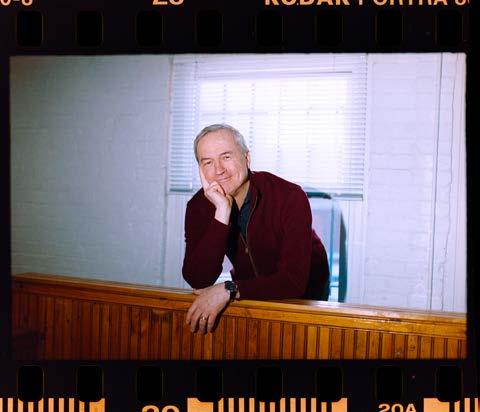
Mark Cuddy PHOTO BY ROBERTO F. LAGARES
The magic of making art
LITERATURE
BY PATRICK HOSKEN PATRICK@ROCCITYMAG.COM
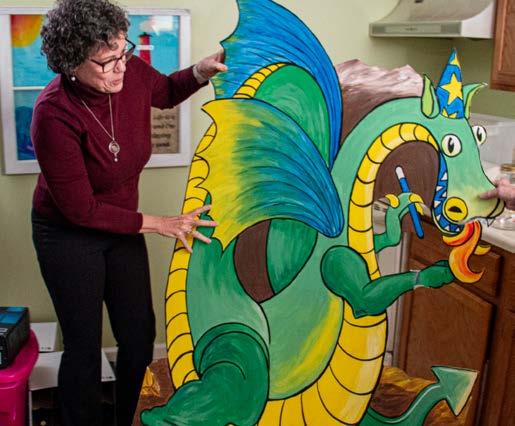
There’s a dragon in Joanne Andrews’ basement. He’s a few feet tall, brilliant green and clad in a wizard’s hat and a wand. He’s also made onto a foam board.
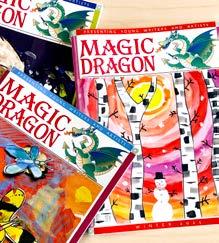
Andrews created him as the mascot for Magic Dragon, the children’s literary magazine she assembles in her Pittsford home with editor Patricia Roesch. Andrews is the art director.
The dragon comes with them to book fairs, school events and other pop-ups. He’s so popular, in fact, his hand is falling off. Lots of high fives. But that’s a champagne problem. It means the dragon makes an impression.
“I wanted ‘Magic Dragon’ [as a name] because I imagined picking up the phone and saying, ‘This is the Magic Dragon. May I help you?’” Roesch said with a laugh. “But nobody ever calls us.”
It could be because they don’t have a phone, she allows. They don’t need one.
Since the pair began the magazine in 2005, they’ve sourced the artwork, poems and stories from schools in Rochester and the surrounding towns. But the quarterly’s reach has grown — the summer 2025 issue, for example, featured student work from schools in North Carolina, Florida, Michigan and even South Korea.
Local children’s literary magazine ‘Magic Dragon’ looks to its future in an uncertain
A life-size dragon, the magazine’s mascot, is well loved from greeting kids at school events. PHOTOS BY JACOB WALSH
Though Roesch and Andrews still physically collect piles of drawings (colorful cakes, imaginative robots) from art classes, digital submissions make it easier than ever to fill the pages with unique animals, bold selfportraits and partying snowmen.
“We pretty much publish 95% of the stuff that comes in,” Andrews said, “because I think people are pretty selfevaluating. Other than a few random [entries on] notebook paper, they’re not sending in stuff that they know is not cherished.”
A page from a 2025 issue sees a vase of flowers painted in different
styles — one in vibrant hues recalling van Gogh, another jagged and splattered. They’re paired with a short poem about competitive sports with a bit of a twist ending, penned by a 12-year-old named Kaitlyn.
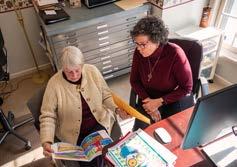
Andrews creates the layout for each issue at her home studio, often with Roesch sitting at her side. The work can be made by children up to age 12, and it’s subject to the same rigor that any other creative publication would give.
“There’s no bad art,” Roesch said. “But it has to have some craft to it. It has to be grammatically correct, right? Unless that’s part of the story. And then it has to be original.”
Roesch would know. She held editing jobs at the University of Rochester and Xerox in her professional life, while Andrews is a former art director for the Democrat and Chronicle and an art teacher. They came together at Andrews’ kitchen table in 2005 after Roesch spotted a feature in the paper highlighting Andrews’ artwork.
“We could tell right from the beginning that we were a good match,” Andrews said. “She was the words, and I was the art, and it was a good marriage.”
“She’s the magic part,” Roesch said, then followed up with a laugh: “Don’t call me the dragon.”
Of course, her editor’s letter in each issue is labeled “Message from the Dragon.” It’s one of the only sections of the magazine not devoted to the creativity of children. Every issue has a writing prompt and a craft or art prompt, designed as an education tool.
Unlike museums and cultural institutions, Magic Dragon’s so-called success is difficult to measure and therefore can be difficult to fund.
“It’s hard to quantify the results,” Andrews added, “because we’re not trying to get into so many schools, or whatever measurable thing we could do.”
I see they’re advertising a workshop in Rochester, and I’m here in San Francisco.”
One thing Magic Dragon has never had? Ads.
Roesch and Andrews have relied on individual subscriptions and donations as well as previous support from local businesses like ESL Federal Credit Union and Paychex. As with many other local nonprofit arts organizations, funding is uncertain.
“We don’t really fit into the structure of big donors,” Roesch said. “I mean, we don’t need a lot of money, and we don’t qualify for their requirements.”
As they look back on more than 20 years highlighting children’s creative work, Roesch and Andrews must also look to Magic Dragon’s future amid an uncertain financial landscape. There are plans to launch a Friends of Magic Dragon donation tier with incentives.
There’s also the publicity factor. Much of Magic Dragon’s sustained growth has come via word of mouth, and the publication does maintain a modest though informational website for submissions. But there are decidedly no plans to put a tiny microphone in the dragon mascot’s dangling hand and make him an Instagram star.
Roesch and Andrews are keen to protect the purity of what Magic Dragon offers.
“It is not a competition,” Roesch wrote in an email to CITY. “There are no contests. Magic Dragon helps children understand the value and legitimacy of their ideas and feelings and how to express them in an artistic way.”
As they finalized the Winter 2026 issue, the two debated including details for an upcoming summer art camp Magic Dragon is hosting at the Memorial Art Gallery. On the one hand, they’re eager to fill the class’s 20 spots as a way of fundraising. On the other hand, Roesch wants to preserve the special placelessness of the magazine.
“I thought I was part of Magic Dragon. I thought Magic Dragon was mine,” she said in the voice of a theoretical concerned reader. “Now
As such, Magic Dragon occupies a unique place in the Rochester arts scene. With a Webster P.O. Box, a Pittsford home base and work from more than a dozen Rochester schools, it is firmly rooted here, even as its reach — like the wings of its mascot — knows no limits.
Local educators understand this. Tracy Bodyk, an art teacher at Paddy Hill Elementary in Greece, has had work from many of her students appear in the magazine. She said the fact that the work is presented in a salon-style gallery layout makes the art both relatable and aspirational.
“The moment you get to present it to the students, and the moment they see it in print, it’s amazing,” Bodyk said.
Many share with her that they want to be artists when they grow up, and Bodyk knows better than to delay those dreams: “I tell them an artist is anyone making art.”
This is foundational to Magic Dragon’s entire operation. And, as it turns out, it could likewise be the key to its longevity.
“There are many lost artists and writers living before the age of 12,” Roesch said.
“When you hit that person, you’re in.” magicdragonmagazine.com
Patrick Hosken is CITY’s arts and culture reporter. He was formerly the music editor at MTV News and a producer at Buffalo Toronto Public Media.
Patricia Roesch (left) and Joanne Andrews finalize Magic Dragon’s winter 2026 issue at Andrews’ Pittsford home.
Chosen family
BY MEILI SHEPARD
“You can’t choose your family, but you can choose your friends.”
It may be a cliche, but this phrase often represents the collective thought upon hearing the word “family.” Many people believe family is something you are born into; a bond you can’t choose. An affiliation borne by blood. Similarly, the traditional “birds and the bees” method is assumed when starting a family.
In reality, many families are created through thoughtful choices driven by the loving desire to help a child in need. Foster care and adoption is exactly that. While it may not be the traditional stereotype of how families are created, these chosen relationships hold equal value in cultivating emotional attachment, love and familial bonds.
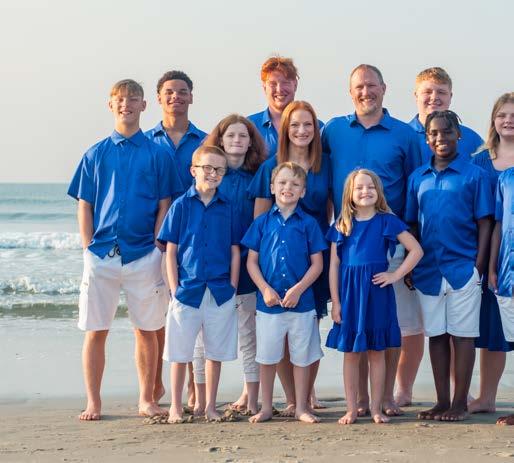
For Alicia and Josh Dougherty, foster care and adoption was essential to creating their unique family. The couple currently has 11 children, six of them adopted through the foster care system.
The Doughertys never planned on having such a large family. After enduring years of infertility and miscarriages, they decided to adopt. As they researched ways to have a family, the Doughertys not only recognized the importance of
The inseparable bond created through foster care and adoption.
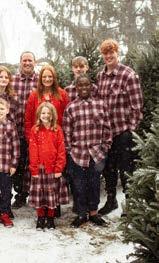
The Dougherty family PHOTO BY MACPHERSON PHOTOGRAPHY
adoption, but realized there was a need for foster families. The couple chose adoption from foster care.
“There’s over 100,000 children who need an adoptive home in our country,” said Alicia. “There’s not enough good foster homes.”
The couple fostered their first child, Alex, in 2010. A year later, Alex was officially adopted by the Doughertys. Six days after Alex’s adoption, Alicia found out she was pregnant. From there, the family multiplied.
“It really just spiraled — in a good way,” said Alicia.
The Dougherty family now consists of Alex, James, Patrick, Dayshawn, Bree, Zoey, Dash, Jordan, Jason, Bodhi and Harlee. What started as one child turned into another one, and then another. Realizing their ability to keep helping children in need, particularly older children and children with disabilities, the Doughertys continued fostering and adopting.
“We just can handle a lot,” Alicia said. “When we realized we could do it, we just kept taking on more and more kids.”
Managing such a large family has its challenges, especially as the Doughertys do not hire nannies. Organizing schedules and making sure everything gets done can be difficult. On top of that, Alicia runs the family’s viral social media pages that have garnered over 13 million followers across various platforms such as TikTok and Instagram.
The Doughertys joined Tik Tok during the pandemic out of boredom. As their account grew, they realized they could use the platform to both
share their blended family journey and to advocate for adoption from foster care.
“We’re trying to make [adoption] not a taboo and just make it an accepted form of how some families come to be,” said Alicia. “We tell [the children], we chose you to be in our family.”
Jennifer Berenson has spent the last 26 years working at Catholic Charities Family Services, a local resource that provides services such as foster care and adoption support. Driven by the desire to help families provide stable homes for children in need, Berenson was inspired to work in foster care and adoption services from the beginning of her career. er current role as department director for children, youth and family service, Berenson oversees the agency’s adoption and foster care division.
“There are about 400 children in foster care [in Monroe Country] currently,” said Berenson. “Our goal in foster care is to help those children
develop lifelong relationships with their foster parents.”
Tahmede Robinson, 12, knows firsthand the positive impact fostering has.
Robinson was placed in the home of Gerald Gamm and Charles Towles in 2022, the first child the couple fostered together. They were unable to have children of their own, and the couple felt their family was incomplete.
“I came out relatively late in life, and by the time I came out, met Charles and we got married, I sort of felt like I had missed out on having children.” said Gamm.
Before their marriage, Towles fostered his son, Brandon. Reflecting on the positive previous experience fostering a child, he suggested to Gamm the idea of opening their home to a foster child.
“We had a lot of time and a lot of love,” Towles said. “We realized there was a tremendous need out in our community for foster homes.”
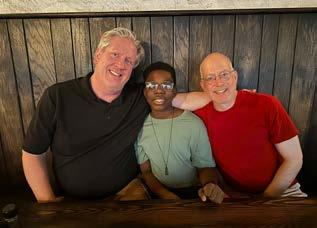
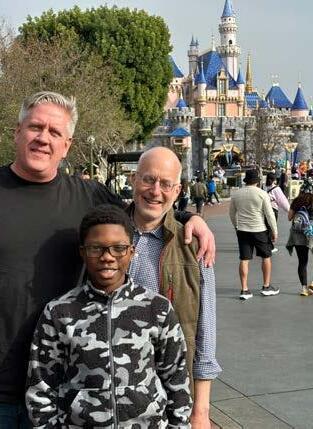
Gerald Gamm and Charles Towles with their adopted son, Tahmede Robinson PHOTO PROVIDED
Although Gamm and Towles initially planned on providing a temporary foster home to teenagers who were transitioning to independent living, the couple changed their mind when they heard about Robinson’s need for an emergency placement. The initial plan was for him to stay with the couple for three or four weeks.
“It never occurred to me, at that moment, that we were bringing a new son into our family.” Gamm said “We really couldn’t imagine life without him.”
As Robinson stayed with Gamm and Towles, the three of them formed an inseparable bond. Of course, there were some challenges in the transition process. For Robinson, being separated from his biological family was emotionally complex. Neglect at his previous foster homes added to his unease.
“It was a little scary and sad,” said Robinson. ”I was expecting [Gamm and Towles] to be unkind to me. But they were very loving and supportive, and I started to really like them.”
Robinson stayed with Gamm and Towles for over two years. At that point, it was as if he was already a part of their family. When Robinson was free for adoption, it seemed like an obvious choice. In December of 2024, his adoption became official.
“In a sense, I feel like God sort of wanted us together,” Robinson said.
“I just feel like we were meant to be a family.”
hillside.com
Meili Shepard is a Rochester-based freelance writer and student at the University of Rochester. Follow her @meilishepard.
PHOTO PROVIDED
Make a move(ment)
BY FLO CARDELLA
Some time in my mid-20s, right after the pandemic, this crazy thing happened to me. Suddenly, I didn’t know how to make friends. There was no school, no clubs, no mini city-esque world of college. I got up, went to work and, most days, came straight home (to my parents’ house). Everyone I was close with didn’t live in Rochester, and I felt like I was on a bit of an island, unhappy with work and with the state of the world.
These days, I have a job I love and I live with amazing friends — but when I find myself feeling that again, it’s a reminder of how hard it can be to put yourself out there; to suffer the consequences of “will anyone actually show up?”
Though the anxiety lingers, asking my friends (my found family) to show up and showing up for them, in turn, has been one of my most rewarding developments in the past few years.
Below are some of the ways I’ve helped myself branch out — if you’re feeling alone or in need of community, I urge you to take a page from my book and do the same.
6 ways to create a found family within your community
COMMUNITY
PHOTOS BY FLO CARDELLA
1. Do ‘quiet’ hobbies together
I recently started to crochet because so many of my friends have picked up fiber arts. It turns out knitting and crocheting can be social or solitary activities. My roommate and I can sit on the couch and watch a movie while we work on our projects (she’s much better at multitasking than I am, so her progress naturally keeps me on track).
Sometimes all it takes to make a hobby more social is to have a little ‘go bag’ packed and ready to take with you wherever your day leads. And sometimes all it takes to deepen a friendship is asking for help or advice on how to be better. Visiting local craft stores is a great way to meet folks that share your same interests, no matter your skill level.
2. Host a potluck-style dinner party
You don’t have to be best friends to share a meal with someone, you just need an open mind and an empty stomach. Several times a year, I host pretty large gatherings in this style — usually one in the summer, one for my birthday and one around Thanksgiving.
The only rule is that guests have to bring something to share (a game, a drink or a dish) and the only expectation is that they try to talk to someone new. I decided I don’t need to keep my friends separate — everyone can come together and share a meal or a game and be a little more connected to what’s going on around them.
4. Extend a warm welcome
Sometimes it's hard to find the balance between posting adventures online and living in the moment. But just because you didn’t take pics doesn’t mean it didn’t happen. The biggest miss is not letting the plans leave the group chat in the first place.
My friend Bekah Cunningham makes plans a reality with a community-forward social club called Warm Welcome, which focuses on meeting new friends. Inspired by social clubs in Denmark, Cunningham set out to help ladies in Rochester “create [their] own circle of friends without needing someone to introduce you.” She prides herself on making friends and connections accessible by providing spaces and occasions to show up, whether it’s a walk along the canal, a cake picnic, a cold plunge or a clothing swap.
5. Join (or start) a book club
It actually only takes two people to make a book club. I’ve been a part of several, but only ever really stuck with actually reading the assigned book in a smaller group setting. Recently, I was invited to another book club by some friends who have similar literary inclinations, and we decided instead of having a set work to read we would just meet up and chat about what we were currently reading. There’s nothing more exciting than hearing someone I love talk about something they love. The momentum of reading joy will carry you as far as you allow.
Around the holidays, especially, having a group you can gather around fills your cup and provides space to reflect not only on what really matters to you, but on how you’re spending your time.
3. Keep admin hours
Get the gals (or the guys, or the non-binary pals, whoever makes up your circle) together for an admin day and check off those to-do lists together.
Pick a coffee shop with a bit of space to sprawl (Winter Swan is my go-to these days) and bring your laptop, planner, calendar or journal. Set to getting things done with the passive ability to chat while you work.
I’m so much better at doing literally anything with a body double, especially when it comes to tasks I’m dreading. It’s a relief to share the gripes of building out a budget, editing a video or reviewing a contract when someone is there to encourage your forward momentum.
Community means supporting the people you care about, both when it’s fun and when it isn’t glamorous.
6. Just say hi!
My final piece of advice for creating a lasting relationship is … to say hi. I know it sounds silly, but approaching someone new and making that first introduction isn’t always easy. The bad news is, it’s a really great starting point. You can’t make a new connection without making yourself a little vulnerable.
Saying hi can also mean reaching out to your existing friends and starting a conversation. Being the person that constantly reaches out can be hard, so creating balance and setting a calendar reminder to check in on your friends (especially those who always check in on you) goes a long way. It’s harder for the demons of selfdoubt to creep in when you’re actively maintaining (and therefore strengthening) your friendships.
Florence Cardella is a Rochester native, full-time bartender and sometimes writer and photographer who searches for community at every possible turn and looks for whimsy in the unexpected. You can follow her @themidnightlibrarian.
This glass of water
BY VERONICA VOLK VVOLK@WXXI.ORG
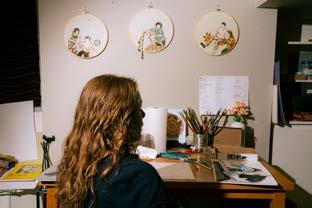
Heather Layton sat crosslegged in a big armchair off her living room. This is where she calls her friend, Baher.
“We talk until our batteries run out on our phones,” he said, laughing.
Sometimes the call goes unanswered, and Layton worries Baher and his family are dead. On this particular day, he answered.
“I didn’t have wi-fi at my place,” he explained.
It was nighttime in Gaza, and cold. This winter is one of the coldest in decades, made worse by intense wind and rain. Baher stood outside in a heavy jacket to be closer to a neighbor’s internet connection.
“Are you safe?” Layton asked. “It’s no problem,” he answered. “We need to make this happen.”
On the surface, Layton and Baher make for unlikely friends.
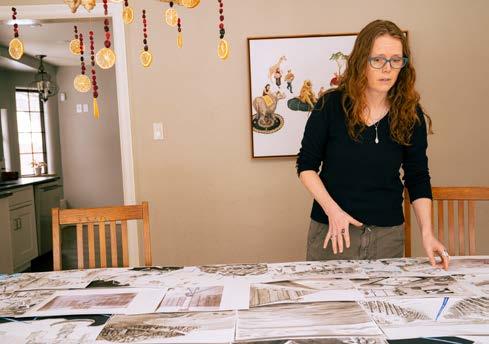
Layton is an American artist and a professor at the University of Rochester living with her husband in Brighton. Baher is a Palestinian father of five living in a concrete shelter in Gaza.
They met in 2015, when Baher was an international graduate student studying education at Nazareth University and Layton’s husband, Brian, invited him over for dinner. It happened to be Baher’s birthday, so they served cake and sang.
An unlikely friendship between a local art teacher and a family in Gaza.
“I felt like, I’m really cared for,” said Baher. “I’m really between my friends and my family.”
When Baher moved back to Gaza, they kept in touch.
“Then, since the beginning of this war,” Baher said, “Heather talked to us almost every day.”
As the violence escalated, Layton felt compelled to check in constantly, but struggled with what to say.
“Before we had art, it was like, ‘Hey, are you still alive?’” she said.
To lighten their conversations, Layton showed him and his children photos of her students’ artwork.
“Art was like the third person in the room,” she said.
Soon, Layton began making her own drawings for Baher’s children, especially his three oldest daughters, Remas (15), Enas (13) and Retal (11).
She drew them animals, birthday cards, their names in bubble letters. They sent drawings back: a donut with sprinkles, birds, the Palestinian flag.
But the girls’ drawings also reflected their reality — fleeing their childhood home, their school reduced to rubble, a food truck being raided.
At the height of the blockade, Baher said, his family struggled to access food and water. Layton felt helpless from more than 5,000 miles away.
“I was spending every day thinking, I wish I could just get them here, I wish I could get them food. I wish I could get them water,” she said. “And then, as we’re making art, I’m like, wait a second — I can do that.”
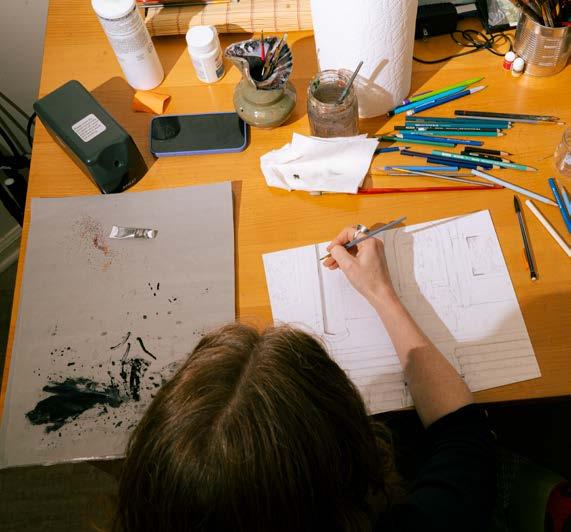
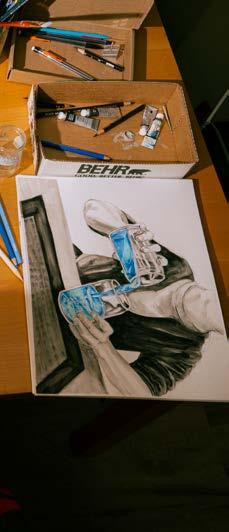
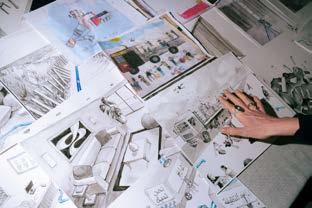
Layton drew a series of pictures tracing the journey of a glass of water from Rochester to Gaza. Each image shows a bright blue pipe winding through landscapes and infrastructure, carrying water through stores, across mountains, across oceans. She called the series “I wish I could send you this glass of water.”
When Layton drew the pipe reaching the wall surrounding Gaza, she sent drawings to the girls.
They responded with five drawings of their own: a plumber splitting the pipe into branches, diverting water to shelters, water trucks and people across Gaza.
“They started thinking about how to use their pipeline in an efficient way,” Baher said. “They felt of other people before themselves. That made me feel very proud of them.”
From there, the drawings moved back and forth.
The pipe runs through a missile strike. Children swim in water between piles of rubble. The girls hold a Palestinian flag next to a sign that reads: “Thank you for this lifeline, Heather.”
When Layton shared the story with her close friends and family, they were moved. They sent the family money and drawings of their own. Together, they wrote more than 500 letters to politicians and officials, eventually reaching the President of the United Nations General Assembly, Annalena Baerbock, who referenced the girls and their drawings in a speech at the UN Two State conference in September 2025.
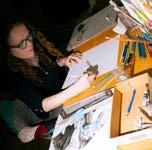
Top down view of Heather Layton working on the "I Wish I Could Send You This Glass of Water" series
PHOTOS BY ROBERTO F. LAGARES
“We owe it to the children like Remas, Enas and Retal and all the children of Palestine and all the children of Isreal hoping for a better tomorrow,” she said.
Baher showed everybody the clip.
“I was running like a [chicken] with its head cut,” he said. “The president of the general assembly talking about my kids. I made everybody listen to that, and I shared the link with pride.”
Layton still exchanges art with the girls, but the glass of water series is mostly complete.
“I have a different responsibility now,” she said. “It felt urgent to bring people into that story.”
She added it is not always easy.
“Just saying the word Gaza is so political,” Layton said. “But I can just talk about my relationship, my friendship and my family. We feel very much like a family now.”
In Gaza, a ceasefire reduced some of the immediate danger, but Baher still fears for his family’s safety.
“Many times I look at my kids before they go to bed and I think that might be the last time I see them,” he said. “I lost hope in a lot of cases.”
But when he sees how people like Layton and her family care about his children, he feels something else.
“Hope is coming in like water. A plethora of hope, a plethora of resilience, a plethora of care,” he said. “That pipeline was not only carrying water.
It carried the most valuable thing on earth, which is humanity.”
Veronica Volk is an audio journalist and podcast enthusiast at WXXI. On instagram @soundslikeveronica.
Below: the original drawings created by Remas, Enas and Retal beside Layton's rendition of the scene.
todo DAILY
Full calendar of events online at roccitymag.com
MONDAY, MARCH 2
ART
St. Patty’s Beer Glass Painting
Flight Wine Bar Downtown, winebarflight.com
Everyone’s Irish at this popular painting event! Flight Wine Bar is teaming up with Roc, Paint, Sip to help you decorate a beer mug in time for St. Patrick’s Day. The ticket cost covers supplies, your first drink and gratuity. So raise a (painted) glass and celebrate. Sláinte! 6-8 p.m. $35. MEGAN MACK
TUESDAY, MARCH 3
MUSIC
Warren Haynes Band
Kodak Center, kodakcenter.com
Through his long career as a guitarist for Gov’t Mule and the Allman Brothers Band and in stints with The Dead and notable guest performances with Dave Matthews Band, Warren Haynes is nothing short of a jam legend. But that designation undersells Haynes’ abilities as a nimble axeman who can also burn a song down with his soulful vocals. His solo band tour comes to town for an 8 p.m. show. Tickets $27-$127. PATRICK HOSKEN
WEDNESDAY, MARCH 4
NATURE
Making Maple Syrup
Humphrey Nature Center, business.
livingstoncountychamber.com
Maple syrup is a huge part of our region’s agricultural footprint, but quiz me on how it’s made and you’ll surely see me flail. Thankfully the Home Ecologists series in Livingston County offers homeschool students the opportunity to learn the entire process. This free session runs 1:30-3 p.m.; call 585-493-3680 for more info. In the immortal words of Bono, “Oh-oh, the sweetest thing!” PH
ART
“Signal into Memory”
Visual Studies Workshop, vsw.org
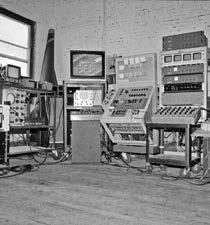
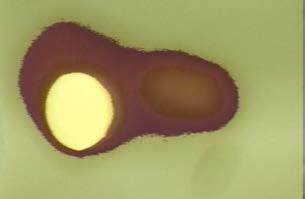
Video artist Peer Bode dipped back into his collection of tapes made at the Experimental Television Center in the Southern Tier in the 1970s and ‘80s, pulling out an incredible retrospective exhibition of video art presented by VSW at its new space on King Street. With 12 different screens set up in a dark, minimalist gallery, “Signal into Memory” is an esoteric feast for the eyes, recontextualizing the video medium and forcing an analysis of one’s perception. The gallery is free to visit and open Wednesdays through Saturdays; noon to 4 p.m. Saturdays, 11 a.m. to 6 p.m. the rest of the week.
KELLEN BECK
THURSDAY, MARCH 5
COMEDY
Jim Gaffigan
Blue Cross Arena, bluecrossarena.com
Jim Gaffigan has come a long way since his Hot Pockets bit. Yes, foodbased observational comedy helped build his career, but the 59-year-old standup is a veritable movie and TV star now and has been for at least a decade. I used to think of him as “that dad comic” but, well, I’m a dad now, so I guess he’s my guy. Sample wisdom: “Being a parent is like being a psychic who is constantly correct but always ignored.” His truth has allowed him to fill arenas, which he'll do at this 7 p.m. show. Tickets start at $52. PH
MUSIC
Wonders of Water
Strasenburgh Planetarium, fivebyfivemusic.com
Forward-thinking chamber ensemble fivebyfive returns for an immersive new experience, this time all based around the elixir of life. With new works from Sherri Chung, Meilinia Tsui and Livingston County native composer Glenn McClure performed with projected videos onto the planetarium’s dome, “Wonders of Water” promises an exciting entry in the group’s 10th anniversary season. 7:30 p.m. performance, $30. PH
FRIDAY, MARCH 6
ART “Veils”
Joy Gallery, uniquefairart.com
Unique Fair’s new solo exhibition debuted at Miami Art Basel's Scope Art Fair in late 2025; it opens in Rochester at Luvon Sheppard’s Joy Gallery at 498 W. Main St. with a reception from 6-9 p.m. In the artist’s words, the works that make up the “Veils” exhibition “explore the relationship between abstraction, exaggeration and the human condition.” Events are planned through the month to complement the portrait and figure-based oil paintings. PH
MUSIC Professor Don Anonymous
Abilene Bar & Lounge, abilenebarandlounge.com
On Professor Don Anonymous’ syllabus? A collection of piano-led tunes called “My Humble Vanity Project” that play up the ironic detachment like Steely Dan and Father John Misty. His latest CD gets a release party at Abilene from 5:30-8 p.m. $5 cover. PH
SATURDAY, MARCH 7
COMMUNITY
RocPokéCon
Perinton Community Center, rocpokecon.com
A Pokémon card and collectibles show with more than 70 vendors from the Rochester and Buffalo area, an event raffle and giveaways. It’s $5 to get in and runs 10 a.m. to 5 p.m. Early entry tickets are $10 for first dibs on the good stuff. Children 12 and under are
Family Matters
How PBS KIDS Reflects the Families in Our Community
One of the most special parts of PBS KIDS is the way it celebrates families of all kinds — real and imagined, familiar and fantastical, furry and fuzzy. Paired with our public media mission to educate, entertain, and inspire, this commitment shows why it’s so important for children and families to see themselves reflected on screen. When kids recognize their own lives and relationships in the stories they watch, learning becomes more meaningful.
Our PBS KIDS world may be filled with many colorful muppets and curious tigers, but it's also rich with stories rooted in real family life. Newer series like Phoebe & Jay follow six-year-old fraternal twins living with their dad and grandma, reflecting the ways communities come together. Rosie’s Rules highlights a blended, multicultural family with ties to both Mexico City and rural Wisconsin, while Lyla in the Loop centers on Lyla's family, and their neighborhood diner. Across these shows, children and families see their own experiences reflected in vibrant, relatable stories—full of silliness, joy, humor, and problem solving, just like real life.
PBS KIDS doesn’t stop at the screen. The same values of representation, learning, and connection found in these stories come to life through the WXXI Early Learning Team’s work with families across our community.
Live from the Valley
Three Heads Brewing, gvartscouncil.org
This second-annual folky showcase benefits the Genesee Valley Council on the Arts while also delivering live performances from Head to the Roots, Public Water Supply and Candy. Doors are at 6 p.m., music starts at 7. $20 donation for tickets, available online or at the door. PH
“Rising on the Wind: The Messengers”
RIT City Art Space, boddieworkscreations.com
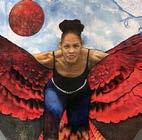
Visual and mixed-media artist Lydia Boddie-Rice’s latest collection opens at RIT’s CITY Art Space, now located downtown next to the Strong National Museum of Play. Her recent creations have included gorgeous kites that carry messages of peace and love, previously shown at Buffalo’s Burchfield Penney Art Center, and a semi-autobiographical book she both wrote and illustrated. PH
SUNDAY, MARCH 8
MUSIC
Path of Miracles
St. Anne Church, harmoniacs.org
For centuries, dedicated pilgrims (and enthusiastic hikers) have traveled the Camino de Santiago, also known as the Path of Miracles, through Spain, France and Portugal leading to the Santiago de Compostela cathedral in Galicia. This spiritual pathway has been realized in music for 17 voices and percussion by British composer Joby Talbot. You can hear the Rochester premiere of this music, along with Gregorio Allegri’s “Miserere,” as performed by Buffalo’s Harmonia Chamber Singers at 4 p.m. Tickets are $25 general admission, $10 for students.
MONA SEGHATOLESLAMI
MONDAY, MARCH 9
MUSIC
March Choro Madness
The Little Cafe, thelittle.org From Rio de Janeiro in the late 19th century came choro, an instrumental genre considered Brazil's first urban popular music. Though the word itself means “to cry,” choro is mostly upbeat, joyous and syncopated, says musician Ken Luk. He ought to know: Every Monday in March, he’ll perform choro selections with Stephen Guerra and Penn Watson. 7 p.m. PH
Science on Screen: Blackberry (screening and presentation)
Tuesday, March 24 at 7pm FREE!
The story of the meteoric rise and catastrophic demise of the first smartphone.
With a presentation: “From Blackberry to ChatGPT: Why Is Tech so Addictive?” by Wendy Norris, Ph.D., Assistant Professor of Social Computing, Nazareth University
Sunday, March 15 Doors at 4pm. Trivia starts at 5pm. Join The Little for Hollywood’s biggest night! Play pubstyle trivia against other teams, munch on all manner of items for sale: movie-themed snacks; popcorn, candy, and concessions. Stay to watch the Oscar ceremony (this part is free!), and play Oscar BINGO!
March Meryl Madness
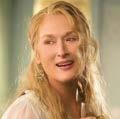
March Meryl Madness is here! The Little highlights the 21-time Oscar nominee Meryl Streep. Films include Mamma Mia!, Sophie’s Choice, Adaptation, Doubt, and more. And, yes, there will absolutely be Meryl Streep movie brackets!
tickets and more
TUESDAY, MARCH 10
BOOKS
Elizabeth Everett Book Signing and Chat
Burn Bright Books, burnbrightbooks.com
Romantasy — fantasy fiction with romance at the center of the plot — is one of publishing’s most popular genres. “USA Today” bestselling author and Rochester resident Elizabeth Everett celebrates her new romantasy, “Magic & Mischief and the Wayside Hotel,” at this special event. She’ll be joined by “Witch of the Shadow Woods” author Tori Anne Martin for a reading and author talk. Get your book signed from 5-6 p.m. and stay for the chat (and donuts and tea) from 6-7 p.m. Free. MM
WEDNESDAY, MARCH 11
MUSIC
Rochester Folk Revival
Abilene Bar & Lounge, abilenebarandlounge.com
A pop-up series celebrating local folk musicians, songwriters and collabs. Presented by six-piece folk band A Girl Named Genny. Doors at 4 p.m., music at 7:30 p.m. $10. NOELLE E.C. EVANS
THURSDAY, MARCH 12
THEATER
“Julius Caesar”
Company Theatre, thecompanytheatreroc.org
Et tu, Brute? One of Shakespeare’s most enduring political tragedies follows the title dictator less and the character Brutus more — as well as Brutus’ eventual decision to betray and assassinate Caesar for the good of the republic. What possible lessons could be gleaned from staging this work in our current political climate? Who’s to say! 7:30 p.m. Pay what you will. (Catch it again on March 15 for a special Ides of March performance, with a talkback.)
PH
RECREATION
Happiest Hour
The Strong National Museum of Play, museumofplay.org
If you’ve ever found yourself turned away by an endless line of kids at the Strong Museum of Play’s Wegmans store, here’s a chance to reclaim your glory. The Happiest Hour gives adults 21+ full access to the museum so you can check out as many plastic loaves of bread as you want. Play pinball! Build a Mr. Potato Head! Ride a train! Between revisiting the toys and games of your youth, grab a drink at the cash bar, get some cotton candy, or impress (or startle) your friends with your karaoke skills. 5:30-9:30 p.m. Tickets start at $25. MM
FRIDAY, MARCH 13
MUSIC
The Obsessed, Orodruin and Goat Farm
The Bug Jar, bugjar.com
Heavy noise is on the menu for this slice of metal history. The Obsessed, the seminal doomy band formed in Maryland in the late 1970s, rightfully headlines, though Orodruin is always a welcome (and doomy) sight on the Bug Jar stage. The newcomers in Goat Farm are studious while also pursuing their own modern take on doom. Did I mention this is a doomy show? Music’s at 9 p.m. $19.76. PH
SATURDAY, MARCH 14
HOLIDAY
Tops St. Patrick’s Day Parade
Downtown Rochester, rochesterparade.com
The annual Celtic "moving show" begins at 12:30 p.m. and is dedicated to the celebration of St. Patrick and his life of service to others. The parade will begin at East and Alexander, heading down East Avenue to the Liberty Pole and continuing west on Main Street to the corner of Fitzhugh Street. Several City of Rochester garages will offer free parking for the occasion. A partner event, the Celtic Family Faire, will be held from 1-4 p.m. at the Hilton Garden Inn, featuring Irish dancers, music and crafts. (Note: the Faire is alcohol-free.) Both events are free for all ages.
LEAH STACY
MUSIC
112
West Herr Auditorium Theatre, rbtl.org
In the 1990s and 2000s, R&B band 112 were a force, thanks to key collaborations with The Notorious B.I.G, Mase and other talents in the orbit of Sean “Diddy” Combs. That relationship (which ended in 2002, to be clear), hasn’t aged well, but the music sounds as silky, rhythmic and infectious as ever. The quartet celebrates 30 years of its debut studio album with this 8 p.m. performance.
SUNDAY, MARCH 15
FILM
Oscar Movie Trivia Party
The Little Theatre, thelittle.org Need a place to watch the Oscars? How about on the big screen at The Little while playing some Oscar bingo? Before that, there’s pub-style trivia about all things Academy Awards — winners get movie posters, film swag and more. More details to be announced, but get there early to grab one of the best seats in the house.
MONDAY, MARCH 16
ART
The Rochester Folk Art Guild: Celebrating Seven Decades of Craft and Community
Central Library of Rochester and Monroe County, folkartguild.org
The Folk Art Guild celebrates 70 years of craft, community and creative life with this new exhibition in the Anthony Mascioli Gallery at the Central Library’s Rundel Memorial Building. Never heard of the Folk Art Guild before? You’ve undoubtedly seen the work of its members, which has found homes in museums, galleries and private collections throughout the country (and abroad). This is your chance to get acquainted with its history the best way you can: via its pieces. On display through May 23. PH
TUESDAY, MARCH 17
HOLIDAY
St. Patrick’s Day Party in the Tent
Shamrock Jack’s, shamrockjacks.com
The Irondequoit-based Irish pub just off the shores of Lake Ontario will hold their usual daylong St. Paddy’s celebration both inside the pub and in a village of special tents (also happening Saturday, March 15). The shenanigans begin at 8 a.m. with Irish breakfast and continue throughout the day with live music, Irish dancing, bagpipers and activities for the entire family. Tickets sold at the door day-of, must show ID to ‘Split the G.’ LS
FAMILY
Leprechaun Scavenger Hunt
Penfield Public Library, calendar.libraryweb.org
Free, all-day event. Come help find the leprechauns hiding in the Children’s Room. A sweet treat is your promised reward. BS
WEDNESDAY, MARCH 18
MUSIC
Hochstein Youth Symphony Orchestra
The Hochstein School, hochstein.org
This week’s Live from Hochstein features the school’s Youth Symphony Orchestra taking on a European repertoire that includes work from Berlioz, Enescu and Bizet. 12:10 p.m. Free. PH
THURSDAY, MARCH 19
THEATER
“The White Chip”
Blackfriars Theatre, blackfriars.org
Addiction is a delicate balancing act. Keeping the fire burning without letting it get out of control, maintaining relationships and jobs and life while pretending everything is normal. “The White Chip” is a play about life with addiction, swaying between comedy and tragedy the way that alcohol can sway between elation and dereliction. Steven McAllister does his best to keep it all together as he navigates his marriage and career in theater. The show runs through Mar. 29. Tickets are $36.50 and up, $33.50+ for seniors and $20 for students. KB
FRIDAY, MARCH 20
MUSIC
First Inversion: Planet Home, Loving Our Shared Space
Downtown United Presbyterian Church, firstinversion.org
The chamber choir First Inversion has established itself as a source of beautiful, socially-meaningful music over the past few years, led by conductor Lee Wright. Its next concert focuses on music for nature and the environment, emphasizing wonder, gratitude and shared responsibility. The 7:30 p.m. program features a musical setting of words by naturalist John Muir, “Another Glorious Day” by composer Jake Runestad and music by Rochesterbased composer Glenn McClure. Suggested admission is $25 adults, $5 students. MS
RECREATION
Maple Sugar Festival
Genesee Country Village & Museum, gcv.org
Snow is melting, sap is flowing and trees are getting tapped. The annual Maple Sugar Festival returns to the Genesee Country Village & Museum with tree-tapping demonstrations, sugary tastings, live music, vendors, Indigenous storytelling with Hodinöhsö:ni’ partners and other family friendly activities. Don’t miss the Maple Breakfast Buffet on the weekends (extra ticket needed). The festival runs 10 a.m. to 3 p.m. two weekends, March 20-22 and 27-29.
SATURDAY, MARCH 21
MUSIC
Gary Numan
Water Street Music Hall, waterstreetmusichall.live
Synths, lasers and goth vibes — it’s Gary Numan. After two huge synthpop hits, “Cars” and “Are ‘Friends’ Electric?” in the ‘70s, Numan did not stop sailing the seas of electronic music, exploring industrial, postpunk and new wave with incredible emotion and stage presence. After hitting the legendary Glastonbury Festival last summer, Numan’s touring up and down North America. Catch the show at Water Street, doors at 7 p.m. and music at 8 p.m. Tickets are $38-$50. KB
THEATER “Bat Out of Hell”
West Herr Auditorium Theatre, rbtl.org
My SubwayTake™️ is that many people had the charisma and pipes of Meat Loaf, but no one had the musical genius of Jim Steinman. (Email me if you 100% agree or disagree.) Regardless, Steinman’s perfect marriage of Broadway pomp and rock and roll made Meat Loaf a star — now that both have died, “Bat Out of Hell” has found its new stars via a touring musical that carries on the legacy. It arrives at RBTL for this 7:30 p.m. show. Tickets start at $66. PH
SUNDAY, MARCH 22
MUSIC
John Dady and John Michael Ryan
St. Luke’s Episcopal Church, brockportny.org
There’s no better time to watch these two masters of Irish folk music than in the month of March. Add in dancers and other talented and celebrated musicians, and your Sunday afternoon plans are set. 3-4:30 p.m. Free. PH
THEATER
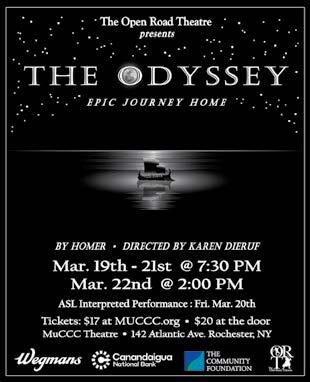
“The Odyssey”
MuCCC, theopenroadtheatre.org
Before heading to IMAX for Christopher Nolan’s new take on Homer’s epic, get (re)acquainted with a more classical staging courtesy of the Open Road Theatre’s 2 p.m. matinee. With historical costumes. Two hours with a 15-minute intermission. $17 advance, $20 at the door. PH
MONDAY, MARCH 23
THEATER
“The Jungle Book”
Hart Theater at the JCC, jccrochester.org
Enroll your little humans in this “show-in-a-week experience” put on by TYKEs and The Missoula Children’s Theater Experience. The program is open to kindergarten through high school (not so little), and there is a cost for enrollment. They get cast on Monday and have evening rehearsals, all leading up to two performances at 1 and 3:30 p.m. on March 28. BS
TUESDAY, MARCH 24
THEATER
“Kimberly Akimbo”
West Herr Auditorium Theatre, rbtl.org
Winner of five Tony Awards — including for Best Musical — “Kimberly Akimbo” takes the stage as part of the RBTL 2025-26 season. The story follows Kimberly, whose move to a new town goes through the ebbs and flows of a new world. Navigating familial drama, a genetic condition and first love, the performance runs deep with the fingerprints of other notable Tony winners and runs through Mar. 29, tickets start at $48.50.
ROBERTO F. LAGARES
WEDNESDAY, MARCH 25
MUSIC
Caroline Shaw and Sō Percussion
featuring Ringdown
Kilbourn Hall, boxoffice.esm.rochester.edu
Visionary Caroline Shaw creates in her own unique world while also boasting plenty of collaborations, including on Rosalía’s latest LP, “Lux.” With the clanging ensemble Sō Percussion, Shaw and her Ringdown partner Danni Lee come to Gibbs Street for a singular performance with staging and design elements as well as video projections. 7:30 p.m. show, with tickets $38-$63. PH
THURSDAY, MARCH 26
FILM
“The
Muppets Take Manhattan”
The Little Theatre, thelittle.org
There’s no business like show business, and there’s no place to take a stage show like Broadway. With stars in their eyes and dreams of grandeur, Kermit, Miss Piggy and the rest of the Muppet gang head to Manhattan to turn their stage show into a huge hit, but the road to glory is full of potholes. This 1984 movie has everything: Rizzo the Rat and Muppet babies, Joan Rivers and Liza Manelli, Gregory Hines and Art Carney. Kermit gets hit by a taxi and loses his memory. Fun for the whole family. Showtime 7 p.m., tickets are $12, $8 for seniors, students and military, $7 for members. KB
FRIDAY, MARCH 27
MUSIC
Driftwood
Photo City Music Hall, photocitymusichall.com
Photo City turns into Americana Central to welcome Binghamton’s rootsy royalty for this 7:30 p.m. show, with performances by Public Water Supply and Drew Kiddoo also on the bill. $25 presale, $30 at the door. PH
SATURDAY, MARCH 28
MUSIC
G Herbo
Water Street Music Hall, waterstreetmusichall.live
G Herbo’s biggest song owes something to its star power. 2020’s “PTSD” found the Chicago artist teaming up with Chance the Rapper, Lil Uzi Vert and the late Juice WRLD; it reached the Top 40. But Herbo’s own charisma as a street-smart storyteller has also sustained his career for nearly a decade. He returns to Water Street Music Hall for a 7 p.m. show. Tickets start at $30.53. PH
WELLNESS
Mindful MAGiC: Harmonic Motions
Memorial Art Gallery, mag.rochester.edu
Shake off the vestiges of winter and get your mind and body back in harmony with a guided Qi Gong session in MAG’s peaceful Fountain Court. Traditional healing practitioner Teagan West guides you through the gentle, flowing movements of this ancient practice which feels energizing and meditative all at once. Harold Taddy will create a resonant sound bath to enhance the experience. Bring your yoga mat, bolsters, water bottle and comfy clothing. Doors at 9 a.m.; session runs from 9:30 to 10:45 a.m. $35; $30 for MAG members.
BETH ADAMS
MUSIC
La Casita de Benito en Roc
Anthology, lacasitaroc.com
If your hips (like mine) have not stopped moving since Benito Antonio Martínez Ocasio (better known as sixtime Grammy Award-winning artist Bad Bunny) led the march off the field at Levi’s Stadium on Super Bowl Sunday — you’re not alone. The casita set that drew in over 128.2 million views was a certified vibe, and channeling that energy is this event featuring salsa tribute bands, reggaeton hits and DJ performances. Doors at 6 p.m., tickets start at $30. RFL
SUNDAY, MARCH 29
ART
“Determined to Be: The Sculpture of John Rhoden”
Memorial Art Gallery, mag.rochester.edu
The work of John Rhoden surpasses a designated era. Often regarded as ahead of his time and one of the inventive sculptors of the 21st century, Rhoden's work spans materials such as bronze, wood and stone in a style reflective of his journey out of Birmingham, Alabama into the arts world from New York City and beyond. This retrospective exhibition is on display through August 23. RFL
MONDAY, MARCH 30
LITERATURE
Bookluck
Flower City Arts Center, flowercityarts.org Show and tell is more fun with books. This free, 6-8 p.m. event in the Book Arts Studio encourages folks to bring their favorite books, zines, small-press chapbooks and other published items and hear about others’ favorites as well. No need to worry about spilling a pot of chili like Kevin on “The Office.” A book is much easier (and less risky) to carry. PH
TUESDAY, MARCH 31
MUSIC Wednesday
Asbury Hall at Babeville, babevillebuffalo.com
Asheville, North Carolina’s Wednesday is one of the best bands in America, thanks largely to the heart-on-sleeve slice-of-life lyrical storytelling from singer Karly Hartzman. They’ve been called “bootgaze” (meaning twangy shoegaze) but I’ve also clocked them as a terrific indie-rock band that takes big swings — and knocks almost every one out of the park. (See their 2025 album “Bleeds” for proof.) Though guitarist MJ Lenderman no longer tours with the band, thanks to his own massive solo career, this one’s absolutely worth the Thruway trek to Buffalo. 7 p.m. doors, 8 p.m. show. $26 advance, $31 day of show. PH
WEDNESDAY, APRIL 1
COMEDY
Bert Kreischer
Kodak Center, kodakcenter.com
Bert Kreischer is the often-shirtless podcast host who was apparently also the basis for Ryan Reynolds’ titular frat king Van Wilder. He will eat off of this notoriety forever — and also book theater shows at venues like Kodak Center because, of course, he’s also a comedian. Everyone is these days. 7 p.m. $56+. PH
THURSDAY, APRIL 2
MUSIC
Rochester Guitar Festival
The Hochstein School, hochstein.org
The first event of this four-day string fete finds string virtuosos Petar Kodzas, Kinloch Nelson and Bob Sneider in the round at Hochstein’s Performance Hall. The 7 p.m. show finds the trio complementing each other — fingerstyle, jazz, and classical roads all running into a hypnotizing guitar roundabout. $20 students, $25 general admission. Tickets available at the door. PH
FRIDAY, APRIL 3
MUSIC
Mike Doughty
Anthology, anthologylive.com
How many Jennifers were in your class? Mike Doughty sings he went to school with 27: “16 Jens, 10 Jennies and then there was her.” Great song, but also a strange one. That’s kind of his whole deal, both solo and with his beloved band Soul Coughing. He comes back to town for this 8 p.m. show. From $31.53. PH
SATURDAY, APRIL 4
MUSIC
Sam Robbins
First Unitarian Church of Rochester, cafeveritas.org
As part of the ongoing Cafe Veritas series, New Hampshire native Sam Robbins stops by with his acoustic guitar for an evening of vintage singersongwriter fare. Inspired by Jackson Browne and James Taylor but bringing a modern sensibility from Nashville (his current home base), Robbins’ sound is at home inside the cozy church halls. Doors at 7 p.m., music at 7:30. $12-$23. PH
"PART OF MY CHARM" BY
ALI LOU AND
THE SUGAR
BOYS
“Part of My Charm,” the latest release from local folk group Ali Lou and the Sugar Boys, is just what Rochester needs this time of year. This collection of tracks evokes feelings reminiscent of warm summer days, offering a welcome respite from how brutally cold this winter was.
Alison Lindsey and her reposeful voice greet listeners with the opening track, “Stumble Inn,” a gentle folk melody for fans of country to sink their teeth into. I like those country songs / They make me feel something, Lindsey sings, giving back to the genre she loves. This first bite of the album is melodic and sweet, like a woozy dream.
“Fake Cowboy” gets down to business with its callout lyrics and snappy, sassy composition. The highs and lows of Lindsey’s voice, like rolling hills, make it a standout; the multi-talented singer plays guitar and banjo on the album as well. Swift ballad “North Wind” is quick-paced and foreboding in tone. “Fighting Song” follows, and, despite the name, it’s as sweet and smooth as honey, thanks to organ and percussion from Alex Patrick and bass from Ryan Yarmel.
“Dive Bar Cowgirl” is upbeat and lighter, telling the story of a girl living in the moment and by her charms. “I’ll Be a Tree” opts for nostalgia, reminiscing about watching fireflies and playing together outside as children. Small town gossip is discussed in “Twirl You Around,” with its upbeat and swirling rhythm encouraging movement.
The coziness extends to the gentle closer “You Said,” a quirky and enthusiastic take on bluegrass and Americana. This charming album gives the gift of warmth in musical form, and the trio’s work provides fortification until we finally see sunnier days.
—LEAH JOY
“THE SOMNAMBULIST” BY SASTRUGI
With its detached vocals and cold, precise rhythms, post-punk music is often confrontational. Not a lot of warm fuzzies to be found. But Sastrugi, the local band fronted by Matt Treadwell, confronts with a little boogie in its boots.
The group’s new EP, “The Somnambulist,” may frighten away casual listeners with its spelling bee-caliber title. (It means “The Sleepwalker.”) Those who do tune will be surprised to find one of the best local releases of 2026 so far.
Recorded over a five-year period by Sam Snyder, “The Somnambulist” spans four exhilarating tracks characterized by tension and release. Preserving the rigid, rhythmic framework of post-punk (and a touch of krautrock), the band actually allows itself more room to explore interesting, occasionally whimsical textures.
The whimsy is less Seussian and more darkly psychedelic, as heard in the funky breakdown of “Doppelgänger.” That funk arrives courtesy of two key components: bassist Benton Sillick, a versatile local talent in the bands Anamon and The Heavy Love Trust; and drummer Andrew Tachine, whose percussion work can be heard on the latest Haim album.
This safety net allows Treadwell to intone his vocals in both stark orations and ominous whispers, as heard on opener “Modern Cowboy.” Treadwell communicates more effectively with his guitar, making it spiky as sandpaper and, near the end of the title track, violent as a knife.
But Sastrugi dedicates most of the EP’s runtime to “Miasma,” a 10-minute exorcism that begins with a strut and ends up lying face down in frigid water. In the tradition of genre forebears like Wire and Television, the band creates a rhythmic carousel then pulls the emergency brake.
It’s hypnotizing, soothing and mysterious, like wind-blown waves in snow. What are those called again? Oh, right — sastrugi.
—PATRICK HOSKEN
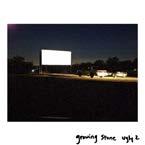
“UGLY II” BY GROWING STONE
Skylar Sarkis of the Rochester alt-rock band Taking Meds has returned focus to his solo project Growing Stone. Released on January 30, the EP “Ugly II” is subtle yet disarming.
The 20-plus minutes of music spread out over six tracks on “Ugly II” mirror the structure of its predecessor “Ugly,” released over seven years ago. All but one song from “Ugly II” first appeared on Growing Stone’s 2024 album “Death of a Momma’s Boy” as alt-pop arrangements that diffuse some of the pain in the lyrics.
On “Ugly II,” unobtrusive acoustic guitar provides the harmonic texture and gentle pulse that will be welcome to the ears of 2000s-era indie folk fans. It’s easy to cite the late singer-songwriter Elliott Smith as an influence, with his minimal instrumentation and hushed explorations of his inner psychology.
On the opening track “No Substitute,” Sarkis distills the emotional tone of the collection in the lyric And I’ve been cautioned you burn bright / But there ain’t no substitute for natural light, even with the bite.
“Play the Rogue” contains the realization that despite having moved away from behavior enabled by alcohol dependence, the songwriter’s prospects don’t seem brighter — he’s just lonelier: And I could choose between a meeting and a crutch / I do the same down here except even when I drink, I’m still losing touch.
Similarly, “Apple Church Road” finds Sarkis in an introspective mood, pining for a what-could-have-been relationship while pursuing a life of recovery. By contrast, the relationship wished for on “The Keep” feels more attainable.
Still, Sarkis unflinchingly points out a painful irony: sometimes the clarity of knowing what you truly want now is inextricably linked to the past that hamstrung you and held you back.
—DANIEL J. KUSHNER
“HANDS
UP”
BY ELI FLYNN FT. FELIX FREE
Rochester musician Eli Flynn established himself in the local music scene as a member of Giant Panda Guerilla Dub Squad and through his own collaborative, Eli Flynn and the Everymen. His talents extend beyond the stage and into the classroom, where he works as a music therapist at The Hochstein School.
Inspired by stories of resilience and music as therapy, Flynn released the single “Hands Up,” featuring rapper Felix Free on January 30. Flynn says to accompany the release, “It’s an antioppression song, by the people for the people.”
The track is a deft allegory that captures the realities of everyday life in today’s United States while expressing a sense of optimism rooted in hope and belief in a higher power.
Driven by gospel-inflected vocals and a breezy reggae groove, “Hands Up” sounds club contemporary, but is imbued with an awareness of history. Threads of hiphop, rock guitar and soulful sonics weave through the melodic foundation, resulting in a celebratory, genre-blurring anthem that feels both urgent and inspired.
Felix Free’s rhythmic and agile midsong rap contrasts the song’s melodic core, providing a refreshing and rapid expression of triumph over adversity and a defining statement of self-worth.
In an era where it’s fashionable to take a side, Flynn uses the simple and beautiful foundation of love and hope as his thematic orientation. While it’s increasingly hard to blend honest and relevant commentary with a creative musical directive, Flynn develops a song that gets stuck in your head and speaks to your heart.
“Hands Up” is a celebratory track founded on relevant social commentary and packaged in a soulful and infectious construct. The result is a vibrant expression of triumph over adversity with hands raised skyward, fomenting a belief in a better tomorrow.
—STEPHEN LEWIS
Heart and soul
BY PATRICK HOSKEN PATRICK@ROCCITYMAG.COM
The core of any musically solid band is the rhythm section: drums and bass. The musicians work to build a foundation supporting the melodies that dance on top. They must lock into the same groove and communicate, often just with their eyes or a nod, when to pick up or slow down the tempo.
Matt O’Brian and his brother Chris don’t even need a glance, though.
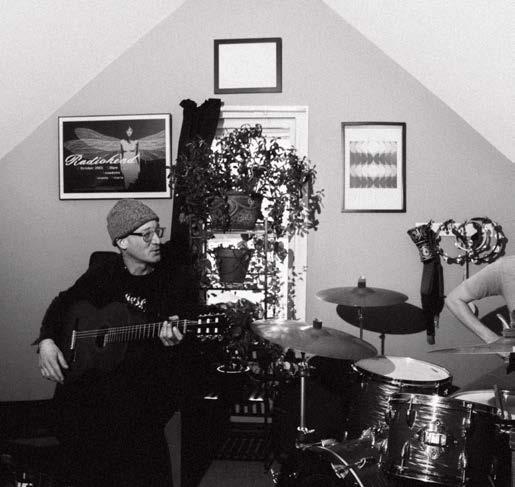
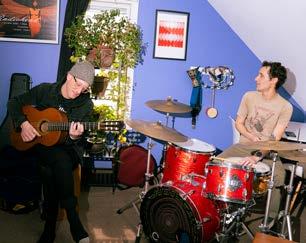
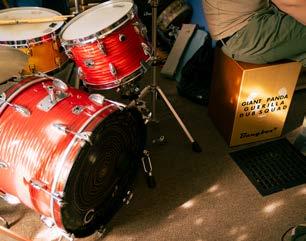
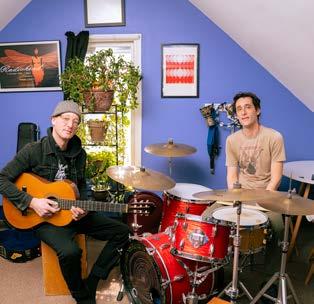
“We very naturally find the same groove as a rhythm section,” Chris said as the pair tinkered at an attic practice space in Beechwood.
That’s important considering how heavily their band, Flying Object, relies on rhythm. Matt’s earthy, soulful compositions require steady beats, provided happily by Chris. After performing together for more than 25 years, staying in rhythm is second nature.
“The way we’re pushing and pulling a tempo, I don’t have to look over,” Matt said. “He knows if I am trying to lay it back, or if it feels like I'm a little ahead, maybe to come up and be a little ahead with me.”
The O’Brians are far from the only musical siblings in Rochester. Austin, Brendan and Trevor Lake make up the surf band Televisionaries, and the Regan brothers anchor folk group Watkins and the Rapiers. But their kismet is unique for how far it’s taken them — and now, decades into their relationship, how it keeps them grounded.
Two musical family duos reflect on the creative ties that bind.
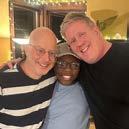
Brothers Matt (left) and Chris O’Brian anchor the band Flying Object, marking more than 25 years of playing music together. PHOTOS BY ROBERTO F. LAGARES
FAMILY TIES
As kids in the early 2000s, the O’Brians grew up surrounded by instruments. Before long, with Chris as drummer and Matt playing guitar, they started up a group with their friend James Searl on bass. By 2006, that band — Giant Panda Guerilla Dub Squad — had become nationally rising stars fusing dub, jam and roots music.
They remain one of the region’s key musical exports and fixtures at the annual Finger Lakes GrassRoots Festival of Music & Dance in Trumansburg — even without Matt, who left the band in 2010.
He subsequently began a new group, Thunder Body, where he switched from guitar to drums. His journey as a bass player began later, during the pandemic, when he and Chris met up for low-stakes morning jams with some friends.
Flying Object was born. But so was a new chapter in the musical story of the O’Brians.
“We did the super intense hardcore band thing for a decade,” Chris said. “Now, not only do we know how to do it without too much effort, but we're playing with guys that are so fun and so amazing at their instruments.”
That crew includes keyboardist Elliot Schwartzman and guitarists Mike Martinez and Max Flansburg, who also plays in bluegrass group Dirty Blanket.
This time around, things are more chill.
“When I’m up playing drums with Flying Object, I’m literally ear to ear grinning,” Chris said.
They’re serious about it, Matt added, but he’s made sure to prioritize good vibes as much as good music.
“Why would anyone want to do it again unless it’s going to be as fun and smooth as possible?” he said. “The Panda thing, I was a lunatic about being serious about it. This band is, stylistically, what comes naturally to us. This is the kind of music we would want to be playing together, which makes it easy for brothers.”
Right: Flying Object was born out of casual jams that the O’Brians say helped return the fun to their musical partnership.
AN ONGOING PARTNERSHIP
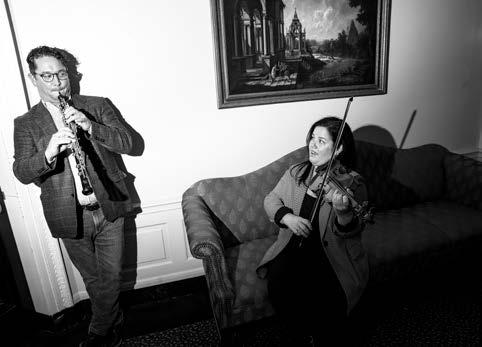
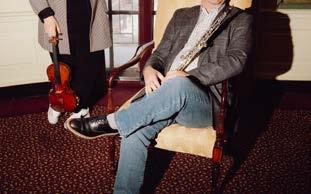
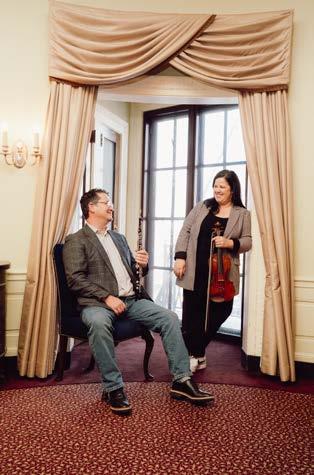
For proof that the concept of musical family extends well past blood ties, consider Juliana Athayde and Erik Behr. The married couple performs on stage as well, though it’s a much different stage. Athayde is concertmaster for the Rochester Philharmonic Orchestra, and Behr is principal oboe.
They’re also co-artistic directors for the Society for Chamber Music in Rochester; they program unique events that bring together musicians from both the RPO and the Eastman School of Music. It can be hard to get together to talk about and plan those concerts. Luckily they know where to find each other.
“The creative process is fun when you’re married because you could be washing the dishes [and] you can shout down the hall, ‘OK, how about we do this?’” Behr said, seated in an ornate room inside Eastman Theatre.
That healthy balance bears out in Flying Object’s songs. The laid-back, twangy sonics of “Flat Earth” contrast Matt’s funny, slyly barbed lyrical observations: My good friend told me that the Earth is flat / I don’t really know about that. On the group’s latest single, “AI Needs More Water,” the band peps up to take aim at big tech depleting natural resources. (“We can’t start giving robots the basic life necessity stuff!” Matt said of the song.)
It also manifests in the relationship between the O’Brians as brothers. They don’t agree on ascendant indie-rock sensation MJ Lenderman: Chris is “obsessed” while Matt “can’t get through the record.” But they know the ins and outs of each other’s musical minds.
“We have very similar taste in how music should sound or what we would do,” Matt said, evoking a Venn diagram. “But the point in the middle where the two circles meet, of music that we both actually listen to on purpose, is very small.”
On stage, those distinctions go away. For New Year’s Eve, Giant Panda, Flying Object and Dirty Blanket all shared a bill at Anthology, marking a real musical family affair that extended to the audience as well.
“It was cheesy how epic it was for us,” Chris said. Matt called it “the best era for the scene feeling like a scene.”
Matt (left) and Chris O’Brian are so in sync, they can shift a song’s tempo without as much as a look. “It requires no visible or audible anything,” Matt said.
Juliana Athayde and Erik Behr are not the only married couple in the RPO. But given Athayde’s stature as concertmaster and Behr’s as principal oboe, they may be the most visible.
Or they could be in the car listening to a classical radio station and hear a piece that intrigues them. The planning begins right there — no need to find time on each other’s calendars.
“Our predecessors were two colleagues who talked about setting aside time to meet and talk about artistic plans for upcoming seasons, and I think ours is just rolling all the time,” Athayde said. “‘We got the kids to bed, so let’s sit down and talk about some programming.’”
As RPO musicians, they’re on stage at the same time. But as co-artistic directors of SCRM, Athayde and Behr enjoy switching off performance duties. Athayde recently played with vocalists Nicole Cabell and Joshua Conyers while Behr worked behind the scenes — reserving rehearsal spaces, sending emails and organizing the logistics.
He’ll get his turn. In April, SCRM presents an afternoon of “Gloriously Degenerate Wind Music,” a program featuring, among other pieces, works by German-Jewish composers Joseph Horovitz and Robert Kahn, whose compositions were deemed “degenerate music” by the Nazis.
Behr will perform alongside piano, horn and clarinet; Athayde, meanwhile, will handle the admin duties. That includes the domestic tasks, too.
“At home, it’s nice if one of us is having a really heavy performing week with RPO and Chamber Music, the other one can feed the children and take out the trash,” Behr said.
The Chamber Music concerts likewise keep the art in the family, so to speak. Organizational silos in the
classic music strata often prevent the union of RPO and Eastman musicians. But SCMR aims to keep its focus on local performers.
“There isn’t another place where you can hear that,” Athayde said. “We get emails all the time from agents and groups saying, ‘we’d love to come play on your series.’ Sorry, we’re not that kind of thing. We’re sort of mom and pop.”
Artistic partnerships thrive on both routine and surprises. If there’s nothing new, the relationship can’t grow, but the foundation — much like a rhythm section — must be solid.
Back in the attic space, Matt O’Brian asked his brother Chris if he’s heard the song “Space and Time,” a slow-burning stunner by Americana singer S.G. Goodman. Chris hadn’t.
But a minute later, the pair began jamming on it. Matt called out changes as he sang and strummed an old nylonstring guitar while Chris laid down a splashy but subtle backbeat.
It sounded gentle yet charismatic, like they’ve been doing it for decades. They have.
“It’s come full circle back to the casual,” Chris said. “Playing with Matt comes naturally, and in my mind, I’m still along for the ride with my musician older brother.”
Patrick Hosken is CITY’s arts and culture reporter. He was formerly the music editor at MTV News and a producer at Buffalo Toronto Public Media.
Athayde and Behr are co-artistic directors of the Society for Chamber Music in Rochester. “We find it works best if one of us isn't performing because the performer needs to get in their headspace,” Athayde said. And the other one can feed the kids.
Ricotta pie
BY JESSICA L. PAVIA
It’s Christmas Eve when I help my aunt unload five reusable bags full of vintage cookbooks out of my car. A “9th Grand National Cookbook,” a 1968 “Foods of the Word,” Julia Child’s “The French Chef Cookbook” (which looks more like a common paperback than a cookbook we would know), Marcella Hazan’s “The Classic Italian Cookbook” and a spiral-bound “Salute to Italy: Celebrity Cookbook” copyrighted to JCPenney in 1984.
Holding my nana’s battered, red-and-white gingham copy of a “Better Homes and Gardens New Cook Book,” her etchings alongside the margins, I cried.
Nana was an avid homecook. My father remembers coming home to mounds of flour waiting to become pasta on her giant wooden cutting board. He remembers seeing a wok for the first time in her kitchen, alongside dim sum cookbooks — some of which I have since inherited. My most precious memories with her include standing in her Florida kitchen, rolling pizza dough between my palms before dropping them in boiling hot oil and dousing with cinnamon and sugar.
But my nana was also from an Italian family and of the tradition where family recipes were passed down only to the eldest daughters. Being my father’s daughter, I do not have access to the recipes that not only flavored my childhood, but my dad’s. This gift from my aunt felt like a treasure trove; as if somewhere within the discolored, glue-failing pages, I might find a fuller version of the woman I once knew.
An annual family affair, and a nana’s legacy
ESSAY
PHOTOS BY JONATHAN ROBINSON
Every Easter, I bake my father — and my family — ricotta pie. It’s not even my nana’s most famous recipe (that would be her ever-elusive halfmoon pastry cookies stuffed with nuts and chocolate and Concord grapes that my father used to hand peel after every Naples Grape Festival), but it’s a tradition my dad remembers fondly.
It’s experimental; trial-anderror I commit myself to each year with the hopes of getting it right. Stumbling into a recipe and food memory I do not have. But this year, I have her cookbooks. Even still, the recipes are all over the place. In “Salute to Italy,” actress Sophia Loren shares her recipe that includes lemon rind, golden raisins and pine nuts.
“The Italian Collection” by Food & Wine Books calls it a Sicilian Ricotta Cheesecake (my Nana was not Sicilian, but Abruzzese) and theirs doesn’t have a crust, but uses cinnamon in lieu of lemon, which rings more true to my nana’s version recalled by my aunt. Lidia Matticchio Bastianich includes hulled wheat kernels and orange water in her recipe.
A week before my father and I plan to bake ricotta pie, he has intense surgery on his right arm, complete with a full-arm hardcast and a bright yellow foam protector he has to wear whenever he eats so as to not move the healing break. Which means our baking day turns more into a my baking day, trying to pull my father away from the living room to guide.
The first step is to make the crust, an Italian pastry dough with cold butter cut into the flour as well as eggs and baking powder and sugar. It’s the filling that’s altered every time. This time, I mix the ricotta, eggs, sugar and vanilla before calling my father over. Together, we eyeball the cinnamon — probably much like my nana would have.
“Your cinnamon is too fine.”
“Did you know cinnamon is from the dried bark of a tree?”
“When did you find that out?”
“I don’t know, a couple years ago. At a museum.”
“What tree is it from?”
“Cinnamon?”
With every shake of the plastic bottle, he mixes the filling one-handed. When the scent of cinnamon lingers above the bowl and the mixture looks like a starry night, we stop. I pour the batter in and get started on the lattice top. It’s the first time I’ve ever done one for the ricotta pie, but both my aunt and father insist nana’s had it. Where maybe, typically, we would have reminisced about
nana — her job at the bank that used to be in the Times Square building downtown, her mind for math and business, the kindness she routinely showed my mother — we mostly laughed. Laughed about my cheaping out for the storebrand ricotta, laughed about my dad trying to whisk with one hand, laughed about my fiance not quite achieving my father’s artistic vision for the photographs.
Sooner or later, I think we forgot this was all for an article. Instead, we fell into step in the kitchen. My parents, my fiance and myself, all standing around the island as I worked on top of a large cutting board my father purchased because it reminded him of his mother — those childhood days when he ran in from school and watched her prepare dinner. Our practice became less about revisiting the past, more about the braiding together of inherited stories as we crafted new ones, too.
When we finally took the pie out and the cheesecake-like center had time to settle, I gave each of us a slice. I brought my father his in a shallow bowl with a fork, and set it on the table next to his chair. With one hand, he took the bowl and rested it on a pillow.
“I feel like it’s eggy,” I said about my first bite. It was soft and not too sweet, the perfect amount of cinnamon. But this is our dance: the first test when I learn what to tweak and try again for next year, when I tap into my father’s memories and try to get closer to his version of the nana I knew.
“No, it’s good,” he says, instead. In his casualness, in the lack of feedback, I know it must be like hers. The closest I’ve ever gotten. “It’s just not Polly-O ricotta.”
Jessica L. Pavia is an English teacher and freelance culture writer from Rochester. She’s interested in the small moments and niche interests that make us who we are.
Find ricotta pie at a handful of local spots each Easter season: Rubino’s, Leo’s Bakery, Savoia Pastry Shoppe (which uses cracked wheat, much like Lidia’s) and Forno Tony all offer their takes on the Italian classic.
Peering back through the static
BY KELLEN BECK
Abstract shapes of shifting colors dance over an otherwise mundane video of a cup of coffee, recorded with a handheld Portapak analog camera and displayed on three projectors. Actually it’s two videos; a lagging copy hovers over itself like a ghost, a polychromatic distortion, following the actions of its original, trailing behind the pouring, the drinking, the camera adjusting.
Across 12 screens and two digital prints at Visual Studies Workshop is “Signal into Memory,” a video art exhibit created by artist Peer Bode. Co-curated by VSW’s Tara Nelson and Nilson Carroll, the exhibition running through June 6 is a look back at Bode’s experimental work in the 1970s and ‘80s. The minimalist gallery space features a selection of Bode’s “Process Tapes” from his time at the Experimental Television Center in the Southern Tier, packaged and presented with immeasurable help from fellow artist and partner Rebbekah Palov.
From the left onscreen, a hand picks up the cup and Bode takes a sip. The cup returns. Suddenly everything shifts. The ghost on the monitors rewinds into the past with a mechanical whir, tearing away from its established relationship and widening the temporal dissonance between the two channels.
“Cup Mix (2 Channels)” was filmed by Bode in his apartment in Buffalo in 1977, then edited in real time at ETC. It’s part video experiment, part examination of
Peer Bode’s video art exhibition,
“Signal into Memory,” recalls work from the 1970s and ‘80s.
ART
ABOVE: Artist Peer Bode. PHOTO COURTESY OF VSW RIGHT: The Experimental Television Center. PHOTO COURTESY OF PEER BODE
rituals, part exploration of perception and the present. Bode’s work frequently touches upon the medium of video itself, the nature of video and audio signals and how an audience perceives those signals. It can be metatextual, self-referential, existentialist.
Behind the L-shaped couch creating a chamber for the projector trio, six monitors are arranged like an electronic sculpture, a nod to setups seen at ETC at the time. A voice pops out: “Back hand, front hand, back hand, front hand.” Six identical hands flip back and forth, pivoting visually on the pointer finger. The screen shifts from black and white to color, a stark blue background with strong yellows and oranges on the hand, almost thermal.
“Back hand.” Black and white. “Front hand.” Color. Rhythmic. Mesmerizing.
“Front Hand Back Hand,” 1977, ETC.
“Often the subject is quite simple, because it is meant to point back to the process,” Carroll said. “It isn't about what you're seeing in the frame and this traditional cinematic sense, even though there are definitely cinematic moments. It is about watching a process unfold.”
Some of the tapes on display have only recently been digitized with the help of Carroll and VSW’s media transfer lab. Bode hadn’t seen some of this work in 50 years, and the exhibition served as an opportunity to revisit these pieces and extract some new edits. Looking back, he views his work in this era as some of his strongest and most radical.
“It’s unforgiving,” he said. “It just isn't going to give in to a certain kind of narrative structure, a storytelling structure or cultural critique structure. This work really has a power to it.”
On the screen of a heavy Setchell Carlson cathode ray tube television, a postcard of a camel is held in frame. Its head seems to glitch, leaving an imprint on the screen as the hand holding the postcard moves slightly.
“Camel with Window Memory,” 1983.
The glitch is a single frame held in buffer memory — the machine’s storage was so small, it’s all it could hold. This is a performance, edited live.
In the exhibition program, Bode lists “Harald Bode 9-Channel Light Sensor to Control Voltage Instrument” in the tech breakdown.
Bode was raised amid invention. His father, Harald Bode, was an engineer and electronic music pioneer; a builder of instruments; inventor of the modular synthesizer. Harald developed and built most of his musical inventions in his home workshop, and a young Peer absorbed firsthand that process of creation.
Bode’s mother, Irmgard Bode, was an excellent cook and had a great sense of humor. Peer credits her with creating a rich homelife that allowed creativity and imagination to flourish.
Peer’s older brother, Ralf Bode, blazed the path in film, finding a more commercial but still artistic career path as a cinematographer, working on the movies “Saturday Night Fever,” “Rocky” and “Coal Miner’s Daughter.” Peer’s artwork wasn’t something his brother really understood, but Ralf still supported him (and bought him a lot of videotapes for his projects).
Bode was born in Germany just two years before his family moved to the United States. They first lived in Vermont, then eventually landed in North Tonawanda outside Buffalo. Bode studied at Binghamton University in its newly formed cinema department, later continuing his education with the media studies program at the University of Buffalo. Nowadays, he lives in Hornell, a little more than an hour south of Rochester.
As a partial career retrospective, “Signal into Memory” is the kind of thing that’s right up the alley of Visual Studies Workshop. The institution supports, curates and archives avant garde visual art from all sorts of experimental artists and has been a keystone for video art, sprouting up in the late ‘60s around the same time as ETC. Both made Western New York a major hub for the world’s burgeoning video art scene.
Amid stacks of 16mm film reels and old guerilla news tapes from the ‘80s and ‘90s, Nelson emphasized the balance of supporting this kind of work in the arts and being a public resource and space.
“We want to be a sort of challenging institution that thinks deeply about the meaning of images,” she said. “But we also understand that [this style of media] a little out there. We want to help people feel welcome and approach the subject matter.”
Video is pervasive in culture. It’s omnipresent — it begs examination, analysis and artistry. To be challenged like this is paramount. In the ‘70s, Bode and his contemporaries knew they were making art, crafting something important.
“Little did we know that the media culture we were engaged with in that time would move forward and become the cultural basis, the information basis for the whole world,” Bode said.
On a gray monitor that’s as deep as it is wide, a man with a beard and glasses reaches to his right and twists a knob on a board full of knobs. Colors ooze through the scene, everything
taking on green and orange and purple hues in rolling, repetitive flashes. Bode zooms the camera in on a typewriter, an ashtray. A conversation plays out in white subtitles; it’s a group at the ETC experimenting with the Jones Colorizer in real time.
“Computer tape #1” and “computer tape #2,” Sept. 4, 1977. Two off-center blobs of color pulse, flowing outward over and over again, colors shifting as different channels are turned on and off, positives and negatives, flashes and flashes. Hypnotic. vsw.org
Kellen Beck is a Rochester-based writer who has covered science, tech and entertainment since joining Fairport High School’s newspaper “The Lampion” in 2010, among other publications. Email him at kellentbeck@gmail.com.
Samples of the artist's work. PHOTOS COURTESY OF PEER BODE
A daily festival
At 12:45 p.m. on a snowy Thursday in February, every seat in the Sagra Italia dining room is full. Formerly home to Fifth Frame Brewing, 155 St. Paul St. is nearly unrecognizable, transformed into an airy, chic space somehow reminiscent of both Brooklyn and Rome. There’s a cozy sitting area off to one side and mossy green accent walls with galleries of curated art. A glass case near the checkout counter displays pillowy focaccia with an array of toppings. The concept might be fastcasual counter service, but this is the kind of atmosphere that makes guests want to linger over a plate of pasta, a glass of wine, an espresso.
Sagra Italia is the third venture from the Cavatassi family and “Uncle” Chris Ziogas — following behind Tapas 177 and Event 180. All three businesses are on St. Paul Street, a part of the city that’s often overlooked by diners and nightlife seekers alike. One of those “if you know, you know” destinations. And if the Gen Z Cavatassi generation has anything to say about it, everyone will know. Soon.
To understand how St. Paul Street became a second home for the Cavatassi family requires going back 40 years to 1986, when Demetrio Cavatassi landed his first restaurant job after his freshman year of college. Or even to a little more than 30 years ago, when he was working at Geva Theatre. At the time, the Geva bar was a destination even for those who weren’t seeing a show, and it was there Demetrio met his wife, Gretchen, and started down a path to become one of Rochester’s most respected and quietly successful restaurateurs.
In 1997, he was bartending at a local blues pub called the Rabbit Hole (now Salinger’s). When some of the guests heard Demetrio’s plans to open a place, they said he should talk to Frederic Ponthieu, who had similar goals and was then at The Brasserie (now Max Bar & Bistro at Eastman Place).
From left: Chris Ziogas, Ava Bliss, Demetrio Cavatassi and Mia Cavatassi.
PHOTO BY ABBY QUATRO
For the Cavatassi family — and ‘Uncle Chris’ — St. Paul Street
is worth the investment.
“Fred had worked in a Spanish restaurant in Miami and I wanted a bar with an elevated feel like Geva, at the time,” said Demetrio. “Both of us had worked in many different restaurants. We put our heads together and six months after our meeting, we opened Tapas.”
This November marks 29 years for Tapas 177, a St. Paul Street stalwart that has endured through countless other business openings and closings on the block, extensive construction and city development. Within that time, Demetrio and Gretchen had two more daughters, Ava and Mia — their oldest daughter, Gretta, was born right before Tapas opened — and Ponthieu departed for other projects.
Chris Ziogas, Demetrio’s second and current business partner, was a Tapas customer
from day one. He served at other restaurants, but Tapas was where he and his 20-something friends partied.
“We all wanted to be there,” he said. “I would get my calamari salad and my drinks and dance on the bar and have a good time.”
Ziogas, who is Greek, eventually wound up running a popular ‘Greek Night’ event at Tapas. Around the same time, in 2000, Demetrio opened another restaurant on St. Thomas with his brother. Gretchen was pregnant with their second daughter, Ava, and Tapas needed more help. Would Ziogas go to St. Thomas, or consider a job at Tapas?
He chose Tapas.
“I was only supposed to be here for a year,” Ziogas said. “And I don’t know how it happened, but it happened.”
Scenes from Tapas 177. TOP LEFT AND BOTTOM PHOTOS BY MIKE MARTINEZ | TOP RIGHT PHOTO PROVIDED
FOOD & BEV • BY LEAH STACY
The Cavatassi girls call him Uncle Chris, and he’s been part of the family for 26 years, hatching the big ideas to take over the Event 180 space in 2024, and then, spotting the ‘For Lease’ sign last year and pitching Demetrio a fast-casual concept in the former Fifth Frame space.
The decision to stay on St. Paul Street for 29 years as Tapas — never changing the name or concept, buying the building it occupies — and then opening two more businesses is an intentional one for both partners.
“That’s what has made Tapas last so long,” said Ziogas. “We’ve never changed our core. We've just adjusted to the trends without really affecting what we are at heart.”
The goal with Sagra, Demetrio said, was to create something of quality that could enhance the neighborhood, build street interest and give residents
somewhere to walk during the day. He pointed to similar models in the Mercantile on Main and Park Avenue.
“I felt like the city was burgeoning in 2019 and then COVID happened and it set us back another five years — it was disappointing,” said Demetrio.
“But now, I really am optimistic. With all the investment downtown, there's more people. And if we're not going to do it, nobody else is going to do it. We’re already here, we’re invested.”
Observing Demetrio and Ziogas for any amount of time is like watching Richard Gere and Nathan Lane run a restaurant. Ziogas is effervescent, energetic, theatrical — it would come as no surprise, really, if he burst into joyous song at any moment. Demetrio has a quieter charm and is prone to disappearing into the kitchen, then appearing tableside to greet a longtime guest. The opposites-attract partnership
Menu items at Sagra Italia.
PHOTOS BY ABBY QUATRO
makes sense; even more so with the addition of Demetrio’s 20-something daughters, Ava and Mia. Both grew up bussing tables and hosting at Tapas from the time they were teens, but the decision to fully join the family business came after they finished their college degrees.
“I still get flashbacks of when we had the Park Ave. Festival booth, and the girls were like eight, nine years old,” said Ziogas. “They were babies working at Park Ave. Fest, and now they're running the family business. I don't know how the hell I'm chosen family.”
Ava Bliss (née Cavatassi, recently married), 27, is the director of events and marketing for all three properties. She and Ziogas primarily run Event 180 together, a blank-canvas venue that can be booked for weddings and other private events, with catering available from Tapas and Sagra.
Gretta, 30, the oldest of the three girls and a jazz vocalist, has lived in New York City for nearly a decade. After college graduation, Mia, 23, moved there for about a year as well, but the news of Sagra opening brought her back.
“I had to be a part of this, I couldn't just let it happen without me,” said Mia. “So we opened this past November, but I came back in September and was hanging all the pictures, painting all the walls and putting together the tables.”
Ava and Mia were inspired by the Italian-style cafes they’d visited with Gretta in Brooklyn, a direction that melded perfectly with the fast-casual concept, ultimately saving costs on front-of-house serving staff (Mia is the manager, and they’ll have a host on weekends). It also ensures that menu prices remain the same for both lunch and dinner service.
“I've had an office job, but to come back here and actually create something and work and bartend has been so fun,” said Mia. “I love working in the restaurant industry. It's just what I'm used to.”
The Sagra menu is old-world Italian, including housemade pastas — otherwise known as food Rochester likes to eat — and Ziogas collaborated with kitchen manager Charles Snyder to perfect the focaccia.
“We proofed it two different ways; for the sandwiches we allow it to rise fluffy and for the pizzas we suppress that rise, but it's still the same dough,” said Ziogas. “It's got this crunch, but then melts away in your mouth.”
The eatery also has a full bar, and they plan to have European-style sidewalk seating in the summer, which means Sagra Italia can be a spot for that half-day Aperol spritz or even a pre-game for later night shenanigans at Tapas. Bar hopping, but keep it in the family.
There is no free public parking lot nearby, and a limited number of on-street spots. But so far, guests are figuring it out — even Ava and Mia’s Gen Z friends have ventured out to visit Sagra Italia. Still, the girls want to push takeout as a large part of the business. They understand how many people prefer to stream a movie at home on the weekends, especially in adverse weather, and they want to capitalize on that.
“I do our social media, and that’s reaching a lot of younger people,” said
Ava. “If you're craving the big, warm bowl of pasta you see there, you can just order online and it'll show up. And it’s affordable.”
While Demetrio, Ava and Mia are at work on St. Paul Street every day and Gretta sings along the East Coast, Gretchen is a full-time teacher at a Brighton Montessori school. She shows up behind-the-scenes in myriad ways — her daughters simultaneously pointed to the colorful bouquets dotting Sagra.
“Mom was here doing all the flowers,” said Ava.
In Italian, ‘sagra’ means festival, usually one rooted in heritage, community and food. Demetrio remembers attending such events as a child in Italy, and he wanted to bring that homespun sense of tradition and celebration to the newest concept.
“We wrote down all the things we wanted this place to be, and it all came to embody the idea of ‘sagra,’ perfectly,” he said. “We have us, the family, here. And I just wanted a place where they would want to be.” sagraitalia.net
Leah Stacy is the editor-in-chief of CITY Magazine and producer of Rochester Cocktail Revival. She loves to plan travel around dining and theater experiences. Find her reposting poetry and today’s egg @leahstacy.
The Brooklyn Cutlet with chicken, bruschetta mix, basil pesto, arugula blend and fresh mozzarella on housemade focaccia at Sagra Italia.
Fried Burrata with sagra marinara, Parmigiana/Romano and housemade focaccia at Sagra Italia.
Streaming options for all ages in your household.
What to watch when you’re watching together
timeless and immensely watchable.
BY JOHANNA LESTER
The opening credits to “The Simpsons,” which debuted in 1989 and is currently the longest-running American sitcom, end with Homer, Marge, Bart, Lisa, and Maggie — the titular dysfunctional, but lovable, nuclear family — squeezing into their respective spots on the couch as their TV flips on. From episode one, it emphasized to its audience the value of watching something together. Your mileage may vary on “The Simpsons,” but there is no denying that movies and TV as communal experiences are foundational, breeding and benefiting from myriad nostalgic influences. It’s why I grew up renting every Rogers and Hammerstein musical on VHS, and the reason everyone in my immediate family has seen most episodes of “Grey’s Anatomy.” What follows is a choose-your-ownadventure for when you’re planning that next night in with your nearest and dearest.
NOTE: as of publication, nearly everything mentioned below is available to stream on a platform somewhere on the internet. If physical media is your preference, scope out your local library.
REAL PEOPLE DOING REAL THINGS (PLUS PUPPETS)
“The Muppet Show,” which ran from 1976 to 1981, was never aimed at children, but the presence of the Muppets themselves smoothed over any potentially sassy edges the celebrity hosts might provide. It’s
A new version, produced by Seth Rogen and Sabrina Carpenter, among others, just launched a pilot episode this month. “Stop Making Sense,” a concert film on the band The Talking Heads, directed by Jonathan Demme, is nothing but impeccable vibes, with music that will have all ages dancing. (“Jackass” may require a bit more explanation to your chosen audience, but it’s still funny and, as the seasons and movies progress, surprisingly poignant.)
DRAWING OUTSIDE THE LINES
I recently watched five episodes of “Bluey,” an animated show out of Australia, and by the end I was sobbing (compliment). This show is for people who have always wanted more scenes from “The Holiday” with Jude Law and his young daughters. The movies “Fantastic Mr. Fox,” “James and the Giant Peach” and “The Iron Giant” are about families, both biological and found, and feature some of the best voice acting, bar none. (Please also spend a few moments on YouTube looking up
videos of how they recorded the dialogue, specifically George Clooney as Mr. Fox.) The works of Studio Ghibli and Hayao Miyazaki are gorgeous and timeless. “Ponyo” loves ham, and “My Neighbor Totoro” features a giant cat bus. The rest is up to you to discover.
TELEVISION THAT HUGS YOU BACK, BUT ALSO SOMETIMES PUNCHES YOU IN THE HEART
The short-lived Netflix adaptation of “The Baby-Sitters Club” is one of the most charming productions that the streaming platform has produced to date — especially resonant if you grew up checking 12 of those books out at a time from the library. Do you need a reminder of how politics can be inspiring and motivating? Grab everyone you know and watch all seven seasons of “The West Wing.” And, while you’re there, you can also cue up “Gilmore Girls” (bring snacks) and “Anne of Green Gables,” the latter of which is a Canadian production and was a staple on PBS in the late 1980s. Some of us (redheads) are still swooning over Gilbert Blythe. Are you a sitcom family? “Superstore” is one of the most underrated shows of the past decade, touching on everything from unionization to immigration to reproductive rights in its distinctive comedic style. (It hits extra hard if you’ve ever worked retail.)
MOVIES ARE FOR EVERYONE, BUT ESPECIALLY YOU
By law, I’m required to recommend “Newsies,” the highly fictionalized musical tale of the newsboys’ strike of 1899 — either the original from 1992 or the filmed Broadway production that was released in 2017 is acceptable — and, if you buy me a cookie, I’ll tell you how long I wore suspenders in middle school due to its influence. The 2023 film adaptation of Judy Blume’s formative novel, “Are You There God? It’s Me, Margaret,” is tender and funny and features Rachel McAdams as a Hall of Fame movie mom. Whoopi Goldberg leads an all-star cast in “Sister Act,” and it will have you singing church hymns on a weeknight of your own accord. “Titanic” is a perfect family movie because it truly has something for everyone: star-crossed lovers, to-this-day incredible VFX, facts on facts for the history buffs and the opportunity to, inevitably, tell your pet that you’re going to draw them like one of your French girls.
Johanna Lester is a pop culture critic who mainlines movies, TV and the best cookies Rochester has to offer. She’ll also hold that grudge on your behalf. Follow her @theauntjojo.
The Dish
WHET YOUR PALATE
FOOD AND BEV NEWS, GOSSIP, AND GATHERINGS CURATED BY LEAH STACY
In the wake of Happy Gut Sanctuary closing in High Falls at the end of January, former cafe tenant Fina’s has announced a return to the space at 229 Mill Street, rebranded as High Falls Bistro. An opening date has yet to be announced. Anzivino’s, a boutique and sweets shop with one other location in Ellicottville, has opened at 626 Park Ave. in the former Deborah Jean & Co. space next to 7-Eleven. The shop is owned by two sisters and offers coffee drinks and ice cream in addition to clothing and pop-up events. And InTune Supper Club has opened at Eastview Mall, combining curated dinner and drinks with live music. The experiences are ticketed, and prices vary based on the act performing. intunesupperclub.com
Char, the restaurant inside The Strathallan, has reopened after extensive renovations, featuring a central, foursided bar and expanded dining room seating. The hotel’s suites and several floors of rooms have been updated as well. And the area’s only James Beard Award-nominated chef, Art Rogers, announced his restaurant Lento will offer an entire menu priced $35 and under to combat rising dining costs. lentorestaurant.com
A second location of the Troiano family’s Italian spot Mamma G’s is now open for lunch and dinner service Tuesday through Sunday in Pittsford Plaza. The 5,000-square-foot space features woodfired pizza and a full bar, expanding beyond the original Henrietta location offerings. mammags.net
For pop culture lovers, the social media savvy chicken chain Raising Cane’s has proposed its first western New York location in Henrietta, between Panera and Shake Shack on Jefferson Road. A hearing is scheduled this month, with approved construction to begin in May.
FOR THE LOCAVORES
On Sunday, March 21, the Rochester Wine Festival at the Dome Arena returns with an unlimited flow of wine and spirit samples, New York State food vendors and a pop-up by Roc Paint Sip. Tickets start at $25 per person (with discounted tix for designated drivers) and the fest is split into sessions: 1-4 p.m. and 6-9 p.m. empirestatewineevent.com
Save the date: Rochester Lilac Festival announced its first-ever food and bev event, “The Lilac Table: A Tasting Collective” will take place 1:30-4:30 p.m. on Saturday, May 16. The ticketed tasting, now on sale, features shuttle dropoff, a welcome drink, more than 25 local partners sampling items and a gift bag. roclilacfest.com
FOOD FÊTES
As part of their new Certified Angus Beef program, it’s Steak Month at Rose Tavern at The Lake House on Canandaigua. Each week of the month will feature a different $30 entree spotlight, including skirt steak frites, hanger steak, Denver steak and prime rib.
Eat Up Roc, Rochester Downtown Development Corporation’s restaurant week, has returned for the first time since 2022, featuring 25 downtown eateries offering prix fixe menus, special items and discounts February 27 through March 8. eatuproc.com
Barry's Irish Pub will celebrate the first St. Patrick's Day season in their new Fairport home at Eagle Vale, 4400 Fairport Nine Mile Point Rd., with two full days: St. Paddy’s Parade Day on Saturday, March 14 and on the holiday itself Tuesday, March 17. Both days will run 8 a.m. until midnight and feature a Barry’s Irish coffee station and breakfast sandwiches, whiskey tastings, a full housemade menu including corned beef and cabbage and live music and Irish dancing. barrysoldschoolirish.com
The last of two semifinal rounds in this season’s Food Fight, the Rochester chef throwdown series that began at Jackrabbit Club in 2024, will take place between Paul Langlois of Lucky’s and Marko Kelly of Shell on Sunday, March 15. Doors at 8 p.m., competition at 9 p.m.; free and open to all with a canned or dry good donation for Marion Food Pantry.
AN ADVICE COLUMN FROM CITY MAGAZINE
Dear Maggie,
My parents’ 40th anniversary is coming up, and somehow I’ve become the event planner. I started a group chat with my siblings to figure out who is doing what, but so far I’ve booked the venue, figured out the guest list and even found entertainment. I do want the day to be special since we have never thrown them a party like this, but I’m starting to feel frustrated. I have work and other responsibilities, too. When I nudge my siblings or assign tasks they just ‘like’ the text message. How do I get them to step it up?
Sincerely,
Reluctant Ringleader
Dear
Reluctant Ringleader,
Sibling relationships can be complicated and planning a milestone anniversary is no small task. It takes time, coordination and emotional energy. When you feel like you’re the only one invested in how it turns out, it’s natural to feel overwhelmed — and then, resentful — of the others’ seeming lack of interest. But if you’re at capacity, something has to give and that probably means stepping back, regardless of the consequences.
If you want your siblings to truly own parts of this event you have to tell them. You may even have to tell them you are not able to do it alone. Scary, I know — getting vulnerable with the same people who maybe put gum in your hair or read your very private diary out loud to her entire classroom (I am clearly still holding on to some sister trauma over here).
You need to draw a line in the sand, and then you need to get comfortable with the idea that the party might not look exactly how you envisioned it. That might mean a simpler slideshow, fewer decorations or settling for a Wegmans sheet cake instead of a custom order. If a task is out of your hands it might not get done, or it might get done differently than you thought. But this isn’t about
forcing your siblings to perform to your standards; it’s about deciding what you’re willing to be responsible for and leaving the rest. Shared responsibility sometimes requires tolerating a little imperfection. That doesn’t equal failure, it reflects a team effort — and wouldn’t your parents want to know all of their kids pitched in?
It’s also worth doing some self-reflection here. Have you truly left space for them to step up, or are you just frustrated they’re not moving at your speed? When one person moves quickly, others usually assume everything is handled. If your siblings are not moving fast enough, it might not be worth assuming they can’t get the job done. (Either way, you know what they say about assuming)
And while group chats are great for quick updates, they’re not ideal for planning big events. Set up a few in-person meetings or video calls to clearly outline what’s done, what’s left and who owns each piece. Set deadlines and get on the same page. It’s harder to flake when you have to look someone in the eye.
Finally, the party is not a reflection of how much you love your parents. You can want this day to be special without doing all the work alone, and you will not enjoy this memory if you resent the planning process.
xoxo, Maggie
CROSSWORD PUZZLE ANSWERS
Sentimental Value
PUZZLE
BY S.J. AUSTIN & J. REYNOLDS
a snake or radiator
36. Anna Karenina’s lover 39. Salted part of a margarita glass
Paper in a gift bag 43. Cup-shaped perennial
Sound of resignation 47. Sneaks (away) 49. Relative of an ostrich
51. Group of humpbacks
52. “Ready, _____!”
53. “The red-suited cards that belong to me do, in fact, have a place to live.”
58. Egyptian viper
59. Radiohead’s 2000 noise rock album
62. Wagering parlor chain, for short
63. Trades jabs
64. Rock musical loosely based on La Bohème
66. Not out of the running
67. “My Country, ’Tis of _____”
69. Rhyming syllable in a film genre
70. Medically calm
73. Sequoias, e.g.
75. Related to the ear, medically
77. Laker great posthumously voted into the
basketball hall of fame in 2020, to fans
79. Like a tire in a trunk
80. Lures alluringly
82. Ma’s ma
84. Bangs on a door or window
86. Garbage barge
87. Freudian development stage
88. Desirable character strength
90. Narrow inlet
91. Some boxing results, for short
92. What you might say before “gee”
94. “Gnarly stovetop, bro!”
98. 9-Downs, e.g.
100. Part of a giggle
101. League for 77-Across
102. The younger of tennis’s Williams sisters
106. Increased
107. Meek
109. Biblical mountain
112. Finish off an i
113. Win over
115. SMB game console
117. Day-_____ (like 83-Down)
118. Body part that precedes “band”
120. Do some driveway maintenance
123. Snack morsel that may be “Flamin’ Hot”
125. Cosmetics giant Lauder
126. Digital music players with a so-called “halo effect”
128. Holy (as in “Holy cow, what is going on with this puzzle?”)
130. Mixed _____ (a clue to the circled squares in this puzzle)
132. Clerical vestment worn over the shoulders
133. Wanting
134. MLB stat
135. Makeup of a bunny under a kid’s bed?
136. Gets under control
137. A-/B+ numerical grade
138. “Blueberries for _____” (1949 Caldecott winner)
139. Je suis, vous _____
1. Behind in payments, with “in”
2. Like a romantic nighttime walk
3. Quick way to stop or turn
4. Set to arrive
5. Fasten, as a shoelace
6. Puts new legislation on the books
7. Way out
8. What a pirate might roll in Spanish class?
9. Banks’ claims
10. Equally rapid
11. Traverse a black diamond, say 12. Wholesale cocaine sales measurement
13. “She’s _____, but she doesn’t solve the crossword” 14. Arab American Heritage Month
15. Cat breed in “Lady and the Tramp”
16. “Go get’em, boys, and go out through whichever door you like!”
17. _____-wop
18. Syndicated advice columnist Landers
24. With tenderness
29. Lead-in to kraut or braten
31. Keg attachment
35. The “S” of HOMES
37. Newly expensive grocery staples
38. Restaurant chain that Jim Gaffigan joked should be renamed “I barely move”
41. Needs a cold shower, maybe
42. CPR experts
44. Opposite of profit
45. Dictator Amin
48. Unprofessional?
50. Org. that handles mail-in ballots
52. Spittable watermelon parts
54. Community values
Assist in crime 56. Storage for spices 57. Unforgettable rapper? 59. Hobbyist purchases 60. Memo heading 61. Lost one’s life from too much time in the master suite? 65. Early 2000s mp3-sharing site
68. E = mc2 physicist
70. Old-timely photographic hue
71. Suffix with dunk- or switch-
72. Certain soft drinks, informally
74. Wounds for life
76. Bit of detective work
78. Trump’s attorney General/toadie
81. QB Manning
83. Gas in a diner sign
85. Eldest Stark sister in “Game of Thrones”
88. Throat-clearing sound
89. Valved low brass instrument
92. Apt rhyme for ledge
93. Plant with fronds
95. 4 letters on an old telephone
96. Drill conductor, informally
97. What you’ll do if you go out in the rain with no umbrella
99. First name with Dee and Dum
103. Remove during revision
104. What gibberish makes
105. Swears
107. Number after due
108. Edict
110. Tailors
111. Robot vacuum brand
114. Determine the value of
116. Large shallow pan
119. Theatrical line that often breaks the fourth wall