
INTERSTELLAR
MAGAZINE
Space For Earth
How Space The Economy
Benefit Humanity
Victor Hoskins
Virginia Leading Space Industry HUB
Debra Facktor, AIRBUS
U.S. Space & Defense



"SPACE IS AN INSPIRATIONAL CONCEPT THAT ALLOWS YOU TO DREAM BIG ”
-Peter Diamandis
Vol. 02
JANUARY/FEBRUARY 2026
Pg. 08

Pg. 15
Pg. 19
ON THE HORIZON
Space On The Horizon: Trends and Stakeholders
Pg.23
FROM NASA TO NETFLIX
The economics of space exploration on screen from a movie industry insider NEW SPACE
Commercial space is rapidly expanding across various space regimes, with private companies pioneering innovations that were once exclusive to government agencies
NEXT GEN
Interstellar Dreams Space Center nurtures the new generation of space entrepreneurs
Pg. 35
Pg. 46
Pg. 53
VICTOR HOSKINS
Victor Hoskins, President and CEO of the Fairfax County (VA) Economic Development Authority leads the growing space and satellite economy in Virginia
DEBRA FACKTOR
a visionary leader in the aerospace industry and Head of U.S. Space Systems, Airbus U.S. Space & Defense, Inc.
Chad Anderson explains the space economy

EDITOR'S NOTES
Robin McDougal, Publisher
"Space for Earth" is a concept that often refers to the idea of utilizing space technology and resources to benefit life on Earth. It encompasses a wide range of activities and initiatives related to space exploration, satellite technology, and space-based applications that have a positive impact on our planet. Space for Earth emphasizes the symbiotic relationship between space exploration and Earth's wellbeing. It highlights how advancements in space technology and knowledge gained from exploring space can be leveraged to address global challenges and improve life on our planet.
Satellite Technology
Earth Observation
Space Exploration
Space Situational Awareness
Space Sustainability



Interstellar Magazine's mission is to showcase the emerging wave of commercial space entrepreneurs, their innovative solutions, and the high-impact space technologies with the potential to benefit Earth. Join us on a journey to explore the future of space exploration and its profound implications for our planet.
Robin McDougal
“Space for Earth has profound implications for humanity.”
-Robin McDougal

Interstellar Magazine is a carbon-neutral publication designed to be sustainable by reducing paper consumption, saving energy associated with magazine production, saving fuel needed for shipping, and pollution required to dispose of unused magazines.

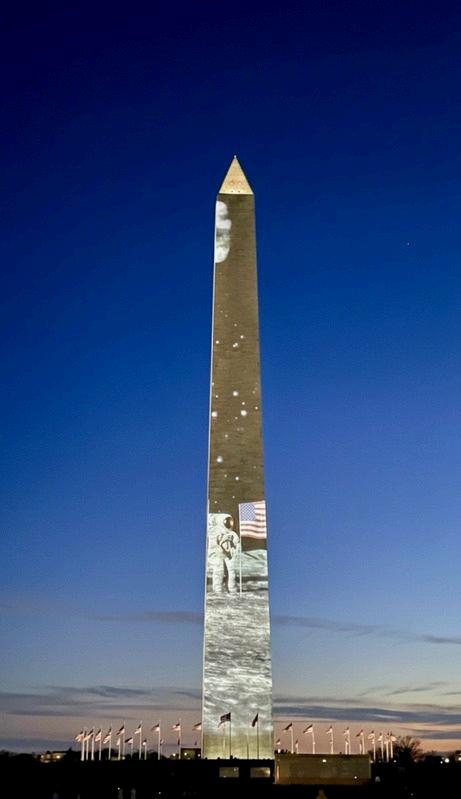
Image Credit: Sharon Reed
EDITORIAL TEAM


Sharon Reed
Space Business Managing Editor
Sharon Reed is a writer and editor with a strong interest in space and technology. Currently, Sharon is the National Business Investment Manage at the Fairfax County Economic Development Authority in Tysons, Virginia. She has a BA and MA from American University, School of International Service, Washington, D.C.
William J. McBorrough
Space and Security Editor
A 20+ year cybersecurity industry veteran and small business cyber risk advisor. He conducts research and teaches graduate and undergraduate courses relating to cybersecurity, cybercrime, cyberterrorism, and information security and assurance.
Certified Information Systems Security Professional (CISSP), Certified Information Systems Auditor (CISA), Certified in Risk Information System Control (CRISC), and Certified CMMC
(CCP)

EDITORIAL TEAM

Chimene Davis
Marketing and Media Editor
Founder of Suburban Entertainment Group, a Los Angeles-based film and television production company. A veteran of the entertainment industry for 20 plus years, Ms. Davis has produced: programming, music videos and national advertising campaigns, which include radio, print, and television commercials for Fortune 500 hundred companies.
Jacinda Cottee
Space Health Editor
Aspacehealthresearcher,former airlinepilot,workingatthefrontierof spaceneuroscience,nutrition,and humanfactors. Currentlycompleting aPhDonneuroprotectionforlongdurationspaceflight.Anawardwinningleadergloballyrecognizedin aviationandspace.Shefoundedthe InstituteforSpaceHealthand Performance.ListedTop100Women inAerospaceandAviation.


On The Horizon
2026 Space Economy Trends
& Stakeholders
STAKEHOLDERS
Who Are The New Space Stakeholders?
The“NewSpace”economyrepresentsafundamentalshiftinhowspaceisexplored, financed,andcommercialized.Oncedominatedalmostexclusivelybynational governments,spaceisnowarapidlyexpandingmarketplacedrivenbyprivatecapital, entrepreneurialinnovation,andpublic–privatecollaboration.
AtthecenterofthistransformationareNewSpaceStakeholders,adiversesetof participantswhoshape,fund,build,regulate,andbenefitfromthecommercialspace ecosystem.Understandingwhothesestakeholdersare,andwhytheymatter,is essentialforentrepreneurs,investors,andthebroaderpublic.

Who Are The New Space Stakeholders?
NewSpacestakeholdersfallintoseveralinterconnectedgroups:
1. Entrepreneurs & Founders
Startupsbuildingsatellites,launchsystems,robotics,AIplatforms,in-orbitservices, spacehealthtechnologies,andSpace-for-Earthapplications.
Role:
Driveinnovationandcostreduction
Createnewmarketsandbusinessmodels
Translatespacetechnologyintoscalableproducts
2. Investors & Capital Providers
Venturecapitalfirms,strategiccorporateinvestors,sovereignwealthfunds,and impactinvestors.
Role:
Providegrowthcapitalandrisktolerance
Shapewhichtechnologiesreachscale
Acceleratetime-to-marketforfrontierinnovation
3. Government & Public Agencies
NASA,ESA,JAXA,ISRO,nationalspaceagencies,defenseorganizations,regulators, andpolicymakers.
Role:
Anchorearlydemandthroughprocurement
Setsafety,licensing,andgovernanceframeworks
Enablepublic–privatepartnerships
Why New Space Stakeholders Matter?
4. Industry & Supply Chain Partners
Manufacturers,softwarefirms,dataproviders,launchservices,universities,and workforceinstitutions.
Role:
Buildtheinfrastructureandtalentbase
Lowerbarrierstoentryforstartups
Createresilientdomesticsupplychains
5. Society & End Users
Communities,cities,farmers,emergencyresponders,educators,healthcareproviders, andglobalcitizens.
Role:
Adoptspace-enabledservices
BenefitfromEarthapplications
Shapepublictrustandlong-termsupport
Why New Space Stakeholders Matter
Fromaventurecapitalperspective,strongstakeholderecosystemsarewhatturn technologyintomarketsandinnovationintosustainableindustries.Thisisnotjusta spaceindustry,itisamulti-sectoreconomicplatform.
NewSpacestakeholders:
Reducetechnicalandregulatoryrisk
Acceleratecommercializationpathways
Expandaddressablemarketsbeyondorbit
Createdurableeconomicandsocialvalue
GlobalConnectivity
Educationandtelemedicine
Financialinclusion
InternationalCollaboration
Sharedscientificmissions
Normsforspacegovernanceandsafety
Peacefuluseofouterspace
Result:Spacebecomesanengineforglobalsustainabilityandcooperation.


BENEFITS
Who Benefits From The New Space Economy?
TheNewSpaceeconomyisnotjustaboutrocketsandsatellites.
Itisaboutbuildingaglobalinnovationsystemthatadvancesprosperity,security,and sustainabilityonEarthandbeyondresultinginglobalsustainabilityandcooperation.
Community-Level Benefits
Atthelocalandregionallevel,NewSpaceecosystemsgenerate:
EconomicDevelopment
High-skilljobcreation
Growthofadvancedmanufacturinghubs
Startupclustersandinnovationdistricts
Workforce & Education
STEMpipelinesandcredentialingprograms
Newcareerpathwaysforyouthandtransitioningworkers
University–industrycollaboration
National-Level Benefits
Atthenationalscale,NewSpacestakeholdersstrengthen:
EconomicCompetitiveness
Leadershipinadvancedtechnologysectors
Exportablespace-enabledservices
Resilientdomesticsupplychains
NationalSecurity&Resilience
Spacesituationalawareness
Securecommunicationsandnavigation
Public–privatedefenseinnovation
Global-Level Benefits
Atthegloballevel,NewSpacestakeholdersenable: EarthMonitoring&ClimateAction
Climatemodelingandemissionstracking
Foodsecurityandwatermanagement
Disasterpredictionandrecovery
Broadbandaccessforremoteregions
Space Entrepreneurs RISK TAKERS
Successfulentrepreneurspossessauniqueabilitytonavigateriskeffectively.Their prowessstemsfromamultifacetedapproach:understandingtheirenvironment, gainingexperience,andembracingdiscomfort.Byimmersingthemselvesintheir surroundings,entrepreneursgaininvaluableinsightsintopotentialrisks,enabling themtomakeinformeddecisions.Experienceservesasacatalyst,refiningtheir judgmentandfosteringarealisticperspectiveonrisk.Theyrecognizethatfailureisa naturalpartofthejourneyanddevelopresiliencetohandleitsconsequences.
Moreover,entrepreneursactivelyseekdiscomfort,viewingitasanopportunityfor growth.Eachventureoutsidetheircomfortzonestrengthenstheirrisktolerance, empoweringthemtotackleincreasinglychallengingendeavors.Ultimately,it'sthis blendofastuteobservation,experientiallearning,andwillingnesstoembrace discomfortthatdistinguishessuccessfulentrepreneursintheirabilitytonavigateand conquerrisksontheirpathtosuccess.
Spaceisnotjustthefinalfrontier;itistheboundlessopportunityforhumanitytounite incuriosity,creativity,andinnovation.Aswereachforthestars,weunlocksolutions thatbetterourplanet,drivetechnologicaladvancements,andinspiregenerationsto dreambeyondlimits.Byexploringthecosmos,wenotonlyexpandourknowledge butalsostrengthenourcommitmenttoEarth'sfuture,harnessingtheinfinite possibilitiesofspaceforthegreatergoodofall.
Calculatedrisk-takingentrepreneursarethetrailblazersofthecommercialspace explorationindustry,boldlynavigatinguncertaintytounlocktheuniverse’suntapped potential.Bycombiningvisionarythinkingwithcarefulanalysis,theytransformrisks intoopportunities,drivinginnovationandprogressthatbenefithumanity.Their couragetoinvesttime,resources,andcreativitypropelsbreakthroughsintechnology andsustainability,inspiringaneweraofexplorationthatmergesambitionwith responsibilityforthebettermentofEarthandbeyond.
By Robin McDougal
“Thechallengeisthatthedaybeforesomethingis trulyabreakthrough,it'sacrazyidea.”
The Economics of Space Exploration on Screen From NASA to Netflix

byChimeneDavis

Space Entertainment
FromNASAtoNetflix
The Economics of Space Exploration on Screen
Have you ever wondered how Hollywood's space stories become billion-dollar economic engines that shape government policy as well as public imagination, long before SpaceX made headlines?
Sure, everyone's talking about the space economy hitting $1.8 trillion by 2035, but here's the thing Hollywood figured out decades ago: space movies aren't just entertainment, they're economic engines. Butmorethanthat,they'refuturecasting, gettingAmericansandgovernmentsready for what's coming next. From Cold War propaganda films to today's Netflix originals, what we see on screen shapes where governments spend money and whatthepublicbelievesispossible.
Space as Propaganda and Soft Power
IntheSovietUnion,moviesweremissiles in the cultural war. Pavel Klushantsev's Planet of Storms (1962) drew over 20 million viewers at home and screened in 28 countries. The film didn't just make cosmonauts into socialist heroes; it gave Western filmmakers ideas that influenced Kubrick's 2001: A Space Odyssey and Lucas's Star Wars. Talk about return on investment: state-funded cinema that endedupshapingglobalpopculture. "Youcan'tknowwhereyou'regoinguntilyou knowwhereyou'vebeen.Thatincludesthe filmsthatstartedAmerica'sloveofspace."


The Rise of Commercial Space Storytelling
Meanwhile, American filmmakers had their ownideas.Lucas'sStarWars(1977)cracked therealcode.Withmerchandiseaccounting for more than half its record-breaking revenues, Star Wars proved you could turn space fantasies into entire industries. George Lucas influenced most sci-fi storytellers in modern times, this film was one of the films that influenced my love of sci-fi and sci-fi fantasy. Suddenly, storytellingwasn'tjustaboutticketsales,it wasaboutcreatingglobalmarketsthatcould outlastanysinglefilm.
Making Space Cool for Everyone
HiddenFigures(2016)reframedwhogetsto be part of the space story, spotlighting the Black women mathematicians who helped win the Space Race. By connecting space history to equity and inclusion, the film inspired a new generation of women and underrepresented groups to pursue STEM careers. That's not just good PR, that's building the actual workforce that tomorrow's space economy desperately needs. The lack of skilled STEM-educated workersistheSTEMworkershortagetoday.
WhatDotheNumbersSay?
What Could Go Right (and Very Wrong)
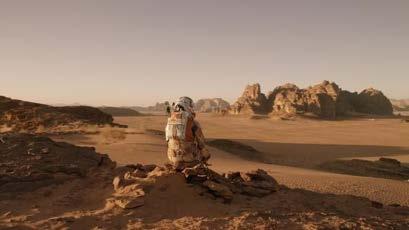
RidleyScott'sTheMartian(2015)treated Marssurvivalasanengineeringproblem ratherthansciencefiction.Its$630 millionboxofficeprovedaudiences wouldshowupfortechnicallyaccurate spacestories.ForNASA,thefilmwas basicallyatwo-hourrecruitmentvideo thathelpedjustifyresearchbudgets.The Martianisoneofmyfavoritefilms;Ifelt likeMattDamonwouldhavebeenmy bestfriendsinceheknewhowtogrow food.ButthenwhoamIfooling,Iwould nothavemissedmyridebacktoEarth! Framestorerevelledintheopportunityto furtherrefinetheCGandVFXtechniques neededtoportrayarealisticspace settingfortheyear2035
BY
THE NUMBERS
$1.8 trillion: Projected space economy value by2035
$630million:TheMartian'sglobalboxoffice
$700million:Gravity'sworldwideearnings
50%+: Share of Star Wars revenue from merchandise
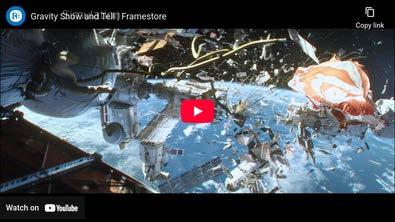
Gravity
"$700 million worldwide for a twoperson survival story that made space junk scary enough to get people talking about orbital infrastructure."
If The Martian was about innovation's promise, Alfonso Cuarón's Gravity (2013) was about catastrophic failure. The film turned orbital debris, a real economic threat to billions of dollars’ worth of satellites, into a $700 million global thriller. A two-person survival story that made space junk scary enough to get people talking about the economics of keepingourorbitalinfrastructuresafe.
The Consumer Frontier
James Gray's Ad Astra (2019) imagined space as routine consumer life: lunar flights as common as cross-country trips, moon bases as tourist destinations. The film captured the tension between space travel's emotional isolation and its potential as a massive commercial opportunity, dramatizing real debates about space tourism, which could become a $4–6 billion industry by 2035. I will be talking about space tourism in my follow-up article; I am here for space travelandspaceentrepreneurship.
“It’s sci-fi, but it’s real.” Chris Lawrence, Framestore’s VFX Supervisor
HowImagination BecomesInvestment?

From Cinema to Your Living Room
Here's what all these films reveal: screen portrayals of space don't just reflect economic realities, they create them. Soviet propaganda becomes Hollywood merchandizing becomes policy debates becomes venture capital pitches. And now streaming platforms like Netflix are amplifying this influence, bringing space stories into homes worldwide and multiplying their cultural and financial impact.
The history of space on screen isn't just entertainment history. It's the story of how imagination becomes investment, how storytelling drives innovation, and how a good movie can literally help turn the last frontier into the next enormous market opportunity. Not bad for a night at the movies. I'm glad I'm here for it all.

Chimene Davis, founder and CEO of SuburbanMediaPartnersCorp.,acreative
studio specializing in film, television, podcasts,andliveevents.
Guided by the vision: "Nouveau Stories, Planet Reach," the company crafts culturally resonant content with both artisticdepthandglobalperspective.
Thisisthefirstinaseriesexploringthe intersection of space, economics, and popularculture.
New


Building Systems to Unleash Innovation
RegimesforNewSpace
Commercial space is rapidly expanding across various space regimes, with private companies pioneering innovations that were once exclusive to government agencies. These regimes represent the levels of space exploration and utilization where commercialization is making a significant impact:
1.Suborbital Space
Definition: Altitudes just beyond Earth's atmosphere (approximately 100 km/62 miles above sea level) but not reaching orbital velocity.
Commercial Activities:
Space Tourism: Companies like Blue Origin and Virgin Galactic offer shortduration trips to the edge of space, providing passengers with a few minutes of weightlessness and breathtaking views of Earth.
Scientific Research: Suborbital flights are used for microgravity experiments and testing technologies in nearspace conditions.
Astronaut Training: Simulating spaceflight experiences to prepare crews for orbital missions.
2. Orbital Space
Definition: Altitudes above 300 km (186 miles) where objects maintain stable orbits around Earth.
Commercial Activities:
Satellite Deployment: Companies like SpaceX and Rocket Lab provide cost-effective satellite launches for communications, Earth observation, navigation, and weather monitoring.
Space Stations: Private ventures such as Axiom Space are developing commercial space stations for research, manufacturing, and tourism.
In-Orbit Servicing: Companies are exploring satellite repair, refueling, and debris removal technologies.
3. Cis-Lunar Space:
Definition: The region between Earth and the Moon, including lunar orbit.
Commercial Activities:
Lunar Landers and Rovers: Companies like Astrobotic and Intuitive Machines are building robotic systems to deliver payloads to the lunar surface.
Lunar Resource Extraction: Exploring opportunities to mine lunar ice for water, oxygen, and rocket fuel.
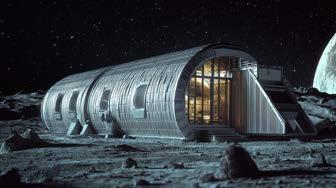
Lunar Habitats: Simulating spaceflight experiences to prepare crews for orbital missions.
RegimesforNewSpace
The commercialization of space is revolutionizing how we approach exploration and resource utilization. From suborbital tourism to deep-space resource mining, private companies are opening new frontiers and creating opportunities that extend far beyond Earth’s boundaries. This shift promises to make space more accessible and integrated into global economic systems.
4. Deep Space
Definition: Regions beyond the EarthMoon system, including Mars, asteroids, and interplanetary space.
Commercial Activities:
Mars Exploration: Private companies like SpaceX plan human missions to Mars to establish a permanent presence.
Asteroid Mining: Firms are exploring the potential of extracting valuable metals and minerals from asteroids.
Interplanetary Communication: Developing communication infrastructure to support deep-space exploration.
New Space is reshaping humanity’s relationship with space by making it more accessible, affordable, and integral to everyday life. The rise of private companies and innovative technologies is driving advancements in communication, global connectivity, environmental monitoring, and resource utilization. New Space is unlocking unprecedented opportunities to address challenges on Earth and expand humanity’s presence across the cosmos. This transformation marks a pivotal moment in history, with the potential to benefit all of humanity for generations to come.


SPACE SYSTEMS ENGINEER



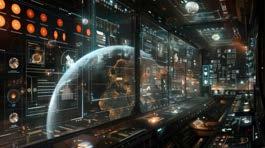
Space systems engineers play a critical roleinaddressingthecomplexchallenges ofoperatingintheharshenvironmentof space. They oversee every stage of development, from concept to launch, ensuring reliability and mission success. Their work drives innovation in exploration, satellite technology, and aerospace advancements that benefit Earthandhumanity'sfutureinspace.



The New Generation Space Entrepreneurs gen next>



Space Economy Workforce
The global space economy is expanding at an unprecedented pace—projected to exceed $1 trillion by 2040—yet the workforceneededtosustainthisgrowthis at risk. A significant portion of today’s aerospace and advanced manufacturing workforce is nearing retirement. In the United States alone, nearly 25–30% of aerospace workers are over age 55, and thousandsofhighlyspecializedengineers, technicians, and scientists are expected to retire within the next decade. This creates a critical talent gap at the very moment demand for space-based innovationisaccelerating.
At the same time, the space economy is evolving far beyond traditional roles.The future of space depends on a wide range of skills, perspectives, and creative problem-solvers. It now requires a diverse, multidisciplinary workforce, from AI and robotics engineers to environmental scientists, data analysts, designers,entrepreneurs,storytellers,and policyleaders.
We must Prepare the Next Generation for the Space Economy known as the ArtemisGeneration.

TheArtemismissionsarenotjustabout returningtotheMoon,instead,theyare aboutbuildingaSpaceforEarthbysolving real-worldchallengesthroughspace-based technologiesthatbenefitlifeonourplanet. Itcallsforforward-thinkingyoungpeopleto imaginethemselvesbeyondbeingan astronauts,butasengineers,scientists, designers,entrepreneurs,artists,and explorersshapinghumanity’sfutureon Earthandbeyond.
Toclosethetalentgap,wemustinvestin earlyexposure,hands-onlearning, workforcepathways,andinclusive opportunitiesthatempoweryouthfromall backgroundstoseethemselvesinthespace economy.Bydoingso,wearenotonly preparingaworkforce,wearecultivatinga generationofinnovatorswhowilldrive discovery,strengthennational competitiveness,andunlocksolutionsfor Earth.
Thefutureofspaceisnotwaiting,itisbeing builtnow.Anditrequiresthetalent, creativity,andvisionofthenextgeneration toleadtheway.
gen
Young Space Entrepreneurs
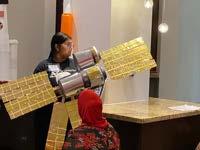
Interstellar Dreams Space Center is building a workforce for the growing space Economy. As the global space economy acceleratesandtheaerospaceindustryfacesa critical talent gap, the Interstellar Dreams Space Center, non-profit, based in Northern Virginia’s growing space and satellite hub, serves as a powerful solution for workforce development. Designed to meet the demands of the modern space economy, Interstellar Dreams Space Center Programs prepares students not just to learn about space, but to activelyparticipateinit.
Talent GAP Persists
Aerospace Industries Association (AIA) and McKinsey reveals that, despite focused efforts to strengthen talent attraction and retention, the aerospace and defense (A&D) industry continues to face mounting workforce challenges, demanding new and creative solutionstoaddressproductivitygaps.
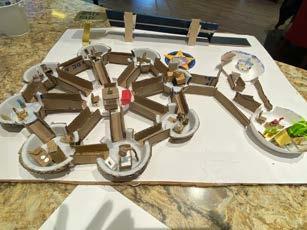

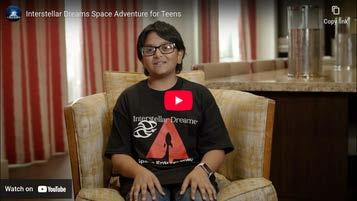
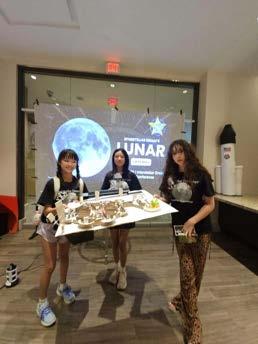
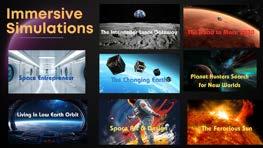
Through immersive, hands-on, real-world experiences, students step into the roles of mission specialists, engineers, satellite designers, entrepreneurs, and problemsolversusingcriticalthinkingtechniqueswork collaboratively. They engage in authentic challenges such as space debris mitigation, Earth observation using satellite data, lunar habitat design, prototype development, during NASA like space mission simulations mirroring the real work happening across today’saerospaceindustry.

Sponsored by

gen
Interstellar Dreams Space Center
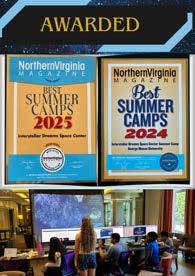
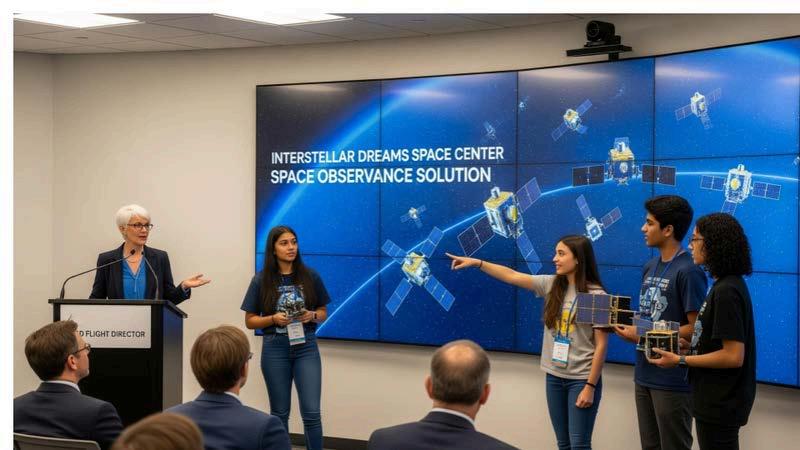
TheInterstellarDreamsSummerSpaceAdventureis an award-winning, space-themed STEM program designedforcuriousandcreativeteensages12–18. HostedbyThePearlProjectInstitute.Thisimmersive experience transforms students into Real-World Mission Specialists working on cutting-edge challengesinspiredbyNASAmissions.
Through immersive simulated, hands-on, real-world experiences,studentsstepintotherolesofmission specialists, engineers, satellite designers, entrepreneurs,andproblem-solvers.Theyengagein authentic challenges such as space debris mitigation, Earth observation using satellite data, lunarhabitatdesign,andspacemissionsimulations —mirroringtherealworkhappeningacrosstoday’s aerospace industry. These programs go beyond traditional STEM education by integrating critical thinking, design thinking, innovation, and entrepreneurship, ensuring students develop the technical skills, creativity, and adaptability required forthefutureworkforce.
Strategically located in Northern Virginia, home to leading aerospace companies, government agencies, and emerging space enterprises. InterstellarDreamsSpaceCenterconnectsstudents to industry professionals, mentors, and workforce pipelines,creatingdirectpathwaysfromeducationto careeropportunities.


Thank you Strategic Pateners



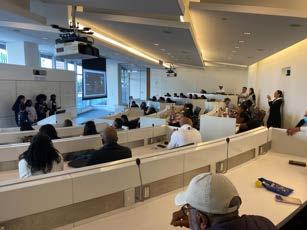
InterstellarDreamsSpaceWeek
SpaceDebrisChallenge
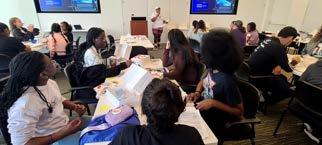
Each year in October, Interstellar Dreams Space Week endeavors to ignite curiosity, inspire innovation, and empowerthenextgeneration.Morethananevent,itisa launchpad for future space leaders, where imagination meetsopportunityandstudentsdiscovertheirpotentialto shapetherapidlyevolvingspaceeconomy.
Through immersive simulation, lead by real-world aerospaceexperts,highschoolersaregivenachallengeto solve using critical thinking techniques and collaborative leadership.






Florence Tan, former NASA Deputy Chief Technologist
CarlosNiederstrasser,AerospaceEngineer NorthropGrumman
CALLINGALL

INTERSTELLAR DREAMERS
InterstellarDreamsSpaceCenterisacreative, hands-on, immersive STEM experience for teens ages 12–18, where participants become Real-World Mission Specialists tackling challenges like space debris, satellite design, andspacetourism.We’rebuildingapipelineof leaderswhowillshapeEarthandbeyond.
Our goal is to engage 1 million youth with a powerful message: “blend your personal passions with S.T.E.M. careers in aerospace and the new commercial space economy because there is so much more to space explorationthanbecominganastronaut.”

www.interstellardreamspacecenter.org


Current, connected, and collaborative are the pillars of our digital magazine. Our mission is to connect you with potential investors, find top-tier workforce candidates, and spotlight lucrative contracts with NASA and emerging commercial space companies. Interstellaris
industry.


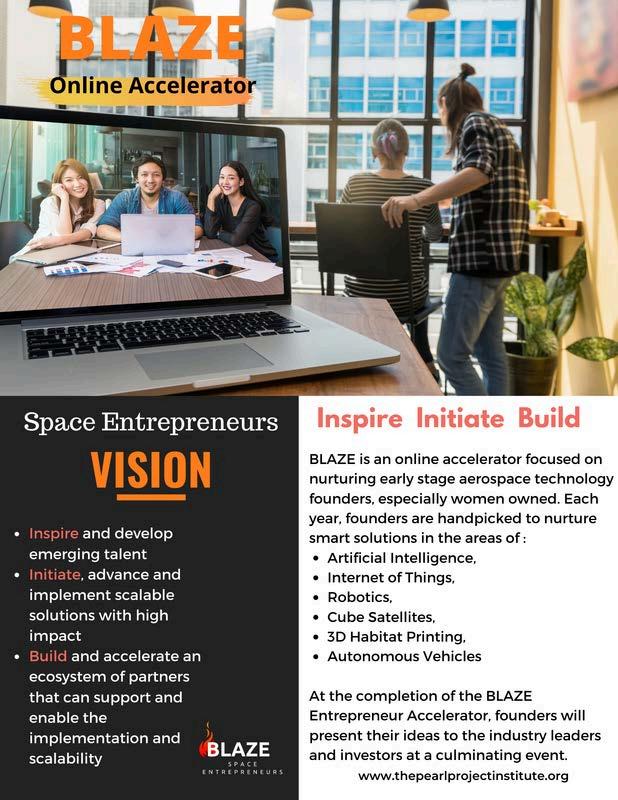
SPACE ARCHITECT

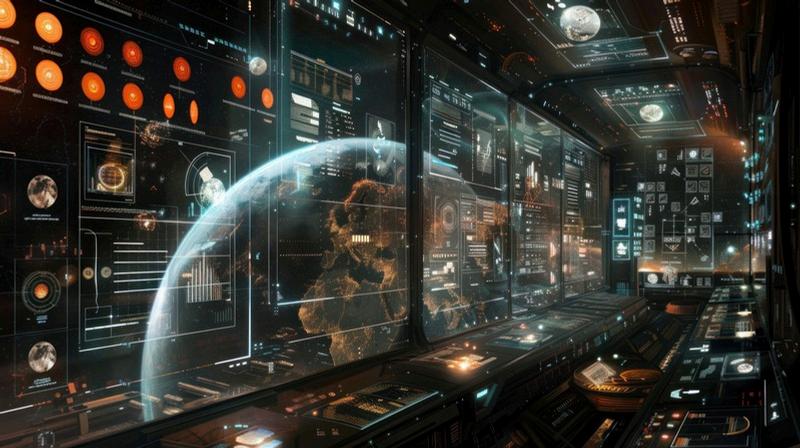
Space Architecture isthetheoryand practice of designing and building inhabited environments in outer space. These environments include, but are not limited to: space vehicles,stations,habitatsandlunar, planetary bases and infrastructures; andearthbasedcontrol,experiment, launch,logistics,payload,simulation and test facilities. Earth analogs to space applications may include Antarctic, airborne, desert, high altitude, underground, undersea environments and closed ecological systems.SPACEARCHITECT.ORG
VICTOR HOSKINS
President and CEO,
Fairfax County Economic Development Authority
NEWSPACE ECONOMY



VIRGINIA’S
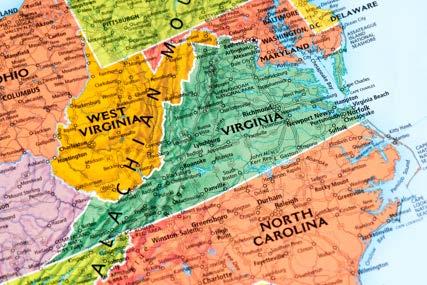
SPACE & SATELLITE INDUSTRY IN VIRGINIA
ByRobinMcDougal
Acknowledgement:AdaptedfromRawanHashim,Dartmouth College,Jr.forherworkwhileinterningFairfaxCounty EconomicDevelopmentAuthority
Victor Hoskins seamlessly blends his extensivepublicandprivatesectorbusiness expertise to position Northern Virginia, particularly Fairfax County, as a thriving hub for the aerospace industry. Drawing from his background in real estate, urban planning, and economic development, Mr. Hoskinsstrategicallyleveragespartnerships between government, industry, and academiatoattractinvestmentandcreatea dynamicecosystemforinnovation.
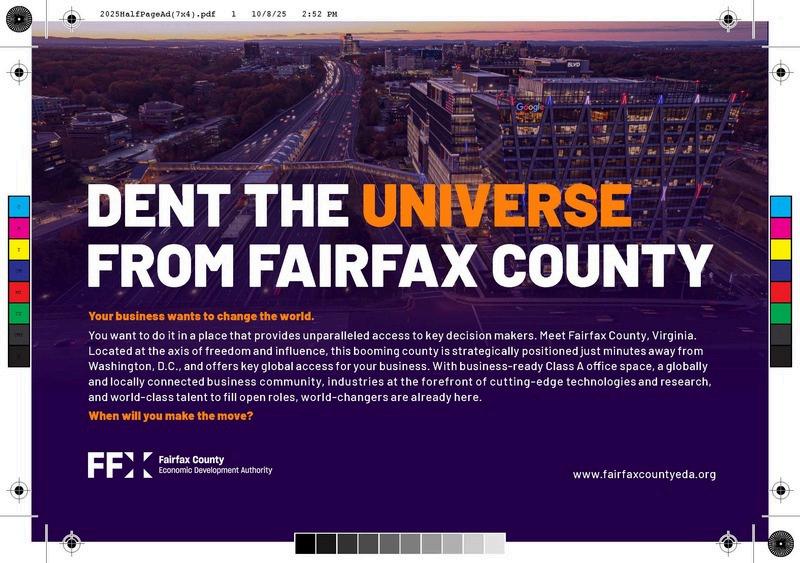
Come to our region to dent the Universe
-Victor Hoskins
UnderhisleadershipattheFairfaxCounty Economic Development Authority (FCEDA), the region has become a magnet for aerospacecompanies,supportedbyworldclass infrastructure, a highly skilled workforce, and proximity to federal agencies like NASA, the Department of Defense, and the United States Space Force. Mr. Hoskins’ ability to align the priorities of public entities with privatesector goals has resulted in significant capital investments, cutting-edge technology campuses, and the growth of programs like the Tech Talent Pipeline, which addresses the workforce needs of aerospaceandrelatedindustries.
SPACE SITUATIONAL AWARENESS ANALYST
ASpaceSituationalAwarenessAnalystis essentialformaintainingacomprehensive understanding of the space environment and ensuring the safe and effective operation of satellites, spacecraft, and otherspaceassets.Byprovidingaccurate and timely information on space objects andpotentialhazards,theycontributeto the overall goal of preserving the integrity and accessibility of space for futuregenerations.
SpaceSituationalAwareness(SSA)isthe knowledge,characterization,andpractice of tracking space objects and their operationalenvironment. NASAExplains SpaceDebris

WHY FAIRFAX COUNTY SPACE AND SATELLITE HUB?
Northern Virginia is not only a leader in thenewspaceeconomybutalsoamodel for innovation, sustainability, and collaboration, making Fairfax County a premier destination for aerospace companies to grow and thrive. Northern Virginia has emerged as a leading center for the space and satellite industry, thanks to its unique blend of strategic advantages, robust infrastructure, and talentpipeline.
Northern Virginia is home to the headquarters of key U.S. space-related agencies, including NASA and other federal organizations essential for aerospace and satellite operations. Its proximity to the nation’s capital ensures seamless access to policymakers and government decision-makers, facilitating collaboration on national and global spaceinitiatives.
The region boasts a rich talent pool, including K-12 STEM programs, technical training institutions, Universities, and executive-levelexpertiseinspace-related operations.
The region’s close proximity to embassies of U.S. and international space partners fosters opportunities for international collaboration, diplomacy, and partnerships in space exploration, satellite technology, andaerospaceresearch.
Northern Virginia hosts headquarters for major civil, defense, and international companies and organizations in the space market. This includes industry leaders involved in satellite manufacturing, launch services, and data analysis, creating a robustnetworkofprivate-sectorinnovation andcollaboration.
Fairfax County and the broader Northern Virginia area feature advanced infrastructurecriticalforspaceandsatellite operations. This includes state-of-the-art data centers, extensive fiber optic networks, and robust transportation systems. Washington Dulles International Airport provides global connectivity, while the region’s commitment to smart city development supports the technology needsoftheaerospaceindustry.
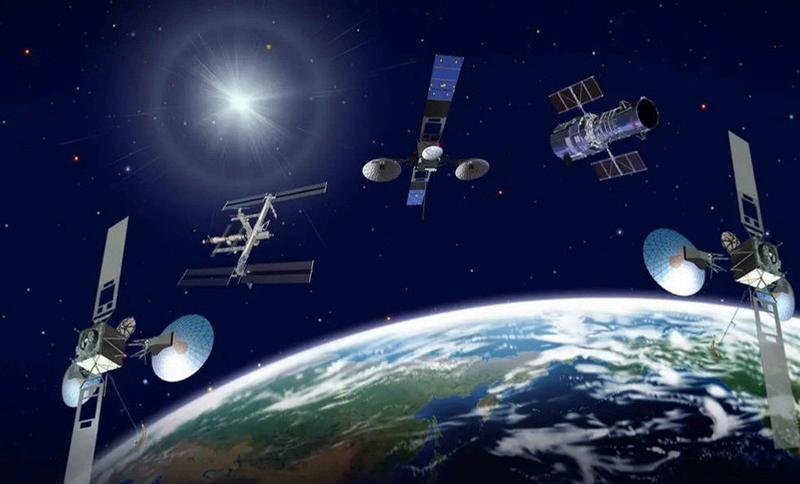
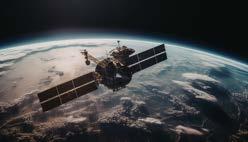
TheconstellationofTrackingandDataRelaySatellite(TDRS)providescommunicationandtracking servicestomissionsinlowEarthorbit(LEO).ImagecreditBASA
NASA Expands Near Space Network with Four New Commercial Partners
On Decemember 20, 2024, NASA selected multiple companies to enhance the Near Space Network’s mission-critical,direct-toEarth communication capabilities. The New NSN Partners are:
Intuitive Machines
Kongsberg Satellite Services
SSC Space U.S. Inc.
Viasat, Inc.
The awards, issued as firm-fixed-price, indefinite-delivery/indefinite-quantity contracts, cover project timelines from February 2025 to September 2029, with an optional five-year extension through September 2034.
The cumulative maximum value of all contracts is $4.82 billion, marking a significant investment in advancing space communications infrastructure.The Near Space Network (NSN) delivers telemetry, commanding, tracking, and communications services to satellites in low Earth orbit (LEO), geosynchronous orbit (GEO), highly elliptical orbit (HEO), and lunar orbit. It includes the Tracking and Data Relay Satellite (TDRS) constellation, providing continuous global coverage for NASA missions in LEO, launch vehicles during ascent, and HEO missions within range, operating 24/7 year-round. Visit the Exploration and Space Communications page for more information.
INTERSTELLAR MAGAZINE
Leader of Virginia’s New Space Economy
Victor Hoskins
Victor Hoskins
VIRGINIA SPACE ECONOMY RISE
By Interstellar Magazine Editorial Team
The
Rise of the Virginia
Space Economy (2020–2026): From Frontier to Global Engine
A New Industrial Revolution Above Earth
Between 2020 and 2026, the global space economy has transformed from a niche, government-led domain into one of the fastest-growing sectors of the global economy. What was once defined by national space agencies is now driven by commercial innovation, private investment, and global demand for data, connectivity, and security. In 2021, the global space economy was valued at approximately $388 billion, with projections reaching over $540 billion by 2026, a nearly 40% increase in just five years according to Benchmark International’s 2022 Global Space Industry Report. In addition, in the 2025 Q2 Space Foundation Space Report stated that by 2024, it surpassed $613 billion, fueled primarily by the commercial sector, which now accounts for nearly 78% of growth. Looking ahead, analysts like, PWC, project the space economy to exceed $1 trillion by 2030–2035, marking it as one of the defining economic frontiers of the 21st century
Virginia is not just participating in the space economy— it is orchestrating it.
This is not just growth, it is a paradigm shift. According Reuters, Private investment alone exceeded $70 billion in 2021–2022, signaling a massive shift toward commercialization.
Key Drivers of Growth (2020–2026)
1. Commercialization of Space
The most significant shift has been the rise of private companies. Venture capital and private equity investments have surged, with billions flowing into:
Satellite constellations
Earth observation platforms
Space-based data analytics
Launch services and infrastructure
The key sub-sectors
With a projected growth rate of 186% by 2030, the thriving space sector can be broken down into nine main sub-sectors, each offering it’s own case for investment and development.
1) Satellite Launch
2) Earth Observation
3) Space Tourism
4) Satellite Communication
5) Space Mining
6) Space R & D
7) Space Exploration
8) Space Debris
9) Space Manufacturing
The Heart of the Space Economy Ecosystem
Fairfax County and Reston Virginia specifically, are uniquely positioned as a central command hub of the modern space economy, where data, defense, innovation, and entrepreneurship converge. Unlike traditional space regions focused on launch sites, Northern Virginia powers the decisionmaking, data processing, and mission operations that make space systems work.
According to Reuters, Private investment alone exceeded $70 billion in 2021–2022, signaling a massive shift toward commercialization.
The Space engine system today is driven by data. From satellites monitoring Earth to intelligence systems supporting national security, Fairfax County sits adjacent to the world’s largest data center corridor (Loudoun County), enabling real-time processing of massive volumes of satellite and geospatial data.
By it’s Proximity, Fairfax County accelerates contracts, policy alignment, and innovation funding located minutes from Washington, D.C., providing direct access to:
NASA leadership
U.S. Space Force
Department of Defense Intelligence agencies
With a dense Cluster of Space Companies Fairfax County hosts a growing concentration of commercial space companies, defense contractors, and startups, creating a powerful network of collaboration and innovation. Northrop Grumman, Boeing, Leidos, General Dynamics, and Intelsat collectively power the space economy through advanced satellite systems, national security solutions, global communications networks, and space infrastructure, positioning Northern Virginia as a critical hub for innovation and leadership in the future of space.
Additionally, companies driving the space economy in Fairfax County in the zone of impact while shaping the future of space include, but not limited to:
-HawkEye 360
A pioneer in radio frequency (RF) data analytics, using satellite constellations to map signals on Earth for maritime safety, defense, and environmental monitoring.
-BlackSky
Provides real-time geospatial intelligence, delivering high-frequency satellite imagery and analytics used by governments and commercial industries worldwide.
-Spire Global
Operates a constellation of nanosatellites collecting data on weather, aviation, and maritime activity, powering global insights and predictive analytics.
-SpaceQuest
A Fairfax-based company specializing in small satellite design, manufacturing, and mission operations, supporting both government and commercial missions.
-Intelsat
A global leader in satellite communications, headquartered in Northern Virginia, delivering connectivity solutions across aviation, media, and government sectors.
-LeoLabs
provides commercial Space Situational Awareness (SSA) services and mapping for Low Earth Orbit (LEO)
-RocketLabs
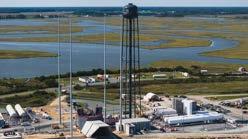
Rocket Lab's new Launch Complex 3 at NASA's Wallops Flight Facility on Wallops Island, Virginia will host Neutron rocket launches. (Image credit: Rocket Lab)

In
Fairfax County, space innovation doesn’t just launch here, it is designed, analyzed, secured, and scaled here.
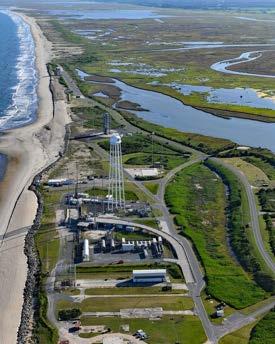
the Virginia Spaceport Authority (VSA) plays a significant role in strengthening Virginia’s economy through its leadership at the Wallops Island launch site.VSA contributed nearly $36.8 million annually to Virginia’s real GDP, reflecting the growing economic value of commercial space activity.The Virginia Spaceport Authority’s Mid-Atlantic Regional Spaceport (MARS) is bounded by the Atlantic Ocean on the east and the Chesapeake Bay on the west. The Eastern Shore is a quiet place of great natural beauty.
The Virginia Spaceport Authority’s Mid-Atlantic Regional Spaceport contributions demonstrate how space infrastructure not only enables launch capabilities, but also drives economic growth, job creation, and regional innovation—positioning Virginia as a key player in the expanding space economy.Launching from Wallops Island, Virginia, through the Virginia Spaceport Authority, delivers powerful economic, technological, and strategic benefits, advancing the nation’s ability to send satellites, scientific missions, and commercial payloads into orbit while strengthening Virginia’s role in the global space economy. These launches generate high-skilled jobs, attract aerospace investment, and fuel innovation across engineering, manufacturing, and research sectors. At the same time, Wallops supports critical missions for Earth observation, national security, and space exploration
DEBRA FACKTOR

Image Credit: Brook Owens Fellowship
HeadofU.S.SpaceSystemsatAirbus U.S.Space&Defense,Inc.
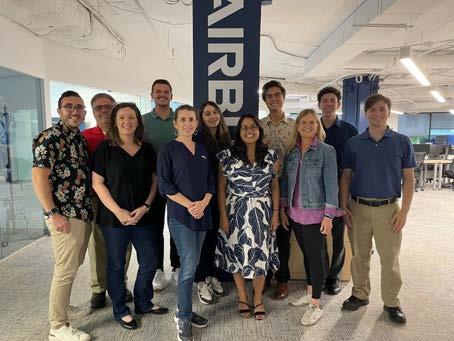
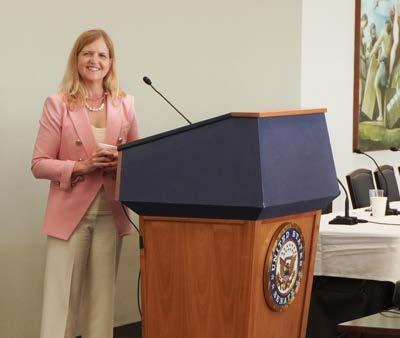
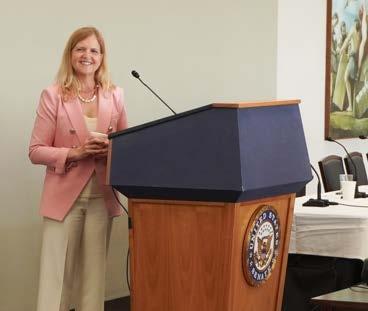
DebraD.Facktorisavisionary leaderintheaerospaceindustry, currentlyservingasHeadofU.S. SpaceSystemsforAirbusU.S.Space &Defense,Inc.Withafocuson drivinginnovationinsmallsatellite productionandspaceexploration, DebraleadsAirbus'U.S.Space operations,playingapivotalrolein projectslikethenext-generation StarlabSpaceStation.Her impressivecareerincludeskeyroles atBallAerospace,AirLaunchLLC, andKistlerAerospace,alongwith herdedicationtomentoringfuture aerospaceleaders.Afellowofboth theAIAAandAAS,Debra’s commitmenttoadvancingthe aerospacefieldisunmatched.
DebraD.Facktorleadsgroundbreaking effortsinsatelliteproductionandspace explorationinitiatives.Withan impressivetrackrecord,Debra's leadershipextendstoherroleonthe boardofStarlabSpaceLLC,aventureto buildthenext-generationcommercial spacestation.Shebringsawealthof experiencefromhertimeatBall Aerospace,AirLaunchLLC,andKistler Aerospace.Debraisalsoontheboardof AirbusOneWebSatellites,ajointventure operatingastate-of-the-artsatellite manufacturingfacility.
DebrareceivedherBachelor’sand Master’sdegreesinAerospace EngineeringfromtheUniversityof Michigan,andisanalumnaofthe InternationalSpaceUniversitysummer sessionprograminStrasbourg,France.
Airbus U.S. Space & Defense and Aerostar Partner
AirbusU.S.Space&DefenseandAerostarannounced expanding capabilities from Persistent Systems, LLC (“Persistent”).Thisexpansionculminatedinthelaunch ofasecondjointInternalResearchandDevelopment (IRAD) stratospheric test flight that will enable continued testing of hardened communications systems.
The joint flight, which included an Aerostar Thunderhead Stratospheric Balloon system and a series of satellite communication (satcom) terminals, adapted for stratospheric operations on Aerostar’s highaltitudeballoonsystemsaswellasAirbus’shighaltitudefixedwingplatformZephyr.
Prior to the test flight, a cross functional team of engineersfromboth companiesmodifiedthesatcom terminals to reduce their weight and prepare them for the extreme environmental conditions associated withlong-enduranceoperationinthestratosphere.
“Engineering teams from both companies have worked in a collaborative fashion over the past few monthswhich,no-doubt,willallowbothcompaniesto profit from each other’s expertise on stratospheric operations and payload integration,” said Fabian Kluessendorf, Airbus U.S. UAS Engineering Director. “HavingtheabilitytorelayhighfidelityISRdatasuch as full motion video from anywhere in the world at realtimeisamassivesteptowardsmissionreadiness for the U.S. DoD and our allies. Performing these developments jointly also paved the ground for future joint operations that exploit the complimentary character of these two stratospheric assets.”
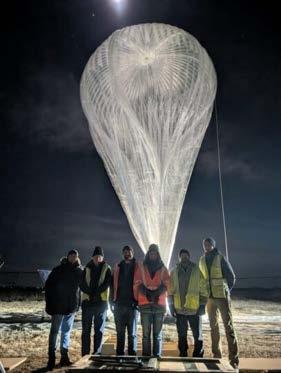
Thetestflight,launchedfromSioux Falls,S.D.enabledtestingofhardened communicationssystemssuitableto supportISRsensorapplicationsfrom thestratosphere.
INTERSTELLAR MAGAZINE
Satellites, Startups, and Space Stations
Debra Facktor, AIRBUS
Head of U.S. Space Systems
U.S. Space & Defense
Satellites and Startups
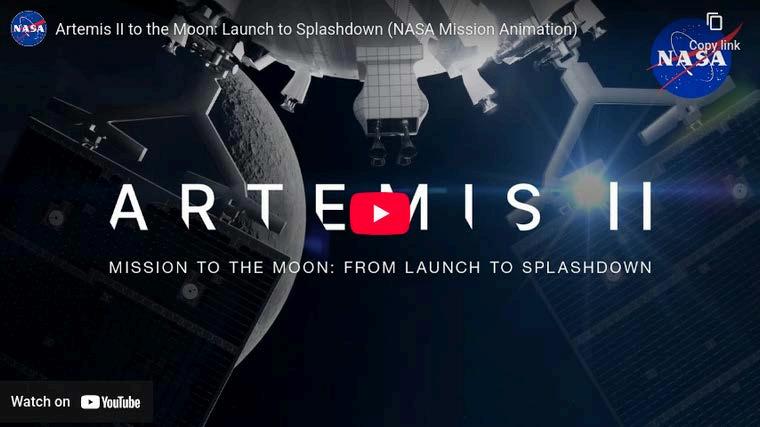
Named for the twin sister of Apollo in Greek mythology, Artemis II represents a powerful continuation of humanity’s journey into deep space honoring the legacy of the Apollo missions and boldly stepping into a new era of exploration.
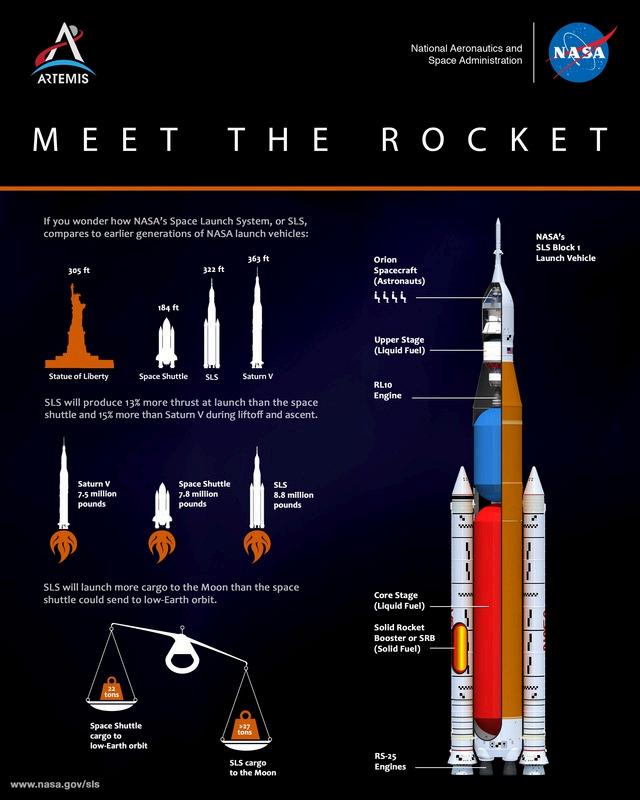
Artemis II is NASA’s first mission to carry astronauts aboard its next-generation deep space system—the Space Launch System (SLS) rocket and the Orion spacecraft. Together, these groundbreaking technologies form the foundation of NASA’s mission to return humans to the Moon and venture even farther into the cosmos. This historic mission will send a crew of astronauts on a journey around the Moon, traveling farther than humans have ever gone before. As they venture into deep space, Artemis II will test and confirm that every system works with humans aboard while in the real environment of space beyond Earth’s protective orbit.
NASA Projects March 2026 Launch Date
Artemis II: The Gateway Mission
“More than a test flight—it is a gateway mission.”
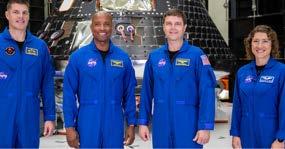
Image:NASA
Meet the Crew of Artemis II (L-R) Jeremy Hansen Mission Specialist, Victor Glover Pilot, Reid Wiseman Commander, ChristinaKochMissionSpecialist
S P A C E
Charting New Horizons in the Space Economy
B O O K C L U B
Igniting Curiosity. Expanding Space Knowledge
CHAD ANDERSON
FOUNDER & MANAGING PARTNER
SPACE CAPITAL
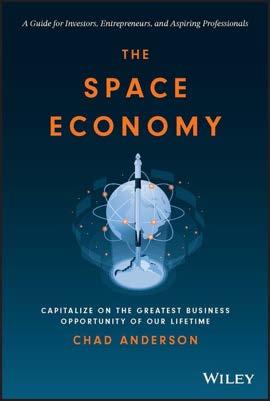
The Space Economy by Chad Anderson offers an in-depth exploration of the transformative power and vast potential of the commercial space sector. As the Founding and Managing Partner of SpaceCapital,aseed-stageventure capital firm managing over $150 millioninassets,Andersondrawson hisextensiveexpertisetohighlightthe immense value being unlocked in space technology stacks, including GPS, geospatial intelligence, and communications.
Chad Anderson, an MBA graduate from the University of Oxford specializing in Entrepreneurship and Innovation, combines his academic foundationwithpracticalexperienceto position The Space Economy as a must-read for entrepreneurs, investors, and anyone interested in understanding the next frontier of economic growth and technological advancement.
“SpaceEconomy, WallStreet’sNextTrillion DollarIndustry”
https://www.spacecapital.com/
INTERSTELLAR MAGAZINE