![]()


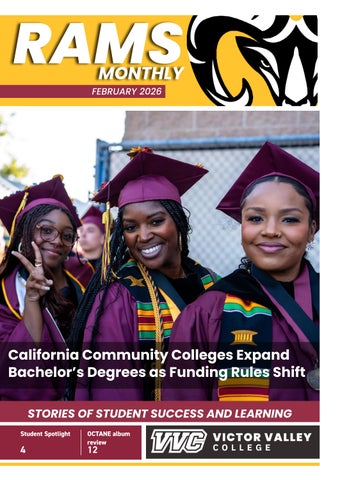
California’s community college system is facing a period of transition as enrollment patterns rebound unevenly across the state and long‑standing financial protections begin to phase out. The changes are testing the stability of the nation’s largest higher education system, which serves more than a million students annually and plays a central role in workforce training and college access.
Recent reporting by CalMatters shows that while statewide enrollment has begun to recover after steep pandemic‑era declines, many community college districts remain financially vulnerable due to the structure of California’s student‑centered funding formula. The formula, adopted in 2018, ties state funding not only to enrollment but also to measures such as the number of low‑income students served and student outcomes, including transfers and degree or certificate completion.
Enrollment Rebounds, but Growth Is Uneven Community college enrollment in California has increased in recent months, driven in part by economic uncertainty. According to CalMatters, rising unemployment and cost‑of‑living pressures have pushed more students to seek affordable education and short‑term job training through community colleges. Many students are enrolling in career education programs designed to lead quickly to employment or wage increases.
However, enrollment growth has not been consistent across the system. Colleges in some urban and suburban areas have seen stronger recoveries, while rural districts and colleges in regions with declining populations continue to struggle. Because enrollment remains a major component of the funding formula, districts that fail to recover as quickly face additional financial strain.
When California transitioned to the student‑centered funding formula, the state included temporary protections to prevent colleges from losing money during the shift. These included a “hold harmless” provision that guaranteed districts would receive at least as much funding as they had under the previous enrollment‑based system, along with ongoing cost‑of‑living adjustments.
Those safeguards are now expiring. As CalMatters and KQED have reported, districts that have not been able to increase enrollment or improve student outcome metrics are beginning to experience budget gaps. Some colleges have responded by cutting course sections, freezing hiring, or reducing student services.
At the state level, community colleges have benefited from recent budget proposals that prioritize education spending. Governor Gavin Newsom’s latest budget plans include significant increases in Proposition 98 funding, which supports K‑12 schools and community colleges. EdSource reported that stronger‑than‑expected state revenues allowed for billions of dollars in additional education funding, easing some pressure on colleges.
Despite the increases, analysts caution that funding may still fall short of demand. A 2025–26 analysis from the Legislative Analyst’s Office noted that the governor proposed ongoing funding for systemwide enrollment growth, but warned that statewide demand could exceed the amount allocated. The report recommended that lawmakers prioritize enrollment growth funding to avoid future deficits.
As financial pressures persist, community colleges are also expanding their role within California’s higher education system. In recent years, the Legislature has authorized colleges to offer a limited number of bachelor’s degree programs aimed at addressing local workforce shortages. These programs are designed to be lower‑cost
alternatives to traditional four‑year degrees.
The expansion has drawn scrutiny from the California State University system, which has objected to some proposed programs, arguing that they overlap with existing university offerings. Coverage by the Los Angeles Times describes ongoing disagreements between the two systems over how degree authority should be shared. Community college officials maintain that the programs meet regional labor market needs that are not otherwise being addressed.
Students Remain Central to the Debate Advocates for community colleges say the funding and enrollment challenges have direct consequences for students, particularly those from low‑income backgrounds, students of color, and adult learners. Community colleges serve a disproportionate share of California’s first‑generation college students and provide a primary pathway to both workforce credentials and transfer to four‑year universities.
Organizations such as the Campaign for College Opportunity have argued that stable funding is essential to maintaining access and support services, especially during periods of economic volatility. The group has emphasized the importance of continued investment in counseling, financial aid assistance, and career pathways.
As lawmakers continue budget negotiations, the future of California’s community colleges will depend on how the state balances enrollment growth, performance‑based funding, and regional equity. While recent budget proposals have provided temporary relief, system leaders say longer‑term stability will require adjustments to the funding model to account for demographic shifts and uneven recovery patterns.
For now, community colleges remain a critical component of California’s education and workforce infrastructure. The decisions made in upcoming budget cycles will determine how well the system can continue to serve students amid changing economic and demographic conditions.

Black History Month began as Negro History Week in February 1926, created by historian Dr. Carter G. Woodson and the Association for the Study of Negro Life and History. Woodson established the observance to highlight the achievements and contributions of African Americans that were largely ignored or omitted from traditional histories. February was chosen to coincide with the birthdays of Abraham Lincoln and Frederick Douglass, two figures long honored within Black communities for their roles in emancipation and freedom. Over time, Negro History Week gained national recognition as schools, churches, and communities embraced its educational mission.
The celebration expanded into Black History Month in 1976, when U.S. President Gerald Ford officially recognized it during the nation’s bicentennial and encouraged Americans to honor the “too-often neglected accomplishments of Black Americans.” Since then, Black History Month has been observed annually in February across the United States, with national support from institutions such as the Library of Congress and the Smithsonian. The month serves both as a commemoration of historical struggles and achievements and as a call to continue studying and recognizing Black history as an essential part of American history.

By: Mia Johnson, ASB Public Relations Senator
For the month of February, my goal group and I wanted to highlight Umoja, a program that highlights Black student success at Victor Valley College.
Hakeem Croom, the Program Manager of Umoja, selected the following students to be recognized: Elizabeth Erwin, Elijah Davis, Jazzi Richardson, Karizma Broussard, Julien Rocafort, and Maniya Simon. For this month’s spotlight, I will be highlighting a recent VVC Umoja alumna, Jazzi Richardson.
Jazzi Richardson is a December 2025 graduate who completed an impressive academic journey during her time at Victor Valley College. She graduated with three
degrees and one certification, sharing:
“AA English for Transfer, AA in Liberal Arts: Arts & Humanities, and AA in Liberal Arts: Social & Behavioral Science. I also received my Pathway to Law Certification!”
When asked who encouraged her to join Umoja at VVC, Richardson shared that Felicia Karikari, Program Manager for the HASS Student Engagement Center, played a key role in her decision.
Richardson also spoke about why Umoja is important to her and how it makes a difference at VVC:
“It represents a community who traditionally is overlooked and forgotten. More than that, Umoja has created a true spirit of excellence and pride.”
She went on to highlight the impact of leadership within the program, stating:
“Hakeem Croom has set a standard that is unmatched, and I remain grateful and inspired by his leadership.”
Umoja’s influence extends beyond campus and into the High Desert community.
Richardson explained how Umoja creates change through immersive experiences and meaningful connections:
“With field trips both within the High Desert and throughout the state, Umoja is showing students that they can have high goals and make their dreams come true.”
For students who may be hesitant to join Umoja, Richardson offered encouraging advice:
“Umoja is a soft place to land and provides unmatched experiences and tools for growth.”
She added that students should give it a try because:
“The one thing you are afraid of is also what changes your life in the best way!”
Upcoming Umoja Events
During the month of February, Umoja will be hosting the following events:
Black History Art Exhibit – February 25 & 26
Afternoon Social – February 26
For more information, visit @umoja_uzima on Instagram or stop by Building 30, Room 2 with any questions.


By: Harmony Thompson, ASB Fine Arts
Senator
Octane by Don Toliver was just released last week and it’s already one of my favorite albums of the year.
Jumping right in, this album has so many bangers. There’s a lot of energy going on and there’s an incredible mix of psychedelic trap, melodic r&b, and bass heavy tracks. The opening track, E85, is so atmospheric, and the synths hit you like a lightning strike. I love that the sample for this song is Malcolm Todd’s Chest Pain. That song is so good and there are so many other incredible and recognizable songs that Don uses for samples on this album as well.
There’s so many amazing features on this album. My favorite is of course Yeat’s feature on Rendezvous. Yeat is one of my favorite rappers, and I love his futuristic and signature rage rap sound. It’s so unique and I love that his voice contrasts perfectly with Don’s. Whenever I hear a track with
the two of them, I just ascend to a different dimension. I also really like Rema, Travis Scott, and Teezo Touchdown’s features on Secondhand, Rosary, and All the Signs.
The production on this album is so damn good as well. It’s one of those albums that you just wanna listen to during an energetic late night drive. Don executive produced this album himself as well, and the sound is so addicting, gritty, and cinematic. His vocals and sound go from smooth r&b to that grittier kind of auto tuned rapping.
Gemstone is one of my all time favorite songs from this album. It’s such an exciting track that gets you so hyped. The beat is so infectious, and it’s one of the tracks on this album that I just keep coming back to. Same goes for Excavator. It has a bit of a slower vibe compared to Gemstone, and that’s what I love. It’s placed on the album right before Gemstone and I feel like it kinda sets you up for a song that you’re not expecting, and when it hits your ears, it hits them in the best way possible.
Call Back, Tuition, and K9 are songs toward the middle of the album that I don’t resonate with as much as the other tracks. I think they kinda lack that refined and cinematic feel that the rest of the songs have.
While I do really like this album, I can’t say it’s my favorite piece of work that Don has ever dropped. Hardstone Psycho is definitely my favorite album of his so far, along with Heaven or Hell. I’ve been a fan of Don’s going all the way back to Donny Womack and his feature on Travis Scott’s Can’t Say, so it’s amazing to see how much he’s grown as an artist since then.
Overall, this album is amazing, and it really does show how much Don has changed and grown. The standouts on this album for me are definitely Rendezvous, Body, ATM, E85, Excavator, Gemstone, TMU, Rosary, Opposite, and All the Signs. For me this album gets a 8/10.

Victor Valley College is welcoming a new leader to its campus community whose journey, values, and vision are deeply rooted in the transformative power of community colleges. Dr. Oscar Cobian, Vice President of Student Services, brings with him decades of experience, a commitment to equity, and a personal story that mirrors the experiences of many VVC students.
A first‑generation college student, Dr. Cobian began his higher education journey at a community college—an experience that continues to shape his leadership philosophy and his priorities during his first year at Victor Valley College.
A Defining Moment That Shapes the First 100 Days
Dr. Cobian vividly recalls arriving at Ventura College as a new student with no classes, no financial aid, and no orientation— uncertain and overwhelmed, and on the verge of leaving college altogether.
“I had done what I thought I was supposed to do—graduate from high school and enroll in college—but no one had explained how to actually get started,” he shared. “I remember sitting there thinking I had made a mistake.”
That moment changed when classified professionals and faculty members took the time to listen, guide him through the process, and—most importantly—help him feel like he belonged.
“That experience is why I am here today,” Dr. Cobian said.
As Vice President of Student Services, that defining moment now informs his approach to leadership. During his first 100 days at VVC, Dr. Cobian is focused on ensuring students experience clear entry points into Student Services, stronger “first‑stop” support, and intentional onboarding during the critical first weeks of the semester.
Too many students are lost in the first week—not because they lack ability, but because systems feel confusing or unwelcoming,” he said. “Students should be met with clarity, compassion, and support from day one.”
Student‑Centered Changes by Fall 2026
While Dr. Cobian emphasizes the importance of listening and learning campus culture before implementing major changes, he has identified several key improvements he is committed to advancing by Fall 2026.
One priority is timely and predictable financial aid processing, ensuring students know how they will pay for books, transportation, and basic needs before the semester begins. He also aims to strengthen communication and appeal support so finances do not become a barrier to persistence.
Another focus is the full integration and visibility of the Student Health Center, including mental health services through Symba Medical. Dr. Cobian envisions the center as a true hub for student wellness, connected closely with counseling, basic needs, and instructional areas.
Accessibility of services is also a key concern. Dr. Cobian has already heard from students about challenges accessing Counseling, Financial Aid, and Admissions and Records.
“Our employees are working incredibly hard,” he noted. “My role is to partner with faculty, managers, and classified professionals to remove system barriers, streamline processes, and ensure services are intentionally designed around students’ needs.”
Rather than replacing existing programs, Dr. Cobian sees tremendous opportunity in strengthening coordination across Victor Valley College’s already impactful initiatives, including Guided Pathways, Basic Needs, Umoja, MESA, Rising Scholars, NextUp, and support for justice‑impacted students. “One playbook that travels well is intentional, equity‑centered ecosystem building,” he said. “Students should experience our services as connected, not siloed.”
He also hopes to thoughtfully expand support for undocumented students— work that is both professional and deeply personal.
“In the current climate, undocumented students are experiencing heightened fear and uncertainty,” Dr. Cobian shared. “Creating trained allies, clear referral pathways, and dedicated support spaces can make a profound difference.”
Grounded in data from the Student Equity Plan, Dr. Cobian is prepared to make courageous decisions that center male students—particularly men of color—in VVC’s equity work.
“This means moving beyond awareness and investing in mentoring, culturally responsive support, and basic needs interventions that help students persist,” he said. He also plans to further strengthen VVC’s transfer culture, ensuring every student understands their options—whether transfer or career education.
“Every employee can be a transfer ambassador,” Dr. Cobian emphasized. Victor Valley College’s efforts have already earned statewide recognition, including the prestigious Pathway Champion of Transfer Award for increasing Associate Degrees for Transfer (ADTs). Dr. Cobian is committed to building on that momentum.
For Dr. Cobian, community partnerships are not abstract strategies—they are deeply personal. He recently learned that
his mother once earned a certificate of completion from a community college while raising their family. That credential helped sustain them during difficult economic times.
“That certificate mattered,” he said. “Community colleges don’t just transform students—they transform families.”
At VVC, he is excited to strengthen partnerships with local industry, elected officials, veteran organizations, community‑based organizations, and employers—particularly those serving the region’s growing Latinx community—to expand workforce pathways and economic mobility.
A Leader Grounded in Purpose
Dr. Cobian joins Victor Valley College after serving in senior executive roles across the California Community College system, including Vice President of Student Development and Interim President at Oxnard College. His leadership has expanded access to basic needs services, mental health support, equity‑focused programs, and student success initiatives for thousands of students.
As VVC President/Superintendent Dr. Daniel Walden shared, “Dr. Cobian brings a deep passion for student advocacy, community partnership, and inclusive institutional culture. His work reflects a steadfast belief in the power of community colleges to transform lives and strengthen the communities they serve.”
For Dr. Cobian, that belief is more than professional—it is personal, lived, and guiding his vision for Victor Valley College’s future.


DID YOU KNOW? Nearly four in ten college students are first‑generation, meaning they are the first in their immediate family to attend college—a reality that shapes both opportunity and challenge across higher education. According to BestColleges research, approximately 38% of undergraduate students fall into this category, with first‑generation students more likely to come from lower‑income households and communities historically underrepresented in higher education. Hispanic/Latino, Black, Native Hawaiian and Pacific Islander, and American Indian and Alaska Native students are disproportionately represented among first‑generation students, while white students are the least likely to be first‑generation. These demographics underscore why community colleges play a critical role as access points to higher education for students and families navigating college for the first time.
The data also reveals persistent equity gaps that extend beyond enrollment. BestColleges reports that only 26% of first‑generation college students complete a bachelor’s degree, compared to 82% of students whose parents earned a bachelor’s degree or higher. Financial barriers remain significant, as first‑generation students are more likely to rely on financial aid and incur higher levels of student loan debt. These challenges are not a reflection of students’ ability or motivation, but rather of systems that are often complex, unfamiliar, and difficult to navigate without guidance or institutional support.
What makes the difference, the research suggests, is intentional support— especially early in a student’s college journey. Clear entry points, proactive outreach, caring relationships, and timely access to financial aid and student services can dramatically influence persistence and completion. For first‑generation students, feeling seen, supported, and welcomed is not just a matter of belonging—it is a determining factor in whether they stay enrolled. As community colleges continue to serve as gateways to opportunity, investing in the first weeks of the semester remains one of the most powerful equity strategies institutions can deploy.