Roan Mountain Magazine




Pam Braswell (423) 895-9993
Broker/Agent
TN and NC

Janelle Jones (828) 260-1720
TN and NC

Doug Canter (423) 483-4971
TN

Randy Robinson (407) 928-0005
TN

Chris Cornett (828) 504-0537
TN

Marsha Hoilman (828) 766-9803
TN and NC

Kat Spradling (828) 387-6977
TN

Linda Zoldy (910) 977-1752
TN







Roan Mountain Magazine
Volume 2, Issue 3
November 2025
STAFF
PUBLISHER/EDITOR
Amy Thurman
amy@roanmountainmagazine.com
ASSISTANT EDITOR
Ericka Hughes
GUN TALK WITH JON
Captain Jon Strydom
NEWS FROM THE ROAN CeCe Studer
PEACE OF MIND WITH CHRIS
Christopher Adams, LCSW HIGHLANDER HIGHLIGHTS
Cloudland High School Yearbook Staff
THE GRACE PLACE
Reverend Hunter Greene
SHORT STORY AUTHOR
Diana Tolley
THE LAST WORD
Noah Blair
STAFF PHOTOGRAPHER
Faith Lynn
ADVERTISING DIRECTOR
Susie Phillips susie@roanmountainmagazine.com
SOCIAL MEDIA MANAGER
Colleen Gainey
DISTRIBUTION MANAGER
Jay Rich
CONTRIBUTORS
Izabella Christman • Beth Dunbar
James Gainey • Faith Lynn • Scott Morgan
Rachel Peek • Patricia Pfeister
Leslie Schultz • Barry & Darlene Stocton
Teresa Stout • Tanya Westerman
Copyright © 2025
All content herein is copyright protected and may not be reproduced in whole or part without express written permission. Roan Mountain Magazine is published monthly and can be found at multiple locations throughout the Roan Mountain area, free to readers. For print subscriptions, please contact us for info. (423) 440-9012

Read the Digital Version at: RoanMountainMagazine.com
Visit us on Facebook: https://bit.ly/RMM_Facebook
Roan Mountain Magazine is printed by the Elizabethton Star
Letters to the Editor:
We would love to hear from you!
Questions, comments, ideas, or whatever you’d like to share, please send to Amy: amy@roanmountainmagazine.com
ARTICLES & FEATURES
19 Music Spotlight
Ericka shares her thoughts on Tyler Childers after recently attending his concert.
21 Glorious Fall
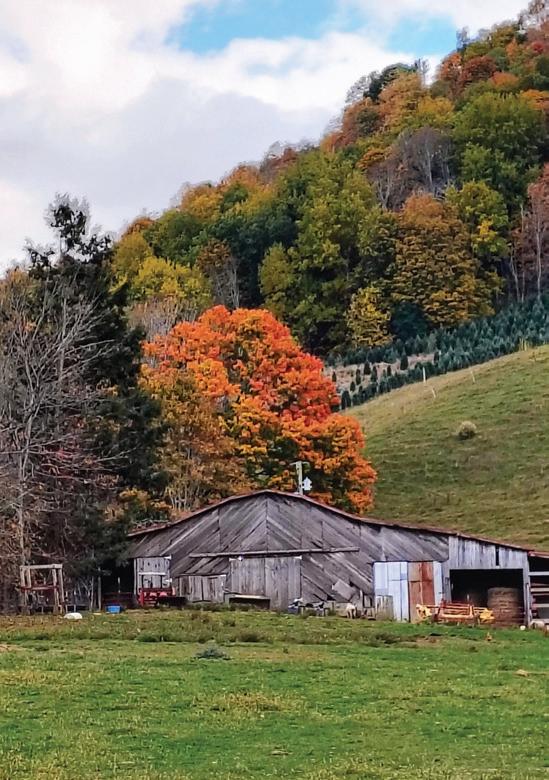
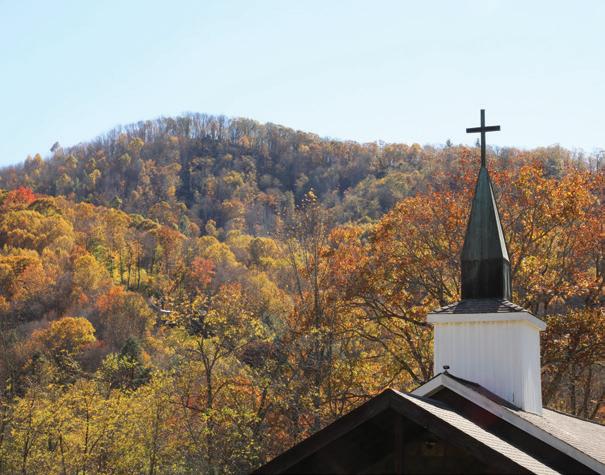
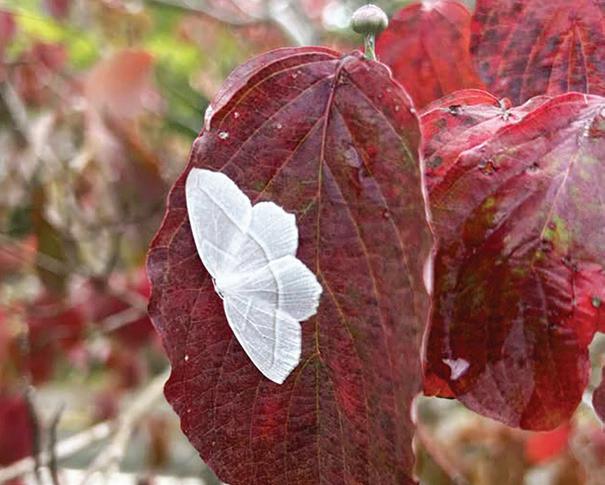
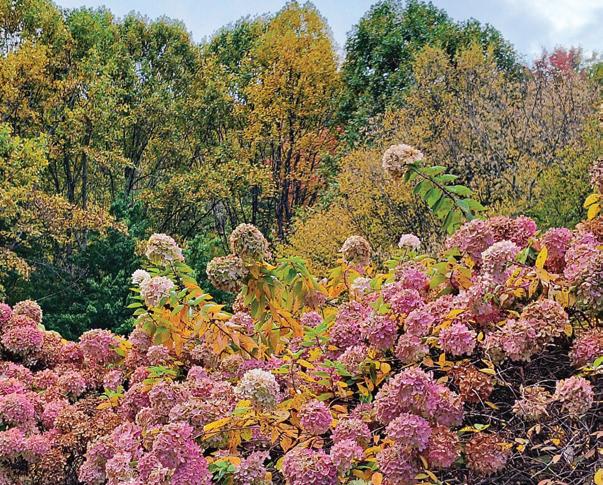
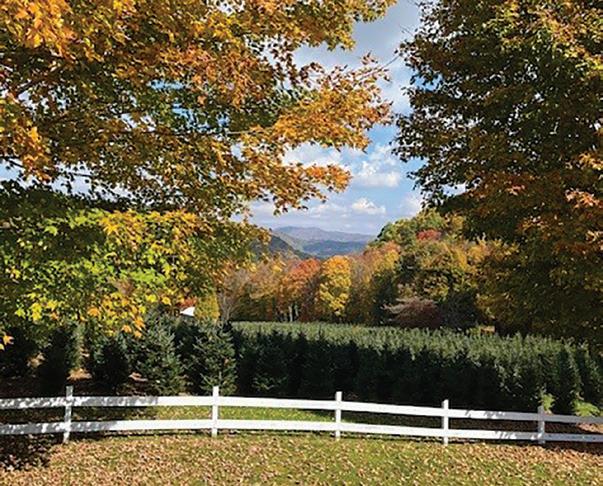
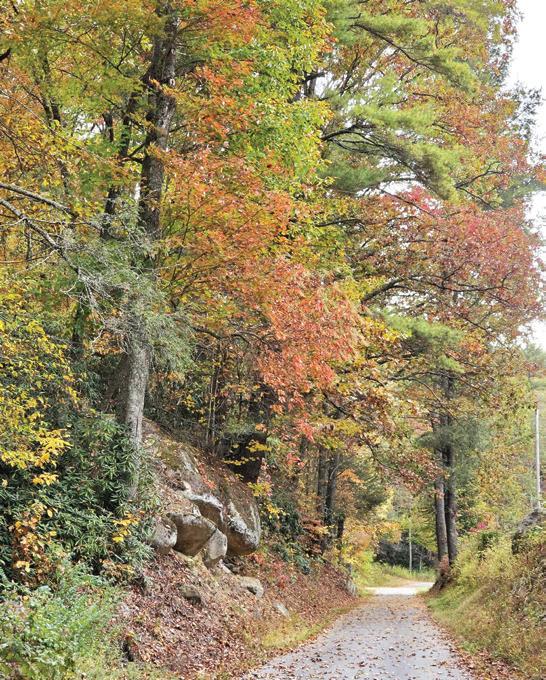
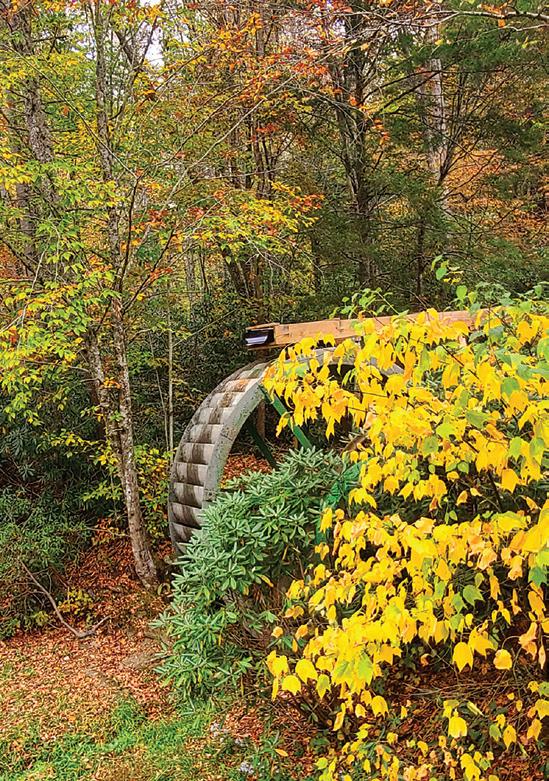
Photos of the amazing fall color we were blessed to experience this year.
25 Park Use Survey
The RM Recreation Foundation needs our help in taking a short survey.
26 Winter Preparedness
Steps and tips to prepare for whatever winter might bring this year.
29 Decorating Traditions & Tips
Diana shares some family memories of the holidays and Amy offers affordable decorating ideas.
REGULAR CONTENT
Editor’s Letter
Gun Talk with Jon Taste of the Roan
Peace of Mind with Chris News from the Roan
Highlander Highlights
The Grace Place
Fun Page
Lessons in Life/Landscaping
The Last Word
ABOUT THE COVER:
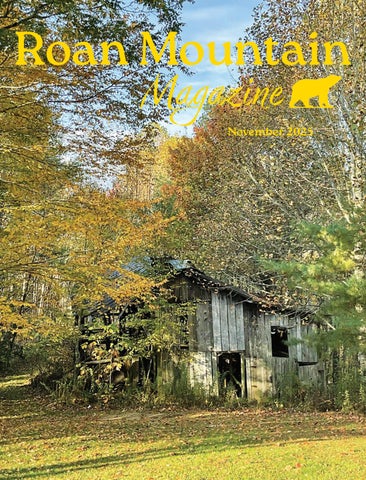
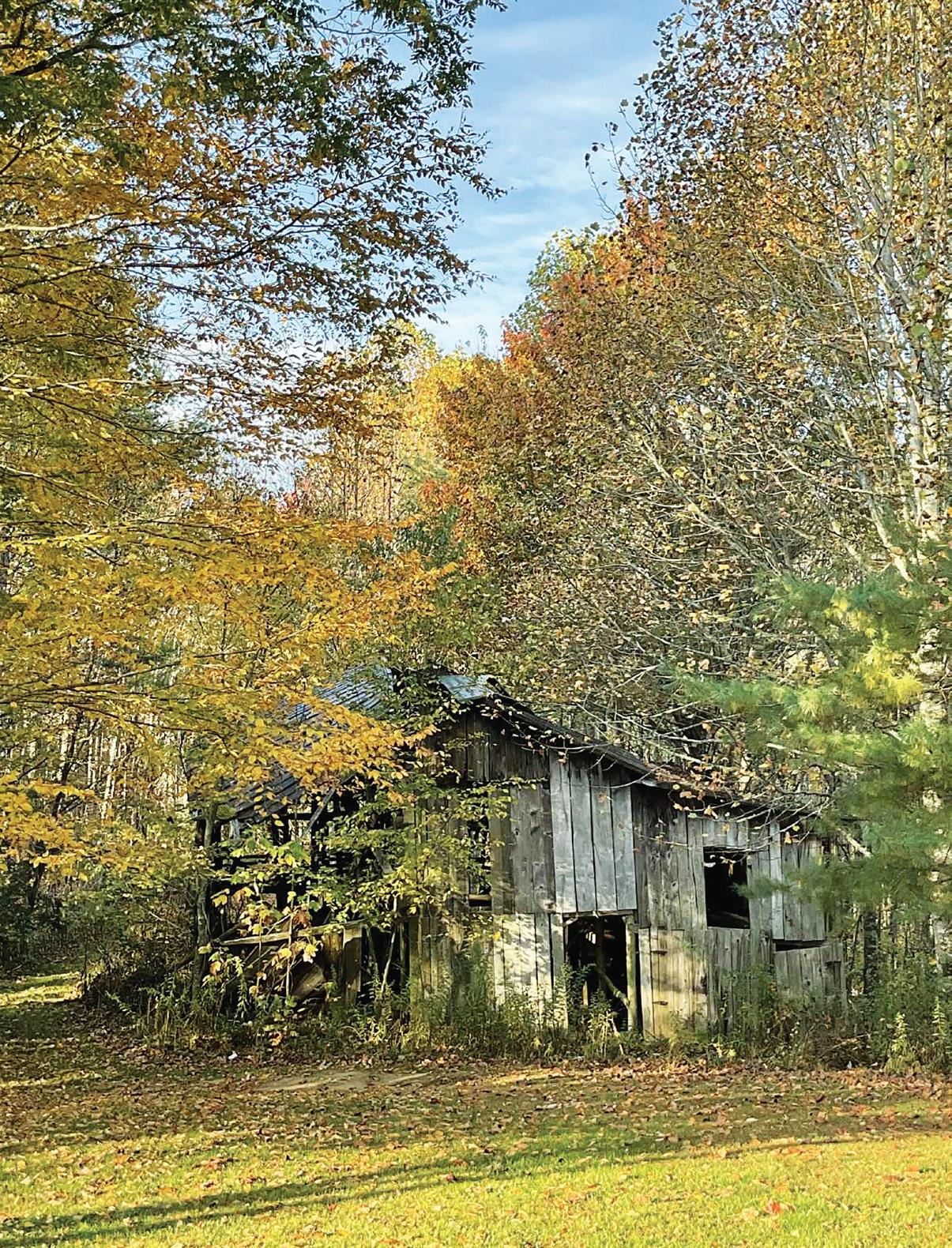
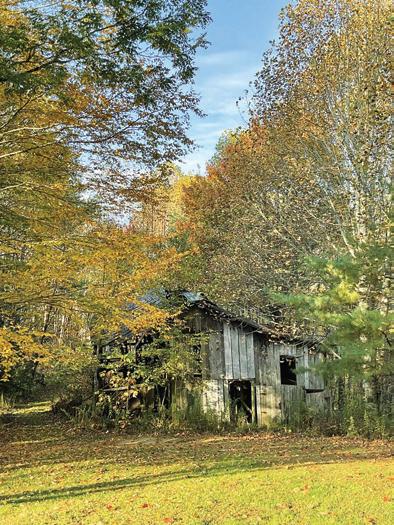
Patricia shot this photo of an old tobacco barn on her property. It's also the home of a barred owl, which is pictured in the Glorious Fall photo feature, starting on page 21.
Photo by Patricia Pfeister
Wishing All a bountiful and Thanksgiving!blessed





I’m thankful for so many special things this Thanksgiving: my son living here, having family and dear friends in my life, living in a comfortable house with fantastic landlords, and that all of you seem to really enjoy this magazine. And all the “regular” things: decent health, a reliable vehicle, my critters, and more.
But one of the things I’m most grateful for is this community. I pay attention. Maybe it’s the writer in me, noticing details, or maybe it’s because I’m new here and watching others interact helps me understand this place better. But regardless of the why, I’ve noticed a lot in the two years (this month) that I’ve lived here.
People are nice. People here gossip as much as anywhere, but here, it’s a rare thing to hear someone talk meanly about others. You may tell someone’s whole life story, but it’s seldom ever mean. More often than not, when someone tells me about someone they know, there’s more praise than negativity. “He’s a good man.” “She’s a kind woman.” “He dotes on those children.” “An unkind word never crosses her lips.” “He’d give anyone the shirt off his back.” “She goes out of her way to help others.” I seldom hear or see people being mean-spirited toward others. Everyone smiles, makes eye contact, says hello, and chatting in line with folks you don’t know is a regular thing. It's refreshing and heartwarming how nice everyone is.
You’re kind to each other (and to me!). By kind, I don’t mean just in saying nice things, but with general acts of kindness. Holding doors for others, sharing produce with friends and neighbors, making things from scratch and gifting them to others, going out of your way to run an errand or do a favor for someone. I’ve seen total strangers make up the difference when someone was short at the cash register. I’ve seen people in restaurants say, “I want to pay for that table’s tab.” I’ve seen people show up to help, unasked, when someone needed it. Letting someone cut ahead of you in line if they look like they’re in a hurry or their arms are full, is a common occurrence. One of the last things said when folks are parting is, “Let me know if you need anything!” And you mean it.
Local businesses get in on it too. Whiteway Grill’s Pay it Forward plan, where you pay for an extra meal with your own and that meal later feeds someone who’s struggling. I had a flat tire recently and Tire Express sent Mark out to my house to plug it, and while there, he swapped the tires around as he didn’t feel comfortable with the plugged tire being on the front. And just last week, the magazine’s ad director, Susie, was out running errands when her battery died. Napa brought a new battery to her and installed it so she could get home. These things just don’t happen much in other places I’ve lived. I believe kindness is the starting point for everything good in our world, and Roan Mountain folks are the kindest anywhere.
Faith is alive and well here and not just on
Thanksgiving
Sundays. When eating at local restaurants, it’s common to see people saying grace, aloud, before starting their meal. At the Fall Festival in October, held at Erik Anderson Park, prior to the festival opening, all the vendors stood in a big circle and held hands while a prayer was said. I didn’t know the people on either side of me, but they held my hands firmly, and after the prayer, everyone offered up an Amen. Prayers are offered before most public events here.
The Bible calls for us to minister to others and to give testimony. Ministering is the act of tending to the needs of others, and all those kindnesses I mentioned previously are perfect examples.
In many places in today’s world, one’s faith is private, seldom discussed. But here, the topic of faith is discussed openly and as easily as discussing the weather.
And it’s not just the older generations. Look at this magazine – we have two pastors writing for us every month, and both of them are in my children’s generation. This gives me hope for the future!
Sure, there’s negativity here. I’ve seen hateful posts or comments on social media, and occasionally heard or seen negative comments or actions, but overall, this community is made up of good, kind, decent people and I’m constantly filled with gratitude to be part of it.
This Thanksgiving, my wish for us all is more of this niceness, this kindness, and this faith – that we may offer it, share it, and appreciate it.
See you 'round the Roan!
Amy Campbell Clark Editor amy@roanmountainmagazine.com






I’m often asked, "What are some interesting guns you've worked on?"
Here's one such weapon.
Back when I started out gunsmithing in South Africa, clients would often just hang out in my shop. Easy chairs, a coffee table loaded with assorted farming and gun related magazines, and the best coffee in town, were part of the attraction. An old farmer used to like to spend time in my shop while his wife was at the hairdresser next door. He didn't say much, just liked to watch whatever I was working on.
One day he said I should visit his farm and see this old gun he had. I told him to bring it in to the shop, but he said it was too big to fit into his car and he didn't think the wheels would be good for towing it 80 miles to town. That certainly piqued my curiosity!
A few weeks later I was in that area and stopped by his farm. In his living room was a complete horsedrawn Maxim machine gun with wooden carriage wheels, ammunition limber (what carries the ammo chest), and horse harness. Everything complete, exactly as it had been when his great grandfather blew up a British troop train in 1900 and captured the gun,
GUN TALK WITH JON
An Interesting "Little" Gun
By Captain Jon Strydom (aka African Jon)
along with horses, weapons and ammo. They’d then used it against the British for a couple months until it ceased working, then they hid it so the Brits couldn't retrieve it.
It had been hidden somewhere on that farm for almost a century until he'd found it a few years earlier, concealed behind old wagon parts and assorted farm scrap. The dry, semi-desert air caused it no harm. His sons had stripped it and cleaned it up; all the brass was highly polished, the saddle leather was oiled and waxed. It was an incredible "ornament" in his living room. A chipped firing pin was all that was wrong with it. Even the belts of .303 ammo were still useable. It's now in the military museum in Pretoria. Farmers ... never underestimate them. We have a number of them here, which is just another reason I love Roan Mountain.
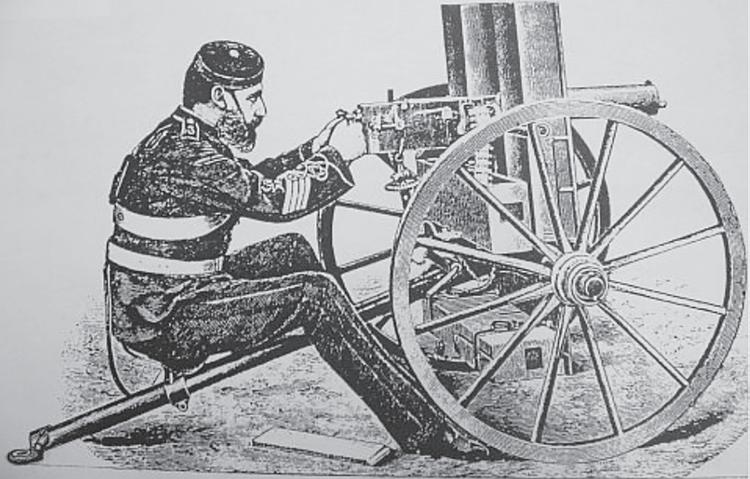
Light Maxim carriage of the pattern supplied with the 0.303 caliber guns bought by Jameson in 1895. From the little evidence available it appears that the shields of the Company’s carriages had a rounded top and were not fitted with upright ammunition boxes as in the illustration. The staff sergeant in the illustration belonged to the militia artillery. (Source: From an 1888 War Office woodcut.)
Image provided by the South African Military History Society
Orchard









INGREDIENTS
1-2 pounds stew meat
4-6 stalks celery, chopped
1 large onion, chopped
3-4 large carrots, sliced
½ bag baby red potatoes (or 2-3 large potatoes, chopped)
4 cloves garlic, minced
1 cup pearl barley, rinsed
2 tbsp. tomato paste
2 bay leaves
½ to 1 tsp thyme
Low sodium beef broth
(Vegetable and broth amounts will vary depending on size of your slow cooker.)
DIRECTIONS
Crock-Pot Beef Barley Soup
Submitted by Amy Thurman
As Noah points out in The Last Word, it's wonderful to come home at the end of the day to the scent of dinner that's already cooked! Whether you call it a Crock-Pot, or a slow cooker, who doesn't love this appliance? The great thing about soup is you can add or take out whatever you want. Don't like celery? Leave it out. Want mushrooms? Add some in. Want some heat? Add red pepper flakes. Make it your own, and enjoy!
• Brown stew meat in batches, over medium-high heat, until brown on all sides (but do not cook through), then place in slow cooker.
• Lightly cook onions in same skillet and deglaze pan with a splash of beef broth. When wilted, add to slow cooker.
• Add carrots, celery, garlic, potatoes and barley to cooker. (Baby potatoes can but cut in half if needed so all are similar in size for even cooking.)
• In a measuring cup or small bowl, mix tomato paste, herbs, and enough broth to liquify paste well, then add to cooker.
• Add more beef broth to cooker to cover vegetablesm then stir ingredients.
• Cook on low for 6-8 hours (or high for 3-4 hours, but meat may not be as tender), until vegetables and barley are done, then remove bay leaves.
• Serve with hot bread.
Until y’all start sending me your family recipes, you’re going to be stuck with mine! If you have a photo of the prepared dish, send that along too! amy@roanmountainmagazine.com







Every day, I thank God for living in East Tennessee, especially when I compare the natural beauty that surrounds us and the relatively low levels of crime and violence here compared to other parts of America. While the natural beauty is clear, the much lower corruption, violence, and chaos we experience might be less obvious. A stark reminder of life in much of America can be seen in the national news. Psychologically and spiritually, our decency in East Tennessee might limit our understanding of malevolence, and it's important to recognize the widespread presence of evil.
In my practice, I often see others suffering from the wrong behaviors of those around them. In short, we feel negative emotions—such as anxiety, sadness, frustration, or anger—when our expectations are not met. The larger the gap between what we expect and what actually happens, the stronger these negative feelings become. As a result, people often feel unnecessarily bad. When our expectations match reality, our mood tends to stay steadier. Essentially, we can improve our mood stability by better predicting how events will unfold.
We must take responsibility for reducing our naivety, in order to avoid being overwhelmed by life. This begins with learning. No wisdom is greater than that of God's Word. As Jeremiah 17:9 warns, “The heart is deceitful above all things, and desperately wicked: who can know it?”
By paying attention and heeding this warning, we can observe that humans often act malevolently and corruptly. We’re called to notice this and adjust our expectations accordingly, helping us prepare for potential negative reactions from society.
Ironically, despite humanity’s wickedness, we are still responsible for our own actions. We cannot justify wickedness ourselves. Our behavior's outcomes judge us. We are commanded to abstain from sin. Moreover, in close relationships, we must hold mutual
PEACE OF MIND WITH CHRIS
Mental Resilience
By Christopher Adams LCSW Licensed Therapist
expectations. Healthy couples, for example, should share a clear vision of their future and expectations along the way, which requires honest communication and commitment.
In summary, we should expect disappointment from the world and prepare ourselves accordingly. Naivety isn't a wise choice if we want to maintain strong mental health. Achieving mental resilience involves honesty and striving to do good regardless of others' actions. It's truthful to acknowledge that humanity can be lost and malevolent. Luckily for those of us in East Tennessee, our daily lives are less impacted by the widespread evil seen in many parts of the United States today. Nonetheless, we need to stay alert and ready for society's potential decline and irrational behaviors. It’s vital to adjust our expectations to this reality. And to immerse ourselves in the Truth. If I can assist in your journey and development, you may reach me at: 4yoursoulcare@gmail.com for counseling or discussion.
Humbly yours, Chris


Forever Youthful Rejuvenation Spa


Dr. Heather Larson Behrmann, Esq. (757) 903-4410 www.behrmannlaw.com
Roan Mountain (above the pharmacy)

Tracy L. Jones, RN


Rejuvenation Services
Botox • Fillers • Chemical Peels
Microneedling • Exfoliating Facials
Teeth Whitening • IV Nutrient Infusion Therapy
Now offering:
Hormone Replacement Therapy (HRT)
Benefits: Improved sleep, better moods, vitality/energy, heart protection, muscle building, better cognition, decreased anxiety 8916 Hwy 19E, Roan Mountain (423) 957-6254




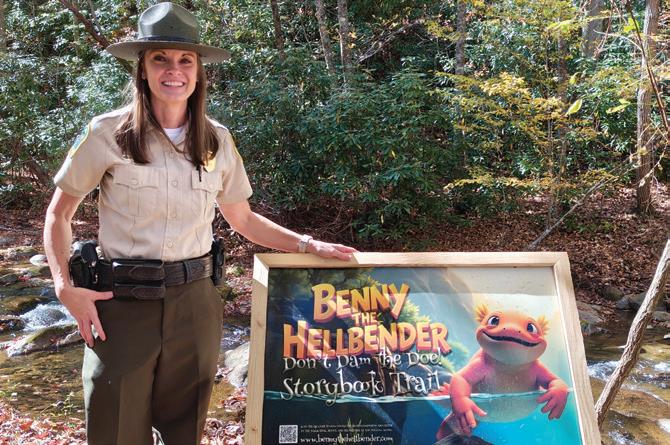
On October 17, 2025, a ribbon cutting ceremony was held at Roan Mountain State Park to celebrate the opening of the new Storybook Trail featuring “Benny the Hellbender: Don’t Dam the Doe!” Guests met at the park’s Tom Gray Trailhead located in the campground. The Tom Gray Trail is one of our popular trails as it follows the Doe River, passing through a beautiful hardwood forest. This makes it the perfect setting for us to feature the children’s book “Benny the Hellbender: Don’t Dam the Doe!”, an original story written by our own Park Manager, Monica Johnson. “Benny the Hellbender” talks about the importance of the eastern hellbender in our rivers, river ecology, and being good stewards.
Educational programs on the eastern hellbender and river ecology were offered before the hike, and Interpretive Ranger Andrea Price spoke about the importance of clean water. Guests were invited to hike the 1/2-mile round trip trail after the ribbon cutting, which has easy to moderate terrain. As you hike along the trail, visitors now get to read passages of this delightful book which are presented on child-height panels.
NEWS FROM THE ROAN
By CeCe Studer
Roan Mountain State Park
could access it,” she added.
Park Manager Johnson stated, “This project is all about connecting kids and families to the amazing life in the Doe River — especially the eastern hellbender, a rare salamander that depends on cool, clean, flowing water to survive. Through Benny’s story, we hope visitors learn why protecting our rivers matters, and why our message, “Don’t Dam the Doe,” is so important for both wildlife and people.”
Ranger Johnson wanted to come up with a fun way to educate kids that would make a bigger impact than signs more geared toward adults, but not so great for the kids. She said, “I was excited to write the book back in the spring and my cousin designed the artwork. We got it published and put it in the store (gift shop) to see how well it would do and people loved it! I then decided to put in a story book trail. I put one in at Cumberland Mountain State Park when I worked there, and it was really well received.”
“The Story Book Trail would be perfect along the Doe River, since the trail is fairly flat, and many people
“Benny the Hellbender: Don’t Dam the Doe!” is more than just a story book, it's a way to help kids connect with the amazing life that depends on our rivers and streams. The eastern hellbender is the largest salamander in North America. They depend on our ability to keep our rivers clean and remind us that every choice we make impacts wildlife. Our hope is that every child who walks this trail will not only enjoy Benny's adventure but also leave with a greater appreciation for the natural world and be inspired to protect it.
Special guests in attendance at the ribbon cutting ceremony were District 4 Representative Renea Jones, Veronica Alsop of the Elizabethton - Carter County Chamber of Commerce, Andrea DeMoss of Northeast Community Credit Union, Courtney Bean of Main Street Elizabethton, and County Commissioner Avery Wynn, in addition to many park guests, staff and residents of the Roan Mountain community.
Funding for this project was made possible by the TN State Parks Donation campaign and Tennessee State Parks Conservancy. Roan Mountain State Park extends a big thank you to our RV Volunteer Friends and park staff who were the brains and the heart behind the design and installation of this story book trail.
Today and every day we celebrate Benny, the Doe River, and all of you who help keep these waters wild and free!
Park Manager Monica Johnson with the newly install storyboard.
Photo provided by RMSP





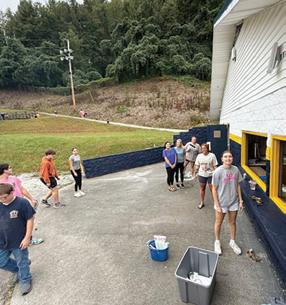
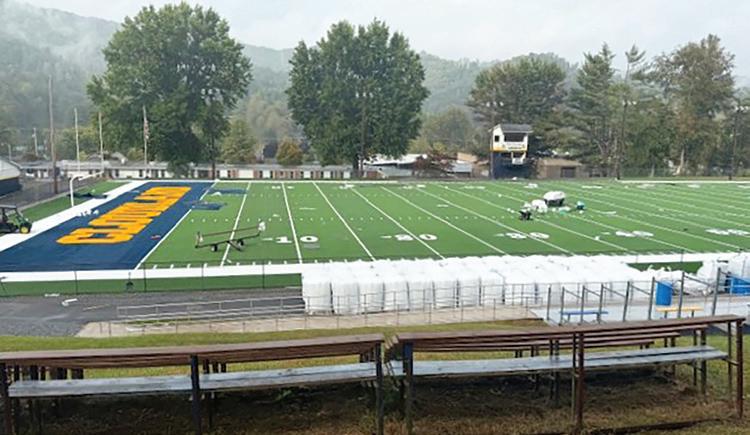
Cloudland High School is beaming with pride after completion of the new turf field. The school and community members gathered throughout the week ahead of the first games to put finishing touches on paint and beautification projects. The junior high football team broke in the field with a championship win on Thursday, October 2, versus undefeated Hampton Middle.
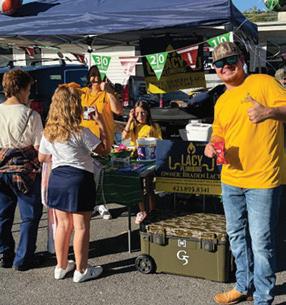
On Friday, October 3, CHS celebrated the stadium opening with a community tailgate party, which was widely enjoyed. CHS would like to thank their district board member, Garry Oaks, Superintendent, Dr. Carpenter, and all the community members who have supported the effort in making this dream come to life.

Takes Home
By Cloudland High School Yearbook Staff CHS

Ribbons
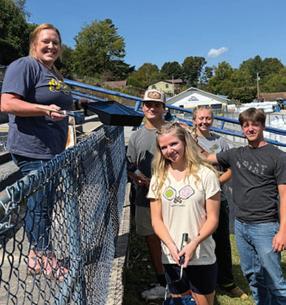
Ms. Holly Houston’s FBLA club decorated with mums and other fall decor to make entry to the stadium perfect!
Students and community members enjoying the tailgate party.

Top, left to right: CHS Cheerleaders enjoying the new run-through graciously donated by Northeast Community Credit Union. Students working on the projects at the field. Shellie Mckinney and students completing paint projects.
Left: Burleson Construction completing the field project.
Bottom, left to right: Junior Landers with the first win on the new Orr Field.
Photos provided by CHS Yearbook Staff





Music Spotlight: Tyler Childers
By Ericka Hughes
There are certain voices that cut through the noise, that don’t just sing to you but speak to your bones. Tyler Childers is one of those rare few. His music isn’t polished up for radio shine — it’s true-spoken, honest, and rooted deep in the hills and hollers that raised him. When I first saw him in concert in Asheville, North Carolina, something in me changed. It wasn’t just a show. It was like watching truth itself take the stage — bare-souled, humble, and unafraid to bleed a little.
From The Hills
Born and raised in Lawrence County, Kentucky, Childers grew up surrounded by bluegrass, gospel, and the kind of storytelling that comes from front porch living. You can hear that upbringing in every note he plays, it’s country, it’s Appalachian soul, it’s rock, and folk, all rolled into something genuine. He’s got that old-time grit of a coal miner’s son, mixed with the poetry of a man who’s seen both beauty and pain in the same stretch of land.
Songs That Speak
On stage, Tyler’s not flashy. There’s no big light show or choreographed act — just him, his band, and a crowd that knows every word. He plays like a man possessed by his purpose, leaning into the mic with his eyes closed, letting his voice crack and soar where it wants to. You can feel that he’s not just performing — he’s testifying. There’s a deep reverence in the way he delivers a song, whether it’s the haunting ache of Lady May or the fire and grit of All Your’n.
But the songs that hit me hardest are Banded Clovis, Hard Times, and Coal. Each one carries a weight that’s hard to put into words. Banded Clovis tells of digging through dirt and desperation, the kind of story that feels as old as the mountains themselves. It speaks to survival, mistakes, and the cost of trying to make a living when the odds are stacked against you. Then there’s Hard Times, a song that feels like a prayer whispered through clenched teeth – weary, but still hoping for better days. And Coal — that one burns deep. It’s a song that honors where he came from, the long shifts underground, and the backbone of Appalachian people who built their lives on faith and hard work.

Those songs reach into places most folks don’t talk about. They remind me that pain and beauty can live side by side — that even when life strips you down to nothing, there’s still something worth singing for. His influences run deep — from the storytelling of John Prine and the plain-spoken power of Kris Kristofferson, to the mountain sounds of Ricky Skaggs and bluegrass church harmonies. But Tyler’s no imitator. He’s carved his own road, paved with Appalachian truth and a rebel’s heart. His lyrics don’t shy away from addiction, faith, love, or sin — he tells it all straight, the way mountain folks do when they’ve lived it firsthand.
Seeing Tyler Childers live, you realize he’s not trying to be a star. He’s trying to tell the truth. His songs reach out like a calloused hand and pull you into something older, something sacred. For me, that night in Asheville lit a fire, a reminder of where I come from, what hard work really means, and why stories still matter.
Tyler Childers didn’t just change music. He reminds us that it still has a soul. His voice carries the past, the pain, and the promise of what’s yet to come.
Childers on stage in Asheville.
Photo by Ericka Hughes










Glorious Fall!
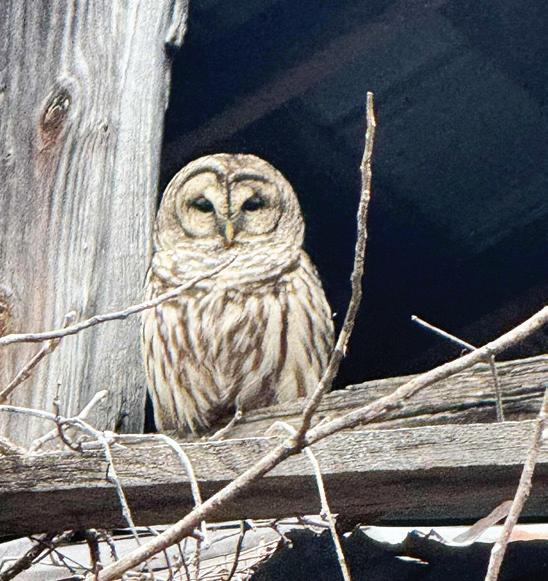
By Patricia Pfeister
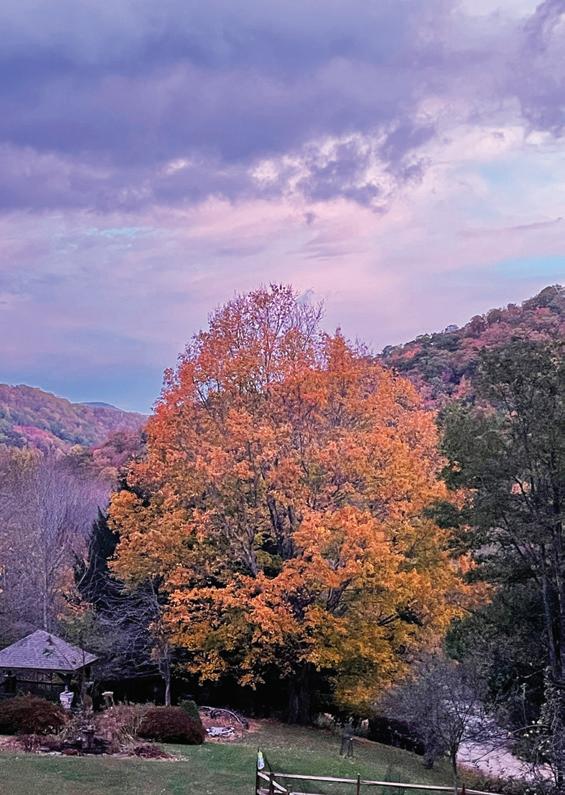
By Beth Dunbar
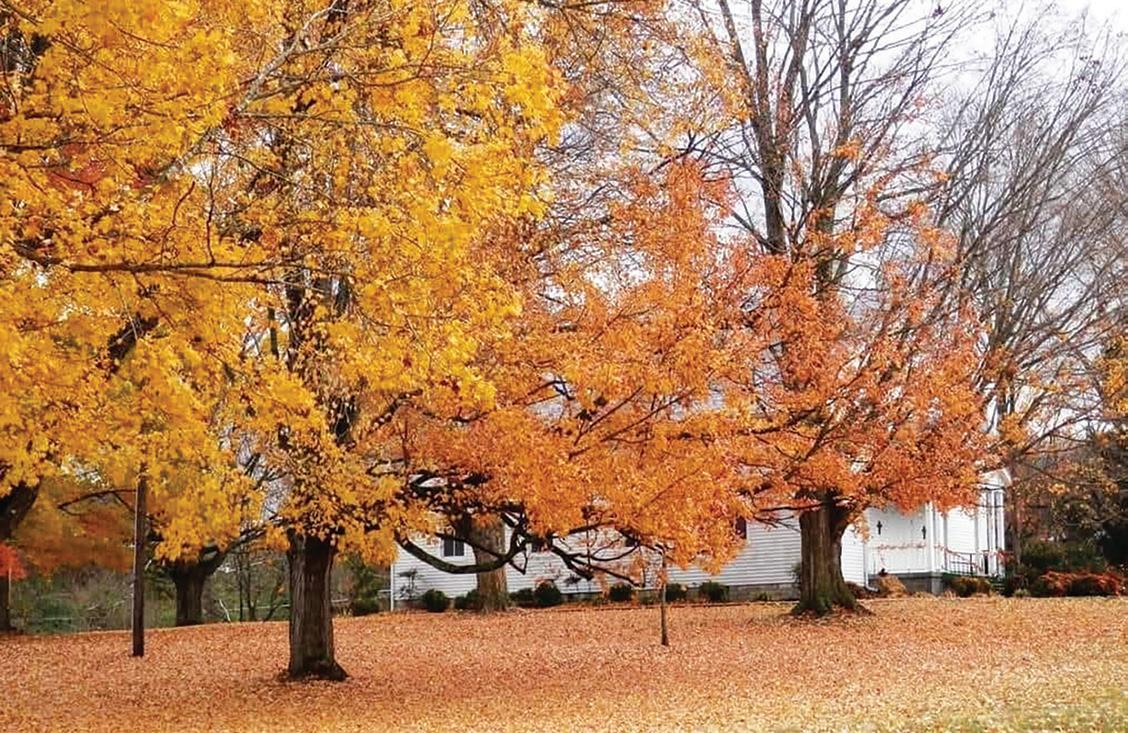
By Pastor Scott Morgan
By Rachel Peek
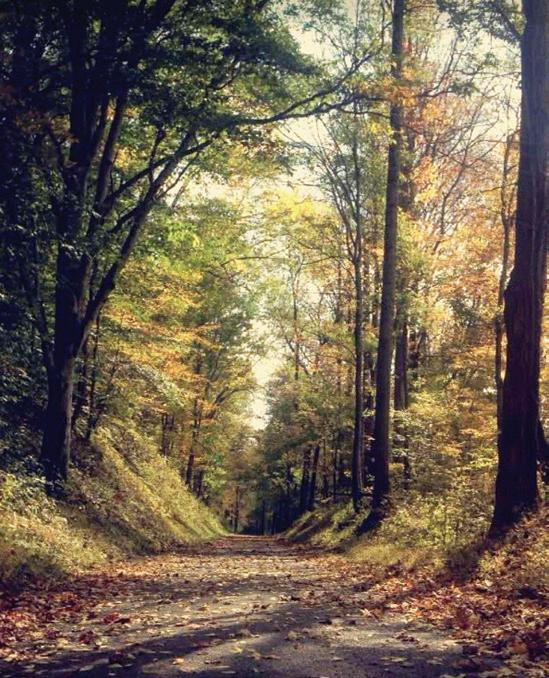


ByTeresa Stout
By James Gainey
By Leslie Schultz
By Tanya Westerman
ByTeresa Stout
By Faith Lynn
By Barry & Darlene Stocton
By Izabella Christman
By Amy Campbell Clark

















A Message from the Rec Foundation
Your input is needed!
To our Roan Mountain community,
We hope this message finds you well. Our resident volunteers at the Roan Mountain Recreation Foundation have been busy over the past several months working on recovering/rebuilding our beloved community parks. This summer was especially exciting as we brought back the community concerts, reopened the shelters for everyone to enjoy, and even installed a new backstop for the ball diamonds!
But we want to make sure that our parks reflect what you all want and need, so we're developing a Master Plan for the rebuilding process. Your input is super important to us!
We've created a quick online survey for you to share your thoughts on what you'd like to see prioritized in our parks. Just a friendly reminder, though: since our parks are located in a flood plain, there are some limitations on what we can do, like building permanent structures. We'll also need to make sure that whatever we create can be maintained by our awesome volunteers after the work is done.
Once we gather everyone's feedback, we’ll share the results with you. From there, we’ll team up with some experts to shape the Master Plan, ensuring it meets our community’s needs. We’re excited about this project and appreciate your participation! To get started just click on the QR code with your phone or copy the survey link. If you do not have the ability to do either, there will be paper copies of the survey available at Carter County Bank in Roan Mountain as well. Thanks a bunch, and stay tuned for survey results and more updates!
Warm regards,
Roan Mountain Recreation Foundation
Scan the QR code to participate in the survey:

Or type this link in your broswer: bit.ly/rec_foundation
Erik Anderson Roan Mountain Community Park has a history deeply entwined with both local resilience and community spirit.
The Formation of the Park
In the aftermath of the 1998 flood, local residents and volunteers, in a display of remarkable community strength, sought ways to rebuild. While the flood left significant damage in its wake, it also paved the way for a revitalized focus on community-driven restoration and development. As part of this effort, the idea for a community park emerged—a place that would honor the resilience of the people and the natural beauty of Roan Mountain.
The park was named in honor of Erik Anderson, a local figure whose contributions were deeply felt in the area. It served as both a memorial to those affected by the flood and a space for the community to come together for future gatherings, celebrations, and recreational activities.
The park is managed by the Roan Mountain Recreation Foundation (RMRF), a volunteer-driven nonprofit organization. This group, consisting of local residents and dedicated volunteers, works tirelessly to maintain the park and oversee its development. They coordinate events, manage resources, and foster a sense of community through a wide range of activities, from local festivals to outdoor recreation.
Damage from Hurricane Helene
In 2024, Hurricane Helene resulted in significant flooding, landslides, and erosion, damaging the park’s infrastructure and surrounding landscape.
Despite this setback, the Roan Mountain Recreation Foundation and the local community have persevered, contributing their time, effort, and resources to help bring the park back to life.
Park Benefits
Community garden • Disc golf course (when repaired) Baseball/softball diamonds • Picnic shelters
Stage for performances • Children's Playground
Walking paths • Fishing (when banks repaired)
Local events, to include:
Food Truck Rallies • Summer Music Series
Independence Day Fireworks • Fall Festival
Christmas Tree Lighting
Use of the park is free, but donations are appreciated. To reserve space or for more information, email roanmtnrf@gmail.com or call Shellie McKinney (423) 895-1641
Winter Preparedness Tips
If you were born and raised in these mountains, being ready for winter may not require much thought or effort and you may be tempted to skip over this article. But I’d ask you to please read it – you may have helpful tips to share that others would find beneficial. If so, please send them to me. We’re working on a master preparedness guide for our community and your insight is important.
Extreme Cold
Cold weather may not seem like a risk factor, but it can cause complications. While our average daytime temperatures in winter are fairly mild, it can get substantially colder at night and we can have extended periods with temperatures in the 20s or lower. Frozen or burst water pipes can mean loss of water (not to mention costly repairs), outdoor activities can lead to hypothermia, and in the case of lost power you may be unable to safely heat your home.
By Amy Campbell Clark
Being prepared for difficult situations isn’t just for “preppers” or doomsday scenarios. It can help you handle seasonal and weather-related emergencies better and recover faster and more easily. There isn’t room in this article to cover every potential measure, but we’ve tried to highlight some of the most important for an easier, safer winter.
Like anywhere else on Earth, this area has its own set of risk factors that we should all be ready for. In the winter months, our primary risk factors include: heavy winds, extreme cold, snow/ice, wildfires, home fires, flooding.
Heavy Winds
As I write this, we’re currently under a wind advisory with winds expected from 20-30 mph, gusting to 55 mph, and that’s fairly mild. I’ve seen winds here up to 40 and 50 mph with gusts to 80 as it funnels through the hollows. This can blow things around causing broken windows, drop tree limbs on power lines, remove loose roof shingles, and even impact driving. Heavy winds also deplete moisture in the air, increasing fire risk and can fan flames beyond control in seconds.
Tips:
• Regularly check trees near your home for dead or dying limbs and remove them.
• Secure outdoor items that could be tossed around causing damage to your property or neighboring properties.
• Use extreme caution while driving, especially in higher profile vehicles.
• Do not burn outdoors – permits are required between October 15 and May 15 (877) 350-2876.
• Be prepared for power outages (see additional information to follow).
If you only have electric heat, the best option would be to purchase a generator – even a small one can power electric heaters – but do so only with guidance from an expert and read the manual carefully to avoid life-threatening mistakes, such as lack of proper ventilation, which can cause a fire.
Small children, the elderly, and those with health complications are more at risk for hypothermia when exposed to cold – hypothermia can occur when body temperature drops to 95 degrees or lower. Moving those at risk to warmer locations is critical.
Preparation
• Have chimney’s inspected/serviced for blockages and creosote build-up (unmaintained chimneys are one of the leading causes of home fires; also note that creosote removing logs aren’t sufficient to eliminate fire risk).
• Close storm windows before cold weather sets in.
• Check weather stripping and caulking on doors and windows and replace any that’s missing or damaged.
• Replace furnace filter before turning on heat (should be replaced monthly).
• Check/replace batteries in smoke and carbon monoxide detectors (purchase carbon monoxide detectors if you use any form of heat other than electric).
• Wrap exposed exterior water pipes to reduce risk of freezing.
• Check any electric heaters (including cords) for damage and make sure they’re in good working order.
• Two-liter soda bottles can be washed out and used to store extra water. Fill when severe cold is predicted (especially if on a well and well pump depends on electricity).
• Service generator (fuel filter, etc.), fill gas cans and treat fuel with Sta-bil.
• Download a weather app and allow notifications for severe weather alerts.
• When severe cold, snow or ice are predicted, make sure you have enough medications on hand to get through the event.
During Cold Events
• Never use generators, propane heaters, or camp stoves indoors, for any reason.
• Even on nice days, never leave home without a coat –temps can drop quickly, especially after dark.
• When a hard freeze warning has been issued, wrap outdoor pipes if you haven’t already, set outdoor faucets and indoor faucets on exterior walls to drip, and open cabinet doors under sinks to allow warm air in.
• Keep all devices charged in case of lost power.
• If cold is seeping in through windows, cover with spare blankets for an added layer of insulation.
• Keep calorie count up. The body burns more energy trying to stay warm. Soup and other hot food will help.
• Stay hydrated. Avoid overdoing diuretics, such as tea and coffee.
• Keep hands and feet warm.
• Stretch and flex frequently to aid circulation.
• Use lip balm and moisturizer to prevent chapping.
• If indoor temps stay below 50 degrees, consider going elsewhere.
• Monitor the weather for worsening conditions.
Heavy Snow/Ice
Snow/ice can result in road closures, downed limbs/ power lines, loss of power, business closures, and falls or other physical injury.
Preparation
• Check tread on your tires and replace tires as needed. If not using all-weather or snow tires, check chains and be sure they’re in good condition and that you know how to install them.
• Be prepared for lost power. If you have no other way to heat your home, have a plan to go elsewhere.
• Make sure you have a snow shovel and at least a couple bags of sand or salt to de-ice your walkway.
• Wrap exterior pipes to reduce risk of frozen lines.
During Snow/Ice Conditions
• Stay home, if at all possible. Especially if you have no experience driving in these conditions.
• Do not drive until you’re certain the roads have been cleared, and even then, watch carefully for black ice or uncleared spots.
• Use extreme caution in shoveling your steps/ walkways. If you are elderly or injured, ask someone for help. (Need help? Call the magazine and we’ll find someone to help you.)
• When snow begins to melt, take care around rooflines so you’re not hit with chunks of partially frozen snow/ice fall.
Winter Vehicle Safety
Avoid driving in hazardous conditions, but if you must drive and get stuck, here are some things to keep in mind.
• Do not allow gas tank to drop below half.
• Always pay close attention to where you are so you can let emergency services know if needed. NOTE: Most cell phones can reach 911 even with no service bars.
• Turn on emergency flashers.
• Before getting out of car for any reason, bundle up and make every effort to stay dry. Disposable surgical
gloves worn under work/winter gloves can help keep your hands dry. Cover your head, and protect your feet.
• If stuck, use emergency shovel or other scraper to scrape away snow/ice/mud from behind drive tires, then put down a layer of cat litter directly behind tires to provide traction. GENTLY attempt to back up –avoid spinning tires. If tires just spin, try putting down more litter. Do NOT dig tires in. If you’re unable to get out on your own, call 911 and give them exact location.
• If limbs are across road, see if you can safely move them by hand. If too large to move by hand, and temps aren’t too low to make it dangerous, try cutting the limbs so they can be moved. If this isn’t possible, find an alternate route and call the Carter County Highway Department to advise and give exact location.
• While waiting for help, keep car running and flashers on, turn heat down to medium-low. Keep an eye on the dash to make sure car doesn’t overheat – if temp light comes on, turn off car. Try to keep inside temp to at least 50.
Winter Emergency Vehicle Kit
• Car manual
• Jumper cables
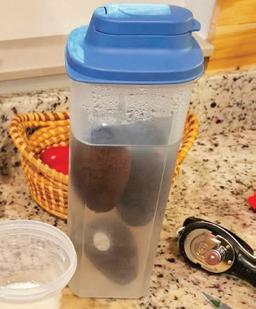
• Windshield De-Icer: An effective homemade de-icer can be made by mixing 1/3 parts water with 2/3 parts of rubbing alcohol. Mix in spray bottle and leave in vehicle (rubbing alcohol will prevent freezing). Even if your wiper reservoir has de-icing wiper fluid, this can be used on side and rear windows and mirrors.
• Sturdy ice scraper
• Cat litter – to spread behind tires if you get stuck.
• Tow strap
• Tool kit
• Sharp knife and multi-tool
• Duct tape
• Spare leather work gloves and disposable surgical gloves, warm gloves or mittens, spare knit hat and scarf Muck boots and two pairs spare socks.
• 12v air compressor (for tires)
• Folding shovel
• Folding saw or mini-chainsaw to cut downed limbs
• Paper maps (in case of lost GPS signal)
• Flashlight and/or headlamp (check batteries)
• Cell charger
• A blanket (at least a mylar emergency blanket)
• A towel
• Several packs of disposable hand warmers
• Spare dark sunglasses (to protect from snow glare)
• First aid kit
• Portable emergency kit - Small gear bag with shoulder strap that goes in and out with you for perishables: two bottles water, high energy snacks, meds (Ibuprophen, anti-bacterial cream, etc.), wipes, sanitizer, emergency cash, and leave room to put other things in the bag in case you need to leave the vehicle. To share other tips or request additional info, email: amy@roanmountainmagazine.com









Old-Fashioned Decorating
By Diana Tolley and Amy Campbell Clark
As we gear up for the holidays, we thought it would be fun to explore some old-fashioned Appalachian ways of decorating and a little of the reasons behind them.
In the late 1800’s to early 1900’s, times were tough all over, especially in smaller towns and even more so in the secluded rural and mountainous areas of the Appalachians. People here worked very hard, shared what they had, and were thankful for the blessings that came their way. They were talented crafters with gifts of imagination, music, courage, and experience, that I have often longed for.
A lot of the old ways have been forgotten, but here are a few that my parents and grandmothers passed on. When it came to holidays, although they had very few possessions and even less money, they made each of those things count by turning it into joy and memories long cherished.
One year, my grandpa spent three weeks carving out gifts for my grandmother and dad from leftover barn wood. There was no such thing as store bought gifts that year, and there was no way to get anywhere to buy something, even if they’d had the money. Snow drifts covered fence posts and hid roads from view, and everything outside was coated in layers of ice from the cold temperatures. Holiday decorations were low on the rungs of survival in those days, not such a big deal as we make them today. However, they did try to make things festive. My grandma used left over scraps of material to make pine balls. She gathered pine needles and washed them in hot water, dried them by the stove, then sewed them into small squares of cloth. The fragrant, material-wrapped balls were used to decorate a small tree that my granddad had cut. The needles gave off a nice pine scent, which served two purposes: decoration and health, as the vapors were said to help chest and head congestion. Pretty handy that time of year, I’d say.
Another decoration that some mountain folk swore by were cinnamon brooms. Even though the spice was hard to come by back then, people could still get their hands on a bottle of cinnamon oil now and then (usually from the Watkin’s man, or the Tinker). They’d fashion either straw or hay into wide brooms and put

a straight wooden stick down through the middle, using wire or thin leather strips to secure it. Whatever material they used was soaked in a little cinnamon water then dried by the fire. It made the house smell nice, and better yet, it was used to help fight colds and sickness. Folks would hang these brooms above doors, over fire places, on the wall of a sitting room or wherever family gathered. Even today, many associate the smell of cinnamon with winter and Christmas. And the fact it’s good for you is an added bonus, for sure.
The use of pine boughs were a tradition that represented a hardy renewal of life. Boughs were gathered and fashioned into rows (or ropes if you knew how to do it) of garland and strung or mounted over doorways, nailed along door facings, or placed along the center of tables to make their homes more festive.
The big fir pinecones were a good decoration as well. I remember folks telling that my Aunt Masey would boil red onions, beets, carrot peelings, or purple cabbage in water to use as dyes. This worked for all manner of items. She would soak the large pine cones in the different colors, giving them a festive look. They’d then be hung on the Christmas tree and around the house for good luck. Folks sure were resourceful back then, mostly out of necessity.
Last, but not least, we can’t forget about the two most popular plants that have long been associated with Christmas: holly and mistletoe. Holly bushes are very pretty, and lore has it that they were a sign of protection and good will. Decorating a home with it was sure to let visitors know they were safe and welcome. And most folks remember the tradition of kissing under the Mistletoe. This was said to be most effective at the beginning of the New Year. The tradition goes, if you kiss your true love in a doorway where sprigs of mistletoe hang, your love will grow, you’ll be provided good luck in your relationship and the lucky couple will have hardy fertility. I always wondered if that was one of the reasons people had such large families back then!
We’ve come up with a few ways of bringing in the outdoors and using what’s on hand to decorate, so keep reading.
Decorating doesn’t have to be expensive to be pretty and festive. We’ve put together a list of ideas using mostly natural materials or inexpensive purchased items. Use your imagination, get the kids involved, and have fun!
Pinecones
Large or small, fat or skinny, pinecones of all sizes can be used to make a range of decorations.
• Pinecone Garland – Use fishing line or twine to string together in a row and hang from corner to corner of windows or between porch posts.
• Hanging Ornaments – Thread individual pine cones on lengths of twine, yarn or ribbon and hang from light fixtures or curtain rods in varying lengths. Or, tie the tops of all strands together and hang in a bunch from a door knob, hook, or wreath holder.
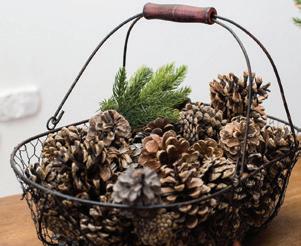
• Table Décor – Place a selection of pine cones in varying sizes in a rustic basket. Stick a few sprigs of holly or pine boughs here and there and tie a red ribbon around the outside of the basket.
Thick branches
• Tealight Candleholders
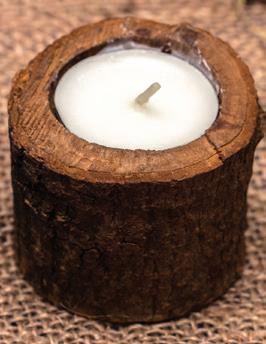
– Find a straight branch about three to four inches thick and cut three sections of different heights (three to six inches). Use a Dremel to cut a two-inch circle in the top of each section to create a spot for a tealight candle. Wrap with ribbon or twine and sprigs of holly. We recommend using flameless LED candles –tree sap is flammable.
• Tree ornaments – Cut pieces from that same branch into thin slices and drill a hole through each, near the edge for stringing. Use paint markers or a brush to paint Christmas designs on each side, then string with ribbon or twine and hang on the tree. (Designs could be candy canes, Christmas trees, stars, wreaths, stockings, sleds, snowmen, etc. They don’t have to be fancy or detailed.)
• Annual Keepsake Ornament – Same premise as above, but when the bottom of your live tree is trimmed to take water, keep that cut slice and make an ornament for the tree. Be sure to put the date on it.
Pine boughs
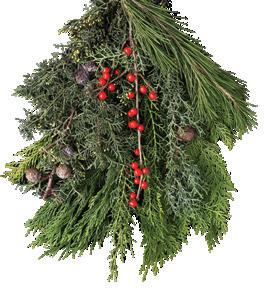
Pine greenery adds a pop of green, a wonderful scent and a cozy festiveness to any room. Ask for leftover branches at Christmas tree stands or farms, or trim a few here and there from trees on your own property.
• Position branches on the mantel or shelves.
• Trim needles from the cut end and stick several in a wide-mouth mason jar of water to keep the scent fresh. Add sprigs of holly and tie the mouth of the jar with red ribbon for color.
• Instead of an expensive handmade wreath, tie the ends of a cluster of pine or cedar branches with twine, then cover that with thick ribbon. You can add in some bells, a couple candy canes, or sprigs of holly to spruce it up, then hang it on your front door – just as pretty and nowhere near the cost.


Red ribbon
A big roll of red ribbon doesn’t cost much, but it can go a long way in festive touches.
• Cut short sections and tie into simple bows around cabinet knobs, door handles, chair backs, the ends of towel bars, or even onto Christmas tree branches.
• A length of red ribbon standing on its side or looped around objects on a shelf can add a pop of color.
• Tack or use Command Strip stickies to attach a section of ribbon to the inside top of your cabinet doors, then let it drape over the top and hang down the front of the cabinet. Cut the end into a notch.
Miscellaneous
• Popcorn or Cranberry Garlands – Make popcorn on the stove and string it on thread or fishing line to string around the Christmas tree. Do the same with raw cranberries. Or mix it up a bit and alternate pieces of popcorn with raw cranberries!
• Twig Stars – Gather small sticks, cut into equal lengths, then wrap the ends together with twine or

fishing line into the shape of five-pointed starts. String a ribbon or twine from the top point and hang on tree.
• Use larger sticks (about a half-inch thick and 6 to 8 inches long) to make larger stars. Wrap with batteryoperated mini lights and hang in windows with ribbon.
• Twig Crosses – Gather small sticks and cut the long section to the size you want, then cut the cross section to half that length. Wrap in place with twine. Can be hung on your tree, propped on tables or shelves or stuck in arrangements of pine boughs or flowers.
• Oranges and Cloves
– Pick up a jar of whole cloves and a bag of oranges. Push the cloves into the skin of the oranges (you can make patterns if you’re feeling extra creative), and position clove-studded oranges in a pretty bowl or basket. The scent will last for weeks. (We recommend wearing gloves to apply the cloves.)

• Tree Branch Mobile – Find a narrow tree branch, about 1 ½ to two inches thick, three feet long, and relatively straight. String individual pine cones with twine or ribbon, then tie around the branch in varying lengths. String small pine boughs and hang those from the branch. You can also add other objects, like metal Christmas cookie cutters or the twig stars and crosses. Hang the mobile with a tie at each end to hold it mostly straight – could be hung from a curtain rod, or from hooks on the porch. You could also run a string of battery operated mini lights along the main branch.

• A clear glass bowl or large vase filled with small glass ball ornaments is always pretty.
• Tie cinnamon sticks and small pine boughs together with twine and hang from door knobs.
• Gift Wrapping – Use freezer paper or cut open brown paper bags to wrap gifts. Tie with red ribbon and tuck a candy cane behind the ribbon.
• Throw Pillow Covers – Pick up flannel shirts or sweaters at thrift shops in shades of reds or greens and use to make festive covers for throw pillows.
• Candle holders – Any glass jar with a wide enough mouth (salsa, spaghetti sauce, pickles, jelly, etc.) can
be washed and used as candle holder. Put a little sand or Epsom salt in the bottom to hold the candle in place and tie the mouth with ribbon, or twine and a sprig of holly or pine to add a festive touch.

• Tinsel Wreath – An inexpensive Styrofoam wreath form and a package of tinsel garland from the dollar store can make a low-cost but fun wreath. Glue or tie one end of the tinsel to the wreath form, then just wrap it until the Styrofoam is covered and tie it off.

• Tie a square of festive fabric around a toy ball, secure with ribbon and a sprig of pine for an oldfashioned look without spending much.
• A package of oversized jingle bells from the dollar store and a length ribbon can make a pretty and musical door knob decoration. Just thread the ribbon through the bells, tie off, and loop around the door knob.
• Twirling Paper Ornaments – Cut cardstock (think festive Christmas colors), into five narrow strips. The center strip should be the shortest, the middle strips a little longer, and the outside strips the longest. Secure each end as shown with glue, the push a wire ornament hanger through the top.

Have ideas for decorating with nature or repurposing items around your home? Send them to Colleen and she’ll share them on our Facebook page in the coming weeks!

GRACE PLACE THE
By Reverend Hunter Greene
Grass is usually greener in the places where it’s watered. But that doesn’t stop us from imagining how much better we’d have it if we could just get to “the other side.” So often, our lives our dictated by the urgency of scenarios that play out over and over in our heads – scenarios like “if I could just get through this season of life, then I can finally be happy” or “if I just had more money, then everything would be better” or “if I could fix x, y, and z in my life, then I’d finally feel whole.” Yet, these imagined scenarios are nothing more than distractions that blur our visions from seeing the real world that exists right in front of us.
It should come as no surprise that the world’s top brands, corporations, and tech giants have also discovered the power of our imaginations, especially when our imaginations can be bent toward consumeristic fantasies of all things bigger, better, and more beautiful. Perhaps that is why just a few short hours after we gather with our friends and family to celebrate Thanksgiving, many of us get locked and loaded to go brave the havoc of Black Friday shopping. But maybe all those ads, commercials, and coupons are just helping us add items to our list of things to be thankful for at next year’s Thanksgiving dinner…
I’ll be the first to admit I’ve spent many Thanksgiving nights in a shopping mall or strolling around the aisles of Walmart past midnight looking for something to take my money. So trust me when I say this is not meant to be a guilt trip. Rather, it’s an observation that contentment and gratitude are not cultural virtues in our society in the same way that wealth and buying power are. I mean, we’d all be pretty surprised if we were able to successfully organize a national holiday where we didn’t buy anything at all. Seems like a pipedream, right?
But have you ever stopped to consider what all this rushing around, all this card swiping and chip tapping, all this autopay and two-day shipping is really costing us? Have we been living so fast that we’ve forgotten the inexhaustible grace and goodness that God has
bestowed upon His creation, including you and me?
When we take the time to slow down and live and breathe at God’s pace, we discover that thankfulness is more about perspective and attitude than it is about keeping track of profit margins throughout the year. It is doing – and seeing – “everything in the name of the Lord Jesus.” At the heart of the matter, seeing the world and each other through the life of Christ and his love for the world inevitably changes our relationship to everything and everyone around us. People, places, and things are no longer just that; they become visible sites of God’s grace through which we can come to know and enjoy God more.
St. Augustine, in his work Confessions, writes, “You have made us for yourself, O Lord, and our hearts are restless until they rest in You.” Fundamentally, thankfulness is about rest. It is resting in the goodness of God that follows us through every season of life, every mountain, and every valley. It is embracing a posture that welcomes each moment of life as a gift from God, whether they be pleasurable or painful. Of course, life could always be better or more convenient, just as it could always be worse and more miserable. But the key to living the “good life” is accepting that it cannot be found or bought or manufactured. It can only be received and perceived.
So whether you eat your Thanksgiving turkey with a houseful or alone, whether you spend a war chest or a dime on Black Friday shopping, and whether your dreams come true or tomorrow is just like today, I invite you to see your life and the people in it through the eyes of Christ. Let His peace rule in your heart. Let His grace rework your desires. Let His love give you rest. And let your heart and your lips give thanks for the green pastures and still waters His goodness has led us to time and time again. For in Christ, that’s all there really is.
15 And let the peace of Christ rule in your hearts, to which indeed you were called in one body. And be thankful. 16 Let the word of Christ dwell in you richly; teach and admonish one another in all wisdom; and with gratitude in your hearts sing psalms, hymns, and spiritual songs to God. 17 And whatever you do, in word or deed, do everything in the name of the Lord Jesus, giving thanks to God the Father through him.
Prayer Requests
Please pray for Larry Hicks and his family as he battles with cancer.
Please send all general inquiries, church information, upcoming church events, and special prayer requests to Hunter at hillbillytheology@gmail.com.
Check out Hunter's Hillbilly Theology site: hillbillytheology.com/ (Linktree: https://linktr.ee/hillbillytheology )
Church Events
Lower Shell Creek Christian
Sunday, Nov. 16, Noon Thanksgiving meal (no evening services)
Sunday, Nov. 23, 5 p.m. Youth Group Friendsgiving Sunday, Nov. 30, Advent, Hanging the Greens, Youth Program
Saturday, Dec. 6, 9-11:30 a.m. Breakfast with Santa
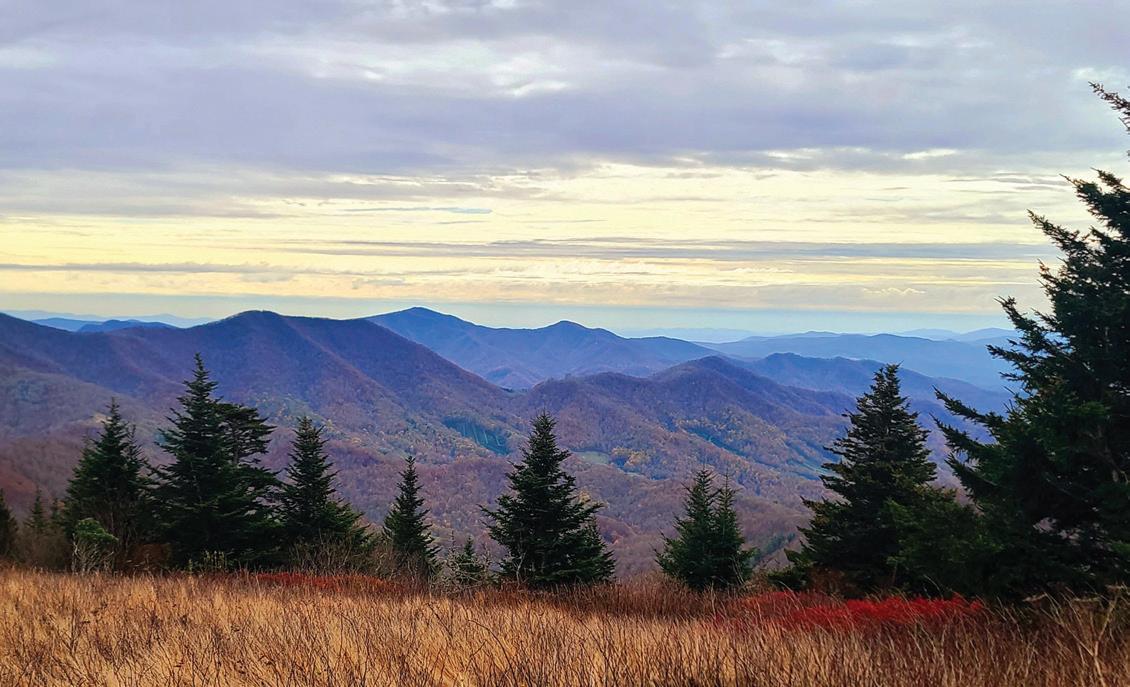
Photo by Faith Lynn
The Thanksgiving Turkey
A Short Story by Diana Tolley
Jake Turner tightened his legs around a limb of the big, ol’ tall oak tree where he was hiding. His butt was sure gettin’ cold but, then again, it was already numb from sittin’ in the tree all morning. He reckoned he’d survive, though. His legs just needed some adjustin’ to accommodate his butt and keep from falling, which would be bad, for sure. But scaring any game birds around the area would definitely be worse. Daddy had taught him the ways of the woods and how to be a responsible hunter, where the best places were, and to just take what the Good Lord offered and no more. A feller had to think about such things if he was to be a man one day soon. That’s what Daddy always said. So there Jake was, doin’ what men did to put food on the table, his daddy’s gun laying across his lap.
The next day was Thanksgiving in the mountains of upper East Tennessee. It was that time of year when all the family got together and cooked a mountain of food, sat around filling their bellies with good eats, and caught up on all the family news (or gossip as Daddy called it). His mother had wanted the turkey a day early so she could clean it and get it in the oven overnight. Jake, being “almost a man” now, had volunteered (practically begged) to be the one who went huntin’ for the turkey to help with Thanksgiving dinner. After some head scratching and quiet debate between his mama and daddy, he finally had permission to do just that. So, meat for the family Thanksgiving table was up to him.
First light had seen the 14-year-old wrapped up like one of those mummies in his school books, waitin’ on a wild turkey to amble by. The mountain was full of ‘em this time of year so he just had to be patient. Mama’s orders were strict and final: be careful, bring home a holiday bird, and don’t take all day. But then, she didn’t quite understand the manly concept of huntin’ patience. A body could never rush the fine art of bringing home wild game to fill the table. Yes, sir, Jake thought, staring off into the distance through the trees. It was a manly endeavor for sure, one that took skill, cunning and stealth. One could never put a timer on something so important. He took out the cloth that held his biscuit and fried fat-back and ate quietly as he kept an ear out for movement in the leaves below. As the sun began to peek up over the ridge, Jake finally heard the sounds he’d been waiting for: the soft cluck and call of wild game birds. He slowly eased his
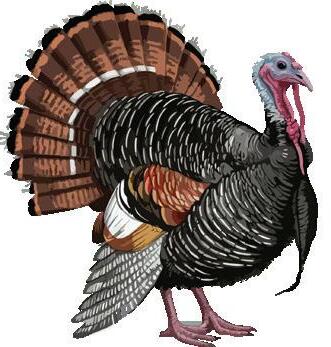
head to the side and spotted three or four turkeys a few feet away, scratching at the ground and looking for breakfast. There were some fat hens, with a mix of brown, white and black feathers, not as vibrant as the males that accompanied them. Any of them would’ve made for a good spread, but it was the dominant tom that had Jake’s eyes sparkling. The bird appeared to be way bigger than most of the others, makin’ him the head honcho. He strutted and clucked like he owned the woods and nobody better dare to challenge him.
Suddenly, one of the other males got a little too close and the tom spread his tail feathers and prepared to put deal with the upstart. The plumage glistened with green, bronze and gold, with a little purple thrown in. His chest beard stood out as a warning that there’d be reckonin’ if the lesser gobbler didn’t back away.
Jake could almost hear it in his head: “Step back, you puny excuse for a turkey! Or I will be forced to flog you featherless, right here in front of all my girls!” The thought was hilarious but so real to the young boy that he accidentally let a giggle escape.
The turkeys all stopped dead still, looking around skittishly for what intruded upon their daily foraging. Jake froze as well. It was almost like a fancy picture out of one of those magazines his sister liked to read. Not a sound, not a move, not a blink from any of them. The tom must have gauged it a dangerous situation because he started shuffling the rest of the flock back toward

the woods and out of the clearing. Jake knew that he only had a small window of opportunity to get a good aim at the biggest wild turkey that he’d ever seen. He slowly eased the barrel of his daddy’s old Winchester shotgun up to his shoulder. His movements were slow and not so steady, but Jake got a good bead on the big gobbler. Just as he started to squeeze the trigger, a noise rustled the leaves in the direction the turkeys were headed. The whole lot of them suddenly turned, wings a flappin’ and cries of distress, heading back toward the tree where the boy sat, shotgun at the ready. It happened so fast, yet in that moment, Jake could have sworn it all came about in slow motion.
The birds, wings spread wide and squawking in terror, lifted off the ground and headed straight for the branches of the nearest tree; which was exactly straight at the young hunter! The first hen that lit on a branch continued to scream at the others. One by one, all the wild turkeys flew into that tree, right at the boy. As he grabbed for a hand hold on the trunk, he let go of the gun, and tried to lock his legs around the limb where he sat. The last to hit the tree was, of course, the big tom.
Seeing a human in the very canopy where his flock was supposed to be safe, that big ol’ fowl decided to take matters into his own talons. With his tail fan spread wide, his waddle bright red and swinging furiously, the tom began to defend his flock from the enemy. Jake screamed and hid his face against the tree trunk. The wind picked that very moment to slap the clearing with a couple of mighty gusts, strong enough to create a torrent of leaves and debris from the ground swirling into what old timers called a wind devil, and peppering everything in its wake with debris.
This, of course, just added to the drama in the tree, but when Jake’s old family dog, Blue, ran into the clearing, the unthinkable happened. The canine, thinking his family member was in peril, growled, barked and tried his best to get up the tree to protect and defend. The other turkeys, seeing danger on all sides, tried to take off for other trees, scattering as they flew. But Jake and the big tom were having it out, both

swatting and yelling at each other. The boy tried to hang on to the tree branch with one hand and punch out with the other to keep the turkey from flogging him. Just as he thought the bird was never gonna give up, it caught his shirt in one of its long, sharp talons, wings beating at his head. Jake reached out to knock it away but his hand caught it around the neck, which overbalanced both of them. He felt his legs slip, and with no other purchase to be had, he grabbed hold of the bird with both hands.
Down they went. Fast and hard. Never let it be said that dirt is a cushion of any sort. In fact, the ground rose up so fast, Jake never had time to think, or to let go of that flappin’ bird. He landed face first in the dirt with the breath knocked out of him.
The wind died down and everything was suddenly quiet in the clearing. Even ol’ Blue stopped his barking and growling. He walked over to where the boy laid still and whined.
After a few minutes, Jake groaned and raised up, spitting out dirt and debris, and shook his head to clear it. Looking around, he saw the dog sitting right next to him with his furry head cocked sideways in confusion. As he got his breathing back to normal, he sat up and took stock that all his pieces-parts seemed to be in the right place and none of ‘em didn’t hurt too much. It took a few more minutes before he realized what had happened. Looking up with one eye squinted, he saw the sun was getting a good hold on the morning. Then he looked down. There where he’d been laying, with one wing spread out crookedly, was the big tom turkey. Dead as a doornail. When they’d fallen out of the tree, Jake hadn’t let go of him and, apparently, had landed right on top of it.
With his tail wagging furiously, Blue looked from the boy to the turkey, and back again, his tongue lolled out, happily panting. Surprise covered both faces as they stared at each other.
“Well,” Jake said, “I reckon a Thanksgiving turkey is a Thanksgiving turkey, no matter how it came to be.” With a deep breath, he rubbed ol’ Blue’s head and stood up, awkwardly dusting himself off. “Let’s get this here bird back to Mama, so she can start fixing him up right nice.”
Collecting daddy’s shotgun, then grabbing the turkey by the legs, young Jake Turner made his way home, shaking his head as he walked. He knew it would make a fine story at the Thanksgiving table tomorrow, but he was also sure nobody would believe it much. Still, he couldn’t wait to give account of how he’d brought home the holiday turkey without firing a single shot. There were a lot of blessings right there in the telling; blessings that everyone was grateful for when they heard it.
And Jake? Why, Jake smiled all the way home, rubbing his sore hip and still spittin’ out dirt, but counting himself more than lucky.
Fun & Games
(For
kids of ALL ages!)

November Word Search
Armistice Day
Beaver Moon
Billy Graham
Chrysanthemum
Daniel Boone
Edwin Hubble
Election Day
Fall
Fall Leaves
Football
Gettysburg Address
Gratitude
Indian Summer

James Polk
Kristallnacht
Marie Curie
November
Pumpkin Pie
Sagittarius
Scorpio
Suez Canal
Thanksgiving
Topaz
Turkey
Veteran's Day
Windy

Fun Fact
George Washington issued a proclamation on October 3, 1789, declaring a national day of thanksgiving would be held on Thursday, November 26, 1789. It was our new nation's first holiday. It didn't become an annual holiday until 1863 when Abraham Lincoln, guided by our first president, made a similar proclamation, also on October 3, declared the last Thursday in November an annual day of thanksgiving.

Every fall, I watch the leaves give in to the wind. They’ve spent months soaking up the sun, weathering storms, and shading everything beneath them. Then one cool morning, they turn loose without a fight. They don’t beg to stay. They just let go. And I stand there, rake in hand, wondering why it’s so easy for the trees and so hard for us.
Letting go of your past is never as simple as dropping a leaf. We hold on tight to memories, old hurts, and habits that don’t serve us anymore — afraid that if we let go, there’ll be nothing left. But I’ve learned in both life and landscaping that growth only comes after the shedding. The tree doesn’t lose itself when it loses its leaves; it’s just making room for what comes next.


LESSONS IN LIFE & LANDSCAPING When the Leaves Let Go
When I rake, I think about that; about how each leaf once played its part, but now it’s time for it to return to the ground, break down, and feed what’s coming. There’s beauty in that cycle if you pay attention. The past isn’t wasted; it becomes the soil for new strength, new understanding, and new life.
Some folks spend years trying to hold on to what’s already fallen. They live in regret or fear, letting the weight of yesterday rot at their roots. But you can’t grow that way. You’ve got to pick up the rake, clear your ground, and trust that even the barest season has purpose.
Landscaping teaches patience. You plant, you prune, you wait. Some things die back, and it feels like failure — but it’s not. It’s preparation. Life’s the same way. Sometimes the hardest pruning leads to the strongest bloom.
Lessons


By Ericka Hughes
So when life feels stripped down and cold, don’t mistake it for the end. The tree isn’t dying — it’s resting. It’s gathering what it needs to return even fuller. We’re no different.
Every season brings its own kind of work, and every ending has its quiet wisdom. The leaves will fall whether you’re ready or not. All you can do is face the wind, trust the process, and keep tending your roots. Because come spring, you’ll see — the letting go was never the loss. It was the making of something new.



Leaves can suffocate your lawn if left too long. A thick layer of leaves blocks sunlight and air from reaching grass. If they stay wet, they can trap moisture and cause mold, dead patches, and disease over winter. But those same leaves make excellent compost!
Not all leaves need to be removed. A light scattering of leaves actually protects the soil, retains moisture, and provides nutrients as they decompose. You can mulch them finely instead of hauling them off.
Mulching beats bagging. Running over dry leaves with a mower chops them into small pieces that break down quickly, feeding your grass naturally. This saves time, landfill space, and money on fertilizer.
Raking is good exercise. It strengthens your back and shoulders, and keeps you outside breathing fresh autumn air. (Just remember to bend your knees, not your back.)
Timing matters. The best time to do major cleanup is late fall, after most leaves have fallen but before the ground freezes, giving you a clean slate before winter sets in.

THE LAST WORD
The Crock-Pot
By Noah Blair
As I write this, October is almost gone, and the trees are painted in shades of orange, red, and yellow. Their leaves litter lawns and roadways around town and there’s a distinct chill in the air that we all know means fall is in full swing. Camouflage or college football team attire is displayed proudly on just about everyone you meet.
This is my favorite time of year and I never get tired of what this season brings. If you’re a busy parent trying to juggle the daily schedule and still provide a warm meal for supper or someone who enjoys warm meals but dislikes the effort associated with those meals, I’m sure you’re aware of the ultimate MVP of the kitchen: the slower cooker. Or as many of us call it, the Crock-Pot.
The Crock-Pot is a godsend to those who don’t have the extra time to prepare a meal when we get home in the evenings. And let’s be honest, who doesn’t like the idea of coming home from a long day at work to a house filled with the smell of a warm meal waiting on them! The Crock-Pot has become such a popular kitchen staple that the month of October is even called “Crocktober” across many online cooking channels.
This got me thinking as I scrolled through recipe after recipe of “Crocktober” meals options. How did we get here? Where did the Crock-Pot come from and how did it become such a necessity for so many American families.
Irving Naxon, the inventor of the Crock-Pot got his inspiration for the kitchen appliance from stories his grandmother told him when he was a child. As a young girl she participated in the tradition of preparing the Sabbath meal in the family’s one-gallon crock then taking it to the local bakery to cook in their cooling bread ovens overnight. The low and slow heat would produce the best meal and would allow the family to follow the religious teachings of no working on the sabbath.
Naxon was a brilliant man and inventor. He was Western Electric’s first Jewish engineer and passed the patent bar exam because he was unable to afford the lawyer fees associated with the patent process. In addition to the Crock-Pot, he invented an electric frying pan, the hula lamp (precursor to the lava lamp) and his work in tele-signs led to the famous New York “Zipper” in Times Square. The Crock-Pot wasn’t always called such. The original name was changed in the 1970s when Naxon retired and sold his patent to Rival Company who switched from the original name “Naxon Beanery” to the now famous Crock-Pot. Naxon also changed his name, from Nachumsohn, in 1945 due to anti German sentiment in the U. S. during WWII. With a new name, the Rival Company offered two colors, fitting of the 1970s – harvest gold and avocado, and each cooker came with a recipe booklet filled with tried recipes for the appliance. The Crock-Pot’s revamped look and branding fit right in line with other new products like Tupperware, microwaves, and frozen dinners designed to offer more convenient options for American families.
The Crock-Pot had $2 million dollars in sales its first year but quickly grew to $93 million just four years later making the Crock-Pot a mainstay in American households.
The next time you need an easy meal or have a church potluck to attend and you pull out your trusty Crock-Pot, you’ll know the history of the beloved appliance. Wondering if Crock-Pot fame has slowed down any in recent years? On America’s most visited online recipe sight allrecipes.com, there are over 2,500 recipes specific to the Crock-Pot, so it’s safe to say it hasn’t slowed down at all.
Remember God Loves YOU!
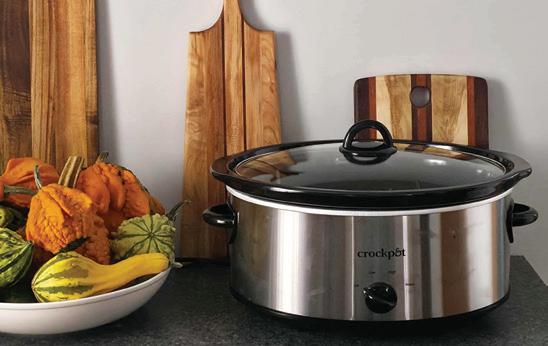
Our favorite winter kitchen appliance: the Crock-Pot.
Photo by Amy Campbell Clark