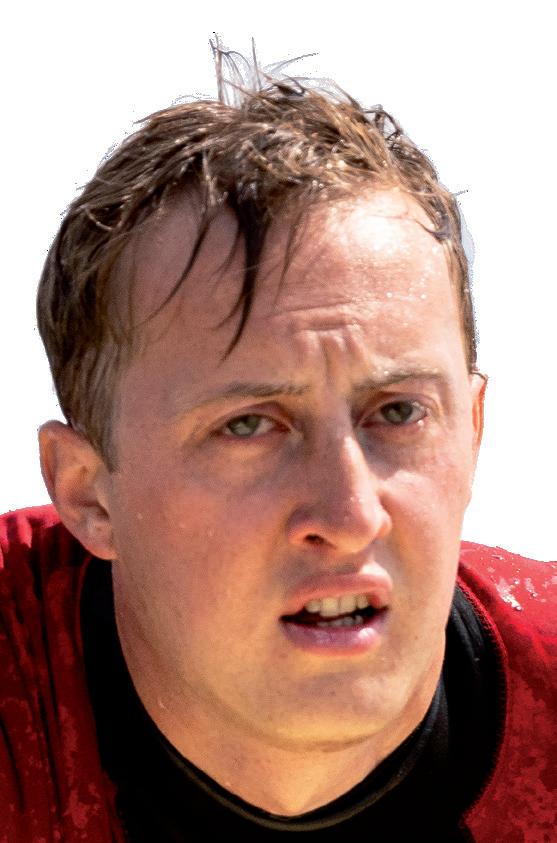
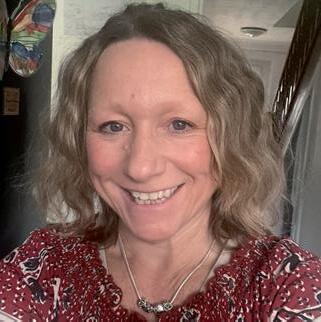
After 11 years of saving lives at sea, Your RNLI editor Rob Westcott has retired from his lifesaving duties! I hope you’ll agree that Rob has done an amazing job at keeping in touch with you and showing you the difference your support makes.
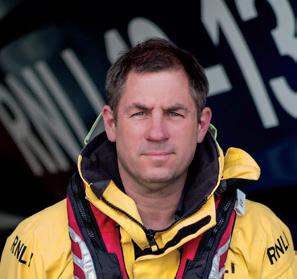
I’m honoured to take the helm as your new editor for your autumn issue and beyond. I feel I have big shoes, or rather big yellow wellies, to fill! But, just like Rob, I hope every issue helps to remind you how loved and valued you are.
Saving lives at sea is a team effort – one that starts and ends with you. If it wasn’t for you, and a whole array of trained lifesavers, swimmer Joanna wouldn’t be here today. Read more about her miraculous survival on page 6.
As the seasons change, many people like you are still enjoying cold water dips and swims. To keep you safe all year round, see page 10 for some top tips on how to warm up safely, and one swimmer’s experience of hypothermia.
Plus, when Your RNLI reader Kate Craven told us she wanted to know more about RNLI lifesavers, we said: ‘Let’s start with you!’ Meet Kate on page 9.
Vicki Lovegrove-Fray Your RNLI Team
Email: your_rnli@rnli.org.uk
WE CAN’T DO IT WITHOUT PEOPLE LIKE YOU: How would you like to hear from us? We’re so grateful for the support you have shown for the RNLI – it all helps save lives. But if you would rather not hear from us, or would like to change how we contact you, please get in touch. Just call 0300 300 9918 (from the UK), 01 511 9837 (from Ireland), or +44 1202 663234 (from any other country) on weekdays, 8am–6pm, go to RNLI.org/preferences or write to our Supporter Experience Team, RNLI, West Quay Road, Poole, BH15 1HZ.
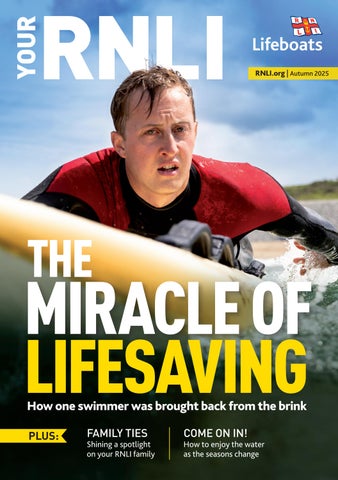
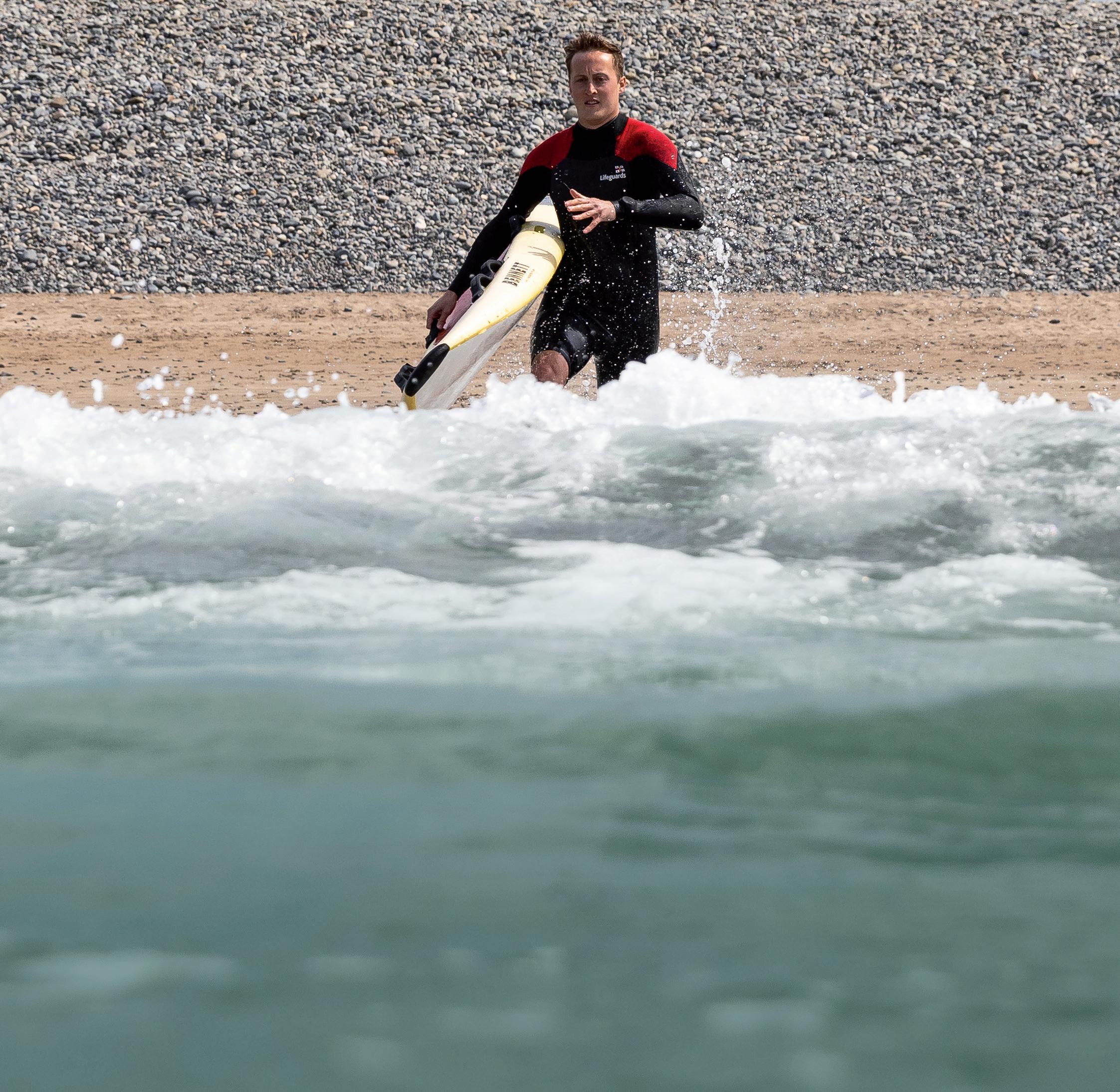
Cover photo: RNLI Lifeguard Matty McLeod launching his rescue board on Newgale Beach
Credit: RNLI/Nathan Williams
4 MILLION people are
A report by the Worshipful Company of Actuaries reveals that around 4 million people are alive today thanks to the RNLI. Peter Tompkins, who prepared the report, explains how they estimated the figure: ‘The RNLI has maintained a remarkable record of data over the last 200 years. We combined this with the national record of population statistics.’
The result shows the incredible number of people who are here today thanks to RNLI lifesavers who saved their ancestors. If you think you could be one of these 4 million people, let us know at your_rnli@rnli.org.uk
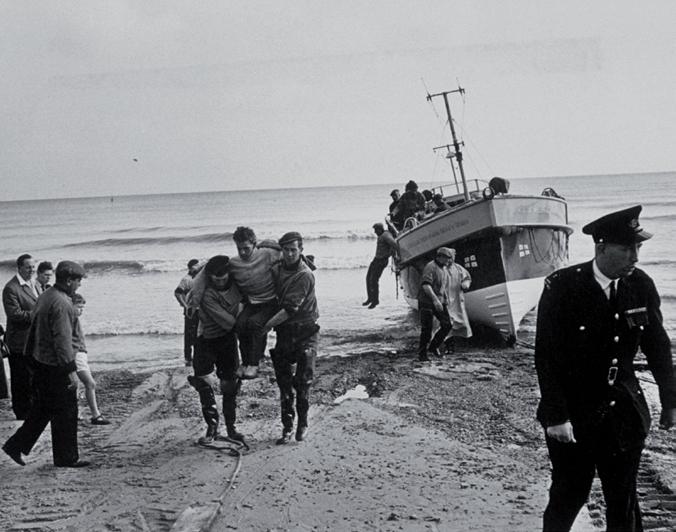
Thanks to the lifesavers of the past, millions of people are alive today. Photo circa 1964–67: Cromer lifeboat volunteers help a young man ashore after deliberately beaching their Oakley class lifeboat William Henry and Mary King 37-13.
RNLI volunteers putting the flag back in its rightful place
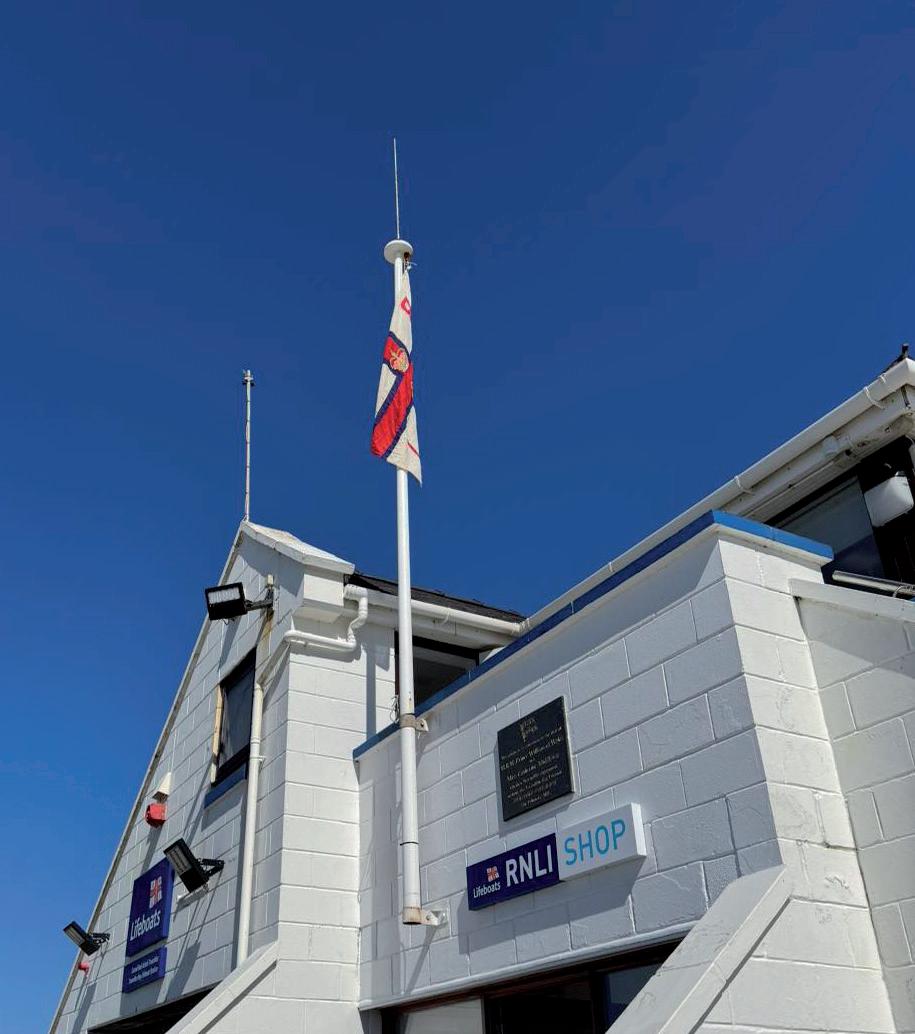

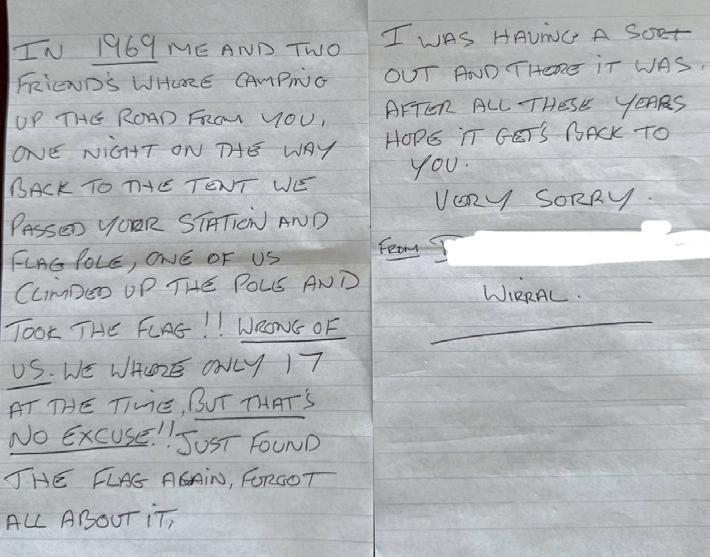
A flag that was taken from Trearddur Bay Lifeboat Station 56 years ago has been returned – along with an apology note and a donation. The note reads:
As you sit and read this and every issue of Your RNLI, take a moment to think about the enormity of your kind support. Everything you read about is made possible by you – the rescues, the safety advice, the kit, and the innovations – thanks to the way you support the RNLI. Whether that’s through the Lifeboat Lottery, the RNLI Shop, or an RNLI appeal – it all makes a difference. Thank you for everything you do, however you do it, to help save lives at sea.
‘In 1969, me and two friends were camping up the road from you. One night, on the way back to the tent, we passed your station and flagpole. One of us climbed up the pole and took the flag!! Wrong of us. We were only 17 at the time, but that’s no excuse!! Just found the flag again. Forgot all about it. I was having a sort out and there it was. After all these years, hope it gets back to you. Very sorry.’
Lifeboat Operations Manager Paul Moffett says: ‘It’s great to have a piece of station history returned after so many years. Thank you to the culprits for the kind donation and for putting a smile on our faces. All is forgiven!’
Did you know you can receive some RNLI updates by email? You’ll be helping with sustainability and reducing admin costs, making your support go even further. Sign up for RNLI emails at RNLI.org/MyEmail and you’ll get RNLI news delivered straight to your inbox.
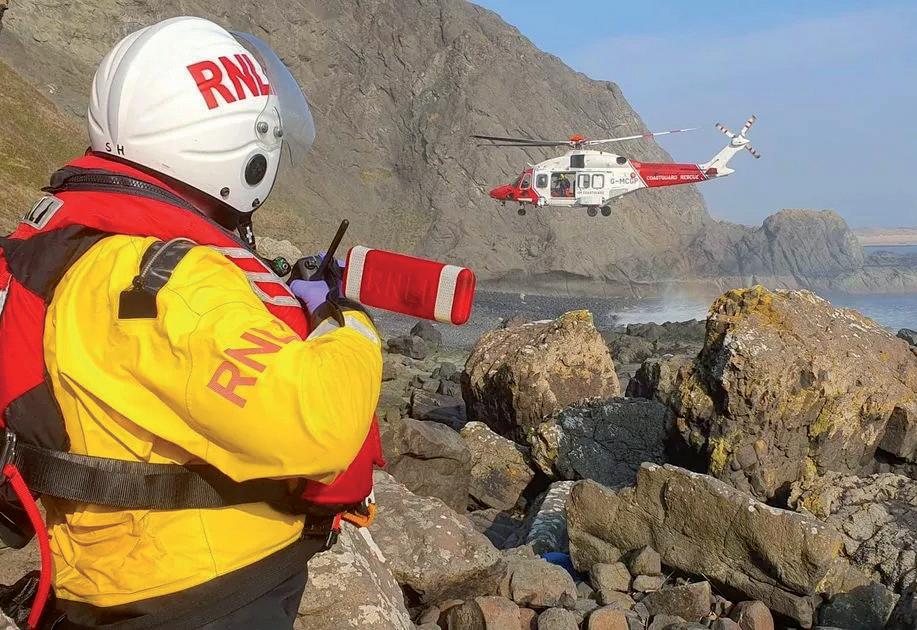
ANSTRUTHER | 9 MARCH 2025
When Jo Randall fell from Fife’s Elie Chainwalk, the Anstruther RNLI lifeboat volunteers rushed to her aid. Having landed on rocks, Jo was in a lot of pain and unable to move. The lifeboat crew cared for her, keeping her as warm and comfortable as possible while they waited for the Coastguard rescue helicopter to arrive and airlift her to hospital. ‘They were there at my time of need,’ Jo says. ‘I’m so grateful.’
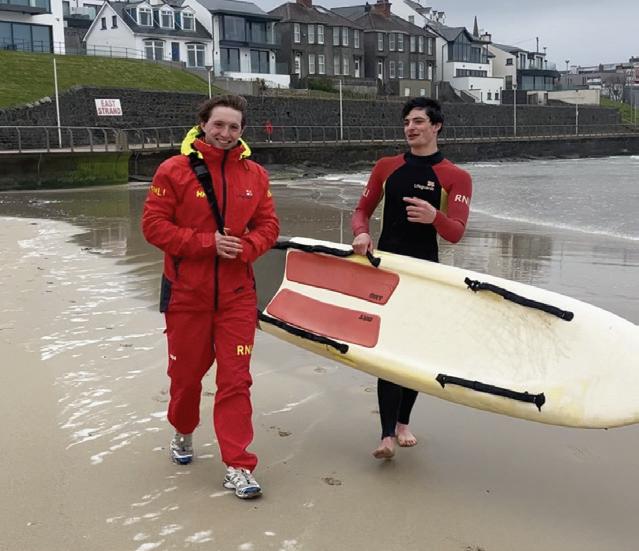
Six-hour shout
| 18 APRIL 2025
RNLI lifeguards patrol beaches, ready to rescue at a moment’s notice – and with good reason. At Portrush East Strand Beach, five children were swimming. But the conditions changed suddenly, and strong winds pushed them away from the shore, towards dangerous rocks. Lifeguard Ethan Hill launched into action, grabbing his rescue board and paddling to the children. He helped them safely back to their parents on the beach.
MARGATE AND RAMSGATE | 6 MAY 2025
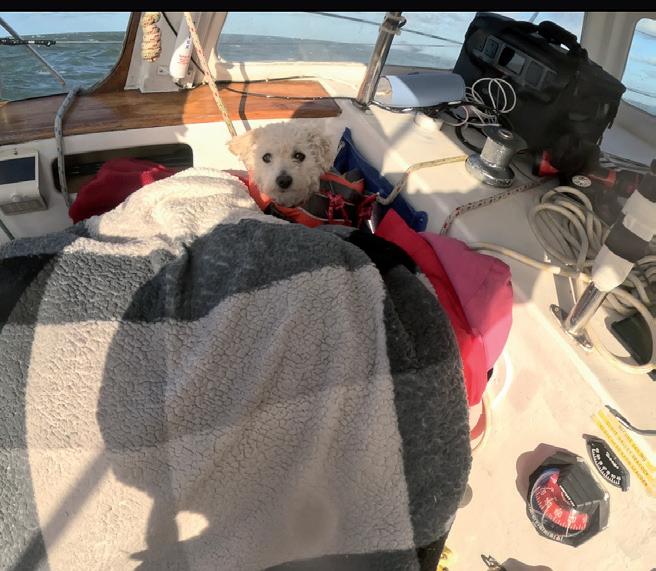
Just 2 days before the 80th VE Day anniversary, Margate and Ramsgate lifeboat crews responded to a Mayday distress call from a yacht in difficulty, rescuing three people and a dog, who was apparently unphased by the drama! The 6-hour rescue involved the two RNLI stations that took part in Operation Dynamo 85 years ago in 1940. Their lifeboats and their volunteer crews were among the little ships that evacuated 300,000 Allied soldiers from the beaches of Dunkirk, France.
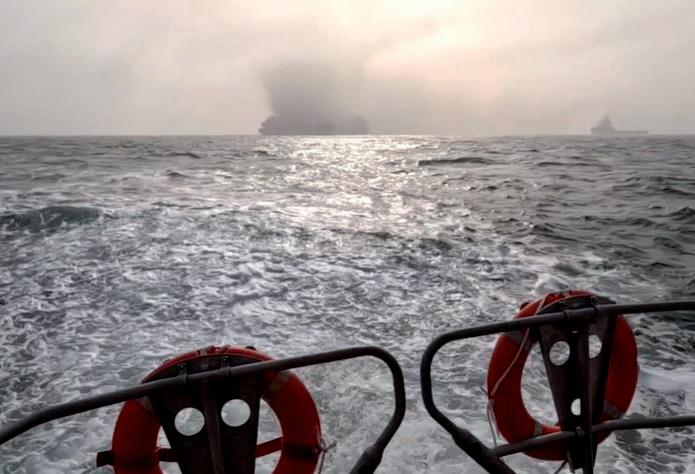
Two large vessels, Solong and Stena Immaculate, collided in the North Sea, leaving their crews in desperate need of help. Both ships were on fire, and a number of crew members were in the water. RNLI volunteers from Bridlington, Cleethorpes, Mablethorpe, Skegness and Humber all launched their lifeboats to the rescue.
The lifeboat volunteers worked together with other lifesaving organisations and nearby vessels, putting all their training into practice. They spent hours at sea in challenging conditions, bringing people to safety. They also searched for a missing crew member from the Solong, who was sadly never found.
Mablethorpe RNLI Lifeboat Volunteer Davina Silk says: ‘I’d never witnessed an operation of that scale before – and I don’t know if I will again. My fellow crew members were amazing and worked tirelessly. It made me feel so proud to be part of the crew. Our training kicked in immediately, and thankfully we were able to rescue multiple casualties. It’s a day I’ll never forget.’
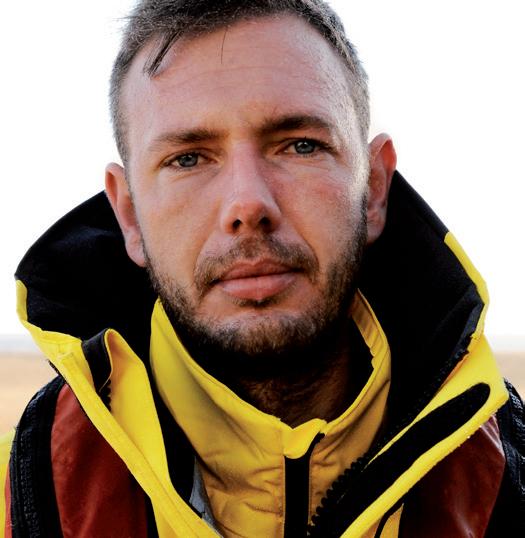
‘As a station, we’re proud of all those involved in the rescue. Everyone truly came together for their fellow sailors.’
CRAIG WILLARD, COXSWAIN, SKEGNESS RNLI
One swimmer’s survival proves that with teamwork, miracles can happen
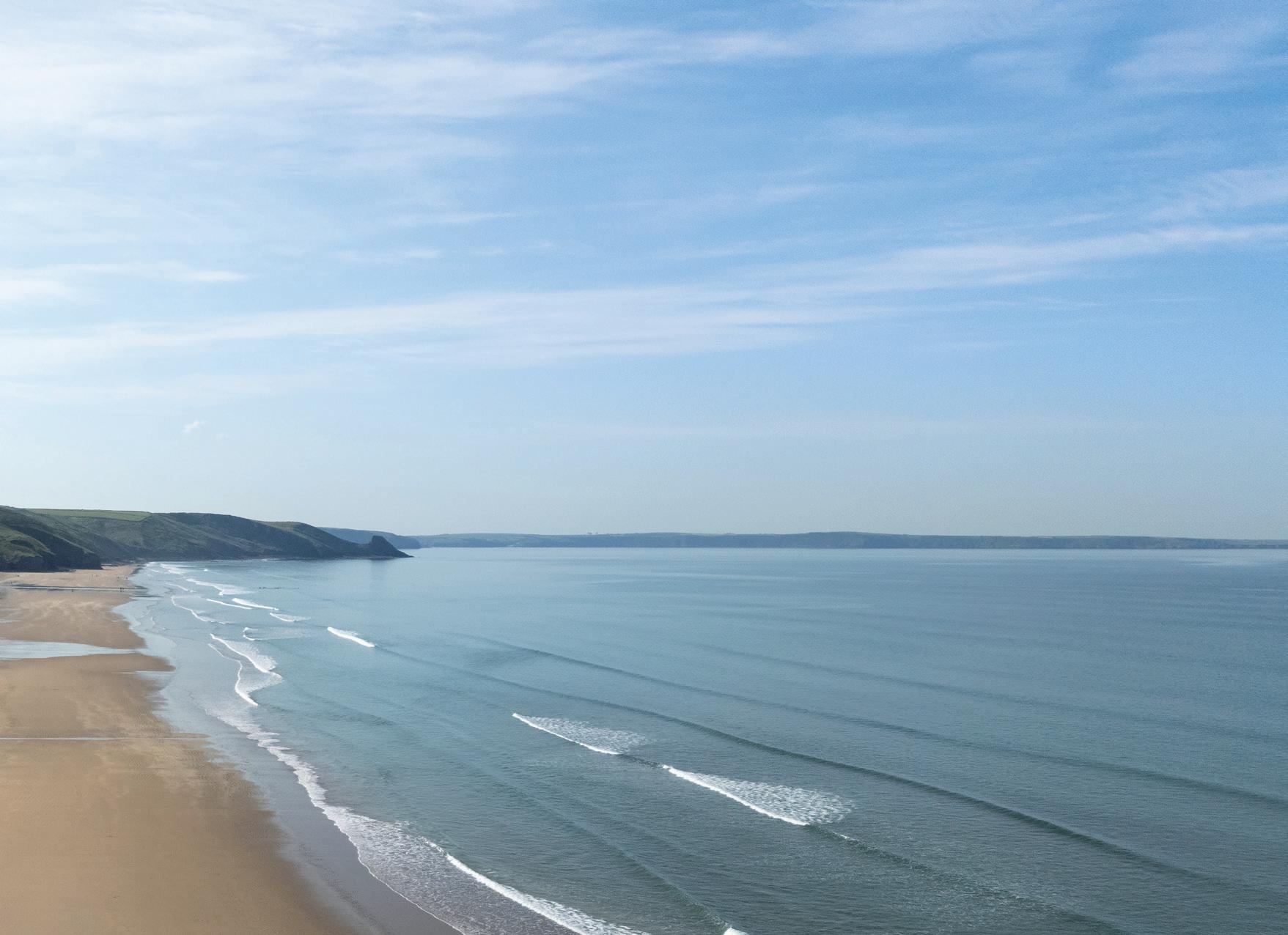
It was a bright, July morning when holidaymakers Joanna and Philippa went for an early swim at Newgale Beach. When Philippa suddenly became out of her depth in the choppy water, she knew they had to get out, but Joanna was no longer by her side. Making it safely back to the beach, Philippa yelled to her husband Bob to call for help.
The RNLI lifeguards weren’t on duty yet, so there were no red-and-yellow flags to show the friends the safest place to bathe. There were no lifeguards to spot the rip current in the water, or to rescue Joanna as it dragged her out to sea.
After calling 999 for the Coastguard, Bob and Philippa watched from the beach, desperately waiting for help to arrive.
Little and Broad Haven lifeboat crew launched first in their inshore D class lifeboat Eric Howland, swiftly followed by St Davids lifeboat crew in their all-weather Tamar class lifeboat Norah Wortley. While the D class crew searched along the surfline, the all-weather crew searched beyond it.
Meanwhile, RNLI Lifeguard
Matty McLeod arrived at the lifeguard base on the beach. He’d been at home getting ready for his shift when his supervisor, Noah Harvatt, called to tell him the lifeboats had launched to someone in difficulty in the water. George Morgan, their fellow lifeguard and a volunteer crew member at Little and Broad Haven Lifeboat Station, had alerted the lifeguard team by mobile phone.
Looking through his binoculars, Matty spotted Philippa and Bob waving to the D class lifeboat crew and realised Joanna was still out there … but where? She could’ve been swept anywhere along the 2-mile beach. There was no time to waste. He grabbed a rescue board and ran full pelt down the beach and into the water.
Matty couldn’t believe it when he spotted Joanna almost straight away in the choppy surf and big swell.
‘She was face down in the water,’ recalls Matty. ‘I jumped off the board and rolled her over. She was blue and unresponsive. I had to keep her airway open.’
With conditions being too dangerous for the D class crew to pick them up, Matty began dragging Joanna through the neck-deep water back to shore –
and the battle to bring her back from the brink began.
‘It was a fairly long drag back in,’ continues Matty. ‘When we were waist-deep, a member of the public came in and helped me carry Joanna out, which I was really grateful for.
‘An on-call nurse on the beach helped me with giving Joanna CPR. I was shattered from bringing her in and was trying to catch my breath, so this was a massive help. Then the paramedics arrived and took over from us.’
‘I told myself: “We’ve done all we can.” But it didn’t look good.’
MATTY MCLEOD, RNLI LIFEGUARD, NEWGALE BEACH
The rescue effort on the beach continued to grow as more members of the lifeguard team arrived, along with
continued ...
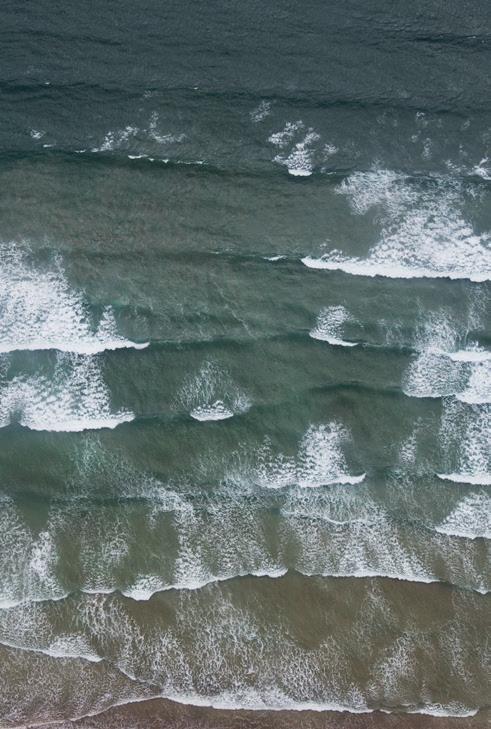
• Don’t try to swim against it – you’ll get exhausted.
• If you can stand, wade don’t swim.
• If you can, swim parallel to the shore until free of the rip and then head for shore.
• Always raise your hand and shout for help.
• If you can’t get back to shore, Float to Live until help arrives.
• If you see someone else in trouble in the water, call 999/112 and ask for the coastguard.
For more safety advice, visit RNLI.org/safety
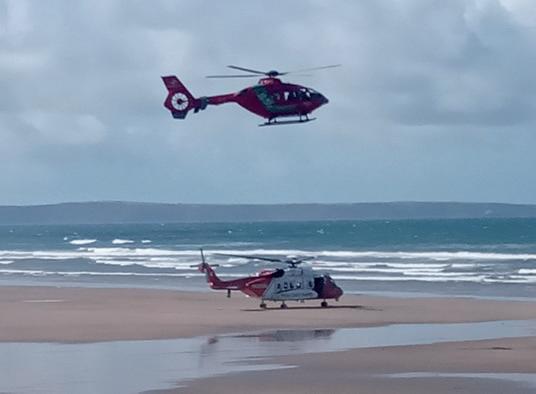
other emergency services including Coastguard rescue teams, a Cymru High Acuity Response Unit, the Wales Air Ambulance and a rescue helicopter from the Irish Coast Guard.
Lifeguard Calum Walton had brought the RNLI First Responder Bag in case it was needed, and he was holding the fluid and oxygen for Joanna. Joanna was now receiving CPR by a machine, allowing the teams to come up with an evacuation plan.
Matty held Joanna’s hand and helped prepare her for the transfer into the air ambulance. ‘I told myself: “We’ve done all we can.” But it didn’t look good.’
Joanna was cared for by the medical team at Carmarthen and Glangwili Hospital. After spending 10 days in an induced coma, she regained consciousness. And over the coming months at a rehabilitation centre, she went on to make a full recovery.
Matty was overjoyed when he heard the news. ‘Hearing that she would recover was incredible. So many things worked out in a way that allowed us to have a positive outcome, and that’s down to everyone working together and doing what they’re trained to do.
‘I feel like I just did my part of the chain. RNLI lifeguards are trained to rescue. That’s why we’re there.’ ■
‘IT WAS A MIRACLE’
‘The hospital told me it was a miracle that I survived – that I should have died. But I woke up. And I finally got home months later after a lot of rehab and treatment.
‘If it was not for the quick reactions and incredible skill and professionalism of the RNLI lifeguards and lifeboat crews, I would not be here today. As well as making a donation, I have also become an RNLI member to give ongoing support to this wonderful lifesaving organisation, and I am making sure my Will includes a gift to the RNLI when my time does actually finally come.’
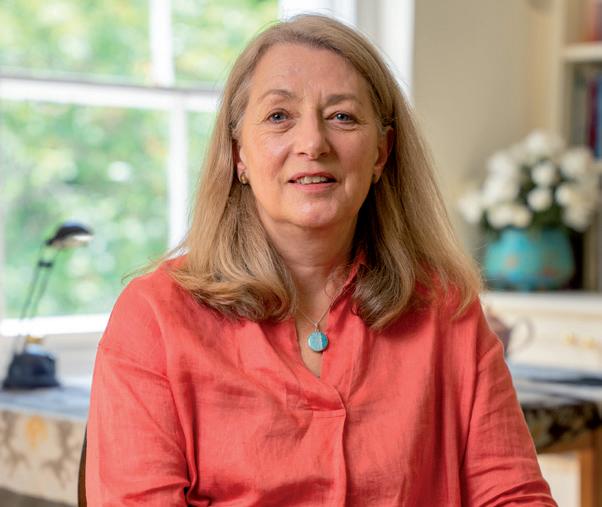
Joanna Hicks, saved thanks to a huge team effort
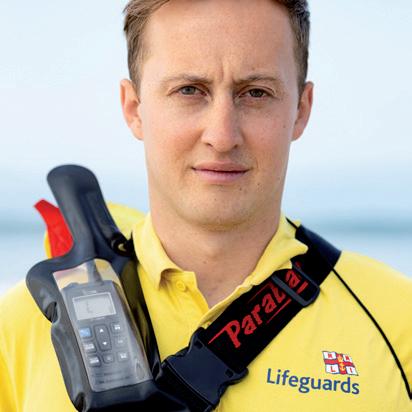
‘I feel like I just did my part of the chain’
MATTY MCLEOD, RNLI LIFEGUARD, NEWGALE BEACH
When Kate isn’t reading her latest issue of Your RNLI, she devotes her spare time to not one, not two, but three volunteering roles at Hunstanton Lifeboat Station. She is also a sales manager with Cadbury, a mum to three children and ‘a proud crew wife’.
Why did you join the RNLI?
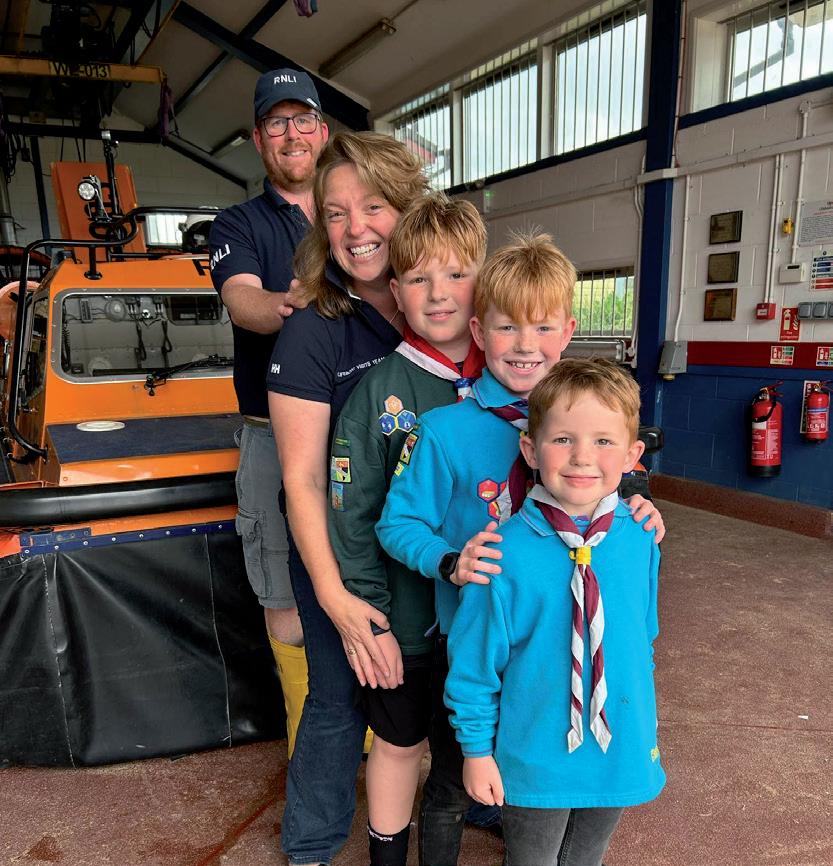
The best bit about being a lifeboat family is:
My husband Andrew joined the crew at Hunstanton when our eldest son was 9 months old – he’s now 11. I was so inspired by the public affection for the charity and how kids’ faces light up when they see the lifeboat, tractor and hovercraft. To them, the crew are superheroes!
How do you volunteer?
I’m a Lifeboat Visits Officer, Water Safety Education Lead and a Community Presenter.
What do you enjoy most?
Hunstanton’s Storm Force days! They attract young and old, tourists and locals, and so many people revisit us every year. We run them on Sundays throughout the holidays so that visitors get to see the crew and equipment on exercise, while learning about water safety.
Tell us about a memorable moment
On one Storm Force day, a 10-year-old boy asked the hovercraft commander a technical question. The boy’s grandma burst into tears and told us that her grandson is autistic and rarely talks. She was so grateful, she gave us a generous donation.
The pride. I introduce myself as a ‘proud crew wife’. Our three boys understand that when the pager goes off, someone needs Daddy’s help in the water. It’s part of our family DNA.
And the worst?
The fretting if the shout is a long time, especially if it’s in the middle of the night. The launch authorities are fantastic with the families – they keep us posted.
How much time do you give?
Four hours a week. I’d like to leave this earth feeling proud of what I have done, not regretting what I haven’t. It’s a huge juggle, but Hunstanton RNLI is fantastic to be a part of. We’re like an extended family. ■
Hear more from Kate in the RNLI 200 Voices podcast. Visit RNLI.org/kate
Feel inspired? Visit RNLI.org/volunteer
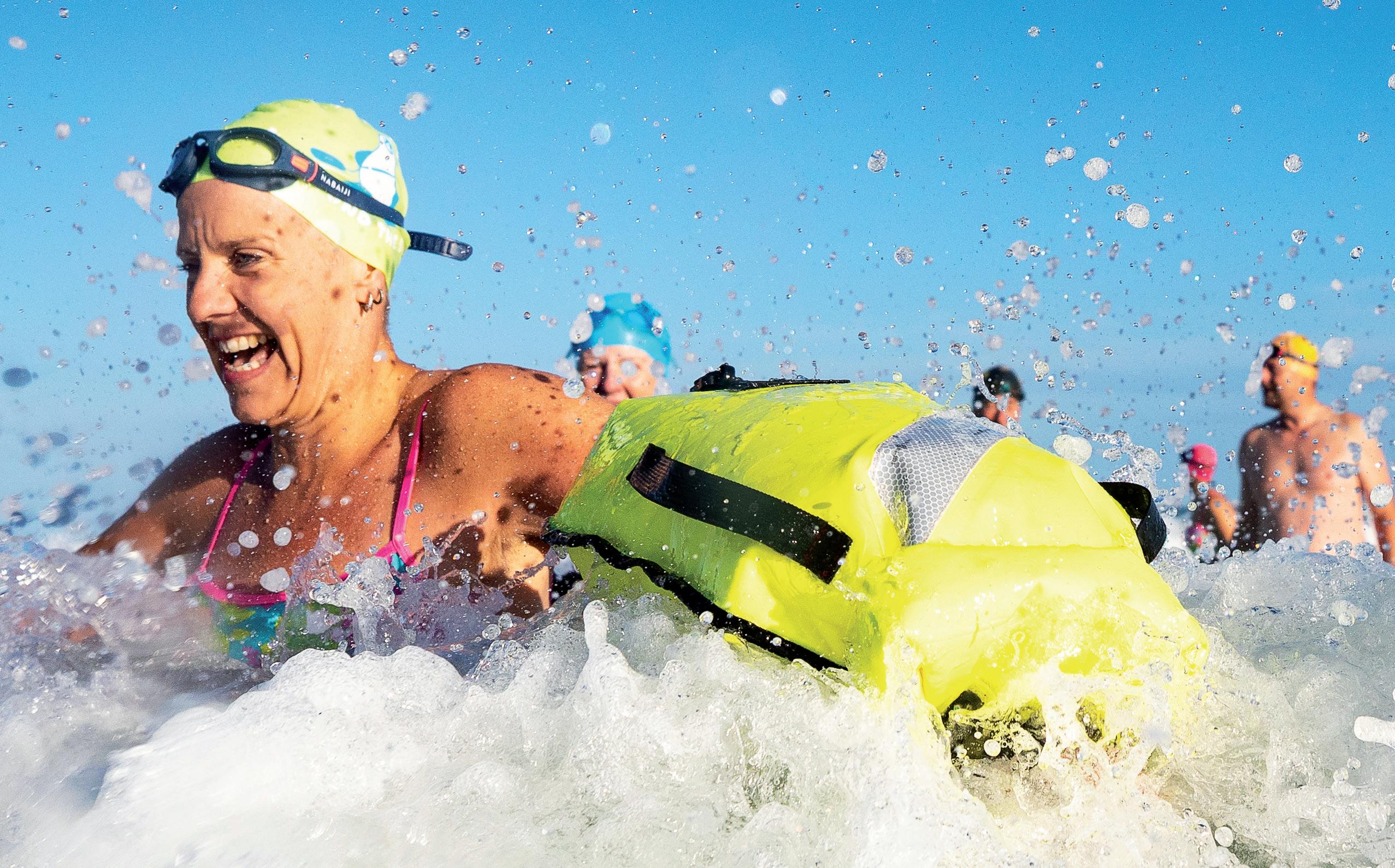
There’s a nip in the air, but that doesn’t have to spell the end to coldwater dipping. Here’s how to safely enjoy the water this autumn
Frost-topped sand, woolly socks and hot chocolate with friends – cold water swimming and dipping in autumn can be every bit as lovely as in summer. But dipping in the cooler months comes with an increased risk of afterdrop, where your core body temperature drops suddenly when you get out of the water. Symptoms of afterdrop include shivering, faintness, nausea and can lead to hypothermia, where your core body temperature drops below 35°C – a dangerous condition that RNLI supporter Seacailín McLaughlin experienced while swimming at Lisfannon Beach, Co Donegal.
‘The thing for me is how easily a beautiful moment can turn into a bad situation,’ Seacailín explains. ‘After about 10 minutes in
the water, I thought: “I’ll get out now” and turned to swim back to shore. I’d swum in the area about 30–40 times, but when I reached shore, I realised that I’d ended up in a different place from where I’d started.’
Seacailín got out of the water and walked across a marsh, looking for her partner who she’d left on the beach. ‘Initially I felt warm and energised – I wasn’t worried,’ she says. ‘I was mildly hypothermic but knew very little about hypothermia at the time. My legs were being scratched by brambles, but I was unable to feel it.’
When Seacailín’s partner found her, it was dark. Her legs were torn to shreds, she was shaking and her teeth chattering. Paramedics treated her for mild hypothermia. ‘Experiencing hypothermia taught me a few things,’ she says. ‘I would advise taking a tow
float and wearing a waterproof watch to time how long you’re in the water. I would also be aware of the water temperature and the possibility of hypothermia.’
To avoid afterdrop and the risk of hypothermia, it’s important to take simple steps to stay safe. RNLI Water Safety Partner Tim Doran recommends spending no longer than 10 minutes in water that is 10–15°C, though a 2-minute dip is enough to reap the health benefits.
When you’re out of the water, remove wet clothing, dry quickly and dress in warm, dry clothing. ‘Follow a three-layer rule,’ says Tim. ‘A thermal base layer to regulate body temperature, a warm mid layer for insulation, and an outer layer for protection, such as a waterproof and windproof coat, hat and gloves.’
Take shelter in a warm environment, warm up gradually and give your body at least 30 minutes
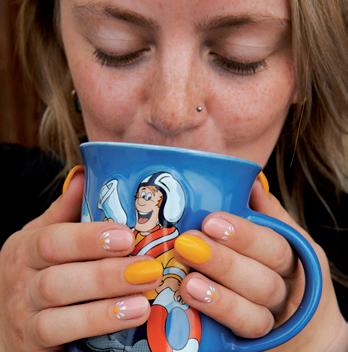
to fully recover. Warm drinks have a minimal effect on raising your body temperature, but they have a psychological benefit – the perfect excuse for that hot chocolate.
Avoid driving for at least 30 minutes and enjoy a cuppa instead! For
Symptoms of hypothermia include confusion, loss of coordination and becoming rigid.
If hypothermia is suspected, wrap the person in blankets and call 999 for emergency medical help.
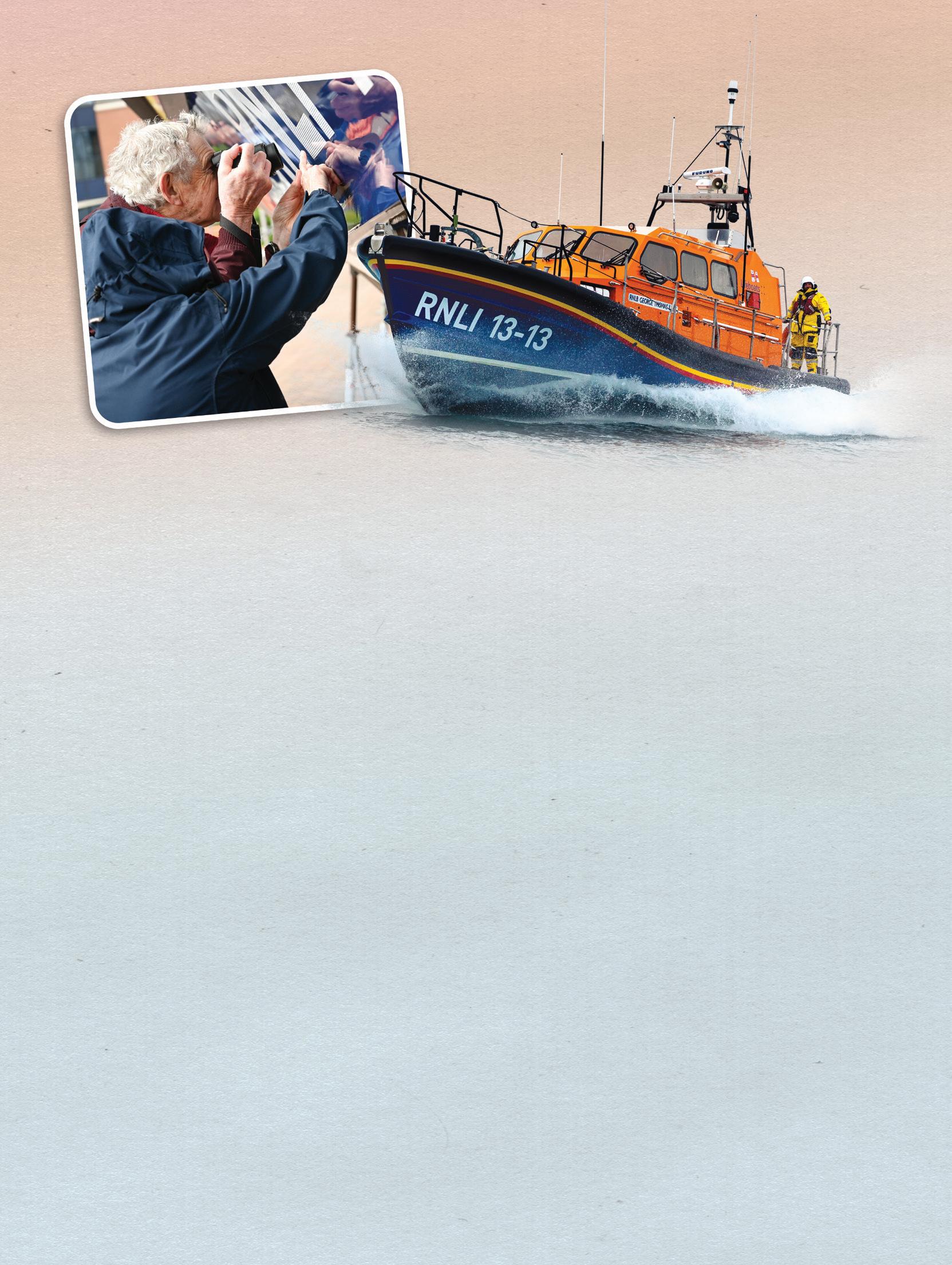
Do something special by adding the name of your loved one to the letters and numbers on Swanage RNLI’s Shannon class lifeboat George Thomas Lacy 13-13
With Launch a Memory, you can remember someone you miss, or celebrate someone still with us. For a suggested donation of £75/€75, you can add their name to the lifeboat, where it will appear alongside the names of other special people honoured in this way. Your loved one will then be beside the volunteer crew as they aid people in need along Swanage’s beautiful but sometimes treacherous coastline.
‘Your loved one will be part of every rescue and every life saved’