Model 275 HART Communicator for the digital transducer gain and rate settings. Tuning Set D provides the slowest response and K provides the fastest response. In addition, you can select User Adjusted, which allows you to modify tuning of the digital transducer.
Pressure Range High
Output Pressure, psi, bar, kPa
Table 10 shows Tuning Set guidelines for Fisher Controls actuators.
THE SHAPE OF THIS LINE IS DEPENDENT ON THE CHARACTERIZATION.
Pressure Range Low
A6537
Input Range Low
Input, mA or %
Input Range High
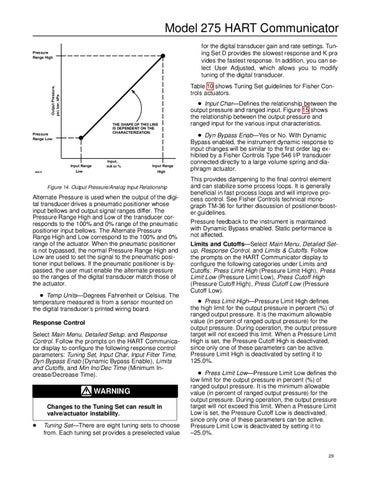
Figure 14. Output Pressure/Analog Input Relationship
Alternate Pressure is used when the output of the digital transducer drives a pneumatic positioner whose input bellows and output signal ranges differ. The Pressure Range High and Low of the transducer corresponds to the 100% and 0% range of the pneumatic positioner input bellows. The Alternate Pressure Range High and Low correspond to the 100% and 0% range of the actuator. When the pneumatic positioner is not bypassed, the normal Pressure Range High and Low are used to set the signal to the pneumatic positioner input bellows. If the pneumatic positioner is bypassed, the user must enable the alternate pressure so the ranges of the digital transducer match those of the actuator. D Temp Units—Degrees Fahrenheit or Celsius. The temperature measured is from a sensor mounted on the digital transducer’s printed wiring board. Response Control Select Main Menu, Detailed Setup, and Response Control. Follow the prompts on the HART Communicator display to configure the following response control parameters: Tuning Set, Input Char, Input Filter Time, Dyn Bypass Enab (Dynamic Bypass Enable), Limits and Cutoffs, and Min Inc/Dec Time (Minimum Increase/Decrease Time).
WARNING Changes to the Tuning Set can result in valve/actuator instability. D
Tuning Set—There are eight tuning sets to choose from. Each tuning set provides a preselected value
D Input Char—Defines the relationship between the output pressure and ranged input. Figure 15 shows the relationship between the output pressure and ranged input for the various input characteristics. D Dyn Bypass Enab—Yes or No. With Dynamic Bypass enabled, the instrument dynamic response to input changes will be similar to the first order lag exhibited by a Fisher Controls Type 546 I/P transducer connected directly to a large volume spring and diaphragm actuator. This provides dampening to the final control element and can stabilize some process loops. It is generally beneficial in fast process loops and will improve process control. See Fisher Controls technical monograph TM-36 for further discussion of positioner/booster guidelines. Pressure feedback to the instrument is maintained with Dynamic Bypass enabled. Static performance is not affected. Limits and Cutoffs—Select Main Menu, Detailed Setup, Response Control, and Limits & Cutoffs. Follow the prompts on the HART Communicator display to configure the following categories under Limits and Cutoffs: Press Limit High (Pressure Limit High), Press Limit Low (Pressure Limit Low), Press Cutoff High (Pressure Cutoff High), Press Cutoff Low (Pressure Cutoff Low). D Press Limit High—Pressure Limit High defines the high limit for the output pressure in percent (%) of ranged output pressure. It is the maximum allowable value (in percent of ranged output pressure) for the output pressure. During operation, the output pressure target will not exceed this limit. When a Pressure Limit High is set, the Pressure Cutoff High is deactivated, since only one of these parameters can be active. Pressure Limit High is deactivated by setting it to 125.0%. D Press Limit Low—Pressure Limit Low defines the low limit for the output pressure in percent (%) of ranged output pressure. It is the minimum allowable value (in percent of ranged output pressure) for the output pressure. During operation, the output pressure target will not exceed this limit. When a Pressure Limit Low is set, the Pressure Cutoff Low is deactivated, since only one of these parameters can be active. Pressure Limit Low is deactivated by setting it to –25.0%.
29