RUI MA
Selected Works
Bachelor of Science in Architecture
University of Virginia
01 The Burr Puzzle
Post Pandemic High-Density Housing
Spring 2021
Individual Project for ARCH2020 Housing Matters
Location: 2515 West Broad Street, Richmond, VA
Instructor: Jose Ibarra
Modified for ARCH4010 Individual Research Project
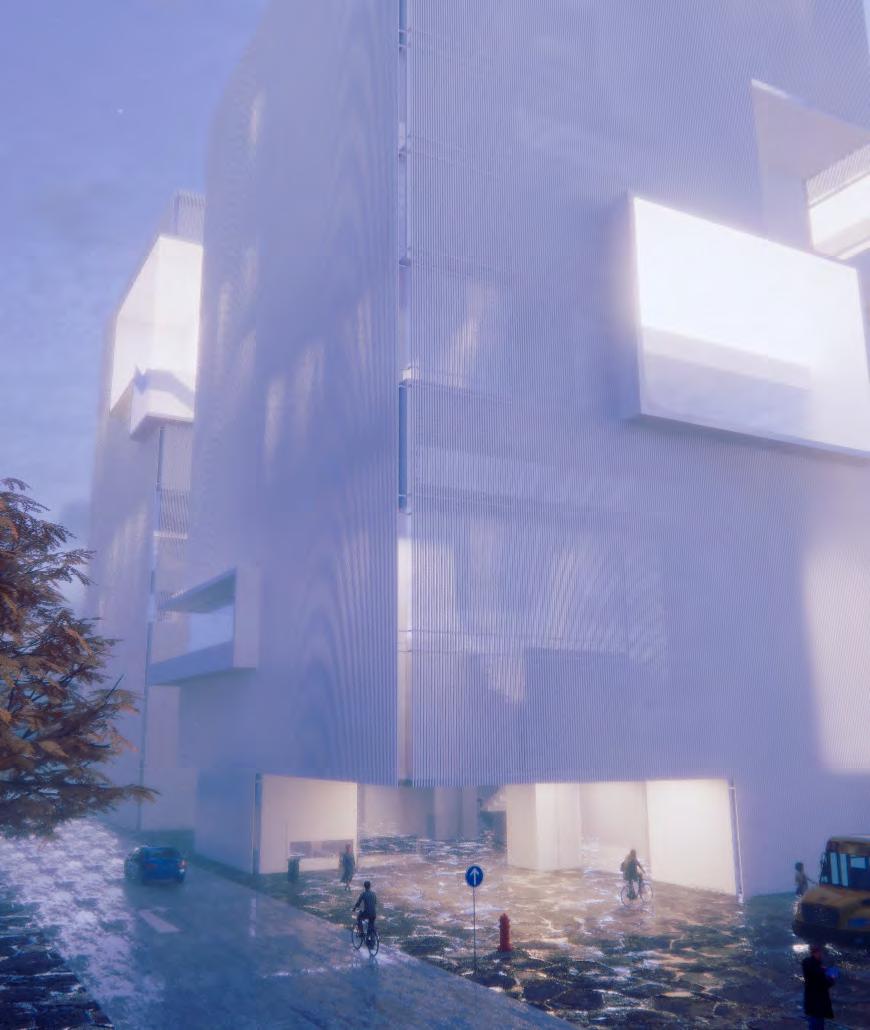
The global pandemic has exerted enormous pressure on our societies and forced a lot of changes to how people study, work, and live. With an increasing trend of remote work, people are going to spend more time at home. This design seeks to redefine domestic and public spaces in high-density buildings as a response to the shifting demand.
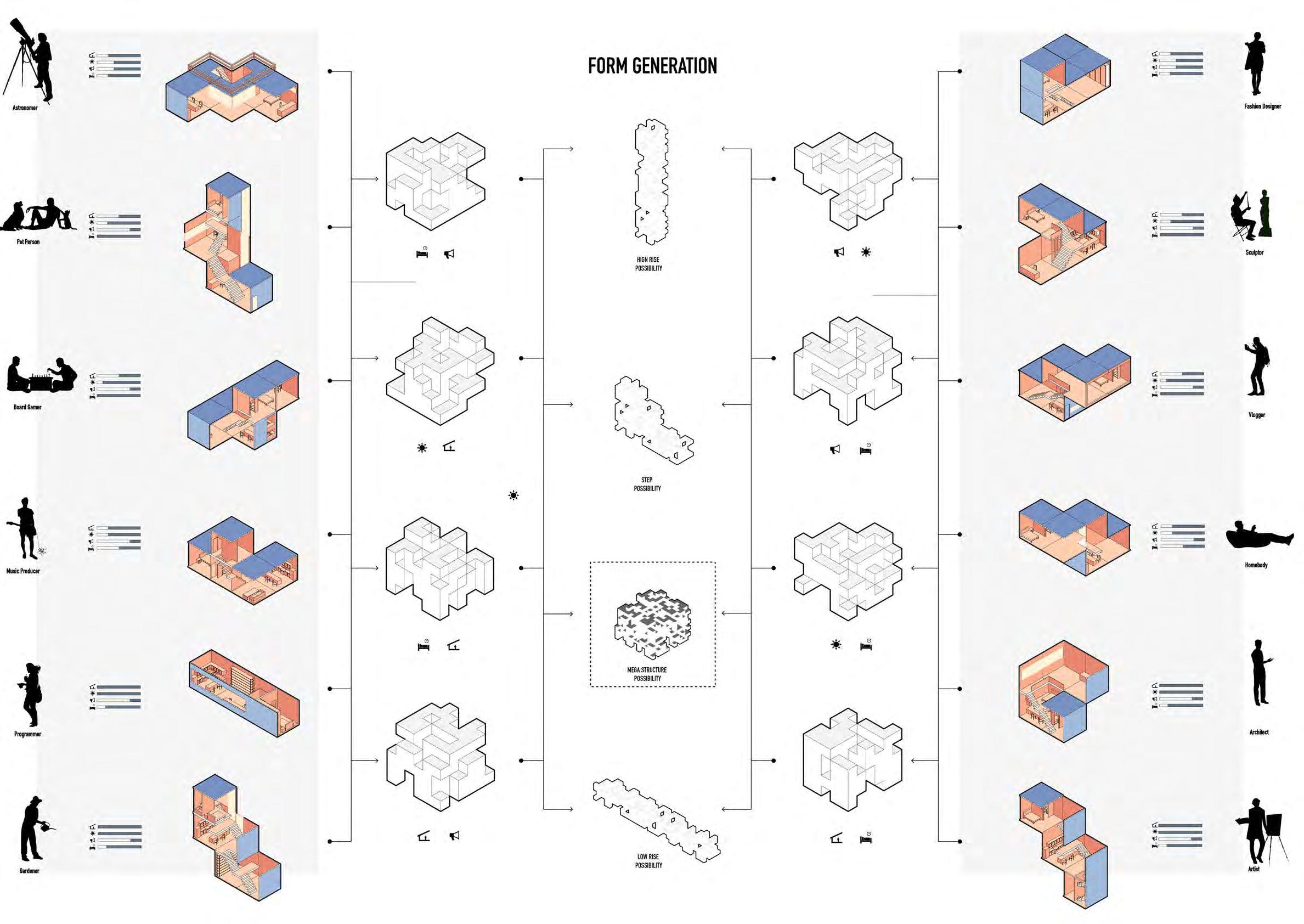
In domestic spaces, this complex offers a variety of residential modules for residents to choose from. Residents can explore their interest according to their hobbies and talents, through which undermined self-identities are reinforced. Modules are reallocated to form a larger unit of people with similar lifestyles but different interest. A semi-public space thus emerges to increase chances of interaction with neighbors with various backgrounds and perspectives.
There are also public programs available to all residents, assigned at each unit based on the common demand at the particular residential section. These shared facilities guarantee easy interaction with similar people as well.
Every residential module is an indispensable component of a stably balanced housing unit. They are indivisible once residents move in, hence the name: The Burr Puzzle.
2
Form Generation
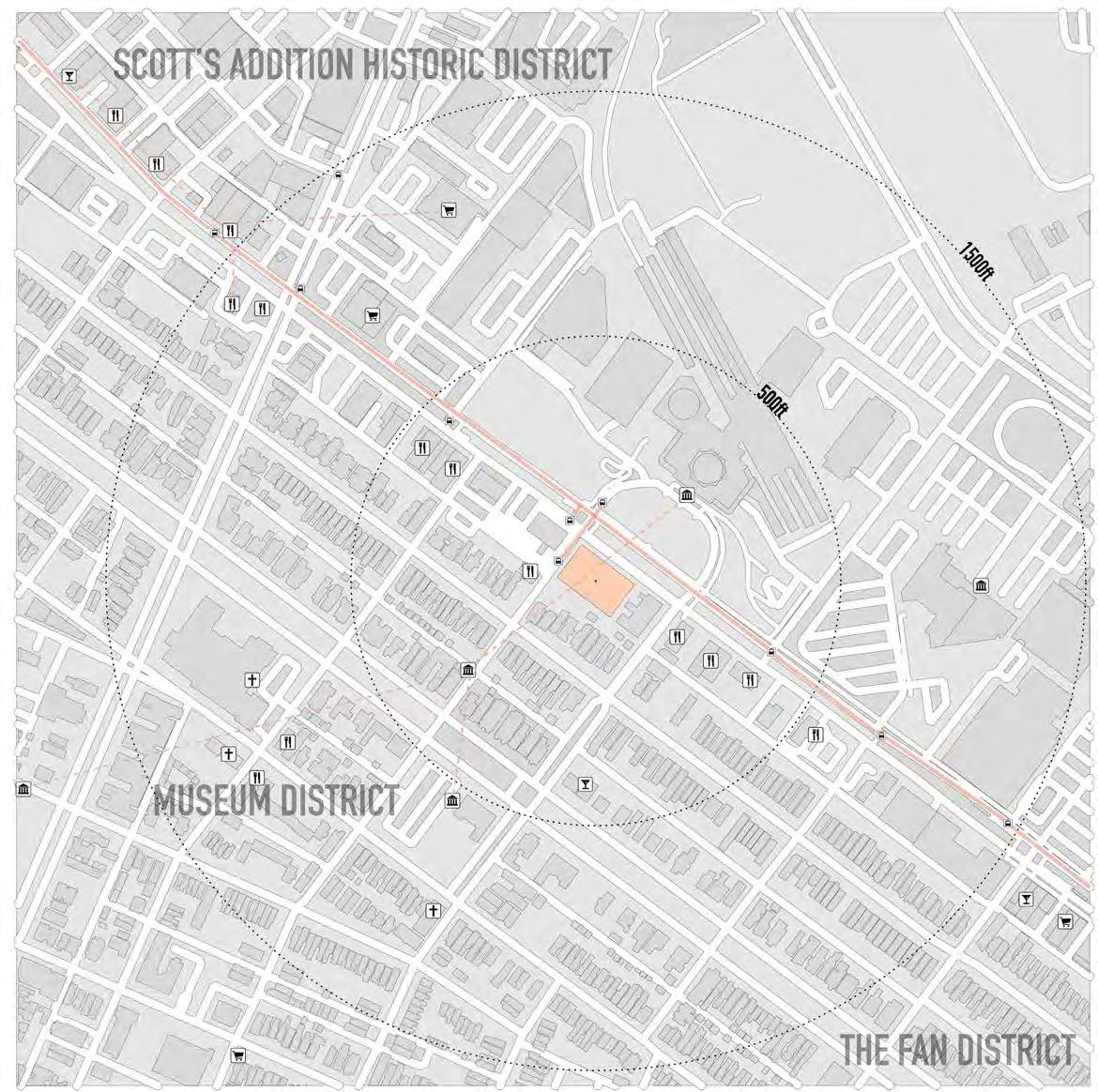
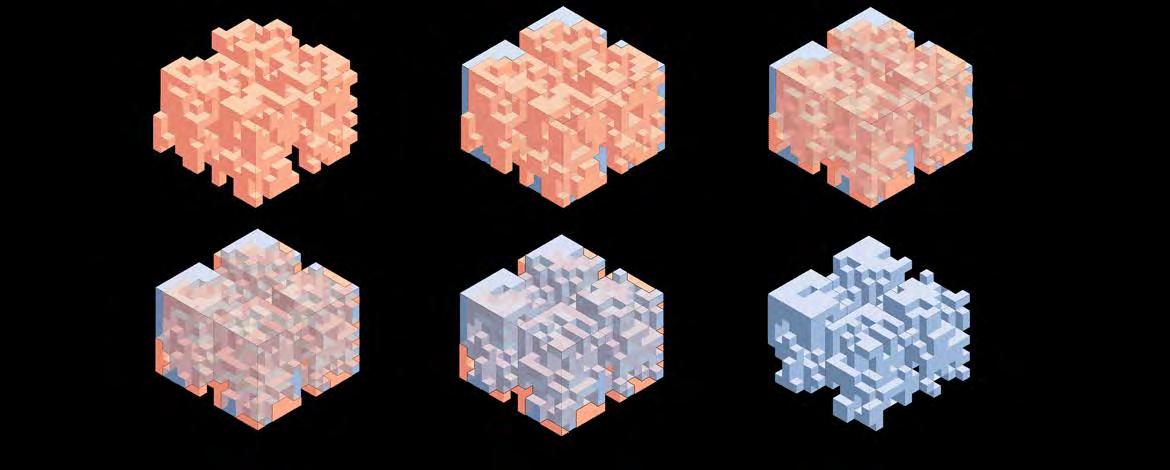
Public Program
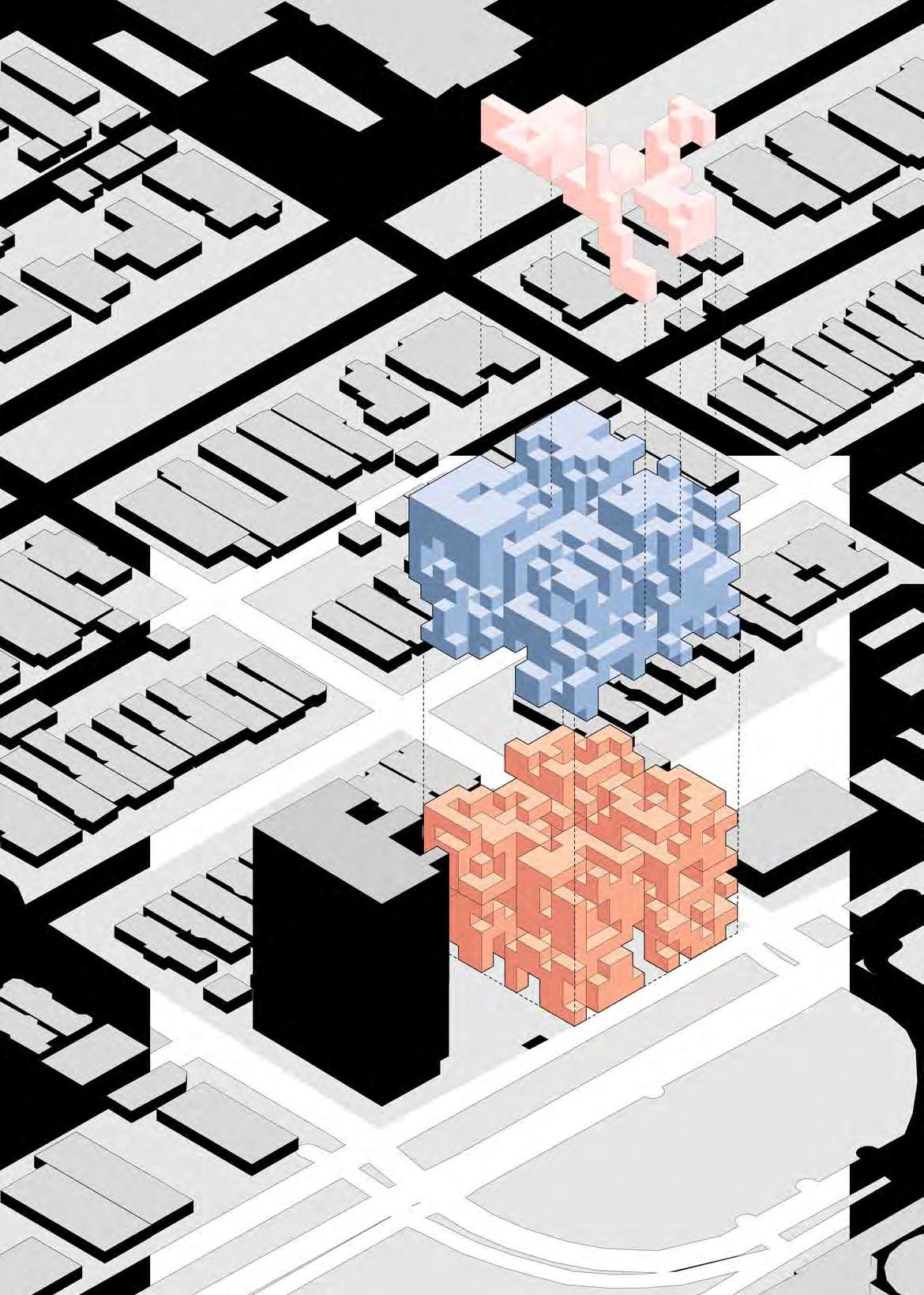
Semi Public Space
Residential Units
3 01 The Burr Puzzle
Context
Components
Form Development Building
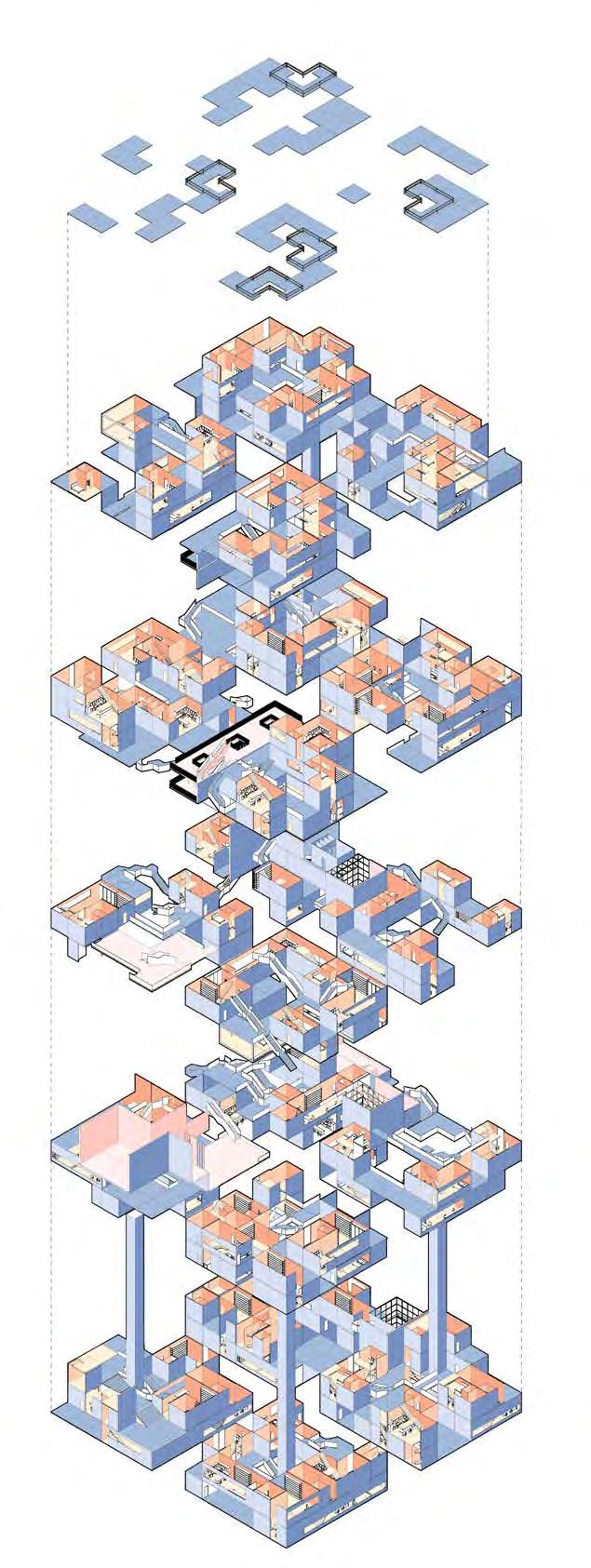
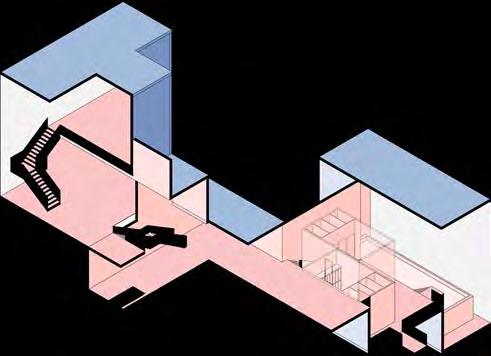
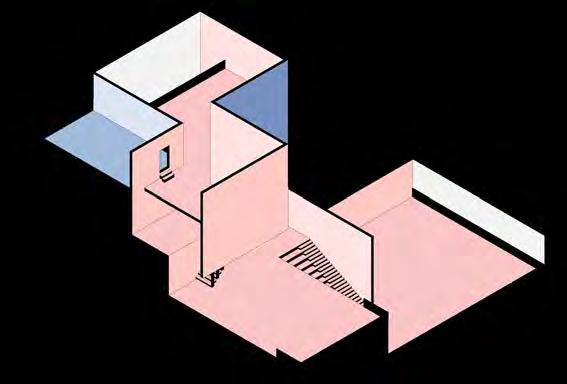
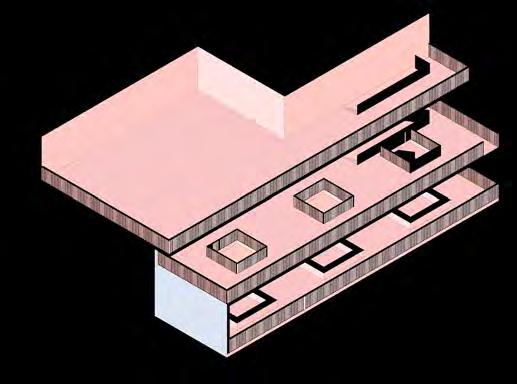
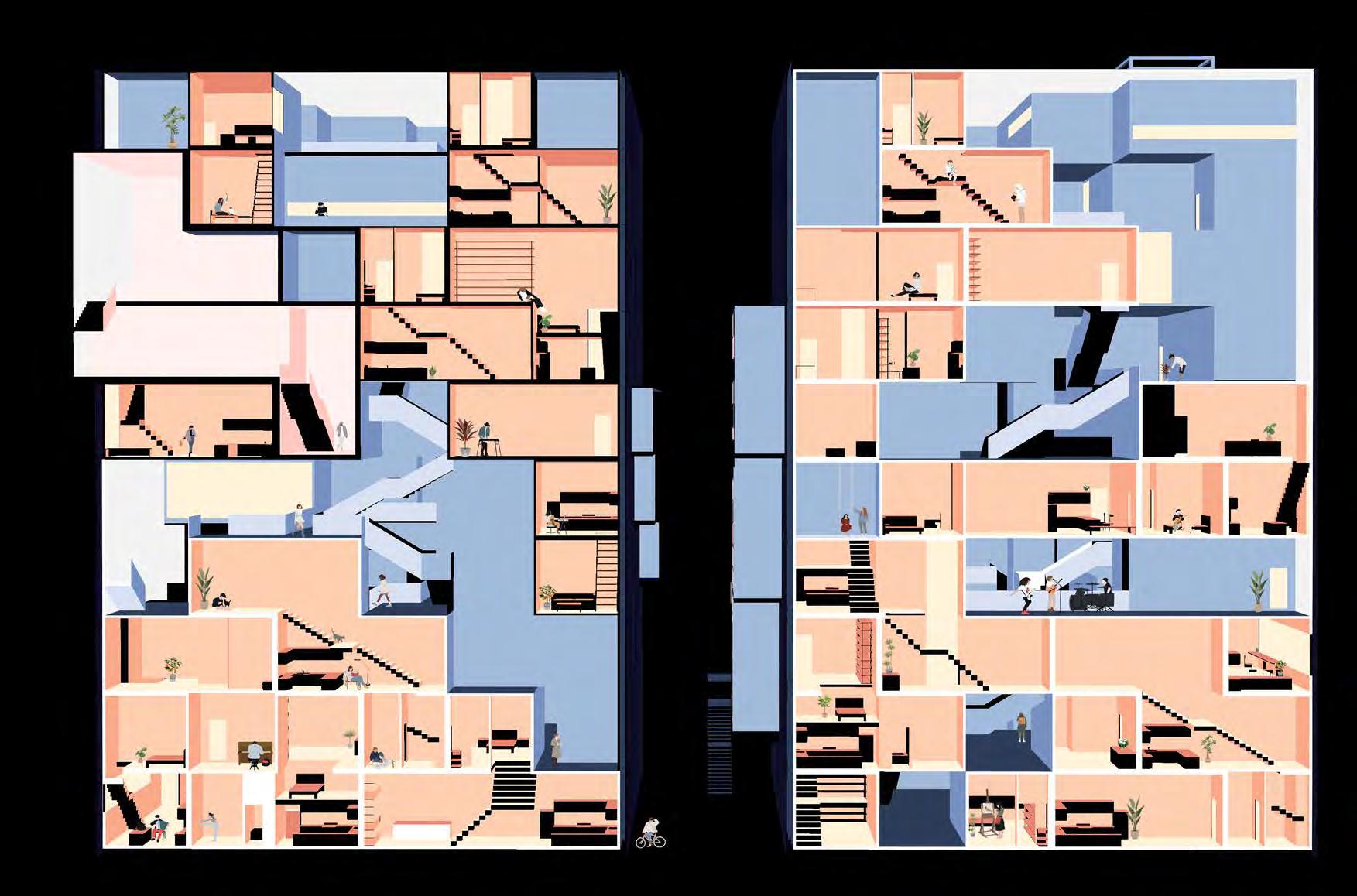
4 01 The Burr Puzzle Exploded Diagram Public Program
A. Gym
B. Office + Cafeteria
B B C A Sectional Perspective
C. Sky Garden
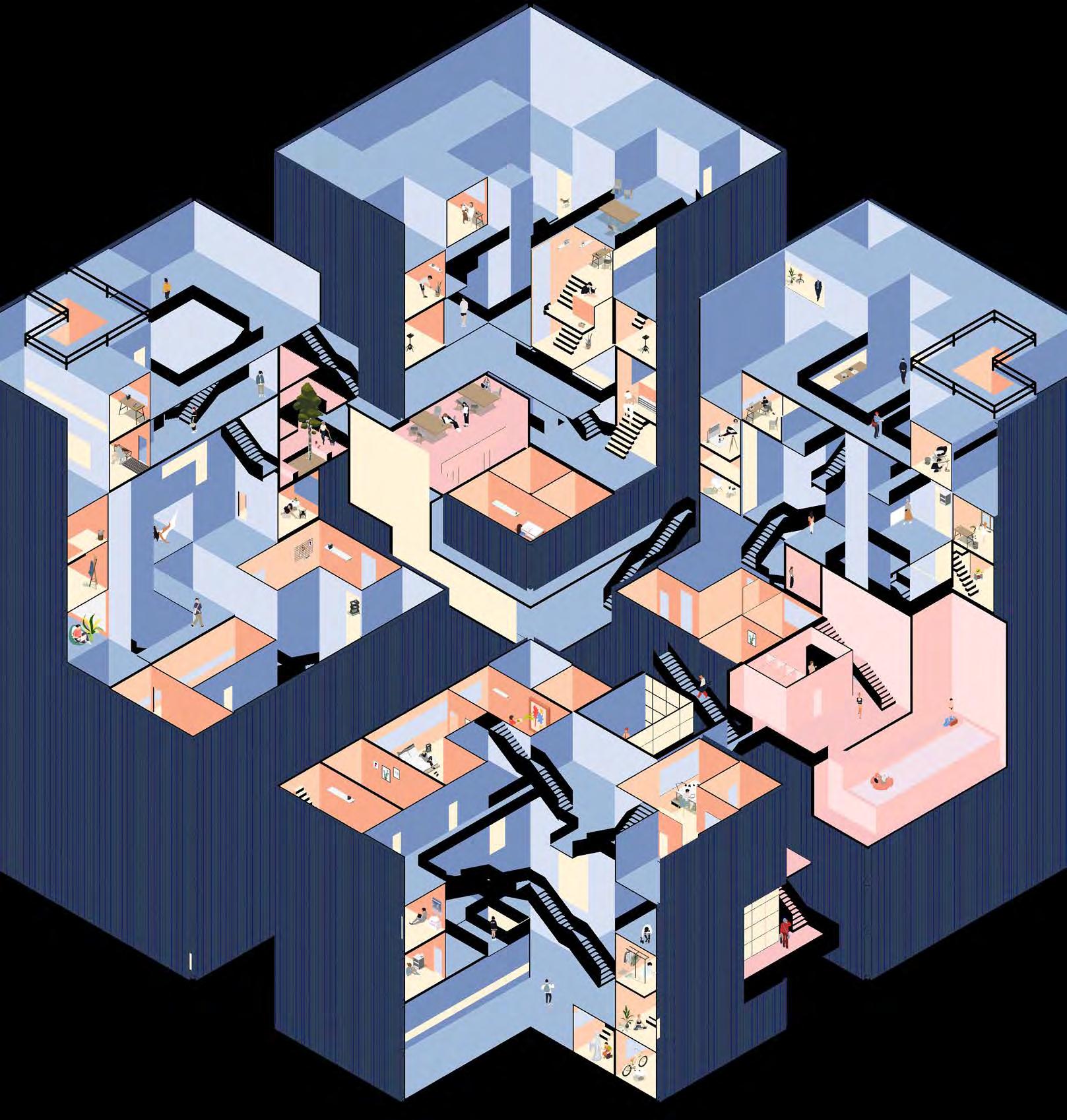
5 01 The Burr Puzzle Program Diagram(Isometric View)
02 The Ark
Climate Justice Forum
Fall 2021
Individual Project for ARCH3010 Climate Justice in Cities
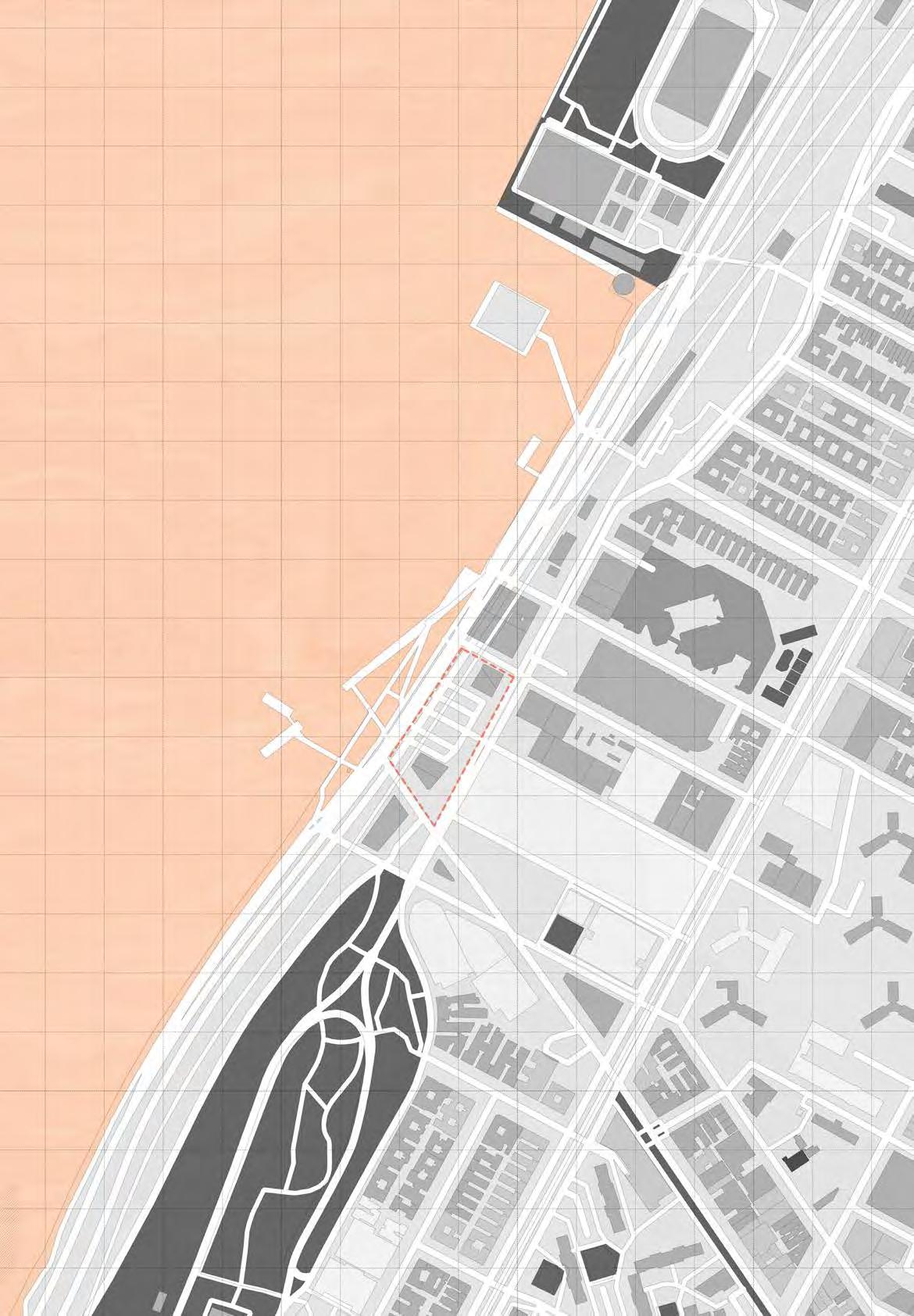
Location: 2298 12th Ave, New York, NY
Instructor: Lucia Phinney
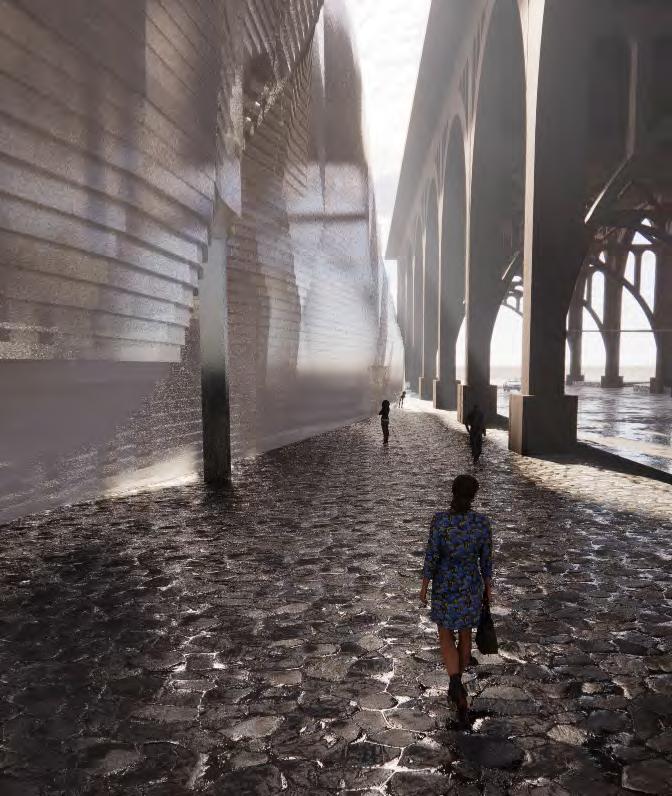
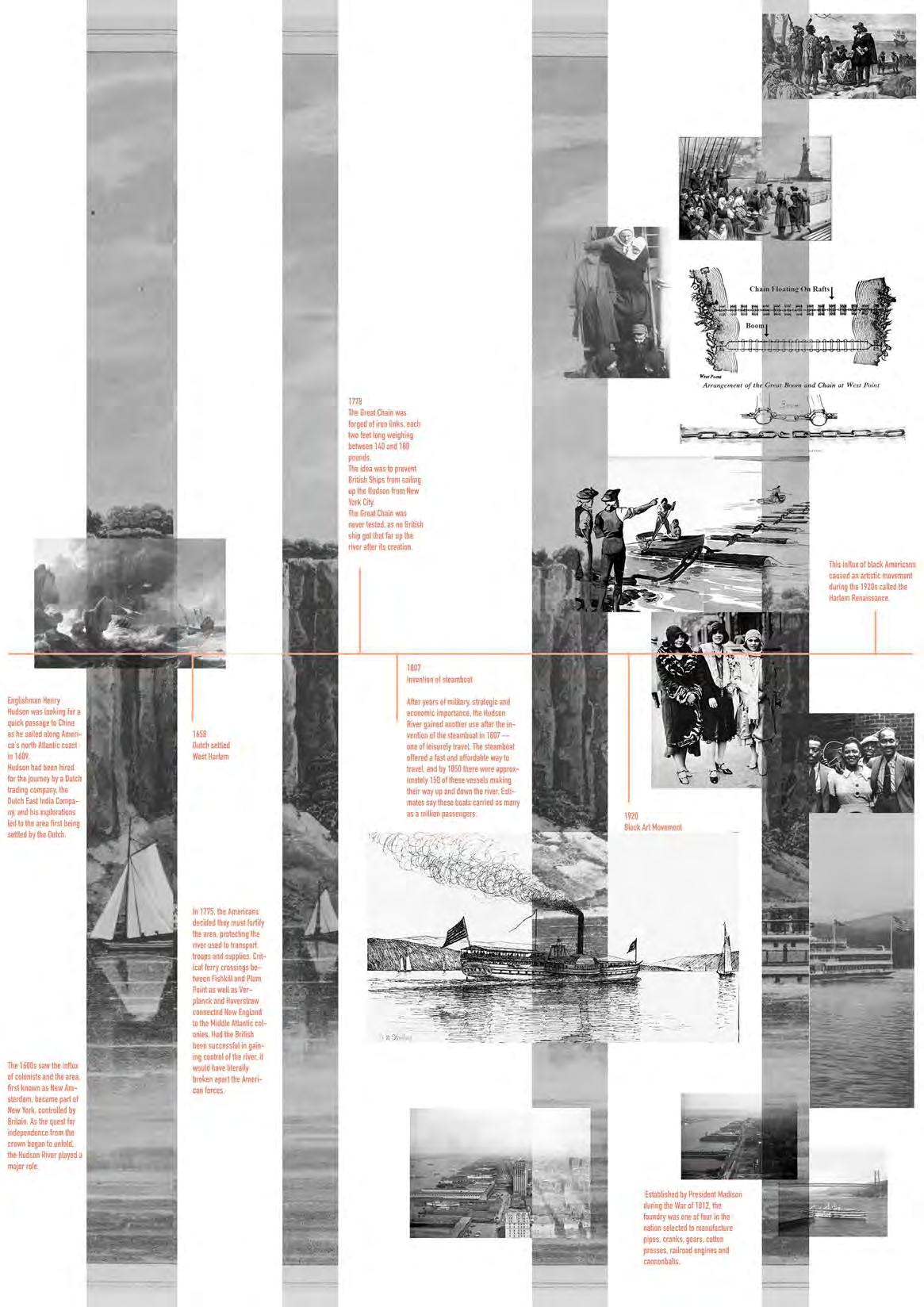
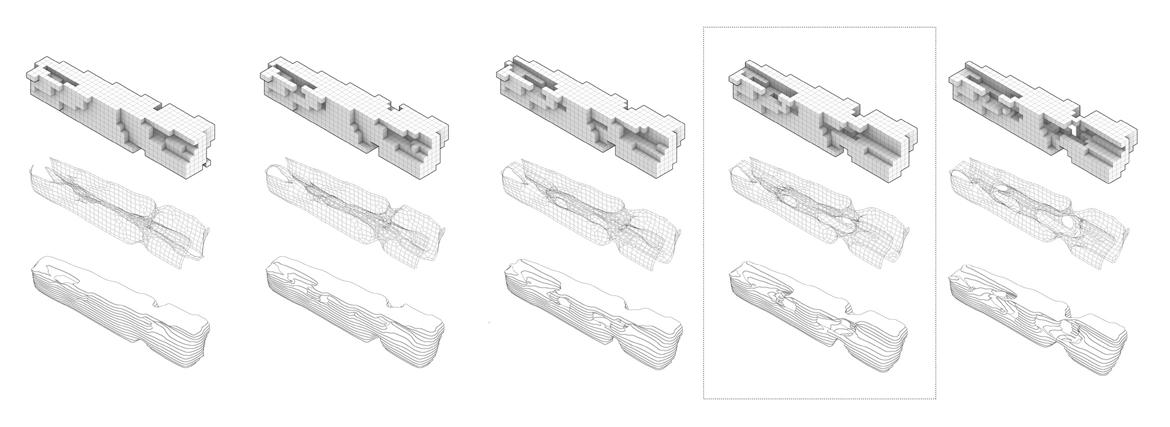
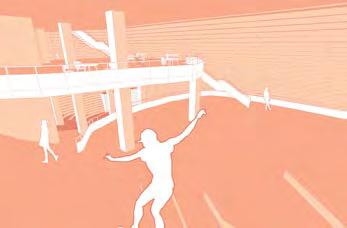
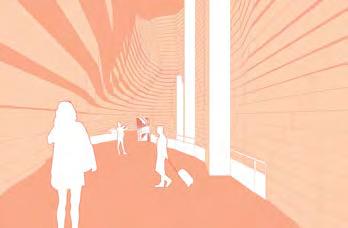
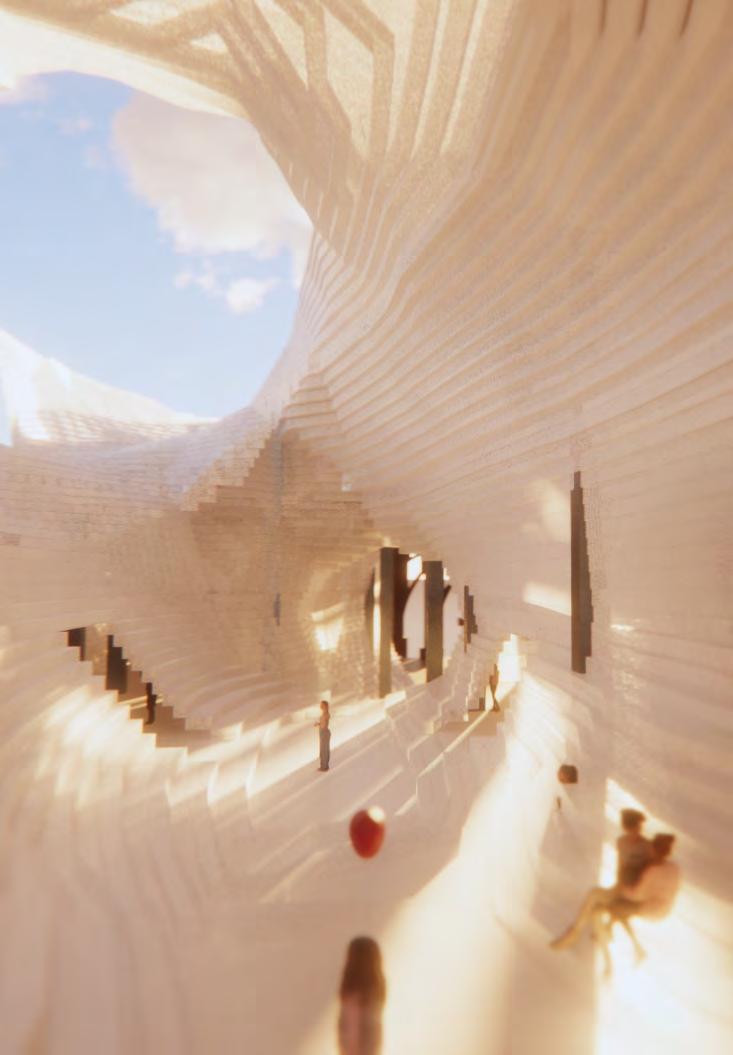
This convention center is named after the Noah’s Ark, a sanctuary for life during an apocalyptic flood. It has an intention to assemble public attention on the issue of climate crisis. However, its broken shape derived from simulated water erosion contrasts with the sturdiness of its reference in the bible.
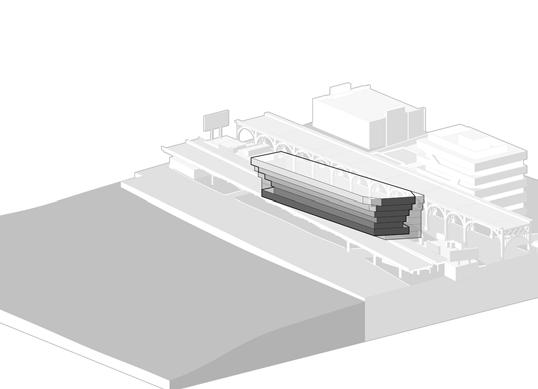
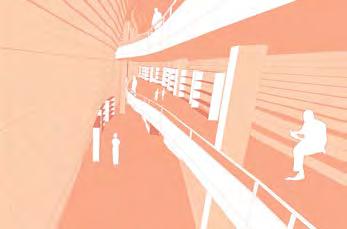
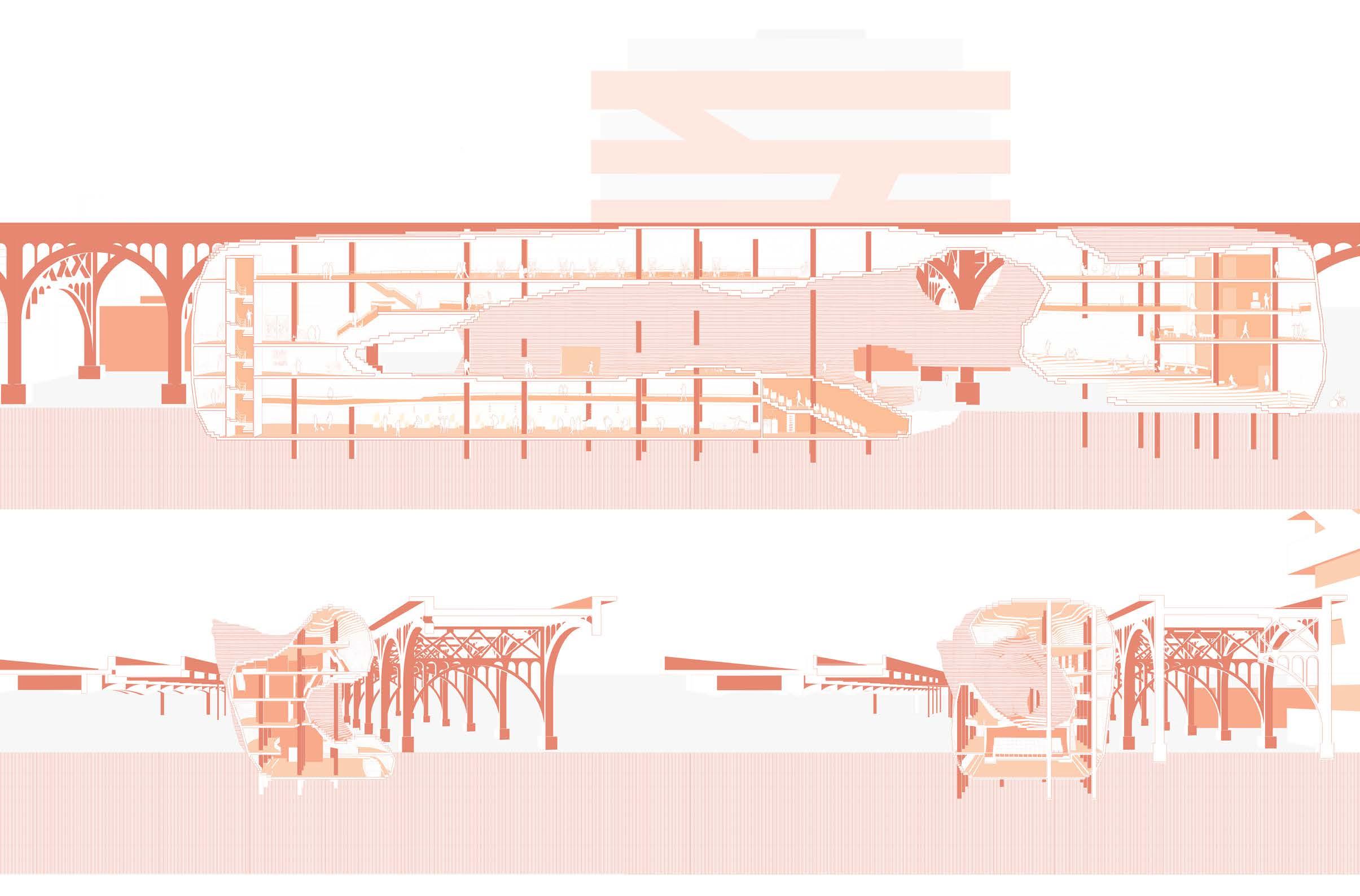
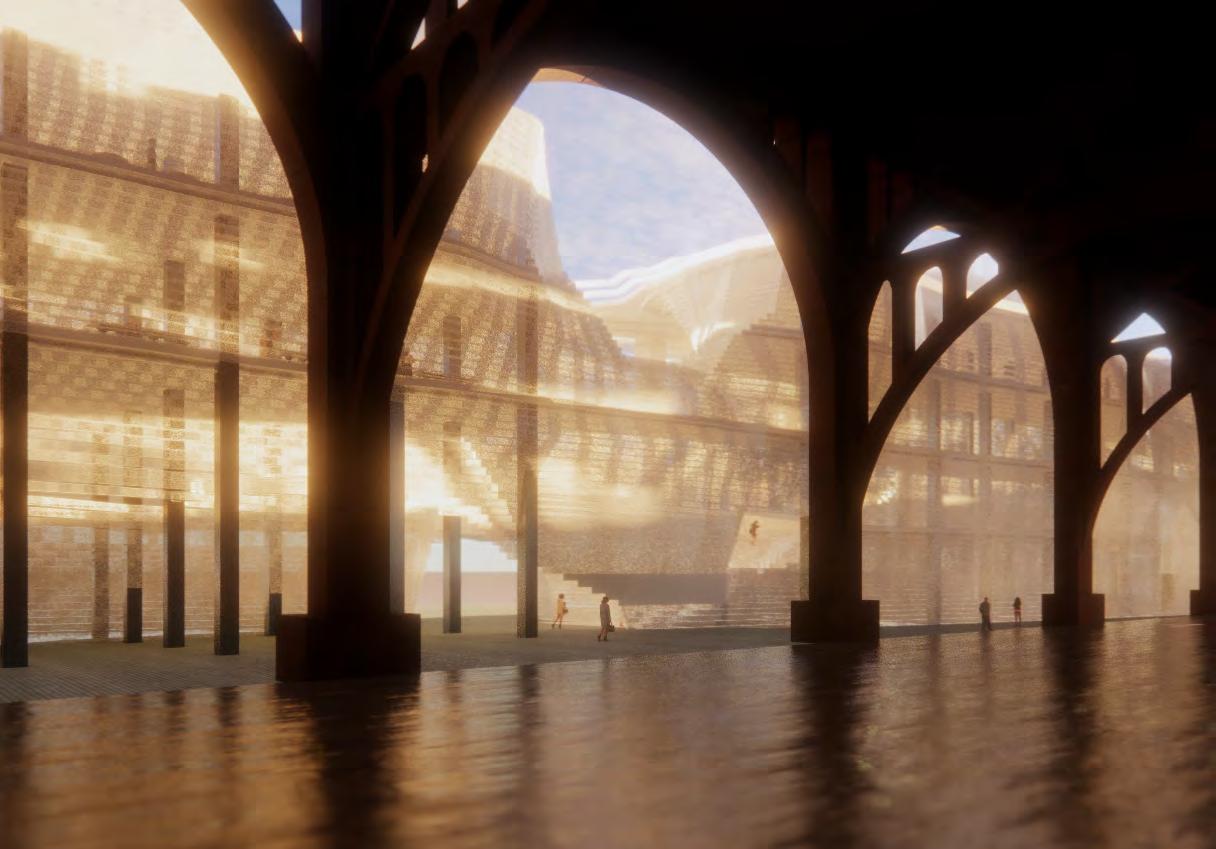
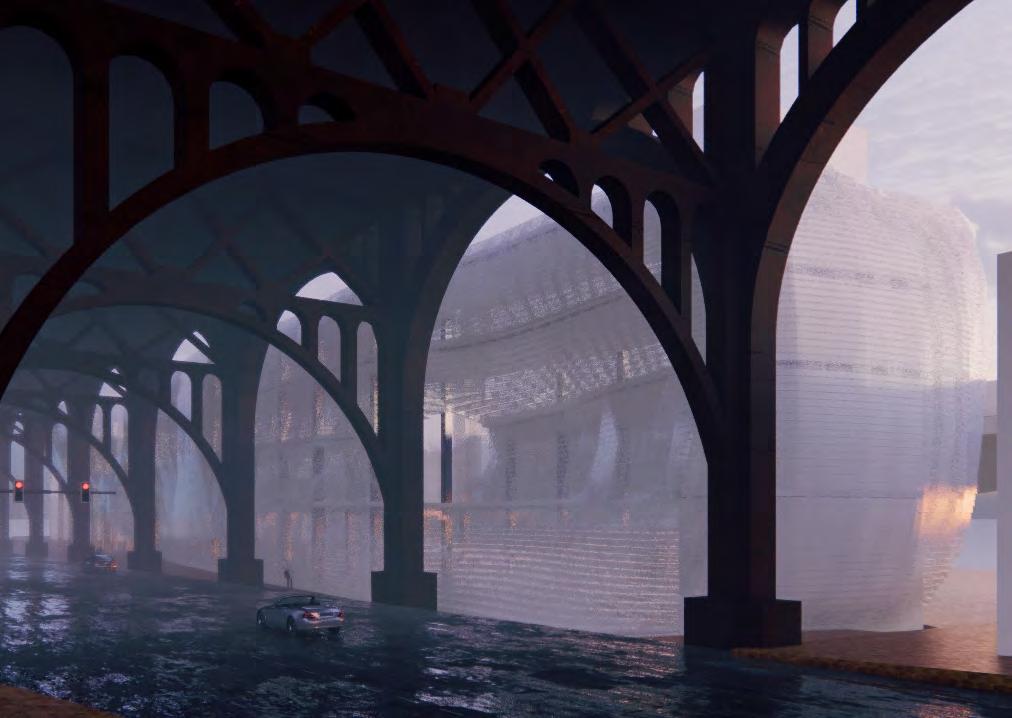
The building takes the shape of a ship and is situated along the Hudson River. It is bisectional with the North part for public programs like libraries, eateries, and galleries, and the South part for institutional needs like classrooms, labs, and administrative offices.
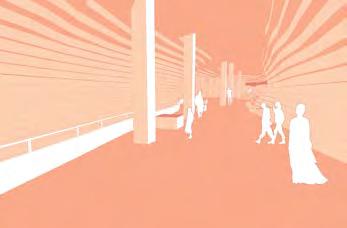
The building envelope is translucent in order to introduce more light during daytime and illuminate the surroundings at night. The building is stratified into horizontally extruded layers that can be used as stairs. Those who are interested can access the terrace at the second level and freely exit or enter the convention center. The viaducts sandwiching the building will also attract more attention as people pass by, benefitting both the forum discussion and local economy.
With this design, I wish to raise public awareness towards climate change in an emotionally interactive fashion. The site’s future in the following decades depends on human’s response to global warming and climate change. It might remain as is to mark human’s victory against the rising sea level, or be submerged due to unleashed damage to the natural environment.
7 02 The Ark
2020s
2030s
2050s
2100s
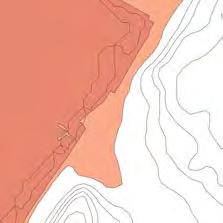
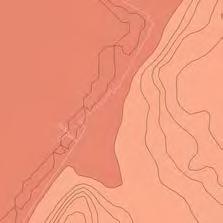
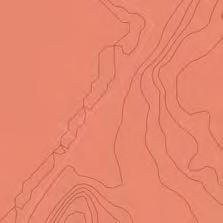
Hudson River Water Level At West Harlem
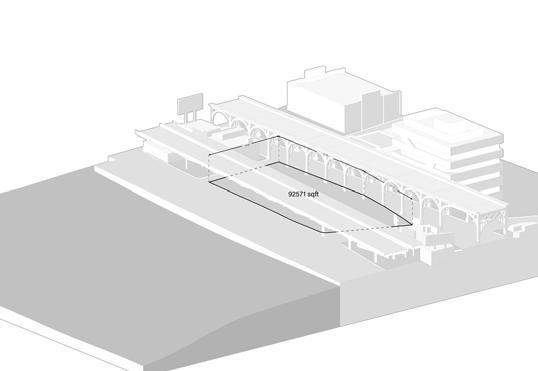
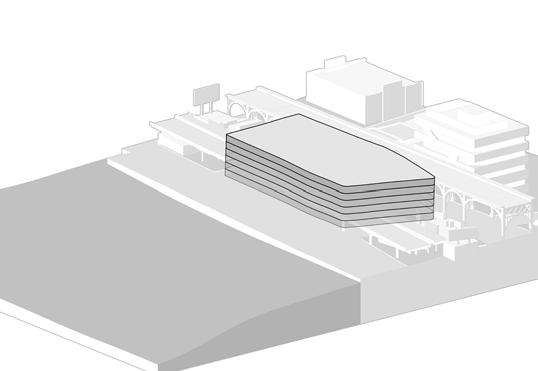
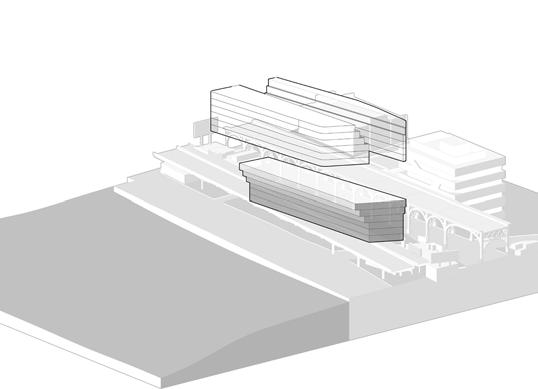
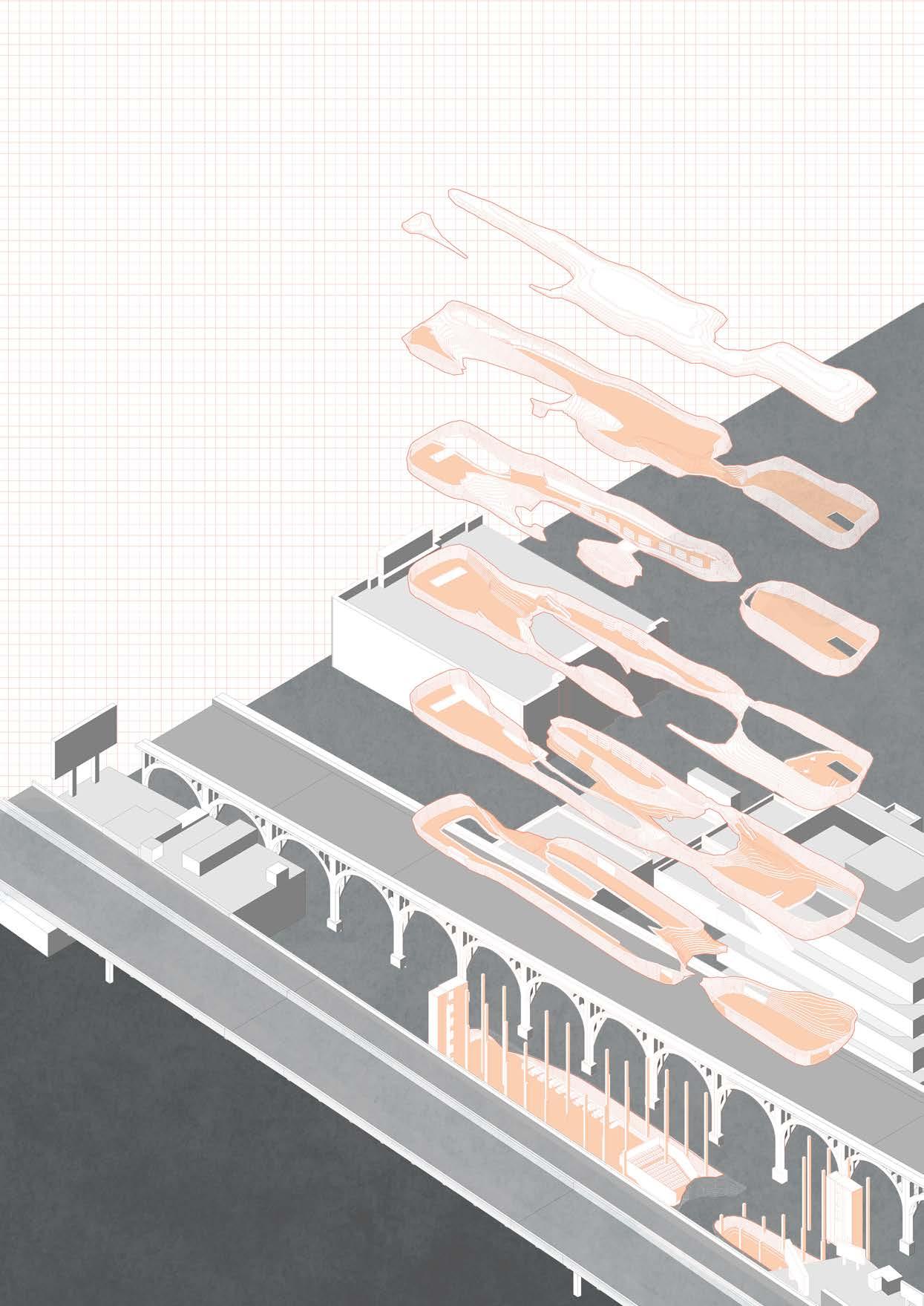
Adding up to the ship-shaped form, I applied lines to interfere with the shape, simulating the erosion of water. The eroded space, besides its aesthetic function, also served as a light well, as well as an elevated park that invites people to step on.
8 02 The Ark
Form Development Program Diagram
1. Site in between two viaducts
Form Development 2
2. Extruding for spaces
3. Subtracting Collision Spaces
4. Twisting to face major streets
Corridor
Study Lounge
Library
Gallery
9 02 The Ark Section Perspectives
10 02 The Ark
03 The Stitch
Student Center as Civic Anchor
Spring 2022
Individual Project for ARCH3020 The Collective Commons
Location: Lambeth Ln, Charlottesville, VA
Instructor: Schaeffer Somers
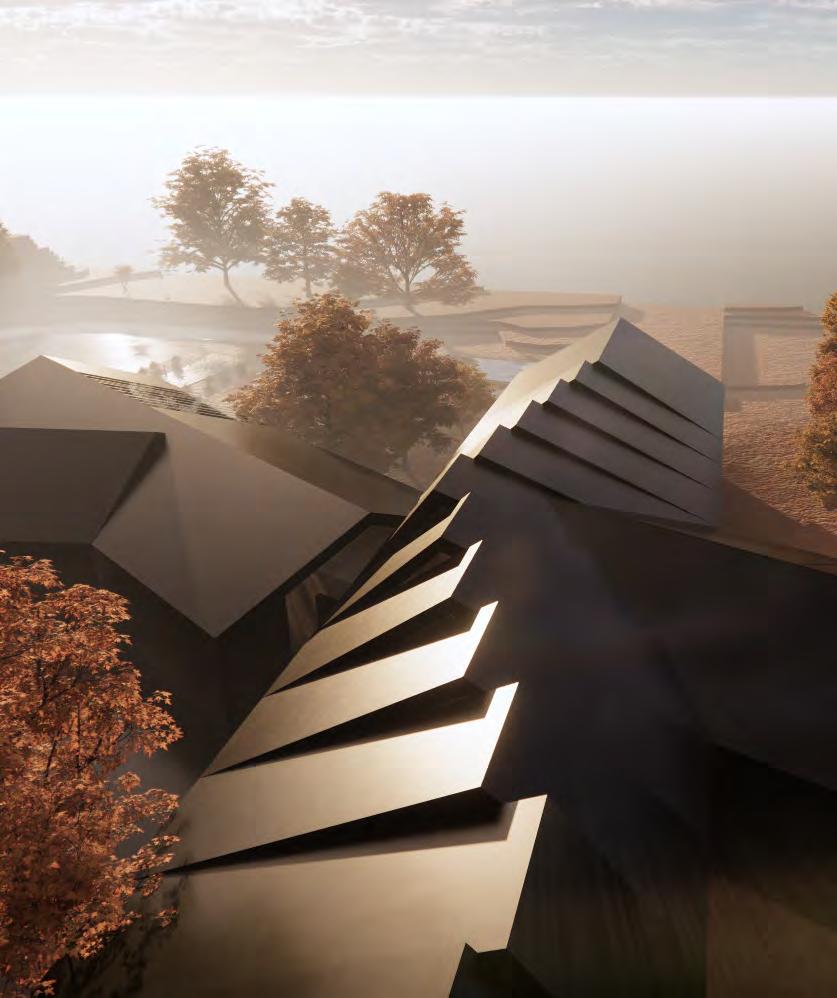
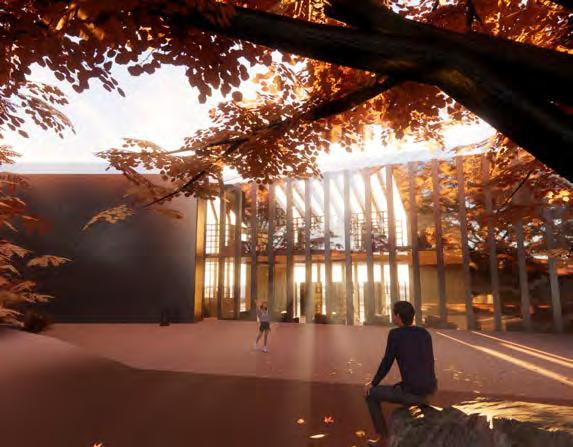
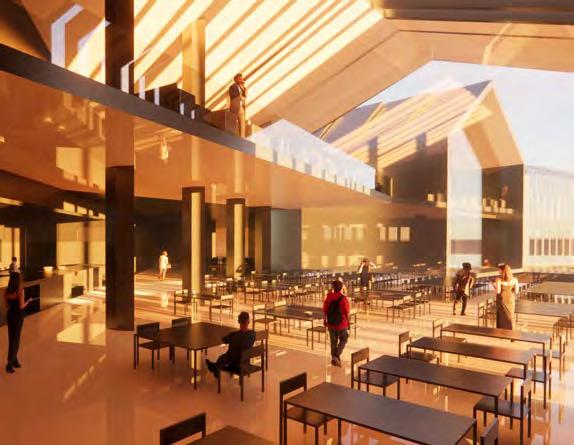
The core idea of this design is to “Stitch” up the segments of the site that were separated by the berm. The buildings function as a student center that complements the missing programs in the Lambeth residential area, attracting students to gather and mingle. It also reflects a similar gesture as other UVA projects that are under construction.
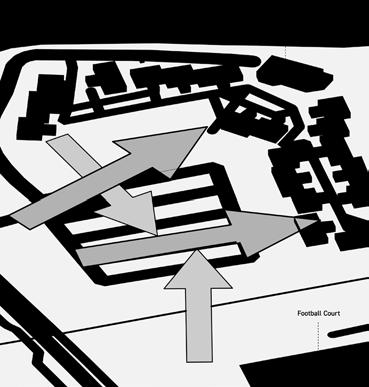
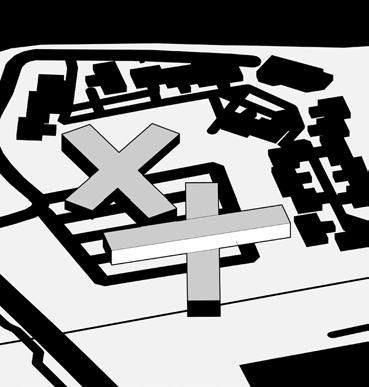
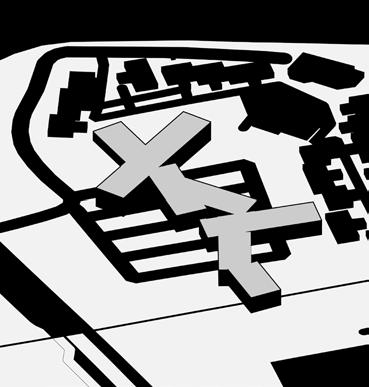
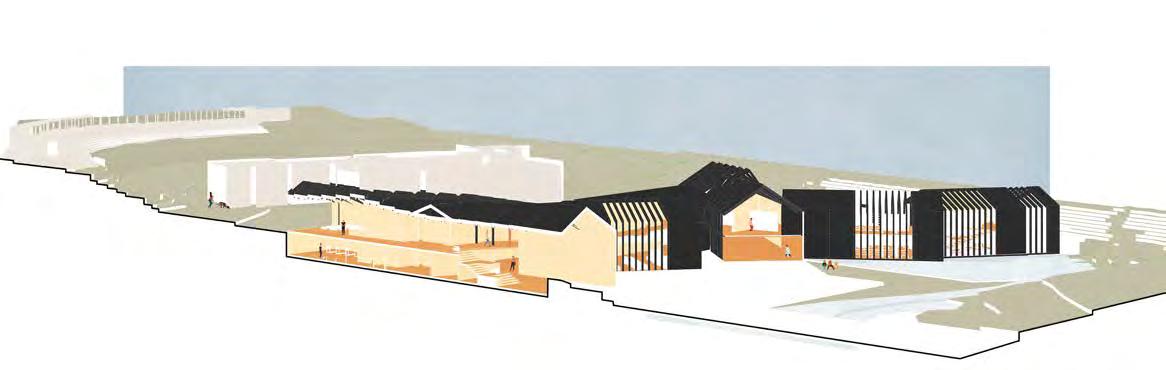
This plan consists of two major paths and two secondary paths to form a network over the Lambeth area making it accessible from all directions on campus. It was further broken down into smaller parts in response to the environment and the program within. While the Stitch connects spaces together, it automatically forms new contour lines that reallocate the site into different programs.
This form navigates people through the site more efficiently as the programs are placed in response to how people tend to travel through the site. Such a design also creates a comparison between the static programs and the dynamic circulation system within the building.
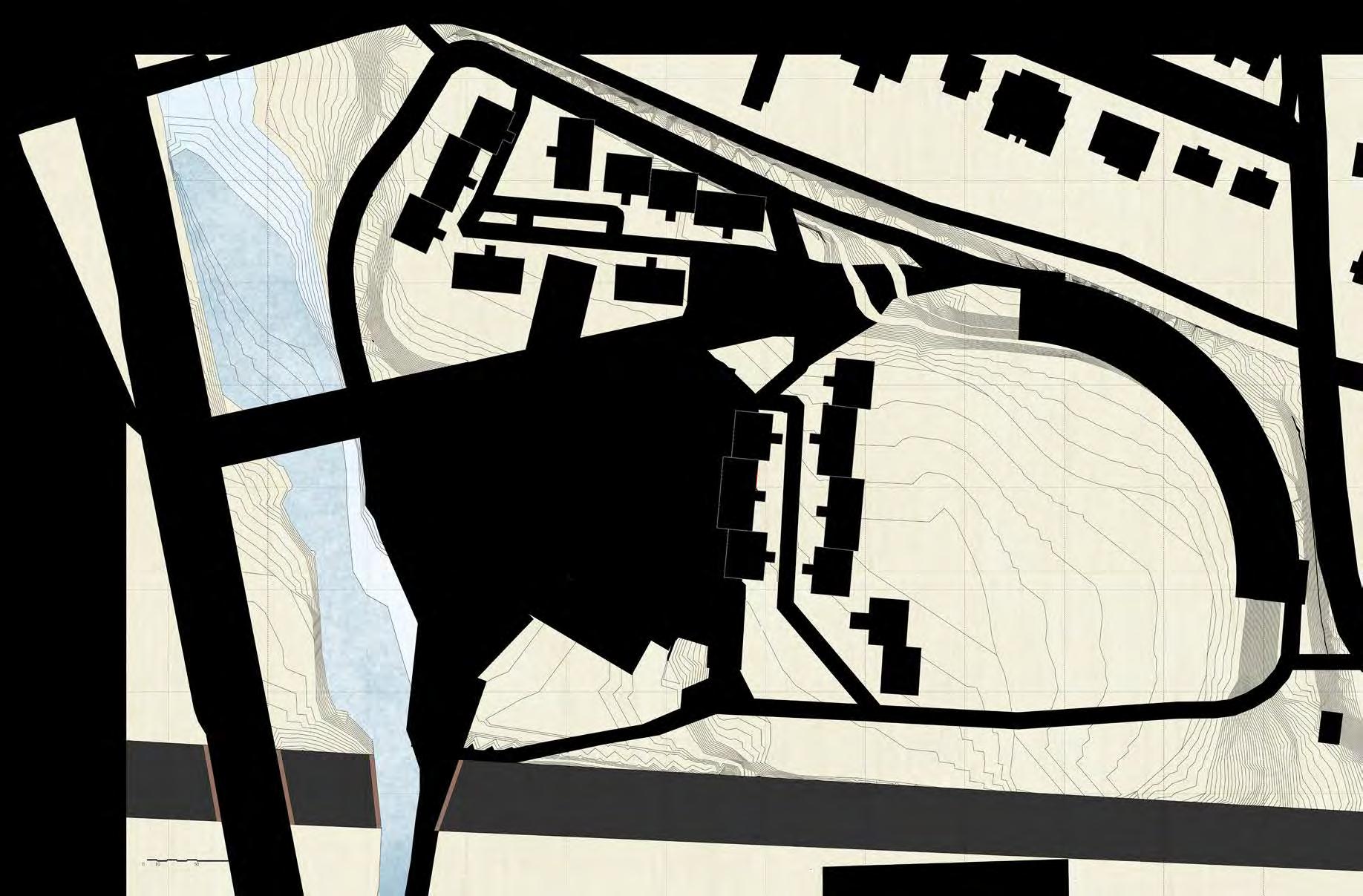
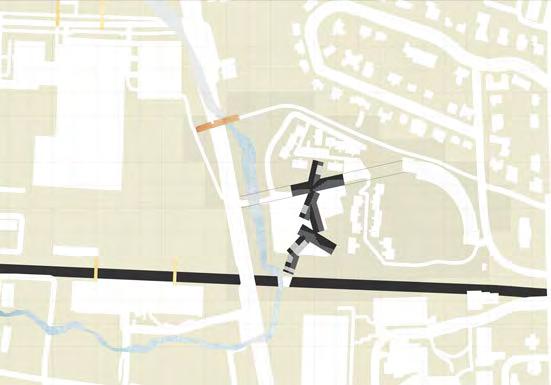
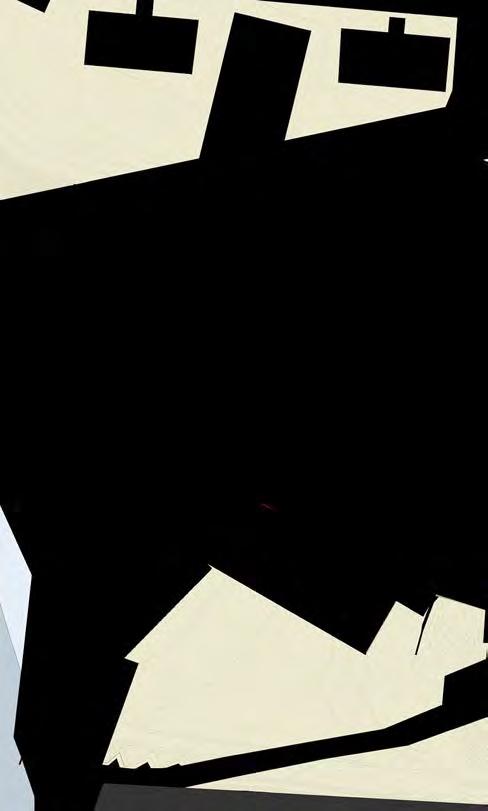
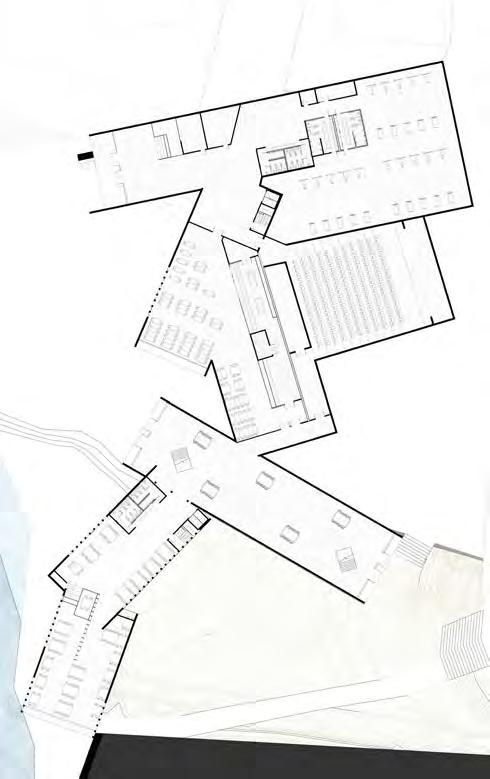
12 03 The Stitch Site Plan Floor Plan(1st Level) Floor Plan(2nd Level) Site Analysis As many other ongoing UVA constructions, the goal of this project is to "stitching" the North Ground and the central ground.
1. Major Pathway 2. Extruding Circulation 3. Breaking it based on functions
Concept Diagram
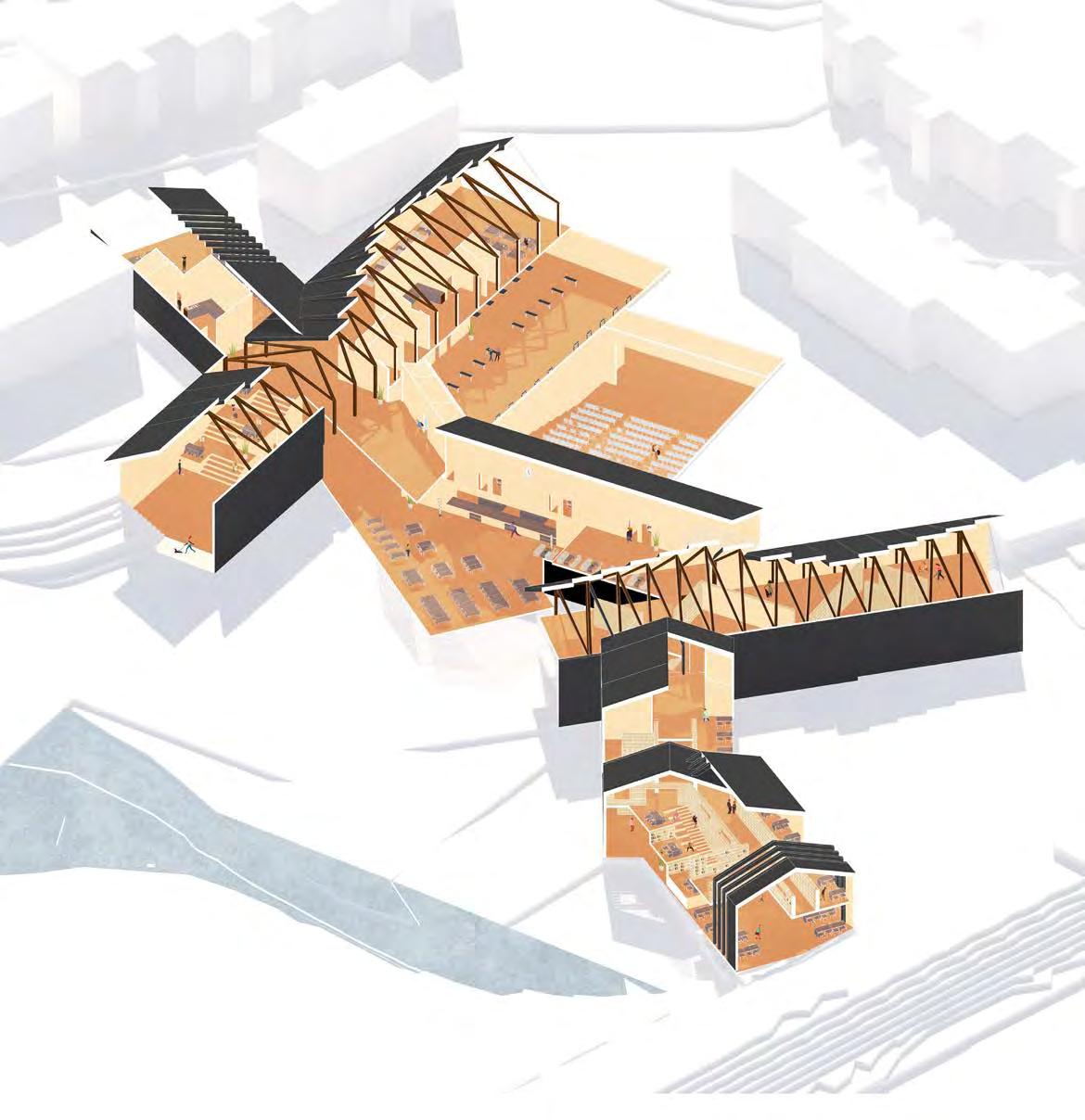


13 03 The Stitch Program Diagram(Isometric View)
Section perspective
Section perspective
Section perspective
Section perspective
04
The Afterglow
Reinvented Day Care Center
Fall 2022
Individual Project for PHS 3620 Built Environment & Health Impact
Instructor: Schaeffer Somers
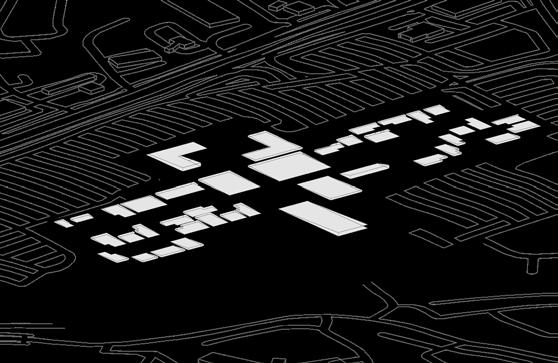
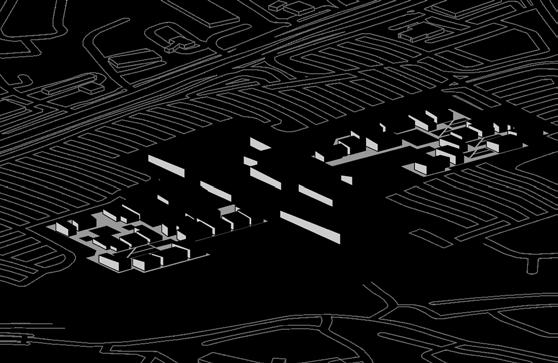
The quiescence of in-store shopping due to COVID lockdown has diminished the necessity of the Fashion Square Shopping Center in Charlottesville, Virginia. Instead of letting the retailers wilt and go to waste, I propose to repurpose it into a social welfare facility that provides day care and medical support for elderly people. Inheriting the legacy of the monolithic shopping mall greatly reduces the cost of building a miniature community with comparable functions.
Inspired by the Hogeweyk Dementia Village, I incorporate streets, parks, stores, and entertainment into the day care center to ensure a high-quality life even for people at the dusk of their lives. As old people gradually lose their ability to live independently, they require non-trivial care around health, nutrition, medication, and self-esteem. This day care center provides a sense of normality by creating a flexible system. Volunteers after basic training are capable of most administrative work. The repurposing design is beneficial for both economy and humanity.
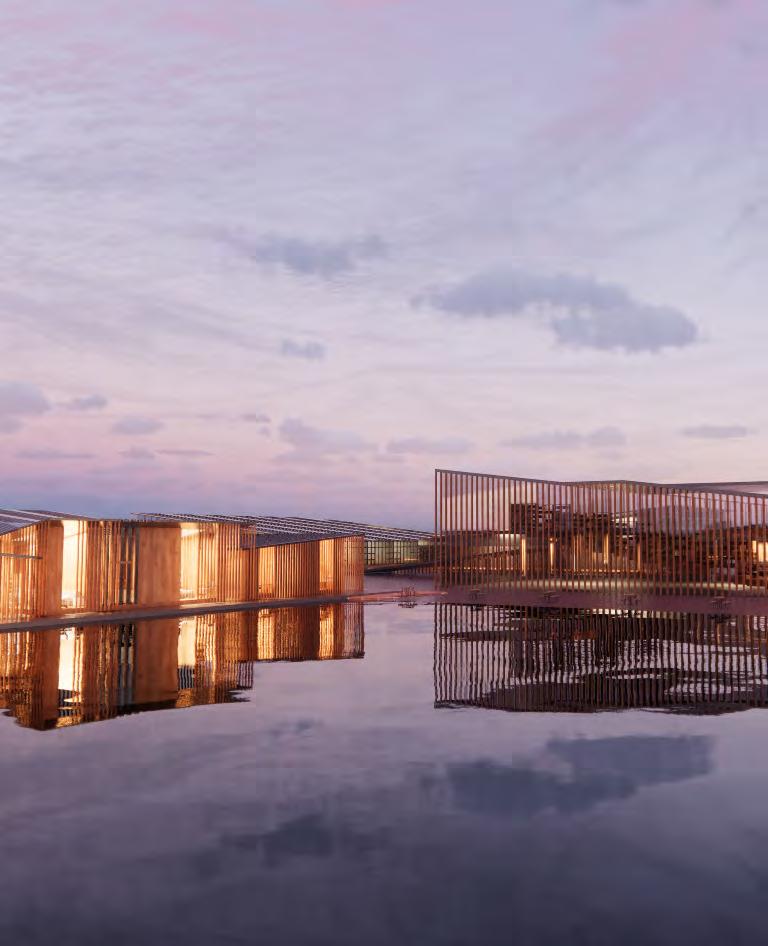
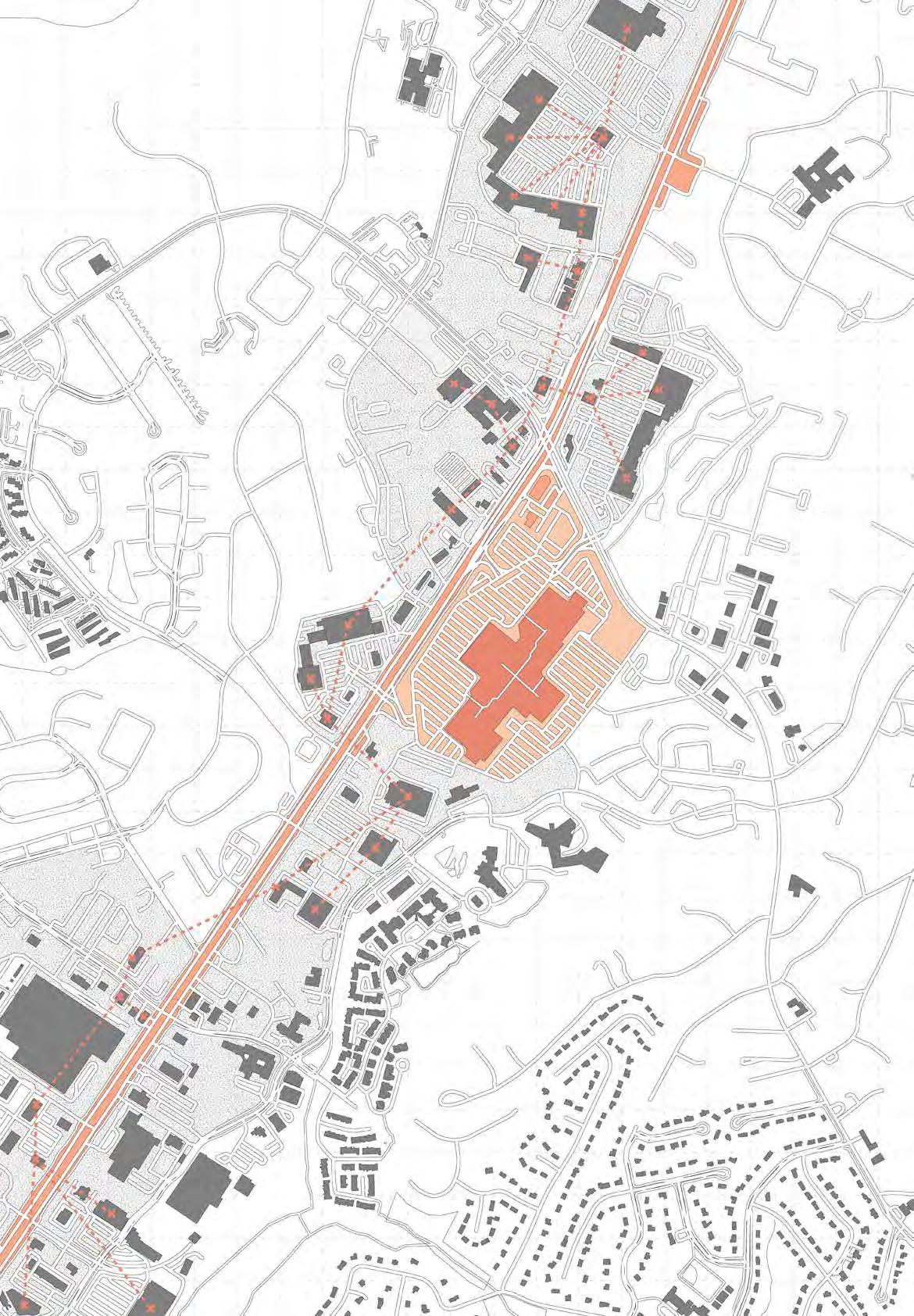
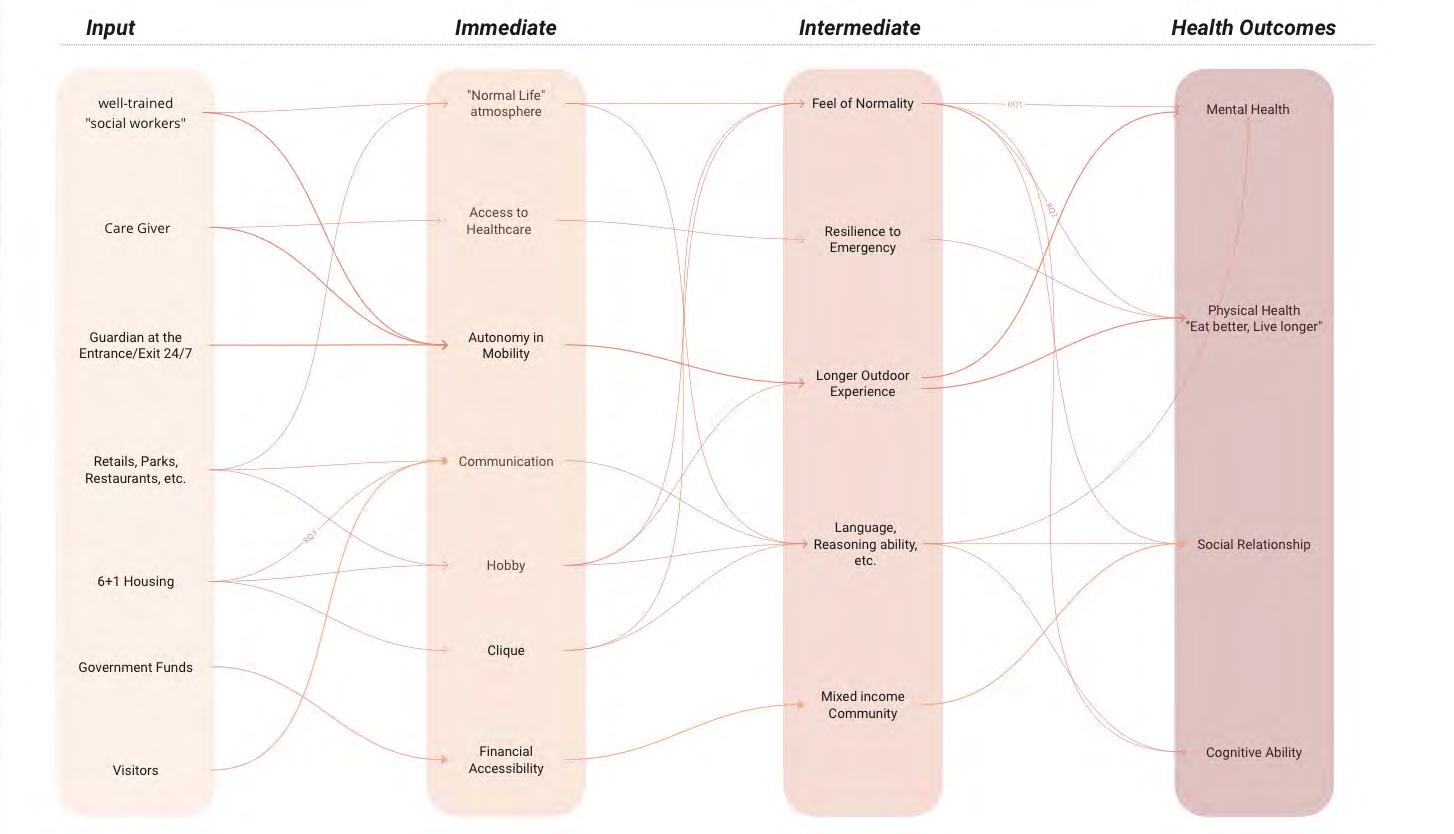
The major innovation of Hogeweyk Dementia Village is to create a feel of normality for its users by incorporating streets, parks, restaurants, and retails into day care center. Repurposing the disused shopping mall in suburban area can be a economically efficient way to create similar feelings.
Form Generation
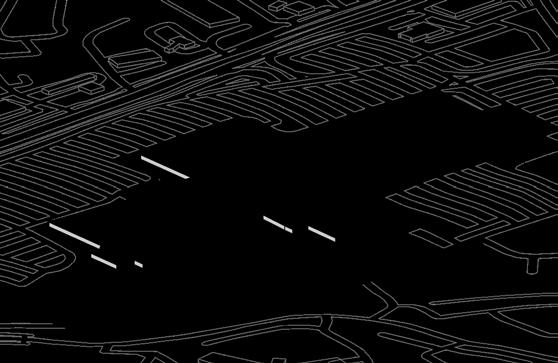
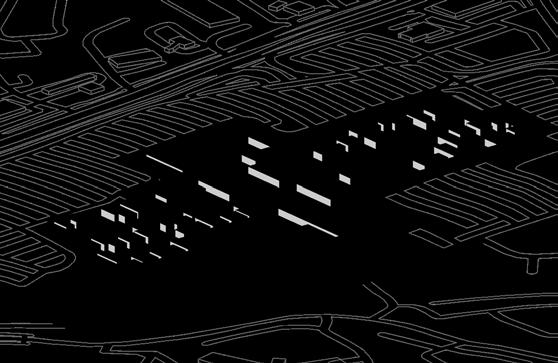
15 04 The Afterglow
Model Analyzing Hogeweyk Dementia Village
Logic
1. Monolithic Shopping
2. Uncapped for daylight, reallocating part of retail space into residential units
3. Elevated Roofs at angle for better daylight
4. Removing exterior walls, elevated spaces based on functions
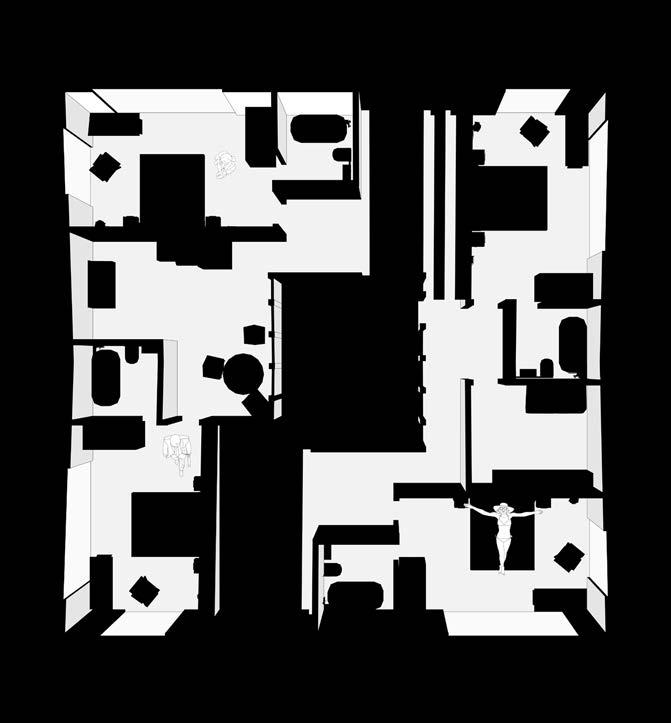
Type A
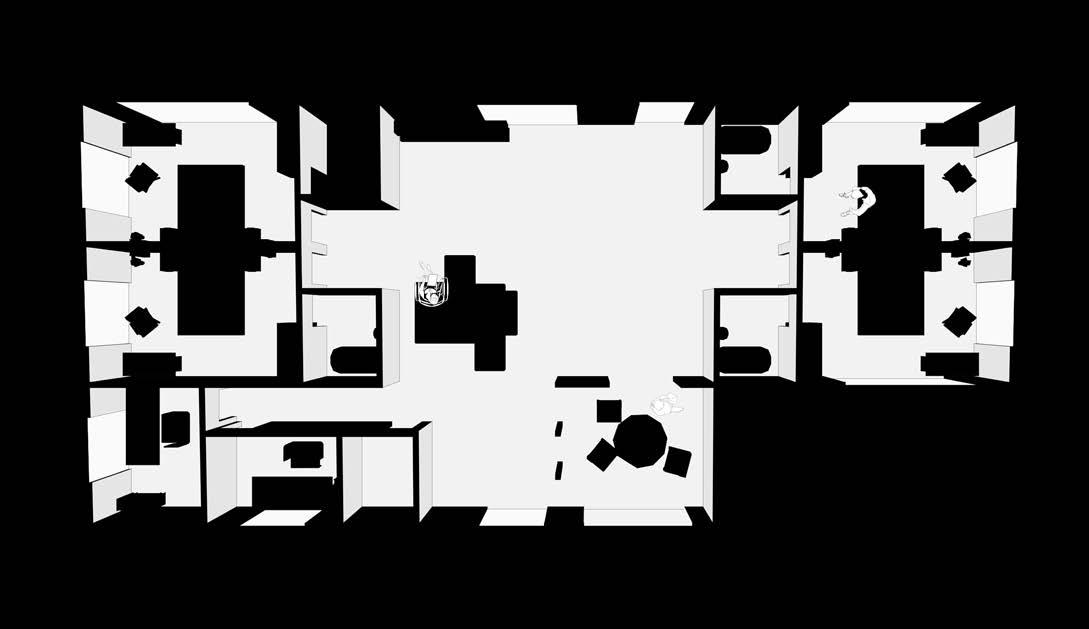
Type B
Each residents will be able to choose house type based on their ability of individuals.
Type A and Type B are offering for elders who are able to take care of each others.
Type C residents will live with a trained care giver, providing self-care health intervention.
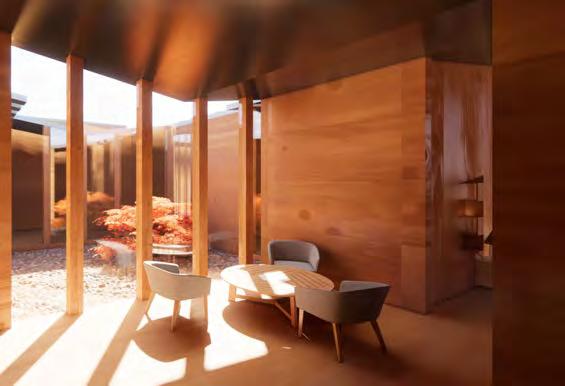
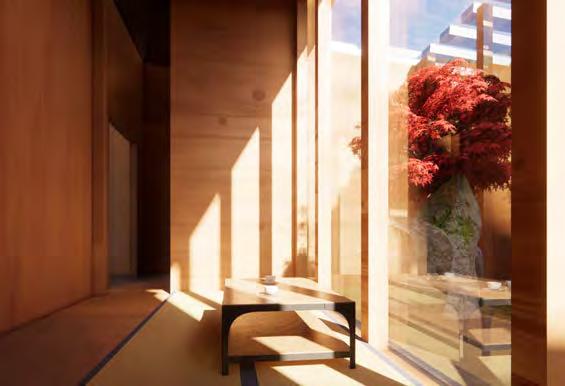
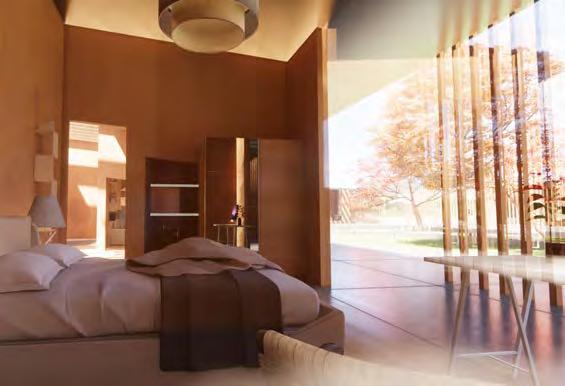
Type C
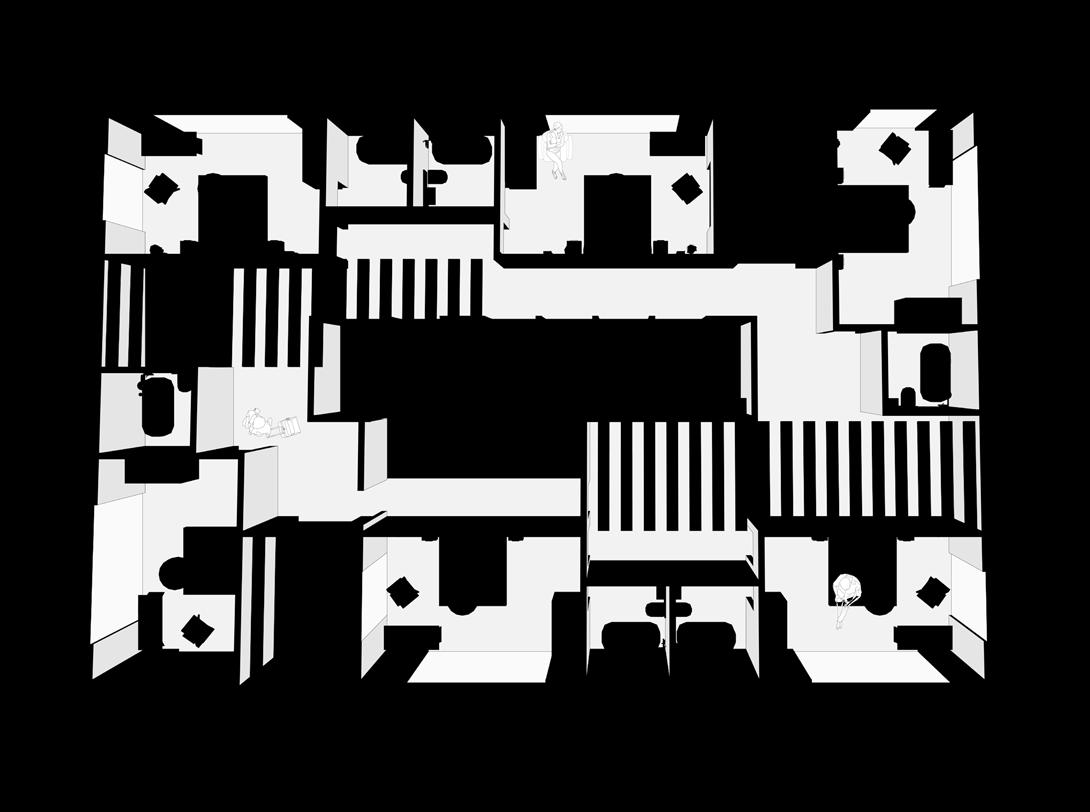
16 04 The Afterglow Residential Module Floor Plan
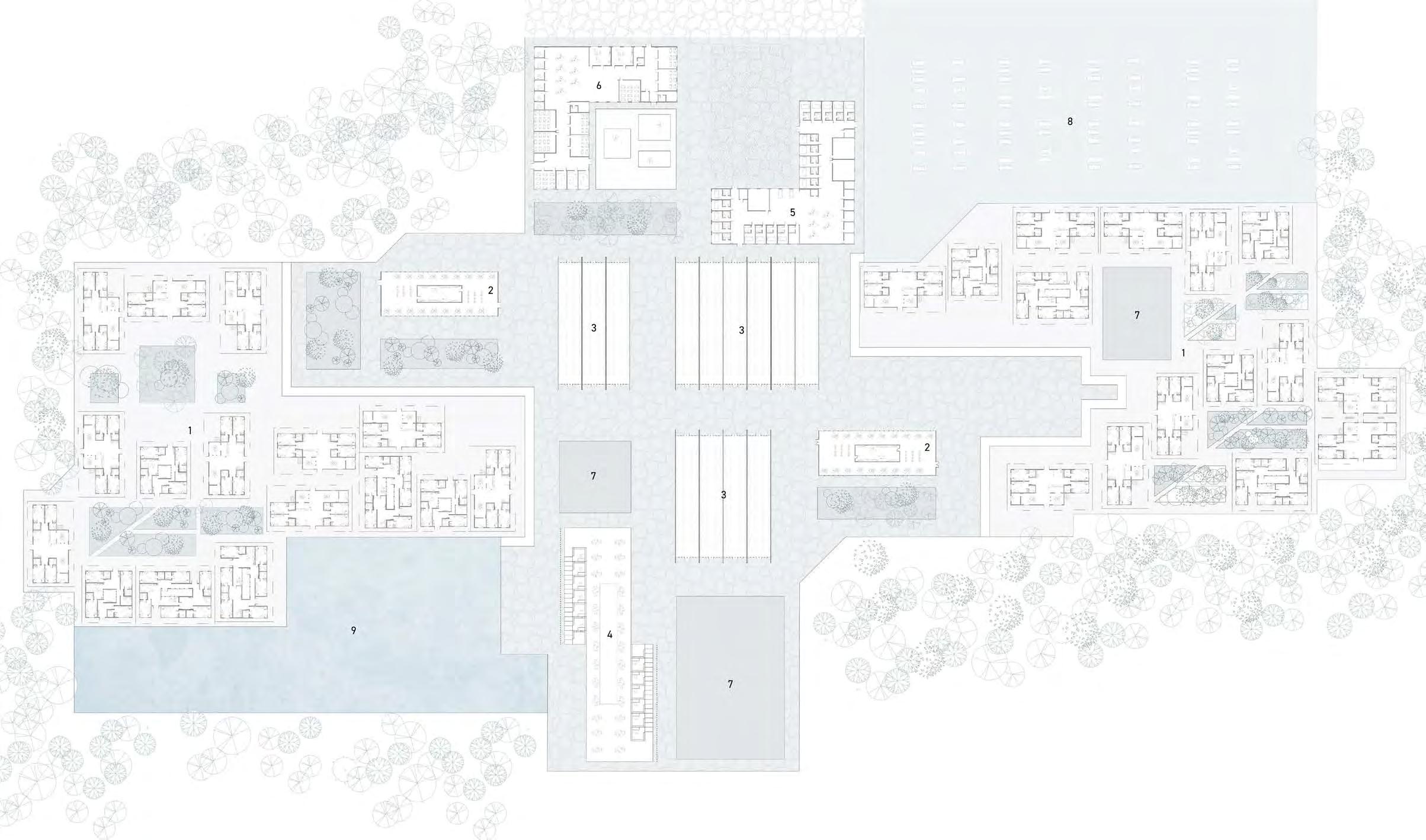
1. Residential Area
2. Cafeteria
3. Retails
4. Library
5. Medical Center
6. Kindergarten
7. Plaza
8. Parking Lot
9. Lake
17 04 The Afterglow
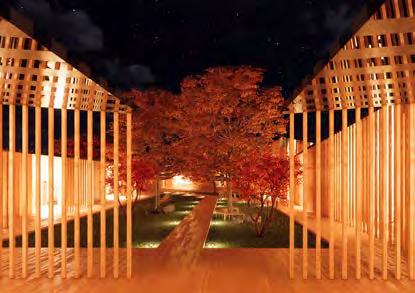
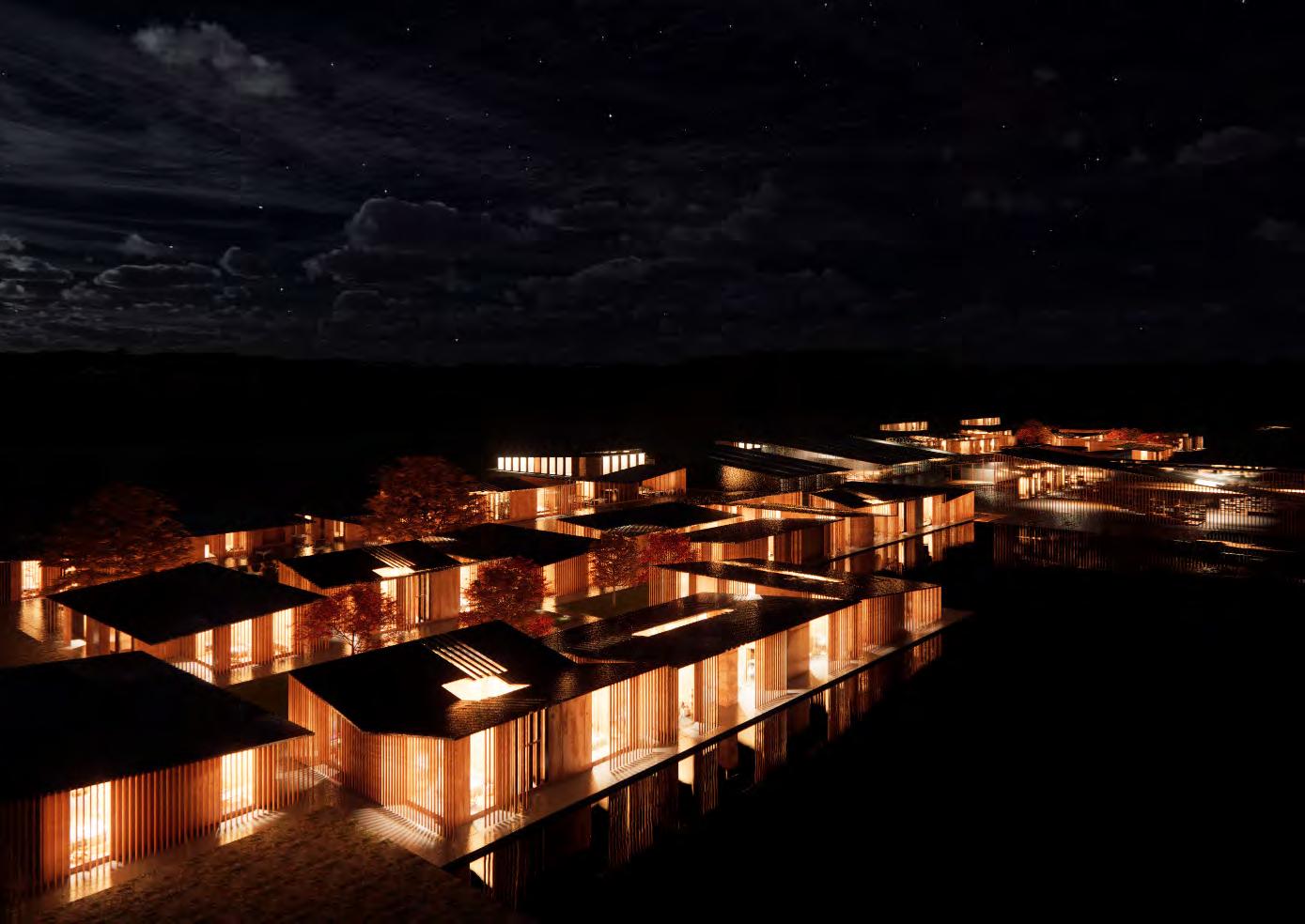
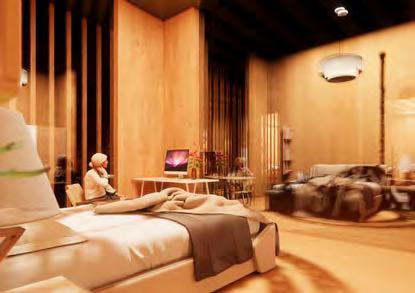
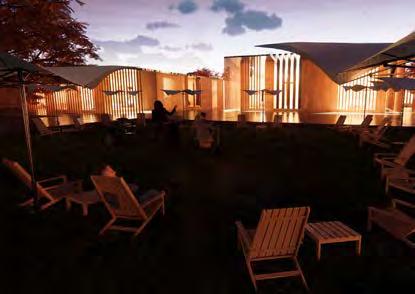
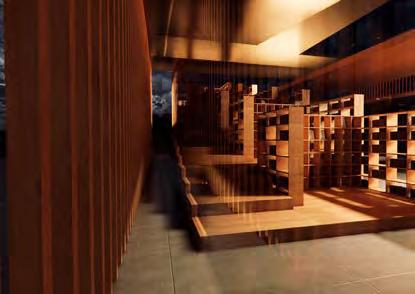
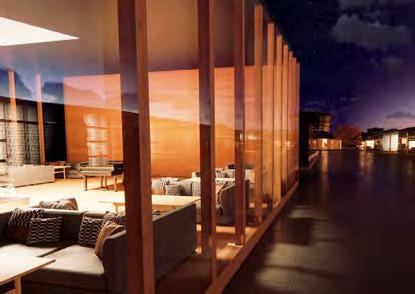
Courtyard
Bedroom
Plaza
Library Cafeteria
05 The Beanstalk
Functional Facade with Recycled
Fall 2022
Group Project for ARCH4010 Additive Tectonics
Partner: Tianbo Zhang
Instructor: Ehsan Barharlou
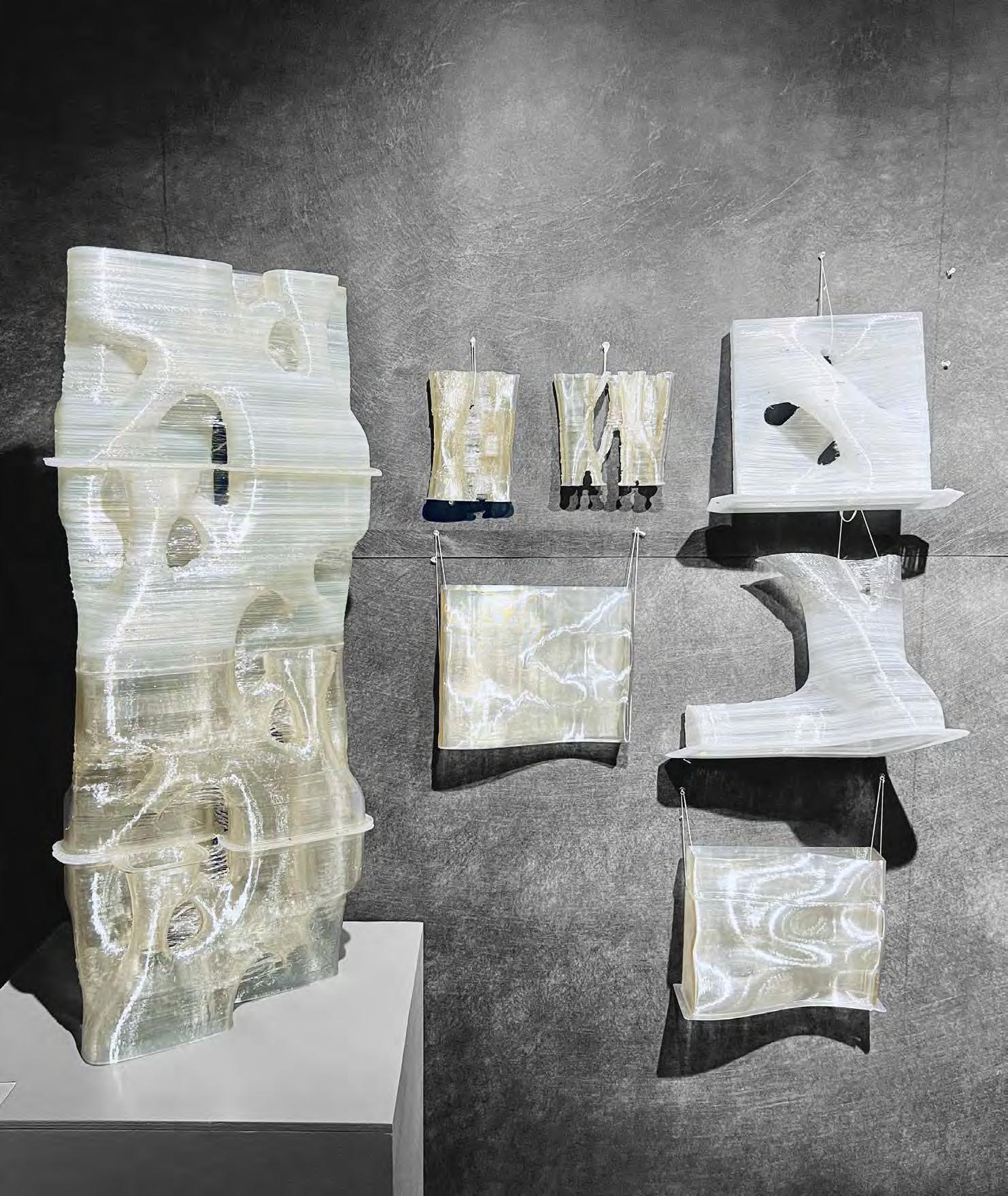
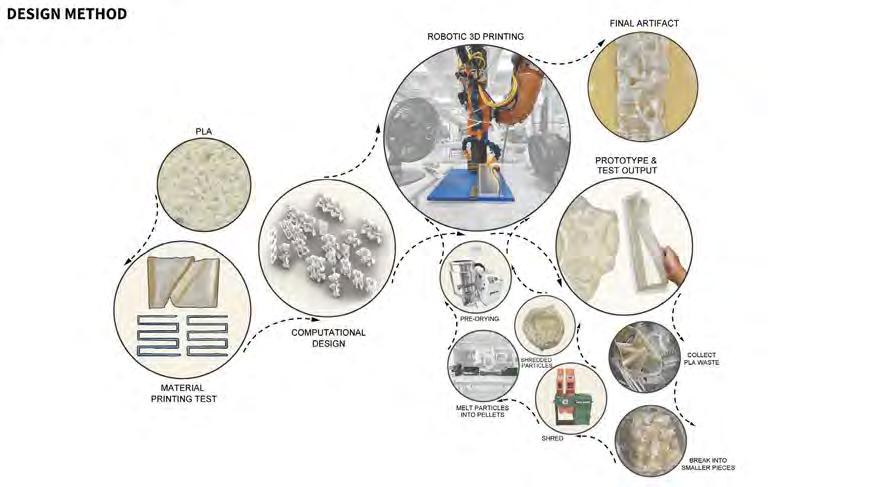
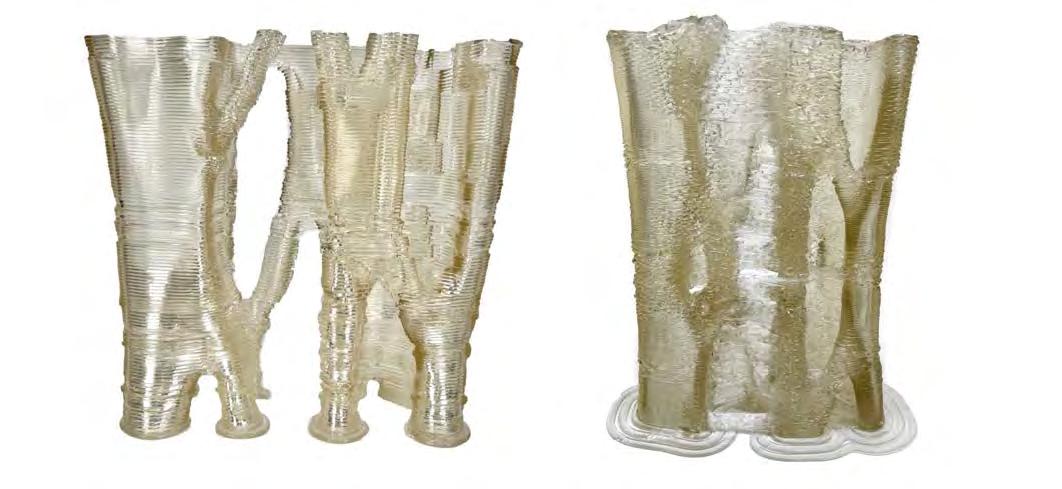
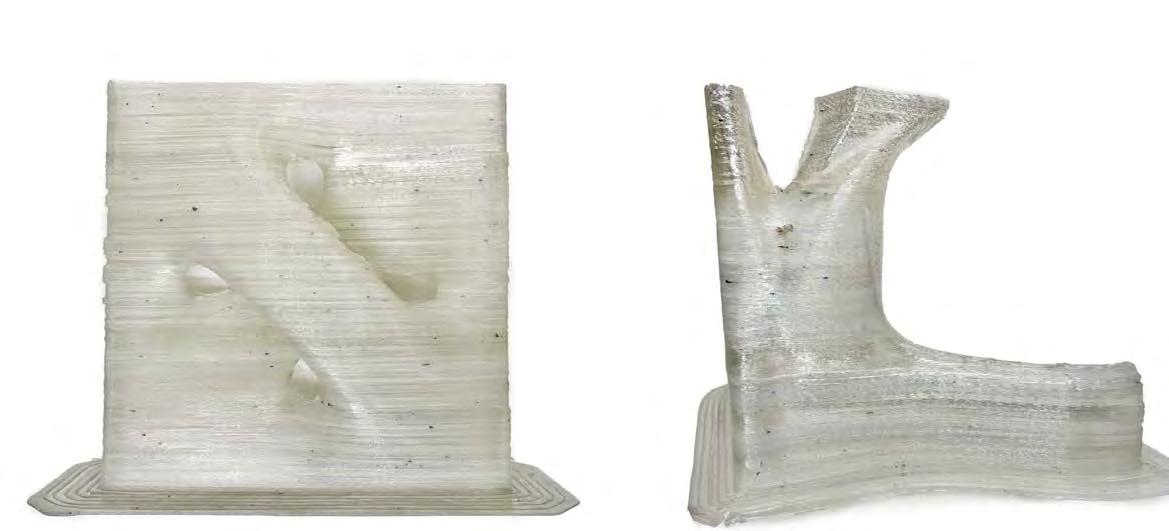
To answer the growing interest in additive manufacturing and greener material in architecture, My teammate, Tianbo Zhang, and I designed a modularized functional facade system with recycled PLA. The process of melting abandoned architectural models, pulling robotic arm adaptable filaments, and 3D printing vertically is similar to the underestimated “Beanstalk” seed Jack received.
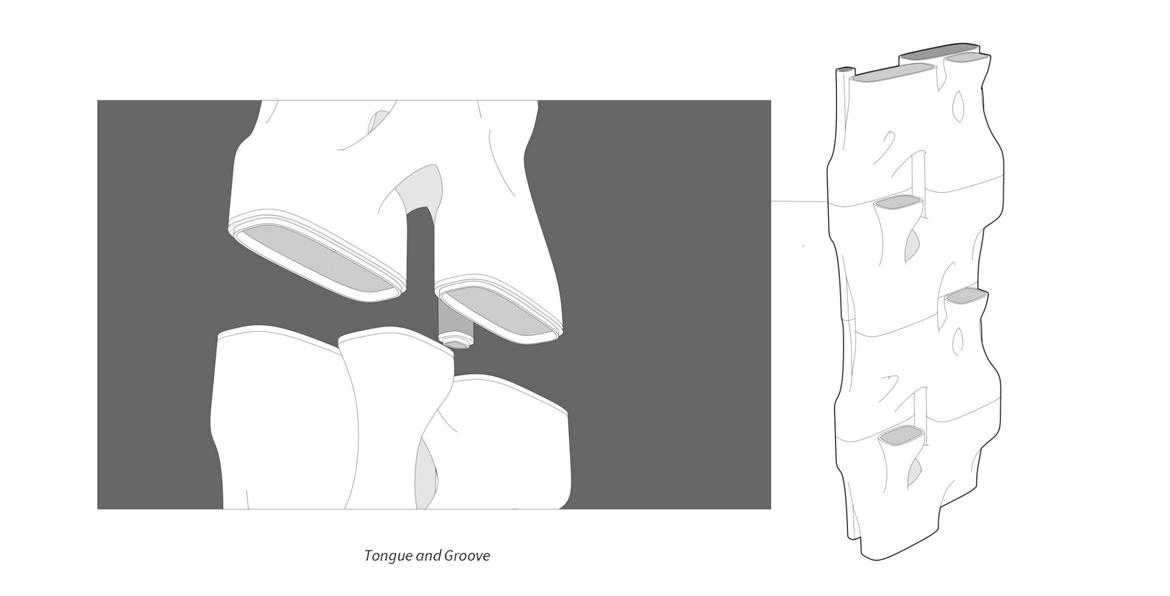
The shape of the facade derives from a combination of Erwin Hauer's model and a vertical greenery. The combination enables simple and systematic irrigation.
Recycled PLA, though weaker than traditional building materials, has the advantage of infinite recyclability. Our proposed facade contains modules that are replaceable and therefore metabolizes as components age. The obsolete modules can undergo the recycling process again with a mixture of raw PLA to generate new pieces with revived structure rigidity. A better understanding of the material properties and mechanics also makes new materials possible just by tweaking the fabrication techniques. The cutting-edge additive construction method also provides a possibility for further reducing human labor cost.
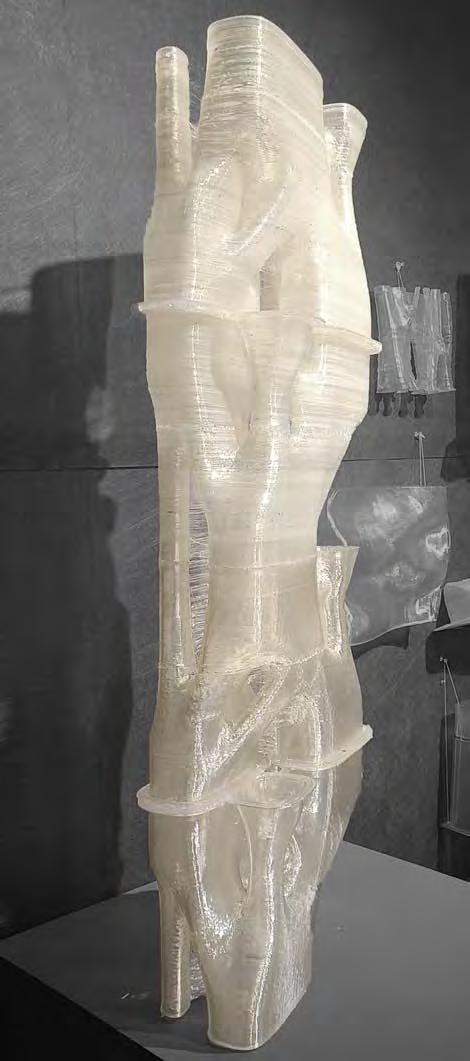
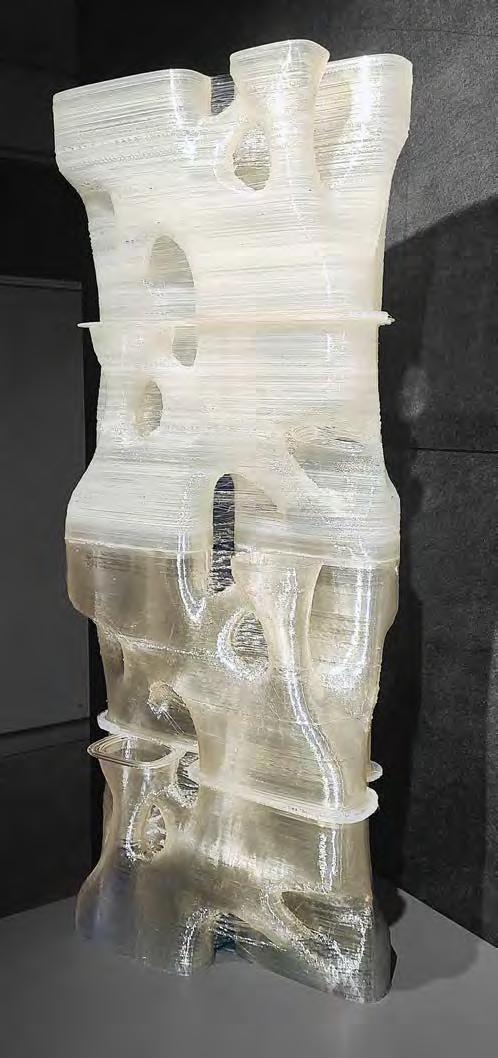
20 05 The Beanstalk Collaborated Printing Practice
Prototype B
Fusion 360 Generated Prototypes, Collaborated Work
Final Design, Collaborated Work
Prototype A
Illustration Design Method
Illustration created by Partner Tianbo Zhang