

Latanya Buggs VP - Network & Field Ops

Latanya Buggs VP - Network & Field Ops
We get you. Because we empower you. And wherever you go, we got your back.
We support our V Teamers every step of the way - from employee resource groups to inclusive benefits, including paid parental leave, up to 6% 401(k) match, stock awards, up to four weeks of paid time off (vacation, holidays, and personal days) and more.
Connect with the best and brightest to help innovate and operate some of the world’s largest platforms and networks.
From Finance and Tech to Retail and beyond - your dream role may be closer than you think.
Let's get going. Explore our open roles today.

At Abbott, we believe that diverse ideas, perspectives, and expertise are the keys to creating life-changing solutions that empower people worldwide to live healthier, fuller lives.
As a global healthcare leader, we are dedicated to enhancing life at every stage. Our comprehensive portfolio spans diagnostics, medical devices, nutritionals, and branded generic medicines, reflecting our commitment to innovation and excellence in healthcare.
With a team of 114,000 passionate colleagues serving in over 160 countries, we are united in our mission to transform the face of healthcare. Together, we are making a difference, one breakthrough at a time. Join us on this incredible journey.
Learn more at: https://abbo.tt/hispanic-engineer-it-25

Connect with us:

how leading organizations as HACU, SACNAS, and Great Minds in STEM are shaping the future of science and engineering one student at a time.
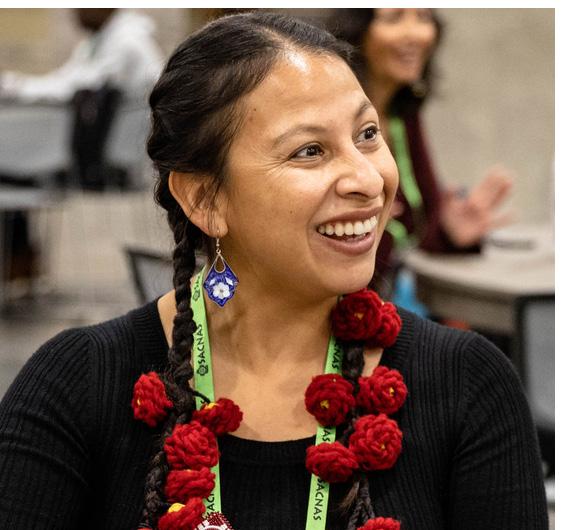

24 40 YEARS OF TOP EMPLOYERS: Shaping Hispanic engineering careers, with exclusive insights on companies, internships, and hiring trends.
HISPANIC STEM PIONEERS: Past and present, whose achievements and leadership are opening new doors. 38 TRACE FOUR DECADES OF STEM PROGRESS: From mainframes to machine learning, discover how inclusion and innovation are reshaping opportunity.
42 BEHIND THE SCENES: Hispanic Engineer & IT Magazine’s 40-year journey, from its pioneering founders to movements that reshaped Latino visibility in STEM.
44 CONVERSATION WITH TRAILBLAZERS BEHIND HE: Their wisdom, vision, and legacy continue to guide the next generation.
& Events ................... 8
Catch up on major conferences, trailblazing awards, and must-know scholarships fueling progress in STEM communities.
........................ 10
Uncover the top STEM internships and see how leading companies are launching the next generation of innovators.
...................12
Master your next online STEM interview with 10 expert tips designed to help you stand out, impress, and land your dream role—no matter where you log in.
Life ................. 16
See how companies are moving beyond DEI promises to real, measurable change in STEM, driven by new strategies, technology, and the enduring power of Title VII.
......................... 18
Follow the journey of Dr. Luis Leyva, whose research and advocacy are breaking barriers and inspiring a more inclusive future for Latinos in STEM.
Collar STEM ........... 20
Discover how high-tech, high-paying careers are transforming Hispanic communities—no four-year degree required, just real skills and ambition.
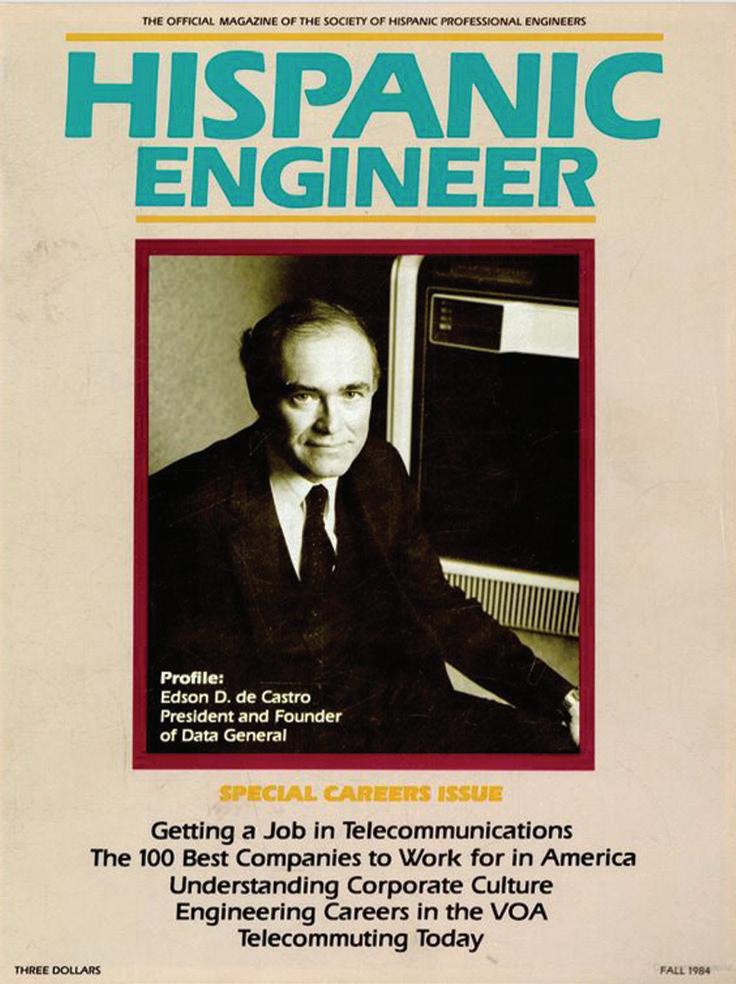
In 1984, Hispanic Engineer & Information Technology Magazine began as a bold endeavor to celebrate Hispanic innovation in science and engineering. Our very first issue spotlighted Edson de Castro, a visionary leader and founder of Data General, who made history as one of the first Hispanic executives in high-tech. That issue was more than a debut—it was a declaration that Hispanic contributions to STEM matter, and they must be recorded, recognized, and celebrated.
Forty years later, Hispanic Engineer remains the longest continuously published magazine of its kind. Across four decades, we've documented the evolution of STEM and the profound role Hispanic professionals have played in shaping it. From high-performance computing at Data General to grassroots digital inclusion initiatives like "One Laptop per Child," which sought to revolutionize education for underserved communities, our pages have captured a movement of progress powered by purpose.

This anniversary marks more than a milestone—it is a reaffirmation of our mission. We have proudly highlighted the culture and community that continues to nurture innovation, resilience, and leadership. We have chronicled the journeys of engineers, technologists, students, and educators who are not only shaping the future but doing so with heart and heritage.
As we look to the next 40 years, we remain dedicated to being a beacon for opportunity, inspiration, and inclusion in STEM. Thank you for being a part of this journey. Together, we’ll continue to elevate stories that deserve the spotlight and drive a legacy that empowers generations to come.

Tyrone D. Taborn Publisher and Chief Content Officer


sdvwvefvvwdvdvdvwdv

EXECUTIVE OFFICE
Tyrone D. Taborn, CEO and Publisher
Jean Hamilton, CFO, President
Ty Taborn, Esq., Executive Sr. V.P. & General Counsel
Kwan Hurst, COO, Operations
Alex Venetta, Exec. V.P. of Corporate Development
Eric Price, V.P., Human Resources
EDITORIAL AND CONTRIBUTING EDITORS
Rayondon Kennedy, Director
Lango Deen, Technology Editor
Michael Fletcher, Contributing Editor
Gale Horton Gay, Contributing Editor
Garland L. Thompson, Contributing Editor
Roger Witherspoon, Contributing Editor
GRAPHIC & DIGITAL DESIGN
Beverly Wladkowski, Creative and UX Director
Bryan Davis, Digital Director
Rachael DeVore, Multimedia Designer
Courtney Taborn, Digital Marketing Manager
Jessica Hernandez, Graphic Designer
DIGITAL PLATFORM AND DEVELOPMENT
Nikkie Stevens, Director of Metaverse Platforms
Terrence Fooks, Metaverse Platform Program Manager & Client Relations Specialist
CORPORATE AND ALUMNI RELATIONS
Dr. Gwendolyn Boyd, CCG Alumni Committee Chair and President
Dr. Eugene DeLoatch, Chairman, BEYA Alumni Group
Vice Admiral Andy L. Winns, USN (Ret) National Chair, BEYA Military Alumni
Oliver “Bo” Leslie, Retired Program Manager, Historically Black Colleges and Universities/Minority Institutions, The Boeing Company
Monica E. Emerson, Women of Color STEM Conference National Chair
Matt Bowman, CCG Military Program Manager Stars and Stripes Committee Executive Director/Chief of Staff for VADM Walt Davis, USN (Ret.)
SALES AND MARKETING
Gwendolyn Bethea, V.P., Corporate Development
Kameron Nelson, Account Executive
Lucille Kennedy, Sales Support Assistant
Jay Albritton, Social Media Account Manager
JOBMATCH AND STUDENT DEVELOPMENT PROGRAMS
Ashley Turner, University Relations Manager
Rod Carter, Recruitment Specialist, College Relations
Shelia Richburg, College Coordinator
CONFERENCE AND EVENTS
Jennifer Roberts, V.P., Partner Experience
Ana Bertrand, Conference Coordinator
Brandon Newby, Customer Service Associate
Sarah Blum, Youth Services Coordinator
Tarase Whetstone, Regional Outreach Manager
ADVERTISING SALES OFFICE
Career Communications Group, Inc.
729 E. Pratt Street, Suite 504
Baltimore, MD 21202
Phone: (410) 244-7101 / Fax: (410) 752-1837
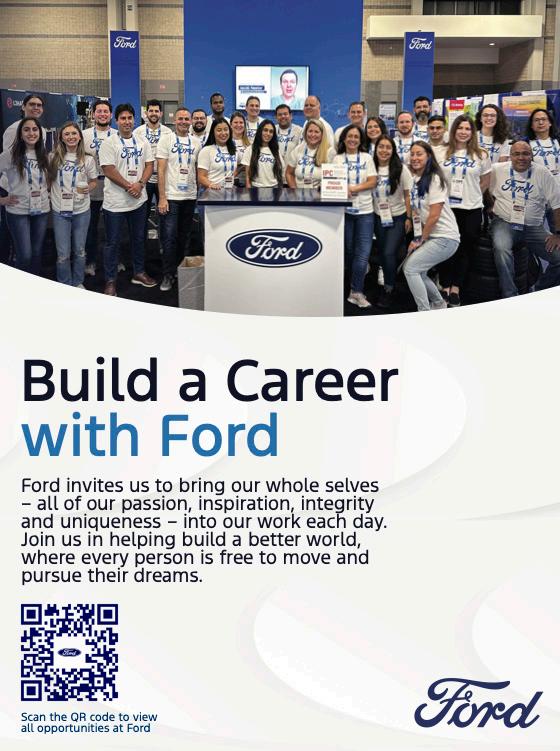
The Hispanic Association of Colleges and Universities (HACU) started 2025 with its 30th Annual Capitol Forum on Hispanic Higher Education in April. The two-day event included policy briefings focused on key issues impacting Hispanicserving institutions. Don’t miss HACU’s 39th Annual Conference, scheduled from Nov. 1–3 in Aurora, CO, with the inspiring theme “Championing Hispanic Higher Education Success: Forging Transformational Leaders.”
Pre-conference activities will include the annual Deans' Forum and the Latino Higher Education Leadership Institute, both aimed at encouraging dialogue and action in Hispanic higher education.
HACU, the American Indian Science and Engineering Society (AISES), the Society of Hispanic Professional Engineers (SHPE), the Society for the Advancement of Chicanos/Hispanics and Native Americans in Science (SACNAS), and Great Minds in STEM
(GMiS) are committed to empowering underrepresented communities in the fields of science, technology, engineering, and mathematics (STEM).
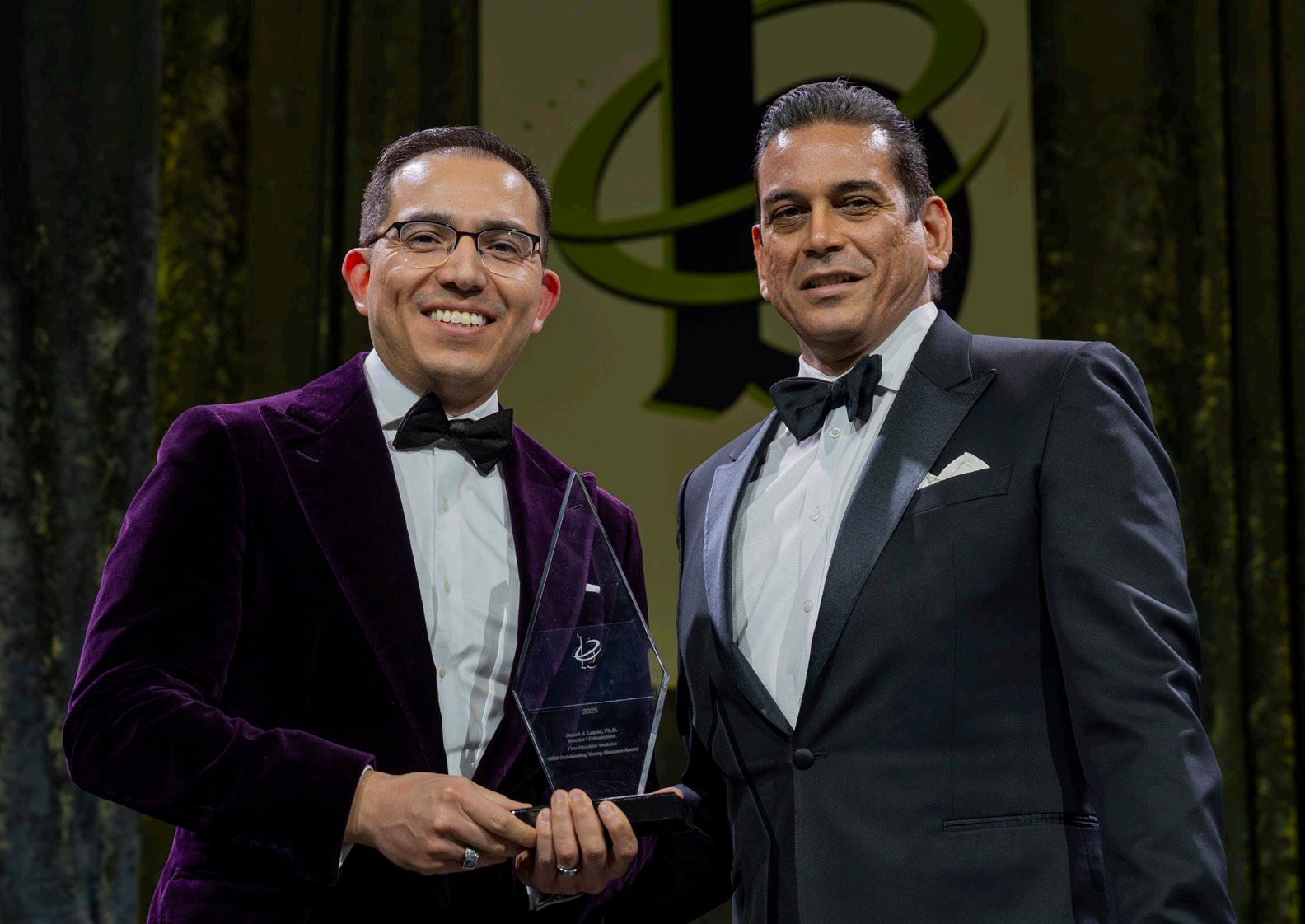
In his debut as the executive director of GMiS, Peter Mellado made a memorable impact by presenting the GEM Outstanding Young Alum Award at the 39th BEYA STEM Conference in February. Each year, the Graduate Education for Minorities (GEM) Consortium partners with the BEYA STEM Conference to honor trailblazers in physical sciences, life sciences, and engineering with prestigious awards, showcasing individual contributions in STEM.
At the 2024 GMiS conference, the Chairman’s Award celebrated the achievements of SHPE through its Technical Achievement and Recognition (STAR) Awards. Among those recognized in 2024, Adriana Ocampo from The Boeing Company was honored with the Rodrigo Garcia Founder's Award, and Lauren Ferlita Breitenbach
by CCG Editors editors@ccgmag.com
from Northrop Grumman was presented with the Dr. Ellen Ochoa Award. Another highlight was the Rubén Hinojosa STEM Champion Award given to MESA, reflecting significant strides in the STEM landscape.
Looking ahead, GMiS will host its 37th annual conference in San Diego, CA from Oct. 2–4. Also in 2025, the SHPE National Conference is scheduled to take place in Philadelphia, PA, from Oct. 29 to Nov. 1.
In recognition of exceptional mentorship, Professor Eugene S. Mananga was awarded the Distinguished Mentor Award at SACNAS in 2024, honoring his support for Chicano, Hispanic, and Native American students as they chase advanced degrees and leadership roles in STEM. This acknowledgment highlights the importance of mentorship in cultivating the next generation of leaders.
SACNAS has announced its 2025 National Diversity in STEM Conference (NDiSTEM), scheduled for Oct. 30–Nov. 1, will take place in Ohio.
Before that, the AISES National Conference will take place from Oct. 2–4, 2025. During this event, the Ely S. Parker Award will be presented to recognize exceptional Indigenous leaders who embody the AISES mission through their achievements and contributions to the STEM fields.
Lastly, the National Society of Black Physicists (NSBP) and the National Society of Hispanic Physicists (NSHP) will build on their joint conference in Houston, TX, with another event in San Jose, CA, from Nov. 19–23, 2025, themed “Physics for the Future of Workforce and Research Development (P-FWRD).” HE
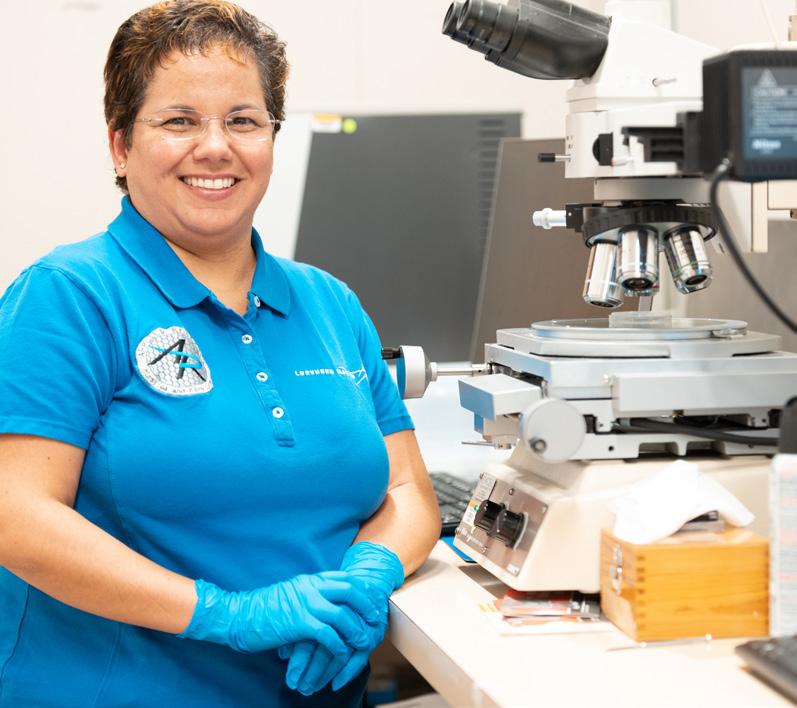
Research Scientist Senior Staff | Lockheed Martin
The Hispanic Association of Colleges and Universities (HACU) has clarified that the 25% threshold, which defines HispanicServing Institutions (HSIs), is intended to distribute federal funding rather than to exclude, label, or give preference to individual applicants. The HSI Program was created by Congress, not through agency overreach. Additionally, the HSI program represents only a small portion of the federal budget but provides a return on investment that greatly surpasses its relatively low cost. Eliminating HSI program grants would remove essential resources, not just for HSIs but also for other initiatives that support a significant number of firstgeneration, low-income, and historically underrepresented college students. HACU supports fair funding—not preferential treatment—for more than 600 Hispanic-Serving Institutions that educate over 5.6 million students and contribute to the nation’s future success.
• AISES: aises.org/scholarships/
• HACU: hacu.net/programs/hacuscholarship-program
• IBM Academic Awards: research. ibm.com/university/awards/ fellowships.html
• UNCF: uncf.org/scholarships
• Amazon Future Engineer Scholarship: amazonfutureengineer.com/ scholarships
• American Indian College Fund: collegefund.org/students/ scholarships
• American Indian Services: americanindianservices.org/ scholarships
• Association on American Indian Affairs: indian-affairs.org/ nativescholarship.html
• Future of STEM Scholars: futureofstemscholars.org
• The Gates Scholarship: thegatesscholarship.org/
• Hispanic Scholarship Fund: hsf.net
• Horatio Alger Association Scholarships: horatioalger.org/ scholarships
• Lockheed Martin STEM Scholarship: lockheedmartin.com/en-us/who-weare/communities/stem-education/ lm-scholarship-program.html
• McDonald’s Scholarships: mcdonalds.com/us/en-us/ mcdonalds-scholarships.html
• NAACP Scholarships: naacp.org/ find-resources/scholarships-awardsinternships/scholarships
• National Indian Education Association: https://www.niea.org/ scholarship-opportunities
• Native Forward Scholars Fund: nativeforward.org
• Sallie: sallie.com/scholarships
• Thurgood Marshall College Fund: tmcf.org/scholarships/openscholarships/
• UnidosNow Scholarships: unidosnow.org/scholarships
AISES National Conference
October 2–4
Minneapolis, MN
GMiS Conference
October 2–4
San Diego, CA
WOC STEM DTXTM Conference
October 23–25
Baltimore, MD
SHPE National Conference
October 29–November 1
Philadelphia, PA
SACNAS National Diversity in STEM Conference (NDiSTEM) October 30–November 1
Columbus, OH
HACU Annual Conference
November 1–3
Aurora, CO
NSBP-NSHP
November 19–23
San Jose, CA
BEYA STEM DTXTM Conference February 12–16, 2026
Baltimore, MD
by Lango Deen editors@ccgmag.com

“According to a Vault survey, when choosing an internship, individuals consider key factors such as career growth, company culture, and pay.”
Since 1992, the Hispanic Association of Colleges and Universities (HACU) has run one of the most respected internship programs, offering valuable experience to over 14,000 students in federal agencies. (https://hacu.net/programs/ hacu-apply-asp/).
While a petting zoo with alpacas might not be essential to your experience, features like nap rooms, a music room, book clubs, a band, and a Toastmasters club are appreciated by interns at ServiceNow. According to the "What It's Like to Be a ServiceNow Intern" video on YouTube, the company culture was ideal for one business intelligence engineer intern. The company's values attracted one software engineer intern. Meanwhile, a sales development intern recognized the CEO from a book on
her dad's table, seeing it as a happy coincidence. ServiceNow is leveraging artificial intelligence (AI) to empower its users. For a financial accounting intern, her team's approachability was vital. Another intern enjoyed the freedom to explore different departments. To learn more, visit the Talent Community webpage (https:// talent.servicenow.com/flows/cs-talentcommunity).
On Fannie Mae's website, a cyber security major and information security intern shared that he learned to use JIRA, Confluence, Trello, as well as Python and Java—skills that will benefit him in the future. Meanwhile, a securitization intern mentioned that her internship was a transformative experience.
Ranked among the top, Fannie Mae's Internships and Early Career Opportunities program offers college seniors a 10-week internship focused on technology, finance, analytics, or business. To learn more, visit the website (https://www.fanniemae.com/ careers/campus) and check events on
INTERESTINGLY, while many job seekers believe that an intelligent chatbot is crucial for engaging candidates, as it offers instant responses that enhance the application experience and simplify recruitment, most Fortune 500 companies do not use one.
THE PHENOM STATE OF HIGH-VOLUME HIRING: 2025 Benchmarks Report
examined how 101 companies utilize AI and automation in their hiring processes. Although businesses in retail, hospitality, travel, healthcare, pharmaceuticals, manufacturing, transportation, and distribution sectors have begun adopting AI and automation to attract candidates, only 32 percent have fully embraced these technologies.
Handshake for internships designed to foster career development.
Speaking on YouTube, a software engineering intern at MongoDB stated that the feedback was instrumental in their development. A creative intern mentioned that the company valued "owning what you do" as essential. One intern learned to see mistakes as learning opportunities, while a marketing intern formed valuable connections.
MongoDB encourages interested individuals to join its Early Talent Community to learn about its programs (https://www.mongodb.com/company/ careers/students-and-graduates).
Prospective interns can chat with a recruiter, interview a team member to gain insight, and participate in interviews with a manager before the onboarding process.
Other programs that come highly recommended include the Ellucian internship experience, (https://careers. ellucian.com/early-career#internships), which is designed to support career development, provide a path from
internship to a job, and offer a good work-life balance.
Pluralsight’s talent community (https:// pluralsight.wd1.myworkdayjobs.com/ en-US/Careers/introduceYourself ) offers experience in sales, finance, human resources, customer care, sales engineering, and information technology.
Check out Avnet’s “Interns and early graduates” webpage (https://www. avnet.com/americas/about-avnet/ careers/internships-early-grads/) for internship locations.
Arista University (https://www.arista. com/en/careers/university) recruits interns and new college graduates. Internships are offered on a full-time or part-time basis.
Splunk’s internship program is known as the Splunktern (https://www.splunk. com/en_us/careers/splunkterns. html). It is designed to allow interns to experience Splunk’s culture and gain hands-on experience. The program lasts 12–15 weeks.
New York-based accounting firm PKF O'Connor Davies took the No. 1 spot on Vault's “Best Overall Internships” list. Interns were satisfied with the quality of life and compensation. Check out https://www.pkfod.com/careers/ NASA was selected as a prestigious internship. Click here to view its 2026 internship application deadlines (https://www.nasa.gov/learningresources/internship-programs/).
Explore Google internships on its career website (https://www.google. com/about/careers/applications/jobs/ results).
Find available internships at Careers at Apple (https://jobs.apple.com/en-us/ search).
The Microsoft Early in Profession Experience provides all the information you need about internships (https:// careers.microsoft.com/v2/global/en/ programs/students.html).
According to a Vault survey, when choosing an internship, individuals consider key factors such as career growth, company culture, and pay. Notably, 94 percent of interns reported that their internships were either inperson or hybrid, with most spending 10–12 weeks at their internship sites. Vault surveyed thousands of interns about their programs. The 2025 rankings are based on survey results from summer 2024. HE
THE HIGH-VOLUME HIRING REPORT examined how AI and automation are modernizing recruitment, reducing hiring friction, attracting top talent, and enhancing operational efficiency.
interface. Log in 15 minutes early to check your audio, video, and internet connection. As the saying goes, “If you're on time, you're late.” Logging in early gives you time to troubleshoot any technical issues and settle your nerves before the interview begins.
For first-generation college graduates, early-career professionals, and STEM students doing internships to prepare for their careers, remote work, AI hiring platforms, and global talent pools, virtual interviews are here to stay. Whether you’re logging in to Zoom, Google Meet, or a platform like HireVue, your ability to navigate an online interview with confidence and professionalism can determine your next opportunity.
We know the stakes are high. As a STEM student, you may already be breaking barriers—now it’s time to break into the next phase of your career with intention. These 10 expert-backed virtual interview tips—adapted from career coach Richard McMunn—will get you there.
Strong internet is non-negotiable. Find a quiet space with solid Wi-Fi and minimal distractions. Sit with the light in front of you—not behind—so your face is clear on camera. Test the room with the door closed to mimic real interview conditions.
Let everyone in your household know you’re in an interview. Silence notifications, lock the door, and let your phone rest. This is your moment—guard it.
Dress sharp—from head to toe. Yes, even if they only see your shoulders. It sends a message: “I take this opportunity seriously.” Professional attire shows high standards and confidence.
It’s tempting to look at the screen,
Install and test the interview platform (Zoom, Google Meet, HireVue, etc.) at least 24 hours before your interview. Make sure your device is fully charged and that you're familiar with the
Are your mic and headphones working? Can you hear clearly? Test your audio and make sure your system recognizes your headset or built-in mic.
A tech glitch at “Tell me about yourself” is not the first impression you want to make.
especially when you’re nervous. But eye contact in virtual interviews means looking directly at the camera lens. Practice this—connection matters.
• Practice this 60-second pitch until it feels natural.
Sit upright, smile often, and engage with facial expressions. Nodding, reacting, and actively listening show you’re present, not passive. Record yourself doing a mock interview to finetune your energy and presentation.
This is your chance to flip the script. Ask questions that show curiosity and longterm thinking:
• “How has this role evolved over time?”
• “What’s the culture like here?”
• “What are your future goals for the company?”
Use the S.E.A.T. method:
• Skills: Highlight those aligned with the role.
• Experience: Include jobs, labs, or academic projects.
• Achievements: Mention standout moments that show your value.
• Type of person: What drives you? What’s your work ethic?
Expect these questions—and practice your answers:
• “Tell me about yourself.”
• “Why do you want to work here?”
• “What’s your biggest weakness?”
• “What strengths do you bring to this team?”
• “What do you know about our company?”
• “Why should we hire you?”
One great way to rehearse is by using the Collin AI Interviewer, a simulated virtual interviewer that can ask you realtime questions and provide feedback on your tone, clarity, and content. Practicing with Collin helps you refine your delivery and reduce nerves before the real thing.
Never say, “No questions—I’m good.” You’ve come this far. Close strong.
As a Hispanic student in STEM, every interview is more than a career checkpoint—it’s a chance to represent your community and your future. Be bold, be prepared, and bring your full self to the screen.
Your next opportunity could be just one click away. HE

Did you enjoy this article? You can find more daily at www.hispanicengineer.com



Asdebates over the role of diversity, equity, and inclusion (DEI) policies in American workplaces intensify, one pillar remains steadfast: Title VII of the Civil Rights Act. In 2025, the difference between DEI as a strategy and Title VII as a federal mandate has become a key tension point for organizations working in science, technology, engineering, and mathematics (STEM) sectors.
Title VII of the Civil Rights Act of 1964 bans employment discrimination based on race, color, religion, sex, or
national origin. It aims to ensure equal opportunity in hiring, promotion, and workplace treatment across all sectors of employment. Title VII remains a key legal standard used to measure workplace inclusion efforts, requiring not just good intentions but enforceable results in preventing discrimination.
A growing number of corporations are stepping away from symbolic gestures and toward operational reforms. One prominent computing company
now pairs each new employee with an “inclusion partner,” whose job is to facilitate early integration and provide a roadmap for advancement. Elsewhere in the industrial sector, a major enterprise has tethered executive bonuses to team retention and promotion outcomes for historically marginalized employees.
In aerospace, a company has scaled its mentorship initiative, “Talent Lift,” aimed at accelerating the leadership trajectory of underrepresented technologists through executive coaching and structured development tracks.
The Department of Energy recently launched its “Equity in Innovation” initiative, broadening its equity lens to include not just hiring practices but also access to research funding, authorship, and recognition.
In academia, a leading university in the southeastern U.S. has begun factoring community outreach and inclusive pedagogy into tenure and promotion reviews.
Technology firms are also confronting algorithmic bias head-on. One semiconductor manufacturer is applying equity audits to hiring tools powered by artificial intelligence, ensuring fairness in increasingly automated decisions.
New data underscores the value of these reforms. A leading telecom company reported a 19 percent increase in the internal mobility of women of color in technical roles, attributed to structured sponsorship and transparent advancement criteria. Meanwhile, a
defense contractor has adopted a live “Inclusion Dashboard,” tracking key indicators such as pay equity and retention across demographic lines.
Such metrics are reshaping how companies assess organizational health, with increasing pressure from shareholders and employees alike to tie diversity efforts to measurable results.
As AI continues to infiltrate human resources, companies are turning to tools designed to ensure fairness from code to contract. Among them is the AI Fairness 360 (AIF360), an open-source toolkit that measures and mitigates bias in machine learning systems.
Developed by a global team, AIF360 includes nine bias-reduction algorithms and three practical tutorials, ranging from credit scoring to facial recognition. It is not merely a software package; it is a curated experience, complete with guidance materials and ethical frameworks.
AIF360 aims to bring fairness research into the hands of data engineers and developers, making AI systems more trustworthy and equitable.

“Companies are stepping away from symbolic gestures and toward operational reforms—where inclusion isn’t just a buzzword, but a career accelerator.”
Mission statements or marketing campaigns are the barometer for inclusion in STEM. That is evidenced by the structures organizations build, the tools they deploy, and the people they promote. As 2025 unfolds, the focus is shifting decisively from intention to implementation—and from promises to proof. HE
Did
by Gale Horton Gay
Educators value their role in guiding students through academic rigors and showing them the possibilities for careers that benefit them individually and the community.
Many educators are also dedicated to pursuing their interests in research, promoting innovations, building community, and improving the STEM pathway for the next generation. These educators focus on advocating for inclusive cultures, creating opportunities for marginalized communities, conducting research on innovative approaches, making education and advancement accessible for all, and emphasizing the role of technology in education and research, among other areas.
One such educator is Luis A. Leyva, an associate professor of mathematics education and STEM higher education at Vanderbilt University-Peabody College of Education & Human Development in Nashville, TN.
Levya’s interdisciplinary research examines and seeks to disrupt the influence of interlocking systems of
oppression (e.g., racism, heterosexism) that shape classroom teaching, student support, and curricular design in undergraduate STEM education, particularly in gateway mathematics courses such as calculus.
Leyva’s research projects focus on narratives of oppression, agency, and resistance among historically marginalized student populations, aiming to inform culturally responsive and identity-affirming STEM educational opportunities.
He is the director of the Power, Resistance & Identity in STEM Education (PRISM) Research Lab, which houses educational research projects that illuminate as well as destabilize racial and intersectional injustices in undergraduate STEM.
Before joining the Vanderbilt faculty in 2016, Leyva had six years of professional experience in student programs at Rutgers University in New Jersey, focusing on increasing STEM retention and success among historically marginalized groups. His roles included residential mentor in STEM livinglearning communities and mathematics
“Increasing representation and fostering inclusion for Latin people in STEM requires reform in dominant norms and values across these academic/ professional fields that marginalize racially minoritized people’s ways of knowing and being.” – Luis Leyva.
teacher for the Upward Bound MathScience summer bridge program.
He earned his doctorate and master’s degrees in mathematics education as well as a bachelor’s degree in mathematics from Rutgers University.
“Increasing representation and fostering inclusion for Latin people in STEM


requires reform in dominant norms and values across these academic/ professional fields that marginalize racially minoritized people’s ways of knowing and being,” said Leyva.

Luis A. Leyva Associate professor of mathematics education and STEM higher education Vanderbilt University-Peabody College of Education & Human Development
“Such a cultural shift in STEM workplaces and classrooms builds environments that validate Latin people’s funds of knowledge as scientific, which then nurtures their sense of competence and belonging in the sciences.
“This urgently needed transformation in STEM expands opportunities for Latin people’s contributions to innovation that are responsive to unique needs within their communities as well as broader issues of social inequity at national and global levels.”
HE
Hispanic Americans continue to be underrepresented in STEM fields, according to multiple sources. A 2022 analysis of federal data by the Pew Research Center found that Hispanic workers make up 17 percent of the total workforce but account for only 8 percent of all workers in STEM fields. However, some argue that there’s potential for a significant increase in the future.
“Latinos have already made significant contributions to the workforce, accounting for 80 percent of net labor force growth over the past decade,” according to a 2024 report by the Society of Hispanic Professional Engineers (SHPE) and Latino Donor Collaborative (LDC). “Projections indicate that by 2033, Latinos will represent 22 percent of all U.S. workers, positioning them as indispensable to filling the growing need for skilled professionals in STEM.”
The SHPE-LDC U.S. Latinos in Engineering and Tech Report offers 18 “Call to Action” recommendations for industry and corporate foundations, academia, government, individuals, and Latinos in STEM, including:
• Expand mentorship and internship programs.
• Foster an inclusive workplace culture.
• Increase faculty representation.
• Boost STEM funding.
• Enact merit-focused policies.
by CCG Editors

About 40 years ago, many people in Hispanic communities didn’t see themselves working in STEM fields. It wasn’t because of a lack of skill or motivation; it was because the doors were closed. College was too costly. Job training was hard to access. Even if you got in, the respect wasn’t there. That narrative has shifted, gradually at first and then more quickly. Today, there’s no denying it: Some of the most sought-after, high-paying jobs don’t require a four-year degree. They require skills. They require training. And they need people willing to do real work. These aren’t fallback plans. They’re careers that keep the lights on, the air clean, our data safe, and people healthy. For many Hispanic professionals, they’re more than a paycheck; they’re proof of how far we’ve come and what’s possible for the next generation.
Look at wind turbine technicians. This
“For many Hispanic professionals, they’re more than a paycheck; they’re proof of how far we’ve come and what’s possible for the next generation.”
wasn’t the kind of work anyone was talking about half a century ago. Now it’s one of the fastest-growing jobs, with demand projected to grow by 44 percent through 2032. It’s not a job you can fake. It takes one to two years of technical training, the ability to work at heights, and a serious focus on safety. But the payoff is real: good wages, job security, and a role in building the clean energy future.
Consider cyber security technicians. Not too long ago, tech was seen as off-limits unless you had a degree and deep pockets. Today, you can earn certification in a matter of months through programs like CompTIA Security+. Median pay falls between $60,000 and $70,000, with ample room for advancement. For firstgeneration students who were told tech wasn’t for them, this path changes the story.
Advanced manufacturing has also evolved. CNC machinists don’t just turn a crank or push a button. They program computer-controlled equipment to carve parts used in planes, cars, and medical devices with extreme precision. It’s skilled work, with training through trade schools, apprenticeships, or community colleges. And it pays well enough to build a real life.
HVAC technicians have also seen their work transform. It’s no longer just ducts and vents. Modern systems are innovative, connected, and
“These careers prove that progress isn’t just something we talk about but something we see in our income, in the businesses we build, and in the respect we earn.”
energy-efficient. Technicians today install and maintain systems that require a solid grasp of electronics and controls. Many start through apprenticeships, tech school programs, or military experience. The job pays around $51,000 on average, but the real opportunity is ownership. Many Hispanic families have built wealth by starting HVAC businesses that serve their local communities.
Healthcare offers its pathway through roles like radiologic technologists.

This is steady, respected work that matters, involving the operation of imaging equipment such as X-rays and CT scanners that doctors rely on to diagnose patients. It takes a two-year accredited program and state licensure. With a median pay of $67,000, it’s a way into healthcare without the massive debt or time commitment of med school.
What unites these careers is simple. They require skill, training, and commitment. What they don’t need is a four-year degree. The pathways are there: technical colleges and trade schools that get you in and out without decades of debt. Union apprenticeships that pay you while you learn. Military experience that translates into civilian careers. Certifications that employers respect.
Resources exist to make it happen. Apprenticeship.gov lists programs across the country. CompTIA offers practical, affordable training for IT roles. Community colleges have established partnerships with employers to ensure that students acquire skills that lead to real-world jobs.
For our community, this is more than individual success. It’s the result of decades of persistence, of families working hard so the next generation can have it a little easier. These careers prove that progress isn’t just something we talk about but something we see in our income, in the businesses we build, and in the respect we earn. HE
Check out more stories like this at www.hispanicengineer.com
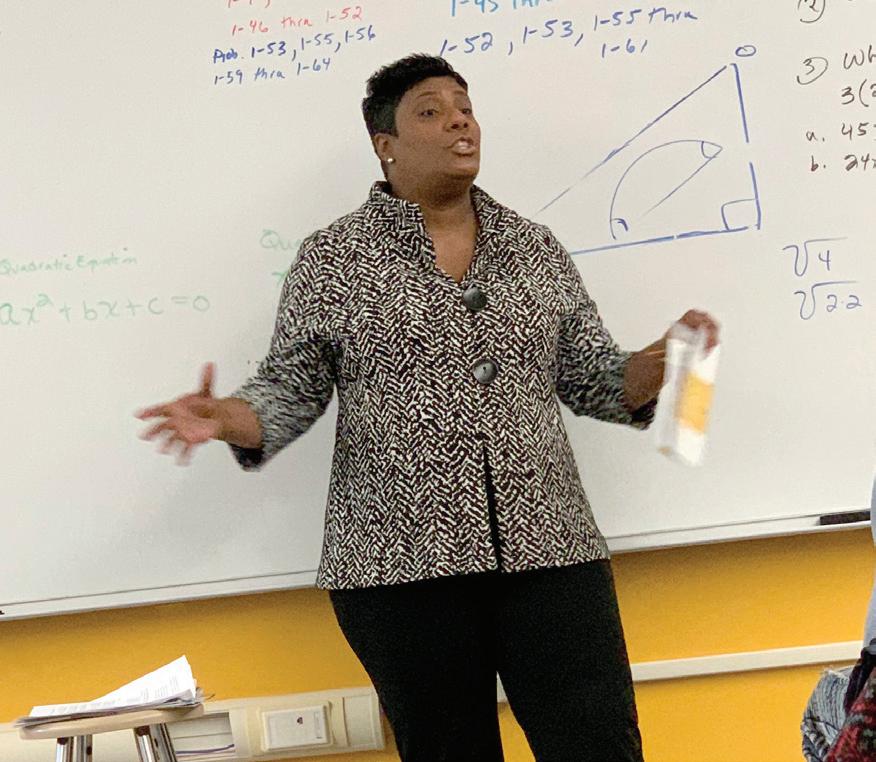
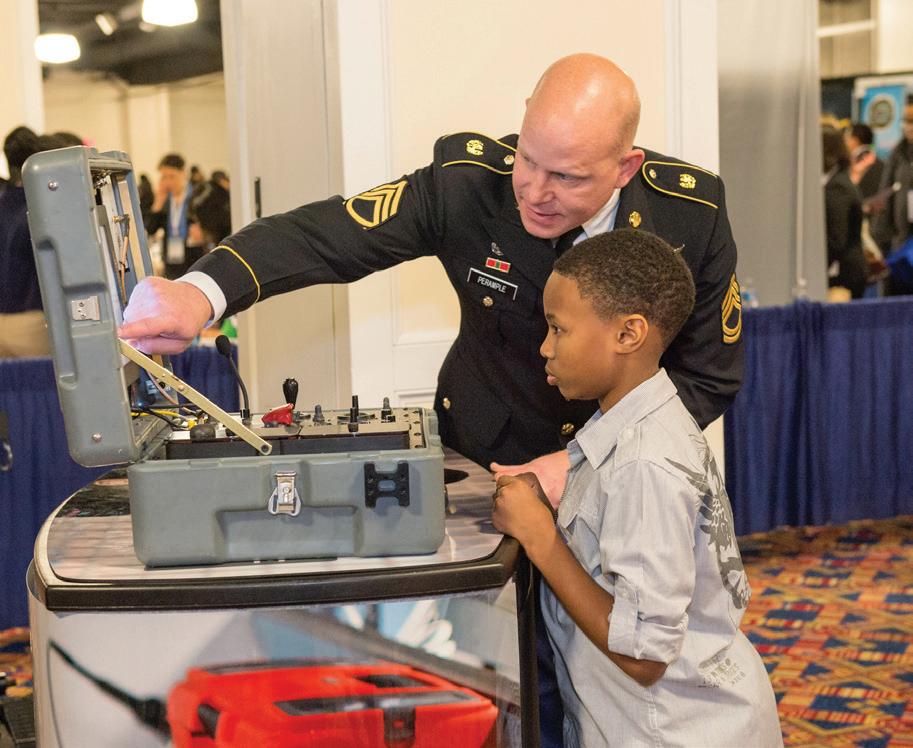

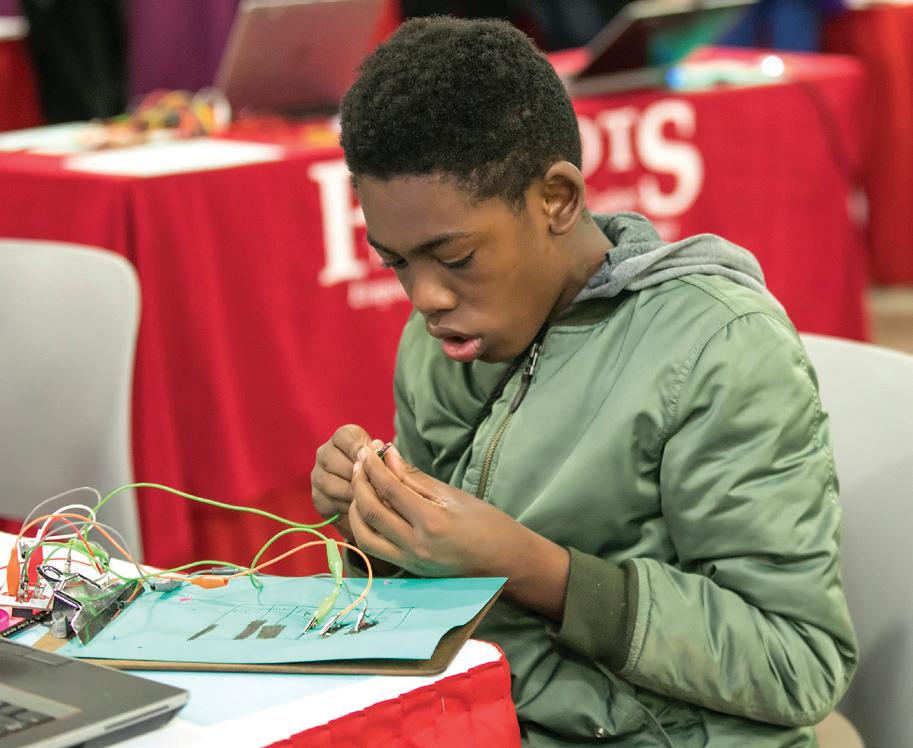

by Lango Deen editors@ccgmag.com
Career Communications Group (CCG) is committed to promoting job creation, growth, and professional development through partnerships with industry, educational institutions, and stakeholders nationwide. CCG's longstanding “Most Admired Employers” list has showcased this collaboration for decades.
“CCG's analysis led to the presentation of 50 exemplary employers who consistently invest in long-term talent development and support platforms that highlight our community's success stories.”
This year, the editors of Hispanic Engineer Magazine have curated a list of top employers from a group of companies that have supported the magazine over the past 40 years. The list includes some of the largest employers in the U.S., such as household names like Walmart, which employs approximately 1.6 million people, and Amazon, with about 1.56 million employees. Other major employers include UPS, with
aEmpowering Generation:HowHispanicEngineer RevolutionizedSTEM

490,000 employees; FedEx, with 547,000; Home Depot, with 470,000; and Target, which has approximately 440,000 employees.
According to a 2025 survey of more than 100 internship websites, these organizations collectively employ over 3.5 million people and offer substantial internship opportunities for individuals interested in science, technology, engineering, and mathematics (STEM). These companies operate across various sectors, including aerospace, information security, consumer electronics, and healthcare, leading innovation in multiple fields.
Boeing, with 172,000 employees, ranks among the top 100 internship programs, according to Yello/WayUp. Many of its engineers began their careers as interns at institutions such as Tuskegee University and Embry-Riddle Aeronautical University.
General Dynamics, employing 117,000 people, is also recognized for its outstanding internship program.
Additionally, Abbott’s internship program ranks first in health sciences and fourth in finance and IT, according to Vault’s 2025 rankings. Testimonials from interns highlight their positive experiences in these programs.
Intel employs over 108,900 people, with 98 percent of its interns recommending the program.
L3Harris, with 47,000 employees,

features intern Jason, who transitioned to a full-time role after two summer internships, gaining valuable experience.
Lockheed Martin, with 121,000 employees, has interns who learned the importance of asking questions and seeking advice during their internships, which now benefits them as full-time employees.
Northrop Grumman, employing 97,000 people, reports that over 2,000 interns join its program each summer, with 71 percent converting to full-time jobs, and collaborates with more than 300 universities.
RTX Corporation (formerly Raytheon Technologies), with 186,000 employees, offers internships that can lead to fulltime roles.
General Motors, with 91,000 employees, offers insights into intern life through its YouTube video, “A Day in the Life of GM Interns.”
Siemens AG, employing over 45,000 people in the U.S., features Nelson, who is making an impact as a software engineer while pursuing his master’s degree.
Apple employs 164,000 individuals in the U.S. and offers internships for full-time students in various degree programs. Desireh, an electrical engineer and 2017 intern, contributed to the development of new products.
WSP USA, formerly Parsons Brinckerhoff, has about 14,000

employees. Learn from Joshua, a consultant; Kristin, a marketer; and Eric, a facility design specialist, about their experiences.
Southern California Edison serves 15 million people and employs approximately 14,375 people. Diego Hinojosa visits high schools to inspire students in engineering, while James Hernandez shares his journey from intern to innovator at SCE.
IBM employs approximately 100,000 people in the United States and aims to train 30 million people globally by 2030. Employees also dedicate 40 hours annually to personal learning.
Cisco has about 90,400 employees. Interns gain valuable experience, motivating them to accept full-time roles.
Johnson & Johnson offers diverse internship roles, with participants noting how senior leaders value their contributions.
Texas Instruments welcomes more than 2,000 interns annually to work on challenging projects.
Motorola Solutions, with approximately 21,000 employees, offers an award-winning internship program emphasizing real-world projects and experiences.
NASA's Office of STEM Engagement offers hands-on internships to over 2,000 students annually, deepening their understanding of the universe.
In the Fall 2024 issue, the top employers in engineering stand out for their strong support of employees, mentorship programs, networking opportunities, and inclusive work environments that prioritize employee well-being and foster a collaborative, innovative culture. Historically, these distinguished employers have played key roles in developing talent.
Notable job advertisers bring their unique strengths to the engineering field, demonstrating a commitment to talent growth and empowering individuals to advance and reach their full potential. They actively support initiatives for recruiting and retaining top talent on college campuses. In this special edition, we celebrate 50
outstanding employers chosen from a competitive pool of over 400 advertisers featured in Hispanic Engineer & IT Magazine since its inception in 1984. By analyzing historical data and identifying our most dedicated advertising partners, we then cross-referenced these results with those from our “Most Admired Companies” reader survey. This analysis led to the presentation of 50 exemplary employers who consistently invest in long-term talent development and support platforms that highlight our community's success stories.
For information on engineering internships, visit the Boeing (172,000 people) Internships webpage. (https://jobs. boeing.com/internships)
General Dynamics (117,000 people) offers internships on its Careers and Interns webpage. (https://www.gd.com/careers/ interns)
Check out the New Grads and Interns webpage at L3Harris (47,000 people). (https://careers.l3harris.com/en/new-grads-and-interns)
Learn more about Internships and Early Careers at Lockheed Martin (with 121,000 employees). (https://www. lockheedmartin.com/en-us/careers/candidates/studentsearly-careers/internships.html)
Northrop Grumman (97,000 people) has Internship Fun Facts on its website. (https://www.northropgrumman.com/careers/internshipsat-northrop-grumman)
RTX Corporation, formerly Raytheon Technologies Corporation (comprising Collins Aerospace, Pratt & Whitney, and Raytheon), employs 186,000 people. (https://careers.rtx.com/global/en/campus)
Chrysler is a subsidiary of Stellantis. According to the website, summer internships take place at the Chrysler World Headquarters and Technology Center. Find your dream job at (https://careers.stellantis.com/global-students/).
Ford Motor Company (171,000 employees) provides periodic updates on its internships, which last 10–12 weeks
• Abbott
• Advancing Minorities' Interest in Engineering (AMIE)
• Amazon
• Apple
• AT&T
• Baker Hughes
• Boeing
• Brightstar, now known as Likewize
• Caltrans (the California Department of Transportation)
• Chrysler, a subsidiary of Stellantis
• Cisco
• The City of Baltimore
• The Coca-Cola Company
• Corning
• FedEx
• Ford Motor Company
• General Dynamics
• General Motors
• Home Depot
• IBM
• Intel
• Johns Hopkins University Applied Physics Laboratory
• Johnson & Johnson
• L3Harris
• Leidos
• Lockheed Martin
• MIT
• Microsoft
• Micro Technologies
• Mobil
• Motorola Solutions
• NASA’s Office of STEM Engagement
• North Carolina State University
• Northrop Grumman
• Oracle
• Pitney Bowes
• RTX Corporation
• Siemens AG
• Southern California Edison
• Texas Instruments
• U.S. Air Force Research Laboratory
• U.S. Department of the Army
• U.S. National Science Foundation
• U.S. Navy
• United Parcel Service (UPS)
• The University of FloridaDepartment of Mechanical and Aerospace Engineering
• Walmart
• The Walt Disney Company
• WSP USA, formerly Parsons Brinckerhoff

during the summer. (https://www.careers.ford. com/en/programs/summer-internship-program.html)
The “A Day in the Life of GM Interns” YouTube video is a great way to learn about General Motors (91,000 people in the U.S.) (https://www.youtube. com/watch?v=C0lQCFEMqQI) internships. GM partners with universities to provide in-class training. (https://search-careers.gm.com/ en/early-careers/)
The Coca-Cola Company (69,700 people in the U.S.) has a 10-week summer internship program. According to the company's website, internships are recruited for twice a year. (https://www. coca-colacompany.com/careers/career-areas#early-career)
Pitney Bowes (7,200 people) offers a typical 10-week PB internship. (https://careers.pitneybowes.com/global/en/blogarticle/ pitney-bowes-internship-program)
The Amazon Jobs webpage advertises internships for rising seniors and recent graduates. Explore open roles in Amazon Pathways, and hear from recent interns. (https://www.amazon.jobs/content/en/careerprograms/university/internships-for-students)
Siemens AG employs over 45,000 people in the U.S. Read about the e-Mobility Experience Program. (https://www.siemens.com/us/en/company/jobs-careers/ early-career-programs.html)
Apple currently employs 164,000 individuals in the United States. Internships and co-ops are available to full-time students enrolled in bachelor’s, master’s, or doctoral programs. (https:// www.apple.com/careers/us/students.html)
ENGINEERING, CONSULTING, ENVIRONMENT CONSULTING, PROJECT MANAGEMENT
WSP USA, formerly Parsons Brinckerhoff, employs approximately 14,000 professionals. Find out what it's like to work there. (https://www.wsp.com/en-us/ careers/early-career)
Southern California Edison provides 15 million people with electricity. SCE has approximately 14,375 employees. (https:// www.edisoncareers.com/early-career/)
Mobil is a petroleum brand owned by ExxonMobil. ExxonMobil's employee count is 61,000. Internship and co-op positions are available in the spring or fall, offering opportunities across all sites. (https://corporate.exxonmobil.com/careers/ internship-opportunities)
Oracle's employee count is 159,000 as of fiscal year 2024. Explore development and engineering internships. (https://www. oracle.com/careers/students-grads/internships/)
IBM has an estimated 100,000 employees in the U.S. The company has pledged to skill 30 million people globally by 2030, while its employees have also committed to achieving a minimum of 40 hours of personal learning each year through their skills programs. (https://www.ibm.com/careers/internships)
Microsoft employs over 126,000 individuals in the United States. To learn more about the Microsoft intern experience, watch this YouTube video on working at Microsoft. (https://youtu.be/ pg0iNuiIzfA)
Google internships are available on the Google Careers site. Google LLC specializes in online advertising, search engine technology, cloud computing, computer software, quantum computing, e-commerce, consumer electronics, and artificial intelligence (AI). (https://www.google.com/about/careers/ applications/buildyourfuture/internships)
The Walt Disney Company employs 233,000 people. This count includes both full-time and part-time employees. Disney interns can work on Emmy Award-winning shows, contribute to
the creation of films, and assist with projects that reach sports fans. (https:// www.disneycareers.com/en/internships-united-states)
According to Abbott’s Internship webpage, Vault’s 2025 internship rankings honored their program as No. 1 in health sciences, No. 4 in finance and information technology, and a top program in engineering in the United States. (https://www.abbott.com/careers/students/ internships.html)
Leidos has 47,000 employees. Whether you join for a summer internship or sign on for a co-op, you will have the opportunity to work in teams either at a Leidos facility or on a customer site. (https://careers.leidos.com/pages/intern-jobs)
Cisco's employee count is approximately 90,400. Interning at Cisco allowed one software engineer to explore areas that they were not familiar with before. This, along with the connections they made and the work culture, drove them to choose Cisco for a full-time role. (https://www.cisco.com/c/en/us/about/careers/ communities/students-and-new-graduates.html)
Advancing Minorities' Interest in Engineering (AMIE) focuses on expanding alliances with ABETaccredited historically Black colleges and universities (HBCUs) that offer engineering programs. (https://amiepartnerships.org/)
The Johns Hopkins University Applied Physics Laboratory offers internship programs for college and high school students. (https://www.jhuapl.edu/careers/ internships)
Baker Hughes provides answers to questions on career paths on its Internships Program page. (https://careers. bakerhughes.com/global/en/early-careers-internships)

Listen to what internship participants at Johnson & Johnson are saying about how senior leaders, such as senior vice presidents and product directors, valued their input and perspective. (https://www. careers.jnj.com/en/student-opportunities/internships/)
The City of Baltimore has 71,904 government employees. According to the Human Resources website, the Department of Human Resources' Academic Credit Internship Program introduces students to public service. (https://humanresources.baltimorecity.gov/internship)
Intel has more than 108,900 employees. Hear from interns in their own words. (https://intel.wd1.myworkdayjobs.com/External/page/ f7af6f4ab7131001ecc380a588ca0000)
Texas Instruments currently employs approximately 34,000 people. According to the company's website, it welcomes over 2,000 interns annually. (https://careers.ti.com/en/sites/CX/pages/students-newgrads)
Brightstar, now known as Likewize, has over 4,000 employees across device protection, telecommunications, retail, and financial services. Introduce yourself at (https://likewize.wd1.myworkdayjobs.com/en-US/ External/introduceYourself).
Corning employs more than 56,000 people. Its internship program offers opportunities to explore various disciplines in glass and ceramic materials. (https://www.corning.com/worldwide/en/ careers/campus-programs.html)
Micro Technologies is a solutions provider focused on delivering technology integration, telecom, and cloud solutions to the public sector, as well as commercial enterprises. According to the website, it offers opportunities to certified technicians, engineers, accountants, management professionals, and operations specialists. (https://careers-microtechnologies.icims.com/jobs/intro)
Motorola Solutions has 21,000 employees. According to its website, Motorola Solutions was named to Glassdoor’s 2025 Best Places to Work list. (https://www.motorolasolutions.com/en_us/about/ careers.html)
AT&T has 140,990 employees. The company offers internships in various fields, including cyber security, labs and research, supply chain, technology, and more. Visit (https://connect.att.jobs/students) to find out more.
Caltrans (the California Department of Transportation) has 22,000 employees. Caltrans offers paid student intern positions available to provide a stepping stone into the transportation sector. Learn about internships here (https://dot. ca.gov/programs/human-resources/talent-acquisitionrecruitment).
According to SignalFire, its AI-powered database platform tracks over 650 million professionals and 80 million organizations. SignalFire's 2025 State of Tech Talent Report reveals that AI companies are successfully attracting and retaining top talent, with senior individual contributors assuming roles typically held by juniors. Google, Meta, Microsoft, Amazon, Stripe, and Apple are reportedly losing some of their top talent to AI labs. Key insights from Deloitte's 2025 Engineering and Construction Industry Outlook suggest that firms are expected to adopt digital tools to address the talent gap, moving toward a digital twin concept by incorporating large datasets and artificial intelligence into their operations while considering changing policies.
The Future of Jobs Report 2025 presents the outlook of 1,000 employers, covering over 14 million workers across 22 sectors. The skills anticipated to set apart growing jobs from declining ones include resilience, agility, resource
management and operations, quality control, programming, and technological literacy.
A study by RS indicates that businesses face challenges in recruiting engineering talent, with demand exceeding supply by a factor of four. The 2024 RS Engineering Talent Shortage Report shows that there are 5.38 million people employed within the U.S. engineering sector, which is expanding at a rate of approximately 3.5 percent annually.
Nearly 1 million engineering positions (966,000) were advertised in the summer of 2024, accounting for approximately 13 percent of all advertised jobs nationwide (7.7 million). This has led to a notable deficit, as only 141,000 engineering graduates enter the workforce each year, filling just 15 percent of available positions and leaving a gap of around 825,000 roles. Electrical engineers are in particularly high demand, with 161,000 currently employed and an additional 148,000 job postings. Mechanical engineers (84,683) and manufacturing engineers (76,400) are also in high demand.
The National Association of Colleges and Employers projects that the average starting salary for engineering graduates from the Class of 2025 will be $94,086. Despite mechanical and electrical engineering graduates comprising 25 percent and 21 percent of new graduates, respectively, these numbers are insufficient to meet industry demands. HE

Continue the celebration of 40 years with the Hispanic Engineer Magazine over at www.Hispanicengineer.com
by Lango Deen editors@ccgmag.com

The Hispanic Association of Colleges and Universities (HACU) advocates for increasing the representation of Hispanic students in science, technology, engineering, and math (STEM) fields. Since 1992, the HACU National Internship Program (HNIP) has supported students, especially in STEM fields, by providing training and hands-on experience in their chosen careers.
According to Norma-Jean Revilla-Garcia, senior executive director of communications and marketing, and Christopher de Hoyos, director of communications and digital media at HACU, STEM fields are vital for turning ideas and innovations into reality. They highlight that Hispanic-serving
institutions (HSIs) are wellpositioned to prepare the next generation of scientific leaders, including engineers.
HACU's efforts to build and sustain a pipeline of talented students in the sciences began with early partnerships with agencies and organizations that recognized the importance of HSIs in preparing future engineers and scientists.
In 1996, NASA funded HACU’s Proyecto Access to promote STEM readiness among high school students, marking a significant first step in the association's mission to enhance participation in these fields. A few years later, HACU organized STEM summits at California State University, Fullerton, and the University of
Texas at Arlington, with additional events held at colleges and universities nationwide.
HACU also partnered with Google to create opportunities for students through leadership summits and launched the Grow with Google HSI Career Readiness Program in 2022, which provides training through workshops at HSI campuses.
Additionally, in 2022, HACU collaborated with Dominion Energy to develop the Building Hispanic Talent Initiative (BHTI). This initiative aims to increase the number of undergraduates interested in STEM careers, especially in the energy sector, through the Summer Bridge Program. To date, over 1,500


“What is often overlooked is that mentorship is not a one-way street. Internships also provide leaders and organizations with meaningful opportunities to connect with the future STEM workforce and identify critical gaps in training and retaining STEM talent.”— Juan Amador, SACNAS
students have participated, demonstrating strong success in preparing young scientists for careers in this area.
Alongside the internship program and partnerships, HACU’s advocacy efforts in Washington, D.C., and state capitals nationwide have focused on supporting students and the HSIs that educate and serve them by advocating for increased funding for science and engineering programs.
The association views the signing of Memoranda of Understanding as a vital way to establish partnerships, many of which are with agencies in need of future scientists and engineers. HACU has also begun to focus on programs administered by the National Science Foundation to increase student participation in the sciences and has advocated for a distinct program aimed at improving and increasing undergraduate participation in STEM fields.
HACU has played a crucial role in enacting the College Cost
Reduction and Access Act and the America COMPETES Act, both of which strengthened STEM education at HSIs. A significant milestone in increasing the number of scientists and engineers was achieved when Congress allocated funding for a National Science Foundation program focused on HSIs.
The HNIP has helped a significant number of students discover new and exciting career pathways in the sciences, particularly in engineering. All the association’s efforts contribute to nurturing the next generation of STEM specialists and professionals.
Internships serve as critical pathways to a brighter future, according to Juan Amador, executive director of the Society for Advancement of Chicanos and Native Americans in Science (SACNAS), in an interview with Hispanic Engineer Magazine. SACNAS plays a key role in promoting diversity in the STEM workforce by supporting Hispanic and Native American scientists through leadership programs, conferences, and research opportunities that increase their visibility and influence within the scientific community.
“SACNISTAs help pave the way for learners to engage with and experience cutting-edge research in STEM,” Amador added. “What is often overlooked is that mentorship is not a one-way street. Internships also provide leaders and organizations with meaningful opportunities to connect with the future STEM workforce and identify critical gaps in training and retaining STEM talent."
Through their unwavering commitment,
these organizations are transforming lives and paving the way for a more inclusive future in science and technology.
Recently, SACNAS hosted a leadership program for early- and mid-career professionals at the Howard Hughes Medical Institute from June 9 to 13, 2025. Additional leadership opportunities were announced for postdoctoral researchers, undergraduates, and graduate chapter officers during the 2025 SACNAS NDiSTEM Conference in October.
The program celebrated a community of emerging STEM leaders who have been selected for the Linton-Poodry SACNAS Leadership Institute. Established in 2009 by Clifton Poodry, Ph.D., and Marigold Linton, Ph.D., both cofounders of SACNAS, the program aims to equip scientists with the skills necessary to lead transformative changes in their respective fields.
Linton noted in a seminal interview that the initiative emerged after observing that Ph.D. members within SACNAS were not attaining high-level leadership positions.
To address this gap, Poodry and Linton created the Leadership Institute to cultivate future leaders capable of changing the landscape of science.
Nearly 15 years later, Poodry expressed delight and gratitude for the numerous alumni of the LintonPoodry SACNAS Leadership Institute who have taken on
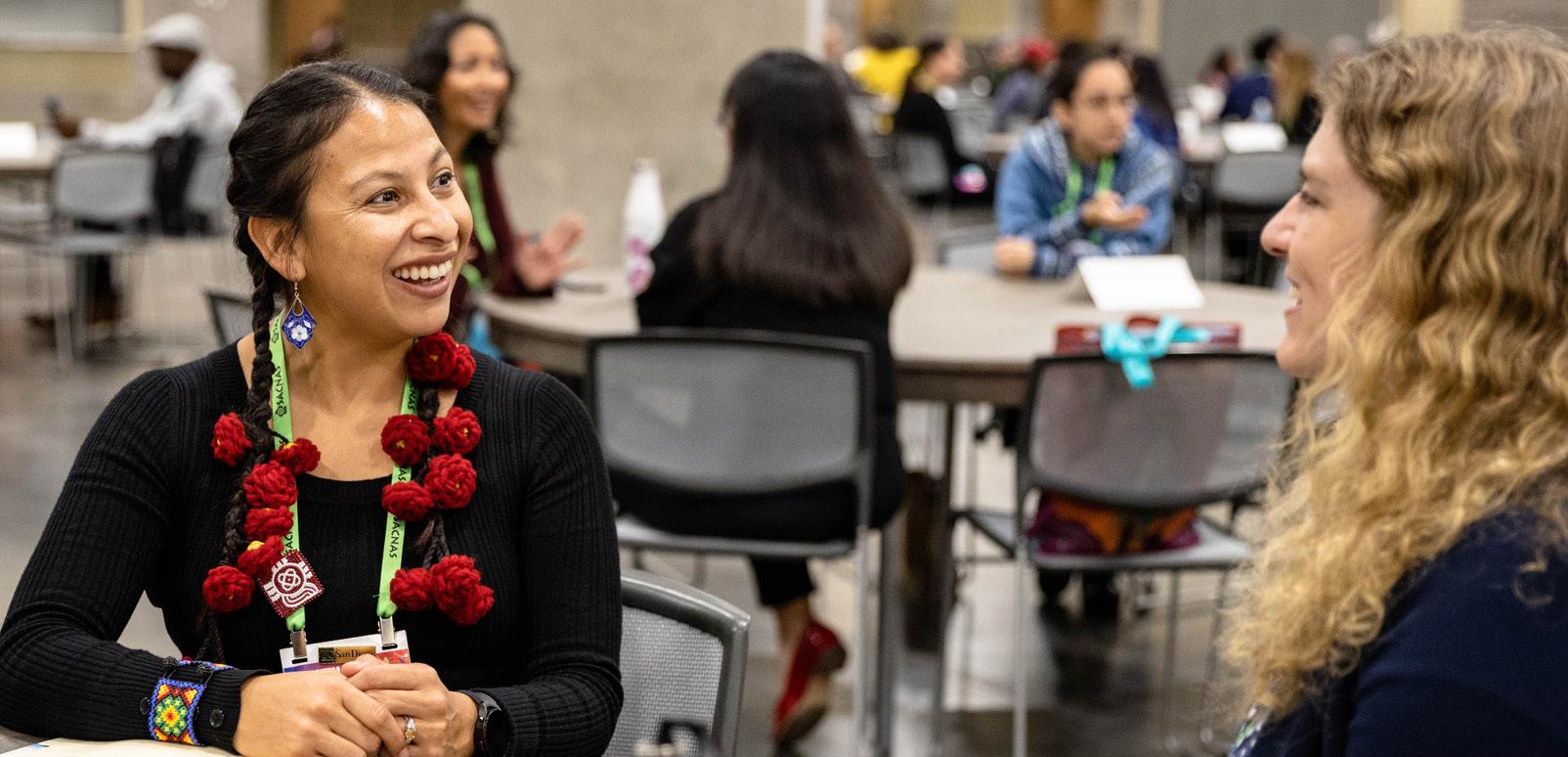
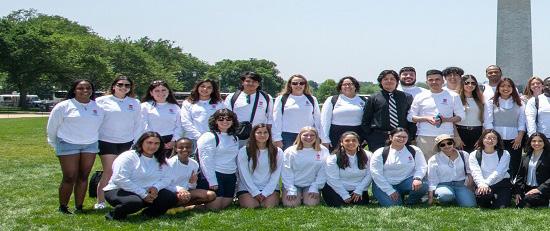
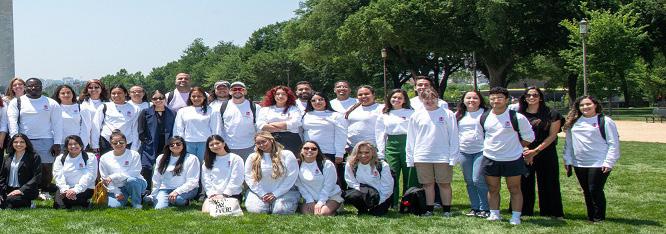
One-on-One mentoring session at a recent SACNAS conference.




significant leadership roles in various sectors, including industry, academia, and philanthropy.
According to SACNAS, among the 440-plus alums, many are now leaders in their fields, serving as executive directors, program directors, assistant deans, department chairs, entrepreneurs, and senior scientists in industry, as well as emerging leaders in science policy.
“Through their unwavering commitment, these organizations are transforming lives and paving the way for a more inclusive future in science and technology.”
HENAAC Award winner recalled participating in Great Minds in STEM’s Viva Technology program for the first time in seventh grade.

Meanwhile, Great Minds in STEM aims to inspire underrepresented students to pursue careers in STEM by providing scholarships, internships, and outreach programs that connect young people with industry professionals.
Great Minds in STEM has long partnered with America’s largest corporations, nonprofit organizations, and federal agencies like NASA and the National Science Foundation.
One graduate researcher at the NASA Johnson Space Center for Aeronautics and Astronautics at Stanford University shared that they went from mowing lawns with their family to working in space robotics at NASA. An aerospace engineer and
Since its inception in 2001, Viva Technology has reached over 140,000 students, teachers, and parents, from rural Appalachia to urban East Los Angeles.
Building on the success of Viva Technology, the Department of Defense, through the Army Corps of Engineers, partnered with Great Minds in STEM to develop the multi-year STEMUP initiative. This first-of-itskind, year-round commitment aims to provide programming across an entire family of community schools. From 2008 to 2015, STEM-UP exposed over 92,000 students to careers and opportunities in STEM. In 2014, Great Minds in STEM acquired MentorNet, a mentoring network platform that allows

college students to interact with professional mentors year-round. Through a series of grants from the National Science Foundation, GMiS has collaborated with multiple nonprofits to support minority students and faculty in the STEM fields. HE
Continue the celebration of 40 years with the Hispanic Engineer Magazine over at www. Hispanicengineer.com




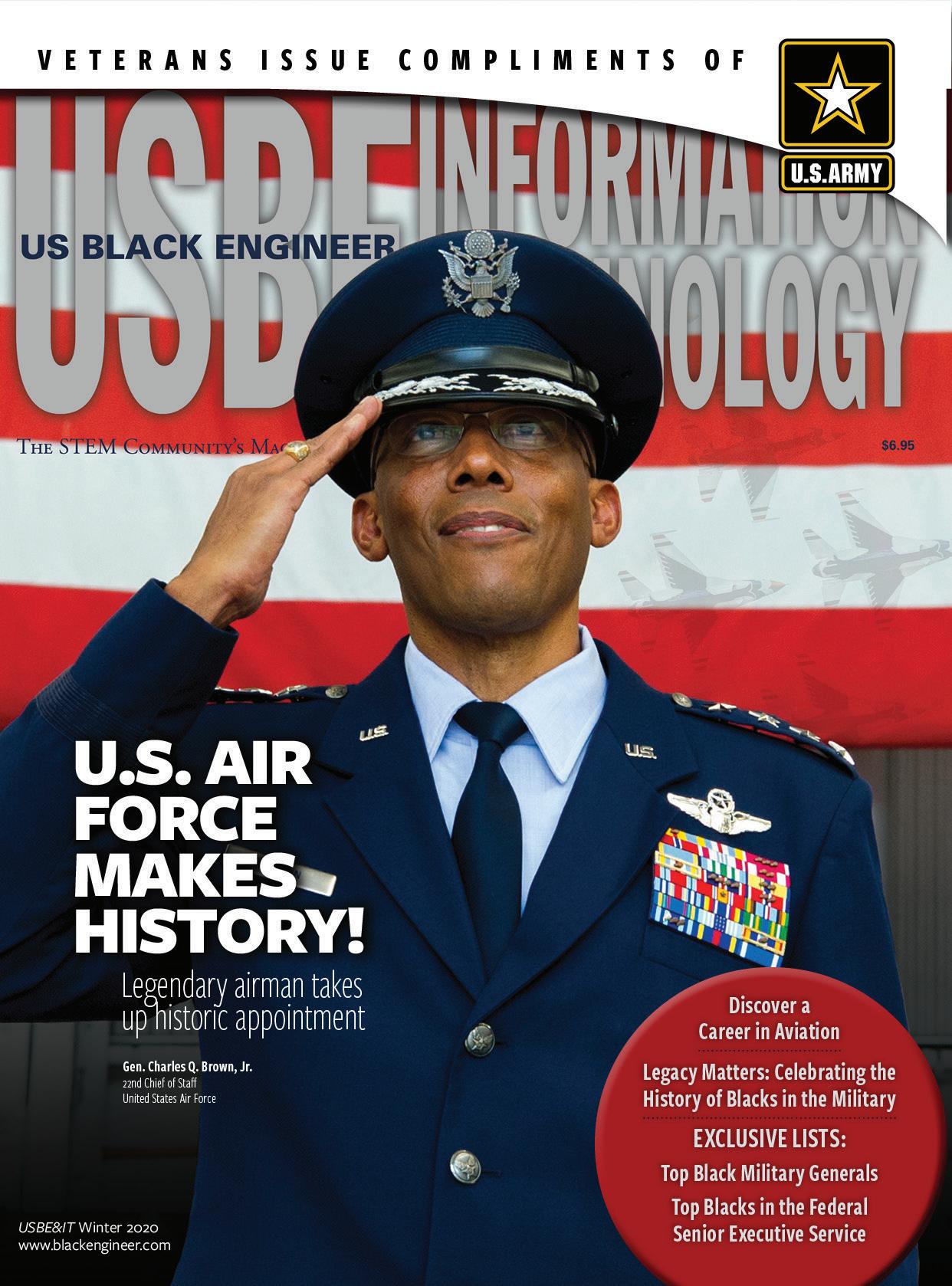
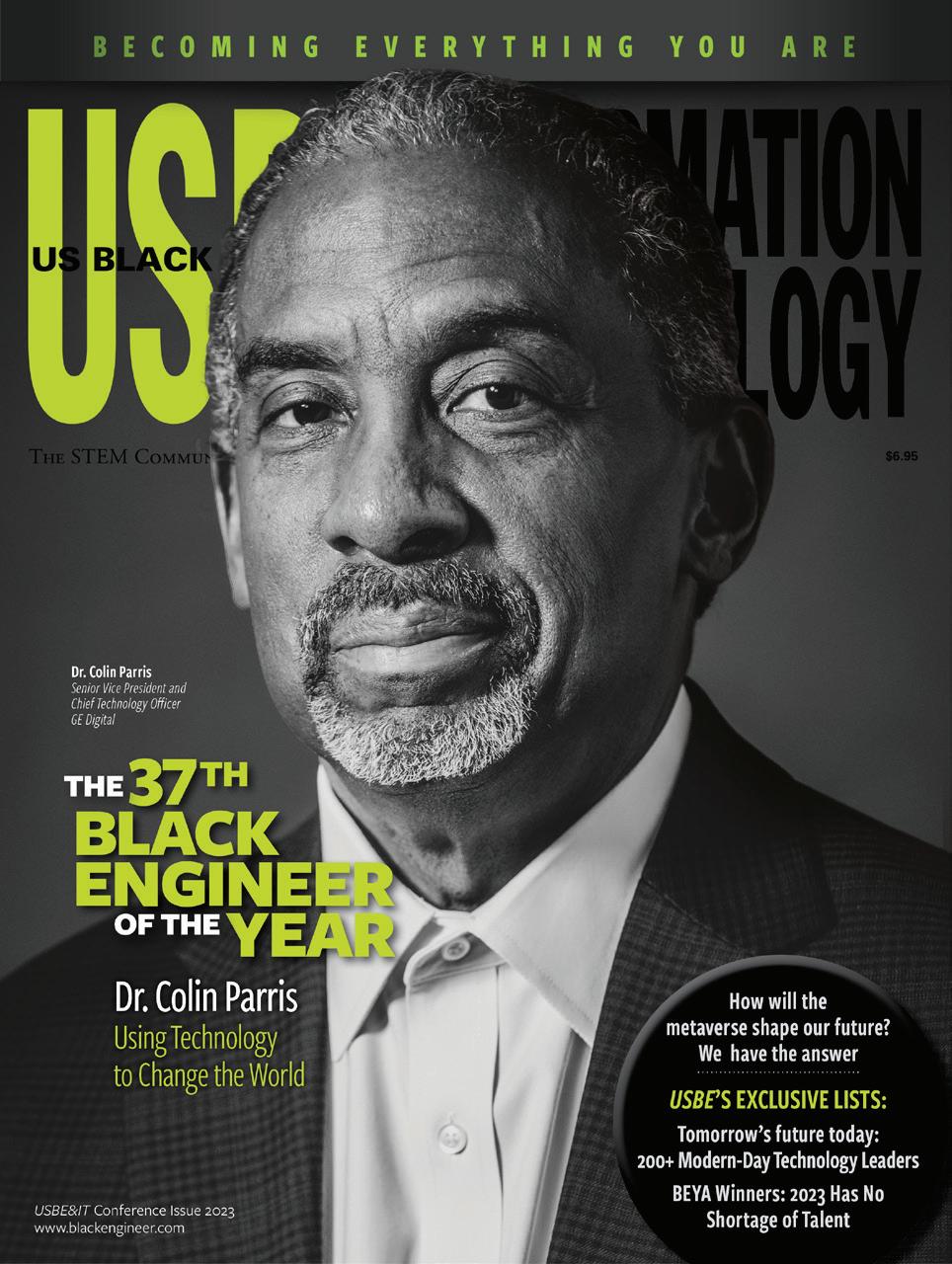
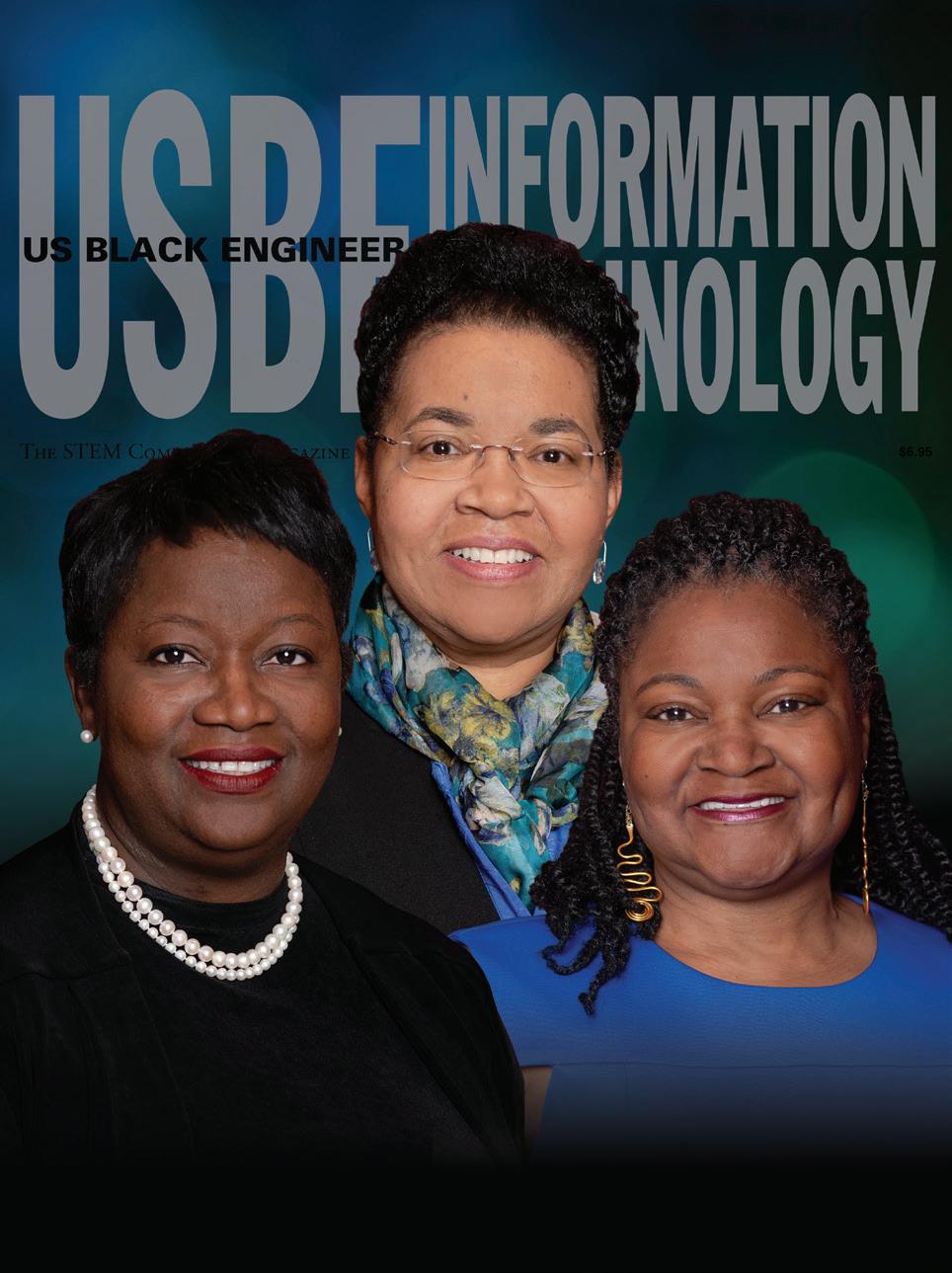


contains forty short stories about Kathleen’s personal journey through a rare type of cancer that was diagnosed in 2023. She shares how she faced the tragic news from her doctors about her salivary gland cancer, and how God’s hand was at work while she went through treatment, recovery, and ultimately her transformation. Each story is God-inspired and includes Bible passages, thoughtprovoking questions, and simple prayers to help you focus your heart and mind as you battle with cancer or a similar health challenge.
Whether you are a believer in Jesus Christ or someone who discovered this devotional by chance, you will find relatable stories in this devotional book that will give you the strength and confidence needed to mount up and soar over any adversity in your life-present or future.
BY KATHLEEN J. GOODEN

ADABOUT THE AUTHOR
Kathleen Gooden’s devotional writings are about her journey with salivary gland cancer, which was diagnosed in April 2023. Each of the stories in the book are her personal reflections recorded in her prayer journals while she was dealing with this rare form of cancer. Throughout her journey she experienced a roller coaster of emotional and physical pain due to the changes in her physical appearance, speech, sight, and taste. It was from this place of weeping that she gained a greater understanding of God’s peace and a deeper dependence on His strength within her.

For 40 years, Hispanic Engineer & Information Technology has chronicled the evolution of both technology and talent, tracking how historically underrepresented groups in science, technology, engineering, and math (STEM) have risen, adapted, and led through seismic shifts in the world of science and innovation. From the hum of centralized mainframes in the 1980s to today’s decentralized, AI-driven systems, the story of STEM is one of relentless change. But just as importantly, it is a story of resilience, opportunity, and the push for equity in fields that shape our future.
In the mid-1980s, STEM jobs were filled by large employers like IBM, Bell Labs, and NASA. Most technical roles focused on mainframe computers and early software systems, usually

requiring a four-year degree in fields such as electrical or mechanical engineering. However, diversity in the field was limited. Black engineers made up just 2 percent of the U.S. engineering workforce, and Hispanic representation was even lower.
Advocacy organizations like the American Indian Science and Engineering Society (AISES), the National Action Council for Minorities in Engineering (NACME), the Society for Advancement of Chicanos and Native Americans in Science (SACNAS), the Society of Professional Hispanic Engineers (SHPE), and the National Society of Black Engineers (NSBE) laid the groundwork for progress by providing mentorship and scholarships.
During this same period, Career Communications Group (CCG) was founded to address the visibility gap for underrepresented professionals in STEM. Through media, events, and community
programs, CCG aimed to connect diverse talent with career advancement opportunities, laying the foundation for longterm equity.
As the internet took off, so did new opportunities. Tech startups began to challenge legacy companies, and roles in network administration, web development, and IT support became more common. Despite this growth, Black and Hispanic professionals remained underrepresented. By 1995, the number of Black engineering bachelor's graduates rose to approximately 3,000 annually. Hispanic engineers still accounted for a small fraction of the workforce. Still, growth was evident, particularly through the expansion of Hispanic-serving institutions (HSIs) and advocacy by groups like SHPE.
Throughout the decade, CCG's flagship publications, including Hispanic Engineer, chronicled this expansion. At the same time, national conferences such as BEYA and Hispanic Engineer National Achievement Awards Conference (HENAAC) created platforms for recognition, recruitment, and mentorship.
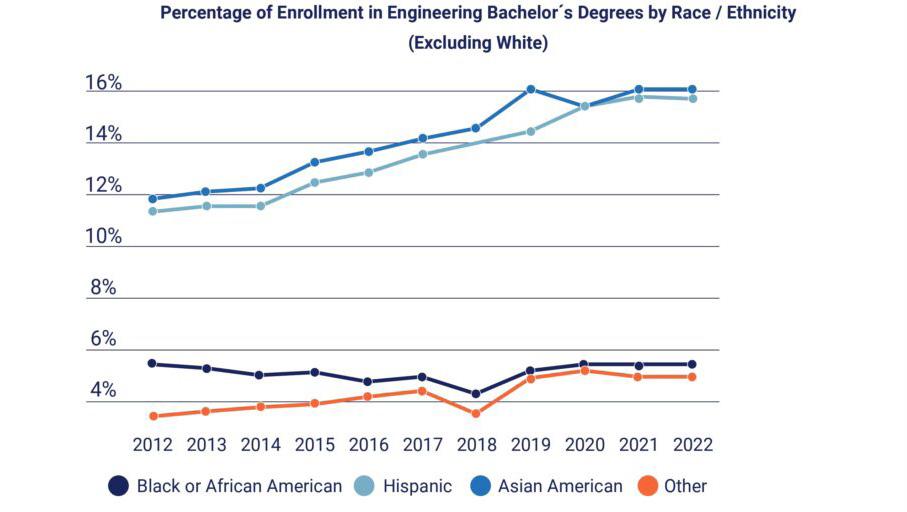
Following the dot-com crash, globalization led to widespread outsourcing of tech jobs. Meanwhile, mobile technology and software development surged. Bootcamps and tech certifications began to challenge the primacy of four-year degrees. In 2004, Black representation in STEM bachelor's degrees peaked at 7.4 percent, but it declined to 6.2 percent by 2016. Hispanic representation grew more steadily, reaching 5.2 percent of the college-educated S&E workforce by 2005.
CCG responded by expanding its STEM outreach through digital media, career expos, and tools like job readiness kits that provided resources for students and entrylevel professionals navigating an increasingly competitive landscape.
The 2010s witnessed the advent of cloud services, machine learning, and large-scale automation. Alternative education platforms like Coursera and edX gained credibility, allowing more diverse learners to enter STEM roles. Despite these advances, only 2.7 percent of Black and 2.2 percent of Hispanic 24-year-olds held degrees in natural science or engineering by 2011. Wage disparities and promotion gaps for Black and Hispanic professionals persisted.
Career Communications Group emphasized leadership development through initiatives like Women of Color STEM and continued publishing thought leadership on inclusive innovation and workplace equity.
Today, STEM is synonymous with innovation. Artificial intelligence, climate tech, and biotech are frontiers of growth. Hybrid and remote work environments have become the norm. Employers increasingly value skills over degrees, opening doors for nontraditional candidates. However, representation gaps remain—Black professionals comprise just 5 percent of engineers and Hispanics about 8 percent, both still trailing their population proportions.
CCG's digital platforms, including intouch.ccgmag.com, serve as real-time hubs for scholarship alerts, job opportunities, and DEI news. Its continuing education resources and recognition programs help professionals upskill and gain visibility.
The future of STEM diversity may hinge on how national and state policies shape inclusion. Recent shifts away from DEI-focused programs and race-conscious recruitment practices have sparked concerns over access to scholarships, internships, and federal support. Potential cuts to funding for minorityserving institutions and tighter immigration regulations could further impact entry paths for underrepresented engineers. Still, growing private-sector advocacy and the expanding demographic strength of diverse youth populations offer reasons for cautious optimism.
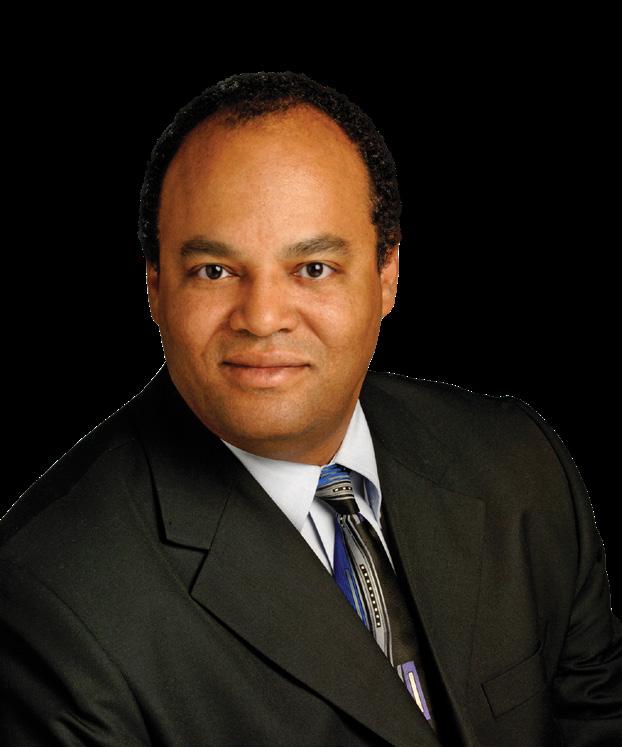
We do not often talk about it, but the economic cost of underrepresentation in STEM is staggering—not just for individuals and families, but for the entire nation.
When Black and Hispanic Americans are left out of the most lucrative and innovative sectors of the economy, we lose talent, we lose innovation, and yes—we lose billions in economic output. We are talking about missed opportunities to build wealth, strengthen communities, and lead in global innovation.
Consider this:
If we had closed racial achievement gaps in education back in 2008, the U.S. GDP could have grown by an additional $310 to $525 billion. That is not just theory—that’s real, quantifiable loss. And projections show we could be looking at a $1.5 trillion loss in GDP by 2028 if we do not act.


These are not just numbers.
Every percentage point of lost representation in STEM is a missed opportunity to empower a young innovator, support a family, launch a business, or drive a breakthrough.
At Career Communications Group, we have spent four decades telling the stories of engineers, technologists, and scientists who broke through. But we also recognize how many never got the chance—not because they lacked talent, but because the system failed to see them.
We must stop thinking of diversity as a social gesture. It is a competitive advantage. It is a national necessity.
If we are serious about building a future that is innovative, resilient, and inclusive, then we have to match our rhetoric with resources. We must invest in education, mentorship, and opportunity pipelines that do not just welcome diverse talent but nurture and celebrate it.
Because when we fail to invest in all our people, we all pay the price.
“THE STORY OF STEM IS ONE OF RELENTLESS CHANGE. BUT JUST AS IMPORTANTLY... ...IT IS A STORY OF RESILIENCE, OPPORTUNITY, AND THE PUSH FOR EQUITY IN FIELDS THAT SHAPE OUR FUTURE.”
• EDUCATION: 1980s: 4-year degrees; 2020s: Degree-pluscredential ecosystems
• JOB SEARCH: 1980s: Classified ads and recruiter calls; 2020s: LinkedIn, GitHub, and algorithmic hiring
• JOB ROLES: 1980s: Circuit designers, system operators; 2020s: AI engineers, UX researchers, data analysts
• WORKPLACE CULTURE: 1980s: Corporate labs; 2020s: Remote-first teams and digital collaboration
As Armando Rodriguez, a veteran NASA engineer and SHPE pioneer, puts it: “From slide rules to Python—the journey has been massive, but our mission stays rooted in creativity and resilience.”
Alicia Boler Davis, who has led operations at major automakers, adds, “There’s more room at the table today, but the stakes are higher. We have to prepare the next generation to lead, not just follow.”
Despite technological upheaval, the essence of STEM remains unchanged: critical thinking, teamwork, and a relentless curiosity to solve real-world problems. Career Communications Group has chronicled and championed this evolution for 40 years—not only through storytelling, but through systemic change.
As we look at 2025 and beyond, the challenge is not just keeping up with technology; it is ensuring everyone has a fair shot at shaping it.



Underrepresentation of Black and Hispanic professionals in STEM roles imposes measurable costs on both innovation and the nation’s economy.
• In 2011, Black workers made up 11 percent of the U.S. workforce but only 6 percent of STEM workers, while Hispanic workers comprised 15 percent of the labor force and just 7 percent of STEM occupations.
• As of 2019, Black Americans held only 8.4 percent and Hispanics 7.5 percent of computer/math roles—compared to their higher population shares.
• Black men in STEM earn about 87 cents for every dollar white men earn; Black women earn approximately 60 cents.
• Closing educational and representation gaps between Black/Hispanic students and their peers could have increased U.S. GDP by $310 billion–$525 billion in 2008—equivalent to 2–4 percent of GDP.
• A McKinsey analysis estimates the racial wealth gap could cost up to $1.5 trillion in economic growth by 2028.
• A lack of diverse STEM talent has been shown to slow innovation, stunt job creation, and reduce competitiveness in high-growth industries.
STEM jobs earn on average $87,570— twice the national average wage of $45,700—so every percentage point increase in representation boosts economic mobility and tax contributions.
$3.5M–$5M Avg

$20M–$40M
*With higher representation in civil, mechanical, and electrical fields, earnings rise with advanced degrees or leadership roles.
**Many top-earning stars (e.g., from the Dominican Republic, Venezuela, Cuba, and Puerto Rico) come from this demographic.
Strategic investment in minority STEM education, recruitment, and retention not only promotes equity, but it is also a smart economic strategy.
As Career Communications Group continues its decadeslong mission to raise visibility and close gaps, bolstering STEM diversity remains an economic imperative. HE Cause Estimated Cost
Forecast loss (by 2028) GDP loss (2008) 13–40 cents per dollar earned
Underrepresentation means untapped talent, fewer startups, slower innovation, and lost economic value.
Check out more stories like this at www.hispanicengineer.com
by Gale Horton Gay
The promise of tomorrow is often so bright and compelling that it’s easy to lose sight of how yesterday’s accomplishments paved the way for future realities and expectations.
That’s certainly the case with Hispanic engineers, scientists, inventors, entrepreneurs, and technical educators whose impact is felt in industry, academia, government, and society at large. Over time, they’ve laid the foundation for the work being done today and the innovations being discussed, researched, and planned for tomorrow.
STEM pioneers and trailblazers are instrumental in shaping the world as we know it today and creating innovations that will be part of our lives in the years to come.
Josué J. López Senior Associate Fine Structure Ventures

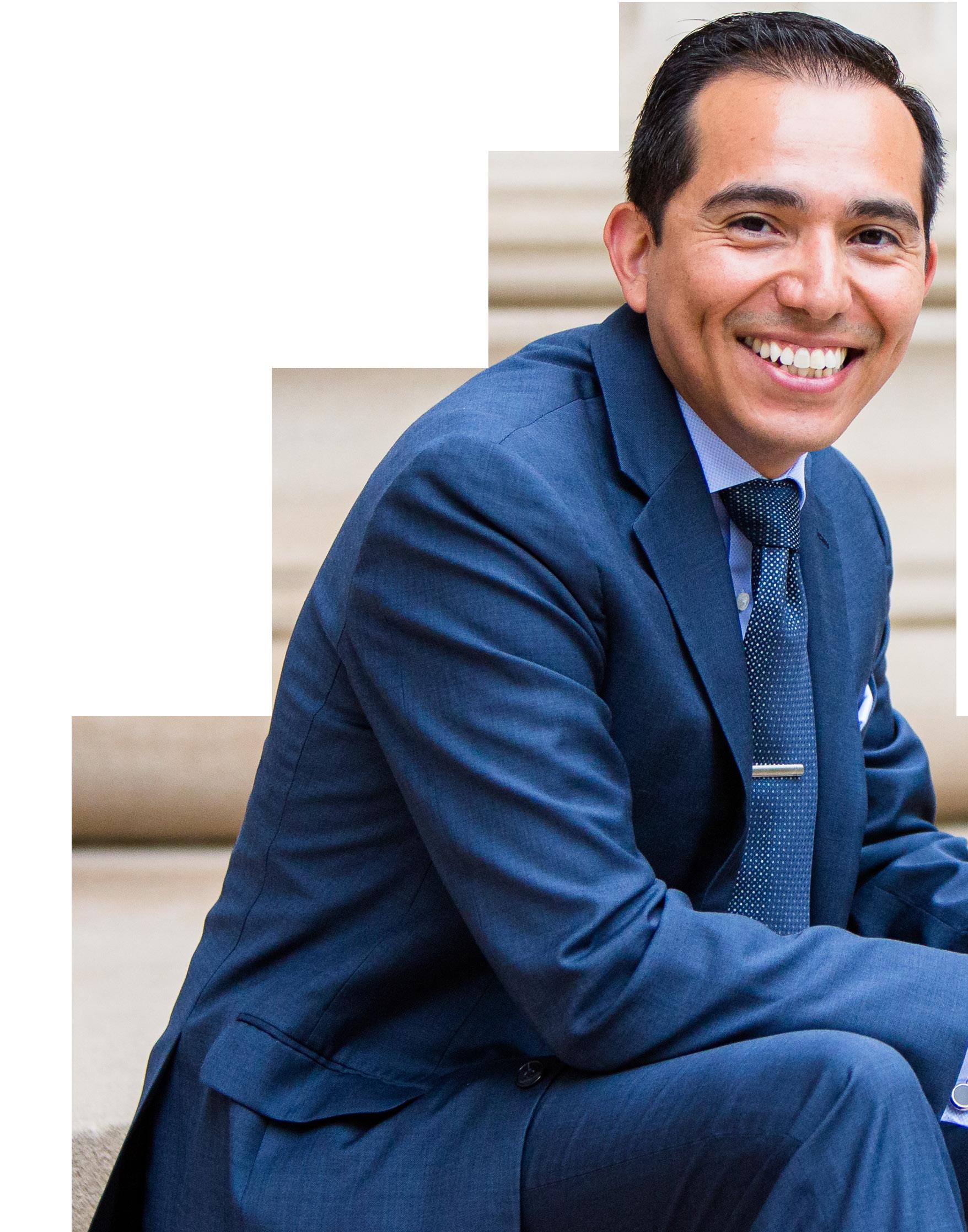
Many Hispanic STEM pioneers may not be household names, but their contributions remain significant and are the foundation on which today’s trailblazers continue to build.
AMONG THOSE PIONEERS ARE:
• Luis Alvarez, a physicist, inventor, and professor who was awarded a Nobel Prize in 1968 for his discovery of resonance states in particle physics using the hydrogen bubble chamber
• Botanist and conservationist Ynes Mexia, who collected nearly 150,000 plant samples and discovered and categorized 500 plants after beginning her 13-year botany career in 1925 at age 56
• Sarah Stewart, a research pioneer in viral oncology and the first to show that cancercausing viruses can spread from animal to animal
• Franklin Chang-Diaz, NASA’s first Hispanic astronaut, who completed seven space flights from 1989 to 2002

JOSUÉ J. LÓPEZ is a senior associate at Fine Structure Ventures (FSV), where he leads investments in next-generation computing, advanced materials, and climate and energy. López has nearly 15 years of experience leading research and development in the areas of nanomaterials, 3D nanoprinting, photonics, and lidar. He has coauthored 15 publications and letters (including in Science Magazine, published by the American Association for the Advancement of Science) and has been cited more than 2,000 times. Before joining FSV, López was the CEO of Kyber Photonics, a startup focused on developing a lidar-on-a-chip sensor for autonomous vehicles and machines. The commercialization effort (sponsored by the Activate Fellowship and DARPA) was featured in IEEE Spectrum and was aimed at meeting the cost, performance, and reliability requirements of autonomy customers.
He earned a bachelor’s degree in physics with distinction in research from Rice University, and a master’s degree and doctorate in electrical engineering and computer science from the Massachusetts Institute of Technology.
Hispanic Engineer & Information Technology (HE&IT) Magazine asked Josué Lopez about his work advancing the groundwork laid by pioneers in STEM and what excites him about the future, as well as the future for Latinos pursuing careers in STEM. Below
are excerpts from the interview with edits.
HE&IT: WHAT ACCOMPLISHMENTS FROM THE PAST DO YOU SEE AS MOST SIGNIFICANT FOR HELPING TO PAVE THE WAY FOR WHAT YOU DO TODAY?
LÓPEZ: Several meaningful experiences have fundamentally shaped my approach to the investing I do today. The foundation began during my Ph.D. research at MIT, when I spun out a company commercializing next-generation sensors for autonomous vehicles and drones. I was fortunate to have government support through DARPA and the prestigious Activate Fellowship, which supports the next generation of scientist-entrepreneurs. This entrepreneurial experience became my master class in translating cutting-edge science into real-world impact.
Through building and leading this company, I learned the critical importance of going beyond fundamental science and recognizing that breakthrough technology means little without understanding the needs of customers and their major pain points. This led me to gain deep insight into market demands and how customers make tradeoffs between cost, performance, and reliability.
Perhaps most importantly, I discovered that technologies need to scale effectively in capitalefficient ways, supported by


strong supply chains and manufacturing partners who can deliver quality at volume. This journey also taught me to successfully navigate and coordinate multiple stakeholders across university labs, government R&D facilities, and industry partners, each with different timelines, incentives, and success metrics. These hard-earned lessons now inform every investment decision I make, enabling me to identify companies that possess both breakthrough science and technology, as well as the strategic insight to bring them to market successfully.
HE&IT: WHAT MOST EXCITES YOU ABOUT THE FUTURE IN YOUR FIELD?
LÓPEZ: Over the past five years, I have been at the very heart of science commercialization, entrepreneurship, and investing in disruptive technology companies. I am now fortunate to be a "deep tech" investor backing startups in the sectors of next-generation computing, advanced materials, and climate and energy. What excites me most about this work is investing in companies that can unlock the promise of artificial intelligence to accelerate innovation and address our biggest challenges, such as making clean energy cheaper than fossil fuels, developing medicines that target diseases with precision, or creating costeffective and sustainable materials that outperform those we use today.
Within this broad landscape, I'm particularly focused on nextgeneration AI chips and data center solutions that are 100 times more energy-efficient while running powerful AI models. This focus isn't just about technological advancement—it's born from necessity. We urgently need these energy-efficient chips due to the mounting strain that AI data centers are placing on the
U.S. electrical grid. This challenge is directly connected to a larger imperative: understanding how to meet our country's and the world's energy demands, so that we can thrive economically while also mitigating the worst effects of climate change on society, including impacts on food security, water access, and national security.
The solution lies in providing clean and sustainable energy through breakthrough technologies like fusion, advanced geothermal, next-generation solar, and longduration energy storage. That is the future I want to support and create, working alongside some of the most innovative entrepreneurs, scientists, and technologists in the world.
HE&IT: HOW DO YOU ENVISION THE FUTURE FOR LATINOS INTERESTED IN PURSUING A CAREER IN STEM AND THE OPPORTUNITIES IT PRESENTS?
LÓPEZ: I'm energized by the opportunity to mentor the next generation of world-class Latino talent, demonstrating that they can build extraordinary careers on a STEM foundation. My path proves these possibilities are real: from scientist to entrepreneur and CEO, to investor and board member. Each transition opened new doors and multiplied my impact.
I encourage young professionals to embrace interdisciplinary careers—combining technical depth with business acumen creates entirely new possibilities. The timing is perfect. Entrepreneurship creates unprecedented opportunities with profound societal and economic impact. We're in a golden moment where deep technical knowledge translates directly into commercial success
and meaningful solutions to humanity's biggest challenges.
Our mission is to help develop more Latino STEM talent who become inventors, entrepreneurs, and decision-makers across various industries. This isn't just about representation; it's about competitive advantage. Our country is stronger and more prosperous when we develop and leverage all of our talent. I'm building toward a multiplier effect: more Latinos in positions to fund and support the next generation, creating a positive feedback loop that accelerates opportunities for everyone.
IS
Do not be afraid to take calculated and transformative risks in your STEM career. Whether pursuing an ambitious research project or launching your own company, the biggest breakthroughs come from stepping into uncertainty. Our communities have always been resilient in the face of challenges, and that same resilience is exactly what's needed to tackle humanity's biggest problems through science and technology.
Did you enjoy this interview? You can find the latest STEM news daily at www.HispanicEngineer.com






In1984, a revolutionary publication was born with a singular purpose: to highlight and celebrate the contributions of Hispanic professionals in science, technology, engineering, and math (STEM). That publication, Hispanic Engineer & Information Technology, became the first and longest-running national magazine devoted to uplifting Hispanic voices in the technical world.
"It wasn’t just about publishing a magazine," says Tyrone D. Taborn, the magazine’s founder and publisher. "It was about building a platform that gave visibility to people who were making history in silence."
The debut issue featured Edson de Castro, a founder of Data General, whose leadership and innovation in computing reflected the kind of story the magazine was determined to share. A computer engineer, perhaps best known for designing the Data General Nova series of computers, de Castro was born in Plainfield, NJ. His family later moved to Newton, MA, where he attended school in the 1940s. He earned a degree in electrical engineering from Lowell Technological Institute in 1960. After serving in the Air National Guard and briefly pursuing an M.B.A. at Harvard, he joined Digital Equipment Corporation (DEC), where he contributed to the PDP5 and led the development of the PDP-8 minicomputer. Following the rejection of his proposal for a new computer series, he co-founded Data General Corporation in 1968 with fellow engineers. The company's Nova minicomputer became a landmark product, noted for its 16-bit architecture, medium- and large-scale integration, and efficient design. Steve Wozniak, Apple's future cofounder, reportedly admired the Nova's architecture as a teenager. The Nova's success established Data General as a formidable competitor in the minicomputer market.
Behind that groundbreaking issue was Carmela C. Mellado, the magazine’s first editor-in-chief. A journalist with a strong editorial hand, Mellado helped shape the magazine’s mission of excellence and equity, bringing heart, clarity, and rigor to its pages.
Soon after, her husband Raymond
Mellado, then a senior executive at Xerox, joined the team as vice president. Ray left his corporate post to help scale the magazine’s reach, bringing decades of strategic leadership and a lifelong passion for advancing Latinos in STEM.
The magazine quickly allied with the Society of Hispanic Professional Engineers (SHPE), founded in 1974 by Rodrigo “Rod” Garcia. SHPE was at the forefront of a national movement, organizing Hispanic engineers, building student chapters, and advancing representation in every corner of the tech world.
"SHPE was doing the work in the field— building leaders, supporting students, and growing a network," says Taborn. "We wanted to help tell their stories and expand their reach. It was the perfect partnership."
Together, SHPE and Hispanic Engineer amplified each other’s efforts. The magazine spotlighted SHPE’s student scholars and engineering professionals, covered its national conferences, and helped secure corporate and educational support through its visibility.
As recognition grew, the magazine helped launch the Hispanic Engineer National Achievement Awards Conference (HENAAC)—a landmark annual gathering that celebrates Hispanic achievement across engineering, government, and industry. For many professionals, being profiled by Hispanic Engineer or honored at HENAAC became career-defining honors.
Beyond the professional realm, Hispanic Engineer invested in outreach to families through La Familia Awareness Week, a culturally rooted campaign designed to connect Hispanic parents, students, and schools around the importance of STEM education. Featured prominently in the magazine, La Familia helped demystify STEM pathways and reinforced the message that community support is essential for success.
"We knew we had to go beyond the boardroom and the lab," says Taborn. "If we were going to change the numbers, we had to reach families, students, teachers—everyone. STEM


belongs to us all."
The magazine also supported global education efforts such as the "One Laptop per Child" initiative, which aimed to close the digital divide and bring technology into the hands of children in underserved communities. This global nonprofit initiative sought to revolutionize education by providing low-cost, durable, and internetconnected laptops to children in developing countries and disadvantaged areas in the United States. The program emphasized collaborative, hands-on learning and digital inclusion. Hispanic Engineer covered this initiative to showcase how technological innovation could drive equity and opportunity across the globe.
While Rod Garcia, Carmela Mellado, Raymond Mellado, and Ed de Castro have all passed, their dreams and contributions live on through every page of the magazine, every student inspired, and every leader recognized. Their legacy is not only preserved—it is activated, carried forward by the community they helped shape.
Today, as Hispanic Engineer & Information Technology celebrates 40 years, it continues to embody the vision of its founders: a platform that educates, uplifts, and empowers Hispanic excellence in STEM.
"We built this magazine so young people could open it and see themselves—not just as workers, but as innovators, leaders, and history-makers," says Taborn. "And that mission remains as urgent as ever." HE
Did you enjoy this interview? You can find the latest STEM news daily at www.HispanicEngineer.com
A Conversation Across Time, with a bit of help from Collin AI
“That we didn’t just open doors—we built new ones. And that others walked through.”
Using a combination of archive interviews, videos, and editorials in Hispanic Engineer & Information Magazine, our editors have produced an interview generated by Collin AI, a historical LLM trained on the magazines and documents of Hispanic Engineer. While this conversation is rooted in real historical contributions, the responses are simulated and should not be interpreted as direct quotations from the individuals.
In recent years, the STEM community has mourned the loss of three transformational leaders: Rod Garcia, Carmela C. Mellado, and Raymond
Mellado. Each left an indelible mark on the landscape of American engineering, education, and cultural identity.
Rod Garcia, a cofounder of the Society of Hispanic Professional Engineers (SHPE), helped establish one of the largest and most influential professional organizations. He believed that building a supportive community was essential to unlocking the potential of Hispanic engineers.
Carmela Mellado was the founding editor-in-chief of Hispanic Engineer & Information Technology Magazine. A skilled journalist and cultural advocate, she made it her mission to
spotlight unsung heroes of science and technology. Her work made sure their stories were not only told but valued.
Raymond Mellado, a corporate executive turned education and diversity champion, left a successful career at Xerox to focus on systemic change. He founded Great Minds in STEM, spearheaded Hispanic Engineer Magazine, and worked tirelessly to create platforms that uplifted Hispanic youth and professionals in technical fields.
Though they are no longer with us, their visions live on in the students they inspired, the organizations they

built, and the countless lives they transformed. In this imagined dialogue, we bring their voices together to reflect on their journeys, motivations, and hopes for the future.
Q: What inspired you to co-create Hispanic Engineer Magazine?
CARMELA MELLADO: I wanted a platform where young Latinos and Latinas could see themselves as scientists, engineers, and technologists. When they opened our pages, they weren’t just reading stories—they were seeing possibility. Visibility mattered and still does.
RAY MELLADO: We needed to shape the narrative. Our stories weren’t being told in mainstream media. I saw how powerful it was when students realized they weren’t alone—that there was a community, a movement, behind them.
Q: Ray, what made you leave Xerox and take this mission full-time?
RAY MELLADO: Xerox taught me how systems work—and how they leave people out. I realized my most significant contribution wouldn’t come from climbing higher in a corporation, but from building platforms for others to rise. That was the legacy I wanted.
Q: Rod, when was the moment you knew SHPE could become something national?
ROD GARCIA: The moment I saw students forming chapters without us asking. They were hungry for community and identity. We gave them a structure, and they built the rest. That was when I knew this would outgrow us, and that was the point.
Q: What were the biggest challenges you faced in those early days?
CARMELA MELLADO: Resources. We were doing national-scale work on local budget dollars. But we had heart, and that carried us. Getting institutions to take us seriously was a constant battle.
ROD GARCIA: Believability. People didn’t believe Latinos could dominate in tech. We had to prove, over and over again, that our community had the talent, just not always the access.
RAY MELLADO: We were asking people to invest in a vision. Sometimes they
didn’t see it. We had to be relentless in our belief until they caught up.
Q: What advice would you give to young people entering STEM today?
Rod Garcia: Build your network early. Find your people—those who push you and those who get you. STEM is tough, but it's tougher alone.
CARMELA MELLADO: Know your history. You’re not the first, and you won’t be the last. Our culture has always had engineers, scientists, and thinkers. Walk in that tradition.
RAY MELLADO: Do your work with pride. Lead with integrity. And once you make it, turn around and reach back.
Q: How should today’s engineers think about climate change and sustainability?
Rod Garcia: This is your moonshot. The environment isn’t just an issue—it’s the issue. Engineers must lead with innovation and justice.
CARMELA MELLADO: Environmental harm disproportionately affects communities of color. If you’re a Latino engineer, you have a responsibility to speak up for your people and your planet.
RAY MELLADO: Sustainability is legacy. Just like we worked to sustain culture and opportunity, today’s youth must work to sustain life itself.
Q: Do you think Hispanics should care about diversity, equity, and inclusion (DEI)?
RAY MELLADO: DEI used to be something we had to explain. Now it’s something people claim, but it needs action. The next generation must hold institutions accountable.
CARMELA MELLADO: Inclusion means more than hiring. It means belonging. It means changing systems that weren’t built with us in mind.
ROD GARCIA: DEI is a movement, not a department. If we don’t fight for it, it fades.
Q: Who are some of the people you admire?
ROD GARCIA: I’ve always admired Dr. Lauro Cavazos, the first Hispanic U.S. cabinet member, and pioneers like Dr. Richard Tapia, who showed what
excellence looks like in mathematics. And of course, every SHPE student leader who gave back more than they took.
CARMELA MELLADO: I admired women like Ellen Ochoa and Antonia Novello. They shattered ceilings quietly and carried the weight of representation with dignity. Also, every student who wrote to the magazine said, “Now I believe I can do this.”
RAY MELLADO: Cesar Chavez, for his courage. Tyrone Taborn, for standing firm when others wavered. And honestly, my admiration always returned to the kids—first-generation students, DREAMers, those who showed up, studied hard, and proved every stereotype wrong.
Q: What would you want your legacy to be?
ROD GARCIA: That we built something that lasts. That kids from East L.A. or South Texas saw a place for themselves in this world.
CARMELA MELLADO: That we told the truth. That we made people feel seen.
RAY MELLADO: That we didn’t just open doors—we built new ones. And that others walked through.
In honoring these visionary leaders, we recognize that their stories are not just part of history; they’re a blueprint for the future. They didn’t wait for permission. They built platforms, reshaped institutions, and empowered generations. Now, the next chapter belongs to us. HE
Did you enjoy this interview?
You can find the latest STEM news daily at www.HispanicEngineer.com





Our workforce inspires, builds and delivers business results from idea to outcome.

We are one of the fastest-growing technology companies and we’d love to have you here!