



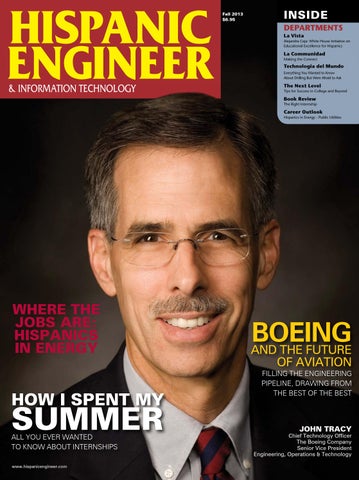
A summer job might be a good way to earn some cash, but a summer internship is a great way to gain invaluable experience and insight.

Dr. John Tracy is just one of many Boeing employees who are awed by mankind’s ability to fly. In its 100th year, Boeing continues strong efforts to prepare the future workforce for tomorrow’s jobs by advocating for improvements in STEM education.

Have you ever thought about revolutionizing home improvement? The company is looking for “pioneering spirits” to help lead the way along its journey to provide customers with a truly differentiated experience.
La Vista ......................... 6
Alejandra Ceja, director of White House Initiative on Educational Excellence for Hispanics, on jump-starting the next generation of STEM leaders.
La Communidad ......... 10
As a part of its new Staffing Solutions program, HE&IT magazine created a job board, which plans to fill the need for STEM interns, professionals, and executive workers.

del Mundo ........................ 17
Are you looking to get into energy? There are jobs out in the production fields, where technology has opened up vast new resources.
The Next Level ............ 34
Everyone wants to do well as an undergraduate, but who are you going to call for advice and support?
Review ............... 37
In “Scoring a Great Internship,” primary author Ellen Rubinstein and fellow student contributors offer tips to help students clinch that internship necessary to secure a job.
Career Outlook ........... 39
Spotlight on Energy
Job Horizon
Recruiting Trends
Hispanics in Energy
The Power of the Internship

Your summer job was a good way to earn some cash, but a summer internship is a great way to gain experience. No doubt about it, internships offer added value. Officials who run these programs say students are challenged in ways they often haven’t been on campus and walk away with knowledge and skills that can give them a leg up. To get more insight on what students are doing to prepare for tomorrow’s jobs and careers, meet an intrepid team in Hispanic Engineer & Information Technology magazine’s feature “How I Spent My Summer.”
For employers like Boeing, it’s an imperative that interns come back. Interns are treated as part of the team; perform work that full-time employees are doing, and get real chances to learn about the opportunities available. Boeing executive Dr. John Tracy says right now the company has an order backlog of almost 4,800 commercial airplanes—and they’re busy studying what the airplanes of future generations might look like. That’s where you come in. Last year, college recruiters promoted the company on 93 college campuses in 32 states across the U.S. plus Puerto Rico and Washington, D.C. Be sure to look out for recruiters during the fall program on your campus.
Similarly, executives at the nation’s largest energy companies, looking out toward the end of the decade, see a “big crew change” coming. Technologia del Mundo presents some of the opportunities opening up for new engineers and technical workers just as a revolution in technology is unlocking tight oil and tight gas. AT HE&IT, we know the task is not as easy as it seems, and many obstacles can stand in the way of landing that big gig. So as part of our new Staffing Solutions program, HE&IT has created a job board, which plans to fill the need for STEM interns, professionals, and executive workers in energy and energy-related industries, aviation, aerospace, home improvement and more.

Publisher and Editor-in-chief

EXECUTIVE OFFICE
& INFORMATION TECHNOLOGY
Hispanic Engineer & Information Technology, (ISSN 1088-3452) is a publication devoted to science and technology, and to promoting opportunities in STEM fields for Hispanic Americans. This publication is bulk mailed to universities and colleges nationwide and in Puerto Rico. The editors invite editorial submissions directed toward the goals of Hispanic Engineer & Information Technology. In particular, HE&IT magazine wishes to present ideas, current events, and personality profiles of successful Hispanic Americans in science, technology, and related business pursuits. Fully developed articles may be sent, but queries are strongly encouraged. Articles and letters should be sent to: Hispanic Engineer & Information Technology, Editorial Department, 729 E. Pratt Street, 5th Floor, Baltimore, MD 21202. No manuscript will be returned unless accompanied by a stamped, self-addressed envelope. Hispanic Engineer & Information Technology cannot be responsible for unsolicited material. Copyright © 2013 by Career Communications Group, Inc. All rights reserved. Printed in the U.S.A.
EDITORIAL
GRAPHIC DESIGN
Tyrone D. Taborn
Publisher and Editorial Director
Jean Hamilton
President and CFO
Vercilla Brown-Johnson
Chief of Staff
Lango Deen
Technology Editor
Rayondon Kennedy
Assistant Editor
Michael Fletcher
Contributing Editor
Gale Horton Gay
Contributing Editor
M.V. Greene
Contributing Editor
Frank McCoy
Contributing Editor
Garland L. Thompson
Contributing Editor
Roger Witherspoon
Contributing Editor
Sherley Petit-Homme
Art Director
Bryan Clapper
Graphic Designer
CORPORATE DEVELOPMENT
SALES AND MARKETING
ADMINISTRATION
CONFERENCE AND EVENTS
Ty Taborn
Corporate Development
Imani Carter
Corporate Communications Specialist
Richard Butler
Vice President of Government Relations/
Special Projects
Gwendolyn Bethea
Senior Account Manager
Jacob Wiggins
Account Manager
Alex Venetta
Advertising Coordinator
Ana Bertrand
Conference Coordinator
Rutherford & Associates
17304 Preston Rd Suite 1020 Dallas, Texas 75252
ADVERTISING SALES OFFICE
/ Fax: (410) 752-1834





by Michael A. Fletcher mfletcher@ccgmag.com
From her earliest days as a policymaker, Alejandra Ceja has gotten the same professional advice: Do not get pigeonholed by your ethnicity. Her advisers meant to take broad-based jobs dealing with broad issues. That, they said, would lead to the broadest opportunities.
So she did just that, taking on a series of roles deep inside Washington’s policy-making machinery. In May, President Obama named her executive director of the White House Initiative on Hispanic Excellence in Education, which, as it turns out, is consistent with the advice she has long followed.
As for Ceja, her new job is as mainstream as they come, in no small part because Hispanics are crucial and pivotal to the country. Hispanics are the nation’s largest and fastest-growing minority group. The 11 million Latino students in U.S. public schools make up more than 22 percent of the overall pre-K-12 population.
In her job, Ceja is a key cog in an effort to bolster the educational outcome of Latino students. The president has set a goal to have the highest proportion of college graduates in the world by 2020—which will be unattainable unless the nation’s Hispanics population has better access to educational opportunities. It is Ceja’s job to help increase the graduation rates of Hispanic students and encourage community engagement to help achieve the administration’s goal.
“Alejandra is a trusted advisor and leader in the Hispanic community,” said Education Secretary Arne Duncan. “As director of this important initiative, Alejandra will continue her exceptional work of pursuing academic excellence
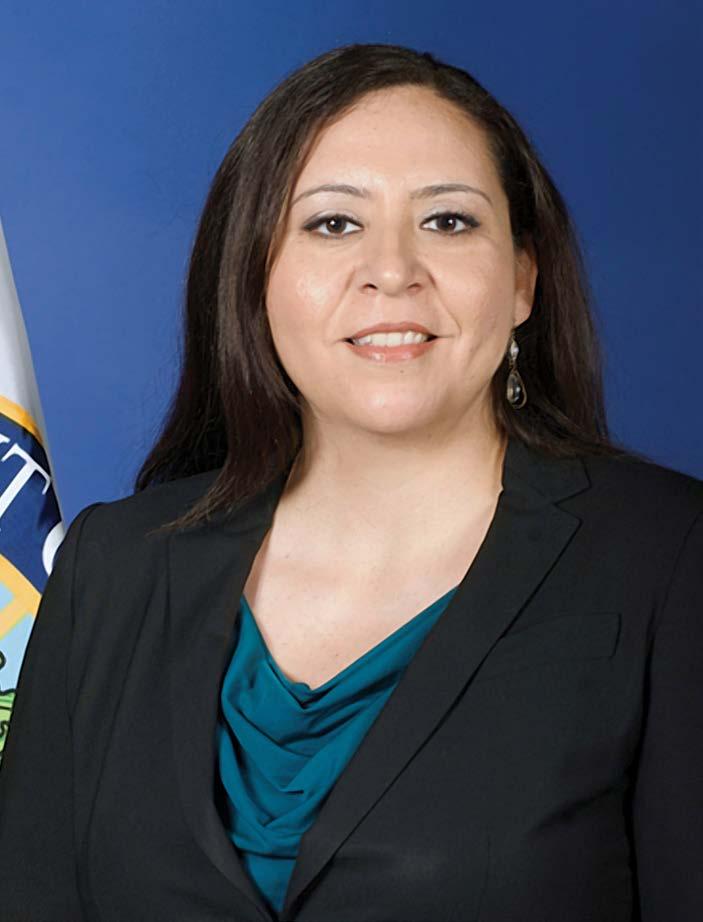
and opportunities for Hispanics across the country.”
It is a job for which Ceja is well prepared. Previously, she worked as chief of staff to Under Secretary of Education Martha Kanter, a job in which she oversaw Kanter’s personnel and budget, which were focused on meeting President Obama’s goal of having the
highest proportion of college graduates in the world by 2020.
Before that, she was senior budget and appropriations advisor for the House Committee on Education and Labor. There, she drafted legislation in support of national service reauthorization—the Edward M. Kennedy Serve America Act—and worked on policy
issues related to child nutrition, English language learners, migrants, Impact Aid and appropriations. In the past, she has also worked as a program examiner for the White House Office of Management and Budget, where she helped write the budget for the Department of Labor and the Corporation for National and Community Service. She has also worked for the Indianapolis Private Industry Council and in the Washington office of California Congresswoman Lucille Roybal-Allard.
A native of Huntington Park, Calif., Ceja holds a bachelor’s degree in political science from Mount St. Mary’s College in Los Angeles, and a master’s degree in public administration from Baruch College at the City University of New York. She is a graduate of the Congressional Hispanic Caucus Institute’s Public Policy Fellowship, the Presidential Management Fellows program, the National Hispana Leadership Institute and the National Urban Fellows program.
“I look forward to advancing the mission and goals of the initiative and helping to prepare Hispanics achieve their potential academically, professionally, civically, and globally,” Ceja said. “We’ve got a lot of work to do because ensuring that everyone has an opportunity to seek an academic degree is vital to our country’s success.”
Indeed, Hispanics have been graduating high school and moving on to higher education in increasing numbers in recent years. However, their educational achievement still lags behind the nation as a whole. In addition, Hispanics are underrepresented in the nation’s exciting and fast-growing science, technology, engineering and mathematics professions—something the Obama administration is working to combat.
Also, while college enrollment of Hispanics more than doubled between 1995 and 2009, those students are clustering in the nation’s open access colleges that have few admission requirements and typically offer students fewer resources than do the nation’s
468 selective colleges, and universities, according to a recent report by the Georgetown University Center on Education and the Workforce.
Ceja will play a big role in trying to change those things. Hispanic Engineer and Information Technology magazine recently had an opportunity to interview her. The conversation follows here:
HE&IT: Why did you want this job?
Ceja: I have been in D.C. since 1996. I came on a fellowship with the Congressional Hispanic Caucus and my whole point of coming out here was to learn policy. All the advice I had received was, “You don’t want to be the Latina expert. You don’t want to get pigeonholed.” But it’s my community and I am very passionate about education and how it impacts the Latino community. So I took technical, high-profile positions that were very broad. So when this position came about I felt like I have worn that policy hat, that budget hat and worked on very broad issues and now I have the opportunity to help. This is like a dream job. Now in my career I don’t have to worry about getting pigeonholed. Now I can embrace it and do it full-time. And I can give back to my community and all the people who have guided my career and, hopefully, help nurture future leaders.
HE&IT: What are your top goals?
Ceja: Our agenda is really focused on that cradle-to-career approach. We have seen some gains in the high school graduation rate. We also have seen some gains in college enrollment. I really want to make a push for gains in college completion. I want to get more of our Latino students graduating from college and entering the workforce. We are going to make a big push on early learning. We want to increase awareness in the Latino community that our kids need to get a head start and these early learning programs provide them with that foundation. Then, on the K-12 side, trying to bring more emphasis to being college and career ready. We want our
students when they are in junior high to already start thinking about what colleges they are interested in. Obviously, it is keeping our eyes on that prize. We have to get more of our students into the pipeline so they can graduate. So for us, it is really that cradle-to-career approach so everything we do is focused on success from pre-school on.
HE&IT: What do you perceive as the biggest obstacle preventing even more Hispanic students from being successful in school?
Ceja: We are obviously having a lot of conversations around access and affordability. We want to make sure that students know what resources are available from the federal government to help them pay for college. There is also concern about student debt and we have to help students be more financially aware at earlier stages. That said, the biggest obstacle right now is increasing the awareness that this goal is within reach; that you can go to college. I think that, for us, that family engagement piece is so critical to our conversation. You want to make sure that these kids have that support system. I came from a very overcrowded public school in Los Angeles, but I had the benefit of older siblings who were trailblazers for me. I also had a college counselor who knew my other siblings, and she was like, “You are going to go to college.” But we don’t have enough high school counselors, so stuff like that I think our office can help with by having conversations with parents. One of the things I want to do is re-engage the philanthropic community in investing in education in low-income, underserved communities. Because that is where our kids need the most assistance.
HE&IT: Georgetown University’s Center of Education and the Workforce recently released a report saying that while Black and Hispanic students are gaining better access to higher education, they are disproportionately continue on page 9


going to schools that have minimal admissions requirements. Students at those schools tend to graduate in lower percentages than similarly qualified students in the nation’s 468 selective schools. Also, those that graduate go on to earn, on average, less money in their careers. First, is this a concern? And what can be done about it?
Ceja: I haven’t seen the report, but we want every child to have access to quality education. I think this is a shared responsibility. I want to bring attention to that. We want to provide all students with a valuable education so we have a workforce that is prepared. I think for us the unique opportunity our office has is we can have those conversations at the federal level, helping to engage the community. You know, we want a level playing field for all students. We want every student to know the difference between an Ivy League school, a community college, a for-profit. All of these schools play an important role in providing opportunities for our students. But we just want to make sure that everyone has that level playing field where they can contribute to our workforce because they have been prepared.
HE&IT: How do you break that cycle of inequality that seems to exist throughout our society where students end up reflecting the educational and socio-economic status of their parents?
Ceja: I think the conversation on the fact that this is a shared responsibility. Community support is key. What we do in our high schools, the support from guidance counselors. The ability to have our students take SAT prep classes. The ability to engage parents. For us, whether it is a four-year school or community college, or a career technical training program, we want to be sure that we close that opportunity gap. We want students and parents to make informed decisions.
The role of our office in engaging with stakeholders. The role of our schools. We can continue to invest in programs and efforts like the Pell Grant, and simplifying the FAFSA [financial aid form]. But without that community support, we will continue to have these challenges.
HE&IT: What can you do to get more Latino students into the STEM pipeline?
Ceja: The president has a very aggressive STEM agenda and one of the things we are trying to do is increase awareness of what a STEM education can mean.
HE&IT: Given the state of relations between the president and his Republican opponents, what are the actual chances of getting any of his initiatives that can help on this enacted?
Ceja: My thing is education is not a partisan issue, it is a shared responsibility. Members of Congress have supported investments in higher education. We have to continue having those conversations across the aisle. I am reaching out to lawmakers on both sides of the aisle when I go out around the country. I want them to understand what our
“The president has a very aggressive STEM agenda and one of the things we are trying to do is increase awareness of what a STEM education can mean.
Alejandra Ceja, Director of the White House Initiative on Educational Excellence for Hispanics
How do we attract students and get rid of that perception that only the “smart kids” are good in math and science? I think that is helped by local partnerships working with students early on. Introducing them to the STEM field so they know what a STEM degree can mean for their future and the kind of opportunities that it can provide. The president wants to develop STEM innovation networks, where you would give grants to local education agencies that partner with institutions of higher education to increase the number of students in STEM working with our Hispanic-serving institutions. There are some institutions graduating more Latino students in the STEM field, really bringing attention to what’s working and who is doing it right, while introducing more students to the STEM field.
office does and the services we provide. So we’re reaching across the aisle and we have to work together. Understanding the reality of the politics and trying to balance the budget and the deficit conversations, these members of Congress have come to the table with the president and agreed on investments in education. For my office what is critical is we are starting to see the data in terms of the projections of where this country is going to be by 2050 and the growth in terms of the Latino population, so I have to make sure that every member regardless of party understands the growth of this community and the importance of making sure we are preparing that future workforce. We can’t get the president goal of having our country have the best educated workforce in the world if we don’t include the Hispanic community.

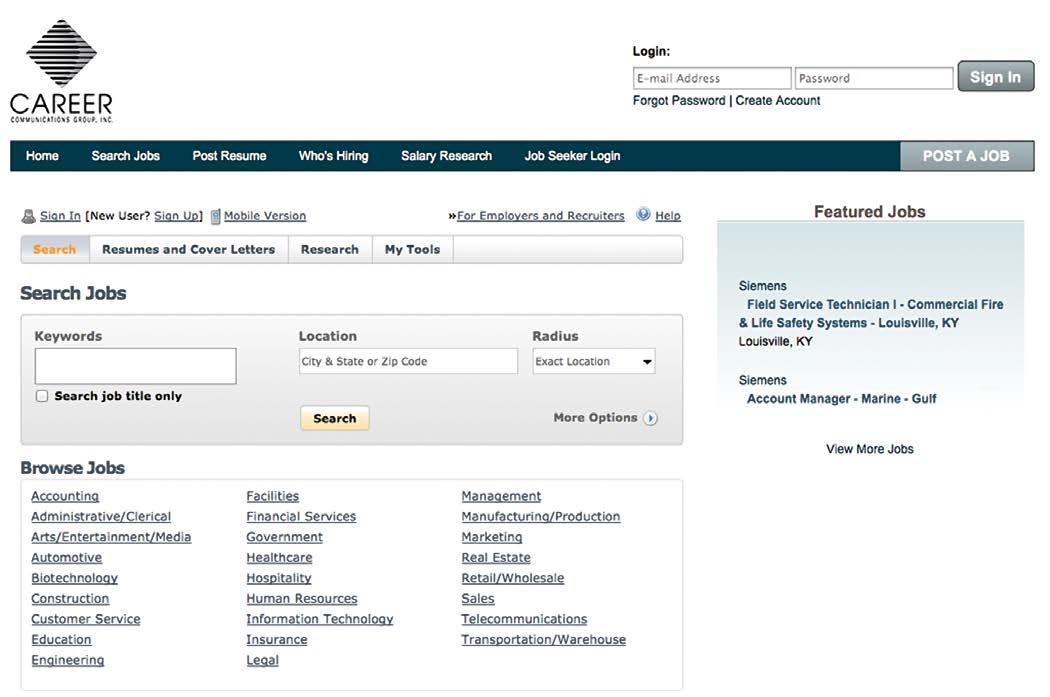
Students are quickly graduating from college, looking to immediately start his or her dream job or internship. However, the task is not as easy as it seems, and many obstacles can stand in the way of landing that big gig. Career Communications Group, Inc. (CCG), a company that promotes career opportunities in science, technology, engineering and math (STEM) to historically underrepresented groups in STEM fields, has come up with a method that could potentially stop the hassle and stress of finding the perfect job.
As a part of its new Staffing Solutions program, CCG has created a job board, which plans to fill the need for STEM interns, professionals, and executive workers. The company will provide workers with a safe and independent environment to explore job opportunities, as well as offer businesses a highcaliber of employees available for internships & permanent work.
This new job board isn’t a generic application that lists an
irrelevant set of jobs. CCG makes it a priority to listen to individual needs and customize personnel solutions for both businesses and workers.
The CCG job board will serve effective as it is a space for prospective employees to post resumes and seek hiring employers. What’s most special about the CCG job board is that it is specifically geared to minority and STEM students. Many job boards are not aimed to one specific group; however, CCG narrows its attention to a group of students and employers who have one specific goal in mind: finding the best job or the hardest working employer.
Here companies are able to post all job openings and internships that they have available here on our site. Hundreds of students and professionals will be able to view and apply for open positions. Also, registered members will have access


• Valuing the diversity of people and ideas.
• Strengthening relationships with stakeholders.
• Working toward a sustainable energy future.
We congratulate Pablo Vegas, president and COO of AEP Ohio, on his recognition in Hispanic Engineer IT magazine.
to sign up for job alerts. This feature will allow all registered members to receive a notification each time a new job is posted to the site.
Featured Jobs will be placed on a scrolling application that lists the latest featured jobs on our site. Without having to use search engines, this feature will quickly provide new job openings around the nation.
When you sign up with the new CCG job board, one outstanding feature you will notice is the ability to post your resume. Posting your resume allows all of our partnered companies to be able to view and evaluate your resume. If you are the candidate that makes the best fit for their company, they will be able to select and contact you.
Members of the site will be able to view special articles that
will give them tips on how to land a dream career. Job Hunting Advice, Resume Writing, and Career Advice are a couple of sections in which you can learn some tips that can help turn you into the ideal candidate.
While searching for jobs you can use the Salary research tool. Members can use this tool to research how their paycheck compares to other people in the same industry. This function can compare salaries by industry, function, location and other demographics.
Career Communication Group, Inc.’s new job board is an exciting element that features a variety of helpful tips and applications that makes the search for employers and employees less difficult and draining. The job board provides plenty of facts, the latest news regarding STEM careers and internships, instant job alerts and a great resume posting space that will greatly enhance your job/internship search experience.

‘FILLING THE ENGINEERING PIPELINE, DRAWING FROM THE BEST OF THE BEST’
by Lango Deen ldeen@ccgmag.com
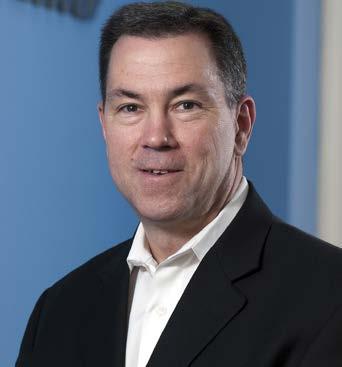
John Tracy is one of the many people at Boeing who are awed by the idea of mankind being able to fly. “A lot of us at Boeing will tell you that we’ve been fascinated by flight ever since we were kids,” he reflects. “When I was a boy, my father gave me a model of an aircraft called the X-15, which was an experimental aircraft from the late 1950s. It had a rocket engine and a narrow body, but it also had wings, like an airplane.”
The model hung above young Tracy’s bed and he’d fall asleep at night thinking about the amazing things the odd-looking aircraft could do. “It made me want to be someone who would make discoveries that would lead to the next newest aircraft.”
Fortunately, he had the chance to do this when he entered the aviation industry in 1981. That year, he joined McDonnell Douglas, which would later become part of Boeing, as a structural engineer. “Since then, I’ve held a lot of different
roles on many programs and in many organizations within the company. And I still feel that same sense of amazement and awe when I see things fly. We’re making things that seem impossible possible, and we feel a tremendous sense of pride about it.”
“It gets back to that feeling of awe when I see an airplane take to the skies,” he said. “Air travel is a pretty routine part of life
today. But that wasn’t the case a few generations ago.” More than sixty years elapsed between the Wright Brothers’ first flight in 1903 and the first landing on the moon in 1969, he points out.
“In fact, it’s possible that one of your ancestors was alive for both of these milestones. Can you imagine how awed this person might have been to watch the lunar landing in 1969 - and to realize that he or she was alive before man could even fly?” Making breathtaking discoveries and exploring new frontiers are in the DNA of us at Boeing, Tracy said. “Since our company was founded in 1916, we’ve recorded an extensive list of technical achievements.”
Those that make Tracy’s list are some of the best known game changers. The 307, the world’s first pressurized airliner to enter commercial service, enabling high-altitude flight, was followed by the B-47 Stratojet, the first, large swept-wing jet. Hot on their tails was Boeing’s 707, the commercial airplane that ushered in the jet age. Syncom was the world’s first geosynchronous satellite, followed by the first jumbo jet, 747. The Space Shuttle became the first reusable vehicle for space travel.
“There are so many, many other accomplishments ―not just from past generations, but also from today,” he said.
“Our most recent entry in that storied legacy is the 787 Dreamliner, which is made from composites and offers our airline customers a 20 percent improvement in fuel use, along with a better experience for their passengers.”
And Boeing continues boldly on.
“For a company approaching our 100th anniversary, we have a tremendous amount of growth ahead of us,” Tracy said. “Thanks to emerging economies in places like Asia and the Middle East, we’ve forecast that over the next 20 years, the number of commercial airplanes in the world’s fleet will double from 20,000 today to 40,000 in 2032. In fact, right now we have an order backlog of almost 4,800 commercial airplanes - and we’re busy studying what the airplanes of future generations might look like.
That’s where you come in.
“Aviation needs people from all sorts of engineering and technology backgrounds, not just aerospace engineering. At Boeing, we have experts in an enormous range of disciplines, such as systems engineering, electrical engineering, chemical engineering, manufacturing engineering, computer systems, applied mathematics, and so many others.”
“Grades are important, but so is your enthusiasm and desire,” Tracy advises. “You can learn a lot of things through textbooks and classes, but it really helps to have innate need to discover and a drive to succeed. And we value them because they propel us to bring to life things that people said couldn’t be

done. “To be a successful engineer or technologist in aviation, you need to be good at the basics: a good understanding of engineering science fundamentals, a good understanding of design and manufacturing processes, the ability to see the business context of the work being done, and the ability to think critically and creatively.”
“We put a tremendous emphasis on developing strong leaders, so take it upon yourselves to look for opportunities to demonstrate that you’re a capable leader who can take the initiative to lead others - not just at school or work, but even in volunteer activities in your community. Also, we put a tremendous emphasis on being able to work in a team environment. That’s because we believe the best technical solutions come from a diverse, inclusive team.”
“We’re all different people, so we all have different ways of solving and approaching problems. Here at Boeing, we believe that when we have members of a diverse and engaged team applying their unique talents and insights to the technical challenges we face, we’re approaching a problem from many different perspectives. This allows us to generate the soundest possible solution, since we’ve examined a problem from
Boeing continues its strong efforts to prepare the future workforce for tomorrow’s jobs and careers by advocating for improvements in education at all levels, particularly in the science, technology, engineering and math (STEM) disciplines.
In 2012, Boeing invested about $48 million toward external education programs across the U.S. to inspire the engineers, scientists and technologists of tomorrow. Boeing college recruiters promote Boeing on key college campuses across the U.S. Recruiters took an active role directly on 93 college campuses in 32 states plus Puerto Rico and Washington, D.C.
Recruiters recruit for and facilitate a highly competitive companywide internship program. More than 1,800 top caliber students from more than 300 schools have joined the Boeing summer intern program in 2013.
The Boeing college recruiting program strengthens our competiveness by feeding the talent pipeline of our future workforce. In addition to campus activities like career fairs, information sessions and interviewing, college recruiters build strategic relationships with diverse and technical student organizations, faculty, administrators and career center representatives. Our college recruitment website
(http://www.boeing.com/collegecareers) includes information about Boeing’s college recruiting programs. It also provides details about applying for an entry level job.
We have an organization called REACH that helps recently hired employees and college graduates acclimate to their new jobs and to their new work site. The REACH website (http:// www.boeing.com/boeing/careers/ collegecareers/reach.page) lists tools and resources to help new hires settle into their careers including local area information, assistance with relocation services and housing, support with networking and contacts to other recent hires and company leaders.
multiple perspectives and angles. And those soundest possible solutions make our products more capable, more affordable, more sustainable and more environmentally progressive.
“If everyone thought the same way, our solutions wouldn’t be as robust because we’d approach a problem from a limited number of angles—and we might miss issues that would be caught by people with different perspectives. This ability to provide our customers with the technically sound products and services they demand is what makes Boeing a leader in innovation. And that stature connects back to us having a talented, diverse, inclusive and engaged workforce.”
As chief technology officer of The Boeing Company and senior vice president of Engineering, Operations & Technology, Tracy is in charge of the development and execution of Boeing’s technology strategy.
The most important aspect of the Boeing intern program is the students’ involvement on teams performing meaningful work. Boeing interns are treated as part of the Boeing team, performing work that full-time employees are doing. Boeing gives interns real opportunities to learn about the company and what is available. Internships are a great introduction to the company and Boeing wants to make sure they come back. We’re interested in candidates who demonstrate strong academic performance and communication skills, are involved in group/ team projects, have strong leadership ability, and a passion for working in the aerospace industry. Having a previous internship is an added plus — especially if you’re looking for an entry level position. We’re looking for well-rounded candidates to join our team.
Where an intern works depends upon the program he or she will be supporting. Boeing has major work locations across the U.S. The opportunities are endless and depend on your major course of study. The majority of our openings are for engineering: design, testing, stress analysis, composites are some examples. Typically, interns work with a team of engineers, some of them with 20+ years of experience and able to mentor newer employees. Business fields are also open to interns.
“Technology is a big part of what Boeing is about. We rely on technology not just to improve our products but also to improve the way we make our products and run our company. The organization I lead does a lot of different things to help Boeing grow and be more productive with respect to the technologies we study and deploy, the processes we follow, and the tools we use.
“The teams in our organization oversee a wide range of areas, such as flight and lab testing, information technology, intellectual-property management, and workplace safety and environmental performance. But we’re all focused on the goal of working together to help build a stronger, more competitive Boeing that’s a leader in not just aviation and aerospace, but also in innovation and technology.”

Discover the Air Force Civilian Service, where your perspective is valued and your experience is honored. We are 180,000 strong, working side by side with Airmen around the world and with dedicated and talented professionals from every walk of life. Stand with us, shoulder to shoulder, and watch your opportunities grow and multiply.

by Garland L. Thompson gthompson@ccgmag.com
Young
engineers looking to get into the energy industry, take heart: The industry is looking for you, especially out in the production fields, where technology has opened up vast new resources.
So says a June 2012 report prepared for the American Petroleum Institute, the industry’s main lobbying arm. Employment Outlook for African Americans and Latinos in the Upstream Oil and Natural Gas Industry, prepared by IHS Global, the Washington-based research organization, lays it all out.
Executives at the nation’s largest energy companies, looking out toward the end of the decade, see a “big crew change” coming. The workforce populated by the post-World War II “Baby Boom” generation is fast closing in on retirement, opening up opportunities for a new generation of engineers, technical workers, and semi-skilled “roughnecks” just as a revolution in technology is breaking in unlocking “tight oil” and “tight gas” from deep reservoirs under the sea and under mountainous areas on land.
The Bakken Shale, part of the Williston Basin underneath North Dakota, Montana and parts of Canada is producing rapidly increasing flows of low-sulfur “light” crude oil. The Eagle Ford shale formation, spread over South Texas and Northern Mexico, continues to blow out analysts’ expectations with its own rapidly increasing flows of petroleum, natural gas liquids, and gas. The Marcellus Shale and Utica Shale, underneath eastern Ohio, West Virginia, across Appalachia from southwest to northeast Pennsylvania and into New York state—the
world’s second-biggest natural gas find—continues to upend world energy markets. Still other “tight oil” and “tight gas” reservoirs add to a flow so mighty the International Energy Agency confidently predicts that within the next two decades, North America will be the “New Middle East.”
The API’s “Employment Outlook for African Americans and Latinos” projected job growth up to the year 2030 along three development lines:
• New jobs projected to be created under a baseline forecast of the industry’s expected growth;
• Jobs that will likely be created due to the need to replace workers who retire or otherwise leave the industry over this period; and
• Jobs that are projected to be created under a scenario to more accelerated development of U.S. oil and natural gas resources.
Charting “Potential Job Creation in the Upstream Oil and Natural Gas Industry,” the API report looked first at baseline growth and replacement requirements, finding nearly 80,000 new jobs likely to open up for minorities, out of 227,000 total industry jobs. If the federal government supports a “pro-development policy,” API said, the totals go
up; another 86,000-plus jobs for minorities among nearly 300,000 total industry jobs.
Looking forward to 2030, the API report found that 172,000 jobs would open for minorities because of baseline growth and replacement requirements, out of nearly 480,000 total jobs. Under pro-development policies, add another 114,000 minority jobs, for a total of 285,000 potential minority jobs.
That is, API estimates that, under policies promoting accelerated oil and natural gas development, of nearly 300,000 jobs projected to be created by 2020 according to research by the Wood Mackenzie research firm, 29 percent, or 86,000 would be taken by African-American and Hispanic workers.
By 2030, the estimate is that more than 113,000 of the new jobs created by pro-development energy policies would go to African-American and Hispanic workers, 34 percent of the 331,000 total new jobs.
Of those projected new jobs, nearly 50,000 are to be in management, business and financial occupations; nearly 100,000 in professional and related occupations; less than 10,000 in service occupations; just under 10,000 in sales and related occupations; 35,000-40,000 in office and administrative sup-
port positions; nearly 190,000 in skilled blue-collar occupations; another 120,000 in semi-skilled blue-collar occupations; and nearly 25,000 in unskilled blue-collar work. That is, the API cautioned, if high-school completion rates improve for Hispanics and if better focus on STEM education comes about in the K-12 schools producing African-American and Hispanic graduates.
That’s the 30,000-foot view. Here’s how it looks on the ground, where a ferocious technology competition is heating up the production fields. CNN Money.com reporter Alanna Petroff put it this way in a story headlined “Engineers get rich as Talent War heats up:”
“Experienced engineers are being offered sky-high salaries and are taking regular calls from headhunters as the booming shale gas industry fights for scarce talent, snapping up engineers from other sectors…. It’s a simple case of supply and demand: there aren’t enough experienced engineers to go around, and global demand for engineers is growing, especially as the U.S. shale gas industry balloons.”
Even young graduates just leaving their campuses are being eagerly sought, Petroff reported. “Seven of the top-paid college degrees are in engineering, according to a recent report
from the National Association of Colleges and Employers.”
What happened is that until recently, energy producers looked offshore, to Africa, the Persian Gulf, southeast Asia, and South America for recoverable reserves, believing that all American reserves were just about played out.
Then that technology revolution changed the game. In a recent report by the Breakthrough Institute, “Where the Shale Gas Revolution Came From,” researchers traced the causes to three main factors:
• The development of hydraulic fracturing of porous shale formations, long known to geoscientists but thought by producers to be impossible to open up;
• Directional drilling techniques, pioneered in Pennsylvania and West Virginia but first applied commercially in Texas; and
• Three-dimensional seismic imaging, developed for the coal-mining industry but adapted by federally funded research to help gas drillers limn the contours of deep-earth shale formations, which are geologically very different from the reservoirs the energy industry used to tap.
Consistent government policy and financial support, beginning after the Energy Crisis of the 1970s, catalyzed the development of techniques and technologies to make it possible to tap those deep shales, first in Texas’ Barnett Shale, then the Haynesville formation farther north and, in 2007, the Marcellus Shale.
Today, engineers use fluidic data-transmission techniques to relay back up the well bore graphic pictures of the strata through which the drilling head passes.
That means not only petroleum engineers are in high demand, but other disciplines as well. It means electrical engineers, computer and control systems engineers, civil engineers, mechanical engineers, structural engineers, architects and architectural technicians, surveyors and many other disciplines are in high demand.

Look at this sample of the jobs on offer at the Texas Oil Patch site, http://thetxtoilpatch.jobamatic.com:
Today, engineers not only use 3D seismology, they are adapting computer tools to use optical fiber laid down to transmit data from “downhole” devices as a new kind of sensor, providing more exacting reports of seismic information to trace out the rock types, fracture zones and porosity and extent of the geologic formations through which the drilling head passes.
Today, engineers use gamma-ray sensing to steer directional drilling, and two different kinds of hydraulically powered “mud motors” to make the directional turns.
Mechanical Design Engineer Coker Specialist; Image Processing Engineer; Senior Process Engineer - Gas Processing & Liquefaction; Engineering - Process/Chemical; Job Title: equipment solutions to Oil & gas, gas processing and the downstream process; Piping Engineer - Oil & Gas; Business Title Piping Engineer - Oil/Gas; Control Systems Engineer/ Specialist; Reliability Engineer/Specialist for a refinery; Aspen Basic Engineering Process Engineering Specialist Job; Human Factors Engineering Job; R&D Engineering Specialist - Metallic Materials; Image Processing Engineer; Engineering Specialist in Energy Simulation
Oil drillers watched the success of the late George Mitchell in opening up the Barnett Shale to commercial production, after decades of searching for the right technology, and applied similar techniques in the Bakken formation in North Dakota. Others applied those lessons learned to begin producing record quantities of crude oil and natural gas liquids from the Eagle Ford Shale in Texas. Still others put the new seismic imaging, drilling and hydraulic fracturing skills to work in Texas’ Permian Basin, producing yet another boom, and still another in Colorado’s Niobrara Shale.
Colorado School of Mines drilling professor Bill Eustes, a former energy production worker who lost his industry job during the mid-1980s when oil prices crashed, said in a story by KUNC news reporter Kirk Siegler that today’s high prices of oil, coupled with the technology revolution, is driving the demand for new engineers.
“We’ve got the technology improving, we’ve got these new reserves opening up, and we’ve got this crew change coming
up. All these things have conspired to require people.”
Jessica Lambdin, Rocky Mountain area college recruiter for Encana Corporation, added that, “We find that this generation tends to have a greater ability to adapt and change and move in different directions.” That works for her company, which is shifting its focus from natural gas to so-called unconventional oil because the price of gas is artificially low, but oil prices are high.
That API study found the greatest growth is expected in the Northeast, because of the Marcellus and Utica Shale formations’ bountiful output, and in the Gulf Coast region, because of the Eagle Ford. That’s good news for HBCU graduates, whose institutions fall in an arc from the Mid-Atlantic States to the Gulf Coast. From oil and gas recovery to hydrocarbon processing to the design and construction of transportation facilities—rail as well as pipelines, river barge as well as oceangong vessels—to environmental remediation, many skill sets are in demand. Now’s the time to chart that course.


“I want to work on spaceships.”

Aerospace Corporation is a dynamic leader in delivering space mission success We are a team that takes pride in our readiness to answer some of the most complex technical challenges in existence. With projects and challenges spanning clandestine to commercial, you’ll have the unique opportunity to work on projects that are literally evolving our space capabilities. When you join us, you’ll join a rare collection of the most intelligent people in the field and be fully empowered to do your best work.




We are always looking to talented men and women with M.S. or Ph.D degrees in the scientific and engineering disciplines listed below. If you’d like to join us, please apply online at www.aerospace.org/careers by creating a profile and uploading your resume. Please refer to code: Z9M. We have openings in El Segundo, CA and Washington, D.C. and surrounding areas.
Avionics System Engineering – Bearing/Mechanical Devices – Circuit Design and Simulation – Communication Systems – Component Engineering – Computer Systems Engineering – Cyber Security – Digital Image Processing – Electronic Systems Design – Failure Analysis Engineering –Flight Mechanics Engineering – Mass Properties – Product Assurance Engineering – Product Engineering – Radar Systems Engineering – Reliability Analysis Engineering – Satellite Integration and Test – Satellite Propulsion Systems – Signal Processing – Software Engineering – Spacecraft Development – Survivability/Vulnerability – System Analysis – System Safety Engineering – Technical Cost/Schedule Analysis – Upper Stage Flight Operations
hispanic engineer
1276422-PAPC63097
AEROSP
7.0” x 5’”
Kathe Bass v.4




by Gale Horton Gay ghorton@ccgmag.com
summer job might be a good way to earn some cash, but a summer internship is a great way to gain invaluable experience and insight.
Many students spent their summer vacation interning in offices and labs and learning what their future may be like when they fully enter the workforce.
Officials who run these programs say students are challenged in ways they often haven’t been in the classroom and walk away with experience, knowledge and refined skills that can
give them a leg up when they compete for jobs or move on to graduate school.
Stony Brook University has an internship program that brought 13 students to their New York campus this year.
“Our program brings a lot of added value through outside
speakers and seminars (including on the broader impact of nanotechnology in our lives and the ethics and societal view of nanotech), as well as through our professional development and research skills classes, grad school prep, and great activities (including a tour of Brookhaven National Lab and their center for functional nanomaterials. The fellows loved it!),” Gary P. Halada, associate professor at Stony Brook, said in an email.
The University of Georgia (UGA) sends one to three students each year to Puntarenas, Costa Rica for eight to 12 weeks as interns to conduct sustainability audits at its campus there.
This summer, Jonathan Jones and Fred Perrin, both recent graduates from the UGA College of Engineering, built an extensive carbon calculator spreadsheet tool for UGA Costa Rica and then calculated a baseline estimate for UGA Costa Rica’s net carbon emissions.
“Our sustainability interns gain hands-on experience in research design, data collection and analysis, and must employ critical writing skills to convey findings in a format that is appealing to both a scientific and a lay audience,” said Quint Newcomer, Director of the University of Georgia (UGA) Costa Rica.” Their fieldwork is largely independent from daily direct supervision, and is carried out in teams; thus, they gain experience and skill in terms of time management and teamwork on a project-driven assignment.”
Newcomer said the interns were forced to “draw deep” on knowledge they learned in other courses outside engineering and were challenged to carry out the work in a multicultural environment in which English was not the primary language.
The Department of Defense’s Science Math and Research Transformation (SMART) program provides students with tuition, stipends, internships and guaranteed employment after graduation.
Jerry Sanchez, supervisory electrical engineer at Holloman Air Force Base in New Mexico, said the program provides him and his colleagues the opportunity to have a steady stream of engineers ready for employment who have been field tested.
One of the program’s success stories is Kalyn Jones, 22, who now works with Sanchez. She was hired as a full-time employee in May 2013 after completing SMART and her studies in electrical engineering at New Mexico Tech.
“It’s a great deal,” said Jones, adding that she didn’t have to worry about looking for a job during her final year of college.
SMART requires that students agree to give the government one year of service for each year of tuition that was paid through the program.
Jones, who signed a contract to work at Holloman for three years, said it’s a worthwhile investment.
Financial reward was not a factor in Jonathan Jones’s decision to put off starting his full-time salaried career in favor of an unpaid summer internship.
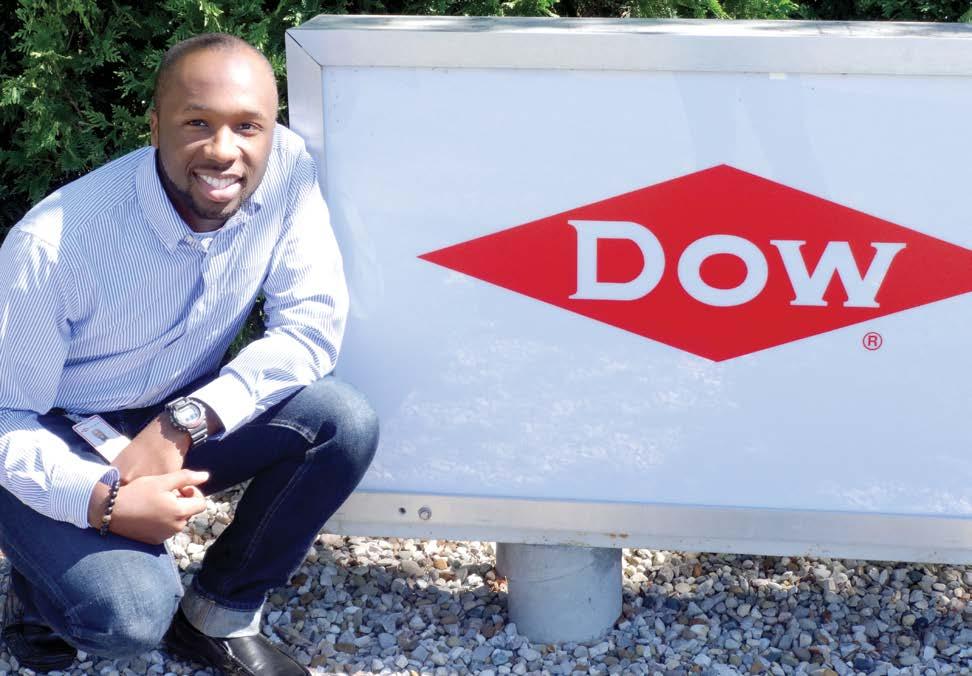
Jones, who graduated from the University of Georgia (UGA) with a bachelor degree in biochemical engineering, had been hired by a subsidiary of the Dow Chemical Company and they wanted him to come on board shortly after his graduation in May. However, Jones put off starting work until mid-July so that he could go to Costa Rica as an unpaid intern.
And he convinced UGA’s program organizers that it would be beneficial to add another intern to the project—an environmental engineer. At the Monteverde Cloud Forest this summer, the two interns conducted carbon footprint analysis and developed a carbon calculator spreadsheet tool.
“Experience is something you can’t put a dollar amount on,” said Jones. “What better way to give back to the university that I went to for the last four years. The knowledge gained was invaluable.”
He said interning in Costa Rica was “an opportunity of a lifetime” and that he desired to “dig into something that I didn’t have any experience with. I knew nothing about carbon emissions.
On July 14, Jones began his job with Dow AgroSciences LLC in Harbor Beach, Mich., as a fermentation product engineer.
Jones, 22, advises college students to embrace internship.
“Go after any opportunity…no matter how big or small,” said Jones. “You never know what might come out of it.”
In fact, he points to the intern he worked with this summer as an example. That intern was offered an opportunity to interview for a position with a Costa Rican company.
This is Jones’ second internship. In 2012 he went to El Salvador to help build water systems with Engineers Without Borders.
For Kenneth Davis, 20, interning this summer may be an experience that changes his career path.
The 20-year-old senior at Morgan State University is now thinking of heading in a different direction in his career.
Working as an intern with the Exelon Generation Corporation, Davis has spent the summer researching relay failures at nuclear power plants. He has studied reports and identified when mechanical relays have quit functioning so that maintenance strategies can be addressed in a more efficient manner, Davis said.
Exelon is one of the country’s largest power generators and delivers electricity and natural gas to 6.6 million customers in

Maryland, Illinois and Pennsylvania.
He said he enjoyed the work so much that he didn’t mind the hour drive from his home in Baltimore to Kennett Square, Pa.
“It’s been great,” Davis said, noting that he’s enjoyed the work environment and his co-workers.
“They want you to ask questions. They’re very supportive, very friendly. I like coming to work.”
The Morgan State University senior is pursuing an electrical engineering degree and was previously interested in the power tract. Now he’s thinking of heading into the nuclear energy field. And he is also interested in working for Exelon after he graduates in fall 2014. Davis said Exelon offers interns
interviews for full-time employment.
One of the highlights of his summer was being sent by Exelon to the Peach Bottom Atomic Power Plant in Pennsylvania. He saw the room where spent fuel bundles are kept and said he appreciated “actually seeing…how a nuclear power plant runs and how different equipment comes together” to power homes in the area.
ValaRae Partee truly believes in the benefits of interning. She spent this summer working at her third internship since going to college.
This year she conducted research at Stony Brook University in
Stony Brook, N.Y., focusing on nanotechnology. Specifically, she investigated how to clean heavy metals and contaminants from the environment and how to do it efficiently.
Partee, 21, a senior at the University of Georgia, said interning has been extremely beneficial to her in a number of ways.
“It’s made me narrow what I do and don’t want to do,” said Partee. “Also I’ve learned how to work with people better.”
She also said she has enjoyed doing research projects.
“Research forces you to learn things you might not have,” said Partee. “You learn at a fast pace. It expands your mind.”
Partee, who is pursuing a bachelor degree in environmental engineering, describes her internship at Stony Brook as her most difficult internship.
Kelsey said she’s been “very impressed with everything.” She said she is the type of person who “loves to learn—any opportunity to take in more knowledge is amazing to me.”
As for the future, after graduation next year Partee has designs on getting a doctorate in environmental engineering from Duke University.
Kaleb Richardson might be described as an over-achiever—at least in relation to internships. Richardson has scored three internships since leaving high school, working at Boeing in Washington, Exxon Mobil in Louisiana and Trinity Forge in Texas.
However, the internship Richardson, a mechanical engineering senior at Prairie View A&M University in Texas, completed this summer was a five-star experience.
Working at Chevron in Bakersfield, Calif., Richardson was tasked with analyzing data on wells to determine ways to make them more efficient.
“This internship so far has been very fulfilling for me,” said Richardson in his 10th week of the 14-week internship. “It’s real-life projects. I am adding value to Chevron and they are adding value to me.”
Richardson said he hopes to gain full-time employment with Chevron after he graduates next year.
“I really hope to get hired on at Chevron as a drilling engineer,” he said. “I love drilling. Drilling is my heart and soul.”
Asked why he pursued multiple internships, Richardson said, “I want different types of experiences behind my belt.”
“I had to learn a lot that was not related to what I am doing in my major,” she said.
While most of Partee’s research has been fulfilling, she had one devastating event occur this summer which taught her a valuable lesson. The samples she had been meticulously collecting for several weeks were destroyed when another student accidentally dropped them on the floor. She had to start over.
The incident taught her patience.
“Things can change in an instant,” said Partee.
All of Partee’s internships have been learning experiences. Her first internship at Rutgers University in New Brunswick, N.J., involved trying to get bacteria to grow in the air. In her second internship at Georgia Tech University in Atlanta she conducted research in the composition of aerosols.
Partee has been fortunate. All her internships have come with a salary or stipend. However, she advises students to intern whether or not a salary comes with it.
“Get experience,” said Partee. “That’s really what matters.”
Ashley S. Kelsey, a senior at Prairie View A&M University in Prairie View, Texas, took on her second internship this summer at Holloman Air Force Base in New Mexico. She’s been shadowing instrumentation and test engineers at the base and working on a project collecting GPS coordinate data. Another project she was involved in is related to LED lights and creating a program to determine the resolution of input voltage when connected to an interface card.
Kelsey said she’s been “very impressed with everything.” She said she is the type of person who “loves to learn—any opportunity to take in more knowledge is amazing to me.”
“Every day I am learning something new,” said Kelsey, who admitted she knew nothing about GPS prior to her work at the base. “Everyone I have worked with has been very supportive, even if they were busy.”
This is Kelsey’s second internship. In 2011 she was an intern at Rice University in Houston working in bio-engineering. There she assisted a chemical engineering graduate student who was investigating leukemia in patients.





Haveyou ever thought about revolutionizing home improvement? Well, Lowe’s has. The company is looking for “Pioneering Spirits” to lead the way along its journey to provide customers with a truly differentiated experience. While having a pioneering spirit is not generally associated with today’s retail business, Lowe’s is moving to change all that.
Lowe’s, with more than 1,700 home improvement stores in the U.S., Canada and Mexico has launched a campaign to attract and retain talent that display a strong sense of vision and drive. The company is actively searching for innovative and creative people eager to take on new challenges and ready to push the boundaries of what’s possible. Lowe’s outreach represents a real growth opportunity for people who can offer big ideas and bold solutions as part of a highly motivated team.
by Rachel Hawksworth Director of talent acquisition, Lowe’s
Individuals most likely to find a home with Lowe’s are people with strong interpersonal and leadership skills who want big responsibilities. Lowe’s offers a career path for self-starters determined to make a difference but who also recognize the importance of collaboration and teamwork. That’s why there’s a high priority on openness and adaptability.
The concept of the pioneering spirit comes from the ability to develop entrepreneurial ideas that can be brought to fruition within an established structure. Pioneering spirits are motivated and driven and, at the same time, appreciate an environment in which their contributions are valued and encouraged. Lowe’s welcomes those who view themselves as potential leaders, willing to offer innovative ideas and new directions that help the company and employees grow.
Candidates will discover a number of opportunities by visiting Lowes.com/Careers. At the college level, there are internships to give students a hands-on understanding of the multifaceted world of retail. Prospective graduates can also check out opportunities at corporate headquarters, Lowe’s stores and distribution centers.
Underlying the inclusive environment at Lowe’s are four principles behind its dynamic work environment:
• Connect: The essence of the team environment—inspiring, assisting and cheering each other on.
• Contribute: Seeking out, listening and valuing other viewpoints.
• Thrive: A key component to employee fulfillment—having the freedom and support to explore and realize each person’s greatest potential.
• Celebrate: Taking time to appreciate large and small victories and accomplishments.
Lowe’s embraces the importance of a diverse and inclusive workforce. The company is a leader in recruiting and developing talent in the Latino and African-American communities. One example comes from Patricia Cuero Nielsen, who holds a degree in nuclear science engineering from the University of Florida and an MBA in information technology from the
University of Phoenix. She said Lowe’s offers a realm of possibilities.
“A career at Lowe’s is not limited to one’s area of expertise (and) people with technical skills don’t have to limit themselves to IT,” Patricia said. “For those of us who seek to become general managers or lead teams, Lowe’s presents those opportunities (and) there is room for those who make the effort to excel with the company.”
Lowe’s leaders emphasize that their outreach represents a major change to traditional retail—a change top talent will find very attractive. It’s a career lifecycle in which new talent wanting to be more than “a cog in a wheel” can grow and contribute in an encouraging and welcoming environment that is enthusiastic about innovation and collaboration. “Never stop improving” is not just an advertising slogan at Lowe’s. It’s a lifestyle for customers and our employees.
by Imani Carter icarter@ccgmag.com
Your dorm room might be your first room you will live in away from home. The best way to decorate your dorm room on a budget is to give it some familiarity to your home atmosphere. Bring along pictures of family members and pets. These can help decorate your dorm room and also remind you of home, where your heart is.
Lowe’s offers a variety of beautiful picture frames that will accent your walls and make your room unique and homey.
Remember you will also be sharing your room with another person, so you will want to compromise once getting there to keep your room in keeping with your roommate’s wishes also. You should begin cooperating with your roommate to create a pleasant and peaceful atmosphere.
Dorm rooms are many times not the largest spaces; however, Lowe’s provides merchandise such as wall and door hooks, bed risers and shelves that assist in maximizing your space.
Having to share a small space with another person can be a challenge, especially since your room at home is currently full of knick knacks and other personal belongings. If your closet is a disaster and the thought of fitting all your stuff into a dorm concerns you, consider investing in Lowe’s closet organizers which provide you with storage for shoes, towels, wash cloths etc.

Trunk: CONTICO 23-Gallon Storage Locker $29.98
Lowe’s office organizers and desk lamps (comes equipped with built in organizers) will make your information much easier to find, which comes in handy when you need to study a certain subject or complete an assignment.
While sharing your room, it is important to keep your side tidy. It’s very easy for papers to overtake your desk space when you start bringing back homework from class, notes and syllabuses. Try getting folders for each class and store them in a drawer or file.
Intended for those who have no idea where to start, and even for the students who have planned how they’ll design their dorm room the entire summer, Lowe’s is the perfect place to buy all of the essential tools you’ll need to deck out your new dorm room.

Trash can : 1.5-Gallon Indoor Garbage Can, $4.48
Floor lamp: Style Selections 68-in 3-Way 5-Light Silver Floor Lamp, $19.97


Mirror: MCS Industries 15.5-in x 51.5-in Bronze Rectangular Framed Mirror, $19.98
Closet organizer set: Style Selections Set of 5 13-1/2-in W x 14in H x 5-in D Black Organizers, $15.18


Door mat: Mohawk Home 27-in x 18-in Multicolor Rectangular Door Mat, $4.98
Ottoman: Linon Pink Square Ottoman, $12.90


Desk lamp: Style Selections 15-in Adjustable Blue Swivel Desk Lamp, $10.97
Mini fridge: Haier 1.7 cu ft Compact Refrigerator (Black), $89.99


Pull out chair: Mac at Home Steel Folding Chair, $44.98

by Frank McCoy fmccoy@ccgmag.com
Everyone wants to do well as an undergraduate, but STEM freshmen and sophomores may suffer from information, and pre-major overload. Who are they going to call for advice and support? The best sources may be members of your school’s Society of Hispanic Engineers (SHPE) chapter or one on a nearby campus.
SHPE, founded in 1974, and similar organizations such as the National Society for Black Engineers and the Society of Women Engineers exist to ensure that you do well.
The experiences, and insights, of Aidee San Miguel, a junior electrical engineering major at the University of Illinois at Chicago (UIC), typify her UIC SHPE chapters, and the organization’s, value.
The engineering bug bit San Miguel as a teen when she attended the annual SHPE-UIC: Engineering Expo. It introduced high school students like her to different engineering disciplines by involving them in hands-on projects related to university majors.
“I participated in this event for three years and every year I worked on Electrical Engineering projects. Through this program, I helped build a miniature electric car, a circuit on a breadboard, and made an electromagnetic drive/coil gun. It was through these projects that I discovered my interest and passion for electrical engineering,” she says.
As a student in SHPE at UIC, San Miguel remains involved in various chapter activities, and has served on the SHPE Board and participated in its MentorSHPE program. Those experiences continue to hone her skills to be a successful engineering professional. San Miguel says that through her in involvement with SHPE she hope to continue its tradition of service and to inspire the next generation of students to enter into the STEM fields.

The UIC SHPE chapter was founded in 1980 and has about 100 members.
Miguel’s, and other, college success tips:
• Resist the underclassmen lure of joining too many extracurricular activities. Have fun, but keep your eye on earning the credits and skills that ensure a happy graduation.
• Begin developing networking skills as a freshman; don’t wait for senior year.
• Cultivate diverse experiences through academic research and corporate internships. “I’ve done both and have learned there are many ways to apply my technical skills,” San Miguel says.
• Take advantage of school services, beyond financial aid.
• Choose your friends and study buddies wisely; push each other to excel.
• If needed, seek university help to manage your time and money effectively.
• Remember to eat, sleep, and exercise regularly to maintain optimal fitness.
• Show passion for your STEM discipline; it will be noticed.
Other key moves she recommends are finding a mentor to guide your college journey, and staying optimistic about internships. “When I was a freshman I thought that if I did not find an internship after my fall semester, that I would not be able to get one for the summer,” but that was not the case as UIC [and other schools are] constantly posting internships over the summer that need to be filled,” she says.
This past summer, San Miguel worked as an engineering intern at WMS Gaming, a Chicago video game company. Her tasks included assisting senior game designers manage game design development and implementation, assisting game producers evaluating features, schedules, and resource trade-offs, and conducting quality assurance testing on gaming machines.

by Frank McCoy fmccoy@ccgmag.com
STUDENTS CAN MAKE BIG BUCKS, AND ARE MORE LIKELY TO BE HIRED
In June 2013, The National Association of Colleges and Employers (NACE) web site reported that 63 percent of this year’s graduates held a cooperative education position or worked as interns. NACE president, Marilyn Mackes said that percentage of student interns represented “the highest overall participation rate since we began tracking this with the Class of 2007.”
Of those interns and co-op students NACE said 52.2 percent were paid and 47.8 percent were unpaid, and 56.3 percent worked at for-profit organizations. Another 28.1 percent worked for nonprofits and 15.7 percent for local, state, or federal agencies.
Students who intern get hired. Two years ago, NACE reported that paid interns working for public, private, or nonprofit organizations received the most job offers. Plus, when interns were so valued by nonprofit and government organizations to pay
them those interns also received more job offers.
What happens to students who cannot afford to work for free?
To encourage students, with financial challenges, to accept unpaid internships, The George Washington University Career Services Advisory Council established the Knowledge in Action Career Internship Fund. Eligible students receive monetary awards from $1,000 to $3,000 to work for employers that cannot pay or who only offer unpaid posts.
In May 2013, Glassdoor.com, “a free jobs and career community, ranked the “Top 20 Highest Rated Companies Hiring Interns Right Now”. STEM students, especially freshman, should view the list critically. Glassdoor.com reported that “A Microsoft Research Intern earns the highest average monthly base pay ($7,050 per month, an increase from $6,746 in last
year’s report). Google Software Engineer Interns bring in the second highest average monthly base pay ($6,462 per month), followed by Microsoft Software Engineer in Test Interns ($5,951 per month).”
Most corporate internships are 10 to 12 weeks long.
The following are Glassdoor.com’s top 20 companies’ 2012 monthly salaries, intern descriptions, and links to the organizations’ internship pages, where available.
Google internships: software engineering ($6,463) and BOLD (Building Opportunities for Leadership and Development) interns ($3,444), http://www.google.com/jobs/students/tech/ internships/
Google looks for interns from multiple disciplines, including Computer Science, Electrical Engineering, Math, and Physics.
Microsoft internships: research ($6,746), software development engineer ($5,539), program manager ($5323), http:// careers.microsoft.com/careers/en/us/internships.aspx
Microsoft hires technical, business, and MBA interns. Hiring divisions include Software Development, Hardware Engineering, User Experience, IT & Operations, and Game Design.
QUALCOMM internships: engineering ($4,520), other ($4,515) QUALCOMM, a global provider of wireless technology and services, has more than 150 locations worldwide. http://www.qualcomm.com/careers/students/intern
MTV Networks internships: (Not available) Viacom internships are open to juniors and seniors and are available nationwide. The Summer Associate Program, for recent grads, seeks digital mavens. http://jobhuntweb.viacom.com/viacom/taleo/ internships.html
State Farm internships: ($2,377). The insurance firm hires 200 interns, with a “cumulative GPA of 3.2 or higher (B+ average preferred), for 11 weeks each summer. http://www. statefarm.com/about/careers/internships/index.html
Intel internships: Graduate Technical ($5,681) and other ($5,099). Intel has four programs: Intel Ultimate Engineering Experience (I.U.E.E.), Intel Collaborators, Traditional Internship Program, University Arch Partnerships http://www.intel.com/ content/www/us/en/jobs/locations/united-states/students/futureengineers.html
GE internships: Information Management Leadership Pro-
gram ($3,080) and other ($2,826)
GE has program internships in Commercial Leadership, Financial Management, Human Resources Leadership, and Information Technology Leadership. http://www.ge.com/careers/ culture/university-students/internships-co-ops
Procter & Gamble internships: (Salary not available) http:// www.internships.com/posting/pg-summer-internship-program-2013
Johnson & Johnson internships: ($3,275) http://careers.jnj. com/Internship-co-op-programs
Cisco internships: ($4,017) internship page: http://www.cisco. com/web/about/ac40/univ/index.html
PwC, PriceWaterhouse Coopers, internships: Advisory ($4,702), Assurance ($3,964), Audit ($3,884), Tax ($3, 884) http://www.pwc.com/us/en/careers/campus/index.jhtml
IBM internships: ($3,935) Check out IBM’s project-based and team-based Speed Teams. http://www-03.ibm.com/employment/us/un_interns_coops.shtml
Nordstrom internships: ($1,608) http://about.nordstrom.com/ careers/internships_retail.asp
JP Morgan Chase internships: intern ($3,573) http://careers.jpmorgan.com/student/jpmorgan/careers/us/programs/summerug
Target internships: Business Analyst ($2,785), Executive ($2,263), intern ($2,360) http://targetcareers.target.com/go/ internships/113850/
Scottrade internships: Stockbroker ($1,804), intern ($1,711) https://careers.scottrade.com/working-at-scottrade/intern/tips-toget-an-internship.html
Ernst & Young internships: Tax ($4,136), Audit ($4,087), intern ($3,860) http://www.ey.com/US/en/Careers
Deloitte internships: Audit ($3,822), (intern ($3,987) https:// mycareer.deloitte.com/us/en/students/programsinternships
NBC Universal internships: intern (Salary not available) http://www.nbcunicareers.com/internships
Amazon internships: Software Development Engineer ($5,552), Financial Analyst ($3,070) http://www.amazonfulfillmentcareers.com/programs/university-programs/internshipprogram/
work experience is key on any resume in today’s job market, and in Scoring a Great Internship, primary author Ellen Rubinstein and fellow student contributors offer tips and a step-by-step guide to help college students clinch the internship that is invariably necessary to secure a job after graduation.
A student herself at Columbia University at the time of the book’s publication in 2002, Rubinstein reflects on her experience in clinching internships at major organizations, including Simon & Schuster and HBO Family Productions. Additional student contributors and recent graduates also offer their recommendations, providing insight.
Although Scoring a Great Internship is over a decade old, it emphasizes the importance of networking, a skill that is undoubtedly important to the internship and job-seeking process. Whether it is reaching out to professors, alumni or career services offices, Rubinstein and fellow contributors advise the reader to talk to as many people as possible about careers and internships.
you like and successfully applying for it,” Rubinstein writes.
Rubinstein’s book, published by Natavi Guides, is a resource for the student who wants an internship and does not know where to begin—or the student who may not have the same career services as some of America’s prestigious liberal arts colleges and universities, where most of the graduate and student contributors hail from. The book provides insight into researching jobs, networking, writing resumes and cover letters—all advice that not every college or university makes available
“The more people you talk to, the more people will know that you’re looking for an internship and the greater will be your chances of learning about one that
But Rubinstein’s advice does not end there. In addition to networking, she spends several pages showing readers how to structure their resume, offering the example to demonstrate the importance of “telling a story about you to someone who’s never met you and knows little or nothing about what you’re like and what you’re capable of doing.”
She writes similarly about cover letters, urging students to focus on presentation as well as language. In her advice on interviews, Rubenstein walks readers through what to bring to the interview, what to wear, how to present themselves and what questions to ask. Rubinstein and her contributors make it clear that the interview is just as important as the paper application.
Another great value of this book is that
by M.V. Greene mgreene@ccgmag.com
it lends advice to the reader about what to do after he or she gets the internship. Rubinstein urges readers to take their time deciding which internship to choose.
“There are so many factors that can play into your decision. If you’d hoped for a paid internship, you might be hesitant to accept one that isn’t paid but seems more interesting. Or maybe you’ve never been comfortable working in large offices, but the best offer comes from a huge company,” she writes.
The National Association of Colleges and Employers’ survey, which received responses from 38,000 college students, including 9,215 from seniors earning bachelor’s degrees, highlights the overall value of internship. Clearly, employers do take internship-co-op programs seriously, the survey notes. For instance, employers report that the main focus of such programs is to recruit college graduates for entry-level positions.
In the last two chapters of the book, Rubinstein offers tips for making the most of the internship experience. She recommends that interns use their opportunity to build a network with their boss and co-workers, and treat the internship like a real job. Networking “truly never ends,” Rubinstein writes.
“Have an open mind,” she writes. “Try not to be too proud to accept advice, and see where it goes. Many lucky interns keep in touch with their bosses/ mentors for a long time after the internship is over.”
The internship, Rubenstein writes, is “a chance to get out of the classroom and into the real world, and to start figuring out the direction in which you’d like to go. There are plenty of opportunities out there, and you never know where they’ll lead you.”


RECRUITING
HISPANICS IN ENERGY
THE POWER OF THE INTERNSHIP

Cleanpower is the future, for the world, USA, and job seekers. This is the opinion of the Advanced Energy Economy Institute, a non-profit business organization. The institute contracted Pike Research, Navigant Consulting’s global energy practice, to quantitatively and qualitatively analyze the advanced energy, or alternative energy market’s potential.
In January 2013, Pike reported that two years ago, the global advanced energy market was worth $1.1 trillion and the U.S. share worth $132 billion with a projected growth rate of 19 percent in 2012. This is wonderful news for STEM job seekers in the energy sector.
But there’s more. In February 2013, the U.S. Department of Energy (DOE) and the U.S. Department of Treasury unveiled a $150 million Advanced Energy Manufacturing Tax Credit Program that will aid DOE-vetted companies engaged, or proposing to engage, in domestic clean energy and energy efficiency manufacturing projects.
The previously-unused credits were included in the American Recovery and Reinvestment Act of 2009. Department of Energy Secretary Steven Chu said, “These new investments
by Frank McCoy fmccoy@ccgmag.com
will continue that momentum, supporting the president’s commitment to American-made energy, increasing energy security, and creating jobs.”
A DOE fact sheet reports that the manufacturers eligible for the tax credits will potentially produce clean energy that will create jobs, reduce pollution, lower energy costs, and spur innovation. The following areas that should cheer energyinterested STEM students and professionals:
• Solar, wind, geothermal or other renewable energy equipment
• Electric grids and storage for renewables
• Fuel cells and micro turbines
• Energy storage systems for electric or hybrid vehicles
• Carbon dioxide capture and sequestration equipment
• Equipment for refining or blending renewable fuels
• Equipment for energy conservation, including lighting and smart grid technologies
• Advanced energy property designed to reduce greenhouse gas emissions
Does the greater education of STEM students equal higher
salaries? The Economic Modeling Specialists Intl. (EMSI), a CareerBuilder company that specializes in employment data and economic analysis, says “yes.”
Brent Rasmussen, president of CareerBuilder North America said in an article about the best-paying jobs in 2013 that “nearly one in five employers (18 percent) reported that their educational requirements for jobs in their organizations have increased over the last five years.”
There was one exception when EMSI listed the best-paying jobs requiring an associate’s degree. A nuclear technician with the right two-year degree could earn $68,037 annually for assisting in nuclear research and production.
The salaries escalate dramatically for individuals with three specific types of bachelor’s degrees in engineering. The potentially best-remunerated graduate in 2013 could be a man or woman with an undergraduate degree in petroleum engineering who may receive $122,242 for designing how to extract oil and natural gas, particularly that which is fracked, from underground.
Students that decide to go nuclear can do equally well. An engineer with knowledge of radiation and nuclear energy could get $99,715 a year, whereas a chemical engineer might earn $92,934 for being able to use skills in biology, chemistry and physics to produce fuel and related chemicals.
Coal, wind, water, oil, solar, thermal, natural gas and other emerging forms of alternative energy sectors will also require skilled personnel with degrees that will mesh with a multiplicity of disciplines.
These disciplines include software development, accounting, market research, computer system analysis, network and computer system administration, information security analysis, web development, computer network architecture, financial analysis, computer programming, mechanical and industrial engineering, database administration, cost estimation and logistics.
The tricky part in this post-sequestration era is predicting how various sectors will be affected as the spending cuts begin. The Scientific American website reports that the federal government is the main funder of basic scientific research.
The Congressional Research Service prepared a study Sequestration: A Review of Estimates of Potential Job Losses. A salient paragraph in the document said, “The industries estimated to experience the greatest direct and indirect job losses also differed considerably. Federal government employees could face much larger direct and indirect job losses as a result of cuts to non-defense budgets (268,000 jobs) than to the defense budget (56,000 jobs).

In the private sector, employees at professional and business services firms could face the largest direct and indirect job losses (180,000) due to non-defense budget cuts and manufacturing employees might incur the largest job losses (223,000) due to DOD budget cuts.”
The report doesn’t go granular in describing the sequestration’s impact. The battle will occur at research universities. Wealthy universities have a cushion with various sources of funding. The middle-sized and small universities, virtually all Historically Black Colleges and Universities, have small rainy day funds.
In a Scientific American guest blog, MIT professor of science writing Tom Levenson said, “sequester cuts will strike bluntly across the scientific community. The illustrious can move a bit of money around, but even in large labs, a predictable result will be a reduction in the number of graduate student and postdoc slots available—and as those junior and early-stage researchers do a whole lot of the at-the-bench level research, such cuts will have an immediate effect on research productivity.
The longer term risk is obvious too: fewer students and postdocs means an ongoing drop from baseline in the amount of work to be done year over year, and given that industry has reduced its demand for research-trained Ph.Ds., a plausible consequence is that some, many perhaps, of those with capacity to do leading-edge science will simply never enter the pipeline, shifting instead to some other career that does not demand six years and more of poorly paid training to find that there are no jobs.”
On March 15, 2013, President Barack Obama visited the Joint Center for Energy Storage Research Argonne National Laboratory in Illinois to unveil a $2 billion plan to bolster battery and transportation research and development.
At the event, he spoke about the many ways his administration and U.S. organizations are exploring to lessen fossil fuel dependence and create jobs for STEM specialists like you.
The president said, “We can support scientists who are designing new engines that are more energy efficient; support scientists that are developing cheaper batteries that can go farther on a single charge; support scientists and engineers that are devising new ways to fuel our cars and trucks with new sources of clean energy—like advanced biofuels and natural gas—so drivers can one day go coast to coast without using a drop of oil.”
In concert with President Obama’s declaration, 2013 public, nonprofit and private organizations have made predictions about their industries that bode well for STEM students in energy and energy-related majors and graduate programs.
Electric Vehicles: The Future is Now reported that GE Capital Americas, which makes commercial loans, reports the automotive and supplier industries will benefit from more corporations purchasing “a mix of traditional, alternative fuel and electric cars and trucks. Experts will be required to design, create new technologies, build, and test those vehicles and all their energy-saving component parts, and to measure and lower their impact on greenhouse gas emissions and fuel consumption.
The oil and gas industry underpins many businesses that produce plastics—overwhelmingly refined from petroleum—coatings and chemicals.
The American Chemistry Council (ACC) said in its Shale Gas and New Petrochemicals Investment: Benefits for the Economy, Jobs and U.S. Manufacturing report that the 100-year natural gas supply from shale deposits “would generate $132 billion in U.S. economic output and $4.4 billion in new annual tax revenues.”
Another ACC finding projects the job bounty that could result as the natural gas industry expands. Hundreds of thousands of direct and indirect jobs may be created in the following industries: chemicals, 619,000; plastics/rubber products, 346,000; fabricated metal, 74,000; iron/steel, 59,000; paper, 46,000; glass, 9,000; and foundries, 9,000.
The U.S. Energy Information Administration’s Annual Energy Outlook 2013 spotlights factors that may affect U.S. energy markets through 2040.

The Manufacturing Alliance for Productivity and Innovation (MAPI) sees the nation’s economic activity glass half-full in 2013 and slightly more so next year. All economic activity relies upon energy in some way.
“MAPI forecasts that manufacturing production will increase 2.2 percent in 2013 and 3.6 percent in 2014. High-tech production is forecast to increase 4.3 percent in 2013 and 9.0 percent in 2014. Non-high-tech or traditional manufacturing, which accounts for 90 percent of value added in manufacturing, will grow 1.8 percent in 2013 and 3.8 percent in 2014. Manufacturing will grow at a faster speed than the general economy, but not by much. The key growth themes are a housing rebound, strong growth in transportation equipment and the expansion of medical care (robust medical equipment demand). MAPI forecasts that manufacturing production will increase 2.2 percent in 2013 and 3.6 percent in 2014.”

Does that ring true? To find out, let’s visit the home page of the Association of Energy Engineers and see what employment opportunities may be in store for STEM energy-interested majors and graduates. In a box labeled “Energy Vortex Top Jobs,” a variety of energy-related jobs were listed.
To show their value, look below to see where the jobs are located, the prospective employer, and the average salaries found at simplyhired.com for each job description but not for a specific organization.
The jobs:
• Power Resource Manager, City of Port Angeles, Washington ($53,000)
• Energy Manager, Los Angeles, CBRE Group, Inc., the world’s largest commercial real estate services firm ($62,000)
• Senior Energy Engineer, Opinion Dynamics Corporation,
Massachusetts or California, a market research firm covering energy/utility ($75,000)
• Maintenance Coordinator, Alcoa Global Primary Metals, North America’s largest integrated producer of primary aluminum ($42,000)
• Building System Automation Engineer, Fairfax County (Virginia) Facilities Management Department ($62,000)
• Senior Facilities Coordinator, Energy and LEED-EBOM/Engineering Bill of Materials, Roche, a global healthcare company (No salary data)
• Program Manager, Commercial Demand Side Management, ICF Marbek, a Canadian fully integrated energy, climate, and environmental consultancy ($52,000)
• Project Energy Engineer, Iconergy, a performance contracting and energy engineering firm ($69,000).





In August 2010 Hispanic Engineer & Information Technology magazine featured its first look at Hispanic leaders in energy and energy-related industries. Since then the number of Hispanics in those fields, like the demand for energy, has been rising. This article recognizes the expansion and elevation of men and women—the majority of whom earned STEM degrees—who you need to know.
The following list includes the chairman of the Federal Trade Commission, executives at a variety of energy utilities, four members of their states’ public utility commissions, a quartet from New York City’s largest energy provider and a board member of one of the nation’s largest utilities.
The list also includes the president and COO of a Califor -


nia utility company that is the country’s largest natural gas distribution company, a global lighting solutions manufacturing executive, the president and CEO of a $463 million auxiliary power generation equipment and maintenance support firm and a senior officer specializing in gas transmissions operations at one of California’s largest electricity and natural gas providers.
Pablo Vegas
President and COO
American Electric Power
Pablo Vegas is president and chief operating officer of AEP Ohio, which has 1.44 million customers in Ohio and West Virginia. The University of Michigan graduate, who received a bachelor of science degree in electrical engineering, was AEP’s vice president and CIO and AEP Texas president and CEO. Vegas also worked for IBM, Anderson Consulting, and PricewaterhouseCoopers.
Commissioner California Public Utilities Commission
In 2011, Catherine J.K. Sandoval, who is an associate professor at Santa Clara University School of Law, was appointed to the California Public Utilities Commission by Gov. Jerry Brown. Sandoval was the undersecretary and senior policy advisor for housing with the California Business, Transportation and Housing Agency. The former Rhodes Scholar at Oxford also earned a J.D. at Stanford Law School and a bachelor of arts from Yale University.

General Manager of Manhattan Electric Construction Con Edison of New York
developed a curriculum that contains modern microprocessor and electromechanical relay systems.
Technical Manager
Con Edison of New York

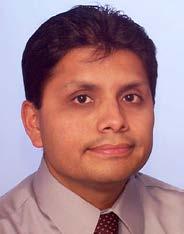
In 2009, when Walter Alvarado was selected as general manager of Manhattan Electric Construction, it was his latest step since joining Con Edison as a management intern 17 years earlier. Now, the holder of respectively a bachelor of science in mechanical engineering and a master’s in computer science both conferred by NYU-Poly (formerly Polytechnic University), leads a team of more than 600 employees that maintains Manhattan’s electric distribution system and responds to emergencies in the borough, other regions and utilities. Alvarado is an active mentor, manager, and committee member in Con Ed’s entry-level management program.
General Manager of Substation Operations Con Edison of New York
Technical Manager Natalia Saldarriaga has been with the utility, which provides electric, gas, and steam service to NYC and Westchester, since 2005. Saldarriaga has a bachelor of engineering in mechanical engineering from City University of New York City College and an M.B.A. from Fordham University. She says the sector includes areas “where students can focus on the complex challenges that both electric utilities and climate control specialists must face, and the coordinated responses that they must take to stay ahead of the game.” Her team participates in the design and commissioning of high efficiency equipment and advanced power control systems.
Vice President of System
and Transmission Operations
Con Edison of New York
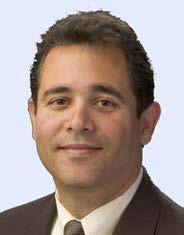

Angel L. Cardoza is the general manager of substation operations at Con Edison. His responsibilities include developing business strategies that feature safety and a zero-accident environment, managing costs, and ensuring operational excellence through compliance with national energy and regional power regulations. Cardozo says that relay protection engineering should attract energy students, as the technical field is experiencing a transformation from electromechanical to microprocessor-based systems. To demonstrate the area’s dynamism changes, the 15-year Con Ed veteran
As vice president of system and transmission operations since 2011, Robert Sanchez has a large portfolio. He is responsible for developing long-term plans for the electric bulk transmission system, the installation and maintenance of Con Ed’s transmission system and safe, reliable and economic operation of the electric transmission, distribution and steam system. Sanchez, who has an M.B.A. from Pace University and a bachelor of science in electrical engineering from the University of Miami, says, “If your passion is building power producing machines, there are career opportunities in power plants or electric distribution.”
Director Exelon
Hon. Nelson A. Diaz, a partner at the Philadelphia law firm of Dilworth Paxson for over 9 years, is a member of the board of directors of Exelon. The company operates in 47 states, Canada, and Washington, D.C. Exelon’s utilities provide natural gas

and electricity to 6.6 million customers in parts of Maryland, Illinois and Pennsylvania. Diaz, a retired Philadelphia Court of Common Pleas judge, received his bachelor of science degree from St. John’s University and J.D. from Temple University.
Ramirez Chairman of the Federal Trade Commission Federal Trade Commission
In March 2013, Edith Ramirez became chairman of the Federal Trade Commission. The agency acts to prevent anticompetitive or deceptive business practices that harm consumers and tries to do so without “unduly burdening legitimate business activity.” FTC activities include enforcing the FTC Appliance Labeling Rule, which requires manufacturers to attach black-and-yellow Energy Guide labels to help consumer’s comparison shop for energy-efficient products. The Harvard Law grad and former corporate lawyer was the vice president of the Board of Commissioners for the Los Angeles Department of Water and Power.
Leonard Fernandez Vice President, Latin America Region
Fulham Company
Leonard Fernandez is vice president, Latin America, of the Fulham Company. The global lighting solutions manufacturer sells transformers, fluorescent, LED, emergency systems as well as transformers. Fernandez joined Fulham in 2012 to expand business in Mexico, the Caribbean and throughout Latin America. The renewable energy specialist was a manager at General Electric and earned a bachelor’s degree in engineering from Arizona State University.
Eduardo E. Balbis
Commissioner Florida Public Service
Commission
Eduardo E. Balbis will serve as a commissioner through January 1, 2015. He earned a bachelor of science in environmental engineering from the University of Florida and is a licensed professional engineer. Balbis says demand for energy specialists bodes well for engineering majors, and that they should consider local and state government positions.
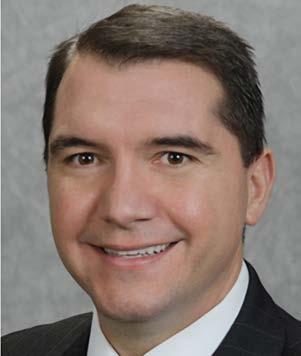
Luis Manuel Ramírez President and CEO Global Power Equipment Group
Last July, Luis Manuel Ramírez, 45, became president and CEO of the $463 million Global Power Equipment Group. It provides custom-engineered auxiliary power generation equipment and maintenance support services to the energy sector. Ramirez had been a corporate vice president and the CEO of General Electric Energy Industrial Solutions. In 2012, the bachelor of science in computer information systems degree-holder from DeVry University was named one of 100 Smart Grid Movers and Shakers.
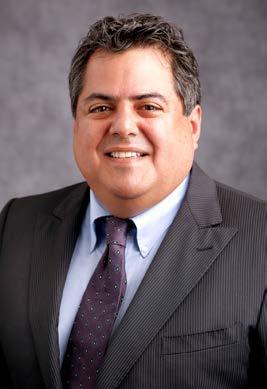
Jose L. Perez
Chairman and CEO
Hispanics in Energy (HIE)
Jose L. Perez is chairman and CEO of Hispanics in Energy and a co-founder of HIE, which collaborates with the American Association of Blacks in Energy. Perez also co-founded the National Utilities Diversity Council and is chairman and founder of the California Utilities Diversity Council, and owner of Latino Journal.
Monica Martinez
President and Co-founder
Hispanics in Energy (HIE)
Monica Martinez is president and co-founder of Hispanics in Energy. Martinez is principal and chief policy development strategist at Ruben Strategy Group LLC. She was a member of the Michigan Public Service Commission.
David Lizarraga Director
Hispanics in Energy (HIE)
David Lizarraga is a member of the Board of Directors of Hispanics in Energy. Lizarraga is president and CEO of TELECU, a Los Angeles community development corporation engaged in real estate development, construction, financial services and education. He is the former chairman of the U.S. Hispanic Chamber of Commerce.
Valerie Espinoza Commissioner
New Mexico Public Regulation Commission
In January 2013, Valerie Espinoza became a commissioner of District 3 of the New Mexico Public Regulation Commission (NMPRC). The NMPRC regulates “the utilities, telecommunications, motor carriers and insurance industries to ensure fair and reasonable rates, and to assure reasonable and adequate services to the public as provided by law.”

Commissioner
New Mexico Public Regulation Commission
Last January, Karen L. Montoya was sworn in as the commissioner representing most of Albuquerque and New Mexico’s most densely-populated area. Before joining the PRC, Commissioner Montoya served two terms as Bernalillo County Assessor, and holds the distinction of being the first woman elected to that office. Throughout her career, Commissioner Montoya has made it a personal priority to maintain trust, accountability, integrity and transparency at every level. As a member of the PRC, she will continue to bring that high level of service to the people of New Mexico.
Senior Vice President
Pacific Gas &Electric Company
Vice President of Strategic and Financial Planning
Pepco Holdings
Arturo F. Agra is a vice president of strategic and financial planning at Pepco Holdings, which delivers energy to about 2 million customers in Delaware, the District of Columbia, Maryland and New Jersey. Agra’s responsibility includes the preparation and documentation of the utility’s strategic and financial plans, and strategic leadership. He was president and CEO of Conectiv Energy and led the sale eregulated merchant generation and trading business. Agra received his master’s in business administration from Saint Joseph’s University in Philadelphia.

Co-founder and Vice President of Business Development Power Grid Engineering, LLC
Andre Uribe is a co-founder and vice president of Business Development at Power Grid Engineering. The company headquartered in Winter Springs, Fla., provides engineering design and consulting to power systems sector organizations. Uribe, who worked at Progress Energy previously, received his bachelor of science degree in electrical engineering from the University of Central Florida.

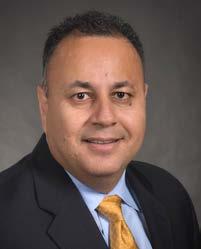
San Francisco’s Pacific Gas and Electric Company is one of the nation’s largest combination natural gas and electric utilities. Jesus Soto oversees execution activities for gas transmission, gas system operations, engineering and project management, and public safety and integrity management. He was vice president of operations services for El Paso Corporation’s Pipeline Group in Houston. Soto earned his bachelor of science degree in civil engineering from the University of Texas at El Paso, a master’s in the same subject from Texas A&M University, and an M.B.A. from the University of Phoenix.
President and COO Southern California Gas Company
The president and COO of Southern California Gas Company, Dennis Ariola, who previously worked for solar panel maker Sun Power Corporation as chief financial officer and executive vice president, has a master’s degree in business administration from Harvard University and a bachelor’s degree in economics from Stanford University. Southern California Gas is a subsidiary of Sempra Energy, and is the country’s largest natural gas distribution utility, with 20.9 million customers, and 5.8 million meters in a service territory of about 20,000 square miles.

Inthis day and age, internship experiences count just as much as a high GPA. Companies love to see students who have had real life experience with their discipline and who have been educated on the subject outside of the classroom. Internship experience not only benefits the companies that you choose to work for, but they benefit you as a student. Obtaining an internship allows you to figure out if this is the career track you really want to follow or if there is another area in the company that you would like to work in instead. In this story, you’ll find out all you’ll need to know about the internship programs offered at top energy companies.
American Electric Power offers college students and recent grads the opportunity to work alongside experienced professionals in respective career fields such as engineering. As a participant in AEP’s College Co-op or internship program, you’ll be able to earn a competitive salary, get paid holidays and balance your life and work schedules with flex time. In some cases, AEP also offers a monthly housing allowance and will contribute to a 401(k) plan.

tioned and possible candidate for employment with the company following graduation. Exelon actively recruits M.B.A. students for leadership positions throughout the company. The company looks for energetic professionals that will maintain its momentum and help chart paths to new opportunities.
If you seek a challenging opportunity within a dynamic and evolving industry, Exelon internships provide a great place to start.
As a Pacific Gas and Electric Company (PG&E) intern, you’ll have the opportunity to surround yourself with professionals who are committed to helping you learn. Internships typically last 10 to 12 weeks and include a competitive salary and paid company holidays. Participants are often considered for full-time positions upon graduation. PG&E seeks interns who have a strong work ethic and initiative, strong written and verbal communication skills, active involvement in extracurricular activities, and are enrolled in an accredited university within six months prior to anticipated internship date.
Con Edison’s Summer Intern Program offers college students work experience that connects textbook knowledge with realworld settings and gives students an understanding of the ins and outs of Con Edison. Con Edison identifies students who demonstrate high energy, intellect, and a genuine thirst for learning and who, upon graduation from college, may qualify as candidates for the company’s Growth Opportunities for Leadership Development (GOLD) Program.
All internship applicants must be full-time students in a fouryear college program who completed their freshman year with a minimum of 30 credits and have a cumulative GPA of 3.0 or greater. Applicants must major in the study of engineering, environmental science, computer science, and business related disciplines such as accounting or financing.
Exelon’s internship program gives students the chance to develop professional skill sets so that they will be a better posi-
PG&E also offers an Engineer Rotation Development Program, an 18-month rotational training program geared to recently graduated engineers. The program includes classroom training courses, mentoring, field trips, networking events and job shadowing. PG&E offers tracks in its Electric Operations Transmission and Distribution organizations and Gas Operations Transmission and Distribution organizations. Upon completion of the training program, new engineers will have acquired the background and experience needed to perform their job upon completion of the development program.
A standard internship with Pepco Holdings lasts for 6-12 weeks. Pepco Holdings offers internships in civil and electrical engineering, information technology, finance, accounting and more. An applicant’s internship choice must be aligned with his or her field of study. Interns must be enrolled in an accredited undergraduate or graduate program with a minimum GPA of 2.5 or above. To express interest in a Pepco Holdings
internship, students must submit an online application at phicareers.com.
Southern California Gas Company (SoCalGas) seeks bright and qualified engineers to propel their business into the next century. SoCalGas’ engineering intern supports the Region Associate Engineer with reviews, analysis and recommendations for engineering requests from the field, planning office and headquarters. This position provides research support (data gathering utilizing company records stored in hard copy or computer form), engineering and cost benefit analysis for pipeline replacement projects.
Students applying for this internship must be a sophomore/ junior or senior with at least two semesters before graduation. Students must also be a full-time student in a University Engineering program, preferably in the mechanical, chemical or civil disciplines. SoCalGas requests that students have at least a 3.0 GPA with solid understanding of fluid flow, piping systems and computer applications.
Southern Co.’s internship program is designed to give hands-on experience to talented undergraduates in the area of engineering, finance, business and computer science. Southern Co. strives to provide students with exposure to its company and challenge them with exciting work assignments. The company prefers for students with a minimum of 3.0 to work for multiple semesters.
PowerGrid Engineering, LLC (PGE) internships aim to build a solid foundation by linking educational theories to real world settings. All PGE Interns are assigned a mentor to provide individual focus and attention to each student. During the internship students will be exposed to several areas of service within the electrical engineering industry.
PGE internships require a minimum commitment of one semester, which may be extended to consecutive semesters depending on both intern performance and need. PGE internships are flexible to allow students to participate in the program while being enrolled in a ful-time academic program.
Internships at ConocoPhillips immerse students in a challenging environment. The internship gives real-world responsibilities and opportunities to leverage knowledge. ConocoPhillips offers internships in oil/gas, information technology, engineering and business. To be considered for an internship, students must register for an interview through their university career center and apply online at ConocoPhillips’ website.
Anadarko Petroleum Corporation offers three-month summer internship programs in fields such as accounting, engineering and information technology. Anadarko prefers for applicants to have a minimum cumulative GPA of 3.0.
The Accounting Summer Internship Program teaches students to understand how the overall energy industry can impact accounting practices. Workshops are offered in geology and
geophysics, petroleum engineering and drilling, marketing, field operations and finance.
The Engineering Summer Internship Program enables engineering students to launch their careers while still in college. Whether you’re an undergraduate or working on your master’s, Anadarko provides diverse, exciting and rewarding intern opportunities each summer.
Anadarko’s Information Technology Summer Internship Program allows to students to network with directors and managers who can provide career advice. Interns will also meet regularly with a formal mentor for project guidance and development of technical skills.
Obtaining an internship allows you to figure out if this is the career track you really want to follow or if there is another area in the company that you would like to work in instead.
Chevron has a variety of corporate internships in earth science, engineering, finance, global gas and several more. Students are able to gain a hands-on experience in field support to detailed technology support. Interns will work directly with professionals in a team environment and see how Chevron team members work together to deliver success. With an internship at Chevron, students will be able to develop skills under the supervision and guidance of experienced professionals. This internship program serves as a gateway to explore job opportunities with Chevron.
Dominion’s internship program can be an incredible opportunity for college or college-bound students. The program engages students for paid work sessions that involve projects or assignments that are closely related to the student’s area of study.
Students must maintain a GPA of 2.50/4.00 or above and must be currently enrolled as a full-time student for the current academic year at an accredited four-year or two-year college or university.
Several factors and/or activities may be used to identify the best candidates:
• Business needs of the company
• Student academic performance
• Relevant experience
• Area of study
• Interview results
• Contacts with students during recruiting trips to colleges or conferences
If you’re in good academic standing and have a strong work ethic, you can gain hands-on experience by participating in one of Duke Energy’s paid internships or co-op programs. Benefits of these programs include challenging projects, networking with others and learning from some of the brightest minds in business.
Intel Corporation’s internship program provides real-world experiences with leading-edge technologies. The program offers students networking opportunities with Intel managers and executives, as well as consideration for full-time employment upon graduation.
For its internship program, Intel is looking for fast learners enrolled in bachelor’s, master’s or doctoral programs in engineering, science and business-related fields with a 3.0 or higher GPA on a 4.0 scale. The company seeks students with excellent communication and interpersonal skills, former internship and work experience, versatility and the flexibility to adapt to new situations.
Apache Corporation offers internship opportunities in a variety of technical and professional disciplines that provide an up-close introduction to Apache and the oil and gas industry. You will spend your internship working with some of the best in the business and working on real projects in the office and field. Your mentor will provide an overview of your assignments and will work with you to ensure a successful and rewarding experience. Apache provides internships in disciplines such as engineering, drilling, geosciences, geologic engineering, land and business.
Devon Energy seeks the best and brightest students to join its winning team of professionals. The company tends to look at its previous students first when selecting individuals for new graduate full-time positions. Devon offers internships and recruits in disciplines such as energy/land management, engineering (petroleum, mechanical and chemical), engineering construction management, general business, geology, information technology and accounting/finance.
Marathon Oil Corporation’s internships and co-ops are paid positions that provide opportunities for career development, networking with dedicated mentors, technical field trips, community volunteer programs and many other activities.
Engineer interns at Marathon contribute to meaningful projects that are designed and implemented to deliver significant opportunities and results for both the intern and the company. Work projects include:
• Reviewing existing reservoirs for additional development potential, preparing economics and presenting to management. Working closely with geoscientists to develop and bring forward new exploration ideas;
• Evaluation of artificial lift systems and recommending changes to improve the efficiency and runtime of the systems and assisting field personnel with day to day operation of wells in order to maximize production;
• Overseeing onsite drilling operations of onshore deep gas drilling and deep water offshore environments;
• Modeling current production facilities, providing recommendations for improvements in operational efficiencies and cost reductions; providing facility recommendations for offshore production facilities for new development.
Entergy’s co-op/internship program is called “Jumpstart.” This opportunity with Entergy is not only a pathway to possible full-time employment with the company, but it will give you valuable experience that will help you get a “jump start” on your career.
As an Entergy co-op/intern, you will be assigned meaningful projects closely related to your field of study. The company assures that through a series of progressive learning experiences, you will be given the opportunity to grow both personally and professionally.
CPS Energy’s corporate college intern program is looking for qualified students interested in gaining hands-on experience in their field of study. As an intern, you’ll gain practical work experience in areas such as engineering, general business, information systems, accounting, finance, marketing and other fields. CPS Energy pairs you with a mentor in your career field and provides you with:
• Challenging work assignments
• Helpful guidance and feedback
• A clear understanding of work goals and expectations
• Real-work experiences to improve your marketability
As an intern for CPS Energy, you’ll also enjoy:
• Networking opportunities
• An opportunity to enhance your interpersonal and professional skills
• An opportunity to “test drive” CPS Energy!
• A competitive compensation
PPL Corporation’s intern/co-op program continues to have further reach. Through the work of Academic Relations and new sourcing strategies, which contributed to national recognition with the NACE 2013 Employers Choice Award, PPL’s program had over 2,700 qualified applicants for 115 summer internship/co-op positions. This summer, PPL had students from 45 different college and technical school campuses. There also were 56 different majors and dual major combinations represented. PPL has students from as far as Pomona, Montana, Florida, Minnesota, Louisiana, and Puerto Rico. PPL’s intern/co-op program continues to be one of the company’s strongest sources for diversity. This summer 40 percent of PPL’s interns came from diverse backgrounds. Internship/co-op opportunities, as well as full-time opportunities with PPL are posted at www.pplweb.com/careers.

Up to two years’ paid tuition, books and fees.
Approximately $3,600 monthly salary ($43,200 annually) as a Coast Guard active-duty member while serving as a full-time student.
Guaranteed job after graduation. Starting salary of approximately $60,000 annually, upon graduation and successful completion of Officer Candidate School. Valuable training and experience.
goCoastguard.com/Cspi
The U.S. Coast Guard is also looking for professionals in science, technology, engineering, and math disciplines. You could be commissioned as a Ensign, Lieutenant Junior Grade or Lieutenant. goCoastguard.com/DCe