In the mid 1940s, Abstract Expressionism dominated the world’s art scene. The pivotal movement revolved around unique and complex artistic patterns, expressive brushstrokes, and deliberate compositional choices meant to provoke emotion and thought.
This artistic era would last a decade before sharply turning to the Pop Art movement.
The Pop Art movement was a complete 180 from Abstract Expressionism, first emerging in two parts of the world: the United States and Britain, both in the early 1950s.
Characterized by references to pop culture, mass media, and consumerism, it was defined by its vibrant colors, repetition of images, and allusions to the comic book style that defined this era of art.
Where Color Meets Culture Where Color Meets Culture
“Pop art's bright and repetitive style makes it unique and recognizable to almost any untrained eye,” commented Benjamin Reyes ’26, a student leader of Archbishop Riordan’s Art Club.
However, Pop Art’s significance went beyond its bright colors, daring designs, and colorful schemes. It was often used as a means to shed light on particular social situations, commentate on consumerism, and embed meaning within their distinct designs.
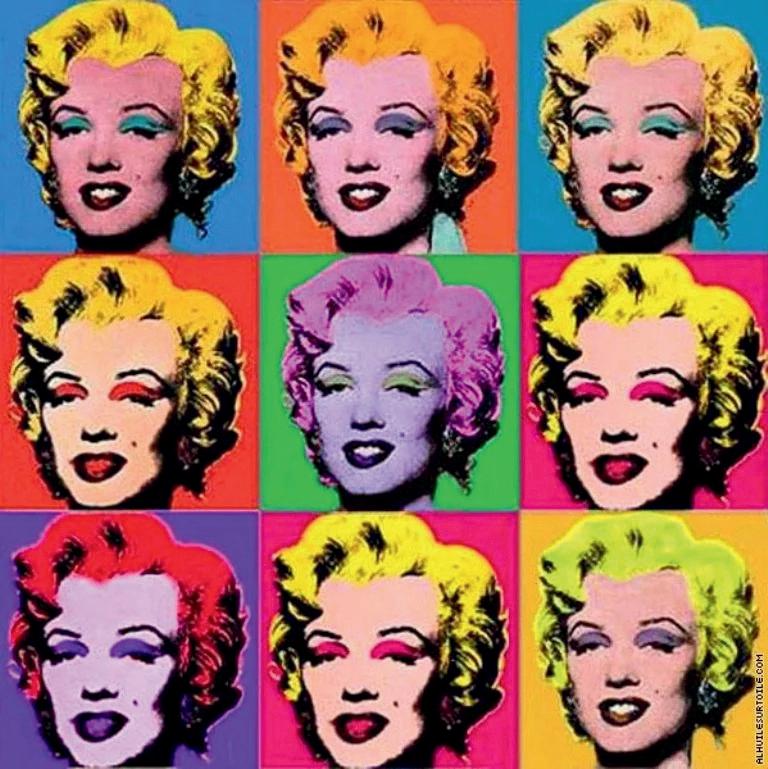
One of the pioneers of this genre, Andy Warhol, exemplified this approach in a famous project, his Death and Disaster series. Warhol utilized images of the late celebrity Marilyn Monroe, whose tragic death was linked to substance abuse, and stark photographs of numerous car crashes sourced from police archives.
Through this juxtaposition, Warhol forced viewers to confront the glamorization of fame and the desensitization to tragedy in modern media.
Another striking example is the album cover for The Beatles’ Sgt. Pepper’s Lonely Hearts Club Band, designed by British artist Peter Blake. The artwork alluded to the counterculture movement of the 1960s, incorporating a collage of famous figures, cultural icons, and historical references in different time periods, all to encapsulate The Beatles’ musical experimentation.
By the late 1960s and early 1970s, Pop Art began to decline in popularity as audiences shifted toward more minimalist approaches in art and artistic performance. Nonetheless, Pop Art’s influence has endured and continues to shape contemporary art today.
One of the most famous figures of modern day Pop Art is Takashi Murakami, hailing from Tokyo, Japan.
Murakami’s first notable project, known as “Superflat,” intertwines elements of traditional Japanese art and pop culture to embody the very essence of Pop Art.
His work grew in notoriety and soon reached the ears of numerous famous figures. Murakami would aid in the cover designs for Kanye West’s “Graduation,” NewJean’s “Supernatural,” and the production for Billie Eilish’s music video “you should see me in a crown.”
Murakami’s most recent works also include a collaboration with renowned businesses such as Louis Vuitton and the LA Dodgers, helping the flame of Pop Art burn brightly today.
“With Murakami I like that it’s very accessible to all ages. The subject matter is fun to look at, the colors are fun to look at,” praised art teacher Irman Arcibal.
Although the Pop Art era passed decades ago, its flashy and vibrant style continues to influence modern day art and makes criticism on today's events really pop out.
Scan to watch the full Pop Art interview with Irman Arcibal.
Video by Joshua Lee ’26
Faith. Family. Taybeh.
By Rose Baik ’26
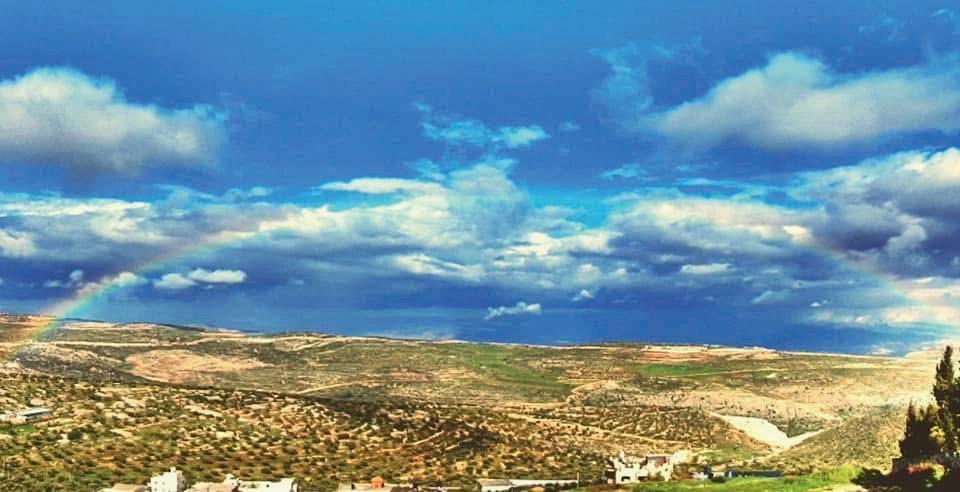
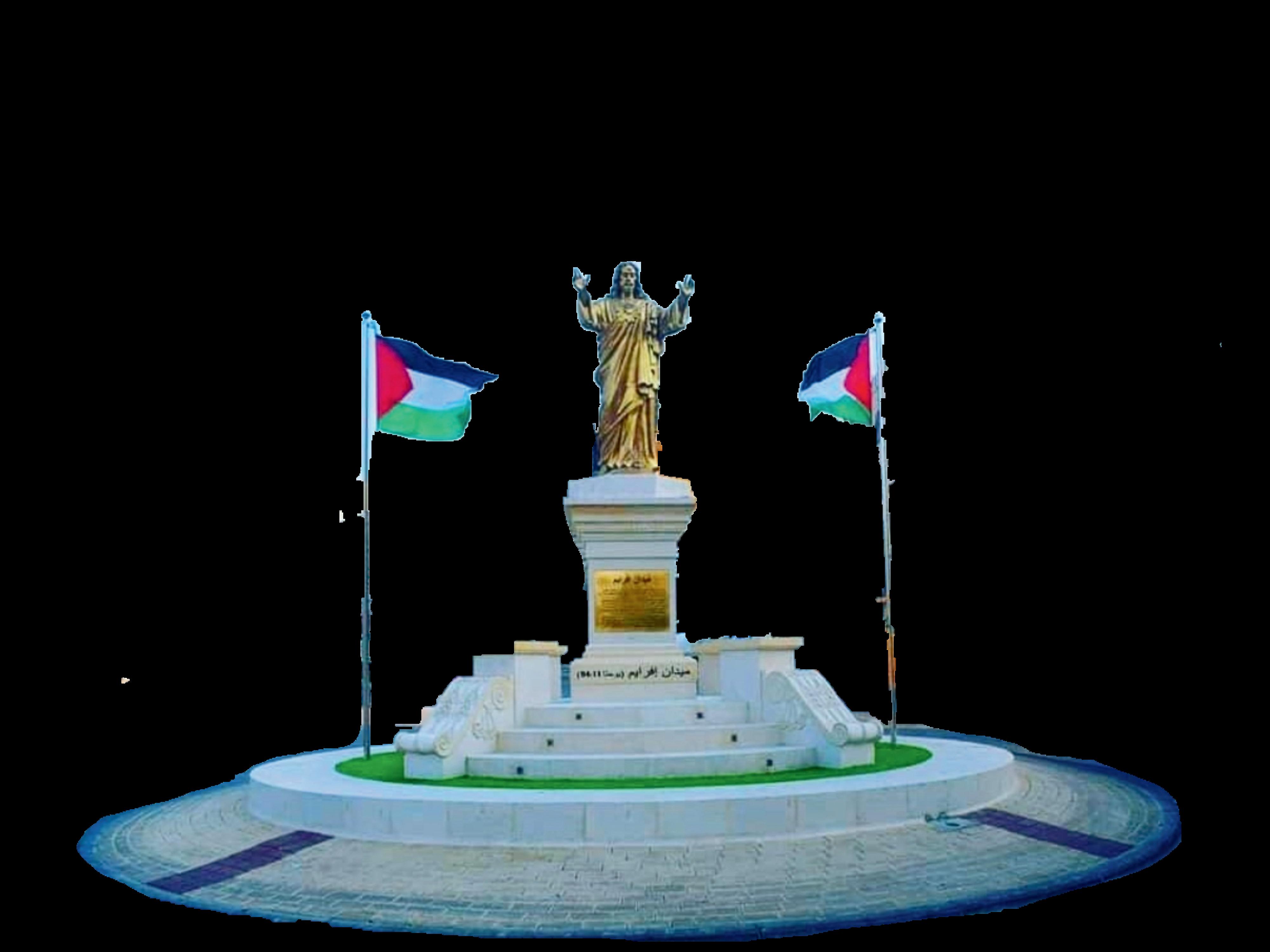
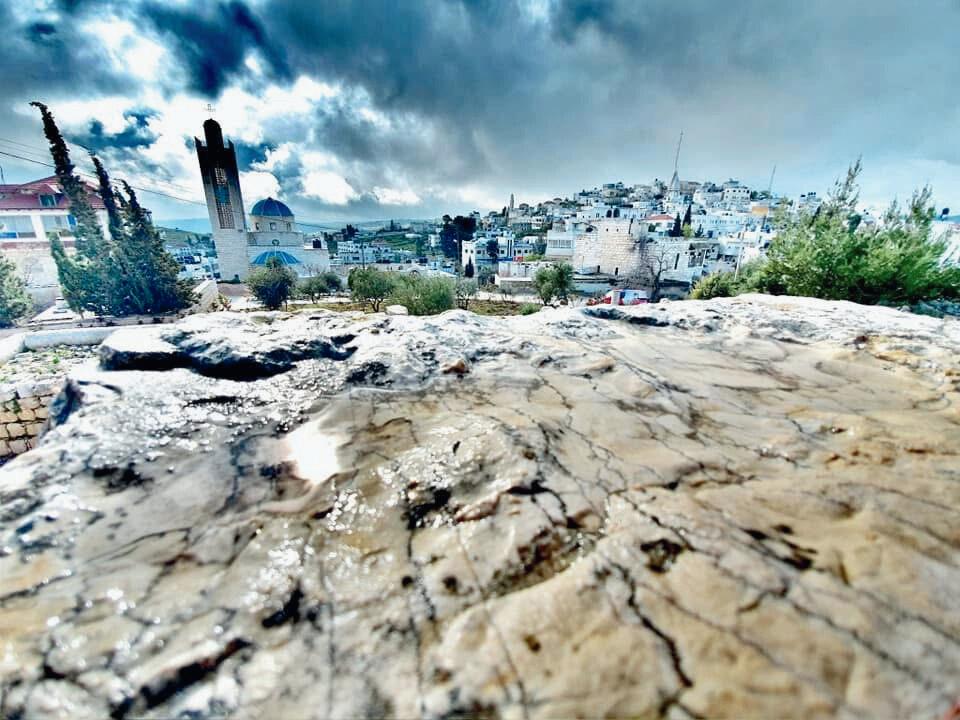
Thirty kilometers northeast of Jerusalem and 12 kilometers northeast of Ramallah stands a distinctive village known as Taybeh. Situated in the West Bank of Palestine, amidst a region long defined by conflict, this community stands firm in their faith and is recognized for being the last standing Christian village in Palestine.
Home to fewer than 2,000 residents, the village is ancient, dating back to the Canaanite period around 2500 BC. It is the place where Biblical history remains alive and every piece of architecture, traditional or modern, every crack or crevice, has a meaningful history behind it.
Originally known as Ephriam and mentioned in the Bible several times, this village is most famous for its benevolent and tight knit community. Religion instructor Aly Garcia shared her insight on Taybeh and added that it’s where “Jesus and his disciples went to hide out, essentially after the resurrection of Lazarus.”
Back in the 12th century when Kurdish leader Salah ad-Din Yusuf ibn Ayyub entered Palestine and defeated the conquest of the Crusaders, the people of Taybeh were so hospitable to him that it left a lasting impression on him.
Therefore, he renamed the village “Taybeh” as it is known today, meaning “the good.” This is a descriptive name that successfully represents the characteristics of people living here. They have been, and still are, recognized for their strong bond between each other, and their openness to outsiders.
Photos by Catherine Halteb Nestled along the highest hills, Taybeh stands firmly on their tradition and lifestyle.
When we are weak, we are strong
– Fr. Bashar Basiel, priest in Taybeh
As much as the village is defined by goodness, the conflict between Palestine and Israel has prevailed and continues to significantly impact the area today. In 1967, Israel took control of the West Bank, and claimed 65 percent of the land in Taybeh, leaving the remaining 35 percent for the people.
Known as Area C, the vast majority of the land was where Palestinians were prohibited from entering. With this new division drawn, it separated many families that were not able to be united.
The fight is ongoing. The Israeli army and illegal settlers have intensified their attacks against Palestinians, their sacred sites, and their property, including East Jerusalem, murdering at least 1,006 Palestinians and injuring over 7,000 according to Anadolu Agency, a Middle Eastern news site. As a result, living in Taybeh has been a challenge, with many villagers coming under attack.
Photos by Catherine Halteb
Despite the dispute, one factor serves as a shield of resilience to Taybeh’s persistence: their Christian faith. Father Bashar Basiel, a priest in Taybeh, is a member of Christ the Redeemer Church. Reflecting on the many social changes occurring and how unwavering faith has guided his people through tough times, he has called “change” both positive and negative.
“I think it is a challenge of the faith and challenge of human beings. When we are weak, we are strong. If we are very strong people, we are huge, because Jesus Christ is amongst us,” stated Basiel.
More and more Palestinians continue to leave Taybeh due to a lack of opportunities in the workplace, although initiatives continue to be implemented into the society. On the other hand, many people with ties to Taybeh continue to reminisce about visiting there again.
“Taybeh to me is my home,” said Mizyed Tababzeh.
Tababzeh was born in Taybeh but immigrated to the United States 11 years ago. Still, his heart led him to visit the land he grew up in. Upon entering his home land, he instantly felt tranquil and nostalgic, noting, “I immediately felt like I belonged there, I felt at ease.”
Similarly, with parents originally from Taybeh, Catherine Halteh, a resident of Daly City, was born in Jordan and eventually moved to Taybeh, where she resided for 21 years before moving to America.
A decade since she last moved, she looked back on the place she called her community and home. “It’s my roots, it’s my pride, and it’s my happiness,” shared Halteh.
For centuries and looking forward, Taybeh has been the definition of what it means to stand in love, family, and most of all, faith, which shape the backbone of their society.
Illustration by Miki Maloney
Of The Past, Voices Of
By Annabelle Hazard ’27
On May 19, 1883, Buffalo Bill's Wild West Show held its first performance in Omaha, Nebraska. The show was famous for its theatrical depictions of frontier life, and infamous for its portrayal of Native Americans. According to Nabb Research Center, “Various scenes that were performed in a way that a settler could be seen riding by, traveling with his families and the Native Americans would pass by on their horses and attack them[...],this communicated the idea that the Native Americans were violent, had no compassion.”
Soon, these portrayals made their way to the big screen, as seen in the English short film “Kidnapping by Indians” in 1899, which was widely considered the first western ever created. Notably, in these staples of early media in both American performance and cinema, Native Americans play the roles of drunkards, cruel, unintelligent, or in rare cases assistants to the white protagonists.
“These misrepresentations are not only offensive, but they reinforce ignorant ideals, fuel discrimination, and justify violence against Indian peoples,” according to Nabb Research Center.
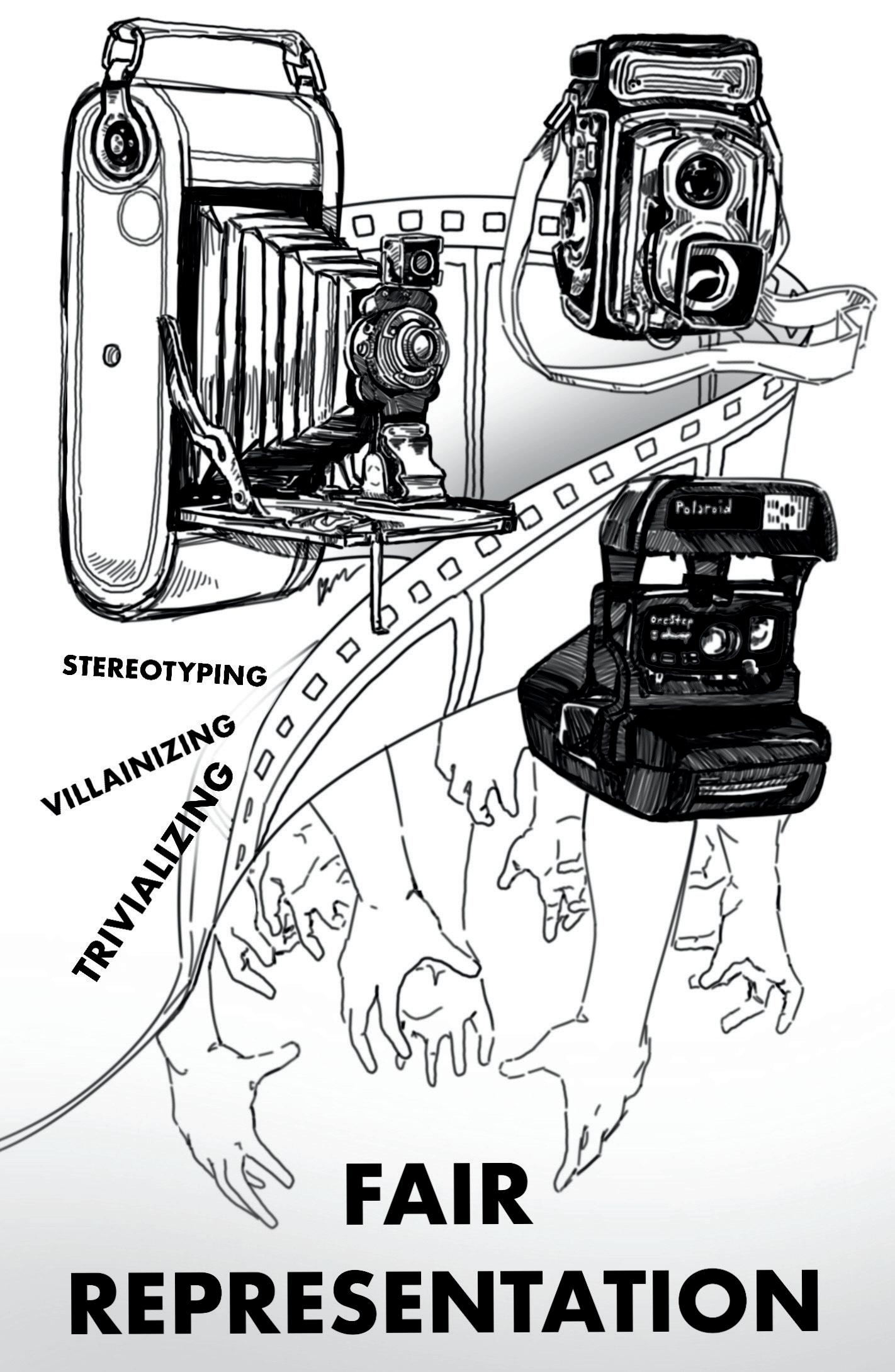
These issues continue to influence how Native culture is presented in the media today through tokenism, underrepresentation, and misappropriation. Perfection may be impossible, at least for now, but it is crucial to reflect on the media's long lasting reliance on Native people, characters, and stories.
Even films that attempted “positive” depictions of Native characters, such as seen in “Broken Arrow” (1950), every Native role was still portrayed by white actors using explicitly racist make up. As recently as Rooney Mara in “Pan” (2015) and Johnny Depp in “The Lone Ranger” (2013) have blatant uses of red face.
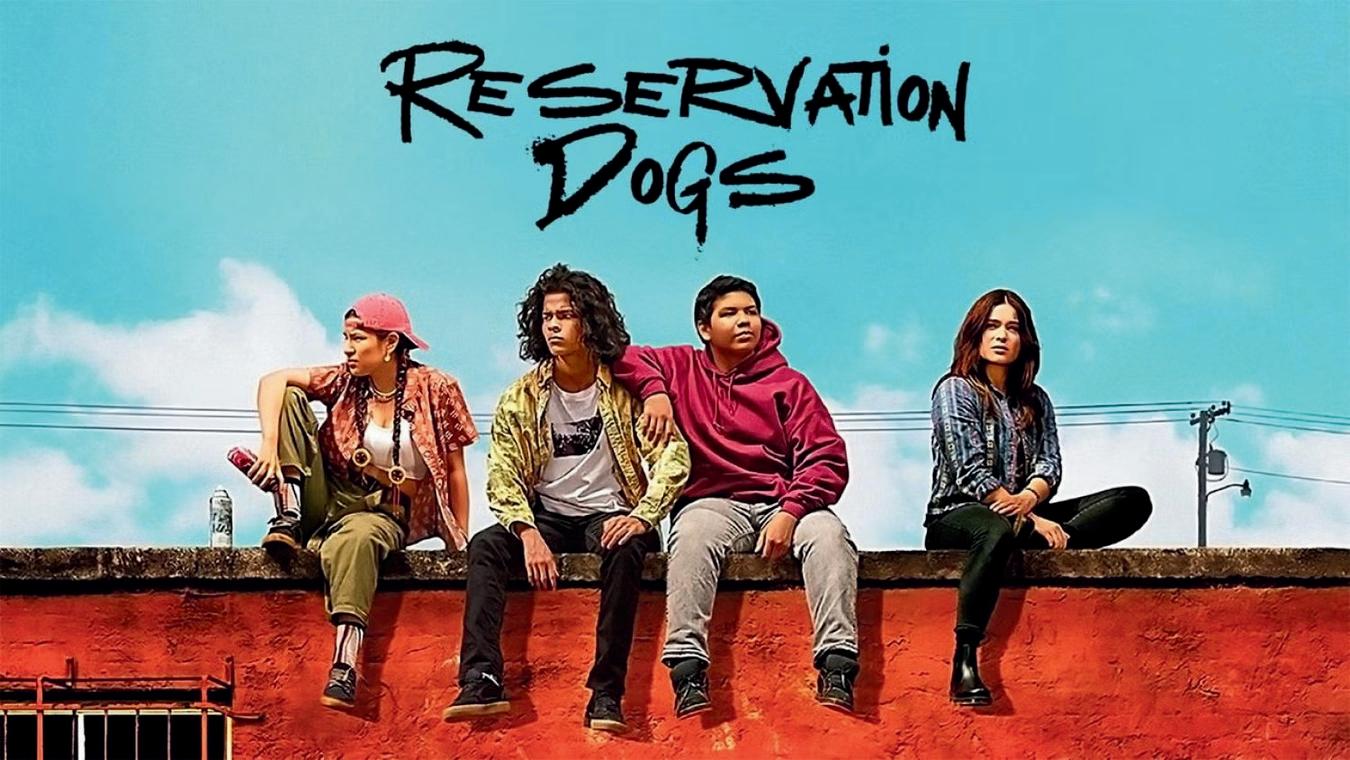
“Reservation Dogs” on FX was a series that focused on Native American stories with Indigenous actors, writers, and producers.
Photo by FX Networks
Miscasting continues in less explicit ways. In 2022, actor Kelsey Asbillie, who played a Native character in the TV series “Yellowstone,” Claimed Cherokee ancestry. However, The Eastern Band of Cherokee Indians (EBCI), issued a formal letter denying she was a descendant or a member of their tribe. The erasure of Native culture through stereotypes has caused generations of stereotypes in the media that continues to make the average American unaware of all the ways they are faced with culturally incisive propaganda on a day to day basis.
The way many interact with culture is through shared experiences, and this culture is founded on profiting off of the consumer and their opinion of a product. History has sold the average American the Native American stereotype, and now, over 100 years later many are unable to perceive the expansive cultural tapestries of Native American culture because of what it has been rendered down to.
Years of trials and tribulations have come from Native peoples working hard to keep their cultural voices alive. From the formation of the American Indian Movement in the 60s and their public broadcasts to the formation of the Institute of American Indian Arts, these gave a platform to Native film makers like Sandra Osawa (Makah), Victor Masayesva Jr. (Hopi), and Harriet Skye (Standing Rock Sioux). These people were pivotal in changing the view of Native stories.
“[Hollywood] movies have been quite effective in freezing us in time, perpetuating the idea that for us to be authentic we must look and act and dress and speak exactly the way we were . . . when the Pilgrims met us. If we deviate from that then we are not authentic. We seem to be the only people stuck in this time warp where to be Indian we have to look a certain way and play a certain role that America wants us to play,” said Osawa.
Recent years have brought extreme change to the approach of native representation. According to W magazine, “We’re witnessing an undeniable Native American awakening right now. From Washington, D.C. to Hollywood, centuries of historic erasure and exploitation are slowly being righted with a focus on honest Indigenous stories and discussions.”
“I think the more that we can educate people about different cultures, not just Native American culture, but by different cultures in this melting pot of the United States, the better we're all going to be, and the more that we understand and accept and try to learn about various cultures, the better off we're gonna be,” said Riordan’s film appreciation teacher Michael O’Brien.
“Smoke Signals” (1998) was the first major film to be written, directed, and acted by Native Americans. Its legacy continues in shows like “Reservation Dogs” (2021–2023) and “Rutherford Falls” (2021), both of which have properly casted and represented Native characters created by Native film makers. “I think that [“Killers of the Flower Moon” is] a good example in modern film, where we see that as opposed to the ["Custer's Last Stand”] or something like that, which was a completely different portrayal of Native Americans,” said O’Brien.
House Made of Dawn” (1968) by N. Scott Momaday won the Pulitzer Prize and helped Native authors to get their stories told and published, like Dee Brown, author of “Bury My Heart at Wounded Knee” (1970) and Louise Erdrich author of “Love Medicine” (1984). Other names such as Joy Harjo, first Native U.S. Poet Laureate, Sterlin Harjo and Zahn McClarnon, award winning Native film makers, and Deb Haaland, U.S. Secretary of the Interior, have all worked to “decolonize” the media surrounding Native peoples.
Nabb said, “With more indigenous peoples in control of their own visual representation, things are slowly starting to progress in Native Americans in film and media.”
The of ai Rise of ai the Rise
By Hazel Nagata-Rampata ‘26
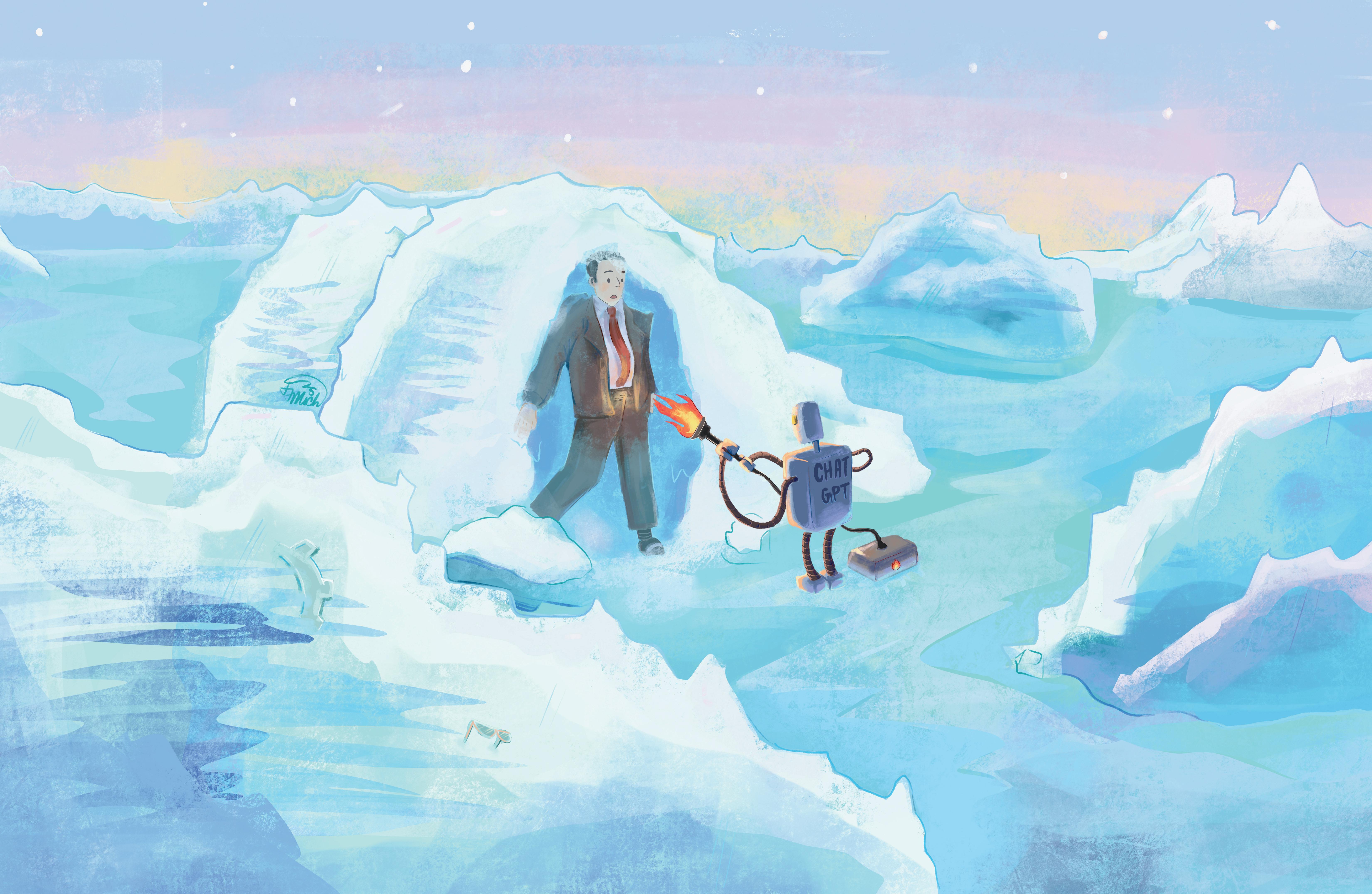
In 1956, artificial intelligence was created. Today, 69 years later, thousands of workers are being laid off from their jobs every week–if not daily–due to AI. With its rise in popularity and development, the spread of business changes and new AI software is prevalent throughout the business industry. What will our world look like in the foreseeable future with AI?
Without AI, tasks done by humans could take minutes, hours, or days–but now, they can be done by AI software in seconds.
Research before the common use of AI was much different. Math for Business teacher Mary Ann Datoc said, “[there were] definitely a lot of trips to the library. Using the library index to find archives, using the computer to find articles for research, reading newspapers, looking at trends for stock markets, a lot of word of mouth— talking to people that were more knowledgeable of the businesses.”
Data and analytics no longer have to be done manually, but can simply be plugged
into AI, creating data-sets, analysis, and processing algorithms quicker than ever before.
Companies such as Open AI (Chat GPT, Sora AI, Dall-E), Google (Gemini), Apple (Apple AI), Microsoft (Copilot), and Meta are some of the biggest brands in the AI industry, becoming a household name because of their popularity. AI has become a powerhouse in terms of its ability to quickly translate, analyze, create, design, and process information with profound speed, eliminating the need to have human employment.
When asked about the future emphasis on AI-centered businesses, US Government/ Economy teacher Brian Morgan commented, “They once used [searched on] Google, but they now type it into ChatGPT. I think the companies that are on the front end of this, who have the mindset of ‘This is new, let's use it. And, let's utilize it for profit,’ and they have the financial backing to create this kind of internal chatbot and help–I think that it’s going to continue.”
With AI, there are several positives, all resulting in quicker, efficient, thorough work.
Business program teacher Grace Ingersoll said AI has an advantage over humans with, “Speed. We don’t function the same way as with a word processor or excel, so there’s a huge advantage.”
Ingersoll added, “The human brain has experiences and education at their fingertips. With AI, when you give them certain materials, they have all of that information to go off of at an ultrafast speed with certain tasks.”
The human labor needed for hours of manual work and tedious tasks is unneeded with AI, along with having to disperse wages. With the rise of AI, workforces are now laying off employees in order to create more budget for AI, with companies such as Amazon, Salesforce, Chegg, and Lufthansa laying off thousands of employees.
With this rise in lay-offs due to AI, it has not only caught the attention of the public eye, but also the legal eye of politicians, with Senators Mark Warner, D-Va and Josh Hawley, R-Mo, proposing bipartisan legislation to reveal the number of jobs lost due to AI in their AI-Related Job Impacts Clarity Act.
“I do think there’s a difference between having your job replaced in business with AI versus people who don’t use AI,” said Morgan.
This act would require the reporting of AI-related layoffs to the Department of Labor (DOL) from major companies in order to show how AI is impacting the workforce. If this act were to be instated, it could allow for a clearer view and understanding of how AI is being used.
Ingersoll commented, “The reason they’re so okay with letting go and leaning out their workforce is because even if their service gets worse, we’re not gonna stop using them. They’re oligopolies, we rely on them as consumers.”
But what does this rise of AI do for the future of the human workforce? The touch of humanity–care, keen-eye detail? What will happen to craftsmanship–as AI may not replace it, but could possibly dim its light as it creates its own work.
English teacher Kevin Estrada ’00 said, “The human experience is valuable. You can’t replicate that. When there’s human experience, you’re not replicating or emulating anything, it's so genuine. AI can’t replace that.”
With hundreds of thousands of users using AI every day, from the work force, school, everyday life, and more, the future of AI is one that will–most likely–not diminish.
With time, AI will continue to become the main surface or platform of certain jobs. But, as businesses transform to be centered around AI, or be built off of it, the key factor to all of this is the willingness to keep humanity harmonious with it.
Spillin’ The T EA
By Erin Quan ‘26
Amid the bustling crowds of Serramonte Mall lies Matcha Ren, a small, modern, and aesthetic kiosk that brings an inviting atmosphere to the shopping center.
Matcha Ren joined Serramonte on Sept. 12 with a grandiose opening that offered drinks for 50 percent off, creating a lengthy line wrapping around each wing of the mall.
An eye-catching green color, the kiosk elevates one's desire for a perfect matcha experience. A display of matcha treats sits inside a clear, glass case, and a full menu is featured on the back wall. The menu includes matcha lattes, teas, shakes, soft serve, mochi crêpes, mochi ice cream, mochi covered fruit, and matcha Mont Blancs, a French delicacy built from layers of spongecake, whipped cream, and a chestnut puree that is swapped with spaghetti-like strands of matcha paste.
Matcha
Ren Serramonte Center
Daly City, CA
fusing together beautifully.
After waiting for around 10 minutes, the items came out looking picture perfect. I was ecstatic to dig into the Mont Blanc. However, as the first bite of mochi matcha noodles and sweet smelling soft serve met with my mouth, my tastebuds were unimpressed. The matcha noodles were on the drier side and did not blend well with the other components of the dessert. The matcha soft serve, on the other hand, offered a rich, smooth, and creamy indulgence.
I then dug my spoon all the way through the dessert, getting a bit of soft serve, mochi noodle, cream, and strawberry compote in one bite, in order to get the full experience. Altogether, the flavor profile of the dessert was satisfactory, but not worth $10 in my opinion.
Each matcha drink was crafted in the traditional Japanese style: mixing matcha powder and hot water in a bowl and whisking until it becomes a silky, jade green liquid. I
watched as the barista delicately poured the matcha over the Americano, the two liquids
Overwhelmed by the number of options, I decided to get the Strawberry Matcha Mont Blanc for $10 and the Matcha Americano for $4.75. After placing my order, I moved to the pickup counter, where the workers were highly focused, whipping up a whirlwind of matcha delights.
As someone who frequently enjoys purchasing and making matcha at home, Matcha Ren was not as marvelous as I had hoped. Although it would not be my first choice for matcha, it provides people with an adequate fix close to home. Even if matcha isn’t your preferred drink, I would still recommend giving it a try if you’re looking for a local place to fulfill your matcha cravings.
Photo by
3251 20th Ave.
Ste 250K, San Francisco, CA 94132
Matcha Cafe
Maiko
By Juvenal Orozco ‘26
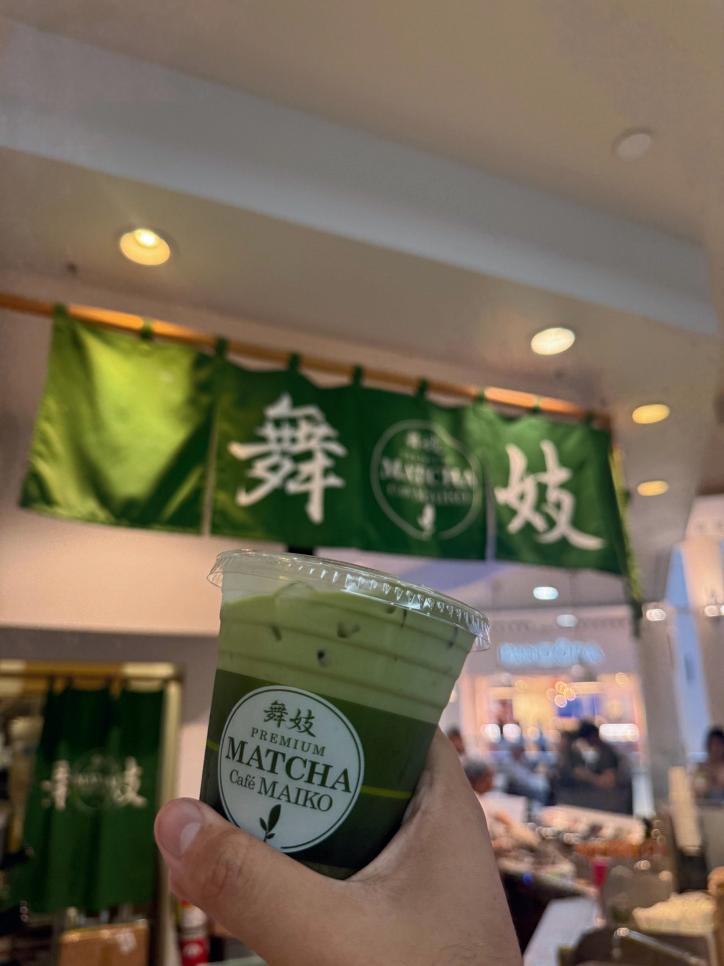
In a city like San Francisco, known for its endless boba and tea spots, it’s rare to find one that truly stands out. But tucked inside Stonestown Galleria is Matcha Cafe Maiko, a small yet authentic Japanese-style café that takes matcha to the next level.
What makes Matcha Cafe Maiko special is its commitment to authentic, high-grade matcha straight from Uji, Kyoto–one of Japan’s most famous tea regions. The matcha they use is grown in Harima Garden, giving their drinks a natural and rich flavor that feels both traditional and fresh.
long enough. The texture is smooth, and the ice level is perfect, keeping the drink chilled without watering it down.
As someone who’s new to the matcha world, I was impressed by how delightful it was, being not too strong, and not too sweet. I would for sure rate it a 9 out of 10 because it had a great leveled taste of both sweetness and earthy taste while still being refreshing.
The Strawberry Matcha combines the earthy, slightly bitter taste of matcha with the
What made the experience even better was seeing the endless amount of matcha treats you can order from rich ice creams and creamy sundaes to frappes, lattes, and specialty desserts. Each item showcases the same highquality matcha and creativity that makes the
Beyond the menu, the atmosphere adds to the charm. The staff is friendly, and their ordering screens make the process simple and fast. You can even watch your drink being prepared, giving you a glimpse into the care that goes into every cup.
Overall, the Strawberry Matcha at Matcha Cafe Maiko isn’t just a drink, it's an experience that celebrates flavor, culture, and craftsmanship. If you’re exploring new spots in San Francisco, this café deserves a place at the top of your list.