
By Daniella Lainez ’26
There are certain people at Riordan whose presence becomes ingrained into the school itself, and over time they become part of the school’s identity–whether it’s in the dugout during baseball practice, in the classroom first as a student, and later as a teacher, or at school events that bring the community together. Edgar Beteta, Class of 1985, was one of those special people.
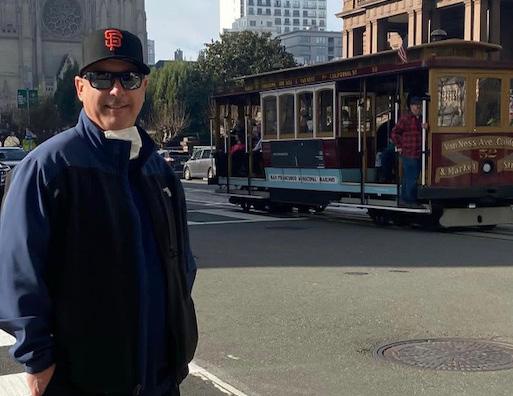
On Feb. 18, the Riordan community lost a teacher, coach, alumnus, and mentor whose influence reached far beyond his job titles. Beteta taught Spanish and History and coached baseball and football. What defined him was his consistency in showing up daily for his students, his players, and his fellow Crusaders.
As a member of the Class of 1985, Beteta once walked along the same hallways he would later guide his own students through. He lettered in both baseball and band as a Riordan student before returning years later, committed to giving back to the community that shaped him. Over time he became a renowned presence on campus, someone who students and players counted on for encouragement, leadership and enthusiastic commitment.
When asked to describe him in one word, close friend Ernesto Castillo ’87 responded without hesitation, “GENUINE!” before adding, “No one was more generous than Edgar. You knew where you stood with him at all
times and he always kept it real.”
That authenticity was felt by many, especially on the baseball field. “Coach Beteta was an outstanding coach and an energetic person,” said Collin Barry ’27. “He will be greatly missed in our community.”
For Anthony Tentes ’26, Coach Beteta’s impact extended beyond practices and games. “Coach Ed would always be in our corners through baseball on and off the field, in the classroom, and just helping us out in everyday life,” said Tentes.
Those everyday interactions and encouraging words are what many students will remember. For fellow faculty members, Beteta was equally respected as both a
colleague and friend.
For fellow faculty members, Beteta was equally respected as both a colleague and friend. Fellow Spanish teacher Armando Castillo said, “He was just an overall good guy. He was working on his masters and was almost going to complete it.”
Beyond the classroom and the field, Beteta’s life was marked with resilience. Diagnosed with Lupus as a teenager, he faced decades of medical challenges. The disease attacked his kidneys, and after years on dialysis, in 2007 he received a kidney transplant from a family member.
For 20 years, he took antirejection medication to preserve the transplant. Over time,
the medication weakened his immune system, and he developed Lymphoproliferative Disorder.
Despite multiple rounds of chemotherapy, he continued to fight. “Edgar continued to battle and went through a couple rounds of chemotherapy; however, it did not completely kill the lymphoma cells, and they spread,” said close friend Randy Bickel ’86.
“Edgar passed quietly while sleeping, surrounded by many fellow Crusader brothers and family,” he said.
Bickel described his friend as “kind, loyal, friendly, caring, ethical, loving, fun, heartfelt, comical, strong, persevering, courageous, faithful, reverent, dedicated, loving, and giving.”
Outside of school, Beteta stayed connected to his Crusader roots. Castillo recalled playing in an adult softball league with him in San Francisco and winning a championship in the early 2000s.
Beteta was a Raiders fan, a loyal Cal Bears supporter, a passionate Giants fan, and a lover of classic Volkswagens.
Above all, he loved Riordan. “Edgar loved teaching at Riordan,” Bickel said. “He loved staying connected to the Riordan community and loved coaching.”
Though he is physically gone, his impact remains present in the classrooms he taught in, the fields he coached on, and the students he mentored. The example he set of authenticity, resilience, and brotherhood reflects the very spirit of a Riordan Crusader.
By Luna Weng ’28
This year’s deserving Joseph William Chaminade recipient, Ottilie Valverde, has worked at Archbishop Riordan for 45 years. She has moderated multiple programs and taught numbers of students in mathematics, but, most importantly, she has made a lasting impact on the Riordan community.
Valverde’s involvement at Riordan for over four decades made her a suitable candidate
as this year’s Chaminade Award winner. The bestowal of the Chaminade Award is a sign of high recognition. According to President Tim Reardon, the Chaminade Award is “the highest honor our school bestows on one reserved for those who live out our Marianist mission – faith, service, and enduring commitment to the Riordan community.”
Valverde has lived out the Marianist mission through helping students connect with
their faith. She assisted the first ever Kairos, a faith-based school trip for seniors, which she described as finding “the heart and soul of ARHS.” In 1991, she began directing Campus Ministry, which she led for eight years.
Along with Valverde’s faith, her service to the school and its community has proven her worthy of receiving the award. She has taught multiple math classes, including Algebra I, Algebra II, Geometry, and Pre-Calculus.
While speaking of her specialty
in mathematics, she remarked, “I think that math is fun and I enjoy sharing it with people.”
Others have reflected on her performance as an educator. A former student of hers, Jonathan Pangilinan ’28, shared, “She’s a nice teacher and makes sure that everyone in the class understands the topic before moving on.”
Please see “Valverde celebrated with Chaminade Award” on page 4
By Keira Wallace ’26
This February marks the 100th anniversary of Black History Month. The celebration started as a week and eventually expanded into a month in 1976. This momentous month reflects upon and recognizes the long history of struggle, culture, and vibrancy of the African American community.
Also, this year, on Jan. 19, we celebrated the 40th anniversary of Martin Luther King Jr. Day. Martin Luther King was a social activist who fought and gave his life for the rights of African Americans. Every year, we celebrate the actions he took to end segregation and fight for equality in the United States.
However important as these two events are, to both remember our country’s history and pay homage to those who fought so hard for equality, they seem to be getting less and less recognition, especially during our current president’s administration.
In 2026, MLK Day was taken off the list of national parks that were traditionally free every year,

Dr. Martin Luther King Jr. is a key figure in not only Black history, but also American history, and his legacy solidifies the foundation of the United States.
due to changes in federal guidelines.
The date used to be on the list that National Parks allowed free entry. While MLK Day was removed, free entry still remains for dates like Presidents’ Day, Flag Day, and Theodore Roosevelt’s birthday.
In addition, presidents normally attend events to commemorate the holiday, while President Trump decided to spend the day in
Mission Statement for the Archbishop Riordan High School Newspaper
Florida attending a college football championship.
His proclamation was certainly lackluster.
Not only did the proclamation arrive shockingly late in the day, but the Trump administration still had time to post updates about immigration enforcement in the country.
As well as the lack of recognition for MLK Day, Black History has also been underrepresented this
The mission of The Crusader is to inform, educate and entertain the readers—students, teachers, parents, members of the community—about issues that affect the students as well as citizens of San Francisco and the nation. We hope to instill a sense of understanding, responsibility, and curiosity in our readers that results in an eagerness to learn more about their peers and the world around them.

175 Frida Kahlo Way San Francisco, CA 94112 RCrusaderNews.com RCrusaderNews@riordanhs.org
Editor-in-Chief
Daniella Lainez ’26
Managing Editor
Ishaan Gupta ’26
Opinion Editor
Keira Wallace ’26
Campus News Editors
Emmanuelle Ng ’26
Hailey Ferrer ’26
Local & State News Editor
Erin Quan ’26
National & World News Editor
Rachel Gerke ’27
Boys Sports Editor
Miles Witte ’27
Girls Sports Editor
Emilia Ross ’26
Sports Features Editor
Isaiah Sanchez ’26
Arts & Entertainment Editor
Robert Bennett ’27
Ciarra Mangibuyat ’27
Environment Editor
Vincy Huang ’27
Religion Editor
Logan Dee ’26
Health Editor
Isabelle Abad ’26
Science Editor
Joshua Lee ’26
Business & Technology Editor
Isabella Thumas ’26
Features Editor
Lorelai Keating-Curran ’27
Food Review Editor
Loghan Hwang ’27
Photo Editors
Loghan Hwang ’27
Ethan Ly ’26
Copy Editors
Aarav Agrawal ’28
Rose Baik ’26
Chloe DeCastro ’26
Hazel Nagata-Rampata ’26
Graphic Artists
Ivonna Tan ’29, Lindsey Yeh ’29
year.
Along with removing slavery related exhibits at historical sites and a proclamation that failed to mention the numerous fights against racism and inequality, the Trump administration has scaled back or removed Diversity, Equity, and Inclusion (DEI) programs in federal agencies.
This seems to reflect how unimportant the Trump administration considers African American representation in the past and present.
By trying to downplay the truth of our nation’s history, the Trump administration fails to honor the importance of African American contributions to helping create a stronger United States.
Black History Month and Martin Luther King Jr. Day are not just dates on a calendar, they are symbols of the struggles and achievements of the African American community and exemplify what we all can achieve when we work together for the common goal of peace and equality.

Reporters and Photographers
Alyssa Abaunza ’26
Avery Agbunag ’26
Briana Alvarado ’26
Katherine Baez Orellana ’26
Jonah Berg ’28
Jupiter Bruneman ’26
Kaia Burris ’27
Brianna Cabezas ’26
Sasha Feliciana-Chan ’26
Mikayla Cheng ’26
Julian Davis ’26
Brayden Dizon ’27
Dylan Dubriwny ’26
Niko Escudero Faba ’26
Liam Falcon ’28
Amaya Farmer ’28
E’moni Ferdinand ’26
Jordyn Flores ’27
Dylan Garcia ’27
Claude Garde ’26
Brandon Gresham ’27
Ophelia Doma Gyalzen ’28
Alexander Kentworthy ’27
Alessandra Leon ’26
Ashley Li ’27
Rhianna Mallory ’26
Taylor Manalo-La Verne ’26
Exchange Editor
Ashling Greene ’26
Reporters and Photographers
Miki Maloney ’26
Isaac Martin ’26
Isaiah Mateo ’26
Benjamin McClure ’26
Nathan Molinari ’27
Elliott Ng ’28
Collin Noguera ’27
Sara Noguera ’27
Martin Novoa ’26
Jackson Padilla ’27
Aliyah Pasion ’26
Sofia Peña ’26
Mila Penn ’27
Carill Reifsteck ’26
Benjamin Reyes ’26
Catherine Rold ’27
Natalia Sanchez ’26
William Saunders ’26
Aiden Sommerfield ’28
Jayden Tamboury ’26
Elizabeth Walsh ’26
Crystal Wei ’26
Luna Weng ’28
Cole White ’27
Charlottie Yip ’26
Adviser
Susan Sutton, MJE
Letters to the editors will be accepted with the same deadlines as ads. These letters may come from students, staff, parents, board members, or other members of the community. The Crusader reserves the right to edit the letter for grammatical and spelling errors, as well as length, but not content unless it includes foul language, plagiarized material, or libelous content. If the claims or assertions are incorrect, The Crusader reserves the right to refuse publication of the letter.
By Ishaan Gupta ’26
The United States Immigration and Customs Enforcement, also known as ICE, has been at the center of national news over the last few months, with its deployment in major cities such as Chicago and Minneapolis, while maintaining a general presence throughout other parts of the US.
Within these developments, raids and enforcement activity have expanded, with thousands of agents sent to Minneapolis.
The actions performed by these agents during their raids and presence have been nothing short of deplorable. Eight people have been killed so far in ICE-related dealings: Luis Gustavo Núñez Cáceres, Geraldo Lunas Campos, Víctor Manuel Díaz, Parady La, Renee Nicole Good, Luis Beltrán Yáñez–Cruz, Heber Sánchez Domínguez, and Alex Pretti.
The excessive violence, revealed by video footage from bystanders, showed the scope of brutality that occurred in these killings, and sparked nationwide protests leading to the phrase “ICE out.”
Additionally, at the Grammy Awards, artists like Bad Bunny and Billie Eilish spoke up against

the actions of ICE.
Beyond the killings, thousands have been left traumatized and injured in other ICE-related incidents due to excessive force and violence. One of these cases includes 5-year-old Liam Ramos, who was taken into custody by ICE agents in suburban Minneapolis
along with his father.
Though the details about their entry into the United States are unclear, they do have an active asylum case in the system. They both spent a week in a Texas family detention center before a federal judge issued an order for their release.
“If “all men are created equal,” and we all bleed red, then what reason is there for our federal government to enforce and defend this senseless violence beyond pushing a political agenda?
The Department of Homeland Security stated that the boy was taken into their custody for his own protection after they arrested his father.
They’re currently back home in Minneapolis, but the trauma inflicted on them, especially on a 5-year-old, is sure to stay. There is absolutely no justification for a child to be taken into custody when they should be getting access to a safe education and home.
If “all men are created equal,” and we all bleed red, then what reason is there for our federal government to enforce and defend this senseless violence beyond pushing a political agenda? Protests have brought the issue to light, but the government needs to take accountability for their own actions.
By Crystal Wei ’26
Since ChatGPT’s launch on Nov. 30, 2022, Artificial Intelligence has been changing the world.
As AI continues to rise, many professions are being impacted both positively and negatively. For some, this technological advancement simplifies daily life and increases efficiency.
For others, however, AI not only accelerates environmental concerns but threatens job security. From writing English essays to composing songs, AI has infiltrated our daily lives.
Timothy Yuen ’26 commented, “AI could be an extremely effective tool if you use it correctly.”
With AI’s power, forms of “artwork” have become more and more accessible to the general public. With a single click, people with no past art experiences could quickly craft a mature piece of literary work, photography, video, animation, or drawing.
Certain companies quickly took advantage of this technology, starting a trend of generating promotions solely with AI.
According to Adobe, AI learns how to create art through machine learning, a process where algorithms are trained on massive datasets of existing images

While the use of AI can be innovative and creative, it ultimately saps the very heart and soul out of art, leaving a void on what used to be a bright canvas.
paintings, and photographs to identify, understand, and replicate patterns, styles, and structures.
These datasets come from clueless human artists who neither gave permission nor received any compensation after companies used their art without authorization.
Now, ironically, the machine that learned from artists is taking away their jobs.
Riordan’s art teacher, Irman Arcibal, concluded, “I can see both pros and cons of AI. It is convenient for tools like this to be put in the hands of all people. However, it can negatively impact the business of art and design.”
Most people outside of the art community fail to see the dilemmas many artists seem to face, which is understandable. Historically, technological advancements have often led to
the elimination or decline of certain professions, such as the lamplighters after the invention of the lightbulb.
But should art, defined by Oxford Languages as “the expression or application of human creative skill and imagination,” be generated by a robot? Many artists say no because it negates humanity.
Student artist Sofia Peña ’26 concluded, “I personally believe AI-generated art is lazy, almost soulless.”
The whole point of art is being able to put a human soul and love into creating something.
Artist Sofia Peña ’26
She added, “As AI is basically incorporated into our everyday lives, it’s harder to push back this growing norm of utilizing AI in art, where the whole point of art is being able to put a human soul and love into creating something.”
continued from page 1
Oliver Tom ’28, a student in Valverde’s Advanced Algebra II class, stated, “I like how she gives us some time to figure out the homework before she teaches us about the next lesson. It has really helped me get a better understanding of what I would need to work on for upcoming tests.”
Along with teaching math, Valverde also co-moderates Riordan’s National Honor Society
(NHS) chapter starting around 10 years ago. Before moderating NHS, she moderated the California Scholarship Federation, another honor society.
In addition, she has also had multiple other leadership roles: 10 years serving as math department chair, four years moderating The Crusader newspaper, experience moderating the school’s math club, and past coordinating of two of the Western Association of Schools and Colleges associations.
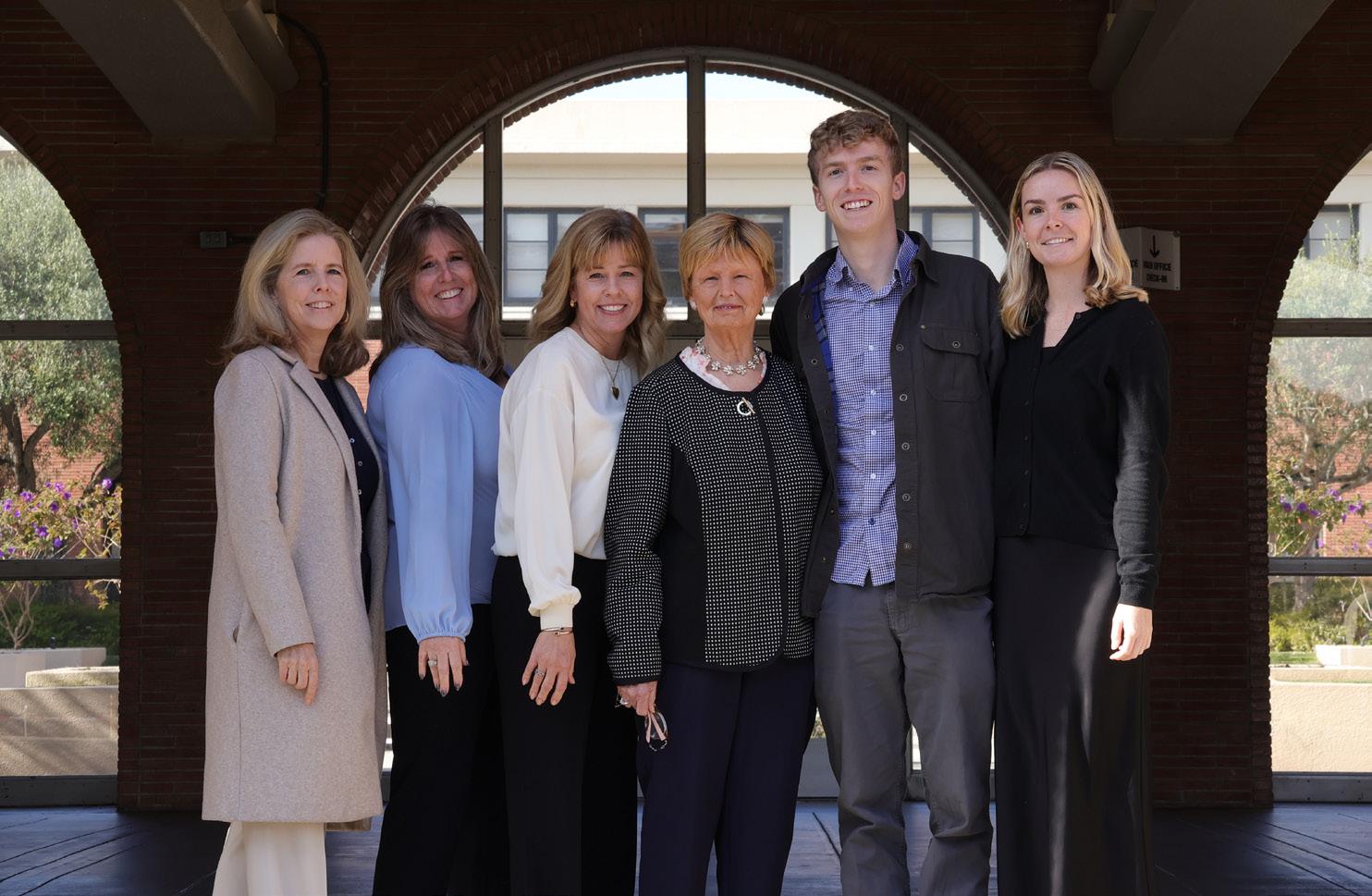
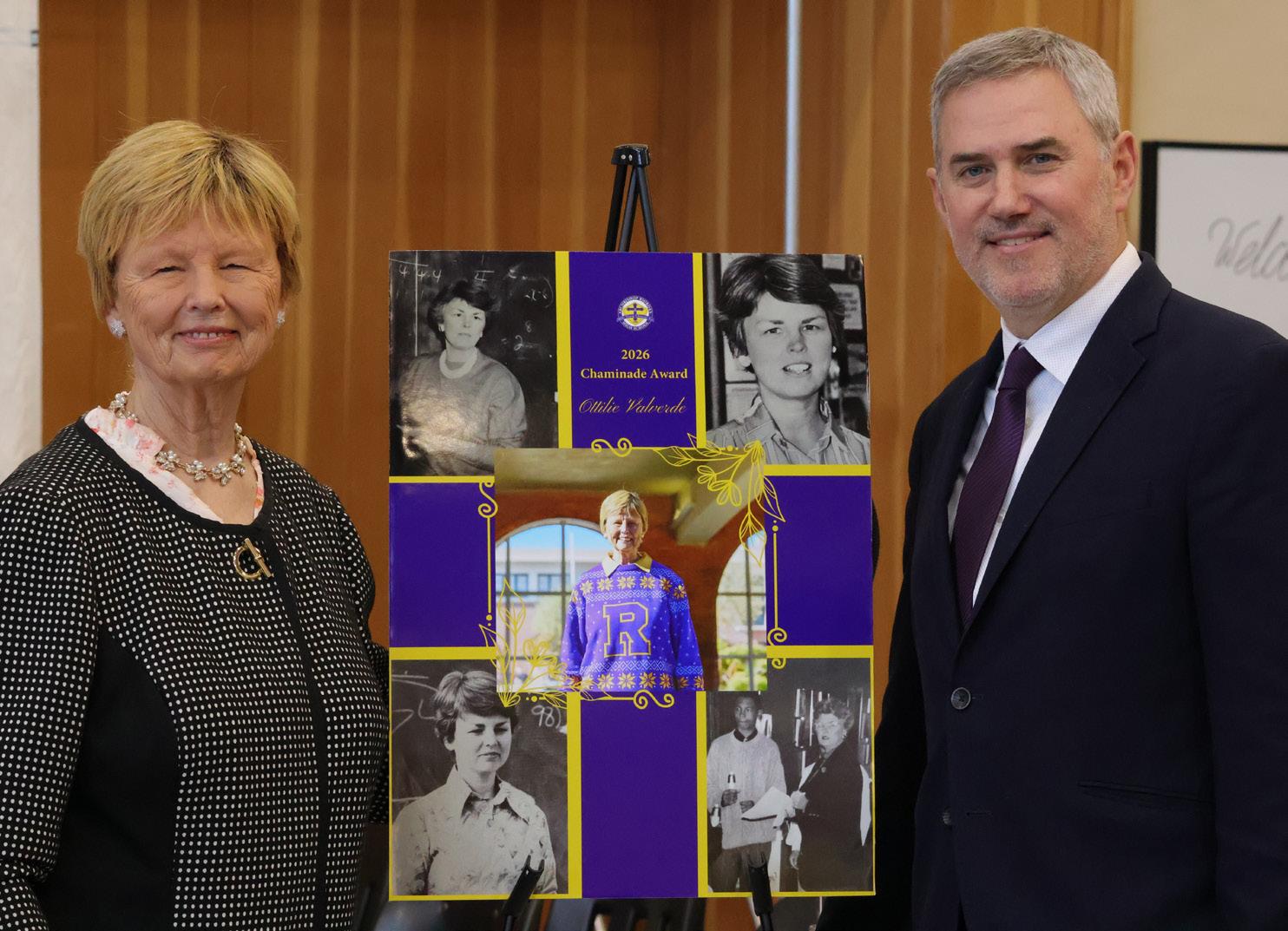
Her commitment to Riordan can be described as incredible, remarkable, and tremendous. Her reason for remaining loyal to Riordan is because, “It’s such a wonderful place with such good people … The students at Riordan are exceptional people. They are always so kind and thoughtful.”
Valverde’s hard work and exceptional Marianist qualities have not only impacted her




students or the people she has worked with, but also future generations of scholars to come.
Valverde reflected, “It’s been a journey, work, joy, spirit, but most importantly, it’s been you and your predecessors.”
After 45 years of teaching, she shared her love for the Riordan community, saying, “To the world we are just another team, to us we’re a family.”
By Ishaan Gupta ’26
The Crusader newspaper officially has its new logo for this February 2026 issue and many more to come. This change comes from Riordan’s school administration, as it is moving toward modifying the school’s branding, including club logos.
The Crusader newspaper’s old logo was created by Miles Poon ’20 and featured Riordan’s Crusader mascot looking down while holding a sword. The new logo was created by Sofia Peña ’26 and uses the current old English font with the “C” in Crusader being a bold purple with a sword slashing at its side.
Peña is the first female Riordan student to design a logo for The Crusader newspaper.
Peña said, “I’m beyond honored to leave behind a piece of my work that’ll represent the hardworking staff, editors’, and Ms. [Susan] Sutton’s dedication and passion that goes into each publication. I’m excited to see this new era for the newspaper blossom all while continuing to break records, inform our community, and to keep journalism alive and thriving.”
The Shield, Riordan’s studentrun magazine, will reveal its new
logo, designed by Ben Reyes ’26, in the March edition of The Shield.
Reyes said, “For the logo I wanted to convey something iconic for The Shield. I wanted to be sure that the shield was most prominent in the piece but also making sure to add small details here and there to really give it some life.”
Riordan’s new school logo, which is already in use, is a throwback to one of the school’s older logos which featured a Crusader knight riding on a horse.
Riordan’s marketing and social media coordinator Siobhan Linehan said, “More than anything, we want to convey pride and continuity. This rebrand is deeply rooted in Riordan’s history and reimagines it in a way that feels fresh and lasting. The Crusader remains central to who we are and that was always the intention. The hope is that every Riordan member, past, present, and future, looks at this identity and feels it truly belongs to them.”
The Crusader newspaper’s old logo was first used to celebrate the 70th anniversary of the school and the student newspaper, and has been in use for over 30 issues.
Former EIC Joseph Zulaoga ’23
said, “I will always love our old logo, but I think the new logo is definitely a unique concept that is emblematic of Riordan pride.”
He continued, “I feel like the new logo gives the newspaper a renewed sense of identity. Just as the old logo emerged from Riordan’s 70th anniversary and carried The Crusader through the Covid-19 pandemic and the return to coed, in-person classes, I firmly believe that this new logo will carry the newspaper to new heights.”
Losing the old logo was saddening for many, but the new logo will bring forth an exciting new era and new opportunities for The Crusader newspaper for years to come.
Current editor-in-chief Daniella Lainez ’26 said, “It was disappointing to see the old logo go, but I am incredibly proud of my staff for the creativity and intention they poured into this meaningful new logo. While change is never simple, this logo marks a new chapter for The Crusader Newspaper, one that reflects the strength, hard

The Crusader newspaper logo has changed over its 76-year history.
work, and dedication we continue to embody in everything we do.”
By Natalia Sanchez ’26
On Jan. 29, Riordan officials confirmed three cases of active tuberculosis (TB) and over 50 cases of latent TB in students around the school. This came after the first initial active case of TB, which was confirmed back in November of 2025.
In a letter dated Feb. 20, the San Francisco Department of Public Health stated that following school-wide testing, “three additional suspected active TB cases were treated.”
The letter continued, “Importantly, all people with confirmed and suspected active TB are on treatment and there currently no contagious cases on campus.”
Following the news on Jan. 29, Riordan temporarily shifted over to asynchronous learning. Then, starting Feb. 9, the school transitioned to a period of hybrid learning, remaining in place until Feb. 20.
On Feb. 23, the school made an official return to complete oncampus learning. Everyone going on campus must have submitted the proper documentation of their test results.
Vice Principal of Academics Nathaniel Simon ’99 stated, “Managing the testing data and getting it into the correct form was a huge task for us, and we needed that week to spend the time necessary to compile and
verify all the TB testing data coming in.”
Over the asynchronous period, Riordan offered free on-campus TB testing to ensure all students had access to the appropriate testing requirements.
Upon returning to school, students were required to show their green check marks on Minga, a feature added to a student’s virtual ID after undergoing proper testing and receiving either negative or latent results.
The current statistics from the SF Department of Health note that of the 1,261 test results from students, teacher, and staff, “219 (17 percent) had a positive test. Of those, there is a confirmed total of 204 latent TB cases, and x-ray results to rule out active TB are in process for the remaining individuals with a positive TB test.”
TB is a bacterial infection that mostly affects the lungs. Common symptoms include a bad cough, weight loss, fatigue, fever, and bloody phlegm.
On the other hand, those who carry latent TB house the bacteria in their body, but have no symptoms nor are they contagious.
According to the World Health Organization, treatment of latent TB involves taking antibiotics, which can cause unusual side effects, like the orange discoloration of sweat, spit, tears, and urine.

Graphic by Cook County Department of Public Health
Tuberculosis (TB) is a contagious, bacterial infection that affects the lungs. Those with latent TB, however, cannot spread it to others. Pictured above are common symptoms, including a long-lasting cough, chest pain, and fatigue.
Health officials remind the public that these effects are normal, and not to worry, as the discoloration effect fades over time.
On Jan. 21, Riordan hosted another informational meeting with Susannah Graves, MD, MPH, and director of the tuberculosis branch of the SFPDH.
Yet another was planned for Feb. 24.
A student who had an active case of tuberculosis said, “Honestly, I wouldn’t wish TB on anyone. It
was a terrible experience that changed me mentally and physically.”
Going forward, everyone must be tested before coming to school. If a student experiences any usual symptoms of TB, they are required to stay home until results come back negative or are latent while taking antibiotics.
Riordan and the SFDPH are working to make sure the situation is controlled and to minimize the spread to the community.
By Niko Escudero Faba ’26
California began 2026 with a sweeping new wave of legislation: hundreds of new laws, ranging from stricter rules on data privacy and AI use, bans on plastic lining for paper bags and cat declawing, to expanding worker protections and healthcare access.
With over 900 bills passed in 2026, many question whether the state has the resources and infrastructure to effectively enforce the massive wave of legislation.
Notable new laws affecting schools laws include: school districts must adopt policies limiting cell phone use by July 2026; all K-12 public schools required to have at least one allgender restroom; CSU campuses must provide automatic admission for students with 2.5 GPA at 16 of 22 campuses and school zone speed limits automatically dropping to 20 mph by 2031.
Additional laws include: grocery stores are banned from providing plastic bags; state minimum wage increases to $16.90 per hour; food delivery services are required to provide refunds for undelivered or wrong orders and offer human customer service; cat declawing
banned unless medically necessary; many new AI regulations.
While supporters say the measures push the state to be a national leader on consumer and labor rights, critics warn the regulations could drive up costs and push businesses out of state.
Ethan Lindsey, a college student studying law, said, “I don’t think many of these laws are enforceable, and many will just lead to raising taxes at the cost of a law that won’t be enforced or make a big impact.”
Among the most debated measures are new restrictions on artificial intelligence. These new laws prohibit AI chatbots from posing as licensed professionals, require disclosure when police use AI to make reports, and add protections for minors interacting with AI systems.
However, many problems arise with this: how will this be enforced and how will users be able to tell if it’s a human being or not, especially since AI chatbots are trained to mimic humans.
Jeff Isola ’98, AP Government teacher, stated, “I think it’s a valiant effort to try and put in

legislation to reduce the impact of AI, but in terms of enforcing it, I just don’t see how; the rate AI is going right now is going to outpace our ability to detect and control it.”
Aidan Lemcke ’26 summed up the uncertainty many feel by saying, “We won’t really know if any of this actually matters until
a year from now. Either these laws exist. California keeps like throwing spaghetti at the wall, but how many will stick?
At the end of the day, many of these laws may fade away into obscurity, some could change Californians’ day-to-day lives, but ultimately, the question will remain unanswered until the full effect is realized.
By Isaac Martin ’26
On Feb. 9, the United Educators of San Francisco (EUSF) went on strike against the San Francisco Unified School District (SFUSD) for better wages, health care coverage, and resources for special education.
This strike was the first one in nearly 50 years in San Francisco, with the previous conflict taking place in 1979.
The strike lasted four full days, with both parties coming to a tentative agreement on Friday morning, Feb. 13.
Long time union member and English instructor Michael Vezzali-Pascual ’88 said, “From a union standpoint, I think they handled the strike about as well as they could have. A strike or work stoppage is really the last resort for a union that sees an impasse and no way forward in negotiations.”
Although opposing viewpoints on fund allocations are what catalyzed the strike, both the EUSF and SFUSD’s end goal was better learning environments for San Francisco youth.
“We all must get together to get this done” and “get our kids back into the classroom” were phrases Dr. Maria Su, the SFUSD Superintendent, used during her hearing on the third day of the strike.
Parents, too, were concerned about students being out of the classroom, as they were not only missing out on educational

instruction, but parents had to find alternate plans for their children or stay at home, which meant possibly losing pay.
According to the Associated Press, “Every day that the schools are closed, it comes with incredible pain and cost to many, many,
children,” said Mahdi Rahimi, who has a son in public school. The agreement that was eventually reached was a $183 million deal that ensured a 6 percent raise in teachers’ salaries over a two year contract, as well as health care coverage and better support for special education.
Former EUSF member and current English Department Chair and instructor Richard Sylvester ’01 on the topic of compensation said, “The agreement was a step in the right direction, and I’m happy for public school teachers in the SFUSD, but personally, I will probably always feel like teachers who want to raise families in San Francisco are not fairly compensated.”
Although missing any amount of school is detrimental to a students’ performance, union members believed the strike was necessary so that SFUSD teachers had adequate resources and so that they could give their students a quality education.
“I think it needed to be done. I’m glad we went on strike, and It was nice of us to show our solidarity and I am happy with the outcome,” said Jessica Lepe Alfaro, Head Counselor at Rooftop School
After the strike was over, and after missing a full week of instruction, students returned to class on Feb. 18.
By Hazel Nagata-Rampata ’26
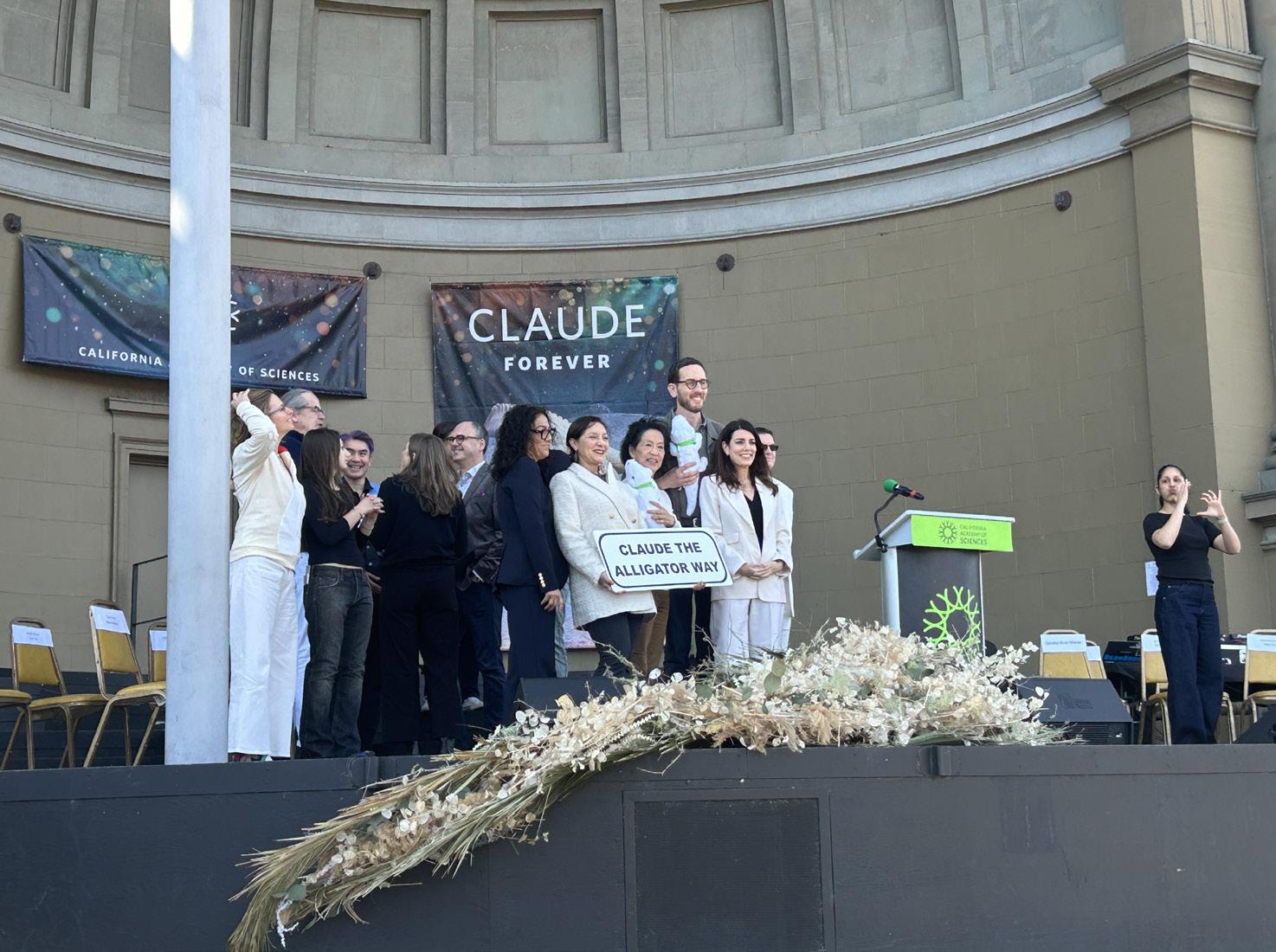
On Jan. 18, graced by a day of sun and no clouds, hundreds gathered for Claude The Alligator’s Celebration of Life.
After his 30th Hatchbash throughout the month of September 2025, Claude was found to have, “extensive liver cancer with evidence of liver failure, as well as signs of systemic infection,” according to a statement released by the California Academy of Sciences.
The ceremony was hosted by KGO-TV’s Dion Lim with speeches from six speakers–who were all fond of Claude: the executive director of the California Academy of Sciences Dr. Scott Samson, California Senator Scott Weiner, a 17-year old St. Ignatius student Sasha Miller, Assembly Member Catherine Stefani, Director of the Steinhart Aquarium Bart Shepherd, and San Francisco Recreation & Park Commissioner Sonya Clark-Herrera. This ceremony was exactly like its title, a celebration of life. The speeches were powerful, but fun–they were nostalgic, but full of joy. It was truly commemorative of the impactful life one albino alligator had on the speakers themselves,
the San Francisco community, along with people and science worldwide.
Erin Quan ’26 commented, “I remember going to the Academy of Sciences when I was little and Claude was a fan favorite animal that everyone looked for. No matter the age, everyone loved Claude. He was such a unique spirit in our community and he will be greatly missed.”
Miki Maloney ’26 added,
“Claude was just as synonymous with the Academy of Sciences as the building itself. I used to go there every year on my birthday, and he was always there doing his thing. People would pack against the windows just to get a look at him. It’s weird to imagine the place now without him.”
As the event began to conclude, the unveiling of the new name of the Music Concourse Drive in Golden Gate Park was revealed
as “Claude the Alligator Way.”
Claude was not only an albino alligator, but also an icon who personified being out of the ordinary.
Isaiah Mateo ’26 stated, “Claude has served as the Academy’s mascot for years, being loved for generations. His passing saddened SF residents and natives across all ages.”
With an estimate 100 albino alligators in existence, with 12 of those being in captivity, they are not a group that tend to survive in nature due to their inability to disguise.
With Claude’s life primarily in captivity, he was able to stand out from most albino alligators and live to 30 years old–which is the average lifespan of a regular alligator.
The survival of albino animals can be rare in the wild as they are not able to camouflage, and due to a lack of melanin in their bodies, they often have poor sight or blindness.
The reptile, the myth, the legend, the local albino celebrity, Claude the Albino Alligator will forever live on as a story of something extraordinary in an ordinary world.
By Claude Garde ’26
Ocean Avenue is known for shops, restaurants and is a place to hang out. It is also a key transit path for the K Line to and from Embarcadero and Balboa Park.
The K usually has many delays due to traffic on the street, causing the K to slow down.
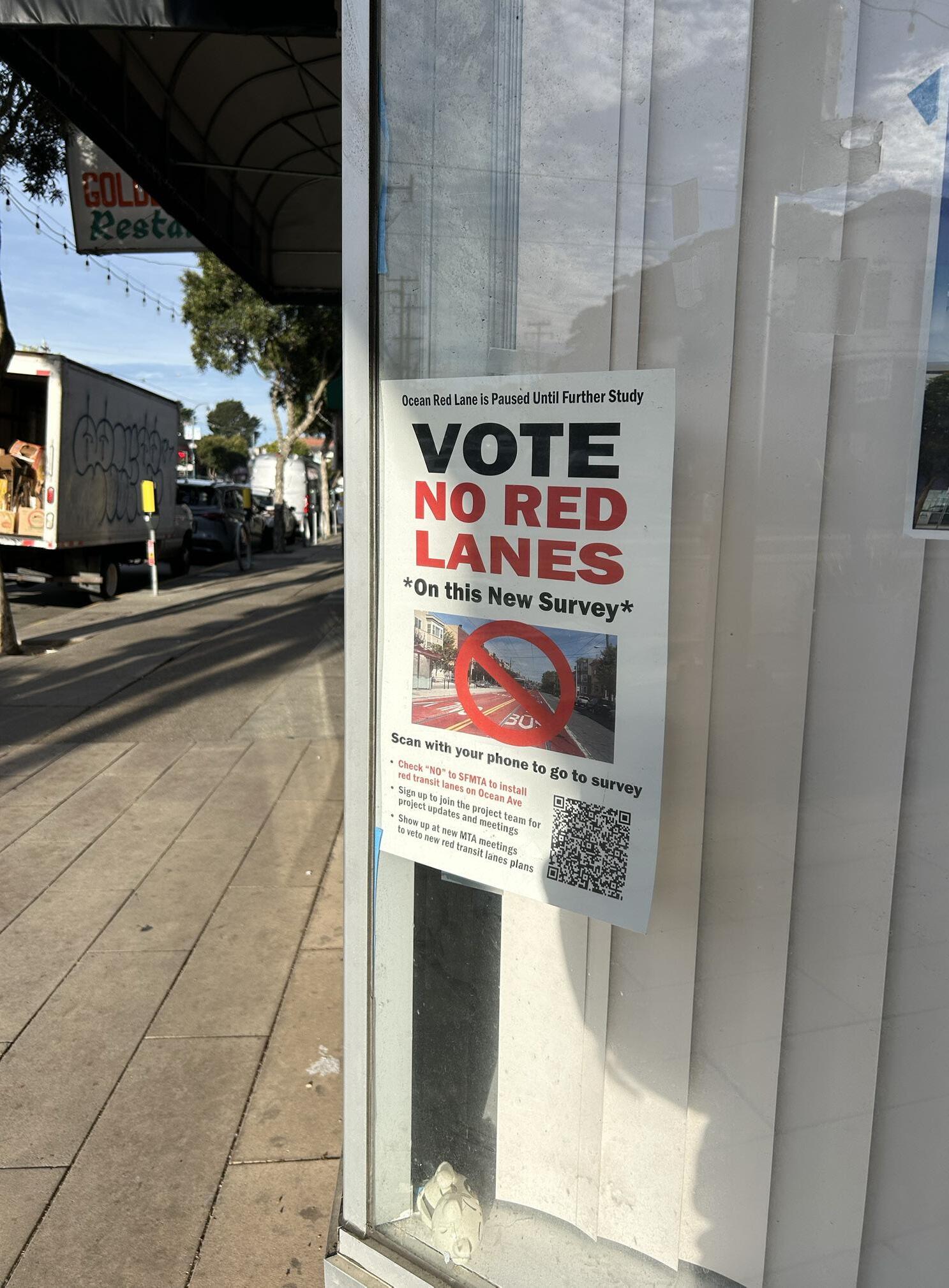
The San Francisco Municipal Transportation Agency (SFMTA) decided to add Red Lanes, specialized red-painted traffic lanes reserved for trams, buses and taxis for efficiency and reliability purposes.
The SFMTA also plans to add even more red lanes across the city, like those that were made for the 49 bus on Van Ness Avenue. However, many people do not support the idea. They believe that this will cause congestion on Ocean Avenue, disrupting traffic and their businesses.
Businesses started a petition to stop these Red Lanes from being added. The petition got enough signatures to stop the lanes from being painted–for now.
Jenny Gin, the owner of Copy Edge Printing on Ocean Avenue, said, “The SFMTA thinks that the red lanes will provide a safer atmosphere; however, it will cause a lot of traffic congestion within Ocean Avenue and the streets surrounding Ocean.”
Students who travel and commute on the K have been affected by delays because many rely on the K as their preferred
“
The SFMTA thinks that the red lanes will provide a safer atmosphere, however, it will cause a lot of traffic congestion within Ocean Avenue and the streets surrounding Ocean.
-Jenny Gin, Copy Edge owner
transportation.
“I believe the red lanes for the K should be enforced so trams can run faster. It can also help people clearly see the bus and tram stops,” Sean Dowd ’27 said.
Transit advocates argue that prioritizing public transportation benefits the community and encourages people to use it rather than driving cars. They believe that this will be more efficient for everyone.
For now, the future of red lanes is uncertain. There have been no recent updates on whether they will be installed, but several “No Left Turn” signs were added from Brighton to Miramar avenues, and Jules and Lakewood avenues, alternating north and south.
What is clear is that Ocean Avenue is important to San Francisco businesses and travelers alike. The decision about red lanes will determine how students move throughout the Ingleside neighborhood.
by
By Hazel Nagata-Rampata ’26
A wise man once said, “If you fall behind, run faster. Never give up, never surrender, and rise up against the odds.”
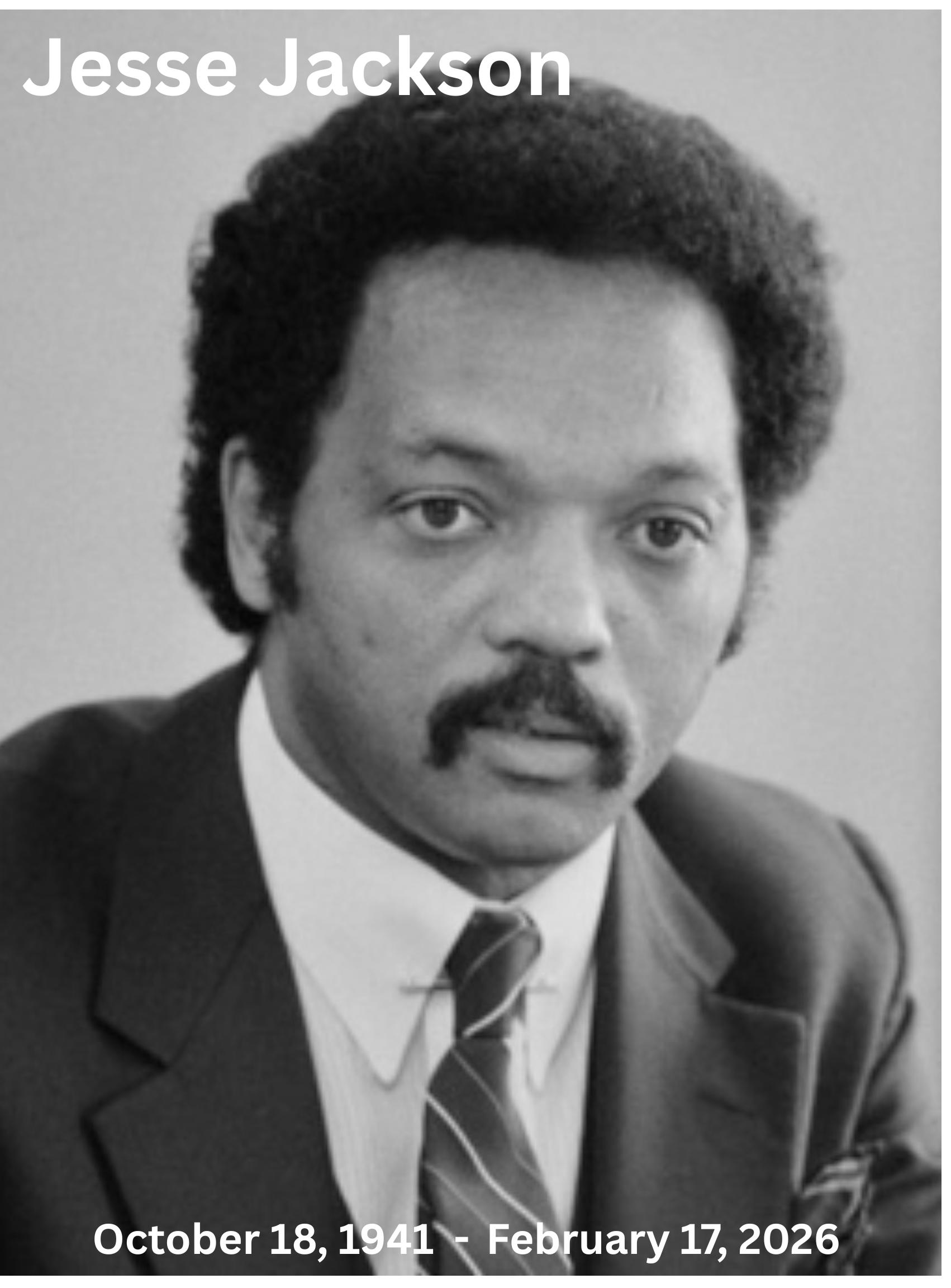
On Feb. 17, the wise man by the name of Jesse Louis Jackson died at the age of 84 due to progressive supranuclear palsy, leaving behind a legacy of civil rights activism, an echo throughout politics, and an imprint on history.
Jackson was a man who battled beside Martin Luther King Jr. for civil rights, a front runner for the 1984 Democratic nomination through his activism, the founder of the Rainbow PUSH Coalition (People United to Save Humanity), and a Presidential Medal of Freedom recipient.
Born on Oct. 8, 1941 in Greenville, South Carolina to Helen Burns, who was 18 at the time of his birth, Jackson grew up in a period where racial segregation was still enforced. In his teenage years, he attended a public school for only Black students–Sterling High School. At Sterling, Jackson was an honor student, a football standout, class president, and received an athletic scholarship 1959 to the University of Illinois.
Politician and
After one year, Jackson transferred from South Carolina to North Carolina A&T College. Graduating in 1964, Jackson received a Rockefeller grant for the Chicago Theological Seminary. Throughout Jackson’s life, he pursued a career in being an activist for civil rights, and eventually in 1984 and 1988, Jackson ran for president.
Though he was not elected, his campaign and work pushed President Barack Obama to run for president in the 2008 and 2012 elections.
Released on X, President Obama and Michelle Obama stated that Jackson “-laid the foundation for my own campaign to the highest office of the land.”
AP United States Government teacher Jeff Isola ’98, commented that, “He [Jesse Jackson] was one of the longest surviving members of the civil rights movement.”
Isola added, “He was there with MLK when he got assassinated, and was one of the younger ones in the movement, so he got to carry that along.”
Jackson was awarded the Presidential Medal of Freedom by President Bill Clinton in 2000, and forever will be remembered for his advocacy and work.
By Lindsey Yeh ’29
The deaths of Renee Good and Alex Pretti, as well as the various attacks on both U.S. and non-U.S. citizens, have led to countless anti-ICE protests this year, especially in Minneapolis.
These protests, which have mostly remained peaceful, were dealt with aggressive tactics from ICE and U.S. Customs and Border Protection.
On Jan. 7, U.S. citizen and mother of three children Renee Good was shot and killed in her car by an ICE agent in Minneapolis, Minnesota.
The U.S. government, including former ICE Agent Gregory Bovino and Vice President JD Vance, claimed that Good attempted to ram the ICE agent with her car, but some contend footage released after those claims were made showed that she was trying to drive away from the confrontation.
On Jan. 21, footage captured Gregory Bovino, as well as other ICE agents, throwing canisters of tear gas at a group of protesters. Bovino had stated in multiple interviews that ICE’s operations and punishments were completely justified if it meant that “illegal aliens,” were to be deported. This sparked public outrage, and with it came many anti-ICE sentiments.
Many took to the streets to

protest, or spoke out online.
“People are outraged because the US government currently deports many people without criminal records and some who are striving to gain citizenship through legal channels,” said history teacher Cory Nelson. “They want to be a voice for justice and equality.”
On Jan. 24, Alex Pretti, an ICU nurse, was shot and killed by ICE
agents. ICE claimed that Pretti had been carrying a handgun, and that he was planning to harm the ICE agents.
Footage later released showed that Pretti had been attempting to assist someone shoved to the ground by federal agents. He was pinned to the ground, and during his struggle he was shot over 10 times. His death only added to
For the continuation of this story, please see page 9.
By Rachel Gerke ’27
On Jan. 3, Venezuelan President Nicolas Maduro and his wife, Cilia Flores, were captured by U.S. forces from Caracas, Venezuela and taken into custody at the Metropolitan Detention Center in Brooklyn, New York. The capture, Operation Absolute Resolve, was a surprise operation, throwing the nation of Venezuela into upheaval.
Maduro rose to power following the death of Hugo Chavez in March of 2013, and shortly after Venezuela held a special election where Maduro narrowly won against Henrique Capriles.
Many have noted the authoritarian nature of Maduro’s government, as over time political imprisonments, resource exploitation, and problematic elections have taken place under his rule.
In addition, according to the Trump administration, Maduro had been heavily involved in drug trafficking, with a primary target being the United States.
After enacting this operation, President Donald Trump stated in a press conference, “The illegitimate dictator Maduro was the kingpin of a vast criminal network responsible for trafficking colossal amounts of deadly and illicit drugs into the United States.”
Perspectives have differed around this event, as many echo the sentiments of the Venezuelan people, who have felt liberated due to the capture of a leader whom they claim was detrimental to the public, while others hesitate as to the intentions of the Trump administration and the method in which they carried it out.
“I don’t think that any leader from any country should break international law and take people’s leaders so abruptly… These are real people in extremely vulnerable life situations and it’s not right to give false hope… there

were a plethora of Venezuelan people that were happy for that one moment, that have this little hope in their hearts that things will change and they’ll be able to put food on the table for their families and return to democracy,” said Spanish teacher Gabriella Panelli.
Hesitation around this event mainly centers around the fact that the Trump administration bypassed several international laws by capturing Maduro and Flores, Prohibition on the Use of Force and Sovereignty and NonIntervention being key among them. Many concerns have arisen because of this, as well as possible repercussions on the democratic system in foreign relations.
Doubt has also emerged as to the transparency of the administration’s intentions, as people have pointed out the nature of the intervention, and
advantages the United States stands to gain.
Social Science teacher Bob Harrington commented, “The United States tends to ignore or overlook unstable governments unless those governments affect American interests.” He added, “When the genocide in Rwanda took place, the Clinton Administration did not get involved, for that region of the world was not a high priority for American interests… when the Soviets put nuclear weapons on the island of Cuba, that resulted in the Cuban Missile Crisis—a threat to American interests.”
With Trump pursuing heavy increases in oil drilling in Venezuela and investments of American business, similar themes echo in people’s minds, with some debating whether this operation was for the welfare of the Venezuelan and American people,
or for monetary gain. Some also note the lack of representation of Latino countries and perspectives in American politics.
“Even though there are Hispanic congresspeople, there’s more Latinos in the U.S. than are represented in Congress, so our issues such as clear paths to citizenship aren’t really pushed,” commented Anthony Caires ’27.
As of now, Venezuela continues to navigate a period of uncertainty, while Delcy Rodriguez, Maduro’s vice president, has assumed the role of Acting President. Many fear the cycle of dictatorship to continue, while others hold hope that change will follow suit.
Maduro and his wife face charges of narco-terrorism, cocaine importation, and possession of machine guns and destructive devices, which they have pleaded not guilty to. They await trial as of February 2026 in Brooklyn.
Continued from page 8
the fury of Minneapolis residents, causing many more protests in both his and Good’s names.
Many people have spoken out against the way the Trump administration and ICE have been handling protests and deportations.
Mele Victorio ’29 commented, “Well, if people didn’t speak out against societal injustice then we’d probably be a monarchy by now. People would take advantage of the fact that no one spoke out against injustices that were obviously there.”
Many have also noted the significance of protesting within

America’s history.
Nelson stated, “Protesting is a fundamental right in our country. It has created positive change throughout our history from the American Revolution, labor rights, Civil Rights, women’s rights, and more… As a history teacher, I believe that it is very important to know and participate in your community and society.”
On Jan. 30, San Fransisco students took this message to heart, as thousands gathered at Dolores Park to participate in the nationwide ICE-Out shutdown, echoing former movements in American history.
By Dylan Dubriwny
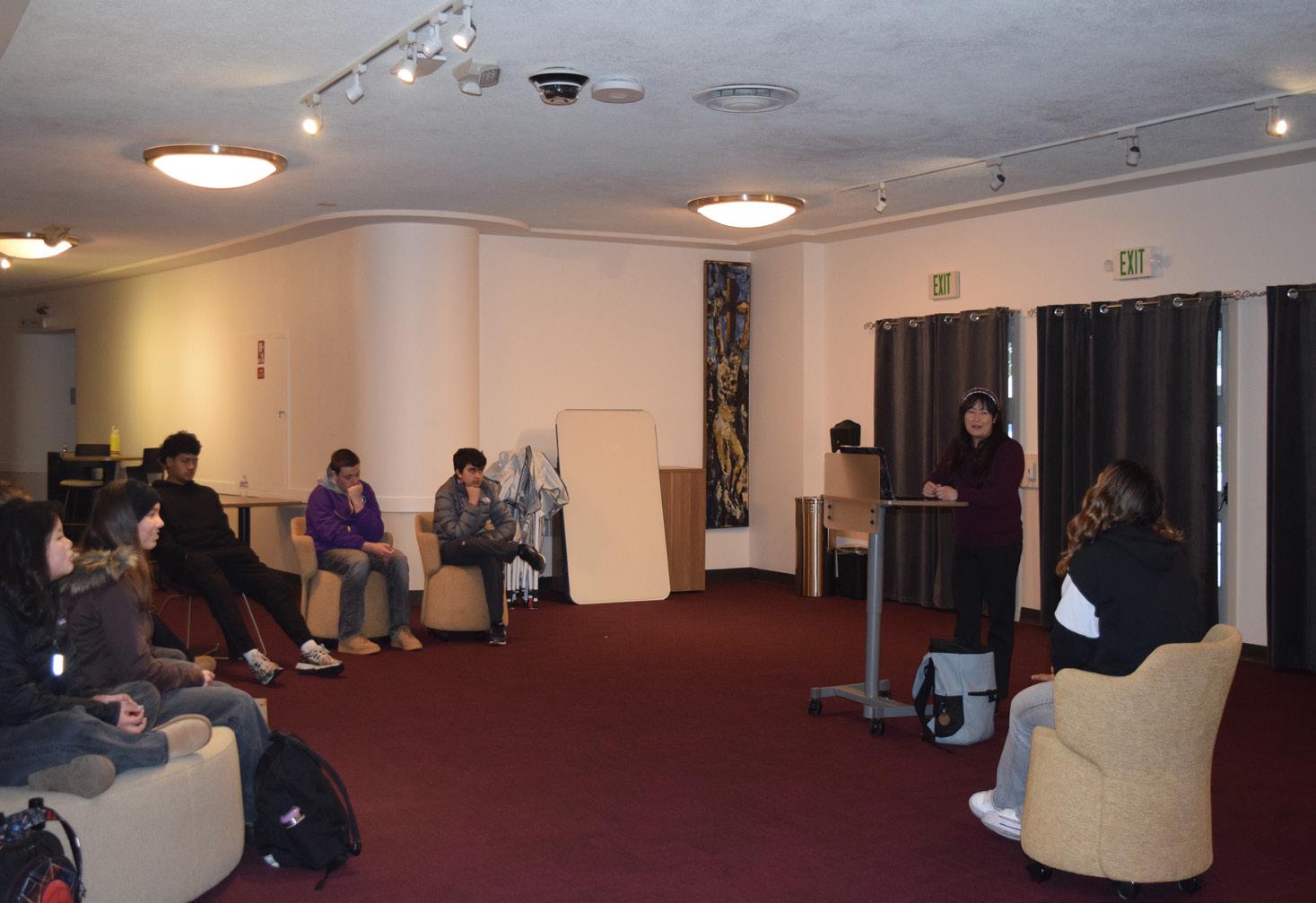
Culture Making, Faith Film and Media, and Sacraments & the Liturgy (OCIA - Order of Christian Invitation for Adults) taught by Jon Yeager, Aly Garcia, and Danielle Jow respectively, expands the options for students looking for new and innovative theology courses in the Riordan hallways.
OCIA is a course designed to help students receive formation to receive the three Sacraments of Initiation, and it is open to all grade levels as Christ has perfect timing to calling people home to His Church.
In the past, seniors had two options for Theology courses: World Religions of East and West and Life and Times of Jesus Christ.
“Growing up in a Catholic setting all my life and then learning about different religions and how they can still connect to Catholicism was very interesting,” commented Jane Kelly ’26, a former World Religions student.
In that sense, new religion class Culture Making offers a whole new perspective on religion.
“The world is full of incredibly
By James McDonell
Deacons serve a very important role in the Church; however, many people misunderstand their role, according to several Mass-going Catholics.
Many people mistake deacons for priests, and although the two roles are similar in some ways, there are also important differences.
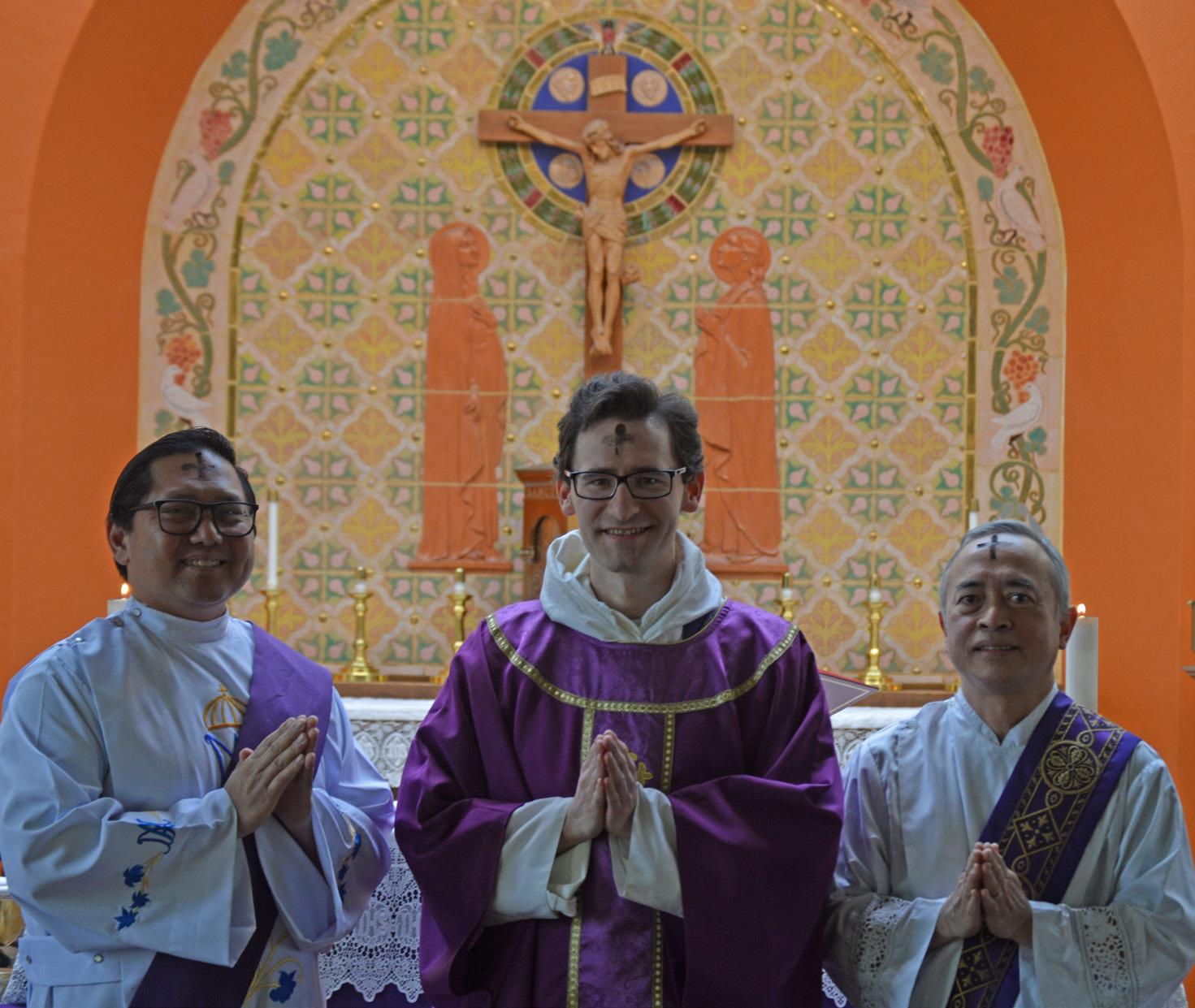
Archbishop Riordan High School has two deacons: Deacon Iwan Soegiharto and Deacon Christopher Mariano. Deacon Soegiharto explained how priests are not permitted to get married while deacons can be married, and also that priests can perform certain sacraments that the deacon cannot.
“The priests do celibacy, which means they don’t get married but the deacons can have a family. The priest can consecrate the hosts but the deacon cannot, and the priest can do the Sacrament of Penance and the deacon cannot,” Soegiharto said.
In addition, Soegiharto mentioned how he decided to become a deacon, which was through God’s call.
beautiful things, and I simply love thinking about these things.
From local culture, like Golden Gate Park, to global culture, like a bowl of ramen, humans across the globe have created such amazing things,” explained Yeager on his decisions for creating his class.
Through his class, Yeager hopes to teach students about the major spheres of culture (ethnicity, art, architecture,
music, movies/media, etc.) “and, most importantly, tap into their culture-making potential by creating things that connect to goodness, beauty, and truth.”
Similarly, another new religion class called Faith, Film, and Media has students looking at modern and secular media through a Catholic lens. “We look at different types of media including visual arts, music,
The establishment of deacons goes all the way back to biblical times.
In the Acts of the Apostles 6:16, the apostles appointed seven men to support the needs of the Greek-speaking widows of the Church in Jerusalem.
“We can ascertain from texts in the New Testament that deacons in the early Church preached, baptized, and served the early Church community,” Warner said.
dance, radio, and social media. Most of the class will focus on film,” said Aly Garcia, Faith Film and Media teacher.
Garcia hopes that students will be able to find God in all things, even something as ordinary as a secular film. Garcia continued, “It’s not just about watching movies, but I do think that it offers students the opportunity to encounter the Catholic faith in new and creative ways that perhaps they have not before.”
With these new Theology courses, the department can give Riordan’s ever-growing class sizes new perspectives on their own religions, with many rising seniors mentioning their excitement to enroll in such classes.
Finally, Yeager helped put these new classes, especially Culture Making, all into perspective, saying, “The world is full of God’s goodness, beauty, and truth. Train your eyes to see it, soak it up, and live a long life of creating things with it. The Church teaches us that God’s redemptive work through Christ is renewing the goodness and beauty of the world, and we get to participate in that. What a life!”
We can ascertain from texts in the New Testament that deacons in the early Church preached, baptized, and served the early Church community.
- Deacon Don Warner
The selection of these men is often interpreted as the origin of the diaconate, which is the office or order of deacons.
Deacon Don Warner, who is a director of the diaconate in the Diocese of Fort Worth, Texas, described how deacons originally had a liturgical function.
Deacons in the early church helped bishops and priests with sacred liturgy and gave out alms to the poor.
However, as time went on, deacons later became more important in the Catholic church. For example, if a diocesan bishop died, it was very often a deacon who would replace him after receiving ordination.
Riordan Deacon Mariano
said that deacons are focused on access to the chalice during Mass, and on representing the Catholic community in general.
“We are the clergy of the cup,” he said. “So whenever you see a deacon at a Mass, especially at the consecration of the Eucharist, you’ll always see the deacon with the chalice. When there’s bread and wine at Mass, you see a deacon give the chalice to the community.”
He continued, “The biggest thing we represent is the community. A lot of deacons come from the community they serve. We are the voice of the community.”
“We are the clergy of the cup. So whenever you see a deacon at a Mass, especially at the consecration of the Eucharist, you’ll always see the deacon with the chalice. When there’s bread and wine at Mass, you see a deacon give the chalice to the community.
- Deacon Chris Mariano
When asked about the value of priests and deacons in the Church, experienced altar server Jerard Loyola ’26 said, “Priests and deacons are essential to the Catholic Church. Together, they are the modern face of Jesus Christ, preaching God’s teachings now that Christ and the original Twelve Apostles are no longer with us.”
By Will Saunders ’26
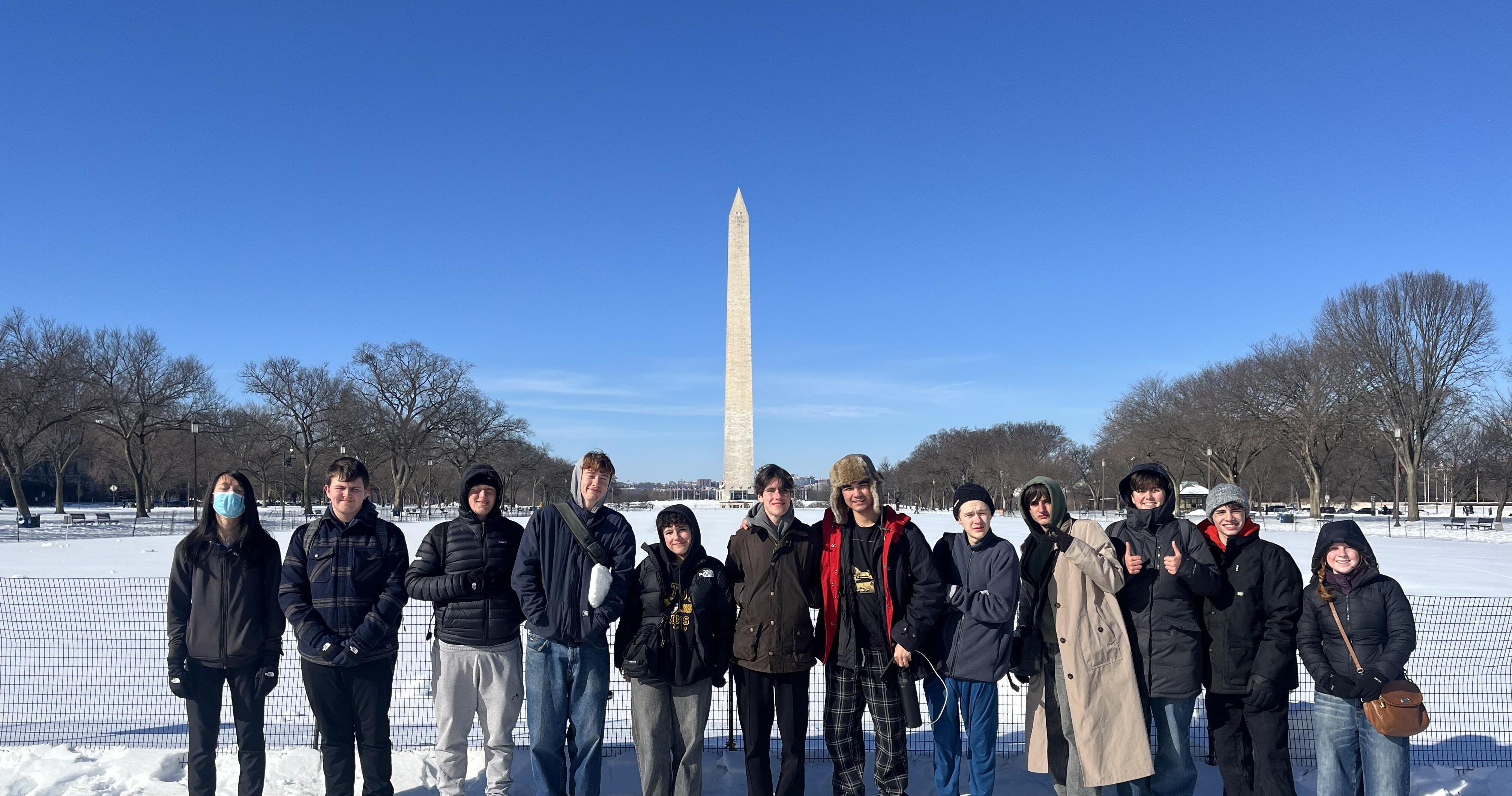
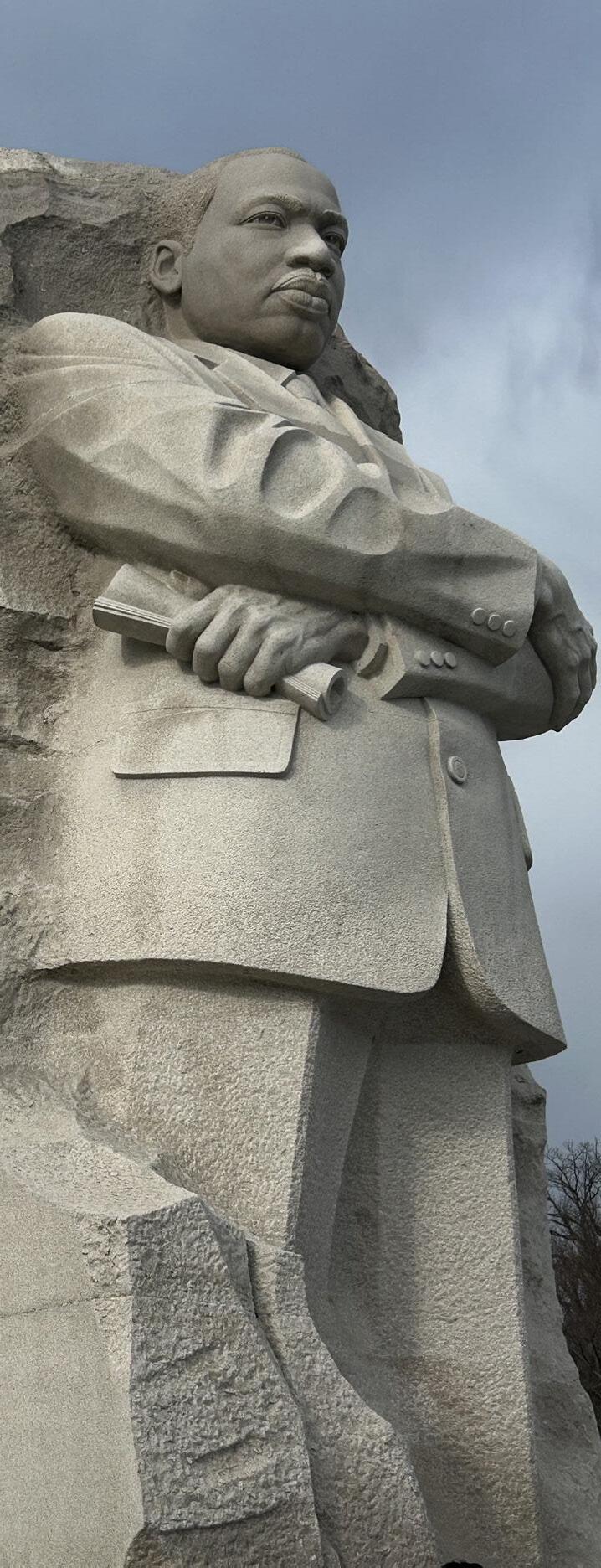
Once again a few Riordan Crusaders decided to visit Washington, D.C.; getting close up to government leaders to see how they operate in the nation’s capital.
“It’s one thing to see all of these places in textbooks or the news, but to actually go there and see all of these places just puts everything in a different light,” said Miki Maloney ’26
“I feel so much more connected to politics than I was before and I feel much more incentivized to be an active participant in my democracy,” he added.
Other students felt the same way, as Gisella Bellarosa ’27 said, “Close Up was a really eye opening experience, which helped teach us about how to respond to
political issues in our communities and build connections with people that have different backgrounds and opinions than us.”
On Close Up, students are given the opportunity not only to spend time with those from Riordan, but also others from high schools across the country.
Robert Bennett ’27 added, “Being there in person made everything feel real in a way it never could in a classroom or from hearing it on the news. I loved meeting people from all across the country. I made good friends with people from Miami, Oklahoma, and Puerto Rico as well as Michigan and Louisiana, and was super interested in hearing how different issues affect their communities and how different their lives are. It made me realize how big and diverse our country

really is, and how important it is to listen to perspectives outside of our own.”
Graydon Gambino ’ 26 remarked, “It brought me closer to people I already know while allowing me to
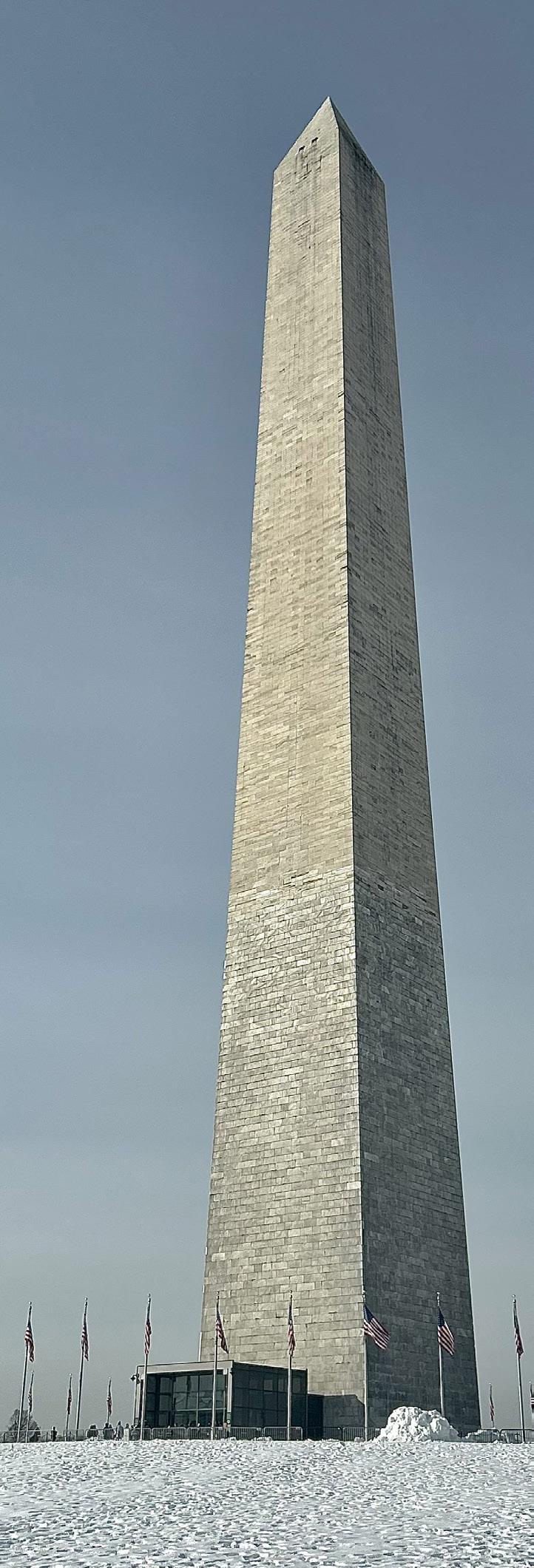
form new relationships with those I don’t, all while experiencing the full extent of our nation’s capital.” He added, “I would recommend the Close Up program to anyone who is thinking of going. You won’t regret it.”
By Ashling Greene ’26
DJs create thundering interactions sometimes both visually as well as auditorily with their audiences.
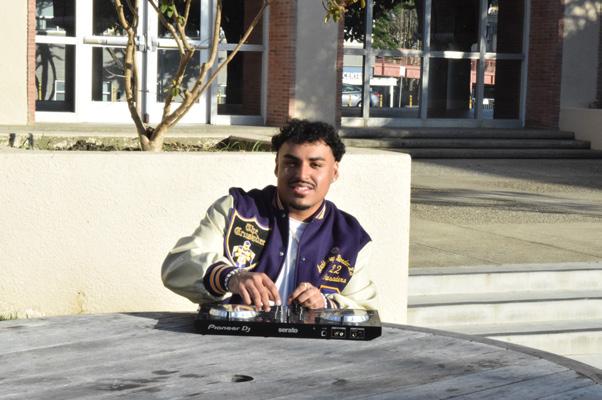
Looking behind the DJ booth you see a man who walked the same halls as hundreds of students at Archbishop Riordan High School.
These halls, where students stress over exams, but are excited for their futures meant something different for this boy. He was bound to be a DJ.
Grayson Salomon ’22 was a model student at Riordan from 20182022. He was involved in many areas around campus including, DJ Club, The Crusader, LIFE Team, and freshmen baseball. He was also the Co-Editor in Chief his junior alongside his peer, Jordan Maralit ’21.
His senior year he was selected to be Editor in Chief while also juggling the LIFE Team. Now, he is a well-known DJ based in Los Angeles. It was Riordan’s DJ Club and supportive community that helped spark and strengthen his interest in music.
The Crusader newspaper adviser, Susan Sutton, MJE, is not surprised by Salomon’s shift to music or his success.
“Music and journalism are very similar. They both involve communication, creativity, and provide a public service,” she said.
Sutton added, “Over the past 10 years, we’ve had many students involved in the school newspaper or magazine and in the DJ Club. From Angelina Ning ’23 who started The Shield magazine while also being in the DJ Club to Vincent Douglas ’25, aka DJ Lō, who was our Religion Editor, the list of talented individuals who excel in both areas is remarkable.”
Salomon’s love for DJing began freshman year and grew after attending Rolling Loud Bay Area in 2018.
Inspired by Travis Scott’s DJ, Chase B, he began practicing during COVID, starting on an iPad before upgrading to professional equipment. After sharing mixes on SoundCloud, he began performing live once events reopened.
His first major gigs included DJing Riordan’s First Dance since before COVID in 2021 and an underground rap show in San Francisco in 2022, where support from friends and fellow Riordan alumni helped launch his career, especially his good friend, Kevin Carranceja ’21, a talented R&B artist also known as Karri.
Salomon described himself as an open-format DJ, focusing on hip-hop, R&B, and Bay Area music.
One of the most memorable moments of his career was
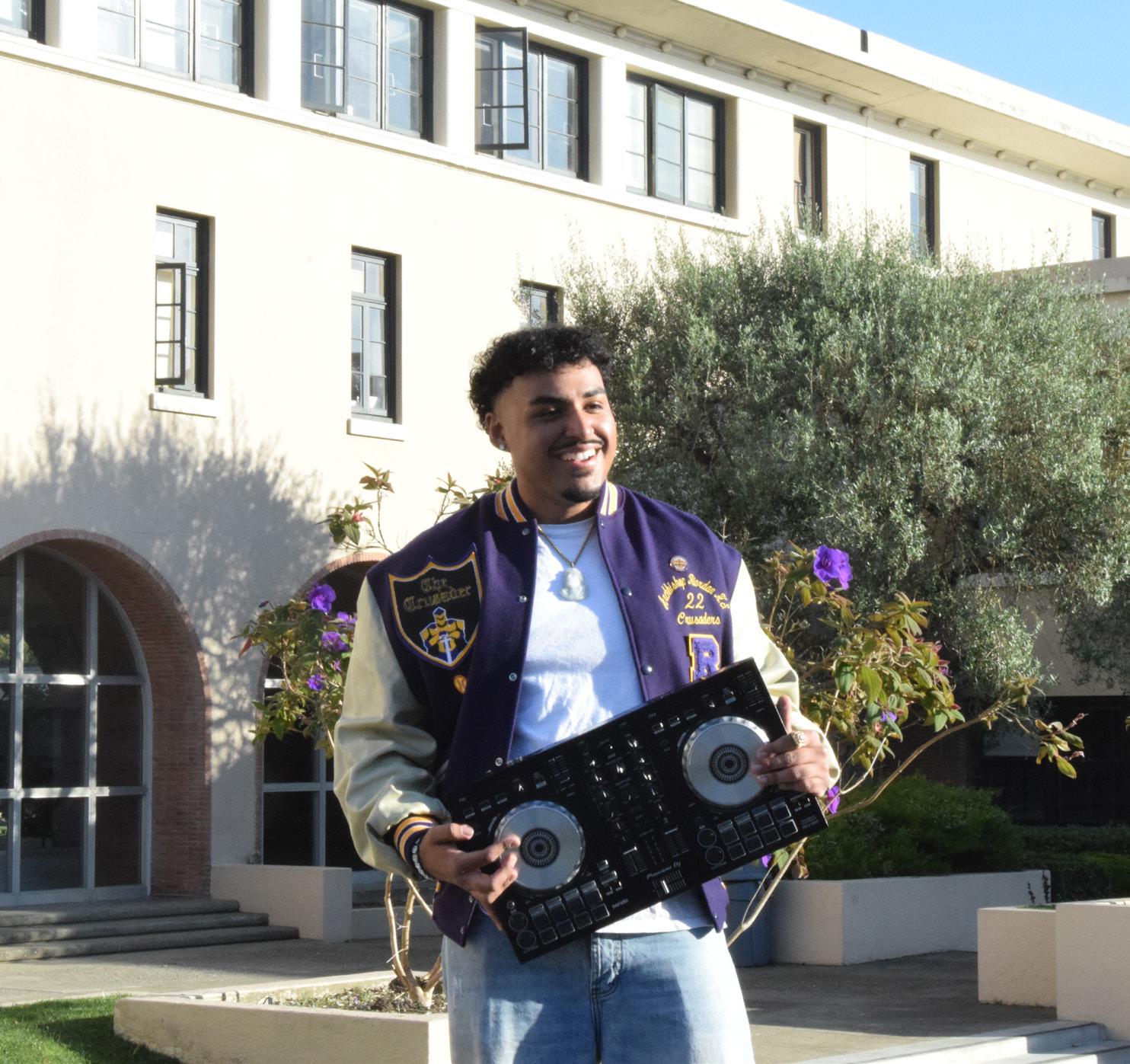
headlining a packed club in San Francisco in 2023.
Another highlight came when he and Karri opened for Drake at Wireless Festival in London.
“When we walked off, I knew all my hard work had paid off and history was made,” said Solomon.
Karri said, “It was a great moment, from knowing Gray (Salomon) since we were in middle
school to living out our dreams together on the stage.”
Salomon credits Riordan for teaching him confidence, community, and versatility. His advice is to “take risks, stay disciplined, and believe in yourself while being a good person and walking in God’s image because doing good will always return back to you.”
By Avery Agbunag ’26
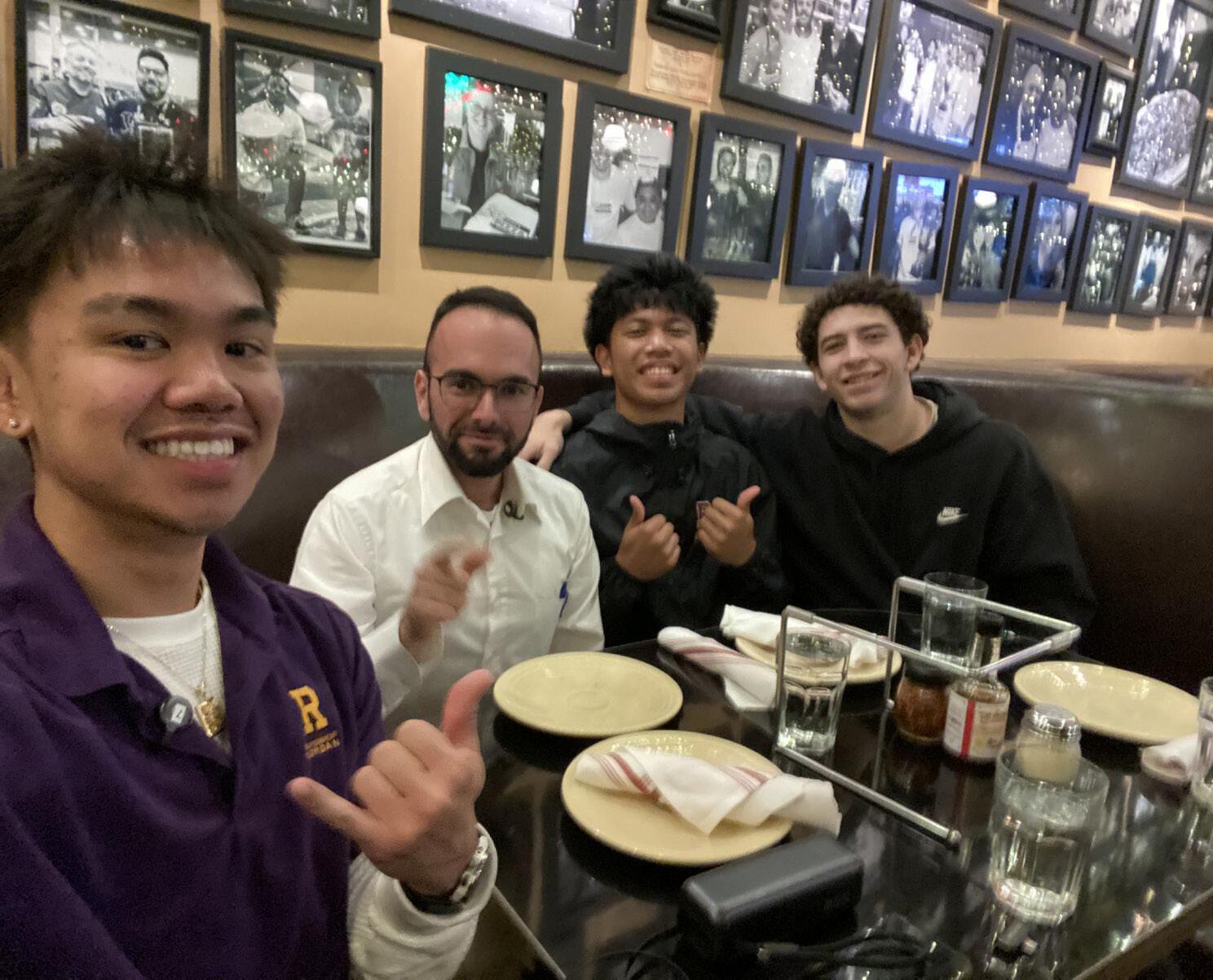
Tony’s Pizza Napoletana, located in North Beach, San Francisco, was ranked #3 in the United States and #10 in the world according to Italian Pizza rating site 50toppizza.it. So my friends, Aidan Alday ’26 and Jayden Tamboury ’26, my teacher, Nick Pellegrino, and I had to see what the hype was for ourselves.
When we entered Tony’s, the interior was lined with Christmas decorations, making
the restaurant vibrant and full of life. We sat down and were helped immediately. We ordered Tony’s coal-fired New Yorker, which won a gold medal in Las Vegas, and a classic Italian Diavola pizza. Both pizzas were about $36-$40 each.
After 20 minutes, the New Yorker arrived, dazzled with sausages, pepperoni, ricotta cheese, and a shiny honey glaze. The pizza had a nice undercarriage, a crispy crust, and a great flavor overall.
The whole table loved the pizza;

Native New Yorker Pellegrino said it felt like he was “at home.”
Overall, I gave the New Yorker a 9.3/10 because I felt that the undercarriage could’ve been a bit crispier.
Twelve minutes went by before the Diavola was set at our table. Although smaller than the New Yorker, the pizza was thicker and vibrant with prosciutto, arugula, and shaved Parmigiano-Reggiano cheese. The taste was great; however, the amount of arugula
made it feel as though I was eating a pizza with salad. I gave it an 8.5/10 because of this.
Tony’s Pizza Napoletana definitely earned its high spot on the pizzeria leader boards. Their menu offers such a wide variety of pizzas that anyone can enjoy. The environment when you walk through the doors is inviting, and the employees are too. Overall, I’d give Tony’s Pizza Napoletana a 9/10 and recommend anyone in the area to try it out.
By Julian Davis ’26
February has long been known as Black History Month, but this February marked the 100th year of Black History commemoration. The month celebrates the being and accomplishments of AfricanAmericans throughout history and serves as a reminder of Black excellence.
Black History Month began as Negro History Week exactly 100 years ago when established by historian Carter G. Woodson during the second week of February so it coincides with the birthdays of Abraham Lincoln and Frederick Douglass.
In 1976, the bicentennial anniversary of the United States, president Gerald Ford recognized the celebration and evolved it into Black History Month in order to “honor the too-often neglected accomplishments of Black Americans.”
“I think just building America too, with them (Enslaved Africans) being enslaved for 400 years, you wouldn’t have America without them,” said Adela Watson ’29.
The Association for the Study of African American Life and History (ASALH) selects a theme for every year’s Black History Month. This year, the ASALH highlighted a century of Black History commemoration and the transformative impact Black people have had on America.

“Growing up and experiencing life as an African-American taught me to respect and appreciate the work and dedication that specifically my grandparents, and parents (and their generations) put in to survive and prosper, which allowed me to live in a world with less systematic oppression and racism than they experienced,” said Victor Veal, one
of the former club moderators for the Black Student Union before it was reinstated last year.
“My ancestors were from Louisiana and that region in the early 1900s was not easy. Their migration west was a big part of what I learned from them... to do what it takes to improve your situation and find success,” he said.
Veal’s words ring true for many in the African American community, who have been known to make the best of their situations and forging their own success.
“I think the most interesting thing about Black culture is the spirit of resistance that runs through it,” said Avishan Peer, Spanish teacher and club moderator for the BSU.
Because of Black Americans’ ability of resistance as Peer mentioned, there is much reason for celebrating their history and contributions to American society. And 2026 marks the 50th year of Black History celebration lasting for an entire month.
Watson empathized that while the focus on Black History Month can be narrow, mostly on famous people, it’s about so much more. “We can be teachers, we can be mentors, artists, everything.”
Even in times when situations look bleak and diversity is thwarted by dissenters, many agree that it is important to remember that diversity, ethnicity, and cultures are celebrated.
Veal summarized, “We might not see all things the same way, but if we all wish for health, happiness, and safety for those we love and we start from there, maybe we don’t focus on division and othering so much.”
By Chloe De Castro ’26
The Archbishop Riordan Dance Team took on their third year with a busier schedule, new members, and sisterhood.
Along with that, a new addition to the dance team is Emily Ino, a Dean’s Assistant at Archbishop Riordan who began her role as a dance team coach alongside Meghan Williams, English Teacher and Dance Team Coach.
The team started off performing mainly at rallies, but progressed into performances taking place at multiple Riordan affiliated events.
“When we started two years ago, we were lucky to perform three times a year. Now we are honored to perform three times a month,” said Williams.
Many students await the dance team’s performances, anticipating the choreography and what music they’ll perform to. The dance team never fails to bring out immense support and loud cheering from the stands.
“The support of the Riordan community has been a huge motivation. Part of my role is to boost their self confidence and give them space to be creative, that’s when our dancers really shine!” Williams said.
The dance team continues to prosper and grow every year
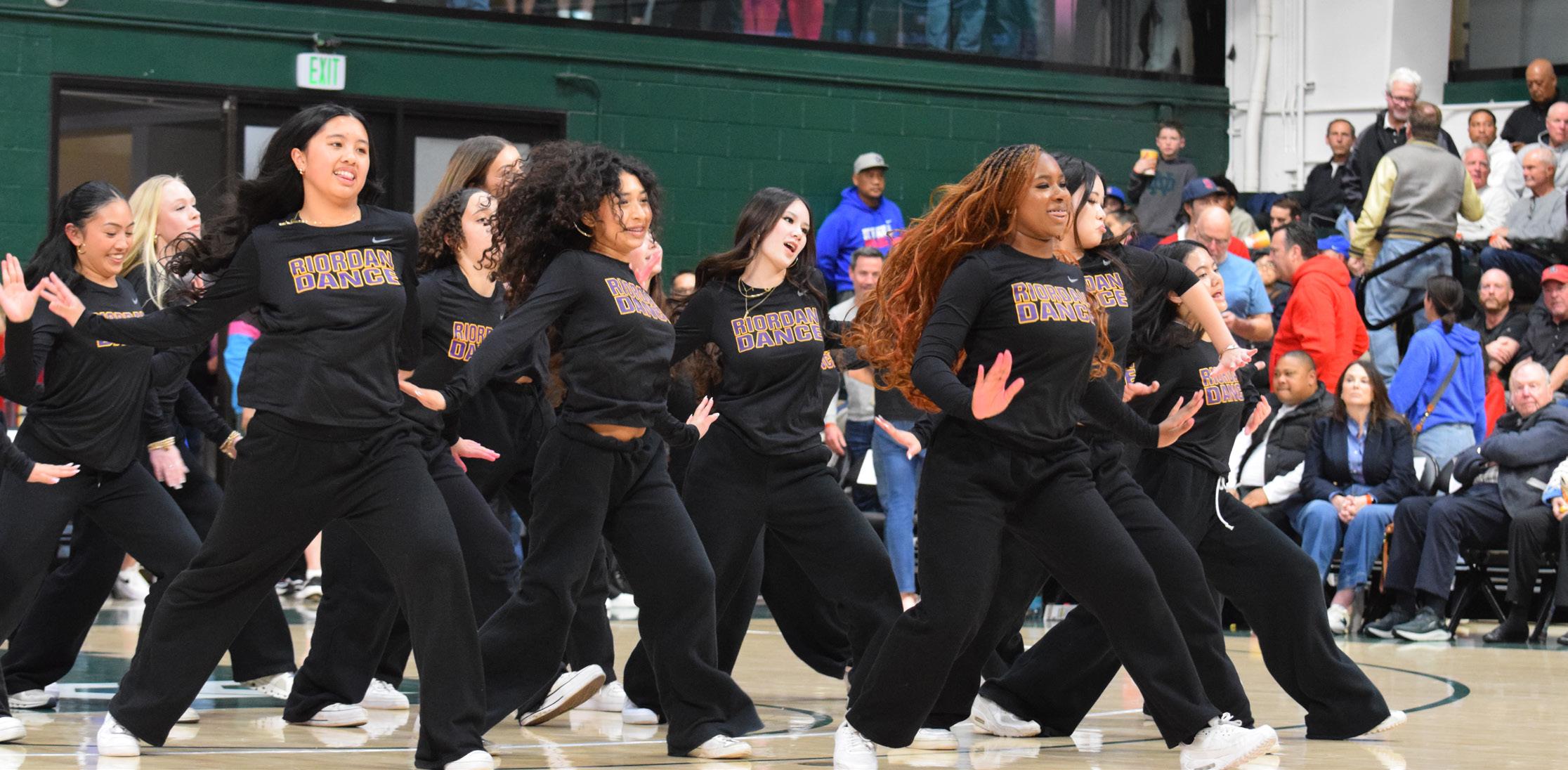
as they welcome new members. Currently, the dance team’s roster is close to 40 girls. The addition of new members during the fall and spring season means an addition to a stronger sisterhood.
“I would describe our team dynamic as supportive. I always see our girls helping each other learn the choreography or hyping each other up during practices and performances. It is refreshing to see them all encourage and motivate each other to do their
best,” said Ino. What adds to the creative aspect of the dance team is that it is completely student led. Captains Alessandra Leon ’26, E’moni Ferdinand ’26, Keira Cabuntala ’27, Emma Trapsi ’27, and Kianna Panaligan ’27 collaborate on creating the choreography while leading practices as well. With their leadership, the dance team has been able to express their craft on another level.
The dance team continues
to captivate the meaning of teamwork and creativity. “We work through our hardships and celebrate our accomplishments together, building our sisterhood throughout the season,” said Alyssa Lam ’26.
Lam added, “Confidence is everything. Dance is a fun way to get involved in the school community and express yourself. By performing, we show our school spirit and support, so don’t be afraid to put yourself out there.”

By Erin Quan ’26
Bruno Mars put a smile on all our faces when he dropped a grenade of a new album as well as a new tour that fans from all over will treasure forever.
On Jan. 9, Bruno Mars released a new song titled “I Just Might,” as part of his upcoming album, “The Romantic.” The album is set to drop on Feb. 27, being Mars’
fourth ever solo album and the first album he’s put out in 10 years. Shortly after “I Just Might” came out, it reached the Billboard Hot 100, currently riding at the top 10 for four weeks in a row.
Mars, formally known as Peter Gene Hernandez, was born on Oct. 8, 1985 in Honolulu, Hawaii. He is an American singer, songwriter,
and producer, rising to fame from his dazzling performances and catchy tunes that blend pop, R&B, soul, funk, reggae, disco, and rock.
At the beginning of his solo career, he released his debut album, Doo-Wops & Hooligans, featuring two of his most famous songs: “Just the Way You Are” and “Grenade.”
Fan Isaiah Mateo ’26 commented, “You can definitely see Bruno Mars’ growth as an artist since his collaboration with Anderson Paak. His latest song exhibits that growth with that Silk Sonic sound that excites me as a longtime fan.”
Having found inspiration from the music of his era, Elvis Presley’s music and style, and other popular artists’ performance styles, Bruno Mars became the unique, popular artist he is today.
Whether music listeners are looking for a nostalgic melody, an upbeat groove, or a soulstirring serenade, Mars’ music offers a blend of all, a quality that makes his artistry so special.
Emilia Ross ’26 stated, “I love that Bruno Mars is making a comeback, it makes me feel so nostalgic to being a kid and hearing lots of his songs on the radio.”
From a child performer in Hawaii to a global star. Bruno Mars continues to be a musical master, making music for people of all ages to enjoy.
As he once stated in an interview, “You can’t knock on opportunity’s door and not be ready.” His journey as a performer shows his constant dedication and commitment to his work, showing why he is adored.
By Emilia Ross ’26
Over the span of major U.S. holidays Thanksgiving, Christmas, and New Year’s Eve, “Stranger Things” fans eagerly looked forward to the release of new episodes on Netflix.
The highly anticipated television series began in 2016, making the show nearly 10 years old. As the show has progressed, it has drawn in loyal followers who had grown up watching, and many had high hopes for the season finale.
However, many fans were disappointed by the ending. Jonathan Lee ’26 described the finale as “anticlimactic.”
The directors, Matt and Ross Duffer, even confessed that they began filming the final season before having a finished script.
Harper Parsons ’27 claimed that “I felt like I had to dumb myself down in order to enjoy the finale.”
After being unsatisfied with the ending, many fans theorized that there was actually a secret episode that would come out after the final episode. This theory became known as “Conformity Gate,” where many fans drew connections from previous episodes to piece together a message that the real finale
episode would supposedly be released on Jan. 7, 2026, but it wasn’t.
Interview hosts asked the actors if they knew anything about Conformity Gate, but were met with only slight laughs, and fans became disappointed as the day came and went with no new episode.
Cyrus Jimenez ’25 stated, “I wanted the Conformity Gate to be real.”
Though fans may not have been impressed with the closing scenes of a beloved show, many social media influencers did post, reminiscing on touching scenes in previous episodes and how the show and the actors grew up with the viewers. And as the main characters graduate and move on, fans nostalgically waved goodbye to their favorite characters, and say hello to their own futures.
Erin Quan ’26 reminisced, “For over a decade, we’ve done more than just watch a show; we joined the Party. Their journey proves that while the Upside Down is vast, it’s no match for a bond forged in the fire.”
“In the end, they showed us that no matter how wide the Gate opens, love is the only force strong enough to close it.”

By Emmanuelle Ng ’26
After decades of research and repair, scientists have crossed a multitude of stepping stones on a path towards inventing an HIV vaccine. In early 2026, they crossed several more.
Human immunodeficiency virus, more commonly known as HIV, is an incurable virus that attacks the body by destroying immune cells. As a result, those with HIV are more vulnerable to other infections or illnesses. Untreated cases of HIV can reach a late stage of the virus known as acquired immunodeficiency syndrome (AIDS). Those with AIDS may experience other diseases or infections, including tuberculosis, herpes, pneumonia, or salmonella, due to their severely damaged immune systems.
HIV is spread by contact with certain bodily fluids, often during unprotected sex, of a person who is HIV positive. The virus can also, yet less commonly, be directly injected into the bloodstream by sharing injection drug equipment.
With an aim of treatment progression, scientists launched a Phase 1 clinical trial of a possible HIV vaccine on Dec 15, 2025 at the Perinatal HIV Research Unit in Soweto, South Africa.
International AIDS Vaccine Initiative (IAVI), a global nonprofit scientific research organization, is currently testing whether highly specialized vaccine immunogens can target certain B cells within the immune system and guide them to produce broadly neutralizing antibodies (bnAbs) against HIV.
Scientists believe a vaccine inducing bnAbs could provide

At the start of a new HIV vaccine
is screened in an effort to stop future infections and to protect communities.
protection against many of the virus’s strains.
“I think it is optimistic that largely influential companies like the IAVI and Scripps Research Institute are spending a lot of time on these trials,” commented Mikayla Cheng ’26. “If they end up being successful, I think that’s a great starting point for continuing to research HIV and AIDS in depth, as well as coming up with more and more ways to alleviate its spread and effects on people.”
This first initiation of the IAVI G004 clinical trial builds on the promising results of previous trials IAVI G001, G002, and G003. The Phase 1 study required
evaluating 96 adult participants, who are healthy and are living without HIV, at six clinical sites in South Africa to identify the lowest dose of immunogens required to produce a response from the immune system. For this study, scientists aim to minimize risk of side effects, such as skin reactions, that were present in preceding trials.
However, although progress endures, HIV continues to be surrounded by a stigma deeply-rooted in ignorance and discrimination. Upon the identification of the virus in the early 80s, which the AIDs epidemic of the 80s and 90s followed, HIV began facing negative attitudes
and immense stigma towards people with the virus.
With the possibility of a functioning vaccine, the social stigma of the virus is bound to alter. Whether this change is improvement or regression will depend on the public reaction of the disease becoming rarer.
Timothy Yuen ’26 predicted such in stating, “To be honest, I don’t think that the social stigma surrounding HIV will improve with better prevention because as the disease becomes more rare, people with it may become even more outcast and looked down upon.”
According to the World Health Organization, over 40 million people currently live with HIV, and over 1 million acquire it each year. Hence, the goal of a safe and effective HIV vaccine is urgently sought after and thought of as a necessary breakthrough to ending the AIDs pandemic.
“HIV has been a worldwide problem for decades and has destroyed communities and families due to a lack of effective treatment. This new possibility of a vaccine brings the hope of an end to a disease that has been hurting the world for too long,” said Georgie Michalchuk ’26.
The clinical trials in South Africa offer more than just a glimpse of hope, but a ray of promise for a future without HIV.
Please visit rcrusadernews.com to read the full version of this story

Image by realfood.gov
In contrast to previous versions, the revised food pyramid emphasizes protein and dairy, reflecting evolving dietary guidelines and updated research findings.
By William Saunders
’26
Over a decade ago, Comedy Central’s South Park joked about flipping the food pyramid. This January, the latest change made to the famous graphic turned the comedy sketch into reality.
“The United States is amid a health emergency.” The United States Department of Agriculture
additionally informed, “Nearly 90 percent of health care spending goes to treating people who have chronic diseases.”
“Many of these illnesses are not genetic destiny; they are the predictable result of the Standard American Diet,” the report continued.
This diet, according to the previous pyramid, focused on grains, fruits and vegetables, whilst avoiding meals high in fat. However, since the pyramid was first designed in 1974, grains have become generally more processed—taking away important nutrition from bread, cereal, rice and pasta.
Among other studies and an ever growing pandemic of health issues, the USDA decided that it’s time for a change, flipping the pyramid to focus on foods heavy in healthy fats whilst minimizing the amount of grains.
The question is whether people will change their diet to meet the USDA’s new recommendations.
“I take my own route of staying healthy and eating what I need to eat, but for certain people it is a good way to keep on a balanced diet,” answered Aiden Downes ’26.
Other students like Noah Santiago ’26 agreed, saying, “It’s not bad to switch it up. Carbs
are important, but fat itself is essential to survive… It’s a good change.”
While the new change in the food pyramid might not affect a lot of people who decide their own diet, this could prove to be beneficial for those who do use the USDA’s recommended diet.
“We’ve already been following these guidelines prioritizing proteins, using carbs as a supplement,” Ryan Jones ’09, Riordan Strength and Conditioning Coach noted.
“Using [the food pyramid] as a guideline, focus on what your body needs as opposed to what it wants. Everyone wants Captain Crunch. No one wants to have an egg white, right?”
Overall, the new food pyramid has been designed to prevent the American obesity epidemic through the new knowledge behind what consumers eat. The important thing to do, is decide what an individual’s body needs.
By Liam Falcon ’28
Recent cuts to scientific research by the Trump administration have caused some scientists to consider employment opportunities outside of the U.S. The cutbacks in grants that could jeopardize labs at major universities, have created an opening for universities abroad to recruit established American scientists.
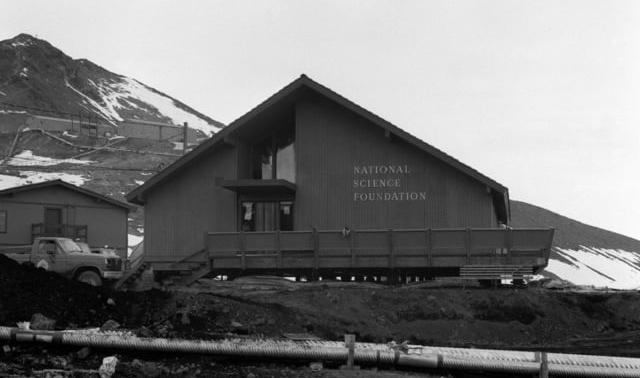
In May of 2025, President Donald Trump proposed cutting the funding to the National Institute of Health (NIH) by 40 percent. In the same budget plans for 2026, it was suggested to cut the National Science Foundation (NSF) by 55 percent. However, these proposals were rejected and lessened by Congress.
The Trump administration submitted the federal budget
proposal for 2026 to Congress, describing plans to cut scientific funding overall by nearly 22 percent. Between $3.3 and $3.7 billion, which would normally be spent on research for more than 600 universities, would be taken away.
“This is such a shame,” said Crystal Wei ’26, Biomed Program student researcher. “The U.S. has been known for being a land of opportunities. The research cuts go against this idea and really distorts the goal of this country.”
Additionally, many staff members of federal science agencies have been laid off. Alongside these mass layoffs, grants that provide these scientists with funding have been suspended, and sometimes even proposed to be completely cut. Universities warn that these
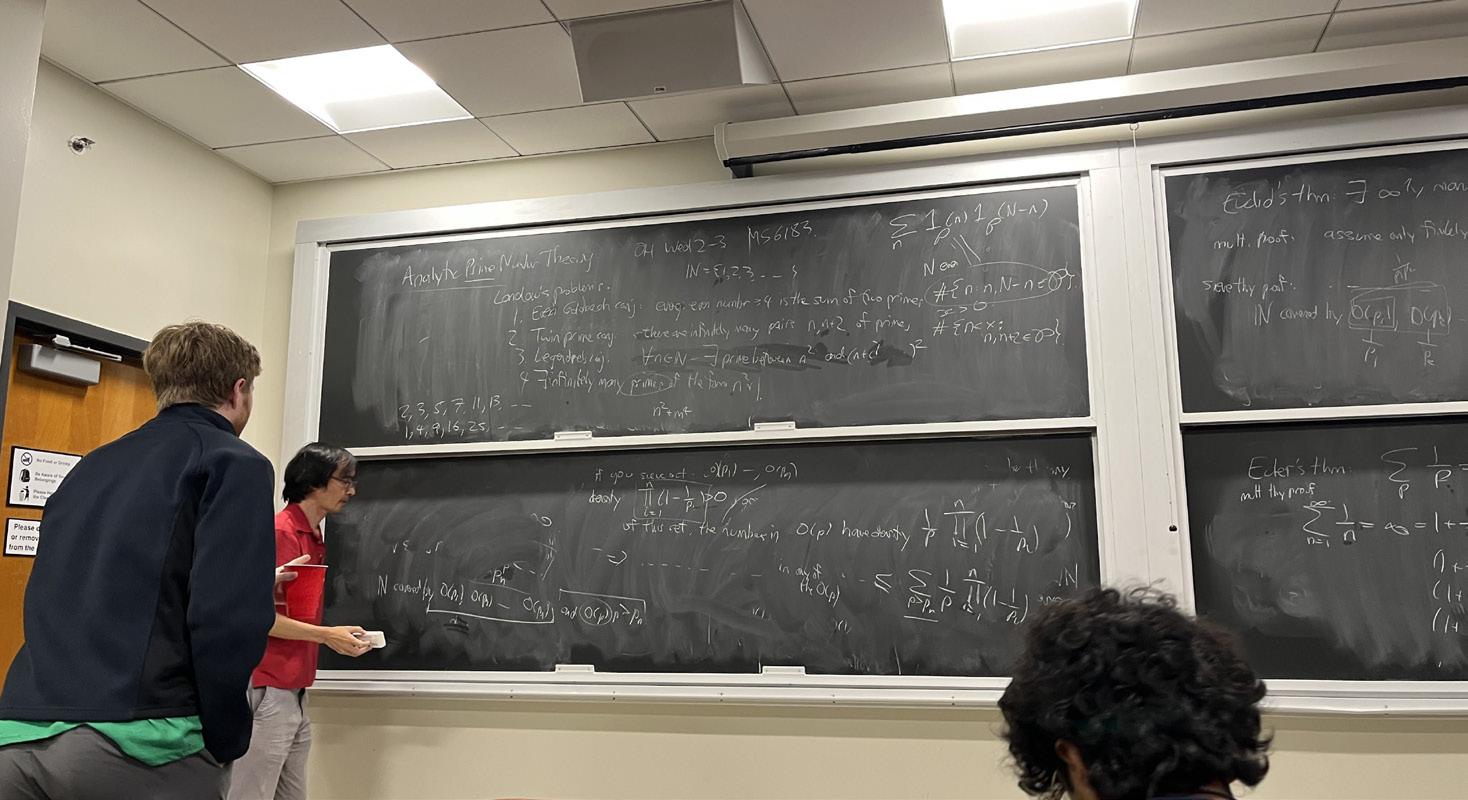
cuts could halt the studying of diseases such as Alzheimer’s and cancer.
Elizabeth Walsh ’26 said, “Not only does it set us back as a country in the race for scientific discoveries, but also to science as a whole. Causing research to halt is unfortunate for the entire scientific community.”
The uncertainty for researchers in the U.S. creates space for other countries to try and recruit those who are willing to leave. Universities in Europe are receiving an increase in applications from researchers based in the U.S., according to pbs.org.
Many European countries are providing an incentive for
researchers to immigrate by increasing their funds. China has also increased their funds, and introduced systems like the “K Visa,” which allows young STEM researchers to learn and work in the country.
These changes in funding for science research, combined with changes to campus DEI policies, and other compromises in curriculum have led some researchers to consider work abroad.
Doctoral researcher Dr. Caroline Gochoco-Tsuyuki, gave her take on the situation, commenting, “I’m a big fan of government funded research, but sometimes the money is best allocated elsewhere.”
By Josh Lee ’26
In the eyes of a telescope, the sun erupts, crashing into itself. Huge explosions appear, lighting up the surface of the sun. The phenomenon is known as the solar flare, and is also what the Earth and Space Sciences classes witnessed early January this year.
“For our first unit, we are looking at galaxies and stars out in space,” said Aaron McCrayGoldsmith, instructor of the course. “It was the first week of school, so I wanted to get the students excited for it.”
The class set up on the Mayer Family Field, bringing two telescopes with them.
The first telescope had a standard lens, cutting out light so students could view the face of the star, shining a bright white.
On the other hand, the H-alpha telescope’s unique light-cutting and lens allowed the students to see the sun in a higher resolution. With its 656.2 nanometer light wavelength, the telescope is able to match the wavelength of hydrogen on the sun, showing much greater detail by directly looking at the features and movement of the star.
This included occurrences like Prominence, where pieces of the
sun would get spit off and fall back into the body of the star.
“With the right tools to cut out other light, we can really see some fascinating stuff, getting them excited and introducing some spectrography,” explained McCray-Goldsmith.
Sean Dowd ’27, who used these telescopes, said, “It was all very specific, fascinating, and fun. When we were looking at the solar flares, I was thinking of how that is really the sun that we see every day and how it looks red through a telescope.”
Currently the sun is reaching

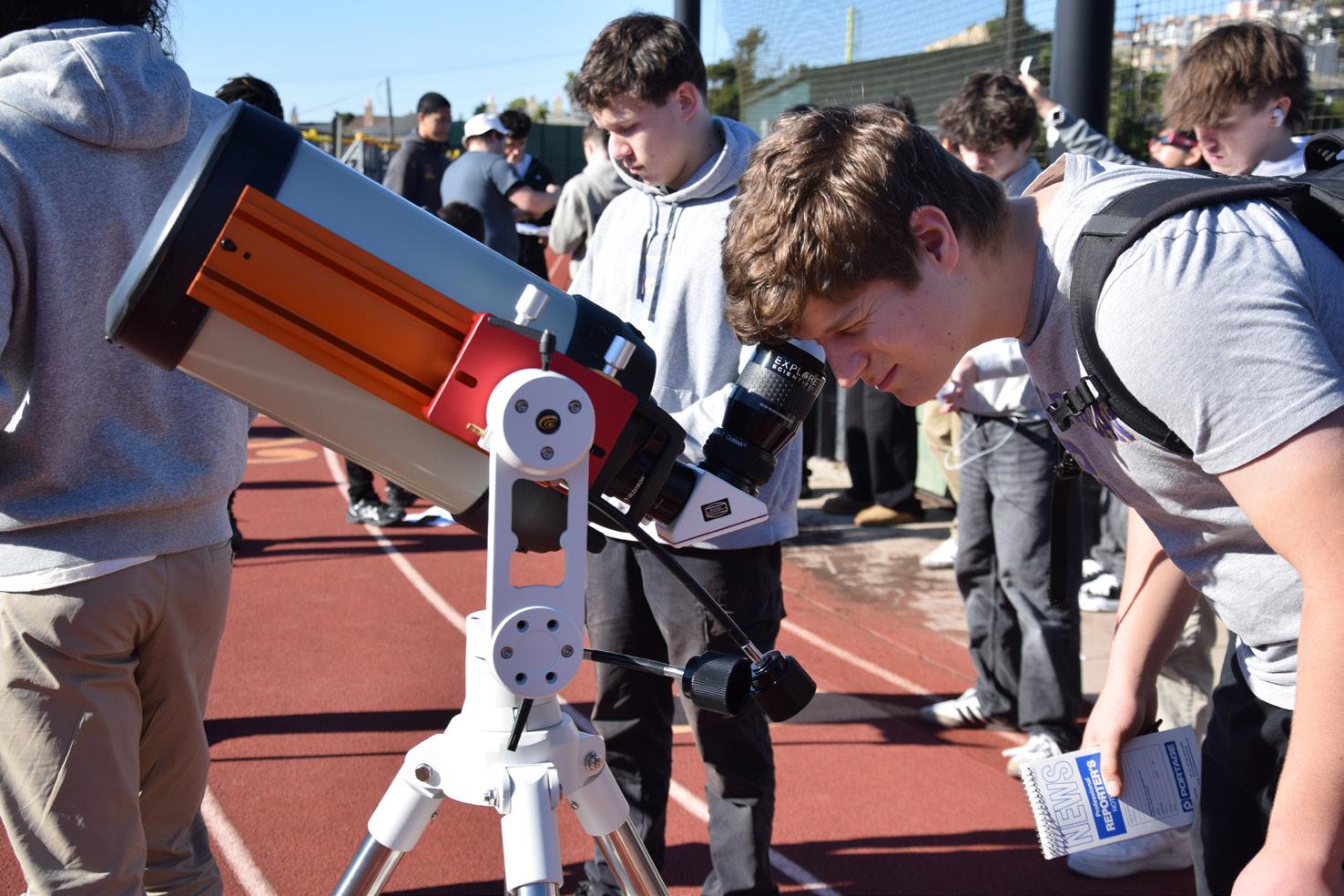
the end of its 11-year cycle, known as the Solar Maximum, where solar flares events peak.
On Jan. 22, the largest solar flare in the last 20 years was reported. Some of the bigger solar flares that happen around this time can have huge effects on Earth, including satellite interference, radiation, and worldwide blackouts.
However, they also cause large aurora borealis events, making them a spectacle to watch.
“It’s a low probability event, but not as low as getting hit by an
asteroid. It’s just one of the things you gotta deal with when you live close to a star. Hoping for just auroras, that’s all we need,” joked McCray-Goldsmith.
Overall, the event was a great learning experience for the students, and it may be the last chance to see solar flares like this in the next few years.
Braydon Dizon ’27 commented, “The sun isn’t even that far from us in comparison to some other planets/galaxies. We are so small compared to the entire universe.”
By Vincy Huang ’27
The San Francisco Environment Department, in collaboration with Redwood Materials, is charging up a new initiative aimed at increasing recycling of products embedded with lithiumion batteries across the city.
San Francisco, the first city in the country to offer this kind of technology, is pioneering a method of recycling that allows for fast, safe, and easy collection of batteries and battery embedded products.
As stated by the Redwood Materials website, “It’s a patentapproved, first-of-its-kind collection system that accepts mixed batteries and devices, is fully compliant, remotely monitored, and designed with fire safety at the core.”
These bins combat issues in previous battery recycling methods. Before, batteries that were to be recycled were put into cardboard boxes, which could easily catch fire if left unattended.
To remedy this issue, Redwood Battery Bin has built in sensors that monitor its own internal condition, checking if there are any potential fire hazards within the container. Additionally, every bin is equipped with automatic
fire extinguishers in case of emergency.
Moreover, each bin has automatic sorting. This feature sharply decreases the amount of on-site labor required to use these bins, another challenge past battery recycling initiatives faced. As a result, the bins only need a single operator to check its performance and to transport the batteries collected to a Redwood Materials recycling facility.
According to Recycling Product News, Vice President of External Affairs and Consumer Recycling Programs at Redwood remarked, “Our new Battery Bins use firstof-their-kind, patented technology to safely capture these materials at scale.”
San Francisco has had a multitude of ways to recycle loose lithium-ion batteries, but was lacking in ways to dispose of products embedded with those batteries. Now with the Redwood Battery Bin, the city can more effectively collect and recycle these battery-embedded products.
“These battery recycling bins will make it easier than ever to dispose of old or broken technology you have lying around the house, especially if it is likely to create a hazard,” said Aadi Desai ’27.

The new Redwood Battery Bins are available for use all around San Francisco. New locations include four Cole Hardware locations and three Sports Basement stores, as well as the Four Embarcadero Center.
As more methods of recycling are added around the city and more San Franciscans take advantage of these new recycling initiatives, the city will continue to advance closer towards a waste-free future.

Photo by David Thielen via Unsplash
conversion and an increasing population of predatory California Gulls…”
The American Avocet remains the species with the most dramatic observable drop, declining annually by 10 percent, as attributed by SFGate to Matt Reiter.
Other shorebird species including the Dunlin and Willet are declining yearly from 5-8 percent, and the Ridgway’s Rail, found in the salt ponds and marshes of the Bay, has undergone drastic endangerment over the century, most notably due to habitat loss and destruction.
According to a study published in Science Daily by Cornell University in 2019, the United States and Canada have lost an astounding 3 billion birds, approximately 1 in 4, since 1970. Many view this as an ecological emergency, which causes reflection upon potential contributing factors.
By Rachel Gerke ’27
California is widely known for its natural beauty, diversity, and vibrancy. From its rocky coasts, vast forests, and expansive deserts, to the snow-topped mountains and wide central valleys, it is widely regarded as a pristine haven where nature blooms in its most breathtaking forms.
However, certain regions, such as the Bay Area, have recently reflected broader concerns about species that pose alarming possibilities, most notably regarding birds.
Major large bird species including Bay Area shorebirds, breeding populations, and the
Ridgway’s Rail, a gray 14-inch long marshbird, are decreasing as of 2026. In fact, this has been a pattern over several decades.
In a study published by the United States Geological Survey on Sept. 1, 2021, breeding waterbird populations, such as the American Avocet, a large orange and black bird with a long upturned black beak, and the Black-necked Stilt, a black and white bird with long red legs and a straight black bill, have declined from 13 percent to 30 percent over an 18 year period of 2001 to 2019. Potential causes according to the United States Geological Survey include, “Loss of island nesting habitat as a result of tidal marsh
All of these statistics pertaining to the state of biodiversity in the Bay Area are shocking on their own, however, this is only a small factor in a larger global pattern.
Climate change has had negative effects on all aspects of the environment, and the inner workings of the ecosystems. Many have been noticing increasingly the impacts it has had on their own backyard.
Kaia Burris ’27 commented, “It’s really concerning to see how much bird populations in the Bay Area have declined over time, and noticing the observable drop. Knowing the extent of this issue and how long it’s been going on really makes it feel like something we should be paying more attention to.”
“There are lots of ways that humans impact the community of our local ecosystem. The more we develop urban areas, the more habitats are removed and food availability lessened. Pesticides are consumed by insects and affect species up the food chain, potentially birds, as well,” stated science teacher Jack Reardon.
As common Bay Area bird species continue to suffer, it is worth noting harmful habits within communities that lead to decline of species in the ecosystem. Regarding birds, sprawling urban development, use of plastics, and use of pesticides all greatly contribute to this damage.
While living within large communities can often obstruct the visibility of nature, people must remember that each action performed in local communities directly impacts the environment. Even if people don’t see the instant consequences of human activity, protecting the environment is crucial to the maintenance of the Earth.
By Ciarra Mangibuyat ’27
After being closed in 2023, one of San Francisco’s largest movie theaters is finally up and running.
Now known as Apple Cinemas Van Ness IMAX, the historical theater is open to the public once again out of the Don Lee Building on the corner of Van Ness Avenue and O’Farrell Street.
The city of San Francisco has a rich history regarding the film industry with many century-old theaters still operating such as the Roxie, Castro, and New Mission theaters. However, recently several local theaters have closed down or been remodeled into other modern businesses. With the reopening of the Van Ness theater, this will give locals the opportunity, once more, to experience the allure that local theaters truly encapsulate.
“Since corporations have expanded so much within the past five years, I think it’s going to get tougher for small businesses to survive,” said Rachel Gerke ’27.
The 14-screen theater was most recently occupied by the large Korean cinema chain CGV Cinemas. This was short lived, only lasting about two years. Before that, the theater was under the business of AMC from 1998 to 2019.
Now being occupied by the Massachusetts based theater company, Apple Cinemas, the theater welcomed locals on July 10 with movies such as the “Superman” reboot, “28 Years Later,” and “Jurassic World: Rebirth.”
The Don Lee Building, built in 1921, was originally used as
an automobile showroom for Cadillac before AMC converted it into a multiplex in 1998. After being open for more than two decades, the theater closed due to construction disruptions and declining conditions according to Hoodline News.
CGV Cinemas invested heavily in 4DX technology when they took over the theater in 2021.
This plan collapsed and became a financial disaster, eventually leading to the closure of the theater, as they spent an immense amount of money on renovations and paid a $75.2 million lease guarantee.
The Apple Cinemas Director of Operations, Jessica Robitaille, noted, “I think it’s a really fantastic space that we have to work with and we have big plans for it,” according to the Chronicle.
The theater will now be a luxury experience and will eventually include a bar, restaurant, and recliner seats.
History teacher Cory Nelson said, “I truly want local theaters to survive because they support independent artists, independent directors, independent movies. Those stories are really meaningful… Historical race or gender or other independent movies need the space where they can flourish and get their stories out and push society into a more inclusive place.”
The reopening of the theater is a significant event as many theaters around the world have struggled to stay in business in post-pandemic life. With so many streaming platforms nowadays,

theaters are losing their charm and many people prefer to watch movies in the comfort of their homes.
Bus travel in the Van Ness area has significantly improved as a result of the Van Ness Bus Rapid Transit project, which was a San Francisco transportation project that was completed in 2022. This will majorly help the business and allow more people to visit the theater without the hassle or concern for transportation.
“The city spent a lot of money refurbishing Van Ness Avenue and it is beautiful. The
buses run more smoothly in that area, which means more people can get there and see movies in the state-of-the-art theater,” said Film Studies and AP Environmental Sciences teacher Michael O’Brien. He continued, “Film is so near and dear to my heart that any time people can watch that magic, they should, regardless of how they watch it.”
As the city welcomes back this historical theater to the community, the shared-experience of watching a new movie in the cushioned, leather chairs will once again flourish.
By Loghan Hwang ’27
Founded in 2018 by Riordan alumnus Steve Mayer ’72, the 5 Buckets Foundation strives to educate the world on life long finances and to empower individuals and communities with knowledge.
The foundation works with all types of communities such as schools, non profits, and community organizations with people of all ages.
“I started the 5 Buckets Foundation after seeing firsthand how both adults and especially young people lacked basic personal finance knowledge — skills like budgeting and managing credit that are not taught in schools but critical for a successful life,” said Mayer.
He added, “Inspired by my education at Riordan and a belief in giving back to the community, I’m proud that the Foundation is now on the path to educating our 5,000th learner.”
Through a connection with David Lin, the Boarding Director,
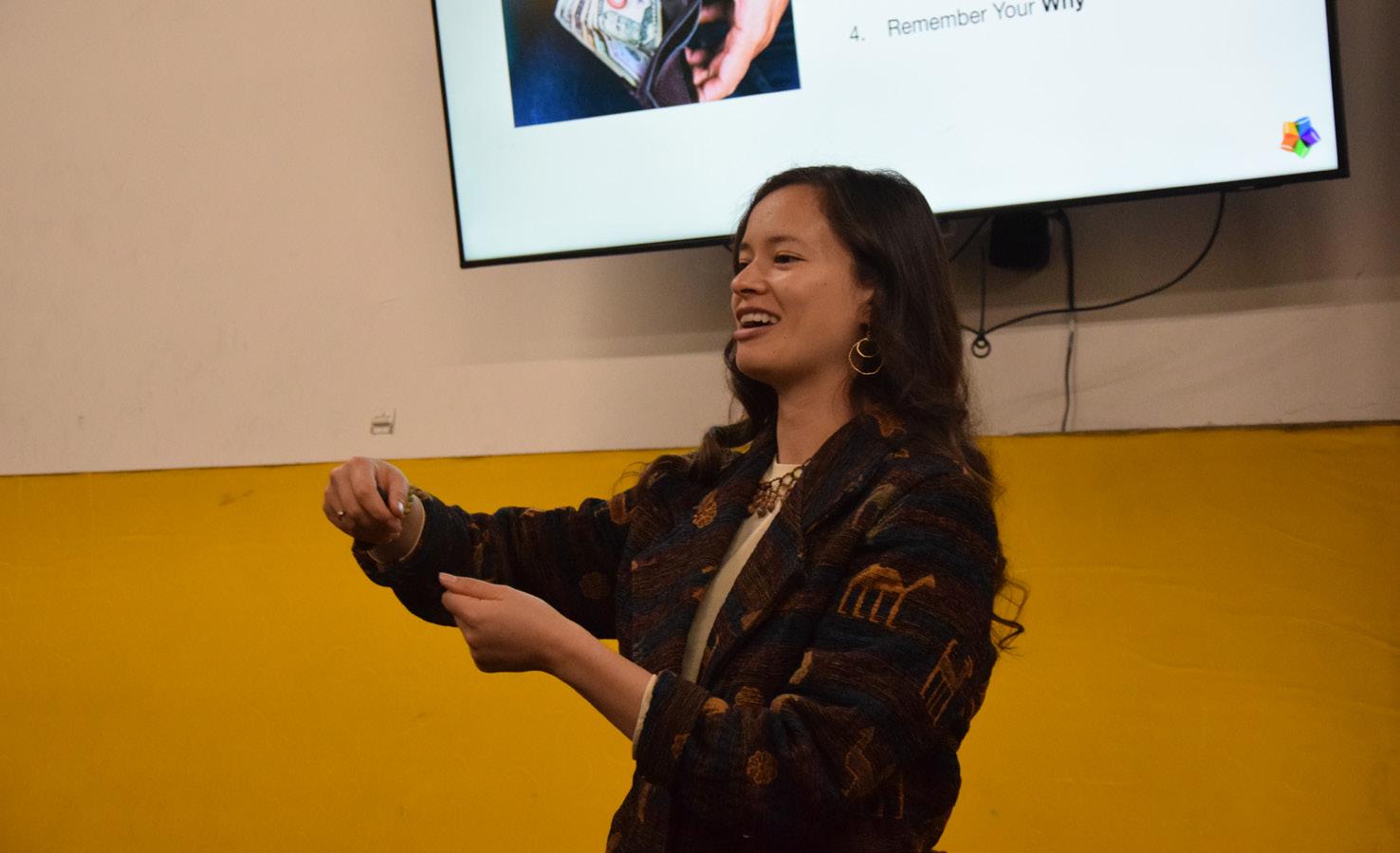
5
to
“ the 5 Buckets Foundation has been coming monthly to educate the St. Francis Scholars on financial wellness through a six-part
I hope they feel more confident entering adulthood and dealing with finances alone. I hope they feel more confidently about finances in general.
-Instructor Leah Kennendy
workshop series led by instructors Leah Kennedy and Pei’Ling Lee. Dominic Thompson ’26, a St. Francis Scholar, said, “I would say
the name of the program itself, 5 Buckets, really tells us about where to put our money and save our money in our lives.”
“Also, how to make a budget which could be helpful when we leave high school and go to college and live by ourselves,” added Thompson
Their goal with the program is to eventually expand to other parts of Riordan, including staff and more students.
Kennedy said, “I hope they feel more confident entering adulthood and dealing with finances alone. I hope they feel more confidently about finances in general.”
I would say the name of the program itself, Five Buckets, really tells us about where to put our money and save our money in our lives.
-Dominic Thompson ’26

by Kaia Burris
By Kaia Burris ’27
Cluely, a contentious new AI startup promising smarter tools for classrooms, launched in April 2025, bringing with it a bit of a commotion from its users.
The company, led by its bold CEO, Chungin Lee, has leaned into marketing itself as “the ultimate tool for finishing homework fast,” and has risen to become a prominent topic of debate among many. While some call the approach refreshingly honest, others see it as little more than selling a shortcut.
Cluely is an AI driven platform designed to generate answers and explanations for assignments in seconds. Unlike more
common educational technology companies, Cluely has leaned into a more provocative image, branding itself as an option for students who simply want results.
Viral TikTok advertisements have boosted the message, presenting the app less like an academic aid and more like a cheat code for those under pressure.
“I get why people want to use it,” said Rachel Gerke ’27, “But if we start letting AI do all the thinking for us, it can be really easy to fall into a pattern of using it. Having an AI that’s geared toward that mindset won’t be productive in the long run.”
Educators say that AI can in fact support student learning when
used responsibly. Brainstorming, organizing thoughts, and editing are all areas where the technology shows great promise; the trouble comes when students use it to dodge the thinking process altogether, and become dependent on the extra help.
“It’s like paying someone else to work out for you,” said Academic Dean Chris Fern. “You can see it happen, but your own muscles won’t get stronger. Our brains work the same way.”
The company’s frat style branding has drawn as much attention as the technology itself. Promotional videos featuring bold slogans like “cheat on everything” have spread widely online, attracting curiosity and concern.
Supporters argue the strategy deals with growing student frustration with rigid academic systems, while critics warn it risks encouraging shortcuts over putting in the effort. Cluely’s CEO has positioned the app as an act of rebellion, often describing it as a direct challenge to traditional AI models.
Tech Director John Wu stated, “Startups can push boundaries,
but schools can’t afford to let marketing gimmicks decide how kids think about learning.”
Cluely’s launch has contributed to a larger debate now unfolding in classrooms nationwide. The question of how schools should respond to AI tools that are both powerful and extremely tempting has struck teachers around the nation, leaving many wondering how to overcome this burgeoning issue.
Wu commented startups like Cluely are part of a bigger “gold rush” moment. “The keyword ‘AI’ tends to add more zeros to the price tag,” he noted. “These startups bring fresh ideas, but schools still face hurdles like privacy, cost, and training. Without careful planning, AI can cause more confusion than help.”
Despite the controversy, few doubt that AI will continue pushing itself into daily life. Whether Cluely turns out to be another great tool or a cautionary lesson remains to be something for the future.
For now, Cluely has begun to stir the pot, one controversial billboard at a time.
These startups bring fresh ideas, but schools still face hurdles like privacy, cost, and training. Without careful planning, AI can cause more confusion than help.
-Tech Director John Wu
By Ashling Greene ’26
San Francisco is full of families who have been here for generations. Some of these families make their mark by owning a business in San Francisco. One such business is Ocean Subs on Ocean Avenue.
This business is owned by Lee Opelinia ’95, a Filipino-American chef who is passionate about cooking.
At Riordan, Opelinia wore different hats around the campus. He participated in Campus Ministry leading retreats, and was on the stage crew building sets with the theater department.
He also talked about how the Kairos retreat was one of the most memorable moments at Riordan. “I still remember my Kairos retreat, even for many years later, as being an amazing and unforgettable experience.”
Chef Opelinia has come a long way, from Michelin-starred kitchens (Madcap, in San Anselmo) to the experimental dining rooms of Province, his Filipino pop-up.
From the outside, entering into
the realm of sandwiches could seem like a step back from the fine-dining world, but for Opelinia, it was a return to something more pure, provided food speaks to people without pretentiousness.
He really focuses on the customers and creating food that is approachable and affordable.
Opelinia stated, “But for me to be able to have these relationships with my customers is the most gratifying part of my job. And I think it’s probably one of the most gratifying jobs I’ve ever had.”
He went on to talk about knowing his neighbors and the rest of his community on a personal level and how blessed he is to be a part of their lives.
Ocean Subs is more than just a place to grab a sandwich; it’s a display of Chef Lee Opelinia’s journey and passion for food and community.
From his start as a chef, Ocean Subs has created a space for people to come together, chat with their neighbors, and connect.
Opelinia’s commitment demonstrates that success
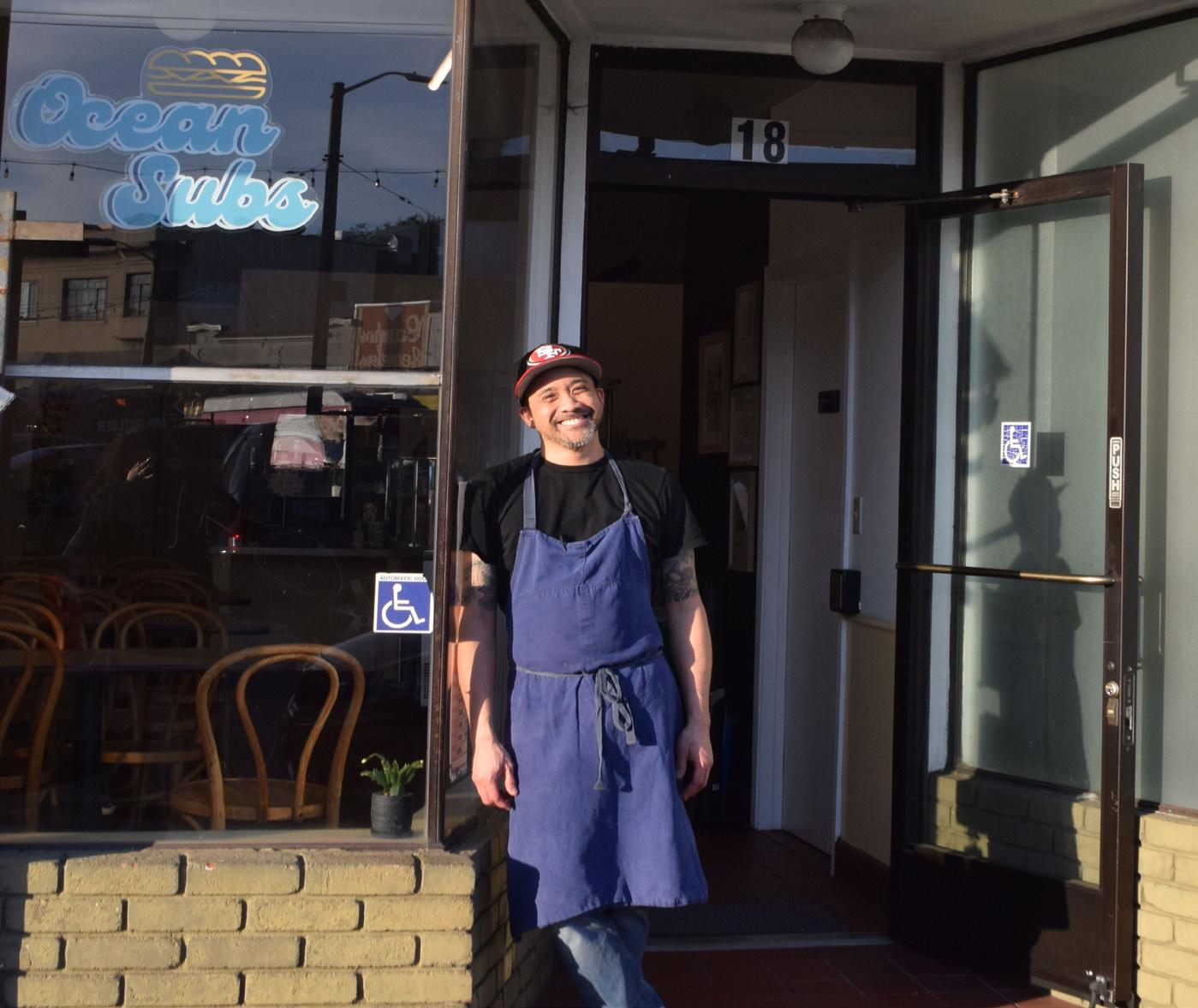
isn’t simply measured in 5-star restaurants or awards, but in the everyday connections and
interactions that occur to bring people together—one sandwich at a time.
By Ashling Greene ’26
On Feb. 8, Levi’s Stadium hosted the 60th annual Super Bowl, featuring the Seattle Seahawks and the New England Patriots.
After 10 years, the thrilling game of football returned to San Francisco, transforming the downtown area into the place to be and spreading excitement throughout the entire Bay Area, as visitors from all over the world came to experience the energy of the Super Bowl.
As the game began, the Seahawks quickly took control with a strong defensive performance that kept the Patriots under pressure. Seattle opened the scoring with a 33-yard field goal by kicker Jason Myers, making it 3–0. Myers continued his perfect night by adding 39-yard and 41-yard field goals, giving Seattle a 9–0 lead at halftime.
Once halftime hit, America was entertained by Bad Bunny’s halftime show. The performance was filled with many surprises, like Lady Gaga singing “Die With a Smile,” Ricky Martin performing “Lo Que Le Pasó a Hawaii,” and many other Easter eggs. Bad Bunny made the show a celebration of Latino culture, even featuring an actual wedding during one of his songs. Later, Bad Bunny handed his Grammy to a young boy to represent the new generation. To end his performance, he named all the Latin-American countries, while exiting to his song “DtMF.”
Seattle opened the second half with a 41-yard field goal by Jason Myers in the third quarter, taking a 12–0 lead. Early in the fourth, Sam Darnold connected with A.J. Barner for a 16-yard touchdown, followed by Myers’ extra point, making it 19–0. The Patriots quickly answered as Drake Maye threw a 35-yard touchdown to Mack Hollins, with Andy Borregales’ kick bringing it to 19–7.
Seattle added another 26 yard field goal from Myers before Uchenna Nwosu returned an interception 45 yards for a touchdown, extending the lead to 29–7. New England scored one more time when Maye found Rhamondre Stevenson for a 7-yard touchdown, but their 2-point conversion failed, leaving the score 29–13 in favor of Seattle.
Seahawks running back, Kenneth Walker III, was named Super Bowl MVP, thanks to a standout performance that powered Seattle’s ground game and helped sustain key drives throughout the night.
Overall, Super Bowl LX showcased Seattle’s strong defense and disciplined offense, and Patriot’s ineffective defense, while Bad Bunny’s halftime show provided one of the most memorable performances in Super Bowl history. The combination of athletic excellence and cultural celebration made this championship a night to remember.


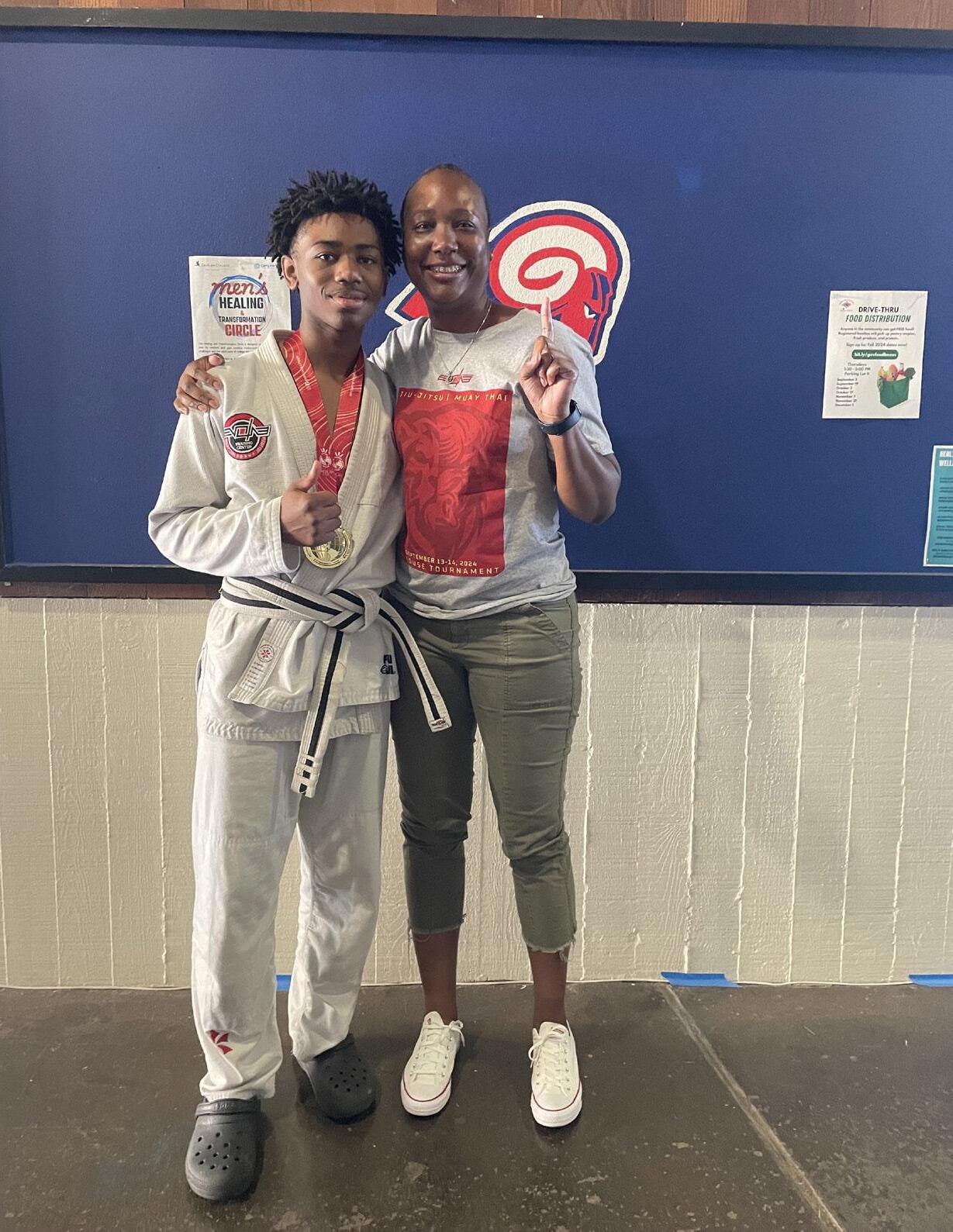
By Collin Noguera ’27
Student-athlete Derrill “DJ” Floyd ’27 won the American Cup jiu-jitsu tournament this past October, solidifying himself as one of the strongest competitors in California.
Floyd continues to train in jiujitsu, recently earning his green belt, while competing as a top wrestler for the Riordan wrestling team.
Floyd attributes his success in jiu-jitsu to wrestling, saying, “Wrestling helped my conditioning and expanded my overall grappling knowledge.”
In preparation for the American Cup, Floyd had previously wrestled for Riordan to expand his grappling base, always pushing himself to improve his skills.
Riordan varsity wrestler Desmond O’Callaghan ’27, remarked referred to Floyd, “As a training partner who always pushes me to work harder in pursuit of greatness on the mat and dominants on the mat and in all aspects of life.”
Additionally, his coaches made him an iron man at his training center before the tournament, Seahawks 3 6 3 17 29
where he stays on the mat while he takes on numerous other fighters consecutively. Its an incredible drill for grappling conditioning and pushing competitors to use their techniques under pressure and stress. The iron man drill was a huge confidence boost for Floyd going into the event.
Going into the tournament, Floyd knew what his strengths were and what specific sweeps work best for him, giving him a clear idea of techniques he will use in the tournament.
Floyd said, “The support of my coaches was also a significant factor in my success as they helped me to identify my strengths and stay strong before and during my matches.”
After winning gold in the American Cup, Floyd’s in coaches were full of praise.
“I heard it was amazing. Congratulations! It was masterful,” exclaimed Coach Steve, the jiu-jitsu coach for the 10th Planet training center.
Floyd continues to practice both jiu-jitsu and wrestling to prepare for the Jiu Jitsu World Tournament in
future.
By Loghan Hwang ’27
Fresh out of the water, the Riordan sailing team sailed to victory in multiple regattas this year.
Small but mighty, the team only consists of five members: Leon Tan ’29, Charlie Petty ’29, Kaia Burris ’27, Jai Walthew ’27, and Team Captain Nolan Balocki ’27.
The team competes against different schools from all over the country, ranging from ones in Illinois to Los Angeles and Long Beach.
Led by Coach Brent Harril, they come together to strive to be better, learning strong techniques and practicing mental toughness.
Coach Harrill said, “My coaching philosophy is to help each one of the sailors that I work with become the best individual that they can be. This is achieved by not only pushing one’s physical abilities but challenging them to personally grow.”

He added, “We have an amazing program that allows seven teams to train together, which allows the sailors to self-reflect and collaborate to learn from one another.”
Through the harsh windy conditions and the high stakes, it takes a lot of strength to be in the right mindset to sail.
“Sailing is a very challenging mental sport in that we have to
deal with an ever changing ‘field’ with factors that are constantly changing and never the same, so understanding how to refocus and adjust to changes is a very important part of the sport,” said Coach Harril.
Clearly, their hard work and dedication has paid off. This season was one of the most successful they have had since their 2021 Championship win.
During the SF High School Championship, they pulled through and placed 3rd overall. As this season comes to a close, the team looks forward to an even stronger season next year.
Team Captain Nolan Balocki ’27 said, “Next season our goal is to have a larger team, a more competitive team and to keep climbing up the ranks statewide.”
Balocki added, “We are currently 29th in the state and this is the first time Riordan has ever been top 30. We hope to keep climbing.”
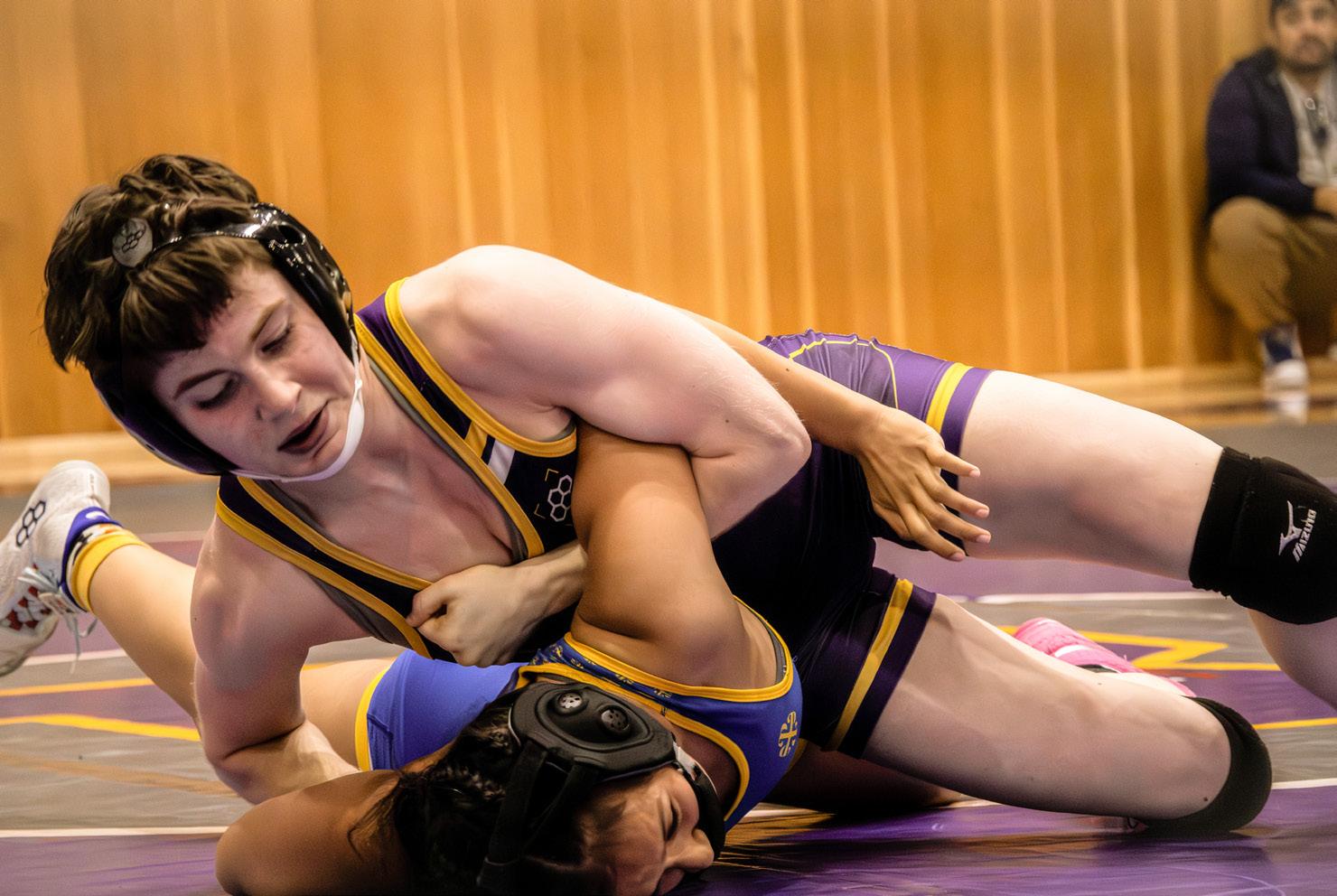
to be at practice and to compete keeps me motivated.”
That renewed focus has translated directly into stronger performances at league and weekend tournaments.
Much of this focus has been spent on reinforcing fundamentals. Wrestlers emphasized sharpening the basics: refining technique, improving positioning, and being smart and strategic within the rules.
Michalchuck said, “We realized that we had a lot to work on, but by the end of the season we were able to wrestle at a higher level.”
The results speak for themselves. Nine wrestlers qualified for CCS, and Michalchuck is statebound.
Riordan will be represented at the CCS North Region finals by Enzo Coriano ’29, Anthony Oda ’27, Ale Coriano ’26, Colin Scully ’26, Tehani Kile ’28, Hazel Nagata-Rampata ’26, and Camilla Villatoro-Fernandez ’27. With postseason competition underway, the wrestling team
By Sara Noguera ’27
As the winter season enters its final stretch, the Riordan wrestling team has begun to see the payoff from months of grueling preparation.
What started as an intense preseason focused on conditioning and discipline has transformed into measurable growth on the mat.
Earlier in the season, practice ran six days a week, packed with drilling, live wrestling, sprints, and calisthenics. That demanding routine built the foundation for a season defined by steady progress.
As Georgie Michalchuck ’26 reflected, “We saw lots of progress and made a lot of steps in building our team.”
That growth did not happen overnight. Back in the preseason, wrestler Robert Neil ’27 described
practices, “We typically start at 3:45, warm ups for about 1015 minutes, then hard drilling for about an hour. After that we start conditioning, which is live wrestling for the first 30 minutes and then sprints and calisthenics for the next 30.”
Their daily practices were extremely laborious, pushing athletes to their physical and mental limits.
At the time, the focus was simple: outwork other schools and improve every day.
Motivation across both rosters has noticeably increased since the opening weeks.
“The team overall has been a lot more motivated to be better. People are taking it more seriously and putting their hearts into it,” Michalchuck said.
She added, “Everyone wanting

Looking for any students, no experience required and athletes who want to work hard, compete, and build the program
Great fit for athletes in football , soccer, basketball , or track
Spring varsity sport
Open to all Riordan boys


By Keira Wallace ’26
Archbishop Riordan’s Varsity Girls basketball team is sure to produce a season like no other.
This year, players and coaches have worked exceptionally hard to provide skillful, hardworking players. By relying on growth and discipline, the team has already secured notable wins.
The team defeated challenging opponents, including Piedmont, a top-five team in the Bay Area.
They also secured an exciting win against Sacred Heart, along with defeating Saint Ignatius for the second time in a row.
Players on the team say they owe their successes to the discipline they have to put in during practices.
Varsity athlete Chloe Yan ’26 said that her hard work during practices helps to shift her mentality towards games and prove to herself that she is truly ready.
“I remember all the work I’ve put in, and that shifts me into [this] mentality,” said Yan. This “preparation builds confidence and readiness for big moments.”
Team chemistry has also played a major role.
Players on the team work hard to build teamwork and leadership skills both on and off the court.
Several members of the team are Honor Roll students and demonstrate equal dedication to the classroom as they do to their sport.
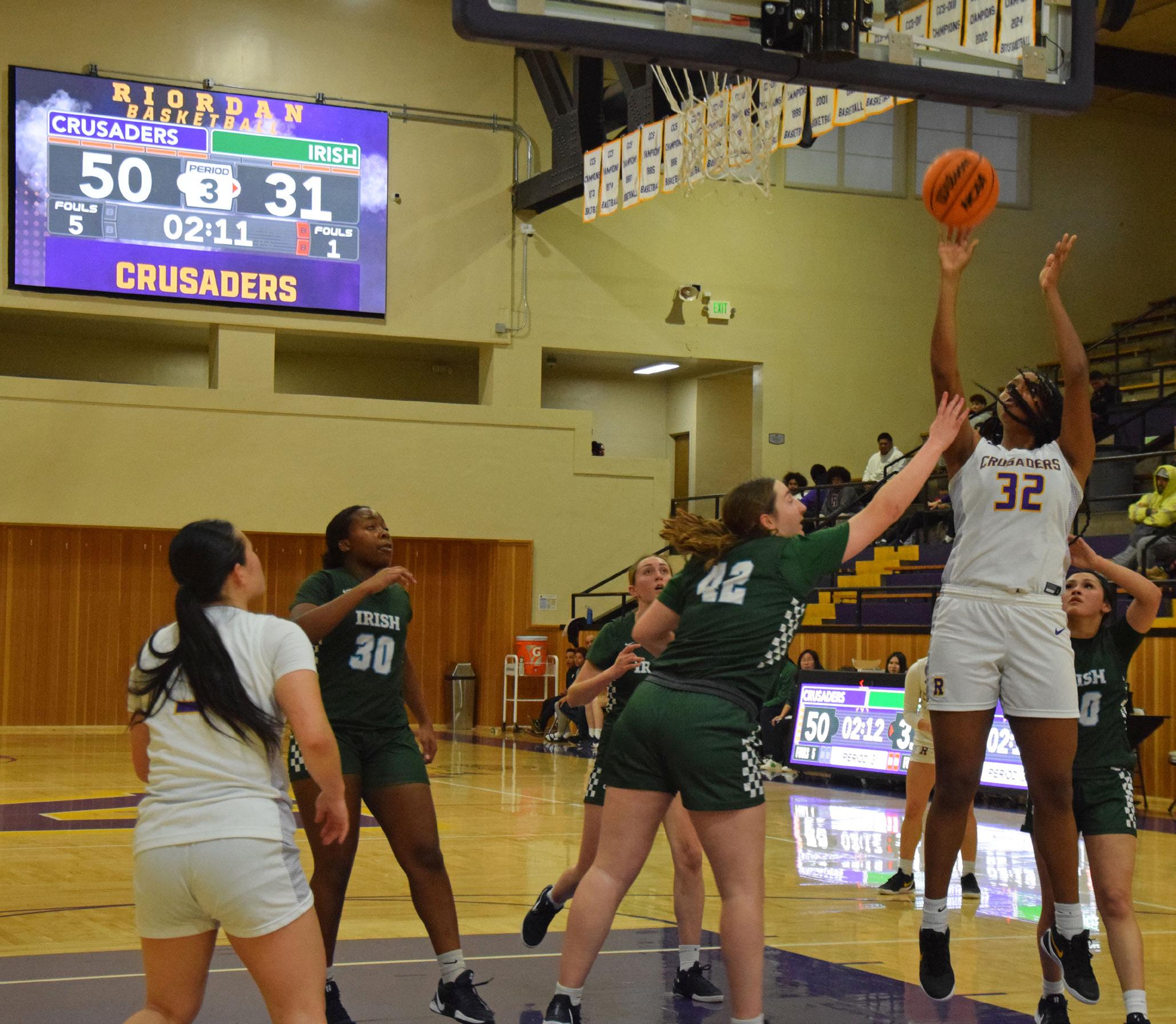
Another member of the team, Talayah Nasol ’27, reflected on her motivation for tough games and practices. She explained that her teammates are her main support
system: “We’re always with each other or even hanging out, so we support each other no matter what we go through.”
The Crusaders are having an amazing season this year, and
with their strong work ethic and determination to keep improving, they are sure to represent Riordan with their best season yet as they continue into the playoffs for the second year in a row.
By Keira Wallace ’26
This year, Riordan’s girls soccer team set off with its firstever season in the WCAL.
Here to lead this transition and help these young athletes, Riordan has welcomed a new coach: Elizabeth Rappolt, known as Coach Libby to her team.
After being recruited by coach Bill Chu to help build the Riordan girls soccer team during this historic season, Rappolt made her goals for the season very clear.
Not only was there a focus on strengthening the cohesiveness of the JV and Varsity teams, but Rappolt also focused on reducing the possibility of injuries and working on the players’ understanding of tactical game principles.
Rappolt explained that her plan included “introducing a team-level idea of attacking shape and defending shape, and how the players transition between those two tasks of attacking and defending.”
Along with coaches Gio and Cayce, she hoped “to help the players better understand their
responsibilities in the attacking and defending moments.”
In their game against Half Moon Bay, the Crusaders started their season off well with a 2-0 win, working to highlight the new coaches’ teaching strategies.
Also, here to support the team during their transition into the WCAL, upperclassmen members guided the team through victory as well.
Riordan senior and team captain Maddalena Dito was confident that the team would continue to compete to the best of their ability.
As a member of the team for four years, she hoped to help create a positive environment on and off the field, with the help of her other team captains.
“The team has changed over the years, but the transition to the WCAL is exciting for our whole team because it’s been a long process for our program to get there,” she explained.
She added,“It’s going to help us grow and improve as a team and challenge us now that we are getting to play high-level teams
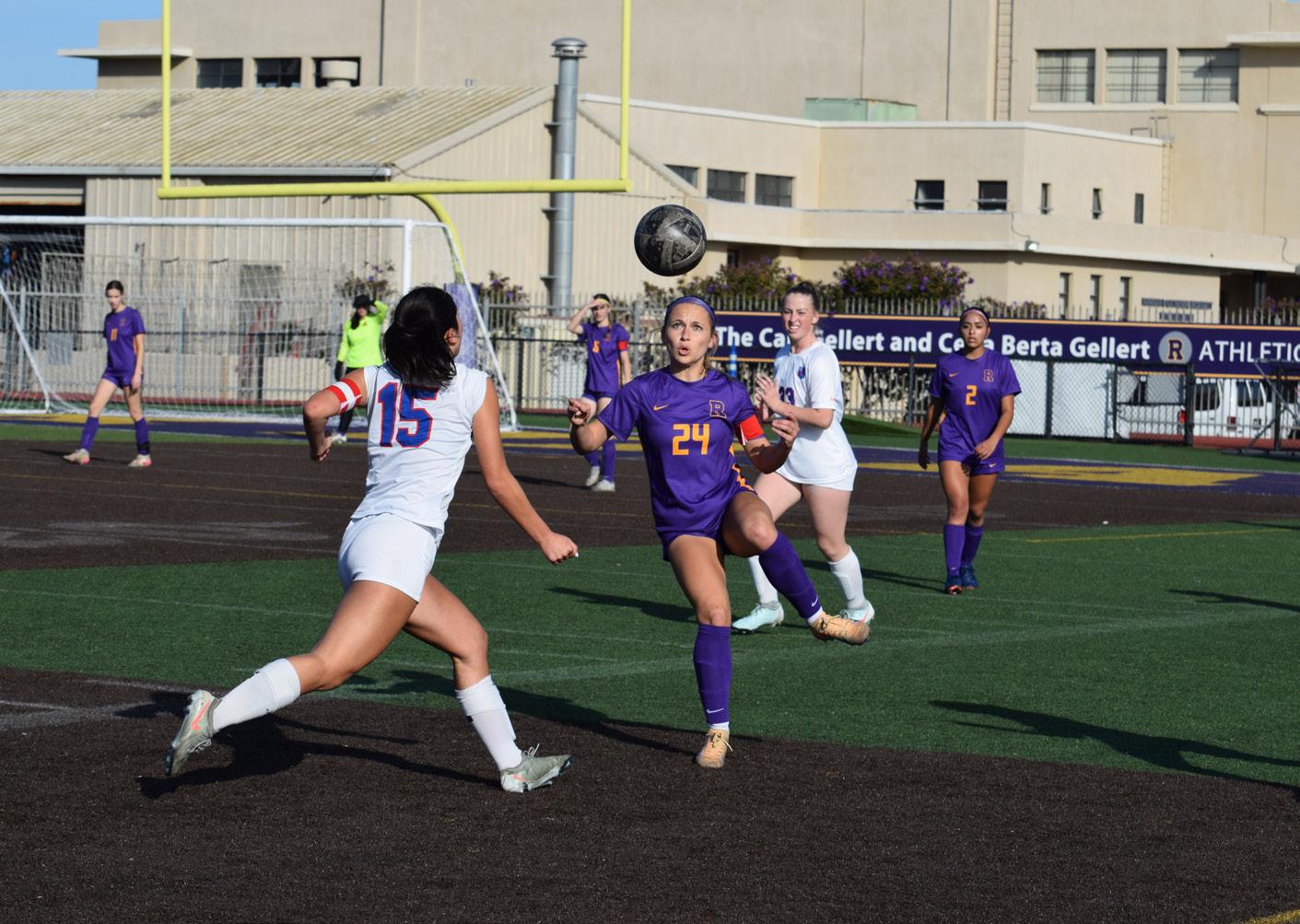
The team has changed over the years, but the transition to the WCAL is exciting for our whole team because it’s been a long process for our program to get there.
with more intensity.”
Being so prepared for this new season was evident, as the team worked extremely hard.
Carmen Giuffre ’27 stated, “Helping members transition into the WCAL is definitely a challenging goal, but we’re hoping with the growing immunity that it’ll be a really smooth and quick transition.”
By Miles Witte ’27
After last season’s amazing success, many questioned whether or not Riordan Boys Basketball could reach those same heights once again.
And although the jury is still out on that one, there is no doubt that this year’s team has dominated.
But what has helped keep the vibes up, the team energized, and the chemistry strong?
As senior and star forward, JP Phitovs ’26 said, “A lot of it comes from how tight our group is. Even with a younger roster, everyone’s bought in and willing to work for each other.”
A younger roster can sometimes take a while to adapt, but veteran players like Phitovs have helped by acting as mentors for them, as he has already gone through the same experience.
“Coming in last year, I had to adjust pretty quickly myself, so I understand what a lot of the younger guys are going through.”
He added on, saying, “As a senior now, I focus on leading by example and being a positive voice in the room, especially for

Forward Andrew Hillman
guys who are still finding their confidence at this level.”
This has definitely translated to their historic on-court performance. As of the press time, they are 23-1 overall and a perfect 14-0 in WCAL play, and have won a record 43 straight games and
counting in WCAL.
The most exhilarating game came against SI. First, Riordan won an absolute nailbiter, 5351, on Jan. 27 against their city rivals by a buzzer beater from star forward Andrew Hillman ’26.
Then, on Feb. 17, during senior night, with the WCAL Championship on the line, they defeated SI again in a double overtime classic, 100-95.
In addition to focusing on intensity, teamwork, and mentorship, the team has also emphasized discipline both physical and mental in practice.
On the physical side, Phitovs said, “We’re really focused on sharpening the details of our game. Practices have been intense, and we’re emphasizing consistency, discipline, and playing the right way.”
Meanwhile, to bolster their mental strength, Cole White ’27 said, “Before each game, we do a 60 second visualization and we share words of affirmation.”
As regular season ends and the playoffs begin, Coach Joey Curtin ’01 continued to emphasize the importance of focusing on one game at a time.
Coach Curtin said, “We are just taking things one day at a time. We don’t want to look ahead. Just at the opponent in front of us and how we can execute against them.”
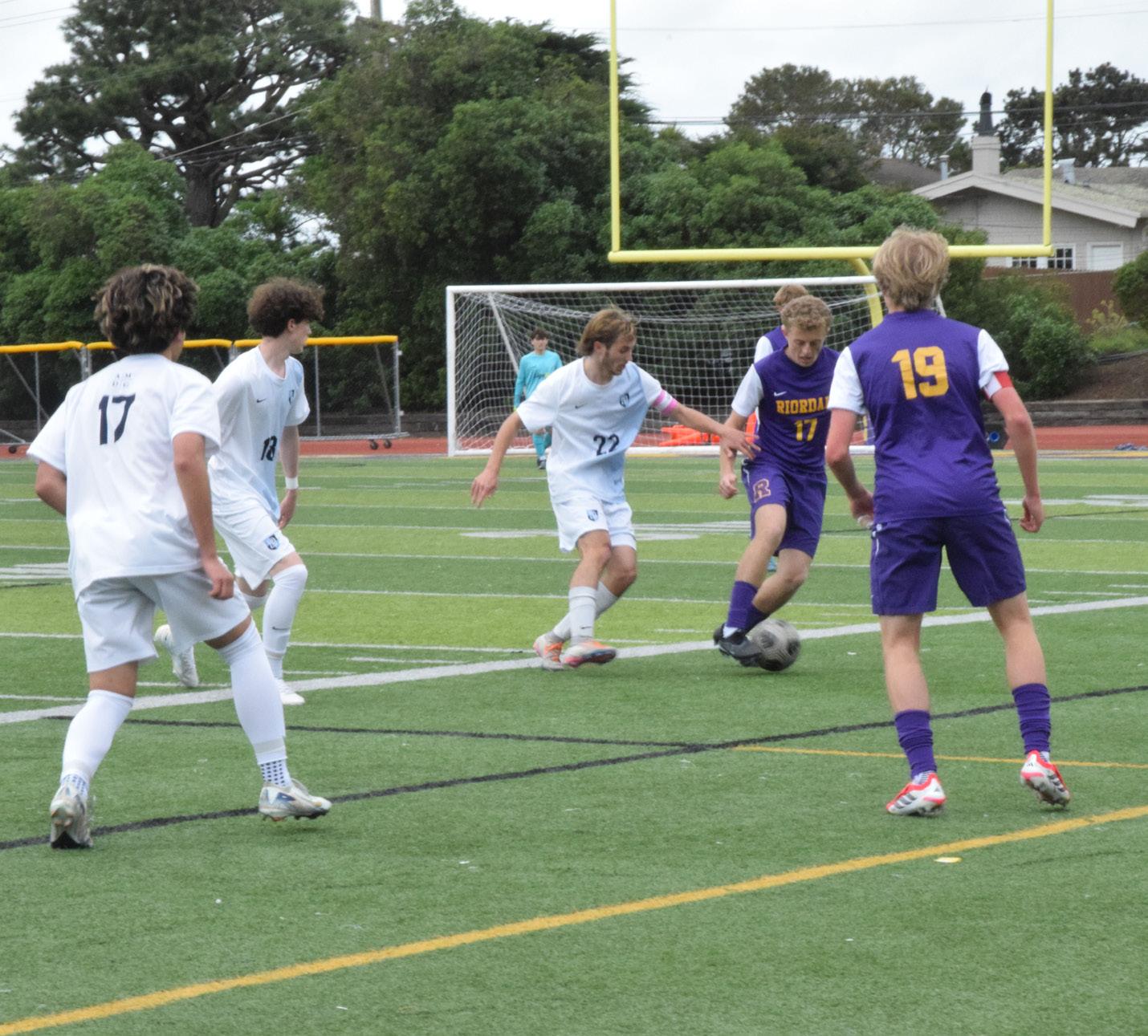
By Brayden Dizon ’27
The Archbishop Riordan Boys Soccer team has had a tough season, finishing with a 3-16 record. But even though it’s not the record they would have hoped for, the players and coaches are still worked hard to improve, with fans and students rooting for them along the way.
The team faced some challenges with injuries and tough competition this year.
In the middle of the season, it became such a big concern
that Coach Rado Stefanov recommended that players take precautions regarding injuries. He said, “These are preventable injuries and circumstances. Everyone can and is advised to take the respective actions to decrease the chance of such injuries through actions on and off the pitch.”
Senior and Captain Phineas
Kim ’26 tried to keep the team positive saying, “I hope to lead the team by example, in the sense that I want to stay positive
“I hope to lead the team by example, in the sense that I want to stay positive during negative times, and I want to stay levelheaded during positive times
- Captain Phineas Kim ’26
during negative times, and I want to stay level-headed during positive times.”
He added, “Even with a tough record, the team is showing effort and resilience.”
The coaches focused on helping the players improve their skills and team chemistry. The team put in extra practice in preparation for next season.
Coach Rado said, “As for how we’re going to prepare–everyone must be ready to step up and take on a challenge, learn and adapt.”
Late in the season, Coach Rado talked about putting an emphasis on looking at the bigger picture.
He said, “My hopes for the rest of the season are for them to continue striving for improvement in all aspects of their own personal development and overall responsibility and contribution to the team. That’s how we all win.”
However, even in a challenging season, the team still had
positive takeaways. Kim said his favorite game was a win against top ranked WCAL team, St. Ignatius.
He said, “...especially because we were able to beat them at home.”
Coach Rado also helped keep their heads up by adding, “I feel and know that the potential to reach greatness is there. We have to be brave enough to allow ourselves to take action.”
Moments like these keep the team motivated and confident.
The Boys Soccer program is working hard, learning from mistakes, and showing Crusader spirit.
With continued dedication and practice, they look forward to coming back stronger next year.
Goalkeeper Alexander Kenworthy ’27 echoed this, “We’re getting a lot of good players from JV, and we’re hoping for a strong incoming class. Hopefully, they will build on the momentum from this year and raise the intensity of the team.”
“I feel and know that the potential to reach greatness is there. We have to be brave enough to allow ourselves to take action.
-Coach Rado Stefanov
Review and Photo by Jupiter Bruneman ’26
Located at 625 Polk St., Brenda’s French Soul Food drew me in with the promise of Southern comfort food where authentic Creole foods meet French inspired soul food. Inside, the buzz of people laughing and talking combined with the aroma of Cajun spices reinforced my feeling of excitement to try new foods.
The menu was full of New Orleans classics, such as gumbo, hushpuppies, and beignets, but what caught my eye was Brenda’s Fried Seafood Po’boy.
Served on toasted French bread, the po’boy had crispy lettuce, fresh tomato, fried shrimp, and smoky chipotle remoulade. The shrimp is perfectly seasoned and appears to be firm but as you bite in, the tender meat breaks apart easily. The simple lettuce and tomato may seem unnecessary but without them the po’boy would not be able to be as fantastic as
Brenda’s French Soul Food
652 Polk St., San Francisco, CA 94102
it is. The remoulade is key: smoky and spicy flavors coming together to cut through the richness of the shrimp all while not overwhelming each bite.
What sets the po’boy apart is its balance. Often fried seafood sandwiches can be greasy or lack structure, but in this sandwich the bread stays firm and all the different flavors only come together as you take a bite.
For the price of $19 the po’boy created a fair value that satisfied my appetite and my craving for comfort food.
Brenda’s French Soul Food has a vast menu that I hope to try more parts of in the future. It reinforces itself as not just a sandwich restaurant, but as a place where people can come together for community and share food together. I rate Brenda’s French Soul Food a 4/5.

Review and Photo by Loghan Hwang ’27
Hard Knox Cafe, one of the oldest “meat and three” restaurants on San Francisco’s Clement Street, serves up comforting Southern classics to the community. On this particularly rainy day, a warm comforting meal was necessary. Inside the cafe, the walls are lined with many road signs and antiques.
I came with one goal, to order a shrimp po’boy. When I opened the menu, I was barraged with a large selection of sides to choose from: stewed cabbage, collard greens, mashed potatoes, mac and cheese, fries, the list goes on. After much pondering and contemplation, I ended up choosing the mac and cheese to accompany the po’boy.
As I opened the box, I saw the bread shining as the light hit it. Slightly toasted on the inside and smothered with their house made spicy remoulade sauce. Inside the bun it contained assorted greens, tomato, and
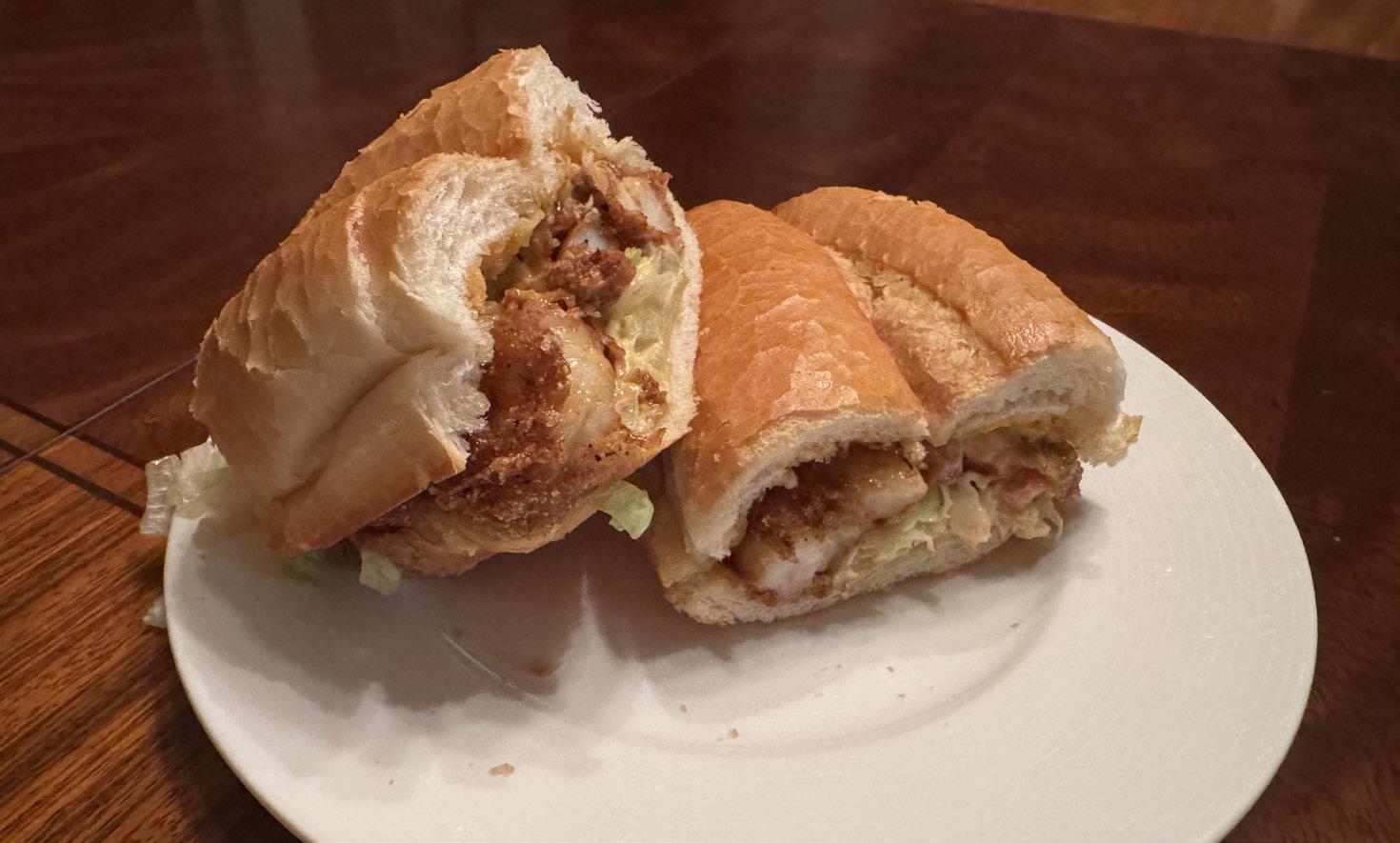
Review and Photo by Isaiah Mateo ’26
In a small shop located on 317 Connecticut St. in San Francisco, the owners of Po’Boys Kitchen bring New Orleans hospitality to the Bay Area.
Upon entering the restaurant, it is almost as if you were invited into someone’s home. The vibrant colored furniture is complimented by Louisianan themed decor.
The menu is filled with Cajun cuisine classics such as Jambalaya, Gumbo, Po’Boys, and more. After a scan of the menu, I decided to order their Shrimp Po’Boy with Dutch crunch and Onion Rings. All their Po’Boys come with a complimentary side of fries and a signature sauce.
Paired with the lettuce, tomatoes, pickles, and signature sauce, the sandwich was somewhat redeemed.
The fries were alright. They were thick, clearly seasoned, and offered a lot of meat in the middle, but there was no crunch factor and became dry after a couple of bites.
Hard Knox Cafe 2448 Clement St., San Francisco, CA 94121
the main event, tiger prawns. Dredged in a cornmeal mixture, the prawns were light yet crispy without that oily aftertaste you would get with fried food. Accompanied by the fresh veggies, sweet and spicy sauce, and the fluffy nutty bread, the entire dish came together in harmony. The contrast between soft and crunchy created a unique texture which got me reaching for more. On the side, a beautiful golden mac and cheese. Thick, creamy, satisfying. The cheese coated my tongue, making my taste buds dance from the extra Cajun seasonings added in the cheese. Not your average mac and cheese. A great pairing with the po’boy.
Overall, the food was great and well seasoned, which I rate a 4/5. I would definitely recommend and will be going back to Hard Knox Cafe.
The Shrimp Po’Boy was not my favorite. The sandwich was lacking in substance, as there were only three to four pieces of shrimp given. The shrimp itself tasted store-bought and not fresh compared to other shrimp you would find in the city. The Dutch crutch bread did prove as a solid alternative from the traditional French roll with its slightly sweet taste and crunchy exterior.
Lastly, the onion rings. This was my favorite dish from the restaurant. They were this dark, golden color and were huge compared to your average onion ring. The exterior was crunchy and had a buttery taste. The onions were soft and not too thick–yet present enough to give that onion flavor. These were light and extremely easy to eat.
Overall, I would give Po’Boys Kitchen a 3.5 / 5. The Shrimp Po’Boy was disappointing, but the other items delivered decent results. They still offer numerous other items of Cajun cuisine that I would return back to try.