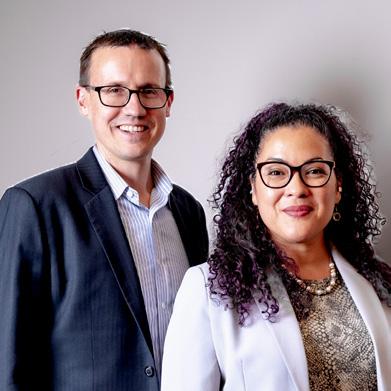
Adi Martínez Román and Neil Weare Co-Founders and Co-Directors, Right to Democracy
We are so grateful to all those who have in some way contributed in these efforts to build a movement for democracy, equity and self-determination for people in U.S. Territories. We are grateful to our team, to Lyvia Rodríguez Del Valle and Alejandro Cotté Morales at El Enjambre, and to Hadiya Sewer, Sarah Thomas Nededog, Sheila Babauta, and Andra Samoa, our Community Directors in each territory, whose creative vision and organizing capabilities helped us prepare and execute the wonderful Community Dialogues in all the territories. We are also thankful to our Board of Directors and Advisory Board for believing in us and supporting our vision and execution of this project in such diverse ways. The achievements we present were definitely a team effort that combined the extraordinary qualities of those that helped us shape and execute these activities.
We are especially grateful to all the participants in the community dialogues for your openness and trust, courage, and for sharing with us your thoughts and aspirations. We recognize our responsibility of maintaining ourselves accountable and responsive, and will use the positive energy we received from you to keep building this movement. Thank you for giving us the momentum needed to push on. Seguimos adelante.
Thank you. Gracias. Si Yu’us Ma’åse’. Ghilisow. Fa’afetai tele lava.
Methodology
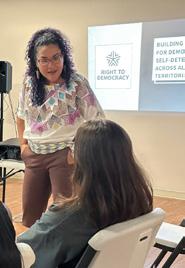
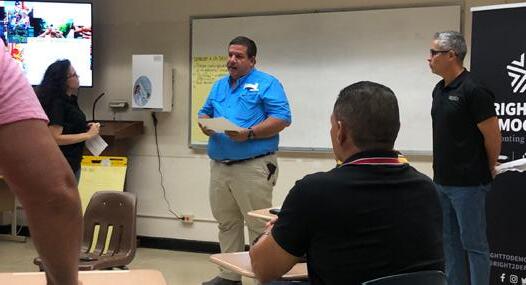
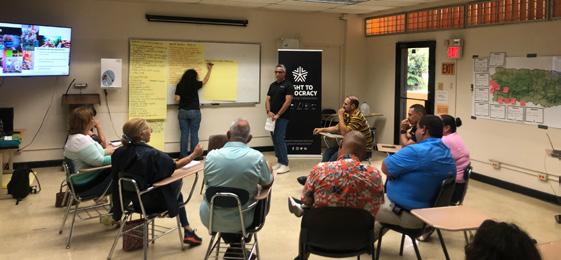
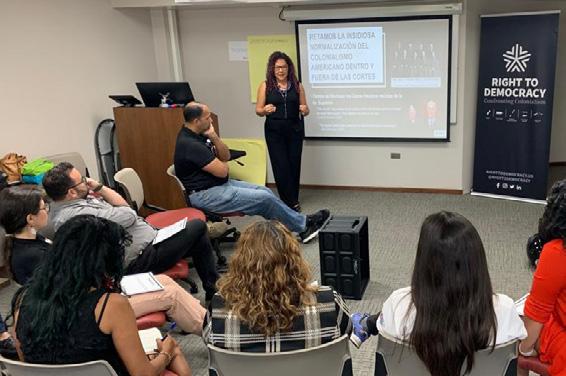
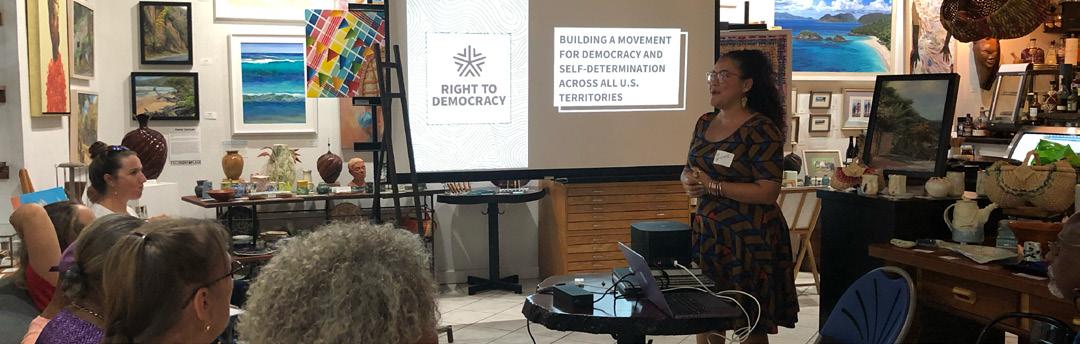
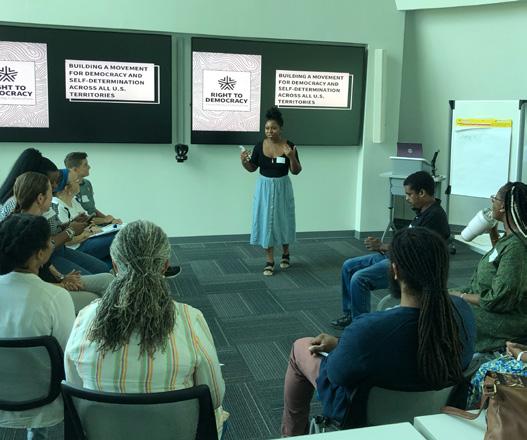
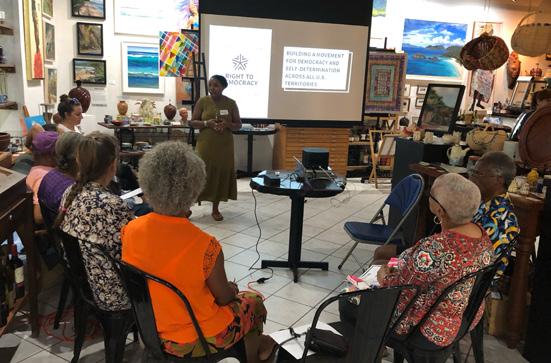
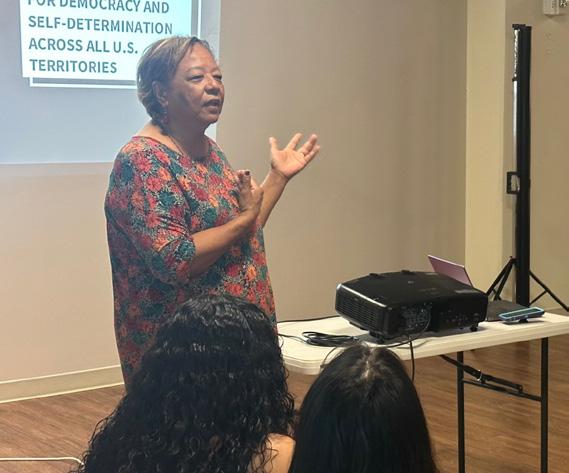
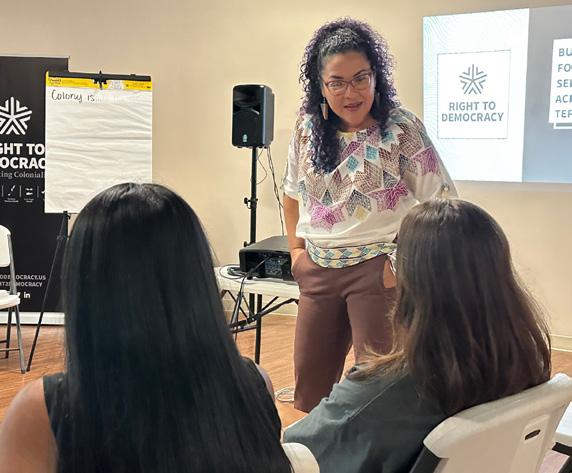
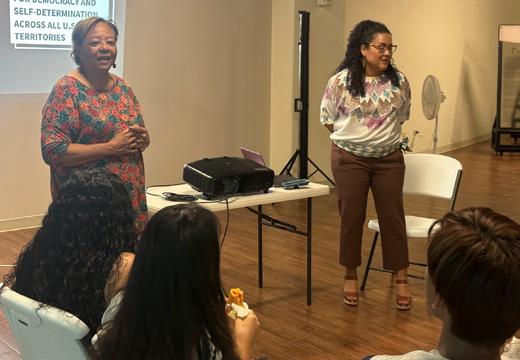
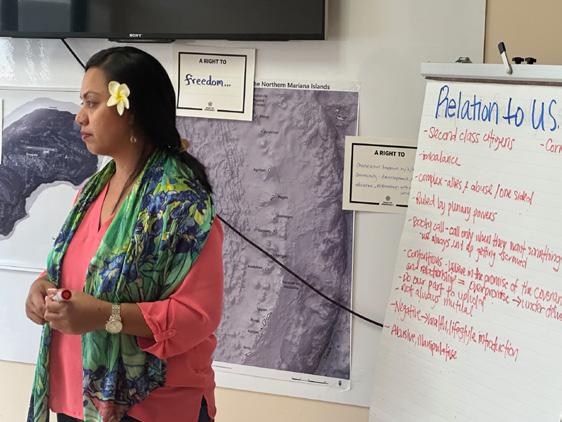
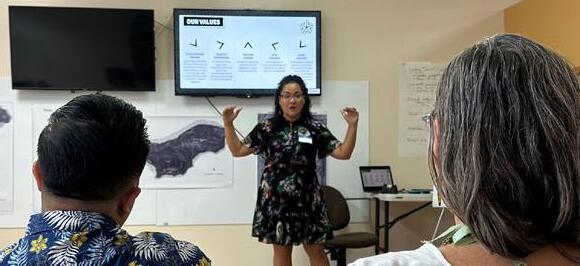
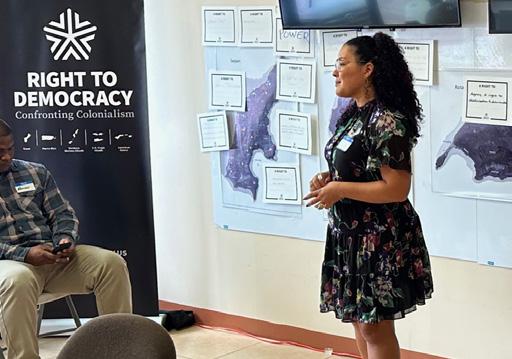
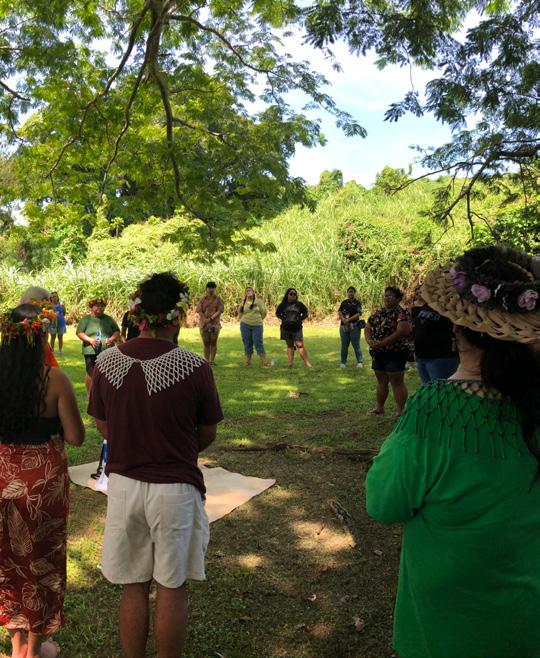
The community dialogues conducted as part of Right to Democracy’s Listening Tour were held in-person in each territory and lasted 2-3 hours in order to give the participants the opportunity to thoroughly express themselves. Each session began with a short introduction, in which RtD’s Co-Director Adi Martínez Román shared information about the organization and the political and legal framework that governs socalled “unincorporated” territories. Participants were asked not to focus on any specific political status result, but instead on a series of interrelated topics, including:
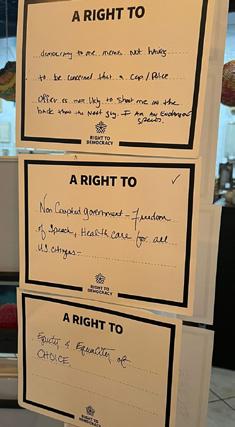
▷ What does a right to democracy mean to you?
▷ How would you define the word ¨colony¨?
▷ How would you describe the relationship between the U.S. and the territory you live?
▷ How does this relationship affect your daily life at an individual, family, and community level?
▷ What does the term citizenship mean to you?
▷ What factors must be included as part of any process leading to decolonization?
▷ What specific strategies would you recommend to increase public awareness in the U.S. about the undemocratic colonial framework governing U.S. territories?
▷ What needs to happen for you and others in your community to feel included in efforts to advance decolonization in U.S. territories?
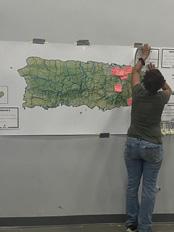
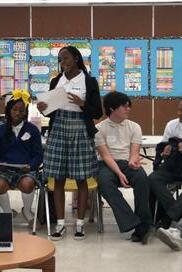
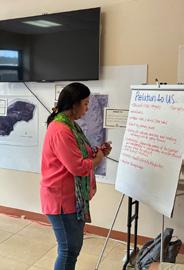
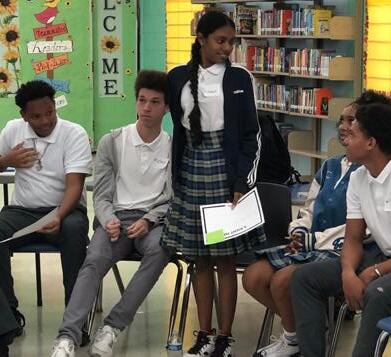
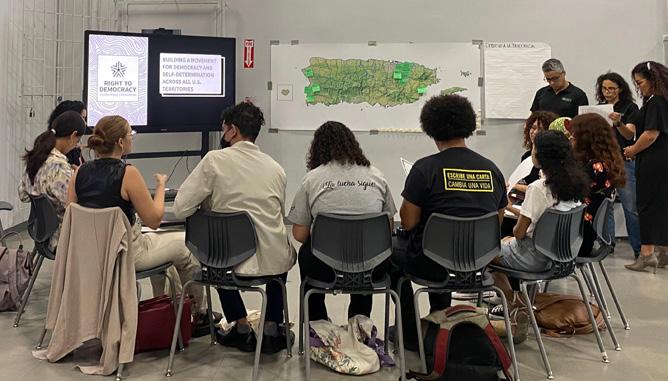
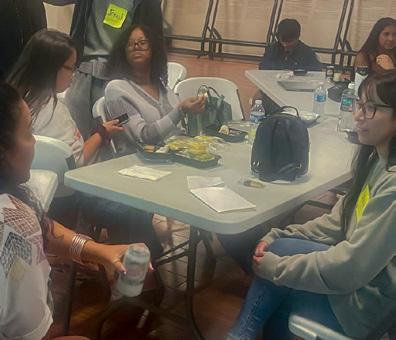
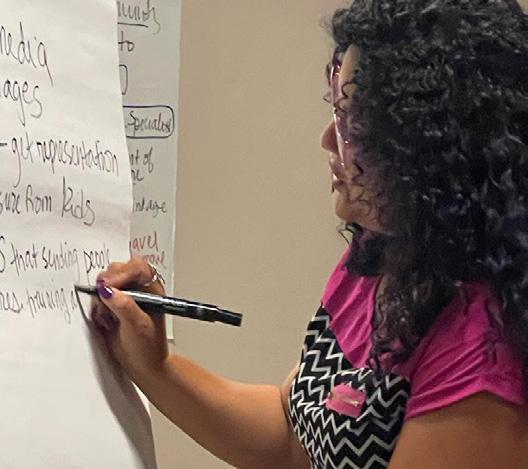
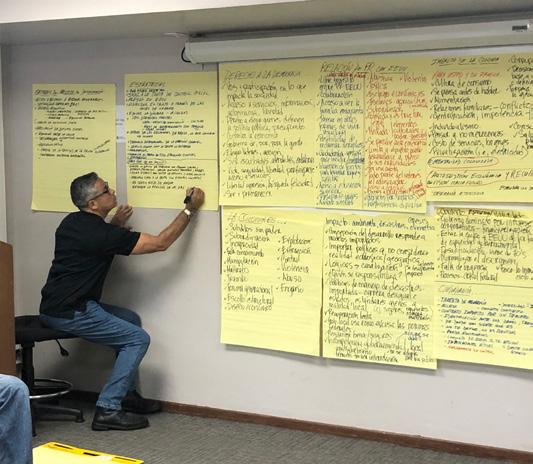
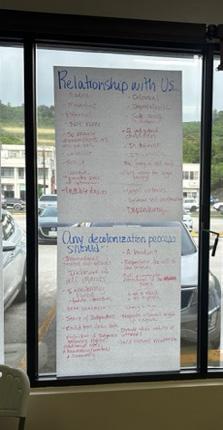
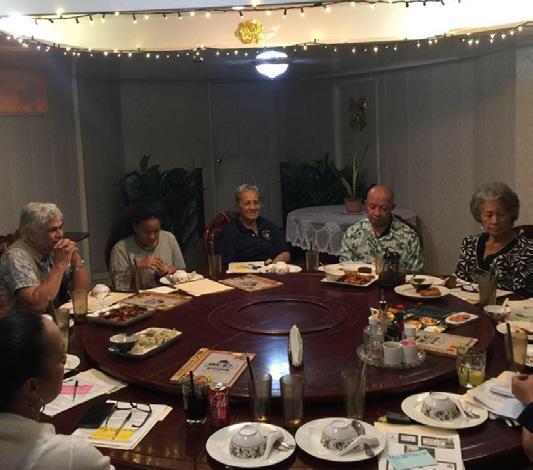
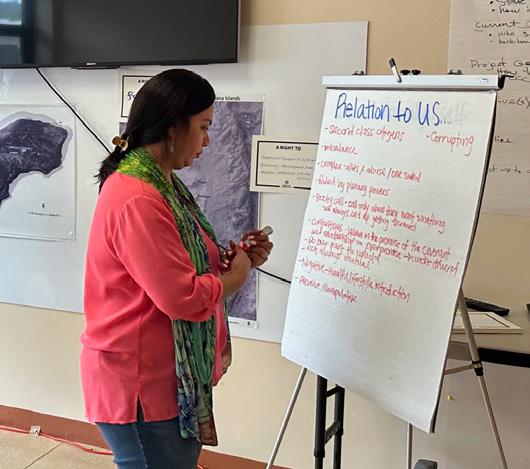
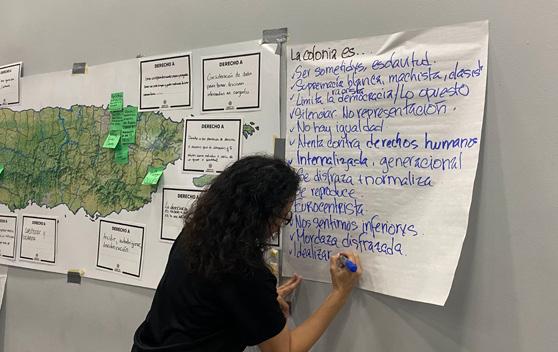
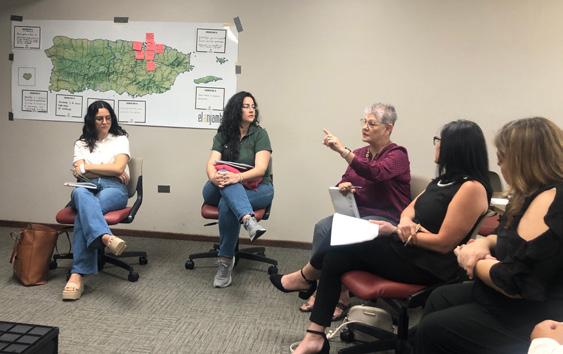
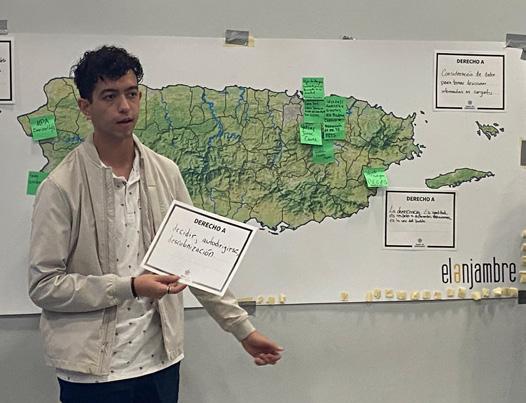
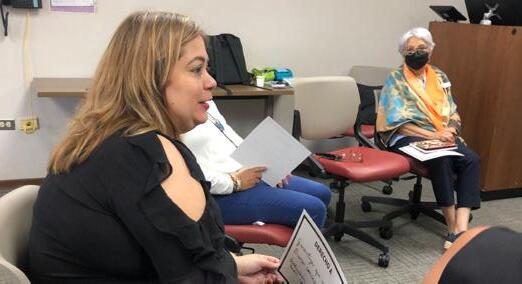
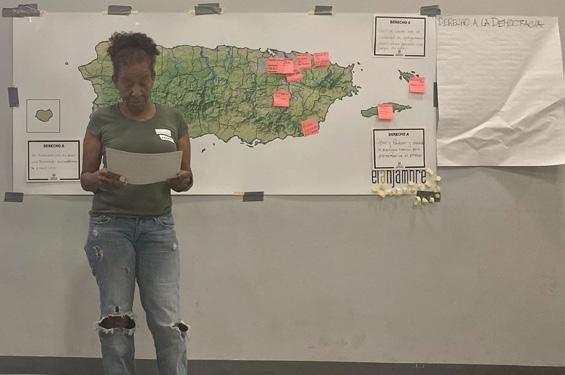
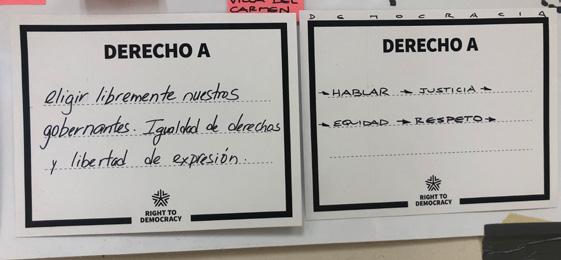
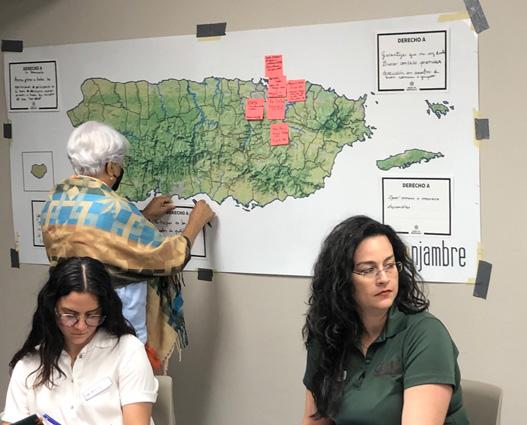
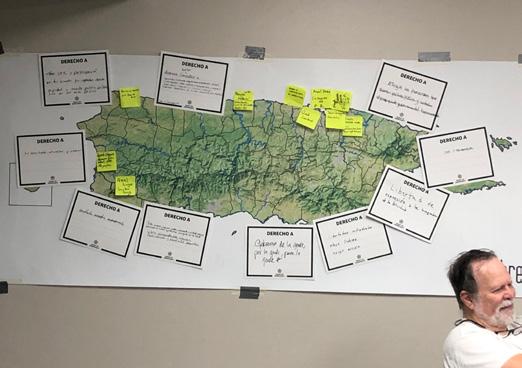
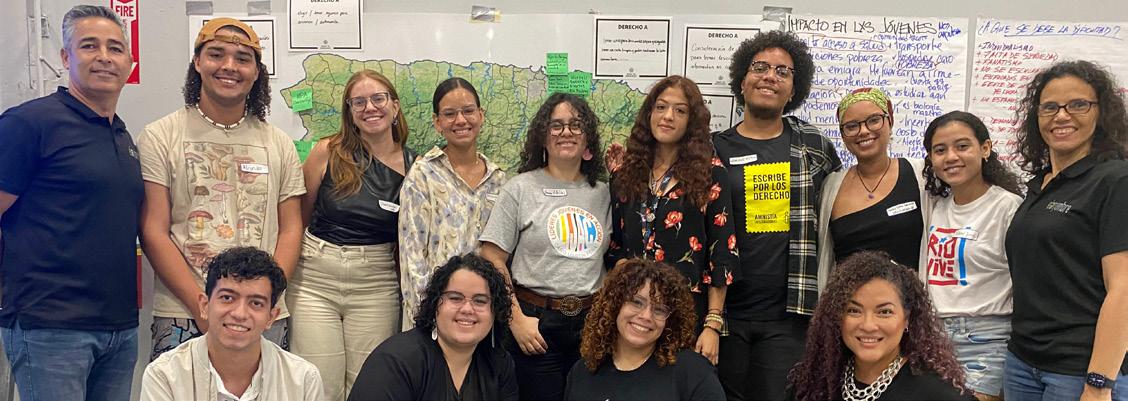
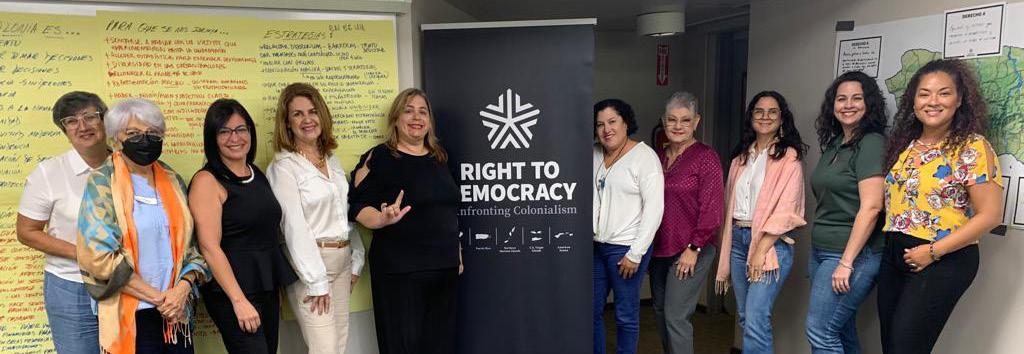
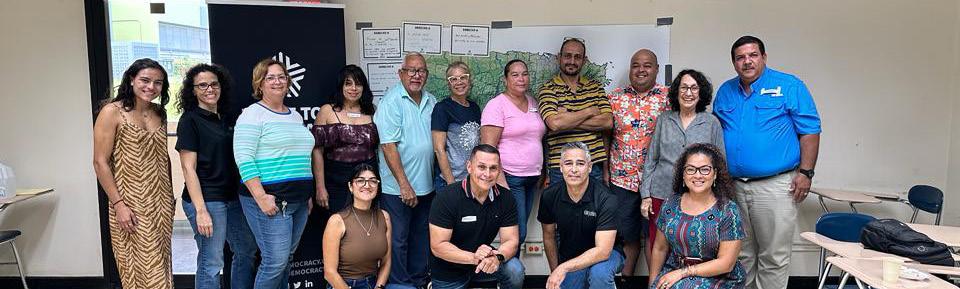
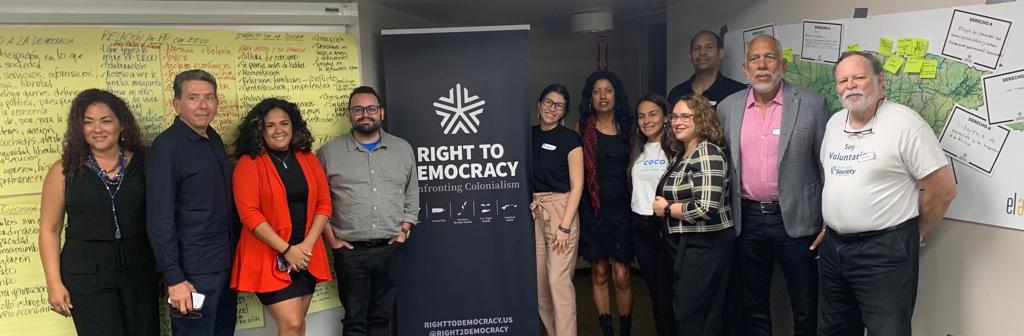
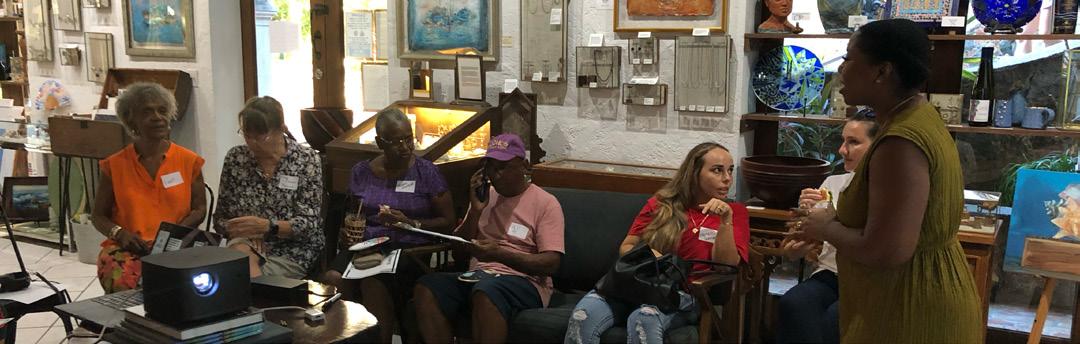
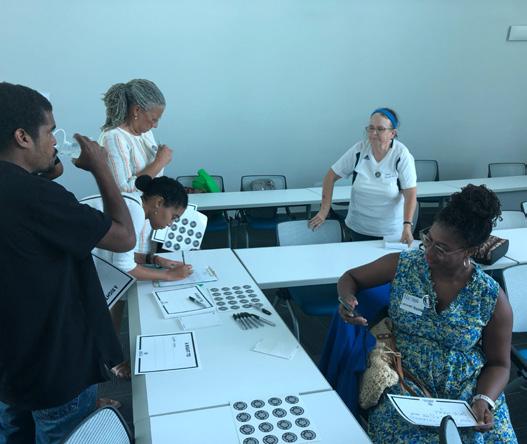
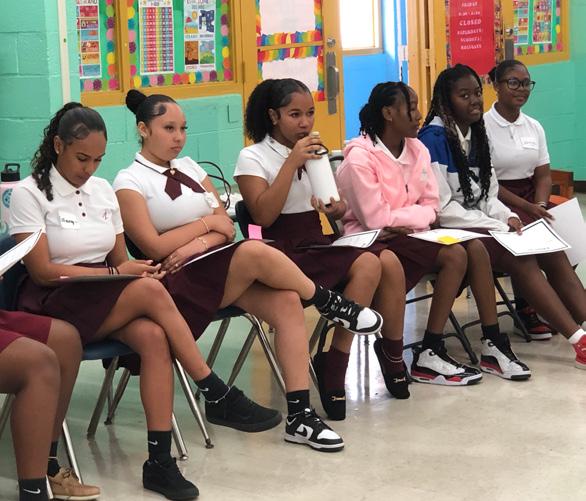
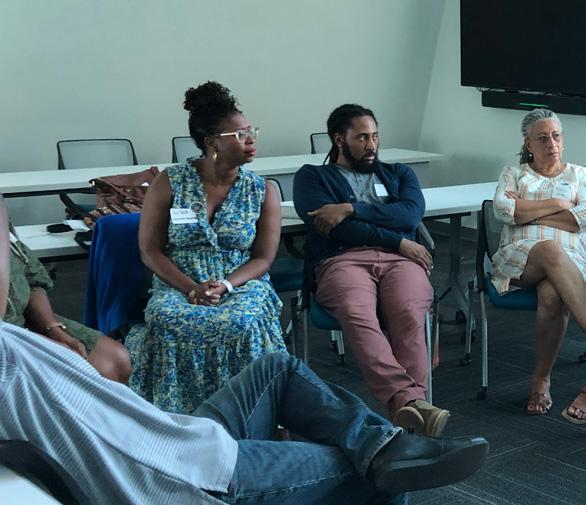
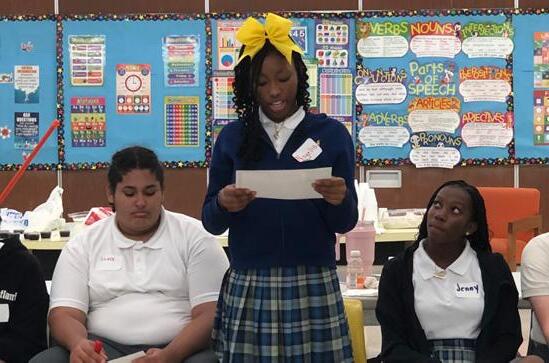
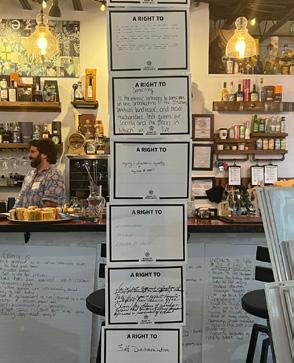
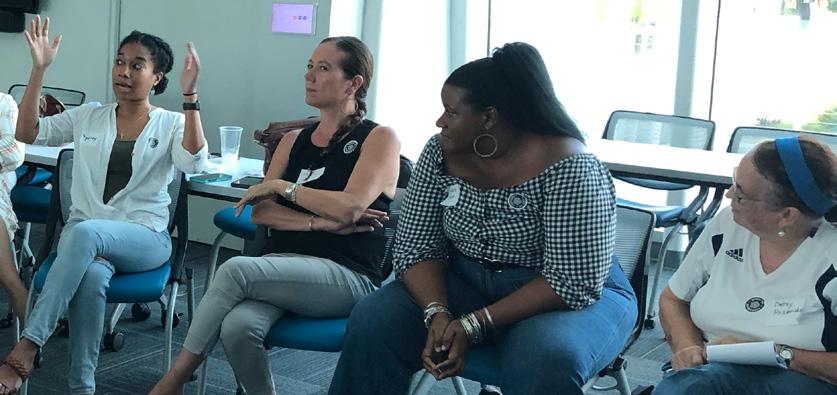
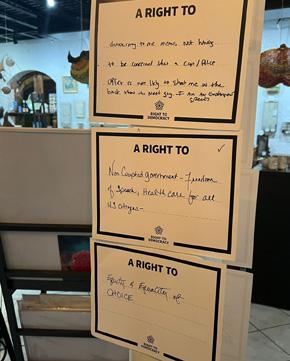
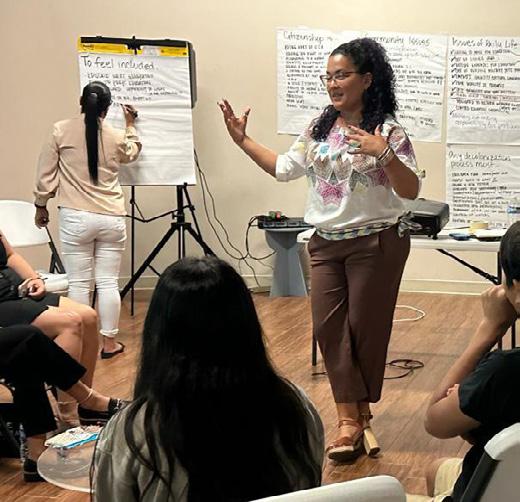
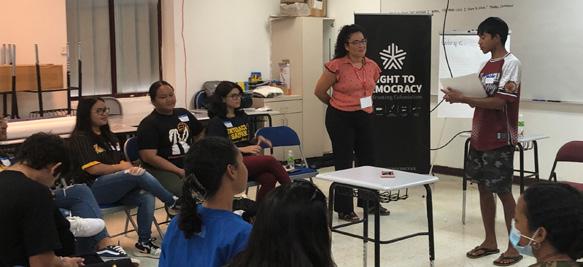
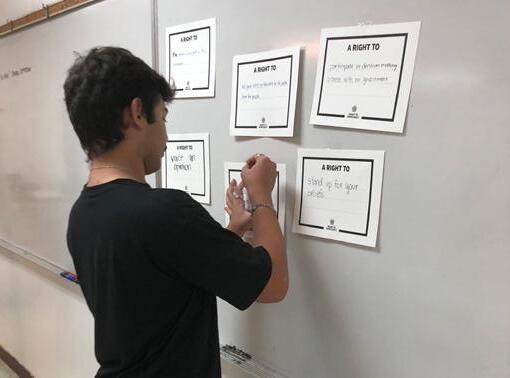
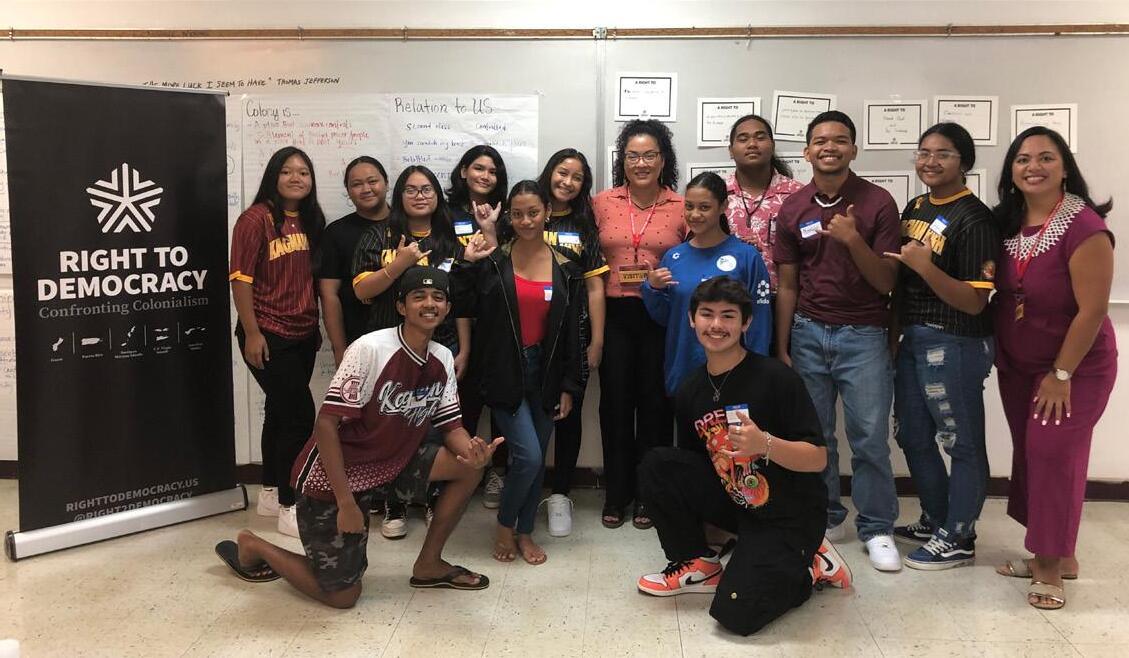
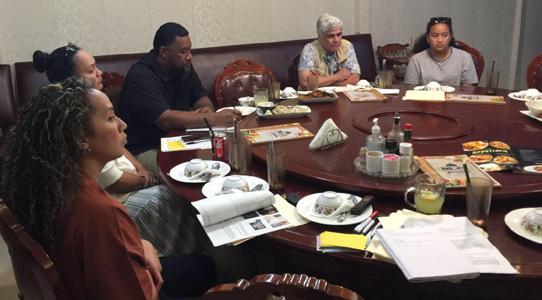
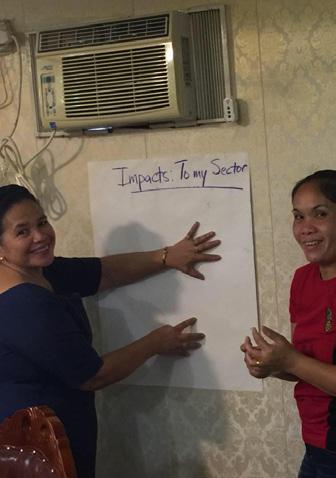
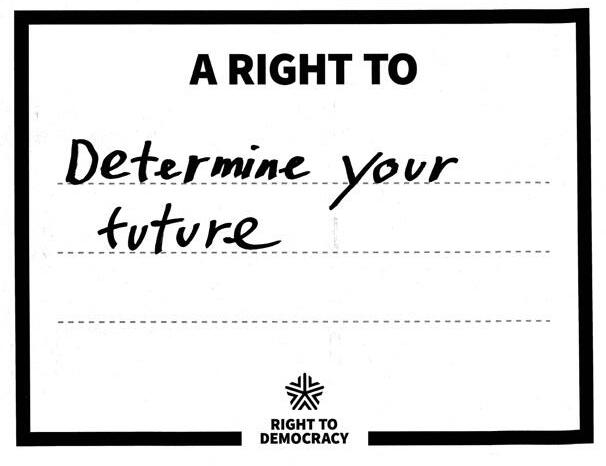
Each session was facilitated by RtD’s CoDirector Adi Martínez Román with the assistance of El Enjambre and/or Community Directors from each territory. Upon arriving at the dialogue sessions, each participant received a card where they described what they understood a right to democracy to mean. Each person introduced themselves, the name of the organization they represented, and shared their definition of democracy. During each session, participants’ responses to the guiding questions were written out on large poster-board sheets of paper, and the sessions were also recorded and transcribed. Right to Democracy also identified two participants from each session to follow back up with to ensure its report accurately portrayed the views of the session. Specific comments from participants have been kept anonymous to allow them to speak freely. In American Samoa, the sessions were conducted in a more informal manner to encourage greater community participation.
IN
PUERTO RICO DIALOGUES
Democracy
Two main aspects stand out in all the responses: the political aspects of democracy, and the material or economic ones. Both aspects are not necessarily perceived as separate, but rather as joint dimensions of democracy.
All groups described political aspects of democracy, such as the freedom to participate in public discussion, and the right to decide freely on matters related to the “common good.” Thus, the relationship between freedom, rights, and participation in decisions that concern the development of public policy was the most common aspect in all dialogue sessions. One of the participants explained, “for me Democracy is the right to participate in the decision making about things that affects us as a people .” Not being able to participate is a negation of the basic right to freely express ourselves and that our petitions are actually headed.” From this perspective, democracy is not a “passive” right but is practiced through active participation in public discussion (through marches, protests, community meetings, assemblies, media, educational talks, and other practices). It is not limited to voting, although it includes it. In other words, from this perspective, democracy is both feeling and being part of decision-making, and “participation in all the processes of life in society .”
However, these political aspects of democracy are not possible, or are greatly limited, without the material conditions that allow for the freedom, time, and other necessary means to exercise them. The majority (four out of six) of
the dialogue sessions in Puerto Rico pointed out this economic aspect of democracy. For example, the relationship between democracy and the economy was the first point mentioned in the discussion by union leaders. According to one of the union leaders, the right to democracy should mean that “those who generate wealth enjoy it .” In other words, from this point of view, exploitation is contrary to democracy, which reflects on the tension between capitalism and democracy. From their perspective, the democratization of the economy is a fundamental aspect of a democratic society.
One of the participants in the dialogue with young people also emphasized from their “community experience” that democracy has to do with the material conditions of life such as “having a safe and accessible housing space .” Similarly, one of the participants in the session with climate justice and environmental groups suggested that “the right to democracy for me is to have broad and simple access to housing, security, education, health and information .”
According to another environmental leader, democracy is “the right to control our economy .” Another environmental leader emphasized that “democracy is the government of the people, by the people, for the people ” and that “participation is its most fundamental
Colony
The majority of participants in the six dialogue sessions stated that the colony is “not having rights ,” as well as living a reality of “exploitation ,” “oppression ,” and “dependence ,” without “decisional power .”
One participant stated: “In a colony there are no rights, everything is ruled by the colonizer, by imposition .” Likewise, the colony is described as being “racist .” It was also described as a system that, through the denial
characteristic .” Several participants in the dialogue session with health and elder care professionals stated that the right to democracy is defined according to equal access to essential resources and services: “for me it is accessibility to services, a decent home and being heard .”
of proper education of the people affected, is able to manipulate and promote dependency. The previous expressions suggest that the colony is a complex reality with legal, political, economic and social dimensions that oppose the right to democracy. To summarize - and in contrast to the previous question - according to one of the participants in the dialogue with the young people, “the colony is the opposite of democracy .”
“The colony is the opposite of democracy.”
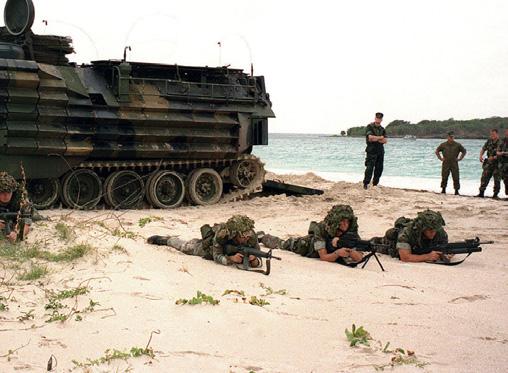
U.S. Marines conduct a demostration for Peruvian and Dutch Marines on Vieques Island, Puerto Rico (Photo Credit: The U.S. National Archives, July 15, 1996).
Citizenship
For most of the participants in the dialogue sessions in Puerto Rico, citizenship implies having rights and belonging to a country. These rights are accompanied by responsibilities that citizens must fulfill to guarantee the common good. However, according to several participants, citizenship is a “deception ” and serves as a mechanism of exclusion that, among other factors, is informed by racism.
Being a citizen is linked to the “right to have rights ” and to exercise them. However, an important factor that was reflected in the vast majority of the dialogue sessions is that the citizenship discussion revolved mostly around American citizenship. This, despite the fact that the moderators were very specific and emphasized that the question did not refer to United States citizenship itself, but to citizenship as a concept, to citizenship in general.
It is striking, then, that many of the responses throughout the dialogues refer to “Puerto Rican identity ,” the “second-class citizenship ” that Puerto Ricans have, the use of U.S. citizenship as an “element of manipulation ,” to how the
“citizenship that Puerto Ricans were granted” is “almost equal” to that of “people of African descent . . . because the rights of black people are violated daily and made invisible.” Likewise, for some, Puerto Ricans “have guilt” for being U.S. citizens, compared to other immigrant groups who are not citizens, while for others, citizenship is “a title imposed in 1917 .”
Some participants pointed out the contradiction implied by citizenship understood as a source of rights, when those who are not defined as citizens (such as undocumented immigrants, among others) are excluded and denied their rights. For example, according to one of the union leaders, citizenship is “a deception that excludes, a divisive and exclusionary entity.” It “should be synonymous with community, without limits” since “we are citizens of the world” but, “from a normative perspective, limits are established.” This vision is like that of a community leader from the East, who states that, “I see it a little broader, I am a citizen of the world, and as a citizen of the world I must have the rights that being alive gives us .” This same participant later elaborated on the matter:
Relationship between the U.S. and Puerto Rico
Initial responses from participants regarding the way they view the United States’ relationship with Puerto Rico described it as “violent, ” “abusive, ” “toxic, ” as well as “unequal, ” and where “control ” reigns. These were the words most used among participants to describe their perception of the relationship between the United States and Puerto Rico. “Unfair” and “manipulative,” were the other two main adjectives used to describe the relationship. The Fiscal Control Board, which exercises broad powers over Puerto Rico’s finances and governance, as well as Act 60, which provides certain tax incentives to people who establish residency in Puerto Rico, were specific examples used to point out ways in which this relationship materializes in public policies and in the “expulsion” and “displacement” of the population in Puerto Rico.
“Citizenship gives rights, but it is a control .”
The understanding of the concept of citizenship is strongly influenced by the Puerto Rican political context, and that the discourse and political imaginary around citizenship continues to be highly influenced by the legal perspective of the term, compared to a broader perspective that refers to the participation and practice of getting involved in public and political affairs in society.
Regarding the positive aspects of the United States’ relationship with Puerto Rico, the vast majority of participants pointed out the possibility of unhindered travel to the United States. Likewise, “federal funds, ” “scholarships, ” and “social security ” were the other three main aspects mentioned. Another positive aspect mentioned by some of the participants, although to a lesser degree, is the economic development experienced in Puerto Rico during certain historical periods of the relationship. Another participant, in the dialogue session with health and elder care professionals, mentioned the Americans with Disabilities Act (ADA) as a progressive law that, unfortunately, is not adequately enforced in Puerto Rico.
However, when talking about the positive aspects of the relationship these were problematized in the conversations. For example,
in the dialogue session with the union leaders, the relationship was described as “contradictory ” since, although it must be “recognized” that “there were economic changes . . . and development,” they “were built on questionable bases.” According to other participants, “ even good things are the product of negative relationships that have occurred .” For one of the participants, positive aspects such as “common currency” and “common defense” are “the biggest lies” since “there are no rights .” Another community leader argues that the relationship of dependency with the United States has meant that they do not have “food sovereignty ” due to the “aid received” which does not encourage local production.
Colonialism and Everyday Life
The increase in the cost of living due to the high cost of food and essential services such as health services, education, as well as electric energy (i.e. LUMA, Puerto Rico’s privatized electricity operator) and transportation, were pointed out by the majority of participants and groups as ways in which everyone’s daily lives are affected by colonialism. Another important aspect mentioned by almost everyone is the lack of decent jobs for the youth. This last point has devastating effects on families since it compels young people to leave island, and this creates family separation and “abandonment” of elders and communities. U.S. cabotage laws and the Jones Act, which restrict transportation to Puerto Rico by foreign aircraft and ships, as well as government bureaucracy, both at the state and federal level, influence
the high cost of living and precariousness in communities. For example, a leader from Puerto Rico’s western region expressed that the “unequal and racist treatment by FEMA impedes the recovery processes of many communities.”
Furthermore, according to one participant, “government aid is decreasing, and it is not enough ” to live. From his experience, the situation in which families find themselves is critical: “either I pay the electricity, or I stop eating, or I don’t buy medicine .” Lack of affordable housing was another important issue in most sessions as a factor affecting daily life. All the above have a great impact on the mental health of many people, according to several of the participants. The “displacement ” of
Puerto Ricans for not getting affordable housing, essential services, or employment, contrasts with the benefits received by people with great purchasing power who come from the United States and move to Puerto Rico as part of Act 60. Colonialism and daily life are closely linked in all these processes according to the participants. For example, in the case of Act 60, many new residents are involved in part of the displacement of communities around Puerto Rico since they cause a great increase in prices in the real estate market and in housing rents. This makes it increasingly difficult to have enough affordable housing for the majority of Puerto Ricans.
According to participants, the displacement experienced in communities around Puerto Rico is one of the most important factors that affect daily life and is palpable not only in families and
neighborhoods, but also in jobs, schools and organizations. The lack of decent jobs for youth, of health services for the entire population but especially for the elderly, and the poor quality of these services, reflected among other issues in the number of referrals and the long waiting time in order to be treated, are concrete realities that impact the daily lives of people and organizations. Along with the above, the Fiscal Control Board and PROMESA are pointed out by all groups as colonial impositions that have a great negative impact on the lives of Puerto Ricans and on the work of all participating groups. The obstacles to union organization, the impact on the emotional health of older adults and young people, displacement, the lack and precariousness of essential services, privatizations and the constant rise in prices, consumption taxes, and bureaucracy are seen as part of all the colonial scaffolding.
Strategies for Decolonization
The importance of people being active participants in their own learning and education was a central idea discussed to take into account in any decolonization process. Raising awareness about colonialism and how it operates, as well as the process of decolonization and its political possibilities, must, according to most participants, occur through an inclusive process, in clear and simple language, without being simplistic. This process should not be governed by political parties and should be deeply participatory and egalitarian, where all voices from all corners of the Puerto Rican archipelago are heard, and not just the ones from the “metropolitan area” of San Juan.
According to the participants in the different dialogue sessions, throughout Puerto Rico there is some confusion around concepts that are important when discussing colonialism, such as the concepts of citizenship, democracy, nation, nationality, State, country, among others. To
develop this clarity of concepts, it is necessary to educate clearly and effectively through different media and approaches so that “people understand them.” Furthermore, it is important to develop some type of archive, “repository,” or data bank (physical and/or digital) where different groups, people, and organizations can access information, analysis, research, and reflections, among other sources of knowledge.
Mass mobilization and civil disobedience, as manifested in the struggles against the U.S. Navy, and in the citizen’s protests that ousted the governor of Puerto Rico, Ricardo Roselló, emerged in several of the discussions about recommended strategies to raise awareness among the American people and pressure the U.S. government to assume its responsibility in the decolonization process. The development of a mass political alliance among different groups in civil society to remove the fiscal control board and promote self-determination and “sovereignty”
at various levels (for example: food and energy) are other “strategies” suggested by several of the participants.
The importance of unity with the diaspora, and the development of coalitions with the other unincorporated territories of the United States are also strategies that were presented during the dialogues in Puerto Rico. The organizational process must be based on the strengths and aspects that unite the Puerto Rican people, and not on those elements that create greater division, argued the participants. The focus on “commonalities” allows for the creation of alliances to advance politically. For this, according
Inclusivity
When asked how to feel included in our efforts to dismantle the colonial framework, participants emphasized the importance of involving grassroots and community leadership in our initiatives rather than politicians and political parties. Also, they emphasized the importance of integrating young people at all levels, without condescension or paternalism, as a way to make them feel included and keep active in the movement. The recognition of diversity in Puerto Rico and the diaspora (class, racial, gender, and age diversity), the organization of workers as a class, and not as groups fragmented by occupation or political parties, and the integration of the issue of colonialism and decolonization in
to participants, it is important to use a diversity of media, ranging from the written press, radio and television, to internet pages and social networks, as platforms for well-organized campaigns that reach the people and have an effect on the government.
the work on the climate crisis of environmental groups were other ways to keep getting diverse people involved in these issues. It was viewed as important to promote different groups to integrate into the processes and movements to achieve the decolonization of Puerto Rico.
Finally, in order to feel included, it was widely mentioned by all groups that safe spaces of dialogue and opportunities for collective action are very important for groups to feel included. We should strive for these spaces not to be partisan or ideological, but integrative of diverse ideas and generations that can focus on what unites us and not on what divides us.
DIALOGUES IN
U.S. VIRGIN ISLANDS
Democracy
For dialogue participants in the USVI, democracy is a term generally associated with self-determination, with a transparent government, and basic human rights. Rights that were repeated by participants include freedom to choose, equal protection under the laws, free speech (“having a voice ” and “to not be punished or silenced ”), equitable access to healthcare, education, to choose your own places of worship, and to political participation. One participant stated, “democracy means learning the richness of your ancestry, your ability to understand how we have always been for freedom, ” uniting the idea of freedom in ancestral cultures. Democracy was also related
to the concept of self-governance and to the capacity to access land and develop generational wealth for future economic survival.
Also particular to the USVI, a participant related democracy to not feeling the danger of being shot at by a police officer due to his race, and also the right to controlling natural resources and for them not to be taken away. Participants also mentioned the values of unity and respect of other people’s opinions as important for Democracy. Participants emphasized the right to participate in government, making the laws, choosing who governs you, and to have officials that act with respect and honesty.
Colony
Participants defined colony as a place “governed by others, ” “without the consent of individuals .” One participant stated: “A colony is any place where people have been systematically denied the opportunity to determine their own destiny .” Colony was also categorized as a “chaotic, ” “unstable, ” “restricted, ” and “violent ” reality, where people are “occupied, ” and “subjugated .” It was described also as a paternalistic relationship, such as a parent telling a kid always what they have to do and how.
A colony is a political relationship of dependency, where there is “no right to vote ” to the most important representatives that rule over the society. A colony is a “model of enslavement, ” a “prison .” One participant stated: “This colony of the Virgin Islands is
a model of enslavement We don’t have any real say in what we want, how we want it, within that table in Congress . But I mean, really is so I still feel we are being governed by a master, which is the federal government .” A colony, for most participants, is “not having any say in what we want .” It represents “the disenfranchisement of a population, ” a possession used as an “experiment .”
Some participants describe citizenship as belonging to a collective that is advancing its own destiny. Citizenship, for other participants, is related with practical circumstances and activities like being able to travel and having access to certain social services. Participants also defined citizenship as involving “rights and responsibilities .” On the other hand,
for others citizenship is a “fragmented ” and “unclear ” reality, which at the same time is “disingenuous ” because it is experienced as a “second-class ” one by most of the people. Lastly, while the “sovereign defines who is a citizen, ” and therefore excludes some people from this category, “all humans should be treated with dignity .”
“A colony is any place where people have been systematically denied the opportunity to determine their own destiny.”
Relationship between the U.S. and the U.S. Virgin Islands
According to participants, the relationship with the United States is “complicated, ” “dishonest, ” and “delusional .” Participants indicated that the delusion was also within American democracy itself, since people there build up around a concept of American democracy that does not really apply to everybody. Furthermore, it is an unbalanced relationship that “encourages a spirit of servitude .” On this line, participants explained the way in which the relationship has produced an economy of service to the outsider that undermines the needs and desires of local communities: “If you’re living in this kind of an economy, the primary objective is to make those who are coming happy to see us, because without them, how do you survive? … You’re compelled to focus on benefiting the Other rather than what can I do to benefit myself? You know, in terms of the dynamic within my own community .”
Therefore, the relationship with the U.S. to some becomes a “hostage relationship ” where local residents do not count, and where the emphasis in being “America’s Paradise” actually makes it their playground where they can do whatever they want and people living there should not complain. Also, this relationship makes it easy for “federal funding to be misused, ” and people do not have the constitutional right to a lot of federal programs, such as Supplemental Security Income (SSI). It is to live in a consumerist culture that is abusive. According to participants, it is also a business and predatory relationship of extraction.
Among the positive aspects mentioned by participants are having a U.S. passport and mobility, federal funds, and some kind of “protection .” Participants also mentioned that constitutional law and advancements were positive mechanisms to have available. Yet, while most of these aspects are much needed, they also represent “bread and circus,” and a “good propaganda” from the U.S. that is “dishonest ” since its main goal is to keep people “complacent ” with what they have. Participants agreed and expressed that theirs is a relationship based on great dependency.
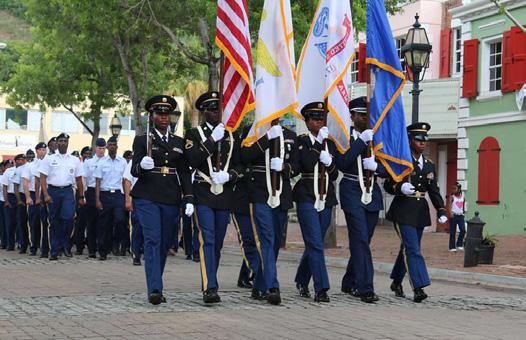
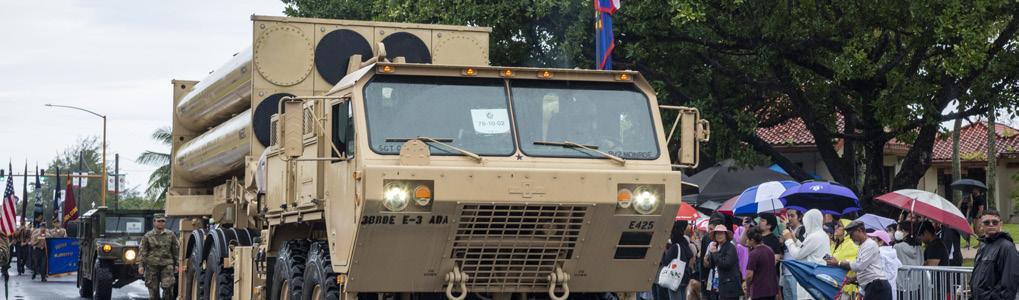
Members of the Virgin Islands National Guard participated in the Memorial Day Parade held in Christiansted, St. Croix, VI.
(Photo Credit: Sgt. Priscilla Desormeaux, 30 May, 2016).
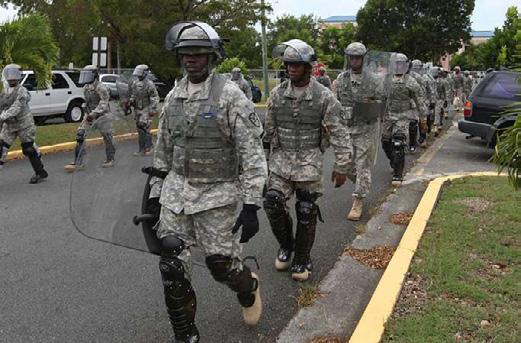
Soldiers from the U.S. Virgin Islands National Guard march in formation outside of Juan F. Luis Hospital St. Croix, VI. (Photo Credit: Spc. Samantha Ross, 4 June, 2014).
Colonialism and Everyday Life
Participants argued that there is a general sense of powerlessness that affects how people feel. There seems to be a “lack of self-worth ” among some in the local population. Many desire to leave and make their living in some other place, outside of the Virgin Islands. This lack of selfworth is part of broader mental and psychological challenges fostered by the colonial relationship, according to some participants. Also, there is frustration and depression associated with the deception caused by the lack of consistent leadership, of people from the community that reach positions of power and end up only thinking about self-aggrandizement and not the common good. According to one participant: “Hey, we’re absorbing colonization, because of the go along to get along mentality . We have become polite in our colonial life, nodding off and accepting .” The effect of colonialism impacts the culture.
Participants emphasized also that the lack of affordable goods and access to services in crucial areas such as healthcare, housing, and the lack of good education or higher education. There is concern about how all this produces significant dependency on federal funds. As an example, one of the participants shared: “I was self-employed and I made a good salary, but I didn’t have healthcare. And so when I became pregnant, I couldn’t pay the fees to go to my regular check ups. When I asked for help from the government, they told me I made too much money. And then they told me I should quit. … I quit, but then I didn’t have money to take care of so many situations, becoming dependent on food stamps on Section 8. I feel like I got assistance, but also that federal assistance can be a trap .” Other challenges with services mentioned were the lack of access to banking services, credit cards, and such.
These challenges seriously impact communities, pushing people to leave and look for better opportunities elsewhere.
Displacement and gentrification were among the most pressing issues identified in the dialogue sessions. Participants emphasized that when people leave “It is not a migration by choice It is a migration by necessity .” In colonial realities, they emphasized, leaving is even seen as “an achievement,” as one of the participants explained: “I think it induces a kind of schizophrenia . In a sense, a desire to escape in order to better myself …And I think this is something that exists historically, when you look at any place that’s been colonized for a long time . In Africa, for instance, you know, the educated Africans wanted to escape Africa, escape the country to get to the imperial motherland. Because once you had done that, you had really achieved. So the sense of really being able to achieve and aspire within your own country, you know, is diminished.”
Several participants also commented about the corruption of local authorities and its effect on their everyday lives. In this line, the experience is one of cynicism and opportunism. One clear example, according to participants,
is the dysfunctional electric system, with frequent blackouts that make it difficult or nearly impossible to work effectively from home. As one participant expressed: “The territory is a result of several levels of archaic and very paternalistic mismanagement, and turning a blind eye .” Also, drug trafficking is also a common denominator mentioned by participants as concerning challenges in the community related to the USVI position close to the U.S.
Being “treated as though we are of no consequence ” was identified as a very important reality that must be dealt with everyday. And yet, participants said these issues are hidden behind the idea that the USVI as “America’s Paradise.”
One observed: “It also props up the notion that paradise can be purchased and that those that have resources are more deserving .”
Another person used the term “commodity tourism ” to describe the dominant way of making tourism, one that erases all historical and social context from the beaches, and beautiful scenery of the Caribbean. It is another example of the “erasure and whitewashing of our history ” that has a negative impact in the local culture.
Strategies for Decolonization
Participants mentioned strategies such as developing a decolonial tourism that counters the reigning “commodity tourism” and serves as a decolonization strategy. This can be part of a broader critical, popular, and “down-to-earth” educational strategy that helps in developing a vision of decolonial futures. Creating podcasts that focus on the themes of colonialism and decolonization could also be helpful. Using art and recruiting popular artists in order to spread the message was also suggested.
Some participants proposed getting the attention of the federal government and searching
for international solidarity as two important aspects to spread the struggle. Empowering diaspora through grassroot organizing is key to that process. Others also emphasized the necessity to have clearly defined definitions of options and insisted on the importance of education for people to be able to make informed decisions when choosing the way to end the status quo. Decolonization has to be conceptualized, participants indicated, as a process: “I appreciate the use of the word ‘process’ . Colonization was a process . Decolonization similarly has to be a process .
Colonization began by adding certain attitudes and assumptions about the world and how the world is and ought to be organized. And I think any decolonization process has to include, yes, education, but an education such that you decolonise the mind. It has to be intentional.” Also there has to be a real commitment from the federal government to honor the decisions and respect human rights during these processes.
One aspect pointed out in the Virgin Islands is the use of humor, joy, and creativity as important
Inclusivity
To feel included there must be communication and work with local organizations. Part of this communication can consist of newsletters and social media. Network building and having the representation of all the non-incorporated territories in all the activities were two ideas raised during different dialogues. Some participants talked about the importance of
tools or ‘weapons’ for decolonization. Making the decolonization work a fun, attractive, and pleasant one should be one of the challenges and opportunities to pursue. This is also a good way to engage the youth. The importance of spirituality and healing is something that some participants raised and pointed to as something of great importance in the whole process of decolonization.
learning the local histories and sharing local documentaries with community and civil society groups as part of a broader process of decolonization work and organizing. Visibilizing local initiatives, artists, and efforts is of utmost importance to be inclusive. It is important to follow what is happening locally and help people outside know.
“Colonization was a process. Decolonization similarly has to be a process.”
GUAM DIALOGUES IN
Democracy
Participants in Guam defined democracy as having a “sane” and “meaningful” government where rights are respected and promoted. Democracy is related with human rights and the freedom to speak and have a voice, according to other participants. For some, democracy also has to do with being able to live a happy life and to “choose the future you want to live in .”
One participant expressed concern at framing a democracy as the rule of the majority without the proper protections of the fundamental rights of minority groups, as has been lived by indigenous populations in the territories: “I have mixed emotions, because I don’t agree with a certain kind of democracy, because democracy is a majority. What if the majority is wrong? Or mess up?” Another participant also mentioned that
democracy should not only be about voting, since voting has become more of a popularity contest and is not effective to get the best candidates in office.
Participating and taking part in the government were identified as important aspects of democracy. For one participant, democracy is also related to women having rights over their own bodies. “Human rights ” and “selfdetermination ” are two aspects repeated by some participants as essential aspects of democracy. The right to freely express the cultural beliefs of the people was presented as another aspect of democracy that needs to be taken into consideration. “Freedom, ” “social justice, ” and “equality ” were also mentioned as integral components of the right to democracy.
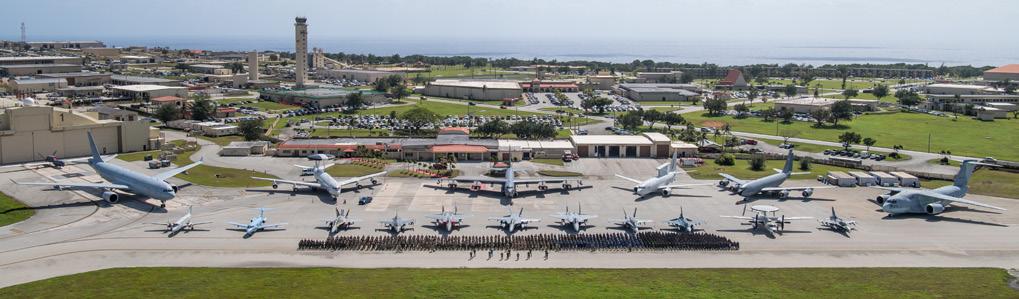
The density in Andersen Air Force Base demostrates why many Guamanians feel their territory is valued for military purposes. (Photo Credit: Robert Sullivan, Feb. 12, 2020).
Guam’s 78th Liberation Day parade in Hagåtña. (Photo Credit: Shaina O’Neil, 21 July 2022)
“I feel that we haven’t voted for our status yet. So, I have some mixed feelings about citizenship.”
Participants in Guam defined a colony as a “possession, ” a “prison, ” and “both a victim and instrument of domination .” They described it as a “controlled area, ” a “concentration camp, ” an “unnatural environment, ” where native people are treated as second-class citizens, as “inferior, and punished” for being themselves, even as animals. One participant expressed that colonial domination “should be a sin.”
In a colony, there is a “change of culture ” through “indoctrination ” that “expands other’s advantages ” but negatively affects the
Colony Citizenship
For most participants the concept of citizenship is related to “equality ” and “respect .” A citizen is someone that has rights, benefits, and responsibilities. Being a citizen is being part of a community with rights. Citizens identify themselves “as one people,” and as “belonging to one country .” In that line, one of the participants indicated: “I feel that we haven’t
indigenous population. A colony is associated with dependency, specifically a participant stated that it is depending on “good imports versus sustainability,” because local production is eliminated. Others mentioned that a colony is about “taking land that is not yours .” One participant indicated that it is an “expansion for someone else’s advantage .” Militarization without consent was another consistent theme of what it means to be a colony.
voted for our status yet So, I have some mixed feelings about citizenship .” For other participants, citizenship requires “doing what is right for the community .” It is also understood as a “passport to rights .” Others described citizenship as simply being part of the United States.
For some of the young participants, citizenship establishes an “identity relationship, ” as it goes into defining who you are, and your relationship to the “land where you are born.” It has to do with “being recognized .” Citizenship is a “title ”
that gives “status ” and is related to a type of “hierarchy.” Also, young participants identified citizenship with “having a passport ” that allows you to travel. For others, citizenship gives you access to U.S. “protection .”
Relationship Between the U.S. and Guam
The relationship with the United States was described among participants as a case of “Stockholm’s Syndrome, ” where the victim develops an emotional bond with the perpetrator. Participants described this relationship as “toxic, ” “hypocritical, ” and “humiliating .” Guam’s relationship with the United States was also referred to as a “one-sided ” and “oppressive ” relationship, where the territory is valued as a strategic one for military purposes. Contrary to the land and the territory, according to the participants, the people are not valued, and instead feel “battered ” and “used .” One participant said: “it’s like they’re using us and we’re anxiously attached to them .”
Characterized by “dependency ” and “political interference, ” Guam’s relationship with the United States is one where “rules are imposed, ” and where some see themselves as simply “passport holders.”
For young participants, the relationship with the United States is based on the fact that Guam is considered a strategic territory for military purposes, transforming the land into a military base. The relationship is described as a “restricted ” one, where people are not able to vote for the President nor Congress. According to the participants, it is an “unequal ” relationship with “less rights ” that is “damaging to native people .” It is a relationship characterized by
“loss ”: loss of land, loss of culture, loss of language.
Nevertheless, all groups of participants identified how the relationship is not only onesided. As one adult participant expressed, “in all forms of oppression, both the oppressor and the oppressed play a role in maintaining the relationship .” In this same line, they described the relation as one of “mutual instrumentality, ” in which the people of Guam would have advantages of the U.S. passport to travel, and federal funds in case of emergencies, among other benefits. On the other hand, young participants identified that through military service many people can further their careers and professions. They also mentioned the importance of maintaining good relations between the United States and Guam, mainly because of family and friends they have living in the states. It is important that people can move and have the same rights to be able to.
Yet, for many young participants, the relationship can be “cruel ” and “toxic .” Specifically, it was concerning to them that it often seems the only source of jobs, education, and health services come from the United States military. One young participant explained how cruel the relationship can be by reminding others that their grandparents had been prohibited from speaking CHamoru in school, and that she “remembers in kindergarten having to bring a Bomb Bag” due to heightened tensions between U.S. and North Korea. She explained that they were told to bring “emergency backpacks” filled with personal supplies in case something happened. She remembers those days being terrified about not seeing her parents ever again, and “that was a cruel thing to do to us.”
Colonialism and Everyday Life
Most participants characterized Guam’s everyday life as one of constant dependency on federal funds. For many this is a situation that pushes people to having to join the military. Also, displacement was a consistent theme. Displacement is described as people having to leave and move abroad because of the high cost of living, the lack of health services, education opportunities, affordable housing, and career jobs outside of the U.S. military. Another big issue is living in fear for their security, as explained by one participant: “Every time the news spreads about the missiles or another missile defense build up, there’s always a conversation that occurs in our family and extended family Should we stay or should we go? You’re really insecure, with fear that if we stay, you know, is it safe to stay?” All of this divides families and harms the community.
Colonialism is also lived through a sense of “powerlessness ” by the native population where there is “abandonment of elders and local
culture .” The “normalization of militarism ” is experienced through the public media, the school’s curriculum, and in the general economy. Participants recognized that the effect of colonialism can be different depending on your economic status, because if you are in the top percentage of earners, the relationship is very beneficial, the middle-class suffers much more the high prices of everything, and low-income people are submerged in dependency.
Another theme that was discussed was the divisiveness that is created internally in Guam surrounding issues related to the U.S. “Because we’re territories, there’s this whole layer that deepens those divides and makes it difficult to resolve the issues .” This was tied by participants to politics being dysfunctional, to local government’s corruption and the bad condition of infrastructure. In its effects on local politics and culture, colonialism is normalized, especially for the youth.
“What’s the difference between you being an American citizen in Guam and me being an American citizen in Colorado?” “Never.”
“[H]ow many times in a week do you think about political status?”
“[E]xactly. In Guam, we think about it every day. We’re reminded of it every day.”
For many young participants, the colonial experience is characterized by lacking and limitation: of education resources and opportunities, of quality goods, of health care and specialists, of employment, of recreational activities and spaces, of jobs, of affordable housing and homeless shelters, of traffic safety, of non-kill shelters for animals. They also emphasized issues of “food security, ” as the military is using their lands, and there is a high dependency on importing the food they eat.
These realities force people to move away and be displaced. Many young people have to go to the states if they want to continue their studies.
Some expressed feeling the internal toil of having to choose between leaving in order to grow professionally and economically, and of leaving their family and parents behind. According to some participants, there is always this pressure and emotional attachment to come back, but the high cost of living makes it impossible. According to participants, the high cost of housing is set by the military, and there are “less benefits for non-military people .” On the other hand, local businesses “are forced to raise prices” and cannot compete with online businesses. This social context is a breeding ground for corruption and drug trafficking.
Strategies for Decolonization
Most participants shared communication and education strategies like developing a podcast focused on decolonization and the Insular Cases, using social media to educate, mobilize and organize, and bringing the discussion on colonialism and decolonization to the schools. They emphasized the fact that many people are not familiar with the concepts of colonialism, decolonization, or the constitution, and pointed out that to achieve decolonization, there is an important first step of “decolonizing our minds .” In order to promote better understanding of their own condition and empower people, education is key.
Participants also mentioned getting the attention of Congress by doing things that change the narrative. One of the participants said, for example: “What would happen if one said,
We’re not going to call ourselves territory of Guam anymore? We’re going to call ourselves a U.S. colony , and what would happen if [our non-voting Delegate] and all the delegates instead of saying the honorable so and so from the territory of Guam said, I am the delegate for the colony of Guam, what would happen? You would start raising people’s consciousness and change the narrative by changing the language .”
While identifying strategies, participants indicated that improving and involving the local government is important in the process so that they are not pulling each other down “like crabs in the bucket.” Also, joining coalitions and building regional alliances were mentioned as important shared goals. It is important to go to the villages and share impressions, information, and ideas
in order to include the grassroots and local population in the process.
Furthermore, young participants talked about the importance of partnering with global communities and of exposing the negative impacts of tourism. They were emphatic about developing and protecting Guam’s natural resources and self-sufficiency. As one participant mentioned, the strategy should include developing a “fall-back plan” for decolonization that would not leave the population without resources. Another shared idea is getting proper compensation from the United States’ military for the continued use of the infrastructure, bases, and land in Guam. There was a general perception that
Inclusivity
For participants to feel included in a decolonization process, participants emphasized that it is vital to develop trust among the people and different communities. To achieve this, the process must be transparent, with no hidden agendas. It must be inclusive, without discrimination, and accessible, becoming a safe and empowering space that invites participation, where people are able to speak without feeling judged.
It is also important to grow a movement that shows the benefits of decolonization, using the local language and ways of communicating. But importantly, participants emphasized that to feel included the proposition cannot be to create
some type of security will have to be maintained for the well-being of Guam’s people. Other young participants suggested organizing peaceful protests and revolts as part of the strategies of decolonization.
something new, but to incorporate what is already being done: “Because for me to feel included, how can you think you’re starting something new? There needs to be a connection to the movement that’s been ongoing, then that’s the way you include people .” This movement must incorporate mechanisms to inform updates and activities widely and periodically.
For young participants, an important way to feel included is to be heard and listened to, and feel that one is “being part of .” Participants also stressed the need to have easy access to information and resources, and always include leaders that represent the youth.
DIALOGUES IN
NORTHERN MARIANA ISLANDS
Democracy
Most participants emphasized the importance of participation in the decision-making process, whether by taking part in the government, voting, having a voice, or “standing up for your beliefs .” They also stressed the need for freedom and equality in order to have a true democracy, which among other things, must be inclusive and representative of the people. According to
Colony
For participants the term “colony” is related to a process of domination and empire, where suffering is “definitely involved.” One of the participants refers to it as a “bootcamp .” This notion of “bootcamp” joins a series of images and descriptions related to the military that many participants used in describing their reality. For example, another participant argued that a colony is a “strategic place used for military power .”
The idea of a territory that “belongs to someone else, ” repeated several times among the different sessions suggests that many resent and acknowledge a clear difference of “us” and “them” defined by a power relationship of inequality and domination.
Most participants underlined the power relationship of domination that relates to the term colony: “A settlement of a foreign power .”
“Economies run by invaders .” People that “take up” a “territory or place that is not theirs .”
“A place that someone controls .” For one participant a colony has an effect of “making
most participants the right to democracy means a right to actively participate in the decisionmaking process. Answers included: “a right to decolonization and self-determination, ” “a right to power, ” and “a right to freedom (of speech, and all kinds of other freedoms) .”
Other participants related the right to democracy to maintaining their own culture and values.
us feel small .” For others, a colony is being “governed” or “influenced” in a “non-inclusive” way. Some participants expressed hesitancy of using the word “colony” to describe the the current status of NMI given how it was a product of a negotiated “Covenant” between the United States and NMI leaders. Some expressed though that the spirit of the Covenant as a bilateral agreement has increasingly not been respected by the United States, which has exercised increasing levels of control over the years.
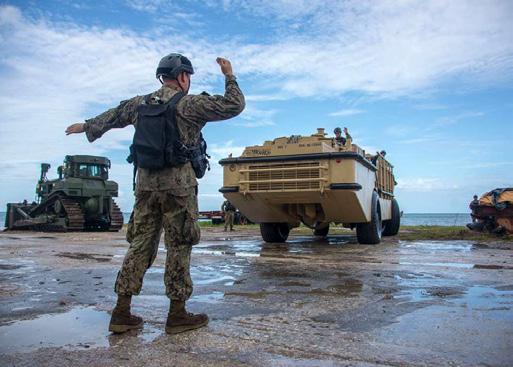
Transporting heavy equipment in Saipan, NMI (Photo Credit: Grace Simoneau, November 8, 2018).
Citizenship
For participants, citizenship is a “formal framework to define who are the people .” It offers privileges for those that are defined as citizens, but it also serves as a “disenfranchising ” mechanism for noncitizens. “If you don’t have that piece of paper, if you don’t have that documentation, it’s a hardship.” For another participant citizenship is “a corruptible device .” For a different participant it is a “contract ” that they “didn’t apply for.” One participant suggested that citizenship came with a price of losing a significant part of the territory and natural resources and “sacred heritage”: “I do know that we had to give up two thirds of Tinian. And our water, like some of our water… I’m giving up some of our, you know, sacred heritage .”
According to some participants, citizenship means that there are opportunities “at a price .” Some of those “prices” or “costs” are “dependency ” and the “internalized racism ” expressed in the belief that there is an inherent power in having a “blue passport.”
Some mentioned that citizenship involves “responsibility, ” “patriotism ” and “community belonging .” A participant believes that citizenship “implies obligation on our part, ” while another suggested that it is a “double-edged sword.” Lastly, some feel that it is, or should be, a “birthright” that implies “stewardship.”
Positive descriptions about “citizenship” talked about rights, unity, identity, opportunity, and community. For others, citizenship is “an illusion .”
“[W]e had to give up two thirds of Tinian. And [some] of our water...”
“I’m giving up some of our, you know, sacred heritage.” two “I’m giving up some of our, you know, sacred heritage.”
Relationship between the U.S. and the Northern Mariana Islands
Terms like “colonial, ” “imperialist, ” and “exploitative ” abounded among the different sessions. A dependent relationship where people are treated as second-class citizens, is also a shared description throughout the sessions. The negative effects of the “American way of life” in the identity and health of the people is a constant theme throughout the different dialogues and questions posed by Right to Democracy’s facilitator. “One-sided ” and “corrupting ” were two other adjectives used to describe the U.S. relationship with NMI.
For one of the participants, “the Covenant is probably the most unique political document in modern democratic history .” Yet, this person
also acknowledged that “what actually has been delivered has been underwhelming .” Others emphasized how in their view the Covenant established a relationship with the U.S. that is “different ” than any other territory. But it also has seemed that the United States has increasingly treated the NMI like it is just another U.S. territory. Many expressed the need to know more about what the Covenant actually means today, so they can have a more informed opinion on NMI’s relationship and future negotiations with the United States. Ultimately, some expressed hope that the NMI would revisit what its relationship with the U.S. looks like, while others expressed concern about disrupting the relationship established by the Covenant.
Colonialism and Everyday Life
Lack of trust in the United States government is a big issue. This is especially experienced with regards to health situations. Several participants shared their personal experiences with family members ailing from cancer, diabetes, other chronic illnesses, and mental health issues. For some, this last aspect of mental health is also related to identity and cultural dispossession. Dispossession is also tied to the land. According to some participants, losing most of the land is the price paid for receiving certain social and economic benefits from the U.S. However, they interpret that all have been false promises. For them, the U.S. military denies their freedom and is
“totally ruining our dreams .”
According to most participants, there is no real participation of local communities in the planning and development of military projects. This creates great frustration, resentment, and apathy. Concurrently, participants expressed great concern about the displacement and gentrification produced by the high housing prices that can only be paid by military personnel and people with high paying jobs. The local housing market is directly affected by the military. Paradoxically, although the military is pointed as the main source of negative impacts on the
people, a participant underlined that “we have one of the highest per capita enlistment rates in the U .S . military, ” often driven by a lack of economic and educational opportunities.
Homelessness, poverty, and pollution, both from the military and from the local government’s poor garbage management, are part of the impacts in participant’s everyday lives and the environment. Problems of drug addiction and violence “of all kinds,” including domestic violence are part of the social problems pointed out by participants. One of the participants suggested that the violence experienced is related to the “confusion ” and identity conflicts in NMI. For another participant, the culture of consumerism promoted by U.S. markets “is completely separate from us and has no relationship to the situation we’re in.” Participants also underlined the commercial and trade limitations that the colonial relationship with the United States imposes upon them.
The demographic transformation of the NMI
is also experienced as an important challenge that needs to be understood and worked upon to transform the colonial reality. Therefore, “understanding the immigrant viewpoint, ” and its complexity is very important. This is “because there are more immigrants here than there are locals, and it impacts the community .”
In all the dialogue sessions the military presence is ubiquitous. Its effects in the lives of the participants are profound and complex. The U.S. Navy and military impacts all aspects of people’s lives, from health conditions (i.e., cancer, diabetes, and other chronic diseases) and food habits (i.e., fast foods and loss of traditional nutrition), to the real estate market (lack of housing for local residents), land occupation (for military purposes), and ecological destruction (i.e., bombing, toxic materials, military housing and infrastructure).
Another crucial aspect consistently mentioned throughout the different dialogues is the sense
of cultural loss or dispossession. The loss of language, the loss of local medicine and healing knowledge, the loss of traditional ways of constructing, the loss of fishing sites and sacred grounds. This sense of loss runs deep throughout all the sessions. Moreover, the “reliance ”, “dependence, ” and subordinated relationship with the U.S. seems to create a feeling of “regret ” and frustration that is “suffocating .”
On the other hand, not all participants think that everything in the relationship with the United States is negative, or that the complete responsibility relies on the United States’ government and military. One participant, for example, described the relationship as a two-way relationship where there are some benefits to be
enjoyed. Furthermore, to another participant, “they do bring resources, not everybody gets to see the benefit of those resources and, in a lot of cases, those who benefit get to make the case that it’s a positive impact, and those who don’t, get to make a negative case for it .”
Strategies for Decolonization
Participants advocated for the inclusion of all the stakeholders in the process. Decolonization should also mean recognizing the intrinsic value of the community, respect and protection of the different traditional sites, indigenous knowledge, and languages. Some suggested that independence and the cultural reunification with Guam were necessary requisites for a real decolonization process. There must also be a development of a critical and liberating education, together with a conscious process of collective healing. Participants also mentioned the importance that the colonial power provide financial support for decolonization.
To the question of how to stop colonization, some participants stressed the necessity of
“learning how to be independent ” and “survive off our own resources .” For some, it is important to be unified and develop a “good plan” for decolonization. Some participants suggested revoking the Insular Cases, although others expressed concerns that could destabilize the relationship established under the Covenant. Participants also spoke about the need for community participation throughout the whole process and the importance of having a clear perspective about the things that will change, comparing what “we have and do not have now” with what “we will have and will not have” in a non-colonial reality. One of the participants, however, suggested “meeting halfway and compromise.”
Participants in the NMI emphasized the need of bringing people together, finding common ground among the different territories, and carving political spaces in Washington D.C. so that the people themselves, and not hired lobbyists, advocate for decolonization in Congress. The development of a good “marketing strategy ” that includes the recruitment of music, tv, and Hollywood stars (Bad Bunny, Benicio del Toro, among others) that promote the decolonization process and the eradication of the Insular Cases, together with the renaming of the territory with indigenous and ancestral names (for example, instead of Guam, Guåhan) were recommendations shared in different meetings.
Finally, one of the participants called for a more militant response among the people. In their own words, referencing what they had heard about Puerto Rico: “We need a “no más!, ” a “båsta!” event that would solidify the people, something that affects everyone .” This person
Inclusivity
Dialoguing and developing mutual agreements with communities throughout the different islands, with transparency and consistency were key factors expressed in all sessions. Developing a media strategy that includes “voices from here, ” mobilizing those voices, and keeping the local community updated through social media were consistent themes.
Different from the rest of participants, one person raised a concern based on his/her disagreement with Right to Democracy’s take on
suggested building a “collective block” composed of all the non-incorporated territories to have “a bigger voice” to say “¡no más! (or “no more! colonialism).”
Furthermore, some of the participants suggested engaging in electoral politics and running for office to discuss anticolonial issues and changing the main narrative. Participants also stressed developing connections with people in the United States and educating them about the Insular Cases . One participant proposed creating a course on the Insular Cases for U.S. schools.
the Insular Cases. From this participant’s point of view, the relationship between the United States and NMI is beneficial to the people, and “toxic conflict” must be avoided. This same participant pointed to the need of discussing what is going to replace the Insular Cases if they are revoked. Related to this, another participant argued that going public or becoming too active without reaching an agreement among the different communities that compose NMI society could be problematic.
AMERICAN SAMOA DIALOGUES IN
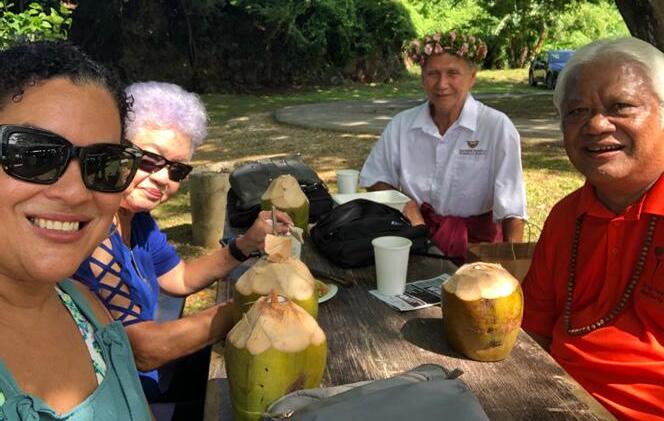
Right to Democracy approached the dialogues in American Samoa differently than with other territories. While we visited American Samoa to meet and talk to a variety of people, we decided to be respectful to the prevailing perception that issues of democracy, colonialism, citizenship, and self-determination should first be discussed within and among the native population. While there, it was evident, even in the layout of communities, that American Samoans have deep-rooted practices of collective deliberation, a strict respect for the elders and chiefs, and that protection of cultural norms and land is a priority.
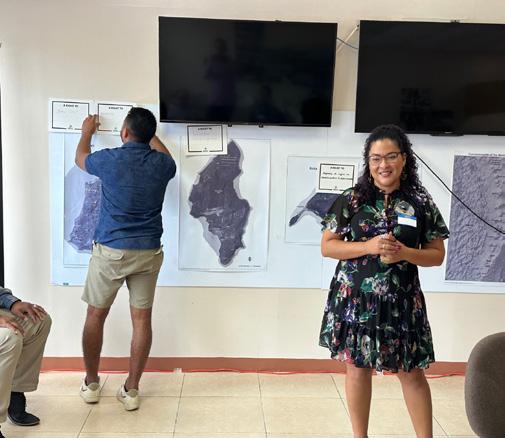
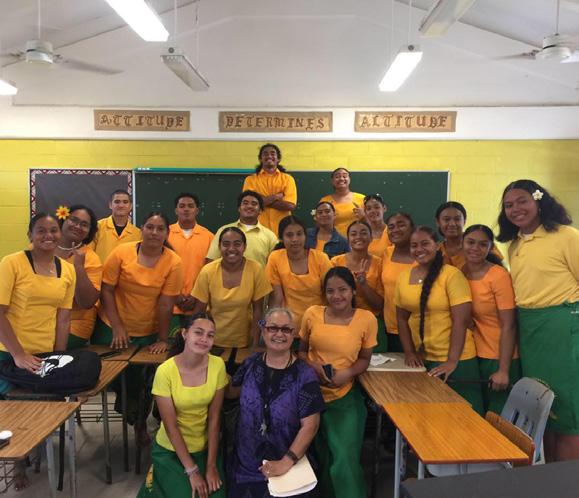
Nonetheless, we had the opportunity to consult with local allies and were also able to meet with American Samoans in Hawaii and California. We proceeded to set up the dialogues in a format that was more informal and led by a local leader from the community. In this way, we undertook two dialogues in American Samoa, one with young people and another with community leaders and members.
Democracy
For participants in the conversations, having freedom and being governed by the will of the people are necessary characteristics of democracy. It is a government by the people with the right to vote, and freedom of speech. For participants, it is a “type of government run by the people .” “Having a say, ” a “right to speak up, ” “having a voice, ” and the “power to vote ” were repeated by many participants.
Furthermore, having access to “quality education ” and promoting “environmental conservation ” were two other aspects stressed as part of what the right to democracy means. The ability to worship freely, and to provide a service or buy and sell goods in a just way with equal opportunities, and to serve the U.S. constitution were two other aspects mentioned.
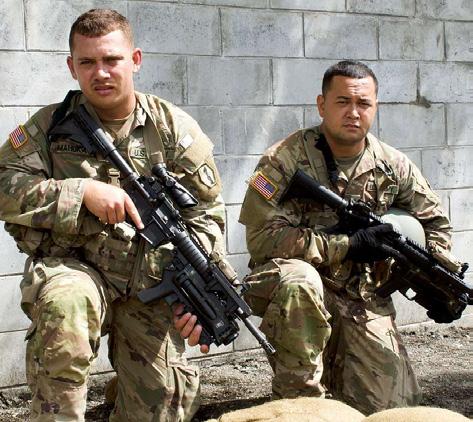
American Samoa is the highest per capita recruiter of soldiers to the Army (Photo Credit: Sgt. David Overon, 27 April 2019).
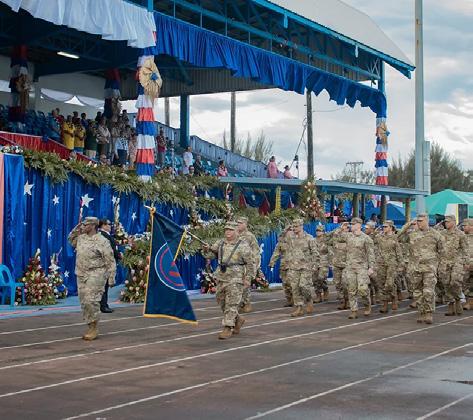
Military Marching during American Samoa Flag day (Photo Credit: American Samoa Government Facebook Page, April 17, 2023).
Challenges of Local Government
Health and health care services related issues, including lack of hospitals and mental health facilities, including suicide prevention programs and Medicaid were important issues identified by most participants. The other two main challenges identified by most participants were related to education (equality, lack of quality education), and drug related issues (trafficking and addiction). Some participants also stressed the need for better jobs with higher incomes and the importance of environmental protection.
There was some concern expressed by participants about feeling constrained by their respect for elders and other authority figures
Addressing Uncertainty
The need to educate about the history of the people and about the development of the local government was mentioned as an important aspect of any political effort or initiative. Understanding the Insular Cases and the history of colonialism without being judged is an important work that needs to be done. The presence of the U.S. military in the lives of Samoans is evident by their high rates of military service, and there seems to be a variety of positions, feelings, and reactions towards the military as a central institution in Samoan society.
when having critical conversations about the government’s lack of action, transparency, or performance. Some expressed that criticism and action is difficult when you depend so much on government officials for resources and access to opportunities. Nevertheless, participants did emphasize the need to talk about these issues openly among themselves. Many felt a bit confused by the debates on citizenship and land rights, and expressed the need to learn more of history and about these issues in order to have an informed opinion about how to position themselves and about their relationship with the U.S.
Democracy has to do with being able to participate in the government with freedom, and with transparency. Also, it is where young people can formulate what they really want without being judged. The material aspect of democracy, having “freedom from want,” was also stressed as an important aspect of the right to democracy.