RQI advances an original educational strategy that makes it possible for all people to ask their own questions. The transformational skill of asking questions enhances learning, promotes empowerment, and strengthens democracy. People—including those furthest from power—can use this skill to think and learn independently, participate meaningfully in decisions that affect them, and advocate on behalf of themselves, their families, and their communities.
Our Vision
An equitable world and vibrant democracy in which all people have the agency to think and act on their own behalf.
The Right Question Strategy
The Right Question Strategy (RQS) is a unique educational approach that develops people’s skills of formulating one’s own questions and focusing on decisions that affect them. The RQS includes two key methods: the Question Formulation Technique and the Voice in Decisions Technique. The strategy is delivered through educational institutions and organizations, legal service providers, health care organizations, social service organizations, community-based organizations, and public agencies, in all 50 states and beyond.
Letter from the Board of Directors President
In a time when our democracy is under great stress and challenge, when many of us question how we help bridge the gap between our country’s aspirations and its current realities, I continue to be struck by how the Right Question Institute’s mission and approach is more important and relevant than ever.
For over 35 years RQI has worked to build a more just and equitable democracy by strengthening people’s ability to ask questions and participate in decisions that affect them. And the evidence is clear from this work: Sharing the power of questions has a transformative effect that leads to greater individual agency across different ages, fields, and communities
Through both our Teaching and Learning Program and our Empowerment Program, RQI demonstrates how the Right Question Strategy fosters critical thinking and personal agency In doing so, it helps people at different stages of their life, in school and out, to step into their own power, both as learners and as citizens. Our Research Program seeks to capture the impact of this work in different contexts while also working with institutions of higher learning to explore how question formulation can be used to improve research across disciplines.
What’s clear is that RQI’s work is rooted in partnership and that only by developing a network of interconnecting partnerships will RQI’s big dreams be realized. In this sense, RQI works as a force multiplier, helping to strengthen and amplify the work of others aligned with a vision of promoting individual and social change
Sincerely,
John Esterle
Imagine for a moment what the world could be if the power of questions was shared and practiced in all areas and levels of society, if it was valued and developed in every corner of our country, particularly in those areas farthest from political decision making and power. I believe we’d be much closer to the just and equitable democracy that drives RQI’s work.
In this moment of great division and “othering,” one other aspect of RQI’s work I continue to think about is what becomes possible when we create spaces where we hear each other’s questions rather than our opinions My experience is that hearing others’ questions as a starting point invites empathy and connection into the room And so, for me, part of why I have always been drawn to RQI is that it enables a simple process that develops both critical thinking and empathy two traits sorely needed right now
I hope I’ve captured a little of why I believe so strongly in RQI and why I’m proud to serve as its board president. Your support and partnership fuel RQI’s daily work and its big visions for change, and we are deeply grateful. Thank you for being such a vital part of RQI’s community.
A Year in Review
Building a community of changemakers
RQI’s strategy is delivered through educational institutions and organizations, legal service providers, health care organizations, social service organizations, community-based organizations, and public agencies, in all 50 states and beyond.
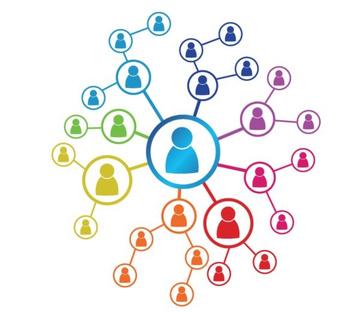
Each educator, service provider, legal aid attorney, or frontline worker can work with anywhere between a handful and hundreds of people a year By training people who are embedded in directly impacted communities, who in turn share RQI’s methods with the people they serve, our reach grows exponentially.
1,155 3,649
Direct service providers in legal aid, social services, health care, adult education, and more trained through RQI’s Empowerment Program
Educators trained 370,000 estimated students impacted by RQI-trained educators
87,716 Members of our global onlinenetwork 179 countries represented
17,342
Organization-wide resource downloads
RQI’s Multiplier effect
Depending on their field and type of work, frontline workers can work with anywhere between a handful and hundreds of people a year By training people who are embedded in directly impacted communities, who in turn share RQI's methods with the people they serve, our reach grows exponentially.
Teacher-to-teacher: Trained educators reported sharing with 21 peers on average
Trained educators reported working with 123 students on average
Empowerment Program Building a community of changemakers
The Right Question Strategy clarified my thinking and helped me decide what the most important information I want [is] and role I want to have in the decision. [It] increased my capacity to advocate for myself.
- Training participant, 2025
This year, service providers, legal aid lawyers, community activists, adult educators, and frontline workers have faced a uniquely uncertain and difficult landscape that is shifting under their feet. RQI’s newly renamed Empowerment Program helps those working in low-income communities become catalysts for the agency of the people they serve People who feel more agency become more confident, motivated, and able to take action on their own behalf and on behalf of their communities
Using RQI’s methods, people learn to advocate for themselves and their needs alongside service providers who advocate for them, creating a multiplier effect. RQI’s methods also help people connect decisions made in
their daily interactions with public institutions and systems with decisions made elsewhere, creating new pathways to democratic participation. New pathways are needed now more than ever.
Partnering Across the Country for Access to Justice and Legal Empowerment
In 2025, RQI worked with a nation-wide network of legal empowerment practitioners to share resources and support grassroots justice efforts, and presented at the International Access to Justice Forum.
Self-Advocacy Skills in Adult Education Classrooms
Earldine Tolbert, a restorative justice trainer-facilitator and former adult educator, first encountered RQI through a voter engagement program in Philadelphia She has championed the use of the QFT in adult education, literacy programs, and community circles. In our Empowerment Spotlight blog series, Earldine shared how she used the QFT to help her students understand their power. “People don’t even realize they have the right to ask questions of people who make such big decisions about their daily life.”
Recounting a story of one of her students successfully avoiding an unlawful eviction, Eardine shared, “After hearing [this student’s] story everybody started going back and
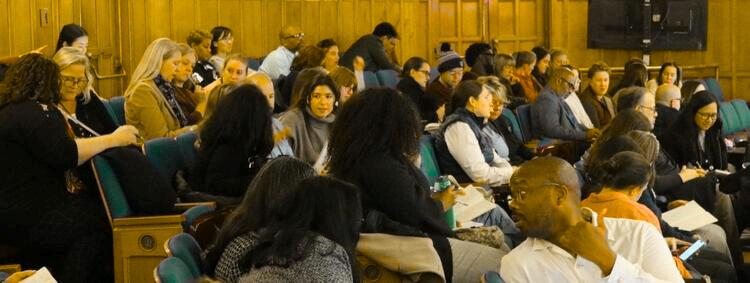
U.S. Legal Empowerment Network leadership convening
asking questions They were excited for her because she tried it in real life and it worked They felt more empowered to ask questions on their own.”
In 2025, we partnered with the Open Door Collective of Literacy Minnesota and the Urban Alliance for Adult Literacy to create a “community of practice” of adult foundational educators. These educators are using RQI’s methods to help their students advocate more effectively for themselves and navigate systems where decisions are made that affect their daily lives and the lives of their families.
Client Empowerment in Public Services and SNAP Employment & Training
We worked with case managers in Rhode Island and Connecticut who help administer the SNAP Employment & Training (E&T) program, preparing individuals receiving public benefits for job training and seeking employment. The case managers who joined our training work in refugee resettlement, financial literacy, vocational training, and other direct service programs
Case managers for SNAP E&T have faced enormous challenges in 2025. RQI has been working to amplify what they are able to achieve by sharing a strategy that helps SNAP participants become more effective self-advocates and job seekers and achieve long-term self-sufficiency. As a direct service provider in Rhode Island said, “It’s great to be able to give [clients] the tools for their own self-advocacy, having them feel confident and that they have a voice, so once they no longer have that additional support they feel confident to get the information they need.”
One financial literacy coach in the training shared how clients’ beliefs about their own capacity to address their problems shifted after using QFT, and the clients became more engaged and eager to take action on their own behalf Here is one client’s reflection:
Exploring the Power of Questions at Yale
“This tool allows me to ask myself real questions - got me thinking, shows me pathways I should consider - allows me to start an action plan to fix my problems.”
The Yale Cultivating Conversation Fellowship invited RQI to introduce the QFT to their student fellows, representing undergraduate and graduate programs across the university The fellows learned how to “share the power of questions” as a way to ensure that more voices are heard in community conversations, creating space for different ideas to be heard and articulated. At a second workshop open to all Yale staff, co-sponsored by Yale Learn & Grow, participants learned how to use the QFT to enhance problem-solving, decision-making capacity, and leadership abilities. One participant shared, “It made me think of the power of asking questions, no matter what answers you get. Just to ask the question can be a way to open up new avenues of thought.”