





PRESIDENT
Tim Hay, MCH
Bigelow Nurseries, Inc.
Tel: (508) 845-2143
VICE PRESIDENT
Peter Mezitt, MCH Weston Nurseries, Inc.
Tel: (508) 435-3414
SECRETARY/TREASURER
Chris O’Brien, MCH Howard Designs, Inc.
Tel: (617) 244-7269
PAST PRESIDENT
Jim Stucchi, MCH
Stucchi Landscape and Design, LLC
Tel: (774) 233-2151
DIRECTORS
Deborah Trickett, MCH
The Captured Garden
Kerry Preston, MCH
Wisteria & Rose, Inc.
Steve Charette
Farm Family Insurance Family
David Vetelino, MCH
Vetelino Landscape, Inc
Jean Dooley, MCH Mahoney’s Garden Centers

EDUCATION & RESEARCH COMMITTEE
Kathy Bergmann, MCH — Chair
Bergmann Construction
Tel: (508) 435-3414
FINANCIAL COMMITTEE (FINCOM)
Steve Corrigan, MCH — Chair
Mountain View Landscapes & Lawncare, Inc.
Tel: (413) 536-7555
Chuck Baker, MCH — Vice Chair
Strictly Pruning
Tel: (508) 429-7189
GOVERNMENT RELATIONS COMMITTEE
Chris O’Brien, MCH — Chair
Howard Designs, Inc.
Tel: (617) 244-7269
HISTORY COMMITTEE
Philip Boucher, MCH — Chair
Elysian Garden Designs
Tel: (508) 695-9630
Skott Rebello, MCH — Vice Chair Harborside P.S.
Tel: (508) 994-9208
MAGAZINE COMMITTEE
Gaele McCully, MCH MCLP — Chair
Mahoney’s Garden Center
Tel: (781) 729-5900
MASSACHUSETTS CERTIFIED HORTICULTURIST BOARD (MCH)
Jack Elicone, MCH — Chair
John R. Elicone Consulting
Tel: (617) 527-5706
PRODUCTS COMMITTEE
Peter Mezitt, MCH — Chair
Weston Nurseries, Inc.
Tel: (508) 435-3414
GOVERNMENT RELATIONS DIRECTOR
Jason Wentworth
Tel: (617) 417-4050
EXECUTIVE DIRECTOR
Rena M. Sumner
Tel: (413) 369-4731
Massachusetts Nursery & Landscape Association P.O. Box 387 Conway, MA 01341 mnlaoffice@aol.com www.mnla.com www.PlantSomethingMA.org www.mnlafoundation.org
ProGrowNews is published quarterly by the Massachusetts Nursery & Landscape Association (MNLA), P.O. Box 387, Conway, MA 01341, tel. (413) 369-4731. Articles do not necessarily reflect the view or position of MNLA. Editorial coverage or permission to advertise does not constitute endorsement of the company covered or of an advertiser’s products or services, nor does ProGrowNews make any claims or guarantees as to the accuracy or validity of the advertiser’s offer. (c) 2014 All rights reserved. No part of this publication may be reproduced in print or electronically without the express written permission of the MNLA.
www.mnla.com pro|grow|news

ByTim Hay, MCH
does the time go? As I look back at this spring and the first part of the summer, Mother Nature gave us everything but a blizzard — and we could have used one to cool things down.
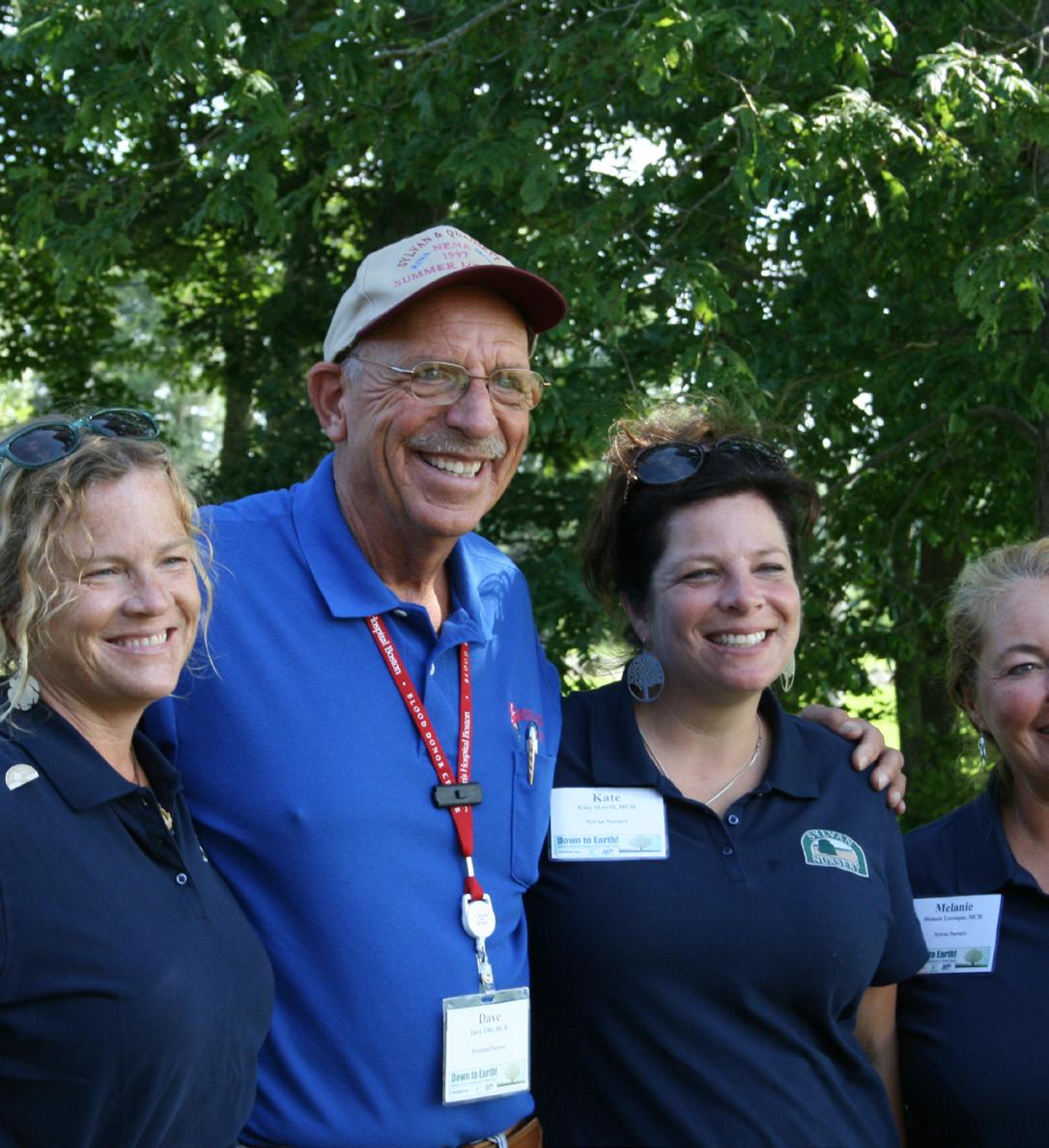
But even with all that Mother Nature threw at us this season, the folks at Sylvan had connections. We had perfect weather for the Down to Earth Conference & Trade Show. We must give everyone at Sylvan Nursery and the MNLA Education Committee a “Well done!” and a “Great job!” The speakers were top notch, and we had to ask Sylvan for an extra tour. It was good to be back at a member grower.
It was a time to connect with so many members. I was glad those who made the trip to the south coast came. Those who could not make it missed a great day. I hope to see you next year at Weston Nurseries in Hopkinton.
If you can, I highly recommend taking some downtime this summer, even if it is for just a long weekend. I did, and it does wonders for the mind, body, and soul. I have a customer I’ve worked with for the past 20 years. Over that time, we’ve exchanged family stories, work woes, and some good laughs. While traveling to Vermont, my wife and I had the chance to stop at his summer camp on the lake. We thought we would just stop to stretch our legs and get back on the road, but he and his wife got us out on the boat. And that was not even the best part. We got to send time with Haddie, their 11-week-old puppy. Being able to get way from the craziness of work was great.

My customer and friend is not only a MNLA member and MCH, he is what makes MNLA such a great group of people. We all have made those connections through MNLA. Some are all business, but there are those few who become much more — those we call real friends.
I hope I make more of these friendships in my next 20 years with MNLA. Rest up and get ready for fall.
Tim Hay, MCH Bigelow Nurseries, Inc. MNLA President
November 5, 2019 Plant Healthcare Day at Tower Hill Botanic Garden, Boylston, MA
February 25 & 26, 2020 Dreams & Solutions Winter Forum & Trade Show Best Western Royal Plaza Hotel Marlborough, MA

By Lorraine Ballato
Right about now, you might be considering a variety of hydrangea chores. Some will be the absolute right thing to do; others can cause problems next season. So let’s examine what you can do and what you should skip.
The first order of business might be to transplant your hydrangeas — and soon. You want to give them enough time — at least six weeks — to establish roots before the weather chills the soil. Work out the timeframe by counting backwards from the approximate date your ground freezes. For example, my ground usually freezes by December 1, so I make sure to finish all transplanting by mid-October at the latest. This applies to big leaf (macrophylla), mountain (serrata), and woodland/smooth (arborescens) hydrangeas. If you can bear to give up late-season color on your panicle (paniculata) and oak leaf (quercifolia) hydrangeas, move them now as well. Otherwise, you’ll have to wait until next spring. Climbing (petiolaris) hydrangeas can also be transplanted now. The usual transplanting practices apply here: Puddle them in, water regularly, and watch for wilting if rain/irrigation proves unreliable. Once the leaves drop, use other means to track water demands. I find the most dependable technique is sticking my finger in the ground to assess the moisture level at the right depth.
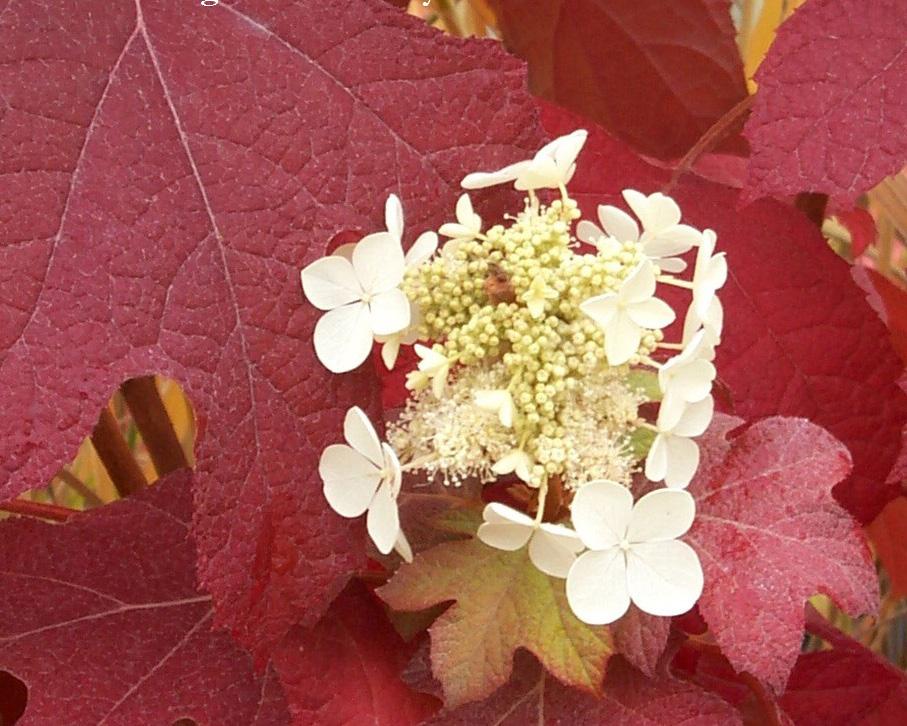
That lets the aluminum flow to the plant, ergo blue flowers. Depending on the plant’s place on the pH scale, blueing may take more than one season. Keep in mind that your plant will want to revert to its natural state, so amendments may become an annual chore.
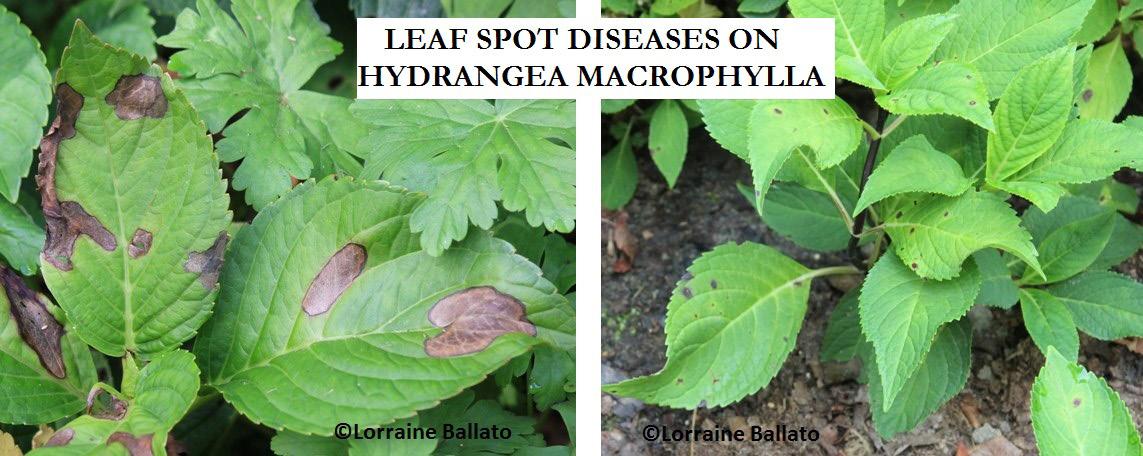
Many hydrangeas develop late season leaf-spot diseases. One way to get a handle on that is to trash the foliage before and after it drops from the plant. Fungal spores over-winter in plant debris, soil, and mulch, so fall is also a good time to replace mulch. While you’re at ground level, take a moment to pull the mulch away from the base of the plant. Keep it about 4–5 inches from the trunk/stems. Avoid any kind of moisture build-up on the woody base that can soften the wood, weaken it, and rot it.
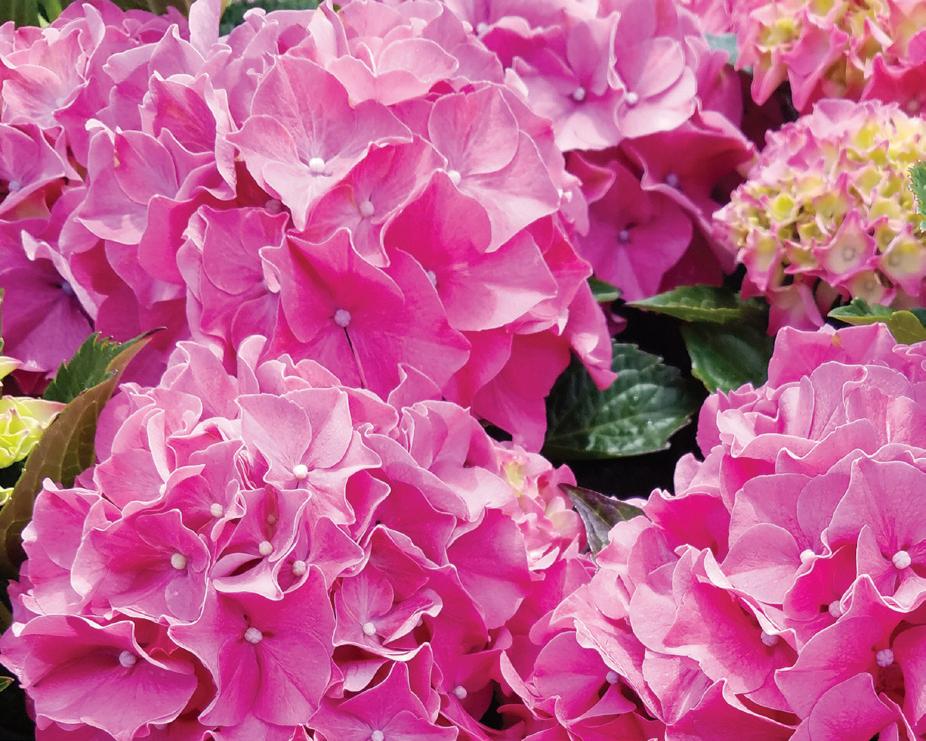
Fall is also the time to apply amendments to macrophylla to change the flower color. Assuming the plant is pH sensitive, aim for a reading of 6.2–6.5 for pink blossoms; this will prevent the plant from absorbing aluminum in the soil, the real controller of color in the plant. If you want that elusive blue flower, you must acidify the soil to about 5.2–5.5.
Do not prune macrophylla, serrata, petiolaris, and quercifolia. All of them flower on old wood — the stems they formed in 2019. From about August 1 on, they are setting buds for next year that have to make it through the winter. Any wood you remove may reduce the flower count for next season. Pruning will also stimulate the plant to promote growth when you want it to quiet down in preparation for its dormant season.
You could prune paniculata and arborescens once they shed their foliage or wait until next spring. Do not accelerate leaf drop by manually removing foliage. The important concept to remember is that the plant must be dormant for late fall pruning. Doing it sooner will stimulate the plant to put on new growth that might not survive the winter.
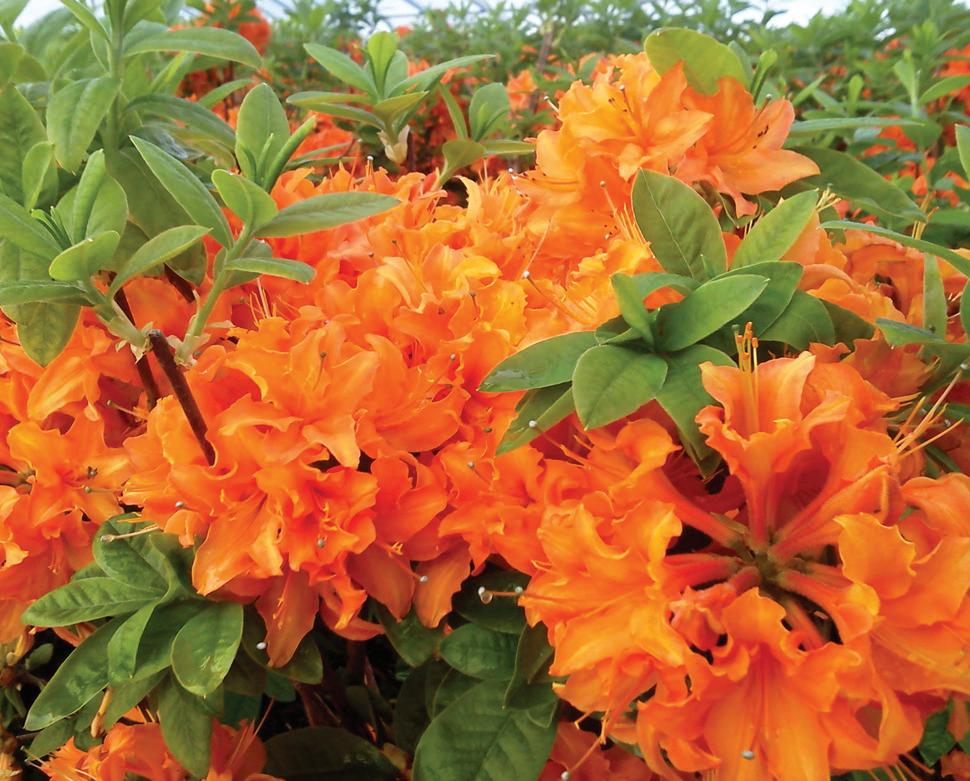
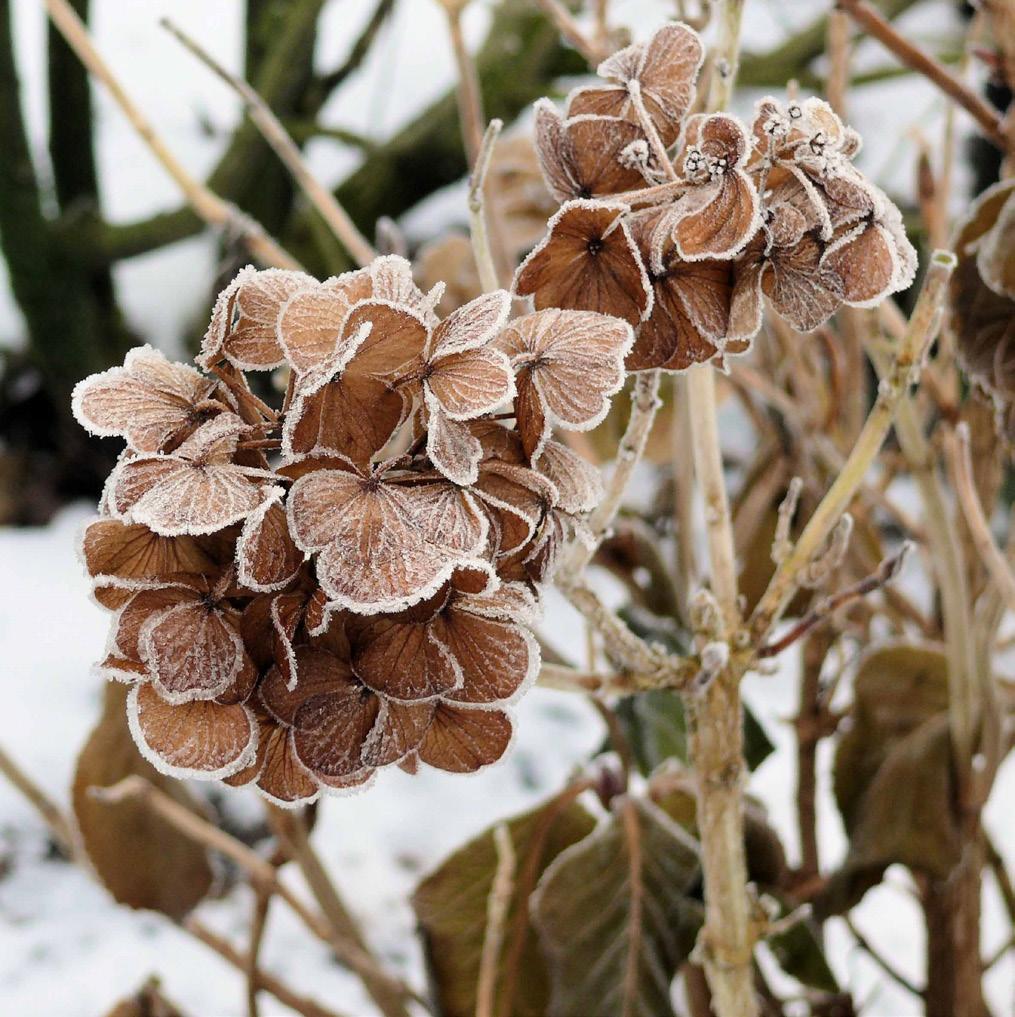
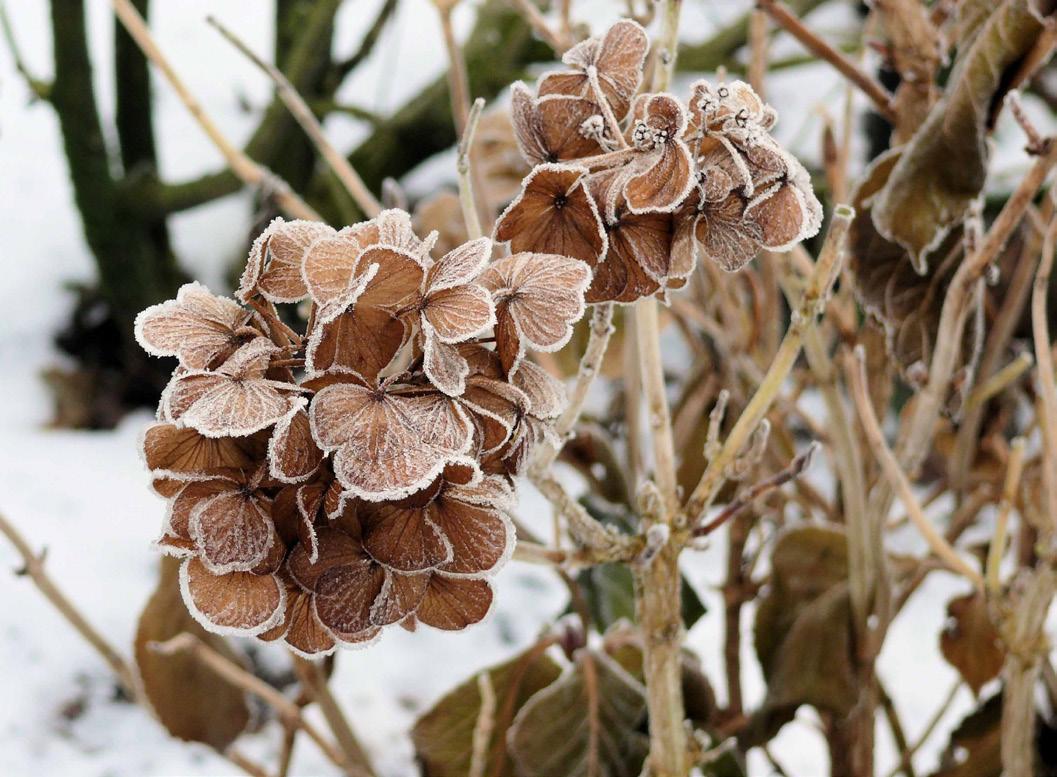
Gardening in a cold climate always presents the challenge of what to add for winter interest. This is where hydrangeas can be a real asset if you leave the spent flowers on your plants. Wildlife continues to feed on those flowerheads. The flowerheads also provide a measure of protection, albeit small, for sleeping buds farther down the stem.
If flower production on old-wood blooming hydrangeas (mostly macrophylla) has been sporadic, they might need some winter protection. The objective is to prevent them from being blasted by icy winter weather and severely cold temperatures. You want your plants to think they live in a less harsh and milder growing zone. Snow, on the other hand, is one of the best things for them as it provides a protective blanket. That’s why many old-wood hydrangeas only bloom at the very bottom: That part of the plant was under snow cover for the winter. Sadly, we can’t order that up when and where we need it.
How exactly can you protect your plants? Assuming you can’t move them to a sheltered place, the most common approach is to build a wire

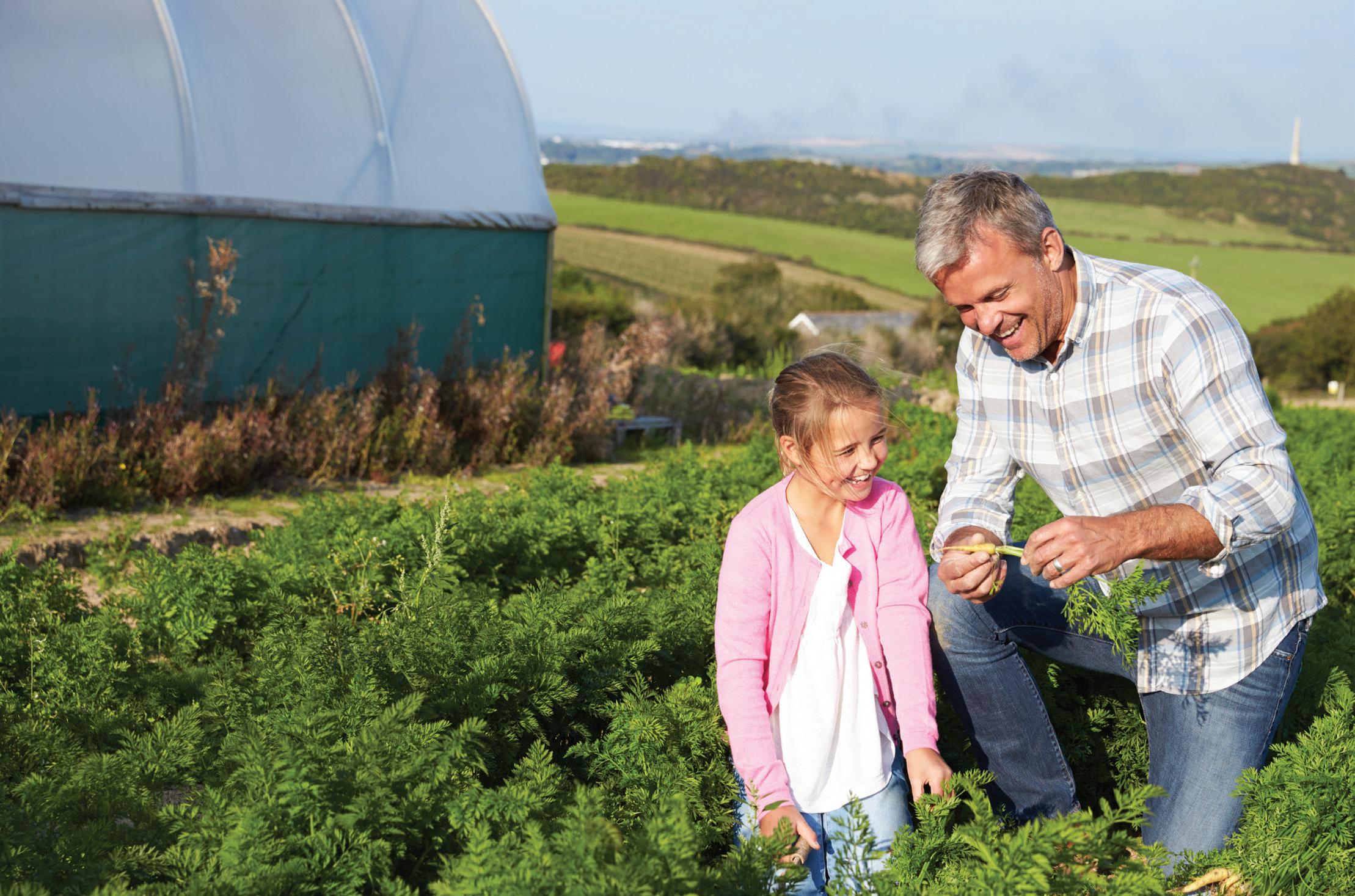

Established in 1910, Cavicchio Greenhouses is a fourth-generation New England farm working more than 250 acres in Sudbury. As a horticultural grower and landscape distributor, we cultivate and supply an extensive variety of annuals and perennials, nursery stock, stone, masonry and landscape materials. With a hard-earned reputation for service, quality, selection and sustainability, we work with professionals and garden centers throughout the area to keep our region beautiful.
cage around the plant and pack it with leaves. An easier way is to use filled leaf bags and drop them into the wire pen. It will make removal next spring much smoother.
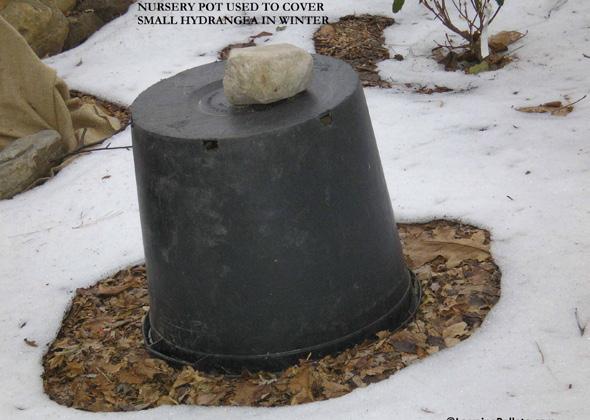
For exposed sites, erecting some kind of windbreak from prevailing weather might change blooming habits. Consider moving your plants to an area with natural winter protection. Think about locations that have persistent winter foliage, e.g., azaleas, rhododendrons, conifers, beeches, oaks, and parrotias. Look up: The value of overhead, winter-persistent foliage can’t be underestimated. Instead of transplanting, install some of these plants close enough to your hydrangeas to take the brunt of the winter weather without creating new problems of competition for moisture and light. Even densely twiggy deciduous plants like spiraea and forsythia can help your flower buds better survive winter weather. If your plants are small, protect them with nursery pots. Your last option is to move the plants to where they can be shielded with a fence, an outbuilding, a shed, a neighbor’s house, or even something you build. This is especially important for foundation plants that can get whomped by falling snow and ice from overhanging roofs.
If all this angst is too much for you, consider fall as an opportunity to step up and replace the troublemakers. What
are your options? Remove the sparsely blooming hydrangeas and donate them to a local community organization: a place of worship, public planting areas, etc. You will look like a hero, and they will love you for the donation. Replace them with any of the newer reblooming macrophylla that are more dependable bloomers. Endless Summer® Bloomstruck ® , Blue Enchantress ® , Endless Summer ® Summer Crush ® , Double Delights™ Wedding Gown, and Let’s Dance ® consistently give me mid- and late-summer flowers on their reblooming stems in my Zone 5 garden. The entire line of Tuff Stuff™ serratas also provides dependable flowering, both early and late season. An old wood-bloomer that has never failed me, even in years when others have been just a colorless green bush, is ‘Lady in Red’ hydrangea macrophylla. And of course, you can always replace with plants that flower only on new wood, i.e., any plant in the paniculata and/or arborescens family.
Before you know it, temperatures will plummet, and you’ll lose your window to tackle these hydrangea chores. Tick, tock!!
Lorraine Ballato is the author of Success With Hydrangeas, A Gardener’s Guide
You can learn more about Lorraine, her book, and her hydrangea blog at www. lorraineballato.com








By R. Wayne Mezitt
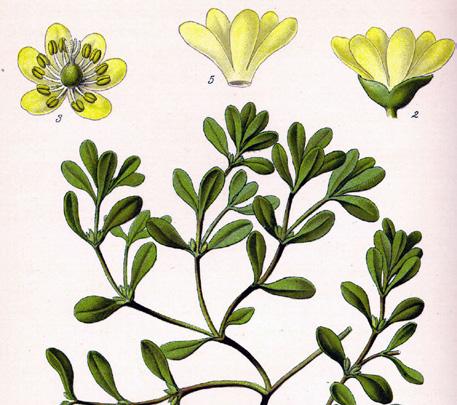
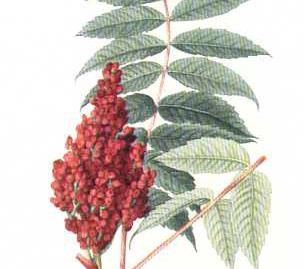
Ask any gardener, and you are likely to hear that the single most common mid-summer garden challenge is management of weeds. A weed is generally considered to be a plant that grows aggressively and reproduces quickly where it is not wanted. In fact, many plants considered weeds in some regions are valued as desirable food, wildflowers, or ornamental plants in other areas. Dandelion, teasel, purslane, goldenrod, Euonymus, sweet-fern, and sumac are several examples.
Gardeners are intent upon eliminating weeds, and rightfully so: Weeds crowd out desirable plants; hoard moisture, nutrients, and sunlight needed by garden plants; host pests and diseases; and look unsightly.
Weeds can be categorized as annuals, biennials, or perennials. All weeds germinate from seed when conditions are right and grow quickly, potentially dominating a previously pristine patch of ground. The best weed control is to eliminate them at first appearance — pull them out while they are small — or even better, prevent germination by mulching or applying pre-emergent weed control. Managing perennial weeds, in particular, becomes more difficult once established in the ground. The fundamental principle is to control weeds before they begin to produce seed.
Perennial weeds re-grow from their roots and underground stems. Herbaceous perennials die back to the ground in winter, making them difficult to spot until new growth appears, while the stems of the woody types are visible year round.
Some perennial weeds have stoloniferous roots that run in the ground and tend to break off when pulled, each root piece potentially growing into a new plant. Perennial vines attach themselves to desirable plants, often winding and climbing in ways that make removal very challenging. Some established perennial weeds require chemical herbicides to eliminate them completely. Many of these are now classified as invasive, which designates them as a serious threat to native plants in natural areas.
Mulching with 1 to 2 inches of loose organic matter like bark mulch, ground-up leaves, or wood chips helps discourage weed germination. Some gardeners use plastic or fabric mulches and chemical herbicides to prevent germination. Weed management choices depend upon a variety of style and plant-type considerations, and many people prefer to limit chemical techniques.
Effective weed management requires planning, persistence, monitoring, and often a good measure of sweat in the summer. But the reward of an attractive, well-managed garden is worth the effort.
R. Wayne Mezitt is a third-generation nurseryman and a Massachusetts Certified Horticulturist, now chairman of Weston Nurseries of Hopkinton and Chelmsford, MA, and owner of Hort-Sense, a horticultural advisory business. Wayne currently serves as Trustee chairman for the Massachusetts Horticultural Society at The Gardens at Elm Bank in Wellesley, MA
Annual weeds germinate, flower, produce seed, and die in one year. Common examples in this part of New England are crabgrass, purslane, lambsquarters, and ragweed.
Biennial weeds germinate and grow foliage the first year, only flowering and producing their seed after going through winter. Typical examples in this region are garlic mustard, burdock, brome grass, evening primrose, and Queen-Anne’s lace.
Perennial weeds have long-lived root systems that persist year after year.
o Simple root systems that are relatively easy to remove intact:
— Herbaceous (tops die to the ground in winter): dandelion, pokeweed, and bull thistle.
— Woody plants whose above-ground parts are visible all year:
o Trees and shrubs: autumn olive (Eleagnus), buckthorn (Rhamnus), barberry (Berberis), wild rose, burning-bush (Euonymus alatus);
o Vines: poison ivy, nightshade
— Stoloniferous or persistent roots from which new plants re-grow when broken off or left in the ground:
— Herbaceous: bindweed, witchgrass (evergreen), Canada thistle, hairy vetch, clover (evergreen), groundnut (Apios), kudzu
— Woody & semi-woody plants:
o Trees and shrubs: Japanese knotweed, sumac, sweet fern, brambles
o Vines: Bittersweet (Celastrus), Virginia creeper, bull briar
List compiled by Hort-Sense, 2008


With AMERICAN NATIONAL, you’ll get an agent who has the know-how and products to help you properly manage your family’s risks. An open appointment book, along with options for home, auto, life, farm and business coverage, means you can feel good that you’re getting more an ally than just an agent.
Wherever you are in Massachusetts, there’s a American National agent close to you. Give us a call for more information.

























By Trevor Smith, MCH
It’s 2019 — the final year of the decade. Is your knowledge and skill set up to date for what the next decade is going to bring? Consider this: A 30-year backlog of work is available for you to bid on in the city of Boston alone. The catch? It will only be available to those with the latest knowledge and the drive to set the new standard for the future of landscape construction.

I am talking about green infrastructure (GI), more specifically green stormwater infrastructure (GSI), and the Boston Water and Sewer Commission has the backlog of work. They have a very aggressive agenda of stormwater projects, many of which will be subbed out to companies with specific certification: NGICP certification.
The National Green Infrastructure Certification Program (NGICP) is the national standard certification program, and it is quickly becoming the default standard for hiring qualified, knowledgeable individuals to perform green infrastructure installation, inspection, and maintenance.
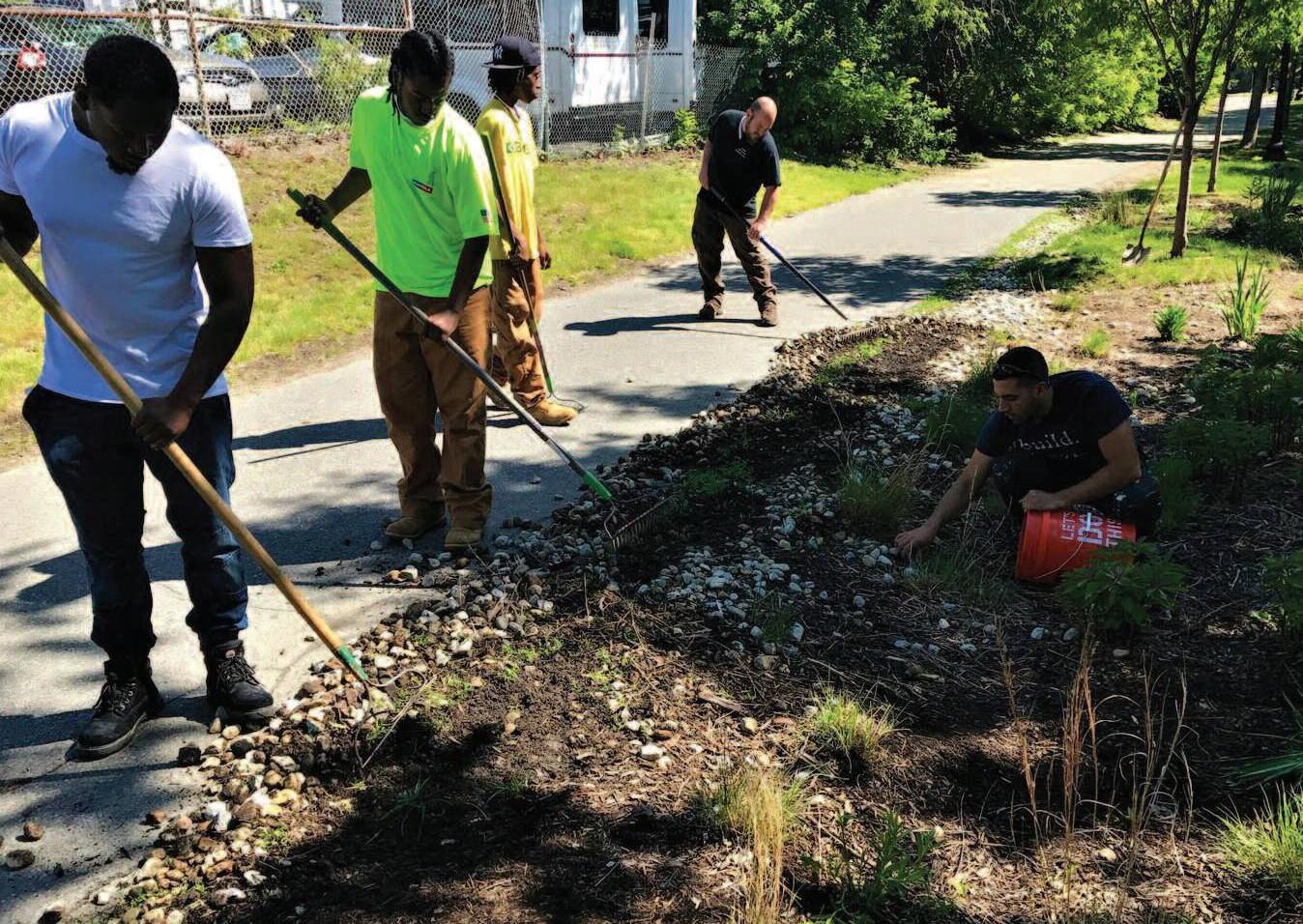
For those of you who have never heard of GSI, the term refers to stormwater management technologies and methods such as raingardens, bio-swales, green and blue roofs, rain harvesting, and permeable pavements.
You may have noticed our extreme weather and the increasing reports of flooding and other problems resulting from excessive rainfall. Many of your clients may be searching for solutions to their stormwater problems. I have worked in GSI for sixteen years, and I can share two truths:
1. Stormwater problems are getting worse, and the need for solutions is increasing.
2. There is huge need for qualified, trained professionals. I recently heard from a Boston Water & Sewer (BWS) engineer that their biggest challenge is finding anyone who knows anything about GSI.
Much of my business over the past five-plus years has been fixing poorly installed systems. The problem is that if these systems are continually installed improperly by unqualified companies, clients think it is the system that doesn’t work or that the systems are just too hard to install and maintain. This only compounds the problem: Clients are misinformed, and homeowners as well as towns and cities don’t get the GSI they desperately need.
Instead of plowing in the winter, I spend time teaching landscape professionals about GSI as well as regenerative landscape design and construction. I tell every class that if you want to stand out with little competition, specialize in battery-powered, low-noise organic lawn care and GSI — especially GSI maintenance because, to my knowledge, no one specializes in that currently.
So I ask you: Are you up to date? Would you like to be among the elite group who are? Are you excited to set the new standard for landscape practices now and into the future? We don’t have a flooding problem; we have an infiltration problem, and you can be part of the solution. MNLA will offer the NGICP certification course throughout 2019. Find a class that fits your schedule and sign up today.
Trevor Smith, MCH, AOLCP, LEED GA Land Escapes Design, Inc.
All photos by Trevor Smith, MCH



Green infrastructure has become a critical component to comprehensive stormwater management. However, successful implementation of green infrastructure requires access to adequately skilled workforce available to perform the installation, inspection, and maintenance tasks.
Initiated under the leadership of DC Water and the Water Environment Federation (WEF), the National Green Infrastructure Certification program sets national certification standards for green infrastructure construction, inspection, and maintenance workers
By underscoring your competency in these areas, certification increases your competitiveness in the job market, and provides a pathway to higher paying positions.



The training is provided by Trevor Smith, MCH, AOLCP, LEED GA, a licensed NGICP trainer Inquiries can be directed to Trevor at trevor@landescapesdesigninc com ngicp.org
Location
Weston Nurseries, Inc., Wholesale Building, 40 Frankland Road, Hopkinton, Massachusetts follow signs to the wholesale landscape center Lunch is included with registration Each day begins at 8:30am and will go to 5:00pm. Visit mnla.com/ngicp19 to register today!
Trainer Trevor Smith, Land Escapes Design, MCH, AOLCP, LEED GA
Cost Training fee: $800 | Exam fee: $200 (paid to WEF) more information to be provided at training Candidates must have completed high school education (at a minimum) to be eligible to take the NGICP exam
Exam information The exam is currently being administered as a computer-based test at PSI Testing Centers Approved NGICP applicants will receive an email from PSI regarding scheduling the NGICP exam The NGICP exam must be scheduled within one year of completion of training.
Select your date: August 12–16, 2019 October 7–11, 2019 December 2–6, 2019
Questions? Call the MNLA office at 413-369-4731
Register online at mnla com/ngicp19 or by mail: MNLA, NGICP Training, P O Box 387, Conway MA 01341
Sponsored by Massachusetts Nursery and Landscape Association

by Gaele McCully, MCH, MCLP
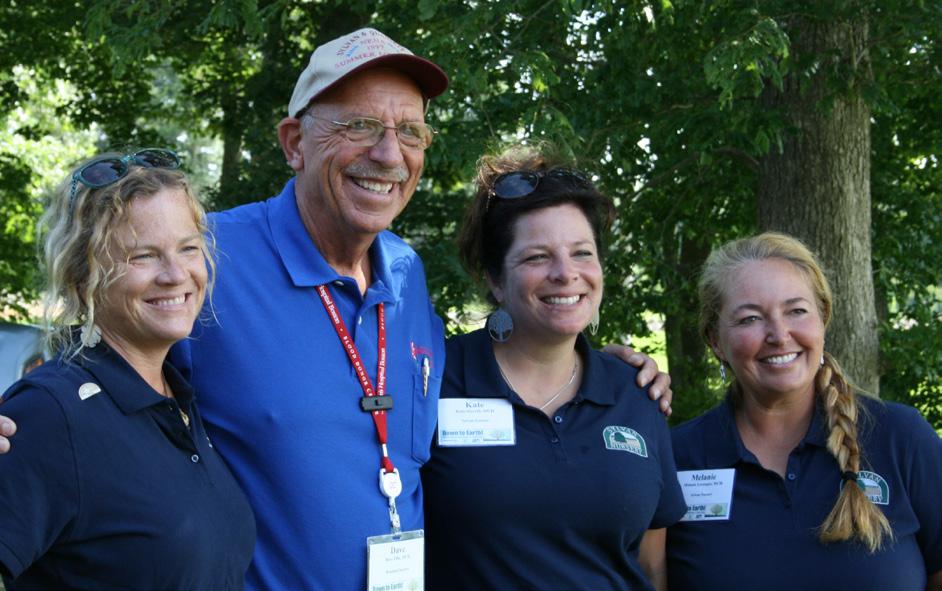
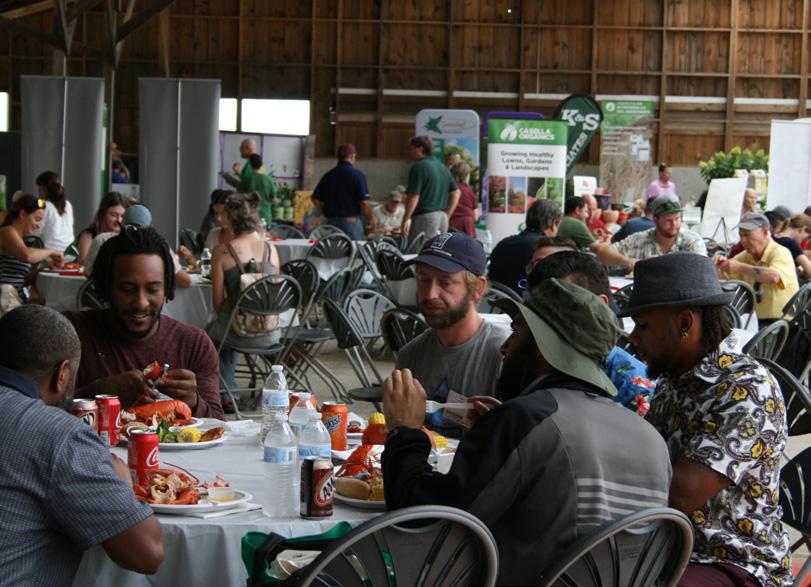
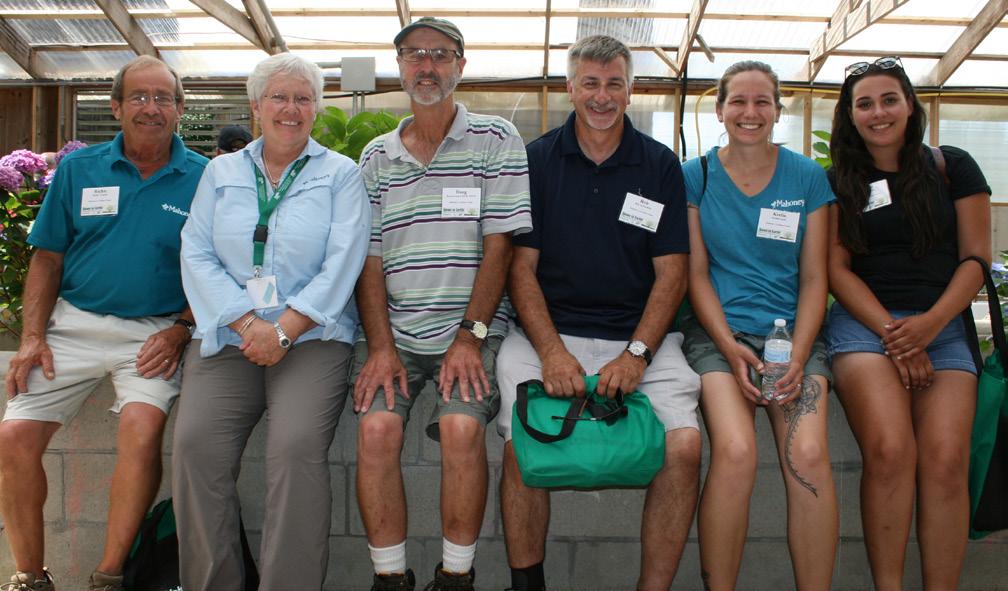
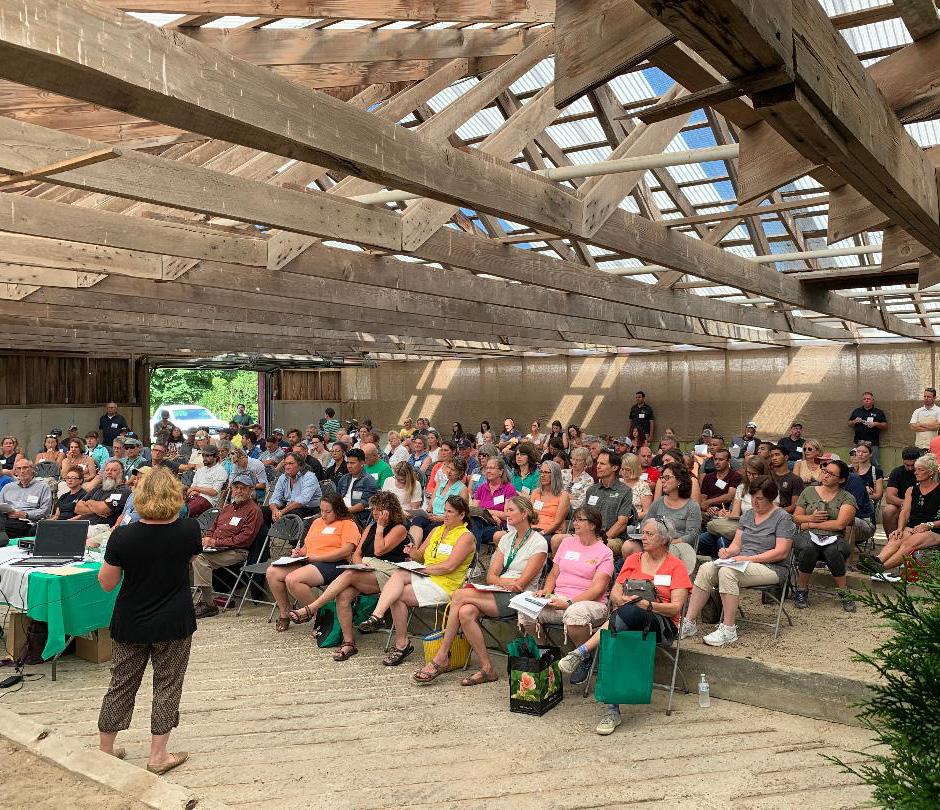
The 2019 MNLA Summer Conference made a return visit to Sylvan Nursery in southeastern MA. As many may remember, Sylvan had been our gracious host for the 2009 Summer Conference. The continuing education credits offered at MNLA events such as the Summer Conference ensure that our members provide the most up-to-date and high-quality professional service to their customers. In-depth knowledge and high standards of performance set our members apart from others in the industry. Making the effort to keep certification current pays dividends in terms of credibility in the marketplace, which in turn helps grow your business.
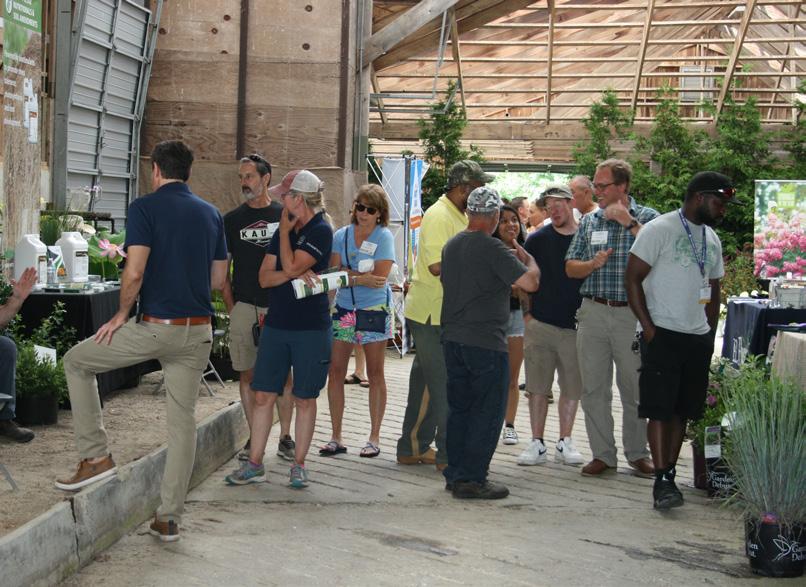
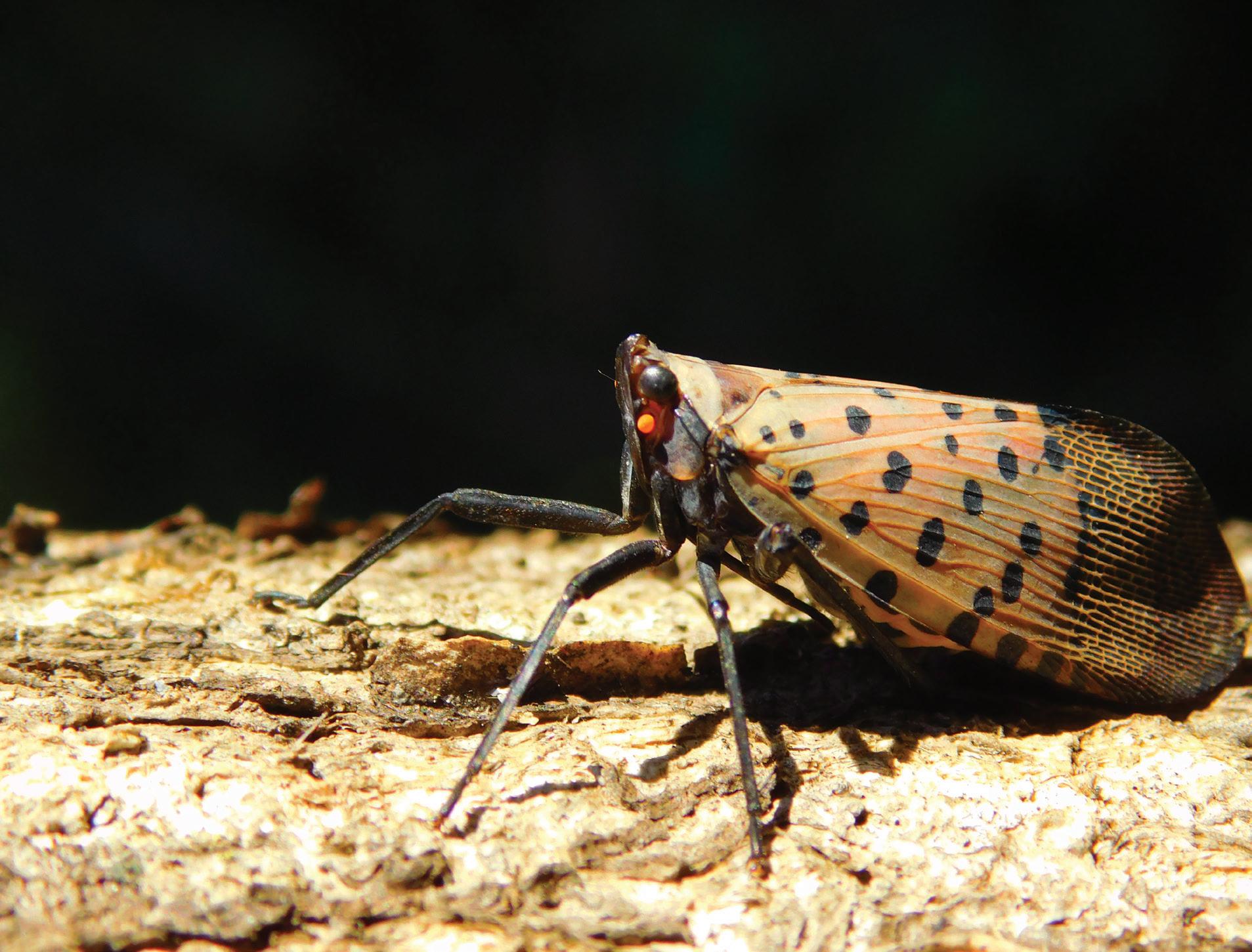
On July 25, approximately 480 industry professionals attended a day filled with educational opportunities. Expert speakers presented a wide variety of topics. Susan Finn spoke about social media strategies; Brent Heath gave two sessions on the virtues of flowering bulbs; C.L. Fornari offered practical advice on perennial bed maintenance; Mandy Bayer gave us food for thought with a discussion of native vs non-native plants in the urban environment; Trevor Smith addressed storm water management issues; Javier Marin provided insight into the potential dangers of the spotted lantern fly; and Mal Condon discussed all things hydrangea.
An important part of any MNLA event is the opportunity to participate in the Plant ID Challenge. Kudos to Kathy Bergmann and her team for their thoughtful selection of plant material and for giving everyone the chance to “name that plant.” It is a great learning opportunity for prospective MNLA members planning to sit the exam and gives current members a chance to encounter unusual plant material they might not see in the course of an average day.
Getting together with peers and colleagues for a day presents opportunities to expand your network of contacts. Everyone benefits from the sharing of information and it is a
chance to discuss everything from trends in the marketplace to solutions to troublesome issues. Additional networking opportunities exist around the Job Board, which has become a popular feature and helpful recruiting tool.
We always appreciate seeing the exhibitors who set up booths at MNLA events. It’s an opportunity to see their product offerings and to make personal connections with the individuals from whom we buy products and services. We appreciate that these exhibitors come to spend the day with us and encourage you to utilize them for your business needs; a full listing of the exhibitors and sponsors can be found at mnla.com.
The costs associated with an event such as the Summer Conference are considerable, and the support of our sponsors makes it possible for MNLA members to benefit from highquality educational programming at a reasonable cost. Our thanks go to Farm Credit East, Mahoney’s Garden Centers, UMass Extension, Bigelow Nurseries, Ballard Truck Center, Northeast Hardscape Expo, Heritage Plantation, and Sylvan Nursery for their incredible support.
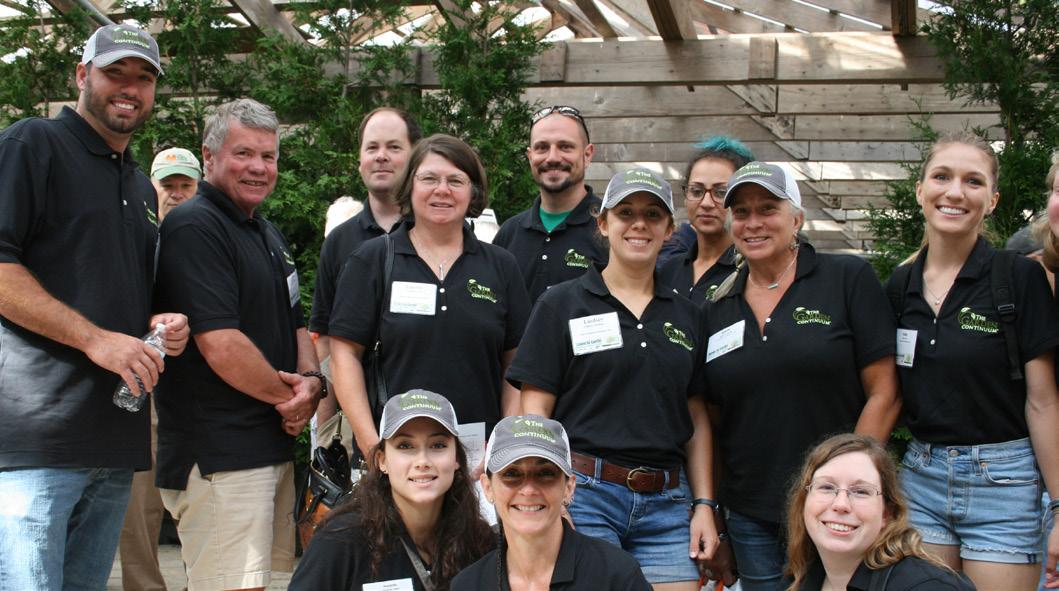
The day also included an opportunity to tour our host’s expansive operation. Praise for Sylvan’s modern operational and business practices was universal. While the seasonal nature of the horticultural industry in our region can lead to a focus on short-term goals, Sylvan’s thoughtful and reasoned approach to future opportunities has resulted in a business that is efficient, environmentally sensitive, and a source of pride for its many long-term employees. There are currently 12 MCH’s on staff. The youngest employee is 16; the oldest is 76. The average employee has a tenure of 9.8 years.
The company was founded in 1966 by Neil and Sue Van Sloun in a 50-foot greenhouse where they grew cuttings of
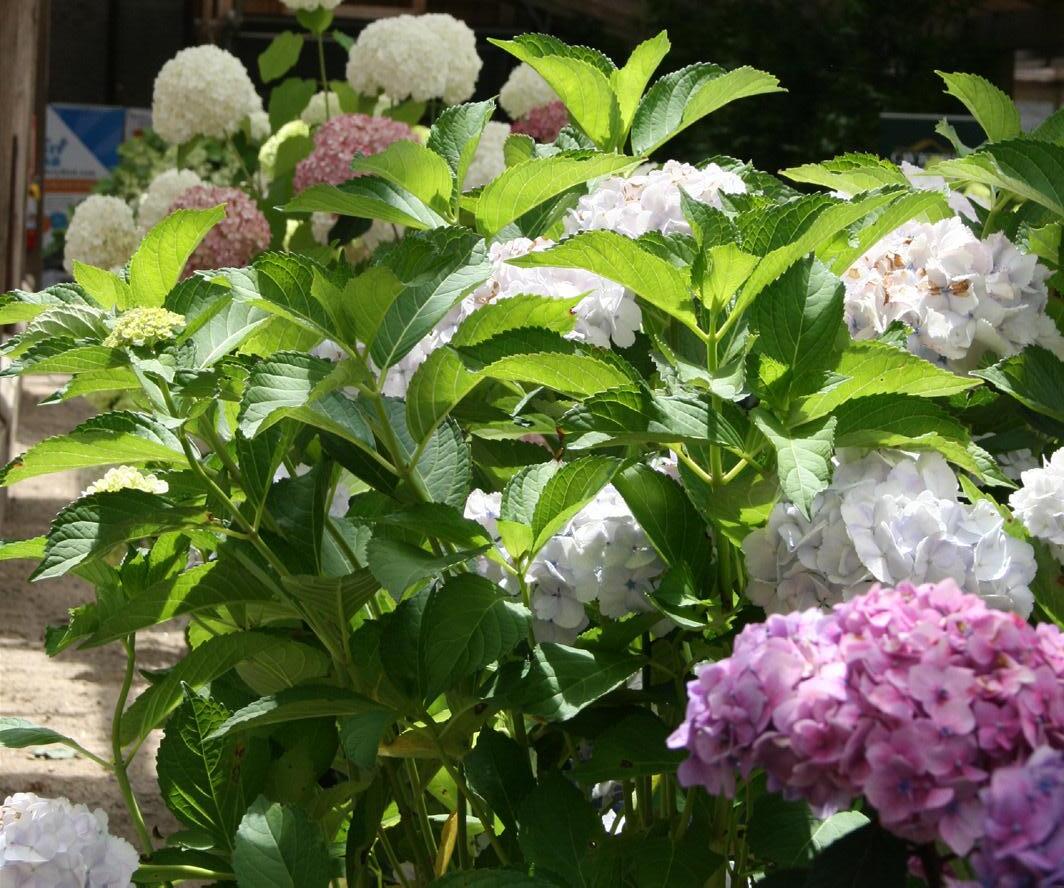
heaths and heathers. Heaths, heathers, bearberry, and native coastal plant material remain their specialty, but the business has grown into a thriving re-wholesale yard with perennials, trees, and shrubs (some 2,300 varieties of plant material) sold to 6,000 customers, primarily landscape contractors but also including municipalities, garden centers, and landscape architects. The propagation crew processes over 250,000 cuttings annually in their gutter-connected greenhouse. Approximately 200,00 bare root plants are purchased. Half the total stock sold is balled and burlapped. Containers make up the rest of the stock. Sylvan is well known for specimen trees, rhododendrons, and other shrubs that can be dug at any time. Reusable Amaroo specimen tree boxes are utilized.
The business has always been mindful of water conservation. There are three catch basins that conserve water and reduce run-off. The Sanidate 5.0 organic peroxide injection system is used to sanitize the water. The irrigation system relies on 15 wells and five ponds, with pumps transporting water from the ponds to the growing areas in pipes graduating from 6 in. at entry to 1/2 in. at the nozzle. Most large evergreen and shade trees are watered using drip irrigation, and hand watering with tankers takes place whenever needed.
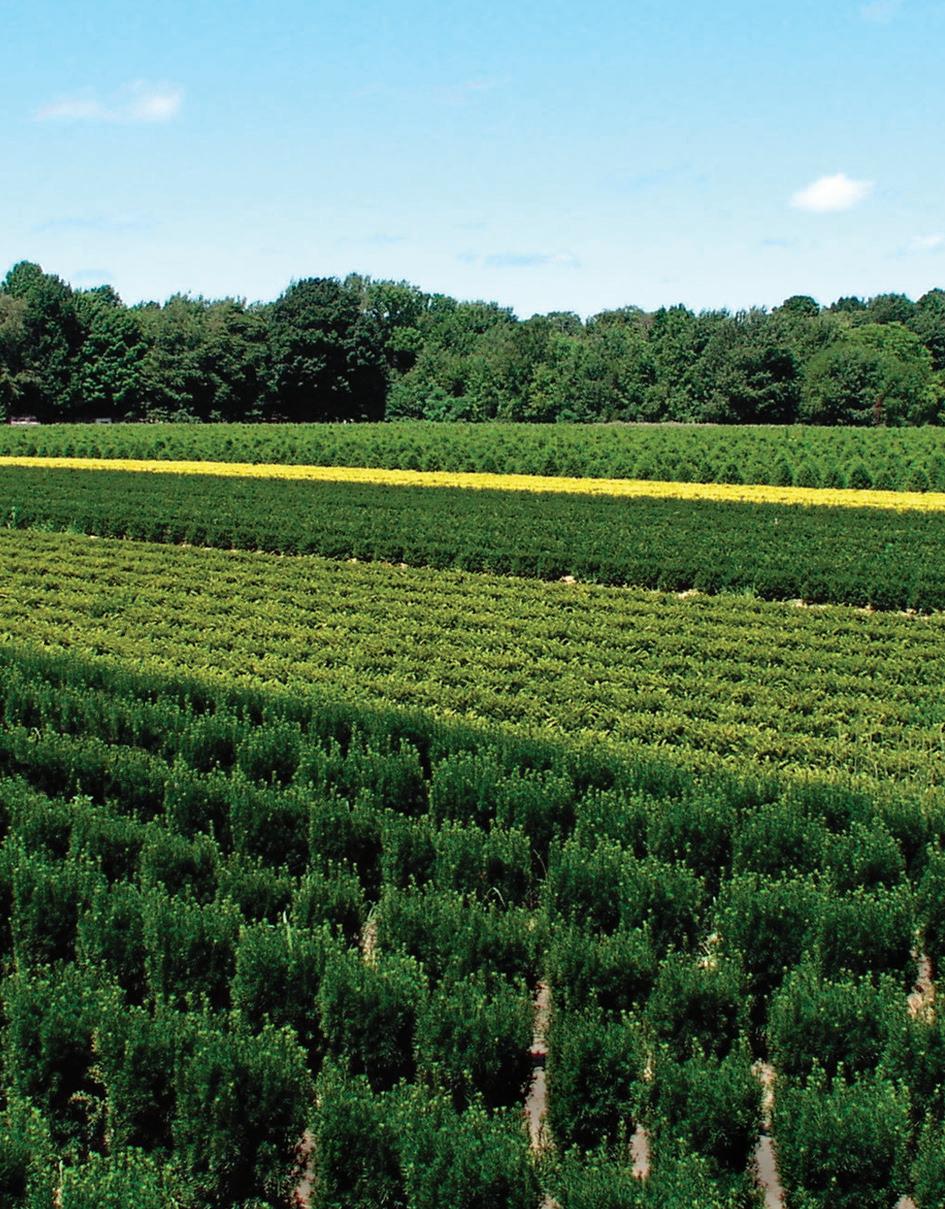
The nursery has grown to encompass 470 acres, with 125 acres in horticultural production and four satellite farms.
Given the deer population in the area, 8-foot woven wire deer fencing is utilized at all locations. One of the satellite properties has 1,100 Asian Pear trees with six varieties producing 3 tons of fruit annually. Land acquired in 1996 is now home to Sylvan’s latest venture: Black Angus beef. It is the first beef cattle operation in Massachusetts to be AWA Certified (Animal Welfare Approved). One hundred fifty acres are given to alfalfa/ native grass/hay production which is used and sold locally. The facility also grows 1,000 bales of straw for overwintering plant

material in the nursery.
Consider these numbers: Sylvan has 53 tractors, 34 articulated loaders, 18 pulling tractors, and 40 electric carts, not to mention a fleet of cars. Deliveries to job sites all over New England are made using 9 box trucks, 11 stake body flatbeds, and two semitrailers. The company made 1,900 deliveries in 2018. Trucks are loaded easily and efficiently with automated processes designed in-house. Three solar panel arrays generate 75% of the operation’s electrical needs. Maintenance of all operational systems, including the fleet, is done by six fulltime mechanics and engineers.
Sylvan employs 94 full- and part-time employees. We would like to thank them all for sharing their beautiful location and for taking us behind the scenes of their remarkable operation.
Expert speakers, generous sponsors, loyal exhibitors, and a gracious host made for an enriching and educational day. Thanks to all.
Gaele McCully, MCH, MCLP Mahoney’s Garden Center











By Mark Ahronian, MCH
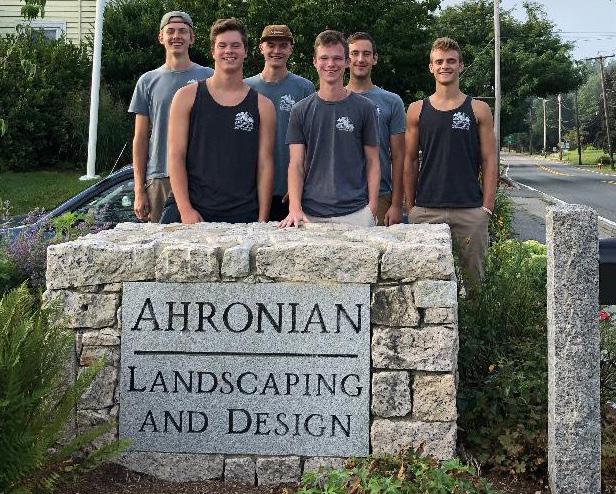
This summer’s interns were all outstanding! VP of Operations David Ahronian said, “Dad, this is one of the best groups of interns to work with.” Ahronian Landscaping owes many thanks to the Holliston school committee and school administration, especially Director of Outreach Sue Stone, who does a fabulous job interviewing students and matching them up with businesses like Ahronian Landscaping of Holliston that need extra help. Numerous companies take the time like we do to help teach young people about our industry, so they know about careers they may not otherwise be exposed to. It’s such a rewarding experience to share with other businesses to get involved.
Justin McManus is a Holliston graduate attending Plymouth State College who interned with us last year while attending Holliston High and came back this summer. His brother, Ryan McManus, is a Holliston High student this year. Eric Popucheyev is a Milford resident attending UMass Lowell; Cameron DeCristofaro is a Holliston resident attending Suffolk University this fall; Matthew Corbett did his internship with us while at Holliston High school two years ago and is presently studying arboriculture in Montana. Sean Keast and Ryan Chill are Holliston High students who are active in sports. Jack Curran attends Boston college.
Christopher Johnston, who is now Ahronian Landscaping’s director of marketing and technology and designer, interned here as a Holliston High student. He liked it so much he attended the Stockbridge School of Agriculture’s landscape contracting program and went on to earn a BS in in the land
scape architecture program at UMass. Christopher is a terrific designer for us at Ahronian Landscaping.
Lastly, my son, David Ahronian interned here as a Norfolk County Agricultural High School student. He went on to Stockbridge School of Agriculture, spent three more years at UMass Landscape Architecture School, and holds a BS in landscape architecture.
As a company owner, I can’t stress enough to other area businesses to get involved with this local resource at Holliston High School. Need advice? Just give me a call.
Mark Ahronian, MCH President, Ahronian Landscaping &

By Jill Calabro
It’s common knowledge that certain bacteria can make people sick, but did you know that bacteria can cause plant diseases as well? They most certainly do! The first identified bacterial pathogen was anthrax, a disease affecting sheep and cattle, in 1876. Shortly after that, the first bacterial plant disease was confirmed: fire blight on apples and pears.
Fire blight is likely native to North America and has colonized most of the U.S. and Canada. While outbreaks are irregular, reports of devastation to apple, pear, and other hosts were widespread in 2018, particularly in the western United States. Colorado, Washington, and California experienced extended favorable weather conditions, and fire blight flourished. Fire blight is very difficult to control once established and can destroy entire orchards in a single season if conditions are just right.
Infected plant tissue cannot be cured. This is partly due to the fact that fire


Check our website for our
Or contact our office if you would

blight infections extend up to 2–3 feet in wood beyond any visual signs and symptoms. Infected tissue can and should be removed and destroyed, and clean plant tissue can be protected, but it is likely the tree will harbor the bacteria indefinitely. Disease management, as opposed to control, is key with fire blight.
A disease triangle is a model to help visualize how interactions between the plant, the environment, and a pathogen result in disease development or not. For example, if a susceptible host, such as Snowdrift crabapple, is present, but the pathogen — in this case, a bacterium — is not present or active, then fire blight won’t be a problem. In the same manner, if the environment is not conducive to disease, such as hot, dry weather, then fire blight won’t be an issue.
Altering one or more of these three factors can impact fire blight development in a positive way for the grower.


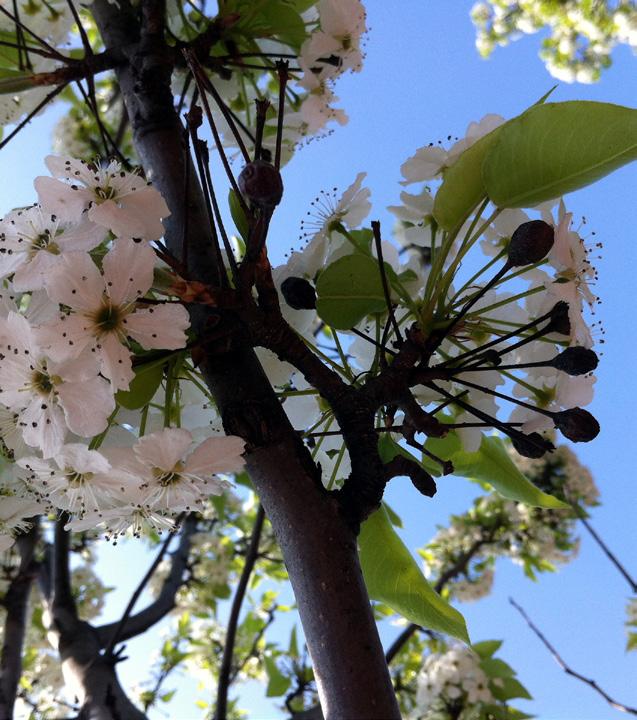
• Environment. Fire blight depends on favorable weather conditions associated with most springs: warm weather (between 65 and 85°F) accompanied by intermittent rains or high humidity. Throw in a little hailstorm that damages tender shoots, leaving open wounds ideal for pathogen entry, and the environment is prime for infection. While ambient temperatures cannot be altered, humidity can be lowered with techniques such as pruning and weed management. These practices increase airflow, which will help lower disease susceptibility.
• Host. Fire blight infects over 200 different species in the Rosaceae family, including crab apples, pears, apples, Pyracantha, and blackberry. Some cultivars are more susceptible than others, so planting cultivars more tolerant of fire blight will help minimize overall damage. Beyond that, the way the host is managed can also decrease disease severity. Fire blight prefers succulent growth; therefore, avoid actions that encourage new, vigorous growth, such as excessive nitrogen fertilization, high soil moisture, and aggressive pruning. These are all ways to manage the host to slow disease.
• Pathogen. This is the toughest vertex on the disease triangle. Most plant diseases are caused by fungi, which tend to be easier to control with fungicides. Others pose a much greater challenge. Antibiotics are used to control bacterial disease in some situions, but are far less suitable in nursery production and landscape management. Copper sprays are somewhat effective against the bacterium, especially to protect new, clean growth, but efficacy is limited under high disease pressure.



Your source for...
Trees, Shrubs, Ferns, Flowering Perennials, and Grasses
Coastal and Inland Wetland Plants
Specialty Seed Mixes
Coir Logs, Straw Wattles, Blankets and Mats
820 West Street, Amherst, MA 01002
Phone: (413) 548-8000 Fax: (413) 549-4000
Email: info@newp.com Web: www.newp.com
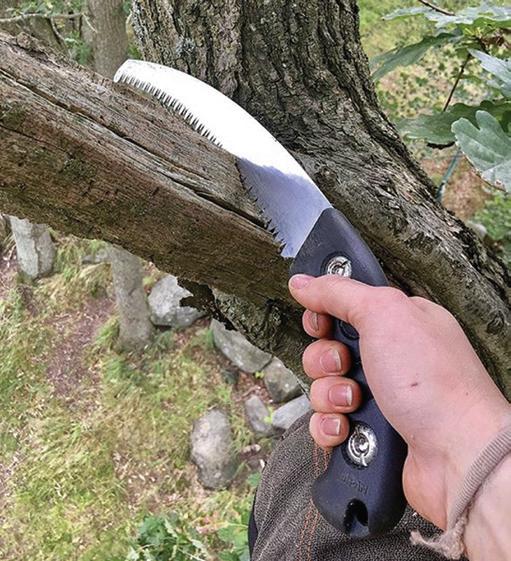
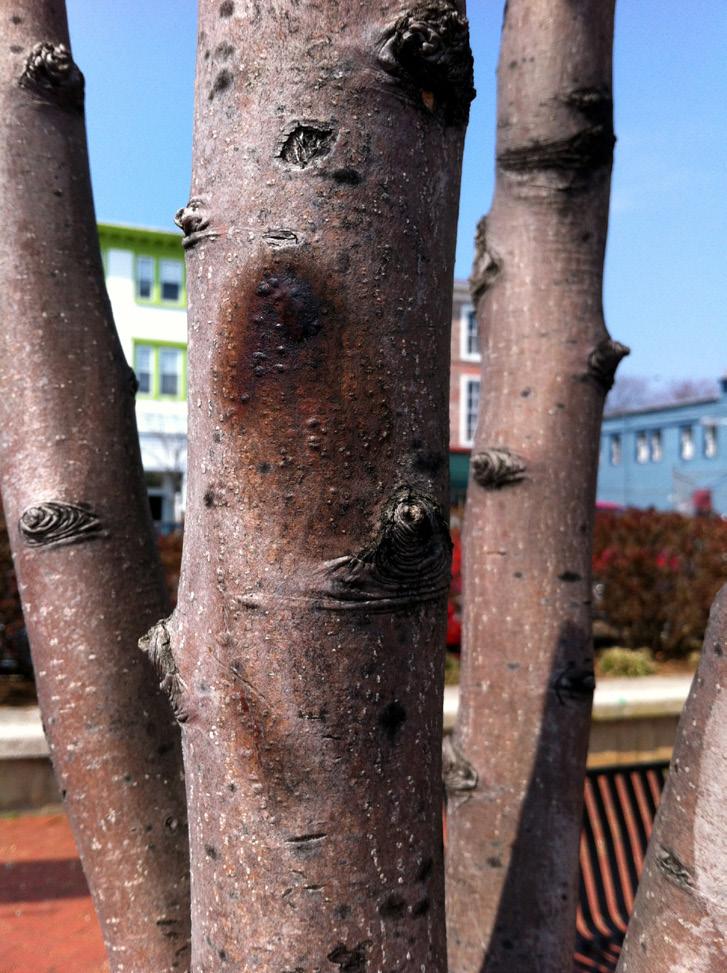
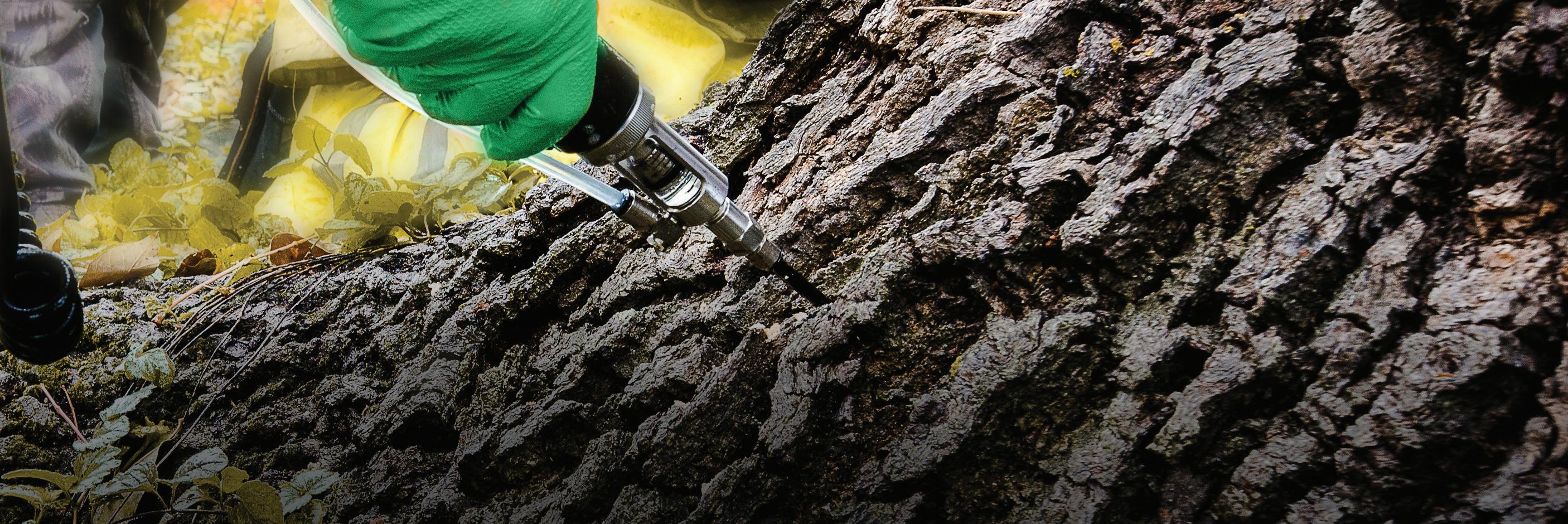
Finally, removing the pathogen itself can help reduce inoculum in subsequent growing seasons. Since the pathogen resides in infected plants, cankered tissue should be removed in winter months, when the pathogen is not active, and destroyed. To move a cankered branch, find the lowest part of the canker, trace the branch to its point of attachment, and cut at the next branch juncture. In the case of large cankers on trunks, scrape down the bark around the canker to the cambium. Pay attention to wood color as it can be an indicator of infection. Wood directly underneath a canker is usually dead and turns a red color farther out, eventually becoming red flecks. Beyond that, the tissue is healthy.
Fire blight is difficult to manage but not hopeless in most years. Management should focus on environment and host modifications as a means of reducing disease pressure. Cultural practices combined with mechanical strategies can help, but in some years — like 2018 — almost nothing seems to help.
Jill Calabro investigates all things science-y for AmericanHort and the Horticultural Research Institute (HRI). Since 1962, HRI has provided over $7.5 million in grants to research projects covering a broad range of production, environmental, and business issues important to the green industry. For more information about HRI and its grant-funded research, visit www.hriresearch.org.