Protected from floods, and now open to visitors
By MARK NolAN mnolan@liherald.com

Hurricane Sandy caused immeasurable grief and destruction nearly 11 years ago. That devastation, however, has spurred a few positives.
State officials last month announced the completion of a vast $47 million improvement project at Hempstead Lake State Park in West Hempstead that will reduce flood risk and improve access to the 737-acre park.
The project includes two miles of new Americans with Disabilities Act-compliant trails and observation deck. In addition, the 150-year-old Hempstead Lake Dam was repaired and renovated to protect against future storm damage.

Officials said it was one of the largest wetlands projects ever completed by New York State Parks.
“Our parks are some of our greatest resources for relaxation, restoration, and connecting with our families,” said Town of Hempstead Deputy Supervisor Dorothy Goosby in a release. “I am happy that the improvement project has been com-
pleted; it was worth the wait.”
The $4 million renovation of the only high-hazard dam on Long Island, built in 1873, was a priority. Officials said the repaired dam would help maintain water levels of the lake, particularly if another hurricane like Sandy strikes. Officials had determined that if the dam were to fail, the damage would include highway flooding, water supply issues, and possible fatalities.
The state received a $35 million grant from the U.S. Department of Housing and Urban Development, and another $12 million in State Parks capital money was used.
The project was part of the Living with the Bay Initiative, created in the wake of Sandy to strengthen South Shore waterfront communities in Nassau County along Mill River. The state committed $125 million to fortify East Rockaway, Bay Park, Lynbrook, Malverne, Oceanside, and Rockville Centre from future stormwater damage.
The final phase of the project, recently finished, was making the 144-acre Northern Ponds complex better able to handle stormwater runoff into
Continued on page 2
lighting it up
Tim
people from all over Long island flocked to Jones Beach on July Fourth to celebrate the holiday, which was topped off with a dazzling 25-minute fireworks display.

Cleaning up Mill Pond, one invasive species at a time Volunteers pull water chestnut, a hazard to wildlife habitat, from
By MICHAEl MAlASZCZYK mmalaszczyk@liherald.com
Mill Pond, in south Wantagh, is now a little cleaner thanks to the efforts of state officials and volunteers to rid the small lake of water chestnuts — an invasive species that can be harmful to hikers and water birds.
The state’s Department of Environmental Conservation hosted its annual water chestnut pull on July 5, putting volunteers to work in either waders or kayaks — which are not typically allowed in Nassau County’s freshwater bodies, but an exception was made for this event.
State Sen. Steve Rhoads and his staff also took part in the cleanup.
Water chestnuts have taken over Mill Pond, which is just off of Merrick Road, and appear to be out-competing the native vegetation. While the plant does create some habitat for the fish in the pond, it’s not ideal habitat, because it reduces oxygen levels in the water, according to DEC officials.
The water chestnut also makes it more difficult for recreational anglers to catch anything, because it often tangles their lines — and Mill Pond has no shortage of fish to catch, with
species including bluegill, largemouth bass, pickerel, catfish, carp, yellow perch, American eel and, unlike many other lakes in the area, white perch.
Heidi O’Riordan, a DEC freshwater fisheries manager and biologist, said the problem first arose just to the east, at Massapequa Reservoir, and she specu-
surface
lated that water chestnuts might have been introduced as a household plant that someone tossed in the water.
“It’s an attractive-looking plant,” O’Riordan said. “It probably came as an ornamental from someone’s aquarium. It doesn’t take much, because the seed pods can survive 10 to 12 years.”
The chestnuts contain sharp
spikes, which can stick to water birds, contributing to the plant’s spread to other ponds — which, most likely, is how they were transplanted from Massapequa Reservoir to Mill Pond.
“When you look out on the water body here, you really only see a few types of plants,” O’Riordan said of Mill Pond’s
Continued on page 4
Vol. 71 No. 29 JUlY 13-19, 2023 $1.00
celebrates July Fourth Page 3 Fifth-graders leave in style Page 6 Summer starts at the library Page 10 HERALD _________________ WANTAGH ________________
PACE
Baker/Herald
The real solution is a harvester.
HEIdI o’RIoRdAN DEC biologist
Hempstead Lake State Park upgrades complete
Hewlett Bay while reducing flood risks on Mill River.
Parks officials said they built eight acres of wetlands to allow runoff from Southern State Parkway to slowly filter before entering Northeast Pond. Smith Pond, a 22-acre freshwater pond in Rockville Centre, was upgraded with dredging and a floodwall.
“The culmination of these vital infrastructure projects will help make the Hempstead Lake State Park and surrounding communities safer and more resilient to future storms, while improving access to outdoor recreation in the community,” New York State Parks Commissioner Erik Kulleseid said in a release.

Other upgrades to the park include a new Eagle Avenue parking lot; an observation deck overlooking Northeast Pond; and removal of invasive plant species and replanting native species. Officials said it took one year to remove by hand more than 100 tons of decades-old trash in the Northern Ponds areas.

“We want everyone to enjoy our New York State Parks, especially those in District 18, the addition of new and better accessible trail ways open up the opportunity for all New Yorkers to enjoy the gorgeous trails, lake, and wildlife that Hempstead Lake State Park offers,” said Assemblywoman Taylor Darling in a release. “As a member of the Committee on People with Disabilities, improving accessibility is incredibly important to me.”
A new 10-foot wide stone dust greenway trail was built to provide a continuous north-to-south trail system through the park. An 8-foot wide stone dust wetlands trail and two pedestrian bridges were built to allow emergency and maintenance vehicles access.
With an eye to the possibility of future storms, sluice gates were installed to allow control of lake levels prior to and during flooding. There is a new water level monitoring and lake temperature gauge system so officials can manage conditions in real-time and track data over
a view
time.




The 8,000-square-foot Environmental Education and Resiliency Center was built in 2021 at a cost of $8.3 million. The center features hands-on learning about storms and environmental management, and will serve as an emergency coordination center during disaster response, officials said.
“Through its multiyear investment, New York State has safeguarded the natural treasures contained within Hempstead Lake State Park and made them accessible for every resident in the surrounding communities to enjoy,” Nassau County Legislator Siela A. Bynoe said in
a release.

Hempstead Lake State Park is a sprawling multiuse facility with 18 tennis courts, six pickleball courts, playgrounds, basketball courts, softball field, bridle trails for horseback riding, biking and hiking trails, shaded picnic areas, and a historic hand-carved wooden carousel. There are also three bodies of freshwater that are accessible for fishing. The 167-acre Hempstead Lake is the largest freshwater lake on Long Island.
For more information, call (516) 766-1029 or visit the New York State Parks, Recreation and Historic Preservation website at Parks.ny.gov.
Continued from page 1
July 13, 2023 — WANTAGH HERALD 2 Your business isn’t cookie cutter. Your ERTC calculation shouldn’t be either. The Employee Retention Tax Credit (ERTC) is one of the best kept secrets around and was recently expanded to benefit more businesses. Even if you received a PPP loan, you can still qualify for this federal Covid-19 benefit for up to $26,000 per employee. At Easy Tax Credits, we analyze every business from scratch. Book a free, no obligation phone call with the expert lawyers and accountants at Easy Tax Credits today! Promotional offer: some restrictions apply. To qualify for promotional offer, business must enter into an agreement with Easy Tax Credits, LLC, and be eligible to receive ERTC funding. *Promotional offer furnished by Herald Community Media; Easy Tax Credits, LLC, not responsible for fulfillment of promotional offer. EasyTaxCredits.com Phone: 1-234-CREDITS (273-3487) $1,000 BONUS! Free advertising offer with Herald Community Media* Use reference code LIHERALD-2023 1222109
Courtesy New York State Parks
of the northern ponds area of Hempstead Lake State park with new wetlands.
Annual pull of invasive species is a success
Continued from page 1
surface. “Right off the top layer, this should be a whole host of native plants. Water chestnut outcompetes that, and then when it breaks down at the end of the summer season, it puts another stress on the water body by depleting oxygen as it decomposes.”
The Mill Pond cleanup has taken place annually for about eight years, and although DEC officials said they appreciate the community’s efforts, the state would like to take care of the problem once and for all. Experts expressed the hope of deploying a harvester in the pond that would stop water chestnuts from reproducing.
“It’s a management option,” O’Riordan said. “And some areas of the pond are better this year, thanks to the pull we did last (year). But the real solution is a harvester. We’ve seen the difference a harvester made with getting rid of the chestnut in Massapequa.”
Getting a harvester into the pond would be no easy task, officials said. Despite its proximity to Massapequa Reservoir, Mill Pond, Massapequa Lake and the nearby Twin Lakes Preserve — which also has a water chestnut infestation — fall under different jurisdictions.




Last Wednesday, however, volunteers made a visible difference in Mill Pond, filling dozens of trash bags with the plants. Rhoads has always been an active
participant in the cleanup, and this time he took a kayak out on the water.
“Mill Pond was a place where you could go swimming,” Rhoads, who grew up in Wantagh, said. “It was a place where, in the wintertime, you could go ice skating. It used to be clear for fishing.
Now, with the invasive species, with
water chestnuts taking over and water lilies taking over, it chokes off marine life, and it takes away the opportunity to be able to use it (and) enjoy the lake. This effort is a drop in the bucket, but it’s an opportunity for us to get out there and try and do something positive for the environment.”
Water chestnut contains hazardous barbs that can harm hikers around the pond and stick to water birds, contributing to the spread of the plant to other ponds and lakes.
in 2021, department of environmental Conservation officials took a photo of a gosling, center left, with a water chestnut stuck to its breast feathers.
 Michael Malaszczyk/Herald
July 13, 2023 — WANTAGH HERALD 4 HOW TO REACH US Our offices are located at 2 Endo Blvd. Garden City, NY 11530 and are open from 8:30 a.m. to 5:30 p.m., Monday through Friday. MAIN PHONE: (516) 569-4000 Periodicals postage paid at Garden City, NY 11530 and additional mailing offices. Postmaster send address changes to Wantagh Herald or Seaford Herald, 2 Endo Blvd. Garden City, NY 11530. Newsstand Price: $1. Annual Subscription Rates, $9.75 per quarter auto-pay or $50 one-time payment within Nassau County or $60 outside of Nassau County. Copyright © 2023 Richner Communications, Inc. All rights reserved. HERALD WANTAGH HERALD SEAFORD ■ WEB SITE: www.liherald.com/wantagh ■ E-MAIl: Letters and other submissions: wantagheditor@liherald.com ■ EDITORIAl DEPARTMENT: Ext. 287 E-mail: wantagheditor@liherald.com The Wantagh Herald USPS 16790, is published every Thursday by Richner Communications, Inc., 2 Endo Blvd. Garden City, NY 11530. ■ WEB SITE: www.liherald.com/seaford ■ E-MAIl: Letters and other submissions: seafordeditor@liherald.com ■ EDITORIAl DEPARTMENT: Ext. 287 E-mail: seafordeditor@liherald.com The Seaford Herald USPS 665800, is published every Thursday by Richner Communications, Inc., 2 Endo Blvd. Garden City, NY 11530. SUBSCRIPTIONS: Press ”7” E-mail: circ@liherald.com Fax: (516) 569-4942 ClASSIFIED ADVERTISING: Ext. 286 E-mail: ereynolds@liherald.com Fax: (516) 622-7460 DISPlAY ADVERTISING: Ext. 249 E-mail: rglickman@liherald.com Fax: (516) 569-4643 www.LawnSprinklers.com 516-486-7500 // 333 Baldwin Road Hempstead, NY 11550 SUFFOLK COUNTY LICENSE 1629-RP/3462-RE NASSAU COUNTY LICENSE HI815700000 ww w . L a wnS p ri n klers . c o m 5 1 6-486- 7 5 0 0 // 333 B ald w i n R o a d Hemp s tea d , N Y 11 5 5 0 SUFFOLK COUNTY LICENSE NASSAU COUNTY LICENSE HI815700000 1221309 SERVING LONG ISLAND FOR OVER 50 YEARS! We can install a custom designed sprinkler system for your home without any damage to your existing lawn and shrubs. IRRIGATION & LANDSCAPING LIGHTING SPECIALISTS ANY NEW INSTALLATION WITH THIS AD • New Installations • Revamping of Existing Systems • Winterize & Summerize • Rain Sensors • Landscape Lighting Specialists • Certified Backflow Testers www.LawnSprinklers.com 516-486-7500 // 333 Baldwin Road Hempstead, NY 11550 THE MOST RECOGNIZABLE SERVICE VAN IN THE SPRINKLER INDUSTRY... AND WE HAVE 25 ON THE ROAD EACH DAY TO SERVE YOU! SUFFOLK COUNTY LICENSE 1629-RP/3462-RE NASSAU COUNTY LICENSE HI815700000 860186 IRRIGATION & LANDSCAPING LIGHTING SPECIALISTS 1205988
Courtesy NYSDEC
Wantagh fifth graders leave with a splash of color



the legacy of Wantagh Elementary School’s Class of 2023 will be long-lasting. Just like the classes before them, the departing fifth graders left their mark with the completion of a hallway mural.

The project is an annual tradition and this year was spearheaded by art teacher Eric Rodrigues. Each of the school’s 101 fifth graders was able to paint a piece of the mural, a paint palette that surrounds the art room door. The palette features splashes of different colors along with paint brushes coming out of the top.
“They’ve been looking forward to it all year long,” Rodrigues said, noting that the work of previous fifth grade classes are scattered throughout the building. “They get really excited about it. They enjoy the hands-on aspect. It’s their mark and when they come back to visit the school, they can see this.”
Rodrigues said that his goal is to continue to create murals for the special subject areas, like music and STEAM, and those would likely be the projects for the next few fifth grade classes.
Wantagh Elementary School fifth graders completed a painting of an art palette as this year’s mural by the graduating class.
What’s neWs in and out of the classroom HERALD SchoolS
Courtesy Wantagh School District
July 13, 2023 — WANTAGH HERALD 6 Featuring the Largest Funeral Chapels in Wantagh, Seaford, or Levittown • Up to 136 Seats in One Room • First Established Funeral Home in Wantagh • 40 Off-Street Parking Spaces • Two Large Viewing Chapels • Serving the Area Since 1940 (same family) CALL US NOW 516-785-0312 3374 Park Ave Wantagh, NY 11793 Visit WantaghAbbey.com Wantagh Abbey a home for funerals 1218794 1221590 WINNER HERALD
High-performing heart care, right here on the South Shore.
Get superior cardiac care at Mount Sinai South Nassau in Oceanside.


Our comprehensive care includes the latest diagnostic testing, and expertise in minimally invasive treatments—making us a top choice for Long Islanders seeking help with heart conditions.

Rated high performing in Heart Attack and Heart Failure by U.S. News & World Report, Best Hospitals 2022-23 , and recipient of the Coronary Intervention Excellence Award™ from Healthgrades , we’re the only hospital on Long Island connected to the renowned heart experts of the Mount Sinai Health System.
Learn more at mountsinai.org/southnassauheart
7 WANTAGH HERALD — July 13, 2023
1208274
Nassau Athletics HOF class announced
By TONY BELLISSIMO tbellissimo@liherald.com
The Nassau County High School Athletics Hall of Fame will hold its 2023 induction ceremony Sept. 28 at the Crest Hollow County Club. For more information and tickets, go to SectionVIII. org. Here’s a list of local athlete honorees.
ROBERT ALABASTER
A man for all seasons, he played five sports at Baldwin starting in 1929. He was a three-time All-Scholastic football lineman and also a starter on the basketball, baseball, swimming and track teams. Won the county backstroke title in swimming.
RON ATANASIO
Regarded as one of the greatest Nassau County soccer players of all-time. Led Oceanside to three consecutive county and Long Island championships and starred on the Sailors’ 18-0 team in 1973 that outscored opponents 99-4.
THERESE DEVLIN
Among the best distance runners in Nassau history while at Wantagh and two-time state champion in the 1500 meters. She was the first female named Gatorade’s New York State track and field player of the year in 1986. She went on to star at Dartmouth and competed in the 1992 Olympic Trials.
BILLY DONOVAN

A Rockville Centre native, he played on championship basketball teams at St. Agnes and earned All-Long Island honors as a senior in 1983. Played collegiately at Providence and helped the Friars reach the Final Four. Thirdround pick of Utah Jazz in 1987 NBA Draft. Coached Florida to 467 wins, including a pair of NCAA titles. Current head coach of the Chicago Bulls.
ARTHUR DUNN
A tremendous distance runner at Sewanhaka and the first in the state to place in the top 10 four times in cross country. He won state championships in 1953 and 1954.
D’BRICKASHAW FERGUSON
Generational football player at Freeport who won the Thorp and Martone Awards as Nassau’s best player and linemen. Helped the Red Devils to a Long Island title as a junior. Starred at the University of Virginia and in the NFL for 10 seasons with the New York Jets. A member of the Jets “Ring of Honor.”
PETER HENNING
Long Island’s and New York State’s first wrestling champion. Wantagh’s Henning won the 98-pound title in 1963. After losing his opening match that season, he ripped off 25 straight victories on the way to the historic state crown.
EAMON MCENEANEY
A three-sport star at Sewanhaka (1973 grad)
who was a fearless football player despite his 5-foot-10, 155-pound frame. Also one of the greatest high school and college lacrosse players in state history, he led Cornell to two NCAA titles.
ANNIE PARK
She was forced to play on the boys’ golf team at MacArthur because there was no girls’ team. It didn’t matter. She became the top golfer in Nassau, beating all the boys and winning the county championship in 2012. Won the NCAA women’s title a year later while helping the University of Southern California capture the team championship.

DICK POILLON
A three-sport star at Valley Stream Central in the 1930s. Excelled in football and also played basketball and baseball. After playing college football at Canisius, he earned a spot on the roster of the then-Washington Redskins.
CLIFTON SMITH
Gatorade’s New York state football Player of the Year in 1988, Smith was a Thorp Award winner and also a finalist as a star linebacker for Freeport. He also played basketball and lacrosse. Was a standout at Syracuse and played in the NFL for Washington and Cleveland.
KEVIN SHIPPOS
An outstanding football player and wrestler at Baldwin, the 1997 grad was a two-time AllCounty fullback/linebacker and a three-time county wrestling champ and a one-time state champ. He also won the 215-pound national wrestling championship.
FRANK TASHMAN
A football and lacrosse standout at Sewanhaka, he teamed with future Heisman Trophy winner and Nassau Hall of Famer Vinny Testaverde to bring the school a county title in 1979 and unbeaten season in 1980. Tashman had 118 points as a senior lacrosse attackman.
NICHOLAS TINTLE
Rushed for over 1,000 yards in 2002 to help MacArthur capture its first-ever county football title. He then rushed for over 2,000 yards as a senior. One of the top lacrosse players in the state and earned Nassau Midfielder of the Year honors in 2004.
AL WILLIAMS
One of the greatest athletes of all-time at Hempstead. A four-year starter on the basketball court and three-year starting quarterback on the gridiron. Under his direction, the Tigers went 8-0 in 1967 and outscored the competition 245-46.
JAMES ZAFFUTO
A record-setting lacrosse player at Elmont, the 1977 grad set multiple Nassau scoring records that have stood for 45 years. Holds career records for points (498) and assists (288.) Played on three NCAA championship title teams at Johns Hopkins.
July 13, 2023 — WANTAGH HERALD 8
Photos courtesy Nassau Boces Athletics ROckvILLE cENTRE’S BILLY Donovan starred as a basketball player at St. Agnes and Providence College, as well as a coach on the collegiate and NBA levels.
BRINGING LOCAL SPORTS HOME EVERY WEEK HERALD
MacaRThuR gRaduaTE aNNIE Park won the Nassau County golf championship, beating all the boys, in 2012, and also an NCAA title while at USC.
SPORTS
LIIFE returns to the big screen, 26 years later
By JORDAN VALLONE jvallone@liherald.com

For 26 years, the Long Island International Film Expo has united filmmakers, producers, actors and actresses — and of course, moviegoers — right in the heart of Nassau County.
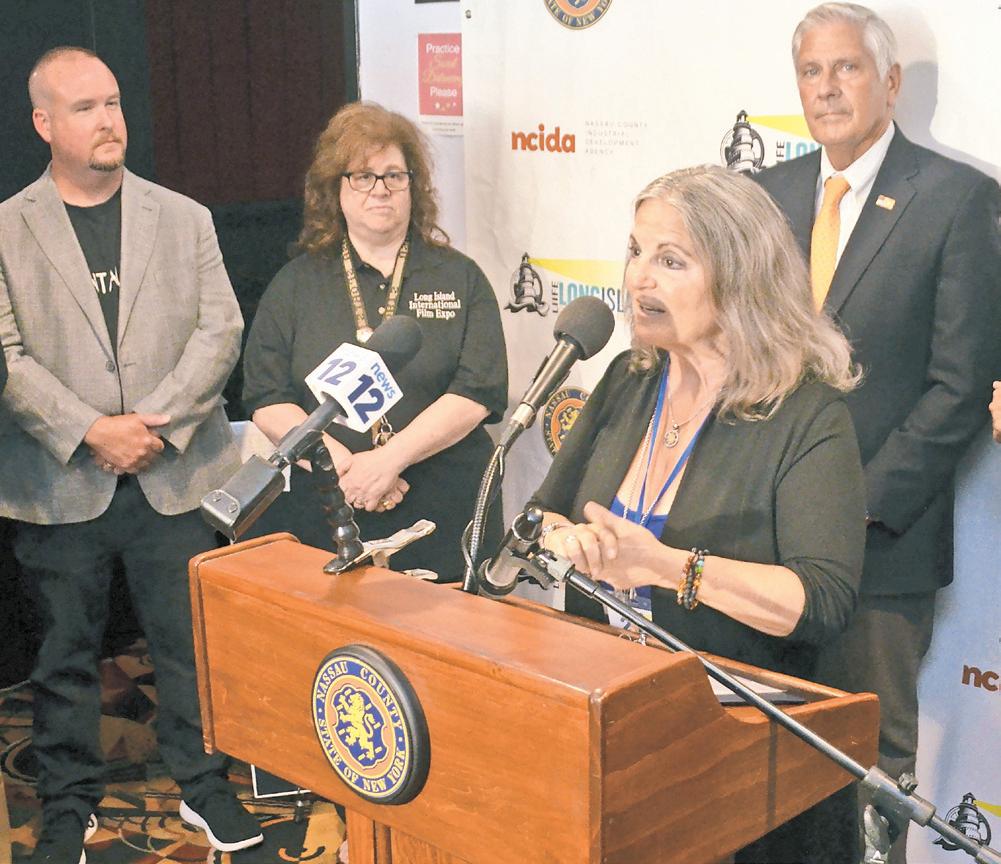
A great opportunity for people to network with professionals, learn about filmmaking, and watch some of this year’s best independent films, the expo — better known as LIIFE — returns to the Bellmore Movies and Showplace at 222 Pettit Ave., on July 19.
The expo has a lot in store for film fanatics this year, said Debra Markowitz. She’s president of the Long Island Film & TV Foundation, and is a co-creator of LIIFE, along with Henry and Anne Stampfel, owners of the Bellmore Movies.

Aside from 131 films — both shorts and features — which will be screened during this year’s expo, there are also a variety of panels and discussions ticket-buyers can attend. In particular, panels on writing, legalities and liabilities, and a director’s point of view on auditions, which are almost always fully booked.
The audition panel includes more than a half-dozen working directors, listening to actors who book themselves for 10-minute slots to read monologues.
“There are people who directors have seen during these auditions, and they might call them a year later or sometimes even two years later and say, ‘Hey, I’m casting this project. You’re great for such and such,’” Markowitz, a Merrick native, explained. “It’s a great way for them to get their face out there and practice auditioning.”
LIIFE receives support from celebrities who frequently make appearances and speak at panels during the expo.
Lukas Hassel — an actor, screenwriter and filmmaker known for roles in television shows such as NBC’s “The
Blacklist” — is again attending the expo.
“Filmmaking is hard,” he said last year. “It’s one thing if you have a studio backing you with $200 million and celebrity actors. But independent filmmaking is really hard. It’s all about reaching out to your colleagues, to your friends, to your community.”
Various venues have hosted LIIFE since its inception, including Hofstra University, Nassau Community College, and even Malverne Cinema on Hempstead Avenue. For the past 15 years — with the exception of 2020 because of the coronavirus pandemic — Bellmore Movies
Want to attend LIIFE?
Visit LongIslandFilm.com to see the lineup of events at the Long Island International Film Expo, and to purchase a Gold Pass, which allows one entrance to every film block and event between July 19 and July 23.
It all takes place at the Bellmore Movies and Showplace, 222 Pettit Ave., in Bellmore.
has been the festival’s home.
LIIFE also receives support each year from Nassau County, to the point its financial sponsorship makes the expo possible.
The film festival attracts everyone, from students, to successful filmmakers, to those just getting started.
“You have people who have really made it in the industry, who maybe do their own projects and lots of shows,” Markowitz said, “but you also have people who are just starting out, who maybe haven’t made a film yet. They can sit in the panels and ask all kinds of questions.
“So we kind of make the place you know, for filmmakers big and small — to really come and be a film community. That’s what I really think we do better than pretty much anybody else.”
And even though the 2023 expo is just around the corner, Markowitz said the Film & TV Foundation is already hard at work, planning the next one.
“I can’t believe we’ve been around for 26 years, and everything we’ve gone through and the changes that we’ve made,” Markowitz said. “It’s an all-volunteer staff, which is a big-time commitment and work commitment. It feels great to be able to get it done.”
The philosopher Epictetus said “Men are disturbed not by events, but by the views they take of them.” Arising out of “The Good Life”, previously reviewed here, comes the W.I.S.E.R. model for reacting to emotionally challenging situations.
Watch. Initial impressions are powerful but may be incomplete. There is usually more to see. When the impression and the emotional response start to interact, take a moment to pause and thoughtfully observe the situation to prevent a potentially harmful reflexive response. As they say in psychiatry “Don’t just do something, sit there.”
Interpret. We are all seeing the world through our own eyes -- what is happening, why it is happening and how it affects us. Our reality is not necessarily that of others. Thinking that a situation is all about us often leads to misunderstanding. When your emotions start to bubble up, it indicates you have something important at stake -- a goal, an insecurity or a vital relationship. Figuring out what’s at stake will allow you to interpret the situation better.
Select. Having watched, interpreted and re-interpreted, you must select your response. Instead of reacting reflexively out of stress, slowing down allows us to choose from more options. As “The Good Life” says “Given what’s at stake and the resources at my disposal, what can I do in this situation? What would be a good outcome here? And what is the likelihood that things will go well if I respond this way instead of that way?”
Engage. Now you are ready to respond more purposefully -- aligning with who you are and what you want to accomplish. You’ve observed and interpreted the situation, taken some time to consider the possibilities and their likelihood of success, and you then execute your strategy.
Reflect. “How did that work out? Did I make things better or worse? Have I learned something new about the challenge I’m facing and about the best response? Reflecting on our response to a challenge can yield dividends for the future. It’s in learning from experience that we fully grow wiser.”
Tim Baker/Herald file
Debra Markowitz, president of the Long Island Film & TV Foundation — and co-director of LIIFE — returns to bring yet another Long Island International Film Expo to the Bellmore Movies and Showplace on July 19.
9 WANTAGH HERALD — July 13, 2023
Attorney advertising Protecting Your Future with Michael and Suzanne Ettinger Attorneys-at-Law ETTINGER LAW FIRM ELDER LAW ESTATE PLANNING SINCE 1991 trustlaw.com Trusts & Estates • Wills & Probate • Medicaid FREE CONSULTATION: 516-327-8880 x117 or email info@trustlaw.com 100 Merrick Rd., Rockville Centre • 3000 Marcus Ave., Lake Success Other offices in Huntington • Melville • Islandia Visit us at trustlaw.com to learn more or search Ettinger Law on YouTube for our elder law estate planning videos Increasing Your Emotional Intelligence 1220970 1221848
Summer reading kickoff at a huge success
Summer is here, finally — and while it’s important to have fun in the summer, it’s also important to make sure that kids continue reading books and don’t have “the summer slide.”
Luckily, the Wantagh Public Library has a remedy for that, with a summer reading program destined to take care of both summer needs — fun and learning. They hosted a summer reading kickoff on June 24. By all accounts, the event was a huge success, as most Wantagh Library events typically are.

“Over 70 were registered for the food trucks and concert,” library director Shannon Marchese said. “Just over 100 came out to enjoy the day, where it was questionably rainy early in the morning and turned into a sunny afternoon. This was the first year we promoted events beyond the children’s audience to gain interest in summer reading for all ages. Starting the program off strong with a concert: J-Bird & Dave presented “The Happy Snappy Show!” and the food trucks: Greek-on-the-Go, Island Empanada, & Roxy’s Ice Cream Truck. Balloons by Lou, a local Wantagh business, donated balloons, which added to the fun.”
According to Marchese, the program is not solely aimed at preventing the
summer slide but also to help cultivate a love of reading year round.
“The library’s focus is to promote a love for reading for all ages all year,” Marchese added. “The summer reading program for kids is essential for children to remain on their reading levels as studies show children that do not read over the summer fall back come September.”
What should you know about the program?
Working closely with the Wantagh School District, there are recommended readings for elementary-level students and some required readings for middle and high school students — but the program is open-ended for the readers to select what they want to read.
“All Wantagh Public Library cardholders are encouraged to take part in summer reading this year,” Marchese said. “Children’s & Young Adults have through August 11 to record the books read this summer. Adults have through August 19 to submit their book reviews to the library.”
What’S neWS in and out of the claSSroom
HERALD SchoolS
Wantagh student earns prestigious service award
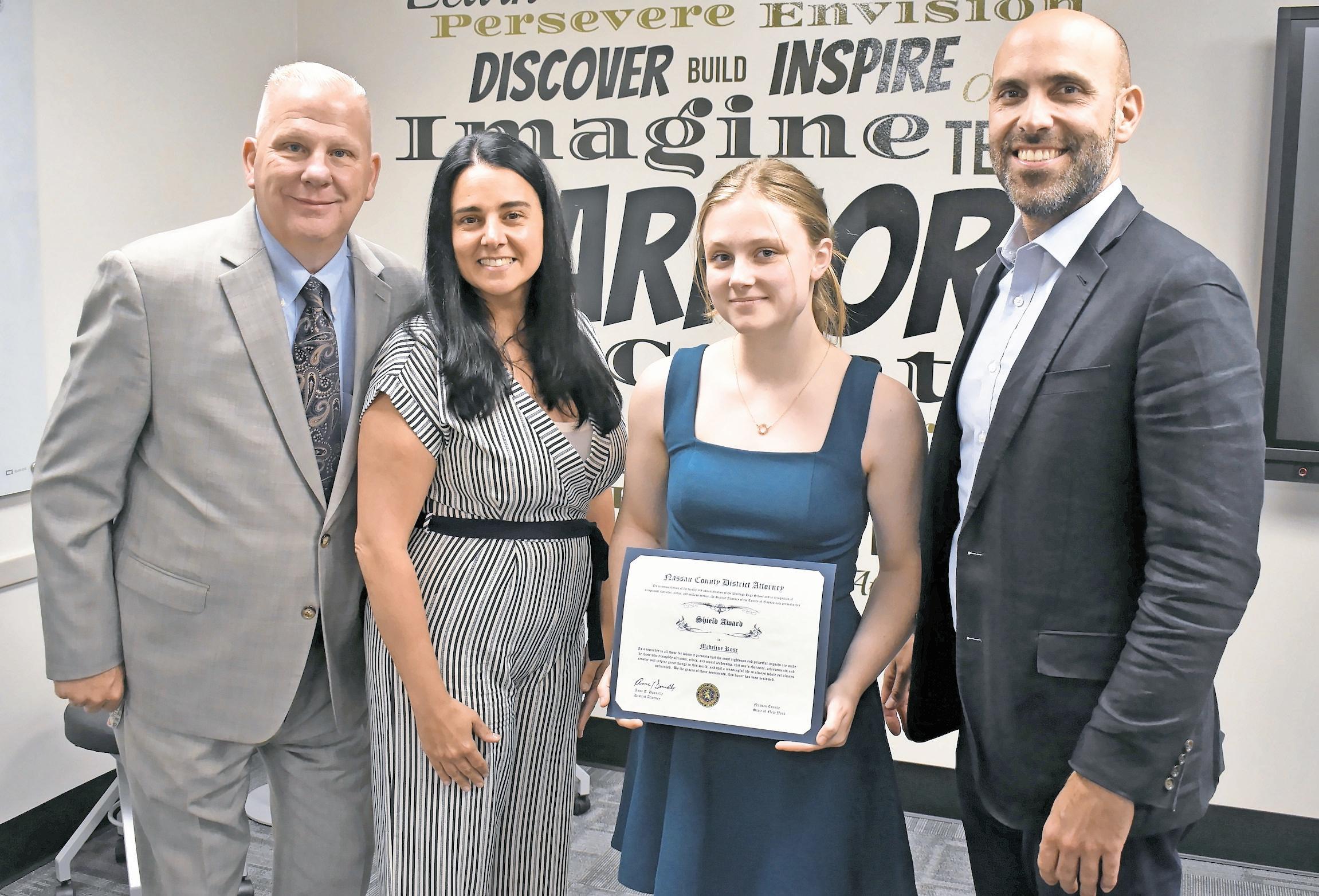
madeline Rose, a rising senior at Wantagh High School, was recently named a recipient of the SHIELD Award from Nassau County District Attorney Anne Donnelly. The award recognizes students who demonstrate service, honesty, integrity, excellence, leadership and duty. She was nominated by her guidance counselor, Marie Malafis. Through her junior year, Madeline already has an impressive record of volunteer service. She assists Town of Hempstead residents with mental and physical challenges through her work with the Camp ANCHOR summer program. Additionally, she tutors local middle school students and is a volunteer choreographer for the youth theater program at St. Frances de Chantal Church.
In school, Madeline is an officer with the general organization, president of the Wantagh Theater Club and a member of the orchestra. She is also recipient of the Jefferson Book Award from the University of Virginia.
Malafis described Madeline as always reliable and deeply invested in any work that she does.
“She wants to change things for the better,” Malafis said.
Wantagh High School rising senior Madeline Rose recently received the Nassau County District Attorney’s SHIELD award. Congratulating her are assistant principals Dr. Christopher Widmann, left, and Nick Pappas, and guidance counselor Marie Malafis.
July 13, 2023 — WANTAGH HERALD 10
Deliah Roberts/Herald
Courtesy Wantagh School District
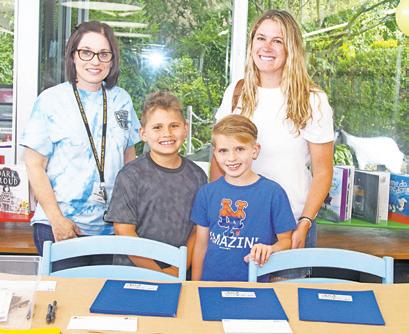
From left, Lauri Goldman, children’s librarian, Kaiden Vozzi, Alex Vozzi, and Nicole Vozzi at the Wantagh Public Library’s summer reading kickoff.
STEPPING OUT
Action along the midway
A bustling scene at the
STEPPING OUT
Creative advocacy



























 By Karen Bloom
Cotton candy, zeppole, the ubiquitous Ferris wheel. Of course, it must be time for the fair. That summertime staple is back again, taking over the Nassau Coliseum grounds, through July 16.
 By Karen Bloom
Circus-type spectacle, an old-school “oddity” sideshow, exotic animals, along with plenty of thrill rides for all ages and midway action, all combine for an extravaganza that entices all ages.

Step right up everyone: The Royal Hanneford Circus carries forth with time-honored circus traditions refreshed for the 21st century. Producers Adrian Poema and Nellie Hanneford Poema — along with their four talented children, Catherine, Mariana, Adrian Jr., and Tommy — are focused on bringing a fresh new take on circus arts under the Big Top.
The Hanneford Family, long considered the “Royal Family of the Circus,” can rightly claim an unbroken span of circus history fast approaching three centuries. Beginning with Edwin Hanneford in the late 1600s to the present, they have consistently amazed, amused, thrilled and delighted audiences everywhere with their exploits and skilled acts. From aerial high-wire feats, to illusionists, freestyle motocross, the human cannonball, the big cats, and more — this surely is an edge-of-your-seat experience.
Film Expo
out the red carpet once again for the Long Island International Film Expo, now in its 26th year. LIIFE is proud to present 133 films — 75 of them from New York filmmakers, and 30 of them by Long Islanders. Even more statistics of note: LIIFE World premieres, five U.S. premieres, short- to feature-length, moviegoers can partake of a diverse group of 156 independent films this year include: ‘1,000 Years A Witness,’ to their youth; ‘Across,’ in which three young American World War II
widows take a day trip to celebrate the younger sister’s bittersweet engagement, when a corrosive and dangerous secret from the past reemerges; ‘The Concertgoer,’ the tale of a couple who, when finding the Shostakovich concert they had planned to see is sold out, are guided to an obscure garden where they find the elusive concertgoer, silent and still, lying on a brick slab.
Wednesday through Sunday, July 19-23. Bellmore Movies, 222 Pettit Ave., Bellmore. Tickets and information available at LongIslandFilm.com.

Pat McGann


Comic showcase
Nassau Coliseum, Uniondale

• Now through July 16, 5-11 p.m. weekdays; noon-11 p.m.
• Saturday and Sunday, noon-4 p.m.; Tuesday through Friday, 11 a.m.-4 p.m.


• Emily Lowe Hall Gallery, South Campus, Hempstead. For information and to RSVP, call (516) 463-5672, or visit Hofstra.edu/museum
Saturday and Sunday
• $10 (free for kids under 36 inches tall with paying adult); unlimited ride wristbands (for riders 36 inches and taller) are $35, $40 FridaySunday.









“When We All Stand,” Hofstra University Museum of Art’s new exhibition, examines the collective power of the arts in society.

























































Curated by Alexandra Giordano — the museum’s assistant director of exhibition and collection — the exhibit underscores artists’ civic responsibility and influence.
• Ride tickets are also available at the carnival for $1.50 each, $30/20 tickets, or $60/50 tickets plus 1 free ride (rides take 2 or more tickets each)

More animal antics can be found at Eudora Farms Exotic Petting Zoo, where kids can get up-close and personal with a variety of exotic animals from the four corners of the globe. Kids can meet and greet the animals — and feed them.


Be sure to check out the World of Wonders sideshow, new to the fair this year. Visit the colorful tent and be drawn into the scene involving 10 sideshow acts, under the watchful eye of Tommy Breen — aka The Great Gozleone. Sword swallower extraordinaire, his antics are boundless, including fire-eating and stunts with a guillotine that are not for the faint of heart.
“It highlights the vital role that artists have in activating democratic values that promise equality and freedom, encouraging civic engagement, and cultivating unity,” Giordano says. “Artists often lead the charge and expose truths that may otherwise be ignored. The artists in this exhibition take a stand and call out injustices through their art and activism on issues such as immigration, gender, reproductive rights, mass incarceration, voting rights, racial bias, gun violence, and promises unfulfilled. They all combine the making of art with public service that has a grassroots approach in the hope of mobilizing their communities and the nation to ignite movement, create awareness, and inspire others to stand with them.”
“When I was 14, I decided I wanted to run away with the sideshow,” Breen says. “I started teaching myself sword swallowing and some other stunts out of the back of a book I found. I didn’t think there still were
This exhibit, which runs through July 28, is in conjunction with Hofstra’s 13th presidential conference on the Barack Obama presidency coming up in April.
sideshows around, I figured I could perform in bars with bands or something. But then, when I graduated college, I saw Ward Hall was hiring for his World of Wonders show. I was shocked it was still on the road and that I had the chance to work for the King of the Sideshow. So, I quit my job and got rid of my apartment and joined the carnival. It was what I had always daydreamed about, and once I got here, I just never left.”
Breen proudly carries on the sideshow tradition, with his fellow sideshow folk.
Strongwoman Luella Lynne emcees the show and astounds visitors with feats of strength, bending metal, ripping phone books, and breaking metal chains with her bare hands. Other “talents” include Sam Rezz, who performs with hula hoops, needle swallowing and contact juggling. And don’t miss out on Lucy Lovett, the electric lady, with her painproof woman act.
And, of course, don’t miss out on the rides. The midway features plenty of attractions that all ages will enjoy, including the Dream Wheel (one of the largest Ferris wheels on the fair circuit), the Grand Carousel, Super Cyclone roller coaster, Wacky Worm family roller coaster, Storybook Fun House, super slide, and bumper cars.
And, yes, in case you’re wondering, you can still take a spin in those tea cups. Some things never go out of style.


“We were interested in the idea that the artist has a civic responsibility,” says museum director Karen Albert. “The initial idea for this exhibition was inspired by an Obama Administration White House briefing that took place on May 12, 2009, where more than 60 artists and creative organizers met with administration officials to
Pat McGann is quickly rising as one of the sharpest stand-ups on the comedy scene. A relative latecomer to comedy, he began doing standup at 31 after realizing he was not very good at selling packaging. He hustled his way to become the house emcee at Zanies Chicago, where he distinguished himself as especially adept at working the crowd. A husband and father of three young children, McGann’s appeal stems from his quick wit and relatable take on family life and marriage. In 2017, McGann began touring as the opening act for Sebastian Maniscalco, moving with him from clubs to theater, to arenas, including four soldout shows at Madison Square Garden. McGann’s relatively short, but impressive resume, includes Montreal’s famed Just For Laughs Festival, Gilda’s LaughFest, The Great American Comedy Festival, and more. McGann still calls Chicago home.
Saturday, Feb. 11, 8 p.m. $40, $35, $30, $25. The Paramount, 370 New York Ave., Huntington. (800) 745-3000 or Ticketmaster.com or ParamountNY.com.

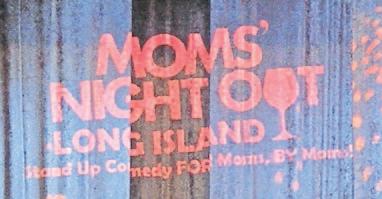
Laugh the night away at Mom’s Night Out, presented by Long Island Comedy Festival. You’ll enjoy witty standup delivered by four clever comics. Ellen Karis, known as the ‘Greek Goddess of Comedy,’ performs at venues throughout North America. She’s described as the ‘little dynamo’ given her petite stature, strong improv skills and ability to build a quick rapport with any audience. New York City-born and raised in a traditional strict Greek home, her brand of sarcastic, observational humor is along the same lines as comedy legends Joan Rivers and Richard Lewis. She’s joined by Maria Walsh, ‘America’s Naughtiest Mommy,’ whose quick wit, combined with coordinating facial expressions, give her a memorable and commanding stage presence. Kendra Cunningham, a Boston native who absconded to New York to peruse performing, who whines too much in her dreams. And Maureen Langan, acclaimed for her high-energy, versatile style that highlights her warmth and razor-edge repartee.
Thursday, July 20, 8 p.m. $35$40. Madison Theatre, Molloy University, 1000 Hempstead Ave., Rockville Centre. (516) 323-4444 or MadisonTheatreNY.org.
11
Photos courtesy Empire State Fair
From daring sideshow acts featuring fire-eating to circus spectacle and everyone’s favorite rides, plus new enticements, plenty of summer amusements await at the latest edition of the Empire State Fair.
13 BALDWIN HERALD — February 9, 2023
Can art change the world? It’s a question that’s been at the focus of our collective culture for centuries. Now as society navigates the complexities of modern life, art as a path for social change is at the forefront of artistic expression.
WHERE WHEN
THE

July 27
Life Science of Summer
July 21
The folk rocker is back on tour, appearing on the Tilles Center stage, Friday and Saturday, July 21-22, 8 p.m. Singer, songwriter, producer, activist, humanitarian, best-selling author — Brandi Carlile has done it all. Since the release of her breakthrough album “By The Way, I Forgive You in 2018,” Carlile has won Grammy Awards, earned Billboard’s Women in Music Trailblazer Award, and received several Americana Music Association accolades. She won her seventh, eighth and ninth Grammys this year, winning for best Americana album with ”In These Silent Days.” Her song “Broken Horses,” won both best rock song and best rock performance. A versatile performer hailed by Billboard for her “impressive vocal range” and “captivating presence,” Carlile has topped the Americana and Rock charts with solo hits, co-founded the country supergroup The Highwomen, and collaborated with legendary artists including Elton John, Alicia Keys, Dolly Parton, and Miley Cyrus. Don’t miss an evening of iconic songs such as “The Story,” “That Wasn’t Me,” and “The Joke.” Seemingly everywhere, Carlisle has transitioned from an Americana powerhouse to a major headliner beloved by the industry and the public. Carlile’s career has been on a steep upward trajectory and her “Bramily” has her fans are known, are with her every step of the way. LIU Post campus, 720 Northern Boulevard, Brookville. Tickets are $51.50 -$481.50; available at TillesCenter.org or (516) 299-3100.

On exhibit
View the landmark exhibition “Modigliani and the Modern Portrait,” opening at Nassau County Museum of Art, Saturday, July 22. Devoted to the way that Modigliani powerfully re-defined the art of portraiture, the show includes his masterworks along with paintings and drawings by his Parisian contemporaries (Picasso, van Dongen, Laurencin). Modigliani’s enduring influence on artists even in our own time is shown in a selection of Contemporary paintings by such important figures as David Hockney, Eric Fischl, Elizabeth Peyton and others. The exhibition is being curated by Dr. Kenneth Wayne, founder of The Modigliani Project, which authenticates paintings and drawings (two of the works in the show have been recently approved by the committee). Through Nov. 5. Nassau County Museum of Art, 1 Museum Dr., Roslyn Harbor. (516) 484-9337 or NassauMuseum.org.
Kids ages 6-9 can tour Old Westbury Gardens and examine how science is all around us in nature, Thursday, July 27, 2 p.m. Learn how plants grow and take home your own plant, as you participate in experiments of the water cycle and how we can use science to change the color of a flower both naturally and artificially. 71 Old Westbury Road, Old Westbury. For information visit OldWestburyGardens.org or contact (516) 333-0048.
Wantagh Preservation Society car show
The Wantagh Preservation Society holds is second annual car show, Saturday, July 15, rain or shine, 10 a.m.-4 p.m. Refreshments will be served and the museum will be open for viewing. Admission is $1 for anyone 18 and up, and free for anyone 17 or younger. 1700 Wantagh Ave. For more information email WantaghMuseum@gmail.com.

Your Neighborhood
July 13, 2023 — WANTAGH HERALD 12 1221896
Write on: College essay workshops




































































Not sure how to get started on your college essay? The Hofstra University Admission Office is offering virtual workshops to help high school students learn the skills to tell their story in a way that helps them stand out. The workshops, Thursday, July 20 and Aug. 17, 4-5 p.m., are free and open to the public, but advance registration is required. Hear from Hofstra Admission counselors about how to brainstorm topics, and compose a thoughtful essay that shows your personality, talents and interests. For more information about Hofstra Admission’s other virtual summer workshops, go to Admission.Hofstra.edu/ portal/virtual_admission_ webinars. To schedule a summer in-person visit go to: Hofstra.edu/visit.


Mindful mornings
Practice the “art” of looking at art at Nassau County Museum of Art, Thursday, July 27, 10-11 a.m., with



































































































































































NCMA Director of Education




Laura Lynch. Mindful looking invites you to observe, question, and calmly reflect in a relaxed and supportive environment free of distraction. It’s an opportunity to experience and enjoy the art in the galleries or sculpture garden, together, making personal connection. $10. Space is limited and registration required. Also Aug. 3. Nassau County Museum of Art, 1 Museum Dr., Roslyn Harbor. (516) 4849337 or NassauMuseum.org.
Wantagh Class of 1973 Reunion
Wantagh High School’s Class of 1973 celebrates their 50th reunion, Sunday, July 22, 6:30 p.m., at Mulcahy’s. 3232 Railroad Ave., Wantagh. $100 per person; paid either with checks or through Venmo. For more information, email Long-Along1017@aol.com or Mimila924@aol.com.

Having an event?



























































































































































The Tribunes




Enjoy summer tunes, with the five-man a capella doo wop group, featuring ‘5060s music, at Seaford Public Library, Saturday, July 22, 7:30 p.m. 2234 Jackson Ave. For information, visit SeafordLibrary.org.







Christmas in July Toy Drive
If you feel like taking a short drive to Hicksville, State Sen. Steve Rhoads, along with other local politicians including Legislator Rose Walker, Assemblyman Jake Blumencranz, and Town of Oyster Bay Supervisor Joseph Saladino host a toy drive, Saturday, July 15, 11 a.m. to 1 p.m. at the Hicksville Train Station, nearest to Newbridge Road and West Barclay Street. The theme is Christmas in July. For more information contact the senator’s chief of staff Christopher Dalton at cdalton@nysenate.gov or (516) 882-0630.


Items on The Scene page are listed free of charge. The Herald welcomes listings of upcoming events, community meetings and items of public interest. All submissions should include date, time and location of the event, cost, and a contact name and phone number. Submissions can be emailed to thescene@liherald.com.


















On stage





Plaza Theatricals brings the iconic musical “Rent,” back to the stage, Friday, July 21, 7:30 p.m. The acclaimed reimagining of “La Vie Boheme,” loosely based on Puccini’s opera and set on East Village streets, fire escapes, tenements, and cafes. This groundbreaking roller coaster ride depicting the joys and sorrows of an eclectic, diverse group of young artists and activists is always captivating. It’s performed at the Elmont Library Theatre, 700 Hempstead Tpke., Elmont. $35, $30 seniors. Elmont. For tickets, call (516) 599-6870 or visit PlazaTheatrical.com.






Breastfeeding Support Group
Mercy Hospital offers peer to peer breastfeeding support fwith a certified breastfeeding counselor, every Thursday, 10:30 a.m.-11:30 a.m. Bring your baby (from newborn to 1 year) to the informal group. Registration required. Call breastfeeding counselor, Gabriella Gennaro, at (516) 705-2434 .Mercy Hospital, St. Anne’s Building, 1000 North Village Ave., Rockville Centre. For information visit CHSLI.org.

















Weekly Mah Jongg





Enjoy game night. The JULIETS are back playing Mah Jongg and cards at Congregation Beth Tikvah, at 3710 Woodbine Ave., in Wantagh, every Thursday, 11:30 a.m. to 4 p.m. Masks are optional. $5 per person. For more information email mahjonggCBT@yahoo.com or call (516) 785-2445.




July 20
13 WANTAGH HERALD — July 13, 2023 MORE UNBUBBLIEVABLE THAN EVER! MORE UNBUBBLIEVABLE THAN EVER! IT WILL BLOW “ YOUR MIND! IT WILL BLOW “ YOUR MIND! -OPRAH -OPRAH GET TICKETS 1222057 STARRING CONSTANTINE MAROULIS AND JOE PANTOLIANO RockAndRollManTheMusical.com NEW WORLD STAGES 340 W. 50TH ST. IN A BUSINESS BUILT ON SOUND, HE HAD A VISION. 1222035
Senior health expo geared for young at heart

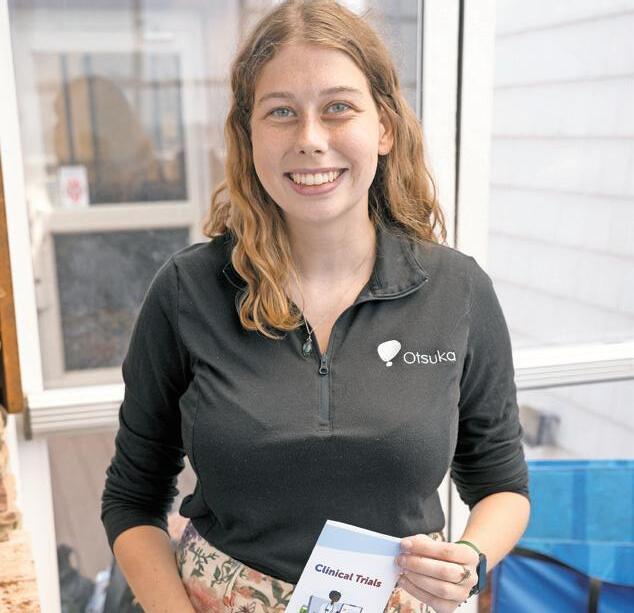

The Sunny Atlantic Beach Club opened its doors June 28 to eager guests for Herald Community Newspapers’ Senior Health & Beyond Expo presented by UnitedHealthcare and produced by RichnerLive. It was the third in a series of expos designed especially for senior citizens this year.





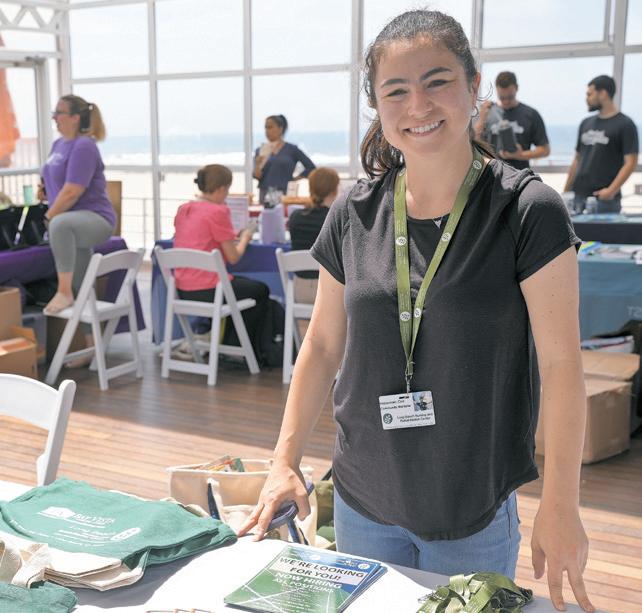


More than 35 diverse businesses as well as innovative services shared their products and refined knowledge with attendees to improve wellness and heighten their lifestyle.
Free on-site health screenings were provided by Mount Sinai South Nassau as well as vaccines administered by Parker Jewish. There were also hearing screenings from Dr. Lawrence Cardano of Hearing Center of Long Island — who was also one of the speakers on the expo’s afternoon panel.
Goody bags and tons of raffles were also a plus for those making their way to Atlantic Beach.
The event was made possible thanks to Gold Sponsor Otsuka and gift bag sponsors Grandell Rehabilitation & Nursing Center and Oceanside Care Center. Silver Sponsors were Beach Terrace Care Center, Parker Jewish Institute Health Care and Rehabilitation, Long Beach Nursing & Rehabilitation Center, Aetna, CenterLight and Hearing Center of Long Island.

The next expo is coming up fast — Thursday, Sept. 7, at the East Meadow Jewish Center. It runs from 10 a.m. to 12:30 p.m.
For more information, Visit RichnerLive.com.
July 13, 2023 — WANTAGH HERALD 14
1. Dr. Lawrence Cardano, middle, takes with Omar and Sandy about what the Hearing Center of Long Island can offer them.
2. Jacqueline Garguilo and Frank Garguilo, owners of Bikram Yoga Long Beach, showed some relaxing poses.
3. Nancy Lebron from presenting sponsor UnitedHealthcare was the keynote speaker.
Tim Baker/Herald photos
1 2 3 4 5 6 7 8 9 10 11 12
–Alexa Anderwkavich
4. Josh Herzing and Taylor Malfin from Beach Terrace Care Center were among those attending.
5. Cori Hoberman, community marketer from Long Beach Rehabilitation & Nursing
6. Pablo Rendon of Parker Jewish shares some expertise as a panelist.
7. Jill Wassner from the state public services department, offers advice.
8. Sabrina Osmani from Sunharbor Manor chats with an attendee
9. Na Zhang, Abigail Fromm and Lisa SperlingLeicht at the Mount Sinai South Nassau table.
10. Mark Legaspi of Aetna, shares some of his expertise
11. Allison Burton from Otsuka was one of the several great business leaders to come out.
12. Shaun Ruskin from Centerlight discusses PACE eligibility.
No matter the industry, businesses around the world are undergoing dramatic changes to the way they operate From technology and skills development, to cultural barriers, self-care and mental health, every organization must adapt and evolve, or risk being left behind.
As we navigate a time of pivotal change, the Herald’s 2023 WE Summit presented by Bank of America brings together thought leaders, innovators and barrier-breaking women for conversations around this year’s theme: The Future is Now.



SPEAKER SPOTLIGHT





JUST ADDED: DANIELLE LABARBERA - SVP HUMAN RESOURCES AT AMERICAN EXPRESS & REENA JANA - HEAD OF CONTENT & PARTNERSHIP ENABLEMENT, RESPONSIBLE INNOVATION AT GOOGLE



FOR A FULL LIST OF SPEAKERS, WORKSHOPS AND AGENDA VISIT: RICHNERLIVE.COM/2023-WE-SUMMIT





SPONSORS






For more information about WE Summit or sponsorship opportunities, contact Amy Amato:












15 WANTAGH HERALD — July 13, 2023
LANYARD/ BADGE SPONSOR CENTERPIECE SPONSOR The Crescent Beach Club • Bayville, NY Produced by 08.07.23 LIZ BENTLEY Motivational Speaker Media Expert CEO & Founder Liz Bentley Associates KEYNOTE SPEAKER KRISTIN THORNE Multi-Emmy Award-Winning Investigative Reporter WABC-7 TV MODERATOR
SUPPORTING SPONSORS Not-for-Profit Partner 8:30am
3:30pm ( 5 1 6 ) 5 6 9 - 4 0 0 0 x 2 2 4 BETH FINKEL State Director AARP New York PANELIST
WORKSHOP
-
JODI SEITLER Vice President, Crisis & Issue Management, Value Chain Lead Estee Lauder PANELIST TALISA FLATTS Human Resources Business Partner II at Amazon Logistics Amazon PANELIST
AIMEE KESTENBERG ELAN Co-Founder &
The Affordable Luxury
KEYNOTE SPEAKER SUNSCREEN SPONSOR
CCO
Group
1221982
Public Notices
LEGAL NOTICE
NOTICE OF SALE
SUPREME COURT
COUNTY OF NASSAU
Citibank NA, Plaintiff
AGAINST The Estate of
Lea Ellen Demaille, et al., Defendant(s) Pursuant to a Judgment of Foreclosure and Sale duly entered May 16, 2023, I, the undersigned Referee will sell at public auction at the North Side steps of the Nassau County Supreme Court, 100 Supreme Court Drive, Mineola, NY 11501 on August 1, 2023 at 2:30PM, premises known as 1701 Cornelius Avenue, Wantagh, NY 11793. All that certain plot piece or parcel of land, with the buildings and improvements erected, situate, lying and being in the Town of Hempstead, County of Nassau and State of New York, SECTION: 56, BLOCK: 267, LOT: 196. Approximate amount of judgment
$126,402.19 plus interest and costs. Premises will be sold subject to provisions of filed Judgment Index #606105/2018. The aforementioned auction will be conducted in accordance with the NASSAU County COVID-19 mitigation protocols and as such all persons must comply with social distancing, wearing masks and screening practices in effect at the time of this foreclosure sale. If proper social distancing cannot be maintained or there are other health or safety concerns, then the court appointed referee will cancel the foreclosure auction. Foreclosure Auctions will be held “Rain or Shine”. Mark Ricciardi, Esq., Referee Frenkel Lambert Weiss Weisman & Gordon, LLP 53 Gibson Street Bay Shore, NY 11706 01-085921-F00 76583 140204
LEGAL NOTICE
REFEREE’S NOTICE OF SALE IN FORECLOSURE
SUPREME COURTCOUNTY OF NASSAU M&T BANK, Plaintiff - againstCRAIG H. O’CALLAGHAN, et al Defendant(s). Pursuant to a Judgment of Foreclosure and Sale entered on April 12, 2023.
I, the undersigned Referee will sell at public auction on the North Side steps of the Nassau County Supreme Court located at 100 Supreme Court Drive, Mineola, N.Y. 11501 “Rain or Shine” on the 27th day of July, 2023 at 2:00 PM. All that certain plot, piece or parcel of land, with the buildings and improvements thereon erected, situate, lying and being at Bethpage, Town of Oyster Bay, County of Nassau and State of New York. Premises known as 4030 Avoca Avenue, Bethpage, NY 11714 and Avoca Avenue, Bethpage, NY 11714. (Section: 46, Block: 481, Lot: 7 and Section: 46, Block: 481, Lot: 79) Approximate amount of lien
$378,405.18 plus interest and costs. Premises will be
sold subject to provisions of filed judgment and terms of sale. Index No.
602151/2022. Peter L. Kramer 516-510-4020
Esq., Referee. McCalla Raymer Leibert Pierce, LLC
Attorney(s) for Plaintiff 420 Lexington Avenue, Suite 840 New York, NY 10170 Tel. 347/286-7409

For sale information, please visit Auction.com at www. Auction.com or call (800)
280-2832 Dated: May 4, 2023
During the COVID-19 health emergency, bidders are required to comply with all governmental health requirements in effect at the time of sale including but not limited to, wearing face coverings and maintaining social distancing (at least 6-feet apart) during the auction, while tendering deposit and at any subsequent closing. Bidders are also required to comply with the Foreclosure Auction Rules and COVID-19 Health Emergency Rules issued by the Supreme Court of this County in addition to the conditions set forth in the Terms of Sale. 140355
LEGAL NOTICE
SUPREME COURTCOUNTY OF NASSAU
U.S. BANK TRUST, N.A. AS TRUSTEE FOR WATERFALL VICTORIA GRANTOR TRUST II SERIES G, Plaintiff -against- RICHARD M. DEMARIA; DEBORAH DEMARIA A/K/A DEBROAH SUPRANOWICH; JAMES FRAUENBERG; ANN FRAUENBERG, et al Defendant(s). Pursuant to a Judgment of Foreclosure and Sale dated May 15, 2023 and entered on May 16, 2023, I, the undersigned Referee will sell at public auction on the North Side steps of the Nassau County Supreme Court “Rain or Shine” located at 100 Supreme Court Drive, Mineola, NY on August 8, 2023 at 2:00 p.m. premises situate, lying and being at Wantagh, Town of Hempstead, County of Nassau and State of New York, bounded and described as follows: BEGINNING at a point on the Northerly side of DeMott Avenue, distant 54.92 feet Easterly from the Easterly end of a curve connecting the Northerly side of DeMott Avenue with the Easterly side of Jane Street; being a plot 100 feet by 60 feet by 100 feet by 60 feet. Section 57 Block 246 Lot 19 All bidders must wear a face mask/shield at all times and social distancing must be observed by all bidders at all times. Bidders who do not comply with the face mask and/or the social distancing mandate will be removed from the auction. Said premises known as 3611 DEMOTT AVE, WANTAGH, NY
Approximate amount of lien $318,472.11 plus interest & costs.
Premises will be sold subject to provisions of filed Judgment and Terms of Sale. Index Number 609318/2019. BRIAN
J. DAVIS, ESQ., Referee Kosterich & Skeete, LLC
Attorney(s) for Plaintiff 707 Westchester Ave, Suite 302, White Plains, NY 10604 {*Wantagh Herald*} 140489
LEGAL NOTICE NOTICE OF SALE SUPREME COURT. NASSAU COUNTY.
L&L ASSOCIATES HOLDING CORP., Pltf. vs. THOMAS LOUIS MAURO, et al, Defts. Index #613089/2022.
Pursuant to judgment of foreclosure and sale entered June 22, 2023, I will sell at public auction on North Side steps of the Nassau Supreme Court, 100 Supreme Court Drive, Mineola, NY on August 10, 2023 at 2:30 p.m. prem. k/a Section 51, Block 389, Lot 38. Sold subject to terms and conditions of filed judgment and terms of sale. RONALD FERRARO, Referee. LEVY & LEVY, Attys. for Pltf., 12 Tulip Drive, Great Neck, NY. #100553 140523
LEGAL NOTICE
CASE NO. 12649
RESOLUTION NO.6592022 Adopted: May 24, 2022 Councilmember Carini offered the following resolution and moved its adoption: RESOLUTION GRANTING THE PETITON OF THE GIAMBRONE ASSET MANAGEMENT TRUST, AS OWNER, AND BOLLA EM REALTY, LLC, AS LESSEE, FOR A VARIANCE FROM THE PROVISIONS OF THE GSS DISTRICT, SITE PLAN MODIFICATION APROVAL, AND A MODIFICATION OF RESTRICITVE COVENANTS FOR REAL PROPERTY
LOCATED AT 1589 MERRICK ROAD, MERRICK, TOWN OF HEMPSTEAD, NEW YORK. WHEREAS, the petition of Bolla EM Realty, LLC, as lessee, with offices at 809 Stewart Avenue, Garden City, New York 11530, and the Giambrone Asset Management Trust, as property owner, with an address at 14 Kotfield Court, Melville, New York 11747, dated and acknowledged June 25, 2021, for site plan modification approval, a Variance from the GSS provisions and a modification of Restrictive Coveneants for property located on the northeast corner of Merrick Road and Central Boulevard, Merrick, New York, more particularly described hereinafter, was filed with this Town Board; and WHEREAS, Bolla EM Realty, LLC, as lessee, and the Giambrone Asset Management Trust, as a property owner, have submitted to the Town of Hempstead a Declaration of Restrictive Covenants dated August 25, 2022, and executed by Harvinder Singh, Member (Bolla) and John Giambrone, Trustee (Giambrone) (executed in counterparts) with reference to said overall parcel that modifies a Declaration of Restrictive Covenants recorded in the Office of
the Nassau County Clerk on January 27, 1986; and NOW, THEREFORE, BE IT RESOLVED, that the petition of Bolla EM Realty, as property owner, dated June 25, 2021, for site plan modification approval, aVariance from the GSS provisions and a modification of Restricitve Covenants at the hereinafter described property in Merrick, New York, is hereby granted and BE IT FURTHER RESOLVED, that the property which is the subject of said Petition is known and designated as Section 55, Block 180, Lot 32 on the Nassau County Land And Tax Map, the meets and bounds of which are described in the Declaration of Restrictive Covenants and, BE IT FURTHER RESOLVED, that said petition is granted subject to the provisions of Chapter 132 of the Code of the Town of Hempstead and the Building Zone Ordinance of the Town of Hempstead, and further approvals if required from the Board of Appeals or any other governmental entity and the submission of a Declaration of Restrictive Covenants acceptable to this Board and the subject premises shall be maintained in accordance with the site plan prepared by High Point Engineering, last revised on May 10, 2022 and filed with the Town Clerk; and be it further RESOLVED, that this inclusion shall become effective upon the issuance of a permit by the Department of Buildings of the Town of Hempstead. The forgoing resolution was seconded by Councilmember Dunne and adopted upon roll call as follows: AYES:
SEVEN (7) NOES: NONE (0)
140659
LEGAL NOTICE NOTICE OF ADOPTION OF TOWN OF HEMPSTEAD
LOCAL LAW NO. 49
-2023 PLEASE TAKE
NOTICE that pursuant to Article 9 of the New York State Constitution, the provisions of the Town Law and the Municipal Home Rule Law of the State of New York, as amended, a public hearing was duly called and held on the day of June 20, 2023, by the Town Board of the Town of Hempstead, on the proposed adoption of Town of Hempstead Local Law No. 49-2023, and following the close of the hearing the Town Board duly adopted Local Law No. 49-2023, for the enactment of an amendment to Chapter 99 of the Code of the Town of Hempstead entitled “Registration and Permitting of Property” in relation to accessory structures and penalties.
Dated:Hempstead, New York June 20, 2023
BY ORDER OF THE TOWN BOARD OF THE TOWN OF HEMPSTEAD
KATE MURRAY Town Clerk DONALD X. CLAVIN, JR. Supervisor 140661
Learn and have fun at Jones Beach
Summer is here, and swimming isn’t the only thing to do at Jones Beach. The Jones Beach Energy and Nature Center, open year round, has plenty for you to do.

Public Notices
LEGAL NOTICE NOTICE OF PUBLIC HEARING PLEASE TAKE
NOTICE that pursuant to Article 9 of the New York State Constitution, the provisions of the Town Law and Municipal Home Rule of the State of New York, both as amended, a public hearing will be held in the Town Meeting Pavilion, Hempstead Town Hall, 1 Washington Street, Hempstead, New York, on the 1st day of August, 2023, at 10:30 o’clock in the forenoon of that day to consider the enactment of a local law to amend Section 197-5 of the code of the Town of Hempstead to INCLUDE “ARTERIAL STOPS” at the following locations: MERRICK
FREDERICK AVENUE (TH 218/23) - STOP - All traffic traveling northbound on State Street shall come to a full stop. FREDERICK AVENUE (TH 218/23)STOP - All traffic traveling southbound on State Street shall come to a full stop. OCEANSIDE FOXHURST ROAD (TH 252/23) - STOP - All traffic traveling southbound on Parkview Place shall come to a full stop. POINT LOOKOUT BELLMORE AVENUE (TH 306/23) - STOP - All traffic traveling eastbound on Beech Street shall come to a full stop. BELLMORE AVENUE (TH 306/23)STOP - All traffic traveling westbound on Beech Street shall come to a full stop. (NR) VALLEY STREAM PARK LANE (TH 578/22)STOP - All traffic traveling westbound on Park Court shall come to a full stop. PARK LANE (TH 578/22)STOP - All traffic traveling westbound on Sherwood Street shall come to a full stop. WANTAGH DEMOTT AVENUE (TH 268/23)STOP - All traffic traveling southbound on Temple Drive shall come to a full stop.
WILLOWOOD DRIVE (TH 271/23)STOP - All traffic traveling northbound on Western Lane shall come to a
full stop. EMPLE DRIVE (TH 281/23) - STOP - All traffic traveling eastbound on Princeton Drive North shall come to a full stop. ALL PERSONS INTERESTED shall have an opportunity to be heard on said proposal at the time and place aforesaid.
Dated: July 11, 2023 Hempstead, New York BY ORDER OF THE TOWN BOARD OF THE TOWN OF HEMPSTEAD DONALD X.
CLAVIN, JR. Supervisor
KATE MURRAY Town Clerk
140662
LEGAL NOTICE
SUPREME COURT OF THE STATE OF NEW YORK
INDEX NO. 601101/2023
COUNTY OF NASSAU
MORTGAGE ASSETS
MANAGEMENT, LLC
Plaintiff, vs. JOSEPH SULFARRO, AS HEIR AND DISTRIBUTEE OF THE ESTATE OF JEANETTE SULFARRO; MICHAEL SULFARRO, AS HEIR AND DISTRIBUTEE OF THE ESTATE OF JEANETTE SULFARRO; UNKNOWN HEIRS AND DISTRIBUTEES OF THE ESTATE OF JEANETTE SULFARRO, any and all persons unknown to plaintiff, claiming, or who may claim to have an interest in, or general or specific lien upon the real property described in this action; such unknown persons being herein generally described and intended to be included in the following designation, namely: the wife, widow, husband, widower, heirs at law, next of kin, descendants, executors, administrators, devisees, legatees, creditors, trustees, committees, lienors, and assignees of such deceased, any and all persons deriving interest in or lien upon, or title to said real property by, through or under them, or either of them, and their respective wives, widows, husbands, widowers, heirs at law, next of kin, descendants, executors, administrators,
devisees, legatees, creditors, trustees, committees, lienors and assigns, all of whom and whose names, except as stated, are unknown to plaintiff; SECRETARY OF HOUSING AND URBAN DEVELOPMENT; SUSTAINABLE NEIGHBORHOODS, LLC (“SN”); NEW YORK STATE DEPARTMENT OF TAXATION AND FINANCE; UNITED STATES OF AMERICA, “JOHN DOE #1” through “JOHN DOE #12,” the last twelve names being fictitious and unknown to plaintiff, the persons or parties intended being the tenants, occupants, persons or corporations, if any, having or claiming an interest in or lien upon the premises, described in the complaint, Defendants. Plaintiff designates NASSAU as the place of trial situs of the real property SUPPLEMENTAL SUMMONS Mortgaged
Premises: 1183 OAKFIELD AVENUE, WANTAGH, NY 11793 Section: 51, Block: 513, Lot: 11
To the above named Defendants YOU ARE HEREBY SUMMONED to answer the Complaint in the above entitled action and to serve a copy of your Answer on the plaintiff’s attorney within twenty (20) days of the service of this Summons, exclusive of the day of service, or within thirty (30) days after service of the same is complete where service is made in any manner other than by personal delivery within the State. The United States of America, if designated as a defendant in this action, may answer or appear within sixty (60) days of service. Your failure to appear or to answer will result in a judgment against you by default for the relief demanded in the Complaint. In the event that a deficiency balance remains from the sale proceeds, a judgment
may be entered against you. NOTICE OF NATURE OF ACTION AND RELIEF SOUGHT THE OBJECT of the above caption action is to foreclose a Mortgage to secure the sum of $544,185.00 and interest, recorded on January 04, 2008, in Liber M 32632 at Page 716, of the Public Records of NASSAU County, New York., covering premises known as 1183 OAKFIELD AVENUE, WANTAGH, NY 11793. The relief sought in the within action is a final judgment directing the sale of the premises described above to satisfy the debt secured by the Mortgage described above. NASSAU County is designated as the place of trial because the real property affected by this action is located in said county. NOTICE YOU ARE IN DANGER OF LOSING YOUR HOME If you do not respond to this summons and complaint by serving a copy of the answer on the attorney for the mortgage company who filed this foreclosure proceeding against you and filing the answer with the court, a default judgment may be entered and you can lose your home. Speak to an attorney or go to the court where your case is pending for further information on how to answer the summons and protect your property. Sending a payment to the mortgage company will not stop the foreclosure action. YOU MUST RESPOND BY SERVING A COPY OF THE ANSWER ON THE ATTORNEY FOR THE PLAINTIFF (MORTGAGE COMPANY) AND FILING THE ANSWER WITH THE COURT. Dated:May 11, 2023 ROBERTSON, ANSCHUTZ, SCHNEID, CRANE & PARTNERS, PLLC Attorney for Plaintiff Orit Avraham, Esq. 900 Merchants Concourse, Suite 310 Westbury, NY 11590 516-280-7675 140646
Herald file photo
July 13, 2023 — WANTAGH HERALD 16
PROVISIONAL APPOINTMENT
EAST ROCKAWAY JR./SR. HIGH SCHOOL ADMINISTRATIVE OFFICER (2 POSITIONS)

12 Month Position
MINIMUM QUALIFICATIONS PER NASSAU COUNTY CIVIL SERVICE
Training and Experience
Bachelor's degree from a regionally accredited or New York State registered college or university, AND
Four years of satisfactory administrative staff experience, which must include participating in budget preparation, and/or personnel and/or procurement activities.
NOTE: 1. Experience, as outlined above, in excess of the four-year requirement, may be substituted for college education on a year-for-year basis up to a maximum of four years.
2. A Master's degree from a regionally accredited or New York State registered college or university may be substituted for one year of the experience as outlined above.
Anticipated Start Date: Upon Civil Service Approval

Please submit letter of interest and resume to:
Ms. Diane Drakopoulos

Personnel Clerk 443 Ocean Avenue East Rockaway, NY 11518 516-887-8300, x1-441
Email: ddrakopoulos@eastrockawayschools.org
The Merrick Before/After School Program is preparing for the 2023-24 school year. We require mature individuals to provide quality care to elementary school aged children from 2:45 pm to 5:00 or 6:00 pm weekdays. Minimum 3 afternoons per week. Experience helpful. If interested, email merrickbasp@aol.com or call 516-379-4245

CIRCULATION ASSOCIATE Full Time/Part Time Richner Communications, publisher of Herald community newspapers has an excellent opportunity for a FT/PT Customer Service Clerk in our busy Circulation Department. Basic customer service and administrative responsibilities include: heavy computer work, answering phones, making phone calls, entering orders, faxing, filing, etc. STRONG knowledge of EXCEL a must! Knowledge of DATABASE maintenance or postal regulations a big plus. Qualified Candidates must be computer literate, able to multitask, dependable, reliable, organized, energetic, detail oriented and able to work well under deadlines. For consideration, please send resume & salary requirements to: careers@liherald.com
DRIVERS WANTED
Full Time and Part Time Positions Available!
Busy Print Shop in Garden City is Hiring Immediately for Full Time and Part Time Drivers.
Must Have a Clean License and BoxTruck Driving Experience. Hours Vary, Night Availability is a Must.
Please Email Resume to careers@liherald.com or Call (516)569-4000 x239
DRIVING INSTRUCTOR
Company Car/ Bonuses. Clean Driving Record Required, Will Train. Retirees Welcome! Bell Auto School 516-365-5778
DRIVING INSTRUCTORS
WANTED
Will Certify And Train HS Diploma NYS License Clean 3 Years Call 516-731-3000
EDITOR/REPORTER
The award-winning Herald Community Newspapers group, covering Nassau County's North and South Shores with hard-hitting news stories and gracefully written features, seeks a motivated, energetic and creative editor/reporter to join our dynamic (and awesome) team! This education and general assignment reporting position offers a unique experience to learn from some of the best in the business. Historically, reporters who have launched their careers with us have gone on to The New York Times, Newsweek, Newsday, the New York Daily News, New York Post, CNN, BBC, NBC News and The Daily Mail, among many others. We look for excellent writers who are eager to learn, enhance their skills, and become well-established and respected journalists in our industry.
To apply: Send a brief summary in the form of a cover letter describing your career goals and what strengths you can bring to our newsroom, along with a resume and three writing samples to mhinman@liherald.com LINE

Path Monitor
At Blaze, Old Bethpage Village Outdoors From September Through November
5-8 Hour Evening Shifts
Providing A Welcoming Atmosphere And Ensuring Guest Safety. Hourly Rate $20. To Apply: https://hudsonvalley.org/ employment/
To Apply: https://hudsonvalley.org/ employment/
MULTI MEDIA ACCOUNT DEVELOPMENT
Inside Sales
Looking for an aggressive self starter who is great at making and maintaining relationships and loves to help businesses grow by marketing them on many different advertising platforms. You will source new sales opportunities through inbound lead follow-up and outbound cold calls. Must have the ability to understand customer needs and requirements and turn them in to positive advertising solutions. We are looking for a talented and competitive Inside Sales Representative that thrives in a quick sales cycle environment. We offer salary, commission, bonuses, health benefits, 401K and paid time off. Will consider part time. Please send cover letter and resume with salary requirements to ereynolds@liherald.com Call 516-569-4000 X286
OUTSIDE SALES
Richner Communications, One of the Fastest Growing Media, Event and Communications Companies on Long Island is Seeking a Sales/Marketing

PRESS-ROOM/WAREHOUSE HELP
Long Island Herald has IMMEDIATE openings for a FULL-TIME Pressroom/warehouse helper in Garden City. We are a busy print shop looking for a motivated and reliable individuals to assist in various duties in the shop. Forklift experience is a plus and heavy lifting is required. Hours vary, so flexibility is key. Email resumes or contact info to careers@liherald.com


RECEPTIONIST P/T Busy Cedarhurst Office Sundays & Some Week Days
Answering Phones, Filing, And Scheduling Appointments Must Be Computer Literate Call 516-374-1010
Child/Eldercare/Help Wanted
NANNY NEEDED EXPERIENCED Live-In Or Live-Out Monday - Friday English/Spanish Speaking Call 516-672-4040
Email
Email: info@bellautoschool.com
17 WANTAGH HERALD — July 13, 2023 H1 EMPLOYMENT Help Wanted ASSISTANT TEACHERS: For Yeshiva Of South Shore. Afternoon Hours. Competitive Pay. Please Send Resume To: monika@yoss.org Bellmore-Merrick Child Care Program Is Looking For Qualified Staff We Are Looking For: After-School Staff (2:30pm-5:30pm) 5 Days Per Week Some Mornings Available Competitive Pay With Paid Time Off Please Email Us office@bellmoremerrickchildcare.com To Arrange For An Interview BOOKKEEPER/ OFFICE MANAGER: Small Merrick CPA Firm Seeks PT Bookkeeper/ Office Manager 4 Mornings/ Week. Individual Must Have Knowledge Of Payroll Taxes, Sales Taxes, General Ledger + Bank Reconciliations. Knowledge Of Tax Software Helpful. Prior CPA Firm Experience Preferred. Call 516-379-1663,
Resume jacobsandco@optonline.net
COOK:
Manager On Duty At Blaze, Old Bethpage Village Outdoors From September Through November 5-8 Hour Shifts. Serve As The Primary Point Of
Event,
To Resolution.
Primary Point Of
Friday, Saturday, Sunday, Monday 10am-6pm. Sandwiches/ Salads. Beach Restaurant. Great Summer Job. 516-835-2819
Contact For All Issues That May Occur During The
Seeing Each Through
Serve As The
Contact For Emergency Personnel Hourly Rate $25-$30
to Sell
Print Media
Digital, Events, Sponsorships. Salary, Commission, Eligible for Health Benefits, 401k and Paid Time Off. Will Consider Part Time. Please Send Cover Letter and Resume with Salary Requirements
or
Candidate
our
Products and our
to rglickman@liherald.com
Call 516-569-4000 X250
Business/Opportunities NICHE FRANCHISE OPPORTUNITY THEFANWHISPERER.COM REPLACING NOISY BATHROOM FANS PLUG & PLAY EASY. I TRAIN. 1-888-888-2134 CLASSIFIED Fax your ad to: 516-622-7460 E-mail your ad to: ereynolds@liherald.com E-mail Finds Under $100 to: sales@liherald.com DEADLINE: Monday, 11:00 am for all classified ads. Every effort is made to insure the accuracy of your ad. Please check your ad at the first insertion. Credit will be made only for the first insertion. Credit given for errors in ads is limited to the printed space involved. Publisher reserves right to reject, cancel or correctly classify an ad. To pLACE your AD CALL 516-569-4000 - press 5 Employment HERALD JOIN OUR TEAM! Be a part of a growing multi media company based in Garden City Now Hiring: •Sales/Multi Media Consultants* •Receptionist •Reporter/Editor •Drivers •Pressman/Press Helper Mail Your Resumes to Careers@liherald.com or call 516-569-4000 ext 239 *must have a car 12 04615 * E-mail Your Resumes to Careers@liherald.com 1217542 1221926
1221522
1221861 Maintenance Mechanic Wanted for Residential Building Qualified Applicants can email resume to: valleypark@me.com Or
Qualified applicants must have minimum five years experience in basic repairs and troubleshooting of: Plumbing, Electrical, Carpentry, and Heating & Boiler Maintenance Able to perform snow removal Work Shift: 5 days, 8am-5pm, alternating weekend shifts, able to work O/T & Holidays 1218061 NEW NEW STARTING SALARIES FOR SEPTEMBER Van $25.41/hr. Non-Benefit Rate Big Bus $28.18/hr. Non-Benefit Rate BUSDRIVERSWANTEDDON’T MISS The Bus! EDU c ATIONAL BUS TRANSPORTATION 516.454.2300 $2,500.00 for CDL driver bus and van $500.00 for non CDL drivers. Will train qualified applicants Sign On Bonus *Some restrictions may apply. EOE We Guarantee 30 Hours A Week One phone call, one order, one heck of a good price to run your ad in any state, or across the country. Call the USA Classified Network today! 1-800-231-6152
call 516-285-6699
Wantagh
Captivating and Luxurious Home
A home office in the basement
Q. Since Covid I’ve been working mostly from home. I’m planning to build a home office in my basement, and will use metal wall studs with rockwool to insulate around the outside wall and also the inside walls for sound privacy. My child’s playroom will be just outside the office. I’m wondering whether I need to put in some kind of heater or air conditioner or just put a vent in the wall for airflow. My basement normally stays pretty cool in the summer, and isn’t too cold in the winter, usually around 60 to 65 degrees. Only about 18 inches of the basement is above ground. Should I add a split air conditioner and heater, use a space heater or just put vents in my office wall to the outside room?
EIK, Spac LR/DR with Vaulted Ceiling & Fpl, & Fam Rm. 2 Car Att Gar. Endless Possibilities!

SD#14 $1,349,000
246 Adams Rd, BA, Elegant & Stately 4200 Sq Ft CH Col on Beautiful Quiet St. 5 BR, 4.55 Bth. Sweeping Staircase. All Spacious Rooms with Top Quality Finishes. Amazing Fam Rm with Cathedral Ceiling Overlooking
1 Acre Resortlike Prop Featuring IG Gunite Pool, Patio & Tennis Ct. XL Fin Bsmt. Upper Level has Primary Ste w/ Dressing Rm & Bth Plus 3 BRs & 2
Bths. 2 Car Att Gar.Low Taxes! SD#20 REDUCED! $2,299,000
HEWLETT
1390 Broadway #102, BA, NEW! Move Right Into This Magnificent Newly Renovated 2 BR, 2 Bth Coop in Prestigious Hewlett Townhouse. Open Layout. NEW State of the Art Kitchen & Bths, HW Flrs, Windows, HVAC,
Recessed LED Lights, Doors, W/D. Community Pool. Full Service 24 Hr
Doorman, Valet Pkg, Elevator, Priv Storage. Gar Pkg. Near Shops, Trans &
Houses of Worship $579,000
1534 Broadway #205, BA, Extra Large 2000 Sq Ft, 2 Bedroom (Originally

3 BR), 2 Bath Condo in Prestigious Jonathan Hall with Doorman & Elevator. Updtd Wood/Quartz Kit, LR & DR. Washer/Dryer in Unit.
Underground Pkg. Loads of Closets. Terrace Faces Back. Easy Ranch Style
Living BIG REDUCTION!! MOTIVATED SELLER! $579,000
WOO
REAL ESTATE
Open Houses
HEWLETT BA 1193 E. Broadway # M23
REDUCED Move Right Into This Stunning Gut Renovated 2 BR, 2 Bth Coop in Garden Town. Gourmet Kit W/Thermdore St Steel Appl Opens Into DR & LR. Primary BR w/Bth Plus Spac 2nd BR. W/D in Unit. New Self Controlled CAC. Oak Flrs, LED Lights. Near LIRR. Parking Avail. SD#14. You Don't Want to Miss This...$359,000 Ronnie Gerber, Douglas Elliman

516-238-4299
HEWLETT BA, 1390 Broadway #102, NEW! Move Right Into This Magnificent Newly Renovated 2 BR, 2 Bth Coop in Prestigious Hewlett Townhouse.Open Layout. NEW State of the Art Kitchen & Bths,HW Flrs, Windows, HVAC,Recessed LED Lights, Doors, W/D. Community Pool. Full Service 24 Hr Doorman, Valet Pkg,Elevator, Priv Storage. Gar Pkg. Near Shops, Trans & Houses of Worship...$579,000 Ronnie Gerber, Douglas Elliman 516-238-4299
walk in closets and bath. The family room has a gas fireplace. There is an entertainer's size basement with 8ft ceilings and separate outside entrance with huge yard. You won’t want to miss this one!
Laura Memisha

Real Estate Broker


Cell: 516-984-0343
Office: 516-826-1111 Realty Advisors 3341 Park Avenue Wantagh NY 11793
A. You gave useful information that helps give me a clear understanding of the issues. There are many things to know about finishing a basement, because of building code safety requirements, thermal comfort, lighting levels and even the ceiling height. Hopefully you already know that you need a building permit, even though most people roll their eyes at this, because getting a permit isn’t as simple as it used to be, and because of the difficulties, many people avoid the process.
Consider that you need an escape well from the main room, and you can’t exit through the office room to the exterior, because you can’t exit through a smaller space with a potentially closed door. Your thermal comfort, working at any hour of the day, is important, and your choice of wall metal studs can avoid potential moisture effects that can rot wood wall studs. In a recent conversation with a contractor, he said that he often sees wall studs rusted when he opens the walls to renovate, so be sure that the wall cavity has a water-resistant coating on the masonry or concrete wall surfaces. Although I recommend rigid polystyrene for the wall cavity, because it won’t sag if there’s moisture, rockwool is also a good choice if it can be secured from drooping when there is moisture buildup in the walls.
Open Houses
HEWLETT BAY PARK BA .190 Meadowview Ave Ever Dream of Living in A Castle? This 8000 Sq Ft Mansion is Full of Character. Amazing Architectural Details, Soaring Ceilings, Stained Glass Windows. 5 BR, 6.55 Bths. Sprawling 1.3 Acre Prop with IG Gunite Pool. SD#14.Near All. Must See This Unique Home!..REDUCED
$2,999,000 Ronnie Gerber, Douglas elliman 516-238-429 ba
HEWLETT HARBOR BA, 1051 Channel Dr, FIRST TIME ON MARKET! 3/4 BR, 2.5 Bth Split on Beautiful Ω Acre Parklike Property. Updtd Gran/Wood EIK, Spac LR/DR with Vaulted Ceiling & Fpl, & Fam Rm. 2 Car Att Gar.Endless Possibilities! SD#14...$1,349,000 Ronnie Gerber, Douglas Elliman 516-238-429
HEWLETT HARBOR BA 246 Adams Rd, NEW TO MARKET! Elegant & Stately 4200 Sq Ft CH Col on Beautiful Quiet St. 5 BR, 4.55 Bth. Sweeping Staircase. All Spacious Rooms with Top Quality Finishes. Amazing Fam Rm with Cathedral


Rockwool is a better sound insulator than fiberglass thermal insulation, but the better choice would be a specifically manufactured sound batting, also fiberglass, that comes in packages marked with the sound rating and labeled as acoustic insulation.
The choice to add heat or cooling is based on a few factors. One factor is related to the humidity level of the basement, which can be monitored with a humidistat. You may only need a humidifier to control humidity, since the ground is an excellent insulator that slows heat and cool air from radiating to the room because of the ground’s large mass. If you remember to insulate between the floor joists at the outside wall, the cool and heat should be under control. Vents in the interior walls will defeat the sound privacy purpose of the room and are not recommended. Good luck!
Readers are encouraged to send questions to yourhousedr@aol.com,

July 13, 2023 — WANTAGH HERALD 18 H2 07/13
Ceiling Overlooking 1 Acre Resortlike Prop Featuring IG Gunite Pool, Patio & Tennis Ct. XL Fin Bsmt. Upper Level has Primary Ste w/ Dressing Rm & Bth Plus 3 BRs & 2 Bths. 2 Car Att Gar. Low Taxes! SD#20..$2,299,000 Ronnie Gerber, Douglas Elliman 516-238-4299
Ask The Architect
Monte Leeper
© 2023 Monte Leeper
with “Herald question” in the subject line, or to Herald Homes, 2 Endo Blvd., Garden City, NY 11530, Attn: Monte Leeper, architect.
Come view this spectacular custom built 5 bedroom, 3 bath colonial on a huge 150ft deep property! The interior includes custom crown molding, wainscoting, coffered ceiling, built ins and is pre wired for phone, alarm and cable. This home boasts Anderson windows and 9ft ceilings on first floor. Enjoy a large eatin-kitchen with quartz counters and island along with a primary bedroom suite with 2
HOME Of tHE WEEK
OPEN HOUSES SUNday, 7/16/23 HEWLETT B ay Pa RK 190 Meadowview Ave, BA, Ever Dream of Living in A Castle? This 8000 Sq Ft Mansion is Full of Character. Amazing Architectural Details, Soaring Ceilings, Stained Glass Windows. 5 BR, 6.55 Bths. Sprawling 1.3 Acre Prop with IG Gunite Pool. SD#14. Near All. Must See This Unique Home! REDUCED $2,999,000 HEWLETT H a RBOR 1051 Channel Dr, BA, FIRST TIME ON MARKET! 3/4 BR, 2.5 Bth Split on Beautiful ½ Acre Parklike Property. Updtd Gran/Wood
dMERE 504 Saddle Ridge Rd, BA, Move Right Into This Renovated 4 BR, 2 Bth Split with Open Layout in Prime Location! Granite/Wood EIK Opens to Dining Room & Living Room. Lower Level Den. HW Flrs, Gas Heat, CAC. Oversized Property! SD#14.Near All! REDUCED! $999,000 CE da RHURST 332B Peninsula Blvd, BA, Move Right Into This Updated 3 Br, 2.5 Bth Coop Townhouse. LR, DR, Gran/Wood Kit w/ Stainless Steel Appl. Trex Deck Off LR. Primary Ste Features Updtd Bth & WIC. Att Gar Plus 1 Pkg Spot incl in Maintenance. W/D. Pull Down Attic. SD#15. Convenient to Shops, Trans & Houses of Worship $449,000 Ronnie Gerber 516-238-4299 1221206 1219230 Robin Reiss Licensed Real Estate Salesperson Cell: 516.510.6484 Office: 516.623.4500 Robin.Reiss@elliman.com This Robin won’t rest until you are in your new NEST! How’s the market?? Please contact me for your free market report and personalized service! “Leading Edge Award Winner” HomesHERALD To place an ad call 516-569-4000 press 5 • To place an ad call 516-569-4000 press 5 Results t hat Move You 1216503 IT IS STILL A SELLERS MARKET! While The Market Is Still HOT!! Call Me For A FREE Market Evaluation #therightagentmeanseverything 1219930 Erica Nevins Licensed RE Salesperson 516-477-2378 erica.nevins@remax.net 3305 Jerusalem Avenue, Wantagh, NY RELIANCE



















19 WANTAGH HERALD — July 13, 2023 H3 07/13 MarketPlace HERALD To place an ad call 516-569-4000 press 5 • To place an ad call 516-569-4000 press 5 • To place an ad call 516-569-4000 press 5 ACE LANDSCAPING SERVICES, INC. 516-791-6241 • PVC , Aluminum, Wood Fence & Railings • Any Type Of New Roofing & Siding Work, • Mosquitoes Control & Insect Bugs Applications • All Pavers & Concrete Driveways & Brick Work, Stoops & Patios • Expert Carpentry Work • Full Bathrooms & Kitchens • Weekly Maintenance & Complete Lawn/Turf Services • Tree Removal Service • Root & Stump Grinding • Weeds Pesticides Applications • Pest & Tick Control • Shaping Up Shrubs & Bushes, Hedges • Wood Trex Decks • Indoor & Outdoor Painting, Sheetrock, Spackle www.acelandscapingservices.com 1221237 JR PRESIDENT • Serving Our Community For Over 25 Years Free Estimates Lic./Ins. Nassau County & NYC, HOME IMPROVEMENT CONTRACTOR 1219941 1217751 • Tree Removal • Stumps • Fertilization • Planting • Land Clearing • Topping FRANCISCO’S TREE SERVICE & lANdSCApINg FREE ESTIMATES Lic# H206773000 Office: 516-546-4971 Cell: 516-852-5415 1219971 Wenk PIPING & HEATING CORP. If Your Plumbing STInkS Call The WenkS! 516-889-3200 Oil to Gas Conversions • Hot Water Heaters Boilers • Radiant Heat • Whole House Water Filters All Plumbing & Heating Work • Lic./Ins. FREE ESTIMATES • 24/7 Emergency Service Available wenkpipingandheating.com $ 2 5 OFF Any Service Call For New Customers Exp. 7/31/23 1217661 1219283 TREE SERVICE FREE ESTIMATES RESIDENTIAL COMMERCIAL OWNER OPERATED 516-216-2617 Nass. Lic. # 185081 Suff. Lic# HI-65621 WWW.WECARETREESERVICE.COM TREE REMOVAL • LAND CLEARING • PRUNING STUMPGRINDING • ELEVATING • STORM PREVENTION CERTIFIED ARBORIST ON STAFF ALL MAJOR CREDIT CARDS ACCEPTED ★★★★★★★★★★★★★★★★★★★★★★★ ★★★★★★★★★★★★★★★★★★★★★★★ ★ ★ ★ ★ ★ ★★★★★★★★★★★★★★★★★★★ ★★★★★★★★★★★★★★★★★★★ ★ ★ ★ ★ ★ 50% Off 6/21/23 through 9/22/23, (Coupon must be presented at time of estimate) on 2nd pruning done on same day! $ UMMER $ AVINGS LITO CONSTRUCTION We Build The Future, We Restore The Past. Home Improvement & Construction Ser vices 1212449 Masonry • Brick Work • Stone Decor • Pointing • Tile • Driveways • Sidewalks • Steps • Framing • Foundations • Remodel Interiors • Extensions • Bathrooms • Basements Licensed & Insured • Free Estimates 516-564-8315 • 516-376-9365 10% OFF ANY JOB OVER $2000 OWA_GotClutter_BW_Bold Sunday, August 02, 2020 11:31:01 AM 1219433 1217731 small jobs welcome CLEAR DRAINS, TUBS, TOILET & SINK SEWERS 1221145 sPecIalIZING IN: general contracting C.J.M. Contracting Inc. chris mullin Lic. H18C6020000 • LIAB. DISAB + W/C INS. expert leak repair Dormers & Extensions • Fire, Flood & Mold Remediation Bathrooms • Kitchens • Basements • Carpentry • Roofing Flat Shingle • Expert in Fixing Leaks • Attics • All Renovations Masonry • Stoops • Brickwork • Waterproofing • Painting Power Washing • Plumbing • Electric call 516-428-5777 1219243 *Power washing sPecialist* Also specializes in ★ Deck Renovation ★ Driveways Siding ★ Masonry ★ Fences ★ Roofing ★ Interior/Exterior Painting. (516) 678-6641 - Licensed & Insured Free estimates...Best Price For High Quality service Residential and Commercial - All Surfaces Call Anthony Romeo “The Local Guy” “Anthony & J Home Improvement, Inc.” 1219224 raf industries corp. home improvement 516-867-2603 Lic./Ins. Nassau - Lic #154401 • Long Beach - Lic #14401 free estimates home improvement speciaL ist no J o B too BiG or smaLL WE GET YOUR SEWER AND DRAINS FLOWING AGAIN www.unclogitnow.com new customers only CALL NOW 888-777-9709 $69 Sewer $99 Hi-Tech Jetting $49 Drains JVR Plumbing & Heating - Nassau Master Plumber lic # 2520 Suffolk # 2111 /Ins 12 1 9251 28th ANNUAL July 20- 29, 2023 stonybrookfilmfestival.com 1215946 Sell your merchandise in no time! Email your Ad to the Herald and PrimeTime Classified Department at sales@liherald.com to run a FREE "Finds Under $100" CLUTTER driving you CRAZY? ALL CLEAR DRAIN & SEWER SERVICE (516)409-9696 • (631)422-9696 Sinks • Tubs • Toilets • Sewer Lines 1221034
Open Houses
WOODMERE BA, 504 Saddle Ridge Rd., FIRST TIME ON MARKET! Move Right Into This Renovated 4 BR, 2 Bth Split with Open Layout in Prime Location! Granite/Wood EIK Opens to Dining Room & Living Room. Lower Level Den. HW Flrs, Gas Heat, CAC. Oversized Property! SD#14.Near All!..$999,000 Ronnie Gerber, Douglas Elliman 516-238-4299
Apartments For Rent
CEDARHURST NO FEE Private Entrance, Modern 1BR, 2BR, 3BR, CAC, W/D, Storage, Wall To Wall Carpeting, Indoor Parking Space. Starting At $1450 For One Bedroom When Available.
(516)860-6889/ (516)852-5135/ (516)582-9978


MoneyTo Lend
ARE YOU BEHIND $10k OR MORE ON YOUR TAXES? Stop wage & bank levies, liens & audits, unfiled tax returns, payroll issues, & resolve tax debt FAST. Call 888-869-5361 (Hours: Mon-Fri 7am-5pm PST)
Cemetery Plots
CEMETERY PLOT FOR TWO For Sale: Pinelawn Cemetery. Garden Of Normandy North. Price Negotiable. 516-375-1905
ANNOUNCEMENTS
Garage Sales
FRANKLIN SQUARE SATURDAY 7/15, 9AM-4PM. 1016 Vanburen Avenue. Toys, Children's Clothing, Tools, Lots More! Everything Must Go!
MERCHANDISE MART
Antiques/Collectibles
We Buy Antiques, Fine Art, Coins & Jewelry Same Day Service, Free In-Home Evaluations, 45 Year Family Business. Licensed and Bonded, Immediate Cash Paid. SYL-LEE ANTIQUES www.syl-leeantiques.com 516-671-6464

FINDS UNDER $100
Finds Under $100 32 X 32 Mirror beveled edge etchings in corners, hardware included for hanging.$70.00 (516)579-9089 excellent
CAST IRON GRILL PAN: with Top Press, $15. 516-292-0430
FRAMES: ALL SIZES, colors, wood, metal, etc. all under $8 or bundle for less. 516-225-9191

GEORGE FORMAN GRILL: Medium size, $20. 516-292-0430

GOLDTONE LIGHTER BY Colibri, Brand new with butane refill, vintage $20,00 take all (516)579-9089
Finds Under $100
MEN'S COLE HAAN Black Leather Ankle Boots; Chelsea model, 7W. Excellent condition. $85, 516-320-1906
UTILITY CART, GREEN wicker by Lexington, 2 shelves, strong, Mint $65. 516-225-9191
SERVICES
Brick/Block/Concrete/Masonry
*MICHAEL LO BAIDO CONSTRUCTION*
Cement Specialist, Brickwork, Interlock Bricks, Belgium Blocks, Stoops, Patios, Driveways, Sidewalks, Basement Entrances, Pavers, Waterproofing. Quality Work, Lic./ Ins. Owner Always Onsite Free Estimates 516-354-5578
Decks
DECKS DECKS Our Only Business COMPOSITES/WOOD Excellent References & Many Photos Lic./Ins. Free Estimates C & S DECKS 516-729-5859
Electricians
E-Z ELECTRIC SERVICES, INC. All Types Residential/Commercial Wiring, Generators, Telephone/Data, Home Entertainment, Service Upgrades, Pools, Spas. Services/Repairs. Violations Removed. Free Estimates Low Rates. 516-785-0646 Lic/Ins.
Handyman
HANDYMAN Repairs and Installations for the Household. Careful and Reliable and Vaccinated. Licensed and Insured. 30-Year Nassau County Resident. Friendly Frank Phone/Text 516-238-2112
E-mail-Frankcav@optonline.net
Home Improvement
BATH & SHOWER UPDATES in as little as ONE DAY! Affordable prices - No payments for 18 months! Lifetime warranty & professional installs. Senior & Military Discounts available. Call: 866-393-3636
HANDY DANDY HOME IMPROVEMENTS
* Full Or Partial Kitchens/ Baths *Painting *Sheetrock *Taping/ Spackling *Installations Ceramic/ Vinyl Tile *Carpentry *Alterations *Repairs/ More. FREE ESTIMATES.
Dan 516-342-0761
LITO CONSTRUCTION
Home Improvement/ Construction
10% OFF ANY JOB OVER $2,000 Masonry, Brick Work, Stone Decor, Pointing, Tile, Driveways, Sidewalks, Steps, Framing, Foundations, Remodel Interiors, Extensions, Bathrooms, Basements. Licensed/ Insured. Free Estimates. 516-564-8315, 516-376-9365
WIREMAN/CABLEMAN/HANDYMAN FLAT TVS mounted, Phone, TVs&Computer wiring installed & serviced, camera &stereos ,HDTV – Antennas- FREE TV www.davewireman.com Call Dave 516-433-WIRE (9473) 631-667-WIRE (9473) or Text 516-353-1118
Miscellaneous
BEST SATELLITE TV with 2 Year Price Guarantee! $59.99/mo with 190 channels and 3 months free premium movie channels! Free next day installation! Call 888-508-5313

Pet Services
USE ITCHNOMORE® SHAMPO o on dogs & cats to relieve secondary dermatits, treat yeast infections, & eliminate doggy odor. At Tractor Supply® (www.happyjackinc.com)
Power Washing
POWERWASHING ALL SURFACES: Houses, Fences, Concrete/ Brick, Decks/Sealing. . ANTHONY & J HOME IMPROVEMENT, INC. 516-678-6641
Sprinkler Syst./Irrig.Wells
Health & Fitness
VIAGRA AND CIALIS USERS! 50 Pills SPECIAL $99.00 FREE Shipping! 100% guaranteed. CALL NOW! 855-413-9574
AUTOMOBILE & MARINE
Autos For Sale
LEXUS, LS430, 2002: 107,533 Miles, Excellent Condition, Automatic, Green Grey, Leather Seats, Well Maintained, Dealer Serviced, Garage Kept, New Michelin Tires, $8,500. Motivated 516-760-0468
Tree Services
T&M GREENCARE TREE SERVICE
*Tree Removal *Stump Grinding *Pruning *Roof Line Clearing. Residential and Commercial. "We Beat All Competitors' Rates." Lowest Rates. *Senior Discount. Free Estimates. *516-223-4525, 631-586-3800 www.tmgreencare.com
Satellite/TV Equipment
DIRECTV. NEW 2-YEAR Price Guarantee. The most live MLB games this season, 200+ channels and over 45,000 on-demand titles. $84.99/mo for 24 months with CHOICE Package. Some restrictions apply. Call DIRECTV 1-888-534-6918
DISH TV $64.99 For 190 Channels + $14.95 High Speed Internet. Free Installation, Smart HD DVR Included, Free Voice Remote. Some restrictions apply. Promo Expires 1/31/24. 1-866-595-6967
PROFESSIONAL SERVICES
Education
COMPUTER & IT TRAINING PROGRAM!
Train ONLINE to get the skills to become a Computer & Help Desk Professional now! Grants and Scholarships available for certain programs for qualified applicants. Call CTI for details! 844-947-0192 (M-F 8am-6pm ET). Computer with internet is required.
TRAIN ONLINE TO DO MEDICAL BILLING! Become a Medical Office Professional online at CTI! Get Trained, Certified & ready to work in months! Call 855-543-6440. (M-F 8am-6pm ET). Computer with internet is required
MAZDA MIATA 2015 Club Edition, Silver Black Interior, 17,000 Miles, Perfect Condition. If Looking for a Miata, This is a good One To Buy. $23,800 917-273-3737
Autos Wanted ***AAA*** AUTO BUYERS $Highest$ Ca$h Paid$. All Years/ Conditions! WE VISIT YOU! Or Donate, Tax Deduct + Ca$h. DMV ID#1303199. Call LUKE 516VAN-CARS.

July 13, 2023 — WANTAGH HERALD 20 H4 07/13
516-297-2277 DRIVE OUT BREAST Cancer: Donate a car today! The benefits of donating your car or boat: Fast Free Pickup - 24hr Response Tax Deduction - Easy To Do! Call 24/7: 855-905-4755 Junk Cars Wanted HIGHEST CA$H PAID All Cars Bought 24/7 FREE Pickup Serving Nassau County 41 Years No Title, No Keys=No Problem ID Required. CALL US LAST! Call us at 516-766-0000 Boats & Accessories 1987, 28F CARVER: Sleeps Five, Flying Bridge, Low Hours, All Rebuilt, Fresh Water Cooled, Above Par. Must Be Seen! $15K, Details Owner 718-503-8337, BtYd 516-764-3300 Dock Space BOAT SLIP FOR RENT SEAFORD Canal. Good for 20' On Down. $2000 Until November. Call After 11am 347-869-7752.
Stuff HERALD To place an ad call 516-569-4000 press 5 • To place an ad call 516-569-4000 press 5 • To place an ad call 516-569-4000 press 5 Answers to todAy’s puzzle 1208972 • SYSTEM TURN-ONS • Installations/Renovations • Service • Repairs Certified Backflow Tester Joe Barbato 516-826-7700 Free Estimates Licensed and Insured Homes HERALD To place an ad call 516-569-4000 press 5 Rent Your Apartment through the Herald and PrimeTime Classified section. Call us for our great *specials. 516-569-4000, press 5 for Classified Dept. *(private party only)
HErald Crossword Puzzle
Congestion pricing, a hole-in-the-head proposal
Everything in this world is a function of timing. Whether it’s sports or some other activity, timing is everything. And it will be a key issue when it comes to the state’s longplanned congestion-pricing plan, which is scheduled to start sometime in 2024. There is no doubt that drivers in New York City face challenges every day. As the coronavirus pandemic has faded, negotiating the traffic in and out of the city has become a disastrous experience. There are many more suburban private-vehicle commuters than anyone anticipated. Planning groups have been advocating for many years for a congestion-pricing plan. It has worked in London and Singapore, and it was hoped that it would eventually come to New York. But the key question is whether or not it’s the right time to impose this burden on scores of thousands of drivers.
I have always been an advocate of finding a way to cut down on congestion in the city. A number of mayors have grappled with ideas on how to improve traffic flow, but all of their ideas have fallen flat. With more bike lanes and parking restrictions as well as the traffic, it’s almost impossible to maneuver around the city at virtually any hour of the day.
Is it the right time to start the congestion pricing program? No. I think it’s the wrong time, for a variety of reasons. The Covid nightmare may be long gone, but the city hasn’t recovered. Many businesses suffered greatly, and are just beginning to recover from their losses. Charging trucks that make multiple trips to the city will just become a consumer tax.
The hearings on the congestion plan were a sham. Members of the public were given a chance to weigh in on whether they supported such a plan, but listeners sounded bored with the whole process. You can’t have a real hearing without knowing what it will cost to use the toll zone.
The Metropolitan Transportation
Authority says it will soon reveal the toll structure, but by then the plan will be a done deal. There is no way that car and truck owners will have an opportunity to express their concerns, ideas or opposition to the final announcement. Knowing the MTA from past experience, I expect the tolls to be arbitrary and unreasonable.
The agency has stated that tolls could be as high as $23. My guess is that they will be much higher. The real toll structure will depend on how much it will cost to set up the tolling system. Hundreds of millions of dollars will be spent to get the E-ZPass system up and running. If the construction contract runs over budget, and you can expect that it will, drivers who commute will end up paying to cover those costs.
Most people aren’t familiar with the term “bond covenants,” which relates to the guarantees in the congestion-pricing legislation. It means that the tolling costs will be covered by the tolls drivers pay. If the cost of erecting tolling devices is exceptionally high, the tolls will have to
rise to pay off the bonds.
The MTA has said that the tolls may be lower on weekends. But with drivers covering the no doubt excessive construction costs, don’t expect any bargain fares. Sadly, the more questions people ask about the details of the program, the more likely it will be to turn into a disaster, because those answers won’t come in time.
This program wasn’t launched by Gov. Kathy Hochul’s administration. It was created by former Gov. Andrew Cuomo, and Hochul has now inherited the plan. She is at the mercy of a bureaucracy that is rarely people-sensitive. If the MTA botches the toll structure and offers a confusing implementation plan, Hochul will have inherited a major political headache.
Congestion pricing is a good government idea. There is a need to control the city’s traffic nightmare. But those who drive into the city need this plan right now like they need a hole in the head.
Jerry Kremer was a state assemblyman for 23 years, and chaired the Assembly’s Ways and Means Committee for 12 years. He now heads Empire Government Strategies, a business development and legislative strategy firm. Comments about this column? JKremer@liherald.com.
Journalists become targets for jihadists
The number of foreign correspondents has plummeted in the past 10 years, and most overseas news bureaus have either shrunk or shuttered their offices. At the same time, more reporters are being killed or kidnapped by extremist groups. No one knows the exact numbers, because families and news agencies are protective of information about individuals in captivity.
We may have come to a turning point in journalism, where the danger of reporting from jihadist strongholds has become too extreme to justify the presence of correspondents.
Steven Sotloff, 31, was the 70th journalist killed in Syria since civil war began tearing the country apart in 2011. That is a devastating number of fatalities for a noncombatant group comprising professional reporters who just want to get the story and send it home.
Despite a heartbreaking videotaped appeal by Sotloff’s mother, the terrorist group Islamic State in Iraq and Syria, or ISIS, beheaded him and posted the video on YouTube. He was the second American reporter to die on his knees in a faraway desert in recent weeks. ISIS also recorded the murder of another reporter, James
Foley, sending those brutal images, too, out into the world.
Sotloff and Foley belonged to a courageous band of brothers and sisters who travel the world to tell the who, what, where, why and how of natural disasters and armed conflicts. They do the counterintuitive thing — running toward danger in order to see what is happening on the ground.
A driven group of professionals, they are willing to endure just about anything that life in the field can throw at them: deplorable living conditions, foul weather, loneliness, fatigue and violence. Their goal is to get the most accurate facts and interviews they can and transmit or broadcast the stories, often from the battlefield.
There is the glory, too, along with the guts. And there is glamour as well, and a storied history of dashing correspondents who covered wars by day, hunkered down with troops, and caroused by night in bars from Singapore to Saigon.
Dexter Filkins, author of “The Forever War,” wrote about reporting from Afghanistan and Iraq during those wars. He spoke honestly about the addictive quality of living on the edge every day. I’ve followed his career, watching him return again and again to whatever city happens to be in flames.
That’s what foreign correspondents have always done, from Ernie Pyle and
Ernest Hemingway in World War II to Dan
Rather and Morley Safer in Vietnam. They fly into danger, push toward the front lines and try to nail the story. They employ fixers and translators and locals who work both sides of the street. And, too often, they die.
In 2002, journalist Daniel Pearl was killed in Pakistan on his way to meet an informant. In 2011, CBS reporter Lara Logan was sexually assaulted by dozens of men in Cairo’s Tahrir Square on the day that rebels toppled the regime of Hosni Mubarak. In 2012, a 21-yearold British journalist, Natasha Smith, was also attacked in Tahrir Square, and barely escaped with her life. A year later, a female Dutch journalist, 22, was attacked and raped in Tahrir Square by five men, while a chanting mob stood by and watched.
The atmosphere has turned toxic for foreign reporters, especially in the Middle East. In the past, all sides in a conflict respected journalists’ neutrality and sought out reporters in order to tell their side of events.
Now, however, a reporter in the field, especially a Western journalist, is seen as a commodity, a bargaining chip in a kidnap scheme, a source of ransom money, and a target. ISIS doesn’t need a foreign correspondent to vent and rant. It has YouTube. Reporters are not only expendable; kidnapping them is profitable, both in dollars and propaganda.
Randi is on a brief leave. This column was originally published Sept. 11-17, 2014.

I watch Richard Engel, of NBC, reporting from the rooftops of Baghdad, and I see Anna Coren, an Australian correspondent, reporting from Mosel. I don’t know how they summon the courage to carry on in such a hostile environment, and I don’t know that they should.
Perhaps we need to rethink the model of sending journalists into war zones. CNN and the other major news organizations try to protect their people, moving them from safe house to safe house and changing their daily routines to discourage kidnapping. But the nature of war has changed. Freelancers, like Foley and Sotloff, are especially vulnerable; they don’t have an organization behind them. The risks they took outweighed any possible benefit.
It may have been worth the sacrifice in the 1940s to get news of faraway battles back to friends and relatives at home, and it surely was journalists who helped turn the tide of public sentiment against the war in Vietnam. But these days there are cellphones and social media to get the word out. Today’s wars in Iraq and Syria, in Gaza and Libya are turning reporters into coveted trophies, vulnerable to kidnappings that often end in death.
Copyright 2023 Randi Kreiss. Randi can be reached at randik3@aol.com.
21 WANTAGH HERALD — July 13, 2023
RANDI KREISS
Reporters are seen as commodities, bargaining chips in kidnap schemes.
opINIoNS
The MTA has said the tolls could be as high as $23. My guess? They’ll be much higher.
JERRY KREMER
Michael Malaszczyk
Senior Reporter
Jackie Valenti
Multi-Media Marketing Consultant Office
2 Endo Boulevard Garden City, NY 11530
Phone:
Easy summer living? Not for some children

For many, summer is the time for camp, vacation and weekend barbecues.
However, for some children across the country — and even right here in Nassau County — summer leaves school-aged kids scrambling to find a healthy meal, since they can’t depend on the federally subsidized breakfast and lunch programs at their school.
HERALD
It’s far more prevalent than many might realize. One report from the U.S. Department of Agriculture found that 12 percent of American households had children who weren’t getting enough to eat.
They call it “food insecurity,” but let’s call it what it really is: hunger.
And hunger is quite close to home, too. In fact, 1 in 4 people on Long Island who are hungry are kids. That’s 65,000 kids who are not getting three full nutritious meals every day, among more than 221,000 people overall.
While we can’t forget what it’s like to be hungry, there are even more lasting impacts beyond the sound of a grumbling stomach. Young people who are not eating properly and regularly are at a higher risk than their peers to experience behavioral issues such as anxiety, aggression and hyperactivity, according to experts. They often suffer from a reduced ability to learn social skills, impairing cognitive learning and possibly even incurring permanent brain damage.
A lack of food also raises the risk of becoming sick and possibly having to endure chronic illnesses such as anemia and asthma.
Kids who are eating healthy during
letters
Island Harvest Long Island Cares
the summer break are more than likely to retain what they learned during the previous academic year, and be better prepared to build on that foundation when they return to school.
The Summer Food Service Program administered through the state’s education department aims to fill the gap across New York. Locally, Island Harvest — a Melville-based hunger-relief organization — partners with roughly 35 community locations across Long Island — churches, health centers, libraries, recreation centers, parks and schools — to get food to those who need it.
Last year, Island Harvest served 75,000 meals to more than 2,500 children. To educate the kids on the value of eating healthy food, there were also hands-on nutrition lessons. Learning how much sugar was in their favorite breakfast cereal and drink was a “wow” moment for many of them.
Long Island Cares is another group battling hunger in Nassau and Suffolk counties. The Hauppauge-based organi-
The good and bad of pandemicdriven technological progress
To the Editor:
The coronavirus pandemic, without a doubt, changed the world — and one of its most notable effects has been the acceleration of technology initiatives as the public and private sectors seek to digitize more operations and communications. Many artificial intelligence products have come out of these advances, and many are being put to use by state and local governments with input from private tech companies.
Governments are adopting AI at an accelerating pace. New York City and state agencies have experienced a broad expansion of AI applications, such as chatbots. And now, with last year’s widespread introduction of AI tools that can create new content such as text and images, it appears that further changes are on the way.
It is imperative that the private sector and government institutions meet the moment by adopting comprehensive risk-mitigation strategies and effective AI governance
zation runs an array of programs from emergency response and recovery, to Baxter’s Pet Pantry for starving dogs and cats. There are also youth-oriented offerings such as the Kids Café, Pack It Up for Kids, and the summer food program.
As you sit back in your easy chair in the sunshine, you’re thinking, “OK, there are programs to feed the children. What can I do?”
Get involved. Getting food to the hungry takes effort — money or manpower.
Island Harvest has a food donor program. Neighbors and other groups can run a food and fund drive, and you can volunteer. For a teen looking to collect community service hours, this is a great way to earn that volunteer time while truly making a difference, maybe even for a peer.
Long Island Cares also has multiple avenues to help. There is corporate giving, individual donations, hosting a food drive, the Student Hunger Advocacy Coalition and, of course, volunteering.
These are but two of the organizations on Long Island that battle hunger. There are many local organizations that could use your time and support.
Ensuring children are properly fed through the summer is an investment we can’t afford not to make. Typically, every dollar donated equals two meals, according to Island Harvest.
Like that old commercial, “you can pay me now or pay me later,” we can help feed children now, or deal with the consequences of unhealthy young people in the near future. And that comes with a higher price tag for society, and for someone to grow up knowing all too well the pains of hunger.
Herald editorial
Food Donor program, call: (631) 873-4775, ext. 2306. For all other programs, go to IslandHarvest.org or email admin@islandharvest.org. Call (631) 582-3663, or go to LICares.org.
July 13, 2023 — WANTAGH HERALD 22 Wantagh HERALD
Established 1990 Incorporating Wantagh/Seaford Citizen
(516) 569-4000 Fax: (516) 569-4942 Web: www.liherald.com E-mail: wantagheditor@liherald.com Official neWsPaPeR: Wantagh School Dristrict Levittown School District Wantagh Seaford Homeowners Assoc. Copyright © 2023 Richner Communications, Inc.
COMMUNITY NEWSPAPERS Cliff Richner Publisher, 1982-2018 Robert Richner Edith Richner Publishers, 1964-1987 ■ stUaRt RichneR Publisher ■ JiM ROtche General Manager ■ Michael hinMan Executive Editor JeffRey Bessen Deputy Editor JiM haRMOn Copy Editor kaRen BlOOM Features/Special Sections Editor tOny BellissiMO Sports Editor tiM BakeR Photo Editor ■ RhOnda GlickMan Vice President - Sales aMy aMatO Executive Director of Corporate Relations and Events lORi BeRGeR Sales Director ellen ReynOlds Classified / Inside Sales Director ■ JeffRey neGRin Creative Director cRaiG White Art Director cRaiG caRdOne Production Coordinator ■ dianne RaMdass Circulation Director ■ heRald cOMMUnity neWsPaPeRs Baldwin Herald Bellmore Herald East Meadow Herald Franklin Square/Elmont Herald Freeport Herald Glen Cove Herald Hempstead Beacon Long Beach Herald Lynbrook/East Rockaway Herald Malverne/West Hempstead Herald Merrick Herald Nassau Herald Oceanside/Island Park Herald Oyster Bay Herald Rockaway Journal Rockville Centre Herald Sea Cliff/Glen Head Herald Seaford Herald South Shore Record Uniondale Herald Beacon Valley Stream Herald Wantagh Herald MeMBeR: Americas Newspapers Local Media Association New York Press Association Wantagh Chamber of Commerce Published by Richner communications, inc. 2 Endo Blvd. Garden City, NY 11530 LIHerald.com (516) 569-4000
Honor Harry Chapin’s legacy with action to end hunger

If you compiled the names of the most impactful Long Islanders in our history, you’d surely start off with the likes of Theodore Roosevelt, Walt Whitman and Marie Colvin — and in my estimation, Harry Chapin is a fitting fourth candidate to complete a cross-cultural Mount Rushmore of great Long Islanders.
In just nine years as a recording artist, Chapin released 12 albums that embodied his distinctive style as a musical storyteller. Thanks to timeless melodies and stirring lyrics that vividly told stories of everyday life, songs like “Taxi,” “W.O.L.D.,” “Circle,” “Sequel” and, of course, “Cat’s in the Cradle” became embedded in the soundtracks of our lives in the 1970s, and have endured in the decades since.
benefit concerts, and used his platform as a springboard for advocacy. He was involved in launching World Hunger Year (now known as WhyHunger) in 1975, and establishing the Presidential Commission on World Hunger during the Carter administration. But the food bank that now bears his name is perhaps his greatest innovation. When Chapin launched Long Island Cares in 1980, he created Long Island’s first food bank, and in doing so revolutionized our regional approach to addressing food insecurity and hunger.
arnoLD w. DrUCker
Using his remarkable gifts, Chapin also pursued a philanthropic calling: a mission to eradicate hunger, in the United States in particular.
As one of the world’s highest-paid entertainers at the time, he gave generously to charitable causes, hosted numerous
In 2021, Long Island Cares distributed 14 million pounds of food — the equivalent of 11.5 million meals — and it now has a half-dozen brick-andmortar storefront locations across the Island. The agency was instrumental in addressing crises like Superstorm Sandy and the economic disruption caused by the coronavirus pandemic. And because no member of a family — included the four-legged and feathered ones — is spared from hunger, the seventh location, Baxter’s Pet Pantry, is dedicated to collecting and distributing pet food and supplies to families in need.
In this oft-derided age of the celebrity
Letters
frameworks that prioritize transparency, accuracy and fairness.
Unfortunately, the ability to understand the risks involved with some AI products — and the strategies to reduce or eliminate those risks — has not kept up with the pace at which AI is being put to use. Numerous studies have shown a significant rise in AI adoption and investment, with most experts foreseeing a further boost in AI investment in the coming years. Alarmingly, organizations have made little progress in addressing wellknown AI-related risks such as bias, lack of transparency and safety concerns.
This concerning trend is also evident in government institutions. My recent report on AI governance in New York City found that the city lacks an effective AI governance framework. City agencies have been left to develop their own divergent approaches, resulting in ad hoc and incomplete measures that fail to ensure transparency, accuracy and fairness in AI systems.
This is concerning because while AI promises vast opportunities, it also carries inherent risks. Several incidents — even before the pandemic — illustrated the unintentional harm that can be caused by government AI systems designed or implemented irresponsibly. A faulty automated fraud-detection system in Michigan erroneously accused thousands of unemployment insurance recipients of fraud, causing financial ruin for many. Similar issues have plagued other systems related to Med-
icaid eligibility determinations, facial recognition, criminal justice, health care, teacher evaluations and job recruitment applications.
New York City has been a forerunner in examining the use of AI. It was among the first to establish a task force dedicated to examining the responsible use of automated decision-making systems, including AI systems. But the city’s efforts are no longer keeping pace with this rapidly advancing technology. Despite the task force’s recommendations and the expansion of AI applications during the pandemic, the city still doesn’t have an effective AI governance framework.
As we continue to embrace the technological leaps brought forth by the pandemic, we must ensure that we do so responsibly. Audits, such as the one my office conducted in New York City, can help drive change by raising awareness of where risks lie. Understanding these risks and identifying blind spots is a first step in the right direction, but the city must also take further action, such as implementing a robust governance framework to ensure that the use of AI is transparent, accurate, unbiased, and minimizes the potential for disparate impacts. I encourage my colleagues in government to join me in ensuring that AI systems work to further the greater good for all New Yorkers.
candidate, Chapin would have been a natural to run for the House of Representatives or another elected office, but not because he was a star. He would have been ideal because he did the work and cared deeply about the future we shared. Sadly, he never got that chance. On July 16, 1981, Chapin was driving his Volkswagen to a benefit concert at Eisenhower Park when the car was struck by an 18-wheeler on the Long Island Expressway and he was fatally injured.
The shock of his sudden, untimely death reverberated through the park on that summer evening, and through our society for years afterward. He would be cited as an inspiration for endeavors like USA for Africa and Live Aid, and countless memorial awards, theaters and humanitarian events would be named in his honor.
Neighboring municipalities like Suffolk County have declared July 16 Harry Chapin Day in honor of all he achieved in just 38 years. In Nassau County, I continue to pursue legislation I filed last year to establish a Harry Chapin Day of our own. While there has been no action by the legislative majority to date, I will never lose hope, or lose sight of the important mis-
sion in front of us.
Rather than wait for the gears of government to turn, I decided to immediately implement one of the tenets of my proposed legislation — after all, Chapin was the man who said, “When in doubt, do something!” Starting on July 16, my office will hold its second annual summer food drive, to benefit Long Island Cares and draw renewed attention to Chapin’s legacy.
Among the many lessons of the past several years, we have all been confronted with the hard truth that far more of our neighbors struggle silently with food insecurity than we ever knew.
If you would like to support this endeavor, you can make a contribution of nonperishable goods at the Plainview-Old Bethpage and Syosset libraries and Plainview’s Trio Hardware, or donate directly to Long Island Cares, through Aug. 16. Call my office, at (516) 571-6216, or email adrucker@nassaucountyny.gov, if you have any questions.
In Harry’s words again, “We all have the potential to move the world, and the world is ready to be moved.” This summer, as Nassau County residents and Long Islanders, let’s unite to move the world to a better and more humane place.
Arnold W. Drucker has represented Nassau County’s 16th Legislative District since 2016.
Framework courtesy Michael Ostrow
23 WANTAGH HERALD — July 13, 2023
Not even the Herald has any subscribers this far south — Antarctica
opInIons
U sing his remarkable gifts, Chapin pursued a philanthropic calling.
THOMAS P. DINAPOLI New York state comptroller
A B O U T T H E P R O P E R T Y P R O P E R T Y H I G H L I G H T S
C o m e v i e w t h i s s p e c t a c u l a r c u s t o m b u i l t 5 b e d r o o m 3 b a t h c o l o n i a l o n a h u g e 1 5 0 d e e p p r o p e r t y ! I n c l u d e s c u s t o m c r o w n m o l d i n g a n d w a i n s c o t t i n g , c o f f e r e d c e i l i n g , b u i l t i n s , 9 f t c e i l i n g s o n f i r s t f l o o r , l a r g e e a t - i n - k i t c h e n w i t h q u a r t z c o u n t e r s a n d i s l a n d , A n d e r s o n w i n d o w s , p r i m a r y b e d r o o m s u i t e w i t h 2 w a l k i n c l o s e t s a n d b a t h , f a m i l y r o o m w i t h g a s f i r e p l a c e , p r e - w i r e d f o r p h o n e , a l a r m , c a b l e , e n t e r t a i n e r ' s s i z e b a s e m e n t w i t h 8 f t c e i l i n g s a n d s e p a r a t e o u t s i d e e n t r a n c e , a n d h u g e y a r d
5 B e d r o o m
3 B a t h r o o m

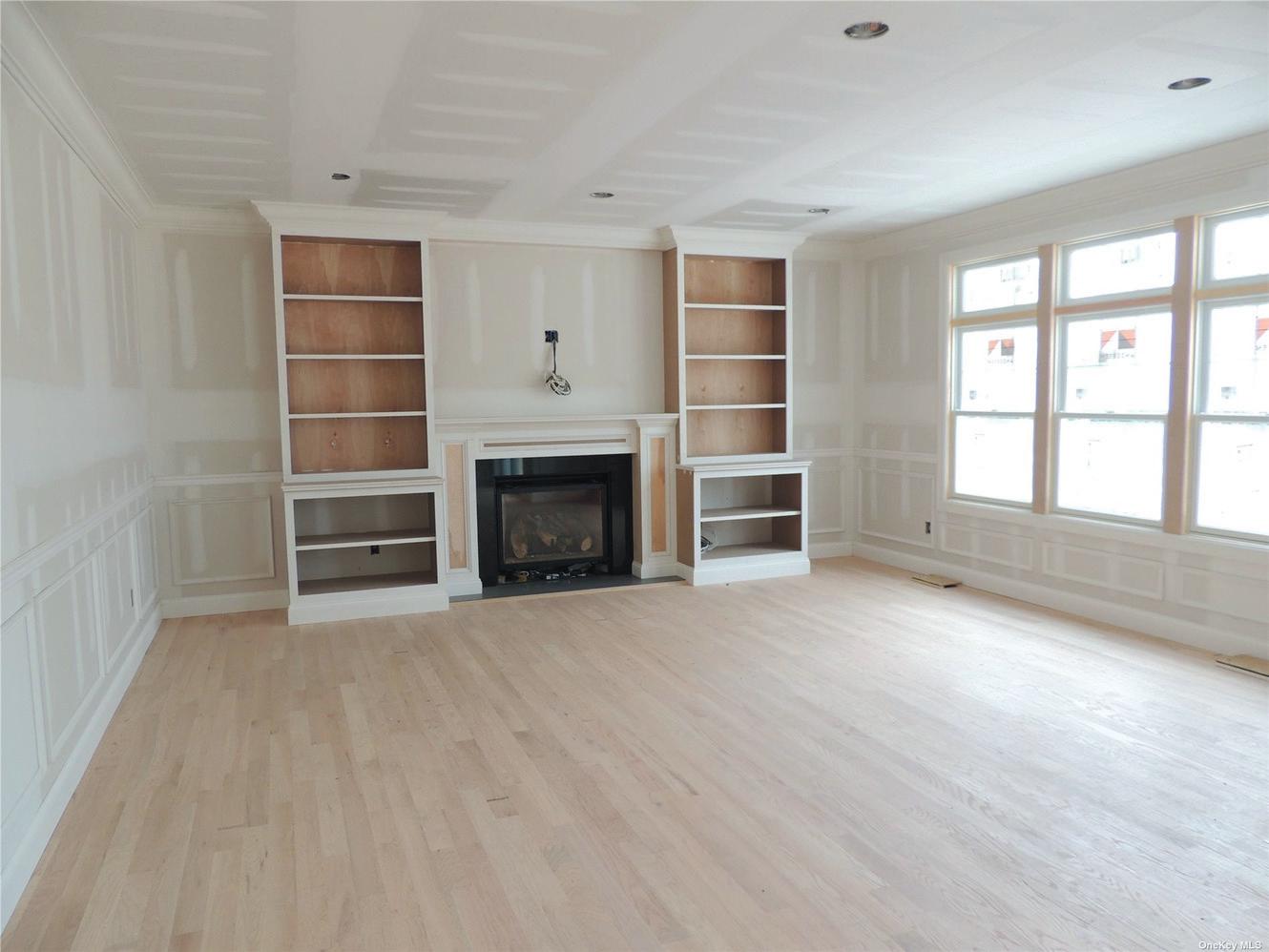
1 5 0 f t D e e p P r o p e r t y
G a s F i r e p l a c e

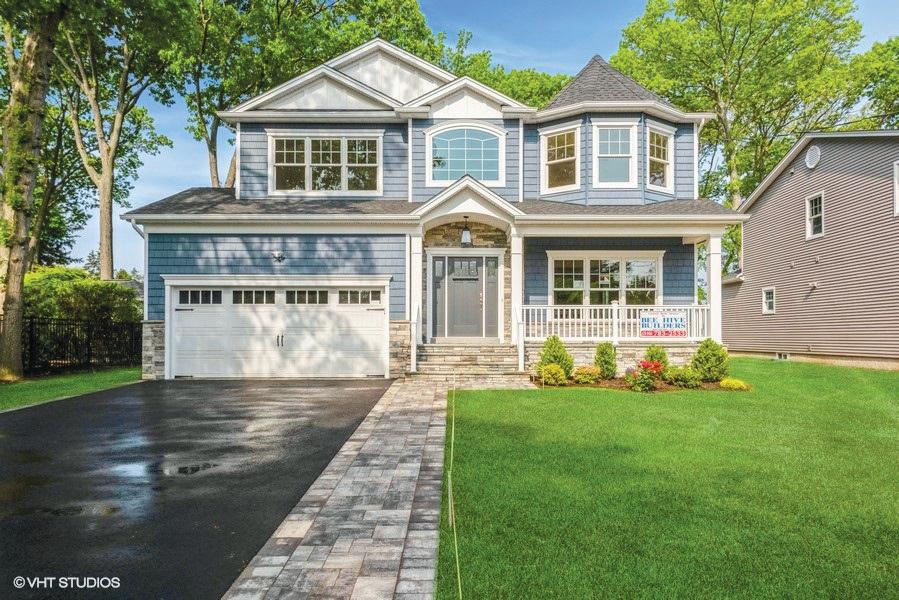

July 13, 2023 — WANTAGH HERALD 24
www.therealtyadvisors.com 516.826.1111 3341 Park Ave. Wantagh, NY 11793 Licensed Broker Associate laura@therealtyadvisors.com Cell: 516.984.0343 LAURA DUPKIN MEMISHA 1198591
W A N T A G H
