


Knights make it through busy stretch


Nassau Community College Federation of Teachers Nassau Community College student Ariel Silverman spoke at Monday’s rally about dealing with the closure of all of the campus’s dining options, which has forced her to spend twice as much money for food off-campus or simply not eat at all.
College students are hungry for campus food solutions
By BRANDON CRUZ bcruz@liherald.com
With four weeks to go in the semester, students at Nassau County Community College find themselves in a food desert on campus.
As the school is facing a $14 million budget deficit for the 2024-25 academic year, Compass Group — the school’s food service provider, which has two years left on its contract with the school — submitted a letter of early termination to NCC stating that it was “no longer financially feasible to continue providing food service under the current financial arrangement,” according to an agenda item at the college’s finance committee meeting on March 12.
Compass has managed all of the campuses dining locations since 2019, providing services to approximately 18,000 students a semester.
Jerry Kornbluth, NCC’s vice president of community and governmental relations, said that Compass proposed that the college spend roughly $320,000 per year on its services for the next seven years, but school officials decided that the proposal was too costly and declined, prompting the early termination.
“Our current food services vendor has advised us that it will no longer provide dining and catering services at NCC effective Tuesday, April 16,” read a letter from Erik Paulson, consulting vice president of finance for the school. “The college continues to actively explore different food choices and vendors, informed by feedback from over 1,100 members of the campus community who took part in a survey on dining preferences.”
But last week, all of the campus-based food

Teachers make Hall of Fame
New York HEAT Act is excluded from state budget
By BRANDON CRUZ bcruz@liherald.com
As Earth Day came and went this week, some residents — and their representatives — expressed disappointment in what they see as the state’s failure to follow through on its pledge to limit the impacts of climate change.
Last week, the state unveiled and passed its $237 billion budget for fiscal year 2025, which many observers criticized its lack of investment in ways to address the ongoing environmental crisis. Two significant pieces of legislation — the New York Home Energy Affordable Transition, or HEAT, Act, and the Climate Change Superfund Act — were notably absent from the spending plan.
The HEAT Act aimed to limit the expansion of gas infrastructure by requiring utilities to explore alternative energy options before providing gas to new customers. Similarly, the Climate Change Superfund Act sought to hold companies accountable for their contributions to greenhouse gas emissions by requiring them to fund infrastructure upgrades to mitigate their environmental impact.
But despite Gov. Kathy Hochul’s advocacy of these ini-
tiatives, they did not appear in the final budget agreement.
“As we celebrate Earth Day, it is terribly disappointing that the HEAT Act was not included in the budget,” Assemblywoman Taylor Darling, who represents Uniondale and co-sponsored the bill, said.
Taylor, who is running for the State Senate in the fall, added that the absence of the measures from the budget “emphasizes the urgent need” for her to work collaboratively with her colleagues in order to quickly “enact legislation that will protect our planet from further destruction,” the next step in addressing the ongoing climate crisis.
“Our commitment to environmental stewardship must be unwavering,” she said “so together we can ensure a sustainable future for generations to come.”
But the impacts of the exclusion of the two initiatives will go far beyond disappointment for residents.
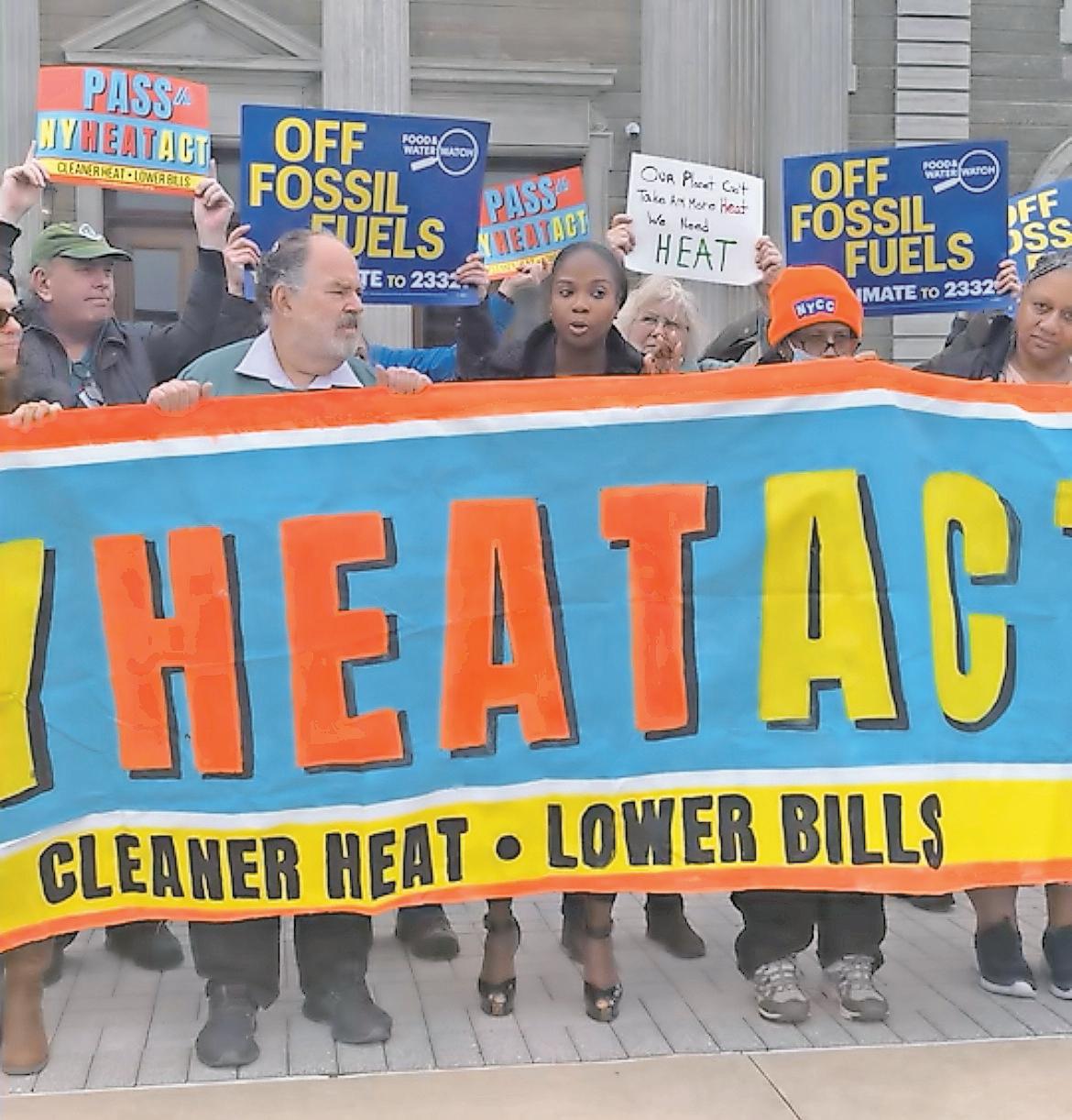
“Our families are struggling,” Darling said at a rally calling for the HEAT Act’s inclusion in the budget last month. “People cannot afford to pay their bills, they cannot afford housing, they cannot afford food, and yet our utility bills, somehow, continue to rise every single month.” CoNtiNued
pAge 4 CoNtiNued oN pAge 4
oN
Page 6
yourHEALTH body mind fitness and Senior Healthy Living with a focus on: April 25, APRIL 25-MAY 1, 2024 FREE$1.00
Page 10 HERALD UNIONDALE BEACON BEACON
Lifting spirits: Balloon artist’s work really pops
By JOSEPH D’ALESSANDRO jdalessandro@liherald.com
Sculpting balloons, inspecting airplanes and making props for Hollywood movies — Renee Morgan has done it all.
THANK YOU!
The Empire State Local News Coalition—more than 200 local newspapers strong—is grateful to the State of New York for including a first-in-the-nation tax credit to support local journalism in the FY'25 state budget.
A special thanks to:


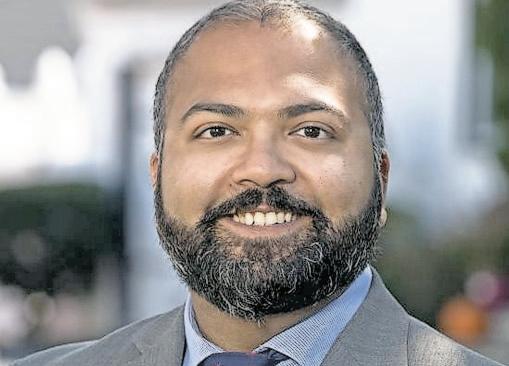

Senate Majority Leader Andrea Stewart-Cousins Assemblywoman Carrie Woerner
State Senator Brad Hoylman-Sigal (Assembly Sponsor)
Communities throughout the Empire State appreciate your commitment to the free press and to democracy.
Morgan, owner of Aviator Balloons, makes large installations for graduations, proms, weddings, baby showers, fundraising events and more. The sculptures cover ceilings and walls, make tunnels, and take the form of dresses, cars, trucks and people. Her largest wonderland-like installations can use tens of thousands of balloons, all for a single grand exhibit. Her work can even be found decorating Sony Hall for New York Fashion Week twice a year.
“I’m heading to Indiana to do a big balloon ball for a charity sponsor, the Ronald McDonald House,” she said of an event that took place between April 22 and 25. “So we used 100,000 balloons to create this circus-like theme. So everything from tight ropes to giant elephants. I’m a team leader in that build, where I’ll be commanding a team of about 80 people to create this large scale wonderland of balloons.”
Morgan started doing balloon artistry 10 years ago. Her aunt needed a display for her bridal shower, but found the available options to be too expensive, including balloon-themed pieces.
“I was like, yeah, I could do that,” Morgan recounted. “So I tried it. And I epically failed my first time, because it wasn’t easy.”
She began to study balloon art more thoroughly, which brought her where she is today.
For Morgan, sustainability is key for her business and the environment. She uses biodegradable balloons and ecofriendly packaging, and does not use helium, which can cause fiery explosions if they contact outdoor power lines. She also educates each client on proper disposal and cleanup methods.
Aviator Balloons also has programs to educate aspiring artists on business and techniques in the inflatable industry.
“I have a mentorship program with 30-plus ladies internationally,” Morgan said. “We have a mentorship program that operates via Zoom where we’ll meet and we’ll discuss the business behind balloons as well as the artistry that fuels it.”
One former student, Brittany Richardson, is the production assistant for Aviator Balloons.
“I started as a student back at the end of 2020,” Richardson said. “She’s a mentor of mine. I can call her for anything. I do balloons as well, so if I’m stuck on something, she’s always one call away. She’s so sweet.”
Over the years, Morgan’s business has grown to accept international students and clients — she has associates who work from Jamaica, Barbados and Trinidad when there is an assignment.
Morgan has experience working internationally, sourced from her long career in aviation. She was an airport inspector at John F. Kennedy airport in Queens

before retiring and pursuing her interest in balloon artistry.
Morgan has earned three undergraduate degrees as well as a master’s in aviation, with a unique expertise in meteorology. Over the course of her career, she carried out accident analysis, development research, and wrote award-winning industry papers.
Morgan worked in the aviation industry for about 15 years, and has worked at a multitude of different airports as an airport inspector.
“I’ve always been interested in it since I was a baby,” Morgan said. “Since I was a kid, I wanted to be a pilot. Once I achieved that dream, I wanted to do more. But then I felt like I was tapping out, I felt like I was at the apex of my career.
“I retired two years ago. I was doing both for a while; I’ve retired to do balloons full time,” Morgan said.
Morgan also currently works for Paramount Pictures as a contract prop and set designer for upcoming movies filmed in New York, which she could not comment on.
Morgan balances the workload of an entrepreneur and contractor with motherhood.
“I’m a mom, to an autistic son, so it isn’t the easiest thing to balance, having a special needs child and working full time in your own business,” Morgan said. “And you don’t work your typical nine to five, sometimes it’s nine to 10 at night. It’s really understanding what you’re willing to sacrifice to make the amendments in your life, and what you’re willing to put first.”
Morgan’s hopes for the future are high. She has an interest in making an installation inside Roosevelt Field Mall. Her main priority is being able to be a full sustainable business, and potentially grab a Guinness World Record along the way.
Aviator Balloons has many local repeat clients including JD sports’ New York events, Long Island Harvest, and many school districts on Long Island, such as in Freeport and Merrick, as well as schools in Queens, Brooklyn and the Bronx.
If you are interested in a balloon sculpture, please visit AviatorBalloons.com
April 25, 2024 — UNIONDALE HERALD BEACON 2
SaveNYLocalNews.com
Courtesy Renee Morgan Renee Morgan, a balloon artist, next to a large balloon installation she created.
Governor Kathy Hochul
Senator Brad Hoylman-Sigal (Senate Sponsor)
State Senator Kevin Thomas Assemblyman Taylor Darling
1255523
Uniondale symposium spotlights housing resources
By BRANDON CRUZ bcruz@liherald.com
The Uniondale Land Trust hosted its third annual Housing Symposium last Friday, April 19 at the Van Ness fire station in Uniondale.
The symposium focused on the question: whether or not owning a home in 2024 is still a realistic goal for Uniondale residents or just a pipe dream at this point. The symposium aimed to bridge the gap between the information regarding the resources available and the Uniondale residents looking to use these resources to own an affordable home in the area.
Bringing together experts, homeowners, renters, and policymakers — including Nassau County Legislator Siela Bynoe, a staunch advocate for affordable housing solutions — to address the pressing challenges and explore potential resources like housing vouchers and other affordable solutions related to housing in the region.
“Throughout my adult life, advocating for affordable housing solutions has been my passion, and I have pursued it in the Legislature by securing bipartisan support for establishing the Land Bank in 2015 and other County-level initiatives to eliminate barriers to home ownership,” said Bynoe, who spoke to the crowd on Friday.
Attendees were actively engaged in the session, posing thoughtful questions to the experts paneling and gaining valuable clarity on navigating through the complexities of the housing landscape on Long Island.
One of the sobering realities discussed at the symposium was the gradual erosion of homeownership opportunities for everyday Americans, and believes systemic factors have been at play for a long time leading to the crisis of a housing market many find themselves in now.
“Systems do what they are built to do,” said panelist Ian Wilder of the Long Island Housing Services. “So if they are not helping people, and mainly a certain type of people — then it is because it wasn’t meant to.”
Wilder believes that although housing discrimination is a very real reality for many Black and Brown Americans, things have now gotten to a place where nobody, regardless of race, will have an easy time accessing homeownership — especially for those who were already discriminated against before.
Wilder and the other experts also pointed out how homeownership has slowly been slipping away from the hands of everyday Americans for years now — with foreclosures increasing throughout all of the state since the pandemic started in 2020, with both Nassau and Suffolk counties having earned the distinctions of being two of the the counties with the highest number of foreclosures — with 1,546 foreclosure filings happening just last year in Nassau alone, with over 400 of which being in Uniondale.
It was also revealed at the symposium that despite the recommendation of not


spending more than 30 percent on rent, most residents are forced to spend upwards of 60 percent and more on rent each month, leaving many in the community “rent-burdened.”
“When all of these elements come together,” said Jeannine Maynard, cofacilitator of the Greater Uniondale Area Action Coalition. “Then we can look at what exists in our legislation and in our funding streams and then put a critical eye on what is missing and what needs to be solved,” said Maynard, “it is all about figuring out what we can do to meet the community’s needs.
“When we invite people from different walks of life, whether residents or government agencies, you can learn about things that you may have missed in notices from the state, county and even the federal government,” said Maynard.
“When we host events like the symposium, it allows us to do a better job helping our community when we share this information and strengthen our network of sharing that information.”


3 UNIONDALE HERALD BEACON — April 25, 2024
Brandon Cruz/Herald photos
The Uniondale Land Trust’s third annual housing symposium took place last Friday with panelists such as Ian Wilder of the Long Island Housing Services, left, Michael Wigutow from Nassau and Suffolk Law Services, center, and Michelle Abreu from JP Morgan Chase, right.
Aa staunch advocate for affordable housing solutions, Nassau County Legislator, Siela Bynoe, spoke to residents at the third annual housing symposium about her fight for their right to affordable housing on Long Island and other solutions at their disposable.
Residents from all over crowded into the Van Ness firehouse in Uniondale to learn about various housing resources available to them.
The Uniondale Land Trust’s third annual housing symposium aims to bridge the gap between information and resources surrounding affordable housing to residents of Uniondale.
and dining options abruptly shut down, including the campus Starbucks, with vending machines now effectively becoming the only food option available for hungry students — which sparked a protest Monday afternoon, at which faculty and students alike demanded that school leadership reopen campus dining halls.
“I feel like they crossed the line they should have never crossed,” said Richard Ramirez, a second-year student. Ramirez, who often relied on Starbucks for breakfast before class, said he could get a full meal for roughly $10 at any of the campus eateries.
But now, he says, he either has to spend much more money on food off campus, or make himself food in between work and classes at home — which he says isn’t feasible given his schedule.
In an email sent to the campus community on April 18, school officials told students that they were working to “actively explore several options for temporary food services for the remainder of the spring semester, including food trucks and outside catering services,” and were also seeking proposals from food service providers for next semester and beyond.
But Ramirez, who is treasurer of the NCC’s Achilles club — a program for exceptional students with disabilities — said that there have been no food trucks
or any real solutions presented to students by the school as of this week.
“They still haven’t brought out the food trucks that they promised or anything,” Ramirez told the Herald. He detailed how the school started doing “free lunch handouts,” but offered students only peanut butter and jelly sandwiches, leaving those with allergies without an alternative.
“It’s unconscionable that NCC administrators not only knew well in advance about Compass Group’s departure, but failed to develop a contingency plan to feed their students,” Faren Siminoff, president of the Nassau Community College Federation of Teachers. “NCC knew about it, and chose to ignore it.
“The failure of this administration to respond immediately is jeopardizing the health and food security of our students on campus,” Siminoff added.
This is not the first time the college’s teachers union, which has 414 full-time faculty members, has called out the school’s “fiscal mismanagement.” Earlier this month, the school announced plans to overhaul its academic structure, consolidating 21 academic departments into just six this fall.
Siminoff says it is decisions like this one, and the allowance of all the dining halls on campus to close, that she believes is “leading them to become the Nassau University Medical Center of higher edu-
cation.
“This is the latest blunder in a series of negligent actions that calls into question the competence of NCC,” Siminoff said. She attributed the problems to the college leadership’s lack of planning, incompetence and disregard for its students, their safety and their health.
“It creates a food desert on this campus,” she added.
“I’m fortunate enough to have the option to make food at home,” Ramierz said, “but I know a lot of people who don’t have that option who are really suffering from this.”
Last June, Nassau County legislators approved a $185 million 2023-24 budget for NCC, keeping tuition stable for the second consecutive year and tapping into more than $15 million of reserve funding as well. State and county funding and tuition each normally account for about onethird of NCC’s annual operating budget. According to Kornbluth, however, in the past few years the state has funded only about 20 percent, which is putting additional pressure on tuition prices and county funding to bridge the gap.
County Executive Bruce Blakeman did not respond to the Herald’s repeated requests for comment on whether the county would allocate any additional funding to NCC or intervene in the current situation. Herald
According to a report by New York Renews — a coalition of over 370 environmental, justice, faith, labor and community groups advocating for the reform of climate law — nearly one in four Long Islanders, or 23 percent, have a “high energy burden,” meaning they spend more than 6 percent of their annual income on energy bills.
And now, with the Long Island Power Authority’s approved 11.6 percent rate hike this year, the average customer’s electricty bill is now almost $200 a month — the fourth-highest in the nation, with seemingly no solution around the corner for overburdened residents.
Experts from WIN Climate, an organization of data scientists, economists and
energy modelers that collaborated with New York Renews on its report, said that the HEAT Act — which included a provision that limits the charges for utilities to a maximum of 6 percent of a household’s annual income — would have cut many Long Island residents’ energy bills nearly in half, helping them save an average of $164 per month.
“An extra $164 in my pocket could’ve gone a long way,” said Peggy Perkins, of Hempstead, who said she works several jobs in order to make ends meet. “There are times I have to use the stove in the kitchen to heat up the house because we can’t afford the heat bill. There are times I have to choose between feeding my kids or paying some high bill, and that ain’t right.”

Nassau County Community College is under fire from students and faculty because all of the campus’s dining options have closed, and it is offering students nothing but peanut butter and jelly sandwiches between classes — with no alternative for those with peanut allergies, leaving many without any affordable meal options.
NCC faces backlash over campus food service crisis HEAT Act, Climate Superfund omitted from state budget
 File
File
CoNtiNued from page 1 CoNtiNued from page 1
April 25, 2024 — UNIONDALE HERALD BEACON 4 HOW TO REACH US Our offices are located at 2 Endo Blvd. Garden City, NY 11530 and are open from 8:30 a.m. to 5:30 p.m., Monday through Friday. MAIN PHONE: (516) 569-4000 ■ E-MAIl: Letters and other submissions: rbethany@liherald.com ■ EDITORIAl DEPARTMENT: E-mail: rbethany@liherald.com ■ SUBSCRIPTIONS: (516) 569-4000 Press ”7” E-mail: subscriptions@liherald.com Fax: (516) 569-4942 ■ DISPlAY ADVERTISING: (516) 569-4000 Ext. 249 E-mail: rglickman@liherald.com Fax: (516) 569-4643 ■ ClASSIFIED ADVERTISING: (516) 569-4000 Ext. 286 E-mail: ereynolds@liherald.com Fax: (516) 569-4643 Uniondale Herald Beacon Newspaper (PP#), is published Weekly on Thursday by Richner Communications, Inc., 2 Endo Blvd. Garden City, NY 11530. Periodicals Postage Prices is Pending at Garden City, NY 11530 and additional mailing offices. POSTMASTER: Send address changes to Uniondale Herald Beacon, 2 Endo Blvd. Garden City, NY 11530. Subscription rates: $50 one-time payment within Nassau County or $60 outside of Nassau County or qualified request in zip code 11514, 11530, 11550, 11553, 11555, 11556, 11590. Copyright © 2023 Richner Communications, Inc. All rights reserved.
Brandon Cruz/Herald assemblywoman taylor darling, center, who co-sponsored the New York Heat act, said she was disappointed by the state’s exclusion of the bill, and that more needed to be done to ensure that the climate crisis is tackled head-on while also ensuring that the transition to more
environmentally
friendly energy is affordable for her constituents.
Girl Scouts explore law, medicine at Hofstra
By BRANDON CRUZ bcruz@liherald.com
The Girl Scouts of Nassau County recently took part in an exciting educational journey at Hofstra University’s Maurice A. Deane School of Law, delving into the intricacies of the legal profession and the dynamics of trial practice. In collaboration with the Women of Color Collective and Hofstra’s Medical School, over 20 Girl Scouts had the opportunity to participate in an engaging and informative mock trial where these future lawyers and doctors gained invaluable insights into the world of law and medicine.
The event, which took place on Saturday, April 13 was a hands-on experience where the Girl Scouts assumed various roles such as lawyers, witnesses, and jurors to navigate an entire mock trial scenario. Under the guidance of Hofstra’s law professors and students, the ladies delved into the complexities of courtroom procedures and tapped into their critical thinking, public speaking, and teamwork skills.
The mock trial was far from a passive exercise for the ladies who participated, it was a hands-on experience where the Girl Scouts immersed themselves in var-

More than 20 Girl Scouts actively engaging in a mock trial with Hofstra law and medical professors and students. ed through an entire mock trial scenario. This immersive experience not only made them tap into their critical thinking and public speaking skills but also instilled in them the importance of teamwork and collaboration in the legal field. What made this event even more impactful was the presence of a live audience comprising the Girl Scouts’ own guardians and families. As they presented their cases and worked diligently to uncover the fake-truth in the simulated trial, the Girl Scouts showcased their legal prowess and confidence, leaving a

lasting impression on everyone present as they presented their cases and worked diligently to uncover the fake-truth in this simulated trial.
One of the highlights of the event was the collaboration with the Women of Color Collective at Hofstra’s Law School, which provided valuable mentorship and insights into the diverse opportunities available in the legal field for girls and young women. Additionally, students from Hofstra’s Medical School shared their experiences of being involved in trials and elucidated their roles and
responsibilities, offering a comprehensive understanding of the intersection between law and medicine.
Throughout the program, Girl Scouts actively engaged with Hofstra professors

 Courtesy ZE Media
5 UNIONDALE HERALD BEACON — April 25, 2024 Rides open Fri.: 6pm-10pm; Sat.: 11am-10pm; Sun.: 11am-7pm. Vendor hours 10am-6pm Sat. & Sun. 1255425
SPOTLIGHT ATHLETE

CHARLOTTE RATHJEN
South Side Junior Lacrosse
AN ALL-AMERICAN HONORABLE MENTION in 2023 and team MVP after scoring 44 goals and assisting on 16 others, Rathjen reached a milestone earlier this month in the Cyclones’ 14-11 victory at North Shore. She had six goals and one assist in the April 11 win, including the 100th point of her career. She has 26 goals thus far this spring to rank among the leaders in Nassau County and is a University of North Carolina commit.
GAMES TO WATCH
Thursday, April 25
Softball: Freeport at Elmont 10 a.m.
Boys Lacrosse: Baldwin at Freeport 10 a.m.
Girls Lacrosse: Kennedy at Baldwin 10 a.m.
Girls Lacrosse: Calhoun at Lynbrook 10 a.m.
Softball: Uniondale at Hewlett 10 a.m.
Boys Lacrosse: North Shore at Kennedy 11 a.m.
Boys Lacrosse: Carey at Mepham 1 p.m.
Baseball: West Hemp at East Rockaway 4:30 p.m.
Baseball: Oyster Bay at V.S. North 5 p.m.
Baseball: Long Beach at MacArthur 5 p.m.
Boys Lacrosse: Plainview at V.S. District 5 p.m.
Friday, April 26
Softball: V.S. South at Hewlett 10 a.m.
Softball: Clarke at Wantagh 10 a.m.
Softball: East Meadow at Mepham 10 a.m.
Softball: Oceanside at Syosset 10 a.m.
Girls Lacrosse: Clarke at Carey 10 a.m.
Baseball: Baldwin at Oceanside 5 p.m.
Saturday, April 27
Girls Lacrosse: Calhoun at South Side 9 a.m.
Boys Lacrosse: Hewlett at North Shore 12:30 p.m.
Boys Lacrosse: Seaford at Massapequa 1 p.m.
Nominate a “Spotlight Athlete”
High School athletes to be featured on the Herald sports page must compete in a spring sport and have earned an AllConference award or higher last season. Please send the following information: Name, School, Grade, Sport and accomplishments to Sports@liherald.com.
Uniondale completes busy stretch
By TONY BELLISSIMO tbellissimo@liherald.com
Uniondale’s boys’ lacrosse program completed a busy weeklong stretch Monday morning with a 12-5 non-league defeat at Malverne/East Rockaway.
It was the fourth game in six days for the Knights, who also scrimmaged Great Neck South as coach Hugo Charles worked on sharpening fundamentals and building chemistry.
“We have a lot of kids who have reinvented themselves and contributing in areas of the field that’s not their natural positions,” Charles said. “We have some seniors with experience and some seniors playing for the first time in a long time. Our junior class is big and we have six underclassmen which is a very high number for us.”
After celebrating just one victory in 2023, Uniondale is already in the win column twice. It traveled to Suffolk County April 11 and defeated the Stony Brook School, 10-4, behind four goals from sophomore Adrian Ayala and two apiece from senior Ikenna Okoye and junior Oneil Webb Jr.
“It was a really good game for confidence,” Charles said. “We started strong and led 3-0. They came back to tie it 3-3, but then we battled back. We held them to one goal in the second half.”
Senior Tristan Greenwood added a goal and won 9 of 14 faceoffs, and sophomore Andy Sorto also found the back of the net. Senior goaltender Dennis Argueta made 7 saves.
“Dennis started four games last year and was the JV starter for two years before that,” Charles said of Argueta. “He’s faced a lot of shots. His save percentage has been pretty good, but we have to do a better job of limiting how many shots he sees. His vision and clearing game have improved and he’s not allowing too many rebounds.”

Ayala and Greenwood hardly come off the field and are key two-way contributors. Greenwood started the season on fire in the faceoff X, winning better than 60 percent, but has faced some topnotch opponents in recent weeks. Both, along with Torres, bring important leadership to a young core, Charles said.
Ayala, who scored once against Malverne/East Rockaway, brings crafty stickwork and leads the team in goals so
A vital piece to the defense in front of Argueta is long pole Micheley Aurelien, a senior who typically gets the toughest assignment. “He’s one of our best groundball guys and plays a physical game,” Charles noted. Senior Jesus Torres plays an important role on defense, which also features seniors Jonmar Diaz and Dameek Hortan.
far with 10 in 10 games. Greenwood found the back of the net twice in Monday’s loss which saw the Rockin Mules’ Christian Page score five times.
Okoye is a natural left attacker who moves to midfield on occasion. He was joined up front by Ortega and Webb Jr., both of whom made the jump from JV. Senior DJ Alfred is also chipping in offensively.
The Knights have five games remaining, two at home (East Meadow on May 4 at 3 p.m., and Valley Stream District in the finale May 9 at 5 p.m.)
BRINGING LOCAL SPORTS HOME EVERY WEEK
HERALD SPORTS
Tony Bellissimo/Herald Senior Micheley Aurelien sets the defensive tone for the Knights, who’ll look to finish the season on a high note after starting 1-9.
4:21:36 Cradling shoulder pain? We’ve Got Specialists For That ® 516.536.2800 | orlincohen.com 1255376 April 25, 2024 — UNIONDALE HERALD BEACON 6
Full scholarships to art school, courtesy Billy Joel
By NICOLE FORMISANO nformisano@liherald.com
Students who have a passion for music have an opportunity to take their skills to the next level this summer at Boces’ Long Island High School for the Arts, or LIHSA for short. On top of that, students whose applications really impress may even get in for free.
“Our summer program works to give students who are not sure if they want to attend the LIHSA program, or who are interested in attending the program down the line, an overview of what it’s like to be here at LIHSA,” said Linday Rogan, the assistant principal of LIHSA. “It gives them a really nice overview of everything that we offer.”
The four-week program, called the Summer Arts Academy, is at LIHSA campus in Syosset. It’s open to students in grades 5 through 12 from anywhere in Nassau or Suffolk.
The Summer Arts Academy offers hands-on education in artistic fields that a student would be hard-pressed to find elsewhere. Students can learn how to construct sets, record and produce music using professional software and audio equipment, perform Broadway choreography, audition for a stage production and more.
“We’re the only performing arts high school on Long Island,” Rogan said. “We partner with industry professionals in



our performing arts departments ranging from NYU and Verbatim Theatre Lab to Paul Taylor at the American Ballet Theatre; we are able to offer world class industry professionals that come to LIHSA to work in partnership with our faculty; our faculty members are also known industry professionals that are working in their field. And that really helps to give students the most state of the art education in their chosen art field.”
Even better, there are 15 full scholarships available for music students through funding from the Joel Foundation — yes, that Joel. When LIHSA was in
danger of closing eight years ago, Billy Joel was actually the one who stepped in and donated millions to protect the only performing arts high school on Long Island.
Now his foundation is offering full $2,800 scholarships to 15 students who demonstrate high levels of skill and artistry, which is evaluated in students’ applications and audition videos. The scholarship is available to students from Nassau who are currently in grades 8-11, and have prior experience with music.
But the technical education isn’t the only reason to study the arts at LIHSA.
“Training students to be the next gen-
eration of young artists is something that not only myself, but the entire faculty of Long Island High School for the Arts, is very passionate about,” Rogan said. “Beyond the career opportunities — students who study art are really good humans. They learn empathy, they learn strong communication skills, and they learn to reflect on their own experiences. And all of that is really important.”
An education in the arts teaches young people communication, how to reflect, how to provide and accept feedback, and accountability to other artists on your team, Rogan said — skills that every young person needs to develop for their careers.
And what did we all do when the world shut down two years ago? We turned to art, Rogan said. We listened to music, we watched television, we read books. Art continues to be vital, and the benefits of an arts education cannot be understated.
“Art is something that preserves history,” Rogan said. “Art is something that can bring the most subtle things in life to light, and art is the way that we measure our humanity.”
The program runs from June 27 to July 26, on weekdays from 9 a.m. to 3 p.m.. Scholarships are awarded based on merit. Students who are interested may submit an audition video and application by May 10. For details on how to apply and audition, students can visit tinyurl.com/ BOCESScholarship2024.









 Courtesy Nassau Boces
7 UNIONDALE HERALD BEACON — April 25, 2024 1 -516- 7 1 7 -4717 Call Today for Your Free Shower Package NORTH AMERICA’S #1 Selling Featuring our Free Shower Package FINANCING AVAILABLE WITH APPROVED CREDIT Now you can nally have all of the soothing bene ts of a relaxing warm bath, or enjoy a convenient refreshing shower while seated or standing with Safe Step Walk-In Tub’s FREE Shower Package! ✓ First walk-in tub available with a customizable shower ✓ Fixed rainfall shower head is adjustable for your height and pivots to o er a seated shower option ✓ High-quality tub complete with a comprehensive lifetime warranty on the entire tub ✓ Top-of-the-line installation and service, all included at one low, a ordable price Now you can have the best of both worlds–there isn’t a better, more a ordable walk-in tub! BackbyPopularDemand! FREESHOWERPACKAGE! FREE SHOWER PAC K AGE PLUS 15% OFF FOR A LIMITED TIME ONLY Call Toll-Fre e 516-717-4717 With purchase of a new Safe Step Walk-In Tub. Not applicable with any previous walk-in tub purchase. Offer available while supplies last. No cash value. Must present offer at time of purchase. CSLB 1082165 NSCB 0082999 0083445 13VH11096000 1252670 Stuart Richner Publisher Rhonda Glickman V.P. Sales From the staff of 1255312 Michael Hinman Executive Editor Wishing all of our friends and neighbors a Happy Passover!
The Summer Arts Academy is a four-week program where students can study anything from dance to film to music production.
Budget includes $90M local media tax credit
Gov. Kathy Hochul and the state legislature unveiled the final state budget over the weekend, which included a payroll tax credit for local news outlets, modeled on the Local Journalism Sustainability Act.
With the passage of this bill, New York is now the first state in the nation to incentivize hiring and retaining local journalists.
What’s being described as a game-changer for the local news industry comes just months after the launch of the Empire State Local News Coalition, an unprecedented, grassroots campaign powered by more than 200 community newspapers across the state.
“I’m elated that our first-in-the-nation Local Journalism Sustainability Act is passing in the state budget,” said state Sen. Brad Hoylman-Sigal — the senate bill sponsor — in a release. “A thriving local news industry is vital to the health of our democracy, and it’s our responsibility to help ensure New Yorkers have access to independent and community-focused journalism. Our efforts will help ensure that our democracy will not die in darkness.”
The program — $30 million per year for three years — allows each eligible newspaper and broadcast business to receive a 50 percent refundable tax credit

Journalism Sustainability Act. A version of this measure was included in the final state budget approved this past weekend by Gov. Kathy Hochul and lawmakers.


tainability Act catapulted into a top legislative priority this session following the early-2024 founding of the Empire State Local News Coalition and the coalition’s mobilization of support from hundreds of New York hometown papers, as well as a broad range of stakeholders from around the country, including the Rebuild Local News Coalition, Microsoft, and El Diario. Organized labor including NYS AFL-CIO, CWA District 1, and national and local news guilds also played a criti
cal role in mobilizing support for this historic bill.
“The Empire State Local News Coalition is thrilled by the state budget’s inclusion of a payroll tax credit for local news outlets modeled on the Local Journalism Sustainability Act,” said Zachary Richner — founder of the Empire State Local News Coalition, and a director at Richner Communications, the parent organization of Herald Community Newspapers.
“New York is now the first state in the nation to incentivize hiring and retaining local journalists — a critical investment given that hundreds of New York’s newspapers have closed since 2004, leaving too many New York communities without access to vital local information.
“The objectivity of this credit shows that there is a fair way for public policy to support local news without jeopardizing journalistic integrity. This program is a model for other states across the U.S. to follow as communities across the country raise their voices to save local news.”
Richner said he was “incredibly proud” of the 200 newspapers that built an unprecedented grassroots movement in support of saving New York’s local news industry in a few short months. He also extended gratitude to Hoylman-Sigal, “whose tireless advocacy for this tax credit was instrumental in moving it through the legislative process.”
Since launching in February, the coalition has quickly mobilized stakeholders across the state to rally behind the bill.
New York’s leadership on this issue could change the course of local journalism in the United States, organizers say. The budget’s inclusion of this tax credit comes at a watershed moment for the journalism industry: New York state has experienced hundreds of newspaper closures in the past few decades.


STAFF REPORT
April 25, 2024 — UNIONDALE HERALD BEACON 8 C E R U L L O L A N D S C A P E C E R U L L O L A N D S C A P E From Concept to Completion Landscape Design & Construction Patios, Pavers, Driveways Outdoor Kitchens Landscape Lighting & Irrigation Artificial Turf and Dog Runs Delivering superior landscape, hardscape, design and construction services. 516 . 239 . 4308 cerullolandscape.com cerullohardscapes.com 1250825
Courtesy Empire State Local News Coalition Assemblywoman Michaelle Solages joins lawmakers and supporters like Assemblyman David Weprin, at left, and state Sen. Brad Hoylman-Sigal, at right, last month to call on her colleagues to support the Local
Raise on horizon for pre-K special ed. providers
By JORDAN VALLONE jvallone@liherald.com
A sector of special education services for young children has been severely underfunded for 25 years, according to some lawmakers — but that could soon change.
Nassau County officials propose giving those early childhood intervention service providers a raise, potentially elevating compensation from $40 per halfhour to $50.
The increase will affect providers who officer critical preschool services — like speech, occupational and physical therapy — to children between 3 and 5 with special needs as they get ready for kindergarten.
“We have many people who require services here,” County Executive Bruce Blakeman said of contractual preschool special education services. “It provides preschool services to children throughout Nassau County.”
Joined at a recent news conference with Republican county leaders like Michael Giangregorio, Samantha Goetz and Mazi Pilip, as well as dozens of educators and parents of children with special needs, Blakeman described the county’s compensation for such providers as “below the average.”
Giangregorio brought this issue to light, the county executive said. He’s long been an advocate for children and adults with special needs, and says the county has had a hard time retaining therapists because compensation simply was not competitive to what was being offered in surrounding regions.
“We checked with our budget office and we made a determination that we could increase” the compensation, Blakeman said.
Giangregorio, who’s district represents parts of

system,” Giangregorio said. “Back then, it was difficult to find providers. These people that come into your homes, or that work in agencies — they’re really doing God’s work. They’re helping to improve the lives of these individuals.”
The earlier a child receives services, Giangregorio said, the better the outcome.
“My child will be an adult longer than he’s a child,” the county legislator said. “The costs are always more when you’re an adult. For far too long, the wages of these early intervention educators and therapists have not reflected the true value of their work.”
Dr. Irina Gelman, the county’s health commissioner, explained her office has to go before the county’s health board to propose the raise.
“We are very grateful for this opportunity to bring this forward in front of our board,” she said. “We’re very hopeful they will adopt this new rate, which will be instrumental in providing services to our children, our families, and adequately reimburse our providers. These are rates for preschool related services that have not been raised since 1999 — so it’s long overdue.”
But Democrats in the county legislature say the need for raises has not been a secret. Siela Bynoe, for instance, says she has advocated for preschool special education funding for nearly a decade — especially so in the last few months.
Merrick, Bellmore, Wantagh and Seaford, said he was honored to stand with Blakeman for this “monumental decision that reflects our unwavering commitment to early childhood education.” Especially as a father of someone with autism.
“My son is now 23, so the last time he received (preK special education) services was quite a while ago, and there has not been a raise since he’s been in the
“While I am glad that the county executive has heeded the advocacy of practitioners and the Democratic minority by taking this first step, much more must still be done to repair the damage caused by three decades of stagnation,” she said. “Moving forward, the county must raise awareness about the availability of these resources, and remain vigilant so that we can never again find ourselves paying the lowest rates in New York for these critical services.”
 Jordan Vallone/Herald
9 UNIONDALE HERALD BEACON — April 25, 2024 1254711
Nassau County intends to raise compensation for special educational preschool service providers — the first of its kind in 25 years. Legislator Michael Giangregorio, a longtime advocate for the autism community, leads the effort.
Uniondale music teachers honored at LI Music Hall of Fame
By BRANDON CRUZ bcruz@liherald.com
Five exceptional music teachers from Long Island were recently honored at the Long Island Music and Entertainment Hall of Fame in Stony Brook at their location of the same name during a special ceremony celebrating the organization’s Educator of Note Award winners.
Founded in 2004, the Long Island Music and Entertainment Hall of Fame is a non-profit organization dedicated to preserving, celebrating and highlighting Long Island’s musical and entertainment heritage as an important resource for future generations.
This year’s special ceremony, honoring the recipients of the awards from the past five years, marked the return of the music hall of fame awards gala for the first time since 2019 due to restrictions brought on by the coronavirus pandemic, held at their Stony Brook museum location of the same name, which was opened in 2022.
Among the honorees, two music teachers from Uniondale who have made tremendous impacts in young people’s lives both on and off the stage. Frank Abel, who won in 2022, and 2019 winner, Susan Weber were both recognized for their outstanding contributions to music education and their profound impact on their students’ lives.
“We all had and have such meaningful careers that have impacted music education in so many different ways,” said Susan Weber. “Bottom line is that we all love seeing the reaction with our students and former students and as time goes on how music education impacts kids and it was just a very special day.”
The music hall of fame’s Educator of Note recognizes music teachers who are top in their field and making a difference by building strong educational programs for students.
To date, the organization has inducted more than 120 musicians and music industry executives, and offers education programs, scholarships, and awards to Long Island students and educators.
Tom Needham, second vice chair and educational programs director at the music hall of fame was proud to highlight the educators’ achievements.
“When you get all these people together in one room and you hear about the number of students they’ve influenced over the years and the impact they’ve had on music education on Long Island — it’s truly incredible,” he said.
“We’re so excited to have this opportunity to have them all here in the room and to celebrate the good things that they’ve accomplished.”
Supporting and highlighting musical education and upcoming talent through its education programs is a large part of music hall of fame’s mission, according to Chris Collora, a hall of fame spokesperson.
“Each year the Long Island Music & Entertainment Hall of Fame presents

Five exceptional music teachers from
including two from Uniondale — Frank
and
were


an Educator of Note Award recognizing outstanding achievement in Long Island music education and normally they present the awards publicly during their galas,” he said.
The music hall of fame “has not held an awards Gala since 2019 in large part due to Covid restrictions and these award winners were unable to receive their awards in a public ceremony, so (the hall of fame) organized this special ceremony for them at their Stony Brook Museum location.”
“What a wonderful ride,” said Frank Abel.
“It has been a wonderful journey after 42 years of teaching on this very special day to receive this very special award at the Hall of Fame.
“We don’t go in teaching for awards but this one right here I’m going to cherish.”

April 25, 2024 — UNIONDALE HERALD BEACON 10
Courtesy The Long Island Music and Entertainment Hall of Fame
Long Island
recently honored at the Long Island Music and Entertainment Hall of Fame,
Abel
Susan Weber. From left: Educator of Note Recipients Alan Schwartz, Susan Weber, Frank Abel and Kim Lowenborg-Coyne.
Frank Abel, a Uniondale music teacher who was originally honored in 2022, receiving his Educator of Note Award, honoring his outstanding commitment to music and positively impacting his students.
Susan Weber a Uniondale music teacher who was originally honored in 2019, receiving her Educator of Note Award, honoring her outstanding commitment to music and positively impacting her students.
Musical performances were something you could probably expect at an awards gala for at The Long Island Music and Entertainment Hall of Fame, but many were surprised to see Susan Weber, a Uniondale teacher awarded for her outstanding commitment to her students, played in front of the crowd after receiving her award.
STEPPING OUT


Enrico Fagone, the Long Island Concert Orchestra’s music director and conductor, was nominated for a 2023 Grammy award. He’s been defined by the classical music press as one of today’s most promising conductors at the international level.
CONNECTION THROUGH

Symphony of Hope Benefit Concert inspires unity across the world
By Danielle Schwab
Art connects us beyond divides.
That’s how Bernie Furshpan, marketing director and board member of the Holocaust Memorial and Tolerance Center, puts it when discussing the Long Island Concert Orchestra’s upcoming Symphony of Hope Concert at Tilles Center.
While the music is, of course, at the heart of this benefit performance, the evening is so much more than a concert. The aim is to support two vital organizations: Long Island’s Holocaust Memorial and Tolerance Center, and the Jerusalem Academy of Music and Dance.
“When it comes to art, I think people in general agree that it’s something very healing and it brings people together,” Furshpan says. “It’s a wonderful connector for people.”
Proceeds from the May 2 event benefit both organizations.
The concert includes special guests from the Israeli arts school, which is currently facing a funding crisis due to the ongoing Israel-Hamas war. Two students — one Israeli and one Palestinian — take part, sending a powerful message of unity through music. Michael Klinghoffer — Jerusalem Academy of Music and Dance’s president — also participates, further emphasizing the importance of this benefit concert.
“This spectacular event is a golden opportunity for community members to support these organizations,” says David Winkler, the orchestra’s executive director and composer-in-residence. “By attending the concert, our community will not just enjoy an evening of incredible music, but will be helping JAMD and HMTC continue their essential work.”
With some 1,600 students, the Jerusalem Academy nurtures the next generation of musicians and dancers, Furshpan says. The school’s diverse student demographic — ranging from 4 years old to young adulthood — studies a cultural mixture of Middle Eastern music, European classics, baroque and jazz.
“Right now, everybody’s hurting,” Furshpan says. “So, we’re doing this as more than just beautiful music. It’s also something that’s special and philanthropic.”
During the first selection of the evening, the two participating students will perform together, accompanied by a recording of the Jerusalem Academy of Music and Dance Orchestra.
“We have a hybrid experience,” Furshpan says. “On the big screen,

• Thursday, May 2, 8 p.m.
• Tickets start at $50; available at TillesCenter.org, or (516) 299-3100
• Tilles Center for the Performing Arts, LIU Post campus, 720 Northern Blvd., Brookville
you’re going to see the Israeli orchestra, and the students are going to be sitting alongside that screen and playing together with them.” Klinghoffer also contributes as a keynote speaker.
Then, the 40-person Long Island Concert Orchestra — under the baton of music director and conductor Enrico Fagone — takes the spotlight. The orchestra’s repertoire includes the world debut of “Adriatica.” Winkler composed the piece to celebrate the oceanic connections between people. Its namesake is a node to the Adriatic Sea, which connects Eastern Italy to the Middle East.
“It has a multifaceted melodic personality to it — several different melodies, not just one,” Winkler says.“Over the course of the work, these melodies are joined together and ultimately, they produce the finale, which is extremely uplifting and powerful.”
The orchestra is joined by acclaimed pianist Alessandro Mazzamuto, in his Long Island Concert Orchestra debut. He’ll perform Robert Schumann’s Piano Concerto in A minor, Op. 54.
“I believe that love of music and artistic expression is love for humanity,” Mazzamuto says. “As a concert pianist and teacher, my heart goes out to the students of Jerusalem Academy of Music and Dance. And I wish to dedicate my performance and interpretation of Schumann’s emotional piano concerto to them.”
This evening is all about bringing the local and global community together — the very definition of the Long Island Concert Orchestra.
“Our mission is to provide the best possible performances of international repertoire,” Winkler says. “To bring world-class artists, worldclass musicians, as well as world premieres of international caliber.”
The orchestra leads the way in delivering visibility to a commitment to tolerance, respect and the arts.
“Music is what brings people together,” Furshpan says. “All forms of art bring people together. We truly believe that this (concert) is going to help the two organizations do some great work.
“At the same time, Symphony of Hope is really about the audience. They are the symphony of hope — the audience and the music in combination.”

Chris Ruggiero’s musical moments
Experience the magic of Chris Ruggiero’s new show,’Teenage Dreams and Magic Moments,’ when the dynamic vocalist visits the Landmark stage. Ruggiero is an old soul. Still in his 20s, the music that speaks to him is the music of the ‘50s, ‘60s and ‘70s, His approach to performing is more in line with that of a bygone era, bringing to the stage the panache of Frank Sinatra or Paul Anka, coupled with the energy of Jackie Wilson. Ruggiero first came to national attention when he performed in concert on a PBS coast-to-coast special, and was featured on ‘Good Morning America.’ Since then, he has traveled the country, delivering his unique brand of vintage rock ‘n’ roll, and sharing his passion for the classics. Ruggiero tells his story by breathing new life into the timeless music of the eras he loves, with a six-piece band and live brass.
Friday, April 26, 7:30 p.m. $59, $49, $39. Jeanne Rimsky Theater at Landmark on Main Street, 232 Main St., Port Washington. (516) 7676444 or LandmarkOnMainStreet.org.

Tracy Morgan
Tracy Morgan is touring with a bracing new show, and he’s funnier than he’s ever been. A name synonymous with laughter, he continues to be reckoned with in the world of stand-up and television. Morgan boasts an impressive career spanning decades. From his hilarious characters on ‘Saturday Night Live’ (think Astronaut Jones and Brian Fellows) to his unforgettable role on the award-winning ‘30 Rock,’ Morgan has consistently brought audiences to tears (of laughter, of course). Coming to fame as a stand-up, Morgan became a household name through his seven-season stint on Tina Fey’s ‘30 Rock,’ playing a thinly veiled version of himself named Tracy Jordan. On his current tour, Morgan continues his comeback following his life-threatening 2014 traffic accident on the New Jersey turnpike. Morgan is always welcome back up on the stage where he belongs.
Saturday, April 27, 8 p.m. $89.50, $79.50, $69.50, $59.50, $49.50. The Paramount, 370 New York Ave., Huntington. (800) 745-3000 or Ticketmaster.com, or ParamountNY. com.
11 UNIONDALE HERALD BEACON — April 25, 2024
Courtesy Long Island Concert Orchestra
Pianist Alessandro Mazzamuto is among the special guest performers who share the stage with the Long Island Concert Orchestra.
Courtesy Roberto Ricci
THE Your Neighborhood
May
‘Cold Beer on a Saturday Night’
Get a head start on beach season with Jimmy Kenny and the Pirate Beach Band. We’re all eager for summertime to arrive, meanwhile Jimmy Kenny and his band come to the rescue, back on the Paramount stage, Saturday, May 4, 8 p.m. Join in their “Ultimate Beach Party Tribute” to Kenny Chesney, Jimmy Buffett and Zac Brown Band. Parrotheads, No Shoes Nation and the Zamily: it’s 5 o’clock somewhere so let’s ‘raise ‘em up and sing along.

The Long Island based band — guided by Paul C. Cuthbert (aka Jimmy Kenny) on lead vocals/ acoustic guitar, with Linn DeMilta (aka Lovely Linn), lead and backing vocals, Luis Rio, lead guitar/ backing vocals, Frank Stainkamp, keyboard/backing vocals, Dan Prine, bass, and drummer Mike Vecchione, have been celebrating the beach country sounds of Buffett, Chesney and Zac Brown Band for over a decade, spreading their vibe up and down the Northeast. Everyone has a great time grooving to their lively mix of their popular sing-along hits and feel good, easy living flair. If you like your toes in the sand, wasting away with a margarita or a cold beer, then you’ll surely have a great time with the Jimmy Kenny Band. $35. $25, $20, $15. The Paramount, 370 New York Ave., Huntington. Tickets available at Ticketmaster.com or ParamountNY.com.

On stage
Families will enjoy another musical adventure, “Don’t Let the Pigeon Drive the Bus!” ripped from the pages of Mo Willems’ beloved children’s books, on the Long Island Children’s Museum stage, Friday, April 26, 11:30 a.m.,2:15 p.m., 6:15 p.m.; Tuesday through Friday, April 30-May 3, 10:15 a.m. and noon. Back by popular demand after a sold-out 2023 run, see Pigeon, Bus Driver, and some zany passengers sing and dance their way to helping The Pigeon find his “thing” in this upbeat, energetic comedy based on four of Mo Willems’ popular Pigeon books.
Featuring a live band to bring Deborah Wicks La Puma’s jazzy score to life, audiences will thoroughly enjoy singing and flapping along with The Pigeon and friends. The audience is part of the action, in this innovative mix of songs, silliness and feathers. It’s an ideal way to introduce kids to theater and the humorous stories from Willems’ books. $10 with museum admission ($8 members), $14 theater only. Long Island Children’s Museum, Museum Row, Garden City. (516) 224-5800 or LICM.org.

On exhibit
Nassau County Museum of Art’s latest exhibition, “Urban Art Evolution,” is a comprehensive exhibit featuring a diverse range of compositions from the 1980s through the present by creators who were based in the rough and tumble downtown area of New York City known as Loisaida/LES (Lower East Side/East Village) and close surrounding neighborhoods. Artists pushed the boundaries of what was considered “art” with a primary focus on street/graffiti art. The exhibit’s scope, guest curated by art collector/gallerist Christopher Pusey, offers an even broader view from other creative residents, who worked inside their studios but still contributed to the rich fabric of the downtown art scene from different vantage points and aesthetics.
Works include sculpture, paintings, photography, music, and ephemera from many noted and influential artists. On view through July 7. Nassau County Museum of Art, 1 Museum Dr., Roslyn Harbor. (516) 484-9337 or NassauMuseum.org.

2024 — UNIONDALE HERALD BEACON 12 1255437
4 April 25,

Spring Musicale
Enjoy an engaging afternoon of beautiful music, Sunday, April 28, 5 p.m. Tim Carl, Music Director of St. Dominic, Oyster Bay, presents a program of operatic arias and piano selections with soprano Jennifer Russo and pianist Tim Carl. A meet-and-greet is included. $75, $70 members of Friends of Seminary. Reservations required. Retreat and Conference Center of the Seminary of Immaculate Conception, 440 West Neck Road, Huntington. Reserve at ICSeminary.edu/events or call (63) 423-0483 ext. 102.
Baby shower for moms-to-be
Mercy Hospital hosts this free event for expecting momsto-be, Saturday, May 11, noon to 2 p.m., in the lower level cafeteria. With raffles, giveaways for mom and baby, and meet and greets with physicians, lactation specialists, mother/baby nurses, games and more. For moms only. 1000 N. Village Ave. Email Elizabeth. Schwind@chsli.org to register. For more information, visit CHSLI.org/mercy-hospital or call (516) 626-3729.



Uniondale Junior Friends
Uniondale Junior Friends invite teens in grades 6 through 12 to join in their peer-led meetings, Fridays, 4:30-5:30 p.m. Discuss upcoming events, share ideas and learn about community service opportunities. 400 Uniondale Ave. For more information, visit UniondaleLibrary.org or call (516) 489-2220.
Museum Gallery Tour
Join curator, art collector and gallerist Christopher Pusey for a tour of “Urban Art Evolution,” Nassau County Museum of Art’s current exhibition, Sunday, May 5, 3 p.m. Pusey, the exhibit’s guest curator, began art-making as a child and went on to pursue a career working in art galleries, and as an art dealer, in New York City.
His particular interest in the art from this time and genre began with his first job at a Soho gallery in SoHo during the 80s, which had a division specializing in some of the East Village artists featured in this show. Free with museum admission. 1 Museum Dr., Roslyn Harbor. Visit NassauMuseum. org or call (516) 484-9337 for information.
Having an event?

On stage
Plaza Theatrical’s season continues with “Lady Supreme: A Diana Ross Experience,” Saturday, May 4, 7:30 p.m. Deanna Carroll, accompanied by top notch singers and musicians, covers the hits of the Supremes to Diana’s solo sensations in this spectacular tribute to the Supreme Diva.
She performs all of Diana’s biggest hits, with spot-on vocals, including “Endless Love,” “Someday We’ll Be Together,” “Ain’t No Mountain High Enough,” “Touch Me in The Morning,” and so many more. Get in the groove at Plaza’s stage at the Elmont Library Theatre. 700 Hempstead Tpke., Elmont. $40, $35 seniors. Elmont. For tickets, call (516) 599-6870 or visit PlazaTheatrical.com.
Storybook Stroll
Bring the kids to Old Westbury Gardens for a storybook adventure, Saturday, May 4, 10:30-11:30 a.m. Stroll the gardens and listen to Antoine Ó Flatharta’s modern tale, “Hurry and the Monarch.” Later create a unique take home craft. For ages 3-5. Storybook Strolls start at the Beech Tree (next to Westbury House), and end at the Thatched Cottage. Old Westbury Gardens, 71 Old Westbury Rd., Old Westbury. For information, visit OldWestburyGardens.org or contact (516) 333-0048.
Baldwin Homemakers Annual Auction
All are welcome to join Baldwin Homemakers for their annual auction, Wednesday May 1, 7 p.m., at Baldwin Middle School. $5 admission includes 1 front table raffle ticket. With coffee, cake and door prize. Additional raffle tickets will be available for sale. 3211 Schreiber Place, Baldwin.
Art explorations

Teen Chess Club
Kids in grades 6 through 12 are welcome to join Uniondale Library’s Teen Chess Club, Fridays, 4-5:30 p.m. Interested in playing Chess with other Teens? Not sure how? Former Junior Friends member Mr. Raynor is here to help. Registration required. 400 Uniondale Ave. Register at UniondaleLibrary.org or call (516) 489-2220.
Converse, collaborate and create at Family Saturdays at Nassau County Museum of Art, Saturday, May 11, noon-3 p.m. Get inspired by the art and objects in the galleries and then join educators at the Manes Center to explore and discover different materials to create your own
Items on The Scene page are listed free of charge. The Herald welcomes listings of upcoming events, community meetings and items of public interest. All submissions should include date, time and location of the event, cost, and a contact name and phone number. Submissions can be emailed to thescene@liherald.com.




























13 UNIONDALE HERALD BEACON — April 25, 2024 www.conaelderlaw.com 631.390.5000 Presented By This is a FREE Conference for Caregivers Healthcare Professionals & Social Workers Welcome Register to attend and earn 2 hours of CEU credit for $50.00 Thank You to our Conference Sponsors Melissa Negrin-Wiener, Esq., Senior Partner, Cona Elder Law Arlene Markarian, Safe Observant Seniors Program Coordinator & Nassau County Elder Abuse Enhanced Multidisciplinary Team Coordinator, Family & Children’s Association Financing Care: Protecting Assets and Keeping Open Your Senior Living Options Panel Discussion Moderated by Jennifer B. Cona, Esq. Managing Partner, Cona Elder Law Stuart B. Almer President and CEO, Gurwin Healthcare System Laura LaFauci, LI Director of Community Outreach, Amber Court Communities Megan Shergill Vice President of CDPAP Services, Community Care Julie Wexler MPA, Director of Business Development, The Bristal Assisted Living Kerri Winans Kaley Director of Business Development, Encore Luxury Living Social Senior Living: Why Aging-in-Place is Not Always Best “The Loneliness Epidemic” Program Agenda Featuring senior service and elder care resources on topics such as home care, assisted living, reverse mortgages, long-term care insurance, caregiver support and resources, and more. Exhibitor Expo The Loneliness Epidemic: Tackling Isolation, Care Needs & Finances In Senior Living 2024 Annual Caregiver Conference Wednesday, May 8th, 2024, 5:00 pm to 8:30 pm Hilton Long Island / Huntington 598 Broad Hollow Road, Melville Food & Beverages will be served Presentation of Caregiver of the Year Award Book Signing With Ron E. Roel, Author CareGiving Navigator Become a Conference Exhibitor Six foot display table with seating for two representatives; admission to conference and reception. 1255392 “ONE OF THE BEST MAGIC ACTS I HAVE EVER SEEN.” — Huffington Post NOW PLAYING IN NYC 212-239-6200 NEW WORLD STAGES 340 WEST 50TH ST (BETWEEN 8TH & 9TH AVES) STALKERSHOW.COM MAGIC GETS PERSONAL. GET TICKETS 1251215
Public Notices

COURT OF THE INDEX NO. 002246/2014 COUNTY OF NASSAU
BETHPAGE FEDERAL CREDIT UNION, Plaintiff, vs. VENUS CABALE A/K/A VENUS V. CABALE, JOSEPH CABALE, INDIVIDUALLY AND AS HEIR AND DISTRIBUTEE OF THE ESTATE OF ARLIN CABALE, UNKNOWN HEIRS AND DISTRIBUTEES OF THE ESTATE OF ARLIN CABALE any and all persons unknown to plaintiff, claiming, or who may claim to have an interest in, or general or specific lien upon the real property described in this action; such unknown persons being herein generally described and intended to be included in the following designation, namely: the wife, widow, husband, widower, heirs at law, next of kin, descendants, executors, administrators, devisees, legatees, creditors, trustees, committees, lienors, and assignees of such deceased, any and all persons deriving interest in or lien upon, or title to said real property by, through or under them, or either of them, and their respective wives, widows, husbands, widowers, heirs at law, next of kin, descendants, executors, administrators, devisees, legatees, creditors, trustees, committees, lienors and assigns, all of whom and whose names, except as stated, are unknown to plaintiff, NEW YORK STATE DEPARTMENT OF TAXATION AND FINANCE; THE UNITED STATES OF AMERICA, BETHPAGE FEDERAL CREDIT UNION, MICHAEL CABALE, TERESA CABALE, Defendants. Plaintiff designates NASSAU as the place of trial situs of the real property
SUPPLEMENTAL SUMMONS
Mortgaged Premises: 104 MELANIE DRIVE, EAST MEADOW, NY 11554 District: , Section: 0045, Block: 00567-00, Lot: 00014 Servicer: Bethpage Federal Credit Union Servicer Telephone: (866) 546-2935
To the above named Defendants
YOU ARE HEREBY SUMMONED to answer the Complaint in the above entitled action and to serve a copy of your Answer on the plaintiff’s attorney within twenty (20) days of the service of this Summons, exclusive of the day of service, or within thirty (30) days after service of the same is complete where service is made in any manner other than by personal delivery within the State. The United States of America, if designated as
a defendant in this action, may answer or appear within sixty (60) days of service. Your failure to appear or to answer will result in a judgment against you by default for the relief demanded in the Complaint. In the event that a deficiency balance remains from the sale proceeds, a judgment may be entered against you.
NOTICE OF NATURE OF ACTION AND RELIEF SOUGHT
THE OBJECT of the above caption action is to foreclose a Mortgage to secure the sum of $386,625.00 and interest, recorded on September 10, 2003, in Liber M24910 at Page 539, of the Public Records of NASSAU County, New York., covering premises known as 104 MELANIE DRIVE, EAST MEADOW, NY 11554. The relief sought in the within action is a final judgment directing the sale of the premises described above to satisfy the debt secured by the Mortgage described above.
NASSAU County is designated as the place of trial because the real property affected by this action is located in said county.
NOTICE YOU ARE IN DANGER OF LOSING YOUR HOME
If you do not respond to this summons and complaint by serving a copy of the answer on the attorney for the mortgage company who filed this foreclosure proceeding against you and filing the answer with the court, a default judgment may be entered and you can lose your home.
Speak to an attorney or go to the court where your case is pending for further information on how to answer the summons and protect your property.
Sending a payment to the mortgage company will not stop the foreclosure action.
YOU MUST RESPOND BY SERVING A COPY OF THE ANSWER ON THE ATTORNEY FOR THE PLAINTIFF (MORTGAGE COMPANY) AND FILING THE ANSWER WITH THE COURT.
Dated: March 15th, 2024
ROBERTSON, ANSCHUTZ, SCHNEID, CRANE & PARTNERS, PLLC Attorney for Plaintiff Theresa Regis, Esq. 900 Merchants Concourse, Suite 310 Westbury, NY 11590 516-280-7675 145864
Defendant(s) Pursuant to a Judgment of Foreclosure and Sale duly entered March 4, 2024, I, the undersigned Referee will sell at public auction at the North Side steps of the Nassau County Supreme Court, 100 Supreme Court Drive, Mineola, NY 11501 on May 7, 2024 at 2:00PM, premises known as 725 Newton Avenue, Uniondale, NY 11553. All that certain plot piece or parcel of land, with the buildings and improvements erected, situate, lying and being in the Town of Hempstead, County of Nassau and State of New York,
SECTION: 50, BLOCK: 125, LOT: 48. Approximate amount of judgment $426,994.50 plus interest and costs. Premises will be sold subject to provisions of filed Judgment Index #604195/2019. The aforementioned auction will be conducted in accordance with the NASSAU County COVID-19 Protocols located on the Office of Court Administration (OCA) website (https://ww2.nycourts.gov /Admin/oca.shtml) and as such all persons must comply with social distancing, wearing masks and screening practices in effect at the time of this foreclosure sale. For sale information, please visit Auction.com at www.Auction.com or call (800) 280-2832. Ron Ferraro, Esq., Referee Frenkel Lambert Weiss Weisman & Gordon, LLP 53 Gibson Street Bay Shore, NY 11706 01-090124-F00 80025 145819
ALL that certain plot piece or parcel of land, with the buildings and improvements thereon erected, situate, lying and being At Uniondale, Town Of Hempstead, County Of Nassau And State Of New York.
Section 36 Block 134 Lot 507
The approximate amount of the current Judgment lien is $388,511.23 plus interest and costs. The Premises will be sold subject to provisions of the aforesaid Judgment of Foreclosure and Sale; Index # 11090-14 For sale information, please visit Auction.com at www.Auction.com or call (800) 280-2832. If proper social distancing cannot be maintained or there are other health or safety concerns, the then Court Appointed Referee will cancel the Foreclosure Auction. This Auction will be held rain or shine.
Jane Shrenkel, Esq., Referee.
SHELDON MAY & ASSOCIATES Attorneys at Law, 255 Merrick Road, Rockville Centre, NY 11570
Dated: 2/8/2024 File Number: 32669 CA 145872
LEGAL NOTICE
SUPREME COURT OF THE STATE OF NEW YORK INDEX NO. 606080/2019 COUNTY OF NASSAU
U.S. BANK NATIONAL ASSOCIATION AS TRUSTEE FOR SECURITIZED ASSET BACKED RECEIVABLES LLC TRUST 2006-NC2
FINANCE; CLERK OF COURT, DISTRICT COURT FOR NASSAU COUNTY; CLINTON REALTY COMPANY; DEUTSCHE BANK NATIONAL TRUST COMPANY, AS TRUSTEE FOR MORGAN STANLEY
LEGAL NOTICE NOTICE OF SALE SUPREME COURTCOUNTY OF NASSAU U.S. BANK N.A., AS TRUSTEE, ON BEHALF OF THE HOLDERS OF THE J.P. MORGAN MORTGAGE
ACQUISITION TRUST 2006-CH2 ASSET BACKED PASS-THROUGH CERTIFICATES, SERIES 2006-CH2, Plaintiff, Against MAUREEN E HILLARY
AKA MAUREEN HILLARY; ET AL Defendant(s)
Pursuant to a Judgment of Foreclosure and Sale, duly entered 10/28/2016, I, the undersigned Referee, will sell at public auction, on the North Side steps of the Nassau County Supreme Court located at 100 Supreme Court Drive, Mineola, N.Y. 11501 on 5/7/2024 at 2:00PM, premises known as 612 Newton Avenue, Uniondale, NY 11553 And Described As Follows:
MORTGAGE PASSTHROUGH CERTIFICATES SERIES 2006-NC2, Plaintiff, vs. CLAUDIO RODRIGUEZ; LUIS LOPEZ, if living, and if she/he be dead, any and all persons unknown to plaintiff, claiming, or who may claim to have an interest in, or general or specific lien upon the real property described in this action; such unknown persons being herein generally described and intended to be included in the following designation, namely: the wife, widow, husband, widower, heirs at law, next of kin, descendants, executors, administrators, devisees, legatees, creditors, trustees, committees, lienors, and assignees of such deceased, any and all persons deriving interest in or lien upon, or title to said real property by, through or under them, or either of them, and their respective wives, widows, husbands, widowers, heirs at law, next of kin, descendants, executors, administrators, devisees, legatees, creditors, trustees, committees, lienors and assigns, all of whom and whose names, except as stated, are unknown to plaintiff; NEW YORK STATE DEPARTMENT OF TAXATION AND
ABS CAPITAL I INC TRUST 2006-NC4; HNH INVESTORS CORP., if living, and if she/he be dead, any and all persons unknown to plaintiff, claiming, or who may claim to have an interest in, or general or specific lien upon the real property described in this action; such unknown persons being herein generally described and intended to be included in the following designation, namely: the wife, widow, husband, widower, heirs at law, next of kin, descendants, executors, administrators, devisees, legatees, creditors, trustees, committees, lienors, and assignees of such deceased, any and all persons deriving interest in or lien upon, or title to said real property by, through or under them, or either of them, and their respective wives, widows, husbands, widowers, heirs at law, next of kin, descendants, executors, administrators, devisees, legatees, creditors, trustees, committees, lienors and assigns, all of whom and whose names, except as stated, are unknown to plaintiff; THE PEOPLE OF THE STATE OF NEW YORK; UNITED STATES OF AMERICA; MARCO RODRIGUEZ; NINA RODRIGUEZ, “JOHN DOE #3” through “JOHN DOE #12,” the last ten names being fictitious and unknown to plaintiff, the persons or parties intended being the tenants, occupants, persons or corporations, if any, having or claiming an interest in or lien upon the premises, described in the complaint, Defendant(s). Plaintiff designates NASSAU as the place of trial situs of the real property
SECOND SUPPLEMENTAL SUMMONS
Mortgaged Premises: 763 COLERIDGE ROAD, UNIONDALE, NY 11553
Section: 50, Block: 450, Lot: 21
To the above named Defendants
YOU ARE HEREBY SUMMONED to answer the Complaint in the above entitled action and to serve a copy of your Answer on the plaintiff’s attorney within twenty (20) days of the service of this Summons, exclusive of the day of service, or within thirty (30) days after service of the same is complete where service is made in any manner other than by personal delivery within the State. The United States of America, if designated as a defendant in this action, may answer or appear within sixty (60) days of
service. Your failure to appear or to answer will result in a judgment against you by default for the relief demanded in the Complaint. In the event that a deficiency balance remains from the sale proceeds, a judgment may be entered against you. NOTICE OF NATURE OF ACTION AND RELIEF SOUGHT THE OBJECT of the above caption action is to foreclose a Mortgage to secure the sum of $322,240.00 and interest, recorded on January 31, 2006, in Liber M 30040 at Page 898 of the Public Records of NASSAU County, New York., covering premises known as 763 COLERIDGE ROAD, UNIONDALE, NY 11553.
The relief sought in the within action is a final judgment directing the sale of the premises described above to satisfy the debt secured by the Mortgage described above.
NASSAU County is designated as the place of trial because the real property affected by this action is located in said county
NOTICE
YOU ARE IN DANGER OF LOSING YOUR HOME
If you do not respond to this summons and complaint by serving a copy of the answer on the attorney for the mortgage company who filed this foreclosure proceeding against you and filing the answer with the court, a default judgment may be entered and you can lose your home. Speak to an attorney or go to the court where your case is pending for further information on how to answer the summons and protect your property. Sending a payment to the mortgage company will not stop the foreclosure action.
YOU MUST RESPOND BY SERVING A COPY OF THE ANSWER ON THE ATTORNEY FOR THE PLAINTIFF (MORTGAGE COMPANY) AND FILING THE ANSWER WITH THE COURT.
Dated: March 7th, 2024 ROBERTSON, ANSCHUTZ, SCHNEID, CRANE & PARTNERS, PLLC Attorney for Plaintiff Jian Chen , Esq. 900 Merchants Concourse, Suite 310 Westbury, NY 11590 516-280-7675 145846
LEGAL NOTICE
BANK
NEW YORK
F/K/A, THE BANK OF NEW YORK,
Premises known as 314 Green Grove Avenue, Uniondale, NY 11553. Sec 34 Block 500 Lot 302 and 303. All that certain plot, piece or parcel of land, with the buildings and improvements thereon erected, situate, lying and being in the Town of Hempstead, County of Nassau and State of New York. Approximate Amount of Judgment is $461,216.00 plus interest, fees, and costs. Premises will be sold subject to provisions of filed Judgment Index No 614691/2020. The foreclosure sale will be conducted in accordance with 10th Judicial District’s Covid-19 Policies and foreclosure auction rules. The Referee shall enforce any rules in place regarding facial coverings and social distancing. If proper social distancing cannot be maintained or there are other health or safety concerns, then the Court Appointed Referee shall cancel the foreclosure auction. Foreclosure Auctions will be held “Rain or Shine.”
Ronald J. Ferraro, Esq., Referee File # SPSNY598 145860
TRUSTEE FOR CWABS, INC., ASSET-BACKED CERTIFICATES, SERIES 2005-3, Plaintiff against JANET LAWSON-CALDER A/K/A JANET LAWSON CALDER A/K/A JANET S. LAWSON A/K/A JANET S. CALDER, et al Defendant(s) Attorney for Plaintiff(s) Fein Such & Crane, LLP, 28 East Main Street, Suite 1800, Rochester, NY 14614. Pursuant to a Judgment of Foreclosure and Sale entered March 4, 2024, I will sell at public auction to the highest bidder at North Side Steps of the Nassau County Supreme Court at 100 Supreme Court Drive, Mineola, NY 11501 on May 7, 2024 at 2:00 PM.
April 25, 2024 — UNIONDALE HERALD BEACON 14 LEGAL NOTICE SUPREME
LEGAL NOTICE NOTICE OF SALE SUPREME COURT COUNTY OF NASSAU The Bank of New York Mellon FKA The Bank of New York as Trustee for the Certificateholders of the CWABS, Inc., AssetBacked Certificates, Series
AGAINST Maria
2005-2, Plaintiff
Messias,
NASSAU
THE
NOTICE OF SALE SUPREME COURT
COUNTY
OF
MELLON,
AS
LEGAL NOTICE SUPREME COURT OF THE STATE OF NEW YORK COUNTY OF NASSAU OCWEN LOAN SERVICING, LLC, -againstWILLIAM F. JONES, JR, ET AL. NOTICE OF SALE NOTICE IS HEREBY GIVEN pursuant to a Final Judgment of Foreclosure entered in the Office of the Clerk of the County of Nassau on May 3, 2023, wherein OCWEN LOAN SERVICING, LLC is the Plaintiff and WILLIAM F. JONES, JR, ET AL. are the Defendant(s). I, the undersigned Referee will sell at public auction RAIN OR SHINE at the NASSAU COUNTY SUPREME COURT, NORTH SIDE STEPS, 100 SUPREME COURT DRIVE, MINEOLA, NY 11501, on May 14, 2024 at 2:30PM, premises known as 529 LIBERTY STREET, UNIONDALE, NY 11553; and the following tax map identification: 50-137-317. ALL THAT CERTAIN PLOT, PIECE OR PARCEL OF LAND, WITH THE BUILDINGS AND IMPROVEMENTS THEREON ERECTED, SITUATE, LYING AND BEING IN THE TOWN OF HEMPSTEAD, COUNTY OF NASSAU AND STATE OF NEW YORK Premises will be sold subject to provisions of filed Judgment Index No.: 008792/2014. George Esernio, Esq. - Referee. Robertson, Anschutz, Schneid, Crane & Partners, PLLC 900 Merchants Concourse, Suite 310, Westbury, New York 11590, Attorneys for Plaintiff. All foreclosure sales will be conducted in accordance with Covid-19 guidelines including, but not limited to, social distancing and mask wearing. *LOCATION OF SALE SUBJECT TO CHANGE DAY OF IN ACCORDANCE WITH COURT/CLERK DIRECTIVES. 146103 LEGAL NOTICE SUPREME COURT OF THE STATE OF NEW YORK COUNTY OF NASSAU DITECH FINANCIAL LLC, -againstFREDERICK T. GLENN, ET AL. NOTICE OF SALE NOTICE IS HEREBY GIVEN pursuant to a Final Judgment of Foreclosure entered in the Office of the Clerk of the County of Nassau on June 27, 2023, wherein DITECH FINANCIAL LLC is the Plaintiff and FREDERICK T. GLENN, ET AL. are the Defendant(s). I, the undersigned Referee will sell at public auction RAIN OR SHINE at the NASSAU COUNTY SUPREME COURT, NORTH SIDE STEPS, 100 SUPREME COURT DRIVE, MINEOLA, NY 11501, on May 15, 2024 at 2:00PM, premises known as 730 HEMPSTEAD BOULEVARD, UNIONDALE, NY 11553; and the following tax map identification: 50-135-252, 253 & 254. ALL THAT CERTAIN PLOT, PIECE OR PARCEL OF LAND, WITH THE BUILDINGS AND IMPROVEMENTS THEREON ERECTED, SITUATE, LYING AND BEING IN THE TOWN OF HEMPSTEAD, COUNTY OF NASSAU, STATE OF NEW YORK Premises will be sold subject to provisions of filed Judgment Index No.: 602891/2019. Jane P. Shrenkel, Esq. - Referee. Robertson, Anschutz, Schneid, Crane & Partners, PLLC 900 Merchants Concourse, Suite 310, Westbury, New York 11590, Attorneys for Plaintiff. All foreclosure sales will be conducted in accordance with Covid-19 guidelines including, but not limited to, social distancing and mask wearing. *LOCATION OF
LUNI1-3 0426 Place a notice by phone at 516-569-4000 x232 or email: legalnotices@liherald.com Place a notice by phone at 516-569-4000 x232 or email: legalnotices@liherald.com Place a notice by phone at 516-569-4000 x232 or email: legalnotices@liherald.com PUBLIC AND LEGAL NOTICES… Printed in this publication can be found online. To search by publication name, go to: www.newyorkpublicnotices.com TO PLACE AND AD CALL 516-569-4000 x 232
SALE SUBJECT TO CHANGE DAY OF IN ACCORDANCE WITH COURT/CLERK DIRECTIVES.
146101
LEGAL NOTICE
NOTICE OF ANNUAL DISTRICT ELECTION OF UNIONDALE UNION FREE SCHOOL DISTRICT, TOWN OF HEMPSTEAD, COUNTY OF NASSAU, STATE OF NEW YORK, TO BE HELD ON May 21, 2024
NOTICE IS HEREBY GIVEN that, in lieu of an annual meeting of all election districts in one place, the vote by the qualified voters of the Uniondale Union Free School District, Town of Hempstead, County of Nassau, at an annual election, will be held on May 21, 2024 beginning 6 AM in the school designated in each election district bounded and described hereinafter, for the purpose of voting upon the appropriation of necessary funds to meet the necessary expenditures of the School District for the year 2024-2025, upon all propositions duly filed with the Board of Education, and to elect two (2) members to the Board of Education to fill the following vacancies:
a. The office of Natalie J. Longsworth, J.D., a member of the Board of Education, whose term expires on June 30, 2023 for a new term commencing July 1, 2024 and expiring on June 30, 2027.
b. The office of Charmise P. Desire’, a member of the Board of Education, whose term expires on June 30, 2024 for a new term commencing July 1, 2024 and expiring on June 30, 2027.
Proposition # 1 2024-2025 Proposed Budget
Shall the budget for the 2024-2025 school year in the amount of $266,734,425.00 be adopted and the requisite portion thereof be raised by tax upon the taxable real property of this School District after first deducting the estimated monies available from State Aid and other sources as provided by law?
PROPOSITION NO. 2CAPITAL PROJECTS TO BE FUNDED THROUGH THE CAPITAL RESERVE
Shall the Board of Education of the Uniondale Union Free School District be authorized, to expend from the Capital Reserve Fund, which was established on May 18, 2021 (“Reserve Fund”) pursuant to Section 3651 of the Education Law, for the following capital improvement projects: (1) Replace all hallway ceiling tiles at Walnut Street School ($130,000);
(2) Classroom Casework/Sink
Renovation at Walnut Street School ($50,000);
(3) Repair and refinish classroom wood floors in 11 classrooms at California Avenue School ($110,000); (4) Classroom Casework/Sink Renovation at California Avenue School ($50,000);
(5) Replace roof above Fifth Grade Wing at Northern Parkway School ($300,000); (6) Upgrade the Natural Gas line to high pressure for the boilers at Northern Parkway School ($125,000); (7) Upgrade the Natural Gas line to high pressure for boilers at Turtle Hook Middle School ($125,000); (8) Install new exit door from the kitchen to courtyard/access to outdoor Walk-In freezer at Smith Street School ($95,000) and (9) Classroom Casework/Sink Renovation at Smith Street School ($50,000); other work required in connection therewith; and to expend from the Reserve Fund therefore, including preliminary costs and costs incidental thereto, an amount not to exceed the estimated total cost of One Million Thirty-Five Thousand Dollars ($1,035,000), provided that the Board of Education may allocate funds amongst various components within the overall total expenditure at its discretion?
PLEASE TAKE FURTHER NOTICE, that the voting shall be on voting machines and the polls will remain open from 6 AM until 9 PM and as much longer as may be necessary to enable the voters then present to cast their ballots, and that the Board of Registration shall meet during the annual election for the purpose of preparing a register for the budget vote and election in 2025 and any special district meeting that may be held after the preparation of said register.
The condensed form of the budget proposition and the text of all other propositions to appear on the voting machine and a detailed statement in writing of the amount of money which will be required for the school year 2024-2025 for school purposes, specifying the purposes and the amount for each, will be prepared and copies thereof will be made available, upon request, to any resident in the District at each schoolhouse in the district in which school is maintained between the hours of 9 AM and 4 PM during the period of fourteen (14) days immediately preceding said election of May 21, 2024, excluding Saturday, Sunday and holidays, and at such annual election.
PLEASE TAKE FURTHER NOTICE that nominations for the office of member of the Board of
Education, unless otherwise provided by law, shall be made by petition subscribed by at least 25 qualified voters of the District (representing the greater of 25 qualified voters or 2% of the number of voters who voted in the 2023 annual election), and filed in the Office of the Clerk of the District between the hours of 9 AM and 5 PM not later than the 30th day preceding the election at which the trustees shall be voted upon. Such petition shall state the residence of each signer and shall state the name and residence of the candidate and the specific vacancy on the Board for which the candidate is nominated, which description shall include at least the length of the term of office and the name of the last incumbent, if any. Each vacancy shall be considered a separate office, and a separate petition shall be required to nominate a candidate to each separate office. No person shall be nominated for more than one separate office on the Board of Education. A nomination may be rejected by the Board of Education if the candidate is ineligible for the office or declares his/her unwillingness to serve.
PLEASE TAKE FURTHER NOTICE that any proposition or question to be placed upon the voting machines shall be submitted in writing by petition subscribed by at least 25 qualified voters of the district (representing the greater of 25 qualified voters or 2% of the number of voters who voted in the 2023 annual election), and filed in the Office of the Clerk of the District between the hours of 9 AM and 5 PM, not later than the 30th day preceding the election at which such question or proposition shall be voted upon, except that this rule shall not apply to those questions or propositions which are required to be stated in the published or posted notice of the meeting or to those propositions or questions which the Board of Education has authority by law to present at any annual or special meeting of the District. Propositions with respect to a proposition or question which is required to be stated in the Notice of Meeting must be filed in the office of the Clerk of the District, between the hours of 9 AM and 4 PM on or before the 60th day immediately preceding the meeting or election at which such questions or proposition shall be voted upon.
PLEASE TAKE FURTHER
NOTICE that the Board of Registration of this School District shall meet on Thursday, May 2, 2024
from 9 AM until 7 PM and on Wednesday, May 8, 2024 from 9 AM to 7 PM in the California Avenue Elementary School, Grand Avenue Elementary School, Northern Parkway Elementary School, Smith Street Elementary School and Walnut Street Elementary School for the purpose of preparing a register of the qualified voters of this District for said annual district election, at which time any person shall be entitled to have his/her name placed upon such registry provided that at such meeting of the Board of Registration, he/she is known, or proven to the satisfaction of the Board of Registration, to be then or thereafter entitled to vote at the annual District election for which such register is prepared:
California Avenue School
Election District: Place of Registration
California Avenue
Elementary School
236 California Avenue Uniondale, NY 11553
Grand Avenue Elementary School District: Place of Registration
Grand Avenue Elementary School
711 School Drive
North Baldwin, New York
Northern Parkway
Elementary School: Place of Registration
Northern Parkway
Elementary School
440 Northern Parkway Uniondale, NY 11553
Smith Street Elementary School: Place of Registration
Smith Street Elementary School
780 Smith Street Uniondale, NY 11553
Walnut Street Elementary School: Place of Registration
Walnut Street Elementary School
1270 Walnut Street
Uniondale, NY 11553
PLEASE TAKE FURTHER
NOTICE that applications for absentee and early mail ballots for the school district election will be obtainable at the Office of the Clerk of the District and must be received by the District Clerk no earlier than 30 days before the election for which an absentee or early mail ballot is sought. To obtain a ballot by mail, completed applications must be received by the Office of the District Clerk at least seven days before the election. The absentee or early mail ballot will be mailed to the address set forth in the application, no later than six days before the election. To obtain a ballot in person (applicant or his or her agent), the completed application must be delivered to the Office of the District Clerk no later than the day before the election, Monday, May 20, 2024. Absentee and early mail ballots must be received by the Office of the District Clerk not later than 5:00 p.m., prevailing
time, on Tuesday, May 21, 2024. A list of all persons to whom absentee ballots shall have been issued, and a list of all persons to whom early mail voter’s ballots shall have been issued will be available for inspection beginning May 16, 2024 in the office of the clerk between the hours of 9 AM and 4 PM and will also be available on May 21, 2024.
PLEASE TAKE FURTHER
NOTICE that military voters who are not currently registered may apply to register as a qualified voter of the school district. Military voters who are qualified voters of the school district may submit an application for a military ballot. Military voters may designate a preference to receive a military voter registration, military ballot application or military ballot by mail, facsimile transmission or electronic mail in their request for such registration, ballot application or ballot. Military voter registration application forms and military ballot application forms must be received in the Office of the District Clerk no later than 5:00 p.m. on April 25, 2024. No military ballot will be canvassed unless it is returned by mail or in person and (1) received in the Office of the District Clerk before the close of the polls on election day and showing a cancellation mark of the United States postal service or a foreign country’s postal service, or showing a dated endorsement of receipt by another agency of the United States government; or (2) received by the Office of the District Clerk by no later than 5:00 p.m. on election day and signed and dated by the military voter and one witness thereto, with a date which is ascertained to be not later than the day before the election.
PLEASE TAKE FURTHER
NOTICE that the register shall include (1) all qualified voters of the District who shall personally present themselves for registration; and (2) all previously qualified voters of the District who shall have been previously registered for any annual or special District meeting or election and who shall have voted at any annual or special District meeting or election held or conducted any time within the last four calendar years (2020-2023) prior to preparation of the said register; and (3) voters permanently registered with the Board of Elections of the County of Nassau.
The Register shall be filed in the office of the District Clerk of the School District at Uniondale High
School, 933 Goodrich Street, Uniondale, New York, where it shall be open for inspection by any qualified voter between the hours of 9 AM and 4 PM on each of the five (5) days prior to the day set for the election, except Sunday, and between the hours of 9 AM and 12 noon on Saturday, May 18, 2024; and at each polling place on election day.
PLEASE TAKE FURTHER
NOTICE that a Real Property Tax Exemption Report prepared in accordance with Section 495 of the Real Property Tax Law will be annexed to any tentative/preliminary budget as well as the final adopted budget of which it will form a part; and shall be posted on the District bulletin board(s) maintained for public notices, as well as on the District’s website.
PLEASE TAKE FURTHER
NOTICE that description of the boundaries of the election districts as designated by the Board of Education is filed with the records of the School District and available for inspection by any qualified voter together with a map of the District, in the Office of the District Clerk at Uniondale High School, 933 Goodrich Street, Uniondale, New York, during regular business hours and that said election districts and the respective schools in each where the voting shall take place are generally described as follows:
California Avenue School Election District - The area within the District beginning at a point on the east side of Grove Street at Commercial Avenue (not including any houses on Grove Street), south on Grove Street to Hempstead Turnpike; thence south along the district line (see district line list) to Jerusalem Avenue; then east on the north side of Jerusalem Avenue to Uniondale Avenue to Front Street; thence east on Front Street to Pamlico Avenue to the center of the intersection of Pamlico and Warwick Street; thence west to Walton Avenue; thence north on the west side of Walton Street to Hempstead Turnpike; thence west on Hempstead Turnpike to Oak Street; thence north on Oak Street to Commercial Avenue; thence west on Commercial Avenue to the point of beginning.
Northern Parkway School Election District - The area within the district beginning at Martin Avenue and Nassau Road west on the south side of Nassau Road to Northern Parkway; thence south on a line to the Southern State Parkway so as to include all of the houses on Nassau Road and west of Nassau Road; thence east along Southern State Parkway to Nassau Road; thence northwest on the west side of Uniondale Avenue to Jerusalem Avenue; thence west on the south side of Jerusalem Avenue to Perry Street; thence north on the west side of Perry Street to Cedar Street; thence west on the south side of Cedar Street to the District boundary line.
Smith Street School Election District - The area within the District beginning at a point on the east side of Nassau Road where it crosses Southern State Parkway, northwest to the east side of Uniondale Avenue; thence north on the east side of Uniondale Avenue to Jerusalem Avenue; thence east on the south side of Jerusalem Avenue to Winthrop Drive, to include Mitchell Place, continuing east on a line from Winthrop Drive to the District boundary line.
Walnut Street School Election District - The area within the District beginning at a point on the eastern boundary of the district, south of the end of Sterling Street on a line due south to the middle of Jerusalem Avenue; thence west on the north side of Jerusalem Avenue to Uniondale Avenue; thence north on the east side of Uniondale Avenue to Front Street; thence east on the south side of Front Street; thence north on the east side of Pamlico Avenue to the center of the intersection of Pamlico and Warwick; thence north on the east side of Walton to Hempstead Turnpike. Also including all of Mitch Field.
PLEASE TAKE FURTHER
NOTICE that the Board of Education shall hold a public hearing for the purpose of discussion of the expenditure of funds and the budgeting thereof for the year 2024-2025 on Tuesday, May 7, 2024 at 6:30 PM in the little theater of Uniondale High School.
PLEASE TAKE FURTHER
NOTICE that this Board shall convene a special meeting hereof within twenty-four hours after the filing with the District Clerk of a written report of the results of the ballot
Grand Avenue School Election District - The area within the District beginning at #585 Willis Street to Helena Drive, all numbers to Central Avenue #1012 to Willis Street #681 to Grand Avenue #1219 to Village Avenue #1218 to South Drive, all numbers to Fenimore Place, all numbers to School Drive #942 to Coes Neck Road #1185 to Notre Dame Court all numbers; thence north on Milburn Avenue to Harold Avenue; thence east on Harold Avenue to Nassau Road; thence northwest on the southwest side of Nassau Road to the western boundary of the District.
for the purpose of examining and tabulating said reports of the result of the ballot and declaring the result of the ballot; that the Board hereby designates itself to be a set of poll clerks to cast and canvass ballots pursuant to Education Law, § 2019-a, subdivision 2b at said special meeting of the Board.
Dated: March 18, 2024 Uniondale, New York BY ORDER OF THE BOARD OF EDUCATION, UNIONDALE, UNION FREE SCHOOL DISTRICT, TOWN OF HEMPSTEAD, COUNTY OF NASSAU, NEW YORK
Susan Camille Trenkle District Clerk Uniondale Union Free School District 146159
LEGAL NOTICE NOTICE OF SALE SUPREME COURT NASSAU COUNTY ROUNDPOINT MORTGAGE SERVICING CORPORATION, Plaintiff against MARIE BRIFIL A/K/A
15 UNIONDALE HERALD BEACON — April 25, 2024
MARIE C. BRIFIL,
for
& Eisenberg,
20 Commerce
Cranford,
to a Judgment of Foreclosure
Sale
11, 2019, I will sell at public auction to the highest bidder at North Side Steps of the Nassau County Supreme Court at 100 Supreme Court Drive, Mineola, NY 11501 on May 21, 2024 at 2:00 PM. Premises known as 698 Goodrich Street, Uniondale, NY 11553. Sec 50 Block 120 Lot 119. All that lot or parcel of land, with the buildings and improvements thereon, in Uniondale, Town of Hempstead, County of Nassau and State of New York. Approximate Amount of Judgment is $502,480.18 plus interest, fees, and costs. Premises will be sold subject to provisions of filed Judgment Index No 003074/2017. For sale information, please visit www.Auction.com or call (800) 280-2832.
LUNI2-3 0426 PUBLIC AND LEGAL NOTICES… Printed in this publication can be found online. To search by publication name, go to: www.newyorkpublicnotices.com TO PLACE AN AD CALL 516-569-4000 x 232 PUBLIC & LEGAL NOTICES To place a notice here call us us at 516-569-4000 x232 or send an email to: legalnotices@liherald.com PUBLIC AND LEGAL NOTICES… Printed in this publication can be found online. To search by publication name, go to: www.newyorkpublicnotices.com TO PLACE AN AD CALL 516-569-4000 x 232
et al Defendant(s) Attorney
Plaintiff(s) Stern
P.C.,
Drive, Suite 230,
NJ 07016 and 1131 Route 55, Suite 1, Lagrangeville, NY 12540. Pursuant
and
entered March
Public Notices

During the COVID-19 health emergency, Bidders are required to comply with all governmental health requirements in effect at the time of the sale including but not limited to wearing face coverings and maintaining social distancing (at least 6-feet apart) during the auction, while tendering deposit and at any subsequent closing. Should a bidder fail to comply, the Referee may refuse to accept any bid, cancel the closing and hold the bidder in default. Bidders are also required to comply with the Foreclosure Auction Rules and COVID-19 Health Emergency Rules issued by the Supreme Court of this County in addition to the conditions set forth in the Terms of Sale. If proper social distancing cannot be maintained or there are other health or safety concerns, then the Court Appointed Referee shall cancel the foreclosure auction. Foreclosure Auctions will be held “Rain or Shine.”
Mark Ricciardi, Esq., Referee File # NY-13300040-16 146208 LEGAL NOTICE NOTICE OF SALE SUPREME COURTCOUNTY OF NASSAU
U.S. BANK TRUST NATIONAL ASSOCIATION, NOT IN ITS INDIVIDUAL CAPACITY BUT SOLELY AS OWNER TRUSTEE FOR LEGACY MORTGAGE ASSET TRUST 2021-GS1
Plaintiff, Against MARIE RAPHAEL, EDELINE L. SAUNDERS, ET AL
Defendant(s) Pursuant to a Judgment of Foreclosure and Sale, duly entered 02/05/2024, I, the undersigned Referee, will sell at public auction, on the North Side steps of the Nassau County Supreme Court located at 100 Supreme Court Drive, Mineola, N.Y. 11501 on 5/23/2024 at 4:00PM, premises known as 1076 Northgate Court Square, Uniondale, New York 11553, And Described As Follows: ALL that certain plot piece or parcel of land, with the buildings and improvements thereon erected, situate, lying and being At Uniondale (Unincorporated Area), In The Town Of Hempstead, County Of Nassau And State Of New York. Section 55 Block 532 Lot 24
The approximate amount of the current Judgment lien is $601,359.45 plus interest and costs. The Premises will be sold subject to provisions of the aforesaid Judgment of Foreclosure and Sale; Index # 616200/2022
If proper social distancing cannot be maintained or there are other health or safety concerns, the then Court Appointed Referee will cancel the Foreclosure Auction. This Auction will be held rain or shine.
Samantha L. Segal, Esq., Referee.
SHELDON MAY & ASSOCIATES Attorneys at Law, 255 Merrick Road, Rockville Centre, NY 11570
Dated: 3/5/2024 File Number: 38281 CA 146206
CLARENDON ROAD - east side, starting at a point 330 feet south of the southeast curbline of Cedar Street, south for a distance of 20 feet.
(TH-109/24) and on the repeal of the following locations previously set aside as parking spaces for physically handicapped persons:
FRANKLIN SQUARE
FRANKLIN PLACE - south side, starting at a point 350 feet east of the east curbline of Garden City Road, east for a distance of 20 feet.
(TH-471/08 - 11/18/08)
(TH-114/24)
PLEASE TAKE NOTICE that pursuant to Section 202-48 of the code of the Town of Hempstead entitled, “Handicapped Parking on Public Streets,” a public hearing will be held in the Town Meeting Pavilion, Hempstead Town Hall, 1 Washington Street, Hempstead, New York, on the 7th day of May, 2024, at 10:30 o’clock in the forenoon of that day, to consider the adoption of a resolution setting aside certain parking spaces for motor vehicles for the sole use of holders of special parking permits issued by the County of Nassau to physically handicapped persons at the following locations:
ELMONT HATHAWAY AVENUEsouth side, starting at a point 293 feet west of the west curbline of Len Road, west for a distance of 20 feet.
(TH-113/24)
HEATHCOTE ROAD - west side, starting at a point 53 feet south of the south curbline of 106th Avenue, south for a distance of 20 feet.
(TH-89/24)
HUNNEWELL AVENUEwest side, starting at a point 151 feet north of the north curbline of Russell Street, north for for a distance of 18 feet.
(TH-82/24)
MARGUERITE AVENUEeast side, starting at a point 247 feet north of the north curbline of Pelham Street, north for a distance of 20 feet.
(TH-105/24)
FRANKLIN SQUARE
VAN BUREN AVENUEsouth side, starting at a point 167 feet east of the east curbline of Franklin Avenue, east for a distance of 20 feet.
(TH-85/24)
ROOSEVELT ANDREWS AVENUE - east side, starting at a point 186 feet south of the south curbline of Elizabeth Street, south for a distance of 20 feet.
(TH-84/24)
GRENADA AVENUEsouth side, starting at a point 225 feet west of the west curbline of Conlon Road, west for a distance of 20 feet.
(TH-104/24)
UNIONDALE
time of this foreclosure sale. For sale information, please visit Auction.com at www.Auction.com or call (800) 280-2832.
Original Sale date: April 24, 2024. Roger H. Hausch, Esq., Referee
Frenkel Lambert Weiss Weisman & Gordon, LLP 53 Gibson Street Bay Shore, NY 11706 01-067521-F00 80230
145283
LEGAL NOTICE NOTICE OF SALE
SUPREME COURT
ALL PERSONS INTERESTED shall have an opportunity to be heard on said proposal at the time and place aforesaid.
Dated: April 9, 2024
Hempstead, New York BY ORDER OF THE TOWN BOARD OF THE TOWN OF HEMPSTEAD
DONALD X. CLAVIN, JR.
Supervisor
KATE MURRAY Town Clerk 146308
LEGAL NOTICE NOTICE OF LEGAL POSTPONEMENT OF SALE
SUPREME COURT COUNTY OF NASSAU Wells Fargo Bank, N.A., as Trustee, on behalf of the registered holders of First Franklin Mortgage Loan Trust, Mortgage Pass-Through Certificates, Series 2004-FF8, Plaintiff AGAINST Ana Yanez a/k/a Ana M. Yanez a/k/a Ana Maritza Yanez, Juan Yanez a/k/a Juan A. Yanez, et al., Defendant(s) Pursuant to a Judgment of Foreclosure and Sale duly entered November 17, 2016, I, the undersigned Referee will sell at public auction at the North Side steps of the Nassau County Supreme Court, 100 Supreme Court Drive, Mineola, NY 11501 on May 8, 2024 at 2:30PM, premises known as 950 Ditmas Avenue, Uniondale, NY 11553. All that certain plot piece or parcel of land, with the buildings and improvements erected, situate, lying and being in the Town of Hempstead, County of Nassau and State of New York, SECTION: 50, BLOCK: 452, LOT: 7.
Approximate amount of judgment $401,125.43 plus interest and costs. Premises will be sold subject to provisions of filed Judgment Index #010573/2014. The aforementioned auction will be conducted in accordance with the NASSAU County COVID-19 Protocols located on the Office of Court Administration (OCA) website (https://ww2.nycourts.gov /Admin/oca.shtml) and as such all persons must comply with social distancing, wearing masks and screening practices in effect at the
COUNTY OF NASSAU, RESIDENTIAL MORTGAGE LOAN TRUST 2013-TT2, BY U.S. BANK NATIONAL ASSOCIATION, NOT IN ITS INDIVIDUAL CAPACITY, BUT SOLELY AS LEGAL TITLE TRUSTEE, Plaintiff, vs. CALIPH GRAHAM A/K/A CALIPH A. GRAHAM, Defendant(s). Pursuant to a Default Judgment and Judgment of Foreclosure and Sale duly entered on March 15, 2019, I, the undersigned Referee will sell at public auction on the front steps on the north side of the Nassau County Supreme Court, 100 Supreme Court Drive, Mineola, NY 11501 on May 30, 2024 at 2:00 p.m., premises known as 1271 Walnut Street, Uniondale, NY 11553. All that certain plot, piece or parcel of land, with the buildings and improvements thereon erected, situate, lying and being in the Town of Hempstead, County of Nassau and State of New York, Section 50, Block 54 and Lot 33. Approximate amount of judgment is $704,613.53 plus interest and costs. Premises will be sold subject to provisions of filed Judgment Index # 003006/2017. Cash will not be accepted. This foreclosure sale will be held on the North Side Steps of the Courthouse, rain or shine. COVID-19 safety protocols will be followed at the foreclosure sale. If proper social distancing cannot be maintained or there are other health or safety concerns, the Court Appointed Referee will cancel the sale.
Charles Casolaro, Esq., Referee Knuckles, Komosinski & Manfro, LLP, 120 White Plains Road, Suite 215, Tarrytown, New York 10591, Attorneys for Plaintiff 146335
LEGAL NOTICE
NOTICE OF SALE
SUPREME COURT -
OF NASSAU U.S. BANK NATIONAL ASSOCIATION, AS TRUSTEE FOR STRUCTURED ASSET SECURITIES CORPORATION MORTGAGE LOAN TRUST 2007-BNC1 MORTGAGE PASS-THROUGH CERTIFICATES, SERIES 2007-BNC1 Plaintiff, Against
CRIME bRIEfS
Police arrest man they say was stealing from parking meters
Investigators from the Nassau County Police Department believe they have found a Hempstead man they believe has been stealing from parking meters across the county.
Marvin O. Morejon Flores, 35, of Searing Street, was picked up April 17, for what police describe as a rash of parking meter burglaries around Roslyn Road and Jericho Turnpike near Mineola.
And this apparently isn’t the first time Flores has been in trouble with the law.
Defendant(s)
Police say they found two open arrests warrants against him from last October for criminal possession of a controlled substance, and violation of probation. That probation stemmed from a robbery and menacing conviction he received earlier this year.
This time around, Flores was charged with nine counts of grand larceny, four counts of criminal mischief, two counts of petty larceny, as well as possession of burglar tools and false impersonation.
Public Notices
Pursuant to a Judgment of Foreclosure and Sale, duly entered 01/17/2019, I, the undersigned Referee, will sell at public auction, on the North Side steps of the Nassau County Supreme Court located at 100 Supreme Court Drive, Mineola, N.Y. 11501 on 5/30/2024 at 2:00PM, premises known as 24 Commander Avenue, Hempstead, New York 11550, And Described As Follows: ALL that certain plot piece or parcel of land, with the buildings and improvements thereon erected, situate, lying and being in the Incorporated Village Of Hempstead, Town Of Hempstead, County Of Nassau And State Of New York.
Section 34 Block 527 Lot 0006
The approximate amount of the current Judgment lien is $379,321.86 plus interest and costs. The Premises will be sold subject to provisions of the aforesaid Judgment of Foreclosure and Sale; Index # 15-005434 If proper social distancing cannot be maintained or there are other health or safety concerns, the then Court Appointed Referee will cancel the Foreclosure Auction. This Auction will be held rain or shine.
Lisa Segal Poczik, Esq., Referee.
MCCABE, WEISBERG & CONWAY, LLC, 10 Midland Avenue, Suite 205, Port Chester, NY 10573
Dated: 3/28/2024 File Number: 14-310604 CA 146341
LEGAL NOTICE
SUPREME COURTCOUNTY OF NASSAU.
CARDINAL CREDIT X LLC, Plaintiff -againstSTEPHEN PRESCOD ENTERPRISES LLC, et al Defendant(s). Pursuant to a Judgment of Foreclosure and Sale dated January 25, 2024 and entered on January 30, 2024, I, the
undersigned Referee will sell at public auction on the North Side steps of the Nassau County Supreme Court “Rain or Shine” located at 100 Supreme Court Drive, Mineola, NY on May 30, 2024 at 2:30 p.m. premises situate, lying and being at Uniondale, in the Town of Hempstead, County of Nassau and State of New York, bounded and described as follows: BEGINNING at a point on the westerly side of Second Place, distant 370.95 feet southerly from the extreme southerly end of the arc connecting the westerly side of Second Place and the southerly side of Salem Road; RUNNING
THENCE South West, 33.15 feet; THENCE South West, 17.00 feet; THENCE North West, 102.28 feet; THENCE North East, 50.00 feet; THENCE South East, 100.00 feet. Section: 50 Block: 109 Lot: 16
Said premises known as 396 SECOND PLACE, UNIONDALE, NY 11553
Approximate amount of lien $234,830.02 plus interest & costs.
Premises will be sold subject to provisions of filed Judgment and Terms of Sale.
Index Number 605280/2023.
RONALD J. FERRARO, ESQ., Referee
The Camporeale Law Group PLLC Attorney(s) for Plaintiff 585 Stewart Avenue, 770, Garden City, NY 11530 {* UNIONDALE*} 146286
LEGAL NOTICE
SUPREME COURT OF THE STATE OF NEW YORK COUNTY OF NASSAU U.S. Bank National Association, as Trustee, successor in interest to Bank of America National Association, as Trustee, successor by merger to LaSalle Bank National Association, as Trustee for Merrill Lynch First Franklin Mortgage Loan Trust, Mortgage Loan Asset-Backed Certificates, Series 2007-3, Plaintiff, -against-
Virginia Yearby’s unknown heirs-at-law, next-of-kin, distributees, executors, administrators, trustees, devises, legatees, assignees, lienors, creditors, and successors in interest, and generally all persons having or claiming, under, by or through said defendant, who may be deceased, by purchase, inheritance, lien or otherwise, any right, title or interest in and to the premises described in the complaint herein, Joseph Steeple, Sr., Heir to the Estate of Virginia Yearby, New York State Department of Taxation and Finance, United States of America, John Doe (Refused Name), Defendants Index No.: 607294/2023
Filed: April 12, 2024 SUPPLEMENTAL SUMMONS
Plaintiff designates Nassau County as the place of trial. Venue is based upon the County in which the mortgaged premises is situated.
TO THE ABOVE NAMED DEFENDANT(S): YOU ARE HEREBY SUMMONED to answer the Complaint in this action and to serve a copy of your Answer or, if the Complaint is not served with this Summons, to serve a Notice of Appearance on the attorneys for the plaintiff within twenty (20) days after service of this Summons, exclusive of the day of service; or within thirty (30) days after service is complete if this Summons is not personally delivered to you within the State of New York; or within sixty (60) days if it is the United States of America.
In case of your failure to appear or answer, judgment will be taken against you by default for the relief demanded in the Complaint.
NOTICE OF NATURE OF ACTION AND RELIEF SOUGHT
THE OBJECT of the above captioned action is to foreclose a Mortgage to secure $360,000.00 and
LEGAL NOTICE NOTICE OF PUBLIC HEARING
COUNTY
GEORGE WATSON; MARIA MONTALVO; ET AL
of the clerk of the County of
on June 25,
in Liber
known as
Nostrand Avenue,
the sale of the premises described above to satisfy the debt secured by the Mortgage described above. NOTICE YOU ARE IN DANGER OF LOSING YOUR HOME If you do not respond to this summons and complaint by serving a copy of the answer on the attorney for the mortgage company who filed this foreclosure proceeding against you and filing the answer with the court, a default judgment may be entered and you can lose your home. Speak to an attorney or go to the court where your case is pending for further information on how to answer the summons and protect your property. Sending a payment to your mortgage company will not stop this foreclosure action. YOU MUST RESPOND BY SERVING A COPY OF THE ANSWER ON THE ATTORNEY FOR THE PLAINTIFF (MORTGAGE COMPANY) AND FILING THE ANSWER WITH THE COURT. Dated: Bay Shore, New York April 12, 2024 Frenkel, Lambert, Weiss, Weisman & Gordon LLP /s/BY: Linda P. Manfredi Attorneys for Plaintiff 53 Gibson Street Bay Shore, New York 11706 (631) 969-3100 Our File No.: 01-072713F02 146275 LUNI3 PUBLIC AND LEGAL NOTICES… Printed in this publication can be found online. To search by publication name, go to: www.newyorkpublicnotices.com PUBLIC AND LEGAL NOTICES… Printed in this publication can be found online. To search by publication name, go to: www.newyorkpublicnotices.com TO PLACE AN AD CALL 516-569-4000 x 232 Place a notice by phone at 516-569-4000 x232 or email: legalnotices@liherald.com
interest, recorded in the office
Nassau
2007
M32034, Page 787 covering premises
709
Uniondale, NY 11553. The relief sought in the within action is a final judgment directing
Public Notices
April 25, 2024 — UNIONDALE HERALD BEACON 16
GOODYEAR AUTO CENTER
AUTO MECHANIC (F/T or P/T)
$2000.00 HIRING BONUS
Starting Salary
$75,000
Experience in General Repairs
Long Beach And Queens Call (516) 661-8471
Send Resume: yonab@autofix.com
MAILROOM/ WAREHOUSE HELP
Long Island Herald has IMMEDIATE openings for a FULL-TIME & PART-TIME mailroom/warehouse helper in Garden City. We are a busy print shop looking for motivated and reliable individuals to assist in various duties in the shop. Forklift experience is a plus and heavy lifting is required. Hours vary, so flexibility is key. Salary Ranges fromo $16 per hour to $20 per hour. Email resumes or contact info to careers@liherald.com
MULTI MEDIA ACCOUNT DEVELOPMENT
Inside Sales Looking for an aggressive self starter who is great at making and maintaining relationships and loves


for a talented and competitive Inside Sales Representative that thrives in a quick sales cycle environment. Compensation ranges from $33,280 + commissions and bonuses to over $100,000 including commission and bonuses. We also offer health benefits, 401K and paid time off. Please send cover letter and resume with salary requirements to ereynolds@liherald.com Call 516-569-4000 X286
position offers a unique experience to learn from some of the best in the business. Historically, reporters who have launched their careers with us have gone on to The New York Times, Newsweek, Newsday, the New York Daily News, New York Post, CNN, BBC, NBC News and The Daily Mail, among many others. We look for excellent writers who are eager to learn, enhance their skills, and become well-established and respected journalists in our industry. Salary range is from $20K to $45K To apply: Send a brief summary in the form of a cover letter describing your career goals and what strengths you can bring to our newsroom, along with a resume and three writing samples to mhinman@liherald.com

17 UNIONDALE HERALD BEACON — April 25, 2024 H1
Full
Busy
Hiring
& Full Time.
ning Herald Community
group, covering Nassau County's North and South Shores with hard-hitting news
and gracefully written features, seeks a motivated, energetic
editor/reporter to join our dynamic
team!
DRIVERS WANTED
Time and Part Time Positions Available!
Print Shop in Garden City is
Immediately for Full Time and Part Time Drivers. Must Have a Clean License and BoxTruck Driving Experience. Hours Vary, Salary Ranges from $17 per hour to $21 per hour Night Availability is a Must. Please Email Resume to careers@liherald.com or Call (516)569-4000 x239 DRIVING INSTRUCTOR Company Car/ Bonuses. Clean Driving Record Required, Will Train. Retirees Welcome! $20 - $25/ Hour Bell Auto School 516-365-5778 Email: info@bellautoschool.com DRIVING INSTRUCTORS WANTED Will Certify And Train HS Diploma NYS License Clean 3 Years $20 - $25/ Hour Call 516-731-3000 EDITOR/REPORTER Part Time
The award-win-
Newspapers
stories
and creative
(and awesome)
This education and general assignment reporting
to help businesses grow by marketing them on many different advertising platforms. You will source new sales opportunities through inbound lead follow-up and outbound cold calls. Must have the ability to understand customer needs and requirements and turn them in to positive advertising solutions. We are looking
OUTSIDE SALES Richner Communications,
on Long Island
a
to Sell our Print Media Products and our Digital, Events, Sponsorships. Earning potential ranges from $33,280 plus commission and bonuses to over $100,000 including commissions and bonuses. Compensation is based on Full Time hours Eligible for Health Benefits, 401k and Paid Time Off. Please Send Cover Letter and Resume with Salary Requirements to rglickman@liherald.com or Call 516-569-4000 X250 PRINTING PRESS OPERATORS FT & PT. Long Island Herald has IMMEDIATE openings for Printing Press Operators in Garden City. We are a busy print shop looking for motivated and reliable individuals to assist in various duties in the shop. Hours vary, so flexibility is key. Salary Ranges from $20 per hour to $30 per hour. Email resumes or contact info to careers@liherald.com RECEPTIONIST/ P/T: SEASONAL, Warm, Friendly, Excellent People Skills, Office Work/ Customer Service, Beach Club. 516-239-2150 WE HAVE THE HELP YOU NEED!!! HHA's, LPN's, Nurse's Aides Childcare, Housekeeping Day Workers No Fee To Employers Serving The Community Over 20 Years Evon's Services 516-505-5510 ADMINISTRATOR AVAILABLE To Work For You FT/ PT Immediately. I'm Experienced. RVC Vicinity. Call 516-536-6994 SANTA CRUZ SERAG Caregivers Provide The Best Male/ Female Caregivers In America. Certified HHA's, Professional. Experts In Dementia, Alzheimers, Parkinsons Cases. Live-in/Out. Gertrude 347-444-0960 SENIOR LADY WANTS Other Senior For Doctor's Visits, Shopping. Use Light Transport Chair. $14+/Hr. 516-354-6280 EMPLOYMENT Help Wanted Health Care/Opportunities Situations Wanted Eldercare Offered Eldercare Needed CLASSIFIED Fax your ad to: 516-622-7460 E-mail your ad to: ereynolds@liherald.com E-mail Finds Under $100 to: sales@liherald.com DEADLINE: Monday, 11:00 am for all classified ads. Every effort is made to insure the accuracy of your ad. Please check your ad at the first insertion. Credit will be made only for the first insertion. Credit given for errors in ads is limited to the printed space involved. Publisher reserves right to reject, cancel or correctly classify an ad. To pLACE your AD CALL 516-569-4000 - press 5 Employment HERALD NOW HIRING: Be A Part Of A Growing Multi Media Company Based in Garden City SALES/MULTI MEDIA CONSULTANTS –INSIDE & OUTSIDE* FT/PT Salary Range $33,280 to $100,000 including Commissions & Bonuses REPORTER/EDITOR FT/PT (Salary Range $20,000 to $45,000) MAILROOM/WAREHOUSE HELP FT/PT (Salary Range $16 per hour to $17 per hour) PRINTING PRESS OPERATORS FT/PT (Salary Range $20 per hour to $30 per hour) DRIVERS FT/PT (Salary Range $17 per hour to $21 per hour) CIRCULATION ASSOCIATE FT/PT (Salary Range $16 per hour to $23 per hour) Email Your Resumes to Careers@liherald.com or Call 516-569-4000 ext 200 *Outside Sales must have car 1234932 MERRICK ELEMENTARY SCHOOL DISTRICT Send cover letter & resume to: hr@merrick.k12.ny.us In the email subject line please include the job title for which you are interested in applying. EOE 1253686 Full Time Cleaner Evenings Monday – Friday, 3:00–11:00 pm (Summer Hours 9:00am – 5:00 pm ) $44,586 Summer Cleaners 6:30am – 3:00 pm Monday – Friday Minimum age to apply 16-17 (Must have Working Papers) $16.00/Per Hour JOBS, MERCHANDISE, REAL ESTATE & MORE... JOBS, MERCHANDISE, REAL ESTATE & MORE... JOBS, MERCHANDISE, REAL ESTATE & MORE... JOBS, MERCHANDISE, REAL ESTATE & MORE... JOBS, MERCHANDISE, REAL ESTATE & MORE... JOBS, MERCHANDISE, REAL ESTATE & MORE... JOBS, MERCHANDISE, REAL ESTATE & MORE... JOBS, MERCHANDISE, REAL ESTATE & MORE... JOBS, MERCHANDISE, REAL ESTATE & MORE... JOBS, MERCHANDISE, REAL ESTATE & MORE... JOBS, MERCHANDISE, REAL ESTATE & MORE... JOBS, MERCHANDISE, REAL ESTATE & MORE... It’s in the Herald Classifieds... To Advertise Call 516-569-4000 press 5 … a place to call your own. To Place an Ad Call: 516-569-4000 • Press 5 Suburb or country, house, condo, townhouse or apartment, our Classifieds can help you find a HOME that fits your style, your budget and Real Estate needs... it’s a MUST SEE! Call us today! Your Hometown Newspaper Helping you find a HOME or sell a HOME
One of the Fastest Growing Media, Event and Communications Companies
is Seeking
Sales/Marketing Candidate

Protecting a condo from flooding



CQ. I want to buy an attached home, and the houses around the condos have been raised. Our community got a lot of water during a big flood, so I’m told, since I didn’t live there at the time. I’m wondering, if I move into this condo, which I have to decide about right away, what can I do to protect it from flooding? It doesn’t look like the owners association wants to do anything. What can I do to this unit to be flood-proof?
A. The flooding you’re referring to could have been from any number of high tide and storm episodes, but I’m pretty sure you’re talking about Superstorm Sandy or Tropical Storm Irene. In both events, many of us witnessed the water levels and understood the impact of a high tide, and what high winds can produce.


There are things you can do, such as checking to see what level the building is, by going on the Federal Emergency Management Website, MSC. FEMA.gov. Look for the icon for flood maps and type in the building address. You’ll see a very detailed satellite image of the water lines that were recorded specifically at the crest of the highest water episode in recent years.





Look for your building. The streets should be labeled, but if not, look for identifiable shapes of buildings, street curves, main roads or even railroads to figure out the building location. Next, look for the letters and numbers for the different colored areas. If your potential building is in the area marked with an X, this is a good sign. It means the particular outlined area was not subject to the flooding. If it has an ae and a number, such as 8, 9, etc., with the letters, that indicates that zone got flooded, and your floor is required to be at least 2 feet higher than that designation.


You find the level of the first floor and lowest floor by examining records at your local building department, if they have the updated record since around 2012, or you’ll need to get an elevation certificate made by hiring a land surveyor. Since time is not on your side and a surveyor has to go to the site and take heights to determine what to put in an official elevation certificate, you are left to ask neighbors questions, or take the risk, or move on.
Nothing seems to move as fast as a real estate decision, and quite often I’m asked questions for which the answers are what neither buyer nor seller really wants to hear. Details are critical for one of the most important investments you’ll ever make, one that controls your financial life, so if you don’t have the time, decide on what risk to take. You could flood-proof all of the first floor walls, but how can anyone be certain the neighbor’s walls are also flood-proofed? Good luck!
April 25, 2024 — UNIONDALE HERALD BEACON 18 H2 04/25 CEDARHURST NO FEE Private Entrance, Modern 1BR, 2BR, 3BR, CAC, W/D, Storage, Wall To Wall Carpeting, Indoor Parking Space. Starting At $1450 For One Bedroom When Available. (516)860-6889/ (516)852-5135/ (516)582-9978 ISLAND PARK: 1 BR, ground floor, all renovated, water/heat included. No Pets. $2200/ month. 516-316-6962 EAST ROCKAWAY: 131 Main Street 2nd Floor Offices. 200-700 sq.ft. 24/7 access. Utilities included. Starting $575/ month. Retail Space 1500 sq.ft. $3,900/ month. OWNER 516-637-2182 FREEPORT AREA: COMMERCIAL Parking Available. Sunrise Highway/Henry Street Vicinity. Property is Illuminated and Fenced in. Vans and Trailers Welcome. $300/month. Call/ Text Bob @ 516-779-1661 BETH DAVID CEMETERY: Elmont, NY. 3 Plots. Separate Or All Together. Graves 18, 25, and 32. Purchase Separate $5000; Purchase Together $14000. Negotiable. Call 845-641-7316 REAL ESTATE Apartments For Rent Commercial Prop./Rent Cemetery Plots
Ask The Architect
© 2024 Monte Leeper Readers are encouraged to send questions to yourhousedr@aol.com,
HERALD
place an ad call 516-569-4000
5 • To place an ad call 516-569-4000 press 5
Monte Leeper
with “Herald question” in the subject line, or to Herald Homes, 2 Endo Blvd., Garden City, NY 11530, Attn: Monte Leeper, architect. Homes
To
press
ome see this beautiful open floor plan home, only one block from our pristine beaches. This beauty features 3 bedrooms, including a large master bedroom with ensuite and a custom walk-in closet. The first floor has a family room/den, two additional bedrooms with walk-in closets, a full bath, and laundry. There are sliders that extend out to the driveway and fenced in patio with outdoor shower, and garden with sprinkler. The garage is equipped with an Elfa shelving system. The kitchen has a Bosch stove & refrigerator and granite countertops. The home boasts a stone gas fireplace and sliders to a deck with gas barbeque connected to the house. Additional amenities include an enclosed loft with full bath, hardwood floors and a whole house water filtration system. Beachside Beauty HOME Of tHE WEEK Long Beach Rhonda Healy CENTURY 21 Verdeschi & Walsh Realty 1025 W. Beech Street Long Beach 516-236-7269 rhondaghealy@gmail.com 1254297 A BETTER WAY TO BUY AND SELL REAL ESTATE! “Call A Realtor With Proven Experience!” Rob Kolb Licensed Real Estate Salesperson Tripodi Shemtov Team Douglas Elliman Real Estate 30 West Park Ave | Long Beach, NY 11561 Cell: 516-314-1728 • Office: 516-432-3400 Rob.Kolb@elliman.com • Elliman.com/RobKolb Results t hat Move You 1251569 1251967 Robin Reiss Licensed Real Estate Salesperson Cell: 516.510.6484 Office: 516.623.4500 Robin.Reiss@elliman.com This Robin won’t rest until you are in your new NEST! How’s the market?? Please contact me for your free market report and personalized service! “Leading Edge Award Winner” 1240395 Rent Your Apartment through the Herald and PrimeTime Classified section. Call us for our great *specials. 516-5694000, press 5 for Classified Dept. *(private party only)


19 UNIONDALE HERALD BEACON — April 25, 2024 H3 04/25 Organic Lawns • Weekly Maintenance NYS Pesticide License Applicator • Insect Control • Branch Removal Organic Fertilization/Lime Program Stump Grinding/Deep Root Feeding • Much More OFFERING THE BEST PRICES FOR THE RIGHT JOB... www.acelandscapingservices.com Lic/ins. Nassau County & NYC ACE LANDSCAPING SERVICES, INC, 516-791-6241 DON’T YOU DESERVE A BEAUTIFUL LAWN? For All your Landscaping Needs…. Serving Your Community for Over 25 Years 1253401� 1250282 • Tree Removal • Stumps • Fertilization • Planting • Land Clearing • Topping FRANCISCO’S TREE SERVICE & lANdSCApINg FREE ESTIMATES Lic# H206773000 Office: 516-546-4971 Cell: 516-852-5415 1251323 CALL FOR YOUR ANNUAL TUNE UP Your Safety Is Our Top Priority Now Offering Seasonal Tune Ups Starting At $199 with FREE Chimney Inspection. Beato Fuel Serving Nassau And Suffolk Counties For Over 115 Years 516-223-2951 www.beatofuel.com 12 53228 OWA_GotClutter_BW_Bold Sunday, August 02, 2020 11:31:01 AM 1253790 small jobs welcome CLEAR DRAINS, TUBS, TOILET & SINK SEWERS 1251261 sPecIalIZING IN: general contracting C.J.M. Contracting Inc. chris mullin Lic. H18C6020000 • LIAB. DISAB + W/C INS. expert leak repair Dormers & Extensions • Fire, Flood & Mold Remediation Bathrooms • Kitchens • Basements • Carpentry • Roofing Flat Shingle • Expert in Fixing Leaks • Attics • All Renovations Masonry • Stoops • Brickwork • Waterproofing • Painting Power Washing • Plumbing • Electric call 516-428-5777 1254653 ELECTRICIAN CALL THE TROUBLESHOOTING EXPERTS! For All Your Electrical Jobs"! 10% OFF w/ad (Not to exceed $200) Exp. 7/15/24 $100 OFF Service Upgrades Exp. 7/15/24 Ceiling Fans, Indoor/Outdoor Lighting Generators, Pools/Spas, Bath Exhaust Fans, Attic Fans, Service Upgrades & More! FIELACK ELECTRIC 516-932-7900 www.fielackelectric.com (24HD) SINCE 1988 A + Rated Member BBB Lic./Ins. Free Est 1254845 12 50882 PROFESSIONAL CHIMNEY SERVICE Always Affordable Chimney Inc. Fully Licensed And Insured alwaysaffchimney@aol.com 855-244-6880 • 516-830-0166 www.alwaysaffordablechimney.com FOR NEW CUSTOMERS 10%OFF OIL BURNER SERVICE EXPERTS Servicing All of Nassau County For all your oil burner repairs, installs, and cleaning. Robert O'Brien Oil Burner Service LLC 516-732-1160. Free Estimates. BOBSBURNERS.COM MENTION THIS AD AND RECEIVE 10% OFF SERVICE 1249267 Nassau License H2409300000 123 9965 Offers Valid Through 12/23/23 Offers Valid Through 6/8/24 1254780 TermiTe & insecT service TREE REMOVAL • LAND CLEARING • PRUNING STUMP GRINDING • ELEVATING • STORM PREVENTION 80 FT BUCKET TRUCK ALL MAJOR C REDI T C ARDS AC CE PT ED TREE SERVICE FREE GUARANTEED BEST PRICE BECAUSE WE CARE ESTIMATES RESIDENTIAL COMMERCIAL OWNER OPERATED Nass. Lic. # 185081 Suff Lic# HI65621 WWW.WECARETREESER VICE.COM #1 23041 3 1253995 CERTIFIED ARBORIS T ON STAFF CALL OWNER DIRECT CHRIS 516-216-2617


April 25, 2024 — UNIONDALE HERALD BEACON 20 H4 04/25 ANNOUNCEMENTS Tag Sales ELMONT: CARRIAGE HOUSE. Saturday, 4/27/24 10am- 2pm. 1601 Johnson Avenue, Unit 23. Everything Must Go! Garage Sales MERRICK: 2303 MARGARET BLVD. 4/27, 10AM-3PM. No Early Birds! Rain/ Shine. Crystal, Kitchen, Holiday, Toys, Furniture... Announcements SAVE ON YOUR TRAVEL PLANS! Up to 75% More than 500 AIRLINES and 300,000 HOTELS across the world. Let us do the research for you for FREE! Call: 877 988 7277 MERCHANDISE MART Antiques/Collectibles We Buy Antiques, Fine Art, Coins & Jewelry Same Day Service, Free In-Home Evaluations, 45 Year Family Business. Licensed and Bonded, Immediate Cash Paid. SYL-LEE ANTIQUES www.syl-leeantiques.com 516-671-6464 Wanted To Buy FREON WANTED: Certified buyer looking for R11, R12, R22 & more! Call Clarissa at 312-535-8384 FINDS UNDER $100 Finds Under $100 BISELL ELECTRIC CARPET Shampoo Machine with Cleaning Supplies. Like New. $85. 516-486-7941 FORD MUSTANG 5 slot 14" hubcaps with center hub. Model C6ZZ130A. $75.00 for all. 516-859-5099 Finds Under $100 GUARDIAN BATHTUB TRANSFER Bench: Brand New, Fully Assembled. $45 516-826-3727 RADIAL TIRE R255/65R16 In New Condition. $20 Firm! 516-486-7941 SHARP AQUOS 37" LED TV, Model LC-37D43U, 2 remotes, Operator's manual, Excellent. $90.00 516-343-4010 SERVICES Brick/Block/Concrete/Masonry *MICHAEL LO BAIDO CONSTRUCTION* Cement Specialist, Brickwork, Interlock Bricks, Belgium Blocks, Stoops, Patios, Driveways, Sidewalks, Basement Entrances, Pavers, Waterproofing. Quality Work, Lic./ Ins. Owner Always Onsite Free Estimates 516-354-5578 Cable/TV/Wiring Get DISH Satellite TV + Internet! Free Install, Free HD-DVR Upgrade, 80,000 OnDemand Movies, Plus Limited Time Up To $600 In Gift Cards. Call Today! 1-866-782-4069 Electricians E-Z ELECTRIC SERVICES, INC. All Types Residential/Commercial Wiring, Generators, Telephone/Data, Home Entertainment, Service Upgrades, Pools, Spas. Services/Repairs. Violations Removed. Free Estimates Low Rates. 516-785-0646 Lic/Ins. Exterminating PEST CONTROL: PROTECT YOUR HOME from pests safely and affordably. Roaches, Bed Bugs, Rodent, Termite, Spiders and other pests. Locally owned and affordable. Call for service or an inspection today! 1-866-448-8311 Have zip code of property ready when calling! Handyman HANDYMAN Repairs and Installations for the Household. Careful and Reliable and Vaccinated. Licensed and Insured. 30-Year Nassau County Resident. Friendly Frank Phone/Text 516-238-2112 E-mail-Frankcav@optonline.net Home Improvement BEAUTIFUL BATH UPDATES in as little as ONE DAY! Superior quality bath and shower systems at AFFORDABLE PRICES! Lifetime warranty & professional installs. Call Now! 1-855-399-2076 Home Improvement WIREMAN/CABLEMAN/HANDYMAN FLAT TVS mounted, Phone, TVs&Computer wiring installed & serviced, camera &stereos, HDTV – Antennas- FREE TV www.davewireman.com Call Dave 516-433-WIRE (9473) 631-667-WIRE (9473) or Text 516-353-1118 Miscellaneous GET BOOST INFINITE! Unlimited Talk, Text and Data For Just $25/mo! The Power Of 3 5G Networks, One Low Price! Call Today and Get The Latest iPhone Every Year On Us! 844-329-9391 Plumbing PLUMBER! PLUMBER! PLUMBER! FREE ESTIMATES! Heating, Repairs, Installations. $25 OFF New Customers. 24 Hour Emergency Response. 516-599-1011. Power Washing POWERWASHING ALL SURFACES: Houses, Fences, Concrete/ Brick, Decks/Sealing. . ANTHONY & J HOME IMPROVEMENT, INC. 516-678-6641 Sprinkler Syst./Irrig.Wells Tree Services FRANCISCO'S TREE SERVICE AND LANDSCAPING: Tree Removal, Stumps, Fertilization, Planting, Land Clearing, Topping. Free Estimates. Lic# H206773000. Office 516-546-4971, Cell 516-852-5415 Satellite/TV Equipment DIRECTV SPORTS PACK – 3 Months on Us! Watch pro and college sports LIVE. Plus over 40 regional and specialty networks included. NFL, College Football, MLB, NBA, NHL, Golf and more. Some restrictions apply. Call DIRECTV 1-888-534-6918 PROFESSIONAL SERVICES Health & Fitness ATTENTION OXYGEN THERAPY USERS! Discover Oxygen Therapy That Moves with You with Inogen Portable Oxygen Concentrators. FREE information kit. Call 1-855-399-2719 Attention: VIAGRA and CIALIS USERS! A cheaper alternative to high drugstore prices! 50 Pill Special - Only $99! 100% guaranteed. CALL NOW: 1-855-399-2582 HEARING AIDS!! HIGH-QUALITY rechargeable, powerful Audien hearing aids priced 90% less than competitors. Tiny and NEARLY INVISIBLE! 45-day money back guarantee! 855-819-7060 Legal Services INJURED IN AN ACCIDENT? Don't Accept the insurance company's first offer. Many injured parties are entitled to major cash settlements. Get a free evaluation to see what your case is really worth. 100% Free Evaluation. Call Now: 1-888-454-4717. Be ready with your zip code to connect with the closest provider Telecommunications AFFORDABLE TV & INTERNET. If you are overpaying for your service, call now for a free quote and see how much you can save! 1-855-399-2803 AUTOMOBILE & MARINE Autos For Sale FORD BOXTRUCK 1989: White, Diesel Motor, 13.900 Original Miles, Sold As Is. Best Offer Will Be Accepted. If Interested Call The West Hempstead Water District. 516-483-1180., LINCOLN CONTINENTAL MARK 4, 1974. All Black, 80K Miles. Best Offer. Call 516-242-3635 Autos Wanted ***AAA*** AUTO BUYERS $Highest$ Ca$h Paid$. All Years/ Conditions! WE VISIT YOU! Or Donate, Tax Deduct + Ca$h. DMV ID#1303199. Call LUKE 516-VAN-CARS. 516-297-2277 Junk Cars Wanted HIGHEST CA$H PAID All Cars Bought 24/7 FREE Pickup Serving Nassau County 41 Years No Title, No Keys=No Problem ID Required. CALL US LAST! Call us at 516-766-0000 Answers to todAy’s puzzle 1252201 *Power washing sPecialist* Also specializes in ★ Deck Renovation ★ Driveways Siding ★ Masonry ★ Fences ★ Roofing ★ Interior/Exterior Painting. (516) 678-6641 - Licensed & Insured Free estimates...Best Price For High Quality service Residential and Commercial - All Surfaces Call Anthony Romeo “The Local Guy” “Anthony & J Home Improvement, Inc.” WE GET YOUR SEWER AND DRAINS FLOWING AGAIN www.unclogitnow.com new customers only CALL NOW 888-777-9709 $69 Sewer $99 Hi-Tech Jetting $49 Drains JVR Plumbing & Heating - Nassau Master Plumber lic # 2520 Suffolk # 2111 /Ins 12 53365 MarketPlace HERALD To place an ad call 516-569-4000 press 5 • To place an ad call 516-569-4000 press 5 Stuff HERALD To place an ad call 516-569-4000 press 5 1251269 Certified Backflow Tester Joe Barbato 516-826-7700 Free Estimates Licensed and Insured • System Turn-Ons • Installations/Renovations Service • Repairs HErald Crossword Puzzle
opInIons
A memory-filled trip back in time
Many Nassau County residents have their roots in Queens or Brooklyn, having made the decision to migrate from crowded city neighborhoods to leafy, bucolic suburbia. My own experience is probably typical of many. Born in Manhattan, raised in Queens, I attended high school and college in Brooklyn, and moved to Seaford over 50 years ago, where Rosemary raised our family and where we still live.

While all has gone well over the years and I have no regrets about making the move, I do have lasting memories of the friendships I made and the values I learned from those city streets and neighborhoods. There’s a group of eight or nine guys from my high school days in Brooklyn that I still get together with regularly at the ValBrook Diner in Valley Stream.
My high school was Brooklyn Prep, near where Ebbets Field used to be and
within walking distance of St. John’s Place, where my father grew up, and where my grandparents were still living during those years. I spent a lot of time hanging out with Tom Dewey, who was in my high school class and lived across the street from my grandparents. Dewey and his neighborhood group all shared his trait of never having a good word to say to or about anyone. Tom, who would eventually move to Valley Stream, had a successful career as a teacher and track coach, and was actually elected to Fordham’s Hall of Fame, without ever breaking his vow of surliness.
Vrity detail when I was in Congress, and for some reason found it interesting to listen to the endless banter and mindless conversations she would hear whenever our group got together.
isiting, among other childhood haunts, the school where we played stickball.
Last week, Tom and I, along with his cousin Allen Ryan and Charlie Norton, decided to spend a day in the old neighborhood. (Ryan, now in Hicksville, had lived in the same apartment house as Dewey; Norton a few blocks away.) Ryan and Norton had distinguished careers with the NYPD, and Ryan was on the crime scene unit the night mob boss Paul Castellano was rubbed out.
Joining us on this visit to the past was Melissa Zimmerman, a retired Nassau detective, who was on my secu-
Among our stops was Tom’s a famed luncheonette on Washington Avenue that has been around for almost 90 years and, as Zimmerman pointed out, still typifies neighborhood cuisine and personality. Then there was a walk up and down both sides of St. John’s Place, as we looked at the classically structured apartment houses still standing strong more than 100 years after their construction. This neighborhood and block went through several decades of rough times, but beginning in the 1990s had come back stronger than ever. (Listening to Dewey and Ryan reminisce, so too were their memories of St. John’s Place coming back.)
Then we went over to the local public school where we had played stickball, and then drove to Carroll Street to see what was once Brooklyn Prep and is now Medgar Evers College. Dewey and I pointed to the third floor window from which we could see Ebbets Field
before that historic structure was torn down after our beloved Dodgers abandoned Brooklyn for the vacuous environs of Los Angeles.
We finished our memory tour at Farrell’s Bar in nearby Park Slope/Windsor Terrace, where we had a few beers (but not Zimmerman, who was driving) and enjoyed the company of the midafternoon customers. Farrell’s is a famed neighborhood gathering place being featured in a soon-to-be-released film documentary. It hasn’t changed even the slightest over the years.
This trip back to Brooklyn, and being with Tom, Allen and Charlie, was more than just nostalgic. It was a reminder of the days of neighborhood beliefs, of learning that life isn’t fair, that the world doesn’t owe anyone a living and that not everyone will get a trophy. What matters is not hugging one another or looking for praise or compliments, but being loyal and standing by friends no matter what — and being a proud patriot, loving America, respecting the police and military.
It was a great day. Thanks for the memories.
Peter King is a former congressman, and a former chair of the House Committee on Homeland Security. Comments? pking@ liherald.com.
State funding will help save NUMC from closing
In the words of the Rev. Dr. Martin Luther King Jr., “We are confronted with the fierce urgency of now.”
Those words are as true today as they were more than 60 years ago. At this moment, the clock is ticking on a very short window to save Nassau University Medical Center from closing due to a lack of funding. The only thing that can keep the hospital from shutting down is state aid. Now is the time for the state to step in to prevent this from happening.

As an Assembly member whose constituents rely on the hospital for primary, specialty and emergency care, my number one priority is protecting this landmark facility from a health care collapse. So I am issuing a call to action. We don’t need activity. We need action Activity is the back-and-forth, the finger-pointing, the accusations, the calls for resignations. Action is a swift solution to the perpetual problem at hand. I have delivered a letter to Gov.
Kathy Hochul and James McDonald, the commissioner of the state Department of Health, asking them to act now. In it I made a strong appeal to restore more than $125 million cut from the Nassau Health Care Corporation in the fiscal year 2025 budget. I have urged Hochul and McDonald to establish a budget line that will provide the hospital with the gap funding it needs to continue providing life-saving services to our community.
income and working-class patients. Helping people regardless of their ability to pay is what makes the hospital special. This level of compassion for our fellow man, woman and child is imbedded in the hospital’s mission, and it characterizes Long Island as a decent place to live for all.
We need a budget line that will provide the hospital with gap funding.
Safety-net hospitals cannot survive without state aid, yet, yet NHCC has seen dramatic cuts in aid over the past three years. NUMC has the lowest Medicaid reimbursement rates in the state, and suffers significant losses year after year. But that isn’t just happening here on Long Island. Safety-net hospitals from Buffalo to Brooklyn are all facing the same problem, regardless of who is running them. It’s a matter of simple arithmetic, and not just leadership.
When you have expenses that exceed revenues, there’s a deficit. The math isn’t math-ing!
We know NUMC provides quality health care to a large number of low-
While the hospital implements needed reforms to improve its fiscal health, we know it won’t happen overnight. In the meantime, we government officials must act with the fierce urgency of now. It is the moral thing to do.
We must do this now because someone’s grandfather depends on dialysis at the hospital to sustain his life. Someone’s grandmother depends on the care of the designated stroke center because every second counts for stroke victims. We don’t want to turn away firefighter Joe, who goes to Long Island’s only multi-chamber hyperbaric unit after suffering carbon monoxide poisoning in the line of duty.
We don’t want to tell Charles, who was in a serious car accident, that this Level One trauma center is no longer
available to help him during his life-ordeath emergency. It would be a shame to deny care to 10-year-old Maria because her primary-care doctor is no longer in her community, or the 700 incarcerated people who rely on NUMC for their health care. We simply can’t tell Keisha she can no longer go to the Breast Center for cancer screenings, even though breast cancer runs in her family.
And we would be negligent if 3,600 people lost their jobs when a shutdown could be avoided.
I have been working with all parties involved to determine the best solutions to serve the hospital that has served all of us for nearly 90 years. Let’s think beyond political semantics and look at solutions like urging the governor to adopt a plan to fully fund Medicaid. In addition, I’ll be working to pass the Insurance for All bill so the federal government will help pick up the tab. Local businesses and the community at large depend on us to come together. I believe we can be effective, efficient and human at the same time.
As an elected leader in Nassau County, I will continue to sit at the table and fight for your Long Island.
21 UNIONDALE HERALD BEACON — April 25, 2024
Taylor Darling represents the 18th Assembly District.
pETER KInG
TAYLoR DARLInG
Your voice counts in school budget decisions
tuesday, May 21 is an important day — not just for our local school districts, which are busy putting together their budgets for the upcoming academic year, but for the future of our communities as well.
That’s the day when we head to voting booths and cast ballots not only to express our opinions on how our districts are spending money, but also on the school board trustees who will manage it.
It’s a valuable opportunity to have your voice heard, because our local schools are just that — local and ours. Unlike any other government spending plans, school budgets aren’t final until the people tasked to fund them decide they’re final with their votes.
Some may think voting isn’t necessary anymore because the property tax cap limits increases, and no local district wants to exceed its cap. But our voices are always necessary, because the budget isn’t just about how much money is raised for our schools, but how that money is spent. What programs will remain, what will go, and what new ones might begin — all of those decisions are in the hands of every one of us.
The May 21 vote isn’t just about spending, either. There are contested
There D’Esposito goes again
To the Editor:
school board races in many districts. The people who win will make decisions that affect the entire community. The people who are elected will be the ones who keep the “local” in local decisionmaking.
But there’s one vital caveat: understanding what you’re voting on when you cast your ballot.
If you’re concerned about how much money your district plans to spend, find out what’s in the budget before you vote. you can typically find that information on the district’s website, or through the reporting here in the Herald.
However you vote, understand that your decision has an impact. We, as a collective society, should have a say in which direction our society takes, and that largely begins in schools.
In Rockville Centre, for example, annual school taxes are expected to jump $260 — a little over $20 per month. But those funds will be used to improve the district’s facilities, enhance cybersecurity, and create new classes in coding and robotics. The spending plan also avoids layoffs, introduces new sports teams, and appoints a new security director.
In Glen Cove, the district’s budget is focused on safety, intended to help parents send their children to school with-
Re U.S. Rep. Anthony D’Esposito’s op-ed, “Migrants get more government support than veterans,” last week: His party is in the majority, and he is a valuable and loyal member of his caucus. Unable to deliver a meaningful benefit to the voters of his district — our promised deduction for state and local taxes — D’Esposito decides to attack the Democrats for their migrant policies.
The Senate passed a bipartisan immigration bill, but the Republicans wouldn’t even bring it to the floor in the House. They spent their time impeaching Homeland Security Secretary Alejandro Mayorkas, and what happened when that got to the Senate? We have serious problems with our current immigration system. We expect our elected representatives to work together to find an equitable solution, not to write misleading and incendiary articles to divert attention from their inability to pass any meaningful legislation that will actually benefit the voters in their districts.
In D’Esposito’s analysis, he described the assistance available to immigrants as greater than the assistance given to our disabled veterans. The problem isn’t that we’re giving immigrants too much; the problem is that we’re giving veterans too little. D’Esposito should stop trying to divert attention from his inability to pass legislation that will benefit the voters in his district and actually do something — anything.
DEnnIS BRADy Rockville Centre
out worry. At the middle school, the public address system will be repaired for $1 million, as will the fire systems and clocks. And the spending plan will allow the district to hire more teachers, so students at the middle school can take more arts and language programs.
If a majority of voters reject a budget, the district must either hold a second vote — offering the same spending plan or a revised one — or adopt what is called a “contingency budget.” It’s also described as an “austerity budget,” and the tax levy issued with this spending plan can’t be larger than the previous year’s levy. The portion of the budget that is devoted to administrative costs cannot increase from the lower of either the previous year’s budget or the justdefeated budget. On top of that, any non-contingent expenditures must be removed from a contingency budget.
Whether you vote “yes” or “no” on school spending plans, it’s important to understand the implications. As the voting day nears, make sure you know where to go to cast your ballot. Contact your school district or visit its website. School district elections and the budget referenda are extraordinarily important. It’s your money. Take your responsibility seriously, and be an informed voter.

a controlling interest, as part of its plan for direct access to Manhattan, which began on Sept. 8, 1910. The Pennsylvania Railroad subsidized the LIRR into the late 1940s. This provided the finances for expansion and upgrades to
Letters
editoriaL
HeraLd
Happy 190th anniversary, Long Island Rail Road To the Editor: Let’s all wish the Long Island Rail Road a happy 190th anniversary. On April 24, 1834, the railroad was officially chartered by the state of new york. In 1900, the Pennsylvania Railroad bought
April 25, 2024 — UNIONDALE HERALD BEACON 22 UNIONDALE HERALD BEACON Established 2023 Incorporating The Uniondale Beacon The East Meadow Beacon Brandon Cruz Reporter niCole WelCh Multi Media Marketing Consultant oFFiCe 2 Endo Boulevard Garden City, NY 11530 Phone: (516) 569-4000 Fax: (516) 569-4942 Web: www.liherald.com E-mail: beaconnews@liherald.com Copyright © 2024 Richner Communications, Inc. HERALD COMMUNITY NEWSPAPERS Cliff Richner Publisher, 1982-2018 Robert Richner Edith Richner Publishers, 1964-1987 ■ STuarT riChner Publisher ■ JiM roTChe General Manager ■ MiChael hinMan Executive Editor JeFFrey BeSSen Deputy Editor JiM harMon Copy Editor Karen BlooM Features/Special Sections Editor Tony BelliSSiMo Sports Editor TiM BaKer Photo Editor ■ rhonda GliCKMan Vice President - Sales aMy aMaTo Executive Director of Corporate Relations and Events lori BerGer Sales Director ellen reynoldS Classified / Inside Sales Director ■ JeFFrey neGrin Creative Director CraiG WhiTe Art Director CraiG Cardone Production Coordinator ■ dianne raMdaSS Circulation Director ■ herald CoMMuniTy neWSPaPerS Baldwin Herald Bellmore Herald East Meadow Herald Franklin Square/Elmont Herald Freeport Herald Glen Cove Herald Hempstead Beacon Long Beach Herald Lynbrook/East Rockaway Herald Malverne/West Hempstead Herald Merrick Herald Nassau Herald Oceanside/Island Park Herald Oyster Bay Herald Rockaway Journal Rockville Centre Herald Sea Cliff/Glen Head Herald Seaford Herald South Shore Record Uniondale Herald Beacon Valley Stream Herald Wantagh Herald MeMBer: Americas Newspapers Local Media Association New York Press Association Published by richner Communications, inc. 2 Endo Blvd. Garden City, NY 11530 (516) 569-4000
D’Esposito must support fully funding Medicaid
as we mark another Medicaid Awareness Month this April, we must reflect on the profound impact this program has had on the lives of millions of Americans. Signed into law in 1965 by President Lyndon B. Johnson, Medicaid has transformed access to health care for lowincome, disabled and elderly Americans.

Building on this progress, New York has long been a national leader in offering comprehensive health coverage to its residents, including roughly 7.5 million — more than a third of the state’s total population — in the Medicaid program. On Long Island alone, more than 765,000 people are enrolled. While Medicaid provides financial security and access to health care to
more New Yorkers than ever before, Republicans in Congress, including Rep. Anthony D’Esposito, are threatening Medicaid by pushing for devastating cuts to key federal programs.
Earlier in his tenure, D’Esposito claimed to support fully funding critical lifeline programs like Social Security, Medicare and Medicaid. He has gone back on this promise time and time again, however, including supporting a provision that would slash nearly all government funding by 30 percent.
cially for children. The program covers more than 38 million children, and pays for 41 percent of all births nationwide. Additionally, 60 percent of children with disabilities receive their coverage from Medicaid.
t he program decreases the uninsured rate and reduces the cost of uncovered care.
Long Island families are already grappling with financial hardships, including difficulties affording mortgages, utilities and groceries. Cutting funding to critical safety-net programs like Medicaid would directly harm hardworking families who are just trying to find health care for their loved ones and make ends meet.
The consequences of cutting Medicaid funding would be disastrous, espe-
Letters
service and infrastructure.
At the end of World War II, the LIRR began to decline, and there was a corresponding loss of revenue. The Pennsylvania Railroad began to reduce its financial support as well. The LIRR went into receivership in 1949, but in recognition of the role it played in the economy of Long Island and New York City, the state began providing financial assistance in the 1950s.
The “Line of the Dashing Dan” was officially chartered as the Metropolitan Commuter Transportation Authority on April 24, 1965, by the state. Up to that point, the LIRR had derived almost 100 percent of its funding for both capital and operating expenses from fares. The MCTA was created to purchase and operate the bankrupt LIRR.
In 1966, the state bought the railroad’s controlling stock from the Pennsylvania Rail Road and put it under the MCTA. The MCTA changed its name to the Metropolitan Transportation Authority in 1968, when it took over operations of the New York City Transit Authority.
With MTA subsidies, the LIRR modernized further and grew into the busiest commuter railroad in the United States. Over the past 50 years, several billion dollars in combined county, city, state and federal taxpayer-generated dollars have subsidized its capital and operating costs.
Riders must remember that fare hikes are required periodically if the MTA is to provide the services millions of New Yorkers use daily. They are inevitable due to inflation, along with increasing costs of labor, power, fuel, supplies, materials, routine safety, state
of good repair, replacement of worn-out rolling stock, upgrades to stations, yards and shops, along with system expansion projects necessary to run any transit system.
In the end, quality and frequency of service depend on secure revenue streams. We all have to contribute — be it at the fare box or tax revenue redistributed back to the MTA. There ain’t no such thing as a free lunch — or in this case, a free ride.
LARRY PENNER Great Neck
Larry Penner is a transportation advocate, historian and writer and a former director of the Federal Transit Administration Region 2 New York Office of Operations and Program Management.
Pay attention at the wheel, and keep highway workers safe
To the Editor:
Last week was National Work Zone Awareness Week. Each year at the start of the highway construction season, the state Department of Transportation participates in this national campaign to remind motorists about the importance of driving safely and responsibly in and around work zones.
At NYSDOT, safety is our top priority. We take every step possible to protect our highway workers by deploying the latest technology in crash attenuators, flashing yellow lights, signs, cones, bar-
The program also plays an important role in addressing the opioid epidemic, one of the most urgent public health crises facing Long Island. Thousands of Island residents have died of overdoses since the crisis began, and drug deaths hit a record 109,689 nationwide in 2022, according to the Centers for Disease Control and Prevention. Long Islanders battling substance abuse disorders rely on Medicaid coverage for treatment and behavioral health services.
While President Biden and Democrats in Congress have championed reducing health care costs and improving access to care for the American people, Republicans like D’Esposito are actively working to roll back that prog-
ress.
Fully funding Medicaid is simply common sense: It has drastically decreased the uninsured rate, improved health outcomes and reduced the costs of uncompensated care. Having health insurance through Medicaid helps Americans stay healthy, go to work, care for their families and pay their bills. The program helps our communities, hospitals, schools and economy thrive.
But D’Esposito’s voting record shows that time and again, he is in line with MAGA extremists who are pushing for Medicaid cuts, going against the best interests and well-being of our Long Island communities.
Rep. D’Esposito, I urge you to listen to your constituents, who are calling on you to fully fund these vital programs. In the wealthiest nation on earth, no one should have to go into debt to cover the cost of their basic medical needs. If your MAGA Republican colleagues get their way, the most vulnerable New Yorkers will be left behind.
Framework by Tim Baker

rels, reflective gear, etc.
The biggest risk to our highway workers is the motorist. By paying attention to your driving, you are saving a life! Please do your part to help our highway workers return home safely to their families each night. Put down your cellphone, move over for flashing lights, and slow down. There is someone’s life behind those work zone traffic control
devices.
And for those who choose to ignore the rules of the road, be forewarned: NYSDOT is working with the police on targeted enforcement and deploying automated speed-enforcement cameras in our work zones.
RICH CAUSIN Long Island regional director, NYSDOT Hauppauge
23 UNIONDALE HERALD BEACON — April 25, 2024
Along the quiet side of Guy Lombardo Avenue — Freeport
Joseph Sackman is the chief of staff of the Long Island Progressive Coalition.
opinions
joseph sackman
The Best on Nassau County’s South Shore. Three Years in a
Row.
High Performing in Ten Areas of Care
mountsinai.org/southnassau
April 25, 2024 — UNIONDALE HERALD BEACON 24 1253928
