Godspeed, lenny the lobster



Temple Avodah of Oceanside is preparing for a significant change in leadership, as Rabbi Uri Goren, who has faithfully served the congregation for 26 years, has announced his retirement on July 30, and President Marian Kelison is also stepping down.
Stepping into Goren’s shoes is Rabbi Shai Beloosesky, who shares a few similarities with his predecessor, like relocating from the state of Georgia for the role. In addition to a spiritual
switch, the temple’s vice president, Matthew Phillips will take over for Kelison.
For Goren, it’s simply the right time to retire. “Every rabbi should know there is really a time to leave,” he said, “Too much longer would have been too much.” The 26-year span is a rarity in reform movement synagogues, and one of the things that drew both Goren and Beloosesky in. Before Goren, the previous rabbi, Philmore Berger, spent over 30 years as rabbi at the temple and the first rabbi before him tragically died
Continued on page 5


In December 2019, Adhi Sharma, the president of Mount Sinai South Nassau, first heard of the coronavirus. He thought back to the 2012 outbreak of the Middle East respiratory syndrome, known as MERS, which had a high mortality rate but was short-lived. Nonetheless, Sharma beginning preparing MSSN for

whatever might come, because, he said recently, “You never know what these emerging infectious diseases are going to do.”

By January 2020, it was clear that the coronavirus was not going to be contained like MERS, and at a planning meeting the following month, the hospital administration began anticipating a “very, very bad pandemic,” Sharma said. What worried him most, he recalled, was, “If it is






global, there’s no place to go for resources. Everyone’s competing for the same resources.”

That February, the hospital purchased 40 ventilators from Florida, and scrounged locally for about a dozen more. On Feb. 27, MSSN had its first confirmed diagnosis, and the staff began masking immediately to limit exposure. The hospital couldn’t
afford to lose staffers before the approaching wave.
In March, “Our beds (were) getting filled with Covid patients and there was really no good treatment,” Sharma said. “We were stuck with really no scientific data and trying to manage the sickest of the sickest patients in the county with no good tools.”
Besides the fact that there was no treatment available, the mortality rate was frightening. The

















hospital’s morgue can hold eight bodies under normal circumstances, and 12 if needed. But 17 people a day were dying at the height of the pandemic, and three freezer tractor-trailers were needed to handle the management of remains.
“The mortality rates are one in three, one in four,” Dr. Aaron Glatt, chief of infectious diseases, recalled, “especially since we
Continued on page 10

Four staffers from Herald Community Newspapers earned recognition last week for their work over the past year during the annual Press Club of Long Island awards dinner in Woodbury.

Reine Bethany, currently the editor of the Uniondale Herald Beacon, won third place in the government and politics category for her stories focusing on the Cleveland Avenue athletic field controversy in Freeport while she was editor of the Freeport Herald. Elected leaders from the village and the school district have been at odds over what to do with the green space, as plans for a distribution center there could bring millions of dollars into the community.
Ana Borruto, editor of the Franklin Square/Elmont Herald, took third place in the crime and justice category for her web story “Justice for Julio,” about residents in Hell’s Kitchen holding a vigil for a Bay Shore High School graduate while writing for GreaterLongIsland.com.
Borruto joined Herald Community Newspapers as a senior reporter last November, and was promoted to editor of the Franklin Square newspaper a short time later.
“Our whole editorial team has shown a knack for understanding their communities and following the stories vital to their readers,” Michael Hinman, executive editor of Herald Community Newspapers,
said. “Recognition from the Press Club of Long Island — itself a chapter of the esteemed Society of Professional Journalists — is greatly appreciated.”
Longtime Herald staffer Laura Lane was recognized as one of the best print reporters on Long Island as she picked up
In second marriage planning, a co-trustee is sometimes recommended on the death of the first spouse. While both spouses are living and competent they run their trust or trusts together. But when one spouse dies, what prevents the other spouse from diverting all of the assets to their own children? Nothing at all, if they alone are in charge. While most people are honorable, and many are certain their spouse would never do such a thing, strange things often happen later in life. A spouse may become forgetful, delusional or senile or may be influenced by other parties. Not only that, but the children of the deceased spouse tend to feel very insecure when they find out their stepparent is in charge of all of the couple’s assets.
If you choose one of the deceased spouse’s children to act as co-trustee with the surviving spouse there is a conflict that exists whereby the stepchild may be reluctant to spend assets for the surviving spouse, because whatever is spent on that spouse comes out of the child’s inheritance. Then what if stepparent gets remarried? How will the stepchild trustee react to that event? What if it turns out the stepchild liked the stepparent when his parent was living, but not so much afterwards?
Here is where the lawyer as co-trustee may provide an ideal solution. When one parent dies, the lawyer steps in as co-trustee with the surviving spouse. The lawyer helps the stepparent to invest for their own benefit as well as making sure the principal grows to offset inflation, for the benefit of the deceased spouse’s heirs.


The stepparent in this case takes care of all their business privately with their lawyer. The trusts cannot be raided. These protections may also be extended for IRA and 401(k) money passing to the spouse through the use of the “IRA Contract”. Surviving spouse agrees ahead of time that they will make an irrevocable designation of the deceased spouse’s children as beneficiaries when the IRA is left to the surviving spouse, and further agrees that any withdrawals in excess of the required minimum distribution (RMD) may only be made on consent of the lawyer.

When the trust terms are read the deceased spouse’s children are relieved by the protection that has been set up for them, have no concern about the stepparent’s having sole control of the assets and the relationship between them may continue to grow and flourish.
a third place award in the Reporter of the Year category. Lane’s stories that contributed to the honor included one that talked about who cares for the caregivers at Glen Cove Hospital, how ex-interns led Nassau County Legislator Josh Lafazan’s congressional campaign, the limited options
facing refugees, and the funeral of famed Teddy Roosevelt impersonator James Foote.
Lane, who has been with the Herald for roughly 20 years, serves as senior editor for the Glen Cove Herald, Oyster Bay Herald, and Sea Cliff/Glen Head Herald.


Barely a year after he started working full-time at the Herald, Michael Malaszczyk placed second in the environment narrative category. His story, “New York state adds to South Shore Estuary Reserve Act,” was highlighted.
Malaszczyk began freelancing for the Herald in March 2022 while a graduate student at Hofstra University. He became a full-time reporter a few months later in charge of the Seaford Herald and Wantagh Herald, where he was since promoted to senior reporter. All while continuing to pursue his graduate degree at Hofstra.

“There are many dedicated and hardworking journalists on Long Island, and Herald Community Newspapers is proud to be a part of that community as well as the communities our papers serve,” Jeffrey Bessen, the company’s deputy editor — and a Press Club of Long Island board member — said.
The Press Club of Long Island was established in 1974 as an independent press club after a reporter was jailed for failing to reveal a source. It is now one of SPJ’s largest pro chapters. It has honored member media organizations with an annual awards presentation since 1982.

 By KARINA KOVAC kkovac@liherald.com
It was a gorgeous day for the second annual Oceanside High School Car Show on June 11. Now in its second year, the car show has grown from 70 cars last year to over 150 cars this year. Car enthusiasts from the community came out not only to support the Oceanside technology class students who rebuilt a 1968 Chevy Impala, but to show off their own projects and decked out rides as well.
“The Impala is not totally finished, but are you ever really done?” technology teacher Sean Michel mused about the technology classes custom Impala on grand display.
“You spend a whole year working on this you want to see something come to completion,” he said, “I’m just really proud of what we’ve done here, we put a lot of effort into building this car and I’m really proud of the way the car show came out, how the community has supported us, just look at the turnout. I’m blown away. I’m impressed, it’s a wonderful thing to see the community come together and show their support for our car show. I’m very happy with that.”
Peter Orlando, another technology teacher at the high said all the teachers “contributed equally. We all obviously put our own money into the car and stuff and fundraising we got to donate big communal effort from like the car community and everything which is awesome.”
Next year, the plan is to redo a 08’ Grand Marquis by removing the body and
putting something else on like a 60’s Ford pickup or 60’s big body car. “This whole thing is really for the kids,” Orlando said, “you know, showing off what they did and what they could accomplish. And really just, you know, getting kids interested in involved in with cars and in the community. It’s a thing that obviously a lot of people are passionate about so that’s what were trying to do: ignite that passion.”
“I think that this turnout was a lot better than last year,” senior Carlo Alongis said, “Last year, we filled up the parking lot, but this year, we were struggling to get spots. So, it’s really cool to see all our hard work come together, especially for this car. We were a little nervous, we’re going to finish on time, but we really pulled together at the end and we’re able to make it happen.”
Alongis worked on the engine when they pulled it out of the previous Yukon and took out all the pistons and ran the brake lines.
“I did a lot of everything,” technology student Harrison Feldman said who did the body work and sanding, “I kind of just do what they ask me to.” Feldman is headed to SUNY Oswego to become a technology teacher because of teachers Michel, Orlando and John LaCascia have had on him. “I’m actually going to college to be a tech teacher like them, and their influence has helped with that a lot,” he said.
Councilwoman Laura Ryder was at the show and remarked, “it absolutely incredible, the passion that these people feel for their vehicles... Not all kids are college bound and it’s vital that we teach kids a trade, (or) at least have those options for them when they’re in high school.”

This whole thing is really for the kids, you know, showing off what they did and what they could accomplish.
PeTeR ORlANdO OHS technology teachersCORes Of CAR enthusiasts flooded the Oceanside High School parking lot for the second annual high school technology class car show. MANy OCeANsIde HIgH School students voted for the Chevy S10 as their favorite car.

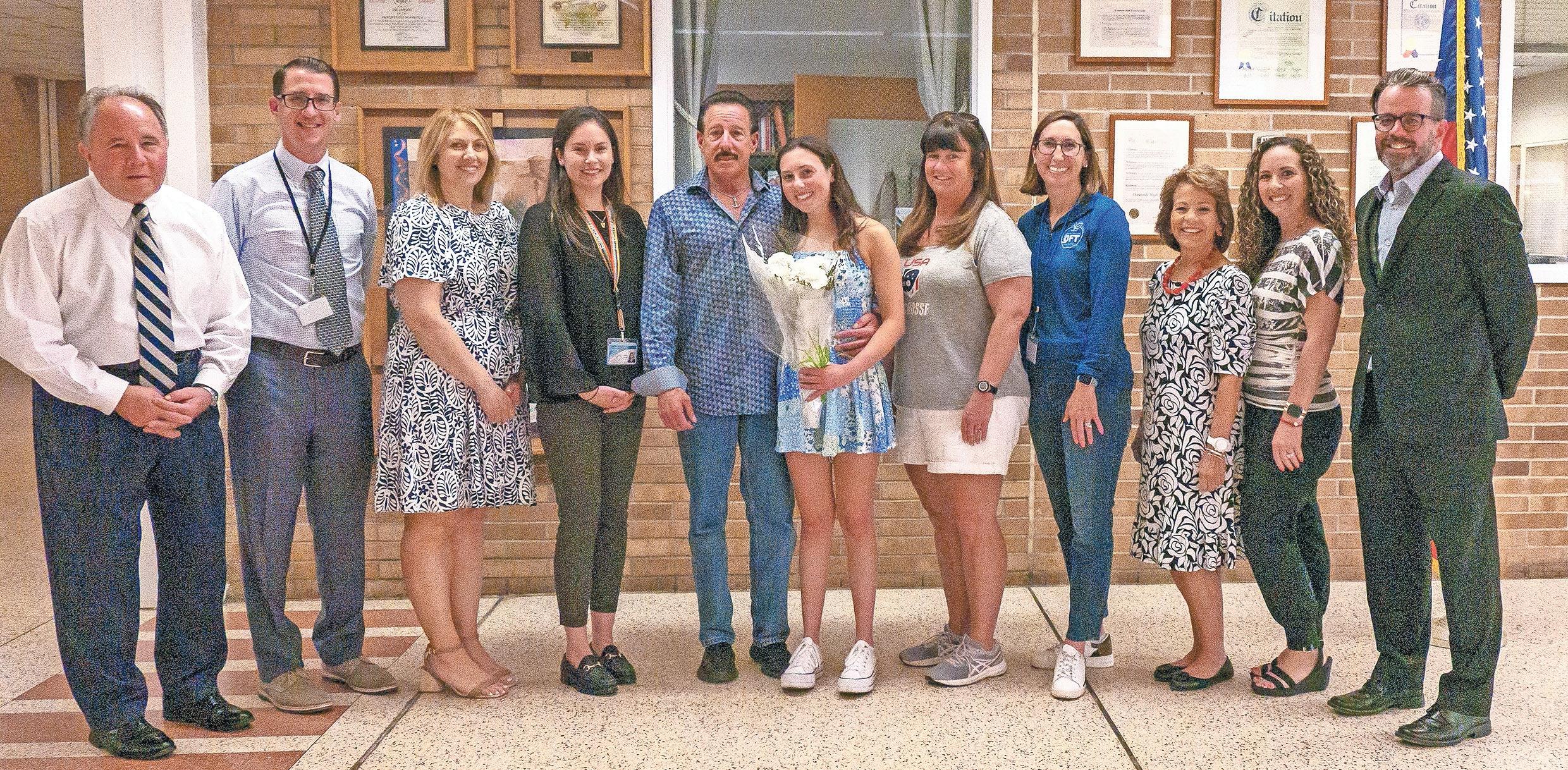
Kiera Danon will be going to Villanova University this fall on a fouryear Reserve Officers’ Training Corps Scholarship. Danon’s grades and work ethic are considered stellar, with a grade point average of 104+.
She has been involved in clubs and volunteer work including tutoring and raising funds for Kamp Kiwanis and Project Hope. Danon is an athlete who has played lacrosse and been on the cross-country track team. She was a founding member of the Scholar Athletes in Service to Others and is senior class treasurer.
Danon excels in all academic areas and belongs to the National Honor Society, Mu Alpha Theta, the math honor society,, and the World Language Honor Society. She plans to study nursing in college.
— Karina KovacMAIN PHONE: (516) 569-4000







■ WEB SITE:




young after only two years serving.
Speaking about his tenure, Rabbi Goren expressed his gratitude for finding a home within the Temple Avodah community. “My wife and I, my kids, we found the home, we found our life,” he said, “And that’s why we’re retiring and we’re staying here because this is home. To find a place where you’re happy with your portion, you know, so we are millionaires because we are happy with what we have in Oceanside.”
Beloosesky, who will assume his new position July 1, brings with him a wealth of experience and a deep sense of purpose. As a retired colonel from the Israeli Defense Forces, he served for 30 years in the IDF’s management central command. Early in his IDF career, he worked in the prime minister’s office when Prime Minister Yitzhak Rabin was assassinated.
Coming from a family with a lineage of rabbis, Beloosesky views his role as a sacred mission. He passionately expressed, “You cannot say a rabbi is a job. It’s a mission, it’s a journey. It’s not a job; it’s about a job. It’s not
8 to 5; it’s 24/7, 365. It’s who you are, and you are here for them.
A rabbi is a servant, as a servant you have to give his soul. When you say it in Yiddish, it’s better. He has to give his neshuma, his soul for his congregants, if you like them and if you dislike them.”
He ended his military career to study the rabbinical because of, “a connection to Poland and Holocaust.” And musing on the bigger questions in life such as “What is my mission in the world? What is my goal? How can I make the world a better place? If each of us will do
something small, the world will be a better place.”
Phillips will step into the role of president after being a member of the temple for 13 years. He spoke highly of both Rabbi Goren and Beloosesky, underscoring the importance of their presence in the community.
“He married my wife and I in his second year, we’ve been members here for 13 years,” Phillips said. “So, for half of his time here, and he’s been a constant. And it’s been a comforting constant this whole time. And again, the fact that these two get along so well is another comforting constant. I don’t think we can overstate how important it is to have both of these men here.”
The Temple Avodah community has been actively involved in the transition process, with the search for a new rabbi starting last summer attracting nine applicants.


“We held parlor meetings to ask the congregation what they wanted and what was important to them,” Kelison said. The top priority that emerged was being child-friendly.”
The importance of community engagement and unity was evident during challenging times of Phillip’s and Kelison’s tenure during the pandemic. Phillips recalled his role checking vaccination cards at the front door during the high holidays Rosh Hashanah and Yom Kippur services.
Karina Kovac/Heraldthere was no shortage of thrilling finishes and heartbreak on Nassau County high school athletic fields this spring, capped by a nearly 4-hourlong Long Island Class A softball championship game between MacArthur and Bayport. Here’s a recap of the 10 wildest postseason endings to the 2022-23 sports year.

1. Carey 6, Plainedge 5
Class A softball first round
The Seahawks trailed 5-1 in the top of the sixth inning but staged a comeback of epic proportions still down three with two outs and nobody on base in the bottom of the seventh. Caylee DeMeo had a two-run single and winning pitcher Lauren Peers followed with a towering fly that dropped between outfielders, bringing home the tying and winning runs.
2. Calhoun 6, Mepham 5
Class A baseball semifinal
The host Colts were down three runs and down to their last out in Game 3 with nobody on base in the bottom of the seventh before pulling out a win for the ages. A hit batter, a single, and a walk set the stage for Joey Goodman, who blasted a walk-off grand slam over the fence in left.
3. Calhoun 6, South Side 5
Class B boys’ lacrosse semifinal
Jayden Finkelstein had a hat trick and an assist and junior goaltender Mark Restivo made 13 saves to propel the Colts to victory. Jake Lewis, Braden Garvey and Shaun Walters also scored as Calhoun avenged a 10-5 regular-season defeat to the Cyclones.
4. North Shore 11, South Side 10 Class C girls’ lacrosse semifinal

The Vikings trailed by five goals in the first half before rallying and eventually winning in triple overtime on a goal by Kylee Colbert.
5. Garden City 7, Calhoun 6
Class B boys’ lacrosse championship
Garden City, which defeated the Colts handily, 16-8, April 21, had its hands full in the rematch on the county title stage and scored the decisive goal with 1:48 remaining off the stick of Carson Kraus. Lewis scored three times for Calhoun and had the potential tying goal nullified with seconds remaining due to a crease violation.
6. Garden City 9, Long Beach 8
Class B girls’ lacrosse championship
For the second straight year Long Beach fell a goal short of topping Garden City for the county title. A late goal by Garden City’s Kendal Morris with 2:41 left in the second half proved the difference. Delaney Chernoff had a hat trick and Delaney Radin added four points for the Marines.
7. Manhasset 13, North Shore 12 Class C girls’ lacrosse championship
The Vikings dropped an OT heartbreaker after leading 12-9 with less than six minutes remaining in regulation. Colbert had seven goals to finish the campaign with 101. Ava Bartoli and Daniela Martini scored twice apiece.
8. Seaford 1, Center Moriches 0
L.I. Class B softball championship
Scoreless in the bottom of the ninth, the Vikings captured their first Long Island crown in walk-off fashion on Kaitlyn Young’s bases-loaded single to left with one out to bring home Gabby Bellamore. Pitcher Skyler Secondino dominated in the circle with 15 strikeouts.
9. Babylon 6, Seaford 5
L.I. Class B baseball championship
One strike away from making more program history after winning its firstever county title, Seaford baseball was unable to shut the door against Babylon. The Phantoms scored four runs in the bottom of the ninth to win it in unbelievable fashion after the Vikings plated three runs in the top of the inning.
10. Bayport 4, MacArthur 2
L.I. Class A softball championship
After defeating Clarke for the county championship in a series that went the distance, MacArthur gave everything it had in a marathon L.I. Class A title game before falling in 12 innings. The Generals tied it in their final turn at-bat on star pitcher Taylor Brunn’s RBI double.


Riley Graham has watched her younger brother Cooper go back and forth to Cohen Children’s Medical Center to manage his rare retinoblastoma. Over time, she’s grown fond of ‘Cooper’s friends;’ other sick children who had either treatable or untreatable illnesses. For her birthday, she decided to hold a lemonade stand on June 11 to raise money and toys for cancer research. The icecold lemonade on a humid day raised over 300 toys and five thousand dollars.
“It’s just amazing, the community has always been so supportive of Cooper and Riley,” Michael Graham, their father stated, “and the outpouring of support is all going to go to help kids at Cohen’s that in Cooper’s situation and some that will survive and some that can’t survive the money will go to help those children up there with different things.”
After the yearlong community support for Cooper’s situation, Michael said he sympathizes with other parents with sickly children. “We understand what they’re going through,” he said, “we’ve been through it, and now with Cooper’s last prognosis where they don’t have anything to help, now our goal is to help other kids like him that may occur for and the way to do that is we need research. We need funding and we need help. We need experimental medicine and the only way to do that is to fundraise and come up with ways.” Those going through pediatric cancer is “like a family,” he said, “but now it’s our turn to help others.”
Long term CoopStrong supporter U.S. Rep. Anthony D’Esposito was at the lemonade stand and had a few words about Cooper’s resiliency. “Cooper is one of the biggest fighters I’ve ever met,” he said, “He’s had a rough go, but every time you see him, he’s smiling.”

With numerous fire departments in attendance, D’Esposito said the fire service is a strong family that comes together for anyone in need. He also applauded the whole family’s resolve, saying “seeing them here today is just a clear indicator of the people that they are. In the face of such adversity and such a tragedy. Mike and Rachel are teaching Riley to still look out for others.”
County executive Bruce Blakeman also stopped in to take a sip, previously he raised money for the Graham family through a corn-beef cookoff months earlier. “We’re all praying for him and we’re all supporting him,” he said, “you have firefighters, police officers,
everybody from the community gathering together to help Coop and to raise money for kids with cancer. So, it’s a beautiful day and it shows what a caring community we have. And a loving community we have and Coop’s just a strong, vivacious, really cute kid.”
“The Graham family has given so much to the community,” said senator Patricia Canzoneri-Fitzpatrick, “And it’s important for us to support them in their time of need. There’s so much that we can do for pediatric cancer awareness. But there’s also a need for mental health support.” Adding that the lemonade was “very refreshing on a hot day, Riley did a good job making it.”
They don’t just want to pause rent increases in rentstabilized apartments in Nassau County. They want to go back to 2021, before the Nassau County Rent Guidelines Board allowed 2 percent increases on one-year leases, and 3.5 percent on two-year leases.
Those tenants along with politicians supporting them banded together at the Hempstead Town Hall last week to issue those demands, which were set for a final vote on Wednesday after the Herald’s publication deadline.
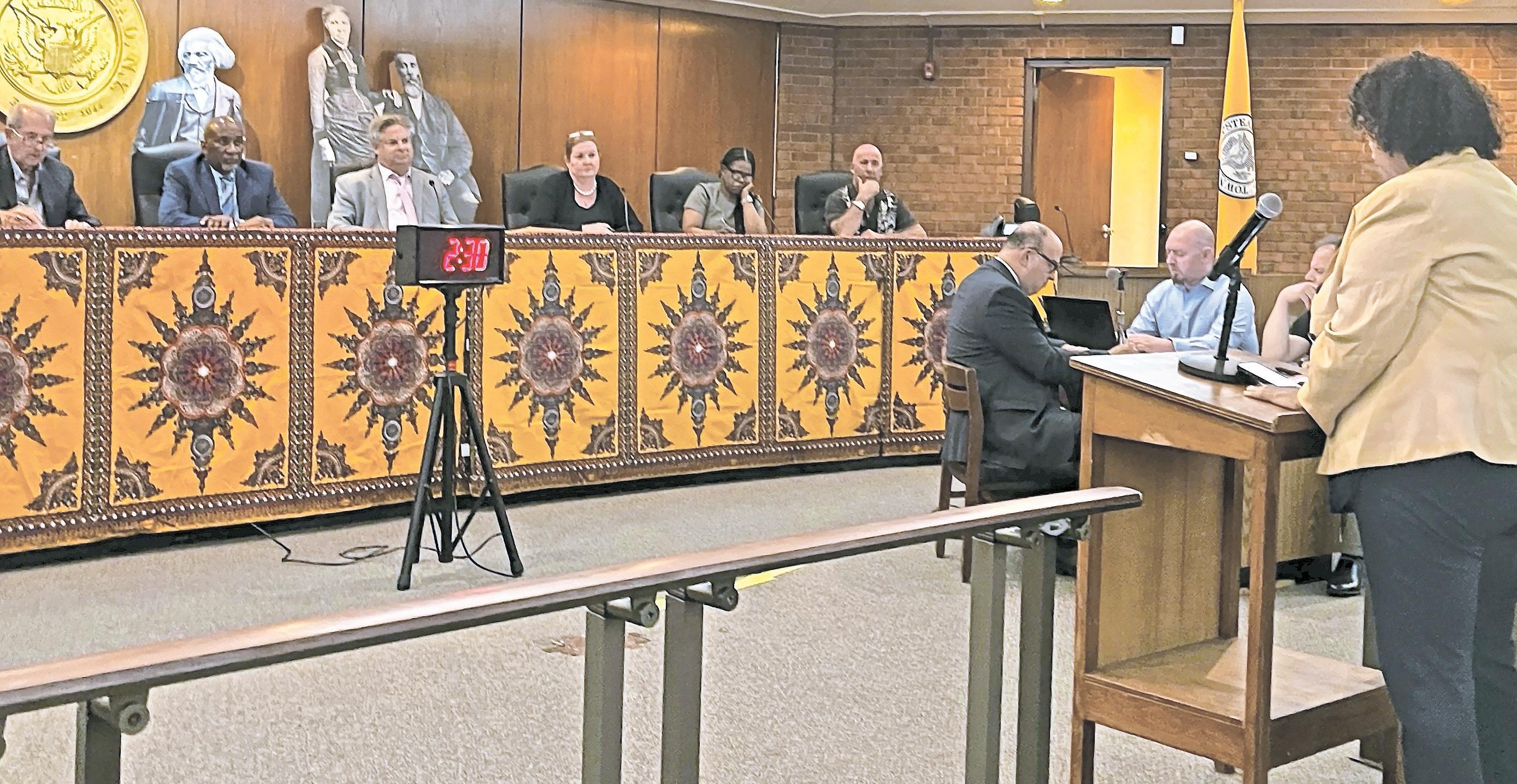
The rent guidelines board is responsible for imposing rent caps on rent-stabilized apartments in the county, a quarter of which are in Hempstead. Rent stabilization was implemented in 1962 to help prevent the displacement of low- and middleincome residents from excessive rent increases in an effort to provide affordable housing.
Buildings offering rent-stabilized units are typically larger properties built before 1974 that are privately owned and operated.
“Democracy is a participation sport, and it’s essential that people go out and voice their concern,” Assemblywoman Michaelle Solages said.
Last week’s demonstrations were organized by the Long Island Progressive Coalition, Working Families Party, and Nassau Democratic Socialists of America.

Jeremy Joseph, an advocate and organizer with DSA, claims tenants weren’t notified about the open hearings regarding raising their rent.
“We knocked on a lot of doors, we put up flyers in buildings,” he said. “By the next day, almost all of those flyers were taken down by landlords because they don’t want their tenants to come out and speak their minds.
“Every year landlords show up because it’s their job to know about this. They want to raise the rent as much as they can, but they don’t tell the tenants.”
Landlords seeking another raise in rent due to infla-
tion and because they say they want to use the extra money to help upgrade poor conditions of the buildings they own. Richard Rush, a landlord whose real estate firm owns and manages various apartments throughout Nassau, said the buildings “require a lot of repairs and maintenance to upkeep, and landlords should be incentivized to maintain their buildings for the benefit of the tenants.”
But Darinel Velasquez, an advocate from New York Communities for Change, says it is absurd landlords need to feel incentivized in order to provide an inhabitable space to their tenants.
“Landlords have been making consistent profit every year while failing to maintain and upkeep the buildings they own,” he said.
Data compiled by the tent guidelines board reveals the consumer price index surged by nearly 4 percent in the metropolitan area over the past year through April. Meanwhile, Nassau landlords saw their income grow nearly 3 percent, but their expenses expand wider at nearly 4.5 percent between 2021 and 2022.
However, tenant advocates are questioning the credibility of this data, claiming it was developed by landlords and lacked independent auditing. Landlords, however, say the data inflates their income by incorporating earnings from non-stabilized units, which they say are considerably more profitable.
The state’s housing and community renewal division has found the average rent for a rent-stabilized apartment in Nassau County was $1,474 per month in 2022, resulting
AssemBLywOmAN
mIChAeLLe sOLAges tells the Nassau County Rent Guidelines Board it should carefully consider the impact any rent increase would have right now on tenants working through the same inflationary pressures as landlords.
in a profit of more than $360 per month for landlords.
Joseph calls this new attempt to raise rents to nothing more than landlord greed, who place profits over people and already charge more than market value for their other non-stabilized properties.
“The problem with treating housing like a commodity is that its value outpaces our wages,” he said.
Some tenants shared with the rent guidelines board their issues with their landlords, while they as tenants continue to struggle financially.”
Some tenants claimed they were pressured into signing leases without reading them, having their rent randomly raised, and even charging upward of $150 per month for parking.
That has forced some residents, like Melissa Devone, a 62-year-old battling lung cancer, to park three blocks away from her apartment after chemo treatments because she simply cannot afford that additional monthly expense.
Tenants also claimed rodents run rampant through many units, mold, a lack of security and sense of safety, lack of maintenance and upkeep, and an overall lack of quality living.
Although the vote was expected to happen this week, some organizations do offer free legal resources for tenants who might find themselves in an untenable situation. Long Island Housing Services is a private, non-profit fair housing advocacy and enforcement agency serving Nassau and Suffolk counties. They can be reached at LIFairHousing.org.
Democracy is a participation sport, and it’s essential that people go out and voice their concern.
mIChAeLLe sOLAges Assemblywoman








Select Lincoln Orens Middle School seventh and eighth graders were recognized for their academic strides, musical talent, athletic skills, school involvement, volunteer efforts and overall good character during an awards ceremony held on June 8. In a press release, the district stated, “Congratulations to all who achieved these acknowledgments, which result from sustained effort and dedication to learning.”

didn’t really know the best way to treat them.” And because they were learning as they went, patients were probably put on ventilators earlier than they would be now, staffers weren’t using steroids the same way they would later, and were giving patients some agents that preliminary studies suggested might be of some benefit, but that in hindsight may have done more harm that good.
“We were overwhelmed,” Glatt recounted, “so you couldn’t give them individualized attention.” The hospital’s intensive care unit has 22 beds, but at the height of the pandemic there were 100 ICU patients and 400 to 500 Covid patients overall. Spaces like the ambulatory area had to be converted to accommodate the sheer number of people coming in for treatment.
“They were essentially in every nook and cranny of the hospital,” Sharma said.
The HVAC system had to be modified on the fly to take in outside air. The system was running so hard that the oxygen feed was icing up, and staff had to spray it with warm water until they could figure out a better method.
Besides caring for those with the virus, the hospital was issuing constant press briefings to keep people up to date in a fast-changing environment. Glatt was — and still is — getting calls from people across the country, and at the height of it, he had 1,000 emails a day asking for advice.
“Nobody was an expert,” he said, “Anthony Fauci wasn’t an expert on it. He became an expert on it.” Not all of the information being shared was peer reviewed with standardized studies, so misinformation was prevalent. Glatt said they were all “grasping at straws.”
Nurses and staff, Stacey Conklin, chief nursing officer, recalled, “were extremely committed to the community during this entire time, especially at the very beginning of the pandemic, not knowing what was going on. There was fear — there was absolute fear. We were all afraid. … None of us had ever been involved in anything like this, you know, a huge public health emergency.”
No one at the hospital went without personal protective equipment, thanks to the relationship Conklin nurtured with the Mount Sinai Health System. Five members of the staff died of the virus, but, Conklin said, “We would not have been able to survive the crisis without the system.”
“Supply issues were really critical,” Joseph Calderone, senior vice president of corporate communications and development, added, “We, as a single, standalone hospital, could not have carried the weight.”
The hospital and the local community found ways to make nurses’ lives better through acts of kindness. An MSSN board member organized a heroes car parade, expecting a small turnout — and about 400
vehicles cruised past the hospital. Nurses began playing the Beatles’ “Here Comes the Sun” when a Covid-19 patient was discharged so they could “hear” the life they saved.
Schools sent encouraging letters to nurses. Bags were filled with groceries so nurses could tick shopping off their errand lists. And no staffer may ever forget the sheer volume of food funneled in by local restaurants.
The hospital built a Recharge Room to offer exhausted nurses respite. The room has had over 10,000 visits.
From doctors, respiratory therapists and pharmacists to the cleaning staff who disinfected treatment rooms and the engineers who revitalized the air circulation system, everyone had a part to play.
On Dec. 15, 2020, Mount Sinai South Nassau unveiled the Pfizer vaccine and launched a comprehensive vaccination program. The effort reflected hope in “this small vial,” Sharma said at a news conference that day. The hospital was given 900 doses in a batch and started distributing 100 to 200 vaccines a day.


One of the most inspiring moments for Calderone was when “the folks here rolled up their sleeves publicly to try to dispel any questions about whether this was safe or not,” he recalled. “And it was, look, it’s a brand new vaccine, and it’s brand new technology. But they publicly, in our atrium here, took the vaccine, among other political leaders. And I thought that was a moment, a teaching moment for sure.”
It was the first feeling there was some type of protection against the virus, and that gave a sense of comfort to the community, especially the elderly. “We started to see the pandemic change its tone,” Sharma said. “It became more of managing this ebb and flow of respiratory wave after wave, but it wasn’t the same level of intensity … being one of the first areas hit hard, we never saw that level of activity again after the vaccine.”
Glatt said that although the vaccines have gotten more than their share of negative national attention, they are probably the single most important scientific advance in all of medicine, because they have saved millions of lives.
“When we started vaccinating,” Glatt said, “the highest-risk people, their mortality ranges in those groups, which were up to 25 or 33 percent, instantly dropped to what we expect to see, unfortunately, in that age group.”
Then, in concert with the Town of Hempstead, the hospital took the vaccination campaign on the road with the Vaxmobile, a mobile inoculation station that helped people in underserved areas, where vaccination rates were lower than the rest of Nassau County, who were unable to get appointments for shots.
“It was very profound for a lot of people when they gave that first dose to somebody,” Conklin said. “It was just such a sense of relief.”


Journey back in time to 1960s Detroit and the birth of the Motown sound, when Motor City Revue visits the Landmark stage, Friday June 30, 8 p.m. This 11-piece tribute band will have everyone dancing and singing along to the songs immortalized by Smokey Robinson & The Miracles, Marvin Gaye, The Temptations, The Supremes and countless others. From Hitsville to Soulsville, they’ll perform it all, with a passion and delivery of the true Motown sound that is undeniable. Their ability to match the vocal harmonies and instrumental mix that distinguished the original recordings is not to be missed. All will be humming along to these iconic tunes that defined a generation, in this authentic recreation of the great era that revolutionized the music industry. $47, 42, $38. Jeanne Rimsky Theater at Landmark on Main Street, 232 Main St., Port Washington. (516) 767-6444 or LandmarkOnMainStreet.org.

Plaza Theatrical continues its season with “All About Joel: A Billy Joel Tribute,” Sunday, June 25, 2:30 p.m. David Clark’s stunningly accurate piano playing, lead vocals and an eerily similar stage look to the Piano Man himself delights audiences, while engaging everyone with wit and humor. Come hear all your favorite tunes including “Just the Way You Are,” “New York State of Mind,” “Piano Man,” and so many more. It’s performed at Plaza’s stage at the Elmont Library Theatre, 700 Hempstead Tpke., Elmont. $40, $35 seniors. Elmont. For tickets, call (516) 599-6870 or visit PlazaTheatrical.com.

Nassau County Museum of Art’s exhibition, “Eye And Mind: The Shin Collection,” highlights the extraordinary collection masterworks assembled by 31-year-old connoisseur Hong Gyu Shin, an internationally recognized figure in the global art world. He shares his treasures, including works by Whistler, Lautrec, Boucher, Daumier, Delacroix, Klimt, Schiele, Balthus, Warhol, de Kooning, Gorky and many other important names from art history provocatively juxtaposed with the painting and sculpture of our own time from both Asia and the West. On view through July 9. Nassau County Museum of Art, 1 Museum Dr., Roslyn Harbor. (516) 484-9337 or NassauMuseum.org.

It was a celebration of 30 years proving service and guidance to the young LGBTQ community of Long Island, and it was a celebration in style.
PFY — formerly known as Pride for Youth — raised thousands of dollars for its Long Island Crisis Center programs last week during its annual gala at Westbury Manor.

Special guest at this year’s event was Maulik Pancholy, the openly gay actor many would know for his roles in the NBC sitcom “30 Rock” as well as the children’s series “Phineas and Ferb.”
maulik Pancholy, acTor from shows like ’30 Rock’ and ‘Star Trek: Discovery,’ shares why organizations like the Long Island Crisis Center’s PFY group are so important to helping the LGBTQ community. The gala at Westbury Manor raised tens of thousands of dollars for PFY’s programs.

“I think the gala is going to be a time for us to kind of get together and reflect on where we have come as an agency, where we need to go as an agency, and really honor the pioneering leadership and spirit that has laid
the groundwork that has made PFY what it is,” PFY director Devon Zappasodi told the Herald ahead of the event.
The organization was originally intended for young people, but grants have allowed PFY to expand to serve anyone who identifies as LGBTQ on Long Island and in Queens.
The crisis center operates a 24/7 hotline for people with mental health crises, and PFY was formed in 1993
after former executive director Linda Leonard noticed an influx of calls from members of the LGBTQ community.
“They were actually getting a lot of calls on the hotline for folks who were looking for LGBTQ services, such as counseling … or support groups,” said Tawni Engel, the crisis center’s associate executive director. “There was nothing like that that existed at the time.”
Anyone seeking more information or help can visit LICCPFY.org.
 Photos courtesy Jonah Murdoch
The sTaff from Long Island Crisis Center’s PFY group that focuses on the LGBTQ community of Long Island and Queens, gather for a group picture during the organization’s annual gala last week at Westbury Manor, celebrating 30 years of the program on Long Island.
Photos courtesy Jonah Murdoch
The sTaff from Long Island Crisis Center’s PFY group that focuses on the LGBTQ community of Long Island and Queens, gather for a group picture during the organization’s annual gala last week at Westbury Manor, celebrating 30 years of the program on Long Island.
GOLD SPONSOR: SILVER SPONSORS: GIFT BAG SPONSOR: SNACK SPONSOR:

VENUE SPONSOR :













LEGAL NOTICE
NOTICE OF SALE
SUPREME COURT. NASSAU COUNTY. L&L ASSOCIATES HOLDING CORP., Pltf. vs. JSU PROPERTIES LLC, et al, Defts. Index
#603435/2022. Pursuant to judgment of foreclosure and sale entered January 11, 2023, I will sell at public auction on the north front steps of Nassau Supreme Court, 100 Supreme Court Drive, Mineola, NY July 6, 2023 at 3:00 p.m. prem. k/a Section 43, Block 220, Lot 147. Sold subject to terms and conditions of filed judgment and terms of sale. Foreclosure auction will be held “rain or shine.” If proper social distancing cannot be maintained or there are other health or safety concerns, then the court appointed referee will cancel the auction.
LOUIS B. IMBROTO, Referee. LEVY & LEVY, Attys. for Pltf., 12 Tulip Dr., Great Neck, NY. #100416
139807
LEGAL NOTICE
NOTICE OF SALE SUPREME
COURT COUNTY OF NASSAU U.S. Bank National Association, as Trustee for Citigroup Mortgage Loan Trust, Inc.
2007-AHL1, Asset-Backed Pass-Through Certificates
Series 2007-AHL1, Plaintiff
AGAINST Michael Palmeri; et al., Defendant(s)
Pursuant to a Judgment of Foreclosure and Sale duly entered April 17, 2019 I, the undersigned Referee will sell at public auction at the North Side Steps of the Nassau County Supreme Court at 100 Supreme Court Drive, Mineola, NY 11501 on July 5, 2023 at 2:30PM, premises known as 3068 Xavier Place, Oceanside, NY 11572. All that certain plot piece or parcel of land, with the buildings and improvements erected, situate, lying and being in the Town of Hempstead, at Oceanside, County of Nassau, State of New York, Section 54 Block 507 Lot 13. Approximate amount of judgment $920,711.22 plus interest and costs. Premises will be sold subject to provisions of filed Judgment Index# 000590/2017. The auction will be conducted pursuant to the COVID-19 Policies Concerning Public Auctions of Foreclosed Property established by the Tenth Judicial District. Foreclosure Auctions will be held “Rain or Shine.”
Darrem Arthur Aronow, Esq., Referee LOGS Legal Group LLP f/k/a Shapiro, DiCaro & Barak, LLC Attorney(s) for the Plaintiff 175 Mile Crossing Boulevard Rochester, New York 14624 (877) 430-
4792 Dated: April 27, 2023
139814
LEGAL NOTICE
NOTICE OF SALE SUPREME
COURT COUNTY OF NASSAU, DEUTSCHE
BANK NATIONAL TRUST COMPANY AS TRUSTEE IN TRUST FOR THE REGISTERED HOLDERS OF MORGAN STANLEY ABS
CAPITAL I TRUST 2006HE6, MORTGAGE PASSTHROUGH CERTIFICATES, SERIES 2006-HE6, Plaintiff, vs. THOMAS COCCHIOLA, ET AL., Defendant(s).
Pursuant to an Order Confirming Referee Report and Judgment of Foreclosure and Sale duly entered on May 7, 2018, I, the undersigned Referee will sell at public auction on the front steps on the north side of the Nassau County Supreme Court, 100 Supreme Court Drive, Mineola, NY on July 11, 2023 at 2:00 p.m., premises known as 181 Nassau Parkway, Oceanside, NY 11572. All that certain plot, piece or parcel of land, with the buildings and improvements thereon erected, situate, lying and being at Oceanside, in the Town of Hempstead, County of Nassau and State of New York, Section 54, Block 142 and Lot 456. Approximate amount of judgment is $1,159,297.51 plus interest and costs. Premises will be sold subject to provisions of filed Judgment Index #6777/2014. This foreclosure sale will be held on the north side steps of the Courthouse, rain or shine. COVID-19 safety protocols will be followed at the foreclosure sale. If proper social distancing cannot be maintained or there are other health or safety concerns, the Court Appointed Referee will cancel the sale. Mark Ricciardi, Esq., Referee Eckert Seamans Cherin & Mellott, LLC, 10 Bank Street, Suite 700, White Plains, New York 10606, Attorneys for Plaintiff 139919
LEGAL NOTICE SUPREME COURT OF THE STATE OF NEW YORK INDEX NO. 616678/2022 COUNTY OF NASSAU
BANC OF AMERICA FUNDING CORPORATION
2007-6, U.S. BANK NATIONAL ASSOCIATION, AS TRUSTEE Plaintiff, vs. JANET GUSTAFERRI A/K/A JANET VAUGHAN, AS HEIR AND DISTRIBUTEE OF THE ESTATE OF CHARLES GUSTAFERRI A/K/A
CHARLES H. GUSTAFERRI; DANIEL GUSTAFERRI, AS HEIR AND DISTRIBUTEE TO THE ESTATE OF CHARLES GUSTAFERRI; LORI BRADY, AS HEIR AND DISTRIBUTEE TO THE ESTATE OF CHARLES GUSTAFERRI; UNKNOWN HEIRS AND DISTRIBUTEES OF THE ESTATE OF CHARLES GUSTAFERRI
A/K/A CHARLES H.
GUSTAFERRI, any and all persons unknown to plaintiff, claiming, or who may claim to have an interest in, or general or specific lien upon the real property described in this action; such unknown persons being herein generally described and intended to be included in the following designation, namely: the wife, widow, husband, widower, heirs at law, next of kin,
descendants, executors, administrators, devisees, legatees, creditors, trustees, committees, lienors, and assignees of such deceased, any and all persons deriving interest in or lien upon, or title to said real property by, through or under them, or either of them, and their respective wives, widows, husbands, widowers, heirs at law, next of kin, descendants, executors, administrators, devisees, legatees, creditors, trustees, committees, lienors and assigns, all of whom and whose names, except as stated, are unknown to plaintiff; ETR INC D/B/A EMPIRE TAX REDUCTIONS INC.; NEW YORK STATE DEPARTMENT OF TAXATION AND FINANCE; UNITED STATES OF AMERICA; “JOHN DOE” (REFUSED
NAME) AS JOHN DOE #1, “JOHN DOE #2” through “JOHN DOE #12,” the last eleven names being fictitious and unknown to plaintiff, the persons or parties intended being the tenants, occupants, persons or corporations, if any, having or claiming an interest in or lien upon the premises, described in the complaint, Defendants.
Plaintiff designates NASSAU as the place of trial situs of the real property SUPPLEMENTAL SUMMONS Mortgaged
Premises: 132 DAVISON AVENUE, OCEANSIDE, NY 11572 Section: 38, Block: 363, Lot: 85, 86 & 87 To the above named
Defendants YOU ARE HEREBY SUMMONED to answer the Complaint in the above entitled action and to serve a copy of your Answer on the plaintiff’s attorney within twenty (20) days of the service of this Summons, exclusive of the day of service, or within thirty (30) days after service of the same is complete where service is made in any manner other than by personal delivery within the State. The United States of America, if designated as a defendant in this action, may answer or appear within sixty (60) days of service. Your failure to appear or to answer will result in a judgment against you by default for the relief demanded in the Complaint. In the event that a deficiency balance remains from the sale proceeds, a judgment may be entered against you. NOTICE OF NATURE OF ACTION AND RELIEF SOUGHT THE OBJECT of the above caption action is to foreclose a Mortgage to secure the sum of $312,900.00 and interest, recorded on March 06, 2007, in Liber M 31630 at Page 257, of the Public Records of NASSAU County, New York., covering premises known as 132 DAVISON AVENUE, OCEANSIDE, NY 11572. The relief sought in the within action is a final judgment directing the sale of the premises described above to satisfy the debt secured by the
Mortgage described above. NASSAU County is designated as the place of trial because the real property affected by this action is located in said county. NOTICE YOU ARE
IN DANGER OF LOSING
YOUR HOME
If you do not respond to this summons and complaint by serving a copy of the answer on the attorney for the mortgage company who filed this foreclosure proceeding against you and filing the answer with the court, a default judgment may be entered and you can lose your home. Speak to an attorney or go to the court where your case is pending for further information on how to answer the summons and protect your property. Sending a payment to the mortgage company will not stop the foreclosure action. YOU MUST RESPOND BY SERVING A COPY OF THE ANSWER ON THE ATTORNEY FOR THE PLAINTIFF (MORTGAGE COMPANY) AND FILING THE ANSWER WITH THE COURT. Dated:June 5, 2023 ROBERTSON, ANSCHUTZ, SCHNEID, CRANE & PARTNERS, PLLC Attorney for Plaintiff Aric H. Peymann, Esq. 900 Merchants Concourse, Suite 310 Westbury, NY 11590 516-280-7675 140122
LEGAL NOTICE NOTICE OF PUBLIC HEARING BY THE BOARD OF APPEALS Pursuant to New York State Town Law Article 16, New York State Public Officers Law Article 7, and the Town of Hempstead Building Zone Ordinance, NOTICE is hereby given that the BOARD OF APPEALS of the Town of Hempstead will hold a public hearing in the Old Town Hall, 350 Front Street, Room 230, Second Floor, Hempstead, New York on 6/28/23 at 9:30 A.M. to consider the following applications and appeals: ----------------------
----------- THE FOLLOWING CASES WILL BE CALLED STARTING AT 9:30 A.M. 411/23. - 414/23. OCEANSIDE - Shane Sackstein, Variances, lot area occupied, side yard, side yards aggregate, rear yard, maintain shed attached to garage with pergola and roof over; Variances, lot area occupied, front yard average setback, side yards aggregate, maintain roofed over porch and pergola attached to dwelling; Variances, lot area occupied, side yard, side yards aggregate, maintain carport attached to dwelling; Variances, lot area occupied, side yard, side yards aggregate, maintain roof over second story deck., N/s Montgomery Ave., 80’ W/o Yost Blvd., a/k/a 360 Montgomery Ave. ALL PAPERS PERTAINING TO THE ABOVE HEARING ARE AVAILABLE FOR INSPECTION AT THE BOARD OF APPEALS, TOWN HALL, 1 WASHINGTON
He may be on a serving dish, but he’s not to be eaten with butter since Lenny, the 111-year-old, 26 pound lobster has been pardoned from Island Park’s Peter’s Clam Bar for national lobster day on June 15. Instead, he was dropped off in the Atlantic Ocean.
STREET, HEMPSTEAD, NY 11550. This notice is only for new cases in Oceanside within Town of Hempstead jurisdiction. There are additional cases in different hamlets, towns and villages on the Board of Appeals calendar. The full calendar is available at https://hempsteadny. gov/509/Board-of-Appeals
The internet address of the website streaming for this meeting is https:// hempsteadny.gov/576/ Live-Streaming-Video
Interested parties may appear at the above time and place. At the call of the Chairman, the Board will consider decisions on the foregoing and those on the Reserve Decision calendar and such other matters as may properly come before it.
140282
LEGAL NOTICE
SUPREME COURT OF THE STATE OF NEW YORKCOUNTY OF NASSAU NATIONSTAR MORTGAGE LLC D/B/A MR. COOPER, V. JAMES LOPEZ, ET. AL. NOTICE OF SALE NOTICE IS HEREBY GIVEN pursuant to a Final Judgment of Foreclosure dated April 26, 2023, and entered in the Office of the Clerk of the County of Nassau, wherein NATIONSTAR MORTGAGE LLC D/B/A MR. COOPER is the Plaintiff and JAMES LOPEZ, ET AL. are the Defendant(s). I, the undersigned Referee will sell at public auction at the NASSAU COUNTY SUPREME COURT, NORTH SIDE STEPS, 100 SUPREME COURT DRIVE, MINEOLA, NY 11501 on July 25, 2023 at 2:30PM, premises known as 165 NASSAU LANE, ISLAND PARK, NY 11558: Section 43, Block 50, Lot 307: ALL THAT CERTAIN PLOT, PIECE OR PARCEL OF LAND, WITH THE BUILDINGS AND IMPROVEMENTS THEREON ERECTED, SITUATE, LYING AND BEING IN THE INCORPORATED VILLAGE OF ISLAND PARK, TOWN OF HEMPSTEAD, COUNTY OF NASSAU AND STATE OF NEW YORK Premises will be
sold subject to provisions of filed Judgment Index # 611056/2019. Edward Andreas Vincent, Esq. - Referee. Robertson, Anschutz, Schneid, Crane & Partners, PLLC 900 Merchants Concourse, Suite 310, Westbury, New York 11590, Attorneys for Plaintiff. All foreclosure sales will be conducted in accordance with Covid-19 guidelines including, but not limited to, social distancing and mask wearing. *LOCATION OF SALE SUBJECT TO CHANGE DAY OF IN ACCORDANCE WITH COURT/ CLERK DIRECTIVES.
140289
LEGAL NOTICE NOTICE OF SALE SUPREME COURT NASSAU COUNTY VELOCITY COMMERCIAL CAPITAL, LLC, Plaintiff against 3648 LORRIE DR CORP, et al Defendant(s) Attorney for Plaintiff(s) McMichael Taylor Gray, LLC, 7 Wells Street, Suite 205B, Saratoga Springs, NY 12866. Pursuant to a Judgment of Foreclosure and Sale entered February 16, 2023, I will sell at public auction to the highest bidder at North Side Steps of the Nassau County Supreme Court at 100 Supreme Court Drive, Mineola, NY 11501 on July 25, 2023 at 2:00 PM. Premises known as 3648 Lorrie Drive, Oceanside, NY 11572. Sec 60 Block 87 Lot 9. All that certain plot, piece or parcel of land, with the buildings and improvements thereon erected, situate, lying and being at Oceanside, Town of Hempstead, County of Nassau, State of New York.
Approximate Amount of Judgment is $811,242.08 plus interest, fees, and costs. Premises will be sold subject to provisions of filed Judgment Index No 610118/2020. The foreclosure sale will be conducted in accordance with 10th Judicial District’s Covid-19 Policies and foreclosure auction rules. The Referee shall enforce any rules in place regarding facial coverings
and social distancing. If proper social distancing cannot be maintained or there are other health or safety concerns, then the Court Appointed Referee shall cancel the foreclosure auction. Foreclosure
Auctions will be held “Rain or Shine.” Peter Kramer, Esq., Referee (516) 510-4020 23-000882-01 140297

LEGAL NOTICE
REFEREE’S NOTICE OF SALE IN FORECLOSURE SUPREME COURTCOUNTY OF NASSAU BANK OF AMERICA, N.A., Plaintiff - againstRICHARD ALVAREZ, et al Defendant(s). Pursuant to a Judgment of Foreclosure and Sale entered on April 19, 2023. I, the undersigned Referee will sell at public auction on the North Side steps of the Nassau County Supreme Court located at 100 Supreme Court Drive, Mineola, N.Y. 11501 “Rain or Shine” on the 20th day of July, 2023 at 2:00 PM. All that certain plot, piece or parcel of land, with the buildings and improvement thereon erected, situate, lying and being in the at Oceanside, Town of Hempstead, County of Nassau and State of New York.
Premises known as 3521 Anchor Place, Oceanside, New York 11572. (Section: 54, Block: 441, Lot: 24, 25, 27) Approximate amount of lien $1,229,169.25 plus interest and costs.
Premises will be sold subject to provisions of filed judgment and terms of sale. Index No. 002678/2010. Michael Joseph Sepe, Esq., Referee. McCalla Raymer Leibert Pierce, LLC Attorney(s) for Plaintiff 420 Lexington Avenue, Suite 840 New York, NY 10170 Tel. 347/286-7409 Dated: May 17, 2023 During the COVID-19 health emergency, bidders are required to comply with all governmental health requirements in effect at the time of sale including but not limited
to, wearing face coverings and maintaining social distancing (at least 6-feet apart) during the auction, while tendering deposit and at any subsequent closing. Bidders are also required to comply with the Foreclosure Auction Rules and COVID-19 Health Emergency Rules issued by the Supreme Court of this County in addition to the conditions set forth in the Terms of Sale.
140212
LEGAL NOTICE NOTICE OF SALE SUPREME COURT. NASSAU COUNTY. TOORAK CAPITAL PARTNERS, LLC, Pltf. vs. INTERCONTINENTAL AMERICA FREIGHT SERVICES, INC S/H/A INTERCONTINENTAL AMERICA FREIGHT SERVICES INC., et al, Defts. Index #613354/2021. Pursuant to judgment of foreclosure and sale entered May 16, 2023, I will sell at public auction on the North Side steps of the Nassau Supreme Court, 100 Supreme Court Drive, Mineola, NY on July 25, 2023 at 3:30 p.m. premises k/a 1010 California Place S., Island Park, Ny 11558 a/k/a Section 43, Block 100, Lots 26-27, 68-70 and 127. Said property designated on Map of Island Park, Long Beach, shown part of holdings of Island Park Long Beach Inc., Sheet 14, W.E. Howard, C.E., dated December 29, 1925 and filed in the Nassau County Clerk’s Office on Dec. 29, 1925 as Map No. 587 and also shown on Map No. 572 as and by Lots 26, 27 and 27A and dock plots 26, 27 and 28 in Block 106. Approximate amount of judgment is $570,956.30 plus costs and interest. Sold subject to terms and conditions of filed judgment and terms of sale. PETER KRAMER, Referee - (516) 510-4020. MARGOLIN, WEINREB & NIERER, LLP, Attys. for Pltf., 165 Eileen Way, Ste. 101, Syosset, NY 11791. #100476 140250
Please Email Resume to careers@liherald.com or Call (516)569-4000 x239
DRIVING INSTRUCTOR
Company Car/ Bonuses. Clean Driving Record Required, Will Train. Retirees Welcome! Bell Auto School 516-365-5778 Email: info@bellautoschool.com
DRIVING
The award-winning Herald Community Newspapers group, covering Nassau County's North and South Shores with hard-hitting news stories and gracefully written features, seeks a motivated, energetic and creative editor/reporter to join our dynamic (and awesome) team! This education and general assignment reporting position offers a unique experience to learn from some of the best in the business. Historically, reporters who have launched their careers with us have gone on to The New York Times, Newsweek, Newsday, the New York Daily News, New York Post, CNN, BBC, NBC News and The Daily Mail, among many others. We look for excellent writers who are eager to learn, enhance their skills, and become well-established and respected journalists in our industry.
To apply: Send a brief summary in the form of a cover letter describing your career goals and what strengths you can bring to our newsroom, along with a resume and three writing samples to mhinman@liherald.com

LINE COOK: Friday, Saturday, Sunday, Monday 10am-6pm. Sandwiches/ Salads. Beach Restaurant. Great Summer Job. 516-835-2819
MACHINE PROGRAMMER/ MACHINE OPERATOR

Will Train
*Math Skills Helpful.
*Work In A Machine Shop. Northfield Precision Instruments
Phone 516-431-1112 Ask For Charles. E-mail Resume sales@northfield.com

Manager On Duty
At Blaze, Old Bethpage Village Outdoors From September Through November 5-8 Hour Shifts. Serve As The Primary Point Of Contact For All Issues That May Occur During The Event, Seeing Each Through To Resolution. Serve As The Primary Point Of Contact For Emergency Personnel Hourly Rate $25-$30
To Apply: https://hudsonvalley.org/ employment/
MULTI
Inside Sales
Looking for an aggressive self starter who is great at making and maintaining relationships and loves to help businesses grow by marketing them on many different advertising platforms. You will source new sales opportunities through inbound lead follow-up and outbound cold calls. Must have the ability to understand customer needs and requirements and turn them in to positive advertising solutions. We are looking for a talented and competitive Inside Sales Representative that thrives in a quick sales cycle environment. We offer salary, commission, bonuses, health benefits, 401K and paid time off. Will consider part time. Please send cover letter and resume with salary requirements to ereynolds@liherald.com Call 516-569-4000 X286

OFFICE HELP PT/FT: Computer Literate. Answer Phones, Packing, Process Orders. Baldwin Dental Supply Company. 516-783-7800

Richner Communications, One of the Fastest Growing Media, Event and Communications Companies on Long Island is Seeking a Sales/Marketing Candidate to Sell our Print Media Products and our Digital, Events, Sponsorships. Salary, Commission, Eligible for Health Benefits, 401k and Paid Time Off. Will Consider Part Time. Please Send Cover Letter and Resume with Salary Requirements to rglickman@liherald.com or Call 516-569-4000 X250

Path Monitor
At Blaze, Old Bethpage Village Outdoors From September Through November
5-8 Hour Evening Shifts Providing A Welcoming Atmosphere And Ensuring Guest Safety. Hourly Rate $20. To Apply: https://hudsonvalley.org/ employment/
PRESS-ROOM/WAREHOUSE HELP
Long Island Herald has IMMEDIATE openings for a FULL-TIME Pressroom/warehouse helper in Garden City. We are a busy print shop looking for a motivated and reliable individuals to assist in various duties in the shop. Forklift experience is a plus and heavy lifting is required. Hours vary, so flexibility is key. Email resumes or contact info to careers@liherald.com

SEWING MACHINE OPERATOR/ CANVAS FABRICATOR For Foreman Position. Experience a Must. Awning Company. Call/Text Tommy 516-250-8094; tgawnings@aol.com Send Resume
Business/Opportunities
NICHE FRANCHISE OPPORTUNITY
THEFANWHISPERER.COM REPLACING NOISY BATHROOM FANS & PLAY EASY. I TRAIN. 1-888-888-2134
REAL ESTATE
Open Houses
HEWLETT BAY PARK BA,190 Meadowview Ave Ever Dream of Living in A Castle? This 8000 Sq Ft Mansion is Full of Character. Amazing Architectural Details, Soaring Ceilings, Stained Glass Windows. 5 BR, 6.55 Bths. Sprawling 1.3 Acre Prop with IG Gunite Pool. SD#14.Near All. Must See This Unique Home!..$3,200,00 Ronnie Gerber, Douglas elliman 516-238-429 ba
HEWLETT HARBOR 1051 Channel Dr, OPEN HOUSE SUNDAY 6/25, 12-1:30, FIRST TIME ON MARKET! 3/4 BR, 2.5 Bth Split on Beautiful Ω Acre Parklike Property. Updtd Gran/Wood EIK, Spac LR/DR with Vaulted Ceiling & Fpl, & Fam Rm. 2 Car Att Gar.Endless Possibilities!
SD#14...$1,349,000 Ronnie Gerber, Douglas Elliman 516-238-429
HEWLETT HARBOR 6/25, 2-3:30, 246 Adams Rd, FIRST SHOW! Elegant & Stately 4200 Sq Ft CH Col on Beautiful Quiet St. 5 BR, 4.55 Bth. Sweeping Staircase. All Spacious Rooms with Top Quality Finishes. Amazing Fam Rm with Cathedral Ceiling Overlooking 1 Acre Resortlike Prop Featuring IG Gunite Pool, Patio & Tennis Ct. XL Fin Bsmt. Upper Level has Primary Ste w/ Dressing Rm & Bth Plus 3 BRs & 2 Bths. 2 Car Att Gar. Low Taxes!
SD#20..$2,500,000 Ronnie Gerber, Douglas Elliman 516-238-4299
Open Houses
WOODMERE BA, 504 Saddle Ridge Rd., FIRST TIME ON MARKET! Move Right Into This Renovated 4 BR, 2 Bth Split with Open Layout in Prime Location! Granite/Wood EIK Opens to Dining Room & Living Room. Lower Level Den. HW Flrs, Gas Heat, CAC. Oversized Property! SD#14.Near All!..$999,000 Ronnie Gerber, Douglas Elliman 516-238-4299
Apartments For Rent
CEDARHURST NO FEE Private Entrance, Modern 1BR, 2BR, 3BR, CAC, W/D, Storage, Wall To Wall Carpeting, Indoor Parking Space. Starting At $1450 For One Bedroom When Available. (516)860-6889/ (516)852-5135/ (516)582-9978
Garages For Rent
OCEANSIDE 2 CAR Garage.Great Location.Good for Classic Cars
To place an ad call 516-569-4000 press 5 • To place an ad call 516-569-4000 press 5
This grand home is set on park like grounds (.43 acre) just blocks away from Rockville Centre's vibrant downtown and LIRR. This grand home has all of todays most sought after amenities, combined with yesterday's master craftsman details. A gracious welcoming front porch and private rear gazebo are perfect for outdoor entertaining. Inside you'll marvel at the 11 foot ceilings, original pocket doors, multiple window seats, and irreplaceable original parquet banded floors. Any chef would delight in the expansive kitchen with high end appliances, tons of counter space, and the perfect island for your guests. Other amenities include a walk in pantry, three full baths, five bedrooms on the second level, and second floor laundry room. $1,999,999 . Please contact Maureen Lane or Theresa Ahern for a private viewing of this special home!

Q. We need some advice on how to pick a contractor. Our neighbors down the street are going through a tough time with delays, seemingly shoddy work that didn’t pass inspection and extra costs for things they didn’t want or expect. Do you have any suggestions on how to interview a contractor, and what to ask about or look for in their proposal? We want to avoid what our neighbor is going through.
A. If it were up to me, I would ask them to drive me around to look at their work. This helps in many ways. One, you have more conversation and maybe a little less sales pitch while they’re navigating the streets. Two, you can tell a lot about a person by the way they drive, such as whether they obey the laws. If they blow through every stop sign, cut people off or otherwise drive recklessly, you’ll realize right away that they have little regard for others and won’t follow regulations, or your interests.
People who don’t follow basic rules we all have to live by aren’t going to do things for you as much as for themselves. If they tell you “you don’t need a permit,” give you a ridiculously low number compared with others or confidently tell you they will have the work done way before you expected, be concerned. If their proposal doesn’t spell out the process and the materials to your satisfaction, at least with milestone breakdown numbers — such as windows and doors, $40,000, concrete work, $30,000, etc. — and you feel that they’re evasive when you ask questions, then move on.
Sq Ft CH Col on Beautiful Quiet St. 5 BR, 4.55 Bth. Sweeping Staircase. All Spacious Rooms with Top Quality Finishes. Amazing Fam Rm with Cathedral Ceiling Overlooking 1 Acre Resortlike Prop Featuring IG Gunite Pool, Patio & Tennis Ct. XL Fin Bsmt. Upper Level has Primary Ste w/
Rm & Bth Plus 3 BRs & 2 Bths. 2 Car Att Gar. Low Taxes! SD#20 $2,500,000 HEWLETT B ay Pa RK
Meadowview Ave, BA, Ever Dream of Living in A Castle? This 8000 Sq Ft Mansion is Full of Character. Amazing Architectural Details, Soaring Ceilings, Stained Glass Windows. 5 BR, 6.55 Bths. Sprawling 1.3 Acre Prop with IG Gunite Pool. SD#14. Near All. Must See This Unique Home! $3,200,00 HEWLETT
1638 Ridgeway Dr, BA, FIRST TIME ON MARKET! Well Maintained 6 BR, 3.5 Bth 3500
Sq Ft Exp CH Colonial on Beautiful St. LR/Fpl, Spac Fam Rm/Fpl, FDR, EIK & Sun Rm

Overlooking 1/3 Acre Resortlike Prop w/ IG Lap Pool, Hot Tub,Bar & Gazebo. Fin Bsmt.
2 Car Gar. SD#20 $1,149,000
1193 E. Broadway # M23, BA, Move Right Into This Stunning Gut Renovated 2 BR, 2 Bth Coop in Garden Town. Gourmet Kit W/Thermdore St Steel Appl Opens Into DR & LR.
Primary BR w/Bth Plus Spac 2nd BR. W/D in Unit. New Self Controlled CAC. Oak Flrs, LED
Lights. Near LIRR. Parking Avail. SD#14. You Don’t Want to Miss This $359,000



1599 Lakeview Dr, BA, 4 BR, 3 Bth Exp Ranch on Tree Lined St in SD#14. Spacious LR, DR & Family Rm, EIK & Fin Bsmt. Att Garage. HW Flrs. Near Park, Trans, Shops & Houses
of Worship REDUCED! $799,000
1534 Broadway #205, BA, Extra Large 2000 Sq Ft, 2
I recommend that the payments be organized by those milestones, since you can see that all the concrete work is done and write a check, or confirm that all the windows and doors are installed and make a payment, instead of guessing when 30 percent of the work has been completed or wondering why they need to get paid every Friday when nobody has been there for two weeks. It may be obvious to say that you need to feel that what the plans show is what you want, and you have to feel confident that this person and their team can give you what you need.
I often get calls and end up acting as adviser and therapist to spouses who are now arguing with each other about how unhappy they are instead of sitting the contractor down with a third party, like a building official, who usually won’t tolerate the excuses. Many inspectors don’t have the time or the patience for a contractor who is creating code or safety violations, since it can reflect on the official who lets the work be approved with cut corners. One inspector recently told a contractor who was falling short of the regulations that the official gets audited and will not accept work that can be questioned later on by an auditor.
You need satisfaction. More on licensing, insurance and experience in upcoming columns. Good luck!
 © 2022 Monte Leeper
Readers are encouraged to send questions to yourhousedr@aol.com, with “Herald question” in the subject line, or to Herald Homes, 2 Endo Blvd., Garden City, NY 11530, Attn: Monte Leeper, architect.
























MART
Finds Under $100
Garage Sales
BALDWIN: MULTI-FAMILY SATURDAY 6/24, SUNDAY 6/25, 8am-4pm. 699 New York Avenue. Between Spruce And Grove Street. Something For Everyone!

EAST MEADOW 2209 POST STREET
Saturday, July 1st. 9am-4pm. Rain Date
Sunday July 2nd. Treadmill, Household & Holiday Decor. Something For Everyone.
Announcements
WITNESS WANTED To The Accident
Antiques/Collectibles

We
516-671-6464
FINDS UNDER $100

Finds
Announcements
30X12X12 FISH OR reptile tank with matching screen cover and 30" wooden stand. $75. 516-366-4004
CUSTOM SURF FISHING rod. Lamiglass Honey color SB1213M, cork tape butt, fuji conventional guides. $99. 516-781-7069
CUSTOM SURF FISHING rod. Lamiglass
Honey color SB1362M, cork tape butt, mildrum spinning guides. $99. 516-781-7069

ELECTRIC SINGER #95 sewing machine with table. Good condition $75. Call Lisa@ 516-241-7713

GOLF BAG 3 Woods 8 irons $65 (516) 445-7390.
GOLF CART LIKE New $25.00 Assorted Woods $15.00 each Like New 516 781-8313
GOLF CLUBS COMPLETE set Tourney Irons $30.00 Golf Bag $25.00 Very Good Condition 516 781-8313
SNACK PLATES FLEUR de Lis 12 plates 10 teacups $60. 516 445-3212

VINTAGE CHODZIEZ BONE china complete service for 8. Made in Poland $80.00. 516-785-6031
WOOD HEADBOARD TWIN bed with Sealy Mattress (excellent) box spring and frame hardware. $99 516-366-4004
SERVICES

Cement Specialist, Brickwork, Interlock Bricks, Belgium Blocks, Stoops, Patios, Driveways, Sidewalks, Basement Entrances, Pavers, Waterproofing. Quality Work, Lic./ Ins. Owner Always Onsite Free Estimates 516-354-5578
Decks
DECKS DECKS Our Only Business COMPOSITES/WOOD Excellent References & Many Photos Lic./Ins. Free Estimates C & S DECKS 516-729-5859
Electricians
E-Z ELECTRIC SERVICES, INC. All Types Residential/Commercial Wiring, Generators, Telephone/Data, Home Entertainment, Service Upgrades, Pools, Spas. Services/Repairs. Violations Removed. Free Estimates Low Rates. 516-785-0646 Lic/Ins.
Handyman
HANDYMAN Repairs and Installations for the Household. Careful and Reliable and Vaccinated. Licensed and Insured. 30-Year Nassau County Resident. Friendly Frank Phone/Text 516-238-2112
E-mail-Frankcav@optonline.net


Home Improvement
BATH & SHOWER UPDATES in as little as ONE DAY! Affordable prices - No payments for 18 months! Lifetime warranty & professional installs. Senior & Military Discounts available. Call: 866-393-3636
HANDY DANDY HOME IMPROVEMENTS
* Full Or Partial Kitchens/ Baths *Painting
*Sheetrock *Taping/ Spackling *Installations Ceramic/ Vinyl Tile *Carpentry *Alterations *Repairs/ More. FREE ESTIMATES. Dan 516-342-0761
LITO CONSTRUCTION
Home Improvement/ Construction 10% OFF ANY JOB OVER $2,000 Masonry, Brick Work, Stone Decor, Pointing, Tile, Driveways, Sidewalks, Steps, Framing, Foundations, Remodel Interiors, Extensions, Bathrooms, Basements. Licensed/ Insured. Free Estimates. 516-564-8315, 516-376-9365
ROOFING GREAT PRICES ! NEW ROOF SPECIALS SIDING- Best Prices RENOVATIONS & ALL REPAIRS SUPER COMPETITIVE PRICES! Licensed / Insured. Free Estimates Nassau License. # H-0102710000 Call John - 516-852-9830
WIREMAN/CABLEMAN/HANDYMAN FLAT TVS mounted, Phone, TVs&Computer wiring installed & serviced, camera &stereos , HDTV – Antennas- FREE TV www.davewireman.com Call Dave 516-433-WIRE (9473) 631-667-WIRE (9473) or Text 516-353-1118
Miscellaneous
BEST SATELLITE TV with 2 Year Price Guarantee! $59.99/mo with 190 channels and 3 months free premium movie channels! Free next day installation! Call 888-508-5313

Painting
OLD SALT PAINTING Small Job Specialist Great Rates, Free Estimates 516-312-9643
Power Washing
POWERWASHING ALL SURFACES: Houses, Fences, Concrete/ Brick, Decks/Sealing. . ANTHONY & J HOME IMPROVEMENT, INC. 516-678-6641

Tree Services
T&M GREENCARE TREE SERVICE
*Tree Removal *Stump Grinding *Pruning *Roof Line Clearing. Residential and Commercial. "We Beat All Competitors' Rates." Lowest Rates. *Senior Discount. Free Estimates. *516-223-4525, 631-586-3800 www.tmgreencare.com
Satellite/TV Equipment
DIRECTV. NEW 2-YEAR Price Guarantee. The most live MLB games this season, 200+ channels and over 45,000 on-demand titles. $84.99/mo for 24 months with CHOICE Package. Some restrictions apply. Call DIRECTV 1-888-534-6918
DISH TV $64.99 For 190 Channels + $14.95 High Speed Internet. Free Installation, Smart HD DVR Included, Free Voice Remote. Some restrictions apply. Promo Expires 1/31/24. 1-866-595-6967
PROFESSIONAL SERVICES
Education
COMPUTER & IT TRAINING PROGRAM! Train ONLINE to get the skills to become a Computer & Help Desk Professional now!
Last week I was at two events that, in very different ways, encapsulated significant aspects of my life. The first was in Washington, where I was invited to testify before the House Intelligence Committee, along with four other retired members of Congress — two Republicans, Frank LoBiondo and Ileana RosLehtinen, and two Democrats, Jane Harman and Jim Langevin, who had also served on the committee. Except for a few fleeting hours in February, this was my first time back in Washington since late December 2020, just days before my retirement.
The chairman of the Intelligence Committee, Republican Mike Turner, and the ranking member, Democrat Jim Himes, wanted our perspective on what the committee’s current focus should be, and on the need to restore bipartisanship, which has been sorely lacking over the past six years. In my testimony, I stressed the necessity of not losing sight of the continuing threat of Islamist ter-
rorism. None of us wants to experience another 9/11, and the terrorists are in many ways as lethal as they were on Sept. 10, 2001.
I also joined my former colleagues in strongly urging bipartisanship. The committee is a vital component of our national security, and should not be politicized.
Besides testifying, I met with Long Island Representatives Andrew Garbarino, Anthony D’Esposito and Nick LaLota and joined Speaker Kevin McCarthy at a meeting in his office with elected officials from Northern Ireland. I also ran into various congressmen, Capitol Police officers and reporters I knew from my days on the Hill. And I went to my old haunt, the Dubliner, to have dinner with staff members from my office and the Homeland Security Committee.
Being back in the halls of Congress with current and former members brought back 28 years of memories encompassing victories, tough losses and challenges as well as meetings with presidents and world leaders. While I made the decision to retire from Congress and turn the page, I never regret
even a day that I was fortunate to be there. Those were almost three decades of unparalleled moments that I had never imagined I would experience.
Back on Long Island two days later, I relived different, but equally meaningful memories. Several times a year, Tom Dewey, my Brooklyn Prep classmate and a Fordham Hall of Fame track coach, organizes a get-together of a group of guys I hung out with during my high school years, just blocks from fabled Ebbets Field in Brooklyn. Meeting at the Valbrook Diner in Valley Stream with Tom, Charlie, Allen, Johnny and Jackie is like going back in time. For better or worse, no one has changed. There’s the same banter, sarcasm and stories, with no one allowed to take himself seriously. In the past few years, we’ve been joined by retired Nassau County Police Department Detectives Jim Skopek and Melissa Zimmerman, who were on my security detail when I was in Congress and fit right in. Before his days as a Nassau cop, Skopek was an NYPD officer patrolling the Prospect Heights, Brooklyn, neighborhood where these guys grew up.
Zimmerman’s classic moment last week was when she asked my old friends what they thought of my recent successful cancer surgery, and she was met with blank looks, grunts and smirks. Not a hint of sympathy or concern.
Behind all this tough-guy talk, though, there is genuine friendship and loyalty, as well as a real knowledge of life and reality. These guys have all done well, but never brag about it. I’m not one of those guys who say the good old days were perfect or so much better. But during these diner reunions, I’m struck by the true authenticity of these guys — an authenticity I sense is diminishing in today’s world.
During my years in Congress and politics, I was known for not backing down or caring about what was said about me. This thick skin — or thick-headedness — was in many ways attributable to the street smarts I learned from these old friends. It’s reassuring to see nothing has changed.
All this interconnection of experiences came together for me again during those few days last week. Thanks for the memories.
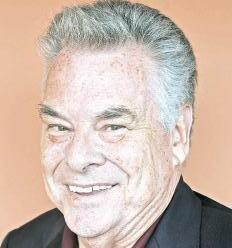
Peter King is a former congressman, and a former chair of the House Committee on Homeland Security.
Ishould point out that this is a really open letter, because my dad died four years ago.
I write because I have so much to tell him. My dad, who would have been 101 last week, loved his time on earth; he so enjoyed the rhythm and small pleasures of his days.
Every morning he woke up thinking about his first cup of coffee, and he prepared it with all the exquisite ritual of a Japanese tea ceremony. He moved slowly, and the making of the coffee could easily take 15 minutes.
RANDI KREISS

Once it was brewed, he filled his cup to the very brim and sloshed it all over the floor before he got to the table.
“Why do you have to make the cup so full?” my mother said pretty much every day for 72 years.
I like to think he’s with my mom, who died two years ago. They were married so long that they walked, talked, ate and laughed with a special kind of synchro-
ny. Hard to tell where one left off and the other began.
Dad would have been gripped by the public drama of the impeachment hearings. He died the day Donald Trump got elected, and although I’m not suggesting cause and effect, he did say,
“I can’t believe I lived to see this day,” before he succumbed to a major heart attack at 97.
He would read the newspapers at the breakfast table as breakfast lingered into lunch in his last years. He read the best parts out loud to my mother, and she was his cheerleader, damning the folks he saw as the bad guys and taking into her heart, like family, the leaders he loved. Their fierce loyalty to the Dems, going back to FDR, was part of what kept them chugging along. They cared. They followed the news. They talked back to the TV.
some time, couldn’t we, reassuring ourselves that no, the United States of America would never elect a man like Donald J. Trump, and then we did. Dad, it’s worse than we feared, but I believe in our better angels, and I’m patient. I know our country will right itself. I’ll keep you posted. Promise.
You missed the coronavirus. Missed Roku. Missed cauliflower pizza crusts.
So, Dad, I’m sorry you missed this state of affairs, this unraveling of our government and erosion of our moral center, because you would have found it fascinating, even if it depressed the hell out of you. Mostly I miss commiserating with you about it all. We could go on for
You missed the coronavirus. Missed Roku. Missed cauliflower pizza crusts.
You knew about Amazon but you missed letting it rule your life. You and Mom went to stores, right? Well we hardly do that now, because if you need anything, from the 4.0 readers you wore to rare Ethiopian pistachio nuts, you can order them online and Amazon will get them to you in hours, or days at most.
You missed some terrific books, Dad. We spent a lot of time talking about what we were reading, and even in your last months, when you were kind of dreaming your days away, you still held a book in your lap because it felt familiar. You kept saying you wanted to learn how to use a Kindle.
You missed the great-grandkids get-
Randi is on a brief leave. This column was originally published Feb. 20-26, 2020.
ting braces, and learning to drive, and several mitzvahs. You missed that we bought a new vacation house. I gave some thought to the idea that you might not be able to find me, but I suppose your travel rules are different. In my old place, I used to see the occasional heron on the beach or a dolphin in the surf and imagine it might be a kind of visitation.
I did see an unseasonal robin the other day that gave a wicked shake of its wing as it landed on a naked branch, and I confess, I thought of you.
Mostly, Dad, I hate the idea that you aren’t in the world, in the light, in the realm of sunrises and sunsets, just a phone call away, at the Thanksgiving table.
We all think about loved ones who have passed. Some write letters or post to websites for the departed. It all helps.
Many find that Shakespeare offered wise counsel to those who grieve when he wrote, “Give sorrow words.”
Copyright 2023 Randi Kreiss. Randi can be reached at randik3@aol.com.
In one memoryfilled setting, I was testifying. In another, I ribbed old friends.
it might not be easy to discuss the Greek playwright Euripides and the Dutch philosopher Erasmus in the same breath, especially considering they walked the earth 2,000 years apart. But they did have a shared philosophy, and it’s one all of us are familiar with: money talks. Especially in politics.
When it comes to government, if you want to make a splash, all you need is to flash — some green. The loudest voices in a campaign, or in any discussion, really, are typically those with the deepest pockets. Even running for local office can cost thousands of dollars, with that total easily hitting six digits for state office, and far more if you want to go to Washington.
Over the years, however, New York has worked hard to level the playing field. New York City, for example, has offered candidates a matching public-finance option for years. Anyone not taking large special-interest donations can qualify for public money, allowing their voice to be just as loud as anyone else’s, no matter how much anyone has raised. The option is intended to keep big business and heavily funded political movements away from lawmakers, while ensuring that taxpayer investments are returned to communities through campaign expenditures.
Lawmakers in Albany have paid attention as well, writing legislation that would provide matching funds to any Assembly candidate who raises at least $6,000 from 75 different donors in his or her district, and to any State Senate candidate who raises at least $12,000 from 150 donors.
Statewide candidates would see a
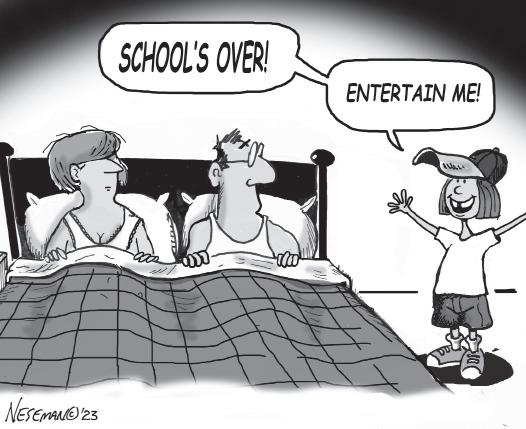
Dear Congressman D’Esposito:
match of $6 for every $1 of qualified donations. Assembly members and senators would see matching qualified donations ranging from $12-to-$1 to $8-to-$1.
Candidates would still have to campaign. They would still need to win support. But this law would help ensure that that support isn’t drowned out by opponents with massive campaign war chests, funded by special interests.
Everything was looking good for the proposed bill until the final week of the legislative session. Then lawmakers apparently had a chance to take a closer look at it, and suddenly remembered something really important: They have to run for re-election. The candidates with the deep pockets whom this law would weaken? It’s them, the incumbents. The politicians who already have a built-in advantage simply because they have “Assembly member” or “Senator” in front of their name.
So, those very lawmakers revisited the new law, and introduced some changes. Instead of raising $6,000, Assembly candidates would have to raise $10,000, from 145 donors, to qualify for matching funds. Senators would need to raise $24,000, from 350 donors.
Candidates wouldn’t need to win just some support — this is an exceedingly high bar.
In fact, the only people who would actually benefit from this bill, S.7564, if Gov. Kathy Hochul signs it into law are the very incumbents this kind of campaign finance reform is intended to humble by preventing them from winning races
before they even start, simply because of how loudly money talks. If this revised bill becomes law, the voice and reach of the incumbents would be stronger — and further — than ever before. Not only would they have the big money of special interests, but they’d have taxpayer money backing them as well. And anyone challenging them? Well, good luck.
The reworked legislation easily passed the Assembly and Senate, but fortunately, not with the help of many of our local representatives. State Sens. Patricia Canzoneri-Fitzpatrick, Jack Martins and Steven Rhoads voted against it, as did Assembly members Jake Blumencranz, Ari Brown, Brian Curran, David McDonough, John Mikulin, Edward Ra and Michaelle Solages.
State Sen. Kevin Thomas was a “yes” on the bill, as were Assembly members Taylor Darling and Charles Lavine.
All are Republicans except for Solages, Thomas, Darling and Lavine.
A representative democracy mandates leaders who truly represent the people. If someone believes they can represent them better, they deserve to have every opportunity to prove it. The matching-campaignfunds program could have been a great start, helping this particular democracy achieve those goals.
But if the governor signs this monstrosity into law, not only will the potential gains of the earlier law be erased, but the entire democratic process will take 10 giant steps backward.
Hochul must do the right thing, and veto S.7564.
While New Yorkers choke on fumes from Canadian wildfires fueled by climate change, it’s worth highlighting the role that Republicans are playing in making the problem worse. House Republicans, including my own representative, Anthony D’Esposito, brokered a debt ceiling bill that advances construction of the controversial Mountain Valley Pipeline and makes it easier to build fracked-gas pipelines. This dirty deal will increase profits for the fossil fuel industry while increasing air pollution and wrecking our climate.
The dangerous air we are breathing now is only the beginning — we must reverse course and move off fossil fuels. As a grandfather and a member of Food & Water Action, I urge D’Esposito to stand up for Long Islanders, not the fossil fuel industry. And as a Long Islander, I urge my neighbors to remember the Republican dirty deal at the ballot box.
all of us owe an immeasurable debt of gratitude to the heroic men and women who lost their lives while protecting our country as members of our nation’s armed forces.
our end to care for them when they come back home.
Across the country, fewer than 50 percent of returning veterans in need receive any mental health treatment. An estimated 250,000 veterans are unemployed and in need of work. And with 68,000 of them homeless, there are 5,000 veterans here in Nassau who are at risk of homelessness.
■ The right to be supported in the community, in such organizations as VFWs and American Legions.
sure make them valuable candidates for public service.
JosHUa a . LaFaZanAmericans recently commemorated Memorial Day — a sobering occasion that reminds us that freedom is never free, and that in a perilous world, we sleep safely at night precisely because of those servicemen and women who are fighting for us.
After our collective pause to honor those who made the ultimate sacrifice, it behooves us to take the next step by renewing our commitment to taking care of veterans right here in Nassau County.
Some 67,000 of the 16.5 million veterans in the United States call Long Island home. And there’s no denying that while these heroes have upheld their end of the contract to protect and serve the nation, we haven’t adequately fulfilled

Those statistics should shock the consciences of every American and provide clear evidence that this moment requires immediate action. That’s why I have proposed the creation of a 21st-century Veterans’ Bill of Rights that would ensure that none of them are ever left behind in Nassau County.
Such a bill would reaffirm the fundamental rights for veterans that must be protected:
■ The right to dignified housing.
■ The right to gainful employment.

■ The right to be protected from discrimination.
In addition, the Veterans’ Bill of Rights would formally commission a study to identify where resources are needed to best serve our veterans, and recommend additional investments ranging from new technology to advancements in health care, and more. Once completed, the study’s findings would be presented at a public hearing of the County Legislature’s Veterans Committee.
My office has already taken important steps toward fulfilling the tenets of the Veterans’ Bill of Rights. In January 2022, the Legislature unanimously passed the Hiring Our Heroes Act, a measure I sponsored that exempts veterans and active-duty service members from county civil service exam fees. Not only does removing a financial burden of up to $200 from eligible applicants incentivize their return to the civilian workforce, but it also recognizes how veterans’ leadership, military experience and ability to perform under pres-
To the Editor:
As my first legislative session came to a close, I was struck by just how out of touch Albany Democrats are with the needs of New Yorkers. The concerns about rising crime rates and a struggling economy, both of which make it more difficult for many to live, work and thrive in our communities, are at an all-time high. To combat this, my State Senate Republican colleagues and I introduced a plan to Rescue New York, which fell on deaf ears. We will continue to fight for common-sense, realistic solutions to the hardships faced by families and business owners.
During the 2023 legislative session, Albany’s misplaced priorities came in the form of new laws and policies that exacerbate our hardships instead of relieving them. The budget was a month late and spent a record $229 billion, more than $8 billion over what was spent last fiscal year. It included new taxes on businesses and individuals, and provided no relief for middle-class families and struggling small businesses; rather, it allocated $1 billion for transporting and housing illegal immigrants instead of directing funds to struggling New Yorkers.
Instead of focusing on why New Yorkers are leaving the state, a bill was passed that moves all local elections to even years, over the objections of local communities and boards of election. The justification was to increase voter turnout, yet it excluded New York City, where voter turnout is the lowest in the state.
Additionally, “Clean Slate” legislation was passed allowing the records of violent criminals to be sealed while ignoring the rights of law-abiding victims. In addition, the overriding theme of the legislation passed this session was an erosion of parental rights and an increase in government control, both of which will continue to destroy the New York
by Tim BakerThis legislative measure builds on the Dignity for Our Heroes initiative, another legislative package that I sponsored and passed in 2019 that protects veterans from discrimination in housing and employment, and convened the Nassau Commission on Ending Veteran Homelessness.
While I take great pride in these earlier measures, they should be viewed as a foundation to build on. We must not cease in our efforts until every veteran in the county has access to the resources they need to meet their health care, housing and workforce needs. And it is imperative for all of us to approach this issue with compassion and care, so that we can continue chipping away at harmful stigmas that dissuade our heroes from seeking the assistance they need and deserve.
These men and women have always had our backs, and it is imperative for us to always have theirs. Please contact your legislator and ask them to support the Veterans’ Bill of Rights. And I ask you to never forget our fallen heroes, or our veteran heroes at home.
Joshua A. Lafazan represents the Nassau County Legislature’s 18th District.
we know and love.
We deserve better than one-party rule that places political aims above all else. There’s still so much work to be done, but Senate Democrats, who hold a supermajority, continue to disregard New Yorkers’ needs. I will continue to fight for a safer and more
affordable New York while standing up for our values and working to restore balance, accountability, and common sense to our state government.
too many who have come home lack housing, jobs and mental health care.