
By George Copeland Jr.
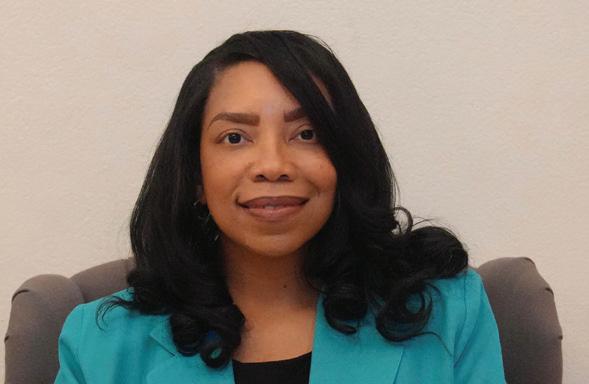
Shonda Harris-Muhammed is stepping down from the Richmond City School Board to become a Virginia school division superintendent.
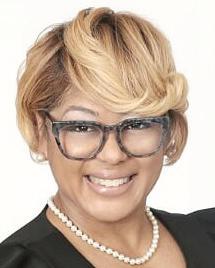
Harris-Muhammed, who represents the 6th District, shared the news near the end of the School Board’s Tuesday meeting, which she said would be her last. She also revealed that she will serve as a member of Lt. Gov.-elect Ghazala Hashmi’s transition team.
“Everything that I have been through, everything that I have walked through, has prepared me for the next season,” HarrisMuhammed said, her voice filled with emotion, “and I am elated.” Harris-Muhammed was first elected to the board in 2021 and ran unopposed for reelection in 2024. She did not disclose which
By George Copeland Jr.
By
The Richmond City School Board unanimously voted to bring back Armstrong-Kennedy High School, restoring a name that celebrates the legacy of the merged schools.
The renaming was unexpectedly proposed by 7th District Representative Cheryl Burke on Tuesday as the board reviewed RPS administration recommendations aimed at honoring Kennedy High’s history.
“It shouldn’t be a battle, it shouldn’t be a contest,” Burke said. “This is an opportunity for inclusiveness.”
The building was renamed the Armstrong-Kennedy High School complex from 1979 to 1986 after the two schools combined, with a new mascot and school colors at the former Kennedy High school building at 2300 Cool Lane.
When Armstrong and Kennedy merged again in 2004 due to decreasing enrollment and increasing operational costs for both schools, the School Board voted to use the Kennedy building but retain only the Armstrong name, its original school colors and Wildcat mascot.
Burke introduced her motion after Kennedy alumni and former faculty urged the board to rename the school, raising concerns over the administration’s recommendation to keep the
Proposal scraps local opt-outs, opens early market access for small growers

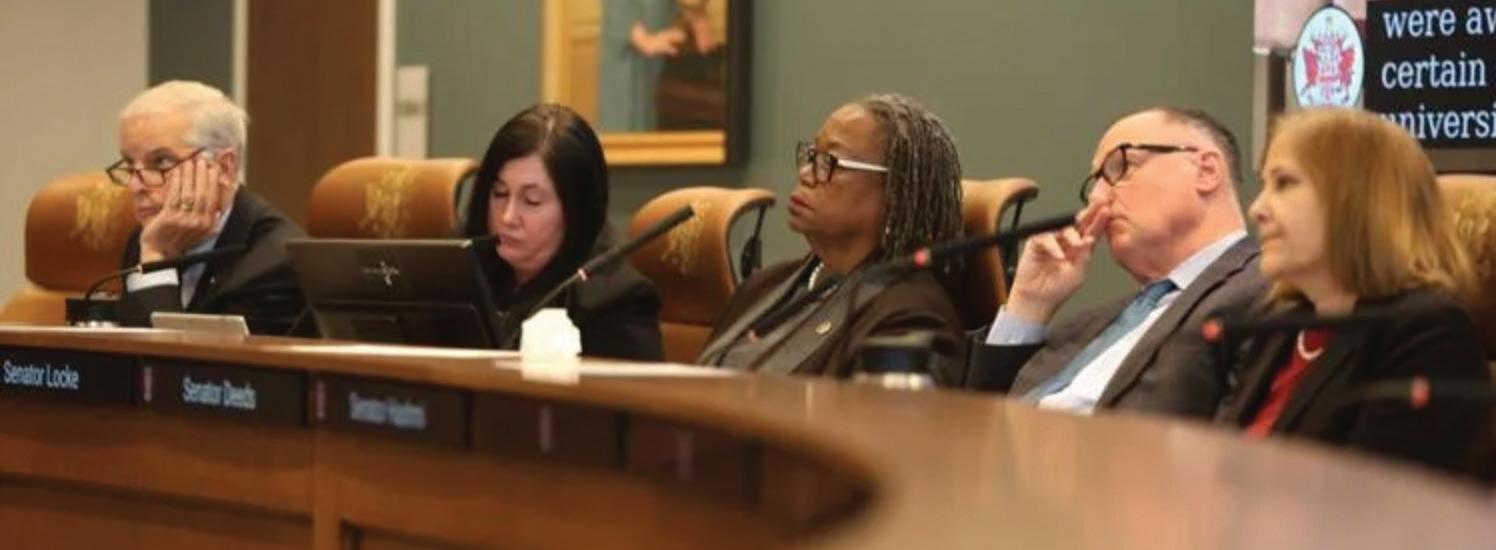
Virginia’s public universities faced scrutiny from state senators Monday as lawmakers examined the University of Virginia’s settlement with federal investigators and the growing political battle over control of higher education institutions.
The Senate Finance Committee’s Education subcommittee questioned UVA Interim President Paul Mahoney about his decision to sign a Justice Department agreement ending discrimination probes into the school’s diversity policies — a move that has deepened the rift between Democratic legislators and Republican Gov. Glenn Youngkin over university governance.
“The University of Virginia has resolved federal government investigations through an agreement that will not cost Virginia taxpayers a single cent,” Mahoney said. “This is a great win for the Commonwealth and its flagship university.”
Mahoney assumed the role in August during investigations of the college by the DOJ for discrimination. Those investigations led to the resignation of former UVA President Jim Ryan and tension between Youngkin and state Democrats over his and the federal government’s influence on Virginia universities.
That tension, including litigation around new Board of Visitors mem-
By Markus Schmidt

blueprint that scraps local opt-outs, tightens ownership rules and aims to favor small, independent operators over deep-pocketed national brands.
The Joint Commission on the Future of Cannabis Sales met for the final time before the General Assembly gavels in this January, capping months of hearings, stakeholder briefings and community meetings.
After Gov. Glenn Youngkin vetoed last year’s bill, the commission’s revised framework attempts to salvage and overhaul earlier attempts — and to address what legislators described as persistent loopholes around consolidation, equity and uneven local control.
“Over the past few months, our commission has worked diligently to review existing law and develop a bill that will not only establish a much needed adult use retail market here in Virginia, but also reflect what Virginians want it to be,” said Del.

Free Press staff report
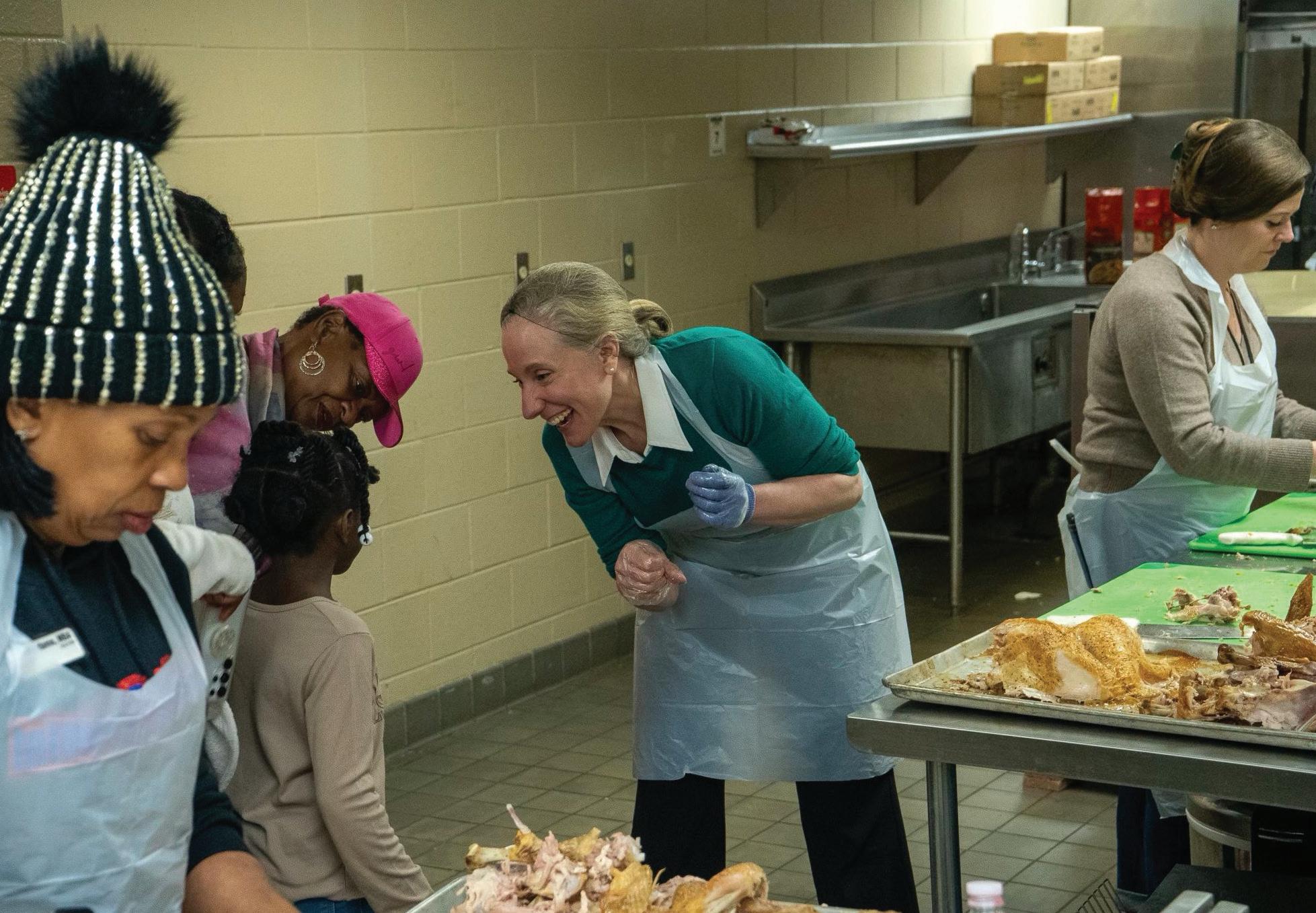
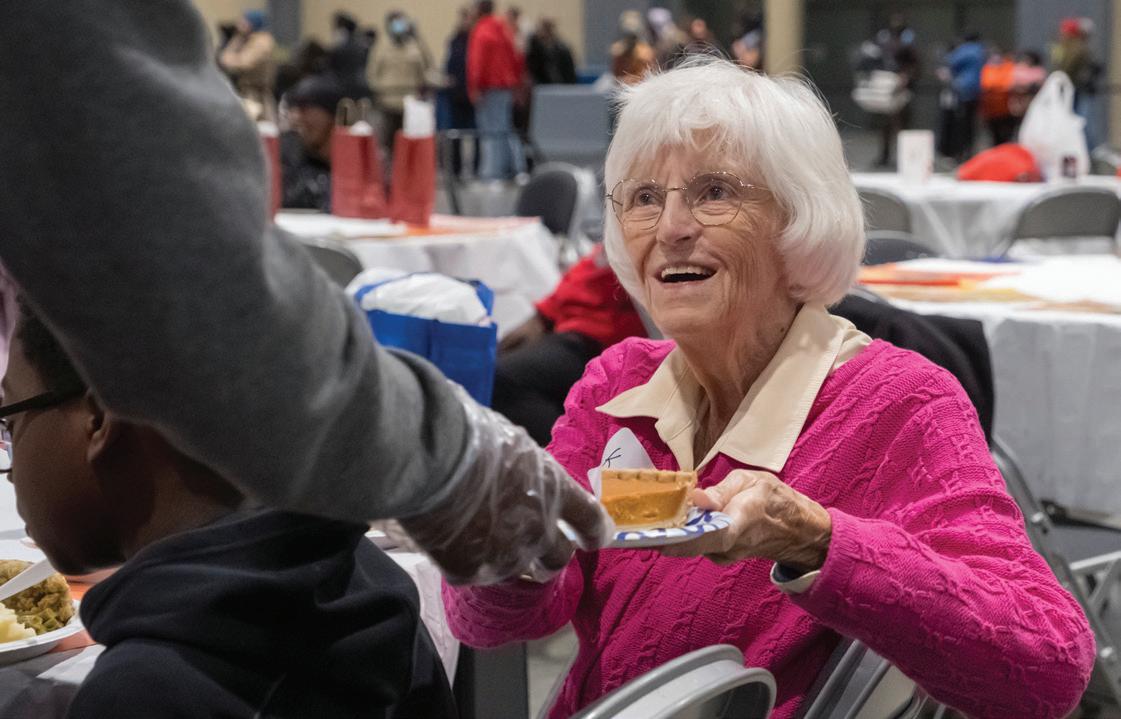
The Giving Heart marked its 20th annual Thanksgiving Day Feast last Thursday at the Greater Richmond Convention Center, drawing more than 1,000 people to the exhibit hall for a day centered on meals and community connection.
Executive Director Sandra Antoine said volunteers prepared enough food to serve about 4,000 people through the in-person feast and meal deliveries to low-income neighborhoods and residents unable to attend. Volunteers included Gov.-elect Abigail Spanberger. This year’s event also marked a return to a full dine-in format after several years of adjustments prompted by the COVID-19 pandemic. Antoine said guests and table hosts shared stories that reflected how much the in-person gathering had been missed. “It was an opportunity to just share and just fellowship,” she said. “Something that’s been needed for some time, and many had been missing that opportunity.”
VSU taps award-winning actor Rob Morgan for keynote
Free Press staff report
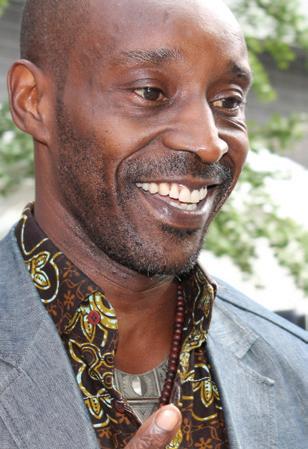
Virginia State University recently announced that awardwinning actor and VSU alumnus Rob Morgan will deliver the keynote address at the school’s Fall 2025 commencement. Morgan, a six-time award winner who was named one of the 25 greatest actors of the century by The New York Times, will return to his alma mater to address graduating seniors. He is known for standout performances in such films as “Mudbound,” A24’s “The Last Black Man in San Francisco” and Warner Bros.’“Just Mercy.” He earned an Independent Spirit Award nomination for best male lead and received a Special Jury Award for his lead role in “Bull,” which premiered at Cannes. Morgan also appeared in HBO’s “Winning Time,” his second collaboration with director Adam McKay following “Don’t Look Up.” His upcoming projects include “The Rivals of Amziah King,” starring opposite Matthew McConaughey, and Petra Volpe’s English-language debut “Frank & Louis” with Kingsley Ben-Adir.
“Rob Morgan has been a tremendous ambassador for Virginia State University, and we are honored to welcome him back home,” said VSU President Makola Abdullah. “His commitment to excellence and purpose will inspire our graduates as they pursue their own Greater.”
The Fall 2025 commencement is set for Saturday, Dec. 13 at the VSU Multi-Purpose Center. The processional begins at 8:30 a.m.
Evanston marks six years of reparations with national town hall
Six years after Evanston, Illinois, launched its groundbreaking reparations initiative, city leaders and national partners will gather Thursday, Dec. 4 to assess progress and offer guidance to communities nationwide. The National Reparations Town Hall will stream live from Historic Second Baptist Church at 7:30 p.m.
The town hall is part of the fifth annual Symposium on State and Local Reparations and will feature discussions with community members and updates from cities developing their own reparations programs.
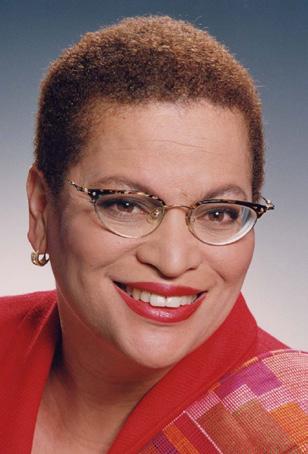
Panelists include Julianne Malveaux, political economist and president emeritus of Bennett College for Women; Michael Nabors, senior pastor at Second Baptist Church; and Lionel Jean-Baptiste, judge of the Circuit Court of Cook County.
The program is sponsored by the City of Evanston, the Reparations Stakeholders Authority of Evanston, the National African American Reparations Commission and FirstRepair.
The National African American Reparations Commission, an initiative of the Institute of the Black World 21st Century, is made up of scholars and leaders from civil rights, faith, labor, business and professional sectors committed to advancing reparations for African Americans. More information about the commission and its 10-Point Reparations Plan is available at reparationscomm.org.
The town hall will be livestreamed at reparationscomm.org.
City of Richmond hires Ken Martinez as director of revenue administration
Free Press staff report
The City of Richmond has hired Ken Martinez as the new director of revenue administration in the Department of Finance. Martinez brings more than 23 years of experience in municipal finance, with expertise in revenue management, taxpayer service and tax administration.
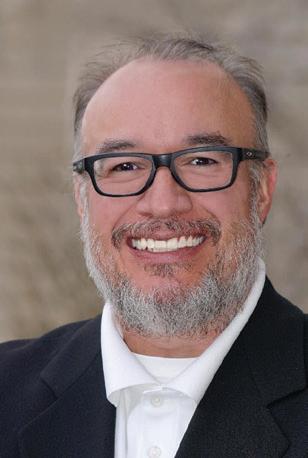
Martinez has worked across the spectrum of revenue administration, including taxpayer service, auditing, enforcement and policy development. He most recently held audit and collection leadership roles in the Treasury Division for the City and County of Denver and other Colorado municipalities, where he implemented training programs and procedures aimed at increasing productivity and streamlining operations.
During his career, Martinez led an audit unit that collected nearly $150 million over three years and managed processes for collecting about $180 million in annual property tax revenues. He also drafted tax ordinance sections, tax guides and rules, and oversaw revisions to external tax guidance to make obligations more understandable for taxpayers.
“Ken Martinez brings the unique experiences and expertise we need in order to continue strengthening revenue administration functions,” said Odie Donald, Richmond’s chief administrative officer.
“Effective revenue administration is fundamental to delivering the services Richmonders deserve, and I look forward to the opportunity of serving the residents along with the rest of the City Finance team,” Martinez said.
Martinez holds a Juris Doctor degree from the University of Denver Sturm College of Law and an MBA with honors from Western New Mexico University. His first day with the city is Dec. 15.

By Charlotte Rene Woods
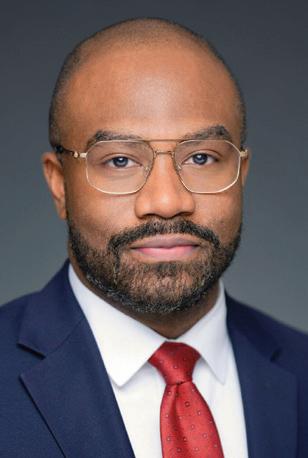
As Gov.-elect Abigail Spanberger prepares to take the helm of the state of Virginia, she has announced her pick for the next secretary of health and human resources: Marvin Figueroa.
A veteran senior official of the U.S. Department of Health and Human Services, Figueroa previously served as the Deputy HHS secretary under former Gov. Ralph Northam. Figueroa was also a health policy advisor to U.S. Sen. Mark Warner and helped craft the CHRONIC Care Act — a 2018 law that bolstered Medicare coverage of services for people with chronic conditions. Most recently, Figueroa was vice president at BGR Group, a bipartisan lobbying and communications firm in D.C.
The state’s HHR secretary oversees a dozen state agencies — to include the departments of Health, Social Services and Medical Assistance Services. The role is paramount to helping gubernatorial administrations carry out their agendas regarding public health.
“As Governor, I am committed to making sure our neighbors have access to safe, reliable health care and are served by leaders who are ready to tackle the tough challenges ahead,” Spanberger said in a statement. “I know that Mr. Figueroa will always put the health and safety of
Virginians first — and I look forward to working alongside him to deliver affordable, accessible care for every Virginian.”
Spanberger’s administration and state lawmakers will have to navigate a shifting national landscape of federal health funding along with forthcoming changes to Medicaid eligibility and hospital funding mechanisms in the years ahead. Outgoing Gov. Glenn Youngkin had already reserved some of the state’s budget surplus as “cushion” this year to cover some of the funding gaps created by Congress and President Donald Trump’s actions. For instance, the reconciliation bill passed this summer, for the first time, shifts financial responsibility for several public health programs to states.
“The challenges are real. Families are feeling the strain of rising costs, uneven access to care, and systems that are too often hard to navigate,” Figueroa said in a statement. “I share the Governor-elect’s commitment to meet these issues with the urgency Virginians deserve. I am ready to work with the General Assembly, our agencies, and partners across the Com-
monwealth to strengthen the systems communities rely on and to deliver progress people can feel in their daily lives.”
Addressing health care affordability and access issues was a pillar of Spanberger’s campaign for governor. She pledged support for a forthcoming reform to create a single state-contracted pharmacy benefit manager position to handle Medicaid in Virginia. The move, supporters say, would improve accountability, lower costs and help independent pharmacies stay afloat.
Other public health changes that could be on the horizon under Spanberger’s administration include creating a statewide hospital price transparency comparison tool to help people weigh options for treatments and drugs. She may collaborate with Attorney General-elect Jay Jones on consumer protection laws and push for Virginia’s pharmaceutical manufacturing industry to ramp up generic drug production. Spanberger also said this year that Virginia’s network of free and charitable clinics can count on her support for funding boosts in coming budget cycles. As shifting federal policy can cause thousands of Virginians to lose their health insurance, clinics have been bracing for increased needs in their local communities.
This story originally appeared on VirginiaMercury.com.
The Richmond Fire Department has appointed three new deputy chiefs to oversee operations, support services and administration.
Rodney Epps will become the permanent deputy chief of operations after serving in an acting role since March. He joined Richmond Fire more than 27 years ago at Fire Station 10 and has held leadership roles in technical rescue, training, fire investigations and field operations.
Epps has a bachelor’s degree in business administration from Old Dominion University. He will oversee citywide response services, including 20 engine companies, eight truck companies, four battalion chief offices, an air/light unit and a shift safety office as well as the department’s staffing and safety offices.
Paul Moore III brings more than 28
years of fire service experience, including time as assistant chief with the Baltimore City Fire Department and at the Norfolk Airport Authority Fire Department. He holds a bachelor’s degree from Johns Hopkins University and a master’s in public administration from the University of Baltimore. Moore will oversee divisions that sustain operational readiness, including training, EMS, logistics, facilities and fleet.
Bailey Martin has worked at Richmond Fire for 23 years in swift water rescue, heavy technical rescue, hazmat operations and administrative roles. He holds a bachelor’s from Randolph-Macon College and a master’s in homeland security from the Naval Postgraduate School. As deputy chief of administration, Martin will lead strategic planning, resource management and policy development to guide daily and long-term operations.
“With over 75 years of fire service
experience between them, Deputy Chiefs Epps, Moore and Martin bring the professionalism, determination and know-how we need to advance Richmond Fire as a top-tier firefighting outfit,” said RFD Chief Jeffrey Segal. “These Chiefs have my respect and my trust and I am honored to have them by my side in leading this fine organization.”
The appointments follow other recent changes at Richmond Fire, including Segal’s permanent appointment as fire chief and Jeff Gray as fire service business manager, overseeing employee services, administration, finance, procurement, technology and special projects across the department.
“Best in class emergency services require strong leadership at every level,” said Chief Administrative Officer Odie Donald. “These appointments demonstrate the depth of talent and experience that now lead Richmond Fire.”
Free Press staff report
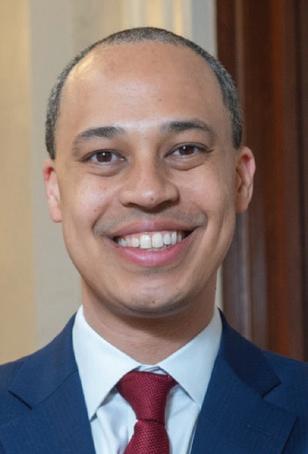
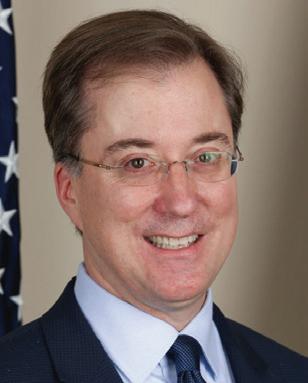
Attorney General-elect Jay Jones recently announced three senior members of his leadership team who will serve when he takes office in January.
Tillman Breckenridge has been selected as solicitor general, Travis Hill as chief deputy attorney general and Nicky Zamostny as chief of staff.
“This is an exceptional group of public servants who bring integrity, experience, and a deep commitment to delivering results for Virginians,” Jones said. “They reflect the strength and diversity of the Commonwealth, and together, we will build an Attorney General’s office that stands up for every Virginian.” Breckenridge, a partner at Stris & Maher, will become the first African American to serve as Virginia’s solicitor general. An
Jay Jones
appellate attorney, he has argued cases before the U.S. Supreme Court, every federal court of appeals and several state appellate courts. He is a fellow of the American Academy of Appellate Lawyers and serves on multiple legal advisory boards. Breckenridge earned his law degree from the University of Virginia School of Law and previously founded the Appellate & Supreme Court Clinic at William & Mary Law School. Hill most recently served as counsel with Hunton Andrews Kurth LLP in Richmond.
He previously spent nearly a decade leading the Virginia Alcoholic Beverage Control Authority, serving first as chief operating officer beginning in 2014 and later as chief executive officer
from 2018 through 2023. Hill also served as deputy secretary of agriculture and forestry under two governors and worked earlier as an attorney with Williams Mullen. He earned his law degree from the University of North Carolina at Chapel Hill. Zamostny is the president of Riverside Strategies, a Richmondbased government affairs firm she founded in 2021. She previously served as deputy secretary of public safety and homeland security under Gov. Ralph Northam and as assistant secretary under Gov. Terry McAuliffe. Zamostny led the state task force formed after the 2017 Unite the Right rally in Charlottesville and worked on bipartisan public safety and criminal justice reform initiatives. She holds degrees from Virginia Tech and Virginia Commonwealth University. Jones is scheduled to be sworn in as Virginia’s attorney general in January.
By Markus Schmidt
Virginia Senate President Pro Tempore Louise Lucas, D-Portsmouth, has set a Jan. 6 special election to fill the soon-to-be-vacant seat of Sen. Ghazala Hashmi, D-Richmond, clearing the way for a fast, intraparty fight in one of the state’s safest Democratic districts.
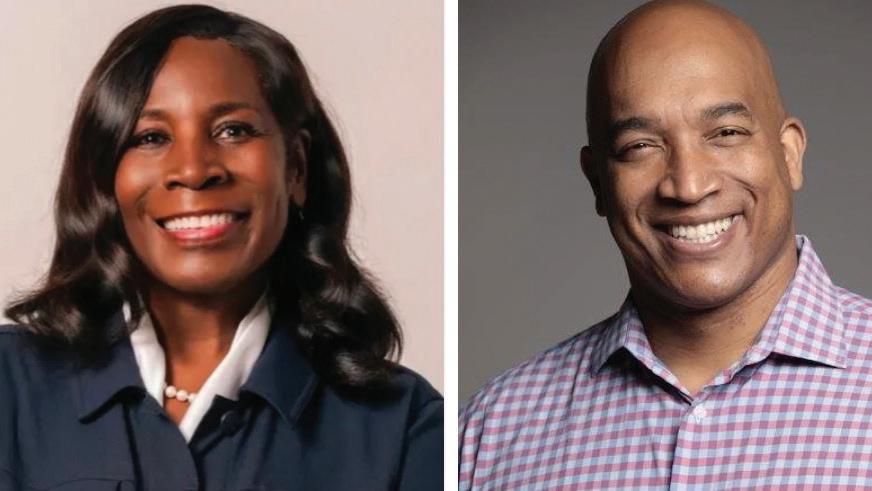
Two Democrats — Del. Debra Gardner of Chesterfield County and Del. Michael Jones of Richmond — have already launched campaigns to succeed Hashmi. The party has not yet set its nomination process, although officials expect a firehouse primary given the compressed calendar. Hashmi, first elected to the Senate in 2019, won the lieutenant governorship last month and will vacate the 15th District seat just a year into her second term.
Under state law, the responsibility for calling a special election falls to the Senate’s highest-ranking member while the chamber remains in session. Lucas, a Hampton Roads Democrat who has long held the pro tempore role, exercised that authority after weeks of anticipation from party leaders. Sen. Lamont Bagby, D-Henrico, who chairs the Democratic Party of Virginia, said the timing of the contest leaves little room for error.
“I feel good about our chances of winning the district, but we still have to run through the tape and do the work and not take it for granted,” Bagby told the Virginia Mercury last month.
Democrats caution that even overwhelmingly blue seats can tighten when turnout is unusually low — a common dynamic
in Virginia special elections, which often fall during holidays or legislative deadlines.
“You can’t just assume that you put a Democrat on the ballot and folks are just going to come,” Bagby said.
The 15th District, redrawn in late 2021, includes large portions of Richmond and northern Chesterfield. According to the Virginia Public Access Project, it has reliably supported Democrats running for statewide and federal office in recent years and is home to more than 133,000 registered voters.
Analysts say shifting demographics — including diversify-
ing neighborhoods in South Richmond and growing Black and Latino communities in Chesterfield — have only strengthened the party’s advantage.
No Republican had formally declared. Hayden Fisher, the GOP’s 2023 nominee, said in an email last month that he would not seek a rematch.
The Democratic field, however, is already taking shape. Gardner, first elected to the House of Delegates two years ago, said she intends to build on Hashmi’s legislative work and pointed to her background in social work, advocacy and local government. “I’ve spent my career serving Virginia families — from protecting survivors of abuse to fighting for fair wages and affordable health care,” she said.
Jones, a former Richmond City Council president who also entered the House in 2024, emphasized his progressive record on public safety, housing, education and health care. He also noted his work on Confederate monument removal and police reforms.
“I am eager to continue to provide strong, progressive, compassionate, energetic leadership to Chesterfield County and Richmond in the state Senate,” he said.
Because Jan. 6 falls just days before lawmakers return to Richmond for the 2026 General Assembly session, Democrats expect a tight turnaround for voters and campaigns alike.
Special elections traditionally draw modest participation, and the early January timing — following the holidays and coming on the heels of statewide turnover — may push turnout even lower.
This story originally appeared on VirginiaMercury.com.
By Dean Mirshahi VPM News
Nearly 50 high-risk issues found during audits of City of Richmond departments have not been fixed by their target date, City Auditor Riad Ali wrote in a new report.
Ali’s Nov. 20 report provides an update on open audit recommendations for various city departments, including the 137 that were unresolved as of June 14 and 25 new ones issued from mid-June through Oct. 24.
Of those 162 total recommendations, 130 remained open as of Oct. 24 — and 124 were overdue for addressing. This includes 46 that city auditors consider high-priority issues that could pose significant risks to local functions in the departments of finance and procurement services.
Problems within Richmond City Hall — from meals tax irregularities that drew fierce criticism from restaurant owners to weak oversight over the city’s purchasing card program — have led to what’s now years of increased public scrutiny and questions.
Mayor DannyAvula campaigned on making City Hall more efficient and improving services, but 27 of the 46 open high-priority recommendations have come under his administration.
A spokesperson for Avula did not immediately respond to an email seeking comment on the report’s open recommendations outlined. In a statement after Ali’s report was released, the mayor touted the city’s progress on closing 31 recommendations, including eight that were high priority.
“From day one, I said we would look for it, find it and fix it,” Avula said. “Every audit issue we resolve means better service for Richmonders and a more responsive, reliable government.”
City Hall leadership has changed significantly during Avula’s tenure, including new Chief Administrative Officer Odie Donald and three new top administrators for the city’s finance, operations and human services portfolios. The mayor has also called for changes to Richmond’s purchasing card program.
The Department of Finance has the most open recommendations with 28, followed by the Department of Public Utilities with 19 and the Department
of Procurement Services with 15.
All 28 of the finance department’s unresolved recommendations are past their target deadline, according to the report, seven of which are high priority.
One recommended change to address a high risk that was expected to be done by Dec. 1, 2021 — during then-Mayor Levar Stoney’s second term — calls for a formal policy to ensure “the enforcement of delinquent real estate taxes is equitably applied to owner-occupied and non-owner occupied properties.”
Additionally, Richmond’s finance director has not refunded “erroneously assessed (by the system) interests on individual personal property tax bills from 6/7/2022 to 8/7/2022,” the report reads.
Auditors also recommended that the finance director come up with a plan to timely restore meals tax accounts by June 30, 2024, but Ali’s report said that has not yet been developed.
The finance department has had a significant leadership shakeup under Avula. In July, Sheila White resigned as the department’s director and was ultimately replaced by Letitia Shelton.
One of DPU’s resolved high-priority recommendations — made prior to January’s regional water crisis — called for the department to develop and implement a process to make sure its inventory is accurate.
Another closed recommendation comes from an audit that the Richmond Retirement System paid out more than $550,000 to 44 deceased retirees over nine years. The system has since set a structured collection process to identify potential overpayments to dead retirees, per Ali’s report.
Days after the audit recommendation update, Ali’s office released two new audits on the city’s real estate tax rebate process and warehouse inventory management.
Errors were identified in the first batch of real estate tax rebate checks sent to taxpayers in March, leading the city to stop mailing checks to conduct a new calculation. Jamie Atkinson, the city’s former revenue director who oversaw the rebate program, resigned after the errors were uncovered.
On Tuesday, the city announced the hiring of a new director of revenue administration, closing that monthslong vacancy.



Continued from A1
Armstrong name.
Alumni and former faculty said the recommendation did not reflect the information they were given or feedback they shared in a November meeting about preserving Kennedy High’s legacy.
Kennedy alumni have long pushed for the renaming.
“I had the opportunity, the pleasure of working in that same
Continued from A1
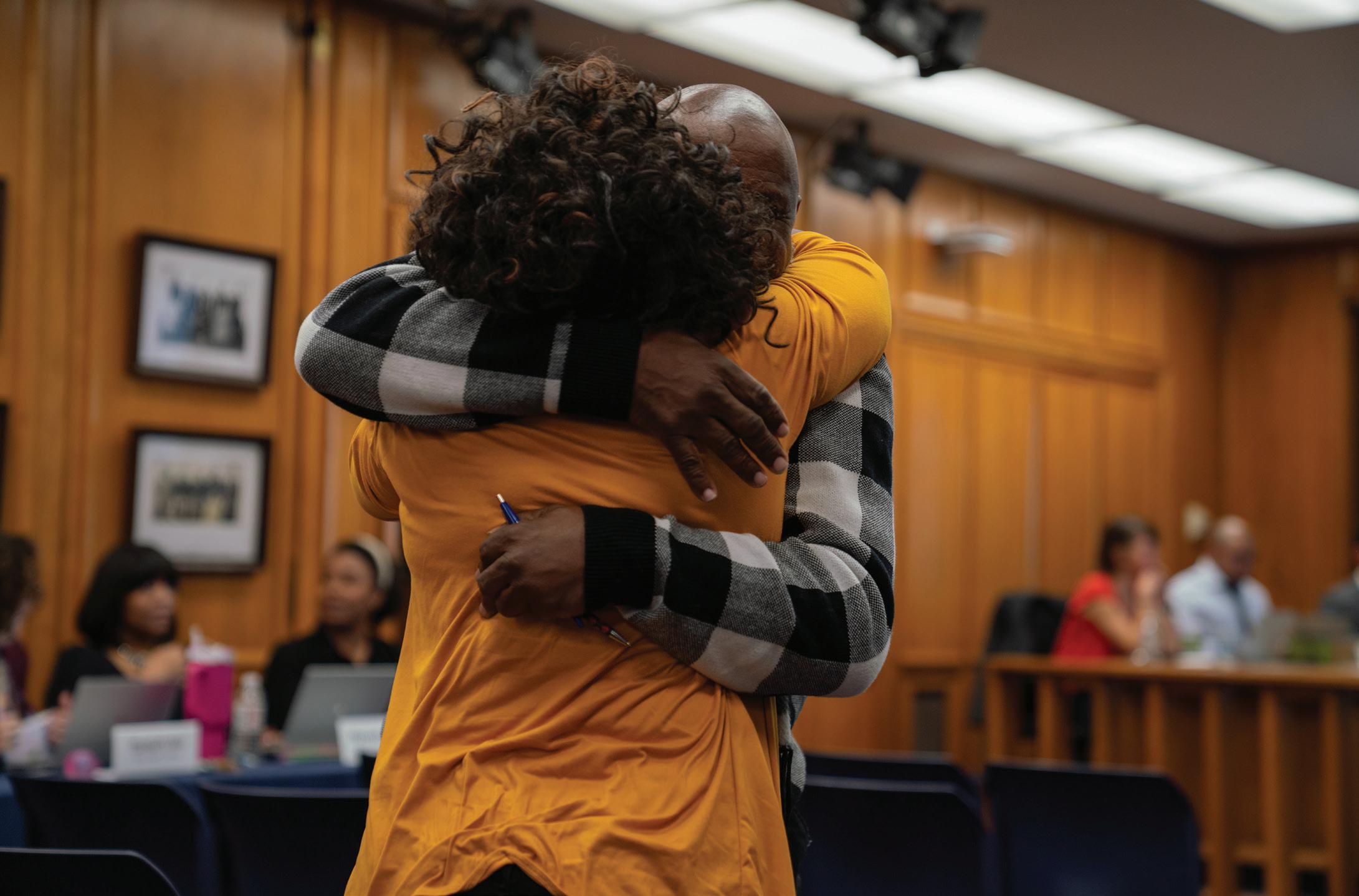
school division she will lead as superintendent. Harris-Muhammed’s announcement was met with applause and well wishes from fellow board members and school officials. RPS Superintendent Jason Kamras hugged her and said, “Welcome to the club!”
“She leaves very big shoes to fill,” Board Chair Shavonda Fernandez said. “It’s truly been an honor and a privilege to work alongside you.”
The School Board will appoint an interim member to fill Harris-Muhammed’s seat, and a special election will be held to select a permanent replacement. She and other board members emphasized that her resignation does not mark a farewell to RPS.
“I may not be in this seat,” Harris-Muhammed said, “but know that I will be championing all of Richmond Public Schools.”
building under both names,” said William McGee, who served as a Kennedy faculty member and Armstrong administrator. “I know that the students that I taught from John F. Kennedy High School are hoping to see the name of Kennedy associated with that building.”
Some board members expressed concerns over the legal, financial and policy implications of the renaming. After consulting their attorney, the board chose to waive the usual policy
requirements.
“This is what happens when the community comes together,” Board Chair Shavonda Fernandez said after the vote. “Tonight, it was a win-win.”
The approved changes, including a marker on the grounds and display cases honoring Kennedy’s legacy, will take effect in July 2027. RPS Superintendent Jason Kamras estimates the updates could cost about $100,000.
Continued from A1
bers appointed by Youngkin for multiple universities but rejected by a Senate committee, has persisted throughout the year.
Democrats have promised to reassess the relationship between state leadership and college operations in 2026.
While Republican Sen. Mark Obenshain noted Mahoney’s choice avoided a loss of federal funding, costly fines and external monitoring for UVA, his fellow Democratic Education Subcommittee members were more critical of the decision.
“I find it disappointing that institutions have been bullied into capitulating to the Department of Justice,” Sen. Mamie
Locke said, “and I find the word ‘justice’ oxymoronic in this day and age, because that department is certainly rogue these days.”
Locke, Sen. Louise Lucas and Lt. Gov.-elect Ghazala Hashmi raised questions about whether UVA was violating federal law before the investigations, the potential for further DOJ investigations and how faculty concerns shape Mahoney’s decisions.
They also noted the absence of Rector Rachel Sheridan and Vice Rector Porter Wilkinson, who were invited along with Mahoney, from the meeting and speculated on how the changes to UVA could impact the search for a permanent president.
Subcommittee members also spoke with Virginia Military Institute Superintendent David Furness, who succeeded Cedric Wins in the role after VMI’s Board of Visitors voted not to renew his contract. Wins was VMI’s first African American superintendent, and his exit sparked heated criticism from Democratic officials as well as former Gov. L. Douglas Wilder. That controversy seemed to shape the discussion, as senators asked about Furness’ relationship with the Board of Visitors and alumni and his nonpartisan, “center-line” approach to leading VMI. The Education Subcommittee is set to reconvene in early January ahead of the 2026 General Assembly session.
Continued from A1
Paul Krizek, D-Fairfax, the commission’s chair, who opened the two-hour meeting by thanking the room packed with industry players, farmers, faith leaders and public health advocates. “And we’ve listened to you.”
Krizek made clear, however, that while the commission is aligned on many major components, the exact bill text remains under revision.
“We are not actually unveiling the actual bill, because there’s still a lot of tweaking going on,” he said, adding that commissioners remain “100% on the same page” about the structure needed to launch retail sales by Nov. 1, 2026.
“We’ve got some things that we still need to work on, and we’re going to continue to do so.”
Long road to a full retail market
Tuesday’s meeting reflected how close lawmakers now are to completing the work that began when Virginia legalized possession, home cultivation and limited personal sharing of cannabis in 2021.
safety and health.”
Local opt-outs removed
One of the most closely watched shifts is the removal of the local opt-out provision.
Local governments would no longer be able to ban cannabis retail through referendums. Krizek said the change was rooted in lessons learned from other states where patchwork rules allowed robust illicit markets to flourish in “dry” counties.
“The one big change is that we do not allow localities to opt out,” he said. “So there will not be any dry counties, like in the days of alcohol (prohibition).”
Even after that important step, lawmakers never finalized the second stage of legalization — the commercial framework — leaving Virginians able to legally possess marijuana but with no legal place to buy it.
That gap spurred the growth of an unregulated market of vape shops, hemp-derived THC products and illicit storefronts that regulators and police say have outpaced the state’s ability to monitor them.
Lawmakers revived the effort after Youngkin rejected a previous retail legislation, pushing forward with a new commission structure and a set of goals centered on safety, equity and protecting small businesses.
Krizek said the new draft reflects those priorities — and the need for a regulated marketplace with testing, labeling and age verification.
“Our biggest concern has been public safety,” he said. “A regulated retail market will replace the illicit market.”
He said the legislation “builds a new market that supports hundreds of small businesses and strengthens Virginia agriculture, reduces the racial disparities created by the prohibition on marijuana and, most importantly, protects public
Local governments would still control zoning and could levy up to a 3.5% local cannabis tax, giving them flexibility to shape how sales operate in their jurisdictions.
The change drew immediate objections from socially conservative groups.
“I think we’re extremely discouraged by the fact that we’re not going to have some type of local referendum,” said Todd Gathje of The Family Foundation. “[Localities] may not want this, and they should be able to let the citizens decide.”
Gathje argued legalization would not curb illegal sales and cited national research showing illicit markets remain active.
Another major pillar of the proposal is preventing large multistate companies from dominating Virginia’s market.
Taylor Mey, an attorney with the Division of Legislative Services, said the draft incorporates months of expert testimony and adjusts language from the previous vetoed bill.
“These proposed changes should be understood as changes to the statutory language that was in the bills last year,” Mey said, adding that stakeholder input shaped the revisions.
Under the new framework, the Cannabis Control Authority would have broad authority to review ownership deals and financial arrangements for signs of vertical integration or undue influence.
All owners would be traced to their “ultimate beneficial” identity, transfers would require state approval, and no one could hold more than one Tier IV cultivation license. The CCA would publish a public registry of ownership
and submit annual reports to the commission.
Supporting small businesses
Krizek said equity and access remain central, describing a system designed to prioritize small operations over large corporate entrants. “Equity is not an afterthought though, it’s a foundation as well,” he said.
Under the proposal, microbusiness licenses are reframed as “impact licensees.” Applicants must meet at least four of seven race-neutral criteria tied to past criminalization, agricultural distress or geographic disadvantage.
The license would allow limited cultivation, processing and direct-to-consumer sales, including delivery.
A temporary direct-to-consumer microbusiness track — capped at 100 — would allow qualifying hemp growers and processors to begin cultivating and selling cannabis earlier than full retail stores, beginning no sooner than Nov. 1, 2026.
tion is too weak to deter smoking cannabis on sidewalks or near restaurants.
“I think that’s much too lenient a penalty,” he said, adding that expanded inspections of vape shops could help uncover violations. Remaining disagreements Commission members signaled broad support for the overall structure but acknowledged continuing disagreements.
“It’s kind of a mixed bag on this bill,” said Del. Buddy Fowler, R-Hanover. “There’s some things that I really like, and there’s some things there I really hate.”
Krizek said the early access could help small operators establish themselves before larger retailers enter the market.
Rural leaders urged lawmakers to ensure those pathways remain inclusive.
The Rev. William Avon Keen of Halifax County warned that production caps could sideline minority farmers, as happened historically in tobacco.
“The limited licenses and the limitations may, in one area, cut out certain people to be in this business,” he said.
Speakers also pressed the commission to prioritize youth protections and enforcement.
Cynthia Phillips of Danville said communities need more education about secondhand smoke and how cannabis use affects employment eligibility. “And the other one is services for those that become addicted to this product,” she said.
The Rev. Ricky Hailstock of Lynchburg urged lawmakers to address illegal vape and smoke shops that he said are selling unsafe and untested products to minors.
“I just ask the commission to consider … determining the legal limits on the amounts of the product that individuals could possess,” he added.
Sen. Adam Ebbin, D-Alexandria, said Virginia’s current $25 penalty for public consump-
Del. Cia Price, D-Newport News, said the commission is still balancing “today’s political and economic realities” with the need to avoid strengthening the illicit market. “I think we have a little bit more work to do to achieve that balance,” she said.
“Please keep your comments coming, we really do read every single one.” Sen. Lashrecse Aird, D-Petersburg, the commission’s co-chair, emphasized that the draft remains fluid.
“You will hear support for some of those recommendations, and you will hear continued opposition,” she said. “They are simply recommendations that will continue to be fluid … through the legislative process.”
Advocates raise concerns about timeline Chelsea Higgs Wise of Marijuana Justice Virginia said the Cannabis Control Authority may not be staffed in time for a Nov. 1, 2026, retail launch. “If the micros and the hemp conversions are not ready … it would only be the medical folks that are there and able to sell,” she said.
Krizek reiterated the timeline: license applications on July 1, 2026; early microbusiness operations starting in September; and the full market opening Nov. 1. “This is just a step in the process,” he said. “We continue to require your feedback.”
For the first time since legalization in 2021, lawmakers now have a clear path to a regulated market — and a proposal that Gov.-elect Abigail Spanberger has vowed to sign into law following thorough review.
This story originally appeared on VirginiaMercury.com.

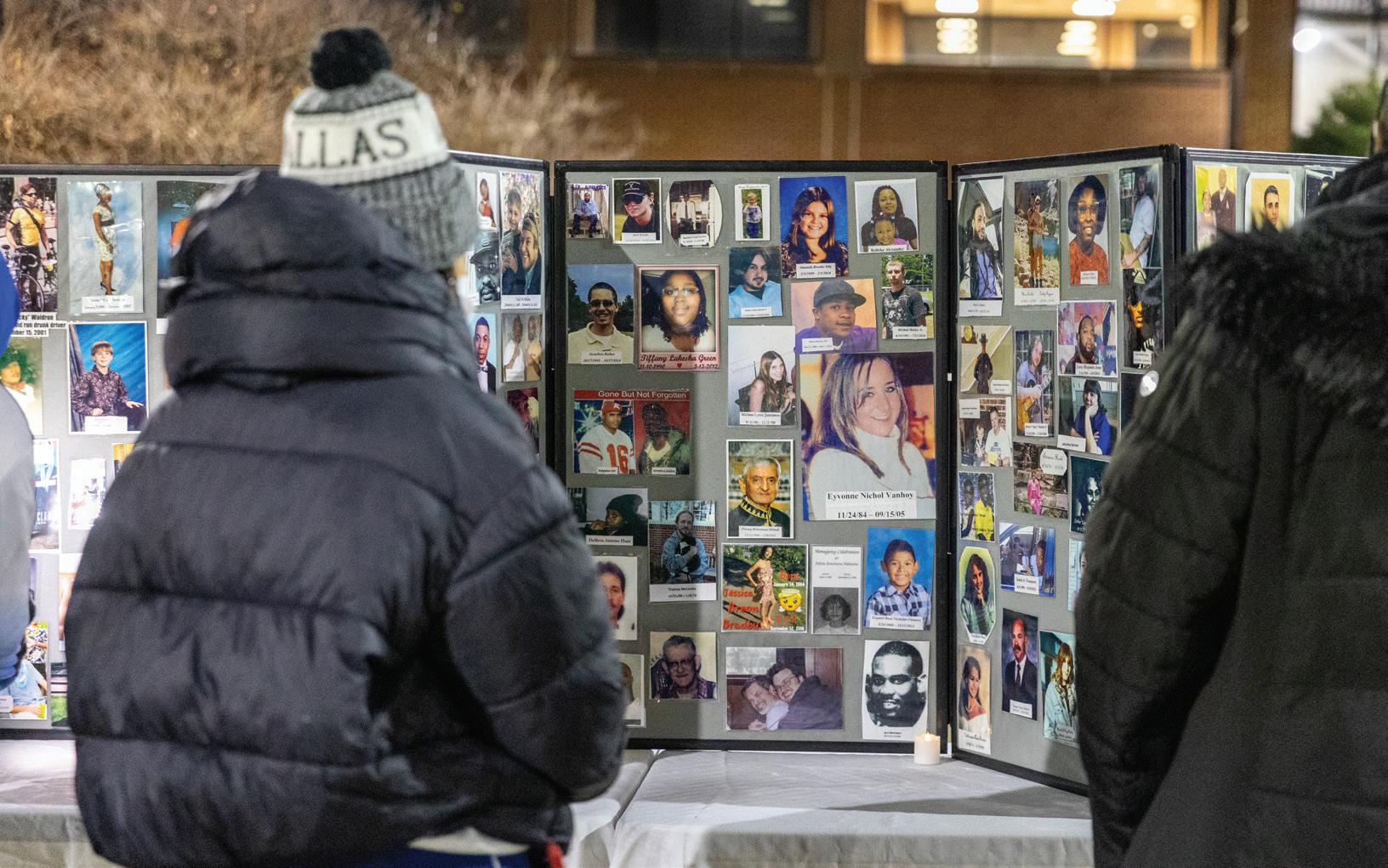
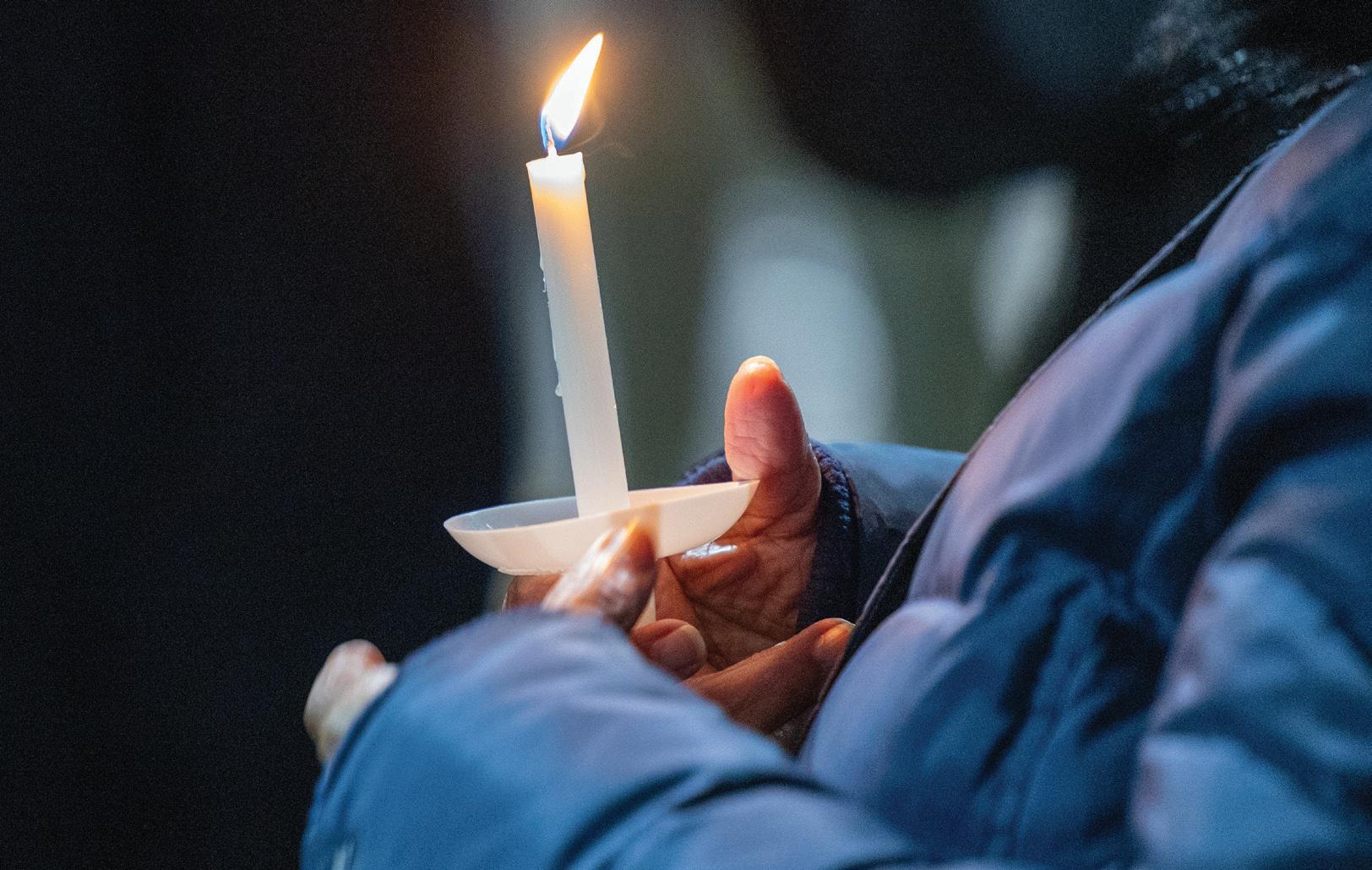
Henrico County’s held its annual Candlelight & Ribbon Tying Ceremony on Tuesday to honor homicide victims. Sponsored by the Henrico County Commonwealth’s Attorney’s Victim/Witness Program, the event featured prayer, remarks from friends and family of the deceased, a memorial board of photographs and a memorial tree where participants placed the names of those they have lost. Early reports show the county has recorded just two homicides through December 2025, down from 22 during the same period last year — a potential 91% decrease if the trend holds through year’s end.
In Richmond, the Drums No Guns Foundation recently celebrated a $96,638 Health Equity Fund grant from the Richmond and Henrico Public Health Foundation to support youth mental and behavioral health in schools affected by community violence. The year-long project, led by Ram Bhagat and coordinated by Kiran Bhagat, brings restorative justice practices to Martin Luther King Jr. Middle School, in collaboration with community-based educators, artists and public health partners.

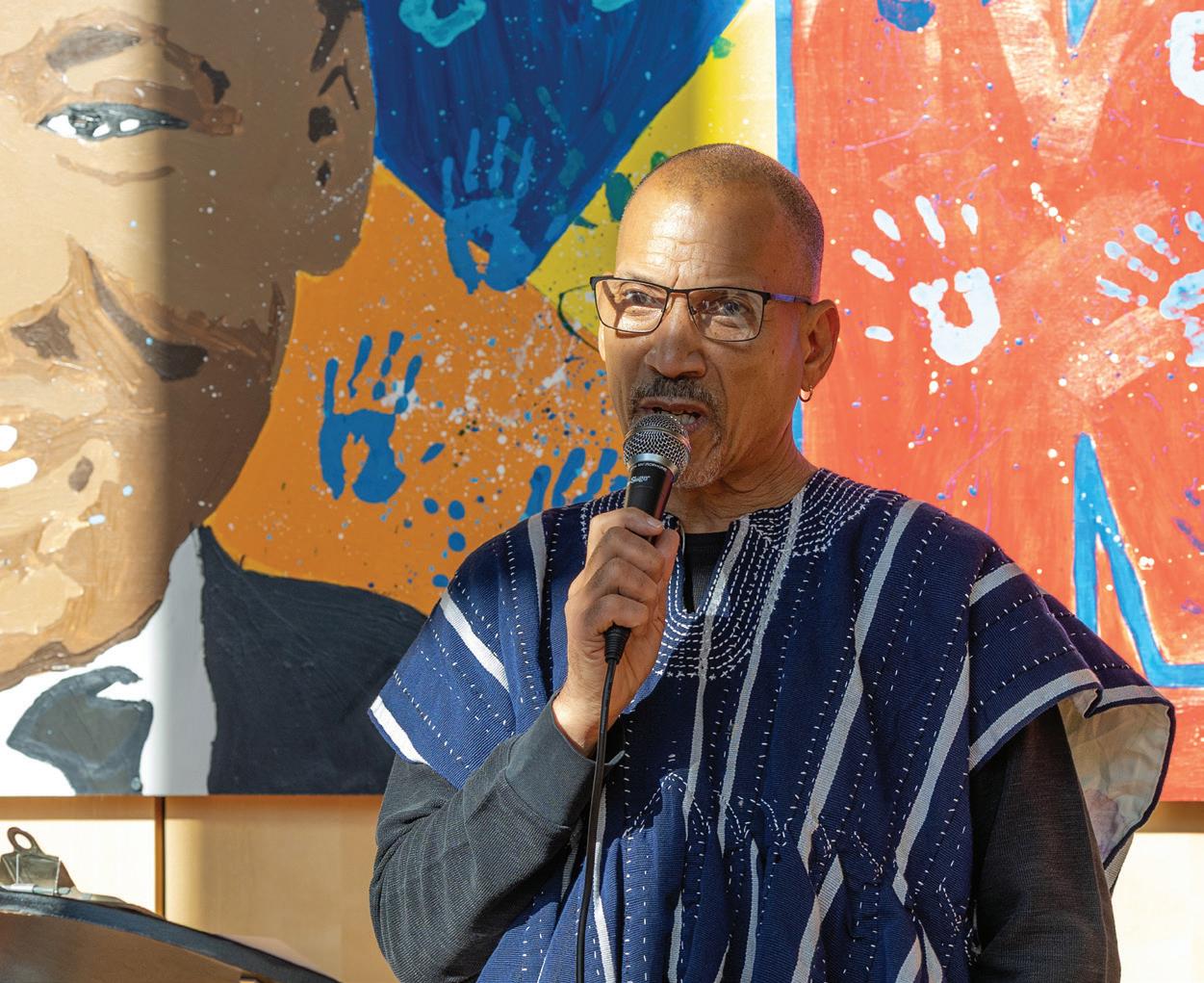
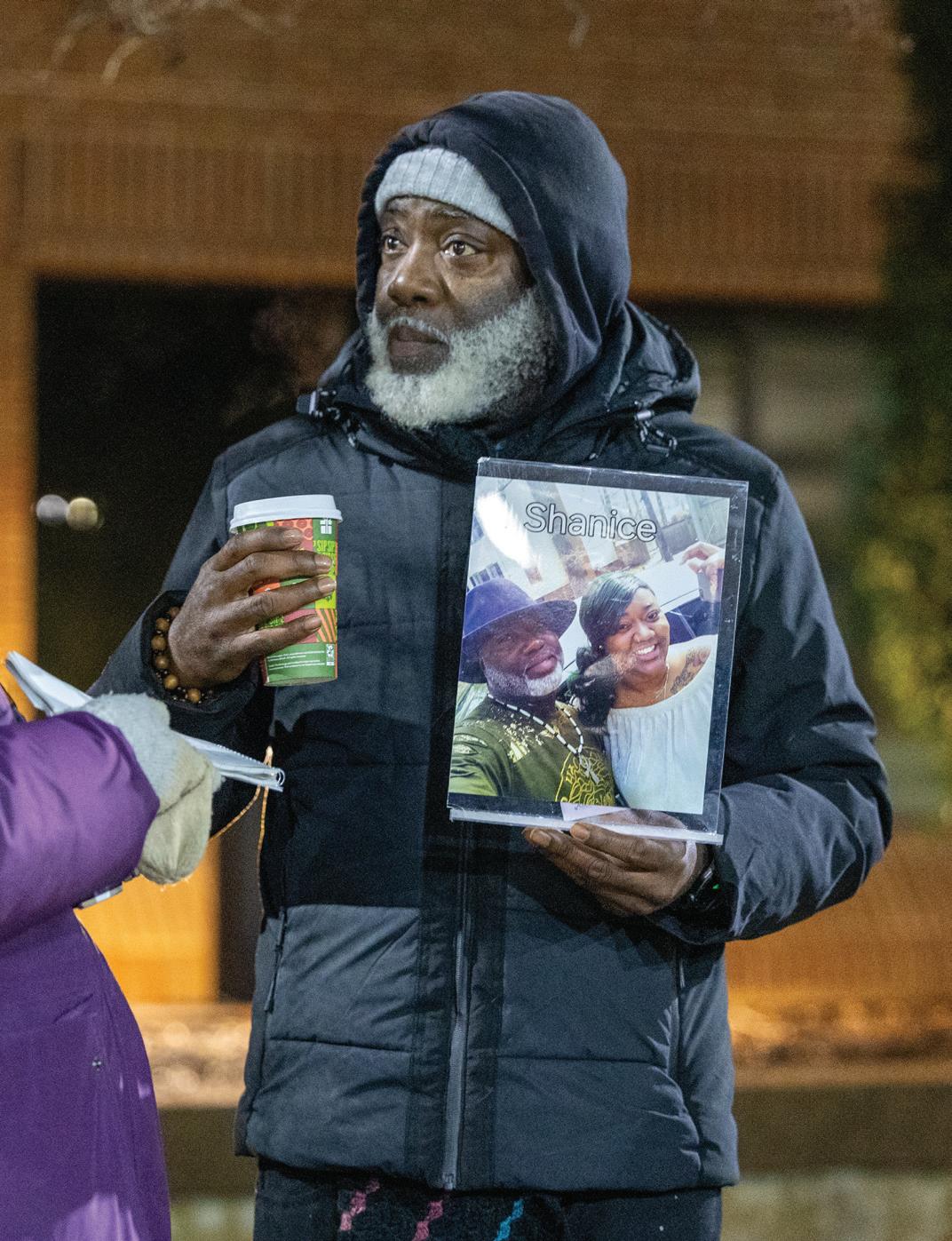


The gubernatorial election has been over for a month. Since then, the political commercials that interrupted our favorite programs and podcasts have vanished. The phone calls, emails and text messages have halted — for many of us. The floor of the Greater Richmond Convention Center, where the state Democrats celebrated their victory, has been swept and the decorations that adorned its interior are long gone, having made way for K-Pop Warriors and the animationic dinosaurs of Jurassic Quest.
On Monday, the State Board of Elections made it all official — affirming Abigail Spanberger as the next governor, Ghazala Hashmi as lieutenant governor and Jay Jones as attorney general, locking in the choices voters made in House races and local contests across the Commonwealth.
It’s still a few weeks until the Jan. 17 inauguration at the Virginia State Capitol. But don’t think anyone who’s just been elected to statewide office is taking a break. There’s a whole administration to put together, offices to get squared away, logistics to figure out, a new email password to pick and, yes, finding out where the bathrooms are.
And that’s just the start. Between now and that first day in office, they’re getting briefed on budgets that stretch for billions, ongoing projects and policy issues that affect every corner of the state. Every decision has ripple effects. It’s a crash course in running a government while trying to find a way to deliver on the promises made on the campaign trail.
The political reality became clear at the Nov. 20 Governor’s Advisory Council on Revenue Estimates meeting, just days after the Virginia House and Senate money committees were told the Commonwealth might have to tap a one-time surplus to cover projected expenses.
“It raises the question about whether Gov.elect Abigail Spanberger will be able to put forward an affordability agenda without raising additional revenue through new or adjusted taxes,” VPM wrote in its analysis.
While Spanberger and her team are focused on the mechanics of running the Commonwealth, the political environment isn’t standing still. Democratic Party leaders in Richmond are focused on strengthening their grip on the General Assembly.
On the campaign trail, Spanberger projected a bipartisan image — someone willing to work across party lines on public safety, education, inflation and other issues. Yet while she was appealing to moderate voters, her allies in the General Assembly were laying the groundwork to expand Democratic majorities, signaling a more aggressive partisan strategy behind the scenes.
It should be noted that the push to expand their majority in the General Assembly is driven in part by concerns about aggressive redistricting tactics like Republicans have used in Texas. Party leaders see an opening to strengthen their hold, and they’re attempting to make the most of it. We applaud Democrats for thinking strategically.
Winning an election is just the beginning. The real work comes afterward. The next four years will be a test of vision, resolve and leadership. Spanberger steps into an office where every choice matters — budgets have to balance, agencies need direction and promises made on the campaign trail must meet the reality of governing. We hope our next governor can take the energy of the election and turn it into meaningful change for Virginians.

They’re gone? Really gone?
President Donald Trump’s invasion of Chicago with Border Patrol agents has seemingly fizzled out for now.
Here’s a bit of advice from a longtime political observer: If Trump or his minions at the Department of Homeland Security claim success at anything, check it out.
News of the Border Patrol’s de parture broke in much the same way as its arrival, without much explanation or justification. But Border Patrol Cmdr. Gregory Bovino and the agents he commanded in the operation known as Operation Midway Blitz are gone, although some sources say the operation is not over. Bovino and agents may return in the spring.
For now, the general response in Chicago is “good riddance,” but the Border Patrol is merely taking its dangerously aggressive raids to another unfortunate city, Charlotte, North Carolina, as part of Trump’s crusade to deport immigrants in the country without legal permission. Left behind in Chicago are agents of Immigration and Customs Enforcement, also known as ICE, which runs a detention facility in the Chicago suburb of Broadview and maintains a
field office downtown.
Chicagoans can take a lot of pride in the help-your-neighbor spirit with which they stood up to Operation Midway Blitz. They weren’t going to stand by as masked federal agents snatched children and families making their way to work, school or shopping, or just trying to live their lives. Citizens formed protective patrols, and they protested at the ICE detention facility and at courts downtown. In the city and suburbs
and small towns where Border Patrol showed up, they stood up and turned out in numbers, sending the message to Trump that subduing Chicago wouldn’t be a layup.
Volunteers flocked to grab whistles and signal when and where Border Patrol or ICE might be in a particular area. Others organized into roundthe-clock shifts, offered residents advice on their rights, and otherwise learned peaceful means of protest.
Parents organized to guard school entrances, carpool students to class and work with business owners to protect their customers.
You can hear some of that spirit echoing in Charlotte in reports that residents there have adopted many of the same protest tactics. Good!
The Department of Homeland Security claimed Midway Blitz was meant to target the “worst of the worst”: murderers, rapists and other violent offenders. However, the Chicago Tribune reported that of 614 people arrested whose identities were made available, only 16 had criminal histories that would present a “high public safety risk.”
More than 3,300 have been arrested so far in the Chicago area. We may see, as more names get released, whether a higher proportion of violent criminals were netted, but I wouldn’t bet on it.
Yet that has not stopped Trump and Co. from crowing about how the surge of federal agents has curbed crime in Chicago.
“Crime way down in Chicago thanks to President Trump and Secretary (Kristi) Noem’s leadership,” Bovino boasted in a social media post.
But Chicago Mayor Brandon Johnson and Illinois Gov. JB Pritzker pushed back with data arguing crime in the city has been dropping significantly since the COVID-19 pandemic began to wane in 2022.
Between Jan. 1 and Aug. 8, the month before Midway Blitz began, the number of homicides had dropped by nearly 30% and shootings were down 36%, as compared with the same period a year ago, according to city data.
Trump has “shifted from
The leadership lessons Jesse Jackson has given us
News of the Rev. Jesse Jackson’s health struggles has stirred many. It has me praying. And it has me remembering the hard lessons he taught, shaped in the trenches of our people’s ongoing fight for freedom.
mentor and friend, holding his hand as Vice President Kamala Harris accepted the nomination for president.
fear-mongering about Chicago to attempting to take credit for our work driving down crime and violence,” Johnson tweeted.
“He cannot have it both ways.” Pritzker used stronger language.
“Trump is a liar,” the governor said in a tweet. “He cannot steal credit from our violence prevention and law enforcement efforts that have reduced crime for four years straight — long before his masked agents showed up.” At least the whole controversy seems to have had a remarkably unifying effect on many Chicagoans. Many residents have rallied across lines of ethnicity and citizenship status, showing a unified desire to help their neighbors. It’s too bad Trump seems to show less interest in helping the city’s residents solve their local problems than in creating new ones. The writer is a columnist for the Chicago Tribune.
Look around the world, and it is easy to find charismatic voices rising amid liberation movements. Black America has been blessed with such figures across generations — perhaps because we have been cursed with a freedom struggle that never really ends.
Through all that pain and hope, for nearly half a century, our most consequential and transformative leader has been the Rev. Jesse Louis Jackson Sr. Some dismiss his leadership as style over substance. “Keep Hope Alive!” they say. Sometimes with reverence. Sometimes half-mockingly. When I hear that latter tone, I’m reminded how privileged a life one must lead to think hope is just a slogan and not sacred labor.
They don’t understand the discipline it takes to help a people — or a nation — maintain hope in the face of adversity.
Last summer at the Democratic National Convention in Chicago, Jackson invited me to join him and his family in their box. I sat beside my old
The symbolism of the location for the night was unmistakable. We were in the city that sent Barack Obama to the White House. But we were also in the city that decades before empowered Jackson to show America the question was no longer whether it would elect a Black president — but when.
He demonstrated that truth
not only through his presidential campaigns in 1984 and 1988 — campaigns that broke ceilings and forged coalitions — but through the generations of leaders he encouraged and inspired.
The year after his last presidential run, Virginia elected its first Black governor, L. Douglas Wilder. New York elected its first Black mayor, David Dinkins. Both publicly named Jackson as someone who helped make their possibilities real.
And just this past January, at Chicago’s Martin Luther King Day celebration, his impact was visible from City Hall to the state Capitol — a reminder that his legacy is not nostalgia but political infrastructure.
A decade earlier, I was one of the few Black partners at any Silicon Valley venturecapital firm. I was told there had been only 36 Black men to hold such positions in the history of the Valley.
Then Jackson showed up. He stood before the boards of some of the largest technology companies in the world and told them plainly they needed to open their doors — not because it was charity but because it was smart business.
Firms that had never once hired African American investors began doing so soon after. I asked one top executive if Jackson’s public and private confrontations of their leaders had influenced that shift. He didn’t hesitate: “He’s right. We need to change.”
That’s the core of Jackson’s leadership — not just breaking barriers himself, but inspiring others to do so. He helped ordinary people see themselves as leaders and compelled those with resources to recognize their responsibility.
In doing so, he became a beacon of hope and taught others to be beacons themselves. He continues to model that courageous hope even now. His leadership lessons still empower others to help transform our world for the better.
As Jackson fights to regain his strength in Chicago, his lesson stands: Hope is not a feeling you wait for. It is a discipline you practice.
And he is still teaching us — by living it — that no matter how dark the moment may be, we must keep hope alive by continuing to fight for a better day.
The writer is a professor of practice at the University of Pennsylvania..




I applaud Abigail Spanberger on becoming the governorelect of Virginia, especially due to one of her core campaign promises: to bring down the cost of housing. “We are going to work to lower costs of renting, buying or staying in your home,” she said in mid-November. “We are going to cut red tape and build homes families can actually afford.”
The problem is all too real. The cost of a home in Virginia rose almost 40% between 2019 and 2024, with an existing home costing about $60,000 more than the U.S. median price. Much of that is driven by sky-high housing costs in the Northern Virginia suburbs
of D.C., but all across our state, from Winchester to Virginia Beach, people are being priced out of the American dream. No wonder homelessness in our commonwealth has been on the rise over the past five years. Richmond’s incoming politicians are eager to tackle the problem, and they should be.
But they should also take a deep breath and make sure the policies they enshrine into law will prove effective. Thankfully, they have some good ideas. For example, Del. Joshua Cole wants to pass a Faith in Housing initiative, which would allow churches and other faith-based institutions to build affordable housing much more easily on their property.
According to the Commonwealth Housing Coalition, at least 30 faith groups in Virginia are trying to build homes, but fewer than half have succeeded thanks to onerous regulations. Richmond should cut through the red tape and let religious communities play their part in solving this problem.
Another more sweeping idea is zoning reform, which Virginia badly needs. Too often, good-faith attempts to construct more housing get mummified in zoning-related red tape at the local level. These rules often survive because older residents want things to stay the way they are.
Take a look at Alexandria, where a comprehensive attempt at zoning reform was stalled for two years in court after locals with an eye on their property values sued.
Such NIMBY — “Not in
My Backyard” — sentiment is understandable, but it’s helped send housing prices soaring while lower-income Virginians suffer. Zoning reform is one of the first priorities Richmond should take up, incentivizing towns and cities to make housing construction easier.
The housing shortage in Northern Virginia, where the median cost of a home stands at $664,000, also requires addressing. In our work-fromhome world, this shortage has driven many residents and businesses to other parts of the state — which only drives up prices elsewhere and contributes to problems like traffic congestion.
Our state has so many advantages, from a booming tech industry to beautiful landscapes. There’s a reason more people are moving into Virginia than leaving — but if
we can’t build enough affordable homes to accommodate the newcomers, such growth could become a liability for current residents. There are, however, some housing reforms that we don’t need. Bans on rent pricing software used by some property companies have become fashionable (and is the core idea of HB2047), but this is like going after Hotels. com over the cost of hotels.
The problem with Virginia housing isn’t that landlords have technology telling them how much their properties are worth. It’s that there are a plethora of policy reasons pushing home prices higher than they need to be.
Another tempting idea is to make it more difficult for landlords to evict tenants, and Virginia does have some of the highest eviction rates in the
country. But just look at cities like San Francisco where it’s incredibly difficult to evict and this has only sent rent prices higher. The solution begins and ends with more supply, and there are housing innovators Virginia can look to on this. Take Atlanta Mayor Andre Dickens, a pragmatist who set a goal for housing construction, slashed through his city’s red tape, and saw rent drop by 13.6% since October 2021.
The bottom line is that Virginia must build more homes to accommodate its growing population and avoid pricing out current residents. Its new legislators and governor face big challenges ahead but also big opportunities. The writer is an executive committee member of the National Action Network, a nonprofit civil rights organization.
The choice is clear: They can
stay true to their sworn oath or compromise the oath to “fit in.”
Many lawmakers, like children and teens, choose the path of compromise to keep their political positions and stay in the good graces of President Donald Trump. Our Constitution has a system of checks and balances
Every elected official is required to take an oath of office. The sworn oath publicly binds them to the Constitution, laws and the people they were elected to represent. Taking an oath is an act of accountability and a moral commitment that is not optional. It is a statement that should remind the official that their power in office is a privilege with limits and moral boundaries. Therefore, disloyalty or any abuse of power is an unethical breach of their sworn obligation to the people. Elected officials are servants of the people, rather than rulers above the law. It is safe to say there is not a day that goes not alone. Every day, children and teens face compromising situations that tempt them to do what they know is wrong. By doing wrong, they can fit in and be accepted. Lawmakers can be the same way. They are faced with similar situations in which their personal desire to maintain political power overshadows character and moral standards.
result in her resignation from the House of Representatives. The relationship between the president and his longtime MAGA ally fell apart after Greene’s public criticism of Trump’s policy positions, her advocacy for Jeffrey Epstein’s sexual abuse survivors and her support for the discharge petition forcing a House vote on releasing the full Epstein files. Despite being one of Trump’s most ardent supporters, Greene challenged the president when she spoke out against Trump’s global tariffs and sided with Democrats on extending the expiring Affordable Care Act tax credits.
“Now that the [Affordable Care Act] tax credits are expiring, which Democrats did put in place — and they set the expiration date for this year — I see a financial crisis for Americans,” Greene told CBS Mornings. “And so, on this issue, I don’t see political party lines.” While Greene’s blind loyalty to Trump has run its course, Trump responded in typical fashion by calling her a “lightweight congresswoman,” a “traitor” and a “disgrace” to the Republican Party. Since her public feud with the president, Greene said the threats against her have increased. On Truth Social, the president wrote that he was “withdrawing” his “support and endorsement” of Greene, indicating that he might back an opponent in her effort to win an upcoming primary.
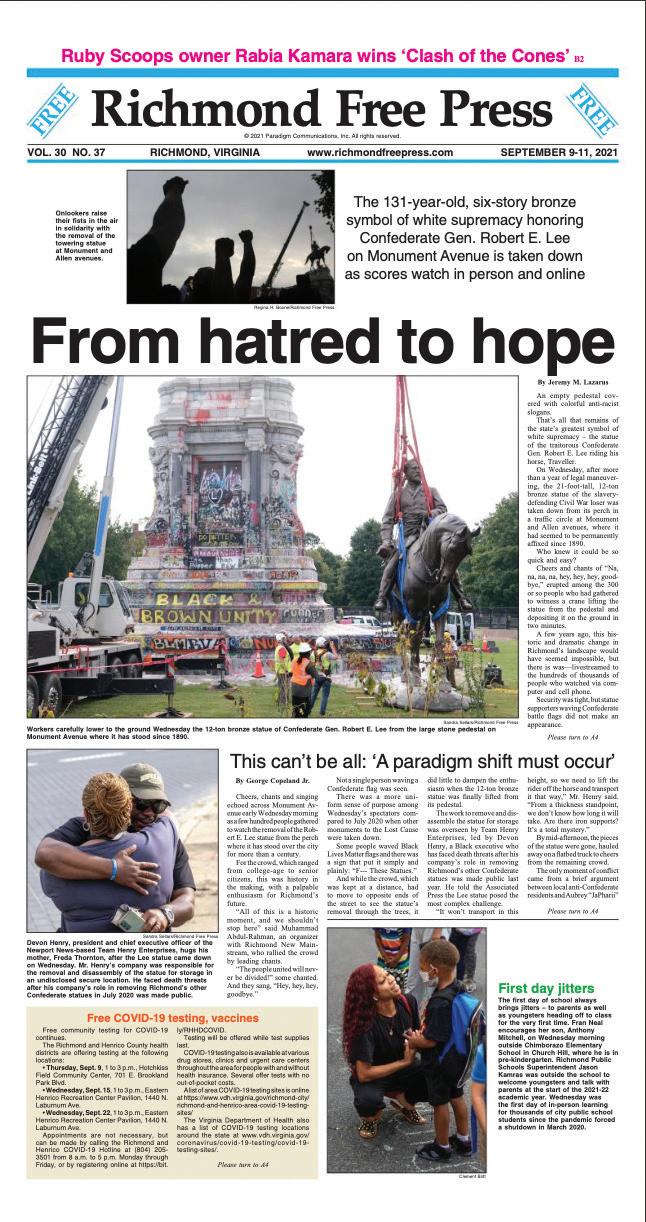
Overall, Greene was not a popular figure with many Democrats. Much of the toxic politics from the past can be easily traced back to her antics. Therefore, it remains a shock to see her, a powerful and influential MAGA official, speak up and join Democrats when defending the ACA and seeking presidential transparency and accountability over the Epstein files. Trump, a onetime friend of Epstein, has gone as far as to call the controversy a “hoax.”
Greene was correct as a member of the legislative branch to request full transparency from the executive branch.
Like former Vice President Mike Pence and former Rep. Liz Cheney before her, Greene chose not to compromise and became the “enemy” to many throughout the MAGA base, leading to her resignation. I felt that Greene should have remained in office and run for reelection even if it meant facing a Trump-backed primary challenger. If Greene won the tough battle, it would have sent a powerful message to other GOP lawmakers who struggle to follow their convictions and their oath.
Compromised Republicans who govern under the fear and intimidation of the president are not true representatives of the people they were elected to serve. They are not the voice of the people when their fear keeps them silent. As a result, the nation as a whole suffers as they fail to uphold their constitutional responsibility of oversight and accountability. Cheney did not give in to the fear and intimidation of Trump.
She became a Trump critic and was removed from Republican leadership. She agitated Trump nonstop, and Wyoming voters chose a Trump-backed candidate to replace her. Although Cheney lost her seat, she did so by fighting to the end and standing up against a political bully. Where Cheney allowed Wyoming voters to decide her political fate, Greene chose not to. When it comes to the economic and health care issues Greene spoke about, the GOP voters of Georgia’s 14th Congressional District have a clear choice. They can still vote for a candidate who will defend the ACA and affordability issues by voting Democratic in the general election.
The writer is the author of “God Bless Our Divided America.”
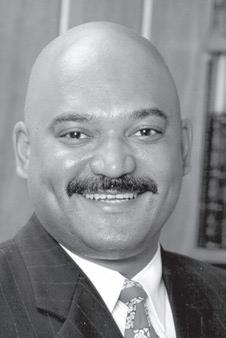
Trump’s reasons for boycotting the event are ridiculous, to be polite … The claim that white people are more affected by criminal acts in the country is not only a mistaken belief but also a manufactured lie designed to invoke the emotions of white racists across the globe. The argument that black economic empowerment, affirmative action and other transformative laws are racist is simply an attempt to protect the privilege of white people,” said Sowetan editor Sibongakonke Shoba.
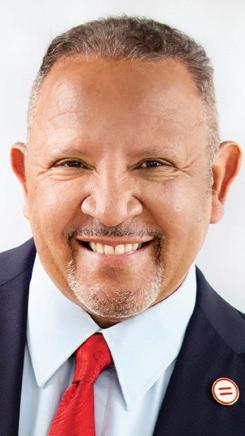
Traditionally, each meeting of the Group of Twenty, more commonly known as the G20, ends with the leader of the host country ceremonially handing the gavel to the leader of the next year’s host country.
Not this year.
The United States’ absence was not just symbolic. In boycotting the summit, the Trump administration has chosen to relinquish the nation’s leadership on global economic and social policy, preferring instead to promote discredited conspiracy theories rooted in racial prejudice.
The boycott is part of an ongoing diplomatic attack on South Africa dating back to Trump’s first term, when he began disseminating baseless claims of widespread killing of white South African farmers and land seizures. The administration has used these lies as a pretext to withdraw financial assistance to South Africa, give white South Africans priority for refugee status in the U.S., and boycott the G20 summit that just concluded.
Trump’s confrontation of South African President Cyril Ramaphosa with misleading and mislabeled racist propaganda in the Oval Office in May was embarrassing. The consequences of the boycott will be far more damaging. As the U.S. surrenders its role in shaping the global economic future, the vacuum will be filled by nations like China and Russia, which are only too happy to see U.S. status and influence diminished. Africa, home to some of the
fastest-growing economies in the world, is increasingly central to global growth. Conversations about trade, technology and climate change rely on these young, dynamic voices, and the U.S. has a responsibility and shared interest in being part of these conversations.
The Trump administration has clung to the mantra of “America first.” But boycotting the G20 is “America sidelined.” In presenting a false choice between domestic and global concerns, the administration betrays its failure to grasp how the two are intertwined. American jobs depend on trade deals that were negotiated without U.S. input. Public health depends on agreements forged in the nation’s absence. The U.S. cannot lead if it doesn’t show up. It cannot be a beacon of truth while spreading lies. It cannot promote American ideals if it abdicates leadership to nations hostile to its goals. Walking away from the G20 was an epic failure of leadership. Continuing down this path would be an even greater one. The writer is the president and CEO of the National Urban League.


By Jenna Fryer
The Associated Press
Michael Jordan’s bitter fight against NASCAR headed to federal court this week in a jury trial that could rip apart the top motorsports series in the U.S.
The antitrust allegations leveled by Jordan-owned 23XI Racing and Front Row Motorsports has exposed salacious personal communications, NASCAR’s finances and a deep contempt between some of the top executives in the sport and its participants.
Three-time Daytona 500 winner Denny Hamlin, who owns 23XI alongside Jordan and less than a month ago had the Cup Series championship slip through his fingers, warned this weekend that the gloves will be off during the two-week trial in the Western District of North Carolina.
“Our fans have been brainwashed with (NASCAR’s) talking points for decades,” Hamlin wrote on social media. “Lies are over starting Monday morning. It’s time for the truth. It’s time for change.”
NASCAR Commissioner Steve Phelps has said the series tried hard to settle the case ahead of Monday’s trial.
What is the lawsuit about?
The lawsuit was filed by 23XI Racing, which is owned by Basketball Hall of Famer Jordan, Hamlin and Jordan’s longtime business manager, Curtis Polk. They were joined by Front Row Motorsports, a team owned by entrepreneur Bob Jenkins that won the 2021 Daytona 500. The two were the only teams out of 15 to refuse to sign renewals on the charter agreements NASCAR presented to them in late 2024.
All 15 teams had been fighting for more favorable terms in the charter agreements over more than two years of negotiations, and the final terms fell short of what the teams had been seeking. 23XI and Front Row accused NASCAR of being a monopoly and sued under antitrust grounds. What is a charter?
The charter system was introduced in 2016 and is NASCAR’s version of the franchise model used by most other professional sports leagues. Being chartered guarantees that car a spot in the 40-car field for all 38 races,

as well as a defined payout from the weekly purse.
Even with the charters, the teams have argued that the revenue model is not viable. The teams wanted the charters to become permanent (they are renewable and revocable) as well as a larger percentage of revenues and a voice in governance.
23XI and Front Row felt the new charter agreements fell short of meeting those demands and refused to sign.
The two organizations argue NASCAR holds too strong a hold on all aspects of the racing series and allege a monopoly based on exclusivity clauses, ownership of most of the racetracks on the Cup schedule, and its control of the rules and regulations.
23XI and Front Row are now also pursuing a large monetary sum from NASCAR to cover their legal fees and financial losses suffered this year from not being chartered plus the lawsuit.
NASCAR’s defense NASCAR was founded 76 years
ago by the Florida-based France family and says it has not violated antitrust law because it has done nothing to restrain trade beyond normal business practices.
NASCAR has argued that payouts in the 2025 charter agreement increased and prove it is not anticompetitive.
NASCAR has also cited the option for cars to enter races as “open teams” and try to make the field in one of four nonchartered spots on qualifying speed. 23XI and Front Row have been open teams, and while their combined six cars made every race, it cost both organizations millions of dollars in purse money.
The pretrial discovery process revealed NASCAR made more than $100 million in 2024.
Behind-the-scenes drama
The discovery phase has been brutal for both sides with the exposure of unseemly personal communications from top NASCAR executives as well as the two teams.
Phelps was among leadership who in a discussion with other NASCAR executives called Hall of Fame team owner Richard Childress a “dinosaur,” an “idiot” and a “stupid redneck.” The discussion also included a reference that Childress “owes his entire fortune to NASCAR” and needed “to be taken out back and flogged.”
Another NASCAR executive alleged that fans of the sport can’t read, and multiple series leaders admonished Hall of Fame driver Tony Stewart’s summer short-track series, SRX, and threatened to have it killed because NASCAR drivers were participating.
On the other side, the president of 23XI was found to have said NASCAR chairman Jim France had to die in order to receive favorable charter terms, Hamlin admitted his dislike for the France family, one of Jordan’s advisers said Hamlin wasn’t a good businessman and Jordan joked that he loses more money in a casino than he pays one of his drivers.
Free Press staff report
The University of Richmond has added Andre Moore to its track and field staff as an assistant coach, bringing the Richmond native back to the program for the first time since 2018.
Lori Taylor, director of track and head women’s cross country and track and field coach, announced the hire in November, noting Moore’s extensive coaching background and previous success with the Spiders.
“Andre’s history of developing sprinters, hurdlers and jumpers — paired with the leadership and integrity he brings from every chapter of his career — makes his return a huge win” for UR track and field,
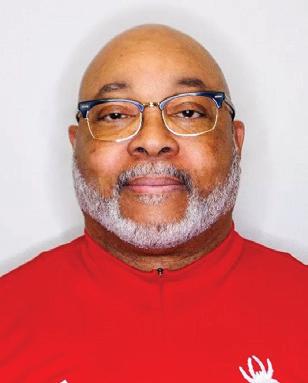
Taylor said.
Moore coached at Richmond from 2010 to 2018, working with sprinters, hurdlers, jumpers and steeplechase runners.
During that stretch, he assisted two 2010 NCAA Division I All-Americans, helped guide NCAA Championship qualifiers and developed 30 Atlantic 10 all-conference performers across indoor and outdoor seasons. Before joining UR the first time, Moore coached at Virginia State from 1997 to 2004 and at Virginia Union from 2005 to 2009, leading cross country and track and field
programs at both schools. After leaving the Spiders, he served as head track and field and football coach at Central International College from 2019 to 2021.
A former standout at Norfolk State, Moore competed in the 400- and 200-meter events and in the long and triple jumps. He studied management and computer information systems and later earned a bachelor’s in religion and religious studies from Central International College.
Moore has also served as a deputy sheriff for more than 20 years, working in Richmond and most recently with the Petersburg Sheriff’s Office. He holds Level I coaching certification and has been affiliated with the U.S. Track Coaches Association since 1995.
The inaugural 4 Tha Culture Holiday Hoops Classic, a new women’s basketball showcase, is set to take place Dec. 19-21 at the Henrico Sports & Events

ketball — it’s about pride, culture and giving women’s athletics the platform it deserves,” Tate said.
“We’re thrilled to partner with the Henrico Sports & Events Center and the many Richmond-based businesses to bring this vision to life in such a dynamic space.”
Local officials say the event also reflects the region’s growing investment in women’s sports and community-focused programming.
Hampden-Sydney College will add club squash to its athletic offerings in the 202627 academic year, the school announced. The program will be housed in the new John Corey Squash Center, a 7,500-square-foot facility in Kirby Field House funded by a gift from Richmond-area businessman and alumnus John E. Corey. The center will include five courts, locker rooms and seating for 120 spectators.
Grant White, an assistant coach at the University of Virginia since 2013, was named the program’s first head coach. White will begin recruiting and building the team next year with the goal of achieving varsity

status by the 2028-29 season. Hampden-Sydney plans to join the College Squash Association. Athletics Director Chad Eisele said Corey’s support will have a “positive impact” on the college’s student-athletes.
White played squash and lacrosse at Bowdoin College
and earned an MFA in creative writing from Virginia Commonwealth University. He said he is “excited, honored and grateful” to lead Hampden-Sydney’s new program. For more information about Hampden-Sydney athletics, visit hscathletics.com
“Along with our partners at Richmond Region Tourism, we are honored to host the inaugural 4 Tha Culture Holiday Hoops Classic at the Henrico Sports & Events Center,” said Dennis Bickmeier, executive director of the Henrico Sports & Entertainment Authority.
“This event shines a spotlight on women’s basketball and the power of community.”
Division I women’s basketball programs scheduled to participate include Alabama A&M, Coppin State University, Penn State University, the University of Georgia, the University of Richmond and Virginia Commonwealth University.
In addition to the matchups, attendees can expect communityfocused programming and curated cultural experiences that celebrate and uplift Black voices in sports, entrepreneurship and leadership. For more information, visit 4thaculturehoops.com.
Who will be in court?
NASCAR has indicated it wants Rick Hendrick and Roger Penske, the two most powerful team owners in the U.S., and neither Hall of Famer wants to testify. They both filed a motion asking to not even be deposed and, if they must be, then the questioning must be limited to charters.
Hendrick and Penske are among a large group of owners who submitted declarations on NASCAR’s behalf in defense of the charter system. The declarations showed unity among the non-suing teams that do not want the charter system to be disbanded, which could happen if NASCAR loses the case.
But what NASCAR doesn’t spotlight is that many of the team owners still noted that the 2025 charter agreements remain short of all their demands. Additionally, NASCAR has requested that some of the plaintiffs not be allowed to sit in court during the trial — presumably so that Jordan, a North Carolina native who led the University of North Carolina to a national championship and once owned the NBA’s Charlotte Hornets, as well as Hamlin, not be given the opportunity to distract a jury.
What are some outcomes?
The case could still be settled at any time, even if a ruling is made and it goes to appeal.
If 23XI and Front Row win, the jury will determine actual monetary damages and Judge Kenneth Bell can adjust the figure and even triple it. Bell would also be charged with unraveling any found monopoly.
Among the threats to NASCAR are orders that the France family sell the sport, sell the tracks it owns, dismantle the charter system, order permanent charters — anything is possible.
If NASCAR wins, it is unlikely that 23XI and Front Row stay in business beyond 2026 and the six charters being held aside likely will be sold to other interested parties. The last charter sold went for $45 million, and NASCAR has indicated there is pressing interest from potential buyers including private equity firms.

Free Press staff report
VCU closed out its Battle 4 Atlantis run with an 86-68 win over Virginia Tech on Friday in Nassau, Bahamas, behind a career-best performance from sophomore guard Terrence Hill Jr. Hill hit all five of his 3-point attempts and finished with 21 points on 6-for-7 shooting. He also went 4-for-4 at the line and grabbed three rebounds as the Rams improved to 5-3.
Senior forward Barry Evans added 17 points, five rebounds, three assists and two steals. Senior guard Jadrian Tracey scored 13 points, and junior forward Lazar Djokovic had 11. Amani Hansberry and Tyler Johnson led the Hokies (6-2) with 16 points each.
VCU shot 53% from the field and 11 of 21 from behind the arc while outrebounding Virginia Tech 36-28. The Rams led by as many as 20 before the Hokies cut the margin to 68-62 with eight minutes left. Evans’ bucket in the lane at the 6:39 mark steadied VCU, and Hill followed with five straight points during a 12-3 run that pushed the lead to 80-65 with 4:55 remaining. Tracey sealed the win with a 3-pointer as the shot clock expired with 3:29 left. Evans scored three early baskets, and Tracey added a stepback 3-pointer as VCU opened with a 15-5 lead. Virginia Tech briefly surged ahead 27-25 on a 12-0 run fueled by two Jaden Schutt 3-pointers, but the Rams responded with three straight baskets from Evans and took a 45-35 halftime lead. Virginia Tech did not lead again.
The matchup was the programs’ first meeting since the 201314 season and only their second since 1995. VCU now leads the series 12-10 and moved to 6-6 all-time in the tournament. VCU returns home to face Samford on Friday, Dec. 5 at 7 p.m. at the Siegel Center. The game will air on MASN and ESPN+.
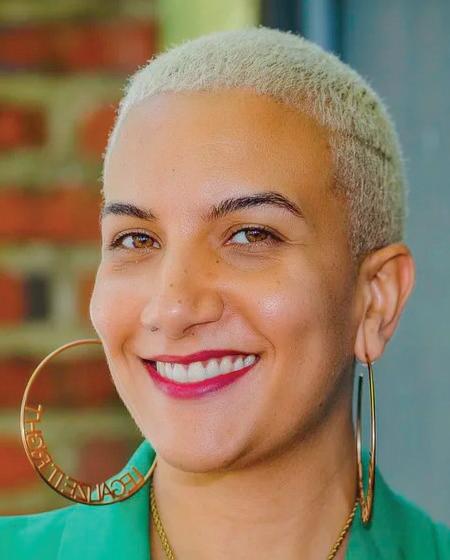
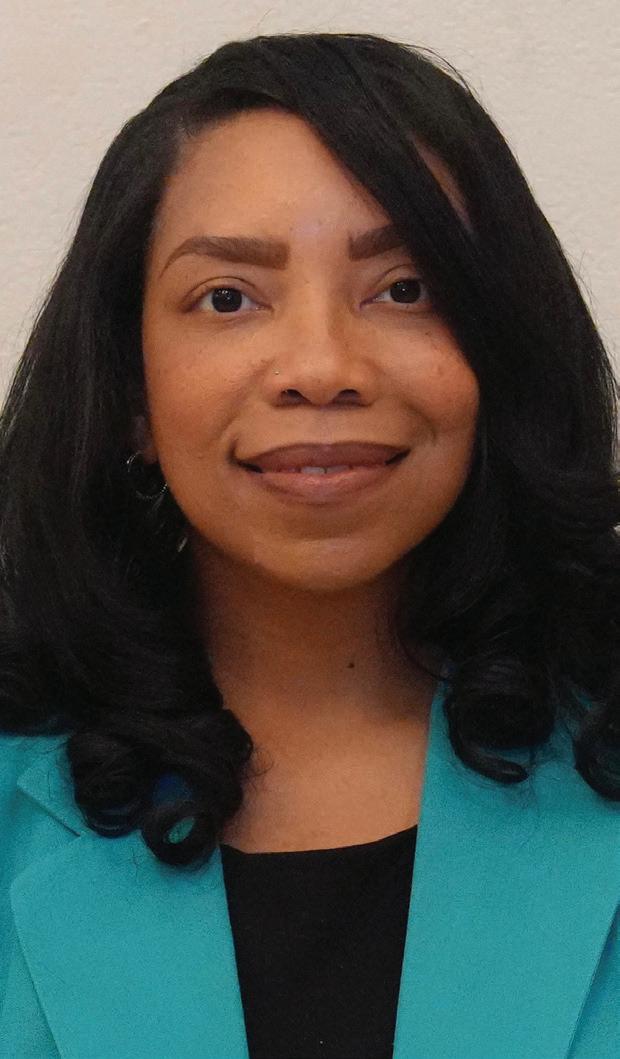
Bianca Myrick turned a personal struggle into a mission to empower young women and girls. After leaving a domestic violence situation, she founded Pretty Purposed, a nonprofit that mentors girls to become confident, resilient and ready to lead.
Drawing on her experience in education and social work, Myrick focuses Pretty Purposed on girls ages 9 to 14, helping them develop leadership skills, emotional resilience and a sense of purpose. What started in 2015 with seven mentees in Petersburg has grown into programs serving more than 200 girls across schools and community sites in Petersburg, Hopewell, Chesterfield, Dinwiddie, Sussex and Richmond.
“I wanted to do something with women and girls, but I didn’t know what it was,” Myrick said. “After taking time to think about options, I laser-focused on pre- and teen girls because of my background in education and social work.”
A graduate of Virginia State University with a degree in elementary education, Myrick went on to earn a master’s in public administration and also completed a nonprofit management certificate at Duke University. In addition to driving the success of Pretty Purposed, she has a consulting and grantwriting practice and is a certified fundraising executive. She also collaborates with state agencies and judges on domestic violence policy and child support safety, while also shaping young minds as a part-time adjunct professor.
Rooted in her personal journey and professional training, Myrick naturally takes a holistic approach to mentorship, design-

ing a curriculum that nurtures mind, body and spirit.
Myrick doesn’t speak publicly about her abuser, whom she met when she was 19. She notes that many abusers use similar power-and-control tactics and advises women in abusive situations to seek nonjudgmental emotional support.
“When we talk about abuse, the blame is on the victim,” she said. “They feel shame and judged. It’s important to make sure they’re connected to someone or with some time and space to process what’s happening and process their emotions, so they can safely leave.”
Myrick was born and raised in Petersburg, the hub of Pretty Purposed. She lives in Chesterfield with her teenage son and shares the same hope for his future as the girls in Pretty Purposed.
“I want him to be someone who is compassionate, empathetic, resilient and grounded in who he is, so when the world tries to chip away at that, he can remain rooted,” she said.
When was Pretty Purposed founded?
I founded the organization in 2014 and began mentoring seven girls in Petersburg in 2015.
What is Pretty Purposed?
It’s an ode to girlhood and womanhood, a nonprofit mentoring program dedicated to empowering girls ages 9 to 14. I started the organization when I was actively leaving the abusive relationship. We began in Petersburg; now we are in Hopewell, Chesterfield, Dinwiddie, Sussex and Richmond.
What is Pretty Purposed’s mission?
Pretty Purposed inspires

communities and schools to empower young women and girls.
What programs does Pretty Purposed offer?
Our flagship program, Pretty Purposed Girl Circles, trains schools and communities to cultivate spaces of joy and learning, centering leadership, social-emotional learning, health and wellness, and exposure to weekend enrichment and field trips.
We also have the Girls Circle, where we offer enrichment activities on weekends, including leadership development, emotional learning, health and wellness, exposure (such as field trips, job shadowing, career exploration, STEM, arts and culture, theater) and workshops led by community leaders.
Another program, Alumni Leaders, allows our girls to level up through recruitment
and professional development, attend board meetings and thank donors. They handle our social media content and lead group activities, earning a stipend. For many, it’s their first job.
Who are the girls involved in Pretty Purposed?
We have a diverse group of girls. We have Black girls in rural or under-resourced areas who don’t have access or exposure to activities. We have girls who come from areas where they are underrepresented. We also have girls who are at risk because of their economic circumstances.
What are some of the positive effects you’ve seen come out of Pretty Purposed?
The work we do is about leveling the playing field. We had a girl from Midlothian who didn’t feel comfortable wearing her natural hair because she feared backlash from her peers at school. Now, she feels free to experiment with her hair, wearing it in braids, natural or straight. There was also a girl we took on a trip to Atlanta who was flying for the first time. She was nervous and afraid, but now she feels empowered to pursue her dream of working in design in Japan. How do parents get their girls involved in Pretty Purposed?
They can go to our website to sign up and find out whether their child’s school has a Pretty Purposed program in place.
Who are your program partners?

We partner with many organizations, including Girls on the Run, Communities In Schools, the YMCA, Voices for Virginia’s Children, Virginia State University, Virginia Union University, VCU and many others.
How is Pretty Purposed funded?
Some of our funding comes from individual donors, which is very meaningful to us. We have youth fundraisers who tap into families and their networks of trusted people. We also have corporate and businesses that partner with us like Dominion Energy and local businesses like Nicole’s House of Beauty. There’s also foundational funding from organizations like the Cameron Foundation, the Richmond Memorial Health Foundation and other grants. There’s some state and local funding. We also get support from the Virginia Department of Criminal Justice Services because it considers what we do to be preventative work.
Why is this project important to you?
The organization is important because I know the investment we make in women and girls has a multiplier effect in our communities. I know that if the women in my life hadn’t invested in me, I wouldn’t be where I am today.
You’re also on the board of Collective365. What is that?
We unite individuals who want to invest, learn from and celebrate communities of color. Collective 365 members combine our resources to provide funding to businesses, individuals and organizations that are doing community work in the Washington, D.C., area
How do you start the day?
In prayer, journaling and burn boot camp, which is a hard workout.
What do you do in your downtime?
I love to read historical romances and history. I like to walk four miles a day in the warmer weather. I spend time with my son. I also like to find cool restaurants that are small local businesses.
What inspires you?
Doing work that’s near and dear to my heart. My work is fun and creative, and I get to see growth and change. I like watching the girls who grow into future mothers, business leaders, teachers, etc. Who has influenced you the most?
My mother because of her resilience.
What types of performances do you enjoy attending?
I like theater and dance. I’m a graduate of Appomattox Regional Governor’s School for the Arts & Technology, a performing arts school, so I love the theater, ballet and modern dance. I saw “Cinderella” with our girls.
What are you currently reading?
“The Enneagram for Black Liberation: Return to Who You Are Beneath the Armor You Carry,” by Chichi Agorom. What’s next?
We are opening a girlcentered space at St. Mark’s United Methodist Church. It has leased us a classroom, meeting space and much-needed storage space. It will be our new hub, and we’ll have an open house next year. It’s a milestone for us because we now have a centralized location.
























Dec. 5
RVA Illuminates, downtown Richmond at Kanawha Plaza and surrounding areas. Festivities begin at 4 p.m. with live music, food trucks and holiday cheer. Countdown with Mayor Danny Avula for the tree lighting and illumination of the downtown Richmond skyline at 5:59 p.m Free. venturerichmond. com

discoverrichmondtours.com
Dec. 6
Dominion Energy Christmas Parade begins at 10 a.m., starting at the Science Museum of Virginia and proceeding eastbound on Broad Street through downtown Richmond. Familyfriendly celebration with floats, balloons, bands and festive characters. Free.
Kadencia Orchestra: Tropical Christmas 2 at Richmond Music Hall, 1022 W. Broad St., at 8 p.m. A seasonal performance featuring tropical holiday music. Tickets are $21.25. richmondmusichall.com
Dec. 7
Holiday Cheers at Richmond Makers Market inside Basic City Beer Co., 212 W. Sixth St., noon. Local makers offering candles, art, clothing, jewelry and other items.
52nd annual Candlelight Festival of Lessons and Carols at Cannon Memorial Chapel, University of Richmond; services at 5 and 8 p.m. Traditional Christmas carols and anthems by UR’s Schola Cantorum, ending with a candlelighting. Free. richmond.edu
Dec. 8
Holiday Artisan Market at Strangeways Brewing, Scott’s Addition, noon. Featuring handmade home décor, art, jewelry, vintage goods and apparel. Free. rictoday.6amcity.com
Dec. 9
Henrico Pops Chorus Holiday Concert, “Winter Harmony,” at the historic Henrico Theatre, 305 E. Nine Mile Road, 7 p.m. Directed by Jennifer Grundy, accompanied by Sarah Cothern. Free. henrico.us/parks




Free Press staff report
Historian Jonathan W. White will explore the relationship between Abraham Lincoln and Frederick Douglass in a lecture at the Virginia Museum of History & Culture on Dec. 18 at noon.
White, a professor of American Studies at Christopher Newport University, will discuss his latest book, “Measuring the Man: The Writings of Frederick Douglass on Abraham Lincoln.” The lecture examines how Douglass evolved from one of Lincoln’s harshest critics to one of his strongest supporters in the fight to end slavery and advance racial equality. White will draw on previously undiscovered letters and speeches that have not been seen in 160 years.

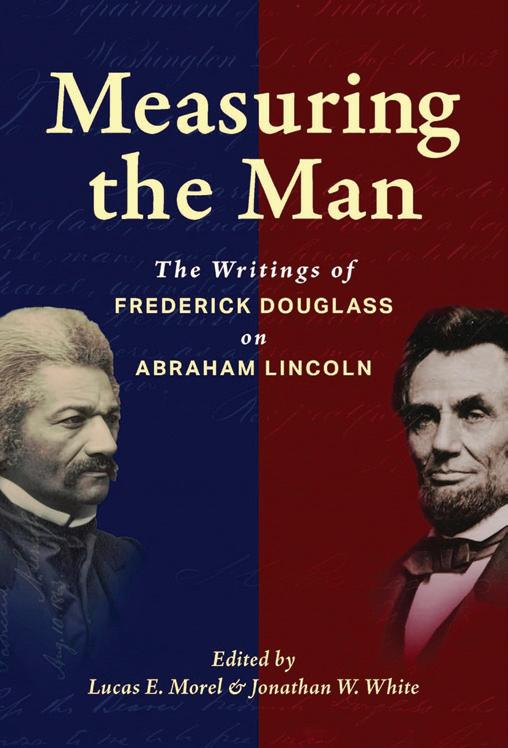
“Frederick Douglass and Abraham Lincoln both had a vision that the United States should live up to its founding ideal of human equality, but they had different strategies for achieving that goal,”
the lecture description states. White is the author or editor of 20 books and more than 100 articles, essays and reviews on Abraham Lincoln, the Civil War, slavery and emancipation, and the U.S. Constitution. His other works include “A House Built by Slaves: African American Visitors to the Lincoln White House,” “Emancipation, the Union Army, and the Reelection of Abraham Lincoln” and “Midnight in America: Darkness, Sleep, and Dreams during the Civil War.” Tickets are required for inperson attendance and include admission to VMHC galleries. The lecture will also be streamed live on YouTube and Facebook.






By Hazel Trice Edney
It was on Nov. 24, 2014, when then-Howard University student Kevin Lamár Peterman first felt a sermon rise from his belly.
That was the same day a grand jury decided not to indict white Ferguson, Missouri, police officer Darren Wilson in the fatal shooting of 18-yearold Mike Brown, an unarmed Black teenager walking down the street in his neighborhood. The police killing sparked historic protests across the U.S., including fiery demonstrations in Ferguson that were met with military force.
Having returned from the uprisings in Ferguson, Peterman was leading a community and student protest on the steps of Howard’s Douglass Hall when the announcement came that Wilson would not be indicted.
“I remember giving a speech that night that I felt turn into a sermon. And it was really social justice that led me to ministry,” Peterman said in a recent interview. “I felt that the best way to advance the cause of Black people in America was through the church and through education. And so that’s kind

of how my ministry began.”
A little more than 10 years later, the stirring Peterman felt that night has now come full circle. On Saturday, Nov. 22, 2025, at the age of 32, he was installed as pastor of Nineteenth Street Baptist Church, the oldest and most historic Black Baptist congregation in Washington, D.C., dating back more than 180 years, through enslavement.
Today, as issues of racial justice continue to simmer across the nation, the pastoral installation of Peterman and other men and women in his age group is being viewed as a resurgence of sorts, part of a spiritual uprising of a new generation of civil rights leadership in the Black church.
“What you’re seeing is that there are a number of young Black preachers who are taking over historic Black churches in historic cities, who are doing this work of social justice and also doing the work of social impact while also preaching salvation,” Peterman said. “Every generation of ministers is called to move the thermometer one notch, one pace forward. It’s like a race. The baton has been passed to the next generation to run our leg of the race.”
Among those who have risen to church leadership from coast to coast — during what Peterman describes as the “Black Lives Matter” era — is Melech Thomas, who led protests alongside him after the Baltimore police custody death of Freddie Gray. Thomas was installed as pastor of Baltimore’s Payne Memorial AME Church this year.
Also, the Rev. Devon Jerome Crawford, pastor of Third Baptist Church in San Francisco, the home church of former Vice President Kamala Harris; the Rev. Art Gordon, pastor of the oldest Black Baptist church in New England, the People’s
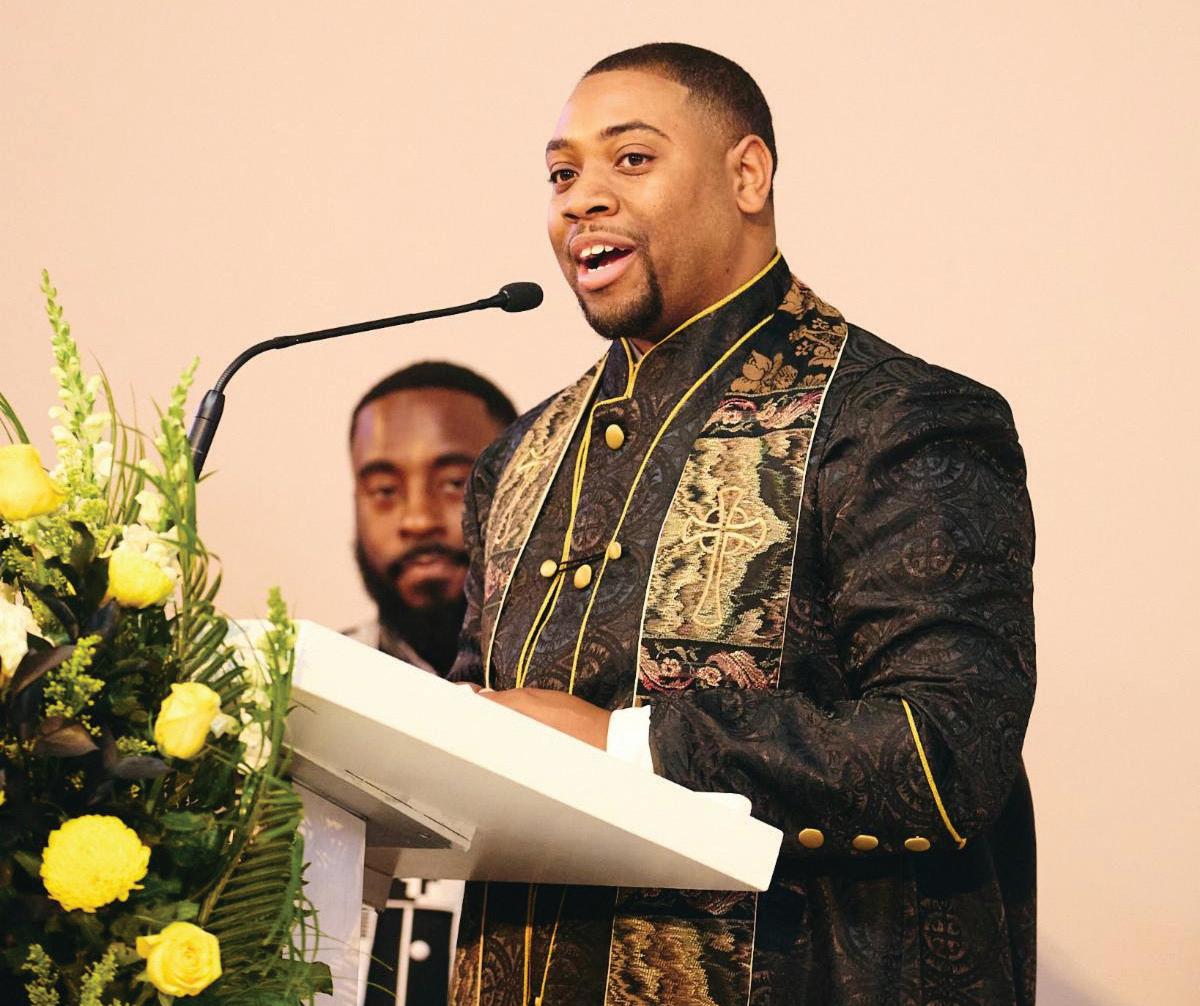
Baptist Church in Boston; the Rev. Malcolm J. Byrd, senior pastor of Mother African Methodist Episcopal Zion Church, the oldest Black church in New York state, founded in 1796; the Rev. Marissa Farrow, senior pastor-elect of Baltimore’s Mount Calvary Church & Ministries; and the Rev. Rodney Carter, pastor of Greater Mount Calvary Holy Church, the largest Pentecostal congregation in D.C.
“So you’re seeing a new generation of pastors coming into the pulpit and taking over historic churches, and many of us are trying to do the work that was being done 60 years ago, prior to the civil rights movement,” Peterman said. “It’s not a new vision. It’s a continuum. And hopefully, when we die, life in America will be better than it was when we were born.”
During the services surrounding Peterman’s installation, it was made clear that his generation will not carry the mantle alone. As they rise to leadership, they join their
mentors, their fathers and their mothers in ministry, who remain alongside them in the preaching of salvation, the battle for social justice, and the sharing of wisdom and experience.
The three services celebrating Peterman as the new pastor included preachers known nationally for their leadership.
The Rev. Dr. Howard-John Wesley, senior pastor of historic Alfred Street Baptist Church in Alexandria, Virginia, preached a one-night revival. The installation service was led by the Rev. Lawrence E. Aker III, lead pastor of Cornerstone Baptist Church in Brooklyn, New York, and the events culminated during a Sunday service preached by the Rev. Dr. Otis Moss III, senior pastor of Trinity United Church of Christ in Chicago, where Peterman served as a pastoral intern.
Aker, the pastor who ordained Peterman at Cornerstone, where he served as young adult and social justice minister, preached from II Timothy 1:7: “For God has not given us a spirit of fear, but of power and
of love and of a sound mind.”
The title of the message was “A Divine Assignment.”
Peterman listened intently, having been ceremoniously robed by his mother, Donna Holley-Nelms. He recounted that he was raised by a “single parent mother and grandmother in Vauxhall, New Jersey, with the church as the center of our life.”
Essentially, Aker elaborated that Peterman has been called to preach in a time described as the “fourth industrial revolution,” which, in part, means the world’s rise to 21st-century technology, including AI, and that the multigenerational Black church must not be afraid.
Greater Mount Calvary Pastor Rodney Carter, 34, gave a charge to the congregation that appeared strongly in agreement with Aker.
“There are some who are going to grieve the past. I want to encourage you to follow the vision. Don’t fight the vessel,” Carter said.
Aker’s message likely heartened Peterman, who, in a pre-installation interview, expressed that the Black church must use technology and social media to communicate its gospel and social justice messages.
“We have to communicate our story. We have to communicate the work that we’re doing at Nineteenth Street. We have
to embrace technology 100%. We have to communicate what we’re doing and the work that we’re doing in 21st-century ways. Social media for us has been on the back burner,” Peterman said. “The reality is that nobody is looking for — or most people under the age of 50 are not looking for — something to come in the mail to them. Most people now under the age of 70 want to be online, want to be digitized, want it to be on their phone. We have to embrace multiple platforms. I want people to know that I’m on a mission. I’m on a mission for God. And I am on a mission for my people.”
The fact that Nineteenth Street Baptist is in the heart of the nation’s capital is crucial to his national leadership in social justice, Peterman said. “As goes Washington, goes the rest of the country. The country is always looking to Washington, D.C., for leadership in every industry and in every sector. The same for the church,” he said. “I think the churches across the country are going to be asking the question, ‘What are the churches in the nation’s capital doing to advance the efforts of marginalized people, of Black people, of Brown people?’ So that will be an example for churches throughout the rest of the country.”



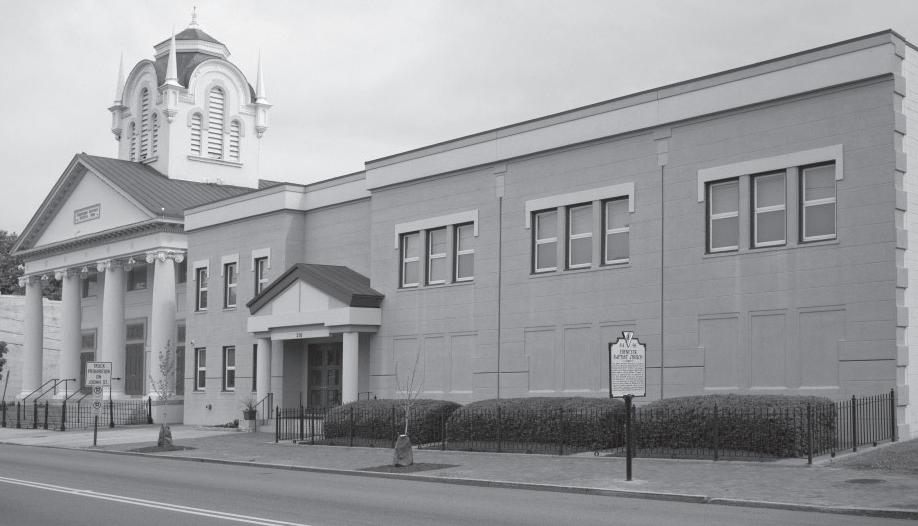




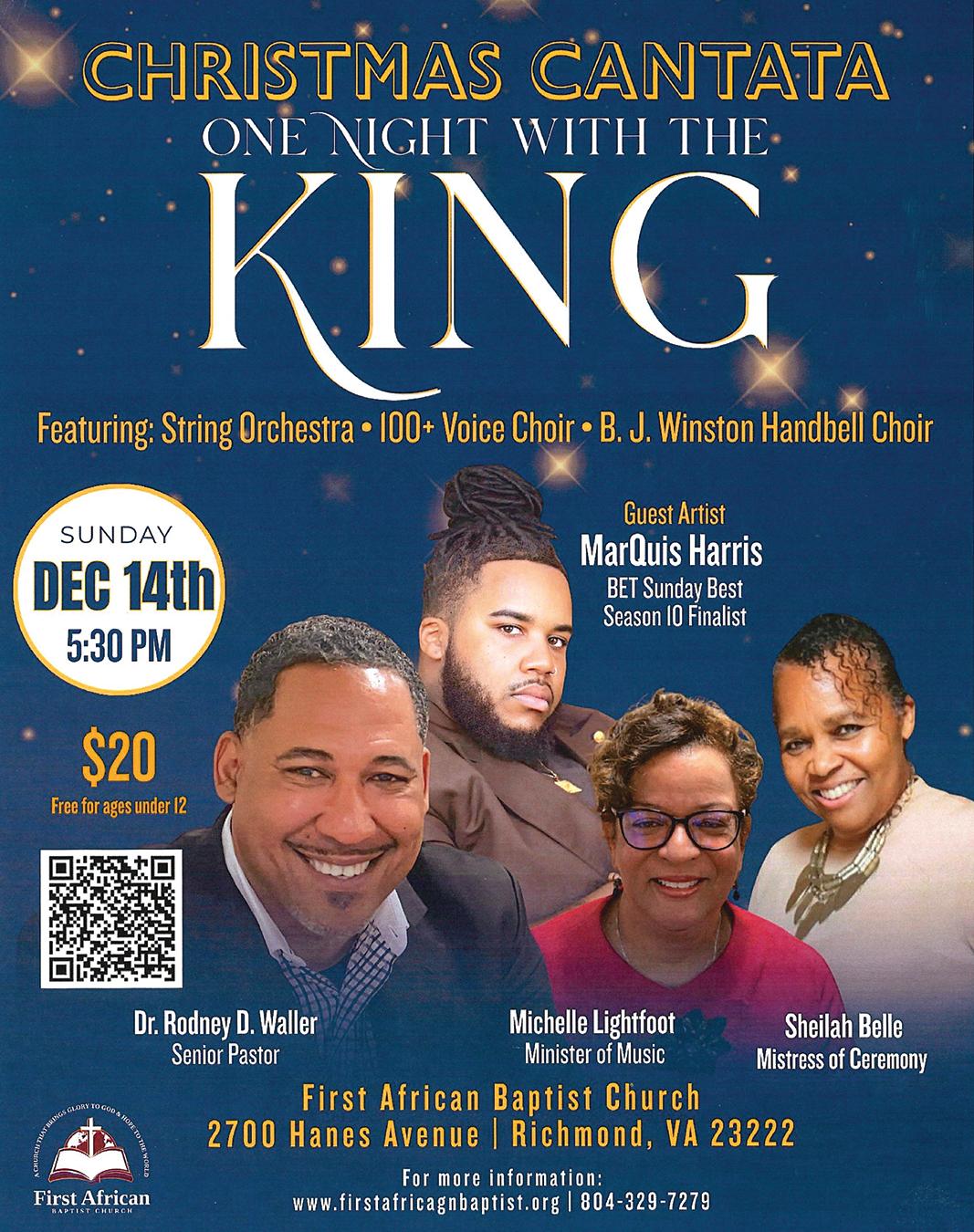



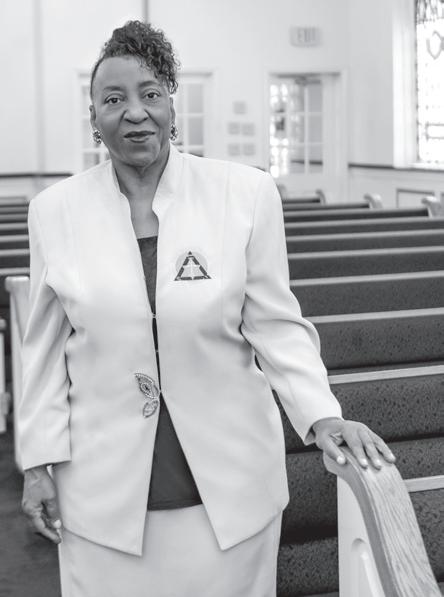





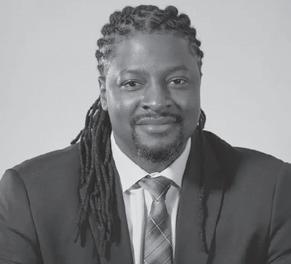
On the first Sunday after being named leader of the Catholic Church in May 2025, Pope Leo XIV stood on the balcony of St. Peter’s Basilica in Rome and addressed the tens of thousands of people gathered. Invoking tradition, he led the people in noontime prayer. But rather than reciting it, as his predecessors generally did, he sang.
In chanting the traditional Regina Caeli, the pope inspired what some have called a rebirth of Gregorian chant, a type of monophonic and unaccompanied singing done in Latin that dates back more than a thousand years.
walking instability. Early on in my training, I suggested that people with Parkinson’s could improve the rhythm of their steps if they sang while they walked. Even as we began publishing our initial feasibility studies, people remained skeptical. Wouldn’t it be too hard for people with motor impairment to do two things at once?
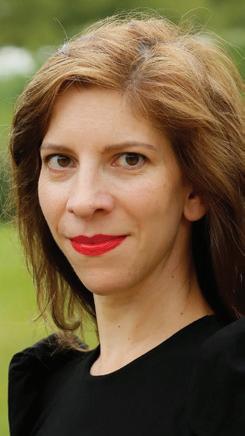
The Vatican has been at the forefront of that push, launching an online initiative to teach Gregorian chant through short educational tutorials called “Let’s Sing with the Pope.” The stated goals of the initiative are to give Catholics worldwide an opportunity to “participate actively in the liturgy” and to “make the rich heritage of Gregorian chant accessible to all.”
These goals resonated with me. As a performing artist and scientist of human movement, I spent the past decade developing therapeutic techniques involving singing and dancing to help people with neurological disorders. Much like the pope’s initiative, these arts-based therapies require active participation, promote connection, and are accessible to anyone. Indeed, not only is singing a deeply ingrained human cultural activity, research increasingly shows how good it is for us.
The same old song and dance For 15 years, I worked as a professional dancer and singer. In the course of that career, I became convinced that creating art through movement and song was integral to my well-being. Eventually, I decided to shift gears and study the science underpinning my longtime passion by looking at the benefits of dance for people with Parkinson’s disease.
The neurological condition, which affects over 10 million people worldwide, is caused by neuron loss in an area of the brain that is involved in movement and rhythmic processing – the basal ganglia. The disease causes a range of debilitating motor impairments, including
But my own experience of singing and dancing simulta-
neously since I was a child suggested it could be innate. While Broadway performers do this at an extremely high level of artistry, singing and dancing are not limited to professionals. We teach children nursery rhymes with gestures; we spontaneously nod our heads to a favorite song; we sway to the beat while singing at a baseball game. Although people with Parkinson’s typically struggle to do two tasks at once, perhaps singing and moving were such natural activities that they could reinforce each other rather than distract.
A scientific case for song Humans are, in effect, hardwired to sing and dance, and we likely evolved to do so. In every known culture, evidence exists of music, singing or chanting. The oldest discovered musical instruments are ivory and bone flutes dating back over 40,000 years. Before people played music, they likely sang. The discovery of a 60,000-yearold hyoid bone shaped like a modern human’s suggests our Neanderthal ancestors could sing.
In “The Descent of Man,” Charles Darwin speculated that a musical protolanguage, analogous to birdsong, was driven by sexual selection. Whatever the reason, singing and chanting have been integral parts of spiritual, cultural and healing practices around the world for thousands of years. Chanting practices, in which repetitive sounds are used to induce altered states of consciousness and connect with the spiritual realm, are ancient and diverse in their roots.
Though the evolutionary reasons remain disputed, modern science is increasingly validating what many traditions have long held: Singing and chanting can have profound benefits to physical, mental and social health, with both immediate and long-term effects.
Physically, the act of pro-
CIRCUIT COURT FOR THE COUNTY OF HANOVER ANDREW MCKENZIE, Plaintiff v. KATHERINE MCKENZIE, Defendant. Case No.: CL25004195-00 ORDER OF PUBLICATION
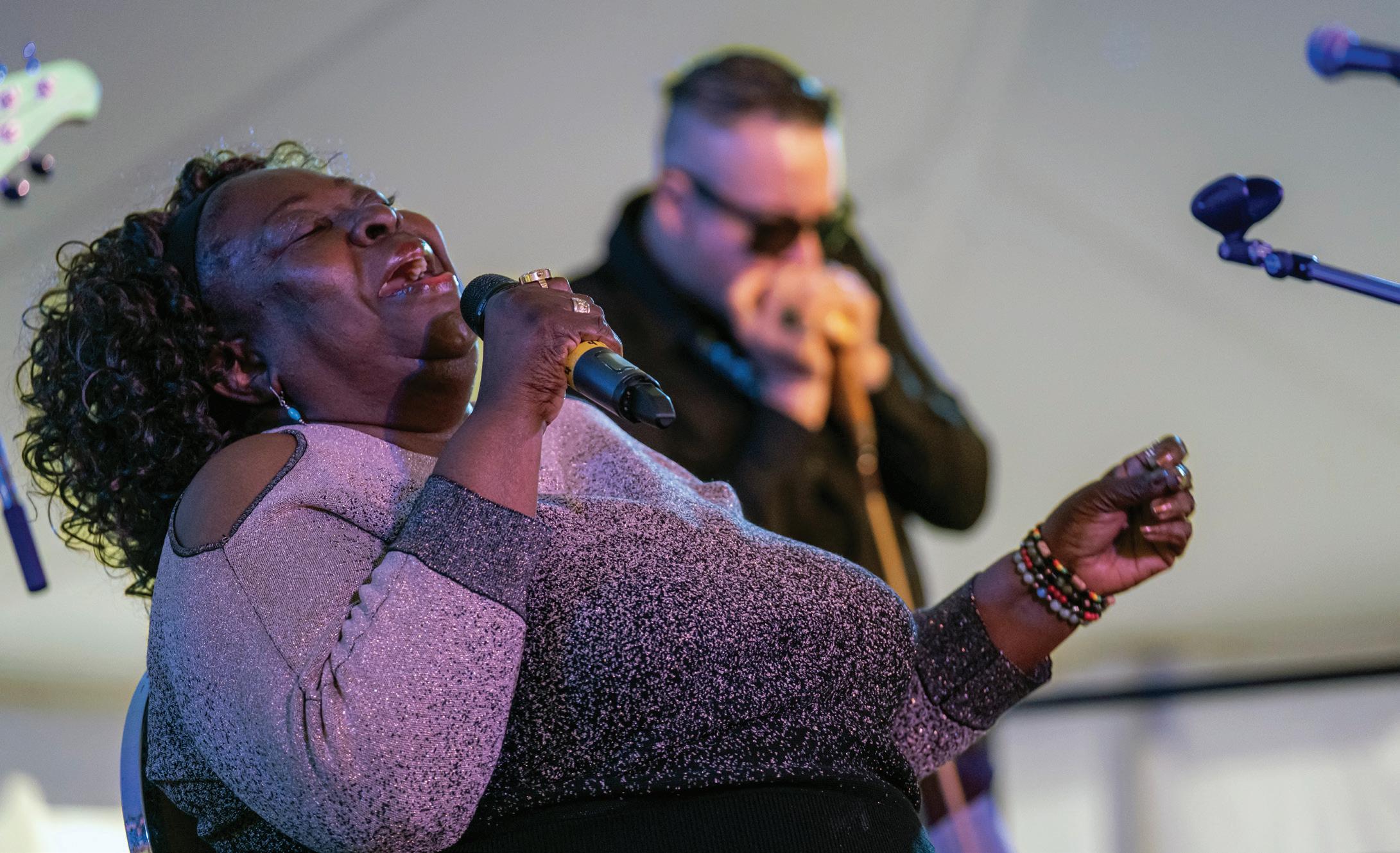
ducing sound can strengthen the lungs and diaphragm and increase the amount of oxygen in the blood. Singing can also lower heart rate and blood pressure, reducing the risk of cardiovascular diseases.
Vocalizing can even improve your immune system, as active music participation can increase levels of immunoglobulin A, one of the body’s key antibodies to stave off illness.
Singing also improves mood and reduces stress.
Studies have shown that singing lowers cortisol levels, the primary stress hormone, in healthy adults and people with cancer or neurologic disorders. Singing may also rebalance autonomic nervous system activity by stimulating the vagus nerve and improving the body’s ability to respond to environmental stresses. Perhaps this is why singing has been called “the world’s most accessible stress reliever.”
Moreover, chanting may make you aware of your inner states while connecting to something larger. Repetitive chanting, as is common in rosary recitation and yogic mantras, can induce a meditative state, inducing mindfulness and altered states of consciousness.
Neuroimaging studies show that chanting activatesbrainwaves associated with suspension of self-oriented and stress-related thoughts.
Singing as community
Singing alone is one thing, but singing with others brings
The object of this suit is
from the bond of matrimony from the defendant on the ground of living separate and apart without any cohabitation and without interruption for a period exceeding twelve months.
It is ORDERED that the defendant, whose whereabouts are unknown, appear here on or before the 14th day of January, 2026 at 9:00 a.m. and protect her interests. A Copy, Teste: FRANK D. HARGROVE, JR., Clerk I ask for this: Law Office of Dorothy M. Eure, P.C. Dorothy M. Eure, Plaintiff’s Attorney VSB# 27724 8460 Mount Eagle Road Ashland, VA 23005 (804 798-9667
VIRGINIA: IN THE CIRCUIT COURT FOR THE COUNTY OF HANOVER CHAD MORRIS,

Plaintiff v. IRA MORRIS, Defendant. Case No.: CL25003253-00 ORDER OF PUBLICATION
The object of this suit is to obtain a divorce from the bond of matrimony from the defendant on the ground of living separate and apart without any cohabitation and without interruption for a period exceeding twelve months.
It is ORDERED that the defendant, who has been served with the Complaint by posted service appear here on or before the 14th day of January, 2026 and protect her interests. A Copy, Teste: FRANK D. HARGROVE, JR., Clerk I ask for this: Dorothy M. Eure, Plaintiff’s Counsel VSB# 27724 The Law Office of Dorothy M. Eure, P.C. 8460 Mount Eagle Road Ashland, VA 23005 (804 798-9667
about a host of other benefits, as anyone who has sung in a choir can likely attest.
Group singing provides a mood boost and improves overall well-being. Increased levels of neurotransmitters such as dopamine, serotonin and oxytocin during singing may promote feelings of social connection and bonding.
When people sing in unison, they synchronize not just their breath but also their heart rates.
Heart rate variability, a measure of the body’s adaptability to stress, also improves during group singing, whether you’re an expert or a novice.
In my own research, singing has proven useful in yet another way: as a cue for movement. Matching footfalls to one’s own singing is an effective tool for improving walking that is better than passive listening. Seemingly, active vocalization requires a level of engagement, attention and effort that can translate into improved motor patterns. For people with Parkinson’s, for example, this simple activity can help them avoid a fall. We have shown that people with the disease, in spite of neural degeneration, activate similar brain regions as healthy controls. And it
works even when you sing in your head.
Whether you choose to sing with the pope or not, you don’t need a mellifluous voice like his to raise your voice in song. You can sing in the shower. Join a choir. Chant that “om” at the end of yoga class. Releasing your voice might be easier than you think. And, besides, it’s good for you. The writer is a lecturer in the Performing Arts Department of Washington University in St. Louis. This article was originally published on The Conversation.

Hospitalists, Richmond, VA & other VCU HS sites YTBD. Examine, diagnose, & treat hospitalized patients through continuum of hospital care. Order treatments, tests, & medications, & consult w/specialty physicians where appropriate. Mail resume to J. Fleming, VCU Health System Authority, 830 E. Main St., Suite 200, Richmond, VA 23219.
Quality Eng Mgr (Richmond, VA or remote) Mnge & supervise Quality Engineer Team; Create dvlp & deploy nec process & doc for Quality System & pursue & sustain ISO Certifications; Determine key quality compliance factors for manufactur partners; Ensure manufactur processes adhere to qual standards defined by co. Reqs BS in Eng or rltd field & 2 yrs exp. Exp must include ERP’s w/ manufactur exec systems & Lean & 5S methodolgies; Send resumes to Andrea Casey, Hyper Solutions, Inc., 1540
Parham Rd, Henrico, VA 23228.