THE FUNDRAISING VALUE OF DONOR RECOGNITION
WHY RECOGNITION PROGRAMS MATTER MORE THAN MOST ORGANIZATIONS REALIZE
When organizations plan a capital campaign or annual campaign, donor recognition is often treated as a finishing touch, something added near the end once the “real work” is done.
In practice, it functions very differently.
A well-planned recognition program becomes part of the fundraising strategy itself. It influences how donors feel about their gift, how future donors perceive the organization, and how momentum builds during and after a campaign.
The impact tends to appear in four key areas.
the mission. Instead of a transaction, the gift becomes part of the organization’s story, and stability. The value is cumulative, year after
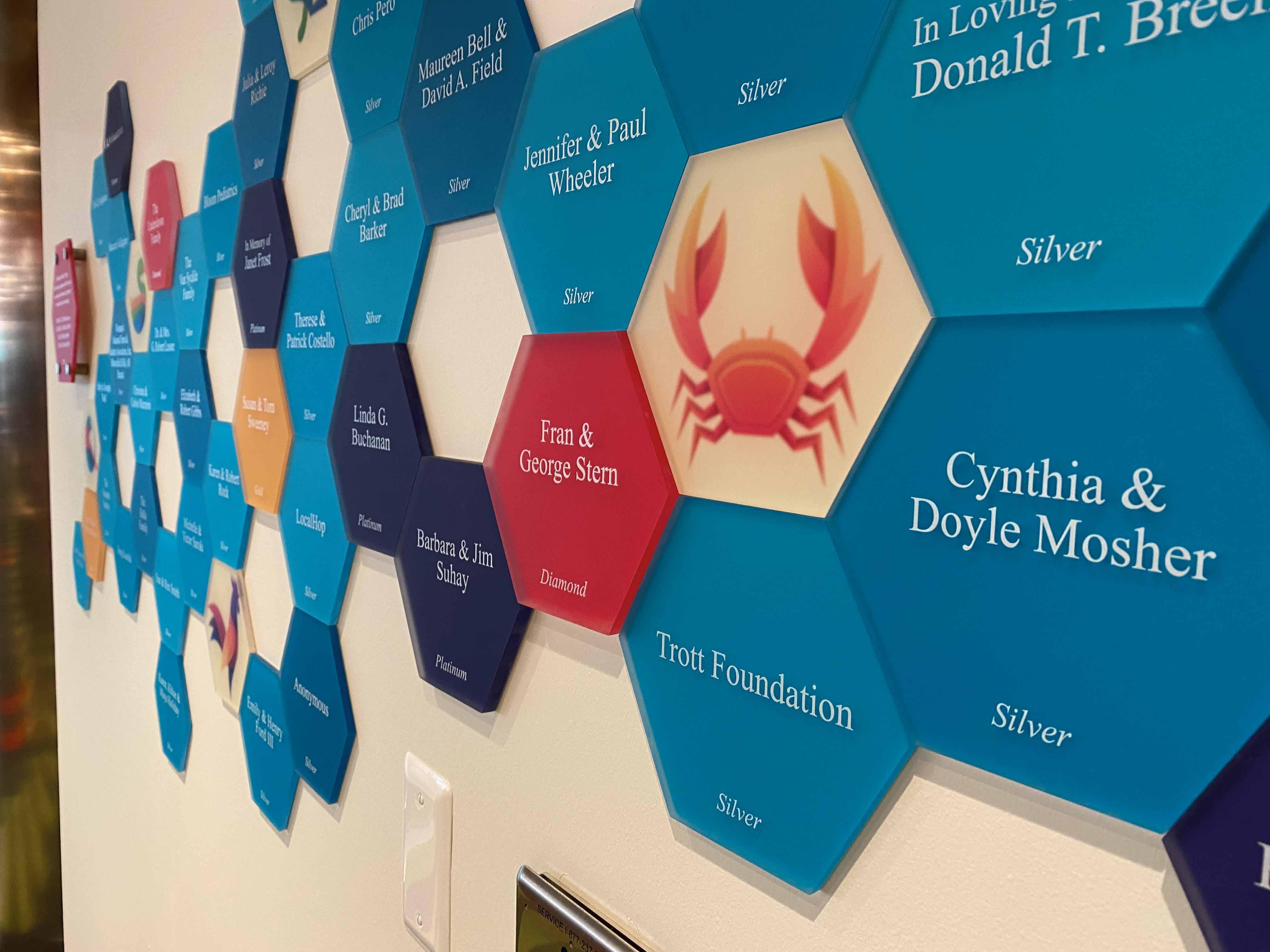
BLUEGRASS CARE NAVIGATORS — LEXINGTON, KENTUCKY
2. GIFT UPGRADES:
CREATING A GIVING PATHWAY
Donors rarely decide gift levels in isolation. They look for cues.
A clear recognition system communicates what different levels of support look like and where a donor fits within the broader community of supporters.
This creates a natural progression:
• A donor understands the next step up
• Larger gifts feel normal rather than exceptional
• Peer examples provide reassurance
• Families and corporate donors begin thinking more long-term
Donor recognition programs clarify possibilities, which often leads to higher participation at meaningful levels.
3. SOCIAL PROOF: LETTING THE BUILDING TELL THE STORY
Donor recognition is not only for donors. It quietly communicates credibility to everyone who walks through the space:
• Prospective supporters
• Board members
• Parents, patients, alumni, or visitors
• Corporate partners
• Community leaders
Is this organization supported?
Do people like me give here?
Does this mission matter to the community
Over time, the facility itself begins assisting fundraising conversations. Tours become easier. Introductions require less explanation. Confidence in the mission builds faster.
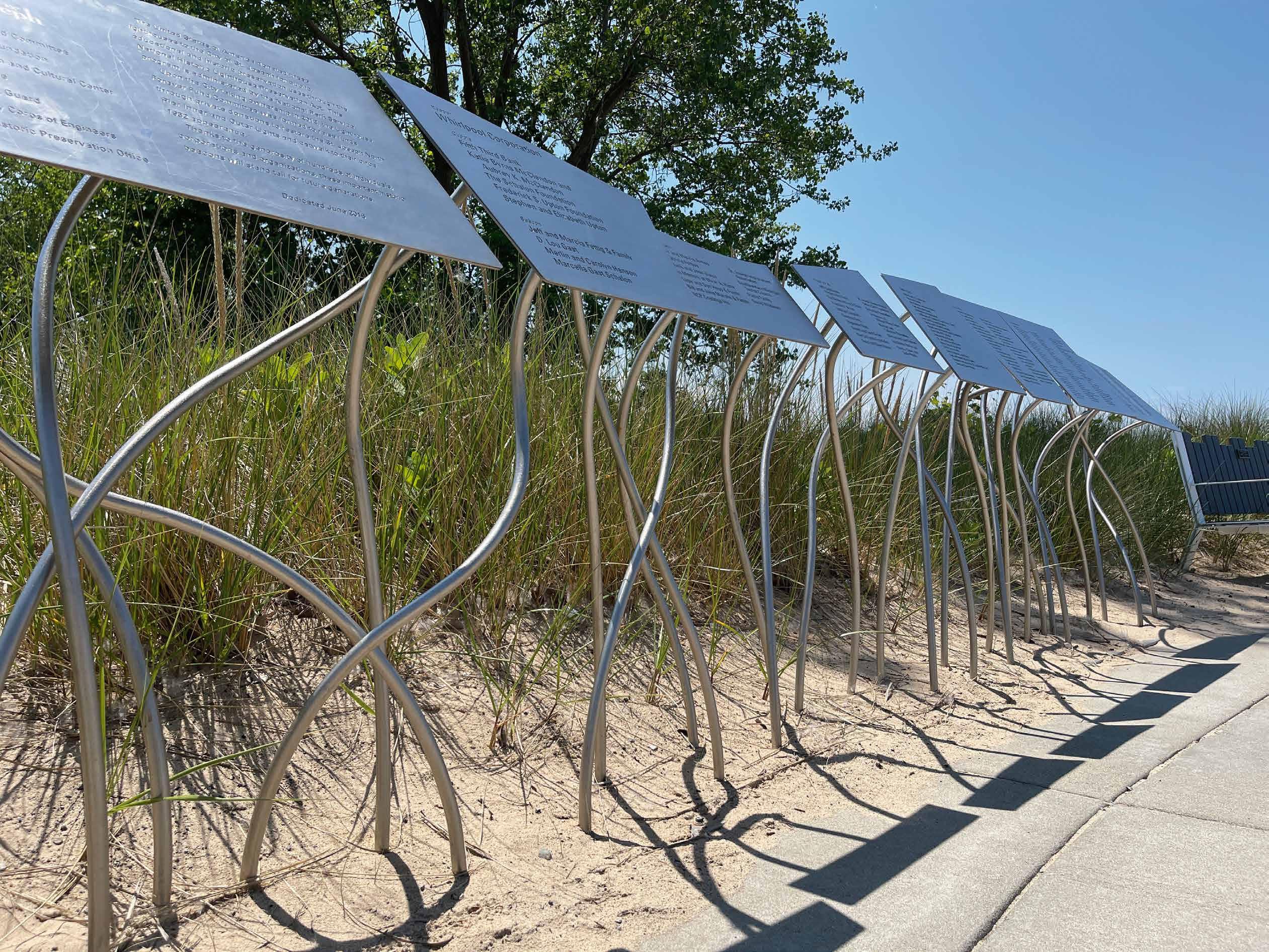
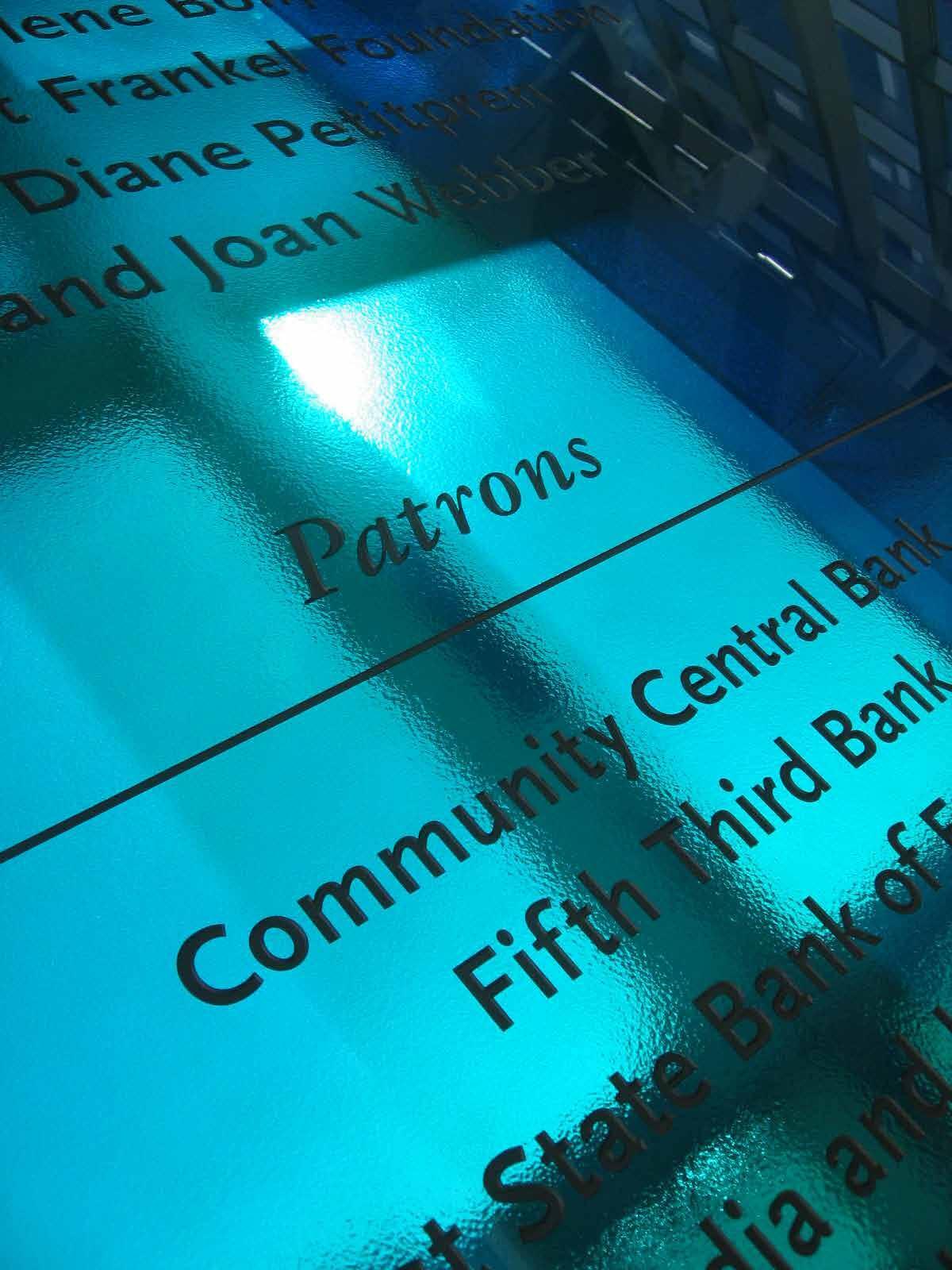
BALDWIN PUBLIC LIBRARY — BIRMINGHAM, MICHIGAN
4.
CAMPAIGN MOMENTUM:
MAKING PROGRESS VISIBLE
During fundraising efforts, visibility changes behavior.
When supporters can see progress, they feel invited into a shared effort rather than an abstract goal. Recognition helps translate numbers into people and impact.
It allows organizations to communicate:
• How far they’ve come
• What remains
• Who has already stepped forward
This sense of movement encourages participation and helps volunteers and staff tell a clearer story. Momentum becomes tangible rather than theoretical.
BEYOND A SINGLE CAMPAIGN
Recognition as infrastructure, not decoration
The most effective programs are designed to evolve. They support multiple campaigns, annual giving, and future initiatives without starting over each time.
Instead of a one-time installation, the organization gains a long-term system that:
• Adapts to growth
• Accommodates updates
• Avoids rushed temporary solutions later
• Becomes part of advancement operations
Over time, this reduces both administrative burden and fundraising friction.
THE HIDDEN COST OF INCONSISTENT RECOGNITION
Organizations sometimes discover the importance of recognition only after challenges appear:
• Donors unsure how they were acknowledged
• Inconsistent promises across campaigns
• Missed upgrade opportunities
• Outdated displays that are difficult to change
• Last minute fixes that cost more because of inadequate planning
• Legacy donors, and their families, feeling underappecidated
These situations rarely stem from lack of appreciation. They stem from lack of structure. Planning recognition early prevents those issues and protects relationships already built.
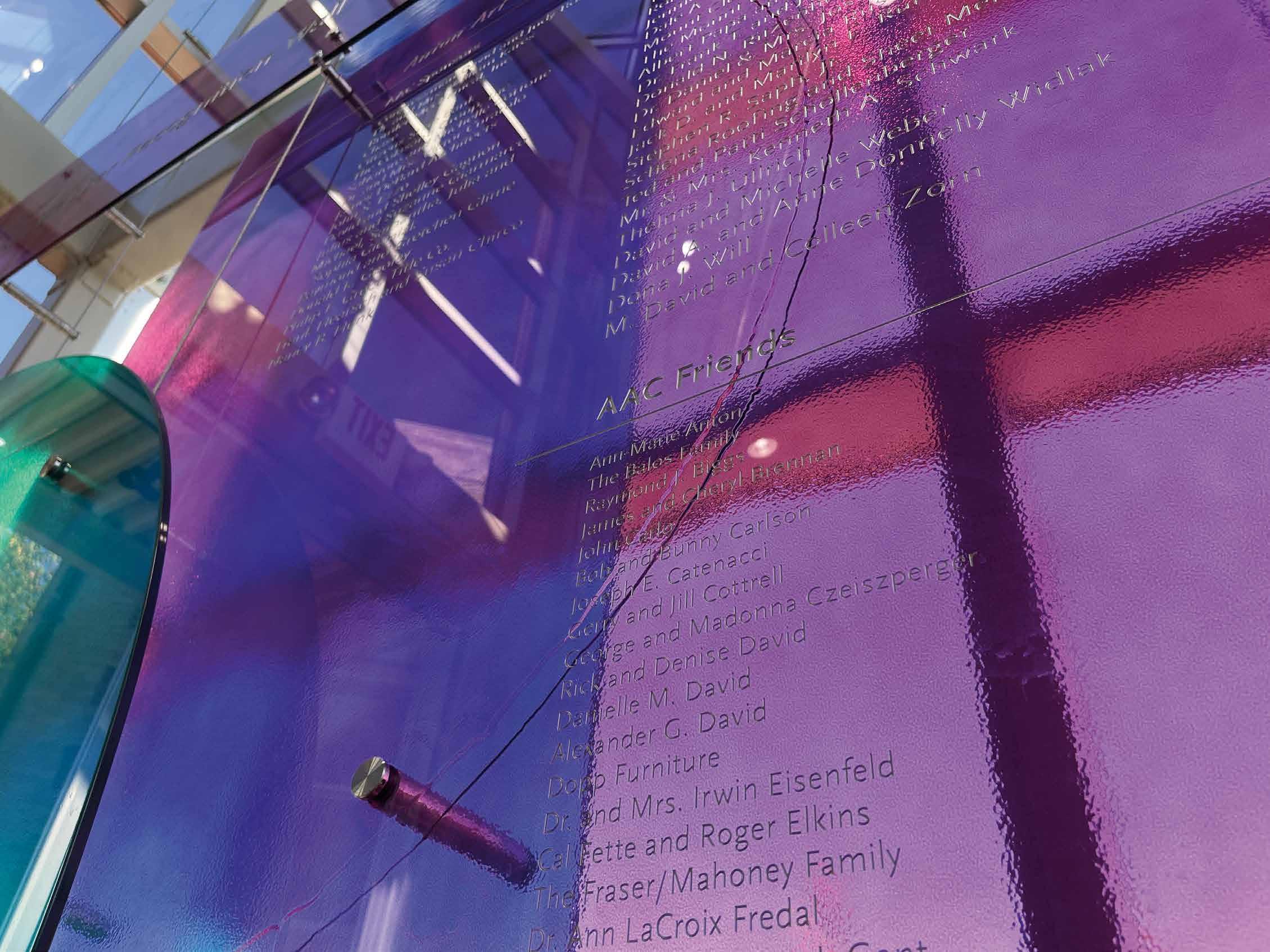
ANTON ART CENTER — MOUNT CLEMENS, MICHIGAN
IN SIMPLE TERMS
A donor recognition program is not primarily about displaying names.
It is about reinforcing relationships, clarifying giving pathways, demonstrating community support, and sustaining fundraising momentum over time.
When approached strategically, recognition becomes part of how an organization raises funds, not just how it celebrates them.